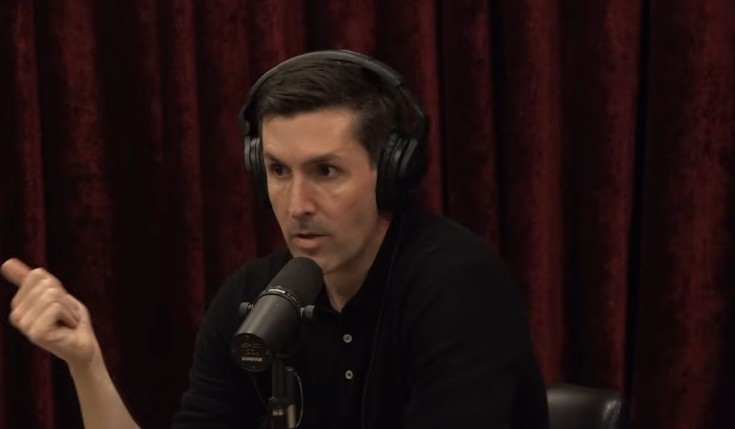
In Joe Rogan Experience #2578, former White House senior advisor and MAHA leader Calley Means explains why he resigned and gives an insider’s account of how lobbyists, pollsters, and a small circle of staffers around Chief of Staff Susie Wiles shaped policy on glyphosate, fruit-flavored vapes, kratom, vaccines, and school lunches. He and Joe Rogan also discuss Bobby Kennedy’s MAHA agenda, the psychedelics push, the midterm losses, and why Means believes only structural reform of money in politics can fix Washington. Read the full transcript below:
Why Calley Means Resigned From the White House
JOE ROGAN: (00:00:12 – 00:00:16) Hey, good to see you.
CALLEY MEANS: Good to see you.
JOE ROGAN: How are you doing?
CALLEY MEANS: (00:00:17 – 00:00:20) Well, I just recently resigned from my job.
JOE ROGAN: (00:00:21 – 00:00:21) How was that?
CALLEY MEANS: (00:00:27 – 00:02:46) 2 years ago when Bobby Kennedy joined President Trump, it was one of the greatest, I think, political miracles in history. I think we were all so excited. It showed that there was real political animation around a Democrat dealing— working with a Republican. I think it showed the country that the Trump administration was going to fight not just partisan stuff but special interests and the swamp. I helped set that up. Came in, dropped everything I was doing, came in, was a senior advisor at the White House, led MAHA implementation, fought really hard and I was optimistic because I’m a realist and things get done in politics 2 ways.
One is there’s special interest in money. That’s how a lot of things got— get done. That’s why we spend 3 times more than any other country on healthcare. That’s why we have such high housing prices. Like a lot of the things we’re complaining about and dealing with are because the systems have been rigged on the inside. We all know that. But the other way things get done is real public pressure and real public shame on the political system, and what Bobby Kennedy and President Trump did is showed there’s a lot of voters that care about American health, and I was optimistic we could use that coalition to bust through the D.C. Swamp to get some things done, and we did get some things done, but all of them were through public shame.
The psychedelic thing, that was being totally blocked, full directive from the top that we were going to slow that down and not do it. And your call to President Trump. President Trump, whenever there was an issue which was on his radar, he’s like, “Let’s get it done. Let’s go hard.” He said, “We need to get this done. Get this on my f***ing desk in the next week,” and it busted through the system.
I was able to engender a coalition to get that same dynamic happening with things like dietary guidelines, the food dyes, getting those out of the system. These were all just— the system of D.C. Does not want any change to happen and the fact that we had a voter coalition and could use that and say this coalition, you, other people are going to be pissed off if we don’t get things done. We were able to get things done.
But the simple reality and why I left is that there is a very concentrated group of people in the Trump administration that are antagonistic to what people voted for and are frankly— and I think it’s very clear— doing things for other reasons, particularly in many cases to enrich their families. Oof.
JOE ROGAN: (00:02:46 – 00:03:32) So walk us through this. So you get in there, you have your first days on the job. When did you realize it was going to be an issue? And you were very hopeful at first, right? It’s very exciting. A lot of people were very excited about the coalition. They felt like this— it was one of the main things that I was excited about with Trump getting into office was that Bobby Kennedy was going to be in there, and there was a lot of these things that you just discussed, a lot of these things about peptides and stem cells, for sure the psychedelics, and then just making people aware of additives in food that were completely unnecessary, that were ruining people’s health. So there’s all this promise. Everybody was very excited about it.
CALLEY MEANS: (00:03:32 – 00:04:02) It was electric 2 years ago. I mean, we remember it. It was absolutely electric, and that compared to what we felt this week, right? That’s the real issue. There was a real sense. Every single person in the first day of the Trump administration thought we were working for a presidency that would be absolutely historic. We thought we were— Trump was going to be better than George Washington. The energy was— we felt like we were in the most consequential moment in American history.
We were going to go hard and we were going to be able to channel what voters voted for. I cannot express to you how electric it felt in there in the early days.
JOE ROGAN: (00:04:03 – 00:04:08) So what was the process like where you felt like it was off the rails?
Who Really Runs the Trump White House
CALLEY MEANS: (00:04:09 – 00:05:19) So I want to get into specifics. We all know things are corrupt and bad, but I will just get right into specifics. What I learned and I don’t think anyone would dispute this, the way the White House— this White House is set up is the most centralized control up to the Chief of Staff office of any administration in American history. So I will just get into details about who runs the White House and there is a picture I have of the key people.
But the White House— Susie Wiles is the most powerful chief of staff in modern American history and she has taken a stranglehold on any policy decision.
JOE ROGAN: (00:05:19 – 00:05:21) All right. We’re back. Yeah. We had a glitch.
CALLEY MEANS: (00:05:22 – 00:10:57) These are the most powerful people in the country and let me just go through dispassionately, just factually who these people are. Susie Wiles, the chief of staff, before she joined the Trump administration, was one of the top lobbyists in the country. She spent her career taking money from Benjamin Netanyahu who she was a top consultant for, the pharmaceutical industry, the pesticide industry. So just dispassionately, just as a statement of economic fact, Susie Wiles, her career has been taking money from the industries and foreign governments who would pay her the most money.
That’s what she did. Nobody disputes that. James Blair, who was the head of political operations, is her friend from Florida and a long-term political consultant. He’s taken a lot of money from industries like the sugar industry, but that’s been his career, running some campaigns, taking money from special interests. She brought him along and really propped him up with Trump. Tony Fabrizio is one of the most powerful people in the country. He’s Trump’s chief pollster, very good friends with Susie.
He is on the outside the whole time and every single policy issue goes through him because he tells the team whether it’s politically appropriate to do or not based on his polling. As he’s been working in the Trump administration in this extremely powerful role where every single cabinet secretary is trying to get on his good side, he is— and this is actually on his website— he takes money from Pepsi. He takes money from pharmaceutical companies.
He takes money from almost every single industry we’re fighting against right now to this day. At the same time, I don’t even know if President Trump fully knows that. But as we were fighting things like school lunch reform and getting an ultra-processed food definition, 90% of the country wants this. We’re going to define ultra-processed foods. 70% of a child’s diet is ultra-processed food. We need to define it. We need to figure out what to do there.
It’s a widely popular promise from the administration. He is getting paid by Pepsi and giving political analysis that the juice isn’t worth the squeeze on doing policies like that, as simple as school lunch reform. So that’s Tony Fabrizio. Every single issue, goes through him, goes through James. Tony and James were also in charge of the midterm efforts. So James left the White House to be in charge of the midterm efforts, but still very involved, and the key thing Susie did is from almost day one, we made the midterm strategy the policy strategy.
So we— they would often say that we can’t do certain things because that would hurt special interest configurations for the midterms. Walker Barrett is Susie’s neighbor in Florida, a junior guy, but extremely powerful. He was a congressional staffer for a long time. Richard Walters is a kind of mid-level fundraiser. His whole career has been consulting and fundraising. He came from a lobbying firm in the past year that lobbied for pesticides, lobbied for pharma.
Richard was, for a while, the most powerful person in the country. Because as Susie was out getting cancer treatment, Richard was effectively chief of staff. And Chris LaCivita ran the campaign with Susie. He has been on the outside. He is a lobbyist consultant getting paid a lot of money by special interests. And the other thing I note, Susie’s daughter became a lobbyist. I don’t know if you have the graph, Continental Strategy.
But this is really interesting. Susie’s daughter went to a lobbying firm, and it was an open discussion in the White House. If a company hired Susie’s daughter, then that was getting a high priority, and there’s this chart that shows Continental Strategy, the group Susie’s daughter worked for, had almost zero in revenue before the Trump administration, shot up to $30 million a year in revenue. So if you’re a special interest, and you want to get something done, the secret’s out, you pay Susie’s daughter, and it was openly discussed that when they had a client— so this is what happened to Continental once Susie’s daughter worked there.
Then Chris LaCivita’s daughter, again, the person who ran the Trump campaign, if you go to Checkmate, the person who ran the Trump campaign, and is highly influential in various policy decisions, It’s the same graph. The firm didn’t exist before the Trump administration. Shot up. And then Susie worked at a firm called Ballard Partners. Ballard Partners has become the highest revenue-generating lobbying firm in history. And when Ballard— it’s just an open— everyone knows this.
If you hire Ballard, you get a meeting with Susie and you can get things done. And their revenue went from middling to the highest revenue lobbying firm ever. So I’m just trying to state facts. That’s who these people are. That’s their background. Everyone’s— this is Ballard. Just go to the 2026, $98 million. And the key thing I’d say here is you talk to any lobbyist, that $98 million is what’s reported. That’s the down payment.
That’s then Ballard advising people on how to shift money to other dark money groups, so you probably put a 10x multiple on that. Ballard basically helps then pay other groups, pay other people to get things done, and Ballard, again, the secret’s out in DC. You have to pay Ballard to get something done, and they’ve generated more revenue than any other firm in American history. That’s who these people are.
JOE ROGAN: (00:10:58 – 00:10:59) Is this normal?
“This Is How DC Works”
CALLEY MEANS: (00:10:59 – 00:14:07) This is the key point I want to make, and I think it’s very important as we decipher the election. I want to go into specifics to explain how this works. This is how it works for 30 years. It is a massive mistake. I don’t think President Trump knows about most of this. He can’t be everywhere at once. It is absolutely true that his administration has been infiltrated by the very people that he energized voters to say he would get out of DC, and what I’m going to talk about today and the specific things I’m going to talk about are not idiosyncratic to the Trump administration.
This is how DC works. It is impossible to describe to you how demonic this culture is. Before I went on, I actually spoke to some of my friends who are top lobbyists. I’m like, “Is this right to you?” Like we are at a precipice in American history. Like this is like civilizational, like Americans are going to have social unrest and rebel against it. Like we’re robbing the American people, right? And they’re like, “Yeah.”
I’m like, “Well, why are you doing this?” “I don’t have any interest. It’s the game. I have a good career, good life.” Everyone— like, this is how DC works. Chuck Schumer gave a speech to the hospital lobbyists 2 weeks ago saying, “I’m going to have your back.” He went around to all the lobbyists saying, “We’re going to help you out.” Jeffries and Schumer, all their people became lobbying firms. Their lobbying firms are going to get this type of money.
That’s already happening. Every firm and every company in DC is shifting to Schumer’s former staffers or Jeffries’ former staffers. This is how it works and if we— this is a core point. We need to grasp as Americans. It’s not one party or the other. We’re playing this shell game, right? When Congress and the Senate— I don’t think they’ve passed a bill in the past 20 years that’s significantly taken on special interests.
This is a game at the end of the day debating partisan politics or having the delusion that this is a Trump problem or a Democratic problem. This is a structural problem. Americans did not vote for Trump or, frankly, the Democrats recently who are basically copying Trump’s messages against the swamp. They didn’t vote to have people like this that are accepting money from foreign countries while they’re running the midterm strategy, have their kids working at lobbying firms that are making tens of millions of dollars, and really having the most populist president ever elected, Donald Trump, have a centralized policy process that is entirely dictated not by voters, but by who’s paying Ballard.
At one point, I was arguing for, I think, school lunches or this no-brainer policy to Tony Fabrizio. And I said to him, I said, President Trump really galvanized a lot of voters with Bobby Kennedy. I know Joe Rogan’s listeners would really love to see some, getting healthier school meals. The processed food companies might not like that. And he said, “It’s not a big part of our strategy.” He said, those voters kind of dismissed me bringing up your listeners who I felt like I was advocating for. He said, “That’s not really— and MAHA’s not really a big part of our strategy.” So I had—
JOE ROGAN: (00:14:07 – 00:14:08) What did he say the strategy was?
CALLEY MEANS: (00:14:09 – 00:14:23) They were obsessed with— they were obsessed with a highly kind of surgical strategy of redistricting. They were obsessed with redistricting. And—
A Midterm Strategy Built on Redistricting and Gimmicks
JOE ROGAN: (00:14:24 – 00:14:24) Explain that to people.
CALLEY MEANS: (00:14:24 – 00:15:49) Yeah. So James Blair and Tony Fabrizio and Susie, their entire strategy to win the midterms was to gerrymander various states to change the congressional maps so they’re more favorable to Republicans and that’s all they cared about with the midterm strategy. Yeah, I can’t speak to exactly what’s in their head, but everyone has their own biases, right? When you come from this world where you’re being paid at the current moment by Pepsi and all these other companies, all your friends are lobbyists, everything, you kind of convince yourself that politics all rests on money.
And Susie and James and other people said this a lot. Susie said to me many times, “We need money for the midterms, Calley. We need money for the midterms.” So when you convince yourself that money’s the most important thing for the midterms and for the future political dynamics, and this was the narrative in the Trump administration by Susie from almost the beginning, then you can justify almost anything. And what Tony Fabrizio did with his polling is say, oh, people don’t really care about the food issues, people don’t really care about the pesticide issues, people don’t really care about the taking on pharma or whatever.
So that’s the big shell game I think that happened, is everything in the political strategy was based on getting enough money for the midterms, not actually doing the things that would then energize voters enough.
JOE ROGAN: (00:15:49 – 00:16:00) Well, what do they think people do care about? If they don’t think people care about the very things that they voted for, that they were excited about with this whole coalition with MAHA, what do they think?
CALLEY MEANS: (00:16:00 – 00:16:14) Yeah, James and the political team was really obsessed with these gimmicks. They gave a presentation to the entire cabinet, and Susie said, “Tony Fabrizio is smarter than anyone in this room. Listen to him. He’s driving our strategy.” And he talked about how—
JOE ROGAN: (00:16:14 – 00:16:15) I feel good for him.
CALLEY MEANS: (00:16:15 – 00:17:32) Yeah. And he talked about how as a central campaign message in the midterms, we need to talk about no tax on tips and affordability and the tax cut that we got from the one big beautiful bill. And my opinion is that you look at recent polls, and this is Pew, this is CNBC, this is Fox News. They ask Americans what the biggest issue in the country was, and it’s the same in every poll.
It’s corruption. It’s money in politics. And I think Americans feel spiritually, and this is what helped get Trump elected, is American competitiveness does not rest on whether we pass no tax on tips. I don’t think Trump got shot in the face and almost killed and has gone through everything he’s gone through to run on these gimmicks. It’s because we have corruption. It’s because we have a broken system. It is a joke that we’re going to actually address big issues without institutional reform, which is really what Trump ran on.
But they pushed these gimmicks. They were obsessed with this— the only thing on healthcare was that we lowered drug prices. We had some drug price negotiations. So it was very like targeted things instead of big bold ideas.
How the Swamp Got Back Into the Administration
JOE ROGAN: (00:19:03 – 00:19:45) So when he got into office, how do these people become a part of the cabinet? Is it simply that you have— because I understand like the first administration that he had back in 2016, it was a giant issue that he had brought. He thought he was draining the swamp. He was bringing in the swamp to try to drain the swamp. This time, supposedly he had learned from the mistakes from the first administration and that things are going to be different.
Did he get duped? What do you think it is? Do you think there’s like— There’s 100+ jobs to fill. There’s no way he can micromanage all of them and sit down with every individual person and go in-depth on their resume, what their plans are, what financial ties do you have. So he—
CALLEY MEANS: (00:19:45 – 00:20:55) I think that he— just the first thing I’ll say, there are a lot of good people in the administration. Like Bobby Kennedy is a hero. There’s a lot of other cabinet secretaries that want to go hard, but those cabinet secretaries are often talking about how exasperated they are by these dynamics, by these Ballard dynamics and by the absolutely centralized control and paralysis that Susie has driven. So it’s frustrating. But Susie— I mean just the history is she ran Trump’s campaign, then was chosen as the chief of staff and then I know she brought these other people in based on her word.
I think Trump was right to learn lessons from his first term. But I’m just saying what the reality is right now. Like Americans did not vote to have a group of lobbyists from Tallahassee be slowing down every policy that people voted for and often saying that’s because we need to take— get special interest money. I mean, that is not what people voted for, and it’s a real serious problem.
JOE ROGAN: (00:20:56 – 00:21:04) And when she was running his campaign, was it that the campaign was successful, he became president, so he said, okay, I’m just going to make you Chief of Staff?
CALLEY MEANS: (00:21:04 – 00:21:39) Yeah, her reputation has been that she’s a steady hand, that she’s an adult in the room. That was kind of her reputation. There was a big force to get her in as the Chief of Staff, and I was really excited about that, and I worked, with her and with Bobby and worked to get the MAHA agenda through. But I think we’re at a pretty consequential time in American history. I think, frankly, and we can get into specific stories, but I think what’s happening is a case study, not just what’s wrong with Trump, but what we need to exorcise from the system in general.
JOE ROGAN: (00:21:40 – 00:21:42) So when— so you get in.
CALLEY MEANS: (00:21:43 – 00:21:43) Yeah.
JOE ROGAN: (00:21:43 – 00:21:48) And when do you start realizing what these issues are? And how does it unveil itself?
CALLEY MEANS: (00:21:49 – 00:21:51) I mean, I can, I can go into what happened with glyphosate.
JOE ROGAN: (00:21:51 – 00:22:06) Oh yes, please, because that’s a big one. Because I mean, I really love Bobby. He’s a great guy. But when he was on here, he seemed so dejected when he had to explain how they got blocked, right? Tell me.
Setting the Table on Glyphosate
CALLEY MEANS: (00:22:06 – 00:22:08) Let’s just set the table.
JOE ROGAN: (00:22:09 – 00:22:11) Set the table about glyphosate.
CALLEY MEANS: (00:22:11 – 00:24:38) Yeah. Let me set the table about glyphosate in general. America— American children are the sickest children in the developed world. We’re hitting puberty much younger than we did 50 years ago, 2 to 3 years. The New York Times recently did an article to say nobody knows why. We have the highest rates of autoimmune conditions, hormone conditions, cancer, pediatric cancer, diabetes, every chronic disease you can think of. We have the highest rates among kids of any society in human history.
So I definitely think that solving that was a major voter promise. So obviously, what we’re spraying on our food is very important. And the United States, we’re 4% of the world’s population. By some measures, we use 20% of the world’s glyphosate and herbicides and pesticides. So we are— our system is addicted to these chemicals. It’s also interesting to me, when you look at us versus other countries, we actually spend half as much of our national income on food than Europe.
They spend double the relative amount on food, but we spend 3 times more on healthcare. So we’ve got this real issue. We’re eating, we have these incentives for the cheapest possible food riddled with these chemicals. And that was a big issue. Tony Fabrizio did a poll, 92% of Republicans want to regulate pesticides. I mean, this is a universal issue and a real mandate for the MAHA movement when Trump that President Trump, during the endorsement ceremony, he said specifically, “We are going to look into pesticides, we’re going to clean up the pesticides.”
This is a top issue. So kind of in the administration, the first thing we had was the MAHA report, which was just basically listing what President Trump said he wanted to look into, such as pesticides. And it was the greatest fight I’ve ever experienced up to that time in my life to have the word glyphosate in that report and the amount of almost violent reaction against that from industry, calls to Susie, calls to everyone, to have that word, not even have it in the report, not even have a government report mention that this could potentially be a problem, was the biggest policy battle I had seen up to that time. Just a word. Just a word.
JOE ROGAN: (00:24:38 – 00:24:41) Yeah. The health dangers of glyphosate?
CALLEY MEANS: (00:24:41 – 00:28:15) There is no— I would say there is actually no medical disagreement on that. But you have to understand, the EPA hasn’t reviewed glyphosate in close to 30 years. And they currently say that it does not cause cancer. Now, 5 years ago, it was up for review, and they were going to review it, and they said no cancer. Then it came out in court that Bayer, the maker of glyphosate, ghostwrote research for the EPA report and bribed EPA officials.
So Bayer right now is running PR campaigns saying, attacking Bobby, saying we can’t have misinformation, we’re the pro-science company. Literally, the last review of glyphosate was thrown out because they ghostwrote research. The amount of pressure, and this is the first thing I realized, the pressure was not even on policy on glyphosate and pesticides. They didn’t want any inquiry there. And this is where bipartisan senators come in from agriculture states. There’s tremendous pressure on the NIH not to study it.
I’m saying like, people are threatening appropriations if we even look into it, like the amount of aggression to not legitimize this topic, and it hasn’t been legitimized. The MAHA report, literally saying that glyphosate might be a problem, was the first time the US government has actually ever recognized even that potential reality, but it was totally watered down. So That’s the first step. The industry is very concerned because there have been lawsuits that have been settled for billions of dollars that prove that this chemical gives people, especially kids, in many cases, cancer.
Those lawsuits are threatening Bayer, and the top issue for them was getting those lawsuits off their back. So they worked to go state by state and pass laws, jam laws through, giving them legal immunity, basically enabling, making it the second product after vaccines in America that you can’t sue for. And even in most deep red, very agriculture states, this was a step too far. So they had trouble passing these bills in the states.
Then they tried to jam something into the farm bill. In Congress, and there was such a MAHA uprising, including from Republicans, that this just doesn’t make any sense. They were having trouble getting it through Congress. So I knew, being at the White House as the MAHA person, I knew that this was a politically explosive issue, because it’s obviously bad politics if the administration looks like they’re putting their thumb on the scale to provide a product that has been proven to give kids cancer legal immunity.
Obviously, that’s a massive political loser. So I chatted with Susie’s team. I chatted with the USDA leadership. I’m like, we agree that the administration, at the very least, should not be weighing in on this. We should not be putting— that’s a political disaster. Time goes on. And I was called into a room. And Susie’s person, Walker Barrett, is there, and he puts an executive order down on the desk, and he says, “Please review.”
And it was the glyphosate EO that says it’s a national security issue, we need to have glyphosate, and alluded to liability protection using national defense, reasons.
The Glyphosate Executive Order and the “National Security” Argument
JOE ROGAN: (00:28:15 – 00:28:16) National security?
CALLEY MEANS: (00:28:17 – 00:28:17) Yeah, national security.
JOE ROGAN: (00:28:17 – 00:28:20) To make sure that we have glyphosate use?
CALLEY MEANS: (00:28:20 – 00:30:58) And I will tell you, the Secretary of War, the major generals, they don’t see our lack of glyphosate on US farms as a national security issue. And the EO was all about farming, all about glyphosate. Nobody in military leadership sees this as a national security issue. So Walker put that on the table. I read it. I said, “This is a political disaster. We need to talk about this.” And he said, “This is final. It’s national security. It’s coming out tomorrow.”
There were other people in the room. And he said, “Please inform Bobby, and this is not up for discussion. And Bobby should not be calling the president or calling anyone. This is not up for discussion.” Susie then called Bobby’s office and said, “We’re not discussing this.” I went and informed Bobby, and it was announced the next day. Around the same time, the Supreme Court was deciding whether to take a case that revolved around liability protection for glyphosate.
I, again, over previous months, had talked to many people and said, this is a political disaster, ’cause the Trump administration had a decision of whether to weigh in on that case. So the Supreme Court probably wasn’t going to take the case, and when the Trump Department of Justice, when the president’s Department of Justice weighs in, they can basically weigh in and say, please take this case, and it was basically hinging on whether the administration weighed in and said, please take this case, and the administration can weigh in on cases.
The Biden administration chose not to. So I’m like, we just follow suit. This is a political disaster. Heidi Overton, who now is— who’s Susie’s person, who’s now up for the FDA commissioner, worked with the Department of Justice to construct a legal argument about why the Supreme Court could take the case, and why they should be supporting liability protection for the pesticide makers. And she did not consult Bobby Kennedy on that. And the Department of Justice brought in a lawyer named Sarah Harris to the Solicitor General’s Office.
Sarah came from the law firm that is Bayer’s main law firm, and she wrote an opinion saying that the Supreme Court should take the case and give liability protection to Bayer, and that came out. So both of these things were completely done without Bobby Kennedy throughout any policy process.
JOE ROGAN: (00:30:59 – 00:31:01) So did they get the liability protection?
CALLEY MEANS: (00:31:01 – 00:31:09) Yeah. Yeah, the Supreme Court ended up siding with the case, which they wouldn’t have taken without that. Brief and urging from the administration to take it.
JOE ROGAN: (00:31:09 – 00:31:15) How is that possible that something that gives people cancer, that’s known to give people cancer, gets liability protection?
CALLEY MEANS: (00:31:16 – 00:31:17) It’s indefensible.
JOE ROGAN: (00:31:18 – 00:31:30) We’ve talked about it on the podcast before, but the idea that your food system, in order for it to function, relies on poison is really insane, especially when you realize that’s not being used in other countries.
Why Legal Recourse Matters in a Free Market
CALLEY MEANS: (00:31:31 – 00:31:56) Well, here’s what I’d say, Joe. It’s even again, I’m not— I’m a realist. I wasn’t in there to argue for unreasonable things. We have a very complicated interconnected economy. I even buy the argument, right, that we can’t ban this stuff tomorrow. 99% of corn is sprayed with it, 98% of soybeans. It’s used in other countries. It’s a lot less.
JOE ROGAN: (00:31:58 – 00:32:00) It’s also used in wheat, which is really crazy.
CALLEY MEANS: (00:32:00 – 00:32:02) And they use it for post— yeah, desiccation.
JOE ROGAN: (00:32:03 – 00:32:36) Yeah, which is really insane. Have you seen— there’s a case of a young man who had glyphosate spilled on him and his neck and everything swole up and he had like this insane reaction that a lot of people saw online. They thought it was fake. They thought this was like, oh, this is either AI or this is like someone put prosthetics on this young guy. But no, this guy, there was some sort of an accident. And glyphosate spilled on one side of his face. See if you could find it, Jamie.
CALLEY MEANS: (00:32:37 – 00:32:42) I’m only seeing it in memes, so I’m going to try to find a non-meme source.
JOE ROGAN: (00:32:42 – 00:32:43) Okay.
CALLEY MEANS: (00:32:44 – 00:33:40) I was going to say is this wasn’t a crazy stance to ban anything. It was about whether people could sue if they get cancer. And in a free market, like that, to me, that’s a perfect dynamic. We’re not banning it. But there needs to be, in a free market, recourse if it’s causing harm for the externalities. So it actually was a perfect situation that we had the legal system taking lawsuits and adjudicating.
And by cutting that out, it’s actually an assault on the market, because I was actually happy with what’s happening. The MAHA is putting pressure on glyphosate. There’s lawsuits, which is appropriate, and they’re going to invest and they’re going to figure out something different. And that’s happening to a large degree. There’s been a lot of success with the MAHA movement. Like every boardroom in America realizes that people are pissed off. But to take the legal recourse out, to make it the second product after vaccines where— I mean, what does that say to moms whose kids have cancer? You can’t even sue.
JOE ROGAN: (00:33:41 – 00:34:25) So this is the young man. “Tennessee teen drenched in— oops. Tennessee teen drenched in glyphosate spent next 7 years fighting massive alien tumor. Just months after being completely doused by glyphosate while working on a cell tower maintenance crew, Tennessee teenager Arden Allison developed one of the worst cases of Hodgkin lymphoma his doctor had ever seen.” Arden and his mother told CHD.TV how the 7-year battle transformed them into outspoken advocates pushing to get this disgusting poison out of our food supply. Look at him on the left. Look at the side of his face. That is f***ing insane.
CALLEY MEANS: (00:34:27 – 00:34:51) We’re hitting a precipice right now because the top issue in Iowa right now is that they have the highest cancer rates in the world. So this is happening. Iowa has the highest cancer rates in the world of any geographic location in the history of human civilization across the world. Iowa and Kentucky and other U.S. Farm states had the highest cancer rates of any location in the world.
JOE ROGAN: (00:34:52 – 00:34:58) And the— this substance just got legal liability—
CALLEY MEANS: (00:34:58 – 00:35:04) Just got liability removed after paying Ballard a ton of money.
JOE ROGAN: (00:35:08 – 00:35:08) Wow.
CALLEY MEANS: (00:35:08 – 00:35:14) If you pull up Courtney Knupp, K-N-U-P-P, soybean—
JOE ROGAN: (00:35:14 – 00:35:16) Have you spoken to Trump about this?
Did President Trump Know?
CALLEY MEANS: (00:35:17 – 00:36:36) Well, this is what’s really interesting. I, seeing this work out, had a strong suspicion that this was happening under his nose, and we had a meeting with him and Bobby and some other folks, and a farmer who was there, a regenerative farmer, brought it up, and President Trump reacted to the Supreme Court decision saying it’s a terrible idea. “How the hell did this happen?” Had no idea the Department of Justice— And I think it’s emblematic and I will say certainly what I saw.
When President Trump heard about an issue, his inclination was right and the people around him I think treat him horribly. They treat him like— they talk about him like a baby and they say it’s because we’re the political experts but Trump wanted to go hard on investigating. Tony Fabrizio got paid by pharma and did a poll saying that it’s not a popular issue and Susie and Tony Fabrizio in that world put a full halt for a year on any vaccine inquiry. The president busted that up just like he did with the psychedelic thing. The president did not know about the Department of Justice memo.
JOE ROGAN: (00:36:37 – 00:36:41) He didn’t know about the Supreme Court ruling on glyphosate.
CALLEY MEANS: (00:36:41 – 00:36:46) And he didn’t know the administration supported it and his initial— his reaction was that’s a terrible decision.
JOE ROGAN: (00:36:47 – 00:36:49) Did he investigate and find out who was responsible?
CALLEY MEANS: (00:36:49 – 00:38:14) I can’t speak to that, but I can— listen, the president, I’m not making— he has a lot going on. Yeah, obviously. And this is like, I’ve never seen him be presented an issue on the MAHA stuff, and I’m going to speak to the MAHA stuff and not his inclination not to go hard. It is clear that the glyphosate example is a case study of what is happening throughout the MAHA agenda and the health agenda, but also throughout the entire government.
But let me— did Americans vote for this extremely, not transparent process where we have immunity for pesticide makers be jammed down our throats with no public discussion. At the very least, I think they voted for Bobby Kennedy with me and others at the table with whoever’s arguing for the liability to have a discussion for the Chief of Staff office to level that up to the president if there was an impasse, and a real discussion.
But what they frequently did is they tried to take Bobby out of the discussion. I mean, again, Susie’s person sat me down, put the EO on the table, and said it’s not up for discussion. Bobby was put in a really tough place.
JOE ROGAN: (00:38:16 – 00:38:54) It’s just extraordinary to me that people who were not elected can have that kind of power where they can push something through the Supreme Court where the president doesn’t even know about it, and it’s something that the mass percentage of our country that doesn’t have a vested financial interest would not want to happen. That is something, especially the legal liability protection. There’s not— I don’t— if you had a vote, just in— if we just had a wide-scale country vote, I think it would be like off the charts.
CALLEY MEANS: (00:38:54 – 00:38:56) 95%. We have polls. We have polls.
JOE ROGAN: (00:38:57 – 00:39:32) And the 5% who the f*** are those people? This is not something that is necessary. It’s something that’s necessary with the way the current system is structured. It doesn’t mean that this is the only way to do it. It’s not like this is the only way to grow food. People have been growing food throughout human history. The idea that the only way that we can grow food in the United States of America, the greatest country the world has ever known, is we have to grow food with poison. Because there’s some corporations that profit off of this and that use this.
CALLEY MEANS: (00:39:33 – 00:40:11) This system does not want us to know the truth, and they don’t want us to talk about this stuff openly. Again, the other massive pressure from the industry was just not studying the issue. When you have— listen, order— we— everyone agrees corruption is a problem. Polling says it’s the number one issue in America. You have to identify what the problem is before solving it, and there’s a lot of forces that don’t want us to identify it. I feel like it is vital to identify what the problem is specifically and how this works.
JOE ROGAN: (00:40:13 – 00:40:20) Well, I agree with that 100%. I just— I don’t understand how this can be happening right under his nose.
CALLEY MEANS: (00:40:22 – 00:40:25) There’s so much going on. This is— life is just one.
JOE ROGAN: (00:40:25 – 00:40:31) But I mean, getting it to the Supreme Court and having— and how did the Supreme Court agree on this?
CALLEY MEANS: (00:40:31 – 00:40:42) There’s 15— there’s 15, there’s the government’s millions of people. The DOJ is one part of it. The DOJ, one bureaucrat could write a memo saying that the Supreme Court should— could take this case.
JOE ROGAN: (00:40:43 – 00:40:47) But why would they agree to that? That’s what I don’t understand. Why would they agree to There’s some—
CALLEY MEANS: (00:40:47 – 00:41:33) It gets into legal complexity in a law that’s rigged saying that the EPA should have preeminent authority over regulation. So they go by— the Supreme Court went by the law, which mentions that EPA should be the dominant force, and it’s not really the Supreme Court’s job to note that the EPA is rigged to the point that glyphosate hasn’t been reviewed in 30 years, and the last review was thrown out for ghostwritten research and bribery to EPA officials.
So the law itself says stuff about EPA supremacy. The case was kind of technical, and they went off what the laws are, but the administration and the memo from the DOJ to take the case made them take the case, and we would not have had it if they didn’t.
JOE ROGAN: (00:41:33 – 00:41:48) Jamie, do me a favor and put this into Perplexity, please. Ask, what is the amount of money spent on glyphosate in this country annually? What do you think that is?
CALLEY MEANS: (00:41:48 – 00:41:50) You mean like by farmers, like in farms?
JOE ROGAN: (00:41:50 – 00:42:04) Yeah, farmers, all that stuff, all the Roundup sales, all that s***. I mean, because it’s available commercially as well for consumers, right? You can still buy Roundup, can’t you?
CALLEY MEANS: (00:42:04 – 00:42:05) It’s being limited more, but yes.
JOE ROGAN: (00:42:07 – 00:42:14) Let’s guess, what do you think the amount of money we’re talking about here is that’s in use by farmers? Calley, what do you think it is?
CALLEY MEANS: (00:42:15 – 00:42:21) I don’t know what the raw numbers are. I know this— our agriculture system is dependent on it. It’s 99% of US corn.
JOE ROGAN: (00:42:22 – 00:42:25) And they’re dependent upon it as an herbicide.
CALLEY MEANS: (00:42:26 – 00:42:38) Yeah. And the seeds are genetically modified to— for it not to kill. So a corn farmer, soybean farmer puts the seeds down, gets in their tractor, sprays, and then it kills everything but the seed.
JOE ROGAN: (00:42:38 – 00:42:45) Here we go. Worldwide annual spending on glyphosate-based weed killers is roughly $7 to $12 billion.
CALLEY MEANS: (00:42:46 – 00:42:47) Seems low.
JOE ROGAN: (00:42:48 – 00:43:14) Is one universally agreed total. Global Market Insights estimates $6.8 billion. Insight 8 estimates $9.3 billion. Transparency Market Research estimates $12.4 billion. These are commercial market estimates, not an audited tally of everyone’s purchases. So there’s not a clear number, but either way, we’re talking about billions.
Farm-State Senators, Big Ag Lobbying, and Iowa’s Cancer Crisis
CALLEY MEANS: (00:43:15 – 00:45:31) Yeah, and what the industry does— first off, they’re an aggressive lobby. I mean, you talk about when you’re looking at the firms I mentioned, they’re backing up the truck. Richard Walters, who came in and de facto chief of staff for a while, his former firm FGS Global was paid by CropLife right before he left. So they’re backing up the truck on traditional lobbying. The other thing that they have is that the large agriculture companies feel like it’s existential to maintain their lead in low prices to have copious amounts of unregulated pesticides and herbicides.
So they’ve bought off the senators from farm states. You have an interesting dynamic where because each state gets 2 senators, the small agriculture states are actually overrepresented and a lot of this strategy was highly coordinated with those agriculture senators. It’s changing though and I think a positive sign is my friend Zach Lahn. He lost but he ran as a Republican governor candidate in Iowa and his chief message was we’re going to figure out what the hell is going on with Iowa’s cancer rates.
And the number one issue in Iowa for the election was water quality because their water in Iowa is undrinkable with all the crap in the water from all the runoff. It’s the number one issue in the state and actually both the Republican— this guy really led on the issue and the Democrat who won both ran on opposing liability protection and really figuring out what the hell is going on with the cancer rate.
So even in Iowa, the epicenter of this, you’ve got people pissed off, which is a point I made to the political folks at the White House. This is clearly a political loser to do, and I don’t even think it’s right on the politics of the farmers. Farmers don’t like cancer, and this is not banning anything. Again, I can’t stress this enough. This is literally whether there should be a legal recourse. That’s it.
95% issue. But it’s one case study, but Joe, the problem, there are thousands of these issues. There are thousands and thousands and thousands of these things.
JOE ROGAN: (00:45:32 – 00:45:33) And they are all very similar in that way.
CALLEY MEANS: (00:45:34 – 00:46:55) I will talk about more stories, but I can give stories from my— and I think more people should have the courage to say what’s going on. I think there is way too much of a culture of just like going along with the system. I mean you tell me. Like are we at a time right now where it feels like we’re just going to be status quo for the next 4 years? I’m worried about— I’m worried about socialists taking over because I think unless the Republican Party actually has an anti-corruption plan to actually fix this, Americans are going to vote for a different solution.
They’re going to vote for something different than whatever is defending the current. Republicans are responding to socialists, oh, we support free markets. It’s like talking points from 20 years ago. We don’t have a free market. In healthcare. We don’t have a free market in agriculture. We don’t have a free market in housing. Like we don’t have that. If the Republican Party does not listen to what Trump said during the campaign, stop trying to subvert him but actually try to do what he said and resonated with voters on, we’re screwed.
Before you have a free market, you have to fix this structural problem and it’s actually what President Trump is saying. Is very similar to what the people on the left are saying, to what AOC, Alexandria Ocasio-Cortez, are saying. They’re saying like, there’s mass uniformity here. Americans don’t want this. But it is absolutely how it works. And I’m happy to get into—
JOE ROGAN: (00:46:56 – 00:47:02) It’s just amazing that a small handful of people in the White House can have this kind of an impact on the entirety of the population.
CALLEY MEANS: (00:47:02 – 00:47:28) I don’t think anyone would dispute that Susie has created with her team a historic amount of top-down control. I don’t think anyone would dispute that and I don’t think many would dispute what I’m saying about the general culture that’s engendered. I’m speaking for many staff members and cabinet secretaries in the Trump administration right now.
JOE ROGAN: (00:47:28 – 00:47:35) Now, what is the support like for her from the president? Does he understand this?
CALLEY MEANS: (00:47:36 – 00:49:32) I think he was caught off guard by the fact that Susie approved her 2 top deputies to go collect hundreds of thousands of dollars from a foreign government. I think he was caught off guard by that, and I don’t— my intuition would be that information has been protected so much he doesn’t fully understand all these micro stories, nor could he. I’m giving a couple stories out of thousands. I mean, this is the culture that has been created.
I mean, it’s why we lost the midterms. We have been discordant from what was run on 2 years ago that I believe President Trump— President Trump wants to be a great president. I think that actually there’s massive opportunity to correct the course and frankly take some of the Democrats at their word that they want to fix corruption and fix the swamp. Like I think there’s huge opportunity. We’ve got more time. He’s the president.
For longer and I think his inclination is to go hard. I think his inclination is to be a historic figure, that he suffered greatly and wants to do that. There’s still time. But Joe, like I don’t think anyone would say that I wasn’t one of the most effective internal patient policy advocates in the White House. I got a lot done. I worked well with people. Susie sent me a text, saying how much she admired me when I left and asked me not to speak negatively of her.
But I was praised by the USDA, praised by the White House, praised by HHS. I tried, and I feel like the most important thing we can do, again, it’s either— they’ve got the corporate money. They’ve got the complete and utter stranglehold of the DC environment, which is demonic. It’s demonic. We have you. We have truth getting out there. And shaming the system. Shame works. The truth getting out there actually works. It changes culture. We have to get the truth and have real conversations in America. We have to have some bravery. That’s what I believe.
Why Only Structural Reform Will Work
JOE ROGAN: (00:49:33 – 00:49:41) Even if he removed the people that are responsible, are there people that could replace them that would change course? Or is it—
CALLEY MEANS: (00:49:41 – 00:49:42) No.
JOE ROGAN: (00:49:42 – 00:49:43) No.
CALLEY MEANS: (00:49:43 – 00:51:10) No. There has to be— we Americans need to understand that if they are getting whipped up and excited about policy promises through our existing structure, they are being duped and gaslighted and lied to. We need to have systemic reform. We should not have it legal to have government advisers, influential government advisers taking money from foreign governments. I think 95% of people would agree that we need a constitutional amendment. Why do we have this?
Why do we have corporations able to totally rig the system. The founders— I’ve been reading the Federalist Papers. I don’t see what I’m saying as a pessimistic thing. America wasn’t founded on idealism. The Federalist Papers are deeply skeptical of human nature. The entire founding of our country and Constitution was based on the premise that humans are corrupt. Humans are really bad. Their motivations are bad, and they created sets of checks and balances for that.
The administrative state and kind of what’s happened has gotten out of control. I think the founders would be shocked that we have had so few amendments and structural changes to our system as we’ve modernized, and we have to do simple things that 90% of people agree with. The hardest things to get done actually are not the partisan issues, but the things actually most people agree with, because the swamp doesn’t want that, and I cannot express to you how broken the Senate and Congress are. Like they don’t go against special interests. So—
JOE ROGAN: (00:51:10 – 00:51:11) And why is that?
CALLEY MEANS: (00:51:13 – 00:51:18) A senator spends 90% of their time fundraising. A senator spends 90%.
JOE ROGAN: (00:51:19 – 00:51:19) 90%.
CALLEY MEANS: (00:51:20 – 00:53:09) Yeah. And in the original founding, the Constitution, senators weren’t directly elected. They were appointed by state legislators. So you voted for your state legislator and then they would appoint a senator. So there wasn’t— there was actually a little bit of a buffer and you had to rely on your state legislator. During the populist era, the 17th Amendment passed, which did direct election. I think that’s a disaster. I think we should go back because a senator’s 90% of their time is not being spent with voters.
It’s being spent on this— and I think it’s a little bit of a game where everyone in DC convinced themselves that money is more important than voters. Again, that’s the Susie Wiles premise directly. “Calley, we can’t do this. I need sugar money.” Direct quote, “I need the money from the sugar people to win the midterms.” So I think it’s a lie. Trump has won elections with much less money. I think the message and actually what you’re promising and what you’re doing matter a lot more.
What gives me hope— we will get nothing out of Congress. Nothing. You are deluding yourself if you think Congress is going to pass some major bill to constrain themselves or structurally change. There’s an incentive for a presidential candidate to really run on reform because they are trying to be popular to the mass base of people and I do think there’s an effort for President Trump, for additional presidential candidates to run on actual structural reform to blow up D.C. Why do we have super PACs?
Can we poll that? Do Americans want super PACs? Do Americans want Bayer rigging the political system? Do— like why— can we have a conversation about just flat-out corporate money in politics. Other countries don’t do that. Why can’t we have a one-page constitutional amendment to start structurally changing these things?
A One-Page Constitutional Amendment on Money in Politics
JOE ROGAN: (00:53:10 – 00:53:17) What would that entail? How would that be passed? How would you get people on board that are already compromised?
CALLEY MEANS: (00:53:17 – 00:54:35) You have to have the president run on it as a mandate, as a central campaign promise. And say, “This is my central campaign promise.” We are going to have this simple document passed. The document needs to be 100% bipartisan. It has to go after corporate money versus the same amount they go after union money. It needs to be totally up the fairway, 90% issue about corruption in politics and structural reform of money in politics.
They pull that. It’s the number one issue in America. Right, but how would you— And then they win on that issue, and then they run. It’s so important what a president runs on, right? And that’s, I think, the disconnect with the people being frustrated in the past 2 years with the president. The president has a lot of power on what they marshal the country’s attention to and run on. This is no more nation in America.
So they run on that. They should say, “This is going to Congress the day I get into office, and I’m not signing a f***ing bill until Congress passes this. And if you vote for me, this is a mandate to actually pass structural reforms” And they hold Congresses and shame— it’s shame. They shame Congress to do it. That’s the only way it will work. Congress will never originate it themselves. It needs to be a very popular president with a mandate to get this thing passed, and it needs to be extremely simple, one page, starting to chip away at this. That’s it.
JOE ROGAN: (00:54:36 – 00:56:49) I think a part of the problem is most people are not aware of how significant all this is. Most people are not aware of how deep this web goes. Like what you’re saying right now, that you’re so eloquently articulating, most people do not have this information available to them, and most people have very idealistic narratives as to what their party represents and what their politicians represent. And I don’t think they really truly understand the extent of the influence that money has.
It’s almost like a vague notion that we have to take money out of politics, right? Sure. But do they actually understand the extent of how intertwined it is and how difficult it would be? And just imagine the resistance a presidential candidate Payne would receive from whether it’s Congress or whether it’s lobbyists or whether it’s all this money if they knew that this guy’s going to get in, this woman’s going to get in office and kill the gravy train.
CALLEY MEANS: (00:56:49 – 00:57:07) But it’s hard to have that pressure when you’re saying something that’s demonstrably obvious and everyone agrees with. That’s what I tried to do with MAHA, right? I tried to focus on the big things first. I tried to focus on issues which made people like Susie and Tony look stupid for disagreeing with. I mean, they were going to battle on school lunches. They were going to battle on—
JOE ROGAN: (00:57:07 – 00:57:08) And what were they saying?
CALLEY MEANS: (00:57:09 – 00:57:24) There was dozens of meetings and calls saying that taking junk food out of school lunches would hurt the companies that sell junk food. Yeah, and when I left, the day I left, the stocks of the major junk food companies went up 8%.
JOE ROGAN: (00:57:30 – 00:57:31) Oh, that’s so dirty.
CALLEY MEANS: (00:57:32 – 00:57:59) So no, no, but these— and my— I thought we were operating on a rational— again, I’m not a zealot. I’m not immune or I’m not blind to DC dynamics, right? Having the right argument in DC doesn’t matter. But it’s— we have Bobby Kennedy’s coalition. It’s popular. It polls well. And we look really stupid for not improving school lunches or getting the ultra-progressive—
JOE ROGAN: (00:57:59 – 00:58:03) I think Bobby’s coalition is probably the only thing that’s still supported.
CALLEY MEANS: (00:58:04 – 00:59:06) It’s the most popular part of domestic policy for Republicans. Bobby Kennedy is the most popular figure by far in the Republican Party. Yeah, I think Democrats are stupid to be attacking. They’re saying they want to impeach him. Like Bobby Kennedy, you look at Ballard’s money, that they’re paying for the special interests. It’s all against Bobby Kennedy. Like he’s fighting what everyone wants to fight and would gladly work with people across the aisle and is the most popular.
He’s actually the most popular according to Harvard-Harris poll, the most popular public official in America today. So there was a tremendous energy to diminish his impact on the election, to diminish him. I think based on some of these dynamics we’re talking about, like the Republican Party is not going to exist unless we listen to what Trump said during the campaign, and become an anti-corruption party. You cannot have a free market without fighting corruption first.
Can the Administration Still Course Correct?
JOE ROGAN: (00:59:06 – 00:59:15) Do you think it’s possible this deep into the administration? Here we are. It’s November 2026, just after the midterms. Do you think it’s possible to course correct now?
CALLEY MEANS: (00:59:16 – 00:59:21) I think it’s possible for President Trump to exorcise the Tallahassee lobbyists from the White House and—
JOE ROGAN: (00:59:21 – 00:59:26) And replace them with who? This is the point earlier. Is it possible?
CALLEY MEANS: (00:59:26 – 00:59:33) There are some good people in the White House. There is a lot of people that are very frustrated. There are people that would not sell him under the bus for a foreign government.
JOE ROGAN: (00:59:33 – 00:59:45) OK, but if he did remove these people that we just— that you highlighted, that you say are the issue, Are there people that you could get into place that would not immediately be compromised?
CALLEY MEANS: (00:59:47 – 01:02:25) You need to— we have to get to a moment in America where presidents are running on true institutional reform. The only— there are 2 ways that you can drive institutional reform in this country. One is, as I mentioned, the president jams it down as their top priority. There is actually a second route in the Constitution where states can create a constitutional amendment without Congress at all. It has never happened but if 2/3 of states actually vote to have a constitutional convention, they can meet all 50 states and pass amendments without the federal legislature.
It is actually an issue that I think a lot of people should look into that is very interesting. But those are the 2 routes we can have institutional reform. My thesis is I think Trump— President Trump can save this presidency, can change staff and get back on more of an America First fighting position against the swamp and get a lot done and maybe even get some things done with Democrats. I believe that.
I think President Trump wants to be a historic figure and realizes that it has gone off course. For true reform, my argument is we are deluding ourselves. We are playing this game where we are just ping-ponging back and forth between the parties with an absolutely broken system. In Congress. Again, can anyone name a bill that’s really taken on special interests that’s actually been really populist in the past 20 years? It doesn’t happen.
It will not happen. So we’ve got to bring this to the top of the conversation and I think that’s primed because these are the most important issues in America. To your point about Americans and what voters think, my intuition is that Actually, Americans get what’s going on. I think we can all feel that we’re entering a consequential moment in American history and things are really f***ing broken and I think people can buy into this idea that we’re not going to have some silver bullet policy solves without real institutional reform and the institutional reform, again, starts simple.
Should we have super PACs? Should we have the ability for corporations to completely buy off the political process? Should senators be spending 90% of their time fundraising? Should 90% of generals leave and immediately go become military contractors? Is that appropriate? Is that really what they’re doing? 90%. We’re talking about war and we’re talking about these bad incentives. Oh, why do we have such high healthcare costs? Because the 20 people I worked with at HHS, I laid them out. 19 out of 20 will be lobbyists for the interests that we’re trying to fight the day after they leave.
The Revolving Door: Lobbyists, CEOs, and Mid-Level Staffers
JOE ROGAN: (01:02:25 – 01:02:28) And they’re aware of this, and this is the golden parachute.
CALLEY MEANS: (01:02:28 – 01:02:50) 100%. I mean, it’s just— these are things we learn about in 6th grade civics class, but like everyone has motivations. Every single person that Bobby Kennedy works with on healthcare policy, almost to the person, maybe one or two exceptions, will be working for the industries that Bobby Kennedy is trying to fight the day they leave.
JOE ROGAN: (01:02:50 – 01:03:06) And do you think that there’s direct communication with these people to try to stop things, or do you think there’s an understanding that there’s an incentive to do things that are beneficial for the industry because you’re going to be leaving and entering into the private sector as soon as you get out of public office?
CALLEY MEANS: (01:03:06 – 01:04:04) Oh, one of my first couple months in D.C., I was invited to a dinner with Dave Ricks, The CEO of Eli Lilly. He’s in D.C. Every week. He’s in D.C. All the time. He practically lives in D.C. And I’m like, this is interesting. I don’t know if he knows who he’s dealing with. I’ll go to this dinner. Another White House staffer was there, a mid-level staffer. I could see very clearly, he comes to D.C., he invites the staffers to dinner.
I expressed to him the opinions of MAHA voters to pharmaceutical incentives and how we have a real problem that Americans are lashing out about, which is that our healthcare system is incentivized for Americans to be sick. He rolled his eyes, talked to the other person we were having dinner with. She ended up leaving the White House and becoming a lobbyist. He feels people out. These CEOs are having dinner all the time with the mid-level White House staffers, all the time.
JOE ROGAN: (01:04:05 – 01:04:06) And they’re just figuring out who’s talking to who.
CALLEY MEANS: (01:04:06 – 01:05:08) Dave Ricks, the CEO of the largest pharmaceutical company, is in DC all the time having dinner with mid-level staffers. Staffers. You go to the Ned Club in DC, that special club there, I mean, it’s just staffers having dinner with lobbyists and CEOs. Yeah. Jesus Christ. Pull up Courtney Knupp. Courtney Knupp, I sent you Courtney Knupp soybean. So on the glyphosate thing, this wasn’t generals or Pete Hegseth saying we need an EO on glyphosate.
You had this woman Courtney Knupp who was a staffer at the National Security Council, this congressional staffer who became, national security for agriculture. She, with Susie, drove the EO. She’s at National Security. She’s— she then left and became the CEO of the Soybean Board, which is— the Soybean Board is a, is a glyphosate lobbying group. This doesn’t even get attention. But that’s who I was dealing with.
JOE ROGAN: (01:05:09 – 01:05:26) “She currently serves as the director of global supply chain at the National Security Council. USB’s board of farmer leaders representing more than 30 states ratified the decision at its July board meeting in Indianapolis.”
CALLEY MEANS: (01:05:26 – 01:06:25) Yeah. And I think at these meetings, right, with her and with Susie’s people, I think about all the advocates, all the people that come on this podcast. It’s like all the people that like care about like this issue, like people dying of poisoning. And it’s like these are where it happens, and people like her are really, really, really powerful. And they just don’t give a s*** about like what so many people have advocated, left and right, and they just— there’s hatred.
I don’t think it’s in their brains fully or in their hearts, but there’s like a hatred in the system to like voters. It’s crazy. It’s demonic. She like got this fake national security argument through and then goes and probably makes millions of dollars, right, lobbying for them. So—
Inside the Phosphorus and Glyphosate Order
JOE ROGAN: (01:06:27 – 01:06:28) The national security argument.
CALLEY MEANS: (01:06:28 – 01:06:29) There’s not one.
JOE ROGAN: (01:06:30 – 01:06:33) But how do they write it? How do they write it out?
CALLEY MEANS: (01:06:33 – 01:06:38) It was written by— it was written by— I mean, I assume it was written by Bayer.
JOE ROGAN: (01:06:38 – 01:06:42) But did you see the language? What is the language? How do you—
CALLEY MEANS: (01:06:42 – 01:06:53) Oh, they argue that the phosphorus, like something about phosphorus, which is a component to glyphosate, is needed for munitions. But the EO was all about how—
JOE ROGAN: (01:06:53 – 01:06:55) The f*** does it have to do with using it on corn?
CALLEY MEANS: (01:06:55 – 01:06:56) I know.
JOE ROGAN: (01:06:56 – 01:07:15) “Promoting the national defense by ensuring an adequate supply of elemental phosphorus and glyphosate-based herbicides.” This is the presidential actions from whitehouse.gov. Wouldn’t it be possible to have a supply chain of phosphorus outside of this mandate of—
CALLEY MEANS: (01:07:16 – 01:07:27) This was lobbied, right, to send a middle finger to MAHA and Bobby. They could have The Department of War could have easily issued a guidance to shore up supply chains of phosphorus, right?
JOE ROGAN: (01:07:28 – 01:07:28) Right.
CALLEY MEANS: (01:07:28 – 01:07:32) I mean, but then you go down, there’s all this stuff about glyphosate too.
JOE ROGAN: (01:07:32 – 01:07:58) It’s not mutually exclusive. This could— so elemental phosphorus is also a critical precursor element for the production of glyphosate-based herbicides, which play a critical role in maintaining America’s agricultural advantage by enabling farmers to efficiently and cost-effectively produce food and livestock feed. But boy, this is— the way this is phrased is so crazy. And the— this is so nuts.
CALLEY MEANS: (01:07:58 – 01:08:03) Yeah, it starts to talk about weapons and then quickly moves on to farms.
JOE ROGAN: (01:08:03 – 01:08:34) Yeah, I see. Yeah. So it’s a critical component for manufacturing semiconductors that are central to numerous defense technologies. Radar, solar cells, sensors, optoelectronics, increasingly important in modern lithium-ion battery chemistries. Boy. And so when Trump was passing this, did you discuss this with him?
CALLEY MEANS: (01:08:34 – 01:08:50) No, this was Susie Wiles’ person sitting me down saying that this is final, do not have Bobby push anyone. Susie calling Bobby’s office saying don’t litigate this and that this was getting out the next day and it was signed There was no public signing, so I can’t speak to whether Trump— President Trump knew about this.
JOE ROGAN: (01:08:50 – 01:08:54) Doesn’t it seem like you can sufficiently supply phosphorus?
CALLEY MEANS: (01:08:55 – 01:09:05) No, of course, of course. It’s not even worth— it’s a joke. It’s a joke. That’s a joke. This was Ballard.
JOE ROGAN: (01:09:05 – 01:09:10) How many countries are using glyphosate for their agriculture?
CALLEY MEANS: (01:09:11 – 01:10:20) So this, again, this gets to the core point. We are not arguing to ban it tomorrow. The system unfortunately over the past several decades has become addicted to this chemical and Europe is aggressively trying to— and uses much less of it and is trying to get it out of their system, but is on the process of phasing it out much higher than America. Also, other major regulatory authorities have recognized the cancer link.
It is so notable. That the EPA, right, and the review is coming up, and the HHS, I just will say this again, was extremely pressured in the run-up to the EPA review not to study glyphosate like by senators and other people. Like people talk about like pro-science, like trust the science, like, I’m telling you, like leading nutrition policy, like leading food policy in the United States government, like we cannot trust what we’re hearing. We can’t. It’s broken.
JOE ROGAN: (01:10:22 – 01:10:38) Has there been a single study by our government or others to come up with strategies to figure out a way to remove glyphosate and still maintain the food supply?
CALLEY MEANS: (01:10:38 – 01:10:45) Yeah, see, this is where I don’t even think it’s that complicated. The market does work if it’s a functioning market, right?
JOE ROGAN: (01:10:46 – 01:10:47) So if people were sued—
CALLEY MEANS: (01:10:47 – 01:11:06) Yes, yes, like Bayer’s argument to the Ballard argument was, we’re getting so screwed by these lawsuits, we need to get these lawsuits off our back. That’s a bad argument. You should be figuring out— like, that creates an incentive to create a better solution.
JOE ROGAN: (01:11:07 – 01:11:07) Right.
CALLEY MEANS: (01:11:09 – 01:11:11) And the market works in that respect.
JOE ROGAN: (01:11:11 – 01:11:13) Especially if these lawsuits have merit.
CALLEY MEANS: (01:11:13 – 01:11:13) Yes.
JOE ROGAN: (01:11:14 – 01:11:14) And they do.
CALLEY MEANS: (01:11:14 – 01:11:16) Settled for billions of dollars.
JOE ROGAN: (01:11:16 – 01:11:19) And you were saying that Iowa’s drinking water is—
CALLEY MEANS: (01:11:19 – 01:11:20) Is the number one issue in Iowa.
JOE ROGAN: (01:11:21 – 01:11:25) So people in Iowa, they can’t drink out of the tap.
CALLEY MEANS: (01:11:25 – 01:11:32) There’s probably articles on this, but Oh like out of every issue in Iowa, it’s the number one issue.
JOE ROGAN: (01:11:32 – 01:11:35) So it’s like Flint, Michigan. Yeah, same sort of deal.
CALLEY MEANS: (01:11:35 – 01:11:50) It’s a massive issue. And Iowa has the— it’s the second highest cancer rates in the country, which means the world. If you look at a map of where glyphosate’s used and then a map of cancer in the United States, it’s almost identical.
JOE ROGAN: (01:11:51 – 01:11:52) What has the first highest?
CALLEY MEANS: (01:11:52 – 01:11:52) Kentucky.
JOE ROGAN: (01:11:53 – 01:11:54) And that same thing.
CALLEY MEANS: (01:11:54 – 01:11:59) Yeah, they’re like the same farmland. Yeah, it’s all, it’s all the farm states. Yeah.
JOE ROGAN: (01:12:01 – 01:12:04) And is it a specific type of cancer or is it just—
CALLEY MEANS: (01:12:04 – 01:12:06) I think it’s non-Hodgkin lymphoma is a big one.
JOE ROGAN: (01:12:06 – 01:12:08) Just like that young man got on his neck.
CALLEY MEANS: (01:12:09 – 01:12:26) Yeah. Good Lord, it’s evil. And again like, and this is what farmers are starting to realize, right? We had this monolith of like farmers don’t want any touching of pesticides. It’s like we pulled it. Farmers want to know why they’re getting cancer. Can’t we just be honest?
JOE ROGAN: (01:12:27 – 01:12:29) Who was the regenerative farmer that you guys met with in the White House?
CALLEY MEANS: (01:12:30 – 01:12:34) We brought several regenerative farmers. John Lundgren, Will Harris.
JOE ROGAN: (01:12:35 – 01:12:35) Will Harris?
CALLEY MEANS: (01:12:36 – 01:12:41) Yeah, who I— Casey and I met through. Yeah, after reaching him out on your show. Some of those guys.
JOE ROGAN: (01:12:42 – 01:12:47) That guy spent 20 years converting his family farm from an industrial-based farm to a regenerative.
CALLEY MEANS: (01:12:48 – 01:12:48) It’s possible.
JOE ROGAN: (01:12:49 – 01:12:49) Yeah.
CALLEY MEANS: (01:12:50 – 01:13:33) And our policy was let’s not remove the— let’s have the legal route. And let’s really promote regenerative farming and try to incentivize it. There was several billion dollars that moved from the USDA. And I will say, Brooke at the USDA, has been— she was game, she dug in with us on trying to get some of this done. She has her constituency, but And I would say there’s a lot of people that kind of want to move harder on things, but feel kind of constrained right now.
But I don’t want to take away from this. I think MAHA and like a lot of what we’ve done is nudging this forward, but we’re not getting real change without institutional reform. It’s too much.
What Calley Would Tell President Trump
JOE ROGAN: (01:13:36 – 01:13:49) So let me take you back to the cabinet. I want you to imagine that Trump hears this podcast and says, I want to talk to you. Tell me what we should do. What do you tell him?
CALLEY MEANS: (01:13:52 – 01:13:58) I would recommend that he clear his house, and I think he’s getting there. You do?
JOE ROGAN: (01:13:58 – 01:13:59) What makes you—
CALLEY MEANS: (01:13:59 – 01:15:49) I would— it’s fully my intuition. I hope he’s getting there. I would say, “Mr. President, you have suffered.” You’ve been shot to drive significant change. You’ve been dealing with a lot of things. A lot of great things have happened. We have had crime go to an all-time low. We have secured the border. We have combated the woke mind virus, which is very important. Like there’s a lot of cultural accomplishments that we’ve made, but he still has an opportunity to do what he wants to do, which is go down as a great president.
By really combating special interests, combating the swamp, combating the real institutions of DC that he knows is broken. He should not be trying to make friends with John Thune anymore, who is a demon, like the majority leader of the Republicans. He knows. He knows these people are broken. He needs to go to war with Congress, go to war with the Senate, take some of the new lefties at their word that they are not taking corporate money and really want to drive institutional reform.
Meet with them. I think the best chance the president has to get things done is meeting with Bernie, meeting with El-Sayed. They ran on a Trump message. If you close your eyes and listen to what the socialists are saying, they’re, oh no, we don’t want to do socialist stuff. We don’t want to do DEI stuff. We want to help the middle class. We want to combat the swamp. They are running as Trump.
So there’s an opportunity for the president to get back to basics. I’m not going to name names, but I on this one, but there’s people in that administration, and people that have left that will come back, that want to drive historic reform. At the mid-level there’s a lot of people that joined to drive historic reform. So this is not over.
JOE ROGAN: (01:15:49 – 01:15:59) But it just seems like from your description that all of these elected officials are contacted, and most of them are in one way compromised.
CALLEY MEANS: (01:15:59 – 01:17:31) The next president’s going to win by running against the Senate and Congress, and this is why I’m optimistic. The president is unique because they are the only person elected by everyone. So they have an incentive to say what’s widely popular. They have an incentive to say what’s widely popular and the most widely popular thing you can do right now is actually run on blowing up D.C. So I actually do— just from an incentive standpoint, I actually have a lot of optimism that we’re going to get there on a true like reform agenda and I’m trying to jam this out of the ecosystem.
We all need to get together in America to realize, people can complain about President Trump. People can complain about the Democrats. The foundational issues are structural and I think we all can feel that. Unless people are talking about real structural reforms to— if the rules of the game are rigged, we’re just going to keep getting a rigged outcome and the rules of the game are rigged and this is not what the founders wanted.
Like we are not taking into account what the founding documents said. The founders would be shocked that we haven’t reformed more. So we’ve got to have structural reform and I think there’s a serious incentive to have that more in the conversation and I think the president could frankly inject that into the conversation. I think that there’s an opportunity for him to do great things in the next 2 years and I think he wants to.
I really do. I think he wants to empower Bobby more. I think he wants to empower the changemakers in the administration more. I believe— just my intuition is that he wants that and I think that would be a good thing.
JOE ROGAN: (01:17:32 – 01:17:36) And what is stopping him from doing that?
CALLEY MEANS: (01:17:38 – 01:17:39) I think—
JOE ROGAN: (01:17:39 – 01:17:41) Like he is the president.
CALLEY MEANS: (01:17:42 – 01:17:44) Yeah, he has got a lot going on.
JOE ROGAN: (01:17:44 – 01:17:50) I understand that. But obviously, there are some things that have made his administration deeply unpopular with some of the American people.
CALLEY MEANS: (01:17:51 – 01:18:22) This isn’t to make an excuse but I spend every day with Bobby Kennedy who is my hero. I left with more respect for him than ever. I’ve never— just full integrity. Never seen him do anything that wasn’t in the best interest in his mind for the American people. But I spent a lot of time with him. He’s got a 90,000-person agency. He’s surrounded by demons who want him out and want him just destroyed. That’s his staff.
JOE ROGAN: (01:18:23 – 01:18:25) Really? Yeah. It’s that bad?
CALLEY MEANS: (01:18:25 – 01:18:26) Yeah, and Trump’s sitting at 2 million people.
JOE ROGAN: (01:18:26 – 01:18:28) So his staff is all completely compromised?
CALLEY MEANS: (01:18:28 – 01:20:22) Yeah, like for the most— especially the whole infrastructure. They were sending around a memo, a CIA manual about how to be a bad bureaucrat and subvert an institution from within. That’s like sent around by all the career officials. A CIA memo? Yeah, about how to be a bad bureaucrat and subvert from within by being incompetent. Wow! So just like taking that, what I know, it’s like— it’s kind of— I’m not making excuses for anyone but it’s like— it’s kind of crazy, right?
It’s like what the hell do I do? This is an unruly government and the president is orders of magnitude more than that. So yes, I do think it’s possible for him to recognize that There is frustration over the past 2 years of not aggressively moving on the policies that he ran on that are widely popular, that there has been severe consolidation of power using the fact that he is very busy to slow many policies down and I am speaking for many cabinet agencies when I say this.
I am going to give my— and I am happy to give more specific stories. But yes, he can make a change to his staff. The president knows who the people are that are not going to sell him out to a foreign government. The president knows the people around him that will try to go hard to really drive some compelling change to have an impact on the country that he wants to have, and I think there’s actually opportunity— there’s opportunity in the fact that the president ran on saying the same thing that people on the left are saying, which are actually not partisan. There’s actually— there is an opportunity to get some things done that are not partisan, but anti-institution, like reform the institution. I believe that.
Psychedelics, Ibogaine, and Institutional Resistance
JOE ROGAN: (01:20:22 – 01:20:48) I know there’s been an incredible amount of resistance from the people that I worked with to meet with him at the White House about ibogaine and psychedelic use for veterans, for people with addictions, and all the things that we talked about during that historic meeting. He signed the executive order, and everyone that’s involved in it on my side is saying it’s unbelievably bogged down.
CALLEY MEANS: (01:20:48 – 01:22:21) Oh, yeah. I would say that the psychedelic is moving more positively than almost any other issue because the president is very engaged on it. But you have an infrastructure that is trying to wait us out and bog down everything. But out of all the issues, I am optimistic. We’ve got— I won’t even name them now, but just to protect them. But we’ve got people I think people that are good people that are still in there.
I’m communicating regularly with that are flagging issues and making sure this goes through. But it is an interesting issue, right? It’s like one small issue. It is a massive issue because it’s an issue for you. And it’s just like, we shouldn’t need that. We’re using that. I was using that a ton. Get this f***ing done right now. The president wants this. The problem is most issues don’t get to that level. But like, Elavise didn’t.
But I mean, to me, the fact that Heidi Overton is now going to be the FDA commissioner was trying to block psychedelics without understanding what they were. It’s like it’s just a representation of like the demonic nature of DC. I mean, this is one of the great things the Trump administration is going to do. I promise, like I promise you that there’s people in there and me still, we’re going to do whatever possible to make sure that gets out, which means that there’s a path to have some of the drugs reviewed, that there’s fast-track on the research, that this stuff gets out of the box. It has to happen. It’s going to be one of the greatest accomplishments of the Trump administration.
JOE ROGAN: (01:22:21 – 01:22:53) I think so as well because I think it’s going to change mankind. I really genuinely believe this. I know people think I’m naive or that I have some very idealistic and utopian view of what this stuff can accomplish, but we have a gigantic problem with people who have drug addictions in this country, in this country, and it’s one of the most effective things that’s ever been studied by far. And I don’t understand what the resistance is. So can you give me some information about that? Like what and who is trying to slow this down and put the brakes on it and why?
CALLEY MEANS: (01:22:55 – 01:23:53) Yeah. So this is what I’ve been dealing with, the chatter you’re getting. I would say I think this is moving pretty well right now. It’s been unblocked. You always have to be vigilant for institutional blockages, but all I’m hearing until my last day is that things are moving about as well as they can. Psychedelics was interesting. Because it wasn’t a widely lobbied issue. I think there was a little bit from pharma, because I do think it’s very disruptive to have a substance that can be potentially one-time and just transformative.
It’s not the usual pharma business model, but it was just institutional resistance to doing anything new. The top people at the White House, Heidi Overton included, didn’t have a full understanding of what they were, no interest, right? She talked about these in the same class as street drugs. I’m like, people aren’t doing recreational ibogaine. That’s not how it works. And it was just—
JOE ROGAN: (01:23:53 – 01:23:56) What was the conversation when she talked about in the same class as street drugs?
CALLEY MEANS: (01:23:56 – 01:24:09) Oh, that’s how her and other people— oh, the president’s anti-drug. This is just putting another drug like on the street, referring to it like a street drug, that there’s going to be some— that was a mass White House talking point that got out from Heidi.
JOE ROGAN: (01:24:09 – 01:24:11) And this is after I’d contacted him about it?
CALLEY MEANS: (01:24:11 – 01:25:46) No, no, no, no, no. This is before. So when you contacted— this was something we ran on. This was something the president said, good. This had a halt from Heidi, Susie. This had a halt. Susie— Heidi at one point, got very frustrated with the FDA commissioner and me saying that this just was going to be stalled. There’s nothing we can do about it. Invoking— everyone invokes the president, actually, when they invoke Susie, invoking the president.
So it was being stalled. There was a huge just paralysis to getting anything innovative or new done, and to me, this was demonic, right? This was something— I believe this will be one of the great accomplishments of our time, getting this out. I mean it’s something that I think we don’t understand how societally impactful it can be if done right. So you called. People were very pissed about that call, kind of the cadre of White House people.
At one point, a person said to me, “This is an end run. This is an end run of the policy process.” And I said back that you calling the president is not an end run. You represent a lot of people. You have your finger on the pulse. You help the president. You have every prerogative to call the president. And that is not an end run in the process. And the president doesn’t only need to meet with Ballard lobbyists.
He actually can talk to people like Joe, and the president can take that into account and make his own opinion. But they were very upset that an external force came in to push that.
Soda on SNAP and Childhood Prediabetes
JOE ROGAN: (01:25:47 – 01:25:48) Yeah, I felt that.
CALLEY MEANS: (01:25:48 – 01:26:07) Yeah. And that’s how I tried to operate throughout. Again, it’s either money or shame, with the dietary guidelines, with taking soda off SNAP, with we’ve gotten a lot of major food policies. The top item on food stamps is soda.
JOE ROGAN: (01:26:08 – 01:26:08) Isn’t that crazy?
CALLEY MEANS: (01:26:08 – 01:26:09) Soda, we took that off.
JOE ROGAN: (01:26:10 – 01:26:10) Yeah.
CALLEY MEANS: (01:26:10 – 01:26:15) 30 states. We had landmark food safety reform. So we’ve gotten a lot done.
JOE ROGAN: (01:26:15 – 01:26:16) What are the 20 states that didn’t go along with that?
CALLEY MEANS: (01:26:16 – 01:26:17) California is one.
JOE ROGAN: (01:26:19 – 01:26:19) Wow.
CALLEY MEANS: (01:26:19 – 01:26:21) California is one. Texas did it.
JOE ROGAN: (01:26:21 – 01:26:23) Super healthy California.
CALLEY MEANS: (01:26:23 – 01:27:01) Texas, Governor Abbott, they were flying private jets, a food company told him not to, he did it. Yeah, Florida. Blue states did it, but mostly red. But every state should do that. I mean if Democrats are running saying that they’re going to be more MAHA than Republicans, every single state should do that. I mean that is unexcusable that we’re— Coca-Cola is making $8 billion or whatever it is from taxpayer money to give soda to kids who are then on Medicaid and bankrupt the system and like 38% of teens have prediabetes. I mean, it’s like, so we got—
JOE ROGAN: (01:27:01 – 01:27:02) Say that number again.
CALLEY MEANS: (01:27:02 – 01:27:05) 38% of teens in the United States have prediabetes.
JOE ROGAN: (01:27:07 – 01:27:09) Holy s***.
CALLEY MEANS: (01:27:11 – 01:27:11) I mean, it’s dark.
JOE ROGAN: (01:27:12 – 01:27:13) Holy s***.
CALLEY MEANS: (01:27:15 – 01:27:20) That’s crazy. But for each of those things—
JOE ROGAN: (01:27:20 – 01:27:29) Oh my God, 38% 38% of kids have prediabetes. So you’re talking type 2 diabetes, it’s sugar-induced, correct?
CALLEY MEANS: (01:27:29 – 01:27:31) Prediabetes, yeah, pre-type 2 diabetes.
JOE ROGAN: (01:27:31 – 01:27:32) Oh my God.
CALLEY MEANS: (01:27:32 – 01:29:55) That’s recent USDA statistics. It’s the biggest issue in the country, and it’s directly from incentives. This is what was so popular, this is what’s still popular. Republicans, we believe in free choice, but when 38% of kids have prediabetes, 45% of teens are overweight or obese, 20% of young adults have fatty liver disease, almost 80% of American adults are obese or overweight. We’re beyond a personal choice issue. We have a systemic breakdown, and it’s obvious.
We have SNAP that 15% of Americans depend on. Its number 1 item is soda, number 2, 3 item is candy, top item is potato chips. No other country does that. So we’re force-feeding Then they’re lobbying, right? And we got the SNAP through. But again, it’s public pressure that I used. I would threaten a lot, right, that various people would get mad, that we’d get bad press. Like that works. And sometimes it had to happen.
But that’s all that moves anything. Nobody gives a s***. Like nobody gives a s*** about these things. Like you don’t have meetings in DC and talk about those statistics and people say, “We better do something.” Nobody cares. I cannot express to you how strong that is. Nobody gives a s***. All that matters is special interest money or whether they’re going to get a bad article about them. That’s it. So that’s what MAHA did.
We had this, we had this they were— people were worried that we might disappoint the voters or have influencers get upset. And I tried to use that as much as possible. And Bobby, we got a lot done. But like, the ecosystem wants to expel any of this, like expel. And I wish Democrats and Republicans, everyone would just kind of see, it’s what Trump actually talked about during the campaign. This is wider than partisan.
It’s just like a structural problem. But there’s you can get into a another story or two that’s just specific, because I think the specific stories are helpful. Okay, sure. Another issue that was very unsettling was childhood vaping. Are you familiar with that issue? Vaping with kids?
JOE ROGAN: (01:29:56 – 01:29:57) Sure, yeah.
Fruit-Flavored Vapes as a “Midterm Issue”
CALLEY MEANS: (01:29:57 – 01:30:08) You might see it with— it’s rampant in high schools. There’s a study from one of the leading groups that they ask kids, how many of your friends vape? By all the best statistics, about 50%.
JOE ROGAN: (01:30:09 – 01:30:09) 50?
CALLEY MEANS: (01:30:09 – 01:30:11) Yeah. Yeah.
JOE ROGAN: (01:30:12 – 01:30:13) Holy s***.
CALLEY MEANS: (01:30:13 – 01:31:50) So this survey asked— this is actually pertinent— it asked, do you vape? It’s like kids answering a survey. They’re like it was like 5%. What percentage of your friends vape? 50%. So I think any parent with high schoolers sees that it’s a huge, huge issue, and it’s disastrous health impacts. Also, on the surveys, it’s clear that it’s all about the flavored vapes. So flavored vapes are very appealing to kids, and like 70% of kids said that people wouldn’t vape if there weren’t flavored vapes.
So some of these folks I put up earlier, there’s significant money flowing around to some of the folks that I mentioned. From the vaping industry. It’s a massive, massive industry, and it’s also the big tobacco guys are really getting into this and funneling a lot of money to Ballard. So it was well known at the White House. I don’t know if— I think it’s Ballard, but one of the top firms, but it was well known this is a tagged issue, that this is a big one.
These guys are donating to the various causes. They’re hiring the right people. It was the single, in my opinion, the single most prioritized issue at HHS among any health issue for James Blair, who’s, who’s really has a stranglehold on policy. Policy has to go through him. So like I’m talking like Medicare, health access, food, anything at HHS. This was the top issue for the White House. And the issue was to get a better pathway for fruit-flavored vapes.
JOE ROGAN: (01:31:51 – 01:31:51) Oh my God.
CALLEY MEANS: (01:31:51 – 01:33:02) And there’s a law that says that— this is from Congress— that says before any FDA approval, you need to have a study saying that this isn’t harmful to kids. And Marty Makary, who was fired, was pounded on this, pounded on this, like meeting after meeting, West Wing. He wasn’t getting called up to talk about our dietary guidelines reform or healthy food or anything that Bobby Kennedy talked about. And James and the other people, they said— this is where these guys being kind of immersed in this world and then being the gate on policy, but also the midterm strategy, he would argue that approving vapes was a core midterm issue, that young men, that your listeners, I guess, really want their kids— they really want their fruit-flavored vapes.
And this was an emphatic argument. So this is what— this is the problem, right? When you have these people in charge of the polling, in charge of the policy, and they’re using the midterms as a reason to jam vaping. And I’m like, I’m thinking, I’m like, well, geez, okay, I helped.
JOE ROGAN: (01:33:02 – 01:33:05) I have never heard that once.
CALLEY MEANS: (01:33:05 – 01:35:14) The number one issue. That’s crazy. I’m not— this is the top issue among these people for all of health. So I remember, I’m like thinking, I’m like, huh, I was pretty involved in the campaign. I connected Secretary Kennedy and President Trump and was a top advocate and put together the whole policy plan for the MAHA and polling. And I don’t remember vapes being— approving vapes being a top issue, but that was their argument.
When I brought up how we really need to cater to your audience, who I felt like I was fighting for, and the MAHA voters and fast-track some of these ultra-processed food definitions and other things, James told me that we really gotta be careful, ’cause these guys have played by the rules of the food industry, we don’t want to beat up on them too much. And then Tony Fabrizio in other meetings said that juice wasn’t worth the squeeze on some of those policies.
But on vaping, no, no, no, this was a very important midterm issue. So Marty stood his ground and worked with, worked to kind of, create some solution, but stood his ground. He was later fired. And when he was fired, Heidi Overton, who really just kind of did whatever Susie— that’s how you get ahead in D.C., did whatever Susie wanted. She wrote up a policy to relax standards on fruit-flavored vapes. They released that, got sued by various people, the American Heart Association noting the law that you need to have studies saying this isn’t harmful for kids, and still to this day, it is a top issue.
James left, still very involved in it. I’ve heard, I can’t substantiate this, I have heard that he’s currently taking money from the vaping industry. He can deny that, I don’t know. That’s what I’ve heard. I’m not making that statement factually. I’m trying to be very specific, but Richard Walters, who replaced him, it’s his top issue. I mean, he’s pounding. Trying to find whatever possible way we can approve more fruit-flavored vapes for the specific— and it’s not defensible. This is, this is so— those are on the market and kids buy them.
JOE ROGAN: (01:35:14 – 01:35:19) So I want to be in the room when that guy’s pushing that as the number one thing.
CALLEY MEANS: (01:35:19 – 01:35:59) The thing is, it’s like normal. It’s like— and I think, I think I won’t name everyone, but like there’s people One thing I’d say, these people just, and I don’t mean this like in a really dismissive way, these aren’t the best and brightest, these staffers. They have tremendous power, though. But they’re just like DC, they play the game. And yeah, it’s crazy. It is crazy. But this is happening on every issue. And it’s so antagonistic to the sin for me is it’s not even good politics. It’s just, it’s bad. It’s just, it’s just, it’s just total co-option.
JOE ROGAN: (01:36:00 – 01:36:01) Total co-option.
CALLEY MEANS: (01:36:01 – 01:36:01) Yeah.
JOE ROGAN: (01:36:01 – 01:36:11) I mean, this is personal benefit, 100%. There’s no way, shape, or form you could convince anybody in this country that vaping was the number one thing in the midterms.
CALLEY MEANS: (01:36:12 – 01:36:17) But this was their— this is like, from my perspective this was the issue that Van Orbit was—
JOE ROGAN: (01:36:17 – 01:36:17) Freedom to vape.
The Moderna mRNA Flu Vaccine
CALLEY MEANS: (01:36:18 – 01:38:02) Yeah. So, and It has ramifications for millions of children. Also around that time that Marty was in the hot seat, the FDA sent a— basically sent an application back on the Moderna mRNA flu vaccine. Did you ever talk about— do you remember that? Okay, so this is a big uproar among some of the MAHA folks. But Moderna was using their mRNA technology to create a flu vaccine. They had a joint venture with, I believe, Blackstone, hundreds of millions into this drug, and the FDA reviewed it, and there were 2 major issues.
One is that the study, you always want to compare the drug to whatever the best standard of care is currently, So like whatever the best flu vaccine is, and they purposely used an antiquated old one to make it look better, and they got a warning, basically a letter from the Biden administration saying this isn’t a great study design. They’ve been warned on it. So that was one issue. The second is it didn’t work.
It had a 0.8% absolute risk reduction, which is almost nothing, and a significant side effect profile based on the clinical trials. So They weren’t even comparing it to the standard of care, even though they rigged the study. I want to be careful with my words. In my opinion, rigged the study, but I think that’s safe to say, given that they purposely used not the standard of care for what it would be compared to. Very, very low, based on that study, risk reduction, like almost negligible, and then massive side effects.
JOE ROGAN: (01:38:02 – 01:38:03) And what were the side effects?
CALLEY MEANS: (01:38:07 – 01:38:09) Definitively said, but there were deaths.
JOE ROGAN: (01:38:11 – 01:38:12) From the trial?
CALLEY MEANS: (01:38:12 – 01:38:24) Yeah. There were deaths in the trial group. Oh, God. There were deaths in the trial group, and a host of other issues.
JOE ROGAN: (01:38:24 – 01:38:25) And they were still trying to push it through.
CALLEY MEANS: (01:38:26 – 01:39:55) So Marty said— didn’t even reject it, said push it back, we need to do another study. Unrelenting, unrelenting pressure from the Ballard world and all that. If any special interest is watching, and you’re trying to rig the system, unless it changes, pay Ballard, pay Continental, Susie’s daughter, pay Checkmate, Chris LaCivita’s son. That’s another one that shot up. Pound Susie with donations and calls. Everyone knows this playbook. It’s an open secret in DC, but that’s what they did.
They followed the playbook. The playbook’s out, and I remember, yeah, the new FDA nominee, Heidi, who was basically like Marty’s intern, like Marty mentored her, Marty helped her whole career at Johns Hopkins, was her advisor, I remember she was sitting with Marty and me, and she basically said, “This corporate pressure is getting so much I don’t know what I can do for you anymore.” And I’m like, oh, okay, this place turns you into demons.
This place just turns you into a demon. She was breaking with Marty because he refused to bend on something that clearly scientifically, he did the right thing. Heidi wasn’t reading studies or like doing anything.
JOE ROGAN: (01:39:55 – 01:39:56) She’s just responding to corporate pressure.
CALLEY MEANS: (01:39:56 – 01:40:33) And this is a vaccine that’s going to go out and be called safe and effective and kill people. And Marty was fired. Heidi drove the jamming through of a re-review where they set up a sham advisory committee of run by this guy, the head of the vaccine center, Kaslow was the head of vaccines for Merck. He has a license plate that says vaccinate, wears an N95 mask. So he led vaccines for Merck, his license plate says vaccinate, and he has an N95 mask.
JOE ROGAN: (01:40:35 – 01:40:37) And he wears an N95 mask all the time?
CALLEY MEANS: (01:40:37 – 01:40:37) Every day.
JOE ROGAN: (01:40:37 – 01:40:40) That guy must be— so what kind of car is he driving?
CALLEY MEANS: (01:40:40 – 01:41:55) I don’t know, it’s nice. He’s very, he’s very wealthy. So he’s in charge of vaccines. So his group puts together a sham advisory committee, says, oh, this is perfect, and now it’s approved. Now that vaccine is safe and effective. And I was attacked by some of the MAGA people for not— vaccines weren’t my issue. I’ll tell you, we need to grapple with this, and I’ll just speak to everybody, right? This is how it works.
Nobody was looking at studies. The study was not good, and due to political pressure and the former head of Merck Vaccines who’s running the vaccine center, who’s never seen a jab he doesn’t like, waving it through we have a vaccine in the market that the FDA did not think was appropriate, or at least needed more studies. That’s how it f***ing works, and we need to grapple with that. The Democrats are saying they want to trot Bobby in and talk about his vaccine decisions.
I would love that. Like we need to have a real conversation here. But it’s damn right people have questions about this stuff and I can tell you, I have very little confidence— again, from being very close to the center of this. Like we can’t say with a straight face these processes are legitimate.
Vaccines, Liability Protection, and Tony Fabrizio’s Clients
JOE ROGAN: (01:41:56 – 01:42:11) And it’s a real problem in this country where the liability protection has coincided with an ideology. That ideology is that vaccines, it’s like if you just have a product and you call it a vaccine, it immediately gets respected.
CALLEY MEANS: (01:42:12 – 01:42:29) 90% of Americans distrust the pharmaceutical industry, right? But there used to be good vaccine— actually, trust is declining, but like vaccine, oh, okay, that polls well. There’s a huge effort among pharma to label as many things that they can a vaccine. It’s this weird thing, right?
JOE ROGAN: (01:42:29 – 01:42:30) Because of liability protection.
CALLEY MEANS: (01:42:30 – 01:43:05) For liability protection and because vaccine sounds— once you’re labeled that, it’s like you can’t question it. So it’s this weird thing, which is— and I think the left is actually going to change on this, and frankly, the left used to be leaders on this issue, but I think they’ve really kind of lost the vaccine debate. They tried to bully Bobby into not talking about it, but he kept doing it. The president has been amazing at this. Again, Tony Fabrizio put a block on any study, like anything on vaccines. Block. Direct White House order. Block. Trump, the president, unblocked that.
JOE ROGAN: (01:43:06 – 01:43:07) That’s crazy.
CALLEY MEANS: (01:43:07 – 01:43:18) Tony Fabrizio put a block and he takes money from pharma. It’s on his website. His website, I mean, Pfizer’s on his website right now today. So look at that.
JOE ROGAN: (01:43:19 – 01:43:21) Corporate Public Affairs, New York Post.
CALLEY MEANS: (01:43:21 – 01:43:21) This is his website.
JOE ROGAN: (01:43:22 – 01:43:35) Penn National Gaming, Pfizer Pharmaceutical, Pharmaceutical Research and Manufacturers of America, Philip Morris, Procter & Gamble, R.J. Reynolds Tobacco, Vaping Heritage Foundation. Wow.
CALLEY MEANS: (01:43:35 – 01:43:39) Most powerful, one of the single most powerful people in the country.
JOE ROGAN: (01:43:39 – 01:43:40) Dow Chemical.
CALLEY MEANS: (01:43:40 – 01:43:49) Full veto on any policy. Every cabinet, every cabinet leader in the Trump administration is working to get his approval.
JOE ROGAN: (01:43:51 – 01:43:51) Wow.
CALLEY MEANS: (01:43:52 – 01:44:06) He’s taking that money today. I don’t know if the president knows that, but yeah, so that’s the mRNA. I’ve got another one.
JOE ROGAN: (01:44:06 – 01:44:07) Give me another one.
Kratom: “Gas Station Heroin”
CALLEY MEANS: (01:44:08 – 01:44:09) You know about kratom?
JOE ROGAN: (01:44:09 – 01:44:10) Yes.
CALLEY MEANS: (01:44:10 – 01:44:11) What do you think of—
JOE ROGAN: (01:44:12 – 01:44:17) Well, I have a story. I’ve told the story. If you’ve heard it before, I apologize.
CALLEY MEANS: (01:44:17 – 01:44:17) No listeners.
JOE ROGAN: (01:44:19 – 01:46:01) There’s this guy that I had on my podcast, nice guy, and he had kratom and he was telling me how great it was. He’s had previous addictions, and I go, “Well, what does it do?” “Oh, well, at low doses it acts as like a mild stimulant like coffee.” At higher doses— and now this guy’s had problems with addictions, and I go, “Okay, how much should I take?” Well, he says, “Well, when you’re about to do a podcast or something, take 2.”
So I take 2 of these little capsules, and I’m like, hmm, it’s kind of interesting. All right, there’s something going on. It does something, a little bit of a stimulant. And then I tell him, I go, yeah, it’s kind of cool. I go, “What do you take?” And he goes, “When I work out, I take 10.” So I go, “10?” I go, “You take 10?” I go, “What does that do?” And he goes, “Oh, it’s great. I don’t have any problem with it.”
I go, “Really? 10?” So I’m a crash test dummy. I’m like, I’ll take 10. So I took 10, and I was like, holy f***, dude. I’m like, you’re high. And I talked to him, and I said, “Hey man, you’re not sober. This is not sober.” I’m like, it was a weird high. It wasn’t affecting my motor skills. It was really interesting. It wasn’t affecting my— which is why I understand, I guess he lifts weights on it.
It wasn’t affecting my ability to like control my fine motor skills, but I was 100% in some way, shape, or form intoxicated. I don’t know what part of the opiate receptors it works with, but it’s not that simple. And then there was a bunch of these Feel Free drinks that were going around the club, and like Duncan kept drinking them. He was drinking them like incessantly, and I was like, man, I don’t know about these f***ing things.
CALLEY MEANS: (01:46:01 – 01:46:01) Yeah.
JOE ROGAN: (01:46:02 – 01:46:57) And then I started seeing all these lawsuits, and I started seeing all these people that like got really addicted to them. Then we had a guy come in on and did an episode of podcast, and someone had sent us some kratom stuff, and it was sitting on the countertop next to the coffee machine. And he just immediately points, he goes, “Do not take that.” And I go, “Really?” And he goes, “Dude, I am so addicted to that s***, I can’t get off of it, and it’s f***ing horrible.”
He goes, “It’s a horrible high, and I can’t get off.” I’m like, I go, really? I thought it was like a safe alternative to people that were addicted to opiates. And I have heard that from other people that are very functional. And they said they’ve had problems with OxyContin and oxycodone and all these pills in the past, but now they’re taking kratom and they’re fully functional. And I’m like, okay, well, I get— I guess for them maybe, but it seems like it’s addictive, at least for some people. It’s an opioid, just straight up.
CALLEY MEANS: (01:46:57 – 01:47:16) It’s a straight-up opioid. Okay. It’s very— it’s called gas station heroin. It is an opioid, period. It is a legal gray zone, and I don’t think many people know about this, but this is a like $3 billion industry. This is massive, billions of dollars.
JOE ROGAN: (01:47:17 – 01:47:18) Just in the United States, or—
CALLEY MEANS: (01:47:19 – 01:47:43) Yeah. Okay. That’s my understanding. This is rampant right now in America. Many, many people probably do know about this. But this is an opioid, and it comes from a leaf, and you can concentrate the 7-OH, which is the molecule, but it’s through a legal gray area, has been able to be put into products that are sold at gas stations, stores, vape stores.
JOE ROGAN: (01:47:43 – 01:47:44) Juice shops.
CALLEY MEANS: (01:47:44 – 01:47:45) Yeah.
JOE ROGAN: (01:47:45 – 01:47:49) That’s where I first encountered it, was at a healthy juice shop in Los Angeles.
CALLEY MEANS: (01:47:49 – 01:49:05) It’s an opioid, and it’s causing devastation, so people that have been coming off of drug addiction end up taking it, going right back on the wagon. It’s causing deaths. It’s causing devastation. It is an opioid. This is a just black and white area we’ve been behind on and it’s— there’s no real discussion among anybody in public health that this is a disaster. So this seemed like a no-brainer, right? The president is trying to push on opioids.
It’s devastating his voters and Marty had an amazing initiative and press conference where he was going to take this on and he stood with moms who had lost sons and it was cross-government. I mean this is like, okay, great. This is early on. It’s like, okay, this is a no-brainer. Let’s just keep doing this stuff. The amount of lobbying on this was unrelenting. So you have these like vape shop, people and these companies that are it’s these guys that just got in and just like rode this wave. I mean, when you’re selling heroin, it’s pretty addictive.
JOE ROGAN: (01:49:05 – 01:49:12) Well, not only that, this has been a long time going on. So this was before the pandemic is that I saw it in Los Angeles.
CALLEY MEANS: (01:49:12 – 01:49:12) Yeah.
JOE ROGAN: (01:49:13 – 01:49:31) And I think I even bought it there before. I think I even bought a— not only that, but those little bottles, they’re supposed to be 2 doses, right? And it’s— you can’t see through the bottle, of course, right? It’s a dark glass. And so when you’re drinking it how do you— how you measure out 2 doses?
CALLEY MEANS: (01:49:32 – 01:50:33) So this is the key. This is the key thing. So what the FDA and DEA and everyone did early on in the term was put an extremely high tolerance limit on the amount of the compound, a 0.05% concentration of the 7-OH, of the core opioid compound. So because people still sometimes have drinks with the kratom leaf, which has a trace amount, and 0.05% is a very low amount, you’d have to drink like 20 or 30 or 40, like a ton of the bottles to like get a high, right?
So that went through. It was a big victory. Unrelenting lobbying happened and this Susie world, huge pushing, huge, huge pushing meetings, pushing from the West Wing to relax the standards and the administration— again, I don’t think Trump even knows about this. They increased the tolerance 20x.
JOE ROGAN: (01:50:33 – 01:50:34) Oh geez.
CALLEY MEANS: (01:50:34 – 01:51:04) So 20x versus what the recommendation was. And that’s cleared then, and everyone knows the game. That’s that maybe you have to buy 2 bottles, or 3 and chug them, to get the high. But everyone knows the game there, right? So then it’s exactly why they lobby to do that. And that happened. So we have vaping, 50% And again, it’s—
JOE ROGAN: (01:51:04 – 01:51:06) How big is the vaping industry?
CALLEY MEANS: (01:51:06 – 01:51:24) What is the market? It’s massive. So it’s becoming the whole tobacco industry. They’re all getting away from cigarettes and the Reynolds, Altria, the big players are now all in on the vaping. So they’re hiring all the lobbyists, doing a lot. So nicotine is a very big business.
JOE ROGAN: (01:51:24 – 01:52:01) Yeah, but see there’s something uniquely addictive about Wow. Well, e-cigarette vaping industry is estimated at $24 billion in 2026. This is global. Can we get on the United States? Is that available? US tracked retail, $6 billion in 2025. US electronic cigarettes and vape shots, $8 billion in 2026. F***, that’s crazy. That’s so much money.
CALLEY MEANS: (01:52:03 – 01:52:03) Wow.
JOE ROGAN: (01:52:05 – 01:52:46) This kratom opiate effect, why is it so different than— I mean, I haven’t done OxyContin or anything like that, but I did get an operation once on my knee and they gave me a drip of morphine, which is also an opiate. And I remember thinking, this is crazy. This stuff was nuts. It was so potent. It was so intense. And I could totally understand why people get addicted to it. It was one of those things like if you felt pain, you could press a button, right?
It was pressing that f***ing button. I had a reconstruction of my knee, so it was like, who cares? Let’s get high. But the kratom thing seems different, right? What is—
CALLEY MEANS: (01:52:46 – 01:52:46) The high was different.
JOE ROGAN: (01:52:47 – 01:52:52) Yeah, it’s weird. You’re functional, which just felt so strange to me.
CALLEY MEANS: (01:52:53 – 01:52:54) Maybe if you took more, you would— I don’t know.
JOE ROGAN: (01:52:54 – 01:53:02) Right. I only took 10. I don’t even know. I mean, these are capsules that this guy’s company was making. I don’t even know what the dosage was.
CALLEY MEANS: (01:53:02 – 01:53:55) I can’t speak to the impact of it or the differences, but it is an opioid. I mean, that’s not a dispute. It’s a huge problem right now of people that have opioid addictions using this. It’s a massive problem. The reports to authorities and incidents are skyrocketing in the past year. It’s a real societal issue. You go into any of the blue-collar states and this is a real problem. So it’s a multibillion-dollar industry and it’s a loophole for an opioid that you can buy at gas stations. And you have this 20x increase into what Marty solidified, which is going to cause death. I mean, it’s going to cause nothing good.
JOE ROGAN: (01:53:55 – 01:53:56) And this is all lobbyists.
CALLEY MEANS: (01:53:57 – 01:55:36) Oh, unrelenting. Yeah. I mean, again, the playbook is out, right? And I don’t— again, I just— I don’t— you shouldn’t fault him for that. I don’t think the president fully understands. I’m telling what I know and saw. This is happening everywhere, like everywhere, like totally, totally unconnected parts of the government. This is what cabinet secretaries complain deeply about. It’s a real, real problem.
David Kessler’s Petition on Sugar and Refined Carbohydrates
Give me another one. I sent you David Kessler’s petition thing, the 60 Minutes clip. Do you have that? This is a cool one, or a cool policy. The whole promise of MAHA is that we build bridges and really solve, no-brainer issues. So I really worked to build bridges with Democrats and left-wing groups because it’s really— this is an issue. These issues have been talked about by everyone. One guy that was a great ally was David Kessler, who was the FDA commissioner during Clinton, who really took bravery and put his job at risk by taking on the cigarette industry. This is the initiative. This is just a little bit about him. I think it’s— let’s just—
VIDEO CLIP BEGINS:
BILL WHITAKER: Kessler was commissioner of the US Food and Drug Administration during the 1990s. When he helped expose how the tobacco companies manipulated nicotine levels to hook consumers.
DAVID KESSLER: (01:55:37 – 01:55:48) I am here to provide you with actual instances of nicotine control and manipulation in the tobacco industry.
UNIDENTIFIED SPEAKER: If you raise your right hand—
BILL WHITAKER: (01:55:48 – 01:56:13) He was a driving force in bringing tobacco executives before Congress and turning public attention to the industry. He’s now aiming to do the same with the food industry. In terms of a public health crisis, how does this compare with tobacco?
DAVID KESSLER: It’s as large, if not larger. It’s that significant, the scale of this.
BILL WHITAKER: (01:56:14 – 01:56:15) This affects everybody.
DAVID KESSLER: (01:56:16 – 01:58:04) Understand, not everybody smoked, but look at the number of people who consume ultra-processed food. It touches all of it.
VIDEO CLIP ENDS:
CALLEY MEANS: So this is a guy that’s a Democrat. He came to us, he came to Bobby. He said on that 60 Minutes profile, which also interviewed Bobby, that Bobby Kennedy will be a historic figure, that he supports Bobby Kennedy on this issue. It was real bridge building. And what he did was he submitted a petition to the FDA which would basically compel the FDA to ask about the amounts of sugar and refined carbohydrates in our diet from a real scientific area, like kind of with the tobacco industry and actually start investigating in a real scientific way whether this explosion of these simple things like sugar and refined carbohydrates in our diet have had an impact on children’s health.
Like the most no-brainer thing imaginable. We would do an FDA initiative with him, potentially have some of these food companies answer some questions, and his mechanism that he found was really interesting because, as you might know, the FDA, up until we just closed it did not know what’s in our food, doesn’t know. It’s been a full self-policing from the food industry where they are able to self-certify both in the ingredients and importantly the amount of the ingredient having an impact or not.
So you have all these things marketed to kids with high sugar. They’re actually legally responsible for having studies showing how the amount of sugar that they’re recommending for daily use for kids actually doesn’t harm kids. I would imagine they don’t have that. They’re legally required to have that. This would open up the door to start that conversation, getting the truth out. Nothing regulatory. We did a 60 Minutes, we got full White House approval, we went through the interagency process, and we were going to do a big initiative on basic food safety, asking whether the amount of sugar in a children’s diet was appropriate. And that’s where Susie told me, “We can’t do that, I need the sugar industry money.”
JOE ROGAN: (01:58:09 – 01:58:10) Need the money for the midterms.
CALLEY MEANS: (01:58:10 – 01:58:11) Yeah. OK.
After the Midterms: Why Wait?
JOE ROGAN: (01:58:11 – 01:58:13) The midterms are over. Now what?
CALLEY MEANS: (01:58:14 – 01:58:44) Well, the point I would constantly make is why the hell aren’t we doing these now because these are the highest polling domestic policy issues that the administration has in many cases. I mean these things poll off the charts obviously and why would we be making deals with special interests and then stab the special interests in the back right after the midterms when we don’t have a political reason to do it? That was my question. There was a political reason to do it before the midterms. We have no political reason to do it now. So I never understood the argument to wait till after the midterms.
JOE ROGAN: (01:58:45 – 01:58:45) Well, it doesn’t make any sense.
CALLEY MEANS: (01:58:46 – 01:58:59) They would say sometimes, I think, but they would, I assume behind closed doors, that I don’t understand the political calculations they’re having to measure. These are core, core, central campaign promises of MAHA.
JOE ROGAN: (01:58:59 – 01:59:11) Not only that, but clearly, it didn’t work. Whatever they’re thinking about how you don’t understand how the political system works and we need to win the midterms— they got destroyed.
CALLEY MEANS: (01:59:11 – 01:59:17) Yeah, historic. Yeah, and fully from this strategy of James Blair and Tony Fabrizio and Susie.
JOE ROGAN: (01:59:18 – 01:59:18) And the war.
CALLEY MEANS: (01:59:19 – 01:59:19) And the war.
JOE ROGAN: (01:59:24 – 01:59:28) Jesus, it sounds so Daunting.
CALLEY MEANS: (01:59:28 – 02:01:18) But the strategy I’ll just hit it again. When you buy into the belief that money for campaigns is more important, is the most important thing, you can excuse anything. And I don’t even think it’s true. I think there’s kind of this lie around DC. It was clear to me that the money— this is not a money campaign. We’re in a huge moment in America, like a disruptive moment. Like Trump, the Trump campaign wasn’t about money.
It was about him going out there, letting it rip. That’s what won the election. I was really surprised how kind of dismissive this world was to President Trump. Explain to me that your coalition that you brought in or maybe impacted didn’t matter, that MAHA didn’t matter. That the real populist messaging didn’t matter much. It was really about the microtargeting. It was about getting the money for the targeted ads. It was about the redistricting.
Like it felt very wrong to me and very against what President Trump ran on and that construct which I don’t think any cabinet secretary would really— could possibly dispute this, that midterm kind of paralysis impacted the administration about 6 months after the term started, and it became the dominant guiding force. And I think it’s based on a lie. I really— politically, it’s based on a lie. But you have to go into the motivations of people, right?
And I don’t want to assume what people are thinking. I can just look at what they’ve done in their lives, look at where they’re probably going to work after, assume that they are motivated by getting money for their family and look at where their children are working.
JOE ROGAN: (02:01:18 – 02:01:24) Well, clearly. And also, if that’s the narrative, the whole thing is just about money and that’s the most important aspect of it.
CALLEY MEANS: (02:01:25 – 02:03:10) Yeah, that’s— it’s like you can’t imagine how accepted that belief is the 90% of senator time being fundraising. It’s just like this isn’t right. Can we step back and just ask, do we think senators should be spending 90% of their time fundraising from corporate donors? Is that a good thing? We kind of just have honestly I feel like there’s gaslighting about preventing Americans from just having common sense discussions on things 90% of people care about.
If I if I was driving a strategy, it’d be like, we’re actually going to take a hold on policy for a year if we have a new administration. We are going to take on Congress, take on the Senate, take on DC, and demand structural reform. So we actually have more of a terrain where we can actually get some things done. Unless we fix that, we’re not getting anything done. This place is demonic.
It’s demonic. And I’m not here to just beat up on Susie or James. These are case studies, right? They’re totally bipartisan. The Dems are doing the exact same thing right now. The Dems have done it before. I’m trying to share specific stories from where I was leading to kind of color this. We were talking a while ago, and you’re like, how does this corruption actually work? It’s like, We need to identify what the problem is. But yeah, the president needs to exorcise these people from the administration, but that’s not the root cause of the problem.
Susie Wiles and the Midterm Fallout
JOE ROGAN: (02:03:13 – 02:03:35) Okay, got some more? Give me some more, just like so we can hammer this down and let people know. Yeah, not just a few things. So this is all going to get out there. It’s going to be clipped up. This is kind of important that we lay out as many of these as possible. “Revealed how Susie Wiles kept Trump in the dark about looming GOP disaster.” This is an article I saw today.
CALLEY MEANS: (02:03:35 – 02:03:40) If you Google her name, there’s tons of articles in the last 24 hours saying she should resign now.
JOE ROGAN: (02:03:42 – 02:03:46) And so was she gaslighting him about the polls?
CALLEY MEANS: (02:03:46 – 02:03:47) Mm-hmm.
JOE ROGAN: (02:03:48 – 02:03:49) Yeah, this is that they were going to win.
CALLEY MEANS: (02:03:49 – 02:03:49) Yeah.
JOE ROGAN: (02:03:50 – 02:04:15) “White House Chief of Staff Susie Wiles in particular would often shut down conversations regarding a likely onslaught of oversight probes into those operating at the highest levels of the administration, one of the advisers said, believing it could pull focus away from the campaign.” “Oh, no, no, she would always say, we are going to win, we’re going to put all our energy into winning,” the adviser remarked of Wiles’ attitude in the months leading up to the midterm elections. How did she think they were going to win? No one thought they were going to win.
CALLEY MEANS: (02:04:15 – 02:05:00) Susie and her team, in my opinion, right, they’re leaking machines and they’re now aggressively— it actually happened before. I was shocked before the election. There was an article with quotes from Susie and James Blair. In the article is quasi-blaming the president for the race and saying how brilliant their strategy was, like quotes from them before the election even happened. During the campaign in 2024, James had pinned tweets and it was all about his political strategy.
I’m like, Dude, you guys manage the ship. You guys did not win this election. President Trump ran this— won this election. But they’re in crisis mode. There’s a lot of people in crisis mode to basically blame the president, which I think is wrong. I’ve got—
JOE ROGAN: (02:05:00 – 02:05:01) For the midterms, you mean?
CALLEY MEANS: (02:05:01 – 02:05:02) Yeah.
JOE ROGAN: (02:05:02 – 02:05:04) But don’t you think he takes some responsibility?
CALLEY MEANS: (02:05:05 – 02:05:07) Of course he’s the ultimate responsibility.
JOE ROGAN: (02:05:07 – 02:05:08) The war on Iran is deeply unpopular.
CALLEY MEANS: (02:05:08 – 02:05:12) I think that there’s a lot institutionally happening under his nose. I’m not here—
JOE ROGAN: (02:05:12 – 02:05:15) Yeah. It’s not just that. It’s also—
CALLEY MEANS: (02:05:15 – 02:05:16) It’s very complicated.
JOE ROGAN: (02:05:16 – 02:05:20) The cryptocurrency thing. There’s a lot of stuff that’s deeply unpopular.
CALLEY MEANS: (02:05:22 – 02:05:22) True.
JOE ROGAN: (02:05:22 – 02:05:22) Yeah.
The COVID Vaccine Study That Was Dropped
CALLEY MEANS: (02:05:23 – 02:07:17) And there’s a mass effort among staffers right now, senior staffers, to throw him under the bus when there’s many finger-pointing to go around. I will— what you just said is completely right. I believe that there’s still an opportunity to get stuff done in the next 2 years and I believe that President Trump wants to be a historic president. President and do big things. I believe that, and I think there’s an opportunity to do it.
So what else are you going to— There was one interesting thing on the COVID I actually thought Vinay Prasad, who got pushed out by Susie, who’s a hero, and leading the vaccine stuff, and Marty, I thought they had a really elegant solution for the COVID vaccine. Where when they reapproved Pfizer’s model, they required that they do a test. Like they haven’t done a safety test in like a long time, and they required that they have to do like an immediate new study showing— and that the approval was contingent on doing that study, and that study showing efficacious benefit, and they asked for a real study.
So Pfizer agreed to that for their condition of their approval. And Marty then got fired. And then just recently, they the FDA, and kind of the deep arms of that world, told Pfizer they don’t have to do the study. So we were going to have a real actual study. And I think my opinion is they didn’t do the study because they knew it would show bad things. But they waited it out.
They pushed for Marty to get fired. And now they don’t have to do a study. I don’t think that’s been talked about enough, but that was a precondition of them continuing to give the COVID vaccine. And I thought it was kind of an elegant solution.
JOE ROGAN: (02:07:18 – 02:07:21) So how did the requirement to do the study get dismissed?
CALLEY MEANS: (02:07:23 – 02:09:16) The FDA let it happen. And nothing— I don’t have personal view like insight, but nothing, nothing like that happens without directive from the top. And I think there was a huge, there was a huge effort by Pfizer to not want the results of that to come out. But I’ll say again, and just reiterate on the vaccines but I’ve never seen Bobby put his finger on the scale for anything. I mean, he legitimately was just like begging people to just have like studies, science, like real studies, like the— it’s like the pesticides, people just do not want to know anything.
And thwarted on that at every step. And the president’s been the real ally on that. But just the other thing about DC is this machine is so complex and Byzantine. These creatures that have existed there for 20 years just know how to operate it. But it’s just frustrating to me that we actually would have had a real win there where we would have had a really legitimate study have to be conducted by Pfizer, and they did a ton of a ton of work to get out of that.
Again, these guys, these CEOs are talking to everyone. Like they’re communicating with people all the time deep into the FDA. Oh, you got to beat up on these compounders a little bit. Like they’re giving us some trouble. It’s all like huge relationships deep and these people, again, the vaccine guy, worked for Merck, they’ll work again. I mean, it’s that simple.
JOE ROGAN: (02:09:18 – 02:09:18) Good Lord.
Obamacare and Why Policies Alone Won’t Fix It
CALLEY MEANS: (02:09:19 – 02:11:57) So it will not be changed by some stupid bill. Like I do think we can— we are at the— it’s a question for Americans. Are we at the moment of like fiddling around on incremental change or are we entering an interesting time? We at least have to take the possibility of what some people are saying with AI, that we’re entering the most disruptive period of human history in the next 4 years.
I mean, Elon thinks we won’t be working soon. I mean, I don’t know, but we’re entering a very interesting time. Inequality is not going down. Social anxiety is not going down. We’re— how far along? I think we’re actually institutionally pretty far along. Are we going to have a serious conversation or not? And to me, like I am optimistic because I think Americans want this. I think there’s an incentive for political leaders at the presidential level to actually start jamming this in the conversation.
But I think Americans should be intolerant of any leader that does not talk about actually how to fix the rules of the game instead of just bulls*** policies. Policies are bulls***. Obamacare. Obamacare. That’s one of the biggest policies in the past 20 years, written by the insurance industries. Insurance premiums have gone up 1.5x since then. It’s now 25% of the US economy is healthcare. It was written by the insurance industries. It created a thing where you can raise premiums and get 15% of a larger and larger pie, created direct incentives, and the stocks of insurance companies have gone up 15x.
That was the great liberal popular— Worst, worst law in American history. Exploded healthcare costs. We spend 3 times more than any other country today on healthcare, any country in the world, and live less than any other developed country. The policy process is broken. It has to be fixed structurally. It’s simple, but money in politics is a big f***ing deal, and the leaders of the government, not President Trump, that I’ve seen, But Susie Wiles, and she’s the same as many others, left, right, use this importance of money as an excuse to basically be antagonistic to what voters said and help gas station heroin, help vaping, help, pharma companies, help glyphosate. Those are, those are Like, that’s the issues that was being pushed down from the White House. It wasn’t healthy food at all.
JOE ROGAN: (02:12:00 – 02:12:00) Wow.
CALLEY MEANS: (02:12:01 – 02:12:03) I had to f***ing bulldoze that stuff.
The Last Straw: Ultra-Processed Food and School Lunches
JOE ROGAN: (02:12:05 – 02:12:10) What was the last straw for you where you had to— where you wound up leaving?
CALLEY MEANS: (02:12:13 – 02:15:05) I had a huge issue that the administration had agreed to release an ultra-processed food definition. This is important because the processed food definition is super simple. It includes a color, it includes a non-nutritive sweetener, it includes one of these factory-derived chemicals that there’s an FDA list on. I worked with left, right, and center. I purposely worked with every academic I could find, these people that did not like President Trump. And I had every academic group that I could find, Harvard and Tufts and everywhere, aligned on the definition.
I had the American Heart Association, the American Academy of Pediatrics, American Medical Association, all these groups that are like suing the Trump administration, other things. They’re like, “We’ll stand at an event with you, we’ll say this is the most important public health issue in the country, ultra-processed food consumption.” Again, 70% of a child’s diet in the US is ultra-processed food, and it’s 10% in Spain. That’s the problem. That’s the problem, and we incentivize it.
So we define it. Now, what was so interesting to me is that this was simply a definition, not even tied to regulation, but the amount of vitriol and lobbying on this issue, just having a simple definition out, because the food companies don’t want people to know the truth. They don’t want people to have transparency. Even just a definition would come out. People would be able to look on apps. Maybe they could do voluntary labels, and maybe there’d be some momentum eventually to have this on a label where states could pass laws to restrict it in school lunches, things like that, but it would continue the momentum, and they lobbied aggressively.
The lobbyist— and I met with everybody. This was 6 months. I met with Coca-Cola, Mondelēz, everyone. The Oreo lobbyist from Mondelēz, he just told me. He’s like— I’m like, “Do you have any scientific feedback on this?” They’re like, “We don’t want it done. This will hurt our business.” And I’m like, “Well, we have a mandate behind us. This is an administration priority. We’re going to get it done.” He’s like, “I’m going to call Mark Pilot. I’m going to call Susie. I’m going to call—”
and he talked about these people at the White House like they were extensions of him. He’s like, “F*** you, I’m going to call them.” And he called them. And this policy that Brooke Rollins at the USDA, who has a lot of constituents that don’t want it, she agreed to it, everyone agreed to it. We had a meeting, and then it got delayed, delayed, delayed. And Bobby and I met with Susie. She’s like, “Oh, you guys are doing great. I don’t know about any special interest concerns.”
Lied to us to our face. Then I heard her complaining, about us after that meeting and talking about how we need to do something about MAHA. And that’s what I heard.
JOE ROGAN: (02:15:05 – 02:15:07) We need to do something about it because—
CALLEY MEANS: (02:15:08 – 02:15:12) Do something about what? Me and— just that they were being annoying. That’s what I heard.
JOE ROGAN: (02:15:12 – 02:15:13) Yeah, getting in the way of them making money.
CALLEY MEANS: (02:15:14 – 02:15:48) Mm-hmm. And I’m like, if— and then, and then tied into this was— and I just couldn’t— right, school lunches. The school lunch reg I worked for 6 months on, full alignment throughout the entire government, the full policy process, right? The OMB, the USDA, HHS, every stakeholder, the National Economic Council, hundreds of meetings. And this isn’t everything I wanted, but it’s— we don’t require protein at breakfast. Do you know what the number 1 breakfast for schoolchildren is? In America?
JOE ROGAN: (02:15:49 – 02:15:49) What?
CALLEY MEANS: (02:15:49 – 02:17:50) Donuts and sugary pastries. We have tens of millions of donuts and sugary pastries going government-funded to kids every day, destroying their metabolic health. It’s inexcusable. And there’s no protein requirement. So we said you can’t have sugary desserts for breakfast, and we’re going to put a protein requirement at breakfast so maybe people can have some eggs. We raised protein a little bit. We put that we you should prioritize whole food proteins instead of a menu right now, you look at a school, it’s pizza and fried chicken nuggets.
I mean, it’s disgusting. It’s a national embarrassment what’s happened with school lunches. It’s not even a money issue. We spend more than any other country on school lunches. You compare us to Japan, it’s a national embarrassment. And the industry comes in on this issue that’s central to Bobby Kennedy, central to a political coalition, so popular and impactful, quite frankly. And they say it’s going to hurt our sales. And I’m like, if we’re going to block school lunches and a quarter-page definition of ultra-processed food that doesn’t even have a regulatory impact, when Bobby Kennedy is the most popular figure in America, this is the most popular part of the domestic policy, Not to mention that it’s just critically important for the future of America that we continue the trend away from ultra-processed food, which is literally destroying our country.
And just hearing, just a lot, like lying to my face, I’m like, the journey’s still going. I mean, my goal, I think we’re in early stages. I’m actually optimistic. I did what I felt was the best thing to do at the time. And I think when this type of subversion is happening, maybe the best thing you can do is tell the truth.
JOE ROGAN: (02:17:52 – 02:18:13) I agree. Listen, man, thank you for being here. Thank you for sticking your neck out. Thank you for all this information. It’s really sobering. It’s very— I was aware that it was a huge issue But I didn’t know. I didn’t know to the extent. And I think a lot of people listening to this are going to have the same feeling after this podcast.
CALLEY MEANS: (02:18:14 – 02:18:15) Thank you. Thank you.
JOE ROGAN: (02:18:15 – 02:18:17) Bye, everybody.
Related Posts
- Transcript: How Xi Jinping Really Thinks w/ China Expert Kevin Rudd
- Transcript: Canadian PM Mark Carney Remarks on 2026 Federal Budget – Nov 6, 2026
- Bernie Sanders Speaks on What’s Next After the Midterms (Transcript)
- Transcript: Trump Takes Questions In Oval Office After Massive Republican Midterm Losses
- David Plouffe on How Democrats Pulled off Such Massive Election Victories (Transcript)