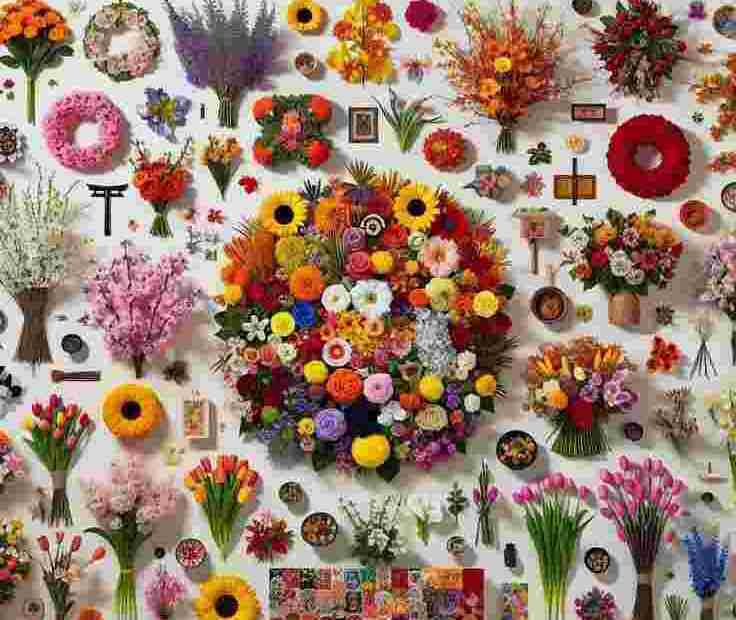
Flowers have been a universal language of emotion and meaning for centuries. From vibrant celebrations to solemn farewells, their presence transcends cultural boundaries and speaks directly to the human heart.
In every corner of the globe, blooms carry profound symbolism, embodying values, traditions, and stories unique to each society. Whether you’re celebrating love with red roses or honoring a loved one with lilies, flowers possess a timeless ability to convey emotions that words cannot fully express.
Even modern gestures, like choosing to send flowers to Spain for a special occasion, tap into this deep-rooted tradition, reflecting a shared appreciation for the beauty and significance of flowers across cultures.
Thus, in the next section, we will discuss how flowers across various continents are connected to people and highlight their cultures. We will also showcase different flowers and how they can influence people for generations.
Representation of Flowers in Different Continents
Here is the list of continents and how flowers have a cultural significance in their traditions and norms –
In many Asian cultures, flowers hold spiritual and philosophical importance. For instance, the lotus flower in India and China is revered as a symbol of purity, enlightenment, and spiritual growth. Despite growing in muddy waters, the lotus emerges pristine and untainted, making it a powerful metaphor in Buddhist and Hindu traditions. It often appears in sacred texts, artwork, and rituals, serving as a reminder of inner strength and resilience. Similarly, in Japan, the cherry blossom, or sakura, represents the fleeting nature of life. Its delicate pink petals bloom for only a short period, signifying the beauty and transience of existence. Cherry blossom festivals are celebrated annually, drawing people together to reflect on life’s impermanence.
In Europe, flowers have historically been used to express love, respect, and remembrance. The Victorian era popularized the “language of flowers,” or floriography, where specific blooms conveyed coded messages. A red rose symbolized passionate love, while a yellow rose could indicate jealousy or friendship, depending on the context. In contemporary Spain, carnations are a national symbol, representing passion and admiration. They often appear at cultural festivals, such as the Feria de Abril in Seville, where vibrant floral displays bring communities together. Gifting carnations or sending them abroad is a heartfelt way to share Spanish tradition and affection.
African cultures often view flowers through the lens of community and connection to nature. The protea, native to South Africa, symbolizes transformation and diversity due to its striking and adaptable structure. It is often used in celebrations and ceremonies to represent strength and resilience. Additionally, marigolds are highly regarded in many African and Indian traditions, often associated with honoring ancestors and deities. These bright, cheerful blooms are woven into garlands and placed in sacred spaces, blending beauty with spirituality.
In Latin America, flowers play a crucial role in religious and cultural practices. The marigold, or cempasúchil, is central to Mexico’s Día de los Muertos (Day of the Dead) celebrations. It is believed that the vibrant orange petals guide the spirits of loved ones back to the living world. Altars adorned with marigolds honor deceased family members, bridging the gap between the physical and spiritual realms. In Brazil, orchids symbolize luxury and beauty, frequently appearing at weddings and celebrations to convey elegance and sophistication.
Australia’s native flowers, such as the golden wattle, hold a special place in the nation’s identity. The wattle symbolizes unity and resilience, and its yellow blooms are celebrated as a representation of the country’s diverse landscapes and communities. Similarly, the waratah, with its bold red petals, embodies strength and survival, often appearing in artistic expressions of Australian heritage.
List of Flowers and their Cultural Presence in the World
Here is the list of flowers and their cultural significance around the world –
Lotus
The lotus is considered one of the purest flowers among Buddhist and Hindu cultures. It is seen as the embodiment of spirituality. Hindus and Buddhists view the lotus as a flower that will take them on the journey of spirituality and lead them to purity and enlightenment. Moreover, as the lotus emerges from the mud, it highlights the idea of transcending from materialism and reaching a spiritual awakening in yourself.
Cherry Blossoms
Cherry Blossoms are dearest to the Japanese, as they symbolize the unpredictability of life, and amidst that, you need to focus on the present moment and learn to appreciate it more and more. Moreover, in Tokyo, during the spring, they celebrate Hanami, where people come together to celebrate the festival and welcome spring with new hopes and wishes. Also, with the coming of spring, you need to appreciate beauty and focus on the cycle of living.
Peony
Chinese culture has a special place for peonies. They regard them as the king of flowers and hold them in a position of honor and prosperity. It is seen as a symbol of honor and prosperity. Furthermore, the Chinese people also associate peonies with beauty, wealth, and good fortune. Hence, you will see their presence at weddings. This is because it wishes the couple a happy union.
Lavender
Another one to add to the list is lavender. It is one of the most popular flowers in Provence, France, where it is seen as a symbol of purity and devotion. Moreover, it is associated with love and a sense of romantic gesture due to its beautiful fragnance. Also, you can use it as a sleep therapy, which can cure your sleeping issues and reduce anxiety issues.
Sunflowers
Sunflowers hold a special place in Ukrainian folklore, as they highlight loyalty and adoration. They are seen as the direct symbol of the sun, which gives a new lease of life and ushers a new dawn. In Ukraine, couples exchange sunflowers with each other, showcasing deep affection and commitment towards their loved ones.
Marigolds
Marigolds are special in Mexican culture. They play a huge role in Mexico’s Day of Dead festivities. The vibrant orange and yellow hues are known to guide the spirits to another world, mostly to the world of living.