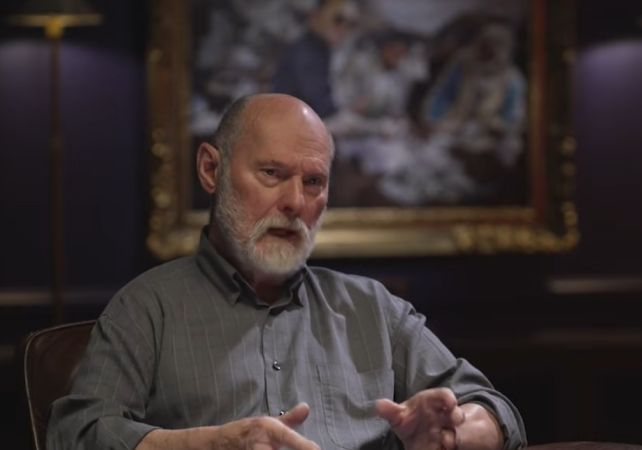
Here is the full transcript of Vietnam War veteran and Green Beret Dale Hanson’s interview: ‘MACV-SOG, Faith, and America’s Future’, on Shawn Ryan Show (SRS #260), December 9, 2025.
Brief Notes: Shawn Ryan sits down with highly decorated Vietnam Green Beret Dale Hanson to unpack what it meant to run recon with MACV-SOG, a unit that suffered an 85% casualty rate and gave its operators roughly 1-in-4000 odds of surviving a year. Hanson explains how a childhood hunting accident, a deep Christian faith, and brutal Special Forces selection prepared him for covert missions far behind enemy lines, including near-fatal close calls and extractions under fire. He details innovating the 30-round CAR-15 magazine in the field, the heroism and loss inside SOG, and the emotional transition from secret war to civilian life. The conversation closes with his journey into art, pastoring, and why he believes America’s survival now depends on returning to the moral and spiritual “moorings” that shaped his generation.
Welcome Home
SHAWN RYAN: Mr. Dale Hanson, sir, welcome to the show.
DALE HANSON: Thank you.
SHAWN RYAN: It’s an honor to have you here. So I started interviewing your generation of veterans this year and have had, I think three Vietnam vets on this year. And I just want you to know that I was in the military, went to Iraq, Afghanistan, did some contract work for the agency all over the Middle East.
And I just want to say that your generation, the Vietnam era, is what was really the motivating factor for me to enlist in the SEAL teams. And I watched all the movies, read a lot of the books. I mean, I just was infatuated with the Vietnam War and what you guys were doing over there. So it really is a true honor for me to be able to interview you guys.
DALE HANSON: Thank you.
SHAWN RYAN: And you came very highly recommended from John Stryker Meyer, our mutual friend.
DALE HANSON: He’s a good man, too.
SHAWN RYAN: Yeah. How long have you guys known each other?
DALE HANSON: We didn’t know each other in Vietnam, but we knew each other after. CNC North. I was CCC Central, so we were only a couple hundred miles apart, but our missions were parallel rather than at the same time.
So I knew him at the first Army reunions, the Special Forces ones, and got to be friends right away. Who cannot be friends with Tilt, right?
SHAWN RYAN: Such an awesome guy.
DALE HANSON: All you guys are awesome people, man.
Introduction
SHAWN RYAN: But, well, everybody starts with an introduction here, so Dale Hanson, welcome home.
DALE HANSON: Thank you.
SHAWN RYAN: A born again Christian since the age of five. A Special Forces operator and Vietnam War veteran who served three tours in the secretive MACV-SOG at Command and Control Center Central. Innovator behind the adoption of the 30-round magazine for the CAR-15 in SOG, solving a critical battlefield issue through personal initiative.
Author of numerous books including “Born Twice” and “SOG Missions to the Well,” which you detail your missions and those of your comrades. Pursued martial arts, black belts, pilot training, police work in Alaska, and a successful career as a sculptor.
Currently you’re a pastor of a small Baptist church. You’re a husband, father, grandfather, great grandfather and servant of Jesus Christ.
DALE HANSON: Amen.
SHAWN RYAN: Welcome again.
DALE HANSON: Well, thank you. Thank you.
SHAWN RYAN: I’d like to do a life story on you. Where you grew up, what childhood was like, getting into the Vietnam War, how you got into MACV-SOG, and then, I think an important thing for all generations of veterans who went to war is the transition home and how you got over some of the traumatic events and how you got back into the civilian life.
SHAWN RYAN: And yeah. But I’m just curious, are you from Alaska?
DALE HANSON: No. Northern Minnesota.
SHAWN RYAN: Northern Minnesota.
From Minnesota to Alaska
DALE HANSON: Coldest town in continental United States. Cold spot in the United States. And I was mentioning to one of the guys that 30% of Canada is south of northern Minnesota, and Maine and Washington state are 300 miles south. If you go to longitude and latitude, and it seems to come down right there. My hometown is pretty cold. Really cold.
SHAWN RYAN: So how did you wind up in Alaska? Is that getting the hell away from everybody?
DALE HANSON: It was after the war, after a whole bunch of stuff. I think my wife wanted to go more than anything else. That’s probably it. And she went to college in Sitka, Alaska. And the president and his wife just made her into a daughter, and she was a Miss Alaska kind of a thing, too.
Beautiful woman. Very, very smart. Smarter than me by a long ways. And it was difficult in California after the war, and I don’t know exactly why, but anyway, she says, “Let’s go to Alaska.” And she called the President and we had a job right away, and we went up there, and we’ve been there ever since.
And it’s a beautiful place. It’s small, conservative. We’ve just been there forever.
Growing Up in Minnesota
A lot started in Minnesota, where we grew up. Small farm house, clapboard. My dad came out of World War II. He was at Iwo Jima, Guadalcanal, Tinian, and another one, the big one. But he was Army because Marines get all the credit for it. But they would attach this one regiment of Army on all the attacks. And so he wound up at all the big battles.
And he came back and basically he wanted to be a farmer, get away from things, be quiet. And so we were on this single story, clapboard house, no electricity, no running water. I remember as a young boy, we had a well. And my dad took me out to the well, and I was pretty small, a couple years old, and he took me over to the well and he says, “This is where we have our butter and our cheese and stuff. And we put it in the well.”
He said, “Never go there. Never go there because you’ll drown. We’ll never find you.”
But then after a certain amount of time, my dad and mom moved to International Falls. You couldn’t make a living on the farm and so forth, so he got a job in the mill. And that’s where he stayed until he died. Working hard there.
SHAWN RYAN: Wow.
The Gift
SHAWN RYAN: Well, before we get in the weeds here, got a couple of things to knock out. So everybody gets a gift here. Those are Vigilance League gummy bears. Made in the USA.
DALE HANSON: Perfect.
SHAWN RYAN: Legal in all 50 states. Good to go.
DALE HANSON: Perfect.
A Question from the Community
SHAWN RYAN: And then just one more thing. We have a Patreon account. It’s like an online community. And they have been with us since the beginning when I was doing this in my attic. And so one of the things I do is I offer them the opportunity to ask each and every guest a question because they’re literally the reason that I get to sit here with you today.
And so this is from Moose: “How was our country different before you left for Vietnam versus when you came back? It seems the country has changed in many ways as it was during Vietnam. What do you think of the state of our country now? And are you hopeful for our country’s future?”
On America’s Moorings
DALE HANSON: An extremely good question. And I think we seem to notice things when they happen quickly and violently and in great degree. We’re losing our country incrementally, piece by piece. And most of it is the moorings that we have when we were founded.
In your own recollection, we were founded on the Judeo-Christian ethic. We were a Christian nation specifically. We didn’t believe in forcing someone. So therefore you had a privilege of not believing as well. But all of our documents, “We hold these truths to be self-evident. We are endowed by our Creator with certain inalienable rights that among these are life, liberty, pursuit of happiness.”
And so everything about our country was on those moorings. And if you look at the media and so forth, those moorings have disappeared. And sometimes I think the only thing that holds it together, the glue and so forth, is well-being. People figure as long as I am happy and well-being and my bills are paid and all that stuff, I’m happy with the country. And we watch and let it dissolve.
And some of the old, old preachers from years and years and years ago would say that apart from revival, our country will be lost. I mean, what will it take to save America? In every state in the United States, the major city is left wing to the point of almost being socialist.
So I have a lot of concern for America. And like the old time, it’s going to take revival. People are going to have to turn back to the moorings which made us great in the first place.
SHAWN RYAN: I don’t think I could have said that any better myself. Thank you. Thank you for saying that, man. It just, I don’t know, just makes it more real when somebody like you says it. Really does.
DALE HANSON: Yeah.
Beginning the Life Story
SHAWN RYAN: All right, let’s move into the interview. Where did you grow up?
DALE HANSON: Say it once more.
SHAWN RYAN: Where did you grow up?
Growing Up in International Falls, Minnesota
DALE HANSON: When did I grow up? Where? Mainly International Falls, Minnesota. I guess some of the foundational things about life and who made me or what made me what I am. I think it’s kind of instructive to see the end result of who you are, you know, what made you into that, you know, what are that. What was the ingredients in that recipe?
And there were a couple of them for me that were foundational, that made the character of Dale Hanson who I am. And the first one was when I was five years old, I became a Christian, which sounds kind of strange, maybe to some people, but I apparently had a good mind and I could converse with adults on pretty much a straight level.
And I was hearing the preacher, and he was so intense on the sermon, and his head was sweating. He had thin hair, and his head was down. And it was almost like he was preaching at the pulpit instead of us. And in his heart, it was just exploding in his heart.
And he says, at the invitation, he says, “You need to stand at the bridge of decision and look into the churning waters and dive to yourself and die to yourself and come up a new creature.” And I wanted to be a Christian at 5 years old, and I understood it from my Sunday school teacher, but when he spoke that, it was a foundational thing to me.
And so all week long, I had nightmares about it because as a child, I can understand straight, literal language, but I didn’t understand metaphor and simile and comparisons and allegories. You know, I didn’t realize that he’s making word pictures to make it clearer to people, to understand.
Well, as a boy, I remember the one place that there was a bridge was between International Falls, Minnesota and Canada. And that place and all the gigantic lakes of northern Minnesota, Rainy Lake and all the rest of them would pour through that gully into Lake of the Woods in the western half of the state.
And down below that bridge, it just churned and it beat against the rocks. It was like almost a yellow as it whirled rocks away. And I, in my mind, I kept thinking, this must be where it happens. And so I wrestled with it all this week. If I want to be a Christian, I have to be willing to do that. Not understanding, you know.
The Bridge of Decision
So the next week, my parents weren’t there, but I sat on the edge of the pew. And when the pastor gave the invitation, I went forward. And I was only five years old. And the pastor thought I must have gotten away from my parents or something. And he said, “What can I do for you, son?”
And I says, “I’m ready to have you throw me off the bridge.” And I thought that morning when the church was dismissed, we would go over there to the Canadian border, and that’s when it would happen.
And all of a sudden, he realized his metaphor was way over the head of a young boy. And so he looks to his wife and he says, “Mabel, this young boy would like to know how to become a Christian.”
And so we went back into the back room and I sat in a little red chair. I just vividly remember it. She sat in the chair next to me and she told me the plan of salvation, which I already knew. That we are born sinners, that man is a sinner by choice and by character, and that we are separated from a holy God and there’s nothing of our own merit that we can do to earn that.
But Jesus Christ came and he was God, and he took a, was born of a virgin and represented me in the human race. And so he died on the cross with Dale Hanson’s sins. And so I get saved by believing that and accepting. The Bible talks about the gift of eternal life, and I accept Christ’s gift that he did on the cross.
I became a Christian. But as all that at the age of five. Yeah, at five. And it must have been one of the first things of definitive courage that I did, because beyond just the spiritual thing, I physically thought that I was going to be tossed off that bridge or jump off myself. But, you know, obviously it was wrong because I was understanding the metaphor, but I didn’t.
Born Again
That’s been who I am the rest of my life. The Bible says you’re born again, which is how I got the title for my first songbook, you know, is that the experiences in Vietnam and what we went through was horrendous. Our odds of living was 1 in 4,000.
And it was so unique that when you come out on the other end, you’re not the same person again. And so anyway, that was kind of the first.
SHAWN RYAN: That’s a vivid memory for a five year old.
The Formative Years
DALE HANSON: Yeah, yeah, yeah. Remember, I don’t know what happened to my brains, you know, but I remember being across the breakfast table from my Grandma Hanson and one of my uncles, and I would be talking to them, talking to them. And they would just be smiling and listening to me talk, you know, and it never occurred to me until much later, you know, what that was like, you know.
But there were a couple other cornerstones in my life that may be who I was. Perhaps the third one, I didn’t say a second one. But as a young Christian, you want to be as Christlike as you can, you know, you want to, I mean, you’re a new person. You want to emulate or emulate. One is burn, one is copy. I don’t remember which is.
SHAWN RYAN: Me neither.
DALE HANSON: Yeah, but you want to emulate Jesus Christ and be as much like him as you can. And I was reading the Bible, I think it was about 12, 13 years old, and I came across a verse in the New Testament, Luke 2:52, the Gospel of Luke, chapter 2:52. And it talks about Jesus. He was 100% God and 100% man had to be God or he’d be a sinner just like us. And he had to be man to represent me.
So, forgetting where I’m at. Seeing the age 13 you read in the Bible, it goes like this: “And Jesus grew and waxed in wisdom and stature and favor with God and man.” And of course the word wax means increased and increased. And I was really captivated by that verse. It said Jesus was perfect in four different areas. If I’m going to emulate him, I should be also in those four areas.
So often in Christianity and spiritual things, we think of just the spiritual. But it says, “And Jesus grew and waxed in wisdom and stature and favor with God and men.” And so as I was looking at that as a young teenager, he was perfect physically, intellectually, socially, spiritually. And so I tried my best to be as close to perfect as I can in all those areas.
Physical and Intellectual Development
So physically I worked out hard and I don’t know if anyone in the high school ever did, but I worked out hard on my pull-ups, three sets of 35, and the dips was three sets of 50. And so when I worked on really hard, I jogged and all that kind of a thing.
And then intellectually I tried to read good literature. I read the classics and all that and books on logic and thinking and so forth so you could actually reason clearly. And of course, socially and spiritually, I’m a little bit clumsy socially, a little bit shy, but nonetheless try, you know.
And so that is one of the things that made me as round, well-rounded as I am today, if I am at all well-rounded, because I tried to encapsulate all four of those areas in my heart.
The Hunting Accident
And of course, the third thing is getting shot. You know, I was 13 years old and, you know, the first one kind of gave me a certain amount of courage. A lot of people ask me, what is the number one ingredient to be a Green Beret? You know, and I always think, well, people expect me to say, and they’re true, like physical strength, intelligence is in there. And there’s several bunch of them.
But after three years of combat, I think that number one thing of a leader, especially in that kind of a war, is being able to make a decision under pressure. You know, probably more than anything when it is so violent and wild and turmoil that you can’t even think, you got to come up with the right thing to do.
And I was hunting with my uncles. I was there. My brother was a year and a half younger, and then my cousin was two years younger. And two of my uncles and my uncles, young guys were going to do a drive. And they were going to go on the other side of a pretty large forest area. And so they went around and they left the cars or they were in the field. And so they said, well, give us at least a half hour. So they were walking around to the other side.
And I looked at my cousin, I said, let’s go for spin in the car. And my uncle, all cars back then would go 100. All of them did before. I don’t know what they do nowadays, but they don’t. And my uncle Walt’s could do 120. Like nothing is just fast.
But anyway, I went over there. My brother was having none of that. My uncle got in, but I had a 30-30 Winchester lever action. And so I opened the lever of the 30-30 and slid it across the seat, you know, barrel toward me. But it’s inoperable, you know, with the thing.
Well, I didn’t notice. But my cousin, who’s a couple years younger than me, said, well, that doesn’t look right. And he shut it. And that left it not only loaded and primed, but cocked, you know, so it’s cold, Minnesota.
I’m driving across the highway and all the bumps where the furrows were, where the farmers were the year before, and it just bounced and bump, bump, bump. And then the railroad tracks, I’d be coming on the highway, bump, bump. You know, it was just as I hit the highway that went off and it went through my hip, the cheek part, and out my tailbone a quarter inch out, and my leg shot out, just stiff as a board. Just totally stiff. It was like it was made out of wood, you know, on the accelerator.
Racing to the Hospital
And I’m heading down the highway and this car is going breakneck speed, going faster and faster. And I got both hands trying to pull my leg off the accelerator. I couldn’t. It just would not come. I was pulling and pulling, pulling. Now I’m, instead of steering with my elbow, I better get a hand on that steering wheel. So I’m steering, trying to keep it on the highway. And I’m grabbing the cloth on my pant leg and pulling, trying to get my foot off the accelerator. And we’re going 120 and we’re going down the highway.
And my cousin jumped out right away. He knew something was dreadful. But then I, the shock came out and I was able to pull it off the accelerator. And so we pulled off to the edge down there and got it out of gear. And I just sat there and I knew this was significant.
And before I knew it, my two uncles ran over. They found out what happened. They ran over. I slid over to the other side. My uncle went behind the steering wheel and the other one in the back, and we headed for a little hospital, 12 miles down the road, Warroad, Minnesota. And he was driving full speed, 120 all the way down there.
And we got to the hospital, and the road is separated from the hospital doors by 150 feet, maybe, maybe a little bit more with a long sidewalk. And the uncles ran out to carry me to the hospital. And it’s like definitively, I needed to appraise the situation. Even at 13 years old. I said, no, I got to walk. Walk. Because by trying to walk, I could assess how bad I was. I just knew that that’s the thing, you know, more than what a doctor can tell me. It’ll tell me if I’m broken, broken bones, you know, all that stuff.
And I walked all the way to the door. And at the door, I, all strength was gone. My weakness was there. And they grabbed me, put me in there. And I remember that that night. You probably haven’t had occasion to think of it, but when you have a lot of bleeding, they put a rubber sheet on top of the mattress so it doesn’t get ruined.
And the nurse came in and I asked the nurse, I said, am I supposed to slosh? And she says, what? I said, am I supposed to slosh? And I turned my body sideways and you could hear the blood, it was sloshing, holy cow. Out. And she just dropped her stethoscope and took off running. It seemed like an instant. And the doctor was there and I was definitely bleeding out, you know.
And I spent probably a week there. My parents brought me home to International Falls. This is 100 miles from Warroad. And had all the blankets and pillows in the car. I remember the first week after I got home, I said, I got to go to church. I didn’t want to make a spectacle of myself, but I just thought I should be in church.
And so my dad dropped me off. He says, are you sure? Because he wasn’t a church-going guy. And he says, you sure? And I said, yeah. And I didn’t realize it until he left, but there were steps going up. Oh man, I got to walk up those steps. But I walked up those steps and I had a Bible in my left hand and a pillow on my right. And I went to the back pew so it wouldn’t disturb anything and put that pillow down and sat on the pew.
But it was only in retrospect from years later that I kind of thought and realized that, you know, even at that young age, I was making decisions under extreme pressure. Is a 13-year-old can’t handle much more pressure than that, you know?
SHAWN RYAN: Yeah.
Building Confidence Through Adversity
DALE HANSON: And so anyway, those were three events just growing up that I thought were formative in my life. Going and getting older, you know, college and all that and the military. You realize that I can handle stuff. Maybe other people can’t, but I know I can, you know, and it gave me a comfort.
And even the simple thing about being a Christian, going to combat, knowing that you’re going to kill people and all that kind of thing, that was resolved in my mind too. And that it’s permissible to take a life for self-defense, capital punishment and war, you know, and that’s not a problem with me.
And I looked at all the characters. Moses was adopted by Pharaoh’s daughter to be perhaps the next Pharaoh. And he would have been a general in the Egyptian army. And then David, you know, King David, the shepherd boy who killed Goliath, they used to sing, “Saul hath killed his thousands, but David his ten thousands.” And all the way down the line there were heroes.
And in the New Testament, when it talks about the Christian life, Ephesians 6 talks about putting on the armor of God and all this kind of thing. So the metaphors of war are there.
SHAWN RYAN: That’s interesting. So you actually…
DALE HANSON: You did all…
SHAWN RYAN: The research before you went?
The Decision to Enlist
DALE HANSON: Yeah, most of the time I was actually in college, a ministerial student and I think it was in my third, third year a year ago. And I believed in the war. I’m very anti-communist and anyway, I kept thinking, reading the newspaper, so many GIs have been killed and all that stuff and, well, I’m thinking I’m ready to die, you know, if I have to. You know, I’m not eager, but I’m ready.
And you know, the least I can do is do my part. What a shame it would be at the end of this war being healthy and intelligent that I didn’t do my part. So I quit and enlisted with the proviso that I be able to try for Special Forces.
SHAWN RYAN: Wow. So you wanted Special Forces, right?
DALE HANSON: Yeah. It’s the only thing. If I’m going to do this, I’m going to be the best there is, that’s all there is to it. I’m not going to be anything else, you know.
SHAWN RYAN: How old were you when you made that decision?
DALE HANSON: Probably 21.
SHAWN RYAN: 21?
DALE HANSON: I think so. Third year of college.
SHAWN RYAN: What were you in, what were you in school for?
DALE HANSON: Major. Yeah. Theology.
SHAWN RYAN: Theology, yeah.
DALE HANSON: Yeah, of course. You take all the other stuff.
SHAWN RYAN: What was the one thing that you saw that made you decide to go the military route?
Witnessing Communist Atrocities
DALE HANSON: That’s a good question because it makes me think it was probably atrocities. I saw from the other side how horrific communism. I knew philosophically how bad communism is and how they enslave and murder people, but to see it firsthand.
And of course you had the one American who did this atrocity for the whole war. Calley. Lieutenant Calley. But it was routine fare for the enemy. They would wipe out entire villages and so forth, or leave one alive so that he could tell people who did it, you know, and that might have been a good part of it.
Special Forces Selection and Training
SHAWN RYAN: So when you went to the recruiter.
DALE HANSON: No, it wasn’t a recruiter at all.
SHAWN RYAN: Were you drafted?
DALE HANSON: No, no, I enlisted, actually. I had a perfect deferment. Students got 2s, ministerial students got 4s. They couldn’t touch you, you know, just, no, I’m going to go in this thing. So I drove down to Minneapolis and took all the tests and enlisted. And I wanted to see it in writing. I have the right to try for Special Forces. They can’t give it to you, but I can sure try for it, you know, and I did.
Well, I was undergraduate out of basic and got promoted, and then it was undergraduate out AIT and got promoted. And AIT is interesting to Camp Crockett, and I don’t know if you’ve ever heard of that, but it was a secret military installation in the United States to train people to fight. And it was outside of Fort Gordon, 10 miles in the woods. And it was paid for by excess funds is what the euphemism was.
And there were 600 of us there, and it was all people who were going to go commando, airborne, things like that. And we took the Special Forces test there, and there were 600 of us, and only three of us passed it.
SHAWN RYAN: Are you serious?
DALE HANSON: And I was one and Mike Buckland was another. And there was another guy, I think his name was Sorensen.
SHAWN RYAN: 600 people and three.
DALE HANSON: Yeah, only three individuals passed it. It was an interesting test, and I don’t know if it’s a routine one, but they had three tests done at exactly the same time. One was oral, and they read it on microphones. But the minute the scenario was read, they go immediately to the next one. You had to immediately put down the answer.
And then one was literal, where you were reading the words. And then there was another one that was visual, where they saw pictures, but three of them were at the same time. So you had to divide your attention at three different tests at the same time. And then in most cases, you had no time to really deliberate the answers. You had to intuitively put down the right one, you know. So it was an interesting challenge. I’ve not seen that they have done that since.
SHAWN RYAN: Interesting. Are there a lot of people that went through that. This is the first time I heard this.
DALE HANSON: I don’t know if we were. I can’t imagine we were the only class because it seemed like everything was set up, but it was like Quonset huts and so forth. It was wild. It was very, very basic. I used to do nunchucks and throw my knives. And at the end of the training day, I go out behind the Quonset hut and I’d throw my knives. You know, I had a little spot I would go and I looked on the ground.
All over the place were stockings with kiwi shoe polish in them. And these people were taking shoe polish and taking the lid off and put them in a sock. And they were getting high on shoe polish. What? Yeah. So they were all over the place. I guess it was the only high they had, you know. So I wasn’t too long until I realized that we weren’t all top tier of recruits up there. Damn.
SHAWN RYAN: So you pass that?
DALE HANSON: Yeah.
SHAWN RYAN: Then what happens?
The 1 in 4,000 Odds
DALE HANSON: Got to leave. Then went to training in Fort Bragg for Special Forces. Finished phase one, which phase one is designed to make you quit or weed you out. That’s it. Phase two, I forget what that was, but anyway. And the third one was for 11F. And that was never done to someone who was not a high rank NCO, E7 or above.
We had a lecture by a major, I think he came in and I remember him saying, SOG. Other people say, no, they said a highly classified unit. But I remember so, and but anyway, he says, we have this program in Vietnam in his special operations group, and you need to be 11 to go. That was your MOS, and that was hard. You had to be a senior NCO. But we were going to let this small group of us do, 37 of us.
And but then the proviso at the end of it, he says, at the end of this, all of you people, all graduates, are going to be sent directly to Vietnam, to SOG, and 85% of you will be dead in three months. So the first thing I did is I went back and said, well, how many do you have to start with? If every three months, 85% die and it’s over 4,000.
So the odds of living a year in SOG back then was 1 in 4,000. Assuming, you know, he wasn’t just trying to scare us, but holy. It seems, you know, fairly accurate in the sense that of my class, you know, most of them were killed. Wow.
SHAWN RYAN: One in 4,000 just to live for one year.
DALE HANSON: Yeah, yeah. So and it was a super good classes. Intelligence and spies and all this kind of thing. It even had safe cracking. And I mean, all that part that you could be the James Bond coming out of this thing, as well as the commando.
And so at the end of it all, we got our leave, flew off to Vietnam and landed up in the Trang, the headquarters of Special Forces and CC North Command and Control. It went by several names. Command and Control. It went by SOG, Special Ops. It went by Studies and Observation Group. And it seems to me there was a couple others, too. Euphemism that he kept changing the names, you know. But the first day north and south flew out, and the next day my group was at Kontum.
SHAWN RYAN: Wow. Let’s just rewind real quick. I mean, what is going through your head when they tell you 85% of you will be wiped out? You do the math. It’s 1 in 4,000. I mean, what’s going through your head?
DALE HANSON: For some reason, it might be a characteristic of youth, but you’re kind of indefatigable. You think that if there’s one that’s going to live, that’s going to be me. And I don’t know how to say it, you want to be in the most worthwhile program of all, accepting the idea that there’s going to be tremendous risk involved in it, and you’re willing to take the risk.
When you’re young, you just think, nothing’s going to get me, you know. As it was, it popped more than once in my tours.
SHAWN RYAN: So did they tell you what MACV-SOG would encompass, what the job description was, what you’ll be doing?
Meeting Bob Howard and Norm Doney
DALE HANSON: Pretty much. We knew mainly it was going to be intelligence gathering, a lot of that. Now we had the MIC forces, too, you know, the strike forces as a part of us perhaps to exploit things that we found and so forth. But that was a part of it, too.
So you get there, and the person who I met first was Bob Howard, and we hit it off really well. And he was first starting to recon because they wouldn’t let him go in the field anymore because for the third time they were going to put him in. He’s supposed to get his Medal of Honor.
And it’s funny, because in college I knew Greek because the New Testament was written in Greek. I had to learn Greek. And I’m walking by the team house, and there’s an outline of a horseshoe up there, which in Greek is omega. And I and I and Bob Howard sent me. He said, what are you looking at? And I says, Omega up here. I said, was there a project here called Omega? And he says, I need to paint that building. That’s all he said.
But Bob was, his wife taught Sunday school in Alabama in a little, tiny Baptist church. And he’s just a great man, you know. And we talked, and he says, well, I think I’ve got the guy for you. And we left the headquarters, and there he is. Norm Doney was my 1-0, and Norm had Silver Star and seven bronze, and it was his third or fourth tour.
And Bob Howard sells down. He says, I think I got the man for you. And talk with Norm. Done in. Some of those guys can take your measure pretty quickly. They know what you’re going to be like, whether you’re going to falter in the field and all that stuff. And he took the measure, and it was great.
It was interesting because he had come from the mailbox and his wife had sent him a magazine, and the cover of the magazine was men’s magazine. And the cover was Sergeant Doney. Six man, Mission Impossible team, drive out and kill 200 VC. And that was my team leader. Holy. Yeah.
SHAWN RYAN: What’s the backstory behind that?
DALE HANSON: Yeah. Well, he was doing his recon. He caught them doing PT on a riverbank, and he just called in the airstrikes and stuff and just nailed them, you know. Wow. Wow.
SHAWN RYAN: What’d that feel like to be, yeah, have that guy as your leader.
DALE HANSON: Yeah. But Doney was not only was a team leader, but he just, he was going to teach me everything. He knew I was going to be a sponge. And he wound up being my team leader, my father figure, my mentor, and my friends. And after the war, I would see him in Oregon, you know, and just a wonderful man, a great man. And he retired after, I don’t know, 25 years or so in the military.
SHAWN RYAN: How big was your team?
DALE HANSON: Say again?
SHAWN RYAN: How big was your team?
DALE HANSON: There were three Americans, and I think we had, I think it was five or six indigenous. And my team was a little bit unique because most of mine were Chinese, so Chinese and Vietnamese. And we started to lose some wounds, you know, so we were down to, like, six and three, you know.
SHAWN RYAN: Damn. How much training did you guys do before you went out on operations?
Mission Preparation and Operations
DALE HANSON: Oh, constantly. Only coach, you’d be prepared well enough that they could grab you and say, we need you to go in right now. And they would be confident. But when you get a mission, the first thing is the talk. The headquarters would find Doney or me if I was leading it. And they say, this is your warning order and you’ve got a mission. And the briefing will be tomorrow at 2 o’clock.
And so now you know something’s going on, so you make sure your people don’t go to town on leave or something like that. And then the next morning you get your warning order, I mean the mission briefing. And they’ll say, this is where you’re going, this is what you got, this is what your mission is, all that kind of a thing. And you kind of appraise that. Is this one where I’m going to need more defensive things or, you know, key it to the mission and so forth.
And then if it required special training, then you take your people and you go to the range or whatever and do that specialized training that they don’t normally do. And then you give a brief back in which it’s in a briefing area and all the people are there, the commanding officers there, the S2, the S3, S4 is there, everybody’s there and anybody can ask you any questions they want about the mission. The captain and the colonel and all the rest of the.
When they’re totally satisfied that you’re ready and you got a degree of success looking ahead, then they okay it. And then you’d have a time when the choppers are out there and you meet them out there and get inserted into the target area.
A lot of people talk about, you know, I did 40, 50 missions. I don’t know how you can do that if you go through the warning order and all that kind of a thing. And the average intelligence mission is seven to ten days.
SHAWN RYAN: Damn.
DALE HANSON: You know, my missions overseas aren’t that many. It’s less than 10. But I had a lot of them in country too, which we didn’t count. You know, the old timers wouldn’t count. That only counted SOG because SOG missions were in the deep and enemy denied and controlled territory. Laos, Cambodia, Vietnam. Those were our missions. Anything else that we did, we kind of regarded as just training missions, you know.
SHAWN RYAN: Interesting.
First Mission Preparations
DALE HANSON: Yeah. And Dawning, I remember doing the—I used to talk about it was just a training mission. Dhoni said, “Don’t forget 58,000 people have been killed in those training missions.” You know, you had to remember that because it’s in Vietnam, it’s still dangerous.
SHAWN RYAN: What would some of the missions be in CONUS over the fence?
DALE HANSON: Yeah. Intelligence was probably number one, you know, and sometimes it’s direct action. My team in particular was specialized to be a prisoner of war snatch. We would, that’s what we did.
And usually you’d want to have a couple extra people because you have the snatch, you know, the attack element, and you have somebody behind you with a radio in case something goes south. And then you got the two wings, you know, the security. So the wing can say the common or something like that, or, you know, so you’re talking about two on each wing in an attack element and then somebody behind.
So ideally you’d have about 10 people, but it’s hard to hide 10 people too, you know. But we would have the attack element. And I’m not sure if I’m getting carried away here, but a lot of times we would have a couple claymores, and we have a claymore here, claymore here, and in between, we have a dead—not a dead space, but empty space, and that’s where we would time it.
So the prisoner was right there, and we’d blow the claymores. Everybody down there is done. Then we run out there, grab the prisoner while he’s still in shock, tie him up, search him, the whole deal, and get off the road quick, and then get your people to come in. But that’s one of the big ones. Our specialized in POWs, and a lot of them did go for POWs.
SHAWN RYAN: How many POWs did you guys—
DALE HANSON: We got two, but they both died. And one died in the—in the—and the medics in the bed. He just—his plane died. And there was one that I believe an NVA sniper shot him at the helicopter. He could have been shooting us, but I think they popped him because we were ready to just lift him on and—and he took the shot. He went down just like that. And I think they took their own guy so that he wouldn’t talk, you know?
SHAWN RYAN: And of course, you guys were getting our POWs.
DALE HANSON: No, you were taking—we were trying to catch POWs. Yeah. I’m sorry. Yeah, yeah, yeah. Usually when we are trying to get our own POWs, that’s a pretty big unit.
SHAWN RYAN: Okay.
DALE HANSON: Yeah.
Interrogation and Death Mask
SHAWN RYAN: What would you do with—when we’re taking prisoners of war, what are we doing? What would we do? What would you guys—
DALE HANSON: Well, you want to interrogate if you can. We don’t torture. I’ve never heard of torture, but interrogate, all that kind of a thing and let the S-2 people figure out how to do it.
I remember—I can’t remember what mission it was, but took out this guy, and he was alive and all that stuff. And he looked at me and he said, “We think you’d be dead already green,” you know, all that stuff coming from the ground and come up and “we think you’d be already dead, you know. And we know Ken kill, you know.”
And so I remember I mentioned it in one of the books, but I was going to go on a mission that I didn’t think I was going to survive it. And so I took the camouflage and I reversed the protocol because you usually, you know, the shadowed areas, you kind of lighten them up a little bit. And I reversed it.
I took the shadowed areas and I made them dark with that dark green. And then the highlights, your cheeks, I made them with the lightest and then I took a bunch of horizontal—that beige kind of a color. And I put horizontal ones out here so I looked like a death mask in green. And I didn’t think I was going to live. But boy, if they came after me, they were going to think they were someone to deal with, you know.
SHAWN RYAN: No shit.
DALE HANSON: Yeah.
SHAWN RYAN: Why didn’t you think you were going to make it?
DALE HANSON: I don’t remember. I don’t remember which one that was. That’s probably one of those things you try to forget. Yeah. I think it was simply the intelligence we had, the people who had been there before, things like that, you know.
SHAWN RYAN: Did you paint your face like that often?
DALE HANSON: Did I think like that? Yeah, I did. You know, you talked to the SOG guys. They’re a little bit reticent to tell you their anxiety. I don’t think many of the guys talk. I’ll admit it. I was—there were many times I didn’t think I was going to live.
But it’s not cowardice at all. What it is is that when you’re going to go anyway, it shows the opposite. You know, there’s a—I remember my friend Dhoni Novi. He fought in World War II against the Germans. He was in the Czech resistance. And then he went and fought in another war in Korea. And then he came to our war and by then he was old and I got to know him and actually in training group and he ran the mortar pool because he’s too old to go to the field, you know. And I was doing martial arts.
SHAWN RYAN: You were serving with World War II guys?
Serving with World War II Veterans
DALE HANSON: Yes. Yeah. Yeah. That’s incredible. I know. If he fought the Germans from the Czechoslovakia deal, he’s a big Czech guy. He told me once that he couldn’t remember how many times he swam the Rhine. Amazing. Yeah.
But Novi is just amazing. I’ll get sidetracked. But Novi says I was always stealing his employees because I was really into martial arts and doing that nunchako, you know. Well, we had this teak from Vienna. It was really hard. And I would always get his guys to millet on their milling machine, you know. And “you keep taking my guys.”
I remember I was getting ready to go on one of these really rough ones, and I think I was talking to Novi and he gave me a book of poetry. And I was reading. It was poetry of the wars, you know. And this one was—I memorized it. I was really nervous about going out the next day.
And that poem was “All night long thrown against a buddy slain with his gnashing teeth bared to the full moon. I was writing letters full of love. Never had a hugged life so dear.”
SHAWN RYAN: Wow.
DALE HANSON: Yeah. And things like that. Novi would give me something like that. He never, never suggest for a moment that you’re nervous, you know, but he would do something to encourage you.
Nobody was interesting too, because nobody was a friend, you know, and he had the mortar pool. And then there was one who ran the mess hall and there was another one who ran the club. And they were going from Kontum to Pleiku, six miles away, to buy stuff for their knees. And Novi was in the jeep too.
Well, on the way, the NVA or the VC attacked the jeep and blew it up. I mean, it flew up in the air upside down. And Novi landed sitting up like I am this morning with his back against a tree and the bullet creased his forehead and just blood was coming down.
And the one who’s driving the jeep couldn’t get out from the steering wheel and they shot him. And then the other one, when the jeep flipped over, he was under the jeep and he could see the NVA and he tried to move his foot so that they wouldn’t see it and they saw the movement and they shot him in the head.
Well, they went to Novi and all the blood there, and Novi’s eyes were wide open, just like that. And he’s just frozen, you know. And anyway, the one vehicle said, “Him die, him die.” So they went over and they saw his ring. They tried to pull off his ring and they couldn’t get the ring off.
So one of them grabbed a knife and they started sawing on his finger and they sawed his finger off and they held up the ring to the light, you know. And Novi, who is totally cognizant of what’s going on, wouldn’t move if he could, you know. But he kept—”I cannot move because these guys will finish me off.” You know. But he watched them do it.
You know, I went and I saw him in the hospital and in Pleiku. Just a good man, you know, old. He gave us a couple classes in Levin F school in Fort Bragg. You know.
SHAWN RYAN: What’s it like to be able to serve with World War II generation?
DALE HANSON: Say it again.
SHAWN RYAN: What’s it like to be able to serve with the World War II generation? I mean, I would imagine that—
DALE HANSON: Good. It is really good. There are a couple of them. I don’t—I think they thought of it more in terms of service, and it was only the unique aspects of it that were related to what we did that they would mention at all. Guerrilla warfare and all that kind of a thing. And they would mention that, but it was never in the context or it never seemed like they were trying to show that they had an experience that was better than us.
It was bigger and all that kind of a thing because of the World War as opposed to Indochina. But there was so much I got from them. Novi was one. But they never bragged about it, talked about it, really. They just—this is a thing that they knew and they did. They experienced and went through, and there were lessons to be learned.
If you, as a young guy would talk to them about it and they’d say, you know, “I went through something like that,” but there were people—it’s like my own father, you know, he did the entire war against the Japanese, you know, and never talked about.
SHAWN RYAN: Wow.
DALE HANSON: Yeah, wow. Yeah. Yeah. There were some good ones there.
First Mission
SHAWN RYAN: Very interesting. Let’s talk about your first mission. Your first mission.
DALE HANSON: First mission. Oh, boy. What was would have been recon would have been with Donnie and Jim Morris.
SHAWN RYAN: How long were you in country before your first mission?
DALE HANSON: Oh, not long at all. Month and a half. Maybe a month and a half. Almost right away because they got on team right away. Some of the other guys took a while to get a team. I don’t remember which is the first ones.
SHAWN RYAN: Do you remember waiting for your first mission?
DALE HANSON: Yeah. And it wasn’t fear, it wasn’t nervousness or anything like that. It was anxious.
SHAWN RYAN: Were you excited?
The First Mission with Dhoni
DALE HANSON: Ready to go? Yeah, I want to go and get this done. Knowing full well, of course, that the danger is there. But Dhoni, my team leader, had such a confidence in his demeanor and stuff. You know, he knew what he was doing, and I was confident he knew what he was doing. And we’re going to do this, and boy, I did maybe three with Dhoni.
I think the one that kind of stands out, but I don’t know if it was the first one, was Ben Het was under siege. The communists, of course, would siege major places like the French, Dien Bien Phu. That broke their back, you know, it was like they had no more will to fight and so forth. They tried to do the same thing to the Americans. And of course, Tet offensive was a disaster, unless you looked at the news, you know. And then they made it out. Oh, they attacked 200 places in Vietnam. And what they don’t say is they lost everyone.
But I was with Dhoni and we were doing a reconnaissance thing on the Ben Het. We were way behind the lines. And our thing was to gather intelligence. And our motto that people don’t mention to you is that “break contact and continue mission.” A lot of times people get in contact and then they want to get out. And the real motto in SOG is you break contact and then you continue mission. So you break contact, you avoid the enemy and all this stuff and get some distance between you. Then continue the mission, you know, with Dhoni.
And there were enemy everywhere. Just totally saturated. And they were all going toward Ben Het. The big siege was going on. And it seemed like I had been watching the siege for quite a while.
Finding Fresh Footprints
And anyway, we come across the trail system, and Dhoni and I went onto the trail. The other guys were security, and it looked really well traveled. And I looked down here and there are footprints in the mud that was so new that the water was just starting to seep into the footprint. So it had to be like a minute or two minutes ahead.
SHAWN RYAN: Wow.
DALE HANSON: Yeah. And so anyway, we now were hearing movements down the line, and they’re coming again from the other end. And I had the camera and I took a picture of that footprint with the water just starting to seep in there. And I just barely got off that trail before the first people started going by.
But we don’t fire them up because our job is intelligence, you know, so you let them go by. Your job is intelligence. And so we’re continuing on. We’re looking for enemy and finding this intelligence. We RON for the night, remain overnight. You use the same term, RON. We RON for the night.
And as I’m in there, I can hear the communists walking all over the place. I even could hear the trucks down the highway farther away and even tailgates going. And sometimes that’s not a good sign because it means they’re unloading troops to come after you, you know.
But as we’re kind of waking up and all this stuff, you know, I had this smell that brought me back to when I was a boy mowing lawns. And it was grass, green grass as being mowed. It was like, it just was so familiar to me.
Discovering the Artillery Position
So I got up and we maneuvered to this trail area. And it was probably from me to you, probably six feet wide, eight feet wide, maybe wider, where the people, the NVA were going by battalions toward Ben Het, trying to take them out. Had mowed it down and walked through it so much. It was all the grass was broken and you know, that smell from grass down and stuff, it was just strong, really strong.
And I’m looking and it’s like they are saturated in this area. You know, we’re going to be in trouble pretty soon. Well, anyway, and the team were maneuvering along this road. We’re about to come off the road and all of a sudden I looked down and I saw commo wire. It was hidden quite well, but I found commo wire.
And so as soon as we got safely off the trail, I mentioned to Dhoni whispering. I said, “Commo wire,” you know, and we went over and sure enough there was commo wire. So I said there has to be a headquarters up here somewhere. Of course, I’m just whispering.
And so Dhoni and I leave the team and Dhoni and I start following where the commo wire is trying, because we figured the whole team, we’re not going to get there quietly. So Dhoni and I start working our way along where that commo wire is. And it goes for quite a while.
Then all of a sudden I get to like a low area where there’s like an old river or something like that. And then on the other side, I hear the artillery that they’re using to bombard Ben Het. It was, I don’t know, 50 artillery pieces, 105s, 155, that kind of thing. And they’re going boom, boom, boom in the camouflage. But I can see the leaves blowing every time the shell comes out, you know.
And we get closer and I start getting close and I can see where scores of artillery pieces are left along here. This is what was bombarding Ben Het and it is the place where all the artillery was.
So anyway, we start looking for landmarks to get it really zeroed down to exactly where that would be on a map. And I saw like where that old river was, where there was kind of a cliff face and I said, “That’s it on the map” and so on. And we isolated, we got, knew exactly where it was, you know.
The B-52 Strike
So we make our way, join the team and do a sit rep back to the FOB and said we found the artillery. Basically what we’re saying that is bombarding Ben Het. And they said immediately go, I forget what it was, the nearest LZ. And they said, “As fast as you can go.”
And so we get to this LZ where chopper is going to pick us up. Well, at the same time we were there, our Mike Force, our strike force from FOB that’s out there with a company, but they’re a few miles away from us. And I was talking to a couple of the guys after the war because what they wanted to do, they’re going to bomb it. And they wanted us out of there, you know, because it was going to be a saturation bomb.
Well, anyway, they told them because they could take a recon team out quite quickly, but they couldn’t likewise do that to a company, you know. So the order that came to them was maneuver. And I think they said, seven clicks fast, south as fast as you can go.
And anyway, talking to the guys afterward, they were going so fast they could hardly breathe. And about the time they got seven clicks away and we were off in the choppers, 100 B-52s hit the place. I didn’t know there were that many in existence, but the word came down. 100 B-52s hit the place.
SHAWN RYAN: Holy shit.
DALE HANSON: And I didn’t know we had that many, you know.
SHAWN RYAN: Me neither.
DALE HANSON: And maybe it’s hyperbole. So anyway, we get out, get back to base. And that is the day the siege of Ben Het ended. That intelligence flying that we found, you know, and they dropped in all the B-52s that ended the siege at Ben Het.
SHAWN RYAN: Wow.
DALE HANSON: Interesting. Yeah. Wow. You look back and say we did something. Yeah. And that was the…
SHAWN RYAN: That was the first one.
DALE HANSON: I think it was. We may have had some locals, you know, probably, you know, close by that we called locals. And of course Dhoni had to constantly tell me 58,000 have been killed in locals, you know. In country, you know, don’t get overconfident, you know. Wow.
Understanding Mike Force
SHAWN RYAN: Could you, would you mind? What was the Mike Force?
DALE HANSON: Well, we had companies of people that would attack targets of opportunity. It went by different names, dependent Mike Force, Strike Force, I forget what they all were. Hatchet Force I think is what we called ours. And I was on a hatchet force for a while. It just went by different names depending on who you were attached to. Yeah.
SHAWN RYAN: So were they, you were attached to them or they were attached…
DALE HANSON: They were part of the FOB.
SHAWN RYAN: Were these SOG guys as well?
DALE HANSON: Yeah, they’re all SOG. Usually there were 15 Americans and about 120, usually Montagnards, you know, in the old days. And these days, we’re about done. Just before I got there, we had battalions of Chinese, and over the years, the Chinese have about been wiped out. And I had four Chinese on my team. And they might have been the last fighters, as far as I know. Who knows if they retired to Pensacola, who knows? Wow.
SHAWN RYAN: That’s a hell of a first mission.
DALE HANSON: Yeah. Yeah, it was. Yeah. Yeah.
Pre-Mission Rituals and Preparation
SHAWN RYAN: Did you develop any patterns or rituals or anything in particular that you or your team would do before operations?
DALE HANSON: I don’t think so. Not spiritual or anything like that? I think I would always try to encourage our people. I had a closeness to our mercenaries that I don’t think anyone else really had. But I’m one of the guys that I put my arms on them and I can hug them or I can tease them and all this stuff. And it never interfered with my command because they knew when the time came, okay, what I said was it.
But I think prior to all these missions and all this stuff, I’d always make sure my people were emotionally and ready for the missions. You know, they weren’t Christians, per se. I had, most of them were Buddhist, I think.
SHAWN RYAN: You know, how would you prepare yourself?
DALE HANSON: Well, day by day, I always prayed. I tried to read the Scriptures every day. But with me, I always do the prayer. But it wasn’t like a lot of praying. It was almost, I don’t want to diminish what I was doing. As you would perhaps say grace to yourself when you eat a meal. You know, you’ve prayed, and it’s not a long prayer.
A lot of times going on a mission, unless there was something unique about it, I would pray. “God be with me, help me to be wise, help me to be courageous,” and things like that. “Protect me,” things like that. But I didn’t pray a long time. I think my time there was in a readiness platform, emotionally and spiritually.
SHAWN RYAN: Gotcha.
DALE HANSON: Yeah.
SHAWN RYAN: Did you carry any sentimental stuff? Pictures of family?
DALE HANSON: Yeah, yeah.
SHAWN RYAN: Anything?
DALE HANSON: Yeah. Usually never told them what we were doing. Once in a while, I might say, if somebody died, I would probably be more prone to tell my dad or my brother. Definitely not my mom or someone like that.
SHAWN RYAN: Now what I meant was, did you carry any sentimental type things on your person during operations? Maybe a small Bible or pictures of your family or anything that you thought would keep you…
DALE HANSON: Totally sterile?
SHAWN RYAN: Totally sterile.
The Chinese Characters
DALE HANSON: Totally sterile. I mean, absolutely. But the only thing that about me that would violate the sterility of it all is when my Chinese would write my name and “Kabaya Chin” on my back.
I don’t think we mentioned it, but my name is Hanson, which renders, well, if you’re Chinese, it’s Han Son, you know. And they said, “We have to go to the witch doctor, see how best, the most auspicious way to write your name.”
And so they, the first half was easy. The Han dynasty was the warrior dynasty of China. And I forget now after these years about what the Son was. But then they would write, “Kabaya Chin,” which means “never die.”
So I’d go out in the field and my Chinese would run over, “Oh, Hanson, we forgot.” And on my back and usually above my collar, where God could see it or their God could see it, they would put the Chinese characters, Dale Hanson, Kabaya Chin, never die. And in their mind, God is going to be looking for me on this mission. Wow. Yeah, I didn’t discourage it.
SHAWN RYAN: So you got pretty close with those guys?
DALE HANSON: Oh, yeah. No kidding. Yeah. Go to lunch in town with them or something like that, you know. Yeah. Yeah. Good people. Yeah. And they never, they never took advantage of it, ever, you know. Just good people.
SHAWN RYAN: Let’s take a quick break.
DALE HANSON: Okay.
The Australian Mission
SHAWN RYAN: All right, Dale, we’re back from the break. Nice shooting, by the way. That was a damn good time.
DALE HANSON: Enjoy that.
SHAWN RYAN: But we just wrapped up your first mission with SOG and so wanted to move into some of the other missions that really stick out in your mind. I mean, I know you did three different tours over there. I think you said 50 missions, 20 of which, if I remember correct, are in combat.
DALE HANSON: Yeah.
SHAWN RYAN: And are in Southeast Asia.
DALE HANSON: Right.
SHAWN RYAN: And so I’d like to talk about the mission that you did for the Australians.
DALE HANSON: Okay. Of course, South Vietnam was divided up into sectors. The Koreans had some, Australians had some, and Americans, of course. And it might have been someone else in there too, in that mix.
The Australians somehow had been very much infiltrated in their headquarters or whatever it was. So anyway, we were tasked with a mission for the Australians. And it was an all Green Beret team, all five of us.
And when it came time to get the mission, I don’t remember how we got there, if we went by chopper or by a truck or something, but it’s definitely far away from anything. It was in the Thule somewhere. And we went across fields and stuff from when the French were there.
And when we went across several of these fields and so forth, there was a huge tent like they had in World War II and so forth, a squad tent or bigger than that even. And that was a makeshift headquarters for the head of the operations for the Australians.
So the five of us went in there and the Australian commander came out. He was a major and he looked exactly like Hollywood. He had the shorts and all that stuff and the knee high socks and all that. And he came out to see us and he had the hat and he had that really trim mustache and all. And he was quite formal as European people are.
But anyway, as it turned out, they were so highly infiltrated that this major didn’t think he could get any mission started from his own people, from his own headquarters and so forth. Because someplace along the line there were people who were double agents and so forth.
So anyway, he gives us this mission. He said that COSVN, the headquarters for the communists in South Vietnam, they were quite certain, had their headquarters centered inside of a rubber plantation from the French and people were bought off.
The French didn’t want anyone to know about the presence of the NVA in the Viet Cong because they didn’t want the rubber plantations bombed. And of course the communists certainly didn’t want it known by anyone. And so we were tasked with this mission.
And the other thing was South Vietnam and some of the other people were being bought off. So there’s this triple thing here. Someone is paying the money to look the other way. They have the headquarters in the rubber plantations. The French know it and so forth.
So we were given a mission to find that headquarters and report only to that major. And so we were in that tent and he was giving us all the parameters of the mission. And of course it’s intelligence gathering. It’s not about getting a spy or anything like that.
So we start on this mission and we’re making our way toward what we think is the rubber plantation. And there’s a lot of enemy around, although a lot of it is ex-farmland and things like that, so hard to find places to hide and so forth. But we start making our way toward where I think is the headquarters. And I was the team leader and I took point.
SHAWN RYAN: Were you co-mingled with the Australians?
DALE HANSON: Say again?
SHAWN RYAN: Were you, was this a joint operation?
DALE HANSON: No, not a joint operation. Just for that Major. And once we got the information, we give it to him and he’d take over from there. So about the closest we’d get would be a helicopter, one of theirs, and he would give us only one. And some of the parameters were about what you could shoot and not shoot at, things like that.
So anyway, we’re going through the bushes and all that kind of a thing. And I’ve never seen so much bombs and booby traps and stuff all over the place. I couldn’t believe it. And it was really moving slow. It was on my knees and stuff like that.
And I got to a place I could just sense the enemy was there. I just knew it. And the ancillary sounds or hum or something. There’s something big close by.
So I’m on my belly, I’m crawling on my belly through the really thick tangle that’s there. And I’m really going slow because I know somebody’s in front of me. And I get to a certain spot in this tangle and I smell something and I freeze. I don’t move or anything like that.
And as it turns out, it was the breath of their sentry that was there on the edge of the line. And I am so close I can smell his breath.
And so anyway, it’s like now it’s taken me an hour, hour and a half to crawl this far without being heard. Now it’s enough information to know that that which I thought was really the headquarters for COSVN.
So now I need to back out of there. And I could barely go forward quietly. And now here I got a guy who’s breath distance away and I got to go backwards. And boy, how do I do that?
And I kind of gave a signal to the guys behind. I could get my hand back there and I could see his shadow. Once I located him by smell, I didn’t move until I could kind of see him. And then I could see his head move in the shadow slightly on the other side.
So anyway, I prayed and I did that quick prayer and I says, “God, there’s no way I can back out of here quietly. Can you cover the sound?”
And about the time I said amen, a jet took off from someplace 50 miles away and went directly over the top of us.
SHAWN RYAN: Are you serious?
DALE HANSON: Yeah, just absolutely certain. And so I backed up as quickly as we could. We tried to make our way back to an LZ and lessons learned too, because I know I’m going to give that major his information. He’s going to drop the big bombs, you know that, assuming his headquarters will let him.
But as I’m going back, just a lesson learned, as I’m going back and trying to lead my people to a place where we can be picked up, I find an LZ and it’s actually a little bit too big. It’s too enticing, you know, it’s too big.
But they said that they would not pick us up in any LZ unless we had recon all the way around it. These are big LZs. This is crazy. By the time I worked my way all the way around, what’s to say somebody didn’t go where we started from, you know, it was crazy.
And it was an hourglass shape LZ. So it was wide on the two ends and narrow in the middle. And I thought the best I can do is to set up right in the middle of it. I can watch both hemispheres and call in for my extraction.
And as I’m there, all of a sudden I see movement across the hourglass from me. And it’s NVA, big time movement, company or battalion, big time coming across.
And I could read their mind almost. They didn’t want to cross an opening either. And so they would go across the narrowest place right over the top of me.
And so now it’s one of those things of praying that they’ll go by and be ready to take out as many. And they had a front element, a patrol element in the front. And I think there was about seven or eight of them.
And I thought I was pretty certain I could take that element. But then the rest of them, you know, we would put them under fire, but, you know, once they collected themselves, they’d overrun us. No quit, no problem.
SHAWN RYAN: Damn.
DALE HANSON: So anyway, long and short is we called for the extraction. Same kind of a thing. “God help us to get through this thing.”
And same thing, an aircraft came by and the point element took off running as fast as they could. Went right past me, and I’m shorter than here to you. And went right past me without looking and took off. And then the rest of them followed suit.
So we’re ducked, we’re in the mud. And we got as low as we could go and then we sunk into the mud. And then the chopper came in and they wouldn’t go if we were under fire, very strict rules of engagement. But they got us out.
And I gave the debrief and gave it to the major and I had no idea what happened. You know, you hope that they took out the place, you know.
SHAWN RYAN: So you never got confirmation?
DALE HANSON: Never got confirmation that they did anything. No, I suppose, in different countries or something, they did.
SHAWN RYAN: What did he say when he got the intel?
DALE HANSON: Very Prussian, if that’s a good word. Strict and all that stuff. Formal, you know, British or, you know, that kind of a thing. They took our information, so forth and “thank you, Yankee.” That was it, we’re gone.
SHAWN RYAN: Oh, yeah.
SHAWN RYAN: Did you do any joint operations with any foreign guys?
DALE HANSON: No, no, not that I remember.
SHAWN RYAN: Yeah, that wasn’t, was that a thing back then or everybody was pretty segmented into there?
DALE HANSON: Yeah. They had their own areas of operation and all that.
SHAWN RYAN: Gotcha. Yeah, gotcha. Let’s move into Lima 50 mission in Cambodia. The Lima 50 mission in Cambodia, which we
# The Biggest Intelligence Find of the Vietnam War
DALE HANSON:
We call them the biggest intelligence find of any small unit of the Green Berets of the Vietnam War. That takes a backstory to bring you to it.
The Communists had infiltrated headquarters in Saigon significantly to the point where a lot of people were being informed of what we’re going to do and so forth. Special Forces had a project called Gamma, one of the Greek letters: Alpha, Beta, Gamma. You would probably know that the Finnish number one commando was on that and actually was killed coming out on one of the missions.
Anyway, we were at the place with this intelligence flying that so many people and teams were being compromised that they actually scrubbed the team, Project Gamma, which was really bad at that time. Gamma supplied 75% of all intelligence for the Vietnam War. Those Special Forces guys that were up to the fence and some of them over the fence into the other countries. But 75% of all intelligence came from them. So it was a real gut-wrenching thing to cancel the program.
Lima 50: Deep in Cambodia
So anyway, Project Gamma gets canceled and then I wind up on a mission as Lima 50. If a number ends in two digits, it’s Cambodia. If it’s a single digit like India 6, it’s Laos. So this was in Cambodia and that tri-border area where things were really hectic.
We were on this mission and it was just dense with enemy all over the place. You couldn’t believe how many there were. My roommate was from Minnesota as well, and because it was his team to start with, as he came back from leave, he took over the team and I was there and Bob Garcia was there. And then we had our indigenous people and we were sent on this mission to gather intelligence and so forth.
So we’re on the mission. Two or three days is really, really hectic stuff, real thick stuff. And bumped into some Communists and one of them was when I lost my fingers on my hand, a whole bunch of them. And we got into a firefight. There was a lot of them and I was throwing grenades and we had the M79 grenade launchers really going like crazy and shooting as fast as I could.
The Firefight That Cost Me My Fingers
Well, anyway, three of them jumped up in front of me. And the M16 had the 20-round magazine then. The 30-round wasn’t invented yet. So I got three NVA soldiers, each of whom have 30 rounds in their magazine. And I managed to get two of the three. But the third one still had 10 rounds in his magazine. He’s expended 20 of his rounds. So he fires at me.
And I was reaching for another magazine. So as I’m reaching for the magazine, his bullets went about there. It took off the little middle finger. It was just hanging by skin. And then blew the different bullets, of course. And then one blew the knuckle out of the forefinger and then a series of bullets took the ends of all the fingers off and all the fingernails wound up in the back of my hand.
So it took a long time to get the magazine. And I’m changing the magazine, trying to put it in the magazine well of the M16. And the finger keeps flopping into the well and I can’t get it changed fast enough. And finally, I swing it into the palm of my hand and slam the magazine in there. And another guy arrives at the scene and I’m there. We took out the third guy and there were lots and lots of enemy all over the place.
Surrounded in the Night
As I’m thinking here, the next day we took out the agent. I’m trying to remember this, get it categorized right in my mind. But anyway, long story short, we RON’d in the night and set up a small perimeter. And in the night, if we stayed on the ground, I could hear the shouting, I could hear the trucks coming, I could hear the tailgates coming down. So I knew they were lining up in the Ho Chi Minh Trail below us. And I heard dogs, so I knew they had tracker dogs coming at us.
And so we’re sitting there waiting to be overrun, and I’ve got four claymore mines in front of me. And I didn’t think I could push the plunger well, so I found something solid on the ground. And I had four claymore mine plungers right in front of me. And as they were coming up the hill, I had the heels of my hand on the four plungers ready to take them out.
And the dogs are coming up. And again on that mission, I prayed, “God, plug up the noses on those dogs.” I could hear them coming. And Bob was my tail gunner. And one of my other guys was on the other side of me. And they come up, you could tell in the dark, “VC come, VC come.” They’re really, really nervous. And I know Ba put his Buddha in his mouth. He thought if he was killed, died with Buddha in his mouth, he’d go to heaven. So I could tell with the way he was whispering that he had Buddha in his mouth.
And so anyway, they came by and they went right up the hill. I could hear the grass and the twigs breaking right in front of me. And then it was kind of quiet. I’m ready to pull these plungers. Next thing I know, I can hear him passing on the backside of me and never heard us, never saw us, and the dogs never smelled us. It’s just incredible.
The Chinese Couriers
So anyway, so next day we get up, we start RON’ing, relieving the area and all that. And we find a pretty extensive trail system. And coming down that trail system are several NVA. And we decided to take them out. Two of them were Chinese and they were couriers and they were on the way to South Vietnam. And they were the highest ranking people ever killed behind enemy lines in the war. And we got them. They were both colonels.
SHAWN RYAN:
How’d you kill them?
DALE HANSON:
Firearms, automatic weapons, just shot them all. And actually I was shooting along with Ken Wordley and we put them all down and then I could hear more of them, actually. I was throwing grenades with my hand and it was really messed up because I had ACE bandages wrapped around it, but it dried like a cast. And so I only had the tip of my little finger and my thumb sticking out. But I was trying my best at throwing grenades with that and it seemed to manage.
And then it killed them. And then it was pretty evident right off the bat that they were high-ranking Chinese, NVA type people. And they had a huge satchel. And so we ran over there and we started undressing them, totally taking every bit of intelligence we could. Langley could look at the pants and say, “Well, the cotton was grown over here.” And on down the line they could do a thorough thing. We took samples of hair, everything, take his health, everything.
The Intelligence Haul
And then we looked in the satchel. In the satchel was, I think they said, 200 pages of top secret orders and so forth. The siege at Benhet had just finished and he had the names of 52 NVA soldiers who shot themselves so they wouldn’t have to fight at Benhet, wounded themselves. And he was administering discipline.
And then there was a location of two underground factories in the Cu Chi tunnel system and the coordinates of how this guy could find them to give them their awards. And then there was one underground field hospital in the Cu Chi tunnel system and how to find them. So we had all of that and there was a couple American IDs. And I don’t know exactly what will happen.
The Double Agent
But to back you up just a slight bit, we found the double agent, basically, we thought, who was turning in all the people and caused Project Gamma to fold. And the problem then was how to get him, because when the project folded, he kind of just disappeared.
So what’s CIA? This SOG is basically under the CIA. They came up with a bogus brand new program and they were looking for people to work in it. And this guy Chieu was his last name. Volunteered. “Oh, I’ll work for you.” America’s ready to do the same thing he did before. So once they got him and he was not in the wraps, they grabbed him, they arrested him, and they gave him sodium pentothal. They interrogated him. They did torture.
SHAWN RYAN:
Sodium pentothal. What is sodium pentothal?
DALE HANSON:
Truth serum.
SHAWN RYAN:
Does that work?
DALE HANSON:
Apparently it does, yeah. Sodium pentothal. Yeah. Truth serum. Yeah. And they… Anyway, he was, “I’m not going to tell you Americans anything.” He knew he was compromised. All help is done.
The Phoenix Program
So the thing then is America, the CIA had two projects, the same project, just the names change: Pruitt and Phoenix. And once it was called Phoenix, the Phoenix program. And then when press started to find out about it, they changed it to a Provisional Reconnaissance Unit. Sounds innocuous. So anyway, their job, their specific job was to eliminate the Fifth Column in South Vietnam. The people who don’t wear a uniform but are fighting. Their job was to put them out. They could kill them.
So our people bring Chieu over there and say, “We’ve got him. We’re going to deliver him to you and you can do your thing.” And they said, “He’s your baby. You take care of him.” And so they just dumped him back in our lap.
So Colonel Rowe was the new commander of Special Forces. Only been in the country a month, and then several of his chief of staff, they said, “It’s up to us.” So they took Chieu, gave him sodium pentothal, so he was asleep, put him inside of a gunny sack, and then they took him over to Nha Trang harbor and started going out to sea.
And when they got significantly out to sea and the sharks were thick, they lifted him up so that his head was shown and they, with a high standard, with a silencer, they put two rounds in his head, stuck him back into the sack and dumped him overboard into the ocean. Ended the problem.
The Arrest of Colonel Rowe
But somehow the press got word and I don’t know how, and the United States government went in and arrested Colonel Rowe, the commander of all Special Forces in Vietnam. They put him in Stockade prison in Long Binh outside of Saigon, along with seven of his people. And they were there in Long Binh jail for a long time.
And even to back up further, Abrams hated Special Forces and he did not like them at all. For one thing, the people in Special Forces would have been his officer corps because they were the top echelon intelligence and character and all that stuff. “If they don’t wear no green berets, he’d have an officer corps.” But anyway, he put him in stockade and kept them there.
Fighting Our Way Out
Well, the mission that we were on, when we killed the Chinese couriers and we brought that back, and actually the mission isn’t done yet because the Communists, when we took out those Chinese, they knew they had something really big. We had something big because there’s their two dead bodies and one of them is stripped skin. And the whole thing they knew. And the satchel charge is gone.
So it’s like every Communist in that part of the country was just charging, trying to get us. And we were trying our best to get out. And the next afternoon we had more firefights. And then this one, I got shot in the back of the head and the bullet went across my head.
SHAWN RYAN:
You got shot in the back of the head?
The Mission Continues
DALE HANSON: Yeah, but I didn’t pass out. I remember just as if it was yesterday. The sound I made wasn’t “gah.” You know, I just… I don’t know why you remember some things. But anyway, I reached back with my good hand and with my fingernails, I raked it across and the shrapnel came out, you know, and so there it was again.
So then we get to an LZ and the communists have got us surrounded. There’s several hundred of them, and they figure 600 to a thousand of them. And we’re holding them off big time, you know, as long as we can. And so we’re fighting, we’re trying to get airstrikes and all that to get us out. And it’s getting pretty wild.
I went off on one edge to hold up a flank, that they would come up one flank, the rest of guys were on the other end. And I was shooting as fast as I could, you know, and then aiming and all that kind of a thing. And one of the guys on the other end, his M16 wasn’t working right, CAR-15. And so they thought, well, Hanson is so slow. We need to go down this side. And when I should have been, we got that, I got the carbine and so forth.
So I had the carbine and my own rifle and so forth. So they come by, “We need to get your rifle for a while. We’re… it’s… we’re being overrun.” So like a fool, I give them my rifle and I’m holding them off with this M1 carbine.
The Three Smells
Which is interesting, and I mentioned it in the book “Three Smells.” Well, it’s just like smelling the guy’s breath in the thicket. I could smell his sweat. It’s like the extreme. I don’t know, how do you explain it, that duress of this one? I could smell it. Sweat, and I could smell the fear. I could smell his fear. I just… right there when I had his gun to my face.
And then I could smell his thoughts. It was all on the smell, if you’ve ever heard anyone talk like that. But I could… the minute I started shooting with his weapon, I knew exactly what he was thinking and feeling. It’s incredible, but it’s true. And I’m not a psychic or anything like that.
What was he thinking? Yeah, so I’m holding him off with an M1 carbine, and they’re charging from this side, and they’re charging from my front left. And all of a sudden, the bullets come from my front left as I’m aiming, because I only got so much ammo. And as I’m aiming, the bullet goes between two fingers on this hand and goes right through the comb of the rifle and essentially breaks the rifle in two, although it’s just holding together by a couple pieces.
And so it’s not my day, you know. And so anyway, in the middle of this firefight, one of my people, Ba, my Vietnamese guy, Ba, he comes running halfway to me, and he stands up straight in the firefight, just the anguish of his voice, and he says, “Hanson! Hanson! Wardley, him die! Wardley, him die!” Which was the acting one zero.
And you think about thoughts, and you’ve done it yourself. In combat, you think, what made me think of that? The first thing that went through my mind is that Ba wanted me to bring him back to life. And I yelled, I said, “What do you want me to do about it?” You know, like, I can’t make him come back alive. Then I realized, okay, I understand.
Extraction Under Fire
And I ran over there. A chopper was coming in, and I said, “Take the rope, wrap it around Ken Wardley, you know, Swiss seat, and wrap it around him and take the satchel and put it down his shirt. And you and he get out of here.” Because I wanted that out of here. So he did. He did. And then one of the other Vietnamese from the other end ran into the helicopter too, and got on.
And so then I went back to my place and… oh, and I get my rifle back. I think it was from him. So I got my rifle back now. So I’m fighting with it with a one piece rifle and a wounded rifle, you know, and I’m fighting and things are getting pretty wild.
But then all of a sudden Ken, Bob Garcia runs over and he says, “Where’s Ken? Where’s Ken?” And I said, “He’s dead. I just sent him out.” And then Bob and I are from here to your wall apart. And he gets on the radio and he looks at me for confirmation. He says, “I want, I think it’s the big bombs, whatever it is, 500, whatever it is, I want it right on me and I want it right now.”
And he says, “It’s too close. You’ll be killed.” He says, “I want it right now.” That’s an order. He looks at me, “That’s okay with you?” Yes, because we’re about to be dead anyway. And so he runs to his end and then the bombs start coming like crazy all over the place, you know, and enemy is still around. You can’t kill them all.
And so then the chopper comes, another chopper comes and I hear yelling for me and I run over there and it wasn’t that far away, maybe 50 feet, 75 feet. And Bob Garcia and the other Vietnamese are already hooked up and they say, “Hanson, come on, come on, hook up.”
And I thought, and that interval of time, I was the only one left on the ground. I thought they were dead because I was hearing nothing at all. And this is before the second chopper came. And so I got on the RT-10 radio, the survival radio, which you probably have yourself, or whatever the radio is now. But it used to be a two piece and then it was a one piece and I got on the radio and I think I’m the only one left alive.
And so again, I don’t know who to call, I don’t know any call signs and all that stuff, you know. And all I know is that when I push that button, every aircraft in Southeast Asia is going to hear it. And so I push that button and I say, “Is anybody out there?”
And it was so cool. The Covey rider was a dear friend of mine when I prayed for and he lived and he says, “I got you, Dale. I got you, Dale.” The calmest voice in the world. That’s what I wanted to hear more than anything else. They’ve got me. We’re going to be okay. We’re going to get out of this thing, even if I’m the only one left, you know.
Then they, I hear them calling and there’s two of them left. They’re already hooked up, ready to go. And then I get in, go over there. And then with my wounded hand, I can’t tie the knot. You know how that knot is, and you bring it through yourself. It’s like I don’t have a hand to do it with.
And so I thought the only thing I can do is I can make the biggest overhand knot and pull it through the loop, snap it in, and hope I did it. You know, it worked. And chopper lifted off, and it hooked. You know, it’s tightened on itself, and that was good.
Through the Trees
But then it never ends. This mission, then the chopper is taking heavy hits. And so instead of going straight up until we left, cleared the forest, he went horizontal and dragged us through the foliage. And I hooked up in the branches of the trees that I was about to be pulled off.
And my first assumption, and I’m sure it’s what would have happened, is that the crew chief would have seen the dilemma, and he would have cut the rope. No use losing the chopper and us, you know, so he… about the time he was probably thinking that in his head, I got the last branches done, and we sprung 100 feet into the air. It was like it was a bow and arrow. We just shot into the air, and then we headed toward a base. Dak Pek or Ben Het, one of those.
And I remember a couple of things. One is that I was spinning and spinning and spinning and spinning because the other guys were hooked together on two ropes. Oh, another thing, too, is that when that chopper came in, there were four ropes. And as I’m looking up, looking for one for me to hook on, the fire was so intense that one of the ropes got shot in two. And I watched it fall to the ground like a snake, you know.
And so I grabbed the one, made the biggest overhand knot, stuck in. Then I’m stuck in the trees, and the tree is just bending, and it’s just a second or two before he cuts it. But then when I get the last branch done, you know, and I got the rifle over this shoulder and cutting with my ka-bar, you know, and boy, when they gave, we just shot into the air like a bow and arrow.
And on the way back, they were low on fuel, so they couldn’t make any detours. So they drew us right through a hailstorm. And I remember we were about beat to death by that hail. Jesus, it was awful. There’s one thing after another.
Reunion and Recovery
And then when we landed, I think it was Ben Het, but Norm Doney, my old team leader and father figure, and Mike Buckland, who went through all the training with me, 37 of us, and he’s about the only one left alive besides me, you know. And they’re there waiting for me and hugging and all that kind of a thing. And so glad to see us.
And I remember, too, because the guys were so glad to see me and hug that I remember I got some Vietnamese there, too. And I’m like, I’m half drunk, you know, being twisted in the air, you know, spinning and spinning as far as it’ll spin. And then we’d go the other way. Oh, so sick and everything else.
But I went over and hugged my Vietnamese. They’re important too, you know. And I went and I hugged him and I said, “You okay?” And made sure they were good, you know. And that was the mission.
And we were… I was at Pleiku Hospital, field hospital, and Norm Doney and Mike Buckland came to see me. They drove six miles from Kontum to Pleiku to see me and all that stuff. And we went outside and found a table outside under the sun. And he gave me the heads up. “This is what you guys found,” you know, and they’re not… highest intelligence find of any small unit in Vietnam.
Tailwind was gigantic, but there was about 140 people getting it. And it was a whole complex. But what we got was significant. And after that, they had no choice but to release Colonel Rheault and his people out of Long Binh Jail. But they still insisted on trying them and all that kind of just a mockery thing, a control thing, because they wanted to control Special Forces. And it bothered Abrams because he didn’t have control over Special Forces. We were under complete different auspices.
SHAWN RYAN: Damn. Holy.
DALE HANSON: Right now.
SHAWN RYAN: When you say you could smell his thoughts before you killed him, what was he thinking?
DALE HANSON: Say it once more.
SHAWN RYAN: When you said you could smell his thoughts before you killed him with his own weapon.
The Weight of Loss
DALE HANSON: Oh, that. The guy with his weapon. I could do that. I don’t know what is what. We transmitted his perspiration and all that kind of thing. I definitely smelled his perspiration for sure. And in that I could smell adrenaline, the fear adrenaline. I could smell it just as clear as can be. And the thinking auspices. Of course you can’t write down the sentence that he said, but you can sure factor out the concept what he started going through. His mind is amazing.
SHAWN RYAN: Is that the first operation he lost anybody?
DALE HANSON: I think so. I think so. We had several when we lost people.
SHAWN RYAN: How did you get through that?
DALE HANSON: It was difficult with Ken. Ken Wordley from. He grew up in a place just a 150 miles from me and all this stuff. And I met his parents when I was in the hospital. It was so difficult and really difficult.
And there were times, I know I was coming back from either the hospital or one of the missions. And I remember Mike Buckland met me and he says so and so died. And I was in the middle of the compound and I started to weep and I just started to cry. And that happened more than once.
SHAWN RYAN: Damn, Dale.
DALE HANSON: What.
SHAWN RYAN: What advice do you have for today’s generation who’s lost people in war?
DALE HANSON: We were trying to get the families.
SHAWN RYAN: Families, friends.
DALE HANSON: Yes.
SHAWN RYAN: People that have lost teammates.
Missions to the Well
DALE HANSON: Yeah. If the Christian, they believe in that afterlife, okay, you’re going to see them again. And we’re in sorrow now, but if they don’t have those kinds of feelings about all you can share with them is, well, he didn’t suffer long or it was for a good cause. And though you love your son, a grandson, what he did sacrificially is incredible.
Actually, my second SOG book is a SOG Missions to the Well. And in the Old Testament, King David was a shepherd, and he was raised in the town of Bethlehem. And he wound up to the note of the king when he went to visit his brothers. And Goliath was out there and David killed him with a sling. But ultimately he winds up being the king of Israel. And the people praise him. They say, “Saul has killed his thousands, but David, his tens of thousands.”
But David came from Bethlehem, and the Philistine army had invaded the land and got between Bethlehem and David’s army. And he’s sitting down at a day of fighting, and he says to himself, not realizing anyone heard it, he says to himself, “Oh, what I would give for a drink of water from my hometown in Bethlehem.”
And three of his people heard it. And out of their love and loyalty to David, they fought their way through the entire Philistine army, went to the well in Bethlehem and got a flask of water and fought their way all the way back to David and presented it to him. And that’s how I came up with the title of the book, Missions to the Well.
When we do things so selflessly, at great cost and sacrifice and perhaps permanently maimed in some way or give our lives, that’s what David did. His missions to the well were sacrificially you at cost to yourself, do something for someone else. And that’s probably the kind of thing I would share to a family. I’m not sure how many of them would take it. Perhaps not at the beginning, but down the line they might.
SHAWN RYAN: Thank you for sharing that.
DALE HANSON: Yeah.
Taking a Life
SHAWN RYAN: Do you remember the first time you killed another human being, an enemy?
DALE HANSON: I don’t.
SHAWN RYAN: You don’t?
DALE HANSON: I don’t. I don’t. And I think because of my ethic on taking a life, it’s okay to kill for self defense, capital punishment and war. And so I don’t have that guilt matrix to really make me cry, sorrow, whatever it is.
Perhaps sometimes when you take out the first one or two that you got, you figure you got them because the fighting is diminished, but they’re on the other side of the branches and stuff, and you got them, but you didn’t see the dying.
Sometimes you go back and think, he came from a family, too, and he probably didn’t want to go to South Vietnam and fight for Ho Chi Minh. It’s really hard to give comfort in that time.
SHAWN RYAN: Did it ever bother you?
DALE HANSON: No, it doesn’t. Only philosophically, when you realize that that person probably didn’t want to be there or may not have wanted to be there. But as far as my part in it, I didn’t. Didn’t bother me. It needed to be done. It had to be done.
And so, yeah, there were times. I don’t know how many I took out, but there were lots, and I just don’t think about it. Got plenty of things to worry about on an upcoming mission then. Same thing with you.
Coming Home
SHAWN RYAN: Did you stay in Vietnam the whole time or did you come back home at all?
DALE HANSON: Yeah, I came back for a couple months of it. Five months leave, so. Was in three hospitals and wound up in Fitzsimmons Hospital in Denver and one in Japan and one in Saigon, I think it was. But three different hospitals. And then convalescent leave at home.
And what I did when it was time to go back, I can pick one place to go to en route. And so I put my finger on International Falls, Minnesota, and I put the other finger on the other side of the globe. And it said Cape Town, South Africa. And I said, I want to go there. And then every time the plane stopped, whether it was Greece, Rome, Africa, or whatever it was, I traveled in there.
SHAWN RYAN: Did you have anybody to come home to?
DALE HANSON: To a brother to come home to?
SHAWN RYAN: Were you married yet?
DALE HANSON: No, I wasn’t married. My family was there. My brother, my brother was there. He had a year and a half and 173rd Airborne.
SHAWN RYAN: That’s interesting. On the break you had told me that your brother was also.
DALE HANSON: Via Dr. It’s interesting. I called my mom from Japan and said I had been shot in Vietnam and my brother. And my brother was in the room. And she says, “Mom, I know where.” And she said it was in the head and the hand. And she said, “How’d you know that?” He said, “I felt it.” He said, “I felt it.” We were pretty close, but he said, “I felt it.”
SHAWN RYAN: Is he still alive?
DALE HANSON: Oh, yeah, yeah, he’s a couple years younger. Guys close? Yeah, yeah, really close. Very good band.
SHAWN RYAN: Do you guys talk about the war often? Do you relate with each other or?
DALE HANSON: Some, but quite limited. I don’t think some of his missions were quite as hairy as mine were, although he had some. But sometimes, usually it’s in connection with me writing something or trying to find something out, writing the other two books. The immense amount of time it takes to find the witnesses and the documents and all that.
And I remember I was trying to find a witness to C.J. Ben had actually. And I called the day he went into hospice. That’s the kind of thing. It was more difficult every year, I’m sure.
The 30-Round Magazine Innovation
SHAWN RYAN: So we talked about, talk about the CAR-15, 30 round magazine.
DALE HANSON: CAR-15. And of course, of course what I mentioned before was changing the magazines is that they had. After the Tet offensive, the Viet Cong was essentially wiped out. 35,000 Viet Cong. So it had to be in their primary weapon was the SKS or the captured American, the Carbine.
So the NVA came with theirs, the RPD and the AK-47 and all the rest. But the AK-47 had a 30 round magazine, so that was one help we had. Well, they have 16, but we couldn’t carry it overseas for a while because we had to go sterile. No tattoos, no laundry marks, no nothing. Completely sterile. Because if we were captured, granted, the United States will disavow any knowledge of us. The old adage.
So in that one firefight I was at, three of them stood up. There was a whole bunch, but there were three right in front of me and we were trading bullets. And the one guy emptied his rifle on me. The other one was just about done. But I got the other two. And I don’t know if they were finished with their magazines or not, but I got two of them and then the third one still had 10 magazines and I’m reaching for the magazine and that is the.
We’d already started trying to find a producer to make them because we saw the need when the AK-47s came in. And so we all put in $50 toward it. John Plaster headed it up and he started finding manufacturers all over the world who can do this for us quickly.
And by the time I got back from the hospital and all that we had, each of us had at least one 30 round magazine. And it wasn’t very long after that the United States followed suit and we started having 30 round magazines. But it was crucial for us. Just like the RPD with a drum held 50 rounds, and if you’re in the initial firefight and you got 50 rounds to lay down that first assault, that’s significant.
SHAWN RYAN: Wow. I still can’t believe you’re the reason we have 30 round magazines.
DALE HANSON: Yeah. And to not be able to carry it in the first place. The magazine weapon. Finally we really complained. We went to our CEO, who everybody loved, Colonel Apt, great man, he should have gotten his star, except he had a heart attack after the war.
But we said, “Look sir, this is our situation. We’re out of ammunition and they’re still shooting.” And he says, “I’ll look into that.” And I don’t know if he orchestrated the wordage of it all, but basically they said that the communists had captured enough M16s, that the M16 is no longer sterile. And so it doesn’t readily identify you as an American. And so that’s how we got the okay to use it.
SHAWN RYAN: I mean, it is kind of interesting, right, that, I mean, if they had 30 round magazines, why would they be picking up weapons that only have 20 round magazines? But did you have any downtime in Vietnam?
R&R in Bangkok
DALE HANSON: We had R and R.
SHAWN RYAN: What would you guys do on R and R?
DALE HANSON: I went to Bangkok every time. I loved Bangkok. Nice people, friendly, courteous people. I totally enjoyed it. Go to the beach and all that kind of a thing. And it was nice. I totally enjoyed it. You got totally away from the war and everything else.
And you were with the other guys. CCN, CCC, CCS, the other three units, they would come in and “How are things in the North?” What do you do differently. Stuff like that.
SHAWN RYAN: I mean, was it welcoming in Thailand?
DALE HANSON: Yes, yeah, yeah. The Khmer, not the Khmer Rouge, but the Cambodian and the Thais or the smiling people. Very beautiful, friendly people.
SHAWN RYAN: Would the enemy send in spies or. I mean was, I would imagine there was a hot spot for R&R from.
DALE HANSON: Yeah. Catch a drunk GI and be his friend and find out what he has to say. I’m sure that would happen, didn’t it? It’s not one of the things that happened to us.
SHAWN RYAN: No. No reports of it, no warnings, nothing like that.
DALE HANSON: I think our people were a little bit smarter than that.
SHAWN RYAN: Have you ever gone back over there since?
DALE HANSON: Haven’t.
SHAWN RYAN: Not anywhere near it, no. Would you?
Post-War Reflections and Return to Service
DALE HANSON: Would I? Would you? I think I would. I think I would. But I don’t think I would go to Vietnam though. You know, a lot of the guys that go to Vietnam afterward, they say, well, they’re basically communism needs capitalism to survive. And so they’re into business and all that kind of a thing and welcoming the foreigners and all that.
So I don’t think they’re anti-American in their sentiment, at least when they talk to us. A lot of our guys go over there, especially ones that are looking for MIAs and stuff like that.
SHAWN RYAN: Let’s talk about the post-hospital work in S2 intelligence, Fort Drum.
Fort Drum and the Changing Face of Special Forces
DALE HANSON: At Fort Drum, when I got back the second time, we had been, in a way, and I’m going to insult people, but we had, in a way, lost so many of our Special Forces people. We were somewhat decimated and our ranks were filled with Rangers and so forth like that. They didn’t have quite our training.
And when we would go on a mission, if it was intelligence, we broke contact, continued mission. And I remember one of our guys, Mike Buckland, he said, “Don’t go back to recon yet because there’s a new batch of people out there and they don’t seem to have the same ethic that we do.”
SHAWN RYAN: Same ethic?
Ford Rome: Secret Aerial Reconnaissance Behind Enemy Lines
DALE HANSON:
Yeah, well, ethic in the sense of your job. Your job, you have to go out and collect the information. A lot of our guys would go out, they see the enemy, they get in the firefight, usually they initiated it and then they would ask for an exfiltration. So the missions were being cut off simply because they didn’t break contact and continue the mission. And so they were saying that our old guys are kind of disappearing. You need to sit back and watch for a while. So I did.
And what was happening was Ford Rome. It was a secret program that only about six of U.S. Special Forces and six or eight pilots ever knew. They flew bird dogs and all that. And our job was going behind the lines—Laos, Cambodia, North Vietnam—and look for intelligence. And if it was fruitful, you wouldn’t have to send a recon team in there, expose them to being killed. Or if you did send one in there, it was to confirm or deny or find a vulnerability.
So we were Ford Rome. One of us would fly about four or five thousand feet, and the other one about ten, twenty feet. And so the top one up there would say, “There’s a villa and a highway out there, and it looks like trucks.” And so we would come down on the low level, sometimes below the trees, and actually tilt wings to get between trees, and I would be out the window taking the pictures, snapping pictures and finding enemy intelligence. It would be new segments of road, truck parks, things like that, really important things. And that’s what we did.
And there were, I think there were four or five of U.S. Special Forces, and I was doing intelligence. Because I didn’t want to go on the ground right away until we factored this out. So I was on the ground and briefing debriefing teams so they could go out. And having been on the ground, I certainly knew what they needed to know and so forth. So that was good as far as intelligence. But we shared the same office.
So that morning, one of the pilots got—the backseat observer was killed. He was taking pictures out of the window, and, “Boy, that looks lucrative.” He tells the pilot to go back and “I want to take another picture.” Pilot says, “No, no, you don’t go back twice. You know, that’s lethal.” But he says, “No, I insist. This is really good.” And he goes back a second time, and he gets shot in the head and dies.
So then the major who was in charge of intelligence was a little bit concerned. He says, “Well, I wonder what we’ll do now to replace him.” So I told him, I said, “I’ll do it.” So I started doing the bird dog stuff. Mike Buckland and some of the other ones would teach me what to do. And we had the Leica cameras and all of that. And so it was quite hairy. We’re definitely way behind enemy lines, for sure.
Yeah. And of course, you had in Cambodia Sihanouk, the Emperor of Cambodia. And then I forget who was the north—basically leased or gave North Vietnam and China the Western 30% of his country to do their thing, which is where SOG missions were. We knew where they were, so that’s what we were monitoring. And so it was densely populated with enemy. The Ho Chi Minh Trail, the figures. And we could put it on a map really, really clearly. And we could find the truck parks and so forth. And underground underwater bridges in the rivers. They make a bridge underwater. And you could see on the shore, you could see where a truck was. And then on the other side, there’s an exit. In between there’s a bridge. But we did that for quite a while. It was extremely lucrative, intelligence wise. It was a very good one.
And I did that, I suppose only a couple months. My roommate that I was with in training group, he stayed with it. And I said, “I got to get back on the ground. I feel like I’m not doing anything.” Which is probably silly at that point. So rather than go back to recon right away, I went to A Company.
A Company: Leading Montagnard Tribesmen
And that’s a story in itself. We had—I went to A Company, there were only two Americans instead of fifteen. And there was a captain and a first sergeant, and now there was me. So the three of us each took a platoon and we were it. And then just before my first mission out with them, we got one more American and we put him in charge of mortars. So we had mortars with us now. But it was kind of an interesting deal.
The captain was German and from Germany, was a German Special Forces. Made his way to the United States and joined Special Forces in the United States. I was—we’ll test your World War II memory here. I used to go get the mail, go to the post office and if the other guy’s got something, I’d drop it off. Well, anyway, I was picking up a letter for the captain. His name was Jaime Roche. And anyway, as I’m picking it up, because you look at the back to see who it’s for. And I said, “That looks like my grandma’s handwriting.” She was Germany from the old country, turn of the last century.
And so I look at the writing and it’s Otto Skorzeny. I don’t know if you know him. He is the most decorated commando of World War II. He’s the number one guy of Germany. He’s the one who parachuted at Normandy, turned all the road signs backward. He’s the one when Tito was in an impregnable fortress prison on the top of a mountain. He’s the one that got him sprung. Went up there, flew up there with a small plane, busted them from jail and got out with them.
I can’t remember all the stuff, it’s in the book for sure, but a dozen things that he did. Unbelievable. And after the war, he was a personal bodyguard for Eva Peron in South America there. And one time he was in Egypt and two Israelis came up to him. And of course he’s on guard because he figures, you know, German, Nazi, all that stuff. And he says, “Are you here to kill me?” He said, “Oh, no, no, we’re not here to kill you. We want to hire you.”
And he says, “What do you want to hire me to do?” He says, “They have six Egyptian scientists that are about to make a nuclear bomb to drop on Israel. We want you to get rid of those scientists.” And apparently it was very close to being finished. He says, “Okay, what do I get out of this?” He says, “What do you want?” And remember the Nazi hunter, the Jewish guy who caught so many? Well, anyway, he says, “I want you to get my name off of his hit list and I’ll take out these scientists.” They said, “Okay.” And within a week, six dead scientists and Otto Skorzeny’s name was off the list.
So there were so many more, I wish I could remember them. But we’re in this company, usually fifteen or sixteen Americans in a company. And he’s the captain and he’s Prussian in his attitude. You don’t talk to enlisted men and all that kind of—he’s very Prussian and old time Germany. And he—we would have a mission or something like that, and he would call the people to attention and they would turn to the first sergeant and said, “First sergeant, take over.” And they would salute. The first sergeant would take over. The captain would go to the officers club.
Then the first sergeant would turn to me and say, “Sergeant Hanson, take over the company.” And he would salute. I would salute. He would go over to the club and sit in the same bar stool he always sat in when we weren’t going to the field. And so basically, for six months at least, I had a company all by myself. And it was great. They were Montagnard tribesmen, loved them. And it was a reciprocal thing too. You could just see the affection that they had as well.
Seventeen Firefights and Vietnamization
And we had one bad mission as a company and we had seventeen firefights and I forget, three days or something like that. That’s a lot of fighting. Seventeen firefights. And we come back and Captain goes to the Officers Club and first Sergeant goes to the bar, and then I got the company. Well, anyway, I go someplace around the campus, and they find me in operations center, and they find me and they say, “Dale, we got a mission for you, and we just got out.” He says, “That mission you were just on, Saigon says was so lucrative, they want you to go back in there.”
And so, oh, man, we had seventeen firefights. So on the way to the Officers Club to tell the captain so he can take charge, I go by the dispensary, and I asked whoever the guy is in charge. I said, “We’re going back in a difficult mission. Do you have a medic that I can take with me?” And he said, “Yeah, so and so.” So I find the captain, and he stands at attention. It’s like, you’re never at ease among the enlisted swine.
And anyway, I said, “Sir, we got a mission. We’re going in the same place.” And I said, “And I passed the dispensary, and we can take a medic with us.” And he looks at me and he stands ramrod straight and he says, “Sergeant Hanson, you’re messing with my war machine.” It’s just crazy. D*mn. But it was interesting stuff. Just a crazy mission. Difficult mission. Lots of fun.
And there was a place in that mission, too, where Vietnamization was going strong. Years and years before your military. But Americans wanted Americans out. But we didn’t want to abandon the South Vietnamese, so they had Vietnamization more gradually. We would teach them, and they would take over our jobs and stuff and so forth, and then leave them at least capable of doing the missions and so forth. Well, a lot of the Vietnamization was really good.
Now there were three of us, plus the guy on the mortars, four of us with this company, and we find this huge complex. It looked like a Western fort, except they had trenches all the way around it, logs and all that stuff. And it was formidable with the fighting pits and everything. So when we found that area, my people were the ones that cleaned that out and so forth.
And anyway, the next morning, it was a difficult time. We actually went down the hill and charged them as they were about to have their breakfast and all that stuff, and we basically wiped them out and took over their position. The captain and the first sergeant decide that they’re going to go all the way around, back up the road system to the backside and then do a push and push the people to me back at the old site, and that’s fine.
So I get my people. So we’re all ready for the attack, and I’m confident that we can hear them when they come through and we’ll take them out. Well, anyway, now I’m hearing them come. I can hear the brush crackle and all that stuff, and there’s some shooting up above and they’re coming toward me. And I know any minute now we’re going to have a big firefight. I look left and right and I get my people and I give them a heads up this is going to happen.
And all of a sudden I hear shouting. And I look back beside me and there’s two Vietnamese lieutenants who I never saw before. And how in the world did they get there? Well, it turns out we had an ammo resupply and Vietnamization, and Saigon says we have to have these two guys. So they’re here and they’re in my element, and I didn’t even know they were there.
Then all of a sudden they start yelling and shouting in the radio as loud as they can. And I know exactly what they’re doing. They don’t want to get in a firefight, and they want to warn off those people so they don’t have to be in a firefight. I yell at them as much as you could yell. Get in their sense. And, oh, they keep yelling and ignoring me totally. And I get closer and I yell at them, and they ignore me again.
And so I went over there and I grabbed their radios and I threw them over the embankment. And then I went back to my position because they are so close. Within two minutes, we’re going to have a firefight. And I look back at the sky and I look behind because I’m not sure that they’re not going to try to shoot me. Now I got to watch my back as well.
And I look behind me and I have three of my Montagnard tribesmen, each facing those Vietnamese with their rifles out. You do not touch, hands on. It’s great. But a lot of that stuff toward—
SHAWN RYAN:
The end of the war right there.
Coming Home from Vietnam
DALE HANSON: Yeah, no kidding. Yeah. Then we had a lot more firefights. That mission to 17 is a lot. 17? Yeah. Firefights, yeah. We had on that same mission the first night. How did the firefight go down? We won everyone. I took minor wounds, that’s it. Nobody killed or anything like that. So we did well and so forth.
The night before we slept right on the road, which I think that was Cambodia. I don’t think it was on the Vietnam side. I think we’re in Cambodia and I think part of the Ho Chi Minh trail has gone by and it’s really well traveled, that kind of a thing. And we’re there and the first sergeant says we stop here and we RON on top of the Ho Chi Minh Trail, right on top of the highway system.
And so I’m here, I’m thinking if I don’t get shot, I’m going to get run over by a truck, one of the two, you know. And so we did. We spent the night there and then the next morning I assaulted with my platoon down at that site where the big bunker complex was, you know. Interesting stuff. Yeah. Wow.
SHAWN RYAN: Damn. How long were you in that unit or big companies?
DALE HANSON: Yeah, it wasn’t that long. I don’t think it was six months. Well, maybe it was because it was a full year.
SHAWN RYAN: What did you like better, SOG or that?
The Terror and Gratification of Recon
DALE HANSON: Well, most gratifying but also the scariest was recon. I mean over there with a half a dozen people in the middle of bad guy country with thousands in between, you know, that was downright terrifying at times. Yeah, you know, I’ll bet it was. Yeah.
You know, interesting. You know, you look at the guys and they never showed it really. I don’t think any of us really showed it. Well, nervousness, not fear, some kind of an apprehension and appreciation of what you’re about to go through. And you know, this is not going to be easy and you’re well trained, your assets are there, they’re fine, they’ll come and get you no matter what. You know, good support all the way through.
The people in operations, some of these other places, they’re good people. Colonel Lapp, just a sweet good man. You know, he’s a, you could be a commander without being a gruff, you know, I mean you don’t have to be unlikable. Just know, let your people know that what you say is it and when they understand it, why yell and shout at them and treat him poorly. He was not that way.
I remember we made the first ladder in Vietnam. Exfil the, I forget what you call the ladder. It was the rungs that went across the three ropes and Dhoni and I made the first ones and he said that when they were in Delta, which is Delta Project, not Delta Force. He said they used him over there. So Dhoni and I, on something Sunday afternoon, we made Dhoni ladders. We always called them Dhoni ladders.
And we made those things. They were good. They were really good. To climb a rope ladder, you know, your feet go straight out. You know, how do you, it’s hard, but these would work. And if you got, if you’re wounded and so bad off, wherever you happen to be in the ladder, you just snapped off right there. And the people up above could roll the ladder up underneath you. It’s like you’re in a stretcher.
It was just perfect, you know, and we made the first one, and I remember we wanted the CEO of the camp to see it. And so Colonel Lapp came over there and, oh, he said, “This is just great,” you know. And so we had everybody over there, and it got to be the preferred way of getting in and out. Of course, you still did the rappelling, and some of them did the parachuting, and, you know.
SHAWN RYAN: Damn.
DALE HANSON: Yeah.
Joining the Hatchet Force
SHAWN RYAN: How did you wind up on the Hatchet Force?
DALE HANSON: Hatchet Force. That’s when I came back from the hospital, and I wanted to get back on the ground, per se, and not just in the bird dog. I actually physically wanted to get on the ground and fight. I don’t know if I felt guilty for not being on the ground. I don’t know what the reasoning was, but it just seemed that I wanted to be there, you know, where the guys were, where the fighting is.
And so it didn’t take long to get on, because when I mentioned that to the SEAL, he says, “You know, A Company really needs you. You know, only had two Americans.” You know, a lot of the other missions, you know, were 15, 16 Americans, you know, squad leaders and platoons and companies, all that.
SHAWN RYAN: Any significant stuff with the Hatchet Force?
DALE HANSON: Yeah, yeah, it’s a good bunch of guys. We had two for a while, and it was down to one. And then there were Mike Forces and then some of these other ones. Depending on who you were attached to. Mike Force could be to the B team, you know, when we run the A team and, or in the projects, you know, so, so this.
SHAWN RYAN: The Hatchet Force is basically a reaction, a quick reaction force for?
DALE HANSON: Or you’re looking for trouble, one of the two. And we could go out as a platoon or a company. So when.
The Decline of SOG Experience
SHAWN RYAN: By the time you got into the hat, I’m just curious. By the time you had gotten to the Hatchet Force, you had said that SOG was kind of being infiltrated with inexperienced operators.
DALE HANSON: Yeah. And I don’t want to offend people by doing that.
SHAWN RYAN: So kind of where I’m going with this is, you know, by the time you were at the Hatchet Force, had you already seen the inexperience infiltrate the SOG? And so what was that like being a reactionary force for a SOG unit that is less capable than when you were in?
DALE HANSON: I think in some ways it showed up in the recon first because the adage that we had in SOG was okay, you get in a firefight or something like that. And the adage was always break contact and continue mission. So as much as you can, you overwhelm them. Broke contact, you need to get them out of the way and then continue the mission if you can, because your job is gathering intelligence.
And the fact that unless it was overwhelming force and it’s imminent disaster for you, you don’t call for an exfiltration. You continue the mission. That ethic didn’t seem to carry over to the new guys because so many of them would get in a firefight and then they pulled out and then went to A and D and got their Bronze Star or whatever, you know.
And we would, we had some missions, but that we are, it was so dense and so forth and you had to sneaky Pete so much and yet you were so successful at it that you didn’t have a firefight. And then you come out of the thing and people would think, “Well, you had a dry hole, nothing happened,” you know, because you didn’t get in the firefight. And it’s like, man, we did what we were supposed to do and didn’t get in the firefight.
How the Hatchet Force Operated
SHAWN RYAN: You know, how would, how would the Hatchet Force work? Would you be, how would you be co-located with a SOG unit that’s on a mission?
DALE HANSON: They could, in other words, if they found something significant, they could radio the information, they could send in a reaction.
SHAWN RYAN: Force so they would turn it over.
DALE HANSON: Yeah, they could do that.
SHAWN RYAN: Okay.
DALE HANSON: Okay. Yeah.
SHAWN RYAN: What kind of significance, I mean, I have there that you did a significant cross border operation?
DALE HANSON: Yeah, things that needed to be acted on right away or they’re going to lose their significance. Perhaps something that stalled the enemy movement going south, wherever they were, that gave you an opportunity right there. If you’re right now, you’re going to do all right, you know.
Yeah, I think that’s about it. Just, it has to be significant for the recon team to pass it over because when the recon team gets pulled out, they may be compromised simply because of the helicopter and all that.
SHAWN RYAN: I’m just curious.
DALE HANSON: So how.
SHAWN RYAN: I’m just trying to figure out what the dynamic is between the Hatchet or Mike Force to the SOG unit. I mean, would this be, the way I envision it is, you know when I would go out with a SEAL team or every once in a while with at the agency, if there were air assets, if there was a blocking force, if there was anybody else involved, everybody sat in with the same for the same exact brief.
DALE HANSON: Right.
SHAWN RYAN: But I mean with what you guys are doing, I mean I think you signed like it was, it was like a 20 or 30 year waiver. Like non-disclosure agreements and I mean, you know, and so I don’t, how, I guess what I’m asking is how in tune was the Hatchet or Mike Force with the SOG unit? Did they know everything where they’re going, everything or were they just in a, they waiting just to get caught?
DALE HANSON: Top secret. You knew your own mission and that’s it. So if you were captured and tortured, that’s all you can tell them? Yeah. So yeah, for the most part you wouldn’t know what the next team is doing.
SHAWN RYAN: So the Hatchet Force have really has no idea what the SOG unit is doing.
DALE HANSON: Right.
SHAWN RYAN: Unless.
DALE HANSON: Yeah, they’re part of SOG.
SHAWN RYAN: They are part of SOG.
DALE HANSON: Yeah. We had a reaction for different names for it, but we had one in the compound.
SHAWN RYAN: Okay.
DALE HANSON: Yeah.
SHAWN RYAN: So they were very in tune with what you guys.
DALE HANSON: Yeah. And they could send out everything.
SHAWN RYAN: Locations, the actual mission set, the objectives, all that. The Hatchet Force will be read into that. Would they be out in the field at the same time the SOG unit was?
DALE HANSON: They could be, you know, like so recon people, they would like to have six or seven. Like in CCC, my area, they would like to have six or seven teams on the ground all the time.
SHAWN RYAN: Okay.
DALE HANSON: So it’s possible all of them can be in trouble. And that happened and I wrote about it in the book. But, and then there will be a company as well. Now if a company or platoon gets in trouble and a recon team gets in trouble, they’re more vulnerable because of their small size. So air action would be deferred to the small one or the most vulnerable one with, you know, I suppose a platoon with half casualties or something would get some precedence.
SHAWN RYAN: Gotcha.
DALE HANSON: Yeah, gotcha.
SHAWN RYAN: Well Dale, let’s take a break. Okay, when we come back, we’ll talk about leaving Vietnam and coming home.
SHAWN RYAN: All right, Dale, we’re back from the break. We have wrapped up your SOG career in Vietnam. What’s it like coming home?
Returning Home to a Divided Nation
DALE HANSON: I think World War II people had parades. You know, people were excited when we come home. It was in the matrix of dissatisfaction and hatred and things like that. And I think people coming back from…
SHAWN RYAN: The war.
DALE HANSON: In some regards were almost treated as criminals by certain aspects of the country and most places not really regarded at all. It was kind of a sad thing. I remember I sat down at an airport and the first person I saw tried to steal my beret. It was just, you know, it’s just kind of crazy stuff, but yeah.
And I guess the only thing is, what now? You know, I think we all have that kind of a feeling. I suppose if you were coming to retirement and you thought, okay, I’ve always wanted to have a farm, you said, but now I got it figured out already, and a lot of us are coming through times in which emotions are at a crescendo, extremely exciting things are happening all the time. And now you’re coming home and it’s like, what now? You know, it’s…
SHAWN RYAN: How old were you when you came home?
DALE HANSON: 25, maybe.
SHAWN RYAN: 25 years old?
DALE HANSON: I think so. Holy. Yeah.
SHAWN RYAN: All that by age 25?
DALE HANSON: Yeah. Yeah. Wow. And we only touched the top of the iceberg. The rest of it is in the books and so forth. You know what I mean?
The Harsh Reality of Homecoming
SHAWN RYAN: What did you… Did you hide out when you came back? I mean, we’ve all seen… We’ve all… I mean, we haven’t experienced it. And I wasn’t alive back then, so I don’t, you know, I don’t know exactly what that was like, but, you know, from the people I’ve talked to and what I’ve seen in footage and the way Hollywood portrayed it, which, who knows if that’s realistic or not, but it looked horrific.
The way that you guys were greeted when you came home looked horrific. I don’t know how anybody could handle that. I don’t know how I would have handled that. I probably would have left the country. I would have been so disgusted. And… It was that bad, wasn’t it?
DALE HANSON: It’s kind of… And I think you go home, if you got a home, like my parents, you know, because I wasn’t married, and you go home to your parents and so forth, and you see all the people that you’re glad to see and so forth, and it’s always, what now? What now? What’s next? You know, life hasn’t ended, it’s starting.
It’s a new, you know, not matrix, but it’s a new thing that is happening and it’s a little bit difficult and you kind of don’t want to go uptown to the store and bump into people. You kind of don’t know what to expect in your world. You know, I thought of going back to college again, and I really didn’t want to.
I don’t know. I think it’s Teddy Roosevelt. He says he who knows the scriptures thoroughly has a college degree in his mind. Yeah. So anyway, I never went back to college. I studied, studied all my life, but it was on topics I wanted to learn, you know, and became well versed in some things, you know.
Finding a New Path
SHAWN RYAN: What did you get into? I mean, what was it? What was reintegration into civilian life like? What were you, who did you gravitate to?
DALE HANSON: Yeah, it wasn’t too long and I figured I needed to work, you know, in a sense, it’s a reality thing. And so the old paper mill where I worked in college, you know, in the summertime, you know, that was one thing to do, you know, and it’s like, I don’t want to spend my life in the wood room watching peel, bark peel off of logs, you know, there’s something better in life than that.
It was… It’s a difficult transaction. Some people had no choice, you know, they went home, they took the welcome home and then they had to go to work and that was it. They continued life from that point. You know, that was kind of difficult in a way. Hard to explain too, you know, one of those things you experience but don’t articulate.
SHAWN RYAN: So you got into martial arts?
DALE HANSON: Yeah, still did some of the martial arts. I didn’t teach it though, but I kind of kept up with it personally, you know, remembering the katas and all that stuff. I couldn’t tell you a kata today. It’s just so far removed. But back then I did. Yeah, when I… When I got back. That’s right, I was a cop. I think that’s after I got back. Yeah, it was.
SHAWN RYAN: Didn’t you use the GI Bill to become a pilot?
Law Enforcement in Alaska
DALE HANSON: I did. I did use the GI Bill to become a pilot with the idea of being an airline pilot. And I took the courses and got my commercial in San Francisco area and I passed the commercial and the only thing left was instrument and whatever else you had to do.
And when I was doing that, they discovered that the guy who gave me my commercial checkride had also given me a lesson at some point in the past and there was some kind of a conflict and they wouldn’t count my commercial test because he had given me a test. I mean, a lesson.
So anyway, I had to wait until we got to Alaska to get it done and went to Alaska and signed up for this guy who’s going to give me the pilot check ride. And so I’m sitting at the airport waiting for him to. He has a student in front of me and I’m waiting for him to give the test, whatever he’s doing or lesson to this student and I watch him take off. I think it’s the student was driving, flying, and I watch him take off.
And it goes straight up in the air into a hammerhead stall, and it crashes on the edge of the runway into the ocean. And they never, ever find the plane, and they never find the pilot. But the girl comes up and she actually, two broken legs, and she comes up and becomes an Alaska Airlines pilot.
And then it took six months before they had somebody to replace this guy. And when I would go to get my sign off on the test, he’d never show up. He was just not reliable. And after a while, I said, this is just crazy. It’s not going to work.
And so I was still teaching martial arts in the college and all that. And over time, all the cops and the state troopers were my students. And so there was an opening, and it was in the police department. They come and got me. They all but kidnapped me. Said, Dale, you got to be a cop. You got to be a cop.
And so I went down and took the test.
SHAWN RYAN: Where is this, Sitka, Alaska?
DALE HANSON: Yeah. And it matched the test, you know, maxed the test. And of course they thought, there’s something wrong with the test, but I passed it. And then I went through the academy and they had four categories: academic, physical fitness, driving and shooting. And I got number one in all four. Never been done before.
SHAWN RYAN: What a badass.
DALE HANSON: That’s when I was shooting more. Never been done before. No, no. People would get one, but not two. Something like that. So anyway, I got out of the, I became a cop.
My problem as a cop is that I enforce the law. If you wound up speeding 20 over and I got you, you got a ticket, period. And they hated me for that. You’re not supposed to enforce the law.
Communist Influence and Native Segregation
But anyway, I was there one day. And to give you a background leading up to it, the Vietnam War and communism was really big in the United States. It still is, but I believe it’s sub rosa. But they had, the Black Lives Matter was a big thing. Martin Luther King was a member of over 120 communist front organizations, the most of any American. And so that was going big. The fifth column dividing America.
Well, in Alaska, they were trying to segregate the natives from the rest of the people. And it was kind of an easy fix for them because we have 300 villages and some of them only have 100 people and stuff. There’s no way they could have school, high school and stuff for all of their kids. So Alaska has regional schools. They had five regional schools, and one of them was in Sitka.
Well, they had people inside who would try to indoctrinate them into communism. And I would go as a cop, I would go into these rooms to see something from a student, you know, some complaint or something. And I’ll go in there. And there was these red and black, that’s the native colors, the red and black posters. They’re all the same size and everything.
And they would be in a row, either in the hallway or in a room. And it would be Geronimo, Chief Joseph, Red Cloud. And they would be two or three more. And that would be Stalin and Mao Zedong and all the rest. In other words, these are your heroes, Red Cloud and all the rest of them. And it’s just factored right into the rest of it. In other words, Stalin and all the rest of those people are equally your friends. And they were getting this big deal.
Well, anyway, in the Dakotas about that time, there was an uproar in one of the reservations. And they were barricading themselves against everybody. And the citizens were furious. So they had, it was surrounded by, believe it or not, Special Forces, I don’t know how they got that, and state troopers. And they surrounded the camp and everybody said, oh, they’re under siege. But no, they were facing outward so that citizens won’t come in and end the problem.
Well, anyway, I won’t say the name because he’s still alive and I’ve had contracts on me. This man headed it up. Well, in Sitka, Alaska, his sister headed up the native uprising in Alaska. And she was really wild, virulently anti-white and all the rest and pro-communists and so forth.
The Highway Shooting Incident
Her boyfriend parked his car along the highway just before all the people would go to work. The mill site was three or four miles down the road along the ocean. And he parked his car there. And every time a car came by, he would stand out of the car, stand in the highway and put his gun out with both hands. And then when they stopped, he would go like this and urged them out of the car.
And it was absolutely clear in everybody’s mind they were going to be executed by this guy. There’s no question in their minds. And so they would gun it and they would take off and he would empty the gun on a car and he shot eight carloads of people.
And so I got the call and the call was this guy shooting at people. He had a rust colored pickup and canopy and he was heading toward town at a certain speed. And I had this image in my mind. Rusty old truck, rust colored, they said, you know. And so I was looking as I went, and I had a maroon car. It was the investigator’s car that they gave me because I was a shift commander.
So I’m heading down the highway as fast as the car can go, and all of a sudden I see this car at one of the turnoffs, you know, where people can pull off and watch the sunrise, you know. And it was not rusty, it was rust colored pickup and canopy. And I looked and I thought, that’s got to be him.
And I stopped about 35 meters away. And in fact, I know that’s 35 because they paced out the scene. And off to my right, I would have got closer probably, but off to my right was another car. And I didn’t know but that the two of them were together on what they were doing. So I had to make sure I wasn’t between the two cars. So I stopped up about 35 meters.
I got out of the car and he did the same thing to me, come out, put the guns up and started to do this number. And I yelled at him to drop it and he started to shoot. And one of the bullets hit the sign above my car and then another one went whizzing by and I yelled at him, I said, drop it. And he started to shoot.
So I had, it’s kind of lucky in a way. Standard automatic transmission. But this shift is in the right. I’m left handed, so I can get the car stopped, I can get it into park, I can throw the door open with my elbow and with my good hand I can pull the gun out. And it’s only just a couple seconds.
And anyway, he’s still shooting at me, so I yelled, drop it. And I shot twice. And he went down, straight down. And it’s kind of an interesting thing because army experience, Special Forces experience, I always kept my eye on that other one. He went down with both hands underneath him and I didn’t see blood. And I thought, this guy’s faking.
So I basically rolled across the road so that when he came up, I wouldn’t be where he saw me last and I’d take him from there. And so anyway, another squad car comes as fast. He’s so fast, he slammed on the brakes and was skidding sideways and he comes out with a shotgun, you know.
And in the meantime, I got traffic coming from the mill and I don’t want them in the middle of our ambush, you know, so we’re stopping these cars. An ambulance finally comes and we haven’t even checked them out yet. And I won’t let him through there. My scene is not done yet, you know, I don’t want this guy to go over and get shot. And I just held him back, you know.
So anyway, when the other cop came, he had the shotgun on him. I rolled him over and his hands were underneath, but the gun was off the side when he went down, it went just a few feet to the side. I didn’t see it. But anyway, he went down and all that stuff. Called for the ambulance and, you know, called the ambulance, you can have him now.
And we put him in the ambulance and at the hospital. The surgeon, who’s a friend of mine, I knew him pretty well, a very sharp man. He said both my bullets went in the same hole and came out an inch apart on the back. I’m glad to hear that.
So anyway, he’s down there and he also said that by denying people to come to him for his aid, which way could they do? He said if he was in the surgeon’s gown with his gloves on and he was shot on the bed, he couldn’t have saved him. That’s perfect, you know.
And so, so there he is. And of course I got a certain amount of time I got to deal with the crime scene and all that, you know. Then I get back to the station and it’s about 7 o’clock and I call my wife because I figure she’s going to hear something on the street, you know. And I want her to be assured that, you know, this is a good shoot, you know.
A Special Forces Wife’s Response
So I called her up and she answers the phone and I says, Kath, I just don’t want you to worry about, you know, what you might have heard. But I said I had to kill a man last night. And my wife, Special Forces wife, says, “I just have one question. Why did it take you two shots?”
Holy shit.
SHAWN RYAN: Are you serious?
DALE HANSON: That is perfect.
SHAWN RYAN: Perfect.
DALE HANSON: And that’s just absolutely perfect. You picked a good wife, a good woman. She knows exactly what you need, you know.
SHAWN RYAN: Damn.
DALE HANSON: And then that’s seven in the morning.
SHAWN RYAN: I couldn’t think of a better question to ask. I should have thought of that.
DALE HANSON: Yeah, I couldn’t either.
SHAWN RYAN: I should have thought of that as an interview.
The Assassination Attempts
DALE HANSON: Seven in the morning. Why did it take you to, huh? I wanted to see if I could get both in the same hole. Nice.
Then 7:00 in the morning, 11:30 on Alaska Airlines. Three hitmen come to kill me that fast? They were coming on a private jet. They got onto this one and it wasn’t Alaska Airlines. They came on a private jet and they were flown here specifically to kill me. And they made it here within four or five hours of the shooting.
And the gal who was heading up the uprising, so to speak, in Sitka, her brother was the one headed the one up in the Dakotas. And they are very anti-white, anti-American in a lot of ways and so forth. So then the bullets started flying for a year, probably a year. Had contracts on me once.
They almost got me. My wife and I would help in a trooper academy, and she would play the harassed wife or the beaten wife or something, and the new students would come in and interview her and all that. And she was at the graduation ceremony, which was across the road from me, about 100 yards in. And their graduation was now. So she was asked to be there for the graduation.
So we have a new baby. And I was carrying the baby on my arms. And as I’m walking past the window, my dog barked. It was a funny bark. It was like something warning type bark. And I turned like this to see what my dog barked at. And the bullet went through the window and right where my head was.
And we had a stained glass seashell in an opposing window. And it went right through the center of the seashell. So he thought the seashell was my head so much, just like that. So I would have run him down, except I had a baby. You know, what do you do? I would have run him down without a gun. I would have taken him out.
But then I asked one of the… I called the dispatch, I said, “Someone just tried to shoot me.” And I said, “But I’m worried. My wife is across the road at the graduation ceremony for the police.” And I said, “Could you make sure she doesn’t come back until this is all solved, you know?”
So one of the cops, a friend of mine, his name was Ernie Starr, went over there and he was walking down the aisle, and my wife was on the aisle seat. And serendipitous, this is the way things happen in life. He goes up to her and he’s going to whisper to her that Dale, they just shot at Dale, don’t go home now.
And it was that auspicious moment when the entire place just happened to be totally silent at that second. And the entire place heard that “You shot at Dale and don’t go home.” But this is a trooper and cop graduation ceremony. So within two or three minutes, we had 50 cops and troopers charging into the woods across the road from me trying to get this guy, you know. They never did.
But then, like you, I’ve had the contracts on my life and all that stuff too. And for a whole year I had to have the mirror that goes around so you don’t have bombs under your car. And be careful, you know.
But the big thing with me is you can give them a victory by acting scared and nervous, you know. Act confident, and they haven’t got a victory at all. And I just took the normal scares. God will take care of me, I hope. And I just took the normal precautions and carried through life.
And I think my confidence kept people from trying things that they would otherwise want to do. They did crazy things like invite me to go snowmobiling. Guy I didn’t know at all. He’s going to… wants me to go snowmobiling with him. You know, things like that. And lots of stuff that happened for about a year, you know.
And then the department says I’m politically hot, you know, not that they did anything for me really, and I should look for more work. And I quit. And I got to tell you this too, how we got into carving and so forth. I was, you know, what do you do? What do you do when people don’t… are afraid to hire you and figure their business would be assaulted or boycotted?
SHAWN RYAN: You know, you got to start your own business.
Discovering the Art of Carving
DALE HANSON: Yeah, it’s very difficult. I carved a lot when I was a kid. My mom says I carved up all the soap, but I was carving and… four things happened in one week.
And one was my friend. He was one of the best painters in Alaska. My hunting partner and Keith came by and I was carving a soapstone seal. Got to make it for my wife where I got the soapstone or anything, but I’m carving that. And he says, “Oh,” he says, “that’s really good.” He says, “That’s worth about $1,200.”
Oh, and that’s the first time I ever put a dollar value or figured that there was a monetary value on something I did and never thought of it, you know.
Then about two days later, I was carving a whale in ivory again. I don’t remember where I got the ivory, but I was carving that, this whale. And I must have done a pretty good job because I didn’t have it on a base yet and I didn’t have an accent under it.
And he said, “Dale,” he said, “that’s really good.” He said, “Let me have that for a minute.” He went down to one of the gift stores, and he sold it to them for $100. Come back, gave me the $100, and he called me up that afternoon to say the gallery had already sold it for $200.
And then there was a fourth thing that happened that same week. A guy I never met before who was the premier carver in Alaska, a really great carver, a good man. And he came by my house. He knocked on my house. I never met him in my life. And I opened up the door and he got in, headed for my table, my kitchen table.
And he says, “My name’s Jim Fleshman.” And he walked over there and he had a lard can, those big ones they had in the old country, full of lard, and they’re about that tall. They must hold 5, 10 gallons. It was full of ivory scraps. And he dumped it all on my table. And he says, “Pick up what you can use. Pick up what you want.”
And I had no idea how much this was going to cost, so I picked up as much as I dared that was labor conscious rather than material conscious. Does that make sense? I’m saying? So I picked out a whole bunch of pieces and he said, “Well, you’re going to need some accents and bases.” He started pushing a whole bunch more stuff to me.
And I said, “Well, how much is this going to cost?” You know? And he takes his arm and he… what I didn’t pick, I easily all back into that big metal can. And I said, “How much is this?” And he says, “Nothing. God told me to bring it over here.”
And I told my wife, as dumb as I am, after four things happening in one week, I said, “Kath, there’s something to this.” But I said, “If I’m going to do this, I’m going to do an honest show of it. This guy’s the best carver in the state, and people call him all the time, but he’s a peddler, and the rent comes due. He does a carving and sells the carving, pays the rent.”
I said, “I’m not going to be a peddler.” I said, “I’m going to carve faithfully all winter long. And when spring gets here, I’m going to ask all the stores to come by and see what they want to buy.”
And I did it. I carved all winter long, and when spring got there, I could fill the table pretty much with carvings and invited the store owners come by, and they picked out virtually everything. And at the end of about three hours, four hours, something like that, there wasn’t a single piece on the table and had orders for 450 more carvings.
Whoa. Yes. And it stayed like that for the next 20 years. Just… I never caught up in 20 years. Just ordered year after year, and I would do a show maybe, or call a store and they say, “Can you get this, this, this?” And they knew the quality level and they knew I was… I would deliver and all that. It was like that for 20 years.
And I basically, I raised the family on carving, and I still carve. It’s been great. And with everything, there’s little anecdotes that you can pick up in life. You know, it’s like I see people that do carvings with ivory and I look at the carvings and they’re not necessarily good. You know, he’s got some years to go, you know.
But I look at that and what’s going to happen, and it does happen, is that the media, the ivory carries over poor work, you know. So people want, desperately want an ivory carving. And if anything, the store can say it’s primitive art and excuse the poor carving, you know, that works. And I can sell things that way.
But when I started doing wood, I did soapstone, and I actually started doing bronze and silver pewter. All the cast pieces too, and about 250 casts. But when I started doing the wood carving, my greatest gratification was there because I’m starting with something that is intrinsically worthless. You burn it in your stove and so forth.
And I take this thing, and it’s only what I do to that that makes a difference, that makes someone want it. And that is the gratification I get on the carving. Is that you? It’s the ultimate reward.
When I was a cop, I don’t care how many crimes you did, they let you out on your OR. And it’s worse today by far. It’s like there’s no… I feel sorry for the cops and some of these other people who can see no reward for their labor.
But the wood is the one that I can see. I look at the piece and I say, “That is good and I’m satisfied.” And for me to say I’m satisfied, that’s a… it’s a unique word.
SHAWN RYAN: You know, I pulled up your website. Those carvings are incredible.
DALE HANSON: That’s about 15 years old too, man.
SHAWN RYAN: Yeah, it’s… have a lot of talent.
DALE HANSON: Yeah. How long…
Meeting His Wife
SHAWN RYAN: How did you meet your wife?
DALE HANSON: It’s interesting. I was just telling him when I was in San Francisco, we were going to flight school and to be Atlas airline pilot. And I was working in a mill. Fraser Johnson. I think it was just assembly line stuff.
Anyway, Mike and I were out flying, and I said we were flying together. We were doing touch and goes on that bank of San Francisco Bay. Just on the bank. And I said, “I got to go to work.” And he said, “Well, I’m going to do one more touch and go and go in.”
So I went to work and I’m punching in the clock, and the foreman comes out. He says, “Dale,” he says, “your roommate just crashed his plane. And he’s at the emergency room in the hospital. He wants to know if you could come out.” Of course, you know, and he let me go in the time and all that.
So I went to the hospital and he was messed up. It really was. He said his leg was broken. I said, “The other one doesn’t look too good either,” you know, not what he wants to hear. But he had cuts on his face and all over and broken this and that, you know. He was in pretty bad shape, you know.
But he says, “Could I… could you send for Kathy Carlson? Maybe she would come up from Seattle and see me?” I said, “Sure,” you know. And I did, and I called her and I said, “Mike Buckland was in a furious plane crash. He was wondering if you’d come and see him.”
And Kathy was a beautiful, gorgeous woman. She was like Miss Alaska and all that stuff because the college president and his wife wanted her to do it. She’s not that way, but that brilliant, brilliant lady.
And anyway, she came down and picked her up at the airport, went straight to the hospital and all that, and would take her to dinner. And then, you know, and when the time came to take her back to the airport and she went next weekend, she came again.
And Mike is starting to slowly get a little bit better. And then the third week she comes up and I’m seeing Mike is starting to improve a little bit. And I’m sitting in the kitchen as she’s packing up her last of her things to go to the airport.
And I had no idea I was going to say it, but I said, “Kath, marry me.” And she says, “Okay,” that’s it.
SHAWN RYAN: Wow.
DALE HANSON: No flowers, no nothing, just… and just a good woman beginning to end, you know. Then we’ve been married 52, 53 years, I think.
SHAWN RYAN: 53 years.
DALE HANSON: Yeah.
SHAWN RYAN: What’s the secret to a successful marriage? What’s the secret to a successful marriage?
DALE HANSON: She has to obey me. I’m kidding, I’m kidding. Cut that part out. Oh, man. Never sees that. I don’t know. We love each other very much. She’s consideration. Maybe. I don’t know because I don’t know what I do right. You know, what does she do right?
Faith, Family, and the Future
SHAWN RYAN: What does she do right?
DALE HANSON: Oh, she’s kept you around for. She’s just a good woman. She takes care of me for everything. If I’m doing something wrong, like on this trip, she says, “Dale, you’re dehydrated. You need to drink more water. You’re not thinking clearly.” Okay, hook me up to a hose.
SHAWN RYAN: Always watching out for you.
DALE HANSON: Oh, always watching out for me. Yeah. Yeah. Good woman.
Pastoring and Scripture
SHAWN RYAN: And you became a pastor at a small Baptist church.
DALE HANSON: Yes.
SHAWN RYAN: A small Baptist church.
DALE HANSON: Yeah. Probably for at least 25 years.
SHAWN RYAN: Are you still doing that?
DALE HANSON: I’m still doing it. Love to study the Bible. And my sermons are really Bible based. And there’s a website, Sitka Bible Baptist Church. And the sermons are out there, not the last 10, 15 years, because I don’t know how to do it myself, but we have maybe two, 300 sermons on there.
But my people are just great. They want to hear truth from scripture. They want to hear the scripture. They want it articulated in a fashion that’s understandable, logical and so forth. And I haven’t lost anybody other than moving away from town. That’s about it.
But just good people, you know, I’m just so honored to be their pastor. And we’re small because we’re on the college campus. And sometime later they close off vehicular traffic on the campus. So you can’t have a sign out that people are going to see “come to church,” you know, so it’s word of mouth, things like that, you know?
Yeah, but just, I have just good people all down the line, you know.
SHAWN RYAN: What is one truth from scripture that you—
DALE HANSON: One truth, everybody know. Since you say one truth from scripture, I would have to relate it, not the plan of salvation. I’d have to relate it to the starting point. The scripture is true and reliable, so when you look at it, you can count on it being true and then find all the other answers. Does that make sense?
SHAWN RYAN: It does, yeah.
DALE HANSON: Because I see so many people. Sound reasoning, logic, some of these things that are missing, they’re not taught in school. Absolutely. People don’t know how to think. They listen to the propaganda and all that kind of a thing, and they believe it without thinking, you know, and it’s so sad.
Sad that America, beginning as it was, no longer has the ability to think clearly. Even Ivy League colleges, you know, you’re getting propaganda mills rather than how to think logic. I taught logic a couple times. Logic and thinking.
The Loss of Critical Thinking
SHAWN RYAN: And it is a, it’s sad. It is critical thinking is departing this country at a rapid pace. And, you know, but I will say that—
DALE HANSON: That.
SHAWN RYAN: It looks like the younger generations are smartening up to this sh*t. So that gives me hope for my community.
DALE HANSON: Kids. Yes. You could be a good dad. How old are your kids?
SHAWN RYAN: How old are my kids? Yeah, they’re both toddlers.
DALE HANSON: They’re both what?
SHAWN RYAN: Toddlers.
DALE HANSON: Toddlers.
SHAWN RYAN: Yeah. Four and two.
DALE HANSON: Cool. But that’s that beautiful age, too.
SHAWN RYAN: It’s a fun age.
DALE HANSON: Oh, gee.
SHAWN RYAN: Going camping this weekend?
DALE HANSON: Yeah. Oh, good. Good. Yeah.
Closing Thoughts
SHAWN RYAN: Well, Dale, once again, I’m honored to be able to share your story and it was an honor to meet with you and shoot with you and get your story and just get to know you.
DALE HANSON: So thank you and I appreciate it and I hope there was something of help to somebody out there.
SHAWN RYAN: Yeah, a lot of nuggets in there. Thank you. God bless you, too.
No matter where you’re watching Shawn Ryan Show from, if you get anything out of this, please, like, comment, subscribe, and most importantly, share this everywhere you possibly can. And if you’re feeling extra generous, please leave us a review on Apple and Spotify podcasts.
Related Posts
- Joe Rogan Experience: #2429 with Tom Segura (Transcript)
- This Past Weekend: #630 with Stephen Wilson Jr. (Transcript)
- Shawn Ryan Show: SRS #264 with Hunter Biden (Transcript)
- Tucker Carlson Show: Matt Gaetz on ADL, Israel Policy, and Identity Politics (Transcript)
- TRIGGERnometry: Christina P on Woke Culture, Feminism, and More (Transcript)