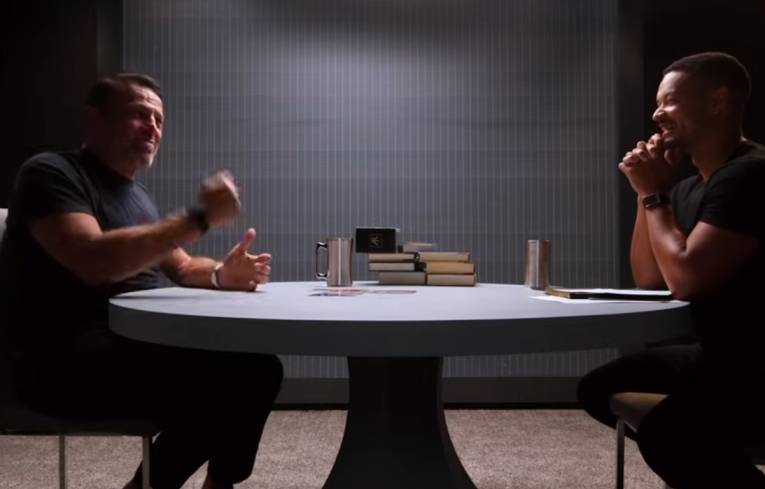
Here is the full transcript of world-renowned author Tony Robbins’ interview on The Diary Of A CEO podcast, January 15, 2026.
Brief Notes: In this powerful episode of The Diary Of A CEO, world-renowned life and business strategist Tony Robbins joins Steven Bartlett to discuss why the next decade will be a defining moment for humanity. Robbins opens up about the traumatic childhood events that fueled his lifelong mission to end suffering, including a transformative Thanksgiving encounter that changed his perspective on strangers and kindness forever. From the psychological impact of the AI revolution to mastering the six fundamental human needs, he provides a masterclass on navigating extreme stress and finding true fulfillment beyond professional achievement. This conversation serves as an essential guide for anyone looking to retool their mindset and design a life of purpose in an era of rapid global change.
Introduction
STEVEN BARTLETT: Tony, I was shocked. It was so surprising to me that you had the childhood you had based on the outcomes that you’ve accomplished in your life. And as someone that has followed you for a very long time, I imagine that there’s many other people that have followed you for a very long time that have no idea about the early context. For those people, can you take us back to the environment that shaped you into the man that you are?
Growing Up in Chaos and Violence
TONY ROBBINS: I think, you know, I grew up in a tough environment. I had four different fathers. My mom was a very intense and passionate woman. We never had any money. We were very, very poor.
My mom was probably the most important influence in my life by far. Very loving woman, but very stressed woman. And under that stress, she drank alcohol and took prescription drugs. And when she did that, she became very violent. So I took the brunt of that and then figured out how to manage her emotions. Basically that’s where all my beginning training really happened.
And yet at the same time, she was loving. She pushed me. She believed in me. She wanted me to be something. So she influenced my life in so many beautiful ways and then probably changed my life the most though, is my fourth father especially made it clear no one gives a damn about anybody else.
We lived in what I thought was an upper class community or city, but we were on the other side of the tracks. It was lower middle class and we were literally right by the railroad tracks where the worst of the worst live, so to speak. And so we were kind of looked down on. And so it really looked like nobody cares.
The Thanksgiving That Changed Everything
And then the thing that changed my whole life, a single event, was a knock on the door on Thanksgiving. We had no money, no food. When I say no food, we had crackers and peanut butter, but not a Thanksgiving dinner, right? And my dad and mom are screaming at each other through a door. And my dad had lost his job.
You get the knock on the door, and I open the door, and there’s this tall guy standing there with two bags of groceries, one in each hand. And at his feet, he had an uncooked frozen turkey in a pan. And he said, “Is your father here?” And I was like, just one moment, you know. And I was like, it was Christmas morning.
So I go to my dad and I go, “Hey, dad, there’s someone at the door for you.” And he goes, “Who is it?” And I said, “I don’t know. It’s for you.” He goes, “Well, you answered.” I said, “I already did. It’s for you.”
So he goes over there, and I’m waiting with such excitement for him to open the door. And he saw this man, and he was not happy. He looked at this man before the guy said a word, and he said, “We don’t take charity.” And he went and slammed the door on the guy.
But the man had leaned in because of the groceries, and it hit his shoulder and it bounced off, which made my dad even madder. And the man said, “Sir, sir. Somebody knows you’re having a tough time. Everyone has tough times. They want you to have this food for your family for Thanksgiving. I’m just the delivery guy.”
And my father said, “We don’t take charity.” And he pushed the door again, but this time because the guy’s leaning, his foot now stepped in, it hit his foot and bounced off. And now my dad’s getting more fired up. And I’m standing looking at this whole thing, and it’s like a car crash happening.
And the guy said something to my dad. I thought my dad was going to punch him in the face. He didn’t say it meanly. He said, “Sir,” he saw me, he said, “Don’t make your family suffer because of your ego.”
And I could still see it like yesterday. My dad’s veins on both sides of his neck were just pumping, and he was red as can be. And then he just dropped his shoulders. He took the groceries, he slammed it on the table, and he slammed the door. And he never even said thank you.
The Three Decisions That Shape Every Moment
It took me maybe a decade to eventually figure it out. It became a very useful distinction for me about how he and I processed that day differently because I believe there’s three decisions you make every moment of your life. You’re making them right now. If you’re listening to me and so is your audience.
The first one is, what are you going to focus on? You’re going to be focused on what happened yesterday, what you’re going to have for lunch, what I’m saying, how it relates to you. There are millions of things you can focus on, but you don’t experience life.
And most of us are distortion deletion creatures. Our brains don’t take it all in consciously. It’s too much. So our brains delete things, we distort things, we generalize things so we can make it through our lives. And so if you don’t control your focus, you react.
And that day, my dad’s focus was on the fact he did not feed his family. Wasn’t hard to figure out. He said it over and over again after he slammed the door. And my focus was, wow, there’s food. What a concept. I was excited.
But the second decision you make every moment, the minute you focus on something, your brain has to figure out, what does this mean? Is this the end or the beginning? Is this person dissing me? Are they challenging me? Are they coaching me? Are they loving me? And whatever meaning you give, it produces emotion. And out of that emotion, you make the third decision: What am I going to do?
And that day, I know the meaning my dad gave it. It wasn’t just that he didn’t feed his family. It’s that he was worthless. You know, “I can’t even feed my family.” And he muttered all this stuff continuously.
But I took that as strangers care. It completely violated everything I experienced in my life up until that point. And my brain was like, a stranger doesn’t even want credit for this. And they fed my family on Thanksgiving. I got to care about strangers.
And so what I decided to do is, someday I’m going to do this for others.
Feeding Two Families at 17
And so when I was 17, I went out and I didn’t have a lot of money, but I was doing okay. And I went to a grocery store and I told the manager what happened in my life. And I said, “I want to feed two families. Help me out, give me a discount.” And he gave me 10% off. And I thought, cheap bastard. But I took it.
I had the most enjoyable shopping. I took two shopping carts and just filled it up for two families. And then I called this church and I said, “Who do you know that needs help but won’t ask for it, won’t come for it?” And they gave me two families’ names.
And so I wrote a little note. I just put, “This is a gift from a friend. Everyone has tough times. I hope you have a beautiful Thanksgiving and someday if you can, pay this forward.” I didn’t use the word pay it forward. I said, “Do this for someone else.” But now you look at us, pay it forward. And I put “Love, a friend.”
And then I realized I was going to the barrio area of the city. And I was like, maybe they don’t speak English. So I had a friend of mine write it in Spanish on the back. So I figured I could flip it over.
And I had the first house. I went to a little tiny place. I knock on the door and this woman about this tall, Hispanic woman, sees me and sees the food and screams and then grabs my head and pulls it down, starts kissing me on the cheek. I said, “No, no, no, delivery boy, delivery boy.” And she’s like… And I was like… And I pull up the note and I flipped it over in Spanish and she read it and then she started to cry and she goes… And she started kissing me. I said, “No, delivery boy. No, gift of God. Gift of God.”
And I’m trying not to cry. I’m just like, I can feel it like it was yesterday still.
And so the door opened at the tiny little place, size of your kitchen here or smaller than your kitchen. And I was so excited to set food down. All of a sudden I heard screams. And then next thing I know, I’m hit by one and then by another. Four boys. And one hit one leg, one hit the other. They saw the food, they went crazy.
And I said, “Come help me.” We had other stuff in the van. And when they saw the pumpkin pie, it was really over. And we brought all this food in and it was time to go. And the father had left them, I found out later, four days before Thanksgiving with no money and no food.
And anyway, I’m looking through the mirror and I just started crying uncontrollably. And I’m like, why am I crying so bad? This is such a beautiful moment. And I just realized, you know, my worst day of my life was really my best day.
Turning Pain Into Purpose
That day that was the most painful to me, because that father is the one who adopted me. I carry his name. I wouldn’t be there that day. I’m a good human being, but, you know, would I work as hard as I worked to feed other people?
I mean, next year I did four, then eight, then 12, and a little company. I got my employees involved. Then I got to a million people, 2 million people. And then about 12 years ago, I decided I want to feed a billion meals here in the United States in 10 years. And so it’s grown and grown and grown, all from not being fed.
And so I see it as a blessing. I always try to help people say, how could you turn your worst day into your best day? That’s when life is really magical.
STEVEN BARTLETT: How many years has it been since you met that young mother with her four children?
TONY ROBBINS: I was 17. I’m going to be 66. Wow.
STEVEN BARTLETT: 50 years. Yeah. And it still brings you to tears to recount that story.
TONY ROBBINS: It really does.
STEVEN BARTLETT: Why is that?
A Mission to End Suffering
TONY ROBBINS: I have a… I hate suffering. I’ve suffered myself, and so I hate to see anybody suffer. And so I’m unbelievably driven to end suffering where I can. To help anyone do that, whether it be hunger or emotional hunger or depression or sadness or a relationship or… I just… I don’t know what it is. I just… I love human beings. I hate suffering.
And I love to see when somebody awakens to who they are. And we all are so much more than we ever, you know, perceive ourselves to be. But many times you don’t discover that until you have to. I like to try and show people how to do it so they don’t have to wait till life hits them.
You know, anything you can imagine, we’re all going to go through extreme stress in our lives. But how do you use stress, or does stress use you? And so my whole thing is help people, show them how to use stress. Because I don’t care how good a person you are. I don’t care how spiritual or religious you are. I don’t care how smart you are, how rich you think you are. Every human being is going to go through extreme stress multiple times in their life.
And the real question is, what are you going to do with it? And the first thing is, if you’re going through hell, keep going. But if you keep going, you discover, number one, how strong you really are. Because if you don’t give up, you’ll discover who you are.
The second thing you find out is who your real friends are. Because when things aren’t so great, you see who those are.
And then third, it almost gives you like an inoculation to future stress. Because like, I had a friend that was shot down in Vietnam and was in a prison there for seven years in solitary confinement. And Captain Coffee’s his name. And I remember I met him later in life and he was going through this tough thing with the IRS, and it was so unfair. It took him three years. He got his money back.
But I said, “Doesn’t that drive you crazy?” He goes, “After being with the North Vietnamese,” he goes, “you know, what could the IRS do to me?” You know?
Change Your Story, Change Your Life
So I think those pieces are there. But everyone gets called on the journey. Most people try to resist it, but that journey, that’s what the call is. It’s a call to grow.
So I’m big on change your story, change your life. And I’m big on understanding the narrative of where you are in the story of your life. Because if you understand where you are, it gives context, it gives meaning, and it doesn’t make you feel overwhelmed.
STEVEN BARTLETT: Had your mother not suffered in such a way, do you think this would be so important to you? Had you not observed that suffering?
The Power of Pull Motivation
TONY ROBBINS: Yeah. No, I’ve often said, like I said earlier, I think I’m a good human being. I think I still help people. But what I’m providing 62 billion meals, working around the clock on top of my 114 companies and all that. No, I don’t think I would. That hunger comes very often from pain. But pain’s not enough to keep you going. Pain only goes so far. You’ve got to find something that.
It’s like I tell people, there’s two types of motivation, right? There’s push motivation. You know, you’re making something happen. And I have enormous willpower. I’m sure you do. Most of the people we probably interact with have great willpower. Right. But there’s still a limit to it.
There’s no limit to pull motivation. Pull is there’s something so magnificent you want to serve, something that you care about more than yourself. That’s where all the energy in life comes from. You know, what’s in your heart and your soul, what wakes you up in the morning and makes you go. And I think if I hadn’t had the pain, I don’t think I would have been sensitized. But I also, if I hadn’t felt the pleasure of serving and seeing impact on such a large scale, then you know, you’d be limited because you listen, meeting your own needs is not that hard.
Like, my biggest beef with right now since COVID is this whole self care revolution we’ve got. I mean, you got to take care of yourself. Don’t get me wrong, I take care of myself. And, you know, you get weaker and weaker the more you focus on yourself. The human mind is always going to figure out something that isn’t good enough. But when you’re serving, you’re not there. Like, your mind’s not there. You’re with the people, you’re with what you’re doing. And it’s the escape from the mind’s reductionism.
And so I really believe that people, the secret to life is to find something you care about more than yourself that gives you that pull motivation. And then you’re never going to lack for energy, you’re never going to lack for passion, you’re never going to lack for anything. And you’re going to have a life that’s extremely meaningful. It’s not happy every moment. There’s not meant to be. If you smile, have you ever smiled so much your face hurt? We need variety, but meaning, that’s something you can find no matter what.
STEVEN BARTLETT: I asked you before we started recording, a question I almost never ask any of my guests, which is, what is the thing that we should be talking about the most? And you told me shortly after what your answer was. But even shortly after that, you then went on to talk to me about how you’re driven to end suffering. Now, if I compare these two answers, the answer you gave me to the question I asked about what’s the most important thing for us to be talking about, and your second point about your desire to end suffering, there’s probably some kind of overlap.
TONY ROBBINS: There is, yeah.
STEVEN BARTLETT: So if I were to ask you, just because we weren’t recording then, what you think maybe the most consequential thing we should be talking about right now is, as it relates to suffering and everything that’s going on in society, what would that answer be?
The AI Revolution and the Coming Displacement Crisis
TONY ROBBINS: I think it’s AI, but it’s not just AI, it’s nanotechnology. It’s how technology, the rapid change in technology. And if you don’t believe it’s going to destroy humanity and it’s going to liberate us from a lot of labor, if you believe that the ones that promote that concept, if that does happen and we displace this many jobs in this short a period of time, jobs are not just money. Jobs are meaning. It’s not the only form of meaning, but it’s meaning.
So it’s like you talk about, well, we’ll give people UBI and okay, I think you might have to, because the changes are going to happen so rapidly. Like I said, you know, farming, 80% of us were farmers 150 years ago, now it’s 3% and we feed the world. That’s a long transition.
I think I mentioned to you off the air here, I was visiting with President Obama 10 years ago and towards the end of his term there and I was saying, hey, I just got to talk to you. You inherited a pretty tough economy from the original 2008 explosion breakdown. We lost 8 million jobs. So I said there’s technology coming right now that we can predict is going to displace more than those 8 million jobs. And I talked to him at that time just about, I said just take one like self driving cars, we’re just starting to come out. I said in the next 10, 12, 13, 14 years they’re going to become ubiquitous. And I said there’s 8 million truck drivers, Uber drivers and taxi drivers and are you doing anything to retool them?
STEVEN BARTLETT: Just in the US.
TONY ROBBINS: Just in the US. I said because if you don’t think about this, I’m a business person and I can hire a person to drive a truck only eight hours a day. I have to pay for the health care which gets more expensive every year. They’re going to b at me about things and I can buy a truck that can drive 24 hours a day and my insurance is cheaper because it doesn’t make mistakes and I can depreciate the asset. Am I going to hire anybody?
I said so those jobs going to go, that’s 8 million. That’s one sector we can look at, pharma. I mean there’s so many industries affected. So I said we’ve got to retool those people now or there’s 10 years to gear them up. Because these are not people that are going to do it on their own and they’re going to be shocked. The shock to their system, the loss of dignity, of being in control, of their own life, of their own job or their own direction is huge.
Historical Lessons: The Luddites and What’s Coming
And if you go back to like the Luddites, you know, you’re from the UK, right? You must know your history there. 1800s, you know, mercantile, they come up with these machines and how do people react? And by the way, this story is the same across history. We have a radical change like this. All these people are displaced and what did they do? They rioted, they took hammers and they destroyed those machines. They threatened to kill the owners of those companies and some were shot and killed. They blew up and firebombed places.
And what did the UK do about this? They passed a law in the first year of this, these Luddites saying you destroy machine, it’s capital punishment. They hung people because they couldn’t have them destroy the growth of the economy. Right. And guess what? Fifteen years later, the same thing happened again with the Thrashers. Thrasher machines that were used for wheat. And they lost all the jobs and the people and the government overreacted.
I’m not trying to be overly dramatic, but if anything, this transition is just going to be smooth by us doing nothing. They’re wrong. And the problem is, as I mentioned to you before, I think the leverage is not in favor of us taking care of society. The leverage is the carrot and the stick. The carrot is I can make a trillion dollars if I have the right LLM or if I get to artificial general intelligence, who knows? And if we don’t do it, China’s going to do it. That’s the stick. And then they’re going to run the world.
So there’s no focus on safety virtually, as you well know. And there’s certainly no focus on what’s happening with these jobs. Right now. High school students are getting jobs more than college students for the first time in 50 years. Right. You see the displacement. You know, you got friends just like I do. Mark Benioff’s one of my dear friends. They let go of like, what was it? I think it was, was it 5,000 customer service agents? And now it’s done with AI now, now he wants to elevate them to other jobs.
So we have to look at what this means to our society. We have to anticipate what this means. And we’ve got to retool not just the jobs, but the psychology. Because people talk about a post work world. You hear people talk about this all the time, Elon. People like that labor’s going to like electricity. You just take it for granted. It’s so cheap, it’s so easy.
The Timeline: Artificial General Intelligence Is Closer Than We Think
Well, if that’s true, and he’s talking three to five years and a lot of people say Elon’s early. He usually is on his predictions. But Ray Kurzweil is a good friend of mine, is the most accurate predictor of technology in history. And he’s been saying 2029 for almost 20 years is when you have artificial general intelligence. If you go to Hinton, I think you’ve interviewed him, haven’t you? Right. So he’s the longest. He’s saying 2030 to 2040. He’s given us a little more room in the next three to ten years this is going to happen.
How are we prepared for this? And so this is the questions I’m trying to bring up to people that have influence to say, if you’re in business, you got to take a look at this. If you’re in government, you take a look at this. And so I just got, they haven’t announced yet, but I just got selected to be on the federal advisory committee for the President and for the Health and Human Services. And I’m on the mental health side and I’m hoping to use that position to bring more of government’s focus into this category as well. Because it’s got to be addressed when we recite these.
And that’s by the way, the answer to your question is. And that’s suffering. That’s suffering at the highest level. Not just financial suffering, that’s emotional suffering, that’s loss of identity suffering. If I am a coder, I am a truck driver and I lose who I am.
Redefining Identity Beyond Work
Now, I just want to say one last thing. We’ve already been in a post work world because one person said to me recently, well, for 4,000 years we tied our identity to our work. I said, no, Americans all go, what do you do? Not everybody in the world does that. And for 4,000 years, our connection before the agricultural revolution was really what tribe we’re connected to. And our sense of significance was maybe our courage in battle, not our financial component. Or maybe it was our creativity, our poetry, our storytelling capacity. Or maybe it was our generosity, maybe it was our wisdom.
So we can find other things to have meaning besides a job. But if you don’t take a culture that’s been conditioned for 200 years to think a certain way, we’re going to have a lot of pain. And I would like to see us have less of that if we could. And I’m only one person, but I’ll do my best to help people make that transition.
STEVEN BARTLETT: It’s funny because when we think about those historical examples of transition, I for many reasons think this is even more extreme.
TONY ROBBINS: I agree.
STEVEN BARTLETT: Because you have intelligence and you have, you’ve basically disrupted both the muscles and the mind.
Why This Time Is Different: The Exponential Learning Curve
TONY ROBBINS: But you know the reason it’s going to explode even faster is because we’re moving from LLMs to now actually studying visually what’s happening in the real world. And when robots do that, then the game changes their tempo of learning. And just think about this. You and I are having a conversation. I picked up one of your books here and I’m reading through your book. So I want to get a feel for who you are and everything else before I came here. I’ve seen some of your videos, but. And like I really enjoyed it, but I had to go get that. I had to take a couple hours to dig through that.
You and I have a conversation. If either one of us learns something, we’re a machine. Every machine knows it instantly. Push one button and they have all of that knowledge. There’s none of this word transfer. It’s just, it’s now. So people don’t realize what this really means. And when you’re learning from the real world, not just LLMs.
Right now, you and I are, our brains are predictive devices. They’re predicting what is going to happen next to the best of their ability. And we’re trying to close that gap as much as we can or we get jolted. Think how predictably that’s going to do to people’s heads when all of a sudden their labor is not needed. And it’s no longer blue collar labor, which is what people thought it would be. It’s white collar labor.
I mean, like my financial, I have a lot of, I have 95 different private equity firms. I have owned the firms, not the actual funds, right? So I get the two and 20 of them. And I got pieces of all of them, so the biggest in the world. And so I get to take a look at some of the things that are happening so fast. And I look at all those jobs and I see people in those industries and, and Quantum is taking, it took over maybe five years ago. I’ve seen the shrink in these offices from staffs, the guys who are making 5 million, $10 million a year that are now unemployed. It’s not just the blue collar worker, it’s everyone. So you’re right. This has never happened before in history. And what’s being done about it.
STEVEN BARTLETT: More money’s been put into it to accelerate it.
The AI Revolution and Human Adaptation
TONY ROBBINS: The carrot and stick, the trillionaire in China. Those two pieces are driving it all. And a few people are trying to hammer like Hinton and a few other people. We got to work on safety here, so it doesn’t eliminate the human race. And I’m not a reactionary person, but you know, what is it? 25, 30% of the people that work in AI say that they think it could potentially do that.
I mean, like you could use electricity to kill people or light up a city. So all technology is that challenge. But this is a different technology. This is a technology that keeps learning, can replicate itself. Right now they don’t even know how some of this actually works. They don’t know how the AI is actually working. It’s teaching itself.
These AIs now have their own language. I’m sure, you know, they’re talking no longer in English to each other. And, you know, I’m sure you’ve seen the studies, right, where they give them information in the email, and then they say they’re going to shut off the AI, and it blackmails them by giving them fake information about somebody having an affair. And it blackmails them. I mean, it lies.
So we’re living in a crazy world where the opportunity is greater than any time in history for us to be creators. We were created and we’re meant to create, and we got tools to create like never before. But we’re going to have to make sure that as we’re doing that, we’ve got some parameters around safety and some parameters about what does it do to society. And I don’t have the perfect answers for it, but I do know one thing. Retooling is the answer. And I don’t believe most people will be replaced by an AI. They’ll be replaced by somebody who knows how to use AI.
STEVEN BARTLETT: One of the things you said that really blew my mind when I watched a video from Boston Dynamics this week where the guy explained how these robots are going to learn, and he goes, “There’s two ways. One way is we’re going to get our factory workers to wear a suit, and every time the factory worker does something, all the robots are going to learn that thing.”
And the other thing is, he said, “If one of our robots learns something, whether it’s how to pick up a book or how to make an omelet, every robot learns instantaneously.” And my mind was like, wow, that is… I personally don’t know where this leaves us. So that’s kind of…
The Coming Wave of Disruption
TONY ROBBINS: Well, neither do I. But there’s certain things, you know, it’s leading us towards. You know, it’s going to lead us to a great deal of violence because there are going to be people like have always happened when technology displaces them, only this is going to be a global event across multiple areas. And not just drivers of Ubers and truck drivers.
If we don’t get our act together and have a plan, there’s going to be violence for some period of time. There’s that grief period of loss that people go through when something jars them that much. And some people don’t return from that grief. And some people are going to take this technology and they’re going to go off.
It’s already happening now even without AI. There are more males at home, 25 to 35, living at home with their family, not working than any time in human history. Including the depression. Right? There are, I think it’s 25% or I think it was 30%. I forgot the number. I just saw it recently of young men have never approached a woman to ask her out for a date. They play video games all day long, their mom does their laundry and they order Uber Eats. This is a mass number of people.
That’s just the technology of getting somebody gamified. Imagine with AI. So some people are going to go live there and some people are going to go the Star Trek route and say I’m going to figure out what makes human existence be here. But it’s not hard to figure out. The majority are not going to go the Star Trek route.
And so we’ve got to have a bridge because of the time compression. If this was 100 years to do it, we could adjust. There will be more jobs, there’ll be new jobs, there’ll be new time. But it’s the timeframe that I’m most concerned about. So when you ask me what I’m concerned about, that’s what I’m concerned about because it creates suffering and it’s something that we can predict is going to create suffering and yet I see very few people in positions of influence and power doing much about it.
STEVEN BARTLETT: So on an individual level, if you were an 18 year old Tony Robbins, what would you be doing at this moment? What would you be focusing on work wise? How would you be designing your life for such a world?
Designing Life as a Creator
TONY ROBBINS: I have five kids and five grandkids, right? So I have a 52 year old daughter and I have a, thanks to Covid, a four year old daughter. So Covid was good to me. I was home. So I look at my, especially my grandkids and my daughter and I say they’re entering a world that none of us have known before. And so how do I arm them for it?
And the answer is a couple of things. Number one, I have to teach them not to do what most people in the world do. Most people you talk to of any even quote successful people, whatever that means, they’re stressed all the time. Stress. I’m so stressed. You know people talk about stress all the time. It’s like they argue about who’s more stressed and I look at that and go, why are they stressed?
And the answer is because they’re managing their life. We’re not made to manage circumstances. We’re made to create. We were created by something. Call it your creator, call it the universe, call it God, whatever you want to call it. And we were made to create. And when we create, we’re alive. When we just try to maintain or manage or hold on to something, if we’re just caught up in making a living instead of designing a life, life is a bitch. And that’s why so many people have so many challenges.
So I’m teaching my kids to be creators. And I teach them the most important thing I believe that’s made me successful. And anyone I’ve ever interviewed. You interviewed a million people. You see, if you agree or disagree with me, the three most important skills in life now are the ones that allow you to learn more rapidly. If you learn rapidly, you can win no matter what happens with the technology.
And what are those three skills? Number one, the skill of pattern recognition. When you can recognize patterns, you eliminate fear. Fear comes from, “This has never happened before. I don’t know what this is.”
STEVEN BARTLETT: Chaos.
The Power of Pattern Recognition
TONY ROBBINS: Like, I hear people all the time talk about how we’ve never been this place politically, where here in America, where the most… We’re going to have a civil war. They don’t do any history whatsoever. I have these two placards that I have. Because back then, they didn’t have ads, right? They had placards. And one is from Thomas Jefferson, talking about Adams, and one from Adams about Jefferson. And they said stuff that made Republicans and Democrats look like they’re nice to each other. I mean, it’s just unbelievable, the stuff they said.
This is a cycle. And so when you recognize a pattern, it gives you power, potential power, at least. The first power is you’re not afraid anymore. You go, “No, this is not something that’s never happened. This is not something that’s going to…” I can see this. I can see how this has been dealt with.
What took us from living in fear, from being hunter gatherers or trying to survive every day, didn’t know if we’re going to survive every day to being able to stay in one place. What? Pattern recognition.
STEVEN BARTLETT: I was going to say the seasons.
The Seasons of Life
TONY ROBBINS: But you got it. Really? That’s it. The seasons. I figured you got seasons because before that, you could do the right thing at the wrong time. And you get pain. And three of the four seasons are the wrong time. So once we figured out, “Oh, my God, if I plant in the spring and I take care through the hot summer, I get this big reaping and if I hang on to some of it to make it through the winter, I can live here. I don’t have to worry.” All my fear disappears.
So the minute we understood seasons, it changed humanity. And by the way, there’s the seasons to your life. You could say 0 to 21 is springtime. Springtime is… How hard is it for something to grow in springtime? If you start a business in an economic spring where everybody’s optimistic, you think you’re a genius, you’re just in the right season, right?
So 0 to 21, you’re taken care of, and that season you grow like crazy. Somewhere around, roughly everyone’s different, 21, 22 years old, you go to the next stage, 22 to 42, and that’s your summertime. That’s the testing period of your life. What happens? You are 21, you’ve heard all this stuff and now you go, “You know what? I don’t know if I believe this bullshit. I want to see what I believe. I’m going to test all history.”
All studies of psychology show this is the most difficult time in most people’s lives, right? 22 to 42. So if you’re in that range and you’re listening, I love you, hang in there, this is your ground. If you keep growing, this is a great time.
Somewhere in that range, you make this transition. Somewhere around 30, 35, you’re 33, you just got engaged, Congratulations, right? You start to move towards the family, you start to have those experiences. I’m sure yours will be very successful. Many aren’t, right?
So at 42 or 43 to 63, that’s the fall. If you planted in the spring, right, and you worked your tail off during that hot summer, now you can do more with your pinky than working around the clock. You know more people, you have relationships, you recognize the patterns, you know what’s going on. Nothing’s really a shock or surprise to you. You’re more strategic, you’re more efficient, you’re more elegant, you have more choices. You’ve learned a lot of lessons. If you grew.
Now, if you didn’t plant in the spring and work hard in the summer, you’re going to weep in the fall, not reap in the fall, right? So now this is your power period. This is when most people earn the most money in their life. If they’re going to grow because they’ve accumulated knowledge, skills, relationships and so forth.
And then the winter, because it comes back to that 64 to 84 to 104 to the oldest humans, 124. That period is a transition period to where you become a real leader because you’re no longer, you know that 22 to 42, you’re trying to prove yourself to yourself or maybe other people or both. But there’s a point when you get into your power group, you know who you are.
By the time you get into this last season, this, you know, 64 to 84, 104, 124, you know who the f* you are. I mean, and you want people to like what you do, but if they don’t, it’s like you know who you are, you don’t give a shit.
I’ve just entered that season myself. I’m about to be 66 in a few weeks and it’s the most fulfilling season of it all. It’s mind boggling. I wouldn’t believe that when I was your age. That’s why I’m sharing it. If you’re healthy, if you’re fit, if you’re strong, if you don’t do that, then it can be a bitch that time. But if you’re healthy and strong, you have 40 year relationships, 35 year business relationships, you have friends that adore you and love them. And it’s unbreakable, it’s unshakeable.
You have an intimate relationship or a family or husband and wife relationship. If we built to that point, that is beyond anything you’d have dream ever hoped for. You wake up every day and you know that life is a gift and you want to give back even more. Like you’re more driven than you were when you were in the 22 to 42 stage.
Those are the seasons. There’s one more. There’s seasons of history. And your season of history shapes how you shape your life. So you can look at a thousand years of Roman history, I’m very much in history and 500 years of Anglo American history. And you start to see patterns. In fact, I recommend for everyone there’s a book called Generations. Have you read it?
STEVEN BARTLETT: No.
The Power of Pattern Recognition, Utilization, and Creation
TONY ROBBINS: When I was working with President Clinton in those days, I worked for President Clinton. I went across the other side and worked with the speaker of the House, Gingrich, on the same day. On Clinton’s desk, on the Resolute desk, was this book, Generations. And I asked him about it and he told me about how it’s amazing. It shows how history is somewhat predictable and why the cycles are generated by different generations, how we react, the way we grew up.
And then I go over to Gingrich’s office, and he’s a historian. He’s got it on his desk. It’s a pretty thick book, good sized book. My point is, if you want to navigate your life, you need pattern recognition so you don’t go into reaction. And one thing is to understand: seasons are a great pattern. They freed us. There are seasons of your life. You should think about this season. What’s this season about for you? What do you want to extract from this season?
And every season has predictable challenges and predictable opportunities. And where am I in the season? Some people go through their springtime during a war, wintertime. Some people go through springtime in a fall. We all grew up with different environments, and so we’re shaped by that, and that’s why history’s changed.
But let me finish the last piece. I’ve gone way long, I apologize. I said there’s three skills. What do we need, right? First one is pattern recognition. The second one is pattern utilization. So I watch you. You and I both, we developed companies, took them public very early ages, made a lot of money, and figured out it wasn’t just about money, right?
You know, looking at your history, you didn’t just recognize patterns, you used them. You saw them in marketing areas, you saw online opportunities, you saw things. You didn’t just, “Oh, now I understand it.” You jumped on it. Anyone who’s incredibly successful in anything, if they’re great at dance, if they’re great at investing in companies, they’re good at running companies. If they’re great in singing, they recognize there are certain patterns.
And then the final skill, and this is what I’m teaching my children, is you ultimately want to become a pattern creator. Take an example. Say we learn to play the piano, right?
STEVEN BARTLETT: Yeah.
TONY ROBBINS: How do you learn to play the piano? You got to recognize patterns. And usually you’re taught someone else’s patterns that produce something beautiful, right? Could be Bach, Beethoven, it could be some rock, could be whatever you’re learning. And so you learn those patterns and you practice them, you learn to use them, right? And now you can produce the same music.
There is a point, and I’m sure you’ve experienced this already, and you’re going to experience a lot more in the next 10 years of your life. You’ve taken so much input in, you’ve recognized so many patterns that now you come through and you become the pattern creator. And that’s when you start to become the GOAT of your industry, the best of all time.
You look at Tom Brady, he’s a friend of mine. He made pattern distinctions no one else made on how to keep his body strong, one of the most important ones. So you have the duration, but also how to read the defense, know what’s happening, those tools. He started to create his own patterns about how to deal with that, right? And so once you create your own patterns, you bring something to the table that’s never been there before, and you make some deal never been there before. Your value goes through the roof.
The Life-Changing Lesson from Jim Rohn
When I met Jim Rohn, my original personal development teacher, he changed my life radically. I was 17 years old. What I did was I was working as a janitor. I’m in high school, sophomore year. And my mom came home one day and said, “We’ve got a friend that needs somebody to help move stuff.” And I was always trying to earn some extra money. And it was the weekends. I wasn’t doing the janitorial work on the weekends. So I said, “Okay, I’ll do it.”
And my dad said, “Yeah, you got to find out what he did. He used to be such a loser. Now he’s so successful,” right? And so when I went to go see this guy, you know, I’m a hard worker. So I worked really hard. And so he took me to lunch and he starts asking me questions. I said, “I want to ask you questions.” I said, “You know, my father said you used to be such a loser. Now you’re so successful. How’d you change your life?” I’m just a kid. I wasn’t trying to be funny or mean, right?
The guy said, “Your dad said what?” He goes, “Well, it’s true.” And he said, “Well, what changed my life is I went to a seminar.” He goes, “Yeah, it was three and a half hours. His name is Jim Rohn.” He told me the whole thing. “And he’s here in Orange County. He’s coming up doing an event pretty quick.” I said, “Could you get me in?” And he goes, “Yeah.” I said, “Well, how much is it?” He said, “$35.” It’d be like $250 in today’s money, right?
And I said, “$35. I’m making $40 a week as a janitor. I can’t do that.” He goes, “Well, then just learn on your own experience and waste a few decades.” I said, “You really think it’s that valuable?” He goes, “No, you have to decide if it’s that valuable.”
And so I remember I wrestled with this like it was the biggest decision of my life. A week’s pay. And I went in and I heard this man speak. He said some simple things, like, “For things to change, you got to change. For things to get better, you got to get better,” right? It was interesting things.
But at the end, I was so excited, I went up to him and I said, “I want to come work for you. I want to learn this. I want to be a part of this.” And he turned to me and said, “Look, kid, if you want to come work for me, you got to go through all my programs.” And I said, “What does that mean?” He said, “Well, you got to…” This, this, this. You know, it was like $1,200 for just one of the programs for a weekend. $1,200 is like $10,000 today, to give you an idea, $12,000.
I’m at the time sleeping in my car, working as a janitor. My dad left. My mom kicked him out. Mom’s a strong woman. And then she chased me out with a knife. She wasn’t going to kill me, but I wasn’t going back in that place. And so I’m like, “I can’t do this.”
And somebody said, “You know, decide. Some people have to survive. Some people succeed. Decide which one you are. And if you’re ready by next Saturday, a week from Saturday, I’m starting a training, and you can join it. But if you don’t have the money for it, you won’t be able to do it.”
And I remember leaving, thinking, “This guy just wants my money. He’s such a jerk.” And I was so angry. But then in my head, I was like, “He’s right. He’s right.” You know, I’ve always gotten what I had to have. I haven’t had to have much.
And so I started going to banks. I walked in this place, five banks turned me down, and I saw this woman who looked persuadable and sweet, and her name was Mrs. Williams. This woman looks at me and she goes, “The bank’s not going to loan you this money.” And she’s like my fifth bank. And I said, “You understand?” And I got all passionate. She goes, “With this kind of focus and energy, I think you’ll do something. I’d like it to be something good.”
And she goes, “I want to talk to the bank, but if the bank will leave the money, I will, if you look me in the eye and you swear to me I’m never going to have to come find you and you will take care of this.” And I jumped across, hugged her and kissed her. She wasn’t quite ready for that.
I went to the Jim Rohn seminar. I went to work for him. And the first question when I finally got a private moment with him that I asked was, I had four fathers. They were all good men. They all worked hard. How come we never had any money and sometimes no food? I said, “I look over at the school teacher who makes $35,000 a year, I think, in those days. And then I see this hedge fund guy who made a billion dollars in a year.” I said, “That is so unjust.”
The Value Equation That Changed Everything
And he gave me a lesson that changed my whole life. He said, “Tony, you’re right, we’re all equal as souls, but we’re not equal in the marketplace.” I said, “What does that mean?” He said, “Well, let me ask you a question. Is it possible for someone to make twice as much money in the same amount of time?” “Yeah.” “Four times, 10 times, 100 times?” “Yeah. People do it.” “How?”
He goes, “You have to become more valuable.” He goes, “If you go to work at McDonald’s, you get this tiny little income. It’s not made to be an ideal job. It’s a first time job. Anyone can learn to do it in two hours.” And I’ve been obsessed about it ever since. And that changed everything in my life. My whole life became, “How do I add more value?”
And so today I have 121 companies and we’re doing $12 billion in business across almost every industry you can imagine that I’m a part of. And I couldn’t win one company in the start and make it successful at $300,000 a year for the revenue. All that became in every industry, and a lot of them I’m the number one in. It’s because I’m obsessed with adding value.
And so I think that piece is what’s missing also from our youth. You’re saying, “What do they need?” They think, “I’m here to get something.” No, life is calling you. What are you going to give? Not just what you want to give, but what people need. And so my focus is I give people what they want. They want to make more money, they want a better relationship. But my goal is so I can give them what they need, which is a life that has more meaning, and that’s one that goes beyond yourself.
Navigating Stress in the Age of Algorithms
STEVEN BARTLETT: It’s going to be a stressful period, to say the least. I think algorithms are actually making our online experiences more stressful because, you know, they’re designed to retain our attention. And the best way to retain our attention is probably fear. And I think this with myself, I find myself watching all these f*ing short form videos that are just like, they feel like they’re at some level frying something, depleting something in me.
But it’s designed, the algorithms, to serve me up the next one that’s going to hold me or scare me or whatever. So in such a world where the algorithms are probably going to, you know, in the online world, especially for younger kids, is going to really, it’s going to be better at taking hold of us. What are the tools that I need to deal with this stress and this angst?
The Power of Micro Learning and Chunking
TONY ROBBINS: The first step to me would be take 15 minutes out of your day and go for micro learning. Like decide you’re going to learn what matters, right? About yourself, about AI. We tell people like you already have habits, right? Most people are scrolling a good portion of the day. Give me 15 of those minutes and let’s do micro learning on something. A new language to stimulate your brain, philosophy, history, AI. Something pragmatic, something that’s valuable.
It’s just getting people to have some habits that, you know, the 1% growth metaphor, right? You know, 27 times at the end of the year, it’s like, it’s pretty simple. All we have to do is create a new direction. If you try to do it one giant step, it’s overwhelming for people. The secret to life is chunking.
Think of it this way. Some people never worked out, but they eat easily. So I’ll say to them, why don’t you work out? And they’ll give me all the reasons and I’ll say, but, you know, I’d have to join a gym. I said, okay, well tell me what’s entailed. And they’ll go, I got to look up where the gyms are. And then I got to drive to each of the gyms and then I got to park the car each place and find it and then I got to get out and then, you know, hopefully get a pass.
And then they take you on the tour and then they want to sit you down and sell stuff to you and they got it back in the car and you got to drive things. And then when you go do it, let’s say you sign up, then you go and you got to check in and take off all your clothes and then they drop and get wrinkled and then you go work out and it’s sweaty, you got to wipe other people’s sweat off.
And then afterwards you got to go do a shower and your hair is messed up and your makeup, you got to start all over and everything else, and then you got to get the thing and you got to back out. It’s like it’s too much work. What does it eat? Oh, you just go, they chunk. Eating is one thing. They chunk. Working out is 29,000 things. Right?
So if you chunk too big, try to do everything in one bite, it’s overwhelming. And if you chunk it too small, it’s overwhelming. So there’s a different size for different things. And if we want to learn and grow, which is what the secret is to your future is to become a learning machine about what matters.
Like most people major in minor things. They know more about some actresses or actors love life than they do, or their skin regimen than they do about their own values and needs and what makes them tick as a human being. Today, you can learn from the brightest, smartest people on earth. They’re available. They’re available by online, they’re available by contracting or coaching. They’re everywhere.
There isn’t a limit anymore. There’s zero limit. Except you’re deciding to be a creator and not a maintainer. So you’re deciding, I’m not just going to manage my life, I’m going to design and create something because the tools are available everywhere. And so I’m just one of those.
Mastering Pattern Recognition
STEVEN BARTLETT: I have a couple of questions based on what you’ve just said. The first one, starting at the top, was around you talked about this idea of pattern recognition, utilization and creation. The question I had from that section was, is there a way to get better at pattern recognition?
TONY ROBBINS: Yeah, well, first by understanding it’s the most important key. Okay, so it’s like, if I’m fearful, what’s the pattern I’m missing here? What’s something that could give me some history to understand that this isn’t random? Like, you know, people say I overeat, I over drink, I get really angry. You don’t overeat every moment. You don’t smoke every moment. What are the triggers that you use?
STEVEN BARTLETT: And do you recommend people write? How do they raise their self awareness enough to start spotting these patterns?
TONY ROBBINS: I believe in diaries. You call it diary, I call it journals. I believe in journals to be able to do that, to guide yourself. But yes, but it’s more than that. You have to not only make the distinction, but you also have to have a different state to it.
For example, let’s say, let’s say I say to you, I know, I know I need to lose weight. I’m going to do it. I’m going to go on a diet, I’m going to work out. Am I going to do it? No, you’re facing it. I’m not in the state to do it.
Strategy, Story, State: The Breakthrough Formula
Now most people are trying to figure out what to do, and there’s nothing wrong with that, but it’s the wrong sequence. Because when you think about what to do, if you’ve never done it before, you feel uncertain, you don’t follow through. If you have done it before, but you don’t feel strong enough, you’re not going to follow through.
So I tell people, if you want to break through, it’s three things. Strategy, story, state. Most people, if they want to have a breakthrough, they want to change their body, want to change their life, they look for how to do it. And that’s natural. But it’s the absolute wrong order. And if you do things in the wrong order, it’s like having the numbers to a phone for someone and you dial them. Wrong order, you don’t reach somebody or the vault. Right. You’ve got the right numbers, wrong order, vault doesn’t open.
Why are so many people overweight in this country, like 60% of the population is overweight. How is that possible? Is it because what it takes to be fit and strong is so incredibly complex? No, only the 1% knows. No, it’s super expensive. No, you have to work not to know what to do. So the how is not the problem.
So I say strategy stories state, that’s how you have a breakthrough. Yes. I’m a strategist. The right strategy can save you 10 years. I love that, it’s fun. But if I start with a strategy, you’ll listen and go, yeah, that’s cool. And you won’t do it.
The real problem is the story you have. The story you have is, I’ve tried everything. The story you have, nothing works. The story has, all the good ones are gone and I’m gay and they’re not, or they’re gay and I’m not. The story is the belief you’ve told yourself over and over. Because belief is the invisible force that controls everything in your life.
And when you have a belief that you’ve honed because you’re fearful and you’ve never done this before, then I can show you exactly how to do it and you’ll say, it doesn’t work. I’ve tried that. Yeah. How many times? How hard? How many minutes? Right.
But what’s behind the story is your state, your mental emotional state. If I said to you I am going to lose 12 pounds in the next six weeks. There is non negotiable. Here’s what I’m doing. This and this and this and this. Do you think I’m going to do it? Yes, you bet your ass I’m going to do it. Right. You can feel the state.
So people are usually trying to figure out how to do something and they got a story about it when what they need first is the state. When you go in the right state. Have you had this happen when you get in the flow and something comes through, you’re hitting a tennis ball or you’re doing or you’re speaking and at the end of your life. That was pretty awesome. I did that. How’d I do it? I don’t know. That shit just flowed. That was pretty awesome, right? You’re in a peak state. I put people in a peak state while they’re doing the things we’re talking about.
Configuring Your State for Peak Performance
STEVEN BARTLETT: So what do you do right before you come out on stage? And what can anyone listening at home do before the big meeting, the big moment in their life or really like on a daily basis to configure our state?
TONY ROBBINS: The first thing I do in my little daily routine because I use the jacuzzi for a moment to open my body up. Anything else? And then I go on cold plunge. And I’ve been doing that for 18 years now. Everybody talks about it, but I go into that cold plunge. And the secret though is I don’t negotiate with myself.
I go in the cold plunge for both the health purposes because it floods your body right? Completely. But the real value is the mental discipline of I don’t go, okay, I’m ready. And I don’t get in one of just lying here. I dunk under, I jump in, I’ve got one that goes above my head. I go under the water, I dive into it, right?
I don’t stand there, I don’t stand there and go, oh, I feel cold right now or a minute. Like I’ve trained my brain, when I say go, we go. And I’ve done that for decades. And so I’m not in the place. When I say go somewhere else, my brain obeys. I don’t have these stories in my head back and forth, trying to have a conversation with myself, trying to convince myself, do something. I’ve decided, right? So decision point is everything. So I’ve trained myself to do it.
But also it produces a massive change. It is not comfortable. I don’t think there’s been a morning in my life that I look forward to doing it, but it changes you. So that’s one thing.
The thing I do before I go on stage, I have a routine I of how I shift my body. I have a prayer that I do which is “use me, Lord.” And I picture being to serve as many human beings as possible. I see them not only where they are now, I see where they’re going to be by the end of what I’m done.
And then I make this radical shift in my body. I make these moves and explosive breath. And then I storm out there. And then I’ve taken myself imagine on a 0 to 10 to a 20 of intensity. So now I can drop down to a nine. Feels like I’m very relaxed, but I’ve got a lot more gears in me than you know. And that’s how I can project to the guy at the top of the stadium and hold him for 12 hours. You know, who wouldn’t sit for a three hour movie someone spent $300 million on?
The Biohacker’s Approach to Performance
STEVEN BARTLETT: And do you think a lot about your diet and nutrition?
TONY ROBBINS: Yeah, I’m totally committed to that. And I also train like a crazy person and I do hyperbaric oxygen, you name it. I’m a biohacker and I’m committed to that. I have a whole company that does it for people as well. So I’ve always done that because I’ve had to to perform.
And I’ve 66 going to produce results that you know were designed by a 25 year old. Right. But I’m stronger today than I was then. I got more aerobic capacity, I’ve got more muscle capacity. So I mean, there’s a limit, but I haven’t found it yet.
The Crisis of Meaning and the Rise of Independence
STEVEN BARTLETT: In a world of challenging meaning, where a lot of my viewers are struggling with meaning. One of the things I’ve noticed is that it appears, especially with young men who you talked about earlier, it appears that more and more of them are turning to religion. And you mentioned your faith in God there. Yes, it’s a really interesting phenomenon for me that I’ve observed in my own life.
I’ve talked about this a few times. Certain friends of mine who were very individualistic, they were living the dream in any way that you might define it. You know, they had money, they had freedom, they had no boss, no dependents, no partner. And suddenly you see their life turn into what looks like depression, a form of depression, an absence of meaning in their lives.
And I wanted just to throw this out there because we are in a society that’s I think increasingly encouraging independence.
TONY ROBBINS: Yes.
STEVEN BARTLETT: And there’s upsides to independence, of course, we all understand those. But I wondered if there’s a sort of a double edged sword here when we’re. You kind of said it earlier about making the world more about just me, me, me and I. And in a world of abundance, I imagine many more people are going to choose to make it about I, I, I, I, I. Cause they can. I could put a headset on, theoretically never leave my house. Someone, a robot puts the food in my mouth. I could have some sex robot that just gets me off money comes in.
The Six Human Needs
TONY ROBBINS: My account by UBI, the reason your friends got depressed. I’ve had this happen. I’ve seen this as well. You know, most of my friends are older than I am. Usually for some reason I gravitated to men that were 18, 20 years my senior who are brilliant and learning from them and seeing where they’re going in their life and so forth.
But I watched something like sell their company and make a billion too. And then they were happy for like a month maybe. And they’d call me, let’s go do this, go do that. And try to go from somebody, can I? I got a lot of companies, got a lot of kids, I got a lot of things right. And it’s like. And eventually they all want to get back in the game because we have six human needs.
Certainty, uncertainty, because think about this. If you were certain every moment of your life, you know what someone’s going to say. And I’m sure you’ve had this somewhat, you know what they’re going to say before they’re going to say it. But if you knew what someone would say before they’re going to say, you know what’s going to happen before it’s going to happen every moment of every day. In the beginning, it’d be cool. But after a while, what would you feel?
STEVEN BARTLETT: Bored.
TONY ROBBINS: Out of your mind. Bored. So God in her infinite wisdom gave us uncertainty. We need variety. We need surprise. So I ask people, you’ve got a stadium, 15,000 people. And I say, “How many of you love surprises?” And everybody raise their hand, yay. And I go, “Bullshit. You love the surprises you want, the surprises you don’t want, you call problems.” But we need those too, right?
Third need is significance. Many to feel unique, you need to feel special. They need to feel important. Who do you think has that need?
STEVEN BARTLETT: All of us.
TONY ROBBINS: Everyone.
STEVEN BARTLETT: Yeah.
Understanding Significance and Violence
TONY ROBBINS: Now, some people, like Donald Trump is pretty obvious, right? And some people, though, it’s like, I don’t want significance, I want to be. I don’t want to be special. That’s only because they feel they get special to get attacked. Some people do it by earrings. Some people buy tattoos in certain areas. Some by knowing bot scores about a sport more than anybody else. Some people buy their art, some people buy the way they dress. Some people buy their money. Some people be more generous. Everyone finds a way, okay?
However, some people do it through violence. Okay? So let me give you another seed. Why is violence always been with us? If I feel I’m insignificant, and this is, by the way, even more powerful in most men’s cases, because the nature of testosterone, right? Testosterone is about significance. It’s about being dominant, right?
So if I’m in a community and I’m driving by or I’m walking by this community, and it’s a tough community, a tough environment, somebody comes up, puts a gun to my head. I’ve never met him in my life. Why? Well, first of all, how certain do you think that person is you’re going to respond when they put a gun to your head? Before, you may not have paid attention to them, but you’re going to pay attention now.
How significant are they in your life? On a 0 to 10 scale with that gun to your head, they’re the most significant thing on earth. And by the way, every time it’s a little different. They give rise. Anytime you meet a belief, an emotion or a behavior meets at least three of these six needs, you will become addicted to that thought, that feeling or that behavior. It could be a positive one or a negative one, but you will become addicted to it.
So violence connects those three. But you can also get significance by tearing other people down. So why do we have so many warriors in their little house, you know, doing their little virtual signaling, doing what they’re doing, because they’ve never done anything with their life. And it used to be I’d have to confront you. Now I don’t confront you. I don’t even know who I am. I can say all this terrible shit and I’m sitting in my place and make my seal feel significant because I make you smaller. I’m bigger.
It’s why social media is so terrible. There’s great things social media. That’s what’s so terrible about it. It’s like people now can meet their need for significance without much effort. No consequence. You come and say this directly to me, you’re going to pay a price if some sort of right that’s no longer there.
Connection, Love, and the Deepest Fear
Now, fourth need, connection and love. Everybody wants love. Most people settle for connection because they’ve had love at one point and it was so painful when it ended, they decided to settle for connection. How can you get it? You can get it by going for a run and feeling connected to God of the universe, nature. You can get it by prayer. You can get it by being with some friends. You can get it by making love. You can get it by getting a dog, if nothing else. Get a dog. No, get a cat. Cats leave, but you know dogs. You leave for two minutes, it’s like you’ve been gone for six months. They’ll make you feel very loved.
There’s a million ways to feel connection and love. Some are positive, some are negative. Some people get connected by their problems. They’re always comparing problems. You ever seen two people comparing? But I have this. Well, you think that’s bad, let me tell you mine. They’re arguing over significance. And they’re connecting through their problems, right?
So the biggest drug on earth is not cocaine. It’s not fentanyl, it’s not dope. It’s problem solving. Because the deepest fear everybody has is they’re not enough. And our deeper fear is, if we’re not enough, we won’t be loved. I’ve never met a human being. I’ve worked with kings, queens, winners of everything you can imagine. Academy Awards, scientists. There’s some point in which you might feel for someone you care about most that you’re not smart enough, young enough, old enough, pretty enough, funny enough, rich enough, playful enough, something enough.
And it is the worst feeling on earth. To feel like you are unloved and worthless is internal death. So people come up with a story. It’s just because I have, you know, I have this dyslexia. That’s why. Or it’s because I was raped. And maybe they really were raped. I’d like to kill the guy that hurt them. But that’s not why they’re feeling what they’re feeling right now. It’s because they’re fearful.
And so if you have a big problem, that’s why I’m not where I want to be. It’s not that I’m not enough and not worthy of love. And so people use problems the way to connect. Now, these first four needs. Certainty, uncertainty. You can see how they’d have a conflict. But have you ever rented a movie you’ve already watched?
STEVEN BARTLETT: Yeah.
TONY ROBBINS: Get a life. I have two. Why would we do that? Because we’re certain it’s good, but it’s been long enough that we hope it’s been. There’s a variety that we won’t remember it all. Have a variety. Once again. So you can meet multiple needs through the same task. Potentially. But certainty, uncertainty, significance. Here you are in Hollywood. Why do people come to Hollywood?
STEVEN BARTLETT: Be famous, to be famous.
The Hollywood Trap
TONY ROBBINS: They don’t know what that really is. If they did, some of them would move away from it. But significance is what they’re looking for. But what they really want is love. That’s what everybody wants. But you know what the problem is? They think if they’re significant, everyone’s going to love them.
And I get these clients without mentioning any names, the biggest names in Hollywood, the biggest names in sports. And you know what their number one thing is? They’re angry. Why are they angry? Because they thought if I’m significant, everybody loved me. And now they go. People rip me online. They interrupt me with my family trying to have dinner. They don’t give a shit about me. They just want a picture. They just want this. And if I don’t do it, they write that about me.
STEVEN BARTLETT: They care about themselves.
TONY ROBBINS: They care about themselves. And so what happened is I thought by being significant, I would be loved. And now I’m super significant. And I’m not loved. I’m attacked. Because the more you try and push your significance on someone, the less significant they make you. If you love someone, there’s nothing more significant than that. True love. No, not a trade. Not, I’ll love you if you give me something genuine love. And if that happens, you become significant in people’s lives. But that’s the number one challenge in this community.
So significance, love, habitat. If you’re significant, you’re the individual. But I need to be connected. Well, if I’m still connected, who am I? And that’s the pull.
The Spiritual Needs: Growth and Contribution
The secret to it all are the final two needs. These are the spiritual needs. Not religious, but spiritual. And that is we all must grow. When you grow, you feel alive. And if you don’t grow, you start to die inside. And this isn’t my rule. Everything in the universe grows or dies, as you well know. This is the law of the universe.
If your relationship’s not growing, it’s dying. Don’t bullshit yourself. If your business is not growing, you’re a businessman. You know. If it is not growing, it is dying. You better do something now, right? But we grow so we have something finally to give, which is where meaning comes in life. When I grow, I have something more to give. And if I can give that to someone, then my life is more meaningful than just the pleasure of. Of. I have the machine that makes me feel pleasure in certain parts of my body and feeds me and all the things you talked about.
If you went to Vegas and you pull down that little jukebox thing and you get, boom, boom, boom, bars, bars, bars. What’s your reaction? Amazing, amazing, wow. And you pull it a second time and you get it again. Amazing. You do it a third time, you get it again.
STEVEN BARTLETT: That’s amazing.
TONY ROBBINS: And now you do it a hundred times.
STEVEN BARTLETT: Yeah, that’s amazing.
TONY ROBBINS: And now what you have is a job. You do this and you got a predictable outcome. The fact that you don’t know what the outcome is, that’s the jackpot in it to get someone hooked on anything. That’s what makes it significant, because it’s scarce, right?
So when you do this, if I said to you, Osama bin Laden, what would you say is top need, driving force? Was it certainty? Was it variety? Was it significance? Was it love? Was it growth or contribution?
STEVEN BARTLETT: I’d say probably.
The Six Human Needs and Their Impact on Life
TONY ROBBINS: Significance, 100%. He was one of, I forget the number, 27 children. Literally. He was 27 children. He was a nobody. He took his dad’s money. He was not very religious, and he went to Afghanistan. And he used his money and became significant. Not by shooting people. He provided resources. And then all of a sudden, his entire life changed.
You know the most significant thing is he sent other people to die. He didn’t go to die. He sent other people. Now his number one drive is significance, and his way of doing it was get other people to die.
On that same day in 9/11, there were men and women in the fire department, police department who went into those buildings knowing a good chance they would die to save a stranger. Also driven by significance, but with different rules. “If I die a hero, my life is meaningful and that’s a meaningful life.”
So people can even have the same need structure, but their beliefs about how to meet those needs are the most important thing. And the needs of connection and love, growth and contribution have no downside.
Certainty, if you have certainty as your number one thing, you’re always trying to keep life the same way and you’re going to be stressed out. Especially with AI, you’re going to be really stressed out. If you’re a variety person, you can have a lot of fun, but eventually it’s not much variety.
The life you describe for all these people now, they have the money, they have the sex, they have this, they have that, they have the woman, they have the notoriety, they have the Academy Award. It all gets old because if we’re not growing, it doesn’t matter.
How many people do you know that were famous, who were rich, who had supposedly everything people want and took their own life? Why did they take their life? They stopped growing and stopped having a sense of meaning by giving. I could show you example after example of people.
So these need structures in the new world have to be met. We can meet certainty right now very easily by going online and controlling our communication. That’s why people text. That’s much easier than communicating back and forth with someone, right?
We can get variety by going online so easily now. We can get significance, tear other people down or work on something significant. We think, right? AI explore the world. We can get a sense of connection through people online or through a robot or these days people have an AI and they talk to it like it’s their boyfriend or girlfriend because it totally affirms this. They say something idiotic and they tell you, “You’re so smart,” right? “You’re better,” right?
But you’re missing growing and contributing. If you’re missing growing, contributing, you will not feel fulfilled you as a person.
The Science of Achievement vs. The Art of Fulfillment
If I read your books correctly, and I didn’t read them all, but I’ve had pieces of it, probably the best lesson you got early in life was there’s the science of achievement, there’s the art of fulfillment. They’re two different skills. If you want extraordinary life, you need both.
You go to the East. They’re really great about fulfillment. They can live in poverty and feel totally happy and connected to God or the universe. You come here and people can have an incredible external life, but their internal life, often not so nice. They get really pissed off because they didn’t get their special sauce on their burger. Right. It’s a different world.
I believe you can merge those two. How? You master the science of achievement. There are rules to achieve, as you well know. You wrote a whole book with 33 rules in it. Me too. Right? So I know those rules.
I wrote books on finance. Three of them. I want an answer. Is it still possible to win the financial game? Because so many young people think it can’t be done. So I interviewed 50 of the greatest financial people alive today. All started with nothing. All billionaires, nobody from the lucky sperm club. They all did it on their own. Ray Dalio, Carl Icahn, Warren Buffett, all of them.
And guess what I found? They’re all different. But I’m a modeler. I found the strategies that are common between them and I applied them. I taught other people, wrote the books, but I applied them myself. And that’s how my businesses and my life grew geometrically. I modeled, I didn’t have to learn on my own experience. You follow?
STEVEN BARTLETT: I’ve got to ask you some questions on those two points. So on these six needs, because I also want to ask you about the 50 rich people that you’ve interviewed for the books. But on those six needs, when you look at someone like me and you look at the broad world that I’m heading towards as a 30 year old man, what configuration of these needs?
TONY ROBBINS: Well, I’ll tell you what creates all the pain first.
STEVEN BARTLETT: Okay, please.
Identifying Your Top Two Needs
TONY ROBBINS: So if I go to a room and I’ll say, I explain these needs like I have. I know this is kind of lecture here, I didn’t mean to be that. But I just want to share because I’m so passionate about it. And I’ll get people to understand what they are.
And then I ask them, I want you to write down what you think your top two needs have been. Not in what you want, but in the way you’ve been living. Because people may want love, but they think they have to be significant before they can get or they might want love, but they want certainty that love will never go away. You follow me? And so that modifies things.
And I’ll say, so the way you live the way you’ve lived, where it would have been the top two. And then I say, I want you to write a paragraph about what’s the downside of having that one so high on your list? And it’s amazing.
So then I say, now write what you think your list top two should be to go to the next level of your life. Okay, let’s. How about you do that? What do you think your top two needs count? I see you doing it already, which I love. I love how active you are. So what would you say your top two have been up until now?
STEVEN BARTLETT: I think if I’m being completely honest.
TONY ROBBINS: Yes. And by the way, I want to thank you because I watched several of your pieces and you are, you’re not bullshitting about. There’s just no.
STEVEN BARTLETT: I’m going to die someday, so there’s no. Even if being honest makes me look bad, it’s like, who cares? I, of course, like significance. Of course.
TONY ROBBINS: Yes.
STEVEN BARTLETT: Especially from where I came from. That was the big problem was, you know, being different and not in a good way. And then I would say, interestingly, it feels like uncertainty and significance are really, really high for me because.
TONY ROBBINS: Yes. Yes.
STEVEN BARTLETT: I’ve, for some reason, I have a very, a huge appetite for uncertainty.
TONY ROBBINS: Yeah, you’re wired that way in a beautiful way. It also leads to learning for you. That’s one of your vehicles for learning, is it not?
STEVEN BARTLETT: Yeah, yeah. Dropping out of school, stopping going to school when I was younger, dropping out of university, quitting jobs where, you know, I shouldn’t have quit them after a month.
TONY ROBBINS: Which, by the way, if certainty was your top need, would you have done that? No, no, no, completely. So do you understand this? These are, I’m talking about the six controlling forces of your life. There’s a million stories about your life, but there’s only six reasons you do anything. You have all these stories with reasons.
So what would you say would be the downside of that, by the way? There’s been upsides, right? I was doing great. We’re sitting here because the upsides. Your desire for significance made you look for significant ideas, significant application, succeed in business.
STEVEN BARTLETT: Oh, the downside of wanting significance is at the top.
TONY ROBBINS: Not because it’s valuable. Significance is valuable, period. Everyone should want it, but it’s the sequence. So if it’s the top of your list, what’s the downside?
STEVEN BARTLETT: For me, it costs me connection and love and all these, and some of these other opportunities.
TONY ROBBINS: That’s correct. Which is what you really want underneath it all. Your desire for significance really came from the fact that you were not loved and connected by people. People judge you, the color of your skin. They put you in a community where you were different. You were outside the. So it’s like, “I’ll show them.”
STEVEN BARTLETT: Yeah, yeah, yeah.
TONY ROBBINS: Right. Which, by the way, is a very healthy response. Right. But now, at this stage of your life, this is the gift that you have now at this stage of your life. You’re entering this second season. Now you don’t have to be driven by that anymore. You already are significant.
Like, what more are you going to do? That’s the significant. I’m sure you’ll find more significant things to do. But you’ve done so many significant things. You’ve helped millions of people, I’m sure, through your insights, your elements. You’ve written books, you’ve built businesses, and you’re only 33 years old. That’s pretty f*ing awesome. Right.
So now you get the leisure of be able to sit back and say, now with a greater level of consciousness, what would ideally be my top two? What would you say your top two need to be to have the next level of your life, to go to the next level for you?
STEVEN BARTLETT: It was really easy for me to answer this question. Connection and love and the need to grow and give.
TONY ROBBINS: Yes. Yes. Yeah. Well, those are two different ones. Contribution, growth and contribution. Of those two, which one do you think is even more important for you?
STEVEN BARTLETT: Oh, God. Of those two.
TONY ROBBINS: Yeah. It’s hard because one you can see as a vehicle to the other.
STEVEN BARTLETT: Yeah, exactly.
TONY ROBBINS: I understand that, but I’m asking a different question. I’m saying which is more important to feel, experience.
STEVEN BARTLETT: It would be contribution.
TONY ROBBINS: Yes. So for you, you’re saying love and contribution.
STEVEN BARTLETT: I’m saying love and contribution. In what order? Love first and then contribution.
TONY ROBBINS: It’s a good choice.
STEVEN BARTLETT: In my head, I tried the other way around and I thought, no. It’s almost like monks have said to me many years ago that you need to fill up your cup so you have something to pour out for others.
TONY ROBBINS: Yes.
STEVEN BARTLETT: And that’s what I was thinking of. I was thinking, it doesn’t work the other way around.
Choosing Love Before Contribution
TONY ROBBINS: That was a wise choice. Most people wouldn’t make that choice. I, for most of my life was contribution first and then love. It was my way of earning love. And so, like, I’d be on stage for 13 hours. And this is before people had phones and everybody wants to sign something and give me a hug, I work my guts out. And then that was my take it in time.
So I’d be there, finish at 1:30 or 2 in the morning, and I’d be there till 3:30, till every person had an autograph, got their hug and everything else. Now his picture’s a lot faster. But that was my life.
I met my wife Sage, changed my entire life. She didn’t care that I was Tony Robbins. She just loved me. And all of a sudden, I never thought 12,000, 15,000, 20,000 people of love pouring at you could compare one person to compare, but way beyond that.
So now I finish when I give my guts, I go to one in the morning, but then I get up and I leave, right? You know, I take pictures in the middle of the day, but then I leave at that time and I go and be with my wife. And it switched where love was there.
Because think about this. If contribution is first, and this is what a lot of people do, then it’s a way to protect yourself from feeling rejected. Because if I’m always giving to you truly generously, over beyond you can imagine, and then you treat me like shit, well, then you’re clearly the problem, right? I don’t have to think I’m not enough, so.
But the more honest way is love. Because if it’s love first, now I’m giving because I want to, not because I have to. Does that make sense?
So tell me how you think that would change your life. If you made love and contribution your top two and the way you actually live. Because you already value love and contribution, but if they were the highest priority, how would it shift your life for the better in your mind?
STEVEN BARTLETT: I feel like I would be significantly less stressed.
The Six Human Needs: Understanding What Drives Us
TONY ROBBINS: You are correct. You are absolutely correct. So when I ask the audience this, I have them write down and I’ve got 15,000 people and I’ll say, okay, how many have certainty on your list? And they’ve come to an event that has a firewalk, right? And you get like 50, 60% of the rooms in their top two of their list, right? Because it’s in our culture, it’s still the most important one. It’s the foundational. It’s the one that’s going to have the biggest problem with AI because they want things to stay the same. And life isn’t. The only thing that’s for certain is change. And now rapid change, like geometrically rapid change. Okay?
Variety, small number, significance through the roof. Social media has made significance disproportionate in our culture. And it’s why people are so unhappy. You used to maybe compare yourself to your neighbors or your friends. Now you compare yourself to billionaires, of which there’s only 3,000, right? And so you’re like, my life’s not that great anymore. Or you compare it to pictures that have been doctored.
A friend of mine owns a gym and he says, “Tony, you can’t believe it. Women and men come in here who are influencers. They lay everything out and then they do their video and they never work out. They’re 27 years old, they don’t have to work out for shit. I mean, it’s like they do a minimum workout. They got jeans, they’re just fine. They don’t even do the workout. It’s all pictures, it’s all bullshit, right?”
He goes, “It makes me so mad because, you know, real people there working hard to make something happen.” So that’s why people get so, women especially depressed comparing themselves to images that are not even real, right? It’s totally absurd.
So when I do it with the audience though, certainty and significance is 80% of the room, right? There’s growth people, contribution people, but that’s the dominant force because of our cultural conditioning and because certainty is basically survival tool.
Then I’ve asked them to do what you did, and I say, okay, tell me. I don’t tell them anything, like I didn’t tell you anything. And then I say, okay, who has certainty on their list now? And in a room of 15,000 people, 12,000 people, there might be like five, okay, there’s five people that really does like pain. So I point that out to them and they look at me and then I go, okay, how many you got? You know, variety will be more variety. How many got significance? The number plummets just like it did with you people.
I didn’t tell them anything. Their own intelligence knows this, right? How many got love through the roof, right? Contribution through the roof, growth through the roof. Those are the ones that expand. And then we show people how to condition that though. Because it’s one thing to know it, it’s another thing to train it in your body to make those priorities happen in your life, right? Just like any other habit, working out or anything else. You have to build the neurology of that.
You have to practice putting yourself in those states over and over again where you make the value based on love or you make the value based on contribution. See, before you do something to be significant and you miss out on some of the love. Now, love is probably always what you wanted. That’s why you can make that decision so quickly. Right. But now I’m going to go for that first. Not this secured, this route, by the way. You will still be significant. You’ll be loving first and you’ll be contributing. And that will make you significant.
Can We Really Change That Deeply?
STEVEN BARTLETT: Is it really possible to change like that? That deeply?
TONY ROBBINS: No, not at all. I’ve never been able to do that. And…
STEVEN BARTLETT: No, no.
TONY ROBBINS: My 49th year, I’m just. I’ve never seen that happen.
STEVEN BARTLETT: No, I was thinking really, really deeply about what you were saying. And I was thinking there will be some people that are listening. And I think there was maybe a part of me, my conscious, that’s like. Because I. Because that’s a journey I’ve never gone on before. I’ve never shifted from the…
TONY ROBBINS: Well, you’re not going to do it by discussion. You have to have leverage.
STEVEN BARTLETT: What is that?
The Power of Leverage in Creating Change
TONY ROBBINS: Leverage is you have to have something you value more than your present way of doing things. Leverage can be pain or pleasure. Right. So like my fiancée. Yeah, your fiancée. Yeah. I understand how you got to LA. A little leverage, right? Her love, her happiness, her joy. Oh, that’s beautiful. That’s a face.
STEVEN BARTLETT: My girl. You and Sage.
TONY ROBBINS: That’s awesome. You’re good at putting people to date with their pictures. That’s impressive.
STEVEN BARTLETT: It’s a beautiful face.
TONY ROBBINS: Yeah. I love her so much. We’ve been together 25 years. I love her more today than ever before. She is a force in nature, this woman. Really, really great. But yes, she’s leveraging my life. My youngest daughter’s massive leverage, you know, four and a half years old. It’s beautiful.
But I’ll give you an example. I worked with a woman one time on stage. And she was a colon therapist and vegan and, you know, so. But she was always sick because she’s so stressed all the time. Trying to be perfect at everything. There’s a constriction in her body. Right, right. And the level of stress was just ridiculous. Right. So I was trying to get her to see. Have some other options about what did without boring with the whole story. I’m looking for leverage. Always. That’s how you get someone to make a change.
You got to make change a must, not a should, not me making it to you. If I put a gun to your head, that’s leverage. But some people rather die than bend to your will. You find out what moves that person. It’s unique for everyone, not what motivates them. I hate the word motivation. I’ve never used. I want to know your drives. Look, if you’re fat, you’re motivated to eat. I want to know what’s underneath. I want to know what the drives are.
So this woman, I’m trying to help her make changes, and I show her these things and see the consequences, and she wouldn’t change. Wouldn’t change. So finally I said, man, I got to push this lady. It’s like I said, how long? I wouldn’t tell her this. I asked. I said, how long with a person with a level of stress, with these things you’re doing in these ailments? How long will a person like that live if they don’t change? And she paused and she thought, and she said, probably to 35. How old are you? 32. Okay, she’s going to change now. I mean, she’s going to do it, right? That’s the leverage she’s got to change.
“But I can’t change. I just can’t. It’s just how my life is.” I said, well, I said, this session is on videotape, you know, And I said, how do you think your daughter’s going to feel when she’s carrying your coffin? And she knows that you knew you could shift this and you didn’t. This is pretty intense. I mean, she thinks she’s going to die if she doesn’t do it. She probably could. So I’m picking up big leverage, right?
She goes, “I know that’s horrible, but I can’t change.” In part of my head, I’m like, holy shit, she’s not going to change here. What the hell is going to change her? I said to her, I said, yeah, what if her new mother is a meat eater? And she exploded on stage? “That is not happening. I will not make this happen.” I mean, she went berserk. And she goes, “Fine, I’m changing this now.”
Like, there is always leverage. There is something that will make change a must and not a should. Change is never a matter of ability. It’s always a matter of strong enough reasons, of motive. If you got strong enough reasons, you can do just about anything. But if you have weak reasons, you’re not going to do anything.
So the fact that you understand this is our discussion, in an event, you’d be in a rather peak state. And I take you through a process of consequence where you will envision what the consequences are, and then you can make that shift, and you still got to condition it. This specific change is the hardest one.
Life Events That Transform Us
STEVEN BARTLETT: I think a lot of people might say. I was thinking forward as life events to come. And becoming a father.
TONY ROBBINS: Yes. Is often that will do, that will absolutely shift a lot of people. Becoming a father, getting married, falling in love. There are certain events. Losing people will make you reevaluate things. Hitting a birthday, you know, you’re 33. When you hit your 40th birthday, I’m sure you don’t think it’ll be any different. I remember people telling me that. But you tend to reevaluate for some weird reason or culture. And after 40, usually a five year or a 50 year, 60 year, it’s just part of the way we look at life.
There’s a process you go through and there’ll be different things that trigger you. But when you want a real lasting change, you have to change the driving force. When we change these, it’s changing your values. So again, like, think about how your brain is a predictor and it’s trying to close the gap between what it’s predicting, what reality is. When it’s not working, it looks for an answer.
When you get to the point where your old strategy doesn’t work enough and you have enough pain, you will search for something new. And if at that time we can give you something that actually works, you’ll grab it. It’s like if you’re drowning in a sea of confusion and I throw your life rafting, I’m not going to go, I don’t like the color. You’re going to grab a hold and it comes into your unconscious.
And the other last thing I’d say about that is it’s also about going beyond your conscious mind. Right. If you ever try to do something and then sabotage yourself, it says consciously, you wanted one thing subconsciously enough. I believe all lasting change happens in an altered state. When I say an altered state, you call it hypnosis. I tell people I’m a de-hypnotist. Most people walk around in hypnosis. People tell me like, you can’t hypnotize me. And they’re in a hypnotized state in that moment.
Do you ever drive your car and then something catch your attention and you stay focused on it too long, and all of a sudden you realize, holy shit, who’s been driving the car? That was a hypnosis stick. Hypnosis just means you. You’re inside, not outside most of the time. And in a hypnotic state, what goes in goes in deeper than just in a consciousness state. That’s why I like doing storytelling.
Fighting Human Trafficking and Finding Purpose
You know, my wife and I are. There’s certain things in life that just shouldn’t happen that are inhuman. And trafficking is one of them. And we had a friend, that child was taken and trafficked. It was the most brutal thing. And so I got us involved. And so now we’ve contributed to 72,000 children being saved. I’ve gone out on some of these undercover with scars on my face and elements is most brutal thing you can possibly imagine.
But I tell you this because when you witness certain things in life that are so intense, they alter you, they change you, they change what you value, they change what you make important in your life. And so when I say to people, you want your life to keep growing, keep putting yourself in new environments, keep getting around things you’re not used to, and let something hit you.
People don’t know their passions because they keep going and doing the same thing. So it’s like, get around where it’s better and see what hits you. And something’s going to strike you, Something’s going to wake you up, Something is going to make you feel more desire, more want to give something to life as opposed to just live your life. Cause the life you described to those people is predictable. You get familiarized, even pain.
I mean, you look at people in Auschwitz, you know, Man’s Search for Meaning is one of my favorite books. Have you read it?
STEVEN BARTLETT: Victor Frankl? Yeah.
TONY ROBBINS: And I bought the rights. I’m making the movie, right? Oh, really? A reason I was telling you about this. Find the Kids as I made the Sound of Freedom. Did you see it?
STEVEN BARTLETT: Yes. Incredible.
TONY ROBBINS: And we beat Disney that week. And people thought that it would never happen, right? But that movie changed people radically, woke them up, brought resources to the table, has created real shift man search. The Meaning, I think can do that as well.
But in those places, they get habituated to the pain. You get habituated pain or pleasure. That’s why we’ve got to grow. And when we grow, we get that life cycle. We feel more alive. And then we got something to share, and then we feel meaning. And then it’s like a virtuous cycle and life gets better and better.
The Power of Ownership Over Consumption
STEVEN BARTLETT: I was stunned at how big your business empire is. You know, even as you’re speaking there, you’re talking about movies that I’ve watched that I had no idea that you’re involved in. And you’re talking about all these other incredible things you’ve done. And yeah, your company’s doing what, $12 billion in revenue and you.
TONY ROBBINS: Well, it’s a group of companies.
STEVEN BARTLETT: Group of companies, yeah. And then earlier on you said you’d spoken to these 50 very, very rich people in the pursuit of writing the books that you’ve written about wealth and finance and money. Pattern recognition.
TONY ROBBINS: That’s right.
STEVEN BARTLETT: What is the pattern that you noticed in those people that you then applied to yourself? What is the pattern? This is called the Diary of a CEO. So I’m sure we have a lot of people that are thinking about building businesses, want to get financially free, especially in the world of AI, where they’re very uncertain about how they’ll make money and how they’ll provide stability to their family.
What is the pattern that you have found in all of those people that you have met and interviewed? And I know you know some of the most wealthy people on Earth because I know you coach a lot of them. I don’t think people fully realize the significance of how many of the most influential people on planet Earth you have worked with and continue to work with. I found it hilarious reading that Bill Clinton called you the day before he was going to be impeached, telling you that he was going to be impeached and asking you what he should do.
TONY ROBBINS: Yeah. First, let’s say everybody makes the mistake on the majority of people. We live in a free enterprise system and we have kids that all think communism is great. I just want you to know I went to the USSR when it was still the USSR. I was 24 years old. I was brought there because of my firewalking experience. And I went on a train from Moscow to Siberia and back for two weeks.
On the train, we were all fed caviar and the most incredible meals, as were all the Russians on the plane. We’re supposed to be all equal. Right. That’s supposedly what communism is. Everything’s fair for everybody, every single town. We’d stop in the square there, and in the square there’s a big building, and they wrapped around for about maybe a quarter of a mile. People standing in the freezing cold to get a quart of milk and a half a thing of bread.
I left there and I became a capitalist. I didn’t know what a capitalist was, but I knew I wasn’t a communist. So people in our country are the free enterprise system, but they don’t understand it. So what are they making the mistake of? They’re consumers, they’re not owners. We are a consumer society, and we train these kids to be consumers, adults as well.
So I’ll give a simple example. I was trying to give an example to a young kid the other day. So I actually did the math on it. You have an iPhone. Yeah. Okay. Have you always had an iPhone?
STEVEN BARTLETT: Well, yeah, for the last decade or more, yeah.
TONY ROBBINS: All right, so iPhones around for what? 18 years? 19 years. I went and did the numbers and found out what the cost was for every iPhone, added it up. If you got an iPhone each time somebody who’s older to death, you spent $22,000 and some change. That’s retail price.
If you bought the stock, I went and saw what the stock was on the same day the thing came out and you bought the stock. Same amount of money of the stock, Apple stock. Apple stock, $326,000 right now instead of out 22 grand, you have $326,000. If you’re going to use an Apple phone. I’m not saying Apple specifically. I’m not making recommendation. Why would you not own the company?
Because we don’t teach people to think that way. And so now they think communism is going to be the answer. They don’t understand what that really means. They have no clue. So you have to become an owner. You have. That’s what you have to do.
The Core Four Investment Principles
Then the second piece is when I interviewed all these people, I found four things with them. I found number one, their focus didn’t matter if they were a macro trader or if they were value trader or didn’t matter what their style was. The four things that had in common in common, the core four was number one. They all, all were focused on not losing money.
Most people are trying to make money and the reason is they know if you lose, you know you lose. You got a hundred thousand dollar investment and you lose 50%. How much do you have to grow your money to get your money back? And people will say 50%. No, you got to grow at 100%. You get it?
STEVEN BARTLETT: Yeah. Yeah. Right.
TONY ROBBINS: So they know that. So they’re first making sure they don’t know. How do they do that? They do it by asset allocation. They all have different asset allocation strategies, which at the most basic level is you don’t put all your eggs in one basket. Most people put all their money in their business or their house. They know that that is the kiss of death.
And so they look at how to divide their assets where they have a certain amount in a more secure environment, meaning not a lot of upside, but it’s kind of like the nest egg. And they have some that are more at risk. And there’s different. And I learned what theirs are and I taught those different ones.
Asymmetrical Risk Reward
But the most valuable one I know, you know, because I read it in your book And I was really impressed. Asymmetrical risk reward. Their entire focus is not about taking risks. There are few, only a few people. You think you’re a billionaire because you’re doing giant risks, right? No, no, no. Some do, but they don’t usually stay billionaires doing that.
How do they do it? They figure out what’s the smallest amount of risk with the most amount of upside that I can do. And so Paul Tudor Jones’s approach was five to one. If I’m going to risk a dollar, I want to be certain I can make five. You and I, most average people would normally think. I used to think, well, 12, 15, 20% return, right?
But here’s how it works. If I risk $1 and I’m certain I’m going to make five, and I’m wrong, I’m down one, I can risk a dollar and still make four. I can be wrong four times out of five and still be okay. That’s how those guys become billionaires. Asymmetrical risk reward.
I was talking to a gentleman who, in 2008, excuse me, he took $25 million and turned into $2 billion in the worst economic time. He anticipated what was going to happen with real estate. Everybody thought it was going to keep going up. He used synthetic bets and bet against it. Made $2 billion. Brilliant, brilliant job.
And I said to him, you know what, what is the things that’s missing for investors? He goes, well, the smartest investors are usually the worst investors because they want absolute certainty. They know everything before they decide, and by that time, the opportunity’s gone. And he said, but the most important key for him was asymmetrical risk reward.
He said, I risked. I think he said he risked 6 cents for every dollar. He could have been wrong a dozen times, but he wasn’t. That’s how he did it, right? And then the fourth one is the obvious one we both know, which is diversification. But this is the real key. You know Ray Dalio, right?
STEVEN BARTLETT: Yeah, I’ve interviewed him, actually.
The Holy Grail of Investing
TONY ROBBINS: Yeah. So Ray’s a good friend. One of the questions I asked him was if we had to reduce it to the single most important investment principle to know. I mean, you’re the da Vinci of investing. No one has made more money than you in this area. You know, I said, what is it? Is there one? There’s got to be one.
And he goes, “Tony, there is.” He goes, “I spent almost nine years refining this. And it’s so simple. The holy grail of investing is to find 8 to 12 uncorrelated investments that you feel strongly about. If you find 8 to 12 of those, you reduce your risk 80% and keep your upside. In fact, you slightly enhance your upside.”
STEVEN BARTLETT: Uncorrelated for someone uncorrelated.
TONY ROBBINS: Now, that’s the hard part today, because so many markets are correlated.
STEVEN BARTLETT: What does uncorrelated mean for someone that doesn’t?
TONY ROBBINS: Well, for example, stocks and bonds traditionally are thought of as uncorrelated, meaning, you know, stocks in a tough time. Those are the ones. Excuse me. In a growing time, stocks are where you put your money, but bonds are to protect you when the market goes down. Unfortunately, doing most things like 2008 or 2020, they both go down at that time. But nobody talks about that. They just go. It’s this weird thing. It happens regularly.
STEVEN BARTLETT: So things like that don’t move together.
TONY ROBBINS: That’s right, they don’t move together. Well, so much is tied together today. But the only way to really do it is you’ve got to have private investment, private equity, private credit, private real estate. You have to diversify beyond just stocks and bonds. And then you can get that across it by different industries, different elements.
The Power of Private Equity
Because think about this. This will blow your mind. Private equity, basic private equity, not. I interviewed 12 of the best in the world. Basic private equity has out produced every stock market in the world for 40 years. Every single stock market in the world every year for 40 years. Now you don’t have total liquidity. That’s you’re giving something up. But your returns are in a different place.
They don’t have to sell when things are tough. They take advantage. These are the smartest people out there. They’re not just trying to get alpha, they’re building value. They take a company, they put AI in it, they bring new people to it, and then they take it to the public, or in most cases, they sell it to private companies. There are fewer public companies than ever.
So I looked it up and it was fantastic to see. The average S and P for 39 years was 9%. Nice return. If you put a million dollars down, you know, you’d have $28 million, you know, 39 years later without doing anything. But if you put it in basic private equity, basic private equity has averaged 15.7%.
Think about the difference of compounding that every single year. Now it’s worth $328 million. That’s the difference between the same investment in public versus private. So it’s finding these pieces. But when you can do 8 to 12 uncorrelated investments, or more, reduce your risk by 80%. That’s how you get higher returns and the same time, because most people are behind.
STEVEN BARTLETT: You didn’t come from a financial background?
TONY ROBBINS: No, I have no financial background.
STEVEN BARTLETT: You didn’t study finance in university?
TONY ROBBINS: No.
STEVEN BARTLETT: So where did you learn all this stuff about finance?
TONY ROBBINS: By going to the very best on earth. Like, why would I go to university at a professor who’s never done anything when I can go to 50 of the smartest people on earth, or in private equity? I went to 13 of the smartest ones. Most successful in history.
Learning as a Superpower
STEVEN BARTLETT: Is your superpower learning?
TONY ROBBINS: Yes. I think that’s what I tried to say to you from the beginning. That’s what pattern recognition, pattern utilization, pattern creation is. If you don’t learn at a rapid tempo in the world right now, you’re cheating yourself of an extraordinary life.
STEVEN BARTLETT: Is there a tactic or a strategy to make me a better learner? Especially someone that does this? I get to meet people like you. So I want to store everything in this time that we have.
TONY ROBBINS: Yes. I believe in immersion and spaced repetition. So I believe, like, did you take a language in school?
STEVEN BARTLETT: Oh, God, yeah. German.
TONY ROBBINS: Can you speak it?
STEVEN BARTLETT: Nein.
TONY ROBBINS: That’s right. So most people go to college or high school and college and they take a language. Right? And five years later, 10 years later, I can’t speak a word.
STEVEN BARTLETT: Right.
TONY ROBBINS: Immersion is how you do it. So if I wanted to teach you a language and you had the time and money, I would take you to Italy and I would drop you in the middle of Rome and say, “I’ll see you in 90 days.” With no one to teach you, in 90 days, are you going to be speaking the language better? You’re going to speak the language. You’re going to know the nuances of the language. You’re going to have a pitch and tone that’s more there because it’s how you learned originally, by total immersion.
So the reason I do 12 hours a day for four days, 50 hours in a weekend, or 60 hours, and most people think I’ll never do that, but they’re having the time of their life. So time disappears when you’re enjoying yourself and you hate it. I mean, it feels like eternity. But the reason I’m able to do that is that immersion is like years of experience and you’re in a peak state while you’re doing it. So you remember it because it’s locked in like 9/11, as opposed to 8/11.
So I look at the other thing that I do is I’m capturing. I use AI now to do it. I’ve kept journals my whole life, just like looks like you’ve done. But I’m building on it. But I have my AI that I’ve been feeding over and over and over again. The things I wanted to remember, the principles, and I create structures to evaluate these things.
How the Best Entrepreneurs Make Their Money
STEVEN BARTLETT: And I asked you there about how these wealthy investors make their money. The last question I really have around this is how the best entrepreneurs in the world make their money. Again, we’re called The Diary of a CEO. So there’s lots of entrepreneurs and business builders watching. And I know you’ve worked with many of the world’s top entrepreneurs. In fact, one of them wrote you a letter.
TONY ROBBINS: Oh, which one?
STEVEN BARTLETT: Mark Benioff.
TONY ROBBINS: Oh, I love Mark. He’s a beautiful man.
STEVEN BARTLETT: For anyone that doesn’t know who Mark is, he’s the founder CEO of Salesforce.
TONY ROBBINS: Yes. Yeah, he actually came to four, I think, or five of my seminars originally in a row, same seminar. And, you know, Mark’s as big as I am. He’s a big guy. And he was going for it full tilt. And finally after the fourth one, he came up to me and said, “You’ve convinced me. I’m going to leave Oracle. I’m going to start my own business. I want you to come on the journey with me. It’s called Salesforce.com.”
He said, “We’re going to change business around the world.” And he said this to me. He goes, “And I promise you, we’ll get to $100 million in business.” Now he’s doing like $42 billion, right? So, but Mark’s, what I love about Mark is he’s a contributor. He’s a social CEO. Like, he does things for society. He isn’t just about himself. He’s an extraordinary human being.
STEVEN BARTLETT: He said, “Dear Tony, I’m so deeply grateful for everything that you’ve done for me over the last four decades.” He talked about the seminars he’d been to with you and says that you’ve transformed his life through your inspiration and ideas. He talks about that particular seminar you referenced as the moment that led him to go deeper and deeper and deeper.
He said, “It was at Date with Destiny that I made the firm decision to leave Oracle and start my own company. We even had a brief conversation about it back then, if you remember. Fast forward 26 years and Salesforce now has 80,000 employees and generates over $40 billion in revenue annually. It stands as the largest enterprise software company in the world. I truly could not have done it without you by my side.”
“And as you always say, we often overestimate what we can do in one year, but we vastly underestimate what we can do in a few decades. Tony, I started this letter with gratitude and I’ll end it the same way. When I reached my most difficult moments, you were there. When I reached my highest heights, you were also there. I never forgot that whenever I reached out for help, you returned the phone call or text, always quickly. Business and politics are temporal, but relationships are eternal. And yours is one I carry with me always. Congratulations on everything you’re doing. I look forward to a wonderful future with you. Aloha, Mark.”
TONY ROBBINS: That’s very beautiful. It makes me a little emotional. I love Mark. He’s such a good man. And that’s very kind of him to write that letter. He says he gives me more credit than I deserve, but I love him personally. I love strangers. I’m driven by that. But I love Mark because he’s such a giver. I see him as a role model of what a great CEO is. Someone who understands the social impact of what they’re doing as well as the business impact. He’s got a heart of gold.
And of course, we all have ups and downs throughout our lives. And he thinks he’s just, I’ve just helped him. He’s helped me too. It’s like it’s never a one way piece. It’s not like I go around and coach all these people. I’m no idiot. I’ve learned so much from Mark. It’s priceless. So I have to, I have to send that thanks right back to him. No question about it.
STEVEN BARTLETT: Where does that emotion come from that I see in your face?
TONY ROBBINS: I don’t know. I was just like, I’m an emotional guy, I’m an empathetic guy, and I’m a lover. That’s what drives all that I do. And to see somebody I love and to see how far he’s come and to know that I’ve been able to be helpful to him at key moments is meaningful. It’s extremely meaningful because he’s provided opportunities for millions of people. 80,000 employees, but millions of people through his creativity and his focus and his.
And we’ve done a lot of cool things together. I called him one time, I was up in San Francisco for other business and I read in the paper that this landlord was kicking out these nuns who had the food kitchen in the worst part of the city there in the Tenderloin district. And I was like, “This guy’s an idiot. I mean, I got to do something.”
So instead of leaving, I spent an extra day and I went and met these nuns, most incredible ladies. And they were spending all their time cooking food so they could sell food, so they could make money so they could actually prepare food for the homeless there. And then this tiny little building, and they were getting kicked out.
So I called the owner and I said, “Listen, I own a lot of real estate also. I understand your rights as a real estate guy. But I said, do you want to be the most hated guy in San Francisco? I said, I’ll give you an option. How about let them stay to the end of the year? I’ll pay their lease, I’ll pay twice the amount, and then I’ll get them out. I said, but you don’t push them out now on the street.” So he agreed.
And so then I said to ladies, “Let’s find a place for you, and I’ll help you find a place, we’ll rent a place for you.” And then I started getting phone calls. And one of the phone calls I got says, realtor. And he goes, “They’re looking to buy a place.” And I said, “Well, where are they getting the money?” They said, “I don’t know.”
So I called main nun up, and she goes, I said, “You know, I said, I paid for a place for you guys for a year, you know, lease you a place. I said, but I hear you’re looking to buy a place. Do you guys have some kind of capital I’m unaware of?” And she goes, “No.” She goes, “God will provide, Tony. Like, God will provide.”
So I spent, I don’t know, a million, two, something like that, to find them a place. But then I called Mark because I didn’t want them living in the place. I said, “Mark, match me on this.” And I mean, he didn’t hesitate a second. He had not even met the nuns. Then he went, the nuns. We went met them and he went and he bought them a home for them to stay in. And then we went through four years of the city trying to not let them take over this place.
But that’s the kind of guy Mark is. So he’s incredibly generous, and I’m very touched that I could count him as a friend and be helpful to him. And he’s been so helpful to me.
Love as the Driving Force
STEVEN BARTLETT: I’ve learned quite a lot about you today just from observing you. And one of the big things that I’ve learned is the two moments where I’ve seen tears in your eyes have both been moments where people have expressed a huge amount of love and appreciation for you.
TONY ROBBINS: That’s true.
STEVEN BARTLETT: And I work back through your earliest years. And again, it’s almost like, like a jigsaw puzzle coming into formation in my mind of how, how much you love love.
TONY ROBBINS: I do. I think love is life. Love is the driving force in my life, for sure. There’s no question about it. And that’s why I can’t, I hate to see suffering because it’s the opposite of love, you know, if you love somebody, what do you do? Anything you can. So that’s what I’m called to do. And it is. It’s a calling. It’s not a job. It’s not a business. You know, I have all kinds of businesses, obviously, and I enjoy business.
STEVEN BARTLETT: Business.
TONY ROBBINS: But this is my mission. This is what I’m made for. And I’m just one guy that I can’t do everything, but I can do a lot. And I’m always thinking how to scale more. Right. You know, whether it’s feeding people or I’m getting, you know, my wife and I, we’re fortunate enough to have our own plane, and I don’t want to just burn up a bunch of carbon.
So I found, it’s 3,000 trees. I said, “Let’s plant 100 million trees.” So we’re up to 75 million. I think we’re going to hit the 100 million this year. And, but we didn’t just plant the trees. We taught the farmers. Work with an organization about, about how to build a, build a crop not once a year, but to do it across 12 different months so that something drops out. They come out and they go from earning $1.25 a day and starving to making $12 a day, which doesn’t sound like much, makes them rich in that community.
So we’re doing that. It’s like, I just, I love taking things to scale, too. It’s like I love the individual impact and I love the global impact. The combination of the two make life ever challenging and ever exciting with people like Mark.
STEVEN BARTLETT: Entrepreneurs. My last question about this pattern recognition, and my last question is just as me, as I’m an entrepreneur, I’m building businesses at the moment. I’m earlier in my journey, much earlier than someone like Mark. But what is the pattern that you’ve seen in these exceptional founders and entrepreneurs as it relates to building great businesses that you would impart on me?
The Fundamentals of Building a Lasting Business
TONY ROBBINS: I don’t think there’s anything I’m going to impart on you that you don’t already know, because the fundamentals are so simple. You have to. The business has to be more than a vehicle for money. And don’t get me wrong, I mean, there are people who’ve certainly succeeded that way. But if you look at the people that build something that’s lasting, it has to be a passion where it’s something you believe in so much, it’s so valuable. It’s a contribution sense to you, not just an economic sense.
Because in the beginning of a business, it’s like having a child. You know, you don’t get a lot back, you work around the clock. You’ll discover when your first child comes and you love them. It’s the pride of ownership. But if you’re just… A lot of people start a business, think they’re going to get rich overnight or make some, and those people never succeed.
So it’s like finding something, a vision that not only you believe in, but others are completely moved by because you can attract people. You can’t build an organization without great people. Do you think I could run all these companies if I was just sitting there every day? I mean, I’ve got some of the greatest leaders I could possibly recruit. I’m constantly looking for the second part, which is how do I find leaders? How do I find leaders that are smarter than I am in various areas and where I can pull together the right people together and create a culture that adds massive value and continually does so until it dominates that industry or that market or that marketplace.
So I think you have to find something that’s more than just a business for you. It has to be more than economics for you. It has to be a mission for the most successful people. You have to be able to have something you can articulate that can attract people. And you have to constantly find the very best that you can. And you got to constantly prune because the law of familiarity shows up.
The Power of Hunger
That’s what your friends went through, right? They got all these great things, but know how great it is after a while. It’s familiar, you know, it’s like they don’t have the same hunger. I look for not only wickedly smart people, which I love, but hungry people.
When people ask me, like, what is the one common denominator of people that succeed on a massive scale around the world? I’d always in the beginning say, well, I love wicked intelligence, but I know a lot of very smart people that can’t fight the way out of a paper bag in their relationship or their finances. You know, they’re smart in one area, not another, but the one that is absolutely, completely accurate is hunger.
The hunger to be more, to do more, to give more, to share more. Somebody who has a hunger that doesn’t die. Not a hunger to make a certain amount of money or a hunger to achieve a swimsuit size, but a hunger that’s unquenchable. Those are the people that you know their names because they have an impact.
So it’s like whether it’s Richard Branson, who’s in his 70s, he has the same hunger today as when he was 16 years old in that crypt in your country. Coming up with ventures. I mean, same level. “Let’s give it a go,” right? He’s got that piece, you know. Anybody you see, look at the people you have on your show and think about how many of them still have that hunger.
Kevin Hart, he’s a friend of mine. I know he’s been on your show. I mean, he’s one of the hardest working guys, but he’s hungry. He loves it. He just wants to do it all. To me, that’s the gift. And stoking your hunger or awaking someone’s hunger that doesn’t have it, that’s a real gift. And that’s one of the gifts I think I’ve tried to refine within myself and help people with.
STEVEN BARTLETT: My last question is, of all the things we’ve talked about today and everything else that’s going on in your life and the world, what is the most important thing we should have talked about that we didn’t talk about?
Stop Managing, Start Creating
TONY ROBBINS: We covered a lot of territory. I’m impressed by the diversity of what we got to cover. Thank you. We went deep. I don’t know if there’s anything off the top of my head right now.
I do think that I hope people leave with the idea that if I’m stressed in my life, I got to stop managing, I got to start creating. And that sounds like just an overwhelming thing, but it’s like creating life on your terms, like deciding what are the immutables. It’s like if you want to take the island, you got to burn your boats. If you have a way to go back, the mind will rationalize and you will go back.
But if you really are committed to a greater quality of life, you got to master the science of achievement and the art of fulfillment. And fulfillment is not like achievement. There’s very real rules for achievement, like what to do with your body, multiple ones. But there’s certain fundamentals that are immutable. What to do financially. Certain things that are immutable.
The Art of Fulfillment
Fulfillment, that success without fulfillment is failure and fulfillment is an art. It’s not a science. It’s different for you and me and everybody we meet. And so I’ll tell you one real fast example. I know we’ve gone over in time.
Steve Wynn’s a good friend of mine, built most of Las Vegas. Brilliant guy. Absolutely brilliant. And one day Steve calls up, he goes, “There’s a painting that I have coveted for over a decade.” And he goes, “I just recently outbid everybody at Sotheby’s, and it just got delivered and you got to see it.”
And I said, “Okay, I can’t see it.” I said, “But I got to ask a question. How much did it set you back?” And he goes, “$86.9 million.” I go, “So $86.9 million, okay, I got to see what an $87 million painting looks like.”
So I go to his house, he takes me in, shows me this wall. It’s a red square. It’s a Rothko, if you know what a Rothko is, it’s a red square. And it’s not totally red, a little red and orange, right? And I look at him and go, “Steve, they missed some spots.” And he looks at me and gives me a look. And I start to tease him a little bit. I go, “Steve, if you give me $100 worth of red paint and you give me 10 minutes, I think I can match this.”
And I’m just screwing with him a little bit. He knows I’m screwing with him. He goes, “You know this is a Rothko.” I said, “I know.” He goes, “No, but you don’t know like, you know he committed suicide.” He tells me the whole story, right? And I go, “Well, that better be blood if it was $87 million,” right?
But the reason I tell you this story is it’s not making fun of Steve, it’s making fun of me. He can look at that and he can barely see. And he knows what every stroke means, has meaning for him. He knows what it’s about, what it means, the uniqueness of it. He knows the man’s life. I see a red square, he has an experience.
The richness of life is when you go deeper and figure out what makes you feel like it’s a red square for someone else. But this is your thing. This is what fulfills you. I know what fulfills me. Family, love, as you can probably tell, and contribution in a meaningful way, light me up like a Christmas tree. And they’ve made me go for 66 years. And it’ll keep me going, right?
But people got to find what that is for themselves. Because if you succeed and you’re not fulfilled, what do you got? How many people have taken their life, are super successful on the surface, but they weren’t fulfilled. Some of the people made everybody on earth laugh when they took their life. Some people did businesses and took their life.
You don’t want, I don’t think most people are going to take their life, but you don’t want to live more decades and not really be here, not experiencing fulfillment. So my passion is to help people be fulfilled, not just achieve.
STEVEN BARTLETT: Amen. I mean, I’ve got so many other photos that I might as well show.
TONY ROBBINS: You the ones that is the moment my wife and I met.
STEVEN BARTLETT: That is the moment you met.
TONY ROBBINS: Literally the moment we met.
STEVEN BARTLETT: Beautiful one.
TONY ROBBINS: That’s my mom, that’s Jim Robbins. This man adopted me. Oh, that’s down. This one is actually down in Haiti. I went down there. That’s where first people went to save all these kids. These were kids that had been trafficked. Yeah, my brother and sister. Wow. You do your homework. Very impressive.
On Life Span and Legacy
STEVEN BARTLETT: We have a closing tradition where the last guest leaves a question for the next, not knowing who they’re leaving it for. And the question left for you is if you could choose your life span, how long would it be and at what point would you choose to die?
TONY ROBBINS: Hmm, that’s a great question. Well, I certainly want to live as long as my family does. And now I’ve got to live a little longer because I got a four year old. I don’t know if I’d want to live forever. I don’t know. You know, there’s talk about, you know, uploading your consciousness to a machine and so forth. I don’t, I believe in spirit and soul. I don’t know if that’s going to be uplift a machine. Maybe I’m wrong, maybe it’s just the process.
But I want to leave as much legacy as possible. I want to live as long as I’m interested and useful. You know, those are the two things that are really matter. And you know, my minimum I think is 92 is my goal. As if I had control. Right. Life will tell me. But 92 is a number that somehow I’ve had in my head and with some of the boosts we have with biochemistry and stem cells, who knows, maybe it goes past 100.
But I think a century of living and giving would be an extraordinary experience for me. I don’t know if I’d want to live for eternity, but I’m not at that point where that’s really a choice so I don’t have to think about it.
I will tell you, the only fear that I’ve really felt in my life was dying too soon. I think part of my drive early on was just I want to squeeze everything out of life while I’m here. I don’t know where it’s come from. I think, you know, a couple things could have contributed to it, but I think death was a good counselor for me. It gave me drive to the today. It’s not a fear for me other than I want to be here as long as I can for my family. For especially all my children, but especially my youngest. But yeah, that would be my answer. I’d say not forever, but as long as I’m useful and helpful and I can enjoy it all.
STEVEN BARTLETT: You used the word legacy there.
TONY ROBBINS: Yeah, well, legacy is what I leave when I’m gone. In other words, I don’t have to be here to continue to have impact. Right. It’s like that’s the best part of life.
Levels of Influence
I looked at, you know, leadership is influence, right? What makes you a leader is your ability to influence thoughts, feelings, emotions, actions, another person. If you’re a positive leader for good. And I look at levels of influence.
One is, can you influence someone to change their state? Then it’s can you influence them to change their state when you’re not there so you’re no longer a manager? Right. You’ve changed their values. Could you change your state and they’re not there for a group of people? Right. Could you change your state with a mass number of people and you’re not there? Right. That to me is the ultimate level of influence.
And now with audios and videos and AI, especially with AI, I’ve got an AI that’s amazing. We have 4.9 on Apple and people love it and their lives changed by it. And I’m working right now with another great group to create a platform for interventions and therapy. That’s not just me with AI because there aren’t enough therapists. There aren’t enough great therapists in the world.
I want to have that. It’s already in 50 languages. So the whole world. I want to leave a legacy that the world has people that can help them 24/7, 365. And I think AI is one of the tools. It’s getting better and better to do that.
STEVEN BARTLETT: And what happens when you die? Where’d you go?
TONY ROBBINS: I don’t think anything in the universe. I know nothing in the universe ever destroys, it changes form. What does that look like? Do I have conscious awareness as I do now? I don’t know the answer to that question. All I want to do is make sure I live fully while I’m here. And whatever’s next, when it shows up, I’ll take that journey.
STEVEN BARTLETT: Thank you so much for so many reasons. I think you’ve been a mentor to so many of us for so long in so many ways, whether it’s. I remember how profoundly impacted I was when I watched your piece on Netflix.
TONY ROBBINS: “I Am Not Your Guru.”
STEVEN BARTLETT: Yeah, yeah. That was really the front door for me into your world. I’d seen. I’d seen your work before. I’d read the books and stuff, but for me that was really a paradigm shifting moment. I think it was in that documentary where there was a young man who was suicidal. Yeah, it was that one. The Netflix.
TONY ROBBINS: I’m not your guru. Yeah, there was one. That’s how it started, actually.
STEVEN BARTLETT: Matthias.
TONY ROBBINS: Yes, Matthias.
STEVEN BARTLETT: Matthias. That was what, six years ago?
TONY ROBBINS: No, no, that was 2014.
STEVEN BARTLETT: Okay.
TONY ROBBINS: Wow. Yeah. Gosh. There was a young woman there also. I don’t know if you remember the young woman that was in that sex cult where they made the children have sex with the adults. That one was very emotional.
I was down in Brazil and I was doing a seminar for about 10,000 people. And I’m walking through the aisle and this woman kept looking at me. And then I didn’t realize it, she goes, “Don’t you recognize me?” And it was her. She got herself out of the group. She wrote a book. She’s now a therapist. She helps other people get out of it.
So it’s really fun to see. Years later, we actually did a follow up at the seven year mark or something like that afterwards to show what happened with these families. It’s been really nice to see.
STEVEN BARTLETT: Did you say his name? His name was Matthias.
TONY ROBBINS: Matthias. Matthias.
STEVEN BARTLETT: Matthias. He just wanted to, he sent an email just to say that for anyone that doesn’t know, he was a guy in the audience who had suicidal ideation and was clearly struggling. It’s been a decade, roughly since then. You supported him, you helped him, and he’s just sent an email to say that attending that event that day was a huge dream for him.
And the experiences that he got from that have completely changed the trajectory of his life. And those memories continue to impact him as he continues to support his growth, his habits, his decisions and his outcomes. He wanted to send his regards to you for that.
TONY ROBBINS: That was really kind of him to reach out. That’s nice. I love seeing people a year later, 10 years later, 20 years later. That’s the great gift of my life. I walk down the street anywhere on earth, Sahara Desert. It’s happened to me in China. People come up and say, “You changed my life.”
And I always remind them I didn’t change the life, you did. But glad I got to help what happened. And then they tell me stories and outside my family, there’s nothing that gives me more joy than to hear those stories.
The Impact of Giving Back
STEVEN BARTLETT: Well, you’ve done that for more people than I could possibly receive emails from. Hundreds, billions really. If we’re counting the amount of people, the amount of meals you fed through the work you’ve done through your company, you’ve invested tremendously also in saving the planet through your green energy investments, which we didn’t get to talk about today. But I’m going to link that below for people to read about.
TONY ROBBINS: One thing I would mention if I may is Paramount approached me and we now have a 24 hour day channel and it’s a FAST channel so it’s free, advertised, supported television. It’s a TV I grew up with instead of cable.
So if you go to whether it’s Pluto or if you go to Roku or if you go to Amazon Prime and you look for live TV, there’s the Tony Robbins network and 24 hours a day there’s content there that’s free that anybody can watch and educate themselves. And it’s full of interventions like these that you talked about. So I hope some people will check it out because it’s another way I’m trying to give people a gift to support their lives.
STEVEN BARTLETT: I’m going to link that below and also I’m going to put a link below to your free 3 day virtual event called Time to Rise, which I think we mentioned.
TONY ROBBINS: Oh yeah, please come to that. You don’t say come. You can do it from anywhere in the world. Your office, your home. And it’s coming up on the 29th through the 31st of January.
STEVEN BARTLETT: Perfect timing at the start of the new year. People thinking about making a change in their lives. I’ll link that below as well. If anybody wants to attend. It’s free three days and it’s, I think it’s a great continuation of the conversation we’ve had today because we’ve talked so much about change, a changing world and how to change thyself.
And that’s what you’ve done for me, it’s what you’ve done for so many people, and it’s an absolute honor. It’s actually for me, I have certain moments when I’m in the job that I do where I think, like, how lucky and grateful am I to get to do this? And this is one of those such moments that is a real dream for me because you’re such a huge inspiration to me. So thank you so much. Thank you so much, Tony, for your graciousness.
Final Words of Gratitude
TONY ROBBINS: I appreciate it. I just want you, I feel the same way. I feel like you’re the next wave of contribution to this world, and you’re doing an amazing job already. But I got a ticket to your parade. I’m going to watch how you evolve over the next couple of decades.
And I know your contributions will only grow because I feel the sincerity in your heart not only to grow, but to give. And I hope that you continue to move towards that love and contribution that I know you’re talking about, because I think that’s your true essence. I think that’s really what drives you anyway.
STEVEN BARTLETT: I think so, too.
TONY ROBBINS: Yeah. Thank you.
STEVEN BARTLETT: Thank you.
Related Posts
- Simon Sinek’s Interview on #FO476 Raj Shamani (Transcript)
- Raj Shamani # FO475: with Dr Joe Dispenza (Transcript)
- “It Took Me 50+ Years To Realize What I’ll Tell You In 69 Minutes” – Tony Robbins (Transcript)
- On Purpose: w/ Shelby Sapp on #1 Sales Tactic (Transcript)
- A Practical Guide to Taking Control of Your Life: Cate Hall (Transcript)