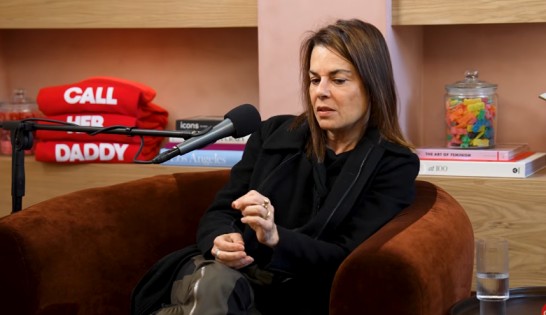
In this episode of Call Her Daddy, Alex Cooper welcomes back psychologist, psychoanalyst, and Couples Therapy star Dr. Orna Guralnik for a candid crash course in couples therapy 101. They unpack the stigma around couples counseling, when to start therapy, how to argue without hurting each other, why toxic relationships feel so addictive, the role of sex in a healthy relationship, codependency, and the signs a relationship is moving too fast. Read the full transcript of this interview below:
Welcome Back to Call Her Daddy
ALEX COOPER: (00:00:03 – 00:00:20) Dr. Orna Guralnik, welcome back to Call Her Daddy. I am in shock that it’s been— what, I think it’s 3+ years, right?
DR. ORNA GURALNIK: (00:00:20 – 00:00:28) Unbelievable. I sort of didn’t feel like it was 3 years. I’ve— it feels like a year and a half ago, right?
ALEX COOPER: (00:00:28 – 00:00:58) Yeah, I guess it’s also because we do stay connected and we do communicate through email, which makes me so happy. But we haven’t literally seen each other in 3+ years, which is bananas to me.
To anyone who is new here, Daddy Gang, Orna is a psychologist and psychoanalyst, and she is the star on the docuseries Couples Therapy, where you counsel real patients about their lives in their couple dynamic. And a new season is coming out.
DR. ORNA GURALNIK: (00:00:59 – 00:00:59) Yes.
ALEX COOPER: (00:01:00 – 00:01:12) And Matt is screwed because when a new season of Couples Therapy comes out, I go MIA. I sit in my room and I binge the entire thing in one sitting. So thank you.
DR. ORNA GURALNIK: (00:01:12 – 00:01:17) Okay. You have to explain to me how you process all of that information, in one binge.
ALEX COOPER: (00:01:17 – 00:01:21) I think it’s because I get so invested in these people’s lives.
DR. ORNA GURALNIK: (00:01:21 – 00:01:21) Yeah.
ALEX COOPER: (00:01:21 – 00:01:40) And I want to know, are they going to stay together? Are they going to progress? What is the trauma that they’re about to uncover? And right. I think it feels like the most real show I’ve ever watched. You’re so incredible at extracting information from people in a way that makes them feel comfortable, but also you fall in love with these people.
DR. ORNA GURALNIK: (00:01:41 – 00:01:41) Yeah.
ALEX COOPER: (00:01:41 – 00:01:50) And I love that we get to see their home life and we get to see them as real humans. And it’s not just this fake facade of a fun show to watch people talk about trauma.
DR. ORNA GURALNIK: (00:01:50 – 00:01:50) Yeah.
ALEX COOPER: (00:01:50 – 00:01:51) So I’ll be binging.
DR. ORNA GURALNIK: (00:01:52 – 00:01:55) I’m very, very curious to talk to you after you watch the show.
Why Couples Therapy Still Carries a Stigma
ALEX COOPER: (00:01:55 – 00:03:13) On this show, I have been so open about my therapy journey. I’ve been open about having a psychologist as a mother and just what that has allowed me to embrace in my life. Maybe where people who were raised in a home that weren’t as open about therapy, it has more of a negative connotation and stigma. Right. But couples therapy.
DR. ORNA GURALNIK: (00:03:13 – 00:03:13) Mm-hmm.
ALEX COOPER: (00:03:13 – 00:03:25) I feel like everyone now is like, “oh my gosh, get into therapy. It’s the best thing.” But couples therapy still has this negative connotation for couples. Why do you think there’s such a big stigma around it?
DR. ORNA GURALNIK: (00:03:26 – 00:04:11) Well, I think first of all, there’s this— I don’t remember if we talked about it last time, but there’s this really intense firewall around couples in general where people do not like to share the fact that they’re having struggles and trouble in their couple’s relationship with other people. There’s some need to kind of preserve some kind of facade of what a couple is like, especially when people get married.
So in that sense, it’s not only the couple’s therapy, it’s just the idea that couples are having trouble is very scary for people. They don’t want to talk about it. They don’t want to expose it. It’s almost like they’re calling in bad spirits. If they talk about it.
ALEX COOPER: (00:04:11 – 00:04:54) It’s a good point. And I also think there’s a fear of if you share too much in a vulnerable moment, then when the next day you’re fine and you’re at the park and you’re smiling, you almost feel this shame of, “oh, I’m embarrassed. And I feel like I can’t recover from what I shared.”
I definitely had moments in the very beginning of my relationship with Matt where I would share with a friend if we had a fight. And then I felt a little awkward because I’m like, “well, we’re still together, but we worked through it.” And then the friend is almost wanting to check in on you and you kind of don’t want to keep bringing it up. So it’s like there’s this social element of you don’t need to— they don’t see everything, right?
DR. ORNA GURALNIK: (00:04:55 – 00:05:04) And when you share the bad, they also don’t want to leave that bad impression, right? And also you’re responsible. You have another person’s trust in your hand.
ALEX COOPER: (00:05:04 – 00:05:04) Yeah.
DR. ORNA GURALNIK: (00:05:04 – 00:05:11) So talking about it, it’s a little bit like, does your partner have the consent? If you have— they given the consent to— it’s complicated.
When Should You Start Couples Therapy?
ALEX COOPER: (00:05:12 – 00:05:17) How does someone know if they should start couples therapy with their partner?
DR. ORNA GURALNIK: (00:05:17 – 00:06:00) Funny, people ask me that. I’m not of the school that believes that everyone should be in couples therapy and it’s always good. I don’t think so. I think there’s a certain kind of window in which couples therapy is a good idea.
If you’re in a relationship and you feel like there’s a certain kind of pattern that feels destructive and not a growth pattern that keeps repeating, and you and your partner are trying different ways to change it and nothing’s changing, you feel like you’re kind of stuck and whatever you’re doing is just either repetitive or making things worse.
ALEX COOPER: (00:06:00 – 00:06:16) Do you feel like if someone comes to you and is like, “I’m terrified he’s going to cheat,” and you’re like, “well, has he given you any reason to— that he’s going to cheat?” And she’s like, “no, but my past and whatever.” Then it’s like, would you ever be like, “so you probably need to go to individual therapy,” right? Okay.
DR. ORNA GURALNIK: (00:06:16 – 00:07:19) Yes. Because it’s like, that’s not a good idea to go to couples therapy in that moment right before anything bad happens, right? I mean, but people sometimes do that. It’s like they think of it as premarital counseling, “tell me how to avoid all the problems that life is going to present me with.” And it’s like, there’s no way, right? Life’s going to present you with problems and patterns are going to emerge, and you can’t protect yourself against it. It’s life. It’s like, go in and live it, and when you need to, get someone to help you.
And then on the other end of things, if people wait too long, sometimes it’s too late, really. I mean, it’s a very sad thing, but I see sometimes couple that come in after years and years of slogging it and kind of avoiding the problem or repeating issues. And by the time they come in, there’s just not enough goodwill left in them, not enough love or not enough hope. And as much as they try, it’s really hard to resurrect the relationship. So that’s interesting. So that’s kind of the window for me.
What If Your Partner Refuses Couples Therapy?
ALEX COOPER: (00:07:20 – 00:07:31) Okay, what if someone’s sitting here listening, Orna, and is like, “I want to go to couples therapy so badly, but my partner refuses and has no interest.” Common. How do you deal with that?
DR. ORNA GURALNIK: (00:07:31 – 00:08:54) There’s one thing, which is to get over the hump of starting therapy, which often one person is more resistant and more scared of doing that. And that getting over that particular hump of just the beginning is not— I don’t think it’s a big deal. I mean, I can tell people, “look, just ask your partner, give it a try, or barter.” Say something like, “if you come with me to couples therapy, I’ll offer this for you. I’ll go your way in some other way. We can go take that trip I’ve always refused to do,” or I don’t know.
Yeah, so getting people through the door is not that hard, but then it’s the job of the therapist to make sure that both people feel like it’s a safe place. It’s a place where both of them can get something out of it.
Because I think what often people are afraid of is that they’re going to be dragged into a therapist’s office and they’re going to be ganged up on, and everyone’s going to try to force them to give up something that matters to them, to change in a way that they don’t feel is right for them, or it’s not going to be for them. And the job of the therapist is to make sure that you’re really helping the couple, not one person. And I think once 2 people feel like they’re really being heard and that they both have something to gain from it, they’re going to want to stay.
ALEX COOPER: (00:08:54 – 00:09:08) Yeah, I think that’s what is a huge misconception about couples therapy from the person that is not wanting to go and is kind of reluctant. I think so many people are like, “I’m literally going to get attacked.”
DR. ORNA GURALNIK: (00:09:08 – 00:09:08) Yeah.
What to Expect in Couples Therapy
ALEX COOPER: (00:09:09 – 00:09:38) And I guess there, if you could explain to people maybe that are listening, what can they expect in couples therapy? Because you’re right, I think people are terrified of it. I think that the person that sets it up, the other person is like, “oh, there you guys have a plan and I’m not in on it. And you guys are going to try to push me into a corner.” How would you explain it to someone who has never done it but is a little trepidatious about going into it, but is like, “Orna, what am I going to walk into?”
DR. ORNA GURALNIK: (00:09:39 – 00:10:38) That’s a really good question. I think what I would say to people is, think about therapy, about couples therapy, as a place where you have the chance to really imagine what you want out of the relationship and to have in the therapist an ally of the relationship, someone who can help you and your partner get to something that you actually want together.
Meaning it’s not a situation where anyone should feel cornered. I mean, there are moments when people are going to face difficult things about themselves and be asked to grow and expand and maybe give more than they’re used to, but the ultimate idea is that you’re there to gain. You’re there to gain something that matters to you. And if that’s not happening in therapy, you’re not in the right place.
ALEX COOPER: (00:10:39 – 00:10:56) I think that’s incredible to hear, though, because I think anyone that hasn’t been raised around therapy being a healthy, happy, positive thing, it’s a really intimidating experience to even conceptualize because you’re picturing someone staring at you, judging you.
DR. ORNA GURALNIK: (00:10:57 – 00:10:57) Right.
ALEX COOPER: (00:10:57 – 00:11:16) And that is intimidating because vulnerability is intimidating in the first place. And to have someone that’s a specialist, I could see someone who’s not aware of how a therapist actually acts towards you could be like, “oh, this bitch is going to fucking judge me and it’s going to tell me I have all this trauma and it’s going to be painful.”
DR. ORNA GURALNIK: (00:11:17 – 00:11:17) Yes.
ALEX COOPER: (00:11:17 – 00:11:20) “And why are we opening all this up? I’m fine right now.”
DR. ORNA GURALNIK: (00:11:20 – 00:11:20) Yeah.
ALEX COOPER: (00:11:20 – 00:11:31) And it’s like, well, you’re fine until the next fight starts and then you go back to your patterns because of whatever happened in your childhood when you were in your home, the way your parents treated you, that you like. It’s all connected.
DR. ORNA GURALNIK: (00:11:31 – 00:11:39) Like why people don’t go, for example, to have a mammogram or a colonoscopy, that they’re both afraid that it’s going to be painful.
ALEX COOPER: (00:11:39 – 00:11:39) Fear.
DR. ORNA GURALNIK: (00:11:40 – 00:11:59) And they’re afraid of what they’re going to find out. And that is not what happens in therapy. So true. It should feel, I mean, it’s not a Luna Park. It’s not fun, fun, but it should feel like an enriching, good experience of being heard, understanding someone else kind of in a richer, deeper way.
ALEX COOPER: (00:11:59 – 00:12:00) There’s clarity.
DR. ORNA GURALNIK: (00:12:01 – 00:12:01) Yeah, and truth.
The Biggest Mistake Couples Make When Arguing
ALEX COOPER: (00:12:02 – 00:12:24) Yeah, so I’m curious, I feel like a huge part of the show is people come to you and are trying to learn how to manage conflict. I mean, I feel like that’s every relationship. How do we fight? How do we communicate? How are we going to handle these things? What is the biggest mistake that you see people making when arguing with their partner?
DR. ORNA GURALNIK: (00:12:25 – 00:13:55) There’s people, I don’t know if to call it a mistake, but I think where conversations go wrong, where conflict goes wrong, is first of all just on the simple level of agitation. Again, like I was talking earlier about a window, a good window. There’s a good window in which decent conversations can happen. And that’s when you’re not either too upset or too activated or too wounded that you can’t actually process. And then the conversation is not a real conversation. It’s just either a crying, screaming, whatever match.
And on the other end, people can feel so shut down or hopeless that they’re not really engaging. They’re withdrawing from the conversation. Maybe the most basic thing for people for a good conversation, for good conflict, would be to make sure you’re in the right zone. You’re not too shut down and you’re not too over-whatever, agitated. Yeah.
The other big kind of still tactical issue is— and this is— it might seem just tactical, but it’s actually pretty deep— are you noticing when you’re busy trying to convince your partner of something, and when are you actually trying to understand them?
ALEX COOPER: (00:13:59 – 00:14:01) Shots fired. Yeah, right.
DR. ORNA GURALNIK: (00:14:01 – 00:14:04) It’s huge. It seems like it should be simple, right?
ALEX COOPER: (00:14:04 – 00:14:05) Right.
DR. ORNA GURALNIK: (00:14:05 – 00:14:25) But it’s huge. And I see it in my couples. I actually just had a session with a couple this morning, where they kind of realized that difference and what— how it will change things if they really move into deep listening mode rather than convincing, convincing, right? And it changes everything.
ALEX COOPER: (00:14:26 – 00:14:36) It does, because it’s like when you’re in those moments, you almost have blinders on where you’re like, “I will get him to understand my point hell or high water.”
DR. ORNA GURALNIK: (00:14:36 – 00:14:36) Yeah.
ALEX COOPER: (00:14:37 – 00:14:54) And he’s on the other side being like, “I need her to understand what I’m saying.” And so you’re just hitting a wall and it’s bouncing back at you, and you feel crazy, and you’re like, “no, how don’t you hear me?” They’re And then it’s like, if you can get to a better— yes, you’re literally— yeah, nothing is penetrating.
DR. ORNA GURALNIK: (00:14:54 – 00:14:59) Yeah. It’s like, and people get increasingly frustrated. Both sides get increasingly, cuz it’s not a conversation.
Seeing the Bigger Picture Behind a Fight
ALEX COOPER: (00:14:59 – 00:15:16) It’s not. On the show you say, and this is kind of what we’re talking about, but I think this is a huge thing for my listeners that they always write in about. You talk about how there is usually so much more to the fight than what the couple is actually specifically arguing about in that moment.
DR. ORNA GURALNIK: (00:15:16 – 00:15:16) Mm-hmm.
ALEX COOPER: (00:15:17 – 00:15:21) How does one step back and see the bigger picture? Because it’s difficult.
DR. ORNA GURALNIK: (00:15:22 – 00:16:30) Very. I think when it’s in the heat of the moment, when the iron is hot, I think it’s a lot to ask of people to really know always what’s going on and what might be feeding the superficial fight.
I think maybe a realistic thing to ask of people is to have a voice in there that says to— one says to oneself, “I’m sure it’s not only about this. There must be other things going on for me that I’m not exactly aware of right now.” I’m going to, if I need to, if I feel like I’m getting too, there could be signals that you’re getting too heated about something that shouldn’t be. And then you can say to yourself, “maybe I should pause, think about it for a while, and come back to the conversation,” not in the heat of it. Yeah.
But just to maintain this kind of kernel of curiosity, I have an unconscious, there might be other things going on here. There are signals that you give yourself when you’re like, when you get too excited about something, too upset. There’s a feeling that you get when something else is going on. Yep.
ALEX COOPER: (00:16:31 – 00:17:00) I love that in the show though, when you have those moments with someone, because again, I think sometimes in romantic relationships, there’s, a dynamic that you’re trying to sustain. And the ego does come into play sometimes. And so I understand when I watch people on the show, one person doesn’t want to give it up. But then when you ask the brilliant question of, “can we pause for a minute? What do you think this— what else is this about for you? What hap— what was your relationship with your mother?”
DR. ORNA GURALNIK: (00:17:00 – 00:17:00) Yeah.
ALEX COOPER: (00:17:00 – 00:17:21) And then all of a sudden the person goes down a spiral of, “well, she never gave me attention, and I was always fighting for attention from my mother.” And then all of a sudden before she even finishes the sentence, she’s like, “oh, I guess it’s because she never is looking at me in a way that I feel like I’m having to ask her for attention.” It’s all these inner dynamics that we had growing up.
DR. ORNA GURALNIK: (00:17:22 – 00:17:44) I know that when it’s in the moment, when your partner triggers you, let’s say in the way your mom triggered you, it’s very hard in those moments to step out and say, “oh, it’s my mother issues that are playing out right now,” because it feels so real and so intense in the moment. Yeah, it’s hard. It’s hard for people to do.
The Thrill of Conflict
ALEX COOPER: (00:17:44 – 00:17:57) Do you have any advice? How do we check in on ourselves and determine if we’re picking a fight quite literally just for the thrill of conflict? I think people do love conflict.
DR. ORNA GURALNIK: (00:17:57 – 00:17:57) Yes.
ALEX COOPER: (00:17:58 – 00:18:00) Give us some advice, Orna.
DR. ORNA GURALNIK: (00:18:01 – 00:18:28) I like that you’re saying that, the thrill of conflict, because I talk to people about that. Yeah. People don’t usually like to acknowledge that. I think what I would say is, first of all, it’s great to acknowledge that there is such a thing as the thrill of conflict. Okay. And I’m going to say something even slightly provocative. There’s nothing bad with that.
ALEX COOPER: (00:18:29 – 00:18:29) Okay.
DR. ORNA GURALNIK: (00:18:29 – 00:18:34) Or not. I know. Like, “who is she?”
ALEX COOPER: (00:18:34 – 00:18:35) I know, I know.
DR. ORNA GURALNIK: (00:18:36 – 00:20:15) I’m not— I don’t think the— I mean, people are different in what they need in their relationship, but I think sometimes people who need to have fights or pick on each other or let out some steam through the relationship, or— I think that’s okay. I mean, relationships are not supposed to be this kind of Hallmark picture-perfect sweetness thing. It’s a place where people live and discharge on each other and use each other and in small ways betray each other and recover. I think that’s life.
And I think for people not to be so hard on each other for using each other in that way, for living in the relationship. It’s just, I often talk about the fact that I don’t even use coasters on my furniture. I’m like, “furniture is to be used. Leave a stain and cut through the board.” And it’s like, that’s what it’s here for. And relationships are like that too. You want the relationship to be an alive place.
I think where it gets problematic is if you’re really hurting each other. And if there’s something too pernicious about it, or if the thrill of injury is what takes over, or of retaliation or injury, that’s when I’m like, I draw the line. And I’m like, “no, that is not— you’re not there to abuse each other.” And not every fight is abuse.
ALEX COOPER: (00:20:15 – 00:20:27) That’s a really great point because I think when couples say, “oh, we had a fight,” most of the time you could also change it to, “we had an argument,” or, “we had a disagreement.”
DR. ORNA GURALNIK: (00:20:27 – 00:20:27) Yeah.
ALEX COOPER: (00:20:27 – 00:21:22) And I think when you’re right though, it can be healthy to have fights because you’re working through something. But there is a difference between a fight and then something that is absolutely abusing the relationship and is getting you nowhere and it’s just to push and hurt.
But I love what you said though, about how there should be conflict and these relationships, we’re living in them. I think we’ve watched growing up for decades and decades, historically, when you think of romantic relationships, they’re held on a different pedestal than every other relationship in our life. Who the hell has a perfect relationship with their parents, with their siblings, with their friends? Of course you’re going to have conflict, disagreements, growing pains with friends and family. Why do we think that that wouldn’t also be true and present in romantic relationships?
DR. ORNA GURALNIK: (00:21:22 – 00:21:32) The person you’re the closest to, right? Yeah, that you have to live with and wake up with and load the dishwasher with, right?
ALEX COOPER: (00:21:33 – 00:24:43) Right. And I think that’s, it’s helpful to talk about that to make people feel better of, of course no relationship is perfect, but when your primary dynamics were in the household you were growing up in, of course families are going to fight. Now your new family that you’re building, of course there’s going to be problems, but it’s how do we actually address the problems? Is it to be cutting and to go beneath the belt and to make the person feel bad? Or is it you’re talking through a disagreement and you’re going to sit at the table all night till you guys can find a way to come back together?
Why Toxic Relationships Feel So Addicting
I need to know And this is for all the Daddy Gang out there that are like, “don’t call us out.” Why do some people find toxic relationships so exciting and so addicting?
DR. ORNA GURALNIK: (00:24:44 – 00:25:55) Hmm. Okay, good question. How would we frame it? I mean, the more kind of classical psychoanalytic way to— yeah. Think about why people get pulled towards abusive and toxic relationships is that it’s some form of what we call in jargon “repetition compulsion.” Okay.
Where something is unresolved— let’s say a past dynamic is unresolved, or past trauma, or a way that you were treated in an earlier stage of your life is unresolved and unworked through— and you’re kind of looking for some way to repeat the same issue that you haven’t resolved, whether it’s to master it, to come out of it better, or because there’s just this kind of compulsion to just repeat the same thing.
So that’s one reason people get stuck on toxic relationships. But there are other ways to think about it. Toxic relationships, one of the things they do, and toxic relationships, I mean, sometimes it’s too wide a term.
ALEX COOPER: (00:25:57 – 00:26:16) I think maybe not. I don’t think we need to go as far as it’s abusive. It’s just this very unhealthy, this person is constantly playing games, constantly. Is there a version of little gaslighting? It’s not full-blown gaslighting? You know what I mean?
DR. ORNA GURALNIK: (00:26:16 – 00:26:52) Yeah. It’s, I often try to, when I talk to people about their clinging on to relationships that are not good for them. Sometimes it’s, when a person feels on some level damaged or bad about themselves or shame about certain aspects of themselves, they at times go for situations that reinforce that view of themselves.
ALEX COOPER: (00:26:55 – 00:27:59) Interesting, because as you were saying that, I was having a moment where I was thinking about when I was in college. I had been super insecure when I was younger, and I would go for these men that— it was like I was trying to get the guy that was so unattainable. And when I would get him, I was playing the game back, but there was a part of me that enjoyed it because it felt like it was validating to me, “you got him, you did it.” And it was almost like healing the wounds of me feeling like no guy wanted me when I was younger, and I would get picked on.
And so when I would get these guys that was the captain of the hockey team, it was like I almost was going for, in my brain, accolades of, “I want to get there to prove—” it was more to prove to myself I can. I never felt fulfilled. I never felt happy, but it was like I was replaying, “oh, if I was younger, these are things I wish I could have done.” And then I got there and I’m like, “oh, this isn’t fun. I don’t feel happy. I don’t feel seen.” But it was like an ego thing almost.
DR. ORNA GURALNIK: (00:27:59 – 00:28:17) Right. And that is, in a certain way, you’re trying to repair something. But sometimes it’s, I mean, you can in a way flip it and you can see people who are not doing it to repair. They’re doing it actually to just keep telling themselves, “I suck, I suck.”
ALEX COOPER: (00:28:17 – 00:28:19) And what is that mostly from childhood?
DR. ORNA GURALNIK: (00:28:20 – 00:28:44) It’s a form— I mean, you can think of it as masochism, but it’s like, it’s a— it’s being stuck on a certain kind of repeat. It’s self-negating. I mean, people do all sorts of neurotic things that are bad for them. Yeah. For— I mean, that’s why we have psychoanalysis. I mean, yeah, there are many ways that people do things that are bad for them.
How Childhood Trauma Plays Out in Adult Relationships
ALEX COOPER: (00:28:44 – 00:28:55) Have you found through psychoanalysis, any repeating pattern from childhood that would make someone constantly try to remind themselves of how they’re not worthy, not good enough?
DR. ORNA GURALNIK: (00:28:55 – 00:28:55) Yes.
ALEX COOPER: (00:28:56 – 00:28:58) Can you share just a couple examples?
DR. ORNA GURALNIK: (00:28:59 – 00:29:36) Well, the classic example— I mean, it’s kind of an extreme example, but think of the classic pattern of people who’ve been, let’s say, sexually abused as children, and then in teenage years they enter a series of abusive promiscuous relationships that just make them feel like shit because that’s the only way they can— they know how to think of themselves. It’s like an endless self-punishing cycle. It’s very— I mean, it’s a very particular kind of dynamic with people who’ve had early abuse that it takes deep work to move out of that pattern.
ALEX COOPER: (00:29:37 – 00:30:31) But No, that’s so helpful. Yeah, I think because I think again why I appreciate these type of conversations in the show is, I think a lot of people who maybe have not even begun to experience therapy or thought about it or just wasn’t a part of their upbringing, that statement alone could— would be crazy to people. Like, “hold on, so someone that was abused is now going to go and put themselves in harm’s way, right?” And they’d be like, “wait, what?” I think they’d just never have sex for the rest of their life and they’d be shut down. That’s just not the case.
But I think these type of conversations help explain to people the intricacy of trauma and how it unfolds in your adult life. But I appreciate you sharing that because I’m sure— I mean, one in every, what, 3 women? So many women listening to this show may be sitting there like, “oh my God, Orna, yeah, I think I’m—”
DR. ORNA GURALNIK: (00:30:32 – 00:30:33) “I think I’m doing that.”
ALEX COOPER: (00:30:33 – 00:30:38) And how do you even begin to What, just therapy and talking through it?
DR. ORNA GURALNIK: (00:30:38 – 00:31:19) I know the work of therapy. I mean, there are other ways that people deal with issues, but in psychoanalytic work, what we do is we— I mean, this is a— yeah, it’s different with each person, but you basically— the idea is that you try to go back and revisit the actual experience and help the person now with their more mature mind really tend to what happened to them, to the injuries, to what was missing, try to imagine how things could get better. You really try to tend to all the areas that were disavowed and neglected over the years and heal.
ALEX COOPER: (00:31:20 – 00:31:25) And I understand why that sounds absolutely terrifying to people.
DR. ORNA GURALNIK: (00:31:26 – 00:31:26) Yeah.
ALEX COOPER: (00:31:26 – 00:32:04) People with that type of trauma or any type of trauma, you’re like, “hold on, Orna, I’m supposed to go back and relive it, right? Are you crazy? I put it away, I tucked it away,” right?
But I think what people realize when they come out on the other side of it is there’s such power and resilience you feel within yourself when you can go back and you can start to take control over your own life and not let this thing that happened to you Yeah, define you. Yeah, because it does start to define you when you don’t, right, address it. It comes up in your romantic, in your friendships, in every part of your work life, and that’s when it gets terrifying.
DR. ORNA GURALNIK: (00:32:04 – 00:32:15) And people— it’s so important for people to feel like they’re not, like you’re saying, defined by bad things that happened to them in the past, that they have some freedom, some degrees of freedom out of that. Yeah.
The Role of Sex in a Healthy Relationship
ALEX COOPER: (00:32:17 – 00:32:24) Back to couples. How big of a role does sex play in a healthy relationship?
DR. ORNA GURALNIK: (00:32:24 – 00:33:46) It’s funny, I just saw something in the Times today that I haven’t read yet, but about people that are talking about how sex is not that important in their marriage. I think it varies a lot. I think not only is sex a, this kind of domain that could goes anywhere and people have all possible things in their mind and in their bodies and that can transpire between them. And sex is a huge terrain.
But the importance of sex and what meaning people assign to sex in their relationship varies a lot. I think for some people, having an ongoing connection through the body, through sexuality, is incredibly grounding And without that, they feel unmoored. And for other people, it’s not their main— it’s not where they live. It’s not where the essence of their life is.
I mean, for some people, it might be in the far-out intellectual domain, and the body is kind of a sort of byproduct that tag along, but they really live in their mind and they want to live there with their partner.
ALEX COOPER: (00:33:47 – 00:34:08) It really varies a lot between people because I’ve had conversations with friends and I have a large spectrum, as you would expect. I have one friend that’s like, “my parents weren’t overly affectionate, so I don’t find myself— I don’t need sex. I actually just crave more conversation.”
DR. ORNA GURALNIK: (00:34:08 – 00:34:09) Exactly.
ALEX COOPER: (00:34:09 – 00:34:17) Whereas I have other friends that are like, “oh, I— the only way I know that we’re in a good place is if we’ve gone too long without sex. I’m like, what’s wrong with us? Are we disconnected?”
DR. ORNA GURALNIK: (00:34:18 – 00:34:18) Yeah.
ALEX COOPER: (00:34:18 – 00:34:28) And I though, I’m curious if you have a couple where one is on one side of the spectrum and one is on the other, that then— that’s tough, right?
DR. ORNA GURALNIK: (00:34:28 – 00:35:13) It’s tough. Definitely. It’s tough. If people come into the relationship on with very different, let’s say, love languages or inclinations, that is tough. What’s interesting is that couples might start off not that different from each other.
I mean, one might be more physically affectionate or have a stronger libido or find sex is where they express themselves, and the other maybe a little less. Sometimes what happens, and that is a problem, is that people work out other tensions or difficulties through— in that arena, and then they polarize.
ALEX COOPER: (00:35:14 – 00:35:15) So explain that.
DR. ORNA GURALNIK: (00:35:15 – 00:35:56) Someone could— I mean, the bedroom is often where people sadly work out other agendas. So someone could be mad at their partner for, I don’t know, not picking up the slack or taking care of the kid or whatever, and withhold sex. It’s easy for them to withhold sex because that’s not exactly their mode of operating. But for the other party, it might feel like the worst kind of punishment and the most threatening thing to do.
And then you get into the dynamic of polarization. So they may not have started so different, but it’s— they’re working out some other issue through in that domain, and that is a problem.
ALEX COOPER: (00:35:57 – 00:36:46) Well, that’s also a problem because the person that is not, let’s say, as— this is just, I’m just throwing this out there— sexual. I’m— that’s not the actual right term, but if the person that’s not as sexual in the relationship has the power, right? Because they’re holding the keys to the sexual relationship, right?
And the person that wants it is then at times probably feeling like, “I’m such the pursuer constantly.” Yeah, “I feel like I’m being rejected. I feel like I’m not getting the love I want.” Where the other person is like, “All you care about is sex, right? Because you just keep coming to me for it.” But then they’re like, “well, because you never come to me for it.” And they’re like, “because you’re always wanting it.”
And it’s like, how the hell do you— how do you approach a conversation, I guess, when you’re in these dynamics with these couples to bring them back to center?
DR. ORNA GURALNIK: (00:36:47 – 00:37:07) There’s no one-size-fits-all. I mean, it really— with each couple, it’s a different thing. But what I find happens a lot in couples therapy is that you have to try to separate— if people are trying to negotiate other issues, in a way, to pull it out of the bedroom.
ALEX COOPER: (00:37:07 – 00:37:08) Interesting.
DR. ORNA GURALNIK: (00:37:08 – 00:37:18) If you’ve got issues that you’re working on, if you’re resentful about other things, just try not for the bedroom to be the arena where you’re working it out, unless it really is about the bedroom, right?
How to Talk to Your Partner About Sex
ALEX COOPER: (00:37:18 – 00:37:30) If you both have just complete different sex drives, right? How do you approach a conversation with your partner if are dissatisfied in the bedroom? How do we— because that’s a tough conversation and can be awkward.
DR. ORNA GURALNIK: (00:37:30 – 00:38:18) Tough conversation. And I would actually probably start off by assuming— I mean, unless it’s a very verbal couple, I would actually not start with language. Okay. A lot of sexual needs and differences, it’s great to resolve— I mean, if you’re going to try to work on it, to do it in real time through the body. Signal through the body, through non-verbal ways, what you want, what you need. Experiment with things.
And I guess it depends on the couple, what works for them— working it out in real time or working it out when you’re not in the middle of a sexual encounter, when vulnerabilities are high, passion is high. It’s a tricky thing to use language in those moments.
ALEX COOPER: (00:38:19 – 00:39:40) It’s so tricky because I mean, unless you’re in deep, deep therapy, you got to be very careful because you can completely shut down. And I agree to not gender it, but it— let’s say it is the woman coming to the man, it can just make them feel so shut down where they’re like, “how long have you been thinking about this? You’re dissatisfied.” They’re feeling emasculated. Or roles reversed, the man comes to you and you’re feeling like, “oh my God, have you not been enjoying the sex? Every time we’re having sex, who are you thinking of?” Sex is a very, very vulnerable thing in a relationship.
And I think you’re— I never thought about it that way. You’re right. It’s like, if you can address it first with your body, let’s say the person is dissatisfied because ever— I’m making this up— every time you’re having sex with your partner, you’re feeling like it’s— you’re disconnected. You’re having physical sex, but it just feels physical and there’s no connection. Okay.
Well, instead of saying that, you’re right, Orna. Maybe you’re— when is the last time in the morning are you hugging and kissing before you each leave for work? Or no, you’re just kind of ships in the night and you see each other, and of course when you’re having sex, of course it doesn’t feel intimate and special. Are you hugging? Are you touching? Do you hold hands? You want more connection of intimacy when you’re having sex? Put intimacy throughout the rest of your relationship first before— you’re right, lead with that.
DR. ORNA GURALNIK: (00:39:40 – 00:39:50) And then all of a sudden you can do it while you’re intimate while you’re having sex. I mean, there are ways that people can increase that kind of intimacy while they’re having sex, not through words, right?
ALEX COOPER: (00:39:50 – 00:40:19) Looking at each other, kissing while you’re having sex. Maybe you guys never kissed while you’re having sex. That could feel a little isolating where you’re like, “this could be anyone.”
So I love that advice because I do feel a lot of people write into me just like, “I literally don’t know how to tell my partner I’m not happy.” I think that’s a very non-daunting way to go about it is first just slowly trying to make those steps yourself within the relationship. And you don’t have to have this big blowup conversation.
Frame It as a Request, Not a Complaint
DR. ORNA GURALNIK: (00:40:19 – 00:40:43) Yeah, why blow up at all? I mean, when we’re talking about sex, I mean, there’s the other thing, which is frame things as requests as opposed to as complaints. I mean, that’s always a good piece of advice, which is translate what’s bothering you into a request, into an ask. Rather than a complaint. I mean, the outcome could be very different.
ALEX COOPER: (00:40:44 – 00:40:48) Can you give us an example of how it would be bad to say it versus a good way to say it?
DR. ORNA GURALNIK: (00:40:48 – 00:40:53) Like, “you never kiss me” versus “let’s kiss.”
ALEX COOPER: (00:40:56 – 00:41:53) It sounds so simple, but it’s so not that simple when you’re in the moment and he’s doing the dishes and you’re like, “okay. Here I go, here I go. Why don’t you kiss me? Yeah, ever when we have sex, you never kiss me. I don’t know the last time that you’ve made out with me.” We’re having sex and he’s literally mid-dishwashing. “What happened? What just happened?”
And meanwhile, it’s like, you also— I think something I’ve learned in therapy a lot, and we did it in couples therapy, was something that you have been holding on to. That’s why it’s so good to not hold on to things for too long in a relationship, because then you’ve had 19 conversations with yourself, right? And they have no idea you’ve been thinking this, right? So then when it comes out, it can literally feel like a war. And the person is like, “oh my God, what is happening? I thought our sex life was great recently.”
Yeah, so you’re right. It’s like, “hey, you know what, I would love to make out when we’re having sex. I was thinking about that. I love making out with you. Why don’t we do it when we have sex?” Like, making—
DR. ORNA GURALNIK: (00:41:53 – 00:41:55) I wouldn’t even say “why don’t.”
ALEX COOPER: (00:41:55 – 00:41:56) Oh, don’t say “why don’t.” Nope.
DR. ORNA GURALNIK: (00:41:56 – 00:41:57) “Let’s.”
ALEX COOPER: (00:41:57 – 00:41:59) “Let’s. Shall we?” Yeah, “shall we?”
DR. ORNA GURALNIK: (00:42:00 – 00:42:02) “To the bedroom.” As opposed to “why don’t we.”
Childhood Dynamics That Shape Us in Adulthood
ALEX COOPER: (00:42:03 – 00:42:56) But it’s I love these conversations with you, Orna, because when we are going on our day-to-day lives, it is hard to remember all these things. And sometimes it’s good to just have these slowdown conversations of, all of us are the way we are because of everything that’s come before us within our lives. And when you’re standing across from your partner, it is not just the day we met on our first date and forward. It’s like, no, no, no, life existed before this person and what happened to you.
I’m curious, when we talk about past trauma, cuz I think this is something that’s a misconception. I think a lot of most people assume we’re talking about extreme situations, which we can, of course we could do a whole episode on extreme situations like abuse. But can you talk about other types of childhood dynamics that can impact us in adulthood?
DR. ORNA GURALNIK: (00:42:56 – 00:44:55) Yeah. Of course. I mean, first of all, there’s, I think it’s quite popular now to talk about attachment styles. But the very first patterns of relatedness that we establish with the people that take care of us, often parents, not always, they will influence the rest of our lives. They will set the kind of expectations we have For example, a simple and very important thing, if you need something and you make an ask to the world, will the world respond or not?
Like you’re saying, if you asked your parents when you were younger for help on something, and before even ask for help, your diaper was wet and you started crying, how long did it take for your parent to get there and change your diaper? If you were colicky and you had incredible stomachaches, was it even possible to help you with it? Sometimes it’s really difficult to help colicky babies, and they start off the world with some idea that “when I’m in distress, the world can’t always help me.” Oh my God.
Yeah, it’s really basic stuff of what to expect from the world. Can— do I have that incredible trust that when I’m in distress, help will come. Those are really early things that get established, and they’re not always because of neglect or abuse.
Sometimes it’s just, again, I mean, you can be a colicky baby, or you could have all sorts of ways that your system is dysregulated and it’s very hard to take care of you as a baby. And then you start off with a pattern of— I don’t know what to call it— mistrust, or some way that the call and response is, yeah, not established well.
ALEX COOPER: (00:44:56 – 00:45:33) But I think it’s important to just highlight that for a minute because I can imagine a lot of people listening are like, “oh, well, I don’t have trauma compared to my friend. My friend went through this or was abused when she was younger, did it, and I don’t have trauma.” It’s like everyone has something that— we all are the way we are because of our upbringing.
And I think that when we Instead of being like, “well, my stuff is not as bad,” take care of yourself. And also recognize, hey, if you find yourself in a pattern in romantic relationships where you’re like, “why do I keep doing this? Oh, and it does kind of show up at work too. I’m always pulling away when someone’s being nice to me. I can’t take a compliment or I can’t,” as simple as that.
DR. ORNA GURALNIK: (00:45:34 – 00:45:34) Yeah.
ALEX COOPER: (00:45:34 – 00:45:45) Where does that come from? And I think when we start to ask ourselves the questions, yes, it leads us down this little dark path, but it’s exciting to know that there is an answer.
DR. ORNA GURALNIK: (00:45:45 – 00:45:46) Yeah.
ALEX COOPER: (00:45:46 – 00:45:48) And you can resolve it.
DR. ORNA GURALNIK: (00:45:48 – 00:45:55) And the answer could be really interesting actually to go down that path and try to figure out. It’s actually, it’s really interesting. It is.
ALEX COOPER: (00:45:55 – 00:46:37) It’s fascinating that, I mean, that’s why I told you when I binge this show, that’s my answer. When I binge Couples Therapy, it’s because why I love it and I can sit and I can handle it is, one, because that’s just how my mother raised me. Like, “let’s talk for 19 hours and then some.”
But it really comes down to, I’m fascinated by the human experience of, we all grow up and what triggers did we experience to make us afraid of intimacy or overly intimate and overly trusting or reserved or outwardly very dramatic in moments? And people see it as dramatic, but really what is it? Is it a cry for attention? Because you, yeah, it’s interesting.
DR. ORNA GURALNIK: (00:46:37 – 00:46:37) It’s endless.
ALEX COOPER: (00:46:38 – 00:48:05) I love it.
Supporting Your Partner vs. Codependency
Question I think is very interesting is I actually had this from a fan, was, which is where should someone draw the line between being supportive of their partner versus taking on way too much of their partner’s trauma as their own?
DR. ORNA GURALNIK: (00:48:05 – 00:49:27) I think that the question itself is an important one. There’s a difference between caring for another person and taking care of them and getting kind of enmeshed, symbiotic, lost in someone else, which is not actually an act of care. It’s something else. It’s, I guess, what in lay language is called kind of codependency.
It makes me think a little bit about raising children. Doing everything for them is not always the best thing. Figure out, what do they need for their own independence and development? When are you overdoing for your child because of your own issues? In a way, using your child to work through something versus seeing them for who they are. And when do they need a bit of support, and when do you need to step back and let them do their own thing?
I mean, that’s kind of a very good learning ground for this difference between overdoing it and doing it right out of care. I think there are many reasons why people get codependent that are not about care for the other person.
ALEX COOPER: (00:49:28 – 00:49:28) Share with me.
DR. ORNA GURALNIK: (00:49:29 – 00:50:01) I mean, you can come up with a million reasons why, getting lost in someone else because you don’t want to face something in yourself. You’re escaping your own stuff, insecurities, all sorts of avoidance tactics. I think maybe what I’m trying to say is that it’s important to try to ask yourself, “am I getting super involved because I care for the well-being of this person, or am I answering some need of mine here?” Hard, hard to decipher.
ALEX COOPER: (00:50:01 – 00:50:49) That’s what I was going to say, because is it fucked up to say someone that has secure attachment would probably never get themselves completely down a rabbit hole in that situation? Because they would be like, “hold on, love you so much, but you need help and I can’t give this to you.” Where maybe it immediately turns on a light for someone of, “I’m needed, I’m wanted, they need me.” And then it becomes codependent because again, back to the beginning of this episode, it’s just feeling actually something within them to take care of that person.
And of course they think they love them and they’re trying, but it also is completely filling their cup by being like, “they need me and I’m here and I’m the caretaker, and I didn’t have that when I was younger, so now I’m going to take on that role.” Whatever it is, that’s a really great way of describing it.
DR. ORNA GURALNIK: (00:50:49 – 00:50:49) Yes.
ALEX COOPER: (00:50:50 – 00:51:36) But do you think it’s almost, in a way, also to help someone with that question is, is this too dramatic to be— it’s almost like when if you’re dating someone that has a substance abuse problem, you literally are— cannot help that person to a certain extent. Of course you can drive them to rehab, but they have to walk in the doors, they have to participate in the healing, and you’re not a professional to help the healing, right?
So when someone has this trauma, you can be there and cry with them and hold them, but it only goes to a certain extent where you’re then both being brought down. And if anything, you could be prohibiting them from actually seeking real help because there’s this codependency of, “we’re going to do this together,” right? You can’t do that together.
DR. ORNA GURALNIK: (00:51:36 – 00:51:36) I agree.
ALEX COOPER: (00:51:36 – 00:51:37) They need a you.
DR. ORNA GURALNIK: (00:51:38 – 00:51:44) Yeah, well, yeah, or a me, or an AA situation, or— yeah.
Signs a Relationship Is Moving Too Fast
ALEX COOPER: (00:51:45 – 00:51:52) More questions from our fans. What are some signs the relationship is moving too fast?
DR. ORNA GURALNIK: (00:51:53 – 00:52:01) A relationship has ideally it I’m saying this and I’m immediately contradicting myself in my mind, but okay, okay, let me say the first thing.
ALEX COOPER: (00:52:01 – 00:52:02) Okay.
DR. ORNA GURALNIK: (00:52:02 – 00:52:15) A relationship has typically a developmental arc. It takes a lot of time to get to know another person. I always feel like with my patients it takes me 2 years to feel like I know this person.
ALEX COOPER: (00:52:15 – 00:52:15) Really?
DR. ORNA GURALNIK: (00:52:15 – 00:52:17) Yeah. Oh my God, yeah.
ALEX COOPER: (00:52:17 – 00:52:19) I wonder how my therapist feels about me.
DR. ORNA GURALNIK: (00:52:19 – 00:52:21) How long have you been seeing them? Over 2 years.
ALEX COOPER: (00:52:21 – 00:52:22) Yeah, for sure.
DR. ORNA GURALNIK: (00:52:23 – 00:53:27) I feel like there’s a moment in which suddenly it’s like, “oh, all the pieces are coming together. Now I get this person.” It takes a long time to get to know a person. And I think the idea of moving too fast is when you assume you know more than you do. When you think you got it, you understood everything about them, you get it, they understood you.
And in a way, you’re blocking all the areas that create the discomfort of realizing “I don’t know that person, that person doesn’t know me,” which is scary. It’s uncomfortable, it’s scary. I think people sometimes have an inclination to want to avoid that and rush so that they don’t sit through the discomfort of otherness and unfamiliarity and awkwardness, which is part of getting to know a person. There’s going to be a lot of awkwardness.
ALEX COOPER: (00:53:27 – 00:53:28) So much awkwardness.
DR. ORNA GURALNIK: (00:53:28 – 00:53:29) Yeah.
ALEX COOPER: (00:53:29 – 00:54:11) And I like that you’re saying that because I have had women write in being like, “Alex, I’m officially 30.” I’m like, “you’re so young, enjoy it.” And it’s like, “no, no, no, I’ve got to find a husband.” And I’m always so worried because it’s like, listen, I think there’s moments also where we completely project our wants onto someone, and they could be literally sitting at a dinner with you being like, “Yeah, so I have this trauma,” and you’re like, “oh my God, you know where we should go this weekend? We should go to Cancun.”
And they’re literally like, you’re just putting on them what exactly you want. “I want a husband. You look great. You played the part.” And it’s like, we sometimes just approach a relationship based off of what we want from it and need from it.
DR. ORNA GURALNIK: (00:54:11 – 00:54:11) Yeah.
ALEX COOPER: (00:54:12 – 00:54:19) And we completely neglect the fact that the person across from us is like, “I’m a stranger.” Yes. A complete stranger.
DR. ORNA GURALNIK: (00:54:19 – 00:54:20) Yeah.
ALEX COOPER: (00:54:20 – 00:54:36) And it’s like this honeymoon phase. I think the honeymoon phase can be so tumultuous in the long run if you elongate it for too long. And the honeymoon phase is on you to decide when it— the bubble pops and you’re like, “so you want—”
DR. ORNA GURALNIK: (00:54:36 – 00:54:37) “actually, who are you?”
ALEX COOPER: (00:54:37 – 00:55:11) Yeah, literally. “Tell me about your childhood. What are you insecure about? What is something that has been one of the biggest hardships in your life?” It’s daunting, but again, you can hear an answer from someone and be like, “oh, I don’t want to be with you because of the way you’re telling me you handled that with this. Oh my God, I couldn’t relate to that at all.”
But sometimes people go— sometimes people— I mean, you’ve probably seen it. How long have you seen people go in a relationship where you can sit down with them and they’re married for 30 years and you’re like, “do you guys know each other?”
DR. ORNA GURALNIK: (00:55:11 – 00:55:17) I know. I know, how does that happen? It’s actually shocking to me. It’s shocking to me.
ALEX COOPER: (00:55:17 – 00:55:19) That’s possible, right?
DR. ORNA GURALNIK: (00:55:19 – 00:55:40) It’s possible. I mean, it’s like people who, their spouse says, “I want to get divorced,” and I’ll ask them— somebody can show up for therapy and say, “my spouse wants to divorce me,” and I’m like, “well, what have they been— what have they been saying to you over the years that will help us understand?” And they’re like, “I don’t know.”
ALEX COOPER: (00:55:41 – 00:55:41) What is that?
DR. ORNA GURALNIK: (00:55:42 – 00:55:45) That is self-absorption.
ALEX COOPER: (00:55:46 – 00:55:49) How long does it usually take in therapy to come out?
DR. ORNA GURALNIK: (00:55:49 – 00:55:49) A while.
ALEX COOPER: (00:55:50 – 00:55:50) Really?
DR. ORNA GURALNIK: (00:55:51 – 00:55:51) A while.
Wrapping Up
ALEX COOPER: (00:55:51 – 00:56:19) I— and I think as we’re wrapping up— oh my God, I sound like a therapist— as we’re wrapping up, you’re sobbing. I have done that with my therapist sometimes. She’s like, “and we’re wrapping up, Alex.” I’m like, “wait, my life’s in shambles.”
I appreciate you walking us through that though at the end there because I feel like the whole thesis of this episode is truly trying to dive underneath all these decisions. Yeah. That we are taking on our day-to-day just at face value. “Oh, he treated me like shit. Oh, she did this. Oh shit. Why?”
DR. ORNA GURALNIK: (00:56:19 – 00:56:20) Yeah.
ALEX COOPER: (00:56:20 – 00:56:31) There’s always an answer. Yeah. Sometimes we don’t want to know it, but it can give you a lot of peace when you do get underneath it and you know it. Thank you so much. This relationship that we have makes me so happy.
DR. ORNA GURALNIK: (00:56:31 – 00:56:32) Me too.
ALEX COOPER: (00:56:32 – 00:56:32) I, oh, it does.
DR. ORNA GURALNIK: (00:56:32 – 00:56:33) Me too.
ALEX COOPER: (00:56:33 – 00:56:35) Okay. I don’t annoy you. I’m emailing you like, “hi, Orna.”
DR. ORNA GURALNIK: (00:56:36 – 00:56:41) No, I have a deep great fondness for you. Yeah, don’t make me cry. No, it’s—
ALEX COOPER: (00:56:41 – 00:57:08) no, I really appreciate you and everything you do, and I think this show is truly revolutionary. We don’t get to see therapy working from a start-to-finish moment, and obviously I know it’s not finished, but we don’t get to see the breaking down of humans and watching these inner dynamics come from beginning to wherever they’re left, whether it’s breaking up or staying together. And so I think what you guys are doing is amazing and I’m addicted, so I’ll be watching.
DR. ORNA GURALNIK: (00:57:08 – 00:57:09) Thank you.
Related Posts
- Transcript: FO575 Raj Shamani w/ Death Investigator Barbara Butcher
- FO576 Raj Shamani w/ Adam Grant – Read People, Build Trust & Choose Better Friends (Transcript)
- Diary Of A CEO w/ Deathbed Doctor Christopher Kerr (Transcript)
- Transcript of Kate Manne Interview: “I Am Jane Doe” – Call Her Daddy
- Taimi App for LGBTQ+ Dating: Features, Community, and User Experience