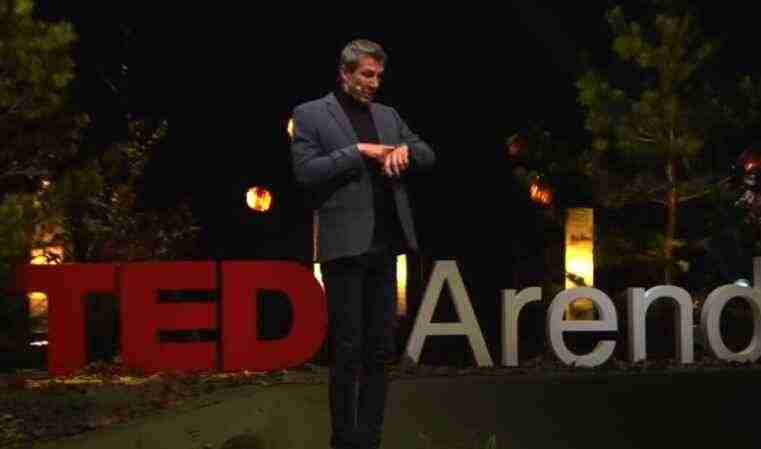
Read the full transcript of Dr. Stephen Seiler’s talk titled “How “Normal People” Can Train Like The World’s Best Endurance Athletes” at TEDxArendal 2019 conference.
Listen to the audio version here:
TRANSCRIPT:
The Myth of “No Pain, No Gain”
DR. STEPHEN SEILER: Heart rate at 120. That seems awfully high for just walking. Oh, well. No pain, no gain. This popular slogan has been described as a modern American mini-narrative, and I grew up with it.
But when it comes to training the body to endure, to run, ski, cycle, row, or swim faster, longer, this slogan and the recipe for development that it suggests is just wrong. Destructively wrong. I’m an exercise physiologist. Scientists like me study how the body responds and adapts to exercise in all its variations. Often, this means bringing well-trained and not-so-well-trained people into specialized laboratories and having them sweat for science.
The Evolution of Exercise Physiology
The study of the physiology of exercise has gone on for over a hundred years. And during that time, we brought athletes of the day into laboratories to better understand human physiology. We’ve also used our knowledge of human physiology to inform and hopefully improve the training process. In our modern laboratories, we can simulate and quantify the effects of variables like heat and humidity, altitude, or exercise intensity on these physiological acute responses and long-term adaptations. Now we measure and prod, we take blood samples.
We sometimes put sensors in uncomfortable places, and we may even extract a tiny bit of muscle from an exhausted athlete. We also try to connect the perceptions of effort, exertion, and fatigue that are created by the brain and connect them to what is happening in the body. Exercise is a powerful stimulus for adaptation in almost every kind of cell in the body, from brain cells to bone cells. And sometimes scientists choose to remove cells or even entire organs from an exercised organism to understand these mechanisms. I did this myself in my doctoral studies many years ago.
I studied hearts, rat hearts, mind you, but always with the goal of better understanding human physiology. Specialized laboratories and highly reductionist approaches like this have served our field well, but they have limitations, serious limitations. Because when we leave the control of the laboratory and go out into the real world where training occurs, our short-term controlled studies don’t always give us an accurate understanding of a complex long-term process.
A Paradigm Shift in Norway
Twenty-five years ago, I moved to Norway, and about all I took with me was my physiology training, my interest in endurance, and that “no pain, no gain” idea that I had grown up with. Norway is a great place to study endurance because endurance sports are very popular, and Scandinavia, in general, has a long reputation in exercise physiology research.
So when I arrived, I was keen to bring local athletes into the laboratory and study them in the way that I had been trained. But then two random events happened that forced me to reexamine what I thought I knew about the endurance training process and also how it should be studied. And to be honest, those events have brought me to this stage and you tonight.
First, I was jogging out on forest trails near my home, and I saw a woman running in front of me. I recognized her because we had tested her in the laboratory, and I knew she was a well-trained endurance athlete, better trained than me. But what she did next surprised me. She came to the bottom of a short but steep hill, and instead of running up the hill, she started walking briskly. And then when she reached the top, she continued running again. Now, personally, I have never met a hill during training that I didn’t at least try to run up, panting and straining all the way. No pain. No gain. So why did this woman who was well-trained choose to walk instead of run that day?
And then later, I was reading a newspaper article and an interview of the national team cross-country skiing coach at the time. He was the coach of true titans of endurance with Olympic gold medals and off-the-charts laboratory test results on their resume. But he said, “We do not train at medium-hard intensity. It’s too much pain for too little gain.” Now this was fundamentally opposed and different from what I had been taught to believe from laboratory studies.
Studying Athletes in Their Natural Environment
So I realized I was going to have to leave the comfort of the laboratory and study athletes in their laboratories, where out on the forest trails and skating ovals and hills and lakes, where they trained and tested themselves daily. How did the best endurance athletes actually train every day over weeks and months and years? Endurance athletes are highly motivated to be their best, and they work with purpose and motivation towards that goal every day.
But it wasn’t always that way. The amateur ethos of very limited training prevailed for many years. But then in the 1950s and ’60s, their performances became a kind of geopolitical proxy for the vitality of nations. It was the Cold War. Television brought lots of money into training and sport, and the result was that the process became professionalized.
Athletes and their coaches began to experiment with the training process. And over six or seven decades, hundreds and even thousands of athletes have contributed to a kind of optimization process. It’s all quite Darwinist, really. In the high-performance sport world, training methods that give consistent results survive, and those that don’t, well, they fade away and become extinct.
Three Fundamental Questions
Over about two decades now, I and others have moved back and forth across these different kinds of laboratories and methods with the goal of answering three questions:
What have athletes learned about the training process?
Why does it work?
How can the rest of us use their hard-earned knowledge?
To quantify endurance training, you have to accurately measure the two fundamental variables that combine to make up every endurance training workout: intensity and duration.
Duration is easy, but intensity is more challenging because we can measure intensity from two perspectives, external and internal.
External intensity or workload is just the pace or power that we produce. 200 watts on a bicycle, for example, but that same external intensity can produce very different internal workloads or physiological responses in an athlete or when comparing across athletes depending on the physical capacity at the time. Fortunately, the laboratories that we work in are designed to very precisely control and regulate the external workload and then measure those physiological responses. This gives us a calibration for leaving the laboratory and testing that “no pain, no gain” hypothesis in the real world.
The Three Intensity Zones
When we have endurance athletes of all ability levels come into the laboratory and exercise at increasing intensities and then measure these physiological responses such as oxygen consumption, ventilation, heart rate, and blood lactate, three distinguishable intensity zones emerge.
And I’m going to call them green, yellow, and red. Pretty simple:
Yellow: Somewhat hard to hard, short response only, and kind of high perceived exertion.
Red: Hard, high intensity, gasping pace.
So using these three intensity zones from careful physiological testing, we then have cooperated with scientists from different countries, and we’ve quantified the training of hundreds of athletes in cycling, cross-country skiing, rowing, and distance running. And we can ask the question, is “no pain, no gain” the way the best athletes train?
The answer is no. Absolutely not. This is the basic intensity distribution that emerges from studying the best in the world across different sports, different countries, male and female. About 8 out of every 10 of their training sessions, many training sessions, are performed in their green zone. Now the rest can be quite demanding, but it’s like that Norwegian coach said so many years ago, the best athletes don’t train very much in that medium intensity zone.
Examples from Elite Athletes
Let’s look at a few examples. This is Marit Bjørgen. She’s the all-time winter Olympian, male or female. Eight gold, 4 silver, and 3 bronze medals. She allowed sports scientists in Norway to digitize and analyze her entire training career and publish it internationally. And one of the scientists that was involved was a former national team teammate who became a doctoral student. I thought that was pretty cool. Here is her endurance training intensity distribution during her five most successful years of competition.
Hundreds of hours spent in the green zone build the foundation for those red zone performances that were among the best in the history of the sport.
Here’s another example from Kenyan distance runners. Five thousand and ten thousand meter specialists. Eighty-five percent of their training green zone.
Here’s another example. This is from professional cyclists. Data collected recently by Dutch sports scientists that I know. And these data have kind of become my favorite for a reason that will become clear in a moment. Four years of data, I’m going to capsulize in just two numbers: 191 watts and 65% of maximum heart rate.
That was the average external and internal workload these professional cyclists trained at over the course of an entire year. Now to put those green numbers into perspective, these same professional cyclists during a hard race may maintain 300 watts for four or five hours during a breakaway, and they may climb Alpine Mountain passes at 400 to 450 watts and near maximum heart rate for half an hour.
Personal Experience in Virtual Cycling
This is me cycling in the comfort of my living room on a laboratory-quality bicycle ergometer connected to the massive online game called Zwift. Well, actually that’s me. I’m in that orange cap. In cycling in the virtual world, you really don’t have to have a helmet. And yeah, I know what you’re thinking. I’ve heard it before. But the point is that I can ride at 190 to 200 watts at 65% of heart rate pretty comfortably for two hours. Me and a lot of these others in this group of folks with limited talent and limited training time and real jobs, hey. We could train with a professional cycling team. On one of their easy days, on very flat roads for two hours of a five-hour training session, but still, I’ll take it.
The Secret of Elite Endurance Training
So we now have a good understanding of how the best endurance athletes train when they’ve got the time and resources to train as hard and as much as they can. They do not train in the yellow zone and the red zone every day because they can’t. They train a lot, yes. And sometimes they push themselves to levels of exertion and fatigue that most of us will never experience. But on most days, they train in the green zone at an intensity that is relatively comfortable for them that they can go for a long time and recover and repeat day after day, and that’s what brings success.
Years ago, I coined the term “polarized training.” Lots of low-intensity training sessions, some high-intensity training sessions, but not too much in the middle. It’s like that female athlete that walked up that steep hill that day. It was an easy training day. The best endurance athletes train with discipline. Intensity discipline. Easy days stay easy. And hard days, well, they’re hard.
So why does this polarized approach seem to work better than training harder more often and maybe less overall? Well, for the highest performance levels to be attainable over time, the process itself, the training process has to be sustainable. Training produces very specific molecular signals for adaptation in all of these different kinds of cells that add up to improve performance. But that same training is also a source of stress on the system as a whole. And research has shown us that chronic moderately high levels of stress, whether it’s daily TED talk stress or physical stress, can lead to burnout, stagnation, and overtraining.
You just can’t turn on the fight-or-flight response every day in training. Athletes have learned that some low-intensity days, some high-intensity days seems to give an optimal balance between adaptive signal and systemic stress. “No pain, no gain” is false. Athletes have learned this.
Applying Elite Training Principles to Everyday Athletes
But do these lessons from the top scale down to folks like us with some training ambitions but limited time?
The answer is yes. Absolutely. Time-stressed amateurs often in their effort to get the most out of every training minute end up in a kind of regression towards the mean where every training session becomes kind of hard and with very little variation. It’s as if there’s a training intensity black hole that develops up in our brain, and it pulls our good training intentions into a chronic grind in the yellow zone. But when we slow down on most days, and maybe go longer, and then train hard on some days because we’ve got the energy and motivation to do it, the performances get better, and the process is more enjoyable and sustainable.
Changing the Perception of Endurance Training
But let’s face it. Let’s be honest. Most of us do not have big endurance performance ambitions. For lots of people, endurance training is just too much pain. Period.
Good intentions to add exercise to a healthy lifestyle have often been derailed by over-exuberant fitness instructors and personal trainers and super-fit neighbors who take people from the sofa to the red zone. And the result is that they often return to the sofa and stay there. The training process that I love has gotten a bad rap, but I’m hopeful.
A hundred years of physiological research has shown us that the human body has an amazing capacity for adaptation to exercise, endurance exercise. It’s built into our biology. But studying the best athletes in the world has shown us something else, and that is that the process is not about pain and suffering and brutal training in the red zone every day. The process is about enjoyment, persistence, patience, and spending a lot of time in the green zone.
So get out the door. Go to the fitness center or local forest trail. And if you hear that voice in your head that screams, “No pain, no gain,” ignore it.
Find your green zone. And when you do that and stay there for a while, you are already training like a champion.