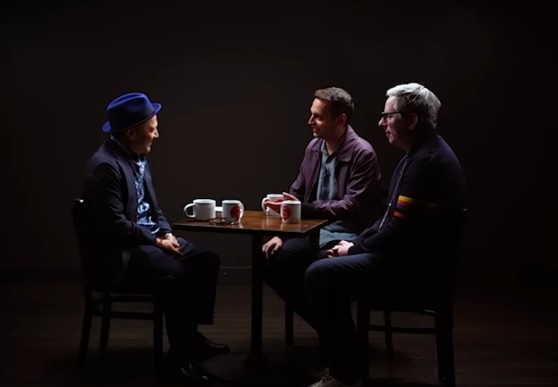
Editor’s Notes: In this episode of Triggernometry, comedian Rob Schneider returns to discuss the shifting landscape of comedy and the cultural divide in America. Schneider reflects on his evolution from a “90s liberal” to a modern-day conservative, critiquing what he describes as a rise in authoritarianism and a decline in individual voices within late-night television. He also shares personal anecdotes about legendary comedians like Jerry Seinfeld and Richard Pryor while exploring the importance of maintaining free speech in an increasingly polarized society. This conversation offers a candid look at the intersection of humor, politics, and the challenges of being a contrarian in the current media climate. (April 25, 2026)
TRANSCRIPT:
Welcome Back, Rob Schneider
KONSTANTIN KISIN: Rob Schneider, welcome back.
ROB SCHNEIDER: Thank you so much.
KONSTANTIN KISIN: Brother, it’s only been about a year. Last time we had you on the show, it was right after the election. Yeah, pretty much the biggest episode we’ve ever done, 2.5 million views. People absolutely loved it.
ROB SCHNEIDER: Thank you, very honored.
KONSTANTIN KISIN: It’s been 12 months and so much has happened, it’s crazy.
ROB SCHNEIDER: No, it seems like the Chinese— it’s not a proverb, but it’s basically—
KONSTANTIN KISIN: The curse.
ROB SCHNEIDER: The curse, yeah.
KONSTANTIN KISIN: May you live in interesting times.
ROB SCHNEIDER: We are living in very interesting times. A lot has happened since then. I think the realization is still sinking in to the liberals that they’ve lost power. And they are not giving up easily. That’s the demonstrations, the No Kings leftist demonstrations, as the former Soviets called them, the useful idiots. So they’re doing that.
And also there’s a wake-up. I mean, the fact just because the Republicans are in power that they can actually do all the stuff they want to do. It’s a wake-up call to realize, you know, you can’t. There’s some impediments to it. Love. We can’t do everything we’d like to, but we’d like to very much so.
The English Booker and Anglophile Humor
KONSTANTIN KISIN: Well, the only conversation you and our booker have is basically you impersonating his English accent on the phone and ripping him a new one. We all enjoy listening in as that happens.
ROB SCHNEIDER: No, I just like— he just assumes like, “No, I told you yesterday we’re coming at 1:30.” Yeah, but I didn’t agree, you asshole. “No, but I said I sent you a message, which means it’s going to happen automatically. I’m English, I make things happen. You still use our rules. You kept the rule of law and property rights. We owe you. So when I say a message, you’ll stick with it.”
FRANCIS FOSTER: I mean, he’s not wrong, is he?
ROB SCHNEIDER: No, he’s not wrong. But it is lovely though, because I find myself to be an Anglophile and all the best humor was that because we didn’t get the shitty stuff. Truthfully, I was never— I mean, no offense, but I was never into Benny Hill. But Monty Python, I mean, the It’s All Right, Jack, those great comedies, the Ealing comedies, that was the basis of great comedy.
And it’s because your people were so angry because I don’t think you participated in the Marshall Plan, so you didn’t get banked out like Germany. So you guys were still rationing, like, into the ’50s, and they were pissed. “We won the f*ing war.” So that was kind of similarly how I just got back from Hungary and the war never ended there. It just new occupiers came in.
So there was a beautiful thing that happened, I think, in English humor. Correct me if I’m wrong. But whereas there was still an intensity after the war and all the pressure leading up to it, you couldn’t wait to get rid of Churchill and then the next thing. So the comedy had an edge to it that I think led to eventually, I think it was ’61 when Peter Cook went on the Footlights. And then that was John Cleese and Eric Idle, I think, were watching that night and didn’t realize you can make fun of the establishment. I think he made fun of the Prime Minister, Peter Cook. And that was the beginning of the rise. And I think that led to another level, the high watermark of comedy in the 20th century, English Monty Python.
Peter Cook, Subtlety, and the Difference Between English and American Humor
FRANCIS FOSTER: Well, Peter Cook was one of our greatest ever satirists. Him and Dudley Moore, of course, had that famous partnership. But one of the things that people were taken aback with by Peter Cook at the time was how savage he was. And, you know, we were very much, “No, no, these are our betters, you can’t talk about them like that.” That’s very— and he just went in, he did not care. And it was quite shocking at the time.
But one of the things that I’ve noticed about American humor, and I love American humor, I love your stand-up, your comedies are great. Ours, we— it’s kind of the difference between heavy rock and jazz piano. Jazz piano is English because it’s a note.
ROB SCHNEIDER: It’s subtle.
FRANCIS FOSTER: It’s more subtle. It’s the notes you don’t play. That’s where the humor comes in.
ROB SCHNEIDER: Yes.
FRANCIS FOSTER: Whereas Americans, you like your power chords, you know.
ROB SCHNEIDER: It’s a hammer. But I think though, I like the subtlety of both, you know. When you could— I like telling a joke where I’m— the best thing for me when I’m doing stuff is like, it’s let the audience go, “I’m going to— I just want to get this out of my way first to get the joke in,” you know. And I go like, “You know, it’s good to be back in California, but like I had to move because I got little kids and it’s dangerous to have kids in public school in California.
And stand-up is particularly just like jazz, which you guys stole from America, and stand-up comedy, I believe. It originated, I guess you’d call Mark Twain was the original stand-up humorist. And he would charge a dollar because he also would get rich and go broke. And then Ulysses S. Grant had cancer, was dying. And back then they didn’t give money to the former president, so he helped him pen his autobiography. So he could make money for his wife, pay for the farm, blah, blah, blah. And then he would go blow all his money, come back, and then he’d get money again by performing at like a town hall or something, or a library. I don’t know if there was a library. I’m just making that up. But he would charge a dollar to talk about faraway lands like Hawaii. “Yeah, no idea that they have over there. You got to take several weeks to get out there. But now you guys can fly wherever you want and do the things.”
The Vegas Waiter Joke
So for me, the nice joke that I could relate to was based on something that really happened. It was really fun. It was really fun. Listen to me. But I was in Vegas. I was playing Vegas, the MGM Grand, which is a good gig on the Strip. That’s a good one. And I went out to lunch with the guys, the band I’m working with, and the Mexican waiter was really nervous. And I said, “Are you okay?” And he said, “Mr. Schneider, there is a nervous because I know her illegally. So I worry that the ICE come take me back to Mexico.” And I felt terrible, you know? And these are the guys we want here in this country, people working hard, you know? Then he completely fed up our order and I was like, “Get this guy out of here.” You can’t f up lunch. That’s the most important meal of the day. You know what I’m saying? You can f* up breakfast, dinner, but like, as soon as I got the check, I called ICE and said, “Table 47, gotta get over here.”
But I like it because it just plants a little seed in there, and people can feel either way they want, but you can’t lecture them about stuff. And that’s the— I would say American comedy now, we have to be careful that we’ve come out of that COVID tyranny, and we want to— I think, which was the best for me, the best part of Peter Cook, Dudley Moore was the silly. The best money pot. They were just the silliest king, as Cleese, John Cleese would say. But the one-legged Tarzan, I mean, that Peter Cook and Dudley Moore sketch, it doesn’t get any better than that. No. He’s auditioning for the role of Tarzan. He’s got one leg. I was just like, wow. It shook everything up.
I’m a ’90s Liberal
KONSTANTIN KISIN: So you’re saying now you fear there’s a lot of seriousness creeping into comedy and kind of people are going very heavy on their opinions.
ROB SCHNEIDER: I think so. And I think the audience is— I mean, I have to be careful of that too, because I’m a conservative. Well, I mean, I’m a ’90s liberal, which makes me a right-wing fascist now, right? We all are. God forbid we stick to those free speech and women’s rights and things like that. Crazy stuff.
So I have to be careful too that I don’t fall into that easy trap of just throwing slop to the conservative masses, which is what kind of late night TV was. Late night TV, there’s no individual voices. You can replace and go like, Jimmy Kimmel could say the same joke as Seth Meyers, and then you could put like, and then the other Jimmy can. So it doesn’t—
KONSTANTIN KISIN: The other Jimmy.
ROB SCHNEIDER: So you can have— it’s the same thing. It’s like, where is the point? Is there any individual voices? And it’s just, it’s too easy. You never heard Norm Macdonald saying during the pandemic, “Easy, you make a joke about Trump, they’ll just applaud. You can do that. Where’s the danger there?” And I do think it’s definitely more fun, but it is more dangerous. I mean, they’re killing. There’s violence happening. And so we have to have gun checks at comedy shows.
Charlie Kirk
FRANCIS FOSTER: Really?
ROB SCHNEIDER: Yeah.
KONSTANTIN KISIN: But why wouldn’t you? I mean, we were talking— not to change direction, but unfortunately we kind of have to— we were talking before we started about Charlie Kirk. I mean, that’s one of the things that happened since we last saw you.
ROB SCHNEIDER: Yes.
KONSTANTIN KISIN: And he was a friend of yours.
Charlie Kirk and Turning Point USA
ROB SCHNEIDER: Charlie is irreplaceable. Charlie was such a— I mean, I honestly, as a comedian and as a humorist and as a real cynic, I think you have to be cynical to approach comedy. What’s really behind that?
So I would get these calls from him, from his organization, and then from him saying, “We want you to be involved in Turning Point.” And I was like, what is this 28-year-old kid? What’s going to be something behind this? There’s always something, whatever. And I didn’t realize what he had built.
This was this incredible organization of young people. If you want to change the future, or if you want to return the future to some traditional American values, Christian American values, then you got to build an organization to remind people what is the potential loss of not maintaining that.
I learned pretty quickly. I was still a little— I’m still questioning it and going like, I don’t know, what is it? But then I found it to be really sincere. And his organization and what his quest was, was to keep America a nation under God and free. And that was at a tremendous loss.
I mean, we were supposed to go because I said to him, because it was fun. You show up at a university with Charlie Kirk, and I’m telling you, the kids would come up, stuff, they ask questions. And I really liked it. It was such a generous thing that he would do. He’d put the microphone down and say, “If you disagree with me, come to the front.” And he was saying constantly, “When the conversation stopped, that’s when the violence begins.” And he was right.
The leftists, if they can’t beat you with debate, they would shout you down. They’d prevent you from speaking. And you know this specifically. “How dare you disagree with it?” And that voice is silenced. So I’m hopeful that his organization will continue to inspire young people.
The Berkeley Riots
I asked him, I said, “I want to go to the craziest place with you. Where is that?” We said, what? I said, “No, I want to go to the craziest university where they’ll be like—” and he said, “Well, then we’ll go to Berkeley. Let’s go to Berkeley.”
And then I had to go to Berkeley without him. And there was riots to stop a comedian for talking. Just a riot. Literally a riot. I’m suing the University of Cal Berkeley for— I don’t know what the number will be, but more than a dollar, I promise you. And thankfully, Peter Boghossian and your countryman, Andrew Doyle, was kind enough. I invited them to come with me to buttress my ignorance.
But there’s an interesting thing about free speech. It isn’t just what our lawsuit’s about. It’s not just the ability for you to speak freely and somebody to stop that. It’s also free speech to the other side of that. The ability for someone to have the right to the freedom of speech, to hear the speech. And that’s the other side. So I think that’s important.
Because the university, they were such assholes. They insisted— Cal Berkeley Regents and the— I don’t know who was in charge of that over there, whether it was the dean or somebody made the decision. They said, “We insist on getting 500 tickets.” And they would give it to this liberal organization just so that 500 people couldn’t come. And then there was 500 empty seats. We could have easily had 2,000 people there.
And then they also called people who had tickets, like friends of mine, because I’m from Northern California. Interestingly, that used to be the free speech. That’s where free speech on university campus started, 1964. And then they told them, “Oh, your tickets are no longer good.” So then there was really a riot coming in and the police coming. It was just unreal.
But the idea that you can silence other people just because you disagree— I mean, that has to be— I mean, I’m still waiting for the Democrats to say that’s not good.
On Democrats and Global Reset
FRANCIS FOSTER: I think you might be waiting for a while. You know, I mean, there’s some Democrats that I think have potential. Josh Shapiro, for instance.
ROB SCHNEIDER: I think so, yeah.
FRANCIS FOSTER: You know, he talks about what the Democrats used to talk about in the ’90s. He seems like a decent guy. Yeah, you think, you know, if the Democrats actually put him as— and maybe he got a little bit of a headwind, he might stand a chance.
ROB SCHNEIDER: Well, I think, you know, if Americans approved anything, they have no memory of anything. They just move on to the next thing. 25 years after 9/11, you got a Muslim mayor and you have like prayer outside, which is a— as you guys know, it’s a form of dominance. Conversation may take a turn at this point. So we’ll see.
I mean, I’m still buoyant. I do think that for sure the weak leadership seems to bring about more difficult times, and I think we’re seeing a reset, a global reset. And I think you’re seeing with Donald Trump— I would just say to the people who dismiss him, I say, “You do that at your own peril,” because it’s very strategic what he’s doing right now. There is a global reset happening right now with Venezuela.
You know what people worried about? Venezuelans, as far as they’re going to— these are people that are going to protest. They’re going to say, “No, no, no.” Here’s what you never hear about. They’re Catholic. You never hear this. “A Catholic guy jumped on a train and stabbed 9 people today.” You never hear that. You never hear like, “Tibetan monk hijacked an airplane and flew it into a building.” You don’t hear, “Chinese woman drove a van into a Christmas market.” Well, you did.
KONSTANTIN KISIN: Well, only by accident.
FRANCIS FOSTER: Yeah, yeah.
ROB SCHNEIDER: She’s looking for—
KONSTANTIN KISIN: Sorry, did I steal your punchline?
ROB SCHNEIDER: She was looking for a parking space. You know, like, “There’s a parking space near here.” “I know, I know.” When I go on Jay Leno, he used to do that to me too. And he’d figure out the joke. I said, “Of course you’d figure out the joke. You’re a comedian.” Sorry, brother. I apologize. Hey, Sam, what was it like being on Jay again? No, but comedians, they know that. They know where the joke is.
Jay Leno and the Comedy World
KONSTANTIN KISIN: We had Jay on the show, actually. Yeah, a while ago. We recorded in his car garage.
ROB SCHNEIDER: Oh, fantastic.
KONSTANTIN KISIN: Yeah, it was fun.
ROB SCHNEIDER: He’s an incredible guy.
KONSTANTIN KISIN: He’s such a nice guy.
ROB SCHNEIDER: He was the best comedian of his generation, and he was also really helpful. He would tell you guys, like, “Hey, how much time you got?” I remember like, in the ’80s, like I said, I got about 8 minutes. “Good. Yeah, I’m glad you got 8 minutes.” Most comedians add, “I got 2 hours.” You know, who wants to hear 2 hours of comedy material? You know, if you don’t have 5 minutes of kills anytime, everywhere you go, you got nothing. He was right. Gets it.
All you need to become a star in LA is 20 minutes. 20 minutes, they put you on set. And it’s true. And it was just like— I mean, it seemed like a long time when you’re 20, but by the time I was 24, all I had was 20 minutes. That was the most I ever had. At that time.
And the only other guys who had 20 minutes was like Chris Rock, David Spade. Well, maybe Chris Rock had 30, but David Spade, Adam Sandler, and me, we all got on. You know, that was the beginning. You only need 20 minutes to become a star.
But he was great. All those guys would be helpful. The greats like, you know, Jerry Seinfeld, one of the greatest comedians we’ve ever had. Just the structure. If you look at it, it looks— you could build a house on the way he forms jokes. And he would say to us young comedians, because back then, in the early ’80s, there were like bars that they would turn into comedy clubs and 120 seats. If you do enough shows, it might clock $10,000.
FRANCIS FOSTER: Let’s go.
ROB SCHNEIDER: You make enough. And that was like— he would do that by that time. By ’84, I think he’d done, or ’83, he’d done like 42 Tonight Shows.
FRANCIS FOSTER: Wow.
ROB SCHNEIDER: 42 5-minute spots.
FRANCIS FOSTER: Wow.
ROB SCHNEIDER: And then we’d watch him and the structure of his stuff was so great. And he would just have the simplicity of his thing, which is almost like an English thing. He would say a little joke like, “Magic is just to make you feel stupid. Here’s a quarter. Now it’s gone. You’re a jerk.” It’s just a wonderful simplicity. And then after, we’d all hang out and try to get some nuggets of wisdom by the master.
KONSTANTIN KISIN: Did you?
Jerry Seinfeld, COVID, and the Comedy of Contrarianism
ROB SCHNEIDER: Yeah. He said to me, “Listen, guys, you got to take the swearing out.” If you take the swearing out and it’s not funny without the swearing, then it’s not funny. And I was like, wow, he’s right, because we can rely on it too much. And then I shook his hand, you know, and thank you, Jerry. And then he went to leave, I went to shake his hand, and he was like, it’s the same hand.
Very funny though, because about literally 2 years later, I got on David Letterman. And he’s such a great guy. He just literally is an awesome guy. He really appreciates comedy. And he chased me out of the improv after I did a set. He said, just saw you on Dave, on David Letterman. He said, you had balls of iron. And he shook my hand. I’m a really good set, man. Nice to see young people doing some stuff. And then I waited and he went to go shake my hand again. I was like, it’s the same man. I didn’t say it, but I wanted to.
But he’s one of the masters. It’s really frustrating to see like a guy who’s still performing at a very high level and like there would be protesters. It’s like, come on, can’t you— isn’t it the— isn’t the LGBTQ+ for Hamas protest that you have to protest Jerry Seinfeld, one of the greatest comedians who still doesn’t have to do it, but he’s still doing it because he loves it. So that’s kind of a bummer.
So we have that at the same time. But I do think that this friction and this stuff. I think the woke kind of thing is collapsing. I think people are exposed to enough of it, so hopefully it’ll usher in something new. I don’t know what the new thing is, but it’s been an interesting time. I would say the most interesting time in my lifetime for comedy, because there were people yelling at you, people paying money to yell at you.
It was during COVID too, because COVID is really cool because we have a republic over here. I strongly suggest you guys consider it. You break it up, different states. That way the states would have different rules. A lot of the states went along with it, but some states hung in there. So I would go to a place and they would perform and it’d be like, you’d have to have somebody sitting not across from you or something. So they had half the comedy club. And so I would just perform in those places until those places closed down.
And then believe it or not, it wasn’t Americans. The reason that we got out of COVID, it wasn’t the Americans that figured out the protesting again, it was the Canadians. The Canadian truckers reminded Americans about protesting and good protesting, protesting against actual tyranny, not this fake tyranny that these No Kings paid protesters are, the useful idiots. So, but real protest against tyranny, which is what the COVID lockdowns were. And these, you know, the truckers that went there, what did they do? They literally closed their bank accounts. And that seemed to be, if that’s not authoritarian, and calling them terrorists, that’s pretty bad. But what it did though was it woke people up here in America to it, like enough of this crap, which was good.
So whether people like the COVID vaccine or not. I mean, obviously it has some problems and stuff. It’s not a vaccine. It’s a— according to Robert Malone, who invented, or co-invented the therapy, it’s an experimental gene therapy. So, you know, forcing everybody to take an experimental gene therapy is not good. But what it did though, Thomas Cahill, who was the designer of it, who was asked by the Trump administration— he’s a genius, you got to meet Thomas Cahill— and what it did was it gave an off-ramp like, “Hey, we got something. We can open up society now. Here we go. We got the jab, let’s go.” So that gave an off-ramp to it.
And I don’t know, it’s interesting, what is the next attempt at tyranny? But they’ve backed off this zero carbon initiative. You don’t hear about it anymore, right?
FRANCIS FOSTER: I mean, you do in our country.
KONSTANTIN KISIN: Yeah, well, it’s actually an interesting situation because in the UK, the only people who still believe in it are the government. No one else believes in it, but the government really, really believe in it. And actually, the worse things get, the more they believe in it. So they’re like, oh, okay, this war in Iran is going to cause global price— well, prices to spike and stay up for God knows how many months. Yeah, that shows you we can’t be relying on fossil fuels.
ROB SCHNEIDER: Oh yeah, yeah, exactly.
KONSTANTIN KISIN: Except we still have to be relying on fossil fuels.
ROB SCHNEIDER: No, it’ll impoverish the whole planet. If you want to have mass starvation right away, go off fossil fuels.
Trump, Oil, and Global Power
KONSTANTIN KISIN: But what Trump is doing, President Trump, and is that global reset.
ROB SCHNEIDER: If you can control the oil, it’s not about having all of it, but if you can control it, and then all of a sudden China has to work with you. Because unfortunately, what you really had was you can have all the sanctions against Russia and China that you want, but if they’re able to get oil from Iran and Venezuela, then they can circumvent all these problems. But if America has got a nice, healthy stranglehold on Iran and Venezuela, then the Chinese will have to work with us in a way that they don’t want to, but they’ll have to now.
So I think in that way, it is the idea that we— it’s actually strong men make the world. I guess there’s a revulsion from it, from the 20th century experience of World War II, that anytime there’s a strong man that comes up, it’s like authoritarianism comes. I would just say we should be aware that when weakness happens, that’s when the authoritarian comes up, as we witnessed under COVID.
FRANCIS FOSTER: You know, it’s so funny when you talk to Venezuelans about what happened in Venezuela, because you hear people going, oh, this is a coup, this is terrible. You talk to a Venezuelan, they’re like, I know, I like it, it’s very good. No, no, no, we know, like Maduro, bye-bye.
ROB SCHNEIDER: Well, that’s what you have to— we have to weigh, like, how much freedom. If you want complete freedom, it’s chaos. And so you have to— we’d rather have more chaos than if you want complete control, then you’d have tyranny of something. But then you have something that was so chaotic and so out of control, like if you look at El Salvador, that was just, you know, the murder capital, the kidnapping capital. People could— kids couldn’t go to school, and it was just, you know, you couldn’t open up a little stand and sell food without somebody coming in.
So, you know, Bukele has changed that country. He calls himself the coolest dictator. And I would just go, well, how much freedom— if it’s destroying your society, why are you willing to give up for some control? And that’s the gaze, you know. That’s what we’re looking at.
Comedy, Controversy, and the Challenge of Pushing Boundaries
FRANCIS FOSTER: But to go back to comedy, it’s a very interesting time because we’re talking about, you know, the woke and the backlash and they’re trying to silence voices. But hasn’t that always been the case? I mean, take Bill Hicks. I mean, Bill Hicks used to go to the Deep South and do jokes about Christianity, laughing about Christianity when it wasn’t cool, when it literally, you know, could have endangered your life.
ROB SCHNEIDER: I don’t know about that. I don’t know. I don’t think it would have. I mean, I think you would have had protesters, just like there was protesters when The Life of Brian came out because it just happened to be because it had to do with Christianity at all. But I thought that was consistently rated the greatest comedy, British comedy of all time. And it was hilarious. But as John Cleese and Michael Palin would say, they didn’t change one word of the Sermon on the Mount. But it’s just the fact that what’s funny is like somebody who couldn’t hear it. Yeah. I think he said, “Blessed are the cheesemakers.” That’s funny. So to have an open mind to that.
But I don’t believe that even Bill Hicks in that day, his life was endangered. I think he had people who were angry at him, but not in the same way like you’ll have, as Ayaan Hirsi Ali says, you know, you can have The Book of Mormon, but let’s see you guys write the Book of Muhammad and see how long that stays open.
KONSTANTIN KISIN: I’ll pass on that one, thank you.
ROB SCHNEIDER: But isn’t the cultural fear, the cultural fear of that, you can’t even say it without thinking, well, yeah, you could never do that.
KONSTANTIN KISIN: Well, Jimmy Carr has a great joke about this, which is, you know, a lot of Christians complain that you make fun of Christians, but you don’t make fun of Islam. And he’s like, “Well, stop blowing sh*t up. Then I’ll not make fun of Christians either.”
ROB SCHNEIDER: That’s so perfect. But I think though, with this challenge, I think it’s good because what you’re seeing now in the United States and what I’m talking about now in state, which I think is you have to challenge them and push them. Otherwise it’s not fun. You got to be some kind of contrarian.
So it’s nice talking about the interesting thing that’s happening is women, like white liberal women.
KONSTANTIN KISIN: Here we go.
FRANCIS FOSTER: I love the way you said that. It’s women. White liberal women.
KONSTANTIN KISIN: There we go.
White Liberal Women and Emotional Manipulation
ROB SCHNEIDER: It’s nothing to do with that. I’m divorced now. It’s just women. No, these women. No, but is that they were doing things that are against their best interests, putting themselves in danger. Whereas men, traditionally, that’s what they do. And men have that. They’re used to it. Every guy, by the time they’re a teenager, you meet another guy at some point. Still, you still think a little bit, if I have to kick this guy’s ass, could I? I mean, is he going to beat my ass? If he has cauliflower ears, you go, okay, this guy doesn’t care about his face. I’m going to leave him alone. This is part of his face. He doesn’t have a problem with looking messed up.
But women don’t have that. So I was saying, that’s why women put themselves in positions of danger that they’re not used to. That’s what happened in Minnesota. And they said women could be emotionally manipulated to do something that puts them in danger because for the cause. That manipulation, that emotional manipulation. Like, this woman wasn’t even a lesbian. She was like, she was straight for the cause. She became, you know, into this. She got roped into this, become a lesbian during, you know, for the cause. And I was like, that’s the difference between men and women. I don’t care what the cause is.
KONSTANTIN KISIN: I’m not taking a dick up my ass, pretty much.
ROB SCHNEIDER: So, but again, but what I try to build to the point about how women could be emotionally manipulated, and I said, you know, 85% of white liberal women voted for Kamala Harris to save democracy, even though Kamala Harris wasn’t even put in democratically. They just, you know, they just took Joe Biden out, you know, that Joe Biden basically a corpse attached to a car battery, and like, you know, which the Democrats still don’t admit to, that his brain wasn’t functioning. And they just put Kamala in to save the democracy.
Which, so the joke is, you know, “I’m replacing Joe Biden with Kamala Harris is like changing your shirt because you sh*t your pants.” And then everybody was like, they got their money’s worth.
KONSTANTIN KISIN: But you know what, the point about Bill Hicks is interesting though, because the threat side I don’t know about, but you do know, you must know this, that his final Letterman appearance was canned. Yeah, they didn’t publish it until after he passed away because it was too controversial at that time.
ROB SCHNEIDER: Yeah, it was too controversial, you’re right. So there was a, yeah, I think it was a stricter time. But I think that’s obviously a mistake. But I don’t think it’s the same kind of jeopardy as like Charlie Hebdo. But anytime you go up against— we have to go up against the societal, whatever the constricts are. We have to be contrarians, otherwise we’re not doing our job.
But it can be dangerous as far as— I mean, I have to have gun checks at shows, and it’s dangerous to leftists. So it’s nuts to me. I mean, not nuts that we have guns in America. I’m all for it. I didn’t used to be, but now I understand.
KONSTANTIN KISIN: Do you have the audience lock their phones in a pouch?
The Art of Stand-Up: Taking Risks and Making People Think
ROB SCHNEIDER: I don’t do that because I don’t think it matters anymore. I used to think they could get canceled, but once they’ve tried to cancel you so many times and you survive, you’re like, what can they do to me at this point? And also, if they want to do it, I think it’s kind of childish. I do think though, for the guys who are making like $40 million on Netflix, they don’t want to get their jokes out too early. I get that. But at this point, I don’t think it’s— I used to do that, but it’s expensive.
KONSTANTIN KISIN: Yeah.
ROB SCHNEIDER: You got to bring the pouches. And then it’s also a pain in the ass for them. The audience, like, let them be adults if they want to go on their phone. People are addicted to their phones.
KONSTANTIN KISIN: No, the reason I bring it up is, and it’s something I think about with podcasting now as well, because what happened was you had the mainstream media, which basically thought that everyone in the world had the attention span of a mosquito, right? And they whittled the soundbite down to like this, right?
ROB SCHNEIDER: And then the opposite is you guys.
KONSTANTIN KISIN: And then the podcast came along, went— but now what’s happening is, and we’ve even had guests who shall remain nameless, who’ll go like, “So was there a clip in that?”
ROB SCHNEIDER: And you just go, no.
KONSTANTIN KISIN: Like, with all respect, I mean, I understand I have clips of mine, you have clips of yours going out on things. That’s totally cool. But it changes the act of making it. This changes the thing.
ROB SCHNEIDER: It does.
KONSTANTIN KISIN: And the same with stand-up, I think. And it’s the same with, you know, you’re trying out material, recording something out of context, putting it online, all of that. That’s why I was asking.
Challenging the Audience: Women, Voting, and Subversive Comedy
ROB SCHNEIDER: No, you’re right about that. Because I do ask at some point, for women to— I try to get them to a point where I’m manipulating, subverting them to— it’s like, because they’re emotionally— you can manipulate. So I try to get their empathy and go, because you have so much empathy and compassion. That’s why you raise children. That’s why there’s so many of us. You’re incredible. But then I get to the point where you can be manipulated to use this empathy for people who don’t deserve it. And then I ask them to reconsider their right to vote.
But then I say, no, there’s still plenty of things to vote for. You can still vote. I’m not saying you can’t vote. I’m just saying just not for the important things. But there’s still plenty of things. You can still vote for Dancing with the Stars, America’s Got Talent, Britain’s Got Talent, whatever. But the idea is just to challenge them a little bit and try to get them off. And then you take some ideas and then it’s the ideas to poke them a little bit and see where they go.
And so a lot of the women agree. A lot of the women, not all of them, a lot of them agree. And then some people complain. But I think it should be a well-constructed humorous argument.
FRANCIS FOSTER: Yeah.
ROB SCHNEIDER: Otherwise it’s not fun.
FRANCIS FOSTER: Yeah.
ROB SCHNEIDER: So it’s nice that they agree. And sometimes I’ll screw up. Sometimes I did not do my job by getting in there because it’s still kind of new. And then you go like, you know, and then it’s like, I got to kind of get them back.
FRANCIS FOSTER: Yeah.
ROB SCHNEIDER: But it’s a good challenge. And then you can—
KONSTANTIN KISIN: Wait, how do you get a woman back once you’ve pissed her off? Because I haven’t worked that one out my entire life.
Jordan Peterson, Barbarian Hordes, and the Female Survivor
ROB SCHNEIDER: I’m proof of that. Yeah, very painful. But it’s fun though because there’s some really interesting intellectuals. Like, Jordan Peterson’s been such a gift to the male spirit, really. And he had this wonderful thing that I talk about now on stage. It’s great because I’m not going to have to interfere with him doing stand-up, but I can, you know, talk to him.
And I’ll say, “Oh yeah, well, let me tell you, the women that we have today, they’re all survivors of the barbarian hordes that came in.” And they all— the barbarians would come into the new armies, they’d kill all the men, cut their heads off, and they’d say, “Okay, we’re going to cut your heads off or you want to come with us?” And the loyal women who got all their heads cut off, they stayed and died next to their husband. But the ones who said, “I’ve always been interested in seeing Germany. Let’s go!” Those are the ones that survived.
So all— and I said this to all the women here tonight in this audience— you are the survivors. You are the ones who left with the new husbands. And then, you know, and what was too far was when I’d say to them, every woman in here is a traitor. And I was like, that was too much. But you have to try that.
And then I go— but it’s fun to— and then I have them. My favorite thing is I’ll tell the audience to look at it. I don’t want you to look at the guy, guys. I want you to look at the woman you’re with right now. Just look at her. Tell her, “I know what you’re capable of.” But anyway, I don’t know. I hope it doesn’t come off like it’s angry, but it’s definitely angry, but it’s fun. And I hope it’s a challenge and to try to do things that are interesting.
Richard Pryor: The Greatest Stand-Up Comedian Ever
FRANCIS FOSTER: But that’s the beauty of stand-up comedy. I was watching a few months ago, actually, Richard Pryor’s Live at the Sunset Strip.
ROB SCHNEIDER: Unbelievable.
FRANCIS FOSTER: Recorded in 1982 in the red suit, the famous red suit. And he was—
ROB SCHNEIDER: I think it was earlier than that one, was it? Live on the Sunset Strip. I think his first one’s Richard Pryor Live, and it was late ’70s. It was in Long Beach. Still, as much as comedy’s progressed since then, it’s still basically the same guy. There’s a— they had a guy standing by the stage. You know, it’s interesting, that first one where he had the red sweating and the thing, yeah, sure, all kinds of cocaine coming through that thing. But that was still— we’re still doing the same kind of thing. He was the guy, the Statue of David. We’re all cheating. But what the other one, that Live on the Sunset Strip, that maybe that was 1982.
FRANCIS FOSTER: It was, yeah. Yeah, and he was talking about going to prison and he was saying about, you know, we’ve met Muslims, but in prison they’ve got these double Muslims.
ROB SCHNEIDER: And he did a bit about Islamic fundamentalists in 1982 in jail.
FRANCIS FOSTER: And you’re going, this, you know, this is what comedy is and should be. That’s why he was the greatest.
KONSTANTIN KISIN: Double Muslims.
ROB SCHNEIDER: The greatest comedy performer ever, for sure. I got to meet him once, when he was doing Donahue. This is like, I think, ’91. That’s when Phil Donahue, before Oprah. And they said, you know, Richard Pryor’s in the building. I said, what? Pryor? Richard Pryor’s in the building? Where is he? He’s done Donahue. And I said, go get a comedy album so I can sign something. They didn’t get it in time.
And I went down, and because I was— 30 Rock is where Saturday Night Live was, and I was a writer. Performer there. So I go anywhere I want. So I get the security, Donnie’s like, “Hey, can I go through?” It’s like, “Yeah, come on in, Rob.” And then his dressing room, I said, “I’m Rob Schneider, can I get in there?” And they said, “Yeah, come on in there.” And then Pryor was just sitting there himself.
And I said, “You know, Mr. Pryor, that stand— that first stand-up performance in Long Beach, that was like the greatest stand-up. We’re still stealing from you all these years.” And he didn’t deny it. And I said, “That was just incredible. That’s the greatest performance ever. No one’s going to top that.” And he said to me, “You should have seen that shit 6 months later. I was just starting to figure that shit out.”
I believed him. Yeah, because it just grows and grows. I would have loved to have seen it 6 months later. But then he did that Live at the Sunset Strip, which was good. Didn’t have the danger of that first one. You know, so that first one, he’d make fun of white people, was screamingly funny. It was Long Beach. Most of the people at the show were white people. And he said, “White people, some white people don’t play that shit. Like, all right, cut the shit.” And there’s like, that’s the quintessential Black impersonation of a white guy.
Making Fun of Everybody: Race, Identity, and Disarming Comedy
ROB SCHNEIDER: And I like to do impressions of Black people, even though it’s not de rigueur anymore. It’s not allowed. But I would say, my favorite people who recognize me, because people come up to you because I’m the same size as I am on TV. My favorite are Black women that come up to me. Black women are different than other people when they come up because Black women make you prove who you are. Like, “Tell me why I know you. Tell me why I know you.” I’m a comedian. “That ain’t it. Tell me why.” So that’s kind of fun.
KONSTANTIN KISIN: And then, so what do you say?
ROB SCHNEIDER: I said, “I’m a comedian.” “That ain’t it.” I went like, “No, no, I am a comedian.” Okay. But I just think it’s like we got to make fun of everybody. There’s one thing, my favorite thing, is a good laugh in the audience because I talk about being— my mom’s Filipino, my dad— I don’t get into that too much, but I talk about being Asian and the system of white supremacy. How come Asians are making more money then? You never hear about it ’cause Asians don’t want you to know in America. Asians are— no, let the Black and white people kill each other. We’re going to hang over here. We stay over here in the suburbs.
But I said, you know, that’s what I talk about for years, saying about like, we gotta get rid of diversity, equity, inclusion. If you want to have the best society, we need the best at each position. So, you know, that’s why you don’t see Filipino Jews like me in professional sports, ’cause you want to win, right? You want to win, right? And you see Filipinos, we’re good nurses. That’s what we do. We’re good at that. And usually there’s a Filipino in the audience, and usually they work at a hospital. If they don’t, that’s when I say, “You’re not living up to your potential.”
And I said, and it was based on a true story. I said, “I’m sorry, I don’t want a 7-foot Black guy.” It’s not racist, but I don’t want a 7-foot Black guy trying to take blood out of my arm. They’re like, “Shit, come on, bitch. What’s wrong with you, vein? Come on, shit.”
FRANCIS FOSTER: Get out of there, baby.
ROB SCHNEIDER: “Dude, your finger’s as big as my dick. Can you go find an Asian person to finish this shit?” But everybody can relate to that, and it’s fun and hopefully disarming.
KONSTANTIN KISIN: And do you know, I miss that so much. We were talking with the young guys that work with us as well. It’s just that I miss that world where people made fun of each other and it was cool because we made fun of everybody and everybody made fun of everybody and everyone knew that it wasn’t malicious.
Comedy, California, and Cultural Commentary
ROB SCHNEIDER: Yes. No, no mal intent, right? That’s the key. That’s why Adam Sandler’s film is so important. He makes fun of people, but there’s not— he’s not trying to hurt anybody.
But I remember there used to be this bookstore called B. Dalton, and right by the cash register there’d be these rows of comic— of just books, comedy books, simple jokes that make fun of every nationality. It’s like Italian joke book, Polish joke book, Irish joke book. And I just remember, before you’d buy it, you’d look— before whatever thing you’re going to buy, you’d look up the Italian one. “Howdy Italian, Italian airline. It’s the one with the hair under the wings.” But that was acceptable. And then I’d like to go back to that, but I think we’ve been beaten down by the people who are the most— you know, as your countryman John Cleese said, “I don’t think the ones who are most sensitive should be the ones deciding what everybody else gets to listen to and watch.” And he’s right about that.
But I think I had a conversation with Jerry Seinfeld at the 50th anniversary of SNL, because I really took umbrage to what he said. Like, “Listen, no, the woke doesn’t stop you from doing comedy. What are you talking about? I don’t believe it.” And I said, “No, they do. You cancel them and they try to get you to not be on.” And he said, “No, that’s not what I meant. I meant you just have to work harder to get around to get to your joke.” He didn’t say that in that interview, but I think it is.
I do think you have more opportunity for it. It’s just you don’t want to get shot by a crazy f*ing leftist that takes things too seriously. And that was the problem for Charlie Kirk, was like, these people are accusing him of racism without any actual racism. He was just asking young people to ask more from themselves and to think for themselves, as opposed to— you know, what’s happening at the universities and academia is they’re not teaching you to think critically. They’re just cranking out advocates to a liberal agenda that doesn’t have the best interest of these young people.
As that’s happening, we have to be positive and we have to move this country forward. And that’s my job. And I know the best way to do that is with jokes. If I write a good joke, I know I’m making the country better.
Like, California is a great place because you have a lot of liberals here, and the conservatives, they don’t get— and I come out and tonight it’s really funny because I go, hey, it’s so beautiful in California. I get it. I get it. It doesn’t matter that your votes don’t count. It doesn’t matter because it’s so beautiful. It’s so beautiful in California. Maybe women do have dicks. It’s so beautiful.
FRANCIS FOSTER: But you know what?
KONSTANTIN KISIN: It’s how we feel every time we come here. Because, you know, the most common thing Francis and I say to each other when we arrive in California, spend a couple of days soaking in the sun, will I see something in the news over another side of the world? And I just go, Francis, do you give a shit about what’s happening? He’s like, no. And I’m like, I don’t either. I know it’s hard. It’s hard to care because it’s so perfect.
But that said, you know, every time we’ve— we’ve been coming here for years now, it gets like less populated. I mean, people are leaving. I know, they f*ing ruined paradise, man.
California’s Decline and the Homeless Crisis
ROB SCHNEIDER: They did. Well, they have this— people who stay here go, “It’s so f*ing beautiful, I got enough money, I’ll just eke it out.” They want to tax you per mile on your car, the Democrats, because they have a super majority. So they don’t want to fix any real problems like homelessness.
And as I’ve said publicly, look, maybe I’m looking at this wrong. I mean, California either has a huge homeless problem or a gigantic camping success story. Maybe it’s both, I don’t know.
But they’ll stay here no matter what because it is so beautiful. Like, I’m almost retired, the kids are here. But the grievance tax, the billionaire tax, the wealth tax, or the “what about me” tax— why my money, my hopes, my dreams? It’s grievance. And instead of fixing things, instead of fixing the homeless situation— when Chairman Xi came over from China, they got rid of the homeless in San Francisco in one day. But then it’s like, ah, let them come back. Because I do think that it’s disruptive, and I think in that point, the disruptiveness is necessary to cause enough strife.
But California, they keep creeping up in these incremental creep to where I tell this joke and I got to tell you, it doesn’t get as big a laugh here because it hits a nerve. And the joke is pretty— I think I’m giving away all my jokes here.
KONSTANTIN KISIN: This won’t go out for a few weeks, so you’re good tonight.
Jokes About Schools and Teachers
ROB SCHNEIDER: Well, the thing is, I remember seriously, my grammar school, the police came to our grammar school, like 3rd grade, and they told the kids, they said, “Listen, if anybody adult says to you, you got to keep a secret between you and them, anybody wants to keep a secret that’s an adult between you and a child, that person’s called a molester. Okay? You call the police, we’ll come right away.” Now that person is no longer called a molester. Now that person is called a California public school teacher. And people go, “Oh.” And then I get into the—
KONSTANTIN KISIN: Yeah, it’s not that funny anymore, is it? Sorry, sorry, I’m not having to go your joke, but it’s like, it’s kind of serious.
ROB SCHNEIDER: No, people go, yeah, that is a thing. Yeah, but it doesn’t get like a— and maybe it shouldn’t, because there really was that legislation went all the way to the Supreme Court, and the Supreme Court just last month said, no, no, no, parents can raise their children the way that they want and not the school. I didn’t co-parent with the state, but that’s a thing.
And then you come from another place, which is fun, because it’s a true story. It does happen. We have a big population here, and this crazy shit does happen. And I don’t know why specifically for women, maybe because their relationships aren’t safe, whatever. But there are these women, fragile women, teachers who have sexual relationships with their students.
Now, a woman just got arrested in New Jersey last week, and here’s how I feel about that in all seriousness. If a guy does it, takes advantage of a girl student, they should cut his wiener off and the wiener and him never get back together again. That’s it. That guy kicked out of society.
However, if a female teacher decides to provide some extracurricular activity for her male students off school grounds. I just remember the ’80s. Remember “Hot for Teacher,” that song? Remember every movie? Weird Science. All the movies is about this. I just feel this way, respectfully. All I know is if my classmate called the cops before I get a chance to get my blowjob, I’d be pissed. That’s all.
FRANCIS FOSTER: Do you know what? As a former teacher, I don’t agree because she should be having sex with me. No, the f*ing kids.
ROB SCHNEIDER: That’s the way I feel about the other teachers, like the science guy or the gym coach. I was available.
FRANCIS FOSTER: My dick was available.
ROB SCHNEIDER: I was ready for—
KONSTANTIN KISIN: Yeah, that’ll be the clip from this episode.
ROB SCHNEIDER: I was—
KONSTANTIN KISIN: My dick was available.
FRANCIS FOSTER: I’m here slugging it away. I’m on a crap salary.
ROB SCHNEIDER: I’m trying to get these fat kids in shape, and this woman could have decently had a relationship with me.
Dave Chappelle and the Art of Comedy
ROB SCHNEIDER: Yeah, but I do think, though, out of context like that one, might be problematic. Like, you’re for pedophilia? Well, you know, it’s a joke, but it also doesn’t seem to be. But that’s just it though, that there can be— you can get umbrage about anything.
But I think the jokes should be— to me, that’s why Dave Chappelle is such a master, because he said something that I would have never gone there. But comedians who do— because when he said the joke about these guys complaining about getting molested by Michael. Michael Jackson. It’s like, what? A lot of people molested. How many people could say they got molested by Michael Jackson? And I went like, wow, that guy’s a genius.
FRANCIS FOSTER: Yeah.
ROB SCHNEIDER: You know? Yeah. And he gets away with it, of course, because there’s something beautiful about that joke.
FRANCIS FOSTER: Well, Chappelle was the guy who helped break woke. I don’t think he gets enough props, actually, because when he came out and he did the special, I think it was called The Closer.
ROB SCHNEIDER: Yes.
FRANCIS FOSTER: And we’ve also got to give props to Ted Sarandos and Netflix.
ROB SCHNEIDER: Yeah.
FRANCIS FOSTER: Ted, I’ve got a book coming out soon. We can work together. But no, but genuinely, because what happened was they would remember the protests and they were saying that we need to take down The Closer. It was transphobic. And there were protests from Netflix employees.
ROB SCHNEIDER: Netflix, they should have fired every one of those employees. Hey, I’m sorry you don’t like it. You know what? You don’t have to watch it. You know what? You can do this thing, turn it down. Or here’s another thing, you can find another job. Sorry.
But I understand, Ted is a great guy and he’s doing— trying to do the right thing. And he did stand up for the most part for Chappelle. I mean, he did then later apologize, if you noticed.
FRANCIS FOSTER: I didn’t know. I didn’t notice the apology.
Charlie Kirk and the Loss of a Genuine Voice
ROB SCHNEIDER: But Ted’s great and I love you, Ted. And seriously, you’re the greatest. But no, I think I’m 100% behind you.
And I don’t mean to, but I’m going to. The Dave Chappelle last special that he did where he shit on Charlie Kirk, to be honest with you, I thought that was terrible what he did, honestly, because he was talking about the comparisons to Martin Luther King and said, “Hey, whoa, whoa, whoa, whoa, that’s not Charlie.” There’s other people that did this. And Charlie was an incredible— and he wasn’t like an influencer. That’s totally— that’s a guy who, with all his largesse and his incredible success— you know, he is our greatest comedian in America.
But I think though that that largesse has managed to keep him in his own gigantic successful echo chamber, whereas Charlie was just trying to get kids to talk. He wasn’t an influencer. He was a Christian, a Christian who wanted to bring people closer to Christ. He was someone who was a nationalist and a Christian. They think he’s a Christian nationalist. No, he was a Christian and a nationalist, a Christian first. He was a believer in Jesus Christ as his Lord and Savior, my Lord and Savior. I’m a Christian as well now, but he’s also a nationalist.
Now, nationalism has this thing where I don’t like the negative connotations to it. Yes, nationalism, if you’re trying to expand your nation, that can be bad. You know, they’re like, “We need more room. We need the Sudetenland and half of Poland.” Well, that’s in its expansion, it can be a negative thing. But if you’re trying to protect your nation, nationalism is required.
So I didn’t like that description. And I would just say that Charlie Kirk wasn’t like these other leaders. That’s the thing. It was to me, I’m still wrestling with it, like 6 months, 7 months later. He wasn’t like RFK. He wasn’t like Martin Luther King. He wasn’t like JFK. He wasn’t like these leaders who did amazing things.
And in my mind, I was like, well, God needs people who have these flaws to do things because they’re risk makers. They can put themselves out there more than others in a way that could be beneficial to society and God’s plan, whatever. And Charlie Kirk was an exception because he didn’t have those flaws in his personality. He was just a genuinely incredible guy. And I think that that’s an exception that I didn’t see coming. That is a gigantic loss for us. So we’ll see.
The Conservative Movement and Western Civilization
KONSTANTIN KISIN: And what’s weird about it is you would have thought, I think, when something like that happened, that people would rally around, pull together, honor his memory.
ROB SCHNEIDER: Yeah.
KONSTANTIN KISIN: But I saw you making some jokes, you know, about some of the people who are having a go at his wife, claiming she’s involved. I mean, what do you make of all that?
ROB SCHNEIDER: Well, I think if the conservative movement can do anything, they can try to destroy itself. And so anytime it gets, “We got power, how do we ruin it?” Well, there is a divisiveness happening because there is a void. Charlie, that void and people trying to take it and fill it, and sometimes in a negative way. And I do think there’s a negative thing happening and it happens with any group that would take power. The liberals obviously abused it and now it’s the conservatives’ turn. But there is a certain ugliness.
There are people that are, you know, there’s my, our good friend Frank Turek, who was Charlie’s biblical scholar. Because I had a public speaking engagement with Charlie’s beautiful, wonderful wife, Erica, who’s taken over the organization. It’s not something she wanted. This is something that was thrust upon her and she’s doing. And I had a conversation. So I asked Frank, I said, “What are the, you know, give me some help here, some biblical points of interest that I could bridge in the conversation.” And he brought up Exodus 22:22 and he brought up Deuteronomy 19. Basically talks about how God will protect and seek vengeance on those who take advantage of the fatherless and the widows. And it was very powerful.
And so I think you’re seeing that. I mean, I think if evil is anything, it’s a degradation of something good. So it’s, you know, something beautiful like lovemaking and man and a woman, the sacred thing that could be degraded into pornography, you know, beautiful sanctity of God’s marriage, divorce, you know. So I think also, you know, a pride in country, a divisiveness, to divide it into sections instead of bringing, uniting people together. I think it’s, to divide it would be an evil way to degrade that. So I think we’re seeing that as well.
I hope people enough will look for the good in it. And I think that luckily there’s a lot of— so many instances of Charlie speaking and listening to young people that I think it’ll hopefully continue because we need it. He was personally responsible for— I mean, along with Elon Musk, freeing up Twitter for a 22.5% bump up in young people in the election. That’s unbelievable. So we’d like to maintain that and keep the young people, because this is their country. This is your, you know, it’s for you. It’s like your nation. The young people, it’s up to them. So we want to preserve it and do the best we can to pass it on.
And at this point, it does require sacrifice. It does require you have to put yourself out there, and you have to go against the cultural hordes, and you have to go against sometimes the tyranny that’s at bay. And it’s interesting because I said, there’s— if you look up Rob Schneider right now, there’s a lot of hate and stuff online because I think we should reinstall the military draft. And for sure, I mean, a lot of other countries do it. I mean, I would say many, many countries do it. We used to do it here because what it would do is be a cohesiveness again, a union, and bring people together. Because, you know, there are no separate religions in foxholes. No separate beliefs, there’s no party affiliation. It’s just we’re all in this together.
And I think we need to, for one, get kids in shape, get people to realize, for young people, that freedom comes with eternal vigilance, and it comes with sacrifice. I took my kids to Rome, and we went to the military cemetery outside Rome, the United States military cemetery. And we said, “This is the ultimate sacrifice,” is what Lincoln said. The final— he described it as “the last full measure of devotion” for our country. And that is, you see, that guy’s 19, this guy was 26, this is Lieutenant Colonel, he died here for our freedoms. This is what the sacrifice is. So I do think it does take a shared sacrifice, and I hope that we’d be able to do that and accomplish a unity that we do need with young people.
The Military Draft and National Unity
FRANCIS FOSTER: That’s a concern, is that we do seem to be more and more divided. And maybe we do need something like this, something to come in and go, “Look, if we can’t achieve it naturally, we need an artificial policy to come in and help it,” people, especially when people are on their phones all the time.
ROB SCHNEIDER: I think so. I think if you can bring people together regardless of whatever money they have, regardless where they came from— here’s another thing that it’ll do. If you have a senator’s son, if you have Mark Zuckerberg’s kid, everybody’s going to think twice about putting these kids. Instead of a selective service, or instead of just somebody volunteer service, you have this selective service where you have to join. It’s going to make people and leaders and hopefully the public think twice about any foreign wars, because it’s not just some other kid’s kid, it’s your kid. And I think that that will be a positive thing for foreign policy as well. You’d have to really think, “Is this really in our national interest to do this? Is it really?”
And so I think that mitigates some of the negatives of it. Like, I don’t want to have to go 2 years, f* that, you know. And I do think it’d be good to get kids off their phone. It’d be good to get kids united together as one nation. This divide that’s happening, this multiculturalism, this diversity, it’s just all a ruse to divide. And I think we need to unify. If we’re going to continue to keep this country going, if we can continue to have Western civilization going. There are some pretty darn good things to Western civilization that we’re saving. Rome, London, Londonistan, or whatever you guys call it now. But what are your ideas to save it? Western civilization?
Gratitude, Aspiration, and the American Spirit
FRANCIS FOSTER: What are our ideas to save Western civilization? Wow. I think number one is getting people to be grateful for what they have. I think we live in a place where we are permanently anti-gratitude. I think social media, Instagram really worsens that, exacerbates it. You go on Instagram, you’re like, “Why don’t I have that? Why don’t I have a yacht?”
ROB SCHNEIDER: Yeah, there’s a grievance.
FRANCIS FOSTER: Yeah.
ROB SCHNEIDER: Envy. Yeah.
KONSTANTIN KISIN: Which I think most people experience at some point, but the trick is to convert it into aspiration.
ROB SCHNEIDER: That’s what I mean about the United States that I think was so unique.
KONSTANTIN KISIN: It’s what you have here even still, even now, you have an aspirational culture.
ROB SCHNEIDER: You do. Because I remember when I was in England in the ’90s, I remember hearing somebody saying something, “Now, the difference between your country and mine.” I think I did an Aussie accent. Or I’d do more of a Cockney one. I love that London has 4 different accents, just London itself. These people didn’t go over here. But I remember saying, like, you know, the difference in the United States— generalizing, this is from England, it’s an English guy in the ’90s, so don’t attack me— but in America, like, if a guy’s driving a pickup truck and they see somebody driving by in a Cadillac, he goes, “Oh man, someday I’m going to drive a Cadillac just like that dude.” But in England, it’d be like some guy’s driving a pickup truck and some guy drives behind a Bentley. “Someday that asshole’s going to drive a pickup truck just like me. F you, you rich f.” You know, so I don’t know, is there anything to that?
KONSTANTIN KISIN: That’s entirely accurate. Yeah, we talk about it all the time, man. And it’s only when we came to America we actually realized that we thought we were just weird in England.
FRANCIS FOSTER: Yeah.
KONSTANTIN KISIN: And then we realized, oh, we just have the attitude that most people in America have. It’s why we love coming here. And it’s not to shit on Britain. Britain’s amazing, amazing place. But the one thing that we lack in the UK that we try and bring back with, you know, with our team and the way we do TRIGGERnometry and the people we talk to is that, which is like, go for it. If you don’t have what you want, go for it. Don’t blame other people. Don’t point your finger. The opportunities, thank God for the internet, right? The internet is there now. Just go for it. Go make it happen.
Immigration, Culture, and Western Sovereignty
ROB SCHNEIDER: You can, you can. That’s why I think it was so frustrating for the Democrats. They lost this one. Oprah Winfrey’s like, “It’s a system of white supremacy, you may never get to vote again.” It’s like, shut up, you’re a Black woman who’s a billionaire because of this system that you’re shitting on right now. It’s just ridiculous. It’s absolutely hypocrisy to its zenith. And I think people saw that.
And I think it’s a good thing, but I want to keep progressing and kind of going back. And I think if anything, there’s a cycle that kind of comes back. And I would like to see that cycle come back with the sense of young people taking pride in their nation and in the culture that they have. It’s beautiful. Because I remember, like, the difference is the hordes that came in back until 1921 in immigration, they came in from Poland, they came in from Italy, they came from Ireland, and they came with a flag. “We are all American. We don’t all speak English, but we’re going to be the flag. We’re American.” And they came and they gave to the culture and the culture took from them and it was an exchange. As opposed to, you know, what’s dangerous is people coming into the culture that are taking more out and not putting in.
So we have these Somalians who’ve been here for, not to pick on Somalis, but I’m going to pick on Somalis, 10 years, 10 years of being on welfare, still stuck on welfare. And it’s a, you know, it’s a different system, man. You know, you don’t realize like that. I mean, seriously, the most gullible people in America, Minnesota. God bless them. But then I remember I was doing comedy there in the ’80s, and they go like, I was getting gas with our car. Well, back then we didn’t even rent a car. Comedian’s got a car, he’s going to drive, and I’ll pay for gas, whatever, you know. And then they said, “Oh, you can pay with a check if you want.” What are you guys, morons? People just bounce the check. That would never happen in California. But in there, yeah, you still pay for it. Into the ’90s, they’re still paying checks at gas stations. And I went like, these are very vulnerable, gullible people. If any Somalian ever gets over here, they’re going to rip these people blind.
But yeah, we have to be careful of people who don’t come in with— well, that’s what we’re susceptible about in a free society, people coming in who are bad faith actors. They don’t really want to come in to be part of the society. They want to come in and abuse the society and take as much out as they can or have no part to do with it. Just kind of separate, or even worse, conquer your society. That doesn’t sound like people who are good faith. And I think people are waking up to that.
So I think with that in mind, the bad faith actors, we just need to recognize them. Because I do think there’s a blind spot in the West. I definitely think it’s a blind spot with Keir Starmer. I think for sure he’s got a huge blind spot for this, you know. And I think it’s happening in the West, but it was interesting to see with Viktor Orbán, and hopefully by the time this comes out, he’ll have his victory there. I think it’s a culture. Each individual culture in Europe is worth saving and is worth having a representation and having a sovereignty. And that I think is the most important issue now.
FRANCIS FOSTER: So you are a white supremacist?
ROB SCHNEIDER: I’m an absolute white supremacist. I am a white supremacist in a system of white supremacy, and I look forward to benefiting from it.
KONSTANTIN KISIN: Filipino white supremacy, favorite kind.
ROB SCHNEIDER: And keeping the non-Filipino Jews down as low as they can. Suppressing the others.
KONSTANTIN KISIN: Rob, always great to see you, man.
ROB SCHNEIDER: Thank you. I’m glad we got to catch up a little bit. There’s still so much more to talk about next time. I’ll come over there.
FRANCIS FOSTER: Yeah, come over to the UK.
ROB SCHNEIDER: If I don’t get arrested when I get off the—
Wrapping Up and Final Thoughts
FRANCIS FOSTER: Yeah, we’ll get arrested. We’ll get you bailed and we’ll take you for a curry.
KONSTANTIN KISIN: That’s right.
ROB SCHNEIDER: Let me just leave with, what were some of the impressions you got this time as opposed to your last visit?
KONSTANTIN KISIN: I mean, this is very superficial, but it’s hard to get past. Before we came, we had 60 consecutive days of rain in Britain, so it was nice to see the sun.
ROB SCHNEIDER: Okay.
KONSTANTIN KISIN: Yeah, I know this isn’t interesting to anybody but us, but it’s the only thing I can think about right now.
FRANCIS FOSTER: But what else has been there? Do you know what I’d say? And we’ve touched on it, but I just love it. I’m like, you talk to an American and they go, “So what are you doing, man? What’s going on? Tell me.” And you’re like, “Oh, well, we’re thinking about doing this,” and they’re like, “Sure.”
ROB SCHNEIDER: Yeah.
FRANCIS FOSTER: Instead of the UK, which was like, “Nah, mate, don’t fing do that. What’s the point? Don’t bother with that.” You know, just stay in your lane, be miserable, get on the antidepressants, fing kill yourself. Jobs are good. And it’s nice coming here because people are like, you say, “I want to do this,” and they go, “Sure.”
ROB SCHNEIDER: Well, you guys are welcome. We welcome you. As political free speech refugees from your country.
KONSTANTIN KISIN: Well, one other thing as well is, and I think it ties into this, is like in Britain — you don’t know this — but our studio is a little outside of London, one of the studios that we use. It’s a hard thing to get people to drive half an hour. Here people will — we just had someone on the show, we’re like, “Where have you come from?” And we’re in California — well, we should have said actually we’re at the Irvine Improv here in California. We were filming in LA. “Where have you come from?” “Florida.” You just flew all the way across the US to do our show. In the UK, we can’t get any f*er to drive half an hour, basically.
So it’s that attitude and that cultural aspirational go-get-it mentality that’s just infectious. And that’s what we love here. And that is something you guys have that’s so precious. And I hope you hold on to it because it is what made America what it is.
Reclaiming American History
ROB SCHNEIDER: America loves to build people up. They also will tear you down. But it’s a weird thing where the French will say that there are no second acts in American lives. But I’m hopeful. I think there are, and I’m living it. So we’ll see. I’m excited about what the future holds. I really, really am.
But I do think it’s going to require some vigilance and some people to be proud and say, “I’m proud of America. This is an incredible accomplishment.” I mean, it really pissed me off — a friend of mine called me, a producer, a Hollywood producer. He calls me up and he said, “I gotta tell you, I’m pissed off. Can you talk to somebody in the Trump administration?” Everybody thinks I can just talk to Trump.
FRANCIS FOSTER: “Oh yeah, I’ll get on the phone.”
ROB SCHNEIDER: “Can I talk to Trump? Hello, is this the Trump administration?” If you’re conservative, you’re like, “Can you get Trump on the phone?” It’s like, “No, I can’t.”
But he said, “I was just at Monticello — Thomas Jefferson, the third president of the United States. This guy, the Declaration of Independence is incredible. And here’s what they say.” The guide said, “Welcome to Thomas Jefferson’s home, third president and slave owner.” It’s like, that’s the second thing you say? That’s the second thing you say? I think he did more than just that.
So I do think we have to wrestle back our history. It’s pretty darn good. I seem to remember Thomas Jefferson doing a lot more than just being a slave owner. I seem to remember him going to Paris and going to London and then deciding, looking around going, “I don’t like the way these streets go. Let’s not do that in the States.”
KONSTANTIN KISIN: He was an inventor as well.
ROB SCHNEIDER: Yeah, we’re on a grid. When you drive back, you could thank Thomas Jefferson because you’re going straight.
FRANCIS FOSTER: I like the little windy roads.
ROB SCHNEIDER: Can I ask you a question?
KONSTANTIN KISIN: Sure.
ROB SCHNEIDER: How terrible do you feel for the guys who had to learn the knowledge and they don’t have to anymore? The guys —
KONSTANTIN KISIN: You’re talking about London cabbies?
FRANCIS FOSTER: Yeah, yeah, the black cabbies.
ROB SCHNEIDER: You see them in the ’90s, they were still there driving around with the big blue book on a bicycle, learning the knowledge of how to get around London because it’s impossible to get around London. Now they don’t have to do that, right?
FRANCIS FOSTER: Yeah, they still got to do that.
ROB SCHNEIDER: And you still —
FRANCIS FOSTER: Yeah, they still got to do that. And the thing is, because London’s not the grid system, it’s got these nooks and crannies, so you still go there. And it’s great to chat with the black cabbies because you’ll sit down, they’ll be like, “Mate, it’s not what it f*ing used to be.”
KONSTANTIN KISIN: They’re not actually black necessarily, just for the American audience.
ROB SCHNEIDER: Yeah, they’re talking about the black — yeah, taxis.
KONSTANTIN KISIN: The more you explain it, the worse it sounds.
FRANCIS FOSTER: There’s a yellow taxi.
KONSTANTIN KISIN: Yeah, they’re the ones that always crash.
ROB SCHNEIDER: Anyway, I’ll come see you over there.
FRANCIS FOSTER: Yeah, let’s do it.
ROB SCHNEIDER: On your side of the pond. Yeah, if they let me in.
FRANCIS FOSTER: They will let you in, we will promise. We’ll have a word with you.
KONSTANTIN KISIN: Well, great to see you, my brother.
ROB SCHNEIDER: Great seeing you, and thank you for all your incredible knowledge and your contribution to the culture — and especially right now — it is needed and welcomed, and I appreciate it. You guys have been great.
KONSTANTIN KISIN: Well, that’s very kind. We did it all handshaking, but we’re actually going to go to Substack where you’re going to answer questions from our audience. So that’s going to happen. So we’ll shake hands one more time.
Audience Q&A on Substack
FRANCIS FOSTER: Go to triggerpod.co.uk where Rob’s going to answer your questions and you’re going to see more handshakes. Rob, as a supporter of Israel, why do you think so many famous people, including now Sean Ryan and Joe, believe that Israel controls President Trump, and what can be done to reverse this point of view?
Related Posts
- Transcript: Druski Interview on Diary Of A CEO Podcast
- Transcript of Alanis Morissette Interview: Anger, Attachment, & Postpartum – Call Her Daddy
- Transcript: Dolly Parton Interview on Dumb Blonde Podcast
- Transcript of Dolly Parton Interview: Khloé In Wonder Land Ep. 23
- Short Videos on Hanimax: A New Way to Enjoy Animated Stories