Share & Care!
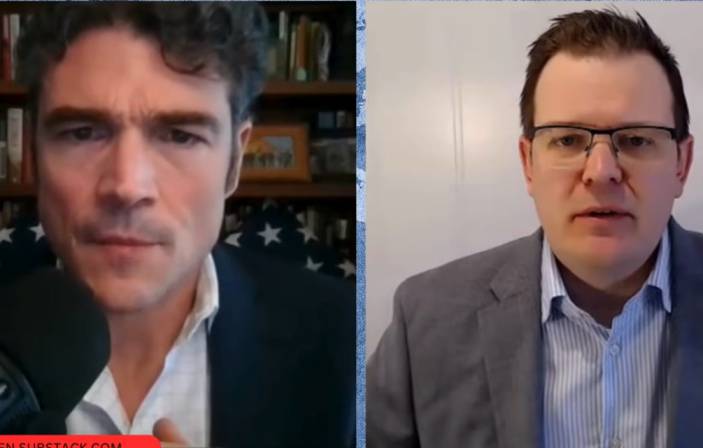
Editor’s Notes: In this thought-provoking episode, Glenn Diesen is joined by Joe Kent, former Director of the U.S. National Counterterrorism Center, who discusses his recent resignation in protest of the war against Iran. Kent provides a candid assessment of how Israeli influence and the “bipartisan factory settings” of Washington have pushed the United States into another avoidable regime-change conflict. The conversation explores the historical failures of Middle Eastern interventions, the unintended role of U.S. policy in the creation of ISIS, and the risk of nuclear escalation in the region. Together, they examine the broader geopolitical fallout of “forever wars,” highlighting how these conflicts are inadvertently strengthening rivals like Russia and China while undermining American interests. (April 2, 2026)
TRANSCRIPT:
Introduction
GLENN DIESEN: Welcome back to the program. We are joined today by Joe Kent, the former director of the US National Counterterrorism Center. So thank you very much for taking the time to come on the program. You recently resigned as the counterterrorism director over the war against Iran, and I thought a good place to start would be why you think the war against Iran was a mistake.
Why the War Against Iran Was a Mistake
JOE KENT: So as I said in my resignation letter, I believe that Iran posed no imminent threat to us, as in Iran was not on the cusp of attacking us. Since President Trump came back into office, we watched — and people with access to just the internet can verify this — we watched the Iranians observe a very calculated escalation ladder.
They stopped their proxies from attacking us as they were attacking us under the Biden administration. When Trump came back into office, they sat at the negotiating table with us up until the 12-day war and Operation Midnight Hammer. Once Operation Midnight Hammer was complete — now mind you, during the 12-day war, they didn’t attack us at all. Once we attacked them and hit their nuclear sites, they responded by firing an equal amount of missiles as we dropped bombs at a very empty quadrant on a base in Qatar. And then they immediately got back to the negotiating table with us.
The only imminent threat, as Secretary Rubio said, was from the Israelis. The Israelis attacked Iran, and we knew that during this iteration of the war that the Iranians would understand that this was an existential threat to their regime, that the goal would be regime change, and so they responded by retaliating against us. But again, this whole series of events wouldn’t have taken place if the Israelis would not have attacked. So there was no imminent threat.
And I also am just against us getting involved in yet another regime change war in the Middle East. I’m not a fan of the regime in Iran. I understand they are a terrorist threat, especially from my portfolio and my perspective as the director of the National Counterterrorism Center. However, using a regime change tactic that failed in Iraq, failed in Afghanistan, Syria, Libya — that to me was just a recipe for disaster. But it was exactly what the Israelis wanted.
And so watching the Israelis really force the hand of my government was something I was not going to be a part of. And then I have a lot of personal reasons too. My background of fighting in our wars in Iraq and Syria and Yemen and other places, I really did not want to see any more young Americans lose their lives in a needless war in the Middle East. And I just personally could not be a part of that any longer.
Israeli Influence Over Washington’s Decision-Making
GLENN DIESEN: How do you explain this, the Israeli influence? Because it’s often pointed out that the Israeli and US interests, that yes, while they overlap, they’re also not exactly the same. Indeed, over time, we see, at least over the past few years, their interest appears to diverge more and more. Why is it that Israel has such a great influence over the decision-making in Washington now?
JOE KENT: So honestly, I think it’s a combination of things. The Israelis are very effective at what they do. They’re a small country, and so they use a very sophisticated, layered approach to influencing the American government. Obviously, their grip on Congress, I think, is well documented. They have very active political action committees that use Americans who support Israel to provide a bunch of money to different political candidates, and that gets them a certain degree of access.
We also have a very close relationship with the Israelis in terms of intelligence sharing. It’s because the Middle East is a very challenging place to operate, and the Israelis are a very competent intelligence service. But because we rely on them for so much of our intelligence, I personally believe that we’ve gotten a little bit too close with them. Because of us not understanding a lot of what’s going on in the Middle East, we will take what they say basically as the only opinion worth counting in terms of intelligence collection.
But if you’ve worked in the region for quite a while like I have, you do realize that the Israelis use their intelligence to influence us as well as to inform us. And they are usually pushing for a very different objective.
In this administration, for example, the Israelis did a very effective job of eliminating the potential for a negotiation between President Trump and the Iranians. Now, President Trump had always said that his policy was Iran cannot have a nuclear weapon. The Iranians in their own way agreed with that. The Supreme Leader, the former Supreme Leader before he was killed, had a fatwa or religious decree that prevented Iran from developing a nuclear weapon. So Iran basically agreed, we don’t want a nuclear weapon.
Now, Iran wanted the ability to enrich uranium. They wanted the ability to produce a nuclear weapon should they choose.
The Israelis recognized this as a threat to their goal of regime change because they saw, hey, Trump’s going to get to the negotiating table with these guys. He’s going to get a deal because President Trump prides himself on being a dealmaker. So what they sought to do was use their multi-layered influence network to move the red line from no nuclear weapon to no enrichment.
No American official said “no enrichment” in this administration. In the previous administration, Secretary Pompeo had said Iran can’t enrich, but he was really the only one who said that. When we came back in, in January of 2025, the Israelis used their official engagements and then they also used their folks in the media — pro-Israel sympathizers in the media and in the think tank sphere — to say just over and over again, essentially, American policy is no enrichment, or enrichment equals a bomb, as in if you can enrich any uranium, then you’re going to have a nuclear bomb.
And they did this through repetition. They would put it on the news the same night they’d be in the White House lobbying for these different things, or they’d be over at one of the intelligence agencies lobbying for these different things. And so they were able to influence US policy and basically convince President Trump that his new policy was no enrichment.
And now we found ourselves in this quagmire where we bomb the Iranian nuclear facilities, we take away their ability to enrich, but then the Israelis come right back — like you heard Mark Levin do on TV the other night — and say, well, there’s still some uranium there and we have to go in and actually, it’s not enough to bomb it. We have to go physically get it, which means we have to put boots on the ground. We have to control ground again. It gets us stuck in this quagmire.
And so that right there is really what I call the pro-Israel echo chamber, or really just the ecosystem that they’ve developed throughout multi-levels of our government.
Linking the Nuclear Issue to Other Demands
GLENN DIESEN: Because my impression from Iran was that if it was all an issue of having more transparency around the civilian nuclear program — that is, that they wouldn’t develop a weapon — that a deal could be made, that their frustration often came from linking the nuclear issue to the issue of supporting regional allies or having certain limitations on ballistic missiles or drones. Do you see then this being Israeli input that is trying to link the nuclear issue to a lot of other issues to essentially make it impossible to get a deal, for the purpose of pushing war?
JOE KENT: Yes, the Israelis were very good at moving the red line. So when President Trump scoped the negotiations very narrowly to no nuclear weapons, and then even in the enrichment sphere, there was some play before the 12-day war and even after the 12-day war. I mean, Steve Witkoff is a very good negotiator as well. And him and the Iranians were in very real talks about what level of enrichment would be allowed, how it would be monitored. And so this was really just trade space. I think the typical negotiation back and forth that takes place in any healthy negotiations.
And so the Israelis would come in and say, oh, but actually it’s not the enrichment, it’s not the nukes, it’s the ballistic missiles. Don’t you realize these ballistic missiles can reach your bases? Well, most of our bases were on Iran’s borders. That was kind of like a no-brainer. And then they would say, well, it’s not those ballistic missiles, it’s their medium and long-range ballistic missiles. And then it’s their proxies, their support for the regional actors.
But again, those are issues, and I spent a lot of my career actually fighting Iranian proxies. But Iran showed that they could get those proxies under control, and they did that when Trump came back into office. They didn’t respect the Biden administration. They had attacked our troops in Iraq and Syria around 200 times since October 7th. But then when Trump came back into office — because in the first Trump administration he had killed Qasem Soleimani — they said, okay, this is not someone to play with. Let’s get the proxies under control. And they showed that they were able to do that.
So again, we were in a healthy trade space for negotiation. So this idea that you hear frequently from American officials that Iran is just these psychopathic jihadis like they’re members of ISIS or something that we can’t negotiate with — I just don’t think any data supports that whatsoever. They showed that they would observe the escalatory ladder.
And again, look, I’m not a fan of the regime in Iran. I’m not a fan of the IRGC. I wish that the Iranian people would get rid of them. Unfortunately, we’ve set that goal back. I mean, there were protesters that were on the streets in January, protesting against the economic conditions in Iran. And I think that actually has more of a chance of getting rid of that regime than anything an external actor is going to do.
But instead, we came in, and by trying to remove the regime forcefully, I think we only strengthened it. And this was always our prediction, because I think this speaks to human nature, but also just to the culture of the region and the culture of the Shias. So we worked really against our own stated purpose for being over there. And now we’re in this cycle of, are we trying to get the uranium? What’s our actual strategic goal? Whereas the Israelis keep moving the ball forward because their goal really is just to either get rid of the regime completely or have the regime in a chaotic war state where they can’t launch attacks against Israel.
Is Iran Truly Irrational? Intelligence, Policy, and Public Perception
GLENN DIESEN: You said before that intelligence services do two things. One, they can inform, but they can also sell a policy. When it comes to portraying the Iranian government as being completely irrational — that is, they’re crazy mullahs who just want to acquire a nuclear weapon to blow up the world — is this something that is sold to the public to kind of build public support? Or do you see some of these ideas being shared by the decision makers?
For example, in Washington, do they buy into the idea that Iran is as irrational as one often gets the impression from listening to speeches and the media? Because I thought what you mentioned in the beginning is quite important, is the Iranians going carefully up the escalation ladder. They’re preparing to go up, down. A lot of this indicates the rational calculations of a state as opposed to a Shiite version of the Taliban, say.
The Israeli Influence on US Decision-Making
JOE KENT: Unfortunately, most senior decision-makers, unless they have a background in the military and in the Middle East, they have to deal with such a large portfolio. They don’t have time to deeply study these issues. And a lot of times they won’t have time to do a deep dive with an analyst who’s covered these topics for decades. It’s available to them. Some of them take that opportunity, but a lot of them just simply don’t have the time.
And this is, again, this is where the Israelis, they play a weak hand very well. They will use their access to senior officials, usually from political channels, but also through official government engagements. And they will come in and they will kind of do an end run around the intelligence process. If Mossad or one of the other Israeli intelligence organizations wants to give the CIA or give one of our intelligence agencies intelligence, it actually goes through a process, a pretty rigorous process. It’s not perfect. Some things get through that just aren’t true. However, it still is a process and there’s somewhat of a John DeSai that’s put upon it.
And the Israelis know this. They know the game. So they’ll have their senior officials come and engage directly with our senior officials. And they won’t usually talk intelligence. They’ll usually say something to the effect of, “You know, they’re within 2 weeks of getting a bomb. And you don’t want to be the one that’s going to be responsible for these crazy ayatollahs because ayatollahs just sound crazy, right? You don’t want the ayatollah to get a bomb because then that’s going to be on you.” And then it will be repeated that night on the media, on conservative media, usually in this case under the Trump administration. But we’ve seen it done under previous administrations, too, on Democrat media as well. And so they use this echo chamber very effectively. And it’s also how they do an end run around the intelligence process.
And again, the Israelis, just because so many of them are dual American citizens and they sound literally like — I’ve been in the room with Israelis who went to school in Miami and Ohio and Washington State where I’m from. And so it actually can be very disorienting in a way. We as Americans, one of our weaknesses with the Israelis is we get too comfortable with them. Like they do a really good job of not feeling foreign, especially in a region like the Middle East where everything feels very, very foreign. They do a great job of using that access to their favor, and it’s just something that we have to really, really have our guard up for.
Trump’s Shift Toward War with Iran
GLENN DIESEN: One of the reasons I was very optimistic about Trump’s reelection was he was pushing hard for ending the proxy war in Ukraine. He was going to end the forever wars, which of course a lot of Americans have now also become exhausted about. And I kept thinking about this thing that Colonel Lawrence Wilkerson told me when he was in talks with Obama during his time in the White House. He said that there was this strong bias for war in Washington. That’s what Obama told Colonel Wilkerson. And I was wondering, how do you make sense of it? Why did Trump go down the route of a war with Iran, you think? Because he seems very much genuine in his previous desire to not get engaged in any of these forever wars. Indeed, I think he was the first president to have his whole first administration without starting a new war in decades. So why do you think he shifted on this issue?
JOE KENT: Yes, that’s a great question. I would agree with the premise that Washington is in general just for the wars. There’s obviously the military-industrial complex aspect of it. I mean, Washington, DC, it’s built on defense contractors essentially. So you’re going to get very little pushback when you want to start a new war, arm a new proxy group, get engaged in a new proxy operation. So that’s just, I think, kind of the default bipartisan factory settings, if you will, of Washington, DC.
In this case, I do think that President Trump — again, the Israelis, the way that they influenced him — and then also I think that they played to his psyche in a way and they said, “Look, you’ve already done historic things with your military. You were able to go in and take out the leader in Venezuela. That was a flawless operation. It was historic. Protesters are already on the streets here in January. All you have to do is a couple of strikes and this whole thing is going to be easy. It’s going to fall and then you’re going to be historic.”
I think they pointed out to him — and this was echoed by the pro-Israeli lobby, but also a lot of the more neoconservative neoliberal types — that said, “Look, Iran’s been a pain to every president. They’ve been a threat to every administration for the last 47 years. You’re the only one who’s strong enough. This is your place in history.” So I think they played to his psyche very effectively, unfortunately.
And I think a lot of Trump’s instincts — and this is the man that I know — I think a lot of his instincts said, don’t take the trap, it never works out. But it was overridden, I just think, by the persistency of the Israeli lobby and of their surrogates within the media and then the access they have within the government.
I still think, and I hope — and this is why I’m trying to do as much media as I can — I think he has time to kind of wake up and see that this is not going to be an easy thing. The Iranians right now can essentially win by not losing. They’re affecting world energy prices because of their grasp on the Straits of Hormuz. I think Trump is good at seeing the big picture. So I truly hope and I truly pray that he can kind of shuck off all of the people who led him down this path and do a very Trumpian move and come to a quick peace, if that’s even possible at this point.
Iran’s Escalation Strategy
GLENN DIESEN: Yeah, I guess what is interesting with Iran though is there doesn’t seem to be much escalation dominance over it. In other words, it’s not possible to continue to escalate until Iran will have to back down. It seems that they can go pretty much all the way up this escalation ladder. I mean, they have a lot of regional targets. They can shut down the Red Sea if they want. They can hit desalination plants of the Gulf states, which would essentially make all the expats leave. They can destroy the finance there, shut down their energy operations. So it looks like they can continue to climb at least a few more steps up this escalation ladder. So how do you assess now the strategy of the Iranians? What they will do next if there is escalation?
JOE KENT: I think the Iranians studied the wars of the last two decades to their east and to their west, and they saw that essentially you can win by not losing. And so I think for them to keep enough of their leadership alive — and they obviously have a lot of depth in their leadership — I think their leadership has only been strengthened because of the strikes that we’ve taken. I think that there’s a lot of support right now for the regime, whereas just a couple months ago there probably was less.
But also, they’ve done a very impressive job with being able to manufacture and disperse their ballistic missiles and their drone capability. And I mean, anybody who can look at a map of the Straits of Hormuz — it’s a pretty narrow section there — if they can every now and again get a drone, every now and again get a ballistic, every now and again get some mines in that, then they mess with world energy and they know it.
And I think the way that they’re using the Chinese and other world powers to say, “Hey, you guys can get your oil through. We’re not going to trade in the dollar, but you guys are welcome to use the Straits of Hormuz,” I think is very shrewd of them. And they also just know politically that this is not going to be a popular war as it drags out.
So I think that they’ve found kind of their steady state right now where they realize they can continue to strike targets in the Middle East. They can make this very uncomfortable for the GCC countries, which for now we sort of have the support of. But I think that erodes more and more. We’re already seeing a lot of fractures in our relationship with the Kingdom of Saudi Arabia, which is key for us to be able to project power against Iran as well. So right now, I personally don’t see very many downsides for the Iranians for them to continue this war. I think they realize with a very minimum effort they can continue this far longer than we can.
Can the US Declare Victory and Leave?
GLENN DIESEN: Yeah, no, that’s an interesting framing though. If they just hold on, they can win. That’s one of the lessons of many wars going from, I guess, Vietnam to the Iraq War. That is, the US would win pretty much always on the battlefield, but at the end, if one can’t stick it out, then it’s not necessarily how the ultimate success can be measured.
But given that the Iranian objectives seem to be organised around removing threats from the region — that would be US bases — it looks like the Strait of Hormuz will be key to this. I mean, they can tax the Gulf states for reparation. They can pressure them into removing US bases from their soil. They can, as you said, pressure countries to sell their oil in other currencies than the dollar. A lot of this seems aimed then to disentangle the United States from that region.
Do you see it possible? Can the US leave, or I guess declare victory and go home, as long as the Strait of Hormuz is not under US control? Because it doesn’t seem like it’s possible to bring it under US control either. I might be wrong, of course.
JOE KENT: I think we’re in a conundrum right now, because I think the idea that we’re going to forcefully open the Straits of Hormuz — I mean, militarily, could we do it? I mean, we’d probably need to build a coalition to do it. I think we can always muster enough hardware and military might to do something temporarily. But as we just talked about, even if we temporarily open the Straits of Hormuz, eventually the Iranians would find their footing again, and they would use insurgent tactics, and they would make the Straits of Hormuz less secure, which would go back to messing with international energy shipping. So I don’t think that we can do it in the long term.
Could we do it really quickly and have it not last? I’m sure that we could, but I think a lot of this at the end of the day is going to boil down to a cost-benefit analysis for us. What is it going to cost us in terms of not just dollars and military hardware, but also political capital to take a swing at militarily opening the Straits of Hormuz? And if we end up having it not last or failing, what political costs do we pay there? Or do we just get to the negotiating table with the Iranians?
And for me, the formula has always been that President Trump wants to get some kind of a sustainable deal that doesn’t see us committing a ton more military resources or burning more political capital. And I think he could get a deal like that. However, if he doesn’t restrain the Israelis, the Israelis will do what they’ve been doing for the last couple of weeks. Basically, every time you would see President Trump publicly say he wants some form of de-escalation to facilitate negotiations, you would see the Israelis basically within hours come in and literally bomb the targets the president had just said not to bomb. He said, “We’re not going to hit energy infrastructure anymore.” The Israelis would come right in and hit energy infrastructure to keep the war going because they’re terrified that President Trump will get a negotiation and that he will push the Israelis to the side.
So I think in order for there to be any potential for a deal — that reopens the straits, that sees us and our Gulf allies maintaining our relationships and returning to anything that even closely resembles the way we had it before — we have to restrain the Israelis first. Otherwise, we’re just going to find ourselves in this repeated cycle.
Good Cop, Bad Cop — or Israeli Control?
GLENN DIESEN: Yeah, because many analysts I’ve spoken to, they seem not to be sure whether or not it’s the Israelis which are forcing America’s hand, such as what you describe, or if there’s an elaborate game between, playing good cop or bad cop, but it’s very much the Israelis then that are pushing this through.
Israeli Influence and the Path to De-escalation
JOE KENT: In my opinion, yes. I mean, from my vantage point, it is because we’ve always had a very limited goal in Iran. And most people in this administration, at least publicly, would acknowledge that the idea of regime change is just, it’s never worked before. Nobody wants to try to defend it. Nobody wants to bring that up. But the Israelis really, really wanted it. And so now that we’re headed down this regime change path, it very much appears the Israelis are in the driver’s seat.
I mean, again, back at the very beginning of the war, the Secretary of State, even the president himself came out and they’re like, “Well, we had to strike Iran because the Israelis were going to,” showing everyone that we really couldn’t restrain the Israelis, which is absolutely absurd because we’re paying for their defense. We’re giving them the ability to go on the offense. We’re helping them defend their own homeland.
So again, this lack of balance in our relationship and the amount of influence they have over our government, and they’re making very big decisions that we’re paying for both in terms of the actual cost, but then also we’ve lost 13 American service members here and the Israelis have not lost that at all fighting in this war that’s being pursued for their objectives.
What Would a Deal With Iran Look Like?
GLENN DIESEN: Well, if Trump would call you today though, you mentioned that he wants some form of de-escalation to reach a deal. But what could an agreement look like? Because so far it looks as if the United States and Iran are miles apart. What could a possible deal look like? Would it be finding some common security architecture for the region, or how would the core security interests of Iran as well as the key security interests of the United States possibly be harmonized? Or is it not possible with a political, all-encompassing political deal just to find a way of de-escalating and getting out of this conflict?
JOE KENT: Yeah, I think the first step to getting the conflict to stop and to get the Straits of Hormuz open is us showing the Iranians and really the Gulf, the GCC countries too, that we will restrain the Israelis, that we will cut off a significant amount of their military aid to prevent them from going on the offense. And I think we have to be very firm and probably publicly firm with the Israelis and say, “You will not go on the offense anymore. We will help you with your defense if you’re attacked, but we are done supporting any offensive operations that you’re going to do. And if you don’t listen to us, then we’re going to cut off all military aid,” which Israel knows they need for their very survival.
So I think until we show that we’re going to do that, I don’t think the Iranians are going to take us very seriously. And I think the Gulf, the GCC countries won’t take us seriously either.
Once we do that, I think it’s very possible to incentivize the Iranians to basically kind of come back out from the cold and to say, “Look, you guys have a ton of oil that you can’t sell right now, a ton of natural gas. The world needs that. Let’s open the straits. Let’s lift sanctions on your energy resources and let’s get essentially the oil and the commerce flowing once again. Let’s get your economy rebuilt.”
We’re never going to be able to give them reparations as they’re demanding right now, but I think sanctions relief and restraining the Israelis would get them to the table and potentially even, I think, turn the corner. I don’t want to be overly optimistic, but I think turn the corner in the region where everyone can at least agree that these wars that we’ve been fighting basically nonstop since, well, even before 9/11, but for the last 20 to 40 years depending on however you want to do the math, they just haven’t been productive for anybody. And for us to work out our differences at the negotiating table as opposed to these endless wars.
Lessons From Two Decades of Failed Wars
GLENN DIESEN: I’m glad you brought up these endless wars because we already had so much bad experience. That is 20 years in Afghanistan to replace the Taliban with the Taliban, the very costly war, both in terms of blood and treasury in Iraq, which essentially ended up putting a key balancer to Iran into making it more Iran-aligned. We had Libya, which became a mess, Syria, where we now have jihadists essentially ruling the country. What would be your key takeaway, or the lessons from these wars? Because we never seem to learn these lessons. But besides having an exit strategy, how do you assess the commonality of these wars?
JOE KENT: Regime change doesn’t work. I mean, we’re not going to be able to come from 7,000 miles away, a completely different culture, and through the barrel of a gun take out the leader and then be greeted as liberators by the people. I mean, I don’t know how many times we need to relive this.
I mean, just last night, Mark Levin, who I would like to discount, but the president listens to him, was desperately tweeting for us to arm the Iranian opposition so that we could create chaos in Iran and topple the leaders. I mean, it’s just the same formula over and over again. So I frankly think that anyone who advocates for any kind of regime change in the Middle East should be expelled from any kind of foreign policy circles, just because it’s had such a disastrous consequence.
And then I think we have to be very judicious about what our actual needs are from most of these countries and really tailor our policies based off that. In general, what we need from most countries in the Middle East is we need them not to harbor terrorists. We need them to cooperate with us in terms of counterterrorism operations and counterterrorism intelligence, which most of the countries in the region do because most of the terrorist organizations threaten the countries in the region. Unless we screw things up so badly and we install literally the former leader of Al-Qaeda in Syria, it’s a different story, but it kind of is what it is.
We need CT cooperation from them. And then also we kind of just need the oil and the commerce to be able to flow. And that’s very, very limited. When you limit your objectives to very realistic things that only our countries and most countries in the West need, it actually makes it fairly easy.
But if we start saying we need things like democratic law and order and we need women’s rights and gay rights and all these different things, and we need to go wag our fingers at them about their morals, and we want to fund different proxy groups against governments that we don’t like, that’s when things get very, very complicated and we just find ourselves in this never-ending cycle of involvement in a region, quite frankly, that I think is important. I’m not saying it’s not important, but I don’t think it’s as important as other things that are taking place in the world. So again, we’ve got to know what we actually need from the region.
The Dangers of Backing Proxy Groups and the Rise of Jolani
GLENN DIESEN: Yeah, that’s always the problem with funding or supporting a political opposition. That is, it’s usually the most violent actors that would soar to the top in any regime change war or revolution. Indeed, if you go back to World War I, the Germans seeking to support an opposition in Russia to take the Russian side of the war resulted in them shipping in Lenin and contributing greatly to the Bolshevik revolutions, which gave them the Soviet Union to be troubled with for the next few decades.
And it seems to also be the same case often in most of these proxy wars. I mean, in ’99, when we fought against Yugoslavia, we backed the KLA, the Kosovo Liberation Army, which, well, at least the Republicans in the United States at that time recognised consisted of some very unsavoury figures that were engaged in a lot of different forms of crimes, but also different opposition groups throughout the Middle East.
But you have brought up the example, you said we helped to install an Al-Qaeda leader in Syria. How do you see the United States contributing to training or arming or putting essentially Jolani in the driving seat, at least the position of the presidency where he is now?
The Origins of ISIS and the Syrian Conflict
JOE KENT: Yeah, I mean, really the story of what took place in Syria never would’ve happened if we wouldn’t have gone into Iraq in the first place. I mean, the Iraq War led to this in terms of forming ISIS and Al-Qaeda in the region.
But really when we went into Iraq, we messed things up so badly there that we installed this very pro-Iranian, pro-Shia — or Shia. I mean, Iraq’s a Shia-majority country. Saddam kind of held the lid on that. And as you said, was a counterbalance to Iran. We took out Saddam. We unfortunately partnered with a lot of Iranian proxies essentially, who had actually fought against the Iraqis in the Iraq-Iran War, put them in power.
And at the end of the Iraq War, as we were getting ready to leave in 2011, you had a lot of the Gulf states and the Israelis especially who said, wait a sec, this is no good. Now we have a Shia crescent that basically goes all the way from Tehran all the way into Damascus. Baghdad is a massive staging grounds for them. The Israelis had always been at odds with Assad because Assad was supporting Hezbollah, supporting Hamas and helping Iran do so. So we had this Shia crescent. And so again, we had to go and basically put out a brushfire that we started.
Syria is kind of the opposite of Iraq. And you had an Alawite Assad who was sort of a version of Shia, but the majority of the country was Sunni. So when we went to go either start or help spread, depending on how you look at it, the Arab Spring and the popular uprising — the Arab Spring had started in Tunisia. There were some organic protests that took place in Syria, to be certain there was. And a lot of that was, I think, relatively secular, relatively cosmopolitan Syrians protesting against the Assad regime.
But then we came in and we armed a lot of the more radical Sunnis. There was the Free Syrian Army — again, some secular, there are some defectors from the military, but the most effective fighters that we found were some of the hardline Sunnis who quickly allied with Al-Qaeda. The Al-Qaeda in Iraq had died down. A lot of them, to include Shara himself and Baghdadi, the first leader of ISIS, were in prison in Iraq. They were let go once we left. They made their way to Syria, and we ended up supporting a lot of these proxy groups with the idea that they’re going to help us against Assad.
We even heard in Hillary Clinton’s leaked emails where she said, “Al-Qaeda’s on our side in Syria.” And so we were supporting Al-Qaeda, which eventually morphed into ISIS. And then again, we have to go back in and put out the brushfire that we started.
ISIS became so powerful, but they had a slightly different ideology where they said, you know what, actually we don’t care that much about Assad, we care about the global jihad. And so they started conducting attacks in the West, in Europe, trying to inspire attacks in America. And so we had to then go back into Iraq and back into Syria to take out ISIS.
Meanwhile, Jalani is a pretty smart guy. He broke off from ISIS. He wanted to stay focused on his home country of Syria. He was chosen by Zawahiri, the leader of Al-Qaeda at the time — because we just killed bin Laden — to run al-Nusra, which was the branch of Al-Qaeda inside of Syria. Eventually he realized that was somewhat of a toxic brand itself, and it had put a target literally on his head. And so then he changed the name to Hayat Tahrir al-Sham, which was very Syria-focused, got a lot of support from the Turks. We knew the Turks were supporting them, but we needed the Turks for operations against ISIS — again, the brushfire that we had started.
And then from there, the HTS got a lot of support from the Turks and we kind of ignored them for quite some time. But we still had this goal of getting rid of Assad because again, Assad was a threat to the Israelis because Assad was supporting Hamas and Hezbollah. And so we allowed the Turks, we supported the Turks in supporting HTS and FDS, and then eventually they were able to overthrow the Assad regime.
And again, this is where President Trump’s initial, I think, gut instincts were correct. In December, after he had been elected but wasn’t inaugurated yet and the Assad regime fell, President Trump said, “Hey, Syria’s a mess. It’s always been a mess and it’s none of our business, frankly,” which I think was the right approach.
Unfortunately, the Turks were able to basically rebrand Jalani as Al-Shara’a and to make it seem like we could make Syria into this great cosmopolitan place in the Mediterranean. And to be fair, the HTS government — they have done a lot of bad things and they’ve had members of Al-Qaeda infiltrate their ranks. They’re very sympathetic to members of Al-Qaeda. They’ve taken in foreign fighters. However, there does seem to be at least some element of Shara’s government that is trying to stabilize Syria. So the verdict’s still out on how this is going to work.
I personally don’t trust Shara. I don’t trust his government. But that’s where we’re at with Syria. But again, the only reason we have to put so much effort into this is because we tried this regime change war. We were led down this path by the Israelis. Iraq got us in there in the first place. And it’s kind of one of those — like, when we know this full history, how are we even going down this route in another country in the Middle East?
The Future of Syria: Competing Interests and Instability
GLENN DIESEN: Yeah, I think at one point I read some reports that within Syria, the U.S. government or Pentagon was supporting one faction which was fighting against another faction which had been backed by the CIA. I don’t remember the details because it started to get too convoluted, but it looks as if we got stuck in a very overcomplicated game.
But how do you see Syria developing now though? Because a lot of the anti-Assad coalition was based on essentially being an anti-Assad coalition. In other words, when Assad was removed, we suddenly have Turkey, Israel, the different groups now under Jalani in Syria. Of course, the United States has its own interest. Do you see the ability of all these different actors to harmonize their interests in terms of stabilizing Syria for some common good? Or would you see Syria unraveling into Israeli-backed or occupied territory versus Turkish-supported factions?
Because we just saw, I guess, a week ago or something, the first border attack — that is, some Iraqi militias launching some Grad missiles into Syria, which is an interesting development within the Iran war, of course.
JOE KENT: Yeah, there’s a couple of different things I think that could take place in Syria. Unfortunately, I’m not optimistic about the future for Syria. There’s going to be a major clash, and I think the first flashpoint is going to be between the Turks and the Israelis.
Although the Israelis definitely wanted Assad gone because of Assad’s support for Hamas and Hezbollah, they are very worried about Jalani and about HTS and how close they are with the Turks and having them on their border. As a matter of fact, in terms of just like you never can anticipate what blowback you’re going to get — Hezbollah was, I think, severely degraded post-October 7th by Israeli operations. But also a lot of folks in Lebanon had kind of gotten wary of Hezbollah dragging them into conflicts.
However, once Jalani took back over and a Sunni Al-Qaeda Syria government was installed essentially on their border, they remembered just a decade ago when ISIS was trying to penetrate their borders and it was Hezbollah that fought them off. So this actually gave Hezbollah a lot of political momentum to gain support back from the people.
And so the Israelis are wary of Jalani. They support the Druze that are to the south. They have relationships with some of the Alawites. So they’re at odds with what the Turks want. And they also view the Turks as an existential threat, as a regional threat to them as well. So I think the Israeli interests and the Turkish interests are going to come to a head in Syria.
This puts Jalani in a very precarious position because I think he doesn’t want to anger either one of them. He likes to have good relations with the Israelis. He likes to have good relations, obviously, with the Turks.
But then a third wildcard factor is that basically what swept Jalani and HTS to power was a very radical element of the Sunni population, many of whom were affiliated with ISIS for quite some time. But now that ISIS is mostly defeated, a lot of them are willing to say that they’re not members of ISIS anymore or they’re members of a new group, but they’re still very, very hardline. And they want Jalani to take a hardline against Israel, and they want Jalani to give support to a more traditional Sunni Salafist type of government.
And so if Jalani cracks down and is a good counterterrorism partner to us, it’s going to put him at odds with the base of support that brought him into power in the first place. So he has to play this dangerous game right now where he can’t crack down too hard on the terrorists that are a threat to him. Otherwise, they will consume him.
Although he’s got a lot of pressure coming from us and from the West to do counterterrorism operations because we are very concerned, especially since the two main refugee camps, Al-Hol and Al-Rodh, have basically been emptied out. So we have people that have been under detention for about a decade. And these are families, these are kids that have been radicalized in this environment, and also thousands of ISIS detainees. We got about 5,000 of the worst ISIS detainees out of Syria and into Iraq so they can be tried in the Iraqi justice system. But there’s still another 25,000 to 30,000 ISIS sympathizers that have now been reintroduced into the Syrian population.
And Al-Sharif Jalani’s government lacks the capability to track all these people, to make sure that they’re actually reintegrating into society. So they’re kind of out there. Right just below the surface is the architecture essentially of what was the Islamic caliphate that he has to deal with. And if he cracks down too hard on it, he could be consumed by it. If he doesn’t crack down hard enough, he’s going to lose support from the West.
And then meanwhile, not that I’m sympathetic for Jalani, but to the north and to the south, he has his two competing masters of Turkey and Israel. So that place could erupt very, very quickly given all the pressure that there is in the region.
The Nuclear Threat: Could the Iran Conflict Go Nuclear?
GLENN DIESEN: I often heard comments that the different ISIS fighters somehow don’t tend to target Israel a lot, neither Jalani. But I did an interview recently with Ted Postol. He, as you know, is a nuclear scientist at MIT. He focuses a lot on nuclear weapons and their delivery systems. And he was making the point that if Israel now feels trapped and the war is being lost against Iran, that they could reach for a nuclear weapon.
And he said that this would be a tragic mistake because while Iran is not a nuclear weapons state, it could be considered a threshold state, or at least they have enough know-how and material to put together a bomb. And not something they would likely do — he at least predicted that their strategy would be to not cross that line unless they would be attacked by a nuclear weapon. But then in a relatively short time, they would be able to assemble something and then launch back at Israel.
Again, it’s assumptions. We don’t know everything about the Iranians. But to what extent do you think this is a possibility though, that we could be moving in that direction towards the possibility of not just nuclear war, but even a nuclear exchange?
Iran’s Path to Nuclear Weapons
JOE KENT: There’s going to be immense pressure put on by the hardliners in Iran, whoever ends up ruling Iran, whether it’s the Ayatollah’s son, who already we assessed that he was a little bit more hardline than his father. And I’m sure watching his father get killed, that didn’t moderate him whatsoever.
I think that a lot of the hardliners that we saw that were pressuring the old Ayatollah to move towards a nuclear weapon, they’re going to end up being vindicated. Because the former Ayatollah, before we killed him, he said, “Hey, this is a good spot for us to be in. We don’t want to develop a nuclear weapon. We want to have the ability, but no nuclear weapon. This gives us the maximum negotiating leverage.” And for a while he was correct.
But unfortunately, we basically destroyed, literally killed that school of thought. And so now all the hardliners right now, and I warn people, these hardliners are not to be messed with. I mean, these are the guys who were the students of Qasem Soleimani, who fought us in Iraq, who fought us in Syria, who funded and trained Hezbollah over the years. These are very serious people.
They’re now saying, “Look, we told you so. You cannot negotiate with the Americans. You cannot negotiate with the Israelis. The only way out of this basically is the North Korea solution.” I mean, I think all of them right now are pointing to North Korea being like, “You know who’s not getting invaded right now? North Korea.”
So I think this is again why we have to de-escalate this as soon as possible and get them to the negotiating table, because this has become a self-fulfilling prophecy at some point. We basically just yelled “nuclear” enough, and nuclear weapons and WMD and enrichment, that now it’s kind of just going to happen because of, again, because of a brushfire that we created, which will now become this new crisis.
So I would be shocked, honestly, if just logically the Iranians aren’t aggressively pursuing a nuclear weapon. Now, they can enrich, and I’m not a nuclear expert, I’m a counterterrorism guy, but the ability for them to enrich and then build a bomb, a really simple one, they could probably do that. But in terms of delivery system, they’re good at ballistics, et cetera. I just think that’s a much longer timeline than the pro-Israeli lobby will have you believe. They’ll make it sound like, by the end of the week, they could be putting nuclear warheads on ballistic missiles that can reach America. And that’s just simply not the case.
Conventional Deterrence and the Great Power Dynamic
GLENN DIESEN: I often made the point that it’s probably— we should probably hope for the Iranians having a lot of drones and ballistic missiles, simply because if they don’t have a conventional deterrent, then they will be more inclined towards acquiring the ultimate deterrent, which is, of course, nuclear weapons. So this idea that a country shouldn’t feel safe and also lack a conventional deterrent, this is a recipe for disaster, especially if the possibility of a nuclear weapon down the road exists.
I did just finally want to ask you also about the wider great power dynamic here, the way you see it, because this is not just, again, the war against Iran hasn’t just set the whole region on fire, it does impact other great powers, be it China or Russia. So Russia, for example, under the Trump administration, I know for a fact there’s been a lot, at least it was more before, a lot of enthusiasm that it would be possible to improve these bilateral relations. That is, after the Cold War and post-Cold War, we had like a century of poor relations, and the idea was that the Russians would be able to perhaps dramatically improve relations with the US as they don’t really have that many conflicting interests besides NATO.
But of course the war in Iran has also impacted the way they think. And you can say the same for China. I was just wondering, how do you see the wider great power dynamic being influenced by this war?
JOE KENT: Yeah, honestly, I think China’s probably the biggest winner in all of this. I mean, we had to remove a lot of our combat power from the Pacific. So if China did choose to do something against Taiwan, they could, or they’re much closer to being able to do that successfully than they were a couple months ago, because we’re very distracted right now back in CENTCOM, like we have been for the last couple decades.
But then also the fact that you have a lot of countries that are now settling their petrodollar transactions away from the dollar, they’re using the yuan. And the Iranians have even publicly said that they’re going to accept the toll essentially for the Straits of Hormuz, and they’re going to settle transactions in oil in the yuan. I mean, that’s a direct threat to the petrodollar, which is a direct threat to the dollar as a reserve currency holder.
So in terms of playing a very long strategic game, this is all playing right into China’s hand, and this is how China fights. So I think in terms of if we care about great power competition, and we should, and we should be very wary of what China is doing right now globally, this was a catastrophic mistake because this played directly into their hands.
The Russia dynamic I think is very interesting. I think we’re giving Russia an opportunity essentially to do to us what we did to them in Ukraine. And President Trump even came out and said this when a reporter asked him, “Hey, are the Russians giving any kind of intelligence or support to the Iranians?” And Trump said something to the effect of, “Well, if they are, they’d probably just say that’s what we did to them in Ukraine.”
But also in terms of we were attempting to squeeze Russia, and I don’t agree with this, I don’t think it really worked. We were attempting to squeeze Russia by sanctioning all of their oil, gas, natural resources, et cetera. But then when we affected the Straits of Hormuz and we cut off or at least restricted 20% of the world oil flow, that oil coming out of Russia was suddenly back on the market. And so we weren’t able to affect Russian oil in the way that we were trying to.
But then the Ukrainians went and they started hitting Russian infrastructure targets as well, which again has created more scarcity on the market, which has had a dramatic impact on the price at the pump throughout Europe. We’re starting to feel it here in America. We’re going to see the second and third-order effects in terms of fertilizer production and manufacturing components as well.
So in terms of playing the true great game and great power competition, getting involved in the quicksand of the Middle East, I think is the quickest way to allow Russia and China to maneuver effectively.
The Ukraine War and the Forever Wars
GLENN DIESEN: Do you see, in terms of the forever wars you spoke about, do you see the Ukraine war in the same context? Because in Ukraine, we did something similar. We started backing somewhat radical forces. I’m thinking about Right Sector, Azov, all of these different groups. And well, over time, we don’t seem to be able to have that much control over it anymore.
At least I get the impression from Trump that he would like to see concessions from Zelensky to put an end to this war, which he’s not able to get from Zelensky. How do you explain Trump not being able to end this war, which he had hoped to do? And again, I would assume that this was a genuine intent to put an end to the Ukraine war, or at least America’s participation in it, kind of quickly. But now we’re a year into this administration.
JOE KENT: With Ukraine, I think by the time Trump came into office, Russia was already winning. And the Russians just have a much different outlook on what winning looks like than we do in the West. I mean, the Russians are completely comfortable with losing thousands and grinding it out meter by meter, literally, until they take what they view as their territory. And we were never prepared, we as Americans, I don’t think we’re ever prepared to be engaged in a fight like that.
Again, I think we thought it was going to be easy. I think we thought that we were going to support the Ukrainians who valiantly wanted to fight for their own country. I think it’s admirable what the Ukrainians have done. They wanted to fight for their own country, but I think we allowed ourselves to believe that that narrative would beat geography, and you just can’t beat geography. Geography wins every single time.
And so Trump, I think, really started out with a bad hand dealt to him. But coming in and not quickly cutting off the Ukrainians and saying that we’re not going to support the war anymore, that showed the Russians that we’re not 100% committed to ending it. In which case, I think the Russians, especially Putin, who’s been in the game for as long as he has and has even publicly said that dealing with American presidents, he doesn’t really care because they come and go and really it’s the guys in the dark suits that are in charge. I think we just didn’t acknowledge all those factors.
And so I think if we want to be able to affect peace there, and I think we should, we should be telling the Ukrainians the same thing we’re telling the Israelis: “Hey guys, you’re done going on the offense, work towards peace.” And then in terms of proliferation, I’m sure there’s a lot of people in Ukraine who are saying, “We never should have given up our nuclear weapons.” The way that we’ve aggressively gone after Iran is going to show every country throughout the world that you need to have nuclear weapons and you should never ever give them up.
Predicting the Endgame in Iran
GLENN DIESEN: Just a last question. How do you see Iran ending up now? I mean, I know you don’t have a crystal ball. There’s a lot of actors with many competing interests. There’s a lot of things that can go wrong, and we don’t know the intents, but based on where you’re sitting now, watching where this direction is going, do you think we’ll continue going up the escalation ladder, or how do you see this coming to an end?
Because I see Trump wants to put an end to this, but he seems to be pushing in different directions. On one hand, he’s warning, “We’re going to burn everything in Iran to the ground if they don’t put an end to this war.” On the other hand, he’s also saying, “Listen, this Strait of Hormuz, this is up to the Europeans and the regional actors to resolve, so we might just go home.” So how do you see— if you would make a prediction, I’m not going to hold you to it, as I said, too many unknown variables there, but where do you think this might be going?
The Risk of Being Drawn Into a Prolonged Conflict
JOE KENT: Yeah, like you said, a lot of variables. Look, unless we restrain the Israelis, we’re going to just end up back in this cycle. Now, the cycle could play out in rapid succession or it could take a little bit longer. Trump’s going to make some kind of announcement tonight. And like you said, that could be he just says like, “Hey, you guys open the Straits of Hormuz, we’re done.” Or it could be, “We’re going to continue the war. We’re going to up it.” It could be a misdirection play. I don’t know.
But unless we restrain the Israelis, we’re going to end up either getting committed to something that reopens the Straits of Hormuz, cobbling together an alliance, and the Israelis might let that play out for a little bit, but then they’re going to come right back and demand more regime change, or they’re going to take actions inside of Iran against the Iranians that provoke a response that make us then respond back into this cycle.
I fear that if we put boots on the ground, not only are we going to lose more American lives, and then when we lose American lives, the emotional response from the American people will be that, hey, we’ve already lost some lives here. We can’t just leave. We have to finish the mission. Finish the mission. You hear the Secretary of War constantly say this, just finish the mission. And again, what is the mission? Is it regime change? Do we dominate all of Iran? How do you even do that? But if we start losing people on the battlefield, it’s going to be a recipe for us getting sucked into this for quite some time.
Now, if we go in and we pull off a spectacular commando-style raid and we take out the Iranian leadership, I think that’s what Trump is, you know, he’s at least hearing that course of action because Levin is talking about it. And even if we did that successfully, I just think that that would be like a midnight hammer again. And then in 6 months, the Israelis are going to come back to us or take action that gets us pushed back in here.
So for me, I don’t see this thing ending. And I think there’s going to be ramifications because the Iranians, I think, are like right now, they believe that they’re winning. And unless they get some concessions from us in terms of sanctions release relief, or at least being treated like a normal country in the region, I think they’re going to keep somewhat of a stranglehold on the Straits of Hormuz. That way, even if President Trump says we’re leaving, we’re done, you guys figure it out, they can still mess with world energy costs, which we will have to deal with regardless of how militarily involved that we are. So again, man, unless we restrain Israel, I just don’t see us having a way out of this regardless of what we say or what we do.
Closing Remarks
GLENN DIESEN: Well, I want to thank you for taking the time, and I share your concerns about whenever war becomes emotional. And this is a problem, I think, with a lot of political leadership across the political West, that is political leadership that often communicates in emotional slogans, you know, their leader is bad, you know, if either we bomb him or you empower him, this kind of rhetoric, it never takes us anywhere good, is always full of, yeah, I guess it comes in the absence of strategy. So yeah, I was saddened to see you leave your position. We need more common sense people, but I can of course understand where your objection came from. So thank you again for taking time.
JOE KENT: Hey, you’re on, great chatting with you.
Related Posts
- DOAC AI Emergency Debate: ft. Ed Zitron, Andrew McAfee, Nate Soares & Roman Yampolskiy (Transcript)
- Transcript of Norman Finkelstein Interview: Tucker Carlson Show
- Transcript: Jess Elofson Interview on Forgotten Lessons of Human History – Tucker Carlson Show
- Transcript of Bishop Robert Barron Interview: This Past Weekend #682
- Transcript: Protecting the President: Security, VIP Threats & ADC Life w/ Major Rishabh – FO560 Raj Shamani