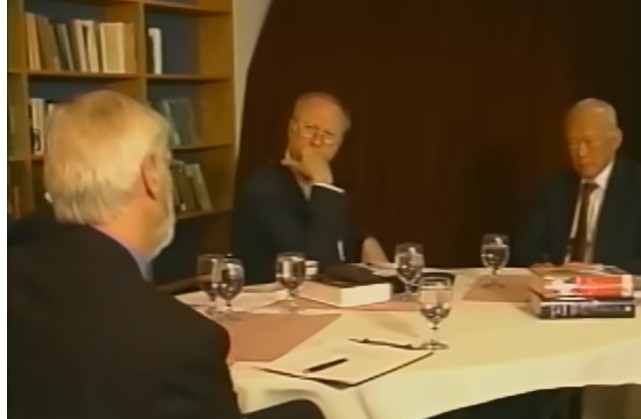
Editor’s Notes: In this comprehensive Harvard interview, Lee Kuan Yew, Singapore’s founding Prime Minister and architect of its transformation from a vulnerable city-state into a global economic powerhouse, discusses the fundamental principles of leadership with Harvard Kennedy School professors. The interview explores Lee’s formative experiences during World War II and the Japanese occupation, which he credits with fundamentally shaping his determination to build an independent and self-sufficient Singapore. Throughout the nearly three-hour conversation, Lee reflects on critical leadership qualities including consistency, determination, emotional intelligence, and the importance of maintaining credibility while navigating crises ranging from communist insurgency to sudden independence and regional hostilities. The discussion offers rare insights into how Lee built public trust, fought corruption, managed generational transitions in leadership, and sustained himself physically and mentally through decades of nation-building.
Introduction
DAVID GERGEN: Hello, I’m David Gergen here at the Kennedy School at Harvard, and we’re with Senior Minister Lee Kuan Yew of Singapore. We’ll be asking him about leadership, and perhaps I should introduce the other members of our panel as we begin.
To my right is Professor Ronald Heifetz here at the Kennedy School, Senior Minister, as you know. Dr. Heifetz has a background— he’s taught here in leadership courses at the Kennedy School and has really been one who laid the foundations for the study of leadership at the Kennedy School. He’s been here for over 15 years.
To his right is Dean Williams, who is teaching a leadership course now. He joined us at the faculty and has had a very popular course on leadership over the past year, I guess it’s been now, Dean, and who has worked in Singapore, as you have just heard, and his wife is Singaporean, so we’re delighted to have him here.
And at his right is John Thomas, who runs the program on Singapore here at the University and travels regularly to Singapore and also works with the National University there as well.
Now, Senior Minister, our thought today is that you have written extensive— two extensive books, memoirs, I guess. Is there another one still to come after this, or is this it?
LEE KUAN YEW: That depends on how long I live.
DAVID GERGEN: Well, in that case, this will be the second of four volumes.
LEE KUAN YEW: If I live another 50 years.
DAVID GERGEN: Exactly. So we might ask you for starters, if we might, if you would, I find that in talking to people in China, many of them look to you as a model of personal leadership, and we’d like to begin by asking you what as you look back upon your years, what did you think were the essential elements of your own leadership?
Formative Years: War, Colonialism, and the Making of a Leader
LEE KUAN YEW: Well, to understand what made me and my colleagues become the people we did become, we’ve got to understand the history because we went through a harrowing period that tempered us. That either broke us or tempered us.
We lived in happy, placid colonial Singapore in the 1920s, ’30s. We grew up there. And the British Empire would have lasted another 1,000 years, so we thought. Then the war broke out in Europe, and I was— I’d been wanting to do law, which could only be done in Britain. So to mark time, because France had fallen, I was 18. I joined the local college, Raffles College, to do a humanities course— economics, English literature, and mathematics. My generation did that.
Then in our second year, in December 1942, although the signs were there, but the overconfidence was overwhelming. Never believed that the Japanese dared attack. And on the 8th of December, which was the 7th your date line, about 4 AM, they came over and dropped bombs. Utter shock.
Then the war began and in less than 1.5 months, they were right down from the peninsula, from Saigon where they had based themselves, onto Peninsula Malaysia on bicycles and tanks, came right through at the gates of Singapore. All the guns were pointing out in a different direction. Then the bombardment started and we saw within 1.5 months the total collapse of the British Raj.
And the painting that the Japanese captured was symbolic. I mean, there was this tall, dangling Lieutenant General Sir Archibald Percival, top of his class in Staff and Command College in Camberley, with a white flag and a Union Jack. And there was this Tomoyuki Yamashita with his big sword, looking dominating. And the dark ages just closed in on us. 3 and a half years of hell, butchery, brutality. Many didn’t survive.
I was fortunate I did, but it changed us. I don’t know why I was spared, just the luck of the draw, because they picked up all the healthy young men on the basis that they’re likely to cause trouble. So polish them off. And anywhere between 50,000 to 100,000 were taken to the beaches, lined up, and just shot.
3.5 years of privation, reflection, changed us. What right did they have to do this to us? Why did the British let us down so badly? Churchill decided it wasn’t worth the sacrifice. He was concentrating on the Middle East. Well, two atomic bombs and we were saved. Otherwise, we would have been destroyed.
I mean, towards the end, 1945, when they knew they were losing and they were retreating all the way from the Arakan Coast down, they built trenches into every hillock in Singapore. And they had every intention to be there until the flamethrowers incinerated them. But that big bomb and the Emperor’s speech and they meekly surrendered. Some committed suicide.
British came back. Happy times didn’t return because they lacked shipping, they lacked medicine, they lacked food, but gradually it improved. My generation then resumed our studies. I went to England. Studied in Cambridge to do law, spent 3 years there, took my degree, and 1 year in London.
But I was then watching them with different eyes.
Building a Political Movement: Unions, Parties, and the Communist Alliance
We went back, built up mass support. How to build up mass support? Here we were, a group of armchair politicians talking revolution in British pubs, crawling from one pub to the other. When we came back, we decided let’s start up with a union because there was considerable dissatisfaction with low wages and bad conditions.
So we spent several years working voluntarily as honorary advisers. I was a lawyer. It’s for free. And we built up a whole host of unions that formed the basis upon which we could base a party, which we did by— 4 years later. I started in 1950. By 1954, my colleagues and I, we were about a group of 6 or so, we formed a party and the communists joined us. Says, common enemy, the British.
They were not really communists, they were just left-wingers. But some were, and that was the beginning of a life and death struggle, first with the Communists. The fight with the British was the easiest because they were not putting up a fight. They just wanted to make sure that power was handed over to a group that wouldn’t ruin the place and ruin their interests. The fight was with the Communists who wanted a different system.
Then to defeat the Communists, because of the demography of Singapore, we were 70% Chinese, and all of them believed that Communist China was a tremendous success, all the glorious pictures coming out of huge steel mills and ships and plants. It was an uphill fight.
So we said, let’s join up with the Peninsula, rejoin them. Then it will be 40% Malays, 40% Chinese, 20% others. So the communists can’t win. When we joined the Malaysians, other Malays, they were not keen on this kind of psephology. They wanted 50 or 60% Malays and they win.
So after less than 2 years, they said, “Leave or there will be bloodshed.” It was a fine judgement whether they were threatening us, not really wanting to have bloodshed but just wanting to get rid of us, or maybe the old Tunku who was then in charge was really out of control and the young Turks were determined to rough us up.
Snap decision had to be made, so we decided, okay, let’s have a go on our own. So we left. And we have this tiny little island, 214 square miles at low tide, center of the British Empire in Southeast Asia, military base, commercial base, administrative capital from which they govern Malaya, Borneo, Cocos Islands, Christmas Islands in the Indian Ocean. But now we got a heart without the body. All we had was the heart. How do we live? Where’s the circulation coming from? That was the beginning of the challenge.
The Communist Threat and the Limits of Idealism
DAVID GERGEN: Let’s, if we might, rather than going through the elements of leadership for the moment, why don’t we come back to the formative years, the formative experiences being— you want to pursue that?
DEAN WILLIAMS: Yeah, could you talk a little bit about the challenges associated with trying to exercise leadership, mobilise, I guess, the competing factions to deal with the challenges of getting the British out of Singapore and Malaya, and that alliance you had with the Communists, because potentially that could have been— well, it was threatening to you, and if had they won in any way, they could have just killed you.
LEE KUAN YEW: Oh, we would have been finished off. Well, it was the sweet innocence of youth. We believed that, you know, they can’t all be communists, they look so ordinary people. They were just idealists. Maybe a few were die-hard Marxist-Leninists. Why not win them over to our cause? Because anyway, communism can’t win in a multiracial society. You got to win over the Malays and they are not going to be won over by communism. So we were hopeful that we could win them over and indeed we won quite a few of them over. So that encouraged me enormously.
But in retrospect, we didn’t have a chance. We did not know the depths to which that penetrated the Chinese schools, the clan associations, the Chinese Chambers of Commerce, the school management committees, alumni associations.
Dennis Bloodworth, who was then the Observer correspondent for Southeast Asia covering Singapore and Vietnam, asked me, he says, “Can’t you get rid of these fellows?” So I said, “They are like radioactive dust. How do you get rid of them? You’ve got to vacuum the whole place out, and with it will go all the activists, and you’ve got all the inert gases left.” So we had to take a chance.
In the process, we were lucky in that their leaders lacked an understanding of the outside world. They understood the dynamics of conspiracy, you know, that we are on the same side, this cell takes orders from that cell and so on, and if you break the rules, bong. But they didn’t understand that you can’t get sovereignty if you’ve got only semi-self-government, semi-independence. The British were still in charge and they could call the game off and bring the troops back.
So that was my advantage. I was a lawyer. I understood completely what constitutional practices were. They didn’t. So I arranged it such that when we made constitutional advance, I left unchallenged ultimate sovereignty in the hands of the British. I said, you keep that. If I lose, you’ll have to deal with this. If I win, then I’ll take over. I think that was the first wisdom. That I did not feel confident that I could win. So I had that backstop.
DEAN WILLIAMS: Were there moments of doubt when you were wondering whether at all you could succeed in the face of this challenge?
The Communist Underground and the Road to Malaysia
LEE KUAN YEW: Well, when they opened the— in 1961, just before May Day, May 1st, Tunku, Prime Minister of Malaysia, came out at a speech to the Foreign Correspondents Association and said, yes, he will have merger with Singapore, but not with Singapore alone, but with Malaysia, Sabah, Sarawak, and Brunei. That’s the dowry for taking in troublesome Singapore. So the communist underground were greatly excited because then they would be cornered in this bigger federation.
So the leader of the underground who had met me secretly before I was Prime Minister sent a message through my wife in her lawyer’s office to ask to see me. This was quite a dilemma. The last time I saw him, I was just an MP. So I took him to the legislature, and if anything happened, I said, “Well, I was just meeting a constituent.” But this time, I was the Prime Minister. What am I hobnobbing with a man who has to be arrested on sight?
I thought it over. I said, “He’s also taking a risk.” Because I could have a posse of police quietly tailing me and surround the whole place. And we’ve captured the leader of the underground. But then he might bump me off and bump himself off. So I said, “Now let’s go, let’s see what the score is.”
So I picked up a little girl with two pigtails at a roundabout and she directed me to the house where we were going to meet. And I was filled with admiration at the careful planning. He took me to an incomplete public housing project, nearly complete, everything ready except power and electricity. So nobody is in charge, nobody is in occupation, you can’t claim that you harboured this man.
I thought, “All right.” There he was, candles, beer glasses. Sat down. He says, “We’ve been misunderstanding each other. We want to cooperate with you. All we want is space for cultural and union activities. You do it your way, we will do it our way. But we must have space.”
I thought to myself, space to get stronger, then you have a big tight rope and you put it around my neck. I said to him, “Well, you have your views and your agenda. I have to do what I have to do. So you do what you have to do, and if we have to part company, let’s part in a friendly way. But I can’t guarantee your freedom of action in this way.”
A few days later, he saw the Open Front leader and says, “Destroy the PAP government.” Then they broke off and the fight began. And I wasn’t sure we were going to win it because all of a sudden, all their sleepers in all the unions and the newspapers, Chinese newspapers particularly, school management committees, Chambers of Commerce, came out with fiery statements denouncing me as a lackey of the imperialists and tool of the feudal leaders in Malaysia and so on and so forth.
And then the fight began for the vote because I had a referendum. I proposed a referendum to join or not to join Malaysia. And we campaigned for a whole year. We won it. They lost. I gave them no choice because they had agreed with me that the future of independence lay with merger with Malaysia, with Malaya, and that’s all in the written document, so they can’t back off.
So I said, in that case, we will have merger either style 1 or style 2 or style 3. They said, no, you must have anti-merger. I said, no, you never wanted anti-merger. So they called for a blank vote to protest. They got 30% blank votes. I carried 70%. So we went into Malaysia.
But in the process, this is where we are. I mean, if Singapore had got independence straight away, we would not have succeeded. It was a fractious strike-blown, riotous kind of people. Quite irresponsible. They are just angry with the world. But having gone through this awful clash with dark forces that would engulf us, huge massive rallies which the Communists could mount, to intimidate people. They decided that this was a very serious business and that we were not unworthy of their trust, that we were prepared to fight.
Then having got to Malaysia, the Malays then mounted riots against us to browbeat us. And at that time, the police and the army were in the hands of the Malays. We stood up and said, no, you stop it. Let’s have a commission of inquiry and put the Tunku, the Prime Minister of Malaysia, on the defensive.
Born a Leader or Made One?
DAVID GERGEN: I wonder if I could go back a bit and then we’ll resume the story to understand more fully what made you personally a leader of your people. Do you feel that you were born a leader, or were there episodes in your youth that shaped you as a leader and allowed you to move forward in the way you did and gave you the confidence to move forward?
LEE KUAN YEW: I don’t think I was born a leader. I was born an activist, yes. I was not the ideal well-behaved boy in class. I never became a school prefect. I never became the school captain. I was always up to some mischief of my own, poking fun at some other student or whatever. There was a certain exuberance in me. What made me a leader was that when the time came, the group of us who were the core of the leadership said, “You better lead,” because I was the best speaker.
DAVID GERGEN: You were the best speaker?
LEE KUAN YEW: I was the best speaker. I was the best speaker in English, but then the mass of the people spoke Hokkien and Mandarin and Malay.
DAVID GERGEN: That was sort of Chinese language, right?
DEAN WILLIAMS: Yes.
Mastering the Languages of the People
LEE KUAN YEW: So English was understood then in the 1950s by about 20% of the population. So I furiously started learning. Malay I was quite good at because I grew up with Malay students, so I could easily use Bazaar Malay, not polished Malay. Could easily make myself understood, but I then learnt Mandarin, the Chinese language of the educated. Then discovered that only 20-30% of the population spoke, understood Mandarin. That the vast 70% spoke a variety of dialects and the most understood dialect was Hokkien, Fujian, what Taiwan uses.
So every day at lunchtime instead of having lunch, I would sit down with a Hokkien teacher and laboriously and painfully learn to convert my Mandarin into Hokkien. And had I not mastered that, the battle would have been lost by default. But because I mastered that, we were able to get our message through. And what was more important, I think, in the course of the fight, when I started speaking in Hokkien—
DAVID GERGEN: This was in the 1950s?
LEE KUAN YEW: This was in the 1960s. ’61. There was a by-election. The kids just laughed at me because it was comical. So I said, “Please don’t laugh. Help me. I’m trying to get you to understand.” By 6 months, I was able to get my ideas across. By the referendum in 2 years, I was airborne.
And so came— it had 2 advantages. One, it showed to them how determined I was and how sincere I was because here I am doing all these other things and learning this language to talk to them. And secondly, believe it or not, at the end of 2 years, I could speak better than most of them. That came respect.
DAVID GERGEN: You said in the book, your second volume, that your greatest asset was your strength at the podium, your capacity to speak. That’s really what helped to single you out early and then to gain the attention and the following.
LEE KUAN YEW: Yeah.
DAVID GERGEN: And where did that come from? It was just a natural-born capacity or is that something you learned when you went to England?
The Power of Conviction Over Cleverness
LEE KUAN YEW: If you ask me, it must have been innate. I wanted to be a lawyer. Why? Because my parents told me they had suffered with the Depression in the 1930s, and their friends who were lawyers or doctors or engineers didn’t suffer so badly because they had a profession. So they told me, “Get a profession.” So I wasn’t keen on being a doctor. I thought an engineer was a hard life making machines and so on. Why not be a lawyer? You just argue. You argue. And I wasn’t bad at that.
So I took part in debates in school and became a regular debater and chairman of the debating club. But that was— that’s not decisive. I have seen later on, in the Cambridge Union Society, people would make clever speeches. It’s a useful technique, but to get across, you must have a deep message which you must be able to put with total conviction. Then they believe you.
DAVID GERGEN: And those— the formative experiences that came informing your convictions came out of the war and then what you saw after the war?
LEE KUAN YEW: Yes. Out of the war, out of working with the communists, fighting them, after going into Malaysia and finding that we were ambushed by the Malay extremists who wanted a Malay-dominated country, and we had to fight them and said no. What does the Constitution say? We are equal citizens. Then they tried to browbeat us. Blood will flow.
But at that moment, when the troops were Malay, police were Malay, the people were greatly relieved and took comfort that here was a group that was prepared to stand up for them and said, “We are not scared. Okay, over our dead bodies. You kill us and take the consequences.” Because at that moment, British, Australian, and New Zealand troops were defending them against Indonesia’s confrontation. And if they bumped us off, there’ll be a tremendous row in the British Parliament, where I had many friends, in the Australian Parliament, where the Prime Minister Robert Menzies was also a friend and in New Zealand, so they had to weigh the odds of having a mighty big row with the three protectors against Sukarno’s forces or settling in accordance with the Constitution.
DAVID GERGEN: Come back to this point you made, it’s not enough to make the clever speech. That anybody can do that, but what is important is the conviction that goes with it. Why is that? Why do you distinguish between the two?
LEE KUAN YEW: Well, because one is just a clever speech, they listen to you and they say, “Oh, smart fellow.” But when you are facing a dire crisis and we say, as after a riot I had to say, “You are worried? So am I. I’m worried too. But let me tell you this, if we stay united, there are limits to what they can do to us. Let’s have a solidarity movement throughout Malaysia, all the towns. And there are 40% Chinese, 40%, 20% Indians and others, that’s 60%. We are the majority and we might get some Malays to join us too.”
So that arithmetic, simple, vivid, they said yes, we have a fighting chance. This is not a hopeless fight. We’ve got leaders who are not going to cut and run and they also knew that I had a direct line to Harold Wilson, who was a personal friend of mine from my Labour days as a Labour Club member in Cambridge University, and I have friends who were students in Cambridge and in the Labour Party research department with whom we kept in contact.
So they said, “Well, let’s stay. Let’s not quit.” So you must have a message which is credible, which is sincere, and at the end of the day they say, “Yes, it can win if we have the courage to stay put and not run.” And they did.
A Brush with Death Under Japanese Occupation
DAVID GERGEN: Had you come through personal tests of fire before you became a leader of your people?
LEE KUAN YEW: I’m not sure our personal test of fire— I mean, my only test of— between life and death was a bit of quick-wittedness. The Japanese corralled us, all Chinese, into concentration camps for filtering out, to pick out healthy males whom they want to polish off. They wanted to punish the Singapore Chinese for supporting the China Relief Fund, helping the Nationalist government fight them.
So I was kept with my family in a red light district. They just corralled us. I think they just drew a circle and said, “There you are.” And as I was walking out— if you are cleared, they will chop. A Japanese character or Chinese character meaning examine, “jian.” It’s either on your body, then you don’t wash it, try and keep it for as long as you can, or on your shirt, in which case you preserve the shirt.
When it came to my turn, as I was passing through carrying my little belongings, he said, “Go to that lorry.” I thought, “No, this is trouble.” If you go to the lorry, you might be killed. Instinct told me that— lorry was bad. Yes, lorry was bad. I said, “Can I collect my other things?” They said, “Yes, go ahead.”
I then nipped smartly back. My gardener, who was a rickshaw puller who pulled my brothers and sisters to school, had his labor lines there. He shared a dorm there. So I hid in his place for a couple of days. Then when they changed the screening inspectors, you know, people with hooded eyes and so on, they decide who gets through, who doesn’t get through. I decided to try my luck and went out again. This time I got through. The ones that were sent to that lorry were sent to the beaches and machine gunned. So have I had a brush with death? Yes.
DAVID GERGEN: I was wondering whether that gave you the kind of courage that you’ve shown through life, that you’re known for having guts to sort of see through very tough situations.
LEE KUAN YEW: I’m not sure it’s guts, it’s just instinct. The other way I thought, well, this is sure death, let’s try.
The Sources of Authority
RONALD HEIFETZ: Looking at my notes, I said, why — things — people have become increasingly ambivalent in the West in the last 30 years, 40 years, ambivalent about authority. You could say that the United States was built upon this ambivalence in the way we constructed a government with separate institutions sharing power so that no one could do too much damage and the fear of investing authority in anyone too far.
But certainly since the era in this country of Vietnam and Watergate, the degree to which people are willing to invest someone with authority has been reduced. The credibility of people in authority is reduced. I would like to understand, I’d like to learn from your experience in developing your own bases of authority. It’s already informative the way you’ve talked about learning the languages that people speak, connecting with people in the outside world.
So if you could give us your insights into the sources of your authority, both your formal authority as well as your informal authority — credibility, trust, respect — that might be very helpful.
LEE KUAN YEW: Put simply, when I started, I was just a sympathetic lawyer who worked for unions, free of charge. I won their cases, went to arbitration, charged them nothing. So I became a popular figure. I became advisor to about 30, 40 unions. So I was a good guy, but just as a technician.
My test came when I had to f* the government. First the British, but that was easy. The British, I knew all the rules of the game. I could out-debate them in Parliament. I could tweak their noses in court if they charged my clients for sedition.
RONALD HEIFETZ: And they were getting tired of their empire.
Standing Up to the Communists
LEE KUAN YEW: They were. They wanted a way out. They just wanted to make sure that whoever took over could run the place and would not destroy their interests. What was critical in establishing trust and confidence was when I stood up to the Communists and fought them at a time when that was a very dangerous thing to do because they had elimination squads, they had guerrillas in the jungle, they had killer squads in the towns. And we stood up and said no.
And it was a test of both courage to stand up to them and political skills. They denied that they were communists. “We’re just left-wing socialists.” So I did a series of 12 broadcasts to set the scene and I made it in 3 languages.
DAVID GERGEN: Can you give us a year on when this was?
LEE KUAN YEW: This was 1961 when we broke. So I explained how we as English-educated students, unable to speak to the mass of the people, formed — got together to build this party and then ran into this well-organized group which had enormous following. He says, “Wonderful, let’s go fishing in that pond. We might find some good fish.” They had no intention of allowing us to poach their fish, but when they said, “We are honest, sincere communists, socialists, just like you,” I then revealed — onion by onion, I peeled off in 12 broadcasts — and I described how I met the Plen, the chief, who said he was going to work with me and so on.
And it was convincing because when I met the Plen, he said, “We will work together. You win, you release our people from jail.” I said, “Yes, I have to do that.” So I said, “How do I know you are the boss?” He said, “You have to take my word for it.” I said, “Well, I believe this city councillor is one of your men,” and he had penetrated David Marshall, who was a Sephardi Jew, very bright fellow, a lawyer, non-communist, and he formed a workers’ party. I said, “You get him to resign, then I will believe you are the boss.”
3 weeks later, when I was in London conferencing with the British, I opened the Straits Times and the chap had resigned. I thought, God! Here was a man whom I had — when I became Prime Minister, I went to the Special Branch and looked up the files and there was his picture, wanted on sight, and deep in the underground, chased by the police, he could send a message to this fellow he did not know and the man resigned. So when I disclosed all this, credibility was established. The fight was on.
DAVID GERGEN: In 3 different languages, those broadcasts.
LEE KUAN YEW: When I finished each broadcast, the director of the station couldn’t see me. Went into the room and found me lying on the floor trying to recover my breath. So each speech was in Chinese? Oh yes, English, Malay, Mandarin. You try that. How long did you speak? About 20 minutes each. Oh, wow. But it was a fight for survival, life or death. But after that, and when we stood up to the Malay extremists, there can be no question that they knew we were not quitters and trust was established. Without that trust, we could not have built Singapore.
RONALD HEIFETZ: So your authority was based on that trust that you were able to develop with people through your —
LEE KUAN YEW: In crisis. In crisis. It wasn’t — I think it’s difficult to establish it in times of calm and just to say, well, it’s an argument, therefore I’m a better guy than you. But when the chips are down and you can get eliminated in a very unpleasant way, and you show that you’re prepared for it and you’ll fight for them, it makes a difference after that.
What Drives a Leader Forward in Crisis
DAVID GERGEN: Do you think the person who steps forward in that situation as you did does so by instinct? What is it that brings forward certain kinds of people in crisis?
LEE KUAN YEW: I can’t explain it. I got them into this trouble. Nobody asked me to go and chase the British out. It was something visceral. My friends and I decided to do it. Then we landed ourselves in a fight with the Communists. Had we been rational, had we known that they had been digging away, building up since 1923, the year I was born. The first Kuomintang agents were sent from Shanghai to Singapore in 1923. And here we were in the 1950s trying to beat them, and they are professionals at organisation.
RONALD HEIFETZ: You beat them through the gambit too of joining with Malaysia. Yes, yes. Malaya, that was the gambit.
LEE KUAN YEW: That was the gambit, yes.
RONALD HEIFETZ: Because you couldn’t beat them head-on in a referendum in Singapore. No, we did.
LEE KUAN YEW: Oh, over the joining. That’s right, because they had committed themselves. I got them to commit themselves to us.
Sustaining Authority Over Time
RONALD HEIFETZ: Now, other people have gained a great deal of credibility with their people in times of crisis, like in the Philippines with Marcos and many other places, the founders — or founding people in the decolonializing period. And then somehow, after 10 or 20 years, they lose their sources of authority and they try to rely on their military as their major source of authority. Can you tell me, give me some sense of how your own sources of authority evolved or how you continue to nurture along your own credibility so that you did not become subjected to a people’s war or to a — Well, put simply this way, we knew we had a vicious opponent in the Communists.
LEE KUAN YEW: Any piccadillo, any indiscretion, any misdemeanour, and they will smear you in the coffee shops and destroy your character. The fact that I sleep in an air-conditioned room is a debit. He said, “Look at him, look at us, we sleep with you on the hard union benches every night. We are with the people, but look at this softie.” So we were very conscious not to give hostages to fortune, that if we became dishonest, we became ostentatious, we lived well at the people’s expense — that was going to fritter away all this trust that we had gained.
That was one half. The other half was to deliver. Deliver. So we delivered the homes, the schools, the jobs, the hospitals — homes literally that they own today. We gave them the land for free and charged them just for the building of the apartment, docked off their monthly salary, and today 98% of our people own their own homes, and the smallest home would be about 3 rooms — the smallest would be about $1,000 US, and the biggest would be about $300,000 US.
That is not — once you own that amount of assets, you are not in favour of risking it with a crazy government. Your assets will go down in value. But that was planned. We planned that for two reasons. One, we had to have the children fight because it’s a small nation, so everybody does national service. And if you’re going to fight for all the wealthy people’s big estates, that’s not a good idea. So we gave everybody a stake.
So not losing our sense of purpose and place, not abusing our power, that we were trustees and not owners of the place — that was crucial. And the other, to deliver.
The Characteristics of a Leader
DAVID GERGEN: Let me — I wanted to come to you, John Thomas, because this goes back to — he’s talked to one of the people closest to you about elements of your leadership. Could you pursue that now?
JOHN THOMAS: Yes, first of all, let me thank you, Senior Minister, for spending this time with us. You said yesterday that in some ways you were here because having visited Harvard and spent a brief sabbatical with us in 1968, you felt some sense of — it was an opportunity to repay what you had gained at that time. I think your notion that 32 years later you still are prepared to reward, to thank us in this way is very significant. So we want to thank you for this.
But I had the opportunity to have a long lunch with a colleague of yours, someone who’s worked with you very closely. I asked him in that conversation, what are the characteristics of the Senior Minister as a leader? What would you point to as the 5 or 6 things that really characterize him and make him stand out as a leader? And I’d be happy to share his comments with you in a minute, but I’d be very interested in hearing what you think are the personal characteristics that really typify your leadership.
LEE KUAN YEW: This is subjective. I can’t look at myself in the mirror and describe my appearance, I can take a picture, but how do I describe my inner motivations, my proclivities? If you want me to have a go, I would say I’m consistent. I don’t say one thing today and another tomorrow and change again day after tomorrow. It’s not that I’m inflexible. There are circumstances where the situation is altered and I’m prepared to say, well, this no longer applies. But on the whole, I stay consistent.
I had 3 journalists write up a book of my speeches and I asked them at the end, “What was the dominant theme you found?” And the 3 of them said, “Consistency throughout all the 40 years in public life.” What I said at the beginning, throughout all that period, the theme stayed loud and clear. That made it simple because you know where you stand with me and you know what I want to do.
Two, I’m quite determined. I may not be able to do it this way, but don’t believe I’ve given up. I will think of some other way to get there. I think it’s necessary because if you lack that determination, then you are not going to achieve. You will not be able to deliver.
Third, I am able to get ideas across to people in simple ways and persuade them to my point of view. If not the first time, then the second, the third, the fourth time. I don’t give up. Eventually I swing them around.
Fifth, I am true to my friends and colleagues. I don’t place trust in people who don’t deserve it, but those whom I feel are trustworthy, I give them total authority. I give them total mandate to do it their way. It is part of a Chinese saying: “Use man, don’t distrust. Distrust man, don’t use.” Say that again. Use a man, don’t distrust him. If you distrust him, don’t use him.
I would say I’ve been fairly good at sensing who I should not trust. It’s part of the EQ problem. I don’t think any leader could last for long if his EQ is weak, because you’ve got to depend on other people to help you do the job, and if you are hoodwinked, then you place trust in people who are not sharing your views, you’re in trouble. What did this man tell you?
JOHN THOMAS: All will be revealed here. 6 points — and I emphasize that these are — I wrote these down in my own words sometime after the conversation, but the first one was one you made. He has a very strong sense of determination. Once he starts something, he will see it through. He persists. He will not fail, and everyone knows that. That helps. It seems to help. Stubborn.
The second was he develops a broad vision of where he wants to go, and he connects things. He sees the implications much more fully than most people.
Third was he has an unusual grasp of the environment. He understands context and what is possible. He knows where opposition will appear, what people want, such as security or opportunity. He understands hopes and he understands history.
Fourth, he understands the relationships between politics and policies. He understands priorities, preparation, what can be done, when, and how to do it. He reads extensively and he connects things that he has read at different times, sometimes widely separated in time, to get a deep understanding of a particular situation.
And the last one: He gets the best people, whether they are friends or enemies. He always welcomes opposition and opposing views until he makes a decision. Those were his.
LEE KUAN YEW: Must be a great supporter of mine.
IQ vs. EQ: Balancing Intelligence and Emotional Awareness
DAVID GERGEN: I think that’s worth saying. Senior Minister, could we come back to this question of emotional intelligence? It was so interesting that you raised that, because as Dr. Heifetz was just pointing out to me, you’re known as a man of brilliance, as a man of extremely rational, careful thought. And yet you raised the question, you said that, you know, without emotional intelligence, you can’t survive as a leader. Could you sort of balance those two qualities off, IQ and EQ?
LEE KUAN YEW: Well, IQ, you can get beautiful paper done, complex formulas worked out, simple, elegant solutions in the end. But when you’ve got to get a team to work and put that formula into practice, you’re dealing with human beings. If you are not good at EQ, you cannot sense that A does not get on with B, and you put them in the same team, it is no good.
I had a very brilliant deputy, Goh Keng Swee. He’s a powerful mind, very sharp pen, good economist, good at anything he spends his time on. But he keeps on making mistakes picking the best people he wants. He enthuse about somebody, he says, “Oh, wonderful, he put up a paper for me.” Then he says, “I want him as my secretary.” Six months later, he’ll come back to see me and says, “Oh, chap’s no good, he lacks judgment.” Change him. He’s unable to sense and feel a person.
I had another man of the same generation as Goh Keng Swee. Also bright, became a teacher, became a builder and a manufacturer of ships. Then in his 60s, I persuaded him to be the chairman of our Public Services Commission that recruits people for the public service and interviews potential officers or young students for scholarships to top universities abroad. And nobody, but nobody pulls any wool over his eyes. He sees through the person each time. And when he sends me a man and says, “This is a good man,” he turns out to be a good man. He’s got this uncanny knack.
I have another friend, also a colleague. He was a manufacturer of sago flour. He invented a machine that would thresh the sago out of the fiber. I got him to build houses, the first few houses. Practical. He was very good at that. When you shook hands with a former Special Branch officer who hated us, he didn’t know that, a Chinese, who when we took office switched and worked for Malaya. And he shook hands with the man and he says, “I recoiled when I felt his palm. Evil man,” he said. And he was. How does he know? I don’t know. I think his body language, his eyes, his sense of feel of the other person.
So I learnt whenever I had to do interviews to choose people, I would get people like Lim Kim San, Tan Teck Chew, people who are very good at seeing through a candidate. And in one hour, we will have the papers before us, records, achievements. Various tests, degrees, etc. But in that one-hour exchange, it is yes or no, and they were very good. I would rate myself — score 1 to 10, I would give myself 7, maybe 8. But this chap who was chairman of our PSC, I’d give him 10. That’s on EQ.
DAVID GERGEN: Yes, on EQ. And if you had to rate yourself on IQ, 1 to 10?
LEE KUAN YEW: That’s easier. You can put me through SAT, and I’ve never been through one, but I would say maybe 120. What was that? 120, maybe. 120. In an IQ score. In IQ score. Maybe, I don’t know, must have been tailing off over the years as the neurons die.
DAVID GERGEN: So in looking for someone to appoint to a position of high authority, or if you’re looking toward a leader, would you prefer a high IQ or a high EQ? What I think I hear you saying is have a good enough IQ but then have a high EQ.
LEE KUAN YEW: That depends on the job. Supposing I wanted somebody to run the Institute of Cell and Molecular Biology and run a research project, then I would say, well, even if his EQ is not that good, but he will chase this thing down the tunnel until he finds what was the gene, what was the little thing that is needed, then I’d go for his IQ. But that would be an exception.
But if I’m going to get a chap, a man to do a job that handles other people, a department or a team, he should have enough IQ to be able to master the details so he understands the total project, but good EQ so he knows who to appoint to what particular sector and who will work with whom. Because if you can’t get a good team going, then it’s a failure, because he can’t do it himself. He’s got to get a team to work for him.
Talent Over Institutions: Singapore’s Early Approach to Governance
JOHN THOMAS: Senior Minister, Singapore, more than in most countries, you have relied on a group of highly talented and trusted lieutenants more than organizations. I remember at a time when countries were having planning commissions and writing 5-year plans, the World Bank came to you and said, we’re going to give you a loan, you have to do a 5-year plan. And in Goh Keng Swee’s memories, he writes about sitting down on Friday and working through the weekend and by Tuesday having the 5-year plan. You got the loan from the World Bank and you proceeded as you had planned, but far more than most countries, you and Singapore depended on a group of highly talented individuals. Would you say why you did that, why you didn’t follow the path that other countries were following, focusing more on what are the correct institutions for this country?
LEE KUAN YEW: Well, first, we did not inherit strong institutions. The British had the fundamentals but not much more. We didn’t have all that much talent when the British left because education was limited in the years before the war, and in the years after the war it was a crash course to produce as many local administrators and doctors and dentists and so on. So we had to make do with the best we can given the civil service as it was, the university as pretty rudimentary, teaching only the basics. Subject, don’t think tanks. And the natural solution would be, out of this lot, who have got outstanding minds, creative, can think the unusual and help us solve this problem.
By about 3 years, there are not very many of them, by about 3 years you’ve gone through about 20 or 30 of them and you’ve decided that these 6 are your key players. And they built the institutions. For instance, Hon Sui Sen, he was a very talented administrator, a friend of mine. Older than me by about 6 or 7 years. He was very good at picking winners. The present Prime Minister he picked. He introduced him because the present Prime Minister, Goh Chok Tong, had worked for him. He was a young officer who had gone to Williams College, came back. And he said, “Here’s the shipping line, it’s in the red, you turn it around.” And he turned it around, it became profitable. And he could meet with shipping magnates in Hong Kong and never got tainted. I mean, in shipping, you pass each other golf clubs with instead of golf balls, you have a nugget of diamonds or pearls or whatever. That’s commonplace.
So he picked another man who was a banker whom he met as Minister of Finance. He is now the Deputy Prime Minister and Minister for Defence. So he had this uncanny ability to say, this is a good man. And he built institutions. He built the Economic Development Board that had offices around the world to sell Singapore and bring investments in. He developed Jurong Industrial Park and hived that off into a whole company. He developed the Development Bank of Singapore because our banks were not accustomed to lending money on manufacturing projects that may not yield returns for 4, 5, 6 years. So he formed this bank, got the other banks to contribute, but we took the lion’s share.
So he created those institutions and so did the others. I mean, Lim Kim San started the Housing and Development Board and from there a whole series of other subsidiary boards making sand, making concrete, making doors, standard doors and so on.
But institutions as such came later when we had more talent to spare. Then you say, right, we will have the Institute of Public Policy and you put 6 or 7 bright people under one practical man or woman and say, look, study this, or Institute of Defense Policy. And by then we had a retired diplomat who was head of intelligence. He’s now our president, and he started that. But it’s a second stage, a second stage process after you’ve developed enough talent and people had experience, talented people with experience in specific fields, then you institutionalize them.
Rooting Out Corruption and Organized Crime in Singapore
JOHN THOMAS: I’d like to go to the question of corruption. You’ve made some references to it in terms of everybody needing to be clean of golf balls in Hong Kong, etc. Singapore in the ’50s was a place of deals and corruption and sort of a freewheeling port city in which everything happened. However, you came in and you wiped this out. You have made Singapore probably the least corrupt nation in the world. You also got rid of organized crime in Singapore.
I’m told there is a famous film clip from Singapore Broadcasting Corporation, the early days when you went to the studio and you had the couple members of the triads rounded up and brought into the studio and you confronted them directly and told them that either they were going to leave Singapore or you were going to leave Singapore. But I’d like you to talk about the various ways in which how you altered this very fundamental fact of Singapore life and made it such an exemplary —
The Fight Against Corruption
LEE KUAN YEW: You can’t alter it in one dramatic set of moves. This is an ongoing push, drive, push, drive. Never stops. But when we came in, corruption had already begun to creep. I mean, the government ahead of us was formed first by David Marshall, who was an honest man, a very able lawyer, and he didn’t need to be corrupt. Then when he resigned, a less able man called Lim Yew Hock took over, and under him was a very fractious government that was only held together because there was loot. So, for about 3.5 years, it was beginning to get crummy and affecting the whole administration.
This was one of our problems. We didn’t feel strong enough to fight the Communists to take over. But if we didn’t fight to take over and we blocked the communists and we left this government for another 5 years, then we will inherit a civil service that is corrupted. Then you have got weakened instruments, blunted instruments. So that forced us to take over.
And when we took over, we decided that this was the critical factor. If we did not make it that every dollar that was put in at the top reaches the ground as $1, we are not going to succeed because we have few dollars. And the communists will just kill us. Look at it, another corrupt bunch.
So we came in and we made a symbolic act. We dressed in white shirts, white trousers, and said, “We will be what we represent.” We were also, of course, sickened by the hypocrisy and the venality of so many nationalist leaders that took power and within a short number of years just were living it up and running their countries down. So we had to be different.
We knew the communists would kill us if we were not careful, and we had the incentive to want to see that every dollar reaches the ground. So we changed the rules, made it transparent. No discretion. Everything was open. So if you do something unusual, your subordinate or your peers will notice.
Then I also put the anti-corruption, Corrupt Practices Investigation Bureau under my personal portfolio so that everybody knew that I am personally going to lead this drive. So I gave the Director the authority to investigate everybody and everything. All ministers, including myself.
The first job was to get rid of the triads because they are part of Singapore society from time immemorial. They came from China and they lived off extortion. And just as in Taiwan, when they go into elections, they can intimidate or they can buy votes for you. In Taiwan, they call it black gold.
And I was determined that because we were in the opposition and Lim Yew Hock used the triads. He told them during the election campaign, “This is your last chance. When we win, you are out. So do your worst, you are not scaring us.” But of course, by that time, the groundswell was so solidly on our side, they knew that we were most likely to win and we will deal with them.
So having won, we just polished them off. We had special laws which the British had passed called Criminal Law Temporary Provisions Act, where you can’t have evidence against a criminal because of his stray outings or drug smuggling or whatever. You can lock him up for 2 years and he goes to a special advisory committee where evidence is displayed, not necessarily enough for a conviction in court. So within 2 years, we cleaned up the lot, and many moved off to Malaya and other places, and they never came back.
Had we got them back, because the police and the army was attacking the populace, so we used them to fight them. I think then they would have grown, which was what happened in other parts of the world. But after that, it’s just one hard slog to make sure—
The venality is a failing which sometimes is difficult to explain. The most difficult of all to explain was when my own colleague who built up all these beautiful houses, as he is an architect, very able organiser called Teh Cheang Wan. I have covered him in one of my chapters. He could have made a fortune outside just as an architect, but for some reason he yielded to the temptation of taking half a million dollars for adding an extra piece of land on a land sale so that the developer has a neat little completed plot. And he did that for another one, and years later it cropped up and the investigations had to start.
He wanted to see me to solve the problem. I said, “If I see you, then I’ll be a witness in court. So best not see me, better see your lawyer.” He committed suicide and left a note and said, as an Oriental gentleman who believes in honour, I have to pay the supreme price, die.
And the family left because we had created by then — this was 1985-1986 — we had created in Singapore a climate of opinion which considers bribery, especially bribery grafted in high places, as totally devastating to the society and the economy. But it is a heavy price, but it reminds every Minister that there are no exceptions.
Asian Values and Leadership
JOHN THOMAS: Let me follow up with a slightly different question. You have spoken at times of the importance of Asian values. I wanted to ask you if you think that the Asian environment shapes the exercise of leadership in Asia. For instance, it’s often said that family values, which suggest that you can oppose the head of the household within the family but not outside, is also a paradigm for public leadership. We talk about Wayang and shadow puppets. Are there unique dimensions to leadership exercised in the Asian context?
LEE KUAN YEW: Well, there are certain forms which you don’t break without upsetting people. I am not sure that it will always remain that way because all these societies are now open to American television and British and all the other external media, but by and large, there is a certain respect for authority because you got to give respect to authority, otherwise the system won’t work.
I mean, if every time you have a man elected president or prime minister, you say, “Oh, he’s a crook, can’t be believed,” the system won’t run. You’ve got to say, “Well, he’s the prime minister. He may not have been the ideal. Well, he has the authority. Let’s see how he works, how he exercises his authority.”
I am doubtful if, having watched how it has changed in Japan, that it can remain unchanged in the rest of Asia. I think it will slowly change, but you will not reach a stage where you can caricature, you know, what you do here. Al Gore goes to make a speech and then the next day he watches a caricature, a satire of himself, and next debate he gets inhibited because of that. I think that would be thought by the majority of the population as unbecoming. Okay, so you know that. He has got his quirks, but let us wait till he is no longer in office, then we can poke fun. But when he is in office, it does not become us to diminish him.
I think it is changing because of the impact of interconnectivity, cable vision, satellites, soon broadband on TV. But by and large, if you see — I watch on cable Taiwan and Beijing television. Taiwan has gone riotous. À l’Amérique. So fun is poked at the president, caricatures and so on. I think it’s sort of force-fed. I want to show the Americans that we are a real democracy and we are acting like them. I’m not sure that this is doing a service to democracy in the long run in Taiwan, because it is going against the grain of the society and undermining authority.
Then you look at the mainland. There is a certain formality, a certain stiffness in which the leader presents his appeals to the populace. Of course, you get an exception like Premier Zhu Rongji where he will sit back and you can bounce any questions off him. With a smile, he will give you a full, complete, and sometimes a stinging reply, all done in good humour. But they are far and few between.
But I think we are in a state of flux. Slowest to change will be the mainland. Fastest to change will be Taiwan, out to show that they are Americanised. Japanese also next slowest to change. In Indonesia, it’s gone a little haywire. When President Suharto was in charge, he was a stern oracle. He says very few things and very seldom, but what he says, you have to study very carefully because they’re going to be implemented.
Then it went to Habibie, President Habibie, and he wanted to be a cuddly teddy bear, and he met the press every day, and in the process made the presidency a very different kind of institution. So now you’ve got Abdurrahman Wahid, the president, very accomplished speaker of English, German, French, Dutch, Arabic. His eyesight is not so good, but he is trying to go back to the Suharto oracle. Can’t go back. The place has changed. The media is wide open. Habibie had encouraged it or couldn’t stop it.
So I think they’re in for a very open season. Everything sold. Real news, false news. I do not know whether it is true or untrue, but there is a picture of a woman sitting on the President’s lap with the President’s arm around her. In Suharto’s time, I think the whole publishing house would have been captured and burned. But now you have this attractive, titillating picture being reproduced by all the others, and the woman was encouraged and produced more pictures, so it keeps the story going. So I think these are countries where the style of leadership is undergoing a transition.
Leadership Across Cultures
JOHN THOMAS: We have students from around the world in our leadership classes and other classes. Do you think that we ought to try to make distinctions between leadership as it’s exercised in one part of the world or another?
LEE KUAN YEW: Leadership has to be exercised in the context of the society it is in. Without that context, it doesn’t make sense. If you take — it is very difficult when I am talking of living beings. Let us take past leaders. Margaret Thatcher could only operate in the way she did and operated effectively during the years of her prime from 1979 to 1990 because of the context. I mean, the society had been in a malaise, successive Tory-Labour governments couldn’t get the country going and she was determined to change it. And she was a grocer’s daughter and the Tory blue bloods determined not to allow the people to forget that, but she said, well, so what? Change it.
I think had it been in Australia, she would not have faced that kind of social snobbishness, which made her job more difficult. So leadership has to be exercised in the context of your society, of a particular society, the values, the habits, the patterns of behaviour of that society.
I’m not sure that if you get Mr. Mori to go to Taiwan and meet the Taiwanese people, I think he would not fly because immediately he would be put on camera and there would be 5 questioners. That is not the way the leadership is resolved there. You meet quietly and Mr. Obuchi passes his view — as he was ill on his deathbed — and says, “Please settle this.” And so Mr. Mori emerged. But he can only govern in that society.
DEAN WILLIAMS: Would you say that for yourself as well? Certainly in Singapore, some Singaporeans would say, “Oh, if only Prime Minister Lee were heading China or India or even the United States for that matter,” it’d be significantly different. CEOs change companies all the time, so essentially what you’re saying, the contexts are too radically different.
LEE KUAN YEW: You can change CEOs within companies sharing the same culture, so you can take two French companies, you can change CEOs. I mean, Thierry Desmarest of Total took Elfina, so it became TotalFina. Then he took Elf Aquitaine, so it is TotalFina Elf. But they are all of a similar culture. When Jürgen Schrempp took over, Daimler took over Chrysler, that is a cross-border merger. Mr. Eaton resigned after a short while, and there is still an incomplete job of fusing the two cultures. So it’s not comparable. And countries are very different from — each country is more different from the other than one company from another.
DAVID GERGEN: Are there some values that go across cultures that will be respected? Your consistency, for example, or your authenticity because you spoke from conviction. There must be some of these that are fairly universal but may change on the margins within different contexts.
LEE KUAN YEW: Well, but I will not be able to be as effective because they will not identify with me. I mean, let’s put it this way. I was in Malaysia for 2 years, ’63, ’64, ’65, and at the time I left, many people identified my views as their interests. They have seen how Singapore has lived up to those views. But the younger generation has grown up in Malaysia having to comply with a different framework within which they can grow.
Now, if I were to go back and make the same speeches or an updated speech of what I made, say, in 1965, they would be terrified. They would say, “God, we will have another riot!” Because they would now be conscious of the fact — I mean, they have accepted Malay dominance. And just the other day, somebody suggested that perhaps it was time not to have the special economic privileges for Malays, the Bumiputra, and there was a tremendous uproar from UMNO Youth, reminding everybody of the bloodshed in 1969. So the context has changed. So whilst these values may still be admired, the consequences of implementing those views in the new situation would be quite disturbing for them.
Stepping Down: Managing Leadership Transition
DEAN WILLIAMS: What about with Singapore today where the context is changing? I think in 1990, was it, where you let go of the reins and moved from the foreground to the background as Senior Minister. Was that— had something to do with the shifting context that you felt like you could no longer be as effective personally as you wanted to be, or there was a need to manage the transition to ensure that there was a new capable and committed group of leaders running the country? Because it’s unusual in many countries, people, your contemporaries, would either be thrown out or die in office in their old age.
LEE KUAN YEW: I had a responsibility to make sure that the system would work after me. And as you know, there were serious doubts as to whether the system would survive me. My simple calculation was thus. Let me carry on for another 5 years. I won the election. What does that prove? That I am vigorous, that I am still agile, I still can get things done? So what?
And the country has got to cross this watershed of a long-serving leader who had customised the way in which he runs the government. You know, it’s like one of these motorcar seats and steering wheel where everything has been configured to your shape of your hands, your fingers, and you press the button and reset your way. Or should I get out, allow the system to loosen up, get the new leader to reconfigure the government, reconfigure the driving seat, help him so that there are no crashing of gears.
Now between the two, one, I’ve only proved that I’m still healthy. Two, I would have done an immense benefit to the country, to the government, and to myself that I have got a government now in place that can do without me. I was useful for the first 2 years, 3 years, but they soon got the hang of it and they did things slightly differently at the beginning, now more and more differently. Because they are dealing with a younger generation and a changing environment, changing technology. It has to be different, and I think— let us say I have hung on for another 10 years. It would have been a disaster.
I watched Suharto go down in 1997, and I thought to myself, you know, if only he had stood down a few years earlier, he would have been a great figure in Indonesian history.
Changing Public Attitudes: Military Service and National Identity
DAVID GERGEN: Senior Minister, you write in your book about one of the major challenges you had early on was to change the attitude of the Chinese in Singapore about military service so that they would be more bracing of it, and you could form an army. You had faced other challenges like that about moving the population, moving their attitudes, changing their views. How does a leader do that? How do you cope with a problem that’s very large for your society and you want to change habits and attitudes of the population?
LEE KUAN YEW: We faced, and the people knew we faced a dire threat. When we became independent, our two battalions, which had been formed during British days, had 60% Malaysians, and the commander was a Malaysian because the forces had been integrated. And the Tunku intended that they should stay there. So the population was fully aware, alive to the fact that if we don’t have a force to defend ourselves, we will always be bullied.
So how do I change this? Well, first I had the advantage of fear that if we don’t have this, we are in trouble. Second, we formed immediately, more symbolic than any additional to our military capabilities, we formed a special platoon or company where all MPs and political leaders took military training and weekends and marched past during National Day. Bold, brave soldiers.
Then we formed school cadets, both for boys and girls, and school police cadets so that the police will not be treated as enemies. They are your own children. They are going to look after you. So over 5, 10 years, their attitudes towards people in uniform changed. That these are their own children in the schools, learning how to be good soldiers and good policemen.
And we used to have them gathered together for send-off during when they were called up, speeches were made. Then after the first basic training, they meet their sons in camp, shaven crew cut and so on. After 3 months, the sons came back more sturdy and better, standing more upright. Over 5, 10 years, attitudes changed, and this is now 30-plus years. Mind you, it is accepted as a way of life.
We have built new camps for them, and the camps look like resort hotels. But they have still got to do some rigorous training. I mean, there are hot showers and everything. Which they didn’t have in the old days. But when you do an obstacle course, you do an obstacle course. And when you do a 30-mile walk with a 20-pound pack, that’s still got to be done. But it’s been accepted.
The Process of Cultural Change
DAVID GERGEN: Could you step back from that experience and talk more generally about then how as a leader, one approaches a change. You see that the country’s got this real problem, it’s too soft, or it needs a military, or it needs integration of cultures.
RONALD HEIFETZ: Or it needs integration of cultures.
DAVID GERGEN: How one then sort of thinks through, what’s the process by which you change a culture as a leader?
LEE KUAN YEW: Well, I’m not sure we can change all cultures. We can change cultures at the margins. I think basic cultures you can’t change, it is very difficult. It comes from mother to child. We changed the attitude towards military service and police service, uniformed services, by making them respected and honourable, that they are not thieves, they are not people who are going to rob you. They are going to defend you.
So, I had my sons do it. I mean, I had two sons. They went through a course just like everybody else, but unlike everybody else, they had the full glare of publicity. Then they signed up to stay in the army. For 8 years, they won a scholarship and they went on to university in Cambridge. One did mathematics, another did engineering, but during their vacations they came back for military training or went with the British Army on exercises on the Rhine or in Canada, and when they finished, they came to Fort Sill or Fort Leavenworth to learn staff and command or artillery or whatever.
So gradually, the people began to associate military and the officer corps with excellence. And indeed, of the cabinet, this younger cabinet of 15, there are 5 who are military officers who ended up as— my son was one, he is a Brigadier General, there is George Yeo, also Brigadier General, there is Teo Chee Hian, he was a Rear Admiral. There is Lim Hong Kiang, he is a Colonel. There is Lim Sui Sze, he was I think a Major.
But you know, the public now associates the officer corps with excellence. These are people who have gone through the academic process, top scores, done well in the army, reached staff grade, and now are ministers. So perceptions have changed, and we did that deliberately.
We have a fast flow-through in the army, in the Armed Forces, because it’s always a young force. In the Singapore Armed Forces. So by about— when they sign up, they know that by the time they are 30-plus, they can start a second career. And we usually send them off to business school or Harvard, Stanford, or whatever, and then they start a second career.
DEAN WILLIAMS: Were you thinking in the long term back then?
LEE KUAN YEW: Oh yes, indeed.
DEAN WILLIAMS: Yes, realising you are going to have to— it is going to take decades to shift values and change mindsets.
LEE KUAN YEW: Yeah, but we had to start. But we have done it. We have shifted the values. But we have some problems now because parents are wealthy, so they say, why should my son serve a bond for 8 years? Let’s make it 4 years, or I’ll pay for my son. So it’s a changing situation, but they no longer think that soldiering is a demeaning or low-level job.
Authority, Pacing, and the Limits of Policy Engineering
RONALD HEIFETZ: Many people in top positions of political power imagine that they can make a major change in social attitudes, either through the use of their formal authority or through the expert fashioning of some brilliant policy piece of engineering. In either case, that the work can get done quickly and authoritatively and expertly.
For example, President Clinton tried in his first year of office to change a seventh of the nation’s economy in healthcare, which affects every single person’s own deep anxieties about the care of their parents and their children and themselves, and deepen economic investments very quickly through policy instruments rather than seeing the need to— so on the one hand, you’ve been— from the West, some people worry about your authoritative capacity, and yet you keep describing the pacing at which you’re— the slowness, the use of these various vehicles to work the public, working issues at a rate that people can take.
So can you speak about the uses of— because there must at some time, given how much authority people were willing to give you, there must have been a deep impulse to wish that you could simply fix this problem quickly.
LEE KUAN YEW: No, no, some problems can’t be. The more deep-seated emotionally a problem is, the slower it is to resolve. You take language, language and religion. Deeply held beliefs. We had to change people that spoke 4 major languages and many different dialects into one working language or we will never succeed.
Now had I passed the law and said, “You will all learn English,” or “You will all learn Chinese,” we would have had mayhem, riots. So what I did was, okay, you can go to all these present schools, and there are Chinese schools, English schools, Malay schools, Tamil schools, but you will learn, if you are in a Chinese school, you will learn English, English school you will learn Chinese if you are Chinese, or Tamil if you are Indian, or Malay if you are so on. So you will all learn two languages.
Then by a process of who gets the best jobs, the parents soon decide that they will send their children to the schools teaching English as a first language and Chinese or Malay or Tamil, the mother tongue, as a second language. There was no force used. Had I did that by diktat, that would have been a serious uprising, rejection of me as an ingrate and forgotten where I came from and lost my Chinese roots. But they watched and saw who got the best jobs and they switched.
And I finally— it took a long time from 1965 to 1981. In 1981, I was able to get everybody into the English schools. English meaning English first language, mother tongue second language, and I was able to change the university teaching in Chinese into teaching in English.
DAVID GERGEN: But you must have set up incentives for the people to get to make sure that people who got the best jobs had to speak English.
LEE KUAN YEW: No, no, no. There were no incentives. The jobs were there. The jobs were already there. The jobs were from the multinationals, from the banks, our banks and multinational banks, whether they are Japanese multinationals or German or European or Germans or French or British or Americans, they all used English.
RONALD HEIFETZ: You picked English because that would play to the market.
LEE KUAN YEW: Yes, of course. And that would create opportunities. That’s right. Dovetailed with reality.
RONALD HEIFETZ: That’s right. So there’s also a way in which, in retrospect, it looks as if you were a brilliant master strategist, being able to see over 16 years, in the case of the language, what steps needed to come before the next. But I wonder how much of it is really an improvisation in which you run an experiment and then you smell and sense what’s next depending on the outcome of that experiment.
LEE KUAN YEW: I did not want to have 16 years because in those 16 years I lost 20,000 Chinese graduates who had poor jobs. I wanted to make it shorter, but I couldn’t. I would have run into flak.
RONALD HEIFETZ: So to what degree do you think that your leadership has had a strong improvisational—
LEE KUAN YEW: Oh, very much so.
Improvisation and the Limits of Social Engineering
RONALD HEIFETZ: So to what degree do you think that your leadership has had a strong improvisational—
LEE KUAN YEW: You have to watch what— how far you can go without snapping loyalties. I mean, one of our strategies was to make Singapore into a first world oasis in a third world region. Physical infrastructure is easy. You get the best contractors, best designs, you got best airports, best container port, telecoms, whatever. Good buildings.
But you got to change the behaviour of people. They have been living in shanty towns, soapboxes and zinc roof, and a hole in the ground for their water closet. Now, when they move to these high-rises, they still, either for mischief or some unexplained reason to be a nuisance to their neighbours, they would urinate in the lifts just to be a nuisance when they’ve got proper toilets at home. So we had to put traps so that when you urinate, the lift will stop and you’re trapped inside. So we’ll catch you and we’ll show you out.
RONALD HEIFETZ: There’s such an engineering—
LEE KUAN YEW: Yes, yes, we have installed them. But let me add how clever they are. They open the lift door, they stay outside, and pee into the lift. And it stops, but there’s nobody inside. So we installed a camera that would catch the person outside. So it goes on. You tell me, it’s easy to change habits? I think it’s not. But we were determined that they should behave in first world standards. And not as if they still got a hole in the ground. I’m not saying that it’s all stopped, but it’s much, very much less. That is a constant fight.
On Vision, Leadership, and Learning from Mistakes
DAVID GERGEN: But you had to start with the vision. Oh yes. You had to have a sense of where you want to be.
LEE KUAN YEW: And you got to sell that vision and say, look, if you want people to come here and park their families here, then you must have clean roads, green gardens, safe environment, good health, recreational, good schools, good hospitals, and good nurses in the hospitals. So this will get us there. Now, you can’t carry on in the old way.
DAVID GERGEN: Why — some leaders are very visionary, and others, many others are not. How can we help prepare people at the university level to become strategists, to become visionaries, to have that longer view?
LEE KUAN YEW: Well, it depends on what is it that motivates them. What do they want to be? I mean, I take this present generation, you know, the preoccupation with wealth. They open Fortune 500, all the billionaires. They open Forbes, oh, so many multi-billionaires. So many dot-com chaps have made billions out of nothing. They are just completely swept away by all this.
So we’ve got young administrative officers who have served 6, 7 years, says, “Can I take no-pay leave? Whilst the dot-com companies are hot, I want to try.” And we have said, “Okay, go try.” The motivations are different. If I were now 20 years old, I might be joining the dot-com. Venture capitalist. Particularly being a mischievous sort. Yeah, and I would probably make a million or two million. I’m not sure that I’d be wanting to do this job, but it so happened that I was born in that period, went through that kind of a life, and started questioning why are these chaps doing this to me and what right have they? And that, I don’t know, tempered infused something in me and the group of us, and we became different.
But the problem now is you say, “Right, give them a vision.” How? Well, I have given the second generation that I have brought into office as much of a transfer of data, historic perspective, so that they understand the responsibility is now with them. And as I wrote in my epilogue, the fact that we have succeeded in the last 35 years does not mean we’re going to succeed in the next 35 years. The fact that these things were done that way and succeeded does not mean it will be done the same way. You got to start thinking, you got to start adjusting, you got to make use of new technology, new methods, seize new opportunities.
But I think what I have succeeded in doing, what my colleagues and I have succeeded working with them for the last 15, 20 years, is that they have that sense of trusteeship that if they give up, then 4 million people will just come to nothing. It will be lost within 5 years, 10 years. So they got to hold this place together, make it work, keep on recruiting good people, seizing good opportunities, change course when necessary, and seek success where success can be found.
DAVID GERGEN: But what is the new vision of Singapore? What would the new vision be? And who — how will somebody come up with it?
LEE KUAN YEW: I don’t think that is my job now. I did not foresee this present Singapore when I started in 1965. It is the result of so many factors, changes in technology that makes — that has shrunk oceans. You can just take an airplane ticket like you take a bus ticket. Could I have foreseen that from a backwater we now have 5-star hotels that will serve you food from anywhere in the world because we have airlines coming in from 80 cities around the world every day. You can have Texas State, you can have California State.
Can Leadership Be Taught?
DEAN WILLIAMS: Here at the Kennedy School, indeed, we’re focusing on training and developing people to exercise leadership. Do you think it can be taught, as you reflect on your experiences and the lessons you’ve learned along the way?
LEE KUAN YEW: I once watched Isaac Singer, the Nobel Prize winner for writing in Yiddish literature. I was in New York, time on my hands, and he was being interviewed. And I said, “You teach writing at Columbia or some university?” He says, “Yes, I do.” “Can you make a writer write great literature?” He paused, he looked at the interviewer, he says, “If he has the writer in him, I will make him a good writer in a shorter time.”
So if you ask me, can you make a leader of anybody? I don’t think so. He must have some of the ingredients. He must have that high energy level. He must have the ability to project himself, his ideas. He must have the desire almost instinctively to say, “Look, let’s do something better.” Of wanting to do something for his fellow men and not just for himself and his family. You can’t teach those things. He’s either got it or he hasn’t got it. But if he’s got that, then you can save him a lot of trouble. Say, look, don’t do that, do it this way. I tell you that if you do that, you’re going to waste a lot of time. And that’s what I did with the team that we recruited.
RONALD HEIFETZ: And you fashioned for yourself your own private tutorial, didn’t you? Flying around the world and learning the lessons that had been to be captured from the failed experiments of some of your comrades in the decolonised period.
LEE KUAN YEW: Absolutely crucial. Let somebody else pay for the lesson. If you are stupid enough to go and do exactly what he’s done and you’re paying for it, then you’re losing your opportunities. I just go watch and say, “Oh, that’s so, that’s a no-no.” So how important is the travel portion of learning? Oh, very much so.
DAVID GERGEN: It seems as if it’s critical to your own life.
LEE KUAN YEW: Absolutely. I give you this example. I can judge the state of an economy of a country by the state of the guesthouse. Yes, by the state of the guesthouse. I went to Egypt, Cairo, first time in 1962, and I stayed in one of Farouk’s palaces. Beautiful rookies, rich linen with F on top, deep carpets, super bathtubs. Wonderful place.
I went back. Then they got caught in the Seven-Day War. By the last visit in the 1970s when Sadat was there, the linen had gone and was cotton, the curtains had also been in a state of disrepair, and when you flush the toilet instead of going down that way, it came up this way. Oh my! Well, I have not been back, so I am quite sure that now with development, things have improved.
But I do not have to go out. So when I started, in the days before we had hotels, I told our controller of the household. He said, before the guests come in, you better stay there. Make sure that every faucet works, that the air conditioning works, that if it’s too cold, you can adjust it to make it warm or whatever, and that nothing breaks down, because they are going to judge us and invest or not invest depending on how they see we run this place. Could I ask you a question?
Crisis as Challenge and Opportunity
JOHN THOMAS: Crisis has been very much part of Singapore’s history, and you clearly were able to use crisis to move the country forward. I wonder if you would just reflect on crisis as both a challenge and an opportunity for leadership.
LEE KUAN YEW: Well, it is because a crisis puts a whole people on tenterhooks. I mean, when the British said in January ’68, you know, we’ve just become independent in ’65 and we were worried, how do we defend ourselves? When were the British leaving? We wanted them to stay as long as possible. Then they devalued the pound in ’67 and ’68, January, in spite of all my friendship with Wilson, Labour Party, they say we are off in ’71. So unions who worked for the British were going to be disbanded. So you have a sense of crisis.
So that gave us a chance to say, I said, look, let’s retrain. Let’s get new jobs. Let’s convert all these engineering workshops to civilian workshops. Let’s get this naval base shipyard, dockyard, and make it a civilian dockyard. So we went into negotiations with the British. I had a very good officer, my former Finance Minister Hon Swee Sen. Put him in charge. He dealt with the British. British were, I suppose, guilt-ridden because they let us down, and they handed us the dockyard before they were ready to leave in ’71. Gave it to us in ’68. We brought in Swan Hunters, a British dockyard, to recast it as a civilian dockyard. And today it is one of the successful shipyards of the world.
And the Remy workshops, electrical workshops and so on, first we used the buildings that were there and made them into temporary factories for making shoes, garments, whatever. Now they have been demolished, rebuilt, high-rise factories. Hewlett-Packard, Texas Instruments, you name them, they’re there. You can galvanize people easier when they are in a state of fright.
Learning from Mistakes
RONALD HEIFETZ: One of the dispositions we try to teach our students is to be able to face failure every day. So that they can learn from their tactical errors, even how they had a conversation, that they spoke with this person in front of that, that they failed to be articulate about this, so that then they can take corrective action the next day. Now, it would be very helpful to have our students know something about some of the failures that you experienced. They might be tactical failures, ways in which you regret that you handled the situation this way. Perhaps you were more fearful than you needed to be or failed to take into account this stakeholder and their interests and then stepped on a booby trap unwittingly. But something about how you would analyse some of the mistakes that you have made and then how you tried to take corrective action.
LEE KUAN YEW: Oh, so many mistakes. We start off with, say, the equipment we bought when the British were leaving. Some they gave us, like the dockyard, it could not be moved. Then they had Bloodhound missiles. 50 radon missiles. They will shoot aircraft down at 50,000 feet. It was going for cheap because otherwise they got to bring them home. Should we buy them? My defense minister, Guo Qingshi, who was finance minister, very able man, I made him defense minister. He says, the chances are they are going to come in low and bomb us from a very low height. We need something that could get them at 3,000 feet.
I thought it over. I said, okay, we buy that, but we also buy this 50,000 feet Bloodhounds. I wanted to do it for two reasons. One, I wanted to keep the links with the British and get them to stay for as long as possible. Two, it was going for cheap, so why not keep it? And my potential enemies may not know we know that these things are not effective against low-flying aircraft. Anyway, they look very formidable bristling away. But that was a mistake. We lost money there for no rhyme or reason, refurbished it. I think we should have just bought the Rapiers and later on the I-Hawk, which we bought, and now we’ve got the improved I-Hawk.
RONALD HEIFETZ: How about in the politics of it, in the management of people, in the management of —
LEE KUAN YEW: Well, most of my mistakes were made in an eagerness to overcome difficulties. We had a nice harbour. There was a vacant land beside the harbour, our main harbour. Japanese oil company said, “We’ll build a refinery there if you give us that site because it’s very convenient. They can sell diesel to the ships there.” My harbor people absolutely opposed it because it’s a fire hazard. My same finance minister, who is a very good man, he says, “Beggar’s can’t be choosy. Better get these chaps here and get some jobs created.” I yielded. 50 years, I was still there, and another 15 years to go, and I fired Hassett. It was a mistake. We should have had more confidence and say, “No, you go there,” and they might have gone there. That one fellow —
DAVID GERGEN: What does a leader do when he realizes he has made a mistake? How do you then get out of it?
LEE KUAN YEW: What’s the best way to deal with it then? Write it off as quickly as you can. Cut your losses. Yeah, cut your losses.
DAVID GERGEN: Acknowledge them as mistakes.
LEE KUAN YEW: Yeah, yeah, surely. We went and made bottles. We went to a glass industry, but to make good glass you need good silica sand. We don’t have silica sand. Somebody should have told us that, but the people who wanted to sell us the machinery said, “Oh, you’ve got enough sand.” After that, we had to buy silica sand.
DAVID GERGEN: That increased the cost, so we cut it and say, “Sell it.” You relied heavily upon lieutenants, as you talked about your trusted lieutenants. When the mistake is made, who accepts responsibility?
LEE KUAN YEW: I do.
DAVID GERGEN: You do.
LEE KUAN YEW: Because I appointed him and I gave him authority. So it’s my mistake. But if he makes too many mistakes, then I change him.
DAVID GERGEN: But you publicly take responsibility?
LEE KUAN YEW: Oh yes, of course. I mean, the buck stops with me, otherwise I’m not the boss.
The Suzhou Experience: A Chastening Lesson in Context
JOHN THOMAS: Could I link this conversation to the earlier conversation about context and ask you about Singapore’s experience in Suzhou, which you called a chastening experience in your memoirs. If you would reflect on that, the attempt to transfer Singapore’s experience into a very different culture, and what you might do differently if you were doing it again, or if you would even consider it again.
LEE KUAN YEW: Well, it was difficult to have avoided the mistake because Suzhou was such an attractive place. It was run down when we saw it, but it could have been revived and made into a Venice again, you know, canals, beautiful gardens. And I had a Deputy Prime Minister then who was an architect and a bit of an artist, and he said, “We could do this. We could make it a lovely place. But we build this industrial centre outside the main town. Don’t mar the main town. Do it on a green site, green field.”
100 square kilometres or 70 square kilometres and we will teach them. It was not a financially profitable job. There were two aspects to it. One was business where our developers will go in, build factories and get investors to operate in these factories. And invest. The other was a G-to-G technical assistance. How to run a successful industrial township complete with housing, shops, markets, schools, etc. Greenfield, because they came, they saw our industrial site. They were attracted by it. And we reached agreement at the very top.
They sent teams of people to study us. And they said, “Okay, we want your management, we want your planning, we want your labor management. We don’t want your politics.” That’s fine. The idea was they would learn how to run it straight. No favouritism, no underhand kickbacks or whatever. Each project to be assessed on its merits.
But there are 4 layers between Beijing. We reached this with Jiang Zemin, and before Jiang Zemin with Deng Xiaoping’s son, who got his father to say, “This is a good job. Do it. We’ll refurbish this place.” But from Beijing, it goes to Nanjing, the provincial capital. It goes to Suzhou. Then it goes to this new authority for the industrial site. 4 levels.
By the time it gets down there, the people on the job, their interest is not to go and learn how to do this and replicate it in 100 cities in China. They didn’t see that as a task that will get them glory. What would get them glory? Many, many new buildings and factories and jobs all of a sudden, using our brand name and our capital.
We should have known that. We thought we spoke Chinese, they spoke Chinese, we eat rice with chopsticks, they eat rice with chopsticks. We will get on fine. It was totally wrong.
JOHN THOMAS: Would you do that again? Would you make a similar venture? Would you — you decided to pull out.
LEE KUAN YEW: No, we have —
JOHN THOMAS: There’s some real elements of success there, at least measured in Chinese terms.
LEE KUAN YEW: Yeah, but we are not pulling out completely. We are handing it over to them. We are just staying on to hold their hands and say, look, perhaps you ought to be doing it this way. But would I do it again? Not at 4 levels. If I have to do it again, I’ll do it in Beijing, right there where the boss is in charge.
Listening, Learning, and the Role of Dissenting Voices
DEAN WILLIAMS: I want to just ask you a little bit about listening and learning. I mean, you described yourself yesterday as a lifelong learner, and obviously learning has been very critical to get a sense of what would work or what would not work. But in Singapore itself, what has been the nature of your own personal learning, in particular in using people who have very different, even radically different perspectives on policy or on issues?
That could include opposition or dissident voices or the press, because at times you’ve been considered — at least some observers have said that you’re particularly harsh with the press. Or some opposition members. From a leadership perspective, why did you operate that way? Is there a role for very dissident and different and complaining voices in the realm of leadership to harness and use them?
LEE KUAN YEW: Yes, of course. You will never get 100% consensus in you. In a multiracial situation like Singapore, you are lucky if you can get 70%. My best score was 82% when the British were about to withdraw and the country was so terrified that they decided to vote 82% for us.
Now, we listen to opposing voices, opposing points of view very carefully, including those written, say, by The Economist or Fortune or whatever, because these are investors. If they have this point of view, we have to look into them and say, well, we got to put this right.
But where you have a newspaper that sells in Singapore, like the Asian Wall Street Journal, or the International Herald Tribune, and they want to create news in Singapore to increase their readership — now I demand the right of reply. I can’t allow you to skew my news, create controversy at my expense, and deny me the right to reply. I don’t block you out.
I mean, if you read my chapter, Asian Wall Street Journal had a foolish young man who said, “We are doing this in order to sell off dud companies to our own people.” Well, that’s a very serious charge. So we wrote a reply. They refused to publish it. So we said, “Look, don’t you think you owe us an apology because you are making a serious charge?” No. They wanted controversy.
So we said, well, in that case, we are interested in truth, they said. I said, alright, you’re not interested in selling your paper? No. Then you sell your paper without advertisements and we’ll let it through. They said, no, no, our advertisements go with our paper. So in other words, “You want to sell your advertisement, now print my reply.” So that standoff stood for 2 months, then they decided they will print our reply.
So they are circulating. But because we are able to print our right of reply, all these clever stories twisting our tails have diminished. You got to consider carefully whether or not we are capable of tweaking your ears. You can twist our tails, we might tweak your ears.
So how important are these opposing voices? No, that’s alright. That’s useful. But it must be two-way, not one-way, not you pontificating and telling me what a dud I am.
The Internet Age and the Challenge of Credibility
DAVID GERGEN: You talked about the importance of context, how Americanized a place like Taiwan is becoming and how the press is changing things. Would you advise the coming generation to handle the press and opposing voices differently?
LEE KUAN YEW: I think the position is changing so rapidly with the internet and broadband. They have to rethink their position. You know, there’s so much rubbish on the internet. There’s one site devoted to knocking me down. But it doesn’t carry much credibility because it’s not truthful.
I believe, or at least — this is now no longer my job. That these are the computer-savvy generation that has got to solve this problem, internet-savvy. But I told them that I believe the critical factor for them now is credibility, that we must have our portals, our media able to command confidence, and people will watch and read and listen. If you don’t have credibility, you have lost the game because nobody will be listening to you there.
Today we’ve got 50 channels on cable television. Why should you be watching the Prime Minister talking? So we got to have credible news, credible good features, so that when the Prime Minister speaks, has to speak, people will watch. So it’s a different challenge now. Whereas, say, 20 years ago, when I made an important speech, all 3 channels carried me, and whether they liked it or not, they listened to me. But not now.
Sustaining Oneself as a Leader: Managing Despair and Staying Fit
RONALD HEIFETZ: Just a final question. I’ve been working on a book right now called Staying Alive, and it’s about what to do when you’re attacked or marginalized as a leader. One of the aspects that intrigue me has to do with the management of despair, because there are moments when one inevitably feels that despair sparring — and it would be helpful to know, for example, you and David were joking at the very beginning about playing golf, but some people don’t take time for themselves. They don’t manage themselves as a resource, to be deployed properly.
So it would be helpful to know how you have sustained yourself. Given all of the stresses and exhaustion and moments of despair, how do you recover? Do you have daily practices like games or other modes of practice that keep you in the game for year after year after year?
LEE KUAN YEW: If your message is one of despair, then you should not be a leader. You must give people hope, hope of improving their condition. There are moments, of course, when you feel very down. Yes. Either because you are physically down or emotionally down, or because the world has turned adverse against you.
I think when you are in that condition, the first thing you do is to get a good night’s sleep, then get a swim or chase a ball, get the cobwebs out of your mind. I believe, and I have practiced this for all these years in politics, that if you are not fit, you are going to make mistakes. Physically fit. You must stay physically and mentally fit.
I exercise every day. I used to jog, swim, play golf. Golf more for relaxation, just to get away from the smoky conference rooms. It’s part of the balance you keep. Now I cycle, I swim, even when I travel, and since the last 10 years or so, I’ve learned to meditate because it’s one way of calming yourself. It takes practice. I had a doctor teach me. He was a Buddhist, and he retired, and he spends his time helping people to meditate, especially those with terminal illnesses, to take life calmly.
And I think at the end of, say, 20 minutes to half an hour, my pulse rate can go down from 100 to about 60. I mean, you can feel yourself subside. I mean, you still your mind, you empty your mind. Then when you are rested, you resume quietly. You still got the same problems. Maybe you sleep on it, come back, look at it for a few days, and decide maybe there’s a better way of solving it. Or talk to some friends, get some ideas. But if you are not in good shape, you’re going to make mistakes, and that’s disastrous.
How do you keep yourself mentally — well, my wife tells me I’m a bit of a workaholic. When I’ve had enough, I read for relaxation, because you can’t just switch off and go to sleep. Or if my eyes are too tired, then I will surf the television and see what is going on, what is the drivel they are putting out that other people are watching. But I find reading is probably the best antidote. It takes you into a different world for a while.
DAVID GERGEN: History?
LEE KUAN YEW: History, yes, but contemporary, what is happening. Why are these things happening? It is not my problem, I mean, but it is interesting to know that. Other people have more severe and pressing and dangerous situations, you get a kind of schadenfreude. Lucky I’m not in his shoes. Do you have a follow-up? I have one question. Go ahead. Thank you.
Talent Spotting and Training the Next Generation of Leaders
DAVID GERGEN: Senior Minister, I wondered if you could cast your mind around an issue that we’re wrestling with here at the Kennedy School because you have such creative solutions. We’ve talked here about the training of young people for and preparing them for leadership positions. We’re also considering the possibility of ways to bring in emerging world leaders, people who are perhaps in their 30s or perhaps early 40s who have begun to distinguish themselves in their own cultures and bring them together here at the Kennedy School and work with them both here and through the internet.
I wondered what you might think of such a program, how it could be most productive, and the ways in which people like you who have had these enormously distinguished careers, how you might contribute in some fashion to helping this next generation come up.
LEE KUAN YEW: Talent spotting — a political leader is more difficult than talent spotting a CEO.
DAVID GERGEN: Talent spotting a political leader is more difficult than talent spotting a CEO?
On Selecting and Nurturing Political Leaders
LEE KUAN YEW: Yeah. The CEO, you have more finite requirements. He just needs to run the company, show profits. When you want a political leader, you’ve got to get somebody with the right motivation. If he wants to make a name for himself and a fortune, then he shouldn’t be a political leader. He’s in the wrong vocation. So you’ve got to be very careful about motivation.
When I recruit a person to be an MP and then toss him in the deep end of the pool, before he makes it to a minister, I try to fathom what is it that drives him. Why does he want to do this? Fame, glory, importance? Everybody has a bit of that. I mean, as Herman Kahn once said to me, “God, glory, gold.” He summed it up quite neatly, but you must have something. Maybe God, do some good. Without that, you are not a good leader. When you face setbacks, you give up. But if you believe you got a mission, when you face setbacks, you take a deep breath, you subside, think it over, you mull it over, you turn the egg upside down, head down, and finally you try.
I couldn’t have said that I could have picked those leaders when they were 18 or 19 or 20. In my book, I chose to put in 3 young officer cadets whom we chose, and they are 3 top ministers today. It was a marvellous batch, talented people and dedicated. How? Just the luck of the draw. But we spotted them, they showed promise, we nurtured them.
To spot them is easier when they are in their 30s than in their 20s. When they are in their 20s, they are a bit more frisky. They have got great ideas about what they can do here, there, everywhere. In their 30s, they are beginning to settle down, they are thinking of marriage, or they have just got married, children, and it’s become a serious business. Life means continuity, and that is the time which I like to pick them.
On an Emerging Leaders Program
DAVID GERGEN: If we were to— let’s take your 3 ministers now who have moved in, they’ve shown that promise or fulfilling that promise. If we were to say to one of those ministers the first year, why don’t you come join an emerging leaders program, and we will have people like you from, say, 20 other countries, and we would like to bring you together to work with you, what could we most productively and most constructively do to help that young minister fulfil his promise for Singapore?
LEE KUAN YEW: Depending on the field of interest, I think first to be able to network with good men here in Harvard whom they can reach and develop a relationship and get ideas from over the years. And two, network with people who are likely to go into high places in their own countries and therefore have an easy relationship with.
Whether they are going to make good ministers or not really depends on the motivation. I mean, if they just want to be important people, that is not going to be helpful. They must want to achieve something. And in the case of Singapore, it must be: we want to make this very vulnerable nation less vulnerable, and in spite of its vulnerabilities and the problems in the region, to ensure its continued prosperity and growth and a secure future for the people.
You must have that as your major motivation, otherwise you just pack up, make your million and settle in California or the Gold Coast in Brisbane or whatever and just sit back, enjoy the surf or the coral reefs and have a good life. You must have that drive. Without that drive, you can’t do the job.
DAVID GERGEN: If we were to establish such a program, would you be willing to meet with these young leaders from around?
LEE KUAN YEW: Once in a while, if I’m coming to this part of the world. We send them to you.
Related Posts
- Transcript: Why Adaptability Beats Planning in an Unpredictable World? – Mr. Sanjeev Sanyal
- Transcript of Dr. Prathosh AP Lecture: AI Is Making Intelligence Cheap
- Transcript: Stanford’s Chad Jones on The Future of Jobs in an AI World
- Jared Isaacman: A New Era for NASA and American Space Exploration (Transcript)
- Transcript of Bill Gurley: Searching for Feynman at All-In Summit 2026