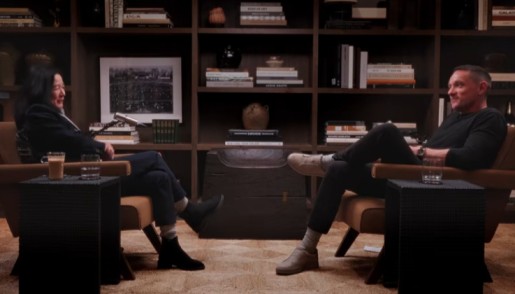
Editor’s Notes: In this episode of The LIVING Room Podcast, we are joined by Dr. Deborah Kado, a leading voice from the Stanford Longevity Center who is challenging everything we thought we knew about aging. Dr. Kado explores the critical impact of posture, bone density, and muscle power on our quality of life, explaining why physical decline doesn’t have to be your “normal.” From practical tips on building a “suit of armor” against aging to the importance of mindset and social connection, this conversation offers a roadmap for achieving healthy longevity. Join us as we learn how to raise our expectations for the future and take actionable steps to protect our health at any age. (April 29, 2026)
TRANSCRIPT:
Introduction
CHRIS WHARTON: Today we are joined by Dr. Deborah Kado, professor of medicine and co-director of the Stanford Longevity Center, and one of the leading voices challenging how we really think about aging. Her work spans everything from bone health and posture to resilience and the microbiome. But what makes her perspective so powerful is a simple idea that much of what we accept as normal aging may not be normal at all.
In this episode, we talk about the impact of posture, bone density, muscle and power, and its impact on length and quality of life, on how we can and should raise our expectations of what we can achieve as we head into our 80s, 90s, and beyond, and the actions you should be taking right now to build a suit of armor to protect against the hallmarks of aging. Enjoy.
Deb, first thing I wanted to say is that I really appreciate the matching socks today.
DEBORAH KADO: Me too, I’m just so much more relaxed now.
Gerontologist vs. Geriatrician
CHRIS WHARTON: So let’s start here. You are both a gerontologist and a geriatrician. What is the difference? And please explain that as if I was a child.
DEBORAH KADO: Okay, aren’t you a child?
CHRIS WHARTON: Child at heart. Yeah, child at heart. And then secondly, how did you get to become both?
DEBORAH KADO: So a gerontologist is someone who studies aging, does research on aging, and a geriatrician is a physician who takes care of older adults. There’s some overlap, in that when you think about studying aging, people think about old. But in fact, aging starts almost when we’re conceived. There’s some debate about exactly when it starts, but it starts pretty young, and then it goes for the entire lifespan. So really you can say you study aging and study any time during the life course, but people tend to think about old too.
CHRIS WHARTON: Here’s my prediction. I think the geriatricians are going to become the new rock stars and here’s why, right?
DEBORAH KADO: Okay.
CHRIS WHARTON: Hear me out. 65 is now the new 45. And we’re seeing so much press media appetite for doing anything we can to live healthier, longer lives. And I think part of that is because there’s some of these promising geroprotectors, these molecules and therapeutics that we’re seeing in animal models. And people are now like, oh, what if I could maintain function and independence for longer. And we’re seeing so many examples of that because we know in many ways how to do it, right? And so I think we should be, if we haven’t already, reframing this definition of aging and what that means for people.
DEBORAH KADO: Yes, I think we’re at a sea change. I would say about 5 years ago when I arrived to Stanford and looked up geriatrics — because I left geriatrics for a long time to come back — I was shocked. And thought, well, the name sounds terrible. Maybe we should be Longevitus or something. But in this 5 years, I’ve circled back thinking we have to embrace this term. It’s nothing to be ashamed of. It should be something we should be proud of. We’re the only medical doctors who actually get training in all the different care settings, meaning from outpatient to inpatient to post-acute care to long-term care to home-based care. When you get specially trained in geriatrics, you go to all those settings.
The Path to Geriatrics
CHRIS WHARTON: So given that certainly when you began in this space, it wasn’t considered all that sexy or all that cool, why pick that as a domain?
DEBORAH KADO: So the thing that I think really steered me towards geriatrics — my route was very circuitous — is that I trained actually in New York City in medical school at Cornell where it was the height of the AIDS epidemic. Not the height, but it was coming, and we weren’t even sure what caused it. But I was exposed to a lot of suffering and death through my medical school education.
And then once I reached residency, I was then responsible for sometimes 80% of my inpatient service, which were generally young people dying of AIDS. Or I had trained at a county hospital, Harbor-UCLA Medical Center in Los Angeles, where I had uninsured adults. So I had young people coming in with curable diseases like acute leukemia that we had at that time the ability to do a bone marrow transplant, but they didn’t have the resources. And so I had to do the next best thing, which was give them the chemotherapy to get rid of the cancer cells in the marrow. And that would help for a while. But residency is 3 years, so I’d see them come back again with a recurrence and eventually not be able to save their lives. This is before palliative care. And that was something that — how do you help as being a doctor who’s supposed to be curing people when there is no cure, or when there’s a cure—
CHRIS WHARTON: Yeah.
DEBORAH KADO: But you can’t get it.
CHRIS WHARTON: There’s not a resource to get it.
DEBORAH KADO: And then the gerontology — you asked me how I became a gerontologist. So I was chief resident and my chair was saying, well, what are you going to do with your life? And I said, well, actually I kind of like the academic center. And he said, well, if you’re going to stay in academic medicine, you need to know how to do research. I’m like, blah. I didn’t do that well in English and, you know, because you have to write grants and whatever.
But I thought about that. He introduced me to some — he said, well, what kind of research would you be interested in? And I said, I don’t know. I went — I think I went to a women’s college, so I thought I might be interested in women’s health. So he introduced me to someone who had expertise in women’s health and she had a dataset of a randomized controlled trial of 870 women. It was called the PEPI trial, where they got randomized to hormone versus non-hormones. And the outcome was bone density.
So I met with her and she said, I’m an epidemiologist, blah, blah, blah. I’m like, what’s that? And she’s like, the study of diseases in populations. I’m like, oh, okay. She goes, read all these papers, which were totally boring, on bone. I couldn’t care about bone, but she’s like, here’s the epidemiology of hip fractures, blah, blah, blah. So I read this and I say, okay, here’s this data set. I’m supposed to make some correlations here.
And then I thought back to a med school lecture, which was here in New York. I was a second year student with a Diet Coke sitting in the second row, and I got called out — me and my roommate, both with Diet Cokes. Those are phosphoric-containing sodas that are bad for your bone. And this is a nephrologist. And I sat there, didn’t make me stop drinking Diet Coke, but I don’t know, what was it, 6 years later, I thought, oh, they have dietary data, they have bone density. I’m wondering what these diet sodas or phosphoric-containing sodas are doing for your bones.
So that was my first study question. I put it in my essay in Women’s Health to UCSF, the only place where I applied. I got connected to not a women’s health person, but someone who was an expert in osteoporosis, who brought us the epidemiology risk factors for hip fractures. His name is Steve Cummings. He also helped with the Alendronate trial for all the bone drugs. And he was so infectious that I became in love with bone.
He gave in that first lecture to the fellows about how 1 in 6 women over the age of 50 will experience a hip fracture. And the mortality after a hip fracture is somewhere around 25% in the year following a hip fracture. And that vertebral fractures — one study out of Mayo Clinic, Minnesota — demonstrated that if you have vertebral fractures, you’re also more likely to die. But those were clinically diagnosed vertebral fractures. And we know that only about a third of vertebral fractures come to diagnosis. That means two-thirds of people are walking around, they don’t even know they have a vertebral fracture and they’re more likely to die.
And then they said, oh, so think of some study questions again. And I’m thinking, oh wow. Well, that’s interesting. He has a cohort or a study population of almost 10,000 women. They all have spine X-rays, so it wasn’t if they’re symptomatic or not. They had a very validated way of grading whether someone had a vertebral fracture. And death is a pretty clear outcome.
CHRIS WHARTON: Yeah, yeah.
DEBORAH KADO: That was my second study question. What did we find? That the more fractures you had, regardless if you knew that you’d had them or not, the more likely you would die over the next 8 years. And if you looked at the severity of the fracture, the more severe the fracture, also the more likely you would die. And these are women who were over the age of 65 at the time of enrollment, predominantly white. And it wasn’t because they were less physically active or they were smoking or the kind of diet that we could measure or anything that we could easily say why this was the case. But that was the next question.
CHRIS WHARTON: Why is this the case?
Hyperkyphosis, Posture, and Mortality
DEBORAH KADO: Yeah. Why are these women dying with a vertebral fracture over 8 years? So luckily I had another mentor, Warren Browner, who then said, “Well, Deb, in 600 women, we have measures of their posture.” I said, “Really?” And it came out for the vertebral fracture data that if you had pulmonary disease, chronic obstructive pulmonary disease, pneumonia, blood clots to the lung, you are much more likely to die of those causes.
And then that begged the question to me, why are we dying of lung-related pulmonary causes? And that’s when I thought, well, maybe because you get bent over, because you get hunched because of the vertebral fracture. And that’s when we did the curvature thing. And we replicated it that yes, even in the 600 women, which was a subset of the 5,775 women that I looked at, that the more curved they were, the more likely they were to die sooner. And then the next thing was, well, why are they dying? Also more likely to die of a pulmonary cause.
But then the last thing before I left fellowship — it was 2 years — Warren says to me, “Well, Deb, you should see how many women actually had vertebral fractures.” I said, “Oh yeah, that’s brilliant.” So we looked and actually only 1/3 of the women who were the most hunched over actually were dying of pulmonary causes. So then I thought, “Wow.” And he said, “Deb, this has got to be non-osteoporotic osteoporosis. Good luck with your life, go on.” And that’s how I did that.
CHRIS WHARTON: To get this clear in my head — they’re—
DEBORAH KADO: Yeah, that’s a lot.
CHRIS WHARTON: Yeah, sorry. But they’re — and we call this hyperkyphosis, correct?
DEBORAH KADO: Yeah.
CHRIS WHARTON: The — they’re hunched over, they’re rounded through their posture, what we typically associate, rightly or wrongly, with older people, right?
DEBORAH KADO: And often osteoporosis.
CHRIS WHARTON: Yeah. But was that the cause or the signal? What did you determine? Is that rounding of the shoulders, that poor posture causing the mortality, or is it a product of something else that we are unsure of?
DEBORAH KADO: So that’s a great question. So leaving UCSF and going down to UCLA, that’s what made me wonder, well, if it’s not the typical definition of osteoporosis, what is it? And what is kind of the pathway that are causing these people to do worse. So thanks to funding from the National Institutes of Health, I was able to be refunded for my student loans to continue this line of research.
CHRIS WHARTON: What was that?
DEBORAH KADO: And also get funding to better answer these questions. And what we found was that regardless of the cause, the more hunched over you were, the more likely it was that you were going to be walking slower. You’re going to have a decline in physical function, that you might even fall.
CHRIS WHARTON: Yeah.
DEBORAH KADO: That you might get a fracture. And also repeated that you’re more likely to pass away sooner. So it was replicated. It was not just one finding, but other findings as well.
The Importance of Strength, Bone Density, and Healthy Longevity
CHRIS WHARTON: Can we double-click on that? Couple of elements of that. I think one of the frightening things that we associate with aging is this loss of function, mobility, the capacity physically to do the things that we want to do. And we’ve talked about this in the past, and I often reference this, that when I think about longevity, I’m not thinking about how do we live forever. I think we’re still a long way off even adding decades to the total lifespan. And look, I’m optimistic and bullish that those things will come in the future, but if we’re being realistic and grounded in the evidence we have right now, we’re not even doing a great job of living to 80, 90, and our 10th decade in good health, right?
And so if there are things that we can do now that can help us retain our physical capacity, and we know what they are, then I feel like we should be trying at least to do those with urgency or weave them into our lives in a way that is sustainable. And I think when it comes to this topic specifically, so like bone mineral density and posture and the reduction in likelihood of trips and falls, that feels more like a math problem to me than it does a science problem because of the work that you’ve done and so many other great scientists.
Like, we know that we should be retaining as much bone density as we can and building as much lean tissue and strength. And I don’t know if you saw the JAMA article that got published this week about women’s strength and mortality correlation. I think it’s becoming kind of hard to debate that strength and mobility and power are infinitely important for retaining function. This is a long rambling way of saying is that irrefutable now? How do we go about protecting against those things? And should we be reframing the way that we look at these?
DEBORAH KADO: So the short answer is absolutely. The longer answer is that I think the time is no better than now. A baby born today can reasonably expect to have a 100-year-long life. In the United States, as of 2023, the average life expectancy was 79, average between men and women. And the WHO, or World Health Organization, has come up and said, well, in the United States, the average healthspan is 64, which means on average, we’ll all be living 15 years in not great health, which seems like a long time to not be enjoying life at its best capacity.
So we do have a lot of work to do, but I also have been going around recently saying, I’m questioning what is this diagnosis of healthspan? Because as a geriatrician, what I see is that people along an entire lifespan get challenges in terms of their health, and they may have a decrement in their health, but they can still be healthy moving forward. So as an example, a lot of cancer survivors came to me while I was in my bone clinic at UCSD, and they changed their lifestyle, became incredibly thinking about what they put in their mouth every day, and also that they could be more physically active. And we’re talking 15, 20 years later, just looking, you would never know that they had cancer. And they made that change. And I think they would say, and I would say as their physician, they’re experiencing healthy longevity.
CHRIS WHARTON: Yeah.
DEBORAH KADO: You’re 80 years old, and when you were 45, you were diagnosed with breast cancer that everybody thought would kill you. And there they are, and they look great, and they’re totally functional. So I say healthspan is not what I’m looking at. I’m looking at healthy longevity. And also because healthspan to me, the definition would differ depending on who you are.
CHRIS WHARTON: What’s interesting about what you just said is that those of the cancer diagnosis, the people with the cancer diagnosis who came to you and then felt compelled to take action to do those things—
DEBORAH KADO: Oh, yeah.
CHRIS WHARTON: —experienced this kind of unsurprising increase in healthy lifespan, right? Kind of people were probably counting them out, but they did the thing. And I think one thing that’s a challenge to all of us is there is a difference between knowing the thing that you should do and actually doing it. And I think sometimes in the absence of any, like when you’re asymptomatic, when you feel okay or good or free from pain or like any mental health issues, it becomes kind of challenging to then motivate yourself to carve out time to do the thing. And so even with the evidence and even knowing what we should do, how do we create urgency there specifically for younger people?
Time Horizons and Creating Urgency for Younger People
DEBORAH KADO: Yeah, so I think it’s harder for younger people. And the short answer for me is time horizons. So let’s just say you’re 30, okay? And you’re thinking, well, I got a lot of time. I don’t even know what I’m doing in my life. I don’t know the purpose of my life. I don’t know if I have a life partner. Am I going to have kids or not? I mean, there’s just so many open-ended questions, but it feels like you have time.
When you get struck with cancer or you get to be 60, you’re like, ooh, I’m old. Or I’ve got a disease that I’m not looking at. Now I’m 35 and if I make it to 40, I’m happy. Because I have a cancer that doctors are telling me could kill me. So then your time horizon changes and then you start thinking, my God, what is important? Well, maybe relationships are important to me. Maybe the fact that it’s sunny outside and not rainy today, I should count that as a win.
So I think that’s the benefit that older people get because they realize those time horizons, they’ve already lived it. But for young people, it’s really hard because it feels like time is infinite. But I think if they realize that every action that you take has a consequence and they’re thoughtful about it, then they’d say, well, gosh, should I really do this? Because it could have drastic implications for the rest of my life. Then it might motivate them to be different. But I think almost anything that’s worth it in life requires hard work. So it’s a matter of what’s important to them.
Falls, Fractures, and the Consequences of Inaction
CHRIS WHARTON: And am I right in saying, and fact-check me here if I’m not, that the number one cause of injury-related death in adults over 60 is trips and falls?
DEBORAH KADO: Right. Since 2000, the CDC has shown basically a rise in injury-related, fall-related deaths. So it is increasing.
CHRIS WHARTON: Yeah. Here’s what I find frightening about that as a statistic is that if we take some of those statistics that you mentioned earlier, like people who fall and break a hip, or I suspect a femur is a similar sort of dataset, that so many — I mean, isn’t it like 20 to 30%, if not more, are dead within 12 months after the age of 65?
DEBORAH KADO: So those are data that stem from the 1980s, and the world has relooked at those data. I think they’ve been pretty constant, so I’m going to say yes, but I haven’t personally relooked at it.
CHRIS WHARTON: I mean, whatever that number is, it’s a frightening number, I think, even if that has changed slightly.
DEBORAH KADO: Right, and this is because when you fall and you have an injury such as a fracture, then you’re often laid up.
CHRIS WHARTON: Sarcopenia.
DEBORAH KADO: And then you lose function. And so it’s tough and it can have an impact on your mood and your agency. Everybody was telling you you look old and now you feel like, oh, I guess I really am old. You feel older. And so, yes.
CHRIS WHARTON: Well, I think one thing that we sort of approach with real urgency with everyone, certainly over the age of 55 and above. But I mean, these numbers start going down in your 30s. Is like, how do we retain, if not build, as much lean tissue, power output, heart and lung function, and mobility as we can? Because those things, we are really fighting a losing battle if we’re not doing them. And the rate at which we lose power and strength and lean tissue year by year is a pretty constant and devastating decline if we’re not taking action against it. But there is so much that we can be doing to not only slow that down, but reverse those metrics.
It’s Never Too Late: Exercise at Any Age
DEBORAH KADO: Well, one thing about habits, right? So we can use regular exercise as a habit — it is a habit. So it is easier. So if you start sooner, then it’s easier to maintain. But if you haven’t started and let’s just say you’re 70, it feels a little harder because it’s not part of your lexicon or your vocabulary.
That being said, one of the studies, I think around 1990, published in the Journal of American Medical Association, took — I think it was only 10, so small — nursing home residents. I think they were around 90 somewhere. Maybe the top age was 93, the bottom age was 87, somewhere around there. And they started them — and I didn’t even know this existed back then — but they called it high-intensity interval training.
CHRIS WHARTON: Yeah. Well, in the ’90s, it was just kicking off, right?
DEBORAH KADO: And they had these guys who were frail in a nursing home work with a trainer 3 times a week for 12 weeks. And they did CT scans of their muscle thigh. It increased by 174%. But more importantly than their CT scans looking better, they were walking faster, they were ascending stairs that they weren’t doing before.
And so it just kind of proved the concept that even if you’re late to the party, you can still have a good time and still enjoy substantial increments in function. And probably most people around that age are not interested in being world-class bodybuilders, but they’re interested in remaining independent and having agency over their lives. And being mobile is a core part of that. So I think that was a really important study that even though it was so small, it was a proof of concept that it can be done at any time.
Bone Density: Reversibility and Emerging Therapeutics
CHRIS WHARTON: I can testify to that. Like we’ve done that with many dozens of people over the last 20 years of doing this. Like it is never too late. We know that for sure. Hey, can I ask you a question about one of these metrics that does feel a lot more challenging to improve as we get older? I mean, they all become more challenging to improve, but what we see with building lean tissue, improving body composition, improving power output and strength — these things feel like more like math problems. I think when we approach that with precision, we know how to do it in science.
Bone density is a little more challenging. When we have members or patients in their 70s, 80s, and beyond, where we’re noticing through these DEXA scans, typically markers of osteoporosis and osteoarthritis — reversing that number is very difficult. And we have seen some improvements in bone mineral density, typically through axial load, through resistance training, but not to the same degree. Is that a metric that is reversible? And I don’t mean through these lifestyle interventions. I mean, are there promising medicines, therapeutics on the horizon that we think could reverse that number?
DEBORAH KADO: Absolutely. So the first one that was FDA approved in the United States was alendronate or Fosamax, which kind of got a bad name around 2008 because of some well-publicized adverse side effects. But on average, you can see a bone mineral density increase by taking any of the alendronate or its related bisphosphonate class of drugs.
Probably the most impressive is a newer, the latest FDA-approved medicine from 2019 called romosozumab, an anti-sclerostin antibody. It’s 2 shots in the arm once a month for a year. And bone density increases in the spine were 12% and also significant increases in the total hip. But more importantly than bone density increases, they showed a decreased risk of all types of fractures.
So bone density is certainly an important measure of risk for who might be going on to have the greatest risk of having a fracture, but it’s not the only metric. And it’s nice, just like blood pressure — if you have high blood pressure, we know that’s increased risk for stroke and cardiovascular disease. And we have medicines that we can use to decrease blood pressure and you can see that effect. So bone density is kind of like that — you’re able to kind of see, does it seem like this drug is working? And you will see increases.
CHRIS WHARTON: I saw some kind of promising data on these — I think it’s like a hydrogel of some description that they’re injecting into like bone cavity. Have you heard of this?
DEBORAH KADO: So I cannot speak to that yet because I’m not sure which hydrogel you’re talking about. But that as a concept — is that a thing that — as a concept, sounds like a good concept. In reality, where it is in the pipeline of being able to show efficacy in humans, I haven’t heard of it yet.
The Role of Drugs in Bone Health
CHRIS WHARTON: This is the real challenging thing, is that sometimes we just want things to be true and ready. And I think this speaks to the entire problem and confusion for us as consumers, is that sometimes we’ll see a headline and it sounds so promising and it might really hit home. We might have a family member that’s struggling with that specific ailment or issue, and so we then want it to be true, and then we might champion that as the truth.
And I think it’s really difficult if you’re not a scientist or clinician to understand where in that pipeline, where from that sort of bench-to-bedside journey are we. Because if something shows promise, even if it shows promise in a small human clinical trial, that doesn’t mean tomorrow I can go out and pay to have it done, right? And even then, it doesn’t mean I’ll be able to afford to have it done.
And so I think if we think about the things that we know today that will protect against bone loss, that will protect against the loss of lean tissue, that will protect against poor postural deficiencies or movement pattern imbalances — what are some really practical things that people can be doing right now that we can access that we do know works?
DEBORAH KADO: So just like life has a lifespan, our cells, our bone does too. So we’re in the process of really building bone as we grow. We kind of peak probably somewhere in our 30s. And then for women at perimenopause and menopause, they have a steep decline in the bone density. In men, it tends to be more gradual.
But the idea is if you could put more in the bank earlier and get a higher peak bone mass, then you have — it’s just like VO2 max. You’re going to go down with age, but you’re starting from a higher point. So let’s just say this is the fracture threshold. If you’re super high, you may never get to the fracture threshold, even if you fall, right?
So the idea is, in that case, it’s better to start early and be aware of what you can do to help your bone. And that really is diet — healthy diet, fresh fruits and vegetables, getting enough protein, enough calcium in your diet, and vitamin D. And then the activity, right? So we know there’s a whole scientific area of inquiry around the muscle-bone interactions, because they’re directly opposed to each other and they’re talking to each other. So if you have stronger muscles, it’s going to protect your bone. So all those things you said — going and keeping your muscles strong and flexible and powerful — are all things that can help protect.
CHRIS WHARTON: But we need to be really thinking about that if we want to — the gold standard approach to that is to be doing that in our 30s. I mean, before our 30s even. We can be laying down lots of lean tissue in our 20s.
DEBORAH KADO: Yeah. And then even let’s just say you didn’t do that, right? And you went through menopause and you go to the doc. I had a lot — the OB-GYNs are great because they were very aware of women’s health. So they’d be getting their DEXAs right around menopause, and then I’d get referred a ton. And the women were like, “Apart from menopause symptoms, I feel great. But my doctor says my bone density sucks. What should I do?”
And that’s when you really take in all those other questions about their lives, like what are they doing? Are they even walking? Are they taking care of themselves? Are they doing self-care? What is their hormonal status? And then let’s just say they’re 70, where it’s not such a great idea to start hormones if you’ve already gone through the transition — these drugs work. It’s not like they’re something dangerous. It’s much more dangerous to be injecting other things that are not proven compared to FDA-approved drugs that have been there since 1995 and have a benefit.
And people don’t know me, but I started the bone clinic when I came to UC San Diego in 2012, after I left orthopedic surgery. And also in orthopedic surgery, I was doing the bone clinic there. So really having the longitudinal experience of seeing these people and seeing the effects of the drugs, and if there were side effects — which were super rare — how to deal with those.
CHRIS WHARTON: What drugs are you referencing specifically?
Bisphosphonates and FDA-Approved Bone Medications
DEBORAH KADO: Well, number one is still alendronate, or bisphosphonate. And I do tell people that when they come to me with their bone health issues, I ask what they do for activity. I check their balance, I check their posture, I talk about breathing, I talk about sleep. I talk about a lot of different things before we even get to the drugs. Then I do a medical workup because some people are losing bone mass for other reasons that are beyond just age-related bone loss. And so we want to detect those so that we can identify them and then treat those appropriately as needed.
But let’s just say all of that is negative, which most of the time it is. Then they’re amazing drugs. And like I said, the bisphosphonate is always going to be there if you don’t have a contraindication like super bad kidney disease, because it is a medicine that will cause your bones to stop being resorbed — meaning resorption and formation happen kind of coupled. And as you get older, there’s more resorption. So it kind of slows that down and allows for more formation.
It’s not forever. And that’s where we ran into some problems with Diane Sawyer in 2008, because Kaiser had done such a good job — or other doctors — they just put them on it like a statin and just forgot about it. And then to have no resorption for a long time is also probably not good for a subset of the population, where they can get those crazy what they call atypical femur fractures. But because I was a bone health specialist, I saw people who survived those — generally women — and they’re doing great. But you wouldn’t want that. But in the correct setting, the medications are fantastic.
And what people don’t hear about bisphosphonates is that actually in their trials, the IV form — people had less mortality. They died less. And so there seemed to be a mortality benefit, which we are not talking about. That was not why we did the drug. But there’s some anti-aging research even going on with bisphosphonates, as to how they work in the cholesterol pathway.
So it’s just interesting what the media shows, which is Diane Sawyer saying, “Oh, the woman was getting off the subway and she cracked her hip in half,” and then nobody wants to take bisphosphonates. And it’s not necessarily the only drug either. So there are other FDA-approved medications that are out there that are quite effective, but none of them are forever.
CHRIS WHARTON: Can I ask you something that might sound a bit naive? Given that information, given that they obviously appear very efficacious and that we are even looking into anti-aging impacts from these drugs, given that there is this age-related decline in bone density, and given that when we see people fall, trip, and break these bones as they get older there’s such a high correlation to mortality — why isn’t everyone given these drugs?
DEBORAH KADO: Well, that was actually a debate at one of the American Society of Bone and Mineral Research meetings, where they’re like, “Maybe everybody should be on this drug versus not.” And actually, Steve Cummings was on the debate that it shouldn’t be, which was interesting.
Confronting Mortality: Lessons from a Career in Medicine
I think we just have to be careful. And that might segue to another idea — that in terms of the longevity space, at least as of 2026, everybody dies, right? So all of that part of living is actually dying. And I think that’s a part that really is so scary because nobody wants to talk about it.
But unfortunately that hit me in the face when I was in my twenties, because I had to witness death, not just once, but multiple times, for various reasons. And then I realized there can be good deaths and then there can be not so good deaths. But that’s your last show. That is your last on Earth as we know it. So could that not even be a goal in and of itself — to have a death where someone has agency over what’s facing them?
I was just thinking about this in the last day anticipating this podcast. I hadn’t shared this story, but as I said, I was a medical student at Cornell. I think he was only in his fifties, but there was this lawyer who I was seeing as an inpatient, and he had a non-Hodgkin’s lymphoma. I was the lowly medical student on the service. He had worsening respiratory failure to the point where he was not going to be able to breathe on his own.
I remember his wife there — it was so heart-wrenching. And basically the doctors are saying, “We’ve tried this chemotherapy, we’ve tried that chemotherapy, and we’re not really hopeful that you’re going to pull through this time.” And at that time, it was my first experience where, fortunately for him — even though his body was under such duress because he couldn’t breathe properly — in his lawyerly state, he said, “Well, I don’t want to die, but this is my situation. So if you have to put the breathing tube, I want to have that breathing tube. But if you cannot get me off this machine in 7 days, I want you to pull the plug.” And his wife was right there. He was so clear on his instructions. He said, “Let’s do it.”
CHRIS WHARTON: And he was in his fifties.
DEBORAH KADO: Yeah, I think he was 56, 58, around then.
CHRIS WHARTON: When all is said and done, what has being around people at that point changed the way that you think about mortality?
DEBORAH KADO: It’s a great question. This is what they’re saying now, and all the people who are pursuing immortality — this is not new. This is from ancient times. Fountain of youth. Yeah, it’s from ancient times. Plato did not think aging was a disease, but Seneca really understood the ravages of aging. And so that is still a debate that’s alive and well today — is it a disease or not a disease?
I guess some of my quips, in some of the talks that I’ve given, I kind of say — I’ve been in this field for 30, 40 years now — and my gripe is that the people who say that they’re going to defy aging and live a long, long, long life, none of those people are known for their extreme longevity.
And even for people who don’t focus on this — I now see patients at the VA in Palo Alto, and I have a few World War II vets still living. I have a female 102-year-old veteran. And so even though I say a baby born today could expect to live 100 years, well, we already have those examples.
And I guess what I’ve learned from losing young people — generally over the age of 20 — to very old people over 100, is that death is never easy. But what it’s taught me is that I’m not going to be waiting with bated breath for the immortality situation. So I’m going to make the most of what I can do when I’m in good health, and acknowledge that one day, even though I might try to lead a healthy lifestyle, something may happen to me — like crossing the street in New York and forgetting that there are bike lanes now and not looking to your right.
CHRIS WHARTON: No, and some of them go the wrong way down those bike lanes.
DEBORAH KADO: Yeah. So I think it’s changed my way of thinking in that I know it happens and I guess I’m accepting of that. And also — this is a non sequitur — but I’m a dog lover and dogs live way less long than humans. So I’m on like my fifth generation of dogs. And I feel that how they live is something we humans could really learn from.
CHRIS WHARTON: I could not agree more.
Living Intentionally vs. Living Fully
CHRIS WHARTON: I think they can teach us a lot about a life well lived. And I think we’ve spoken about this in the past, and I think there’s so much— I think there is a difference between living intentionally trying to live longer and then just living a life that is full of abundance and joy and optimism and awe and hope and faith. And I think they’re two different things. There is some crossover. And I think one of the great challenges we all have is how do we create more crossover?
And I think we should start on this side for sure, because this is what we know how to do. And, sure, there are some things that we can avoid that will likely help us live a longer life. All being well. And that, yes, you don’t spend too much time crossing cycle paths in New York. But also, to what end are we doing this? And I think so much of this— and Paul and I spoke about this— so much of this is about how do we create more moments of joy and connection and hope and happiness because that, we have real data on that improving lifespan. Or healthy lifespan. At least.
What do you think? And I don’t want to dwell on it for too long, but this mortality piece— I know you teach a course at Stanford. Is that right? Still Being Mortal? Yes. Can you tell us about that? Because I think it’s kind of fascinating.
The “Still Being Mortal” Course at Stanford
DEBORAH KADO: Well, this is a brainchild of a few medical students actually prior to my coming to Stanford. And then when I came to Stanford, the faculty member who sponsored this class asked me to take over, which I did. And I expanded it to kind of be first— just first of all, as an elective— and they serve food. So that is a huge draw, so students come during their lunch because their schedules are jam-packed. But it’s really to kind of try to bring humanity back to medicine. So it is so amazing because every medical student who graduates from medical school, unless they become a pediatrician, is going to take care of an older person.
CHRIS WHARTON: Yeah. I mean, for certain.
DEBORAH KADO: Yeah. But not everybody has a personality to want to be a geriatrician. One thing about geriatricians, we’re kind of self-selected. We tend to be very happy people. So actually, two academic publications back from the 2000s, kind of happiness scales— geriatricians do very well.
CHRIS WHARTON: Is that right? Why do you think that is?
DEBORAH KADO: Even though we’re underpaid and underrespected.
CHRIS WHARTON: Because that seems counterintuitive to me. If you spend a lot of time, certainly for the bulk of your patients who— and I want to be careful how I word this— not who you can’t help, but who you can’t help cure, right? So how do you sort of reconcile with that? You spending time with people and they know and you know they are close to the end of their life.
DEBORAH KADO: But see, that’s the beauty about things, right? That’s what being a clinician— and by the way, I’m a 25% time clinician, so I’m not as good as the guys who are out there doing it every day, but I’ve done it throughout my career and continue to do it. Is that life surprises you. So you might think, even with prediction of mortality, it is actually pretty tough. Unless it’s within 14 days. So I never write anybody off.
Even if— in fact, probably that’s why some people come back to me because they’ll be like, my bone density is in the toilet and they say I can’t do anything because I might break in half. So doctor, I’m really scared. What should I do? And I’d say, well, your bone density doesn’t look great, but have you ever had a fracture? No. Have you fallen down? Not really. Maybe once, but I didn’t fracture. Like, I think you can feel reassured about that because you’re 73 years old. And your bone density does not look good, but does your family have a history of any fractures? Did your mom break her hip? No. They lived to be 102. Like, I think you should feel pretty good.
Strategies for Healthy Aging: From Your 20s to Your 80s
CHRIS WHARTON: So can we quickly talk about this sort of bigger picture ambition here? I think you referenced earlier, and we’re all acutely aware that there are these super agers. People do live to their 10th, 11th decade. And actually a remarkably high number of those people do so with great physical function and mental clarity and resilience. And I think, if we’re being honest with ourselves, that’s a true north goal for everyone, right?
I think the idea of having 10 great decades and then falling asleep and not waking up one day is probably the gold standard— at least we know it is possible right now. The challenge is, for a whole host of reasons, it doesn’t feel probable even though it’s possible for most of us, right? Because it is not all that probable if we look at the population as a whole, especially when we weave in these socioeconomic disparities and access to medication and care and treatment. But I think that is the true north. It’s certainly my true north from this project. Is how do we help everyone achieve and access 100 healthy years?
So I want to ask you two questions based on that. One, for those that are in their 20s, 30s, perhaps early 40s right now, what would you say would be your three top strategies to achieve that? And then the second question is, what about for the people that are in their 70s and 80s? How should they be approaching that with that same degree of optimism? Because these things, as we’ve discussed, we can always improve.
DEBORAH KADO: Great questions. I’m going to go back first to validate what you said because I teach this course. I just finished this winter quarter at Stanford teaching about 100 undergrads and asked them the question via Poll Everywhere: how long would you like to live? And the answers were, some were a little shocking, like not very— like they’re 20 and they’re thinking 50. Okay. So that was an outlier, but most people somewhere around 80. But if you said— and I put little qualifiers at the age— the one that I think got the most was 95 living independently. So if you have the qualifier that if you could live and be healthy, everybody wants to live to 100. But if you don’t have that, and if you don’t have that experience, then the number comes down to about average life expectancy, 79.
In your 20s, what can you do? I honestly worry about our 20 and 30-year-olds because there’s just so much unrest in the world, and there’s so much pressure to be able to figure out where is life going. That’s a huge stress. And actually, I think out of the UK, they showed amongst 340,000 people that ages between 18 and 30 are the highest stress periods. So it’s a time to be aware and try to live meaningfully, but it’s hard to be judgmental on that side when you’re just getting hit in so many ways, just about your own self-identity.
So I think if people could find their passion in their 20s and 30s and then have that be their north star and then go for that— and it may take some things that don’t sound so healthy to get there, but knowing that it’s a finite thing to get where they want to go. So that’s for the 20s and 30-year-olds.
For the 70 and 80-year-olds, I would say one thing we learned from research on aging is that the older we get, the more heterogeneous we become. Which means there’s such variability and it just gets greater and greater the more years we live on the planet. That means your options, if you’re average Joe and you’re 72— I mean, yeah, you could decline, you could develop Parkinson’s and that would be very challenging. And then your time horizon of independent functioning if you’re at 70 to get to 95 is an ask. Is it possible to do well? Absolutely. And there are therapies now. This is where precision health can make these people— we’re going to see 100-year-old Parkinson’s people. The kinds of things that are coming forth, I mean, it’s just amazing what they’re doing at Stanford and other places.
Or they don’t have any particular health problems, but they’re thinking, I don’t ever eat any— I hate vegetables. You said anything green, I turn the other direction. That might be a time to say, well, what’s important to you? Because as a geriatrician, I can tell you all my 95-plus-year-olds, they pay attention to what they eat. And there’s usually something green and fruit. And by the way, coffee is fine. So don’t worry about the coffee from the 1970s that said it was bad. Filtered coffee is actually probably even better. And the more coffee— unbelievable. Most things have a U-shape. You can do too much and it’s not good for you, but coffee, I’m not seeing the leveling off in terms of poor health. But yeah, so you can drink your coffee at will.
AI, Holograms, and the Question of Digital Immortality
CHRIS WHARTON: I believe now that there is— this is being done now where they can— I think it’s like 6 or 7 hours worth of filming with multiple different cameras and they ask you a bunch of questions and from that data they can create this AI model of you.
DEBORAH KADO: Yeah.
CHRIS WHARTON: And they’ve patented some hologram technology. So if you combine those two, they can create you before you die and then turn you into a hologram. And then you could just follow your loved ones around the house and just annoy them. Well, that’s the thing.
DEBORAH KADO: I was just thinking, okay, for me, that’s not something I would invest my time and energy in, which is fine if it makes other people feel really excited. Good for them. But I’m thinking for my kids, I’m not sure. I’d rather them have my written words or maybe even this video and say, oh yeah, that was my mom back then.
CHRIS WHARTON: Yeah. Because how far do you go at that point? Because I don’t know. When that becomes hyper-realistic, then it’s going to be weird, kind of dystopic.
DEBORAH KADO: So I— but maybe I’ll change. That’s one thing. One thing I learned from my older adults too— this flexibility is good. So it’s not that I can’t have my opinion be changed at this point. And I’m very excited when you talk about that intersection because I think that intersection is there. I think when you’re talking about specific diseases, the drive is really huge. Like if it’s cancer or Parkinson’s disease, we need to get there. People who need organs, who can’t breathe on their own because they need a new lung, we need that stuff. This other stuff with longer and healthier lives, I guess I’m excited about it, but I’m already seeing it.
CHRIS WHARTON: Yeah. There’s so much we can already do.
DEBORAH KADO: Right. And so I’m thinking, okay, what if you said, Deb, it’s 150, which is what some demographers think maybe is the upper limit. I guess, then that would extend my life further, but it’s not a goal. We have so much other stuff. I’m talking a lot about the 20 and 30-year-olds because they’re the next generation, they’re the next leaders. They’re the ones who are going to see a world that I couldn’t have imagined. And I think that’s where the research should be going.
Compressing the Period of Poor Health
CHRIS WHARTON: I think if we can just compress that period of poor health, even without extending lifespan— and look, I think however we figure out how to do that with real precision will ultimately carry over to a longer life anyway. But I think if we can do that right now, because that’s the thing I think that is most frightening about getting older, is when we look at someone in their— certainly in their— seems like in their 80s onwards is where we see this real sort of turn in cognitive and physical function. Like, it feels a bit more dramatic. If we can slow that down or even reverse some of those metrics that matter, I think that’s a real win. For sure.
Power, Purpose, and the Future of Aging Research
DEBORAH KADO: So this is called compression morbidity, right? By James Fries, who was the rheumatologist at Stanford who coined this term in 1980. Like, if we could just— and he believes in running and showed that if you ran, you would decrease your time of being in poor health for longer. Run and lift weights.
I’m really excited about this one publication because I do observational epidemiology and our older men, who, there were about 2,000 of them who used the force plate that you guys use. And we asked them to jump. They were a mean age of 84 at the time. That was done in 2014 to 2016. So now we have 10 years of follow-up.
And the thing, so we all talk about grip strength, having good grip strength and being at decreased risk. The thing that was most predictive of who was going to go on to not fracture, so protected, was power. Power is key, and that’s what we tend to lose more. Yeah, and at a much quicker rate than strength.
CHRIS WHARTON: 2 to 3 times as quick.
DEBORAH KADO: So my take home from the research part is like, we should be thinking about power as we work. Think about muscle. And the issue is muscle has just been harder than bone. So bone’s got a lot of traction because we could use the DEXA to measure bone density, which is an imperfect measure, but it’s good enough. But the muscle component was just harder to define what that means. So we try to do it in terms of function.
CHRIS WHARTON: And so strength— I think a combination, like a composite metric of strength, power, and lean tissue is where we should be sort of benchmarking that. It’d be interesting to see that data layered over a longer period. I think it’s pretty clear now that we can maintain and we can improve, sorry, not just maintain all of those metrics. And so I think that is a really powerful takeaway. That’s agency. Like we can do that now.
Health Challenges and the Power of Agency
DEBORAH KADO: Yeah. And I just want to say, because I’m in the age group where a lot of my friends are having the onset of health problems and issues that some are pretty scary. Whether it’s cardiac, cancer, neurologic, previously undiagnosed genetic disorders that have led to a decrease in function. And I guess that would be considered when we talk about healthspan as a failure, but I just really want to say it’s how we frame it. So each of these people have agency and are going to do the best things that they can do.
In fact, I remember one of my patients is a physician at UCSD who had onset of Parkinson’s, and she was probably one of the early adopters going to the gym, lifting weights, doing all these things, and her strength improved from that. And then she got triple negative breast cancer. It was not pretty, but she was one of those people who persisted. So yes, health challenges, too much seeing doctors, but living a quality life, absolutely possible.
CHRIS WHARTON: And there’s not many of these ailments that are most highly associated with age that aren’t improved, or your— certainly your odds of either getting diagnosed with in the first place, or then once you have, managing that as a diagnosis that aren’t improved with exercise. I mean, exercise is the thing that comes up time and time and again for every single thing we talk about associated with aging. Absolutely.
DEBORAH KADO: And we just didn’t think about it before, but now the evidence is absolutely clear. And I think if you don’t get 100% agreement across the board, then that person needs to be checked.
CHRIS WHARTON: I agree. It’s pretty hard to debate now. There’s not much discord, if any.
DEBORAH KADO: Correct. I mean, about the type and what kind and all that s*. Oh, tennis is the best sport, whatever. But no, doing something.
Quickfire Questions
CHRIS WHARTON: Okay, Deb, I’m mindful of your time. I’ve got some quickfire questions for you. They’re not all that quickfire, but you only get 30 seconds to answer each one. What is the most overrated piece of longevity advice you’re seeing at the moment? So the thing that— sorry, say again? NAD. Oh, that’s been said more than once on the podcast. NAD in all forms?
DEBORAH KADO: Correct. Okay, that’s a longer than 30-second—
CHRIS WHARTON: Well, no, I’m taking it because I agree.
DEBORAH KADO: Oh really? You know, this all started with pellagra, right? Dermatitis, dementia, and diarrhea from the ’20s when everybody was dying. Highest rate of cause of death at the turn of the century. Didn’t find out it was a nutritional deficiency until about 1930. Then we started fortifying with B6. And it’s all part of the same pathway.
Scientists are brilliant, and they’re like, “NAD, we know NAD goes down with age, and we’ve shown it in our mice and even in humans, and this is key. So we need to replace it.” And depending on which scientific field they come from, it could be NMN, it could be NR— but if you look at the human trials, right? So forget the mice for a moment, or the rats, or whatever, the flies. If you look at human trials, they’re for about 24 hours to maybe 3 months. And what they all show, and this is why you can buy it, is that, guess what? Your blood levels go up. So it must work. You give NAD and it’s in your blood. But they forget to advertise that everything that people care about, whether it’s blood pressure, blood sugar, muscle function— I just name it— no difference between the groups.
CHRIS WHARTON: What would you say is the most underrated thing that we can be doing for our longevity? Underrated hack.
DEBORAH KADO: Physical activity.
CHRIS WHARTON: No, you’re not allowed to say exercise because we’ve spoken about that. Aside from exercise.
DEBORAH KADO: Purpose.
CHRIS WHARTON: Oh, love. I agree. Two more questions. If you had— wait, no, three more questions. If you had unlimited resources, any amount of funding to answer any question in your field of research, what would it be?
DEBORAH KADO: Right now, I did musculoskeletal aging for probably the first 16 years of my academic life, and I switched to the microbiome. I am very interested in the mind-gut connection. So I would invest in that. And not just the bacteria, but all the whole pathway of how it gets from what they produce in terms of the metabolomics, the metabolites that they produce, to the proteins that are produced, all the way to the—
CHRIS WHARTON: I think this multiomic data is going to prove to be incredibly compelling.
DEBORAH KADO: It’s blowing my mind. I was not that great in math.
CHRIS WHARTON: Well, I think all of these things that were math problems are going to become no problem soon. With AI and quantum computing.
DEBORAH KADO: I know. I’m so excited. Baffling.
CHRIS WHARTON: That’s why I’m so bullish on that data collection piece right now because even though we don’t know exactly what to do with lots of those markers, they’re going to become really important when the science catches up. That’s a whole other episode for us. Like this systems biology and understanding systemically how these things work. But we’ll do that episode too. Okay. If you weren’t a scientist— a scientist or clinician— what would you be doing?
Linguistics, Aging, and Reimagining How We Live
DEBORAH KADO: That’s a good question. I am really fascinated right now with linguistics. For example, when you talk about aging, some people really think it’s a disease and other people don’t think of it as a disease. I happen to be in the camp, which is about 88% of students who I’ve queried over 5 years, who do not think it’s a disease. But I think it’s also the semantics of how you define something, right? So I’m really interested in the languages and how—
CHRIS WHARTON: Is that debate still going on? The disease?
DEBORAH KADO: Oh yeah.
CHRIS WHARTON: If viewers or listeners of this episode could only listen to the final 60 seconds of this, what would you want them to know about aging, getting older, and our ability to protect our resilience and live a life well lived?
DEBORAH KADO: I think what I’d like them to know, because I think people don’t think about it in this way, they just kind of see this huge wave of older people coming down the pipeline and maybe it includes themselves. But in 2026, demographically, we are the most even that we’ve ever been in world history, meaning those from 0 to 10, 10 to 20, 20 to 30, 30 to 40, 40, et cetera. And this is an opportunity, I think, to really reimagine aging where, especially in America, our culture is that we tend to get siloed. And so we’re in our silos of wherever we are, whereas so many studies show that the intergenerational collaborations benefit everyone.
And so even with living situations, I’m going on record saying this, I’m not looking forward— and I’m getting to that point where people are like, “Oh, what are you going to do? Are you going to plan and be in a senior living community?” And I feel, going to lecture in some of these places, that literally it’s like high school all over again, and that is not something I want to do.
I would rather have agency, live in a community where I see a variety of different people with a variety of different interests who are going to say, “Hey, have you ever tried—” Okay, I have never tried pickleball. Actually, my daughter’s trying to do this to get me to do it, but it’s been windy when we’ve been on vacation, so it’s not a good time. But one day. So just people who are going to expose me to things that I’ve never tried before. Like I did archery when I was in 9th grade. I love that. Or do something that I have never done. And the only way to do that is not go live with a bunch of other people who are just like you.
CHRIS WHARTON: Doing the same thing every time.
DEBORAH KADO: Yeah. Retired academics. No, no thank you.
CHRIS WHARTON: There’s a study— I’m going to share this with you direct as soon as we finish the episode— about markers of inflammation associated with different types of emotions. And they found that with hope and joy and happiness, we saw these decline in these markers of inflammation. But the one that declined the markers of inflammation the most was awe. So like a psychological richness, doing something new, and exposure to new things. I think there’s some real science to that.
DEBORAH KADO: I completely agree. Ali Crum from Stanford really has looked at mindset and has shown how powerful it can be in terms of so many outcomes. Or Becca Levy from Yale who looks at aging specifically and shows how our attitudes really can influence how things really turn out in terms of—
CHRIS WHARTON: And I think we can improve those as we weave in these elements that make us feel and perform and even look better. Hey, last question, and it really is the last question. I can feel the crew getting anxious for me continuing. What makes you most optimistic about the field of aging research right now, and where do you see it going over the next 10 years or so?
Closing Thoughts: Optimism for the Future of Aging
DEBORAH KADO: Well, I think, as you said— well, first of all, I think it’s an en vogue topic. Second of all, real people are putting a lot of resources behind it. And third of all, we have the technology to do things that we’ve never done before. And so all those things make me optimistic. I just hope we do it in a human way.
CHRIS WHARTON: We’ll make sure of it. Deborah Kado, you are a legend, and it has been a privilege as always.
DEBORAH KADO: Thank you. Thank you.
Related Posts
- Transcript: Dr Andy Galpin Interview on The Diary Of A CEO
- Transcript of David Sinclair Interview: Joe Rogan Experience #2537
- Diary Of A CEO Interview: Neurologist Dr. Stasha Gominak (Transcript)
- Dr Stephen Porges Interview on Polyvagal Theory: Why You Feel So Anxious All The Time (Transcript)
- How to Identify the Root Cause of Hair Fall Before Starting Treatment