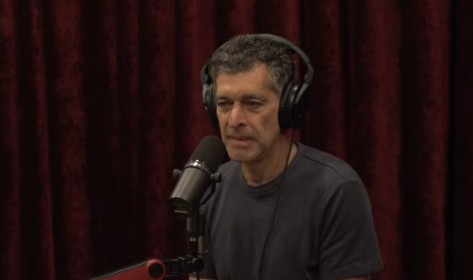
Editor’s Note: In this episode of The Joe Rogan Experience #2516, Joe Rogan sits down with author Rowan Jacobsen to challenge conventional wisdom regarding sun exposure. They dive into the nuanced science of sunlight, exploring the paradox of why something that boosts vitamin D and improves mood is often labeled as inherently harmful. Through their discussion, they examine the complexities of skin cancer risks, the importance of context, and the benefits of responsible sun exposure. (June 18, 2026)
Introduction: Is the Sun Good or Bad for You?
JOE ROGAN: All day. Yep. All right. Very nice to meet you, man.
ROWAN JACOBSEN: You too. Thanks for having me.
JOE ROGAN: Thank you. And thanks for doing this work because you want to talk about a subject that’s confused so many people. Is the sun good for you? Is the sun killing you? Why does it give you vitamin D if it’s bad for you? Why do people get skin cancer if it’s good for you?
ROWAN JACOBSEN: Yeah, it’s super complicated and the messaging has not sort of admitted that, and that was a big impetus for the book.
JOE ROGAN: What was your opinion of sun exposure before you started writing this?
ROWAN JACOBSEN: So I had inherited the conventional wisdom from the institutions that it was really bad. At the same time, I will admit that my instincts were that maybe it wasn’t as bad as they were leading me to believe, because whenever I was in the sun, I felt good. And I live in Vermont. By the time winter was reaching like month 6, I felt bad. Right?
JOE ROGAN: Right.
ROWAN JACOBSEN: So I was like, there’s more here than we’re being told.
JOE ROGAN: Yeah, that was my wife’s opinion. She’s like, “The sun can’t be bad. It always feels good when you go out there.” I’m like, “Well, it’s a little more complicated than that.” But that is the instinct — like it feels great when you’re in the sun. It’s like your body wants it.
ROWAN JACOBSEN: Your body wants it. I mean, we now know that it literally triggers the release of opiates in the brain, sunlight. So yeah, your body wants it and your body rewards you when you get it.
Shifting the Narrative: What the Research Actually Shows
JOE ROGAN: So what is the issue? Well, let’s go back to the beginning. So you had this idea that sun exposure is probably giving people cancer and sunscreen is good, you need to wear sunscreen, stay out of the sun. So when you started going into the research, what made you shift your opinion?
ROWAN JACOBSEN: So it really started for me like 7 or 8 years ago. I was on this science journalism fellowship, so I was just doing research and some of those studies hit — the one about opiate release in the brain and other studies showing that when light hits skin, cognition actually improves, like your metabolism cranks up a little bit when the body feels sunlight coming in. And I thought, that’s interesting. That’s all good stuff.
Then I came across a couple other studies that seemed to indicate that sunlight could lower blood pressure, which was really interesting. So then I still had the sense “sunlight bad,” right? So then I remember just Googling like, “So how much does sunlight shorten your lifespan?” And the punchline is, sunlight seems to extend your lifespan. So when I hit that, I was like, why are we not hearing this? So that was the beginning.
JOE ROGAN: And so then, what is the problem? What is the issue with sunlight? Like when you think about skin cancer, what are the confounding factors that lead to skin cancer? Are we completely aware of that?
ROWAN JACOBSEN: It’s more complicated than we thought. So sunlight does increase your risk of skin cancer. But depending on the type of skin cancer you’re talking about, it’s not necessarily a linear relationship. So yes, in general, too much sun increases your risk of skin cancer. But the question is, what are the confounding factors? How important is skin cancer compared to these other things? If sunlight reduces your risk of other diseases, how does that weigh against the risk of skin cancer? So it’s not the type of thing that can be done in a 30-second PSA.
JOE ROGAN: Right. So sun exposure that does cause skin cancer — what is causing it? Why is it happening?
How Ultraviolet Light Affects the Body
ROWAN JACOBSEN: So ultraviolet light, which is the most energy-intense part of the solar spectrum — when those photons of light hit your skin, they go inside. We absorb all wavelengths of light to a greater or lesser degree. And that super high-energy ultraviolet light, if it hits a DNA molecule, it can mess up the DNA molecule. And then that can lead to mutations and skin cancer.
It can also indirectly cause skin cancer by creating what are called reactive oxygen species, which are free radicals, basically. So it energizes these atoms that start to steal electrons from other atoms and cause a little chain reaction, which is what a free radical is. So ultraviolet light can increase your free radicals and it can directly damage DNA. That’s why it could cause skin cancer.
So it was basically learning that one fact back in the ’40s and ’50s that made scientists start to say, “Uh-oh, light — skin cancer. Maybe we should think about how much sun we’re getting.”
JOE ROGAN: But this wasn’t universally accepted, right? There were some people that even back then thought that sun exposure was very healthy for you. Like, when did we figure out that sun causes the body to produce vitamin D?
The Discovery of Vitamin D and the Rickets Epidemic
ROWAN JACOBSEN: Yeah, that was an important part. And it’s a big part of the story, I think, because that was really back in the ’20s that we figured that out.
JOE ROGAN: Rickets?
ROWAN JACOBSEN: Yeah, so rickets is a soft bone disease. Like if you don’t get enough calcium in your bones when you’re a kid, when you’re a baby, you get soft bones, you get rickets. Really bad disease. And in the Industrial Revolution, kids started getting rickets. Farm kids never got rickets. Then suddenly kids are working in factories, they’re living in cities that are choked with coal smog, they’re living in tenement buildings, they’re never seeing the sun, and they all start getting rickets. Late 1800s.
JOE ROGAN: Is nutrition a factor in that?
ROWAN JACOBSEN: Vitamin D. It was all vitamin D. At first they thought maybe it was vitamin A, but it turned out — that was how vitamin D was discovered. Some doctors figured out that it could solve rickets in kids, and then they figured out that if sun hit skin, that’s how we made vitamin D. Then they figured out —
JOE ROGAN: How did they figure that out?
ROWAN JACOBSEN: They did some tests on dogs. Actually, one of the guys who figured it out had a hunch that that’s what it was. They noticed that kids in the country wouldn’t get rickets and kids in the city did get rickets. So they wondered if it was sunlight.
So then a guy took dogs — and this was, I think, Scotland — stuck them inside in this little warehouse and fed them oatmeal, which is what everyone in Scotland ate at the time. And the dogs got rickets, and he thought it was the oatmeal. He’s like, “Okay, so something about diet.” But then he got lucky because he had deprived the dogs of sunlight, and that’s why they got rickets.
So then eventually they realized that light hitting cholesterol molecules in the skin actually converts the molecules to vitamin D. So vitamin D is downstream of cholesterol, but it takes that same ultraviolet light that can screw up your DNA. It actually breaks a bond in the cholesterol molecule, which allows it to flip around into a new form that’s vitamin D.
So once they figured that out, they’re like, “Sun’s really good for you.” So we had this era in the ’20s, ’30s, and into the ’40s when everyone thought sun would cure everything and they went after it hard.
JOE ROGAN: Really?
ROWAN JACOBSEN: Yeah. Parents would send their kids up into the Alps in the ’20s to institutes for heliotherapy. Kids would ski around in their underwear, take classes in their underwear. There are awesome photos from this era — the instructors are in their underwear in the mountains outside in Switzerland teaching the kids, and everyone looks really healthy. So there was this idea that you couldn’t get too much light. People were literally burning themselves on purpose for health.
Burning vs. Moderate Sun Exposure: The Key Distinction
JOE ROGAN: Is that the issue? Is burning a giant part of the issue?
ROWAN JACOBSEN: Yeah. To give it away — now it looks like for melanoma, which is the most dangerous type of skin cancer, it’s associated with burning strongly, but not with gentle, moderate, everyday sun exposure.
JOE ROGAN: So how much of a factor is skin type? Like people that are pale or have freckles and red hair, blonde hair — how much of a factor is that in skin cancer? And can they mitigate that by gentle, slow exposure, like a little bit here, a little bit there, and slowly build up?
ROWAN JACOBSEN: Yeah, huge. Skin type is kind of everything. People who have really dark skin basically don’t get sun-induced skin cancer, almost never. And the authorities don’t tend to talk about that because they want to have these one-size-fits-all recommendations. But those recommendations to basically always avoid the sun are written for the super fair people.
Especially if you have red hair and orange freckles, you actually have a mutation in your melanin gene that makes you super susceptible to skin cancer from sunlight. So if you’ve got that phenotype — lots of moles, red hair, freckles — you do have to be really careful. And you can only do so much. You’re not going to tan that much anyway. Your melanin’s just different.
Everybody else, you’re much less susceptible and you can tan — you can make more melanin pretty easily through tanning.
Melanotan: The Tanning Peptide
JOE ROGAN: I wonder what, if any, effect — have you ever heard of that, I can’t remember the name of the peptide, but there’s a peptide that people are taking now that causes their body to generate melanin, and they get really dark.
ROWAN JACOBSEN: Yeah, yeah.
JOE ROGAN: It’s really weird.
ROWAN JACOBSEN: Yeah, and I don’t know what’s going on there exactly. It seems like that peptide is maybe making you — there are things called photosensitizers that make your skin super sensitive, like you just absorb solar radiation really well, but not necessarily in a good way. And that can make you make tons of melanin to try to compensate. So I wonder if that peptide might be triggering melanin as a compensation mechanism for extra protection from sunlight, or maybe it’s just making melanin happen independently of sunlight.
JOE ROGAN: Melanotan — melanotan 2. Synthetic peptide analog of the naturally occurring hormone alpha-melanocyte stimulating hormone, stimulates the body’s melanocytes to produce melanin, resulting in a dark tan. It’s largely unregulated, illegal in many regions for cosmetic purposes, and carries significant health risks. It’s not approved by the FDA for cosmetic use, and the unregulated market means purity is a concern. Notable risks include dermatological issues, rapid and uneven darkening of existing moles, the emergence of new moles and hyperpigmentation — concerns that could mask or accelerate the development of melanoma.
What is this? Potentially damaging erections.
ROWAN JACOBSEN: What? Raging erections?
JOE ROGAN: Oh, that’s right. This apparently gives people raging erections. Why? Prolonged, painful, and potentially damaging erections. Imagine you get an erection that goes so hard you redline the penis. Medical and dermatological organizations strongly advise against the use of melanotan because it’s unapproved. There are no clinically established safe dosages.
ROWAN JACOBSEN: Well, weird — because alpha-MSH, the thing that it is mimicking, that’s how your body makes melanin. That’s how everybody’s supposed to do it.
JOE ROGAN: You’ve got to see the before and afters because they’re kind of bonkers. I’ve seen some people get super — well, the problem is it’s Instagram, you never know what’s real. That guy got a little tan. How do we know if that’s real? It’s like there’s a light on him, and then he’s in a f*ing dark closet in the last picture. The before and after photos I’ve seen — look at that guy. He injected himself with unregulated tanning peptide, melanotan 2. Seems like a joke a little bit. No, no, this guy — this is the guy that I saw online. This guy’s — he’s the test rabbit. This dude went hard.
ROWAN JACOBSEN: Did he get an erection too?
JOE ROGAN: Yeah, he died from that.
ROWAN JACOBSEN: I don’t know.
Melanotan, Skin Cancer, and the Science of Sun Exposure
JOE ROGAN: So his before and afters. So let’s see what is— he just— okay. Yeah, he just got darker and darker and darker. But I wonder if, if I understand that it’s unregulated, but if it was regulated and this is something they’re trying to work with right now with peptides and make them regular. See, that’s— the photo’s dark though. I mean, that’s like a shitty iPhone 1 camera. That’s crazy. If that’s real, like, this is nuts. There’s something going on there. Like, you know what it looks like? It looks like those bodybuilder guys who use that, that, that ink, that dye on their skin to make themselves darker so their muscles pop out more. So here’s, here’s better. Tanning Log Photos. These are better photos. That’s crazy. But I wonder if that offers skin protection.
ROWAN JACOBSEN: It would definitely offer some skin— I mean, if it is melanin, it’s definitely— I mean, that guy can probably be outside all day.
JOE ROGAN: Yeah, so that’s the question. Is that available to someone who’s pale? Like, and if someone is pale, see if you can find an example of someone who’s pale who took it. Because you would think like, oh, well maybe that, maybe just we need to do studies and figure out what the dosage is and figure out how to activate that aspect of it.
ROWAN JACOBSEN: Melanin clearly protects you from skin cancer. Like if you have super dark skin, like, you know, African ancestry, you’re blocking, like your melanin is absorbing like 97, 98% of the UV rays. It’s super effective.
JOE ROGAN: But didn’t Bob Marley die from skin cancer?
ROWAN JACOBSEN: He did.
JOE ROGAN: That’s pretty crazy. Okay, this is one. Wow, it looks like the same person.
ROWAN JACOBSEN: Hard to tell.
JOE ROGAN: Same mold. Yeah, it looks like the same mold. That looks pretty good. But I would just also— wouldn’t— if you were trying to sell some of this stuff, and maybe nefarious ways, this would be an easy one to market. Tough. And, you know, definitely. Look, this is part of the unregulated market problem is we don’t know. And also, you know, you’re getting 99% bro science on this stuff. You know, like, who’s—
ROWAN JACOBSEN: —what screams bro science?
JOE ROGAN: Screams it from the top of the hills. What legitimate scientist is out there injecting himself with melanotan?
ROWAN JACOBSEN: But the other thing is, if you do it naturally, right, if you just get a little sun every day and slowly build up, you’re not just making melanin, you’re also increasing your body’s damage repair system. Like you have all these like nucleotide excision repair things that fix your DNA and fix cells that have gotten screwed up. And that will also ramp up every day. And it’s not just sunlight, like exercise, same thing. Like anything that stresses the body a little bit, it’s like hormesis, right? So all those things are going to cause your damage repair system to crank up and be ready. So you probably want those to— like the melanin and the damage repair to go up together.
JOE ROGAN: Right. So you would want to— if, if let’s say studies were done, let’s say we found what the effective and safe dose is and how to administer it, you would want to do it along with sun exposure slowly to try to ramp up your body’s ability.
Added note on this, this happened 14 years ago. Whoa. Which is strange. Here’s some of the side effects he said, but he also said he’s pretty much impervious to UV at this point. Increased libido. Didn’t see that one much either. He said he didn’t get it. Okay, sides are decreased appetite, very mild nausea, more for some, none for me. Decreased libido— increased libido. He said he didn’t see that one much either. Some get facial flushing like a niacin dose. Never got that either. And the most strange thing is that it feels really good to stretch, like when you first wake up. Interesting, huh? Did you do it for the skin color? Yes, I did it for skin coloring. I’m pretty much impervious to UV at this point. I have faded about 25% since returning from Florida January 31st. We’ll be dosing again probably in March. Is this guy still alive?
ROWAN JACOBSEN: That’s my question.
JOE ROGAN: 14 years. What is that? Click on that link where his, his profile. No. Let’s see if homeboy’s alive. I’m afraid to see where this takes us.
ROWAN JACOBSEN: Right. Yeah.
JOE ROGAN: Is this Reddit? See, a year ago he’s commenting, “I never did it subtle.” Okay. So a year ago he’s still alive or someone has taken over his account. “In theory, you could use an old school quartz tanning lamp.” Okay. So you could tan with it. And he’s in a weird Reddit there. So we’ve got to stop looking.
ROWAN JACOBSEN: Why?
JOE ROGAN: I don’t, I mean, this is not for the show, but he’s in a weird— Oh yeah, yeah, yeah.
ROWAN JACOBSEN: Okay.
JOE ROGAN: That’s why I was afraid to go that way. That’s a problem. Well, only crazy people are willing to try something like that. Like, do you remember that there was a guy, God, I think it was on Oprah or one of those shows, where he was taking, was it silver? Yeah, colloidal silver. That’s right, colloidal silver. And his whole, his skin turned blue permanently. Yeah. Like a Smurf.
ROWAN JACOBSEN: Yeah.
JOE ROGAN: Poor guy.
ROWAN JACOBSEN: Yeah.
JOE ROGAN: And he wound up dying.
ROWAN JACOBSEN: Yeah. What, when, and how did it kill him?
JOE ROGAN: I don’t know if it killed him, but he’s, I believe he died young. That’s homeboy. Not good.
ROWAN JACOBSEN: Yeah. That’s just not a good look.
JOE ROGAN: You would think you’d start turning a little blue and you’d go, “Hey, maybe I need to back off this colloidal silver.”
ROWAN JACOBSEN: Papa Smurf dies.
JOE ROGAN: Yeah. I mean, what the f*, dude? That guy, I mean, maybe he could have gotten some melanotan and evened that out. It’s just been a nice chocolate, you know, like a bluish chocolate.
ROWAN JACOBSEN: I mean, he looks delicious, I’ll say that.
JOE ROGAN: Yeah, this is argyria, the rare disease that turns people blue, caused by a buildup of silver in the body which discolors the skin. Wow. 2013. He died from unrelated causes. Whatever that means. I mean, anybody’s taking that much colloidal silver, you’re probably making a lot of other mistakes.
ROWAN JACOBSEN: I mean, yeah, like, you’re a risky dude. So many options.
Bob Marley, Melanoma, and the Surprising Truth About Sun Exposure
ROWAN JACOBSEN: Back to Bob Marley.
JOE ROGAN: Yes.
ROWAN JACOBSEN: He did die of skin cancer, and that confuses a lot of people. So he had melanoma on his toe. Right. So, and that was a kind of melanoma that’s not caused by the sun. And everybody gets it, no matter what race you are, everybody gets it at the same rate, which is quite uncommon. They know it’s not caused by the sun, but it complicates things for people because people are like, “I got melanoma on my toe?” And they think it’s from the sun. And they’re like, “How did that happen?” Right? Like, what’s melanoma doing down there?
So, it does— not all melanomas are caused by the sun. There’s, you know, most probably are, but it gets really weird with melanoma. It’s associated with burning with intermittent sun exposure, like you work in an office all year and then you go to Cancún and get fried, that’s a pretty good recipe for melanoma. History of sunburns also will double your risk. Chronic exposure, where you have an outdoor job every day, lower than average risk of melanoma.
JOE ROGAN: Really?
ROWAN JACOBSEN: Yeah, so it gets weird. Like landscapers or something? Landscapers have, outdoor workers have fewer, have a lower incidence of melanoma than office workers.
JOE ROGAN: Wow. And we don’t hear that. No, no. I mean, I was looking at Instagram the other day and some poor guy had this— I don’t know what happened to his face, but he had some sort of skin cancer and they had to take a graft and his— it was on his nose, so it was like a flap of skin was like almost covering over his eye. And, you know, his message was, “Wear sunscreen. This is what happened to me.”
ROWAN JACOBSEN: Well, so I mean, yeah, so I don’t want to downplay skin cancer because it sucks when you get it. If it’s, you know, they have to cut off a hunk of your ear or something, that definitely sucks. Even if it’s not life-threatening, sucks. Yeah. So, but, and so yeah, like, but that’s generally from overexposure, like burning, burning. All the experts I’ve spoken with said don’t burn.
JOE ROGAN: Right. Burning is the one that people always say that it’s not just burning, it’s burning causes damage that starts to appear years later.
ROWAN JACOBSEN: Yeah, and there’s dialing in on that more and more. It can start much like burns during childhood is actually the highest association for melanoma. Don’t burn when you’re a kid, so we’re all screwed.
JOE ROGAN: Oh, that sucks. That sucks because I f*ing cooked myself as a kid.
ROWAN JACOBSEN: Same here. I grew up in Florida, fried, you know.
JOE ROGAN: Well, when I was a kid in the ’70s and ’80s, you know, you wanted to get a tan, especially when I lived in Boston. It was cold as shit in the winter.
ROWAN JACOBSEN: When it got warm, you know, you’re a Vermont guy, yeah, you got out there, you like, ah, put baby oil on.
JOE ROGAN: We fried. Totally.
ROWAN JACOBSEN: I was just looking at some of those Johnson baby oil ads from like the ’60s and ’70s. Oh my God. Yeah. Yeah. It was basically cooking lube.
JOE ROGAN: Totally. Yeah. It just helped you cook better.
George Hamilton: The Tanning Legend
ROWAN JACOBSEN: But you remember, you know, George Hamilton, like the actor? Yeah. Mr. Tan. He had like— yeah, he was all about that. I just— the other day I was like, how’s he doing? 87 and ridiculously healthy. Really? Yeah, he’s going strong.
JOE ROGAN: Yeah, I met that guy. He was— he did an episode of NewsRadio once. Yeah, he was tan as f*.
ROWAN JACOBSEN: Yeah, that was his thing. That was his thing. It became, yeah, what he was known for, and still—
JOE ROGAN: —he’s still going. That’s— so he’s still tan?
ROWAN JACOBSEN: Yeah, you should see him. He looks great. What does he look like?
JOE ROGAN: Pull up a photo of George Hamilton.
ROWAN JACOBSEN: I mean, great for an 87-year-old.
JOE ROGAN: Yeah, look at him, still tan.
ROWAN JACOBSEN: How does he— tan and shiny.
JOE ROGAN: What a weird thing to be known for. He’s the guy who gets tan. You know what I’m saying? I mean, try to remember a role that he played.
ROWAN JACOBSEN: That’s true. I think he was Dracula in some bad 1970s, like, comedy. Look at that. That’s a tan right there.
JOE ROGAN: Right. So how was he getting it though? Like, I remember when I was a kid in Boston, a lot of people used tanning beds, especially in the wintertime. And they still do.
ROWAN JACOBSEN: Like, those are actually on the rise, and they do, they seem to raise your risk of melanoma for sure. There you go, that’s how we did it.
JOE ROGAN: Ah, look, he’s got a Reflecta Tan thing. So he’s just out there getting sunlight all the time. And he didn’t look bad. That’s, you know, that’s a weird one, right?
ROWAN JACOBSEN: He claims he’s never had skin cancer, I think.
JOE ROGAN: Well, he probably was doing it so often that his body was prepared for it, right? Look at that photo of him with that lady. In the corner. Yeah, look at that. That’s nuts. See, that’s the thing.
The Dermatology Establishment’s Pushback
ROWAN JACOBSEN: I think if you’re getting that regular dosage, your body is producing all these compounds whose entire job is to make sure your cells don’t turn cancerous. Because living things have been working on this for 500 million years. They’ve been getting hammered by the sun every day, and they got to deal with it. So it seems like when your skin is totally unprepared and you shock it with a massive dose that it’s not ready for, then you’re in trouble. That’s the kind of thing that triggers trouble.
JOE ROGAN: Was there any pushback on this research? Like when you first started examining this and realizing that sun exposure has a lot of benefits, were any dermatologists saying, “Hey, this is dangerous information, you shouldn’t say this?”
ROWAN JACOBSEN: Hell yeah. I’ve been denounced multiple times by the American Academy of Dermatology.
JOE ROGAN: Really? Like, officially?
ROWAN JACOBSEN: They send an official letter when I write an article, and they say nobody should be getting any sun exposure.
JOE ROGAN: That’s their opinion? No one should be getting any sun exposure, regardless of the benefits, the vitamin D, the—
ROWAN JACOBSEN: No sun exposure without protection. From either sunscreen or clothing. Wow. And if that makes you vitamin D deficient, take a pill. So that’s what needs to change, because those pills haven’t panned out in tests. They don’t work like natural D does for whatever reason.
JOE ROGAN: Really?
ROWAN JACOBSEN: Yeah, they don’t work at all.
JOE ROGAN: What do you mean?
Vitamin D Supplements vs. Natural Sun Exposure
ROWAN JACOBSEN: So everyone thought, back in the ’80s and ’90s, scientists started noticing that people with lower amounts of vitamin D in their blood had higher rates of all the classic chronic diseases. So they started thinking, okay, vitamin D, it’s like a magic pill almost. It’ll reduce everyone’s risk of all these diseases if we raise their rates of D. So they started recommending vitamin D pills, which I think are still like the number one supplement in the world.
JOE ROGAN: I take it.
ROWAN JACOBSEN: So then they did all these clinical trials to prove that it would help. Huge clinical trials, tens of thousands of people, follow-ups that went on for many years. None of them showed a benefit.
JOE ROGAN: No benefit in terms of your immune response?
ROWAN JACOBSEN: No benefit for any condition.
JOE ROGAN: Now, did they take vitamin D along with vitamin K2 and with magnesium? Because that’s what’s recommended.
ROWAN JACOBSEN: I mean, there were a bunch of different—
JOE ROGAN: Apparently vitamin D by itself is not effective. You need vitamin D with K2 and magnesium, and I think there might be another one. Put that into Perplexity, please. See what it says — what are the benefits of vitamin D and what should it be taken with? Because I think magnesium and K2 are the big ones, and that together they have a sort of synergistic effect.
ROWAN JACOBSEN: Yeah, that could be — yeah, I’d be curious.
JOE ROGAN: Yeah, I think vitamin D by itself, the body has a problem absorbing it. It’s like, there’s a lot of things like that. Zinc is like that. Biotin is important to absorb zinc, so you take it with quercetin.
ROWAN JACOBSEN: Well, one thing — D, the way it naturally comes in through the skin, it comes in with a whole bunch of related compounds. And so yeah, I do think there’s sort of a synergistic effect when it’s combined with the right things.
JOE ROGAN: But D from the sun has always been known as the best way to get it. The best way to get vitamin D, the most effective, the healthiest way is through sun exposure.
ROWAN JACOBSEN: Yeah, that’s how the design’s supposed to work.
Perplexity on Vitamin D, K2, and Magnesium
JOE ROGAN: Perplexity says vitamin D helps your body absorb calcium, build strong bones and teeth, support muscles and nerves, plays a key role in immune function. Is best absorbed when taken with a meal or a snack that contains some fat and often paired with calcium for bone health. So please put in — what are the benefits of vitamin D taken with K2 and magnesium? See if it says that, because this is what my doctor, who is a vitamin specialist, recommends.
Taking vitamin D together with vitamin K2 and magnesium can make each of them work more effectively, especially for bones and heart, as long as the doses are appropriate for you. The trio mainly improves how your body handles calcium. D helps you absorb it, magnesium helps activate D, and K2 helps send calcium into bones instead of arteries. D increases calcium absorption from your gut and supports bone, muscle, and immune function. Magnesium is required to activate vitamin D — low magnesium can blunt vitamin D’s effect and also directly supports bone structure and many enzymes. K2 activates proteins that move calcium into bones and teeth and keeps it out of the arteries and soft tissues, helping bone and cardiovascular health. Potential benefits of the combo: better bone support, heart and artery protection, more efficient vitamin D use.
Okay, so the doctor is correct. So maybe that’s the problem — these people were taking it with low magnesium, low calcium, didn’t have K2.
ROWAN JACOBSEN: I’d be curious if there was an effect on disease incidence for that combination. I don’t know, because the D on its own didn’t show any effect, but sun exposure—
JOE ROGAN: Let’s put that in. Does vitamin D taken on its own have any health benefits? Let’s see what it says to that, because I’d never heard that D on its own was not effective at all. I’ve just heard that it was minimally effective, that you had to take it with other—
ROWAN JACOBSEN: It seems like it only helps people who are really deficient. Like, if you’re super low, below like 16 nanograms per milliliter, then probably it’s a good idea. But for people who already had at least 20 nanograms per milliliter, it didn’t seem to have any of these benefits that they were seeing in people who naturally had high rates.
JOE ROGAN: It says, yes, vitamin D on its own has several well-proven health benefits, especially for bones, muscles, and immunity. I didn’t add “own,” sorry.
ROWAN JACOBSEN: What’s that?
JOE ROGAN: I missed the word “own” — taken on its own. That’s probably why the answer was weird. So let’s see. Yes, has clear proven benefits, especially for bones, muscles, and correcting deficiency.
ROWAN JACOBSEN: Yeah, so that’s going to be for people who have super low levels. Preventing rickets, there it is. Yeah, so they had thought that it might reduce incidence of all these other diseases based on what they were seeing for people who naturally had high levels through sun exposure, and it didn’t.
JOE ROGAN: Wait a minute — people who had high levels through sun exposure?
ROWAN JACOBSEN: Yeah, because your natural level of vitamin D is sort of a direct meter of how much sun you’re getting.
JOE ROGAN: Right, but this is natural level. You’re not talking about supplementation.
ROWAN JACOBSEN: Right. So that was why people who had high levels of D without supplementation have lower rates of every disease you can think of. So the hope was that raising everyone’s D to those levels would have the same effect. And it didn’t. The New England Journal of Medicine actually did an editorial in 2022 saying, “Stop prescribing D, it doesn’t work,” which is sad.
The Problem with Dismissing Supplementation
JOE ROGAN: God, that seems incorrect though, because if you’re taking it with magnesium and K2, it seems that they do work synergistically, and there seems to be proven health benefits. I think people generally want to avoid recommending supplementation for some reason. It’s kind of a weird thing, like they want to dismiss it. I had a doctor once that told me, “Don’t bother taking vitamins. Just eat a balanced diet.” And I was like, look at you. Guy looked like sh*t.
ROWAN JACOBSEN: He didn’t look as good as you, right? He looked terrible. I’m amazed how poor the health doctors generally seem to be.
JOE ROGAN: I can’t take seriously a guy with a gut — he just looked terrible. And he was telling me that I just need a healthy diet. And I’m like, okay, I do have a healthy diet, but also I feel different when I take vitamins, and my blood work reflects that.
ROWAN JACOBSEN: Yeah, I noticed that when I started going to all the conferences of the sun researchers, and they’re all in the basements of hotels, and those guys are all as pasty as it gets. Like, do none of you guys practice what you preach?
JOE ROGAN: Really? How strange is it that human beings, with all of our knowledge — I mean, obviously there’s much more to learn — we’re still confused about how we interact with our environment.
ROWAN JACOBSEN: Yeah, absolutely. 100%.
JOE ROGAN: With sun, which seems to be like — it’s there, it’s everywhere. It’s like you’re always in the sun in the normal world environment where humans — outside of cities and all that stuff. It seems like we would have an understanding of what happens when you’re interacting with sun.
Light as a Biological Force
ROWAN JACOBSEN: Yeah. And light, period. Light of all kinds. It seems like there is this sense in biology that light didn’t matter. It’s like just ephemeral, which, you know, the quantum physicist 100 years ago understood that light and matter are just two halves of the same coin, right? And that light totally affects the behavior of molecules. We’re made of molecules. Light’s going to matter. So I actually think that’s where I eventually got to with the book. I was like, we need to think about our light diets and the lightscapes that we’re surrounding ourselves with more seriously than we have.
JOE ROGAN: Well, it seems like your work is based entirely on the data. So what did these dermatologists have to say about the data if they’re denouncing you and saying that this guy should not be listened to, the things you’re saying are dangerous — but you’re talking about data. So I don’t understand how they can just make those flat statements like that.
ROWAN JACOBSEN: Right. And what I think we just need to have is a conversation about the data, and there’s no right answer ahead of time. But their job is to prevent skin cancer. So if that’s your only job, you’re going to tell people stay out of the sunlight. Forever. And no one can call you on that. No one can say, “Hey, I got skin cancer, it’s your fault.”
JOE ROGAN: Right, but doesn’t sun exposure improve cardiovascular health and lower blood pressure? And isn’t cardiovascular disease a far more dangerous problem than skin cancer in terms of numbers?
ROWAN JACOBSEN: It’s number one — 20 million deaths a year, cardio. So anything that moves the needle on that is awesome.
JOE ROGAN: And it does.
ROWAN JACOBSEN: And it seems to. All the studies show it does. But they’re all observational studies, right? You look at populations and you’re like, oh, these people have more sun exposure, lower blood pressure, lower rates of cardiovascular disease. But then the other side will say, correlation does not prove causation. Like, show us that it’s — do your giant clinical study where you stick half the people in the sunlight and they live longer, which is not going to happen.
JOE ROGAN: Right. But are they willing to have a conversation with you?
ROWAN JACOBSEN: They’re not. They don’t want to look outside of the sun and skin cancer question. They’re not willing to entertain any of the other benefits that are outside of their field. So there’s got to be somebody out there who can be the generalist, who can think about it holistically.
JOE ROGAN: That seems so ignorant.
ROWAN JACOBSEN: It’s the state of science now. The science is a field of micro-specialties.
Coffee: An Unexpected Superfood
JOE ROGAN: Cheers. Is coffee good for you?
ROWAN JACOBSEN: Coffee is awesome for you. Coffee is shockingly good for you.
JOE ROGAN: Talk to me. Let’s go.
ROWAN JACOBSEN: It is f*ing crazy how good coffee is for you. I’ve been startled by the power of the evidence.
JOE ROGAN: Yeah. I’ve read both. I’ve read it’s bad for you, and I dismissed it because I’m biased. I love coffee. It just tastes too good. It feels too good.
ROWAN JACOBSEN: I like it. But I’ve read a lot of benefits about it. I think it’s the best possible supplement.
JOE ROGAN: Really? You think of it as a supplement?
ROWAN JACOBSEN: It’s the best, and I think it’s all due to mitochondrial function. I think it makes your mitochondria just spin.
Coffee, Caffeine, and the Science of Light Medicine
JOE ROGAN: And is it particularly because of caffeine or coffee itself? Is it the coffee bean?
ROWAN JACOBSEN: I think it’s caffeine, but I wouldn’t be surprised if there’s other stuff in coffee that’s contributing, because tea doesn’t seem to quite deliver the goods like coffee does. But caffeine is actually— the plants are making it to kill bugs. Because it makes the bugs’ mitochondria run out of control and they basically blow up. It does that to us, but we have these other governors that come in and slow down that ramp-up. So we get the nice ramp-up without the explosion. So it makes us produce energy more efficiently with less wear and tear.
JOE ROGAN: That’s all I need to hear. I’m in. I just love coffee. I’m not giving it up. But I’ve heard many people say that— Michael Pollan had a really interesting anecdote. He laid off coffee for I think 3 or 4 months as an experiment, and then he had a cup of coffee and he said it was like taking a psychedelic. He said, “I just felt so amazing. The effect was so profound,” he said, “I really wanted to do it only that way where I only take it very rarely, but then I fell right back into my old ways.” He went right back.
ROWAN JACOBSEN: Yeah, I remember that article. It was great. Also, he said none of the caffeine researchers touch the stuff. I’m like, that’s not good. But yeah, he went right back to it, and I think he’s a proud coffee drinker.
JOE ROGAN: Yeah, he is. He went right back to it. So have you had any conversations with these dermatologists that are denouncing you?
The Resistance from Dermatologists
ROWAN JACOBSEN: No, but I’d like to, actually. Are they willing, or have they avoided them?
JOE ROGAN: They have so far really avoided. They just say, “We’re not ready to look at any of that research.”
ROWAN JACOBSEN: God, that’s so weird. I think it’s going to change. I think light medicine is actually going to become very important in the next 10 to 20 years. And dermatologists are kind of positioned to be the leaders on that stuff, because skin is the primary interface with light for our bodies. They should be experts on all this. Red light therapy is a big thing now, and dermatologists are doing that, even though the evidence isn’t great for that. But I think there’s probably something there. They need to be thinking more about all these different wavelengths of light as healing modalities and how to work them into regular programs.
JOE ROGAN: I’ve talked about this before, so I apologize to anybody listening, but I’ve essentially completely stopped my macular degeneration with red light therapy.
ROWAN JACOBSEN: Wow. Not just stopped it, but reversed it.
Red Light Therapy and Vision
JOE ROGAN: I don’t need reading glasses anymore. I’ve been using a red light bed for about 2 years now, and from the time I started using it, within about a month I started seeing benefits. Gary Brecka was on the podcast and explained it to me, and so I went out and bought one of these really expensive— it’s like a tanning bed, this thing you lie in— and I do it 3 times a week for 20 minutes. All over? Yep, naked, slide down in there, and I keep my eyes open.
I went to a red light bed once at a health clinic, and they were like, “You’ve got to wear these goggles and make sure you close your eyes before the light goes on.” I did all that. And apparently there’s some benefit that even when blindfolded, it increases your vision.
ROWAN JACOBSEN: Yeah, for sure. And again, I think mitochondria are part of that answer. There’s a guy at University College London, Glen Jeffrey, who— this is his whole field, optometry and red light. He has shown in multiple different animals, including humans, that red light improves mitochondrial function and improves vision.
JOE ROGAN: I’m 58, and when I was 56 I was f*ed. I had reading glasses everywhere, all over my house. I’d gotten up to 3X— these are the cheap Amazon ones. I had a nice pair, but I keep losing them, so I just went out and bought cheap ones. They seemed to work, and it was just fine for looking at a computer, reading my emails, reading my phone. I needed them to read my phone. I don’t need them anymore, like at all. I don’t use them anymore. My vision’s not perfect. It’s not as good as it was when I was 20, but it’s way better than it was when I was 56.
ROWAN JACOBSEN: The mitochondria in the eyes have to fire faster than any mitochondria anywhere else in the body. The eyes burn through energy like no other cells because it’s the toughest task— they’ve got to go super fast. Those mitochondria need to be on top of their game. And it seems like red light benefits that in particular.
The Problem with Scientific Closed-Mindedness
JOE ROGAN: What seems so close-minded is that these dermatologists aren’t willing to say, “Maybe we’re looking at just an insufficient amount of data. Maybe we’re looking at this wrong. Maybe the whole thing is much more nuanced and maybe there are benefits if done correctly.” If there’s all this data— which clearly you show in your book, there’s a tremendous amount of data— why?
ROWAN JACOBSEN: There’s this saying attributed to Max Planck, the quantum physicist: “Science advances one funeral at a time.” I think we’ve got to let the old guard die off a little bit, but I guarantee there’s a young generation coming in who’s going to be really interested in light and how they can use it.
JOE ROGAN: Oh, certainly. There are so many conversations available online now from actual researchers and people that have put in the time and put in the work and explored things from the position that, hey, maybe the old guard are not correct. And the data seems to show that that’s true.
ROWAN JACOBSEN: Playing with light, it’s super fun. This is a way you can make your world a little bit richer— starting to think about this stuff.
JOE ROGAN: Well, it’s also like, don’t you want to be informed? If we do understand that it has an effect on mitochondria and there is all this evidence that red light seems to have some benefits, I just don’t understand how someone could be an expert in skin and ignore that.
ROWAN JACOBSEN: They won’t object to the red. Some of them are using red light therapy because there’s no risk of skin cancer from red. It’s only the UV and maybe a little bit of the blue that contributes to skin cancer. So it’s the UV where they get a little wigged out.
JOE ROGAN: Yeah, but even that— in your book you show there’s a tremendous amount of data. There are health benefits to it. I just don’t understand.
ROWAN JACOBSEN: That data is all coming from other fields like immunology and cardiology. Scientists are increasingly hesitant to trespass on other domains. They’re not going to walk across campus to the other building anymore. But that needs to change.
The Grant System and Scientific Ego
JOE ROGAN: We’ve had those discussions too, with scientists that are super frustrated, especially when they try to get interdisciplinary groups together to study one particular thing. Everyone’s resisting because they have their own work that they’re working on. They don’t want to get involved. And it’s like, guys, this is what you’re here for. There’s not a lot of scientists. You’ve got to do your job, because without you guys, we’re f*ed. And if you’re out there relying on old insufficient data, or you have this very small dataset that shows negative outcomes to sunlight and you just throw the baby out with the bathwater, you’re doing the whole field a massive disservice.
ROWAN JACOBSEN: The other part of it is that science is very self-reinforcing. It’s all grant-based, essentially. If you’re a scientist and you want to do a study, you have to apply for a grant to get the money to do the study. And there’s generally a handful of entities handing out the grant money. And it’s the old guys waiting to die who are going to approve what they think is the truth. They’re going to fund the study that fits with what they already know about the world. So it’s this crazy system where the only way you can get money to do a study is if you’re already telling them what they know. So it’s very difficult to get funded to do something that goes against the grain, increasingly so. And that’s a problem.
JOE ROGAN: And so much of it is dependent upon the ego of the people at the top of the organization. Ego’s definitely part of it. It’s a giant part of it, because if they’ve based their entire career on telling you one thing that turns out to be incorrect, they’re very reluctant to correct themselves.
ROWAN JACOBSEN: It’s very rare to find the individual who’s well-known in the field and is eager to self-correct.
JOE ROGAN: So have you had any conversations with any of these dermatologists?
ROWAN JACOBSEN: No, but I’d love to.
JOE ROGAN: Not one? That seems crazy. Have you reached out to any of them?
ROWAN JACOBSEN: I have. I’ve reached out and I get the boilerplate: “We don’t want anyone in the sun. Take your D pills.” The one thing that I think has got to change is the skin color question. Fine to go with the recommendations for avoiding sun for people with fair skin, but for people with dark skin who have almost no risk from sun-induced skin cancer and can benefit hugely from things that will lower blood pressure and lower cardiovascular disease, it seems like you’re not being fair to those people.
JOE ROGAN: Not only that, it makes you feel better, which is very important just for sanity.
ROWAN JACOBSEN: I think that gets underplayed. Mood and happiness is kind of the whole deal. There’s just no question that sun exposure makes you happier.
The Joy of Sunlight
JOE ROGAN: I spent a week with my friend Brian Callen and Steve Rinella in Alaska and Prince Edward Island, and it rains there like 350 days a year. We got rained on for the entire week. And then when I came back to LA, I was driving around and the sun was magnificent. It felt so good. I stood outside, I closed my eyes, I stretched my arms wide like I was just taking it all in.
I called my friend Steve up and I said, “Dude,” because we were in the rain for like a week, “I’m in LA right now in the sun and it feels amazing. I’ve never felt the sun like this before.” It’s because my body was saying, “You didn’t get enough of this for a week. Now take it in and we’re going to reward you with all these amazing endorphins and good feelings.”
If that was a drug— if depressed people could take whatever I felt when I was out in the sun after a week in the rain, they would take it every day. They would change the world. You’d be like, “I could feel like this all the time.” And it went away, because LA is sunny all day long every day. Eventually I got accustomed to it. But that feeling I got after the week in the rain and coming back— it was incredible. It was like a drug, an amazing drug, a happy drug.
ROWAN JACOBSEN: Yeah, it’s an awesome drug. I’ve felt it for sure, especially early spring. If I leave Vermont and I have something in LA, I’m just like, “Why is everyone not just dancing on the streets? This feels so good.”
JOE ROGAN: But the problem is Los Angeles— they’re so used to it. They’re so spoiled. Everyone there is so spoiled weather-wise. It’s the perfect weather on Earth. It’s incredible. Especially if you live in Malibu where it barely even gets hot. You’re dealing with that cool ocean breeze and it’s sunny every day.
ROWAN JACOBSEN: But how about here? Do you end up spending a lot of time outside here?
Sun Exposure, Sunscreen, and Skin Damage
JOE ROGAN: Oh yeah. Oh yeah, I do. I’m outdoors all the time. I work out outside. I do a lot of farmer’s carries outside. I practice archery, so I shoot my bow outside every day and I love it. I feel better even when it’s hot out. I don’t mind because I’m really kind of accustomed to it because of sauna use. I use the sauna every day. I’m pretty religious about it. So my body’s really acclimated to heat, so it doesn’t really bother me that much. I just bring a big jug, a 64-ounce jug of water with ice and electrolytes, and I just drink that while I’m out there.
Yeah, so I shoot my bow for an hour and a half, 2 hours in 105 degrees. And I’m fine. I love it. I actually love that too.
ROWAN JACOBSEN: It feels good. Yeah, like as a kid in Florida, we’d play basketball after school for hours, or in summer it would be 105 degrees, and then you just kind of turn the hose, you stick the hose in your mouth for quite a long time. Yeah, I mean, it feels great.
JOE ROGAN: It’s just you have to make sure you’re not dehydrated, and you have to make sure you don’t burn. That’s kind of all it is.
ROWAN JACOBSEN: Yeah, yeah, exactly.
The Truck Driver Face Photo
JOE ROGAN: That’s all it seems to be. But we do see truckers — have you ever seen those?
ROWAN JACOBSEN: You’re talking about that famous photo. Yeah. That is a crazy photo.
JOE ROGAN: Crazy photo. So what we’re referring to is there’s a photo of this trucker, and the left side of his face, from the sun coming in from the window, looks like he’s 20 years older on his left side than it is on his right side.
ROWAN JACOBSEN: It’s like special effects. Somebody melted the left side of his face. What’s that all about?
JOE ROGAN: Yeah, there’s the guy. There he is. Yeah, literally nuts. That’s literally nuts.
ROWAN JACOBSEN: Like, left side is just sloping off, basically.
JOE ROGAN: His left side looks like a 100-year-old man. Truck driver face. Years behind the wheel driving a truck. Damage typically limited to the left side of the face. So it’s literally called truck driver face.
ROWAN JACOBSEN: Yeah. Now, that photo and that study got used to scare the s out of a lot of people, try to keep them out of the sun, especially people that are vain and don’t want that fed up wrinkly face.
UVA vs UVB: What Window Glass Does to Your Skin
JOE ROGAN: Oh, that’s crazy. Look at the difference between — wow, that’s literally bananas. What — so what they’re showing back and forth is, they’re just taking the skin from the left side of the face and switching sides so you can see how much damage he’s received on that side, the driver’s side.
ROWAN JACOBSEN: Yeah, and so there’s a couple of interesting things there. That is shocking, but the question to ask is, why doesn’t every trucker look like that, right? Like, if that’s the problem, why him? Because I’ve been driving a car for 45 years and, you know, my face is —
JOE ROGAN: The same on the left as it is on the right.
ROWAN JACOBSEN: Yeah. Kinda hanging in there. But the other thing is window glass, I think, is actually a really interesting problem to talk about. Because window glass blocks UVB, but not UVA. And there’s two different wavelengths of UV. The UVB is the super high energy one. UVA is a little bit lower. It’s kind of on the way to blue.
And they used to think back in the day that UVB was the only one that caused skin cancer. And those old sunscreens that we used in the ’70s and ’80s only blocked UVB. Window glass blocks UVB. Blocks only part of the UVA. So anytime you’re driving or you’re hanging out in a window in your house, you’re getting a bunch of UVA. You’re not going to burn, because UVB is the one that causes burning. But you’re still going to get a bunch of UVA, which they figured out, like, in the ’90s, does cause skin cancer.
JOE ROGAN: Oh, wow. So — so sun through the windows —
ROWAN JACOBSEN: Sun through the windows —
JOE ROGAN: Is not as good as sun outside.
ROWAN JACOBSEN: It blocks the UVB, but the UVA comes through, but you’ll never have a burn reaction because of it.
JOE ROGAN: But you might be getting damaged.
ROWAN JACOBSEN: Yeah, and so like, in the US, people get slightly higher rates of skin cancer on the left side of their body. In the UK, they get slightly higher rates of skin cancer on the right side.
JOE ROGAN: Aha, because they drive on the opposite side of the road.
ROWAN JACOBSEN: Yeah, so window glass is — slightly? Slightly, it’s like 52-48, it’s not huge.
JOE ROGAN: Okay, but it’s statistically significant?
ROWAN JACOBSEN: Statistically significant, yeah.
JOE ROGAN: Huh, so do you think it’s this guy’s particular genes?
ROWAN JACOBSEN: There must be something weird about that guy.
JOE ROGAN: Right, well how many instances of truck driver face do they have? I just Googled the condition and it’s only him coming up in the photos.
ROWAN JACOBSEN: So this is the thing.
JOE ROGAN: There’s the same thing. Oh, that’s not real. Is that real? It’s a different thing. She’s got something wrong with her jaw. Oh, but it’s coming up as the same condition. Unilateral dermatota. Oh, so she had some sort of cancer that made its way into her jaw. But I would assume that more cases would pop up, but it’s literally just him.
ROWAN JACOBSEN: So that’s the thing. It’s like the real question is what’s up with that dude.
JOE ROGAN: Yeah, interesting. That’s not the — I don’t think that’s the same guy. No, it doesn’t seem like the same person, but might be. It’s hard to say. Yeah, but different lighting.
The Problem with Old Sunscreens
ROWAN JACOBSEN: But so the thing is, those sunscreens that were acting kind of like window glass in the ’70s and ’80s and even into the ’90s before we got the broad spectrum sunscreens, they’re blocking the UVB. So you weren’t going to ever burn. And that’s what SPF actually measures — is how many more times you can be out in the sun without burning. So if you got SPF 30, in theory you can spend 30 times as long outside before you start to burn. That’s a long time, right?
But all that time, UVA is just pouring into you, and they now know that UVA is the one that probably is most likely to cause melanoma.
JOE ROGAN: Oh, that’s crazy. Wow. So sunscreen. Now I use a natural sunscreen when I use it at all. It’s this stuff that’s like beef tallow based and has zinc in it. It’s very white and obvious. The spray stuff goes on clear. You can’t even tell you have it on. Yeah, but it’s very effective. But I’m always like super hesitant. I’m like, what’s in that stuff that we’re going to find out 15, 20 years from now? Like, if it can block the sun, so it’s a chemical and you’re spraying this chemical on an organ, which is your skin. Yeah, so your skin’s absorbing it. I’m like, what’s going on there?
ROWAN JACOBSEN: And they used to say, oh, no, no, it’s not absorbed very much. And then the FDA, CDC did studies a few years ago and discovered that it’s absorbed at very large amounts. Yes. It turns up at high doses — or higher doses than they would like it to — in blood, breast milk, urine, you name it.
JOE ROGAN: And what specifically turns up and what’s dangerous about it?
ROWAN JACOBSEN: So they’re suspected to be hormone disruptors, all those classic chemical filters like oxybenzone. There isn’t much proof that they’re dangerous in the amounts used, but they definitely are absorbed at much higher rates than we thought. And the FDA has refused to approve them as safe pending more testing. And nobody’s done the testing.
Oh, but they’re about to get phased out anyway. Like, just as of a couple of months ago, the government changed the rules and is going to let in, for the first time in 30 years, new ingredients which they’ve been using in Europe and Asia and Australia for decades. And the sunscreen companies have been asking to use them and haven’t been allowed to, but now they’re finally going to get to use one of the main ones.
New Sunscreen Ingredients and FDA Approval
JOE ROGAN: And one of these ingredients? So it’s called like Bemotrizanol or something.
ROWAN JACOBSEN: There’s another one that you see in Europe called like Mexoryl 400, but they’re way better. Like basically US sunscreens are a generation behind everyone else because in the US sunscreens are regulated as over-the-counter drugs. Bemotrizanol.
JOE ROGAN: Yeah. Bemotrizanol, highly effective broad spectrum UV filter blocks both UVA and UVB, approved by FDA as over-the-counter sunscreen ingredient in June of 2026. Oh, wow. So this month just happened. Celebrated for being highly photo-stable, doesn’t break down in the sun, transparent on the skin without leaving a white cast, and gentle on sensitive skin.
ROWAN JACOBSEN: So this is RFK Jr. stuff. Yeah, this one looks really good.
JOE ROGAN: So this other stuff that has been in there, why didn’t it get examined if Europe and Asia and all these other places were using these different safer versions?
ROWAN JACOBSEN: Yeah, they all bailed on it. Long ago, because it was all we had. And —
JOE ROGAN: Damn it, that drives me crazy.
ROWAN JACOBSEN: Yeah, well, so it’s because — so in the US, sunscreens are regulated as drugs, over-the-counter drugs. So you have to do all this safety testing if you want to get a new ingredient in. Everywhere else, they’re just cosmetics, so you can use kind of whatever you want with more minimal safety testing.
So the companies wanted to use this stuff in the US forever, but the FDA said sure, just do the testing. But they didn’t want to do it — it was too expensive to do the testing. They would have to test it on animals. They didn’t want to get the blowback on that. There are a bunch of reasons that they weren’t willing to do it. Also, I think they’re a little scared what they might find.
So anyway, our sunscreens have not been nearly as good as what’s used elsewhere, both in terms of performance and maybe safety. Suspicion. So that’s going to change by the end of this year.
JOE ROGAN: It’s going to get better. Well, that’s good. Are there, with the traditional sunscreen ingredients that we used to use, is there any negative health consequences of using them that they’ve shown? Like, is there any diseases that occur more readily or more frequently?
ROWAN JACOBSEN: Not that have been proven. There’s like, toxicologists are a little suspicious about some of them. Like, they’ve definitely been shown to mess up coral, right? Like people —
Sunscreen and Coral Reefs
JOE ROGAN: Coral reefs, right? Yeah. That’s one of the things they found after COVID, right? They used to think that it was the warming of the environment. This was one of the things that climate change people used to say. The climate change was destroying the coral reefs. And then it turns out actually it’s all these people that have sunscreen all over their body and they jump in the ocean and they’re essentially poisoning the reef.
ROWAN JACOBSEN: Yeah, I mean, it’s all of the above, I’m pretty sure. But yeah, the sunscreen at that kind of concentration, if you got a bazillion snorkelers in the water, can definitely mess up the coral pretty bad.
JOE ROGAN: Wasn’t there some sort of a study that examined what happened to the reef after COVID? There was one particular reef that was in a highly visited area where people would jump in and they showed a massive increase in the reef after COVID. Yeah.
ROWAN JACOBSEN: Like, well, Hawaii banned use of those sunscreens. A bunch of places banned that style of sunscreen. But the —
JOE ROGAN: But they don’t really check your bags though. Yeah, yeah, right. You know what I mean? When they say banned, like, people are going to take it anyway.
The Skin Microbiome, Sunscreen, and Environmental Adaptation
ROWAN JACOBSEN: But it doesn’t look like— I don’t think it has much impact on us unless you’re using a ton of it, which of course now some people are.
JOE ROGAN: So it’s not great for you, but it’s not the worst.
ROWAN JACOBSEN: Yeah, there’s been a bunch of studies that just looked at lifespan, and sunscreen doesn’t seem to have any impact whatsoever, like positive or negative on lifespan.
JOE ROGAN: So it just might have some sort of an impact on hormonal function?
ROWAN JACOBSEN: Yeah, it could well. Endocrine disruption. There’s a guy named Graham Peasley at Notre Dame who found that many, many cosmetic products of all kinds are actually contaminated with forever chemicals. And it’s— even if they don’t have it on the ingredients, like, anything that’s water resistant or super smooth is quite possibly going to have forever chemicals in it.
And some of it is actually coming from the plastic containers because those get basically fluorinated — this fluorine gas before they get anything in them, which is supposed to make them a little smoother, the inside of the containers. But it turns out that actually leaks forever chemicals into the product, whatever’s in there. That’s what he found.
JOE ROGAN: Yeah, that makes sense. I mean, this is a problem with hot coffee when you’re drinking it out of a paper cup. Very similar, yeah. People don’t realize the paper cup is not capable of keeping that liquid — yeah, it would turn to mush. And the reason why it doesn’t turn to mush is because there’s essentially a condom-like around the inside of the coffee cup.
Paul Saladino broke a coffee cup down to show what it looks like on the inside. You’re like, oh no, you’re pouring hot liquid into plastic, which you’re never supposed to do. And it’s also like most coffee machines — a giant percentage of coffee machines have just plastic everywhere. I got rid of mine. That’s why we use French press at the studio, and I use that at home too. And I have one of those little AeroPresses to make an individual cup of coffee.
The plastic is a real problem, and heating it is terrible. We know that about water bottles. Like, you’re never supposed to drink out of a water bottle that you leave in the hot sun in your car.
ROWAN JACOBSEN: So now picture that bottle of sunscreen that’s sitting in your car, cooking. Yeah, and it’s leaching into the material. Yuck. Yeah, not good.
Hand Sanitizer and the Skin Biome
JOE ROGAN: People don’t think of the skin as an organ. And I was explaining to a friend of mine the other day, he was using hand wash, that f*ing hand sanitizer stuff. And I’m like, man, I don’t think that’s good for you. I mean, I think if you want to wash your hands, you should just use soap and water.
And then I read this article about it, like, oh yeah, that’s a toxic chemical. Like, hand sanitizer, when you’re using it every day, you’re essentially exposing your skin, your organ, to this — like, what exactly is in hand sanitizer and is it bad for you? Because I remember this article, but I just went over the headline and briefly started reading it, and then I had to do something and I put a bookmark to it. I was going to go back to it later and I never did.
ROWAN JACOBSEN: Okay, I thought you just said something happened to the bookmark.
JOE ROGAN: No, no, no, no, I just never went back to it. But I remember during the COVID times, everybody was just like hand sanitizer everywhere. I’m like, I just don’t think that can be good for you.
ROWAN JACOBSEN: I mean, anything that’s antibiotic, right? Anything that’s killing biological life, probably you want to be at least a little bit hesitant with.
JOE ROGAN: Mostly alcohol. Well, even alcohol going through your skin like that. Isopropyl alcohol sometimes used instead of or with ethanol, similar levels. And then this word, benzalkonium chloride — in many alcohol-free products.
All right, but see if you can find articles on the dangers of using hand sanitizer, because this is what I had read briefly. Just say overuse it, you’re going to f* up your skin biome. But yeah, that’s what’s saying overuse. I just know that.
I know a guy’s got OCD and he’s a hypochondriac a little bit, and he uses hand sanitizer all the time. It’s kind of crazy. And a friend of mine, without knowing, went to look at his house because his house was for sale. And he’s looking at the house, he’s like, “This is a very nice house.” And he opens up a closet, and one of the closets was filled with hand sanitizer. And he got so freaked out, he didn’t want to live in the house anymore. He’s like, “I don’t want to buy this house.” Like, this guy — whatever weird thing he’s possessed with that he needs 50,000 f*ing bottles of hand sanitizer. Issues are just classic overuse, and then don’t not use it on your hands. Obviously don’t breathe it, don’t drink it, right? Only use it on your hands.
ROWAN JACOBSEN: Yeah, but Jamie’s right on the skin biome. Skin biome is turning out to be really important. There’s what they call the gut-skin axis, where your skin microbiome and your gut microbiome are like chatting all the time, and you can change the composition of your skin microbiome based on all kinds of stuff like products, sun exposure — everything you do.
JOE ROGAN: Probiotics. Yeah. Well, in the jiu-jitsu world, in the early 2000s, people started really getting into probiotics. They started really getting into acidophilus, yogurt, kimchi, fermented vegetables and stuff like that just to prevent skin issues.
Interesting, because jiu-jitsu — because you’re getting scratched up and you’re rolling around, and there’s a lot of infections. And a lot of people get not just infections like staph infection, but they also get ringworm and a bunch of stuff like that. And so some people started using antibacterial soap, and the problem with that is it just nukes all the good flora of your skin.
So then there’s a company called Defense Soap, and they developed a soap specifically for grapplers. And this soap has tea tree oil and eucalyptus, and it’s very healthy for the skin. So it promotes healthy gut flora, but it does kill all the cooties. It kills all the mat cooties.
ROWAN JACOBSEN: Yeah, that’s basically what you want. That microbiome, it can take a lot of natural abuse. It’s there, it naturally lives on skin. So it’s usually getting roughed up by the world. But yeah, chemicals that are too strong can take it out.
JOE ROGAN: And the gut flora is important as well. It’s like you’ve got to think of the whole thing as one sort of ecosystem, your whole body — it all works together. And if your gut biome is all f*ed up and you don’t have healthy gut flora, it can affect all sorts of different issues.
ROWAN JACOBSEN: And yeah, it shows up on the skin for sure.
Pushback from Dermatologists
JOE ROGAN: That’s well known. So when you first started getting pushback against this, were you surprised? Did it upset you? Like, what did it feel like to get attacked by dermatologists?
ROWAN JACOBSEN: I am naturally conflict averse, right? So I was kind of like, do I even want to talk about this? But it was such interesting information. I thought it was important, so I wanted to.
It started — I wrote an article for Outside back in 2018, and I titled it, “Is Sunscreen the New Margarine?” So right there, that’s pushing buttons. I probably — in retrospect, I don’t push as many buttons today. I just point to the data.
JOE ROGAN: You just didn’t like it? Didn’t like the response?
ROWAN JACOBSEN: Well, I mean, it got a massive response. It went truly viral, as they used to say. But it actually detracted — like now I think those old sunscreens really were like margarine detrimental, like the ones that only blocked UVB. So I think I kind of got it right, but also the title detracted from the information in the article in a sense. But why? Because margarine sucks. Margarine sucks, those old sunscreens did suck. The new sunscreens are fine.
JOE ROGAN: So it’s a good comparison.
ROWAN JACOBSEN: It turns out to have been, yeah. The more we learn about those old sunscreens, the more it looks like a sort of catastrophic mistake that then got fixed.
But yeah, so now the book is out. Suddenly I’ve got all these beauty magazines contacting me and they have this image of me as like the Unabomber, hanging out in my cabin and firing off these missives. Really? Yeah. From beauty magazines? They were nervous to talk to me because they thought I was going to be a kook.
JOE ROGAN: A kook. Yeah. Wow. So “Is Sunscreen the New Margarine?” — that was the first one. And what was the response to that? What do you remember the first really negative response and how you felt about it?
ROWAN JACOBSEN: So there’s an official letter from the AAD. And they’re very polite, but they’re like, “We think this is misrepresenting the information. And we think this is dangerous. If you’re telling people that they might benefit from more sunlight, that’s dangerous.”
So that’s probably — and then when that came in, I was like, so that needs to change. If we have in our heads that exposure to any sunshine is dangerous, we’re not seeing the forest for the trees. We’ve lost the thread on this one.
So then I did a bunch of other articles. I did one article that focused specifically on the skin color issue. Like, do people of color — do we need to stop telling people of color that they need to protect themselves from the sun? And then I did a couple more recently for The Atlantic, just on like what should recommendations be? How do we — can we do recommendations that are not one size fits all?
Skin Color, Sun Adaptation, and Australia
JOE ROGAN: Well, skin color in particular is one of the best signs of adaptation to environment. I mean, that’s how human beings were able to get vitamin D from the sun in a place like Scotland. When people moved there, they got pale as shit. 100%. Completely makes sense. Yeah, and you can track it.
ROWAN JACOBSEN: It’s like the gradation. Directions of lightning go with that move northward. Yeah, so you could tell — white skin is like a desperate attempt to get enough light in a screwy northern environment, right?
JOE ROGAN: But when those people that have ancestors from that screwy northern environment move to California or Arizona or Australia — yeah, and Australia is real bad, right? Because there’s all the people that use hairspray in the ’80s. It caused a f*ing giant hole in the ozone layer over Australia.
ROWAN JACOBSEN: Well, yeah, essentially.
JOE ROGAN: Australia, when I was there, they have these signs on buses — these warnings that show skin cancer, like these horrible lesions on people’s faces and stuff, and it’s just this warning to wear sunscreen and protect yourself.
ROWAN JACOBSEN: They’re right for that. That’s the textbook case where you’ve got a horrible mismatch between the population and the place — super, super high levels of sunshine in Australia, weak ozone. Redheads from Scotland who are trying to deal. So their skin cancer rates are literally like 2 or 3 times what they are anywhere else in the world.
JOE ROGAN: Wow. Now, how much of that is because of the skin color of the general Australian population other than the indigenous people, and how much of it is because of the ozone?
ROWAN JACOBSEN: So the ozone is healing itself slowly. We’re getting there. So that’s probably less of an issue now. It’s really a really fair-skinned population in a super bright, intense environment. So they do need to worry about it. But the problem is the rest of the world has kind of set its rules about sun exposure based on Australia.
JOE ROGAN: What’s interesting also about Australia is — I wonder how long it takes for human adaptation to start to show itself. Like, do you think in 100,000 years from now, people that live in Australia will be dark?
ROWAN JACOBSEN: Well, David Reich did that great episode with you, right? Did you have David Reich on? He’s the Harvard ancient DNA guy. Did we? No? So he just came out with a new study, like 2 months ago.
JOE ROGAN: We’ve had so many people on, I can’t remember who I’ve had on.
ROWAN JACOBSEN: I can’t either. That’s the problem. I was like, if I didn’t hear it here, where’d I hear it? Anyway — it might be Lex. It just — that movement started a few thousand years ago. Suddenly that pale redhead gene came out of nowhere and skyrocketed. So it can change pretty quickly when the environmental factors change. Really? That’s only a few thousand years old? The redheaded gene, yeah. That’s crazy. It was kind of lingering quietly in the background, and then like—
JOE ROGAN: Maybe that’s why gingers get so much hate.
Skin Tone, Vitamin D, and Sun Exposure
ROWAN JACOBSEN: ‘Cause they’re just brand new. They are like the next new thing, kind of. But yeah, 4,000 or 5,000 years ago, it suddenly explodes in popularity, but in a very particular place in Northern Europe.
JOE ROGAN: Oh, and most likely as a result to the environment. Yeah, 100%. Wow. So I wonder how long it’s going to take. I wonder if we could go into the future, if the same population lives in Australia now. Well, I accept—
ROWAN JACOBSEN: Here’s the weird thing. Like, so Australians versus UK, right? Similar genetics. Australia, super high rates of skin cancer because of that sunny environment, but also way better lifespan than in the UK. Really? So skin cancer is a factor, but that sunlight is actually benefiting Australians more than it’s hurting them, compared to the UK.
JOE ROGAN: I wonder if that’s a healthy user bias as well, because one of the things about Australia is a lot of outdoor activities. A lot of people are doing stuff outside. Yeah. A lot of activity, period. And that could be a factor.
ROWAN JACOBSEN: And actually, that’s one thing I come down to in the book is it’s really hard to disentangle all of these factors, but what’s really obvious is just outside good, too much inside bad. Yeah. So whatever, you don’t even have to break it down too much. More outside, covered up, whatever you want, is probably going to be good for you.
JOE ROGAN: One of the things a friend of mine who’s a doctor said, that he, when he was working in New York City in the wintertime, he would find people with undetectable levels of vitamin D. Yeah. And he said it was a particular problem with people with darker skin. Because if you have darker skin, you’re going to get less vitamin D from the sun for whatever exposure you do get, and then these people are all indoors all the time.
ROWAN JACOBSEN: Yeah, that’s a really bad formula. If you have dark skin, you need 5 to 10 times as much sunlight to make the same amount of vitamin D. So if you have really dark skin, you’re kind of designed for a very bright, tropical environment where you’re outside all the time. You can handle 12 hours a day of sunshine, and in fact, you’re going to benefit from it. You get moved to a really dark environment, that’s not going to be good for you. So you probably need to compensate in other ways.
Genetic Engineering and Racial Identity
JOE ROGAN: It’s going to be very interesting when genetic engineering reaches a level where we can turn those things on and off in people. And how do people react to fair-skinned people all of a sudden getting dark.
ROWAN JACOBSEN: Like, you know, like—
JOE ROGAN: Well, we are one race. We are the human race. There’s a bunch of different ancestors where people came from different areas where they adapted to different environments, but the reality is we’re just human beings, and we all started in Ethiopia and we spread out, and that’s just what we are. We are the result of whatever environment our—
ROWAN JACOBSEN: Yeah, totally. And with skin tone, it’s clearly very, very specific reactions to that environment and trying to figure out what’s best in each situation.
JOE ROGAN: But there’s so much racial identity that’s tied to these characteristics of your appearance and where your ancestors are from. It’s going to be very weird if all of a sudden you could— like, people get dark, thick, curly hair, and they used to be gingers. I wonder how people are going to react to that.
ROWAN JACOBSEN: I mean, it’s coming, right?
JOE ROGAN: Right, it’s coming. All bets are off. Yeah, I just wonder how many people are going to be claiming cultural or racial appropriation with people just deciding to have a healthier skin tone that protects them from the sun more.
ROWAN JACOBSEN: Oh, I see where you’re going.
JOE ROGAN: Yeah, well, like that guy with the melanotan.
ROWAN JACOBSEN: Right, right, like, what are you supposed to look like?
JOE ROGAN: Yeah, what are you supposed to look like?
ROWAN JACOBSEN: Yeah, yeah.
JOE ROGAN: There was a lady that was on a television show once that was turning herself black. It was in the UK, and this lady looked— she had giant breast implants. She looked like a kook, a bunch of plastic surgery, but she was dark as a date. Like, that’s a white lady. So that’s what she used to look like, and she’s getting her boobs bigger and bigger. She wants them bigger. And so look, she keeps getting—
ROWAN JACOBSEN: That’s a little too far, maybe.
JOE ROGAN: Maybe. Why, that’s her? That’s her. So what did she do? Via intense use of tanning injections. Yeah, so she’s the ultimate melanotan hero.
ROWAN JACOBSEN: Wow.
JOE ROGAN: That lady got like Cameroon dark. Like, look at that photo again. Go back to that video. That is crazy. That is crazy.
ROWAN JACOBSEN: I don’t know, maybe in Australia it works for you.
JOE ROGAN: Maybe. Well, it would, right? It would protect because it is melanin, but obviously she’s got other things going on.
How Melanin Works in the Skin
ROWAN JACOBSEN: Yeah, at some point you might have too much melanin. So here’s the funny thing about melanin as well. It’s made by our melanocytes, which are what can become melanoma if they get screwed up. And those are in the very bottom of the epidermis, the outer layer of the skin. And it’s an incredibly good absorber of UV, better than anything we’ve come up with. It’s almost perfect at it.
But what you want— when your skin gets hit with sunlight, that melanin that’s just been produced is at the bottom of the epidermis where the melanocytes are. So it has to migrate to the surface and then it kind of acts like little umbrellas. It’ll cover the nucleus of the cell and protect it. So you get these little umbrellas, a line of umbrellas on the very top of your epidermis, but it has to migrate up because of sunlight.
If melanin is lower in your skin, then it’s going to absorb all that radiation farther down and actually it can cause more free radicals, deeper in the skin.
JOE ROGAN: And what would cause it to be lower?
ROWAN JACOBSEN: So it starts lower. And it only goes up in response to sunlight. So if you’re never ever in the sun, and you suddenly go out and get hit by a bunch of sunlight, your melanin’s going to be down too low, and it can actually exacerbate the problem.
JOE ROGAN: So this lady might be exacerbating the problem if she’s just getting the melanin that way.
ROWAN JACOBSEN: I think, yeah, I don’t know, ’cause I don’t know about this specifically, but you probably don’t want to just be messing around with melanin to the extent that she is. Oh boy.
JOE ROGAN: That’s interesting, ’cause the melanotan stuff, I have heard about it before, and I just never really looked into it, but the idea kind of makes sense. It has to be melanin from sun exposure. You want it in the right place. Yeah. Could both things work? Could you do it that way and with sun exposure, increase both? And would it give some sort of a benefit to have a higher level of melanin that could eventually get to the surface of the skin? Does that make any sense?
ROWAN JACOBSEN: You’re above my pay grade now. I think you might be above everybody’s pay grade.
JOE ROGAN: No one has looked at that. It seems like something to look into though, if we know that there’s a benefit to having melanin. Yeah, it’d be interesting.
ROWAN JACOBSEN: I think this stuff’s new enough that there probably hasn’t been a ton of research on it.
Advice for Pale Skin Types
JOE ROGAN: So what does a pale person do? What does the old pasty white do?
ROWAN JACOBSEN: So full pasty white, like really pale?
JOE ROGAN: Yeah, I have a friend, my daughter said, “He’s white,” and I said— she was really little, and I go, “Yeah.” She goes, “No, no, no, he’s white like paper.” So if you’re white like paper.
ROWAN JACOBSEN: He’s from England. Yeah, you do have to be really careful. You’re not going to tan that much. You just don’t make that much melanin. Can that change over time?
JOE ROGAN: Can they slowly expose themselves to the sunlight, like 5 minutes a day, and just ramp it up?
ROWAN JACOBSEN: Depends on your genetics. If you’re like a full-on ginger, like true redhead, then you have a type of melanin called pheomelanin, not eumelanin, which is what everybody else has. And pheomelanin just does not do a good job of absorbing sunlight.
JOE ROGAN: Oh no. So there’s no hope for gingers?
ROWAN JACOBSEN: There’s no hope for gingers in terms of sun exposure. Damn.
JOE ROGAN: The hope is just, you know, avoid that midday sun, get that benefit from sun exposure, but they can’t have full-on outdoor sun exposure.
ROWAN JACOBSEN: Yeah, they’re the ones who need to be really careful.
JOE ROGAN: So for those people, sunscreen is recommended.
ROWAN JACOBSEN: Yeah, or just cover up even, I think, better, you know.
The State of Sun Research
JOE ROGAN: How many other people are working on this stuff? And is everybody sort of in agreement with the data, the people that are examining it?
ROWAN JACOBSEN: I mean, there’s a ton of science coming out, but it’s early days, for sure.
JOE ROGAN: Doesn’t it seem crazy that sun and our reaction to sun is unknown, or at least poorly studied?
ROWAN JACOBSEN: Yeah, but it’s amazing how many things in medicine, you know, you dive into the research and you dig down a little and you realize that we’re just kind of guessing still on many levels. It’s early days for a lot of this stuff.
JOE ROGAN: Well, certainly for stuff that they use for antidepressants.
ROWAN JACOBSEN: Yeah, but sun exposure is competitive with antidepressants in terms of lifting depression.
JOE ROGAN: Isn’t that nuts? And you know what’s way better? Exercise. Yeah, many times better than any known antidepressants.
ROWAN JACOBSEN: Regular exercise. I mean, exercise is number one for everything across the board.
Melanotan and Hair Color Changes
JOE ROGAN: Ginger people with melatonin the peptide here. Seeing a few posts about it changing their hair color. Interesting. And this one’s permanently. What? Yeah. Click on that. Well, that takes it to the Reddit. It’s just going to show a YouTube video here, but there’s multiple. Changed his hair color. Other posts about it. Whoa. I was just seeing— I wonder if that would work with people that are old that have white hair. I wonder what that would do.
ROWAN JACOBSEN: Like a melanin 2 page says how it can affect hair color.
JOE ROGAN: Whoa. I’ll read through real quick.
ROWAN JACOBSEN: This is not the best website.
JOE ROGAN: Isn’t it weird that women with red hair are hot and men with red hair are not? It’s very weird because women with red hair are considered very attractive. Yeah, this one’s— this guy’s got spray tan. Okay, but the people that take it, that one guy, is he like a one of one where it changes hair color? So this website, click on that, click on the video. Let’s watch it for a couple seconds. See what this guy’s showing. So this is him before and this is him now. His eyebrow and his beard colors changed. Also, we clicked on the video. This might not even be him. He could be reporting the video about someone else too.
VIDEO CLIP BEGINS:
UNIDENTIFIED SPEAKER: So before I got all gray and my hairstyle—
VIDEO CLIP ENDS:
ROWAN JACOBSEN: It looks pretty good, I guess.
JOE ROGAN: Yeah. Gray? I actually used to be ginger.
VIDEO CLIP BEGINS:
UNIDENTIFIED SPEAKER: Now I was bullied a lot as a kid because I was ginger, I was weird, and I was chubby. That’s the winning trio for being— going through a lot of changes up here, down there, you know, the stuff that happens during puberty. So I didn’t immediately notice that my hair had gotten much darker. It was actually other people asking me what the hell I had done to my hairline, you know. On this picture, it’s probably much clearer. That’s a picture of me and my brother.
VIDEO CLIP ENDS:
ROWAN JACOBSEN: We have the same genetics in regards of skin color and the color of our hair.
Melanotan, Hair Color, and Erections
JOE ROGAN: And as you can see, my hair is now completely different from his. We used to have the same skin and the same hair, especially the color. Now, this is only from using one vial of melanotan 2 in the span of a year, even more than a year, and it was at low dosages. But with our genetics of big, tall, white ginger, Belgian gingers, it completely changed the color of my hair and my skin, and the effects were very strong. So the effects are permanent. So he still has dark hair, but what’s interesting is in the beginning he had gray hair. He seems older, obviously. Obviously, right? Right. But he had gray hair. He was showing, and his hair’s not gray anymore, right?
ROWAN JACOBSEN: I mean, gray, gray. Yeah, gray and ginger. Gray is a loss of melanin. Like, melanin is what makes your hair dark as well as your skin dark. So he’s resupplied his melanin for his hair as well, it seems like.
JOE ROGAN: That seems kind of nuts. He said one vial for a year. Oh, you don’t even know, over a year, right? So for a year. So his skin has gotten pale again. But his hair is permanently dark. So that’s what he used to look like. He had red hair, he had a red beard, and he had gray hair. His hair had gone gray, and now his hair is dark.
I gotta know if this guy’s full of shit. Yeah, that’s one— that’s again, it’s like there’s one, only one person saying that. Yeah, that’s the problem. It’s like you don’t know what you’re looking at, but that’s crazy. But it is. Yeah, melanin is the pigment for all of it. Put that in.
Does melas— Melatonin. How does it say it? How do you say it? Melanotan. Melanotan. Does melanotan have an effect on hair color? Put that into Perplexity, see what they say. Yeah, yeah. What does it say? Because I know a lot of people with gray hair that bums them out and they dye it and shit, and that can’t be good for you. You’re putting f*ing dye in your hair.
ROWAN JACOBSEN: I know, stuff makes me hesitant. I’m stuck with the gray hair, I think.
JOE ROGAN: Oh, mine would be gray if I had hair. It’s all gray in my beard now. It’s gray on my— I want to try it. I want to try some Melanotan and see if I get dangerous boners.
Melanotan does not have good human evidence of changing scalp or body hair color. Its main effect is on skin tanning and freckling, not on turning hair darker or lighter. But how’s that guy? Maybe he’s like a— just a weird case. Yeah, but it’s gotta be hormone-dependent. What about the lady with the giant boobs? She had dark hair too. She’s saying, when I was looking through her thing, it was that she went through a permanent tanning process. So I don’t know, she would have been taking extreme dosages. But also her Instagram account is a mess.
ROWAN JACOBSEN: If it’s even hers, it’s the one that Google showed me. But what’s the erection connection?
JOE ROGAN: I don’t understand.
ROWAN JACOBSEN: And how, you know, making more melanin.
JOE ROGAN: What’s the melanotan erection connection? I have heard that though. Actually, Brigham from Ways to Well, the local wellness clinic, was telling me about that. That some people have crazy erections because of melanotan. Yeah, like what? How? Don’t get it. And some people don’t. Like that one guy that had taken it, he said it didn’t affect him that way. But maybe he’s broken.
Does it say anything about— it’s coming up right now— why melanotan causes boners? Okay, it can increase libido and trigger erections in some men, but it’s not approved for— well, yeah, I know it’s not approved. How does it affect it? Stimulates melanocortin receptors in the brain, which are involved in sexual arousal and erection control, not just tanning. Subcutaneous melanotan-2 caused erections in most men with erectile dysfunction, often without sexual stimulation. Same studies found increased sexual desire in a majority of doses compared with placebo. Hmm, interesting. And I wonder what the connection is. It’s that—
ROWAN JACOBSEN: It’s the melanocortin, like you said, that the MC— was it MC4R up there? Mm-hmm. So, yeah, MC1R is the gene for— that determines whether you’ve got the red hair or not.
JOE ROGAN: Look at this. Common side effects were yawning, nausea, yawning, and stretching, flushing with decreased appetite. Some participants had severe nausea at higher doses.
ROWAN JACOBSEN: Yawning and sexual desire is an interesting combination.
JOE ROGAN: Yeah, that’s weird. Yeah, I’m really horny, but I’m too tired to do anything about it. Hahaha.
Hypoactive sexual desire for premenopausal women. Interesting. Also shows erectogenic— I like that word— erectogenic effects in men with ED, including those who fail PDE5 inhibitors. What is that? What is a PDE5 inhibitor? Interesting. Someone should— someone out there with gray hair should give it a go. Find out. Sounds alright. Find out what’s up. Doesn’t sound like— other than dealing with boners, doesn’t seem like there’s any real problems.
Pushback on Sun Exposure Research
I keep going back to this you getting attacked thing, and I don’t understand how someone could attack you with the data that you’re showing? Because it’s— you’re not making any dangerous claims, you’re not advising people do anything that’s reckless.
ROWAN JACOBSEN: Yeah, no, I mean, I purposefully have sort of left— I really haven’t. I basically tell people to figure it out for themselves, right? But it’s only small amounts of sun exposure that seem to be necessary to get most of the benefits. Like, the jump isn’t going from zero to some. You don’t need a lot. Nobody really needs a lot unless you have really dark skin, then you can probably get away with a lot.
So yeah, just a little bit of sun exposure doesn’t seem like a crazy recommendation, but it’s just because the messaging has been sort of so extreme and unyielding. Like they’ve worked so hard to sort of scare people away from any sun exposure that I think backing that up a little bit is sort of uncomfortable, you know?
JOE ROGAN: I understand. But I mean, isn’t history filled with new discoveries and changing courses?
ROWAN JACOBSEN: Yeah. And I think it’ll change, but one funeral at a time. It’s going to be one funeral at a time. Yeah. It’s going to be ugly all the way.
When Experts Get It Wrong: Diet, Fat, and the Food Pyramid
JOE ROGAN: When you do this kind of work, like, have you discovered any other things that people thought were unhealthy that turned out to actually probably be good for you, at least if used correctly?
ROWAN JACOBSEN: Yeah, that’s such a good question. So the one, like, the metaphor that I think we’re all familiar with and that I think maps pretty perfectly here is diet and fat, right? Like 20, 25 years ago, Gary Taubes does that article in the New York Times Magazine, “What if Fat Doesn’t Make You Fat?” And we were still back in that era of carbs, cut all the fat out of your diet, carbs are good for you. Margarine, right? The margarine era. The top experts got it 100% wrong back then. And when they got called on it by Taubes and others, Nina Teicholz. You guys have had Nina on.
JOE ROGAN: I’ve had Taubes on as well.
ROWAN JACOBSEN: Oh yeah, okay. You know, they fought hard, and they were totally wrong, and we now, you know, we flipped, but it took a long time, and there was a little blood in the water during that process.
JOE ROGAN: Oh yeah, I was in the early days of that, and people were just warning me about my cholesterol. What about your cholesterol? Yeah. What’s really interesting is during the heart of that, when I, you know, I eat a lot of meat, my diet’s mostly meat. I went to the doctor and I got all my levels checked and he said, “Are you on some anti-cholesterol medication?” And I said, “No, why?” And he goes, “You have very low cholesterol.” Interesting. It’s weird. And I go, “Dude, if you saw my diet, my diet’s like mostly meat and eggs and bacon.” That’s like a giant percentage of my diet. I thought that was really interesting.
ROWAN JACOBSEN: I think, I mean, yeah, I think the evidence is pretty good. Like for keto, I think it’s pretty strong. Saladino, I think, is pretty much spot on on a lot of this stuff. But so yeah, so that, like the ultimate experts all said that was going to kill you. Atkins back in the day, and they were all completely wrong. So there’s a long track record of the pros being wrong, I think, on a lot of things. But that’s a really good example. And people can wrap their heads around that one. I think a lot of people understand that low-carb really works well for them.
JOE ROGAN: I mean, they completely flipped the food pyramid.
ROWAN JACOBSEN: Right, which was a beautiful thing to do, and I can’t believe it happened so fast.
JOE ROGAN: Yeah, well, also with very little pushback. It’s kind of interesting. Because the evidence had already compounded to the fact that, listen, for sure margarine is not a good thing. It’s not a good substitute. But also that all these healthy fats that you’re getting from milk, that you’re getting from eggs, eggs in particular. We’ve been told eggs are bad for you, the cholesterol in eggs. Eggs, you could live off just eggs. Yeah, probably the perfect food. Yeah, like eggs are fantastic.
I always tell my friends that are vegans, I was like, “Listen, man, just get some chickens and they’re your pets and they give you free food.” It’s like I have 16 chickens now and I get eggs every day and these chickens are pets. Like I go, “Hey ladies,” you know, I feed them, I throw the worms down. They’re not afraid of me. They listen to me. When I open the door, they come running out and they wander around the yard. It’s like a great relationship. You get free food, you take care of them, you feed them, and they eat all the bugs in your yard and you get these delicious, healthy eggs from them.
ROWAN JACOBSEN: With those beautiful orange yolks. Yeah.
Pasture-Raised Eggs, Farm-Raised Salmon, and Food Deception
JOE ROGAN: So if you’re worried about— if it’s an ethical thing, you don’t want animal cruelty, and good for you. That’s a wonderful way to live. But you are sacrificing your health by not eating pasture-raised eggs. Just get the real ones. Not the bullshit ones, the real ones. Unfortunately, they’re tricking people now. Some companies have been exposed for feeding their chickens turmeric. They feed them curcumin and turmeric, and they’re making— because it makes their eggs a darker, more attractive yolk.
ROWAN JACOBSEN: I know, right? Well, that’s like, it’s so screwy, so bizarrely backwards.
JOE ROGAN: It is, but isn’t turmeric good for you? And wouldn’t turmeric that you’re getting from those eggs also be good for you?
ROWAN JACOBSEN: It’s like, yeah, it can’t hurt.
JOE ROGAN: I mean, right? So it’s not like they’re giving them food dye. So yeah, still, you’re getting turmeric then, aren’t you? Isn’t that how it works?
ROWAN JACOBSEN: I mean, that’s fine, but I think the chicken— I think like it’s the bugs that sometimes help turn them orange. Yeah, we get eggs from our neighbor. Like in Vermont, everybody raises chickens, like running around the road everywhere. And yeah, they’re delicious. Yeah, you can tell that they’re getting it from the bugs and the greens and yeah. And it’s super healthy.
JOE ROGAN: I mean, but that color of things is also why they dye farm-raised salmon, which is really gross. So salmon are getting that from bugs in particular.
ROWAN JACOBSEN: Yeah, exactly. Little arthropods. Mm-hmm. Yeah, like miniature shrimp kind of.
JOE ROGAN: Yeah, that’s why they have that wonderful looking pink skin. That orangey pink skin.
ROWAN JACOBSEN: So in that case, the dye is maybe a little more suspect.
JOE ROGAN: Yeah, well, the dye is very suspect because it’s like, you know, these farm-raised salmon, they have pale skin because they’re eating bullshit. Yeah, you know. Are there any other things that you’ve stumbled across that turned out to be good for you that people were averse to?
Rethinking Alcohol: Moderate Drinking and Mortality
ROWAN JACOBSEN: I’m still curious about alcohol. You know how everything is flipped on alcohol? Like, first it was like, a drink or two a day is good for you, and then suddenly they flip, like, a year or two ago and say any amount of alcohol is bad for you. I looked into those studies, and it seems like the takeaway really should have been, you know, moderate drinking doesn’t do much of anything to you. Like, maybe it is slightly good for you or slightly bad for you, but for like a drink a day or like 1 to 2 a day, it didn’t seem to have a whole lot of impact on mortality at all.
JOE ROGAN: And also probably reduces a little bit of stress. Relieves a little bit of social anxiety, and that alone is really beneficial. Like, how do you feel? Like, are you happy or are you stressed out? Sometimes a drink or two, you’re like, “Ah, f* it, we’re fine, everything’s good.” Like, that alone has benefits. Like, what it does to your mood, that it’s a social lubricant. It’ll allow you to maybe laugh a little bit more, have a little bit more fun. Totally.
Alcohol, Sleep, and the Mediterranean Lifestyle
ROWAN JACOBSEN: Which is why I can’t give it up. That social environment is a really nice environment to be in. And if a couple beers helps make that happen, it’s a good thing.
JOE ROGAN: I gave it up for about 8 months. I completely— problem is I own a comedy club and I was there a lot. And so everybody’s like, “Have a drink, have a drink, let’s do shots.” And then next thing you know, I was in the gym the next day feeling like s*. I got tired of doing that to myself. And so I said, I’m just going to stop drinking. Not because I’m an alcoholic. Wasn’t hard to stop. It was super easy. I just stopped. And then I started feeling way better. I was like, “God, why was I drinking for so long? This is so bad.”
And then out to dinner with my wife, had a margarita. Like 8 months later, I’m like, “Let’s have a drink.” She wasn’t drinking either. I’m like, “Let’s have a drink. This is nice. I like it.” So now I limit myself. I just won’t have more than like 2 drinks. 2 drinks is kind of my max. But 2 drinks is right. As long as you don’t have to drive, you’re not going anywhere. If I go to the club, I’m there for hours. Completely sober after it’s all over. I know I wake up in the morning, I don’t feel like s*. Doesn’t seem to be affecting my workouts.
However, if you wear a Whoop or an Oura Ring or one of those tracking devices, you will notice in your sleep, in your recovery, you’re not sleeping as well. You don’t get the same deep sleep. I can tell.
ROWAN JACOBSEN: Yeah, just one glass of wine can f* you up a little bit. And that, for me, that hit in middle age. Before that it wasn’t a problem. But now, 2 drinks does seem to be the cutoff where life functions normally still. But the sleep’s not as restorative somehow.
JOE ROGAN: But I wonder if it’s the timing of when you’re drinking. I wonder if you have like a glass of wine at dinner at like 6 o’clock, but you don’t go to bed till midnight. I wonder if then your body has a chance to process it and then you’re okay.
ROWAN JACOBSEN: Well, Italian style, right? I feel like the Mediterranean lifestyle, they got this pretty much nailed down like 2,000 years ago. It seems to work pretty well.
JOE ROGAN: Which also brings us back to food. The way they eat is so interesting — how thin they are and yet they eat mostly carbs.
ROWAN JACOBSEN: I know. Something’s different there.
JOE ROGAN: A lot’s different and we know what it is now. We know that there’s a lot of additives and preservatives, and they don’t use glyphosate and they have heirloom wheat — wheat that hasn’t been optimized to have a higher yield, so it doesn’t have as much complex wheat glutens. There’s a lot of issues with our food, unfortunately. And if you eat American bread, the bromine, all the different additives, all the s* that we put in our food — that’s so disturbing. Whenever I go to Italy, I’m so angry that when I come back home, I can’t have food like this. You have to seek it out, you have to go to certain restaurants that only use Italian flour.
ROWAN JACOBSEN: Yeah. You look at those Mediterranean cultures and it just works for them. You can’t explain it in terms of macronutrients or anything like that. There’s something synergistic about that lifestyle. I do actually think light is part of it too. They got great light there.
JOE ROGAN: They have great light, especially like the Amalfi Coast. But the other thing is also less stress. They’re not as career-focused. They’re more family-oriented, very tight-knit family groups. They eat dinner together. There’s a lot of laughing, a lot of drinking wine. A lot of them smoke cigarettes. You go over there — the cigarettes never went out of style over there. They’re all smoking cigarettes. And you’re like, “How are you guys so f*ing healthy?”
ROWAN JACOBSEN: This is weird. It’ll be interesting on cigarettes if it turns out that in a certain context, they’re not that damaging. And then out of that context, they’re super damaging.
JOE ROGAN: I have heard that with polyphenols. I’ve heard that — and this is, I think, controversial as well — but it’s cigarettes taken along with olive oil, and that a lot of these people have high olive oil rich diets, and that the olive oil tends to balance out whatever damage the cigarettes are doing. That is super interesting. Which kind of makes sense.
ROWAN JACOBSEN: And it’s going to be, like everything, something like that — where it’s bad in a certain context and then it seems to have been okay for people in a different context.
The Wild Cacao Journey in the Bolivian Amazon
JOE ROGAN: Are there any other things that you’ve noticed? I know you’ve done work on chocolate, right?
ROWAN JACOBSEN: A lot of work on chocolate. My first sort of big magazine story, Outside Magazine sent me to the Amazon on this crazy hunt with this German guy — it was basically Apocalypse Now with chocolate. This German guy was going upriver into the Amazon to try to find wild cacao, to work with some of the indigenous groups to harvest wild cacao and make like the world’s first wild chocolate. Bolivia. So I went with him. Crazy, crazy trip.
We landed, we took a small plane and we were going to land on this river and meet a canoe that was going to take us upriver to meet with these indigenous groups. So we found a runway — this is in the Bolivian Amazon. I’ve been in the Amazon all of like 4 minutes. The plane drops us off on this flooded runway where it was a crazy landing. We hop out of the plane. I’m glad to be alive. Then these 4 guys with guns come out of this little cabin and were like, “This is actually a landing strip that our Colombian boss owns, and we’re guarding it for him. What are you 2 white dudes doing here?”
So all the cocaine traffic comes through this part of the Amazon. Guns. And we had just done what people actually have been killed for — like if a couple of white guys drop in there, they assume you’re DEA or something. They’re super suspicious. And they were speaking Spanish, so I was catching every fourth word or something. I’m like, “This can’t be good because of the guns.” But anyway, the guy I was with, the German guy, he negotiated with them and finally they’re like, “Okay, just give us a landing fee.” So we’re like, “Sure.” But yeah, that was the beginning of my chocolate journey.
JOE ROGAN: So what part of the Amazon were you in?
ROWAN JACOBSEN: Bolivia, which — you think of like mountains, La Paz — but they have these lowlands which are straight up tropical rainforest. It’s called the Beni and it’s a truly lawless area, huge swaths of jungle, bunch of cattle ranching as well. And all the drug traffic comes through there from the Andes.
JOE ROGAN: And you went in there just as a journalist?
ROWAN JACOBSEN: Yeah. So this German guy, he’d been living there for 20 years and he was trying to get this cacao. He’s like, “I’m going to go meet with these groups. Do you want to come?” And Outside had just come to me and they’d liked something else I’d written. They’re like, “Hey, we’re Outside Magazine. What’s the freakiest thing you’ve ever wanted to do? We’ll send you there.” And I had a little kid at the time, so I was like, “I’m not going to be going off a 200-foot waterfall in a kayak for you guys.” But then this heart of dark chocolate thing came up, and I was like, “I could eat that, I could be like the comic guy for them.” So it was this ridiculous journey where everything went wrong, but we did get some really good chocolate at the end of it.
The Health Benefits of Cacao and Heirloom Varieties
JOE ROGAN: So what is the benefit of wild cacao?
ROWAN JACOBSEN: It tastes really, really good — better than the industrial varieties of cacao that most chocolate’s made with. And it’s kind of a cool story, and it can be used to support those indigenous groups so that the forest doesn’t get cut down and turned into more cattle ranch. Cacao grows in the understory of the rainforest, so it’s kind of a way to monetize the full rainforest.
JOE ROGAN: And keep the canopy intact. What are the benefits of cacao, health-wise?
ROWAN JACOBSEN: It’s right there with coffee — tons of polyphenols, a little bit of caffeine. It seems to be anti-inflammatory, gives you a little boost, makes you happy for some of the same reasons and maybe some different ones as well.
JOE ROGAN: And when you say it tastes better, like in what way?
ROWAN JACOBSEN: A lot more aromatics and less bitterness. Basically what happened with cacao is when it became a global product, the Europeans selected varieties that were high yielding. Same thing that happened with tomatoes and everything else. They were high yielding, but they lost some of the great aromatic qualities that the old Maya cacao had had. And that’s what gets grown all over the world. Most cacao comes from Africa now. It’s more bitter, less interesting, but way cheaper.
So then there’s this movement that started like 10 or 15 years ago of people trying to go back to Latin America to find the ancient heirloom varieties that had this great flavor and make better chocolate than had ever been made before. And sort of the most ancient is the stuff in the Amazon, which is where cacao originated, still growing wild. It’s kind of cool if you can go back to the primordial days.
JOE ROGAN: The example of tomatoes is a perfect example because heirloom tomatoes are sensational. They’re so delicious, so much better. And then you have one of those bullshit McDonald’s tomatoes that looks like a piece of paper. That’s what cacao is like?
ROWAN JACOBSEN: Yeah, so it’s these pods and you open up the pods — it’s kind of like the size of a little Nerf football or something.
JOE ROGAN: Oh, wow. I had no idea.
ROWAN JACOBSEN: And chocolate is made from the seeds inside. You’ve got to ferment them and then roast them, and then you grind them into chocolate.
JOE ROGAN: Where can one get heirloom chocolate made from this ancient cacao? Is there a company?
ROWAN JACOBSEN: So the place I send people is Caputo’s, which is an online site. They’re like the main importer of specialty chocolate. So Caputo’s has most of the great wild cacaos available on their website. It’s just retail.
JOE ROGAN: Caputo’s. So is it caputos.com? It’s from Salt Lake City?
ROWAN JACOBSEN: Yeah, they’ve got a cool shop in Salt Lake.
JOE ROGAN: Interesting. Preserve Bolivian rainforests. All right, Ritual Chocolate. I’ve heard of people like ritual cacao ceremonies.
The Cacao Ceremony Trend
ROWAN JACOBSEN: So that’s a gringo thing. Everyone thinks it goes back to something like we’re referencing some ancient Maya ceremony.
JOE ROGAN: What are you doing?
ROWAN JACOBSEN: It was a white dude in Guatemala named Chief— Look at these people. It’s kind of like ayahuasca with training wheels.
JOE ROGAN: They do cacao. But what can come out of a ritual where you take cacao?
ROWAN JACOBSEN: I mean, same thing that can come out of a ritual where you do anything else. You’re focusing — it’s mindfulness. You get a little boost from the cacao, but not much. Yeah, it’s more about the ritual.
JOE ROGAN: Why are cacao ceremonies suddenly showing up all over LA?
ROWAN JACOBSEN: So, Jamie, if you can pull up Keith’s Cacao. There’s this guy named Keith — I think he died recently. He’s like the classic gringo guru with a big white beard who would have people in Guatemala, and he just invented this cacao ceremony thing.
JOE ROGAN: Oh, white people. Damn it, white people.
ROWAN JACOBSEN: And then everyone else sort of took it from him.
Oysters, Food Poisoning, and Wrapping Up
JOE ROGAN: There he is. Well, he looks like the type of guy— look at him, big old f*ing dirty pot of cacao dunking in a costume.
ROWAN JACOBSEN: So he started it off.
JOE ROGAN: Okay, poor Keith. These silly people. So, but what— there’s like antioxidants in it, like there’s other—
ROWAN JACOBSEN: A ton. Yeah, it’s good for you. It’s totally good for you. And yeah, it gets your heart beating a little faster. There’s some happy drugs in there. It’s got a tiny bit of cannabinoids in it. But, and it tastes great, so what’s not to like?
JOE ROGAN: Anything else? Any other foods or substances or different things that you found out that were beneficial?
ROWAN JACOBSEN: Well, how do you feel about oysters? I wrote a book about oysters too.
JOE ROGAN: I eat them all the time.
ROWAN JACOBSEN: Are you a fan?
JOE ROGAN: Yeah, I like them. Are they okay?
ROWAN JACOBSEN: I mean, they’re great. But? There’s no but. They’re great. But I think we haven’t figured out why. You know, you’re eating like a little living being. So I think there’s like some chi factor there where the reason people get so excited and feel so good when they eat oysters, it’s not because of like the nutrients, it’s like there’s something else that’s in there. Well, isn’t there zinc in oysters?
JOE ROGAN: There’s definitely zinc. And they’re supposed to have an aphrodisiac effect, right?
ROWAN JACOBSEN: Yeah, so I think that aphrodisiac thing is like, it’s more about the chi, like this living force that you’re ingesting. This sounds like hippie talk. It does sound a little— this is going to get justified scientifically at some point.
JOE ROGAN: You think? Yeah. So you think you’re getting— what’s interesting, there’s a friend of mine made an argument for vegans to eat shellfish. He said, like, if you’re eating clams and oysters, they’re so primitive, they’re more primitive than plants. He said there’s more evidence that plants are conscious than there is that these shellfish are conscious.
ROWAN JACOBSEN: Yeah, I mean, plants are pretty damn smart, so. Yeah, weirdly so.
JOE ROGAN: Yeah. And mussels and clams and oysters, they’re not. They’re sort of alive, but they don’t feel pain. Yeah. And they just move. And because they move, they open and close, we’ve decided that they’re animals.
ROWAN JACOBSEN: And with oysters, that’s literally the only thing they can do. Yeah. Like clams at least can— They get the tongue and— Yeah. They’re stuck. They just open and close. There’s not a whole lot going on there for sure.
JOE ROGAN: Right, but healthy for you. Yeah. Unless you get a bad batch and then you die.
ROWAN JACOBSEN: They are definitely a source of food poisoning. Yeah, I’ve heard people dying. Yeah, yeah. They kill a few people every year.
JOE ROGAN: You know what’s interesting? My wife got food poisoning from oysters once when we were on vacation. We were in Hawaii and she ate oysters and somehow or another she got it and I didn’t. But then my daughter, who didn’t eat oysters, also got the food poisoning, because food poisoning apparently can spread through the air. Interesting. And so it’s contagious.
ROWAN JACOBSEN: Yeah, I guess if you’re like ralphing hard enough, you’re blowing it through the air.
JOE ROGAN: I guess, but it was really weird, and that’s how we found out that food poisoning is contagious, and that’s one of the reasons why they isolate people when they’re on boats when they have food poisoning, because those people could actually spread whatever that is through the air. F*ing weird. Yeah, but I do love oysters, but I do get nervous when I eat them because every now and then you hear like, “Houston man dies from food poisoning from oysters.”
ROWAN JACOBSEN: Cold water, cold water is his friend.
JOE ROGAN: It says food poisoning itself is not directly contagious as it refers to an illness caused by eating or drinking contaminated food. However, the specific viruses or bacteria responsible for the contamination are highly contagious and can easily spread from person to person through poor hygiene or shared surfaces. Yeah, so it’s contagious. So the viruses that come from food poisoning are contagious.
Through the air. Oh, so surface contact, is that what it is? Oh, I see. So coughing and stuff, ingesting. Yeah. Confuse food poisoning with highly contagious stomach bugs like norovirus. The viruses are not airborne. They’re highly contagious, can spread through the air in tiny droplets when someone vomits. There it is. Leading to contaminated surfaces or breathing in aerosolized particles. So that’s what it is. It’s the coughs. Yeah. Okay, I think we covered it.
ROWAN JACOBSEN: You think? Yeah, I think you’re going to get a lot of interesting responses.
Closing Thoughts on Sun Exposure
JOE ROGAN: Oh, guess what? I don’t read them, so good luck to all those haters shouting into the void. I’ve long suspected that sun exposure is probably good for you, and then it’s really just a matter of like how much and mitigating the damage that you could get if you get burnt.
ROWAN JACOBSEN: Turns out you were right.
JOE ROGAN: Yeah, it just doesn’t make sense that your body produces vitamin D through it, it makes you feel so good, and yet somehow or another it’s bad. I think it’s like many things, very nuanced, and so I’m really happy that you did so much work on it. Thank you. And I’m happy you rode the storm too.
ROWAN JACOBSEN: Well, the storm’s just coming. I’m sure, especially after this show.
JOE ROGAN: But thank you very much, and tell everybody where your book is and how they can get it. Where can people get it?
ROWAN JACOBSEN: Yeah, so whatever their favorite online place. In Defense of Sunlight, Amazon, anywhere else.
JOE ROGAN: And did you do an audio version of it?
ROWAN JACOBSEN: Yeah, they let me read it. Yes! We’ll see if that was good news or not. Nice.
JOE ROGAN: I love it when someone reads their own book.
ROWAN JACOBSEN: It’s very important, I think. Me too. Yeah, all right.
JOE ROGAN: Well, thank you very much. Thanks. Bye everybody.
Related Posts
- Diary Of A CEO Interview: Neurologist Dr. Stasha Gominak (Transcript)
- Dr Stephen Porges Interview on Polyvagal Theory: Why You Feel So Anxious All The Time (Transcript)
- Transcript: Activate Your Ultimate Inner Doctor – Dr. B M Hegde
- Thomas Seyfried Interview on Cancer Origins: Diary Of A CEO (Transcript)
- Making Sense #485: w/ Siddhartha Mukherjee – The New Science of Cancer (Transcript)