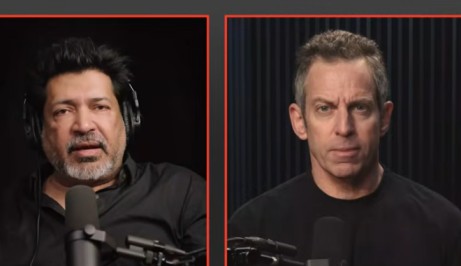
Read the full transcript of physician and author Siddhartha Mukherjee’s interview on Making Sense Podcast, July 14, 2026.
Editor’s Note: In this episode, Sam Harris sits down with Dr. Siddhartha Mukherjee to discuss the updated edition of his Pulitzer Prize-winning book, The Emperor of All Maladies: A Biography of Cancer. The conversation explores how our understanding of the disease has evolved over the past 15 years, particularly in the realms of prevention, detection, and emerging treatment methodologies. Furthermore, Dr. Mukherjee shares his insights on the role of artificial intelligence in accelerating drug discovery and transforming the future of medical diagnostics.
Introduction
SAM HARRIS: I am here with Siddhartha Mukherjee. Sid, it’s great to see you again.
DR. SIDDHARTHA MUKHERJEE: Pleasure of mine.
SAM HARRIS: So we have a lot to talk about. You have an updated version of your Pulitzer Prize-winning book, The Emperor of All Maladies: A Biography of Cancer, which came out 15 years ago, but you’ve updated it. And I think there are 4 new chapters in the new paperback. So I want to focus on that. I want to spend some time on how our thinking about cancer has changed in the interim. And I think we’ll break this into 3 chapters: prevention, detection, and treatment/cures.
But also you have an AI startup, which I want to talk about because the utility of AI here at any one of these stages is obviously something that people are hoping for. And I’m glad to see you’re trying to push that forward. But let’s start with just kind of the basic conceptual framework and maybe how that’s changed in the intervening years. How should we think about cancer as a disease? I mean, is it 100 different forms of disease? Is it one? I mean, when we get a cure for this thing, is it going to be one cure or are there going to be hundreds, do you think?
What Is Cancer? One Disease or Many?
DR. SIDDHARTHA MUKHERJEE: Well, I’m almost certain that there’ll be hundreds, but there’ll be common themes running through it. So one thing, one question that I try to answer very often is exactly the question you asked, which is, is it 100 different things? Is it one disease? Is it many diseases? If it’s many diseases, why do we call them cancer in the first place? Why shouldn’t we just separate all of them out? And the answer is somewhere in the middle.
Every form of cancer — in fact, every individual form of cancer, every individual specimen of cancer — is its own disease in the genetic sense. So in the sense that one woman who walks into your clinic with, let’s say, breast cancer has a particular spectrum of mutations. Mutations are changes in DNA that drive the cancer cell’s growth. The second woman might come into your clinic with breast cancer, looks the same under a microscope, it’s called breast cancer, but her spectrum of mutations — maybe she has 100, maybe she has 20 — her spectrum of mutations is slightly different.
So why do we call them all cancer? Well, first of all, there are some broad physiological commonalities. The broad physiological commonality is that in all cases — the first woman, the second woman, the third woman, all with breast cancer — in all 3 cases, the problem is that the cells don’t know how to stop dividing. And in a few cases, they don’t know how to stop living, or essentially they don’t know how to die. But for the most part, they don’t know how to stop dividing.
And driven by that malignant growth, these cancer cells have started co-opting, hijacking, you might call it, normal pathways that normal cells use to survive. So just like normal cells use nutrients to survive, cancer cells also need nutrients to survive. They need a special kind of nutrients to survive, special pathways that they’ve hijacked from normal cells. Just like normal cells in the body move around and go to other places, cancer cells also acquire the property to move around. So there are deep commonalities that run between all these diseases called cancer. And yet it’s also true that each individual specimen of cancer is its own cancer.
The Key Conceptual Bottleneck in Cancer Research
SAM HARRIS: Is there one conceptual bottleneck here that most troubles you in our making progress? I mean, is there one question that if we had the answer to it, you think it would unlock the greatest promise here for treatment or prevention or detection or all of it?
DR. SIDDHARTHA MUKHERJEE: Well, I think we should really speak about prevention, detection, and treatment differently. Let’s start with treatment. The big unlock for treatment is always going to be, can we find something in the cancer cell that’s different from the normal cell? That’s always been the problem. Cancer cells are very close cousins, if you will, to normal cells. And that’s obvious because they’re derived from normal cells.
So the big conceptual unlock here is, can we find 1 pathway, 2 pathways, 5 pathways, 10 pathways that are different enough between a cancer cell and a normal cell? And by pathway, I mean a series of — you can think of it as a kind of baton race between one signal and another signal. Ultimately, all the signals are going to the same place. They’re telling the cell grow, grow, grow. But these pathways are unique to cancer cells.
And the job, one of the big jobs in treatment, is to find the difference — the unlock, as it were — between what the cancer cell is able to do or is doing and what the normal cell is able to do and is doing. If you can find that unlock across not one, but multiple specimens of cancer, we’ll have different treatments.
Prevention: The Most Difficult Science
SAM HARRIS: Okay, well, let’s go back to prevention because it seems like the right thing to put first here. I mean, so we know that lifestyle and other variables can affect one’s cancer risk significantly. I mean, there’s the environment, there’s lifestyle, there’s vaccines, right? We have vaccines for certain preventable cancers. Why is, in your view, prevention kind of an afterthought? I mean, is this a science problem or an incentives problem? And why do we think about prevention last?
DR. SIDDHARTHA MUKHERJEE: Well, we shouldn’t be thinking about prevention last. And to be totally honest, this has been known for a while that it should not be an afterthought. The problem is that prevention science is probably the most difficult science because you’re trying to do something and not have it happen. Scientists are used to — heuristically, you can use a fancy word, epistemologically — scientists are used to watching things happen and then stopping them from happening or starting them from happening. In prevention, what you’re trying to do is create something that does not happen.
And so prevention trials, to give you one example, tend to be very long because you’re essentially giving normal people something, or exposing normal people to something, or changing normal people’s behavior and making sure that they don’t get cancer as a result of that change. And you can imagine, if the incidence of cancer is relatively small — let’s say it’s 100 in every 100,000 people — that trial stretches on for 10 years or 5 years until you really understand how to prevent cancer. Now, you can take shortcuts. You can take people with high-risk disease, or high risk for cancer, high genetic risk for cancer, and then you can have a shortcut to getting a better study. But that’s always been one of the big questions in science.
The other problem is that there is really no surrogate — and I’ll tell you what a surrogate is — there’s really no surrogate for the development of future cancer. I’ll contrast it with heart disease. The huge difference is that in cardiovascular disease, when you have heart attacks, myocardial infarctions, we discovered that there were biomarkers for myocardial infarctions. So in other words, if you had high cholesterol of the wrong kind, you would have a higher chance of getting a heart attack in the future. So now you have a biological marker — called a biomarker or a surrogate — in which you say, well, okay, instead of waiting for the heart attack to happen, if I can lower that bad cholesterol, that’s a good trial that I can prevent a heart attack from happening. And the endpoint of the trial is I’m going to lower the cholesterol.
Another example: hypertension. We know that high blood pressure is related to having heart attacks in the future. I can say, okay, well, lowering blood pressure, which I can measure, is going to prevent heart attacks in the future. Unfortunately, there isn’t something like that — there isn’t a hypertension or a high cholesterol equivalent for cancer. You have to actually, unfortunately for most cancers, wait for the cancer to happen. And that has been a very difficult bar because obviously these clinical trials, any methods, any discovery methods go on forever.
But there are basically 2 very broad ways that people try to figure out how to prevent cancer, or what causes cancer and how to take them away from our environment. So one way is to look for — since cancer is a disease of mutations — things that cause mutations. There’s a classical test called the Ames test, after a fellow named Bruce Ames who invented it. It’s essentially a mutation trapping test. It says X-rays cause mutations. If you expose it to the Ames test, it’ll catch X-rays as a carcinogen, a cancer-causing agent.
The other way is to do animal studies. So you expose animals to whatever agent you’re concerned about and you ask if animals get cancer. Now, obviously you can realize that there are some things you can’t do — you can’t make a mouse smoke, for instance. So you have to find a way to paint the mouse with tar to see if that causes cancer.
And the third way is a large epidemiological study. So in other words, you follow a large population of people and you ask the question, is there a higher rate of cancer among those people? For instance, there’s a higher rate of lung cancer and mesothelioma in people who work in asbestos factories. So you say, okay, asbestos is a carcinogen. How can I prevent those mesotheliomas? I’m going to take asbestos out of the environment. If the Ames test suggests that X-rays cause cancer, how can I prevent cancer? I’m going to try to reduce your exposure to mutation-causing X-rays. You have a substance that causes cancer in animals — how do I prevent cancer? I’m going to take that away from exposure in humans. So those are the 3 broad ways — and I’ve left out a couple — but those are the very broad ways that one can understand how to prevent cancer.
Cell Phones and Brain Cancer: Separating Fact from Fear
SAM HARRIS: But whatever happened to the cell phones cause cancer story that hit the news about 20 years ago? This actually predates the smartphone. I remember we all had our flip phones and we were all terrified about stories of lateralized brain tumors that seemed to be skyrocketing. And then I think it’s been decades since I’ve heard a story along those lines. Do we all just have more brain tumors and we’re so attached to our smartphones that we can’t talk about them?
DR. SIDDHARTHA MUKHERJEE: Quite the opposite. If you look at the incidence, or if you look at mortality from glioblastomas or brain tumors in the United States, it has remained flat over multiple decades. One can have lots of arguments about this — some people have fancy mechanisms by which they claim that cell phone radiation causes cancer. Just to be very clear, the radiation that is coming out of your cell phone is completely different, physics-wise, from the radiation that you get from X-rays, for instance. They’re both called radiation because ultimately they’re forms of energy transferred through radiance, but they’re completely different in energy and completely different in their properties.
And so mechanistically, it did not make sense. And the ultimate proof of the pudding is that the use of cell phones has skyrocketed in the world and in the United States, and the mortality from brain cancers has remained largely flat.
SAM HARRIS: All right. Well, that’s one piece of good news we can dispense to our audience here.
DR. SIDDHARTHA MUKHERJEE: Yes.
Chemoprevention: A Pill to Reduce Cancer Risk?
SAM HARRIS: What about chemoprevention? I mean, are you anticipating a time where we’re going to take a pill that substantially reduces our cancer risk, or are we nowhere near even thinking about that?
Inflammogens, Prevention, and Cancer Risk
DR. SIDDHARTHA MUKHERJEE: Actually, we are closer and closer, maybe closer than many people think. So, let’s take a step back and let’s air out some laundry, whether dirty or not, some laundry from the prevention world.
This fact often surprises people. The surprising thing is until recently, and I’ll talk about what recently means, we really have not found a chemical carcinogen with large human impact, a preventable chemical carcinogen with large enough human impact to make a real difference in cancer prevention since the 1960s. So, just take a minute to swallow that fact.
Billions of dollars have been poured into prevention research. And certainly we found chemicals that cause cancer that can be removed from certain environments. I’ll give you a couple of examples. I’ll give you one already, asbestos. I’ll give you another example, formaldehyde. But usually these are in niche populations. They’re in populations where asbestos workers, people, woodworkers exposed to formaldehyde. So, there really hasn’t been an absolute revolution in which I can say, here is a chemical widely present that you are exposed to and I’m exposed to, which increases the risk of cancer substantially.
That is changing. I’ll tell you about the change in a second. But before I do that, you could ask the question, well, why not? Why haven’t we found them? Well, the answers could be many. Number one is that it could be that there aren’t so many. That would be a difficult answer for us to swallow because we all want to prevent cancer. Number 2, we don’t have the right methods to look for them. The tests I told you about, the Ames test and the mouse animal tests and the epidemiological studies just aren’t strong enough to find these kinds of carcinogens. Or maybe we need a different kind of test to trap these kinds of carcinogens. And then it’s also possible that it’s a death by a thousand cuts problem. So they do exist, but they just sort of fly under the radar of all these tests. And it’s the combination of them somehow or the other that’s causing cancer.
And finally, the one thing I said, just to remember, I made an important caveat. I said chemically preventable carcinogens. We have discovered since that time, since the 1960s, viruses that cause cancer. A great example would be human papillomavirus. And there’s a great vaccine against it. So that falls in the viral category. But just to remind you of what I said, since the 1960s or ’70s, we have not found a preventable chemical carcinogen of significant magnitude to make a difference in human cancer mortality.
So that would be a sad statement if I were to continue that line of thought, but that’s changing. And that’s changing because we’ve discovered recently, we’ve begun to discover a new class of chemical carcinogens. And this class of chemical carcinogens will not be caught by the Ames test. This class of chemical carcinogens is unlikely to be caught by animal tests because the reason is that it doesn’t cause mutations.
What this class of carcinogens is, is it changes — if you think of cancer as a seed and its environment as a soil, it changes the soil. It doesn’t change the seed as much. It changes the soil around the cancer and thereby enables the cancer cells that were previously dormant or asleep, it encourages them to start growing.
And there’s been a recent spate of studies, most importantly, a study around particulate air pollution. So very small particles of air pollution, which are now coming out to be a preventable human carcinogen because you can remove the air pollution. And the way that particulate air pollution seems to work is not the way that we think standard carcinogens work. So it does not cause mutations in cancer cells and thereby unleash cancer by causing mutations, like I told you before, like X-rays or potentially formaldehyde, but it rather changes the soil around the cancer cell and thereby unleashes the growth of a previously dormant cancer cell and makes the tumor grow.
And particulate air pollution is an example of this. There’s a strong suspicion that asbestos is an example of this. We, for a long time, didn’t know why asbestos, even though it was a very potent carcinogen, we didn’t know why asbestos caused cancer. We think that this is potentially how asbestos causes cancer.
So that leaves the question of what exactly is happening? What is it doing? And the answer is that these new substances — I’ve, in my book, I call them inflammogens. These new substances cause a particular form of inflammation, not any kind of inflammation, but a very particular form of chronic inflammation. And cancer cells love to breed and grow in the soil of that chronic inflammation.
And that leads to 2 very important consequences. Number one is that if we could find a measure of chronic inflammation, this particular kind of chronic inflammation, we may be getting closer and closer to finding that magic thing that I talked about before, which is a biomarker for future cancer. So that’s one thing. And secondly, of course, we can devise tests.
SAM HARRIS: Yeah.
DR. SIDDHARTHA MUKHERJEE: Just like we devised a test for capturing X-rays and other things that cause mutations — so-called mutagens — we could devise a test for inflammogens. And these inflammogens are potentially things that we could remove from our environment, remove from our bodies, remove from our body physiological states in our bodies, and thereby reduce the risk of cancer. So it’d be a new way of thinking about prevention. And this would actually be a very revolutionary way of thinking about prevention.
Anti-Inflammatory Approaches and Chemoprevention
SAM HARRIS: What about anti-inflammatory drugs — whether you can control the variables in the environment or not, what about just bringing down the inflammation generally in the body?
DR. SIDDHARTHA MUKHERJEE: So, again, you said the word generally, and it’s the generally part that doesn’t work. This is the very specific kind of inflammation. It’s mediated by a particular kind of cell in the body called a macrophage. This macrophage is named because it’s a — a macrophage really means big eater. It’s a cell that goes around the body sort of scavenging all sorts of things like dust particles, I should say particles of pollution. Macrophages, often in asbestos workers, you can see them sort of trying to eat the asbestos, the tiny, tiny needles of asbestos. So, it’s a very particular kind of inflammation.
And yes, if we could find a way to find people who had exposure to that kind of inflammation or had high levels of that kind of inflammation and potentially prevent that inflammation in those people, yes, there would be a chemoprevention.
Now, one last important point here. There is a very good chemoprevention for a very particular kind of cancer, works very well, which is estrogen receptor-driven breast cancer. So we know that breast cancer — we’ve known this for a long time — some kinds of breast cancer, not all kinds of breast cancer, but so-called ER-positive, so estrogen receptor-positive breast cancer thrives on estrogen. Estrogen is a natural hormone made by the body, but you can give drugs that modulate or modify the cancer cell response to estrogen. And those are very good chemoprevention for patients who are at high risk for breast cancer.
We don’t give them to everyone because they have significant side effects. A good example of such a drug is tamoxifen. We don’t give it to everyone, but for patients who are very high risk for breast cancer, there’ve been several studies now that show that if you give them these anti-estrogenic pills, they have to deal with many side effects. But if you give them these anti-estrogenic pills, you can actually have chemoprevention for breast cancer.
Understanding Personal Cancer Risk
SAM HARRIS: So I guess a final question on the prevention topic — how should people think about their risk when they have some information about it? It might be a family history or a polygenic score or some other information that they have, which makes them feel, in this case accurately, that they have more than a normal risk for a certain kind of cancer. How do you recommend people process that information personally without falling into fatalism or despair or some form of panic? As an oncologist, how do you walk people through that?
DR. SIDDHARTHA MUKHERJEE: So first of all, I think I’ve written a lot about this. I think there’s a whole phenomenon, there’s a chilling Kafkaesque word called previvor, which has entered the vocabulary of cancer. And a previvor is sort of derived from the word survivor, but a previvor is a person who thinks they’re going to get cancer, but they don’t have it yet. They’re driven by the anxiety and the fear that they’re going to get cancer, but they’ve not had it yet. They’re not a survivor of a cancer. They’re a previvor of a cancer.
And the number of previvors is increasing dramatically in the world because all sorts of tests around, all sorts of genetic tests and other tests around, are sowing a lot of fear in people’s minds, eyes and brains.
The way I advise people to think about this is to really have a, even if it’s a grayscale quantification, a grayscale understanding of their risk. And by grayscale, I mean there are some people where their genetics and their family history is very strong. So, a great example would be patients with the BRCA1 gene or the BRCA2 gene. Those patients have, or those people before they become patients, they have a very high risk of getting, for instance, breast cancer. It’s especially higher in the context of when they have a very strong positive family history of breast cancer. So those patients, I advise going to a genetic counselor and seeing the genetic counselor and seeing if they should enroll in one of many trials that are now available to screen them more effectively. Potentially to put them on a trial for a novel chemoprevention for those cancers. So, that’s the advice I give those people.
Then there’s a second category of person, again moving along the grayscale, who has what you called a polygenic risk score. Now, polygenic risk score — let’s unpack that word. A polygenic risk score is not a person who has one of these genes like BRCA1 or p53 mutations or one of these inherited mutations in genes where their risk of getting cancer is ginormous because the genes are mutated. They’ve inherited a mutated gene from their parents.
Polygenic risk scores are — you can think of them as, if you think of the BRCA1 gene as something that shoves you towards getting cancer, I apologize using that analogy or metaphor — these are genes that nudge you little bit by little bit towards higher and higher cancer risk. They’re quantifiable. So you can quantify them. If you sequence a genome, you can quantify them. And patients with very high polygenic risk score, for instance, for breast or ovarian cancer, I usually assuage them. I generally tell them that these polygenic risk scores are still early — we’re still early in their study. And I tell them to see a genetic counselor, but not to be as worried as patients with, for instance, the BRCA1 or the P53 mutation.
And then there are patients who have no family history, no polygenic risk score, no real risk upfront of getting cancer, but they are still worried. And I say to them, well, it’s a risk that you have to take with aging. Cancer is a disease of aging. We all are at risk. And if you feel that you have a particular exposure in your childhood, for instance, your father was an asbestos worker, those are the patients that I send for deeper testing, genetic counseling, et cetera. But in those patients, we’re really a little bit stuck in some ways.
The last category I’ve left always separate. I always leave it separate because it’s a very unique category. And that is if you have a particular — if you’re infected with a virus that causes cancer. And a great example of that is human papillomavirus. So if you have human papillomavirus infection, you are indeed at a higher risk to get cervical cancer depending on the strain of human pap. Not all strains cause this, but some strains — we call them the teen strains — increase the risk of human papillomavirus. If you have that strain, if you’re infected with human papillomavirus, then you should certainly be seeing a gynecologist who should follow you to make sure that your risk of cervical cancer is decreased. And they may have to do a biopsy or even potentially invasive surgery to decrease that risk.
Which brings me to a side point, which is that there are incredibly effective vaccines against human papillomavirus. And please don’t believe the nonsense that’s been perpetrated about vaccines against cancer. These are extremely effective. I believe that both men and women, young men and young women, young boys and young girls should get these vaccines.
And a massive study in Sweden showed — and this was a randomized controlled study, the hardest, most rigorous kind of study that exists — a massive study in Sweden showed that if you gave the appropriate age, the appropriate number of vaccines for human papillomavirus, the dangerous strains, the risk of getting cervical cancer in adulthood goes to zero. Zero. So we are committing a terrible — it’s a terrible tragedy that across the global world, there are still women dying of cervical cancer caused by papillomavirus. This is a completely preventable cancer.
SAM HARRIS: When you qualify it saying young men and young women, is that just a matter of population-level triaging of resources, or do you actually think the utility of being vaccinated goes way down as people age?
Liquid Biopsies, Detection, and the Mathematics of Cancer Screening
DR. SIDDHARTHA MUKHERJEE: Well, this is a very particular situation. So human papillomavirus is a sexually transmitted disease. And obviously young men and young women are the most at risk because they are the most likely to have an infected partner or have multiple partners, one of whom carries an infection. So it’s just a consequence of human behavior. It’s a behavioral risk.
SAM HARRIS: But if someone is 40 years old and they don’t show any titers for HPV, and they’re single and sexually active, is there any reason why you wouldn’t recommend that they get vaccinated for it?
DR. SIDDHARTHA MUKHERJEE: So there’s no reason that they wouldn’t get vaccinated for it, except that those populations have not been studied because the studies have been done in young people. But biologically or physiologically, there’s no fundamental reason that if they were negative for human papillomavirus to start with, that they would not respond to the vaccine. There’s no biological reason to think that all of a sudden their immune system will flicker off and not be able to drive a response against human papillomavirus.
SAM HARRIS: Right. Well, we won’t ask RFK Jr. his advice on this topic. We might get to our political moment eventually.
So let’s talk about detection. There’s been a lot of excitement around so-called liquid biopsies, blood tests that detect cell-free DNA, that I think they’re up to 50-some-odd cancers, specific cancers they claim to detect. I have a little bit of experience with this. I have taken a couple of these tests, one of which was positive. It turned out to be a false positive, but I then did subsequent scanning and spent a week imagining that I had a greater than 50% chance of having 1 or 2 or 3 different cancers. So I’ve experienced some of the downside of this.
Give me your thoughts on the risks around the risks of moving too fast on this and where you think it is headed, and what will be the stable point if it’s achieved where we’re not continually running the risk of overtreatment and kind of painful encounters with misinformation.
DR. SIDDHARTHA MUKHERJEE: Well, people think that your case, your anecdote, is atypical, but in fact it is the most typical. The most typical anecdote, which is not being publicized — there are 1,000 companies that do work on cell-free DNA, and I’ll try to distinguish the ones that are doing actually good work — but your case is actually typical.
But to understand why it’s typical, you need to understand something that has nothing to do with cancer, but has to do with mathematics. And this is pure mathematics. I wrote a piece in The New Yorker. I got all sorts of hate mail for it. But the answer, the problem is that you can’t argue against pure math. Math is math. And the math is very simple in this case.
The math is based on the observation of a very important man whose work has inspired computer science and pure mathematics and statistics, and that’s Thomas Bayes. So Thomas Bayes lived in Greater England, and he made a very simple statement, which he then made into a mathematical formula. And the simple statement is that what was later called the posterior probability — that you have cancer, in other words, whether you do have cancer or not, whether in a population, if I have a test that’s measuring whether someone has cancer or not — depends on the prior probability that there’s cancer or not.
So how do we explain this? Here’s a simple analogy. Let’s say you make a genius detector, a needle detector, and you’re looking for a needle in a haystack. So you have a massive haystack and there’s one needle buried in it. And you have a good detector. It’s 90% sensitive and 90% specific. In other words, it means that 90% of the time when it says it’s got something, it actually turns out to be a needle. You go into the haystack and the detector beeps. And you find that it’s actually not a needle, but actually a piece of hay. You go into the haystack again, it beeps, and it’s another piece of hay. And the third time, and the fourth time, and the fifth time. And that’s because there’s only one needle in a massive haystack.
The prior probability — this haystack was stacked, as it were, stacked poorly against you. And no matter how good your detector is, no matter how smart your instrument is, it’s always going to detect more hay than needles. Does that make sense? It should be very obvious.
SAM HARRIS: Yeah. So I recommend that people take — we can’t do it here, but to take a little time to understand Bayes’ theorem and Bayesian reasoning. But the background frequency of the thing you’re trying to detect obviously changes the likelihood that you have produced a — however valid the test — a real positive as opposed to a false positive.
DR. SIDDHARTHA MUKHERJEE: Right. But just to finish up. Yeah, go ahead.
SAM HARRIS: Yeah. But in this case, we have a company that is advertising its false positive rate, its type 1 error rate, of 1 in 200. So they put their Bayesian reasoning — given the incidence of cancer and the cancers they’re trying to detect — they’re advertising their false positive rate as half of a percent. And therefore, you as a consumer get a positive finding and you think, well, okay, there’s a 1 in 200 chance this is wrong, but I don’t find that very consoling because the report is telling me I now have a 57% chance of having either — I think in my case it was kidney and bladder cancer or prostate cancer or both.
Presumably we’re going to get to a place where we’re going to find that the error rate is low enough so that — obviously we have to live with some false positive rate — and there’s also the false negative rate, which is real cancers that are undetected.
Bayesian Reasoning and the Limits of Cancer Screening
DR. SIDDHARTHA MUKHERJEE: No, the fundamental mistake that we’re making here is the one you just actually enunciated. The fundamental mistake is that most of these companies are advertising their sensitivity and specificity. In other words, they’re saying our test is really sensitive and it’s really specific. What they’re not telling you is what Bayes would call the prior probability. The prior probability, the base rate of cancer, is low. And no test will ever change the prior probability because the prior probability of something is a given. It’s how much cancer is there in a population. That’s a fixed number.
So I’m going to twist this around and give you a positive answer to the question. If these companies — many of these companies — were less greedy, and if they were less driven by trying to screen everyone and make money out of everyone and put anxiety into everyone — this is actually the basis of my long piece in The New Yorker, and it’s actually in the book as well — if they were less consumed by consumerism, which is to say, “I’m going to use this for everybody,” then they would identify patients who are truly at a higher risk for cancer. In other words, they would find populations where the base rate was higher. And sure enough, in those populations, I’m absolutely confident that tests like cell-free DNA will be helpful.
So who are these people who have higher base rates of cancer? Well, we talked about some of them already. If you have a mutation that is likely to cause a higher risk of cancer. Possibly — I’m not sure about it, but possibly — if you have a polygenic risk score, the so-called NUD genes that I talked about, which increase the risk of cancer. Fine, you take those people. You could take people who have had prior cancer before and ask the question, is that cancer relapsing? That’s another population where the base rate is higher. And in all those cases, if the trials had been done with patients with all those cases, then the chances of detecting a stage 1 or stage 2 cancer — something that actually you can do something about — would’ve been much higher, and is much higher in the small numbers of trials that have done this.
So that’s the answer. It’s a very simple answer. Thomas Bayes knew the answer 200-odd years ago. And it’s amazing to me that in 2026, we’re having a conversation — not you and me, but the global public is having this anxiety-ridden conversation about, “Oh my God, should I not test or should I test?” The answer is, well, what is your prior probability? What has moved the needle? Where are you on the grayscale? If you think that you’re farther on the grayscale — your father had prostate cancer, your grandfather had prostate cancer, you’re worried — yes, a cell-free DNA test might be useful. If you’re just someone—
SAM HARRIS: But presumably some reduction in the rate of type 1 errors, false positive errors, would — you could bring it so low that you wouldn’t feel that you had to assess your prior probability by being part of some special population of heightened risk. You’d say, “I’m Homo sapiens, there’s some rate of cancer out there, and if they’re giving me a 1 in 500,000 false positive rate, that’s very different than 1 in 200.” And I could do the calculation, but—
DR. SIDDHARTHA MUKHERJEE: Yes, fair enough. Fair enough. But actually, if you do the calculations — again, I would encourage people to just, you don’t even need to do the calculation yourself. You can go into Google Gemini and ask Google Gemini to do the calculation for you. But yes, absolutely right. At some point in time when the rate of type 1 error would be reduced, yes, that test becomes relevant.
The problem here is that the ultimate positive predictive value — the number you’re really looking for — is: if the test is positive, what are the chances that I do have stage 1 or stage 2 cancer? That is the answer you’re looking for. So again, to repeat the answer: if the test is positive, what are the chances that you have a stage 1 or stage 2 cancer? Not stage 3, not stage 4, but stage 1 or stage 2 cancer for which I can actually do something. That number is highly, highly dominated by the prior probability. So even if you increase or decrease the type 1 error, that number will continue to be dominated by prior probability.
And yes, of course, in the envelope of time, in the envelope of things, if you decrease the type 1 error, yes, you’re going to start getting a situation where the test is worthwhile doing for stage 1 and stage 2 cancer. We’re far from that yet.
Whole Body MRI Scans as a Detection Technology
SAM HARRIS: Along these lines, obviously different technology, different in maybe every relevant way, but how do you feel about whole body MRI scans as a prevention technology or detection technology?
DR. SIDDHARTHA MUKHERJEE: Basically almost the same story, except unfortunately I feel as if the rate of what you call the type 1 error — in other words, something is found, but it’s not really cancer —
SAM HARRIS: Yeah.
DR. SIDDHARTHA MUKHERJEE: That kind of error is even higher. So I don’t see that moving in the right direction.
SAM HARRIS: Although, Sid, I think I completely understand the liability there, but that seems to apply to a first scan more than any other. But if you’ve had a first scan as your baseline scan, then every subsequent scan is a measure of change against that first scan.
DR. SIDDHARTHA MUKHERJEE: So I was just going to come to that. There’s a temporal quality to this, which is what you’re talking about. And that we have, to be totally fair, not fully tested yet. So right now where we are is we’re testing one scan at a time and whether you get a stage 1 cancer detected or not. It is probably fair that the type 1 error reduces over the temporal axis over time, and potentially reduces to a point where it actually is worthwhile potentially doing more invasive tests like a biopsy or another kind of test. But we haven’t actually done that.
Early Detection: The Case For and Against Full-Body Scans
SAM HARRIS: Actually, Sid, let me just clarify. I want to make sure everyone understands the distinction we’re making here. So, with a first scan, the problem with getting your first full-body MRI — let’s say you’re a 50-year-old man and you’re worried about cancer and your doctor has advertised to you the possibility of getting a full-body MRI. There’s no ionizing radiation, it’s totally safe. Why not do it? It’s $2,000, but you get every voxel of your body scanned in an hour looking for tumors.
The problem with the first scan is that if you see something, you don’t know whether it’s been there for 30 years and it’s nothing, or whether it’s a quickly growing cancer. And the prospect of being led on a wild goose chase that entails biopsies of organs and other scary or more invasive scanning — all of that is a clear liability here.
And the question I’ve just asked you, Sid, is: yes, but you price all that in, you get your first scan, it’s clear. Now your second scan seems to promise some much more valid information wherein anything that has suddenly emerged in your liver or lung or anywhere else suddenly seems like this is new and worth checking out.
DR. SIDDHARTHA MUKHERJEE: Well, let me challenge you back with 2 scenarios which may complicate that answer a little bit more. First of all, let’s say your first scan actually does find something. It’s a spot. Actually, Dhruv Khullar wrote a nice piece on this in The New Yorker if anyone’s interested in reading further about this. The company in that case was called Prenuvo. There are many out there.
Anyway, your first scan, let’s say it actually does show something. The question you want to ask yourself is how many people are totally comfortable sitting and waiting for their next scan at, let’s say, 6 months from that time and not doing a biopsy. And if you ask people — I see real people in real time — the number will surprise you. No one wants to sit and wait. Wait and see what happens, wait and see if it grows. That number is very small. So already you’re pushing people down the pathway of invasive tests, biopsies, and so forth.
But fair enough, some people might say, okay, the first scan has shown a spot. I want to see if that spot is really growing or not, if it’s growing at what speed, and if it’s cancerous or not. Fine.
The second thing I would say about this is a point that is often missed, but is very important. So I’m going to try to say it a little slowly to make sure people understand. Let’s say we decide that a full-body scan is a useful test, or even cell-free DNA is a useful test. The question then becomes, well, how do you judge whether it’s really useful or not? And someone’s answer — not your answer, but someone’s answer — is going to be, well, we should just measure survival. How long has someone survived once their scan has detected something positive?
But that’s the wrong answer, because it’s a classic pitfall or a bias in statistics called lead time bias. What you’ve done is — the person who didn’t get scanned may also have had a cancer, but because they didn’t get scanned, we don’t know when they got the cancer. Whereas your clock starts ticking the moment you get the scan. So if your clock says that you lived 3 years after the scan and someone else who didn’t get scanned dies at the same moment, you’ll think, oh, you lived 3 years, that person lived a shorter time because their cancer was detected much later — so-called lead time bias. You’ll say, oh God, this test is wonderful. But in fact, that’s not true. It’s just a biased test.
So what you need to measure, if you really want to measure, is mortality. And measuring mortality — just pure math — is hard because people die at a certain base rate. So you have to have a massive number of people in your trial to measure mortality. Those are the 2 caveats.
So if you were to tell me that people are comfortable with having a spot in their bodies — wherever it might be, a lung, a prostate, liver — if they’re comfortable getting repeat scans without biopsies, and if you tell me that there’s a trial that shows that acting on those growing things actually decreased mortality, I would say yes. But those are very high bars.
SAM HARRIS: And you’re saying that research hasn’t been done, right? And also there are lots of confounds here. I mean, anyone who’s getting a full-body MRI at this point is obviously in a very specific population, and longitudinally it’ll be hard to separate all of that.
DR. SIDDHARTHA MUKHERJEE: That’s right. Those studies haven’t been done. Those studies will probably never be done. So again, how does it translate into actual advice?
Along very much the lines of what you’re saying — obviously, if you’re at a higher risk, I talked about the grayscale of risk, I’d say, fine, go ahead and get your scan. Those would be things like family history, exposure history, some particular reason that you suspect that you have a higher risk of getting cancer.
Secondly, I almost certainly advise people, if they’re going to do a scan and they get a positive somewhere, to get an orthogonal test. By an orthogonal test, I mean, well, okay, you’ve gotten the scan, let’s try to see if you also pick it up, for instance, with the cell-free DNA. Because 2 completely different tests are unlikely to have the same type 1 error. Then, if that’s still not satisfactory, I say, well, let’s get at least another scan 6 months later to see.
And the number of people who balk at that is enormous. People will say, no, no, I just want to get tested. And I just remind them that study after study after study has shown that invasive tests carry real risks. Now, if it was a superficial thing — like someone found a spot in their skin and it’s a simple skin biopsy — fine, I’ll say, yes, fair enough, go and do a simple skin biopsy. But if it’s deep in the liver or somewhere in the lung and there’s a chance of puncturing the lung or bleeding out from the liver, I’ll say, well, there are real risks here. Do you want to really take those risks? I quantify those risks and then give them all the information and ultimately, of course, let them make the decision themselves.
Minimal Residual Disease and Monitoring Remission
SAM HARRIS: Right. Well, what do we actually know about dormancy or the minimal residual disease of somebody who’s had cancer and is in something like remission? How close are we to detecting those states reliably? And just how do you think about that in this picture of having or not having cancer?
DR. SIDDHARTHA MUKHERJEE: So that’s a very good question. You’ve pinpointed the right population now. This is the population that I am most interested in. I think most serious cancer biologists are most interested in this, which is: you’ve had cancer, you’ve gone into remission with first-line therapy, and now we know that your cancer or your type of cancer is likely to relapse. Can we monitor you for potentially what you’re calling minimal residual disease?
By minimal residual disease, it means that by all visible tests — MRIs, X-rays, and whatever tests — you don’t seem to have cancer. But in fact, there is some cancer lurking in your body. We may not know exactly where it is. We may not know if it’s growing out in the same site where it was originally found. We don’t know if it’s going elsewhere.
The most important thing about minimal residual disease is to think about it as a tool, not an alarm. By tool, I mean we now are using minimal residual disease to see if we can use early treatment once minimal residual disease has been detected — to use early treatment in a population that deserves early treatment.
In other words, let’s say Jim and Tim both unfortunately develop myeloma, both going into remission after their first therapy. These therapies obviously all have liabilities. These are chemotherapies. They may have side effects. So we stop the chemotherapy. We say you’re finished with that. And we watch.
Jim does not develop minimal residual disease. His cell-free DNA comes back over and over again and there’s no sign of recurrent myeloma. Tim, on the other hand, 6 months later starts to have a little blip of cell-free DNA that shows the recurrence or the presence of myeloma.
So again, remember Bayes, our old friend. What we’ve just done is we’ve shifted the Bayesian prior probability that that blip found in this unfortunate fellow Tim is actually recurrent myeloma. And what we can use that for is as a biomarker for the recurrence of myeloma. We can use that for testing new therapies, or potentially tried and tested therapies, now in an early setting. And that has proved to be a very good strategy.
In fact, myeloma is a disease where this has actually proved to be a particularly good strategy. The reason behind all of this is that minimal residual disease picks up very few cells. The chances that those cells will have acquired resistance to second-line therapies is therefore fewer. And therefore the chances of curing the cancer or beating the cancer completely are higher.
That is exactly the setting where I do use preventative therapies, and that’s a very good setting to use them in.
Treatment Breakthroughs: From High Mortality to Potential Cures
SAM HARRIS: All right, well, let’s talk about treatment and cure. Is there anything in recent years — let’s say since you wrote the first edition of your book — where a cancer has moved from being very high mortality to effectively being cured? Has there been a radical breakthrough in the last 15 years for any specific cancers?
DR. SIDDHARTHA MUKHERJEE: There have been several radical breakthroughs for several cancers. People often take a very global view, and that global view tends to be dismal. Of course, it’s a scary disease — the second largest killer, about to become the largest killer of people in the United States. So it’s absolutely a scary disease.
That said, overall mortality from cancer has been decreasing over the last 20-odd years. 20-odd years ago, it was 200 deaths per 100,000. That’s gone down to about 140 deaths per 100,000. So there’s absolute progress that’s been made. It’s a mixture of prevention, some early detection, and some treatment, largely driven by prevention, some early detection, some treatment.
But let’s talk about treatment. So big radical changes in some cancers. Immunotherapy — everyone’s heard about immunotherapy — using your own immune system to direct it against cancer. Cancer cells have mechanisms to conceal themselves from the immune system. These medicines take those cloaks away, or they make the immune system point towards the cancer. There are several of them now. These have been radically effective for some cancers.
I used to have a bet when I was a fellow that we will never have cures of advanced-stage lung cancer in my lifetime. And I lost that bet. The word “cure” is a complicated word — I rarely use it because sometimes, 10 years later, something might relapse and come back. But in lung cancer, for instance, non-small cell lung cancer, we’re seeing a situation where some patients — and we don’t know which patients and why — but about 20% of the patients are living out 5 years when they’re given these immunotherapy drugs.
Bladder cancer is another example where there’s been a lot of progress on immunotherapy. We talked a little bit about breast cancer — with advanced therapies, some immunological therapies, some antibody therapies, we are seeing cases in which people are living 5, 10, 15 years after their initial diagnosis of breast cancer. And by 5 to 15, I mean real, dignified years. These are people who are working, they are functional.
A couple more examples. Multiple myeloma — if you plot the survival rate of multiple myeloma based on what year you were diagnosed, in 1990, ’95, 2000, 2005, every 5 years, people diagnosed with multiple myeloma at the same stage live longer and longer.
And the last one I’ll mention is the one where the story of chemotherapy begins — and that’s acute lymphoid leukemia in children, ALL in children. By the 1980s, 80 to 90% of children with ALL were being cured by very toxic but conventional chemotherapy. But that still left about 10 to 15% of children who were called relapsed refractory — they had relapsed and they were refractory to chemotherapy.
There are now new treatments called CAR T-cells, or T-cell treatments. This is a T-cell that’s been weaponized to kill that cancer cell. And we’re seeing cure rates in these patients — 5-year survival after therapy of around 50 to 60%, maybe a little bit more than that.
So for some cancers, quite a few cancers, I would say, we’ve seen radical changes in treatment and potential cures.
CAR-T Therapy and Solid Tumors
SAM HARRIS: Yeah, I’ve heard that CAR-T therapy has been very good with blood cancers, but it’s been challenged against solid tumors. Is that true? And if so, what is it about tumors that poses a special obstacle?
DR. SIDDHARTHA MUKHERJEE: So first of all, it’s true. CAR-T therapies have been very successful in liquid tumors. In fact, I’m very involved in the field. I made one of the first CAR-Ts in India against lymphoblastic leukemia, ALL, that same disease. I’ve made CAR-Ts against other forms of leukemia as well.
So the sad answer is we don’t know. There’s something different about liquid tumors and solid tumors, something in the so-called microenvironment. Remember I said tumors don’t grow alone, they grow in a vacuum. They’re seeds that are surrounded by soil. And in the case of solid tumors, there’s a lot of soil. They’re surrounded by themselves or each other. They’re surrounded by blood vessels. They’re surrounded by immune cells. They’re surrounded by supportive cells that support their growth. So this thing is called the microenvironment of a tumor.
And for some reason, CAR-T cells don’t seem to be able to penetrate the microenvironment of a solid tumor and deliver their kill. So that’s changing over time. We are actually combining CAR-T cells with therapies that can make the microenvironment less resistant. But for some reason, CAR-T cells have never really fully grown to show their promise in solid tumors.
The Cost of Cancer Drugs
SAM HARRIS: Cancer drugs — there might be some exceptions here — but my understanding is that just as a class of drugs, they’re notoriously expensive. As treatment becomes more personalized and sophisticated, is this synonymous with them growing more expensive still? What are the social or scientific implications of this?
DR. SIDDHARTHA MUKHERJEE: Well, the social and scientific implications are well known. I mean, we are spending billions of dollars of money on cancer drugs and they’re expensive mostly, and we’ll talk about why they’re expensive in a second.
But the good news in some ways is that some of these drugs — some of the most very promising drugs, like the immunotherapies that I talked about — are going to come off patent soon, and generic versions are going to be available. There’s always a fight between legacy companies that have made the drug that will keep saying that the original drug is actually still the better drug. But that’s mostly not true. The FDA ensures that the generic drug that emerges, which is usually 1/10 the cost or should be 1/10 the cost, is actually just as effective as the pioneer drug.
So that’s one piece of good news. There are many cancer drugs that are coming off patent, and that should decrease the price dramatically, which is a reminder to us that we should be respectful of the patent cycle. So I think it cuts both ways. We should be respectful of patents, but we should also be respectful of the patent cycle. Which means that when someone makes an invention, pours sweat, blood, and tears into this invention, does a clinical trial, they get protected from infringement for, depending on the particular class, let’s say 20 years. After those 20 years, these efforts to continue to extend the patent lifecycle of a drug — we should be resistant to that because they’ve gotten their 20 years, they’ve made their ample amount of money. They should have spent that money on innovation and making new drugs. And if they haven’t, that’s their problem. They should basically give into the generics, as it were.
Generic Drug Quality and Corruption
SAM HARRIS: Sid, you must have seen this article by Katherine Eban, who I think was in Vanity Fair maybe 8 years ago, that suggested, I bet with a fair amount of research, that the pipeline for generic drugs in particular, but really all — even the precursors of brand-label drugs — was far less reliable than anyone would hope. And if memory serves, something like 30% of generic drugs didn’t even contain the advertised compound. And there’s just all kinds of corrupt — I mean, it detailed this kind of a litany of corruption where labs in India, generic labs in India, were tipped off once a year when the FDA is going to come inspect their lab, et cetera. So there’s kind of a Potemkin village of laboratories. How aware of that problem are you? Has it been exaggerated? And more importantly, if it was real, is it less real today?
DR. SIDDHARTHA MUKHERJEE: Well, it certainly was real for a while. It’s become less real. So the solution to this is not to have spot audits, but to have continuous audits and to have continuous checks. This is not a difficult thing to do.
For instance, there are multiple mechanisms by which you can keep checking whether a generic drug coming from — usually from India, from China, from South Korea, less from China because of geopolitical reasons, but from South Korea, from, you know, sometimes they come from very diverse sources — that they actually contain the active ingredient. It’s actually not hard to check this. This is a relatively simple check. You can put it through a machine like an NMR or other kinds of machine, which will ensure that the parent drug and the generic drug are actually the same.
And in fact, since the so-called multiple scandals that have erupted because of this — the typical scandal was a factory, let’s say in India, would get tipped off that there’s an FDA inspection coming and all of them would just sort of clean up the factory, put on their coats and start making the real drug, as it were, and then go back to their old ways as soon as the FDA inspector had left. So that’s why continuous audits are helpful. And also continuous checks, quality QC checks made independently by an independent organization or whatever you want to call it. And I’m very much aware of the original article in Vanity Fair that really pointed out this as a major problem.
So that’s one solution, which is the genericization of high-value, high-impact patented drugs should bring the cost down. But the other solution — and we’ll now switch a little bit to talking more about new technologies and potentially AI — the other solution is, part of the reason that the cost of drugs is so high is that most pharmaceutical drugs fail. And most pharmaceutical drugs fail because they don’t have the right research apparatus. There are basically 2 or 3 reasons, but let’s say the 2 big reasons: they’ve got the wrong target — in other words, they’re targeting the wrong protein, the protein being the machinery that drives the cancer cell — or they’ve got the wrong chemical. The chemical is not good enough to target that protein, or the wrong biological protein to target the original protein. So either they’re missing the target or they’re missing the protein. And occasionally it’s because they’ve run the wrong kind of study.
Now what’s interesting is that in the new world — and I’m involved in this very personally, so I should give that as an important caveat — in the new world, we are making more and more drugs through a combination of virtual means and real. We don’t take a virtual drug and put it into human patients. It has to be then tested on animals and potentially then go through a human clinical trial and ultimately become a real drug. But in all that, in that lifecycle of the birth of a new medicine, we have new technologies, including most importantly perhaps AI, as a new tool to make drugs, to test drugs, to test drugs efficiently, and hopefully bring the cost of a trial down or the lifecycle of a drug down so that you can actually make cheaper, better, faster drugs.
AI and the Future of Cancer Treatment
SAM HARRIS: Okay, so let’s talk about AI because I know you have your own effort here, which I want to hear about. But the context that many people will have noticed is that there was a big piece of press some years ago when AlphaFold solved the protein folding problem. I forget what the color on this was. It was something like it had done the equivalent of 200,000 PhD dissertations — I mean, the equivalent man hours was just ridiculous. So that obviously suggests that AI can be helpful in finding plausible targets for medications and crafting molecules for those targets. Obviously, there’s a prospect that AI will transform radiology and data analysis. What is still just promise or hype at the moment, and where is AI really making a change to outcomes for people now?
DR. SIDDHARTHA MUKHERJEE: So if you look across the spectrum, I think AI has already delivered promises in some parts, and in other parts is about to or has started delivering promises. You should really think about not one AI — there are multiple AIs for this. We are not talking about acquired general intelligence. We’re talking about what’s called neurosymbolic AI, or AI that’s been taught on rules and then, or taught on patterns in some cases. And we’re talking about AIs that are different in each and every case.
So let’s again start with prevention. In prevention research, there’s not been a lot of use of AI yet, but it’s very ripe for AI research. The reason it’s very ripe for AI research is that prevention research — again, to remind people — the kind of study that would be very helpful in prevention would be to figure out what is your background genetics, what are you exposed to? So what’s your exposome, as people call it? What is your microbiome? What are other large multidimensional features that comprise you — genetics, exposures, behaviors, diets, and so forth — and then construct, as it were, a multidimensional version of you and ask the question: if you construct that multivectorial, multidimensional version of you, who is likely to get a higher risk of any one cancer?
So that is a kind of problem that humans are not very good at, but AI is quite good at, because it’s a highly complex multidimensional problem. And ultimately it produces a correlation. It’s not going to tell you why something is causing cancer, but it’s going to tell you a correlation. And then you can do subsequent experiments to figure out why. So that’s one area.
The second area you identified was in detection and in diagnosis. Again, an area that AI has played a very strong role in. As you know, mammography is routinely used to detect early breast cancer, and there’s a miss rate. And the miss rate is because the radiographer hasn’t seen or finds a funny pattern that they miss. AI is a very good — I think of it as a person whispering across your shoulder and saying, “Well, are you sure about that little white spot?” So it’s almost like having a companion with a human being. And that’s been more and more used. That’s true now for screening for lung cancer in high-risk patients. It’s true for — there are AI modules that look at a skin lesion and make a decision whether it’s a melanoma or not melanoma.
SAM HARRIS: Sid, is this something that people can take for granted now? I mean, if you’re going in to get any kind of medical imaging done, more or less anywhere — let’s just call it the United States — can you safely assume that as part of the workflow of data analysis, there is an AI component now? Or is this only happening in bespoke places in the biggest cities or in research hospitals?
AI in Drug Discovery and Clinical Trials
DR. SIDDHARTHA MUKHERJEE: It’s largely still in bespoke places. Some of them are still actually in test mode, in beta mode. Chances that this will succeed as a companion. You know, I often say the word diagnosis comes from— the root of the word is learning together. And this is going to be a companion mode. This is not going to be— there are various ways you can think about it. You can think about it as a triage mechanism. You can think about it as a second opinion mechanism. But nonetheless, it’s coming.
I would say this is a likely given for radiology and potentially for pathology as well. So when you have a pathological lesion, you put it under a microscope, you take a picture, the pathologist says, I’m not sure if it’s cancer or not. The AI in that case has been trained on typically 500,000 images of a melanoma or 500 million images of a melanoma. So the chances that, whereas a pathologist may have seen 500. So this is a great arena where a companion diagnostic is very useful.
So let’s now move on to drug discovery and clinical trials. So those are 2 other areas which are very interesting and important. So in drug discovery, you need to have a— this is what we do. This is what Manus AI does. That’s my company that I co-founded with Ujjwal Singh and Reid Hoffman. What we do, crucial insights that we discovered was that if you want to do drug discovery with AI, you have to teach AI the rules of medicinal chemistry. And that’s not an easy task. A medicinal chemist has a massive brain. They’ve been trained for 20 years. And when you find a pocket, they’ll find a way to insert or create a drug for that pocket. An AI doesn’t know any of these rules. It starts from scratch.
And the other problem is that there are not enough exemplars. So just like I said, there are 500,000 specimens of myeloma sitting in some bank somewhere. And AI can look at those and learn the images, look at those images and learn the pattern and say, and look at a new one and say, that’s a myeloma or not a myeloma. There are not enough, there’s not enough teaching data on generative chemistry, on true drug generation. That allows— so you have to teach it the rules. And that’s something very important. It’s difficult to do, but it’s a very important thing.
The second arena is target discovery. So I just said every drug, every medicine works by binding to a target, usually a protein. So on one hand, AI can help with target discovery. Manus doesn’t do that. We have collaborators who do that. There are many academic labs that do that. So finding out what’s a good protein to inhibit, to activate, to— the analogy is lock and key. In one case, how do we find the locks? And then how do we find the keys? So the way you find it, AI is very helpful in finding the locks because the lock involves taking, again, very multidimensional cellular data and finding out where the lock is, turning the lock, turning of which will stop the cancer from growing. So there’s a big role for AI in target discovery.
Second role for AI, as I said, in molecular discovery, still to be fully proven out. But as you may know, for non-cancerous diseases, a recent spate of papers have shown that for non-cancerous diseases, and in fact some for some cancerous diseases as well, you can use AI to build a molecule or to find a molecule. One is a search algorithm, and then there’s a build algorithm. But you can use AI to find the molecule that actually would turn the lock, the key in the right way.
Finally, final note is about clinical trials. Clinical trials can be extraordinarily powered by AI. AI can, for instance, to give you one example, go into hospital records under safety, under HIPAA rules, et cetera, et cetera, go into hospital records and identify patients who are likely to benefit from a particular trial or a particular drug. So that’s a data search problem. In fact, we already have language models that are able to scrape the web or scrape electronic medical records and find the right kinds of patients.
And secondly, we have things called adaptive trials. Adaptive trials are trials in which basically over time the trial itself evolves. More people are moved to one arm or to another arm to ensure that there’s a balance as we move along. And the trial learns as it moves along. And that’s another, as soon as you use the word learning, it means that if human beings can learn that, then certainly AI can learn that. So when you think about AI in medicine in particular, you have to think about different AIs doing different things for different aspects of medicine, all of which are very empowering and powerful.
Will Cancer Ever Be Fully Behind Us?
SAM HARRIS: The future, do you think about it more or less being a foregone conclusion that at some point cancer will be fully behind us and we’ll look back on all of those generations of people who lived in a world where cancer was more or less untreatable and just, I mean, we’ll just feel the poignancy appropriate to that. It’s just a contingent fact of history that at one point we had no idea how to stop this thing and now it’s not even a thing. I mean, are you anticipating that kind of future? How surprised would you be not to achieve a future like that if we don’t destroy ourselves some other way in the next 50 to 100 years?
DR. SIDDHARTHA MUKHERJEE: Well, hopefully we won’t destroy ourselves. But look, as far as cancer is concerned, I’m an optimist. I’ve seen in my own lifetime many cancers slowly transform into— from incurable acute diseases to chronic diseases and some to curable diseases. So I’ll give you a couple of examples. Breast cancer, I talked about there somewhere between you and me and this and the people in the studio, there’s a woman who has breast cancer who’s now lived her life with dignity and with a good quality of life, 15 years since her original diagnosis, 20 years since her original diagnosis. A century ago, she would’ve been miserable with undergoing surgeries for advanced breast cancer and having all the consequences of those surgeries.
But some cancers we’ve had a very hard time with. Acute leukemia, myeloid leukemia, not the kind that most of the children get, but acute myeloid leukemia, we’ve had a very hard time with. So a lot of my own research has been how to find out, find new ways of treating acute myeloid leukemia that’s different from the current paradigm. In fact, we use CRISPR technology to try to beat acute myeloid leukemia.
Recent data, for instance, there’s a big stir in the world because a new— a very old target of cancer called RAS, the gene is called RAS, a new medicine from a company called Revolution Medicines, and in fact, several other companies are making them. A company called Revolution Medicine made a RAS inhibitor. RAS is one of these so-called Four Horsemen of Death of cancer, one of those genes that keeps coming up across multiple cancers. And you can imagine RAS as driving the cancer with its whip. This medicine essentially holds the whip and stops it from moving. And therefore, the cancer is no longer able to respond to that malignant signal from RAS.
In the clinical trial for pancreatic cancer, as you know, pancreatic cancer is a terrible disease. We haven’t been able to budge mortality from pancreatic cancer for decades. In a clinical trial for pancreatic cancer, randomized patients who were given this drug lived 13 months versus patients who weren’t, were treated with standard therapy who lived 6 months. And you could say to yourself, well, ho-hum, who cares, 13 months? But that’s how cancer therapies evolve.
The way cancer therapies evolve these days, is that you find it’s a little bit like driving the first crampon into a mountain. The first crampon is not the way you climb the— you know, you’re not going to climb the mountain with the first crampon. But the first crampon gives you a foothold on what the problem is. And it’s the first crampon that allows you to then put the second crampon on. So the second crampon in this case is to say, well, okay, the RAS gene became blocked or stopped. What happened? Why did these patients relapse after 13 months? So you put the next crampon and then you put the next. And this is how basically bit by bit by bit, many, many other terrible diseases, myeloma was a good example. This is how these cancers became more and more chronic diseases and in some cases became curable.
So the big story is not that we increased the survival of patients by 6 months with this new RAS inhibitor. The big story is that we planted the first crampon in 20 years against pancreatic cancer, which was really not planted before.
So do I think that cancer is going to go away from human biology, from human history forever? No, that’s impossible. As cancer is a disease of aging, we can change our lifestyle, we can decrease the incidence. You know, there are medicines that will, for instance, obesity is related to cancer. So as the population hopefully becomes less obese because of other medicines, lifestyle changes, healthy changes, yes, we will decrease the risk of getting cancer. Obviously, you know that the decrease in smoking has been the largest driver of the decrease in cancer mortality ever in human history.
So do I think it’ll go away completely? No. Some people get cancer because of just plain old bad luck, and that will still remain. Do I think that many of those cancers will become treatable in the future? Yes. Will there be some that will remain sort of frustratingly out of our reach? Yes, but that number will be fewer and fewer.
The Trump Administration and Medical Science
SAM HARRIS: All right, finally, a political question that I gestured at in some disparaging remark about RFK Jr. earlier. What is the Trump administration doing to medical science at the moment? I mean, it was much— the vandalism was much discussed initially. Has much of it been significantly rolled back quietly, or are we still in a state of just lighting everything on fire for no good reason and defunding essential medical science and putting ideologues and conspiracy nuts in charge of everything? I mean, how much damage has been done and how much damage has been quietly repaired, if any?
DR. SIDDHARTHA MUKHERJEE: Well, a lot of damage was done initially, and that’s evident by the fact that there’s been across the entire academic establishment and certainly across the drug development establishment, there’s been seeds of chaos were and have been planted. And that’s been a huge problem. I can say very globally speaking, and by globally, I mean in the United States in terms of institutions, severe funding cuts to the CDC, threatened funding cuts to many other organizations, and certainly no increases in budgetary increases. Increased scrutiny of research where scrutiny was not required, lack of scrutiny of research where scrutiny is required. So it’s really been a kind of, I would say, I would describe it as a minefield.
That said, I think cancer is something that affects all populations, Republicans, Democrats, regardless of your political leanings and political spectrum. And the public has spoken. I think increasingly the public is speaking, the public has spoken. It’s speaking about other diseases. It’s speaking about the fact that, in a highly civilized country, we have 1,000-odd cases of measles. And there are deaths from measles because people have become reluctant to give the measles vaccine.
So without pointing individual fingers, I would say the administration has been relatively anti-science, but also that the voice of the people, and by that I mean the larger American people, has always been in some sense a voice of sanity and a voice that says science has to be restored in order for us to make progress. We just have to be— we have to restore scientists. Trust in science has to be built.
Some of the fault is the fault of scientists themselves. They’ve locked themselves, locked ourselves, I should say, up in ivory towers, didn’t fully communicate with the public about what’s going on. Drug prices are a big issue. And people feel the pinch of drug prices and they feel very annoyed that pharmaceutical companies are racketeering their way through all of this. But slowly over time, I think some of this will be repaired, is being repaired.
The problem, as you know, Sam, is that when you destroy an institution, it’s very easy to do. But rebuilding that institution takes years and years of work. It’s one fell swoop of a pen. And the USAID is gone. One swoop of a pen and half the CDC has been dispatched. Restoring these people, because people lose their training, they lose their jobs, they lose interest in coming back to the job and so forth. So restoring the ecosystem will take years and years and years.
I’m very concerned about the fate of US science, and I’m also concerned about the fate of US innovation. Of course, we’re doing a lot of innovation in AI, but just to give you a number that will maybe stick in your head, in 2020, the United States in-license, in other words, bought, brought in from China about $5 billion of drugs. In 2025, that number will be $60 to $70 billion, expected to be $60 to $70 billion. So in other words, most of the medicines that we’re getting in the United States are really medicines that are emerging from Chinese biotech companies and are being imported by the United States. And that, we’ve just taken the most valuable thing that the United States produces, which is innovation. I’m not even talking about the pharmaceutical industry in particular. We’ve taken the most valuable thing that the United States produces and made it and hobbled it. And that is going to be very, very difficult to repair.
Closing Thoughts: Supply Chains, AI, and the Future of Medicine
SAM HARRIS: I thought one of the indelible lessons from the COVID pandemic was that we needed to onshore many of these supply chain essentials.
DR. SIDDHARTHA MUKHERJEE: Well, in fact, we’ve offshored them. We didn’t learn that lesson. You remember we discussed this exactly in a previous podcast about onshoring of medical resources, onshoring of medical technologies, onshoring of manufacture really.
I’ll just give you another surprising fact. I have a great fear that some supply chain disruption of some kind, and I can name many different kinds, will suddenly cause hospitals not to have intravenous saline. Saline is sterile salt and water. And you cannot go into a hospital, you cannot perform surgery, you cannot do a simple procedure without sterile saline. And if that runs out, you can imagine the whole hospital with all its very fancy medicine, $10 million MRI machines, et cetera, none of it will work.
So absolutely, we need to make sure the supply chains are resilient, they’re robust, and the best way to make them resilient and robust, of course, is to onshore them. It keeps manufacturing — the administration keeps saying we want more manufacturing jobs in the United States. Well, here’s an area, make more manufacturing jobs for life-saving either medicines or life-saving pharmaceutical products and ensure that the supply chain is not disrupted.
SAM HARRIS: Well, Sid, it’s always great to get you on the podcast. Thank you for the work you’re doing and just the clarity of your communication around this issue. It’s just—
DR. SIDDHARTHA MUKHERJEE: My pleasure. Thank you. And thank you for your podcast, which always does a great service to science.
SAM HARRIS: Oh, nice. Nice. Well, again, reminding people, the new edition of The Emperor of All Maladies is out there. Four new chapters. It’s a great read. And it won the Pulitzer for a reason. And I hope to get you back here — well, the door’s always open when you feel like the story has changed in any important way, whether it’s with respect to AI or anything else, please give it a knock.
DR. SIDDHARTHA MUKHERJEE: I think the next time we’ll come back probably is when AI has produced a whole bunch of new medicines and we can talk about how they were made.
SAM HARRIS: Nice. Nice. All right. I await that time with pleasure.
DR. SIDDHARTHA MUKHERJEE: Great. Thank you so much, Sam.
SAM HARRIS: Take care, Sid.
Related Posts
- Tucker Carlson Show: w/ Michael Nehls on Alzheimer’s, Depression, Anxiety (Transcript)
- What Sitting All Day Does to Your Brain and Body: Keith Diaz (Transcript)
- Diary Of A CEO Interview: w/ Dr Stephanie Estima (Transcript)
- American Thought Leaders: w/ Matt Ridley – Here’s What They Hid in Wuhan (Transcript)
- The 7 Habits of People Who Age Slower: Dr. Steve Horvath (Transcript)