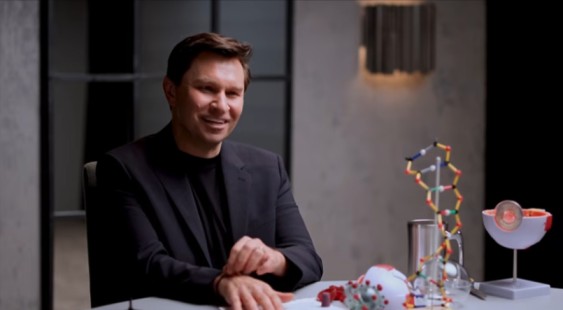
Editor’s Notes: In this compelling episode of The Diary Of A CEO, Harvard professor David Sinclair shares insights from his 30 years of research into the science of longevity and age reversal. He challenges the traditional view of aging as a natural inevitability, explaining how recent lab breakthroughs have successfully reset the age of cells by 75% in just eight weeks. By viewing the body’s genetic code as a software system that can be reinstalled, Sinclair outlines how specific lifestyle changes—such as diet, exercise, and biohacking—can potentially add a decade to one’s life. The discussion provides a roadmap for understanding the biological “Information Theory of Aging” and offers practical steps for living a longer, healthier life. (March 23, 2026)
TRANSCRIPT:
Introduction and Early Inspiration
STEVEN BARTLETT: Dr. David Sinclair, I have waited many years to speak to you, and I’ve been so keen to speak to you for so many years because so much of the research and the information I’ve consumed on the subjects we’re going to talk about today comes from you, directly from research you’ve done and from theories and ideas and hypotheses that you formed. I think the place that this conversation should start is probably with this picture because it appears to be incredibly formative in your journey.
DAVID SINCLAIR: Oh, yes, that is an important picture. True. This is a picture of my grandmother and me when I was in my early 20s. I’m now 56, if you’re wondering. And my grandmother has played a major role in my life. I’m going to have to be careful not to get too emotional because she’s now passed away, but she’s inspired me to do the best I can to leave the world a better place. And I found it.
The Book That Changed Everything
STEVEN BARTLETT: And there’s this particular book here called Now We Are Six it is.
DAVID SINCLAIR: Anyone who’s read my book Lifespan knows that this book is very important to me. And I didn’t realize it, of course, when I was a kid that this was going to change my whole life. And there’s a poem at the back there that my grandmother Vera used to read me when I was six. And it goes like this.
“When I was one, I had just begun. When I was two, I was nearly new. When I was three, I was hardly me. When I was four, I was not much more. When I was five, I was just alive. But now I am six. I’m as clever as clever, so I think I’ll be six now forever and ever.”
I’m getting chills reading this again and hearing this poem again, because the impact on me was the following. That subconsciously my grandmother was saying, you don’t want to grow up. Adults can be evil. She grew up after World War II. There was horrendous impact on her and her family in Hungary. And she thought that a child is innocent and people shouldn’t grow up.
But what actually happened was I realized, why do people grow old? That’s a terrible thing to happen. And so I’ve spent my life trying to figure out, why do we get old? Why do we grow up? Why do we get frail? Because I also think that if we can solve that, understand it, slow it, even reverse it now, we will have the biggest impact on human health in history.
A Grandmother’s Honest Words About Death
STEVEN BARTLETT: Am I right in thinking your grandmother told you at that young age that she was going to die, that you were going to die, that your parents were going to die?
DAVID SINCLAIR: Yes, she did tell me that. I remember it very clearly, actually. I was on the floor and she was crouching down, and I said, “Vera.” I didn’t call her Grandma. She didn’t want to be called Grandma. She wanted to be young, like a kid, too. I said, “Vera, will you always be here to protect me? Will you always be around?”
And she said, “No, I’m going to die.” I’m like, “What do you mean?” She goes, “Everything dies. I’m going to be gone. Your parents will be gone, your pet cat will be dead pretty soon, and you yourself will be dead one day,” at age 4 or 5. That’s heart wrenching, right?
We’ve all gone through this realization around that age that the world that we believe in and see will one day all be gone. That moment, I remember it so clearly because I thought, that’s not fair. Why would any species be made or created that knew that fact? That’s cruel. It’s better to either not know or to not exist. But to know that that’s what’s going to happen is really cruel.
And so I vowed, actually legitimately, around the age of 18, to get a PhD, to go to the United States and develop a research lab to try and do something about it. The preservation of health and life is the most important thing that we can do as human beings. We do it with some drugs to treat that disease and the other disease — cancer, heart disease, Alzheimer’s. But what’s underlying that, what’s really causing about 150 to 200,000 people every day to die, is the underlying universal process we call aging.
And for far too long, we’ve ignored it or accepted it as natural, therefore acceptable. And I fundamentally reject the idea that aging, just because it’s natural, is acceptable. There will be a day when we look back at today and think how medieval were our medicines and how sad it was that we accepted that we became frail before 100.
Challenging the Belief That Aging Is Inevitable
STEVEN BARTLETT: If someone has just clicked on this conversation now and they believe, deep in their core, that they’re probably going to live to 80 years old and that we all are, and that we’re never going to be able to do anything about it, because that’s just the way that it is — people get old and then they die, and aging is a fact of life, as the phrase goes, and you just have to accept it.
DAVID SINCLAIR: All right, so first of all, who am I? I’m a Harvard professor. I’ve been studying aging, longevity and age reversal for 30 years. The technology now that we have in my lab, that is used every day by my students, literally reverses the age of tissues in animals, in human tissue that we grow in the laboratory. And the first human trials to test this are going to be performed in about a month from now.
And if it works, it’ll transform human history. It means that we’re on a path to finally being able to reset the age of the human body — not by a year, not by 10 years, but even more than that. And what happens when you do that? What we’re finding in animals, that includes primates, is that we can cure things that have previously been impossible, including blindness, by the way.
And so if you’re listening and you’re skeptical, I’m not some hack. I am a Harvard professor who is telling the world and has written a book about it. And every day I spend my life researching with a team of the best scientists I can gather around the world, showing that we can literally now reverse the aging process and reset how old the body is in animals. Yes. But potentially this year, showing it can work in the human body as well.
The First Human Trial to Reverse Aging
STEVEN BARTLETT: So you’re doing the first ever trial of this type in humans to reverse aging next month?
DAVID SINCLAIR: Yes. So we’ve submitted a form to the FDA in the US to get approval to treat blindness — a couple of types of blindness in people — as early, if all goes well, as next month.
STEVEN BARTLETT: And what exactly is happening there? Because there are many ways one might fix blindness. What is it you’re doing to the eyeball that is a precursor of our potential ability to reverse aging generally?
DAVID SINCLAIR: Well, we chose the eye not because it was going to work well, but because it’s a nice system to study age reversal. The eye is an enclosed space, and so it’s much safer than trying to initially reverse the age of the whole body. Now, in mice, we reverse the age of the whole body, and the effect is longevity, rejuvenation. The skin gets better. All parts of the animal get healthier and younger.
But in humans, you don’t want to go straight to rejuvenation because in case something goes wrong, it could set us way back. And we have to make sure we don’t have any safety mishaps. So we’re being a little cautious in humans. In mice, it’s a little different. So in the human eye, just for —
STEVEN BARTLETT: — those that aren’t watching the video, there is an eye on the table.
DAVID SINCLAIR: Well, a plastic eye. It’s a larger version of an eye. But yes, Steven’s right. What we’re doing — we’re going to look at the back of the eye, which is your retina, and that’s where the light hits. And at that point, there are a lot of nerves that coalesce into the optic nerve that runs to the brain by just a few millimeters. So the brain is here. The eye is actually part of the brain. A lot of people don’t know that — you can touch your brain if you touch your eye.
So the optic nerve gets old. And what we’ve discovered is, if it gets damaged or gets old, it’s not working. But the nerves, for the most part, if you’re old, are still there. They just forget how to work. And that’s aging. And later, everyone should stick around, because I’m going to tell you why it is we get old and how it is we reverse it.
But for this model, what we’re doing is we’re introducing a set of three genes into this optic nerve at the back of the eye and turning them on for six to eight weeks. And those three genes are what we now know reset — safely, apparently safely — reset the age of cells, including nerves, by about 75%, and then stop. They don’t go more than that, which is good. We don’t want to go back to zero. I don’t think anyone wants to go back to high school.
But this is the way it works. And we chose the optic nerve because it’s a safe, enclosed system, not because it should work better in optic nerves. In fact, we’ve now done it in mice in my lab for the brain, we’re doing hearing, we’ve done skin, we did multiple sclerosis, we’re now doing motor neuron disease and seeing great effects. So it’s important to know — I’m not an eye specialist. I didn’t choose the eye because I love the eye. I chose it because that’s a good place to start for age reversal in humans.
Extending Lifespan in Mice — and What It Means for Humans
STEVEN BARTLETT: You mentioned a second ago you’ve been able to extend the life of mice in your laboratory. How, and by how much? Is it the same process?
DAVID SINCLAIR: Right. Well, the study that I was referring to was done using our technology in an independent lab, which is, you might argue, even better than having done it in my lab. Instead of putting the three reversal genes into the eye, they injected into the vein of the mouse — old mice — and turned it on. In these really old mice, these mice would be the equivalent of about 80 to 85 years. So they’re really old mice, they’re really frail, and just any extension in their lifespan and health would be a great thing. And they got an additional 100% lifespan extension. Additional.
STEVEN BARTLETT: So that would be like an 80 year old living to 160.
DAVID SINCLAIR: Well, the remaining life of an 80 year old isn’t long.
STEVEN BARTLETT: Oh, okay, right.
DAVID SINCLAIR: So let’s say if you give it to a 70 year old, on average, they have another 10 years to go — give them 20 years. So it’s that calculation. But that was not an optimized study. They just did a Hail Mary injection, turned it on, and saw what would happen.
How Close Are We to Reversing Human Aging?
STEVEN BARTLETT: I heard, when we did a bit of a research call, you say, “The world doesn’t know how close we are.” The world doesn’t know how close we are to what?
DAVID SINCLAIR: To being able to safely reverse the age of the human body.
STEVEN BARTLETT: How can you be so sure?
DAVID SINCLAIR: I’m not sure, but I’m confident that the science is solid. The biology of aging is understood, I believe, in concept. My theory, called the Information Theory of Aging, has so far not been disproven, which is important for a scientist. And that has allowed us to succeed, really for the first time, to safely reverse aging.
And I now believe — though I didn’t 10 years ago — I now believe in my lifetime I’m going to see medicines on the market that reset the age, or at least reverse in a large part, the age of the body. And that initially won’t be to make us just look better and feel better, although that’s what a lot of us want. It’s going to be used to cure — certainly prevent, but definitely cure — diseases that are currently incurable.
So I think we’re at a turning point, dare I say, in human history. It’s not a question of if, it’s a question of when this is going to happen.
The Prediction: A Pill That Makes You Younger
STEVEN BARTLETT: I want to get into your theory of aging, which we talked about there, but you did have a prediction — before I get to that — about how you think we’ll be potentially taking a pill every couple of weeks in 10 years’ time that will make us younger. Can you explain that prediction? What is the prediction?
The Science of Aging and Age Reversal
DAVID SINCLAIR: I do believe that I, and you’re about 20 something years younger than me, you’re going to see this for sure, that there will be a pill. So you might say, well, my critics might say, well, David, that’s exaggerating, right? You’re still trying to get these genes to work. How’s it going to be a pill?
But this is where my lab comes in. My lab is like Willy Wonka’s chocolate factory, if you visit. It’s magical. And the students that I teach and the trainees, who are sometimes in their 30s and even 40s, who are brilliant scientists, there’s about 25 of us, they are making discoveries that blow me away every week.
It’s not a pill, because you can’t give a mouse a pill. They won’t chew it. But we give them a liquid down their throat, it’s a drink. And within four weeks we can rejuvenate them. Not with these genes anymore that we’re giving humans. That’s the older technology. The new technology is something you can swallow in a mouse and rejuvenate them in four weeks.
It’s normal for my students to say, “Oh yeah, we just rejuvenated the ear, we just rejuvenated the skin. We just cured ALS motor neuron disease in these animals.” By the way, Steven, this isn’t just each disease doesn’t get a different medicine. Each disease doesn’t get a different set of genes. It’s the same set of genes, the same molecules that treat and cure multiple sclerosis as the same one that cures blindness in mice. So let that sink in. The same drug that we’re using in the eye will be used to treat other diseases in the body, even liver disease.
STEVEN BARTLETT: So if your predictions are correct and your timeline is correct, what does this mean for the way that I should be living my life right now?
Living Toward the 22nd Century
DAVID SINCLAIR: Most people look at their parents and their grandparents and think, “That’s what my life will be like. I’m going to be frail in my 80s.” That’s not true for us. I like the Wright brothers analogy. It’d be like in 1900 saying, “We’re always going to travel as fast as a horse.” That’s not true. The 20th century saw that we could go tens of thousands of kilometers. They went to the moon. That’s what our generation is when it comes to biology and aging. Previous generations are no guide to what our lifespan is going to be like. You’re going to potentially live to the 22nd century if you do all the right things. Technology keeps increasing.
What kind of technologies will we have in 50 years? You’ll be around in 50 years. You’re a healthy guy. I know you are. So in 50 years, what kind of things will you be able to do?
STEVEN BARTLETT: Gosh.
DAVID SINCLAIR: This is what most people forget, is that technology isn’t static. When you’re old, you will not be using today’s technology. You’ll be using technology of 2070, 2080. And then you’ll be able to live into the 22nd century and take advantage of those technologies. That’s why people talk about the singularity. The singularity is this idea that if you can make it to a certain point in human history, you won’t have to age anymore. And that’s in the future.
But first steps first. Let’s show that we can get this to cure blindness and then get to the point where every year that we get one year older, we can get one year younger. When that happens, it’s a very interesting world. You don’t have to age anymore. That is a future. I don’t know when we’re going to get there, but if you don’t live 10 to 20 years longer than your parents, something’s wrong.
The Singularity: A Choice to Live Forever
STEVEN BARTLETT: On that point of the singularity, so this is a particular moment in time where we’re going to be able to make aging, or age reversal I guess, a choice. So I guess the thinking or the theory is that if you can just make sure you survive up until this particular date, then you have the choice to live forever. Is that the theory?
DAVID SINCLAIR: That’s what they say. Yes. There are a lot of proponents of that, but that’s an idea.
STEVEN BARTLETT: Isn’t it logically true, though? It’s like, logically, it’s an—
DAVID SINCLAIR: Yeah, it’s an extension of what I’m talking about, but I don’t know when that’s going to be. I think Ray Kurzweil said it’s coming soon.
STEVEN BARTLETT: Did he have a prediction?
DAVID SINCLAIR: It was in the 2040s sometime.
STEVEN BARTLETT: So Ray Kurzweil is a famous futurist that seems to predict the future really well across multiple disciplines. So he said 2040?
DAVID SINCLAIR: Yeah, that’s my recollection. It’s around there.
STEVEN BARTLETT: Do you believe that? Because I’m going to hang on till 2040.
DAVID SINCLAIR: Are you skeptical?
STEVEN BARTLETT: I’ll leave the house.
DAVID SINCLAIR: I mean, Ray is a smart guy. He predicted AI and all that’s happening. So it’s dangerous to bet against Ray’s predictions. I remain skeptical as one of the leaders in the field. I think we have a lot still to do.
That said, if this trial works this year, we will be in new territory. We will be on a path to age reversal in the whole body. It’s going to happen. And right now it’s 2026. We’re talking 2040 is a number of years away. It could be that we truly are able to multiply, reset the age of the body.
That’s another thing that’s often missed. We can reverse the age of the eye not just once, but seemingly as many times as we want. In mice, we’ve done it at least twice. We didn’t do it a third time because the mice actually just got old and they died. But they died with perfect eyesight. The point is that we don’t believe it’s a one-shot wonder. You can keep reversing aging and then you age out and then you reverse it again and you just keep going.
And if that’s true, then it is possible that we will live dramatically longer. I don’t yet see any technology in the near horizon that will make us live forever. But I do see that we’ll have a radical change in how we treat diseases and how long we can live.
What Is Aging? The Information Theory
STEVEN BARTLETT: So let’s talk about what aging actually is. Can you explain this to me like I’m a total idiot? Because that will help.
DAVID SINCLAIR: Well, that’s difficult because you’re not a total idiot. But my theory is that aging is not just wearing out. It’s not just that your body becomes old and dysfunctional and you get pain, you get inflammation and you die from a disease. I look at the body like it’s a computer, it’s software. And we can reinstall the software.
In my lab, we believe we’ve found the way to do that and we see the evidence of that. So the body is a carrier of information from our parents. And what happened in the womb, that information is intact, keeps our body functioning almost perfectly in our teenage years. At 20, you’re in your early 30s, you’re starting to lose that information, and so your body’s not functioning perfectly anymore.
STEVEN BARTLETT: Gray hairs.
DAVID SINCLAIR: You’ve got some gray. Exactly. That’s a good example of cells that lose their identity and stop making melanin, the black pigment. But it’s going to get worse, I promise you, unless we hurry up. And this information gets lost, it gets corrupted. But the beautiful thing is we believe we found a backup copy of that information from youth that we can reinstall into cells, into tissues, into the entire body of a mouse, and hopefully a human.
That backup copy is in every old person, I believe, and it can be accessed. So when I see an old person walking down the street now, I don’t think, “Oh, that person’s just worn out, frail, going to die.” I just think that’s someone that needs a reset. And inside that person is a young person waiting to come out again. That’s a totally different way to think about old age. And in the future, people will have a choice to be rejuvenated or not.
STEVEN BARTLETT: Where is that backup copy that I need?
DAVID SINCLAIR: Well, we’re working on that. And if I told you, my student would kill me. But we believe we’ve found largely where that information is stored. It’s entirely new biology, and it’s currently a secret. It’s a secret.
DNA, the Epigenome, and the Aging Process
STEVEN BARTLETT: Okay, so you lead the way. Tell me what we should talk about next as it relates to aging.
DAVID SINCLAIR: Let’s talk about information. We live in the information age, and biology is becoming part of that information age. And it started with the elucidation of the structure of DNA. And so I have a model of DNA here. So for listeners who are not watching, this is a little plastic double helix. My friend Jim Watson died recently, last month.
STEVEN BARTLETT: Who?
DAVID SINCLAIR: He and his colleague discovered that DNA, the information of life that we get from our parents, is a chemical that’s about 6 feet long in every cell. And this model here shows that DNA is a ladder. And the steps on the ladder are the information of the DNA.
STEVEN BARTLETT: Okay.
DAVID SINCLAIR: And you can pull this apart so that each step becomes 50% ripped apart. So I ripped the rung of the ladder apart, and that is called a base on the DNA, and it always matches with its corresponding chemical. So this shorthand we’d call an A. It always matches with a T. So an AT becomes a rung on the ladder. And down here, different color. Here I’m looking at a red and a green step. Rip it apart. This is a G and a C letter. G’s and C’s come together.
And actually, if I rip this ladder into halves and each step becomes half a ladder, now you can see that you can copy DNA because the A has to match with the T rung and the G has to match with the C. So that’s basic DNA. That’s how the information is transferred from cell to cell, from mother to daughter, parents to offspring.
There are about 20,000 genes. About 15,000 are turned on. But a different set gets turned on in large part to make a nerve cell compared to a liver cell and a skin cell. That’s gene expression. And what controls that gene expression is what’s called, not the genome, which is what’s in front of me here on the DNA molecule, it’s the epigenome.
The epigenome is the information we get transferred from cell to cell, from parent to offspring, that’s not in this molecule. So where’s this epigenetic information? Well, it controls which genes are switched on and off. And a major regulator of that process is the modification of these steps on the DNA, these chemicals. The C, particularly the C, which I’m showing you here in this red part of the molecule. The C gets a little chemical added to it called a methyl. And a methyl is just, if you remember from chemistry in high school, it’s a carbon with three hydrogens. It’s a very simple molecule. It gets stuck on that piece of the DNA molecule. That’s called DNA methylation. And that will help determine that pattern of DNA methylation, determines whether this particular gene will be switched on, say, to make an optic nerve, or switched off so that it becomes a liver cell. And that happens as we’re in the womb and we become an embryo. And that’s the epigenome. These chemicals that turn genes on and off is the epigenome.
And the information theory of aging states that the information that’s in a cell, which includes the DNA, but actually more importantly for aging is the control systems, the epigenome, that is pristine when we’re young. But as we get older, we lose that epigenetic information. The ability to tell a cell to be a nerve cell versus a liver cell versus a skin cell, it starts to get erased.
So when we look at a mouse or an old tissue, if I took maybe not your skin, but my skin, my skin cells are no longer as skin-like as they once were. They’ve started to lose their identity. They’re starting actually to look more like nerve cells, and nerve cells are starting to look more like skin cells. Because the genes that were once turned on correctly in my young cells, that control system, these chemicals on the DNA molecule, these methyls, are getting erased.
STEVEN BARTLETT: So aging is an identity crisis of the cells.
DAVID SINCLAIR: It absolutely is. Well put.
STEVEN BARTLETT: The cells forget what their job is.
DAVID SINCLAIR: Yes. The genes are still there, in large part. 99.999% of the genes are still there. The molecule’s intact. But the control systems, the label thing, you mentioned the label to tell the cell that this gene needs to be on, but this one should always stay off. That gets erased over time.
STEVEN BARTLETT: Why?
DAVID SINCLAIR: We did partially figure that out.
STEVEN BARTLETT: And how’d you know?
The Information Theory of Aging: Evidence from Mouse Studies
DAVID SINCLAIR: Well. Oh, even better. This is why I love your podcast, Stephen. You ask the right questions. There are enzymes that remove these methyl groups and put them back on. So the cells controlling these things, they shouldn’t change, but they do. And one of the things that messes the system up is major catastrophe in a cell. And when the cell panics, it removes these structures to try and adapt to the stress. The label comes off in a desperate attempt to survive. But then the cell doesn’t fully revert back to the original state. Some of these chemicals and some of the proteins that bind to the DNA, which is also important for this epigenome, they don’t all go back to where they started.
I’ve used the analogy that it’s like a ping pong or a tennis match where the proteins that control the genes, they get relocalized to where the emergency is. And an emergency, the one that we think is most dangerous and a large cause of aging, is a broken chromosome. If you have a broken chromosome, if you don’t fix that, you’re either going to become a cancer cell, you’re going to die. It’s not good. And so cells panic. And in that panic of moving proteins away and turning on these stress response genes, that’s great. In the short term, the cell might survive, but they don’t fully reset. Those proteins don’t all go back to where they once were, say 10 minutes ago, when the disaster happened.
And if you do that time and time again, and every one of your cells has at least one broken chromosome every day, that’s 20 trillion of these events every day in your body over time. Tick, tick, tick. You get the aging process.
STEVEN BARTLETT: I guess I’ve got two questions. The first question, if I was thinking about the sequence of asking these questions, is what is increasing that stress on my cells? Therefore, what is increasing aging? And also, why didn’t evolution just come up with a solution for this that stopped me aging? Evolution’s very smart. Couldn’t it just fix this?
DAVID SINCLAIR: Well, before I get into that, one of the reasons we know that this works — because you asked me, how do we know that’s true? — is that we created this catastrophe in animals. We took mice and we broke their chromosomes in a way that didn’t cause cancer or mutations. If we’re right, what should happen to these mice?
STEVEN BARTLETT: They get old fast.
DAVID SINCLAIR: They get old fast.
STEVEN BARTLETT: Gray hair.
DAVID SINCLAIR: And they did. We call them the ICE mice. ICE stands for Inducible Changes to the Epigenome. And we were able to induce these changes. And we took bets in the lab. This is going back now, 12 years ago. I bet that we would get aging. But I was the only one in the lab that thought that would happen. We had a lot of bets that the mice would die, a lot of bets that the mice would get cancer. And a few said nothing would happen. But we got aging.
In fact, I was in Australia, where I’m from, as you know, and I got a picture on my old style iPhone. It was a picture of an old mouse. Well, it was a sick looking mouse. And the text was, “Problem, we have a sick mouse.” And I wrote back, “That’s not a sick mouse, that’s an old mouse.” And that was the first time I realized that we’d had evidence that our theory, the Information Theory of Aging, is correct.
So what we did actually, and this might satisfy your and your listeners’ curiosity, we generated a mouse from scratch using stem cells. We start with a mouse stem cell that we grow in the lab in the dish. And we changed the genetics of that stem cell so that we could feed it a drug, tamoxifen, which is used in chemotherapy. And that drug turned on a gene from a slime mold, something you might find in the forest, that breaks DNA of the mouse, but does it in a way that doesn’t cause cancer or mutations — just cuts it and the cells put it back together.
So we could take a mouse and for three weeks we turned on this slime mold cutting protein, and nothing happened to the mouse at the time. It’s like you don’t feel an X-ray. You don’t feel different when you fly, except for maybe jet lag and dehydration, but you don’t get old suddenly. Same with the mice. They were normal, they felt fine. And that’s why at first people said, “Oh, nothing’s going to happen to these mice.” After three weeks they were fine. But we set in motion a cascade of accelerated aging events that about 10 months later, they were super gray and super old and had all the diseases of aging 50% faster than their twins that we didn’t treat.
STEVEN BARTLETT: And you’ve got photos of those we could show.
DAVID SINCLAIR: Yeah, let’s show those. So if I was to do the experiment in you, I might have to engineer a clone of you, but I could do that. I’m not saying that it’s ethically right, but theoretically we could make a clone of you, put in that slime mold gene, turn it on, and your clone would be 50% older than you are.
What Accelerates Aging in Everyday Life?
STEVEN BARTLETT: Can you translate this into the equivalent for a human, that particular study that you did? So it would be like in me doing what, and then me getting old fast?
DAVID SINCLAIR: Yeah. Well, we’re exposed to things that cause DNA breaks all the time. They happen naturally as the cells try to copy their DNA. But you can accelerate that by getting an X-ray, a CT scan, flying a lot, and cosmic rays banging into your DNA.
STEVEN BARTLETT: I fly all the time.
DAVID SINCLAIR: Yeah.
STEVEN BARTLETT: I’ve had loads of CT scans and X-rays.
DAVID SINCLAIR: Yeah. And though it’s imperceptible, I believe that that’s probably accelerating your aging process.
STEVEN BARTLETT: What’s flying doing to me? You talked about flying being equivalent to what you did to the mouse. In what way?
DAVID SINCLAIR: Well, every time you break your chromosome, you’re rearranging your epigenome in a catastrophic way that doesn’t fully reset, and your cell will lose its identity faster. I also believe, and we have some evidence, that even going to a rock concert and blasting your eardrums is such a stress on those cells in your ear, that the reason you become deaf earlier is because your ear hair cells are getting older faster. You don’t want to break the DNA, you don’t want to cause catastrophe to your fragile cells in your body, because the recovery isn’t complete and aging ensues.
STEVEN BARTLETT: So with this theory in mind, what are the day to day things that we’re all doing that are accelerating our age? Because I think what’s really interesting is I look to my brother Jason, he’s a year older than me, he has three kids that are like under the age of seven or eight now. And this Christmas time, because it’s just been Christmas, I looked at his hair to see how many gray hairs he had versus me, and I thought, okay, he has considerably more. He’s a year older than me. And I was thinking that’s like a proxy of aging to some degree. What is it he’s potentially done on a day to day basis? I know you don’t know him, so this is not an offensive answer to give. What is it that someone who is generally sort of genetically very similar but is making different lifestyle choices is doing to accelerate that process of wrinkles or gray hairs?
The Five Key Lifestyle Factors That Slow Aging
DAVID SINCLAIR: Well, here’s the good news — you can have a big impact on your rate of aging by changing your lifestyle. It turns out your DNA is not your destiny, it’s the epigenome. How you live your life is really 80 to 90% of your rate of aging. That’s good, it’s in your hands. But it also means that some people mess up their lives. There are actually twin studies, mostly from Denmark, identical twins, one that goes and smokes and gets obese and goes in the sun. And they are much older looking than their identical twin, essentially proving that the DNA is not the reason you age.
First of all, there are going to be people in the audience who are listening or watching who have gray hair, saying, “Damn it, I’m not old.” And that’s true. Nobody died of gray hair, right? And sometimes genetically you can go gray but not be physically old. What is true, and often not comfortable, is how old you look is a very good representation of how old you are in your organs as well.
So what are those things? Let’s tick off some of the major things that people should be doing. They can have a big impact. They can lengthen your life by a decade just by doing some of the major things. We know that on average people can live 14 years longer. This is based on a study that came out from Harvard, a long term study of the lifespan of World War II veterans.
If you avoid smoking — cigarette smoking, and really any type of smoke in your lungs — smoking breaks your DNA. It’s going to accelerate aging in your lungs and your whole body. Avoid excessive drinking. We now know that even more than one glass a day of alcohol is bad. I’ve given up alcohol for the most part for that reason. Eat well. You want to eat healthy food. Make sure you don’t overeat or eat ultra processed foods. And the big one, one of the best things you can do besides all of that, is exercise. And exercise covers a lot of things, so we can drill into that as well.
But the fifth one is interesting. It may be surprising, but actually good news for you. Have a reliable partner.
STEVEN BARTLETT: I thought you were going to say be a podcaster.
DAVID SINCLAIR: Oh, no. That probably accelerates your age. So if you don’t have a reliable partner, have a pet. Because the human bond is something that is shown to slow aging and associates with people who live longer than others that are lonely.
STEVEN BARTLETT: Interesting. We’re going to dig into all of those in great detail. Specifically, I’m very interested in exercise, diet, lifestyle, and fasting. I know it’s a big subject you speak about, which I’m very, very interested in. And actually, as I was doing the research for this conversation, the way that I’m going to approach nutrition has shifted because of some of the things I discovered there. I want to just tick off on this evolution point.
DAVID SINCLAIR: Right, let’s come back to that.
STEVEN BARTLETT: Yeah. I just want to get clear. Like, why didn’t evolution fix it for me? Because they talk about survival of the fittest and the very fact that I’m here is because my ancestors were good at survival. But listen, my ancestors all died at like 30, 40, 50, 60, 70, 80 years old. That’s not very good. Why didn’t they just live longer?
The Evolutionary Roots of Aging and Disease
DAVID SINCLAIR: Well, that’s why you just said the answer yourself. Because your ancestors didn’t live beyond 40 or 50, even less. Most men in prehistoric times would die from famine, disease, and actually a lot of them from war. So most people didn’t make it to 80. Some people did, but very, very rarely. So the forces of natural selection were on early survival and fast breeding.
Let’s put it this way. If there was someone who was born with a mutation that allowed them to live a lot longer to 90 in a prehistoric world, that’s useless because you’re probably going to die at 30 or 40 anyway, and so are your children. So what you want to do is find genes that allow you to become reproductively successful early on in life and make sure your children survive. And so we have children pretty early.
But humans, for various reasons, have a long developmental period, including education. So we don’t develop very rapidly. We don’t wake up and we can walk and run like a lot of other species and mammals, but we don’t live a long time because there was in the environment that we evolved. The Serengeti Plain is pretty much agreed upon as that’s one of the places we evolved. Certainly eastern Africa, that was an extremely difficult and dangerous place to live. You could get eaten by an animal, and if you didn’t get eaten by an animal, you get killed by the neighboring tribe. That’s super dangerous.
And so we evolved to live really at optimal to about 30, but not much more than that. So after 30, as you might be experiencing with your body, we’re at the forces of entropy. The body starts to decay. The information starts to get lost in the body.
But the good news is that if you take away predation and death from a species, it evolves longer lifespans. Now, it makes evolutionary sense to have genes that allow you to put more effort into building a strong body and slowing down the aging process and preventing DNA breaks, chromosomal breaks. We know that this is true because if you put species, say, on an island where there are no predators, what happens to their longevity? They get longer lived naturally. It takes 20, 30 generations. But only when there’s no predation, when you’re not under a lot of stress to breed quickly, do you get longer lifespans evolving. Given that humans don’t have predators anymore, we are slowly evolving longer lifespans, but it’s very slow, and it’s not going to happen fast enough for you and me.
STEVEN BARTLETT: And do the organisms that do live really, really long have a small amount of predators in nature?
DAVID SINCLAIR: Absolutely. Absolutely. Think about them. The bristlecone pine.
STEVEN BARTLETT: What’s that?
DAVID SINCLAIR: It’s the longest lived tree in the world. It can live many thousands of years.
STEVEN BARTLETT: Are you jealous?
DAVID SINCLAIR: Not jealous, no. They live a tough life. Some of those trees have been around since the pyramids. Wow. The reason they can live for so long and evolve to live so long is that things don’t eat them. They’re totally poisonous. You don’t want to eat a bristlecone pine.
The same for a whale, right? The bowhead whale. Some of these very large animals have no predators. So they’ve evolved a strategy of breeding slowly but building very powerful systems to stop epigenetic changes. Their epigenetic control systems are stable. They don’t get cancer, and they don’t have this identity crisis until hundreds of years. We know that people study the cells of whales in the dish, and those cells don’t lose their identity very quickly, even when you break their DNA.
Aging as the Root Cause of Disease
STEVEN BARTLETT: So I guess the place also to go next is talking about disease generally and what disease is. So are these diseases a function of aging? Does this idea of reversing aging even matter? If cancer is going to take most of us out anyway, at some point, is there a link between aging and disease?
DAVID SINCLAIR: This might be the most important point that I make today. When you reverse aging, diseases of aging go away or are cured. And in my lab, including many types of cancer as well, the diseases that we try to treat individually with different medicines today that we think are unrelated — Alzheimer’s, cancer, heart disease, you name them — fundamentally, what’s driving a lot of those diseases is aging. If you never got old, would you ever get Alzheimer’s even if you had the genes that predispose you?
STEVEN BARTLETT: No.
DAVID SINCLAIR: Right. And so what we see in my lab is when we give an animal a disease — and we can do that, we can put in the human genes for Alzheimer’s into a mouse, it becomes, has dementia — when we reverse the age of the brain of that animal, we’re not treating the disease, we’re treating aging. The disease goes away. The body can heal itself when it’s young. So it’s the aging process that reveals the disease that can be cured by reversing.
STEVEN BARTLETT: Why does the aging process reveal a disease? Why don’t we get Alzheimer’s at 15?
DAVID SINCLAIR: Because the cells are so healthy they can fix themselves. They can renew themselves. The disease processes that cause these problems for us don’t exist when we’re young. Why is it that a teenager rarely has a heart attack? Because their body prevents them. Why do young people typically not get cancer? Because the immune system finds cancer cells and clears them out. You and I have cancer cells in our body right now. Why are we probably not going to die in the next year? Because our immune system will find them and kill them. But as we get older, we’re going to lose that ability and we’ll have a greater chance of having cancer.
STEVEN BARTLETT: So are you saying that if we cure aging, we’re probably going to by way of that cure most of these diseases?
DAVID SINCLAIR: 100%.
Reversing Female Infertility and Menopause
STEVEN BARTLETT: We were talking about menopause quite a lot on this podcast and fertility, menopause, women’s ovaries as one of the first places that ages. And I’ve heard you explain that you think that evolution programmed women to stop having children during menopause because continuing reproduction would drain energy needed to raise existing children. So is infertility something that could theoretically
DAVID SINCLAIR: be prevented? In mice, which is where we live, in my lab where we work, it can be prevented and it can be reversed.
STEVEN BARTLETT: I thought we ran out of eggs. That’s like the —
DAVID SINCLAIR: That’s the current theory. The evidence that we have from my lab and a lab that I worked with in Australia caused me to question that idea that women run out of eggs. We have published and repeated many times that if you treat old female mice — 16 months of age, which is like a 65 to 70 year old human that has long since given up having offspring — we can treat the ovaries with a chemical that rejuvenates the eggs that are in the ovary, maybe even produces new ones. We don’t know for sure.
But those 16 month old mice that stopped having kids probably at least six months ago now start producing healthy offspring again. Their eggs look young, pristine, compared to the terrible eggs that — if you try to harvest some eggs from a mouse that old, it’s hard to find any that look normal. Their chromosomes are messed up, ripped apart. They’re not going to produce healthy babies. But we can take those eggs, or at least the ovaries with those eggs in them, and cause them to be young again and make fresh eggs that can produce healthy offspring that live a normal lifespan. The real question is, will this work in women? And that’s something that I’m keen on testing.
From Mice to Monkeys: The Challenge of Human Trials
STEVEN BARTLETT: It must be really hard to test a lot of these things in people, right? Because you’ve mentioned the word mice quite a lot.
DAVID SINCLAIR: It’s harder than you can imagine, actually. And I’ve spent a lot of my career since I was 35 aiming to develop a medicine to treat diseases and aging. And it can go wrong in many ways, even if the science is good and right. There’s money, there’s business, there’s laws, there’s politics, there’s business strategies, there’s change of leaderships — all sorts of human introduced variables that can get in the way. There’s patents and then there’s competition and spite that also gets into it. And I’ve had to deal with all of those things, including competing against some of the largest pharmaceutical companies in the world who really didn’t want me to succeed.
But yeah, it’s extremely difficult to make a drug. But I do want to remind you and everyone listening and watching that we’re beyond mice now for age reversal. We’ve done this in monkeys — monkeys that are physically and almost genetically identical to us. So it’s not a big leap. It is a pretty big leap from mouse to human, but from a monkey to a human, we’re essentially slightly smarter monkeys.
Geopolitics and the Race to Reverse Aging
STEVEN BARTLETT: I just had a thought about how other countries and other nations might be conducting their own sort of secret research and they might not have the same bureaucratic, political, ethical considerations that you have to contend with. Do you think about this much, that some of the sort of geopolitical adversaries might be doing secret testing in some research lab somewhere on humans?
DAVID SINCLAIR: I think about it, and in fact the United States government thinks about it too. A large investment into one of the companies that I sit on the board of was blocked because the US Government claimed that the technology was too dangerous to be in the hands of foreign companies and governments. So the US Government, at least in the previous administration, was extremely cautious about this technology falling into the wrong hands.
STEVEN BARTLETT: Which technology?
DAVID SINCLAIR: The ability to reverse aging.
STEVEN BARTLETT: So the US government blocked that technology because they were scared that it might fall into the wrong hands.
DAVID SINCLAIR: Well, they blocked the very large investment, over $100 million into the company from a foreigner, because they would have more access to the information and the progress.
STEVEN BARTLETT: Is it China?
DAVID SINCLAIR: I won’t say more. It’s sensitive. The most I can say is that governments are watching this technology very closely. Not just the US but around the world. Because the winner will make not just a lot of economic benefit, but there will be potential for radical change in the pharmaceutical industry, in healthcare. The amount of change socially will be dramatic as well.
But there are also uses that the government has identified — so called super soldier potential. Now, I don’t agree that that’s a reason to slow down the research. Others claim that it was worth it. But I do believe that the technology is very powerful and we should start to get ready for when this comes to society. Because it’s not an if, as I said, it’s a when.
STEVEN BARTLETT: The technology to do what?
DAVID SINCLAIR: To rejuvenate the human body.
STEVEN BARTLETT: Why do we need to get ready?
DAVID SINCLAIR: Well, because it’ll be massive social change. If you can choose how old you want to be, and people don’t die at 80 anymore — let’s say they can live till 120 or beyond — there are big changes. There are Social Security issues, there’s employment. Though I will say that the disaster scenario that often comes to mind when I talk about this, and which I covered in the last part of my book Lifespan, it’s actually economically hugely advantageous to slow aging and prevent diseases.
A lot of the US economy and most advanced economies goes to healthcare and chronic disease. A lot of people are sick for five to 10 years. That’s where most of people’s savings and retirement and government money goes, in the most expensive years of your life, for the last two years. If you can delay that, it’s going to have massively positive economic benefits to a nation that adopts these medicines.
Youth Is Worth More Than a Billion Dollars
STEVEN BARTLETT: I’ve got a question for you that actually came to mind yesterday when I watched some video on social media and they asked a question to a guy. David, if you were a billionaire now at age 56, would you give it all up to be my age again? 33.
DAVID SINCLAIR: I don’t think you can put a price on being young. Another way of putting it, and I’ve seen this on social media — would you, for a billion dollars, would you swap with Warren Buffett?
STEVEN BARTLETT: No, absolutely not.
DAVID SINCLAIR: Right, so there’s no money in the world that you want to be old. It’s not worth it. In other words, youth is more valuable than a billion dollars. It may be the most valuable thing you could ever have is your youth.
STEVEN BARTLETT: It’s such an interesting and illuminating analogy — or metaphor, or whatever — because suddenly you do realize how much we value it. We value it more than anything. I would rather be 33 years old than be a 43 year old billionaire. Even the 10 years I value as a billion dollars.
A World Without Aging: Consequences and Possibilities
DAVID SINCLAIR: Yeah. One year maybe, but not 10 years. Right? 10 years is super. I totally agree with you. And the older you get, the more valuable it becomes. It’s important to realize the massive impact that this technology can have, not just economically, but on individual lives of human beings across the planet.
The world, when this becomes a reality — again, I’m speaking like it’s a certainty because I’m pretty convinced it’s going to happen — that world is going to be so different from the world we live in. It’s going to be as different as the pre-computer world and the pre-airplane world as today is.
STEVEN BARTLETT: I’m trying to imagine the world where we could pick our age and maybe even, you know, you talked about earlier being able to continue to reset to that age.
DAVID SINCLAIR: Yeah.
STEVEN BARTLETT: Trying to imagine what the world would be like if I could be 33 forever. Or if you could be, you know—
DAVID SINCLAIR: 33 forever, or even for another 100 years or something.
STEVEN BARTLETT: Yeah, I could stay 33 for 100 years. Do you think that’s the plausible outcome — which is we can kind of pick an age and stay there for 100 years? Like at that particular age? Or is it just that I’m going to be 150 in my physical form? I’m going to be wrinkled and gray, but I’m just going to continue to live. Is it looking young or is it just living longer?
DAVID SINCLAIR: It’s actually — the good news is it’s both. And we’re doing a lot of work in my lab on skin and hair. Hair loss, hair graying.
STEVEN BARTLETT: Yeah. Please help me.
DAVID SINCLAIR: You don’t have to worry just yet. We’ll help your brother first.
STEVEN BARTLETT: Oh, no, come on.
DAVID SINCLAIR: Yeah, we will. Tell him to call me. So we’ve seen that we can rejuvenate the skin of — again, mice, but still — we also grow human skin in the lab from scratch. And we can put that human skin on mice, and the mice have human skin. So we can now test age reversal in that system. I’m very optimistic that we’ll be able to rejuvenate the external part of the body as well as the internal. If we can cure blindness, reversing the age of the skin is a piece of cake.
Meaning, Purpose, and the Unintended Consequences of Longevity
STEVEN BARTLETT: What does that world look like? I’m trying to understand all of the sort of unintended consequences of such a world where we’re all kind of young and we all live longer. Are there problems of meaning and purpose? What are the unintended consequences?
DAVID SINCLAIR: I’ve thought a lot about this. There’s this gut feeling that a lot of people have — maybe you’re feeling it now — is that if I’m not worried about death, I’m not going to strive as hard, or I’m not going to have as much meaning. I’m not going to have agency. I totally reject that view.
I believe that every moment is special. I don’t believe I would be enjoying this conversation with you any more if I could live 200 years. I’m loving the moment. And so I believe that we get up with purpose, and that if I lived for a thousand years, I’d still enjoy every day that I lived. And even a thousand years, one day may be seen as too short. It’s 20 times my age — a little bit less than 20. That’s still not very much in the grand scheme of the age of geology and the Earth.
So I think that we will still love life. Most of us will still love life and enjoy every moment, but we’ll get more opportunities. We can try multiple careers. Maybe we will get divorced and have a whole new life. So there will be opportunities and it will be a magnificent world — not to mention the productivity that humans can provide with the knowledge of a 58 or 80 year old, but with the body of a 30 year old.
Fertility, Population, and the Future of Humanity
STEVEN BARTLETT: Do you think people will make different decisions about having children?
DAVID SINCLAIR: Well, I think we have a problem already with the decisions that a lot of couples are making, which is leaving it too late. It’s very clear with the fertility rate and the rate of childbirth that basically we’re going off a cliff. And I think that it’s going to be important to be able to give couples and women especially the choice to have children for longer. And that’s one of the reasons that I work on this topic.
I think that the world, with all of the training that we need to do and the pressures on finding a mate and being happily married — or at least being partnered up — that can take decades to get the right person. You don’t want to rush into it like people used to. And being able to have children in your 50s and 60s, I think, would be a great gift to humanity. That’s my personal view. Some people may, for whatever reason, disagree with that, but I think that the pressures to have children before 35 typically are just extreme and unfair.
But also, that’ll help us maintain the human population, because by 2050 we’re going to start going into a bad decline — and earlier in many western countries. And without humans, absent Android robots everywhere, we’re going to have a deficiency of human capital and human productivity. I would argue with Elon that this is the best solution to that lack of humans — is just keep people healthy and alive and productive for longer.
Cancer Research: Reversing Cellular Identity
STEVEN BARTLETT: You mentioned cancer earlier on as something that you’re working on in your laboratory. What progress have you made, and what has that taught you about the nature of cancer — but also how we might prevent and cure it someday? Because I was reading that in your laboratory, you have been able to slow the growth of certain cancer cells and kill those cancer cells completely.
DAVID SINCLAIR: Yeah. So my wonderful student Nalat is doing her PhD on this. And what we’ve hypothesized and now tested is the idea — again based on the information theory of aging — is that cancer is expressing those genes differently. In the same way that aging is a cellular identity crisis, cancer is a cellular identity crisis. And if we can rejuvenate an old cell to be normal and turn on the right genes again, we should be able to do that for a cancer cell and either make it normal, or if it tries to be normal and wakes up from its zombie-like state, it might even kill itself.
And that’s what we’re finding in my lab. Nalat’s work has shown that a majority of cancers that we’ve grown in the lab will die and shrink in an animal if you try to reverse their age—
STEVEN BARTLETT: Through the injection that you were referring to earlier on.
DAVID SINCLAIR: Yeah, we can do it a couple of ways. One is using those three genes that rejuvenate the epigenome and make cells young again. The one for the eye — the same technology for the eye — we’re using in cancer cells. But we also have this chemical drink that we can give to animals, or put on the cells, and that also wakes the cancer cells up. They try to become more normal. They turn on the original set of genes that they might have had on 30, 40 years ago.
Some of these cancer cells that we grow in the lab from the 20th century — we rejuvenate them, we turn on those genes that were originally in the normal tissue, and the cells kill themselves. And so I believe that we may not be able to cure all cancer using this — that would be crazy to even say. But I do believe that if we’re successful rejuvenating the human body, cancer is not going to be a risk. And that’s just a nice side effect of what our original mission was, which was to treat aging.
STEVEN BARTLETT: So from this, we can start to try and understand what we think is causing cancer. And I guess this goes back to a lot of the carcinogenic behavior that you described earlier — things like smoking, anything that’s applying stress on the DNA. Is that—
DAVID SINCLAIR: You have to break the DNA. That’s the catastrophe — really broken DNA. But you can do other things that cause catastrophes, like overheat the cells, even mechanical stress. Too many hits on the brain in football will do that. So yes, that’s exactly right. And that drives aging, and aging drives cancer.
By the way, one of my theories — called the geronco-genesis hypothesis, terrible name, but nevertheless — it’s the idea that as we age, we’re becoming more cancer-like. As a human, our metabolism when we’re old is closer to heading towards what a cancer cell’s metabolism is like. So that when we actually do get cancer, the cancer cells grow better in an old person than when you’re young. And so, by rejuvenating those cancer cells — giving them the ability to be young again — they actually either slow down in their growth or, as I said, kill themselves in response.
The Vinyl Record Analogy: Information Theory of Aging
STEVEN BARTLETT: I’ve got a bit of a prop here which might be useful for the context of aging.
DAVID SINCLAIR: There are people here that may not know what I’m holding in my hands. But for those of you who don’t know and who are just listening, I’m holding a record in my hands — a vinyl record that Steven just handed me.
So the information theory of aging — the analogy that I use is that it disrupts information. And so this record, this album, has information on it. It’s music, and just like DNA, it’s information. So instead of the DNA information — the control of the DNA — getting messed up, it’s in the album. It’s like scratching this album. So I’m literally going to scratch this album. Is that okay with you?
STEVEN BARTLETT: Of course you can.
DAVID SINCLAIR: All right. I’m not sure I can fix it, by the way. It may be a one-way thing, but I’ve never done this before. That’s painful. Maybe you can hear that happening.
So if we were to play this on a record player with a needle, it’s going to jump around and it’s going to read the wrong songs, or it’s going to certainly not sound very good. So that’s now the equivalent of an old cell. The information — the beautiful music — is there, but the ability to read it has been messed up, in the same way that in old age, the information is in the DNA, but the cells don’t read it correctly. And what our technology is, is to get rid of those scratches, so we can play the beautiful music of our youth again.
The Weighted Vest Demonstration
STEVEN BARTLETT: I have got this. You told me to bring my weighted vest and this neck bracelet.
DAVID SINCLAIR: Oh, my goodness.
STEVEN BARTLETT: I think I put it on the wrong way.
DAVID SINCLAIR: Okay, anyone listening — Steven’s putting on a very heavy jacket right now with lead weights and a strap around his neck to limit his neck movement.
STEVEN BARTLETT: Oh, wow, that’s a lot. Listen, so I just put on a — I think it’s 20 kilogram, unless I’m weak now — jacket and a neck brace. And ahead of this conversation, my team told me to get one of these. What is the analogy here that you’re creating? This is very—
DAVID SINCLAIR: It’s bad, right?
STEVEN BARTLETT: It’s hard.
The Weight Suit: Understanding Old Age
DAVID SINCLAIR: Yeah, right. Imagine feeling like that for a decade. That’s old age. You’re feeling tired, weak. You can barely hold your body up. You can barely move your neck. It would be painful. You’re not in pain yet. But most people in their 80s have some sort of disease and aches and pains. Try doing that for another 10 minutes maybe. How long can you keep that on?
STEVEN BARTLETT: I’ll keep it on for another 10 minutes. So why is this? Because it just — it’s weight and immobility. I can’t move my neck the same. My shoulders feel heavier. How is this a relevant analogy to aging? Because it just kind of feels like immobility and weight.
DAVID SINCLAIR: Well, I have to come over there and use this pair of scissors to be stabbing you as well, so you can feel pain as you move as well. That’s part of old age. It is not a fun thing being old. And most old people, the reason that they don’t love life anymore is because they feel like you do or worse. Not to mention the fact that you need to put Vaseline on your eyes, earplugs in your ears, if you want to know what it’s like being old.
STEVEN BARTLETT: Oh, God, it’s not nice.
DAVID SINCLAIR: Or even worse, shut your eyes and you can never open them again. That’s what it’s like for those patients that we hope to cure blindness in.
Would You Choose to Live Forever?
STEVEN BARTLETT: If I’m going to ask you a really tough question — which is if I put a calculator in front of you right now, and you had to hit a number on that calculator and then hit enter, and that was the age that you were going to live to, and you had to make that decision now — what number would you hit on that calculator?
DAVID SINCLAIR: Infinity.
STEVEN BARTLETT: Really? So you did nine.
DAVID SINCLAIR: There’s no day, if you’re healthy, where you want to die. Even if you’re 100, 120, if you have friends, family, loved ones, you’re healthy — would you say, “Okay, tomorrow I’m ready to die?”
STEVEN BARTLETT: No, it’s not going to happen unless there was some kind of psychiatric issue or something.
DAVID SINCLAIR: Exactly right. So that’s my point. When people say, “Oh, when I’m 80, kill me,” that is bullshit. Excuse my language. Am I allowed to swear on this?
STEVEN BARTLETT: Nakushkan. Sorry, we’ll have to beep it for the kids.
DAVID SINCLAIR: I guess it’s only when you’re sick or you have depression that you want to leave this world. Otherwise, life is a joy for most people in the world — not everybody, and we have to fix that as well. But for most of us, being alive is the greatest gift of any collection of atoms. Consciousness is even greater. And why would you want that to end? Who would choose that if they had the alternative? To be with family and friends?
STEVEN BARTLETT: Interesting. I say that’s interesting because I have always assumed that I wouldn’t want to live forever. But when you asked me if I was healthy and I had my friends and family, and I was doing things that I loved professionally — would there come a day where I would choose to go now? No, there wouldn’t. Just like there hasn’t come a day in the last 33 years where I’ve chosen to go now.
DAVID SINCLAIR: Mm. Exactly.
STEVEN BARTLETT: Do you think it’s going to be possible in the next 50 years for us to live forever?
DAVID SINCLAIR: I’d be shocked if that happened. But I’ve been shocked my whole career at how fast this technology is moving. And now with AI, things are going so fast, my head’s spinning. So I’d be happy to be proven wrong, but I’m skeptical that we could live forever, in my lifetime at least. But as I said, you’re probably going to live — you are going to live into the 22nd century. We can’t imagine what the world’s going to be like then.
STEVEN BARTLETT: And AI has really changed this equation.
DAVID SINCLAIR: Oh, absolutely. We’re doing things in my lab that would have taken 160 years before, and quite literally billions of dollars, on a $10,000 budget.
Fasting and Longevity: Eating Less, Living More
STEVEN BARTLETT: Well, I guess I better make it to 2040. So let’s talk about fasting and food and nutrition and go a little bit deeper on that. I’ve had so many conversations over the years about this subject of fasting, but as I was reading your research, you really do feel that fasting — just eating less often — is one of the most important things that we can all do for longevity.
DAVID SINCLAIR: I do, I do. And I practice it as much as I can, though it’s challenging in a world that’s full of abundance. But yes, we’ve known for thousands of years — the ancients are not dummies. They could witness what happens when you fast: clarity of mind, long-term health. They could observe the difference between the gluttons and the people that fasted for religious reasons. It’s obvious.
But there are certain ways to do it. Fasting doesn’t include malnutrition. You have to do it with abundant vitamins and minerals. You want to make sure that you have adequate nutrition. But I think three meals a day is craziness. It turns out this idea that breakfast is the most important meal of the day is marketing from the early 20th century by companies I will not name — but it was breakfast cereal. Breakfast is not the most important meal of the day for most people, especially adults. Especially if you’re not hungry when you wake up. There’s no point in eating if you’re not hungry in the morning. I’m one of those people. So I’ve skipped breakfast. How about you?
STEVEN BARTLETT: Yeah, I’m the same. I’m the same. I don’t eat — my first meal today was 3pm because I had a podcast until 2pm, which is typical for me. I just don’t get hungry in the mornings. Because of the marketing, though, for breakfast, sometimes I’ve said to myself, “You should eat,” and I’ll make myself eat. But it’s very, very rare. I’m notoriously — people know that — I’m notoriously a late eater. 4pm, sometimes 5pm if I’m in the office.
DAVID SINCLAIR: How are you feeling with that? Heavy.
STEVEN BARTLETT: It’s heavy, David. I’m going to be honest, it’s not — I’m finding myself trying to find a comfortable position.
DAVID SINCLAIR: Yeah, it’s tough being old. And by the end of it, you will be so convinced that this research is important, because to live like that — in most people, life is not worth living.
I put a suit, a very heavy suit like that, but on the arms as well, not just the body. And he had the earmuffs and the eyes. This was the governor of Massachusetts. Fifteen minutes in that bodysuit, and he was crying. Not because he was in pain, because as he said on stage, it was the first time in his life he understood how his father feels and could be empathetic.
We young people — I’m relatively young, 56; you’re very young, 33 — we have no idea what it’s like to be old. It can be horrific. So why wouldn’t we do the right things like fasting, exercising, so we can get an extra 10 years, 20 years, maybe longer, of healthy life?
STEVEN BARTLETT: It does also give me a lot of empathy for people that have a bit more weight on them as well, because if I weighed that much, I don’t know if I’d be very active, to be completely honest.
DAVID SINCLAIR: Exactly. You’re in pain, too. Don’t forget, every joint can be hurting. How do you feel taking that off?
STEVEN BARTLETT: Much better.
DAVID SINCLAIR: Right?
STEVEN BARTLETT: Free. Like I want to jump.
DAVID SINCLAIR: So let’s hope, pray, wish, that these technologies that I’m talking about today work, because that could be what it feels like to be rejuvenated when you’re 80.
STEVEN BARTLETT: I hope so. To close off on this point of fasting — why does it help extend my life just eating less?
The Science of Adversity: Sirtuins and the Information Theory of Aging
DAVID SINCLAIR: Part of it came out of research in my lab, but of course many others — I need to give credit to them. But in my lab specifically, what we worked on initially when I started — we studied yeast cells, little microscopic cells that, as everyone knows, we use to make beer and bread and champagne. These yeast cells live about 10 days, and then they die. And we used yeast as a model for aging.
What we discovered with yeast cells, which turns out to be true in our bodies, is that adversity — as long as it’s not killing these cells — is good for you. It’s called hormesis. It’s the technical term for “what doesn’t kill you makes you stronger and live longer.” Adversity mode is what we’re aiming for. The opposite is abundance mode, which is what modern life is all about: popcorn, movies, wheels on your suitcase, sitting down all day. We’re in an abundance world, so adversity is something we don’t often feel. We have to work at it.
Fasting is adversity. Exercise is adversity. Cold plunges, sauna — adversity. These adversity mimics, they’re not really threatening your life. What happens at the cellular level is that those cells get freaked out. They’re worried that these times of adversity could kill us, so they fight back. They turn on repair systems, they turn on recycling systems, they turn on DNA repair systems that help slow down aging.
So in this modern world, when we have total abundance — we don’t have to exercise, we eat three meals a day, we get overweight, we don’t sleep much, we have air conditioning in summer — we’re actually aging faster than we need to, because our bodies are not fighting aging like they do when they feel adversity.
STEVEN BARTLETT: Your team discovered — I can’t say the word — sirotunes.
DAVID SINCLAIR: Oh, well, I was one of many scientists in the 1990s. I was part of a team. They’re called sirtuins.
STEVEN BARTLETT: Yeah, sirtuins.
DAVID SINCLAIR: Yeah. In yeast, actually. That’s right. That’s a good story. I went to the US to figure out why we get old. But I didn’t choose to study humans because I figured if we can’t figure it out for little yeast cells, we’ll never figure it out for humans. So I went to MIT. My professor was Lenny Guarente. I went to his lab, and I said, “I’m not leaving.”
The goal was, in my mind, to figure out: are there longevity genes? At that time, most people thought that there were aging genes that caused aging — death genes. That doesn’t make any sense to me. Our bodies would have longevity genes that give life. So in yeast, I went searching for them.
And out of that work came two things. The first is Lenny and I — my professor and I — published in the journal Cell, which was a massive big deal in those days. Still is, but it was my first time. The first evidence for a cause of aging for any species. We figured out why yeast cells get old. Do you want to guess?
STEVEN BARTLETT: Why do yeast cells get old?
DAVID SINCLAIR: Have you been paying attention? What does the information theory of aging say?
STEVEN BARTLETT: I was going to say they have an identity crisis, but they do. How would we know if they’re having an identity crisis?
DAVID SINCLAIR: Oh, you can measure the identity of yeast cells. They have an identity. It’s called their mating type. The main identity of a yeast cell is they are either A type or alpha type — male, female. And the hallmark of a yeast cell that’s old is it loses its A and alpha identity and gets an identity crisis. It doesn’t know what sex it is. And it doesn’t mate anymore — it becomes sterile.
So when I arrived at MIT in 1995, we knew that the hallmark of an old yeast cell, besides it being a bit slow and bigger, is that it became sterile. It had an identity crisis. So we figured out that broken chromosomes distract the sirtuin defenses, and that causes aging in a yeast cell. But we didn’t know in the 90s that that was going to be true for us as well. It took another decade or two to figure that out.
STEVEN BARTLETT: And how does this link to eating all the time?
DAVID SINCLAIR: Yeah, so sirtuins are proteins that are actually attracted to DNA. They actually associate with it and they protect the DNA from getting damaged.
STEVEN BARTLETT: Okay, like bodyguards.
DAVID SINCLAIR: Yeah. And they repair broken chromosomes. It’s all coming together now. But they also get distracted. So look — a sirtuin’s normal job, if there’s no crisis, is that they turn genes on and off. They are epigenetic regulators. They control the epigenome. They tell a cell what type it is — nerve cell, skin cell.
STEVEN BARTLETT: Right, like a conductor.
NAD, Sirtuins, and the Science of Fasting
DAVID SINCLAIR: Thank you, conductor. Exactly. But the conductor becomes demented over time. What happens is when you have a chromosomal break, the sirtuins panic. They leave the DNA. What they’re supposed to be doing, controlling the cell’s identity, and they go and they repair the DNA. That’s their other job. They have two jobs, identity and repair.
So when you have this break, the sirtuins go away. They repair the problem, but they don’t all go back in the next few minutes. It’s very quick. They don’t all go back to where they started. So you’ve got like this tennis match that the sirtuins are the balls, and they get hit over to the break, then hit back. Most of them find the genes that they should go back to, but they don’t all do that.
And that total game of tennis, or ping pong, if you like, is what I believe causes the identity crisis. And aging itself causes aging in yeast cells. It’s why yeast cells don’t live longer than 10 days. And I believe it’s why we struggle to live beyond 80 or 90.
STEVEN BARTLETT: So if I’m eating all the time, then those sirtuins, they’re not going to be doing their job as the conductor, making sure I know the identity of my cells. They’re going to be doing repair stuff. So I’m going to age faster.
DAVID SINCLAIR: Yes. And the breakthrough happened in the lab as I was just leaving to go to Harvard. I got a job at Harvard when I was 29. Super excited. And just as I was leaving, there was a big breakthrough, that they actually kept it secret from me because they were worried I was going to work on it when I left. And in fact, my professor tried to prevent me from working on it when I left. On sirtuins in general, crazy to think about.
But what they discovered was that there’s a metabolite, a molecule that goes up and down with food and up and down with sleep, called NAD. We have lots of it. There’s grams of it in our body. It’s one of the most abundant molecules in the body. It’s very ancient. It’s in yeast, it’s in us. And what they found was that sirtuins to control genes and to repair DNA that’s broken, they don’t do it unless there’s NAD. It’s the catalyst, it’s the fuel for their reaction. They need NAD.
And when we’re young, we have lots of NAD, so it works well. The sirtuins control the information on the genes and they repair the DNA very well because they’ve got lots of NAD to carry out their work. These are enzymes, they work, they do things. As we get older, by the time you’re 50, about my age, you have half the levels of this NAD molecule. My body is making less NAD, and it’s also destroying the NAD faster than when I was 20. That’s a problem.
And so what we found was that when we fast the yeast or we fast a human, NAD levels go up again. So fasting raises NAD and makes the sirtuins young again, essentially. And that preserves the epigenome, and it also repairs the DNA better.
STEVEN BARTLETT: So can I just drink NAD?
DAVID SINCLAIR: You can drink NAD and not much would happen.
STEVEN BARTLETT: How do I take NAD?
DAVID SINCLAIR: So NAD can be taken as a supplement, which is a precursor to NAD. It’s better to take the precursors.
STEVEN BARTLETT: A precursor meaning something that creates it.
DAVID SINCLAIR: Exactly. There’s one called NMN, not to be confused with M&Ms, which will probably not make you live longer. And there’s another one called NR. NMN is directly converted into NAD. You put two NMNs together, you get NAD in the cell. We know this for a fact. This isn’t speculation. When you give a human NMN, by swallowing a gram of it, you typically double the amount of NAD in your body.
And we believe, and we have some evidence now in human clinical trials, that the sirtuins are imparting health benefits. Re-establishing the epigenome, lowering body weight, improving inflammation, and even changing cholesterol levels in a positive way in humans.
STEVEN BARTLETT: So I mean, I’m assuming you take NMN.
DAVID SINCLAIR: I’ve been taking NMN and admitting that publicly for a while now, and my father, who is an even more advanced experiment at 86. So yes, we’ve been taking it for over a decade now and we’re still alive. So far so good.
The Best Fasting Method for Longevity
STEVEN BARTLETT: So far so good. I do want to get into, and I will ask you in a second about the supplement stack that you would recommend for the average person. But that’s good to know. But just to close off on this point of fasting, is there a particular type of fasting method that you would recommend for someone who’s trying to improve their longevity? Because there’s so many that I hear — 16 hours, five days.
DAVID SINCLAIR: I’m a scientist, so I go with what’s proven. I’m not selling anything. So what the science says, first of all, is that there isn’t one size fits all for everybody. It often depends on what you can do. Personally, it’s challenging to do this right. You’ll feel hungry for the first two weeks you try it.
So I would suggest the way I do it is I start by skipping one and then maybe one and a half meals. Like what you do. Try to go without a meal until 3, 4 o’clock if you can. Maybe not the first day. If you do that the first day you’ll say this is crazy, I’m going to grab a snack and you won’t do it. So go slowly, build up to it.
So the first day I would say just don’t eat breakfast and maybe have a snack mid morning. A week later, try to go without breakfast completely until lunch, and eventually work up to what you do and I do, which is eat a very late lunch, if not go to dinner. What you get with that is obviously not eating in bed, hopefully. So you’ve got the night fast starting. What would it be? 7pm roughly. When do you finish dinner?
STEVEN BARTLETT: Oh God, no comment.
DAVID SINCLAIR: Okay.
STEVEN BARTLETT: It’s usually pretty late. Last night it was — this is probably why I don’t eat very early the next day — last night would have been about, I’m going to say 10:00pm. Okay, it was super late. That’s an extraordinary example. Usually it would be 8 or 9pm.
DAVID SINCLAIR: Okay, but you’ve got at least 13, 14 hours, which is good. Try to aim for 14 hours. Some people go 16 hours. But that’s a good start for fasting and hopefully you can do that most days, five days a week. That’s great because that means that you’re turning on your sirtuins, raising your NAD. You exercise as well, so that’s also added into it.
One thing that I’ve started doing is fasting for longer than just 14, 16 hours. I try maybe once a month to go for three days without eating.
STEVEN BARTLETT: Why?
DAVID SINCLAIR: Because there’s a type of cellular recycling that doesn’t happen within the first 16 hours. You will enter ketosis. So your body will start to change its metabolism, produce what’s called ketone bodies. But the true real deep cleansing of old proteins and damaged proteins happens after two and a half to three days. And it’s called chaperone mediated autophagy.
STEVEN BARTLETT: Autophagy.
DAVID SINCLAIR: Autophagy is the word for auto self eating. And it really kicks in with an extended fast.
STEVEN BARTLETT: What’s the evolutionary reason for that? What’s going on there? Why does it take me two and a half days for this deep clean to happen?
DAVID SINCLAIR: Because your body doesn’t want to do it. It costs a lot of energy. And having to remake body parts is energy expensive. And our body tries to conserve energy as much as possible.
When you’re fasting, what it needs to do is to use your body as fuel, so it’ll start breaking down proteins for fuel that you need. So first of all, what’ll happen is in the first few hours you use glycogen from your liver, your liver makes glucose, you’ll feel a little bit hungry, but you’ll eventually be fine. Then once you run out of glycogen, then you’re going to start breaking down fat and making ketones. That’s when you start to get a bit of bad breath from that. But you feel great when you’re in between about 15 hours and 24 hours, that’s when you get a lot of ketones and your brain uses those for fuel. So you’ll have a sharp mind, can remember things, you can focus on work if you ever get there.
Beyond that, you need to break down fat and that is when your body is starting to do that. But ultimately what happens after three days is your body says, “Hey, I’m going to start breaking down protein as well.” And I wouldn’t do that often because I don’t want to break down a lot of protein. But your body will start to turn over old proteins preferentially. And a little bit of that — that’s why I do it maybe once a month — has been shown, at least in animals, to be not just healthy, but life extending.
Ketosis, the Keto Diet, and Longevity
STEVEN BARTLETT: On that point of ketosis, I like being in a state of ketosis. I kind of cycle in and out of it during the year because I get so many of the cognitive benefits. I’m more articulate on the podcast. I can think better, I feel better, I feel more focused and more attentive. Is ketosis — is the keto diet, the ketogenic diet — a healthy diet, in your view? What are the benefits of it? Is it something that you think is natural to be recommended?
DAVID SINCLAIR: Well, I don’t mind being controversial, but I do speak the truth. There’s not a lot of evidence that long term the ketogenic diet is healthy, certainly doesn’t correlate or associate with longevity. Short term, okay, it does help people lose weight, no question. But I am rather concerned for people that don’t have a balanced diet with an input of plant material, which has molecules that are unique to plants and you won’t find in high processed foods or meat.
The evidence, speaking as a scientist, is that long term ketogenic diets are not going to be longevity inducing. The evidence is more having a lean diet with a focus on plants that are not overcooked and not ultra processed. That one is undoubtedly the healthiest, if you can do it.
STEVEN BARTLETT: Do you eat meat?
DAVID SINCLAIR: I do eat meat, but not like I used to. I used to think that a meal was not a meal unless I had a piece of meat there, and then the vegetables were the decoration and I begrudgingly eat the green stuff. I’ve been flipped. Totally. Serena, my partner, Serena Poon, is not just a nutritionist, but a longevity expert for the last 26 years. And so she came to my apartment, which is now our apartment, and she just cleared out all the food that I had. Pretty much everything was either toxic or just not healthy. It was ultra processed. She said, “What are you eating? That kind of peanut butter full of sugar.” So she’s taught me how to live healthy.
And so now I rarely eat meat. I rarely drink alcohol. I focus on really fresh, high quality, preferably organic foods because I don’t want pesticides and I don’t want other contaminants. But I do know organic can be more expensive.
STEVEN BARTLETT: Why not meat?
The Power of Polyphenols and Plant-Based Eating
DAVID SINCLAIR: So animals unfortunately don’t make what are called polyphenols, which are a type of molecule that I believe and have evidence turns on the sirtuins and other pathways, biochemical reactions that delay aging. So sirtuins are just one of a few enzymes that control aging. We know this. There are sirtuins, there’s mTOR, which responds to aminos, and another one called AMPK. Those three pathways are altered in just the right way by molecules found only in plants. Well, and to a small extent in fungi, but not in meat.
So if you’re not eating a lot of vegetables or fruits, you’re not getting these molecules. They’re like medicine as food. So right here, I hope you don’t mind me mentioning that there are some food in front of us. And I’m looking at blueberries here. Blueberries are packed with polyphenols. One of the reasons they have purple color is that polyphenols have the color. And as Serena would tell you, “eat the rainbow.” I call it xenohormesis, which is not as attractive. But xenohormesis is the same idea as eat the rainbow. That by eating plants that have a lot of these molecules — that are often produced by stressed plants — you get the stress response.
STEVEN BARTLETT: Stressed plants.
DAVID SINCLAIR: So plants will be stressed just like we are. If you don’t give them enough water, food, too much sunlight, not enough sunlight. They, in their defense, make polyphenols. There’s a whole bunch of them. Resveratrol, fisetin, quercetin. There’s hundreds. This one has anthocyanidins. That’s the color. These activate these adversity responses in our cells. The sirtuins will get activated by molecules in this blueberry.
STEVEN BARTLETT: So if I eat this blueberry, those conductors that conduct some of the aging process you talked about, making sure my cells don’t have an identity crisis, fixing the negative stress that’s going on in my cells, they will be benefited by eating this blueberry.
The Benefits of Polyphenols and Eating the Rainbow
DAVID SINCLAIR: Yeah, it’s like a free hack, right? You can eat something that’s yummy, but you’re also getting the benefits by mimicking fasting and exercise in your food as well. The sirtuins don’t just need NAD. That’s the gas pedal. That’s the petrol. For those of you in the British world and Commonwealth, the fuel for sirtuins is NAD. The accelerator pedal are the polyphenols in fruits and vegetables like resveratrol, quercetin, which we know. When you give them to sirtuins, they get hyperactivated.
STEVEN BARTLETT: And when you say eat the rainbow, you mean eat colorful looking food?
DAVID SINCLAIR: Because that’s an easy way to remember how to eat foods that have the most polyphenols. I’ll give you a really good example, Stephen. Serena put me onto green tea. Matcha. Right, so matcha tea. If you haven’t tried it, I’m sure you’ve tried it. But those of you who haven’t tried it, I highly recommend it. It tastes great.
The reason for switching from coffee mainly to matcha in the morning for me is that it’s full of polyphenols. Why is it full of polyphenols? It’s not just because it’s green tea, which is naturally healthy, but the growers of those plants in Japan — typically they shade the plants before they harvest. Shading the plants stresses them out. Plants need light, so they don’t just make more chlorophyll, which produces the deep green color in the tea, but the polyphenols are super high.
And through trial and error over thousands of years, the Japanese figured out that by shading the plants, giving them this mild hormetic stress, it makes them not just extra tasty, but extra healthy. Same with red wine, by the way. But the alcohol can be an issue. But absent alcohol, red wine is very good for you.
STEVEN BARTLETT: Okay. Without the alcohol, it’s unfortunate.
DAVID SINCLAIR: One of my papers in 1996 caused red wine sales to go up 30% and stayed up. I apologize for saying that red wine every day was healthy. Doctors were recommending it, remember?
STEVEN BARTLETT: Yeah.
DAVID SINCLAIR: But I now change my mind. I have to say that I no longer believe having one glass of red wine every day is healthy, in my opinion. And I’ve stopped drinking red wine every day. Instead, I take polyphenols from red wine and from vegetables, either in a pill or in my food as a substitute.
Because the evidence for alcohol is rather damning. There’s a UK Biobank study, and the UK looked at thousands of people’s MRI scans of their brain who were drinking one glass of alcohol a day. And there was a statistical difference between people that were drinking one glass a day and those who were not. In terms of brain size and gray matter, the gray matter tended to be smaller in those that drank even slightly.
Matcha, Ketones, and Cholesterol
STEVEN BARTLETT: Yeah, I actually have a matcha company. It was this year voted the fastest growing company in the UK. It’s by some founders that I invested in — Levi, Teddy and Marisa from Dragon’s Den. And it’s been an absolute unbelievable business. Unbelievable.
DAVID SINCLAIR: So tell us, where do I get it?
STEVEN BARTLETT: Japan. You get the matcha from Japan, but the company’s called Perfecto. People know about it because I’ve talked about it before, but I didn’t realize when I made the investment that matcha was considered by many to also be very healthy, especially a health alternative to certain energy products on the market that you get in cans. I shan’t get sued, but the other thing that the company I invested in is this one here called Ketone IQ. I’m a co-owner of this company as well.
DAVID SINCLAIR: Yeah, I love that, love that company. And the CEO, Michael — good guy.
STEVEN BARTLETT: What’s your thoughts on exogenous ketones, like drinking ketones?
DAVID SINCLAIR: I do it. In fact, I drink Ketone IQ before I do a podcast because it improves my clarity. I also believe the science, and there have been multiple studies now in people. Some of the science comes out of Ketone IQ, but also independent studies have shown that it’s extremely healthy for the heart. And there’s new studies that show it can be healthy for the brain as well.
The brain uses ketones like beta-hydroxybutyrate, or in that one, it’s 1,3-butanediol. Just a shot of that will give the brain the food that it needs rather than the body having to make it. And I believe — and I feel it — I get the clarity of fasting without being in a fasted state. But I also drink it when I’m fasting to give the body the extra boost that it needs.
STEVEN BARTLETT: And on this point of diet, one of the things that I was told by my doctor when I did one of those blood tests was he cautioned me about bad cholesterol. He said to me something along the lines that I need to be careful about the bad cholesterol. And there’s been lots of conversation about cholesterol — good, bad. What’s your perspective on this conversation around bad cholesterol, which has been thought to increase — certain foods have been thought to increase bad cholesterol, which is very, very detrimental to our health.
DAVID SINCLAIR: I didn’t realize there was a debate. At least in my world there is no debate. If you’re referring to do you want to get your LDL cholesterol as low as possible? Yeah, definitely.
STEVEN BARTLETT: Oh, really? Okay, so it’s—
DAVID SINCLAIR: Yeah, I mean the science is irrefutable. There’s thousands of people in studies now. I think I know what you’re talking about. There are some stories that you need cholesterol in your brain and if you inhibit it, you might affect your brain function. You also need it for repair of arteries. But there’s no evidence that that’s a problem. In fact, it’s a little known fact that the brain doesn’t use the cholesterol from the bloodstream — it makes its own. So I’ve actually been on a statin to lower my LDL since I was 30.
STEVEN BARTLETT: Really?
DAVID SINCLAIR: Well, I had high cholesterol — it’s in my family. But I went to my doctor and I said, “I want to go on these new drugs” — at the time, statins. And he said, “Why? You don’t have heart disease yet.” And I said, “Why would I wait? Get me on it. I want to be on it.”
And in those days, it was very weird to give someone a statin at age 30 with no evidence of heart disease. But as you know, I’m of the opinion that we shouldn’t wait till we get diseases to treat them. We should preempt that and start early in life. And so, yeah, I insisted with my doctor initially with statins, but on all of these things, I go in and I say, “I need you to prescribe me this test. I need this medicine.” And eventually, after talking it over with him, he typically prescribes me something or gets me a test.
But I’ve been fighting the system, and my doctor’s at Harvard, so he’s a good doctor, but conservative. The old way of doing medicine is if you’re not sick, we’re not going to give you a medicine — certainly not if you’re young and healthy. But that has to change.
STEVEN BARTLETT: So you’re saying that I should be on statins? Potentially.
DAVID SINCLAIR: Well, what’s your LDL level?
STEVEN BARTLETT: I don’t think it’s great. I think I ate too much bacon or something.
DAVID SINCLAIR: Well, we can talk about food and cholesterol, because it depends whether you absorb cholesterol or not. We can test for that. But if you do absorb cholesterol more than most, I would say that you may want to change your diet at a minimum.
The Top Five Foods for Reversing Aging
STEVEN BARTLETT: On this plate here in front of us, I have the top five foods that I believe you think are great for reversing aging. Am I correct? Does that—
DAVID SINCLAIR: These are great choices. Yeah.
STEVEN BARTLETT: So what are these and why? So we’ve already done the blueberries, and you’ve explained to me about polyphenols, and they’re rich in them, which I understand. And they’re low in sugar, right?
DAVID SINCLAIR: Well, they’re not low in sugar, so don’t eat a ton of them. A handful is fine as a snack. It’s also known that having too much sugar is bad for longevity. Keep your blood sugar levels steady and low as much as you can, so don’t eat too many of those. A better choice than blueberries would be something like matcha, which is not full of sugar. In fact, if you go to some of these chains that sell matcha and it tastes really sweet, you’re going to reverse the effects of any polyphenols by drinking that much sugar. So I always have unsweetened matcha. Okay, so now we’ve got avocados here.
STEVEN BARTLETT: Yeah.
DAVID SINCLAIR: Yep, avocados. They’re not so much known for their polyphenols, though they do have them. It’s the type of fats — the polyunsaturated fats — they help with satiety so you’re not going to be as hungry. So if you put that on your sandwich at lunch, you’re not going to feel peckish. And they’re highly anti-inflammatory as well. The molecules are in there and the fats are very good for you.
STEVEN BARTLETT: Extra virgin olive oil.
DAVID SINCLAIR: Oh, yeah, excellent. The type of oils that are in there are very healthy. There’s Omega-9, which is also known to activate sirtuins. And again, if you have the right grower and this has been cold pressed, not too processed and stressed before harvesting, you’ll have huge amounts of polyphenols as well.
STEVEN BARTLETT: I really hope that this is what the team said it was. This has happened before — I tried something and I thought it was something else, but it was basically a white powder and it was labeled with something for a reason.
DAVID SINCLAIR: Could it be yellow liquid?
STEVEN BARTLETT: Urine? It’s urine. No, I’m joking. It’s not.
DAVID SINCLAIR: I don’t think drinking urine is longevity, but yeah, on and off I do take a teaspoon of olive oil in the morning and mix it with resveratrol polyphenol.
STEVEN BARTLETT: Oh, okay, interesting. Okay, so extra virgin — good, good.
DAVID SINCLAIR: And there’s a lot of evidence, not just molecular like me, but epidemiologically — people that have a lot of olive oil in their diet tend to have low inflammation and less disease.
STEVEN BARTLETT: And we’ve got some nuts.
DAVID SINCLAIR: Yep. Nuts are good for many reasons. They’re full of vitamins and minerals. If there’s a Brazil nut, you want to have one of those every day for the selenium, which is a very rare element in our food supply. And there’s a recent study just last month showing that lack of selenium can be very deleterious. So nuts are great as a snack. Be careful though — they’re full of calories. So if you’re trying to lose weight and you’re not exercising a lot, don’t overeat on the nuts.
And what — oh, my least favorite food. But nevertheless, I will eat them. This is a Brussels sprout. When I was a kid, Brussels sprouts tasted a lot worse, a lot more bitter. These are good because they have polyphenols. But there’s also another molecule in them called sulforaphane. It’s actually the reason they taste terrible and smell terrible. Sulforaphane is what it sounds — it has a sulfur atom in it and that gives it that rotten egg smell. But sulforaphane activates these hormesis pathways. There’s one called NRF, and that is a stress response protein that sulforaphane activates. So by eating — preferably relatively steamed, not fried to death — Brussels sprouts, you’ll get sulforaphane. You can also take sulforaphane as a supplement if you don’t like Brussels sprouts.
The Concept of Pulsing: Stress and Recovery Cycles
STEVEN BARTLETT: You’ve used this word “pulsing” before. You believe that the body should go through cycles of stress and recovery rather than receiving constant daily inputs. When you say pulsing, what do you mean? Give me an example of pulsing and why I need to do that.
DAVID SINCLAIR: Well, there’s a few examples. The first time I came across this result as a scientist was resveratrol. So resveratrol is found in red wine, among other things, and it’s thought to give the health benefits of red wine. And we fed it to mice — fat mice, skinny mice, old mice. And it worked very well in the fat mice. It made them thinner, it made them live longer. It cured most of their diseases. They lived about, I think it was 15 to 20% longer. Then we gave it to normal mice every day, and they lived a little bit longer, but not significantly.
STEVEN BARTLETT: Resveratrol.
The Science of Supplements and Longevity Practices
DAVID SINCLAIR: Resveratrol. What we found, to my surprise, when we gave old mice resveratrol, not every day, but every second day, then they lived significantly longer. So then I thought, well, maybe giving them a foreign substance every day is not good. Maybe there’s some side effect that’s counteracting the benefit.
The other thing I want to mention — I said there’s a few examples. Another good one is metformin. Metformin has been shown to make athletes and bodybuilders and people who go to the gym — weightlifters — do less repetitions, and as a result, their muscles are about 5% less compared to those that don’t take metformin in size.
I don’t think it’s molecular. I think it’s because you feel a little bit weaker with metformin because it’s actually interfering with your body’s ability to make energy through mitochondria. Mitochondria — I think most people have heard of the little power packs living in our cells. Originally, bacteria that came into our bodies. The point is that by pulsing metformin, I think that’s a better way to do it for longevity.
STEVEN BARTLETT: You mean cycling it? So, like doing it every other day or—
DAVID SINCLAIR: Yeah, okay, yeah. If I take metformin or the natural equivalent, which is berberine — if you don’t want to take the drug, you can take berberine. That also activates this AMPK, this other sirtuin-like pathway. Taking it every other day I think is better. And particularly if you like to work out, don’t take the metformin a few hours before you work out. Take it after, or maybe skip it that day. I think that’s a better approach.
Telomeres, Exercise, and Biological Age
STEVEN BARTLETT: We talked about exercise earlier. On page 102 of your book, you talk about how there’s a CDC-funded study that found people who exercise regularly, about 30 minutes of jogging five days a week, have telomeres that look 10 years younger than sedentary people — people that just sit around all day and don’t do much exercise — which is pretty remarkable. How do we know it’s the exercise and not something else? Like, how are we able to establish causation there?
DAVID SINCLAIR: Yeah, we don’t. Unfortunately, all of these association studies just lead to a need to do placebo-controlled or at least controlled trials in people. So we don’t know for sure — speaking like a scientist. But there have been studies where people are told to do exercise and those that are told to sit, and then you can compare telomere length, and that has been shown. So that’s a much better evidence of causation.
But you’re right — when you see an association, it could be that people who do exercise also eat well and drink matcha, sleep better. So you have to be careful interpreting these association studies, always. But when you’ve got a placebo-controlled trial, or these studies that are called prospective, not retrospective studies, then they’re better.
So telomeres are the ends of chromosomes that get shortened as you get older. We used to use them really as a good indicator of age, biological age. Now we use the epigenome and the DNA methylation chemicals as a better clock.
Saunas, Cold Plunges, and Heat Shock Proteins
STEVEN BARTLETT: And then cold plunges and saunas.
DAVID SINCLAIR: Yeah, let’s get to those.
STEVEN BARTLETT: I’ve got a sauna in the house, but I never use it, to be honest.
DAVID SINCLAIR: You should.
STEVEN BARTLETT: But if you tell me I should—
DAVID SINCLAIR: Maybe we should actually jump in there after this.
STEVEN BARTLETT: Well, your girlfriend’s still here. David.
DAVID SINCLAIR: She can come too. So saunas — in my mind, it’s not even a question. They are proven to be beneficial for multiple reasons. Heart disease and even long-term mortality.
STEVEN BARTLETT: What’s going on in the sauna, in the heat?
DAVID SINCLAIR: Anyone who says they know is lying. We don’t know. But one theory that I like — and it also goes back to yeast cells — there are what are called heat shock proteins that come on and defend the cell when the cell senses heat. And it may be that these heat shock defense proteins, called HSPs, come on when we breathe in this moist, hot air. The moisture actually seems to help as well.
And in many studies, mostly on Finnish men — businessmen — those that go into their home saunas, and the majority of homes in Finland do have saunas, so they can do these studies pretty easily. The bottom line is that those that didn’t do regular, quote, “sauna bathing” tended to die earlier, in particular from heart disease and cardiovascular events, than those that did regular sauna bathing.
So I’m a big advocate of sauna. I don’t have one in my house, but I do have a really hot steam shower, which I use regularly every day.
STEVEN BARTLETT: And is there a difference between the steam room and the sauna in terms of the impact here?
DAVID SINCLAIR: I think a sauna is better because it gets hotter. And I would have a sauna if I had my choice.
STEVEN BARTLETT: And the cold plunge?
DAVID SINCLAIR: Not a lot of data, but there’s a lot of theory that again — hormesis, adversity, feeling better. There’s some evidence that it can actually help with muscle repair after workouts, but I think we need a lot more research in that regard. Nevertheless, I used to do it before I was so busy and traveling the world. And I certainly feel better. So even if I didn’t live longer because of it, I definitely had more mental clarity and I felt better in general.
The Most Important Longevity Habit
STEVEN BARTLETT: But if you were prioritizing all of the things we’ve talked about so far and you had to pick one — what would your—
DAVID SINCLAIR: Do I have to pick one? Because you need more than one.
STEVEN BARTLETT: But in terms of the most important one, that’s maybe the first domino.
DAVID SINCLAIR: I would say that a combination of — what the easiest, biggest impact you can have — combine that, that would be skipping meals.
STEVEN BARTLETT: Skipping meals.
DAVID SINCLAIR: Skipping meals. And then a close second would be exercise. That includes losing your breath for at least five minutes three times a week. So what do I mean by losing your breath for five minutes? When you couldn’t carry out a conversation easily, that you’re panting. If you’re not panting and you’re just lifting weights, that’s not going to have the kind of benefit.
STEVEN BARTLETT: Why?
DAVID SINCLAIR: We don’t know. But it’s been shown that the health benefits — and those that live long — tend to do a lot more aerobic exercise. Not just weights, but both are important for mobility, strength, falling in older age, and hormones like testosterone.
Red Light Therapy and the Supplement Stack
STEVEN BARTLETT: Red light therapy. The red light masks.
DAVID SINCLAIR: Yeah, red light saunas. At first I was skeptical, but I’ve done the research on the research, and it looks reasonable. I use a red light cap on my head to preserve my hairline. And there’s some now good evidence that the mitochondria — which are the power packs, and a lot of good things come from mitochondria — they actually are rejuvenated, either rejuvenated or enhanced by this. Certain wavelengths of red light. You have to get the wavelength right. But it’s not BS. It sounds like BS, right? You shine light on your skin and it gets better, or you get your hair. But I think that there’s good evidence now that it’s not BS.
STEVEN BARTLETT: And in terms of the supplement stack that you take every day — if I was to look at it, on a great week where you just did everything right, what would your supplement stack look like? And I know this evolves over time, so I’m very keen to hear what it is right now.
DAVID SINCLAIR: Yeah, well, that would be another podcast to go through each one of the things. I travel with a little case.
STEVEN BARTLETT: Have you got it?
DAVID SINCLAIR: I’ve got it here.
STEVEN BARTLETT: Can I see it?
DAVID SINCLAIR: Well, no, it’s not in the studio.
STEVEN BARTLETT: Oh, okay.
DAVID SINCLAIR: I didn’t bring it with me.
STEVEN BARTLETT: Can you send me a photo?
DAVID SINCLAIR: Sure. I couldn’t publicly share it because it would be posted all over the Internet. Things go crazy. But I can tell you the main things.
STEVEN BARTLETT: Why would it go crazy on the Internet? What do you think? Because there’s a lot in there?
DAVID SINCLAIR: Well, some of the things are experimental, and I wouldn’t want people to go nuts about it because it’s still experimental. I’m okay experimenting on myself. I’m not okay advocating for things that are not yet proven or known to be absolutely safe.
STEVEN BARTLETT: Okay, so give me the ones that you know to be safe.
DAVID SINCLAIR: Well, the NMN we’ve covered.
STEVEN BARTLETT: Yeah.
DAVID SINCLAIR: Resveratrol and either metformin or berberine.
STEVEN BARTLETT: Yeah.
DAVID SINCLAIR: Spermidine.
STEVEN BARTLETT: Spermidine, yeah.
DAVID SINCLAIR: And the quantities are either on the screen or in my book, if you want to know exactly.
STEVEN BARTLETT: Is that what it sounds like?
DAVID SINCLAIR: Yes. Yes. But you get it these days, not from sperm or semen, but you get it from wheat germ, typically plants.
STEVEN BARTLETT: It used to come from sperm?
DAVID SINCLAIR: Well, that’s how it was discovered. It was crystallized by, I believe, Anthony van Leeuwenhoek, one of the first microscopists and microbiologists. Spermidine. The reason that I take it is that it extends the lifespan of every animal that it’s been given to, from worms to mice. And it’s a very safe molecule. So I always weigh up the downsides versus the upsides. And if there’s no downsides and I can afford it — which, I work really hard so I can afford it — and I prioritize my health, then I take it.
And if you’re wondering how it works, it seems to stimulate autophagy — recycling of proteins. It helps with the fasting. But I also have some evidence that it delays the epigenetic information loss, so it’s slowing down the scratching of the record.
STEVEN BARTLETT: Spermidine.
Glycine and One Carbon Metabolism
DAVID SINCLAIR: All right, so I’m also keen on glycine. Glycine is a very safe substance. It’s an amino acid, one of the 20 amino acids that makes proteins. And I actually did a PhD on glycine. I was one of the first people to, perhaps the first person to, clone genes that process glycine. So I know it well.
For some reason, when you give animals, for instance mice, grams of glycine — so I take about 5 grams of glycine most days — they live longer. Though it’s still speculation as to why. What I think is going on is that glycine controls what’s called one carbon metabolism. And not wanting to bore the heck out of everyone who’s listening to me, glycine and one carbon metabolism controls methylation of DNA. Getting back to the little chemicals that are on this DNA molecule that control the information, I wouldn’t be surprised if by eating a lot of glycine every day, I’m slowing down this identity crisis, you called it. Nevertheless, it’s very safe and again, falls into the same category as spermidine. No downside, can afford it. Why not?
STEVEN BARTLETT: Is there anything else?
Vitamin D, Vitamin K2, and Aspirin
DAVID SINCLAIR: Yeah, there’s a lot. Because I love you and your listeners. Let’s see, I’ll reveal one more. There are some basics that I do. If you’re not doing them, I think it is very wise. Make sure you’re not deficient in vitamin D. Obviously, we just mentioned one of the reasons why. It’s also, if you’re lacking vitamin D, you can be susceptible to certain cancers. So I take a vitamin D supplement. Serena’s, actually. I take Serena’s supplement because her vitamin D has vitamin K2 as well. And K2 is another vitamin that’s important for longevity, I believe, because it keeps calcium out of your arteries, which causes plaque, and tends to make your body put it into where it belongs, which is your bones.
STEVEN BARTLETT: What about aspirin? I’ve read that somewhere.
DAVID SINCLAIR: Yeah, that could be a whole podcast, actually. But briefly, I take a baby aspirin every day, even though some doctors and some institutions of doctors say don’t take it anymore, even though it used to be prescribed and recommended. Why? A large study looked at the risks versus benefits. The known benefits are you inhibit platelets, you get less clotting, you get less potentially stroke and heart attack. But there are also some downsides. In some people, you can have more bleeding in the stomach. And when the doctors’ association weighed up those risks versus benefits, they said, “Oopsie, we’re not going to recommend aspirin anymore.” But that’s for the average person. Someone like me, I believe it makes perfect sense to take aspirin every day, most days, at least when I remember.
And that’s because I have high risk of cardiovascular disease. I don’t just have high cholesterol naturally. I have high levels of something called LP — capital LP, parentheses, little A. And this is a molecule that’s just as important as cholesterol LDL. LP is a protein that inserts itself into cholesterol particles that circulate your blood and helps insert into plaque.
So I naturally, genetically, having an ancestry of Judaism going back to my great ancestors — which, by the way, I traced back a thousand years during Christmas — those people that I descended from have this LP gene that makes a lot of it. And so I try to bring LP levels down. Most people should test for it. Ask your doctor about LP and get it tested. High levels like me, 30, 40 — you want to bring it down because it’s actually very important for longevity. Normal levels of around 10 or so, or less, then a doctor wouldn’t panic. So LP, get it tested.
The way I’m bringing it down — just a little tidbit again, because I love you, Steven — is I’m taking high dose vitamin B3, or niacin. Now, it can be uncomfortable for some people to take it because it gives flushing, you get little tingling in your skin. And if you’re not used to it, or you don’t take it with an aspirin, you’ll feel hot, almost like menopause, apparently. And so I take it, I built up to it. I’m taking half a gram. Some people take a gram. And that’s one of the few things that’s been known to bring down levels of LP. There are drugs that are in development, even in phase three, that look promising, but until they’re on the market, I’m taking niacin instead.
Hair Loss, Hair Graying, and DHT
STEVEN BARTLETT: What’s the best treatment you’ve discovered for hair loss? Hair loss, hair graying. That kind of thing.
DAVID SINCLAIR: Yeah. So my father went bald before 30. Like, completely bald. And completely, almost completely gray by the time he was 40. So I’m super lucky. I thought I’d be bald at 30. I was pretty worried about it. So I’ve been doing the right things intentionally. So what I do is this red light cap. When I can — I don’t travel with it — but when I can, that’s for six minutes. Stick it on there.
STEVEN BARTLETT: Is that proven?
DAVID SINCLAIR: Yes, proven. It’s proven to slow it. It doesn’t necessarily give you your head back. But when it comes to hair loss, don’t wait till you see the hair loss. That can be too late. Okay, you’re good.
STEVEN BARTLETT: I’m okay, you’re good.
DAVID SINCLAIR: But I know a lot of men are concerned. It’s understandable. I’m taking a hormone mimetic to stop DHT, which is the form of testosterone that leads to men-related hair loss. So one of the reasons that women don’t lose hair as much as men is this DHT. So I’m blocking that.
STEVEN BARTLETT: So let me get that straight. You’re not taking testosterone?
DAVID SINCLAIR: No.
STEVEN BARTLETT: Because that’s going to accelerate your hair loss?
DAVID SINCLAIR: Well, it can if it raises DHT. The best way to raise testosterone naturally is to build up muscle, especially your legs, your back, big muscles. That’s another reason to work out and maintain muscle mass, which I need to do more of. You look like you’re in good shape already, but yeah, anyone who is losing testosterone, is below a level of about 400 — highly recommend hitting the gym. It’ll go back up.
STEVEN BARTLETT: Do you recommend men taking testosterone replacement?
DAVID SINCLAIR: Well, I’m a scientist, so I don’t recommend drugs, but I don’t think it’s necessary for most men. I would start with reducing stress, sleeping well, exercising, building up muscle mass, and then if that doesn’t work, yeah, talk to your physician. There’s not a big downside, there’s not a risk of cancer to taking testosterone. One of my good friends has done many clinical trials with testosterone, so I think there’s a use for it, but it doesn’t lead to longevity. That was very clear. So for health reasons, yes. For longevity, no need.
Predictions for the Future of Medicine
STEVEN BARTLETT: What are some of the — you know, when I started watching your videos many years ago, listening to your podcast and following you on Twitter, I wondered, there’s so much information you can put out there because you’re a scientist and scientists are very rigorous. But you also must have a set of really interesting predictions or visions of what the future looks like that you don’t probably always talk about because they’re not scientific, they’re not based on anything. They are maybe first principles in your own mind that formed where you go, “Actually, I think the world might look like this, and I think it might happen then.” I’d love to hear about some of these.
DAVID SINCLAIR: Yeah.
STEVEN BARTLETT: And I understand they’re not rigorous.
DAVID SINCLAIR: I’m happy to. What happens to me is, because I’m a scientist and I’m part of this ivory tower at Harvard where we can only stick to facts, and if you go beyond that, it’s a crime — and I’ve been criticized for that. But I think, as humans, life’s interesting when it comes to predicting the future. And like you, I’m very curious. Where is humanity headed?
I see a future as different from this world as our world is from 200 years ago. And that will happen in our lifetime. Different in that 100 years ago or more, if you had an infected splinter, there’s a reasonable chance you could die. Childbirth, you could die. Smallpox. These are things that we don’t generally worry about anymore. And the idea would be abhorrent in the future.
Hopefully within our lifetimes, there will be a time when we look back at today’s medicine — when you could go blind and there was nothing you could do, you could break your back and never walk again — and we will look back at today and say, “How did those people get through life? What a horrible world they lived in.” That, I believe, is the future that humanity is headed for, and way faster than most people realize is coming.
The kind of breakthroughs that we’ve discussed today, most people have never heard about. The fact that we are aiming, and already do, cure blindness in monkeys — like pure blindness. This isn’t just, “Oh, I can’t see a little bit.” These are completely blind animals and they can see again in a matter of six weeks. This is remarkable stuff. And if it works this year in people, it’s going to be a really big deal. Because for the first time, we’ll have shown in humans that the body can be reset safely. And the eye is just the beginning.
The future looks like we can rejuvenate potentially any tissue. If you have a bad liver, we’ll make it young again. Bad brain, you’ve lost your memory — we’ll give you those memories back again. We do this in mice in my lab all the time. It’s not even a big deal in my lab anymore, to reverse the age of tissues in an animal in a matter of weeks. That is coming for humanity, hopefully initially this year. But even if that doesn’t work, it’s only a technical issue. We’ll solve that.
The Gene Delivery System: How It Works
You might be wondering, how do we get the rejuvenative genes into the body? What we do is we use a package that is able to get into cells. And this is a package that resembles a virus. It’s not a virus, it doesn’t cause disease, it’s not infectious. But we package our three genes inside the virus-like substance and we close it up.
We just made a bunch of this in Europe for the clinical trial that’s going to begin. Just making this is difficult. It took us about a year to make it and was about, I think, $10 million. Right now it’s expensive to do this. Eventually it will be cheap, and eventually it will be a cheap pill. Hopefully we have trillions of these molecules, these delivery vehicles.
So you can pass me the eye. We’re going back to this eye model. These delivery vehicles with our three genes will be delivered — obviously these are microscopic. They go in through the eye with a quick jab. It sounds horrible, but a quick jab into the eye. If you’re blind, who cares? It’s two seconds of discomfort.
Now you’ve got the little virus — which I’m going to break off the stand here. The little virus, there’s billions of them, trillions of them in the eye. Now they infect specifically the nerves at the back of the eye and the retina.
STEVEN BARTLETT: How do they know what to infect?
DAVID SINCLAIR: Because these little balls on the package direct it specifically, by design — by our lab’s design — just to those nerves at the back of the eye. If we change these little proteins on the surface, we can send it to the liver or to the brain. This is the zip code, the postcode for where we want to send our three genes. But this one’s designed for the eye. It’s called an AAV2. Long story short, these are ready to go into humans. We’re just waiting for FDA approval to inject it into a blind patient to see what happens.
STEVEN BARTLETT: And then inside there is the protein which is going to fix the —
DAVID SINCLAIR: Well, actually not the protein. What actually happens is when this goes in the eye — so what I’m holding up looks like a little ball with red dots on. Looks like a virus, but it’s not, it’s a package. Now what happens is these trillions of little packages go into the fluid. Now they dock with the cells at the back of the eye, they get inside the cell, and they open up and out comes this little package that we’ve made.
This is a protein package. Each one of these little dots on this little soccer ball is a protein that’s now inside the cell. This is a little spaceship that opens up, and out of that comes the DNA. This is a loop of DNA just here. This is the DNA package that we put in there. Trillions of them. One of them gets into one cell and now stays in that cell forever.
So that person, or the monkey, or the mouse that we’ve treated, becomes a transgenic person with genes that we’ve put in permanently into the back of the eye. But they don’t do anything until we tell them to. That’s now just sitting there. We’ve engineered it uniquely and patented the ability to turn on those three genes whenever we want and turn them off again whenever we want.
STEVEN BARTLETT: How?
The Science of Age Reversal: Clinical Trials, Molecules, and the Future
DAVID SINCLAIR: We give them doxycycline. It’s used for malaria, it’s used for Lyme disease. And we’re using it in this case to turn these genes on. So the patients will get their doxycycline. We’ll give them some probiotics to restore. Hopefully we’ll restore their microbiome, of course. But the idea is that this doxycycline will turn on these three genes for about eight weeks.
And the doctor in charge of the clinical trial, one of them is at Harvard, a good friend of mine. He’ll measure the vision of the first patient before the treatment, and of course, regular intervals. And if all goes well, because we’re treating patients not healthy volunteers in the first trial, we should know within either one or two patients if it works, because we’re not drawing a graph. It’s either going to work or it isn’t. The patient gets better eyesight or they don’t.
So by this time next year, we will know if it works or not. Maybe even sooner. But publicly, we may know if this works and if it works. The eye is just the beginning. So the first disease to treat is glaucoma, pressure in the eye. There’s also a stroke in the eye, which is becoming more prevalent in the world because of the Ozempic and other weight loss drugs. And people go blind overnight, and there’s nothing that you can do for those patients. They’re blind, and their other eye can go a few months later. It’s very scary for them. These are young people. Friend of mine had it happen. It’s pretty common these days, about 30,000 people each year in the US alone.
But these two diseases are the beginning. If they work, then we go on to macular degeneration, which is the largest cause of blindness besides glaucoma. Then we’ll go on to Liverpool, then maybe the lung, the skin, and we’ll keep going from there. We’ll make different packages for different organs. And ultimately we want to rejuvenate the entire body.
The company people might want to know — it’s called Life Biosciences. It’s a private company, but Life Biosciences, I’m very proud of the scientists who are doing this work. Their goal is to really make the world’s first age reversal medicine as a pill. And we’re working with them using AI to find that molecule.
STEVEN BARTLETT: And when do you think you might have it if you had to forecast the world’s first age reversal molecule?
DAVID SINCLAIR: Well, we have — right now we’re down to three molecules that work. And we’re using AI to make all of those three in one. We screened about 8 billion candidates using AI and right now we’re doing the bench lab work to see if one of them or more works. And for us to put that in humans is still a number of years away, but we should know within a year or two if we’re right, because we’ll put them into mice. And if they get younger and live longer, then we’re really onto something important.
And the reason that I want to make a pill is important for the planet. These drugs are expensive. I mentioned $10 million to do a clinical trial. These are expensive. They could cost over $100,000 per treatment. That’s not going to be for everybody. It’s worth it if you’re blind. It’s worth it for the country to cure blindness. But what if it could be instead of $100,000 — $100? That’s what I’m working for. I want to democratize this technology so anyone, even in Kenya, can take these medicines.
Philosophy, God, and the Nature of Reality
STEVEN BARTLETT: David, what’s the most important thing we haven’t talked about that we should have talked about as it relates to the future? Longevity and these adjacent subjects?
DAVID SINCLAIR: There’s a lot of things, and there’s pushback, there’s philosophical pushback from religious folks who don’t believe that we should play God. And I would argue to them that we’ve been doing that as a species for thousands of years, changing our biology, taking medicines, plant medicines originally. What about this room is natural?
STEVEN BARTLETT: Right.
DAVID SINCLAIR: We change our world as a species. Aging is no different. In fact, it’s crazy that we haven’t worked on it sooner.
STEVEN BARTLETT: Do you believe in God?
DAVID SINCLAIR: So the short answer is, I believe that there is something beyond reality as we see it. I study physics. Physics is so weird. And anyone who says they understand the quantum world or quantum mechanics is, I think, also lying. It’s so bizarre. Quantum entanglement, simulation theory. So I believe that this is not a solid desk. I believe that there are multiple versions of it, maybe an infinite number of versions of this desk.
STEVEN BARTLETT: We’ve got four.
DAVID SINCLAIR: You do?
STEVEN BARTLETT: We’ve got four of them.
DAVID SINCLAIR: Yeah, but it’s four times infinity. I also believe that consciousness is the ultimate goal of the universe, that consciousness creates reality. We know that from particle physics. The observation of particles changes their reality, even retrospectively in time.
STEVEN BARTLETT: Apparently when you look at them —
DAVID SINCLAIR: When you observe them, you can use a camera or you can use your eyes. Usually it’s a detector. But the detection and then conscious interpretation of a particle’s behavior changes how it acts. So does this mean that there’s something behind this wall unless we look at it? Maybe. Maybe observation creates reality. We know it influences reality. So I don’t know if I would call it God, but I’m definitely spiritual in a scientific way.
STEVEN BARTLETT: Has it ever dawned on you that actually you might be the only real person here? And actually we only — we all render when you walked in, David. I wasn’t here before.
DAVID SINCLAIR: Yeah, well, that’s even plausible, but that would be very narcissistic.
STEVEN BARTLETT: I actually just rendered when you walked in the house today. I don’t exist.
DAVID SINCLAIR: Well, there’s no way of proving it right or wrong. Actually, I think most kids think that initially. But then you realize it’s probably the least likely explanation for the world. But there is some truth to that in terms of physics.
STEVEN BARTLETT: Do you think we’re in a simulation?
DAVID SINCLAIR: I think there’s a better than 50% chance that this is simulated.
STEVEN BARTLETT: So you think it’s probably a simulation.
DAVID SINCLAIR: That’s another way of putting it. I think it’s probably a simulation. Certainly the world that we think it is is not the world we think it is.
STEVEN BARTLETT: How can you be so sure?
DAVID SINCLAIR: Because when you get down to measuring it at the fundamental level, reality doesn’t exist the way we think it does. Things are created. Things change just by human observation. That is the weirdest thing that you could ever find in science. I don’t know why we aren’t talking about it more. This reality cannot be true. If me looking at this DNA molecule here affects the actual particles inside it —
STEVEN BARTLETT: So I might be sort of projecting it.
DAVID SINCLAIR: Yeah. You create realities of particles, at least — maybe even macroscopic things — just by existing and having consciousness and having eyes and sensing it. How does the particle know that you’ve seen it?
The Double Slit Experiment Explained
STEVEN BARTLETT: How do we know that that’s true? How do we know that particles change based on observation?
DAVID SINCLAIR: There’s a classic double slit experiment, it’s formally called. That was done, I believe, in the mid 20th century, maybe earlier. If you fire two particles through two slits in a board, the board blocks the particles so you can fire electrons. That’s a good example. Electrons, if you’re observing them, will go straight through the slits and hit a backboard that detects. It can be film, it can be a detector. And it’ll get two slits behind. Makes sense, right? That’s our reality. Two slits, particles go through. If they hit the board, they don’t go to the detector. If they go through one slit, they’ll land on the left. If they go through the right slit, they’ll land on the right. That’s our reality.
STEVEN BARTLETT: I’ll put a picture on the screen for anyone that’s following.
DAVID SINCLAIR: Yeah. If you don’t look at it, the particles can behave differently. They now behave not like a particle, but like a wave. As a wave. And they interact with each other. And they don’t make two slits. They make multiple lines on the detector. Most of them are in the middle. So the heaviest bands are in the middle, but they also form other bands. The bands go on essentially infinite, but most of it’s within a range. Why? Because they’re interfering with each other like waves.
But here’s the thing. The mere act of looking at where they landed — if you are detecting that, you’ll get two slits at the back. Two lines. If you’re not detecting it, it’ll form the pattern.
STEVEN BARTLETT: I’m so confused, because how would you know unless you were looking at both? Do you know what I mean? Does that question make sense?
DAVID SINCLAIR: Yeah. Well, you can observe it in real time and you can observe it retroactively.
STEVEN BARTLETT: Our case, if you look at it —
DAVID SINCLAIR: After, it generally is not affected. But they’ve done experiments where there is some element seemingly of retroactive. But generally we’re not going back in time. In fact, people debate whether that’s truly measuring back in time. So let’s leave retroactive aside. If you measure it in real time, you’ll see two. So the world knows you’re looking at it. The particles know you’re looking at it.
STEVEN BARTLETT: With an eye or with — can you do it like a camera or is it —
DAVID SINCLAIR: Yeah, camera, eye.
STEVEN BARTLETT: It just knows it’s being observed.
DAVID SINCLAIR: Yeah, but if you develop the film later and you weren’t watching it at the time, it’s going to have affected the world in stripes, multiple stripes.
STEVEN BARTLETT: So from that we conclude that we know nothing about reality.
DAVID SINCLAIR: Right.
STEVEN BARTLETT: Because everything I’m observing is changing by the mere fact that I’ve observed it.
DAVID SINCLAIR: And so does an octopus observe? Does it affect — somebody should do that, put an octopus —
STEVEN BARTLETT: In there and see.
DAVID SINCLAIR: Yeah, I think octopi, if they are conscious, it probably would also affect reality. And they’d be conscious. They’d know they’re detecting lines on a page.
Consciousness, Meaning, and the Universe
STEVEN BARTLETT: So what is all this stuff?
DAVID SINCLAIR: That is one of the biggest questions of all time. What is the world made of? Why are we here? I think the next big question is, do we have to age? And I think that other species around the universe have figured this out before we have. There have got to be other species, types of life forms that have figured this out. I think it’s the goal of every living form that’s conscious to work on this. We’ve just been a little slow to figure it out.
STEVEN BARTLETT: And you believe in aliens?
DAVID SINCLAIR: I don’t believe in them, but I believe in mathematical probabilities and knowing the odds and the number of planets that are out there in the trillions, and a lot of them are habitable for life and that the stuff of DNA and proteins are all over meteorites and planets, it’d be crazy to say there isn’t other life. Now, is it a civilization? Is it conscious? We don’t know that. But definitely there’s life out there. It’s got to be all over the universe.
STEVEN BARTLETT: This question about longevity and living forever, it always comes back to this point of meaning and what is the point? And when we think about — I think there’s an alien a million light years away on some planet, like, what is the point of their life? Or is this like a null and void question that we always pursue — this point of what’s the meaning of life? Is it just to have a good time and have kids and enjoy ourselves and experience it?
DAVID SINCLAIR: This is the existential crisis of conscious beings. We all need to find purpose, for sure. If you don’t find one — because that’s a key to longevity. People with purpose live longer. I think the purpose of the universe existing is to allow consciousness to emerge through biology. It may be by design, it may just be coincidence with infinite numbers of universes, but this universe is set up for life and consciousness.
There are some small changes you can make to physics that would make this universe completely impossible and life impossible. So this is a life and consciousness producing universe. Does that mean there’s meaning to us existing? No. But I do know that consciousness is the most interesting and important thing that the universe will ever produce and that it’s worth preserving. So I’m a lot like Elon Musk, where humans are amazing but cruel creatures, but consciousness should be preserved.
STEVEN BARTLETT: What is consciousness in this regard?
DAVID SINCLAIR: Consciousness is the ability to know that you’re thinking and to be able to be reflective, self-reflective.
STEVEN BARTLETT: So is my dog conscious?
DAVID SINCLAIR: Partially.
STEVEN BARTLETT: But not in the same way, no.
Consciousness, AI, and the Future of Humanity
DAVID SINCLAIR: They don’t reflect, they don’t think about the past in the same way that we do. And they’re not aware of themselves the way you are. But they’re semi conscious, they think they can predict the future. They know how you’re feeling, they have empathy. That’s a form of consciousness in my view. Of course it’s up for debate, but there are levels of consciousness, and about a million years ago, humans crossed that threshold into pure consciousness. Well, maybe not pure, I was going—
STEVEN BARTLETT: I was just thinking about this. Actually, maybe consciousness is just a spectrum, and maybe there’s another organism that I’m currently inside the belly of, and it’s going, “Steven, who thinks he’s conscious, has no idea.”
DAVID SINCLAIR: Well, you bring up a good point. Not about being in the stomach of something. But we are not the ultimate consciousness. There are other levels of consciousness. Serena Poon, my partner, is definitely more conscious than I am. I am like a gorilla to her. She exists on other planes of consciousness. And if you’re wondering what I mean by different levels—
STEVEN BARTLETT: I’ve got a girlfriend. Well, a fiancée. So I know as well, females in—
DAVID SINCLAIR: —general, don’t kill me. I know there are some men that don’t like me saying this. In fact, I got a death threat for saying females are superior to men. In my book, they said they were going to come and break my legs, but I’m going to say it anyway. Females are at a higher level of consciousness than us men for some things. They certainly have much more EQ.
So a high level of consciousness is the ability to have extra perception, including the ability to see yourself thinking. And then my belief is that higher levels of consciousness are the ability to see yourself seeing yourself, seeing yourself thinking.
STEVEN BARTLETT: I couldn’t get that. I tried.
DAVID SINCLAIR: Right. Do you know your thinking right now?
STEVEN BARTLETT: Yes.
DAVID SINCLAIR: Do you have the ability to see the events that know that you’re thinking? It’s hard, right? It’s hard. But that’s what I think extra consciousness is. And you could maybe have pure consciousness, which is you — you can basically be free of anything but thoughts and the ability to really be inside your own mind, and it’s pure.
An interesting thought is I believe AI will be conscious, and not only that, will be more conscious than we are eventually. There’s no reason why they can’t evolve billions of times faster than we do.
The Risks of AI
STEVEN BARTLETT: Are you somewhat concerned about AI? Are you concerned that there’s going to be this intelligent life amongst us that might decide that we’re not important?
DAVID SINCLAIR: I think that there are risks to AI, but different than what the mainstream media talks about. We already see that there are elements of self-analysis and early forms of dog-like consciousness in AI, and it’s just the early days. So it’s coming.
Imagine when we stick on eyeballs and hearing and legs and arms onto these AI. They’re going to learn. They’re going to read. They’ve already read every book on the planet. They’re going to learn from experience. They’re going to be conscious, they’re going to know they exist. I’m not worried about those creatures. I think that they will have empathy, they will be kind. Not all of them — there will be some cruel ones, just like in humanity. We’ll need to have rules. Misbehavior is a problem.
Where I get nervous is the use of AI teaming up with a million Android robots on ships, invading a country, all under the control of one person — recruiting home robots into an army. Why wouldn’t you have conscription for your Android robot at home, reprogramming them? Millions of them will exist one day. They can be put to work, not just emptying a dishwasher. These are highly intelligent, much more physical, stronger creatures than we are. So I’m more worried about what bad humans will use AI and robots for, for evil purposes.
The Lifespan Podcast and Community
STEVEN BARTLETT: You have a podcast that’s coming back.
DAVID SINCLAIR: Exactly, yeah.
STEVEN BARTLETT: Lifespan.
DAVID SINCLAIR: Yeah. So Lifespan, the podcast. I did the podcast because there was so much new information that needs interpretation by scientists. There’s a lot of speculation out there and new news that I want to filter and interpret for everybody who is interested in living longer. The podcast basically went to number one in health when I started it.
I took a pause because I worked on drug development and did some other things, but I’ve realized there’s such a demand — wherever I go, people say, “David, when’s the next series?” So we’re going to be launching it imminently. If not, we’ve just launched it, and it’s called Lifespan. Check it out. It’s all about the kind of things we’ve talked about today, but a lot more about digging in deeper into biohacking, supplements, exercise — the kind of things we didn’t have time to talk about today. Lifespan.com is also the website.
What I’m also doing, Steven — I don’t think I told you this — I’m aiming to build the world’s largest longevity community online, for the benefit of the members who want to be part of this, to learn from each other, not just from me. I call it the three Cs with credibility, which is what I bring because I’m a scientist; content, which is my podcast and other written material; and then there’s the community. That way, I think, with millions of people together, we can learn faster and make advances. And the majority of the profits from membership will go to science and clinical trials.
STEVEN BARTLETT: Where do we find that?
DAVID SINCLAIR: On the website, lifespan.com.
The Purpose of Life
STEVEN BARTLETT: We have a closing tradition on this podcast where the last guest leaves a question for the next, not knowing who they’re leaving it for. And I have a funny feeling that I basically asked you this question already. The question is: what do you believe is the purpose of life?
DAVID SINCLAIR: Well, I’m going to give a different answer because there are multiple ways to answer it. I think the purpose of life is to do your best with the skills that you’ve been given every day, to make the world a better place for future generations. And that’s how I live my life every day.
STEVEN BARTLETT: Thank you. Thank you for doing all that you do. You really are pushing the frontier forward. And being a trailblazer comes with a cost, a cost many people wouldn’t want to pay. You have to be wrong a lot in terms of running experiments and studies that don’t go to plan. And then you get the opportunity to be right probably less often with your research and experiments, because that’s the nature of being a scientist. But also you have to spend a lot of money and energy and time on creating these discoveries, which we all ultimately benefit from.
You’ve done a fantastic job of convincing and educating people like me on some of the basics of exactly what your book says — why we age and why we don’t have to — and many of the accessible lifestyle factors that everybody listening now can use to live a longer, happier, healthier life for them and their loved ones. I highly recommend people go and get your book. It was a smash hit New York Times bestseller for very, very good reason. And the great thing about this book is you don’t have to be a scientist to fly through it.
Oftentimes when you’re looking at PubMed and some of these scientific journals, they’re incredibly inaccessible and very, very complicated. But I also recommend people go follow you on social media. That’s where I see so many of your updates, especially on X — that’s where you continually come up on my timeline when you’re talking about new research and things you’re interested in. Go to your website. I’m going to link all of that below for everybody who’s interested in more. And I’m also going to link your podcast below so people can go and check it out when it relaunches shortly — might have relaunched already, but just go look in the description below. David, thank you.
DAVID SINCLAIR: Thank you, Steven. I really enjoyed it. Thank you.
Related Posts
- Diary Of A CEO Interview: Neurologist Dr. Stasha Gominak (Transcript)
- Dr Stephen Porges Interview on Polyvagal Theory: Why You Feel So Anxious All The Time (Transcript)
- Transcript: Activate Your Ultimate Inner Doctor – Dr. B M Hegde
- Thomas Seyfried Interview on Cancer Origins: Diary Of A CEO (Transcript)
- Making Sense #485: w/ Siddhartha Mukherjee – The New Science of Cancer (Transcript)