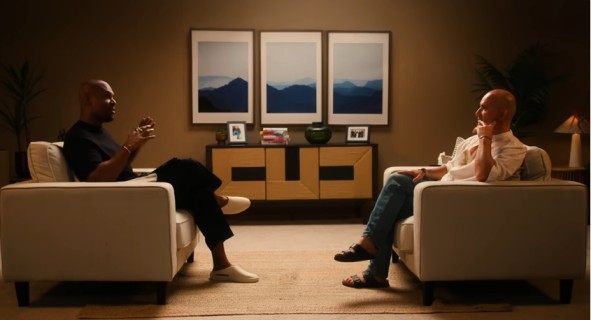
Editor’s Notes: In this deeply personal and moving episode of the We Need To Talk podcast, professional dancer and television personality Louie Spence opens up about the hidden struggles behind his flamboyant public persona. Spence shares a raw account of his lifelong battle with debilitating anxiety and panic attacks, while also revealing for the first time the heart-wrenching details of his mother’s addiction and final moments. From the immense sacrifices his working-class parents made for his career to his experiences during the height of the Spice Girls’ fame, this interview explores the themes of family, resilience, and the internal voice that keeps him moving through the darkness. (Jan 13, 2026)
TRANSCRIPT:
PAUL C. BRUNSON: Louie Spence, we need to talk.
LOUIE SPENCE: Fabulous. Let’s go.
PAUL C. BRUNSON: All right, let’s do it. Now, what I find interesting about your childhood is most parents sacrifice for their children, but it feels as if your parents made additional sacrifices for you.
LOUIE SPENCE: Yeah, 100%.
PAUL C. BRUNSON: Would you say that is the case?
LOUIE SPENCE: Yeah, 100%.
PAUL C. BRUNSON: How so?
Growing Up Working Class
LOUIE SPENCE: Well, I mean, we were from a very working class family in a council house on a council estate, which was fabulous, where I was always dancing around and flipping. I was always very active and I went to a dance school there in Essex. And then when I was 12, the dance teacher said, he needs to go somewhere else. He needs… I can’t do no more with him.
PAUL C. BRUNSON: Interesting, because you were so talented. Really?
LOUIE SPENCE: Well, I had a natural ability. It was very natural to me. So I said, yeah, you could call it a talent. So I auditioned for a stage school in London, which was really expensive, like going to a private school. And there wasn’t a grant system really. We tried to get a scholarship or a grant, but it just wasn’t there.
My parents had just bought their council house. This scheme coming in the 80s with Margaret Thatcher, where you had a chance to buy your houses at quite a low price. Anyway, my parents took this up, unbeknownst to them, I was going to want to go to this school and we didn’t have the money. We just did not have the money. It was impossible.
And I think my mum… it would have been my mum convincing my dad to remortgage. So already he had taken on this huge debt. In them days, it was new to everybody because when you come from that background, you didn’t have the opportunity to get on the property ladder. But because what Margaret Thatcher did bought up all the council houses. That’s why there’s none left anymore. But anyway, it was a great scheme at the time, so he’d already taken on a huge debt.
The Weight of Parental Sacrifice
I mean, my parents worked really hard, both of them. My mom would work cleaning up the school. She’d work nights in a chicken factory packing chicken pies. But my mum was a nightmare as well because my mum would just spend money. So her money, she’d sort of spend it and lie to my dad and we’d have beans on toast for a week. She’d pretend that she had bought the shopping when she hadn’t, she’d bought a new dress or she’d bought a new sofa. So she was terrible. But, you know, I’m very much like that.
PAUL C. BRUNSON: But I have a question just on that. So at a young age, you were aware of this?
LOUIE SPENCE: Oh, God, yeah, absolutely. I mean, I was my mum’s best friend. I was her cover. I was her cover story. I would say that we’d gone to do something. I was her backup. When my dad would say, oh, Mum would say, oh, well, you know, especially when I was at school, oh, I had to buy Louis something for school. She didn’t at all. She got herself a new pair of shoes.
But the thing is, you see, my mum was… my mum and dad got married at 17. They’d been together since they were 11. My mum had three kids by the age of 19, a nervous breakdown after each one. She was on uppers and downers since she was 11 because her mum had mental breakdowns. And my mum as a child suffered really bad. What was anxiety then?
PAUL C. BRUNSON: Okay.
LOUIE SPENCE: And my…
PAUL C. BRUNSON: Probably not diagnosed.
Addiction and Mental Health in the Family
LOUIE SPENCE: No, absolutely not. So my nan, who was on uppers and downers in them days, that’s what the doctor gave you, uppers and downers. Something to bring you up, something to bring you down. She started giving them to my mum at 11. Goodness. So my mum was already addicted.
So after each one of the births, my mom had a nervous breakdown and she would just go on the uppers and downers. So all through her pregnancy she was on uppers and downers. My mum would literally pass out through anxiety. So many things that I see in me and my siblings, traits. And I know they say with these things sometimes, is it nature, is it nurture? I think it’s got to be genetic. I think part of it is nurture, the way that we were brought up.
But anyway, so my mum would treat herself because that’s what made her happy. That was her reward. She needed that because the anxiety and the depression was so bad at times that that would give her a little pickup.
PAUL C. BRUNSON: Okay.
LOUIE SPENCE: So now I’m older, I understand why she did it. Obviously my dad knew what she suffered with, but he was so focused on just paying the bills, looking after three kids and everything.
My dad put himself in incredible debt, which even once I’d left stage school, he was still paying. So I put my dad under immense pressure when I was a child, which I didn’t know. And also, the whole family structure. I’ve got three other siblings. I’ve got three sisters who may want to go on school trips. All these kind of things which no one went, no one went on the skiing trips. There was no money.
PAUL C. BRUNSON: Was the family aware that all the money, in essence was going to pay for your schooling?
Love Without Affection
LOUIE SPENCE: I don’t think they did because they also had what they wanted. Because like I say, my mum would always find a way. This is the thing. And me and my sisters talk about this. We were loved, but we were never shown love.
So we had everything we wanted and needed. My parents worked every hour God sent. We had a beautiful home on the council estate. We had one of the best homes. We had like new windows and like French windows at the back. And my dad… bit of brick wall around the front on the council estate. We’re the only one with a brick wall, with pillars. Loved it. So we had all of this and there’s nothing we wanted for and there’s nothing we couldn’t speak to my parents about, whether it be sex, drugs, whatever. My parents were very young parents. But we were never shown love.
PAUL C. BRUNSON: Okay, and what do you mean in particular?
LOUIE SPENCE: We were never cuddled. There was no affection, there was no physical affection. And also, it didn’t really matter what we did. Like when I went to stage school, then I was in the West End when I was 13 or 14 in Bugsy Malone. My parents were proud, of course, but it wasn’t anything. They would… because they had to get on with their life. They had to get on with paying the bills, looking after my three sisters, going to work.
So, yeah, it was great. Whereas you’d have these showbiz parents who would be there every day at the stage with their kids and that. Not that I wanted it, because I didn’t. I didn’t want that. I was very independent. I didn’t care whether… this is the thing. I didn’t care whether they come to see me in it or not. I didn’t care.
PAUL C. BRUNSON: Do they ever say I love you?
LOUIE SPENCE: No, not when we were children.
PAUL C. BRUNSON: Not when you’re children. So when you reflect back now, right, and you look at Louis as a child, do you feel as if you missed being shown love?
LOUIE SPENCE: I think subconsciously I do. Like I say, we… don’t get me wrong, we were loved immensely. But sometimes when I’d watch films on TV and I’d see parents cuddling their children, or just if I’m out and I’ll see a dad or a mum cuddling their children. And we never had that. And I just sit there and I look at… I think, God, I wonder how that must feel. I wonder how it must feel.
Whereas my husband’s Spanish, very Latino family, he’s constantly cuddling his nieces and nephews. His sisters are arm in arm, they cuddle, they kiss, and he’s very much like that. And for him, it’s really difficult living with me, apart from all of my other things that go on in my life and the way I am, with anxiety and depression. That alone.
We went to this shop once and you put some money… it was an Ann Summers shop and you put money in a machine and you get this thing out. Mine come out and said “cold fish.” And he’s never forgot that. And so that’s what he calls me, a cold fish. Because he’s very affectionate, very loving. Just the warmest, most incredible person. Kind just… he’s just an incredible person and he loves to cuddle. And I’m like a cold fish. I don’t have the ability sometimes. I actually… I can’t do that. It just… I just can’t. Physical thing with my sisters as well. Yeah, my sister. We don’t cuddle. Me and my sisters don’t cuddle.
PAUL C. BRUNSON: It’s learned. Yeah, it’s definitely learned. Can I ask you a question here? Because you’re talking about a time. Because we’re talking about the 80s.
LOUIE SPENCE: The 80s, right.
Growing Up During Section 28
PAUL C. BRUNSON: So I just recently went to go see a musical at the Royal Court. It was called After the Act. So it was about Section 28.
LOUIE SPENCE: Yeah.
PAUL C. BRUNSON: That I was completely unaware of here. And you grew up during Section 28.
LOUIE SPENCE: Yeah.
PAUL C. BRUNSON: Now for anyone who doesn’t know Section 28, let me just read this now because it actually blew me away that this was just 2003 when the legislation was finally over here in the UK. So Section 28 was legislation that sought to prohibit the promotion of homosexuality. Right. So this is a Prime Minister, Margaret Thatcher. Right. And she said at the time, “Children who need to be taught… I’m sorry, children who need to be taught to respect traditional moral values are being taught that they have an inalienable right to be gay.”
Now this was such a mind blowing concept for me because what I realized what Section 28 did is it in effect halted any discussion of gay, being gay within the school system and it sought to punish those and ostracize those. So what it did is it kept people from coming out, kept people from discussing it and it caused heartbreak and it actually caused death. Right. Many people taking their lives. So you were growing up in this time, right, in the UK. So what was your experience?
LOUIE SPENCE: Well, I think what you’ve just hit the nail on the head. I think for the people who were out of my age then, like in my early 20s, it didn’t affect us as much because we were already out and celebrating who we were. And we were… that’s it. You’re not putting us back anywhere.
I think like you say, for the educational system, for the people what weren’t… and we’re learning this through the education system or conversation in the house. Yes, we’re not coming. So that is the pressure on them, pushing them down, whereas we were already… well, we’re not going back in. We’re out.
So I was in a really safe environment when I was young on the council estate. I never felt bullied or when I went to my schools, I was in an environment of that was…
PAUL C. BRUNSON: Yeah, you were safe.
LOUIE SPENCE: I never experienced it. And even on the streets of London, I always lived in central London, so like Zone one. And even walking through the streets, I was always in central London, like around the West End, around Covent Garden, Compton Street. So it was a safe environment and I never felt targeted. I know how many people are and how traumatic it is for them, but for me personally, I never tamed it.
PAUL C. BRUNSON: Down, never felt that way.
Lost in His Own Community
LOUIE SPENCE: So it was a worry and there was a lot of fight for that within the community. But also we had a really big issue of HIV AIDS. Yes, there were people dying. You’d see them one week and the next week they were gone. It was so rapid, it was so severe. It sort of halted your youth, your way.
I mean, you know, people, because of my personality and the way I am and everything, people, you know, presumed, a lot of people presume that I was the right flag, that I took loads of drugs. One, I never took drugs because I was a person what would die. My anxiety wouldn’t let me take them.
I had very few sexual partners. I mean, literally I was in a relationship for seven years and I could count on one hand the amount of people I had sexual relations with. And that wasn’t intimate sexual relations because the fear of HIV AIDS was so strong and having seen so many people die, and I mean we’re talking young, thoroughly fit, healthy men.
Yes, these people who are like Adonis’s and then a few months later you would see them skeletal and then a few weeks later you hear they’re dead. You know, it was like, it was so frightening. It’s like that was a bigger issue for me, I think, and how I was dealing with the community then at that time, because, you know, lots of people I knew died or became very ill.
So yes, Section 28 was an awful thing. But in saying that, where are we today? Where are we today, I’m not a political gay at all. I’m not.
PAUL C. BRUNSON: So if you were to compare Louis the 80s to today, do you feel like that we have advanced, stayed the same, or gone back with regard to gay rights?
LOUIE SPENCE: Well, I think as it stands out, we’re definitely advanced because we can marry, we can have children. So, you know, there’s all these things. The awareness of HIV AIDS is so much broader. People have so much more knowledge of it.
Are people trying to take us back? Absolutely. I’m like, I’m not into politics. I’m as knowledgeable as most everyday people. When you watch the news and see the things that, you know, Trump wants to do with, you know, immigrants, with gays, with any minority, you know, obviously all the things he says I don’t support, you know, they’re just awful.
So they’re trying to take us backwards. So I can understand why the young gays now are far more militant. But like I say, I just feel with the younger generation, with Instagram and TikTok and so much information and misinformation.
PAUL C. BRUNSON: Yes, and disinformation.
LOUIE SPENCE: And disinformation. That’s what I meant. Sometimes I feel as though they’re losing the joy of being gay and being gay. We are a community who are very joyous and celebratory, and we have fun.
We take, you know, we say things to each other in our community that we couldn’t say, but we can say them to each other, like, within your community of, like, you know, if you’re with a group of your black friends, you may say things that if a white person was to say, or you’re in a situation, it wouldn’t be acceptable.
But when you’re in that environment, you can take the piss out of each other and say these things. I’m not going to give examples, but there’s some really dark places, dark, humorous places me and my friends go to, you know, when we’re together. But I just think sometimes we need to have other ways of communicating.
PAUL C. BRUNSON: Sounds like you’re saying.
LOUIE SPENCE: Yeah. So, like I say, I’m lost in my own community.
From West End to World Tours
PAUL C. BRUNSON: Sometimes I think to even help us all understand how you got to this place, let’s even unpack your career, right? Because I think that’s that lived experience has shaped who you are today. So you mentioned that you were once you got out of school, West End. You hit West End.
LOUIE SPENCE: I got a job in the original cast of Miss Saigon. It was, you know, we didn’t know it was going to be such a massive show. And that was incredible because I went from school with, like, young theater people. You know, we’re all, like, thinking we’re fabulous into massive West End hit in the centre of London in Drury Lane, in this beautiful theatre, surrounded by these incredible theatrical people who were singers, dancers, actors.
The humor, the camaraderie, just the joy of what they love doing. It’s a crime that there’s so many talented people that just haven’t had that exposure or that luck, because they would piss over most of the people who are on TV who are comedians, singers, you know, all of the. But they just haven’t got the break. They just haven’t had that moment.
I was surrounded by those people, and I learned so much from them. And then after that, I went and did lots of commercial stuff. When I say commercials, like with pop bands like Take That, E17. These are groups in England.
PAUL C. BRUNSON: And what were you doing with those groups?
LOUIE SPENCE: Backing dance, backing dance.
PAUL C. BRUNSON: Okay.
LOUIE SPENCE: And then I did the Spice Girls world tour.
PAUL C. BRUNSON: We have to talk about that.
LOUIE SPENCE: Which was incredible.
PAUL C. BRUNSON: So then at that age or in that period of your life, was that your goal? Your goal was, okay, I want to be a backing dancer, or was it anything else?
LOUIE SPENCE: No, I mean, I was very fortunate that I could go from doing a West End show to doing a commercial show, because sometimes there’s dancers who are just really sort of more West End based. As in tap, modern, ballet. You know, it’s more of that, you know, where they couldn’t really sort of get down and, you know, they didn’t have the, you know, the club dirt, that kind of thing.
PAUL C. BRUNSON: They didn’t have the thrust.
LOUIE SPENCE: Yeah, they didn’t have that. They just looked a bit ballerina going, you know, with a straight back. Whereas they couldn’t, you know, whereas I was fortunate I could do both.
I come from a very musical family, as in we always had song music on in the house. My mum loved to dance. My mum was a great dancer, like a club dancer kind of thing. And be like, in the 60s, she, you know, she would, like, she’d do the music I’m on. The things she would do was she was a great dancer anyway, so we always have music in our house.
PAUL C. BRUNSON: All.
LOUIE SPENCE: My family love music, we love to dance and, you know, really get down, you know.
PAUL C. BRUNSON: So you were versatile. Yeah, you could go do it all.
LOUIE SPENCE: So it was never that I thought, that’s what I want to do. Obviously, a job like the Spice Girls World Tour comes up, every dancer in the land wants to do it. Because if you think about, we always had American artists coming to England with dancers, whether it be Madonna, Janet Jackson, Michael Jackson.
PAUL C. BRUNSON: And they would bring their dances from, of course.
LOUIE SPENCE: And for the dancers they would be like, oh my God, they’re amazing, you know. But how many British artists went to America with dancers? So a dance act. Yes, you had the Beatles in the 60s. I can’t think of any other British groups, pop groups or solo artists that went there with dancers. You can think of lots of Americans that come here. It didn’t happen.
PAUL C. BRUNSON: That’s true. So that particular, that was once in.
LOUIE SPENCE: A generational thing that’s, you know, even now. Well now I can’t even think of oh, Dua Lipa maybe. Yes, she’s now she has dancers. So Dua Lipa sort of broke America.
The Spice Girls World Tour
PAUL C. BRUNSON: So this particular tour, and I have some stats on this and this, you probably know this better than me, but this particular tour. So this was the 1998 Spice World Tour. 2.1 million people saw this tour. The Spice World Tour was the band’s first large scale multi continent tour. It covered Europe and North America with 97 shows all the way from February to September 1998. And it was the highest earning concert tour by a female group.
So this was bigger than big. So you had to audition, I would imagine for this. And once you found out that you had gotten it, what was the thought?
LOUIE SPENCE: Well, it was amazing because also my best friend got it. The most joyous thing about it was they treated us like, I say you’re a backing dancer, you were a backing dancer. It’s very rarely you got treated really well. Not for the artists fault because the artists had lots to do. They were doing press and da da da, you know, for other groups. They didn’t have time to see if you’re okay, whatever. Do you know what I mean? It wasn’t their fault.
But sometimes the management and the, they didn’t really give a shit about you, you know, you were just, just get on and do it. And the incredible thing as well was they were in control of this tour. Them five girls, really, they were the bosses, okay? They were the bosses. It was them, you know.
So for that reason, I don’t know, that’s why we stayed in five star hotels. We got paid really well, which you didn’t have time to spend. Because you’re always on tour, you ate in the venues. We stayed in these hotels. Bed and breakfast is included.
They were wonderful to us considering you’ve never, you know, up to that point. I’d never seen anything like it, the madness around them. But I’d never seen five people not have a minute. I swear to God. They would be having their makeup done, doing interviews, they would be. There’d always be somebody wanting something from them. It was exhausting to watch.
They were flying. If we were in Paris, say, doing a show, we’d have that day to rest. They’d be on a private jet going to London to do an interview, then going to Belgium, and then they’d be. And then come back and do the show. I mean, those girls worked incredibly, incredibly hard.
And they were so generous with us dancers. They treated us so well. And I think it’s one of the, what is the, that and another job is the best thing I’ve ever done. And also, you know, through it, I gained a really good friend in Emma. In Baby Spice.
We had a very similar upbringing. There was like, I think there was eight years between us in age, but we had very similar families, as in closeness, the same kind of humor. And we became very close, and we still are to this day. You know, she’s just a very unique, incredible soul. She’s a beautiful, beautiful person. And, yeah, when you look back on.
PAUL C. BRUNSON: That tour, since it was so impactful for you, what’s the moment of that tour? What is a moment that you’ll just replay in your mind over and over and over again?
LOUIE SPENCE: There’s so many of them, like, you know, chatting to Madonna, you know, not bad.
PAUL C. BRUNSON: How was Madonna?
LOUIE SPENCE: She was fine. You know, she was just walking down the corridor, going to see the girls, said hello, bumping into Prince, you know, when we’re in Minneapolis, running away from Michael Jackson with Emma.
PAUL C. BRUNSON: Why’d you run away from Michael Jackson?
LOUIE SPENCE: Because Emma doesn’t like big things like planes. The sight of the planes, she don’t like it. Like, you know, and not the Michael Jackson, the size of a plane, but we were in a hotel in Germany and he was in the same hotel and we, he, I think if I remember, he was sort of approaching us, but he had a mask on and did it.
And she didn’t like the look of it, so she fing, we run. So we run away from Michael Jackson because, like, literally, he was all, you know, masked up and everything. She was like, f us. Creature to man.
So, yeah, so lots of, you know, lots of that. I mean, there’s so many situations of that year of my life that were incredible and I got to see the world in style. Yes, I got to see the world in style.
But in saying that, I got to see the world, but I didn’t see anything because I chose not to because of my anxieties. So I only felt safe in the hotel room. I didn’t know where I was going. I didn’t know, you know, so my anxiety stopped me from, you know, going to clubs or, you know, I did it. If we went with the girls and it was safe and we were getting the car or the van Boof, all of that.
PAUL C. BRUNSON: Yes.
LOUIE SPENCE: But yeah, that I look, I do look back on that and regret the fact that I didn’t enjoy that experience. The stage side of it I did. But I didn’t enjoy all these countries around the world because I was too anxious to explore on my own. I wouldn’t do it.
Another thing as well. When you’re on tour, you think you’re going around the world. Imagine, you know, I was single. Imagine how many people you could sleep with. Not one.
PAUL C. BRUNSON: Not one.
Living with Anxiety and Panic Attacks
LOUIE SPENCE: Not one. Not one. And I’d had five star hotel room of our own. We didn’t share. No, I was like one. I was too. Still, I was a bit insecure about myself. Even though when I look back now, I look f*ing amazing. You know, I literally had an eight pack. I was like that, you know, I had an ass like two whole ball bags in an anchor chief. You know, I was, I look great.
But I didn’t have that confidence in myself. And also there was that whole, once again HIV AIDS thing. I just, it just, you know, it just, you know, that did not ruin my sex life, but it stopped me from having casual sex.
And now at the age I am, now I’m with my partner. We’ve been together 25 years. We’ve been married since 2007. Like I say, the most wonderful person in the world, but I’ve actually said it to him, you know, like, I never had that sexual freedom experiences of different partners. I never had it.
PAUL C. BRUNSON: So do you regret having it?
LOUIE SPENCE: Yes, I do. Not for the fact that, you know, my husband is. My husband. My husband is gorgeous. I mean, believe me, everyone falls in love with him. I lucked out. But it’s just there was such a, like I say, there was such a stigma about sex when I was young and I. That’s part of my life that I can never get back. The youth, you know, the spontaneity, I can’t get that back. It’s too late. I don’t, I don’t want to do that now, but it’s definitely something I would have liked to have a lot more variety. I would like to have seen and.
PAUL C. BRUNSON: But sexually, what do you think you have missed out on?
LOUIE SPENCE: Just sex, Just literally sex, just casual sex. Like when people like, you know, other gay friends of mine, I mean, maybe they went through a bit too much, do you know what I mean? I’m not talking. I want to go 100 like that, but I mean maybe more than five or six.
PAUL C. BRUNSON: Okay.
LOUIE SPENCE: And as a gay man, that’s almost like literally putting me in a monastery, do you know what I mean? So it’s, I think it’s just not knowing. It’s that not knowing of what would that have been like with someone like that or as I say, not loving them. I don’t, it’s not about love. It would have just been about sex where my friends, you’d say, oh God, you know, and I’d be like, I’d palpitate for them thinking, oh my God, were you safe, did this? And you know, and are you going to go and get tested?
You know, straight away I would be thinking, oh my God, what, what if they didn’t? And what if. Yes, you know, and so no, I just won’t do it. And so I didn’t. So. And now, you know, now the kids, they’re just on prep. For them, they don’t even know that experience because they can just take a tablet before they have sex and continue taking it.
So instead of the people are on combination therapies to actually, you know, sort of bring the virus right down. So they’re non detectable and can’t transmit. Even if you’re not HIV, you can choose to go on prep where you can just take a tablet every day and go and have, I think it’s like very, very high percentage of like 97%. You know, there’s still a risk, I think. Yes, but so these kids now for them, they don’t have, it doesn’t have that feeling. So they can be more liberal.
So because of my anxieties, which I suppose I was constantly, constantly battling all the way through my career to getting on a plane, to getting in a car with someone who drove that I didn’t know, didn’t feel safe. Crowded spaces, places that are too bright. Like I’ve never been to a concert, I’ve never been to a concert where I’m either not in the pit or been on the stage because I can’t even now.
And I’m a lot more, I’m so much better with my, like, anxieties that it’s still something I choose. I could, I could put myself through it. But there are some things, I suppose what are still avoidance. I choose not to. And I suppose it is me saying I’m so much more advanced, I can actually do those things now. But really, I suppose deep down in the back of my head I know that I’m still avoiding. So the thing.
The Origins of Anxiety
PAUL C. BRUNSON: Absolutely, you know, can we spend a moment on anxiety? So I have a. I have. Might be more. I have a very good friend of mine who literally sent me a message yesterday and she just suffered. So she’s in her 30s, she just suffered her first panic attack and she’s completely freaked out by this because she was driving and that’s where she suffered the panic attack.
And we were exchanging some messages and I told her, I said, this is interesting. I’m getting ready to interview someone who has long suffered from anxiety. But on top of that, I have now interviewed multiple people, Nadia Hussain, Perry Edwards, et cetera, who have suffered not just anxiety and anxiety disorders, but panic attacks and high level of anxiety.
And what I found is that it comes from this combination of things. It’s part genetic, it’s part circumstantial, it’s part, you know, are you exercising, have you slept enough, et cetera. But when you think about the origin of your anxiety, where do you believe it’s come from?
LOUIE SPENCE: I think it definitely is partly. It was nurtured from my mom.
PAUL C. BRUNSON: And.
LOUIE SPENCE: Looking back now to see the times, you know, all the time she was anxious and having anxiety and her anxiety would then be put on us so we couldn’t do things because it would make her anxious, so she would stop us from doing things. Like I say, we had a great childhood, but there were certain things that, you know, we couldn’t do because it’d be too much of a worry for her thinking that we were there or there. She couldn’t cope with that.
And then I remember my mum used to go out every Wednesday night to this club with her friends and I would wait until she. Literally like an 8, 9 year old child. I remember waiting until she was home. I couldn’t sleep. I’d be at the window waiting for the lights of her friend had this car and it had square lights, the headlights. And I knew those headlights when they come down the road. I couldn’t go to bed until she was home. So there was them kind of things that.
PAUL C. BRUNSON: And how was that, Louis?
LOUIE SPENCE: Because I thought she was going to die and I thought if she died, then what would I do? Because my world would end. So I was always frightened of her dying. And my dad, I was always frightened whenever they went, whenever they went out anywhere, I’d find they’d have a car crash. And this is at a young age of like 7 and 8, you know, and it just continued, you know, So I always thought that they were going to die, that something was going to happen to them. And then, you know, then what would I do?
You know, I think. I think lots of kids experience that. I don’t know, maybe I’m saying that I don’t know. And then as I got older, my anxiety manifested in very physical anxiety. I would get the complete, you know, the body rush. I could feel my ball shrinking, going inside me. So that’s when I knew it was kicking in because the adrenaline would take my balls inside me. So that’s when I knew it was really coming bad.
Then I’d get the dry mouth, the tingly tongue, and then I’d start to lose my eyesight like that. Then I couldn’t see and then I couldn’t breathe. And then I couldn’t get my breath in like this. And then this is happening like this. Then I’m going to die. My heart’s going 100 miles an hour. I can’t see, I’m dizzy. I’ve got numb fingers, I’ve got numb toes, I’ve got pins and needles in my tongue, you know, literally. Is this never going to end?
It does end, you know, but the first one, like, say for your friend, that is the worst one. Because then unless you’re really strong, you’re waiting for the next one. Exactly. Then you’re in the cycle.
PAUL C. BRUNSON: Exactly.
LOUIE SPENCE: See? And my cycle, okay, my cycle has lasted from when I was 8 until now. Apart from, I can tell you, the last six months I’ve been physically anxiety free, apart from one night about four weeks ago where I had the heart racing. But apart from that, the last six months have been really good.
And this is how you know when you suffer with physical anxiety or anxiety. Because it’s every day, it’s every moment of your day. And I have a. I have this thing, it’s like a heart monitor thing. You see it on TV, It’s. You put your fingers on it like this and it shows you an ECG.
PAUL C. BRUNSON: Okay?
LOUIE SPENCE: So I got that because I’d been to the heart specialist for the last 16 years, once a year, convinced, you know, never even though convinced there’s got to be something wrong because I wake up at night, literally, or just before I go to sleep, my heart would go to 140, 150 beats. And I have it on the. I, you know, I could show you. I’ve got the thing. And I showed it to the heart doctor.
So you imagine being a. You know, my resting heart rate is in between 55 and 65. So all of a sudden, from nowhere, boom. My heart, literally not even. I get a little bit of a warning. Like I say, I get this little, little feeling the adrenaline is going around my body, and then I’m like, f*, it’s here. And they say, you know, just let it happen. Just go through it. Just, you know, don’t, don’t, you know, don’t fight it.
You try not f*ing fight him. When you feel like you’re going to die and your heart is going to burst out of your chest, you can’t breathe, literally, you’re in a cold sweat.
PAUL C. BRUNSON: Right?
LOUIE SPENCE: Literally. And you’re completely relaxed. You’re just about to go to sleep and then.
PAUL C. BRUNSON: And that.
LOUIE SPENCE: Literally.
Managing Anxiety and Depression
PAUL C. BRUNSON: So what does someone do in particular? What does my friend do? So she’s had this one. She’s now fearful it’s going to happen again. She’s scared to drive. Right. How have you been able to.
LOUIE SPENCE: I haven’t.
PAUL C. BRUNSON: You haven’t?
LOUIE SPENCE: I haven’t. It’s just part of my life. It’s just part of who I am. I. I manage it and that’s it. I’ve had psychotherapy, acupuncture, cranial osteopathy. I’ve had everything. And then I went on when I was 45, I think it was. I went on prescription medication because I got to a point where apart from the physical anxiety, I suffered really bad depression. Really dark.
I mean, it’s like when people say dark cloud, it really does feel like that. It’s just like a. Darkness sweeps over you. It’s just like you’re in mud and everything around you. People can’t get in. It’s just. It’s just a mist. Like my husband would. And I would be like, I couldn’t care if he was there. I couldn’t care if he left me. I couldn’t care if I was on my own. And my. I just couldn’t care because I’m in such. I’m in so deep in this hole, I can’t get out.
And I’m in my head, in my body, I’m trying to get out. I’m trying to get out of it. And in my head I’m saying, come on, get out of it. You can get out of it. You’ve got out before, get out of it. But it’s in my head. It’s like there’s two. Two people talking. The one which is trying to be rational and the one what’s got control.
Anyway, it got really bad when I was about 45. My mum had died in 2013. I became famous in 2010. It was really intense, which was, you know, a whole nother story. My life had completely changed financially. Imagine being some of anxiety, being well known and that you’re known for being really open and gay in camp and loving everybody, where you can’t even get on a train, go through a tunnel, go to a concert, go into a supermarket before that.
So now imagine that you’re in this environment. Let’s say I go into a TV show, I’m fine like here. This is my safe space now. I know I go out of here, I’ve got a car to get in, that gets me home, you know?
PAUL C. BRUNSON: Yes.
LOUIE SPENCE: So.
PAUL C. BRUNSON: But the unknown.
The Weight of Performance
LOUIE SPENCE: So now imagine being in the street where people, oh, my God, I love you. Do the splits for lifting your leg up and you’re trying to be all right, but inside you’re feeling it, it’s going. You’re like, I need to. I’m going to pass out and something’s going to happen. So you need. I’ve got to go now, girl, you know, I’ve got to go and do this. I’m going to spin off, you know, and you’ve just got to run to a safe place.
And I’d always not gone on medication because I always thought I could. I always thought, I can beat this. I’m not. I was always having a battle. I was always like, you’re not going to get me, you know, I don’t need medication. I’d seen my mum on medication, I’d seen my siblings on medication.
Anyway, I finally succumbed to taking medication because I look back on it now, I look upon it as an intervention. That’s what it was. It was either that or, I don’t know, like I said, when people say, you get that point, you know, they are to. Are you suicidal? I wasn’t thinking about killing myself, but I thought I’d be better off dead. So I wasn’t thinking about killing my. I didn’t. I wasn’t. No plans, right? But I just thought, I cannot live with any longer like this.
There’s also that battle you have in the outside world, you know, and like, why, why, why, why can’t I get through this? Because now I’ve got, you know, I own my own house, I’ve got money, I’ve got nice cars, I’ve got Rolex watches. I’ve got nothing to worry about. All those things you think are the things like most people, their worries are financial mortgages, paying the bills, paying for the kids. So that’s taken away, but it’s still there. So all these things were taken away and it was still there.
And then when I did take the medication, I wouldn’t. I would say it resolved the place I was in. Because what it done, it gave me nothing. It gave me no emotion. I mean, I didn’t cry much before, but unable to cry, no empathy, no emotion, didn’t care. Literally, someone could have dropped dead there and I would have stepped over and that could have been someone in my family. I’d have been. It’s inconvenient. Okay, let’s call the undertaker, get them buried, you know, had no drive to do anything.
So I, then I. Then I did nothing. I wanted to do nothing. So that was great because I had a rest from this constant, you know, having to perform. Not that, but the constant anxiety.
PAUL C. BRUNSON: Oh, okay.
LOUIE SPENCE: No, not just the, you know, living with that. It was constant at that point. It was constant. It was just a constant churn. So it gave me, it gave me a break from that.
From Spice World to Pineapple Studios
PAUL C. BRUNSON: Now this adds up. So, so, okay, so can we go back? Coming off of the tour, Spice World, this is massive. You then I would imagine, continue to.
LOUIE SPENCE: I went into Cats for a year. Magical Mr. Mistoffeles in the West End.
PAUL C. BRUNSON: Another huge win.
LOUIE SPENCE: Yeah. Then I decided, then I decided that was it. I can no longer. I’m too old to dance behind back in, you know, be a backing dancer. I don’t really want to do the West End anymore. I don’t know what I want to do. I’d done everything I wanted in my dance career. In a sense. I didn’t want to be one of those old dancers still trying to like, you know, hoof it with the 18 year olds. I was 28 at this point, 29. You could still go up. I didn’t want to.
And that’s when I went to start to work at Pineapple. So I was in an environment that I loved, still surrounded by dance and the people I love, you know, I didn’t care what people thought that I’d been like a Spice Boy, you know, lead a West End show in Cats. My sophomore is one of the sort of mate, had a big dance and everything. I didn’t care that didn’t bother me at all. I’ve never bothered what people thought. But why would.
PAUL C. BRUNSON: It sounds like you’re saying that some people carried shame around that.
LOUIE SPENCE: Oh, my God, yeah, absolutely. You’re now behind the desk, you taking people’s money when they go in. Whereas before you were on the stage with them, you were, you know, and now you’re sort of in their eyes. Some people wouldn’t do that because they’d be like, people are going to think that, you know, I’m a failure. You know, I didn’t really care what people thought because I was. I’d had everything I wanted. And actually, it was a really safe space for me, and I felt really good working there.
PAUL C. BRUNSON: And Pineapple was an esteemed.
LOUIE SPENCE: Oh, it’s been going since 1978. I mean, it was like, you know, all the West End shows rehearsed there. Like I said, we had, like, you know, Madonna, Beyoncé, you know, Spice, every. Everybody went and rehearsed there. It was a great place. It was a great place. And I loved it. I absolutely loved it.
Then they did the TV show 2010. You know, it’s going to be on Sky. I didn’t have Sky. I was like, how many people watch Sky? You’ve got to pay for it. You know, it’s not on 1, 2, 3, 4 or 5. Who’s going to watch it? Don’t care. Literally, they filmed us. There was no scripted. Absolutely not. We had a cameraman with each person, who, like, there was me, the manager, there was Andrew, there was someone else. They just follow, and then they’d edit it all. There was. They never asked to create a scenario. Apart from. We put dance routines in it, which were choreographed, obviously, but apart from that, everything was totally as. It was. The people coming in, the camaraderie. We had the. And it became a hit.
PAUL C. BRUNSON: It was.
LOUIE SPENCE: And then before I knew it, I mean, it started in February 2010, and then in April, I was on Jonathan Ross as a guest with Gwyneth Paltrow. Who else was on it? Oh, I can’t remember. Anyway, but, like, going through. I was like, what? You know, I found it funny, you know, and then it just went mad. For three years, 10 through 13. Just went mad.
The Celebrity Circuit
PAUL C. BRUNSON: Louis. I was going through how many television shows you’ve been on. Do you know how many TV shows you’ve been on?
LOUIE SPENCE: No.
PAUL C. BRUNSON: You have no idea. Okay, so this is. I’m literally scrolling because this is how long the list is. So, okay, you were on Louis Spence’s Show Business, right? You were on this Dancing on Ice.
LOUIE SPENCE: Yep.
PAUL C. BRUNSON: Celebrity Big Brother.
LOUIE SPENCE: Yeah.
PAUL C. BRUNSON: The Jump.
LOUIE SPENCE: Yeah.
PAUL C. BRUNSON: Celebs on the Farm.
LOUIE SPENCE: Anything with celeb on it. I was there. Just wheel out the gay with the high kick and the speech impediment. Get him on there, he’d give us five minutes of something. Anything with celeb in it. Yeah, I was there.
PAUL C. BRUNSON: You, you were on air, all of this?
LOUIE SPENCE: Yeah.
PAUL C. BRUNSON: So. So when you think about that period, okay, do you feel like you had to play a role or were you doing you?
LOUIE SPENCE: No, I was being me. Look, there’s, there’s the sides of me, like I’ve spoken about a lot here. The, the dark side, which I think I’m not the only person. Lots of people suffer in silence. Not in silence, but privately, you know, with, especially in the industry we’re in.
That person you see on Pineapple and they show 100% is me. That’s just another side of me. That’s when I’m in that environment, like when I was coming in here chatting to the kids, I suppose that I am partly performing, but I like it because I can see them giggle or laugh or may say something a little bit uncomfortable and I see, oh, yeah, I know that deep down you’re going to go home and go, oh, you never guess what he said. Yeah. And it makes me laugh inside because I can see I give him a little bit of joy.
PAUL C. BRUNSON: So you are a performer at heart. There’s no question about it.
LOUIE SPENCE: 100%.
PAUL C. BRUNSON: You know that feeling when you’ve just committed to starting something big and then it hits you, how am I going to pull this off? When I started my matchmaking business, I remember sitting at the kitchen counter one night with my computer and 15 tabs open, trying to figure out how I should market and sell our services. It was pretty overwhelming and that continued for a lot of the first year. And I look back now and think, if I’d only had our sponsor, Shopify on board, I’d have had a much softer start to entrepreneurship.
Shopify helps you sell your business, but also makes you look and feel like you’ve been doing it for years. It has hundreds of templates to pick from and AI tools that help you with writing product descriptions or enhancing photos. Sort of like having a full time team before you’ve made your first hire. If you’re starting something big, visit shopify.co.uk/needtotalk to sign up for your one pound per month trial. That’s shopify.co.uk/needtotalk.
Celebrity SAS: A Mental Challenge
Let’s then talk about SAS. Right, so SAS. Because it literally is celebrity SAS.
LOUIE SPENCE: Exactly. So I thought, it’s got to be for me. It’s got celebrity in it. I’ve done every other blood work.
PAUL C. BRUNSON: Right. It is you. Yeah, it is you. So with Celebrity SAS, you departed what a lot of people thought was early.
LOUIE SPENCE: Yeah.
PAUL C. BRUNSON: Okay, so what was the reason why you parted early?
LOUIE SPENCE: I’ll tell you. I spent more time doing psych tests, going into it. They’re very diligent, I’ll give them that, you know, at the channel and everything. They make sure you’re psychologically up for it. You know, I told them all about my history of the medication. I come off it and actually I was feeling mentally really strong because I wasn’t on medication. I was in control. I had emotion back, I had empathy back. I had all that and I was feeling, you know, it’s been six months and I’m, I feel fine. You know, I’m really in control of this. So I thought it’d be a great way to challenge my mental capacity.
PAUL C. BRUNSON: From what you’ve told me already, I mean, my God, I can imagine how challenging this would be to walk away.
LOUIE SPENCE: And not being on medication.
PAUL C. BRUNSON: Not being on medication, the anxiety and that you’ve suffered. You’d actually had been off TV for a few years as well. So this is, you’re going back into something. So this is brand, not brand new, but this is new to you?
LOUIE SPENCE: Well, I mean, the thing is, I mean, I, I, you know, I’ve done bits and pieces of TV, very like, you know, a celebrity Antiques Road Trip, you know what, you know. But this is a big format show.
PAUL C. BRUNSON: Yes.
LOUIE SPENCE: So, I mean, but I promise you, I promise you, the reason I chose it was I thought, right, I can do some mental challenges here. I went into this with not the intention of I’m going to, you know, bring my profile up. You have your social medias for that. Work on TV doesn’t really pay you any money anymore. I get more money from doing things on social media, like commercials on social media than I do from TV. TV pay you such a low fee because it brings your profile up that then you may get these other things from it.
PAUL C. BRUNSON: And even on that note, do you feel like those fees have been going down over the years?
The SAS Experience and Breaking Point
LOUIE SPENCE: Look, the bigger the pool, as in all of the shows that are there now, Love Island, you know, Towie was there, but all of these shows, Made in Chelsea, so you think the pool gets bigger and bigger and bigger and bigger. There’s always somebody going to do it for less and less and less and less, you know, and all people care about now is literally how many people, even TV companies, how many followers you have on Instagram or Twitter or TikTok. What’s your reach?
Anyway, so it wasn’t for that reason. It was to see if I could get through these things. Got there, got all the uniform on, you know, get started. So then they line you up on this grim beachfront in Wales somewhere. Put the bags over her head, the black mask thing. And then, you know, I sort of put it like that. So I’m looking down like that, and I can see the feet coming, because I thought, I’m not going to. You’re cheating, Louie. You’re cheating, obviously. And also a bit claustrophobic.
So, you know, I knew when gone along there, pulled that one off, pulled that one off. Pull. Now it comes on. Boom. Pulled my arm. Oh, my God, it’s so awful. And it’s not that it was a fantasy or anything, because it’s not. But it just won’t remind me of. So as soon as he ripped my mask off, I went like that. And I thought, oh, he’s got lovely eyes. Really, really blue eyes. And then he goes, okay, what’s your name? You know, all like this. And I was like, oh, it’s like gay porn.
So in my head, I’m literally going. I’m literally going in my head, oh, get down and give me five. You know, I’m just literally, you know, I’m on Pornhub. And I thought, no, don’t. I already had it in anyway. And he said, you know, what are you. And I just. And he said something. And I said, oh, I’m too old for something, whatever. Anyway, do the first task. So that’s. So that’s in my head now. Yeah. I’m like, why is it in there?
PAUL C. BRUNSON: So the person. What is this, Sergeant?
LOUIE SPENCE: I don’t know. The soldiers.
PAUL C. BRUNSON: The soldiers.
LOUIE SPENCE: The butch boys.
PAUL C. BRUNSON: So you’re thinking, I think you’re gay porn. That’s. Yeah, that’s what you’re thinking. Okay.
LOUIE SPENCE: You know, and it wasn’t. Don’t get me wrong, I wasn’t fantasizing about it. It was just. It’s such a typical gay porn scenario. Soldiers in a barracks and, you know, and he’s going to shout, you. And he’s, you know. Yes, that’s it. I’m sure, like, in straight porn, they have a similar kind of thing.
Anyway, so then the first task we do, they’re like. They say, right, you know, you’ve got to go on this platform, jump into the water. And I thought, that’s fine, I don’t mind that. And I thought, well, the bleeding that went before us, the soldier, he jumped in, swam, he didn’t have no life jacket on, he didn’t have no drag. So in my head I’m thinking, that’s dragging everyone. You can’t go as fast as you can, but you’ve got a life jacket on. It’s keeping you buoyant, and you’re fighting against the. And I thought when he jumped in, like I say, the American one, really easy on the eye. Swimming like Flipper gets to the boat. I thought he had no drag, he had no jacket on.
So I’m thinking, you all right, darling? I understand health and safety. I get it, I get it. So anyway, when it comes to me, I think, right, I know what I’m going to do. I’m going to get the tightest jacket I can get. So it’s not bagging, so the water’s not going to go through, so I don’t have that drag, okay? And I’m an all right swimmer, you know, I love swimming.
Anyway, so I jump in, I start to swim, and I’m fine. I’m like, yeah, I’ve done this at the pool. Obviously didn’t have the army outfit on and didn’t have the boys chasing me in the boat and all that. So I’m sitting there thinking, and literally I’m thinking, shit, I can’t breathe. And I swim further than this, you know. All right, I was in the sea and I thought, I can’t breathe. I swear to God, I promise you, I’m not making excuses. I could have got there to that boat. I mean, I was about 50, like, about 50 centimeters away or a meter away from it. I had stopped breathing. It was literally I was pushing my lungs up. As soon as I got on that boat, I went like that, and I could feel my lungs go like this. So me thinking, I’m being clever. Yes, it up. I see it anyway.
PAUL C. BRUNSON: I see it.
The Physical Challenges and Self-Doubt
LOUIE SPENCE: So anyway, I thought, all right, fine, that’s fine. And then the next task we had to do, we had to go and save some people in a little hut thing, give us a grenade and this thing and, you know, said gave us a risk that this is guy you got to save. Okay, well, we had to run up a hill to get there. So I’m running up this hill and we’ve got action man, the American, I forgot his name. Brad. Chad. I don’t know, it’s very American. Is it? Brad, Chad, both of them, whatever. Two others.
Anyway, he’s running up there with this, you know, like I said, really peachy ass. And he’s running up there in his tight pants. And also I’m thinking, you know, is it really necessary they wear that tight Lycra top and those trousers? Because I’m sure you wouldn’t have those in the SAS. I’m sure there’s Lycra in those just in case they need to bend up and down quickly so it doesn’t rip.
Anyway. So anyway, I’m running up this hill and I’m knackered. And I’m thinking, why am I so knackered? I’m with Chloe, the girl who did love. I love the girl.
PAUL C. BRUNSON: Oh, yeah, Burrows.
LOUIE SPENCE: Yeah. So I’m running up and she’s in front of me as well. And I’m thinking, hold on, what’s going on? Maybe it wasn’t that jacket. Maybe I’m just really unfit. I was unfit. I didn’t think, you can do it. I thought. And I was really surprised with myself. I was like, oh, my God, this is bad. This is really bad. You can’t even get up a bloody hill. You know, what is. What’s going on with you?
So in my mind, I’m thinking, I’m not going to get through this if I can’t do this. And they made it very clear at the beginning that you’re a group. This is a group thing. So you’re a unit. If you need to go for a shit, you’ve got to wake someone up and they’ve got to come and sit outside while you drop the kids off. Do you know what I mean? Literally. And. And I thought, well, I’m going to be getting them all killed because I just feel physically. And this is the beginning.
I thought, they give us this thing, you’ve got a joust with this, and then blow them up after. So we go running in there like that. I’m like, all right, darling. Right, don’t worry about that. I’ll get the door. Oh, the legs aren’t quite as strong as they used to be either. Boom, bang the door. And we go in. So we’re searching for this guy like this. And then, oh, it’s not him. So it’s not him. Chloe to lead him. So we thought, right, leave him. It’s not the guy. It’s not the guy with the picture. Go, right, we find him, right?
In the meantime, there was someone else. And then there was some girl somewhere. I’m like, girl, get out. Just get out. So she gets out and I bomb him, I think, right, ships, how fabulous are we? We got him. We’ve blown it up, right? Well, as soon as they get out, they start shouting at us. Every life matters. You just blew up innocent people. And she was, you know, pregnant or something. And I thought, oh, great. So now I’ve just killed two people. And the pregnant woman. I thought they could have been terrorists. They were going to blow us up. I didn’t hear them say every life matters. I mean, even if they’re going to kill you, it matters. I just killed them.
PAUL C. BRUNSON: All right?
LOUIE SPENCE: I thought, well, maybe. And I thought, well, what with my, you know, lack of breath, getting up the hill, obviously, you know, I’m going deaf. And I’ve just killed three people and a pregnant woman with a child. I thought, this ain’t for me. This ain’t for me. No.
And also I. With all the others what were on it, we sort of had this. We did meet and we all turned. They. Some of them were so enthusiastic and really, really wanted to do this. Now, don’t get me wrong, I wanted to do it right. But like I say, partly it’s a job. You know, there’s part of that. And for every one of them, it’s also a job, and it’s going to do things, whatever. And like I said, if I’ve been thinking of my profile, maybe I would have pushed through and thought, you know, listen, the last thing I’m thinking about is my profile. I’m thinking about me surviving.
And for me to survive, I made the right choice to leave. And I believe I maybe would have got to a place where I would have cut up and be. I don’t care off. I’m not, you know, and I didn’t want to get there and make them suffer as well, because, you know, some of them, this was really their dream. Like, you know, Lucy was so into it. Lucy Spraggan. Really, really into. As was Adam, the guy from Love Island.
PAUL C. BRUNSON: Colored.
LOUIE SPENCE: Yeah, Bimini.
PAUL C. BRUNSON: Bimini.
LOUIE SPENCE: You know, Bimini was, you know, and. And it made me realize something I didn’t. I didn’t have that, what they had for this job.
PAUL C. BRUNSON: That’s all right. If you’ve made it this far, I know you’re loving the conversation, so please do me one small favor. Hit that bell icon. Join our community.
LOUIE SPENCE: Thank you.
Losing His Mother to Alcoholism
PAUL C. BRUNSON: But, you know, hearing this, what I didn’t realize is what had happened in your life preceding you joining SAS and two places that I like to end with, right, and you mentioned, actually, you mentioned both of these people, but you mentioned your mother in there. You mentioned your mother passing away. And I’d like to, if we could just talk about how that impacted you.
LOUIE SPENCE: I mean, I’ve never spoken about this anywhere before. I mean, when my mum passed, like, literally about two weeks later, I was on Lorraine and she said, “Do you want to, you know, do you want to say anything?” And I was like, absolutely not. No, none of anyone’s business. I’m not going to have people giving me sympathy because my mum’s died, you know, I don’t want that, I don’t need it.
But. And I’m sure, I’m absolutely sure, like I say, I’m very close to my family and I’m sure they won’t mind saying the circumstances. I mean, my mum was an alcoholic, but she was a functioning alcoholic. My nan, her mum died of alcoholism. My nan’s twin sister, my great aunt, my mum’s aunt died of alcoholism. My uncle, my mum’s younger brother just died of alcoholism.
So. But my. My mum was always, when I was growing up, she was always glamorous. She was beautiful. I mean, she had a great body, you know, she was really glamorous. She was, you know, and I suppose a gay man, a gay boy. You know, when she used to go out, she’d wear, in the 80s, these tight tube dresses and beautiful, like, stiletto heels. And my sister’d sometimes be, “Mum, you can’t go out like that.” I bet on Mum, you look fantastic. She just looked stunning. She looked beautiful.
So my mum always struggled, I think, and this is where I think we. I get it from. I think she was always looking for something that wasn’t there, happiness that wasn’t there. Anyway, I was in London a lot, so I didn’t really notice. My mum started to drink because my mum, when we were younger, was very military. She’d have two Bacardis and Cokes wherever she went that was the limit. Two Bacardis and Coke.
PAUL C. BRUNSON: And.
LOUIE SPENCE: And she’d have a packet of 10 number six, which were a packet of cigarettes. And that’s all the cigarettes she would smoke. She wouldn’t drink anymore because obviously if she drunk anymore, she might be sick. It might make her feel anxious, she might, you know, all of these things. Why I’ve never drunk, why I’ve never taken drugs. The control.
PAUL C. BRUNSON: Yes.
The Loss of His Mother
LOUIE SPENCE: So she only did what she was in control of. I didn’t really know that she had been drinking as long as she had and as much as she was. So she had got to the point where she needed alcohol to get through the day. So if she didn’t, she’d wake up in the morning. I didn’t see that.
I go home one day, like, you know, from London. I go and I look at my mum and I think she looks a little bit sallow, you know, a bit. You know, she’s always, like, got quite a nice tan, but she just looked a bit sallow. And I was like, “Mom, you look a little bit. You feel all right? You look a bit, you know, pasty a bit.” “No, no, no, it’s fine.” Stay there. Wake up the next day, yellow.
I thought that there’s something not right there. I hadn’t put two and two together, right? I took her straight to the doctors who suggested I take her to A&E. And then the doctor in the A&E took her behind this curtain and started to examine her. And I’m the other side of the curtain and I hear, “Oh,” he goes, “tender there.” And then he says, “Well, yeah, Mrs. Spence. Well, you were told last year that if you didn’t stop drinking, then, you know…”
She was told the year before she had cirrhosis of the liver, right? And she didn’t stop drinking. And then after that, they admitted her to hospital and I was doing pantomime and I got a phone call on 2nd December. We were told that she had cirrhosis of the liver, she had damaged the liver. Part of her liver will never function again. Right.
This is not a shock to me because she’d have about five years because she had damaged the liver. And the liver normally can replenish itself, but where it’s that damaged, it can’t. So for her age and what liver she has left, the life expectancy not great, not great. But, you know, okay, we can deal with this.
We go home, have tea. About two hours later, they tell us, “You have to come back up to the hospital now.” We’re like, “What? We’ve just left.” We go to the hospital. And they take us into a room. My dad and my sisters, we had no idea this was coming and said, “Do you want to resuscitate her?”
And we’re like, “What? You just told us two hours ago she got five years, you know, and now we’ve just gone home for two hours and come back and you’re asking about resuscitating her.” And I was like, my dad was beside himself. I mean, complete shock, you know, there was no sort of buildup to it.
Anyway, I actually can’t remember what was said. I think we said, “No, we want to resuscitate her.” I think we were so shocked. Anyway, we went back into the room. When we went back into the room at this time, she now had this full mask over her face, like a snorkel mask, but completely over her face with this tube coming out. She’s on an oxygen machine and you can see the levels of oxygen going like this.
So anyway, we stay there. They’ve given her morphine, so she’s a bit in and out of consciousness and then she tries to take the mask off of her face. So without this mask she hasn’t got oxygen. So she’s going to die, right? With this mask, you know, thinking, you know, she leaves it on, then she’d get a bit better and then, you know, but if she takes it off now, the oxygen’s so low, she will die.
So then I’m pulling this mask back on her face, pushing it on her face, calling for the nurse. No one came, right? No one came. We were calling for them. No one came.
Anyway, you’ve got to think. So she’s been totally on morphine, like totally out of it. Sort of like this. I swear to God, she sat bolt upright, took the mask off and said, “I’ve had enough.” And it’s like, “Mum,” I said, “you know, if you take this mask off, you’re not going to be able to breathe.” She said, “I’ve had enough.” As clear as clear.
And like I say, this whole time she’s been like this on the oxygen. She sat bolt upright. Put it down. That’s it. She laid down within 20 seconds, 30 seconds, literally said, “That’s it, I’ve had enough.” She went like this and there’s this horrible gurgling sound. It’s like a gurgle. And then just boom, she was dead.
And I was very matter of fact, as in she was dead. I looked at her and I said, no longer than two or three minutes. I said, “Right then, come on, let’s go.” Got everyone out. My dad said, I said, my dad as well. I went, “So what do we do then?” “Oh, you need to get a birth certificate, that’s up there, you know, death certificate.”
And like I say, it didn’t really hit me till about three or four years after. Then I realized she wasn’t there. And that. Could I have done something? Could any of us done something?
Wrestling with Addiction and Choice
But you know, the thing is when people die of an addiction, it’s really hard. Because you think, you know, she chose that over my dad, over me, over my siblings. Now, even though we weren’t shown physical love, I know how much my parents love us and I know how much my mum loved all of us through the sacrifice and everything she’d done for us.
It’s still hard to battle with the fact that, you know, to not blame them for choosing that over you. I think, like I say, I always said my mom is her own person, she can choose. That was her choice, you know. And I try and separate it from being my mum to being a human being. And I could make those mistakes, anyone could, and people have, but it’s really hard.
If she had chose, you know, you hear about people, what have got through it, why didn’t she? You know, like I say, my mum was always searching for something that wasn’t there, a happiness. I think that she found happiness in alcohol because it made her forget. It made her, you know, then it got to that point of no return.
So she’d already gone so far knowing that she’d damaged herself that far. So what’s the point of living another, however many? I don’t know. I don’t know. And you know, like, for my dad, you know, I feel for him and my siblings, but I don’t blame her, you know, I really, really, I promise you I don’t. I’m not angry with her. I’m just sad that, you know, there’s so many joyous things that have happened since she passed, you know.
PAUL C. BRUNSON: Well, one is thank you for sharing that story.
LOUIE SPENCE: Yeah.
PAUL C. BRUNSON: Because I know you haven’t shared that story.
LOUIE SPENCE: I have never. Only because, only because, like, of my family, you know, but like I say, we’re a strong family and I know that my siblings or my dad are not ashamed of my mum. That’s one thing I’m not ashamed of. I’m not ashamed that she was an alcoholic. I’m not, you know, she was an incredible mum. She was a wonderful, wonderful person.
And, you know, I am part of her, as my siblings are. I am the person I am because of her. There was greatness in her and there was love and joy in her. And that’s what I’ll remember, you know, so. And there’s many people in families who have bigger struggles or going through the same, or people going through that and maybe this conversation would made them look before they’ve been given that five years left or they can have a whole life. Yes. You know, you can have a whole life left.
So, you know, I don’t know. It’s their choice. I don’t know. My mum wasn’t strong enough. I don’t know. I don’t know.
Being the Pillar for Family
PAUL C. BRUNSON: You know, I mean, there’s so many questions I have, but just that story alone tells me so much about you and how resilient you are and actually how much of a pillar you have, not just been, I think, to the community, and I say there’s many communities, but in particular to your family. How in those moments, I always see that there’s someone who kind of steps up because everyone else is in this fog.
I’ve had various family members and friends pass away and oftentimes there’s that one person that really steps up and takes responsibility for everyone, regardless of age. And it sounds like you were that person.
LOUIE SPENCE: It’s definitely me.
PAUL C. BRUNSON: Yeah, for your family. Well, then, if I can ask you the final question, but one last before the final that I just have to throw out there is, what I found to be interesting in that dialogue that we just had, is I could see that you’re still processing your mother’s passing. So when you said it took you three to four years to begin to process that, where are you now in the processing?
LOUIE SPENCE: I really don’t know. I don’t think, I don’t think, I don’t think, I don’t know. I don’t think I’ll ever get over it. It’s a part of you that has died, you know, it’s a. I think the bit, like I say, that I do accept and I don’t blame her for, is just. I wish, I don’t know, I wish she could have been stronger or was I too late? I was way too late.
That’s something that plays on my mind. I was in, like, say I was in London, you know, doing all my stuff. I’d come back to Essex where they were. So I wasn’t seeing it, I was just seeing…
PAUL C. BRUNSON: So you see, you hold some of the blame yourself.
LOUIE SPENCE: Not blame. I’m not going to be the victim and say, “Oh, God, it’s my fault.” You know, it was her choice, it was her fault. But I don’t know, maybe I could have, I couldn’t. No. I don’t know. In my head, there’s always that thought of maybe if it had been. But if I’d spotted that and then what if I’d gone to the doctor sooner? And what if. Then I would have just taken her into a bloody, you know, put her in somewhere where she couldn’t get out and she would have to come off the alcohol and, you know, all of this kind of stuff. But it’s not. That’s not how it happened.
PAUL C. BRUNSON: No.
LOUIE SPENCE: And I can’t change that. But there’s still that, you know, there’s still a little battle about that. Like, only yesterday, I was just literally, really randomly, and I haven’t done it for a long time. I have pictures on the, you like, on a sideboard like this. And I picked them up and one was, you know, about 20 years ago, and then one was when working, and I was really looking, really looking and thinking, “Were you doing that then?”
I was really trying to look at her and think, how long was she doing that? I thought she was only. But how. I think, like, say, for me, it seemed to happen in the space of, like, three years. You can’t. You got to drink some to do that in three years.
PAUL C. BRUNSON: Yes.
LOUIE SPENCE: You know, it’s a gradual thing, so it was going on a long time, and I was trying to look for it.
Love Means Letting Go
PAUL C. BRUNSON: But, you know, one thing I think that will help you with your processing is that oftentimes when we talk about love, and you’ve even used this example, is you talk about caring for someone, taking care of someone. That’s love. Love is, “I’m going to be there for you.” But you know what also is love? Letting go. That’s love.
LOUIE SPENCE: Yeah.
PAUL C. BRUNSON: Is saying, “I can’t be more for you than who I am today, and I’m going to love you by letting you go.”
LOUIE SPENCE: Yeah. Yeah. I like, say I. I think. I think I have. There’s just certain circumstances of the situation that just…
PAUL C. BRUNSON: Stay with you.
LOUIE SPENCE: Yeah.
PAUL C. BRUNSON: Yeah.
LOUIE SPENCE: It’s quite hard to let them go because…
PAUL C. BRUNSON: Yeah. And this is something that you can’t do immediately, like on a dime. And this is why the processing is a lifelong journey.
LOUIE SPENCE: It really is. Because this was 2012, December, you know, we’re like 13 years on.
PAUL C. BRUNSON: Yeah.
LOUIE SPENCE: You know, and it’s still. That’s it. I don’t think about it a lot. That’s the other thing. I don’t think about her a lot. In a sense, I do, but it’s not like, you know, when it first happens, you know, you feel guilty if you don’t think of them or you, you know, just not when it’s their birthday or whatever. But you never know it’s going to come and get you again. That’s the whole thing.
PAUL C. BRUNSON: Yes.
LOUIE SPENCE: You know.
PAUL C. BRUNSON: Yes. And I think this is why conversations like this are so important, because people will hear this and watch this and say, “You know what? I’m not alone in this. Here’s someone else who also is suffering.” And I think that that awareness is the beginning of how you manage.
LOUIE SPENCE: Yeah.
PAUL C. BRUNSON: And what’s great is you have the awareness. You have also experience, because you’ve experienced with different medications, et cetera. But more than that, you have someone who loves you.
LOUIE SPENCE: Oh, God.
PAUL C. BRUNSON: You multiple people who love you.
LOUIE SPENCE: Yeah, but my husband is, like I said, my family. I mean, that’s one thing I wish. And look, this is a… People say, what a stupid thing to say. You can just do it if you want to. I wish I could show my husband how much I love him, you know, because sometimes I just feel that he doesn’t feel it, because I understand why.
But like I say, if there is a God, and I’m not a believer in God as such, I believe there’s some kind of energy or whatever. I mean, you know, he has come from there because… And he will hate me saying that. And he… Because he’s so humble and so… But he’s, you know, he’s such a gentle, kind, loving, just the… Honestly, just a really wonderful person that if there is somebody or something out there, they have sent him to look after me.
And, you know, I just wish I could show… And like, let’s say people say, well, just do it. It’s hard when your makeup is the way you are. You just… It’s just… It’s just, you know.
PAUL C. BRUNSON: You know, I suspect that he… He knows that you love him. And I think another great step towards that is allowing him to see this.
LOUIE SPENCE: Yeah. Oh, see, but I don’t know if he’d get angry I spoke about him.
PAUL C. BRUNSON: Yeah, I think you’ve spoken very positively about him. No, I tell you what, let me… I’m going to ask you the last question, because I think it’s going to be about him. And that is, if you think back, Louis, to all of the incredible conversations you’ve had in your life, what was the most memorable conversation that you had? Right. So what… What did you learn, and who was it with?
The Most Important Conversation
LOUIE SPENCE: Oh, my God. This might sound really f*ed up, but I’d say the most important that makes me sound crazy is conversation with myself in my own head. Because I think if I didn’t have those conversations, I… I wouldn’t… Sometimes I wouldn’t get up. I wouldn’t do anything if I didn’t have, like I said, that other voice in my head constantly when I’m having that trying to get through and having a conversation, just telling me that, don’t let it get you. It’ll be okay, you’ll be fine.
And that may sound really f*ed up and self centered, but without that conversation, there would be no other conversations. Other people wouldn’t get in if that, like I said earlier, if that voice ever disappeared, that would be a worry. And even though I may sound as though I need real deep therapy, saying I’ve got two voices in my head, it’s that voice of just keeping me battling. It’s like, you know, not letting that darkness really take over, you know, and then when it gets there, it punches through and there’s light.
So I think, I think, yeah. The most important conversations I have is with myself.
PAUL C. BRUNSON: Wow. I’ve asked that question to every guest. No one has given that answer.
LOUIE SPENCE: God, that makes you sound really f*ed up.
PAUL C. BRUNSON: No, but I get it because I hear what you’re saying and you’ve actually echoed this throughout the conversation.
LOUIE SPENCE: As I said earlier, if I didn’t have that voice.
PAUL C. BRUNSON: Exactly, exactly. Louie, I’ve enjoyed this so much.
LOUIE SPENCE: It’s been different for me.
Meeting the Real Louis
PAUL C. BRUNSON: This has been so different. You know, also is… I like this right now for you. I feel like I’m tapping into Louis right now. And I love Louis. I love the high kick Louis.
LOUIE SPENCE: Right.
PAUL C. BRUNSON: But this Louis I see is a whole different one. And I love him. Louis, thank you.
LOUIE SPENCE: Thank you. It’s been a pleasure.
PAUL C. BRUNSON: Thank you.
LOUIE SPENCE: This, this is…
PAUL C. BRUNSON: This has been… I feel like I know you.
LOUIE SPENCE: You know, this is so strange for me.
PAUL C. BRUNSON: Yes.
LOUIE SPENCE: Really weird. Like I say, it’s like, yeah, this is, you know, this is a person that is normally at home, not here, not with a camera. Yes.
PAUL C. BRUNSON: You know, I just want to say a huge thank you for being here and watching the show. It’s really one of the greatest honors of my career to have these conversations. Can I ask a small favor? Hit the subscribe button, please. It’s just one click. It’s completely free. And it helps us grow the community. The more we grow, the bigger the guests we can bring on and the deeper the conversations we can have. Thank you, truly. It means a lot.
Related Posts
- Transcript: Druski Interview on Diary Of A CEO Podcast
- Transcript of Alanis Morissette Interview: Anger, Attachment, & Postpartum – Call Her Daddy
- Transcript: Dolly Parton Interview on Dumb Blonde Podcast
- Transcript of Dolly Parton Interview: Khloé In Wonder Land Ep. 23
- Short Videos on Hanimax: A New Way to Enjoy Animated Stories