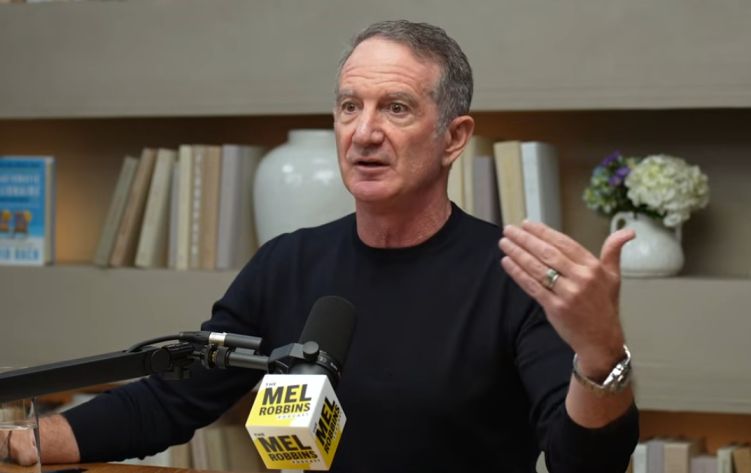
Editor’s Notes: In this empowering episode of The Mel Robbins Podcast, world-renowned personal finance expert David Bach shares the transformative habit that can lead anyone to financial freedom: paying yourself first. By automating your savings and setting aside just “one hour a day” of your income, Bach illustrates how you can break the cycle of living paycheck to paycheck and build lasting wealth regardless of your starting point. The conversation dives deep into practical strategies for tackling debt, navigating the “automatic economy,” and reclaiming your peace of mind through simple, actionable financial decisions. Whether you’re just starting your career or looking to catch up later in life, this video provides a hopeful and clear roadmap for taking control of your financial future. (January 19, 2026)
TRANSCRIPT:
MEL ROBBINS: David Bach, welcome to the Mel Robbins Podcast.
DAVID BACH: Mel, thank you for being here. It’s fabulous to see you.
MEL ROBBINS: It is fabulous to see you, too. I love you as a friend. I love your energy and I love your work. And I am very excited about the conversation today because so many of us are concerned about money. We’re concerned about our future. We’re concerned about how to support the people in our lives around their financial future.
And where I want to start is this: If I take everything to heart that you’re about to teach us, how will my life be different if I apply what I learned from you today?
The Hope You Need Right Now
DAVID BACH: Well, first and foremost, I’m going to give you hope. A lot of people right now are missing hope when it comes to their money, which is impacting their life. So I believe that nobody should be left behind when it comes to money. That’s why I’ve spent 30 years of my life teaching people about money.
And so the challenge right now in this country, honestly, Mel, we’re leaving people behind in this country. Right now, seven out of 10 people are being left behind because they’re living paycheck to paycheck.
MEL ROBBINS: Wait, 7 out of 10 people in the United States live paycheck to paycheck?
DAVID BACH: Stop for a moment and take that in, because that means if you’re driving down a street and there’s 10 houses, seven of those 10 are living paycheck to paycheck. So if you’re living paycheck to paycheck, if you’ve got credit card debt, you maybe have student loans, and you don’t have hope, I promise you, at the end of these 90 minutes together, or however long we are together, you will see the light at the end of the tunnel. So that’s number one.
Now, not everybody’s living paycheck to paycheck, right? Because there’s three other people out there from the 10. So if you’re starting on investing, maybe you’ve opened up your Roth IRA, you heard about that somewhere, or you’re using your 401k plan at work, or you’ve even bought your first home. You’re doing a lot of things right, but you’re not sure. Am I doing everything right? You kind of have this doubt. Like, I’m not sure. I don’t know if I’m really on track. I don’t know if I really have the right investments. So maybe you think you’re doing things right, but you still know you need help. I got you, too.
Now, some people are starting over. I mean, the reality of life is between divorce, between widowhood. You know, average age of widowhood in this country is 59. When you look at what happens to women as a result of widowhood, financially, they’re often wiped out. And we’re getting real serious quickly here. But as a woman, you can’t afford to not know what’s going on with your finances.
It’s Never Too Late
MEL ROBBINS: There is so much I want to just pull apart from that, because a lot of people ask me, how did you get out of $800,000 in debt? My husband and I were $800,000 in debt at the age of 41. So I like that you’re starting with, you have to make a decision that you’re tired of living paycheck to paycheck. You’re tired of being in the situation that you’re in. And you’re here to tell us, because you have helped millions of people get out of debt, that it’s not too late.
DAVID BACH: It’s never too late unless you give up.
MEL ROBBINS: I always say you’re one decision away from a different life. And for me, I’m very negatively motivated. Things have to get really bad. I’m kind of stubborn.
DAVID BACH: Yeah.
MEL ROBBINS: And I just got to a point where I was so tired of the constant stress and the constant frustration and the shame of not being able to pay my bills and the crushing pressure of being in debt that I just made a decision. I’m done doing this. I have to figure this out, because no one is going to. No one’s coming.
DAVID BACH: No one’s coming to save you.
MEL ROBBINS: Nope. No one’s coming to pay these bills. But I’ll be damned. There’s so many people that are way less smart than I am that have figured this out. If these other people can do it, then I can figure this out too.
Pain or Clarity: What Drives Change
DAVID BACH: Two things get people, typically to make a decision around money or life in general. It’s pain or it’s clarity around what’s most important to you. Now, some people have to go through a lot of pain to get clarity. That’s the hard way. The hard way is someone smacks you over with a two by four and you’re just like, I can’t do this anymore.
That was my grandmother. Even at 30, maybe her pain wasn’t like yours, with so much depth, but her pain was she got clarity around, I’m 30, we have no money.
MEL ROBBINS: Well, I grew up across the lake in Muskegon, so I know.
DAVID BACH: She grew up there. And she’s like, I want to retire one day to Florida or California. She decided that at 30. Then, like you, she worked on her plan for three decades and kindly used to say, “David, you don’t get rich in days, you get rich in decades. You don’t get out of debt in days.” The problem with debt is you can get in debt in a day, but you can’t get out of debt in a day.
MEL ROBBINS: I think it’s just this moment where you get so sick of your own situation that you organize the resolve to change and do better. I want to broaden the tent a little bit because I do think that statistic, that seven out of every 10 people in the United States and plenty of people around the world right now are struggling. They’re paycheck to paycheck. They’re feeling the pressure and the stress of it all.
And I want to talk a little bit about some other people, like people that might be entering one of the worst job markets out there. You’re in your 20s and you’re not quite sure what to do because you’re saying to yourself, I can barely even pay for my rent with three roommates, and I’m having trouble finding a job right now, and I have crushing student loans. Who else is going to get hope from this conversation today?
The Automatic Economy
DAVID BACH: Let me tell you what’s really going on in this economy, because this is probably the most important thing you’re going to hear in this podcast. We are living in what I call now an automatic economy.
MEL ROBBINS: Automatic economy.
DAVID BACH: Automatic economy.
MEL ROBBINS: Okay.
DAVID BACH: An automatic economy either makes you rich or it keeps you poor. And there are a lot of people, Mel, right now becoming rich. In fact, we’re going into a decade where I believe more wealth will be created in the next decade than in any time in our lifetime.
MEL ROBBINS: Really?
DAVID BACH: 100%. There’s two escalators to wealth in America, because the system’s rigged. You need to hear this, especially young people. There’s two escalators to wealth. They are real estate and stocks. You have to own real estate and you have to own stocks, and this market’s now more rigged than it’s ever been.
And when I say rigged, what I mean is everything in our country is designed for those two asset classes to go higher. All the tax laws, all the incentives, all the opportunities that exist are for investors. If you’re not an investor, you are being left behind faster than you’ve ever been left behind. Anyone who’s in their 20s today can start investing their change.
MEL ROBBINS: That’s true.
DAVID BACH: You can start investing literally today. You can open an app like Acorns and be investing through change every time you spend money. You can be investing a dollar at a time in diversified portfolios. You can click a button at almost no cost. And that was not true 20 years ago. Twenty years ago, it was hard to sometimes become an investor with a small amount of money. Today, with technology, the whole playing field has been democratized.
The Biggest Money Mistakes
MEL ROBBINS: What are some of the biggest mistakes that people make when it comes to money that keep them stuck?
DAVID BACH: Number one, when it comes to money, you either have a plan for your money, or someone else has a plan for your money. Let that sit for a second. Either you have a plan for your money, or someone else has a plan for your money.
Lots of people have a plan for your money. The automatic economy is driven by your phone. That phone that we hold all day long is a money magnet. Think about that as a money magnet. What do I mean by that? That means this tool is either helping you build wealth or it’s taking wealth away from you.
MEL ROBBINS: Oh, hold on. So the phone is either helping you…
DAVID BACH: Build wealth or it’s taking money away from you. And by the way, in both cases, it’s automatic. So what’s happening today? There’s never been greater technology ever, in the history of our lifetime to separate you from your wealth. But nobody wants to separate you, Mel, from your wealth once. They want to separate you from your wealth for your lifetime. They call it the lifetime value of a customer.
So when I bring you into whatever I’m selling you, I don’t want you to buy from me once. I want you to buy from me on a subscription level. I want you to be paying me whether, everybody think of that. Netflix, the gym, every single service, your vitamins, your creams, your lotions, and your potions. Everyone’s got you signed up to pay them automatically.
If you go through, open up your credit cards or someone, one of your people in your office already told me they did this, use a system like Monarch or YNAB, right? These are different software systems where you can track all of your expenses and you can see who are you paying monthly. People have lost touch with how many people are attached to their paychecks.
But you’ve got to have a plan for what am I putting away for the future, what am I putting away for emergencies, and what am I putting away from my dreams? That’s called a plan.
MEL ROBBINS: Okay.
The No Plan Plan
DAVID BACH: What most people have is what I call the no plan plan. Did you catch that? It’s the no plan plan. So if you’re listening and you’re like, I don’t really have a plan for my money…
MEL ROBBINS: I’m sitting here right now like, I don’t think I have a plan for my…
DAVID BACH: Actually, you have a no plan plan. Most people are literally walking around with a no plan plan. And so what happens is the only thing that’s a part of their life, financial paycheck comes in and then it goes right out the freaking door. That’s because you got a no plan plan.
You need an automatic millionaire plan. You need an automatic millionaire plan where your money is automated to go into everything that is important for you financially. And what needs to happen is you almost, you take out a yellow pad of paper and you go, these are the things I have to have.
MEL ROBBINS: Okay.
DAVID BACH: I have to have rent.
MEL ROBBINS: Yeah.
DAVID BACH: I’ve got to live somewhere.
MEL ROBBINS: Yeah.
DAVID BACH: I have to have a car payment. Now, a lot of car payments are way higher than they need to be. But there are certain things you have to have. You have to have health care. Then you make another list. These are nice to have. So when you go back to you having $800,000 in debt, you had to cut things out.
MEL ROBBINS: Oh, my God. We didn’t go on a vacation for like a decade. We didn’t go out to dinner. We cut subscriptions. We had to pull the kids out of town soccer for a year. We just couldn’t afford it.
The Process of Digging Out
DAVID BACH: People have to really hear that because they want it to be fixed, often in 12 months. And you just said you spent a decade, but your whole life’s different. The other thing is when you start the process of digging out, you start to feel better.
MEL ROBBINS: It’s so true.
DAVID BACH: It actually doesn’t take you being debt free to feel better. It just takes you starting the process of working on getting debt free.
MEL ROBBINS: I want you to hear that whether you’re on a walk or you’re in a car or you’re listening to us at work or you’re watching us on your big screen on YouTube. I mean it. You literally will feel better when you start taking control. You don’t have to get out of debt. Why do you start feeling better when you start chipping away at your debt?
The Power of Paying Yourself First
DAVID BACH: You feel better instantly because when you don’t deal with your finances, you know you’re not dealing with it. It never goes away. It is in the back of your mind. It is in the front of your mind.
And the problem with money is we use it all the time, right? We constantly have to spend money. So when you know you’re not saving anything, you’re not an idiot. You know what you’re not doing, right?
So I just think it’s all about priorities. And to me, what the priorities should be. Ideally, I’m not trying to tell people what they should do, but to me, I want you to use money as a tool to free yourself.
MEL ROBBINS: From what?
DAVID BACH: From everything. I want you to have options. So I think the more you prioritize what matters in your life, get super clear on your values. Like what’s really important to me, who do I value most?
When you deeply look at whatever it could be, my family, my community, making a difference, my spiritual growth, being with friends and family, being in nature, choose the things that matter most to you.
Because what I taught when I wrote my first book, “Smart Women, Finish Rich,” I taught people because this is what I do with my clients. Take your expenses, line them up, write out your values, and then go right through your expenses and compare them to your values and ask yourself, do they match?
And most people spend money in a way that is in conflict with their values. And when you are clear on your values, the decision making process around your money becomes easier.
MEL ROBBINS: Okay, so we know you got to have a plan or you have no plan, but you got to have a plan and you’re going to give us the plan. And it doesn’t matter if I’m living paycheck to paycheck. It doesn’t matter if I’ve just gone through divorce and I’m financially ruined. It doesn’t matter if you’re 20 years old and you don’t have a job yet. Like, this is the plan we’re going to follow. But so keep going.
The Biggest Money Myth
DAVID BACH: The biggest myth we have about money is if I make more money, I’ll be rich. You won’t be rich if you make more money if you don’t keep some money. You got to make money and then keep some money.
So for 20 years I’ve been teaching people to pay themselves first automatically, one hour a day of their income. That means if you have a job with a 401k plan.
MEL ROBBINS: Yep.
DAVID BACH: The first hour a day of your income goes right into your 401k plan.
MEL ROBBINS: I don’t even understand what that means. What’s the first hour of the day of your income?
DAVID BACH: Okay, great question. So most people come to work at nine. I came here at nine.
MEL ROBBINS: Okay, right, yep.
DAVID BACH: And they work until five.
MEL ROBBINS: Okay.
DAVID BACH: And they’re getting a paycheck from you.
MEL ROBBINS: Okay, right.
DAVID BACH: They’re being paid from nine to five.
MEL ROBBINS: Yes.
DAVID BACH: That first hour a day, whatever you make. Some people make $20 an hour, some people make $30 an hour, some people make $50 an hour, some people make $100 an hour, whatever.
MEL ROBBINS: Some people make minimum wage.
DAVID BACH: Some people make minimum wage, whatever it is, that first hour a day of your income has to go into a pre-tax deductible retirement account.
MEL ROBBINS: Okay?
DAVID BACH: So that could be an IRA account or if the company has a 401k plan, that’s where it goes.
MEL ROBBINS: Okay?
DAVID BACH: Now, one hour a day of your income equals 12.5% of your gross revenue.
MEL ROBBINS: Okay? So 12.5% of your salary is what you want to be automatically putting into, like out of sight, out of mind and at work.
DAVID BACH: So now here’s the thing. People are going like, did he just say I’m supposed to save 12 and a half percent of my gross income? Are you freaking kidding me?
MEL ROBBINS: Yes. That’s what I’m thinking. I’m like, I’m living paycheck to paycheck to paycheck, and I feel trapped and I can’t do the things I want to do. So why would I take 12% that I don’t have?
Understanding the Tax Advantage
DAVID BACH: Yeah. So let’s go through the math on this.
MEL ROBBINS: Let’s go through the math.
DAVID BACH: The whole reason you want to pay yourself first.
MEL ROBBINS: Yes.
DAVID BACH: Is so you don’t pay taxes. So what the government did decades ago, over 40 years ago, was create tax laws that made these 401k plans deductible.
MEL ROBBINS: Okay?
DAVID BACH: So that means this is why it’s called pay yourself first. That means when you put money in a retirement account, it avoids paying taxes. You skip the IRS. Legally.
MEL ROBBINS: Okay, so hold on a second. So if I, let’s just say I make 100 bucks in a day, I’m going to take 12 bucks and put it in the 401k. What you’re basically saying is under the law, the $12 comes out of the hundred, not taxed versus what happens where if you don’t take it out, the whole 100 is taxed.
DAVID BACH: So the other thing is, what happens is you put it in your retirement account. Now it grows tax free, and it grows tax free until you take it out at retirement. Now, you can always access it beforehand. You shouldn’t, because then there’s taxes and penalties. So it is a vehicle to grow your future money. This is when you’re putting money aside for your future.
MEL ROBBINS: Okay?
DAVID BACH: This is not for your house. This is not for emergencies. This is not for dreams. This is the future.
If you’re in your 20s and you get your first job, like we’ve got kids now getting their first job. My son Jack’s 22. He’s going to be graduating from college. He’s going to have his first job. If my kids save an hour a day of their income from the moment they get their first job, they’ll never have to worry about money again. That’s how simple it is. Because one hour a day of your income buys your financial freedom.
Now, there’s actually a lot of research on this now too, because we’ve been doing this for so long. So Fidelity has one of the largest 401k plans in the world. As of this month, 565,000 people who are millionaires inside their 401k plans. Those millionaires have on average, $1.4 million in their retirement account.
How long did it take them and how much did they save? They have all the data. I’m going to give it to you right now. It took an average of 26 years. And the average person has $1.4 million inside these Fidelity 401k plans is age 59. And they saved 14% of their gross income, a little over one hour. It’s like one hour and 10 minutes.
So if you put 14% away and then the employer, which most employers match on top of that, that’s what these people did that became 401k millionaires. They became automatic millionaires in 26 years. These are ordinary people, okay? They’re ordinary people who simply spent less than they made. They spent 90 cents out of every dollar. And actually they spent 86 cents out of every dollar. So they just saved 14 cents out of every dollar.
What to Invest In
MEL ROBBINS: Got it. So one takeaway for sure. If you work for a company where there’s a 401k, make sure you’re taken out at least 12% and make sure you know it’s actually invested in something. What should you invest it in?
DAVID BACH: Okay. I’m going to tell you exactly what you should invest in.
MEL ROBBINS: Okay? I’m writing this down.
DAVID BACH: I’m super simple. I’m just going to pretend like this is for everybody that’s in that behind this wall for all your young people here.
MEL ROBBINS: Yes.
DAVID BACH: Okay, so I am willing to bet my life on it that your Fidelity plan.
MEL ROBBINS: Yes.
DAVID BACH: Has what’s called a target dated mutual fund in it.
MEL ROBBINS: Target dated mutual fund. Okay, so what?
DAVID BACH: Because this is what’s in the bulk of all 401k plans now. So in the bulk of 401k plans, you have a target dated mutual fund. And what that does is that is an asset allocation fund that is professionally managed between stocks and bonds. And it is created to be rebalanced towards your age of retirement.
MEL ROBBINS: So higher risk when you’re younger and more conservative when you’re older.
DAVID BACH: Exactly. That is my recommendation for 99% of people who have 401k plans, because it is done for you. You don’t need to think, the returns have been just fine, and then just leave it alone.
And so we know people who invest in their 401k plans and just leave it alone. They’re the ones who end up being financially free.
The other thing we see, giving you like the full blown retirement planning lessons here. Not everybody stays a job for 26 years. So some people are going to have a 401k plan here, and then they’re going to leave here and go somewhere else. Hate to say it, just happens, right?
MEL ROBBINS: Yeah.
Critical Mistakes to Avoid
DAVID BACH: So what you shouldn’t do, number one, is cash it out. Now, young people cash out 401k plans all the time. Why? Because they don’t have a lot in it yet. So they go, well, it’s $10,000. It’s not that much money. And so I want to go on a trip. And they cash it out. They pay taxes, and they pay penalties.
It’s not just that you took the $10,000 out and lost half of it to taxes and penalties. You lost all the compound interest that $10,000 in 40 years could easily be. Just the $10,000 alone could be worth 50 to 100 grand.
Somebody is, they go somewhere else. What they need to do is what’s called a rollover.
MEL ROBBINS: Okay?
DAVID BACH: So there’s two ways to roll money over. They can go back to Fidelity, because that’s where you told me your plan is. And they can tell Fidelity I’m leaving and I want to move it into an IRA account. And Fidelity can do that on the phone in five seconds. Basically, you know, I fill out some paperwork, they’ll move it into an IRA account. You can have the exact same investment. Now it’s in your name in an IRA account. They didn’t leave it here.
MEL ROBBINS: Okay, that’s really important.
DAVID BACH: You shouldn’t leave money in old 401k plans. Or they’ll get a new job. And they can roll it into, depending on the plan, the new 401k plan. Okay, that can be a great way to go, depending on the new plan.
The mistake that people make, however, when they roll this money over is that it rolls into a new plan and it gets put in cash.
MEL ROBBINS: And so that doesn’t get put into a fund. Oh, my gosh.
DAVID BACH: I know. So, so that can cost people a fortune.
MEL ROBBINS: Do you hear that? There are so many. I hear somebody going share, share, share. Because this is like one of those things where it’s just like, people don’t think you’re doing the right thing.
DAVID BACH: People don’t know. It actually can make me cry sometimes because people just don’t know.
So I’ll give you another thing that happens. Someone’s doing everything right here at Mel Robbins. They listen to this podcast. Yes. They signed up for 14%. Yes. They heard me say, don’t leave it at Mel Robbins. And they go to their new employer, it gets rolled into their new plan, and the new plan opts you in at 3%.
So they were at 14% savings. They got opted in at 3%. And they don’t get in there and change it.
So Vanguard, one of the largest fund companies in the world, just did a study on this. Vanguard thinks that that single mistake alone, that one simple mistake, you switched from one plan to another, you were saving at a certain rate. You got opted in at a lower rate. You didn’t bump it back up again. It’s costing the average person $300,000 in retirement. What?
MEL ROBBINS: And it’s just you. I didn’t know this. I literally want to stop the interview and go run and pull up, like, my stuff and just make sure we’re doing this. Look at your phone right after. That’s incredible.
DAVID BACH: I know.
MEL ROBBINS: Now, if you can’t do the 12%, you should still do whatever percentage you can. Or should you just say, do the 12% and see if you can scale back?
DAVID BACH: Okay. In an ideal world, let’s just rip the band aid off and go do the 12%. That’s the idea.
MEL ROBBINS: Why? Because what happened? You’ve done this with millions of people.
DAVID BACH: Because when you rip the band aid off and you just go do it, you’re going to notice it. Honestly, the first month, second month, a little bit less, and the third month, you won’t notice it.
So by the third month, you will have adjusted your own spending.
DAVID BACH: Adjusted. And here’s, let me give you, because I used to speak all the time, all over the place, and I would say to an audience, especially when you’re headed into an economy like this, let me ask you guys a question. Let’s be honest for a second. If I come into the office today and I say to you, “I’m really sorry, things are tough, I love you, you’re amazing. We value you. You’re a part of our plan long term. And for right now, we need to cut your pay by 10%, but we want you to stay.” How many of you are staying? Most people are staying.
So when you’re in your room and you ask that question and people are honest with themselves, most people will stay, they’ll take the 10% pay cut. And then I go, why would you take the 10% pay cut at work, but you can’t give yourself a 10% pay cut? I’m not even asking you to take the 10% pay cut. I’m just asking you to put the 10% away for yourself.
MEL ROBBINS: You know what’s interesting about that is you’re right. You would take the 10% because you immediately perceive that it would be harder to get a different job and make the money and it’d be easier to just take the cut or maybe you like the job or whatever and you adjust.
DAVID BACH: And what’s the second thing you would do? You, well, actually just said it.
MEL ROBBINS: You just adjust. You did just.
DAVID BACH: Yes, you did just.
MEL ROBBINS: And then you get used to the fact that you’re paying less. But we don’t think about the fact that we could make a decision to adjust to living on less in order to take that money, that 12% you’re talking about, and invest it in our own freedom.
DAVID BACH: We adjust reactively. We don’t always want to adjust proactively.
Making It Automatic Without a 401(k)
MEL ROBBINS: Well, I’m thinking about one of our kids, our daughter, who’s a singer, songwriter, and she works a bunch of other side jobs. You know, whether it’s waitressing or picking up gigs or babysitting or retail, anything she can to make money. What does somebody in that situation do if they don’t work somewhere with a 401(k)? What are you making automatic?
DAVID BACH: So actually the single biggest problem is we don’t have automatic retirement accounts for people who don’t have 401(k) plans.
MEL ROBBINS: Oh.
DAVID BACH: However, she can make it automatic. She just has to do the work. Right. So what does she do? She can go to, in the book, Fidelity, Schwab, Vanguard. I’m just listing firms here. Coinbase, Robinhood, Acorns. She needs to pick a firm.
MEL ROBBINS: Yep.
DAVID BACH: In her case, I don’t know how much money she’s making, but she could start with an IRA account.
MEL ROBBINS: Okay.
DAVID BACH: So she could do a Roth IRA. So Roth IRAs are after tax money. The advantages of money grows tax free and it comes out tax free for young people. She’s going to say that this year it’s going to be $7,500.
MEL ROBBINS: Yep.
DAVID BACH: I would tell her to do a Roth IRA.
MEL ROBBINS: Okay.
DAVID BACH: If she needs a tax deduction, she doesn’t need a taxation on her age. So she should do a Roth IRA.
MEL ROBBINS: Okay. So I start for somebody that’s working a retail job. They’re paycheck to paycheck. They’re minimum wage. You can still do a Roth IRA.
DAVID BACH: Everyone can do a Roth IRA.
MEL ROBBINS: Okay.
DAVID BACH: And all you got to do is go online and click some buttons and open it.
MEL ROBBINS: Okay.
DAVID BACH: And then you can have money taken out of your paycheck. Well, not your paycheck. You have money taken out of your checking account.
MEL ROBBINS: Okay.
DAVID BACH: When you get paid. So going back to making automatic. When you make money at a job, that paycheck today, in most cases, they actually want to deposit it automatically.
MEL ROBBINS: Yes.
DAVID BACH: They don’t want to give you a check.
MEL ROBBINS: Correct.
DAVID BACH: And the whole day of giving you checks is going away. So when the money’s deposited on a retail job. See, a lot of retail jobs actually have 401(k) plans. People just don’t use them because they think to themselves, “I’m not staying here.” That’s a mistake too, because people stay in retail jobs 2, 3, 4, 5 years, and they haven’t saved anything.
But if she’s not going to use a plan at a retail job that she has, and she opens up a Roth IRA, she sets up the account to debit her checking account the day after her account is deposited. She knows when her check’s being deposited. Right. So checks deposit on the 1st and the 15th, the Roth IRA, the account can pull the money, whatever it is, 50 bucks, 100 bucks, 200 bucks out of her checking account and move it into the IRA account. And it can all be done the same place. Should be done the same place. It makes your life easier.
MEL ROBBINS: Got it.
DAVID BACH: So that’s the retirement account.
MEL ROBBINS: Okay.
Building Your Security Account
DAVID BACH: Now, should we get to the security account? Because there’s a second thing she should do.
MEL ROBBINS: Okay. And everyone should do this. The automatic plan.
DAVID BACH: Everyone should do this. She needs to start building a security account, an emergency account. An emergency account is, how is setting aside money for an emergency? It’s not for a trip. It’s not for, think of 10,000 other things that people use emergency money for. “Going to redo my house. I’m going to redo the yard.” No, it’s for an emergency. So the money gets moved into a separate account.
MEL ROBBINS: Okay. Okay.
DAVID BACH: That account should be in a money market. Okay. The reason is it should be liquid.
MEL ROBBINS: Okay.
DAVID BACH: Okay. So a money market account right now at this moment’s paying about 4%. It’s not a big return, but it’s safe, it’s liquid. So I’m going to give Fidelity a bunch of free press here, but let’s just use a real brokerage firm.
MEL ROBBINS: Okay.
DAVID BACH: She deposits her money at Fidelity.
MEL ROBBINS: Yep.
DAVID BACH: And that money actually goes into a Fidelity checking account.
MEL ROBBINS: Okay.
DAVID BACH: Now, in that Fidelity account that she has, she has a Roth IRA.
MEL ROBBINS: Got it.
DAVID BACH: So the money’s moved to the Roth IRA.
MEL ROBBINS: Yep.
DAVID BACH: And she has a separate money market account.
MEL ROBBINS: Which is your emergency account.
DAVID BACH: Which is the emergency account. Okay. Okay. Now, if we’re going to get super sophisticated, then the third thing is you have a dream account. And the dream account is for all the things that she’s going to want to do between now and retirement and emergencies. And so maybe her dream’s to go to Mexico at the end of the year. Great. She puts money aside, every paycheck in the dream account to pay for that.
MEL ROBBINS: Got it. So if I’m doing 14%, 12 to 14% in the retirement, what am I doing in the money market? And what am I doing in the dream account?
DAVID BACH: So it depends on how serious you are.
MEL ROBBINS: Yeah.
DAVID BACH: But I would tell people to be putting 3 to 5% in the emergency account, and then I would choose how much you want to put in the dream account.
MEL ROBBINS: Okay.
DAVID BACH: The fastest way to get the dreams done is you fund for it. The way dreams come true is you fund for them. So I know people are like, “Oh, my God, this is so much money he’s talking about.” So for people who don’t, because I skipped over this. For people who don’t believe they can go from 0 to 14%.
MEL ROBBINS: Yep.
Starting Small: The 1% Strategy
DAVID BACH: And I said, you know, some people are just like, their heels are dug in.
MEL ROBBINS: Or they’re scared or they’re paycheck to paycheck. Put 1%. 1%. Just do something. Why do just one? What benefit does that have when you’re already?
DAVID BACH: Because you’re signed up. And what you’ll realize is if you do 1%, you won’t notice it. And then a couple months later, you go to 2%. And then a couple months later, you can go to 3%. If you just went from 1, here’s the truth. You could do this in a year. You go 1% January, 1% in February. Just do 1% a year. You’ll never notice your expenses changing by 1%.
MEL ROBBINS: If you did it every month, you’d be by 12%.
DAVID BACH: You won’t notice your income changing by 1%. There’s just no way. First of all, it’s not even 1%. It’s more like 75 cents. Right. For every dollar it’s not a whole full percent because you’re not paying taxes. So that 1%, if you just did 1% a year for a year, at the end of the year, you’d be at 12%. You’d be saving four times what the average American who has a retirement account saves.
MEL ROBBINS: That feels so doable.
DAVID BACH: It’s doable, Mel.
MEL ROBBINS: Here’s the thing.
DAVID BACH: How do we know it’s doable? There’s $44 trillion now in retirement accounts. Let that settle for a second. There’s $44 trillion. This is just in the US. There’s $44 trillion in retirement accounts, IRAs, 401(k) plans, all these different retirement accounts. This has all happened in the last 30, 40 years, but the most of it’s happened last 20 years.
Investing Your Dream Account
MEL ROBBINS: What should you, I forgot to ask you, what should you invest? The dream account in, is that a money market account is your dream?
DAVID BACH: A year is your dream. In two years is your dream. In three years is your dream in five years. If your dream is to buy a house, just like it took you 10 years to get out of debt, most people can’t just turn around and buy a house. So if you’re 22 years old, I really someday do want to buy a house, we’ll talk about the difference between renting and owning. It might take you five years.
So the longer you have, the more aggressive you can be. So if you’re telling me you need the money in a year or two, I’m going to have you put in a money market account. If you tell me you’re not going to have this dream come true for five years, I’m going to have you put it in a balanced mutual fund. That’s a mutual fund. That’s 60% stock and 40% bond.
MEL ROBBINS: Okay?
DAVID BACH: And that I’m being conservative here, right? So if you’d say to me, it’s seven years out, I’m going to have you invest probably all stocks.
MEL ROBBINS: Now, speaking of stocks, should you try to pick individual stocks?
DAVID BACH: Absolutely f*ing not really?
MEL ROBBINS: Absolutely.
DAVID BACH: Even though I started by buying my first stock at McDonald’s at age 7, and I bought my second stock at 9 in Disney. Okay, so I’m going to talk out of both sides of my mouth. I learned how to invest because my grandmother helped me buy my first stock in McDonald’s at age seven.
MEL ROBBINS: Okay?
DAVID BACH: At McDonald’s. She said to me, “You know, there’s three types of people in the world. This is how the world works. There’s people like you who come to McDonald’s and you spend money, you’re called a consumer.” She goes, “There’s people who work here. They’re employees. They make minimum wage. That’s a lot of people in America. It’s a tough way to make a living.”
And then she said, “And then there’s owners, and the owners own this place. And I’m going to teach you today how to buy stock in McDonald’s so that when you come here, you’re an owner.” And she took me home and she took out the Wall Street Journal and she circled MCD, which is a ticker even back then for McDonald’s.
MEL ROBBINS: It’s crazy.
The Power of Early Financial Education
That’s a long time ago. And she sat me in front of a TV screen with the TV screen where the tickers go across the bottom. Funny thing is, most people don’t even know what those are. Those are stock symbols.
And she’s like, when you see McD, I want you to call out the price and write it down. And then you’re going to come back here and we’re going to look at what prices is, and we’re going to look in the newspaper. And then tomorrow we’re going to go down to the brokerage firm, we’ll buy you one share of McDonald’s, and you’re going to own a piece of this restaurant, and you’ll now be in the American system of investing.
I’m seven years old. At nine years old, I’m with her at Disneyland. I’m like, can you buy this place? She’s like, yeah. So she taught me at a young age to think like an investor.
Now I have done the same thing with my kids. My kids don’t own McDonald’s. They own things like Shake Shack. Been a great stock, but they own.
MEL ROBBINS: Things that they’re interested in.
DAVID BACH: They own Amazon, they own Meta. They got a handful of individual stocks. However, my kids also know I don’t want them owning individual stocks. I want them owning index funds. So they got a few individual stocks, but they have a portfolio. I’m just giving you behind the scenes of the Bach family.
MEL ROBBINS: Yeah, this is exactly what every parent wants to know. What are you doing with your kids?
Building Portfolios for the Next Generation
DAVID BACH: I have my kids in portfolios, almost are identical to mine. So I have them. They’re small portfolios, but I have. My financial advisor built the same portfolio that I have, a little bit more aggressive because they’re younger.
And I have them in these portfolios of ETFs, exchange traded mutual funds, because that’s the best way to invest. That’s diversification. Doesn’t take time, low cost, tax efficient, and you won’t screw it up.
MEL ROBBINS: Everyone wants to know, what fund are you in?
DAVID BACH: Let me give you one fund because I’ve got. I literally have all these funds listed.
MEL ROBBINS: All right, what page are you on?
DAVID BACH: But I’m on page 135. So there’s a fund by Vanguard.
MEL ROBBINS: Yep.
DAVID BACH: Okay. This fund is called the Vanguard.
MEL ROBBINS: I’m in that one Total stock market. Yeah, I know. I’m invested in that one.
DAVID BACH: So for those of you who aren’t invested in this, the symbol is VTI. If you buy the ETF, this fund has 3,600 stocks in it, meaning you’re.
MEL ROBBINS: Basically an owner in 3,600 companies.
DAVID BACH: You’re an owner of America. Okay? Right. So that stock. So if a person’s, I don’t know what to start with, you took your daughter. Just stick the money in the Roth IRA and the VTI fund.
MEL ROBBINS: Okay?
DAVID BACH: She’s got 3,500 stocks. So I list all the different index funds in here. Start with an index fund. It just makes your life easy.
And also, I want to say something. This is really important for young people. The greatest myth for young people is that that’s the time to be aggressive with your money and take risk. Let me explain that.
MEL ROBBINS: Wait, what? You’re not supposed to take risk?
The Risk Myth for Young Investors
DAVID BACH: Let me explain what I mean when I say this, okay? Because this is where I think people get led astray. Because people say all the time when you’re young is when you should take the risk.
And what happens with 20 year olds, 20 somethings and 30 somethings, because they see this on social media and they hear this, they take the risk on crappy investments. They’re buying meme stocks, they’re buying meme coins. They’re looking for the NFT. They’re seeing all this garbage on social media that they’re hoping to get this huge return on. And then they lose everything.
And what happens is you get people who are. Gets to, they save money and then they make, then they lose all the money and then they save money and lose all the money. And they get to their late 20s or early 30s and they’re like, this game’s rigged. And then they stop investing.
Whereas if they had just invested in an index fund, they’d have some to show for it.
MEL ROBBINS: All right, so let’s talk about compound interest.
The Eighth Miracle of the World
DAVID BACH: Mel, I’m so glad you asked, because compound interest is the eighth miracle of the world. That’s what Einstein said. So I actually bought a prop for us.
MEL ROBBINS: Okay.
DAVID BACH: Okay.
MEL ROBBINS: Went to the bank yesterday.
DAVID BACH: Kind of shocked them.
MEL ROBBINS: Wow.
DAVID BACH: How much money, for those of you who are listening and you can’t see me, how much money would you guess that is, by the way? This is real money.
MEL ROBBINS: That’s real money. I have no idea how much money. I mean, I don’t know. That’s a couple thousand dollars.
DAVID BACH: So, interestingly so. I’m holding $10,000.
MEL ROBBINS: You’re holding $10,000.
DAVID BACH: $10,000 in real cash. This is a very important amount of money I’m holding here for many reasons that people will probably understand.
When we’ve done surveys and we have asked people, how much money would change your life? The number one answer has been $10,000. Which is fascinating, right? It’s not a hundred thousand, it’s not a million, it’s $10,000.
And usually the reason is it would help them either pay off their credit card debt or give them enough financial freedom to leave their job or in a relationship they don’t want to stay in.
MEL ROBBINS: Got it. So $10,000 buys freedom from a job for many people.
DAVID BACH: Buys freedom. Now, here’s the really interesting question.
MEL ROBBINS: Okay?
The $27.40 a Day Formula
DAVID BACH: How much money does it take to blow $10,000 in a year? A day. How much money you have to spend a day to blow $10,000? So I’m holding a brick here of 10 grand.
MEL ROBBINS: Okay.
DAVID BACH: A lot of people would like this brick.
MEL ROBBINS: Yes.
DAVID BACH: It’s $27.40 a day.
MEL ROBBINS: Wait a minute. $27.40 a day is 10 grand?
DAVID BACH: Okay? Now what happens, Mel, if you invest $27.40 a day? This explains compound interest.
If you invest $27.40 a day, and you’re in your 20s, and you do this for 40 years, at a 10% rate of return, which is what the stock market has averaged for 100 years. You use that fund I told you about, the VTI fund. You have $4,424,000.
MEL ROBBINS: Say that again.
DAVID BACH: If you invested $27.40 a day, which comes out to $10,000 a year, in 40 years, you’d have $4,424,000. That’s a fortune.
Now, the question is, are there people who are blowing $27.40 a day on stupid shit? Yes.
MEL ROBBINS: Every one of us.
DAVID BACH: Well, probably there are people listening. They’re like, I’m not.
MEL ROBBINS: But there are.
DAVID BACH: There are people. There are a lot of us doing it right? Because everything’s so expensive now. It takes nothing to blow $27.40 a day.
Finding Your $27.40
MEL ROBBINS: Now, give me examples of how you can find that money. Because I think when you feel having been somebody that not only was in paycheck to paycheck for decade, but then was in a situation where I had no money and was in massive amounts of debt, but when you’re in paycheck to paycheck, where can you find the 20? Give me some examples of where it’s hitting you.
DAVID BACH: You’ve got to go through your lifestyle, right? I mean, everything today is about convenience, right? So people are getting food delivered to them every single day. They’re not really paying attention to what that’s costing. People are taking Ubers every single day. I mean, you got to look at your own lifestyle.
Everybody’s got something that they’re wasting small amounts of money on. People don’t think, if I spend $5 a day on something that’s $150 a month, that’s well over a thousand dollars a year, it’s five bucks, right? But if you’re spending again $27.40, it’s ten grand.
I’ve done podcasts in the past where I’ve talked about 100 day savings challenge.
MEL ROBBINS: All right, let’s do 100 day savings. What is that?
The 100 Day Financial Challenge
DAVID BACH: The hundred day financial challenge that I have for people is this. Especially people who do not have a thousand dollars in savings, because there’s a lot of people who don’t have a thousand dollars in savings. So for a hundred days, save $10 a day.
MEL ROBBINS: Where am I putting it? In a savings account?
DAVID BACH: Literally, you for. You just start off by putting it in a jar in your house. But you could put a savings account, right? Save like my grandmother where she put the money in a coffee can. Save for 100 days and what? Pick anything. It could be a dollar just to prove to yourself.
MEL ROBBINS: I actually like the idea of putting it in a jar because you can see it. And then you’re like, oh, I’m doing it.
DAVID BACH: Yeah. So go and think about your life and see am I wasting $27 a day, $27.40 a day on something.
MEL ROBBINS: I guarantee you I am. Because I guarantee you there are subscriptions I don’t even know about that are draining out of my bank account every month that probably add up to $27 a day.
DAVID BACH: So let’s talk about people, though, who are listening and they’re not in their 20s or in their 50s.
Starting Late: It’s Never Too Late
MEL ROBBINS: Yeah. Okay, so let’s pretend I’m in my 50s. I’m in a situation where I’ve heard this podcast, and now I’m like, oh, God, how do I get going? What do I do? I didn’t do it early enough. I’ve missed the window. On compounding interest, where do I start, David?
DAVID BACH: So I’ll tell you a classic story. This is a really funny story, actually. One of my first book signings I did for the Automatic Millionaire was in New York City of Barnes and Noble. So I do the book. I do the book event, right? And then I take questions from my audience, and this woman stands up and she’s like, David, I love you. I’ve read all your books. I’ve read Smart Women Finish Rich, Smart Couples Finish Rich. I got the Finish Rich Workbook, and I’m going to get the Automatic Millionaire.
And she says, but you haven’t written the book that I need. And I go, oh, well, all my book titles, for the most part, have come from readers. What do you need? And she goes, I need Start Late, Finish Rich. And the room cracked up.
And I’m like, okay, I hadn’t thought about that, but how old are you? And she says, I’m. I think she was in her 50s.
MEL ROBBINS: Okay.
DAVID BACH: And I said, okay, well, let me ask you a question and go, are you married? She said, yes, I am. I said, so my question to you would be, could you save $20 a day more than what you’re saving? Could you save $20 a anymore? She’s like, yeah, I could.
I said, could your husband save $20 a day? She goes, I would make them. Everybody laugh, right? I go, all right, so that’s a lot of money, actually. That’s $40 a day between the two of you if you just put that in. I gave her an example of a mutual fund invested that for the next 15 years, here’s what could be worth? And the answer is, it could be worth close to a half a million dollars.
MEL ROBBINS: Wow.
DAVID BACH: And she’s like, okay, so I could. So you’re telling me that I could catch up a little? I could catch up a little bit, right? I go, let’s just play this out. At 65, is it better to have a half a million dollars or have nothing? She’s like, it’s much better to have half a million dollars. I said, great, so start with the $20 a day. She said, okay, I can do that.
MEL ROBBINS: Right?
DAVID BACH: Because that’s the whole thing. You got to figure out what can you do. Some people who are listening to me right now can do more than $20 a day.
MEL ROBBINS: Yes.
DAVID BACH: You got to come up with what can you do. But here’s a big thing. Your 50s are a beautiful time to save and invest and catch up. And the reason is your kids, hopefully, are finally gone. Right. The kids are gone. In many cases by their late 50s. These kids are out of college.
So the only thing you got to take care of is you and maybe your partner. So you’ve got the time and money and still the energy to catch up.
MEL ROBBINS: Yeah.
MEL ROBBINS: You know what I just got in listening to you is that there’s an enormous mindset shift around even the purpose of work. Because you’re right. I think a lot of us are busy with our head down, making money to pay for our life, when really what we want is freedom.
And if you don’t have a plan and you’re not clear about the vision that you have for your life, you are going to be on that treadmill forever hoping it works out 100%.
I believe everything you’re saying, and it feels doable and it feels very hopeful. You can kind of see the light at the end of the tunnel. And as somebody who has been in situations in my life where I’ve been in crushing debt, like, just running myself into financial ruin, the shame that you feel, like, it can be so lonely and really dark and hopeless.
Like, that’s how I felt. Like, I felt hopeless. I felt like the only idiot in the world who had screwed this up. And so I’d love to have you talk to somebody who’s listening right now who’s really in debt and just overwhelmed by the idea of digging yourself out. Because I remember David, like, there it was, like, six months that I didn’t know about bills. Like, I just could not even open the bills.
DAVID BACH: Total denial.
MEL ROBBINS: Yes.
DAVID BACH: I always say this happens all the time. If you don’t look at it, it’s not real.
MEL ROBBINS: Right.
DAVID BACH: So a lot of people don’t actually look at their bills because they’re like, I can’t. I can’t face to look at them.
MEL ROBBINS: Yes.
DAVID BACH: By the way, I didn’t even talk. I got into credit card debt in college, so I’ve made multiple mistakes. I remember having so much credit card debt junior year that, like you, I would open my bills. But I would open my bills. It’s so stupid. Well, I would open my bills and cover my eyes. Okay? So I’d be like, and then I would open the bill.
And I remember once sitting in my apartment. I’m a junior. I’ve got, like, $12,000 in credit card debt, which was all on stupid shit I didn’t need to buy. And I remember opening my bill in the room spinning because I was so sick that I had done this to myself.
MEL ROBBINS: Yes. And you don’t even remember what the hell you spent it on.
DAVID BACH: I’m not even talking about, like, medical debt. Right. Like, some people get hit with things that they can’t control. And I will tell you, it took me three years to dig out of that credit card debt after college. And I carried a charge card for 30 years and a debit card. I did not have a credit card, literally until maybe, I don’t even know, six, seven, eight years ago.
And I have never carried credit card debt since I got out. But I got into credit card debt twice because I got into credit card debt sophomore year with to $5,000. Because most people don’t get into debt once, by the way. If you’ve got into debt and you’ve gotten out, then you got back into debt. That’s totally typical.
MEL ROBBINS: Why is it typical?
The Spending Habit That Creates Debt
DAVID BACH: Because the habit. So the habit I had was spending money that I didn’t have on things I didn’t need to impress people I didn’t know.
MEL ROBBINS: Right.
DAVID BACH: You’ve heard that phrase before.
MEL ROBBINS: Talk to me about how you do it. You’ve maxed out your card, you’ve missed the payments, your credit score is in the gutter. How do we turn this around?
DAVID BACH: Credit card. If you’re in credit card debt, how do you get out? I have a system I call DOLP.
MEL ROBBINS: DOLP.
DAVID BACH: It’s in the automatic.
MEL ROBBINS: I feel like when I have credit card debt, dope.
DAVID BACH: It’s in the Automatic Millionaire book. DOLP stands for Done On Last Payment.
MEL ROBBINS: Done On Last Payment. Okay?
The DOLP System for Getting Out of Debt
DAVID BACH: So this is my system that I’ve taught for decades on how to get out of credit card debt. It’s very, very simple, okay? Just takes time. Okay?
So first thing you do is you literally take all your credit cards out. In this day and age, you got to go print your statements, okay? So take the credit cards out of your wallet, go print your statements, because you’re doing everything online. Go back to my file folder. Go get the file folders folder for every credit card. Take one piece of paper, put the credit cards down on the piece of paper, write down the debt that you have.
MEL ROBBINS: Okay.
DAVID BACH: Write down, if you made minimum payments, how long would it take you to pay that off? So you can do a super. It’s a super simple calculation. Like if your minimum payment is $100.
MEL ROBBINS: Don’t they print it on there? They print it on there, don’t they?
DAVID BACH: Yeah, they do. You know, it’s funny that I used to rail about that issue. You’re right, they do that. I talked about that on a PBS show that it shouldn’t be legal to not know this. So you’re right. You can print your statement and you can look at that.
MEL ROBBINS: It’ll tell you it’s like 20 years or something.
DAVID BACH: So take a look at the number, though. I want you to know how many months it is. Then look at the interest rate. Once you have that down, what I want you to do is I want you to, this is a mathematical formula, but I’ll keep the formula simple. I want you to pay the smallest credit card off first, regardless of the interest rate. And I’m going to explain why.
MEL ROBBINS: By smallest, what do you mean the balance?
DAVID BACH: Smallest balance.
MEL ROBBINS: Okay, so it doesn’t matter if it’s the lowest interest rate. You take the credit card with the.
DAVID BACH: Smallest balance or the highest interest rate. Like let’s say that you have a credit card with 29%, a credit card with 0%. Logic would tell you that you pay the one off, it’s 29%. I want you to pay the smallest card off first. Why?
MEL ROBBINS: I don’t know.
DAVID BACH: I want you to reduce the amount of credit cards you have as fast as you can. So most people don’t have one credit card. Most people have three, four, five, six credit cards. And they’re traps. Because if you pay your bills late, you will get hit with a $30 late fee and your rates go up.
So the credit card companies and the banks make billions of dollars a year off late fees. So you need to reduce the amount of credit cards you have as fast as possible. So you take the small card, you pay it off first and then check mark, you see yourself make progress. Now you go to the second card.
MEL ROBBINS: That’s small in terms of the balance, the next smallest balance. Smallest. And this includes, not just like MasterCard and Visa and Amex. This is like, also store cards. Like all the stores that have cards, all that stuff.
DAVID BACH: Don’t. Please, please, please, please, please, please say no to these people. For those cards do not do those cards do not take the 10% discount, because that card then is going to get jacked up to 20% interest or 25% interest or 30% interest. Stop taking credit cards out. Okay, so then once you’ve got the order that you’re going to pay your cards off, now we got to start tackling the interest rate.
MEL ROBBINS: Okay. Okay.
Lowering Your Interest Rates
DAVID BACH: So how do you get the interest rate lower on your cards?
MEL ROBBINS: I don’t know.
DAVID BACH: There are multiple ways. You’ve even talked about this. I’ve heard this. You can play the game where you switch from one card to another. Right. A lot of times you can do the balance transfer. Okay, so if I’ve got a card that’s 20%, maybe somebody will let me transfer to them at 0%. However, you got to be very careful because those cards are designed to also have, you have, if you get caught with the late, late fee.
MEL ROBBINS: Oh, they change the interest, the rate goes right up.
DAVID BACH: It’s all in the paperwork. So nobody wants you to have a credit card at 0%. So you, that’s also why you have to pay your credit cards automatically. So every credit card, you can go in and you can click pay minimum automatically and have it debited from my account.
So your credit card bill should actually be automated on the minimum balance, not the maximum balance. Because I want you to look at your bills, but I want the minimum balance so that you never have a late fee. Now, what you can do to make this easier for yourself is the credit card companies will move the time that they bill you. And they will.
MEL ROBBINS: They will.
DAVID BACH: Yeah, they’ll coordinate it to the date that you ask them. So let’s say you’re paid on the 1st and you have a credit card coming due on the 13th. Well, all of a sudden, you can’t pay the bill because you’re at the end of your two weeks.
MEL ROBBINS: Oh, my gosh. So you could call them and say, can you bill me on the second?
DAVID BACH: Exactly.
MEL ROBBINS: Oh, I didn’t know. Could you do that with other bills?
DAVID BACH: Yeah, in many cases, most people do not care when they’re billing. You just tell them when you want to be billed. And, you know, some people, you’ll line all the bills up, same date. Some people, you’ll spread it around. You’ll have two bills in the first two weeks, you’ll have two bills in the second two weeks.
The Money Date Strategy
MEL ROBBINS: I feel like I need to take a day off of work and spend an entire, no, I’m dead serious. Like, I need to have a date with myself about my financial life and just give myself a Saturday or a day, probably during the week where I do a little staycation and I just do every single one of the things that you’re talking about.
DAVID BACH: It is a great idea. I call it a money date.
MEL ROBBINS: You actually ever work for a money date?
DAVID BACH: A money date. So in Smart Couples Finish Rich, I teach couples to plan a money date. They’re like, that doesn’t sound romantic. No, but you’re going to sit down together and plan a specific period of time when you’re both ready, by the way, because most financial conversations for couples take place when one person’s ready and one person’s not.
And the person who was not ready was like hanging out, watching TV, doing whatever, and they’re like, we need to talk about the bills. And it’s like, so when you go, look, I want to have a money date. I listen to Mel Robbins podcast. How about we start with listening to the podcast together? Let’s sit down together and listen to this podcast. Let’s make a list of what we need to do. That’ll be our second money date.
And you do money dates once a month until you’ve got the stuff done. And then once you’ve got the stuff done, what you do with your partner is you do at least once a year, you know, I call it the money anniversary. You know, where you sit down once a year, twice a year, and you actually check in on everything. If you have a financial advisor, that’s a great time to do it.
So people will say to Mel all the time around these ideas, I don’t have the time.
MEL ROBBINS: Yes.
DAVID BACH: And you know what? That same person’s for sure binge watched something on Netflix this year.
MEL ROBBINS: You have the time.
DAVID BACH: You have the time.
MEL ROBBINS: You have the time.
DAVID BACH: I mean, the amount of people that talk about these television shows, we have the time. The amount of time we spend on our phones, we have the time. It’s just prioritizing.
Believing You Can Buy a House
MEL ROBBINS: What do you want to say to somebody who’s watching us or who’s here listening and learning right now with us? And they’re convinced they’re never going to be able to afford to buy a house.
DAVID BACH: Well, okay, so first thing I would say is I would prefer that you don’t believe that. Yeah. Because what’s happening is a lot of people are believing they can’t buy a house because it’s so, because it’s hard in certain things to buy a house.
MEL ROBBINS: Yeah.
The Foundation of Wealth: Homeownership
DAVID BACH: So I would start with the basics. First, things you should know are the facts. It is an unfair truth that homeownership is the single most important thing in America that creates generational wealth. So when you look at who is disproportionately not as wealthy as others, it’s families that don’t own homes.
MEL ROBBINS: Wow.
DAVID BACH: Because what happens is families that own homes have a net worth that gets inherited. Families that rent, they don’t. So you got to figure out how to get into your first home. And the key to buying your first home is your first home is just never a dream home. Everybody wants the dream first.
Your first home’s not a dream home. Your first home’s not necessarily in the neighborhood you want. Your first home’s smaller than anything you want to live in. Your first home’s almost always not as nice as what you can rent.
MEL ROBBINS: You know, I read that 40% of home buyers today are getting assistance with their down payment from family.
DAVID BACH: Absolutely, positively believe that.
MEL ROBBINS: How can people whose family can’t support them or won’t give them money ever buy anything?
DAVID BACH: They will have to buy in an area that’s more affordable.
MEL ROBBINS: Or like, I know a bunch of young couples who have been living with their families and saving money for a couple years and then they have a down payment.
DAVID BACH: 100%.
MEL ROBBINS: Now, if you live in a major metropolitan area, because that’s where your job is, but you do want to own a home, what do you recommend?
DAVID BACH: Buy the smallest thing you can get into. Buy a studio. Buy a small scene you can get into. Maybe you got to go 10 minutes outside.
MEL ROBBINS: Like, what do you do if you really are just in an area, whether you’re going there for graduate school or you had to move there for a job and you’ve moved from an area. Like, Boston’s crazy expensive. And so people will move here to either work at this company or to go to graduate school or move here for a different opportunity. And it’s like 5x the cost of where you’ve come from.
DAVID BACH: This happens all the time. You move to cities that create job opportunity. It’s more expensive to rent. You’re not going to be able to buy something. Then you need to actually do your best to save more money. I think you fund the dream account, which is for a house later. And they maybe don’t stay in Boston.
When Life Throws You a Curveball
MEL ROBBINS: I want to go back to something that you said earlier that really surprised me, which is that the average age of widowhood is 59. So let’s say you are in that situation where it’s later in life you thought you were going to doing the right things. And whether it’s a divorce or widowhood or cancer diagnosis, or your adult kids are struggling and now they’re draining you dry and you feel like it’s too late.
Is it too late? And what’s the first thing to do if you feel like you’re in that moment where life has smacked you across the face and you did not expect to be in this position?
DAVID BACH: Yeah. When you go on boats, they do, you know, they do those fire drills, right? Those drills where they put you in the, you know, here’s where you go.
MEL ROBBINS: Yes, yes.
DAVID BACH: You know, you put the life vest on. Here’s where the boats are. You’re on a plane. Here’s how the, here’s the air mask. The drill you should run, this is a horrible drill, and I’m sorry to give it this way, but it’s the truth. You should run a drill. If you’re married, which is if my husband or my wife dies tomorrow, what would I need to know?
And the answer is everything. You would need to know everything. You’d need to know where all the accounts are. You would need to know the passwords. You would need to know if your spouse has left 401k plans behind. You would need to know if there’s an insurance policy. You would need to know where the will is. You would need to have a will.
Right. Like 6 out of 10 people who are listening don’t have wills. A lot of people have wills. Their wills are woefully out of date. If you have a will that’s 10 years old, it’s completely out of date. If people get their wills, then they also hide their wills, then the person can’t find the will. People put their wills in safety deposit boxes. People still have safe deposit boxes. Then they hide the key. Now the will is really missing because it’s very hard to get into a safe deposit box if you can’t find your key.
So all of this stuff, people sit in my seminars, and they’re like, oh, my God, there’s a big checklist here. You’re right. That’s called real world. So you want to get this all done before that day happened, by the way. You want to get this done before you, if you’re thinking about divorce, because gray divorce is a huge issue right now. Lots of people getting divorced after the age of 50 and 60, and most of those divorces are actually from women. The women are choosing the divorce.
MEL ROBBINS: Really?
DAVID BACH: Yeah. And I will tell you this. You do not want to go out and suggest a divorce until you know where all the money is. If you don’t know where all the money, sorry, guys. Guys, it’s true for you, too, by the way. If you don’t know where all the money is, when you go to get divorced, you don’t get half the money.
MEL ROBBINS: Wait, if you don’t know where all the money is before divorce comes up, you will not get half the money.
DAVID BACH: There’s no way.
MEL ROBBINS: Because people hide it, darling. Wow.
DAVID BACH: You’re looking at me like, yes, this is what goes on in the real world. So, like, don’t just randomly pop off and say you want a divorce. You need to know where all the finances are.
MEL ROBBINS: Wow, I’m sorry. I’m sitting here like, I got a lot to do. Like, I’m not thinking about divorce, but I’m not sure I know where everything is.
DAVID BACH: Okay, so now we’ll go to the part that I didn’t answer.
MEL ROBBINS: Now it’s hit. You are now a widower. You are financially in trouble. You are really, now you don’t. Like, you’re paycheck to paycheck or you’re devastated in terms of your savings.
It’s Not Too Late
DAVID BACH: By the way, it’s not too late. It’s not too late. And let’s just be honest here. This is not always because you’re devastated. Like, this is also just because you’re left in a mess. You know, I’ve just lived through this tragically. My dad just died. My dad died in August, and my dad was in charge of all the money. My dad managed money his entire life. My mom was not involved. Looking at the bills. She wasn’t involved.
You know, God bless my mother. She’s amazing. She’s my biggest fan, my biggest supporter. But my dad handled everything. And my dad would be like, Bobby, I’ve got this. And we would say to my dad in the last couple years of his life, please, dad, let’s automate these credit card bills. Let’s automate everything so if something happens to you, mom’s okay. We don’t have to step in here and start figuring all this stuff out. And you’d say, oh, it’s all fine. Don’t worry about it.
My mom’s lucky. She’s got two kids in the business of managing money. What did we have to go do for my mom? Because this is what people have to go do. We had to go into my dad’s office and sit down and figure everything out. So what do you have to do? You have to figure everything out. You have to figure out, like, where are all the bills? Where are all the credit card bills. How many credit cards does dad have that they’re using? Where was he paying them?
MEL ROBBINS: Where were all the bank accounts?
DAVID BACH: You have to find everything. So there’s just, what you end up doing the moment someone dies is after you deal with the funeral, the first thing you deal with is the money. Right. Because you know, you’re grieving. But now you have the estate to do. So you, there’s a lot of pieces to an estate. And we were able to help my mom do that. I don’t know what my mom honestly would have done without the two of us. Because you’re not in a good mental state and you got to figure this stuff all out.
So what I would tell you, if you’re going through this pull together everything. And I’m a big believer in old school methods. So I’m the guy that takes, goes and buys a box of file folders.
MEL ROBBINS: That’s me too.
DAVID BACH: And I would literally go buy a box of file folders and a bunch of my books that I call it the Finished Rich file folder system. I had 13 file folders that people need. You buy a box of file folders and you start putting everything in file folders. So you’re like credit cards. These are all the credit cards. I got to figure out the will. Wait, there’s nothing in that file folder. I need to get the will done.
Like, you go through the list of things that you have to deal with and then you basically have a to do list. You’re like, what am I going to tackle first? And you typically tackle the things that are the biggest emergency.
Living Life to the Fullest
MEL ROBBINS: We’ve talked a lot today, David, about how to prepare for all of the curveballs and frankly, awful things that can happen in life. How has the experience of loss changed you?
DAVID BACH: I’ve lost three best friends last two years. I’m 58 years old, by the way. They’re all guys. So my best friend from high school and my best friend from two of my best friends from high school, my best friend from college had passed away.
MEL ROBBINS: Wow. I know. And it’s like, we’re too young.
DAVID BACH: We’re too young. But you got to, I’ll tell you what, you got to live every life to the fullest. Every single day. I always say, live rich now, live your life now. All the things we hear. Be grateful for what you have. Appreciate every single moment. I love the fact that you tell everybody you love them. By the way, you started by telling me I love you back.
You know, I, my friends, I don’t leave my friends without telling them I love them. Same. And people don’t do that. And it’s interesting when you actually look someone in the eyes and you’re like, I love you. Right? And because people aren’t getting a lot of that. The other thing is people are not getting a lot of good jobs.
My father, when he was, he was in hospice for the month of August. I was there when he took his last breath. And I knew that this was going to be the end. I just had a sense. And I sat next to him and held, put my hand on him. And I spent like two hours telling my dad. He wasn’t talking then, but I felt like he could hear me. And I spent the last two hours telling him everything that he had done in life that he’d done a good job on.
MEL ROBBINS: Oh.
DAVID BACH: And I know he heard me, right? And I’m like, you did such a good job, dad, and you can go now. It’s okay. And I’ll take care of everybody. And I think we have a whole lack of good jobs going around. I think we need to be telling people good jobs, you know, we just need to be going around picking each other up more.
The One Action to Take Today
MEL ROBBINS: I agree. You know, you did a really good job here today, David. If the person listening takes just one action today, based off of absolutely everything you’ve poured into us, what do you think the most important thing to do first is?
DAVID BACH: Leave this podcast with this, I want you to pay yourself first one hour a day of your income automatically for life. That’s my goal for you. Pay yourself first one hour a day automatically for life. And if you can’t start with that, start with something.
Leave this podcast, put down the phone and go do something today where you are saving money automatically and it will change your life. And if it only starts with a little thing, $10, $5, anything, the moment you start to do that, you choose yourself.
You know, your whole beautiful book, the world changing book, the Let Them Theory. This is, let me. All the problems in the economy, all the problems in the world, that’s all let them. It is everything that we’ve talked about today that involves you doing it is let me. This is like, let me financial planning.
MEL ROBBINS: And you know, with 7 million books.
DAVID BACH: I think a few people can relate to that. But like, that’s it, man. People spend so much time in their story of money trauma and the psychology of this. And great, that’s let them. Now today decide this podcast is over. What’s the first thing you’re going to do that, what’s your first let me financial decision you’re going to make. Because when you make that decision, that’s the beginning of your life change.
MEL ROBBINS: And I also love that it can just be the decision. I’m done living paycheck to paycheck. I’m done doing it this way. And I’m going to figure this out.
David Bach, I love you. Thank you for being—
DAVID BACH: I love you back, my friend.
MEL ROBBINS: Thank you for the work that you do. You’re truly a gift to all of us.
DAVID BACH: Thank you.
MEL ROBBINS: You’re welcome. You’re very much.
DAVID BACH: This has been amazing.
MEL ROBBINS: It has been. And it’s also amazing that you’re here. I want to thank you for taking the time to listen to something that will set you free.
And in case no one else tells you, I wanted to be sure to tell you, as your friend, that I love you. You’re doing a good job. We’re going to take that one from David. You’re doing a good job.
And there’s no doubt that if you take what you just learned today, you share it with people that you care about. We all need this wisdom and these tools and this truth in our life that your life will get better.
Alrighty. I’ll see you in the very next episode. I’ll be waiting to welcome you in the moment you play.
And thank you for watching all the way to the end here on YouTube. I love that. I love that. And thank you, by the way, for hitting subscribe. If it’s lit up, it means you’re not subscribed. Just take a second, hit that it’s free. It’s a way that you can say, “Hey, thanks, Mel. Thanks for showing up here and doing your best to support me in creating a better life.”
And that way, by the way, if you’re a subscriber, you’re not going to miss a thing. What should I watch next? Oh, you’re going to love this one. And I’ll welcome you in the moment you hit play.
Related Posts
- Transcript of PBD Podcast #860: w/ Tony Robbins & Christopher Zook
- Transcript: Mark Carney’s Keynote Speech at Canada Investment Summit 2026
- Escaping Interface Debt: Migrating to a Unified Icon System Before Series A
- How to Decide Which Home Improvements Are Worth the Cost
- Transcript: Howard Lutnick Interviews Nvidia CEO Jensen Huang at G20 Innovation Summit