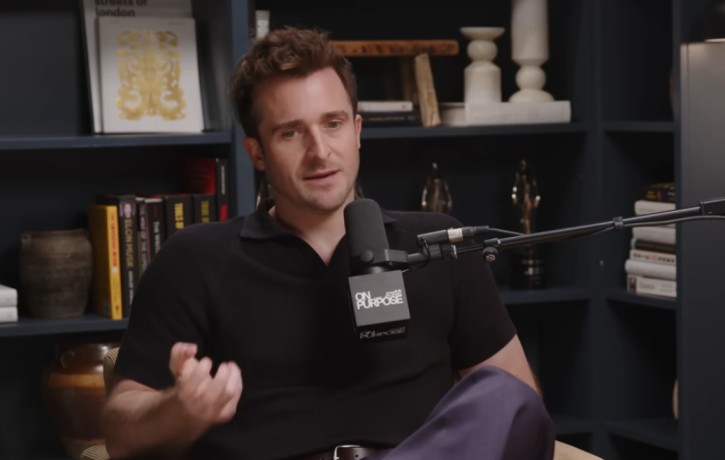
Editor’s Notes: In this episode of the Jay Shetty Podcast, renowned relationship coach Matthew Hussey joins Jay to deconstruct the myths surrounding modern dating and long-term commitment. Hussey challenges common cliches like “right person, wrong time,” offering a fresh perspective on how to stop settling for unfulfilling dynamics and start “settling on” a partner to build something extraordinary. Throughout the conversation, they explore the critical difference between ego-based standards and emotional needs, providing viewers with actionable advice on fostering vulnerability, leading with intentionality, and navigating the complexities of compatibility. (Apr 29, 2024)
TRANSCRIPT:
Early Ideas About Love
JAY SHETTY: Everyone that we know, since we’re young, wants to fall in love. And we’ve all heard so much advice on love that has somehow become our version of what love is. Or we’ve all seen so many love stories. Whether it was a bad love story with our parents, whether it was a good love story with our uncles and aunts, whether it was our older brother or older sister, whoever it was, where did your earliest ideas of love come from? And which ones do you still agree with and which ones do you disagree with?
MATTHEW HUSSEY: I suppose on some level, some of them must have come from my upbringing. You know, my mom talking about the kind of giddiness that she felt for my dad when they first met. And the attraction. I’m sure so much of it was songs and movies.
I suppose the thing that I think about now is what I value today is different, I think, than what I might have valued at 21. I still very much value attraction and chemistry because I think it’s going to be a long road if you’re in a relationship that doesn’t have those things. But the things that became kind of non-negotiables for me changed, like finding someone who brings me peace and being in a relationship that felt peaceful. That was something that made its entrance later in my life and I paid the price for it not making its entrance sooner.
You know, I was in multiple relationships that really robbed me of my peace. And so I think that probably early on I wasn’t seeking peace. I was seeking just the ride, you know, the experience of feeling these incredible feelings for somebody. And also perhaps being heroic to that person. I think that was probably an early idea that I was the… there had to be something heroic about the way that I showed up or presented myself.
JAY SHETTY: I can relate to that.
The Challenge of True Vulnerability
MATTHEW HUSSEY: And I think that for a long time that prevented me from ever really being seen. You know, if you’d have asked me at 25, “Are you vulnerable?” I would have been like, “Yeah.” I wouldn’t have said no. I wasn’t self-aware about it. But there was a lot that I never really brought forward about myself.
I think we are very good at the hero’s journey of our life and we love that, right? Because it’s a kind of “here’s where I was and here’s where I am now.” You know, whenever you hear a rags to riches story, it’s “back then I was in a bad spot, now I’m in an amazing spot.” And I remember I used to tell stories like that in my life. I could be dating and telling stories like that of where I’d come from and where I am now. And there was nothing really vulnerable about those stories. There was still the story of how I’m awesome because it’s a hero’s journey, you know.
But it’s a lot harder to be like, “Here’s what I’m struggling with right now,” or “That thing that you just did just made me really jealous and insecure,” or “I’m feeling emasculated right now.” Like those things, my God, to bring that stuff forward for me was… I didn’t realize how hard it was and how terrified I must have been of doing that and how deeply unworthy I felt to be able to really show someone who I was and still feel like I’d be loved afterwards.
You know, I get vulnerability hangover. And by the way, sometimes it did backfire. I remember when I was trying on the whole vulnerability thing, I remember saying to someone about a moment in an evening that had made me insecure. I remember talking about… I didn’t want to, but I could tell I was being passive-aggressive and cold and the walls had gone up.
And so I was like, “I’m not being…” That’s the hard place to be, right? When you know you’re not being your normal, fun, loving, happy self, but you’re also not being honest about what you’re feeling. So you’re just in this weird no man’s land of being unpleasant to be around. And I realized this… I can’t hide how I’m feeling right now. And instead of gaslighting this person that I’m fine and I’m not, let me just share something that made me insecure.
And it really backfired. This person said to me, “I find that…” The literal words that were said to me was, “I find that really unattractive.” And it crushed me because I thought… In my head, I was like, “I’m never doing that again.”
I remember living with my friend at the time, and I walked to his room and I was like, “I can’t believe what just happened. I’m such an idiot.” And I didn’t say, “Wow, that was really lacking in compassion from her side.” That was the depths of my own lack of self-compassion. Instead of saying, “Wow, that was a really mean response, lacking compassion,” instead, I went, “I’m such an idiot. I can’t believe I said that out loud. Why did I reveal that weakness?”
And it took me a little while to recover from that because it reinforced… that’s the dangerous part, it reinforced this idea that I needed to be heroic at all times and not to have those weaknesses.
So that was a big thing for me, I think, thinking I had to be a hero all the time and not realizing that a real relationship is so much more interesting than that.
JAY SHETTY: Wow, man. So powerful. So many things to unpack.
Peaceful vs. Boring: Understanding the Difference
One of the things I want to start with is what is the difference between a peaceful relationship and a boring relationship? Because I think…
MATTHEW HUSSEY: Great question. That’s a great question because I think…
JAY SHETTY: A lot of people think of peaceful as boring when we’re not emotionally mature. So I can relate to what you’re saying, where you actually want a relationship that’s kind of chaotic and up and down and passionate, and then we love each other, we hate each other. You know, there’s that kind of energy. There’s something… and we do that in a lot of our lives.
And by the way, we do that even in marriage and relationships where we can often invent drama because it’s too peaceful. And I’ve had friends who’ve reached out to me and said, “Jay, I keep creating drama in my life because that’s what I’m used to. And I don’t know what to do with this guy or this girl because they’re actually peaceful.”
So people are scared that peaceful means boring. But you’ve just said you like a peaceful relationship. I know you’re not a boring guy, so what’s the difference?
MATTHEW HUSSEY: You know, when you were just saying that, I thought to myself, there are days where I’m on time for something and I will kind of go and do one more thing before the meeting that makes me late so that I have to make a game of getting in the car and finding a way to… the GPS says I’m going to be there in two minutes before. But shaving off a minute… I was on time.
JAY SHETTY: Yeah.
MATTHEW HUSSEY: Why did I do the one more… nothing was going to go wrong if I didn’t do that one more thing.
JAY SHETTY: Yeah.
MATTHEW HUSSEY: Why did I do one more thing that made me late? And I had to realize at a certain point that that was my nervous system. I grew up around… my dad was always late for everything. I learned that from him. I used to hate it, by the way, but I had also then adopted it. I’m not that way anymore in my life. But I realized I have an addiction to this feeling, this mini drama of “Am I going to get there on time?” which creates this little mini drama in my day for 10 minutes. It’s an adrenaline rush.
And it’s a horrible feeling. Really. It doesn’t feel good. It feels stressful and anxiety-inducing. And now I’m going to come across as rude and disrespectful of someone’s time. And I’m stressed. But it’s… my body is used to that. I’m not used to getting somewhere on time and having 10 minutes to just chill. That’s a new feeling that can feel boring.
Finding Home in a Relationship
So in terms of a relationship, I think we do it everywhere in our lives. In terms of a relationship, I knew when I met my wife Audrey that I had found peace that wasn’t by any means boring because I felt at home.
I didn’t just feel safe. We can feel safe and very bored, right? We can feel like I’m with someone who is very non-threatening. I feel like this person’s not going to leave me. I feel like I’m very safe in this situation, but I don’t really… this doesn’t feel like my person. I just feel safe. And when you haven’t felt safe for a long time, sometimes that’s a very lovely feeling on its own, just to feel like I’m no longer in an abusive relationship or I’m no longer in a relationship with someone that makes me second-guess myself all the time or feels like they’re going to leave me at any moment.
But eventually we will get bored in a situation where the only thing that’s presenting as a positive thing is the safety we feel. But in this relationship, I felt at home and I felt more seen than I’d ever felt before. I really was astonished to the extent to which this person got me and that we seemed to get each other.
And the first night we met, we spoke for eight hours straight. Literally, everyone else was partying and doing that and we were just… we talked for eight hours the first night we met. There was an attraction there that made us talk to each other. It’s not like we started talking to each other in the first second because we knew we were such great conversationalists. We started talking because there was an attraction. But then it felt easy. It felt like home.
Somehow it took me a minute to realize that, by the way. This wasn’t a love at first sight story of “and then everything was smooth sailing.” It took me a while to realize, “Oh, this is… this feels like home. I’m more of myself around this person.” And I think that’s a beautiful thing to find is someone who makes you more of yourself.
And of course, you can’t… if someone says to me, “I’ve got zero sexual attraction to this person,” that’s a problem. That’s a genuine problem. You have to have some form of attraction to the person you’re with.
Don’t Comparison Shop for Chemistry
Now, by the way, does it need to be the greatest attraction you’ve ever felt for anyone in your life? That trips a lot of people up. Because I always say don’t comparison shop for chemistry. It’s one of the things I talk about in the book because I think we’re always comparing whatever is in front of us with the peak of our chemistry that we’ve had with someone that we can’t seem to get over.
But you only have to take a look at what are the situations that we find hard to get over. What was that peak of chemistry and attraction? And it’s often in situations that were entirely unsustainable. You know, you have a holiday romance with someone and you go, “Oh God, I’d love to feel that animal attraction for someone who was good for me and who I had a long-term relationship with.” And it’s like, well, how long did you know that person? Two weeks. They didn’t have to do very much. It’s easy to create the conditions for chemistry in that kind of a situation.
The same is true of people who have a three-month fling with someone where it becomes more interesting because it’s flaming really hot and then it disappears. You know, I had a woman who I coached who said, “This person was the one. We had this amazing three-month thing.” And I said, “What happened?” And she was like, “Well, he went traveling and he said he didn’t want to continue the relationship.”
And for me that’s literal fireworks. You know, fireworks… we look at them and they’re really exciting and we’re like, “Isn’t this magical?” And you look at those fireworks. But if those fireworks carried on for three hours, you’d be like, “This is… I want to go home now.” You would be bored.
JAY SHETTY: Yes.
# The Power of Commitment Over Chemistry
MATTHEW HUSSEY: Right. For fireworks to be exciting, they have to end. They have to end. So we have to be very careful about comparing the slow burn energy of a real relationship with that fast twitch muscle of a short term encounter or an affair that is naturally exciting because it’s an affair. It’s mysterious.
So I don’t think you should absolutely have chemistry. But we have to be really careful with comparing chemistry with previous chemistry because that chemistry may not have lasted either if you’d actually got what you wanted.
JAY SHETTY: And it makes so much sense. The idea you just, the analogy you painted of the fireworks is a brilliant one because a real relationship is one that you don’t want to end and the chemistry based relationship is one that has to end. Right. It has to come to an end. And for it to feel meaningful and a real relationship, you never want to end. And that’s why it feels meaningful. And that’s where we’re kind of stuck in between.
And the thing I hear the most. And I asked my audience and my team a lot of questions before this interview because I know a lot of my audience is dating, trying to figure it out. And one of the biggest things which we touched on here, but I want to ask you about is that people find it overwhelming with the number of options they have today.
And I’ve spoken to friends who are like, well, this guy’s great, but maybe there’s someone greater, right? And we’re constantly living in this. They’re good, but maybe they’re 50%. And maybe there’s a 51. And then maybe there’s a 79, and maybe there’s a 99, because I can see someone else over there has a 99. And so we keep second guessing even the person in front of us, even if they are fulfilling our needs because of the overwhelming number of options.
So how, when you said you felt at home, and, you know, I think that’s what people want to feel. They want to feel at home. They want to feel more than safe. But how do we know? Or what have been the best signs and indicators that people can look out for, that they’re actually making things harder for themselves by wishing, hoping, wanting someone else? Or is that a sign that you’re not with the right person, that you feel that there is someone who has more?
Finding Your Builder: What Really Matters in a Partner
MATTHEW HUSSEY: It’s such a tough question because I think sometimes we’re wanting something else because the person that’s in front of us isn’t compelling enough. There really is something lacking in that relationship. But I do think we have to ask ourselves what are the things I really must have for an amazing relationship?
For me, when I was going to ask Audrey to marry me, I literally called up a friend and told him, and he was like, you know, why are you doing that? I’m just curious. It was almost like his way of testing whether I was ready or not, you know, whether I was just in some crazy infatuation or.
And I said, you know, I’m ready to build something in my life. I feel like for me, my dating life was just like hitting reset all the time. And it was honestly, at a certain point, making me anxious, like dating and being with different people. And it just didn’t, you know, there was a time in my life where that was really exciting. And then it started to just go the other way.
And I had to listen to that and go, this isn’t going to work. This isn’t where it’s at. This isn’t making me happy. This isn’t bringing me peace. The way that I was dating, it had almost like an addictive quality to it that was really unhealthy. And I thought, this isn’t going to be a good look ten years from now. It’s not going to make me feel good. It’s not going to bring me more peace, which is a different.
By the way, that doesn’t mean that you know how to give something up when you have those realizations. You might realize eating healthier would be better for you, but it doesn’t mean that you’ve trained yourself to be able to do that. But I got to a point where I said, I want to build something now.
And with Audrey, I thought, I’ll never find a better builder. And I said that to him, like, I’ll never find a better builder. This is the builder for me. We’re going to be able to do such amazing things together and the life we’ll have and her level of empathy and compassion and the person that I am with this person, the way she makes me feel, that’s truly special.
And I’m not a, you know, there’s the one out there kind of a person. I’ve never been that way. If anyone looks back through my videos and you know this because we’ve spoken about it back when I was single, I’ve never been a person who believes in the idea of the one.
So I think that it’s finding someone that we look at what’s really important to us, not what’s important on an egoic level. Because I think a lot of the things that make us question whether this person is right for us are ego based. I don’t think they’re based on how we feel around this person. We worry, is this the kind of person my friends think that I should be with? Do they look the part? Are they my normal type?
JAY SHETTY: Do they make the right amount of money?
MATTHEW HUSSEY: Yeah, like, does this person come in the package that I had always told myself they would come in? And those things can be really, really limiting. And they can have us constantly trying to optimize for some version of something that we think we’re supposed to be with, which is a very dangerous way to go about finding love.
You can’t optimize for human beings. You can optimize for a lot in life, but you’re dealing with people. By the way, even if you let go of this person, you’re going to find someone else who’s also imperfect. And they might, okay, this person scores a seven in this area and they score a nine, but guess what? They score a three in this other area that you didn’t even know was great in this relationship because you took for granted how amazing that person was in that way.
It’s very dangerous to optimize in that way in our love life. And I’ve come to really believe in life that if you find a connection that has all the right raw materials and you both have the same level of commitment, then you can build something extraordinary together. And actually, the extraordinary is the thing you sculpt together.
It’s no different from a career. You know, neither you nor I started by doing our dream version of this. It’s evolved and evolved and evolved and evolved. And every year you sculpt it a little closer to your ideal way of doing it all. And along the way, you do a lot of things that you don’t necessarily, you’re like, oh, my God, I couldn’t do this for a lifetime. And this part I thought I would enjoy, and I didn’t enjoy it nearly as much as I thought I would. I’m going to stop doing that.
And you sculpt it. Dream careers are sculpted, they’re not found. And I think that that’s true of relationships as well. I’m more grateful for my relationship with Audrey the more time goes on.
JAY SHETTY: Yes.
MATTHEW HUSSEY: Because we keep sculpting it into something that’s better and better.
Settling On vs. Settling For
What that requires, which is really hard for a lot of us, myself included, for many years. And this was one of the things that I think really hurt me was I got myself into an incredibly indecisive state where I was constantly second guessing myself.
And when we think of what are we worried about in our love life? For so many of us, it’s that we’re going to settle. I’m going to settle for the wrong person. Well, I think we can actually start to reclaim the language of settling and make it into a very positive thing.
What if it wasn’t settling for, what if you decided to settle on? Because when you settle on someone, there’s a power to that. It’s like you resolve to say, I’m going to settle on this. It’s like people crossing a country when a country is, you know, it’s like people crossing America and deciding when to stop.
JAY SHETTY: Yeah.
MATTHEW HUSSEY: At what point did the early settlers say, this is good enough. I don’t need to keep going. I’ve found an amazing place. And when you find that place, you go, I could live here. Then you settle on it. And it’s only by settling on it that you can make it great. It’s only by putting your attention on it like a laser, that you can see what it becomes.
And I don’t think that I ever really settled on anything in my love life in a way that gave it a chance to see what it could really become. And in this situation, I really gave myself that chance by saying, I’m going to go all in on this.
JAY SHETTY: Yeah, but.
The Power of High Standards and Low Stakes
MATTHEW HUSSEY: She was smart because Audrey is ridiculously perceptive and in tune with people, and she saw in me early on, like, oh, this is a pattern for him. And that doubt and that, what do I want? You know, is this right? And she saw that early on.
And one of the things that she did was she called me out firstly, and she was like, look, if you’re, I’m willing to really see what this could be. And you don’t seem to be in that place where you’re actually going all in and seeing what it could be. She said, so I don’t want to continue if you’re not going all in, because I’m not here for some half of someone’s energy.
And the way she phrased it was amazing. Because she said to me, look, that doesn’t mean, like, six months from now, we could break up.
JAY SHETTY: Yeah.
MATTHEW HUSSEY: You might decide this is wrong for you. I might decide it’s wrong for me. And no one’s the villain if that happens. But if you’re not willing to go all in right now to at least see what it could be and give it your real effort, then this has to end here for me.
And what was, for me, what was amazing about that is that it lowered the stakes for me, especially when she said, because I felt like, you know, in the past, I had hurt, well, I didn’t feel like I had hurt people and I had been the villain. And I was like, I can’t do this anymore. Because I also suffer from ridiculous guilt.
So I was like, I can’t do this again. I was avoidant. Because I was like, I don’t want to get close enough to anyone to hurt someone. If I hurt someone, I’m going to feel sick, and that’s going to haunt me. And then, you know, I’m just making myself miserable and them. And so I had all this stuff.
And when she was like, you’re not, if six months from now you decide this isn’t for you, that’s okay, you’re allowed to do that, that lowered the stakes for me. But by also demanding as a standard. And that’s what so much of this book is about, how to raise your standards and what that looks like in practice.
Because I think the reason so many people never reach the point of real relationship is because they don’t have standards for what they expect and how to communicate and know how to communicate those standards. But because she had a standard that she lowered the stakes. But she also had a high standard that said, this is the price of entry for continuing. That allowed me to fully invest.
JAY SHETTY: Yes.
The Journey from Tactics to True Standards
MATTHEW HUSSEY: And when I fully invested, that thing started to actually realize its potential. We got to see what it actually was when I was showing up fully and she was showing up fully.
So I sympathize with anyone who is struggling with those decisions in their love life. I don’t judge anyone for it because I struggled in my love life with… I wrote a whole chapter of the book called “Never Satisfied” because I related to that idea that you find someone who you chase, who feels exciting to you, but they break your heart. Or you go for someone who feels safe and you’re bored. You’re doubting yourself, you’re doubting whether this is the right person. And you just sort of cycle between those two different extremes.
And it became the… not just a goal for me to help other people. It became a goal for myself to go, I need to figure out how to be happy here. Because otherwise I’m going to constantly oscillate between feeling suffering because I’m chasing someone who doesn’t want me, or being with someone where I feel like I’m not fully there. And that’s not fair to them and it’s not fair to myself. I need to figure out a way to be happy here.
So so much of this book is about finding that peace and that happiness that I feel really lucky to have been able to find in my own life. I wrote this book single, heartbroken, then dating, then falling in love. And then the last edit I did for two days on my honeymoon. That was a crazy arc for me. So it wasn’t something that was created by a married person who was just like, “Here’s all the answers.” Some of these chapters I wrote in the worst possible pain of my life.
The Fear of Setting Standards
JAY SHETTY: You talked about standards there and obviously that’s such a big part of what you felt with Audrey in that moment. I think what scares us about setting standards is that we think it’s going to scare someone away. So Audrey saying that to you requires so much self-worth in her saying, “I may lose this guy if I say this, but I know that’s where I’m at.”
You being vulnerable with that person many years ago saying, “I’m going to open up about my life,” and them saying, “That’s not very attractive. I don’t find that attractive.” And that was you again trying to demonstrate and be vulnerable. But because you were with someone who wasn’t emotionally compassionate enough to receive that, and because you didn’t have enough self-worth, you made it a weakness in yourself.
It sounds like when Audrey said that to you, if you would have said, “Well, I’m not in,” she would have been like, “Okay, cool, we’re not in, then it’s not happening.” It doesn’t sound like she would have been like, “Oh my God, he doesn’t like me. I’m not good enough.” Because she had a certain standard and that’s what standards… Whereas when you were trying to be vulnerable, it was like trying to be vulnerable, but it wasn’t a standard yet.
MATTHEW HUSSEY: Well, I would… No, it wasn’t a standard. Tactics are different from standards.
JAY SHETTY: That’s what I was talking about.
MATTHEW HUSSEY: Not that when I was being vulnerable, that was a tactic.
JAY SHETTY: No, I didn’t think it was a tactic.
Tactics vs. Standards
MATTHEW HUSSEY: But we do constantly employ faux standards that aren’t really standards, they’re just a tactic. So it’s like, “I’m not going to text this person back so that I generate interest.” And then if it doesn’t generate interest, three days later, we text them anyway. That’s because it wasn’t a standard, it was a tactic.
JAY SHETTY: So well said.
MATTHEW HUSSEY: A tactic we do to try and get a result. And if it doesn’t work, we go for a different tactic. A standard is who we are.
JAY SHETTY: So well said.
MATTHEW HUSSEY: And we don’t change it. If my standard for being open and vulnerable was what I did in that moment with that person, I wouldn’t have stopped doing that just because I didn’t get the result that I wanted.
JAY SHETTY: Yes.
MATTHEW HUSSEY: Which was connection. I would have said, “Well, this is how I want to be.” And come to think of it, if I was in a better place, one of my greatest standards is to find someone who really accepts me. And if this person doesn’t accept me, then my standard is going to be that… well, maybe this relationship isn’t for me.
I want to be this vulnerable in a relationship. I want to be able to share from the heart both the good and the bad and my flaws and my insecurities. And if I’m not accepted, then, okay, maybe it’s not right. But instead, what I did was I went down a very masochistic rabbit hole of going, “I’m not good enough. It’s just been proven I’m never going to reveal those weaknesses again.” And I stayed.
So you’re right about Audrey, because I guarantee you, if I had not then said, “All right, I’m going to show up differently,” she would have been out of there. And the big difference is we have to make the goal our happiness, not a person.
Choosing Happiness Over a Person
We think that we’re going to be happy by getting a person, but you’ll never be happy by getting a person that doesn’t meet your needs. It doesn’t matter how impressive you think they are. That’s the danger. That’s the trap people fall into. I’ve fallen into it.
Someone’s particularly exciting, impressive, charismatic, gorgeous. There’s something… they have all these things that you go, “This makes them a very valuable person.” And then you say, “Well, my needs don’t really matter anymore. The only thing that matters is I can get this person.” Because we think if I can get this person, then I’ll be worthy and I’ll be happy and it will all work out.
But everyone out there… most people out there have been in a relationship where they thought it would be heaven to get someone, and then they experienced what the relationship was actually like when their needs weren’t being met, when they didn’t feel safe, when they didn’t feel acknowledged, when they didn’t receive someone’s empathy, when they felt like they couldn’t really be themselves around that person, when they felt like they were constantly clinging onto the relationship because they were in a relationship with the person, but they never really felt like they had them.
There’s a special kind of hell to be in a relationship like that. And at a certain point we have to come to realize that this relationship I keep telling myself I’m going to die if I lose, it is worthless if I don’t get these couple of things that are missing.
JAY SHETTY: Yeah.
MATTHEW HUSSEY: And so for me, one of the greatest ways to have a standard next time round is not… There’s a whole… I wrote two massive chapters in this book on how to be confident. But you don’t even need confidence for standards in the beginning.
JAY SHETTY: Yes.
MATTHEW HUSSEY: You just need to know that I can never experience that again because it’s too painful. If I put your hand in a flame, you don’t need a standard or confidence to get out of it.
JAY SHETTY: Yeah.
MATTHEW HUSSEY: You don’t need self-worth to get your hand out of the flame. It’s just too painful. I can’t do that again. And a lot of people, especially people who leave really abusive or difficult relationships, a lot of them, when they have enough time away from it and they start to… their nervous system calms down and they start to experience a different reality.
JAY SHETTY: Yeah.
MATTHEW HUSSEY: They look back and they’re like, no matter how much I still may dream about that person or fantasize about that person or get sentimental about that relationship, when they really think about what it was like to be in it and what that person was like, they’re like, “I could never go back to being in that kind of a situation.” So the necessity is the birthplace of standards before you ever increase your self-worth.
Standards Without Self-Worth
JAY SHETTY: Yeah. And I love that because I think we get so locked into self-worth, self-confidence, self-esteem. And because that’s a lifelong journey and a lifelong pursuit, you feel you can’t have standards. But I want to go back to something you said because I think this is… we’re really… I’m really enjoying this conversation because I feel like we’re really getting into this kind of subtle, nuanced space of what’s really holding people back from having love in their life.
And it’s something you said earlier, which I’m kind of connecting to what you’re saying now. This difference between an egoic standard in your words and then an emotive standard or an emotional standard. And maybe there’s a better word for it that you’ve developed or come across, but I’m trying to separate it.
Because I think an egoic standard is… well, yeah, if they asked me out, they have to pay on the first date, so we start getting lost. Or an egoic standard is they should message me first. I don’t think those are the types of standards that Audrey said to you or the kind of standard that you’re recommending.
There’s this great… my favorite TikTok page to follow in the world is called “Guy with the List.” Have you seen this guy? So what he does is he’ll take random videos of girls who share their icks and they are hilarious. They are the most ridiculous things. It’s like, “I don’t like guys who work out with their mates” all the way through to “I don’t like guys with a big bum.” Whatever it may be.
And this guy, what he’ll do is he’ll take the clip of a girl saying that and then he’ll go to his notes page in Apple and add it to his list of things of not to be. It’s the best page in the world. So it’s just the longest list of 794 the last time I saw. And it’s like “A Guy with the List.” It’s brilliant.
And the reason I bring it up is because I think that’s what we think standards are now. And I think to your point earlier, I think you labeled it an egoic standard. So walk us through how we transform our egoic standards into… I’m calling them emotional standards, whatever the right word is. How do we transfer them over? Because I think we think we’re setting standards, but they’re standards like, “He’s got to pay on the first date. She better text me first. I won’t reply for a week,” the example you gave. And I think that’s what’s tripping us up.
Ego vs. Happiness
MATTHEW HUSSEY: I think that it’s almost like there’s standards that arise from ego and there’s standards that arise from what’s going to make us happy. And that the two are often completely different. Because actually the things that make us happy can be much more subtle and less prescriptive than the things that feed our ego in some way. There’s two points I want to make about this.
JAY SHETTY: Please.
The Power of Self-Compassion in Dating
MATTHEW HUSSEY: The first one is in relation to the kind of inherent judgment that is in so many of those icks and so many of those things. I would never want someone who’s like this. I would never want someone who does that. We write people off at lightning speed. And not just entirely superficial things, but ways that people are not like us, right?
So you’ve got people who are like, oh, if they’re not into—especially like, you know, your audience is into self development. My audience tends to be into self development. It’s very easy for someone who gets into self development to suddenly be like, I want somebody else who’s into self development. Yeah, right. And I get that question all the time. Like, now that I’m doing all of this growth work, I want someone who can keep up. I want someone who’s on my level.
And I want to remind people, like, you weren’t doing this two years ago. Like, this is, in a way, this is like a complete contempt you have for you two years ago. Wow. Before, like a certain mentor or influence or something came into your life and turned you onto something. There’s also a slight arrogance about the standards, you know, these things we have because it’s, you know, someone could have lived on a farm their whole life and they have no idea what self development even is as a kind of idea, a concept, let alone that there’s this entire industry around it.
And they may have a wisdom that you never picked up on in the world that you grew up in. And that might be one of the greatest bits of synergy between the two of you is the wisdom you bring and the wisdom they bring that’s different and is come from a very different place, a very different way of living. So, you know, I think there’s a lack of humility sometimes in thinking that people have to be like us and then judging them for the ways that they’re not like us.
And a lot of the way we judge other people arises out of a lack of self compassion because we haven’t really accepted ourselves. We haven’t really, you know, I know every time I got punched in the face by life, every time, like I took a big hit and I, you know, experienced a really bad heartbreak that was a big one for me. Like a very humbling experience for me.
I experienced years of chronic physical pain. And when that happened in my life, I like truly just hit a kind of bottom because I just didn’t know how I would ever—I tried everything in the world and I couldn’t make this pain go away. And it started to basically not just ruin my life because I felt like I couldn’t experience joy anymore. I was just thinking about my pain all day, every day.
But it also robbed me of my confidence because I started to feel like, wow, no one’s going to be attracted to this version of me that is so frail and fragile and doesn’t feel—I wasn’t. I really didn’t identify as the heroic version of me anymore. I was like, this is going to—I’m going to be perceived as pathetic by someone who wants, like, a strong person because I feel so on the edge of breaking the whole time. Because anyone with chronic physical pain knows that you—it’s so centralizing and even doing basic things can feel like it’s too much.
But my point is that going through those things in life, it allowed me to access a level of compassion for other people because I was like, God, how many people have I written off in my life? Because, you know, they’re this way or they’re that way or they’re, you know, and look at me right now. I’m, like, on the floor.
And I found that as I came to accept more of myself and be honest about my own stuff and not just the things going wrong in my life, but even just difficulties, like, if you have a jealous moment and it makes you a little crazy, then you’re not so quick to call other people crazy when they react to insecurity they have, and it makes them do something extreme in that moment. She’s crazy. You can’t believe what she did. Like, she’s so—she’s crazy. It’s like, you don’t—you don’t throw that around when you know you’ve done your share of, like, crazy because you were in pain and you didn’t know how to cope with it.
JAY SHETTY: Yeah.
MATTHEW HUSSEY: You know it. So I’ve—I’ve found that the more—the more I’ve, like, been humbled in life, and the more I’ve become accepting of myself and compassionate towards myself, actually, the more—
JAY SHETTY: Yeah, absolutely.
Growth Creates Space for More Connection
MATTHEW HUSSEY: It’s made space for everyone else because now I wouldn’t—if I was single again, I wouldn’t be writing off people on all of those things that I might have written people off for eight years ago or ten years ago. I actually think I would have more options, not less. Like, people say, I’m growing so much. I’ve got so few options now because so few people are on my level. I’m like, if you’re really growing, I actually think it makes space for more people because you become more compassionate and more accepting, and you see the soul of that person underneath those behaviors and the way they are.
Which kind of brings me on to my other point, which was when, you know, the person says they didn’t pay on the date they invited me and then, you know, they didn’t pay for the whole check or whatever. I think we’re—we’re not always good at getting behind why someone is the way they are. Like, what’s really driving the way they are. Does this person have the same values as me? They might do something different on the surface, but underneath that might be the same value. We just have arrived at different points.
Like, my wife’s a vegetarian. I eat meat. Like, we both love animals. You know, sincerely, I love animals. She makes jokes about me. You know, how much—you know, how I am with animals is one of her favorite things in the world. But I eat them and she doesn’t. Like, we have—we’ve arrived at different places, but underneath, it always, like, the same beating heart. And I think that’s the thing we’re quick to write off when we make those really quick judgments about people.
And that’s not to say, like, there are certain, you know, red flags that might come up with someone where you go, you know what? Not worth finding out what’s behind this, because it’s just too severe. And I don’t—I really don’t like this. And it has been a major warning sign for me in the past. But I think that’s—that’s different.
JAY SHETTY: Yeah.
MATTHEW HUSSEY: Than taking something like, you know, someone—someone didn’t pay half the bill or someone didn’t pay the whole bill. And, like, I—I know that I used to think to myself, I really enjoy paying the bill, but if someone didn’t offer, yeah, I—for me, I would be like it—and this is even my judgment. Right. Because that, for them, it might just be conditioning, and it might be—I even—there were times where I even spoke up about it where I found myself paying constantly.
And I got brave enough to say, hey, it makes me feel kind of taken for granted that you don’t ever offer to pay. You know, I’ve been in situations like that in the past, and sometimes if you said that to someone, they’d be like, oh, my God, I feel off. Like, they’re so embarrassed. And they’re like—they will then feel shame about it and be like, God, I—you know, they look at themselves and they’re like, oh, I slipped into a pattern there that I don’t like.
Especially if I express that it’s not that I hate—it’s not that I don’t like paying. It’s that I don’t feel like we’re a team.
JAY SHETTY: Yes.
MATTHEW HUSSEY: You know, that might make someone go, well, I value being part of a team as well, and I actually don’t like that you don’t feel like I’m a great teammate. That’s the last thing in the world I’d ever want to be. So now, like, you can actually come together because of a moment where you say something like that.
But I know if I was on a date when I was single and someone didn’t even offer—and by the way, I would still pay.
JAY SHETTY: Yeah.
MATTHEW HUSSEY: I still wouldn’t let them. But if someone didn’t offer, there would be a little piece of me that would be like, it doesn’t—that doesn’t feel like teamwork.
JAY SHETTY: Yeah.
MATTHEW HUSSEY: And maybe, you know, maybe fine. If someone invites you on a date and they let you pay half. Okay, maybe you say, I don’t love that. Yeah. But maybe you see, like, maybe that needs to play out once or twice more before you decide everything that means about the person.
The Importance of Clarifying Conversations
JAY SHETTY: Yeah. Well, I think you just hit the nail on the head. It’s like actually having—and I know this isn’t sexy and it’s not popular, but it is what you’re trying to say, that having the clarifying conversation around why someone behaves the way they do is far more useful as to whether this relationship has a future than what they do.
So the fact that you’re paying or someone’s not paying actually doesn’t show anything unless you had a conversation about why that’s the case. And actually how they deal with that conversation and how they respond to it is—is going to give you all the notes you need as to whether this relationship has a future or not.
Because what ends up happening, that’s with a very tangible thing with paying. There could be something that person does that annoys you. And you let it go for the first month. You let it go for the first three months. Now you move in and it triggers you and you’re like, God, can you just stop doing that? You’ve been doing it for nine months now. And they’re like, well, wait a minute. Why didn’t you just tell me that? And it’s like, well, if we actually talked about it on month one, I know.
Radhi and I have had so many conversations like that. And it is true that as you spend more time together, A, you discover more things you disagree on, and B, you discover more things you’re grateful for. They’re both happening at the same time. And the disagreement doesn’t turn into a disconnect because you have the skills to say, I know how this person deals with challenging conversations because we’ve had them for so long.
We’re not waiting for three years to hit to have our first challenging conversation because we’ve already had them about less important things. And now that we’re growing up together, like, you know, I think a lot of people aren’t having the early conversations. So when it comes to like, how do we want to raise kids, where do we want to live, what do you want to—all these are harder conversations if you haven’t talked about who should pay for the bill, because these are much more bigger emotional condition decisions where people have far more stuff to pull from as to how they make it.
How Someone Thinks Matters More Than What They Think
MATTHEW HUSSEY: There is so much to say about all of that. Yeah, you’re absolutely right. And Christopher Hitchens used to say it’s more important how someone thinks than what they think. And I think that we never, when we’re being too judgmental or assumptive, we don’t necessarily learn how someone thinks. We learn what they think and then we discard them based on what they think or what they do.
You’re absolutely right that by having the conversation, you see how they deal with the conversation itself. Which should, by the way, for anyone wanting a serious relationship, it should—that should be like one of your baseline needs is that I need someone who is willing to have real conversations with me where we can acknowledge things. Because someone who can’t acknowledge things can’t grow. Right.
It’s like one of the key features of narcissism is the inability to admit wrongdoing. And that breeds incompetence, by the way, because if you can’t admit wrongdoing and take ownership, you can’t get better at something. So you, you know, whether you’re dealing with narcissism or just someone who can’t see themselves clearly or can’t acknowledge the way you feel or the way something they’ve done has made you feel, if you’re in that situation, it’s going to—it’s going to be a rough relationship.
So how soon do you want to find out the way the two of you engage on that level? But it’s also engaging on that level is a form—this is, I think what we’ve, what we forget is that—well, let me make two points about—I wrote an entire chapter in this book on hard conversations. Not just because we tend to avoid them at all costs, because we don’t like them. Like, it’s like, you know, in Fight Club where the, you know, he says, like, most men will do anything to avoid a fight.
Like, it’s like most people will do anything to avoid a hard conversation because we just hate—it’s awkward, it’s embarrassing. You know, we probably, many of us grew up not being good at confrontation or not being taught how to have healthy confrontation. And so we—
JAY SHETTY: We avoid it and we hold on to it.
MATTHEW HUSSEY: And we hold on to it, and we’re afraid what will happen if we speak up about our needs. I know that one thing I did a disservice to people that I had in my love life in previous times of my life, because the times where I might have really needed some time to myself, I didn’t express it.
And then by not expressing it because I was afraid, I then became resentful and avoidant and started to push that person away because I just decided my needs couldn’t be met in this relationship without giving them a chance to even see that part of me and show up for me in that way.
So we do that all the way to the beginning of dating. You know, we do that when we see, you know that I joke in the book about red flags because I’m like, if we listen to every single piece of advice on the Internet about what’s a red flag, not only would everyone be undateable, so would we.
JAY SHETTY: Yeah, right.
MATTHEW HUSSEY: Like I’d be excluded from the dating pool.
JAY SHETTY: Yeah.
MATTHEW HUSSEY: Because I for sure have some of those red flags or have had at some point in my life. So, you know, we, unless I don’t want to be hypocritical, I’ve been a contributor to the advice on red flags. But when you start adding them all up, you’re like, oh, my God, is there any room for mistakes? Is there any room for someone to do something that you know isn’t them on their best day?
Now, Robert Greene, I heard him say, you know, if someone does something, pay attention to that. Because nobody ever does anything once. If they did it once, it’s a pattern. I think that’s an amazing, like, if I was creating a survival guide for life, that would go in it, because it’s great advice.
But I also know that there’s things I’ve done in my life or my relationship that I did once, especially after a hard conversation I felt bad about and decided I don’t want to be that person or I don’t want to do that again. So we do want to reserve some space in life for the fact that we can learn, we can adapt, we can progress.
What I know for sure is that people don’t progress without the hard conversations. What we ignore we tacitly approve and what we point out bravely, albeit there are elegant ways to do it. And I show people elegant ways to do it in the book. That to me is, then you’re looking for progress.
Because when I’ve mentioned it is, does it bring us closer together? Because in the right situation, communicating should actually bring you closer together. It shouldn’t, then you shouldn’t feel gaslit, you shouldn’t feel like you’re called crazy or difficult or that should actually bring you together.
And then our standard has to be that by having that conversation, I need to see progress in that area. And if I don’t see progress in that area, I’m not going to ignore the fact that there’s been no progress in that area. But if there’s no progress now, it has become a kind of a delusional thing to expect that they are going to change.
The Reality of Modern Dating
But I can’t stress this enough. We in our love lives today, everyone is really, really good at and rightly so. I’m not, this is what they’re talking about is real. But we’re really good at complaining about what dating is like today and how hard it is. And it is like it is hard. Finding love is hard. It is the Wild West. There is so much bad behavior.
JAY SHETTY: There’s so many ways to just.
MATTHEW HUSSEY: God, there’s just so many ways for it to be bad. And unfortunately for us, our love life is an area we can influence, but we can’t control it to the level of precision that we can other areas of our lives.
If we want to lose weight, we can eat better and we can work out and our body will change. May not get to our perfect weight, but it will change reliably in your love life. You can go on a date every day for the next year and still not find love. Or you can find love and six months later that person cheats on you and leaves you and you’re back to square one.
It’s a maddening area in many ways because we deeply want to find love. It is one of the most human of desires, is to find love. And it panics us at first, it frustrates us and it makes us angry. But at some point for many people, it panics them because they’re worried I’m never going to meet anyone.
We can’t just decide I’m going to find love in the next three months and make it happen. But what we have to start taking ownership of and where we have to start taking our power back is that you can go into your dating life from a place of leadership.
Leading vs. Following in Dating
And so many people, I think, go in with a state of following. Like, what’s the level right now of people’s effort? What’s the level of men’s chivalry? What’s the level of whether people pick up the phone or not instead of relentlessly texting? What’s the level of communication between dates or what I can expect from someone in terms of assurances that we’re just seeing each other?
There’s all this rhetoric about where things are and people don’t try anymore and no one wants to commit and so on. But if you’re not careful, you can get into a really passive state about. Mitch Albom said, “If you don’t like the culture, you have to be brave enough to create your own.”
JAY SHETTY: I love that.
MATTHEW HUSSEY: And by the way, that’s what we do in business, right? That’s what you’ve done in your business, is that you’ve created a culture that you love that is right for you. And that’s what you, you know, in the most positive way, infect your team with is that beautiful culture and that amazing way that you see the world and the way that you do things.
And it makes your organization unlike any other in the world. It’s got your thumbprint on it. That’s the beauty in a way of starting a business, is that you get to do it your way. And our love life can be the same. We can decide what’s the culture that I want to have instead of commenting on culture, what’s the culture I want to create in my love life?
If someone, you know, if I’m sick of this whole constant texting thing, well, why don’t I be the one to leave someone a voice note today? And why, if someone’s just sent me the 50th text, why don’t I send them back? When they ask me, how am I doing today, why not just say, maybe it’s too scary to call them, but maybe I just leave a voice note and say, “Hey, how you doing? I thought I’d leave you a voice note. I’m out with my sister right now. We’re in IKEA. We’re trying to find furniture for this thing. I’ll send you a picture because I am dreading getting home and having to actually make this. Tell me about your day, how you doing?”
You know, you can inject a different level of energy and enthusiasm or sexiness or flirtatiousness or whatever. It may be a little laugh here that’s endearing. You can do all of that in a voice note in a way that when someone listens to it now, it’s not just another text on their phone. You’re attacking a different sense.
JAY SHETTY: Yeah.
MATTHEW HUSSEY: And that will increase the level of intimacy, even just by 1%, 2%. And that might just make you, that’s leadership. Because you’re not just, we spend so much time mirroring people. Like, I’m going to mirror how someone else is what someone else is giving me and this person I’m seeing.
But we have to start modeling more. Don’t get me wrong, if you model behavior that you want to see by being the one who picks up the phone first or leaves the voice note and then they don’t meet you there, then you can say, okay, I’m going to start to mirror their lack of investment. I’m going to start to back off. But you can’t just be in a state of mirroring all the time.
JAY SHETTY: Such a good point.
MATTHEW HUSSEY: It works on every level, man. I was at my coffee shop this morning and there’s a guy there that really, we always have a really nice three minute conversation. And this morning, it never goes further than that. But this morning, as he was going to the coffee bar, he said, “Can I get you a coffee?”
Now, I remember in that moment, I thought that was a little moment of vulnerability and leadership that was like, had the potential to upgrade the relationship. You know what I mean? This is just another guy in a coffee shop. But it was like, oh, we might hear. You offered me a coffee. I say, yes. And now our relationship is one where you got me a coffee.
JAY SHETTY: Yeah.
MATTHEW HUSSEY: And now we might sit for 10 minutes on. That’s how things move. But they can’t move if you’re in this fearful protectionist, I don’t want to get hurt. I don’t want to give more than the other person. I don’t want to. That’s not a good standard to have.
A great standard to have is lead and model the kind of culture you want to see. And if someone doesn’t meet you there, that’s where the standard comes in.
JAY SHETTY: Yes.
MATTHEW HUSSEY: That’s where you, of course the standard is modeling. But the counter standard, if they don’t meet you there, is to say, this isn’t someone I’m going to continue modeling that kind of investment for, because they’re not meeting me there.
Setting the Culture Early
JAY SHETTY: Yeah, that is, oh, man, that is so well put. And I’m so glad that you made that so clear because I couldn’t agree with you more. I feel like we’re limiting ourselves so much, and we’re actually creating what you just ended on there. So really powerful point.
We’re actually creating a culture that even if this relationship lasts, it will be set at the wrong level. So the culture of that relationship now is we sometimes text, we rarely call. And now, even if the relationship lasts and we do like each other a little bit, it’s never going to change from that.
So you’re way better off setting the standard and the culture from day one and seeing if it develops and grows. And I find what most people do, and I think we’ve all experienced this is for three to six months, we try and not disrupt the culture. And then six months later, we’re like, “No, no, no, but I always wanted this, and I thought we were going to get there.” And the person’s like, “No, no, no, but this is what we are.”
And I remember that Radhi, who’s the only person I’ve ever been with since I left the monastery, she was the person that I was fully clear with about who I was, what my expectations were, where we were. And thankfully, she was that back too.
And we had some really hard conversations early on about some big things that were important to her, not important to me. Important to me, not important to her. And what I loved was how we talked about those things and how we kind of navigated those things.
And it’s not that we’re perfect and we don’t have issues. We have so many challenges. You know, we’ve been together for 11 years now. There’s so many things that have come up over the years that have given us different challenges, but the difference is we set a culture of how to deal with difficult things early on.
And I think what I hear time and time again, and I know you hear this probably 10 times the amount I hear this, it all comes down to the fact that we want people to like us so bad that we’re willing to act unlike ourselves in order for them to like us. Because if they can like a version of us, then that’s good enough for us.
And so if the version is, I never bother you, I never text, I never call you, we will be that person for you because that makes you like me. We all love to be referred to as that person who’s like, “Oh, yeah, they’re low maintenance.” And we love that label. We’re like, “Yeah, yeah, I’m low maintenance.”
And inside we’re like, “Yeah, I mean, I’ve got way more needs than this.” But guess what? I’ve set the culture of being low maintenance. Now a year later, they’re like, “Wait a minute, you were low maintenance a year ago. Why are you high maintenance?”
# Navigating Vulnerability and Intentionality in Dating
MATTHEW HUSSEY: Yeah, and there’s two problems with that. One is that it can actually make it so that someone can’t even really read us or our intentions. It’s a bit like when someone wants to be cool and indifferent.
Well, there’s a story I tell in the book of a friend of mine who was dating someone and then went on a trip and he didn’t really reach out to her on that trip. And by the time he got home after a few days, she said to him on the phone, the fact that you were away and you didn’t really speak to me made me feel funny. Like, it made me feel like you may have been sharing your bed with someone else.
And they hadn’t been on, like, this isn’t two people who had been dating for six months. They’d been on a couple of dates. But that was the moment when he said to me, I think I like this person. Because there was an intentionality to it. She didn’t go, I’m being high maintenance by saying this. She just communicated what she was feeling.
And by doing that, instead of being cool, indifferent girl, like, chill, I’m chill. Like, I don’t care that you didn’t text me while you were away. She went, no, no, no, no. It made me feel funny because the subtext is it would hurt me to know, like, maybe we haven’t known each other that long, but it would still make me feel something to know that you’d shared your bed with someone else while you were away.
That’s a very powerful thing to do. Because if he’s seeing multiple people in that moment, all of them playing cool, indifferent, whatever, he now sees someone who is actually telegraphing the kind of person she is, that she’s a three dimensional person with real feelings and that she wants something more. She is not the kind of person to date if you don’t want something more.
And by the way, even the first time someone gets just a little bit jealous of something can be a moment of intentionality in a relationship. Because the moment you see someone’s a little bit like, they convey a little bit of, even if it’s playful jealousy. Oh, I don’t like that. Made me feel funny. You’re not allowed to text that. But whatever.
You can go, it almost can make you like that person more because you can go, oh, that’s like, it’s almost like you’ve telegraphed that we’ve gone to a new level where jealousy is even possible.
JAY SHETTY: Yeah.
MATTHEW HUSSEY: Because at the beginning, jealousy wasn’t even possible.
JAY SHETTY: Exactly.
MATTHEW HUSSEY: Now it is. You must like me. I think I like you too. You know, it’s like we’re so afraid of saying these things that actually telegraph intentionality, which is a really, really powerful thing.
The Fear of Rejection and Setting Boundaries
JAY SHETTY: Yeah. But it all comes down back to the root of we’re so scared because we’re scared that that person will leave. And often they will, because their friends are saying to them, oh, yeah, man, they’re psycho. Oh, they’re obsessive. Leave. Right.
And so we don’t want these extreme labels. And I think often, so we’re scared of looking unattractive, we’re scared of being unwanted. We’re scared of being rejected. Right. That’s the reason we don’t say any of this, because we’re like, if I say that, they’re going to think I’m psycho, crazy, obsessed, and I don’t want to come across that way.
And so I won’t say anything until one year on which, by the way, they’re going to think the same exact thing when it’s a full surprise. So I want to talk to you about that.
And then the other idea that I see a lot of that people get stuck on is when they say something, they say it as a demand or a command, where it’s like, well, I expect you to do this. And that’s where I think it’s unhealthy, because I like someone being honest with me. But I also don’t want that to be my progress report because I may have a really good thing to say back.
And so if someone said that to me, like, you didn’t contact me, I’ll be like, yeah, you know what? When I travel, I actually really struggle to stay in touch with anyone because I’m really trying to be present. I’m really trying to immerse. But now that I know that’s a value for you, next time I go away, let’s talk about how often we can both keep in touch realistically.
Because I’m also not going to promise I’m going to call you every single day, even if I’m really excited about you, because I’m also going to set my standard back. And I think often people don’t want to hear that either. They want to hear someone say, oh, of course I understand everything you’re saying, and I’m going to call you every day when I go away again.
And so one side is you’re scared of getting fully rejected, and the other side is you’re scared of not getting exactly what you want. And I don’t think both those expectations are useful because you might get rejected and you’re never going to get exactly what you want in an authentic way.
MATTHEW HUSSEY: No. And I think that’s why if we’re the one who wants something, we have to zoom out enough to look at whether this person and what they bring to our life and what this relationship is like holistically is enough for us.
Because we may say, I want this person to call me every day, but that may genuinely not be their style. Right. They’re not someone who enjoys sitting on the phone as much as you do. They might pick up the phone and call you every couple of days, but in the meantime, they will text you.
Or you have to, it’s like you have to zoom out and go, how much of this relationship, not these moments, whether they call or not, how much of this relationship actually meets my needs? You know, what are the fundamental things?
Well, I need to feel safe with someone. Like, I need to feel like they actually want me and that I’m not investing under a misapprehension about what this is. I need to know at a certain point that regardless of our differences, we’re giving this a go and we’re exclusive. Right. So that might be one thing.
Another thing is I need to feel like whether it’s on the exact platform I might have hoped, I need to feel like I get enough communication, you know, holistically in this relationship to feel like I’m actually connected to this person.
You know, if someone very rarely travels and then they go away and you don’t hear from them a lot when they travel, that may not be a big deal. If they’re on the road half the year and then they’re not really connecting with you while they’re traveling, that’s going to have a much bigger impact on your life. It doesn’t make them wrong, but it might not be enough for you.
JAY SHETTY: Yeah.
Compatibility Over Perfection
MATTHEW HUSSEY: And that’s where we have to start getting really honest with ourselves. We get so caught up in who’s right and wrong. And we don’t spend enough time just asking, is it right for me? Is this, does this person work well with me? Are we compatible? And compatibility is everything.
You know, I talk about four levels of importance in any relationship or any person, any dynamic you have with a person. The first one is admiration. That’s just you admiring someone. It doesn’t mean very much. They may not even know you exist.
The second one is mutual attraction. That’s when you actually know you like each other.
The third one is commitment. That’s when you don’t just like each other, but you’re actually saying yes to the relationship.
And the fourth one is compatibility, because actually, love isn’t all you need. You need two people who actually work well together. You know, it’s not, is this person, you know, am I good at handling them and are they good at handling me? Like, that’s a pretty, I think that’s a pretty good barometer of a relationship.
JAY SHETTY: That’s a great one.
MATTHEW HUSSEY: Yeah. Because you’re going to come with your stuff. This nonsense of, like, we have to come to a relationship fully healed. Who does?
JAY SHETTY: No one.
MATTHEW HUSSEY: Who. Like, it’s an, it’s a, it’s this idea that gets talked about that no one actually does. No one comes to, ever. I’m going to make myself whole and healed and everything before a relationship. Good luck.
And by the way, half the people who say that stuff who have been married ten years, they weren’t that way when they met their partner.
JAY SHETTY: Totally.
MATTHEW HUSSEY: So we find imperfect people, you know, we are damaged vessels that somehow still work. And that’s beautiful. And we’re trying to find another damaged vessel that we go, oh, I understand the, I understand the fabric of their challenges and what they struggle with. Or at least it makes sense to me when I hear it.
And, you know, I have compassion for it and I have empathy for it, and I have affection for it, even, and vice versa. And so now when we go through our inevitable things, we’re just good at handling each other.
So when we have a standard, we may not end up exactly where we want to be, but the ultimate standard of holistically, are you getting what you need from this relationship? That’s a really important question that not enough people ask. And as a result, they suffer in unhappy relationships.
Navigating the Pain of Breakups
JAY SHETTY: Yeah, it’s so interesting to get into that kind of, you know, to go beyond that superficial conversation of make a list of what you want and, like, you know, try and find it out. And, you know, that kind of egocentric list that we get.
Let’s talk a bit about breakups because I think the challenge is that everyone in their life goes through at least one or two, maybe more really painful breakups. Whether it’s infidelity, whether it feels out of the blue, someone just goes, yep, not working out for me anymore. Whether it’s different goals and different plans and priorities that emerge over time.
And I think everyone who goes through a breakup blames it on themselves, often thinks that this is the end, there’ll never be another person. And it feels like a really dark, dark, dark, empty road and a lonely road.
And I think it’s really interesting because there’s so many, you know, pieces of advice and everything about, like, how to get over a breakup. And I’ve talked about that as well myself. But I just find that it seems to be a path that you have to walk and have to take. And there’s no real acceleration or there’s not, as you said, there’s not like, I’m going to get over this breakup in three months. Right.
There’s no timeline or deadline that you can set on it. But it’s just uncomfortable. And it’s almost like sitting in discomfort. What do we do when we’re sitting in that discomfort?
The Power of Heartbreak and Choosing Your Pain
MATTHEW HUSSEY: Well, when you’re in the depths of it, because there’s different phases, right? Like, there’s certainly a phase of any heartbreak when it’s genuine, deep heartbreak where you are just questioning your existence, where you are like, “I this.” You know, I remember having my own heart broken and sitting on this door, the doorstep of my house with a friend of mine and just with tears in my eyes, saying to him, “I just feel like I’m not good enough.”
That was my deep sense, was that I am not good enough. And if I was good enough, I would have been able to make this work. And that’s a horrible place to be. And we have to have compassion for ourselves in those times because it’s brutally difficult. It’s a time where we just need love and we need to celebrate the fact that we got through another day and that we got, I managed to get out of bed today and, you know, it was an act of, it was a heroic act for me to just get out of bed.
We then have to, you know, I always think that all of these moments give us gears that we wouldn’t have had otherwise. And the worst pain of my life has given me access to gears that I didn’t know I had. And as much as no one wants to hear it when they’re in it, those gears turn out to be really valuable. They really do.
I mean, we all choose suffering in our lives. Like, we choose to go to the gym. That’s choosing suffering. We choose, like, to write a book. That’s choosing a form of suffering. We choose to make a podcast, or we choose to climb a literal mountain. Or, like, we choose pain in our lives regularly because we know that it gives us, there are benefits to be had.
I have to argue that the benefit I have gotten from the pain that I didn’t choose has been no less valuable than the benefit I’ve gotten from the pain I did choose. In fact, actually, I think the most valuable pain I’ve ever had is the pain I didn’t choose.
The Menu of Pain
And when you realize that, you can kind of almost, I think, look at some of the worst moments of your life as, like, a menu of pain. And beside the item on the menu is the very specific, unique benefits that can only come from this kind of pain. And you can kind of imagine yourself choosing, like, retroactively choosing that pain, which is a very valuable thing to do.
Because I was told by a psychologist about an experiment on rats where one rat was on a wheel and was just given, you know, like, the free rein to just run whenever it wanted to run. There was another rat. This was Rat A. Rat B was connected to that wheel. He was on another wheel that was connected to Rat A’s wheel. And anytime Rat A chose to run, Rat B had to run. Right. So both doing the same amount of exercising.
But at the end of the experiment, Rat A shows all the positive markers of exercise, and Rat B shows all the negative markers of stress. Oh, wow. Same amount of exercise. What’s the difference? Well, Rat A chose to run, Rat B didn’t.
And there’s something profound about that to me, because if we can take a situation that we didn’t choose, who would choose to be heartbroken? Right. It’s the worst. It’s a terrible pain. But what if in that pain, you did realize, like, there is something here that I’m going to gain from this experience that I couldn’t have any other way, that if I look on that menu of pain, this one has some really good benefits.
Like, this one has some really amazing stuff, who I’m going to have to become to get through this, what I’m going to have to learn, the way I’m going to have to get comfortable, even just to get through a weekend right now on my own is going to be this unbelievable feat. And to get comfortable in my own company and to sit in this pain. And there’s such profound benefits from that.
What if I did actually look at those benefits and say they’re so powerful that I’m going to choose this pain so that I can experience those benefits? And so you turn yourself from Rat B to Rat A, and all of a sudden you’re not a victim of that pain anymore. You’re the beneficiary of these exquisite gifts that you could only get this way. And that, that’s only, there’s one tool I’ve used to get through some of the worst, worst pain of my life.
The Fundamental Test of a Relationship
And then on a practice, on a psychological level with heartbreak, what I always remind people is that anyone who doesn’t choose you cannot be for you. If they don’t see you, like, what is a relationship? It’s someone sees you, they accept you, and they want that. That’s the most beautiful part of a relationship.
So if someone doesn’t see you and accept you and want what they see, then this relationship is missing the most beautiful part of any relationship. It shouldn’t even be, you know, it shouldn’t be desirable at that stage, because it’s not. It has failed the fundamental test of what makes a relationship worth having.
We’re not talking about a person who, you know, in at least the case I feel, we’re talking about the person who was taken from us by life. We’re talking about a person who’s just walking around somewhere, still existing on the planet, but choosing not to be with us. That should lose its romance to us, you know.
The Myth of Right Person, Wrong Time
And to say, well, if that’s the other game we play is if it was a different time in life, if they were a bit older, they would have been ready to commit. If they had been in different phase where they weren’t so busy with their work, they might have had the space to really give to this relationship. But they said their work isn’t allowing them to. If it’s like we go through all these scenarios where it forces us into this sad love song of “right person, wrong time,” and that’s a really, like, pernicious story. That’s a very dangerous story because it takes what belongs in the realm of science fiction and brings it into our reality.
When we’re thinking about an ex from like five years ago and we’re like, “I miss them,” I don’t know what, you know, you don’t even know who they are anymore. That was five years ago. They’re a different person now in many ways. You’re a different person now in any way. If you got together now, you’d be getting together as different people. You miss a ghost. Person doesn’t exist anymore in the way that you think they do, you know.
And when you’re saying, “Oh, if only we met five years from now, it would have worked,” in what parallel universe? It’s a, but this is science fiction. Like, it’s not, it didn’t happen in this universe. So it’s, it’s like it is wishing for a parallel universe where everything, all the dominoes unfolded in a different way. It’s not this universe. So we just, we have to get out of this mindset because it gets us bought into a science fiction story that doesn’t really exist.
I don’t believe in the “right person at the wrong time.” It’s, the right person is right in their personality. They’re ready and their life is compatible with yours. If you’re missing one of those three things, then it’s not the right person. The right person has to be more than someone who you have a great time with and you like who they are and have great conversation and great intimacy. That can’t, that’s not the only criteria for someone who’s right.
So we have to stop telling ourselves the story that someone who, you know, broke up with us or it was bad timing or whatever is the right person for us. That is just a story. It is not reality. The right person is the person it happens with.
JAY SHETTY: Matthew Hussey’s book’s called Love Life. That was, that hit right there, man. That, that resonated so deeply. If you haven’t already gone and ordered this while you’re listening or watching, please, please, please go and grab this book. As you can tell, Matthew’s just woven beautifully his own experiences, his own challenges mixed in with insights, lessons, research, practical steps. I mean, it’s all in the book.
And today we’ve just given you a little tip of the iceberg of, and this was genuinely just a real conversation of me and Matthew going back and forth, which we need to do a lot more of. But just sitting here with you today, Matthew, I’ve gained so much, so much, honestly. And as someone who’s written a book about love too, there was so much today that I feel like we uncovered and unpacked.
And so I can’t wait for people to dive into Love Life: How to Raise Your Standards, Find Your Person and Live Happily, No Matter What. Grab your copy now, Matthew. Thank you again, everyone who’s been listening and watching. Share and tag your greatest insights with me and Matthew on Instagram, on TikTok. I know you guys are cutting up all these amazing clips. Keep them coming.
Let us know what resonated with you, what you’re trying out, what you’re practicing, what you’re implementing, what’s working for you and something that you’re struggling with as well. Let us know so that we can try to create more conversations and more content that can support you on your journey. Matthew, thank you. Any, any last words? Yeah. Anything you want to share?
Find Your Person Event
MATTHEW HUSSEY: No. I would just say if people go to lovelifebook.com, not only can you get the book there from any retailer you want, but I’m doing an event on May 4 called Find Your Person. It’s designed to be this, it’s a virtual event so you could do it from wherever you are in the world, wherever you buy the book from. But we’re all going to get together and I’m going to take everything that you learn from the book and apply it to a year plan with you.
I love that. Anyone who is like, finding my person is a real priority for me in my life, is what I deeply want. I’m not ashamed of it. I want that for myself. This is going to take all of the knowledge and the awareness and the ideas you have from the book and actually put you on a path in this live event to getting that over the course of the next year of.
JAY SHETTY: Your lovelifebook.com.
MATTHEW HUSSEY: Yeah, if you go to lovelifebook.com you can not only get the book, you can use your receipt from the book to get a free ticket to this event. It’s not a, you know, it’s not a paid for event. No one can come just by buying their way onto it. It’s literally something that’s just reserved for everyone who’s getting a copy of the book.
JAY SHETTY: I love that. That’s a beautiful idea, man. Well, yeah. Lovelifebook.com everyone, that’s the place to go. If you love this episode, you’re going to love my conversation with Matthew Hussey on how to get over your ex and find true love in your relationships.
MATTHEW HUSSEY: People should be compassionate to themselves, but extend that compassion to your future self because truly extending your compassion to your future self is doing something that gives him or her a shot at a happy and a peaceful life.
Related Posts
- Diary Of A CEO: w/ Divorce Lawyer James Sexton (Transcript)
- On Purpose Podcast: w/ Sabrina Zohar on Modern Dating (Transcript)
- Mel Robbins Podcast: w/ Terry Real on Transforming Modern Relationships (Transcript)
- Modern Wisdom: w/ Macken Murphy on Female Attraction (Transcript)
- How to Make 2026 the Best Year: 6 Questions to Ask Yourself – Mel Robbins (Transcript)