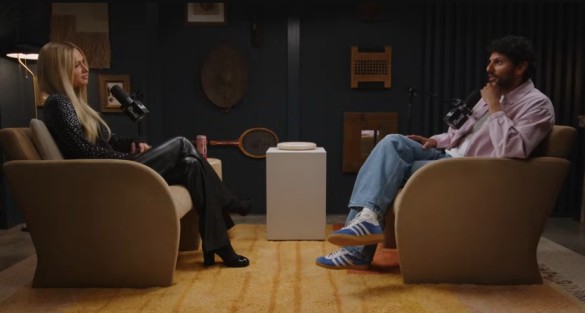
Read the full transcript of American media personality and businesswoman Paris Hilton’s interview: “Motherhood, Music, and Turning ADHD Into Her Superpower”, on On Purpose Podcast, January 21, 2026.
Brief Notes: In this deeply personal episode of the Jay Shetty Podcast, Paris Hilton returns to discuss her transformative journey over the last two years as a mother, entrepreneur, and advocate. She opens up about her new music documentary, reframing her ADHD as a “superpower,” and the “lies” that once threatened to ruin her life. From reclaiming her narrative after years of media scrutiny to her mission to protect children through federal legislation, Paris shares what it truly means to turn pain into purpose.
A Transformative Journey
JAY SHETTY: The last time you were on the show was around two and a half years ago. What’s different about the Paris Hilton sitting in front of me today versus the one that I met two and a half years ago?
PARIS HILTON: Wow. It’s like I feel like I’ve just grown so much, and it feels like a lifetime ago. Even though it was only two and a half years, so much has happened. I’m now a mother of two. I just moved into my new home. I have just been on this whole discovery journey, and now with my new documentary, it’s just had a lot of time to reflect on my life as well and been through so much. And yeah, I’m just really proud of the woman I am today.
JAY SHETTY: Last time you came on, we were talking about your memoir. Today we’re talking about your documentary. I felt the memoir was such a cathartic emotional experience, writing it, sharing it. When I watched the documentary, it feels like this was the same. It felt like the music is therapy, the journey’s healing. You really see your growth in it. What was different about writing a memoir and then making this documentary and capturing all of this build up to the incredible performances and development of music?
The Healing Trilogy
PARIS HILTON: I feel like this is like a trilogy, like my healing experience. Like, first through my documentary, “This is Paris.” Then the second part through my memoir, and now with this third part with this music documentary. And really just going into my journey through life, but seeing it through the lens of music and just how healing music has been to me and how I really believe it. Music is something that saved my life.
Just going through so much in my life and through so much trauma and pain. And I always remember the one thing that would always make me so happy was music. So I really wanted to just dive back into that more and also just revisiting a dream of mine, because since I was a little girl, I’ve always loved music.
And then releasing my first album in the 2000s, and I just feel like I was just so underestimated back then. And now I really feel like I’m taking back my power and my voice and showing people a side of me they’d never seen before.
JAY SHETTY: Did you get your Spotify wrapped this morning? Did you see that? So Spotify wrapped just…
PARIS HILTON: Oh, the Spotify wrapped. All of my fans have been posting there.
JAY SHETTY: I haven’t looked at mine yet. So what it does is it has this algorithm that looks at all the songs you listen to, and then it gives you your age as to how old you are based on whether you listen to music in the 60s, 70s, 80s, 90s, or whatever it was. I was exactly my age, which says a lot. But then a lot of my team are like, double their age.
The music that you grew up to or the music that made you feel peaceful at home, that saved your life, as you just said, what was that music when you first started listening and learning about music versus when you started creating? What was the music that gave you that sense of home?
Music as Salvation
PARIS HILTON: Dance music, like just being at raves and music festivals and also artists like Madonna. She’s always been such an inspiration to me, like Britney’s songs. To this day, I’m obsessed with all of her music. It just makes me so happy. And just anything that brings me happiness and joy and that energy and just listening to certain lyrics of songs and just really being touched by them because I feel like music is something that’s so powerful.
Like where you can just hear a lyric and it could change your mood in an instant or even change your life.
JAY SHETTY: I couldn’t agree more. I grew up on a lot of rap and hip hop music was what I primarily listened to. And I can still remember lyrics that feel like they transformed my life. And it sounds so crazy to say it, but when you felt it, you know how much that lyric motivated you or made you feel seen.
Was there a lyric that you’ve written or that you’ve heard that you feel does that for you, that makes you feel seen, heard, and makes other people feel that way? What would you pick? I’m intrigued.
PARIS HILTON: From my new album, “Infinite Icon,” my song “ADHD” that I wrote with Sia, because it’s just a personal song. And when I was talking with her when we were writing, I was like, I want to write a song about ADHD. And she’s like, I’ve never heard a pop star do that before. I’m like, do you think that’s weird for the album? She’s like, no, I love it. Like, I think that’s incredible.
And we started writing it. And it’s just been a song where when I released it, I’ve had so many parents come up to me talking about their children just saying that, you know, having ADHD was something that they were ashamed of.
So just to be able to help people and transform their lives through music is such a powerful thing. And I’m just very proud of that song and this album.
Discovering ADHD
JAY SHETTY: Yeah. I wanted to talk about ADHD. Of course, that’s one of the big things that comes out in the documentary with you talking about your experience with it. When was it that you first discovered or started to experience it? And was it uncomfortable in the beginning before you understood what it was?
PARIS HILTON: Yeah, because I was a teenager in school and nobody was really talking about ADHD back then. It wasn’t something that people would really discuss, and it just had such a negative connotation behind it where people were almost ashamed of it.
So I was just always in school, and no matter how hard I would study or try, I would constantly just not be able to remember things in school, be losing my homework, failing tests. And I just was just always just getting in trouble in school. Just I couldn’t concentrate or focus. And it’s just because the systems are not built for minds like ours.
And I just didn’t know what was wrong. I was like, always like, what’s wrong with me? Why can’t I get this right? And it was just really hard on my mental health. And it wasn’t till, you know, in the past years, since my documentary, when I started talking to Dr. Hallowell, who’s my ADHD doctor, and he just taught me so much about it, and then I just started researching and finding out even more.
So now I completely understand. Just, it’s how my brain works. And now I see it as my superpower. Like, I know I would not be the woman I am today or the entrepreneur without it, because it just gives me such drive and curiosity and creativity and having a million ideas all the time, and just my brain just never stops.
And now I’ve learned to harness it, and I just want to spread that message to others, especially young girls and boys who are going through it, to know that this is something that is actually a good thing and you can be successful in life. And some of the most creative people I know and brilliant geniuses all have ADHD as well.
So I like to be able to spread that message, because I wish when I was growing up, I had someone like that to look up to, to tell me that, so I would have learned about it sooner instead of, you know, because it is difficult. Like, there’s this thing called RSD which is like rejection sensitivity dysphoria, where we’re extremely sensitive, and anything that seems even slightly negative, like, we will feel physical pain from it.
And it’s exhausting and it’s painful and it’s very difficult to go through. And I just wish back then I knew about this because I feel like I would have not suffered through so much pain because I would have known that it wasn’t true. It’s just how our brains work.
Understanding Mental Health
JAY SHETTY: Yeah, I don’t have ADHD, but when I was young I would have these heart palpitations. I’d feel tight chested, my mom would take me to the doctor, they’d run some tests and they’d just be like, oh, it’s nothing. And like now you’d call it anxiety or you’d call it a panic attack, or you’d call it high stress.
And it’s so fascinating to me that when we were young, or I’m still young, but when we were younger, there was no conversation about this at all, especially not in the mainstream. And so I love that you’re making a song about it and giving people an anthem because all of a sudden it’s not just people are talking about it and the way you’re talking about it, it’s not just coping and it’s not just managing.
You’re actually saying it’s my superpower. Talk to me about how ADHD is your superpower because you’re not just saying, I’ve figured out how to deal with it and I figured out how to manage it and I figured out how to cope with it. You’re saying, this is actually what makes me a great entrepreneur and a great creator. Talk to me about that connection.
ADHD as a Superpower
PARIS HILTON: It just really gives me that drive. And also taking risks, doing things first, just constantly. My brain is just always moving, thinking, creating, coming up with different ideas and doing things first and just thinking outside of the box.
I feel like that’s why I’ve always been a multi-hyphenate because I have so many ideas, I have so many different interests and I do what I want. And another one of my favorite parts of ADHD is hyper focus, where, you know, people always think, oh, they can’t focus. We can. We just don’t focus on things that are boring.
But when we’re interested in something, we can laser focus like no other and go into this flow where it’s like on another level and that’s where the magic happens. So I really encourage people with ADHD to lean into the things that light them up because you never know what’s possible and I think that I’m proof of that.
JAY SHETTY: That’s such a great message. You’re like the original multi-hyphenate, I feel. Like, I love that you said twice that you were like, doing things first. That’s really important to you.
PARIS HILTON: Yeah.
JAY SHETTY: How have you always had the courage to do things first? Because doing something first means no one’s done it before. No one knows what it’s going to be like. Why is that? How have you always found a way to do that when most people would say that’s the scariest thing to do?
Creating Her Own Lane
PARIS HILTON: I just feel like I never wanted to be in one lane. I wanted to create my own lane. And I just have always been someone who just loves to do things and take risks and do things before anyone else maybe even thinks about them.
And that’s why I feel like so much of my career, I’ve been so ahead of my time because I’ve been doing so many things even before the world would even understand what they are. And now, like, some of the things that I did back then have turned into multibillion dollar industries that, you know, millions of people are doing as well.
So that also makes me proud to be able to do that and then also, you know, open the lanes for other people to be able to do it for themselves as well. Because maybe people are too scared to do something, but they’re like, oh, she did it. Maybe I can do it too. And I think that’s pretty cool that you can inspire others to just go for it. In life, you only live once, and I think you should just make the most out of it.
JAY SHETTY: What was your favorite first thing you ever did?
PARIS HILTON: Just everything I did growing up with fashion, just really taking risks with that. And now to see just so many of the things I was wearing back when I was a teenager, even today just are all over mood boards all over the runway. So it’s really cool to be able to do that.
And then with “The Simple Life,” you know, that was the first reality show and so many people told me, my parents, my agents, everyone was like, I don’t know, this is not a good idea. Like, they didn’t really understand what it was. But I knew there was something special about it and I just went for it and did it. And now that’s turned into a whole industry as well.
Building Industries, Not Just Trends
JAY SHETTY: So yeah, it’s pretty insane to think you living your dream and what excited you turned into industries. Now we’re not talking about trends or fads or moments, we’re talking about industries, which is quite remarkable. When you pause to think about that, how often do you sit there and think about just the impact that that’s had?
PARIS HILTON: I think about it a lot, just because so many people are always coming up to me, whether I’m walking on the street or at an event and just saying, like, “You’re the OG. Like, you’re the reason I do what I do. Like, you’ve inspired me my whole life.” And just that means a lot to me, hearing that from people and just getting the credit that I deserve.
The Impact of ADHD: Challenges and Sensitivity
JAY SHETTY: When do you find ADHD to be the most challenging? We’ve talked about it where it’s the best and it’s a superpower. Where is it difficult and actually something that dehabilitates people sometimes and acts as a moment of pushback?
PARIS HILTON: Yeah, there’s so many difficult parts about it from a lot of people just not understanding it. And in schools, because schools were not, the systems were not built for brains like ours. So just constantly, you know, teachers and people just punishing you for something that you can’t control.
And like I said before with the RSD, that is just such a painful experience to go through. And we feel things so deeply and so big. Like, every single emotion is like times 10. So like going through heartbreak or a breakup or anything like that is just so painful. Or even if someone’s, you know, you think someone’s being mean or talking about you, like, you just always in the back of your mind sometimes, like, have this voice that’s like saying negative self-talk.
And especially for me, growing up, you know, in the 2000s, they were just, the media was so cruel to young women. And, you know, it was like abuse, and, you know, that was like entertainment back in the day for people. So to go through all of that with the ADHD was even more difficult.
So I think that, yeah, we’re just very sensitive people. And I think that’s also why I have so much empathy for others, because I just know how it feels to be hurt and misunderstood and underestimated.
Media Cruelty and Fabricated Stories
JAY SHETTY: You see in the documentary, you talk about how you said the media painted young women. You say media was so cruel and vicious to girls. And you see it right in the documentary. We see the headlines, we see the kind of stories that they create. And you just said, you’re a very sensitive person. What was the story that you feel most hurt you at the time that now you see always I had ADHD and I would have focused, hyper-focused on that. But what was the story or a rumor that you felt most hurt you?
PARIS HILTON: I don’t know. There were so many. I think it was just like, constantly people just making up lies or, you know, if I would just be at a party or someone would come up to me and like, one paparazzi would take a picture. Like, the next day, they’re like, “Oh, she’s hooking up with this person.” And was like, I literally just met this person and like, said hi.
And just, that would cause problems in my relationships and fights. So it was just like, the media was constantly making up stories, trying to pit women against each other. They were always wanting, you know, all of the girls to like, just be making up rumors to sell tabloids.
So it was just every day just dealing with just, I don’t know, just like, annoying rumors that are going around, but on, you know, a global scale all around the world. And I’ve always been like, sensitive with my family because I just, I don’t know, I care a lot what my parents think.
So I would just, I don’t know, it would just be hard how they would constantly make up stories just like, “Oh, she was here this night,” or “She did this.” But thank God my mom and dad know the real me, so they know the truth. But still, it’s just, it’s hard to go through that on just like, such a huge scale when the whole world is watching you and talking about you. So that was difficult to go through back then a lot.
JAY SHETTY: I always like to put it in perspective when you’re listening, because, you know, I didn’t come and grow up in this world, and I’ve got closer to this world as my career’s moved forward. And when I was far away from it, I probably believed everything was published to be true. And now as I’ve got closer to it, I realize how 99% of what’s published is not true. And so I’ve been able to see it from both sides.
And I always try and say to people, I’m like, when you see that, it can sound very easy to be like, “Oh, but you’re rich and famous and successful. Like, this shouldn’t bother you.” But the reality is that it does bother you because we are all bothered by what people think about us.
And we know what it feels like when you walk into a party with 20 of your friends and 15 of them have a rumor. Now maximize that across the world and amplified that across media. It’s extremely difficult to hear that everyone believes you’re X, Y, or Z when you’re something else. It’s great to hear that your parents actually didn’t fall for that.
PARIS HILTON: Like, they didn’t.
JAY SHETTY: They didn’t buy into it. They were there as your rock. How important was that? How meaningful was that?
The Importance of Family Support
PARIS HILTON: So important. Having a family that loves and supports you is extremely important. And growing up in this town, my whole life, I’ve seen so much and I’ve seen a lot of people who don’t have that support from their families.
JAY SHETTY: Did you see different pathways happen to them? So you’ve been able to consistently reinvent, build, grow your career, achieve more and more stuff. What did you see to peers who didn’t have that support at home or that mindset?
PARIS HILTON: It was very difficult for them, very lonely and not knowing who to trust. Some people not even being able to trust their own family. And a lot of these kids growing up were the breadwinners for their family. So that dynamic in itself and then not having, I don’t know, just like those family values instilled in them as well.
So I saw a lot. I’ve seen a lot of people come and go from this town. Like, let’s put it that way. I think it’s hard to go through this and experience this industry, this lifestyle, and not have that support. And a lot of these people just spiral. Some of them are not even here with us anymore because of that.
So it’s very sad. Like, I feel very grateful to have such amazing parents who love me so much and who support me and we’re so close and you know, not everybody has that.
Healing from Violation and Reclaiming Power
JAY SHETTY: It must be painful to look back because you now have the wisdom to be able to help. But obviously at that age you didn’t. And so you just had to take care of yourself. And I’m sure if you could go and reach out to those people at that time, at that age, it would have helped them, but they didn’t really have that support. And it’s painful to watch.
I mean, you go on to say in the documentary that the release of the sex tape was the most painful and violating experience of your life. And I think what’s really powerful, I said this to you offline as we were talking outside when we were taking pictures, that it’s really amazing when I was watching the documentary, to watch you reflect on a moment that we all remember, but seeing you reflect on it, not emotionally, in your healing, because it feels like, at least to me, that you’ve done so much work on yourself, that the healing is there.
But now you’re able to look at it at a moment in time as to how damaging it was for you as a young woman for potentially taking away your music career for the impact it had on your self-esteem. Talk to me about how you felt at that time and how your healing has looked to even recover from something like that.
PARIS HILTON: That was, you know, I’ve been through a lot in my life, but that was, you know, one of the most painful experiences to go through. To trust someone so much and then to be violated like that and have the entire world watching, laughing, talking about it, like, villainizing me.
I was, you know, 19 when this was filmed. I was a child. I was in love and trusted someone and, you know, did something I thought that no one would ever see and then had the whole world, you know, judging me for something.
And it just, you know, watching, like, going back and doing this documentary and reliving that and thinking about it, even just like, this young girl. And then there’s all these adults, like, basically sexualizing and, you know, verbally, mentally, like, abusing me. And that wouldn’t happen today.
Like, I look, you know, thinking about it like that today. Like, he would be like, in jail. Like, that would, it would not fly. And I don’t know. I think I also think about it, too, and like, you know, maybe I had to go through certain things in life so it wouldn’t happen to others, because today it would be a completely different story.
But, yeah, it was just, I feel like that’s something that people, if they don’t know my story now, like, that they would judge me for the rest of my life for it. And growing up, I always looked up to people like Princess Diana and Grace Kelly, all these amazing, elegant women. And I feel like when he did that to me, it took that away from me.
People would never look at me in that way because of it. And that is something that will probably haunt me for the rest of my life. And it just makes me so sad for that girl who had to go through that and just feel so alone and just so sad.
Like, I just didn’t even want to ever see anyone again after that happened. I was like, hiding in my house. I canceled the whole press tour for the Simple Life because that was literally about to come out like, a few days later.
And, yeah, something, I don’t know if I’ll ever fully heal from that, really. I don’t know. I don’t think I will. But I hope by telling my story that I can help others from not having that happen to them and also having it be illegal. And now there’s so many laws against it, and there was nothing to protect me back then for it.
But today, women are more protected in that sense. But there’s still more work to do. And that’s something also that I want to use my voice for and fight because it’s not right for anyone to go through something like that.
JAY SHETTY: Was that the reason you revisited in the documentary? What was your reason for wanting to revisit such a horrific, terrible, tragic and heartbreaking time? Like, why did you do it?
PARIS HILTON: Just to let others know they’re not alone. I’ve seen it happen to so many other women, had so many people, girls, reach out to me on social media. Girls, boys, so many people go through that. You know, where an ex will go and do something like that to them and put it online, and then it’s something that ruins their lives as well.
And so many people have been through it. So I want people to know that they’re not alone and that’s not their shame. They shouldn’t be ashamed for something that someone did to them. And yeah, I think it’s important for people to be able to think about it that way because I feel that that shouldn’t define who you are because that’s not who you are. That’s what somebody did to you.
And that’s been a really empowering thing for me to feel, to let go of that shame because it’s something I should never have held on to.
Releasing Shame and Supporting Others
JAY SHETTY: Yeah, it’s so interesting, isn’t it, where someone hurts you and takes advantage of you and exploits you, but then you’re the one who’s left with the shame and guilt and then you carry that around and now everyone you see, you’re reflecting back that shame and guilt. And like you said, the media makes a storm out of it to get attention off of it and makes it worse.
I can’t imagine what you went through at that time. Like, I can’t even begin to fathom, especially as a 19-year-old, like, to go through that. And I’m glad that things are changing, but I still worry that the media finds a way to target women. Like you said. I’m sure you have famous women reach out to you all the time as to how they feel targeted in the media even today to talk about, do you get people reaching out and saying, Paris, how do you deal with this?
PARIS HILTON: Yeah, a lot of people reach out to me and just like, “How did you survive like, all this? Like, you’re so strong, you’ve been through so much.” And they’ll be like, “I’m going through something similar right now, like, and I don’t know what to do.”
And a lot of people even said like, “I want to take my own life. Like, I don’t want to live anymore.” And I just, you know, I just try to make people feel strong and know that they’ll, this is something that will pass and they’ll get over it and just take back their power in some way.
But, yeah, I think just the shame is something that is just so hard to hold on to. So I think that’s important for people to try to heal from that and to let go from it. But, you know, it’s something that still happens today, and it makes me so sad.
And now, you know, with all these platforms and, you know, iPhones and all, it’s just like the hidden camera. There’s just so many things that are happening and it just, people need to stop and people need to be held accountable for it so they don’t think that they can just get away with it.
Reclaiming Her Narrative
JAY SHETTY: What was that 12 month period after the tape release like for you? What did life look like? You said you put off the press tour for a simple life.
PARIS HILTON: I just, for several months, did not leave my house. I just didn’t want to see anyone. I didn’t want to talk to anyone. I canceled everything. I didn’t want to speak about it. I just wanted to ignore it and just pretend like it never happened. So I would just not even have to think about it.
People just kept saying, “Paris, we need you here. Your show just came out.” And then SNL called and they asked me to come on, and Jimmy Fallon had this really funny script that they wanted me to do, and I was really nervous to do it. But I love Jimmy. He’s always been so kind and so lovely and just a really amazing person.
So I went and did it and I feel like that made me feel a little bit better. Like I was almost taking my power back in a way. And I don’t know, it just was like a turning point for me where after that, then I felt more comfortable. And then, you know, it was always difficult and hard, but I knew that I needed to be strong and I knew that I needed to just go on with my life. But it’s something that will always be in the back of my mind.
JAY SHETTY: Yeah. That moment in the documentary, that clip of you on SNL, it feels like that was the moment where you leaned into the narrative, owning it, claiming it in your own way, redefining it. And that sounds like that’s so counterintuitive, but for you, it was marketing genius, but also healing.
It’s such a hard moment because there’s so much pain internally. But then you have work and a life and you’re trying to get it back. And so talk to me about what reclaiming your narrative meant to you in that moment and what you went on to do. That felt empowering internally and externally, because I think we see externally how it made sense as a brand. But you’re a human.
And as I’m sitting in front of you now and I’m hearing you speak, I’m like, oh, no, this is not over for Paris. It never was. Even though the ads and everything took off and everything changed, what was that internal journey after that that was happening while the external brand was being reclaimed?
Creating a Character as Armor
PARIS HILTON: I think in my mind, I just felt like, I don’t know, the whole world had this kind of what they thought of this Persona. And I was already creating a character in a way, because of all the other trauma I’d been through as a…
JAY SHETTY: Teenager, which we discussed last time. Yeah.
PARIS HILTON: So that was like, almost like my armor, like, this caricature where I was like, “This will keep me strong.” And, you know, they’re not actually laughing at me. They’re laughing at this character that I purposely am doing.
So I don’t know, I was kind of just leaning into it, like, “Oh, you think this about me? All right, well, I’m going to take it to the next level, and I’m going to build an entire brand around it, an empire.” And I don’t know, I just felt like always that character, you know, kind of like that dumb blonde Persona just kind of was shielding me from everything else.
And also, because I had so much, you know, internalized pain and trauma I’d been through that I was not ready to discuss back then because I just didn’t even have the time to reflect on it because I was young. I was a million things were happening, and, you know, people were not even talking about mental health or any of that. You know, I think up until like five years ago, it feels literally. Like, literally.
So there was no room to even do that because nobody, if you even said the word mental health back then, people wouldn’t even know what they would be like. “What? Like a mental hospital?” Like, they wouldn’t even understand what that meant. So it was just like, timing was not even right to be able to be serious or talk about it or reflect in that way. And I was so young, and I wouldn’t even have known how to put anything into words.
So I kind of just, I don’t know. I think everything else in my career has just always happened so authentically, which is I just kind of lean into things and just have fun with it. And with the ADHD, I have this kind of almost silly fun side. And then with the Simple Life show as well, it just kind of all turned into this thing, and I just was like, “Okay,” and started getting offered all these deals and my new perfume and just, you know, getting paid a million dollars to show up at a party. I was like, “Okay. Like, let’s do this.”
So I kind of was just going with the flow and with life. And also, it was more, I think, easier for me just to laugh through the pain than actually feel the pain as well.
The Most Painful Lie
JAY SHETTY: Yeah, it can’t have been easy that people were saying you put the tape out on purpose either.
PARIS HILTON: That was the thing that was the most painful for me as well, for people to believe that. Because you know something, that’s the most personal thing that you would never want anyone to see. And then people thinking you did it on purpose, that was something that really upset me.
And then seeing other people come out after and purposely do it, which then people are like, “Oh, well, everyone purposely does.” And it’s like, no, that is not how I wanted the world to know me. People don’t know, I’m actually a very, extremely, painfully shy person. And I’ve always been very shy.
So, yeah, that was something that always upset me. And then seeing other people do it purposely, that was another thing where I was like, “This is…” I don’t know. I just think it’s sad if people would purposely do something like that.
JAY SHETTY: Thank you so much for being so open and vulnerable about it because, yeah, it’s just when you talk about in the documentary, too, and it’s so interesting how your recovery from this moment is, it’s brave. But what you just said now is actually, “It’s me laughing through something that I wasn’t ready to confront.”
And it’s interesting because when you look at it, it’s a brilliant case study in marketing from a business standpoint of someone leaning into a narrative. But then there’s a human healing component that we just forget about, that we forget that someone’s still having to go through this. Someone’s still having to heal through this.
What was the most important part of your healing journey? When did you confront it? And what helped, what really worked to recover from something this traumatic? And I appreciate that you said you haven’t fully, you maybe never fully healed, which is completely fair. But what has helped you even be confident to sit here right now and speak about it with so much composure, which I can’t believe is easy.
Finding Strength Through Motherhood
PARIS HILTON: It’s definitely been a journey, you know, the beginning, I didn’t want to even speak about it at all because it was just too difficult to talk about and just the most humiliating thing to go through. But now, seeing so many other people who’ve went through it as well, it gives me the strength to be able to talk about it for them as well.
And now being a mother, a daughter, it makes me feel extremely protective of her and of other women. I don’t want anyone to ever feel that pain. So I feel like by me talking about it, maybe it will help others not make that same mistake to not trust someone in that way. Because unfortunately, you know, it’s not, it’s very rare to find someone you can trust.
I’m so lucky now. I have such an amazing husband who I trust with my life and who would never hurt me and loves me to the moon and back and is obsessed with me. But, you know, I don’t even think I would have been ready for this type of love at my point, at this point in my life if I had not healed the way I have.
Yeah, I’ve been through a lot in my life, and I’m proud of how strong I am and resilient and, you know, no matter what happens to me in life, it just makes me stronger every single time. And, yeah, I’m really, really proud of who I am today. It’s been a lot.
JAY SHETTY: You definitely should be. I mean, after reading your memoir and speaking to you last time about everything that happened in your teenage years and now talking about this, I’m like, you should definitely be so proud, and I’m so happy as well that you’ve been able to find a partner that respects you and has an amazing, you know, as I said earlier, I love Carter. I think he’s awesome. He’s just such great energy, and he definitely adores you in the most beautiful, special way.
And for you both to have that now and to have a beautiful family together, I think it also is inspiring to other people to go, “Wow, you can go through that and by the healing, still be with someone who does that.” Do you feel Carter was the first person to truly see and understand you, to see you truly?
Letting Down the Walls
PARIS HILTON: It was the first time that I’ve shown myself truly.
JAY SHETTY: Wow.
PARIS HILTON: We started dating in 2019. That was right before the documentary came out. So I had just finished filming it, and, you know, I wasn’t even looking for a relationship or anything. I was like, you know, after what I’ve been through in life, “I’m just going to be single forever. I don’t need anyone. I can have children on my own. I can support myself.”
And I just had such a wall around my heart that I didn’t think I’d ever let anyone in. And, you know, when I met him that day on Thanksgiving in the Hamptons, I just saw something in his smile, just the way I could see in his eyes. He was a kind person.
And I’m so happy that I gave him the chance and let down the walls a little bit from my heart. And it’s just been life changing. And to have such an amazing close relationship with someone was, and I think before I was not ready for that because of what I’ve been through in my life, especially with men, it made me not trust anyone.
I feel like everything happens for a reason and timing is everything. And I’m so grateful that I did the documentary because it really made it possible for me to now have this amazing family and my beautiful babies and just this incredible life that I just feel so grateful for every single day.
JAY SHETTY: We get to see the babies in the documentary. You know, it’s just so beautiful seeing you with them. And as a mother, what’s been your favorite part about becoming a mother?
PARIS HILTON: Everything. I did not know a love like this could exist. And they just bring me so much happiness. And every morning, just seeing their big smiles and just how excited they are and just seeing all these just special moments and the holidays and the excitement and going to Disneyland. It feels like being a kid again with them. I’m just so obsessed, so in love.
They’re my two best friends and we do everything together and travel the world together. And they’re just so smart, they’re so sweet, so kind, loving. They’re so cute together. They’re best friends. He’s obsessed with her. She looks up to him so much. And it’s just so cute just to see their relationship.
And they look exactly like me as well. So I just look at them like I’m looking at myself almost. And I just want to give them the most amazing, beautiful, fun life and make them incredible human beings. I feel like all of my dreams have come true. Everything I thought about as a little girl has come true. And I really believe I manifested Carter, the babies, my home, my pets, all of my things.
JAY SHETTY: So you’d say you’re happy?
PARIS HILTON: Yeah, I’m so happy. I used to always make 11:11 wishes. And now every time it’s 11:11 that I look at Carter, I’m like, I don’t even know what to wish for anymore. All my wishes have come true and I just feel like the luckiest girl in the world.
Teaching Kindness and Creating Safe Spaces
JAY SHETTY: I love that. What’s been with the kids? What’s one lesson from the Paris playbook that you want the kids to learn from you?
PARIS HILTON: I want them to know that kindness is the most important thing. That’s something that is so important to me and just to feel comfortable to be able to tell me anything and always feel safe, just to know that I’ll always be there for them and I’ll always support them and I’ll always give them the best advice.
I want them to always just feel comfortable that they can tell me anything. Because I feel like if your kid is too scared to say something to you, then bad things might happen because they don’t feel comfortable to say something to you.
JAY SHETTY: I totally agree with that. I think all the trouble I got into as a kid was because I didn’t feel comfortable telling my parents stuff. I would have avoided so much trouble I got into as a kid. I was a troublesome kid and I was a good person, but I was always just getting involved in the wrong things.
And it was all because I couldn’t talk to them about anything. And if I tried, it would be shut down or I’d be told not to do that, whatever it was. And there was just no openness in dialogue. And I love my parents. They’re amazing. They felt they were doing it from a good place, from what they knew. We have a great relationship.
But at the time, now I look back and I think, I wish I could have just told my mom about that. I wish I could have told my dad about that. And maybe I wouldn’t have because I was scared and I felt fearful. And that way you end up relying on yourself, but then you end up making mistakes because you’re just a kid.
PARIS HILTON: Yeah.
Being Misunderstood Versus Underestimated
JAY SHETTY: And so I really that lesson because it, to me, that’s a really standout lesson of just how do you truly make them feel comfortable to tell you everything and they don’t feel judged and they don’t feel unloved. You know, you’ve had the media treat you in so many different ways. I wanted to ask you what was harder, being misunderstood or underestimated?
PARIS HILTON: I feel like so much of my life and career I’ve been underestimated. And something I love doing is proving people wrong. So I guess I don’t mind that as much now because I’ve really proven them wrong.
But yeah, being misunderstood, people just having a certain way to think about you, which there’s always been so much more to me than what people ever thought. And I’m showing that side of me now which has been so freeing to be able to show that there’s so much more than the girl that they thought they knew and that there’s so much heart and compassion and just showing who I truly am and how strong I truly am.
I think that’s been amazing to show people what I’ve been through and now to be able to turn that pain into such a huge purpose and make a difference in so many others’ lives through that has been so empowering.
JAY SHETTY: Yeah. There’s someone shared a quote with me the other day that said something like, “The person who can see beauty in everything is undefeated.” And when I’m sitting with you, I think of you as that someone who’s been able to find a way of turning their pain into purpose in so many different areas of their life. You can’t beat someone who does that.
PARIS HILTON: Yeah.
JAY SHETTY: That’s the strongest person you’ll ever meet, is someone who just can find the meaning, the purpose, the beauty, the lesson in everything. And then that person can rise from anything that they go through and everything that they go through. And for me, I wanted to ask you what boundary have you put into your life that you think changed your life? Have you set boundaries that you think changed the trajectory of your life?
The Power of Vulnerability and Authenticity
PARIS HILTON: I think for a lot of my life, I just cared so much about what other people thought of me. And I think an important message to other people as well is it doesn’t matter what others think of you. What matters most is what you think of yourself. And that has been a powerful message for me to remind myself of.
And now I just feel like I’m more myself than ever. And I want others to be able to feel that they can do that too. And the power of being vulnerable. Because before I just always grew up thinking, oh, being strong and being perfect, that is, you know, it matters.
But being real and being authentic and being vulnerable and talking about even the things that hurt or things that are scary to talk about, that really just opens the door for others to feel safe to do the same thing. And I think that’s been an important thing, an important message of my life.
JAY SHETTY: Yeah. As I’m sitting here listening to you, I’m almost thinking that, you know, when we’re young, you all feel you have to be one version of yourself because you want to be the cool person or the person who fits in or the person who sets trends, and you almost become this persona of who you think people.
And then as we get older, it’s almost we give ourselves permission every decade to be more of ourselves. I feel so much more of who I am 360 today than I ever did when I was 18 years old. And it would be ridiculous to expect your 18-year-old self to be your most complete self because you haven’t even had all the experiences of life yet.
And now I look back and I think, oh yeah, every decade is just about me becoming more of me and giving myself permission to even be the parts of myself that other people would have laughed at before or poked fun out or not being interested in. It’s almost no, I this part of me and I’m happy to live with it because it’s not going anywhere.
PARIS HILTON: Yeah.
JAY SHETTY: It’s always going to be here. What’s something you used to think was love but now you realize it wasn’t?
ADHD and the Confusion of Love
PARIS HILTON: I was just watching on TikTok the other day, there’s this girl who’s an ADHD kind of influencer and she was just saying how a lot of us confuse love. But it’s actually the ADHD with the hyperfocus. So I feel so many times that I thought I was in love was just actually my ADHD.
JAY SHETTY: You just want to focus on something.
PARIS HILTON: Yeah. It’s you want that dopamine, dopamine rush or something.
JAY SHETTY: Yeah.
PARIS HILTON: So it’s kind of just you think it’s love, but it was just actually your… I don’t know. But then you get bored right after. So I think there was so many times I thought it was really love, but it was literally just because of the ADHD.
JAY SHETTY: Wow.
PARIS HILTON: It was a really funny video.
JAY SHETTY: Right now for when people are…
PARIS HILTON: I was just, oh my God, I love this. I sent it to so many of my friends who have ADHD. I was, this makes so much sense. So many times I thought I was in love and it was not at all. This was literally just the ADHD.
JAY SHETTY: All those poor guys. Paris, that’s what, you love them.
PARIS HILTON: Sorry, guys.
JAY SHETTY: That’s so funny. Wow. So because you get hyperfocused but then you get bored quickly.
PARIS HILTON: Yeah.
JAY SHETTY: It’s almost you could get fixated on someone. You’re totally head over heels for them and then tomorrow it’s, forget they exist. Wow. Forget they exist.
PARIS HILTON: Yeah. Because another thing with ADHD is if it’s out of sight, it’s out of mind. You’ll just… people, even objects, anything. If it’s not there, you just… it’s called object permanence. You just don’t even realize they exist anymore. So, sorry, guys.
JAY SHETTY: Does that affect any other area of your life? Do you have to be mindful of it now that you’re married and a mom? And does it affect life still today or not really?
PARIS HILTON: Not with Carter, because I love him. I remember him. But yeah, with other parts of my life. That’s why I did this show actually, with YouTube and I partnered with Google on this, and it’s called “Inclusive by Design.” And it’s literally a show that teaches you how to make inclusive spaces in your home, in your office, or just in your life for people with ADHD. So that’s something that I’ve been learning a lot about, which has been so interesting and so much fun.
Creating Systems for Success with ADHD
JAY SHETTY: That is interesting. I mean, it’s brilliant, though, because I feel you found all these tools and principles or concepts that you understand about how your brain works, and therefore you can actually create a space in a way that fulfills you and makes a difference in the morning rather than waking up feeling reactive to whatever you go through.
What are some of the rhythms and routines you’ve had to put into place that help you thrive with your ADHD? I mean, we see in the documentary, I mean, you’re performing in front of thousands of people. You’re rehearsing, you’re writing. You know, it’s stressful. We see moments of you breaking down as well. What are the routines you’ve had to set up that have allowed you to thrive at this level for this long?
PARIS HILTON: A lot of putting systems in place. A lot of having to organize. Explaining to people on my team…
JAY SHETTY: What do you have to say? What do you say to someone? Your team’s wonderful, by the way.
PARIS HILTON: Thank you.
JAY SHETTY: They’re amazing. Everyone’s got such energy, but what do you have to say to them to explain what they’re going to be in for? Because they may not have had that experience before.
PARIS HILTON: Yeah. Just how certain systems need to be… I just need things… it’s hard to describe because there’s so many things that I do and different areas, from the music, the business, all of it, the advocacy work, but it’s really just… I don’t even know how to describe it right now. My brain.
But I’m also lucky that a lot of the people on my team have ADHD as well.
JAY SHETTY: So they get it as well.
PARIS HILTON: And, you know, we’re very creative, but we do need systems. And we need people to understand that. And yeah, I don’t even know why I can’t describe it right now.
JAY SHETTY: No, I get it. It’s different. No, it’s…
PARIS HILTON: No, it’s…
JAY SHETTY: I’m intrigued because I think, again, there’ll be lots of listeners who might be helped by that, because I think a lot of people are trying to figure it out and are trying to thrive with ADHD. We’re seeing people being diagnosed, and I think, as you said, you’ve become… you’re successful, you’re reinventing yourself. You do a lot of different things, and you’re doing that with ADHD.
And so the my reason for asking was more just so that people could learn some of those…
PARIS HILTON: Tips and tricks.
JAY SHETTY: But the documentary shows a lot of what you’re working through, so people can definitely watch that.
PARIS HILTON: Yeah.
JAY SHETTY: Figure it out there. All right, I’ve got a few last questions I want to ask you. What did you used to apologize for that you no longer apologize for?
PARIS HILTON: Trying to think what I would apologize for? I feel like I’ve been unapologetic. I feel like that’s always how I’ve lived my life.
JAY SHETTY: Yeah, that’s a good answer.
PARIS HILTON: But maybe apologizing for always having to be perfect. And now I’m like, you don’t always have to be perfect because no one is perfect. And it’s what life is about. And you can make a mistake, but you learn from it and you grow from it.
So I feel like everything in life happens for a reason. And even if you don’t know the reason today, one day you’ll find out. So you just have to think about life, that everything is a journey, and it’s all just going to bring you up to the next level of who you are in life. So yeah, it can be hard sometimes, but it makes you stronger. I really believe that.
Losing Home in the LA Fires
JAY SHETTY: Paris, we were talking about this before we started recording. You posted a really heartbreaking video of losing your home earlier this year. And I had so many friends lose home. I’m sure you had so many friends lose home. It was terrible.
And LA is so large that when you’re driving through it, you could even not see all of it. And I think a lot of people who are visiting LA would be like, where were the fires? And it’s like, LA is just huge. There’s so many areas that are sadly, completely torn down and torn apart.
Losing a home feels like one of the deepest grieving that you go through in life. It’s your memories, your everything else. Talk to me about what it felt like to even go through that this year. And of course, it was such a shock for everyone.
PARIS HILTON: It was terrifying, you know, just to see just so much devastation. I’ve grown up in LA my whole life, and just to see so many people lose everything was heartbreaking.
And the night after the first night of the wildfires here, my husband and I with our kids, and we were just eating breakfast, watching the news, and all of a sudden we see this woman standing in front of this house. And Carter looks and he’s like, “That is our house. The blue door in Malibu.” And I looked, I was like, “No, it’s not.” And then I saw the address and it was just like in the background, just like our house just in flames. Burnt down to the ground, completely gone. And that’s how we found out about it.
And just, you know, right away I was just thinking of all of the memories that I had with my babies there, all of the art that we made together, family heirlooms, just so many things that were irreplaceable and just so many memories, you know, all gone.
And then I just started thinking about all of the other families and mothers and children who had lost everything and they had nowhere to go that night. And I was just completely heartbroken.
And I reached out to my team, Rebecca, who’s the head of my impact, it’s called 11:11 Impact, which is my impact arm of my company. And she’s like, “What can I do to help?” And immediately went over to Baby2Baby and started helping them with just packing up supplies for families, and then went down to Pasadena Humane Society and fostered a dog and started filming all the pets there that had been lost in the fires.
And they didn’t have collars. So just reuniting them with their families and posting them up so that people would know about them and making donations to them as well. And then called up Hilton. I’m like, “What else can we do? We need rooms for these people. They have nowhere to live now.”
So put a bunch of families up in homes and then started a whole thing online. We raised like $1.5 million within two days and then partnered with GoFundMe and then raised even more money and then gave 50 small owned businesses, women businesses that lost their businesses in the fire, all big grants to rebuild.
And then went out and been visiting in Altadena and just helped with the Altadena girls and built this living lounge where it’s like this whole place where all these girls can go and hang out, and it’s really pink and beautiful and so fun. And we just, they just had an opening like two weeks ago, and the girls were all there, so it’s just so amazing just to see how much happiness it brought them.
So even though, you know, losing our home, I immediately just started thinking about everyone else who’d been affected by it and seeing what I could do to make a difference. And, you know, people are still rebuilding, you know, even though the media is not talking about it anymore, because the news cycles move so fast, people are still trying to rebuild their lives, and we are still actively working with them to help that happen.
So it’s been traumatizing. But also just seeing all the communities come together and so many people supporting each other, I thought was such a beautiful thing to see.
JAY SHETTY: Yeah, I thought it was incredible to see the resilience of LA. I think LA gets such a bad rap sometimes for being weak or soft or being too whatever. And everyone was out on the streets helping each other. There was just so much community and there was so much camaraderie, and everyone showed up, and it was all the examples that you were beautifully involved in.
And just so I really felt alive here. It felt that everyone was trying so hard to help each other, and it was so beautiful to see the city come together. Even though it was, you know, extremely tragic and traumatic for everyone who went through it. The fact that people showed up and served in everyone else’s time of need, it was so needed.
And I couldn’t agree with you more. The work continues. It’s not solved and it’s not over, and it keeps going.
Paris, you’ve been amazing today, as always. I love talking to you. I learned so much from you. I was getting to know you at the time. And when I read your memoir, I transformed everything I understood about you when I saw this documentary. And even today after talking to you about it, I feel the same way that I don’t know how you did it, and I don’t know how it felt, but I do know that it’s extremely inspiring and it’s going to give a lot of courage to a lot of people.
And I really hope that it saves a lot of people from some pain. And I’m grateful that someone like you is able to put their story out there in a way to uplift and empower others and own their narrative and reclaim it. It’s beyond needed, and I hope so many young men and women watch the documentary, read your memoir, and recognize that their lowest point doesn’t have to be a continuation of their life and that they can transform it and turn it into something beautiful.
And I want to end with asking you, we had to redo this because it’s your second time. We’re doing a quick fire round with you of some fun and some profound questions. So these are your fun questions, Paris Hilton.
Quick Fire Round
So what trend from the early 2000s do you wish the world would bring back? And what trend should stay buried forever?
PARIS HILTON: I love seeing just so many people inspired by all of the trends that I created back in the 2000s. Just seeing all of the things that are blinged out, all the slogan tees, just the Motorola Razr flip phones, just all of the different styles of outfits. The fashion was just so much fun back then.
The one thing I don’t like is Ed Hardy, which I’ve noticed some people are wearing again. I can’t with it. I’m not into it.
JAY SHETTY: I love that. Great answer. We all wore Ed Hardy because of you. Yeah. I’m glad we didn’t have that many pictures taken of us back then.
PARIS HILTON: Yeah, I did. Yeah.
JAY SHETTY: Yeah, I know you did, but that’s why we all did it. So I’m glad there’s no pictures of me in Ed Hardy. That’s what I’m saying. What’s one headline from that decade that shocks you because it was so far from the truth?
PARIS HILTON: There was a story that said I was dating Michael Jackson, which I wasn’t. I’ve grown up with him my whole life. My mom and him were best friends since they were 13, so he was like family to me. So when I heard that rumor, I was like, you guys will literally make up anything. That is ridiculous.
JAY SHETTY: That is bizarre. Okay. All right. When you said “that’s hot” for the first time, did you realize what you’d created?
PARIS HILTON: I was like seven years old. Really? My sister would always say it with me. It was something she actually said it first. And then I was like, I love that. So I started saying it a lot. And then when I got the Simple Life, then I had it trademarked, so I actually own “that’s hot.” But back then, I would have never have known it would turn into such a pop culture phenomenon.
JAY SHETTY: Absolutely, infinitely iconic. Absolutely infinite icon. Okay, if you and Nicole did the Simple Life today, what job would you want to try first?
PARIS HILTON: Well, we did for Peacock the anniversary special, which was so much fun. And we went back to Arkansas and went and visited the family we stayed with and all the people we worked for. It was so much fun.
But if we had to do something again, I think it would be fun to be nursery school teachers because we both love kids and we’re so fun with them and they’re, I love how kids just say so many funny things. I think that would be a lot of fun.
JAY SHETTY: I love that. That’s a great answer. You’ve had an incredible multi-decade career. What is the most full circle moment that you’ve had so far?
Protecting Children Through Federal Legislation
PARIS HILTON: Being in D.C. and passing my first federal bill to protect children. That’s something I’ve done a lot in my life that I’m proud of. But doing that work has been just the most healing and empowering work of my life.
And I’m extremely proud that I’m able to protect so many children and to change 15 state laws as well, which as a little girl I never would have thought it would be possible that I could ever do something like that.
JAY SHETTY: But how hard was that to get instated and how was it already not instated? That’s amazing. That’s incredible. Thank you. I mean, that’s huge.
PARIS HILTON: Thank you.
JAY SHETTY: How hard was it to get something like that into action?
PARIS HILTON: It’s been a lot of work and I continue doing the work. It’s been four years of going back and forth to D.C. and speaking with all of the senators and legislators and telling my story and bringing other survivors with me to tell their stories.
And it’s something that my team and I are working on a daily basis because all children should be protected all around the world. And this is work that I’m not only doing in the States, I’m doing on a global level. Because this is unfortunately something that is still happening today.
And hundreds of children have died in the name of treatment and it needs to stop. And no one was talking about it before I was. And now it’s turned into an entire movement where survivors are finally being believed. And it’s been so validating for so many of them and it’s made such a difference.
So that’s just been something that I can’t, as a little girl, I never would have thought that was possible. But proving anything is possible.
JAY SHETTY: I mean, that’s beyond powerful. That’s incredible. To be able to have that impact at that scale and protect so many people coming forward. And if we don’t protect our kids, then what are we doing? To do that is really, really powerful. I can’t wait to continue to see you do that internationally especially, because, sadly, it’s such a global issue.
PARIS HILTON: I know.
JAY SHETTY: It’s the last question I’m going to ask you, Paris. So my last question is, what’s a piece of advice that has kept you going through all the incredible highs and the incredible lows till this day? What’s the advice? What’s the insight? What’s the wisdom that you carry?
PARIS HILTON: You can survive anything if you have heart. And that you spread love and kindness throughout the world and that everything in life comes back to you. What you put out really comes back to you. And that people should just lead with kindness always. And that kindness is iconic.
JAY SHETTY: I love that. “Kindness is iconic.” I’m going to say that all the time now because you said that. And also, if anyone sees me wearing anything blingy, it’s because Paris told me that because I shine a light, I’m allowed to do that.
PARIS HILTON: Exactly.
JAY SHETTY: You might start seeing me in bedazzled sequins.
PARIS HILTON: That’s why I wore it today, because you shine a light. So I was like, the light reflects in the light and we’re both light.
JAY SHETTY: I love that. Paris Hilton. I’m so excited for people to watch Infinite Icon today again. You’ve illuminated so much hidden meaning behind so many moments. I learned so much whenever I’m with you.
I’m so excited for the world to get to see all of these incredible messages. And I continue to be a fan and supporter and feel so fortunate that I’ve got to know you and I cannot wait to see what’s next. Thank you for your time and energy.
PARIS HILTON: Thank you so much. Means so much coming from you, and I’m so happy, and I can’t wait to do it again.
JAY SHETTY: Me too. Absolutely. We’ll have you back in two years.
PARIS HILTON: Loves it.
Related Posts
- Mel Robbins Podcast: w/ Oprah Winfrey – How to Find Your Unique Purpose (Transcript)
- Transcript: Dr Sahar Yousef Interview – Guide To 10X Your Focus & Memory – FO559
- Transcript: Why Working Harder Won’t Make You Rich – Codie Sanchez on Modern Wisdom
- Transcript of Communication Coach Vinh Giang Interview: On Purpose Podcast
- Transcript of Seth Godin Interview: Diary Of A CEO Podcast