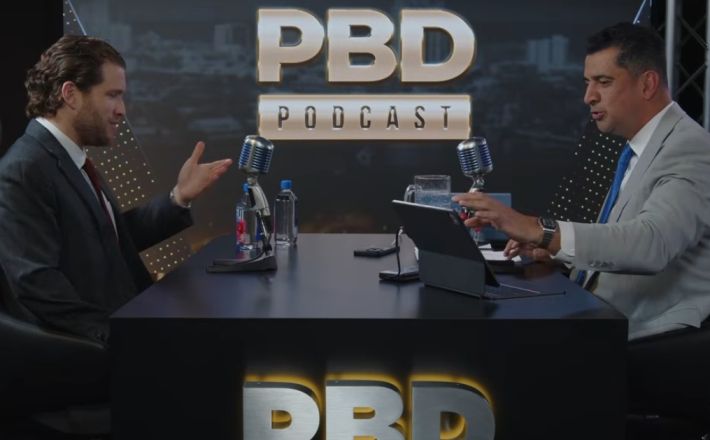
Editor’s Notes: In this episode of the PBD Podcast, Patrick Bet-David sits down with Palantir co-founder Joe Lonsdale to explore the complex intersection of technology, national security, and political power. Lonsdale provides an inside look at the founding of Palantir, its mission to protect Western interests, and the initial challenges of securing funding from a skeptical Silicon Valley. The discussion dives into critical modern threats, including the role of AI in psychological operations, the geopolitical tensions with Iran, and the necessity of maintaining a technological edge over global adversaries. This wide-ranging conversation also covers Lonsdale’s early days at PayPal with figures like Elon Musk and Peter Thiel, offering unique insights into the “PayPal Mafia” and the future of American innovation. (March 3, 2026)
TRANSCRIPT:
Introduction and Background
PATRICK BET-DAVID: Great to have you on the podcast.
JOE LONSDALE: Thanks for having me, Patrick. Yes.
PATRICK BET-DAVID: And I know you like these mics. Credit.
JOE LONSDALE: Awesome.
PATRICK BET-DAVID: Yes. Jake and the crew. Jake, who picked these blue mics, by the way? You did. Okay, so credit goes to him.
Palantir, Ventures, and Current Projects
JOE LONSDALE: Co-founder of Palantir, we started that 23 years ago.
PATRICK BET-DAVID: Yes. The story you have from co-founding Palantir to — I think you were an investor in Free Press with Bari Weiss. If I’m not mistaken, you were somewhat involved in those companies.
JOE LONSDALE: Yes, I gave Bari some money when she started because we need to rebuild our institutions in this country and make it better.
PATRICK BET-DAVID: Then you moved to Austin. You’re building a university — University of Austin. You’re doing another thing with Cicero, which we’ll talk about. I want to get your opinion on Cicero and Cato, because those are two different mindsets. Two different statesmen — one had a temper, his way or the highway, the other one was compromised, open to — which is kind of the route you guys went. And then recently you put, I think, some $11.8 million into a drone company in Nigeria.
JOE LONSDALE: Well, that’s random. I run a big venture capital firm. We’re doing a lot in AI. It’s called 8VC. And listen, most of the best defense stuff, we focus on America, of course. I do think in Africa, working with the very best group that we could find there is important because there are a lot of bad guys there, too.
PATRICK BET-DAVID: Yeah, I agree. So that’s interesting. We’ll get into that because I’m curious. The drone business is very important. We’re seeing that with the war between Ukraine and Russia. If you would ask the average person five years ago, if Ukraine and Russia go to war, what will be the most important tool to use? Nobody would have guessed drones.
JOE LONSDALE: Millions.
PATRICK BET-DAVID: Millions. Millions of drones, blowing up all these other things. Okay, I have a lot of questions. And the timing of this interview is phenomenal because we’ve got the Iran situation going on, we’ve got El Mencho that was just killed, and with what’s going on with Mexico.
JOE LONSDALE: Yes. I wouldn’t want to be in Puerto Vallarta right now.
PATRICK BET-DAVID: No. It’s a place where we used to go a lot — a vacation spot. Americans go to Cancun, they go to Puerto Vallarta. The cartel hit it out of all the places.
JOE LONSDALE: The airport, too. It’s scary.
What Palantir Means to People
PATRICK BET-DAVID: Yeah, yeah, yeah. But I want to start off with your background. When you say Palantir to the average person, some reactions are good, some are bad, some are neutral, some are scared.
JOE LONSDALE: It gets a good reaction if they know who you are. One of my favorite signs was on the old Defense Secretary Rumsfeld’s desk, and it said, “If nobody is angry, you might not be doing much.”
PATRICK BET-DAVID: Do you subscribe to that?
JOE LONSDALE: Oh, totally. Totally.
PATRICK BET-DAVID: Okay. At what age did you subscribe to that?
JOE LONSDALE: Pretty young, actually. I was a pretty obnoxious kid.
PATRICK BET-DAVID: Were you?
JOE LONSDALE: Oh, yeah. I had all sorts of opinions. I always have.
Family and Early Life
PATRICK BET-DAVID: Tell me about your parents. Who were your parents?
JOE LONSDALE: My parents were awesome. My mom passed away a long time ago. My dad’s not doing well, which is sad, but they’re amazing people. My father was very competitive. He was one of eight kids. He brought them all out to California. He was our chess coach when we were little, for fun. He’s a chemical engineer. We won the state championship when I was a kid. My brothers did, too. We thought we must be really smart — and then he kept winning 20 years in a row. So he’s just a very competitive guy in everything, every game, every sport, and a really optimistic, positive, competitive guy.
PATRICK BET-DAVID: Chess. So you guys played chess? How old were you when you won the championship?
JOE LONSDALE: I was the K-to-6 champion twice in a row, in fifth and sixth grade, and we won the nationals in junior high school. But it’s because we worked really hard at it because he was a good coach. You had to spend 30 to 40 hours a week to be the best.
PATRICK BET-DAVID: And this is in Fremont?
JOE LONSDALE: We grew up in Fremont, California, in Silicon Valley. And these were tournaments in California and around the country.
PATRICK BET-DAVID: Who were you in high school?
JOE LONSDALE: I went to a public high school. I was a nerdy guy who was valedictorian, and I had a bunch of really smart friends who taught me a lot. We went way ahead in math and science and stuff.
Meeting Peter Thiel and the PayPal World
PATRICK BET-DAVID: So at what point did you and Peter Thiel link up?
JOE LONSDALE: A lot of the smartest kids in Stanford computer science were going to PayPal at the time. I really admired the talent that was there. You have to realize — there was one company started by Peter Thiel and a bunch of his smartest friends. Max Levchin started it, and David Sacks, all these guys were there. Reid Hoffman. And there was one company that Elon Musk started with Roelof, and a bunch of other really smart people. It was called X at the time. And X and Confinity merged to make PayPal. They were fighting each other and then they merged. So it was all the smartest friends around both Elon and Peter. No surprise — it was a place you wanted to be. They actually rejected me my freshman year, but they let me in my sophomore year to go help them.
PATRICK BET-DAVID: Was that like the place everybody wanted to work?
JOE LONSDALE: Not everyone, but for me, it was where I noticed a lot of the smartest, most interesting people going. So I was trying to find my way there. Because at that time, when you look at the numbers, it’s not like Elon is today’s Elon.
JOE LONSDALE: No, no, it wasn’t.
PATRICK BET-DAVID: But how did you know that these guys were special? Would they talk about it in small circles?
JOE LONSDALE: I was a computer scientist. I was already ahead — I’d already done most of the undergrad work before I got there, which is normal nowadays. And so I met a lot of the smartest other computer scientists and they were all trying to go work there. Their smartest friends were working there. And then I was the editor of the Stanford Review, which Peter had started. So I met people that way too.
Recruiting Top Talent
PATRICK BET-DAVID: How proactive was Peter about getting in front of all the smartest kids coming out?
JOE LONSDALE: This is the most critical thing to do for these businesses. Peter was very good at that. It’s what we spend a lot of our time on now — flying up to see all the kids at Harvard and MIT this week. We spend a lot of time on this.
PATRICK BET-DAVID: Walk me through it. Do you go straight to the top? Do you establish relationships? Are there programs to go meet the kids? How does that work?
JOE LONSDALE: It’s a good question — people don’t ask. At Palantir, we had a whole playbook when we started. You’d have your fellows, your spies, your advisors — these young men and women on your team who are talented computer scientists. They help you map out who the other best people are, they help you throw parties, they help you get to know them, along with professors. You just have people who are young, smart, technical, and social, and they’re there mapping it out, helping you meet the right people. So when I come in, we’ve already met people who want to work with us, and we want to learn from them. It’s a mutually beneficial thing where you’re getting to know all the top talent and connecting them to your top companies.
PATRICK BET-DAVID: But how do you filter them out? How do you know?
JOE LONSDALE: It’s like a chicken and egg. You start by saying, I’ll have a superstar from my portfolio — one of our best engineers who just came from MIT — and they have five or six of their smartest friends in the younger year. And I’ll go meet those kids.
PATRICK BET-DAVID: So it’s a network, purely word of mouth. You’re recruiting smart guys, hanging out with smart guys, and they say, “You have to meet John, he’s the smartest guy I know.”
JOE LONSDALE: Yeah. Then you might talk to him and work on projects with him, so you get to know him a little bit. But yeah, it’s purely through the network. It’s a lot like what a football coach or a baseball coach has to do — you’ve got to do this for talent in tech.
PATRICK BET-DAVID: But what do you look for? In football you look for speed. Right now I met with one of the law firms that represents a lot of young talent. They’re recruiting kids at 10, 11, 12 years old. I said, “So what do you look for?” They said, “Coachability and personality.” I said, “Why personality?” They said, “Personality equals sponsorship. You’ve got personality, I can get sponsorship money. You’re coachable, we can develop you.” Of course, you’ve got to have the physical abilities. What did you guys look for?
JOE LONSDALE: It depends on whether you’re hiring an entrepreneur or an engineering leader, because they’re different.
PATRICK BET-DAVID: Give me both.
JOE LONSDALE: An entrepreneur needs to have opinions. They need to be able to say, “Here’s my hypothesis about the world, here’s why I’m right.” Usually they want to have some chip on their shoulder, something they’re trying to prove. You can tell they’re ambitious, they believe in things. You need smart, interesting, curious people to build things, but you also need a certain level of leadership and strong opinions about the world.
The PayPal Mafia and Learning from Elon and Peter
PATRICK BET-DAVID: You were at Palantir from 2004 to 2009. You were also at PayPal. They categorized you as being part of the PayPal Mafia.
JOE LONSDALE: I’m 15 years younger than Peter. I’m 12 years younger than Elon. I was a junior kid. I don’t get any credit for PayPal.
PATRICK BET-DAVID: But you were still there, you were still learning.
JOE LONSDALE: I was learning from these guys.
PATRICK BET-DAVID: And were you in meetings? Were you watching them? What was that like? What was Elon like in meetings? What was Peter like in meetings? Give us some of that.
JOE LONSDALE: I usually wasn’t in meetings with Elon, to be honest. But these guys were just very opinionated, very interested, very ambitious, very fast. No tolerance for things that are broken — you fix it right away. You work through the problems. You get everything done today. You don’t talk about what you’re going to do next week. You just move. People would be there late at night fixing problems, just passionate about their work.
PATRICK BET-DAVID: What was the average age? Would you say 25?
JOE LONSDALE: Mostly guys in their 20s.
PATRICK BET-DAVID: In their 20s, where you can be demanding of them. At the same time, were Elon and Peter also there driving and working with them?
The PayPal Mafia and the Birth of Palantir
JOE LONSDALE: Yeah, in different contexts. Peter’s more of the strategist, the philosopher, the thinker. He’s not the technical guy himself. I think Elon is more of the operator. He’s more of there in the room. I mean, I was in Palo Alto a couple weeks ago, and I was meeting a friend and Elon was in the back doing engineering reviews at xAI. He was just there working.
PATRICK BET-DAVID: More of the workhorse.
JOE LONSDALE: Just pushed through, solve the details of the technical problems.
PATRICK BET-DAVID: What was the level of intensity? Like, who was the most intense guy? The most intense.
JOE LONSDALE: I think Elon’s always been one of the very most intense people I’ve ever seen in terms of working. But there’s other engineers who are just there all the time pushing hard. I think when you’re in operation mode, guys like Max L and others were just, as far as I could tell, just always working.
PATRICK BET-DAVID: Who were some of the guys that you worked with that were maybe junior guys like you that came out and became big stars as well?
JOE LONSDALE: Yeah, I mean, a lot of the guys who were there — there were 16 different companies that were started after PayPal that quickly became billion dollar companies. And a lot of these guys were older than me, but it was the guys that, you know, Chad and Steve who built YouTube, it was Reid Hoffman who built LinkedIn. It was obviously Elon who did Tesla and SpaceX. There’s guys who built Iron Pour. There’s just so many things that came out of there.
PATRICK BET-DAVID: Got it. And so from there, how did the opportunity to be a co-founder of Palantir come up?
Founding Palantir
JOE LONSDALE: Well, I was working with Peter at his hedge fund, and the hedge fund was a little bit disorganized. I started bringing in my smartest friends to help, and there weren’t really other managers there, so I’d helped start building things. A bunch of my smartest friends I brought in one summer to help us — they weren’t interested in finance, they thought it was boring.
Peter and I had been talking a lot about how, at PayPal, we had to stop the Chinese and Russian mafia from stealing all of our money. And so we got to know the guys who were helping us arrest the bad guys — there was Secret Service and the FBI. And right after this happened, it was 9/11. And so these guys were spending billions of dollars on stuff that we thought didn’t make any sense. They kept asking us for advice. They were confused about how to do things.
President Bush created what was called the Department of Homeland Security at the time. I shouldn’t be too mean about it, but you know how it works in government — when you create a new department, people can’t really fire people in government easily. So sometimes they’ll have a lot of people they wanted to fire, and they just pushed them into the new department. So it’s a bit of a mess.
PATRICK BET-DAVID: Push them into new departments.
JOE LONSDALE: So therefore the whole department didn’t really know very well what it was doing at first, was my impression. And they were spending money on just nonsense stuff. It became really obvious to us that Silicon Valley — Google, PayPal, all these things that were going on up there — were just way ahead technically of where the government was at that point. And this was a problem because the government was spending $38 billion a year gathering data, looking at the data, failing to stop the terrorists, but also abusing our civil liberties. So it was a mess.
So we said, you know what? There’s actually a really important problem here to solve. A, I’d like to stop the bad guys from attacking us again and go get them instead. B, I don’t want everyone in the government seeing all of my data without any controls. That’s crazy.
PATRICK BET-DAVID: So that’s when you said, why don’t we go do it? You guys said, let’s go do it ourselves.
JOE LONSDALE: And I started having my friends I brought that summer help build a prototype — which sounds even crazier than finance, but at least it was interesting. They enjoyed helping me build it. My roommate, who I’m actually seeing later — he moved down here to Miami — he and I controlled the team. And Stefan Cohen, my co-founder, and we started building it up.
PATRICK BET-DAVID: And the CIA was apparently one of the first investors in the company.
JOE LONSDALE: They eventually gave us money. I think it was the second or third round, but it was only $2 million. And we actually bought them back out. The reason we needed them is that Peter — basically no one would give us money. First of all, Alex Karp and I went all over Sandhill Road. They could measure talent even back then, and they’d say, “Why aren’t you doing social media? Why aren’t you doing something new and exciting? Working with the government’s crazy. What’s wrong with you guys? It’s not possible.”
PATRICK BET-DAVID: So they didn’t think it was a good idea.
JOE LONSDALE: This is Alex and I talking to the investors. All the investors were telling us, “You guys are crazy.”
PATRICK BET-DAVID: They were telling you guys —
JOE LONSDALE: They’re telling us, “You guys are crazy.”
PATRICK BET-DAVID: Right?
JOE LONSDALE: “No one does this. Why are you doing this? Not possible. It doesn’t make any sense.”
PATRICK BET-DAVID: These are some big names. Credible.
JOE LONSDALE: These are the big names. We got turned down by everyone — turned down by Excel, by Sequoia. The guy at Kleiner Perkins at the time — and they’re a great firm, I admire them very much, but the guy at the time was no longer there — he started laughing at us on the phone because Alex didn’t have a technical degree. He said, “You guys don’t even know what you’re doing.” And Alex has a doctorate, but it’s not even a relevant doctorate. He was basically laughing us out of the room.
PATRICK BET-DAVID: And what was Alex’s mindset like when he’s walking out of the room? What’s he telling you? Because Alex is a very unique type of guy himself.
JOE LONSDALE: We were not happy with these people. Peter Thiel told me it was probably really good for me because it gave me an even bigger chip on my shoulder to make sure we succeeded after being mocked and turned down by like 30 of these guys. And Peter couldn’t just fund it himself — he needed other people to fund these things. So when we got In-Q-Tel, which is the CIA’s venture capital arm at the time, to give us a little bit of money, and Peter gave us even more, that was really critical.
PATRICK BET-DAVID: And then how long later did you guys pay the $2 million back?
JOE LONSDALE: I think we bought it back for a much higher amount. We had some option — I forget. It must have been five or six years later.
PATRICK BET-DAVID: Okay, so they still made some money on it.
JOE LONSDALE: Oh, they made plenty of money on it. And more importantly, we saved the government billions of dollars versus what they were doing. The DHS guys — I remember there was some UNISYS thing where it was like $3 billion to integrate all the data. And we came and showed them we could have done the same thing for them out of the box in a month. Like, don’t waste billions of dollars. So it turns out competence saves the government lots of money and protects civil liberties. People don’t realize it’s both of those things.
The Lord of the Rings Connection
PATRICK BET-DAVID: What is the desire to constantly use names that are from Lord of the Rings? Where does that come from?
JOE LONSDALE: Peter gets credit for naming.
PATRICK BET-DAVID: Peter gets credit. But I’m —
JOE LONSDALE: I’m a fan of it. Listen, we wrote about this at that time. When we were creating this, we said, “This is a dangerous thing to create.” But we believe it’s a worthy thing to create. And it took a lot of courage. There were a lot of different things we could have worked on. We could have made a lot of money doing a lot of other things. But it was really important to both help — we had to eliminate probably up to 10,000 terrorists that might not get eliminated. We work with all sorts of amazing groups in the government alongside them with the technology, and we help protect civil liberties and make sure the government watchers are being watched.
Of course, you create this technology — if it gets into the wrong hands and they turn off the audit trails, who knows what bad could be done with it. So there’s good and bad here.
Lessons from Investor Rejections
PATRICK BET-DAVID: I want to get into that as well. But going back to the meetings with investors and them saying you guys don’t know what you’re doing, you don’t even have the real degree — Alex said in one of the interviews, I think he may have said it to you, he said, “I wish we would have told him to f* off and just left.”
JOE LONSDALE: We were so polite. They would have probably respected us more if we had just —
PATRICK BET-DAVID: Were you naturally polite, or were you intentionally becoming polite because you needed the money?
JOE LONSDALE: We needed the money, man. I didn’t know what you’re supposed to do.
PATRICK BET-DAVID: But it wasn’t naturally, because you’re a disagreeable person.
JOE LONSDALE: Well, yeah. At the same time, I think both of us are probably a little more arrogant now that we’ve done more. We didn’t know for sure. We knew what we were doing. We felt we were doing something smart. But it was our first time.
PATRICK BET-DAVID: He said, “I wish we were more arrogant in certain areas and less arrogant in certain areas.”
JOE LONSDALE: That’s well said. When you’re creating our company, we kind of reinvented a lot of things from scratch, and in some cases it was probably frankly genius. In other cases, I just hired someone who knew what they were doing. When you’re building a company, I talk about having adults in the room. There’s certain types of adults you don’t want to bring into a startup because you don’t want people running a machine in a standard way — you want to be creative. But there’s certain parts that, once you get there, you probably do want the adults to show you how it’s done. So there’s some things we maybe could have learned from others.
Founder Strengths and Roles
PATRICK BET-DAVID: What was your strength in the partnership as a founder? What was his?
JOE LONSDALE: I was really good at recruiting the first few hundred people and kind of pushing forward on the product strategy. Alex was really intuitive about institutions, about how the world works, about how we come across, about how to get into certain places, about how to make deals happen — how to communicate in the right way so you’re coming across as creating value for the other person in a way they understand, in a way you can get it done. Alex is a philosopher and he understands how people and organizations work, how to navigate the world.
PATRICK BET-DAVID: Got it. So was he more the one selling the vision? You were more recruiting the people?
JOE LONSDALE: I think recruiting is a lot about selling vision as well. When we gave people their offers initially — this is really early on at the beginning — we gave them three options: higher salary, middle, or lower salary, and higher upside, middle, or lower upside. And I put on the sheet of paper — the lawyers hated this — but I put an asterisk that it might not be exactly right. I’d say, “Okay, if the company is worth $5 billion and this much equity, here’s what your shares might be worth.” And people would say, “Joe, you can’t show people if it’s worth $5 billion — that’s totally unrealistic.” But I had to say, “No, here’s why it could be worth that.”
PATRICK BET-DAVID: And now it’s worth what, $335 billion or —
JOE LONSDALE: Yeah, it was a lot bigger.
Recruiting Top Talent: From Palantir to the AI Era
PATRICK BET-DAVID: So you couldn’t say it’s worth $5 billion.
JOE LONSDALE: People thought I was ridiculous.
PATRICK BET-DAVID: So let me get this straight. You’re sitting in front of me and you’re telling me 200k salary. 350. I’m just making up now.
JOE LONSDALE: Yes.
PATRICK BET-DAVID: 500k salary. Okay, 500k salary. If it’s $5 billion, you’re going to get $10 million.
JOE LONSDALE: Yeah.
PATRICK BET-DAVID: But up here, $20 million, it’s going to be $50 million. That’s literally what you guys…
JOE LONSDALE: Nothing like that. Lower salaries, of course, but yeah, yeah, exactly.
PATRICK BET-DAVID: Wow. And so based on what I would choose, would you judge me and put me in the…
JOE LONSDALE: Totally. I told if you choose the high salary and low upside, that I have to go be very skeptical of you.
PATRICK BET-DAVID: Would you still hire me or no?
JOE LONSDALE: Sometimes, but usually it works out. Because we measure everything after the fact. All the very best guys chose the low salary.
PATRICK BET-DAVID: All the very best guys choose a low salary outside there because they want to…
JOE LONSDALE: They want to get in the game. They want to be part of the mission.
How Recruiting Has Changed: From Palantir to the AI Age
PATRICK BET-DAVID: Yeah. And by the way, how much — especially since you said you recruit the first few hundred people at Palantir and you were at PayPal and you watched how they recruited you — how much have you noticed recruiting change from then till today due to AI?
JOE LONSDALE: It’s not just AI. It’s that people recognize talent so much better. Palantir was getting the best of the best. We get the top people out of the top schools. Facebook and Google kind of caught on to some of this. They started giving big signing bonuses. In like 2008, 2009, they started giving $150k signing bonuses, which at the time sounded like a lot of money for a 20-year-old. It’s ridiculous. Now the top AI companies, it’s like multimillion dollar signing bonuses.
PATRICK BET-DAVID: I saw this one guy got a billion dollar offer, he turned it down. This was like nine months ago, ten months ago.
JOE LONSDALE: Yeah, that’s like the very best guy. He’s probably taking some knowledge from one place to another. So it’s a little sketchy, kind of what they’re paying for there. But for the raw talent, you’re still getting millions of dollars for coming into companies, just being the most talented kind of math Olympian as a young guy coming in.
PATRICK BET-DAVID: Yeah.
JOE LONSDALE: But think about it — it’s like you hire a young guy for a basketball team who’s the best basketball player. Similarly, the gold medal programmer in the world who’s going to add this unique ability — what’s that worth? It’s worth a lot.
PATRICK BET-DAVID: So today it’s not uncommon for a young guy to get a $5 million signing bonus for the very…
JOE LONSDALE: It’s like being a top athlete.
PATRICK BET-DAVID: How do you protect yourself if the guy walks in six months? Is there a clawback?
JOE LONSDALE: Yeah, it’s structured in some way. I mean, if he walks in here, he might be able to keep it, but he hopefully contributed a lot in a year. But he’s getting equity and he’s vesting into his upside. So you don’t want to leave too soon. If the company’s doing well, he’s going to stay because he’s going to earn that equity for the next four years. He’s going to want to stay and earn that.
PATRICK BET-DAVID: So you got the signing bonus, you got the salary, and you got the equity.
JOE LONSDALE: And sometimes with a signing bonus, he may ask to take his equity if he’s bullish — which, by the way, the best people often do. They want a bigger piece of the game.
PATRICK BET-DAVID: So instead of giving you $5 million cash, I’ll give you $5 million worth of shares today that could be worth $100 million.
JOE LONSDALE: Maybe he takes a million of it in cash so he’s comfortable, and he gets $4 million of it in shares because he’s smart and he wants to make the big money.
PATRICK BET-DAVID: Yeah. So that’s one thing that’s changed with recruiting — the cost. What else has changed?
JOE LONSDALE: So at Addepar, my second company after Palantir — it’s a very successful platform, like $10 trillion in this platform for wealth managers — a guy used to work for me, Scott Wu. He had won the gold medal in programming three years in a row. It’s like king of the nerds, basically. Everyone knew who he was in these competitions, and he worked for me. Then he went on, and now he’s running one of the top AI companies.
But the fact that I was able to hire him and people like him just by showing up at these contests and hanging out — now there are hundreds of other firms going after these contests, sponsoring these contests. They all know who these kids are. The game’s gotten harder. You have to look harder for these top people now, and it’s harder to recruit them.
PATRICK BET-DAVID: And it’s harder to recruit them.
JOE LONSDALE: You better have a reason why they should be coming to work with you. If you’re just a random new person, it’s really tough.
PATRICK BET-DAVID: What’s the differentiator?
JOE LONSDALE: I’ve built multiple different multibillion dollar companies, and this is my main thing I’m doing. “Come work with me on it.” That’s a pretty good pitch versus you never heard of me before. So it’s just a lot harder.
PATRICK BET-DAVID: Got it. So the differentiator is moral authority, previous track record — “I’ve won before. We’re building something big again. Come join us.”
JOE LONSDALE: The best thing is this other guy you know is there, who’s a genius. You want to work with him and learn from him. So it’s all about chicken and egg. I’ve got to start with the best people, then the other best people want to join. That’s how Palantir really did it. We started with a bunch of the best guys. The other ones want to be with them, want to learn from them. You’ve got to have a nucleus to start with.
Building the Foundation: Recruiting the First Hundreds at Palantir
PATRICK BET-DAVID: What else did you do at the beginning — the first few hundred of Palantir? What other methods did you use? Did you look at certain schools to recruit from?
JOE LONSDALE: About 20 of the top universities. We’d have playbooks for flying there. We could raid other companies — it sounds really bad when you talk about it. The most ridiculous version: one of the guys, Nathan, who was helping us build the company early on, had worked at eBay because eBay bought PayPal. We went and got a conference room at eBay. I was like 20, 21 at the time, and we were interviewing people at eBay to come join our company. I felt a little bit awkward about it, but I’m like, “I guess this is what people do sometimes.” Turns out you weren’t supposed to do that. But did it work? It was such a badly run company that they didn’t even have any idea it was going on. You do that at my company, I’ll mess you up, man. It’s not cool. I’ll be like one of your mobster friends.
PATRICK BET-DAVID: Yeah, yeah. Well, listen, you almost have to have that mindset — like, fight people.
JOE LONSDALE: eBay was like a sclerotic group of MBAs who didn’t really have strong opinions about it.
When Palantir Became Special
PATRICK BET-DAVID: At what point did you know Palantir was special? Like, it really had legs.
JOE LONSDALE: For me, it was when some of these people started joining — Bob McGrew, when he came in. He had been a Stanford PhD and had been at PayPal and was a superstar. That’s part of the reason Peter gave us money for one round, when he joined. He ended up running a bunch of stuff at OpenAI after being at Palantir for 10 years. But when he came, these other guys came. When we started to get into the FBI — three or four years in — it started to really work, and all this top talent started coming. It was very special.
PATRICK BET-DAVID: And what happened when you’re saying FBI? Like, they’re approaching you guys, you’re solving their problems?
JOE LONSDALE: It’s so hard to sell the government. The CIA — I used to think it was like the CIA, but it’s actually like 200 competing orgs that don’t like each other. And the FBI is like that a little bit too. There are lots of parts of it. So we were working and doing pilots with both sides, but we couldn’t get a breakthrough. At one point we finally — it’s kind of funny — they were jealous of each other. They wanted to be first, but they didn’t want to be first behind the CIA.
PATRICK BET-DAVID: They didn’t want to be first behind CIA.
JOE LONSDALE: Government’s very funny. I’ve done other things with the government. They both want to be able to tell everyone how innovative they are, but they don’t want to take any risk in being the first one to do something because they can get fired. They’re very risk averse — people tend to be bureaucrats. So we were doing all these things they needed, but they were afraid to do the big contract. I think both of them thought the other contract was going ahead, and then they both signed at once. Then we got in and we started to add real value. This company took a long time to iterate and figure out how to help, but once you started breaking in and iterating with them, it was clear we were going to get there.
PATRICK BET-DAVID: And what role was Thiel playing?
JOE LONSDALE: Thiel was like the chairman of the board, co-founder, strategist. He stopped us from making some really key mistakes. In years two, three, four, there would have been some bad partnerships we were going to sign. He made sure it was funded. He made sure the vision was going in the right direction.
PATRICK BET-DAVID: Are you comfortable sharing one of them?
JOE LONSDALE: Yeah, sure. There was a company that was going to get us our first few million dollars of revenue if we partnered with them in D.C., but they would have kind of locked us into something where they owned a big piece of the whole thing long term, the way they structured it. That would have capped the value. We probably would have had a better chance of being worth $100 million and no chance of being worth that big.
PATRICK BET-DAVID: Big difference.
JOE LONSDALE: Because they would have owned a piece of the market the way they wanted to structure it, with some rights. And for me, I’m just trying to make this thing work. So you’re like, “Oh, he’s going to give us millions in revenue, we’ll be able to get over here.” But it would have really taken away a lot of the upside. He’s very smart about how to structure these things, how to protect yourself. He’s always been the thinker behind the scenes who you check everything with and who you make sure you’re going the right direction with.
The Mission Behind Palantir
PATRICK BET-DAVID: Why was Palantir started?
JOE LONSDALE: It was started to protect the West against Islamist terrorists and to make sure we save the government money and protect civil liberties. That was literally the mission.
PATRICK BET-DAVID: That’s a mission.
JOE LONSDALE: That was the mission.
PATRICK BET-DAVID: That’s truly the mission.
JOE LONSDALE: That was truly the mission.
PATRICK BET-DAVID: And you’re saying that to me in the interview when you’re recruiting me.
JOE LONSDALE: We used a lot of words like that when we were first starting out. We were telling…
PATRICK BET-DAVID: Are you literally telling me, “We’re going to save the free world?”
JOE LONSDALE: Yeah.
The Origins of Palantir and Its Mission
JOE LONSDALE: We say, listen, the technology cultures that exist in the west coast, which if I’m interviewing you, you’re one of the great technologists and your friends are amongst the very top — the things we know how to do here, they do not know how to do that in this part of the world, in D.C. They just don’t. They’re way behind and they’re broken and they’re wasting tens of billions of dollars and we’re getting attacked and they’re abusing our data and they’re incompetent. And we’re going to have to do this for them to come in. And it’s important that at least some of the best people in the world go and help the government be less stupid. I mean, that is my view on the matter.
PATRICK BET-DAVID: But that mission was full on bottom. You, Alex, you know, you guys are on the same page with the mission.
JOE LONSDALE: Yeah, “save the Shire,” we used to put it, because this comes from the Lord of the Rings. The Shire is Western civilization — protecting it, going off and doing the mission.
PATRICK BET-DAVID: Let me ask you the process. Pre the idea of Palantir, you’re sitting in, guys, this is a problem. We have to save the free world. We have to save the Western ideology. Here’s the enemy. You know what they’re trying to do? How can we solve that problem? And then do you think about what company can we develop that can solve this problem? Does it go mission first, solution second? What is the process?
JOE LONSDALE: Well, the tools that were built at PayPal to stop the frauds —
PATRICK BET-DAVID: This is the Russian one you were talking about.
JOE LONSDALE: The Russian-Chinese market. You had to be able to stop those guys. We built those tools.
PATRICK BET-DAVID: How nasty was it?
JOE LONSDALE: They made all of our competitors go bankrupt. Everyone else was going bankrupt. This was existential for PayPal to solve.
PATRICK BET-DAVID: What kind of money did they get? I mean, it was like —
JOE LONSDALE: Like 7 or 8 million a month. But that was back when that was a lot of money — you have to remember.
PATRICK BET-DAVID: Billion — early stages of PayPal, this is —
JOE LONSDALE: Like 7 or 8 million a month at a time when it’s scaling — a lot of money. It’s enough to make it unprofitable. I don’t know the exact numbers, but it was enough to make it unprofitable versus profitable. It was really key. And it was annoying because you had to not accept certain things if you couldn’t stop these guys. It’d break a lot of stuff. They’d run money through the system, take it out. You might go to 7-Eleven, buy something. They’re going to get your credit card, sell it to a group of Russians. The Russians are going to open accounts, transfer a bunch of money. You’re going to then get a PayPal charge of $300. You say no, you’ll charge it back. And then we have to pay — the companies have to pay it. And so there’s all this fraud you had to deal with.
And then it turned out that the types of problems we realized we were solving for investigating — you could extend those to a lot more types of problems and build investigative software that didn’t exist. You’d be able to look into all the data, bring the data together. Basically, how the human mind extended into the $38 billion of data, and make sure you only access what you’re allowed to access, and make sure you have audit trails to do it right in order to get the bad guys.
PATRICK BET-DAVID: And so that created so much pain and annoyance that led to the mission and inspired you to start a company called Palantir that prevents what Russia and China did to you guys.
JOE LONSDALE: Well, 9/11 happened after that. And we saw, and we got to know these guys, and we saw them reacting to it badly. We said, wait a second, we got —
PATRICK BET-DAVID: To help — things at the same time.
JOE LONSDALE: Yeah, those two things.
Why People Don’t Trust Palantir
PATRICK BET-DAVID: Why do so many people not trust you? Why do so many people not trust Palantir? You know how when you think about every decade, there’s a company that people look at as evil — you got Monsanto, you got Enron, you got all these guys. 20 years ago, they hated these companies. They hated AIG. But man, when you think about Palantir, a lot of people say, what is your motive? What is the vision? What are you guys trying to do?
JOE LONSDALE: Well, I’m not running it anymore, first of all. I was there the first decade. But I’ll tell you, first of all, when you’re really successful, people attack you. That’s always going to happen. And second of all, this is an unusual area. You have a company that is helping the government eliminate bad guys. It’s helping the government do things it wants to do more effectively, more efficiently. And some of the things government’s doing right now, people are not happy with.
And so I think it’s an interesting question — should a tech company stop helping the government when it disagrees with it? I think Alex Karp has spoken really well on this. Alex Karp comes from — he had an African American mother and a kind of Jewish professorial father. He comes from the left, obviously. Peter Thiel obviously is more on the right. So we come from different political sides here, but they both agree that it’s better for the world to make American government more efficient and work better, and not throw sand in the gears, not break things.
And so the question is, should Silicon Valley get to decide policy, or should the government get to decide policy? Our view is we want to watch the watchers, but the government should get to decide policy. Our republic has a mechanism for deciding, and we should follow that mechanism versus being in charge ourselves.
PATRICK BET-DAVID: The fear becomes, what if somebody evil runs it after Alex? What if somebody evil gets a hold of what you guys are building, then what?
JOE LONSDALE: See, that’s not what’s scary. What’s scary to me is if society elects a really, really bad person and they try to get around things and use technology and power in ways they shouldn’t.
PATRICK BET-DAVID: Very possible.
JOE LONSDALE: That’s very possible. That is scary to me. That’s why we all have to fight to be part of the political process for our views there, and to make sure we have checks on power, which is core to the US Constitution.
What Alex is doing — he hasn’t got the data himself. Alex is running a company that builds technology for our clients. I should say “our clients” — I’m an advisor still, I’m a proud founder, I’m not running Palantir these days. But Palantir is helping them use their data. We’re not holding the data ourselves. You see what I’m saying? You’re helping them see things and do things they couldn’t do otherwise with their information. It’s not like Palantir itself has all the information.
Palantir’s Role in Global Operations
PATRICK BET-DAVID: How many of the events that happen in the world where we’re watching — is Palantir involved? For instance, and I know you’re not involved today — like Maduro, was Palantir involved in capturing him? El Mencho, the Mexico cartel guy we just killed in Mexico — were you involved in gathering that intel? Because if you’re thinking about all this intel, and by the way, a lot of agencies use you, right? It’s not just the CIA that uses you. So you know what everybody is doing.
JOE LONSDALE: No, but we don’t actually, because the people who know are the people who have the clearance to see what’s going on there. So there may be things that happen that Alex, even if he’s running the company, may not have the top secret clearance for that particular operation to be involved in.
PATRICK BET-DAVID: Is there anybody in the company that has the clearance to know what everything’s going on?
JOE LONSDALE: I actually don’t know the answer to that question. That’s an interesting question. I doubt they do, because a lot of Palantir’s work is with allies all over the world, and different allies have different clearances and different things they do. So it’d be very unlikely for someone to see everything.
Now, the real question though is, do you want this operation to be done as efficiently and effectively as possible, or do you want it to be done slightly stupider? I mean, that’s really the question we’re asking here. Should this be done in a slightly stupider way or a slightly better way? Because that’s all Palantir is doing — it’s on site with them, helping them do it in a better way, given the information they’re allowed to use.
PATRICK BET-DAVID: So in a situation with a Maduro or El Mencho, is there a possibility that Palantir was involved?
JOE LONSDALE: It’s very likely to me that the technology and its capabilities were involved, and that it helped them do it in a better way than they would have done it before, especially with the US operation. I don’t know about the Mexican operation. I’m not up to speed on what they’re doing there.
PATRICK BET-DAVID: Meaning the Venezuela operation.
JOE LONSDALE: The Venezuela one — I’d be surprised if it wasn’t involved in some way. But again, Palantir is a tool being used by others in our government who are in charge, who are making the —
How Palantir’s Technology Works
PATRICK BET-DAVID: Maybe explain that. So how is that tool used? What does that tool help you do? If I explain different technology, I can say here’s what HubSpot helps you, here’s what Salesforce helps you, here’s what this technology helps you. How does Palantir help in that process?
JOE LONSDALE: Palantir — I mean, it’s a lot of things at this point — but Palantir is bringing together data from a lot of different sources in the government. Like I said, when I started Palantir, government spent 30-something billion a year to gather data. I bet it’s a lot more than that now. So there are literally hundreds of thousands of databases. There’s literally signal intelligence, human intelligence, and there are all sorts of rules about who could see what and what they could do.
For example, people are not allowed to spy on US citizens and use that data — that’d be illegal. Palantir flags that and says, “This is against the rules. You can’t be doing this.” So the whole thing is a rules engine that has very strict rules. And then someone who’s using it is getting all the stuff they’re legally allowed to be doing based on the policy of our republic. They’re bringing it all together, and they’re putting it together because it’s very complicated if you have lots of databases.
Is this the same person over here? Is this Muhammad the same as this Muhammad? Is this guy with this common Hispanic last name — is this Becerra the same person? They’re mapping it all out, taking all the information they can, and using that with AI along with their judgment to ask questions, iterate, make plans, figure things out, connect the dots, and then get things done better.
The Primes: Who Opposed Palantir
PATRICK BET-DAVID: At the beginning stages, who didn’t want to see Palantir succeed?
JOE LONSDALE: The primes. All the primes. In America, the primes are the big defense companies. In America, we had for a long time the most competitive, best defense companies. In the 20th century, there were maybe 80 or 90 of these — they were just dominant, best in the world. After the Cold War ended, we had to lower the budget — probably a good thing. I’d rather more money goes towards other things than war. The primes all merged into these eight or nine —
PATRICK BET-DAVID: Six of them.
The Fight Against Defense Primes
JOE LONSDALE: Yeah, exactly. Maybe even eight or something. But they’re much smaller. Much, much fewer number, much bigger companies. And they became so dominant, but they became more like the government themselves because they interact with us so much. They became big bureaucracies, and these big bureaucracies — a lot of the best tech guys, they all fled. They all fled to the tech world, to the best places in Silicon Valley, to other places. And these places got really good at what we call innovation theater. They’re good at convincing Congress they’re innovating, but they’re not really innovating anymore. And they stopped innovating.
And there’s only two companies that broke through these Primes. It was Palantir and SpaceX. Both. Palantir, SpaceX. It was really hard. It was really unfair. They beat the crap out of us. We’d do things that would save huge numbers of lives.
So we work with the Special Forces at first because Special Forces are like the most elite soldiers doing really important missions and their lives are on the line a lot. So they wanted the best tools. Because when Palantir went somewhere at first, it was very often Special Forces guys using it for key missions to save their lives.
Now, at the time we were in Iraq and there were army brigades in Iraq and they saw us saving lives with Special Forces. They said, “Can we use it too?” And the government wouldn’t pay for it. So we said, “Of course you can use it for free because we’re patriots. That’s the whole point. So go use it for free. Just give us the data back legally.”
PATRICK BET-DAVID: Makes sense. Who’s reaching out to you?
JOE LONSDALE: This is like all sorts of people in the military working with our guys in the military embedded, working with these guys.
PATRICK BET-DAVID: Not PMCs.
JOE LONSDALE: These are actual guys, like lieutenant colonels in the military.
PATRICK BET-DAVID: So lieutenant colonels are reaching out. The government doesn’t want to fund it. “Can you help us?”
JOE LONSDALE: Getting a general’s permission, pushing it in. These are guys on the ground because, listen, their buddies’ lives are on the line, right? We have a lot of great soldiers.
PATRICK BET-DAVID: Without the approval of the U.S. government?
JOE LONSDALE: No, no. People that approve, they use it. We don’t. They don’t have to pay for it because we don’t want to get in trouble stopping you from using something that’s going to work better.
And so in this case, we stopped tons of deaths from IEDs because we were able to track where the IEDs most likely were. We were able to track all sorts of things going on. They reported back all these deaths that we stopped. And then there was like a three or $5 billion bid for the defense ground control system again. And we’d already been used better than anything they were doing before. Way ahead of everything they wanted. And they just no-bid, gave it to a Prime.
And we actually sued them at this point because it’s not allowed. You have to consider others. We actually won the lawsuit. The generals in charge of getting to the Prime were ordering people behind the scenes to destroy the records of lives lost. But some guys — guys whose lives we’d saved — meant the general couldn’t hide it. It’s totally corrupt. It’s totally corrupt.
So we had to break through. And then a lot of others saw this, and this has really shifted the culture of the military now. And SpaceX broke through and Palantir broke through, and now they’re starting to say, “Wait a second, we’ve got to be open to the outside stuff. We can’t just only do the Primes.” But that was a big fight for us for years.
PATRICK BET-DAVID: Which of the Primes are bigger than you guys right now?
JOE LONSDALE: Everyone’s still bigger on revenue because Palantir is still a smaller company. Palantir is about half government, a little bit less than half government revenue. So it’s in the single digit billions for revenue, and there’s Primes making tens of billions of revenue that are much bigger than us. Been around forever, but we’re growing much faster. That’s why we’re valued highly.
PATRICK BET-DAVID: But market cap wise, you’re higher than the Primes.
JOE LONSDALE: Market cap wise, we’re higher, but revenue wise we’re still much smaller.
PATRICK BET-DAVID: Since you’re now an advisor, are there any situations where Palantir has to deal with the Primes?
JOE LONSDALE: Oh yeah, all the time. The Primes still run a lot of stuff. And by the way, there are still parts of things the Primes do where they’re the best in the world and you have to work with them. The problem was, early on, when we as founders tried to do anything, they’d say, “We’ll take 99% of the value, we’ll give you 1% of the value, we’ll take credit for your work.” It’s like they just beat you because they’re in charge.
PATRICK BET-DAVID: When you say 99%, it’s a $100 million project — they literally pay you a million bucks?
JOE LONSDALE: They’ll give you a million bucks for something, and then we’d actually do most of the work, and it would drive us crazy.
PATRICK BET-DAVID: So in 2009, which is 17 years ago, what’s top line revenue that year?
JOE LONSDALE: Oh, I don’t remember, but it was —
PATRICK BET-DAVID: Is it in the millions or billions?
JOE LONSDALE: Probably in the tens of millions. We didn’t cross a billion for 15 years. It took a long time.
PATRICK BET-DAVID: So the company’s been around for five years and the revenue is in the millions.
JOE LONSDALE: Tens of millions.
PATRICK BET-DAVID: Tens of millions. Yeah, got it.
JOE LONSDALE: It might have just been crossing 100 million. I don’t know the exact numbers. Tens of millions.
Palantir’s Biggest Threats Today
PATRICK BET-DAVID: So if that’s who didn’t want you to exist at that time, who today is your biggest enemy?
JOE LONSDALE: I really can’t speak for the company. This is just me now, as a founder looking on from the side. I would think the biggest threat to Palantir are the extreme populists on both political sides who don’t want our country using better technology to succeed.
There are 1,200 laws right now in 50 states trying to ban different types of AI for things that I think are just ridiculous. By the way, some of it’s good — you’ve got to protect children, you’ve got to protect content creators. There are legitimate things to push back on. But a lot of this stuff is nonsense. And if that nonsense passes, it’s not just an enemy to Palantir, it’s an enemy to thousands of our best innovative companies right now. So I think that’s actually the biggest threat at this point, because Palantir is so dominant and adding value to so many thousands of companies.
PATRICK BET-DAVID: Can we specify who you mean? Are you saying things like a non-interventionalist politician?
JOE LONSDALE: Oh no, no, no.
PATRICK BET-DAVID: What are you saying?
JOE LONSDALE: I’m talking about laws like Bernie Sanders trying to stop all new data centers, or something crazy like that. Or people who are saying we want to throw developers in jail if things don’t go right with AI — there are laws like that being housed in Maryland and Virginia. Or there are people saying — it’s a lot of people who are technically illiterate writing state law to block things, to create new regulators to stop you from deploying. Stuff like that would be a disaster.
PATRICK BET-DAVID: And I see the president’s working to deregulate and kind of still keep an open source and allow you to compete without making it too regulated.
JOE LONSDALE: Yeah. David Sacks is working hard on this because he’s the head of AI for the president. My view is that we should have certain regulatory frameworks to protect kids and protect content creators and have reasonable law. But we shouldn’t be having each state have its own regulatory code. That’d be crazy.
The AI Judge and Checks on Power
PATRICK BET-DAVID: Did you see this recent movie that came out called Mercy? Have you seen Mercy? Oh, my God. You’ve got to watch Mercy. So it’s a movie with Chris Pratt. I’ve been telling everybody, go watch this movie. Specifically, every employee at Palantir needs to go watch this.
So Mercy is a story of this actor, Chris Pratt, who wakes up, he’s locked into this chair — handcuffed, shackled. And the judge is that face on the top. If you see the face on the top, that’s the judge. It’s an AI judge. You have 90 minutes to prove to her why you didn’t kill your wife. In this case, in the movie, he killed his wife. He’s like, “Yes, what are you talking about?” And she has access to every video to pull up. “Can you go to this date? What happened that morning when I walked in?” Scary stuff.
JOE LONSDALE: Man.
PATRICK BET-DAVID: Do you see a day in the next 20 years where we could be living in a world where judges could be AI, politicians could be AI, based on models?
JOE LONSDALE: That’s not the world I want to live in.
PATRICK BET-DAVID: How do we prevent that from happening?
JOE LONSDALE: The Constitution is pretty clear about the rules. And so I think we should make sure we stick to the Constitution. And if we’re going to amend it, we should be really damn careful not to give AI random power like that. That’d be my view.
The whole point of how America was designed is checks on power. The reason America is a truly great country that’s lasted as long as it has — it’s our 250th anniversary this year — is because our founders were philosophers from the Enlightenment, and they thought a lot about this. They realized you have to check government power. You have to set it up with lots of different checks on itself. The whole point is for the government itself not to be allowed to ever be evil.
And by the way, that was how we built Palantir — to have audit trails and to watch the watchers, and to have checks. You have to have checks on power. Otherwise government is dangerous.
PATRICK BET-DAVID: Yeah, but if we’re going into the robot era of developing robots, and if all of a sudden you have 400,000 robots that you program from your headquarters, and your competitors have 200,000 robots, and third place has 17,000 robots, and all of a sudden somebody becomes evil — then what happens?
JOE LONSDALE: Well, this is why it’s important for the military to have the most powerful robots and not some kind of corporation. That obviously is very important. And by the way, China is trying to build those faster than us. And that’s why right now we’re trying to make sure we stay ahead of China.
Our military, how it’s controlled by our government — that’s a very important thing our republic has to get right. But obviously our military has to stay ahead of anyone else. It’d be very bad not to have a monopoly on power.
America’s Top Enemies
PATRICK BET-DAVID: You said it eloquently — who you think Palantir’s enemy is. Who do you think is the enemy of the state? Top three enemies.
JOE LONSDALE: I think our top three enemies are probably our adversaries. Our country right now is very polarized. And I think social media unfortunately does that, but our adversaries take advantage of that.
I think China, using TikTok, finds ways to polarize us more. I think Iran — very clearly, the guys running Iran are a bad-guy theocracy. I’m a very big fan of the Persian people, but the guys running Iran are bad actors. And you saw when we hit Iran with Israel last time and the Internet went down — you saw 15% of global Bitcoin hash rate went away. You saw a bunch of bots that are guys who pretend to be Christians who hate Jews in Alabama also got turned off for a while. They’re trying to find ways to divide us. They’re trying to find ways to pull us apart.
PATRICK BET-DAVID: What a powerful thing right there. The 15% of Christians who hate Jews in Alabama.
JOE LONSDALE: Well, 15% of global Bitcoin hash rate went away — sorry, that was another point. Iran was mining 15% of all Bitcoin in the world. We found that out because it went away as soon as we hit them.
But then there are literally hundreds of thousands of bots that were just angry American bots — pretending to be Christian guys who hate Jews, pretending to be crazy people in America who are different on different extremes who are arguing. So there’s a lot of stuff that’s planted to make us fight.
Foreign Interference, Bot Farms, and Social Media Manipulation
PATRICK BET-DAVID: Doesn’t Elon, if he wanted to really run a report with the data that he has, is he able to see who was behind the fake bots that are causing retweets to happen? For a certain message that’s going to undermine a certain way of thinking and pin people against each other, somebody should know.
JOE LONSDALE: Yeah. Elon did something very courageous with his team a couple months ago, and I don’t know where it is now, but they put all the country of origin, remember that, up on all these things. And you saw all these very divisive stuff. You had this APAC is evil, report APAC thing. And it was like a European account tied to an Iranian account, tied to a Pakistan account. You’re like, wait a second, you guys have been saying you’re from the South. You’re obviously a foreign lobby. Who’s doing this now, right? And you got a lot of versions of this where all of a sudden all these accounts that were stirring up trouble on both sides were actually foreigners.
PATRICK BET-DAVID: Yeah.
JOE LONSDALE: I think it’d be interesting to see numbers. I haven’t looked at that.
PATRICK BET-DAVID: Well, if you’re a data company, Palantir or X, also a data company, any of these guys, I would assume they know exactly who’s behind it.
JOE LONSDALE: The problem is it’s very easy to create accounts and be a real person or not be a real person. So I don’t know if they know everything. I think there’s a lot of bot farms.
PATRICK BET-DAVID: You can see the words coming from where.
JOE LONSDALE: But if you’re really good at this and you’re a state actor, you can use different IP addresses, you can use different spoofs, you can do things to make it a little bit harder for them to tell. And so you might be able to create a lot of fake accounts.
PATRICK BET-DAVID: Who is using bot farms? Who are the Chinese customers of bot farms?
JOE LONSDALE: The Chinese are probably using them to create division and to push things and to make the crazy politicians more popular. The Chinese love making socialists more popular in the U.S. They know it weakens us. They have a word for a crazy white person, which is like this kind of woke white crazy person on the left. And they love it. They know it’s a problem there. They want to ban it there, but they want to push it in America. They think it weakens us culturally. That’s one of their models.
The Chinese do cognitive warfare. You know this, right? So there’s land, sea, air, cyber, and cognitive. And they have a whole branch of their military just doing cognitive warfare using all this stuff, whether it’s especially TikTok, but all these other ones as well. And they’re very good at it.
PATRICK BET-DAVID: What other tools outside of TikTok?
JOE LONSDALE: All the social media stuff, all the protests. They are big funders. They’ll figure out something like a Black Lives Matter thing, or they’ll figure out something going on with some environmental thing. Russia’s done this too, historically. They funded a lot of green movements in Europe. They knew it was good for them to do that.
And China nowadays, they take all the data they can. There are companies like, I’m told Airwallox does this. I don’t know myself, but I’m told Airwallox has all their data that goes through China, and the Chinese government has access to any data in China at all. And they’ll use it to model. They have models of you, they have models of me, they have models of everyone. And they try to figure out how to use those models to influence us and influence people about us for their ends and for our divisiveness. They’re very good at it.
PATRICK BET-DAVID: We saw they did that with TikTok, right? And to the point where we saw what happened with Gen Z and LGBTQ and the tie between it. The percentage got to a point that Bill Maher had to talk about the Chinese.
Chinese Cognitive Warfare and Anti-Semitism
JOE LONSDALE: They very clearly saw a few issues were very helpful to attack us with. One of those issues is Jewish people. The Chinese have decided that it’s very helpful to create divisiveness around Jews in America, because they see attacking Jews as something very useful to do to rip us apart. And it is. It’s actually caused a lot of problems.
PATRICK BET-DAVID: Unpack that. Go a little bit deeper.
JOE LONSDALE: I think Asian people maybe are a little more racist in some ways than we are. They think of things more in those terms. That’s my experience. And so if you stop and think about this, there’s a lot of Jews that are very successful in America. They see that as an edge for America. But they also see there’s a lot of resentment. So that’s a really easy way to create divisiveness against something that’s helping us. And so they go right at it and they’re very smart about how to do it. You go all over TikTok, you go all over everything they do, and it’s like, boom, let’s just stir that up. Let’s stir up the Black Lives Matter stuff. Let’s stir up this other thing over here. They’re very good at it.
PATRICK BET-DAVID: Have you ever seen — how old are you, by the way? I think you’re 40, 43 now.
JOE LONSDALE: 43, yeah.
PATRICK BET-DAVID: I’m 47. I just turned 47 a few months ago. Have you ever seen the Jewish story and the division being this high, temperature-wise, in your lifetime, in our lifetimes?
JOE LONSDALE: It’s the highest it’s been. And it’s not just China. Partly what’s happening here is this is the first war that Israel’s been involved in in our lifetime with social media. And if you go on social media, just the ratio of people who are passionate against Israel versus for Israel is 100 to 1, probably, just based on the number of Muslims in the world. There’s a lot of good Muslims in the world. There’s going to be a lot of extreme ones who are really passionate about this issue. Doesn’t mean they’re not good people. They can disagree with me. And so that itself is going to create a lot of passion against Israel and Jews.
PATRICK BET-DAVID: Right.
JOE LONSDALE: That already exists. And then you can exploit that to push it forward.
PATRICK BET-DAVID: How do you address that?
JOE LONSDALE: How do we address it? Man, this is a very, very tough issue.
PATRICK BET-DAVID: You’ve got the brains. How do you address that? How do you fix something like that? Because it doesn’t seem like the temperature is getting any lower.
The Path to Peace in the Middle East
JOE LONSDALE: I would like there to be peace in the Middle East. And I think for me, the only way to have peace in the Middle East is to free the Iranian people and no longer have sponsors of terror around the Middle East. And I think that leads to a positive outcome, and hopefully Israel and Saudi and UAE can all sponsor and create peace in Gaza together. Once the theocrats are gone, hopefully that’s a much more positive outcome. As long as the Iranian theocrats are there, it’s going to be a recurrent issue for us. So I really hope we take them out. I’ll be honest about that.
PATRICK BET-DAVID: You really hope we take them out?
JOE LONSDALE: I think they’re evil people who’ve spread murder and terror, and more terror to their own people than anyone else. And I lived there 11 years.
PATRICK BET-DAVID: It’s a horrible place.
JOE LONSDALE: Yeah, it’s one of the most beautiful places in the world and one of the most wonderful places in the world if we could get rid of the bad guys.
PATRICK BET-DAVID: Oh, if you do. There’s a song by a singer named Mo, and he says, “My heart wants me to return to Esfahan.” Esfahan is one of the richest cities in Iran with history. When my mom and dad were still married to each other for those 10 or 11 years, the only vacation we ever went on was Esfahan. And I have pictures till today as a kid going there with my sister and my mom and my dad. Great memories. But yeah, that’s Esfahan right there. And Moeen says, “I’d like to one day return. My heart wants me to one day return to this city, Esfahan.”
JOE LONSDALE: One of my favorite books is Cyropedia, which was written about Cyrus the Great, the great leader. And this was used actually to train European aristocracy princes for like 2,000 years. And there’s all the wisdom of Cyrus. You kind of get this really strong sense of the greatness of the Persian people from that. It’s very optimistic. It’s about virtue. Machiavelli ended up becoming the thing people used after him, which is the opposite. Machiavelli is this very cynical take, which is a dialectic. It’s also true. But I really like the Persian idea.
My mom’s side is Jewish. And just the way the Persians treated the Jews and the natural alliance that’s been there for thousands of years — that’s what we still feel. So I really hope this is something that can become a positive.
On Anti-Semitism and Thomas Sowell
PATRICK BET-DAVID: Why do you think no matter what happens, it’s always the Jew’s fault? No matter what happens, it’s always.
JOE LONSDALE: I think you’re going to blame the people who are outsiders, who are different, who are successful. I think it comes from this slightly annoying feeling sometimes, like this little neurotic, smart person who makes more money than you. You kind of want to punch them in the face. I don’t know. You tell me.
PATRICK BET-DAVID: I can see that. Did you hear what Thomas Sowell said? He said something so funny one time. He says, “You know what? My advice to Jews, for the world to start liking you a little bit — start losing. Start losing.”
JOE LONSDALE: His mentor was Milton Friedman, who was a little Jewish guy.
PATRICK BET-DAVID: Yeah. Milton Friedman. I have a painting in my house with Milton Friedman in it.
JOE LONSDALE: I love him. I got to spend lunch with him like 20 times because I was the editor of a paper when he was there at Stanford. He was amazing. He was always interested in new ideas, and he really shaped a lot of my thinking on economics.
PATRICK BET-DAVID: Amazing man, Milton Friedman. You spent 20 times with Milton.
JOE LONSDALE: Yeah. His wife was often there too. They were in their early 90s when I was at Stanford and he was at Hoover.
PATRICK BET-DAVID: You know how hard I’ve tried to do an interview with Thomas Sowell’s family?
JOE LONSDALE: It’s too hard. He’s such a great man.
PATRICK BET-DAVID: Listen, him and the two of them, the debates. When you would watch them do the debates. What’s the one book he wrote? Is it called Reader? Things called Reader? Can you type in Thomas Sowell Reader? I just had my son finish this book two years ago.
JOE LONSDALE: He had A Conflict of Visions that I love.
PATRICK BET-DAVID: Click on that one, Rob.
JOE LONSDALE: Which one?
PATRICK BET-DAVID: Yeah, Reader. Oh, my God. It is like a must-read. My son read this at 11, 12 years old, and he breaks down ideas in the simplest way.
JOE LONSDALE: You know, this guy would be so much more famous if he wasn’t black, because he’s black and the left doesn’t want anyone to know that he’s conservative.
PATRICK BET-DAVID: Well, here’s what’s funny though. Conservatives today are not talking about him enough. I think conservatives need to remind people what Thomas Sowell stands for. But go back to Iran. So Iran right now, at any point, you and I are talking right now, at any point, anything could happen. It was supposed to be this weekend.
Iran, Israel, and the Threat of Military Action
PATRICK BET-DAVID: I thought they said they’re not going to do anything. I thought Witkoff and Kushner walked out, said, no, we’re not. Rob, do you have that one clip I sent you from the foreign minister where he’s being — did you see this one a few hours ago?
JOE LONSDALE: Oh, no.
PATRICK BET-DAVID: The foreign minister is being interviewed and he’s asked about, “Hey, I noticed you said that there are 40,000 Americans that are in or surrounding areas of Iran, and if the U.S. attacks, that’s open game for you.” I sent it in the PBD podcast group. If you don’t have it, Rob, I’ll just send it to you. Do you see it? It’s right there, bottom clip right there. Yeah. And she says, “Are you saying you would do something to Americans?” And you should see his answer. Go ahead, Rob.
VIDEO CLIP BEGINS:
UNIDENTIFIED SPEAKER: Two thousand American personnel in the Middle East right now. In Iran’s letter to the UN Security Council, you seem to threaten them because you said America will bear full responsibility. You said you don’t want war, but if that’s what happens, all bases, facilities and assets of the hostile force in the region will be legitimate targets. Are you saying Iran will hit US bases in the Gulf, or will you also bomb the Gulf countries that are your neighbors?
UNIDENTIFIED SPEAKER: Well, I’m not going to say what we are going to do exactly. Obviously we defend ourselves. If the US attacks us, then we have every right to defend ourselves. If the US attacks us, that is the act of aggression. What we do in response is the act of self-defense. And it is justifiable and legitimate. So our missiles cannot hit the American soil. So obviously we have to do something else. We have to hit the Americans’ bases, you say, in the region. That, that is a fact. I’m not—
VIDEO CLIP ENDS:
PATRICK BET-DAVID: What do you think is going to happen?
JOE LONSDALE: Listen, I think these guys sent someone to assassinate Donald Trump. We know this with the regime — caught him. They were told if they missed that he’d probably lose the election, so wait and try to get him again after he lost the election. This was the official instructions we found. These guys were trying to kill Trump. It means if they’re still around after Trump’s president, they’re probably trying to get him and his kids again. So if I was the president, there’s no chance they’d be around after I was president. That’s all I’ll tell you. And by the way, I think it’s very good for the world to eliminate this evil — for your people and for all of our peoples.
PATRICK BET-DAVID: Yeah, a lot of people are worried it could turn into another Iraq and we spend a few trillion dollars.
JOE LONSDALE: But is Iran really Iraq?
PATRICK BET-DAVID: I don’t think so, but a lot of people think it could turn into something like that. You hear the two arguments. I think they’re going to do a surgical mission the way they did Venezuela, and it’s going to be clean — and here’s what’s going to happen. And then the other side is like, how do we know that for a fact?
JOE LONSDALE: So if I was in charge, I’d be very Roman about it. I don’t know, maybe this is not appropriate, but I’d be very Roman. You know what the Romans would do? You’d go and you wipe out the leadership class. You’re all dead. And you say, “Okay, you guys are now in charge. We’re going to make a deal or we’re going to kill all of you too. It’s up to you.” Because you’ll have the IRGC in charge again, probably, right? Because those are the guys with the guns. And you say, “Okay, now here’s what we’re going to do. We’re going to make a deal. Here’s what’s going to happen, here’s how your public’s going to work to be free people. And if you don’t do that, then we’ll kill you all in six months too,” and they’ll give you another chance.
But I don’t think we should be occupying ourselves. That’s bullsh. I think Iraq was terribly run. Trying to go and have people over there — that’s ridiculous. But should these guys, who have spread terrorism around the region, who have tried to kill Trump, who have killed so many people — should they be allowed to get away with that? No way. I wouldn’t let them be, I’ll tell you that.
PATRICK BET-DAVID: How much do you think the attack is going to be a collaboration with Israel, or do you think it’s going to be—
JOE LONSDALE: Well, Israel has really good intelligence there in the region, and so obviously if you’re doing something, you need to work with your allies to do as good as possible. The same thing is like, we were talking earlier about are you going to use Palantir — you do an operation, you’re going to use whatever you can to do it as best as possible. And I think in this case that involves our Israeli allies. Other allies too.
Palantir’s Global Alliances and Restricted Access to China
PATRICK BET-DAVID: Is Israel a customer of Palantir?
JOE LONSDALE: Yes, actually. We started working with Israel — it was one of my most difficult problems because they’re kind of like the NSA where they don’t really want to work with outsiders and they don’t really buy from anyone else. And it took us several years to break in, but we did break in.
PATRICK BET-DAVID: To work with — while you were there, or was it something that happened after?
JOE LONSDALE: It was something that I was working on even as an advisor, shortly after I left.
PATRICK BET-DAVID: Is it recent? Like five, ten years?
JOE LONSDALE: No, no, it’s been a while.
PATRICK BET-DAVID: It’s been a while. So they’ve been a customer for a while.
JOE LONSDALE: There are over 40 countries, as far as I know, who are allies who work with Palantir. Israel is not one of the first several, but it is one of the key ones. The key countries originally were the Five Eyes, right? Which is the core five allies — Canada, UK, New Zealand, Australia.
PATRICK BET-DAVID: Yeah. I saw somewhere — is there a structure where, who can’t you work with? Is it sanctioned?
JOE LONSDALE: Well, first of all, the company was — and is — a mission-driven company. We would never have wanted to work with our enemies. We’re not going to work with Russia, not work with North Korea, not working with China.
PATRICK BET-DAVID: But not because of regulation. It’s a choice.
JOE LONSDALE: I mean, at this point it’s definitely regulation against it too. I think early on, if we had tried to go work with those guys, maybe we somehow could have because the government wouldn’t have noticed. But that would not have been ever something we wanted to do, because we had a mission-driven company to fight for the good guys in the West.
PATRICK BET-DAVID: But meaning even if you tried to—
JOE LONSDALE: These days, if you try to — because of what it does in the Department of Defense — of course it wouldn’t be allowed to. And by the way, I’m not even allowed to go to China anymore right now.
PATRICK BET-DAVID: You’re not allowed to go to China?
JOE LONSDALE: No. I’ve had friends who are running other defense companies — in one case, their plane was going to Taiwan and they forced the plane to do an emergency landing in China and searched all his stuff. They let him go because he’s an American citizen — they want to — but they actually did an emergency landing, searched all his stuff because he was a key defense executive going on to Taiwan. So I’m not supposed to go there at all. Nor are a lot of other people who’ve worked in these areas. I’ve started a few big defense companies now. You’re not supposed to do it.
PATRICK BET-DAVID: Yeah, that makes sense for somebody like you to go there. It would be—
JOE LONSDALE: I wouldn’t want to go there. By the way, I used to love to go to Shanghai. It’s a fascinating part of the world. But not right now.
Leaving Palantir and Building Addepar
PATRICK BET-DAVID: Not right now. 2009 — you left. Why’d you leave?
JOE LONSDALE: Well, I stayed on as an advisor, but I finished vesting and I was starting Addepar. Addepar is a very large company in the wealth management area. I was actually going to start a third division at Palantir — I’d started the government side, I helped them get going on the early commercial side, and that’s now about, I think, 60% of the company, basically working with Fortune 500 and other companies around the world. I was thinking of starting a third division, but decided to build it separately as Addepar.
PATRICK BET-DAVID: Addepar?
JOE LONSDALE: Yeah.
PATRICK BET-DAVID: And so Addepar — it takes the portfolio, it gives you a score, it assesses—
JOE LONSDALE: Addepar is a software that you kind of work and live in if you’re a wealth advisor, if you’re running a big operation.
PATRICK BET-DAVID: So advisors are using it.
JOE LONSDALE: Yeah. There are hundreds of thousands of advisors on it serving a huge number of clients. There’s $10 trillion on it. So if you’re running a big bank with a top wealth management arm, or if you’re a big RIA like Iconic on the West Coast—
PATRICK BET-DAVID: Who else would be a customer?
JOE LONSDALE: Coriant or Omni, or all the big RIAs. There are all these big family offices out here — the biggest family offices.
PATRICK BET-DAVID: What were RIAs?
JOE LONSDALE: Mostly RIAs. But there are tens of thousands of RIAs in our country. It’s a very big industry.
PATRICK BET-DAVID: Got it. And so as the advisor, I’m seeing this as a database tracking my clients. Is it also looking at their portfolio? Is it giving any advice?
JOE LONSDALE: It’s helping you run your whole business — everything. All your reporting, all your tax stuff — everyone logs into it to do anything. It’s like the place you live when you’re doing your job.
Will AI Replace Financial Advisors?
PATRICK BET-DAVID: I had Anthony Pompliano on the other day. I don’t know if you know who he is — Pompliano, great with his show. Big Bitcoin guy. Very smart. Him and his brother, the whole family, all the boys. And he’s saying advisors will be replaced very soon. Do you agree with that?
JOE LONSDALE: I think at the very high end, actually, the relationship really matters to people. So I think there are ways you can do things without people in some of these areas for some people. But I think the contours of the industry and of our humanity is that we want to talk to people. You want to work through things. You want to know, you trust.
PATRICK BET-DAVID: Yeah, I do. I like talking to my Goldman guy. I like talking to the Morgan guy. I like talking to the Chase guys and JP Morgan guys.
JOE LONSDALE: Yeah, well, we can help those guys serve you cheaper than they do now. We help them serve more people more easily. But I think the relationship’s going to be there.
This is where everyone gets things wrong on AI, by the way, because AI does allow things to work in different ways. But it’s like — I saw a great essay online where it was talking about the French garden, where you just destroy everything and build a new garden however you want it, whereas the English garden takes the land as it already is and molds to it. I think Will Oremus wrote about this. And I think that’s more what tends to happen in industry — you take the world as it already is and you shift things and improve things and make things better. But you work with it as it is. It’s not just going to come in and blow everything up. That’s not usually what happens.
PATRICK BET-DAVID: Yeah, it’s a fear that that could take place. Do you think there is a place for regulation to prevent a bad player from getting in? Do you think regulation is needed for—
JOE LONSDALE: For what area?
PATRICK BET-DAVID: I’m just wondering if there’s a place on what limits of a product I produce.
Healthcare Regulation and AI Innovation
JOE LONSDALE: Well, I think we want to have. So we already do have a lot of regulation in our world right now. So, for example, in healthcare, there’s like hundreds of thousands of rules. And if anything, the hundreds of thousands of rules, some of them make sense, some of them are actually only there to protect the existing people, to keep prices high.
So, for example, in healthcare, I think we need new rules that let you try new things, that you have sandboxes, because we could bring the cost of healthcare way down. Like, this is existential. We have $100 trillion of debt in this space. And I’m really excited. For example, here in Florida and a couple other states right now, we’re doing studies with the legislature to try to prepare laws for next year that will allow us very safely to try some use cases that we think are safe, that doctors want to try and things like that. If anything, we need new policy to allow us to try it, because that would be great to bring the cost down.
PATRICK BET-DAVID: Yeah, I think the part with the one part that you could reduce a lot of cost is trademarks, how they’re able to extend trademarks. So I’m able to protect myself with a patent. I get a patent for 20 years and then the patent is about to expire. Whatever I’m selling could be worth 20 cents, $2, $5, $10 to sell. I’m still selling it for $5,000. And then I go get a lobbyist, I extend the patent for another 18 years, then it goes 38 years. Especially with hospitals as well. I think Trump was trying to do something, you know, a few years ago with hospitals, how much the cost was.
JOE LONSDALE: And Dr. Oz is doing a really good job right now trying to bring down costs.
PATRICK BET-DAVID: Yeah.
JOE LONSDALE: For Medicaid. There’s a lot of smart things we got to do.
Personal Life: Marriage, Relationships, and Family
PATRICK BET-DAVID: It’ll be interesting. What happens. So 2009, when you leave Palantir and you’re an advisor, are you married at that time or you’re single?
JOE LONSDALE: No, I got married in 2016.
PATRICK BET-DAVID: 2016. Okay, so you’re a rich young bachelor at this time. Is that fair to say?
JOE LONSDALE: That’s fair to say.
PATRICK BET-DAVID: Okay, so how did you protect yourself? Because.
JOE LONSDALE: Well, actually, I made a pretty dumb mistake if you read about it. A girlfriend who ended up suing me after I broke up with her and didn’t marry her in 2012, 2013. So you’re right. You got to protect yourself.
PATRICK BET-DAVID: How do you do it, though? Because, you know.
JOE LONSDALE: Well, I think, looking back on it, I was working really, really hard and I had, you know, a very nice relationship that didn’t work out. And then I had a kind of a rebound relationship. I don’t want to talk too much about this person in particular. But it was something where it’s probably not someone I should have been dating. I met her in New York and she was at Stanford, she was 21, I was 28. And it turns out you just got to be really careful who you let into your life and how seriously you take relationships. Because if you’re not careful, then it can cause a lot of trouble. And that’s a good lesson.
PATRICK BET-DAVID: How did you protect yourself?
JOE LONSDALE: I think how you protect yourself is you should listen more to your family. My family, I didn’t think there were some issues with them, and I should have listened. But I thought, “Oh no, she’s really pretty and I’m busy and who cares?” And it’s like, actually it really matters to protect yourself, and it’s common sense who you let into your life.
I was very lucky that by the time I’d broken up and it had been a couple years, when they tried to sue, I already had a new amazing girlfriend who was really wonderful, who ended up becoming my wife. She’s someone my family really admired, and her family, and respected her a lot. And I think it’s just really important to focus on getting a partner you really, really respect, who’s the right match for you. Six kids. We have six beautiful young children. I’m a very lucky guy. Five little girls.
PATRICK BET-DAVID: Yeah, well, you got the money for it.
JOE LONSDALE: They’re amazing.
PATRICK BET-DAVID: Well, you know why I asked that question? Because Trevor Bauer, I don’t know if you follow baseball. He’s a good friend and he was playing baseball and he was doing great things. Cy Young, all this stuff. And then a girl accuses him, just for the accusation, he lost a few hundred million dollars over it.
JOE LONSDALE: It probably cost me a little bit too, for about a year. A lot of people didn’t. I became controversial, it was harder for about a year. Obviously I’m lucky I was successful enough I could bounce back and get through it. But it’s totally unfair to a guy like that to have to deal with that.
I think there was a period where you were basically guilty as soon as you were accused. I think a lot of people now have seen enough cases where that’s happened unfairly, that hopefully our culture is changing a little bit. But it’s still very unfair how it handles these things.
Navigating Wealth, Relationships, and the Shifting Social Pendulum
PATRICK BET-DAVID: How do you, when you’re rich and single, identify if a girl is with you for you, or for you because of money? How do you do that?
JOE LONSDALE: And I want to push back, by the way, on one thing. I think it’s unfair how things work now. I think it was probably even more unfair how things worked in the 1930s, 40s, 50s, 60s. I think we have to acknowledge that, because I’m obviously not a woke guy, but I think the world was at a place where a lot of men — it was a man’s world — and a lot of men were really nasty, abused women, horrible things, and just got away with it. And I think that is wrong.
So I think we have to realize the pendulum was here, and now it’s swung too far the other way. But you know what? I’d rather face a little bit of a tough time as a rich guy than have all these women being abused. So this is still wrong. It should be in the middle. But I think it’s actually good that we’re actually touching these issues.
PATRICK BET-DAVID: This weekend, my wife and I were celebrating her birthday, so we go to Bal Harbour. And, you know, Bal Harbour, I couldn’t walk anywhere without somebody saying hello to me who’s Jewish. It’s filled with Jews everywhere in that area. And so we decide one night we’re on Game of Thrones, just to kind of tell you where we’re at. We’re at two episodes after the Red Wedding, whatever they call it. Yeah, that’s kind of where we are. We haven’t seen anything else.
JOE LONSDALE: Yeah.
PATRICK BET-DAVID: And then my wife, she says, “Babe, thank God I’m a woman born today,” because how different it was back in the days. It was difficult, it was vicious.
JOE LONSDALE: It was a whole different, crazy world. Can I tell you a funny story about that? So I mentioned Milton Friedman. I used to hang out with his colleague who was older than him, Dr. Bichman. He was 96 when I was at Stanford, and he had been a reporter in the White House in the late 1930s. So he was like a window for me into this completely different time. Because that’s 65 years ago from when I met him.
He told me stories. He’d been in the FDR White House. It’d be spring break, and they’d all go on the train — it’d be journalists, senators from both parties, and the guys in the White House. And the first two stops of the train, all the girlfriends and escorts would get on, and they’d all go together. And these people would be attacking each other like crazy with the journalists for the business of government, but they’d both be with their girlfriends everywhere else, getting in trouble, and never would say anything about that. Isn’t that crazy? It was a totally different world. It was a man’s world. It was just a different world. But I’m not saying that’s good. It’s just fascinating how much the world has shifted.
PATRICK BET-DAVID: Yeah. Do you believe it? I believe it. I mean.
JOE LONSDALE: Oh, definitely. Definitely.
PATRICK BET-DAVID: You read about it, you see about it. It’s a very different world. But going back to it — advice. Think about it. Guys asking. I read Stephen Schwarzman’s book, and he’s talking about what it takes. He says he was going through a divorce. He was worried about what to do. He had been married for 25 years. He says, “I get recommended to go see this one guy who’s a very successful therapist, a marriage counselor.” And he said, “I have four concerns. How do I, at my age, get back into the dating world? Number two, what happens with my kids? Number three, what happens with my money? Number four, what happens with my friends? Do they choose her or me?” And the guy gave him very good advice.
JOE LONSDALE: That’s tough.
PATRICK BET-DAVID: He said, “Your kids are going to be okay. You’re going to be fine. There’s plenty of girls that are going to want to be with you. Number three, do you have a prenup with your wife?” He says, “No.” He says, “You’re going to lose some money.” And then number four, about friends, he says, “You’re going to lose half your friends because they’re going to side with her.” But I’m talking, for a guy like you, who made money, is wealthy, is single, looking for a wife — how do you tell them apart?
JOE LONSDALE: You meet people through friends. You meet people through people you admire. And I think there are a lot of wonderful families and a lot of wonderful young women out there. And I think it’s most important to be with someone who you really respect and where you have a shared, strong base of values.
My wife converted to Judaism, and we have just a really strong base of tradition in our family that we’re building together. We talked a lot about values and what we care about. And she’s someone who — I think if you have a really great wife, she makes you want to be a better person to live up to her vision of things.
PATRICK BET-DAVID: Good for you guys. Good for you. Respect. So going through somebody you know and trust — that again, going back to the same way you recruited people.
JOE LONSDALE: I got really lucky. I’m not sure I could find someone like my wife again. Sometimes you just got to get lucky.
PATRICK BET-DAVID: Are you going to hit double digits? That’s the question. Are you guys going to reach double digits or is six it?
JOE LONSDALE: I think six kids might be it, but we’ll see. We’ll see.
PATRICK BET-DAVID: I was telling you about a guy I met yesterday who has 11 kids with his wife. He’s 46, no twins, no adopting, all theirs, and they hit 11 kids. I think his name was Moshe, if I’m not mistaken.
JOE LONSDALE: Orthodox things. Yeah.
Building 8VC and the AI Investment Boom
PATRICK BET-DAVID: So you left in 2009 and you went and did other things. The company you started, we’re talking about that. And then afterwards, when did you start 8VC? When did you start making investments?
JOE LONSDALE: So because Palantir had all this really top talent, when people came out, similar to PayPal, they’re starting great companies. I was mentoring and helping them. So a lot of my mentors said, “Joe, you’re basically already running a fund, but you need more money and more people helping you.” So I put that together. The first one was called Formation 8. We did two big funds, and then we started 8VC with most of that team that spun out. And we’re on 8VC Fund 6 now. So we’ve done eight really large funds, a bunch of entities around it.
The last couple of years, things have just accelerated faster than you’ve ever seen before. Because of AI, it’s just making productivity go up. It’s making a lot of businesses grow way faster than we’ve ever seen. I think it’s about four times faster on average for the median top 100 versus the median cloud companies that I was in before. So it’s just amazing what’s going on.
VC as the Evolutionary Engine of the Economy
PATRICK BET-DAVID: You think VC has been a net positive for capitalism or?
JOE LONSDALE: Of course.
PATRICK BET-DAVID: Okay, tell me why.
JOE LONSDALE: So here’s what VC is — it’s like the evolutionary engine of our economy, right? So whenever you have new technology come along, whenever you have new possibilities come along, the question is, how are you going to take those new possibilities and do a better job in your business? How are you going to do a better job in this area of logistics, in this area of healthcare, this area of finance, media, whatever it is.
And so what VC really is, it’s taken a bunch of smart builders who have new ideas. And it’s figuring out how do you empower these smart people to run really hard at creating value in these areas from the new possibilities. And so there’s really two things that VC does. One is the top talent and two is what’s newly possible that creates value.
PATRICK BET-DAVID: So how do you do it? How do you find it?
JOE LONSDALE: So first of all, you have to be interested in industries. You have to be interested in how things work. How does logistics work? How are these carriers working with the warehouses, working with other people? How are they getting booked? What is a brokerage worth? What are all the pieces of the industry? How is healthcare delivery working in America? Where are all the pieces?
And as you start to work on companies, helping them, you get to know the leaders. So over the last 15 years, we’ll bring 100 of the top logistics leaders to our vineyard in Napa Valley. We’ll hang out with them and we’ll see what’s going on. We’ll hang out with the people who run all the hospital systems and we’re using our things there. I’m at the Pentagon tomorrow morning — that’s where I’m going up to D.C. to spend a lot of time with the guys building around things in defense.
And so you have to be very interested and enjoy these industries, get to know them. And every time you have a success, every time your company helps that industry work better, now you’ve built a bunch of trust. Now you know who the good guys are. Now the next 1, 2, 3, 4, 5 are going to be easier. So you have these big VC firms that have had a bunch of these wins and the networks get stronger and stronger. You can learn how to take talent, learn how to build these things, and it’s a huge engine of innovation. In fact, America is the best in the world at this. And I think it’s one of the coolest sectors that exists in the world.
PATRICK BET-DAVID: What’s the business model? The business model is teaming up with somebody else and raising a billion dollar fund. And you go find the companies and then you take the 20% of the upside and then you split some of the money and put your own money in it. Give me the business.
The VC Business Model
JOE LONSDALE: So here’s the right way to think about it, especially for our generation — people our age. You go off and you build a great company and you work really hard. I get Palantir to work, I get out of part of that work. So now I’m one of the maybe 100 guys in our country who’s built a couple of big successful companies. And now I know all these other builders and I know how to build things. I’ve learned.
So now these young guys come to me and they want advice. And so I started advising them and I realized, wait a second, I know all this talent, I have all these ideas. And then I raise the fund — because now I have the credibility because I’ve built things. I know how to mentor, I know how to coach these guys because I’ve done it myself. And I bring people around me who help build these companies as well. So I have 70 people on the team who are the top designers, top tech people, ways to manage it.
Then you raise the money and you charge. It’s an illiquid vehicle, which means people lock up their money for effectively 12 years usually. Well, it’s 10 — it’s 10 with like three extensions. And so these funds usually last 12 to 15 years just because it takes a while for things to go public. People give you the money and you get some fee on the money to pay the team. And then you invest it, and most of the money goes into the ground at first. First you write what’s called a Series A or Series B. You lead rounds, you take a big piece of the company, and then you’ll follow on with more money in the future rounds alongside other friends.
So a big part of your job is to help them recruit talent. A big part of your job is to help them have other people put money in after you. Because I know all the other people — I’m down here in Miami, there’s a bunch of big fund managers, we work together. And you’re helping them learn how to build the teams, helping them learn how to work with the industry, helping them learn how to raise the money. And then sometimes you sell the company to someone else, sometimes you take it public. So it’s a business model of helping people create these things and helping them succeed.
Finding Winners: What Joe Looks For
PATRICK BET-DAVID: How do you find winners? How do you find winners? How much of it is — well, you want the founder, the entrepreneur?
JOE LONSDALE: There’s no single right answer. Some people are like, it’s about the markets. Some people are like, it’s about the entrepreneur. Some people say it’s about the technology culture and tech talent. Some people are just like, “Oh, it’s just art and I just know.” There’s lots of ways of doing it.
For me, it’s a combination. We spend a lot of time on technology culture. I want a company that’s recruiting the very, very best — just like with a sports team, the very best athletes in the world, the best technologists. I want a place where the best guys want to go there because they’ve heard someone else is there who’s amazing. And then I want an area that we believe is a market that has new possibilities, that there is a gap, that it should be disrupted.
And usually what I really care about is there’s a mission. I really want there to be a mission that matters. I’m going to put most of my money into things where there’s a great team and a gap. Because the mission brings in the really best people. The mission makes the best people want to work harder on it, and it makes it something that can be a lot bigger. So Palantir was a really big mission. Addepar in finance. A lot of my new defense companies are trying to help the U.S. scale our shipbuilding. With Saronic, we’re trying to help fix areas of healthcare. We’re trying to save kids with rare diseases. So I think these missions really attract great talent.
PATRICK BET-DAVID: So mission — the bigger the mission — and what process of filtering? I remember when I raised my first round, you know, and I sold my insurance company, they came in, they did an extensive background check. They did all this stuff on me. How do you find out? In Florida —
JOE LONSDALE: We’ve got to do longer background checks.
PATRICK BET-DAVID: You do, right? Yeah. You do in Florida. That’s right. That’s a good point. And it looks like Palantir is moving to Florida anyway. They’re moving down here. But what do you do? Are you doing background checks?
JOE LONSDALE: That’s one of the steps in the process. It’s not the most important one, but it’s good to do.
PATRICK BET-DAVID: What’s the most important one?
JOE LONSDALE: The most important one is to know who the founders are and to have them be people you can verify somehow on your network — just from the network.
PATRICK BET-DAVID: A little bit of credibility, a little bit of background.
JOE LONSDALE: I have to — this is my advantage — I’m tied to hundreds of these top tech networks now, from things I’ve built, things I’ve invested in. We have to use that network. So it’s not that there’s not someone in the middle of nowhere who could be great, but if you’re in the middle of nowhere and you are really great, your job is to find and get to know other people and impress them.
Red Flags and Green Flags in Founders
PATRICK BET-DAVID: What red flags do you have?
JOE LONSDALE: There’s so many red flags for us, just because we have a very particular thing where we’re not investing in small businesses. We’re investing in things that can get to be really, really big and change industries.
And so one red flag is being too obsessed with patents. Usually people think patents matter a lot. For most of these things, it’s more about the team and the execution. “I have 20 patents” doesn’t really matter. So if you talk too much about that, it shows you’re not thinking about the thing that’s valuable, which is the execution. It’s a red flag.
The person’s not full time — people are always trying to do things part time, and that never ends up being the giant company. So you need people who are 100% all in, full time. It’s a red flag if they don’t plan on doing this for a long time. It needs to be their obsession in their life.
It’s a red flag if they talk a lot about work-life balance, because work-life balance is great for some things, but this is like winning a gold medal in the Olympics. You think the Olympic gold medalist had a good balance? We’re all in.
And I think another big red flag — an interesting one — is if the top first five or ten people don’t own a good piece of the company. So if you’re keeping it all for one founder and giving very, very little upside to the first five or ten people, that’s the wrong culture. And it’s probably not the very best people, because the very best people in our industry want to own a piece of something they’re doing.
PATRICK BET-DAVID: So give me the opposite of red flags.
JOE LONSDALE: It’s like, are there people we know?
PATRICK BET-DAVID: Mission is one — mission.
JOE LONSDALE: Superstar talent is really key. Early pull from the industry — top guys from the industry who want to be advisors, who are eager to help. But it usually all comes down to the people and what our network thinks of them.
PATRICK BET-DAVID: What’s the biggest success story you’ve had? Best story so far?
JOE LONSDALE: There’s a lot of stuff. We backed Anduril early on — it’s a top new defense company. We backed a company called Quince at the beginning and it’s now a $10 billion valuation, probably going to double next year. Cognition — we backed that early on, it’s worth $15 billion. It’s a bunch of these top guys. Saronic is just raising a big round and is building hundreds of ships for the U.S. Navy. It’s doing really well. We helped start that actually.
PATRICK BET-DAVID: That’s your stuff. Your niche is national defense and security.
JOE LONSDALE: That’s AI, healthcare, and logistics too. We’ve done some big deals in logistics that have worked out. I love just fixing things that are broken and making them work better.
On the Criticism of OpenAI and ChatGPT
PATRICK BET-DAVID: Do you feel the criticism OpenAI is getting right now, ChatGPT is getting right now, is fair? Which part of it — the conversation about revenue, about them possibly adding ads in there, even though he said that —
JOE LONSDALE: I thought that was a funny attack Anthropic did, making fun of them for that.
PATRICK BET-DAVID: Listen, I saw that. Anthropic is very creative on some of that side.
Investment Outlook and Market Opportunities
JOE LONSDALE: Listen, I saw. I’m old friends with Elon and I’m long his company. So now after you merge it, I own a bunch of SpaceX that I did before too. I’m also a small investor in Anthropic which is just an extraordinary technology, and there’s people who are attacking them for various things. But I just — Anthropic has pulled way ahead in the coding area and it’s 2025 now. I don’t know what that was — $380, $380 post — but that’s, I think that’s even cheap for where they’re going because they’re just growing so fast, and like all of our companies are using this and it’s really fun.
Like a lot of my smartest friends who are already extremely wealthy and can do anything they want are staying up coding right now because it’s so fun what you could do with these tools. It’s this crazy time right now.
PATRICK BET-DAVID: Are you more long with Anthropic than OpenAI?
JOE LONSDALE: Yeah, I’m most long SpaceX and I’d say I’m second most long Anthropic. OpenAI — I do think it could possibly have some struggles here, but I don’t know. There’s obviously it’s amazing what they accomplished and they really kind of brought a lot of this to the world. So they get, they deserve a lot of credit for that. I think Elon along with Sam both deserve credit for building that team early on.
PATRICK BET-DAVID: No question. Yeah, it was a non-profit.
JOE LONSDALE: Oh yeah.
PATRICK BET-DAVID: And then you turn it to profit and then that’s where the feud took place between the two of them.
JOE LONSDALE: It’s unfortunate. I think these feuds are not productive for our society. But I understand where Elon’s coming from and I hope they make it work for everyone.
PATRICK BET-DAVID: I get his argument. I totally get Elon’s argument.
Nuclear Energy and AI-Driven Productivity
Who else are you long with? What else is it that you know — I had a call with my banker. I said, listen, send me the top 10 nuclear companies out there that are finding ways to tap into the nuclear energy. And then I said okay, we looked at some of them, made a decision. We had a call with their — and then I said let’s look into these three companies, which we did, and it’s done fairly well. But for you, you’re in this world. What else are you seeing?
JOE LONSDALE: Yeah, our friends at Founders Fund have a company with a really talented guy building nuclear fuel as well, and making sure you have that in America — it’s really important to do, and we’re looking into that space. It’s interesting because Elon says all you need is solar energy, which is true at the extreme, but I think we did kind of screw up the regulation on the nuclear space. And I love the fact that the Department of Energy is trying to do more of that now too. So I think that’s a good thing to be doing.
The areas that I’m most bullish on — so in America right now, we have $5 trillion of wages in our services economy. That’s like every type of service. And at about 40% of that, and at over a $2 trillion area, we’ve already seen you could double or triple the productivity — at least double, if not triple the productivity. So this is in companies that we’re exposed to, and it’s like the back end of a law firm helping it. It’s like the back end of logistics payments. It’s like healthcare billing. Healthcare billing sounds small and boring — it’s $280 billion a year spent on healthcare billing.
PATRICK BET-DAVID: Right.
JOE LONSDALE: $280 billion. $120 billion of that’s paid to companies, $160 billion — that’s internal health systems. It’s a massive part of the economy. We already are tripling the efficiency of that. So what that means is a lot of this stuff’s very disinflationary. It’s creating a ton of value and these things are just scaling.
Like my best healthcare billing company, with a bunch of ex-Palantir guys, it’s going to double from — probably double to over $100 million revenue this year. But that’s still tiny compared to where it’s going. And as that grows, it’s making the whole economy more efficient. So this is why venture capital is this engine that’s like taking these possibilities and fixing stuff to make it cheaper for all of us. So it’s a really positive thing.
Investing in African Drone Security
PATRICK BET-DAVID: Why $11.8 million in a Nigerian drone company?
JOE LONSDALE: Okay, listen — the guy running it, first of all, a Physics Olympian is co-founder building our business. These are super talented young men there. As you probably saw, there’s a lot of people being slaughtered in Africa, especially a lot of Christians in Nigeria being killed for the wrong reasons. Security all over Africa is a huge deal. One of the main reasons you can’t build infrastructure and invest in Africa right now is there’s a problem with security everywhere.
And I happen to know a lot about the defense space. I’ve started multiple companies here. We felt like these guys were really talented and they could scale a lot of production of doing remote control cars, sentry towers, drones. And we thought that some of our US technology as well, I could partner with them and help them secure Africa. And even if we got rid of the Iranian guys, even if we make the Middle East somehow have peace — which I hope we do —
PATRICK BET-DAVID: And by the way, they’re good at making drones.
JOE LONSDALE: They sell their — Russia’s Shahed drones are very good. We have to get really good. We’re really good at shooting them down now, I’ve been working on it. But basically, even if that’s all peaceful, Africa is probably going to be a mess for quite a while. I think helping the good guys there is a good thing to do.
Drone Manufacturing Challenges and Rare Earth Dependencies
PATRICK BET-DAVID: Why is it so difficult for drone companies to excel in America? The regulation here is just intense.
JOE LONSDALE: Well, so to build the engines behind these things, you need certain rare earth elements and you need certain refining, which is very messy. And we just don’t have the capacity in the US for that. So in Ukraine, unfortunately, right now, a lot of the supply chains are coming through China for both sides, which is unfortunate.
PATRICK BET-DAVID: A lot of the supply chain is coming from both sides through China.
JOE LONSDALE: There’s a lot of the rare earth refining and elements and engines and things they’re building, they’re using. So even like, Eric Schmidt famously is building, I think, hundreds of thousands of drones to help the Ukrainians. I think it’s a very cool thing he’s doing there, and he built it in Mexico. But I think a lot of even that potentially would be coming — some things are from China.
So there’s just a lot. And so we’re trying to ramp up. And it is the regulation — it’s partial regulation. It’s actually interesting if you ask Peter Thiel, all my friends there — it’s like the regulatory stuff killed these industries. If you talk to Elon, who the other night was talking about this, he’s like, “No, we just need more founders who are willing to build these things in America.” And I think he’s probably right that as we try to build these things here, you could probably convince them to change regulations to make it possible. Because we do want it to be possible now. So I think we’re trying to do it now. We’re trying to fix it.
Greenland, Tariffs, and the Balance of Power
PATRICK BET-DAVID: Yeah. And you think Greenland is one of the reasons that it plays such a big role in this?
JOE LONSDALE: I think Greenland is a place where if there’s ever going to be an attack on America from the other side of the planet — whether it’s Russia or China or whatever — a lot of things have to fly over Greenland. So I think for the Golden Dome, it’s important. I think there’s also a lot of resources there. I think there’s a certain spirit of expansion that’s very healthy.
You want to be growing and not shrinking. Humanity is, in some ways, very simple — the question is, are you shrinking and getting weaker and in decline, or are you growing and stronger? And in America, in its current state, where it’s expanding manufacturing, it’s confident, it’s expanding the economy — taking Greenland and building things for Greenland, if Greenland was more part of us, we could build infrastructure there. We could have ports that would then enable investment that couldn’t happen otherwise. It’d be really good for Greenland. So I think it actually would be really good for the world for us to do more than — I know where it stands.
PATRICK BET-DAVID: Yeah. Where are you at with tariffs? With the Supreme Court ruling against it? Six, three.
JOE LONSDALE: If you looked at the Kavanaugh ruling, he kind of goes into depth on how you could have done it legally. So it’s kind of like a playbook for how you could still do it.
PATRICK BET-DAVID: If you want — which he’s giving him a playbook.
JOE LONSDALE: It’s very interesting reading. It was a very funny 6-3 ruling because — and by the way, I’m not a legal scholar — but from the best I could tell, it was like three different rulings. It was like three here, three here, three here.
But the six agreed — like the three left and three moderate right, or whatever you want to call them — agreed that it’s not legal. But then I think at least the moderate right part of the ruling is like, “Well, here’s how it could be legal.” So there probably are ways you could still go back and do it, is my impression.
PATRICK BET-DAVID: Yeah. But right now, the lawsuits — you know, being in the rooms — and he was like, “Look, we don’t have to pay the tariffs. We don’t have to agree to do this. Look what your Supreme Court said to you.” So it’s almost like they’re undermining him to say you don’t have the kind of authority you thought you had. You can’t do —
JOE LONSDALE: So how do —
PATRICK BET-DAVID: How does that — how do you think?
JOE LONSDALE: It’s unfortunate, but this is our system of government — we have three separate co-equal branches. And it’s really annoying when the branches sometimes check you. But I think it’s good that we have checks on power. It doesn’t mean I agree with that ruling — Trump shouldn’t be able to —
PATRICK BET-DAVID: Curtis Yarvin camp — we had him on, and I don’t know if you know Curtis Yarvin.
JOE LONSDALE: I know who he is. He doesn’t like it when guys like me try to fix things. He’s very cynical. So whenever we’re like, “Yeah, my policy group, we’re fixing things or making things work better,” he’s like, “Oh, you guys are all naive. Everything’s broken.” That’s — yeah, he is —
PATRICK BET-DAVID: Negative. But the way he was arguing it — he’s for a monarchy rather than having a democracy, and he thinks it’s more effective, it could get things more done. You know, he —
JOE LONSDALE: Just wait until the monarch decides your wife’s attractive.
PATRICK BET-DAVID: Man.
JOE LONSDALE: I don’t know if I want to live under that system. Checks on power are very wise.
Personal Wealth and Lifestyle
PATRICK BET-DAVID: We’re going to go back to the train days. He’s going to say, “I own the train and I own your wife. Give her to me.” Right?
Listen, all this money you’re making — you’re one of these guys that’s made billions as well yourself. What is something you buy? Are you into comic cards? Do you collect cars?
JOE LONSDALE: Oh, that’s funny.
PATRICK BET-DAVID: Comic books? Unique cars?
Joe’s Philanthropy and Policy Work
JOE LONSDALE: What do I collect? I mean I have a couple planes, but they’re for business really. I have, you know, we have a ski house where I host people. We have a vineyard where we host people. Most of my money, the excess money actually goes to the university. It goes to my policy work. It costs about, it’s only cost about a quarter million dollars to get a mission driven piece of legislation passed. That helps a lot of people.
So for example, vocational schools I care a lot about and I think it’s really sloppy right now because if you want to spend more money on vocational schools, that’s fine. But if the guy running the vocational school is not very good, it’s not going to be good results. So in Texas, for example, there’s 27 vocational schools. Texas has it so that you fund the schools in proportion to the success of the kids. So the students coming out, you see their salaries and that determines the funding and what that did is it doubled the salaries coming out. You took hundreds of thousands of people who would have had tough lives. You may have much, much better lives.
And so getting that law passed in another state takes a few hundred thousand dollars. For me, that’s like really, that’s like, that’s a really cool form of philanthropy where I could take something, make our country more functional. So I have teams in 23 states. So I spent a lot of money, try and just like fix stuff that’s broken because that’s, for me, that’s a really fun way to do it.
PATRICK BET-DAVID: So that’s your game, that’s your fun.
JOE LONSDALE: I love thinking about, like, how do we go in and like, make healthcare cheaper and better here? How do we make the prison system right now, like prison guards and prisoners? It’s a mess. The cultures are broken. How do you create accountability for the prison guards? How do you create better results for rehabilitation when they come out? These things like this, to me is
The Future of California
PATRICK BET-DAVID: interesting, that thinking, right, of solving problems makes sense. So you probably have a lot of friends in New York and California. Okay, you saw the exodus. California lost a trillion during COVID when folks left, he got some people back and now he lost another trillion with
JOE LONSDALE: the wealth tax. I moved during COVID and a bunch of my other friends moved to Austin. Right now. Yeah. Right.
PATRICK BET-DAVID: So how is this the worst of it? Or is California just getting started?
JOE LONSDALE: I’ll tell you what. So I’ve had a problem with how California’s been running forever. Since I have opinions on these things and no one really wanted to listen for a long time. I’m actually pretty optimistic because right now I have like 70 or 80 acquaintances and friends in California who’ve made a lot of money. And they’re like, “Joe, you were right. This is broken. I want to fight for it.” And they’re doing all sorts of things to fight for it.
They’re looking at building endowments to oppose the far left, unions to help the moderates, help pro growth strategies. They’re looking at things that bring in more talent. They’re looking at things to expose more of the fraud. They’re fighting for good candidates. You know, the mayor of San Jose, someone who’s a very moderate, very, very strong mayor, he’s probably moderate left, which is good because it’s California, but he’s someone we respect from both sides. A lot of us are backing him.
You know, there’s a lot of good talent in California saying, “Wait a second, we got to actually fight for this place.” So I’m a Texan and I’m doing a lot more in Texas, but I’m proud to see my friends in California waking up and I really hope they could fight back. There’s a few hundred million dollars a year, Patrick, that comes from the far left unions. Just for people who work for the state, they automatically force them to fund them. So it’s like a few hundred million dollars a year of like corruption and that just like fights. But if you can get these other guys to step up, we can do more than a few hundred million dollars a year. So I hope we do.
PATRICK BET-DAVID: Yeah. This gerrymandering where, which changed the representatives to, now they’re going to have control of what, 48 out of 52. It’s going to be on the left. So I don’t know how they’re going to be moving that. That’s going to be a lot of work. Could take a couple decades.
JOE LONSDALE: And it’s a lot of work to fight back. But I think it’s a noble thing to do. If you’re going to live in California, you should have.
PATRICK BET-DAVID: If you’re going to do it, you have to get them all.
JOE LONSDALE: I live in Texas and I fight for the good guys there too.
Bari Weiss and The Free Press
PATRICK BET-DAVID: Yeah, it’s very obvious. Last thing. Bari Weiss, Free Press. Why that investment?
JOE LONSDALE: You know, I got to know Bari and we both agreed there’s a lot of American institutions that have been conquered by like crazy ideological people that are really decaying our civilization. So our media is broken, our universities are broken, there’s parts of our government that are broken. And the only way we really can fix this is we build anew.
And so she and I actually co-founded the new university together. At the time when I met her, she was also co-founding a new media organ. I think I was one of the very first investors there and I’m really proud of what she’s done. I think she has millions and millions of people listening to her now. She had a newsroom that was probably about a third left, a third independent and a third right, which is like the most balanced newsroom in the country. That was the Free Press.
I don’t know what she has now at CBS, but that was the goal. I assume she’s trying to build the same thing at CBS and I think that’s really, really impressive to have a newsroom this balanced because no one else is doing it. And I think it’s worth trying.
PATRICK BET-DAVID: So why do you think she’s getting so much pushback? Why do you think she has hate from left, right, center?
JOE LONSDALE: She’s the only one who has both sides in her newsroom. So people say, “Wait a second, I thought you were on my side. But you’re saying this left thing.” And then people on the left say, “I thought you were on my side on this. But you’re saying this right thing.” It’s a tough place. She’s attacking both sides, but you know what? If she’s getting attacked by both sides, that’s probably a pretty good sign that she’s doing something better than most others.
American Optimist Podcast
PATRICK BET-DAVID: Yeah, no, no question. And by the way, you got a podcast.
JOE LONSDALE: American Optimist.
PATRICK BET-DAVID: Yes, I love that. Tell me about it.
JOE LONSDALE: You know, I know a lot of interesting friends who are building the future. And I know a lot of friends running the government, so it’s just fun. I’ll sit down with them for a few hours a month and put it out. And people like it.
PATRICK BET-DAVID: And you’re the best booker because you can get a hold of anybody.
JOE LONSDALE: All my friends are willing to do it.
PATRICK BET-DAVID: So who have you had so far on the show? I know you’ve had Thiel. Who else have you had on?
JOE LONSDALE: Oh, gosh, it’s all sorts of people. It goes from Ashton Kutcher to, you know, Senator Tom Cotton. A bunch of senators, a bunch of governors, you know, a bunch of people who built the biggest companies in Silicon Valley. Steve Jurvetson running AI, you know, all sorts. Steve’s running for governor now.
PATRICK BET-DAVID: I saw that.
JOE LONSDALE: All sorts of characters there. You know, a lot of my friends. Andreessen, Boris built Buemo. You have that on the screen. And now he’s building a company as the first AI for excavation. We’re doing autonomous excavators. He’s raised tons of money there. People got angry at me for having a read on because he’s on the left and like, meanwhile, Russ, of course, is running the OMB for this administration. So I try to have both sides.
PATRICK BET-DAVID: You had Alex Spiegel on yet, or.
JOE LONSDALE: No, I haven’t had him. Haven’t had anyone yet. I had Alex Karp on. I had Maria on from Venezuela before we.
PATRICK BET-DAVID: Oh, wow.
JOE LONSDALE: Venezuela. Which was kind of fun.
PATRICK BET-DAVID: Yeah, we had her on as well on a Zoom. Yeah. Now it’ll be interesting to see what they do, but we’re going to put the link below to the podcast. This was very interesting talking to you. Great story. Appreciate you for making the time to come down.
JOE LONSDALE: You’re doing great work, Patrick. Appreciate you, buddy.
PATRICK BET-DAVID: Take care.
Related Posts
- Transcript: World’s First AI Actress Interview on Piers Morgan Show: ft. Tom Conti, Tom Bilyeu & Prof Jiang
- In Vivo Podcast: w/ Cathy Tie and Prof. Jiang on Editing Embryos (Transcript)
- Transcript of Evy Poumpouras Interview: Read People, Spot Lies & More – FO563 Raj Shamani
- DOAC AI Emergency Debate: ft. Ed Zitron, Andrew McAfee, Nate Soares & Roman Yampolskiy (Transcript)
- Transcript of Norman Finkelstein Interview: Tucker Carlson Show