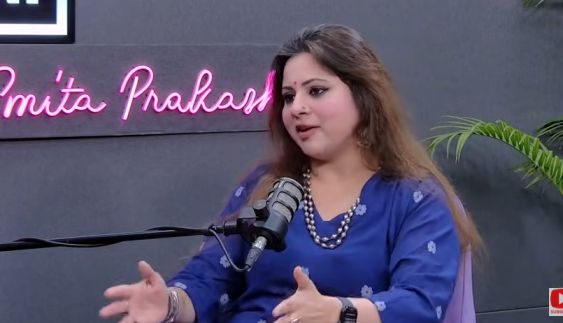
Editor’s Notes: In this episode of the ANI Podcast, host Smita Prakash sits down with geopolitical expert Dr. Swasti Rao to analyze the explosive escalation of conflict in West Asia following coordinated U.S. and Israeli strikes on Iran. The discussion explores the strategic objectives of these operations, the “rogue” retaliatory strikes by the IRGC on neighboring Gulf nations, and the deep-seated resilience of the Iranian political structure. Dr. Rao also examines the broader consequences for global energy security and the specific challenges facing the millions of Indian nationals residing in the region. This conversation provides a vital deconstruction of the rapidly shifting military and diplomatic dynamics defining a new era of regional instability. (March 2, 2026)
TRANSCRIPT:
Introduction
SMITA PRAKASH: Namaste Jai Hind. You’re watching or listening to another edition of the ANI podcast with Smita Prakash. West Asia is in a state of turmoil. On February 28, coordinated American and Israeli strikes on Iran, including deep inside Iranian territory, decapitating its top leadership, triggered a wider regional conflict. Iran has responded with missile and drone attacks against Israel and the US bases and civilian targets in West Asia. Global aviation has been disrupted and the entire region has been set into turmoil. Global energy supply is under threat.
I have in the studio Dr. Swasti Rao, an Associate Professor and Associate Dean Global Initiatives at the OP Jindal Global University, India. She’s a geopolitical expert, commentator and author. We are recording this episode on 2nd of March, stating this because events are moving so rapidly that it might seem outdated by the time we air this.
Thank you Professor Rao for being part of the podcast. When I thought that I have to get an expert here to explain to our viewers and listeners, not like TV channels, though of course they are also doing their duty. But here I just wanted somebody to deconstruct what is happening. And I thought of you because you have the academic zeal of pursuing everything with great detail, but you also understand media. Since you teach as well as you’re part of the media, great to have you on the podcast.
DR. SWASTI RAO: Oh, thank you so much, Smita. What a pleasure to be here at your podcast. I’ve seen so many of your episodes and I really look forward to having this wonderful discussion. Not so wonderful a time, though.
Is This a Regional War?
SMITA PRAKASH: Yeah, I know. It’s so fractured. In fact, somebody at the Munich summit said it’s like destabilization on signal, because everything is just blowing up. But what we are seeing right now in the past week — are we truly seeing a regional war in West Asia? Would you categorize this as a war now?
DR. SWASTI RAO: Oh yes, it is absolutely a war. And it is not something which sort of dropped like an apple on Newton’s head, right? It was in the making. Ever since the 2023 attack on Israel happened, which was the heinous attack perpetrated by Hamas. If you’ve noticed the unfolding of events, how Israel has gone after all the proxies, then the worst case scenario — the 12-day war, the direct war between Iran and Israel — happened. And after that, in 2025, as protesters took to streets, of course there is so much more to that detail.
But ever since, I think Bibi Netanyahu has to finish it somehow. And I am not very hopeful on whether this is going to really lead to the regime change that everybody is talking about. Because for that you really have to understand how the IRGC has been put together. What is this entire structure — this very opaque, mysterious structure that the Iranians have been able to put together after 1979? They have undergone their own sort of phases of consolidation. So I’m not sure if we really have that kind of a regime change in a manner in which people expect.
But for sure, this force projection is unprecedented, both by the United States and by Israel. And as we are talking, it is expanding — it has already spread to other parts. Right now you have almost all GCC countries which have been hit by Iran. Now the question is why? And of course we can talk about that, but the entire region is sucked into war. The safe havens of Abu Dhabi, of Dubai, of Qatar, of Doha — all of them are sucked into war. So it is a very serious thing.
Regime Change and the GCC
SMITA PRAKASH: Okay, two points which I want to ask you, which you spoke about. One is regime change. Whose objective was it? Since it was a joint operation by Israel and the US in attacking Iran and decapitating its leadership — did both of them have that one goal of regime change, or did Israel have a much more ambitious goal? That’s one. And the second point is about involving the entire GCC in this conflict. Did America and Israel not realize, did they not war game, that Iran is going to get all of them involved — all the GCC countries?
DR. SWASTI RAO: Yeah. So this is about reading into the minds of how the strategy has been put together. Now, if you’ve been noticing, Smita, of course there’s just so much information and misinformation and disinformation on social media. Of course, Donald Trump is not telling us directly what he has in mind, but there is a certain pattern to what is happening now.
If you remember, during Trump’s first term, when the assassination of Qasim Soleimani happened — who was the IRGC commander then — the US did not have something like a regime change in mind. The topmost leader, the Ayatollah, wasn’t really touched then. But things have started to change from the June 2025 war, which was called Operation Rising Lion.
They were not able to do it, because I’m not sure if during the 12-day war the Americans wanted a regime change — clearly, something like killing the Ayatollah Khomeini and putting somebody else. I don’t think it was really on the cards back then. What was on the cards was the taking out of nuclear facilities at Fordow. So the B2 bombers were deployed with a very specific military objective, and that military objective was completed. And then they all came back. So if you remember back then, there was no such thing as American lives being lost or equipment being damaged.
This time around, when Donald Trump came out with his first address after the operation was started, he said very clearly that this could be for the longer haul and there will be loss of equipment and men, which happens in war — which means that they are ready for a longer war. The question is how long. And I think this time around, he also said it very clearly — he has not left anything to the imagination — that they are looking at a regime change. But what is going to be the modus operandi for it?
So if they are going to be leaving the regime change to the people of Iran, who of course have taken to the streets, especially from April — and that also has a background, because the Iranian regime has hollowed out the country economically so much. On the one hand, they have the pretext of sanctions, decades of sanctions, but on the other hand, it’s also about all the money going to the elites.
SMITA PRAKASH: Yeah, right.
DR. SWASTI RAO: And all the money, the laundering, all of that happening, and all the smuggling that is happening — there’s a shadow economy running there. So long story short, this time around, if they are thinking of leaving it to the people of Iran — those are the people that are living within that system, and you are asking them to change the very system that they are operating in. So it will not be possible unless there is a major push from the outside. The people of Iran can’t do it. If Donald Trump is thinking that he will build it to a point where the people will be able to take over, it is not going to happen in that sense.
Iran’s Leadership Structure and Resilience
SMITA PRAKASH: Because remember that the person that they had selected, he also got—
DR. SWASTI RAO: You mean in the interim. Yeah, because see, in the interim, there is a process in Iran — a process of putting together the next Ayatollah. So if you remember the original Ayatollah from 1979, he died in 1989. So the current one, Khamenei, is the one that was selected back then. Khamenei had already selected three. Right. Now we know it. He was hiding in a bunker, wherever, because he probably understood that this is going to go on.
So right now, the gentleman who took over was not the one elected by Khamenei. He was somebody who was put in place for the interim, because there is a process by which they will put together the next Ayatollah. But the point is that they are also very wary of that person being killed. So they are not really wanting to come out with those cards.
But what I wanted to stress upon earlier, Smita, was that there is also a tendency to make a very superficial kind of comparison — with how Assad was sort of ousted, or how Gaddafi was killed in Libya, or how Saddam Hussein was taken out in 2003. Those were extremely personalized regimes. The Iranian regime is not a personalized regime. They have a very, very robust, dense, opaque structure where they have factored in all of these things. So in that sense, they have a lot of resilience, a lot of shock absorbers inside.
It’s just that it’s the first ever time that we are having to discuss it so much in India. But they have also consolidated their shock absorption capabilities over the years, slowly and steadily. So it is not going to be easy.
Israel’s Objectives: Beyond Regime Change
SMITA PRAKASH: So if regime change was an objective of the US — obviously the Israelis have a larger objective. It’s not just regime change. They want to completely finish off the nuclear capability. What about their conventional warfare? They want to finish that too. So what would be the Israeli objective in Iran?
DR. SWASTI RAO: Right.
So very quickly — of course, it’s the Israelis that are pushing the Americans for it. Because every single American president in the history of America has supported Israel, but only Donald Trump has gone to the extent of deploying capabilities. The 12-day war itself was unprecedented in the manner in which the American president co-deployed capabilities alongside Israel. And this time around, it’s the Israelis that are pushing the Americans for it.
Israelis, left to themselves, did not have the capability to really get into a war of attrition. See, it is very easy — because they have a very, very robust intelligence framework. Mossad, as you know, knows where the Ayatollahs are sleeping, where they are hiding, where they’re eating. And this applies not just to the regime — this applies to the Hamas leaders, this applies to Hezbollah leaders. What has happened in the last two, three years? The question is: does Israel have the capability to really get into a war of attrition? And that is something where you see a degradation of Israeli capabilities as well, because they’ve been fighting relentlessly since October 2023. So how do you expect Israel’s war machinery to be able to withstand a war of grinding attrition? That is where they need the United States.
But coming to the question that you asked more directly — of course, for Israelis, it’s not just regime change. Israelis want to decapitate not just the nuclear program, which is a strict no-no anyway, but also the ballistic missile capabilities that Iran is supposed to have. Nobody knows the real numbers. But if you look at a platform such as Iran Watch, or Middle East Eye, and these platforms that really get into the nitty-gritty of what is happening in the region, they say Iran has more than 3,000 ballistic missiles. Many of them are capable of being nuclear-tipped, which is a real fear. And although they have sold hundreds of those ballistic missiles to Russia and also to other countries, they are still left with thousands of them. Many of them were taken out in the 12-day war last year, but this still leaves them with thousands.
How Long Will This Campaign Last?
SMITA PRAKASH: Donald Trump said that this campaign will go on for another couple of weeks. Is that because they still have the capacity?
DR. SWASTI RAO: Yeah, so for that, Smita, I think it’ll really help — because I see so much discussion happening on what really is going to happen. I think it was yesterday that the Wall Street Journal came out with a very interesting article that said: what about America’s ability to really have that much firepower? They said that America has serious challenges also. So how do you expect the biggest military superpower in the world — even though it is under Donald Trump right now, and he’s not really known to be a strategic genius — how do you expect that America would have gone into this war without factoring in the fact that they really don’t have that kind of magazine depth?
SMITA PRAKASH: They left the dump out there. The ammo dump has been left in Iran by the Americans. So they would have some inventory knowledge about—
The US-Israel Military Strategy: Targeting Iran’s Eyes and Ears
DR. SWASTI RAO: As far as I see how the Americans and the Israelis have planned this out, I think there is a pattern and it is a very effective pattern. They have targeted, which means that they know their targets. Then comes how will they go about that precision bombing.
There are some layers. You can use a precision platform along with precision weapons — that’s one part of looking at it. The second layer is where you have precision platforms but not so precise weapons, or say dumb weapons that don’t have really that smart capabilities. And the third level is when you have conventional weapons, which is like dumb weapons and dumb platforms.
What the Americans are doing right now, along with the Israelis, is that they are using precise weapons and precise bombs, which means that they are taking out the Iranian radars, they are taking out Iranian EWS capabilities, etc. In military terms, this is how it is said. In common terms, if I can simplify it, it basically means taking out their eyes and ears.
Once they take out their eyes and ears — blind khadiya, deaf khadiya — then they go in targeting singularly the inventories, the ballistic missile facilities, etc. Because then Iran doesn’t have anything to protect itself with. And if you look closely, they already have achieved air superiority. As we are talking, it was yesterday night when the Americans came out and said that they have achieved complete air superiority, so they can target and strike anywhere inside Iran.
The question is that in that process they are also having to face the Iranian drones and the Iranian missiles. And many of them are not so dumb. Many of them are also fairly precise. Many of them are not precise — they are falling wherever, everywhere. So that is also causing damage there.
But I think in the first phase, in the first three, four days, they are going to be going all in and taking out the eyes and ears, which means really suppressing any kind of reaction from the Iranian side. Because the other part can also be carried out by dumb weapons and not so precise weapons. It’s the first part where you really need your smart weapons. And in that process, they are also having to have a lot of their own equipment loss.
SMITA PRAKASH: So their aircraft are not flying in the first couple of days?
DR. SWASTI RAO: Of course, everything is flying. The aircrafts have —
SMITA PRAKASH: It’s more ballistic missiles from the Iranians.
DR. SWASTI RAO: Oh, from the Iranian side — they don’t have as many aircraft flying, only because of this.
SMITA PRAKASH: So they’re basically doing missiles and drones. It’s a cheaper way of fighting the war, of course.
DR. SWASTI RAO: That is what I said. Just to conclude — the first part of my answer was that initially this is the capacity that they can withstand for about four to five days. Americans and the Israelis have challenges with magazine depth; they don’t have unending firepower when it comes to these smart weapons. That is how, after four to five days, you will see the nature of warfare changing a bit.
In these four to five days, you will see the Americans and the Israelis going all in. They have gone all in. And that’s why three Americans have lost their lives. It’s unprecedented. After the Afghan war, it’s the first time —
SMITA PRAKASH: They’re seeing war casualties.
DR. SWASTI RAO: War casualties — something that Donald Trump said they were prepared for. So they go all in, and then we will see it changing a little bit.
Gulf States Left Exposed: The GCC’s Security Dilemma
SMITA PRAKASH: War casualties during the first year — or just about the end of the first year — of a president who said “no wars.” I don’t know how that is playing with his MAGA crowd. But anyway, that’s a separate thing.
Tell me — what one is reading in social media posts, and from some of the Saudi experts who have gone on channels to say, is that: “We got left out. We opened these bases. Many other countries, the GCC countries, are saying that America has bases in our countries. There are military dumps, ammo dumps, soldiers on the ground in our countries. They are supposed to protect us. Instead, what happened was that they left their bases and we became targets — sitting ducks of the Iranians — and we had no skin in the game.”
Many of the countries like Kuwait, Jordan, and even Turkey today have also been attacked. The entire GCC is in a state of turmoil. Did they not war game this?
DR. SWASTI RAO: Well, originally none of these countries in the Gulf have any stakes in further destabilizing the region. Let’s just understand that very well. Whether you look at the Emirati business model or the Qatari business model, they are all different in their own ways. Sitting in New Delhi, everything looks the same sometimes — especially if you’re trying to explain it to an audience who are not very familiar with Gulf politics.
SMITA PRAKASH: If you see it as a consolidated whole, which it is not.
DR. SWASTI RAO: Which, of course, it is not. It is not a monolith. It definitely is not just this one binary called the Shia-Sunni divide.
SMITA PRAKASH: Of course it’s not a NATO — it’s not a military alliance.
DR. SWASTI RAO: It’s neither a military alliance, nor, society-wise, are they the same. Their society is very different. Their geopolitical approach is different. And part of this difference we came to know only when we saw that there was a serious rift between Saudi Arabia and UAE, which also went on to show that these two — the golden couple of the Gulf — had their own problems that perhaps we did not know of.
The fact I’m trying to underscore here is that it is not a monolith at all. They have different ways of looking at geopolitics, their relationship with the US, their relationship with Israel, etc. For example, UAE and Israel now have more and more convergence. They have already normalized their ties back from Trump 1.0 — the Abraham Accords normalization. But Saudi Arabia and Israel have not normalized their ties. They were in the process of normalizing their ties when the Hamas attack happened. And now, of course, everything hinges on the Palestinian state question.
But coming back — what I wish to explain here is that the Gulf countries have no interest in seeing further destabilization in the region. They already have a lot of destabilization. Look at Syria — right after Assad fell, Turkey came and started dominating the northern part, Israel dominates the southern part, and there are so many other militia groups operating there. Lebanon right now is destabilized because Hezbollah outfits are there, and Hezbollah has also declared that they joined the war. Israelis have been bombing Lebanon for the last one year. And America is also bombing Shia militias in Iraq.
There is already so much instability in the region. Why would they want more instability? Their business model wants stability. Their business model wants network-centric convergences. That is how I2U2 came out of it. That’s how IMEC came out of it. Because they understood that they have to step out of this spiral and cycle of violence.
SMITA PRAKASH: Body blow to both IMEC and I2U2.
DR. SWASTI RAO: For the time being, it’s over. They’ve been bombing Chabahar, so from our perspective, of course, it’s a gone case.
Gulf States and the Proxy War: Who Wanted Iran Finished?
But just coming back — the question was on whether the Gulf states wanted to get into this. What the Gulf states understand is that the axis of proxies is destabilizing for the entire region. Nobody wants to get their hands dirty. Everybody wants the Israelis to do the dirty job or the Americans to do the dirty job, as long as it’s not coming to their borders.
There was one little slip — last year, when Israel attacked Hamas leaders that were hiding in Qatar, which led to a massive uproar in the region. The Qataris said, “How are we going to depend on you at all when you are allowing Israel to do something like this?” So as long as it was not really affecting their borders, their territories, their investments, they were like, “You do it, we look the other side.”
But I think the manner in which things have been escalating, and the manner in which things have been going — IRGC is almost going rogue in terms of perpetrating violence here and there — they do understand that Bibi is not going to stop till the time he reaches a particular point that can roughly be called a culmination point, some kind of a closure. They have understood it well.
Now, there is intelligence that behind the scenes they were trying — some sections are saying that they were actually egging the Americans and the Israelis to finish it.
SMITA PRAKASH: Saudi was.
DR. SWASTI RAO: Yeah, Saudi was — to finish it off. Although diplomatically they were saying that they don’t have anything to do with it. But look at Oman —
SMITA PRAKASH: Whose money to fund his vanity projects if oil comes down so low? So he wants the oil.
DR. SWASTI RAO: Yeah, that’s one thing. But also, look at Oman — Oman really invested in a lot of this mediation. We know because when the Omanis were here in town recently, there was an India-Oman dialogue happening in New Delhi, and the Omanis were very mindful of not letting this get out of hand. They really invested. But Iran landed up hitting Oman as well.
SMITA PRAKASH: That was, I think, towards the third day.
DR. SWASTI RAO: Yeah, towards the third day. Now Iran is saying Oman —
SMITA PRAKASH: And then yesterday, or this morning, it was Turkey.
DR. SWASTI RAO: They have hit almost everybody. They have made an enemy out of everybody. And if you ask me, this is strategic stupidity and absurdity. Why would you want to make an enemy out of everyone? And wouldn’t it be better for them to drive a wedge between themselves and the Americans, saying, “Listen, we are not targeting you, but we are targeting these evil Americans”? But they didn’t do it.
One plausible explanation is that they are now trying to bring the war to their populations and tell them that your leaders have failed you by siding with the Americans and siding with the Zionists. So it’s also somewhere delegitimizing the regimes that are operating in these very stable Gulf countries.
SMITA PRAKASH: Can it work?
DR. SWASTI RAO: I’m saying this could be one plausible explanation.
SMITA PRAKASH: I was asking you.
DR. SWASTI RAO: I don’t think so.
SMITA PRAKASH: Not with the —
DR. SWASTI RAO: I don’t think so. Not with the population. You know why? Because Iran — the manner in which they have killed, they have been on a rampage. Between December 2025, when the protests broke out in the bazaar — and the bazaar is so significant because it represents the merchant class in Iran — until this particular Operation Epic Fury started on 28 February, between end of December and end of February, they’ve killed more than 40,000 of their own people. They have not left anything to anybody’s imagination.
It is a hollowed-out regime. Every time, the power centers are so diverse. And looking at IRGC — IRGC is not just about securitizing the state. IRGC is also about defending the revolution.
Iran’s Internal Power Structure and the IRGC
SMITA PRAKASH: So is IRGC doing what it’s doing now with no command structure in place? Is it true that they’ve all been — that they war-gamed it to such an extent that if the top leadership is taken out, they have the ability and they have the wherewithal and they have the sanction to just attack in whichever manner they want?
DR. SWASTI RAO: So for that, of course we have to understand a little bit better how the Iranian military establishment is divided. So under the Ayatollah, under the supreme leader, one part is for elected representatives, right, that don’t carry any weight because end of the day you have to suck up to the Ayatollahs. And there is a very good example there because you remember this guy who also got killed, by the way — Muhammad, this guy —
SMITA PRAKASH: The UN speech guy.
DR. SWASTI RAO: Yeah. So Ahmadinejad — if you remember when he became president, when he was elected president — he started privatizing a lot of these public entities in Iran and he privatized them and he gave it to IRGC. And there’s another entity there called Bunyad. I’ll tell you what is the difference.
So basically they started taking out all the public entities, giving them there, and they gave them, I think, billions of dollars worth of contracts to them. Which basically meant that the merchant class and the middle class became more and more hollowed out.
Now when the next guy came, which was Hassan Rouhani, he tried to mend all the damage that was perpetrated by Ahmadinejad, because Ahmadinejad was a hardliner. So he tried to mend ties with the West. He came in 2013 and in 2015 he signed the JCPOA. He negotiated the JCPOA. Of course, later on it went out of the window. But then as he was doing all that, it was Khamenei who intervened and said that you can’t do it because you’re making it sort of anti-IRGC.
So long story short, the people suffer because of all this. The power centers, whether it’s IRGC or the clerical establishment, they are the ones that are really getting all the money, all the natural wealth that Iran has — which it has so much of. Only these guys are the beneficiaries.
And by the way, there’s something very interesting you should know about the IRGC elite. When I was saying a couple of minutes ago that if you look at the Middle Eastern model, these countries want stability, they want business — the IRGC elite have been laundering their money through a lot of financial networks in Abu Dhabi. So Abu Dhabi in that sense has been playing this insurance policy: fine, you are there with the Israelis, because you know that these guys are a pain for everyone. But at the same time you are also trying to develop stakes so that tomorrow when things change — let’s say if there is a post-regime change and the nature of the IRGC changes — you have enough clout and strategic depth and financial depth so that you remain relevant.
SMITA PRAKASH: Then why is the IRGC attacking Abu Dhabi? Ras Al Khaimah?
The IRGC Going Rogue
DR. SWASTI RAO: Absolutely. That is the whole thing. They should not have done it. I do not buy this argument, this plausible explanation that they’re doing it because they want to delegitimize these leaders in the eyes of their people. No, I think they have really made a strategic blunder. And it also shows to me that they are really driven to the wall and they are very dangerous at this stage.
You may have heard of this term — the Mosaic defense doctrine — that they will unravel, which basically means that in the absence of the topmost control, the topmost guy withdraws. For the IRGC, they were always directly reporting anyway to the supreme leader. So with the supreme leader out and the interim supreme leader also out, right now nobody knows. And by the way, their commander has also been taken out.
That is why when you look at the Americans and the Israelis this time around, you see that they have directly gone after the top brass — because this is what in the 12-Day War they did not do. So they have directly gone after the top brass, they have directly taken out all these people. So there is a danger of these guys going rogue.
And if you look at the elected government — the foreign minister, Araghchi, and all these people — if you look at their statements, what are those statements saying? Their statements are saying that, listen, they are no longer in our control. They are not meant to be in that control. Because in Iran there are different verticals. One is an elected body which is always subservient to IRGC and to the Ayatollahs. Then you have the clerics, which have a lot of clout, but the clerics are given a different task altogether. And then you have the IRGC. IRGC is anyway reporting directly to the —
SMITA PRAKASH: Any of you who’ve seen Fauda and Tehran would know how — yeah, the IRGC is all in all.
Iran’s Resilience and History of Consolidation
DR. SWASTI RAO: So basically, yes, there is a danger. But like I said, in the many years of their existence — they’ve been in power for 47 years. In 47 years, remember, the first war they fought was with Iraq, in 1980. 1979 is the revolution. 1980, they get attacked — not by Westerners, they get attacked by Saddam Hussein. That war lasts for eight years. Obviously there was internal consolidation and changes and everything. That ended in 1988. 1989 was when the original Khomeini was replaced — well, he died, basically. So he was succeeded by Khamenei.
And then over the years, if you remember 2009, there was another Green Revolution — all students taking to the streets because the elections were rigged, etc. So in all these years they have gone through their own phases of consolidation, of wars, and they have created — and that’s what I’ve been repeating — they have created a system that can really absorb a lot of shocks. The only question is that for those —
SMITA PRAKASH: — who don’t understand that Iran has a fantastic staying capacity for pain. The whole Shia mentality of martyrdom and suffering and afterlife — the Shia element to that, all the wars that they have fought, whether the first Gulf War, the second one — they have that ability to stay on for a long war. So when the Americans say that this is two weeks, four weeks, one really can’t say how many weeks it will be.
DR. SWASTI RAO: Yes and no, because like I said, the Israelis have tried this even earlier, the Americans have tried this earlier. But this time around I do see that the pattern is more discernible. I am not really convinced that if we are expecting a similar kind of regime change that we saw in 2003 in Iraq, or in 2011 in Libya, or in Venezuela with Maduro — those models are not going to work.
The Question of Regime Change
SMITA PRAKASH: Let’s see — the Iranian model itself, when they brought in the Ayatollah, the first Ayatollah flew him in when the Shah went away. So will they bring in —
DR. SWASTI RAO: I honestly don’t buy it.
SMITA PRAKASH: He’s trying a lot.
DR. SWASTI RAO: Yes, he’s trying a lot. And in fact if you look, he’s sort of employed himself as the savior of the Iranian people. But that’s the whole tragedy, Smita. See, the thing is that if you look at Iran, anybody who has been secular, anybody who was anti-regime, has already left Iran. They are already living outside of Iran. Shah himself has been living in the US for most of the time, and now I think he’s either in Europe or in the US. So he’s not there.
So what you’re expecting is that the Iranian people who don’t have the money, who don’t have a future — and that is why you also saw that in the interim, right before America really started Operation Epic Fury, when this entire thing started in December, you saw so many Iranian youngsters actually killing themselves out of frustration that Donald Trump said he would intervene and he’s not intervening.
But the whole question is — this is like looking for a black cat in a dark room. Anybody who is anti-regime has left Iran. They have maybe some of their far-flung families still remaining here and there.
If you look at the minorities, by the way, Iran is also a very, very diverse nation. So that’s another strategy that Israel sometimes tries — for example, they have an Azeri border, so they try to sort of — yeah, the Kurdish question there, the Azeri question there, the Baloch question. So you start sort of an internal kind of disturbance.
But the long and short is that in the 47 years that the regime has survived, and the manner in which IRGC has consolidated power — they also have an official military, by the way. It’s called Artesh.
SMITA PRAKASH: Nobody knows the name.
DR. SWASTI RAO: Exactly. So they have a formal military, but everything is consolidated in the hands of the IRGC. And IRGC is not just about security and defense. It is about defending the political and strategic rationale of the revolution. So they are working with a very different, brainwashed sort of outlook.
And that is why so far you see so many people saying we have not really seen any defections. And one more very, very important thing that people tend to miss when we are discussing regime change — in 1979, a lot of the bureaucracy that existed within Iran was not all purged. Much of that was also absorbed. So what I’m trying to underscore here is that the system they have tried to put together, and which has matured over 47 years, is made with these shock absorbers here and there. And that is why finding defections is so difficult. That is why you have not seen any major defections.
People are getting killed. But as you said, martyrdom is such a value in that culture. I was just speaking to one of my Shia colleagues and friends — I obviously can’t take their names — but what they said was that what the Ayatollahs have done is perpetrate a massive influence operation on the Shias of the world, making them believe as if they are the leaders of the Shia community.
There are so many sects within Shias. These guys came in 1979 — they did not exist before 1979. The Shias have existed, of course, because they trace the lineage back to the Prophet’s daughter and son-in-law, etc. So what he’s saying is that it’s itself a very, very problematic thing — that he’s the spiritual leader and so on. But of course people have bought it. And the Shia people of the other Gulf states, they also buy it.
SMITA PRAKASH: Even in India they believe.
DR. SWASTI RAO: Even in India people were crying. And for what? It doesn’t make geopolitical sense at all. This guy was always very vitriolic on Kashmir. I mean, come on — of course we had interests, of course we had convergences, but we also had divergences, and Kashmir is a very good example of that. Secondly, he is in no way the leader of the Shia world. But it’s just that because he sold the story for decades that he’s the one standing against the wicked imperialists and the Zionists, people have sort of bought that story.
SMITA PRAKASH: The Ismailis and all don’t do it. No, they don’t.
DR. SWASTI RAO: The Ismailis don’t. The Aga Khanis don’t. The Bohras don’t. So many of them don’t. I mean, I’m no scholar of Islamic history, but I definitely know these people personally, and they say no, there is no such thing. So it’s an influence operation.
Casualties and the Scale of Violence
SMITA PRAKASH: So you were talking about — nobody has the real numbers — whether 10,000, 20,000, 30,000 people were killed by the IRGC on the streets.
DR. SWASTI RAO: You mean just from December?
The GCC’s Paralysis and Iran’s Strategic Miscalculations
SMITA PRAKASH: So how many were killed? Nobody really knows the exact number.
DR. SWASTI RAO: We don’t know the real numbers.
SMITA PRAKASH: If he was responsible, if the Ayatollah was responsible for the death of so many people, then why are there equally hundreds of thousands of people on the streets mourning his death then?
DR. SWASTI RAO: Yeah, because like I said, it’s probably some kind of legitimacy that they’ve also given. Yes, exactly. I wouldn’t deny that. There are people celebrating the death of Khamenei. I’m sorry, Khamenei. Okay. Khomeini is different — Khomeini was part one, Khamenei is part two. Yes. So the current one — just as there are people all over the region, in Syria, and of course in the West — of course they are celebrating.
SMITA PRAKASH: No, I’m saying within Iran.
DR. SWASTI RAO: Yeah, yeah, yeah. In Iran also there are people. I mean, that’s that thing about Isfahan. He was of Azeri descent and he’s from Isfahan. So part of that is there. And that’s what — when you are talking about a regime change and people defecting — I mean, how do you sort of explain this phenomenon? There are still people mourning.
And now what they’ve done is they declared 40 days of official mourning. So they are very clever. They have been preparing for it in their own sort of way, I would say. And I don’t think that Americans and Israelis don’t know about the complexity of it. That is why I said that, to my mind, it looks as if it’s going to be four days of precise and smart weapons and smart platforms, and then slowly we will see not so smart weapons, because Americans have a problem with replenishing their stockpiles.
SMITA PRAKASH: The GCC has still not met officially as a unit to discuss this, though right now it seems like this is the first time ever there’s such an existential threat to them — simultaneous attacks, not by the “Shaytan,” which they call “Shaytan America,” but by one of their own kind. And in spite of that, they have not got together and had a formal meeting to decide what course of action to take. Why do you think — are they still under a sense of shock?
DR. SWASTI RAO: To my mind, Smita, I think it’s the same thing — they would not want this war to expand. It is not in their interest. Those safe havens that they’ve put together, they haven’t put together for this day. So I think they are extremely wary of this war going out of hand.
The war has gotten out of hand because, if you saw in the initial few hours, the Iranians were targeting military installations — the American bases. Americans have about eight bases and some 11 or 13 access points.
SMITA PRAKASH: So a lot of presence now — fuel dumps, everything.
DR. SWASTI RAO: No five star hotels. Okay. I mean, only today — Amazon’s data center, five star hotels, even Burj Khalifa — there were airports: Kuwait airport, Dubai airport, etc. And the Strait of Hormuz. Yeah. The Strait of Hormuz is a different thing, because they will not formally close it ever — most of the oil going through is only to China. So that would be very self-defeating. But we will come to the Strait of Hormuz nonetheless.
So initially it started with military installations. They were targeting military installations, and you have to give it to the Iranians — they had the ability to simultaneously, in a horizontal fashion, at almost the same time, target from close-by regions like UAE, Kuwait, Bahrain, and then far away — Israel, Jordan — all of that is covered. So they have really targeted everywhere.
And like I said, the GCC countries, although officially they don’t have a choice — they have said that they will open their bases for the Americans to use against Iran. But like I said, they also have a population. They also want to not take it to a point where mass destruction becomes the order of the day. That’s not how they are put together. That is definitely going to create many problems for their own survival.
SMITA PRAKASH: Okay.
DR. SWASTI RAO: So I think that bit of hesitation is very, very evident. You don’t get that all-out sense — that “okay, just go and start bombing these people.” You’re not really hearing that. But I think eventually — and also, I honestly have not really seen any update where the Americans and the Israelis have jointly exercised with all these countries. I mean, individually they have a lot of equipment — most of them have Eurofighter Typhoons, Rafales, F-16s, F-35s, and everything.
But the point is, I think they will still play a defensive role. They will open all their facilities to Americans and to Israelis. Even the UK got sucked into it because the Iranians did another absurd thing by targeting Cyprus, which is in a completely different direction — towards the Mediterranean. To my mind, it is worrisome because it shows that they are in a panic mode, and you do see a lack of that vertical authority controlling them. So they have become more rogue in that sense, and uncontrolled.
Iran’s Overreach: Targeting Turkey, Cyprus, and Beyond
SMITA PRAKASH: It’s a very strategic projection going right up to Cyprus, attacking Turkey simultaneously. You’re talking about Europe now. You’re not talking about just the Gulf.
DR. SWASTI RAO: That is the whole thing. That is why you have statements from the French, from the Germans — everybody. They can invoke Article 5. Yeah, but that’s the absurdity. Iran is simply stretching its resources thin. What does Iran have? Iran has thousands of ballistic missiles and thousands of drones — cheap drones. So they can inflict a lot of cost. But if their enemy opens the floodgates and has complete air superiority, it’s a matter of days.
That is why I think the next two or three days are going to be very, very crucial. We will see Iran doing more of these things basically to scare them away. Because of course Aramco and stuff like that — it’s also very strategic.
SMITA PRAKASH: I mean, that’s Saudi Arabia. And Israel would want the floodgates to open — would want a decimation of Iran’s capability, whether nuclear or conventional.
DR. SWASTI RAO: You see, I’m not sure about Saudi Arabia, frankly. You know why? Because Saudi Arabia is not as pro-Israel as UAE is. If within the GCC there is one country that is most pro-Israel right now, it is definitely UAE.
The Emiratis — Saudi Arabia, if you remember, also had the Chinese-backed normalization process happen, when the Chinese got a normalization done between Saudi Arabia and Iran, which didn’t work. And also, one more thing — it is not in the strategic calculus of the GCC countries to see a monster of Israeli superpower get entrenched in the Gulf region. It is not in their strategic calculus.
So for a long time they simply let it play out, they stayed out of it, because in some ways the proxies, even though they were destabilizing — like I said, that’s Israel’s great game. And for the other GCC countries, it was like, “All right, in some ways they are also keeping a check on Israel’s power.” Because Israel is so close to the Americans — I mean, that’s a strange reason, everybody is close to America. But there are only two people that can really play Trump like a fiddle: it’s Erdoğan and Bibi.
So as far as Bibi is concerned, it’s a special relationship. Now, I think the Gulf states understand that there is no other choice — he’s going to chase it to some sort of closure. Because his entire political career also depends on it. Israel is going to see elections in 2026.
SMITA PRAKASH: His name in history.
DR. SWASTI RAO: Oh, yeah, absolutely. Until about 2025, in Israeli politics, there was a lot of discussion on how he’s going to play on normalization with the two largest Muslim nations — one was Saudi Arabia and the other was Indonesia. But around the 12-Day War, it was already off the table because they said, “Okay, you have to first give Palestine its statehood. Only then do we normalize.” That’s definitely not on Israeli cards.
So now it is just about finishing this war, or at least, like I said, taking it to a level where you either do a regime change, or you stop at the penultimate level where you decapitate the regime to such an extent that it is no longer a threat, and then you wait for a democratic transition to happen. Because yes, Iran is a country of revolutions too. Everybody talks about the 1979 revolution — 1905 also saw a revolution. Iran has been a country of revolutions.
The Pakistan Factor and Afghanistan’s Role
SMITA PRAKASH: You spoke about Netanyahu and Erdoğan. Now, just 12 hours before recording this, the EU said that Turkey might step up and play the role of a mediator. Erdoğan had offered — and within six to ten hours of that statement, Iran goes and attacks Turkey. So how do you play the role of a mediator? How do you talk about it? Your own people are going to say, “What the hell is this? We are being attacked.” So I just cannot figure out what game planning Iran is doing by attacking Turkey, attacking Saudi Arabia, and especially Oman.
DR. SWASTI RAO: See, that’s what I wanted to say. With Saudi Arabia, they still have some axe to grind because Saudi Arabia sides with the US. But as far as Oman — I have gone on record saying several times that the one truly neutral country in the Gulf is actually Oman. It’s only now that you see the Emiratis tilting a lot towards Israel and towards India. But there was a time when the Emiratis also had a very close relationship with Pakistan. And we must discuss the Pakistan factor — also bring in some entertainment — because what happened to their big…
SMITA PRAKASH: What happened there? The first casualty of war were these Pakistanis who died.
DR. SWASTI RAO: Yeah, yeah, yeah. So they also got caught up, as they always do, when they started targeting the consulates here and there. But coming back — that’s the whole point, that is why I call it strategic absurdity. You are basically making sure that there is literally no one among your neighbors or among anybody that really wants to keep a check on the West, to be on your side, because you’re going out and attacking them. And that is also showing that maybe the decision is no longer taken by the mature guys in the room in Iran. It’s probably really gone to that mosaic doctrine, which I want to get to.
SMITA PRAKASH: I want to get to China and Russia also. But first, let’s get to Pakistan, as you said, because there was one view that the reason why Afghanistan and Pakistan got into this skirmish was that Afghanistan was made to get busy with Pakistan — so that in the case of Iran being attacked, or Iran attacking, forces from Afghanistan who had said, “If Iran is attacked, we will be with Iran” — now Afghanistan has got busy with Pakistan. So the Baloch in Afghanistan are not helping the Iranians because they are fighting out here.
And of course, the Pakistanis would love it that we are talking about West Asia and Pakistan in the same breath, because they have this aspiration of…
DR. SWASTI RAO: Yeah, that we are also having this very Arab…
SMITA PRAKASH: …lineage. So they would love it that we are discussing them. But we are only discussing them because they are such non-players in this whole scheme.
Today, while we were discussing this and while I was making the points, social media erupted with Afghans accusing Pakistan of giving their airfields and saying that they saw aircraft flying. So they’ve given their airfields. They are accusing Pakistan that on the one hand, common Pakistanis are entering the consulates of America, calling them “Shaytan,” dying in the protests — and on the other hand, their rulers are giving their airfields. Not confirmed as yet whether that happened.
Pakistan’s Role and Limitations in Gulf Security
DR. SWASTI RAO: But so that’s the whole point of Pakistan’s status. They have always punched above their weight, right? I mean, this is Pakistan punching above the weight. The entire thing of having inking a security pact with Saudi Arabia, giving them some sort of a nuclear umbrella, you know, saying stuff like very filmy stuff like “we’ll come to your rescue and we’ll protect you if you are under attack.” I mean, today they are under attack.
So even back then when this entire thing had happened, I said, “Listen, don’t buy the optics of Pakistan really signing something so grand with Saudi Arabia. This is not going to see the light of the day.”
I think Pakistan should be studied for other reasons that I keep saying — how Pakistan has sort of gotten into the defense industry lines, like how Pakistani pilots are flying the Qatari jets, etc. How they have sort of become a revolving door between Turkey on the one hand, China on the other hand, Azerbaijan on the other hand, and also this entire region, the Gulf region. So that is something that makes Pakistan an interesting case study.
I don’t think Pakistan has any kind of ability to really extend their nuclear umbrella to Saudi Arabia or their protection, because Saudi Arabia is very much under attack right now and Pakistan has only been able to do lip service. So I don’t think it was ever meant to be taken seriously. It’s just that they’ve always punched above the waist.
SMITA PRAKASH: So they’re not the net security provider to any country?
DR. SWASTI RAO: No, no, no, I don’t think they can be a net security provider. If you look at their doctrines, they also have a concept of net security partners, net security provider. In their collaboration with the CMF-led operations, etc., they have also somewhere seized some drugs and boards and some piracy stuff like that they have done. But they simply don’t have the ability to really be a net security provider or a partner.
SMITA PRAKASH: But the aircraft are there?
DR. SWASTI RAO: No.
SMITA PRAKASH: So that aircraft can be sent across. Why not?
DR. SWASTI RAO: Yeah, well, I mean, that’s there, but I don’t expect Pakistan really to do anything there.
The Pakistan-Afghanistan Conflict
But coming back to the problem between Pakistan and Afghanistan now — the Pakistan and Afghanistan problem, their so-called Durand Line and all that stuff — that has been under a lot of, I would say, massive violence for months now. In fact, just tonight I’m going to be speaking to somebody — not from that region, actually he’s London-based — but he’s focusing on this entire Pakistan-Afghanistan thing to better understand what is really the end point and what is the end game, what is happening, etc.
But coming back, this is not something which was started because the Americans and the Israelis were — I mean, I find this connection a bit too far-fetched, because this has been going on with Pakistan and Afghanistan, especially under the Taliban, because the Taliban are no longer, you know, it’s not to get —
SMITA PRAKASH: Keep the Baloch busy so that they don’t go in the —
The Baloch Question: A Complex Identity
DR. SWASTI RAO: As far as the Baloch are concerned, there is a Baloch separatism, right? But the Baloch separatism also needs to be understood better because it’s like the Kurds. The Baloch are not just in Pakistan. The Baloch are also there in Afghanistan, and then there are Baloch in Iran. So if you are thinking about Baloch nationalism, they also operate differently.
The Baloch in Pakistan, for example, are very separatist by nature. But the Baloch populations in Iran are very Sunni in nature, because there they are fighting the Shia power brokers — all the clerics and everybody is Shia. So the nature is also a little different.
If we are talking about a greater Baloch, then we are talking about destabilizing these three regions for that. So that is not a very clear-cut binary, as we sometimes think of sitting in New Delhi. They have a different set of — I mean, they have a common identity, but when it comes to their bread and butter or something. And also the borders are pretty porous. So there already is a lot of smuggling happening across borders.
It’s pretty much like the Kurds, right? The Kurds are not really situated in one country — part of them are in parts of Syria, in Iraq and Turkey, here and there. Similarly, it’s the Baloch. They have their own shadow economies. They are used by the power brokers to sometimes stabilize the situation, sometimes destabilize the situation. So they are also sometimes pawns in the larger game.
So I don’t find, or I have not found, very solid links to really say with confidence that perhaps this has substance there. But having said that, whether Pakistan is going to be playing a role — no Pakistani elite, as far as the Grand Field Marshal and whatever his rank is now — I mean, I don’t know, it just keeps, he just keeps —
SMITA PRAKASH: Super Field Marshal.
DR. SWASTI RAO: Yeah, the Super Field Marshal. I don’t know what — favourite Field Marshal?
SMITA PRAKASH: I should call him a cupcake.
DR. SWASTI RAO: Yeah, so I don’t know. He would always do something to please the Americans. They have always offered themselves — “Please come and use us” — and that makes them relevant in the geopolitics of the subcontinent, etc.
SMITA PRAKASH: So they give their airfields, if they have been repaired by now.
DR. SWASTI RAO: Yeah, if they have been repaired by now. We also keep hearing that the Afghans have also targeted Rawalpindi and all. They’ve been targeted again.
SMITA PRAKASH: Do you think the Afghans have the capacity to damage an airfield in Pakistan?
Afghanistan’s Military Capabilities and the Line of Violence
DR. SWASTI RAO: Well, conventionally speaking, whatever they have — they have some leftover American weapons, they have smuggled Russian weapons, etc. — they can’t, they are not a match for the Pakistani Air Force, frankly. It would be too far-fetched. We do sort of say these things for the laughs, but they don’t have the capabilities.
And if you see, there have been so many statements coming from the Taliban, different officials, saying “Okay, we want to talk,” and this and that. But it’s a very up-in-flames region right now.
Look at all these countries sharing borders, right? From us — we share a border with Pakistan. Pakistan is at war with Afghanistan. Pakistan and Afghanistan both share a border with Iran. Iran is at war with the rest of the Gulf countries. So it’s absolutely one straight line of violence.
To my mind, I think what we really need to worry about is how the radical elements — what kind of a free run would the radical elements get if this were to really go out of hand, if this really were to get uncontrolled and escalate in a manner in which we have not really predicted. Because right now we are just looking at: is there going to be a regime change? Is there going to be something close to a regime change? But if it’s this kind of instability —
SMITA PRAKASH: Mini conflicts, quasi conflicts, proxy conflicts —
DR. SWASTI RAO: Always, always frozen conflicts, right?
Israel’s Strategic Depth and the Azerbaijan Connection
I mean, just this morning I was reading some analysis of how the Israelis — because the Israelis are also desperate to finish it, right? I just told you that for Bibi Netanyahu, this is going to be the legacy that he’s going to leave behind. This is going to be the legacy of his life. So even for him, he might again do something from the Azeri border, because yes, the Israelis have capabilities at the Azeri border.
Israel and Azerbaijan are also very close, because it’s not just about energy security that Azerbaijan provides to Israel. Israel also sells their drones and their Iron Dome and stuff like that to Azerbaijan. So they also have a different relationship. And why? Because they want strategic depth in Iran. Remember, Israel and Iran are very, very far apart — you have the entire Gulf region spreading in between. That is why they maintain that relationship with Azerbaijan, because they want strategic depth.
India’s Role: Modi’s Visit and the Question of Taking Sides
SMITA PRAKASH: Okay, so let me get to India. What do you have to say to Indian media commentary saying that Prime Minister Modi going there delayed the action — otherwise this action could have been taken a week earlier — and that maybe Prime Minister Modi discussed this issue with Bibi Netanyahu before the attack happened. How do you see that?
DR. SWASTI RAO: Well, I wish I was in that room. But okay, two things, right? I don’t think it would be very strange for two leaders to probably discuss the security situation in a particular region. So to the second part of your question, I don’t find it very strange. Why would they not discuss? Of course, there is a sizable Indian diaspora in the Gulf — there are like 8 or 9 million people, 4 million alone live in UAE.
SMITA PRAKASH: Part of this conflict.
DR. SWASTI RAO: Yeah, yeah. So why would they not discuss something? I’m not sure whether it was really the main course of the conversation or whether it was discussed.
But to the first part — that it was delayed for the time the Prime Minister was there — I think if I understand the American and Israeli thing better, I think they had the capabilities, they had already worked out the plans. They had already worked out the scenarios: “This happens as the scenario, this is what we will target, this is how we prepare for a war of attrition,” etc.
I think the make-or-break was them getting intelligence, because they were getting intelligence 24/7 and they wanted to have most of these people together in one place, in one spot. And when it was confirmed that most of these guys are going to be in one spot, that is when they just came. Because remember, Khamenei was taken out in the first strike. It was the first one.
So I honestly am not sure if it was — maybe it also somewhere worked in there. It is also very unlikely that Israel would get into something like this if the Indian Prime Minister is visiting. Israel would love to have the Indian Prime Minister going to Israel. I think it is very good also for picking sides — because I think, yes, this time, not in the manner in which we are used to looking at it from a Western perspective, that you pick sides so you really go and sign a defense agreement or you become a —
SMITA PRAKASH: — formal ally, being silent on one issue.
India’s Strategic Equities and the Chabahar Question
DR. SWASTI RAO: And I have seen that, yes, India has — I think it is also very clear that the manner in which we sort of exited Chabahar, and the manner in which our latest budget did not have any allocations for Chabahar either, it is not, I would say, the best-case scenario for India.
I myself have argued in my pieces that from India’s perspective it doesn’t make sense to get sucked into these wars. We are not a combatant there, and it doesn’t make sense. We have a lot of equities. India is not a small country surrounded in a very militarized environment. India is a regional superpower, and also with very global ambitions, and our equities are all over the place.
So I think it doesn’t make sense for India, and I don’t think India is going to get sucked into the war in any sense. But as far as taking sides — to the extent that this is something new — that is why so many people in India are actually quite frustrated with the fact that we have not said anything about the death of Khamenei so far. We have not said anything about what has happened.
India’s Economic Interests and the Gulf Crisis
SMITA PRAKASH: If memory serves me right, even in the earlier Gulf wars we walked a very razor’s edge kind of a path because we didn’t have 8 million there at that stage and it was still restricted to just Iran, Iraq largely in the earlier Gulf War. But we are careful with it with the kind of remittances which are coming in now, with our interests so much wider and deeper with the UAE, with the others, including Saudi Arabia now of course, which we didn’t have, with Qatar, with all these countries which we have now over the past 10, 12 years that we have.
How do you see this? First, do you see that we’re going to be moving people out as soon as the airspace opens out? Are we going to be rescuing people, evacuating the students who were there? We’ve got students still in Iran. We’ve got millions in all the Gulf countries, tourists who have gone there, who have got stuck there, sportsmen.
DR. SWASTI RAO: You have family. I have family there.
SMITA PRAKASH: I have family stuck out there. So those kind of things. Do we see that happening and do you now see this impact on the economy too? Because the stock market has closed down for two days in the UAE. They shut it down. Do you see now the repercussions in India too?
Oil Prices, Evacuation, and Managing the Crisis
DR. SWASTI RAO: Well, some economic repercussions, of course, we will see. And I think the first and foremost to everybody’s mind is the price of oil, right? And everybody was thinking that with all this pressure and with Iran closing the Strait of Hormuz, as we were just discussing, the pressure on oil will be evident and then the prices would skyrocket, it would go beyond $100 per barrel. But today when the markets open, we saw that it was not like that. It had many reasons. Also the OPEC countries have said that they will increase production, stuff like that. I think the Americans have also factored this in.
And like I said, that is why this really bad phase of sort of bombing them left, right and center with all their advanced capabilities that the US has — for example, they’ve used their F-16s, F-22s, everything, the EWS, the new weapons, new laser energy weapons are being used, etc. I think this can go on for about 4, 5 days, after which you will see a change in the pattern. And the idea is that by then they would degrade the Iranian eyes and ears to such an extent that after that it’ll become easier. The next phase would be easier. But this is still a hypothesis, right? Things may not work out like that.
As far as India evacuating, it does make sense for India to evacuate its students from Iran. But from the rest of the countries, I don’t think so. Because come to think of it, can you really evacuate 4 million Indians? You can’t, right? You’re talking about 18,000, 15,000, 20,000 — that’s still a number, that’s another thing. So I don’t think that is going to happen.
But let’s also sort of accept with humility that we are still talking about manageable scenarios. These are all scenarios to my mind that are quite manageable. And one intelligent thing that, for example, the Emiratis have done — because I told you, we have family there and all that — is that they have completely controlled all the information around the war, because they don’t want the people to panic. So they’ve said that you go back to work. The airports are not running, but as far as regular work is concerned, they say that you start your work, try to lead a normal life. If you hear a siren, take shelter, etc. — trying to normalize it as much as possible, and no panic.
SMITA PRAKASH: Grocery stores.
DR. SWASTI RAO: In today’s day and age, things appear so much more different and sometimes so much more complicated if you were to really take what comes on social media at face value. So they have done that very intelligently, frankly.
But like I said, with all of this I have to be very humble and say that this is still a best case scenario. As far as India taking sides is concerned, yes, India has sort of condemned all the violation of sovereignty of all these nations because it is absurd. It is absolutely absurd. I can’t find a single justification for why Iran would do that. And like I said, it can only happen when you really see that they are pushed to the wall and they are now in some kind of a panic mode, that they have to do maximum damage. So they are in that mode.
In fact, there’s something very interesting that helps you understand the psychology of the Iranian people, Smita, which is that Iran is one country that negotiates with a gun held to its own head.
SMITA PRAKASH: Why does that sound familiar?
India’s Strategic Interests and the Complexity of the New World Order
DR. SWASTI RAO: Yes, to us it sounds familiar. But it just complicates the matter so much more. I think it is definitely very clear that India has more strategic, economic, all kinds of interests — connectivity, energy, everything, remittances — with the other Gulf players. But having said that, it doesn’t make sense for India to really get embroiled into all this. I don’t think anybody in India is going to even sort of entertain the idea of getting embroiled into it in any way. Because getting embroiled also comes with many more complications. Even with respect to how to manage Iran, there are differences among the Gulf countries. There is a difference between how Israel approaches it, how UAE approaches it, etc.
I think what we can do — and that’s another very useful thing that I have always abided by, it has also helped me a lot in my own career — is that there are two factors, especially in today’s world order, which is so difficult to understand. One is of course the complexity of it and the other is the unpredictability of it. With somebody like Donald Trump, with all these wars here and there, it definitely is very difficult to predict. Nobody can. I mean, we’ve made so many predictions and predictions go wrong.
SMITA PRAKASH: Yeah.
DR. SWASTI RAO: But what you can do is that you can lessen the complexity, so you can demystify situations, even if you don’t reduce the unpredictability part per se. I think even if we are able to have an educated discussion, a well-informed discussion — what I call a bottom-up discussion — where are things on the ground? How is it impacting? Don’t think of it as a monolith. Don’t take things at face value. Understand how IRGC has been put together. Why comparing it with 2003 Iraq, or 2011 Libya, or 2025 Syria is a wrong example. It is not about projection of air power. It’s about how that entire beast of that institution has come around.
The Strait of Hormuz and Supply Chain Disruptions
SMITA PRAKASH: We spoke about the Strait of Hormuz. Now if the trade route gets hit, or oil imports, how that’s going to hit us too, right? If we’re talking about supply chains that could get hit—
DR. SWASTI RAO: Absolutely. Where is the doubt? Of course, obviously it’s like—
SMITA PRAKASH: —the same COVID-like situation but without the virus.
DR. SWASTI RAO: Not just COVID. Come to think of what happened after 2020. See, October 2023 was when Hamas attacked Israel — the 7th of October. It was not even two or three weeks after we had our G20 presidency here, when we announced the IMEC and everything was so much fun. So what did we do? We tried to go and negotiate. Dr. Jaishankar did go to Iran, but at the end of the day we had to reroute via the Cape of Good Hope. It increased all the time, fuel and insurance and everything. We just stopped using it altogether after that. The only news that you heard was the Indian Navy being a respondent to distress calls, because the Indian Navy is a sort of security provider in the Indian Ocean region and now under Mahasagar has become a security partner, etc.
So coming back, we were already hit by that, and it was for no fault of ours. So you have the Gulf jutting out — on one side is the Red Sea and the Houthis, which is closer to Africa, and on the other side, closer to the other end, you have the Strait of Hormuz.
Now, the Strait of Hormuz was until now working, but Iran will not be able to close it formally, and for two reasons. One is that for closing it formally they would also need the Omanis to be on board. If you look at the geography, you see the Gulf of Oman, and Oman is at the tip. You can’t close it without the Omanis on board. Two, if they close the Strait of Hormuz, it’s their own supplies to China which get hit the worst. So that is why even I have argued that Iran is not going to close it officially.
Now again, it doesn’t mean that it won’t be disrupted. If they’re using any sort of non-state actors — which are there in plenty — to create some sort of disruption, because there are radio communications coming all the way about warning other ships to go back, they have been targeting ships there, they have targeted other ships. So all that is enough. They don’t need to close it formally. The traffic will die down on its own.
China, Russia, and the Unipolar Military Reality
SMITA PRAKASH: Okay, let’s get to China and Russia. Very interesting comment — Putin was asked why did you not help Iran? He turned around and said that we don’t have a military alignment with Iran and Iran never asked for help. And when asked why do you not condemn Israel, he said, understand that there are a number of Russian-speaking people in Israel, and he gave some percentage also. So it throws all calculations out — one, Russia doesn’t want to get involved, and China, which was supposed to be aligned with Iran, doesn’t get militarily involved. Maybe giving satellite imagery, maybe giving some supplies or something like that.
In effect, the world turns around and says that the only military superpower is America — when there were all signs for it anyway, that military bases all over the world are by America, not by China. China plays a game which is different as compared to the US. But this new war has solidified the view that it’s not G2 anywhere in the picture. It’s just one power, one military superpower, and that’s America.
Russia and China’s Failure to Support Iran
DR. SWASTI RAO: Well, to push for a world which is multipolar is probably more aspirational than reality. I would agree with the fact that yes, the world is quite unipolar in that sense. If there is one real military superpower that can really pull strings and get things done and really oust leaders of other countries, it’s basically the United States of America.
The second thing is what has happened with Iran, and Russia and China not coming for help. So let’s discuss Russia first and then China.
I think it was always meant to be because this is not the first time Russia has not been able to rise to the occasion when its ally is in trouble. We saw it the first time when Assad fell. When Assad in Syria fell, he fell like a pack of cards, because Donald Trump became the president in December 2024. That’s when he won the elections. And in a few days, Assad fell. And Russians had a base there. Russia had an air base in Kameham and they had a naval base in Tartus. In fact, from Tartus, they actually do a lot of what they call the “Syrian Express,” because they replenish a lot of their capabilities for the Black Sea region and Crimea, from where they are actually targeting Ukraine big time.
So coming back — the Russians could not help Assad. Assad was able to remain in that position only because of overt Russian military support. But Russia could not help, number one. So that was, I think, the first litmus test. And Russia could not, not simply because it did not have the bandwidth, because the war in Ukraine, contrary to what everybody thinks, is in for the longer haul. It just entered its fifth year. So the pressure that it has created on Russia is also immense.
So that was the first litmus test. The second came by way of Venezuela and Maduro, when again, it was very clear that the question was: will Russia do something? Will China do something? Of course China was always the economic player there, but Russia couldn’t. And Maduro was taken in his night suit along with his wife.
SMITA PRAKASH: Yeah.
DR. SWASTI RAO: And now he’s in the U.S. He was not even given time to change. Third was the 12 Day War. In fact, chronologically speaking, the 12 Day War came first. When everybody expected something, nothing much happened. This was again a direct confrontation, and this is the fourth time. So in quick succession, this is the fourth event when Russia has not been able to do it.
Now, whatever Putin says, he’s actually technically right that they don’t have something like a NATO guarantee or a full-fledged military partnership. But then Iran has sent thousands of Shahid drones to Russia when Russia was at war. So it’s very clear that Russia doesn’t have the bandwidth. I don’t think it has got to do with whether Russia wants to or not — it simply doesn’t have the bandwidth.
China’s Dubious Role
Coming to China — China’s nature is more dubious, because yes, primarily it is economic. It is about investments, it is about playing the long game. Even in the 12 Day War, and after that, there are a lot of reports that China has sent not full-fledged platforms but a lot of dual-use systems, a lot of components that can be used in making drones, etc. And like I said, China’s interest is basically their air defense, like they—
SMITA PRAKASH: Like they did during Operation Sindhu, like they did with Pakistan — surreptitious help.
DR. SWASTI RAO: But in the case of Pakistan it was much more clear. The PL-15s left nothing to imagination. It was satellite imagery and PL-15s and the multi-domain warfare exercises that they had been doing with Pakistan and China. One doesn’t see any evidence of them doing any multi-domain exercises or joint exercises like that with Iran. But what I’m saying is that they have been playing a bigger role.
In fact, if you speak to a lot of military intelligence people in and around the region, they would say that yes, there is a lot of evidence that China has given a lot of support to Iran. But again, it’s not like that posits China as a military supplier, because China doesn’t want to get into that. That’s not the game China plays. And like I said, for China it is always about getting real-time data from real-time battles so that they can incorporate and improve. So China plays a different game.
SMITA PRAKASH: But incorporating and improving for their own use?
DR. SWASTI RAO: Yeah, absolutely. That is their quid pro quo with Russia also in the Russia-Ukraine war. Because China has never been to war with the West. So how does China develop and refine their own weaponry without battle-tested data? So that’s how they turn to these battles.
I’ll give this important example: the Emiratis have been sourcing Chinese drones and giving them to Sudanese militias that are fighting against the Houthis. So the Chinese drones are battle-tested in that manner. Now when it started out, everybody said no, no. But in a few years it got established. So even in the Iran question, you will see that in a few years things will get more established about how China used this.
SMITA PRAKASH: To be used against whom? Some Himalayan blunder again by China, or is it the South China Sea?
DR. SWASTI RAO: It could be both.
SMITA PRAKASH: Or Taiwan.
The Taiwan Question
DR. SWASTI RAO: As far as we know, at least in 2027, the country contingency on Taiwan doesn’t look like happening, at least not in 2027. Because Xi Jinping has purged almost everybody that had anything to do with any planning of the Taiwan contingency or taking it over by force. So I don’t think in 2027 they can do it. That is why in India we were saying that. But it doesn’t mean that he’s given up on that.
SMITA PRAKASH: Okay.
DR. SWASTI RAO: Military purges are something that Xi Jinping keeps doing to consolidate power, to weed out corruption, to weed out anybody that has got any other viewpoint. So it’s been happening. He came in 2012, the first military purges started. Political ones happened in 2013, military ones happened in 2015, and ever since they’ve been coming in cycles. But now since he has taken out everybody.
SMITA PRAKASH: So do you think Taiwan is breathing a sigh of relief?
DR. SWASTI RAO: Almost. Yeah. Almost.
SMITA PRAKASH: Not because of the purges — I’m saying, what Russia and China have been doing in this Gulf War, with no hands-on involvement, does that make Taiwan rest easy?
DR. SWASTI RAO: Smita, Taiwan is a different ball game for China. For China, Taiwan is a claim. That is an eternal claim. That’s one of the five stars on the Chinese flag.
SMITA PRAKASH: Right.
DR. SWASTI RAO: They have to unify. That’s Xi Jinping’s legacy, just as this is Netanyahu’s. Taiwan — yes, what it does is that it gives a bit of a hiatus. Because if I am China, if I’m Xi Jinping, and if I’m seeing the American president who on the one hand is saying that he’s going to be focusing on the hemisphere — he has his national security strategy and the national defense strategy reiterating that he’s going to be focusing on the hemisphere, so it’s Cuba, it’s Venezuela, it’s Mexico, it’s Panama — but then he does everything to, I mean, two weeks after—
SMITA PRAKASH: The Munich Security Conference, where it was said it is the Western Hemisphere, where Marco Rubio talked about the Western Hemisphere — now comes the Middle East. Or rather, we should say West Asia.
Trump’s Unpredictability and Hegemonic Tendencies
DR. SWASTI RAO: It’s not just that. Look at the manner in which, for example, he has been striking ISIS targets in Africa, in Nigeria. None of that makes sense. And imagine — this is not just about giving Israel some equipment. This is about accepting and factoring in the loss of lives of American soldiers. It’s a big, big deal. It is absolutely 180 degrees different from what he has been saying about getting our boys back home, about not getting involved. This is against everything that Pete Hegseth said. This is against everything that, for example, Elbridge Colby would say.
So like I said, this is an argument — in many ways you cannot take it on face value. This is a very predatory kind of a hegemonic tendency that America under Donald Trump has shown. All hegemons are very predatory. That is what offensive realism is. If you remember this one professor called John Mearsheimer, he says that big powers will not wait for you to do something. They will go and do it offensively. They will not wait for you to do something. So that has always been the case with all big powers.
But Donald Trump is also very predatory and very unpredictable at the same time. So don’t take it on face value. It is very clear that if he can really take this kind of a loss before the midterms, one would imagine him to be more—
SMITA PRAKASH: So is it going to help in his midterms?
DR. SWASTI RAO: I think Donald Trump is quite convinced that he’s going to lose the midterms. By the way, Donald Trump has absolutely no congressional approval for what he is doing.
SMITA PRAKASH: Yeah.
DR. SWASTI RAO: Back in 2003, at the time of Saddam Hussein, when he ousted Saddam — when he actually had him hung — there were lengthy discussions in Congress, and George Bush actually convinced the Congress that he had weapons of mass destruction. And therefore, George Bush actually convinced everybody before going in. This time around, Mr. Trump has done nothing. There has been no discussion, no debate about what exactly he has in mind. No discussion when he went in for Venezuela — although Venezuela, of course, is a different ball game because Maduro was an indicted criminal.
SMITA PRAKASH: Yeah.
DR. SWASTI RAO: In the U.S. courts. But this time around, there is absolutely no legal basis whatsoever. So I think from Trump’s perspective, he has pretty much made up his mind that he’s going to lose the midterms. And I don’t think this is going to help his midterms at all.
Short Conflict or Prolonged War?
SMITA PRAKASH: Okay. So finally, a question which is on everybody’s mind. Is this going to be a short, sharp conflict with definite goals in mind, or do you see this as a prolonged conflict — a prolonged war?
DR. SWASTI RAO: So in the first phase, which will be short — like I said, because of a lack of magazine depth — but then after that it’ll be a longer war. I am looking at three to four weeks at least. And not with definitive goals, no matter what everybody says, because I’ve helped you understand the complexity of the situation on the ground.
But something like an extremely decapitated regime, where probably we will see a transition of a different kind of hybrid structure coming into place, which is going to be at least less averse to the West and less hostile to the West — that kind of thing is more probable to my mind right now. Unless, of course, there’s some wild card entry or something else.
SMITA PRAKASH: I also see all the GCC countries now reassessing their security doctrine. I see them making more purchases, being more in charge of their own security.
Gulf Security and Global Militarization
DR. SWASTI RAO: There will be much more militarization. Global militarization is growing faster — I think 15 to 20% on an annual basis. By 2035, we were already set to cross about $7 trillion of global militarized spending. I think there will be a much bigger uptick in those figures, because yes, the entire Gulf security architecture is going to double down like crazy on military hardware, capabilities, and training. So yes, war is a big business and a dirty business.
SMITA PRAKASH: Right. Okay. On that note, on that not so happy note, I hope we can have you back here when things are a little more stable in our region. And yes, it is our region too, because we are Asia. Even if that’s West Asia, we are Asia. And this is, this is, it is very much we are going to have. Yeah, we are going to be impacted. But thank you so much for coming here, Professor Rao.
DR. SWASTI RAO: Thank you, Smita. It was a pleasure speaking to you.
SMITA PRAKASH: Thanks. Thank you for watching or listening to this edition of the ANR Podcast with Smita Prakash. Do like or subscribe on whichever channel you’ve seen this or heard this. Namaste, Jai Hind.
Related Posts
- Transcript: World’s First AI Actress Interview on Piers Morgan Show: ft. Tom Conti, Tom Bilyeu & Prof Jiang
- In Vivo Podcast: w/ Cathy Tie and Prof. Jiang on Editing Embryos (Transcript)
- Transcript of Evy Poumpouras Interview: Read People, Spot Lies & More – FO563 Raj Shamani
- DOAC AI Emergency Debate: ft. Ed Zitron, Andrew McAfee, Nate Soares & Roman Yampolskiy (Transcript)
- Transcript of Norman Finkelstein Interview: Tucker Carlson Show