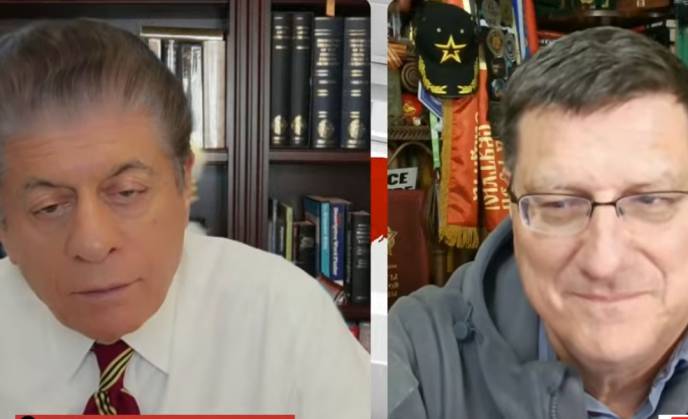
Editor’s Notes: In this special episode of Judging Freedom, Judge Andrew Napolitano is joined by military analyst Scott Ritter to dissect the sudden ceasefire and the shifting dynamics of the conflict with Iran as of April 2026. Ritter provides a critical look at the Trump administration’s “offramp” strategy, arguing that the U.S. was forced to seek peace after failing to meet any military objectives and facing the reality of a “mutual suicide pact” in the Strait of Hormuz. The discussion explores the significant roles played by China and Pakistan as mediators and examines how Donald Trump might attempt to spin this geopolitical setback as a personal victory for his political legacy. Ritter also touches on the potential for domestic political fallout, including the “impeachable offenses” being raised by Congressional critics in response to the administration’s conduct during the war. (April 8, 2026)
TRANSCRIPT:
“Undeclared wars are commonplace. Tragically, our government engages in preemptive war, otherwise known as aggression, with no complaints from the American people. Sadly, we have become accustomed to living with the illegitimate use of force by government. To develop a truly free society, the issue of initiating force must be understood and rejected.”
JUDGE ANDREW NAPOLITANO: What if sometimes to love your country you had to alter or abolish the government? What if Jefferson was right? What if that government is best which governs least? What if it is dangerous to be right when the government is wrong? What if it is better to perish fighting for freedom than to live as a slave? What if freedom’s greatest hour of danger time is now.
Hi everyone, Judge Andrew Napolitano here for Judging Freedom. Today is Wednesday, April 8th, 2026. Scott Ritter joins us now. Scott, I know you’re busy and thank you very much for coming on. Of course, we have much to discuss. I want to ask you a broad question before we get into what happened last night, what, if anything, was agreed to. Isn’t it a basic principle of warfare not to start a war without clearly obtainable military objectives?
The Folly of Starting a War Without Clear Objectives
SCOTT RITTER: Yes. In short, the answer is yes. You don’t start something that you don’t know why you’re starting. Because otherwise you end up lost, adrift, and oftentimes find yourself in places you hadn’t anticipated to be in with no plan to get out. And just reading into your question, I think you’ve defined what happened to the United States in this particular instance.
What Did Trump Actually Accomplish?
JUDGE ANDREW NAPOLITANO: So, regime change? No. Nuclear enriched uranium surrendered? No. Iranian ballistic missiles neutered? No. Hormuz under Iran control? Yes, was not under Iran control before. US bases in the Middle East? Useless. US sanctions against Iran? Probably neutered or on their way out. What the hell did Trump accomplish?
SCOTT RITTER: Well, remember that Donald Trump is a con man. His job isn’t to accomplish things that are discernibly beneficial for the American people, but rather that which makes him look good. So he’s going to spin this in a way that’s as positive as possible for him.
And you will see, for instance, he’s saying there will be no enrichment of uranium. Yes, there will be enrichment of uranium. Iran simply will not yield on this point. But what the United States will get is what Iran had agreed to prior to this war starting, where the 60% enriched uranium will be diluted down and that restrictions will be placed on Iran’s enrichment program so that they can’t enrich to that level, strict monitoring, etc.
So Donald Trump can declare victory in that regard. Because he can honestly say that the deal he now has is better than any deal before, that he got the better deal. He got a better deal than the JCPOA. And it would be because there’s no sunset clauses, there’s no advanced, unrestricted enrichment taking place. So he can claim he got a better deal.
But newsflash, he had a better deal before this war started. So going to war was ridiculous.
Regime change — and you’re going to see this over and over again — there will be a chart put up with a number of faces on there. The first face will be Ali Khamenei, the Supreme Leader. Going down will be a bunch of Revolutionary Guard generals and senior politicians, etc. And they’ll all have red X’s through them. And Trump will say — and he’s already saying — that we have achieved regime change, we killed all the hardliners, and now we have a new set of more moderate people in Iran who are more compliant to the needs and wants of the United States in the region. And he’ll spin it this way, but the reality is different. They have — did you lose me for a minute?
JUDGE ANDREW NAPOLITANO: The last we heard was the reality is far different.
The Reality of Regime Change
SCOTT RITTER: Look, the president of Iran is the same president that existed before this conflict began. The foreign minister, same foreign minister. In the military, taking out the number one guy doesn’t change the fact that the military is a system, and the system is composed of people of like mindsets. And so killing one Revolutionary Guard commander, you’ll simply replace them with another. You don’t change the outlook.
The military and the Revolutionary Guard command remains the same entity it was when this conflict began, in many cases even more hardline, because now they’ve actually fought the United States and won. So the regime change argument is superficial, but it’s one that Trump can make to an ignorant American public who likes to see a chart with faces that have X’s on them, and they suddenly feel empowered.
We saw this today where Donald Trump, answering a question, said we’re going to come up with a joint tolling mechanism where Iran and the United States are going to make money off this.
This is going to be a great deal. Now, we don’t know how this is going to play out, but what this is is a concession on the part of the United States that Iran will have physical control of the Strait of Hormuz and be able to exact tolls and raise income going through.
We didn’t gain control of the Strait of Hormuz, but Donald Trump will find a face-saving mechanism to say that because we’re somehow involved in the tolling, that we are in control. And he’ll spin that.
And look, every one of these points will be spun by Donald Trump. It’s not about convincing the Iranians, it’s about convincing the American public. This war has been a political disaster for this and so he’s going to have to work overtime to spin it, which means he needs this peace deal. He needs this ceasefire to work. And so he and his team will be bending over backwards to work with the Iranians, work with the Chinese, who are sort of the major player behind the scenes here, to come up with a deal that’s to the benefit of all. But the biggest winner here is Iran.
Who Begged for the Ceasefire?
JUDGE ANDREW NAPOLITANO: Before we get to how the deal came about, who sought, who begged for a ceasefire? Israel, Iran, or the United States?
SCOTT RITTER: It’s the United States that put the feelers out the entire time. As soon as Donald Trump — the New York Times had an interesting story that sort of solidified what myself and others had long thought — that Donald Trump had been snookered by Benjamin Netanyahu in a series of meetings on February 11th.
Benjamin Netanyahu together with the head of the Mossad — don’t give Donald Trump one-on-one access to the Israelis because they’ll just — they do it all the time. They own him. They get in his head and they convince him of magic that will happen. And they believed that Israel and the United States would be able to achieve regime change. They would be able to topple the regime. They could get an uprising. The Kurds would come in, that they could stop the ballistic missiles, that they could get control of the nuclear program. All they had to do is have the courage and the decisiveness to engage. And Trump went with it.
And it’s interesting because the New York Times provides some details. General Cain, the chairman of the Joint Chiefs, said the Israelis often oversell their capabilities and results, and we need to be careful about that. Marco Rubio and Waltz, the CIA director, said this regime change is a fantasy. It’s not going to happen. And JD Vance said, “I’m just dead set against this the whole way. I mean, I’ll support you in the end, but I’m against this.”
There was nobody — Tulsi Gabbard wasn’t even invited to the meeting. Neither was Secretary of Treasury Bessent, who might have been able to come in and weigh in on what this is going to do to the oil market and the energy markets. The concept of the Strait of Hormuz being secured also was deemed to be fantasy. But Donald Trump believed everything the Israelis told him. And so we ended up going to war based upon Israeli lies.
How the Ceasefire Came About — and Who Was Involved
JUDGE ANDREW NAPOLITANO: So Trump desperately needed the break, if you will, an opportunity to brag, an opportunity to exaggerate and claim victory. Do we know how this came about? Who was communicating to whom and through whom? We’ve all been told the Pakistanis were involved. You very intriguingly a few minutes ago, my dear friend, mentioned the Chinese. Were the Chinese involved? Was the Kremlin involved? Was the Pope involved? I mean, the last few days everybody’s been shaking like a leaf thinking that Trump was going to drop atomic bombs on Tehran. This must have aroused people to do something.
Iran’s Victory and the Path to Peace
SCOTT RITTER: Well, first of all, let’s put the atomic bomb thing in perspective. The 10-point plan that Iran put on the table, which Trump said we will look at during these negotiations in Islamabad, was put on the table before Trump made his threats. So the notion that Iran folded and said, “Oh my God, we’re afraid, here’s our 10-point peace plan,” that’s absurd. The Iranians already had that plan on the table. The Iranians already rejected Trump’s 15-point plan.
What the difference is this time is that instead of rejecting the 15-point plan again, what Iran said is, if the United States acknowledges our 10-point plan, then we will agree to sit down with them in Islamabad. And they came to that conclusion because of the Chinese. The Chinese intervened through Pakistan and said, “You have no choice here. Because we’re taking a hit, and we need to tell you at the end of the day, we care about China more than we care about you. We care about you, we want good things to happen to you, and we’ll be here for you, and we’ll back you up, and we’ll do all this good stuff. But if you walk away from this deal, we’re going to start taking a major hit in our economy. We need the flow of oil open now, right now, no hesitation.”
And Pakistan said the same thing. “We need oil right now, too.” And so Iran understood that they had reached the limit of their escalatory path, that they had been capped. They were going to start to lose allies.
But it was the United States that went to Pakistan. The United States went to Egypt. The United States went to Turkey and was reaching out to Iran through these intermediaries. The Iranians responded to the Pakistanis. It was a complicated situation — but it was the United States that initiated this. Iran responded, as I’ve said all along.
I mean, I’m going to have an interesting conversation with my good friend Nima over at DialogueWorks in a minute or so. And I told him exactly this. He insisted Iran would never compromise. I said, “You have no choice. You don’t have a straight flush, okay? And you don’t have enough chips. You can’t keep this going on forever because you will destroy your country.”
Iran Emerges With a Clean Slate
Iran is going to emerge from this with sanctions lifted. The IAEA Board of Governors is going to terminate all complaints. Iran is emerging with a clean slate from the international law perspective. For the first time in the history of the Islamic Republic — and let me say that again — for the first time in the history of the Islamic Republic, Iran will be in complete control of its economy and its economic future.
The Iranian people are going to reap the benefit of getting oil on the market at fair market value. This has never happened. No sanctions, nothing, just free flow of energy. Already China and Pakistan have put in major purchasing orders of Iranian oil as we speak.
This is a huge victory for Iran. This is what the Iranian government has been promising the Iranian people for several decades now. And they’re now going to be able to deliver on this promise. This is a big, big deal. This is the most important aspect of the ceasefire agreement because it takes Iran out of the economic mediocrity that it had inhabited for 47 years and now puts it in a position where it will be a modern nation-state, with a lot of income coming in.
You’re going to see reconstruction, you’re going to see modern facilities. Already when I was in Iran in 2005, they had a highway system that beats the New York State interstate hands down. I mean, the quality of the rest stops, the whole thing. They already had good infrastructure. You’re going to see high-speed rail. You’re going to see a whole bunch of good stuff.
This is happening because Iran won this war. Iran now is dictating terms. There will be compromises made — there have to be. But at the end of the day, Iran will benefit from this war. This was not a war that ended on American terms being dictated to Iran. Iran did not fold. It was the United States that was seeking an off-ramp because we were in a world of hurt. We had run out of options.
America’s Legal and Military Dead End
The only thing we had left was massive escalation that would have triggered major unrest here. There were people in the Pentagon and in the Trump administration that said, “You can’t do this.” And I’m not talking about nuclear weapons. I’m saying you can’t bomb these things. That makes us literally a war crime state.
People need to understand — I hear a lot of people saying it’s dual purpose equipment. Oh, come on. I know that if it’s dual purpose, we hit it up front. If there was an energy production facility supporting the Parchin missile production facility, that was taken off the grid. We already hit that. Everything that’s up now is singularly civilian use. And the fact that we now say if Iran doesn’t give us the Strait of Hormuz, we will punish the entire country — ladies and gentlemen, that is collective punishment. That is a violation of international law, straight up violation. So much so that every general who would receive that order would have to say, “That’s not going to happen, can’t do it, boss. That’s a war crime.”
He was getting pushback from the Pentagon saying this escalation you’re talking about is problematic for us from a legal and constitutional standpoint. The other thing is it’s cultural genocide. When the terminology he used — “to erase a civilization” — is terminology that, Judge, you know this, in a court of law, it’s called intent. The intent is to erase a civilization. That is literally the definition of cultural genocide. And because you attach to it bombs dropping on people, it becomes genocide of a nation, of a race — a war crime.
The president had reached the end of America’s ability to escalate without transitioning fully into war criminal status. So the United States needed an off-ramp. We tried to snatch the nuclear material — didn’t happen. We can’t seize the Strait of Hormuz. The military came back and said, “We can’t do this.” Literally, they told him, “We can’t do this.” He had no more options except creating war crimes. He had to take the off-ramp.
The Chinese knew this, and that’s why the Chinese — and because the Iranians were going to walk away, they’re going to say, “No, we’re going to keep going.” And the Chinese went, “That’s not going to happen either, because we need your oil.”
JUDGE ANDREW NAPOLITANO: Correct.
SCOTT RITTER: And if we don’t get your oil, we can’t be your friends anymore. What? All right, I guess we got to do this.
Trump’s “Madman Theory” and American Frustration
JUDGE ANDREW NAPOLITANO: What did the verbiage of Trump’s threat of destroying a civilization tell you about him?
SCOTT RITTER: Well, first of all, we have to be careful here because there are people who always point to the books written about Donald Trump and the Madman Theory. Donald Trump and the Madman Theory — be crazy, be insane, put it out there, make them think you don’t know what’s going on until you come back and they come to the table and they have to accept the deal.
This may work in New York City real estate. I mean, if you want to play stupid games about a building, play stupid games about a building. But you’re now the president of the United States. You represent a nation, a nation on the rule of law. We don’t do the Madman Theory. Richard Nixon did it and people called him out and said, “That’s not how we operate.” You remember he said we need to have the North Vietnamese convinced that we were willing to drop nuclear bombs to bring an end to this war. And his Pentagon went, “Nope, we’re not convinced.” So he had to be careful on this one.
So is Trump playing the Madman Theory? Maybe. But I also think it’s reflective of the fact that Donald Trump was angry and frustrated. First of all, remember, he went to war based upon Israeli lies, which were now manifest. He’s furious at the Israelis. The idea that Benjamin Netanyahu can sidle up to him and go, “Hey, I got some information” — Trump said, “Get the hell out of here, you liar. You got us involved in a war that you said was going to end in this way, and it didn’t end any way like that.”
So he’s frustrated about that. He’s also frustrated about impotence — American impotence. We weren’t able to do what Pete Hegseth said we could do. We didn’t bomb them into oblivion. I mean, we bombed the hell out of them, but the Iranians are still there. We were told we’re going to get their missiles, suppress them. Didn’t happen. They got stronger and stronger. We were told we have the best special operations people in the world — we can go in and get that nuclear stuff. Couldn’t do that. We got the best Marine Corps in the world, best amphibious ops. Certainly we can take an island in the middle of the Persian Gulf. Can’t do that either.
JUDGE ANDREW NAPOLITANO: Why?
Iran’s Military Dominance and the Escalation Ceiling
SCOTT RITTER: Because Iran has missiles. And this is why the Tripoli is moving in the wrong direction. They’re not moving towards enemy contact. They’re moving away, because the missiles — this is something General Berger, the Commandant of the Marine Corps, cautioned against in 2019. His commandant’s guidance said, “We can’t do this anymore because the closer we get to shore, the more certainty there is we’re going to get sunk.”
Donald Trump suddenly was confronted with the fact that our missiles don’t work. They’re too expensive. We don’t have enough of them. And the Iranians were able to ride out the best we could put out there and still be dominant. The Iranians controlled the decision-making cycle throughout this. We were reacting to the Iranians the entire time.
There was never hesitancy on the part of the Iranians. For us, every day was, “Well, we have to rechange our plan. We have to bring in new resources. We have to look at different things. We have to recalculate how we’re going to define victory.” We were constantly in a state of chaos. The Iranians were straight on, mission focused. Not only that, the Iranians controlled the escalation. They were in charge of the escalation, and at the end it was the Iranians that had a death grip on the Strait of Hormuz that was choking the world. And Donald Trump couldn’t ignore that. He didn’t have a solution to it.
But the other problem is that the Iranians had reached the end of their escalation capabilities, because it’s one thing to have your hand on the throat. It’s another thing to squeeze it and choke the life out of everybody. And that was Iran’s next option — it was the last option they had, to squeeze and choke. But the problem is, as they squeeze and choke, they’re going to go down too. It’s a mutual suicide pact.
Both sides realized, “We need to get off this ramp.” They both escalated as far as they could go. And to go any further would be terminal for all parties. And the Chinese — because the Iranians are like, “We’re okay with that, we’re ready” — the Chinese went and said, “You’re not, and we’re not.” And China deserves a great deal of credit here, and the Pakistanis too. The Pakistanis played a brilliant role as mediators, and China played a brilliant role in the end, being the adult saying, “No more.”
Loose Ends: Israel, the UAE, and the 31 Autonomous Districts
The Russians played a role as well. We’re not sure exactly what, but the Russians were backing the Chinese up. The Russians were helpful in the Security Council to prevent a Chapter 7 resolution being passed that would authorize military force and prolong this conflict.
We still have outliers. Israel doesn’t want to play ball regarding Lebanon. The Pakistani president just came out and said, “No, Lebanon’s part of the ceasefire too.” The United Arab Emirates woke up this morning and decided they wanted to go to war against Iran. I think Iran is going to remind them that they don’t want to go to war against Iran. There are missiles flying already. The United States will also make a phone call and tell the UAE to sit down and shut up.
But there’s also the issue of 31 autonomous military districts. There’s a problem when you blow up communications, command and control, and seek to take out leadership. The Iranians had a plan — they have 31 autonomous military districts that operate independent of the others. And even when they’re not in communication, they have a war plan that they’re executing. Well, some of these autonomous districts aren’t in communication with Tehran, and they don’t know there’s a ceasefire yet. And so they’re still fighting this war. There’s some cleanup that has to happen. There are a lot of loose ends out there.
But the point is, both the United States and Iran are committed to a path of peace. And they both need this peace — Iran to thrive, to deliver on the promise to its people, and the United States to get out of it, to free itself from this tar baby that we’ve embraced and can’t get loose from.
JUDGE ANDREW NAPOLITANO: How miserable was Benjamin Netanyahu when he woke up this morning?
Netanyahu’s Lemon Deal and Trump’s Political Legacy
SCOTT RITTER: Well, look, Netanyahu was aware that this was happening. I don’t know if his cabinet was aware. So the real question is, how miserable has been Gaviria? And the answer is extremely miserable.
But Netanyahu, look, remember, he doesn’t hold any cards. He sold this war to Trump. He said things are going to happen and they didn’t happen. So imagine being the used car salesman who sold somebody a ’68 Camaro and said, “This thing works perfectly. We’ve rehabbed it. It’s worked.” And now you’re getting a phone call from a guy who’s stuck out on the thruway with an engine that’s falling apart. The axles have rusted through, calling up saying, “Hey, you sold me a lemon.”
That dealer doesn’t have too much leverage now, does he? And that’s Benjamin Netanyahu. He sold Trump a lemon, a huge lemon. And Trump — this is, we’re talking about Trump’s political legacy here. We’re not just talking about failure of the military and all this kind of stuff. We’re talking — the thing that’s most important to Donald Trump is Donald Trump. And we’re talking about a political legacy that is at risk here.
JUDGE ANDREW NAPOLITANO: And somebody else who sold him a lemon is his Secretary of Defense, who calls himself the Secretary of War?
Pete Hegseth’s Incompetence Exposed
SCOTT RITTER: Yeah, he’s in trouble. Look, when this thing settles down, heads will roll, and I think Pete Hegseth’s head will be one of those that is going to roll. His incompetence is manifest. The generals advised against this, and Hegseth said, “Let’s do it, I can do this, don’t worry, boss, I got this, we got this.” And he might have prayed, and he might have said things that had a lot of lethality in, and other terminology in there. But the reality is Pete Hegseth is incompetent, and his incompetence was shown to be manifest in our failure to accomplish any of our military — we accomplished zero military objectives in this campaign. People need to reflect on that. We accomplished zero military objectives.
JUDGE ANDREW NAPOLITANO: What happens with Israel, though, if it continues to slaughter Palestinians, if it continues to try and annex southern Lebanon, if it continues to attack Hezbollah, whether it’s with pagers or with missiles?
Israel’s Defeat and the Path to Peace
SCOTT RITTER: Well, remember, the United States gave Israel sort of the green light here. We were sitting there working with the Lebanese government under the assumption that Hezbollah was defeated. Hezbollah was a paper tiger. Hezbollah woke up and suddenly people are going, “Wait a minute, these guys are not just firing missiles deep into Israel on a sustained basis, but they’re beating the Israelis hands down.” And the Israelis just suffered a major defeat. They tried a river crossing and Hezbollah beat this unit, forced them to retreat, abandoning equipment on the field. Hezbollah is picking off the Israelis. They’re not being defeated.
Israel right now is trying to make the claim that it’s not part of the ceasefire deal. Well, Iran’s going to send a message, I think, today that says you are part of it. And if you don’t want to play, we’re going to hit you. And the United States isn’t going to let Israel — remember, Donald Trump doesn’t care about Israel more than Donald Trump cares about Donald Trump. And Donald Trump right now understands that he is on the verge of getting wiped out politically in the midterm elections if he doesn’t reverse this right now. He has to get out of this war, reverse it. And by the summer of this year, 2026, he has to show that he’s the greatest peacekeeper ever, that there are benefits to the American people. He has to show money rolling in from the tariffs that are collected in the Persian Gulf. But there needs to be peace, and he’s not going to let Israel get in the way.
So Israel is going to play a game, and then the United States is going to set them straight. Israel’s lost this war. It’s an embarrassment for the Israelis. But one of the things that will be made clear is, first of all, how does Israel reconstruct? Who’s going to pay for that? Where’s that money going to come from? The United States can play a role in helping facilitate reconstruction. But we’re not going to let Israel get in the way of breaking this peace deal up.
The same thing with Gaza. I think this actually creates opportunities for a Palestinian state because Israel is weakened now. They oversold their capabilities and Hezbollah is not defeated. And there’s probably the other nation that’s going to have to get a wake-up call is the United Arab Emirates, the Sparta of the Middle East. I think this morning they decided they wanted to go to war against Iran, and they went out and launched an air raid against an island and some oil refineries. Iran is responding right now with heavy strikes against them, Kuwait, and Bahrain. Again, not against the United States, but against Gulf Arab nations who are uneasy about what Donald Trump is doing. And Donald Trump will have to put them on notice too.
The United States has a lot of babysitting that needs to be done with Israel and the Gulf Arab states to bring this to an end. But in the end, it has to be a comprehensive peace. There can’t be any outliers.
Senator Markey Sounds the Alarm
JUDGE ANDREW NAPOLITANO: I want to play one clip for you. A senator with whom I rarely agree on anything almost sounds like Scott Ritter. Senator Edward Markey of Massachusetts last night.
VIDEO CLIP BEGINS:
SENATOR EDWARD MARKEY: Donald Trump has surrendered, not the Iranians. And what he has been doing over the last several days is an impeachable offense. He has threatened a genocide against a nation. He has threatened to end a civilization. He has threatened to use nuclear weapons against a country that does not have nuclear weapons. All of these are impeachable offenses, and he must be brought to justice.
The House and Senate should be brought back into session. There should be articles of impeachment brought against him by the Democrats in the House of Representatives. We need to make Donald Trump accountable for what he has just done in the name of the American people. And I think this is going to be a defining moment for the Congress, for the American people. We cannot allow Donald Trump in control of nuclear weapons to be invoking this madman theory of the destruction of a civilization in the name of the American people without him being brought to accountability. The impeachment process must begin.
VIDEO CLIP ENDS:
JUDGE ANDREW NAPOLITANO: I know that Trump’s going to be able to sell this as a victory, Scott.
Trump’s Base, the Democrats, and the Art of the Deal
SCOTT RITTER: Not to you, not to me, not to many in your audience. But he — 88 million people voted for him, and many of them will want to vote for him if he can define himself as somebody worthy of their vote. He was losing his base because of this war. This is why getting out of this war is so important, and making sure that it doesn’t — the last thing he wants is a peace that falls apart this summer, because this summer is critical for the midterm elections. He needs a peace to be sustained through this summer and to show cognizable benefits for the American people. So he can say, “Look, because of what I did, these are the benefits. Yeah, it was a very difficult decision I had to make.”
Judge, the American people — again, with due respect to your audience — they are as ignorant as the day is long about the realities of the world we live in. They don’t know anything about Iran. They don’t know anything about the Middle East. They don’t know anything about energy security. They don’t know how oil markets work. They know nothing. And so therefore they’re susceptible.
Now, they also know that when the price of oil goes up and food prices go up and everything, they know that because they have to reach in their wallets and they understand the basic concept of subtraction. And that’s what gets them enraged. But these aren’t people who are guided by a moral compass. They don’t care about the loss of lives for Palestinians, for Iranians, for Arabs. They care about themselves. They’re very selfish. That’s why America First resonates with them. “We’re first, we’re number one, take care of us, forget about the rest of the world.”
So I think that Donald Trump has the ability to play the con against enough people to secure a victory in November if he can get this peace. But Senator Markey is right. Look, the Democrats smell blood right now. Everything Markey said was the truth, the whole truth and nothing but the truth. But the question is, and the point I would make to him is, you don’t have the House yet, so you’re not going to impeach. And if you play this too aggressively, you won’t have the House in November.
I would, if I were them — if Donald Trump didn’t make peace and we’re rolling into the summer a nation at war, I think Markey has the case to say we need to impeach this madman, get him out of office. But you need to be careful right now of turning Donald Trump into a victim. That’s hard to say right now. You and I both are sitting there rolling our eyes, but you know it’s possible. You know that his base is very susceptible to that argument that Donald Trump is a victim, that he’s always attacked. “He’s trying to help the American people and he’s punished for trying to help the American people.” So the Democrats have to be careful about overplaying their card because they don’t have the best track record either. It’s not like Markey and company are coming in saying we’re good, right?
JUDGE ANDREW NAPOLITANO: Right, right.
SCOTT RITTER: There’s a reason why Donald Trump’s president is because of people like Senator Markey. And so it’s not as though they’re going to come in and say, “We’ve got something better to offer.” But he’s right.
And I do think that if the cards are played right, Donald Trump knows that he needs to behave now. This is like a boy who’s been called out in school, gone to the principal’s office, and he comes back and realizes he doesn’t have too many more chances. So Donald Trump has to be on his best behavior. And it would be good for the Democrats to hold him to account. This is a time for the Democrats to come in and talk about constraints on use of military force and things of that nature. Donald Trump doesn’t want congressional hearings on this. So the Democrats do have some cards here, but I think, even though everything Markey said is true, I think they have to be careful at this juncture of overplaying their hand because Donald Trump will just turn himself into a victim.
And his base — if he can appease them with this peace deal — this peace still has the potential of everything Donald Trump wants. Right now he’s talking about a joint U.S.-Iranian gambit to raise money. And the Iranians are saying we could raise $68 billion a year. Now if the United States can get its hands on $20 billion, and they can say, “We’re making money, we’re making money, this is a good deal, it’s the art of the deal, baby, I’m Donald Trump, I’m the deal maker.” And he can talk about withdrawing American troops from the Middle East. He doesn’t have to say, “We’re withdrawing because I lost a war.” But he can say, “I’ve created the opportunity for peace that nobody else ever created. I created this opportunity for peace, and now I can bring the boys home. America, give me the Nobel Peace Prize.”
Closing Remarks
JUDGE ANDREW NAPOLITANO: Scotty, thank you very much. Right now there are 41,000 people watching us live. That is enough to fill every seat in Yankee Stadium, not far from where I’m seated at the moment. This is an enormous audience. A tribute to everyone’s fascination with your gifted and brilliant explanations. And to the audience, we love you. We put this together at the last minute and you’ve responded to us. Thank you very much. Scott, thank you. Thank you so much, my dear man. I know you’re in a lot of demand today and I was happy to grab you when we could.
SCOTT RITTER: Thank you.
JUDGE ANDREW NAPOLITANO: Of course. Coming up the rest of the day, if you’re watching us live, in 35 minutes at 11:15 Larry Johnson, at 1 this afternoon Pepe Escobar, at 2 this afternoon Professor Glenn Deason, at 3 this afternoon the great Phil Giraldi. Thank you for watching. Judge Napolitano for Judging Freedom.
Related Posts