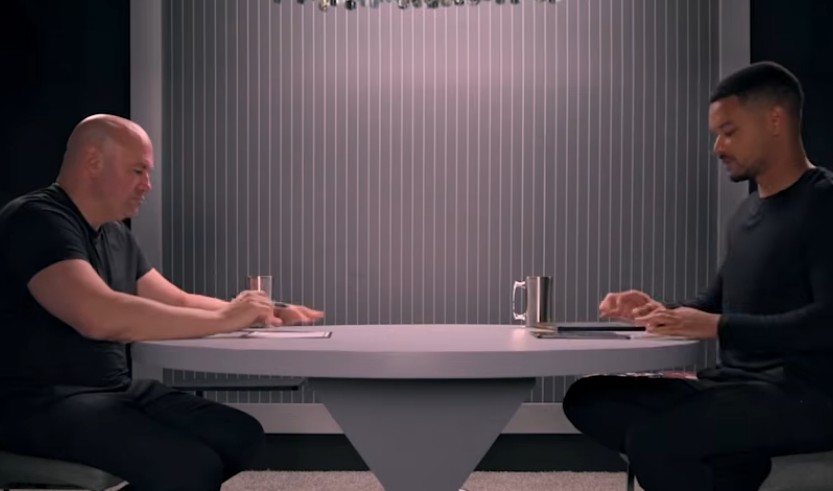
In this candid conversation on The Diary Of A CEO podcast, UFC CEO Dana White sits down with Steven Bartlett to talk about his turbulent childhood, walking out of a steady hotel job to chase the fight business, and how he turned a $2 million purchase into a sports empire. Dana White opens up about loyalty, the killer instinct, his health transformation with Gary Brecka, his fallout with his mother, and his plans to dominate boxing with Zuffa Boxing and Power Slap. This interview was premiered on October 5, 2026. Read the full transcript of this interview below:
The Early Context That Shaped Dana White
STEVEN BARTLETT: (00:01:36 – 00:02:36) Dana, you know more than anybody that to become a great fighter, oftentimes you have an anomalous upbringing. And I have some of these fighters in front of me like Khabib and Islam and Mike Tyson. And when you look at their backgrounds and where they came from, they have atypical origins.
And when I look at you, I consider you to be a great fighter in your own regard. So that’s my question, is what is that early context that’s made you the fighter that you are?
DANA WHITE: (00:02:36 – 00:03:02) I don’t know. I always have trouble when we start talking about me and my upbringing and psychoanalyzing me. I don’t know how to really answer those questions. I don’t know. It’s not like I grew up like these guys grew up, but early on, I knew exactly who I was, and I knew that I wanted to be involved in fighting. That’s what I wanted to do for the rest of my life.
STEVEN BARTLETT: (00:03:02 – 00:03:29) In terms of your mum and dad, I listened to you talk about your dad and his absence and his difficulty with alcohol. Divorced at 8 years old. Left you with your mother. And that was also a turbulent relationship as you grew up. Is there anything from that early context that you look back on?
I know you don’t like being psychoanalyzed. I’ve heard you respond to Piers Morgan and others who have talked about your childhood before. From that early context that you think did shape you into this sort of relentless—
DANA WHITE: (00:03:29 – 00:04:26) 100%. I always say that, you see these people that play the victim, the victim mentality. It’s like, “Oh, I didn’t have any role models when I was growing up.” Yes, you did. You just didn’t look at it the right way. When you grow up, everybody who’s involved in your life, they’re all role models in good and bad ways.
Like, I used to look at some of my uncles and my dad, and some of them, I was like, “Oof, yeah, we don’t want to go in that direction. Let’s go in this direction.”
And in America, you can start drinking when you’re 21. I quit drinking when I was 21. I believed that I wouldn’t be able to accomplish all the things that I wanted to accomplish if I was drinking. And I saw a lot of family members and other people where drinking had been detrimental to their life. And I think I had some pretty talented family members that could have lived a different life had they not drank.
STEVEN BARTLETT: (00:04:27 – 00:04:28) You and your sister?
DANA WHITE: (00:04:28 – 00:04:29) Yeah, that’s me and my sister.
STEVEN BARTLETT: (00:04:30 – 00:04:32) If I was a fly on the wall during that period of your life, what would I have seen?
DANA WHITE: (00:04:33 – 00:04:53) I don’t know. I don’t really remember. Me and my sister, now that we’re getting older, we talk about this stuff a lot. Me and my sister are super close. Both our parents are dead and it was just us. So, yeah, my mom was an animal. My mom worked her ass off. And if she wasn’t working, and picking up extra shifts. She was a nurse. She was going to school.
STEVEN BARTLETT: (00:04:53 – 00:04:57) And she effectively raised you on her own?
DANA WHITE: (00:04:57 – 00:04:58) Definitely.
STEVEN BARTLETT: (00:04:59 – 00:05:05) Because your dad was— he was absent. I remember you reciting a story of him taking you to the cinema drunk.
DANA WHITE: (00:05:05 – 00:05:05) Yeah. Yeah.
STEVEN BARTLETT: (00:05:06 – 00:05:17) And just— I mean, what I got from that was, I guess, carelessness. The story of him taking you to the cinema, asking you if you wanted something, throwing $20 your way, telling you to go get it for your sister.
DANA WHITE: (00:05:17 – 00:05:17) Yeah.
STEVEN BARTLETT: (00:05:17 – 00:05:18) Him embarrassing you.
DANA WHITE: (00:05:19 – 00:06:00) It was just one of those moments. And you have these things that you remember from your young life. And I have a few with my dad, but the movie was Beverly Hills Cop. It had just come out and it was like the biggest movie in the world. And we got there late. He showed up drunk to pick us up and take us to the movies. So getting there was a whole scene on its own.
And then we get there, the place is packed. There’s no seats. He walks in and screams, “We’re going to have to start moving some people,” and throws money at me to go get food and popcorn and whatever. In my opinion, my dad was a very selfish guy. And he lived the life that he wanted to live and everybody else didn’t matter.
STEVEN BARTLETT: (00:06:00 – 00:06:05) Did you ever understand him? As you— people always say that when they get older, they understand their parents better.
DANA WHITE: (00:06:05 – 00:06:20) Well, what I understood was once I became a parent, I was like, “Holy shit, this is the way you’re supposed to feel about your kids and this is the way you’re supposed to…” So yeah, I think that my parents made me a better parent.
STEVEN BARTLETT: (00:06:21 – 00:06:40) You’ve got a very atypical drive in you.
DANA WHITE: (00:06:41 – 00:07:06) Yeah, it’s true. But I try to focus on— I like to win. Winning is fun and everything in life. But I also make sure that the obligations that I have, I pay attention to those too. Listen, nobody’s perfect, but I’ve tried to do the best I could to be the best at everything I could at work, at home with the kids.
Walking Out of the Hotel Job to Get Into the Fight Business
STEVEN BARTLETT: (00:07:06 – 00:07:12) And if I’d asked you when you were a young boy, like some of these photos, what you’re going to be when you grow up, would you have had an answer for me?
DANA WHITE: (00:07:12 – 00:07:58) I didn’t really know that until I was in my late teens. Literally walked out of a job that at the time and in the place a lot of people would kill for and had checked all the boxes and made cash every day. You got a paycheck every week, 401, full dental and medical and all the things that people are looking for.
But I didn’t like working for other people. I always felt like working in the hotel industry was incredibly disrespectful, the way that they would treat you and talk to you. And I never liked it. It was never for me. So I walked out one day and I said, “I’m going to get into the fight business.” At the time, I didn’t know exactly what that meant or at what level. But that was my goal.
STEVEN BARTLETT: (00:07:58 – 00:08:03) Have you always had a problem with— well, an issue with, dare I say, authority? You have? Yes.
DANA WHITE: (00:08:03 – 00:08:06) Very, very much so. Yeah, it was never for me.
STEVEN BARTLETT: (00:08:07 – 00:08:08) Where does that come from? Do you know?
DANA WHITE: (00:08:08 – 00:08:19) I don’t know. I honestly don’t know the answer to that, but I never liked it. I never liked working for other people. I never liked being told what to do. And I don’t treat my employees like that.
STEVEN BARTLETT: (00:08:20 – 00:08:23) Did you think you were going to be successful in your life when you were, I don’t know, 14, 15?
DANA WHITE: (00:08:23 – 00:09:03) Yeah, I did when I was younger. I believed that I would be. Yeah. Based on what dreams? I sort of had these ideas in my head. Which at that time you don’t know exactly what it means or at what extent.
But let me tell you what, so when I lived with my mom, me and my sister were just talking about this the other day. So my mom worked all the time or was at school, and me and my sister were home alone all the time. But we had chores that we had to do. I mean, we were mow the lawn, cleaning the pool and trimming the bushes and all that. And I was like, “Let me tell you what, the day I make a dollar, I’m never doing this shit ever again.”
Teaching His Kids What Hard Work Really Is
STEVEN BARTLETT: (00:09:03 – 00:09:06) So that’s probably an important lesson she taught you.
DANA WHITE: (00:09:07 – 00:10:09) No doubt about it. And I try to do this with my kids too. My kids have been great and done everything the right way. And I’ve told this story before, but my son Aiden, my youngest son, flies home from college one weekend, says, “I don’t want to stay in school. I have an idea for this business that I want to do and whatever.”
I said, he lays it all out for me. And I’m like, “This is a pretty good idea. I get it. I like it. But you’re not going to quit school and just try to do this. This won’t chew up 8 to 10 hours of your day. You’re going to go out and you’re going to get a job and you’re going to go put in applications and you’re going to try to get a job. Because if I die tomorrow, that’s what you’re qualified to do.” And he did it and he went and he worked at U-Haul. And you got to have those kind of jobs.
My son right now, my oldest, is getting his master’s degree in Boston right now. And when I lived in Boston, I used to work for E.J. Paving Company. They pave roads. I actually want my son to go do some days at this paving company.
STEVEN BARTLETT: (00:10:10 – 00:10:11) What is it you’re trying to teach him?
DANA WHITE: (00:10:12 – 00:11:00) Well, what hard work really is. So people like— I run around, I don’t sleep much, and everybody’s like, “Oh, you work so hard, you work so hard.” No, no, no. I’ll show you what hard work is. Hard work is construction. Hard work is concrete. Right up the street here. I don’t know how many days this summer were 115 degrees out. 115 degrees out. These construction guys are out there working in 115-degree heat, hard work, real work.
And then in the winter, people don’t realize this in Vegas, but it gets down into the 30s. These guys will be outside working when it’s 30 degrees out. So, and hard physical labor every day. And then you go home, you eat and you go to bed and you get up the next day and you go do it again. In your life, to figure out what you want to do, you have to figure out what it is you don’t want to do.
There’s No Such Thing as a Day Off When You Run Your Own Business
STEVEN BARTLETT: (00:11:01 – 00:11:05) I have a bunch of quotes here that you’ve said. If you just wanted to look at the first one.
DANA WHITE: (00:11:06 – 00:11:26) “There’s no such thing as a day off when you run your own business.” There’s no birthdays, there’s no Christmas, there’s no Thanksgivings. Bad shit will happen every single day that you need to deal with. But when you like what you do, it’s fun.
STEVEN BARTLETT: (00:11:26 – 00:11:30) A lot of people, especially young people these days, want to be entrepreneurs.
DANA WHITE: (00:11:30 – 00:13:15) “I’d really like to work for myself and own my own business because I’d love to plan my schedule.” How much? Oh, you’re going the wrong way. What you need to do is find a 9-to-5 job where you have weekends and holidays off. And that’s your move. If you’re looking to start your own business because you want more time to yourself, you are picking the wrong thing to do. I promise you that.
The key to becoming a good entrepreneur is you have to find solutions to problems every day. The universe was trying to f*** with me the other day. I got out of bed. I had to be at a board meeting at 9 o’clock, right? I go in, I got to shave. Both my razors died. I use electric razors. They both died. Get through that.
I get in the car and I’m driving and the sensor says, “Your back right tire is low, stop the vehicle immediately.” I said, “Yeah, no, we’re not f***ing stopping. We’re going.” That’s just life, right? When you get up and it’s life standing there to kick you in the face and you got to get through all this shit, then you get to work and there’s a laundry list of problems and things you got to deal with.
And this younger generation that think you can work from home and build a successful business, it’s impossible. You can’t do it. I’m in the office from 8:30 in the morning and I don’t leave the office till 7, 8, 9, 10 sometimes still.
To this day, there are times when I go to work and my schedule’s planned out for the day, but people will pop in my office and we start talking about things. And when you have a good group of people like I have at the UFC, and we get in a room and you start talking, things pop up that you would never expect, and things happen, and a lot of good ideas come from everybody being at work.
STEVEN BARTLETT: (00:13:16 – 00:13:20) Has being kicked in the face by business over the last couple of decades changed you?
DANA WHITE: (00:13:20 – 00:15:37) Definitely. I don’t freak out the way that I used to. I’ve been through it all and I’m way more calm now. I see this with a lot of guys. You become— I want to say you get weaker, but you do get weaker as you get older. There’s a softer side to you than you had when you were in the early days of building your business. And I don’t ever want to be that guy, you know what I mean? I try not to be that guy, but you do relax and chill out, and the things that you used to flip out about when you were younger, you don’t when you’re older.
I mean, I went through a phase where I ripped through like 10 secretaries in 2 years. Like, I need people around me that can keep up. You got to have people that can keep up and can handle the load of work.
It’s probably the busiest year for me this year because I have Zuffa Boxing, Power Slap, and the UFC that I’m running, these 3 companies. And then there’s a ton of other things that I do too. So we’ll be on the road, I think we just got off the last 2 months. We were home for like 4 days in the last 2 months. Then I get home and I don’t stop. I go out and I do things and these guys that are with me, they’re with me and it’s tough.
Nobody Owes You Anything
Nobody owes you anything. So, we talked a little bit about my parents and whatever. I had this kid that I grew up with, and we were 12, 13, 14 years old. And I remember his dad had done really well, and they had a beautiful house, they had cars, he had all the shit that you would want growing up.
And I remember him telling me one time his dad ran into hard times. And his dad had put $1 million away for him in an account. And then his father ran into hard times and his father took the money. He’s like, “My father stole $1 million from me.” And I remember thinking, “Are you out of your f***ing mind? The fact that your dad even thought of you that way, that he would put that money away for you is incredible. But that was never your money. You didn’t earn that money. That wasn’t yours.”
I remember thinking that way when I was 12, 13, 14. Right? I’m like, that is definitely the wrong type of mentality.
STEVEN BARTLETT: (00:15:37 – 00:15:38) Entitlement.
DANA WHITE: (00:15:39 – 00:15:58) Brutal. And that guy grew up exactly the way you would expect that guy to grow up. Nobody owes you anything. Nobody. Listen, to be set up in a position where somebody can make some phone calls for you and do some things, but then once they do that, you have to go in and deliver.
Is Everyone Cut Out to Be an Entrepreneur?
STEVEN BARTLETT: (00:15:59 – 00:16:06) There’s going to be a ton of people listening that want to be entrepreneurs. Do you think most people are cut out for it?
DANA WHITE: (00:16:06 – 00:16:06) No.
STEVEN BARTLETT: (00:16:09 – 00:16:09) No.
DANA WHITE: (00:16:10 – 00:17:29) To be an entrepreneur is a very unique thing. I mean, it’s hard enough for a lot of people to get up every day and depend on themselves to take care of themselves. When you’re an entrepreneur, lots of people depend on you. Lots of people feed their families. And I take that role very serious.
I mean, when I got into this business, not a lot of people believed in it. That’s why we bought the UFC for $2 million, right? Let’s be honest here. The UFC was purchased for $2 million. And if the Lakers sold for $12.5 billion, then the UFC is worth $50 billion. Okay.
So the people who did believe in this, when I was trying to hire production people, production people don’t want to live in Las Vegas, Nevada, especially 25 years ago. They want New York or LA, right? I was trying to hire sponsorship people, New York and LA. They don’t want to live here.
And then I had a group of people, Craig Borsari, who is my head of production, who is an absolute rock star, the best in the business, he was a rising star at Fox. He left Fox and came here because he believed in the vision and what was happening here.
The Principles Behind the UFC’s Success
STEVEN BARTLETT: (00:17:30 – 00:17:52) When you think back on that journey of buying it for $2 million, and then let’s say it’s worth $50 billion now, if it was valued relevant to the Lakers, if there were a couple of principles that you would most attribute to the success of the UFC when at the time nobody wanted to put on the fights anywhere? Everybody thought it was like too barbaric.
DANA WHITE: (00:17:52 – 00:17:53) Matchmaking.
STEVEN BARTLETT: (00:17:53 – 00:17:55) Matchmaking, yeah, is number one.
DANA WHITE: (00:17:57 – 00:17:58) The live event production.
STEVEN BARTLETT: (00:17:58 – 00:17:59) Okay.
DANA WHITE: (00:17:59 – 00:18:00) And the television production.
STEVEN BARTLETT: (00:18:01 – 00:18:06) And then on the business side that you think, if we’d gotten that wrong, we definitely wouldn’t be here.
DANA WHITE: (00:18:08 – 00:19:24) The big problem, if you look at how 25 years ago when we bought this, “You’re never going to compete with boxing. Boxing’s too established. It’s been around too long. It’s this and that.” Boxing became a going-out-of-business sale every time these guys would put on a fight. They’d try to grab as much money as they can and run.
I am now involved in boxing. I have the only global television deal, right? On Paramount. All these other guys are on a streaming service called— literally every promoter. What they’ve done is they’ve chased everybody out of the business. Television networks don’t want to deal with it anymore. Sponsors don’t want to be a part of it anymore.
What we have done over the last 25 years is built a brand that not only the consumer trusts, but sponsors, television networks, list goes on and on. So I make sure that when people show up to my live event, which is super important, the people who pay to come to the live event spend way more money than the people on TV, and they got to buy flights and rooms and pay for their dinners.
Every time we put on a live event, I want the people walking out of there going, “Goddamn, that was a good time. I’m glad we did this tonight, and I would love to do this again.”
STEVEN BARTLETT: (00:19:25 – 00:19:26) And how do you make sure that’s the case?
DANA WHITE: (00:19:27 – 00:19:50) I heard somebody saying one time, “Dana acts like there’s a formula to this.” If you went back, I don’t know the actual number, but it’s a long list and a big number of guys with a lot of money who are really smart and have done good things in life that have tried to get into this business and couldn’t do it, couldn’t make it work. There is a formula, and guess who has it?
Picking the Right People
STEVEN BARTLETT: (00:19:50 – 00:20:22) One of the things I’ve learned as I’ve gone through my business career that I didn’t know at the start of my business career was how much of success is actually determined by the people you’re able to assemble. I think at the start of my career, you think if I work weekends and I work really hard and have good ideas myself, then I’ll be successful.
And somewhere along the way, I realized that it’s really about assembling people and binding them with the right philosophy or culture, whatever they call it. And the question I have for you is, have you noticed the same? Have you noticed that one of the obvious but seemingly unobvious things about business building is the quality of people you hire?
DANA WHITE: (00:20:23 – 00:21:08) There’s no doubt about it. No one guy does everything. When we first bought the company, I was the everything guy. There was like 2 employees, me and somebody else. And you wear all the hats when you start. Then you start going out and you start building a team, and there are people who fit and people who work and people who don’t. And you have to be really good at figuring out who fits and who works and who doesn’t.
And over the last 25 years, if there’s a superpower that I have, it has been picking the right people to surround myself with. And I knew when there wasn’t. We made a big decision when we sold on people that we brought in, and I knew right away the people that didn’t fit, and I fired them.
STEVEN BARTLETT: (00:21:09 – 00:21:10) What are you looking for in great people?
DANA WHITE: (00:21:11 – 00:21:36) First of all, you have to have talented people. You have to have talented people that are not only really good at what they do but are hard workers too and have the drive. But everybody has to be on board with the vision and has to be on the same page. I am at a place right now with my production team, when we do spots and we do vignettes, they’ll bring them into me and there are very few changes.
STEVEN BARTLETT: (00:21:37 – 00:21:47) What is your talent there? If I ask the people that work closest with you, and I know this is a little bit of a weird question to answer, what is Dana’s 3 skills that are rare relative to other people?
DANA WHITE: (00:21:49 – 00:22:17) I am a fight fan to the core. 25 years later, of doing this, I am still a hardcore fight fan. And when we put something together and we nail it, I know we got it. And now what I do is I push my team, whether it’s production, matchmaking, sponsorship side, whatever it is, I push all these guys every day to get us to where I know I want to be.
STEVEN BARTLETT: (00:22:17 – 00:22:18) You are the customer.
DANA WHITE: (00:22:18 – 00:22:19) Yeah, I am the customer.
STEVEN BARTLETT: (00:22:20 – 00:22:27) Yeah. And you have been since I saw in your sort of mid-20s, you were captivated with boxing at the time, I believe.
The Red Phone and Building a Rockstar Team
DANA WHITE: (00:22:27 – 00:22:38) Yep. Every time when we go to an event, there’s a red phone on the table where I sit, and it goes directly to the truck. And our producer’s name is Zach.
STEVEN BARTLETT: (00:22:38 – 00:22:39) The truck where the producers are?
DANA WHITE: (00:22:40 – 00:25:16) Yeah. Zach runs all the shows. He has the freedom to do what he wants, and he tries. So I’ll pick up the phone and go, “Oh, what was that?” And he’s like, “I thought we tried that.” I said, “Yeah, let’s never f***ing do that again. Okay, bye.” And there’s no hurt feelings, there’s no whatever. Or we’ll do something and I’m like, “That was incredible. Yeah, congrats, that’s incredible.”
And once you get to that level with your team— there’s a woman sitting out here, her name is Lenee, she’s the head of PR. I don’t really make a move without talking to her anymore. I trust her so much and she’s so smart and she’s so talented that she’s involved in a lot of different aspects of my life. Craig Borsari, who I talked about, who is the head of production, my head of sponsorship. Once you build this rockstar team, it becomes a well-oiled machine where everything just starts to work the right way.
Loyalty and Refusing to Lay Off Employees During COVID
Like when we were going through COVID, these people that I’m talking about, when you go through something like this, who the hell knows how long this is going to last? And as crazy as the world was during that time, here’s one thing that wasn’t going to happen. I don’t give a shit. We were not going to lay off our employees.
These people that have been here with me and that I’m super close to— saw this quote from, I don’t know who the CEO was, but says, “Anybody that’s trying to sell you that we’re a family is full of shit. This is transactional.” I don’t know who wants to run through a f***ing wall for that guy, but he’s full of shit. Okay. My team, that is the way I feel about my team. And I do care and I will never pick money over people ever.
Scariest time in our lifetime was COVID. You’re looking at the numbers and going, “Oh shit, we got to let go of some people.” What? During the scariest time in human history? No, your job as the CEO is to figure out how to keep your business running and to take care of all your people, right?
Here’s what you don’t do. “Oh, we’re looking at hard times. Let’s just start f***ing putting bullets in people” who have missed their kid’s first step, didn’t go to a f***ing game, missed this and missed that to help build this company. It is your job as the CEO to take care of these people and figure out how to make money. That’s the way that I look at it. And that’s what we did.
STEVEN BARTLETT: (00:25:17 – 00:25:30) The reason why people have a problem with this whole my team and my family thing is because they always say, “Well, you don’t fire your family.” And what you’re saying is actually those that have been loyal to you are the ones that you treat like family, I’m hearing.
DANA WHITE: (00:25:30 – 00:26:20) Yeah. If you don’t have loyalty, what do you have? Right? If you work in a place where you feel like the rug could be pulled out from under you at any minute for no reason other than, “Ooh, the numbers don’t look good.”
You think you want to be an entrepreneur and you think you want to be the CEO of a company— every day, when your foot hits the floor out of bed, you’re going to war. There’s people trying to take what you have. There’s people trying to screw you over. People are coming after you every day. And the more successful you become, the more people that are coming after you.
And I look at the UFC and other businesses that I run as a battleship. And me and my team are going to war and we either all go down together or we don’t go down at all.
STEVEN BARTLETT: (00:26:21 – 00:26:24) I guess in that context, if you are at war, then you need your brothers in arms. You need—
DANA WHITE: (00:26:25 – 00:26:26) You need soldiers.
STEVEN BARTLETT: (00:26:26 – 00:26:28) Yeah, you need soldiers. Yep.
DANA WHITE: (00:26:28 – 00:27:33) And I’ll tell you this, so I know lots of different stories coming out of COVID. The day that everything started to shut down, I literally got all my employees in a room together downstairs at our dining room, and I said, “Listen, I don’t understand this. I don’t know what’s going on. But if any of you feel unsafe or feel that you have loved ones at home that could be unsafe from this whole thing, you can go home.” Nobody walked out. Nobody walked out.
I said, “We’re going to figure this out. We’re going to get through this together.” And every week I had weekly FaceTime calls with all my employees. And it sounds weird now, but I was like, “If you need anything, if you need groceries, toilet paper, a loved one of yours gets sick, make me the first call. We’ll get through this together.”
And then it was only a couple weeks. And I said, “We’re going to work.” And everybody, men, women, they all said, “We’re with you. Let’s roll.”
STEVEN BARTLETT: (00:27:34 – 00:28:00) Do you know what’s interesting is the last time I heard a founder or CEO of a company say this to me, they also had a very turbulent childhood where they didn’t have a family. And he ended up admitting to me, he goes, “I guess to some degree as an adult, I’ve been able to build my own community family that I really never had.” And so I was just wondering as you were speaking there, if there is a link there at all between how you treat people.
DANA WHITE: (00:28:00 – 00:28:20) Well, here’s the link for me. If I, again, psychoanalyzing me, I’ve worked for companies that you go in and you give your time and your energy to. And they treat you like you don’t even f***ing matter, right? It’s like, “Well, if you don’t like it, there’s 10 other people right behind you that would love to have this job.” Wow, that’s how much you value me and what I do here.
STEVEN BARTLETT: (00:28:20 – 00:28:22) Yeah, it goes both ways, right?
DANA WHITE: (00:28:22 – 00:28:25) I’ve been in those positions before, and I’ve—
It’s Easier to Get to the Top Than to Stay There
STEVEN BARTLETT: (00:28:25 – 00:28:51) Yeah, that red phone reminds me of another quote that I read from you, which is that you are always in the weeds. And one would think, Dana, you’re 57. Yeah, 57 years old. Very, very successful, made a lot of money in your life, peak of your powers. One would assume that by this time you’d be a little bit out of the weeds and dare I say even, I don’t know, delegating and enjoying yourself a little bit more. I mean, that’s presumptive, the word enjoying yourself, but would be out of the weeds by now.
DANA WHITE: (00:28:52 – 00:29:08) You ever hear the saying, “It’s easier to get to the top than it is to stay on top”? Truer words were never spoken. When you’re at the top, everybody’s gunning for you and everybody’s looking at your blueprint and saying, “How do I use what he’s done and how he’s this to beat him?”
STEVEN BARTLETT: (00:29:09 – 00:29:09) How do I steal his people?
DANA WHITE: (00:29:09 – 00:29:22) It’s like being a world champion. So you become a world champion, and then everybody starts studying you and how you fight or how you play or how you do, trying to figure out how to beat you. And I love that shit.
STEVEN BARTLETT: (00:29:23 – 00:29:24) How do you respond to that?
DANA WHITE: (00:29:24 – 00:29:24) Because I love it.
STEVEN BARTLETT: (00:29:25 – 00:29:28) Because it’s easy to get distracted when there’s that many people gunning for one guy.
The 3 Things Dana White Focuses on Every Day
DANA WHITE: (00:29:28 – 00:29:49) And don’t get distracted. You know what you get distracted on? You get into a business like this, right? And lots of goofy shit starts coming at you like, “Hey, we want to do a movie about this. Hey, we want to do a thing on your life. Hey, we want to—” There’s 3 things that I focus on every day, and I’m not going to say it, but— You’re not going to say it? No.
STEVEN BARTLETT: (00:29:49 – 00:29:49) Why?
DANA WHITE: (00:29:49 – 00:29:56) There’s 3 things that I focus on every day, and if I don’t f*** this up, you can’t mess it up.
STEVEN BARTLETT: (00:29:56 – 00:29:57) Why wouldn’t you tell me?
DANA WHITE: (00:29:57 – 00:30:01) It’s part of the formula. It’s part of the formula.
STEVEN BARTLETT: (00:30:02 – 00:30:04) 3 things you focus on every day.
DANA WHITE: (00:30:05 – 00:31:40) There’s lots of ancillary things that come around the brand of the UFC, right? That if you start diving into all the— and let your ego take over, you let your ego get into all this bullshit— that you can’t mess it up. Because I’ve seen other companies that are so big and massive and have been around for 100 years and you make a couple of mistakes and then somebody else is coming trying to eat your lunch, man, and nipping at your heels.
Nobody’s nipping at my heels. All these other guys that are out there, we are not the same. Okay. This thing has gotten to a level now. My competitors are the NFL, Major League Baseball, the NHL, and the NBA. We did an $8 billion deal with Paramount, right?
Now, I don’t know this for a fact, but I know this for a fact. The NFL are a bunch of animals, right? As soon as that deal was announced, all the powers that be at the NFL got in a room and said, “There was $8 billion out there that we didn’t get? We’ll do games on Tuesday, Wednesday, Thursday, Friday.” You know what I mean?
And if you look at me now, we’re sitting in my arena. Next door, I have the Performance Institute and our headquarters. We have everything that the NFL and the Major League Baseball, all these guys have. We are part of the 4 major sport organizations in the United States.
STEVEN BARTLETT: (00:31:40 – 00:31:47) Dana, can you give me one of these 3 things? No. No.
DANA WHITE: (00:31:47 – 00:32:00) No, no, no. It’s part of the formula. We have gotten to a level now where we are one of the top 4 majors. All these other promoters and all these other guys putting on fights and all this shit, they don’t matter.
You Never Make It
STEVEN BARTLETT: (00:32:01 – 00:32:06) But on this point of being in the weeds, is that important for people out there that are—
DANA WHITE: (00:32:07 – 00:32:41) So here’s what can happen. And people say this to me all the time. We did the $7.7 billion deal with Paramount, and they’re like, “Wow, that’s incredible.” You didn’t f***ing make it. You never make it. Do you know why Paramount did a $7.7 billion? Because they believed that we can impact their business.
Now, my job over the next 5 years is to make sure we do that. Because guess what I want? I want $10 billion after we get out of this deal, right? And the way that you do that is you added value to their company.
STEVEN BARTLETT: (00:32:41 – 00:32:51) And is it not tiring though? Constantly having to be in the weeds for 25 years and now you’re rich and you’ve made all this money? Like, is it not—
DANA WHITE: (00:32:51 – 00:33:13) I could understand for some people maybe, but not me. I mean, I’m 57 and I’m sure to a lot of young people that seems old, but 57 isn’t that old. And what the hell would I be doing? I am addicted to chaos and if there isn’t any, I create it. It’s a weird thing. But I’m definitely an addict. Yeah.
Why Dana White Loves the Haters
STEVEN BARTLETT: (00:33:14 – 00:33:17) There’s a particular quote in this pile of quotes which I think is really relevant.
DANA WHITE: (00:33:19 – 00:33:41) Yeah. “I love the haters.” The haters are the best, man. There’s nothing better than haters. Haters will lay out what they think is wrong with your business and how you’re not doing this or doing that. And what this used to be called was the critics or the whatever. Now, these days they’re called the haters and I love the haters.
STEVEN BARTLETT: (00:33:42 – 00:33:43) Do you listen to the haters?
DANA WHITE: (00:33:43 – 00:35:00) Yeah, yeah. It’s not like you don’t listen to the haters. You know what is real and you know what’s just bullshit. But you have to have these guys. They sort of keep you on your game.
Now most people would say I drown that. What I drown out is the media that covers our sport. I don’t look at them as haters. I look at every f***ing thing they say is wrong. And when I look at what they say, it’s like, it’s amazing that you could be involved in this business for 25 years and know nothing about it. But I guess that’s why we’ve never had any real competitors. Because when you think about what we’re doing, it’s never been done before. So what I’m thinking and what’s coming next, these guys could never know.
So literally all the guys that cover our sport, I block them out of my feed. I don’t want to hear— they’re all wrong and everything they say is wrong. And it’s a waste of my time to even listen to anything they say. But the hardcore fans, and the people who hate and the people who say we’re great and all this, I like that information. I like hearing what they have to say.
Blocking Out the Noise
STEVEN BARTLETT: (00:35:00 – 00:35:27) The 2 points you just made, this one and the point before, brought to mind this point of focus. You talked about these 3 things. You talked about blocking out the haters. When you’re at the top, there are so many things screaming for your energy. Everybody’s going, “Look over here, Dana, give me 5 minutes of your thoughts and energy.” Then you’ve got a journalist over here. Then you’ve got this fighter coming out with making a comment over here. And so I wanted to understand what your relationship with focus and how important this idea of focus has been to your success.
DANA WHITE: (00:35:27 – 00:35:36) Yeah, that’s why you have to, like I was saying, you have to figure out what you pay attention to and what you don’t pay attention to.
STEVEN BARTLETT: (00:35:37 – 00:35:38) Kevin O’Leary called this signal and noise.
DANA WHITE: (00:35:39 – 00:35:39) Yeah.
STEVEN BARTLETT: (00:35:39 – 00:35:39) He told me about—
DANA WHITE: (00:35:39 – 00:35:41) Yeah. The noise.
STEVEN BARTLETT: (00:35:41 – 00:35:41) Yeah.
DANA WHITE: (00:35:41 – 00:36:54) You got to block out a lot of the noise. The problem is these days, anybody with a f***ing phone, all right, can consider themselves an expert and I’m criticizing what they do, but it’s always wrong and it’s always just such a waste of time. I want to hear what the fans think. I don’t want to hear what these guys who are trying to start a podcast or a website or a f***ing Instagram account on the business think. I want to hear what the real fans think.
And when you have been doing this long enough, you can sort of go through and tell what’s what and who’s who, right? So when I feel like somebody has made a really good point or an opinion on the show or the match— I mean, it’s like when we put together a fight, and I’ve been saying this since day one, they’re like, “This card sucks.” You can’t say the card sucks until it’s over, right?
Because these are obviously all really talented people that are on the card. Maybe some of them are younger and haven’t proven themselves yet, but you can’t judge a card until the card’s over. And believe me, if the card sucks, I’ll be the first one to say that the card sucked. So there’s just lots of things that make sense and things that don’t.
How Gary Brecka Changed Dana White’s Life
STEVEN BARTLETT: (00:36:55 – 00:37:29) What has made the biggest difference to you in terms of your energy, your health, in making sure that you can show up really well every day? Because you are the reason I heard about Gary Brecka. And then I brought him on the show and he did really, really well on the show. And then it was that watching you talk about some of the impact he had on your life. He’s a health expert that transformed your life.
But I say all this to say that in my life, I noticed this variance between my good days and my bad days. In terms of energy level, my ability to articulate myself. And so I’m longing to get up to a high baseline. So I’m wondering for you, what has that been for you?
DANA WHITE: (00:37:29 – 00:38:12) Yeah, he completely changed my life. When I hit 50, Gary Brecka changed everything. So I have 2 doctors, one in Vegas, one in LA. They’re both great doctors. So when I started the whole Gary Brecka thing, they called me up together. They’re like, “Dana, what are you doing? What are you doing with this shit?” And I said, “Listen, man, the guy said give me 12 weeks and I’ll change your life. We’ll see what happens.”
And in 6 weeks, I was like, “Wow, I feel incredible.” And all these things that they couldn’t fix, they just kept switching up the pills and all this shit. And one of them that was real bad was sleep apnea. I was waking up almost every night and throwing up from sleep apnea. Right.
STEVEN BARTLETT: (00:38:13 – 00:38:16) And how did you meet him? Someone referred him to you?
DANA WHITE: (00:38:17 – 00:38:49) Carrie Kasem. Carrie Kasem was like, “I want you to meet this guy. I’m telling you, he’ll do this and that.” I didn’t want to meet him. And then the weirdest thing ever is that my son turned 21, and I had his 21st birthday down in Miami. And Gary Brecka lives in Miami. And he says, “Well, we do IVs, so we could do all the IVs for you guys down there and whatever.” And I said, “All right, cool.”
So we would go out and drink and then do the IVs. And then one day we’re doing the IV and he says, “Let me take your blood and let me do your blood work for you.”
STEVEN BARTLETT: (00:38:50 – 00:38:50) Gary said that?
DANA WHITE: (00:38:50 – 00:38:59) Yeah. And Gary had this thing that he could predict when you would die. And then I became obsessed with that.
STEVEN BARTLETT: (00:39:00 – 00:39:00) He gave you 12 years?
DANA WHITE: (00:39:01 – 00:39:01) 10.
STEVEN BARTLETT: (00:39:02 – 00:39:03) He gave you 10 years to live?
DANA WHITE: (00:39:03 – 00:39:46) So then he said, “Give me 12 weeks. I’ll change your life. It’s going to be hard.” And I said, “It won’t be hard. Once I set my mind to it, I’ll do exactly what you tell me to do.” It took 6 weeks. 6 weeks in, I was like, I never felt better. And clarity, legs, and all these other problems I have. And then sleep apnea gone.
Me and my wife truly believe that he’s wrong. I didn’t have 10 years. We thought I had less because of the way that I would sleep and all the shit that was going on with me. And this guy is a life changer. I wouldn’t be doing all the things. I mean, I’d probably still be doing UFC, but I wouldn’t be doing all this other stuff that I’m doing. I wouldn’t be able to run at the level I run at right now without him.
You Either Have the Killer Instinct or You Don’t
STEVEN BARTLETT: (00:39:47 – 00:39:49) Okay. Another one of your quotes here.
DANA WHITE: (00:39:51 – 00:40:53) Yeah. It says, “You either have the killer instinct or you don’t.” And it’s so true. So this happened with Ian Garry. I saw your interview. I felt like Ian Garry in that 5th round. You have this opportunity, you’re fighting possibly the greatest fighter of all time, and you did a damn good f***ing job for 4 rounds. And he was battered, his whole right side was busted up, his face was busted up, but he was beating you as far as rounds go.
Now you’re the younger, bigger, rangier fighter. You just fought 4 incredible rounds. Get out there and put it on. You go out and start shaking his hands and hugging him— do that when they’re strapping the belt on you. Show Islam all the love you want when the fight’s over. This is the 5th round. You have 5 minutes to shock the world. And everything you ever f***ing dreamed of and worked for can happen in this next 5 minutes. And you didn’t do it.
STEVEN BARTLETT: (00:40:54 – 00:40:56) Does that mean he doesn’t have the killer instinct?
DANA WHITE: (00:40:56 – 00:42:00) I don’t know. He’s a classy, really nice guy, but that’s not the time or place to be it. You have to go out and you have 5 minutes left to— he didn’t show it. If he does have it, he didn’t show it.
Any guy, company, or person that wants to be a sponsor of ours, I’m not a logo slap guy. “You just take your logo and slap it in and let’s hope this works out.” No, I want you to win. When you’re with me and your name is on our canvas, I want this to be a mutually beneficial deal for both of us. I want you to win. I want you to go, “Damn, thank God I spent my money on the UFC.”
And you have to get up and you have to kick ass every single day. Not just for you, not just for your employees, but for your sponsors, the network. And you’re never out of the weeds, I guess, is the answer. “You have to be an absolute savage in business.” I mean, that goes right along with what I was just saying.
STEVEN BARTLETT: (00:42:00 – 00:42:01) Are you a savage?
DANA WHITE: (00:42:02 – 00:42:18) I don’t like to— you know what I mean? I don’t know. I would let other people judge whether I am a savage or not. But yes, I’ll tell you this, I absolutely, positively have killer instinct. And every day that I show up here, I’m here to f***ing win.
STEVEN BARTLETT: (00:42:20 – 00:44:43) There’s going to be some people listening that are at the start of their careers and that they’ll be inspired by you. They’ll want to win like you’ve won. They’ll want to climb to the sort of peak of mountain, in whatever pursuit they go after. And the question I’m kind of wondering is, is there a way they can learn this savagery, this killer instinct? Have you ever seen someone go from not having it to having it, whether they were a fighter or someone else?
DANA WHITE: (00:44:43 – 00:45:13) That’s a good question. I don’t know if I’ve ever experienced somebody who didn’t have it and got it. I don’t think that I have. But here’s what I do know. If you want to get into business for yourself, you have to have a certain mindset and you have to be a killer, man. You have to. And you have to not just think about yourself. There’s a lot of other people that you have to think of more times than less before you.
STEVEN BARTLETT: (00:45:13 – 00:45:15) Do you think you have to have a chip on your shoulder?
DANA WHITE: (00:45:16 – 00:46:19) I don’t know if you have to have a chip on your shoulder, but most guys you see do. But it’s because you get up every day and it’s you versus the world. I mean, everybody’s coming at you. And the more successful you get— I mean, if you look this up, every business that’s ever been successful, right, there’s an army of scumbag lawyers out there that will find a way to figure out how to sue you because you did something wrong.
Or the other thing that happens is people that are involved in your business that don’t become successful, it’s never their fault. It’s somebody else’s fault on why they weren’t successful. And there are groups of lawyers, companies out there, massive companies and smaller ones too, that actually fund— you can go in and you can invest in a lawsuit with them and be a part of it. So every day when you get up, there’s just scumbags, regular people, good people that are all coming after you.
The Most Badass Entrepreneurs and Athletes
STEVEN BARTLETT: (00:46:19 – 00:46:28) Question then, which person— of all the entrepreneurs and killers you’ve met, which one would you not like to compete with as it relates to business?
DANA WHITE: (00:46:29 – 00:46:31) I don’t think I want to compete with them all.
STEVEN BARTLETT: (00:46:32 – 00:46:33) But is there anyone you like?
DANA WHITE: (00:46:33 – 00:46:50) Listen, we’re at a level now where I was saying to you, the NFL and Major League Baseball, these guys are all— first of all, they’ve been around for 100 years or more or less or whatever it is. And I’m at a level now where we’re competing with the elite of the elite in sports.
STEVEN BARTLETT: (00:46:50 – 00:46:52) Who is the most badass entrepreneur you’ve ever met?
DANA WHITE: (00:46:54 – 00:47:04) I don’t know. That’s a tough one. There’s guys that I like and respect, like the Michael Jordans, Carl Icahn. I like guys like that.
STEVEN BARTLETT: (00:47:05 – 00:47:10) What about athletes that you’ve worked with? Was there any that you sort of put in a class of their own in terms of—
DANA WHITE: (00:47:10 – 00:48:04) Conor McGregor, Khabib Nurmagomedov, Chuck Liddell when it was his time, Ronda Rousey. People want to talk shit about Ronda Rousey now. Let me tell you what, Ronda Rousey came to me. I didn’t want women in the UFC, right? And the reasoning is I was trying to sell men to networks and sponsors, and they were like, “Oh, this is too whatever.”
Ronda Rousey grabbed me at an event, said, “Hey, I’m Ronda Rousey, can I get 15 minutes with you?” We went into my room at the arena and I don’t know, minutes into the conversation, I’m like, “Holy shit. I think I’m going to do this, and she’s the one to do it with.” And she came in with the whole f***ing bravado. You want to talk about a chip on your shoulder? I mean, she had it. So many people now want to hate on her. She is a f***ing unicorn.
STEVEN BARTLETT: (00:48:04 – 00:48:07) What do these people have? The Conors, the Khabibs, the Rondas. What is it?
DANA WHITE: (00:48:07 – 00:48:23) Conor McGregor, I went to dinner with him when we signed him. I left that dinner, I called Lorenzo Fertitta, and I said, “Dude, I don’t know if this guy can fight or not, but if he can even throw a punch, he’s going to be a massive superstar. He’s incredible.”
STEVEN BARTLETT: (00:48:24 – 00:48:24) What was it?
Manifesting Is Real
DANA WHITE: (00:48:25 – 00:48:48) Well, the number one factor in this business, can you fight? How good are you? Number 2 is this mentality of manifesting and just sitting there and you’re telling me what you’re going to do and how it’s going to happen and how it’s all going to play out. And I’ve only had a handful of these meetings in 25 years. A handful.
STEVEN BARTLETT: (00:48:48 – 00:48:50) Do you believe in manifestation in that regard?
DANA WHITE: (00:48:50 – 00:49:06) Oh, manifesting is real. And I’m a big believer in manifesting. When you decide who you are, what you want to do, what you’re going to accomplish, and you get up every single day and you work toward it, it is impossible for you to fail.
STEVEN BARTLETT: (00:49:06 – 00:49:11) Some people just take one side of that bargain. They’ll say, “I’ll just sit here and think about it. I’ll make my vision board,” but then they won’t get out and press the pedal.
DANA WHITE: (00:49:11 – 00:49:12) Right.
STEVEN BARTLETT: (00:49:12 – 00:49:17) It’s kind of like getting in a car in your garage and setting the sat nav, but not putting your foot down.
DANA WHITE: (00:49:17 – 00:49:19) That’s exactly right. Not stepping on the gas.
STEVEN BARTLETT: (00:49:19 – 00:49:20) You’re right.
DANA WHITE: (00:49:20 – 00:49:50) You go in there and you program your f***ing GPS system and then you never step on the gas and you don’t f***ing go anywhere. But yeah, if you lay out your plan, you know who you are, you know what you want to do, it’s impossible to fail.
And then what does failure mean? What does failure mean? My thing about success in life is, are you happy? Do you get up every day and love what you do? I know a lot of billionaires that are miserable, miserable human beings.
STEVEN BARTLETT: (00:49:50 – 00:49:50) Why?
DANA WHITE: (00:49:51 – 00:50:27) I don’t know why. Listen, being happy is a choice. Do you love what you do? Do you want to get up? Do you want to be happy every day? And to me, that’s the key to success.
I’ll tell you a story of my son. My oldest son called me the other day, and he’s like, “Dad, I need some direction. I’m thinking about this da da da da da.” And I always tell my kids, “I want you guys to be happy.” He goes, “Dad, don’t give me your f***ing happy speech. I need some f***ing direction and help me figure this out.” So I think we had a good conversation, and he seemed happy when we got off the phone, but yeah.
STEVEN BARTLETT: (00:50:28 – 00:50:28) What did he want direction on?
DANA WHITE: (00:50:29 – 00:51:00) Yeah, just life choices that he’s looking down the barrel of right now. “Don’t be that guy that’s laying in the hospital bed dying, saying, ‘I wonder what would happen if I tried.'” Yeah, I don’t want any regrets. I don’t want any regrets. And I don’t right now. I don’t regret anything. If you push me hard and said, “Tell me one thing that you regret,” I don’t believe that I have any. I don’t believe that I have any.
Never Look in the Rearview Mirror
STEVEN BARTLETT: (00:51:00 – 00:51:06) I know you don’t like it when I go here, but I wanted to ask you if you have any of that. Your parents have passed away a couple years ago.
DANA WHITE: (00:51:06 – 00:52:52) Well, that’s the thing. When you talk about this podcast, Diary Of A CEO, I don’t think that it’s all cookie cutter and stamped. Everybody has their own things. You grew up different than I grew up. Oh, you grew up different than we grew up. And there are things that obviously had big impressions on you when you were young.
But I hate the past. I don’t like the past. And it’s not just my childhood or anything like that. F*** the rearview mirror. It doesn’t matter. Whatever happened yesterday means nothing today. And some of these kids, you can never let the past affect your future, right?
So people say to me, “Hey, do you ever look back and go, ‘Wow, we did this?'” And no, f*** that, because whatever we did back then got me to here, right? We’re here. What just happened a few hours ago doesn’t mean shit anymore. It’s gone, right? What’s next? What’s next? What’s next? I don’t ever look back. You learn some things and you learn some lessons, good and bad or whatever happens.
But these people sit around and go, “Understand my dad did to my mom.” And f***ing who gives a shit? F***ing everybody went through that stuff. Shut up. That doesn’t matter anymore. Don’t let the past affect your future.
So people will say, “Do you ever just sit around and reflect?” F*** no, I don’t reflect. I’m thinking about what’s happening tomorrow and what’s going to happen. And who’s going to come after me in the next f***ing few days. And how do we build and how do we get bigger and how do we get better? I’m 57. But I want to be better tomorrow than I was today in every way that you can possibly be better.
STEVEN BARTLETT: (00:52:52 – 00:52:53) Have you always been like that?
DANA WHITE: (00:52:54 – 00:53:10) I think so. I think I’ve always been that way. Yesterday never mattered to me. You took whatever lessons you had from that, good or bad. It’s like these kids that grew up and said they didn’t have any role models. Oh, yes, you did. You had tons of them.
STEVEN BARTLETT: (00:53:10 – 00:53:12) Does that mean that you’re not hurt by things?
DANA WHITE: (00:53:13 – 00:54:39) Never. You’re never hurt by things? Never hurt by things. Really? Never hurt by things. Yeah. And people that are close to me, “When’s the last time you cried?” F***, I don’t even know the last time I cried. What does crying do? How does crying f***ing help in any way, shape, or form? And yeah, maybe for some people crying’s great. Crying doesn’t f***ing work for me. I’m not a crier. And it’s pretty f***ing hard to hurt my feelings.
And I’ll give that to my mom and dad, my uncles and aunts. I mean, we had a f***ing tough crew. When people who were supposed to love you would say the things that these guys would say to you, what is f***ing this guy over here? You think I give a shit what this guy thinks?
It’s like when we talk about getting canceled, who can really cancel you, right? “Oh, the New York Times doesn’t like that.” F*** the New York Times. Give a shit about the New York Times? I have a group of people in my life that mean something to me, right? That I care about their opinions, my relationships with them, whatever, mean a lot to me. And if one of them went away, that would bother me, right?
Everybody else, I give a shit what 3 guys on the f***ing internet think, or some guy who writes for something, or the f***ing New York Times, which, through COVID, New York Times was on my ass like crazy. But this is what I always think about.
STEVEN BARTLETT: (00:54:40 – 00:54:50) And are you saying that came from the fact that people that were supposed to say nice things and be super affectionate and cushy when you were younger, they were saying horrible things? So it kind of built a resilience in you?
DANA WHITE: (00:54:50 – 00:55:06) No f***ing doubt about it. No doubt about it. They built me for this life and I always say I wouldn’t take back one thing from my childhood or want different parents or a different family or a different setup. It was incredible.
STEVEN BARTLETT: (00:55:06 – 00:55:07) What were they saying to you?
DANA WHITE: (00:55:07 – 00:55:41) I don’t know. Listen, I’m a ball buster. I like to bust balls and whatever, even with my friends and my crew. And that’s the way my family was. My family was a hard group. Like my grandmother, which I love— both my grandmothers on both sides were incredible. There’s nothing better in life when you’re young than to have great grandparents.
I mean, everybody watching this right now, everybody thinks of their grandparents and like, “Ah yeah, your grandparents the best and all that shit.” Like my grandmother, my Irish grandmother— that you say, “Hey, I love you, Gram.” F***ing nothing back.
STEVEN BARTLETT: (00:55:41 – 00:55:42) “Good to see you.”
DANA WHITE: (00:55:42 – 00:55:42) “See you later.”
STEVEN BARTLETT: (00:55:42 – 00:55:43) Oh really?
DANA WHITE: (00:55:43 – 00:55:48) Yeah, yeah. There was none of that type of shit growing up. Yeah, yeah, there you go.
His Mother’s Unauthorized Biography
STEVEN BARTLETT: (00:55:48 – 00:55:51) When I heard about this, I thought, “Oh shit.” So this is a book that your mother—
DANA WHITE: (00:55:51 – 00:55:54) I’ve actually never seen the actual f***ing book.
STEVEN BARTLETT: (00:55:55 – 00:55:58) This is a book your mother published about you unauthorized as a biography.
DANA WHITE: (00:55:58 – 00:56:07) Yeah, and put a bunch of pictures in here of me when I was a kid and all this shit. But I think this happens a lot. I mean, she put my f***ing wedding pictures in here and shit.
STEVEN BARTLETT: (00:56:07 – 00:56:08) And she didn’t ask you to publish this book?
DANA WHITE: (00:56:09 – 00:56:27) No. Put f***ing wedding pictures in here and all this f***ing shit. I mean, I saw some Kobe Bryant stuff where Kobe had to sue his mom. She was selling his shit from his bedroom. And it happens, man. It happens. It’s unfortunate. And I’ve actually never seen the books.
STEVEN BARTLETT: (00:56:27 – 00:56:40) First time I’ve ever seen the— I’m not going to read it out or anything, but in the book she’s critical of you at certain points, specifically the last page, which I read. She says critical things, and I was wondering where along the way did that happen?
DANA WHITE: (00:56:40 – 00:56:51) Well, I’ve never read it, and that’s the first time I’ve ever seen it, and I was just flipping through the pictures, it’s batshit nuts. Batshit nuts.
STEVEN BARTLETT: (00:56:52 – 00:56:54) Where along the way did that happen? That you fell out with her?
DANA WHITE: (00:56:55 – 00:58:48) I was on a trip one time. This was before— I didn’t have emails and all that shit on the road. And I was with Lorenzo Fertitta, my partner, and we were in London for 2 weeks. And when I got back, I checked my emails, and I had a bunch of emails from her threatening me. “You’re going to send me this much money. You have 2 options. You can give me this all up front, or you can pay me payments over the next f***ing whatever. I’m looking to buy a bar” or whatever it was.
And then she wasn’t getting responses because I was in London. And then the emails started getting nastier and nastier and nastier by the end. And I was like, I f***ing just blew up. And that was the beginning of the end with me and her. Yeah.
So these things happen when you become successful. Listen, sometimes family is the worst. Sometimes family’s worse than— like when we talk about things that are being said in newspapers and things like that pale in comparison to what you can get from some family members. But I have a whole nother group of family, like cousins. And me and my sister are super close.
I mean, listen, I say this all the time. We all fail at certain things in life. In my opinion, if you fail as a parent, it’s the ultimate failure. It’s the ultimate failure. My mom passed away without me or my sister talking to her. My sister had her own set of issues. With me it was money. With my sister, it was other things. So we didn’t talk to either one of my parents.
STEVEN BARTLETT: (00:58:49 – 00:58:51) Have you forgiven her? Yeah.
DANA WHITE: (00:58:51 – 00:59:28) Listen, I don’t go on shows to speak negatively about my mother. I was telling you earlier, I wouldn’t change anything. And people say, “Do you think you are where you are today because of your parents?” Absolutely. 100%. Good, bad, whatever, however you want to look at it.
My parents passed away. I don’t want to tell bad stories about my parents. But I mean, that’s one of the grossest, most disgusting things that you couldn’t even imagine possible until it happens to you. And what are you going to do? You’re going to f***ing cry about it and, “Oh, you don’t understand my f***ing—”
STEVEN BARTLETT: (00:59:29 – 00:59:30) Well, you got an opportunity.
DANA WHITE: (00:59:31 – 01:00:13) It happened and it is what it is. The thing that’s bad about that and what she did is a lot of other people I think she hurt in that book. She didn’t hurt me, but other people that— a lot of things that aren’t true and a lot of people that didn’t do anything to her in that book. And again, I’ve never read it, but I’ve had lawyers tell me about it, shit like that.
And then the personal private pictures that she just threw out there that she really didn’t have the right to do. It’s just one of those things that when you become successful, this type of shit happens to you.
Refusing to Play the Victim
STEVEN BARTLETT: (01:00:17 – 01:00:38) You have a wonderful partner like I do. You talk on Piers Morgan, you talked about her psychoanalyzing you. My fiancée does the same thing. I think my fiancée deep down thinks I must be f***ed up and is in constant search of evidence that I am f***ed up, in part because she knows of my childhood and my relationship with my parents. So she assumes that I must be f***ed up. And it’s like everything is confirmation of it.
DANA WHITE: (01:00:39 – 01:01:09) Well, she’ll get into this thing where she’ll start telling me, she’ll try to talk about my feelings. She’s like, “How do you feel about this?” And that’s why when Piers Morgan was— I said, “You sound like my wife.” “It’s impossible for you not to be able to—” I said, “It’s not impossible. And no, you’re wrong.”
And then once you do an interview like that, and that’ll happen in this interview too, it’s like then people start going, “Oh, this guy’s got to be a psycho not to f***ing…” And maybe that’s true. Maybe you’re right. I don’t know.
STEVEN BARTLETT: (01:01:09 – 01:01:09) You didn’t know different.
DANA WHITE: (01:01:10 – 01:01:42) But I don’t like to talk about this kind of shit because it doesn’t matter. At the end of the day, it doesn’t matter. Like I said, the rearview mirror means nothing, right? Let me tell you what— you’re not going to get rear-ended in f***ing life unless you did some horrible things in your past that are going to come back and f***ing get you or whatever. The rearview mirror means nothing to me. I learned from it. I had these experiences, some incredible, some not incredible, but they all built who I am today, and that’s all that matters.
STEVEN BARTLETT: (01:01:43 – 01:02:05) I think therefore it does matter, because a lot of people think— they go through life thinking that if this happened to me, I can’t possibly have a future, be successful, I can’t possibly move forward. And so hearing someone that went through, in my view, an objectively very tumultuous, very difficult upbringing, and has been able to separate themselves from it and look forward, I think means it does matter because it shows that it’s possible.
DANA WHITE: (01:02:06 – 01:03:32) Well, I don’t ever want to sit down and talk about things where I’m like some victim. I’m the furthest thing from a victim. And I think that especially if you grew up in the ’70s and ’80s, a lot of bad shit happened to you in a lot of different ways. It was a different time, a different place. And I think that my parents and my grandparents before them, they grew up in a different world and different times. And things weren’t easy for them either. They went through some shit that got them to where they were. And I don’t blame them. I don’t have any ill feelings toward them.
Me and my sister will talk about my mom and we’ll be like, “How the f*** did she do it?” She was a single mom. My dad was what he was. Single mom, worked her ass off, did all this stuff. And she did it. She raised 2 kids, right? No matter all the bad things or whatever that happened, the book and all that, she raised 2 kids by herself and moved across country from Boston to Vegas with 2 kids and a dog in a car.
We drove cross-country. I remember we were going through the Midwest and there were tornadoes coming and shit, and all the stuff that we did and we went through, she did it. She did it by herself. And my sister and I, even though we didn’t talk to her for years, at the end of her life, we credit her and respect what she did.
STEVEN BARTLETT: (01:03:34 – 01:03:38) Anne is a little bit right, isn’t she? Because my partner is a little bit right. I don’t tell her.
DANA WHITE: (01:03:38 – 01:03:40) Yeah, she’s Italian.
STEVEN BARTLETT: (01:03:40 – 01:03:41) Your wife, Anne?
DANA WHITE: (01:03:41 – 01:04:06) Yeah. They’re all together all the time. But when you have that type of a family structure, which is the complete f***ing opposite of what mine was, it’s cool to see. So I have sort of the best of both worlds and her family’s great. Anytime while I was building this business, her family was helping with the kids and they all worked together and they all did all this. So I’ve been lucky that I’ve been able to experience both.
Trust Your Gut, Not the Focus Groups
STEVEN BARTLETT: (01:04:08 – 01:04:27) Okay, we’ve got 2 more. Here we go.
DANA WHITE: (01:04:30 – 01:05:00) “Trust your gut, not the focus groups.” Yeah, everything that I’ve ever done has been based off my gut and what I felt would— I mean, the Power Slap thing, I mean, you want to talk about the critics. I mean, UFC, huge, sold, all this money. And I remember seeing people, “He’s going to destroy his legacy by doing this and that.” And all the shit that they said about the UFC, they then said about Power Slap. Anything new that people don’t understand or don’t get, they attack and go after.
STEVEN BARTLETT: (01:05:00 – 01:05:06) But sometimes your gut is wrong, no? Sometimes you get things wrong. You think something will be—
DANA WHITE: (01:05:06 – 01:05:11) Yeah, there’s no doubt. Well, luckily not in business, it hasn’t yet.
STEVEN BARTLETT: (01:05:11 – 01:05:21) So not the big things. Yeah. But I think that sometimes, because I’m quite wary of the fact that we sit here and we give people advice to trust their gut, but some people’s gut is not good.
DANA WHITE: (01:05:22 – 01:05:30) Yeah, but if your gut is wrong, here’s what I always think. What’s the worst-case scenario? The worst-case scenario is you go back to work.
STEVEN BARTLETT: (01:05:31 – 01:05:32) You learn something as well, I guess.
DANA WHITE: (01:05:32 – 01:07:44) Right? If your gut is wrong, or if you don’t make it and you don’t want to, your worst-case scenario is you go back to work. It’s not a bad worst-case scenario. And speaking of work, right, I used to think the day that I walked out of that hotel, I was 19. If this whole thing doesn’t work out, I’ll have some great experiences. But if I have to go back and go back to work, I tried. I gave it a shot. I can’t wake up when I’m 40.
And that was the thing. When I was a bellman, I was making great money, right? I was able to have a good life for myself. But then I saw these guys that worked with me. One of the guys was 45 years old. He made the same money I made. He had the same benefits that I had. He had the same schedule that I had.
So what’s the worst-case scenario? I’m 45 and I come back and I do the same thing. It’s not a bad worst-case scenario. The worst-case scenario is you never try. You don’t try to do it. And then you wake up and you’re 45 and you’re like, “F***, man, I wonder if what— when I had no kids, nobody depended on me for anything and I never gave it a shot.”
“If you’re only in it for the paycheck, you’ve already lost.” Yeah, it’s absolutely true. Nothing I ever did was based on money because if I did base it on money, I’m still standing in the hotel lobby because that was the much better option at the time. 401k, right? You check all the boxes. Dental, medical, cash checks, all these f***ing things at 19. If the money was the deciding factor, I’m still standing in the lobby of the hotel.
Now, when I left and said I want to be in the fight business, everybody told me it was f***ing stupid, right? And when you say that, what does it mean? Does it mean where I am right now and what’s going on right now? You could never predict that. You couldn’t even f***ing dream it up, the shit that I’ve done and the things that I’ve been a part of. In your wildest dreams, this wouldn’t be it.
Luck, Timing and the Wedding That Changed Everything
STEVEN BARTLETT: (01:07:45 – 01:07:46) Where does luck fit in this equation?
DANA WHITE: (01:07:46 – 01:09:05) A lot, I think. A lot. And I wouldn’t call it luck. I’d call it timing. Everything in life is about timing. So there was this kid. His name’s Adam Corrigan. I went to high school with him, and he was a rich kid in high school. I was not, and I didn’t have a car, all that shit. This guy would pick me up and drive me to school every day, right?
And think about this, and this is the way I always think. For him to come get me, he had to wake up 45 minutes to an hour earlier, get ready, drive over, get me, and then we both had to be to school on time.
And I had this blanket policy, like I told you, I quit drinking when I was 21. And I also had this blanket policy in my 20s. I didn’t go to anybody’s wedding. Everybody you ever knew was getting married when you were in your 20s heading toward your 30s, right? And first of all, you have to fly somewhere. I lived in Boston. You had to fly somewhere. Takes a bunch of time out of you to go to. So I wouldn’t go to anybody’s wedding.
So then, Adam Corrigan is getting married. How am I not going to go to Adam Corrigan’s wedding with all the things that he did for me when we were in high school? I go to his wedding, and who do I run into at his wedding? Frank and Lorenzo Fertitta.
STEVEN BARTLETT: (01:09:07 – 01:09:08) Who you end up—
DANA WHITE: (01:09:08 – 01:09:27) I hadn’t seen in 10 years or more. So, Lorenzo comes up to me at the wedding and says, “Hey, how you doing? I just got on the Nevada Athletic Commission, and I heard you got a boxing gym, you’re training. I want to come in and train with you.” He came in on Monday, and me and Lorenzo have been together ever since. And Frank.
STEVEN BARTLETT: (01:09:28 – 01:09:36) And you bought the UFC together for $2 million sometime thereafter. So, if you hadn’t been loyal to your friend from school and gone to his wedding, then, I mean, who knows?
DANA WHITE: (01:09:37 – 01:09:37) Yeah.
STEVEN BARTLETT: (01:09:37 – 01:09:39) Sliding doors moment.
DANA WHITE: (01:09:39 – 01:09:41) Everything in life is about timing.
Karma and Anthony Joshua vs. Tyson Fury
STEVEN BARTLETT: (01:09:42 – 01:09:43) Do you believe in karma?
DANA WHITE: (01:09:43 – 01:10:00) I do. I don’t believe in much. I’m not religious. I don’t believe in God, the devil, ghosts, goblins. I don’t believe in any of this shit. But I believe in karma because I’ve seen it play out good and bad. I’ve seen karma.
STEVEN BARTLETT: (01:10:00 – 01:10:09) There is a big fight coming up, a big UK fight coming up between AJ, Anthony Joshua, and Tyson Fury. One of the biggest fights in boxing over the last, at least the last decade for sure.
DANA WHITE: (01:10:09 – 01:10:11) Definitely in the heavyweight division. Yes.
STEVEN BARTLETT: (01:10:12 – 01:10:13) Who do you think is going to win?
DANA WHITE: (01:10:14 – 01:10:32) They both had tune-up fights that were very, very sketchy. So we’ll see. It’s not like either one of them completely dominated in their tune-up fights. So it’s an interesting fight to see. And obviously, 2 of the biggest, most famous, most popular heavyweights to ever come out of the UK. So—
STEVEN BARTLETT: (01:10:33 – 01:10:33) If you had to pick?
DANA WHITE: (01:10:34 – 01:10:36) If I had to pick, I don’t pick.
STEVEN BARTLETT: (01:10:37 – 01:10:40) You were about to be— You didn’t tell me the 3 things. You can tell me this.
DANA WHITE: (01:10:42 – 01:10:46) You’re getting nothing from me that you actually want in this interview. What a waste of time.
Do Not Be Afraid to Take Risk
STEVEN BARTLETT: (01:10:49 – 01:11:10) I guess, so there is this empty one. I wanted you just to write one more that’s front of mind for you. And again, this is just a principle for all my audience who are various ages that are thinking about how to be successful in their own, whatever they’re doing in their lives. It can be anything. Okay, what did you write? “Do not be afraid to take risk.” Okay.
DANA WHITE: (01:11:12 – 01:12:27) You will never accomplish or achieve anything that you want out of life if you’re not willing to take the risk. And it’s always easier to do it when you’re younger, before you get married, before you have kids, but don’t be afraid to do it then either. What is your worst-case scenario? To me, the worst-case scenario is always laying on your deathbed and going, “I wish I woulda.”
When I built my house here in Las Vegas, right, I was like, “This is the last f***ing house I’m going to build.” And you know what I don’t want to do? I don’t want to wake up some morning and go, “Damn, I wish I woulda.” So I went way over budget, the whole deal. And I wake up every day in my f***ing house and I love it. And I’ve been there 8 years and I’ve never said, “Damn, I shoulda.” Never. You know what I mean?
I’m just saying, in everything that I do in my life, I don’t want to wake up and wish that I had. Do not be afraid to take risk. And if there’s something out there that you feel like you want, f***ing go, go get it. What’s the worst thing that can happen? You end up back at work, right? That’s the worst-case scenario. And it’s not a bad worst-case scenario.
The Movie That Changed His Life: Vision Quest
STEVEN BARTLETT: (01:12:27 – 01:12:33) In a way, we kind of do live like we’re going to live forever when you think about it, because really, neither of us know how long we have left.
DANA WHITE: (01:12:33 – 01:16:18) So there’s a movie that really impacted my life when I was a kid. It was called Vision Quest, and it’s a wrestling movie. This kid’s in high school and he feels like he never really accomplished something. He wanted to leave his mark in high school, so he’s going to drop a couple weight classes and try to beat the greatest wrestler in the country or something. Shute was the guy’s name.
But he’s in class, and it’s his poetry teacher, his English teacher, whatever it is, is telling a story about a poem. And he says, “What does this mean to you?” And the kid, Louden Swain is his name, Louden Swain says, “This little girl’s walking through the park, and all the leaves are dying and falling off the tree. And then she realizes that she’s going to die someday too.”
And then there’s this one of the greatest scenes in a movie of all time. So he works at a hotel. In high school, he’s a room service waiter. The head chef that works with him every night is always like— he’s cutting weight and doing all this stuff. And every time he’s around this guy, this guy’s negative. “What are you doing this for? Pick up the f***ing thing and eat it. Eat some food. Do this and that.” And it’s always shitting on him.
So he gets to a place where he’s getting ready to wrestle Shute, and he meets this girl, falls in love with her and all this shit, and he’s willing to blow it all and give it all up. And she leaves because she sees that this is happening and she leaves him and he’s all f***ed up.
So where does he go? He goes to the chef who’s always shitting on him because he knows he’ll talk him into quitting. “F*** it, you don’t have to do this, you don’t have to do that.” He goes to work and the guy’s not at work. He’s supposed to be working. So he goes to his apartment, knocks on his door, and the guy’s dressed up with a f***ing dress shirt and a tie. And he’s like, “What are you doing? What’s going on? You’re not working?” He’s like, “Aren’t you wrestling Shute tonight?” And he’s like, “Yeah, but they’re going to dock you a day’s pay.”
And this guy goes into basically, “I’m f***ing sitting in this apartment alone one night, and I’m watching TV, and there’s a guy named Pelé. Have you ever heard of him?” And he says, “I watched this guy. He flips upside down and backwards and kicks the ball into a net and rips his shirt off and runs around the place. And the f***ing crowd’s going crazy.” Look, I get goosebumps telling you the story.
So he says, “A human being, a species that I’m actually a part of, I’m sitting here alone in my apartment and I start crying. It’s not the 6 minutes, it’s what happens in that 6 minutes that matters.” But basically this movie spoke to me like nothing had ever spoke to me before. And I got it. We don’t have time. There’s not a lot of time. And it does seem like we’re going to live forever, but we’re not.
And to these younger people, 30 years old seemed so f***ing old to me when I was 18. You’re 30 like that. Don’t waste your time. Don’t be afraid to take a risk. Don’t be the guy sitting home alone at whatever his age was at that point in your f***ing apartment thinking, “I could have done more than this. I could have been bigger than this. I could have been better than this.” That’s the f***ing worst thing that can happen to anybody. You don’t want to be that guy.
And listen, not everybody is built that way or for that. I told you, some people, listen, they want that city job, 401, the benefits and all that shit. They want weekends off and they want holidays off, and there’s nothing wrong with that. We need all types of people in this world to live. But if you believe that you are an entrepreneur, you believe in something that you want to build, do not be afraid to take the risk.
No Destination: Bigger, Bigger, Bigger
STEVEN BARTLETT: (01:16:18 – 01:16:25) It’s going to cost you though. It’s funny, I was thinking about you talking about your big house in Vegas, but then also the fact that you were there for 4 days in the last 2 months.
DANA WHITE: (01:16:26 – 01:16:26) Yeah.
STEVEN BARTLETT: (01:16:26 – 01:16:28) And it’s actually that behavior that got you the big house.
DANA WHITE: (01:16:30 – 01:17:10) True. Yeah. And I wouldn’t change a second of it. I love this shit. I still get up every day and I’m fired up to get in here and get to the office. And I love— you don’t want me to get into this bullshit, it’s too long or whatever, but I’m working on something right now that I just became f***ing obsessed with. I became obsessed with it.
And I got these guys, Tucker at my office, I got this kid Merriman at my office, and all these guys that are really talented creative people. And I get them in a room with me, and we start talking about it, and I tell them what my vision is, and then they get into it, and then they start doing what they do and building their thing. And then it’s just like, f***ing, mm!
STEVEN BARTLETT: (01:17:10 – 01:17:11) I just—
DANA WHITE: (01:17:11 – 01:18:02) I love it, man. The team that I have built, when I get in a room with these guys and we start talking, it’s incredible what you can build and what you can do and what’s available and what you can accomplish.
And Ari Emanuel, Ari’s this guy, the ultimate all-time super agent. He came in and did the deal for the UFC, got the WWE, and many, many other things and people he’s built in his lifetime. And he’s the guy that when I come up with something creative and I call him and I’m like, “I need $30 million, I want to do this,” he’s like, “I’ll get you the money.” So, I’ve gotten to a point now where I have all these people that are part of my f***ing team. And when I come up with something, we all get together, and then we make it f***ing happen.
STEVEN BARTLETT: (01:18:02 – 01:18:05) Is there a destination in your mind? No. There’s no destination? No.
DANA WHITE: (01:18:06 – 01:18:08) Bigger, bigger, bigger, bigger, bigger, bigger, bigger.
STEVEN BARTLETT: (01:18:08 – 01:18:08) And then what?
DANA WHITE: (01:18:09 – 01:18:49) Right? Well, think about this. Then I die. Then I die. Who gives a shit? Right? I can’t picture myself like, “Hey, I made a bunch of money. I’m going to f***ing retire.” And do what? And do what?
I probably take 4— not this year, I’m f***ed this year, but I take 4 great vacations a year, right? And if my wife had her way, it’d be 15 days. But her and I are battling over a vacation this year. But I couldn’t imagine— by the time I’m done with my vacation, I can’t wait to get back to work. I’m so excited to get back to work.
STEVEN BARTLETT: (01:18:49 – 01:18:50) And do you enjoy your vacations?
DANA WHITE: (01:18:51 – 01:19:16) Yeah, yeah. It takes me a couple days, right? I mean, anybody who runs a big business understands this, you get there and you’re shaking off the shit that’s going on and all the stuff. And then by day 3, I’m in. I enjoy myself. I enjoy hanging out with my kids. And then by the end, I’m back on the phone going, “I’m coming home, everybody get f***ing ready. I’m coming home.”
Know Who You Are
STEVEN BARTLETT: (01:19:17 – 01:19:31) One of the things that is obvious speaking to you is that self-awareness really is the advice that you’ve sort of given today, because I imagine a lot of people wouldn’t like your life. They would find it miserable, whereas you find it so exciting. And I think that’s—
DANA WHITE: (01:19:31 – 01:19:32) Very true.
STEVEN BARTLETT: (01:19:32 – 01:19:42) It’s a really important point of nuance when we have these conversations, which is you’re not necessarily saying, from what I hear, that everybody should have your life. You’re saying just be aware of who you are, and this is who you are.
DANA WHITE: (01:19:42 – 01:19:43) 100%.
STEVEN BARTLETT: (01:19:43 – 01:19:44) And you’re just giving everything to who you are.
DANA WHITE: (01:19:45 – 01:20:20) Yep. And even when we hire at the UFC. The woman on the other side of this wall right here, Lenee Breckenridge, animal. Animal. And brilliant. And just f***ing— I have so much respect for her. Then I got Craig Borsari. I got Hunter Campbell. I have all these guys that work for me, and they are all killers, right?
Then you go down, and there’s people that come in, and they work 9 to 5, and it takes all types. I’m not looking for 650 f***ing killers. But the ones that work close to you, yes, you can’t be within a f***ing mile of me if you’re not a f***ing killer.
STEVEN BARTLETT: (01:20:20 – 01:20:21) Yes.
One Last Ride Through Italy
DANA WHITE: (01:20:22 – 01:21:59) But it takes all types. And like you said, I’m not saying my life is the life for everybody. It’s the furthest thing from it. So that’s why I say some of these kids that think they want to be entrepreneurs, they don’t know what it really takes. And there’s plenty of guys who have been entrepreneurs and made— the kids call it the bag. They made the bag and they f***ing run. And that’s it. That’s a wrap. And they go do other things that they want to do.
But this beautiful thing— so I’m a big motorcycle guy, right? And I remember I always used to say, when I get to a certain point, I’m going to get my buddies together and my cousins, and we’re just going on these incredible rides all around the United States. And then I started getting older. I’m like, “F***, I’m in my 40s. When do I think I’m going to do this?” So every year, I don’t give a shit. I carve out and we go to a destination and we f***ing ride motorcycles.
Now, everybody that I’ve known, once they get to a certain age, when I say men start to get softer, when they get old, they feel like they can’t handle the bikes anymore. Right. And they stop riding. If and when I get to that point, I don’t know if that will happen to me, but if it does, I own like 30 f***ing motorcycles. I’m going to ship them all to Italy. If this is Italy, I’m going to ship them to the top of Italy. I’m going to have a truck, have all my bikes in it, and I’m going to ride them all the way down to the Amalfi Coast.
And then I’ll just leave the keys in them and leave them on the side of the f***ing road in Italy. I’ll leave them all there. That’s going to be my last f***ing ride of my life.
Dana White’s Final Major Goal
STEVEN BARTLETT: (01:22:01 – 01:22:16) Send me a text when you do that, and I’ll be waiting down there. Yeah. Dana, we have a closing tradition on this podcast where the last guest leaves a question for the next, not knowing who they’re leaving it for. The question left for you is: “If you could only complete one more major goal, what would it be and why?”
DANA WHITE: (01:22:20 – 01:22:58) I’ve already built the biggest fight brand to ever exist. Now I’m getting into boxing. I got Power Slap. My goal over the next— it’s a 7-year goal because I have 7 years in my Paramount deal— to build the biggest combat sports brand that is already dead, but to a level that it just can’t be replicated again. It’s just like when I’m dead, it’s going to be impossible to beat what I’ve built by the time my life is up.
STEVEN BARTLETT: (01:22:58 – 01:23:06) Speaking of haters, there’s a lot of people saying that you can’t do it in boxing. It’s different. I’ve heard them all say, “This is 150 years old. You can’t do what you did in UFC in boxing.”
DANA WHITE: (01:23:07 – 01:23:08) How about Power Slap?
STEVEN BARTLETT: (01:23:08 – 01:23:08) Yeah.
We Don’t Say No at the UFC
DANA WHITE: (01:23:08 – 01:24:31) Right? I mean, you want to see something that people think doesn’t work and isn’t right and isn’t possible? But again, I love it. That’s all the fuel that I love hearing that and people telling me what you can’t do. And everybody who’s watching this right now is going to deal with some level of people telling you what you can’t do and what’s impossible. Nothing is impossible.
And literally, at UFC headquarters, the only thing you can’t say is no. I don’t accept no. Don’t tell me this can’t happen. On Craig Borsari again— Tom Brady hit me up and says, “Hey, I’m in town. You want to go to U2?” I’m like, “U2? Where’s U2?” The Sphere. I went to the Sphere and I saw it, and I was like, “Holy shit. The star of this show is the Sphere.” I called Borsari and I said, “I don’t know what you’re doing next weekend, but cancel it. You and the crew are coming to the U2 concert. Come. I want to do this.” And we did it.
The president leans over to me and says, “We should do a fight at the White House.” “Yes, sir. I agree. We should do a fight at the White House.” And then now Craig Borsari came to me with his own idea that I think is f***ing brilliant. And I’m working on that one now. But we don’t say no at the UFC. Whatever people think is impossible and can’t be done, not only will we do it, we’ll do it at a level that just blows people’s minds.
Why Dana White Will Win at Boxing
STEVEN BARTLETT: (01:24:31 – 01:24:33) Why will you win at boxing?
DANA WHITE: (01:24:34 – 01:25:23) First of all, boxing was my first love. And I knew the sport was broken, and as it started to decline— I know how to fix it. I know what to do. You and I got to get together again in like 5 years and talk about boxing again and watch what we do. Watch what we do over the next 5 years.
I mean, I’m already 2 years ahead of where I thought I would be because the guys that are doing it right now are just so bad at doing it. And I should have known that going in, but I give everybody the benefit of the doubt, and I don’t look at anybody and say, “Oh yeah, let’s not take this guy serious.” I take everybody serious and I love to compete. And if you say you want to compete with me, I look at competing as a fight.
Eddie Hearn, Barry Hearn and Frank Warren
STEVEN BARTLETT: (01:25:23 – 01:25:24) Are you talking about Eddie Hearn?
DANA WHITE: (01:25:25 – 01:26:13) Talking about all of them. Every one of them. Eddie Hearn is weak. Eddie Hearn, his dad built that business. His dad’s a real guy. As I get deeper into this thing, his dad is the guy. And I see it in Frank Warren. Frank Warren just came out recently. He hasn’t talked any shit. He hasn’t said anything. He’s been completely silent through this thing. And I just saw an interview with him the other day.
Frank Warren’s the real guy. Eddie’s not the guy. Eddie’s dad is the guy. And I’m not saying this to shit on Eddie. I’m just being honest. And I don’t dislike Eddie. I don’t dislike him. But he’s not the guy. His dad’s the guy. And Frank Warren. Frank Warren, I just saw this interview with him and I was like, f***ing love it.
STEVEN BARTLETT: (01:26:13 – 01:26:13) Why?
DANA WHITE: (01:26:14 – 01:26:29) Well, he’s just like, “You know what, all this f***ing talking and all this f***ing bullshit, let’s f***ing fight. Let’s start,” right? And I’m like, yeah, that’s the guy. And a few other things that I’ve seen with Frank Warren. Frank Warren’s like a f***ing real guy.
STEVEN BARTLETT: (01:26:29 – 01:26:43) Eddie Hearn’s work rate is— I just remember seeing him one day in New York, and I remember him standing there for like 6, 7 hours with the media, just doing every single blog. And we go, “What the f*** is he doing?” And he just did every— on this rooftop in the heat of New York.
DANA WHITE: (01:26:43 – 01:27:22) He’s responding to every little f***ing thing that’s going on. And the truth is, nobody’s done more to try to hurt the AJ-Fury fight than Eddie Hearn. I don’t know. I hope AJ owns a piece of Matchroom. Eddie Hearn’s dad— Barry Hearn’s a real f***ing guy. He’s the guy. And Frank Warren. These old-school f***ing hard dudes that, when I see them talk, yeah, I get it. I see through all the bullshit and I know who’s who and what’s what.
STEVEN BARTLETT: (01:27:23 – 01:27:50) Having interviewed both of you, what I find exciting is you’re both absolutely relentless. And so it’s funny ’cause there’s the fight business and then there’s this other fight business going on above the fight business, which I think is quite interesting as a fight fan.
Dana, thank you so much for being so generous with your time. I’ve been a fan of the UFC for the longest, longest ever time, and it’s remarkable what you’ve done. And so it’s super inspiring for me as an entrepreneur, but also, yeah, you expand the paradigm of what is possible. So thank you so much for taking the time and giving me this privilege.
DANA WHITE: (01:27:50 – 01:27:52) Wait till you see what we do in the next 7 years.
STEVEN BARTLETT: (01:27:52 – 01:27:53) I can’t wait.
DANA WHITE: (01:27:53 – 01:27:53) Me too.
Related Posts
- Transcript: Scott Galloway Interview: Middle Class Is A Lie – FO570 Raj Shamani
- Transcript of Rupert Spira Interview: Mayim Bialik’s Breakdown
- Transcript of Shawn Ryan Interview on Diary Of A CEO Podcast
- Transcript of IVF Pioneer Robert Winston Interview on TRIGGERnometry
- Transcript: Mike Glover Interview on Doomsday Prepping – Tucker Carlson Show