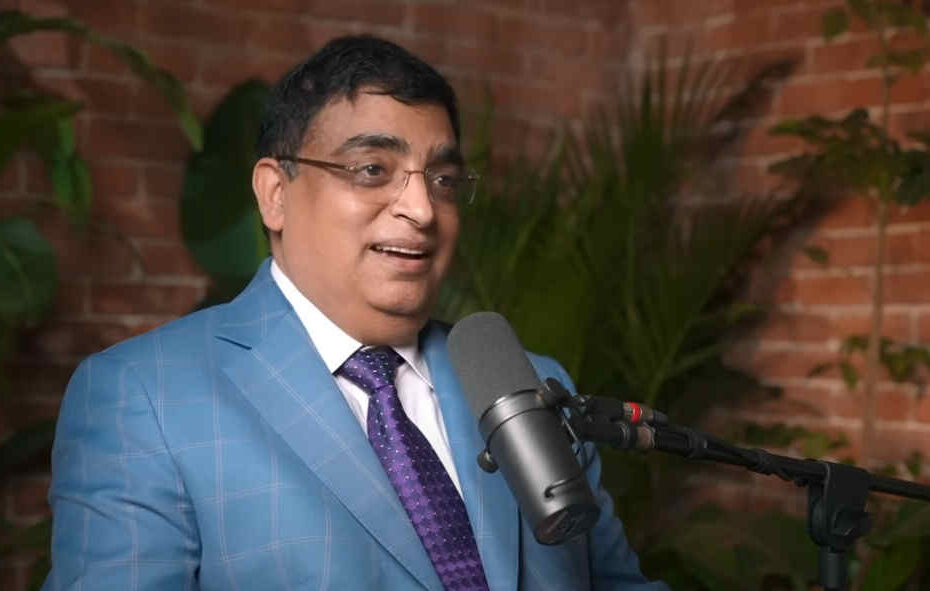
Read the full transcript of urologist Dr. Rajesh Taneja’s interview on The Ranveer Show episode titled ” Men’s Sexual Health – Frank & Open Conversation With Urologist Dr. Rajesh Taneja”, Feb 16, 2024.
Introduction to the Medical Series
RANVEER ALLAHBADIA: Welcome to the latest episode of our medical series on the Ranveer Show. We’ve been creating multiple medical and health oriented podcasts in both English and Hindi. This one is obviously for the guys. Mostly it’s about men’s problems, it’s about testosterone, it’s about sexual health, it’s about the lifespan of your penis.
You’re going to enjoy this episode because it’s with one of the country’s top urologists, Dr. Rajesh Taneja. This episode is not meant to be watched with your family unless your family is super chill with this kind of conversation. It’s a lot of fun. It’s very informative. This is Dr. R.T. on TRS.
Dr. Rajesh Taneja. Maybe my face and my voice is not conveying this, but I’m very excited to talk to you. The reason I’m not being able to convey my true inner emotion is because we’re shooting in another studio. There was a problem in our old studio, but I’m just really glad I’m getting to do a biology podcast which has now become my comfort zone.
So it’s great even being in your presence. You’re a very chilled out guy. I’ll begin by saying thank you for being so accommodating and giving us time in the middle of this very, very busy life that you have.
DR. RAJESH TANEJA: Thank you so much, Ranveer, for asking me to be here. And it’s an absolute pleasure. The pleasure is entirely mine. Don’t worry.
RANVEER ALLAHBADIA: Okay.
DR. RAJESH TANEJA: And we are good to go.
Why Doctors Watch Medical Podcasts
RANVEER ALLAHBADIA: Okay, thank you sir. Want to begin by asking you about our medical podcast, which you have seen. So it’s a little self obsessed question to begin with and we’ll get into deep biology, details about surgery, surgical stories, etc.
But you’ve seen some of the doctor podcast that we’ve done. My question to you is a little bit to understand the medical industry a little bit more. Why is an experienced, busy doctor like yourself even watching my medical podcast? Is there anything you gain from it?
Because when I’m asking questions, it’s from the perspective of 18 year olds and college students and young professionals who are trying to understand biology more. But what is it that you gain from those conversations?
DR. RAJESH TANEJA: I liked a few of them and I forwarded them because sometimes it is difficult to convey to your nears and dears with whom you live or you talk daily and you try to tell them, okay, there is a gut health that is seen to be something wrong there and you need to look at it.
And things like, you know, there is a discussion about God. So I feel that I’m not the only one who talks or thinks like that. There are others, especially surgeons who talk like that.
The Surgeon’s Perspective on Healing
RANVEER ALLAHBADIA: Do you think that the process of surgery in the long term, like how many years have you been doing surgery?
DR. RAJESH TANEJA: Since 1986, so around almost 40 years. Almost 40 years.
RANVEER ALLAHBADIA: This process of doing surgery over 40 years, how does it change a human’s mind? As in the human actually doing the surgery, what ends up happening to you?
DR. RAJESH TANEJA: So the biggest thing is that you should know that me and a cobbler, we both cut the leather or skin and put stitches. The difference is that I cut those stitches after 10 days and the wound heals, it doesn’t gape. And in a cobbler’s job, even after 10 years, when the stitch is taken out, it opens up.
So there is something which is not in my hand which helps the healing, which keeps the tissues together. And that power needs to be recognized. No one better than a surgeon will recognize the power of healing. And we so much depend upon it.
Today I’m sitting here, you call me because I am perhaps a successful surgeon. That success is because when I cut and stitch, it heals. And that healing is unfortunately not in my hands. I’m just taking credit. So that power needs to be recognized.
RANVEER ALLAHBADIA: There’s an element of nature in your work.
DR. RAJESH TANEJA: Exactly. That’s what we are coming to.
Understanding Male Anatomy
RANVEER ALLAHBADIA: Okay. Specifically, there’s a lot of young brothers watching this podcast because we’re going to be talking about penises.
DR. RAJESH TANEJA: Oh, yes, of course, of course. I’m an andrologist.
RANVEER ALLAHBADIA: Do you think that 30 year olds, 35 year olds, and of course that I’m talking about Bros in their 20s as well. Do we truly understand the penis?
DR. RAJESH TANEJA: Well, we should. And I think a lot of people, boys, if they are in a boys hostel, they are taught whether they like it or not by other bros. That’s right.
So in our times, there used to be ragging. So once I joined the medical college, there used to be ragging. And that ragging in a boy’s hostel would give, in part so much of the insight into the organ called penis and how differently people would look at it and would ask you to imitate them or whatever.
For example, there used to be a hockey game. So that is how it used to be. So you needed to play hockey with it.
RANVEER ALLAHBADIA: Wow. Like literally you needed to play.
DR. RAJESH TANEJA: So I do not know. That kind of ragging doesn’t happen now, but then, so I will suggest that if you want a boy to grow into a man, send him to a hostel.
RANVEER ALLAHBADIA: Boy’s hostel.
A Remarkable Surgical Case
DR. RAJESH TANEJA: So penis has a structure and has a function. So as a surgeon, I can fix a structure, but as a function, a lot will depend upon how the healing comes as we’ve been talking about.
For example, I had a gentleman who, in a fit of schizophrenia, detached his penis. It was cut with a blade and thrown into a toilet. And then his brother picked it up somewhere in Kurukshetra. Oh my God. And called me up.
I said, you open a bottle of saline from the nearest nursing home, put this into a saline, wrap it with a cold ice and bring it to me. And he brought it and I reimplanted that. And I’m talking about 2000, maybe 1999 or 2000.
RANVEER ALLAHBADIA: Did it work after that?
DR. RAJESH TANEJA: Of course it worked. This guy got married and has got two children.
RANVEER ALLAHBADIA: Oh my God.
DR. RAJESH TANEJA: But when I was doing that, when I was reimplanting a penis, I wasn’t sure whether it would work or not.
Empathy in Medical Practice
RANVEER ALLAHBADIA: Okay, one second. I have to ask you a very base level question as you’re speaking about this. My body is in pain. Did you ever have to get past that as a young surgeon?
DR. RAJESH TANEJA: See, if you’re talking about pain of the patient, if I’m sitting in a chair in my clinic and there’s a patient sitting in front of me and he has a pain, unless I feel that pain, I cannot treat him.
The only difference between him and me is that he cannot think of a solution. And I can think of a solution. I’m trained to think of a solution. But to think of a solution, I need to feel the same pain sitting in my chair. Whatever it may be. It may be cancer, it can be injury, it can be whatever disease.
So that is my way of working. If I cannot understand or feel the pain or I cannot treat.
RANVEER ALLAHBADIA: How do you deal with it mentally on. For yourself, for your own mind and heart, does your mental health get affected?
DR. RAJESH TANEJA: Not at all.
RANVEER ALLAHBADIA: Not at all. Ever?
DR. RAJESH TANEJA: Never.
RANVEER ALLAHBADIA: Never.
The Surgeon’s Inner Journey
DR. RAJESH TANEJA: It gets affected when… So I tell you, if I have operated like for this patient, I came back and I slept off. We woke up at 1 o’clock, was sitting in my drawing room thinking whether it will work or not. What else could I have done? How would the family feel if it doesn’t work and how would I feel?
And tomorrow my residents, my staff, and they would feel that, look, our boss has done something which has failed. So that introspection is a constant thing. And my wife comes up and says, at 3 o’clock, what are you doing in this drawing room?
And I tell her, look, I’m just introspecting. Initially she didn’t understand, but now she knows what I’m doing. So that we have to go through, if I don’t go through it. So perhaps I’m gathering enough positive energy and putting it into that penis for it to heal.
Or whether I am soothing myself or thinking how next time, if I am faced with such a situation, what else could have been done? And that is a perpetual path of evolution and progress in my skill.
RANVEER ALLAHBADIA: Let’s talk about this surgery a little bit more. Because you spoke about skill and even the pain, you’re actually talking about the mental health related trouble, you faced on that evening. It’s much more to do with your skill than to do with that guy’s penis and his pain.
In terms of you’re putting pressure on yourself as a perfectionist, as an athlete, that how could I have played a better innings? Right. As a surgeon, you’re seeing it very surgery centric. My question to you is a little bit like more personal in terms of when I am hearing this, it’s hurting my body.
And there’s a lot of people listening to this podcast, guys who are going through the same thing. They’re very conscious of their own body parts right now. So there’s never been that angle you’ve never seen?
Medical Training and Desensitization
DR. RAJESH TANEJA: No, that doesn’t happen to us. Okay. Because I’ll tell you for two reasons. One, the first day of our medical college is anatomy. And we are into a dissection hall where there are tables of cadavers. Preserved cadavers. And you are cutting through them and seeing each nerve, each muscle, each artery, each vein, bone, whatever.
RANVEER ALLAHBADIA: This is MBBS.
DR. RAJESH TANEJA: That’s MBBS. The first day that you join MBBS, you enter the dissection hall that is the anatomy class. And we are all toppers from our various schools that reach there to that level. And we see people fainting there.
RANVEER ALLAHBADIA: Did you faint?
DR. RAJESH TANEJA: Never. So I will tell you a small story if you allow. So there was this guy who was a very hefty guy and he was the hockey captain of our class team in college, third year, we were posted in labor rooms. So we used to take deliveries.
So we were at the end of our MBBS, we are supposed to take deliveries because MBBS means you’re a doctor, you’re posted in a post and you are supposed to look after at least the deliveries at minimum.
So we are posted in the labor room and we are standing like this, four boys like this, in a gynecology labor room ward. And there is a sudden gush of blood and the baby comes out and we hear a thud. And this is a 95 kg man standing with me, 20 year old boy. He’s on the floor because he could never do it. But now he’s a neurosurgeon in United States.
RANVEER ALLAHBADIA: Wow.
The Cobra Story
DR. RAJESH TANEJA: But that was his first experience with blood. But I think if you tell me, if you allow me, I’ll tell you a story why I’m like this. So I was in class seventh and we were taken to the biology lab. And there was a jar which was empty. There were few jars which were empty. And I asked the biology teacher, I was in class seven. I said, why are these jars empty? They said, because we don’t have specimens enough. So if you bring some specimen, I’ll put it here. So I said, fine.
I went home. I couldn’t sleep. I said, what kind of specimen can I bring to my teacher? Because I loved my school, I loved my biology, I loved everything. So next day when I was going, actually, the school was in an air force compound and I was coming from outside. So I entered the air force compound and I saw a few guards standing on the roadside with this long stick, and they were killing a cobra. So way back in 1974, 75 or maybe.
So I looked at it, I said, what are you going to do with this? It was a 6ft long cobra. So they said, what will I do? We will just throw it and some bird will come, some eagle or crow or whatever would eat it and go. I said, can I take it? He said, yes, you can. So I picked up the cobra with the tail. I was standing tall, 4ft 6 inches with a cobra 6 foot long. And I went to the school.
So I was the center of the activity in the school. All the boys, girls standing there, and I’m holding the cobra in my hand and suddenly. And I’m asking for, where is the biology teacher? I brought a specimen for her. And suddenly somebody comes and slaps me. And I look back and I look at my revered principal standing there, a very nice gentleman. He’s no longer there. His son was a friend of mine.
And he said, what are you doing here? I said, sir, Balji Madden told me that we need a specimen. So I brought a specimen. She said, suppose this is alive. I said, no, no, they have killed it. You don’t know. And then the peon brought the jar and we put it in and the lab assistant put the formaldehyde into it and it started moving.
RANVEER ALLAHBADIA: Yes, it was alive.
DR. RAJESH TANEJA: Yes. So I’m that kind of a person. How do you expect me to faint with the sight of blood?
RANVEER ALLAHBADIA: From real cobras to metaphor cobras. We got to get back to the subject matter, though.
DR. RAJESH TANEJA: Yes. Sorry for the long answers, but this.
RANVEER ALLAHBADIA: Is what podcasts are, sir.
DR. RAJESH TANEJA: Yeah.
Emergency Surgical Procedures
RANVEER ALLAHBADIA: I want to ask you about that same surgery again.
DR. RAJESH TANEJA: Yes.
RANVEER ALLAHBADIA: That one where the guy cut off his own penis and threw it in the commode.
DR. RAJESH TANEJA: Commode, that’s right.
RANVEER ALLAHBADIA: Okay. You told the relative to put it in saline water and put it in a bag of ice so it stayed fresh. It didn’t rot parallelly. I’m assuming that that guy’s body was bleeding a lot from down there because there’s a lot of blood vessels.
DR. RAJESH TANEJA: That’s right. So they tied it. I told them to tie it, make a bandage. Because they went to the nearest nursing home and somebody just tied it and put a bandage. We have what is called dynaplast, which is a very stiff plaster and it has an elastic thing. So just put it and it sticks and it just holds on. So that’s how he came.
RANVEER ALLAHBADIA: What about his balls?
DR. RAJESH TANEJA: They were intact.
RANVEER ALLAHBADIA: Nothing. He didn’t do anything there?
DR. RAJESH TANEJA: No, he didn’t. So he used, you know, the old style shaving blades. There are two edges to the blade.
RANVEER ALLAHBADIA: Oh, my God.
DR. RAJESH TANEJA: So he used that kind of blade.
RANVEER ALLAHBADIA: And he would have, cut it like a piece of wood. Oh, God. Did you ever ask him why, what was in his hand?
DR. RAJESH TANEJA: He was not in this state of mind to answer those because nobody in senses would do that. So he was under treatment for schizophrenia.
RANVEER ALLAHBADIA: So he was basically going through some kind of a brain situation.
DR. RAJESH TANEJA: That’s right.
RANVEER ALLAHBADIA: Which was making him hallucinate or something.
DR. RAJESH TANEJA: That he must have been angry with himself. He may have. I do not know the story, but he may have been following a girl who may have got married. So he thought this is useless. This is the simplest plausible explanation for something like this.
Male Psychology and Self-Identity
RANVEER ALLAHBADIA: I think a lot of guys associate the self belief with their penises.
DR. RAJESH TANEJA: That’s right.
RANVEER ALLAHBADIA: Right.
DR. RAJESH TANEJA: That’s absolutely.
RANVEER ALLAHBADIA: I think men in general do.
DR. RAJESH TANEJA: That’s right.
RANVEER ALLAHBADIA: At some age they do. And then after a point you realize, oh, life is much more than this.
DR. RAJESH TANEJA: That’s true. But then at that age, they have nothing else to compare.
RANVEER ALLAHBADIA: How old is he?
DR. RAJESH TANEJA: He was 24, I think, at that time.
The Surgical Process
RANVEER ALLAHBADIA: Okay. Now as a surgeon, that guy’s fully wrapped up. You get a bag of ice with his cobra inside it. How do you figure what the first step is in fixing? You give that guy anesthesia.
DR. RAJESH TANEJA: Of course, he’s taken in for anesthesia. We open the dressing under anesthesia ready to clamp any vessel that bleeds or spurts. Because penis is a very vascular organ. So it oozes blood. It is supposed to take a lot of blood. The blood supply is there. So the moment you open up, there will be a fountain. Fountain of blood.
RANVEER ALLAHBADIA: Literally a fountain.
DR. RAJESH TANEJA: It is, it is. It is, actually.
RANVEER ALLAHBADIA: So when he was lying down, there’s blood squirting out.
DR. RAJESH TANEJA: So we just fold it. We have our technique to hold it. So what we do is we have a kind of instrument, we call it an artery forceps. We keep it ready. The moment it opens, we clamp it.
RANVEER ALLAHBADIA: It’s like a plug.
DR. RAJESH TANEJA: No, it is like a clip. Like a hair clip. Suppose something like that. So you just clip it.
RANVEER ALLAHBADIA: You’re talking about the hole that was left in place of the penis?
DR. RAJESH TANEJA: No, no, no. The individual arteries that are bleeding.
RANVEER ALLAHBADIA: Oh, my God. So you have to go in and just.
DR. RAJESH TANEJA: Just hold them, hold them with each of them, then repair them.
RANVEER ALLAHBADIA: But there’s been a protocol in the world of penis surgery where these kind of situations have happened earlier, where someone’s.
DR. RAJESH TANEJA: Penis gets cut off, very rare. And there was one report from Australia where it was reported that this has been. But then later on, you know, in those days, we didn’t have computers, we didn’t have those. So many web Internet to search. And I also moved on into more cases.
Detailed Surgical Protocol
RANVEER ALLAHBADIA: Okay, let’s talk about this specifically. I’m just trying to understand your world a little bit more. So you clamp up all the blood vessels. Then what’s the surgical protocol?
DR. RAJESH TANEJA: So the next is to wash that, remove all the dirt, wash it generously because you don’t want any infected material there. And then we have an antibiotic solution, so a multi, or what you call wide spectrum antibiotic solution. So there was microsen or another ciprofloxacin solution that we made in this, added streptomycin. At that time, we had a lot of streptomycin with us.
So we used those things, made a solution, dipped that organ there, made sure that it kills all the germs. Fortunately, this penis, it has a cavity which is filled with blood. That is how it gets erected. So that is all open. It is like a sponge. So it’s actually like a sponge. So when you put it into that solution, it absorbs all those water, that solution of antibiotics, and it was washed.
And then slowly we stitched each artery and vein and the layers of the penis, the urethra, the urinary tube, because that is also transected through which the urine passes. So the penis has a structure like this. It has two corpora cavernosa, two bodies like this, which cause erection. And the third body houses the urethra, the passage of urine.
So it is cut. It is actually three structures in a transfer section, three pipes. You can say that there are two cylinders and a small pipe called urethra, which is housed in a spongy tissue so that it can, when it erects, it has a capability of lengthening, elongating and widening and other things.
RANVEER ALLAHBADIA: So the surgical protocol was you basically refix the pipes.
DR. RAJESH TANEJA: Exactly.
RANVEER ALLAHBADIA: That’s it.
DR. RAJESH TANEJA: Plumbing.
RANVEER ALLAHBADIA: Plumbing. Damn.
DR. RAJESH TANEJA: So somebody asked me, what kind of doctor are you? So I say, I’m the plumber of the trade.
RANVEER ALLAHBADIA: Wow. Love it.
DR. RAJESH TANEJA: I’m a urologist, so I deal with the reservoir, I deal with the valves, I deal with the conduit. So.
Surgery Duration and Modern Techniques
RANVEER ALLAHBADIA: Okay, how long was the surgery?
DR. RAJESH TANEJA: So that lasted four and a half hours.
RANVEER ALLAHBADIA: Four and a half hours to stitch up one pipe at a time. If the same surgery was happening in 2024, how long would it have taken?
DR. RAJESH TANEJA: It would have taken maybe little shorter because now we have the availability of microscopes. At that time I used loop, but otherwise now we have microscopes. So you have a much finer instruments. You have much finer suture material, the threads to stitch. So that makes things easier.
Post-Surgery Experience
RANVEER ALLAHBADIA: I’ve had two surgeries in my life. Fortunately not on the Cobra, but on my shoulders for some judo injuries. And they were pretty intense surgeries. I had to stay in hospital for three, four days and all that. The surgeon comes and meets you post the surgery and just gets an update in terms of how you’re feeling and all that.
If the listeners have not gone through surgery, let me have a shot at describing what it’s like when you are operated upon. Have you been operated upon for anything? Yes. Okay. So please correct me if I’m wrong and if you have another experience, but you totally know when you wake up from surgery, there’s two things that happen.
One, for me, I’ve had three surgeries totally in my life. I’ve hallucinated every time because of the anesthesia. You see hallucinations. Okay, fair. I want to know about this also. The second thing is you totally know that your body has been cut open and something has happened inside. You’re very conscious of that body part. You kind of feel like there’s a fluid buildup inside. You’re hallucinating. You do feel a little sick almost. You feel like something’s wrong. You know, you get maybe a little fever.
Two questions. One, tell me about this specific guy, because there’s also schizophrenia mixed in. So when he would have woken up, I don’t know what would have been going on in his own head, because what if he had woken up in his normal personality and realized that his schizophrenic personality had cut off his penis? So what was that experience like talking to him? Secondly, what was your mentality. Third was in pain.
The Surgical Approach and Patient Care
DR. RAJESH TANEJA: So I’ll tell you, I’ll answer all the three questions. The first is that my mentality, I’ll tell you, was that he shouldn’t cut it again. So we needed to put restrainers. So we put restrainers with the thing.
The second was to give some kind of injectable and psychotropic drugs which keep him calm, because this was different. So some kind of haloperidol is something which we used in him. Cernae is the trade name. And we also were very clear in getting a psychiatrist evaluating him immediately after he woke up.
And he was, fortunately, you know, before he came to us, he had been administered something like a painkiller with a psychotropic effect. So he was calm when he came to us and he was willing for a surgery, which was extremely rare to find. I was thinking that he would be fighting when he came, but he did not. So he actually submitted himself for the repair. That was the best thing that could have happened on that day.
And next day, morning, when I’m talking to him and we don’t broach the topic, I don’t ask him, why did you do it? My job is to go and tell him only positive. I said, I went and told him, look, you’re absolutely fine. You’re young again, so don’t even think that something has gone wrong. You haven’t done anything wrong. There was something that went wrong and I fixed it. And in all probabilities, it will work. So don’t even think. And what would you like to eat? So chole bature. Something like that.
So that is the whole idea. When you are actually looking at the patient, he’s into a lot of trouble. You need to distract him from feeling pain and discomfort. And the best thing that I find is you offer them what they want to eat. For example, it’s a kid, we get an ice cream for him or a chocolate for him. If he’s an adult, if he’s a Punjabi, we tell him, chole bature. So we tell them, what do you want to eat? So that is the thing. And once you offer something to eat, then he knows that, yes, I am at home, I’ve arrived.
RANVEER ALLAHBADIA: Because that’s when the body can begin healing.
DR. RAJESH TANEJA: That’s right. Positivity is the extremely important thing. See, we started with the talk that I said that there’s a power that heals. That power is driven away by negativity and is brought in by positivity. My job after the surgery, I’ve done my job as a craftsman. But my job is to make sure that it heals. And the way it heals is that the person has to be absolutely positive. So I go to the room, I crack jokes, I talk about the weather, I talk about his other things, and I make him walk and I talk about what he wants to eat.
RANVEER ALLAHBADIA: What was he saying about this whole thing? Did he address it at all?
DR. RAJESH TANEJA: Yes. So before he was discharged, I told him that, look, you did something which you shouldn’t have done. And I’m sure you understand that. He said yes. And I told him, look, I have been able to fix it. God has been very kind to both of us. But make sure that you protect it, because it is your responsibility to protect it. And it is no longer yours because you have cut it and thrown it. It is my penis that I am handing it over to you. So this is mine and I’m giving it to you to protect it. Will you do that? He said, yes. And that’s how it is.
Understanding the Root Cause
RANVEER ALLAHBADIA: You know, when we make a mistake professionally, my protocol is always you go back to the mistake, you understand why it’s done, and you respond to the situation. I’m assuming that his mistake was that he didn’t take his psychiatric medication, therefore he went into that aggressive phase. Right? That’s the mistake.
DR. RAJESH TANEJA: Most likely, yes.
RANVEER ALLAHBADIA: So your call to action to him was, listen, just take care of your brain first, because this might happen again. Correct? Okay.
The other question that I have for you, related to the same case is the penis has a lot of nerve endings. That’s why the sex organ in the first place. Now you can repair the pipes, you can repair the skin, etc. How do you ensure that the nerves also get repaired? Because he’s cut through the nerves also. So did he even have sensation?
Nerve Regeneration and Healing
DR. RAJESH TANEJA: He did. So body is great. Nature is great. One of the best computers is the human body or any living being on the earth, whether it’s plants or animals, they’ve been bestowed upon by mechanisms which protect them. Life doesn’t go easily, even if you try to take it off. It’s very difficult. We are very tenacious. Life is very tenacious. It’s not easy to go.
Similarly, you know, at that time, I did not repair nerves because I didn’t have the microscope or something. But the nature grows. There’s something called nerve growth factor that is there. So whenever the nerve is cut, the nature brings in what is called nerve growth factors, the vascular growth VGF and NGF. And these are the growth factors which perpetuate. And he was young. He was 24.
RANVEER ALLAHBADIA: Is it like a precursor to nerve tissue?
DR. RAJESH TANEJA: Yes. So it allows the nerves to grow. So the nerves will start growing here. There are nerves here because they are vascularized. They don’t die, but the structure is there. So these nerves will come and they will find another nerve and get into it. So they will bridge.
The only problem is if something like that happens to your main switch. So when you switch on the fan, it is the light that switched on, so that can be cross connection.
RANVEER ALLAHBADIA: Oof.
DR. RAJESH TANEJA: Beyond that, nothing else. Which means the sensation which should be traveling to your brain as a pleasure, turns into a pain.
RANVEER ALLAHBADIA: Oh, my God.
DR. RAJESH TANEJA: That is the only thing that we have to be worried about.
RANVEER ALLAHBADIA: Because the nerve, instead of connecting to the same pleasure receptor, connects to a pain receptor.
DR. RAJESH TANEJA: Maybe that’s right.
RANVEER ALLAHBADIA: Oh, so what happened in his case?
DR. RAJESH TANEJA: He was fine.
RANVEER ALLAHBADIA: So nothing went wrong?
DR. RAJESH TANEJA: No, he had sexual activity. After that, he produced two children.
Neuropathy and Pain During Sex
RANVEER ALLAHBADIA: But you’ve seen cases where the feeling of sex hurts a guy’s penis.
DR. RAJESH TANEJA: Yes.
RANVEER ALLAHBADIA: Which is exactly a situation like this where the nerve is actually joining with the pain receptor.
DR. RAJESH TANEJA: It is actually not post surgical, but patients who have diabetes or diabetic neuropathies or a neuropathy for another cause.
RANVEER ALLAHBADIA: What is neuropathy?
DR. RAJESH TANEJA: Neuropathy is any disease of nerves is neuropathy. Okay, so a nerve, a disease of the nerve. So there is a nerve ending which is going into the penis and it is touching the glans, and somebody is touching the glans and a pleasurable sensation is going to go back through the nerve. But here the nerve is under inflammation, so it takes that pleasurable sensation into pain.
So patients keep complaining that there is a painful pricking sensation in the penis. And that is very usual. I see it very often, once in a fortnight in a diabetic man.
RANVEER ALLAHBADIA: So it’s something that gets created over time.
DR. RAJESH TANEJA: It is injury to the nerve. There is inflammation to the nerve due to diabetes.
RANVEER ALLAHBADIA: It’s important to take care of your health.
DR. RAJESH TANEJA: That’s right.
RANVEER ALLAHBADIA: Like it can even affect you down there.
DR. RAJESH TANEJA: Yes.
RANVEER ALLAHBADIA: Imagine just overnight, one day you wake up and the same feeling that was giving you pleasure once upon a time now gives you serious pain.
DR. RAJESH TANEJA: That’s right. Oh, my God.
RANVEER ALLAHBADIA: Next time you’re thinking of having that cake, just think of this moment from this podcast. Oh, my God, sir. All right, I want to talk a little bit more about this nerve tissue situation from a biological perspective.
DR. RAJESH TANEJA: Yes.
The Biology of Pleasure
RANVEER ALLAHBADIA: Now, the process of sexual activity is meant to be pleasurable.
DR. RAJESH TANEJA: That’s right.
RANVEER ALLAHBADIA: Right.
DR. RAJESH TANEJA: That’s right.
RANVEER ALLAHBADIA: And that pleasure happens because of pleasure based nervous pathways.
DR. RAJESH TANEJA: That’s right.
RANVEER ALLAHBADIA: Right. So if you’re in the act of sex, your penis is sending back a pleasure based signal to your brain that this is good. Do it. Now, that’s nature’s way of procreation, so that you create kids. And of course then people use sex as recreation also for the same reason.
My question is, why aren’t nerves like that present in your hands? Okay. Or maybe the other question I want to ask is, you know, comparing it to the female body, girls have more pleasurable points. Guys usually just have one. But the truth is, and we had a sexologist also on the show long ago, she said that actually even guys have pleasurable points, but lots of men don’t even know that certain points are pleasurable because they’ve not explored sexually.
Now I’m actually asking you this both from a sex perspective and a biology perspective. So the same pleasure based nerves pathways that are present in the penis, are they also present on say your back, your earlobes, your neck?
DR. RAJESH TANEJA: Yes.
RANVEER ALLAHBADIA: And it’s different for different men, like based on their biology. That’s why being loved in those points gives you pleasure.
Touch and Brain Interpretation
DR. RAJESH TANEJA: See, if you look at a sensation, there are various sensations which we are taught as MBBS students. So there is a touch, pain, temperature, vibration. These are the pressure. These are the five sensations that the nerves are supposed to take. Touch is a sensation which can be always pleasurable unless it is a rough touch. So we are talking about touch. We are not talking about pressure, pain or pinch or something.
So it is about your brain being wired, for example. I’ll give you an example. So when you are with your loved ones and she’s touching you, wherever she touches you, it is going to give you pleasure. Whereas suppose you are standing in a crowded place and somebody touches you, you may just slap him. The touch remains the same. It is about the wiring and the final interpretation in our cerebral cortex.
Because the touch is going to go into the cerebral cortex for processing. And after the processing, the brain decides, or your psyche or your wiring decides how to react to it. You can derive pleasure out of it or you can derive offense out of it and react accordingly.
So somebody rightly said, whatever you mentioned was right, that the male nipples are actually more pleasurable than the female nipples.
RANVEER ALLAHBADIA: As in male bodies derive more pleasure from the nipples being stimulated.
DR. RAJESH TANEJA: That’s right. That’s right. So it is only that women don’t know, so they don’t do it and men, they’re hardly bothered because they’re bothered more about procreation. They’re wired in that way.
Gender Differences in Sexual Experience
RANVEER ALLAHBADIA: I think for men and women, at least what I have understood based on all the people we’ve had on the show and conversations with friends, I think sex is very different as an activity. I think for a lot of men, it’s just about the final result. It’s just about the final orgasm. And both for themselves and their partners.
Like there are guys who actually care about the partner’s orgasm also and who prioritize that in sex. Often girls will say that these are the best kind of male sex partners. But the actual fundamental key differences. For men, sex is about the orgasms, theirs and their partners. But for women, it’s about the whole process they care about. Even like the conversation you have before the sex. I mean, the whole process is prioritized much more than the final orgasm.
DR. RAJESH TANEJA: That’s absolutely right.
RANVEER ALLAHBADIA: But there must be some biology in this also. You know, of course, in terms of, I would just assume either girls are more in sync with their own nervous system or girls have more nerve endings. Like they say, the olfactory system of a woman is much more developed. That’s why they can smell perfumes much more deeply and they can pick up on scents much more easily. But I’m sure this spreads across the body. There’s got to be some biology.
DR. RAJESH TANEJA: Yes. So you’ve asked so many questions in one statement, I need to answer each of them. Sorry, I called a professor. So I’m supposed to dissect out each statement, which way?
RANVEER ALLAHBADIA: And go for it. Go for it, sir.
The Biology of Sexual Response: Understanding Gender Differences
DR. RAJESH TANEJA: So first thing you said is that it is the behavior which is different from men and women. If you go back to, say, thousands of years in the cave era, men were supposed to go hunting. It would take one day, two day, five days, seven days. But they would come back with a bounty. They would give it to the woman. Woman would divide it amongst the children and make sure that the neighboring woman’s child doesn’t come and eat that. That is how the cave was.
Men needed to procreate. They had little time at home, so they would procreate. So men are wired to have sex quickly, ejaculate and go finish.
Women, on the other hand, imagine her man is away for a hunt. If she’s easily stimulated into sexual activity, there will be so many men who can come and do that to her. So as a protective thing, these women are wired in such a manner that they need to be stimulated at more than one center, maybe multiple centers, before they are ready for sex.
RANVEER ALLAHBADIA: So, and biologically, does this mean more nerve endings in other body parts?
DR. RAJESH TANEJA: That’s right. So they’re all together. Only then she would want somebody to have sex. For example, if you understand what a quickie means. A man is always ready for a quickie, but the woman would resist.
RANVEER ALLAHBADIA: And it actually boils down to the nervous system.
DR. RAJESH TANEJA: Yes. And the reason why that is like that. I’ve just told you the reason why it is difficult to get a woman to sex for that reason. Because she needs to be wired. The ambiance should be good. If there is dirt around or the house is in disorder or it is smelling bad, you know, as you mentioned, olfactory, eye, ear, everything. Only then a woman would be ready for sex. That is why you have to woo a woman, because that is the biology of a woman.
The Role of Sex Coaching in Urology
RANVEER ALLAHBADIA: I’m assuming a part of your job is also to kind of give sex coaching?
DR. RAJESH TANEJA: Yes, it is.
RANVEER ALLAHBADIA: Could you encapsulate that in five points for like, what do you usually tell guys?
DR. RAJESH TANEJA: So I’ll tell you. In India especially, you know, we’re talking. Okay, we have so many things, but I’ll tell you one this, you just mentioned about men who are worried about their orgasm and the partner’s orgasm. So there are couples who come to me and they said that, look, we are trying for a baby. And the gynecologist has said that we must have sex on these two days, 14 to 16 days of her period. But during those two days, I can’t have an erection. So what is there?
So you have to understand that it is a pleasurable act. So when you make a pleasurable act as an act of performance, that means you’re taking away the pleasure out of it.
RANVEER ALLAHBADIA: The man, this pressure.
DR. RAJESH TANEJA: So you’re taking away the pleasure. So the glans penis is supposed to get stimulated. It goes to the mind, and mind sends the signal for the erection to persist and gets more stimulated. And again it goes back to this mind and brain and it gets another stimulus to stay erect.
But what happens if you are not thinking about that pleasure? So you say pleasure. So you are not worried about the pleasure. So the boy is worried about ovulation, ovulation time, fertilization. So there is no pleasure. So he is doing, performing a duty. So when you take away the pleasure, the performance goes.
And then he’s into a vicious cycle. So there is a poor performance and then there is a guilt because the woman is going to come out and say, what the hell have you done? You spoiled my evening and you have not been able to fertilize my eggs. Then he goes into depression and from depression he then takes some courage and again approaches the woman for sexual activity. But then in the back of his mind he has pre-performance anxiety.
RANVEER ALLAHBADIA: Which happens to every guy I’ve ever spoken to has gone through the situation.
The Vicious Cycle of Performance Anxiety
DR. RAJESH TANEJA: So pre-performance anxiety will reduce the performance and the whole vicious cycle. The four things: the poor performance, guilt and depression and pre-performance anxiety and then poor performance. So it’s a vicious cycle. So most of these people come to us like that.
RANVEER ALLAHBADIA: We had Dr. Vijayant on the show, on the Hindi version of the podcast, we spoke about this in detail and the basic outcome was you actually need the partner in this case to be encouraging verbally, just say it’s okay and give comfort, give nurturing. Sometimes it even takes a few months for a guy to get out of that performance anxiety cycle. But once he’s out, he’s out forever. So you actually need the girl to give verbal cues and say it’s okay, be calm, etc. Is that what you’ve seen?
DR. RAJESH TANEJA: So I’ll come to this.
RANVEER ALLAHBADIA: Sure.
DR. RAJESH TANEJA: So this cycle, vicious cycle, published under my name in 2007, Journal of Sexual Medicine. This is when I published this. So there are two situations when the couple comes to me. In this situation there is a woman who is very harsh. So she’s like a principal of the school. And there’s a boy who can’t answer what is two plus two because if he answers wrong he’s going to get a stick.
Now tell me, how can this man have erections with this woman in this situation? So you are absolutely right. We need to in such a situation, counsel the woman. So many times women would understand. But in today’s time, I’m talking about 2024. In the last 20 years perhaps women have changed. They have their rights. They are aware of their rights.
Last week only I had a patient in whom the woman said that, look, we are married only for a year. I have the whole life with me. I am going to divorce him. There are couples who have been together since mid school, high school. They never had sex. They get married and the boy is not able to perform and the woman leaves him.
Now you need to find out. So what I do is I put them together and I ask the woman, do you want to patch up or do you not want to patch up? So if you want to patch up, the first step is, the very first step that I accept is that you have come all the way, taken my appointment. Sitting in front of me means that you want to patch up.
So if you want to patch up, then we are willing to work. My problem is that you are sitting with me for 15 minutes. But next time you are going to come after a week. But you have one week minus 15 minutes to be with him. So I can’t do everything in 15 minutes. I’ll take one step. You perhaps have to take 99. So unless you are willing to take those steps, I can’t treat you. And this is very important.
So this is the counseling to the woman. There are women who will say, okay, I’m willing to do that. There are women who would say, to hell with it. So we have both kinds, you know, all kinds make this world.
Pharmacological Solutions and Treatment Approaches
Apart from this, there is a pharmacological agent that I use. So before I go to the pharmacology, I’m not going to be a proponent of alcohol, but alcohol inhibits the inhibitions. Inhibits the inhibitions. So if you ask these couples, the couples that you are talking about, that if they have a drink or two, just a drink or two, they would perform much better. But if they have six drinks, then there’s a problem.
That’s what the Shakespeare said. Alcohol will increase desire and reduce performance. But first, 30 to 60 milliliters, it inhibits the inhibitions. And that is exactly what we need. So we need to titrate that. I’m not a proponent of alcohol, but you will see that your friends who can take it, who do take it, tell them to limit the drinks and you see the difference.
The second is we have a pharmacological agent which inhibits the inhibitions. So I use that and it works. So there’s a tablet. It’s a very cheap tablet. It’s actually 1950s old tablet. Nobody uses it these days. It’s an antidepressant nobody uses because we have wonderful antidepressants or R and D and other newer medicals. I use it because it has a side effect that it causes erection. What’s the meaning? Trazodone. So the side effect of this drug is erections. So I use the side effect.
RANVEER ALLAHBADIA: So that is visualizing a depressed guy in the 1950s taking an antidepressant.
DR. RAJESH TANEJA: And then that is how it was found. Really? Yes. If you look at the pharmacology book, so we read what is called Lawrence Pharmacology and there’s a story about it. There was this banker who went and reported this. So we are evolving. So that’s how it is.
RANVEER ALLAHBADIA: He’s kind of sad about like his life and suddenly out of the blue, it’s like, what?
DR. RAJESH TANEJA: So when I was doing my third year MBBS, when we had taught pharmacology, that was the day I realized that I will use this molecule once. And I did that. And I’m still doing it. Published it in Journal of Sexual Medicine 2007. So that’s how it is.
RANVEER ALLAHBADIA: And sometimes I think in situations like that, like, I’ve had so many bros of mine confide in another brother. That’s what you do because you don’t know who to talk to.
DR. RAJESH TANEJA: Exactly.
RANVEER ALLAHBADIA: So a lot of bros come and say, listen, I’m having this issue. In most of the cases, 99% of the cases, the guy is usually anxious about his job. He’s an anxious guy. In general, that anxiety is making its way to the bedroom. And as a bro, all you tell him is, listen, it happens to every guy. Chill. And it’ll be a phase that you’ll get past. Just you need your partner to support you. If that partner supports you, you can go through a lot.
DR. RAJESH TANEJA: Exactly.
RANVEER ALLAHBADIA: That’s the bottom line here.
DR. RAJESH TANEJA: That is the bottom line. The partner has to be important person. I take the fees, I take the credit, but the treatment has to be done by the partner. Very clear.
Common Sexual Health Issues in India
RANVEER ALLAHBADIA: In India especially. What other kind of sex coaching do you need to give people? Because this problem is actually very common. What we just spoke about, performance anxiety. Is performance anxiety the most common?
DR. RAJESH TANEJA: Yes. So I will tell you that, I will give you the history of what is written in the books. So in 1980s, it was thought, till 1980s, it was thought that 90% of erectile dysfunction. I’m quoting Western literature, 90% of erectile dysfunction is functional. That is, this means there’s nothing wrong with the organ. And 10% is there is a problem with the organ. For example, diabetes or something.
RANVEER ALLAHBADIA: Which is what we spoke with. The pain.
DR. RAJESH TANEJA: That’s right. Diabetes causes sclerosis or fibrosis or obstruction of the blood vessels so that there’s no blood supply. It causes inflammation of the nerves so that there is no sensation, there’s no blood supply, there’s no sensation. So organ has to, you know, it’s eventually cannot perform.
RANVEER ALLAHBADIA: Diabetes is basically like it’s eating your body from the inside.
DR. RAJESH TANEJA: That’s right. It’s a dreadful disease.
RANVEER ALLAHBADIA: Go on.
DR. RAJESH TANEJA: So till 1980s, the Western literature talked about 90% being functional. We call it psychogenic and 10% being organic means there’s a problem in the organ. In the 1980s we started having what is called penile implants. So the literature in 2010 would tell you that 90% is organic and 10% is psychogenic. That’s Western literature.
So how does it change? Obviously I’m not blaming anybody, but then there are forces which are industry driven and imagine it is easier for me to treat a couple like this by putting an implant rather than trying to convince the lady that you have to be supportive.
The Industry Behind Sexual Health Treatment
RANVEER ALLAHBADIA: Please correct me if what I’m going to say is wrong. What you’re effectively saying is there are lots of problems related to sex. All those problems boil down to erection or the lack of it. In most cases it’s actually psychological where the guy is just feeling anxiety. What we just spoke about. But there’s a lot of money to be made in this industry by the pharma companies and by people who make implants. Therefore, they push for research that suggests that if you’re having trouble getting an erection, you either get an implant or you take a medicine for it. Is that what you’re trying to say?
The Power of Psychological Suggestion in Sexual Health
DR. RAJESH TANEJA: Absolutely right. Absolutely. So I’m coming to, I’ll give you a small story. So I used to go for an, after I started my practice, I used to go to a place 500 km from New Delhi and I used to conduct an OPD there. And there was a big army cantonment there.
So one day there was this soldier who came and saluted in very crisp uniform. And he said, sir, I am going on leave tomorrow. I said, that’s very good, you should go. Then this young soldier tells me that, sir, but I don’t have erection. I said, how do you know? Are you with your family here? He says, no, my family is back home and I’m going to go and face my wife. But I have lost my erections.
So I said, how do you know that you’ve lost erections? So he said, I was guarding my commanding officer’s luggage on the railway platform and there was this sadhu who was sitting across the railway line and he called me and he held my wrist and told me he actually palpated my pulse and told me that “terato kalani ota” means you don’t have erections. And from that day onwards, I’ve stopped having erections.
Now you must understand we were talking about psychogenic and organic in United States. If somebody tells a United States army soldier that you are not having erections, the first reaction will be he’ll punch his face. In India, we are so vulnerable to suggestions by so called sadhus or revered religious people that whatever they say is gospel truth. And we are willing to make ourselves vulnerable and accept that suggestion.
So this is a damage by suggestion, a psychological damage by suggestion. So this guy says, no sir, that Sadhu Baba has told me it will not happen. So it is not happening. So give me, do something for me, otherwise I am going to die because my wife is not going to accept me. So coming back to the story of the psychogenic versus organic. So we have so many reasons for having psychogenic importance.
RANVEER ALLAHBADIA: What did you do for that soldier? Give him something?
DR. RAJESH TANEJA: No, no, I, there are ways. So what we do is, I talked to him, I gave him that tablet called Trazodone because I knew that it is just I have to inhibit that negative thought. So inhibit the inhibition. So inhibition of sex is a negative thought. So you inhibit the inhibition and I beat. This is a, so we put what is called a vasoactive substance and we put it into the penis with a small fine needle inject. And he has an erection. Because this is vasogenic. So vasogenic.
RANVEER ALLAHBADIA: You did that to him?
DR. RAJESH TANEJA: I did it so that he sees that it is erect. I said, look, your organ is fine. You have absolutely no reason. Go home and enjoy. He smiled, saluted and went back. That’s all. He never seen him again.
RANVEER ALLAHBADIA: Did he have a boner when he went away? Genuine question.
DR. RAJESH TANEJA: No, no. We tell them they cannot walk out like this. They have to masturbate, ejaculate. And I have to see that the erection has come down because I have created the erection. It is my responsibility to see that the erection doesn’t last long enough to cause a damage to the organ because persistent erections are causing damage to the organs.
RANVEER ALLAHBADIA: Okay, now go on. You’re talking about the studies.
Understanding Psychogenic Erectile Dysfunction
DR. RAJESH TANEJA: Yes. So I was trying to tell you that the distinction between psychogenic and organic erections. So the psychogenic organ erections, obviously we in India have lot of issues which create lot of psychogenic erections.
For example, I just talked about suggestion. I talk about, friends talking in the school or college or high school, that look, you’ve had a girl, you have had a girl. Then they tell, okay, you don’t have man, you haven’t had sex as of now. My God, you must be useless. So this guy becomes useless. Then he has a guilt that oh my God, perhaps I’m not good enough with a woman. That’s why no girl comes near me. That’s how it is.
So he is actually, he’s drowned in his own guilt and he will never have an erection. So he is a kind of introvert in that manner. So we have lot of people like that. They come to us so many times. Newly married people with arranged marriage will come, the girls parents, the boys parents. They’re all there, four people there to these.
And when I talk individually to each partner, I ask this to the boy, what is your, what is wrong with you? Said sir, honestly, I can tell you I’ve never touched a girl and I’m scared to have to touch her. And her presence makes me so nervous that I can’t have an erection. And this is not something that I’m talking about a story. This happens more often than you can think of.
So then I have to just tell the girl that you’re very lucky to have a boy like this. I have to tell the parents that your boy is absolutely fine. I’ll give him something and he’ll be fine. No more tests.
RANVEER ALLAHBADIA: Now I don’t get how parents get involved in this.
DR. RAJESH TANEJA: No, they do in India. So India is a very unique country. I just gave you an example. Nothing like this can happen in any other country that somebody sitting across a railway line will call you and tell you that you don’t have erection, you stop having erection. So that’s the suggestion that we are vulnerable to.
So what is my practice? My practice is very simple. So how do you differentiate between psychogenic and organic erections? They’re very simple. So if I ask one question that when you wake up in the morning, do you have hard ons or not? So if you are having hard ons early morning spontaneous erections, that means your machine is absolutely fine, don’t have to.
RANVEER ALLAHBADIA: Worry till what age?
DR. RAJESH TANEJA: Any age.
RANVEER ALLAHBADIA: So even when you’re 50, 60, 70, you still get hard ons in the.
DR. RAJESH TANEJA: Morning, the frequency decreases a lot depends upon testosterone. You cannot decide what is the age at which you will go bald. Can you have an age? No. At what age will you have a gray hair? Do you have age? No. So it is not like that. This is individual.
So those people who exercise and continue to exercise, their testosterone is high. So whether it is a male or a female, somebody who is a sports person is likely to have a higher sex appetite because the testosterone even in female in that case is high. And the role of testosterone in females is sexual activity which not many people know.
So for example, somebody got a Viagra for Men, they say, somebody who discovers a Viagra for women will be multi millionaire.
RANVEER ALLAHBADIA: Why?
DR. RAJESH TANEJA: I just told you. To get a woman to bed, you have to touch all the points. There are so many things, so it is difficult to get a woman to arouse. So women have an, they have a slow arousal as compared to men.
RANVEER ALLAHBADIA: There’s also an art to it, which many guys refuse to learn.
DR. RAJESH TANEJA: That’s okay. But suppose instead of learning that art, there’s a tablet that you put in. So that tablet, imagine how much it is going to. You just have to give that tablet to the woman and she’s with you. So the point is that there is a different biology.
But in men, if you have erections which are spontaneous, which are morning reactions, then first thing is clear. I need no more tests. Your organ is fine. There’s only a disconnection between your organ and the brain. So basically, your organ has a mind of its own. It will erect, but not with your efforts or your wish. So it has its own wish and command. Not it is, it’s not under your command.
RANVEER ALLAHBADIA: Mm.
DR. RAJESH TANEJA: So there’s a disconnection, and we need to sort that out. So we sort it out.
RANVEER ALLAHBADIA: In most cases, the psychological. That’s been the underlying.
DR. RAJESH TANEJA: That’s right.
RANVEER ALLAHBADIA: This is such an important conversation because a lot of guys are just going through the same performance anxiety problem. A lot of guys, without hearing this conversation, that it is psychological. I want to actually talk a little bit about testosterone also.
DR. RAJESH TANEJA: Yes.
The Role of Testosterone in Men’s Health
RANVEER ALLAHBADIA: Because if you truly focus on increasing your resting levels of testosterone, I would assume that problems like this, performance anxiety won’t arise as much because testosterone is linked to so many other positive functions of the body. Also, I think it is a hormone that should be spoken about more and every man at least should be educated on how to increase his testosterone levels.
So I’m going to have a go at it. Please add stuff to it. And this is based on an episode of Dr. Huberman that I researched upon for the sake of a elaborate testosterone Hindi video that I’d done. It boils down to the basics. Clean food, high protein intake, lots of movement, ideally a competitive sport. That’s been like a recent study. All these things over time, compound. And generally your testosterone levels stay good up till the age of 50.
And right now in America, for a lot of guys post 50, this has become a very common conversation that they do something called TRT, which is under the guidance of someone like yourself. Testosterone replacement therapy. Before I ask the doctor for his inputs, I need to tell the audience that again, all the doctors we’ve spoken to. The lifestyle factors are effectively the same. And you guys know all these lifestyle factors. It’s exercise, clean food, etc.
The only added factor is a competitive sport. If you’re able to play a competitive game of football once a week, basketball, cricket, where you want to win, for some reason, that’s shown an increase in testosterone. Anything else you’d like to add, sir?
DR. RAJESH TANEJA: Yes. So testosterone is the food for the body. So suppose you are not utilizing it, body stops producing it. So either use it or lose it.
RANVEER ALLAHBADIA: And you use it by exercise.
DR. RAJESH TANEJA: Yes. So what does the body mean? Why, why should you have a testosterone and a woman shouldn’t have a testosterone? What does testosterone do to you? It gives you muscle, broad shoulders, strong bones. What are they supposed to do? You’re supposed to exercise with them, you’re supposed to go fight, you’re supposed to go to war, you’re supposed to go to hunt, swim.
So if you don’t do that, you’re not using your testosterone. So the body there is a, as I said, it’s a wonderful computer. This guy doesn’t need it, man. So take it off.
RANVEER ALLAHBADIA: In terms of if you’re lazy, if you’re just sitting at home all day watching TV, your body will reduce your testosterone level.
DR. RAJESH TANEJA: If you are watching TV, the testosterone reduces faster.
RANVEER ALLAHBADIA: Even if you’re watching porn.
DR. RAJESH TANEJA: Yes.
RANVEER ALLAHBADIA: Okay. Just, just a thought experiment. Go on.
The Impact of Exercise Timing on Testosterone Production
DR. RAJESH TANEJA: Because you are straining to produce, to recreate that. If you are with a woman, then that job is being done by the woman. Here you are trying to recreate that thing onto yourself. That is the problem with testosterone.
So testosterone has a lot of functions, as we just mentioned. Muscle, bone, this, that, and if you don’t use it, you will lose it. So how do you exercise?
So there is something called basal metabolic rate. Now you have a basal metabolic rate. It is like the RPM, the revolutions per minute of a motor car. So you have an idling car, it has an RPM of 800 to, say 1000 RPM, so that that engine will run and it will consume a certain amount of fuel. So now when you give a raise, it goes to 1500, so the fuel consumption increases.
Suppose you are getting up in the morning and you are exercising, so you are revving up your metabolic rate. Your RPM increases from 800 to 1000 to maybe 2000. If you are jogging in the morning or swimming in the morning. And during the day, since you are working, you are not coming back to rest. You are going to office or you are going to your work, it stays the basal rate. It may go up to 2000 RPM, and then comes down to maybe 1600, 1800, 1400, which is much more than 800 that you woke up with.
And then suppose you add on a physical activity. You had to run after something, or you had to rush, or you had to cycle, or you had to do something. It again goes from 1400 to 1800.
Now imagine if you had not gone for an exercise in the morning. You woke up with 800. So you are lingering between 800 and 1,000, 800 and 1,000. And if I ask you to put an effort, you would be unwilling to put an effort. And even if you put an effort, your RPM is not going to go beyond say 1200 because your basal metabolic rate was 800.
Understanding Your Body’s Circadian Rhythm
Now we add another factor to this thing. So we have what is called a body clock, which runs with sun. So we have the pineal gland, we have the hypothalamus, and we have the melatonin, and we have the circadian rhythm.
The luteinizing hormone which is released from the pituitary goes to the testes and increases the testosterone. So there is a peak of luteinizing hormone releasing hormone from the hypothalamus, which is controlled by the circadian rhythm, which is at 4:30 AM. So sleep early.
In India, in our history, or in our mythology or whatever it is called, Bhorkal, that is the main time that you have the peak of LHRH, or luteinizing hormone releasing hormone from the hypothalamus. It goes to the pituitary, which is the luteinizing hormone, which goes to the testes and kicks it to produce testosterone.
Now imagine you are doing exercise and an activity when the testosterone peak is there. So you have an inflow of testosterone. You’re using it at that time. So next day morning, the hypothalamus knows this guy needs more testosterone, so it pumps in more.
RANVEER ALLAHBADIA: Wow.
Morning vs Evening Exercise
DR. RAJESH TANEJA: Now if you are not doing it, the hypothalamus also thinks this guy is not going to use testosterone. So let it be around 800. His RPM is 800 to 1000, so why should I give him another fuel? So there is no testosterone which arises.
Coming back to another thing, I’m sorry. It is not against people who exercise at night because they don’t have an option. If you don’t have an option, you can still exercise. But what is better, morning or evening?
Suppose at night you come from office and you go for an exercise, you go to the gym and you have revved up your RPM from, say, a thousand to two thousand. After two hours, you’re going to sleep. So the advantage that you had during the day, that you revved up your RPM to 2000, and it stayed 2000 because you were working, you were running, moving around in the office, anywhere, wherever you are working, your RPM is still high. Against you raise it to 2000, go off to sleep. In two hours, that whole effort is gone, waste.
RANVEER ALLAHBADIA: Technically, you’re effectively giving very easy hacks to increase your testosterone.
DR. RAJESH TANEJA: Yes.
RANVEER ALLAHBADIA: And the hack is sleep early, wake up early, work out in the morning. Like Akshay Kumar. That’s why his voice is like that. Actually. The way Akshay Kumar lives, eats, goes about life. He’s a good representation of a high testosterone male. I would argue yes. Right. Just healthy living.
DR. RAJESH TANEJA: This is healthy living.
The Effects of Alcohol on Testosterone
RANVEER ALLAHBADIA: There’s also a report, I remember Tiger Shroff spoke about this. He said that he doesn’t drink because it shakes up your testosterone levels. Even one session of drinking.
DR. RAJESH TANEJA: Yes. So anything that puts your RPM downwards, like alcohol, you can’t even balance yourself. That is the state of your muscles. So your RPM may be falling below 800. So obviously the testosterone consumption is not there. The body computer says, oh, this guy doesn’t need testosterone, so stop producing it.
A Case Study: The Tennis Players
And there is another issue to it. Suppose you have been a football player. So I see a lot of them. So there’s this guy. I’ll give you a story. It’s an interesting story.
So there were two people who got married because they used to be playing tennis together. Now they were playing tennis together. They were between 25 and 35. Years courtship. Then they say, okay, we get married. They get married. They have a good sex appetite. They have good testosterone, both of them.
And now this guy is a banker, and at 35, he wants to become the vice president of the company. So he’s working very hard. So he’s putting in 14 hours on the chair. He stops going to play tennis. His wife, however, continues to play tennis. At 35, two of them come to me together with erectile dysfunction.
So what have you found? So you look at him and you see, oh, my God, he’s got AC. So this guy has become chubby. He has not been playing tennis. The girl is slim, like any tennis player you can imagine at 35. Since she is a tennis player, she has high testosterone. She has high appetite, which this guy can’t match.
So he has an impact with psychological thing also because he’s not able to match the appetite. So he goes into two things. Both a combination of psychogenic erectile dysfunction and an organic erectile dysfunction. Because when I check his testosterone, his testosterone is low.
Why is his testosterone low? Two things. One, his computer says he’s not using it, so it reduces. The second is the stress. Stress is huge. So this guy is stressed. He’s looking at his counterpart, colleague who may become a vice president. And he wants to reach there and he doesn’t want him to reach there. So round the clock that stress is there. 14 hours in office, 10 hours at home, 24 hours a day. He’s only thinking about one thing, how to prevent him from being a vice president so that I become a vice president.
The Cortisol Connection
RANVEER ALLAHBADIA: Just to put your point across even more, I want to remind the listeners of how they felt during exam season in school. You felt a higher level of stress. What was biologically happening was that your cortisol levels in your body had increased. Cortisol is your stress hormone. I’m assuming that it’s related to your testosterone, of course, that if you have a higher baseline cortisol in your bloodstream, it will affect your testosterone.
DR. RAJESH TANEJA: Certainly. Certainly.
RANVEER ALLAHBADIA: Anything you’d like to add to this cortisol angle?
DR. RAJESH TANEJA: So two things. So if you look at two things, one is, of course, when there is stress, there are stress hormones like cortisol. Apart from that direct effect of cortisol, there is an indirect effect on psyche. You stop thinking about sex because you’re thinking about failure.
Even if your partner is trying to approach you for sex, you stop thinking about it because either you’re tired or you’re scared of non performance because last time you couldn’t perform. Because while you were performing, you suddenly realized that you haven’t sent a mail, which the other guy must have sent. So he’s distracted, so he stops performing. So he’s staying away from sexual activity. His testosterone is coming down again.
Fat, Aromatase, and Estrogen Conversion
If you look at people who unfortunately need corticosteroids, say for kidney disease or lung disease or something else, rheumatoid arthritis, they are given steroids, they become plump, so they gain a lot of fat. So fat has an enzyme called aromatase. Now what that does is it converts testosterone into estrogen.
So whatever testosterone is being produced is being converted into estrogen rapidly in that fat, in the subcutaneous fat, and the structure of the body becomes more feminine, pear shaped. So if you remember, there was a movie called Kabhi Khushi Kabhie Gham. And there was this Hrithik Roshan and there was a child Hrithik Roshan. Do you remember that? Golo, the person who is plump boy. What is wrong with that fellow? And how he became Hrithik Roshan. So there is a biology transition between that boy and that.
RANVEER ALLAHBADIA: Honestly, this story that you’re giving us of Hrithik from childhood to actually being muscular Hrithik Roshan. I have seen so many guys my age, younger than me go through that same story arc of not taking care of their health when they were younger and then eventually in life realizing pretty early on that either they got, what’s pre diabetes called?
DR. RAJESH TANEJA: That’s right. So they become, this is basically pre diabetes, only latent diabetes. And that manifests.
Personal Transformation Through Fitness
RANVEER ALLAHBADIA: Like for me, again, same thing. I was a judo player. Very fat, but judo player. So I was strong but unhealthy on the inside. I had gallstones at 16 and I had a gallbladder removal surgery at age 16. So that surgeon very politely told me that you’ll die at 25 if you eat this way.
And then that just got me very deep into fitness. At age 16, 17, I started running. At age 18, I started weight training. And I’ve really taken care of myself a lot in my 20s. Best decision of my life. Because it changes your personality also.
Thing is that personality change that you go through then applies to your career, it applies to your ability to lead, etc. But biologically speaking, what’s truly happening here is that your testosterone is high because you’re taking care of your body. You’re sleeping on time, you’re eating right, you’re exercising.
And that high level of testosterone genuinely helps your career. I truly feel that because it’s also called a hormone that’s a latent motivator. You just feel like going out and achieving more things in the world.
I’d like you to begin this next phase of the podcast wherever you like. Do you want to begin at the Hrithik Roshan part? Do you want to begin at the personality aspect of testosterone? You go for it.
The Impact of Diet and Lifestyle on Testosterone
DR. RAJESH TANEJA: So I’ll touch all of them. Sure. First of all, let us beg pardon from Hrithik Roshan because you’re using his name. It is not that. It is the character in the movie called Laddu. That’s right. So consider Laddu. So he is a Golmulu kind of a person and he eats whatever he wants to eat. Dietary indiscretion. And he’s very moody and he doesn’t want to focus into anything. He may be not listening to anybody. He would eat whatever he wants to eat and not what he should be eating.
Now, when somebody has that kind of a habit, it is perpetuated. Why is it perpetuated? Because what you’re eating, sugars, they go straight into your gut and then they go there and change the microbiome of your gut in such a manner that you are only feeding the wrong kind of bacteria in your gut.
And if you see what the story about the bariatric surgery, it is not only about making the gut small, the stomach small capacity. When you do something there, the local hormones change and they reduce the fat, they reduce the fat absorption. They cause some kind of change in the local hormone milieu that the fattening effect of diet reduces. So it is not only the direct amount of calories that you are taking, but it is something else which is happening there. And that is related to the jejunum, the gut microbe.
The jejunum is the small bowel just next to the upper small bowel, or you can say upper small intestine is jejunum. And that is the seat of all these hormones, the duodenum and the jejunum.
So coming back to the diet. When you are having a dietary indiscretion like that, a lot of sugars, they are immediately absorbed from the small bowel. And the small bowel actually thrives with bacteria which just need sugar. So they keep multiplying and you don’t have the healthy bacteria in your gut.
So suppose you were to take lot of fibers. If you were to take lot of fibers, they do two things. One, they mechanically displace the colony of these bacteria. Two, they line up the intestinal level in such a manner that even if you take sugar after that, that sugar is not going to give rise to or potentiate the growth of negative bacteria. So this is what is the story behind what happens.
So when something like this is happening, a lot of fat is getting accumulated. When the fat is getting accumulated, as I said, it has what is called peripheral aromatase. Aromatase is an enzyme which converts the testosterone into estrogen. And if you see these boys, they will have breasts. They will look like feminine breasts and they will have small external genitalia.
The hair growth around the genitalia, which is the pubic hair, is of the feminine type, which is less. The hair growth in feminine type is an inverted triangle. In a male type it is the upright triangle. That’s the pubic hair. So that is how the pubic hair is supposed to be.
RANVEER ALLAHBADIA: You’re basically biologically turning your body more feminine.
DR. RAJESH TANEJA: That’s right.
RANVEER ALLAHBADIA: By giving into your craving to eat sugar as much as you do. So anyone who is overweight and this I’ve seen with anyone struggling with weight issues across. There are two major culprits in India. One is anything sweet. Mostly when you’re talking about cold drinks, it’s a lot of cold drink drinking. Why do you need that iced tea? Why do you need that juice with your food? Just have water.
The second issue that I have noticed in India is chakna, you know, salty snacks, tea time snacks. It’s these two issues mainly in India with anyone even trying to lose weight. But people need to understand the biology of not losing weight to get scared. Because I personally woke up when my body scared me that hey, you know, this is the kind of physical pain you’ll go through if you don’t take care of yourself. I feel this kind of pain is even worse. It’s psychological pain.
DR. RAJESH TANEJA: That’s right. So these people get withdrawn. They don’t go to play because they cannot run. So everybody, and especially the boys as you say, if they compare their phallus with each other they would find that then they’ll make fun of him. So this guy becomes more and more introvert. And when he’s introvert and he’s getting depressed, he eats more. The sugar craving increases. The chocolates, the easiest ones to have or whatever snacks you lay hand at. So this is a vicious cycle.
The testosterone which is being produced. So he becomes stunted, the height becomes small, the weight increases, the insulin requirement increases, insulin increases. The diabetes and other things, they come into play. The fatty liver happens, the injury to the liver happens because there’s inflammation. And the root causes accumulation of fuel called sugar and suppression of testosterone.
So if you need to reverse this process, the first step is of course you cut down on sugar. Sugar is the first thing to go and the second is exercise. And as I said, these people will not be able to get up in the morning to start exercising but you tell them to at least start walking and they would.
Today in the era of bariatric surgery, a lot of people will be subjected to bariatric surgery and many of them will stay slim, many of them will come back if they are not motivated enough because sugar is sugar. So they start sipping it if they can’t eat it.
So the issue is testosterone with sugar metabolism is totally linked. Fat and sugar metabolism is linked with testosterone, which not many people understand. So suppose you do a testosterone level on this boy who is plump, maybe in his teenage. You will find the testosterone to be low. It is low for two reasons. One, the LHR is a luteinizing hormone releasing hormone. Also is not effective to push the testosterone testes become remain small. And some people will call it as delayed puberty also. But the idea is that whatever be the cause that needs to be reversed.
And the best way is the diet. High fiber diet and exercise. These are the two things that happen. The third is the diurnal variation, the circadian rhythm. If they don’t follow circadian rhythm, like…
RANVEER ALLAHBADIA: Sleep early, wake up early.
The Importance of Circadian Rhythm
DR. RAJESH TANEJA: So I will tell you why I keep talking about that. So there is a term in Hindi, “nishachar,” “nisha me acharan karne wali,” which means the nocturnals, those who live at night. Suppose we have bats who are supposed to live at night. Open their eyes at night and you capture a bat and put him on sunlight, then you are torturing him.
Humans are not nocturnal. Humans are not supposed to be waking up at sunset. They are supposed to go off to sleep. So if your body is waking up during this night, you are awake during the night. Your body is crying for help like a bat is crying for help during the day, which we all ignore because we have flashlights, we have LEDs, we have everything, we create light. But our hypothalamus cannot be fooled and we get into trouble.
So the body is under stress. Even if we think we are enjoying a party or disco or maybe a game of cards or billiards or whatever. So simply staying awake at night means your body is under tremendous stress and stress reduces testosterone.
RANVEER ALLAHBADIA: Okay?
DR. RAJESH TANEJA: So if you don’t follow circadian rhythm, your testosterone is going to fall anyway.
Masculine Aging and Testosterone Decline
RANVEER ALLAHBADIA: I think this is also an infinite topic. If you open up all the lifestyle factors and we’ve covered it, you know, on the show. What I actually want to talk about is something we’ve not covered on the show, which is masculine aging. I would redirect anyone who wants to know more about this topic about increasing testosterone to our past videos which we’ll link below.
But this masculine aging thing, which is the natural decrease of testosterone, this happens even to the healthiest guys. And this is the kind of conversation I’m having with a lot of friends my age in terms of we all watch cricket growing up, football. Why do players performance start dipping at 30, 35? It’s effectively a decrease in testosterone which then leads to other physiological changes in your body.
We had Murli Dharan on the show and I was arguing that no, Kohli has at least five, ten years left. He’s like, no, you know, as a cricketer, your eyesight gets affected after a certain age. It’s just the outcome of age. How are you able to see the ball? I would argue that it’s one of many physiological changes that happen with age. But the base physiological change that happens in an active guy’s body is a natural decrease in testosterone. I also want to talk about prostate and all that later.
DR. RAJESH TANEJA: I will talk about.
RANVEER ALLAHBADIA: Oh, it’s linked to this.
DR. RAJESH TANEJA: No, no, I’ll talk of the what is called androgen deficiency in aging male. This is called Adam.
RANVEER ALLAHBADIA: This is natural, right?
DR. RAJESH TANEJA: This is natural.
RANVEER ALLAHBADIA: So talk about it starting from my age, 30. What’s happening in my body right now?
DR. RAJESH TANEJA: So we have a person who has been exercising, who’s been looking at his muscles, he has a certain testosterone and slowly. Because all of us are expected to get into our routine work which does not involve exercise, unfortunately. So what happens is that the testosterone. Because as we have menopause in women, there is something called andropause in men. The only difference is that in menopause you have a clinical sign of cessation of periods, whereas in men there is no clear cut sign. And it is a gradual process.
For example, what we believe is that illnesses. So you get into an injury. Suppose somebody, some boy, gets into an injury at 30, he is bedridden for say ten days. His muscles are not used for ten days. His basal testosterone level falls. Then he goes for rehab. Everybody doesn’t go for training, as you see in certain movies where somebody has got a blade and is running and whatnot. Everybody goes back to work, office perhaps, so they don’t bother.
So suppose your testosterone was say 600 nanograms per milliliter and you have been in bed for say fifteen days because you had a fracture or you had a fever or typhoid or a viral illness which was prolonged.
RANVEER ALLAHBADIA: Or you’re just burnt out because of work.
DR. RAJESH TANEJA: No, I’m talking about a very specific thing, injury to the body which reduces your physical activity.
RANVEER ALLAHBADIA: Fair? Okay.
DR. RAJESH TANEJA: So when your physical activity is reduced, your testosterone consumption is reduced, your basal testosterone level falls. So your testosterone was 600. You get hit by a car, you get into a hospital for six weeks. When you wake up after, when you get out of the hospital, your basal testosterone is supposed to say 400.
Then you start coming back to work. You are not rehabilitating as a physical activity, which. But then you are good enough to go to office. So you start going to good enough to go to office. So testosterone may increase from say 450. From 400 to 450 doesn’t go to 600.
So every single episode that occurs to us beyond 30 years of age brings down our testosterone to a level which is not recoverable so slowly. Suppose from 30 to 40 years, in those ten years you had five such episodes where you had to stop exercising. Your basal testosterone today is 600 nanograms per milliliter. But it will drop down to 400 simply because of these conditions.
RANVEER ALLAHBADIA: Snakes and ladders means the snakes.
DR. RAJESH TANEJA: Yes.
RANVEER ALLAHBADIA: Which bring it down.
DR. RAJESH TANEJA: That’s right. Here you may go back again, but you will never reach there. That is the issue.
RANVEER ALLAHBADIA: What’s a practical version of this? Practically, in what kind of career does someone keep getting injured or keep falling ill?
DR. RAJESH TANEJA: No, no falling ill. We all have viral fever, typhoid, diarrhea, any small…
RANVEER ALLAHBADIA: The reason I’m asking that is I’m trying to understand this whole prevention is better than cure situation. While there is no complete prevention here, maybe one way to prevent the snakes and ladders snake situation happening is you work on your immunity.
The Impact of Illness on Testosterone Levels
DR. RAJESH TANEJA: Yes. So I’ll talk about one more point here. So suppose you had 600, you fell down, you came out of the hospital at 400. If you consciously want your testosterone to go back to 600, how many of us know that we need to go back? You will start exercising, you will build up your muscle again. You will look at your diet critically.
So in India, what happens if you are sick? They give you desi ghee, which increases your fat, which decreases your ability to exercise. Because if you are running at 45 kgs and now you are running at 60 kgs, you are adding 15 kgs load to yourself. Your performance reduces, your testosterone consumption reduces, so your testosterone production reduces.
So if we were to get a lesson from this talk, it is that if I get sick and I’m off my exercise for say 15 days, I must make sure that I go back to my previous exercise level and understand that my stamina should be like that. This is the least we should be doing. Despite this, it will still decline.
There will be factors which will accelerate this decline, like competition at work, fight with your spouse, problems with parent-teacher meeting, problem with the neighbor. All these things because you’re thinking, suppose you had a fight with your neighbor, so the fight doesn’t end because you’re going to see him again tomorrow. So it gets recreated, the stress gets recreated. So you get into a circle of stress. This stress is the one that accelerates the decline of testosterone.
Managing Stress for Hormonal Health
RANVEER ALLAHBADIA: Basically when your life is stressful there’s a steady decrease of testosterone. So other than focusing on your immunity and your exercise and your diet, try having a slightly stress-free life. Know how to navigate through stressful situations because stressful situations cannot be avoided. That’s just how life is. I think it’s your reaction that you can…
DR. RAJESH TANEJA: Exactly. So you modulate. So when I go back to my college and meet my friends whom I met in 1981, we are freshers, we are being ragged by our seniors and four of us are together today. We are now 18-year-old boys. Yeah, that takes away the stress.
RANVEER ALLAHBADIA: De-stressor.
DR. RAJESH TANEJA: That’s right, stress buster. So that is what is stress buster that is important for us.
RANVEER ALLAHBADIA: Family time.
DR. RAJESH TANEJA: That’s right. Like all the family time, cousins, friends, travel. These are all de-stressing.
RANVEER ALLAHBADIA: I would argue again this is my own experience. Like my meditation has helped me too much in terms of navigating through situations and changing my reactions to bad situations because in business there’s just, it’s a stream of problems. But to be able to detach yourself from that life. So I mean I would argue meditation, sound sleep.
DR. RAJESH TANEJA: So I’m coming back to, if you were to ask me meditation, I will talk of yoga.
RANVEER ALLAHBADIA: Yeah.
The Science of Meditation and Yoga
DR. RAJESH TANEJA: So what is meditation? Basically meditation is something that you want to take yourself away from the surroundings and get yourself within yourself. They say you connect with paramatma. That is different. That’s something which I will not talk of now. We’ll talk some other time.
But then if you have confined yourself that means you’re taken away from your career, from your neighbor, from your fight, anywhere else and you are able to compose yourself, retract and compose yourself. That is meditation. So when you are doing this you are calming down the sympathetic activity and activating the parasympathetic. And parasympathetic activity is good de-stressor.
RANVEER ALLAHBADIA: But so what are these two?
Understanding the Autonomic Nervous System
DR. RAJESH TANEJA: So I will tell you. So sympathetic is something where you have fight or flight. Suppose you are going on a road and suddenly there is a dog or a wolf that attacks you. So you have two options, either to fight or fly. So whether you fight or whether you run away and retract or save yourself, the idea is to save yourself from stress. That is the stress. So that is adrenaline. So that is the adrenaline rush.
So adrenaline rush is the sudden form, cortisol is delayed form. Adrenaline comes like this and goes back and cortisol goes like this. So it is fight or flight is adrenaline. So your pulse increases, it goes to maybe 120, your blood pressure increases. The blood is taken away from your intestine and is given to your muscles.
So actually the blood is flowing from all the internal non-significant organ at that time, which becomes the stomach, the intestine and the reproductive system, the blood and the fat and it is all channelized towards your muscles and bones and brain. So that is adrenaline and that causes the stress reaction.
Parasympathetic is calming. For example, if you look at the pulse of 10 people in a class, the same age, same frame, there will be a person who would have a pulse rate, normal pulse rate is 80. So there will be a person who has a pulse rate of 90s. So this guy is fidgety all the time and he’s doing something or the other, some mischief or somebody is doing a mischief to him or whatever, or he’s reacting to a mischief or something.
Then there’s a boy whose pulse rate is 50 and you look at him, he’s a basketball player, he’s a tennis player. So what happens when you’re playing? Your vagal tone increases. So parasympathetic reduces the heart rate, sympathetic increases the heart rate.
RANVEER ALLAHBADIA: What is vagal tone?
DR. RAJESH TANEJA: Vagus is the main nerve from brain. It is a 10th cranial nerve which supplies the heart and other visceral organs. And vagus is the harbinger of parasympathetic activity.
RANVEER ALLAHBADIA: Like the spine for your parasympathetic nervous system.
DR. RAJESH TANEJA: So coming to that, because it runs, parasympathetic chain runs from there. There’s a sympathetic chain, then the parasympathetic chain, plexuses are there.
RANVEER ALLAHBADIA: And physically, where is it physically?
DR. RAJESH TANEJA: It comes from here, across here and goes into the heart and lungs and then goes deep into the abdomen, into the stomach. So it has activity on the secretion of acid in the stomach, it has an activity on the motility of the stomach and what we call the pacemaker of the gastrointestinal tract.
RANVEER ALLAHBADIA: Fair to say it’s responsible for the things that are not voluntary.
DR. RAJESH TANEJA: That’s right. So sympathetic and parasympathetic part are the autonomic nervous system and autonomic nervous system. Normally we are not supposed to have a control on them, but yogis in our culture, they are supposed to control the autonomic nervous system. So autonomic means which cannot be controlled. They are autonomous. But if you happen to control them, then you become a yogi.
RANVEER ALLAHBADIA: For example, autonomic would be all the heartbeat, etc. Even that’s happening because of your nervous system versus when you lift your arm, this is your motor nerves. But that signal to lift the arm is coming from your own brain.
DR. RAJESH TANEJA: So it is the involuntary activity going on inside your body is autonomic, which means that your brain doesn’t control it, your conscious brain doesn’t control it, your brain stem controls it. So that is the autonomic nervous system.
RANVEER ALLAHBADIA: And this is divided into sympathetic and parasympathetic. Sympathetic is related to fight or flight, where your body is in a stressful zone, which is actually most of the urban populations who are going about their work, who are going about traffic, who are getting into fights on the road, their sympathetic is activated way too much. And here the angle is you need to actually activate your parasympathetic much more.
Physical Stress as the Answer to Mental Stress
DR. RAJESH TANEJA: So the answer to mental stress is physical stress.
RANVEER ALLAHBADIA: Wow.
DR. RAJESH TANEJA: So if you see there are people who will go and bang their heads or whatever, what are they trying to do? They’re trying to find a solution how to reduce their stress or outburst. What we call. So, for example, if you are angry, you go and you have a swim, you get calmed down, or you go to, you hit the gym, you do 200 squats, and then you are done, you get over it, you come back and you say, to hell with that fight.
So the answer to mental stress is physical stress. Now you look at parasympathetic and sympathetic. So physical stress, as I said, a tennis player, a good tennis player, professional tennis player, they have a pulse rate of 35, 40, which is extremely good and healthy for the heart. And you know, because they are physically active. So their mental stress is supposed to be much less than what mental stress? Not while they’re playing, but their baseline mental. They’re usually contented.
If a swimmer, you know, when he comes back, he’s done his swim and he knows, yes, I’ve done, I’ve conquered what my target was enough, to hell with everybody else. So that’s how it works. So sympathetic activity and parasympathetic activity. So there are ways to control sympathetic parasympathetic activity. And one of them is meditation.
The other is of course, certain asanas, for example, bhujangasana or tadasana. And if you go back, what you just mentioned, the spine, the paraspinous, the core muscles of the spine. The spine is supposed to be erect because of four pillars of muscles around the paraspinous muscles. They are the anterior two and the posterior two paraspinal muscles. And if you stretch the spine and divide the weight on this completely, it is actually de-stressing.
RANVEER ALLAHBADIA: Wow. Which is why a yoga session feels so relaxing.
DR. RAJESH TANEJA: That’s right. They start with tadasana and they go to bhujangasana, which is cobra.
RANVEER ALLAHBADIA: Yep.
DR. RAJESH TANEJA: And then they have something like downward dog.
RANVEER ALLAHBADIA: Yeah. Which stretches your heel right up to your hand.
DR. RAJESH TANEJA: Yeah. So these asanas and meditations were a yogic way of calming the human body, taking away the stress, reducing the sympathetic activity and remaining calm with the increase in parasympathetic activities. And if you have a parasympathetic activity which is high, then obviously you have more testosterone.
So sympathetic activity is adrenaline and cortisol. Cortisol causes fat and suppresses testosterone. So they’re all interlinked. I can link autonomic nervous system to testosterone.
Healthy Aging and Testosterone Management
RANVEER ALLAHBADIA: I think we gave a very nice angle on a healthy way to age as a man. It’s all the basics, plus play a competitive sport ideally. But also try practicing your yoga and meditation. It physiologically will calm you down and therefore elongate the lifespan of your testosterone levels.
Now let’s talk about the invariable aspect of human life, which is post age 50 and 60. Why are so many white men in America on Joe Rogan’s podcast talking about testosterone replacement therapy? First question. Second question, should Indian men also be looking into it? Third question, I’m sure you’ve given TRT to some patients not for treating a disease or something, but just because the testosterone levels are low. Should a guy like me, healthy, also concerned with health, consider TRT at age 50 and how do you go about it?
The Truth About Testosterone Replacement Therapy
DR. RAJESH TANEJA: So TRT. So we talk of various segments of men who require TRT. For example, I talked about a couple where the husband and wife both are tennis players. The wife is still playing tennis. The husband has stopped playing tennis. His testosterone has come down. Now should I give him testosterone?
Because if I give him testosterone, it is going to suppress the follicle stimulating hormone in the brain, which is going to suppress the spermatogenesis. So if I give him a shot of testosterone, his sperm counts drop to zero.
RANVEER ALLAHBADIA: Damn.
DR. RAJESH TANEJA: And this couple is looking for a child. So you need to know when not to give testosterone. So testosterone, even though if you look at the lab it will show a borderline testosterone, it doesn’t mean that we have to give testosterone if they are looking for a baby.
Suppose the same couple has had two children. You discuss it out with them. Do you need another child? Because if I give you a testosterone replacement, there are two issues. One, your testosterone production will cease for life. For example, if you keep having McDonald’s or something, your mother says, okay, I am shutting down the kitchen, why the hell should I produce food?
Similarly, if you keep having exogenous testosterone into the body, the endogenous testosterone, which is supposed to be produced by your body, is going to be shut down by the body computer called hypothalamus.
RANVEER ALLAHBADIA: Even if you do it once or a few times?
DR. RAJESH TANEJA: Yes, it does hurt. It is reversible at your age. It may not be reversible at 40.
RANVEER ALLAHBADIA: You mean if a 40-year-old does TRT once, then he is signing up for it for life?
DR. RAJESH TANEJA: Exactly. That is why pharma companies hate me.
RANVEER ALLAHBADIA: Damn. Okay, because this is not the image of TRT I had in my head at all.
Understanding Testosterone Replacement Therapy (TRT)
DR. RAJESH TANEJA: No. So I’m coming to TRT again. So one was this boy who wants to have a child. The couple wants to have a child. You should not give testosterone. You have to tell them that if I give you testosterone, your sperm count is going to go down. You’re not going to have a baby.
So you have to decide today, even if you have to give up your job, change your job, you have to start doing these things like exercise, respect to the circadian rhythm, high fiber diet and meditation, yoga, sports, competitive sports, and certain dietary things like eggs, onions, seafish, seafood, oysters. These are the things which are supposed to be increasing testosterone. And for veg people, onions is good enough. Yeah, onions is good and high fiber, basically. So the lettuce and other things, they do increase testosterone. So this is what I’ll give to this couple.
But suppose there is a 45 year old person who comes to me with erectile dysfunction or whatever and I do a testosterone and it is low. Then I have to talk it out to him and I have to tell him, look, I can give you testosterone, but make sure that if it is today, just below the borderline, if I give you testosterone, you will need it every time that I ask you, because the duration changes from three weeks to three months. Whatever the depot preparation we use or a daily preparation that we use, then you will need it. Your body will stop producing testosterone.
And I do not know, if I stop giving you testosterone, will it come back and start producing or not? So in all probabilities, when I started testosterone, it is for a lifetime contract with the pharmaceutical agent.
RANVEER ALLAHBADIA: And per session, how much does it cost?
DR. RAJESH TANEJA: So it is with different. There are gels, there are capsules, there are injections. Now injections. There are certain injections which are short lived injections. So there are pure testosterone and you give 100mg testosterone injection, it goes to supraphysiological levels. So I will explain what is a physiological. Suppose there’s a physiological window. The physiological window is between say 1200 nanograms to 300 nanograms. So testosterone between 1200 and 300 is what is the ideal for a human body.
So if I give you a shot today, the testosterone shoots to 1400ml, it hits very hard, the hypothalamus and hypothalamus goes into shock, stops producing luteinizing hormone, releasing hormone. Pituitary goes into shock, stops producing luteinizing hormone and the testes gets atrophied.
RANVEER ALLAHBADIA: Yet balls will shrink.
DR. RAJESH TANEJA: That’s right, because you’re shooting into the supraphysiological levels. So I don’t like this, but a lot of people give it, it’s the easiest way. I’m sorry, I haven’t taught anybody.
RANVEER ALLAHBADIA: No, but why are a lot of people giving it? To make money?
The Right Way to Administer TRT
DR. RAJESH TANEJA: No, I will come to that. But let me finish this part. You please ask that question. Why are they giving? So I need to choose a therapy that pushes the testosterone from say less than 300 to 400, 500, so that it is in the physiological range, it serves the purpose of the body and does not hit the hypothalamus so hard that it becomes irreversible.
So capsules, gels, because they are small doses. And then there are certain depot preparations. Depot preparations. So you have those injections. There are three milliliter injections given intramuscular, once in three months, which is 12 weeks. So every 12 weeks somebody has to take a shot. It is released very slowly because there’s a depot. So it keeps releasing so it does not cross the supraphysiological level. So if at all I need to give testosterone replacement, I will choose something which stays within the testosterone.
The story of those shots that I talked about is somebody will come and say, I’m going for a weekend so.
RANVEER ALLAHBADIA: Give me a shot for a better erection.
DR. RAJESH TANEJA: That’s right, but unfortunately that’s not true. That’s a placebo. So how does testosterone affect erections? So I’ll give you an example. So you have a hand pump at home and hand pump has some washers and you need to service those parts and you put oil to those parts. So that is the maintenance fluid for the hand pump. So you do it every Sunday. I was made to do that by my mother. So I used to oil my valves or the hand pump every Sunday. And then you stop doing it. So what happens? It still works on Monday. It still works. It keeps on working till after six months. It breaks down because of lack of testosterone or the maintenance fluids.
Similarly, the erections. Erections require a maintenance fluid called testosterone. So if you give testosterone today, it is not going to maintain it today. It is not Viagra, which is a different drug which is supposed to be used for this. So you give a shot of testosterone, it does nothing to the erection. So for erection, that means if the erection is because of lack of testosterone, it will take that much time to recover if you give testosterone. So it is a maintenance fluid.
So why give, why people give testosterone like this is anybody’s guess. But that is a kind of custom. A lot of people do it. A lot of people will go to the doctor and say, Friday evening, okay, give me a shot, I’m going to go out with my friend or something. But that is actually a disservice because if that shot is going to cause supraphysiological level of testosterone and going to hit the hypothalamus so hard that it is going to stop producing your endogenous testosterone, that is more about testosterone.
Cost and Quality of TRT
RANVEER ALLAHBADIA: Two questions from a consumer perspective. First question is the price, like for a good quality TRT therapy? Second question is, I’m assuming that this good quality TRT therapy is all about this art of reshuffling the hormones, which only a doctor like yourself would know. So never try doing TRT yourself as the baseline. But even amongst medical professionals, how do you know which doctor is giving you the right kind of TRT? I am assuming the answer is experience.
DR. RAJESH TANEJA: Yes, it is about, unfortunately, I try to tell everybody not to use as much TRT as is available because of the single reason that if I give TRT, your body stops producing TRT. Therefore, try to avoid as much as possible. Having said that, there will be situations where you will require it. The cheapest is an injection that you take once in three months in the muscle. In the muscle. And that is maybe 4,5000 rupees in three months.
RANVEER ALLAHBADIA: Okay, that’s pretty.
DR. RAJESH TANEJA: That’s not very bad. As compared to. There are certain capsules which you have to take morning, evening with a meal or the gel every day that actually seems to be little cost, turns out to be little costlier than this. And those shots that I talked about, the simple, plain testosterone, which are not depot preparations, they would actually have a little less cost than this. But the risk is more because they shoot the physiological levels.
Coming down to who should be giving it. Yes, there are experts who should be giving it, but experts who understand that I’m giving it with, giving testosterone. TRT starting. TRT is 10% of treatment. 90% is education that I just talked about.
RANVEER ALLAHBADIA: Which is movement, exercise, food, circadian rhythm.
DR. RAJESH TANEJA: I will refuse to give you testosterone next time if you don’t do that. That’s what I should do.
RANVEER ALLAHBADIA: Okay. The way my life is going, I take care of myself. All that, all these factors are tick. Do you think I’ll need TRT at some point?
DR. RAJESH TANEJA: No.
RANVEER ALLAHBADIA: Even when I’m 60?
DR. RAJESH TANEJA: No.
RANVEER ALLAHBADIA: Then why is this a culture in the West?
DR. RAJESH TANEJA: Because it is a shortcut.
RANVEER ALLAHBADIA: Because they’re not taking care of their lifestyle.
DR. RAJESH TANEJA: Because there is so much of industry pressure.
RANVEER ALLAHBADIA: I feel the pharma industry is much more active there than here.
DR. RAJESH TANEJA: Yes, right. Yes.
The Truth About TRT Culture
RANVEER ALLAHBADIA: Like they call it a pill oriented culture. And I love Joe Rogan, like he’s my idol as a potential podcaster. If he’s talking about something, it sits in my head in terms of this guy is like 50, 55 years old. He’s talking so much about TRT now here we have a doctor telling us that, no, that’s not how life should be. So first of all, you’ve retaught me something, so thank you. Because I was under the assumption that I’ll have to do TRT at like 50.
DR. RAJESH TANEJA: No, never. So rather, it’s a curse.
RANVEER ALLAHBADIA: It’s a curse.
DR. RAJESH TANEJA: I’m making a recurrent deposit scheme for myself.
RANVEER ALLAHBADIA: So it’s a pharma company?
DR. RAJESH TANEJA: No, no. The pharma company puts it on the market and obviously for the interest of pharma companies to sell it. It’s a good molecule where it is required, but it has to be used judiciously. So I need to use it judiciously. So when pharma company called me because they thought I was an expert on testosterone and I started talking like this, they said, man, what are you doing? I said, this is the truth.
RANVEER ALLAHBADIA: Right?
DR. RAJESH TANEJA: So I will tell you who requires testosterone. For example, there is this guy who is your age, he’s a senior executive somewhere and has a good happy life. So he’s got a raise, he’s got a bonus, and he goes home and he finds certain kids playing around his house. So he puts his hand in his pocket, brings out some sweets, chocolates or something and says, oh, enjoy.
The same scenario. There’s a 58 year old person coming from work and he’s grumpy and he’s roly poly. And he looks at those kids and says, oh my God, what the hell are you doing? Haven’t you got any other place to play? It’s only my house.
RANVEER ALLAHBADIA: Irritability.
DR. RAJESH TANEJA: Irritability. So this guy is irritable, he’s grumpy. He is the man perhaps who has to be evaluated for low testosterone.
Low Testosterone and Its Effects
RANVEER ALLAHBADIA: So why can’t he just live with low testosterone? Will there be physiological problems later?
DR. RAJESH TANEJA: Yes, there will be. So the cause and effect are related. So what caused the low testosterone is what we need to understand. So his lifestyle, he’s not sleeping on time. He’s got physical stress, mental stress, he’s not doing enough physical stress. He’s eating something which he shouldn’t be eating because that’s how things are.
So imagine a roly poly guy moving like this and is barely able to breathe. He’s overweight and he is irritable. He does not take, he is not able to handle stress crisis. So mismanagement of crisis, cognitive disorder that he forgets that. Okay, I will. Whether I was, did I lock my door or not? Or where have I kept the key? Or did I pick up my phone from my table or not? Because he forgets and he’s not oriented. So he will say, okay, I think I was going towards the market. No, I was going towards the temple. So he’s indecisive. So indecisiveness is.
RANVEER ALLAHBADIA: It a way of saying that low testosterone levels are linked to early onset dementia.
DR. RAJESH TANEJA: Exactly. So all these things happen.
RANVEER ALLAHBADIA: You lose your mind if you don’t take care of your balls.
DR. RAJESH TANEJA: Yes, exactly.
RANVEER ALLAHBADIA: And you’ll take care of your balls by fixing your lifestyle and your body.
DR. RAJESH TANEJA: Yes. So I will tell you, I’ve just given you a scenario where the person has lost his testosterone and I’m talking about a boy now. So there used to be a boy in our college who would go on a motorcycle with speed of hundred without a helmet and we would be, oh my God, what a macho. And now my son says, I want to do it. I say shut up, don’t do it. So what is it? I matured. He has testosterone. So cost of maturity is loss of testosterone. So these are related. So I can. If I have that much of drive and testosterone, maybe I would also do something foolish like that.
Bottom Line on Testosterone Management
RANVEER ALLAHBADIA: So, again, bottom line is, first whole testosterone conversation. Take care of your body and your diet. Do the right things, which you guys already know. And maybe if you’re dealing with certain symptoms that sir spoke about in your 40s, 50s, or if you’re dealing with legitimate biological erectile dysfunction, then you go to a urologist, you go to an endologist who’ll help you kind of balance out your testosterone levels, first and foremost through lifestyle and then through therapy, like TRT.
DR. RAJESH TANEJA: Yes.
RANVEER ALLAHBADIA: Anything else you’d like to add as a bottom line?
DR. RAJESH TANEJA: So the point is that if you don’t use it, you will lose it. So keep using it.
Understanding the Prostate
RANVEER ALLAHBADIA: Okay, now another one of my questions. This is a whole new segment I want to know about the prostate. What is it? What is its function? Why do so many old men all over the world have to get it removed? How much does it hurt to get it removed? How much does it hurt to get it checked? Give me like a 101 on all these things.
Understanding the Prostate Gland
DR. RAJESH TANEJA: So let us talk bit by bit. The first thing is prostate is a small organ, like a size of a walnut, and it is situated between the reservoir, which is the urinary bladder, and the conduit, which is called urethra. So there is a reservoir, which is urinary bladder, and there is an exit, which is urethra. And prostate is around this urethra.
So if you see a pear, and there’s a central core, so the central core is the tube through which the urine passes, and the pear is actually the prostate. So imagine that there is a bladder and there’s a urinary passage passing through the prostate.
And the role of prostate is to produce urinary semen. Now, semen is different from sperms. Sperms come from testes. Semen is the fluid in which the sperms thrive because they need a medium to be carried to their work. So semen, the seminal fluid, which is maybe 2 to 5 milliliter, every ejaculate, is being produced by glands within the prostate.
RANVEER ALLAHBADIA: Swimming pool water.
DR. RAJESH TANEJA: That’s right. That is the medium through which the sperms move. So it is controlled by testosterone. It’s a male organ, so it is controlled by testosterone. And slowly, over the period, over the fourth decade or so, there are changes in the hormones. There’s a balance between the estrogen in the testosterone. That ratio slowly starts changing as you start accumulating fat.
And the peripheral aromatase comes into picture, and something goes wrong with the proliferation of cells within the prostate. And it starts proliferating. And imagine there is a kind of an organ through which the urinary passage is passing. And this organ decides to increase in size. So if it increases in size, there are two options. If the outer shell is elastic, it will expand like this. If the outer shell is tight, it will compress the passage.
RANVEER ALLAHBADIA: So it hurts.
Symptoms of Prostate Enlargement
DR. RAJESH TANEJA: Well being, no. So the person has frequent desire to pass urine. He has urgency so that when he is sitting here, he has a desire to pass urine. Before he reaches the washroom, he leaks.
RANVEER ALLAHBADIA: Oh my God.
DR. RAJESH TANEJA: Then he reaches there, he starts to pass urine and he realizes he’s not able to start the stream even after some time. When he starts the stream, he takes longer to evacuate. Towards the end, it is a dribble. He keeps waiting. He then gets up and zips his sample. He is trying to come back. He has again a desire to pass urine. So he goes back again.
So there is a sense of incomplete evacuation. So there’s a frequency, urgency, prolonged stream, delayed stream, broken stream and sense of incomplete evacuation.
RANVEER ALLAHBADIA: Does this happen to all guys?
DR. RAJESH TANEJA: No, fortunately not.
RANVEER ALLAHBADIA: Why does it happen to so many though?
DR. RAJESH TANEJA: Yeah. So there is some familial transmission of this. So all men will have some, we call it benign hyperplasia of prostate or BPH. So all men beyond 40 years of age will have some BPH changes. If you do autopsy of these men, you’ll find that histologically or under microscope, you look at those tissues, there will be BPH.
But that is histological BPH, that is not clinical BPH. It means it does not give symptoms. So not all people who have an enlarged prostate will get symptoms.
RANVEER ALLAHBADIA: What is histological?
DR. RAJESH TANEJA: Histological means what we see under the microscope.
RANVEER ALLAHBADIA: Okay. Which is not available to the naked eye.
DR. RAJESH TANEJA: That’s right.
RANVEER ALLAHBADIA: And, or feelings.
When Prostate Enlargement Becomes a Problem
DR. RAJESH TANEJA: Yes. So you don’t know, but that is autopsy. So, for example, there are patients who will come to us with a prostate gland. Normal prostate gland is 20 grams. So I often get a call at 10 o’clock from somebody who gets my number and says, “Doc, I’ve got into trouble. I am just 45 and my executive health checkup told me that my prostate is enlarged. I want to see you tomorrow morning.”
So I said, “How can I do that? So how much is the prostate?” “25 grams.” Now, the normal value, which has been designated by the ultrasound is 20 grams. But you have a 25 gram prostate, which means that that’s okay. It is growing. But is it causing you trouble? That is where we need to understand that it may, it should not cause trouble.
If it is not causing trouble, let it be, because it is then those one of those prostates where the capsule is too elastic and the increased volume is being taken by stretching of the capsule. So there will be men who would have 200 grams prostate without an issue.
Prostate Examination Techniques
RANVEER ALLAHBADIA: Couple of questions. One, you have to do prostate examinations regularly. Doesn’t it hurt? Doesn’t hurt the guy with the bump.
DR. RAJESH TANEJA: So if it hurts the patient, the fault lies with the doctor.
RANVEER ALLAHBADIA: Really?
DR. RAJESH TANEJA: Yes.
RANVEER ALLAHBADIA: Technique. Technique. What is the technique?
DR. RAJESH TANEJA: The technique is you have to explain. Make the patient comfortable. There is a muscle that is very tight. You have to allow it to relax.
RANVEER ALLAHBADIA: Which is naturally loose. But when you’re nervous, it becomes tight.
DR. RAJESH TANEJA: Exactly. So if I’m trying to push my finger through that door, I’m hurting him. You lubricate it well. Keep talking to him, distract him. And slowly, and there is a way. You don’t put it like this. You put slowly, like a thief, you enter. Nobody knows that you’ve entered. That is a trick.
So there is a lot of variation, individual variation. So many patients will come and tell me, “I won’t like to get it done.” But once it is done, they say, “Oh, is it done? Last time I had so much of pain,” so they have a bad experience. But then it’s an individual training. It should not hurt at all. And if it is hurting, it is the problem of the doctor who has done it.
Now why do we need to do that test? We need to do that test because we are looking whether there is an enlargement of prostate or not. If you person comes to me with the symptoms, I want to see if the prostatic enlargement is the cause of symptoms. So I do that examination.
But today we have ultrasounds. So I simply ask for ultrasound. Ultrasound gives me not only the weight, volume also gives me the shape. And then I know. Okay. And the effect of prostatic obstruction on the bladder trabeculations or cystitis, whatever they call it. So you have ultrasound, which can tell you that yes, prostate is enlarged. Then why do you need to do a put in a finger?
RANVEER ALLAHBADIA: Why does one need to put in a finger?
Detecting Prostate Cancer
DR. RAJESH TANEJA: One was to ascertain that the prostate is enlarged, which we do now with ultrasound. The second was to exclude cancer.
RANVEER ALLAHBADIA: You can tell from the touch.
DR. RAJESH TANEJA: That’s right. My finger is very sensitive to pick up a cancer. But the problem is now that we have two tests called PSA, a blood test called prostate specific antigen and an MRI. So if a person comes to me with a normal PSA, I don’t have to do a rectal examination to say that you have cancer or not, because the PSA is normal.
So I have to watch him. If the PSA starts rising, if there is a serial PSA rise, then I know there may be a cancer. That is the time when I will touch it and see if there is a cancer that I can feel or not. If I can feel a cancer, I order a biopsy. If I don’t feel a cancer, I order an MRI.
RANVEER ALLAHBADIA: What does the cancer feel like?
DR. RAJESH TANEJA: Hard, like a stone there. So normal prostate is like the tip of your nose, like soft. That’s right. Firm. We call it firm.
RANVEER ALLAHBADIA: Correct.
DR. RAJESH TANEJA: Soft will be this. This is firm. So if there is a nodule, there is a, like a, like a stone stuck there or a pearl stuck there. So you feel and suddenly there’s a pearl. So you know, yes, this, this is a cancer. This could be a cancer. So we are able to do it.
But then now, today, when we have a PSA, which is high, we can do an MRI. An MRI can tell us whether there’s cancer or not. If we are still in doubt, we should still look at it. Then we should do still look at it and see. Okay, If I can feel it or I cannot feel it because I have to take a biopsy.
Then another reason why I should put in a finger is when there is a diagnosed case of cancer of prostate and I need to do a robotic surgery, I need to feel the prostate and see whether it is stuck to the rectum or not. Will I be able to remove this prostate? Can I find a plane between the prostate and the rectum? Will I be able to safely remove the prostate and not hurt the rectum?
So all that information a surgeon will get only when he feels the prostate. So these are the, now, they are very far and few in between as compared to what it was 25 years ago.
Episode Wrap-Up
RANVEER ALLAHBADIA: Sometimes in the middle of recording an episode as heavy as this, I just know that it’s time to stop this particular episode. This is one of those moments because this is a lot of dense information. And I think this particular episode was simply about lifestyle factors, testosterone, you know, common problems like this performance anxiety situation, and understanding the penis a little bit more, understanding a man’s manhood a little bit more.
First of all, thank you, sir. Very educative. But secondly, we have to talk a lot more. So we will be back very soon. Guys, sorry I’m ending the episode here. I just wanted you guys to get basic education here. And in the next episode we’ll talk about robotic surgery. Different kinds of surgeries related to a man’s genitalia. Yes, but I hope you had fun on this first recording.
DR. RAJESH TANEJA: Of course, of course. It’s always a pleasure.
RANVEER ALLAHBADIA: Do you think we were able to convey some important education?
Key Takeaways
DR. RAJESH TANEJA: Yes, important because I stress that testosterone replacement shouldn’t be done.
RANVEER ALLAHBADIA: Well, that’s your bottom line from this whole episode.
DR. RAJESH TANEJA: And shouldn’t be used injudiciously like, you know, weekend injection or something like that, because that’s going to hurt. And of course, regarding the erectile dysfunction, the partner plays a lot of role. Like there are shortcuts like putting an implant or giving Viagra. But the most important thing is to get the person at ease, I think.
RANVEER ALLAHBADIA: So most of this episode was just about the natural state of the penis. We’ll talk about alterations and all that in the next one.
DR. RAJESH TANEJA: Tailoring.
RANVEER ALLAHBADIA: There is a tailoring angle. So those ads on porn sites are real. Like you can do certain procedures.
DR. RAJESH TANEJA: They are not good.
RANVEER ALLAHBADIA: They’re not good. More on this in the next one. Stay tuned everybody. This was only part one of our epic conversation with Dr. RT. Part two is a lot more about penis related surgeries and more extended versions of the same topics we spoke about in this particular episode.
So make sure you watch out for part two and until then, make sure you check out all the other medical and health oriented podcast that we’ve been releasing on TRS very recently. We’re all about unleashing that biology onto the audiences. Thank you for supporting. Thank you for listening in TRS. And the whole team will be back very, very soon.
Related Posts
- How to Identify the Root Cause of Hair Fall Before Starting Treatment
- Transcript: Activate Your Ultimate Inner Doctor – Dr. B M Hegde
- Thomas Seyfried Interview on Cancer Origins: Diary Of A CEO (Transcript)
- Making Sense #485: w/ Siddhartha Mukherjee – The New Science of Cancer (Transcript)
- Tucker Carlson Show: w/ Michael Nehls on Alzheimer’s, Depression, Anxiety (Transcript)