Here’s the formatted document for your WordPress blog:
Introduction
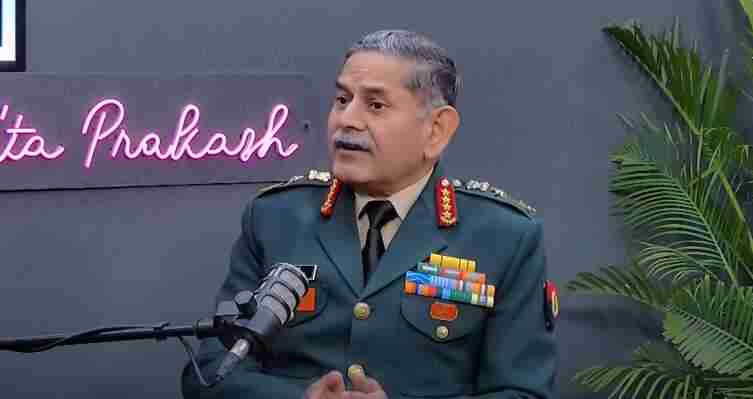
INTERVIEWER: Namaste Jai Hind. You’re watching or listening to another edition of the ANI podcast with Smita Prakash. My guest today is the Indian Army Chief General Upendra Dwivedi. This is the first time that a serving Chief of Army Staff has ever appeared on a podcast and we are honoured to have him with us in our studio.
General Dwivedi is the 30th Chief of Army Staff. He’s been General Officer commanding in chief Northern Command. Prior to that he served as the Deputy Chief of Army Staff Information Systems and Coordination and as the General Officer commanding of the 9th Corps. General Dwivedi is the recipient of the Param Vishisht Seva Medal and the Ati Vishisht Seva Medal. Joining me in the podcast today is my colleague Ajit Dubey.
General Dwivedi, thank you so much for coming to the podcast at ANI. We are all very excited to have a serving chief coming in out here and talking to us. But I am going to begin with that sweet country on our northern border called China. I just want to know where are we right now on the boundary situation, disengagement and de-escalation? In your press conferences you say this and beat reporters like Ajit know the meaning but for layman or in layman terms, what do these two terms mean? Where are we right now on the boundary situation with our wonderful neighbour?
Disengagement and De-escalation with China
GENERAL UPENDRA DWIVEDI: Let me explain the disengagement part as such. As you are aware in April 2020 that some places we had difference of perception and we had to lead to violent means. So when that happened there was some kind of a, if I can say that both sides were in contact with each other and over a period of time both sides then decided to get back. So when they get back then it is called as disengagement.
As you are aware, Depsang-Demchok that something which we had done earlier but some places where we felt there is a requirement kind of resolve that issue further. So on the 21st of October 2024 we signed those documents or agreements and thereafter, wherever such issues are still pending, we could resolve that.
Now what happens once you have done that? What is the next stage? Next stage, like I keep saying that both sides in their own side, that is China side and India side. What you have done, you have constructed billeting, you have constructed a few roads over a period of time. So what happened? The capability to bring troops forward changes which are vis-a-vis what it was earlier.
So if that be the case, what you do you define the new definition that how do we go about ahead as far as this is concerned though the patrolling and grazing rights and those issues have been resolved. There is a need to harmonize this and that’s when the military side you have seen that from the battalion commander till corps commander level, we have allowed people to talk to each other so that wherever there is some kind of a doubt we can raise the level and resolve it.
But all this is dependent on the SR meeting which took place under NSA and the empowerment has been given to WMCC this mechanism is basically.
INTERVIEWER: Sorry sir to interrupt SR Special Representative. We have some, you know, expats also watching it. So SR means special representative.
GENERAL UPENDRA DWIVEDI: This had earlier taken place in 2019-20 after that it was put on hold. So this is the first time on the 18th of December this meeting took place where some kind of directions have been given out how to go about resolving this. Then the WMCC that is headed by the Joint Secretary of the MEA under which one of the reps of the military is also there. So then both sides sit together and provide us the strategic guidance.
So as and when they provided this strategic guidance based on that, we’ll move ahead. But meanwhile what I have done, I’ve empowered all the corps commanders along the line of actual control to make sure that whatever issues can be resolved at their level. Where there is a misinterpretation of understanding and which can escalate to violence, that should be something.
So we had what are we looking at that is there a requirement for us to look into that? Do we need to reduce the troops? Do we need to kind of have more confidence building measures? So all this will only take place once we come to a common point. Okay, from here we will start and these are the steps which will follow. So once the steps are decided, how to go about it will move ahead.
Sir, recently on the China issue, leader of opposition like opposition leader Rahul Gandhi made a statement that Chief of Army staff has already said that there was incursion in Ladakh sector and which was later like do you want to say something on that? That why a serving chief is being misquoted or being dragged into a political thing. This being a political question, I think the political answer has been given by Raksha Mantri Ji in form of Twitter and MOD details description which has been given out. But two things which I learned from that, that first thing it is important that I must make an endeavor that army should not be involved in the politics.
Terrain Doctoring and Troop Deployment
INTERVIEWER: A month ago you held a press conference and you said about the situation on the boundary and I quote “has the terrain been doctored over a period of time? Yes, both sides have doctored the terrain. Have both sides carried out construction? Yes, both sides have carried out some stocking and deployment? Yes. Therefore what it means is that there is a degree of standoff.” Could you explain to us what does doctored terrain mean?
GENERAL UPENDRA DWIVEDI: So if you see, if you take your mind back to let’s say 2007, 2009, even 2001, earlier the ITBP used to control this area. The Indian army was negligible. Over a period of time, we moved ahead. Similarly, in case of China, also over a period of time, they moved ahead. So when you have more concentration of forces, you require building for them, you require transportation for them. Therefore, roads and tracks are required.
So it is not that we have come to the disputed area where there are some issues. We have basically wherever we are, we have made ourselves more assertive, comfortable and deployed, if that be the case. So the terrain has to be doctored because you have to make the roads, you have to make the billeting since it has been made both the sides. Therefore, this is what I wanted to say, that the terrain doctoring has taken place.
INTERVIEWER: And the stockpiling and things. What does that mean?
GENERAL UPENDRA DWIVEDI: Yeah, so when you have, let’s say earlier you had 100 troops, now you have 1,000 troops. So you need ration storage facility, everything for those thousand people. And let’s say you say that tomorrow the situation, there’s some criticality comes up, then you may have another 20 people or 200 people coming in. So you have to cater for their stay. Also their ration also their fighting capability.
INTERVIEWER: Also the other side is also doing the same thing.
GENERAL UPENDRA DWIVEDI: It is both sides.
INTERVIEWER: We have more soldiers on the border as boundary as compared to the earlier situation before 2020, before 2018. Is that more people there that we have?
GENERAL UPENDRA DWIVEDI: So what we see that what was there in 2019 and what is there in 2024-25, definitely there has been an increase. Okay. And this is what both sides are looking at. Can we lead to decrease in the numbers now?
Reaction to F-35 Proposal
INTERVIEWER: Both China and Pakistan, they have criticized President Donald Trump’s proposal for proposal still at this an informal proposal of selling F-35 stealth fighters to India. During the American president’s meeting with Prime Minister Modi in Washington D.C. last week, and I’m quoting this, the Pakistan foreign minister said that, quote, “deeply concerned over the planned transfer of such advanced military technology to India.” So far there’s been no planning is what is come out. But the Chinese Foreign Ministry spokesperson said that the Asia Pacific region was not, and I quote, “chessboard for geopolitical maneuvering. Forming exclusive circles and engaging in group politics will not bring security and will only harm regional global peace and stability.” There’s no formal proposal as yet for the F-35s. We don’t even know whether Donald Trump made an off the cuff remark, but Lockheed Martin has got very excited about it and everybody is talking about this and everybody also talks about two front war and buying more equipment and things like that. What is your reaction to this antsy feeling that Pakistan and China are having after PM Modi’s trip to the US?
GENERAL UPENDRA DWIVEDI: So yesterday, Defence Secretary has given out very clearly that this is a proposal and it’s got a long ground to cover before we decide what we’re finally going to take. The second issue is when you carry out the force structuring or capability building, you do it based on the threat or you do it based on the capability of your potential adversaries.
So if you look at that, you have to build your capabilities based on the capabilities which are existing with your potential adversaries, then you need to cover a long term. If you have to do that, then any kind of this modernized aircraft which is coming is the most welcome thing. But what kind of aircraft, which one to come? That is something the Air Force I think is better positioned to answer.
Empowering Local Commanders
INTERVIEWER: Sir, you talked about empowering the corps commanders and the battalion commanders to deal with issues that come up in their respective areas. Now what does this empowerment mean, sir? And has it started giving any results to you in the recent past? Can you tell us any examples where it has helped?
GENERAL UPENDRA DWIVEDI: So if you take your mind back, when I took over as army commander Northern command in February 2022, the first thing I asked, okay, who are talking to each other? It was told only corps commanders will talk to each other, no one below that. So moment you raise a level, you will find the degree of rigidity is much more. The science and art of battlefield tells you that forward troops who are in contact with each other would like to resolve the situation much more vis-a-vis the people who are sitting behind.
So what I did, I started delegating this kind of a freedom to the battalion commanders, brigade commanders and others. So let’s say a patrol comes and it says, look, you have crossed over my area. They say no, you crossed over my area. I can resolve this issue at the battalion commander level or I can take it to the corps commander at that level. Then it has to be resolved.
So as a result, moment we started resolving this issue at the lower level, the confidence for the two people to talk and resolve these issues increased. Let’s say the graziers at times they inadvertently cross over to the other side. Earlier they used to kind of stop them, hold them. Now they say, okay, Please go back. So once you have these kind of situation, the misunderstanding which used to be there has reduced vastly.
INTERVIEWER: And sir, like what you’re saying, like earlier if graziers crossed over and their release had to be secured at a very high level and now it is being done at a local level and they are doing it on their own.
GENERAL UPENDRA DWIVEDI: High level has two connotations. That’s why Beijing also if you’re talking about no, that doesn’t happen, it means then you have to kind of talk to each other then it is released. But at least from February 2022 to what I have been seeing that the relations are improving day by day and they just quietly tell them please go back. And our graziers also abide by that because they have not gone intentionally. It is just by mistake because they are not aware which side is what. So then they come back.
Recent Incidents at LOC
INTERVIEWER: So the past week we have seen some activity at the LOC. Three incidents Nowshera and there was also Battal sector and that was on the Pulwama anniversary. And then there was the Poonch, the sniper incident. Do you see a pattern which is emerging? And why is Pakistan upping the ante.
GENERAL UPENDRA DWIVEDI: Now such kind of events keep taking place. So what is our aim at this stage? We have to make sure that in February 2021 what the DGMO understanding was there, we should be able to maintain that generally some kind of friction here and there, we should be able to resolve at the level where it is required to be resolved. So like you’re aware that we have DGMO talks every Tuesday. So when there’s a requirement to raise the level, we talk even at that level.
INTERVIEWER: But three incidents in one week, it’s not a very similar also it happened.
GENERAL UPENDRA DWIVEDI: It happened, it happens. And that’s why you have the flag meeting system. When you go for the flag meeting you discuss frankly what is there, what not. If it’s not getting resolved there then we relate to the DGMO level
INTERVIEWER: Since 2014 what has changed on the LOC? Did the preemptive strikes that happened, did that have an impact on these kind of incidents which are taking the violations or even cross border movement? Has it changed at all?
INTERVIEWER: Sir, as per government of India figures, for the first time in 15 years of militancy in Kashmir, the local militant strength has fallen to single digits. Pakistan is relying more on cross border terrorism is what the commander there has said. And you also mentioned this. But now we are entering the phase where the snows are going to start melting from next month onwards. Do you see like every year which we have seen since the 80s and the 90s, a rise in infiltration which will happen.
GENERAL UPENDRA DWIVEDI: The problem today this time the snowfall has been really less visa we were expecting and this will have its own issue on the higher reaches. But what you rightly said that when the snowfall is there then the infiltration comes down to the south of Pir Panjal ranges and as the snow melts it goes back to the north of Pir Panjal also. But it does not mean the south of Pir Panjal will remain quiet. That will continue the way it is.
The second thing, what you have said that the Indian side, the Kashmir side or Jammu Kashmir side, the local terrorist number has reduced. The number of recruitment is also reduced a lot. Why? Because from August 2019 India has very clearly conveyed its intent for the complete JNK that what is India and what is jnk And JNK is an integral part of India and there is no compromise on that.
I keep giving the example that one of the lady who was wife of one of the deputy chief Minister she said after August 2019 when my children went to the school, they didn’t have a confusion when principal said Bita kal flag draw Kar KE lana Independence Day ka so dinna konsa flag draw karna but after the 5th of August 2019 children are very clear that which flag is to be drawn in their copy. So that is the intent which has been conveyed.
So once that intent has been conveyed it means the OGW’s number will definitely go down. And the best part is you will find that the intergencies, the security forces and enforcement agencies, NIA and others, all three have joined hands together to help AWAM to come up on its own. And now you have injected the development. Once you’ve done all these things, definitely there will be a sea change. And that’s why we are saying that our theme of terrorism to tourism is actually seeing signs of success today. More than 5 lakhs in Amanath Yatra it was never heard of earlier. Yeah.
INTERVIEWER: And also I think we watch Pakistani media, social media and some of the podcasts that come out of Pakistan. There is this. All of them keep talking and saying that is what the people are saying on the social media platforms. But do you see that change happening in the mindset of the Pakistani polity Pakistani forge that military establishment out there that you know will they ever figure out that Kashmir nai ban ne wala Pakistan ka hisa.
GENERAL UPENDRA DWIVEDI: Pakistan army now they don’t have a way out of it so they will continue to go for lok Kashmir Hamara hai ye hai buhe. This is point number one. Second thing is if you read the book Revenge of Geography written by Robert Kaplan both sides of Indus can they be one? That’s a big question. You have to see.
So as far as they are concerned, the idea of India is their major criticality. It is not limited to Kashmir only. So to keep Pakistan together you have to have one common agenda which can keep you together. Is the language same other people same. What is same? Only anti India stance. So therefore Kashmir they will keep hyping up at every point of time.
INTERVIEWER: Right. So can’t take your eyes off the ball ever.
Pakistan’s Visits to Sensitive Areas Near India’s Border
INTERVIEWER: In recent times we have seen that Pakistan army and ISI officials have visited very sensitive areas near our border, near the chicken snake in Bangladesh. And the administration there seems to be a bit anti having a bit anti India stance even though not at the military level. Is that a cause of concern for the for you as army chief sir.
GENERAL UPENDRA DWIVEDI: So let me put a course in a two manner. I had used the word epicenter of terrorism for a particular country. Now that country meant if they go to any other place and they happen to be our neighbor as far as I am concerned I should be concerned about it that they should not be able to use that soil to kind of a center is to India. That is as far that is concerned.
As for the second setup is concerned that how’s the administration. My stance is that when we have elected government then we can say how should be our relationship. But so the military relationship is concerned is very strong and we are able to exchange notes whenever we want. And that’s what we have been doing it.
Infiltration in Ponchrajwari and Jammu Sector
INTERVIEWER: I want to take you back to Kashmir, sir. Like you were the army commander sir, south of Pir Panjal in the poncharajwaring Jammu sector they tried to infiltrate. Lot of it was said they were SSD commandos and they had infiltrated and then we suffered a lot of casualties. Lot of operations were taking place. They were doing a lot of ambush. What was that sir? Why, why was it happening? Like what was their intent? Was it to like was there a larger design? Because I’m seeing after super bowl after a few months all those incidents, attacks have stopped. Like why did it happen?
GENERAL UPENDRA DWIVEDI: Investment risk factor. So what started happening that if you see the poncharajori area the development was coming in the Mughal road was being frequented by the tourists even UYO and if I can say that the guest rooms etc were coming up for people to come and visit. If you see there was an ad also that we will show you line of control also from various places. So suddenly the money started getting invested, people started becoming interested towards that. Same is the case with the Doda Kishtavar.
Now moment you have that what it shows that if you shunt terrorism the development will come. Now that was a major cause of worry. Secondly what had happened that you keep kind of a readjusting your force level depending on the threat profile. So some forces were adjusted here and there. So there were gaps which was there and the gaps were exploited. So the police was also less. The int network was also focusing on somewhere else. The military was also comparatively less. So these gaps were exploited.
And now if you see once we have inducted approximately 15,000 troops more you see the situation is normal. The OGWs have also gone down and like I told you to try off the security forces, the end forces and enforcement agencies all three have made sure that everything is all right there. And now you see the results the way it’s coming up.
INTERVIEWER: But sir, was it. Was it really the Pakistan Army SSD which had entered any inputs on that?
GENERAL UPENDRA DWIVEDI: There were a lot of claims that serving I cannot comment on but one of the people whom we had neutralized then we saw his photo and we found that he was in the UN mission as a Pakistani soldier. So he has to be a Pakistani soldier serving or not. I cannot comment on.
Make in India in Defence Sector
INTERVIEWER: In your Army Day press conference you had said that the domestic industry has made very good advancements and in the field of loitering munitions. In layman terms it’s kamikaze drones. There are apparently some 400 companies making drones and drone components in India. Where is make in India? In the defence sector. Poised right now. Could you tell us a little bit on that?
GENERAL UPENDRA DWIVEDI: So let me take lottery amnestian first as far as lottery ammunition is concerned, what you rightly said of two three kinds, one keeps loitering and then comes back to the place from where it started. Or it can be kind of a use against a target. And the second one is kamikaze. What you already said that it will go, it will not retrievable, it will go and destroy something.
As of Today there are 40 companies in India which are making this and approximately ₹900 crores worth. That is approximately 550 equipment were already bought as far lottery equipment is concerned. And now what has happened? See R and D when you do it you want to put that cost also as part of the sale price. But as the number increases your R and D cost goes down. So then what happens in approx. 1200? I am looking at 900 plus equipment now and I’ve already catered for a budget of roughly ₹4,000 crore to cater for approximately 3,000 again. Lord Ram Nation.
INTERVIEWER: Are these all completely indigenous? Because there are the components factor. I mean we also saw Rahul Gandhi holding up a drone and talking about it and then there was a lot of Bawal Utha ki gi kya hai. Why Chinese drones and things? So are the components completely indigenous? Do they need to be completely indigenous? Can we get components from elsewhere also and use it in our drones?
GENERAL UPENDRA DWIVEDI: See India is follower of Vasdhav Kutumbakam, World is one. So what it means World is one and atmanir bharata both have to combine together. Finally what we want, our desire is to have 100% equipment production in India. But it doesn’t mean it has to happen today. It can happen after three years, five years, 10 years.
So as of now whatever we can produce we have whatever critical component which are required to be bought from the secured which are highly assured security that we are buying. But over a period of time we are also looking at alternatives to that to be produced in India. So when you say is it 100% Indian? That is something very difficult for me to comment at this point of time.
Capabilities of Loitering Munitions
INTERVIEWER: You said we are looking at buying loitering venisham worth ₹4000 crores. Now what is it? What all capabilities do you want in this loitering munition sir. And like why so much of stress on kamikaze drones? Like is it a lesson drawn from the Ukraine, Russia and other wars that are going on? And if so sir, we saw the Iranians in, in Ukraine war also the major crash. Yeah, they are all using very basic kind of drones with not much of not very high value drones for all these attacks. So are we moving in that direction, sir?
GENERAL UPENDRA DWIVEDI: So why do you require loyal ammunition? Loyal munition is required because it is against anti personnel, so group of personal enemy, then against the light skinned vehicles, then against the tank and then top attack.
INTERVIEWER: So tank can be taken down by a drone?
GENERAL UPENDRA DWIVEDI: Yeah, no, it’s a loitering munition. So ammunition which is there, it can be a missile also. Okay, let’s say something which is spike missile today has the capability which is called as lock on after launch. So if there’s a, let’s say a hill in between. So you fire from here, it goes across, sees the tank and thereafter you can say okay, this is the tank you need to destroy. So that is also a kind of a kind of a drone. Yes. Yeah.
So this loiter munition is something, it can be used against a tank street also. That is head on, on the side or front and top attack also. And what you have seen in the Ukraine war that top attack drones or loiter munitions have been the most successful ones.
Now coming on to what you have learned from the Ukraine war. The two things which you have learned is firstly that the duration of war is not within your control. It is equally to be decided by the enemy and all those who are supporting the enemy in the background. That is point number one.
Secondly, adaptation under fire, it means your leadership should be able to adapt to the situation, the technological innovations and indigenization, all these things you can be, you should be able to adapt. And the third thing is you should be able to quickly change the doctrine of application or the TTP is what.
INTERVIEWER: We say, but also manpower.
GENERAL UPENDRA DWIVEDI: Right.
INTERVIEWER: Ukraine in the initial couple of weeks had that issue with manpower. They didn’t have enough standing army. So that is also something that we have to look at.
GENERAL UPENDRA DWIVEDI: The third thing, what you rightly said is the citizen warrior, where every citizen becomes a warrior. Because the war is not five fought by the military alone, it is fought by the nation. So when the nation fights, everybody plays an important role. Space warrior, cyber warrior, info warrior. All these people are already in the back room, they’re not in front.
Integrated Battle Groups and Agniveer Scheme
INTERVIEWER: Okay, so my question naturally will be about these integrated battle groups that we are talking about, sir.
INTERVIEWER: Like sorry, to interrupt ma’am on this sir, you said we need more numbers. What I can understand is in terms of fighting force which is ready. So in this context, do you think the Agniveer scheme will help us meet the numbers in case of a future war? There are trained people, trained citizens ready to fight for you when you need them.
GENERAL UPENDRA DWIVEDI: Let’s see. Earlier there used to be a system of reservists. Over a period of time, we realized the reservist system is not working that way much. Now Agniveer is what you train for four years, thereafter you are available. And the way we are seeing that the Home Minister himself has said that I’ll be absorbing a large number of these Agniveers. Even the state police forces have also paramilitaries.
So when you look at the whole of nation, what is the strength? It’s 1.2 million army. You have the air force, you have the navy and you’ve got the CAPFs. So as far as the force number is concerned, we have got and this Agniveer will be an add-on. Now Agniveer, what advantage does it give you is that it is technologically more aware, more adaptable. That is the advantage which you have. And the ones which you find are better, you keep. The rest all go back into the mainstream and they become responsible citizens of India. But they are available to you at any point of time.
INTERVIEWER: But you also need an agile fighting force. And these boys and girls who are coming out into Agniveer and then when you form these integrated battle groups, I’m presuming they are young lads, young girls who will be there and trained to take on these hybrid wars which are going to be the future wars, right?
GENERAL UPENDRA DWIVEDI: Yes, you are correct. I’ll take you just back to what are the generations of warfare. There are five generations of warfare starting from trench warfare. Then we had the machine guns and artillery, then we have the maneuver warfare, the tanks and others came in. Thereafter, what you rightly said, use the word hybrid warfare, the non-state actors came in. And the fifth generation is artificial intelligence, quantum cyberspace.
So as you find that in the last stage, that the fifth stage which is there, this young generation will play a very important role. But the point to notice is that in Indian conditions I have to cater for all the five generations of warfare. The trench warfare is not going away. The machine guns and artillery are not going away. So I have to cater for this also. I have to cater for this also. So I have to have a healthy mix of all the experienced soldiers who can fight first, second, third, fourth generations of warfare and also have the young generation which should be able to cater for the fifth generation of warfare.
Challenges in Modern Warfare
INTERVIEWER: Okay, so for those who think that… You’re saying it’s going to be all through. I have this quote from the Raksha Mantri. I was just reading about this and I’m quoting from what he said recently. He said many unconventional methods like information warfare, AI-based warfare which you just said, proxy warfare, electromagnetic warfare, space warfare, cyber attacks are now posing a challenge to us. The dominance of different countries in the availability of electronic chips is also a problem. Monopoly on rare earth materials also indicates a big challenge. Hybrid warfare and gray zone warfare are adding to our challenges. So if you can break this down for me, how are the electronic chips a problem? What is grey zone warfare? These two things.
GENERAL UPENDRA DWIVEDI: Okay, so firstly let me explain what is gray zone. As far as the gray zone is concerned, in the simplest term if I can put it, it’s anything which is non-conventional in nature, non-kinetic in nature. Are we fighting the gray zone battle today? Yes. If the power, let’s say the power production house, there is a blackout and the light goes out. If there is a train transit system, if that stops, if something happens, is it part of the gray zone? The answer is yes.
So the gray zone is something which is going on in all these fields which you have already said, including what you are talking about. What is happening in J&K, is it part of the gray zone? Again, it is part of the gray zone. So gray zone is something which will remain where it is non-attributable most of the time.
Now coming to the chip which is there on the rare earth material, this is something which I think the whole world should have taken note of. Do we want anybody to have a monopoly? If it’s a monopoly, what will happen? The denial for others will take place and denial of facilities and services for this will create a problem for their fighting capability. And that is why we are now trying to make sure that we should be atmanirbhar in these things also.
And as far as the mineral rare material is also concerned, it’s available all over the world. So it’s high time that like-minded people should get together and approach those countries and say, look, we need to carry out trading in this aspect also.
INTERVIEWER: Right. You have been supporting the indigenous industry a lot. I’ve seen you driving the new quick reaction fighting vehicles in the…
GENERAL UPENDRA DWIVEDI: I remember he was there that day.
INTERVIEWER: This is what happens sir, when Ajit is there because as a beat reporter, he knows he’s seen more than me. So that’s why he has a leg up on me.
Indigenous Defense Industry and Weapons
INTERVIEWER: I’ve seen you driving that. I’ve seen you moving around trying new rifles and all those things. Sir, but when we talk about indigenous industries, sir, the basic assault rifle that our troops use is now the SIG Sauer which is American. And in the future, they’ll be using, and now they’ve already started using the AK-203 in large numbers which is a Russian joint venture. So sir, as a common citizen of the country, how do I put faith in my domestic industry in the defense sector when they can’t even produce a basic assault rifle, sir?
GENERAL UPENDRA DWIVEDI: So you have faith in ISRO?
INTERVIEWER: Yes sir.
GENERAL UPENDRA DWIVEDI: You have. Why? Because ISRO was encouraged to carry out those things much, much before others were told. Nuclear power plant. You have faith in that. Because this was again started much earlier. Therefore now coming on to this small arms. Earlier the license was not there for small arms production. So when the license is not there, how will the R&D start?
Today all the private manufacturers are saying had you given me a lead time of 10 years, I would have been exporting this equipment all over. Finally in 2017, the small arms production for the private parties was given. And from 2017 to 2025 you see what has happened. We have been able to produce a lot. But as far as the trials thereafter, acceptance and making it as per the requirement of Indian army, everything takes time. Because it’s an evolving process.
Now to catch up on that time, what we need, we need a limited amount for our fighting forces because of the tensions which are prevailing along both the borders. You agree with me on that, sir. Now what is the balance requirement? There is a CAPF which is 500,000 to 600,000. You need weapons for that. You rightly identified AK-203. Approximately 600,000 to 700,000 would be required. Let’s say we require a great number of light machine guns, carbines which require about 400,000 to 500,000. So the market is huge. And this market is going to be coming or the purchase is going to come from India only.
So all these weapons are going to get flooded over a period of time. Even sniper rifles. So when somebody says that look, my weapon is ready. Yes, if your weapon is ready, there are procedures and the procedures are falling in place today when I say that the Indian industry is ready. Indian industry is ready. And by 2027 these weapons will start getting inducted into the Indian army.
INTERVIEWER: Are they comparable to the foreign counterparts because we have been buying so far? Are they comparable to the foreign counterparts in the manufacturing sector?
GENERAL UPENDRA DWIVEDI: As far as these small arms are concerned, we are only taking them when they are comparable or much better. That is what we are looking at. But if you look at it, we need to give impetus to Atmanirbhar Bharat or Make in India. So we have to see that it has to be spiral development. So let’s say even if equipment may not be of that superior quality but if it’s some shade below also, but if it meets my requirement for the time being as a Mark 1, I should take it then I move to Mark 2.
But if the small arms are concerned, the individual equipment is concerned, that is the top-notch in this field of indigenization. We have seen a lot of companies like Tatas, Kalyanis, they’re making these quick reaction fighting vehicles, infantry combat vehicles. So I’ve also seen them operating in the Ladakh sector, sir. Are they comparable to the BMPs that are already in the force? And like we are now talking to the US for the Strikers. So what are we looking for in that equipment, sir?
Okay, so there are two kinds of protected equipment. What you say, one is which only provides you protection but it does not have any integrated platform for you to fight the battle while sitting in that equipment. So the equipment is basically like a carrier. The other equipment, it has a platform, it has a visibility factor, it has firepower, it has protection and it can support integrated battle with other, if I can say that, a class vehicles which are there, tanks and BMPs.
So there is a difference between the two. Is the Indian market ready for it? It’s evolving. If the other country is ready to come up and carry out any kind of collaboration with these production houses, we are getting technology in a much faster time frame. That is what we are looking at.
INTERVIEWER: When you talk about the Striker, sir, any vehicle for that matter, Stryker is one of the options. Anything which is coming with an integrated platform, integrated system, fire control system, if I can say that the visualization system, the firepower system, then definitely both the parties can sit together and give me a platform which is indigenized and meeting the requirement of India.
Robotic Technology in Warfare
INTERVIEWER: So robotic technology, we are seeing it in the medical space. We are even seeing it in civilian use in malls and all that. We are seeing robots going. We have seen countries use it and even in some cases in our country for demining. Will we see more of that kind of technology in the war front on the ground?
GENERAL UPENDRA DWIVEDI: You take the example of drones. We are looking at drones for even deploying mines and even for identifying the mined area for demining purposes also. Okay, so what it means is that everywhere, wherever we can use the technology, we must use it. But we have to be slightly cautious also on this issue, because if you see “The Minority Report” 2002 of Tom Cruise, when the psychologists who were there, they could tell the future, they could also tell you the alternate future. So you didn’t know what is correct, what is wrong, until Tom Cruise realized, look, I am also going to be punished because this is an alternate future which is talking about.
You also take the example of “I, Robot”, Will Smith, where they realize that the robots are the ones which are actually enemies, somebody else is controlling them. So the moment you have this in the battlefield, these robots may be sent by me, but if somebody is able to kind of control them, then they may turn back and start firing at me also. So what it means is that all this technology which is there, it enhances the efficiency in the battlefield of the human being.
INTERVIEWER: Yeah, okay, that’s a point. I didn’t realize that it’s not just celluloid, it can even happen in real life. I was just thinking, for example, if you need to clear an area, or you need to check whether Naxals have planted before our troops go there, or you know, whether this road is fine or not before troop movement happens, if you use robotic technology to say is ambush, if you use drones and things like that, that will help, right?
GENERAL UPENDRA DWIVEDI: That is. And that we are already doing.
INTERVIEWER: Okay.
GENERAL UPENDRA DWIVEDI: That’s why if you find that now, when we find some unexploded device, we send a kind of a mini computer which goes there, lifts it up, takes it to a different place and even destroys it also.
INTERVIEWER: Okay, but what you are saying is that human intervention will always be necessary.
GENERAL UPENDRA DWIVEDI: I think it will be necessary in the present circumstances. And as we evolve over a period of time, it’s something like earlier when you used to switch on the TV, people used to say, why can’t you press the button? So people used to say, why do you need a remote? You’re so lazy. So things are changing over a period of time. So one day we evolve. It may so happen that I may give the command. Okay. Road stretch 3 km. Please carry out. I will come after half an hour. It’s possible. Yeah.
INTERVIEWER: So that we don’t have an incident ever again like the Pulwama incident, which no ambushes. Because I want to see a generation of Indians who don’t see that kind of casualty figures which is happening on our soil.
GENERAL UPENDRA DWIVEDI: And that is where the role of the Indian Army is – to protect the citizens of the country from all this.
INTERVIEWER: I want to ask you, since you’re talking about technology, robotics, AI – you have had a long tenure in the Indian Army. You have served in the Jammu and Kashmir region also earlier. Can you tell us sir, from your past experiences, how it was in those days without technology? And now with technology, drones and all these things coming in, how has life changed or how is a particular task that was done one way now being done in a much better way with the induction of new tech into the forces?
GENERAL UPENDRA DWIVEDI: I’ll put it in three forms:
1. Visualization of the battlefield – Now it’s much, much better. You are like a mini Sanjay of Mahabharata. You can visualize and see the battle. You have drones giving you real-time video. So you can give instructions accordingly.
2. Communication – Let’s say you want a terrorist to surrender. Now you can make him talk to his father via video call. Earlier you had to physically bring the father there.
3. Decision making – Any decision can be taken in the best form or fastest convergence. If you want troops to move from one place to another, it is much better. The iffy friend-or-foe identification which used to take place – we don’t know who is on the other side. But now immediately we can identify.
There are also advantages in medical evacuation. The technology allows us to take care of patients right there and then.
In all fields – force visualization, force protection, and application of force – technology has made a huge difference. With drones, we can be very precise in targeting.
INTERVIEWER: You know exactly how many people are hiding inside a building.
GENERAL UPENDRA DWIVEDI: Yes. And for force preservation also, once we know where the fire is coming from, we can take appropriate action.
INTERVIEWER: And you can get to know whether there’s a hostage situation or not. Or if they’re faking a hostage situation.
GENERAL UPENDRA DWIVEDI: That is also possible at times. Because if you are listening to the communication then normally you get to know.
INTERVIEWER: You watch a lot of series and you have seen a lot of movies. You must have seen this Fauda series – Israeli sir. Now, the way they show they do counter-terrorist operations in their part of the world. Do we do something similar or better in our affected areas?
GENERAL UPENDRA DWIVEDI: See, as far as Fauda is concerned, it is one of the most hit series. I have it on mobile, but I have not been able to watch it, very frankly. But let me tell you, all my relatives and everybody has watched it. But I’ll take your mind to “By Way of Deception” again, written by a retired Mossad officer. Whatever is in the visible domain, it’s in the visible domain. Whatever is invisible, that will remain invisible. I can only say that.
Artificial Intelligence in the Army
INTERVIEWER: In Aero India 2025 you said that we are already using artificial intelligence in the army. Some of the examples you gave out here, could you tell us to what extent is it? Is it only for warfare or detection or is it going to be further beyond that? How are we using it?
GENERAL UPENDRA DWIVEDI: See, the first thing we did was chatbot Sambhav. It was for the veterans. We started this system on WhatsApp. Now the moment you type, the questions will come, answers will come and you interact. And once you interact, based on the generative AI, it is getting populated with more kinds of ideas and answers. So that is the first time we used it.
As far as AI is concerned, I keep saying that data is very, very important. And the first thing we are doing is integrating data that is lying in various corners, various headquarters. Even if we are not able to integrate, they should be able to talk to each other. We have reached that state today.
I can go in for predictive analysis now. Predictive analysis is not new. In the Iraq war, America was already using it. And based on that they could say, okay, IED could be placed here, this could be placed there. That’s a different thing altogether.
INTERVIEWER: People have realized “slam dunk” didn’t really work, right?
GENERAL UPENDRA DWIVEDI: That’s a chapter in itself because it’s part of the info operations at that time, what people thought, correct, they didn’t do that. But coming on to this, predictive analysis is something which is important to us immediately. Generative AI I have already told you about.
So now what we are looking at is how do we go for the deep seat which is there? Or let’s say the chatbot, that kind of a system for the operational situation also. Okay, so what we are looking at CIDSS is the term we call it, that is Command Information Decision Support System. And probably by this year end we should be able to start working on that along with the bell where this AI will come up, which will tell us, okay, these are the situations. These are likely five courses which you have. And based on the five courses, now you sit down and decide which one is best for you.
INTERVIEWER: And how much would the human role be replaced? In the sense, enemies, irregulars have come in. They are not leaving. We depended a lot on HUMINT even in the desert region. The Kabris along the border. They tell us on the IB. How much will all this replace human intelligence?
GENERAL UPENDRA DWIVEDI: See what you said, this is INT – Intelligence, Surveillance and Reconnaissance. INT, Surveillance and Reconnaissance is basically you have to be there in form of satellite, in form of drone, in form of aircraft or human intelligence on ground. So somebody has to be there. So it has to be either machine or man.
INTERVIEWER: Okay? And preferably both together.
GENERAL UPENDRA DWIVEDI: Both separately, independently. But what AI does, it takes all the inputs, connects the dots together. It’s like battlefield indicators. Something is happening there. Something is happening there. For example, a potential adversary starts suddenly stocking, let’s say the fuel in a particular place. And we know that this place only needs 10,000 liters but now they’re collecting 20,000 liters. Then we know that somewhere else also training which is going on is for the mountains. So what AI does is it connects all this loose information along with the satellite photographs along with the human intelligence and everything and then gives you – okay, if all this is happening, then these are the likely three scenarios the potential adversary may be looking at.
Experience with LCA Tejas
INTERVIEWER: Let me come back to the Aero India. You and Air Marshal A.P. Singh flew the LCA and I’m quoting you, you said “I wish I had met him earlier. I would have definitely changed my option to the Air Force.” Did you really mean that? That it was such a great experience going up in the Tejas?
GENERAL UPENDRA DWIVEDI: See, when we were in school, we used to look at all the three services and we used to love all three. It just so happened that I came into the army. Let me talk about A.P. first. As far as A.P. is concerned, from NDA days, he is a gold torch and everybody has a natural liking towards him. He is a man who can bring people together. He is a natural leader and he takes ownership in a crowd. But he is a very straightforward man. So I say in lighter moments he should have been in infantry. He’s so straightforward and such a team-bonding man. He should have been infantry.
INTERVIEWER: I hope you’re listening to this.
GENERAL UPENDRA DWIVEDI: That is the case. The way he took me around and made me do the loop which is inverted kind of taking it. And he gave me the joystick and I controlled that. Then he made me do the barrel roll also. So I feel that yes, if A.P. allows me today, that’s also a good option for me.
INTERVIEWER: But my heart was in my mouth when I saw that. And when I heard that, I said like who has cleared this? Why do we have two chiefs in one aircraft and doing all these stunts? I don’t know.
GENERAL UPENDRA DWIVEDI: There’s a reason to it. We both had vice chiefs.
INTERVIEWER: No, sir, it really does frighten me, you know.
GENERAL UPENDRA DWIVEDI: But sir, this was like… It must have been really a great ride. This is the first time it happened in history. But so many things happen in history like self and Dinesh – classmates becoming chiefs.
INTERVIEWER: Yes, that also. I want that story. In the sixth grade you were together in Sainik School.
GENERAL UPENDRA DWIVEDI: From fifth onwards.
INTERVIEWER: Who got better grades?
GENERAL UPENDRA DWIVEDI: See, Dinesh is definitely better in everything. He is tall and we both were good in maths if I can say.
INTERVIEWER: But you have come first on the podcast. Dinesh has to come later. Sir has beaten you in that?
GENERAL UPENDRA DWIVEDI: No, but Dinesh has taken over first. So he is senior to me. So he will decide whenever he wants to come. And he tells me to come here, I have come here.
INTERVIEWER: How was it like in those days and how is it now? Sir, what has changed?
GENERAL UPENDRA DWIVEDI: Sir, in front of media we are up and about and we have a stiff upper lip. But once we are together then we just hold each other and keep talking to each other like school days.
INTERVIEWER: How is this personal camaraderie very important? Especially in tense situations. You know, if I was to go back, if you had a general not getting along with the commander – I don’t want to name but there were times like in the ’71 War, ego battles. But if the three chiefs and the CDS have a good personal rapport, how important is that?
GENERAL UPENDRA DWIVEDI: Negotiations have always been successful if two people knew each other or knew about each other’s personality. So what it means is if two rigid people are talking to each other then you don’t expect an outcome. But here what is there is that when we three are sitting together, Chiefs of Staff Committee also we can have any kind of a discussion, it just doesn’t make a difference. Because our personal rapport is so good with each other that the professional differences, even if they are there, we are ready to accommodate. Because we all are progressive by nature. We want jointness and integration to come. So even if someone says okay, you take a step back here, I take a step back, it’s acceptable. So the moment you are ready to negotiate – because negotiation, the principle is it should be a win-win situation for all. But if you’re rigid then it’s a win situation for you and loss situation for others. That is the difference. So here we all three look at it that we three must be winners towards the end.
INTERVIEWER: Sir, any examples you can give where your friendship – because right now we have two classmates and two coursemates as three chiefs.
GENERAL UPENDRA DWIVEDI: How has it helped? So did you ever think that as an army chief I’ll accept ADC from the other service? Because he’ll be privy to my conversation when I’m talking about the other two services. But today all the three service chiefs have accepted and the three ADCs have been selected. And within 15 days you will find that they will be reporting to each other. So you are getting an ADC from Air Force. Sir, I am getting from Air Force. A.P. has already made me meet him. And from my side there is an 11 Guards officer who is going to Dinesh and Dinesh is sending to the Air Force.
INTERVIEWER: That’s nice. That’s absolutely… We were talking about movies. Do you three chiefs discuss films? Do you really talk about these kind of things? Do you laugh at it?
GENERAL UPENDRA DWIVEDI:
As of now I think the three chiefs do not have time to watch movies. So we may not be able to speak about that. But definitely we talk about how our aura should be there. What should be the protocols in terms of our soldiers, how should they behave. And these things we keep talking about. Because you will find we are the forces all over the world trusted most, respected most. So we must stand up to the expectations of the entire environment.
INTERVIEWER:
Is there any concern at all about the quality of people wanting to join the services? Is it still, you know, for G families there’s this whole thing that it’s not really happening. Especially in Punjab which was considered at one point of time, Sword arm of India. Kids are preferring to go abroad. You know, study abroad or work abroad. Does the force still have that aura which it used to have?
GENERAL UPENDRA DWIVEDI:
Two things. Officers. And if I can say that PBOR (Personnel Below Officer Rank) as far as Officers are concerned you will find that we are getting from all quarters. We are getting from Kanyakumari also. We are getting from Kashmir also. We are getting from Kibitu also, we are getting from Bhuj also everywhere. So that’s not an issue at all.
But within that also the intake you will find that the officers’ children may be approximately, let’s say between 5 to 10% but the GCs (Gentlemen Cadets) who are children coming are approximately 35 to 50%.
INTERVIEWER:
That is the kind of intake that has not changed. There’s no dip.
GENERAL UPENDRA DWIVEDI:
It’s not a dip. What I am saying is that in the complete intake, if 100 people are getting selected in a year you’ll find 35 to 50% are the GCs who are children because they have seen their life, they are understanding what the aspirations are there to join. As for the officers’ children are concerned the number is very small because officers themselves are very less in number. So definitely that is also there.
INTERVIEWER:
And in Agniveer scheme are you finding more participation? Because initially there was so much resistance. Are you finding recruits coming in? Because they’ve now I think one year now they’ve joined since this summer will be the second year since they’ve been inducted. Now are you finding that whatever misconceptions that people had have been dispelled?
GENERAL UPENDRA DWIVEDI:
As far as Agniveers are concerned they are coming in adequate numbers. That’s not a problem at all. What we have to see initially the number was much more. Why? Because there was a two-year gap. So what we had done, we had enhanced the age profile also by two years. So everybody got packed up in that. So that 40,000 what we wanted to induct in Indian army the number was very high after that.
Since those two years embargo has been removed and some people who have got overage have also moved out. So as a result 3 to 4 years gap has again got created in the sense those people have moved out of the system. So it has come to a particular level, it will continue. So it meets our aspiration. That’s not an issue at all.
The Agniveers who are coming in, they are now training. They have already started going to units and doing everything what they are supposed to.
INTERVIEWER:
How has their performance been sir? Like in the last two years and their integration with the others?
GENERAL UPENDRA DWIVEDI:
As far as the integration part, if I take it there’s no difference at all. Because Agniveer he may be for outsiders but inside he is just Number so and so Jawan.
When I was flying in the LCA sir, in that 18 squadron board I saw that there were three Agniveers mentioned by the air force and they were being praised for something. The crew which was there approximately five to seven which is reading the aircraft out of which three were Agniveer. So when I shook hands, I shook hands with them also and they were quite proud of the job they were doing.
Same is the case in the unit. In the unit there is no difference at all. Let me take a case of an officer. How much training does he do? As for the weapons is concerned, he does it for let’s say 30 days, 45 days thereafter he goes to the unit but he is also carrying carbine, he is also carrying pistol. He is also carrying everything.
So as far as the training part is concerned, earlier if I can say that the training part was much more because you thought that they require more training. But now once you’ve given the less training, if I can say the less training in the sense that compacted the training in the lesser time frame and you said balance training you will do in the unit they found it’s working. So apprehensions which were there have been dispelled.
INTERVIEWER:
On the budget sir, 6.81 lakh crore is what Nirmala Ji has allocated for you. That’s 13% of the budget. Are you happy? Not too happy. Want more? What would you have wanted?
GENERAL UPENDRA DWIVEDI:
2.7 lakh crore is something which is in the revenue part. Now if you remove the salary part which is approximately 1.47 lakh there is a 20% jump in my non-salary revenue. What it means is that in case of other two services platforms they lead to maximum capital acquisition. That’s why you’ll find that capital acquisition is much more. In case of army my platform is my soldier itself.
When we talk about FNSAs or Kavach when I want my soldier to be a smart soldier, it’s a platform. So starting from a soldier as a platform and then going to a tank or to the helicopter, all these platforms which are there, if they have to be maintained, how will they get maintained? Because in my case both borders are active. Every equipment which is there is being exploited. So to maintain that I need revenue for infrastructure development from offworks I need revenue.
So this has been understood by the Finance Ministry. Therefore, there’s a 20% jump. So whatever we decide, it is there. As far as the capital side is concerned, it is dependent on what is the carryover liability. So whatever gets sanctioned this year in terms of acquisition, that will be paid over a period of five to six years. So we know that, okay, this year I have to pay this much of money and never Ministry of Defense has said no to it. Whatever the carryover liability, we get it.
INTERVIEWER:
If she was to give you a blank check, what are the three areas that you would first modernize?
GENERAL UPENDRA DWIVEDI:
The first thing which I will do is the infrastructure development. That is something which is most important for me. And second thing is the technological absorption and modernization. This is something which I have to do. And third is the most important thing is the upliftment of the human resource. Because the human resource has to get a major upgrade to absorb this technology.
INTERVIEWER:
Sir, when you say infrastructure development, do you mean infrastructure development along the LAC, LOC, all these areas?
GENERAL UPENDRA DWIVEDI:
It’s for everything. I’ll give you an example. There is a building which is standing from let’s say 1965 or 73. What will be the status of this building in 2025? Definitely it requires a major repair. So when a battalion moves from the most difficult areas to Peace station and there also he is going to live in a building which is actually in difficult conditions, then you require upliftment of that.
Also, a soldier comes for two and a half years after three years deployment in field, he needs to stay with the family. And this family accommodation is only for 25% of the soldiers, not 100% of soldiers. So again you require accommodation for that. Now this is the peace time is concerned. You require infrastructure for the training, you require infrastructure for the firing ranges.
Now coming on to the forward infrastructure. You’re well aware of why? Because when the roads and tracks are made, it helps the local population also it helps the military also. When you make the helipads, the tourism also comes there. Military also uses it. When you have the communication infrastructure, it is again for the local population, for the tourism, for the development, for the civil administration, as also for the military. When you have the power sector coming in there, then the light is everywhere. It is to be exploited by everyone. So it is both sides.
INTERVIEWER:
When you spoke about human resource once you said that you want women soldiers to be like Goddess Kali on the battlefield. What exactly did you mean by that?
GENERAL UPENDRA DWIVEDI:
I am from Jammu and Kashmir Rifles and we believe in Durga Mata. So now if you take your flag. What is the topmost color is a saffron color. Now I lift this Ashok chakra and put it on that. Now what is it talking about? It’s talking about the strength, courage, sacrifice, progressive transformation. Be part of change. That’s what is Kali Mata all about.
It means any person who comes, comes at a manager level. Now I have to convert that into a leader. And leader has to have these qualities which I have told you. That’s what it is.
INTERVIEWER:
I just wanted to know what exactly you meant when you said that.
GENERAL UPENDRA DWIVEDI:
Multitasking. Women are better multitaskers than men. Okay, that’s what I have been told.
INTERVIEWER:
Compliment accepted. But sir, how has your experience been? Sir, because you had given the example of that lady officer who was in charge of the Umling La road.
GENERAL UPENDRA DWIVEDI:
See, if I say that amongst the male also, among the female also you will find all kinds of officers. And among the male also you will find very rigid officers just following the rules. They don’t understand the shades of grey. They only look at umbra. They don’t look at penumbra.
So it is important for you see, Indians are different. Dalai Lama has also said that the Orientals always understand the definition of gray zone. Everything is not black and white. If you see, we believe in body language. We believe in unspoken language. We believe in if we have not spoken, then also we have spoken. So that is the kind of understanding we need to have.
So when I talk about Ponung Doming, she is the most vibrant. And this time she’s got a Sena medal also. And she was omnipresent during my visits or when anyone else also visited. So she was leading from the front.
Now I’ll give you another example what General Puri has said. There was an education officer with me when I was the army commander. And one of my course mates, Rasina gave me excellent feedback about her. She’s the best staff officer. So I gave her a few tasks and she was up and about. But she was black and white. But by the time she left, she said, “Sir, now I have understood that whenever you used to tell me something and I used to give you reply, you used to say because nudging, cajoling or leading through the path is responsibility of a leader.”
So converting from black and white to this kind of a wider perspective is the responsibility of the leader. And that is where people like me have to play a role.
INTERVIEWER:
Amazing. So pay scales I want to talk about that young students who were, you know, thinking of joining the NDA, thinking of joining the IMA, wanting to be part of the military. Can they be assured that the pay scales in the military are comparable to the private sector?
GENERAL UPENDRA DWIVEDI:
I will take you back. When the last time the pay scale was announced. That time, if I remember correctly, about six months before that lot many people had put up for PMR because the pay scales were not comparable. After that, what happened once people got the idea that this is what they are going to get there was en masse cancellation of premature retirement.
INTERVIEWER:
The 8th Pay Commission.
GENERAL UPENDRA DWIVEDI:
6, 7. The previous one. And mass cancellation of premature retirement. And for next one and a half to two years, three years, nobody was going out. So what happens when the new pay scale comes? You will find that the automatic correction is done in comparison to the society as far as the pay scale is concerned.
Now I’ll take you ahead as far as the X factor is concerned. I always talk about the X factor and I remember giving a talk to the IIT Kanpur students. Why a soldier walks into the hail of bullets and this is what is the X factor all about? So any pay commission when it comes up, we always request that pay commission. Please take care of the X factor. Because that soldier voluntarily walks through the hail of bullets and that is what till the time you have agreed and understood and you give him some kind of a compensation. It’s not a compensation. It is the national recognition of the nation towards the sacrifice of the soldier which is ready to do from day one.
INTERVIEWER:
That his family will be taken care of when he walks into that hail of bullets.
GENERAL UPENDRA DWIVEDI: Infrastructure development is a key focus area. While we’ve made significant progress in recent years, my aspirations are much higher. Currently, we can construct about 1,000 km of roads annually, but I aim for 2,500-3,500 km. Similarly, for tunnels, I want to reduce construction time from 7-10 years to just 4 years.
The main challenge we face is the seasonal nature of construction along the northern front due to snow. We typically have only 4-6 months of construction time annually, sometimes extending to November if we’re lucky with late snowfall.
INTERVIEWER: But the enemy is also using that same period to build, right?
GENERAL UPENDRA DWIVEDI: True, but the terrain on their side is different. It’s more of a plateau with less rainfall and snow, giving them better conditions for infrastructure development. On our side, especially in Arunachal Pradesh, we face heavy rains and snow, making construction more challenging.
To address this, we need large companies willing to invest and take on these projects. Fortunately, we have support from initiatives like the Empowered Committee on Border Infrastructure (ECBI) under CAPSIC, and a committee headed by the Raksha Mantri with a group of ministers monitoring progress. These committees are working overtime to ensure there’s no letup in infrastructure development. Funding is not an issue at all.
We’re also reaching out to companies like NHIDCL and even railway companies that have the capability to construct tunnels and roads. From 2025 onwards, we expect these companies to come forward as we offer them large-scale contracts and targets.
Army’s Role in Civilian Affairs
INTERVIEWER: Military writers often discuss how the Indian Army gets pulled into civilian matters during emergencies, potentially taking away from their primary work. Even in recent events like the stampede in Prayagraj, people called for the Army’s intervention. How do you view this, and does it impact your equipment and resources?
GENERAL UPENDRA DWIVEDI: It’s important to understand that we are India’s army, and our role extends beyond just military operations. We are part of the vision for a developed India, aiming for a $30 trillion economy with high human development index, infrastructure development, and environmental sustainability. The Indian Army has a role to play in all these aspects.
When it comes to emergencies like stampedes, our orders are clear – we don’t wait for calls. The nearest unit moves immediately to help, especially in remote areas where we are often the closest available force. Nation-building is our equal responsibility.
For instance, consider Mission Olympic 2036. The Indian Army can play a crucial role:
1. We have space for sports infrastructure and can guarantee its maintenance beyond 2036. 2. We have boys’ and girls’ companies that have produced many medal-winning athletes like Neeraj Chopra. 3. We can provide manpower resources, including raising territorial army battalions to support such initiatives.
We see ourselves as integral to India’s development, not just its defense.
INTERVIEWER: So both uniformed personnel and civilians work together on these missions?
GENERAL UPENDRA DWIVEDI: Absolutely. In various fields, you’ll find a mix of uniformed and civilian experts. For instance, in cyber warfare, you might see more civilians than uniformed personnel. Similarly, organizations like ISRO are entirely civilian.
On Religion and the Army
INTERVIEWER: There were some negative comments about your visit to the Mahakal temple, questioning the secular nature of the army. What’s your take on this?
GENERAL UPENDRA DWIVEDI: I am very religious, but in a multi-religious sense. I was commissioned into the 18th Battalion of the Jammu and Kashmir Rifles, where we have a mosque, gurdwara, Durga Mata temple, and Mahakal temple all under one roof. Our religious diversity is our strength.
My first religious visit as Army Chief was to my unit’s place of worship, where I received blessings from the maulvi, pandit, and granthi. Only after that did I start visiting other religious places.
In the army, we respect and embrace all religions. When I took my first review, I was presented with a box containing books from all major religions. We are multi-religious, and this diversity is a source of our strength.
Emotional and Financial Support for Military Families
GENERAL UPENDRA DWIVEDI: This is a major issue that leaves a pain in your heart always. I remember when I was the commanding officer and I told my company commander to carry out a portion of the operation. We lost him. It’s a very difficult phase to go through, but we have to. We prepare the family and send the near and dear ones. We also call those who are close to his family but on leave from various units. We ask them to send the nearest commander to break the news.
Let me also say that in infantry, armor, mechanized, and engineers especially, we have one family. Even if we’re having a get-together today, you’ll find all the widows come. Everybody comes.
INTERVIEWER: We see this when the women come to take the honors, when they receive medals posthumously. We watch that and it shakes us. We are not even trained for this or have the mental makeup. Does the military look after the families, the war widows, or the parents who have lost their son or daughter in the battlefield? How does the army take care of the families?
GENERAL UPENDRA DWIVEDI: There are two kinds of security: financial and emotional. For financial security, we ensure that within 90 days, emoluments are given. Those reports come to the army commander and the chief. If there’s a delay beyond 90 days, we approach the state government or the central government. The ecosystem has become very developed now. Banks are the first ones to come forward because they are better digitized.
Regarding emotional security, the unit plays a very important role. That’s why we always maintain a connection. For example, this evening we’re having my unit get-together, and a lady whose husband is no longer with us due to physical casualty is coming.
Similarly, whenever a widow’s child is getting married, you’ll find maximum officers will attend. The unit Subedar Major will always be there with a huge gift. If required, you’ll find the unit quietly executing things in the background.
I’ll give you an example. My commander, Brigadier PM Matthew, told me about Operation Pawan. When he went there, I believe it was 13 Sikh Light Infantry. His buddy, a radio operator, protected him from an RPG or rocket launcher and lost his life. The unit made sure that the sister got married to somebody from the unit, and the complete unit participated.
INTERVIEWER: What a touching story. On that note, thank you so much, sir, for spending this time and explaining how the force works, what is required, and what it is living up to. We as civilians have so much regard for all of you. We just hope that you understand where we come from, in an absolute zone of admiration for what you do. Salute. Thank you, sir.
GENERAL UPENDRA DWIVEDI: Thank you for the positive stroking. But I must say here itself that it is the admiration of the citizens of India which keeps us going through.
INTERVIEWER: Right, sir. Thank you.
GENERAL UPENDRA DWIVEDI: Thank you, thank you.
INTERVIEWER: Thank you for watching or listening to this special edition of the ANI Podcast with Smita Prakash. Do like or subscribe on whichever channel you have seen or heard this. Namaste, Jai Hind.
Related Posts
- Scott Ritter: Full-Scale War as Iran Attacks All U.S. Targets (Transcript)
- Seyed M. Marandi: Israel & U.S. Launch Surprise Attack on Iran (Transcript)
- Joe Rogan Podcast: #2461 w/ Robert F. Kennedy, Jr. (Transcript)
- Tucker Carlson Show: w/ Catherine Fitts on Control Grid, Banks’ Role in War (Transcript)
- Megyn Kelly Show: w/ Tucker Carlson on Epstein, Iran, America’s Gender Divide (Transcript)