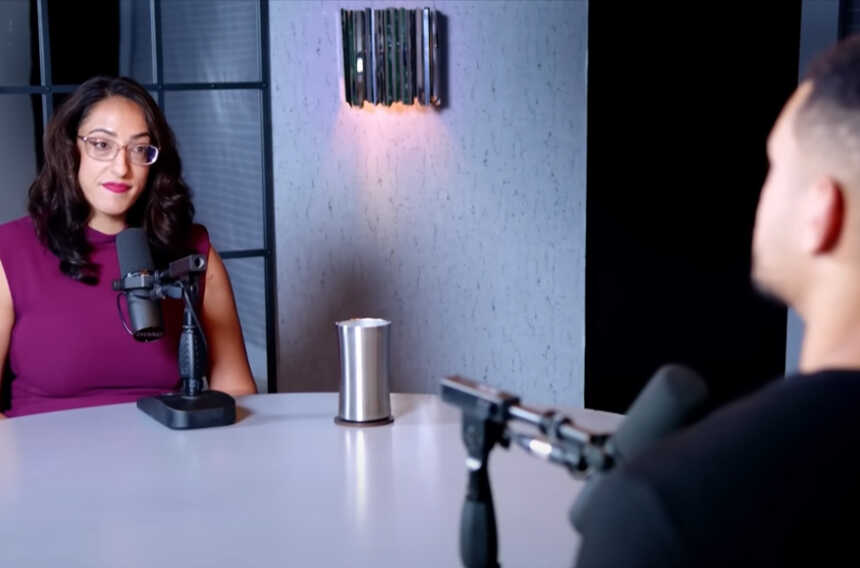
Read the full transcript of urologist and sexual health specialist Dr Rena Malik’s interview on The Diary Of A CEO podcast with Steven Bartlett on “The Link Between Masturbating & Prostate Cancer!”, April 1, 2024.
Dr. Rena Malik on Sexual Health: Breaking Myths and Understanding Our Bodies
STEVEN BARTLETT: Dr. Rena Malik, with all of your work, what is it that you’re seeking to do?
DR RENA MALIK: So what I’m seeking to do is have people understand that sexual health is health. I think we have so much misunderstanding about what is good sexual health? Why is good sex important? Why is it good to have good sexual health?
And that creates a lot of despair and devastation and people don’t talk about it, so they ruminate, they feel bad about themselves and it’s pervasive throughout their entire life. So I think ultimately my goal is to make education freely accessible and understandable so people can know what’s going on with their bodies, what’s normal, what’s not, and what’s available to help them.
STEVEN BARTLETT: How do you define sexual health?
DR RENA MALIK: So sexual health is sort of an individual thing, but most people would say that you are able to have sex, you are able to have an orgasm, you are able to have pleasure and achieve the benefits of that.
The Reality Gap: What We Don’t Know About Our Bodies
STEVEN BARTLETT: Do we understand our bodies as it relates to our sexual health?
DR RENA MALIK: No, not at all. I will tell you. So I talk about, for example, how it’s normal to have erections at night or have even nocturnal emissions, so have a wet dream, how that’s a normal physiologic function. And so many people will message me and say, “How can I stop having what they call nightfall?
And part of it is media, right? So when you see TV, you see a man getting an erection very quickly. He’s immediately penetrating a woman and she’s immediately orgasming. And the whole act is like really hot and heavy. And in reality, that’s not what sex is like.
So if you’re not seeing what normal sex is like, what normal foreplay is like, what the fact that it’s normal to sometimes have difficulty getting an erection, that’s normal sometimes to not have an orgasm for a woman, or it may take more time to get a woman aroused and require more foreplay, that you are essentially looking at a script that’s not real. And then you’re like, “What’s wrong with me? Am I broken? You know, is something wrong with my body that it doesn’t function the way I’m seeing on TV or on media or on erotic films?”
Dr. Malik’s Journey into Sexual Health
STEVEN BARTLETT: Where does your experience on this subject come from?
DR RENA MALIK: So I’m a urologist by training, a board certified urologist. So we are the medical and surgical doctors of the genitourinary tract. So we’re essentially the plumbers. So when you have a problem with your kidneys, the tubes that drain the kidneys, the bladder, or your genitals, we’re the ones who are going to fix those if they’re a surgical issue. And also we deal with the medical aspects of some of those things. And so that’s what my training was in.
But when I started my social media, my channel, I wanted to offer education to people. And as I started making this education, I realized how badly people wanted to know about sexual health, how much they didn’t know, and how they really wanted to be empowered with this information.
And people are not being asked about sexual function. Even when you go to see your primary doctor. When was the last time they asked you about anything? They might ask you about erections, but that’s probably where it ends, right? Even if they ask about that, they’re definitely not asking women, “Are you having orgasms?” They’re definitely not asking anyone if sex is pleasurable. They’re not asking them if they feel satisfied with the way things are going. Right. And if they are enjoying desire, do they feel normal?
And so I realized there was such a disconnect here with what people wanted to know and what was available to them. And so then I started really making content about sexual health and spending more time investigating in that area, treating patients in that area. And it totally became an all encompassing field for me.
Understanding the Pelvic Floor
STEVEN BARTLETT: You’re an expert in the pelvic floor as well. What was your sort of training with the pelvic floor?
DR RENA MALIK: So when you do a fellowship in what we call female pelvic medicine, a lot of what we do is related to the strength or weakness of the pelvic floor. And so the pelvic floor, just to start, is a bowl of muscles that sits in your pelvis. So your organs, the bladder, the rectum, for women, the vagina, the uterus, the urethra, all run through the pelvic floor. It attaches to the bones on your pelvis.
And it is extremely important for a variety of functions. It offers stability. So when you’re standing, sitting, it offers stability. It offers the ability to defecate and urinate normally. It offers. When women have pregnancy, the pelvic floor becomes very important. It’s involved in orgasm. It’s involved in sexual function, but no one really talks about it. No one really knows it. In fact, men will be shocked. “Oh, I have a pelvic floor, too,” because we talk about it a lot with women, right?
We talk about it in terms of, “Oh, I might leak a little after I’ve had babies when I cough or sneeze or jump on a trampoline.” But the pelvic floor is much more complex than that. And so very often we’ll see people when they have weakness of the pelvic floor. Yeah, we’ll see leakage of urine. But sometimes their pelvic floor can be discoordinated or it can be too tight or have elevated tone.
And so what that means is that you can develop a whole host of abnormalities. And that can be that you may have constipation, you may have issues emptying your bladder. You may feel like you have to go to the bathroom a lot. So you may urinate frequently. You may feel the urge to go often. Sometimes it can cause pain. So it can cause pain when you urinate. It might feel like you’re having a UTI. It may cause pain with erection or ejaculation for men.
So there’s a whole host of issues that can come from having pelvic floor abnormalities. And even if you’ve had, say, lower back injuries or hip injuries, they can affect the coordination of the pelvic floor because it’s all interconnected. And so I will see patients who are like, “You know, I’ve had a bunch of hip issues because I played sports when I was younger, and now I’m having issues with sexual function.” And so it’s all interconnected. And I think we don’t spend enough time talking about how important it is and how valuable it is to people when they’re having problems.
Why Doctors Should Ask About Sexual Health
STEVEN BARTLETT: I want to go into the pelvic floor in more detail and really figure out how I can improve my pelvic floor and what I’m doing to harm or hurt it. But you said something there about doctors don’t ask about sexual health. They don’t ask if we’re orgasming. They don’t ask if we’re ejaculating, those kinds of things. Why should they be asking about that? Because I think of a doctor as I don’t know, fixing other parts of my body. I don’t think of them as sifting through my sexual life.
DR RENA MALIK: So if you have a normal sexual life and you’re satisfied with it, it won’t even. It wouldn’t even bother you, right? You wouldn’t think about it. But people who have difficulties, they may be walking around feeling shame. They may be walking around wondering what’s wrong with them. This can be pervasive because they may have relationship issues and they may have problems in their life with their relationship. They’re then causing them to be less productive at work, less happy, less satisfied with life, feeling more depressed, more anxious. And so it all comes together.
And in fact, the other really important thing, at least for men, we know that when they develop issues with erections. So say you’re having erectile dysfunction and you are diagnosed today with erectile dysfunction. Seven years later, about 15% of those men will have a heart attack.
And the reason for that is because if it’s a blood flow issue, the arteries to the penis are about 1 to 2 millimeters. The arteries to the heart are about 3 to 4 millimeters. And when you have about a 50% occlusion of a blood vessel because of high blood pressure, high cholesterol, heart disease, that organ will start to have problems.
And so you will start to see erectile dysfunction in men who have vascular problems before you start having chest pain or other signs of heart disease. So it’s. And probably similarly in women, although the data is not as we don’t have that data for women, that maybe if they all of a sudden are developing problems with arousal, that maybe that’s an indicator. But again, that’s more complex and we don’t have the data for that. But certainly for men, we have a clear indication that a problem erections could proceed really serious heart consequences. And when you look at people who’ve had a heart attack, about 50% of men will have had erectile dysfunction prior to that.
The Sitting Problem: Pelvic Floor and Erectile Dysfunction
STEVEN BARTLETT: 50%. Is a pelvic floor dysfunction in men also linked to erectile dysfunction? Because I heard in some of your work that sitting every single day in the way that I do here, I sit sometimes here for 10 hours a day, could be creating erectile dysfunction.
DR RENA MALIK: Well, so it’s more that sitting every day can cause your pelvic floor to not stretch appropriately. Right? Like if you’re not moving your body regularly and your body tenses up from sitting all day, then your pelvic floor is not relaxing and contracting in a normal fashion. And so some people will develop some tension in the pelvic floor.
And through the pelvic floor runs a whole bunch of arteries and nerves that then go to the penis to provide blood flow. And so if your pelvic floor is clenched really tight, then it can cause problems in getting blood flow and then problems in getting erections. So while that’s not. That’s different than having vascular problems, this is a muscular problem more. So that can be an issue in terms of causing erectile dysfunction in some men.
STEVEN BARTLETT: Because I heard during COVID there was a rise in pelvic floor dysfunction as people were sitting all day.
DR RENA MALIK: Yeah, I mean, I definitely saw it. I don’t know if it’s been actually studied, but I definitely saw it in my own clinical setting and many of my colleagues did, where people would come in and they would start having. Either they’d be having more erectile dysfunction, they might be having more urinary urgency, meaning they got to go. Got to go to the bathroom, or they’re going more often, which wasn’t a huge issue because the bathroom was right near them. But they did sometimes notice that it was a change.
And also, sometimes they would. Some people even dealt with pain, like they would have more pain in that area, or women would think they were having urinary tract infections when they truly were just having discomfort from the pelvic floor being tense.
Myth-Busting: How Much Sex Are People Really Having?
STEVEN BARTLETT: One of the things that you’re particularly good at is taking on some of the big myths as it relates to sexual health. And I want to start with one of the big myths around sexual health, which is this idea that we all think other people and other couples are having significantly more sex than we are.
DR RENA MALIK: Yeah. So that’s interesting. I think that is a big myth. And so when you look at people want to know, like, “What’s normal? How much sex should I be having?” Right. And there’s no ideal number. But when you look at studies, right. Which have looked at large numbers of people, people who are in partnered relationships are having about once a week on average, if they’re have. If they feel that they’re, you know, in. In partner relationships, where sex is always available, but it’s so variable person to person.
And what I really like to say is it’s not the quantity of sex that matters, it’s the quality of sex. Right. So if you’re having good sex once a month, that may be sufficient for you, rather than having mediocre or bad sex 4 times a month or 10 times a month even. Right.
And so ultimately, there’s no right number it’s really what’s right for you. And I think focusing on some, like, benchmark. Right. Of sex is, is actually harmful, right? Because now you’re like, “Oh, well, I need to have sex this many times.” What, what is the purpose of sex? Right. The purpose of sex is pleasure. And sometimes people derive a lot of benefits from orgasm. We know that there’s physiologic benefits to orgasm in terms of stress reduction, more focus, potentially better sleep, and even maybe lower blood pressure, things like that. So if people are deriving benefit from orgasms and the intimacy with their partner and the pleasure they derive from sex, that’s what matters, right? Not the number of times you’re having sex.
The Pain Myth: Is Sex Supposed to Hurt?
STEVEN BARTLETT: Another big myth around sex, which I thought I’d get your take on, is about pain during sex. It’s one of the sort of most popular questions that I often guess get whenever I speak to someone that is an expert on sexual health. Is, is sex supposed to hurt? Because for a lot of people it hurts.
Understanding Sexual Pain and Preparation
DR RENA MALIK: No, it’s not supposed to hurt. So if it hurts, you want to assess what. Usually it’s the female partner who feels pain, right? So is it that you’re not lubricated enough? Is it that you have not had enough foreplay? Because the body prepares for intercourse, particularly in the female.
So what happens is you go through arousal, your body self lubricates, and the vagina actually lengthens and widens almost double in size to accommodate the phallus or whatever you’re using, whether it’s a toy or a finger or anything. And so if you don’t have sufficient time to allow those things to happen, then it will be painful.
And sometimes lubrication can be variable person to person. So some people may have copious amounts of lubrication and some people may have less. And it could be based on genetics, it could be based on the age they are, what stage of their hormonal status. It can be based on what medications they’re on that might decrease lubrication.
I think there’s another big myth is that lubricant is not for everybody. And I argue that lubricant is for everybody, that it makes things more fun, it makes things more slippery, it makes things more enjoyable, and it certainly makes pain less of an issue for a lot of people.
Now, there can be other issues that cause pain. So if you’ve tried all these things, you know you’re fully aroused, you know you’re lubricated, you know that you’re still having pain, then it’s really important to get evaluated, to understand what exactly is causing the pain. It could be hormonal changes in the vestibule, which is a part of the vagina that is very hormonally sensitive. That can be painful. It can be pelvic floor dysfunction. It can be things like endometriosis or other factors that may be going on that need really advanced help.
But most of the time, a lot of people can feel and enjoy sex more readily if they just increase the amount of foreplay and increase the amount of lubrication.
STEVEN BARTLETT: You said there that the vagina expands during sex. So how much does it expand by and how long does that take? Because I think men don’t really understand this process. A lot of men just like to rush in there, you know.
DR RENA MALIK: Yeah, yeah. So usually it expands by about double. Double in length and double in width, and so it will expand. And basically the cervix is moving up and out of the way. The vagina is expanding to accommodate the length of a phallus. And it takes, we think, on average, about 18 to 20 minutes. So that’s sort of the amount of time it may, and some people faster and some people longer. But ultimately, you know, sort of understanding that.
But also the lubrication is another big part of it. And so I think both those things together, you know, you need some time. And some people, they may not take 18 minutes, they may take a couple minutes. And so it’s very reasonable to get in there if that’s what your partner wants.
But again, I think the bigger issue is that we’re not communicating about sex. No one taught us how to talk about sex. Right. I didn’t grow up talking about sex with my family. Many of my friends and colleagues did not grow up unless they were in a family that was very progressive talking about sex or even learning about sex from their parents.
And at school, you don’t learn much. You learn how to put on a condom. You learn how to ask for consent. You learn about STDs, and that’s if you’re lucky. In the US 13 states don’t have to have accurate sex education. It’s not a requirement for sex education to be accurate. In 13 states in the US.
The Problem with Sex Education
STEVEN BARTLETT: Where are we learning sex from?
DR RENA MALIK: So the large majority of young people, I mean, this data shows that at least one in four adolescents are learning sex from porn. And it’s probably more than that. So I think a lot of people are learning either from pornography from their friends. A small subset are learning from their parents, there still are people learning about sex from their parents, but ultimately it’s not enough.
And so if people are learning about sex through porn, porn is entertainment. It is doctored. It is not real. And I think people then take that, and they say, “Why did my sexual encounter not look like that? Why didn’t I have as much semen volume? Why did my partner not orgasm as quickly?”
And it can be on both sides, where women can be like, “Well, why didn’t I react like that? Why didn’t I get so excited right away?” And I think it’s a real problem in terms of if people are only learning about sex through pornography, then they’re already set up to be let down when they have their first sexual encounter.
Communication Challenges in Relationships
STEVEN BARTLETT: And on that point of communication, we don’t talk about it as a society, but then even within our own relationships, you know, we don’t talk about things we’re struggling with, with our own partners and the insecurities that we have. And I think that can cause a spiral of misunderstanding.
And I’ve seen that in my own sex life historically, where maybe there was something I was insecure about or there’s something I was thinking about, and instead of communicating it, I might have just acted in a strange way, and then that’s misinterpreted, and then the other person gets a little bit insecure or whatever, and then you kind of have this downward spiral of misunderstanding which lead to sexlessness.
DR RENA MALIK: Absolutely. You’re just avoiding the situation because nobody wants to talk about it. And this is the problem. People ask me, “What’s the key? What’s the secret?” The secret is you have to know what you like. Right? You have to know what you want, and you have to communicate it with your partner.
STEVEN BARTLETT: How?
DR RENA MALIK: So this is the issue. It’s not easy. It’s not easy because no one taught us how to have these conversations. And they’re charged with a lot of emotion, right? You feel insecure, you feel inadequate, or you feel resentful because you’re not getting what you want out of the relationship.
And so it has to come from a place of understanding that this conversation is not a one and done. There’s no “the talk.” There are multiple talks over multiple periods of time. And the first time you have the talk, it might be a total disaster. But, you know, if you are in a relationship where someone really also has the same goals as you of having a great relationship with a good sex life, then ideally, that won’t continue, and you will continue to have conversations.
So what I tell people is don’t have conversations in the bedroom. Not right before, not right after sex. You want to wait until you’re out of the bedroom. Not during or during. Definitely not during.
STEVEN BARTLETT: That’s happened before. It was fucking worse.
DR RENA MALIK: Yeah, that’s pretty bad. That’s pretty bad. So, you know, one and then two, have it in a place where somebody doesn’t have to be looking at the person. Right? You can be sitting in a car, you can be going on a walk. Because it’s really awkward to look at someone in the face and be like, “You know what? I felt like this wasn’t really great.”
And so then to be like, okay, again, using the same sort of communication techniques that you use for other things, talking about “I” statements, not being “you did this. You didn’t do this.” More about how I feel, what really turns me on, what I would really like in the relationship.
And then sort of realizing that they may not react well. They might be like, “Oh, my God, I can’t believe we’re talking about this.” They have their own stereotypes and biases that they’re bringing into that conversation too. Or their shame or whatever they grew up with in society, whatever they think about sex can be very charged. Right.
And so it’s sort of a lot of work to get through that. But realizing that it could take time and sometimes getting help. So seeing a sex therapist or someone who has expertise in psychology and sex to talk, learn how to talk about sex with them and navigating the difficulties of it. But it’s worth the investment, right? It’s not easy, but nothing in life that’s good or worth getting is easy. Right?
When Relationships Reach a Breaking Point
STEVEN BARTLETT: Okay, so there’s a couple listening right now. There’s probably one member of the couple listening right now, and they’ve heard everything you’ve said, but they have reached the point of no return in their relationship. As far as they’re concerned, they’ve not been having sort of a functional, healthy sex life for maybe one year, maybe six months, maybe five years. And it’s just become the new normal. What is the case you would make to that person to get them to take action, to try and rectify the situation?
DR RENA MALIK: Well, I would ask them first, how important is sex to them? Right. If it’s not that important, and the other things in the relation, and that’s okay. Right? Some people find that okay. Everything else in the relationship is excellent. I love this person. We’re still intimate. We still love each other, we still cuddle, we still have a lot of great things in our relationship and sex right now is not working right? Or it’s not working for us. So I’m okay with that. That’s fine. You don’t have to feel bad about that.
But I think that if it is a problem, then I think it’s worth working on, right? If you have a relationship that you value and that person you’re with values their relationship, then it’s worth keep trying. Try to have the conversation, try to bring them into the conversation. How much have you tried? Right? Have you really enough attempts at a conversation, a true conversation where you didn’t get frustrated too, right?
Where you were like, “Okay, I understand that you have, this is a difficult conversation that we’re going to have and I understand you might have feelings about it, but I love you and I really want to try to have this conversation and to keep at it.” And I realize that that’s not easy, right? That’s not easy. I’m not saying it is, but I’m saying that when you’re in a relationship that’s worth having, that ideally at some point the other partner will see how much this matters to you and want to work with you on it. Right?
If they love you, if they’re willing with you there, they want what’s best for your relationship. They’re not hiding their head in the sand and being like, “Oh, I’m…” They realize they just don’t want to talk about it because it’s embarrassing to them. They feel like they’re the one that has something wrong with them. Maybe, or maybe they have an issue that they haven’t brought up. Maybe they’re having a lot of pain with sex or maybe they’re going through hormonal changes and their tissues are really dry or whatever.
There’s a whole host of things that could be going on that they don’t feel comfortable talking to. I think it’s valuable to say, “Is there something I’m not doing? Tell me what you feel about sex.” Leaving it open ended to really find out what’s going on with them. Because usually not that they’re like, “I just don’t want to have sex. And that’s it.” There’s usually a lot more to it.
The Gradual Decline of Intimacy
STEVEN BARTLETT: It’s so hard for us to know, isn’t it. When it comes to sex, what the root cause of the issues are, and I think some relationships are like a frog in a frying pan. The frog in the frying pan analogy, for anybody that doesn’t know, is this old tale about a frog jumping into a frying pan and then because the water heated up gradually, it ends up dying. But if the water was hot from the moment it dropped, jumped in, it would have jumped straight out. The idea that it’s a gradual death for the frog.
And in relationships, it’s kind of a slow day by day, month by month, decline in intimacy, and you end up finding yourself like a dead frog in a frying pan. You end up finding yourself in a sexless relationship and you think, “How the hell did we get here?” And it feels like a long way back from that point.
DR RENA MALIK: Point it is. It’s going to be right because you let it sort of dwindle and you didn’t talk about it. And it’s going to take work. And I think that’s the key is, if you want to fight for that in your relationship, it’s going to take work and it’s going to take buy in on both sides, right?
You have to work for anything in your relationship. Relationships are not easy, right? You want to have children, that takes work. You want to decide to buy a house together, that takes work. Deciding and figuring out what kind of house you want, how much money you want to spend. There’s all sorts of things that take work. And this is one that people just don’t know how to talk about. And so they just ignore it because it’s harder to bring up for both parties, right? The one who maybe is not wanting sex or is being the one who says no to end, the one who always wants sex and then feels rejected because they’re not getting it.
The Psychology of Sexual Desire
STEVEN BARTLETT: Is there a sort of a difference between men and women’s sexual desire as we age, you know? Cause I think there’s a myth that says men just always want to have sex and women maybe not so much. Is that a real myth in terms of something that you hear, but also is it true?
DR RENA MALIK: So let’s talk about desire. Desire comes in two flavors. So there’s the spontaneous desire where you see somebody you like, “oh man, they’re so attractive. I can’t wait to sleep with them. I’m immediately turned on. I want to have sex right now.” Right? You didn’t have to do anything. You just saw them and it happened.
And then there’s responsive desire, where you’re sort of with them, you might be touching them, you might not really be thinking about sex, but like, you’re touching them, you’re with them, you’re like, “oh, this feels sort of nice. I sort of like this, like, oh, now I’m turned on.” After we’ve sort of started being a little romantic with each other, being a little more intimate with each other, and both desires are normal and both desires are fine to have.
Now, in the literature, you’ll find that men tend to more often have spontaneous desire and women tend to more often have responsive desire, particularly when you’re in longer term relationships. So there’s this disconnect, right? Women are like, “why don’t I see you and want to jump you anymore? Right? I used to feel like this, but I don’t anymore. What’s wrong with me? Am I broken?” Right?
And then they don’t realize that, “oh, okay, maybe we’ll just like, be together and let’s see what happens.” And they don’t even want to start because they’re worried that, “what if I don’t want to have sex? And we’ve now initiated this, like, touching, cuddling thing where, oh, that person’s getting really turned on. What if I don’t get turned on? And what if I disappoint them?” And so there’s a lot of charged emotions there.
But realizing that this is normal and common and responsive desire is not wrong. It’s just different. And people just don’t know that it exists because again, media attention is like, you see someone who jumped them, you’re horny right away, you have sex, and that’s not what happens all the time. And that’s okay.
And so, you know, you can be with your partner and be like, “look, I have no expectations from you. I just want to be with you physically and see if it turns into sex.” So often we’ll give people homework, like, put it on the calendar. Put it on the calendar that you are going to be intimate together at this time. And I know that sounds weird, right? Like, you’re looking at me like I’m crazy.
But we put on the calendar when we want to work out, we put on the calendar when we want to have brunch with our friends, we put on the calendar when. Whatever, right? And when we were younger, when we used to have dates with people, we would say, “okay, we’re going to go on a date on Friday night.” We would know that sex is on the table with our partner on Friday night. So we’d get really excited about it. We’d be like, “okay, I’m going to shave, I’m going to look real pretty, I’m going to smell good. I’m going to do all the things that make me desirable and feel confident and.” Right. And so you’d be like, really excited about it. And then you would have all this anticipation about how fun it’s going to be.
STEVEN BARTLETT: But the anticipation can wreak havoc, can’t it?
DR RENA MALIK: It can, it can. So the opposite is true. But that’s because if you expect. That’s why I say intimacy and not sex. So if you say you’re going to have sex, it can be like, “oh, my God, what if I don’t perform? What if I don’t do right? What if I don’t want sex? What if it hurts,” right? So you can also have that sort of rumination and spiral.
But if you’re like, “look, all we’re going to do is be together and be intimate. We’re not going to just go have dinner and talk. We’re going to like, literally be together, not us. Maybe like touch each other, maybe get undressed, maybe just feel what it feels like and that’s it.” There’s no expectation of sex from either side. We’re going to go in knowing that and then slowly work our way towards, like, “okay, you know what? Like, maybe sex will happen and maybe it won’t.”
And over time, as you keep putting on the calendar, prioritizing your intimacy with your partner, then eventually you’ll get to a point where, “oh, you remember, you recall that connection you used to have,” and then you can actually find that joy again of connecting sexually.
The Role of Hormones in Sexual Desire
STEVEN BARTLETT: That’s the sort of the aspect of desire, which is, I guess, is a bit more psychological, but there’s also sort of a physiological element to desire as it relates to hormones levels. So if someone’s got a low libido, is that a hormone dysfunction?
DR RENA MALIK: It can be. So testosterone is the most notorious hormone for desire, right, in both men and women. And I think this is a big misconception, is that we don’t talk about testosterone in women, but testosterone in women is more predominant than actually estrogen. We have more testosterone in our bodies than we do estrogen. And testosterone is very important for desire in both men and women.
But anything that interacts with testosterone is also important. So thyroid hormone can cause issues with testosterone. Prolactin, which is another hormone made by the brain, can also interact with testosterone. So essentially, evaluating those things and making sure that your levels are normal or appropriate for your age can be helpful. That’s probably the number one thing.
But the other thing outside of physiology is that stress, even though stress is sort of an abstract thing, stress affects our physiology, right? So when you have a lot of stress in life, whether it be work, relationship stress, kid stress, whatever it is, right, it raises your cortisol level. And when your cortisol level is high, you can’t produce testosterone. It goes down.
And so if you’re chronically stressed, which many of us are, right, you spend like in today’s modern society, chronic stress is like a real problem, then that is going to really impact your libido. So, yeah, your hormones suffer because of it. But if you don’t fix the stress, you’re not going to fix the root cause of the problem.
STEVEN BARTLETT: Can I just inject myself with loads of testosterone though, to get my libido back?
DR RENA MALIK: It won’t work for everybody. So if it’s not truly a low testosterone, meaning you have normal levels of testosterone, likely your testosterone receptors are completely saturated, more testosterone is not going to fix the problem. So it depends on your individual level of hormones. But at some point, more is not better. In fact, more can dangerous.
And so it’s really dependent on your individual levels. So giving yourself, like if I give a guy who has completely normal testosterone levels, both free and total testosterone, all completely normal, and I give him testosterone, probably nothing’s going to change because his testosterone receptors are already fully saturated with testosterone. So more is not going to do anything.
Natural Ways to Boost Testosterone
STEVEN BARTLETT: What are the other ways that I can increase my testosterone? If I go and get tested and it says that I have low testosterone levels and I don’t want to just inject myself with testosterone. Are there natural ways that I can increase it?
DR RENA MALIK: Absolutely. So number one is sleep. So sleep is really, really important for testosterone. We know that when you reduce the amount of sleep you have. So, for example, you sleep less than six, five or six hours, you’re going to have at least 10 to 15% reduction in testosterone.
And so because our body follows a circadian rhythm, and so when your testosterone’s highest is in the morning and it starts to decline over the course of the day, there’s a little bit of a bump again, and then it goes back down at nighttime, it’s low. And your body, when it’s sleeping, replenishes that testosterone. And so if you’re getting either less number of hours of sleep or poor quality sleep, meaning you’re not feeling very rested when you wake up, that’s a sign of poor quality sleep. Both of those things can dramatically affect your testosterone.
The other thing that you can do is exercise, and specifically resistance exercise. So doing high, the largest muscle groups, so usually the lower extremities, and using those have been shown to boost testosterone more significantly than any other type of exercise.
In fact, when you do cardiovascular, high intensity cardiovascular endurance training, so say you’re doing ultramans marathons all the time, long bike rides, long swimming, you know, swimming for long periods of time, that can actually increase your cortisol, your stress because your body’s having a stress response and that can actually reduce your testosterone. So it’s important to do cardiovascular exercise, aerobic exercise, but in moderation.
Because we do see some people who are great athletes who, you know, run miles and miles and miles, but their testosterone is low because they’ve been doing this chronic long duration endurance exercise.
STEVEN BARTLETT: So sort of HIIT training is fine, but it’s when you start doing these big ironman thousand mile run things like the cortisol. Testosterone.
DR RENA MALIK: Yeah, that’s not a large percentage of people. Right. But it’s certainly, you know, it’s like, “I’m so healthy, I’m the healthiest I could ever be and I’m having low testosterone. Why, why is that?”
STEVEN BARTLETT: And what about food and testosterone?
DR RENA MALIK: So food, you know, there is a lot of data on food, but the most data is on the Mediterranean diet. And that’s because that’s the most well studied in medicine. But essentially having vegetables, fruit, low amounts of processed foods, good healthy fats, nuts and seeds.
So a lot of people don’t realize, but you need good fat to have testosterone. Testosterone as a production is in the cholesterol pathways and so it comes from those pathways. And so you need to have some level of fat. If you have too low fat of a diet, that’ll also affect your testosterone.
So ideally what I tell people is while there’s lots of data on different types of diets, the important thing to know is you want to avoid processed foods, avoid a lot of sugar and have good healthy fats in your diet.
Declining Testosterone Levels in Modern Society
STEVEN BARTLETT: What about, you know, I’ve heard a few times that testosterone levels have been declining over the last couple of decades in men. Is this true?
DR RENA MALIK: Yes, it is true. So we’re not only seeing a decline in testosterone levels, but we’re seeing a decline in sperm quality and sperm numbers. So the concentration of sperm and over the course of the last 50 years, and there’s a lot of reasons for that.
One is that, you know, society has become more sedentary. We’re seeing people less active, getting more and more metabolic conditions like diabetes, high blood pressure. These conditions then cause endocrinologic abnormalities. They cause problems with blood flow. And all these things can affect the quality of your sperm as well as the quality of your testosterone production.
And then also there’s more, we think, in the environments. We know there’s more microplastics and more endocrine disrupting chemicals, right, in the environment. So that is probably playing a role. Now, we don’t have exact quantitative data on that, but we think that is probably playing a role and reducing the exposure to these endocrine disrupting chemicals.
So we tell people, try not to drink out of plastic water bottles. Try to warm up food and glass and avoid plastic. I mean, these are easy things you can do. But if you want to stress about the amount of plastics in the environment, there’s not much you can do on an individual level. So I tell people, do the things you can control and the other things sort of, you know, we have to work on as a society.
STEVEN BARTLETT: That’s really interesting because I don’t think I think about this much, but removing chemicals from my life into terms of what these kinds of things. I’m holding the metal mug in front of me and then the plastic bottles I drink from could be having an impact on my testosterone and my sperm count.
DR RENA MALIK: It could. I mean, it’s not everybody, right? Think about how many people drink from plastic water bottles. But if you can decrease your exposure, right, it’s probably additive. So the more exposure you have, the more likely it is to impact your body.
STEVEN BARTLETT: How do they know this? Like, how does anybody know that chemicals are having an impact on our sperm intestines?
DR RENA MALIK: So there’s, you know, there’s basic science research where they’re looking at the impact of these things on rats and other animals. And then also they’re looking on the amount of exposure to things like phthalates in labs and seeing how that, you know, we can’t. It’s all correlation. We can’t say it’s causative because we don’t. We’re not going to do a randomized study where you drink from water bottles for 10 years and you drink from glass water bottles for 10 years. And let’s see what happens, right. That hasn’t been done, but they can say, “okay, the more you’re exposure based on whatever biomarker we can assess.”
So maybe urinary phthalates or other things, we can say that, “okay, these people who have more exposure to this are more likely, based on the data, to have lower levels of testosterone.” And then, you know, looking at the mechanisms of how they interact with the production of testosterone, and I’m not an expert in those areas, but certainly there has been sort of plausible mechanisms of how these things work.
The Decline in Sperm Count
STEVEN BARTLETT: How has sperm count been decreasing over the years?
DR RENA MALIK: If you look at the last 50 years, you’ll see that the average sperm count has declined almost 50%. Luckily, the average sperm count is still high enough for fertility rates. The average sperm count is probably around 50 million of fathers, people who father children. So it’s still above that, but it’s certainly significantly lower than it was 50 years ago.
That’s where we’re thinking it’s probably more of a global environmental factor that’s contributing to that in addition to this increase in comorbidities and poor health over time.
STEVEN BARTLETT: The direction of travel there is deeply concerning, because if something declines 50% in the last 50 years, then if we go forward another 50 years and we assume the same rate of decline, that means we’ll be at 25% of where we were 100 years ago.
DR RENA MALIK: Yeah. And then what if you can’t father children anymore and what if you can’t have offspring? That will then propagate the species. Right. So there’s certainly concerns there.
I think we have to, as a society, do better in terms of the things that we can. So we can control diet, we can control exercise, we can control those things. There’s certain things that we can’t. But we can try to control what our people are exposed to. And that can be on a governmental level. Right. Like having laws in place.
So we know in the US there’s less restrictions, whereas in other countries there’s more restrictions on things like food coloring and dyes. There’s certainly more restrictions in other countries than in the US for some reason. And so maybe there needs to be a more critical evaluation of where we can actually put in place some things that would actually have more widespread changes.
Fertility Challenges and Age Factors
STEVEN BARTLETT: When we think about sperm count, we often think about fertility. I don’t know whether this is just because society has changed and we’re trying to have kids later, but it does seem that people are struggling more and more with fertility. Even in my own circle of friends, there’s a couple people that have reported to be struggling with fertility or that they’re spending 12 months or 24 months trying to have children. Do you think this is linked to this as well?
DR RENA MALIK: It could be. When we look at fertility, we know that about half of fertility is due to women, half of fertility is due to men, and then some combination of the two. Right.
Definitely, as women age, fertility goes down and we know women are waiting longer to have children. So that’s a big part of it. That society has changed. Women are working and prioritizing their careers is not a bad thing, but it certainly will affect fertility.
And then, yeah, there may be these issues that are affecting male sperm counts that are also causing issues. But I don’t know if there’s any updated data in terms of what are the causes or the numbers in terms of fertility rates.
STEVEN BARTLETT: Fertility aside, is there any correlation between our health outcomes and our sperm volume?
DR RENA MALIK: Not volume, but concentration. So volume is the amount of… Right. So concentration of sperm in the semen is more of a predictor in terms of sperm volume, not semen volume. Let’s be clear. So sperm volume, sperm concentration are the biomarkers.
And we would say that, yes, there is a correlation with overall health in terms of sperm concentration and sperm volume. But I don’t want to make people worried that if they truly have a male factor in fertility, then now their overall health is a problem. But it’s certainly important to be evaluated and seen by your doctor regularly.
Increasing Semen Volume and Ejaculation Force
STEVEN BARTLETT: And on that point of semen volume, is there a way to increase that? And is it similar to what you said about increasing testosterone, or is there another set of practices we can do to increase our semen volume?
DR RENA MALIK: Yeah. So semen volume is variable, depending on the biggest one is how long has it been since you last ejaculated. Right. So the longer you delay between one ejaculation to the other, the more semen volume you will get. Probably the most predictive.
Hydration can play a role. So if you hydrate more, certainly you may see more semen volume. Sometimes it’s a low semen volume because you’re actually having less force of ejaculation.
So, interestingly, when you’re young, the force of ejaculate can be really, really strong. It can be up to 30-60cm away. Like when you ejaculate, that’s how forceful it can be. As you age, after about 50, it can decline to 15 to 30 centimeters away. And so that can feel like you’re having less volume because it’s less forceful.
And so in those cases, that’s because of the pelvic floor muscles that are around the urethra, those muscles there that help propel the ejaculate out. And so you can strengthen those muscles with, again, pelvic floor exercises, like Kegel exercises.
I caution people because people are always like, “Oh, these Kegel exercises are great. They’re going to increase orgasm. They’re going to make my semen propel further.” And I think that’s fine. If you’re not having pain, you’re not having discomfort, you’re doing them correctly. Because sometimes what we see is it can actually cause harm if your pelvic floor is tense, like we talked about earlier, or it can cause pain and dysfunction if you’re tensing, tensing, tensing and not relaxing.
And so if you don’t know how to do them correctly, then you could actually harm yourself. But yes, they can improve semen volume by the parameter of increasing the force of ejaculate and getting more ejaculate out that may be left over if you’re not having as force of a muscular contraction.
Masturbation and Pelvic Floor Health
STEVEN BARTLETT: Does masturbating improve my pelvic floor? Does it strengthen my pelvic floor?
DR RENA MALIK: So that’s a good question. The orgasm is what improves your pelvic floor. So if you masturbate and you orgasm. When you orgasm, your pelvic floor contracts involuntarily. You can’t do anything about it at a rate of about every .08 seconds. So it does contract. And that is like a pelvic floor muscle exercise. But it’s doing it involuntarily. It’s contracting for anywhere from five to 60 seconds, usually on average.
And so you are, in that way, increasing pelvic floor strength. In fact, they’ve looked at in women particularly, is orgasming as good as doing pelvic floor exercises? And they’ve seen that you can see pretty measurable improvement in pelvic floor strength if you orgasm regularly. And it may be as good as doing Kegels, depending on how often you’re doing it. So, yes, orgasming itself can be very beneficial for pelvic floor strength.
Technology’s Impact on Sperm Health
STEVEN BARTLETT: One of the big myths that I’ve always… I’m yet to answer is the impact that our technology is having on our genitals. There’s kind of like a pervasive myth that if you put your phone next to your testicles, your sperm count’s going to drop. Like, whenever I’m in the car and I’m sat there or I’m sat at home somewhere, and I get my phone and I put it near my genitals. My girlfriend has her go at me, and she pulls it out or tells me to pull it out because I think she’s worried that we’re not going to have kids if it’s down to…
DR RENA MALIK: Yeah, yeah. So there is a little bit of data there in terms of when you have these devices, like, in your lap or near your genitals, they will increase the temperature. And so when you… The testicles are in the scrotum for a reason, right. It’s because they need this very perfect environment with this specific temperature to create sperm. And anything that disrupts that temperature can cause abnormalities in sperm production.
So, for example, when you have a fever because you have the flu or you have a cold, people will get their sperm checked, their semen analysis, and they will see that their sperm count is zero because the temperature, the fever, has temporarily stopped their sperm production.
And so you can see that people also discuss, like, “Oh, what about boxers or briefs? What about putting…” And so all of these things can increase the temperature around the scrotum, which can then cause changes in sperm production.
So I tell patients, particularly if you’re trying to have babies, is put your phone in your back pocket, in your chest pocket. Don’t put your computer, your laptop right on your lap. Right. I mean, it’s easy enough to do, and it does increase temperature, so absolutely, yes. These things can… Not for everybody. Right. There’s people… So we say people shouldn’t smoke a lot of marijuana when you’re trying to get pregnant, because marijuana can cause problems with sperm production.
But you’ll see people who smoke every day and they still have babies, or you’ll see people who do all of these things, right? They wear briefs, they put their phone in their pockets, they put their laptop on their lap, and they still have babies. So it’s not all comers, but certainly things that you can easily just avoid putting near your genitals.
STEVEN BARTLETT: Well, if I’m in the sauna every day or if I’m in a steam room every day, isn’t that going to have an impact on my sperm count?
DR RENA MALIK: Yeah, it does. And it’s interesting because there’s… I think we’ll see more of this as we’re seeing the rise of, I mean, there’s benefits to saunas, no doubt, but as we’re seeing the rise of people really doing saunas all the time, there can be… So we tell people when they’re trying to have prep, if they’re having fertility issues, don’t go in hot tubs, don’t go in saunas, because it could affect your sperm production. So those are the conservative things we tell people to do.
STEVEN BARTLETT: Interesting. And this point about the phone next to genitals, it’s not because of like the wifi and the Bluetooth are going to zap my babies?
DR RENA MALIK: No, I mean, there’s some question about that, but we don’t know. I don’t think we know, but we know there’s a temperature increase. Right. Because phones get hot.
Masturbation and Testosterone Levels
STEVEN BARTLETT: We talked about masturbation briefly. One of the big questions that people often ask me when I’m speaking to someone that has expertise on sexual health is about masturbation and whether it decreases your testosterone levels.
DR RENA MALIK: So it does not. There is one study, and it was done in 10 men who abstained from masturbating for 21 days. And these are young, healthy men. Right. And so this is where I think everyone gets their data from, is this one study.
And so they took their testosterone before, they took their testosterone after. And what they found was that there was an increase by about 50 ng per deciliter, which is not a huge amount at 21 days. But we know that testosterone changes all the time. And two, there’s a lot of anticipatory cues. When you’ve been waiting to masturbate for 21 days, your brain is really excited. There’s all these like, “Okay, I’m finally going to get to release.” And that in and of itself can increase testosterone.
So, generally speaking. There’s no empiric evidence that is convincing, high quality level evidence that masturbating or abstaining from masturbation will increase testosterone. And so people do report other benefits. And so I tell people, if you’re getting other benefits from abstaining, by all means, go ahead, but don’t do it for, don’t white knuckle it to gain some theoretical increase in testosterone. That one was not even that large and two is probably not going to be proven in a larger sample.
The Risks of Excessive Masturbation
STEVEN BARTLETT: What about the opposite then? Is too much masturbation going to have an adverse effect on us for men and women?
DR RENA MALIK: Yeah. So I think what I tell people is masturbation is generally safe as long as you are not masturbating to the point where you are now choosing to masturbate over doing anything else. So you’re choosing to masturbate rather than have sex with your partner. You’re choosing to masturbate over going to work, or you’re “I’m going to be a little late to work because I want to finish masturbating.” Or you literally can’t sleep without masturbating every day.
Like, those things, you become reliant on this particular activity for the enjoyment that it provides. That’s when it becomes a problem. But if you’re using it in terms of like, “I’m masturbating to get orgasm, and the benefits of orgasm that I do achieve from that,” because maybe my partner doesn’t want to have sex, or maybe I have more of a sex drive than my partner, or I don’t have a partner. Like, let’s be realistic. Like, if you don’t have a partner, you’re going to have to… If you want to orgasm, you’re probably going to have to masturbate.
And so I think the problem also comes in is when people only masturbate the same way every time. They only watch a certain type of erotic film, or they do the same thing every time and their body habituates to that. And then they have a difficult time climaxing with a partner because they can’t replicate what they’re doing, whether what they’re watching or how they’re doing it with a partner.
STEVEN BARTLETT: Are we teaching ourselves something there? Are we teaching ourselves how we’re aroused and how we orgasm?
The Power of Habit and Sexual Response
DR RENA MALIK: Yeah. Your brain is very powerful. So when you’re doing the same thing every time, your body’s like, “Oh, this is what turns me on. This is what makes me orgasm.” And then when you’re with a partner, you’re like, “Oh, I’m not getting that same kind of stimulation.” And so it doesn’t happen to a lot of people. But I would say certainly I see people where this does happen.
And so, you know, you have to sort of take a break and sort of reevaluate and try different things and get your body to habituate to different things. Which takes a little bit of work, but sort of keeping it varied can be helpful.
Common Masturbation Myths
STEVEN BARTLETT: Another big myth. Masturbation will make me go blind.
DR RENA MALIK: Yeah. No, there’s literally… I don’t know where that came from. There’s like hairy palms, blindness. Like, I don’t know where… I think this is all sort of like from religious rhetoric that says, you know, you should not masturbate. And where that came from, you know, is a whole other story, I think.
The No Nut November Phenomenon
STEVEN BARTLETT: What do you think of this idea of no nut November?
DR RENA MALIK: Yeah. So I think it’s… I’m not a fan. The reason being is because I think it makes people feel like it’s something they have to do. And if you want to, like I said, if you find benefit from abstaining from ejaculating for 30 days or 28 days or whatever it is, then by all means, go ahead. If you want to try something, there’s no harm in it.
But I think a lot of people, what they do is they feel like it’s something that’s going to bring them to some higher level and they’re going to become this great person because they’re able to conquer this goal. But they’re literally miserable. So they’re clenching their pelvic floor all the time because they’re stressed about how they’re not ejaculating.
They may ejaculate at night, and so they’ll have a nocturnal emission, and then they’ll feel so bad because they’ve failed. It’s nothing you can control. Nocturnal emissions are physiologic. They’re totally normal. And 86% of men have had a wet dream at some point in their lifetime. Like, it’s very, very common and more likely the longer you are from ejaculating.
So your body will take care of the ejaculate if you ejaculate or not. So you will either reabsorb the semen or you’ll ejaculate at night. And so if you want to do it because you feel like, “Okay, I have a challenge. I want to conquer it. I want to see if I can do this.” And you feel better because you’re able to not focus on sexual thoughts or you’re able to really find some other level of spirituality or something, by all means, go ahead.
I don’t have a problem with it. What I have a problem with is making people feel bad because they can’t do it or they don’t want to do it. And with people feeling forced or feeling like they need to do it to prove something to someone else.
Athletic Performance and Abstinence
STEVEN BARTLETT: Yeah, because, I mean, the way that I’ve had it explained to me is that it’s something about semen retention gives you some clarity of mind or something, because a lot of athletes, before they have their big fights or, you know, their biggest sort of Olympic competitions, they’ll abstain from masturbation. I often hear in the UFC, for example, the mixed martial arts fighting championship, that athletes have not had sex or not ejaculated for two weeks before a fight or four weeks before a fight.
DR RENA MALIK: Yeah. So there’s a lot of rhetoric there, I think, that comes from historical… So even in Greek times, they would tell people to avoid having sex or masturbating prior to big fights or whatever sport they were playing. And so is it true in data?
So if you look at the studies that have looked at people performing athletic feats, whether it’s cycling or running or whatever, they have not found that abstaining from ejaculation actually changes their ability to perform. And so in those cases, I say, well, there’s no true scientific evidence that we have that it’s going to improve.
And in fact, if you are someone who, for example, has sex every morning or masturbates every morning for whatever reason, that’s a part of your routine. Disrupting the routine can actually be harmful to performance. And sometimes the one thing you can say is, in terms of disrupting performance is that after you masturbate, you do see an increase in heart rate a little bit. You have a rebound, so it decreases, and then you have a rebound increase in heart rate that can slightly affect your ability to recover from performance.
But ultimately, I think if you find benefit from it because people report feeling more aggressive with abstaining, then by all means, if you find it helpful, I think it’s fine. But is it mandatory? I don’t think so, based on the evidence we have right now.
The Evolutionary Theory of Sexual Energy
STEVEN BARTLETT: I heard that rumor many years ago, and I think I assumed it was correct. I heard the rumor, and this was the sort of evolutionary story that was attached to the rumor was that once upon a time, when we were out, I don’t know, looking for a sexual partner, we would need to be more articulate and more persuasive and more, I don’t know, attractive, basically.
So we were optimal attractiveness before we ejaculated. Then after we’ve ejaculated, that kind of energy goes out of us and recharges and rebuilds again. So I was… When I heard that, I thought, “Okay, so if I’m speaking on stage or I’m doing a podcast, I want to make sure that I’m, you know, my mouth and my brain are attached. I’m articulate, I’m persuasive, whatever I need to be. So don’t ejaculate or masturbate anytime before doing anything where I need to use my brain in my mouth.”
DR RENA MALIK: Well, you know, some people describe post nut clarity, right? So they actually on the alternative feel like… And there’s no good data on this. The data we have is on people… The very small subset of people who have post coital dysphoria. So they actually feel bad.
But in terms of clarity, you know, some people do, like when you’re trying to… you’re motivated to get a partner, right? You’re sort of trying to woo them. You’re really focused on that one singular effort. Once you’ve obtained that, the very singular focus goes away and now other parts of your brain can be activated to then be used for… Some people will describe being more productive, more able to get work done after masturbation. It’s very individualized or ejaculation, whatever it is.
Understanding Post Nut Clarity
STEVEN BARTLETT: Post nut clarity. I’ve never heard anybody talk about this before. And I’ve also been told over the years that it’s something that just men experience predominantly. And for anyone that doesn’t know what post nut clarity is, the definition that I understand is and that I have experienced, I’m going to be honest, is that after ejaculation, your desire for the other person reduces quite significantly.
And there’s a stereotype here that women don’t experience this post nut clarity in the same way. Now, if I asked all of my male friends, if I said to them, “Has there ever been a time in your life where you were maybe texting someone you were attracted to or you know, you had some sort of sexual attraction to and then you masturbated, did your desire diminish after you masturbated for that person that you were just texting?” I think about 90% of my male friends would say yes, yes. And they’d describe it as if someone like took some like sunglasses off them, like a pretty extreme sudden change.
And I’ve always wondered about this, whether this is just men, if it’s just women, why it happens.
DR RENA MALIK: So when you look at brain studies of people having orgasm, what happens is when you have an orgasm, your whole brain lights up, right? Because your heart rate goes up, your blood pressure goes up, your pupils… so all these different parts of your body are working, so your whole brain lights up. And then after orgasm gets very quiet.
And so we see that in women it may take a little longer to get really quiet. And men, it happens very quickly. And this may be associated with sort of the hormonal changes that occur after orgasm. So we know that prolactin increases after orgasm, dopamine decreases.
And there’s sort of some evolutionary theories about why this happens. So one is, after you ejaculate, if you are having ejaculation with a woman, then you don’t want to have sex again to… And the same thing with the refractory period, right? That there’s some period of time where you’re not going to want to have sex again or you can’t have sex even if you want to.
And this is because evolutionarily, if you deposited your ejaculate into a woman, if you then had sex again, you could actually dislodge the semen and then you’d have less ability to have fertilized egg, right? And then the other thought is, is that you don’t want to become overly exhausted, right? So that if you had the unlimited capability to have sex over and over again, that exhaustion could be a real thing. And so you’re sort of a protective mechanism.
And so those are sort of the theories as to why this is. And there is like an absolute refractory time where you don’t want sex at all. And then there’s a relative refractory time where if you had a really novel or strong stimulus for sexual activity, that you would be able to…
In terms clarity, because we know there’s a little bit of differences in brain, it may not be as obvious in women in terms of… It takes them a little longer to have that coming down after the orgasm from the brain activity. But probably there is some we just haven’t studied enough.
And I always say this, that when we look at studies for women’s sexual health and men’s sexual health, they’re so lopsided. So if you type in penis in a search engine for Google or for the PubMed, which is where you look up research articles, you’re going to find 50,000 articles. If you look up clitoris, you’re going to get 2,000 articles.
So it’s very lopsided in terms of what we study for sexual function. And in and of itself, sexual function by many people is not seen as mandatory or important for health. And so the funding is less often available for sexual health. That’s why we have such little data in some areas.
Masturbation and Prostate Cancer
STEVEN BARTLETT: Going back to just closing off on the point about masturbation. Is there a link between masturbation and prostate cancer? Because I’ve heard a lot of different things about it. Some people think that over masturbation is causing prostate cancer and some people say the opposite.
DR RENA MALIK: Yeah. So there’s actually a really good study that was done looking at ejaculation frequency and prostate cancer and it was a very well done study. They tried to control for a lot of other factors. And so what they found was that men who ejaculated 21 times or more a month were less likely to develop prostate cancer.
This is just a statistical number. It is not a number that sort of means anything in terms of… But we’re seeing that more masturbation may help. Why is that? So there’s a prostate stagnation hypothesis that the fluids that… some of your ejaculate fluids come from the prostate. And so when you’re ejaculating frequently, you’re more often getting rid of that fluid and sort of replenishing it or cleaning the pipes, so to say. So that may be beneficial in terms of preventing prostate cancer.
Now do you have to masturbate or ejaculate or have sex 21 times a month? No. But you know, there could be a benefit. And it may be that those people who had sex more often or ejaculate more often were just healthier in other ways. Right. They were able to have sex more often or masturbate more often because they were sufficiently healthy to do so. And so while they tried to control for those things, there’s always sort of uncontrollable variables that come into those sort of studies.
STEVEN BARTLETT: Yeah, that’s what I was wondering. Is there another glaringly obvious factor that those people had more relationships, therefore their mental health was better, therefore X, Y and Z.
DR RENA MALIK: I think they tried to control for comorbidities, but again, I don’t think they controlled for… I mean they control for marriage, I believe, but I’m not sure that they controlled for like in a relationship versus not and how healthy that relationship is. That certainly wasn’t assessed.
The Pornography Question
STEVEN BARTLETT: I’ll link to the study below so everyone can read for themselves about the controls in that study and how that was conducted. This is the subject of porn. It was interesting because I was doing a lot of research on the subject of… That sounds a bit strange. I was doing a lot of research on the subject of porn and conversations about the subject.
And one of the quite startling things is a lot of people are trying to figure out how to stop watching pornography. A lot of people are asking themselves for mechanisms to install things on their computer that prevent porn time and searching for solutions around porn addiction. And a lot of people were searching about whether porn is a sin. And I think there’s something broader here about the idea of shame, which is linked to porn. What is your take on this? Is porn a bad thing?
The Role of Pornography in Sexual Health
DR RENA MALIK: Yeah, so I don’t think porn is a bad thing. I will start with that. Is it a sin? It’s more of a moral question. Right. And I think that that is something that you individually have to decide for yourself if you feel like morally it’s inappropriate, but it’s entertainment. Right. It’s just a different form of entertainment.
And I think the issues with porn, because I would not say that it’s 100% great, I think there are definitely issues with it. One, the big one that I’ve been very vocal about is children seeing pornography. So we know now that the average age of a boy seeing pornography is 13, and that’s the average, meaning that as young as 8 to 10, boys are being exposed to pornography, which was not the case when, for example, we were growing up. Right.
You had to, I always say this, you had to find a tape, maybe find a VCR in a room that nobody was going to walk in, or you had to find a magazine and hide it somewhere and go find it. And so you had to work to be able to see that. And now seeing pornography is very readily available.
And so very often kids are seeing it, whether you as a parent don’t want them to, whether you’ve put blocks on their phones and devices. They may have access to it from a friend or they may see it somewhere else. And your brain is not fully developed to understand one, what you’re seeing and two, to understand that this is not real unless your parent has talked about to you about, you know, this is sort of a movie that’s not real life and this is not what sex is really like.
And so I think that has implications for how they view sex and how they then try to have sex with partners. And also, you know, because your brain’s not fully developed, you’re getting this big rush of dopamine from viewing something like that. And that’s not something that we traditionally got at that age. Right. And so it can become very addictive.
Now as an adult, I think it’s different because you have a fully formed brain. You understand the concept of this is not real, most people. And so it can be just a way to have pleasure and even watch it with your partner and have pleasure.
But, yes, we are seeing some people who have problematic pornography use. In the literature, they say it’s 4%. I suspect maybe it’s a little higher now, or people are finding that watching pornography is one easier than going out and trying to find a partner. You don’t have to face rejection. You don’t have to face the difficulties and awkwardness of having a first, a sexual encounter with someone that often happen.
And so it can become a way, because it does release dopamine. Just like anything else that releases dopamine, it can then become sort of a way to feel better about anything. Right? Like, you can just be feeling down like, “I want to watch pornography because it makes me feel better.” It may not be just that you’re really into sex. It’s just that you’re really wanting that rush hit of dopamine.
And then there’s obviously the shame that comes with, “Oh, my God, why am I using pornography? Just because I feel bad.” And then you’re like, “Oh, but I feel bad.” And so I’m going to use porn again. And it becomes this sort of negative, vicious cycle that can occur. But I think when used for entertainment and pleasure, I think it’s fine, and many, many people use it for entertainment and pleasure without a problem.
The Future of Virtual Reality and Sexual Health
STEVEN BARTLETT: I the other day bought the Apple Vision Pro, that new headset, and I tell you what, Jesus Christ, that’s unbelievable piece of technology. This one feature they have on there is called spatial video. And I don’t know if you’ve tried it yet, but you put it on, and if you’ve taken a spatial video, which you can now take on the new iPhone and also on the Vision Pro, it basically feels like a 3D video. And it’s like nothing I’ve ever experienced before.
One of our team members commented that, you know, they’d lost a family member and they wish they had this because it’s like the person is back in front of you. It’s not like a photo or a video anymore. But then little monster in my mind goes, there’s going to be other applications of this technology as it relates to pornography.
And we’re getting, you know, if we just assume any rate of improvement with this technology, just 5% a year, we eventually get so close to it being indistinguishable from a human being that the incentive structure of going out and getting a date and you know, for the objective of having sex or whatever, versus just popping your headset on which is going to get cheaper and cheaper and cheaper and better and better and better becomes really lopsided.
It’s so clear to me that if we just go forward 10 years and we’re on the Apple Vision Pro 17 Air, there’s going to be so many people that are using that as a way to masturbate and to watch pornography. And there’s. And it’s going to reduce the amount of people that are seeking real intimate relationships IRL in the real world.
DR RENA MALIK: Yeah, it is a real concern, I would say. But you know, we know from some data that people will find physical touch, particularly in the care bearing areas, very important in terms of intimacy with a partner. So intimacy in general. And so I can only hope that that will continue, that you will want physical touch because no matter what you can see with your eyes, it’s not touching you. It’s not like it’s still you doing the touching. There’s no element of surprise or excitement or buildup in terms of like there’s someone else in the room with you. Right. So I can only hope that that will be the case. But it still remains to be seen.
However, I will share that there’s some interesting applications of this in terms of therapy. So if you are really scared of something, you can actually desensitize yourself using these VR headsets. And it can actually be very powerful. So I was just speaking to a researcher, Lori Brato, about how they’re using it in their lab for women who have fear of penetration because they’ve had either trauma or they have other conditions that are causing it to be painful.
And so they can work with them to be using these headsets to simulate a sexual experience. And then they can sort of use a tool or a dilator or something to then penetrate in a safe space. Right. Not like you’re with a partner and you’re trying to have sex and you don’t feel very safe sort of allowing that. It’s very preliminary research, but I think ultimately there are some positive things that maybe will come out of the use of these sort of VR headsets.
And I can only hope that that will predominate and we can continue and people will inherently want other people. Right. We’re hardwired to be around people and to be intimate with people. That’s how our brains work. So I’m hoping, hopeful that that will still remain to be the case, but I can’t predict it.
STEVEN BARTLETT: You don’t look convinced.
DR RENA MALIK: Well, you know, I mean, I think it’s, I am worried, you know, I think that phones have changed lives too. Right. Like now our kids, our younger generation doesn’t communicate as well because when they hang out together, they’re sitting all together looking at their phones. Right.
And so we have to actively work to prevent like I make my kids have full on conversations with people. I say you got to come and hang out with the adults and have conversations and talk to people and we have to teach them on how to talk to people because I worry that people are too into, even when they hang out with their friends, they’re playing on devices. Right.
So I think there’s work that has to be done to prevent the easy dopamine rushes that these devices are giving us. So we actually have to actively work at it. And people are inherently going to take the route of the easiest thing. And so as a society we have to sort of work together to sort of prevent these easy wins, easy things, easy dopamines from taking over.
The Impact of Trauma on Sexual Health
STEVEN BARTLETT: Something you mentioned within there though was the idea of trauma. And I’m quite interested in the role that our trauma plays in our sexual health and sexual dysfunction. What’s important to know there and does trauma play a role at all in the patients you see?
DR RENA MALIK: Absolutely, 100%. So your body, when it goes through a trauma, it will then sort of your body remembers even if you don’t. Right. So these people, very many people who have pelvic floor dysfunction, meaning their pelvic floors are too tight or too tense, they’ve had some sort of trauma. Not all of them, some of it’s just stress and anxiety, but sometimes they’ve had some sort of trauma years ago and it’s been with, I remember having like a 70 year old woman and she had such terrible pelvic floor dysfunction for God knows how many years that ultimately it caused really negative consequences for her bladder function.
And so absolutely when you have a trauma that’s unresolved in some shape or form, it will affect you, whether it’s your mental health, your physiologic health. I mean our brains are so powerful that when it’s in a bad place it can affect you negatively. When it’s in a positive place, it can affect you more positively.
The one thing I will say is if you have trauma, getting therapy, getting help to resolve that trauma is so, so important. I talk to all my patients and I say, yes, you may have an organic problem, meaning a physiologic bodily problem that’s causing your sexual dysfunction. But everyone who has sexual dysfunction has a psychologic component because it is devastating, it is stressful, it is horrifying to feel like you’re not normal, your body doesn’t function normal, especially in an intimate space like sex.
So I’m like, everybody should ideally see a sex therapist if it was available to everybody, but it’s not. Right. How can we allow people to have access to things they need? Because we don’t teach these things in school. Right? School. I mean, this is my big gripe is like, how can we make education better for children?
Like, we need better sexual education. We need better education on how to resolve traumas or how to deal with them or how to get help, how to do digital health. Like, how do you navigate the world with all this misinformation? How do you find good quality information? How do you assess it? Like, there’s so many things even how to balance your books, right? They don’t want to learn that in school.
So ultimately, there’s so many things that I think if we were really putting a critical eye on how we teach our young people that we could improve and part of that would be including people to know and realize when they need help through whatever trauma they’ve suffered or stress or anxiety that they’re suffering, and how that can propagate itself over a lifetime and create real problems.
Sex During Pregnancy
STEVEN BARTLETT: I have to ask this question. Can you. Because people mention this quite often. Can you have sex while you’re pregnant?
DR RENA MALIK: Absolutely. Why not?
STEVEN BARTLETT: I ask it because it was one of the most googled questions online.
DR RENA MALIK: Really?
STEVEN BARTLETT: Yeah. One of the highest search volumes I’ve ever seen for a search term was can you have sex while pregnant?
DR RENA MALIK: Wow. I actually didn’t. I mean, I’ve heard a lot of things and I think that people feel like, I’ve heard that men think they’re going to hurt the baby. They’re going to cause a problem. But no, absolutely you can have sex. You’re not going to create like a preterm labor. You’re not going to harm the fetus. Like, nothing bad is going to happen from having sex while pregnant.
Understanding the Clitoris
STEVEN BARTLETT: Okay, so let’s talk about orgasms and the clitoris then. You mentioned earlier that there’s disproportionately a lot less research done on the clitoris. As a man, what do I need to know about the clitoris? Because I’ll be honest, I know very little.
DR RENA MALIK: I know where it is that’s that’s a plus. Well, not everyone knows that either.
STEVEN BARTLETT: Yeah, know, I didn’t always know where it was. A couple of misunderstandings, but I found it eventually and I think I know how to stimulate it, but I don’t really know what’s going on there or how it works.
Understanding Female Anatomy and Orgasm
DR RENA MALIK: Okay, so what I tell everybody and what men can think of is the clitoris is like the penis. So when you are a fetus, there’s a thing called the genital tubercle. Before you’re assigned sex, that genital tubercle. When you become a man, that genital tubercle becomes the penis and the shaft and the glands. And in a woman, it becomes the clitoris.
And the clitoris actually then goes deep into the pelvis, just like the penis. It has a shaft in the pelvis, and then it goes around the vaginal canal. And so the clitoris is just as sensitive as a man’s penis. Right? So if you stimulate the clitoris like your penis gets stimulated, then it will lead to orgasm. And it’s probably the most reliable route for orgasm for women.
So 85% of women need some form of clitoral stimulation to climax. And so many women have difficulty climaxing through vaginal penetration alone. That’s not that they’re broken or something’s wrong with them, it’s just that they don’t. And because the stimulus from the clitoris is so strong, it leads to a very reliable route for orgasm.
Now, how you stimulate it is sort of very individually specific. But typically oral stimulation, vibratory stimulation, manual stimulation, all those things can work. But that’s where the communication comes in, where the partner ideally would know what they like and could tell you, or you could check, like, “Does this feel good? Does this feel good? Do you like this? Is this…” And so that’s sort of, again, a challenge because the communication issue, we’ve talked about this whole talk, but that is really what’s important.
The G-Spot and Other Erogenous Zones
Now, the clitoris, like I said, it goes deep above the vagina and around it. So people can still get clitoral stimulation through penetration, depending on how you stimulate. Now, the other areas that are important for orgasm are the G erogenous zone. It’s actually not a spot, it’s a zone. And that’s where essentially, if you go look at the vagina on the anterior wall, which is the top of the vagina underneath the urethra, where the pee comes out about 2 or 3 centimeters in is called the G erogenous zone. It’s named after the person who identified it. I think it’s Groffenhaus or something like that.
But essentially that area is full of certain nerve endings as well as the female prostate or the Skene’s glands. And so those are areas that are quite erogenous and that uses a different nerve. So the clitoris is innervated by the pudendal nerve. The G erogenous zone is innervated by the hypogastric nerve, so a different nerve. And then the cervix is the last area where sometimes women feel a lot of stimulation and that’s stimulated by the vagus nerve.
So all these different areas can lead to orgasm for women and they can be additive. So if you’re stimulating all three, you might have a more strong orgasm and the orgasm may feel a little different. Now, people like to call it, “Oh, you’re getting a clitoral orgasm or a vaginal orgasm.” It’s all an orgasm. It’s just a matter of what stimulation is causing the orgasm.
The Timing Gap Between Men and Women
And so I think ultimately it’s really important for the most easy, reliable route to orgasm is clitoral stimulation, which is not traditionally stimulated through penis and vagina sex. Right. And so it does require some additional thought on how you’re going to stimulate it and how you’re going to please the partner and to get them to orgasm.
And oftentimes, if you think about the time it takes to orgasm, so in a man, the average length, if you look at studies that have looked at stopwatches, like they’ve had the female partner actually start a stopwatch at the beginning of sex and stop it at the end. When the man climaxes, it’s about 5.1 to 5.7 minutes. In fact, UK men tend to last a little bit longer, which is sort of an interesting concept.
STEVEN BARTLETT: But so which sex is that? Just men.
DR RENA MALIK: Men, Men. So from penetration to climax of men. So when they’ve measured, basically not including foreplay, but if they’ve measured, they’ve measured like 15,000 people through many, many different countries. And they’ve had the woman take a stopwatch and actually start, click on it when they penetrate and click it off when they climax. And they’ve measured the length of time and it’s been about 5.1 to 5.7 minutes is the time.
Now, a woman, when you look at the average time to orgasm for a woman, it’s about 14 minutes. And so you can imagine that if the entire sexual encounter is around the male climax, right. And the male has this, as we’ve already talked about, sort of this post nut clarity, refractory time. They’re not going to want to be more intimate. If you don’t prioritize the female’s climax or stimulate her before you begin to penetrate, then she’s probably not going to orgasm.
The Orgasm Gap Statistics
And the interesting thing is, when you look at sexual encounters and you look at men and women having sex for the first time, the woman will orgasm 45% of the time. The man will orgasm 95% of the time. When you look at women having sex with women on a first time encounter, they both have orgasms 95% of the time. So clearly there’s an educational disconnect, right? Women know what they like and what stimulates them and men are not getting the memo.
STEVEN BARTLETT: I feel attacked.
DR RENA MALIK: Totally not attacking. Letting you know the facts.
STEVEN BARTLETT: Oh no. It makes sense though, because I think men are still struggling to understand. Again, because of what you said, we don’t really get a sexual education. So we learn these things from porn. And obviously in porn they’re not showing it. Yeah, I mean you don’t typically have many women orgasming in porn as you do men orgasming in porn. What is an orgasm? And what kind of role does it serve? Like, why do we orgasm? And also when I say what is an orgasm, is an orgasm like a switch or is it like a spectrum?
What Is an Orgasm?
DR RENA MALIK: So it’s sort of like a spectrum, I guess. I mean, so let’s talk about what it is exactly. So an orgasm is a moment in time that is combined with a maximal tension and then a release. And during that time it is completely, you’re completely unable to think about anything else. It is a very powerful pleasurable sensation. And it occurs usually, like I said, 5 to 60 seconds. It can last. And in terms of how you get it? It’s usually a culmination of stimulation over a period of time. Even with a certain sort of rhythm that’s required to achieve climax that’s different from person to person. So I can’t give you the script on “this is how fast you need to penetrate” or “this is what stimulation you need to use.”
STEVEN BARTLETT: Okay, that’s the end of the conversation. Okay, we’re done, we’re done.
DR RENA MALIK: So, yeah, because nobody wants to talk about it. They literally want me to tell them like “this is what you do. A, B, C, D.” Right.
STEVEN BARTLETT: Instruction manual.
The Physical Process of Orgasm
DR RENA MALIK: But yeah, ultimately all of those things, they build this tension, right? So over the course of sexual stimulation, arousal, you are getting to an excitement phase where your body’s changing. So in women, for example, you will see that the labia become a little bit redder. They expand in size. As I said, the vagina lengthens and elongates from 3 to 6 inches.
STEVEN BARTLETT: I’ve heard you say.
DR RENA MALIK: Yeah, about double. Yeah. And it’s different from person. That’s the average. Right. So there is sort of like this thought that, like, okay, if it’s really, really large, it’s always going to be better. And that’s not actually always the case because not every vagina can accommodate a very large phallus.
But so when you’re having orgasm, essentially your pelvic floor muscles are tensing up. They’re getting really tense and you’re reaching this, basically you’re getting to the top of the hill. You’re getting this really large amount of climax. And so your body is sort of climbing up and up and up. You’re reaching increasing dopamine, and you’re increasing. So when you think about what happens in the brain is your hormones are going higher and higher.
And there’s also an inhibitory, there’s a stimulatory and an inhibitory pathway. And so the stimulatory pathway is going up. Inhibitory, stimulatory. You’re basically trying to race up to the top of this mountain. And once the stimulatory gets to the very, very top, then you have the orgasm. And so you release all this tension.
And during this time, your heart rate’s racing, your pupils are dilating, right? There’s all these physiologic changes. And then when you orgasm, your muscles contract, as I mentioned before, and every 0.8 seconds, they’re having a contraction. Sometimes you’ll have an involuntary phonation, so people will moan or scream. And sometimes it’s not in their control. Like there’s actually an involuntary component of it. And then it comes down. And so it’s not necessarily a switch. It’s sort of a climb up a mountain is the way I would describe it.
STEVEN BARTLETT: Sometimes feels like blowing up a balloon with a little hole in it. And when I say with a little hole in it, I mean, because if you stop, it feels like some air comes out of the balloon.
DR RENA MALIK: That’s why I said the sort of. There needs to be a rhythm. It should keep going at a certain pace in order to achieve that climax. Because if it doesn’t, then you can again, just like. That’s a very good description. You’ll lose that little air in the balloon.
Tips for Increasing Female Pleasure
STEVEN BARTLETT: Okay, so in order to increase female pleasure, okay, we need to understand the person we’re dealing with, of course. But the clitoris is a great way to get to orgasm. You’re pro lubricants. A lot of people feel like that’s not natural, so they kind of avoid it. But you’re pro lubricants. And are you pro then scheduling sex or are you pro scheduling time for intimacy?
DR RENA MALIK: Scheduling time for intimacy.
STEVEN BARTLETT: Okay.
DR RENA MALIK: So because sex adds, as we talked about, sort of like a little level of stress in terms of like, “Am I going to want to have sex, Am I going to be able to get an erection, Am I going to enjoy sex,” whatever it is, and “Am I going to get rejected,” like all those things? Because you’re still a human being and you may just be really stressed that day that you put on the calendar and you were like, “I just can’t get in the right mind space to have sex.”
So if you’re constantly ruminating or stressing about other things, you can’t have a good sexual encounter. In fact, they’ve looked at mindfulness in terms of how it improves sexual function, particularly in women. But we’ve seen very clear data that having a mindfulness practice leads to improved sexual function in terms of desire and other factors like arousal and lubrication and orgasm. But the biggest is desire.
And so it’s because if you can focus on what’s happening during the sexual encounter, so you can focus on what it feels like, how you’re enjoying that sensation, rather than thinking about, “Am I going to come, am I going to climax them, is it going to happen?” Or whatever it is that you’re thinking about during sex because you’re worried about how the other partner might react, then you’re more likely to enjoy the experience, feel, and then have a good experience and subsequently have more desire for additional experiences.
Expectations vs Reality: How Long Does Sex Actually Last?
STEVEN BARTLETT: We talked earlier on, at the very start of the conversation about comparisons and how that can really destroy sex. Is there a disparity between how long we think sex should take and how long it actually takes?
DR RENA MALIK: Yeah, we all think it lasts longer. And when you ask people what the average time, and this is a hard question, because people think of sex as the whole encounter. And when we do it scientifically, we look at sex from penetration to the end of penetration, and sex is more diverse, right. Sex can include oral sex, anal sex, manual sex, any type of sexual stimulation. Right.
And so when you’re thinking about the entire encounter, it can be very variable. Some people want a quickie, some people want to have this long, luxurious lovemaking scenario. And it really depends also on what’s going on in your life. You may not have that luxury. And so I don’t think, again, it’s not about reaching a certain benchmark or a certain number. It’s really about the quality of the sex. If you have great sex and takes three minutes, that’s great, that’s fine. But as long as it’s great to both of you, right? If you’re both like, “This is awesome, I’m having great sex” and it takes three minutes, that’s fine.
STEVEN BARTLETT: But how long do people think sex lasts on average versus how long it actually lasts on average?
Perceptions vs. Reality of Sexual Duration
DR RENA MALIK: Yeah. So I think that most people definitely think it lasts longer. So women tend – we don’t know what they think it lasts, but what they want it to be is about 18 to 25 minutes. Men are a little on the shorter side, like maybe 12 minutes, but generally we all want it to be around that length.
But you sort of lose sense of time, right? So you don’t really – no one’s really there with the stopwatch knowing exactly how long it takes. In fact, I’ve had friends tell me, like, “Oh, I watched your video and now, like, when my partner wants sex, I’m like, oh, it’s only going to take five minutes. Like, I can have sex with them.”
Like, I used to – in my head, I used to think it would take a lot longer, and I realized it takes less time. And, like, I don’t – that stress of, like, “Oh, my God, I’m going to have to, like, waste, like, half an hour. And I’m so tired” – like, has gone out the window, because I know it’s really not going to take that long.
STEVEN BARTLETT: Is there – have they ever put people in, like, a laboratory or whatever? And I guess this goes back to what you said earlier. Is there, like, an average time people spend having sex? Was that the five minutes you talked about?
DR RENA MALIK: 5.7 minutes. 5.1 to 5.7 minutes, depending on the study you look at. And they looked at all comers. So it’s actually different in different countries. So when you look at, like, Turkey, it was like four minutes, and if you look at UK, it was like 10 minutes. So it’s actually variable, and that may be a cultural thing, but ultimately the average is about five. Something interesting.
STEVEN BARTLETT: So we want sex – women want sex to last between 18 and 25 minutes ideally. Men want it to last ideally about 16 minutes, including foreplay, but in reality, it’s lasting five minutes. Yeah, that’s good to know.
The Truth About Vaginal Size and Sexual Activity
STEVEN BARTLETT: We talked about sizes of stuff a second ago and we said we’d come back to this. So there’s two sort of sizes that people often think about. The size of the vagina and the size of the penis. There is a myth in society that the more sex a woman has, the bigger her vagina gets. Is that myth true or false?
DR RENA MALIK: False. So the way that women’s vaginas get, if you want to say loose, right, which is the term that people use, or they get a weak pelvic floor, and that’s from having babies, having maybe neurologic conditions that affect the pelvic floor strength, having collagen disorders, having just from like, having a job where you stand all day and you’re like, all the weight of your body is sitting on your pelvic floor.
Those muscles can get weaker over the course of a lifetime. And then it can feel a bit looser because those muscles are maybe not squeezing as hard, but it is not related to how much sex she’s having because as we mentioned earlier, when you have an orgasm, you’re actually like, strengthening your pelvic floor a little bit, like you’re contracting those muscles.
So actually, probably the more sex a woman has, likely her pelvic floor is probably stronger. Unless she’s not, you know, women but, you know, you add in the having babies and other things. It’s variable, but probably the more orgasms a woman has, the stronger her pelvic floor is.
STEVEN BARTLETT: But things like childbirth can make the pelvic floor looser, weaker.
DR RENA MALIK: Weaker? Yeah. Yeah. So then when it becomes weak, that is the cause of things like stress incontinence. So when a woman lifts something heavy or she exercises or she jumps or she coughs or sneezes, she might have a couple drops of urine or a lot of urine leak out because of a weak pelvic floor.
It can also lead to something like prolapse, where it’s like a hernia in the vagina, where the pelvic floor sort of is so weak that now the vaginal skin and the organ behind it is sort of bulging out and can cause discomfort and sort of feeling, maybe some dysfunction in the organ, but really mostly discomfort. And so those are signs of weak pelvic floors, not, you know, not having a loose vagina during sex.
Understanding Kegel Exercises and Pelvic Floor Strengthening
STEVEN BARTLETT: And we can do something to strengthen our pelvic floor, which is these – is that what the Kegel exercises are?
DR RENA MALIK: Yeah, and it’s more than Kegels. I mean, Kegels has the best PR of any sort of thing I’ve ever seen in medicine. But, yeah, it’s pelvic floor exercise. The Kegels is one pelvic floor exercise, which is to strengthen the pelvic floor. And there are others.
STEVEN BARTLETT: What is it? I’ve never…
DR RENA MALIK: So it’s essentially men never know. Like, it’s not your fault. Women sort of kind of know, but even women don’t really know. So what it is, is there’s those same muscles we talked about earlier. You’re basically doing a rep. You’re squeezing, contracting, and relaxing just to go to the gym, right. You squeeze and relax very similarly. You are squeezing those muscles and relaxing those muscles.
STEVEN BARTLETT: I can do this sat down now.
DR RENA MALIK: Yeah. So basically, for men, what I tell people is it’s like the feeling of when you’re urinating and you stop your urine stream, you’re using those same muscles. So that’s one way. Another way to think about it is if you were trying to lift your penis off the ground without touching it.
STEVEN BARTLETT: Ah, okay. Got you.
DR RENA MALIK: Okay. And the third one is you’re trying to hold in a fart. So all those different ways, you’re sort of getting those muscles. So the one thing I tell people is they get – the way they get it wrong is they don’t relax enough. So just like when you go to the gym, you’re not doing rep after rep after rep. You’re actually taking a break and you’re letting your muscles relax before you do another rep.
Same thing. You have to squeeze for five seconds, relax for five seconds. Right. You actually have to relax. And just like any exercise, you don’t want to overdo it. So I tell people, start lying down. So that the only thing you have to focus on from a muscular state standpoint is those muscles. As you get good at them lying down, you then do them sitting up. And then as you get good at doing them sitting up, you can do them standing or do them anywhere.
But you’re not going to be like, I remember the scene from Sex and the City where the character Samantha was like, “I’m doing my Kegels right now.” Yeah, she’s probably been doing Kegels for a long time. And now she’s so good at them that she can do them while she’s brushing her teeth. But it’s not like you’re going to wake up one day and be perfect at them just like any other exercise.
So that’s one exercise. There are certainly other things you can do to strengthen your pelvic floor. Traditionally, things like yoga and Pilates have some core work that does also help with the pelvic floor. But really, I recommend if you’re having issues is to see a pelvic floor physical therapist because they’re just like a – when you go to the gym alone, you can do it or you can go with the personal trainer. They’re like the personal trainers for your pelvic floor.
Identifying Pelvic Floor Issues
STEVEN BARTLETT: How do I know if I’m having pelvic floor issues? What are the symptoms?
DR RENA MALIK: So for, like I said, the obvious ones for women are leakage, are having prolapse for weakness. In men, we don’t often see as much. But like I said, you might notice that your semen is not as forceful when it comes out. That’s usually the most common sign of a weak pelvic floor. There’s not as many for men, but in terms of an overly high tone pelvic floor, what we worry about then is then there’s a whole host of symptoms.
It could be as simple as just having lower back pain. It can be that you’re having hip pain, it could be that you’re having pain with sex, you’re having pain with erections, pain with ejaculation, you’re going to the bathroom often. “Gotta go, gotta go.” You are feeling like you’re having difficulty emptying your bladder or you are going very, very often all of a sudden.
So it can be a variety of these symptoms. And so generally it’s important to get evaluated, to see, like examine your – to get your pelvic floor examined by a professional, whether it’s a urologist, a gynecologist, a pelvic floor physical therapist, someone who can assess your pelvic floor if you’re having these issues because it might be pelvic floor, it might not, right?
STEVEN BARTLETT: How do they assess it? If I go to a urologist and say, listen, check my pelvic floor.
DR RENA MALIK: So in a man, it would be a rectal exam. And so essentially that’s how you sort of feel the pelvic floor muscles. So what I tell young guys who come to me and say, look, I can examine you, but I bet based on your story, like you’re a young guy, you’ve sort of had these new stressors in your life and you’re otherwise healthy, it’s unlikely that you have a vascular condition brewing and other things that, like, it’s probably likely.
So if you want to avoid the exam because it can be uncomfortable or – and I will tell you, if you have pelvic floor dysfunction and someone does an exam, it will be uncomfortable, it will be painful, potentially, because they’re pushing on those already tense muscles, and it can be painful. So I tell people like, you might hate me tomorrow because you’ll be sore and you’ll say, “What did she do during that exam?” And I kind of preemptively tell them because I just gently push, right. Like I’m pushing the pad of my finger. But that’s enough to sort of cause attention of the pelvic floor muscle and cause pain on the pelvic floor muscles.
So you can actually – so if you put your finger in the rectum, if you push right straight down in a man, you’re feeling the prostate. And if you push on the sides at a variety of different angles, you’re going to feel different pelvic floor muscles like the levator ani and the transverse perineal muscles. Those muscles are the ones that are part of the pelvic floor. We can’t feel all of them, but we can feel some of them. And so that is sort of where we’re feeling in terms of the pelvic floor muscles.
STEVEN BARTLETT: Okay, so because I was thinking if we go in the rectum, you’ve got the glutes there as well, which are like either side, I guess.
DR RENA MALIK: So your pelvic floor is actually a part of your core. Right. But your glutes are further back. They’re not going to be felt from there. But anyways, if you think about your pelvic floor, it’s actually, you know, people think about their core as their abdominals, but we know that it sort of encompasses your back, your front and even your pelvic floor is sort of part of your core muscles.
STEVEN BARTLETT: Got you. Okay, interesting. Very interesting.
The Question of Penis Size Enhancement
STEVEN BARTLETT: On the topic of sizes, then, one of the big things in men is penis size. And one of the big questions men often ask is, is there ways to increase my penis size? There’s in fact a whole industry around penis size, increasing pumps and all kinds of different things. Is it possible to increase one’s penis size?
Penile Lengthening Methods and Safety
DR RENA MALIK: Yeah, so it is. In terms of looking at the evidence, the safest and most reliable way is using a traction device. And these are devices that are made for, essentially for penile lengthening, but they’re also made for men who have something called Peyronie’s disease, where they may develop a plaque on their penis and a curvature. And so there’s one device that’s actually made that bends away from the plaque to help sort of break down that plaque. So there are two uses for it.
But essentially these devices are just like stretching the tissue over time. And so the original traction devices that were studied, you would have to use them for six to eight hours a day for several months to see a 2 centimeter increase in length. Now that may be enough for some people. They were like, “Yes, I definitely want that.” And some are like, “You know what, it may or may not.” I mean, 2 centimeters is the average. Some are going to be less. Right. So it’s sort of, do you have the time to do that? Do you want to do that?
But now there are sort of newer things, devices where they’ve studied them and used them like twice a day for 30 minutes, and they’ve seen some increase in penile length. They’re generally pretty safe. It’s more about you might have some bruising from just putting the traction device on. And as long as you follow the instructions, you’re probably not going to hurt yourself.
STEVEN BARTLETT: Is that a penis pump?
DR RENA MALIK: No, pumps are different. So pumps have not been shown to increase penile length. What a pump is, essentially it’s got a cylinder that you put your penis into and it uses sort of vacuum technology to sort of suck blood into the tissues. And then you put, if you’re having issues with erectile function, you would then put a ring at the base of the penis to maintain the erection. These don’t help with length. They’ve looked at them in those cases.
They’ve also looked at surgeries and different types of things to increase penile length. And ultimately many of them either have, you know, a very high complication rate or risks that I would say are probably not advisable for most people.
You know, I think that in terms of penile lengthening, people are always like, “Why would you want to do that? Why?” A lot of people will sort of poo poo people who want to change the way their penis looks. And I’ve sort of evolved in my thinking and saying, “Well, you know what, this is a big part of a man’s identity and how he feels about himself.” And I wish we had something that was safe and easy for men to do, like we have breast implants, but we’re not there yet. Right. And so I just want people to be safe in terms of realizing what our limitations are at this time. And things may change over, you know, as people become more interested in this area.
Porn’s Impact on Penis Size Perception
STEVEN BARTLETT: Porn. The role it’s played in our perception of what a normal sized penis is. Do you know any data on what, how big people think a penis should be versus how big the penises actually are?
DR RENA MALIK: Yeah, so most people think it should be about 6 inches. So like we said, the average is around 5.1 to 5.2 inches. And so when you look at the data in terms of what people think it should be, men think it should be about 6 inches.
In terms of women, where we found the data about what they prefer is sort of interesting. So when, now that we’re having more surgeries for trans men, one of the surgeries that we do is a neophallus – we create a new phallus. And one of the types of surgeries we do is we use a forearm flap. And so it can be very, very long and very, very girthy. And in fact, they were doing these surgeries and they realized that some people were actually unable to have sex with it because it was too girthy.
So they wanted to then look at like, “Well, how do we determine the right size and length and girth of this neophallus so that we, you know, they can then have sex with it?” So what they did was they looked at the top, you know, the top five to ten sex aids or toys that women are purchasing online and they, you know, you can imagine that when you think of a dildo, they can go from one, you know, all the way to like the largest thing you’ve ever seen and the girthiest thing you’ve ever seen to like a normal size.
And so when you have the option to pick as many as you want, right, what do you pick? And so what they found was that women tend to pick the length of about 6 inches. But as you know, you’re not putting the whole device in. There has to be a handle or something. So it’s probably around what the normal size is. And the girth was also around the average girth of the male penis. And so generally speaking, women tend to want what is average or around average. Right.
And interestingly, there’s a product that is available – I’m not sponsored by them or anything. But essentially for women who have pain with penetration, with men who are too well endowed, the men actually wears it so that the entire phallus doesn’t go in during sexual intercourse, but it’s more comfortable for the partner. So we know that sometimes it can be really uncomfortable if it’s too well endowed.
And so I think ultimately, while I understand that pornography has made people really self conscious about the length of their penis, and I’m really sad about that because I think as we’ve talked about earlier, clitoral stimulation is the easiest way for women to climax and you don’t need penetration for that. So in order to have pleasure and give pleasure, you don’t need a large penis. And in fact, some women may not even care what size your penis is. It’s more of a societal thing that we talk about, right?
Women joke about it, women talk about it. I mean, you can’t go, you know, you even. I’ve accidentally made comments where I’ve been like, “Oh, that’s great. That like he has a large penis” and like, “Well, I can’t believe I just said that.” Like, I’ll say it and I’ll be like, “Oh my God, I can’t believe that came out of my mouth of all people.” And I think it’s just so ingrained in our brain to be like, “Oh, like to celebrate really well endowed organs” when in reality it’s not necessary and sometimes even painful.
Penis Size Changes with Age
STEVEN BARTLETT: Will my penis get smaller as I age?
DR RENA MALIK: So not if you are healthy. So in terms of how do we maintain our penile health, right? Your body does a really good job of trying to maintain penile health because over the course of a nighttime, men will get five to six erections, three to six erections over the course of the night. And that will happen whether you have a sexual dream or not, whether you are sleeping in a certain way or not. It’s because your body is sort of giving blood flow to the area periodically through the night. Whether you’re having sex, whether you’re not, you’re getting good oxygenated blood flow to the penis.
Now if you develop other conditions where you cannot get blood flow to the penis, like you get high blood pressure, you get diabetes, you get heart disease, and those arteries start getting narrowed, and then you stop getting nighttime erections and you start having difficulty getting erections. Over time, the tissues can change and they can become older, we call fibrotic, and they can become a little less spongy and less elastic. And so in those cases, you can see a little bit of shortening.
Now, people will also see shortening because they gain weight over the course of their lifetime. And as you gain weight, the penis is not shrinking, but the fat on the mons or the area right above the penis is sort of getting larger and obscuring how much penis length there is.
Body Part Correlations with Penis Size
STEVEN BARTLETT: There’s one of the myths around penis size is that, you know, if I have big hands, look, because, you know, these aren’t small hands, I have big hands, then I have a big penis. Or if I have big feet, then I have a big penis. Is there data to support this idea that the length of any part of my body is correlated to my penis size?
DR RENA MALIK: Yeah, there’s one study, it’s a Japanese study, where they looked at only Japanese men. So take, there are some limitations, but essentially they measured all these body parts and penile length. And what they found was that nose length was correlated with penile length, not hand length or foot length.
STEVEN BARTLETT: So how do I increase the length of my nose?
DR RENA MALIK: Yeah, but I thought that was really interesting. Again, nothing you can control. These things are genetically determined to some degree. And in fact, you know, we talked about some trends. And while we’ve seen semen sperm quality change over the last 50 years, we’ve also seen penile length change average over the last, I don’t know the exact number, but 50 years. And they’ve actually seen penile length is increasing.
And they think that this is because the onset of puberty is changing and boys are getting exposed to factors that are making them go through puberty earlier. And hence they’re getting more exposure to testosterone and they’re developing longer penises. So sort of interesting theoretical thing. I don’t know if that’s true or not, but sort of what the theory is.
STEVEN BARTLETT: Yeah, I actually read about that study. It says that a study shows that men’s average erect penis size has increased over the last 29 years from 4.8 inches to 6 inches.
DR RENA MALIK: That’s pretty dramatic.
STEVEN BARTLETT: That’s huge.
DR RENA MALIK: Yeah.
STEVEN BARTLETT: Wait another 29 years. You could be a Jesus Christ.
DR RENA MALIK: But I don’t think women’s vaginal lengths are changing, so I don’t know what that means.
STEVEN BARTLETT: Oh, yeah. It’s interesting because when you, we talked about the vaginal length enlarging as someone becomes aroused, you mentioned that it goes from about roughly about 3 inches on average to about 6 inches. That also correlates with the size of the flaccid penis to the size of the erect penis, going from about 3.6 inches flaccid to about 5.1 to 5.2 inches erect. So you kind of see that these two things are actually made for each other.
DR RENA MALIK: Yeah, they are. I mean, I think in general, we’re all, I mean, we’re designed. Right. The biggest thing that we need to do as a species is have children. Right. That is like, sort of the goal of life is to propagate our species. And so it would make sense that we would be designed to be able to do that easily.
Labiaplasty and Genital Diversity
STEVEN BARTLETT: A lot of people are having this new procedure called labiaplasty. Did I pronounce that correctly?
DR RENA MALIK: Labiaplasty.
STEVEN BARTLETT: Labiaplasty, yeah. What is this?
DR RENA MALIK: So labiaplasty is essentially taking the labia minora and making them a little shorter or smaller, depending on what your preference is. And labias come in all sorts of shapes and sizes.
STEVEN BARTLETT: What is that?
DR RENA MALIK: It’s the inner lips of the vagina. They come in all sorts of shapes and sizes. Sometimes they will be lopsided. So one will be longer than the other. Some will be longer, some will be smaller. And oftentimes we’re seeing in pornography really small labia minora. And so people will tend to feel like maybe they should look like that.
Now, not everybody. Some people actually have discomfort. Their labia are so long that they cause friction or pain or discomfort. In those cases, it’s absolutely reasonable. But just like people have insecurities about their genitalia when they’re men, women also can have insecurities about their labia as women. And so labiaplasty is essentially making those smaller and more cosmetically appealing when women desire that.
But I think the important thing to take home is they are so diverse. They’re as diverse as your fingerprint. Your labia is unique to you. And it is not, there’s no script of what it should look like. And so I generally tell people, if that’s something you want, that’s absolutely fine. But again, this is not a pathology or a bad thing. This is something that, you know, is more cosmetic.
STEVEN BARTLETT: And there’s been an 80% increase in the surgery of labiaplasty from 2015 to 2019, which is, you know, a lot.
DR RENA MALIK: It’s a lot.
Understanding Female Ejaculation and Squirting
STEVEN BARTLETT: Last thing about women and ejaculation in the vagina is about squirting. Very misunderstood. As a man that doesn’t have a vagina, I’ve seen squirting on pornography that I’ve watched. I watch pornography. I think that’s important to say. I think a lot of people do watch pornography. And in the pornography that I’ve watched, the woman squirts, liquid comes out and is that semen? Is that ejaculate or is that something else? What is it? Also, should we be aiming to make our partners squirt?
Female Ejaculation and Squirting: Understanding the Science
DR RENA MALIK: Yeah, let’s talk about it. So this is important and it’s actually interesting. I just had a conversation with a researcher about this because it’s so misunderstood and we still don’t know. There’s only been like three or four studies looking at female ejaculation squirting over the course of our history.
There’s different types of fluids that vagina makes. One is obviously lubrication. That’s different. And that can be very copious for some, very not as copious for others. That’s one type of fluid.
The other type of fluid is female ejaculate. Now, female ejaculate is similar to male ejaculate. It comes from the Skene’s glands, that same female prostate. It is a small amount of sticky white fluid that women ejaculate. And so they will release that fluid. And it’s not like this copious amount of fluid that you’re seeing on pornography.
The next type of fluid is squirting. And squirting is – it’s been described as a clear, colorless, odorless fluid that’s emitted from the urethra. When they’ve looked at analyses of these, they found that there is what we call PSA or prostate specific antigen. Now that we think of traditionally as males, but the women’s Skene’s glands make it as well.
Now people are like, “Is it pee?” Right? That’s the big question. And so in the one study where they looked at the analysis, they found that it was dilute urine. And then another study looked at – they scanned people before squirting and after, and they scan their bladders to see did the amount of urine change? And they said it did, and now it’s urine. But we really don’t know.
And what the limitation is that women know when they squirt – they know it’s not urine. So if you talk to enough women who are squirting, they’ll be like, “You know, it’s not urine. I’m sure it’s not urine.” But where is that fluid coming from? That’s where the question comes, right? And so if it’s not urine, it’s coming from the urethra. It doesn’t make sense.
And so this is Dr. Barry Komisaruk, who’s done a lot of research on orgasm. He said it may be water inhibition. So when you think of fluid filling the walls of the uterus and the vagina during the process of arousal, and that may be during climax, when you have actually contractions of that fluid, of those organs that occurs during climax, that it can actually release this fluid. I don’t know. I think the jury remains out. I don’t think we have a conclusive answer because the studies are not perfectly designed.
The Importance of Sexual Health Education
STEVEN BARTLETT: We have a closing tradition on this podcast where the last guest leaves a question for the next guest, not knowing who they’re going to be leaving it for. And the question that’s been left for you: if there was one message that you want your life’s work to communicate to the world, what would it be and why?
DR RENA MALIK: My message is that sexual health is health and that we need to be prioritizing our sexual health and educate our young people about sex.
STEVEN BARTLETT: And why?
DR RENA MALIK: Because I think the impacts of having negative sexual health or negative sexual encounters can be so dramatic in terms of physiologic outcomes, interpersonal, personal outcomes, work productivity. I mean, it can be very far reaching. And if we are able to educate and empower people, we can change the world.
The Interconnection of Sexual Health and Professional Success
STEVEN BARTLETT: Dr. Rena Malik, thank you so much for your time today. And thank you so much for illuminating a bunch of issues on sexual health that I’ve never really understood or been able to discuss before. And I think these conversations are so unbelievably important because as you say, sex permeates every facet of our lives.
And I think sometimes people wonder why I spend a lot of time on the show talking about sex when this is called the Diary of a CEO. But that’s because it’s the same reason why I spend a lot of time talking about health and the brain and neuroscience and relationships and everything. Because I’ve come to learn that although I’m a CEO, I’m a business person, all of these things, as you’ve said, feed into my ability to be a CEO.
And what is a CEO? A CEO is a human being. A CEO is just someone that has a high intensity career. We all have high intensity careers and we’re these multifaceted objects. But some parts of these multifaceted objects are still in the shadows because there’s stigma and there’s shame and there’s not a lot of education around it.
And if I think about my career as a whole, sex and my relationships have been this huge part of it that once I focused more energy on and started investing in it, every other part of my career improved, every other part of my life improved, my health improved, my performance at work improved, my anxiety levels dissipated. And that’s why I think these conversations are so unbelievably important.
And your work that you’ve done both in your clinical practice, but also what you’re doing on YouTube as well, which I’ll link below so everyone can go and see, is allowing this information to be accessible for everybody, even those that don’t have the money to go and see a therapist. I think that’s incredibly important work and I’m glad that you’re a real champion and a force behind that. So thank you so much on behalf of me, my team, but also everyone that’s consumed your work and gained value from it.
The Power of Partnership in Success
DR RENA MALIK: Thank you. I would just say that I always tell people, because I mentor a lot of young medical students and I always tell young women that the number one most important decision you’re going to make is who you choose as your partner. And that’s because that person, whether it’s obviously emotionally but also sexually, how they support you in your life, is going to determine whether you’re able to succeed or not.
And I just was talking to another woman and she’s like, “My husband’s wonderful.” I was like, “I’m not surprised.” I was like, “You don’t get to be a successful woman and a happy, well adjusted, successful woman unless you either are very happy being alone or you have an excellent partner to support you.” Because if you have a toxic partner at home, it’s not going to work.
STEVEN BARTLETT: Amen. Thank you.
Related Posts
- Chris Masterjohn on Joe Rogan Podcast #2420 (Transcript)
- Dr. Stacy Sims: How Women Should Eat & Exercise for Health – Mel Robbins Podcast (Transcript)
- Dr. Annette Bosworth on The Diary Of A CEO Podcast (Transcript)
- Transcript: Yoga, Stroke Among Youth, Gym Myths, Brain Health & Diabetes – Dr. (Col) Joy Dev Mukherji
- Dr. Daniel Amen on The Tucker Carlson Show (Transcript)