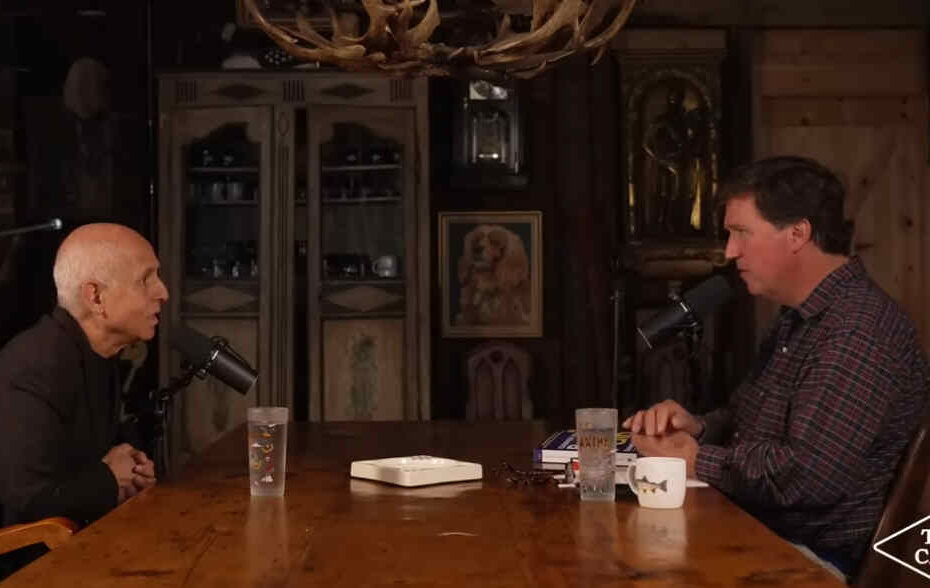
Here is the full transcript of American psychiatrist Dr. Daniel Amen’s interview on The Tucker Carlson Show titled “Big Pharma’s Most Dangerous Lie and the Dark Truth About Weed”, November 17, 2025.
The Physical Effects of Cannabis on the Brain
TUCKER CARLSON: Thank you, Doctor. You study the brain, not just emotions, but the physical brain, the actual biology of the brain. I’ve got a lot of questions for you about that, but let’s just start with cannabis. What are the effects of cannabis on the brain? Marijuana on the brain.
DR. DANIEL AMEN: So I published a study on a thousand marijuana users, compared it to our healthy group. Every area of their brain was lower in blood flow and activity. And then just this year, measurably. Measurably. On the imaging study we do, which is called SPECT, Single Photon Emission Computed Tomography. It looks at blood flow activity, but also looks at mitochondrial function.
TUCKER CARLSON: I have to ask you, so pardon my ignorance, what’s mitochondrial function?
DR. DANIEL AMEN: So the mitochondria, little energy powerhouses in your cell, they activate and keep the cell energized and alive. And 49% of the tracer that we do this study with is actually taken up by the mitochondria in the brain. So when we see low activity, that’s really low activity, along with decreased blood flow.
And then there’s a new study by a completely separate group than ours on 1,000 young marijuana users. And the areas of the brain involved in learning and memory were low in blood flow and activity. So it’s not just me because I have a problem with marijuana, it’s other scientists as well, saying marijuana is not great for the brain.
TUCKER CARLSON: What are the effects of less mitochondrial activity and lower blood flow?
DR. DANIEL AMEN: So it can go with tiredness, it can go with low motivation, it can go with depression. Over time, it can go with more anxiety because your brain can’t settle it down. And in vulnerable people, it can go with an increased risk of psychosis.
The Connection Between Marijuana and Psychosis
TUCKER CARLSON: How does that work? We’re all of a sudden seeing, because marijuana is not a drug, it’s a medicine. We’ve been told it’s the most healing medicine ever discovered. It’s, quote, “natural,” God made it, and it’s the answer to most of our physical and psychological problems.
And now all of a sudden, there seem to be all these studies showing a direct connection between heavy marijuana use and psychosis. Is that connection real? And if so, how exactly does that happen? Do we know?
DR. DANIEL AMEN: Well, it’s absolutely real. And people who have a certain genetic makeup are more vulnerable to becoming psychotic. One gene in particular, if you have a combination of an abnormality in that gene, you have a seven-fold, so that’s a 700% increased risk of becoming psychotic if you are a heavy user of marijuana.
So not for everybody, but for everybody, the risk is somewhere between two to four times, especially if you start young. And now it’s the young that are suffering from the idea that marijuana is innocuous because it’s not innocuous, but because they think it’s innocuous. I think psilocybin is going to go the same way.
When the perception of the dangerousness of a drug goes down, its use goes up. And that’s what we’ve seen. And teenagers who use have a higher incidence of anxiety, depression, suicide and psychosis in their 20s. And so you’re taking a developing brain and altering how that brain develops.
And what we’re seeing is the highest incidence of brain and mental health problems in young people we have ever seen. Study from the CDC: 57% of teenage girls report being persistently sad. 32% have thought of killing themselves. Think of that, of all teenage girls, 32% have thought of killing themselves.
TUCKER CARLSON: 32% of all teenage girls in the United States?
DR. DANIEL AMEN: Yes. 24% have planned to kill themselves and 13% have tried. We’re in this mental mess and we have to go, why?
Societal Lies About Drugs and Brain Health
DR. DANIEL AMEN: And it’s more complicated than just marijuana, but marijuana is clearly part of it, and part of it are the societal lies that I’ve seen from the 80s. So I started my psychiatric residency in 1982 and I trained at the Walter Reed Army Medical Center in Washington D.C.
And 1987, video games started to come out. And they’re like, oh, these are so exciting. With no neuroscience study on what do video games do to development. And it’s not good. There’s not been great studies that say, oh yeah, these are really great for brain development.
And then in the early 90s, alcohol is health food. Right. My first clinic is in Northern California. I have 11 clinics. And it was right outside the Napa Valley. And the Napa Valley produces a lot of wine in the United States. Was so excited. You should have a glass or two every night. And that’s good for your heart. No, it’s bad for your brain.
TUCKER CARLSON: And now a glass or two of wine is bad for your brain?
DR. DANIEL AMEN: The American Cancer Society came out four years ago against any alcohol, because any alcohol is associated with an increased risk of eight different cancers. And then we did a prize fight between marijuana and alcohol, and it went 12 rounds. Alcohol causes a lot of devastation, perhaps more than marijuana.
But the idea in society is alcohol is a health food. It’s a lie. And then “pain is the fifth vital sign.” You need opiates if you’re in pain. Well, that sort of didn’t turn out well. Or benzos or “mommy’s little helper.” And that didn’t turn out well.
TUCKER CARLSON: So these are all trends just in the 43 years since you’ve been practicing psychiatry.
DR. DANIEL AMEN: Little lies that I see, not little, huge societal lies.
Brain Scans Reveal Drug Use in Teenagers
DR. DANIEL AMEN: And then, I’m also a child psychiatrist and so I would often see 16-year-olds, 17-year-olds and parents bring him in because “I think he has ADD” and I’m like, okay. And as I would scan them because that’s what I do at Amen Clinics, we look at your brain. The brain looks toxic and it shouldn’t look toxic in a 16-year-old.
And initially you ask the child, “Are you using any drugs?” “Of course not.” And then I’m like, but you have a toxic brain. And then they start crying because I teach them how important their brain is. Your brain is involved in everything you do. How you think, how you feel, how you act, how you get along with other people. And when this works right, you work right. And when it doesn’t, you don’t. And it looks toxic.
TUCKER CARLSON: So tell me again, pardon the dumb questions, but you can tell from a brain scan of a 16-year-old whether that child’s using drugs?
DR. DANIEL AMEN: I can tell whether or not it’s toxic. And then I have to find out, well, why is it toxic? And it could be toxic from drug use. It could be toxic because they live in a mold-filled home. It could be toxic because they have Lyme disease and the infection is causing their brain to look older than they are.
TUCKER CARLSON: But that’s all evident in the scan?
DR. DANIEL AMEN: That’s all evident in the scan. It’s toxic. Now it’s my job then to figure out why. And so when I see the toxic scan in this ADD 16-year-old who did not have ADD or ADHD when he was 7, right, it’s not something you just pick up. If you really have ADHD, you had it your whole life.
If it just shows up, you either had a head injury, you’re doing drugs or you’re living in a mold-filled home. There’s a reason why. And stimulants are not the answer to drug use.
TUCKER CARLSON: Drug use is not the answer.
DR. DANIEL AMEN: It’s not the answer. And so I’ll show the kid their scan and then go through this exercise with them and they’ll start to cry and they go, “You won’t tell my mom.” And I’m like, no, I’m pretty sure we should, because otherwise how are you going to get the help you need?
And they’re like, “Well, I’ll stop, I promise.” And the scans are so helpful for me, a little bit like a lie detector, because it’s really hard to say, “Oh no, I’m not using” when your brain looks toxic. And there’s not another good reason that it looks toxic. And that’s why marijuana is innocuous. I’m like, well, you’ve not been in my chair for the last 43 years.
The Rise of Brain Damage in Young People
TUCKER CARLSON: Have you noticed, since you do treat children as well, an increase in damaged brains that you can attribute to marijuana use?
DR. DANIEL AMEN: Absolutely. An increase from when we started.
TUCKER CARLSON: So that seems like a public health concern.
DR. DANIEL AMEN: It’s totally a public health concern. We should be completely freaked out and people are like “marijuana is innocuous, marijuana is innocuous.” And it’s like, why are you saying that?
TUCKER CARLSON: Because they’re getting rich from it, probably.
DR. DANIEL AMEN: Well, the marijuana industry, which hates me, spends $3 billion a year on marketing.
TUCKER CARLSON: So how are they different from the Sacklers at Purdue Pharma, then? Lying to people about the health effects of the drug they’re profiting from? I mean, it seems like the same.
DR. DANIEL AMEN: It’s a weapon of mass destruction.
TUCKER CARLSON: Marijuana. Marijuana. And the weed industry hates you, of course. Have they attacked you?
DR. DANIEL AMEN: All the time.
TUCKER CARLSON: Really? What do they say?
DR. DANIEL AMEN: If I post something on one of my social media sites, they’ll call me a charlatan and hysterical and that I should get high. They should take my medical license and all sorts of things.
TUCKER CARLSON: Take your medical license?
DR. DANIEL AMEN: Yeah, because they’ll do anything to try to shut me up. But it’s like, how do you not talk about the truth? And it’s like, well, how do you know? It’s like, well, I look at the brain, and if your brain is not right, well, you’re not right.
TUCKER CARLSON: Yeah, I just didn’t know until we had breakfast a minute ago that that kind of damage was so, or any kind of damage to the brain was more subtle damage, not, you know, head injury damage, but damage from drugs, for example, was detectable on a brain scan.
Understanding the Cerebellum and Brain Function
DR. DANIEL AMEN: Yeah. So interesting. So SPECT, the study we do, gives you this really beautiful 3D look at activity. And a healthy scan shows full, even symmetrical activity, with most of the activity being in the cerebellum.
So the cerebellum is the back, bottom part of the brain. Cerebellum is Latin for “little brain.” It’s 10% of the brain’s volume, but has 50% of the brain’s neurons. And alcohol is directly toxic to the cerebellum. Well, so is marijuana. And that’s why you shouldn’t drive when you’re high.
TUCKER CARLSON: And so what happens in the cerebellum?
DR. DANIEL AMEN: So many interesting things. It’s sort of the Rodney Dangerfield part of the brain. It gets no respect.
TUCKER CARLSON: This would be the lower brain we refer to, not the higher brain?
DR. DANIEL AMEN: Well, it’s so important because it’s connected to the rest of the brain. And it used to be thought that the cerebellum was involved in coordination, physical coordination. Well, now we know it’s also involved in thought coordination, how quickly you can integrate new information. And marijuana slows the function of the cerebellum. So your thoughts become slower and you’re less coordinated, which is why you shouldn’t drive if you’re high.
TUCKER CARLSON: Interesting. I mean, that was all kind of known when I started smoking marijuana right around 1982 or 81. And it was like the classic profile of the stoner. “Hey, man,” you know, slow, you know, molasses pace, cadence to the language, droopy eyes, eating lots of snack food, kind of not doing anything.
People sort of knew even then when weed was way less potent than it is now that it slowed you way down. But that’s because it slows your brain down.
The Effects of Cannabis on the Brain
DR. DANIEL AMEN: Because it slows your brain down, it certainly alters your brain. It works on CB1 receptors. So there are cannabis receptors in your brain, endocannabinoid receptors. And it activates dopamine, which means you feel high.
TUCKER CARLSON: Yep.
DR. DANIEL AMEN: You feel rewarded, want to do it again for sure. And in vulnerable people, it actually disrupts dopamine, so it doesn’t work consistently effectively. And if it disrupts it, if it goes too high, then for vulnerable people, you can become psychotic. You can begin to lose touch with what’s real and what’s not real.
So if you think of psychosis, that’s the definition of psychosis. You begin to have trouble differentiating what’s real and what’s not. You might have delusions, hallucinations, and it triggers psychosis that in some people will turn into schizophrenia, which is arguably the worst psychiatric illness, arguably the worst illness there is, period.
TUCKER CARLSON: I can’t think of anything worse than that.
DR. DANIEL AMEN: No, it’s awful. And so why would you use something if you didn’t know your genetic risk that could flip you into not knowing what’s real or not?
TUCKER CARLSON: Because you had no idea it was risky.
Teaching People to Love Their Brain
DR. DANIEL AMEN: And you don’t love your brain. See, I heard President Trump talk at the Department of Justice. He had a conversation with the Mexican president about why Mexico exports drugs, but they’re not a big drug using country, which I thought was really interesting. And she said, “Well, family’s really important to us.” And he’s like, “Well, family’s important to us.” And she said, “And we have a wicked drug education campaign.” And he’s like, “Oh, we should do that.”
And so I wrote my friend at the White House. I’m like, you have to teach people to love their brain first before you tell them something’s bad for them. Because as soon as you tell them something’s bad for them, they want to do it, right? In the book of Genesis, God says, “Don’t eat from the tree.” The next scene, they’re eating from the tree.
So if I was God, and I never try to play God, but if I was God and I was counseling God, I’d be like, tell them if they eat from the tree, she’s going to have to wear clothes and that they’re going to get kicked out. It’s like, tell them, ask them what they want and then, well, what’s the consequences?
And so the first thing is teach them to love their brains. And if you love it because it controls everything you do, well, why would you hurt it? Unless you were not that smart. But you’ve got to have that foundational step. I call it brain envy. I always say Freud was wrong. Penis envy is not the cause of anybody’s problem. You’ve got to love your brain. It’s the only organ in your body where size really does matter. It’s your brain because it controls everything.
TUCKER CARLSON: Size does matter.
DR. DANIEL AMEN: Size matters. You don’t want a smaller brain. And alcohol, marijuana, being overweight, they all decrease the size of your brain.
How Obesity Affects Brain Health
TUCKER CARLSON: So being overweight decreases the size of your brain?
DR. DANIEL AMEN: Yeah. Horrible study out of the University of Pittsburgh. My friend Cyrus Raji published it. He looked at MRI scans of people who are healthy weight, so BMI between 18.5 and 25, overweight 25 to 30, BMI over 30 obese.
The people who are overweight had 4% less volume in their brain, so less brain tissue. And their brains looked eight years older than they were. People who were obese had 8% less volume. Think about that. And their brains look 16 years older.
I looked at my healthy group that we have at Amen Clinics, and because when we were looking at healthy, we weren’t looking at weight. And after that study came out, we saw exactly the same thing. And then I did a big NFL study and I looked at my healthy weight NFL players and my overweight NFL players. And the overweight NFL players had significantly lower activity in their frontal lobes.
So the frontal lobes is the most human thoughtful part of your brain. It’s 30% of the human brain, 11% of the chimpanzee brain, 7% of your dog’s brain, 3% of your cat’s brain, which is why cats need nine lives anyways.
Significantly lower blood flow and activity in their frontal lobes. Excess weight increases something called inflammatory cytokines. So the fat on your belly is not your friend. It decreases blood flow, it increases inflammation. It prematurely ages your brain. It takes healthy testosterone and flips it into unhealthy cancer promoting forms of estrogen, which is why being overweight increases your risk of 30 different cancers.
TUCKER CARLSON: Really? And it lowers your testosterone?
DR. DANIEL AMEN: Lowers your testosterone.
TUCKER CARLSON: Wow, that’s unbelievable. Is that widely known?
DR. DANIEL AMEN: Yes. It’s widely known in scientific circles that obesity is associated with at least 30 different medical conditions, including cancer.
TUCKER CARLSON: What does marijuana do to testosterone levels?
DR. DANIEL AMEN: Lowers it conclusively.
TUCKER CARLSON: You can say that, yes?
Environmental Toxins and Their Impact
DR. DANIEL AMEN: And you know, we have this younger generation who have low testosterone levels. They’ve been getting lower and lower and we have to ask, why is that? And part of it is, this is going to sound really crazy, but I believe it, the dermatologists won. They made us afraid of the sun. And now we have these record levels of low vitamin D levels, but we also have record levels of toxins being put on our bodies.
So mom thinks she’s really being a great mom if she lathers her son or her daughter with sunscreen. And now you’ve seen in the last couple of years, sunscreens have come under a lot of scrutiny because of the toxins they have in them. If you put it on someone’s skin, it goes into their body.
TUCKER CARLSON: What kind of toxins?
DR. DANIEL AMEN: Like parabens and phthalates. Brand new study where they looked at cord blood and autism. And moms who had higher levels of phthalates had a five times increased risk of having an autistic child. So when Secretary Kennedy says we’re going to look at toxic exposure and autism, I’m like, we absolutely should look at that.
I wrote an op-ed piece in the New York Times recently. It was actually in response to Alan Francis, who was in charge. He’s a psychiatrist, very famous, was in charge of the DSM-4 committee. So the DSM, the Diagnostic and Statistical Manual, its fourth version, changed the diagnostic criteria.
TUCKER CARLSON: Hugely significant book.
The Rise in Autism Rates
DR. DANIEL AMEN: Huge. And he said, “Well, that’s the reason for the rise in autism.” And I wrote, that’s sort of like the fox guarding the hen house. Autism clearly has exploded. And it’s not just due to different diagnostics or older fathers. It’s due to a gene environmental bomb. Something has happened in our society where in California now, it’s insane, one in 12 boys will meet the diagnostic criteria for autism. That should just scare us to our core.
And so what is different? Is it Tylenol? Is it phthalates? Is it parabens? Is it aspartame? There’s this crazy study on aspartame, which is in diet sodas and many diet products. Aspartame’s in 5,000 diet products. They did this study on rats and they gave rats aspartame and it made them insanely anxious. And then they gave them Valium and it calmed them down. It’s like, okay, that was pretty crazy.
But the part about this study that bothered me the most was their babies who had never been exposed to aspartame were anxious and their grandbabies were anxious. It had generational consequences.
TUCKER CARLSON: Does that mean it altered the genetics of the rats?
DR. DANIEL AMEN: The epigenetics. So epigenetics is on top of your genes, there are switches and you can turn them on or off based on what you’re exposed to. And so imagine this, when you have a baby girl. So in our family, we have five girls.
TUCKER CARLSON: Yes.
Generational Consequences of Our Choices
DR. DANIEL AMEN: I have five sisters. God hates me. And you have five sisters. I have five sisters and five daughters, and I love them all dearly. But when a baby girl is born, she’s born with all of the eggs in her ovaries she will ever have. And what happens to her is turning on or off those switches, making illness more or less likely in her babies and in her grandbabies.
Because if she has a baby girl, that baby girl is born with all of the eggs she’ll ever have. And I think we should teach every teenage girl and boy that your decisions have generational consequences.
I’m a huge advocate for teaching brain health early because it all goes down to one question that I love so much. I used to play a game with my daughter Chloe when she was two, and I’m like, “Hey, Chloe, good for your brain or bad for it?” And if I went avocados, she’d go two thumbs up, “God’s butter.” If I said blueberries, she’d put her little hands on her hips and go, “Are they organic?” Because non-organic berries hold more pesticides than almost any other fruit. If I said hitting a soccer ball with your head, “Oh, so stupid.” Or talking back to your redheaded mother, “Very bad for your brain.”
TUCKER CARLSON: Dangerous, in fact.
The Power of Self-Awareness
DR. DANIEL AMEN: But it’s that question, “What I’m doing right now, is this good for my brain or is it bad for it?” And if I can answer that with information and love, I just tend to do the right thing because most of us have self-interest in mind. And I’m like, activate it, right?
What do you want in your relationships? What do you want in your work? What do you want in your money? What do you want in your physical health, your emotional health, your spiritual health? And so when you really get to what you want, you don’t really want the substances because they don’t get you what you want, right?
Like, “But I want to feel better.” Okay, well, there’s probably 30 other ways to feel better. We just don’t teach any of them in school. How crazy is that?
One of the things I teach my patients is how to kill the ANTs. It stands for Automatic Negative Thoughts, the thoughts that come into your mind automatically and ruin your day. And I was 28 years old in my psychiatric residency when a professor said, “You have to teach your patients not to believe every stupid thing they think.” And I’m like, “But I believe every stupid thing.” Most of us do.
You mean I don’t have to believe the noise or the nonsense that my brain creates? They should have taught me that when I was a second grader, how to manage my mind. I’m friends with Paul Simon and Paul’s song “Kodachrome” is one of my favorites. It starts with, “When I think back on all the crap I learned in high school, it’s a wonder I can think at all.”
TUCKER CARLSON: Yes.
DR. DANIEL AMEN: And I’m like, why can’t we be more effective?
TUCKER CARLSON: Hate to brag, but we’re pretty confident this show is the most vehemently pro-dog podcast you’re ever going to see. We can take or leave some people, but dogs are non-negotiable.
DR. DANIEL AMEN: They are the best.
The Truth About Marijuana as Medicine
TUCKER CARLSON: Well, I mean you said that the president of Mexico said that Mexico doesn’t have, you know, pervasive drug use problems because even though their economy is based on selling drugs, Mexicans don’t use drugs at the rate Americans do because they have a very aggressive drug education program.
We also have a drug education program run by the drug peddlers that is super effective. I mean, I think if you ask people about marijuana, the first instinct is “why are you judging me? Settle down, you’re too uptight.” And the second is “it’s way better than alcohol and you got to get lit on something and so you might as well choose weed over booze.”
And the third is unlike alcohol, cannabis is actually a real medicine, effective medicine. It can save people’s lives. I mean that is the story that we hear every day. Assess the last part. Is marijuana a medicine?
DR. DANIEL AMEN: Well, I think when used properly it can be helpful. So for example, my mother-in-law, who I love dearly, had stage four lung cancer and wasn’t eating. And I’m like, absolutely, let’s see if marijuana will help her. For certain people with glaucoma it can be helpful.
TUCKER CARLSON: Did it help her?
DR. DANIEL AMEN: Yes. But not for much else. And if you’re using it for anxiety, it’s going to make you more anxious.
TUCKER CARLSON: So glaucoma which is swelling of the eye, maybe.
DR. DANIEL AMEN: Yes. Increased intraocular pressure.
TUCKER CARLSON: Okay.
DR. DANIEL AMEN: And to help with appetite.
TUCKER CARLSON: Okay.
DR. DANIEL AMEN: It can help with pain. But if you start using it for pain, you’re not going to stop.
TUCKER CARLSON: What does it mean?
DR. DANIEL AMEN: Well, if you’re using it for pain, it’s going to suppress the pain, and when you stop using it, it’s going to come back. So if you don’t go to the origin of the pain.
TUCKER CARLSON: Yes.
The Brain’s Role in Chronic Pain
DR. DANIEL AMEN: And pain. I have a new book coming out in December, “Change Your Brain, Change Your Pain.” And I talk about this in the book. If you have chronic pain, say you have pain for three weeks or four weeks. Well, pretty soon it’s no longer in your back or just in your back. It’s actually in your brain.
Your brain with pain becomes remodeled. And pain is now felt in your back, but it’s in your brain. And if you’re really going to go after that chronic pain, you have to get your brain healthy. And so if you’re using marijuana for the chronic pain, it’s suppressing those pain centers, but it’s not getting your brain healthy. And so when you stop the marijuana, the pain is just going to come back.
And it’s very important. In the book, I talk about the doom loop, where you have pain for any reason, which then triggers the suffering circuits in the brain that actually are the same ones for anxiety and depression. Anxiety, depression, pain. The same circuits in the brain which then triggers this flood of ANTs, automatic negative thoughts. “I need surgery. I’ll never be well. I’ll always be in pain.”
Which then triggers muscle tension, which increases the pain and leads to bad habits. So not just marijuana. It could be overeating because of the marijuana, and you end up into this cycle of the doom loop.
TUCKER CARLSON: Familiar to anyone who’s had back problems. I’m sorry, that’s familiar to anyone who’s had back problems. You just described it, I think very well.
DR. DANIEL AMEN: But.
TUCKER CARLSON: So marijuana is, in your opinion, as a physician, helpful for a few specific illnesses, glaucoma and low appetite. Why wouldn’t the answer be to isolate whatever the compound is in marijuana that helps with appetite and glaucoma and literally medicalize it? Put it in a pill or some pharmaceutical form and then, you know, sell it like you would any other pharmaceutical?
DR. DANIEL AMEN: Well, they’ve done that for a long time.
TUCKER CARLSON: Oh, okay. I’m not the first one to think of that. Okay, so we have that.
The Political Push for Legalization
DR. DANIEL AMEN: So we have that. And so why does it need to be legalized for everything? And are we better off than we were before we did that? And the answer is, absolutely, we’re not better off. We’re in the worst mess that we’ve ever been, and we need to be honest with ourselves.
And I just, I remember this crazy debate. So it was a Democratic debate in 2020 where they asked Joe Biden whether or not the federal government should legalize marijuana. And he said no. He said, “I don’t think there’s been enough study.”
And on national television, Cory Booker shamed him. And he said, “Man, are you high? The science is settled, and you’re just crazy because you don’t believe that.” So a U.S. senator is basically saying, the science is settled. We should all get high. And I’m like, that was just such a terrible moment for me. I think I was screaming at the television.
TUCKER CARLSON: But, I mean, does Cory Booker know some science that you don’t know?
DR. DANIEL AMEN: No.
TUCKER CARLSON: You don’t think so? You don’t think. Yeah, Cory Booker.
DR. DANIEL AMEN: And I’m just a fan of the truth. And my interest is to help you have a better brain, because if you have a better brain, your marriage is better, you’re a better dad, you make more money.
Marijuana’s Impact on Relationships
TUCKER CARLSON: Well, since you are a psychiatrist, I mean, what is the effect of chronic marijuana use on marriages?
DR. DANIEL AMEN: Well, I just released a podcast with Julius Randall, NBA superstar. I love him. It’s public knowledge now that I’ve been his doctor. It was ruining his marriage because his wife said he wasn’t present.
TUCKER CARLSON: Right.
DR. DANIEL AMEN: That he.
TUCKER CARLSON: They already say that about men. So you don’t need encouragement to be more vacant or distant. Yeah, it’s true.
DR. DANIEL AMEN: It had just changed his soul in the sense that he just didn’t care about the things that were actually really important to him. After he stopped and he asked himself those questions, “What do I really want?” It’s, “No, I want to be married. I love my wife. I want to be a good dad. I want to be a present dad.”
And, yes, I want to be great at my craft, but there’s so much more to me than just basketball. And when I met him, I learned that it was legal for NBA players. They just don’t test them so they can be.
TUCKER CARLSON: The league allows NBA players to use marijuana?
DR. DANIEL AMEN: Yes.
TUCKER CARLSON: So there.
DR. DANIEL AMEN: There’s no restriction on it. And, you know, I guess the only restriction is, well, how do you play? And Julius thought he played better when he used, but in fact, he played better when he didn’t use. He just had to be able to learn how to manage his mind.
TUCKER CARLSON: So I’m not going to make fun of him for thinking that. Because people addicted to all kinds of substances become totally convinced that they operate at a higher level when they use those substances. You’ve seen that, I’m sure, a lot.
DR. DANIEL AMEN: Yes. And once they stop, they generally don’t believe it anymore.
TUCKER CARLSON: Fair.
Understanding Why People Use Substances
DR. DANIEL AMEN: But you have to always ask when someone’s using any substance, it’s why.
TUCKER CARLSON: Right.
DR. DANIEL AMEN: And there are biological reasons why they use it, because it may decrease pain. There’s psychological reasons. It does decrease the chatter right in your head. There’s social reasons because you fit in with the group you’re using.
TUCKER CARLSON: Can we stop on the second one? That it decreases the chatter in your head? I’ve had a couple very smart, just high IQ friends who use marijuana for that reason and say they become more fluent, clearer thinking, more able to focus. You’re suggesting that could be real? They’re not making that up?
DR. DANIEL AMEN: No, it could be real, especially in the short run, probably not in the long run. And I always want people to do things that help them feel good now and later versus now, but not later.
And so are there other ways to optimize your brain? And that’s what I get so excited with players like Julius and some of the other people I’ve worked with is, how can I help you be the very best you can be? So it’s not about taking broken people and putting them back together. It’s about taking awesome people and helping them be more awesome and looking at the brain.
For me, it literally changed everything in my life, from the time I go to bed at night to what I eat, to what I do to make myself happy. I always wanted to optimize my brain rather than steal from me. You know, I have six kids, and I love them all dearly, but I never want to have to live with them. And so, you know, I covet my independence.
And as I get older, I’m like, I need to be more serious. Because did you know 50% of people 85 and older will be diagnosed with dementia of one form or another? And that means if you’re blessed to live to 85, you have a one in two chance of having lost your mind. And marijuana increases the risk of dementia.
Marijuana and Dementia Risk
TUCKER CARLSON: Really?
DR. DANIEL AMEN: Yeah. There’s studies now, and its use is skyrocketing in older people. So in Canada, there was a study where 15 years ago, 5% of people over 50 used marijuana. Now it’s 21%.
TUCKER CARLSON: The government of Canada, the government of the United States is encouraging that. Why would they be doing that?
DR. DANIEL AMEN: I don’t know. It’s just wrong thinking.
TUCKER CARLSON: Yeah.
DR. DANIEL AMEN: At best, we don’t want dementia increasing in the population. Alzheimer’s is expected to triple by 2050. No. It’s like, no. And I wrote a book many years ago called “Preventing Alzheimer’s” and got no end of grief from it. Published it the year Reagan died.
And they’re like, “You can’t do that. That’s a false promise.” And last year in the Lancet, their review article came out and said 50% of Alzheimer’s disease is preventable. And I’m like, I’m so excited. It’s like, yes, but in order to do that, you have to love your brain and take care of it.
The Steps to Reducing Alzheimer’s Risk
TUCKER CARLSON: What are the, without getting too technical, steps that a layman can understand to reducing your risk of Alzheimer’s would be what?
DR. DANIEL AMEN: So I have an acronym I like called BRIGHT MINDS. You want to keep your brain healthy or rescue it? You have to prevent or treat the 11 major risk factors. And just quickly, B is for blood flow. Low blood flow is the number one brain imaging predictor of Alzheimer’s disease. So it lowers blood flow: hypertension, being sedentary, alcohol, marijuana, nicotine, much caffeine.
TUCKER CARLSON: Right, little bit.
DR. DANIEL AMEN: Is fine. Much, not a good idea. R is retirement and aging. The older you get, the more serious you need to be. And you need to know what promotes aging. Marijuana promotes aging. And now new studies out that if you’re under 50 and you use marijuana, you have a 600% increased risk of having a heart attack. So we know it has a 600%.
TUCKER CARLSON: That seems significant.
DR. DANIEL AMEN: It seems significant. And so we know marijuana has a negative impact on blood vessels, retirement and aging. I is inflammation, a major cause of depression and dementia. And so pro-inflammatory foods, so the ultra-processed foods, low omega-3 fatty acids and not flossing. Like of all things, a brain health strategy is floss every night.
TUCKER CARLSON: Floss your teeth.
DR. DANIEL AMEN: Floss your teeth. Do not get gum disease.
TUCKER CARLSON: You don’t want low-grade infections in your mouth.
DR. DANIEL AMEN: And you don’t want inflammation in your mouth. So it alters the microbiome or all the bugs in your mouth, which then have a negative impact on your whole body.
G is genetics. Know what’s in your family. Like I have obesity and heart disease in my family, but I’m not overweight and I don’t have heart disease. Why? I’m on an obesity heart disease prevention program every day of my life because I don’t want those things.
We adopted our nieces because their parents were addicts. And I tell them, I said, “You have addiction in your family. You need to be on an addiction prevention program every day of your life.” And when I found the older one vaping, I grounded her for six months. I mean, we are very serious about, if you want to go that way, that’s up to you, but I’m not going to do anything in my power to help you.
The second one, and this is so important, or the next one is H, head trauma, a major cause of psychiatric problems, but it’s also a major cause of substance abuse. Because if you damage your frontal lobes, which happens in 90% of people who have head trauma, 90% of them, their frontal lobes are involved. It decreases impulse control.
TUCKER CARLSON: Yeah.
DR. DANIEL AMEN: So you might know this isn’t good for me, but if you want it, you do it rather than if you want it, you distract yourself, you make a better decision for yourself.
T is toxins: drugs, alcohol, mold in your home can damage your brain and make you decrease your decision making. General anesthesia is toxic to your brain. And then the products we put—
TUCKER CARLSON: General anesthesia is toxic to your brain.
The Impact of General Anesthesia
DR. DANIEL AMEN: General anesthesia. And like, I’m a psychiatrist, why do I know that? Because one of my patients, who is an alcoholic who had a terrible looking brain, she got clean, her brain looked great. She then had knee surgery, calls me up crying. She goes, “I think I have Alzheimer’s disease.” And I’m like, did she relapse?
So I scanned her brain, looked terrible again, but she didn’t relapse. It was the effect of general anesthesia. And then I went to the literature and I’m like, what does the literature say? The general anesthesia is hard on the brain and can increase the risk of dementia. And that doesn’t mean you don’t get surgery. It means probably should do some rehabilitation work if you have to get general anesthesia.
TUCKER CARLSON: So avoid it if you can. Don’t take it lightly.
DR. DANIEL AMEN: Well, like people, like in the pain book, this is the one statistic that blew me away, that really sort of nudged me to write the book. If you have back pain—
TUCKER CARLSON: Yes.
DR. DANIEL AMEN: And you get an abnormal MRI, well, that scares the socks off of you, triggers the doom loop and you’re more likely to get surgery.
TUCKER CARLSON: Been there.
DR. DANIEL AMEN: But head to head against conservative care, surgery is no more effective and it has a 21-fold increased risk of side effects. And then this is the statistic: people my age, 70, 70% of us have abnormal backs who have no pain at all. People who are 50 who have abnormal MRIs, 50% of them have abnormal back MRIs and no pain at all.
That means just because you have an abnormal MRI on your back or your neck or your shoulder doesn’t mean surgery should be the first thing you do. But because there’s an industry around surgery, that’s often the first thing that’s recommended. And I argue, well, let’s do the conservative things with a brain boost first. And then if you need it, you need it. Right? I’m not opposed to it. I’m just opposed to that’s the first and only thing you do.
Why Public Health Authorities Stay Silent on Cannabis
TUCKER CARLSON: Why aren’t public health authorities, federal and state, sounding the alarm about cannabis?
DR. DANIEL AMEN: They’re not. State of California, or at least in my state, they’re not. Because it’s a revenue source, because there’s a political lobby. And it’s shameful. I don’t know how else to say it. When you really understand the research and now even more emerging research on anxiety, depression, suicide and psychosis, I think we should be much more concerned from a public health standpoint.
TUCKER CARLSON: When was the last time you heard a public health authority in the state of California say, “You know, legalizing marijuana has been a disaster and here are the numbers on it”?
DR. DANIEL AMEN: I don’t think they say it because of the pressure that’s put on them not to say it.
TUCKER CARLSON: California is the largest marijuana growing state in the country, maybe the world. Certainly the highest potency, the best weed is growing in California, Mendocino, Humboldt counties, all that famously. I mean, it’s a huge part of the state’s economy. And you think that’s why they won’t say it’s bad?
DR. DANIEL AMEN: Yes, it’s money and influence.
TUCKER CARLSON: So like we used to make fun of the congressman from Kentucky because he wouldn’t say smoking caused cancer. How is that?
DR. DANIEL AMEN: It’s the same thing. Yeah. You just look at power and power has to do with money and it’s killing us. And it breaks my heart to have all these young people think it’s innocuous.
And now along with the marijuana parties, they’re having mushroom parties because I think mushrooms is going to go the same way as video games. And we didn’t talk about social media and cell phones. All the stuff just unleashed on the population, psilocybin, mushrooms. But now psilocybin.
We have a daughter that’s 22 and she’s like, “Dad, they’re not drinking as much, but they’re using mushrooms because they think they’re innocuous.” But the visits to emergency rooms for psilocybin psychosis has gone up significantly.
The Reality of Psilocybin Mushrooms
TUCKER CARLSON: It’s a little harder to tell yourself, I mean, I smoked marijuana all through my childhood. I also ate a lot of mushrooms. But it’s a little harder to tell yourself that mushrooms are like no big deal because you can flip right out on mushrooms. Like eat enough and they’re hallucinogenic, they inspire actual hallucinations.
So how do you, and maybe you’re totally for that or maybe you’re not, but you can’t say it’s like drinking a cup of coffee. That’s a profound thing. You see things that aren’t there. That’s by definition a big deal.
DR. DANIEL AMEN: No, it’s absolutely a big deal. And they’re studying it for PTSD and they’re studying it for depression. And I’m for that. What I’m not for is “it’s good medicine, we should all do it.” That I think it’s kind of like weed and glaucoma.
TUCKER CARLSON: Okay. If it reduces your glaucoma symptoms, I mean, how could you be against that? But there’s a huge distance between that conclusion and “hey, it’s totally safe, everyone should use it.” Right? Like you’d take chemo if you had cancer. Right. But you wouldn’t recommend your 8-year-old had chemo.
DR. DANIEL AMEN: Would hurt my brain. Right. But then I have to have chemo or I’ll die.
TUCKER CARLSON: I get it.
DR. DANIEL AMEN: And so I need to rehabilitate my brain. And it’s probably from the almost 300,000 scans I have done. The biggest lesson is I’m not stuck with the brain I have, that I can make it better and I can prove it. Now I can also make it worse. And I can prove that.
Right, every day I am making my brain better or I’m making it worse based on the choices that I make. And that’s so exciting. Everybody gets really excited about neuroplasticity. Neuroplasticity is you can remodel your brain, but neuroplasticity goes both ways. Whatever you repeat, you model in your brain. Whatever you repeat becomes tracks that force you into that road, if you will.
And so when I go to a restaurant and the first thing they ask you is, “Do you want a glass of alcohol?” When you go “no” over and over and over again, well, “no” becomes strong in your brain, and so the temptation is low. If you say “yes” over and over and over again, that then becomes an automatic response. And so we’re wiring our brains for health or illness by the choices we make.
The Risks of Psilocybin Use
TUCKER CARLSON: Back to psilocybin really quick, what do we know about the risks of using it?
DR. DANIEL AMEN: That it can unbalance you.
TUCKER CARLSON: That is true. I can verify that deeply. I mean, completely unbalance you.
DR. DANIEL AMEN: Yes. That you want to use it again. Although alcohol, if you use alcohol, there’s a 15% chance you’ll get hooked on it.
TUCKER CARLSON: Really?
DR. DANIEL AMEN: 15%. If you use marijuana and you’re young, there’s a 17% chance. If you’re older, it’s only 9% according to the latest research. So alcohol and marijuana in the young have an addiction potential for sure. If you’re older, alcohol is worse than marijuana. Psilocybin, that’s one of the risks, although less so, it seems than either alcohol or marijuana.
TUCKER CARLSON: Well, you can’t function when you’re tripping. So it’s not like you could eat 4 grams of mushrooms or whatever and go to work. You can’t.
DR. DANIEL AMEN: Well, and the doses in the studies is very important. It’s 25 milligrams in the studies on depression. And many people I know who microdose are doing like 300 milligrams or 400 milligrams. And so it is the Wild West. I am a fan of lion’s mane mushrooms. They have cognitive benefits and do not make you see things.
The Dangers of Kratom
TUCKER CARLSON: What’s Kratom?
DR. DANIEL AMEN: So it’s another one of what I call a weapon of mass destruction. It is an opiate agonist, which means it increases the availability of opiates in the brain. It’s clearly addictive and it’s legal. And it’s often shown in, it’s often sold in gas stations and places like that.
TUCKER CARLSON: Yeah, the Indians run the gas station 50 yards from here. It’s only Kratom for sale behind the counter. I mean, is it, I’ve never tried it. How serious is it?
DR. DANIEL AMEN: Well, I’ve had a number of patients. In fact, I just did this great segment on KTLA in Los Angeles. So I scanned Casey Montoya, who’s the weather person. She loves me and wanted to experience my work. And so we scanned her and scanned her producer, and then we did them a year later, and they both did what I asked them to do.
Casey’s brain was better. Like, really better, but the producer’s brain was worse. And it sort of broke my heart because I get attached to how brains do. And I’m like, “Why is it worse?” He goes, “I don’t know. I’ve done this and I’ve done that.” And then he texted me. He said, “The only thing I did differently between the first scan and the second, as I picked up Kratom.” And I’m like, “Why did you pick up Kratom?”
TUCKER CARLSON: Pickup means started using.
DR. DANIEL AMEN: Started using Kratom. And he was anxious, something. And he said a friend told him that would be helpful. I’m like, “You need to stop because it’s clearly damaging your brain.”
TUCKER CARLSON: And there’s no, it doesn’t seem to be regulated in most places.
DR. DANIEL AMEN: It’s not. No. It’s in the sort of gray period where clearly it’s legal. They’ve tried to ban it a couple of times, but the Kratom lobby gets to the regulators, and I’m hoping that at some point this administration looks at it.
Changing Attitudes Toward Drugs
TUCKER CARLSON: So compare the attitudes toward drugs in the United States just broadly, vibe check. In other words, in 1982 compared to the attitudes you see now.
The Long-Term Impact of Drug Use
DR. DANIEL AMEN: I think in 1982 we were much more concerned about the long-term negative impact of drug use, marijuana, psilocybin than we are now. I think just this sort of general lie that we unleash these things without long-term neuroscience study. Because marijuana was banned, it got banned in 1937, they couldn’t study it, sort of like psilocybin. And it just blows my mind how we unleash these things without actually taking the time to study them.
TUCKER CARLSON: Do other psychiatrists feel that way?
DR. DANIEL AMEN: Many of us do. We have 60 psychiatrists that work with me at Amen Clinics and we all believe this.
TUCKER CARLSON: Has the American Psychiatric Association taken a position on it?
DR. DANIEL AMEN: It’s not a huge fan of marijuana as medicine and most addiction societies are very concerned about it.
TUCKER CARLSON: Could you roll it back in the state of California right now?
DR. DANIEL AMEN: No, you couldn’t. It’s just…
TUCKER CARLSON: It’s that powerful.
DR. DANIEL AMEN: Not with the current administration.
TUCKER CARLSON: Right.
Creating a National Brain Health Revolution
DR. DANIEL AMEN: If there’s going to be a different administration, it will be hard, but I think the more we start caring about our brains. So the most important thing I’m doing right now is I’m working on creating a national brain health revolution. My goal is for everyone to ask themselves this one question: Whatever I’m doing now, is it good for my brain or bad for it?
And if I can accomplish this, then I think people will really start to ask themselves that question, is it good for my brain or bad for it? And the thing most pressing is marijuana, psilocybin, cell phone, social media, AI.
There’s a brand new study out from MIT that evaluated smart kids who use AI to write their papers rather than just doing it themselves or just using Google had significantly less brain function while they were doing that task. What that means is if I go to the gym, I’m used to lifting 25 pounds so I could have strong arms. Now I go to the gym and I only lift two pounds, so I’m not going to have strong arms.
TUCKER CARLSON: Well, you don’t go to the gym at all and you just sit in your chair and eat Doritos.
DR. DANIEL AMEN: You’re farming out the exercise. And we should be concerned about AI. I mean it’s here and if you use it responsibly, it can be a helpful tool, but it’s going to cause a lot of pain, I believe, and a lot less activity in the brain.
And what’s the thing that protects us against dementia? It’s work, brain work. The more I’m learning new things, the more I’m pushing my brain, well, the healthier it’s going to be. It’s in many ways like a muscle. And so I’m really good at reading brain scans. If I just kept doing that, I’m not learning new things, but if I figure out new and exciting ways to read the scans, well, that’s good for me. Or I learn a sport or I learn a language.
The Evil Ruler Strategy
TUCKER CARLSON: Let’s say you had a population that had been promised it was control, had control of its own government, owned its own country, and then for, I don’t know, like 50 years, you did nothing to serve their actual interests, and you started to worry that they would rebel against you in some sort of violent revolution. You didn’t want that.
Wouldn’t you do everything you could to make them dumber and more passive, lower their testosterone levels, lower their brain activity, have some kratom, have some SSRIs. Here’s a benzo. Get fat. Why wouldn’t you want that if you wanted people to be docile?
DR. DANIEL AMEN: So I wrote another book called “The End of Mental Illness.” And in it, I imagined, if I was an evil ruler and I wanted to create mental illness, what would I do?
TUCKER CARLSON: What would you do?
DR. DANIEL AMEN: All of those things you just mentioned. I would have little girls selling Girl Scout cookies. In fact, in the most brilliant evil ruler strategy, there was a Girl Scout who set up her cookie stand outside a pot dispensary in San Diego, and within a span of like three hours, completely sold out and had to get more product.
And I’m like, that is brilliant evil ruler strategy stuff. Get little girls that are really cute to sell you sugar with trans fats in them to people who are smoking pot. And the marijuana with the highest level, or one of the highest levels of THC is called Girl Scout Cookies.
TUCKER CARLSON: So it’s so funny how, you know, Pavlov’s principle just holds true always. The second you say Girl Scout Cookies, I was just carried away with thoughts of Thin Mints. The texture, the taste.
DR. DANIEL AMEN: But they don’t love you back.
TUCKER CARLSON: No, they don’t.
Does It Love You Back?
DR. DANIEL AMEN: I was at a luncheon recently with Lisa Trout. And I love Lisa Trout. Lisa and her husband Kenny own racehorses, and they own Justify, a couple from Dallas.
TUCKER CARLSON: Very nice people.
DR. DANIEL AMEN: Love them. And I’m sitting next to her, and I just had to do it because Justify won the Triple Crown. And I’m like, would you ever feed Justify junk food? And she rolled her eyes at me. She said, no. I said, would you ever get him stoned? And she goes, of course not. I said, would you ever get him drunk? And she just looked at me, and I’m like, why? He would never live up to his potential.
So whatever you eat or whatever you drink or whatever you put on your body, another one of those questions: Do you love it and does it love you back? Because if it doesn’t love you back, don’t do it. And this is all about self-interest. Because I’ve learned you can’t just tell people no. Because then, like in the Garden of Eden, they’re of course at the tree.
But what’s the goal? And people go, “Come on, Daniel. How can you have any fun?” And I’m like, well, who has more fun? Because what do you really want in your life? And I think most people are like me. They want energy, they want memory, they want clarity, they want creativity, passion. Well, that takes a great brain. And so it’s like, “Oh, but you should just have a glass of wine.” I’m like, well, I might love it, but it doesn’t love me. So why would I engage in behaviors that don’t love me back?
Spiritual Effects of Dulling the Brain
TUCKER CARLSON: I think there’s spiritual effects of all of this. Dulling people physically, emotionally, mentally, reducing their cognitive power. Everything that you’ve just described makes a person less likely to ask transcendent questions, I think.
DR. DANIEL AMEN: Less likely to ask any questions because their habit centers are in control rather than their purpose centers.
TUCKER CARLSON: What’s a habit center?
DR. DANIEL AMEN: So it’s the dopamine loop in the brain. There’s an area called the nucleus accumbens, which is what responds to dopamine and gives you pleasure or pain. And it’s connected to the basal ganglia. It’s part of the basal ganglia. If that takes over your life, you’re just going to get into whatever those habits created.
TUCKER CARLSON: Are you describing craving there?
DR. DANIEL AMEN: Well, there’s a difference between wanting something and liking something. An addiction often goes to you want it, but you don’t necessarily like it anymore. And there’s really this dance often between the elephant and the rider. So the elephant is your emotional brain and the rider is your prefrontal cortex. It has to control or break your emotional brain so the four-year-old in you is not always in control.
And when you hurt your frontal lobe, so think of hitting soccer balls with your forehead repeatedly, that’ll hurt your frontal lobes. Or playing tackle football. Now all of a sudden, free will goes from perhaps 80% to 40%. And then when you get stoned now it’s at 10% or you get drunk. It’s this beautiful dance between your frontal lobes and your emotional brain that often become disconnected in addiction.
Getting Off Marijuana
TUCKER CARLSON: How hard is it to get off marijuana?
DR. DANIEL AMEN: Easier than some things. Julius got off after he saw a scan. I see that a fair amount when people go, “Oh, this was not really helping me. It’s damaging me.”
TUCKER CARLSON: So he gets off, or anyone gets off who’s a daily user. There are millions of daily users. But what happens next?
DR. DANIEL AMEN: Well, it takes a while. It takes a couple of months, I think, for it to fully get out of their system. And it depends on do they get off and substitute brain healthy behaviors that help rehabilitate their brain. And that combination makes it easier to get off.
If they get off and then replace it with vaping or replace it with sugar, they’re much more likely to relapse. And when you go to AA meetings, I always found this very interesting. They’d have the donuts and everybody’s smoking and they’re eating donuts and coffee with a lot of sugar. I’m like, maybe we could replace those things with healthier things, healthier choices.
TUCKER CARLSON: People who get off, particularly alcohol, tend to go bonkers with sugar. What is that?
DR. DANIEL AMEN: Well, they’re just trying to replace feeling good because sugar works on the dopamine centers of your brain as well. And I always thought, why isn’t brain health part of addiction treatment centers?
I wrote a book with David Smith. So David is the founder of the Haight-Ashbury Free Clinic in San Francisco. He’s considered the father of addiction medicine. And we wrote a book together called “Unchain Your Brain: Breaking the Addictions that Steal Your Life.” And in it, we put a brain healthy program for addiction treatment centers. And many of them around the country use that, which I’m so excited about.
But I rewrote the 12 steps in one of my books, a book called “Your Brain Is Always Listening.”
Rewriting the 12 Steps
TUCKER CARLSON: That’s audacious. I’m sorry, that’s audacious to rewrite the 12 steps.
DR. DANIEL AMEN: I thought it was a big deal, but I’m like they haven’t been rewritten since the 1930s. I said, what if a neuroscientist rewrote the 12 steps? Well, I wouldn’t start with step one. Step one is my life is out of control.
TUCKER CARLSON: Yeah.
DR. DANIEL AMEN: So step one is, what do you want? Relationships, work, money, physical, emotional, spiritual health. What do you want? And step two is your behavior getting you what you want? Obviously, it’s not.
Step three, let’s go get your brain healthy. Brain health is three things: Brain envy, gotta care about it. Avoid things that hurt it. Know the list. Do things that help it. Know the list. That’s got to be the next step. Because with a healthy brain, you’re less likely to relapse. Or if you relapse, you don’t see it as a failure.
Because every day, and this is what Julius and I did every day, you win or you learn. You take a curiosity mindset into the problem rather than a shame mindset into the problem. “I failed.” It’s like, well, let’s look at it, and if you can understand. Do you know when people relapse? When they have low blood sugar, when they’ve gone too long without eating, they’re more likely to relapse.
TUCKER CARLSON: That’s 100% true.
DR. DANIEL AMEN: So carry nuts with you or just something with you all the time so you don’t get hungry.
TUCKER CARLSON: And why does hunger cause relapse?
DR. DANIEL AMEN: Low blood sugar. When you get lower blood sugar, you have lower frontal lobe function.
TUCKER CARLSON: Really?
DR. DANIEL AMEN: It’s so interesting. And there’s this fascinating study where they took 107 married couples, and they measured their blood sugar right before bedtime. And then they gave them voodoo dolls, and they asked them to rate their feelings about their partner with pins in the dolls. And so they measured their blood sugar. And the people who had the lowest blood sugar had more than twice the number of pins in the voodoo dolls. I thought that’s fascinating.
TUCKER CARLSON: That is fascinating.
DR. DANIEL AMEN: Yeah.
What Makes Your Brain Better?
TUCKER CARLSON: So you listed the things that make your brain smaller and less functional. What are the things that make it bigger and better?
DR. DANIEL AMEN: So if we go back to Bright Minds, blood flow, it’s clearly exercise. And I think coordination exercises and strength training are both really important for blood flow.
Retirement and aging is learn new things. And everybody should get blood work every year, I think. And one of the tests you should always get is ferritin. So ferritin is a measure of iron storage. And if your iron is high, it promotes aging. And you should donate blood twice a year. So donating blood twice a year for people who have high ferritin levels, good for their brain, good for them.
TUCKER CARLSON: So there was something behind the whole leech idea.
The Spice Market Discovery
DR. DANIEL AMEN: Well, it’s so funny. Tana and I were in Istanbul, we went to the spice market and they had leeches for sale in the spice market. And I’ll look at my wife and I’m like, why do they have leeches for sale here? And she’s a neurosurgical ICU nurse and she said because they suck blood and it can help wounds heal. And it also takes off excess iron.
Now if your iron levels are low, it’s a very bad thing. Don’t do that.
TUCKER CARLSON: So you wouldn’t recommend leeches for everyone?
Anti-Inflammatory Supplements and Lifestyle
DR. DANIEL AMEN: No. As far as inflammation, omega-3 fatty acids. I think everybody should probably take fish oil or an omega-3 supplement. Healthy fish, people who eat grilled or baked fish once a week have more gray matter in their brain. I think you should floss regularly, take care of your teeth. Curcumin is a wonderful anti-inflammatory supplement. Also saffron for so many reasons.
TUCKER CARLSON: What’s curcumin?
DR. DANIEL AMEN: Curcumin is essential spice from turmeric. So turmeric also called cumin, not called cumin. It’s different. Curcumin, very popular in India and curries. Curcumin is one of the components of it that has specific anti-inflammatory effects.
And there’s studies showing it decreases depression because depression and inflammation. Inflammation is one of the causes of depression from genetics. Like, know what your risks are and be on a prevention program every day. Don’t text and drive so you have a head injury and avoid toxins.
Right. So I’m not a fan of drugs or alcohol, but there’s an app I like called “Think Dirty.” It allows you to scan your personal products and I’ll tell you on a scale of 1 to 10 how quickly they’re killing you. And so just start reading the ingredients.
TUCKER CARLSON: What are personal products?
The Danger of Toxic Personal Care Products
DR. DANIEL AMEN: Like shaving cream? Like for years I shaved with Barbasol and when I scanned it, zero is live a long time, 10 is die early. Barbasol is a nine. And I’m like, oh, I don’t want to do that. And so I now shave with something called “Kiss My Face.” Used it this morning and it’s a two, right. It doesn’t have toxic toxins in the personal product.
So think deodorant, shampoo, body wash, lotions, things along that line. Read the labels, right? Most people are smart enough now that they’re reading food labels, they need to read product labels.
Mental Health and Depression
The M. We didn’t talk about the M. But that’s mental health. If you’re depressed as a woman, it doubles your risk of Alzheimer’s disease. If you’re depressed as a man, it quads. Quadruples your risk of Alzheimer’s disease. And now we know new studies. SSRIs increase the risk of dementia. Like holy smokes. And so. But significantly, significantly.
Head to head against SSRIs or head to head against antidepressants. Walking like you’re late for 40 minutes, 45 minutes, four times a week, equally effective. Taking fish oil, equally effective to antidepressants in a study from New Zealand was actually more effective.
Learning not to believe every stupid thing. You think cognitive behavior therapy works for depression. Pushing away those thoughts, not pushing them away, engaging them. I teach you how to do it. It’s really fun.
And then saffron, there’s a brand new study out. They looked at 192 studies on 17,000 people looking at what supplements actually had scientific evidence that they worked for depression. And saffron in many studies was equally effective to antidepressants. And if you added zinc.
TUCKER CARLSON: Oh, saffron.
DR. DANIEL AMEN: Saffron. If you added zinc and curcumin, even more effective. And the supplement SAM-e, those were the ones that had good scientific evidence that they were effective.
And I love saffron and I’ve taken it every day for six years. Why? Studies for mood. I’m not depressed, but I’m happy to be happier. Studies for memory. And it’s pro-sexual rather than SSRIs which sort of numb your sex drive and make it harder to have an orgasm.
So I’m like, so what would I do? Prozac or Saffron? Zinc and curcumin. I’d do saffron.
Immunity and Vitamin D
Immunity infections. We haven’t talked about this. I would know your vitamin D level and I would optimize it. 60, 70% of the population in America has suboptimal levels.
TUCKER CARLSON: And that’s because they don’t go outside.
DR. DANIEL AMEN: Or they’re slathering the sunscreen.
TUCKER CARLSON: Yeah.
DR. DANIEL AMEN: And because they’re not going outside.
TUCKER CARLSON: But we’ve been told that skin cancer is the real threat.
DR. DANIEL AMEN: Yeah. But since we’ve been told that skin cancer has gone up, not down, now I think, well, how does that work? Not. Not well.
TUCKER CARLSON: No way.
DR. DANIEL AMEN: It’s like the dermatologist won. They made us afraid of the sun, but we need the sun. We were made in the sun or we evolved in the sun. And we need our vitamin D level to be at a healthy range.
Now don’t go crazy with it because then you’ll end up with kidney stones. But you want to know it, right? You can’t change what you don’t measure. You want to know it and then work to optimize it, either by getting more sun or supplementing it. It’s so important.
And eating garlic, mushrooms and onions helps support immunity. So the second I in BRIGHT MINDS is immunity and infections. And I believe infectious disease psychiatry, it’s going to be a major branch of psychiatry in 50 years.
COVID’s Impact on the Brain
And like COVID for example, flamed the brain. It was so interesting because when COVID first started, I mean, I have all these patients and they would get COVID and they’d get anxious or they get depressed or they get psychotic. You could see it on their scans where their emotional brains became dramatically overactive. And if you have long COVID, it’s damaging your brain. You can actually see it on scans.
TUCKER CARLSON: Why COVID? I mean, I think that’s true. I mean it’s true anecdotally in my life. People at the, you know, the low point of COVID were depressed people who had COVID and those few days where, you know, it can get difficult, it affected their emotional condition a lot. Why?
DR. DANIEL AMEN: So if you get COVID in the next six months, you have a 25% increase risk of having a new onset psychiatric illness. And what our scans taught us, it caused inflammation that targeted your emotional brain.
And so the way to help that is omega-3 fatty acids decrease inflammation, curcumins decrease inflammation, quercetin, another supplement, decreases inflammation. And then make sure you’re on an anti-inflammatory diet where you’re not eating processed foods, much sugar or much simple carbohydrates.
Diet and Alzheimer’s Risk
This fascinating study from the Mayo Clinic where they looked at people who had a fat-based diet. So think avocados, nuts and seeds, green leafy vegetables, salmon, healthy oils. 40% less risk of getting Alzheimer’s disease.
People at a simple carbohydrate-based diet, bread, pasta, potatoes, rice, fruit juice, sugar, a 400% increased risk of Alzheimer’s disease.
The D in BRIGHT MINDS is diabesity. You do not want that. It’s a combination of being overweight and having high blood sugar. It’s a disaster for the brain. So when I get my overweight pre-diabetic patients, I’m like, if you want to love your life for the rest of your life, we got to get this under control.
The N is neurohormones, talked about testosterone a little bit and the S is sleep. So all of those things are the bad things and the good things to do for your brain. But it all boils down to, is this good for my brain or bad for it?
Brain Scans Reveal Pre-Diabetes
TUCKER CARLSON: You can tell if someone is pre-diabetic, overweight. It’s evident on the brain scan.
DR. DANIEL AMEN: Yes. Their brain scans look older than they are.
TUCKER CARLSON: And that’s reversible.
DR. DANIEL AMEN: Absolutely. Now, the earlier you get it, the better.
TUCKER CARLSON: Right?
DR. DANIEL AMEN: If you have somebody with stage four Alzheimer’s, I’m probably not going to make the biggest difference in their life. But if they have stage one or two or they have mild cognitive impairment, it’s like, let’s go. Let’s go after.
Nancy’s Story: Reversing Dementia
Really, my favorite story. One of them is Nancy. So I did a big NFL study at a time when the NFL was sort of lying about traumatic brain injury in football, was 2007, 2008, 2009. And Ray White was one of our players. He played linebacker for the San Diego Chargers. And he joined my study.
So I would see his wife, who had frontal temporal lobe dementia, which is wicked dementia. And at a young age, she was in her mid-50s. And the doctor at UC San Diego told her, told Ray, “You should find a home for her.”
TUCKER CARLSON: Oh, God.
DR. DANIEL AMEN: Because within a year, she is not going to know your name. And he was mad and he was sad, and he said, “Could you just tell me your opinion?”
And we scanned Nancy, and she had frontal temporal lobe dementia. You could see it on the scan. The whole front part of her brain was severely low in activity. And I said, “I agree with the diagnosis, but if she was my wife, and I like my wife, I would do all these things.”
Basically, all the BRIGHT MINDS interventions, plus put her in a hyperbaric chamber, make sure she stops drinking alcohol, optimize her hormones.
Ten weeks later, they came back and I scanned her. Her brain was better, wasn’t normal, but it was dramatically better. And Ray had lost 30 pounds in those 10 weeks. And I’m always getting, trying to get my NFL players to lose weight. And I’m like, “How did you do that? How did you lose 30 pounds?”
He said, “I knew if I modeled a brain healthy life, she would do it too.” And it just hit me that sometimes motivation is about love. He loved his wife, and as he got healthy, she did better.
Now, frontotemporal lobe dementia is awful, and it was a war. But five years later, she was still home.
TUCKER CARLSON: Wow.
DR. DANIEL AMEN: And I thought that was a huge win.
TUCKER CARLSON: So you’re confident that this intervention slowed the progression?
DR. DANIEL AMEN: Absolutely.
TUCKER CARLSON: What causes frontal temporal lobe dementia?
DR. DANIEL AMEN: We don’t know. Sometimes it’s repetitive trauma, sometimes it’s an infection, but by and large, that’s one of the ones we don’t know what causes it.
Alzheimer’s as Type 3 Diabetes
TUCKER CARLSON: Why is Alzheimer’s sometimes referred to as diabetes type 3?
DR. DANIEL AMEN: Because if you have diabetes and you’re overweight, you’re much more likely to have Alzheimer’s disease.
TUCKER CARLSON: Do you think that the rise in Alzheimer’s, which is also, I think, real, we can say it’s not just a matter of extended lifespan or improved diagnosis, but there’s actually more Alzheimer’s, right?
DR. DANIEL AMEN: Yes.
TUCKER CARLSON: Is that directly related to food?
DR. DANIEL AMEN: I think it’s directly related to all 11 of those risk factors. So, for example, if you have sleep apnea, where you snore loudly, you stop breathing at night, you’re tired during the day, that triples your risk of Alzheimer’s.
I think it’s all of these things going together. And we bought this huge lie that Alzheimer’s is caused by an increase in beta-amyloid plaque formation in the brain. But when they develop medicines and vaccines against beta-amyloid, they didn’t work.
And we have a couple that are now FDA approved, but they don’t work very well and they’re very expensive. You have to go after all the risk factors as early as you can. I think all of us should be on an Alzheimer’s prevention program, which is the same program to prevent depression.
The One Question to Ask Yourself
TUCKER CARLSON: And it’s basically. It’s healthy living.
DR. DANIEL AMEN: It’s basically answering that one question, whatever you’re doing today, good for your brain or bad for it? So that goes to food, it goes to the time you go to bed, it goes to your interactions, and it also goes to not believing every stupid thing you think.
So we talked earlier about pushing away the bad thoughts. I don’t want you to push away. I want you to write them down. Write them down.
TUCKER CARLSON: Write them down where no one can see them.
DR. DANIEL AMEN: Well, that’s up to you. But it’s like. And that just go, is it true? I don’t know if you know my friend Byron Katie, she’s got this elegant way of killing the ANTs, the automatic negative thoughts.
So “my wife never listens to me.” I’ve had that thought. And if you don’t question a thought, you believe it, and then you act as if it’s true, even if it’s a lie. And so “my wife never listens to me.” Write it down. Is that true?
No. I’ve written 19 public television specials. She’s listened to every script. Now, maybe only once, but that’s all I need.
TUCKER CARLSON: All right.
The Work: Questioning Your Thoughts
DR. DANIEL AMEN: The second question is, is it absolutely true with 100% certainty, you know that thought’s true? No. How does that thought make you feel? Terrible. Isolated. Alone. How does it make you act? Distant? Irritable. With her? What’s the outcome of that thought? She’ll not listen to you.
The fourth question is, how would I feel if I didn’t have the thought? Fine. How would I act? Normal. What’s the outcome? Happier.
The fifth question is my favorite one. Take the original thought. “Hannah never listens to me.” And turn it to the opposite. “Hannah does listen to me.” And then I could list all the times she does. And that way, rather than allow the thought to fester, see, if you just push it away, it’s still there. But now I’ve gone into the heart of it and I’ve killed it. And it doesn’t bother me.
It’s so effective, and I have my patients, if you just do that 30 times, take the worst 30 thoughts that come in your head, like, one of my patients, “I’m a pedophile.” Like, whoa. Is that true? Why have those thoughts? Well, is it absolutely true since I never touched anybody? How does that make you feel? Like a criminal. Well, how would you feel if you didn’t have the thought? Normal. What’s the opposite of that thought? I’m not a pedophile. You have any evidence of that? So I’ve never touched anyone inappropriately.
TUCKER CARLSON: Right.
DR. DANIEL AMEN: Just because you have a thought. It’s like all of us have crazy thoughts. Yes, all of us. Like, this is going to sound really crazy, but we have two dogs, and I love them both. But the German shepherd loves my wife, like, way more than me. I come home, and he’s like, “Hey, dude, what’s up?” She comes home, it’s like, “Oh, my God, I love you so much. This is, where have you been? I’ve been longing for you.” I mean, she’s just nuts.
And he was in my office because when she’s not around, he loves me. He comes hanging out with me. And then I just had the thought, you know, if I killed my wife, he would love me more.
TUCKER CARLSON: Yeah, that’s a one answer for sure.
DR. DANIEL AMEN: And then I’m like, yeah, but no, no, we’re not killing her. And it’s just your brain. Jerry Seinfeld said this. Your brain is a sneaky organ. We all have weird, crazy, stupid, sexual, violent thoughts that nobody should ever hear. And just because you have a thought has nothing to do with whether or not it’s helpful, whether or not it’s true.
TUCKER CARLSON: And it may not even be related to what you want at all.
The Power of Mind Renewal
DR. DANIEL AMEN: Not at all. And there’s a verse in the New Testament I like, Romans 12:2, “Be transformed by the renewing of your mind.” And most Christians know that, but they don’t know the second part of it. “Then you can test to see if it fits God’s good, perfect and pleasing will.”
And murdering Tana does not fit God’s good, perfect or pleasing will, and in fact, will not make me happy because I love her so much more than I love the dog. Of course. Right. But just having a thought, it’s just like the weather. It’s like, oh, it’s a storm. And I can take that thought captive, and I don’t have to believe it, but there’s nowhere in school where we teach kids to manage their minds.
And so if they get these crazy thoughts, they think they’re bad and they don’t know how to deal with it, so they smoke pot to manage it, and then that becomes the habit loop of their life.
TUCKER CARLSON: It’s a familiar process, I think, for most people listening. One question that arises: where do those thoughts come from?
DR. DANIEL AMEN: It’s a great question. And because the thoughts may actually not…
TUCKER CARLSON: Be yours. Well, that’s my distinct impression that we’re under, you know, attack or at least outside influence, or…
Generational Trauma and Epigenetics
DR. DANIEL AMEN: Came from a different generation. There’s a book I love called “It Didn’t Start with You.” And on our podcast, “Change Your Brain Every Day,” we interviewed Mark Wolynn, and he talks about how trauma gets passed down through generations, that trauma causes epigenetic changes, these little switches on your genes, and it makes you more vulnerable to anxiety, depression, and the thoughts that are associated with those things. And it may have nothing to do…
TUCKER CARLSON: With you or any experience that you…
DR. DANIEL AMEN: Have had or any experience.
TUCKER CARLSON: So are you saying that it, like, you arrive in this world with it encoded in your genes?
DR. DANIEL AMEN: Yes. That we’re not blank slates. What happened in the people before us, so like aspartame can affect generations, so can trauma. And there was a lot of study done on this of children and grandchildren of people in the Holocaust and how it changed the chemistry in their bodies, making them more vulnerable to having depression, anxiety and PTSD.
It’s also been found to be true for the children of the soldiers who entered Iraq and Afghanistan, that they have a higher incidence of mental health issues.
TUCKER CARLSON: But what you’re saying is not just that they picked it up at the dinner table. Mom and dad are traumatized therefore I am too. It’s something that is physical in origin. It was genetic.
DR. DANIEL AMEN: Yes. That it’s biological and psychological. So all those circles, they all work together all the time.
TUCKER CARLSON: Why do you fix that? Well…
DR. DANIEL AMEN: What, and you recognize those thoughts aren’t true. Yeah, you just write them down and you evaluate.
TUCKER CARLSON: Do you ever have nonsense thoughts? Evaluate them and find them true. Like there is a monster under the bed.
DR. DANIEL AMEN: Well, sometimes. Right.
TUCKER CARLSON: All your fears come true.
Accurate Thinking vs. Positive Thinking
DR. DANIEL AMEN: Because the goal is never positive thinking. That’s not the goal. The goal is accurate thinking with a positive spin. I just published a huge study on 7,500 people on negativity. And negativity is bad for your brain. Negativity actually causes your prefrontal cortex frontal lobes to be lower in activity.
And so I’m not a fan of negativity, but I am a fan of being honest. And that just resonates the most with me. So the pedophile, he wasn’t a pedophile. It was the worry. It was the thought, of course.
TUCKER CARLSON: It’s like jumping off a tall building, you know, it’s like, I don’t want to get near the edge. I could jump.
DR. DANIEL AMEN: Right. It’s just a rogue thought has gone wrong. And one of the exercises I give my patients is give your mind a name so you can gain psychological distance from the noise in your head. I learned that from my friend Steven Hayes, and he was on our podcast. And I’m like, give your mind a name. I’m like, well, what would I name my mind? Be interesting to hear what you’d name your mind.
I named mine after my pet raccoon. I had a pet raccoon when I was 16, and I loved her, but she was a troublemaker. She TPed my mom’s bathroom. She ate all the fish out of my sister’s aquarium. She’d leave raccoon poo in my shoes. And that’s my mind. So I named my mind Hermie. That was her name because I didn’t know it was a girl when I got her. And I just watched the movie “The Summer of ’42,” and Hermie was the main character, and I loved him.
And whenever my mind starts to act up, metaphorically, I’ll put her on her back and just start tickling her. I’m like, come on, we can do better than this. So I’m not punitive to myself. I’m a cheerleader. And I realize I am not my thoughts.
TUCKER CARLSON: Don’t take yourself too seriously.
DR. DANIEL AMEN: Absolutely not. And does it fit right? It’s another one of those questions. Does this thought fit my goals or does it fit God’s good, perfect or pleasing will for me? I’m like, killing my wife doesn’t fit. There’s like nothing about that that fits. And I’m not a bad person because I had the thought, because it’s just the thought. I didn’t control it. I’m a bad person if I do something bad.
Intrusive Thoughts in New Mothers
TUCKER CARLSON: This is one of the reasons that nursing mothers go crazy, is they have thoughts of harming their own children, whom they love more than anything.
DR. DANIEL AMEN: Yes.
TUCKER CARLSON: I’m sure you’ve dealt with that.
DR. DANIEL AMEN: Absolutely.
TUCKER CARLSON: That’s common.
DR. DANIEL AMEN: It’s very common.
TUCKER CARLSON: And they hate themselves for having those thoughts.
DR. DANIEL AMEN: They hate themselves and they would never do anything, of course not, to harm the child unless their brain is damaged or their brain is disrupted. So I’ve scanned over a thousand convicted felons, over a hundred murderers. We got this scan of Kip Kinkel, who murdered his mom and dad and then went to his high school and shot 25 people. His brain was so damaged.
TUCKER CARLSON: How well, he murdered his mom and dad. So he never really knew.
DR. DANIEL AMEN: Likely he had anoxia or lack of oxygen at birth.
Brain Imaging and Violence
And my hero story. So when I first started doing scans, I loved it. I was so excited about it. And then I had, I’m a distinguished fellow of the American Psychiatric Association. But then so many people there started to hate me. They said, “You shouldn’t be scanning people. It’s not part of our tradition. That’s not what we do.” And I’m like, when I was growing up, I had a father whose two favorite words, first one was “bullshit,” the second one was “no.” And I heard that over and over again.
And so when they told me I shouldn’t be doing what I loved, I’m like, no, I’m going to do it. But I became very anxious because I didn’t like powerful people telling me I shouldn’t do something. And it was really painful emotionally.
And then in 1995, I got a call late one night from my sister-in-law who told me my nine-year-old nephew Andrew, who’s my godson, who I loved, attacked a little girl on the baseball field that day for no reason. And I’m on the other end of the phone, I’m like, that’s awful. What else is going on?
She said, “Danny, he’s different, he’s mean, he doesn’t smile anymore. I went into his room today and I found two pictures he had drawn. One of them, he’s hanging from a tree in a suicide attempt. Nine years old. The other one, he’s shooting other children.” That’s the scary.
And I’m like, I want to see him tomorrow. Because I’d been scanning people for four years, and I’d already correlated violence, at least in some people, to the left temporal lobe. If your left temporal lobe is damaged, you’re more likely to have dark, evil, awful thoughts.
And so they brought him up to see me the next day. They lived eight hours away. And I’m like, “Buddy, what’s going on?” He said, “Uncle Danny, I don’t know. I’m mad all the time.” I’m like, “Is anybody teasing you?” He said, “No.” Says, “Anybody hurting you?”
TUCKER CARLSON: No.
The Case That Changed Everything
DR. DANIEL AMEN: Is anybody touching you in places they shouldn’t be touching? You said no. 999 child psychiatrists out of a thousand would have put him on medicine and put him in therapy. And I’m like, I have to look at his brain, because how do I know unless I look, right? That’s like one of the taglines of my life. How do I know unless I look?
Why are psychiatrists the only medical doctors who virtually never look at the organ they treat? And I went, great question. I went to the scan center and I held Andrew’s hand while he held his teddy bear and got scanned.
And afterwards, my mentor, Jack Poldie, the image comes up on the computer screen. He’s missing his left temporal lobe. And I looked at Jack. It’s the first time I’ve seen it. I’ve seen it almost 200 times since. He writes down so mom won’t hear: cyst, stroke, tumor.
And later that day, got an MRI. He had a cyst the size of a golf ball occupying the space of his left temporal lobe. I called his pediatrician. I said, you find somebody to take this out or drain this thing. He called three neurologists. All of them said they wouldn’t touch the cyst. They didn’t think it had anything to do with his behavior, and they wouldn’t recommend surgery until he had real symptoms.
At which point I lost my mind and start screaming at the pediatrician. I’m like, I have a homicidal, suicidal child. What do you think are real symptoms?
So there’s this incredible divorce between psychiatry and neurology. And I thought to myself, neurologists, neurosurgeons, neurosurgeon. What I really want. So I called the chief of pediatric neurosurgery at UCLA, Jorge Lazarev. And he was already famous because he’d separated the Guatemalan twins connected at the head.
And he said, “Doctor Amen, when these cysts are symptomatic, we drain them. He’s obviously symptomatic.” And after surgery, I got two phone calls. First one was from my sister-in-law who said the surgery went really well. And then she burst out into tears. And she said, “When Andrew woke up from surgery, he smiled at me.” She said, “Danny, he hadn’t smiled in a year.”
And then I got a call from Dr. Lazar who said, “Oh, my God, Dr. Amen. That cyst was much more aggressive than we thought. It actually thinned the bone over his temporal lobe, so it thinned the bone of his skull.” And he said, “If he would have been hit in the head with a basketball, would have killed him instantly. Either way, he would have been dead in six months.”
And it was that moment I lost all of my desire for the American Psychiatric Association to like me, for my colleagues to love me. I’m like, if you don’t look, you don’t know how many people are like Andrew, have brains that aren’t right, that do bad things that we just label as bad rather than as sick.
And I mean, there was that moment that caused me to lose my anxiety and go home. Did he improve? He got so much better. And today he’s got his own business and his dad and he’s married and he has kids. And we’ve seen almost 200 cysts since then.
Brain Abnormalities and Criminal Behavior
TUCKER CARLSON: Well, there are a couple famous cases, Charles Whitman, most famously at University of Texas.
DR. DANIEL AMEN: Right.
TUCKER CARLSON: But of murderers who were clearly driven to it, or their brain tumor or cyst played a role in it, obviously.
DR. DANIEL AMEN: Right.
TUCKER CARLSON: It’s not that uncommon.
DR. DANIEL AMEN: And how would we know unless we looked? And so Dostoevsky said, “You can tell about the soul of a society not by how it treats its outstanding citizens, but by how it treats its criminals.”
TUCKER CARLSON: Yes.
DR. DANIEL AMEN: And it just, I want to rehabilitate people who do bad things or at least try.
TUCKER CARLSON: Right.
Rehabilitation Over Punishment
DR. DANIEL AMEN: We should look at their brains and see can we get them better? Can we get them to love their brains so they don’t go out and use drugs? And I was involved in a program in Washington state where they actually screened for ADHD and learning disabilities, made them go through a 14-week course to learn about what they had. And it cut recidivism from 69% to 29%.
Now, I think this is a conservative idea.
TUCKER CARLSON: Yeah.
DR. DANIEL AMEN: It is that if you invest in true rehabilitation, they’re going to get out and they’re less likely to come back, which means they’re going to get out, they’re going to work, they’re going to take care of their families, they’re going to pay taxes, they’re going to be a more important part of society rather than we just house them and punish them further.
TUCKER CARLSON: Your new book, Change Your Brain, Change Your Pain, Dr. Amen. Thank you. That was amazing.
DR. DANIEL AMEN: Thank you so much.
Related Posts
- Diary Of A CEO Interview: Neurologist Dr. Stasha Gominak (Transcript)
- Dr Stephen Porges Interview on Polyvagal Theory: Why You Feel So Anxious All The Time (Transcript)
- Transcript: Activate Your Ultimate Inner Doctor – Dr. B M Hegde
- Thomas Seyfried Interview on Cancer Origins: Diary Of A CEO (Transcript)
- Making Sense #485: w/ Siddhartha Mukherjee – The New Science of Cancer (Transcript)