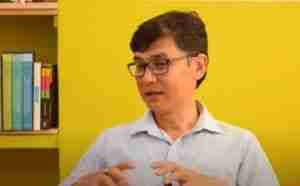
The following is the full transcript of YouTube video by The Wire titled “Manipur Inner Line Permit protests: Interview with Babloo Loitongbam and Binalakshmi Nepram”. In this interview, Babloo Loitongbam, Executive Director of Human Rights Alert, Manipur, and Binalakshmi Nepram, founder of the Manipur Women Gun Survivors Network discuss in-depth the conflicts arising out of the Inner Line Permit System Imbroglio in Manipur. We produce this transcript (verbatim) to spread awareness in the interest of the larger global audience.
Interviewer: Manipur has been on the boil for more than a year over the Inner Line Permit (ILP) issue. Why were the three controversial bills passed?
Babloo Loitongbam – Executive Director of Human Rights Alert, Manipur:
Well, at the heart of the issue in Manipur is the whole fear that small communities and microscopic minorities like the indigenous populations of Manipur would one day be over-swamped by the outsider population. And this fear comes from a long history. If you look at Manipur, for example, it was, until the British came, an independent kingdom of its own. And there were regulations on people who are coming from outside to settle there. As early as 1901, there are regulations which are in place. And in 1947, when the British left, we had our own Constitution, and in the Assembly in 1948, this same control of population influx into that area was passed. This got the approval of even the Governor of Assam. And this was in operation.
In 1950, 18th of November, this outsiders’ control mechanism was summarily lifted by an executive order by the then Commissioner – Chief Commissioner. And after that, there is a sudden spike in terms of the decadal growth from — if you look at 1941 to 1951, the average decadal growth was about 12% to 13%, which is the same as in Indian general growth in Manipur. But if you look at 1951 to 1961, it jumped up to about 35%. And in 1951 to 1960, it went to about 37%, which is completely unnatural. And the huge influx have taken place.
So there was a movement from the students, when there was also agitation from in Assam, and in the 1970s, there was a slight reduction because there was a students’ movement. And in 1980, there was an accord signed between the All Manipur Students Union and the Government of Manipur wherein it was agreed that there has to be certain measures taken in order to check this unnatural growth in the population and complete change in the democracy structure. Unfortunately these things are easier said than done. This accord’s never get implemented. Again in 1994, when it was the President’s rule, when General VK Nair was the Governor of Manipur, there was again a similar accord signed between the students.
So — but this problem of outsider is becoming much more serious now. I mean, in 1948, for example, when this question was asked in the then Independent Manipur’s Assembly, the figure of outsider was just 3000, less than 3000, something 2800 something. But now the estimated figure is about 10 lakhs. So in 70 years span, roughly, if there is this kind of multiplication, then in the next 70 years, the projected outsiders’ population is running around 40 crores. And there will be definitely no place for indigenous communities to survive. And this is becoming all the more challenging, because now we have this — as a part of the Act East policy, the Trans-Asian Highway is running through Manipur. The Trans-Asian Railway is running through Manipur. And now the whole trade between South — Southeast Asia and Far-East Asia is going to go through this. So people are demanding that there should be some way of regulating this population flow. How much can people buy land? How much can they establish shops and establishment? There has to be some form of regulation of this. And this is the core of the agitation today on ILP. ILP is a very old norm that British had started among Arunachal, Mizoram, Nagaland where there is – these are loosely administered and people who enter this inner line has to get a permission. So it’s a very colloquial way of saying we also want to – we also need an inner line permit as it is done in Arunachal Pradesh, Assam and Mizoram.
But at the crux of the problem is this fear that you will be over-swamped by outside population. And this has already become quite an issue in Assam as we all know. The last election was fought on this plank. In Tripura, the indigenous population has been shrunk to less than 28%. So now they are completely lost. They do not have a say in politics. They don’t have a say in civil society. So the fear is that in Manipur also there is an apprehension that before things go to that situation, there is a need for regulation so that — one is not saying that outsiders should not come. But whoever comes should be regulated and there should be proper ways and procedures that need to be established.
Interviewer: Why has the ILP issue divided the people of the hills and the valley?
Babloo Loitongbam – Executive Director of Human Rights Alert, Manipur:
To my understanding — to the best of my understanding, this is the crux of the whole problem that is coming up. And unfortunately, this has been interpreted in a very different fashion by the friends from the civil society in the Hills. The Hill civil society is looking it more as a threat to their own land rights. I think this is more hypothetical than real. But if there is any rough edges in this present Bill which is not addressing the issues of the concerns of the Hill people, I think that has to be amended. There is no question about it. And of course, there is also a little problem in terms of when they set 1951 as a cut-off year in identifying the Manipuris, from the historical point of view it was important, because it was a time when this – this what we used to have was kind of lifted — the ceiling was lifted at that point of time.
However if there are people, there is also a process of naturalization where people can be naturalized.
Interviewer: The Constitution guarantees right to free movement across Indian territory? Doesn’t ILP restrict that?
Binalakshmi Nepram – Founder of the Manipur Women Gun Survivors Network:
First of all, I’m a believer that migrants, so called outsiders can actually help build economy. If it’s a proper way of ensuring that there is a regulation control and proper assimilation. So the people of Manipur are not saying NO to people coming in. But the entire world, we have just that little portion of land. The Hill has more than 90% and the Valley is about 10% out of which Loktak Lake covers about, I think, 3% to 4%. And so we have a very miniscule area left for indigenous people of Manipur to really survive there. Because of the British system, one cannot buy land in the hills but the hill people can come and buy lands in the valley. And anyone from any part of India can come and buy land in this part of 10% of Manipur.
So actually we are not being xenophobic or pericul. We just want to survive as a beautiful civilization which has existed for like thousands of years. The Manipuri civilization didn’t start yesterday. It started — we have a recorded history. It’s enshrined in many of our Puyas, our Chronicles and everything. So historically it’s been a very ancient Asiatic Kingdom, which even the Chinese took permission to take part in the Silk Road. We fought against the Burmese. We fought against the Chinese. The Chinese taught the Manipuris the art of silk really. So we have a very old ancient culture there and civilization. We’re just asking the Government of India to help protect it. It’s as simple and as clearest that.
Interviewer: There seems to be a growing trust deficit between people in the hills and the valley. Is it only because of the ILP issue?
Binalakshmi Nepram – Founder of the Manipur Women Gun Survivors Network:
Now for us – Yes, definitely. The division of Manipur didn’t start with ILP. It’s as old as the hills itself. It started with religion. 18th century, Bengalis came, brainwashed our King and converted. That’s why 61% of Manipuris are Hindus. My name: Binalakshmi, you see. In the Hills, the British came and with them brought Christian missionaries. With Hinduism came maangba-sengba – which means OK, if you eat beef, you are dirty. If you eat pork, you are dirty. So my grandfather never touched any of these. We had to cook chicken outside the house. The utensils – as even my mother doesn’t even touch it till now, you know, though we are actually animists, not even Hindus. But in terms of – a little bit of impact did create.
So what is clean food, what is dirty food? What is — all these structures came with Hinduism. And so a lot of people who are in Valley area looked down upon the various ethnic communities who are no Hindus. And actually it is a grievance of years of more than 200 years of how the converted Hindu Manipuris have treated actually. This is one of the main crux that we must understand. The Hill-Valley divide is a creation of a few months back. Have you ever seen the Hill fighting the Valley? The term tribals versus non-tribals – again another semantics created. I’m trained as a historian, so it’s very fascinating (sic) and sad to see how people are contorting to separate.
So yes, there are grievances and have publicly stated that because of some of these elements of ways of looking at culture and sociological, we must apologize for the wrongs done. For example, a lot of tribal community have said many Manipuri Valley community, like kept treating them like untouchables. It’s there. If I was born in Ukhrul, I would revolt against the Meiteis. There are certain things which has happened historically, because of religion, which is not of our own making, imposed from outside. Hinduism came from outside. We worship the rays of sun and the moon every day. So my family does, even I do till now. Christianity – both are external imports to the place. They divided us, you see. So that is the first divide.
The Inner Line Permit issue. It’s a very old colonial law. The Joint Action Committee on Inner Line Permit doesn’t say we have to impose — this is ILP, or an equivalent thing as enshrined that the Constitution allows, that if a group of community want certain changes, it can be done. So it says not just — it’s not about ILP alone which is Inner Line Permit. It’s so archaic, 200 years old. Who wants an archaic colonial law? But what we are talking is about, please give the pristiness of a certain — it’s beautiful, it’s like — the way we’ve revolted against genetic engineering, you see. It’s the same thing. There is an attempt of population engineering in the entire Northeast. As Tamo Babloo said in Tripura, they’ve been reduced to a minority. I have been working in it for the last four years. In Sikkim, they have done it. The Lepchas and Bhutias are now reduced to 17%. They have a lot of grief in their heart. I’ve been going to Sikkim last two to three years and I know the situation is worse there. But no one talks about it.
So we are talking about the attempted population engineering happening in the region. We do not — this is a global world. As I said, I travel globally, Tamo Babloo travels globally, we are not saying that it should be. But you cannot engineer a population to ensure that you are made extinct. We are constantly reminded of the 300 Reservations in North America. The Native Americans have been reduced to a minority, how there were — population engineering was done, how diseases were introduced, how they are now in 300 Reservations and where alcoholism and drug abuse is on the rise in this population. The per capita income of the Native American is just $7000 a year. And they are one of the poorest communities in the United States of America. We have seen how they have — we don’t want that, as Northeast people, not just Manipuris.
The struggle of the Manipuri people for ILP or an equivalent Act is not just for Manipuris, it will set an example, because 90% of Northeast of India is indigenous population. 90%. Though Government of India do not accept there is indigenous community. But if you come, even by the definition of the Constitution, 90% of Northeast of India is indigenous as per the UN Convention of Indigenous Peoples Rights. You cannot — you cannot just do what you want in these areas. And we, the people of Manipur, we consider ourselves indigenous too, because that’s our land. We are very deeply connected to our land. We are very deeply connected to our culture, our language and we are fearing that there is an attempt because Manipur is one of the most beautiful civilizations. The introduction of the Polo – Manipur is recognized as one of the birthplaces. The Classical Manipuri Dance, how can you forget? So we are — and look at our clothing. They way we have woven women [clothes] — these are extreme [sic] examples of a very very evolved culture. And that’s why — if the people of Manipur is asking for the protection and have passed the Manipuri People’s Bill to ensure there is safety and security of our people, that is a right that the Government of India should really heed to.
As far as the reservations of — like as I said, Manipur is home to 39 beautiful Indigenous communities. It also has a Gorkha community as you saw. It also has a Marwari community because of trading, it has got Punjabi, a huge amount of Tamil population, 40,000 Tamils there. So Bengali community – we have a Bengali high school. So Manipur had a very evolved system of existing unity. This creation of Hill and Valley is just 10 months old. It only happened after the passing of the Bill on 31st of August. We were shocked at the sudden way of it [sic]. Election is happening in Manipur in the next couple of, like 10 months or even less than that. You cannot engineer a Hindu-Muslim conflict in Manipur. So you will engineer an ethnic conflict. All political parties are involved. The Congress — as a group, they have been, for vote banks, have been putting a lot of people themselves. Tamo Babloo will agree with me. Jiribam is filled with those. And right now the current party will play its politics. So everyone is involved – and particularly the two biggest parties. For us we’re not saying, don’t play your politics. But the politics — what we are keeping vigilant is a politics which makes Kukis, Nagas and Meiteis kill each other. That is what we are against. You have a right, it’s a democracy, play your party politics. But the politics which will create genocide, that is what we will stand and fight [to the Northeast]. This is what we are fearing, and that’s what we will be resisting.
Interviewer: Do you mean to say that the merits of the ILP have been overshadowed by identity conflicts in Manipur?
Babloo Loitongbam – Executive Director of Human Rights Alert, Manipur:
Over and above the political parties, in the political formations in the Northeast, ethnicity has always been a very very important thing, kind of a marker of identity around which politics has been built up. That’s why this whole issue of Naga identity, or clash between Nagas and the Kukis have always been a very problematic situation. I mean, it’s very sensitive and it can be — this identity politics can be very emotive and can draw many people to a lot of action.
See, from our point of view, every human being has rights, irrespective of whether they are migrants or immigrants, or people who are stateless or refugees. The concern that the present issue is throwing up is that, see, it’s a bit like — these places have been closed societies for a very long time. Now, inevitably this has to open up to the rest of the world. The last time that the Northeast was open to the processes of the world was perhaps the Second World War. Second World War came, it was fought with such vigor in that part of the world. But it came in 1942 but it left in 1944, and thereafter that part again was closed from the rest of the world.
Now when this Trans-Asian Highway and Trans-Asian Railway comes in, and when the economy — the whole part of this trade that’s going on in Malacca’s Strait becomes part of the land route in these areas, eventually this is what is going to come. The amount of change that this is going to bring about to these places is going to be huge beyond the imagination of anybody. And therefore it is time from now onwards to have a preparation towards how people are going to be protected, how land would be protected, how — if corporates from Singapore comes tomorrow and want to establish, they can buy off the entire Valley of Manipur without any difficulty. Would that be allowed just because they have money power? I mean these things have to be taken into consideration. When it is very fine to talk about Act East policy, Act East policy and have all these big dreams about connecting all the ‘giants of Asia’, one has to also think of what impact it will have on the people who have been there for thousands of years. And one is not saying that this should be stopped but it has to be done in a way that it doesn’t necessarily become a tsunami that takes everything away. It has to be done in a way that respects the histories and traditions of these people, in a way that can be a win-win situation rather than a wind that blows away everything. That is the main concern.
If we come to the present analysis in terms of the economy as you are saying, see, again, one is not saying that people who are coming from other parts of East India particularly, which is generating a lot of labor. One is not saying that this should be stopped. What JCILPS is demanding is that the Labor Department should function properly. At this moment this is completely unaccountable: who comes in, what happens. So sometimes crime activities increases. What the demand that has come up from the popular movement is that — let there be a proper functioning of Labor Department. Labor Department is there only for namesake. So please put all these things in records. Let us also know how many people are coming in, what is their contribution to the economy. This needs a proper governance. At this moment it is — I mean, everybody is free for all and they’re doing anything. And this is putting a pressure, a lot of pressure on the demography of this small Valley area. Again, the hills are anyway protected, because they are scheduled areas. But the Valley, which is not a tribal land, is where all the agricultural lands are also there; all the rice production on which people depend is there. So there is a lot of pressure on agricultural land. So this needs to be regulated and protected. This is the basic contention that is coming.
Interviewer: Tribals living in the hills fear that they will be excluded because 1951 has been set as the cut-off year for resident registration, and a proper census has never been done in those areas?
Babloo Loitongbam – Executive Director of Human Rights Alert, Manipur:
1951 is important precisely because it was in November 1950 that the regulation which existed for many many years and which was the most legitimate law has been lifted. And therefore symbolically it is important to put 1951. However I distinctly remember in the memorandum that was sent to the Chief Minister by the JCILP, it was very clear that there is also a process of naturalization. We are not saying that everybody who comes from 1951 would necessarily be non-Manipuri. And if there is anything like that, I think that has to be checked. I mean, it’s part of international human rights law — Universal Declaration of Human Rights is, if people are fearing prosecution in entering into a country, it is the responsibility of that country to give asylum status. And there is also a process of naturalization of people who came outside. And this existed even in the pre-merger Constitution and the Acts that people who come from outside, there is a way of naturalizing them as a part of the Manipuri culture and civilization and citizenship. The Manipuri nationality was granted to people who came from outside. So this was the law that we inherited from our pre-merger Constitution. And this applies.
I can understand it will be – I can completely understand that it could be an embarrassment and to having to go through that scrutiny would be totally unwelcoming practice for people who have stayed for generations in Manipur. And therefore one has to find ways of curbing those inconveniences and how do we ensure that all this embarrassment are set aside. But for that, we need to sit together and discuss what are the procedure that needs to be followed, how that needs to be done. This whole thing that, because this Bill was passed and this Bill have to be called off, only then we will sit and have a discussion, I think is a little bit – it’s either our way or the highway kind of a situation.
Interviewer: Tribals have also complained about huge under-representation in the Manipuri Assembly and see this as a reason for the Valley’s, especially Meiteis’, dominance in state politics?
Babloo Loitongbam – Executive Director of Human Rights Alert, Manipur:
Again, a very honest response to that from my side would be – see, Arunachal have more land than Assam but we have only two MPs from Arunachal Pradesh whereas we have 15 MPs from Assam. Representation is not on land, representation is on population. And obviously, even though 90% of the land is Hills, population wise it is very sparsely populated. And the problem is there is tremendous pressure on the Valley. And so delimitation, that is what he is saying, has to be on the basis of population. And the problem with census in Manipur today is that people cannot go and do a proper census today. What is coming out as census report are being very seriously questioned, because people who are enumerating it cannot enter into many of these villages. They are all under the control of certain underground outfits and therefore whatever they fit as the population, there are many places in Manipur where there are unnaturally sudden growth of population which cannot be — which is not seen on the ground.
Binalakshmi Nepram: Like 700% growth in Senapati District.
Babloo Loitongbam – Executive Director of Human Rights Alert, Manipur:
Yes, in Senapati District — which cannot be — which you cannot have a delineate and have a new assembly constituency on the basis of this 700% growth. These are little more than what common sense would digest, and therefore there are huge manipulations by many vested interests. And therefore this requires — I mean, I am completely open to have a proper representation. But all said and done, Valley has a much larger population than Hill. So obviously it has to be — we cannot – so long as we have a representation according to the people and population, that is what it has. If there are communities who feel that they are under-represented in the politics of Manipur, we have been advocating for an Upper House in Manipur where every ethnic community is equally represented where those kinds of debates can take place. But again, you cannot have one community dictating terms on the rest of the community. This is a plural society and therefore there has to be a plural economy — I mean, a plural polity where both the majority as well as minorities’ point of view are taken into consideration. And there has to be a certain rationale that we all follow, certain principles that we have to follow.
Interviewer: But can these bills be passed if such a substantial chunk of the state’s population has opposed them?
Babloo Loitongbam – Executive Director of Human Rights Alert, Manipur:
To be very honest, I knew for sure it is the Naga People’s Front was one of the protagonists of the ILP in the beginning. Now the problem is — because at the end of the day the Naga movement is also about the son of the soil, they are fear of over-swamping by outsider. And it’s also an identity-based movement and they see a lot of merit initially. But now, correct me if I’m wrong, I’m subjected to corruption but now the politics seems to have boiled down to the fact that, because the Valley people were standing against a Naga solution and therefore when the Valley people want their protection, this cannot be done without the Naga politics coming into. This has become a kind of an ethnic rivalry rather than – see, the problem is the issues has been lost in an ethnically polarized situation, where ethnic supremacy of one against the other is becoming the kind of determining political factor. And this is the most unfortunate part. This is why genuine issues of concern of the region of the community is getting tied up into the ethnic rivalry between my Nagas, Meiteis, Kukis. And that is a tragedy, and how do we untangle this and put the issues again back to the agenda is the critical question.
Interviewer: With so many ethnicities in conflict, how can a larger sub-nationalist Manipuri identity be forged? After all, there is a separate Nagalim Movement going on in some hilly districts of Manipur?
Binalakshmi Nepram – Founder of the Manipur Women Gun Survivors Network:
Emotional historic hurt they have been feeling. One is, a lot of this – if you look at the pages of many of the antebellum movements, you know, what they are — I’ve been studying them very very very carefully. They have been bringing out the historical misdoings or something, as I said in terms of how the Valley people have treated the Hill people. So there are things — as I said, it’s not just about ILP alone but there are historical things which needed to be mended.
The other thing is about representation which just now the discussion has happened. In Manipur, we have got as I said that they also – we’ve got ethnic groups as small as 300, 500 in number. Aimol community, 300. I’ve met many of them. So not everything in Manipur can be just clubbed into Kuki, Naga, Meiteis, Manipuri Muslim. There are so many of them and there is an attempt to assimilate. For example, the Anal community were asked to become Nagas, you see. So there is this — for us what’s happening and as beautifully said that, it’s a question of identity politics. With what identity will be comfortable, the Nagas themselves don’t know. The Meiteis are highly confused. And now the Kukis are away from the Zomi which is the Naga, completely different identity. So it’s about a very fractured identity. No one is at peace, even themselves. There is nothing so simple as Hill versus Valley, tribals versus – it’s a identity politics, that’s why when [inaudible] said that everyone join Nagalim, we’re saying, like, listen, we don’t agree with it, because if you feel that you are the leaders, create a new nomenclature, which will take everyone on board. And let’s negotiate. 2001 was a turning point in the history of Manipur. I remember, I was still a student of JNU and there was mapping conflict in Manipur when 2001 erupted.
Suddenly — and I used to teach a lot of Tangkhul girls in my university. Suddenly they stopped talking to me. Suddenly I was a Meitei. For me, I felt I was a human being from – born in Manipur. I have never like been comfortable in a very small identity. As proud as a Manipuri, we were all from Manipur and things like that. But 2001, I realized there was a fracture — a very deep fracture. And last year was a culmination of what happened in 2001. Naga as a nation – what Nagalim – ‘Lim’ is an Ao word, it’s not a Tangkhul word. ‘Lim’ means land. They were doing to assimilate the biggest Naga tribe, the Ao which were completely against the IM ideology. It’s about Benedict Anderson’s Imagined Communities. You’re trying to create nations. And that’s why – and absolutely Nagas have every right to their self-determination. No one is saying no to that. Just as everyone has.
But the thing is, it’s been — the Manipuri identity has been for centuries. The Naga identity has been about 60 to 70 years old. The tussle is that, you know. So you want to suddenly break, it is going to take some time. So that’s the tussle actually. So this identity politics as I said – and right now, politics has really played a major part. The Naga People’s Front had already before the elections tied up with the BJP. BJP wants to open accounts in the Assembly in Manipur in a very big way. So they are also playing the politics very very viciously. So they have used different elements. That’s why we’re saying, we are not against politics but the politics which will create a genocide and ethnic cleansing. That is what we are against. And that is what we are – as civil society, as women activists, we are very deeply concerned. And that’s why this meeting on 11, that yes, you play your politics — violent politics, insurgent politics, or politics of national politics. No one is — who are we to say that. But right now the politics which has been played is compounded by the social media, where there is a tremendous poisoning of the minds of the young people, where such disgusting words of hatred has been written ones against the other. A statement saying, when I hear the word, Meitei, I feel like spitting.
Interviewer: How are political parties and insurgent groups responding to the conflict?
Binalakshmi Nepram – Founder of the Manipur Women Gun Survivors Network:
I think, you see the way the present conflict is played out is the way Manipur looks at India, too. We have the Armed Forces Special Powers Act in the Naga Hills since 1958 and in the Valley since 1980. We live in a deeply weaponized democracy in Manipur. It’s the same way I would answer that question like that. One country, one law. Why one country, two law? Thinking all Manipuris, including tribals in Hill and Valley, are all suspects in the eyes of the Government of India. That’s why you keep the AFSPA. That’s how Iche Sharmila who no one talks about now in this whole vicious politics, identity politics where the real issues have really been delegated to the dust. So these are the concerns that we have.
Yes, we have been telling the Government of India apologize to the people of Manipur for killing 20,000 of us, for having many of our bodies – of our people being disappeared, our women being raped. And if Manipuri, as a state have made historical mistakes we should also have the courage to say sorry. That’s what I’ve been telling our people. If we have made some historical mistakes because of religion, let’s apologize.
First one, we have to accept mistakes we made. Because in short, the Manipuri Valley people still control the Assembly. We still are the masters, you see. So we should have the courage and a bigger heart to say, we are sorry for the wrongs done. That will take – that will one of the greatest confidence-building measures.
Second is to sit down together. The Bill — as we said, where are the points of contention? As I shared with you – if 1951 is unacceptable, then what is it that we can come together that everyone is comfortable with? Because even with ILP, anyone born after 1987 in India are citizens of India, you know. So it’s something, it is not so much 1951, from my humble understanding. The thing is, if there is a fear psychosis, then how do we address it?
And third, as I said, the structuring of how the Hill people, or the different ethnic communities have been complaining that all the universities are in Imphal, all the medical colleges are in Imphal. We will have to make huge changes that it is distributed across the 9 districts of Manipur. We work in 5 districts, so we know the pathetic condition in which there is no basic healthcare, no electricity. So I would be angry if I was living in Tamenglong or Ukhrul district. There are genuine structural changes, and as I said, it boils down to very bad governance of a corrupted — our political leadership have been completely morally bankrupt. We have a whole assembly filled with contractors. They cannot be called leaders, you see. And it’s a democracy purchased with vote. It’s a democracy where you can change the election results by paying 3 crore rupees. So let me blame it on the decadent democracy of our nation, which has also reached there.
So you think that everything is clean in political, so many people with insurgent things are with political parties. You see, the ones, real ones, there are ones with principle who say we’ll abide by Geneva Convention, I’m not talking about those. But Manipur is home to 60 insurgent groups; it’s not one or two and many are like what the Ranvir Sena of Bihar. Many politicians have set up armed groups and they play identity politics. So just as the conflict was going on, the other day I got a call from the parents of a six-year old girl who was raped and murdered in Bishnupur district in February. The mother is from None in Tamenglong. What did they ask? They asked that they have no food to eat. Can you give us some rice and vegetables? She was calling up from None pleading for some rice, and this is a level we are living right now. And this — and this is the way in which no basic way of dealing with issues. Basic issues if are met, both Hills and Valley suffer from the same decadent politics.
Interviewer: What is the way out of this limbo? Should the majority Meiteis not reach out to the tribals and try to correct ‘historical errors’?
Babloo Loitongbam – Executive Director of Human Rights Alert, Manipur:
But the thought that was coming when I was listening to Bina was that, see, this Bill — these 3 Bills which has become such a controversy about which so much has been spoken was introduced in the Assembly on a Friday, 28th. And then there was Saturday and there was Sunday, and on Monday it was passed. Not a single MLA raised a single issue about all these issues on which 12 people had been killed, Manipur has been put on — literally on a hang for so many days. I mean, what is wrong with this Assembly? What is wrong with this democratic institution? If there was any problem, at least there are 20 Tribal MLAs for heaven sake. One of them should speak up and say this is wrong. Nobody said the word.
Bill was passed. It was business as usual. It is only when people, students started agitating — people started agitating that these issues have come up. What is the impotency of this democratic institution is what I’m really very very worried about. If this was about passing some bills for some contract work, there would have been a debate. I mean, what is wrong with this representative of the people who are supposed to be representing the voice of their particular constituency? Now the civil society is saying that this is not a money bill, it should have gone through the Hill Area Committee. But Hill Area Committee was right in the middle of the Assembly and everybody was awake, I suppose, when this Bill was passed. Nobody raised an issue. And if this kind of complete irresponsibility continues, I think these issues will be fought in the street like this.
Now there are two nationalism narratives that is emerging quite consistently in Manipur today. One is the Nagalim and one is the Manipur narrative. And there are problems in the Manipur narrative. There are problems in this Nagalim narrative as well as, was pointed out by Bina also. I mean historically, the Meitei state came about by amalgamation of seven states which started perhaps in the beginning of the First Century A.D. And then with the coming of Hinduism, there is again a stratification in the society. There were Brahmans who came from outside the state which married the local population. The Muslims had also come and had similar experiences. And people who had accepted Hinduism were people who are considered the loyalists of the state. People who didn’t accept Hinduism becomes basically the Sudras, or the ST population – SC population among the Meiteis. And those people in the Hills where the influence of the state was not very powerful have remained animistic for many years.
And when the British came and tried to spread Christianity, they found these Hill people as the most vulnerable and so their systematic Christianization of the Hill. So when it was only one hand, it was a domination by the Hindu Sanskritic notion. There was suppression of the Hills but they didn’t become a problem. Now when you become organized as a Christian community, the Christians again defined those non-believers as pagans. And now backed it up with the Naga insurgency, they say, the NSCN’s gun and the Tangkhul pastor becomes a very potent — this thing of unification of Nagas and the tribal population. And therefore when both sides get power and influence and connections elsewhere, then there is a kind of a symmetry that was created and therefore the clash — constant clash is what we are seeing in the body polity of Manipur. So this will be there for a while. I mean, it’s not going to be solved just because Binalakshmi proposed a solution, or me proposed a solution. These are historical processes that has evolved.
Interviewer: What could the role of the government in this resolution?
Babloo Loitongbam – Executive Director of Human Rights Alert, Manipur:
What is in — I mean, that’s what our leadership has become very good in this intrigue, political intrigue. And this is also so well played out by different agencies of the Central Government. These are insurgency areas, there is a nationality question that needs to be addressed, which is – there is an insurgency problem who are raising issues which the government is uncomfortable to raise. So the best prescription to this is what Chanakya had written long time ago: “saam, daam, dand, bhed”. How do you control the rebellious population on the border? Reconcile if you can. If you don’t, corrupt them. That’s what — pumping money, no accountability. Some people — some of our politicians and mind you, it’s not just the Meitei politician. The people who have benefited maximum output from the under-development of the hills are the elites among the tribal community. They are the ones who are siphoning off all this money. There are Meitei collaborators, no doubt, but look at the way in which palatial houses are being built, tiles come from Italy to build these houses of ministers in the hills. So there is no point in blaming the Meitei peasant who is struggling anyway like anybody else, who is no different from their tribal brethrens who are doing hunting, gathering or whatever.
So the elite within this community have also benefited substantially out of this loot. So this is daam, corrupt. And then when it doesn’t work, dand, go and bash them up. You have Armed Forces Special Powers Act, maximum number of detention under NSA, Unlawful Activities Prevention Act. So whoever is seen as a threat and perceived as a threat to the country, nation or the leaders, or the VVIPs, who are making all this dirty money, shove them into prison. And then when all this thing doesn’t work, bhed, divide. I mean if you look at just across the border and look at Burma where things are changing very rapidly. I had an opportunity to travel to Rangoon and see some of the processes there. Very interestingly there, they make the government make arrangements where all the different ethnic communities who are having — fighting against themselves sit together in Burma — Myanmar Peace Center and debate, discuss, even frame arguments of how they can negotiate with the government.
Interviewer: What has been the role of tribal politicians in the present conflict?
Babloo Loitongbam – Executive Director of Human Rights Alert, Manipur:
If you look at the way ethnic conflict is being handled in Manipur, you see with the Nagas, you have a ceasefire arrangement. And there is talk at the highest level with the Prime Minister in all these big, big hotels and media exposure. With the Kukis, you have built designated camps, give stipend to the cadres from the Home Ministry liberally. And with the Meiteis, because they are still demanding independence, they are on terrorist organization [list] and just recently UNLF Chairman is put for 10 years rigorous imprisonment for this. So every ethnic community is dealt with separately. And all this — many of this reflection that we are seeing in the civil society is also because many of the civil society are also controlled under the clutches of these armed groups who are — who are meant to divide and fight among itself.
So ethnic conflict in Manipur is not just about civil societies, it’s also about the armed groups. It’s also about a deliberate policy of divide and rule from the Central Government. And I think we have to look at it holistically. Having said that, I think what initiatives that Binalakshmi and a group of people have started in Delhi, I think, has already received a lot of very positive response, some cynicism as well, as usual. But it is important for us to sit together and start at least talking. We may disagree. I mean, this is not something that can be solved in a conference or a meeting. But it is important that we speak across the silos. If you keep on speaking within your own areas of comfort, then you keep on deepening and deepening the conflict. You all are too sure that we are on the right track and they are the wrong guys; we are the good guys, they are the bad guys. And so it’s getting a head on kind of a collision.
So it is very important. Whereas there are separate narratives among different ethnic groups which are close. It is very important to have a common narrative where we envision a common future. All said and done, Naga cannot have a Naga solution without the Meiteis. The Meiteis cannot have a peaceful world if the Nagas are blocking the thing. And the Meiteis cannot do away with the Kukis, because we are all one — we are in the same boat. So you want to rock this boat, all of us will sink. So you sink together or sail together. And I think this is the ultimate choice that the leadership, whether it is civil society, political or even the so-called underground have to make a choice.
Interviewer: Has the civil society been vocal in Manipur?
Binalakshmi Nepram – Founder of the Manipur Women Gun Survivors Network:
Already it’s so interesting, 2014 was a defining moment when Nido Tania, was beaten to death in the streets of Lajpat Nagar in Delhi. Never before have I seen Northeast community converging in Jantar Mantar – Nagas, Meiteis, Kukis, Tripuris, Sikkimese – they were all there. This, I have never seen in the last 15 years I have observed Delhi. So this was a very interesting moment, and I worked with the Naga community, with the Kuki community to ensure that we get our voice, they were pushing me in front, “Bina, you speak and you tell our issues”. So it became a very interesting synergy which I have never seen before. Because student unions are also deeply divided among ethnic lines, you see, even in Delhi. So you will have different freshers’ meet of different ethnic groups. Even the churches are all different, even what you do with your festivals, all different.
So for me 2014 was a defining moment of how commonalities actually emerged, of how do we work together, you see. We formed numerous meetings. We stalled Jantar Mantar for like three months. We got our demands in getting the Government of India to get the Bezbaruah committee report – committee formed. They were putting us outside, we did [crash] meeting in Nagaland House. We were all doing this together. And then we got 109 free Helpline. So a lot of positive things happened. So this is one of the ways – and it’s so interesting that if there are commonalities as Tamo just said, we cannot let go of each other’s hand, however much there might be differences, how to get it is what is happening at this particular moment.
Yes, there are deep resentments which are creative generated. Social media, as I said, have really deepened it further. Because with our smartphone, you upload some images from 10 years ago, bad words, abusive words, and it really angers you, you see. So there has been poisoning, and I’m using the word poisoning of young minds to take sides, you see. So some of us, we are now like, the early generation now. Some of us had to jump in literally, to say that this cannot be our future. What can be our future together, and I always bring to drive home the point that if you put a Naga, a Kuku, a Meitei, and Arunachalee, here in Delhi, we are all chinkies. So that binds us.
Number two, so but that’s just besides the point – but the main thing is I have been repeatedly sharing to our people from the Northeast that this Northeast of India is one of the most resource-rich areas. We have [6%] hydro-electric potential. We have oil, gas, tea, natural gas, uranium. It’s extremely resource-rich area. So – just the way in Congo for cotton, they made people fight where multinational corporations with government – corporatized government, they took national wealth away of Congo, as well as in Sudan and Rwanda. The way [inaudible] using in the Northeast.
So we have told, one of the commonalities is about ensuring our common development agenda as the people define it. We are not saying no to India’s development. But a development, even with Act East policy, only one Northeast person I think [inaudible] part of the team. Why we reject Act East or Look East, or whatever East policies, we are not against joining Northeast with the Southeast Asia. No, we are not against that. But what we are saying is, if the train, the structures have to be there, we must involve local indigenous communities in decision making processes of development also. Right now, there is none. You will have babus from Kolkata, sorry to say, who will do all the contracts, will be building big hotels, big infrastructure. They will bring in huge labor. But yes, no one is saying but what about local labor? So we want to negotiate, and this will be one of the shared agenda of Nagas, Kukis, Meiteis, Arunachalees, Sikkimese, even all of us, even Tripuris. Tripura is hurting as a state. So I think that is one of the things that we can build common future together for the entire Northeast India. And if Government of India and its agencies still try to divide it, God save India!
Related Posts
- Transcript: Dr. Jordan B. Peterson Interviews Megyn Kelly # EP 552
- Mel Robbins Podcast: Dr. Leanne ten Brinke Interview (Transcript)
- Arthur Brooks on Happiness: Triggernometry Interview (Transcript)
- Transcript: The Real Reason You Never Feel Present Anymore – Michael Pollan
- Transcript: Victor Glover Interview at ARC 2026