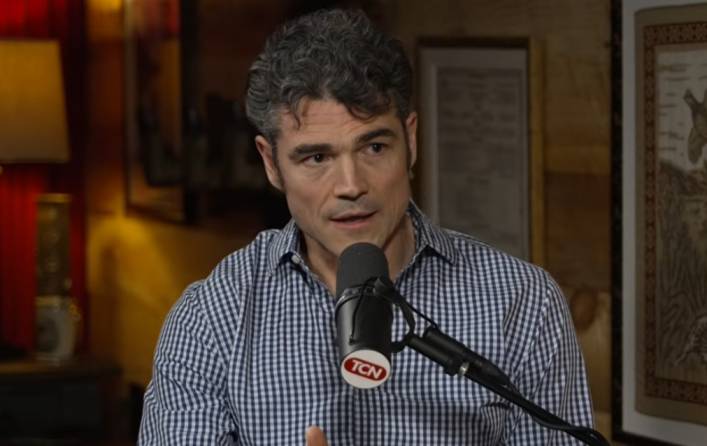
Editor’s Notes: In this interview, Joe Kent shares his first-hand perspective after resigning as President Trump’s Counterterrorism Director, revealing critical insights into the administration’s Middle East policies. Kent discusses the severe risks and long-term implications of a potential war with Iran, warning that such a conflict could deplete American resources and play directly into the hands of global competitors like China. He also reflects on his decision to step down, his final conversation with the President, and the urgent need for a clear-eyed strategy that prioritizes American objectives over external pressures. (Mar 19, 2026)
TRANSCRIPT:
Opening Monologue: Tucker Carlson
TUCKER CARLSON: We want to start tonight with a clip from January of 2024. This is from this show, and this is Joe Kent, who later went on to become, until yesterday, the director of the National Counterterrorism Center. Here it is.
Video Clip: Joe Kent on War with Iran (January 2024)
VIDEO CLIP BEGINS:
TUCKER CARLSON: What do you think the immediate and then longer term effects of a war with Iran would be on the United States?
JOE KENT: Immediately, it would be a very bloody — I have no doubt that we could probably defeat some of their air defense and go in there and have another shock and awe campaign, but again, like we saw how the shock and awe campaign in Iraq really didn’t actually work in the long run.
So I have no doubt that we’d have some immediate results that people would cheer about here in the United States, but Iran, Persia has always been an empire. It’s been around longer than any of the other players in the modern Middle East right now, and they are not going anywhere. If we get deeply involved and deeply entangled with Iran, we are playing right into China’s hands, because China would like nothing more than for us to be committing our military industrial base to a war in Eastern Europe and Ukraine, and then to be committing our conventional military power, our blood, and our treasure back in the Middle East.
That will make the Pacific, our actual border, extremely vulnerable to Chinese aggression, or China will simply just watch us bleed out economically as we bleed out on the battlefield on these couple different theaters. It’s absolute insanity. It’s opening up Pandora’s box. And, again, for what gain to the American people?
VIDEO CLIP ENDS:
Tucker Carlson: Joe Kent Called It
TUCKER CARLSON: So the very first thing you notice about that clip, which was shot almost exactly a year before the current president was inaugurated, is that it was right. It was prescient. He called it. He called the general outline. Not that it was hard to call, but Joe Kent knows what he’s talking about.
He spent a lot of his life in that region, and he said a year before this current presidency began, this is a big serious country. It’s the oldest civilization in the region. And if we went to war with Iran, there would be a momentary sugar high. Americans would support it because they support their own country, and they certainly support their military, and people would approve of it. But very quickly, you could see a process by which we got caught there, trapped there, bear trap, hard to extricate yourself from that.
And sitting on the sidelines would be our chief global competitor, China, who would be silently nodding along with a slowly spreading grin knowing that they were the main beneficiary of what they were seeing — of our waste of American lives and treasure, as Joe Kent said.
So we haven’t reached that stage, thankfully. We’re moving toward it, and everyone who’s watching carefully knows that. And if you’re honest, you know that. So this is a very serious moment we’re in, and we’re watching not just a war in Iran, but potentially a total realignment of the world and the loss in some sense of what the United States has globally. This could be the beginning of the end of our influence in a lot of the world, and that’s just the beginning.
So, again, that’s a big deal. It’s starting to dawn on people, and that leaves Joe Kent as one of the relatively few people connected to this administration who said it in public.
The Iron Law of Foreign Policy: Punishing Those Who Were Right
TUCKER CARLSON: Is that good or bad? Well, it may seem good. Of course, you want to be around people who have clarity about what’s going to happen next, but in practical terms, it’s bad. In fact, it’s always bad. Whenever you have somebody who stands up and says, “Don’t do this. Here’s what could happen,” and then you do it anyway, and it turns out that person was right, your first instinct is not to apologize and correct your behavior. Your first instinct is to crush the person who called it correctly.
And that’s your instinct because — and it’s the lowest of all instincts, but it’s a human instinct — that’s your instinct because his correct prediction is an indictment of you, of course, and it’s a way to deflect attacks on you and your own culpability by blaming the guy who told you it was going to happen before you did it. And this is a long standing fact of human life.
And in the last sixty years in this country, it has been the iron law of foreign policy, which is to say when things go wrong, the only people who get punished are the people who criticize the adventure in the first place.
You can imagine General Westmoreland attacking Walter Cronkite of CBS News. Fundamentally, it was Walter Cronkite sitting very much on the sidelines saying, “Hey, this war is not going well,” and there was General Westmoreland prosecuting the war. But General Westmoreland argued till the end of his life, in some way successfully, that he lost the war because Walter Cronkite criticized the war.
Is that really true?
The Afghan Withdrawal and Colonel Stu Scheller
TUCKER CARLSON: You saw the same thing happen in the days after the tragic and incredibly stupid Afghan withdrawal under Joe Biden. That didn’t help the United States. Of course, we had to get out of Afghanistan, but the way we did it — who would argue that was a good thing? It was a terrible thing and resulted in the deaths of a lot of Americans.
So who was punished for that? As far as we can tell, and we’ve checked, only one person, and that would be Colonel Stu Scheller of the United States Marine Corps. What was his crime? Planning the withdrawal from Afghanistan? Oh, no. Stu Scheller’s crime was saying out loud, “Boy, that didn’t work very well. And why’d we do this?” And for that, he went to jail.
The people who actually did it, who gave the orders, or who carried them out without asking questions about them — which was everybody else — they’re fine. You don’t even know their names, and they certainly haven’t been penalized.
So there is a long history, because this is a standing feature the way people are, that you criticize those who told the truth and who were right, who called it ahead of time. Now in a functioning society, you get a hold of yourself, and you understand that people are like this. But if you want to be successful as a society, you have to restrain that impulse because it’s low, and it’s counterproductive. And if you silence people who tell the truth, you end up making the same mistakes again and again and again, and maybe that’s why we’re here at this pivotal point in our war with Iran.
Joe Kent Was Right — Therefore, Joe Kent Must Be Destroyed
TUCKER CARLSON: It’s just the first thing you notice. Joe Kent was right. Therefore, Joe Kent must be destroyed. And there is, of course, this ongoing effort to do that — to dismiss Joe Kent as a tool of the Islamists, or a leaker, or say he’s married to someone who works for Hezbollah — lie after lie after lie. But they’re all aimed at Joe Kent, the man, at his motives, at his character, at his personality, at his wife. And that’s by design, because none of them touch on his reason for resigning as director of the National Counterterrorism Center.
Because if you focused on that, you would have to answer his questions. You’d have to answer: is this true? Is what Joe Kent — who possessed the highest level intelligence clearances, who was really barred from knowing no secret in the US government since he was one of our top intelligence officials until yesterday — is what he’s saying true? That’s the last conversation anyone in Washington wants to have, so just attack him.
And you’re going to see a lot more of that. The people who said this war was a bad idea will be punished. And the more it turns out they were right — which is to say the worse this project goes, the more it becomes obviously counterproductive to American interests — the more vigorously they will be punished, unto and including jails. Stu Scheller went to jail. Probably not the only one who will going forward. So you should just know that and understand what you’re seeing in those terms.
Donald Trump’s Long-Standing Position on Iran and China
TUCKER CARLSON: The second thing that comes immediately to mind when you watch Joe Kent from January of 2024 talk about what would happen if we went to war with Iran is that what he said that day, a year before Donald Trump’s inauguration, could have been said by Donald Trump, maybe with a different style. He was making Donald Trump’s case — the case that Donald Trump has made for a very long time.
Donald Trump, as everybody knows, became the Republican nominee in 2016, ten years ago, in part because he was the only Republican running for president that year — out of a field of nearly twenty people — who was willing to say what everyone else knew but was afraid to say, which is the Iraq war didn’t help us. It hurt us. It was a dumb idea, and it went on way too long, and it became the quagmire that people like Donald Trump predicted it would be. And the American public, so relieved to hear the truth about something they already knew, made him the Republican nominee despite maybe some concerns, but they did it because, hey, he was right, and he’s the only one brave enough to say so.
And Donald Trump made varieties of that case for the next ten years. And in many cases, specifically about Iran, because Trump has seen — long before most people in Washington, before almost anyone in Washington — the big picture, the outline, which is this is a contest between the United States in the West and China in the East, a rising power that matches or maybe exceeds our economic power globally, and we have to figure out how to apportion power.
And we don’t want to get sidetracked with engagements like, I don’t know, another endless Middle Eastern war, because in the end, the only winner of that conflict is China.
Whoever Stops the War Wins the World
TUCKER CARLSON: Whoever in the end settles this conflict — whether it’s the United States or some other power — whoever comes in at whatever the end of it is and says, “Enough. This is hurting the world. Each side has made its point, but the global economy has a critical interest in the Persian Gulf. That’s energy, and we’re going to stop this now.” Whoever that person is will become more powerful than ever, and everyone else will become less powerful.
The person who settles disputes is in charge — not the person who starts them, not the person who wins them, the person who stops them. When dad comes home and stops the fighting between brother and sister, who’s in charge? Dad. Because he stopped the conflict.
All of which is to say, if at the end of this conflict it’s China that comes in — China, which has a vested interest in what happens in the region since they’re a major consumer of Gulf energy — if it’s China that comes in and restores the energy flows out of the Persian Gulf and restores some version of peace, gets the fighting to stop, then China is in charge of the Persian Gulf. That’s just a fact of nature.
And so a lot is at stake, as Joe Kent knew, as Donald Trump knew.
How Did Trump End Up Doing the Opposite?
TUCKER CARLSON: And so the question is, how did Donald Trump, after ten years of saying one thing, do in the pivotal act of his presidency exactly the opposite? That’s not just an academic question. It’s not the beginning of a conspiracy theory about some shadowy lobby. It’s the most important question we face, because this is not the first time the United States has entered into this kind of war against the wishes of its own population and in clear contravention of its own interests — against its interests.
This isn’t good for us. No one has made the case that it’s good for us. And increasingly, as the days pass, it becomes obvious to everyone why it’s not good for us. And if you don’t believe that, then check the prices of food and fuel and everything you buy, because everything you buy is dependent on the price of energy and the production of fertilizer, both of which are affected almost immediately by the closure of the Straits of Hormuz.
So we did this again. It’s not exactly clear how or why we did this, but we need to find out. And there is great resistance to finding out, and you’ve noticed that in the last thirty-six hours since Joe Kent resigned as director of the National Counterterrorism Center — one of our top intel officials — because the attacks on him have prevented an honest conversation about what he’s actually saying.
Joe Kent’s Position: Israel Got Us Into This War
TUCKER CARLSON: And what he’s saying is — and he says it clearly, and we’re going to ask him about it directly in just a moment — Israel got us into this war. Its lobby in the United States pressured the president, and its prime minister in Israel told the president, “We’re going without you. Join us, because if you don’t, your troops in the region, your interests in the region, your citizens in the region will all be at risk. You have no choice.” They led the way. That’s Joe Kent’s position.
And rather than push back against that and say, “No, actually, he’s wrong,” they’re telling you to shut up. And why are they doing that? Well, there’s only one reason people ever become hysterical and slanderous, start screaming at you rather than answering you. It’s because they’re lying.
And the truth is this is not the first time you’ve watched people in charge lie. This has been going on a long time, and lies give way to a whole bunch of bad things — more lies. Once you tell a lie, you bolster it with further lying. Hysteria, the fear of being caught lying, the rage and slander. “If the person catches me lying, he wins in the zero sum game of lying. I die.”
The Cost of Lies and the Case for Truth
You go on the attack to cover your lies and bad judgment. You can’t make wise decisions on the basis of lies because they’re not true. They’re not based in reality that didn’t actually happen or in this case, it did happen, but you’re pretending it didn’t. So a country based on lies, like a family based on lies, like an individual life based on lies, cannot succeed. In fact, it’s hellish as all of us have experienced in our lying.
And so the only way out of this is to stop lying, is to tell the truth now, probably sixty three years after we should have started telling the truth, but it’s never too late to tell the truth now about everything because it’s never as painful as you think it will be. It’s actually an act of liberation. In fact, it’s the only real act of liberation. Telling the truth sets you free because the truth itself sets you free. That is always and everywhere a fact.
And the longer you delay doing that, the more horrible the consequences of your lies. So let’s hope that tonight with this conversation with Joe Kent is the beginning of the long overdue truth telling, which is the only thing that will save this country.
Introducing Joe Kent
And one final note about Joe Kent, who I spent the last twenty four hours with. Joe Kent’s resume hardly needs explanation because everyone is aware this is a man who deployed on eleven combat missions to the global war on terror. This is sort of the perfect representation of the GWOT generation.
This is one of those guys we often celebrate, but too rarely hear from, who we sent out to fight the so called war on terror that began on 9/11. And it’s an entire generation of men, men who look and sound for the most part very much like Joe Kent. So the implication, of course, he doesn’t care about security or he’s soft on Iran. Joe Kent spent, well, the majority of his twenties and thirties fighting Iranian proxies and watching his friends get killed by them. So this is someone who’s actually earned the right to speak about Iran and the war on terror.
And, of course, he was the director of the National Counterterrorism Center. So he’s thought a lot about terrorism in this country and the blowback from events like this, and we’re going to ask him about that as well.
But the other thing to notice about Joe Kent, and it may be his defining factor, is that he doesn’t slander anyone. His resignation letter was not an attack on Donald Trump. It wasn’t a promise to tell all memoir about what he saw on the inside to aggrandize himself or to get a job on a TV show or sell something.
I asked him at dinner last night, “What are your plans?” None. He did this purely because he believes, as he’ll explain in a second, this is the only way to save the United States from certain disaster. Tell the truth. Air the secrets. Be honest for once in decades about what is actually happening. Things that everybody who lives here suspects are happening. In some cases, we’re probably wrong. We’ve come to wrong conclusions. That’s okay. Tell us what actually happened. Tell us why you did this, and let’s reorient this country where it should be, which is around its own citizens.
Make the decisions that you make based on one criterion. Is this good for my people or not, in the way that a father would lead his family or an officer would lead his troops? It’s not complicated. Everybody wants that. That’s not a partisan question. That’s a human question. And that’s the question Joe Kent is posing.
Why can’t we do this? Why can’t we say this? It’s not attacking anybody. Joe Kent himself does not attack anybody. But this is a last ditch attempt not simply to save the country from disaster in Iran, but to save the country, period.
And as you listen to him speak, ask yourself, is this a man who’s working for Hezbollah or is an egomaniac or a leaker, or is this a man who says very little when he has nothing to say, who speaks straightforwardly and with honesty, self evident honesty? Is this a man of dignity and decency? Is this a man that America once had a lot of? Is this a man who was once in effect the American archetype, the guy you looked up to, the guy you wanted your son to be?
Whether you agree with him or not, maybe you’re reaching completely different conclusions. But as you listen to him speak, ask yourself, is this the kind of person who makes me proud to be a fellow American? Because it’s really a referendum on us. If we can’t see that Joe Kent, whatever you think of his opinions, is the kind of man this country should be producing and should be elevating and should be proud of. If we can’t see that, then we failed the test, and we’ve lost. But judge for yourself.
The Interview Begins: Iran Posed No Imminent Threat
TUCKER CARLSON: Here’s Joe Kent. Joe, thanks a lot for joining us. I appreciate this. So I want to go through the letter that you sent yesterday as you resigned as director of the National Counterterrorism Center, and basically hit the big points and give you a chance to explain them. You’ve been spoken for quite a bit over the last twenty four hours, so I think it’d be really helpful to all of us if you would speak for yourself and flesh out some of these points.
I’m just going to read the first one. “I cannot in good conscience support the ongoing war in Iran. Iran posed no imminent threat to our nation.” How did you reach that conclusion?
JOE KENT: I think this is key. I mean, this would be more challenging to explain had the secretary of state, the president, and the speaker of the house not come out and said that we conducted this attack at this time because the Israelis were about to do so. So that takes away the argument that there was an imminent threat, as in Iran was planning to attack us immediately. That just simply did not exist.
TUCKER CARLSON: May I ask you to pause? I’ve heard people say that, and this just happened, but history has a way of getting rewritten in real time. And then you look back ten or fifteen, twenty, twenty five years later, and no one seems to understand the things that you saw because they’ve been eliminated. So it’s important to stop and say, here’s what we actually know. So I’d like now, if we could, just to play one of the statements that you alluded to, and that’s from Marco Rubio, the secretary of state. This was shortly after this war commenced, and he was explaining in a thoughtful, precise way why. Here’s Secretary of State Marco Rubio.
Video Clip: Secretary of State Marco Rubio Explains the Decision
VIDEO CLIP BEGINS:
MARCO RUBIO: And so the president made the very wise decision. We knew that there was going to be an Israeli action. We knew that that would precipitate an attack against American forces, and we knew that if we didn’t preemptively go after them before they launched those attacks, we would suffer higher casualties and perhaps even more of those killed. And then we would all be here answering questions about why we knew that.
VIDEO CLIP ENDS:
Unpacking Rubio’s Statement: Who Drove the Decision?
TUCKER CARLSON: Okay. So that is his almost contemporaneous explanation, and it’s not offhand. He reasons it out. He explains there’s a logic chain there, and he says, “We knew,” not that Iran was going to attack. He did not say that. He said we knew that Israel was going to attack Iran. And in retaliation for those attacks by Israel against Iran, Iran might attack American forces. So the imminent threat that the secretary of state is describing is not from Iran. It’s from Israel.
JOE KENT: Exactly. And I think this speaks to the broader issue. Who is in charge of our policy in the Middle East? Who is in charge of when we decide to go to war or not?
In this case, with what the secretary described, and later on the president, later on the speaker of the house, and the way the events played out, the Israelis drove the decision to take this action, which we knew would set off a series of events, meaning the Iranians would retaliate.
Now, I think there’s a potential there where we could have done several different things. We could have simply said to the Israelis, “No, you will not. And if you do, then we will take something away from you.” I think that it’s fine that we offer defense to Israel. But when we’re providing the means for their defense, we get to dictate the terms of when they go on the offensive. Otherwise, they stand to lose that relationship.
The Israelis felt emboldened that no matter what they did, no matter what situation they put us in, that they could go ahead and take this action and we would just have to react. And so that speaks to that relationship. But also, it just shows that there was a lobby pushing for us to go to war.
Iran’s Calculated Approach Under Trump’s Leadership
JOE KENT: I know we’ll get into that later on in the statement. But we had a real potential, I think, knowing what we know of the Iranians and how they react, and in particular how they react to President Trump’s leadership. The Iranians under President Trump’s leadership, in his second term, they have shown that they take a very calculated approach to the escalation ladder.
For instance, in the lead up to the twelve day war before midnight hammer, the Iranians didn’t attack us. They were engaged in negotiations with us. When President Trump came back into office, they stopped their proxies who were attacking us under the Biden administration, because they knew Biden was weak. They stopped their proxies from attacking us as well. So they knew President Trump was someone who wanted to negotiate. But more importantly, they knew that President Trump was not someone to mess with because he killed Qasem Soleimani. He killed Abu Mahdi al-Muhandis. He had defeated ISIS. They knew that President Trump was a man of action. He is militarily strong. And so they said, before we take an action, we need to make sure that it’s calculated.
So I think in this scenario, even if the Israelis told us, “We’re going to strike on this date at this time,” and we didn’t try to negotiate with the Israelis and say we’ll take something away from them, I think we still could have back channeled to the Iranians and said, “Hey, if something happens here in the next couple of days, it’s not us. We’re still serious about negotiations. And we don’t want to escalate this.”
Because it’s well known what the Iranians’ plans were. We knew that they were potentially going to hit our bases in the region, potentially our allies. We knew about the Straits of Hormuz. All of these things, I think, were fairly well known. And the Houthis’ ability to close the Red Sea, which is not yet done, but which would be catastrophic to the world.
Responding to Critics: Kent’s Record on Military Action
TUCKER CARLSON: So, for the purpose of explaining your position, or fleshing it out more so people can understand it, because this is your most high profile resignation by far in a long time, and there’s a lot of commentary on this. I kind of took a quick trip through it this afternoon, and one of the consistent themes, I mean, there’s a lot of slander, which we can talk about, but the substantive attack on you, and it is an attack or refutation of your letter, is that, well, actually, Joe Kent was totally for using military action. He supported the Soleimani killing, for example. He seemed fine with the twelve day war, for example. So he doesn’t have a problem on principle with an engagement with Iran. What’s your response to that?
JOE KENT: Well, I have no compunction about really fighting anybody who threatens our country, and the Iranians have posed a threat in the past. And the Iranians have a way of threatening America. They have the capability.
And we always talk in intelligence circles about capability and intent, what your enemy is capable of doing and what they actually want to do. And again, back to the data that we have on the Iranians, they use the escalation ladder. We saw that deliberately during the twelve day war. When they struck back after midnight hammer, it was very deliberate. They fired an equal amount of missiles as we dropped bombs on the nuclear facilities. And they basically hit a part of a base in Qatar that they knew we didn’t have any troops on. They didn’t want to escalate any further than we were willing to go.
But also, the Iranians, when they pose a threat to us, they usually do it with their proxies.
The Trump Doctrine and Iran Policy
JOE KENT: And if their proxies stick their heads up and their proxies come after us, this is basically the Trump doctrine, we hammer them and we hammer their high profile leaders. Qasem Soleimani was highly effective and highly revered in Iran because the previous presidents prior to President Trump, Obama and Bush let Qasem Soleimani run around, raise proxy armies, kill Americans and no one ever did anything to him. President Trump rightfully killed Qasem Soleimani. We got his deputy Abu Mahdi al-Muhandis who had American blood on his hands, took them off the battlefield. But then President Trump stopped.
He took those two key players off the battlefield. And he said, “I’m not going to further escalate with Iran unless you escalate with us,” knowing that if we struck Iran and we truly struck the regime, that would only strengthen the regime. So then President Trump did something that’s incredibly smart, use that decisive military action. But then he coupled it with an economic package of sanctions, maximum pressure sanctions. And we can debate whether or not we should be using sanctions as the prime reserve currency holder or whatever.
But he pressured the Iranians economically after punching them in the mouth and showing that, “Hey, I won’t take this. I’m not Obama. I’m not Bush. If you cross a line, I will come after you.” But then he really put the pressure on them economically.
And if you look at the effect of the economic sanctions, that’s what got the Iranian people on the streets actually protesting against the Ayatollah’s government, which is extensively what we would like. We would like to see a bottom up regime change where we get rid of the Ayatollah, but it’s the will of the people, and they have a new successful government that’s stable that we can deal with.
The one way to throw that all out the window, and this isn’t just Joe Kent’s opinion, many many many scholars and I think a lot of intelligence assessments have been written about this too, I know for a fact they have, is that if we struck the regime, it would only strengthen it. And that’s not — I think that’s just basic common sense. I mean, I think of myself, and probably you’re in this camp as well.
We didn’t like Joe Biden. We didn’t like Barack Obama. But if an outside force were to come in here and try and topple them while they were the president, I would one hundred percent rally around the flag. That’s just common sense.
Tucker’s Acknowledgment of Kent’s Military Background
TUCKER CARLSON: So if we wanted to strike — well, you actually did. You joined the military under Bill Clinton.
JOE KENT: Under Clinton.
TUCKER CARLSON: I assume you didn’t vote for.
JOE KENT: Right. Right.
TUCKER CARLSON: You joined in 1998. You’ve gone the whole cycle of the war on terror, I noticed, and served out as an NCO, I think, your entire NCO and warrant officer.
JOE KENT: Yeah. And warrant officer, twenty years.
TUCKER CARLSON: And I should just say I hate ever to refer to a man’s resume as a data point because your ideas exist separately — but in this specific case, meaning you, you spend most of your time fighting Iranian proxies.
JOE KENT: Yeah. A good deal of it. Yeah.
TUCKER CARLSON: You’re aware of the threat from Iran. You have personally used violence against that threat.
JOE KENT: I have. Yep. A lot of it, I think.
TUCKER CARLSON: And you supported the president’s policy up until fairly recently. Right. And you’ve said that a lot in public. In fact, you went to work for him. He hired you.
JOE KENT: Yeah. Right.
Was Iran Actually on the Verge of a Nuclear Weapon?
TUCKER CARLSON: But here’s what, from what I can tell, is the central question — imminent threat. Now the president has said many times to many people, including the public, Iran can’t have a nuclear weapon. I’m sure he must have said that to you. You don’t have to say it, but he said it to everybody. Is that fair?
JOE KENT: That’s fair. Yeah.
TUCKER CARLSON: They can’t have a nuke. Whenever asked, we say, let’s just start here. They can’t have a nuke. Okay. Got it. Everyone agreed with that conceptually. Was Iran on the verge of getting a nuclear weapon?
JOE KENT: No. They weren’t, three weeks ago when this started, and they weren’t in June either. I mean, the Iranians have had a religious ruling, a Fatwa, against actually developing a nuclear weapon since 2004. That’s been in place since 2004. That’s available in the public sphere. But then also, we had no intelligence to indicate that that Fatwa was being disobeyed or it was on the cusp of being lifted.
The Iranian strategy, it’s actually pretty pragmatic. The Iranians are obviously aware of what’s taking place in their region. And their strategy was to not completely abandon their nuclear program because they saw what happened to Muammar Gaddafi in Libya. When he said, “Hey, I’ve got no more nukes. I’ll do what you say. I’ll give up my nukes.”
TUCKER CARLSON: And then we gave them the Nobel Peace Prize?
JOE KENT: We regime changed him, and he was executed by his own people in the most horrific way. Sodomized by a bayonet.
TUCKER CARLSON: Okay. So that’s the lesson, I think, that the entire region took from that.
JOE KENT: Yeah. When Hillary Clinton — unfortunately, that’s what the neocon, neoliberal warmongers, that’s the lesson that they showed everyone in the region. And then conversely, the Iranians also knew that if they came out and said, “Okay, we’ve got a nuke,” whether they were bluffing or not —
TUCKER CARLSON: Saddam Hussein, Iraq right next door.
JOE KENT: And he hung — I think he was hung by his own people, after a bloody war that’s still essentially going on inside of Iraq.
So the Iranians’ position when viewed from the lens of the region was actually fairly pragmatic. They were preventing themselves from developing a bomb but they still wanted the ability. They wanted the ability to enrich. They wanted the ability to have some components so that they weren’t completely stripped of it. And we always assessed that they were either several months or a year, two years away from actually being able to develop a nuclear weapon.
That’s not because the Iranians are stupid people. I think we can tell right now that the Iranians are anything but stupid. They had the ability — I think the brainpower to actually develop one, or they could have simply traded a ton of oil with Pakistan or someone else to actually get a nuclear weapon. They were not doing that. We had no intelligence to indicate that they were.
How the Red Line Was Shifted
TUCKER CARLSON: Then why — was the president told that they were on the brink of it? Why at the beginning of every conversation about Iran would the president say, “I don’t want Iran to have a nuclear weapon”? Why was that the central question — and you would know since you were the director of the National Counterterrorism Center — why would he say that if there was no intelligence or evidence that they were actually developing a nuke?
JOE KENT: So a couple things. This is what I talk about in the letter about this ecosystem of information that’s laundered through a lot of prominent neoconservative types that are very sympathetic to the Israeli cause. And then also Israeli government officials who give us things in semi-official channels.
What they did was they created basically a shifting red line or a new red line. If the president’s red line was “Iran cannot have a nuclear weapon,” we’ve actually got a lot of trade space in there for a deal to be made because of what I just described with the Iranian policy. Essentially, the Iranians saying, “Okay, we don’t want a nuclear weapon.” Well, that means we basically are at a point where we can start negotiating and we can come up with a deal, and the president is a fantastic dealmaker.
So if your goal is to move us away from any kind of deal and your goal is to move us into a conflict, you have to shift that red line. And that’s where a lot of this — I would say what became a de facto US policy of “Iran can have no nuclear enrichment” — it was laundered through a lot of the different talking heads. Mark Levin, Mark Dubowitz, you’ve got the Foundation for the Defense of Democracies. You name it. Washington DC has plenty of pro-Israeli lobbyists who will come and say those things, will publish think pieces on it, who will go on the media, who will run op-eds in the Wall Street Journal to talk about this, why they can’t have any enrichment whatsoever.
And then we have a high degree of engagement with Israeli government officials who will come in and say, “Well, they’re enriching, and they could enrich more. And that will get them closer to a nuclear weapon.” So then enrichment basically became the new US policy.
And the only official I’ve heard — and folks are welcome to look for this — that actually said this in the first Trump administration was Mike Pompeo. He said it. The president didn’t say it. The president has been very consistent. He said they can’t have a nuclear weapon. But again, like I said, that puts us at a place where we actually could have negotiations.
And only President Trump, I think, could successfully have negotiations with Iran because he actually punched them in the face. And the Iranians had been walking all over us. They’ve been killing our soldiers. All of that is true. I have no sympathy whatsoever for the Iranians, what their proxies were doing.
President Trump level set that when he killed Qasem Soleimani and he killed Abu Mahdi al-Muhandis. The folks who wanted to push an actual regime change war in Iran knew this, and they knew there was a potential to get a deal or there was a potential for President Trump just to continue the policy of maximum pressure sanctions. And if you come after us, we will hit you hard.
And that got the protesters out on the street in Iran. And that’s actually what the regime feared the most. I don’t think the Ayatollah feared dying, not because he is some crazy lunatic. I’m sure some degree of the Shia martyrdom culture played a factor in that. However, I think he knew that if he was killed, the regime would survive because the people would rally around the regime.
Was There Any Intelligence Showing an Imminent Threat?
TUCKER CARLSON: I believe you predicted this some years ago. I think we’re watching — I mean, it’s hard to know exactly what we’re watching, but it seems consistent with what we are watching. So I’m just focused on this question of imminent threat, because that’s really the only justification I think most Americans would accept for a preemptive war. Certainly. Otherwise, it’s just a war of choice done because Bibi told you to, and no one wants to get behind that because it’s obviously illegitimate.
So, imminent threat — you’re saying that there was no intelligence that you saw, with the highest level clearance, obviously involved in this conversation, that showed an imminent threat from Iran to the United States?
JOE KENT: No. Unless we took certain actions, unless we came after them in a way that they thought threatened the regime, then we basically knew what they were going to do.
TUCKER CARLSON: Well, okay. What they’re doing. Right. Of course. Right. But like any country — so if you attack any country, we know that they’re going to have a reaction. We face an imminent threat once we attack you.
JOE KENT: Exactly. But there was no intelligence that said, “Hey, on whatever day it was, March first, the Iranians are going to launch this big sneak attack. They’re going to do some kind of a 9/11 Pearl Harbor. They’re going to attack one of our bases.” There was none of that intelligence.
Again, back to what we know about the Iranians. They’re very, very deliberate with the escalation ladder. And again, they’re only deliberate under President Trump’s leadership because they knew and they took President Trump very, very seriously.
TUCKER CARLSON: So I mean, it’s just — I just think it’s a remarkable thing to nail down because you’re not some guy on Twitter. You’re a senior — as of yesterday, you were a senior US intelligence official who’s not hostile to President Trump, who’s not going to be here to write a tell-all book or launch a media career. So I think you’re a sober voice on this.
And just to be clear, there was no intelligence that showed an imminent threat. There was no intelligence that showed they were on the cusp of building a nuclear weapon. There was no intelligence indeed that showed they were trying to build a nuclear weapon, and nobody said, “I’ve seen it, but you haven’t. It exists, but you just haven’t seen it.” Did you ever hear anybody say there is intel that shows this?
JOE KENT: I did not. No. But I know how this works. I know the Israeli officials, some in intelligence, some in government, will come to US government officials, and they will say all kinds of things that we know from our intelligence simply isn’t true. And they’ll say, “Hey, I’m giving you a preview. It’s not an intelligence channel as yet, but here’s what’s going to happen.”
The Intelligence Gap: What American Policymakers Were Actually Told
TUCKER CARLSON: Wait. Wait a second. I mean, I thought that US policymakers made their decisions on the basis of intelligence collected and or vetted by our intelligence. That’s why we have intelligence agencies that soak up hundreds of billions a year. But you’re saying that Israeli officials short-circuited the entire US government and just went right to American policymakers and said, “It doesn’t matter what your country says. Here’s what we know.” Is that what you’re saying?
JOE KENT: I mean, usually they’re pretty slick. And they’ll say, “Hey, this isn’t in intelligence channels yet because it’s going to take some time to get there.” And here, they’re on the cusp of building a bomb. They’re going to — I don’t know. You pick your topic. A lot of times they’ll sample different things until they find what sticks.
But in general, the narrative about — you know, they’re going to do a preemptive attack, or really just they’re going to build a nuclear weapon. And if we don’t stop them now, they’re going to build a nuclear weapon. And enrichment is the pathway to that — they’re going to continue enriching at whatever percent. Enrichment became the narrative. And so that hung up and that short-circuited and really sabotaged the entire negotiations because the Iranians basically said, “We’re not going to negotiate if the whole starting point is no enrichment.”
And again, that had nothing to do with a nuclear weapon. And the Iranians essentially agreed to that. So the Israelis came in, they moved that red line. And they would do a lot to say, “Oh, they’re enriching. And you know what that means? That means in X amount of time, they could have a nuclear bomb. You have to act now.”
And then the way the ecosystem would work is that the talking heads on TV — your Mark Levins, Sean Hannitys, etc. — they would say basically the exact same thing that night on TV, or there would be a piece written in the Wall Street Journal, the New York Times that would say something very, very similar. Yet if you looked in classified intelligence, we didn’t see any of that.
Infuriating Contradictions: Intelligence vs. Public Narrative
TUCKER CARLSON: I mean, that must have been such a weird experience for you. Bizarre. Since you have access to the biggest and most powerful and presumably the best intel agencies in the world, and you’re seeing people say things as fact when you know that they’re not facts. What was that like?
JOE KENT: Infuriating. And I think that’s why, in general, in the lead up to this last iteration, a good deal of key decision makers were not allowed to come express their opinion to the president.
TUCKER CARLSON: Not allowed by whom?
JOE KENT: I think it’s important for me right now just to stay on the facts. I don’t want to point names. I don’t want this to become a name-calling or a, you know, “this guy did this on this day.”
TUCKER CARLSON: But any leader has gatekeepers.
JOE KENT: Gatekeepers.
TUCKER CARLSON: And so you’re saying that you were prevented from bringing this information directly to the president by gatekeepers?
JOE KENT: Well, there wasn’t a robust debate. So in general, because our assessment really hadn’t changed, we would send those up through intelligence channels, everybody’s kind of reading the same intelligence. But then what actually gets briefed to the president can be very, very different depending on who and how it’s delivered.
And without a level set from the intelligence community — someone like DNI Gabbard coming in and saying, “Mr. President, here’s the full scope of the intelligence and what it means” — you’re kind of lacking that sanity check of where we’re at, or at least a good sampling to gauge how accurate what the Israelis are saying is. And that process, in my view, was largely stifled.
In the second iteration, there was robust debate and robust discussions leading up to the twelve-day war and Operation Midnight Hammer. But this second round — to me, and I’m sure others will refute this and disagree with me — was conducted by just a handful of small advisers around the president.
A Small Circle of Advisers
TUCKER CARLSON: That is true. I believe what you’re saying is true. My sense though — and you would know more than I — is there weren’t a lot of people directly around the president who work there, who work at the White House, his principals, who were making an aggressive case for this war. Do you think — I mean, was there a majority of, like, his top ten advisers who were saying, “We must do this now”?
JOE KENT: I think the circle that was around him was very, very tight and very small. And I think they were on the same sheet of music. And I think a lot of them were getting their information from the ecosystem that I described. And I think we’d be in a different place if we would’ve talked about the actual intelligence picture and what our interests are.
TUCKER CARLSON: Israeli government talking points laundered through Fox News and The Wall Street Journal. Is that the ecosystem you’re talking about?
JOE KENT: Yeah. And then the Israeli officials coming basically either ahead of time or after the fact saying the same thing. Like, “The enrichment is going to get them a nuclear bomb in X amount of time.”
Netanyahu’s Access vs. Intelligence Officials’ Access
TUCKER CARLSON: Do you believe that you and the DNI for whom you worked until yesterday had as much face time with the president as Israeli officials did?
JOE KENT: I don’t know. I don’t know that for sure because I don’t know exactly how frequently the Israelis were engaging directly with the president. It did seem like Benjamin Netanyahu was — obviously, that was all public — that he was in the White House.
TUCKER CARLSON: Seven times.
JOE KENT: A bit. Yeah, quite a bit. And then his other officials as well — Dermer, etc. Those guys were making phone calls, just a lot of engagement from them. And again, when we would hear what they were saying, it didn’t reflect in intelligence channels, even intelligence that we shared with the Israelis, the Israelis were giving us in many cases.
So there was a clear gap between the intelligence and the information that the president was given and the decisions that the president was making.
The Problem with Israeli Intelligence: Informing vs. Influencing
TUCKER CARLSON: I don’t want to put you in an uncomfortable position. Obviously, you’re not going to divulge anything that’s classified. I don’t think you would. You definitely shouldn’t because there are people who could hurt you for that, and you shouldn’t. So without encouraging you to do that — it’s yeah, I think it’s a commonplace that’s understood in Washington. I’ve heard from many people who work in your business that a substantial portion of our information touches Israel at some point, either it’s collected by them, it is shaped by them, it’s not purely American. Is that fair? Do you think it’s fair?
JOE KENT: Especially in the Middle East, I would say — look, the Israelis are tactically very proficient. They have a very competent intelligence service, and there’s a lot that we can learn from them in the craft of intelligence. So they’re very proficient. They’re very good.
However, whenever we get information from a liaison service, I think it’s incredibly important to realize that it could be given to us to influence us as well as to inform us. And the way that I would see Israeli information in particular coming from senior officials directly to our senior officials — that caveat just wasn’t given frequently enough.
And there’s a lot of times, some of this is just because of bureaucratic practice, but a lot of it I think is just we feel very comfortable with the Israelis. A lot of them are dual citizens. They sound like us. They don’t feel foreign. We kind of go into a more complacent mode where we trust a lot of what they have to say, not keeping in the back of our mind that they have their own agenda, and we have our own agenda at the end of the day.
Now, I’d say a lot of times we have the same agenda. It’s very, very tactically the same when it comes to fighting Hezbollah, when it comes to fighting terrorism. Sure. But when it comes to what’s our strategic goal in a war that’s going to have ramifications for our nation, the region, for global energy supplies — I think most folks right now at the Pentagon and the intelligence agencies would say the US and the Israelis actually have a different objective here.
No Plan for What Comes After
JOE KENT: I don’t believe that our objective has been clearly defined because we’re shying away from regime change. The Israelis are not shying away from regime change. They want to knock out, lock, stock, and barrel, the current government. They don’t seem to have a plan for what comes next.
TUCKER CARLSON: Well, that was my next question. And I think you would have heard tell of such a plan. So if you’re going to take out a government, it’s fair to ask what replaces it. And I have asked a bunch of people — many people — this question, never gotten any answer whatsoever other than there’s no plan. The Israelis don’t have a plan because they don’t care. Do you think that’s fair?
JOE KENT: I think that’s completely fair. I think as Americans, rightfully, we want a clear stated objective and end state for war. I think that’s something that was born out of the GWOT, was born out of the Vietnam era. Americans want to know why we’re going to war, what the end state is, and they can get on board in general if that’s clearly articulated.
That’s not the case with Iran. The Israelis are different. I think a lot of times again, because a lot of them speak English, they culturally feel the same. But the Israelis have a much different tolerance for how and why they’re going to war and for their endurance for war.
The Israelis are completely fine with Iran slipping into chaos. That means that the Ayatollah and the IRGC can’t really threaten them anymore. Hezbollah’s money might be cut off at their head. And so complete chaos in Iran — it’s not necessarily a bad thing for the Israelis.
For us — for global energy, Straits of Hormuz, our partners in the GCC, mass migration problems in Europe — this is a major problem.
TUCKER CARLSON: It’s a catastrophe for the world.
JOE KENT: For the world. Yeah.
Killing the Ayatollah: A Strategic Blunder
TUCKER CARLSON: And it’s a little galling that I was treated to lectures for a couple of weeks about, you know, the valiant people of Iran and how we needed to save them, and then a lot of the exiled communities here in the United States of Iranians — a lot of them really nice people —
JOE KENT: Sure.
TUCKER CARLSON: — they jumped on board. “We’ve got to save our people.” But by your telling, and by the facts — by the way, this is not really an opinion — there’s no plan for what happens after regime change. Like, the people pushing that line would just be happy to see a permanent civil war there. Which is insanity.
So if we do want real regime change, and we want the people to rise up, we want it to happen fairly organically — going aggressively after the Ayatollah was the last thing that we ever should have done.
JOE KENT: Again, like I’m no fan of the former Supreme Leader — Khamenei — however, he was moderating their nuclear program. He was preventing them from getting a nuclear weapon. If you take him out, if you kill him aggressively, people are going to rally around that regime.
And the next Ayatollah that you get — and I think this is the case by all data that we have with his son — the next Ayatollah that you get is going to be more radical, because he has to show the people that he’s going to push back.
And there’s always a tension inside of Iran between the IRGC, the Iranian Revolutionary Guard Corps, and the clerics who run the country. They have a healthy tension — I think — a rivalry. The IRGC’s leadership — these are Qasem Soleimani’s troops. These are the guys that Soleimani trained. Most of them cut their teeth in the Iran-Iraq War. A lot of them cut their teeth fighting us in Iraq. They cut their teeth fighting ISIS in Iraq and Syria. They created Hezbollah. They trained and armed Hezbollah.
So these guys are actually pretty serious and pretty hard line, and they’re willing to fight and they want to fight. And so by killing the Ayatollah, we’ve given them more power, because now internally they can go and they can say, “Hey, all you guys who thought that we could negotiate with the Americans — you’re chumps. We have to fight them.”
The Risk of Empowering the IRGC
JOE KENT: So I think the longer this goes on, the more negotiators, the more moderates that are killed off, like we just killed — Ali Larejani, who was a negotiator, who was eager to get us a deal. Again, look, I’ve got no love for the IRGC. I’ve got no love for the Iranians. But you’ve got to realize, to be clear, you want us in. In case you’re shooting over now, you fought their proxies.
I fought their proxies. I mean, I put countless of them in flex cuffs or much worse. I’ve gone after the Iranians. I was in specialized outfits that went after the Iranians and their proxies. These are very serious people.
They’re not Superman by any means. They’re humans. But they’re serious. And if you give the IRGC a reason to take more control, and they get support from the people, because again, you kill off the Ayatollah, they can say, “Hey, the last guy was too moderate. Look at what it got us. Give us more control.”
And the Iranian people are going to be like, “Well, actually, yeah, I don’t like getting bombed by the Americans and the Israelis. Maybe we do need to listen to the IRGC.” So a lot of these points that you’re making, I think, are insightful, but they’re also pretty obvious if you kind of game it out for ten seconds.
Conflicting Goals: Israel vs. America
TUCKER CARLSON: So it seems like you’ve got two different goals. You’ve described Israel’s goal as just regime change, permanent chaos, take Iran off the map as a coherent nation state, just tie them up with internal chaos, whatever the effects of that are on the rest of the world, all of them disastrous. Then on the American side, you have the president’s stated goal, which is we can’t let Iran have a nuclear weapon, which they didn’t have and weren’t trying to build in any imminent way. Right. Okay.
So if you join those two together in a common mission in a war — like, that’s our partner in this war — then you create all kinds of very bad incentives. And now Larejani, I think, was killed by the Israelis. You saw the Israelis blow up Qatari natural gas facilities today in the Qatari natural gas field, which feeds the rest of the world, LNG.
Those seem like very obvious steps, not to minimize the threat from Iran, but to lock down the United States in permanent war. We can’t get out after we do that. You kill the negotiator. You attack our closest ally in the region — it’s probably Qatar. You attack Qatar, apparently? Like, no one thought this might happen?
JOE KENT: And there’s no reins on the Israelis, unfortunately. I mean, we continue to refer to them as our partners, equal to the best partners we’ve ever had. But at the end of the day, the Israelis couldn’t do any of this without us. So we have to be —
TUCKER CARLSON: But they’re acting against our interests in very obvious and very serious ways. And again, it’s obvious. If we’ve stated that our goal is just to take away their ability to ever even enrich, and to take away their ballistics and to take away their navy, all these kind of tactical objectives — if we say that that’s our objective, and that’s when we can come to a place where we can just exit — it’s in the Israelis’ interest to get us more and more entrenched in this.
JOE KENT: Exactly. And that’s exactly what they’re doing right now. When the Israelis killed Larejani — I think I may have misspoken. We didn’t kill him. The Israelis struck him.
But I do believe in Iran at this point of the war, they view it — whether we like it or not — as us and the Israelis kind of as the same thing. We’ve described it that way. Because the Israelis couldn’t do any of this without us. And that’s where the relationship is just way off kilter. If they have different objectives than us, then what are we doing letting them drive the war?
The Israeli Lobby and America’s Role
TUCKER CARLSON: So you just said something that’s been disputed many times by — I’m not going to name anybody — but by advocates for Israel. There’s a PR department here in the United States, which is huge. And you said they couldn’t do any of this without us. You often hear its promoters, its lobbyists say, “Israel just wants to fight its own wars. Back off and let us do it.” Is that not — I’d love just to run the experiment. We try that. What would happen?
JOE KENT: The Israelis, again, they have the ability to go out and collect great intelligence. They have a very capable military, but they’re a very small country. I think Israel would be able to defend itself. I think it could conduct limited strikes on its borders. I think it could continue carrying out pretty impressive targeted assassinations against its adversaries. And so I think you would see it relatively contained.
What it couldn’t do is go topple entire governments. It couldn’t do something like the Iran war, the Iraq war. It couldn’t aggressively destabilize Syria. These big heavy lifts of regime change that America has been engaged in, Israel could not do on their own — which is why you get back to the Israeli lobby being just so potent and so powerful and so aggressive.
Was There Any Debate Before the War?
TUCKER CARLSON: So I want to ask about that because that’s the line that you’re being attacked for. And so I want to go through and have you explain more fully if you would why you said what you did and read it. But before I do that, one last question. Was any of this debated — that you know of — before this war commenced three weeks ago? Did anyone say, “Well, wait a second. If we do this and kill the Ayatollah” — because that was, like, the first order, I think — “what are the effects after? What’s the goal?” Did these debates ever happen?
JOE KENT: I know they happened heavily before the twelve-day war. I think that when the Israelis came back around and said they wanted to do this, I just don’t think there was any debate. I think just based on the ecosystem and the amount of influence that was exerted —
TUCKER CARLSON: Because in some ways, this is a little humiliating, since we were told — I was told, the whole country was told — that after the twelve-day war, there was no Iranian nuclear threat. We got rid of it. I’m not imagining that. It just happened last summer. Do you recall those statements?
JOE KENT: Yeah. Operation Midnight Hammer destroyed their nuclear capability.
TUCKER CARLSON: So how was it that we wound up six months later getting another lecture about their nuclear capability and its imminent threat to the United States, and nuclear-tipped ballistic missiles aimed at Miami, and the whole thing? And nobody — first of all, there was no organized protest against this. Like, in a normal country, I think people would rise up and be like, “Whoa, whoa, whoa, whoa, whoa. You just told us six months ago the exact opposite.” What did — internally, in the intel world — people say? What the hell is going on?
JOE KENT: I just think that the planning for this was so compartmentalized that there was no debate, as in it was a foregone conclusion. Maybe the exact timing they weren’t exactly aware of, or that had to be debated — when do we do it? But it seemed to be a foregone conclusion. And I’m sure others will say, “No, that’s not the case at all.” But there was no robust debate, like there was going into the twelve-day war.
Because a big question that a lot of us had — that were skeptical of Operation Midnight Hammer — was, “Okay, so we do this. We know the Israelis’ whole goal is regime change. What makes us think they’ll stop? And if they do stop for a period of time, why won’t we just be back in the same place in six months, where they’re saying that we have to go back in?” And that’s essentially exactly what happened.
The Question That Was Raised in June
TUCKER CARLSON: So this was raised?
JOE KENT: This was raised, to my knowledge, in June. This was like, “What happens next? You take out the nuclear — the ability for them to enrich and to potentially develop a nuclear weapon. That’s done. We know the Israelis have a completely different goal.” Part of that strike, Midnight Hammer, was also to get the Israelis to wrap up the twelve-day war. But we knew — because of what the Israelis told us — that they wanted this to be the time to take down the regime. They don’t want the Ayatollah to be in power. They want regime change. They want a new government there.
So we said, “Okay, knowing that — knowing that this limited strike that we are going to do isn’t going to be enough — at some point, the Israelis are going to come back to us and say, ‘Hey, we have to go again.'” And with that knowledge, and I think because so many of us had pointed that out and because the Israelis had said it, there wasn’t a big debate this last time. I think they had that discussion behind closed doors, and there wasn’t a chance for any dissenting voices to come in.
TUCKER CARLSON: But you would think — well, I’ve seen it before. When a question like this arises, the people making the decision go immediately to their own intel agencies — and in your case, the agency that has jurisdiction over those agencies — and say, “All available intel on the question of the Iranian nuclear program. All available intel on the question of ICBMs or its ballistic missile program. All available intel on what might happen if we topple the regime in place.” Like, this is all being gamed out for a long time. There’s a constant process of gathering intel on it. Correct?
JOE KENT: Yeah. And that’s what we did in the lead up to the twelve-day war. But this time, no. Not to my knowledge. And I’m sure the administration will come out and say, “No, you just weren’t invited.” But I’ve got a pretty good idea how those meetings look. And even if I wasn’t invited, I at least would have known that they took place. Again, it just seemed to be a foregone conclusion that this was happening.
The Threat of Blowback and Terrorism on U.S. Soil
TUCKER CARLSON: I almost don’t want to bring this up because it’s so distressing, but I have to ask a question about blowback — the downstream effects of military action, terrorism in the United States. I have the feeling we’re going to see some of it. But since you are an acknowledged expert on that question, since you spent your adult life fighting Iranian proxies, and because we’re always hearing some of them are in the United States — did anyone go to you and say, “If we do this, what are the odds that we will have terror attacks in the homeland here in the US?”
JOE KENT: That was a piece — an intelligence product — that we worked up on our own. And coordinated throughout the intelligence community. Basically, we talked about the Iranians’ ability to conduct sleeper cell-like attacks, which is actually pretty limited. The whole idea of sleeper cells or a cell operating is challenging in today’s environment, because cells have to communicate with each other. And we’re pretty good at picking up on that.
The real threat — and most major terrorist organizations have kind of moved to this model — is the lone actors. It’s inspiring people that are already in place by using the media. There was already a ton of blowback because the Gaza war — Hamas used propaganda very, very effectively to, I think, curry a lot of favor with younger people here in the United States and abroad. And there were multiple terrorist attacks in America in the last year where Gaza was cited, because they consumed some of the propaganda coming out of Gaza. And these people weren’t infiltrated Iranian agents. These were folks that were homegrown.
And so we said, “Hey, the biggest threat right now isn’t that the Iranians are going to sneak some guys over who’ve been waiting here for years as Quds Force operatives.” That’s always possible. Again, the Iranians are very competent as well. And they have tried something like that before in the past, back under the Obama administration, when they tried to kill the Saudi ambassador in Georgetown. So we were worried about that.
The Threat Within: Open Borders and Radicalization
JOE KENT: But what we were more worried about was the fact that Biden had the border open for four plus years. And I testified publicly in Congress laying out the eighteen thousand known suspected terrorists that potentially could be in the country. Since then, we’ve discovered potentially more. The problem is the bookkeeping under the Biden administration was kind of like the border was wide open. And so we don’t know how many folks are actually in the country that shouldn’t be here. It’s millions. How many of them have ties to countries that are adjacent to Iran or that are Iranian, we’re still — as I left, we were still working on some of those numbers.
But we’ve seen several terrorist attacks since these operations began in America, and they all fit that lone actor inspired model. So the blowback is, the longer this goes on, and the more the propaganda inevitably gets weaponized, we are going to see more than likely more people here that are radicalized.
Now frankly, I think that — and this is another great thing about President Trump — none of these people should be in the country. We should have tighter immigration policies. We should be focused right now. Our focus should be on finding everyone who shouldn’t be in our country right now and getting them out as soon as possible, not on another foreign adventure.
Controlling Both Sides: War, Propaganda, and Civil Liberties
TUCKER CARLSON: I wonder — I mean, so you’ve already seen in the wake of a recent terror attack, neocons use that attack as a way to try and censor, shut down, maybe even imprison critics of the decision to go to war in Iran. So it’s almost like you control both sides. Like, you advocate for a war, which inevitably stokes religious hatred because you advocate for the killing of a religious leader. So you’re helping to create religious war, permanent generational religious war. And then when your country — or the country you happen to be living in that you don’t really care about — feels the effects, when Americans are killed as a result of that, you use their deaths to justify the silencing of people who criticized you. Does that make sense?
JOE KENT: No.
TUCKER CARLSON: Exactly. Yeah. So how much are you concerned we’re going to see more of that?
JOE KENT: I’m very concerned. I pray we won’t. But the odds are not in our favor, just considering how open our borders have been. Obviously, this type of propaganda radicalizes people. Again, we’ve already seen attacks — we saw attacks inspired by the conflict in Gaza. So I think we’re going to see more of this. And then I made the mistake of opening up Twitter a couple times today. There are people calling for dissenting voices to be charged, to be locked out, of course, etc. So the erosion of civil rights, I think, during a time of conflict is nothing new. Unfortunately, we’ve seen it before. It’s the rule.
Was There Any Assessment of the Cost to Americans?
TUCKER CARLSON: But I wonder, though — people talk through, or maybe they didn’t talk it through — but did anybody in the lead up to this, I just want to ask it again to make sure I understand the answer. In the lead up to this war, which is now a regional war, potentially a global war, big war, biggest war of our lives, did anyone come to you and say, do you have a — what’s your projection for what the effects on the United States will be? Like, how many Americans could die at the shopping mall because of this, or at school?
JOE KENT: We proactively wrote an assessment.
TUCKER CARLSON: But did —
JOE KENT: Which is what we tend to do anyways. But again, there just wasn’t a huge process and a debate about this last iteration.
TUCKER CARLSON: But you’re worried about it.
JOE KENT: I’m very concerned about it.
TUCKER CARLSON: I am too. I am too. Yeah. I’m too.
Reading the Letter: The Misinformation Campaign Against Trump’s America First Platform
TUCKER CARLSON: Okay. So let me read you the most controversial part, and you’ve addressed this to some extent, but I’d like you to flesh it out a little more if you don’t mind.
You say: “Support the values, the foreign policies that you campaigned on during three campaigns and that you enacted. You understood up until June of 2025 that the wars in the Middle East were a trap that robbed America of the precious lives of our patriots and depleted the wealth and prosperity of our nation.
Early in this administration, this is the change, high ranking Israeli officials and influential members of the American media deployed a misinformation campaign that wholly undermined your America First platform and sowed pro-war sentiments to encourage a war with Iran. This echo chamber was used to deceive you into believing that Iran posed an imminent threat to the United States and that you should strike now. There was a clear path to a swift victory. This was a lie and is the same tactic the Israelis used to draw us into the disastrous Iraq war that cost our nation the lives of thousands of our best men and women. We cannot make this mistake again.”
So I think you’ve explained how the echo chamber and the lobbying campaign worked. It wasn’t just on Fox and the Wall Street Journal. It was by telephone and text message. It was in person, and it was relentless. And there was no countervailing campaign. There was almost nobody —
JOE KENT: Right.
TUCKER CARLSON: — who went to the president and said, well, actually, here’s the American view, which is frustrating. But then you alluded at the end of that to the Iraq war. And I think you told me at dinner last night — I think you spent five years total —
JOE KENT: Don’t know. You have eleven combat deployments. You spent about, you think, five years —
TUCKER CARLSON: Yeah.
JOE KENT: I mean, nine of those deployments were to Iraq for six to eight months. So yeah.
TUCKER CARLSON: Okay. So you’ve had some time to think about the Iraq war.
JOE KENT: Yeah. More time than is healthy.
The Personal Cost: Eleven Deployments and Now Being Called Unpatriotic
TUCKER CARLSON: Can I just say, because it makes me so — here you go. You join the army at eighteen.
JOE KENT: Eighteen. Yeah.
TUCKER CARLSON: You spend your whole young life there. Go to all these wars, eleven deployments. You spend five years in Iraq over seven deployments, and you reach a series of conclusions fighting and being shot at by Iranian proxies. And now you say, “I don’t think this war is good for America,” and you’re being slandered as a bad, unpatriotic quitter who secretly sympathizes with the Ayatollah. I just have to ask you how that feels. I mean, they love you when you’re just saluting and moving out, but then the second you say, “I don’t think we should be doing this and I have an opinion now,” then all the attacks come at you.
“God Put Me Here for a Reason”: Why Kent Chose to Speak Out
JOE KENT: I truly believe that God put me where I am right now, really putting me through everything I’ve been through in my life, to bring me to this point. I don’t believe that God said, “Hey, you’re here now in this moment, to just sit back and be a good soldier for this iteration.”
I’ve had lots of friends who have said, “Hey, I think you would have been more value staying in the administration with your experiences.” And I understand that and I’m flattered by it. But considering all that I’ve seen, the conclusions that I’ve reached, I feel like I’m here for a reason.
And something I think — probably on my third or fourth deployment, as I was realizing that we were lied to to get us into Iraq, and that we had a whole mess that we now had to clean up, and how much it mirrored and echoed Vietnam — I remember, being in my mid to late 20s, being very frustrated with a lot of the Vietnam veterans who did not speak up against — I know some did — but especially Vietnam veterans who stayed in service, as I had intended to do, who stayed in service and who advocated for the Iraq War.
Colin Powell is someone who I have a lot of respect for, for the way he fought in Vietnam, his leadership in Desert Storm. But then the way that he was part of lying to get us into the Iraq War, and then staying on and continuing those lies, knowing full well — having all the experiences of being a guy on the ground in a feudal war that we were basically deployed to under false pretenses — he had all that knowledge. And because he wanted to be loyal to, I think, the President, and I think he wanted to be loyal to what he felt was the government that would eventually get it right, he didn’t step out and say, “We shouldn’t be doing this.”
And I just remember reflecting on that. And I said to myself at the time — this might seem silly and idealistic — but I said to myself at the time, “If it’s ever my turn, if it’s ever my generation’s turn, I’m going to do everything that I can to make sure this doesn’t happen to the next generation.”
So the real breaking point for me — I did the best I could for a couple weeks as this war started, from the inside, to try and find off ramps, to try and provide information, to see what I could do from the inside. But watching the casualties roll in — and I don’t want to use anyone’s loss as a political talking point — but for me personally, watching more casualties come in, I just couldn’t stand by, as both a veteran and as a Gold Star husband, and say, “I’m just going to continue to soldier on in this.” It’s time to try something different. I know this path that we’re on. It doesn’t work. I’ve seen enough data. It’s time to do something different.
The Decision to Resign: Clarity Over Comfort
TUCKER CARLSON: How hard a decision was it?
JOE KENT: It became really clear to me over the weekend — this past weekend — that our message just wasn’t getting through. And I was like, “I know what happens if I stay. If I stay and I go along with this, I’m going to be knee deep in it, trying to just chip away and make a difference. But my ability to have my voice heard, to present data that runs contrary to the trajectory and the agenda that the administration’s on, that’s going to be squashed before it even really reaches the White House.”
And so I knew I had kind of hit my limit of effectiveness in that capacity. So really, it should have been a hard decision. But for me, it was crystal clear. It was like, number one, I can’t be a part of this in good conscience. And I need to do everything I can to actually speak out about it, and speak out in a way that I hope resonates with the President and with some of my former colleagues.
I understand they might be mad at me. They’re getting hard questions from the media. But I really want them — as we descend even further into this war — I really hope that they take the time to reflect and to realize that we still have time to get us out of this.
And then also for the seventy-seven million people who voted for President Trump, who voted for no new wars, who voted for the foreign policy that President Trump enacted in his first administration, the foreign policy that I described — I mean, President Trump’s first foreign policy, the one that he ran on, the one that he destroyed the Republican neocon establishment on, was incredibly pragmatic. We’re not saying you have to be some kind of a pacifist. What we are saying, though, is that you have to be very, very deliberate and judicious in how you use force.
And you also have to use the full scope of the American toolbox — you use diplomacy, use our economic leverage. And again, this isn’t something that I came up with. President Trump came up with this. President Trump enacted this, and this is why seventy-seven million people voted for him. It’s probably not the only reason, but the “No New Wars, put America first, don’t let us bleed out in the Middle East” — that’s what people voted for. And that’s what I think you campaigned for. And I think that’s something he could get us back to, if he just takes a look and assesses how we got to where we are right now.
Tucker’s Motive: Fixing It Before History Is Rewritten
TUCKER CARLSON: I want to get to that in a minute, your solution. And you know, I just want to be transparent about my motives. Not in this to attack anybody. I’m concerned to the point of agitation about where this is going, and its effects on the United States. I think — I hope I’m wrong — but I believe it, and I think you do too. I think this is the most serious thing that’s happened in my lifetime. So I want to fix it, and I don’t want it to happen again.
JOE KENT: Exactly.
TUCKER CARLSON: And I don’t want history to be written in real time by liars in such a way that no one understands what we’re going through, and then we make the same mistakes. And this is a principle that any parent applies to his own children — say out loud what you did, and you’re less likely to do it again.
Keeping the Bitterness Out: Faith, Family, and Purpose
TUCKER CARLSON: So but before I say anything, I just want to pause on your personal experience. I know you hate talking about this. I’m not going to make you uncomfortable by pushing too much, but you just — you feel it. I feel, as an observer, such sadness for the men who’ve been used, including you. And I wonder, given everything you’ve done and everything you’ve just said, how you don’t feel bitter at the response that you’ve gotten from people, some people. How do you keep the bitterness out?
JOE KENT: I think faith. I’ve got a great wife. God’s blessed me twice — with my late wife Shannon, my wife Heather. Our two boys, Colt and Josh, who I think are watching this hopefully. So faith and staying grounded on what’s important. Yes.
The Internet, Bots, and Moving Forward
But then also look, the people who are coming after me, I believe that the Internet is like twenty-five percent real. I think there’s a lot of bots. There’s a lot of people who got delivered a talking point, and they’re going to get a paycheck for it. I’ve noticed. Or they just want the adoration.
So I just don’t take most of it seriously. And again, look, I know there’s some of my former colleagues, people who I do like, who have had to come after me. And I understand that too. I get it. They’re still there.
They’ve got to discredit everything I’m saying right now. They’re watching, taking notes. So I’m not bitter about that. I literally just want to focus on the task at hand. And the task at hand is stopping us from getting deeper into this quagmire.
Because again, just looking back on my experiences in Iraq, I don’t feel like this happened. There wasn’t the ability to — there wasn’t this platform, there wasn’t the free independent media that existed in a real way that could reach people.
TUCKER CARLSON: That’s right.
JOE KENT: And so to me, we have this opportunity. So I’ll be bitter and angry later when I read Twitter and somebody who I used to like says that Joe Kent’s a traitor and we’re going to fire him tomorrow anyways. We don’t have time for that.
As you pointed out, major things are happening right now in this war, and the President is facing some very, very challenging decisions. So I personally just hope that he and his closest advisors listen and think. And that’s the main priority.
TUCKER CARLSON: I strongly agree. And we can’t allow hatred of us to inspire hatred in ourselves. You can’t become a hater. It’ll destroy you. It’s what they want. So I just salute you for avoiding that, and it’s absolutely real. I’ve spent a lot of time with you, and you’re not a hater at all. You don’t even seem that bothered. So that’s incredible given where you are. It’s amazing. It’s an act of faith, and I love it.
End of the history portion of the segment, but I just think it’s important to establish why you said, first, the war in Iraq. Second, the conflict in Syria, which took the life of your wife. Why both of those were driven by Israel?
The Iraq War, Syria, and Israel’s Influence
JOE KENT: Well, the war in Syria never would have happened without the war in Iraq. Had we not gone in and invaded Iraq, we wouldn’t have had the conflict in Syria. But Syria was always a major problem under Assad for the Israelis, both under his father and under Bashar al-Assad, because of their support, the relationship with the Iranians, their support for Hezbollah.
TUCKER CARLSON: Right. Makes sense. Yep.
JOE KENT: And so they wanted to get rid of Assad as well. They saw Iraq as a vehicle for not just taking down Saddam Hussein, who posed a threat to them as well, but also as a way — a lily pad, if you will — to get rid of Syria.
TUCKER CARLSON: “Assad must go,” which is a slogan that all of a sudden emerged out of nowhere.
JOE KENT: Right.
TUCKER CARLSON: That was not like an organic American desire. It wasn’t like Americans woke up and were like, the problem, the problem really is this ophthalmologist from Syria. He must go. That reflected the priorities of Israel.
JOE KENT: And then I think you had the echo chamber as well, because you had all the usual suspects. You had FDD, and you had all these different other organizations that were out there saying that now’s the time to, break off the shackles. Next thing you know, we had this Syrian Thomas Jefferson, they’ll take over — and instead, we got the former leader of Al Qaeda.
But a big reason that Syria became next after Iraq: in Iraq, we screwed the whole thing up so badly. We toppled Saddam, destabilized, fought a bitter insurgency. The Sunnis eventually aligned with Al Qaeda, but then we beat them down so heavily because the Shias are the majority of the country. The Shias took over — largely the Shias that we installed in Iraq, the Dawah party, Badr, etc. — heavily aligned with Iran.
And so at the end of the Iraq War under Obama, there was this whole “oh crap, we just handed basically the keys to Baghdad to the Iranians,” who, again, were hostile to us. Qasem Soleimani is running all over the place, funding proxies. It’s a great deal. It helps Iran circumvent sanctions, their relationship with Iraq — and we just spent trillions, lost nearly 5,000 Americans there. And now we have the Shia superstate.
And so then there was a ton of pressure coming from not just the Israelis, but I think also a lot of the Gulf, to say, “Hey, we’ve got to get rid of Assad as well.” Because now you have this Iranian land bridge that goes basically from Damascus all the way to Tehran. And then you can hook that down into the Lebanese area where Hezbollah is.
So next thing you know, well, if you want to get rid of the guy Assad who’s in the way, we’ve got a country full of really angry Sunnis. And what are those guys going to turn into? And so next thing you know, we’re now on the side of ISIS and Al Qaeda. ISIS gets out of control, and we have to deploy back to Iraq, back to Syria, to put out essentially the brushfire that we created.
And so that’s why I put all of those together. Because again, without Israel’s influence, would all of this have happened? Would the Iraq War have happened? Maybe, but they heavily lobbied for it. I mean, Netanyahu — you can pull up tapes on YouTube — the guy was lobbying heavily back in 2002 for us to do regime change in Iraq, and he has stayed in power ever since.
Ariel Sharon, who initially was the PM in the lead up to the Iraq War, initially was against it because he wanted us to focus on Iran. But then towards the end, he got on board as well. But the Likud party that’s in power, and has been driving Israeli politics now for most of my adult life, they were heavily in favor of the regime change war in Iraq — which again led to Shia domination, led to the rise of ISIS, led to the rise of Al Qaeda, and then heavily fueled the Syrian civil war.
So again, this country, Israel — they can be a good partner in some regards. I’m not anti-Israeli. I’ve worked with Israelis. Again, very competent intelligence service, very wonderful people. But they have different objectives than we do. So to put them in the driver’s seat of our foreign policy and to let them dictate our foreign policy is a disservice to the American people.
TUCKER CARLSON: Well, I think you’re understating the effect. “Disservice” suggests like an inconvenience. It’s dangerous.
JOE KENT: Yeah. Yeah. Yeah.
TUCKER CARLSON: Now we’re looking at bankruptcy and death and collapse of the dollar. And I’m not blaming Israel, by the way. I’m not blaming Israel for any of it. I’m blaming supine American leadership that takes this. I don’t understand it at all.
The Uncomfortable Question: What Pressure Does It Take?
And that kind of leads to the most uncomfortable question of all, and I don’t know if you can answer it. I don’t think I can answer it. But since all of these dynamics are very well known to everyone in Washington — everyone who pretends this is not real, the Tom Cottons of the world, Lindsey Grahams, or whatever, the liars — everybody knows. Everybody knows. Pros are what people know, antis are what people know, that what you’re saying is true. I don’t think there’s any debate about any of it.
So since it was clear that we were being pushed by the Netanyahu government into this war, that they were choosing the timing — they chose the timing. Right?
JOE KENT: Yeah.
TUCKER CARLSON: I’ll take Marco Rubio’s word for it. Was it ever discussed, the option that you mentioned at the beginning — like, how about no?
JOE KENT: Not that I know of.
TUCKER CARLSON: Okay. So then you have to ask — I’m just following the logic train here — what kind of pressure does it require to get a president who campaigned against exactly this thing for ten years to do exactly this thing? What does it take to do that?
JOE KENT: I wish I knew definitively. I think there’s two potentials. There’s two schools of thought. One is the media echo chamber, the donors, the way the Israelis come in and kind of launder the information, like I described previously. And then the other option is much darker.
I mean, we still don’t know what happened in Butler. We don’t know what happened with Charlie Kirk. And by no means am I saying the Israelis did this or any of that. But I’m saying there’s a lot of unanswered questions there. And there is enough data to at least say that there’s a good chance that President Trump feels like he is under threat.
Butler, Asif Merchant, and Unanswered Questions
We’re not allowed to ask basically: was there any linkage between what took place with Asif Merchant, who was recruited by the Iranians to come to America to recruit proxies to kill President Trump? The FBI put a confidential human source on him. All this is public now. This is all out there in the open. And he’s arrested, and then two days later, a sniper takes a shot at President Trump.
We think Merchant and the CHS — we know the CHS, the human source that the FBI put on Merchant — they were talking about, “Hey, we could kill the president potentially with a sniper rifle.” But then they arrest him. Two days later, Butler happens, and Crooks, to the official narrative anyways, is an enigma. We don’t know anything about him. We can’t get into his devices. If we did get into his devices, maybe there’s nothing there.
No more questions are allowed to be asked about Thomas Crooks. The DHS IG is currently being blocked from investigating Butler as well. That’s out in the media. That’s all well known. Your investigative journalists found that Crooks did indeed have an online persona — quite an extensive one. He was talking to people. So it’s like, why aren’t we investigating this?
I mean, an attempted murder of a presidential candidate — murder of a presidential candidate — and then there’s another assassination attempt. There’s been multiple public breaches of President Trump’s security over the last year. And then Charlie Kirk is killed publicly in a very horrific way. And we’re not really even allowed to look into that at all.
Charlie Kirk: A Data Point We Cannot Ignore
And Charlie Kirk was one of President Trump’s closest advisors. And he also advocated heavily against a war with Iran. He was in the Oval Office in the lead up to the twelve-day war. I wasn’t particularly close with Charlie. He was very gracious to me when I was running for Congress — very, very supportive. So we knew each other.
And the last time I saw Charlie Kirk on this earth was in June, in the West Wing in the stairway, and I said hi to him. And he looked me in the eye. And he said very loudly — it’s a small space, you’ve been in the West Wing, it’s a tight space — and he said, “Joe, stop us from getting into a war with Iran.” Very loudly. He was single-minded. And he walked off, and he went, I believe, into the Oval.
So when one of President Trump’s closest advisors, who is vocally advocating for us to not go to war with Iran and for us to rethink at least our relationship with the Israelis, is then suddenly publicly assassinated and we’re not allowed to ask any questions about that — it’s a data point. It’s a data point that we need to look into.
TUCKER CARLSON: What do you mean when you say we’re not allowed to ask any questions about that?
JOE KENT: We’ve been told that this individual, Robinson, is a lone gunman — and maybe he is. But the investigation that I was a part of, that the National Counterterrorism Center was a part of, we were stopped from continuing to investigate. And the FBI will say that they stopped that because they wanted to turn everything over to the Utah State Authorities — everything’s going to trial, it’s very, very sensitive. But there was still a lot for us to look into that I can’t really get into. But there was still linkage for us to investigate that we needed to run down.
I’m not making any conclusions. I’m not saying —
TUCKER CARLSON: No, I don’t think you are.
JOE KENT: Because of this, this happened. I’m not saying that at all. I’m just saying there’s unanswered questions. We know — because of the text messages that have been made public — that Charlie was under a lot of pressure from a lot of pro-Israel donors. And again, we know Charlie was advocating to President Trump against this war with Iran. And we knew at the end of the twelve-day war, at the end of Midnight Hammer, that the Israelis were going to come back and ask us to go back to war again.
So we have a lot of data points — between Butler, the assassination attempts against President Trump, the breaches of his security, what happened to Charlie Kirk.
TUCKER CARLSON: Can I just ask you to pause on the Charlie Kirk situation?
JOE KENT: Yeah.
TUCKER CARLSON: Because it upsets me to hear what you’re saying — to be reminded that he was murdered, but also to hear you confirm what was reported in the media several months ago: that your office had been blocked from investigating his murder. That does not make sense to me. I don’t understand why you would ever turn down help in an investigation from a US agency with a lot of experience in gathering intelligence on things. That’s your job.
The Investigation Into Charlie Kirk’s Murder
TUCKER CARLSON: The FBI will say and the DOJ will say that because it’s an ongoing case, it’s a Utah State case, that back off, they’ve got it, they’ve got a smoking case, they’ve got the fingerprints on the gun. And they’ve got the case. But the FBI was involved in the case. The FBI was involved. The FBI has basically said that they’re deferring to Utah because it’s now a case.
They’ve established a precedent for federal investigation of this crime.
JOE KENT: Yeah. And the National Counterterrorism Center’s mandate is to investigate any foreign ties, to see if there’s potentially any foreign ties. If we don’t find any foreign ties, we back off. What I’m saying about getting into too much detail is there was more for us to investigate.
TUCKER CARLSON: There was — you believe there was reason to investigate foreign ties to Charlie Kirk’s murder and were told by the FBI, DOJ?
JOE KENT: FBI and DOJ. Yeah.
TUCKER CARLSON: No. You’re not allowed to investigate that. Stop.
JOE KENT: They basically cut off our access to be able to get into that information. And look, I didn’t even say necessarily I believe there’s a hundred percent foreign ties. There were data points that we needed to investigate.
I mean, I think anybody who’s even looked at any kind of police investigation — you get a hundred leads, you run them down, and ninety-nine don’t mean anything. We still had a lot more leads to run down that pertained to some kind of a foreign nexus that we were stopped from investigating.
TUCKER CARLSON: That just strikes me as inconceivable that that could happen. And, again, I was aware of it from reading about it, but not really to the extent that you’ve just described. So I would love to hear the justification for that. And can you flesh that out a little bit more? What were you told was the reason to prevent you, as a federal intelligence official running the National Counterterrorism Center, from looking into the murder when you had reason to look into it?
Blocked From Investigating
JOE KENT: Well, the way the bureaucracy works is they can just kill things in process. So initially, we were cut off pretty early on from being able to access the files and to being able to send people out there.
We sent people out initially to work in the task force. After the crisis period, the first week or so, that dispersed and we basically were told that, “We’ll get back to you if we find any kind of foreign ties that we want you guys to look into.” Meanwhile, we had already dug up a decent amount of leads. Again, I’m not saying that we have anything concrete, but we found more work that we needed to do to say that we had done our due diligence.
We were then told that, “Hey, you guys need to stop. You can’t work on this anymore.” I had a bureaucratic dispute about it. Eventually, we were allowed to continue to investigate. But then in very short order, all the requests that we would make — that normally different parts of the interagency with the FBI being on point would facilitate — data sharing is a big thing that NCTC does. Those requests were just never met.
Or, in my opinion, not an honest effort was given to fulfill those requests. Just basic information that any competent police service — which I believe Utah has — and the FBI, that they would have access to, to help us run down the leads to either confirm or deny some kind of foreign activity.
So we were cut off from that. They didn’t ever officially come back and say, “You can’t look at this anymore.” All of their requests just continued to die on the vine with the various agencies that we needed to actually fulfill those requests.
TUCKER CARLSON: I just can’t imagine a legitimate justification for that. I mean, maybe I’m missing something. But from a nonspecialist perspective, something horrible has happened. The US government — its core function is to investigate crime, particularly murder. Here you have an agency whose job it is to run down the rabbit trails you’ve described, and you’re stopped from doing that. We don’t want the information.
Why would any person engaged in a legitimate pursuit say, “I don’t want more information?” I mean, especially considering there are people posting online with prior knowledge of what was about to happen.
Prior Knowledge and Unanswered Questions
JOE KENT: So a lot of the justification for stopping us from investigating hung on, “Hey, we’ve got it. We’ve got the guy, his fingerprints are on the gun, we got video of him jumping off the roof. This is a slam dunk case.”
Okay, even if it is a slam dunk case that he took the shot — what about all the people who had prior knowledge? All the basic investigative questions. You map it out, you know nothing. This isn’t rocket science. I mean, this is anything that anyone with common sense would know to ask.
But basically, once they caught him — once he turned himself in — and his fingerprints were on the gun, it was basically pencils down. Utah has the rest of it. There’s nothing else to see here.
And I’m over there thinking I’m in crazy town saying, “No, we have all these different leads that we need to run down.” Just from my perspective — now, the people who had prior knowledge, I believe most of them were American citizens. So that would be on the FBI to go run down. But again, not without saying anything specific, there was more work for us to do on the potential of a foreign nexus. Again, not saying there is one, but we had more work to do, and we were blocked from doing that.
TUCKER CARLSON: I can’t — my heart is pounding listening to this. I mean, I just would want people listening to this to assess two things. One, are you over your skis? Are you making claims you can’t prove?
JOE KENT: No.
TUCKER CARLSON: Two, is there any conceivable motive — dark motive — that you would have for wanting to know more about this murder, for wanting to investigate it? And I don’t think any rational person could construct a bad motive for wanting to know. It’s your job.
JOE KENT: Yeah. It’s the government’s job.
TUCKER CARLSON: And so I think the onus is on people who are preventing the collection of information to describe why they’re doing that. That’s the question for them. Why wouldn’t you want to know?
Specifically, you may not know the answer — of the people who demonstrated prior knowledge of Charlie Kirk’s murder online, and there were a number of them, are you satisfied that all of them were interviewed by the FBI in person?
JOE KENT: I have no idea. I don’t know. I just think — considering they knew Charlie was going to be assassinated, and there was enough of them that it wasn’t just some random who maybe tags every TPUSA post with that — there was enough of them that there’s something there. I don’t know what that something —
TUCKER CARLSON: Well, by definition.
JOE KENT: But we haven’t seen any arrests. So to me, there’s more work to be done. And because that could have been posted from anywhere, that would be in the purview of the FBI or NCTC, or if they’re overseas. And to me, I personally did not see any effort being taken to continue to run that down.
Now, I’m sure they will say, “Hey, we’re open to anything, we’ll continue to investigate.” But we’re coming up on several months now. Why hasn’t this been done?
TUCKER CARLSON: Are you bothered by it?
A Generational Figure Deserves Justice
JOE KENT: I’m very bothered by it. I personally did not know Charlie well. But Charlie Kirk is a generational figure. I mean, he led a movement. He was speaking to millions of young Americans who came out and voted for President Trump. And he was just a genuine great man, husband, father. I mean, how can you not like Charlie Kirk?
But also the fact that he was murdered so publicly — and yes, there’s been a lot of sympathy and his movement has grown — but actual curiosity about getting to justice, to figuring out what happened? That makes me furious that we’re being blocked from that, and that we’re not allowed to ask the question anymore. We’re just not allowed to talk about it anymore. And I think that’s absolute insanity.
And what does that mean? What does that mean that there are people and there are entities out there that don’t want us looking into this? And I’m sure they’re preparing the response right now, and they’re saying that’s because we don’t want to screw up the Robinson trial. Like, if the Robinson trial is so slam dunk, then don’t worry about it. He’s got his fingerprints on the rifle, etc.
But there were people publicly posting they had prior knowledge of this. And I’m here telling you, as someone who was involved in the investigation, there were more stones for us to overturn. And every time we asked, we were blocked. And then they leaked to the New York Times, we had a blowup, and we had to throw them out of the room because they’re crazy, etc.
So it’s incredibly frustrating that there’s not more — especially considering how pivotal Charlie was to the MAGA movement and to President Trump — that there hasn’t been a more concerted effort to find the truth and to find justice.
TUCKER CARLSON: Do you think there will be?
JOE KENT: I pray there is. I hope this helps. I know you and I will probably take some flack for it. I don’t know why, and I doubt — I’ll be — no. I yeah. It’s — I’ve really tried not to say anything about it because I don’t know the answers. But I want them to be found because I believe in justice and because I love Charlie.
And I think everything you have said may be dismissed as crazy or evil, but tell me how. With reference to the words you’ve just spoken, I don’t see how someone could level a legitimate attack on you.
JOE KENT: It won’t stop them.
Security Breaches and Coercion
TUCKER CARLSON: You mentioned the breaches of the president’s security that have been reported. One that was reported — and I can’t say whether it’s true, I’m only asking to see if you know that it is true — but it’s been reported that Prime Minister Netanyahu’s security tail was caught twice by Secret Service attaching some kind of device to the president’s Secret Service emergency response vehicle. I don’t know if that’s true. Have you heard that?
JOE KENT: I’ve read it in the media. I don’t know if that’s true.
TUCKER CARLSON: Okay. I think the president and the vice president and several members of the cabinet going out to dinner in DC, and the Code Pink protesters having a heads up about that to rent the table — and that’s hard to do. They had to figure out where they rent the table, they had to kind of get the restaurant on board to a certain extent. To me, that’s kind of almost like a counting coup. It’s a soft flex. It’s a “I can touch you whenever I want.” They were good paying, they’re going to do anything, they’re just going to be kind of crazy and annoying.
However, what does that mean? It means you’ve got real problems with your security detail. And then a few weeks later, you have an armed police officer who’s off duty, who’s not part of the president’s detail, come right up and shake the president’s hand. And the guy’s probably a patriotic American, whatever — he probably just wanted to shake the president’s hand legitimately. But that got a lot of publicity. And what does that mean?
And the president — again, President Trump is very smart. I think President Trump has a gift for interpreting large sets of data —
JOE KENT: Yes.
TUCKER CARLSON: — and making very, very key strategic decisions. And so when the president sees that he’s got issues with his own security detail, when he sees what happened in Butler with the other assassination attempts, when he sees what happened with Charlie, I think it’s reasonable to believe that somewhere in his head, he thinks that maybe he doesn’t have a choice, maybe they could harm him or they could harm his family.
And if they can’t keep him safe — I believe the president deeply cares. I believe he’s very courageous. I think if it was just a matter of him worrying about his own physical safety, I don’t think he cares. We saw that in Butler. But he does love his family and he’s got a big family.
And so somewhere in his head, if they can’t keep me safe, what about my family? So look, maybe the president was just simply deceived by the echo chamber we described, and that’s how we got to this place. But it’s also — there’s a potential that there’s an element of coercion, intimidation — whatever words you want to use there — that is also influencing his decision making.
JOE KENT: If you were assessing a similar situation in another country — a country not your own — and you, as an expert on these questions, which obviously you are, I gave you the same dataset you’ve just presented to me, and I said, “Would you say that’s just crazy, even to bring that up as a possibility?”
TUCKER CARLSON: Not at all. I mean, when you map out those data points, I would just say this — this moves from being a possibility to potentially — depending on how you look at it and interpret it — that this could be a likelihood. It would be something I’m sure that we would debate rigorously, but nobody would dismiss it altogether. With all this data, it’s not nothing. It’s something that has to be looked into.
JOE KENT: Is it being looked into?
TUCKER CARLSON: Again, I don’t think it is.
The Suppression of Information and the Butler Investigation
TUCKER CARLSON: I think that you’re with Butler, your investigative journalist found more about Crooks than the entire government. And the response I received from the FBI was so hostile that it confused me, and it still does confuse me, a lot. It confuses me a lot since I didn’t approach the question with anything like that in mind. I mean, we put this documentary out. We got information, the information described.
We got a lot of his online activity, which we’ve been told didn’t exist, and this was not an attack on the FBI. This was, of course, during the last administration with a different director. So this was hardly a partisan hit job. This is the president of the United States who I campaigned for and voted for and like and have liked for many years. So, it’s not an attack.
JOE KENT: Mhmm.
TUCKER CARLSON: And the response that I got was hysterical. That’s not an overstatement.
JOE KENT: Yep.
TUCKER CARLSON: And it confuses me. Do you have experiences like that? There was a level of just hostility coming from really the FBI. And some of it, I think, is just like rivalry, like why are you looking over our shoulder?
JOE KENT: I’m very familiar with that. I mean, we’re the same way in the military. I totally get that. They treated you like you were the Air Force kind of thing.
TUCKER CARLSON: Yeah, exactly. Like, hey, what do you know? Like, we’re the FBI.
JOE KENT: Gotcha. But we had a role to play. And the way that we were aggressively blocked from that, I found the hostility to be above and beyond what you would think that you’d find with just typical rivalry, bureaucratic rivalry, turf wars, those types of things. Some of that was at play, but the level of “you cannot look at this,” and then for them to escalate it to attempt to get us kicked out of the case — that to me was very surprising.
Same thing with Butler. When we first started asking questions about Butler, I thought, especially because that happened under the Biden administration, that hey, we would come in and we would get the truth because the previous administration really screwed this thing up. And there just wasn’t curiosity there. There wasn’t curiosity and there wasn’t a tolerance whatsoever for us going after just the key questions, like, “Hey, did the informant that you had that was interacting with this guy, Rashad — was he in communication with anybody in Butler?”
I mean, basic questions to ask. Again, this is nothing that’s going to blow any investigator’s socks off. Just those basic questions, and the response was, “No, no, the two aren’t related. You can’t talk about it. Can’t ask any of those questions.” Even when we found data that actually needed to be looked into.
TUCKER CARLSON: Yeah, I mean, they would say at the time, like, “Well, the Merchant case is ongoing, etc. We can’t interfere with that.” But that case is over. So at this point, I don’t understand. I think this is like a new rule —
JOE KENT: Yeah.
TUCKER CARLSON: — which is to say a fake rule, that you’re not allowed to gather information about anything that might potentially intersect with an ongoing case that’s not directly related. Who made that up? I think that’s just made up. Because then how do you ever investigate anything?
JOE KENT: What law school did you go to? And I asked this question, and I was like, “Cases have been overturned on this basis.” And it’s like, “Well, cases have been overturned on many bases.”
TUCKER CARLSON: Right. How is this the new standard? Because you would not be able to investigate anything.
JOE KENT: Exactly.
The Suppression of Evidence: The Shooting Range Footage
TUCKER CARLSON: And we want to get to the truth. So what is that — for those of us following along at home who don’t have a high level of familiarity with the process — what could that possibly be? The current president was the subject of a near successful assassination attempt, like, recently. And we’re just not going to look into very obvious leads or divulge information that everyone knows they have.
For example, the surveillance tape from the shooting range at which Thomas Crooks trained, because it would answer the question: was he training with somebody? And if so, who? They have that footage, they won’t release it. What could possibly be the explanation for that?
I know what the result is. The result is people come to their own conclusions, and this is where crazy conspiracy theories come from. And then these conspiracy theories usually are easy to debunk or make the people saying them sound crazy, so then the actual question never gets answered.
JOE KENT: Right.
TUCKER CARLSON: Sorry. Can you say that for people who haven’t lived in Washington? I try to explain this to people all the time because this has been ongoing since at least the Kennedy assassination, but this is a very serious and reoccurring thing. It’s a tactic, and you just explained it better than anyone I’ve ever heard. Can you just do that again if you can recall it from memory?
JOE KENT: Yeah. I mean, so basically, you give no information whatsoever on something where it’s obvious that there should be information. Like you outlined, there’s potentially footage of Crooks at the shooting range. Again, police one-oh-one — go get the tapes. Let’s figure it out.
If you don’t want to address that question, then you just go silent. You say you can’t ask that question, which then creates people who come out of nowhere and they start drawing their own conclusions. Knowing the way the internet works, I mean, half of them, if not more, are probably going to be so far off in left field and made by legitimate kooks or bots, that then you can just be like, “Oh, these people asking questions about that tape at the video range — it’s space aliens. Crazy conspiracy theorists. They say it’s a UAP or whatever.” And so then you’ve just diverted all attention away from the thing that you’re trying to conceal. And now everyone’s focused on the crazies.
TUCKER CARLSON: Man.
JOE KENT: And then the second someone asks a legitimate question, they’re crazy.
TUCKER CARLSON: I hope everyone watching will just clip that and keep it on your phone and replay it every day, because that is one of the primary ways that the intel agencies and federal law enforcement influence public opinion, influence elections. That’s the way they influence the perception of what’s going on. But more than anything, it’s the way that they hide their own behavior from the public.
The Kennedy Assassination Documents and Bureaucratic Resistance
TUCKER CARLSON: So at the beginning of the administration — I think it was January 23rd, right after the inauguration — the president issued an executive order calling for the total declassification and release of all documents relevant to the assassination of President John F. Kennedy in November of 1963, all of them, and also documents relevant to the assassination investigation into Martin Luther King and Robert F. Kennedy, the attorney general.
I don’t think all the Kennedy documents have been released, have they? They were supposed to be. I mean, that was the president’s order. That’s what was in the executive order. It’s the law. The president said it, and it’s in the executive order.
JOE KENT: Maybe you can’t go there because —
TUCKER CARLSON: So yeah. I just want to say again — and not from you — I have been told conclusively that that has not happened. So without divulging anything that’s classified — like anything from 1963 should be classified, the whole thing is insane and an insult to citizens. I’m a middle-aged man. I wasn’t even born then. It was six years before I was born, and they’re telling me I can’t see it. It’s infuriating, and it’s the end of democracy.
But what could possibly be the justification for keeping classified a document that must under law be released, and that was produced generations ago?
JOE KENT: I think more of this goes to the deep state, the system, the machine, whatever you want to call it. They’re not hiding something in the Kennedy files, in my opinion, because it’s not like the assassins wrote down, “On this day, we’re going to kill JFK,” and put it in a file at the CIA or FBI. Like, that didn’t happen. So I don’t really think there’s anything that would be particularly earth-shattering inside the files themselves.
The system doesn’t want to get us used to things being rapidly declassified. They don’t want a president to be able to come in and say, “Here’s an executive order, and I said declassify it because the people demand it,” and it happens just like that, as fast as it could happen. They don’t want that to happen.
They want to condition us that, okay, the president — the American people elected him — he may have come in and lawfully given an order, but there’s a process here. There’s an interagency process. Everyone gets to check to make sure there’s nothing still classified or still ongoing, even if it was from 1963 or even further back. Because again, they don’t want us conditioned to the idea that we can just have access to this information.
And I think there are probably times where that would be appropriate — like declassifying something that happened last week, for instance. There are going to be equities there, and I think the American people would understand that.
TUCKER CARLSON: I agree.
JOE KENT: But a lot of this, I think, is about power. And so the bureaucracy, when the president says “declassify this,” regardless of what it is, from decades ago — they can’t just let him have it. They all want to have their cuts on it. They want to be able to control it. And this is the way the bureaucracy and the career bureaucrats operate. They just tell the new political appointees, “We just, you know, we really can’t do that. But we’ll get to a place that mostly gets you what you want eventually.” And then it all just gets killed off in process. And there’s literally no transparency at the end of the day, or limited transparency.
But that’s what I think the game is here. They don’t want to condition us that you can elect a president and he can automatically change the bureaucracy.
Lying as the Core Threat to Democracy
TUCKER CARLSON: The fact that the government doesn’t have to tell you what it’s doing, even though you pay for it, just invalidates the whole concept of consent of the governed. Like, how can you give consent to something you know nothing about? But more than that, it creates a moral poison at the center of the society. Lying is a sin. It’s the core sin. And lies beget lies —
JOE KENT: Mhmm.
TUCKER CARLSON: — and they, like cancer, destroy the body in which they live. And if you care about the body — this country — if you’re from here and you hope to live here and have grandchildren here, you have to fix that. And I really think that telling the truth, radically telling the truth, is the only thing that gets you there. And the pain that that entails — and it does entail pain, there’s no doubt about it — and humiliation is much smaller a price to pay than the price that we will pay inevitably, and maybe soon, if we don’t do it. I don’t think this is sustainable, this level of lying in any society.
JOE KENT: No. And if people don’t think that their vote matters, that they can actually elect someone and change can be enacted, I think things go to a very, very dark place.
TUCKER CARLSON: Of course.
JOE KENT: And people lose faith in our system. And our system is based on that faith — that we get to have these elections. In theory, hopefully, the elections are free and fair. We’ve got a lot of issues there as well. But when you finally get your person in office, they’re going to be able to control the government that the people pay for, that is supposed to be run by the folks that they voted for — that their will will actually be implemented, or at least what’s in the best interest for them will be implemented.
TUCKER CARLSON: That’s right.
JOE KENT: And that’s just not the case right now.
TUCKER CARLSON: No, it’s not.
Is There a Way Out? The Path Forward on Iran
TUCKER CARLSON: So I want to end with a hopeful note. We’ve been talking about this for twenty-four hours because I think that without even getting into it, anyone who’s followed it carefully and is thinking clearly can see that the war with Iran —
JOE KENT: Yeah.
TUCKER CARLSON: — is potentially like the end of a lot for the United States. I mean, I don’t think we could overstate the consequences of this, and I don’t think I’m being hysterical. I’ve had three weeks to think about it. I’ve actually had ten years to think about it because that’s how long they’ve been pushing for it. So at this point, it feels like there’s no way out.
But you were saying to me this morning in a really thoughtful way that gave me hope that you think there is a way out. And so I’m going to stand back and let you explain how you think that the United States can exit with a lot of its interests intact, its honor intact —
JOE KENT: Yeah.
TUCKER CARLSON: — the president’s administration intact, because the political cost of this is shocking. I mean, it’s not the most important thing, but right now, it’s all very broken. What’s the answer?
JOE KENT: It’s going to take drastic action. And the good news is, I believe that this is something that President Trump is uniquely qualified to fix on his own through his sheer willpower. President Trump has an amazing ability — it’s almost his superpower, I think — to be able to breathe life into ideas, and again, to capture large data sets and to find leverage.
And right now, it’s clear that this conflict will just continue the way it is and get exponentially worse, especially if we go down the path of demanding a total surrender with boots on the ground, or maybe even something far, far worse.
TUCKER CARLSON: And that is the path we’re on. I mean, inevitably, if we say it’s total surrender — what does total surrender mean?
Trump’s Leverage and the Path to a Ceasefire
JOE KENT: Now, again, this is where President Trump is uniquely suited. President Trump can define his own total surrender. He’s in charge. I ended my letter with, you know, “you hold the cards,” because President Trump truly does hold the cards. He’s a very powerful, very respected leader.
And what I think President Trump must do is, number one, has to address the main issue. The main issue is what the Israelis are doing. And he needs to very forcefully, and probably with a new team of diplomats, go to the Israelis and say, “You’re done. We will defend you, we will make sure that ballistic missiles aren’t rained down upon you. However, you are done going on the offense, because this is our war.”
“We’re paying for it. We’re bleeding for it. This is not your war. If you choose to continue this offensive operation, we’re out. And as a matter of fact, if you choose to continue, we will start withdrawing features of your defense system. So you will be on your own.”
We have to say that to them. And we have to be very blunt, we have to be very forceful. And I know a lot of people who like the Israelis are going to say we can’t do that. That’s wrong. They’re under fire, etc.
But if we don’t do that, if we don’t address our relationship with the Israelis, even if we come up with a temporary ceasefire, we’ll be right back in the same situation in very short order. So that’s the first thing that President Trump must do — address the main issue. The main issue is how the Israelis are out of control. And they are driving this entire war. Address that aggressively.
Reining In Israel and Engaging Gulf Allies
TUCKER CARLSON: Get the Israelis to stop. How realistically, just having lived through this whole thing, how hard will that be?
JOE KENT: It will be hard. But again, President Trump can do it. President Trump can call the Prime Minister of Israel and get him to the table. President Trump can force it. I truly believe that he can. So I think it’s doable. It’s only doable with President Trump.
And then from there, once we get the Israelis to stop, we still for now have strong allies in the Gulf. We have the Emirates, Qataris, Saudis, the Bahrainis, all these actors, the Omanis — they may not always agree with each other, but they’re all pretty good partners with us. I think we need to use them. And again, I think we probably need to bring in some new diplomats, and we need to aggressively engage with the Iranians while we can to get to a ceasefire, and to come up with a way that we can stop the killing, we can stop the destruction of not just these countries, not just the loss of more life, but basically the collapse of the energy system that we have right now. So that we can open the Straits of Hormuz back up again, and so that we can make sure the petrodollar is being used.
Because right now, we didn’t stop the flow of oil going to the Chinese — the Chinese are still getting their oil out. And they’re settling those transactions in yuan, not the petrodollar. So we have to, once we get the Israelis to stop, we have to aggressively pursue our economic interests. And I think the only good thing in here is that our economic interests are in line with not just the GCC countries, but also with the Iranians. Because the Iranians want this war to stop, they want to be able to rebuild their energy sector, they want to be able to revitalize their energy sector.
And on this mutual cooperation to open up the Straits of Hormuz and to build back the energy sector, I think we could come up with a peace. It’s going to be — we have to lift some sanctions.
The Case for Lifting Sanctions
TUCKER CARLSON: We have to lift some sanctions. Yeah.
JOE KENT: And why wouldn’t we? We’ve had sanctions for decades. And according to the neocons, they had no effect on the nuclear program, which posed an imminent threat. So what is the argument? We’ve had sanctions for decades, and I don’t see how we benefited from that at all. We didn’t.
I mean, we just lifted sanctions on Syria because the regime changed there, but we lifted sanctions on a guy who used to be the former leader of Al Qaeda.
TUCKER CARLSON: Right. So because he’s pro-Israel.
JOE KENT: So I’m pretty sure we can go ahead and lift some sanctions. If it would be in our benefit to lift the sanctions — we can, not only would it help us in the war, but also a condition of lifting the sanctions would be, “You will settle all transactions that you’re going to get from your new oil industry that will be reintroduced to the world economy. You’ll settle that in the dollar.” And we need the dollar to survive if we want our country in its current state to survive as well. So lifting of sanctions in this case very much works out in our national interest.
That’s, to me — and I’m sure there’s lots of different variations we could have of this plan — but President Trump aggressively enacting this and addressing the Israelis first and foremost. Otherwise, any kind of negotiation we try to have with the Iranians or pretty much anybody else, if we don’t address the Israeli factor, they’re simply not going to take us seriously. Why would they?
TUCKER CARLSON: Precisely. Why would they?
Killing Iranian Leaders Makes Peace Impossible
JOE KENT: And every day that this goes on, again, the more — and I have no love for anybody in power in Iran right now — but the more of the leaders we kill in Iran, you’re not getting to Thomas Jefferson next. It’s not like if we kill fifteen or twenty of them, the sixteenth or the twenty-first guy is Thomas Jefferson or he’s a moderate. Absolutely not.
It’s very obvious to me that some of these strikes, not all, but some were conducted with the intent of making a negotiated settlement impossible. And that leads me to the saddest thing — the whole cluster of sad things — but the saddest thing is the bombing of the girl school attached to the Iranian naval base. And the US has admitted we did it, but I’m wondering about the targeting coordinates and where those came from. Is it possible that those came from Israel?
TUCKER CARLSON: That I don’t know. Are you aware — has it been publicly reported, or in previous conflicts, can you say anything that you’re not constrained by? Is it possible that that could have happened? I mean, have there been American strikes on targets in the past that you’re aware of that have used coordinates supplied by Israel?
JOE KENT: Yeah. And we share so much intelligence with Israel. So of course. So it’s entirely possible, but no one has said anything about it. But it’s entirely possible the coordinates were given to us by Israel. And why wouldn’t they be?
The Dangers of Partnering With Israel’s Way of War
Because once you start doing things like that, intentionally or not, it’s very hard to get out of it. And obviously, from the way the Israelis have conducted themselves in the Gaza war and other places, they have a much different way of fighting than we do. I mean, America definitely makes mistakes, and we do everything that we can — I can tell you as a guy who fought on the ground — Americans, almost to a fault sometimes, we do everything that we can to prevent the loss of civilian life. Almost to the point where sometimes we risk our own lives deliberately to not kill innocent civilians.
So, again, this is where being in partnership with a — air quotes — “partner” that has a very different agenda than you and a stated outcome, but then also just a different standard for how they fight, it’s very dangerous. It’s very dangerous for us to be in partnership with a country that has different goals and different standards of behavior on the battlefield. In different ways and means.
TUCKER CARLSON: Yeah. They just have a whole different way of looking. How would you describe the Israeli attitude toward the killing of innocents?
JOE KENT: Look. The Israelis are in a hard spot. And as somebody who fought for most of my life, I think I can get in their heads pretty easily. If I was an Israeli, I think I would have the same view. I think I would say, “Well, we’re going to fight them at some point anyways. If there’s civilians in that area that’s militarily important to us, whatever — I have a job to do.”
I understand that. But it’s also important for us to understand our — air quotes — “partners.” If we’re going to be in a partnership with them, we have to be clear-eyed about that. Just because they speak English, and a lot of them went to school over here, and we have dual citizens, doesn’t mean that they’re going to target the same way that we do. We have to be clear-eyed about it.
And that’s what I think is missing. If we’re going to join operations with the Israelis — look, we saw what happened in Gaza. And you can say that’s a horrible thing, or you can say that’s just the way it is. But that is the way the Israelis fight. And so we have to go into that with clear eyes and understand that’s how they’re going to fight. And now we’re going to be viewed as being not just complicit, but we’re going to be viewed as being partners in that.
And again, that’s a very dangerous place for us to be, because our objectives — at least our tactical objectives — have been pretty clear: that we want to take down the ballistic missiles, the nuclear program, the Navy, the Army, etc. And those are military targets. But we’re in partnership right now with the Israelis who are going after some military targets, but they’re going after a heck of a lot more that are not military targets.
Seeing the Other Side With Clear Eyes
TUCKER CARLSON: It’s a very generous assessment of their motives. And I mean that as a compliment. I strongly disagree with you, but then I didn’t spend my life fighting wars. And you’re making every attempt to get into their perspective even if you disagree with it, which I assume you do. And I think that is the way to assess things. It’s like, what’s the other guy’s perspective even if I hate it?
JOE KENT: Well, yeah. And look. In the Middle East, you’re going to do business with some unsavory characters. In the world, you’re going to do business with some unsavory characters. So if you’re going to be doing business there, just get comfortable with the fact that some of these guys are unsavory.
I mean, the classic — I think President Trump line — really early on when he was asked if he thought Putin was a killer. He’s like, “Well, yeah, I mean, we’re killers too.” He’s right. He was just very logical about that and very clear-eyed about that.
Again, this is why President Trump is uniquely qualified to solve this problem, because I think he has the ability to understand things from multiple perspectives at the same time, and then find our leverage, and then find out what’s best for our objectives, for America’s objectives — with clear eyes. And that’s where we have to be.
A Final Word on the President
TUCKER CARLSON: Do you anticipate you’ll be speaking to the president again?
JOE KENT: Would welcome it. I mean, I spoke with him before I departed the administration.
TUCKER CARLSON: How did that go?
JOE KENT: It went great. I mean, not the best conversation ever. I told him why I was leaving. He heard me out. He was very respectful.
TUCKER CARLSON: He was?
JOE KENT: Yeah. Very respectful. He was very kind. He always is. And I think we departed personally on good terms. Again, I’m an adult. I understand the way I left, and writing the letter, that there’s parts of his administration that are going to have to come after me and try to discredit me. I understand that.
But I think the President is someone who listens. And so I think he’s listening — not necessarily just to me and to you — but I think he is listening to a lot of different people, because I think he knows at a core level, this is not going well, and he needs to find a way for us to get out of this.
TUCKER CARLSON: Well, you’re definitely an adult, and I wish there were more of them. And I appreciate all the time you spent here. Thank you.
JOE KENT: Thank you, Tucker. Love very much.
Related Posts
- Transcript: Trump Remarks At Mack Trucks factory In Macungie, PA
- TRIGGERnometry: Dr David Starkey Interview (Transcript)
- Tucker Carlson Show: JD Hall Interview (Transcript)
- Transcript of John Kiriakou’s Interview: Mehdi Unfiltered
- Transcript of Nathan Apffel’s Interview: Tucker Carlson Show – June 19, 2026