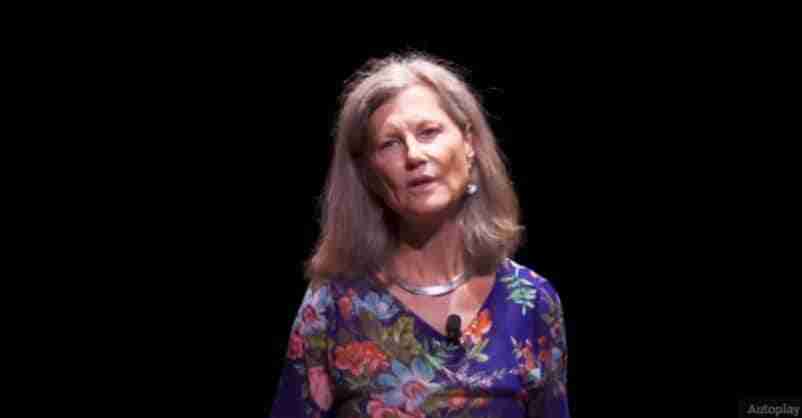
Here is the full text and summary of educator Katherine Cadwell’s talk titled “Students need to lead the classroom, not teachers” at TEDxStowe conference.
Listen to the MP3 Audio here:
TRANSCRIPT:
Katherine Cadwell – Educator
I have the best job in the world. Why? Because I get paid to learn.
I’ve been teaching high school since 1981. And every day my students teach me something new about the subjects that I teach: ancient history and philosophy, and about who they are and how they learn.
I’ve always been excited to get up and go to work in the morning.
Until about five years ago, when I became extremely disillusioned with this profession that I loved, it seemed to me that my high school students were becoming less curious. They seemed to have a harder time with the hard tasks of learning, and a really difficult time when they had to wrestle with confusion.
The most frequent question that I was getting on the first day of school was “Mrs. Cadwell, can you tell me what I need to do to get an A?”
And when I heard that, my heart would sink. But then I realized that these students were doing what they were trained to do. They were trained to focus on answers rather than questions. And it dawned on me that I was being trained as well. I was a cog in a wheel in a system that put a premium on the product, rather than on the process of inquiry.
So I made a decision that I was going to radically change my teaching practice for the benefit of my students but also for the health of our democracy.
Our current educational system is still stuck in the Dark Ages. Despite recent efforts at school redesign, many high school students are in classrooms where they are being asked to absorb massive amounts of information and then regurgitate it back on a test. Many of them have to sit in rows and raise their hands to let their voices be heard.
I know this because this is what my classroom looked like for years. But it dawned on me that I was promoting those students who knew how to play the game of school and they succeeded. But other students who were equally talented who did not know how to play the game of school or who refused to do so they suffered.
And then I realized that Benjamin Franklin was right when he said never let schooling get in the way of your education.
I also realized that I had to redesign my teaching practice, because the brains of the students that I have in my classes today may be developing in significantly different ways than the brains of students I had 30 years ago, before the invention of electronic devices.
Technology has had untold benefits for our profession of education. Yet teens’ addiction to their devices may be significantly altering the way their brains are wired, making them more distractible, less able to focus, and less likely to complete tasks.
Recent research on smartphone and screen use indicates that prolonged use of these devices by teenagers may promote antisocial behavior, increased political disengagement, depression, and loneliness.
Ask any high school teacher or any parent of a teenager, and they will tell you that the enemy of critical thinking, focused engagement and social interaction is the screen.
Education is from the Latin root “educare” which means to draw out or to be present at birth of. I began to think what if I said to my students: this is the most important device that you own and this is the one that you need to turn on all day every day.
What if I grounded my teaching practice in recent research on how the brain learns? What if I grounded my teaching in questions rather than answers? And what if I stepped back to allow my students to step up and engage in the messiness of learning?
Socrates believed that education is the kindling of a flame rather than the filling of a vessel. I wanted to be present at the birth of my students ideas and I wanted them to find their own voice. So I decided to do something radical. I turned my classroom over to my students.
This is what my classroom looks like now. In my classroom, students sit around an oval table called the Harkness table. And in our Harkness discussions, the students drive the conversation. They read difficult primary source materials. They ask and answer essential questions. And they solve difficult challenges that I put before them.
They may not merely write down what I say, because I am NOT talking. I may be at the table and I may say something from time to time. But I do not direct the conversation, nor do I direct them towards an answer that I want them to find.
Instead, they need to work together to construct meaning and draw their own conclusions from the challenges that I put before them. This pedagogy is grounded in inclusion, all voices are valued and encouraged. I often say to my students none of us is as smart as all of us.
As the students are talking, I sit and I track the conversation, show them this data, and then they talk about it and discuss how they can improve their next conversation.
This Harkness pedagogy is grounded in four key principles of brain research. And these make sense.
Number one: the one that does the work does the learning.
Two: new learning must be organized around a few significant ideas.
Three: new learning must be useful.
Four: Interference must be reduced.
In my classroom, there are no cell phones allowed. My students actually asked for this rule at the beginning of school. But now it’s April 5th and they’re a little irritated at me because I’m still enforcing this rule.
But in my classroom, students aren’t looking at screens; they’re not looking at me.
They’re looking at each other when I challenge them to engage in their own conversations. And this is really hard, because what we’re experimenting with is we are turning traditional teaching and learning on its head.
At the beginning, I had to start by teaching the skills of civil discourse: how does one use eye contact, body language, active listening, and how do you demonstrate respect and tolerance for someone else who has a completely different opinion than you do?
The most difficult task was teaching my young students how to ask questions. It seems that was a push of a thumb, answers come easy but teenagers are losing the ability to ask the critical questions.
But the dynamics of my classroom are changing. Instead of students looking at me with pleading eyes and saying Mrs. Cadwell, could you just please tell me the answer? I’m overhearing comments such as these when Tess says to Alex, “Alex, I actually disagree with the point that you’re making,” or when Jared said to Alden, “Alden, could you show me some textual references to back up your points?”
After a particularly lively Harkness discussion, Matthew ran up to me the other day and he said “Mrs. Cadwell, these Harkness discussions are really interesting. I’ve never heard how my classmates feel before, but you know this is really hard. It’s a lot different than a regular classroom, because here you know you really have to think.”
I am no longer disillusioned with my job. In fact, I’m reenergized and I’m having more fun than ever, because I’m watching my students. We learn how to be curious, how to find their own voice, and how to drive their own learning.
Transforming teaching and learning is not only about the classroom; it’s about the type of world that we want to create. Democracy depends on dialogue; it doesn’t depend on shaming, blaming, yelling, or tweeting. Democracy is grounded in and founded on civil discourse. And this must begin in the classroom.
Changing school doesn’t need to cost millions of dollars. It can begin if teachers are supported to have the courage to step back, to allow their students to step up and find and use their voices.
Thank you.
Want a summary of this talk? Here it is.
SUMMARY:
Katherine Cadwell, a high school teacher with decades of experience, presented a compelling talk titled “Students need to lead the classroom, not teachers.” In her talk, she outlined several key points that challenge the traditional educational system and emphasize the importance of student-centered learning:
1. Shift from Answers to Questions: Cadwell observed a trend among her students where they were more focused on obtaining answers than asking questions. This shift discouraged critical thinking and inquiry-based learning, highlighting a problem within the education system.
2. Outdated Educational System: She argued that our current educational system is still rooted in outdated practices that emphasize rote memorization, regurgitation of information, and passive learning. This approach doesn’t encourage students to engage with complex ideas or grapple with confusion.
3. Impact of Technology: Cadwell acknowledged the role of technology in education but raised concerns about the potential negative effects of prolonged screen time. She pointed out that excessive smartphone and screen use might be contributing to distractibility, decreased focus, and social isolation among students.
4. Reimagining Teaching: Cadwell proposed a radical shift in teaching practices. She embraced a student-centered approach where her students take the lead in the classroom. This approach involves Harkness discussions, where students sit around an oval table and actively drive the conversation, asking and answering essential questions.
5. Brain-Based Learning Principles: Cadwell’s teaching philosophy is grounded in four key principles of brain research: active learning, organizing new information around significant ideas, ensuring the usefulness of new learning, and reducing interference. These principles guide her teaching methods.
6. No Cell Phones: In her classroom, Cadwell does not allow cell phones, emphasizing the importance of face-to-face interaction and active engagement among students. This rule has led to students looking at each other rather than screens during discussions.
7. Teaching Civil Discourse: Cadwell recognized the need to teach students the skills of civil discourse, including eye contact, body language, active listening, respect, and tolerance for differing opinions. She also emphasized the importance of teaching students how to ask critical questions.
8. Transformation and Empowerment: Through this student-centered approach, Cadwell witnessed a transformation in her students. They became more curious, found their own voices, and learned how to drive their own learning. This approach reinvigorated her passion for teaching.
9. Democracy and Civil Discourse: Cadwell stressed that transforming education is not just about the classroom; it’s about shaping the kind of world we want to create. She argued that democracy depends on civil discourse and dialogue, which should begin in the classroom.
10. Empowering Teachers: In closing, Cadwell emphasized that changing education doesn’t require massive financial investments. Instead, it begins when teachers are empowered and encouraged to have the courage to step back and allow their students to step up and find their voices.
Katherine Cadwell’s talk underscores the need for a paradigm shift in education, emphasizing the importance of fostering curiosity, critical thinking, and civil discourse among students, which are essential not only for their personal growth but also for the health of our democracy.