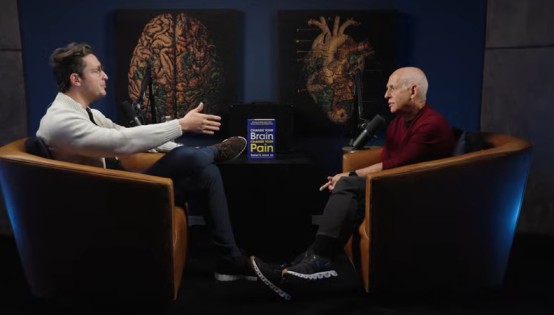
Here is the full transcript of celebrity psychiatrist Dr. Daniel Amen’s interview on The Checkup with Doctor Mike Podcast, December 14, 2025.
Brief Notes: Dr. Mike sits down with controversial psychiatrist and SPECT-scan evangelist Dr. Daniel Amen to ask a blunt question: are his brain images real breakthroughs or expensive pseudoscience? Amen explains why he believes most “mental health” issues are actually brain health problems, how his clinics use SPECT scans plus supplements to personalize treatment, and why he thinks seeing your own scan boosts compliance and outcomes. Dr. Mike presses him on the lack of randomized controlled data, criticism from major psychiatric bodies, conflicts of interest around his BrainMD supplement line, and whether psychiatrists who don’t scan are really “flying blind.” Along the way they dig into chronic pain, childhood trauma, overprescription of antidepressants and benzos, and how lifestyle changes, therapy, and brain-directed care can all fit together in a more holistic model of mental health.
The Controversial Psychiatrist Who Believes Mental Health Is Actually Brain Health
DR. MIKE VARSHAVSKI: Today’s guest is Dr. Daniel Amen, a physician with double board certifications in psychiatry and child and adolescent psychiatry. He’s a multiple New York Times best-selling author and has just published a new book called Change Your Brain, Change Your Pain.
He’s also the founder of Amen Clinics, a nationwide network of offices that rely heavily on a unique functional imaging approach that Dr. Amen claims is capable of identifying psychiatric diagnoses within the brain, which allows him to create better treatment plans for his patients, which often include supplements he sells through his other company, BrainMD.
As you’ll hear him say, he’s reviewed hundreds of thousands of these scans, which he’s used to improve the lives of countless patients over his decades-long career. Given that major health organizations have come out against using SPECT in this way, I need to ask what research he was using to guide his protocols. Because if you’re going to go against the APA, the AAN, you have to have some pretty compelling data, right?
Let’s talk historically how you got into this space, because I don’t see a lot of folks, at least on the Internet, talking about neurology, psychiatry, and how these two fields come together. And is this a unique field? I’m not certainly exposed to it as a primary care doctor, so I’m curious how you found your interest in that.
From Infantry Medic to Brain Imaging Pioneer
DR. DANIEL AMEN: So when I was 18, Vietnam was going on and I became an infantry medic. And that’s where my love of medicine was born. But about a year into it, I realized I didn’t like being shot at. So I got retrained as an X-ray technician and that was pivotal for me because our professors used to say, “How do you know unless you look?”
And then 1979, I’m a second-year medical student. Someone I love tries to kill herself and I took her to see a wonderful psychiatrist. And I came to realize if he helped her, which he did, it wouldn’t just help her, that it would help me, it would help her children, it would help her grandchildren. They would be shaped by someone who was happier and more stable.
So 46 years ago, I fell in love with psychiatry. Loved it every day since. The only medical specialty that never looks at the organ it treats. Think about that.
DR. MIKE VARSHAVSKI: Is that true?
DR. DANIEL AMEN: That is absolutely true. They still make diagnoses based on symptom clusters. The DSM that has no neuroscience in it, they make diagnoses based on symptom clusters with no biological data. Exactly like they did with Abraham Lincoln in 1841. So think about that.
DR. MIKE VARSHAVSKI: Yeah. Why is that?
DR. DANIEL AMEN: Because it’s the paradigm that feeds the pharmaceutical industry. It doesn’t feed outcomes because our outcomes are not better than they were in the 1950s, the year I was born.
DR. MIKE VARSHAVSKI: How are you? Where is the, in terms of more people being sick or people not being healthy?
DR. DANIEL AMEN: More people being sick. And if you are sick, your ability to get better. Right. Imipramine was released in the 1950s. We don’t have antidepressants that are more effective now. We have ones with fewer side effects but not more efficacy. Thorazine was released in the 1950s. Ritalin was released in the 1950s.
DR. MIKE VARSHAVSKI: Why?
The Birth of Brain SPECT Imaging
DR. DANIEL AMEN: And so I asked the question, and when I was growing up, my dad had two favorite phrases. “Bullshit” was his first one. Everything was bullshit and no. Bullshit, no. And so when I’m like, “Well, why aren’t we looking?” They go, “Well, it’s the future.” And I’m like, “Bullshit. No, we should do it now. There’s technology now.”
And in 1991, I went to Australia, a lecture on the imaging study we do at Amen Clinics. We have 11 clinics around the country. It’s called brain SPECT imaging. SPECT is a nuclear medicine study that looks at blood flow and activity, looks at how your brain works.
DR. MIKE VARSHAVSKI: How’s that different from functional MRI?
DR. DANIEL AMEN: So functional MRI is harder. You have to catch that difference in brain activity. SPECT actually gives you a look at how the brain works over time. So it looks at about a two-minute snapshot of brain activity, but it happens to be very consistent over your lifetime unless you do things to change your brain.
And so now we have almost 300,000 scans we’ve done on people from 155 countries. And literally it changed everything in my life from the time I go to bed. Because what I realize, most psychiatric illnesses are not mental health issues, they’re brain health issues. Get your brain healthy and your mind will follow.
DR. MIKE VARSHAVSKI: How is that?
Mental Health vs. Brain Health: A Paradigm Shift
DR. DANIEL AMEN: So if you think of it as mental health, number one, no one wants to be called mental, right? Because it shames you, it’s stigmatizing, and it’s sort of about you. When it’s brain health, well, everybody wants it.
And if it’s mental health, okay, diagnoses symptom clusters, let’s do this medicine or that medicine, right? As a family doctor, you treat more psychiatric patients than most psychiatrists. It’s almost half of the patients that come see you are stressed. They’re not sleeping, they’re anxious or depressed.
DR. MIKE VARSHAVSKI: Especially my pain patients.
DR. DANIEL AMEN: And the tools you have in a limited office visit is medicine. And yeah, it’s like, okay, symptom clusters, medicine or therapy. And then I’ll see you back.
But if it’s brain health, you have to lose weight. Because I published three studies on 33,000 people that show as your weight goes up, the size and function of your brain goes down. Should scare the fat off anyone. You have to get your diabetes under control. You need to go to bed. Alcohol is not a health food and marijuana is not innocuous.
So you begin every patient, this is not true if it’s sort of a mental health issue, if it’s a brain health issue, you have to ask yourself, whatever you’re doing today, is it good or bad for your brain? So it’s a completely different paradigm and a completely different discussion.
The Holistic Approach to Psychiatric Care
DR. MIKE VARSHAVSKI: I’m trying to think of how I go about seeing a patient that perhaps has a psychiatric concern or maybe even doesn’t and doesn’t realize that they have a psychiatric situation going on. Obviously doing the symptom clusters, the checklists, the PHQ-9s, all of these GAD-7s that they fill out, and then you’re right, it’s either therapy or medication, a combination of medication, and then see you later.
Especially with our broken healthcare system, it’s near impossible for anyone with not the greatest insurance or paying cash to even get therapy, let alone quality therapy. So I see that happening, but the idea of weight loss and getting their diabetes under control, to me, as a family medicine doctor, especially as a DO who thinks very holistically, that is almost always included in my mental health portfolio. Is it just because I’m automatically thinking about mental health as brain health?
DR. DANIEL AMEN: No, it’s because you’re rare that very few family doctors go, “You’re depressed. Could be from the inflammation you’re carrying, creating from the extra weight and the ultra-processed food.” It’s “You’re depressed. That means you need an SSRI.” And you know the serotonin hypothesis for depression, it’s not well supported.
DR. MIKE VARSHAVSKI: Oh, for sure. And we’ve gone back and forth on is it receptor modulation.
DR. DANIEL AMEN: But see, I don’t think depression should be an illness. I think depression is like chest pain. Nobody gets a diagnosis of chest pain.
DR. MIKE VARSHAVSKI: Why? That’s in my ICD-10 diagnosis.
Depression as a Symptom, Not a Disease
DR. DANIEL AMEN: Well, yes, but nobody gets, no thoughtful cardiologist goes, “That’s your problem. You have chest pain.” It’s a symptom. Depression is a symptom that has many different causes.
And there are certain brain patterns that respond to SSRIs, especially if you have increased activity in an area of the brain called the subgenual cingulate gyrus. So, yes, SSRIs work for that. But what if you have low activity in that part of the brain? SSRIs can make you violent. And there are black box warnings on SSRIs. There are black box warnings on every psychiatric drug.
Because depression can happen from a head injury. Like you had a whiplash injury, so you never even really thought you had a head injury. It could come from toxic exposure like lead or heavy metal or mold. It could come because your brain works too hard, from Lyme disease or not hard enough.
And so the standard, your PHQ-9 is elevated. So here’s an antidepressant plus therapy or one or the other. And I’m like, “Well, why are you depressed?” And that’s not the question people really ask.
The Chicken or the Egg: Weight and Depression
DR. MIKE VARSHAVSKI: I’m curious about the chicken or the egg scenario with the weight and poor diet. I have patients that I believe that there’s a component of their weight, their diet, their choices in life are impacting their feelings, leading to the symptom of depression.
Because technically I don’t diagnose someone with depression. I diagnose them with major depressive disorder or dysthymia, some kind of more DSM-appropriate diagnosis. So how do I know is this a symptom or a sign of them having major depressive disorder leading to unhealthy eating, or is it the other way around that the unhealthy eating is causing those symptoms?
DR. DANIEL AMEN: Well, I would think we should look at their brain before we go about changing it. And then I think a really good detailed history will give you a good idea.
Now, if you can’t get a scan, look at their ACE score. And I don’t know if you do that routinely, but I published a study last year on 7,500 patients looking at adverse childhood experiences. So on a scale of 0 to 10, how many bad things happen to you as a child?
And so if you have increased trauma, you have increased activity in your limbic or emotional brain, or when we talk about the pain book, in the suffering pathway of the brain. So you’re more likely to eat simple carbohydrate foods because that raises serotonin. You can get an insulin response, then it raises tryptophan in the brain and serotonin. And you feel happy.
Now you don’t feel happy really. You feel happy temporary. You feel happy for the…
DR. MIKE VARSHAVSKI: Until the next…
DR. DANIEL AMEN: Right. I want my patients to feel good now and later versus now without the…
DR. MIKE VARSHAVSKI: Negative effects of overeating.
DR. DANIEL AMEN: Negative effects.
The Value of Brain Imaging in Treatment
DR. MIKE VARSHAVSKI: So in these scenarios, when, let’s say they have elevated ACE scores and as a result they’re having worse lifestyle changes, how does the imaging, getting the imaging improve that level of treatment?
Because let’s say I have a patient who has a high ACE score, who’s consuming a lot of foods. We would be discussing the consumption of those foods as part of their metabolic workup, knowing that there’s an added benefit to their mental health state, but it would be primarily focused from a metabolic standpoint. So what does the imaging add to it?
DR. DANIEL AMEN: So many different things. The first thing it adds is compliance. Because people see their brain, they begin to have a relationship with their brain and they want it to be better.
DR. MIKE VARSHAVSKI: So it’s the reason it’s showing them a bad EKG when they’re having chest…
DR. DANIEL AMEN: Pain or high liver function tests and they’re drinking for fatty liver. Right? In 66% of the time, if you show them an abnormal lab test, they want to do something to make it better.
But now, so when I did, my first scan was 1991, I scanned my mom the week before, and her brain was beautiful and mine wasn’t. And I developed a concept I call “brain envy.” Freud was wrong. Penis envy is not the cause of anybody’s problem. Brain envy, right? That’s the organ where size really does matter.
You want a healthier brain, and I just wanted my brain to be better. So that leads to a cascade of decisions. If you go, “Is this good for my brain or bad for it?” So that’s the first thing that I felt about imaging compliance. And it decreases stigma and it gives you, as a physician, targets to go after.
Is the brain overactive? So I need to calm it down. And from a medicine standpoint, SSRIs or anticonvulsant medications calm it down, but if it’s low in activity to start, and you calm it down, you’ve just disinhibited that person, which can be…
DR. MIKE VARSHAVSKI: Well, there’s some activating antidepressants. Wellbutrin is a common option.
DR. DANIEL AMEN: But how would you know where to start?
DR. MIKE VARSHAVSKI: Well, based on symptoms and what they’re experiencing.
DR. DANIEL AMEN: Based on symptoms. But what other specialty in medicine acts without imaging?
The Debate: Is Imaging Always Necessary?
DR. MIKE VARSHAVSKI: I don’t know if that’s a valuable question, though, because not every specialty is going to have equivalent need for imaging. For example, for me to make a diagnosis of a UTI, I don’t need any imaging or any lab test.
DR. DANIEL AMEN: But you need lab tests.
The Clinical Diagnosis Debate
DR. MIKE VARSHAVSKI: You don’t. It’s a clinical diagnosis. So if someone has symptoms, dysuria, suprapubic pain on a physical exam, perhaps CVA tenderness, I can make that diagnosis. I technically don’t need the tests.
There are moments where it’s valuable to get a test. If you’re concerned about a kidney stone, if you’re worried about someone who has a high risk UTI, like someone in pregnancy, so you’d need to get a urine culture to confirm sensitivity. So there are a lot of these specifics, but I’m interested in your reasoning.
The compliance, the stigma, I think those are really the roadmap and the roadmap of treating to some outcome. So now I’m curious about the compliance portion of that. Not every patient’s going to have access to imaging simply because of the nature of our healthcare system. It sucks. A lot of people can’t afford even basic medications.
The other day, I prescribed clindamycin for a patient and their insurance denied it because I sent capsules, not tablets. Just some ridiculous notion which is typical for our system. So when I think about our system and who I treat, especially in a community health center, I think about those people who can get imaging and then the worry that it instills in them, as if I’m treating them badly because they will view our podcast or they’ll hear a news story about the need for imaging and that we’re functioning basically as we’re blind.
And then those people feel like they can’t get care from me or their psychiatrist. Do you worry about that outcome?
DR. DANIEL AMEN: So from the beginning of the time I’ve done imaging, and that’s why I write, that’s why online you can take our brain health assessment, know what, based on our work, what type of brain you have. You have a balanced brain, spontaneous brain. That’s my ADD group, a persistent brain, my OCD group, sensitive or cautious brain.
So these symptoms tend to go with these patterns. So I think people can benefit from my work for free. Right. They go to the library and get “Change Your Brain, Change Your Pain” or “Change Your Brain, Change Your Life” or any of the 40 books I’ve written, or they can listen to our podcast. And so there’s so many people, everywhere I go, people go, “Your work changed my life.” And they never got a scan.
DR. MIKE VARSHAVSKI: So it’s not necessary.
DR. DANIEL AMEN: But I would argue psychiatry is broken and we need to be viewed as a real medical specialty with imaging, because if you don’t look, you don’t know. So, for example, one of the big lessons is mild traumatic brain injury is a major cause of psychiatric problems and nobody knows it because psychiatrists don’t look at the brain or family doctors don’t look at the brain.
And this person who’s having problems with domestic violence, or this person who’s been incarcerated three times, or this person that is homeless and no one’s thinking, did that car accident damage their brain?
Flying Blind Without Brain Imaging
DR. MIKE VARSHAVSKI: So are psychiatrists who are not using brain imaging, by functioning without looking, are they doing a disservice to their patients?
DR. DANIEL AMEN: I think they’re flying blind and they’re missing so much that could be gotten from imaging. Is your brain hurt? Is it toxic? Is it overactive? Is it underactive? Like, I’m a psychiatrist. Why do I care about Lyme disease? Because it’s a major cause of psychiatric problems. Yeah, I think as a profession we can do so much better.
DR. MIKE VARSHAVSKI: And you mentioned…
DR. DANIEL AMEN: And that’s why in medical school psychiatry is sort of looked down on. It’s like really?
DR. MIKE VARSHAVSKI: Well, is it looked down upon because it’s the lowest reimbursed field out of all of the specialties?
DR. DANIEL AMEN: No, I don’t think so.
DR. MIKE VARSHAVSKI: I think it’s family medicine, pediatrics and psychiatry are the lowest ranked fields and they’re the lowest three.
DR. DANIEL AMEN: I was interested in when I was in medical school student, because it wasn’t about the money, it was about where I could do the most good.
DR. MIKE VARSHAVSKI: Well, we definitely need the most help in those specialties because I think a good primary care system is the backbone. I don’t know if you agree.
DR. DANIEL AMEN: Absolutely.
DR. MIKE VARSHAVSKI: Of a good health care system.
DR. DANIEL AMEN: Absolutely. No, you should have a wonderful family medicine doctor. But you know, most people use the emergency room or urgent care.
DR. MIKE VARSHAVSKI: There’s no continuity and it’s…
DR. DANIEL AMEN: There’s no relationship. And I trained in the early 80s before managed care took over medicine, and I’m so grateful that I did because in the early 90s, psychiatrists became the prescriber and they just ruined the profession.
Like for me, I was taught to do family therapy and group therapy and individual therapy and medicine was just sort of a part of what I did. And I wouldn’t be happy if I was the prescriber.
The Problem with Referrologists
DR. MIKE VARSHAVSKI: Probably in the same way that I can relate to that in being a family medicine doctor. There are a subset of family doctors who have trained to be referrologists, who, oh, you have high blood pressure, here’s a cardiology referral. Oh, you have UTI, here’s urology referral. You don’t need to do that.
I constantly have to remind my residents that 90% of all medical ailments can be handled by a primary care doctor. And there are subsets that are complex, that require specialist intervention procedures. We don’t do colonoscopies as a simple one, surgeries. So there’s a lot we can handle.
And I think there needs to be improvement across all these fields, especially in the area of education. So much how you’re talking about the prescriber, I’m talking about the referrer.
DR. DANIEL AMEN: No, I love that. It’s the first time I heard that term. And it’s like, no, that’s not why we went to medical school. We had to take all of those rotations.
DR. MIKE VARSHAVSKI: Exactly. And we forget them because it’s easy to just refer. It also shifts the legal concern. Oh, well, I send you to the cardiologist, they made the decision. It takes the decision making pressure off me. So I don’t like that in terms of practicing medicine that way. So I agree with you in that regard.
You mentioned some of these brain classifications that you do to see if someone has an ADHD type brain. You know, we have all of these validated PHQ-9s, GAD-7s, Vanderbilt, McHats. These are questionnaires we give to patients. Sometimes we give them to parents, to teachers. Do you not like those ways that we make them to our patients?
DR. DANIEL AMEN: But depression is clearly not one thing. Anxiety disorders are clearly not one thing. Now you get a high GAD-7, so what do you do with that?
DR. MIKE VARSHAVSKI: Do you give them a benzo that’s addictive, that increases their risk of dementia?
DR. DANIEL AMEN: I mean, that’s out of standard care.
DR. MIKE VARSHAVSKI: You don’t.
DR. DANIEL AMEN: But that’s out of standard care.
DR. MIKE VARSHAVSKI: 27% of all doctor visits, someone’s getting a benzo.
DR. DANIEL AMEN: This is poor medical care. Insane. But that’s not what the agencies recommend. Right. If we were to go on to the APA or any of these organizations, they wouldn’t say that that’s standard.
The Overprescription Problem
DR. DANIEL AMEN: I mean, hopefully you teach them diaphragmatic breathing. You give them things like theanine, maybe from a medicine standpoint, propranolol, but that’s not…
DR. MIKE VARSHAVSKI: I mean, now we’re even introducing allergy medication for people who have anxiety.
DR. DANIEL AMEN: So the antihistamines would also increase the risk of dementia.
DR. MIKE VARSHAVSKI: Yeah, for sure.
DR. DANIEL AMEN: Overuse a lot of it.
DR. MIKE VARSHAVSKI: But I mean, every medication has some sort of trade off.
DR. DANIEL AMEN: Right, but teaching someone not to believe every stupid thing they think and teaching them diaphragmatic breathing, no side effects, no increased risk of dementia, and probably decrease the risk.
DR. MIKE VARSHAVSKI: It sounds like you’re a fan of therapy, of cognitive behavioral therapy. Are you?
DR. DANIEL AMEN: Absolutely.
DR. MIKE VARSHAVSKI: Okay.
DR. DANIEL AMEN: And I think family doctors, if they just learn some of the basic principles, right? Oh, let’s… I talk about killing the ANTs, the automatic negative thoughts that steal your happiness. Whenever you feel sad, mad, nervous, or out of control, write down what you’re thinking and just ask yourself whether or not it’s true.
And in the book, part of the doom loop is an invasion of ANTs, these automatic negative thoughts. And there’s nowhere in school where we teach kids not to believe every stupid thing they think. I was 28 years old in my psychiatric residency when one of our professors said, “You have to teach your patients not to believe every stupid thing they think.” And I’m like, but I believe every stupid thing I think.
DR. MIKE VARSHAVSKI: Revolutionary idea.
DR. DANIEL AMEN: But that’s such an important concept. You know, if patients came in knowing how to manage their minds, they’re going to have a lot less back pain, they’re going to have a lot less neck pain. Because negative thinking goes to more tension, which then leads to more pain.
Chronic Pain and the Mind-Body Connection
DR. MIKE VARSHAVSKI: Yeah, we talk about that a lot on the channel. Are you familiar with Dr. Sarno’s work?
DR. DANIEL AMEN: Love Dr. Sarno’s work. I talk about him in the new book because what he basically says is chronic pain is repressed rage. But he doesn’t do a great job of helping people get rid of the rage. And so in the book, Pollyanna actually meets Hannibal Lecter. Because you have to have a mechanism to get in touch and express the rage in an appropriate way while you’re directing your mind to what’s right rather than what’s wrong.
DR. MIKE VARSHAVSKI: Yeah, I think he was ahead of his time to some degree. And people will point out flaws of… He had this theory of increased muscle spasms due to decreased blood flow to a specific area. And when that was somewhat disproven or questionable, he threw out all his theories and I feel like as someone who’s practiced medicine for over a decade, I’ve seen his theories play out, not just from I see this happening with my patient, but direct intervention in handling anxiety, stress, childhood traumas, just discussion of those issues leading to elbow pain going away.
So I believe that there’s definitely a variable there. Sometimes it’s hard to get patients on board, though. I’ve had patients get very offended at me when I say, “Hey, what’s going on in your life? And emotionally, what was your upbringing like?” And they’ll say, “Why the hell are you asking me this?” And I explain. They say, “Well, you’re one of these ahole doctors that just wants to blame it on me.”
And I say, “No, no, quite the opposite. I’m explaining that you have an internal regulator that basically dials up volume when you’re stressed, as it’s supposed to as part of its survival mechanism, and then down regulates it when they’re having a good time. Because you just told me that your pain is only there when you’re working, but not when you’re having fun with your friends.” But it’s still sometimes hard to get by it. What’s your strategy on getting that buy in?
DR. DANIEL AMEN: People say, “Oh, well, you think it’s all in my head.” Well, absolutely. But it’s in your brain, which is in your head, that if you’ve had pain for more than a couple of weeks, that now has a signature in your brain. And if we don’t get your brain healthy, the pain’s going to stick around.
And one of the reasons I wrote “Change Your Brain, Change Your Pain,” I’m 71, is I just got tired of being in pain all the time. It was my back, it was my knee, it was my neck, it was my hip. And I’m like, what is going on? So read Sarno’s work, started looking at the scans of our patients in chronic pain, and I’m like, oh, pain gets stuck in your brain.
And the one study that just completely blew my mind was 80% of people my age have abnormal backs who have no pain.
DR. MIKE VARSHAVSKI: Oh, yeah, that’s the classic example. That’s why I try and talk patients out of MRIs for their spines, just because…
DR. DANIEL AMEN: And what I have found that when people go get them after I teach them this, their abnormal neck doesn’t freak them out, so they automatically go get surgery. They go, “Oh, 70% of people my age have abnormal necks who have no pain.” So it means your body can figure out how to heal around the arthritis in your neck or the crushed disc in your neck.
And that’s so freeing to me. And it’s like, if I calm my brain down, my pain’s going to be less. And now I’m in no pain at all, which I dearly love, because it doesn’t freak me out if I wake up and my neck is sore.
Navigating Patient Autonomy and Medical Imaging
DR. MIKE VARSHAVSKI: Sure. What do you say to patients? Because I’ve had this end up, even with the patient filing a complaint against me. I have a whole video on the channel about it where I was trying to discourage the patient from getting an MRI for low back pain that I believe not to be from a spinal cause, based on my physical exam, the history of present illness, and I felt like there was an emotional component.
I introduced it. I asked how they feel about that. They said, “I still want the MRI.” I said, “I’m happy to order the MRI, but I’m just explaining that if we find something on this MRI, we’re likely to end up chasing it when it’s not the cause.” And she didn’t like that answer. So I’m curious how you go about avoiding unnecessary imaging in those cases.
DR. DANIEL AMEN: Well, you know, I’m a huge fan of informed consent. This is, you know, do we agree on what the problem is? So back pain. Okay, you have back pain. Here are the things we can do, and here are the pros and cons of those things. What do you want to do? You decide.
And if I’ve done a good job of connecting with them, generally, they’ll choose what my recommendation is. But not always. And as long as it’s not irrational, I feel like I work for my patients. I don’t work for the insurance companies. I work for my patients.
And generally that works out for me, and I think works out for my patient, because if they do something that I don’t think I would have done it, and it doesn’t work, they trust me because they feel like I’m their partner.
DR. MIKE VARSHAVSKI: So you’re saying perhaps I didn’t form a good doctor-patient alliance with this patient.
The Importance of Therapeutic Alliance and Brain Injury History
DR. DANIEL AMEN: So alliance is so important. I mean, I don’t know, because I wasn’t there. And you probably were as kind and empathetic and listening as you could have been.
You know, one of the things I learned is, and I guess I’m free associating, you have to ask patients 10 times whether or not they’ve ever had a brain injury. Shocking to me. So I start imaging like, “Oh, have you ever had a brain injury?” You can see the damage to the left front and to their anterior temporal poles. It’s sign of traumatic brain injury. They go, “No.”
I’m like, “Well, are you sure? Have you ever fallen out of a tree, fell off a fence, dove into a shallow pool, had a concussion playing sports, been in a car accident?” “No, no, no, no, no.” Oh, it’s always, “No, no, no. Oh, I fell out of a second story window when I was seven. Do you think that counts?” Or “I fell out of a moving vehicle going 30 miles an hour. Do you think that counts?”
And I just think it’s one of the major causes of psychiatric problems.
DR. MIKE VARSHAVSKI: So when you have a patient that you come across with a history of falling out of a window when they’re seven, how do you alter your approach to treating that patient?
Treating Traumatic Brain Injury
DR. DANIEL AMEN: Well, we go repair the brain injury, right? If you don’t do that, then they’re going to be living with chronic whatever, depression, irritability. Not surgically, not put them in a hyperbaric chamber.
So I did the big NFL study when the NFL was sort of lying. It had a problem with traumatic brain injury in football, right? Everybody knows CTE, and they have the wrong thoughts on CTE, which we could talk about.
But in 1999, Brent Boyd, who was offensive guard for the Minnesota Vikings, came to see me. Clearly had traumatic brain injury on scans. And by then I’d already been scanning people for eight years. He filed a worker’s comp claim. The NFL said he was faking and called me a quack and just completely dismissed it.
Well, in 2007, Anthony Davis, the Hall of Fame running back from USC, came to see me. His brain, at 54, looked like he was 94, but five months later, he’s dramatically better. And we partnered with the NFL Players Association in Los Angeles, published the first largest study on 100 active and retired NFL players. High levels of damage. But 80% of our players got better.
We put them on a really good multiple vitamin, high dose high quality fish oil, and a supplement, that brain supplement that works in six different ways. 80% of our players got better. Their imaging was better. And for those that didn’t, we put them in a hyperbaric chamber, and that improved our outcomes even more.
So I’m really excited. So the idea is, okay, boxing, football, soccer, rugby, horseback riding, they’re brain damaging sports. But you can get better if you put the brain in a healing environment. So we specifically target repairing those parts of the brain.
And I own a supplement company. So I’m a huge fan, but I’m also a huge fan of hyperbaric oxygen therapy. Published a study on soldiers who had blast injuries showed significant improvement after the first session and then much more after the 40th session.
Conflicts of Interest in Medicine
DR. MIKE VARSHAVSKI: You mentioned you’re the owner of the supplement company. How do you protect yourself from the conflict of interest that can happen in scenarios like that?
DR. DANIEL AMEN: You know, I write about the research. I love what we do. I’m so proud of what we do. So for example, we make Happy Saffron, 28 randomized controlled trials, 30 milligrams of saffron equally effective to antidepressants.
So I think my job is just one, tell people I own a supplement company. So clear disclosure, people know it and then write about the science behind the ingredients we have. And so I always say no brand violations, that we only want high quality things that have efficacy. And I love that.
So it’s not a secret, right? Brain MD by Dr. Daniel Amen. And people go, “Oh, but he makes money.” Well, I’m like, no margin, no mission. It’s like, that’s not illegal, right? All doctors get paid for what they do. But I love it.
And after we made Happy Saffron with saffron, zinc and curcumin, there’s a brand new meta-analysis on 192 studies on 17,000 patients. Saffron effective as an antidepressant. But when you add zinc and curcumin, now this is true if you add it to saffron or Lexapro, if you add zinc and curcumin, they actually work much better. So I was very happy that I figured that out before them.
DR. MIKE VARSHAVSKI: For the conflict of interest portion, people always, I get this sent to me. “You’re a pharmacist, you prescribe medications. Therefore whatever you’re recommending is not good.” And we hear even Secretary Kennedy of HHS now say similar things. Basically, people badmouth pharma because they’re for profit. Do you think that’s unfair?
DR. DANIEL AMEN: Absolutely. I mean there are other reasons to badmouth pharma.
DR. MIKE VARSHAVSKI: Like what?
DR. DANIEL AMEN: But we absolutely need pharmaceuticals and for the right brain, they’re incredibly effective. And if the companies didn’t make money, they wouldn’t be in business. And I’m a huge fan of medicine and prescribe them when I think it’s appropriate. And I’m a huge fan of supplements.
And why did I get interested in supplements? When I started imaging, I realized some of the medications I was prescribing were not good for the brain. And you remember in medical school, they go first, do no harm and use the least toxic, most effective treatment. And so if omega-3 fatty acids head to head against Prozac were more effective in a study from New Zealand, well, why wouldn’t I start with that?
DR. MIKE VARSHAVSKI: Well, it depends how severe the person’s symptoms are. Someone is having ideation. You don’t want to start with omega-3s.
DR. DANIEL AMEN: Well, nothing works by itself, right. If you look at the studies, there’s not much that works by itself for the most severely depressed people. And I would argue it’s because often it’s not only the depression, but it’s the head injury that’s complicating it or it’s the infection.
DR. MIKE VARSHAVSKI: Yeah, you mentioned that’s why I got interested in it. Yeah, you mentioned there are some reasons to be critical of pharma. What are those?
DR. DANIEL AMEN: Well, I think that they market them non-stop and so they’re almost creating the market for it.
DR. MIKE VARSHAVSKI: How is that different than your supplement line?
DR. DANIEL AMEN: That’s a good question. Supplement companies like mine don’t have nearly the money that pharma has. And so…
The Wellness Industry vs. Big Pharma
DR. MIKE VARSHAVSKI: Well, the Global Wellness Institute estimates that the wellness industry is a $2 trillion a year industry in the United States and big pharma is $700 billion.
DR. DANIEL AMEN: That would shock, shocked me, right? Because I own a supplement company knowing our budget as opposed to Eli Lilly’s budget. It’s like we’re not even talking the same thing or even the very large supplement company. So I just don’t know.
DR. MIKE VARSHAVSKI: Yeah, well, let’s take the numbers out of it because that needs to be fact checked. But let’s say for those who want to advertise a supplement, like if I want to start my own supplement company, we have 14 million subscribers, very healthy YouTube channel, very active audience.
If I wanted to start a supplement company, wouldn’t take much. I have to get someone to give me the ingredients to create the label, send it out. But pharma has to go through trials, the FDA has to approve it, they have to spend a lot of money. Don’t you think it’s easier to create a supplement than it is to create a pharmaceutical?
DR. DANIEL AMEN: Yeah, no, I think absolutely you’re correct. And there are a lot of bad actors in the supplement world. So finding somebody you trust is important.
DR. MIKE VARSHAVSKI: What’s a bad actor in the supplement space?
DR. DANIEL AMEN: Well, somebody who doesn’t test the ingredients. Someone who you don’t feel confident what it says on the label is actually in the bottle.
DR. MIKE VARSHAVSKI: So how does an average person decide that?
DR. DANIEL AMEN: I think they have to find brands they trust. Consumer Reports does analysis, does independent testing. There are other companies that do that.
Quality Control in the Supplement Industry
DR. MIKE VARSHAVSKI: Yeah, like Consumer Labs. Consumer Reports have done a lot of these trials and they go to the local pharmacies, they take things that are top selling and they find 70% of them don’t have accurate ingredient lists. Shouldn’t that worry people about the supplement industry?
DR. DANIEL AMEN: It should. And I think they should be cautious, careful.
DR. MIKE VARSHAVSKI: And again, I’m trying to figure out what practical advice to give them there. So how can they be cautious, careful? They can’t test what’s in there. Which is why I think they go…
DR. DANIEL AMEN: To a place like Consumer Labs and go, which are companies that are reliable, consistent. I think that’s my best advice. But before I had my supplement company, I would do that and recommend certain brands for my patients.
DR. MIKE VARSHAVSKI: And if, let’s say, so the FDA currently doesn’t look at supplements, right? But they look at the pharma industry to make sure everything is standardized, validated, efficacy rates are tested. Even if pharma markets a medication for a use that it wasn’t initially approved for, they get in trouble, right? They get huge fines.
DR. DANIEL AMEN: The FTC, the Federal Trade Commission. If you’re marketing a supplement inappropriately, they’ll send you a letter, they’ll fine you, they’ll put you out of business.
DR. MIKE VARSHAVSKI: Yeah, you have to be somewhat careful because I looked into this, into starting a supplement line. If you don’t say that something clearly cures something and you just say “balanced brain” or “healthy energy levels,” and you don’t clearly say that it does that, you can get by making all sorts of claims.
And historically, people have destroyed their livers with some of these supplements. The Hydroxycut scandal of years ago. So there’s all these sort of, it’s like kind of the wild west out there when it comes to…
DR. DANIEL AMEN: Yeah, but I read one study, your chances of dying from a supplement are like 60,000 times less than dying from a medicine. Now, it doesn’t mean that you shouldn’t be thoughtful and careful on what you put in your body. You absolutely should be. But when we look at pharma and the level of death from pharmaceuticals, it’s not even in the same league with supplements.
DR. MIKE VARSHAVSKI: So death is the way you judge the safety of these medications?
DR. DANIEL AMEN: Well, it’d be one way.
DR. MIKE VARSHAVSKI: Well, sure. But the idea that 70% of them don’t have the thing in them, that’s pretty problematic too. Imagine the pharmaceutical industry turned out that when we tested their medications, they didn’t have what was in there. Their insulin was only present 70% of the time. That would be a big deal.
DR. DANIEL AMEN: You know, I can only speak for Brain MD. And I’m very proud.
DR. MIKE VARSHAVSKI: Yeah. Do you think the FDA should be out there randomly sampling and testing to make sure that these supplement companies have what’s written on the label?
DR. DANIEL AMEN: I think it’s a good idea to police whatever people put in their bodies.
The Supplement Safety Debate
DR. MIKE VARSHAVSKI: Yeah, I’m always for that. Just because right now it’s again, such a wild west. Even Consumer Reports published recently a study of heavy metals inside protein powders and how people can be inadvertently trying to be healthy, but perhaps getting, especially if they’re taking mega doses, you know, some of these bodybuilders, scoop, scoop, scoop, scoop, and before you know it, you can get a serious problem developing there.
And some of the brands are very legitimate, very popular brands that you see selling quite well. So I’m always trying to figure out what’s a safe recommendation that I can give universally to my patients.
I’m curious. We never kind of settled on our question about the compliance issue that you mentioned, that getting these imaging tests is valuable for compliance. And I was talking about how we could potentially scare people away from seeking health care, from mental health care, specifically from a provider who doesn’t do imaging. Do you have any fear that you might be discouraging patients from getting good quality medical care or mental health care just because they’re not doing imaging?
DR. DANIEL AMEN: Well, I guess, you know, the question I have is, do you really get good quality brain health, mental health care if you have no idea what’s going on?
DR. MIKE VARSHAVSKI: Well, that’s a good question. Maybe you can answer that.
Flying Blind: The Mental Health Crisis
DR. DANIEL AMEN: You’re treating. I don’t think so. I mean, I really wanted to write a book once called “Flying Blind and the Writing of the American Mind Dark.” And I’m sort of sad I didn’t write it. I actually had a book deal for that book. And I’m like, it’s just too negative.
But what is happening in American Society today where 57% of teenage girls report being persistently sad, or that suicide has increased significantly in the young since the year 2000, that with all this sadness, the use of antidepressant medication has skyrocketed? 2021, there were 337 million prescriptions written for antidepressants.
And we’re not teaching people how to love, care for their brains, or manage their minds. And I think if we imaged that people would care about their brain a lot more, they would just eat better, think better, and do a better job of taking care of themselves.
So I’m, I think we’re in, I call it a “whole four crisis.” We haven’t talked about this. Don’t hate me. God, it’s so frustrating. I’m working with the White House on a national brain health Revolution initiative, specifically with the White House Faith Office, because they believe that brain and mental health are sacred human rights. And I have people that just love me and support my work there.
And as I explain it, we’re in this whole four crisis. We’re in a physical health crisis. I think you and I would agree with that. With chronic health crisis. 55% of people overweight or obese. 50% diabetic or pre-diabetic. 90% of our healthcare dollars are spent on chronic preventable illnesses.
We have these epidemics of anxiety, depression, autism, ADHD, addiction before the pandemic. And then everything got worse. Loneliness, 58%. So biological, psychological, social, spiritual. Where 58% of young people report a lack of meaning and purpose.
But I believe the answer to these epidemics is not to see them as separate disorders, but as different expressions of the same unhealthy lifestyle that have exactly the same cure, which is getting your brain, mind, relationships and spirit healthy all at the same time.
DR. MIKE VARSHAVSKI: Yeah, you’re looking at it more holistically.
The Daniel Plan and Community Health
DR. DANIEL AMEN: Right. I did a program with Pastor Rick Warren called the Daniel Plan. Actually came out of a prayer. I went to my church. I just finished writing “Change Your Brain, Change Your Body,” it’s 2010. Went to my church on a Sunday morning, was so happy and walked by hundreds of donuts for sale for charity.
And it just pissed me off. I’m just like, I’m going to church to get my soul fed. These people are trying to kill me. And I prayed God would use me to change the culture of food at church.
And two weeks later, Rick Warren, who is our generation’s best selling author, he wrote “The Purpose Driven Life,” sold 50 million copies. He called me up, he said, “I’m fat. My church is fat. Will you help me?”
We created this program called the Daniel Plan that ended up being done in thousands of churches around the world. And like, how do you get people healthy? You get them healthy where they live, whether in their community, in their churches, in their businesses, in their schools. And that’s part of this sort of national brain health revolution.
DR. MIKE VARSHAVSKI: Yeah, these mental health, this mental health crisis that we’re facing, we have, as you said, teenage girls experiencing high level of sadness. The amount of SSRI and antidepressant prescriptions are going up and up. You think this is partially due or maybe majority due to the fact that psychiatrists are not imaging their brains?
The Antidepressant Debate
DR. DANIEL AMEN: I think that as a specialty, we have gone to be the prescriber rather than the healer, that antidepressants don’t cure anything. They suppress symptoms, I think. Do they? Not psychiatry’s fault.
DR. MIKE VARSHAVSKI: I’ve never heard a psychiatrist say that antidepressants cure depression.
DR. DANIEL AMEN: You don’t hear that. That it cures anything. Right, Right. I heard once John Paul Dejoria speak. He founded Paul Mitchell, the famous shampoo company. He said, “You never want to be in the order business. You always want to be in the reorder business.” And, you know, once you start these medications, people don’t stop them.
DR. MIKE VARSHAVSKI: Well, the goal is not to use them indefinitely. I think the correct indication is to create a bridge to get people over their lifetime.
DR. DANIEL AMEN: How many of your patients, once you start them, stop them?
DR. MIKE VARSHAVSKI: Almost all. I have a rule that if we’re starting an antidepressant, we’re creating a date that both me and the patient are comfortable with, where we’re doing re-evaluations, whether or not they feel that they’re in a safe place to come off, given their circumstances.
Because being in a community health center, I’m working with people who are disadvantaged, who are taking care of multiple children on their own, family members in prison. And as a result, sometimes they need the antidepressant. They don’t have the capacity to get scans, to get a hyperbaric chamber. It just, it’s not feasible. There is the perfect model, and then there’s the realistic model by which a lot of family medicine doctors have to practice by.
DR. DANIEL AMEN: And we’re talking about two different things. Yes, I think in this situation, but most people who start stay on them. Most people who start don’t have Dr. Mike that go, “We’re going to start this, and then we’re going to reevaluate it and work on getting you off of it.” That’s not been my experience.
DR. MIKE VARSHAVSKI: I agree with you. I think there’s a lot of reasons to that. From what I’ve seen in the medical community, a big part of it is the consumerization of it. You know, we blame pharma for marketing these medications.
When I have seen patients say that, “I’m not getting rid of this. This helps me, and I need this, and I can’t function without it. And if you’re not prescribing it to me, you’re evil.” And perhaps they are right in some instances. So I don’t want to discredit what they’re experiencing. But in some instances where I feel that we should be having that discussion, some patients aren’t open to that.
Alternative Treatments vs. Medication
DR. DANIEL AMEN: Well, and ultimately I, I think my job is informed consent, like we talked about before. But head to head against antidepressants, exercise is equally effective. Head to head.
DR. MIKE VARSHAVSKI: Again, there’s a lot of caveats that you think head to head, but it’s…
DR. DANIEL AMEN: Learning how not to believe every stupid thing you think is equally effective.
DR. MIKE VARSHAVSKI: Sure.
DR. DANIEL AMEN: And omega-3 fatty acids and saffron. And so I’m thinking, let me at least go the, because a lot of patients who come to see me, they don’t want to take medicine. They’re like anything.
DR. MIKE VARSHAVSKI: Which is why I think our worlds are so different. You’re having this pre-selected, highly motivated treatment, preferred specific group come to you versus I essentially function in the wild and you’re working in a zoo for lack of a better example, with domesticated animals.
DR. DANIEL AMEN: I was an army psychiatrist for seven years for sure. But I mean in your clinic and here, those patients aren’t super excited about a specific approach. Yeah, no.
DR. MIKE VARSHAVSKI: The people come see me are excited about it, which is a huge advantage.
DR. DANIEL AMEN: Do you think that’s a huge advantage?
DR. MIKE VARSHAVSKI: But then a lot of them, Grandma’s paying for them to come see us and they’re not super excited and we have to get them excited. And the imaging really helps that.
The Kim Kardashian Case
DR. MIKE VARSHAVSKI: Well, let’s talk about the imaging because Kim Kardashian recently got some imaging done and you found some results on her. Tell me about that.
DR. DANIEL AMEN: She had sleepy frontal lobes.
DR. MIKE VARSHAVSKI: What does that mean?
DR. DANIEL AMEN: So SPECT is a study of relative blood flow. It looks at activity. Actually 49% of the tracer is taken up in the mitochondria in the brain. And she had less activity in the front third of her brain, which means it’s going to go with things like forethought and judgment and impulse control. Control and focus.
And she wanted to be better. She’s in law school and getting ready to take her boards and, or the bar. Getting ready to take the bar and wanted to function better. And I had previously seen Kendall who had post-Covid anxiety and Chloe who had a traumatic brain injury. She was in a bad car accident and they got benefit from my work.
So I saw Kim and it just blew up because the little clip they played was her and I talking showing her brain with lower activity in the front part, which is not good for her.
DR. MIKE VARSHAVSKI: And once you find that there’s this low activity, what is your recommendation in those scenarios?
DR. DANIEL AMEN: Fix it, is improve it. And so you can do it with medicine, you can do it with supplements. You could put them in a hyperbaric chamber and see if that does it. There’s neurofeedback that you can do. There are also some stimulating, like treatments, you know, things like TMS.
So my job is to give her the options. I think we went with stimulating supplements and see how that works. And the cool thing is you can look at it again and go, “Well, is that working?”
DR. MIKE VARSHAVSKI: If you were to interview Kim and hear all these struggles that she’s having, taking the bar, issues with impulse control, would you have been able to come to that same diagnosis without the imaging?
DR. DANIEL AMEN: Well, I would have been able to guess at it, but I wouldn’t be able to know.
DR. MIKE VARSHAVSKI: Well, there’s a difference between guessing and asking validated questionnaires.
The Value of Brain Imaging
DR. DANIEL AMEN: So I had this discussion actually with the head of the National Institute of Drug Abuse, and she goes, “But the brain has language.” And it’s like, no, you can’t see low blood flow from just talking to somebody. That…
DR. MIKE VARSHAVSKI: Like a low blood flow position.
DR. DANIEL AMEN: In my mind, it’s like, well, how would you really know if you didn’t look? And it’s like, “Oh, well, I can tell because you had these symptoms.” It’s like, no, you can’t. It’s like, that’s a leap in logic. That just isn’t correct because…
DR. MIKE VARSHAVSKI: That’s what…
DR. DANIEL AMEN: Most psychiatrists believe now. “Oh, you have six of these nine symptoms. You’re depressed. That means your limbic brain is too active. I’m going to give you something to calm it down.”
Well, SSRIs wouldn’t have black box warnings if they, if it worked like that all the time. And it’s just not my experience even a little bit is I can get 100 people that are depressed and we’re going to find seven or eight different patterns.
In fact, I wrote a book on ADD, “Healing ADD,” see and heal, the seven types. I’m like, it’s not one thing. Why is Ritalin controversial when it can take the right kids from C’s, D’s and F’s to A’s and B’s, but make other kids suicidal? Right? I mean, why is Ritalin controversial? Because it works dramatically well for some kids and it disturbs other kids or adults.
DR. MIKE VARSHAVSKI: You said that based on your questionnaire, you would still have questions that needed to be answered that you could get answered by this imaging protocol.
DR. DANIEL AMEN: Does your treatment then change 79% of the time? I published a study on this where we took 107 cases, gave them to board certified psychiatrists, took out the imaging, and we go, “Here’s the history, here’s the mental status exam. Here are the answers to the questionnaires. What’s the diagnosis and what would you do?”
And then we added imaging and we go in what percentage would it change? Eight times out of ten from their protocol.
DR. MIKE VARSHAVSKI: It changed their guidance.
DR. DANIEL AMEN: Changed their guidance.
The Controversy Around Imaging
DR. MIKE VARSHAVSKI: Why is the imaging so controversial? Like, even when you came in, you said that people hate you. Now, is it because of the imaging?
DR. DANIEL AMEN: Well, some people love me.
DR. MIKE VARSHAVSKI: But you have a lot of people who love you.
The Paradigm Shift Debate
DR. DANIEL AMEN: I have a lot of people who love me. But if I’m right, and I think I am, that means 40,000 psychiatrists and actually hundreds of thousands of family medicine doctors, nurse practitioners, OBGYN doctors, internists, right? Everybody and their mother prescribes psychiatric drugs. 85% of psychiatric drugs are prescribed by non-psychiatric physicians are flying blind.
And when you say that, they don’t say thank you to that. It’s like we need a new paradigm and we need a paradigm based on imaging. Because what imaging will do is completely reshape how we diagnose and treat people.
DR. MIKE VARSHAVSKI: Why don’t, like if we’re flying blind, why don’t we include this imaging? Why doesn’t every family medicine doctor, why does the American Psychiatric Association, American Academy of Neurology, why are they against this imaging?
DR. DANIEL AMEN: Well, not everybody’s against imaging.
DR. MIKE VARSHAVSKI: That’s really one of the examples that…
DR. DANIEL AMEN: I gave.
DR. MIKE VARSHAVSKI: Society for Nuclear Imaging.
DR. DANIEL AMEN: Do you ever read Thomas Kuhn’s book “The Structure of Scientific Revolution”? It’s such a good book. It was written in 1962 because when I first started imaging, there was all day seminars at the American Psychiatric Association on brain SPECT imaging in Child and Adolescent Psychiatry. All day seminars. And I went, I loved it. 1993, I taught in it.
And then they go, “Oh, you shouldn’t use this.” We’re like, “Well, why?” Remember I told you my dad. Bullshit. No, I’m like, bullshit.
DR. MIKE VARSHAVSKI: No.
DR. DANIEL AMEN: Why? I’m a better doctor because I should use this. And it doesn’t fit the paradigm. It does not fit. The DSM paradigm is we make diagnoses based on symptom clusters with no biological data. This is the paradigm.
DR. MIKE VARSHAVSKI: But if it works, why wouldn’t they want it?
The Six Stages of Scientific Revolution
DR. DANIEL AMEN: Okay, so Kuhn talks about six stages of scientific revolution. Normal science. So you’re just going along, doing what everybody else does. Stage two, somebody notices there is a problem. I prescribe Prozac. Some people get better, some people want to kill themselves. Okay, we have a problem.
Three, the status quo sees there is a problem, but they make small incremental changes to protect itself and the money. And so how many versions of the DSM are there? Well, there’s six of it. Even though it’s DSM-5, there was three and three are. But it’s the same as DSM-3. It’s really not different at all.
Stage four, somebody comes up with a new paradigm: detailed histories, imaging, natural ways to heal the brain in an integrative or functional medicine approach. We haven’t talked about that yet. Stage five is the most consistent of all the stages. The rejection. It’s like, “No, you’re crazy. This is how we do it. The brain has language you don’t need.”
DR. MIKE VARSHAVSKI: You know, in science, we’re trying to always come up with a validated solution to our problems. And when I read people who are smarter than me, who understand this field, like the Society of Nuclear Medicine, I don’t fully understand what they’re talking about. I can’t argue the nuances with them. I can’t argue the nuances with you.
But their statement, as an organization that is set out to seek the best for their patients, perhaps imperfectly at times, say that this imaging is not validated enough to be used. And it’s not that they’re against imaging, they’re just saying that the imaging is not validated or can be used repetitively across a diverse group of patients. So it’s not that they’re anti-looking at the brain, they’re anti this specific method because they feel that it doesn’t have enough evidence.
DR. DANIEL AMEN: The Canadian Association of Nuclear Medicine wrote prevention procedure guidelines on SPECT as if I wrote them, that SPECT is indicated for head trauma, for seizures, for dementia, for stroke, for addiction, for toxic exposure, for neuropsychiatric indications. So it really depends who you read, right?
DR. MIKE VARSHAVSKI: Well, I’m reading the largest agencies that represent neurologists, psychiatrists. These are… It’s like me saying something fully against the American Academy of Family Physicians without evidence to say why I’m disagreeing with them.
DR. DANIEL AMEN: Well, I have 90 studies that I have published, and I have the world’s largest database. And I actually don’t know what the point of us arguing about it is. I have more experience in this than anybody, probably in the history of the world. And if you don’t look, you don’t know.
And some people go, “Oh, no, we should just continue to do what we’re doing,” which is a disaster in our society. And I’m like, “No, I don’t believe that. We need to do better.” And if you don’t look, you don’t know.
The Randomized Control Data Question
DR. MIKE VARSHAVSKI: Logically what you’re saying makes sense. And I think evolution-wise, scientifically, all these organizations will agree with you that we need to move in that space. But do we have the randomized control data to be able to back these things up?
DR. DANIEL AMEN: Well, give me an example and I’ll tell you what the research is.
DR. MIKE VARSHAVSKI: Let me ask you a specific question. Is there randomized control data on SPECT scans and their efficacy in a specific mental health condition?
DR. DANIEL AMEN: Yes.
DR. MIKE VARSHAVSKI: Which one?
DR. DANIEL AMEN: Well, which one do you want to talk about?
DR. MIKE VARSHAVSKI: Anyone?
DR. DANIEL AMEN: I mean if you go on PubMed…
DR. MIKE VARSHAVSKI: Well, can you name one right now? You’re the leading expert.
DR. DANIEL AMEN: So I’m a family medicine… like you’re…
One of the most important things to do is distinguishing post-traumatic stress disorder from traumatic brain injury. And because they often present with similar symptoms, but the treatments are actually opposed to each other. PTSD, generally you want to calm the brain down. Traumatic brain injury, you have to repair and stimulate.
I published two studies on 21,000 people showing we can separate these groups with high levels of accuracy. In 2016, Discover magazine listed our research as one of the top 100 stories in science. We could also talk about Alzheimer’s disease. There are…
DR. MIKE VARSHAVSKI: But that’s not a randomized controlled study. I’m sorry, that’s not a randomized controlled study.
DR. DANIEL AMEN: We’re talking imaging.
DR. MIKE VARSHAVSKI: Yeah.
DR. DANIEL AMEN: This is not a pharmaceutical intervention where we’re going to do a…
DR. MIKE VARSHAVSKI: Well, the goal of doing the imaging is to create more customizable treatments, as you said. And if you have customizable treatments, your outcomes should be better. That’s the randomized controlled study.
DR. DANIEL AMEN: And our outcomes are better. We published a study, but that’s not…
DR. MIKE VARSHAVSKI: The question I’m asking. Randomized control data is really important, wouldn’t you say, to develop a causal relationship?
DR. DANIEL AMEN: Say this again.
DR. MIKE VARSHAVSKI: Randomized controlled trials are very important to create causal interventions. To say that this isn’t just a correlation, this is a causative pathway. You need the randomized control data to remove outliers, to create a generalized group, to have them double-blinded, to not know which one’s getting intervention, which one’s not.
Because it’s great that you’re helping people. And I’m so for that you’re helping people. And I want more of that. Now I’m trying to think as a family medicine doctor, how can we generalize what you’re doing so that I can do it too? But in order for me to do it, I need to know it works from a randomized controlled study. Why don’t we have that?
Designing the Trial
DR. DANIEL AMEN: So design it for me, because you’re going to randomize. You got imaging, you didn’t. So automatically, it’s not blinded.
DR. MIKE VARSHAVSKI: Well, you can get sham imaging.
DR. DANIEL AMEN: Okay.
DR. MIKE VARSHAVSKI: You’ve been doing this since 1991, so I’m trying to look at you as the expert. Like, do you not feel that it’s an issue that there is no randomized control data? Like, you’re asking me to design the trial right now.
DR. DANIEL AMEN: We have data that goes, you get better and you don’t. So what’s the difference in depression of people who got better and those who didn’t?
DR. MIKE VARSHAVSKI: Where are you sourcing those patients from?
DR. DANIEL AMEN: Well, from our clinics.
DR. MIKE VARSHAVSKI: So all your patients are getting the SPECT. You’re not separating into groups of, “Here we’re treating patients who didn’t get SPECT.”
DR. DANIEL AMEN: Well, no, not everybody gets scanned at our clinics.
DR. MIKE VARSHAVSKI: But for the research, you’re pointing out like, you have this study that shows 84% of your patients improved, but we’re not comparing them against a group of people who didn’t get SPECT.
DR. DANIEL AMEN: No, but nobody that I know of has outcomes like that.
DR. MIKE VARSHAVSKI: But do you think that’s enough for me to start doing SPECT in my clinic?
DR. DANIEL AMEN: I think if you started doing SPECT in your clinic, it would revolutionize your practice.
DR. MIKE VARSHAVSKI: And you’re saying that as someone who’s passionate about it or that there’s proof of it?
DR. DANIEL AMEN: No, I’m saying it as someone who has taught people around the world to do imaging and they become passionate about it.
Patient Selection Bias
DR. MIKE VARSHAVSKI: So we talked about the patient selection of it all earlier, how if you have patients who are highly motivated, it can bias your outcomes. Like we do journal club in my family medicine residency. And part of it is, is there a bias from the patients? Is there a selection bias of who you’re selecting?
And when you have your clinic, people who love you, is there a chance that you could be introducing bias by only looking at the people who love you, support you, and want your treatment?
DR. DANIEL AMEN: Well, I mean, we do have a more motivated group, for sure. We have a group. Yeah, I think it’s a more motivated group, for sure.
DR. MIKE VARSHAVSKI: And what outcome do you think that has on the outcomes that you study?
DR. DANIEL AMEN: So we actually did this study this week on compliance because we do a formal outcome study on everybody we see. I mean, I don’t know if you know many clinics that do that, but the people who are very compliant get better way faster in much bigger numbers. So we ask everybody about their compliance, and compliance is just huge. I think you would agree with me.
DR. MIKE VARSHAVSKI: Yeah, for sure. And it’s great that you’re doing the reassessment, because I feel like that’s missed a lot of the time.
DR. DANIEL AMEN: Well, very few clinics actually focus on outcomes. And for us, it’s research. But it’s also quality control. Sure. And if you’re not compliant at all, your outcomes are not very good.
DR. MIKE VARSHAVSKI: That’s for sure. But also mental health patients or patients who have issues with their mental health, they tend to have lower compliance. Not because they’re bad people or saying something negative about them. They’re going through something.
DR. DANIEL AMEN: No, it’s because their brains aren’t healthy. So, I mean, yes, they’re going through something, but in large part human experience is because their brains are not healthy. I mean, we might agree, maybe not, that if you’re depressed, something’s going on in the organ of how you feel, which is your brain.
DR. MIKE VARSHAVSKI: Sure. And like, you’re such a proponent of CBT. We say depression can be a chemical imbalance. Well, CBT actually alters the chemicals in your brain, right?
DR. DANIEL AMEN: Yes. That psychological treatments like EMDR or CBT…
DR. MIKE VARSHAVSKI: DBT, whatever alphabet soup we want to put, they all help with changing the chemical composition.
DR. DANIEL AMEN: Right. But you’re still advocating, at least what I’m hearing, is you’re still advocating for not looking before you go about changing.
Finding Common Ground
DR. MIKE VARSHAVSKI: Because I don’t want this to feel like a gotcha, because what I’m trying to do is…
DR. DANIEL AMEN: It doesn’t feel like a gotcha. It feels like a good conversation.
DR. MIKE VARSHAVSKI: I really want to learn from what you’re doing, because I want to be a better doctor. Genuinely. Like, my goal why I still practice medicine is because I want to deliver the best care for my patients. And if what you’re doing is great, we need to get that message out there to the world as fast as possible, because otherwise people are suffering. So in order to make the generalization that everyone should get a SPECT scan before…
DR. DANIEL AMEN: That’s not what I said. But if I get you to be a better doctor, just start thinking of mental health as brain health. Is this person actively working for their brain’s health? You can do that in your practice without… There’s going to be a day when SPECT or fMRI or quantitative EEG or PET is going to be covered by insurance and you’re going to be able to use it.
But what you can do today is you can go, “If we improve the health of your brain, your anxiety is going to be less.” And it starts with one question. I teach all of my patients, whatever you’re going to do today, is it good for your brain or bad for it? Is it good for your brain or bad for it? And that will begin to spark a revolution in their life.
Now, if you have somebody that’s not getting better, you should have them be imaged because to continue to fly blind is not in anybody’s interest.
The Challenge of Severe Depression
DR. MIKE VARSHAVSKI: So for my patients who have such bad major depressive disorder that they can’t groom themselves, they have trouble taking a shower, the solution is asking them if what they’re doing is good or bad for their brain. You think that’s enough motivation to help this individual?
DR. DANIEL AMEN: No, it’s all of it. See, now I feel like you’re twisting my mind to create conflict.
DR. MIKE VARSHAVSKI: Please tell me how do I, if somebody, because you’re saying the one question somebody…
DR. DANIEL AMEN: Is that bad, you should be advocating to look at their brain because you don’t know if they’re living in a mold-filled home that is damaging their brain. Right?
DR. MIKE VARSHAVSKI: I mean we check everyone’s brains.
DR. DANIEL AMEN: Everybody should be asking themselves that question. “What I’m doing today, good for my brain or bad for it?” But do you spend any time as a family doctor asking about the question?
DR. MIKE VARSHAVSKI: No.
DR. DANIEL AMEN: Is this good for your brain or bad for it, going through their habits or just teaching them to love?
DR. MIKE VARSHAVSKI: I’ll be honest, I don’t. I don’t. And I’ll tell you why I don’t. A, we don’t have enough time with our patients. So that’s a little bit of a cop out. But at the same time…
DR. DANIEL AMEN: Yeah, because that’s a really easy question. That’s like in the seven-minute visit you can take 30 seconds to ask them that question.
DR. MIKE VARSHAVSKI: You’d be surprised.
DR. DANIEL AMEN: You don’t have it in your head yet. Because we were never taught that mental framework.
Mental Health vs. Brain Health
DR. MIKE VARSHAVSKI: Well, I do ask that question without asking the question is my second point. I ask questions that don’t directly ask about the brain but ultimately point to me behaviors that they have that put their brain at risk.
So I ask about smoking, I ask about alcohol, I ask about diet, I ask about intimate partner violence. I ask a PHQ-2 screening question. So while I may not be saying the question as specifically as you are, I am figuring out the mental health state of the brain.
DR. DANIEL AMEN: But not the brain health state of the brain. See, that is the distinction that if…
DR. MIKE VARSHAVSKI: We get anything, what is that distinction? Because I’m having trouble understanding that.
DR. DANIEL AMEN: It’s not mental health, it’s brain health. The distinction is one is loose mental health. That’s very loose, PHQ-9, GAD-7 stuff, or is your brain healthy?
And if you want to keep your brain healthy or rescue it, you have to prevent or treat the 11 major risk factors. So I told you the big three ways I want to transform psychiatry: imaging. If you don’t look, you really don’t know natural ways to heal the brain in an integrative or functional medicine model.
And that’s why our model not only works to decrease depression, it helps to prevent Alzheimer’s disease. And I think you prevent Alzheimer’s disease by preventing or treating these 11 risk factors. And the acronym I talk about is BRIGHT MINDS. B is for blood flow. Low blood flow is the number one brain imaging predictor of Alzheimer’s disease. S is sleep and then all sorts of things in between.
The Case for SPECT Scans
DR. MIKE VARSHAVSKI: So you said that when a patient is that severely depressed, they should get a SPECT scan. Is that true for all patients that…
DR. DANIEL AMEN: Are that severely depressed that they have…
DR. MIKE VARSHAVSKI: Trouble showering, getting up out of bed? Absolutely.
DR. DANIEL AMEN: Because how do you know why they’re that way?
DR. MIKE VARSHAVSKI: Well, the issue that I believe to…
DR. DANIEL AMEN: Answer the question, how do you know what is actually going on in that person’s brain without looking?
DR. MIKE VARSHAVSKI: By asking them questions, by doing validation.
DR. DANIEL AMEN: It’s complete crap, Mike. It’s complete crap that you know what’s going on in that person’s brain. You’re guessing now. Maybe it’s an educated guess, but don’t tell me you know, because you completely don’t.
DR. MIKE VARSHAVSKI: Well, here’s my defense of why I feel like it’s better than just a slightly educated guess. Because when you look at randomized controlled trials for people who get either therapy or antidepressants, or sometimes both, we see the improvements. So while it looks on paper like a guess, we see the outcomes hold up validated across…
DR. DANIEL AMEN: I’ve been doing this research 45 years. You’re guessing. And maybe you can point to some studies that say…
DR. MIKE VARSHAVSKI: Oh, are you saying there’s no studies that show therapy? CBT has…
DR. DANIEL AMEN: You’re completely mixing lots of different concepts. This patient, you don’t know because you didn’t look. Now, are there studies on big populations? And most of the severely depressed, like you’re talking about, there’s not one single thing that works for them. They need a combination of things.
DR. MIKE VARSHAVSKI: I didn’t say that they wouldn’t. I just said that there could be…
DR. DANIEL AMEN: A combination, but you don’t know what’s causing it.
The Need for Randomized Controlled Trials
DR. MIKE VARSHAVSKI: And I think imaging holds such a key here, which is why I’m trying to figure out how to get it to the masses on a level that is scalable. So I’m trying to figure out how we get there. How do we get SPECT across the APA, the AAN? How do we get everyone…
DR. DANIEL AMEN: I think the Canadian model, I mean it’s covered by insurance in Canada. I think that is a really great model, that there’s a lot of research that when you really understand it and put it together, that imaging plus clinical evaluation, we have better outcomes and that’s…
DR. MIKE VARSHAVSKI: What we don’t know.
DR. DANIEL AMEN: They wrote the paper, I didn’t write it. I’m not an author on it.
DR. MIKE VARSHAVSKI: But we don’t have that. I just asked…
DR. DANIEL AMEN: No, we just, we do have imaging and head trauma imaging and depression. But I’m not saying imaging…
DR. MIKE VARSHAVSKI: In order to universally recommend a treatment, you need randomized…
DR. DANIEL AMEN: It’s an assessment.
DR. MIKE VARSHAVSKI: I know the assessment leading to the treatment, which changes ultimately the treatment because it’s customizable. In order to verify this, we need to be able to test it with a randomized, double-blinded, controlled study. And in 30-plus years of doing this, you’re okay with not one study being done?
DR. DANIEL AMEN: So I’ve published a lot. I published on NFL players and I published on here’s the pattern for it. Here’s the pattern that after treatment, I haven’t done a study where, okay, everybody gets scanned, but we only use the scans of half the people and see. I think that’s the study you’re thinking about.
DR. MIKE VARSHAVSKI: Well, let me ask it to you in a different way that takes us out of the equation. If a pharmaceutical company came out and said we have this medication, it works. We never tested it against any other placebo. No randomized control data, but everyone who takes it loves it. Would you buy into that pharmaceutical or would you say I need to see the data?
DR. DANIEL AMEN: You always have to see the data.
DR. MIKE VARSHAVSKI: But where is the data?
DR. DANIEL AMEN: With SPECT scans, 15,000 abstracts on SPECT on PubMed.gov today.
DR. MIKE VARSHAVSKI: But again, we’re talking about the need for the randomized control data to be able to take bias out of the equation. You said you have a more motivated patient population. These are all issues that can make actually SPECT not helpful for people and perhaps a spending of money that is not valuable given how constricted our healthcare spending is already or needs to be.
DR. DANIEL AMEN: So you’re arguing we should just continue to fly blind?
Finding Common Ground
DR. MIKE VARSHAVSKI: No, I argue, but see, you think I am advocating for flying blind. Can I tell you what I’m advocating for? Then you tell me if you agree with my notion.
I think we should test SPECT to see if we can improve and no longer fly blind. And if it’s not SPECT, perhaps it’s something else. You don’t think that’s reasonable of me to say that?
DR. DANIEL AMEN: No. I think more studies, one study…
DR. DANIEL AMEN: I think that would only help.
DR. MIKE VARSHAVSKI: Yeah, I agree, too. And I’m curious. Why do you think they haven’t been done?
DR. DANIEL AMEN: I don’t know. The first study that was presented in 1992 at the American Psychiatric Association is they took 100 bipolar teenagers. Fifty of them were scanned on the day of admission. Fifty of them were never scanned. They looked at the average length of stay.
For the kids who were never scanned, it was 44 days. Now, this was, you could actually keep people in psychiatric hospitals. For the kids who were scanned, it was 15 days, was an average cost savings of $15,000 per hospital stay. Is that the kind of study you’re thinking about?
DR. MIKE VARSHAVSKI: No, but it’s getting there. That’s a great preliminary piece of research that I think we can build upon, because I think we would agree that there’s a hierarchy of evidence for recommendation, for deciding between causation and correlation. You agree with that?
DR. DANIEL AMEN: Yeah.
DR. MIKE VARSHAVSKI: So to me, unless we have that randomization where we take two groups, ideally match them as best as we can, randomize them so they don’t know what they’re getting, blind them, test the outcomes based on the treatments being more customizable in the SPECT category, and then if we see this drastic improvement, everyone changes their mind. AAN, APA’s recommending it. We’re all getting it done. Yeah.
DR. DANIEL AMEN: That would be great if that happened.
DR. MIKE VARSHAVSKI: You don’t want to make a push for that on this podcast?
DR. DANIEL AMEN: I’m not sure this podcast is going to get us to where we need to go.
DR. MIKE VARSHAVSKI: Why not?
DR. DANIEL AMEN: That would surprise me.
DR. MIKE VARSHAVSKI: But this is so valuable. I feel like SPECT can help so many people based on the way you’re presenting it.
DR. DANIEL AMEN: I think it can, too.
DR. MIKE VARSHAVSKI: So if we present randomized controlled data to the AAN, APA, we publish it in the Lancet together, let’s say we can change the practice in the United States. Isn’t that something you would want? Absolutely. So what’s stopping us from doing it?
DR. DANIEL AMEN: I’m all for it.
The Path Forward
DR. MIKE VARSHAVSKI: Okay. At least you’re for it. That’s really exciting, because when we think about people who are critics of SPECT, I want to prove them wrong. Right? Because I want to help people, and I’m on your side, and I want to figure out how to get this done correctly.
But if we’re trying to do scientific research, it shouldn’t be done in a way where Secretary Kennedy said, “We’re going to prove that this causes this.” Scientific research starts with asking a hypothetical, asking a question, creating a hypothesis, disproving yourself, proving the null hypothesis, not just agreeing with yourself or seeking to agree with yourself. Do you agree with that?
DR. DANIEL AMEN: I was thinking…
DR. MIKE VARSHAVSKI: You want to set out to disprove yourself if you’re doing research, because ultimately, if you can’t disprove yourself, that makes your information stronger. And look, there are some instances where correlation can be strong enough where you actually don’t need a randomized controlled trial.
DR. DANIEL AMEN: Because how do you do a randomized controlled trial on, you have Alzheimer’s or you… I mean, they have autopsy-confirmed data that Alzheimer’s disease, which has been described in the literature for 35 years. So you need better data than that to say SPECT can help in the diagnosis of Alzheimer’s disease?
DR. MIKE VARSHAVSKI: I need SPECT to differentiate itself from the standard of care as exists today for it to be found valuable and widespread recommendation.
DR. DANIEL AMEN: Okay. And I would argue for…
DR. MIKE VARSHAVSKI: Because SPECT is expensive, SPECT has radiation. It can fuel misdiagnosis. So I also don’t want to overdo it with SPECT. So I’m trying to find the reasonable middle ground.
DR. DANIEL AMEN: Okay.
DR. MIKE VARSHAVSKI: Is that on? Correct me if I… Please disagree with me.
DR. DANIEL AMEN: Yeah. You’re arguing for the status quo until someone can show you a randomized controlled trial for a specific diagnosis. Although I gave you the one with bipolar disorder. Yeah. I’m just thinking flying blind is not the answer.
DR. MIKE VARSHAVSKI: I agree. I don’t think we disagree.
DR. DANIEL AMEN: And I didn’t, you didn’t bring this up. And probably you don’t know the American Psychiatric Association last year named me a thought leader and…
DR. MIKE VARSHAVSKI: But I’m not attacking you here. This isn’t, I’m not anti your work. I’m trying to figure out how to get your work to more people. Literally. We’re on the same team helping patients. Yeah.
DR. DANIEL AMEN: And hopefully bringing psychiatry into the 21st century rather than making diagnoses just based on symptoms.
DR. MIKE VARSHAVSKI: I agree.
DR. DANIEL AMEN: And I think I’m just trying to…
DR. MIKE VARSHAVSKI: Do it without doing it prematurely because with any medical intervention, there could be drawbacks.
DR. DANIEL AMEN: I don’t think we did it prematurely.
DR. MIKE VARSHAVSKI: But you don’t have one randomized controlled trial.
DR. DANIEL AMEN: Well, we’re not thinking about it in exactly the same way. 1992. If I get a scan on the day of admission, it cuts hospital days 67%. That’s pretty exciting. And what I saw as a clinician is it changed what I did eight times out of 10. Not only did it increase compliance and decrease stigma, it made me more effective because I had a roadmap.
DR. MIKE VARSHAVSKI: I think that’s great. But again, how do we get that out there? Because I’ll give you an example. For my patients who are over the age of 40, I can do the ASCVD risk score, which is their 10 year risk score of having a stroke or heart attack. Now I plug in some numbers into this calculator and I get a percentage.
Based off this percentage, I can decide course of action for this patient. And the reason why I’m comfortable using the score calculator is because it’s validated across diverse patient population. Randomized controlled studies done on it, seeing what the actual outcomes are from doing this risk score calculator as well as the interventions that follow.
There are some people who make their own risk score calculators in the cardiovascular world and they choose their own numbers to plug into their calculator. Here’s why I don’t agree with it, because it’s not validated across a diverse group of patients. Do you see why I don’t like their calculator as opposed to the 10 year ASCVD calculator?
But some of them will come and show that their calculator helps 84% of their patients. Now, using their anecdote of helping their patients, should I then just throw away my other calculator and say, “Patients, I’m going to use this new calculator now because this person said this about their clinic,” or should there be a level of skepticism like your father said and said BS? No. Let’s test it. Or should we just accept it?
DR. DANIEL AMEN: Well, I think you should test it, which is why we do outcomes on all of our patients. Now is that going to randomize? Is that going to go with your patients? No, but your patients will be better if you added imaging.
DR. MIKE VARSHAVSKI: Well, you—
DR. DANIEL AMEN: Are we going to talk about the book at all or?
DR. MIKE VARSHAVSKI: Well, I mean, this is a premise of your book.
DR. DANIEL AMEN: No, imaging is not.
DR. MIKE VARSHAVSKI: The premise of your book is not in your book.
DR. DANIEL AMEN: It’s in the book, but it’s not.
DR. MIKE VARSHAVSKI: There’s SPECT in the book.
DR. DANIEL AMEN: We’re not going to talk about the book.
DR. MIKE VARSHAVSKI: What do you mean? We talked about pain. We talked about the cycle of pain, how your brain has this blueprint that it starts cycling between, that we’re on board with. We talked about Dr. Sarno’s work. Do you feel like I’m being unfair? If you think so, please tell me.
DR. DANIEL AMEN: Yes.
DR. MIKE VARSHAVSKI: How so?
DR. DANIEL AMEN: Because you’re like going on the same thing over and over again.
DR. MIKE VARSHAVSKI: Again.
DR. DANIEL AMEN: Yeah. No, it doesn’t feel fun or fair, but I love talking about our work. It’s interesting to me. Often I’ve been criticized and very few people go, “So you’ve seen more scans than anyone in the history of the world. What have you learned?”
And as opposed to, “Well, you didn’t do this and you didn’t do that and you should have done this, and don’t you think it’d be better if you did that?” As opposed to—
DR. MIKE VARSHAVSKI: So what did you learn from nearly 300,000 scans?
DR. DANIEL AMEN: Are you saying I said that?
DR. MIKE VARSHAVSKI: No, it just doesn’t feel like it. Right. I mean, I can only tell you my experience. It feels like—
DR. DANIEL AMEN: But don’t you think I should be a skeptic on behalf of my patients?
The Value of Curiosity Over Skepticism
DR. DANIEL AMEN: I think you should be curious on behalf of your patients, that if you could help them have a better brain, they would have a better life. And that things like Alzheimer’s disease—so I wrote a book in 2005 called “Preventing Alzheimer’s Disease” and got no end of grief. It’s like, “That’s giving people false hope.”
And last year, the Lancet came out with an article that said 50% of Alzheimer’s is preventable.
DR. MIKE VARSHAVSKI: What were the tips that you gave in that book?
DR. DANIEL AMEN: So it was BRIGHT MINDS. You want to keep your brain healthy or rescue it, you have to prevent or treat these 11 risk factors. If you’re pre-diabetic, that’s an emergency. Because diabetes—if you have diabetes, you have all 11 risk factors, just that one.
So it’s going back to really creating this revolution in brain health, getting people to love and care for their brain. And if I was a family medicine doctor, I would be thinking mental health is brain health.
DR. MIKE VARSHAVSKI: The need for treating patients who have prediabetes, I frequently struggle actually in finding motivation from my patients when they do flag on their labs. Having a hemoglobin A1C in that level of saying, “Hey, this is when it’s reversible,” because once, technically, maybe there’s some outliers—once you become a diabetic, you’re a diabetic for life, at least in terms of your risk factors.
Weight loss, extreme weight loss can seemingly control it because we’ve seen those who have bariatric surgery not need medications anymore, even though they were diagnosed with type 2 diabetes. But in the majority of cases, the time when it’s reversible is the pre-diabetic stage.
So I struggle in helping my patients get motivation there. So which of these 11 recommendations in the Alzheimer’s book do you think that we’re lacking in the primary care space so we can encourage doctors to do it?
The Power of Brain Imaging for Patient Motivation
DR. DANIEL AMEN: I think it’s that so much of these bad things that happen to your parents that we can prevent if we work together to be very serious about it. One of the beautiful parts about imaging—on my podcast we had Julius Randle recently, three time NBA all star, depressed, smoking way too much pot, about to get divorced, and he saw a scan and he’s like, “Oh, no, I don’t like that.”
Immediately stopped smoking pot, and a year later his life’s completely different. Because the images created an idea in his head that if he didn’t do the right thing, it was going to get worse and he would be worse. And if he did the right thing, it could be better.
One of the reasons I fell in love with imaging, it’s creating the hope. And hope is tomorrow can be better and I have a role in it. It’s creating that sense of agency in your patients. And if they don’t ever get a scan, you could show them the images. If we don’t do the right thing, your brain is headed this way. But if you do the right things, it can be better.
Which is why my first big book, “Change Your Brain, Change Your Life,” I think worked because it was a book of strategies and hope.
DR. MIKE VARSHAVSKI: Yeah, because using that motivational tool as a behavior modification tool could be quite valuable. I actually am not against finding unique ways of trying to motivate my patients. Because ultimately, if I had to say, my biggest struggle outside of our health care system is finding motivation in my patients who are perhaps depressed or maybe don’t even have a formal diagnosis, but have issues with life that are ongoing, that aren’t easily resolvable. Custody battles, divorces, et cetera.
So my only concern with using the imaging as the compliance benefit is that if you were just using it in that way, I see the benefit. But then when you’re criticizing the rest of the psychiatric community, it’s almost impacting our ability to practice medicine because we’re not doing the imaging. Do you see what I’m saying with that?
DR. DANIEL AMEN: Yeah, but I can’t not say what I believe the truth is, because then the field will never change. And if the field never changes—
DR. MIKE VARSHAVSKI: Is beneficial. I’m sorry, why can’t you just say this is beneficial? This is how I motivate my patients. But when you say we’re flying blind, you’re creating this distinction for patients that are saying we don’t see Dr. Amen and we see Dr. Mike, we’re going to get subpar blind care. Why would we ever do that? Why would anyone want to go see a doctor that’s flying blind?
DR. DANIEL AMEN: That’s a good question.
DR. MIKE VARSHAVSKI: But do you see how it sets up the dichotomy for patients where they have to make this terrible decision and they’re already not in a good mental health space? So I’m curious, can we use it as a compliance booster, but not necessarily shame the rest of psychiatry? And instead—
DR. DANIEL AMEN: So how do we move forward if we don’t say that what we’re doing is flawed?
DR. MIKE VARSHAVSKI: We need to. Well, first of all, you could say what we’re doing is flawed, but I think it’s not fair to say you have the solution until we have the randomized control data. Yeah, you could say you’re working towards that.
DR. DANIEL AMEN: Because I have outcomes on thousands of patients. I mean, I published the outcomes on the first 500. And this is what I believe, that if you don’t look, you don’t really know. And it’s not based on 40 cases. Yeah, I’m not saying we’ve seen—it’s based—
DR. MIKE VARSHAVSKI: You keep saying these criticisms and defending them that I’m not saying. I’m not saying that you have a limited number of cases. I’m not saying anything negative about you. I’m just saying that the randomized control data that I need for universal recommendation is missing. And I feel like that’s important.
I mean, the critics of SPECT say depending if you have a cup of coffee, certain parts of the brain imaging will change. It’s the same way—
Consistency and Reliability of SPECT Imaging
DR. DANIEL AMEN: They’re very consistent over time. There’s a study from UCLA, Ishmael Mena, that over three weeks there’s less than 3% variability. Plus in our clinic we do two. We do one at rest, one when you concentrate. And so we have 100,000 rest concentration scans.
And your pattern is going to be your pattern unless you get drunk. It does change during the time of your cycle, which is very interesting. If you never believed in PMS, scans during different times of the cycle will convince you it can be a real thing. Yeah, no, they’re very consistent over time.
DR. MIKE VARSHAVSKI: Well, given the fact that certain things interfere with them, couldn’t that make it weaker? For example, when I prescribe a patient to get HIV screening test, right, I know the sensitivity and specificity is to a level that I’m comfortable giving this test to someone who has no symptoms.
But in these scenarios, what is the sensitivity of a SPECT scan on the same person weeks apart across a diverse group of people? And does it hold up? We don’t know that yet.
DR. DANIEL AMEN: Well, Mena said it was less than 3%.
DR. MIKE VARSHAVSKI: Well, in that study, but I’m saying the randomized controlled data is missing to be able to diversify it. Again, I’m not talking about the initial research. I think the research you’re doing is so important because you need foundational research.
The first doctor that said, “Wash your hands in between the morgue and delivering patients” was viewed as someone who’s making stuff up and sees something on the—yeah, he died in poverty, in insane asylum or something, Ignaz Semmelweis.
But we need to be able to test whether or not these things are valuable. And I don’t understand why you’re not leading the charge for that. As the number one proponent—
DR. DANIEL AMEN: I’ve published more research than almost anybody.
DR. MIKE VARSHAVSKI: But there’s a difference between publishing outcome data—
DR. DANIEL AMEN: Outcomes, how it changes clinical practice. I published on ADD multiple times. A new study coming out on bipolar disorder. We’ve published traumatic brain injury. I published review papers. There’s a lot of published research on it. We haven’t done your study.
DR. MIKE VARSHAVSKI: But you keep saying it’s my study.
DR. DANIEL AMEN: Or the one from the hierarchy of medicine you keep talking about over and over again in the last hour or so.
DR. MIKE VARSHAVSKI: Well, if you’re trying to find out—we published a lot.
The Value of Brain Imaging Data
DR. DANIEL AMEN: I mean, it’s very important for people to understand. In my book “The End of Mental Illness,” there are 1,084 references. Because if I’m going to make this big idea, paradigm shift, stop calling it mental illness, start calling these things what they really are, their brain health issues, I have to be able to back that up and talk about a lot of the research on SPECT for a wide variety of conditions.
But even though I can tell you the pattern for OCD, I can tell you the pattern for autism, it doesn’t say what your brain, who has OCD, looks like. And if you don’t, because if all the patterns were 80% sensitive and specific and we have ADHD data that’s way higher than that. But not everybody has that pattern.
That’s why you look, not because SPECT can say, “Oh, you have this or that diagnosis.” You and I can say you have this or that diagnosis. What you and I can never be able to do is to go, “This is your brain pattern.” And that’s how I need to target the treatment to you, not your cluster of symptoms.
Setting Imaging Thresholds
DR. MIKE VARSHAVSKI: We can change the threshold in imaging to make it appear different. So, meaning that, what does that mean?
DR. DANIEL AMEN: Basically, I can make your scan look terrible by changing the threshold.
DR. MIKE VARSHAVSKI: Well, that’s what I’m saying. So why would I do that?
DR. DANIEL AMEN: I mean, I make how we make.
DR. MIKE VARSHAVSKI: A threshold for what is prediabetes. We take a diverse set of people that is generalizable to the individual. And because we have this randomized control data, validated data, we can then say above 5.6 you’re entering prediabetes. Above 6.5 you’re getting diabetes. But with these thresholds, do we have validated thresholds to say this is where you should set your imaging parameters? We do, yeah.
DR. DANIEL AMEN: With normal, we have normal. So average is 72%. So SPECT is a study of relative blood flow. What that means is we take the coldest spot in the brain, make that zero. The hottest spot in the brain, make that 100. And we scale everything between these two poles and the average, most parts of the brain outside the cerebellum is 72.
And so two standard deviation, standard deviation is 6. Two standard deviations, 84. So above 84%, we think that’s increased activity in the brain. Below 60%, we actually use 55 for safety. Two standard deviations or more below, those are the thresholds. That’s how we set it. Again, very consistent with the data from UCLA.
A Proposed Randomized Controlled Study
DR. MIKE VARSHAVSKI: I have an idea for that randomized controlled study that you mentioned that I could design. What about taking people, randomizing them into two groups, scanning actually both groups with SPECT, but for one group not using the SPECT data to guide treatment?
DR. DANIEL AMEN: Yeah, that’s what we talked about earlier.
DR. MIKE VARSHAVSKI: So you’re not treating off of that, but you’re still randomized. Doctors still don’t know. I mean, the patients still don’t know which group they’re in. And then going treatment wise and then seeing their outcomes from a clinical perspective, seeing how they’re doing through patient surveys, and then also looking back at their SPECT, redoing their SPECT and seeing if there’s a change. Isn’t that a great study that could truly perhaps prove that SPECT can be generalizable to the general public?
DR. DANIEL AMEN: Yes, I think that’s a great idea. And then we’d probably need three or four independent Amen Clinic sites to do that as well.
DR. MIKE VARSHAVSKI: I think it’s an important question to ask. If we do that randomized controlled study that we’ve just talked about and it turns out that it’s not useful, would you give it up?
DR. DANIEL AMEN: Absolutely not.
DR. MIKE VARSHAVSKI: Why?
DR. DANIEL AMEN: Because how am I going to know if your symptoms are a result of your brain working too hard or not hard enough, that’s toxic or traumatic. So you’re just asking me to give up, you know, 35 years of experience showing how imaging changes what I do or guides what I do based on a study of 50 people. Now I suspect the study will be…
DR. MIKE VARSHAVSKI: Why did you underpower my study so quickly?
DR. DANIEL AMEN: Whether there’s 300 people?
DR. MIKE VARSHAVSKI: Right.
DR. DANIEL AMEN: I’m not giving up imaging because you…
DR. MIKE VARSHAVSKI: Look, you don’t know.
DR. DANIEL AMEN: I mean, there’s this thing called face validity that it makes. I mean, there are just so many advantages to imaging that, you know, probably if there were 50 studies done like that, 40 of them would come out positive and maybe 10 wouldn’t. Why?
Well, you’ve been around research long enough to go, whatever the person thinks is going to happen, they’ll set it up to make it happen. Maybe you have way more confidence in imaging, in research than I do, but one statistician told me that 16 out of 17 statistics lie depending on what people think.
You saw Dr. Makary just come out recently with the hormone study and he goes, when you actually read the study, they made that huge recommendation that kept HRT from women for what, 20 years, that it was actually based on flawed data. So I’m not giving up the idea that imaging is useful. Can we use it better? Absolutely. And we’re using AI tools in studying all of our patients data because they allow us to study anonymized data. So in my mind, no, I wouldn’t give it up, but there’s ways to use it better.
Questioning Research Validity
DR. MIKE VARSHAVSKI: I’m certain you said 16 out of 17 research articles are flawed. Does that apply to your research? No, no.
DR. DANIEL AMEN: 16 out of 17 statistics lie.
DR. MIKE VARSHAVSKI: Oh, so is that true about your research as well?
DR. DANIEL AMEN: No.
DR. MIKE VARSHAVSKI: Why?
DR. DANIEL AMEN: Because we want it to be reproducible.
DR. MIKE VARSHAVSKI: But the rest of the scientific community doesn’t. I’m just asking why your assumption is that this randomized controlled study would be flawed, but yours aren’t.
DR. DANIEL AMEN: You said I didn’t have any randomized controlled trials.
DR. MIKE VARSHAVSKI: I didn’t say your randomized controlled trial, I said your trials. I just don’t know why there’s such a negative push to the scientific field. We’re now discounting data. Because you’re saying data is always flawed, but you use data. So you don’t believe that really?
DR. DANIEL AMEN: I mean, after all the time you’ve been a doctor.
DR. MIKE VARSHAVSKI: Well, what’s the question?
DR. DANIEL AMEN: Read the studies.
DR. MIKE VARSHAVSKI: Let’s just take the one.
DR. DANIEL AMEN: Dr. Makary, who’s the commissioner of the…
DR. MIKE VARSHAVSKI: FDA Women’s Health Initiative. Let’s do it.
DR. DANIEL AMEN: That when he actually went and looked at the data, it actually said the opposite of what the press release came out and said, which then hurt millions of women.
DR. MIKE VARSHAVSKI: The medications that were used in that trial were appropriate for what that trial was trying to achieve and what we were trying to extrapolate for. It was not what the study was trying to achieve. In addition, the way that the study patients selected, which carries a tremendous impact on the study, they tried to pick people without menopausal symptoms, hot flashes, all of these things, because they were worried that if people saw their hot flashes improve, they would know and it would no longer be a blinded study.
So there are criticisms of the research, and there’s always criticisms of the research.
DR. DANIEL AMEN: Always.
DR. MIKE VARSHAVSKI: But my concern is that when you’re ready to write off the research that disagrees with you, you’re part of the problem. That you just said that if you, you’re just seeking to agree with yourself, that how the scientific community says that, you just said they do that, they try and get research that agrees with them. Don’t you want to try and disprove your method in order to prove how strong it is?
DR. DANIEL AMEN: So at this point in my career, no.
DR. MIKE VARSHAVSKI: Why is that?
DR. DANIEL AMEN: That if I looked at your scan, I feel really confident that it tells me how healthy your brain is. If it’s overactive, if it’s underactive compared to not just our normal group, but our hundreds of thousands of scans. And for you to just sit here and go, “But don’t you want to prove yourself wrong?”
DR. MIKE VARSHAVSKI: It’s the scientific method. When you fail to prove yourself wrong. That’s early on, but we’re pretty early on.
DR. DANIEL AMEN: This is helpful or not helpful?
DR. MIKE VARSHAVSKI: Yeah.
DR. DANIEL AMEN: No, I find it incredibly helpful.
DR. MIKE VARSHAVSKI: What if you think…
DR. DANIEL AMEN: I’m just asking myself, what’s the point? Right. It just seems like we’re arguing to argue as opposed to learn anything new.
A Hypothetical Scenario
DR. MIKE VARSHAVSKI: If you scan my brain and it shows low brain activity, perhaps holes, sleepy frontal lobe, but I’m crushing it. I love life, I’m happy, I’m excelling at sports. Podcast is going well. What does that mean?
DR. DANIEL AMEN: Well, it means you have low frontal lobe activity and you’re compensating for it and you’re not suffering. And so Alzheimer’s disease actually starts in the brain 20 years before you have any symptoms. Frontal temporal lobe dementia starts in the brain way before you have symptoms.
So what it means in my mind, based on my experience, is your brain’s vulnerable and it’s probably not good for you. So you may be crushing it, but are you going to be crushing it 20 years from now, or would it be better for you to get it as healthy as it could be, so you could continue to crush it and you end up not being a burden to your children?
DR. MIKE VARSHAVSKI: That’s a really good question. And I think the way we figure that out is by doing the research to figure out if that intervention will get me there.
DR. DANIEL AMEN: So I think we should look at your brain. I have a clinic here in New York, and the radiation is about the same as a head CT ordered millions of times every year in the United States.
DR. MIKE VARSHAVSKI: There was a recent report that CTs are raising our risk of cancer by double digits. So got to be careful about that, but go ahead. Sorry.
DR. DANIEL AMEN: Ordered millions of times every year in the United States. I think it would be interesting. And then you could decide if it was valuable for you.
The Challenge of Preventive Testing
DR. MIKE VARSHAVSKI: Yeah. My hesitation is, so why? I tell patients who, residents, rather, that want to reflexively check thyroid levels in my patients that are not having symptoms. Like, part of their screening. Basically, a healthy person comes in and my resident automatically checks off, checking thyroid. And I said, “Well, why?” They said, “Well, I want to check and make sure it’s optimized.”
So my question to them is, let’s say a patient comes in and their T4 is marginally low. Are you going to treat that patient who’s comfortable and then give them thyroid hormone, leading them to have palpitations and discomfort? So every time I’m ordering a test, I’m trying to think, what if? How is this going to change my practice of care?
And if you’re saying that if I have these findings on the SPECT scan and I’m feeling great now, there’s a chance I won’t feel great later, I would want to know how sure of that you are. Based on randomized, validated data, I think that’s pretty reasonable to ask. No.
DR. DANIEL AMEN: I think it’s also reasonable to ask, is, what’s your experience? Is it as healthy as it could be? And I actually disagree with you. I think people should know their important numbers every year. Like, you should know your BMI, you should know what your thyroid is doing. You should know your testosterone, testosterone levels.
DR. MIKE VARSHAVSKI: But there’s such natural fluctuations of these numbers that are outside of your control that will lead you to premature, perhaps unnecessary treatment. So many times. So many times.
DR. DANIEL AMEN: So if you’re hanging with a testosterone level of 250, which is not uncommon today.
DR. MIKE VARSHAVSKI: Okay, you think, what time of day did you test it?
DR. DANIEL AMEN: Probably.
DR. MIKE VARSHAVSKI: Morning, because a lot of these clinics that do it don’t do it in the morning in order to prescribe testosterone for their patients, which is bad because…
DR. DANIEL AMEN: You know, too high, your libido goes up and your empathy goes down and you get divorced.
DR. MIKE VARSHAVSKI: Well, I think about also the medical problems that come along with that.
DR. DANIEL AMEN: It’s like, so I’m just, you know, I often say, “How do you know unless you look?”
DR. MIKE VARSHAVSKI: Well, thank you so much for your time. Thank you for your work. Everyone can check out the book. Pre-orders until December 9th.
DR. DANIEL AMEN: December 9th.
DR. MIKE VARSHAVSKI: And then that’s when it publishes. Congratulations on another, I know this is going to be a New York Times bestseller, so wishing me the best of luck for that. Thank you, Doctor. As always, stay happy and healthy.
Related Posts
- Mel Robbins Podcast: w/ Dr. Brennan Spiegel on Gravity Intolerance (Transcript)
- FO518 Raj Shamani: w/ Neuroscientist Vidita Vaidya – Billionaire Brain & Addictions (Transcript)
- The Forgotten 5,000-Year-Old Science of the Human Body w/ Dr. Vasant Lad (Transcript)
- Mel Robbins Podcast: w/ Dr. Tara Narula on Building Resilience (Transcript)
- How to Maintain Optimal Blood Glucose Levels – Dr. Michael Snyder (Transcript)