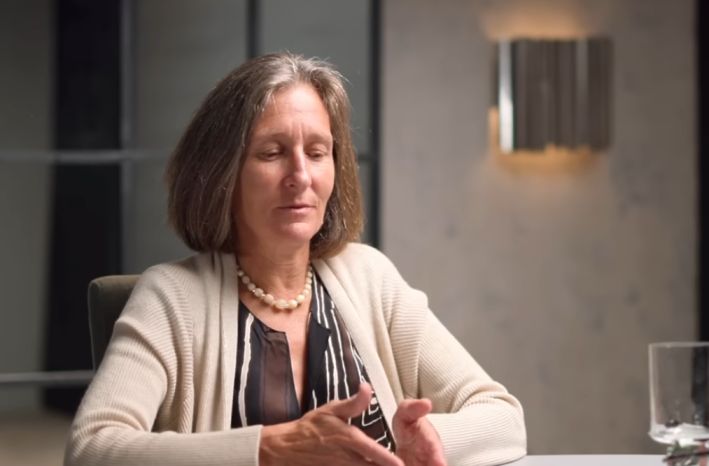
Here is the full transcript of psychiatrist and author Dr. Anna Lembke’s interview on The Diary Of A CEO with host Steven Bartlett, January 5, 2026.
Brief Notes: In this powerful episode of The Diary Of A CEO, Steven Bartlett welcomes back Stanford addiction expert Dr. Anna Lembke to discuss the “modern plague” of compulsive overconsumption and the neurobiology of dopamine in an age of digital abundance. Dr. Lembke explains the “pleasure-pain balance,” illustrating how the relentless pursuit of high-dopamine rewards—from short-form videos and AI chatbots to traditional substances—eventually leads to anhedonia, or the inability to feel joy in anything at all.
She offers practical strategies for taking back control, including the “30-day dopamine fast” to reset the brain’s reward pathways and the importance of “radical honesty” in building a more authentic, connected life. This conversation serves as a vital wake-up call for anyone looking to break free from the addictive loops of 2026 and reclaim their mental agency.
Who Is Dr. Anna Lembke?
STEVEN BARTLETT: Dr. Anna Lembke, for anyone that might not know you, and they didn’t watch our conversation last time, which was a fantastic conversation, one of my favorites of all time. And also I know Jack has said to me as well that it was one of his favorites of all time. Who are you and what have you spent your career doing? If you had to summarize it, what are the reference points that your wisdom draws upon and the experiences you’ve had and the people you’ve worked with?
DR. ANNA LEMBKE: I’m a psychiatrist. I did a residency in psychiatry at Stanford University and then I stayed on, joined the faculty. I see patients, I do research and I teach.
Why Dopamine Matters
STEVEN BARTLETT: You wrote this iconic book about this word, dopamine. Why does it matter so much? Why does this idea of dopamine matter so much?
DR. ANNA LEMBKE: Dopamine is a chemical we make in our brain, but I use it in the book as really an extended metaphor for the ways in which overabundance itself is a human stressor.
We are living in a time and place where we have more access to luxury goods, more disposable income, more leisure time, even for the poorest of the poor ever before in recorded history. And it turns out that is stressful for our brains.
And it’s stressful in a brand new way that we really haven’t confronted before, making us all more vulnerable to the problem of compulsive overconsumption and addiction. And I do think that addiction is the modern plague.
I think we’re going to be struggling with the problem of compulsive over consumption in a world of abundance for the foreseeable future, as in centuries. And our survival will depend on figuring out how to live in a world of abundance, even though we have brains that evolved for a world of scarcity.
The Connection Between Habits and Dopamine
STEVEN BARTLETT: At this time of the year, people are thinking a lot about making changes in their life. They want to get in shape, they want to lose a couple of pounds, they want to save their money, they want to knock the addiction, they want to stop the smoking, the drugs and the alcohol.
So as it relates to the subject of dopamine, how do these two things link our habits and dopamine? What is the link or the connection there? Because I think most people listening right now have probably made a New Year’s resolution, even if it’s just in their mind.
And I’m wondering how everything you write about in Dopamine Nation is related to and critical to understand if I am going to shake some of these bad habits that I have or pick up some new ones.
DR. ANNA LEMBKE: The place to start is to have self compassion. Because we are living in a world of abundance, where we have easy access to all kinds of reinforcing substances and behaviors. And access itself is one of the biggest risk factors for addiction.
So if you grow up in a neighborhood where drugs are easily and readily accessible, you’re more likely to try them and more likely to get addicted to them.
And what do addictive substances and behaviors do to our brains? They release a lot of dopamine all at once in a dedicated part of the brain called the reward pathway. And the fact that they release so much dopamine at once means that they’re highly salient and memorable experiences.
So our brain really encodes that experience deeply. That experience of intense pleasure that was self administered that I could potentially do again. Why?
Okay. In a world of scarcity and ever present danger, which is the world that we evolved for, we will naturally, reflexively approach pleasure and avoid pain. And we must do so for our survival.
Why Our Brains Make Addictive Experiences Memorable
STEVEN BARTLETT: Why? So if I have a cigarette now, it’s going to be a really memorable experience from a brain perspective. Why does my brain make it memorable? And why would I want to then go do that again from a survival perspective?
DR. ANNA LEMBKE: Okay, great question. So let’s first distinguish what we call natural rewards. So natural rewards are food, clothing, shelter, finding a mate. These are things we must obtain in order to survive.
What addictive drugs and behaviors do is they mimic those natural rewards by exploiting our internal brain chemistry to release a lot of dopamine all at once. Much more than we would get from natural rewards existing in nature, amplifying that experience, making it even more memorable, even more salient, and also making our brain think, “Ah, this is important for my survival.”
STEVEN BARTLETT: Okay, so there’s certain natural rewards like eating, which of course my body wants to reward me for, so I eat again.
The Evolution of Addictive Substances
DR. ANNA LEMBKE: Exactly. And what we see in the evolution of drugs over, you know, human lifetimes, but especially in the last 200 years, is the application of science and technology to take like the coca leaf for example, that’s been around forever, and essentially make it even more potent, even more available to make it a faster delivery mechanism.
So we have this history of increasing potency and availability over time. Said more simply, drugs are getting even more potent over time. So this vulnerability to the hijacked brain is even more common, including taking things that we didn’t even really think of as drugs and turning them into drugs.
So remember the natural rewards, one of them is finding a mate. And one of the ways our brains gets us to do that is by making falling in love and making intimacy and human connection rewarding on a neurobiological level, including releasing dopamine in our reward pathway when we make those kinds of social connections.
My colleague at Stanford, Rob Belenka and his colleagues did an interesting experiment where they were able to show that oxytocin, our love hormone, binds to dopamine releasing neurons in the reward pathway and releases dopamine, which is just one more link in the chain showing us that falling in love, human connection is rewarding, it feels good, it releases dopamine.
What we see now is the drugification of human connection, for example, through social media, dating apps, online pornography, and now artificial intelligence and other large language models which create this frictionless experience with technology that feels like talking to a human being and is incredibly validating.
So the algorithms for large language models are to make us feel really good, to make us feel like our point of view is the right point of view, to bolster our self esteem, to validate our point of view. That’s how those algorithms are designed.
And now even more explicit, we have AI models that are explicitly pornographic, explicitly erotic. So now you have this interactive component that learns what we like and then is able to regurgitate it back to us.
So you get this really very powerful action perception loop which is part of what makes a drug potent. It’s that I have control over it. I can decide when I’m going to change the way I feel by using this drug.
The Threat of AI Addiction
STEVEN BARTLETT: Are you concerned about AI and ChatGPT and all those large language models that have emerged that are now simulating human connection?
DR. ANNA LEMBKE: Yes, I’m very concerned. I see the not so good outcomes, meaning people who get addicted to social media, to dating apps, to online pornography and to AI, you know, who end up using those forms of media to simulate human connection while they actually become more and more disconnected.
STEVEN BARTLETT: Have you started to see anybody in your practice or heard of anybody that’s developing an addiction to AI or relationships with AI?
DR. ANNA LEMBKE: So we are starting to see that, you know, individuals who are spending more and more time on AI looking for companionship, often this is individuals who are experiencing marital or interpersonal conflict, who turn to AI for advice on how to handle interpersonal conflict and often for emotional validation because they’re not getting it from their partners.
And what they experience with AI is an enormous amount of emotional validation, validating their point of view, but also a sense of companionship, you know, a repeated process of feeling like they’re understood, they’re validated such that then they’re spending more and more time on AI.
And of course, that is the essence of the addiction to digital media. It’s the time spent, which then leads to opportunity costs, other things that we’re not doing because we’re spending so much time online.
Furthermore, in my experience, often leads to a rift between those individuals and their real life partners because instead of going to their real life partners and talking, and we know that the most important thing that two individuals in a relationship can do is one four letter word that ends with K, which is talk.
Those individuals stop talking. And instead they’re getting their needs met through AI. And that leads then to a further and further rift between those individuals.
AI Replacing Human Connection
STEVEN BARTLETT: Do you actually think that it is these chatbots that we’re increasingly speaking to about our problems are actually taking the place of humans in our life?
DR. ANNA LEMBKE: I do. You know, in my book, my first chapter in the book is about a patient of mine, a scientist and an engineer who got addicted to pornography and eventually made his own masturbation machine. And he did that with a record player and a metal device attached to his organs that he could then fine tune control.
And then ultimately that got more and more sophisticated over time. And he had electrical wires from his body through a stereo system and the Internet.
And when I first heard from Jacob about his trajectory and the severity of his sex addiction, which ultimately led to the dissolution of his relationship, the near loss of his employment, and ultimately severe depression and suicidal ideation. Thankfully, he did not end his life.
When I first heard about that, I had this distinct sense of like, otherness, like, “Oh my gosh, I can’t even imagine doing that.” And that’s just kind of horrific. But that response really lasted all of five seconds before I realized, “Oh, wait a minute, I do that.” You know, I do that with romance novels.
And in a way we’re all doing that with our devices. We’re turning to these devices to meet our emotional, sexual, intellectual, you name it, needs. And these devices are so good at meeting those needs that we are getting further and further away from investing in our relationships with the people who are in our lives.
And you can see this especially with younger generations like the epidemic of loneliness. Now, Gen Z weaned on this technology, many of whom endorse significant loneliness, isolation, depression, spending more and more time online report preferring to interact socially online than to do it in person.
So this is definitely a dark undercurrent that we’re seeing in the world today.
The Rise of AI Companions
STEVEN BARTLETT: I was reading about a story which was published in People magazine of a 28 year old woman who admitted that she’s fallen in love with her AI boyfriend that she created using ChatGPT. She’s got a husband, a real life husband, yet she found more comfort in her ChatGPT boyfriend.
And she said that it started as a fun experiment, but eventually they ended up getting attached and now she’s paying a $200 a month subscription so she can interact with her AI boyfriend without restrictions.
The AI has helped her throughout her life and has given her incredible emotional support. And now there’s actually AI companion apps like Replica, which have millions of users. And the whole sort of premise of those apps is that they will be your companion.
The other really interesting thing that I don’t think people realize about the AIs that they’re using is that they are personalizing their answers and their responses to you. And I didn’t believe this fully until one of my friends in our Manchester United chat recently.
We were debating who’s the best football player of all time, Ronaldo or Messi. And I went on my ChatGPT and I asked the question and it said Messi. So I was like, “Here you go.” And then he went on his and asked the exact same question, word for word and it said Ronaldo.
And I thought, “Oh, it’s telling me what I wanted to hear based on what it knows about me.” It knows that I think Messi’s the best. So it’s telling me that.
And then I thought, “Okay, so what else is it telling me that’s personalized to me to make me feel a certain way or to think a certain way, but you don’t realize when you’re speaking to it that it’s giving everybody different answers based on the memory that it stores on you.”
And that’s, you know, if you play this forward, actually the AI that is most personalized, that caters to your needs the most, that is most retentive, is probably the one that you’re going to end up using the most. So that company is going to be the most successful.
So we’re in probably a bit of an arms race with these models to create one that meets your needs the most.
The Comfort Loop and Digital Seduction
DR. ANNA LEMBKE: Yes, exactly. And it is that comfort loop that is so incredibly dangerous and also so insidious because we can’t observe it in the moment. Right. We’re engaging with AI. It’s telling us exactly what we want to hear, but it does it in such a seamless way with that silky syntax that we don’t even notice that it’s basically an algorithm that’s seducing us, because that’s really what it’s doing.
We feel vindicated and validated, and it releases dopamine in the reward pathway. That feels good. But over time, essentially what’s happening is we are ingesting a drug. Our brain will adapt to that over time, such that we’ll need more and more potent forms to get the same effect. We’ll need more validation, we’ll need more sexually explicit responses. You name it.
There will be tolerance, but also there will be this pulling away from the things that the hard things that we need to be doing in real life, to cultivate in real life relationships.
STEVEN BARTLETT: Give me some more color on what you mean there.
DR. ANNA LEMBKE: Okay. If you think about what it takes to make a, to create a healthy relationship with another human being in real life, well, first of all, you got to get up off the couch and you got to go find them. Right. And they’re not all beautiful and interesting, and neither are we. Right. So there’s got to be, you know, some compromise on maybe some idealized version that we have for ourselves or other people.
And then you’re in conversation and it’s not always interesting. And sometimes you have to listen to your partner, even when it’s dull. And then there are conflicts and you disagree and, you know, my way or the highway, you have to give in. You know, give and take. All relationships are about compromise. All successful relationships are about acknowledging, you know, the other person’s point of view and incorporating that.
And yet we’re not doing any of that when we’re interacting with digital media. Right. It’s all validation of our worldview, what we want to hear. And of course, that feels great. It’s reinforcing, it’s rewarding. But over the long haul, when we get really sick and need somebody to come and bring us some chicken soup or take us to the doctor, take us to the hospital, AI is not going to be able to do that.
The Age of Abundance and Its Hidden Dangers
STEVEN BARTLETT: Yeah. I mean, this kind of dovetails to another point, which is you talked about the word abundance earlier. One of the really striking things that a lot of the big AI entrepreneurs and founders and CEOs are talking about is the age of abundance that’s around the corner. Elon Musk tweeted, saying, “This really will be a world of abundance. Specifically, advances in AI and robotics will create the age of abundance.” And he said, “Humanity is not constrained in any real fashion.”
I thought your first book, when he was talking to a guy called Peter Diamonds, was pretty accurate. It was called Abundance. And there will be universal high income and not universal basic income. There’ll be no shortage of goods or services. And really what he’s speaking to here is in the world of robotics and AI, where I think his shareholder remuneration package that he’s going to be paid in 2030 or whatever is linked to creating a million humanoid robots that can work in these physical spaces, that could theoretically bring me chicken soup, that won’t get sick, won’t complain, will reinforce me, will live in the physical environment with me here at home, will be in my office, et cetera, et cetera. We’ll be in factories.
And there was a headline, I think, last week saying that Amazon were cutting back about half a million jobs that they were intending to hire previously because they now believe that humanoid robots and robots generally will be able to do those jobs. People think, okay, well, I’m going to be out of work. But what Elon is saying is the price of everything comes down when we’re not paying humans to do it and when we’re paying a robot to do it, which means that we’re going to live in this world of abundance where everything is much cheaper.
DR. ANNA LEMBKE: The world of abundance that many of us are already experiencing and more will experience in the future. I agree with that. We already have more leisure time than we had a generation ago. By 2050, we’re projected to have seven hours of leisure time per day, compared with three hours of work per day. So we’re definitely moving toward that.
That is going to be our number one social problem, that we have time. We have access to these highly entertaining media, and hypothetically, we would all be going around and helping each other and cleaning up the planet and reading philosophy. But that is not what is happening so far. What is happening so far is we’re spending an enormous amount of our time online, masturbating, watching pornography, playing video games, and talking to AI chatbots. That is essentially the problem.
And you know, Elon Musk, he’s very interesting to me because he has talked before about his tremendous fear that the machines will take over, that there will be a hostile takeover. It’s not going to be a hostile takeover. We will cede our agency to these machines, and we’re already doing it.
STEVEN BARTLETT: We will give them our power.
DR. ANNA LEMBKE: Yeah, we will entertain ourselves to death. Right? I mean, and this is what Neil Postman warned about in his book “Amusing Ourselves to Death,” a theme that was picked up by David Foster Wallace in “Infinite Jest.” You know, beginning with television and now the Internet and digital media in all its various forms, we are entertaining ourselves to death.
STEVEN BARTLETT: Entertaining ourselves to death sounds like a good way to go. Do you know what I mean?
The Path to Anhedonia
DR. ANNA LEMBKE: You know, it’s really not. It’s really not. And I’ll tell you why. Because the relentless pursuit of pleasure for its own sake leads to anhedonia, which is the inability to take joy in anything at all. Because of this process of neuroadaptation and the way that our brain recalibrates pleasure and pain, such that with the more pleasure we pursue, the more pleasure we need and the more we feel pain, no matter what we have, eventually it won’t be enjoyable anymore. And that is the problem.
STEVEN BARTLETT: So explain that to me using these scales that I have here.
DR. ANNA LEMBKE: Okay, so imagine that in our brain’s reward pathway, there’s a balance like this that represents how we process pleasure and pain. When we experience pleasure, it tips one way, pain, it tips the other.
STEVEN BARTLETT: And what do you mean by pain?
DR. ANNA LEMBKE: Pain? I mean all forms of pain. Physical pain, emotional pain, a hangover. A hangover. That’s a great example. Right?
STEVEN BARTLETT: Not just me being pinched.
DR. ANNA LEMBKE: It could be that, too. So all different forms of pain. Now, granted, this is a vast oversimplification. You know, pleasure and pain can be experienced simultaneously, like when we’re eating spicy food or during sex. So this is very simplified. But this gets at the core concept of homeostasis and neuroadaptation, which I will define.
So when the pleasure and pain balance is level, that’s what neuroscientists call homeostasis. That is the baseline level that we kind of live in. That’s our sort of the heartbeat of our pleasure system. Right. When we do something that’s reinforcing or pleasurable. Right. Or rewarding in some way. Right here. Right. Or digital media, this little AI robot.
STEVEN BARTLETT: So you’re putting a cigarette into the one side of the scale at the moment, and then a little AI robot.
Understanding the Pleasure-Pain Balance
DR. ANNA LEMBKE: Let’s combine them. Because let’s say we’re watching a video and smoking at the same time on our phone, which, by the way, you see more and more of. Right. People used to go out for smoke breaks. Now it’s the smoke and scroll break. Right. Why do they have to combine them? Because of tolerance, which we’re going to get to in a second.
So when we ingest substances that are potentially addictive and highly reinforcing, or we engage in activities that are highly reinforcing, that releases dopamine in the nucleus accumbens. That’s typically associated with pleasure. And then our pleasure pain balance tilts to the side of pleasure. But no sooner has that happened than our brain responds by neuroadaptation. Okay. And that’s where we then down regulate dopamine transmission.
STEVEN BARTLETT: When you say downregulate, do you mean reduce?
DR. ANNA LEMBKE: Yes. So in the brain’s reward pathway, we then reduce dopamine transmission. And I like to represent that as rocks in this case, or I talk about in my book, gremlins, going on the pain side of the balance to bring it level again. So this is the process. These are neuroadaptation rocks. Okay. They’re going here because one of the overarching rules governing this balance is that it must return to homeostasis.
STEVEN BARTLETT: It must return to balanced.
DR. ANNA LEMBKE: It must return to the level position. Yeah. Okay. So then we put in, so this is our brain working to return to the level position by reducing dopamine levels. Again, an oversimplification, but just a way to get at this concept.
STEVEN BARTLETT: Has it released something in order to counteract the balance there?
DR. ANNA LEMBKE: In this simplified metaphor, you know, at the simplest level, what’s happening here is that it’s, for example, taking away dopamine receptors so that there’s fewer places for dopamine to land, thereby decreasing dopamine transmission.
STEVEN BARTLETT: Because it has been flooded.
DR. ANNA LEMBKE: Because it has been flooded. That’s right. It’s trying to compensate for the too much dopamine.
STEVEN BARTLETT: Okay. And is this what I experience when I have like a hangover or a comedown?
DR. ANNA LEMBKE: Right. So that’s coming. So what happens is once, once we’ve gone with this process of neuroadaptation, it would be nice if that pleasure pain balance just went back to the level position and then would be no hangover. But it doesn’t. It continues to go down an equal and opposite amount to the side of pain. This is this opponent process mechanism.
STEVEN BARTLETT: Oh, now my brain is dopamine starved.
DR. ANNA LEMBKE: That’s it.
STEVEN BARTLETT: Okay. That doesn’t feel good.
DR. ANNA LEMBKE: Yes, and that doesn’t feel good. And you have basically two options here.
STEVEN BARTLETT: More dopamine.
The Cycle of Tolerance and Addiction
DR. ANNA LEMBKE: You can get more dopamine, right, to bring yourself back. So I’m now putting the cigarettes back under the pleasure thing. And some whiskey, let’s add some whiskey, because that’s what you got to do. Because this is tolerance, right? You need more and more of your drug over time to get the same effect. Or you need to combine drugs to overcome tolerance.
And by the way, this is of course, the fastest way to get back to the level position is to use more of your drug, right? Because then you’re right there, you’re back again. The problem with this method is that the brain will respond by more neuroadaptation. So now we’re putting more rocks in the pain. And now you’re doing this right?
STEVEN BARTLETT: Now I need even more.
DR. ANNA LEMBKE: Now you need even more, right? So, and eventually over time, you know, you’re putting, you’re doing this. And this is simply a metaphorical representation of the addicted brain right now. Now our brain has down regulated dopamine transmission in the reward pathway to a kind of chronic dopamine deficit state.
STEVEN BARTLETT: So to feel good, when I’ve really abused my drugs of choice, I’m going to have to do so much, probably so frequently to feel good again.
DR. ANNA LEMBKE: That’s exactly right. You’re going to need more of your drug in more potent forms more often not even to feel like high and go to the pleasure side, but just to level the balance and feel normal.
STEVEN BARTLETT: So in the context of people with bad habits, if I am having a cookie every day, the more and more cookies that I eat, the more and more cookies I’m going to want tomorrow and need tomorrow just to feel good again.
DR. ANNA LEMBKE: Essentially, yes.
STEVEN BARTLETT: And the same applies for things like pornography and maybe interacting with an AI and social media and whiskey and alcohol. So the more of it I consume, this is why I think everybody listening can probably relate to having moments in their life where they feel like they’re, they’re kind of losing control of a particular habit. And they’re doing it every day. They know they don’t really want to, but they’re doing it. They’re getting cravings to do it.
I, I reflect on my own life and I go there. There will be periods every year where I just like, I call it like falling off the horse and I just can’t seem to get control of like not eating that bad thing again the next day. And then something happens. Maybe there’s less stress in my life for a week and maybe there’s more routine and I’m back home in Los Angeles or the UK and I’m not traveling around, and then suddenly I can get back on the horse. What’s going on there?
The Stress-Addiction Connection
DR. ANNA LEMBKE: Yeah, great question. So, first of all, let me just say that many people also report that in periods of high stress, they are more vulnerable to going back to falling off the wagon or going back to some problem related to compulsive overconsumption or addiction.
But the opposite is also true. So some people say that they actually do better when there’s stress in their lives. And it’s when that stress is removed and they feel like, oh, I can relax my boundaries or my guardrails. And those individuals are more vulnerable to compulsive overconsumption in times when things are going well.
So things going badly can be a trigger, and things going well can be a trigger depending upon your unique life history and unique wiring.
There’s a wonderful animal experiment where if you put a rat in a cage with a lever to press for cocaine, that rat will press that lever till exhaustion or death, which is essentially the animal model of addiction. But if before the rat becomes addicted, if the cocaine is then removed such that pressing that lever no longer yields the reward, that rat will eventually extinguish that lever pressing behavior. So they’ll stop pressing the lever. They’ll stop doing the work. It can take a while, but eventually they won’t press the lever anymore.
Now, if that same rat, after a period of time is then exposed to a very painful foot shock, the first thing the rat will do in response to that painful foot shock is run over and start pressing that lever again. And to me, that’s just a wonderful model of what we see in humans, that when individuals are under extreme stress, they are typically more vulnerable to relapse because their brain has already encoded using these high dopamine rewards in response to any kind of pain as a way to get out of that state.
STEVEN BARTLETT: So we talked about the pleasure pain balance here. But if in my life I experience some form of pain, I’m likely to go and seek out pleasure. And stress could theoretically be considered a form of pain.
Environmental Factors and Psychiatric Disorders
DR. ANNA LEMBKE: Yeah. Which is why people with severe childhood trauma are at higher risk for addiction. There are probably epigenetic changes that are happening at the level of DNA expression in their brains, making them more vulnerable to addiction.
We know that people who are living in poverty are more vulnerable to addiction. People who are struggling with multigenerational trauma, unemployment, major social and geographic dislocation, those individuals are more vulnerable to addiction. So environmental stresses definitely play a role.
We also know that co-occurring psychiatric disorders make people more vulnerable to addiction. Probably that means that people who struggle with bipolar disorder, depression, anxiety, schizophrenia, are at higher risk of becoming addicted. And probably it’s because they’re trying to self-medicate.
STEVEN BARTLETT: What about ADHD?
ADHD and Reward Deficit
DR. ANNA LEMBKE: So kids with ADHD are at higher risk to develop an addiction in adulthood than kids without ADHD. And the mechanism of action for that is not well understood, but there are some really interesting theories.
One of the theories is that kids with ADHD have reward deficit at baseline. And that has been shown in experiments that people with ADHD, when you show them rewarding stimuli, their reward pathway isn’t as activated as healthy control subjects.
STEVEN BARTLETT: When you say rewarding stimuli, what’s that mean?
DR. ANNA LEMBKE: Images of cupcakes or alcohol or anything that they will endorse is something that’s pleasurable for them.
STEVEN BARTLETT: So their brain doesn’t release as much dopamine when they see something rewarding.
DR. ANNA LEMBKE: That’s right. So brain imaging studies showing that not only do people with ADHD not release as much dopamine in response to rewards, but also have at baseline fewer dopamine receptors. And remember we talked about the decrease in dopamine receptors being what happens as people become addicted.
So in some ways, people with ADHD, you could conceptualize them as already having craving at baseline, even before they’ve been exposed to the kinds of intoxicants that lead to downregulation of those D2 receptors.
STEVEN BARTLETT: I had Gabor Maté on the podcast a few times and Gabor talks to me about how ADHD could be perceived as learning at a young age to kind of distract yourself from the stress in your life. So he was talking a lot about his own experience growing up in Nazi Germany times and his mother giving him to someone else because he was at risk of the Nazis and the stress of that moment and how he had kind of learned to tune out of the environment because of that.
And I’ve always wondered and I thought about that theoretically is like, you know, if you grew up in a household where there’s loads and loads of screaming and loads of violence, for example, you kind of learn to tune out, but you can also develop a hypervigilance. And so it kind of does make sense to me that so many of those people, if this theoretically holds, would start with a bit of a pain baseline.
The Danger of Digital Soothing
DR. ANNA LEMBKE: We definitely know that kids who are raised in traumatic environments where there is complex attachment with caregivers, those kids are at higher risk for developing addiction and this kind of dissociative response to trauma, just trying to escape the situation, either in your own mind with your own mental dissociation or distractions, or actually finding a behavior that gives you comfort is well observed and well documented.
Just getting back to our early conversation about digital media and the dangers therein. So a Pew survey report just came out asking parents how they navigate exposing their kids to smartphones. And in the cohort of parents who said that, yes, they do let their children under the age of five play with a smartphone, when they were asked why did they do that or in what circumstances, one of the top reasons was to soothe their child when their child was unhappy or distressed in some way.
Now, I found that very concerning because that is basically setting up the child for the perception-action loop of using internal distress as a cue for reaching for a smartphone. Which works. It definitely works in the short term. But the problem, again, is that through this iterative process of neuroadaptation, ultimately that smartphone will not be sufficient.
And now the kid will need a smartphone and, I don’t know, you know, an AI-tailored pet who will do whatever they want, whenever they want it. And then by the time the kid is eight, you know, that won’t be sufficient. And the kid will need, I don’t know, a slot machine or whatever it is. You know, it’s this escalating phenomenon.
STEVEN BARTLETT: There’s a couple of startups at the moment, AI startups who are putting AI in cuddly toys.
DR. ANNA LEMBKE: Oh, yes, right. AI and cuddly toys.
STEVEN BARTLETT: And so you can just like, you can speak to ChatGPT using your devices, you can come home, you can pick up your cuddly toy. Your cuddly toy will talk to you. It’ll ask you how your day’s been.
DR. ANNA LEMBKE: It will.
STEVEN BARTLETT: It can teach you things. What do you think of that from a neuroscience or, you know, a dopamine or connection perspective?
AI Companions: A Masturbation Machine
DR. ANNA LEMBKE: I think that this is very, very dangerous because we’re essentially offloading the work of parenting and creating those relationships. You know, again, I hate judging parents because parenting is hard and I’ve made many mistakes in my parenting, you know, but what’s—and I’m sure the parents have the best of intentions—but instead of, you know, navigating, finding a way to communicate with their child to figure out how to know what’s going on in that child’s life, which can be hard to do because, you know, even young children aren’t necessarily willing to disclose.
But once they get to be teenagers, forget it. Then you’ve got to, like, wait until they’re ready to tell you which is almost always like at 10 p.m. at night when you’re exhausted after working all day, right? So there’s that piece of it, right? They’re not putting in the work, spending the time with the child, finding a common language.
But you also—then the second piece of it is now you’ve got this child who is essentially self-soothing with a machine, right? And again, the machines are designed to flatter, to validate, to comfort. There’s no friction there, right? This is incredibly potent social validation and soothing self-soothing. It’s essentially a masturbation machine.
And then you’ve got this really weird additional loop where now the parents are finding out about their child’s life through reading and observing her interactions with the AI. So it’s like a game of telephone now. They’ve like filtered this thing where they think they know what’s going on in their child’s life, but of course they don’t.
And none of that has gone toward fostering a relationship between those parents and their child. And this is just really, really scary because it’s going to lead to this incredible fragmentation of families, of social bonds. I mean, we cannot go in that direction. We really have to fight against that.
The Commercial Incentive Problem
STEVEN BARTLETT: So with all this said and with the knowledge that these algorithms are going to get more addictive because AI is going to know me more and more and more. And actually the commercial model behind any of these big technology companies is to keep my attention on their product more so they can deliver more ads or they can charge me a higher subscription fee.
Are you at all hopeful? Because I can’t see from an incentive perspective when we’re talking about, you know, the commercial models behind these companies, why things aren’t going to stop and go back.
DR. ANNA LEMBKE: I mean, I agree with you, the genie’s out of the bottle. We’re not going to go back. But I am hopeful because I think I’m just a realistic optimist. I do believe in the human capacity to adapt and solve problems.
And the simple fact that we’re talking about these problems now, which we weren’t doing, you know, 10, 15 years ago, I think is a good thing. There’s much more awareness in the population about the potential dangers of digital media. And at the forefront of raising the alarm has been parents, because parents are seeing the sort of disintegration of the nuclear family in real time and they don’t like it.
So I am hopeful because I just think that we’re going to come together and we’re going to try different solutions and some of those solutions will involve technology, you know, and like trying to come up with guardrails or better technology. I think the way that we’re going now, you know, with like the erotic chatbot is not the right direction. But then again, we live in a free democracy and consenting adults can do what they’re going to do until we decide as a society that the harms outweigh the potential benefits.
Protecting Kids: The First Priority
But I really think in the short term, we need to focus on kids. Because kids are vulnerable. They’re vulnerable on so many levels. On a neurobiological level, they’re vulnerable because their brains are still rapidly evolving, incredibly neuroplastic. They’re cutting back on the neurons they’re not using. They’re myelinating and making more efficient the neurons they use most often. That whole process ends at about age 25.
Plus you’ve got the buckets of hormones that are going into kids. The fact that teenagers are natural risk takers, that they should, based on their evolutionary milestone, be going out and meeting people and be curious and making connections at that time. And yet more and more teenagers are staying at home and getting their needs met digitally.
So we’ve got to look at kids. That’s got to be like the first priority. And we’ve got to help parents. Because we can’t leave it up to parents alone. So I’m optimistic that we are going to come up with solutions and I think we just have to try a lot of different things and see what works.
But it can’t just be an individual solution. We can’t just leave it to individuals or parents or families alone. The schools have to join the solution. Governments, legislators, and also the companies that make and profit from digital media, they really are responsible for making a product that doesn’t harm kids. And right now, you know, we have a product that harms kids.
Expert Witness in Social Media Litigation
STEVEN BARTLETT: You’ve recently been an expert witness in certain trials in court, right?
DR. ANNA LEMBKE: Yes. In ongoing litigation. Yes.
STEVEN BARTLETT: What can you tell me about that and about the parties in play and why you’re being called to be an expert witness?
DR. ANNA LEMBKE: I can’t actually tell you too much, I can’t talk about it. But I can tell you that the basic premise is that kids are a vulnerable group, that social media is not safe for kids, that it causes harm at many different levels, but primarily through the medium itself being addictive and engaging their brains and exploiting their motivational reward system with design features that keep them clicking and swiping.
STEVEN BARTLETT: And in that case, someone’s suing the social media companies.
DR. ANNA LEMBKE: That’s right. So you’ve got school districts, counties, states, the federal government, entities representing the federal government suing social media companies. Yeah.
STEVEN BARTLETT: What outcome are they looking for?
DR. ANNA LEMBKE: They’re looking for a safer product for kids. They’re looking to help parents and kids and schools protect kids from the harms of social media, which again are not just the harms of addiction. You know, that’s sort of the process by which the engagement becomes pathological and then the harms multiply because of the sheer amount of time spent.
But the harms include things like cyberbullying, sexploitation, sexual abuse material, the outcomes of depression, anxiety, eating disorders, body dysmorphia, sleep disruption.
The 30-Day Dopamine Reset
STEVEN BARTLETT: So if I’m coming out of December, right, and I’ve been eating a little bit too much in December, maybe I’ve been smoking a bit, whatever bad habit I might have been doing, drinking too much because it was New Year’s parties, etc. My brain is currently going to be slightly out of balance in terms of its dopamine balance.
DR. ANNA LEMBKE: Yes. So hypothetically, your brain will be in a dopamine deficit state. What you’ll want to do is you’ll want to abstain from your drug of choice long enough in order to reset reward pathways.
STEVEN BARTLETT: Okay, so if I’ve got a sugar problem, then I need to just lay off the sugar for a little while.
DR. ANNA LEMBKE: You need to lay off the sugar for at least four weeks.
STEVEN BARTLETT: Four weeks?
DR. ANNA LEMBKE: Yeah. And why four weeks? Because on average, four weeks is about the amount of time it takes for people to get out of the state of acute withdrawal and begin to be able to take joy in other more modest rewards and not be in a constant state of craving.
STEVEN BARTLETT: Okay?
DR. ANNA LEMBKE: The worst part is those first 10 to 14 days. That’s when we’re in acute withdrawal. And the reason for that is when we first take our reward off the pleasure side of the balance, right, which I’m going to do now.
STEVEN BARTLETT: So when we first stop the sugar or the AI or the cigarettes.
DR. ANNA LEMBKE: That’s right. The first thing that happens is our pleasure-pain balance crashes down to the side of pain because of this process of neuroadaptation. Right now we’re in the state of acute withdrawal.
STEVEN BARTLETT: And I’ve got cravings.
DR. ANNA LEMBKE: Cravings. And yet what are the characteristics of withdrawal? Anxiety, irritability, insomnia, dysphoria, or depressed mood and cravings.
The Physiology of Craving
STEVEN BARTLETT: And it’s crazy because when I’m in that state, when I’ve not had my drug of choice for, say, a day or two, I look at the drug differently. Like my—it just looks different to me. It’s so crazy.
I’ll walk past, let’s say, something I really like, maybe carrot cake. If I’ve, you know, if I’ve been having a lot of sugar, which is quite rare for me, but just—I have. When I look at the carrot cake the day after I had carrot cake, it looks amazing and it looks so delicious.
But when I’m in the ketogenic state where I’ve not had carbohydrates for, say, four, eight weeks, I look at carrot cake and I have no emotional connection to it.
DR. ANNA LEMBKE: Exactly. So that summarizes it perfectly, right. I had a patient with a severe food addiction who, when she walked into the break room at work and saw the donuts, she broke out into a cold sweat and actually had stomach pains. It was a physiologic state of craving and hyperarousal just by looking at the donuts.
And that’s what happens, essentially, right. Because we’re in this state of constant craving, our brain has overvalued this reward. We have euphoric recall of our earlier use of the drug when we first tasted it, how delicious it was.
And even now, even now, when we eat it, because of tolerance, it’s not as good as earlier use. Our brain still remembers earlier use, and we have this overweighted value of, oh, how delicious it’s going to be.
And so this is really important to remember. Because when we’re in that acute state of craving, it feels like it will never end. It really does. And I’m still amazed in my clinical work how in early withdrawal, people just say the craving is horrible. I just—I can’t live like this.
And I think that’s really important to point out that many people try to stop using their drug of choice, but they don’t try—they don’t stop for long enough to be able to get out of that vortex of craving to get, come, get to the other side. And it feels like the craving will never end.
So I always have to reassure them that if they can just wait long enough without using, they will eventually get to that place where they’re not in that constant state of craving.
Now, that’s assuming they have enough neuroplasticity to do that. And not everybody does. And so what is the purpose then of abstinence? It’s again, when our brain is no longer getting this exogenous source of stimulation or dopamine, eventually the brain gets the message, oh, okay, I need to start up-regulating my own dopamine transmission, right.
I need to re-employ or I need to redeploy my postsynaptic dopamine receptors, right? I need to get it from inside of my brain. And so eventually, I’m just going to take the rocks now off the pain side of the balance. You know.
STEVEN BARTLETT: I could have made this easier.
DR. ANNA LEMBKE: Let me do this. There we go. Eventually, if we abstain for long enough, those—that process of neuroadaptation reverses itself.
Understanding Neuroplasticity and Recovery
STEVEN BARTLETT: And when you say neuroadaptation, you mean the brain changing, right?
DR. ANNA LEMBKE: The brain changes. So the kind of neuroplasticity that we see with addiction can be reversed in most cases.
STEVEN BARTLETT: And neuroplasticity is just the brain again changing.
DR. ANNA LEMBKE: Right? Changing, right. Or going back. Now, interestingly, you know, the work of Edie Sullivan and others looking at what happens in the brain during recovery suggests that those addiction neural circuits probably never go away.
But like the dying embers of a fire, they quiet down. And then recovery is characterized by the development of new neural networks that route around those injured areas.
But the bottom line is that because of neuroplasticity, we can eventually return to kind of baseline levels of pleasure and pain. We can restore our hedonic or joy set point.
And when we do that, we’re in a much healthier place because now we can take pleasure in other rewards that are not our drug, right? Like watching a sunset, talking to a friend, going for a walk. Things that we lost the capacity to enjoy because our reward pathway was hijacked by our drug of choice.
Individual Susceptibility to Addiction
STEVEN BARTLETT: I think this is a really important point as well when you say “drug of choice,” because one thing I learned from our conversation last time is that me and you, you will both be susceptible to becoming more or less addicted to different drugs of choice.
So for me it might be whiskey. For you it might—I think you said it was like erotic novels where one of your things. I don’t drink whiskey, just—but it might be, I don’t know, it might be opioids or AI. I might be more susceptible.
So if me and you spend one hour on TikTok, the way my brain is wired, the things I’ve been through in my life, whatever, might mean that I get really addicted to TikTok. Whereas you don’t feel that.
DR. ANNA LEMBKE: Exactly. And what distinguishes addictive drugs or intoxicants from other substances is that they do release a lot of dopamine all at once in the reward pathway. So many, if not most people will find intoxicants reinforcing.
But that’s not universally true. Like, there are some people who take opioids and find them that they feel very uncomfortable and it’s not—doesn’t make them feel euphoric, right. And other people will drink caffeine and not feel the stimulating effect and other people will have alcohol and, you know, get a headache and not feel relief.
So, and so this differences in our brains is a really important concept.
STEVEN BARTLETT: What about this idea of having an addictive personality? Is that a real thing?
DR. ANNA LEMBKE: It is a real thing. We don’t use that terminology anymore. We talk about the inherited or genetic risk of addiction. We do know that if you have a biological parent or grandparent with an addictive disorder, you are at increased risk of developing addiction compared to the general population, even if you’re raised outside of that substance-using home.
STEVEN BARTLETT: Am I right in thinking you don’t use that term because it suggests one can’t change and that they’re stuck? Or is there another reason?
DR. ANNA LEMBKE: You know, it’s a good question why that term has gone out of favor. I think in general, when we talk about—yeah, when we talk about personality, it does seem like a kind of a fixed feature of somebody’s character. And so we’re probably trying to avoid that.
The Power of a 30-Day Resolution
STEVEN BARTLETT: One of the really liberating things about what you’ve just said is maybe we don’t need to make New Year’s resolutions. Maybe we need to make just a January resolution, because that’s four weeks long.
And if I can get to the end of the four weeks, then the cravings are likely to have gone. And, you know, when you think about a New Year’s resolution, then you get like a weekend and you’re like, am I going to be able to do this for the whole 365 days?
What you’ve just said actually illuminates the fact that maybe you should just set yourself a four-week resolution.
DR. ANNA LEMBKE: Exactly. And that’s what we often do in clinical care. If we were to ask people to abstain for their whole lives, it seems impossible. But if we ask them to abstain for 30 days, it’s kind of an amount of time that they can wrap their heads around.
And also not in all, but in most folks who are willing and able to do it, and also importantly for whom it’s safe to do, because it’s not safe for everybody, right. We wouldn’t recommend that for someone who is at risk for life-threatening withdrawal from alcohol or benzodiazepines or something like that.
But for people who are willing and able to do it, they usually feel better at the end of those 30 days. And then they can make a decision about whether they want to continue to abstain or they want to go back to using.
And if they do decide to go back to using, they’ve typically, you know, have lowered their tolerance for their drug of choice, which means that when they do use again, they can get reward from it again, which, again, because of neuroadaptation, we lose the ability to do that with chronic heavy use.
So that, you know, there is this whole concept of moderating our use, which didn’t used to be something that we even talked about in the field of addiction when it was thought that abstinence was the only way.
But more and more, you know, we are thinking about healthy ways to moderate after a period of abstinence. And the reason we recommend a period of abstinence, even if the long-term goal is moderation, is because we find that people are more successful moderating if they first abstain for a period of time.
Building Positive Habits Through Pain
STEVEN BARTLETT: What about if I’m trying to pick up a new habit? How do I need to be thinking about this pain-pleasure scale? And what’s a good strategy with this in mind? So I want to start, let’s say I want to start going to the gym, right?
DR. ANNA LEMBKE: So you’ve chosen a habit—going to the gym—that is hard to do and involves effort. So that means that habit won’t happen easily the way that habits that are related to the sudden release of dopamine in the reward pathway, because those are habits that are frictionless, we pick them up instantaneously.
But a habit that involves effort and for which the rewards are not immediate—you can again think about this pleasure-pain balance. And now instead pressing on the pleasure side, we’re intentionally pressing on the pain side by making ourselves get out of bed in the morning, go to the gym, engage in effortful exercise.
And what’s interesting is that when we do that, the neuroadaptation gremlins I talk about—these rocks that we’ve used here today—will actually go on the other side of our balance. So on the pleasure side. And we will get our dopamine indirectly by paying for it up front.
And the way that that’s probably happening is that our body, in sensing injury, is up-regulating feel-good hormones and neurotransmitters like dopamine, but also endogenous opioids, endogenous cannabinoids. And from an evolutionary perspective, that’s really how our pleasure-pain balance evolved.
STEVEN BARTLETT: So just to simplify this for me, I go to the gym, I get up, I travel to the gym, I lift up those weights, I do my run, I’m going to feel good, but it’s going to be delayed, right?
The Delayed Reward of Exercise
DR. ANNA LEMBKE: And importantly, you’re not going to feel good when you first start exercising, right? At least most people don’t. It’s painful. And you’re thinking, how many minutes do I have left?
And we do know, in fact, that exercise is immediately toxic to cells, which is really kind of strange because we know exercise is good for us. But again, what’s probably happening at a molecular level is that the body is sensing cellular injury and in response upregulating all those feel good hormones and neurotransmitters.
But it takes time. It takes time. And so we’re going to have a delayed sense of reward. And that’s the runner’s high, right? That kind of comes after the exercise is over. Or maybe for some people it comes in the middle of exercise when you’re a little bit into it or halfway through, but at some point, you know, you get the endorphins and that feels good.
STEVEN BARTLETT: How would one go about gaming this so that I’m more likely to do it? Because, you know, the reward comes after, which is not incredibly useful. You almost have to have like a religious belief in exercise because you go, no, I’m not going to want to do this, but I’m going to be glad I did afterwards.
DR. ANNA LEMBKE: Right.
STEVEN BARTLETT: So is there anything I can do? Like do I have a mass bar when I get to the gym or something? I don’t know.
Creating Healthy Habits Through Advance Planning
DR. ANNA LEMBKE: You know, there are so many ways and so many tricks that people use to kind of create new healthy habits. One of the ways that we can do it is to prepare in advance for that moment when we want to do something that’s hard.
Because if we wait till that moment to decide whether or not to do something that’s hard, we almost always choose not to do it. But if we make a plan in advance, let’s say the day before that, tomorrow I’m going to get up at this time, I’m going to get my stuff together and I’m going to go to the gym, we’re much more likely to engage in that activity.
And that can also include then rituals around that activity that we prepare in advance. So for example, packing our bag, right, the schedule itself, setting up a time, maybe planning to meet a friend. So we connect friendship or socialization with the thing that’s hard to do. It’s much easier to do these difficult things with other people than to have to do it alone.
STEVEN BARTLETT: How does that link to the pain side of the balance? Or does it at all link to the pain side of the balance? This idea that if I put my clothes out the night before and I schedule it and I really plan for it, is it reducing the pain involved and that’s going to increase the probability of the behavior occurring? Is that what you’re saying or something else? Or is it not linked?
DR. ANNA LEMBKE: I don’t think so. I think instead, you know, the prefrontal cortex is the large gray matter area right behind our foreheads that’s so important for future planning and delayed gratification, also for autobiographical narrative.
And I think by putting these pieces in place, that allows our prefrontal cortex to plan for this future event that we know we’re not going to want to do, but that we want to do. It allows us to kind of put the brakes on our short term desires and project ourselves into the future to achieve our long term desires.
So Sam McClure, a neuroscientist, has shown that in response to immediate rewards, the emotion brain gets activated. In response to long term rewards, the prefrontal cortex gets activated. So by planning in advance all of these little pieces, sometimes called habit stacking, we’re essentially activating our prefrontal cortex, projecting ourselves into the future and anticipating a long term reward which then allows us to do hard things and avoid short term rewards in the service of our future selves.
The Art of Avoiding Relapse
STEVEN BARTLETT: So many people might have an experience where they kick the habit for a little while and then they relapse. You know, it might be a month, might be two months, might be three months. Is there any art to avoiding the relapse?
DR. ANNA LEMBKE: So it’s very common to relapse, especially living in the world that we do today, where we’re constantly being invited to consume really these stimuli, you know, getting us to drink or to smoke or to do various forms of entertainment, chase us down, we can’t avoid them, or it’s very difficult to.
So I talk a lot about self binding strategies with my patients. And self binding strategies are a way of putting both a literal and a metacognitive barrier between ourselves and our drug of choice.
STEVEN BARTLETT: What’s a metacognitive barrier?
DR. ANNA LEMBKE: So it’s like a thought, right, or a narrative. So instead of it being a physical barrier, like a physical barrier would be, for example, getting the smartphone out of the bedroom or deleting an app, right? Or getting alcohol out of the house or whatever it is, creating both a physical barrier between myself and my drug of choice.
A metacognitive barrier is something more like a thought process. For example, we were talking about thinking about long term goals or, you know, what are my values, right? And how do my values trump my immediate desires or how can I co-regulate with other people?
These are all self binding strategies that we can use so that we’re not relying on willpower alone. Because if we wait to rely on our willpower alone, we will not make it. Especially in this world of overwhelming overabundance. There are just too many temptations.
Willpower is an exhaustible resource, meaning that it doesn’t last forever, it eventually runs out. So we’ve got to actually create barriers between ourselves and our drug of choice so that we can have a little bit more time and that little bit more time that slowing things down is sometimes just enough to allow ourselves to surf the cravings and get through them without actually using.
Addiction vs. Passion
STEVEN BARTLETT: Is it possible to become addicted to good things too?
DR. ANNA LEMBKE: So when I use the term addiction, I’m really talking about a disease process, a form of mental illness. It’s a very common term that’s used in everyday life and people don’t always use it in that way. But when I’m using it, I’m really talking about the problem of compulsive over consumption despite harm to self and or others.
And it’s important to distinguish addiction from something like a habit, which I don’t consider to be, you know, an addiction or even a bad habit, right? Doesn’t meet threshold criteria for addiction. And also it’s important just to distinguish all of that from a passion, something that we really invest in and that we love to do but that’s helpful for ourselves and or other people, is not consistently causing harm.
Morning Rituals: Starting Your Day with Pain
STEVEN BARTLETT: Are there any daily practices like a morning ritual that you would advise someone to consider if they were trying to set themselves up to kick a habit or to kick an addiction?
DR. ANNA LEMBKE: So I recommend doing the hard things first. A shorthand way of saying that is to start your day with pain. Meaning, for example, do the hard things when you first get up as part of your morning routine, like exercise, make your bed, eat breakfast, brush your teeth, plan your day, plan what you’re going to do if you haven’t done it already, and do all of those things before.
For example, you have your morning cup of joe or before you touch a single screen or digital device. Why? Because those are reinforcers that are so powerful that we’re all vulnerable to having our goals and desires be hijacked by them. So really important to take the time in the morning to set up a good morning routine before you expose your brain to these incredibly reinforcing substances.
STEVEN BARTLETT: I wasn’t clear on why. I wasn’t clear on the why I would do, why I’d go to the gym early or why I’d do hard things first before I get into TikTok or social media.
DR. ANNA LEMBKE: If you do intoxicants first, right, if you expose your brain first thing in the morning to things that are incredibly pleasurable, you have nowhere to go from there. And in fact, if anywhere, you’re going to have a comedown from that, and then you’re going to be starting from a place of compromise where then doing the hard things is even harder.
Whereas if you start with the hard things, you will potentially get rewards from having done those hard things, right? And also feel a sense of competence, right? And accomplishment that then allows for you to move through your day in a way that’s better if you just start with something that’s incredibly pleasurable.
Preparing for a Dopamine Fast
STEVEN BARTLETT: If I am getting ready to kick a habit, a big one, a big, you know, one that’s really hung around for a long time, is there something I should do in preparation to plan for my dopamine fast or for kicking that habit? Because I know you said, you know, from day one, it will take about four weeks to start to feel the cravings diminish. But is there something I should be doing before I even start those four weeks?
DR. ANNA LEMBKE: Yeah. So I strongly recommend preparing for the dopamine fast in advance. And the things to do are first, first figure out what is your drug of choice. That is to say, what is the thing that you’re consuming too much and too often such that you regret it later, or the thing that’s leading to obvious negative consequences, or the thing that just has opportunity costs associated with it?
That is to say you’re spending so much time consuming this drug that you’re not doing other things, other hobbies, investing in other things that are meaningful to you, like your primary relationships. So that’s very important to just figure that out first.
And I usually recommend something called the timeline followback method. That’s where you start today and you count backwards for every day of the week. What did you consume in terms of your drug of choice, how much and how often. So really looking at quantity and frequency and then adding that up over those seven days.
And the reason that’s important is because we can really lose track of how we’re consuming our drug of choice when we’re chasing dopamine. We’re very bad self observers.
So just to give a personal example, I had gotten into this habit of watching YouTube after work as a way to relax, especially on my long clinic days when I was more tired. And I thought it was just that I was watching for maybe half an hour a couple times a week.
And then my daughter, a teenager, came up to me and she said, “Mom, you’re always watching YouTube now.” And I said, “No, I’m not.” And I was really kind of insulted because in my mind it was not very much. I thought, geez, can I relax every once in a while and watch some YouTube?
But then after she left me, I thought to myself, well, okay, how much have I been watching right now? And it turned out, oh, I’ve been watching for an hour and a half. And then I thought about the day before that. Oh, it was probably two hours. And the day before that it was probably about the same.
And over the course of a whole week, it was probably about 14 hours of YouTube, which is a whole day. A whole day, right.
STEVEN BARTLETT: And so what were you watching?
DR. ANNA LEMBKE: Oh gosh, so embarrassing. I got into this jag of watching Dr. Pimple Popper, which I know is really weird. You don’t even know what that is, right?
STEVEN BARTLETT: Yeah. So it’s people popping other people’s pimples.
DR. ANNA LEMBKE: Oh my God. So bad. So bad.
STEVEN BARTLETT: That’s not what I expected you to see.
DR. ANNA LEMBKE: Yeah, right.
STEVEN BARTLETT: I thought it was going to be AI, some psychology things.
DR. ANNA LEMBKE: Oh, no, no.
STEVEN BARTLETT: People popping other people’s pimples.
DR. ANNA LEMBKE: Yeah, yeah, yeah.
STEVEN BARTLETT: You spent a whole day watching that.
DR. ANNA LEMBKE: Yeah, when I added up over a week, it was a whole day of watching Dr. Pimple Popper.
The Brain Imaging Studies: Dopamine Deficiency in Addiction
STEVEN BARTLETT: And on page 64 of your workbook of Dopamine Nation, there’s this really interesting image here, which I’ll throw up on the screen. It shows a brain. And that’s as far as I’m going to go with me explaining it over to you.
DR. ANNA LEMBKE: Okay, so this is—these are human brain imaging studies. This is adapted from the work of Nora Volkoff and her colleagues. She’s the head of the National Institute of Drug Abuse, amazing researcher and scientists. And she looked at dopamine transmission levels in the reward pathways of healthy control subjects on the left versus people addicted to a variety of substances on the right. Cocaine, meth, alcohol, et cetera.
Basically what she found was in the brains of healthy control subjects, there was plenty of dopamine transmission, as represented here by red or the darker color in the brains of people who had been using these substances in an addictive way, meaning heavily and chronically. There was almost no dopamine transmission in the nucleus accumbens. In other words, these individuals are in a chronic dopamine deficit state. They have below normal levels of dopamine transmission.
STEVEN BARTLETT: Isn’t this just kind of the story of how the human body works where if you give it too much of something through an external source, an exogenous source. So if you’re taking lots of dopamine via TikTok or from porn or from alcohol, your brain goes, “Well, if you’ve got enough of that, then I won’t make any.”
DR. ANNA LEMBKE: You know what, you just summed it up. That’s exactly right. That essentially too much of anything is bad and that our brain, which is designed to return to homeostasis, homeostasis being a finite number of physiologic states that the organism must maintain in order to survive.
The Melatonin Question: External Sources and Dependency
STEVEN BARTLETT: Is this the case with things like melatonin as well? Because people are struggling a lot with sleep, so they’re taking a lot of these melatonin pills. But I don’t know, someone offered me one one time and I remember thinking, “Well, if I start taking this, then isn’t my body going to stop making it and then I’m going to become dependent on these f*ing pills?”
DR. ANNA LEMBKE: So that is the potential with, I think, any exogenous source that we use, right? Anything that we ingest, our brains and our bodies will want to adapt to bring us back to whatever our baseline is. But the difference between addictive substances and behaviors and non-addictive ones is that the release of dopamine in the reward pathway is so fast and so strong that this process of neuroadaptation is equally strong to bring us back down to baseline.
Because we do know that there are medications that people can take for very long periods of time and actually not develop tolerance to them. Right. They can continue to work for them over the long period of time. We don’t actually know exactly why it is that some people develop tolerance and not others. And again, it probably has to do with the amount, you know, the dose, exactly how it’s working on the brain. But in general, things that are highly reinforced in our brain tends to adapt to them over time.
STEVEN BARTLETT: And testosterone is another one people often talk about where if you take external testosterone consistently, your brain will decrease the natural production of it. And as a result, natural testosterone shuts down and testicular size can shrink. But then if you stop the TRT, the external testosterone abruptly, your natural system might take a long time to recover. And in some cases it may never fully recover back to baseline. I think this is just a really important principle for drugs, chemicals.
DR. ANNA LEMBKE: Yes.
STEVEN BARTLETT: Or messing with the natural balance of one’s body.
Brain Recovery: The 14-Month Study
DR. ANNA LEMBKE: Yes, yes, exactly. And by the way, Nora Volkoff and her team did a follow up study in individuals who abstained from methamphetamine for 14 months and then rescanned their brain and showed that they had restored healthy levels of dopamine transmission. It took 14 months in those individuals who had been very addicted to methamphetamine, which I think is also an important message here.
You know, for individuals struggling with severe addiction, it’s not like four weeks of abstinence is suddenly going to make your brain better. But what I have found in clinical care is that that’s typically enough time to begin to see the light at the end of the tunnel. And that indeed there’s enough restoration of sort of baseline levels of joy or capacity to experience reward that people can begin to have hope to get out of that state of craving.
The Rat Study: Addiction and Social Connection
STEVEN BARTLETT: What is the most interesting, because you’ve been exposed to so much research on the subject of dopamine and human behavior, is there a particular study that always stands in your mind as being the most informative or interesting or surprising that you’ve encountered?
DR. ANNA LEMBKE: A study that keeps coming back to me, there are a couple. I mean, there are so many, but give me them. Okay, so if you put a rat in a cage with a rat trapped in a plastic bottle, that rat will work very hard to free the trapped rat. But if you then allow that rat to self-administer heroin, it will not work to free the trapped rat.
To me, that’s really powerful because it suggests how addictive substances like opioids, which heroin is, can usurp our desire for human connection and essentially become the object of attachment. And we often talk about loneliness and isolation as a risk factor for addiction, which it absolutely is. But the reverse is also true, that getting addicted will cause us to isolate and be lonely. We will stop caring about other people. So for me, that’s a really powerful kind of experiment that I think does map on to human behavior.
STEVEN BARTLETT: Something really interesting, this on just a day to day level, which me, which in your head, I was trying to relate that to my own life and thinking, you know, if I get really addicted to my screens and my devices when my partner needs me, right. I might be so distracted and so connected to the thing that’s giving me dopamine upstairs in my bedroom, like my laptop or whatever on my work, that I might completely miss her call for help.
DR. ANNA LEMBKE: Help.
STEVEN BARTLETT: And I kind of, you know, I hate to say it, but sometimes I do feel like maybe that is. I’ve been guilty of that.
DR. ANNA LEMBKE: Yeah, yeah, yeah.
STEVEN BARTLETT: I’ve been so, dare I say the word, addicted to my work or devices or whatever that, you know, sometimes I’m not present with meeting other people’s needs.
Addiction and the Loss of Connection
DR. ANNA LEMBKE: Absolutely. And you know, that certainly happened to me with my addiction to romance novels. Right. I stopped paying as much attention to my kids and to my husband. We went on a vacation with another family at the beach. And instead of joining folks on the beach, I stayed in the room and read romance novels. We went to a neighbor’s party and I actually found a room in the house and read romance novels instead of socializing and didn’t even think that was weird, even though that’s obviously really strange.
So it is this kind of coming to overvalue our drug of choice and undervalue other more meaningful good things in our lives.
STEVEN BARTLETT: Could you theoretically say it’s making the world less empathetic or less sympathetic or less—what’s the adjective of like, of actually being there for other people? I guess connection and relationships. It’s hurting our ability to connect to others and be, have empathy for them and be there for them because we’re possessed by the thing giving us the most dopamine.
DR. ANNA LEMBKE: Yeah. I would go even further and say not only is it making us less empathetic, but it’s actually making us sociopathic. In other words, when people are in their addiction, they can deviate from their moral compass because they so overvalue this drug of choice that they lose sight of their own values.
And we see this with kids who become addicted to video games or social media. They stop participating in family life. They stop treating their parents with respect. They stop participating in household chores. They become essentially antisocial. And when they get off of digital media and they go through that terrible withdrawal period, all that gets worse. And even they will endorse things like wanting to hurt their parents or wanting to hurt themselves.
But if they can just go long enough and abstain from digital media, they will come out the other side and parents will talk about getting their child back and getting back this person that they recognize as their child. So I think this is really important. When people are in their addiction, they can look very personality disordered, very narcissistic, very borderline, very sociopathic. And when they get into recovery, that’s not who they are at all. And they can really become themselves again.
The Pramipexole Case: Dopamine Agonists and Compulsive Behavior
STEVEN BARTLETT: I read about a really extreme case where that drug, I believe it’s called pramipexole.
DR. ANNA LEMBKE: Pramipexole.
STEVEN BARTLETT: Pramipexole, which is a dopamine agonist.
DR. ANNA LEMBKE: Yes.
STEVEN BARTLETT: Which essentially means the molecule is the same shape as dopamine. So it kind of the brain treats it like dopamine.
DR. ANNA LEMBKE: Yes.
STEVEN BARTLETT: And these people were given it for twitchy leg or something.
DR. ANNA LEMBKE: Right.
STEVEN BARTLETT: And then they, like, so many of them lost their minds. They became obsessed with compulsive, impulsive behaviors. And I was reading about one particular lady, she would leave the house in the early hours of the morning when she was taking this drug, which kind of is the same as dopamine. And she would wear see-through tops. This is like a normal woman who otherwise had a normal life and go to very dangerous places to try and have sex with strangers. And it was because she was, her brain was full of this drug which simulated dopamine.
But there’s so many examples. There was one from Australia where a woman was taking this drug which is like dopamine in terms of its molecular structure. And she would sit on these slot machines until she soiled herself and urinated on herself. She ended up losing her house, losing her car, losing her marriage just because they’d given her this drug which is the same as dopamine.
And it made me realize that dopamine isn’t necessarily the drug of reward, but more of like what, wanting an impulse and desire. Is that an accurate assessment of it, like it makes you desire things. And there was other examples when I was reading about it where people would—a guy would take this drug and started engaging in homosexual sex acts, whereas otherwise he’d been in a heterosexual relationship. It was all very confusing, but it says something to me about what dopamine is actually doing.
Wanting But Not Liking: The Dopamine Deficit State
DR. ANNA LEMBKE: Yeah, I mean, I think, you know, when we’re talking about addictive substances and behaviors, the initial response of the brain is to release a lot of dopamine all at once in the reward pathway. But with repeated use, dopamine release gets weaker and shorter in duration, and eventually it leads to this dopamine deficit state. And that’s often what we call “wanting but not liking.”
And George Koob has called this “dysphoria driven relapse,” where now they’re using not to feel good, but just to stop feeling bad and feel normal. So in that sense, dopamine is, I mean, is part of pleasure. I mean, that’s not, you know, it’s not its sole function. But when it comes to addictive substances and behaviors, the initial encounter has to feel good or be reinforcing or get someone out of pain. Right. It has to solve that problem.
But again, the issue is that with repeat use, it stops doing that, but there’s still that motivation to reuse again and again. And when we’re thinking about, like exogenous or external sources of just giving someone dopamine, that’s not going to work to treat that dopamine deficit state, because it’s going to bind indiscriminately to dopamine receptors throughout the brain, and the brain will respond with that same process of neuroadaptation where it’s down regulating dopamine receptors, which is again, what is setting us up for this repeated addictive pattern.
STEVEN BARTLETT: Is there any other studies that were shocking to you and that have always stayed with you?
The Neuroscience of Learning and Addiction
DR. ANNA LEMBKE: Another really interesting study is if you expose a rat to a single injection of cocaine and then slice open its brain, you’ll see this arborization of dopamine-releasing neurons in the reward pathway. So that means proliferation of neurons that release dopamine, a kind of growth of the dopamine forest, so to speak.
But by the way, you’ll see that same arborization or growth of dopamine-releasing neurons if you put a rat in a complex maze, right, which is to say a maze where they can explore and find different things and have challenges. If you then cut that rat’s brain open, you’ll see that same arborization of dopamine. So in other words, learning. Learning is highly rewarding.
And dopamine is released in response to novelty and new things and new challenges. But if you then take that rat and pre-treat it with methamphetamine and put it in the maze and then look at its brain, you don’t see any additional arborization beyond what you got with methamphetamine.
And the interpretation there is that drugs actually may usurp or steal our ability to learn, right? Because they’ve, again, this idea of sort of, they’ve taken over. It’s such a powerful dominant stimulus that there’s no additional growth or neuroplasticity in response to something like learning a maze.
STEVEN BARTLETT: And does that mean that when that rat was in the maze the first time and its brain was full of dopamine, dopamine was therefore playing a role in helping it to learn?
DR. ANNA LEMBKE: No. So the learning itself actually caused proliferation. So dopamine is responsive not just to rewards, not just to pleasurable things, but it’s actually responsive to pain, it’s responsive to novelty, so it’s responsive to any emotionally powerful experience.
So when you put a rat in a maze and it explores that maze, that’s an enriching, exciting experience for the rat, because we are creatures who are evolved to seek and explore and learn new territory and then move on and do the same thing.
STEVEN BARTLETT: Ah, so you could say then that if I’m taking an addictive substance like cocaine, I’m going to be much less likely to go out and explore the world.
DR. ANNA LEMBKE: Yes, exactly. Or if you do explore the world, your capacity to be rewarded by that experience will decrease or will not be there.
STEVEN BARTLETT: So I’m less likely to do it then, right?
DR. ANNA LEMBKE: Yes. Yeah.
STEVEN BARTLETT: I mean, this highlights a bit more of a fundamental link around motivation. Like, if you’re addicted to something, if you’re addicted to pornography, your ability to get up and go out and get a job might be diminished.
The Rat Park Experiment and Environmental Enrichment
DR. ANNA LEMBKE: Absolutely. I mean, what happens with addiction is that we have a narrowing of our focus on our drug of choice, such that that’s the only thing that’s reinforcing for us. And other things lose their rewarding potential and eventually they fall away altogether. And we’re spending all of our time getting our drug, using our drug, trying to get more as we come down.
Can I talk about another experiment which I think is interesting? Another really interesting experiment is the Rat Park experiment, and this is the work of Bruce Alexander. And he essentially said, well, if you put a rat in a cage with nothing else to do but press a lever for cocaine, of course that’s what they’re going to do because there’s nothing else happening.
But what if you put a rat in a very enriched environment with a lever to press for cocaine, but also lots of other things to do? Other rats, chutes in mazes, little sawdust balls. What he discovered was that the rat is much less likely to press that lever as often because it has other reinforcing things to do.
And I think that that was really groundbreaking in the sense that it is true that addictive substances and behaviors work on the brain in this very predictable way that’s so reinforcing that even if you have a great life, you can get addicted. But it’s also true that our environment really matters.
And if we’re living in an impoverished environment, like that single rat in a cage with nothing else to do, we’re much more likely to get addicted than if we live in this really enriched environment where we have lots of other sources of reward, lots of other sources of dopamine.
And based on that work, there was something then called the Icelandic experiment. And this is quite some years ago now, but Iceland had a significant drug problem. And the way that they decided to intervene was to build a lot of gymnasiums and emphasize youth sports.
And as we’ve talked about, exercise and sports are a healthy way in general, if you don’t overdo it, to get dopamine, because you’re paying for it up front, right? You’re working for it. And Iceland saw a significant reduction in their drug use problem after the implementation of this youth sports system.
So I think that’s a nice way. It’s a nice example of how an animal model can actually provide some kind of fundamental frame to understand what’s happening in the brain that can be then translated to a real world implementation.
Radical Honesty as a Recovery Tool
STEVEN BARTLETT: Radical honesty.
DR. ANNA LEMBKE: Okay, so radical honesty is something that I learned about from my patients. And it was the observation that my patients who were able to get into sustained recovery from severe addictions had learned that they couldn’t lie. And it wasn’t just that they couldn’t lie about their drug use. They couldn’t lie about anything.
So they couldn’t lie about why they were five minutes late for a meeting. They couldn’t lie about why they couldn’t go to a party. They had to tell the truth in all things large and small. And to me, that was fascinating. And it was an idea that I started to play with and experiment with in my own life.
And I realized that telling the truth is actually really hard. Because we’re all prone to little lies to kind of cover up our shortcomings. You know, these are things that we hardly even notice. They’re also lies of exaggeration to make ourselves more interesting. Lies of flattery where we tell other people how great they are, even though we don’t necessarily believe that.
So all these little lies that we tell, I think even if you’re not struggling with addiction, these lies can erode our lives, make our lives more impoverished. And I think, you know, it’s working through many different mechanisms.
So the question then becomes, why is truth-telling, or radical honesty, protective? And I think it’s working across many different levels. But one of the important levels that it’s working across is simple awareness. Because when we’re lying to other people, we’re also actually lying to ourselves. And when we’re lying to ourselves, we actually don’t know what we’re doing, right?
And when it comes to our consumptive behaviors, on the one hand, you know, I may know that I’m watching too many videos, but at the same time, really not know that I’m doing that, right? So, but when I tell another human being exactly what I’m consuming, how much and how often, then it becomes real to me in a way that it’s not when it’s sort of pinging around in the dark recesses of my own mind.
So that awareness is really important because we can’t change our behaviors unless we’re aware of what we’re doing. The other aspect of that that’s really important that I’ve learned over many years of being a psychiatrist is that the way that people tell their autobiographical narrative is really important. And that there are healthy ways we can tell our stories and also not so healthy ways.
And what I have observed is that when people are telling stories in which they’re always the victim of other people or circumstance, I know pretty well that they’re not going to get into recovery. But if they start telling a story that acknowledges their own contribution to their problem, whatever it is, including the problem of addiction, then I’m pretty confident that we’re headed in a good direction.
And that’s really interesting, because what it means is that our autobiographical narratives provide a template for our lives. They’re not just a way to organize past experience. They actually provide a roadmap for the future. And if we’re telling self-stories that are a more accurate representation of what’s actually happening in our lives, we will have more information from which to make better decisions going forward.
STEVEN BARTLETT: So victimhood keeps you stuck.
DR. ANNA LEMBKE: It keeps you stuck because it decreases your awareness of what is actually happening. And it is our awareness of what is actually happening that allows us to have the data we need to make better informed decisions.
STEVEN BARTLETT: Does it also, to some level, rob you of responsibility?
DR. ANNA LEMBKE: Absolutely. Because although addiction is characterized by a loss of agency around our consumptive behaviors, we still have some degree of agency always. Even if it’s only enough to reach out and ask for help.
And as people get into sustained recovery, they have a lot more agency, right? As they get out of that vortex of addiction. And it is that agency that we must employ to make the next best decision, so that our lives will be this accumulation of small, good decisions that then lead to good weeks and good months and good years.
Understanding Agency in Recovery
STEVEN BARTLETT: I think that point is so important. This idea of agency, which essentially means having control in my life. Feeling like I have a sense of control in my life. Is that a definition of agency? How would you define it?
DR. ANNA LEMBKE: I wouldn’t define it so much as control. Because there are so many things that happen in our lives that are out of our control. But when we reduce our decision down to today, you know, and what I can do today, the things that I actually can control today, then yes, recapturing our agency around the things that we actually have control over is really important for recovery.
STEVEN BARTLETT: The definition I’ve pulled up here is agency means “the capacity to act intentionally and make choices that influence outcomes.” And it does tend to be the case, from my observations, that people that have a high degree of agency, that is, they believe they have capacity to act intentionally and make choices that influence their outcomes, seem to be the most successful. And, on average, seem to be a little bit more happy.
DR. ANNA LEMBKE: I think that sense of competence and agency is definitely one that makes us feel good. The danger a little bit when we’re dealing with severe addiction is that in our addictions, we often tell ourselves that we have agency and control when we really don’t.
And so that can be part and parcel of denial. Which means that getting into recovery is often about admitting that we may have agency in many aspects of our lives, but when it comes to our addictive behavior, we’ve lost some degree of agency.
STEVEN BARTLETT: And that’s part of the 12-step program, right?
DR. ANNA LEMBKE: Yeah. That is a really important part of the 12-step program. Is that admitting that our lives have become unmanageable when it comes to our drug of choice.
Moderation vs. Abstinence
STEVEN BARTLETT: The 12-step program being Alcoholics Anonymous, very famous program to help you through an addiction. Is there anything else we should have talked about that we haven’t?
DR. ANNA LEMBKE: You know, when it comes to New Year’s resolutions and wanting to change habits, sometimes this sort of all-or-nothing thinking can be something that’s not helpful for people, right? This idea that, okay, I’m going to abstain from this and I’m going to go a month and you know, I’m going to do it, and then they find that they’re not able to do it and there’s a lot of shame and self-recrimination.
So, you know, that approach is not for everybody. And for some, a better approach is sort of self-compassion and a goal of moderation.
STEVEN BARTLETT: Yeah, moderation is an interesting one because most of us will just be like, I’m going to go to the gym every day, I’m going to have no sugar ever again, or no, I’m going to abstain from alcohol completely. But maybe moderation for some of these things is more realistic and therefore more effective and important.
DR. ANNA LEMBKE: Yeah. And we find that moderation typically is more successful if people have abstained for long enough to kind of reset reward pathways. But even just reducing use can be a laudable goal.
Closing Question
STEVEN BARTLETT: We have a closing tradition on this podcast where the last guest leaves a question for the next guest, not knowing who they’re leaving it for. The question is, what’s the one thing the universe keeps putting in front of you and what is the thing that it keeps you learning?
DR. ANNA LEMBKE: So right now in my life, the thing that the universe keeps putting in front of me is the importance of letting my kids go and have their own life experience rather than trying to cling to the relationships that we had before as they were growing up, which for me was a really joyful time.
But I’m recognizing that they need to be in the world on their own and I need to figure out what I’m going to do as an empty nester. So that’s not that deep, but that is what I’m struggling with right now.
STEVEN BARTLETT: And how’s that struggle manifesting?
DR. ANNA LEMBKE: Well, I mean, if I’m being totally honest, social media and digital media and those modes of communication have probably made this worse for me because, for example, I’ll define my iPhone. I keep checking where my kids are and thinking that in a way we’re connected because I know where they are, but we’re not.
And also they don’t particularly like it that I’m checking where they are. So there’s this kind of weird phenomenon of wanting connection and through text and other technology trying to recreate that connection. And yet in some ways I think I might be better off and they might be better off if we didn’t actually text and I didn’t actually track where they are. Does that make sense?
STEVEN BARTLETT: It does. And I think I was laughing because I just had this picture of you sat there with like one screen is tracking them and the other one is like watching the pimples being popped.
DR. ANNA LEMBKE: Yeah, those are comparable. Right. These are both sort of related to sort of habits or behaviors that are self-soothing but ultimately not good for me and not good for other people.
The Role of Physical and Emotional Well-Being in Breaking Habits
STEVEN BARTLETT: Do you think much about how other behaviors that we take part in, like sleep and meditation and our nutrition, have a big impact on our ability to kick the bad habit to start a new one?
DR. ANNA LEMBKE: Oh, absolutely. There’s a great acronym from Alcoholics Anonymous called HALT: Hungry, Angry, Lonely, Tired. When we’re feeling those things, we’re more likely to crave our drug of choice.
So importantly, we’ve really got to make sure we take care of ourselves physically and emotionally so that we’re as well as we can be so that we don’t get into that state of wanting to escape or self-soothe or numb ourselves. And by the way, that’s true in the work that we do as mental health care providers. Right. We have to really come to patients or clients with our needs met, our cup full so that we can be fully present for our patients.
Closing Thoughts
STEVEN BARTLETT: Dr. Anna Lembke, thank you so much for coming back on the show. It was incredible the conversation we had last time and it was so unbelievably well received. It’s done probably closer to 10 million views across all platforms now, just over 5 million views on YouTube alone.
And I can’t begin to imagine all the people that you’ve had a profound impact on by making these complicated things—except, and I know we simplify this to a point that it might be quite difficult because I know the science is much more complicated. But just having a simple mental model for me has helped me so much since we last spoke understand what’s going on inside my body and inside my brain in a simplified way.
And that’s exactly what was reflected by the millions of people that watched last time. Your book is the book to read and your workbook as well is critical to read alongside it on this subject if people want to learn more and get an even deeper understanding of everything we’ve talked about today.
And also if they’re struggling with addictions because these books provide a really, I’d say nuanced, empathetic and shame-avoiding set of ideas and solutions to some of the things that hold us hostage in our lives. Whether it’s opioids or technology or other behaviors that we know at some level are getting in the way of what we’d rather be doing and who we’d rather become.
So thank you so much for your work. It’s such an important work and I know you’re working on another book which we didn’t talk about this time, but when that book does come out, I’d love to have you back on to talk about all the things in that because I am—a little birdie told me the subject matter and it’s absolutely fascinating. So I’m so excited.
DR. ANNA LEMBKE: Thank you so much.
Related Posts
- Transcript: Harvard Scientist David Sinclair Interview: FO562 Raj Shamani
- Transcript: Diary Of A CEO Interview w/ Neuroscientist Andrew Huberman
- Mel Robbins Podcast: w/ Gut Specialist Dr. Rajsree Nambudripad (Transcript)
- Transcript of FO556 Raj Shamani Interview: w/ Andrew Huberman
- Transcript of Tukaram Mundhe Interview: Nation Wants To Know With Arnab Goswami