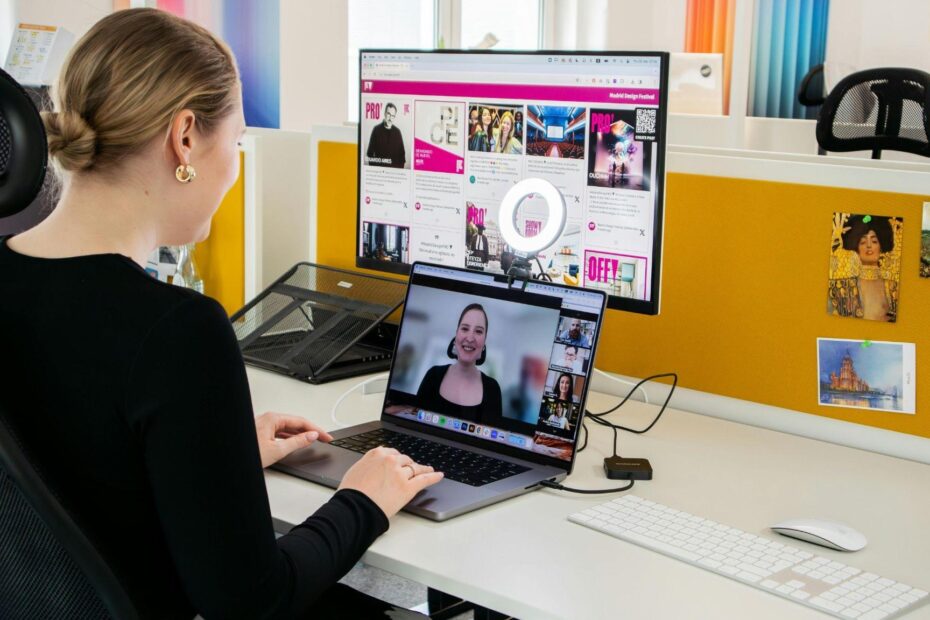
Scroll through LinkedIn on any given Tuesday. You’ll find someone celebrating a job offer they landed through a DM. No handshake. No coffee. Just a message, a reply, and an opportunity. This is the new normal — and it raises a real question: do we even need to be in the same room anymore?
The short answer is complicated.
The Role of Consistency Online
Showing up once doesn’t work — online or offline. But online, the bar for consistency is oddly more visible. Post nothing for three months and your profile goes cold. People forget. The algorithm buries you.
Traditional networking forgives silence better. A contact you met two years ago at a conference still remembers your face. Online, you’re only as present as your last interaction.
What Online Networking Actually Offers
Speed. Reach. Zero travel costs. Online platforms let you contact a CEO in Singapore from a café in Kyiv before your espresso gets cold. According to LinkedIn’s own data, over 1 billion professionals use the platform globally — and 40% of them engage with it daily.
That’s not a niche. That’s a shift.
Twitter (now X), Reddit communities, Slack groups, Discord servers — these spaces generate real professional relationships. A developer in a GitHub discussion can become your next co-founder. A comment under someone’s post can open a door that no conference badge ever would.
The Numbers Tell an Interesting Story
Studies don’t fully agree — and that’s worth noting. A 2023 survey by HubSpot found that 85% of jobs are filled through networking of some kind. But “networking” here includes both online and offline activity. The lines blur quickly.
What’s clearer: virtual events surged 1000%+ during 2020, and many professionals report keeping those habits. A report from Eventbrite noted that hybrid and online events now make up a permanent part of how industries connect — not just a pandemic workaround.
Industries Where Online Has Already Won
Some fields have moved almost entirely digital. Software development, content creation, remote consulting, and digital marketing operate in ecosystems where online relationships are the primary professional currency. GitHub contributions, Substack newsletters, podcast appearances — these are the new business cards.
In these spaces, asking “should I network in person?” sounds almost quaint. The entire career infrastructure exists online. The community is there. The opportunities are there. The proof of work is there.
Where Online Falls Short
Here’s the uncomfortable truth. Screens flatten people.
You miss the nervous laugh. The firm handshake. The moment someone’s eyes light up when you mention a shared interest. Body language carries roughly 55% of communication, according to research by Albert Mehrabian — and most of that disappears the second you go digital.
Trust is slower to build online. It just is.
The Depth Problem
Online conversations are often wide, not deep. You can reach 500 people with one post. But how many of those 500 would pick up the phone if you called in a crisis? Real networks — the kind that survive job losses and industry collapses — are built on repeated, personal contact.
Anthropologist Robin Dunbar suggests humans maintain around 150 meaningful relationships at a time. Quality has a ceiling. Quantity doesn’t solve that. And if you just want to chat, you can always open the CallMeChat website and start interactive cam conversations. These will be completely different people with different interests, from different countries, and of different ages.
The Generational Divide
Gen Z professionals entering the workforce today have never known a world without LinkedIn, Slack, or Discord. For them, sliding into someone’s DMs to ask about a job isn’t bold — it’s just Tuesday. They are, arguably, native online networkers.
Older generations sometimes struggle with this fluency. Not because they lack skill, but because their trust frameworks were built in person. Changing that wiring takes deliberate effort. The professionals who adapt fastest are the ones who stop treating online networking as a lesser version of the real thing.
What Makes an Online Message Actually Work
Most people do it wrong. They send a connection request with no note. Or they paste a generic pitch that screams copy-paste. The recipient ignores it — because ignoring it is free.
What works is specificity. Referencing a real post someone wrote. Asking a question only they could answer. Offering something before asking for anything. Online networking fails when it’s transactional from the first sentence. It succeeds when it mimics what a good in-person introduction looks like: genuine curiosity, clear context, and no immediate agenda.
What Traditional Networking Still Does Better
Face-to-face meetings trigger something chemical. Literally. Oxytocin — the bonding hormone — releases during in-person interaction in ways that video calls simply don’t replicate. You remember people differently when you’ve shared physical space.
Industry events, alumni meetups, casual lunches — these create what researchers call “weak ties.” Surprisingly, weak ties matter enormously. A famous 1973 study by sociologist Mark Granovetter found that weak ties — acquaintances, not close friends — were responsible for the majority of successful job placements. Those ties form fastest in person.
When Online Networking Becomes Overwhelming
There’s a shadow side nobody talks about enough. Notification fatigue. The pressure to maintain a “personal brand.” The anxiety of watching peers rack up followers while your thoughtful post gets eleven likes.
Traditional networking had a natural off-switch — you went home. Online networking follows you to bed. It lives on your phone. The boundary between professional presence and personal exhaustion gets thin fast. Burnout among highly connected professionals is a documented and growing issue, especially in industries where online visibility feels mandatory.
But “Traditional” Is No Longer Pure Either
Let’s be honest about something. The conference you attend in person? You probably followed the speaker on X before you walked in. The colleague you met at a workshop? You connected on LinkedIn before the event ended.
Modern networking is hybrid by default. The question was never really “online vs. offline.” It was always: how do you use both?
Who Benefits Most From Online Networking
Geography matters here.