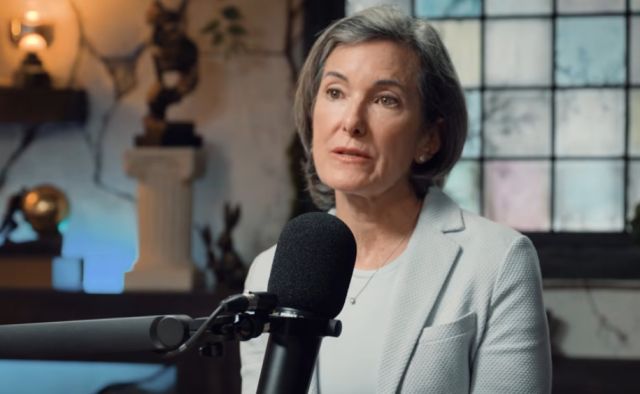
Editor’s Notes: In this episode, Chris Williamson sits down with psychoanalyst Erica Komisar to discuss the profound and often misunderstood impact of divorce on children’s development. They explore the critical importance of attachment security in the first three years of life and how high-conflict environments can fundamentally alter a child’s neurological ability to regulate stress. Komisar also challenges modern social norms by advocating for parents to prioritize emotional presence and stability over career status to ensure long-term resilience for their children. (April 6, 2026)
TRANSCRIPT:
The Controversy Around Erica Komisar’s Work
CHRIS WILLIAMSON: Why do you think your work is seen as controversial?
ERICA KOMISAR: Well, a number of reasons. I think some of the things I talk about, even though they’re truths, they’re inconvenient truths.
My first book was about the importance of attachment security the first 3 years and a mother’s presence. And so I think originally when that book came out, it was perceived as a message which it really wasn’t, which was an anti-feminist message that women shouldn’t work. That wasn’t the message of the book at all. Rather, it was a message about the importance of a mother or primary attachment figure’s physical and emotional presence as much as possible in the first 3 years.
And again, that’s a sensitive message in a society that says work, work, work, everybody should work, work, work, and no one should raise their own children. And so I think that’s how I originally became controversial.
I think I’m controversial in many ways. I think my most recent book is controversial in other ways. My book on divorce, which—
CHRIS WILLIAMSON: Much less contentious topic.
ERICA KOMISAR: It is, but it isn’t because the book actually makes the argument of this idea of 50/50 needs to be looked at very carefully, that we are treating children like possessions in divorces. So that’s a sort of controversial idea. Yeah.
What Divorce Really Does to Children
CHRIS WILLIAMSON: I think many people assume that kids are quite resilient. From your clinical work, what do most adults misunderstand about what divorce does to kids?
ERICA KOMISAR: So divorce is, we know, is universally not great for children. It tests their emotional security. It tests their sense of permanence and trust in relationships. So one would never say it’s good for children, and I certainly would never say it’s good for children.
There was a woman named Judith Wallerstein who wrote a book many, many years ago, decades ago, about how all divorce is terrible for children and no one should divorce, meaning the implication is you should stay with your spouse even though you don’t get along with them for the benefit of the children.
But research that’s come out more recently says that, well, no, divorce is not good for children, but there are ways to mitigate how bad it is. And it’s that, in fact, chronic conflict, intractable conflict for children is much worse. So to live with parents who hate each other. So the ideal being two parents who love one another, respect one another, are affectionate with one another. That’s what’s ideal for children.
But if you can’t have that and you have two parents who hate each other or who are in permanent conflict, that’s actually shown to be worse for children’s psyches than a good divorce. So what I say is a good divorce is better than a terrible marriage.
Is Divorce Ever Costless?
CHRIS WILLIAMSON: Hmm. Okay. Does that mean that divorce is costless if the marriage is sufficiently bad?
ERICA KOMISAR: No, it’s not costless. It’s still going to test children’s sense of security. It’s going to test their sense of permanence about relationships. These are things that will test. It will test their resilience.
One of the things I say in the book, which is controversial, is that you shouldn’t divorce till your children are at least 3 years of age if you can help it, unless there’s some kind of abusive situation going on. If there’s physical abuse or sexual abuse, of course you should leave your spouse. That goes without saying.
But if you’re just not getting along, then if you can hold it and put your children first for the first 3 years, because we know that the first 3 years are the period of the greatest brain growth. So from 0 to 3, 85% of the right brain has grown by 3 years of age. And so you want to give your child as much stability and security and not having much conflict or stress in those years.
So if parents can hold it for a few years— I mean, you were together, you loved each other at one point, you made this baby together— hold it for 3 years, let your child develop a sense of safety and security. And then if you have to divorce, do it after 3. That’s what I encourage people to do.
How Parental Conflict Damages the Developing Brain
CHRIS WILLIAMSON: Why does constant parental conflict damage children so deeply? What’s it doing to a child’s system and brain development?
ERICA KOMISAR: Stress. So we know that stress isn’t good for children’s brains. Well, it’s not good for adults’ brains either, but it’s really not good for children’s brains. You could think of what’s happening to the brain is the brain is being architected in those first 3 years and stress changes the architecture of the brain.
So there is the stress regulating system. The amygdala is this tiny little almond-shaped part of the brain that is probably one of the oldest, most primitive parts of the brain. And it is responsible for putting us into survival mode, fight or flight. It protects us. So we say that a little bit of stress, which produces a little bit of cortisol, can protect us. But a lot of stress, which is chronic, which children’s brains cannot handle, actually changes the development of that brain.
There’s actually a researcher at Columbia University who talked about how that part of the brain that regulates stress is meant to be offline for the first year, which is why mothers wearing babies on their bodies and carrying babies around, and then for the next 2 years after that first year, having them close by keeps their stress levels quite low, introducing stress incrementally.
And then after that 3-year period, children can begin to integrate more and more stress. But if you overly expose them in the beginning, you get an overactive amygdala that sets that baby into survival mode. And then that part of the brain sort of fizzles out. It’s the best way I can put it. It sort of shrinks, shrivels up, and ceases to be functional in the future to handle stress and adversity. So just basically not good for children.
The Adult Consequences of Early Stress Exposure
CHRIS WILLIAMSON: What sort of person does that make in adulthood?
ERICA KOMISAR: A person who can’t deal with stress, a person who’s anxious, who’s depressed, who can’t regulate their emotions. And that’s what we have today. We have so many adults and young adults who can’t regulate their emotions. So you could say that anxiety and depression and attentional issues are what everyone’s calling ADHD, which isn’t actually a condition. It’s just a symptom of overexposure to stress. It’s being in the flight mode.
CHRIS WILLIAMSON: ADHD is a symptom of overexposure to stress.
ERICA KOMISAR: It is. It’s a hypervigilant amygdala. When you’re exposed to too much stress, more than you can handle, you go into— so you know what fight or flight mode is? It’s our survival mode. So when we feel threatened or in danger, either our brains will go into, “let me fight the predator that’s chasing me,” or “let me run.”
And so distractibility is the running part. It is the fleeing from something that feels threatening. And if you are in a chronic state of stress, then you’re always in that state of flight or you’re always in that state of fight. But those are conditions of emotional regulation. What it means is that children were overly exposed to stress in the beginning, and then the consequences of that are that they can’t manage stress in the future.
Modern Youth Mental Health and Dysfunctional Upbringings
CHRIS WILLIAMSON: So is it your opinion that much of the modern youth mental health problems can be laid at the feet of dysfunctional upbringings?
ERICA KOMISAR: Yep, that’s correct. Not all. I mean, there’s very little mental illness that is genetically connected. Schizophrenia, bipolar disorder, there’s genetic precursors, but there’s no genetic precursor for depression, anxiety, and ADHD.
CHRIS WILLIAMSON: There’s no— but there is a genetic precursor for a sensitivity gene.
ERICA KOMISAR: And so what we found is a short allele on the serotonin receptor. So serotonin is necessary to pick up good feelings, but it’s also a regulation gene. It helps to regulate things like excitement. And what we know is that there are some babies who are born more neurologically sensitive. That means they’re more sensitive to stress and their brains are going to be triggered into that fight or flight state more easily than other babies.
So if you ask anyone who has more than one child, you say, do you have one child or two children maybe who cry more easily, who are harder to soothe, who you couldn’t put down, who sort of clung to your body more, who didn’t sleep as well, who had eczema and rashes on their bodies, who are more sensitive to the clothing that you put on them or the smells in the air or the sounds were too loud. A lot of those babies are what we call neurologically sensitive or more sensitive to stress.
And what the research shows is that if those babies are given sensitive, empathic nurturing, if they’re provided with a consistent physically and emotionally present primary attachment figure in the first year to 3 years, those babies— it neutralizes that sensitivity gene. So those babies can be as healthy as a baby who’s born without that sensitivity gene.
But if that baby is overly exposed to stress, if you separate them from their primary attachment figure, if you put them into daycare, if you treat attachment security with very little respect, the respect that it deserves, then those babies, it exacerbates that sensitivity gene.
Highly Sensitive People and the Neurological Fragility of Babies
CHRIS WILLIAMSON: Is this what people mean when they talk about HSPs, highly sensitive people, or is that some term that’s just being concocted out of nowhere?
ERICA KOMISAR: It’s concocted, but it’s the— so I suppose they’re connecting it to the genetic. I don’t know whether that term was invented when they found the gene, but the gene has been found for that.
And so we know that those babies who are not provided with that sensitive, empathic nurturing and that buffering from stress and that presence of their primary attachment figure— babies are born neurologically fragile. They’re not born resilient. They’re not born tough. They’re not born capable of handling stress. They’re born incredibly neurologically fragile.
And so I always like to say that babies have a fourth trimester, which isn’t real because a trimester is three, right? But it’s that 9 months after a baby is born, they’re like marsupials. I was just in Australia and I gave a speech and I said, “Babies are like marsupials. If we had pouches, that’s how they should be on our bodies for the next year after they’re born.”
The Real Problem with Divorce
CHRIS WILLIAMSON: What is it that’s causing the issue then if physical and emotional closeness are what’s important? What’s the issue with divorce if it’s done amicably?
The Science Behind Custody and Attachment
ERICA KOMISAR: So the problem is that divorce demands that — well, at least today’s divorce demands that parents are treated with a certain amount of, I don’t know, gender equality or 50/50, you know, this whole idea of fairness. And the truth is that what’s happened is quite a good thing, which is that fathers are now recognized as being very important to babies, and they are, but they’re important to babies in a different way than mothers, if the mother is the primary attachment figure. If the father is the primary attachment figure, then he’s the primary attachment figure.
But for the most part, mothers who give birth to babies, who breastfeed babies, who nurture babies, they still are the primary attachment figures. And so if you take a baby who’s breastfeeding and is in a state of attachment security, building that attachment security with the mother, and is securely attached to that mother, and now the judge comes in who has no psychological awareness or sense and says, right, like King Solomon, split this baby in half, 50/50, take the baby away from the breastfeeding mother who sleeps co-sleeping with the baby and give the baby to the father 3 days a week. And now this baby’s traumatized. This baby has just lost their entire sense, the person that is the center of their universe and the center of their security. And for what? Because of fairness, because the father needs to have 50/50.
So the idea being in the first 3 years, that baby needs the mother more than the father. That doesn’t mean the baby doesn’t need the father, but the baby needs the mother if the mother is the primary attachment figure more than the father. The cases that I’ve worked on where the children do the best are the cases where, are the families where the father has a tremendous amount of respect for that attachment security and doesn’t think of his own personal needs or a sense of fairness, or as if the baby is a possession.
You know, the story of King Solomon is two mothers come in and say, each mother says, “This is my baby.” They bring a baby in and King Solomon says, “Well, you both can’t be the mothers.” And so he says, “Guards, come over here, cut the baby in half and you’ll each get half of the baby.” And one of the mothers steps forward and says, “No, don’t cut the baby. Leave the baby alone. Give the baby to her.” And King Solomon, in his wisdom, knew what he was doing. He said, “You are the mother, not the selfish one, but the selfless one.”
So parents have a very hard time when they divorce for good reason, because they’re in such incredible pain. It is such an incredibly painful thing to see parents go through. They’re in such pain. They focus on their own pain and their own desires and their own needs and their own sense of fairness rather than focusing on what’s developmentally correct for babies.
What the Science Says About 50/50 Custody
CHRIS WILLIAMSON: A lot of courts push for 50/50 custody. I’ve seen this, right? What does the science say about that?
ERICA KOMISAR: It says that I think the courts are not psychologically aware. I don’t think they do it maliciously. But I think that they do it because of this whole societal movement towards we’re exactly the same. There’s no difference between men and women. And the idea is that we’re equally intelligent. Yes, we can do the same jobs. We should be equally admired and respected. But when it comes to nurturing, men and women have different nurturing hormones that affect their behavior.
Women produce a lot of a nurturing hormone called oxytocin, which is euphemistically called the love hormone. And it makes women’s behavior when they have a baby and they breastfeed, it makes them more sensitive, empathic nurturers. What does that mean? It means that they’re very attuned to the distress of the baby. When the baby cries, they soothe the baby from moment to moment. And that emotional regulation is internalized after about a 3-year period. So from moment to moment, if the mother is around most of the day for that baby and physically close to that baby, making skin-to-skin contact with that baby, that mother is emotionally regulating the baby. That’s not internalized for about 3 years.
Fathers, when they nurture their babies, they also produce oxytocin. It comes from a different part of their brain and it has a different effect on their behavior. It makes them playful tactile stimulators of babies. They tickle babies, they throw them up in the air, they roll around and roughhouse with them, which is really important for resilience building. And separation, but you don’t separate before you’re attached. You have to attach. It’s all about sequencing, right? So attachment security matters before separation.
So fathers throughout a baby’s upbringing will play with the baby and the mother will get hysterical and go, “Don’t throw the baby up in the air like that.” But it’s actually a very important process, but it’s also very important that the baby, when in distress, goes back to the mother. If the father is just on his own with an infant and he’s playing and the baby’s in distress, now there’s no mother to go back to. So it’s very traumatizing for a baby to not have the balance of things.
And so I think the reason that — oh, I suppose I should tell you about vasopressin. Vasopressin is the nurturing hormone of fathers. It’s actually called the protective-aggressive hormone, very self-explanatory. But I’ll tell you about an interesting study that was out of England, which is a mother and father lay in bed and the baby cries and the mother wakes up vigilantly to the baby’s cries, but the father sleeps through the cries. But when there’s a rustling of leaves outside the window, the father wakes up and the mother sleeps through it. Meaning fathers are much more attuned to predatory threat. And that’s what protective aggressive hormones do.
We’re just different. We’re not the same in terms of our nurturing hormones, which impact our behavior. Does that mean a father can’t be a single father and nurture his child? Yes, he can, but he has to be taught because it doesn’t come naturally to most fathers.
Instinct, Evolution, and the Primary Caregiver
CHRIS WILLIAMSON: Yeah, that’s so good that before the written word and in a time when maybe dads would’ve been killed before the baby was even born, who is around to teach a boy what it means to be a father in future? There has to be something that feels a bit more ingrained.
I always think about this when I see dogs flicking their hind legs after they’ve just been to the bathroom. At no point was there a little pamphlet that was handed to them. And an equivalent is if you put boys, young boys, kindergarten, 5 to 10 years old or whatever, if you put them in a yard and there’s stones, pretty soon those stones are going to end up in the air. There’s just something. And I remember as a kid, if there was something to throw, I would throw it. No one had taught me to throw it. No one had told me to throw it. It’s just what I wanted to do.
And whatever this is, some version of neurochemical predisposition pushing us toward an instinct, which over time evolution has found out, well, that’s pretty adaptive, it’s pretty good. This is going to increase your chances of fitness or whoever is around you. It’s going to be prosocial or it’s going to get you more status, kin selection, whatever it might be. It doesn’t surprise me that that’s the case.
But I guess given that most children need a primary attachment figure, that runs almost counter to every custody discussion, even the ones — forget 50/50 — most custody discussions at least include some custody, and that means not custody for the primary caregiver, which is the mother. Baby cries. Who are they going to crawl to?
Child-Centric Divorce and Parental Sacrifice
ERICA KOMISAR: So again, I’m talking about the cases that I have helped with, the families I’ve helped through divorce, where the children have the best outcomes in terms of emotional security and attachment and resilience. Are the ones where the father’s made a lot of sacrifices. Meaning if you’re going to divorce in the first 3 years while your child is still developing attachment security, then the father should have as much access to that baby as he wants. But when it comes to overnights and long periods of time away from the mother, that’s just not good for babies.
So that may be good for fathers in their minds, but in the end, it’s not good for fathers because if their babies end up having mental health issues, I’ve never known a parent who’s happy if their child is not doing well. So what you think is good for you in the moment may not be good for your child.
So the cases where the father has said, “We have to divorce because we really hate each other and we can’t live together and the baby’s only one.” Then the fathers who have taken a little bit on the chin and said, “You know what, you be the primary parent right now. I will come and go. I’ll come and spend lots of time with the baby, but I won’t do overnights until the baby’s a little older.”
And mind you, when children get older, particularly in adolescence and in the school years, there are times when they need their fathers more than they need their mothers, particularly little boys and adolescent boys. And so mothers also have to accept that there are times when fathers are needed more than mothers. But what we do know is that when parents can make sacrifices, when they’re not self-oriented, but when they are capable of sacrificing, when they’re capable of putting aside their own needs for the benefit of their children and making a divorce more child-centric, then children do better.
The Cultural Challenge of Prioritizing the Child
CHRIS WILLIAMSON: The child-centric divorce, right, is a meme that could take hold. Isn’t it strange? So much talk about absentee fathers, deadbeat dads, dads that sort of aren’t a part of the picture. And yet, if you’re going to take a neurobiologically, developmentally informed approach, you actually almost need to program that in to a degree. Not that the father shouldn’t be there, but that the father should be deprioritized.
And I think this is what a lot of men — a lot of the men going their own way in men’s rights movements — have pushed back against family court saying this is unfair, I don’t get to see my kids, so on and so forth. Now, I don’t think the reason that they weren’t allowed to see their kids is because of a neurobiologically informed approach to a child’s development. I think it was much more of a discarding and a disregarding of the importance of fathers and of them as someone that should be considered when these sorts of conversations are happening.
But it’s an uncomfortable realization to come full circle twice, however many times around the horseshoe it is, to realize, oh, actually, maybe that’s what’s best for the baby. And if my primary sense of happiness as a father is going to come from raising a happy baby into a happy child, into a happy adult, I actually need to — the cultural meme needs to change so that I see this as an oddly, not glorious thing to do, but a worthy sacrifice.
And it’s a challenge that no one’s going to give me that much sympathy for because the pattern matching is only half an inch away from being a deadbeat dad who’s absent while mum’s looking after. So yeah, but I go around every day, I go around for this time during the afternoon when I can, but I can’t stay over. We’re no longer together. It’s difficult for me. I have to go through this thing. It’s her house. These complicated custody schedules must be a nightmare. It must be super destabilizing for mum and dad and kid as well.
Parental Alienation in Contentious Divorces
ERICA KOMISAR: You know, the reason — I mean, there is such a thing as alienation, which is really problematic in divorces, and it does happen. And it happens when parents divorce under very contentious situations, very belligerent, contentious, hostile divorces where, I always say in divorces, it’s rare that two people look at one another and go, “Let’s, you know, we’ll call it quits together. We’re on the same page.” It happens. What we call amicable divorces. Usually divorces are pushed by one person, so that means that there’s always somebody being left or somebody who perceives as being left. And so that means that that person is in a tremendous amount of pain. And sometimes that hostility and that pain turn into vengeance, and vengeance can turn into alienation. So alienation does exist. So —
CHRIS WILLIAMSON: How does alienation show up mechanically?
Parental Alienation and Its Impact on Children
ERICA KOMISAR: Well, basically the term alienation legally is used to describe an obstacle that’s put in the way of either parent having a relationship with that child. And so look, there are mothers and/or fathers who create obstacles, either physical or emotional obstacles, to their child loving the other parent.
You know, either they badmouth the parent and are critical of the parent and say terrible things about the parent, or they don’t allow phone calls to the parent or visitation to the parent. Or if the parent misses visitation or is an hour late, the mother shuts the door, you know. So it does happen, but I think what has happened is it’s assumed that that’s always happening, and it’s not. I would say it’s more rare cases where there’s alienation.
I think parents just need to be educated about how if you’re going to get divorced, children aren’t the ones who ask for it, and you have to be very selfless in the process of divorce if you want your children to be well.
The Impact of Divorce at Different Ages
CHRIS WILLIAMSON: I have to assume that a 4 or 8 or 12-year-old’s parents getting divorced is not that much better. So what is the issue with older children and divorced parents?
ERICA KOMISAR: So actually, there is a period of time that’s more stable in development. So we know that there are unstable periods of development. I hate to call it that, but they kind of are. The brain is in a less stable situation, right? 0 to 3, the brain is very unstable. It’s growing so rapidly and it has certain needs for security. So it’s rather unstable. It’s a very, what we call plasticity, a period of great plasticity.
Another period of great plasticity is adolescence. So adolescence is from 9 to 25, starts earlier, ends later. And in young men, it really doesn’t end till about 27. So what we know is that during those two periods of plasticity, the period of great growth, which is 0 to 3, and then adolescence, which is a period of great pruning. So imagine if you grew a garden, the first 3 years are like you grow your garden and then the garden overgrows. And then you know that if you have a vegetable garden, if it overgrows, it’s not going to produce vegetables. So you have to prune the garden. So the pruning period is also very critical and it’s a period of great plasticity and vulnerability. We call it a critical period.
Probably the 2 worst periods to divorce is 0 to 3 and 9 to 25. And what I say, I’m going to be a little generous and say the worst period of adolescence to divorce in is about 11 to 14. It is the worst. I say it’s the worst period of anybody’s life. It’s middle school. And it is the most challenging transitional, a torturous period for children. They’re physically developing, they’re going through puberty, there’s social drama, there’s rejection and exclusion and teasing and bullying, and it’s terrible.
And so if I were going to say, are there periods that are more stable in terms of development and brain growth, you would say probably from about 6 to about 11, if there’s an ideal period to divorce. It might be that.
CHRIS WILLIAMSON: Never a good time to divorce, but if you got to do it.
ERICA KOMISAR: Never a good time to divorce, but if you have to do it, that’s probably a good window. You could also do it after 14. You know, it’s a little more stable after 14. So adolescence is broken up into 3 periods, early adolescence, mid-adolescence, and late adolescence. So you kind of want to get to late adolescence if you want to divorce. And then I’m going to say there’s another period that’s sensitive. I mean, it’s a little like a landmine, right? What I’m saying is try not to do it 0 to 3.
CHRIS WILLIAMSON: I feel like I’m playing divorce battleships with you.
ERICA KOMISAR: But you know what, developmentally children are more sensitive. See, no one ever talks about this, so this is maybe controversial to say that there are better times to divorce than other times. People think— these are all the myths, right? They think, “Oh, it’s better to do it while the baby is little because they’ll never know any better.” Okay, then you’re tearing apart attachment security.
Oh, another myth. “Oh, it’s better to wait till they go to college and just when they go to college, we’ll divorce. When they go to college, we’ll tell them and we’ll separate.” When kids go to college, it’s a transition that is so incredibly fragile, and they need to feel that they’re tethered to something very secure to go out into the world and individuate. So there’s two things: there’s separation, which is physical separation, and then there’s individuation, which is developing your identity as a separate person. And it is such a fragile period.
So I say, if you’re going to do it after they go to college, then wait till they finish college and they’re launched. Wait a few years. So if you’ve waited this long, don’t do it when they’re 18, wait till they’re like 23 and they have friends and they have a job and they’re more secure. But this idea that as soon as they go to college, they’re like done, they’re cooked — they’re not cooked at 18, they’re not cooked till they’re 27. And so, yeah, there are better times — I mean, there’s no good time to divorce, but there are better times for children than other times.
Long-Term Effects of Divorce on Children’s Development
CHRIS WILLIAMSON: What is the impact on the future adult when divorce happens at 11 to 14? We’ve spoken about the importance of the primary attachment figure, the fact that this is getting ripped away, regulation of emotions. That has to be a different mechanism. It’s the same stimulus, parents splitting up, but it’s got to be a different mechanism that’s happening now. So what is the impact and what that person will be like in future?
ERICA KOMISAR: Well, they’re already more unstable in that period. So what you’re trying to do is you’re trying to help stabilize them in that period and provide them with a sense of security. So, you know, people hear attachment security and they think it’s only 0 to 3. In fact, attachment security is throughout childhood at different points. And so another point of attachment security is when your child is separating, because you want to be as secure as possible. You want to give them a stable base, a platform from which to experiment and explore being independent. But it’s hard to do that if what you’re coming back to is moving tectonic plates.
And so really, really, there are points at which children need a lot of stability to grow. So if you destabilize them at a time when they’re already unstable, it’s going to be very hard for them to find their footing. It may delay their development. It may keep them in a somewhat regressed state. So some kids whose parents divorce at very critical periods of brain development, they kind of stay in a more regressed state. They don’t keep developing. It’s sort of like they get stuck in a certain period.
CHRIS WILLIAMSON: Why?
ERICA KOMISAR: Because to continue to move in development, you need a certain amount of stability. And so they stay in a state of wherever they were traumatized, they get stuck there. So to say that divorce is a trauma, it is a trauma. And what my book is trying to do is to help you to reduce that trauma, to mitigate that trauma, and make it as gentle and as sensitive and as the least traumatic situation you can make it for that child.
Boys vs. Girls: Who Is More Affected by Divorce?
CHRIS WILLIAMSON: Who is affected more by divorce, boys or girls?
ERICA KOMISAR: It’s a good question. Funny enough, at different stages of development it might be different, but boys are more neurologically sensitive than girls. We know this from all the research that even from in utero, boys are more sensitive to cortisol, to the stress hormone. And we see it in little boys who go into fight and flight so easily in school with behavioral problems and attentional issues. There’s probably more little boys with behavioral problems and attentional issues than little girls.
But girls are also susceptible to stress, particularly in adolescence. I mean, one of the things that we know is that girls’ brains are very hypervigilant to criticism of any kind.
CHRIS WILLIAMSON: That’s why social media is so bad for girls, especially during that 11 to 14 range.
ERICA KOMISAR: Yeah. Self-consciousness. And criticism that they exaggerate in their minds. And so, you know, at different stages of development it’s different, but what we do know is that little boys are more prone to things like autism, to behavioral issues, to attentional issues. And all of those are — you know, autism is a developmental condition that goes back to being in utero, but there is some research to try to connect cortisol to autism. And the idea is not that it causes autism, but it may be one of the things that can trigger the gene and turn it on.
So we know that boys are very, very neurologically sensitive. So I would say probably boys even more than girls, but at certain periods of development, particularly adolescence, girls can be very, very susceptible as well.
The Effects of Stress During Pregnancy
CHRIS WILLIAMSON: What about separation during pregnancy? What’s the impact of that?
ERICA KOMISAR: You don’t want the mother to be under stress. So what we know from the research is that cortisol is transmitted to the baby. And again, as I said, there’s some research that’s going on trying to connect what cortisol does to the baby’s developing brain. So if a mother is stressed out in her pregnancy, either because of a divorce or because of a work situation or because a parent’s dying, there’s a lot of research now going on about how that affects the baby in utero. So I’ll leave it at that to say it’s not good for the mother, but we know it’s definitely not good for the baby.
CHRIS WILLIAMSON: Well, presumably the same thing is true of women who need to keep on cranking their careers right up until the moment that they give birth.
ERICA KOMISAR: That’s right.
CHRIS WILLIAMSON: No one around the office really thinks all that much, “Well, I’d better not push to hit the sales target this quarter because Suzanne is pregnant.” So we have a business and you’re supposed to be here. And also there’s a sense I think that a lot of women have — they don’t want to be seen as fragile. They don’t want to be seen as a diva. They don’t want to have the accusation of, “Oh, here we go, the estrogen’s on the line and no work’s going to get done. She’s going to be crying in the bathroom all day.”
So I think pushing through the normal discomforts of everyday work — which when you actually think about it, even a relatively unstressful job, somebody that’s a gardener, which I think of as probably being a little bit more sedate than someone that’s a salesperson — even that there’s traffic on the way to work and you’re trying to get in and out and some conflict and the boss has changed and the new guy that’s just come in, he’s a bit of a dick. And all of these little assaults that happen. That’s not to say that there wouldn’t have been this ancestrally, but given that we’re trying to design an environment that’s really great for mom and baby and then dad as a part of that. What’s the mandatory mat leave in America?
America’s Lack of Paid Maternity Leave
ERICA KOMISAR: Do you want to know what my wish list is or do you want to know the reality? Because there is no maternity leave. We have something called the Family Leave Act, which means that you can’t be fired for 3 months, but you don’t get any pay. So there is no federal paid leave in our country. None. State by state, like New York State, I believe now gives 3 months of paid leave at minimum wage maybe, but it’s not very much, but that’s state by state. But there is no federal paid leave, and then it’s contingent upon your employer’s good graces if they decide to give you 6 weeks or 3 months.
CHRIS WILLIAMSON: Totally discretionary.
ERICA KOMISAR: Totally discretionary.
CHRIS WILLIAMSON: That is f*ing barbaric.
ERICA KOMISAR: This country is barbaric. It is. I call it the most uncivilized country and the country that pays lip service. So this is my frustration. The country that pays lip service to mental health talks a lot about mental health and children and we care and we love families and it’s all a bunch of bullshit because if you really cared about mental health and you really cared about children and you really cared about families, you would have 12 to 18 months of paid leave.
I just came back from Australia where I have probably had more influence in Australia and the UK in terms of policy than in America. And I’m American. I live here, but nobody wants to listen to me here. The Democrats see my messaging as anti-feminist and the Republicans see my message as too expensive. And so I am just stuck in no man’s land. I am in no man’s land.
CHRIS WILLIAMSON: I’m with you. I’m with you, Erica. Don’t worry. No, I’m in the trenches with you. Don’t worry about it.
The Psychological Impact of Divorce on Children
ERICA KOMISAR: Till the day I die, I will be fighting this fight, I’m afraid. So I’m 61. If I live another 25 years, I’m pretty sure I’m going to be fighting until the day I die.
But until we recognize that mental health starts from birth, even from in utero, it starts from conception. The last trimester with cortisol, women are most susceptible. Babies are most susceptible to cortisol in the last trimester. So if we were to give women 18 months of paid leave, which will never happen, but I wish it would. Some countries are starting to do this now that are more civilized than us, and really do care about children’s mental health.
You start to give the mother paid leave before the baby’s born so she can relax, get her cortisol levels down, and then prepare for this baby psychologically and emotionally. What’s happening is women wait until a minute before the baby’s born and they’re totally wound up and feeling guilty about leaving their work and overwhelmed. And then they have a baby and they’re exhausted and they crash from postpartum depression. They also crash from postpartum depression because from the moment their baby is born, they’re worried about when they’re going to go back to work. They’re on a timer, they’re on a ticker, like a basketball game. They’re on a shot clock.
CHRIS WILLIAMSON: On a watch clock.
ERICA KOMISAR: Right. So they’re counting minutes. And so what happens is that stress cortisol affects breast milk development. So we have this phenomenon of all these mothers breaking down from postpartum depression, but also saying, “I’m not producing enough breast milk.” This is a phenomenon that we never experienced before because cortisol affects prolactin and estrogen and breast milk development.
Divorce as a Death in the Family
CHRIS WILLIAMSON: You talk about divorce as something that children experience almost like a death in the family. What’s being lost psychologically?
ERICA KOMISAR: So when we have, again, another politically incorrect thing, or maybe politically correct thing to say, it’s better to have two parents. It’s better to have a mother and father because they serve different functions. But as they say in the UK, “better to have an heir and a spare.” So the idea that you have two parents means that if you lose one, you have another.
But the concept is when you have a nuclear family, when you have two parents, you’re under the illusion that it’s a safe nest, that it is a safe, stable environment in which to grow up. And that stability provides you with the emotional security you need to develop in a healthy way.
When that sense, that illusion — and there is an illusion because there’s no permanence in life, right? I mean, your parents could die, they could get sick, they could get hit by a bus. There’s no permanence, but we’re born with a sort of a need for that illusion of permanence. And in fact, people with very healthy defenses, me included, with everything that’s going on in the world, which could be crazy-making, my defenses help me not to obsess over it or focus on it because I can stay optimistic. My resilience allows me to cope with the adversity of the world. It’s like having shock absorbers.
And so it’s that sense of stability and permanence. When you divorce, the children are disillusioned in a way before they’re ready. I always say every child is born with the need for a sense of omnipotence in their parents. They need to believe their parents are perfect. They can do anything. They’ll protect them.
I always tell this story of my husband when he was a little boy. His father always drove — was more traditional. His mother never drove when the father was in the car, and he would sit in the back and he said, “I always felt like my father knew every road on every map in the whole world.” That’s what childhood is — a sense of feeling protected and as if your parents are bigger than life characters.
When they divorce, you see the imperfections of your parents and you start to see them as human before you’re ready, but also the impermanence of relationships and the lack of trust. So then you no longer necessarily trust in the permanence of those connections, of those romantic connections. Many kids from divorce have trouble trusting in the permanence of marriage and connections later on. Not all.
So the reason I wrote this book is how do you help them? The way you talk to them, the way you treat each other, the way you care about each other as a divorced couple, the way you work together and collaborate and cooperate and communicate — that’s going to determine whether you can put them first and sacrifice your desires and needs for fairness. All of that is going to dictate whether that child in the future can see relationships as trustworthy.
Fairness, Blame, and Magical Thinking
CHRIS WILLIAMSON: Isn’t it crazy, the idea of fairness, that that needs to be put to one side, that there is something unfair to the parents that is adaptive for the kid, that’s good for them, that’s good for their upbringing. I think a lot of children blame themselves for their parents’ divorces.
ERICA KOMISAR: Yeah.
CHRIS WILLIAMSON: Why do you think that’s such a common pattern?
ERICA KOMISAR: It’s magical thinking. So children who are very young — there’s a great commercial on television. A little boy is in a Darth Vader outfit and he’s got a lightsaber. And he has—
CHRIS WILLIAMSON: A f*ing wand.
ERICA KOMISAR: Yeah. A lightsaber.
CHRIS WILLIAMSON: Darth Vader going, “Expelliarmus!” A lightsaber.
ERICA KOMISAR: And he flashes it towards the family car, and the father is behind with the remote control, and the father presses it. And the little boy goes, “Oh my God, I turned it off with my lightsaber!” That’s magical thinking.
Magical thinking is something children have when they’re very little and they outgrow, which is the belief that they are the center of the universe. It’s a good thing. If our parents focus on us as if we are the center of the universe, then we believe that we are the center of the universe, and that gives us a sense of steadiness and stability and security from which to develop. We outgrow magical thinking where we feel we’re in control of everything, but it helps us to feel secure when we’re little.
So if something bad happens to our parents — if your father or mother get into a car accident and die, let’s say, when you are really angry at them because they didn’t give you that toy, and you have terrible fantasies and thoughts as a child that you wish they would die, which aren’t so terrible, they’re just fantasies — and that parent actually does die, that child then feels responsible for that death. That’s magical thinking.
So basically they believe they control what’s around them. So it’s very common for children to believe that they are responsible for the breakup of their parents. And so that’s one of the things in the book that I talk about. How do you talk to children so you disavow them of those illusions that they are not responsible, that you will always love them?
Because again, that destruction of that sense of permanence in a relationship and that breaking of trust — children can easily understand parents’ breakup as something parents could do to them as well. If parents can leave one another, then can’t they leave them? And so there’s a lot of things that parents need to consider when they talk to their children. And there is a way to talk to children about a divorce.
Attachment Wounds and the Loop of Self-Blame
CHRIS WILLIAMSON: Is there a sense as well, like how a lot of attachment wounds from early childhood get replayed in adult relationships? That if I can redeem myself in this situation, I will fix the wound that existed before.
ERICA KOMISAR: Absolutely.
CHRIS WILLIAMSON: That sort of classic loop. Is there something similar to that going on with the magical thinking from the kids — that if I caused it, I can fix it? This line that I wrote in an essay a couple of weeks ago, which was, “If as a child you’re taught that you need to work hard to be loved, if you don’t feel loved, you just need to work harder.”
ERICA KOMISAR: Yeah.
CHRIS WILLIAMSON: And it kind of feels a little bit similar to that.
ERICA KOMISAR: Yeah, absolutely. I mean, I think it’s very important — I’ll say this — that if you’re going through a divorce, that you get support. And I’m not going to be one of those therapists who says everybody needs therapy. Not everybody needs therapy, but a lot of people do, particularly if they’re going through life transitions or traumas.
And so if you think about it, divorce is a trauma for everyone — for parents, for children. And so parents need support. One of the main reasons they need support is so they don’t leak all over their children, because it’s very common for parents to overshare their pain with their children, to leak all over their children.
CHRIS WILLIAMSON: Treating the kid of the separation as the therapist for the separation.
ERICA KOMISAR: Yes. And also just as a container, dumping into them about their loneliness or their pain or their sex lives. So basically parents need therapy so they can raise children without burdening those children.
Children need therapy because they can’t always go to their parents and tell them what they’re feeling and thinking because they might feel uncomfortable. And so they need a safe space that isn’t either parent to bring their feelings. That doesn’t mean that parents aren’t also safe spaces, but children need to have therapy to make sure that you’re addressing these conflicts and these traumas early on. So as you say, they don’t carry them into adolescence and young adulthood and adulthood.
The Stages of Grief in Divorce
CHRIS WILLIAMSON: What are the typical stages that children go through emotionally during a divorce?
ERICA KOMISAR: It’s the same stage as any mourning process. Think of it as grief. They go through the same Kübler-Ross. I always say grief is grief, mourning is mourning. It’s a death. And so when someone dies, you go through the disbelief and you go through the sadness and you go through the anger and you go through the acceptance.
And the problem is if your child gets stuck, or if you as a parent, while you’re going through a divorce, get stuck. I’ve had patients who’ve gotten stuck for a decade in grief, meaning they get stuck in anger or they get stuck in sadness and despair. You’re meant to move through grief.
So I’m Jewish, so we say mourning is a year, from the moment someone dies. We don’t unveil the stone, we don’t put the stone up actually for a year. So it’s a year, but we have a year to go through the process. But then we’re meant to unveil the stone and move on with life.
What’s happening is that people are holding on, they’re getting stuck, almost like a scratch in an old LP record. They’re getting stuck at certain stages of the grief and mourning process, and they’ll either get stuck in the depression or the disbelief or the anger, but many don’t get to the acceptance stage. And children also aren’t getting to the acceptance stage. They’re getting sort of stuck in one stage of grief or another.
CHRIS WILLIAMSON: How should parents tell their kids if they’re divorcing?
How to Tell Children About Divorce
ERICA KOMISAR: Together, emotionally balanced. So if you are hysterical or your partner is, that’s not the time to do it. To do it in a way that is emotionally regulated, to do it in a way where you agree on what you’re going to tell the children.
Don’t do it before a major exam, be sensitive. You know, this is like the fact that you have to tell people, please be sensitive. Don’t do it at a time when your children are very stressed at school or stressed socially or about to play a big game or a big concert. Don’t do it at a major holiday. Don’t do it at Christmas time. I’m not Christian, but don’t do it at Hanukkah. Because that holiday will forever be associated with that divorce, right? They’ll never be able to love Christmas again. Don’t do it on their birthday because they’ll never like their birthday.
CHRIS WILLIAMSON: How much of a dick do you have to be as a parent? “Happy birthday also.”
ERICA KOMISAR: Yeah. And you know, so I suppose you could do it on vacation when you have a whole week to spend together and process and go for walks and talk about things.
CHRIS WILLIAMSON: And I suppose that’s not going to tether it to some geographical location. The kid might have to go back to the living room. “This is the seat where I sat.”
ERICA KOMISAR: That’s right. So somebody said to me, well, if you’re going to— this is an analogy, mind you— if you’re going to neuter your dog, make sure that you take them to a vet that you never ever want them to go to again.
CHRIS WILLIAMSON: Bingo. Yeah, take them to a crap holiday destination that they’re never going to want to go back to. It was bad enough already.
ERICA KOMISAR: Spend a week there and process it with them. Yeah, so basically the idea is just be wise and sensitive about it. I mean, think about the fact that how you tell them will always be referred back to in their mind. How and where?
What to Say — and What Never to Say
CHRIS WILLIAMSON: What sort of explanations are psychologically helpful and which should never be said?
ERICA KOMISAR: You never want to say, “I never loved your mother,” or “I never loved your father,” or “I wish that I had never married that person or been with that person.” Because what’s implied there? I’ll let you answer that one.
CHRIS WILLIAMSON: The family unit that you thought was secure was never secure, and your ability to understand what is and is not attachment was wrong all along.
ERICA KOMISAR: And you should never have been born.
CHRIS WILLIAMSON: And that, yeah, downstream from “I didn’t love them” is “and we shouldn’t have had you,” right?
ERICA KOMISAR: Right. “I wish I’d never met your father. I wish I’d never married your mother. It was a mistake.”
CHRIS WILLIAMSON: This is more than just the “we’re getting divorced” conversation. This is now, 2 years later, the very difficult night where all of the co-parenting schedules have fallen apart. “And I wish I’d never met them. I wish I’d never—”
ERICA KOMISAR: Children want to know that they were born out of love. It’s hard. I’ve had families where it’s been like a one-night stand and they say, “How do I talk about it then?” And I say, well, you say you were young and it was the illusion of love. You thought you loved the person. That’s okay. But all children want to be conceived out of love, they want to be wanted.
You know, there’s this whole issue of, we say adopting children is a mitzvah. It is a great blessing. But it’s really hard, and you need to know when you adopt children that it’s hard because that child, no matter how wonderful you are, you’re always going to have to address and help that child. Again, it’s a mitzvah because you’re helping that child to overcome a conflict and a trauma, which is that their biological parents didn’t want them.
CHRIS WILLIAMSON: You know, James, my business partner in Nutonic, he was adopted. You know that, Jared?
No, I didn’t know.
James is adopted. James says that he is the closest advocate for the abortion community that exists because if you were adopted, at some point there was a conversation. And he literally says, “No one speaks for the aborted community. I will.” That’s his one source of privilege that he’s got. But yeah, and you know, the mad thing, the maddest thing is James has just got the most secure, high self-esteem, confident attachment thing. Both of his parents absolutely love him, and he’s still got a fantastic relationship with both of them.
ERICA KOMISAR: And you have to deal with it. And so, yes, adopting children is a mitzvah, but you have to know how to help them with that because that is something—
CHRIS WILLIAMSON: Sorry, what’s a mitzvah?
ERICA KOMISAR: Oh, it’s a blessing. We say it’s a blessing. It’s the greatest blessing. But it is something you have to deal with. You have to know that that’s a part of the underlying unconscious feeling — did my parents want me?
And it’s the same with children that go through a divorce. “Am I the cause of this divorce? Did my parents conceive me out of love? Did they ever love one another?” So I would say that most parents conceive children when they loved one another. I would say most, or at least there was the perception of love, right? The illusion of love. And so you want to give children that. You want to give them that perception, that illusion, that reality that “we loved each other very much and you were conceived in love and brought into this world in love. But we adults sometimes fall out of love, but they never, ever, ever fall out of love with their children.”
Honesty vs. Protecting Children from Adult Realities
CHRIS WILLIAMSON: That’s a good point. What role does honesty play versus protecting children from adult realities?
ERICA KOMISAR: So I always say that honesty— children have bullshit meters, so they know when you’re lying to them. So you don’t want to lie out and out, blatantly lie to them, but you have to be sensitive in truths, right? You have to be discriminating in your truths and how you describe those truths.
So you can tell children the truth. I think that a lot of parents lie to their children or make promises to their children because they feel guilty. That’s dangerous. So meaning, if you’re divorcing and your child asks you, “Will we still have holidays together? What will we do about Christmas?” Saying to them, “Oh no, we’re still a family. We’ll always—” you know, I always think this is funny. There’s a division in the community that deals with divorcing families and this idea that “we’re still a family.” It’s a complicated thing to say we’re still a family. Yes, in some form we’re still a family, but usually divorced families don’t spend holidays together. Maybe they do in the beginning, but eventually they don’t.
And so to promise your child that nothing is going to change in their life, in their living situation, in their school — you do want to keep as much the same as possible. You want to disrupt as little as possible in a child’s life, particularly in the first year. But to make promises that you can’t keep to them is perceived by children as lies and a further breach in trust.
Designing the Worst — and Best — Divorce for a Child
CHRIS WILLIAMSON: I wonder, let’s say that I gave you the task of trying to design the worst possible divorce for a child to go through. As to say, what is the worst way that two people could get divorced? How would they talk about it? What would they do? How would they tell them? How would that roll over time? What would that look like?
ERICA KOMISAR: Oh dear.
CHRIS WILLIAMSON: What would that look like?
ERICA KOMISAR: How much time do we have? Because I treat some of those cases. It’s very sad for me to treat.
CHRIS WILLIAMSON: You’ve got inspiration, then this should be easy.
ERICA KOMISAR: The worst cases are the cases where one parent betrays another parent and then it’s something that the parent who’s betrayed can’t get over. And so there is depression, hostility, belligerence between the two parents.
I guess the main things that I’ve seen are when parents treat children as possessions, like a Porsche or a car, like splitting the 50/50 peace — when they treat children as possessions. That is a terrible thing. I think when parents lie to children in one way or another, when parents overshare with children, when parents alienate children from one parent or another, when parents are terrible at communicating and cooperating with each other — we call it co-parenting for a reason — when they are more focused on themselves and their own pain and will do what’s right for them, but not what’s good for their children. Yeah, those are some of the—
CHRIS WILLIAMSON: And they did it at Christmas.
ERICA KOMISAR: Yeah, those are some of the top hits. Yeah.
CHRIS WILLIAMSON: Okay, and what’s the inverse? If you were to tactically say these are the biggest movers for going through a difficult time well, what does that look like?
ERICA KOMISAR: Cooperation, communication, respect. You finding somewhere deep inside of you the respect and admiration and love that you once shared with the person that you had children with. You might not be in love with them anymore. You might even be angry at them and disappointed in them, but that you can dig deep and find some degree of respect and admiration and love for them that you shared with them. So you can do the right thing for your children.
So you can see your children for where they are developmentally and in age and know that in the scheme of life — you know, for women who have careers and want children, I always say, you can do everything in life, you just can’t do it all at the same time. And I’m going to say it’s the same with divorce. You know, throughout a child’s life, you are going to get a lot of love and attention and connection to that child, but you may not get it all at the same time as the other parent.
So the competition between parents sometimes sort of overwhelms what a child may need, or maybe usurps what a child may need. So the idea of working collaboratively, having good open communication, having some respect and admiration for the partner that you had the child with, and then living close together. You know, the other thing is that the best co-parenting situations are ones where parents live close to each other, close enough that children can go easily back and forth.
CHRIS WILLIAMSON: And you don’t have to put them on a flight.
The Problem with the 2-3-2 Custody Arrangement
ERICA KOMISAR: The other thing I will say is there is a trend in America to do this 2-3-2, you know, custody arrangement, which is like treating children like they’re a sack of potatoes. Children hate it.
CHRIS WILLIAMSON: And what’s 2-3-2?
ERICA KOMISAR: 2 days with one parent, 3 days with another parent. 2 days with— 2-3, 2-3, 2-3. It’s like a dance, a two-step dance. It drives children crazy. And when they grow up, teenagers and young adults will say, “The worst thing for me was that I was thrown back and forth like a sack of potatoes.”
CHRIS WILLIAMSON: Why is 2-3-2 so bad for children?
ERICA KOMISAR: Because they need stability, particularly during the week when they’re in school. They need to feel that they have a primary residence where they can lay their head down on the same pillow and they have some stability.
This idea of — so, you know, for anybody who’s ever had two homes, either intentionally and voluntarily or involuntarily — you know what it’s like to have to move from home to home to home to home. It’s crazy-making. And for a child who’s already feeling destabilized, I always say in the first year, the best is to do something called nesting where they don’t have to move at all. I always recommend that for a year, no more than a year.
CHRIS WILLIAMSON: Put them in one location and have the other parent come to visit regularly.
Stability Over Fairness: What Children Actually Need After Divorce
ERICA KOMISAR: They stay in their home and the parents come and go. So the parents have a separate apartment. And that’s fine for a year, but after that, you find an arrangement where the children can have a primary residence. And this is also very controversial because everybody wants to see this thing as a fairness thing and everybody has to have their, “I’ll take the legs, you take the arms.” But what children actually need is stability. They need to feel they have a secure and primary home.
CHRIS WILLIAMSON: And make— go ahead.
ERICA KOMISAR: And then, so the old arrangements, interestingly, which now are considered passé, where a child lived with a mother during the week and then spent weekends with the father, or maybe was with the father Friday through Sunday morning, that works far better because the child isn’t in school. The child can be home, come home every day, do their homework in the same place and have a sense of stability, and then go to the father on weekends. Or if the father’s the primary attachment figure, the child lives with the father during the week and then goes to the mother on the weekends.
But the idea of having a primary stable residence is far better for children. And that doesn’t mean that the parent who’s not living with the child during the week can’t see the child. You can come and you can have dinners and you can have mock sleepovers and you can pick the child up from school and take them to soccer practice. But it’s the idea of where you sleep.
You travel a lot, I know, right? You travel a lot and I travel a lot for what we do. You know what it feels like too. It’s like being almost like in a band, where you’re like, have one gig and it’s very destabilizing to not sleep in the same place and have a home. And I think that’s what it feels like to children. And they resent that more than anything. I would tell parents who are listening, children resent that more than anything.
CHRIS WILLIAMSON: Consciously resent it.
ERICA KOMISAR: Consciously resent it and tell parents they resent it.
How Often Should Children See the Other Parent?
CHRIS WILLIAMSON: What is the longest amount of time that kids should go without seeing the other parent?
ERICA KOMISAR: I think parents should see children every day if they can. So if I live down the street from you — I don’t recommend that people live in the same building, but sometimes it works for a variety of reasons. I think it can be problematic, but if you live down the street or a block away where you can still stay in the routine of walking your child to school or picking them up from school or going to soccer practice with them. That’s a very good thing for children where a lot of the routines that they may have had with the parent aren’t disrupted.
So that can be a very good thing where parents are geographically close and they continue to do the same things they always did on a daily basis. If Tuesday night was pizza night at the house, then your dad takes you out for pizza on Tuesday nights, but then brings you home to sleep in your bed that you’re used to.
The things that you do now when your children are young and you’re going through a divorce are going to be appreciated in the long run. They may not say to you, “Thank you, Mommy, thank you, Daddy,” but in the long run, your children will see. They will know whether you have been willing to sacrifice your own personal desires and needs for them. And in the long run, it will pay off in terms of the relationship with them.
But yes, parents should have regular access to their children, and if they’re geographically connected, then I don’t actually like the 2-3-2 because what it assumes is that on those 2 days or 3 days, the child can’t see the other parent.
CHRIS WILLIAMSON: Yeah, it’s an all or nothing, black to white, black to white.
ERICA KOMISAR: And then I have situations where parents move out of state where they’re literally — I can’t tell you how many people call me to do expert witness for their cases. And these cases are so incredibly sad to me, and I cannot take all the cases that I’m asked to be expert witness on, but cases where parents have moved out of state and they literally want to take a breastfeeding baby away from a mother for a week at a time to be in another state, to be handed over to a caregiver or put in daycare or to a grandmother, because that way they possess that child.
I’m like, first of all, parents shouldn’t be allowed to move out of state. And if they move out of state, then the other parent has to go with them. This idea that you can take babies away from parents, it shouldn’t be allowed.
CHRIS WILLIAMSON: Or that if you move out of state that you give up your custody rights.
ERICA KOMISAR: That’s it. Or you come and visit on weekends or vacations, but that somehow you are not pulling the baby apart for your own personal satisfaction and fairness.
CHRIS WILLIAMSON: It certainly seems like the onus is on the parent that moves away, even if they weren’t the one that was the departure from the relationship.
Selfishness in Divorce: Putting the Child Last
ERICA KOMISAR: It should be that way. The onus should be on them to have to make the accommodation. The other thing is, this is a very common situation now, which is very frustrating to me. If one parent is a stay-at-home parent, and let’s say it’s the mother, but it could also be the father. If one parent was the primary attachment figure and the stay-at-home parent, and the other parent was working full-time, and that situation is going to continue — or even if the mother or the primary attachment figure works part-time and the father works full-time — and the father wants the child half the time, but the child could be with the mother if the father’s traveling or is working 10-hour days.
There are parents who would rather take the child away from the spouse who could watch that child and be with that child and care for that child, and put that child in daycare or give that child over to a babysitter rather than allowing a mother or a primary parent to care for them. This is happening all the time, and it’s selfishness. It is pure, unadulterated selfishness. And it is very hard for me to see parents being selfish in the face of a divorce. So one thing I can’t abide by—
CHRIS WILLIAMSON: Look, I understand. I’m trying to sort of put myself in the mind of somebody that’s never been married and doesn’t have a kid. I’m trying to put myself in the mind of someone who’s on the tail end of it, who’s trying to do a postmortem of the imaginary marriage and child. It must be so difficult to try and navigate this rupture of an attachment. The person that you thought you’re going to spend the rest of your life with has left you, and now there’s this weird push and pull dynamic. What are we going to do about money? My emotions are bleeding out of me.
Think about how much people struggle just with normal breakups already, and then divorce is even worse. What’s going to happen with the car? What’s going to happen with the bank account? What’s going to happen with the house? What’s going to happen with the kid? And all of this excess emotion is just pouring out of you. And the baby or adolescent is just the sponge that’s absorbing a lot of this. It’s really tough. And I get it.
I’m using my evolutionary psychologist hat here. Given the fact that it’s important for there to be the spare when it comes to parenting. Obviously, if you were to go through a divorce pre-verbal, there’s going to be stress. But if the wife was to hot swap to a new male partner sufficiently quickly, presumably that would actually mitigate some of these challenges because baby’s ability to detect that dad is actually pretty limited in any case at the start. So not advocating it, not saying that this is a strategy, but I think it’s an interesting thought experiment — what you need is a male figure. For instance, could a mother use her father, get her father to come and live in the house with her, or a brother or an uncle or something like that, or best friend’s husband or whatever? Can you mitigate some of that?
The Role of Attachment Figures and the Limits of Legal Fairness
ERICA KOMISAR: Yes. And that’s very important to understand with older children. Let’s say you have a primary school age child, an 8-year-old child or even a 6-year-old child who is very attached to the non-primary attachment figure parent. Having a grandmother in the house or an aunt that lives with you or even a babysitter, it’s perfectly fine and reasonable to say there’s a female figure in the house.
We’re talking about when children are developing a deep sense of attachment security. Remember that attachment security is the foundation for mental health. So this is a period that should not be touchable. It should not be a movable feast at all. It should be respected on such a level that judges and mediators and divorce attorneys and forensic psychologists and co-parenting specialists, they should all be on the same page. Unfortunately, they’re not. Most are not well-versed on attachment security or the importance of it. And again, they prioritize the fairness, the legal fairness of splitting the baby in half and parents’ rights. It’s all about parents.
So with a very young baby, the baby’s needs must always be prioritized over your own needs. And that’s a harsh toke for a lot of parents to hear, but that’s the truth.
CHRIS WILLIAMSON: Because they’re psychologically suffering. Yes. I’m already in pain.
ERICA KOMISAR: That’s right.
CHRIS WILLIAMSON: And you’re telling me that I need to—
ERICA KOMISAR: That’s right.
CHRIS WILLIAMSON: Apply more pain to myself.
ERICA KOMISAR: That’s right. When you stub your toe, whoever is in the room is going to get screamed at. If I stub my toe and my husband’s in the room, I’ll be like, “Don’t touch friggin’ my goddamn toe!” It was his fault. It was your fault. Everybody does that, right? We all do that because it’s human nature. When we’re in pain, we want to make other people feel our pain.
CHRIS WILLIAMSON: We lash out. We lash out at the people that are around us because we want support. Think about what pain is, the physical, verbal presentation of somebody being in pain, right? The yelp. What is that? It’s a big alarm. It’s a big alarm that’s going out to everybody around — I require help. And then you curl up into a ball, your shoulders sort of curl over in this kind of way. You make yourself look small and fragile and frail, like somebody that could do with some f*ing help.
ERICA KOMISAR: It’s an infantile yelp.
CHRIS WILLIAMSON: Great.
ERICA KOMISAR: It’s when adults act like infants. And when we’re in pain, we all regress to an infantile state.
CHRIS WILLIAMSON: Some of us do it more consistently than others.
ERICA KOMISAR: Yes. But the idea is that around children, you better pull yourself together very quickly and realize that you are not an infant. You’re the adult in the room, and that child is the infant. And that child needs you to be the adult in the room.
Emotional Regulation During Divorce
CHRIS WILLIAMSON: Okay, talk to me about what parents can do to improve their emotional regulation during these situations, because it feels like you need to do it. And I agree that you’ve had the kid, you were in love, right? This is now an 18-year contract to get— or maybe a 23-year contract, to get this thing out into the real world, right? To create enough runway. But it’s not just, okay, I’ll just decide to do it. The sensation, this overwhelm of emotions and activation and my wounds— I’m just like my mother and he’s just like my father and rah rah rah. How can parents who are going through a divorce learn to regulate themselves better so that they can be better co-parents?
ERICA KOMISAR: Right. It’s a trauma laboratory is what I call it. So the idea is that you need a support system. And again, I’m not someone who advocates for therapy with everyone, but I am going to say when you’re going through a divorce, you need to get some help. You need to get some therapy because you need someplace to go with those feelings where you can deposit them and leave them there once a week, twice a week, where you can go to that person, deposit those feelings, process them, process the conflict, mourn with somebody who’s got your back and who understands.
Sometimes you can also go to your family and your close friends. They have to be supportive. Not all family and friends are supportive. We would hope that they would all be, but not all family and friends are supportive. Family and friends come with a particular perspective and often an agenda, which is why therapy’s so different than going to family and friends.
So people will often say, well, why do I need to go to therapy if I have family and friends? Well, family and friends have a particular perspective and they often want to share it with you. Therapists are not meant to share their own personal perspective with you. And if they do, you shouldn’t be with that therapist. A therapist is there to help you to process that grief, to help you to process that loss and to get through it and be a safe container for those feelings.
So you need family and friends’ support as long as they’re supportive. And then you also need therapy. You need someplace to take those feelings so you don’t offload on your children and you don’t start making terrible decisions that will have long-term consequences, with emphasis on your children’s mental health, because again, your children’s mental health isn’t an easy fix later on.
Attachment Security in the First Three Years
CHRIS WILLIAMSON: Okay, going back to your original area of work from a few years ago, the attachment security that kids need in those first 3 years, what does that look like? You’ve said what it doesn’t look like, absentee of the mother, et cetera, et cetera. What’s the gold standard for attachment security for a child who’s 0 to 3 years old?
ERICA KOMISAR: So again, in a way, I think what’s happened to the world is that we used to be able to look at infants and see how fragile they are. I think the world has become desensitized, deconditioned, if you will, to the fragility of infants and toddlers, just how fragile they are. They’re not at all resilient. They’re not at all self-possessed. They cannot deal with amounts of stress. So I feel like the world’s become sort of desensitized to so many things.
But yeah, so attachment security is both an emotional and a physical state of being. When babies are born, they literally need skin-to-skin contact to regulate their emotions. You’re not only regulating emotions, you’re also regulating biological processes. You’re regulating their breath and their heartbeat, but mostly their cortisol. You’re keeping it very, very, very low.
There was a researcher that I interviewed for my book. She’s European and she said, you know, babies in the Western world cry more than any other babies in the world. She said, because in other parts of the world, they don’t need to cry because their distress levels are kept so low because they’re worn on their mother’s fronts and then their mother’s backs. They’re not separated from their mothers. But in the Western world, we have this very perverse idea that babies are supposed to be independent. That they’re born independent, that they’re born self-sufficient, like self-cleaning ovens or something.
The Rise of Individualism and Its Impact on the Family
CHRIS WILLIAMSON: Where do you think that’s come from?
ERICA KOMISAR: It comes from a narcissistic, a growth of narcissism, sort of like bacteria, a growth of narcissism in society that has put the individual first before relationships, before connection, connection to others. That could be a whole other podcast interview with you to talk about that. But there is a growth in individualism, self-centeredness, even self-sufficiency.
CHRIS WILLIAMSON: So is this as much that newborn baby is now an independent agent, or is it I am an independent agent and that thing is imposing on me?
ERICA KOMISAR: Both, right? It’s both.
CHRIS WILLIAMSON: Okay.
ERICA KOMISAR: Where did it start? Some say the Industrial Revolution, which separated families and made mothers go out to work instead of being with babies. Some say it was the first wave of feminism, but actually the first wave of feminism was very pro-maternal.
CHRIS WILLIAMSON: It was maternal feminism.
ERICA KOMISAR: Yeah, yeah, yeah, yeah, it was.
CHRIS WILLIAMSON: Sheryl Sandberg, is it her fault?
ERICA KOMISAR: No, not Sheryl Sandberg. It was the Gloria Steinems and the people that came later. It was the second wave of feminism that really promoted the idea that mothering was not valuable work. But actually the first wave of feminism was very pro-maternity. And the Me Movement, the Me Movement in the ’60s was very pro-individualism.
CHRIS WILLIAMSON: Not Me Too.
ERICA KOMISAR: No.
CHRIS WILLIAMSON: What’s the Me Movement?
ERICA KOMISAR: The Me Movement was the beginning, it was a movement towards individualism. It was actually called the Me Movement. But so all of these social movements, which were moving away from the family construct towards sort of the communal construct towards, you know, David Brooks writes about this, other people write about it, but towards a more individualistic, narcissistic, self-oriented approach to living, which also has meant the dissolution of the family.
I mean, you know, divorce is— we don’t talk about divorce. One of the reasons I wrote this book is because I was so frustrated. I only write books when I’m really frustrated about something in society and there isn’t anything that I can refer patients to to really help them understand. I think we don’t talk about divorce. 50% of couples divorce. And if you want to know on some basic level what’s contributing to the mental health crisis, 1 in 2 couples divorce, leaving their children without a nuclear family or 2 parents, you know, sort of this rift in the family. It’s a trauma and I don’t think we want to talk about it because I think it’s so sensitive. Because then people will feel guilty. And everybody’s so sensitive about everybody feeling badly.
CHRIS WILLIAMSON: Apart from the kids.
ERICA KOMISAR: Apart from the kids. That’s it. All the adults in the room are so fragile that we can’t talk about having to stay home if you have a child for a little while, having to give up some career ambitions in those early years that your children need you. We can’t talk about, you know, divorcing in the first 3 years probably isn’t a good idea. We can’t talk about these things because it’s going to make somebody feel badly. I’m like, you know what? And I’ve said this over and over again, a little bit of guilt is a healthy thing because it means your ego is functioning.
CHRIS WILLIAMSON: It’s going to guide you in the direction that’s good for your behavior.
ERICA KOMISAR: Your superego, which dictates what’s right and wrong, is part of your ego. And so when you feel badly, it’s generally a signal feeling that tells you, you have a conflict. Ooh, I have a conflict internally. Something doesn’t feel right. Maybe I should look at it. But instead, we tell people, ah, don’t feel badly, everything will be— so we’re basically telling people to ignore instincts.
You said something about evolutionary instincts. First of all, we’re mammals. We have evolutionary instincts. We have nurturing hormones that affect our behavior, and we have guilt. Guilt is like pain. What would we do without pain? You know, there are people that are born without pain receptors, and if they touch a stone they can have third-degree burns and not know it. What would we do without guilt? We need a little bit of guilt. Excessive amounts of guilt could be pathological, but a little bit of guilt— we don’t want anybody to feel badly. Sometimes we have to feel badly if we’re going to look at what we’re doing to ourselves or to others.
The Soft Bigotry of Expectations
CHRIS WILLIAMSON: I had this realization when I was looking at a study that came out that was reanalyzing some big-game hunting data, and you might have seen it. Women did just as much big-game hunting as men, and sometimes even more. And I thought, well, this is surprising. Big game hunting is pretty big, and women don’t tend to be quite as big as men on average.
ERICA KOMISAR: That’s a surprising figure to me too.
CHRIS WILLIAMSON: Turns out that it was wrong. That’s why it surprised me. They reanalyzed the data, but they’d done loads of f*ery with p-values and categorization and a lot of other stuff. So the revelation became unrevelated, I guess, again later on. And I was trying to think about why the female, I think feminist-leaning researchers had decided that they wanted to do that. What would be the reason for doing it? And, you know, the soft bigotry of low expectations.
ERICA KOMISAR: Yeah.
CHRIS WILLIAMSON: I think there’s a soft bigotry of male expectations. I think that implicitly it’s the Me Movement. That’s what made me think about it. Implicitly, anything that a man does is seen as the preferred kind of behavior, even by women who are trying to do the “we are for women” thing.
ERICA KOMISAR: Yeah.
CHRIS WILLIAMSON: And it’s such a slippery, kind of stupid way to slip misogyny into your own worldview as someone that’s trying to combat misogyny. Because if you’re to say, well, big game hunting, that’s important, women should have done it, maybe they did even more. It’s like, but implicitly you’re derogating how important the gathering is if you’re saying that the hunting is more important.
ERICA KOMISAR: Of course.
CHRIS WILLIAMSON: And the rearing and the nurturing and all of the other things. So the same to say that motherhood is just not that important. You know, working. It is interesting to me that a lot of the people that hold these sorts of opinions are able to hold two that seem to contradict each other. First, corporations are soulless, bloodsucking monstrosities, and capitalism is a scourge on the earth that’s trying to keep everybody down. And also, your career is the single most important thing that you should do, and nobody should ever stop you from doing it, least of all a child. And also, maternity leave is a complete f*ing crime against humanity and inhuman, and we should have more of it. Okay, well, square this triangle for me, please, because it just seems like people want— I think that you’re right— sovereignty, independence, but it’s a kind of petulant independence. It’s like a stamping of the feet and throwing of the hands on the floor.
ERICA KOMISAR: It’s infantile.
CHRIS WILLIAMSON: Yeah, it’s juvenile. Like, I want my thing. I want my thing the way I want it right now, and nobody else can tell me how.
ERICA KOMISAR: Yeah.
CHRIS WILLIAMSON: Like, but you don’t even know what’s good. This isn’t an informed opinion. You don’t know what’s right for you. You don’t know what you’re going to regret or not regret in future because you haven’t thought about this. You’re at the mercy of memes that have been created by people who have got even less education than you do, that you’re now being marionetted by. You’re being parroted by these ideas that you don’t have any idea where they’ve come from. And I’m sure that I have tons of them as well. But these are big life decisions.
And I just— that soft bigotry thing was so surprising to me as a group of people trying to be pro-women, trying to be holistically integrated, transcending and including all of the things that they want women to have been in the past and become in the future, you are by design making anything that women have a predisposition toward less and anything that men— true freedom is having sex like your brother and working like your father.
Identification with the Aggressor
ERICA KOMISAR: So there’s a defense called identification with the aggressor. It’s a psychoanalytic term, but it basically describes what it is, that when you feel abused or oppressed, rather than taking a position opposite the oppressor, you want to become the oppressor because then you have the power.
CHRIS WILLIAMSON: Redemption.
The Problem with Daycare
ERICA KOMISAR: You have the power, you have the control. You’d rather be the victimizer than the victim. And what with the second wave of feminism is a lot of those feminists had come from very traumatic histories where they were very adversarial with men and treated men more as adversaries, had been abused. There was a lot of, in that group of women. And although they did a good thing for society by freeing women from the oppression of men, in a way what they did is they wanted to become men, instead of saying, “We want to be respected and valued for being women and maybe even be paid for being women.”
So one of the things is that men had power and control because they had money, and money became power and control. It wasn’t just political power, it was financial power. And so women, rather than saying, “You know what? Women’s work is valuable work.” Caregiving, caring for children, nursing elderly, nursing, teaching, all these professions which were “women’s work” are incredibly valuable. One might say in the age of AI, they may be the only ones left because they’re so right-brained and irreplaceable. They’ll try to replace them with AI, but they’re not going to be able to, at least not well.
And so these kinds of important loving, caregiving relationship work, it was diminished and demeaned in favor of men’s work. Now, that is identification with the aggressor. That is becoming your oppressor and the aggressor instead of saying, “Wait a second, we are valuable and what we do is valuable and we want to be recognized for what we do and we want to be paid for what we do.”
So I just came back from Australia where they’re proposing not only 18 months of paid leave, but family stipends instead of daycare. I fight against daycare. I go around the world and speak out against universal institutional warehouses of children and what I call day orphanages, which is what daycare is and how terrible it is for children’s nervous system and how it’s contributing to the mental health crisis.
But they’re also proposing now against the Labor government, the Conservative government is proposing income splitting, which means that if your husband is the main money earner — because one thing for women is they weren’t getting Social Security. If you’re caregiving and taking care of children, you’re also not getting a pension, right? For the most part, your husband is getting the pension and you’re not getting the pension. You’re not being paid, he’s being paid. So the idea of income splitting where a wife is considered half of what the husband earns is on the wife. So she’s also getting a pension.
But the concept is that rather than women say, “Pay us for our work, give us some power and some legitimacy and some admiration for our work,” they said, “No, I’m going to compete with men and be better than men.” And that’s what happened to the feminist movement. And that’s when children got left behind.
CHRIS WILLIAMSON: Talk to me about daycare. What’s the problem with daycare?
ERICA KOMISAR: Well, daycare, as I said, it’s basically separating babies from their primary attachment figures, putting them in institutional settings with ratios of no less than 5 to 1, usually 8 to 1 caregiver to child ratio. And you’re basically sending that child’s cortisol levels — the research shows that salivary cortisol levels go through the roof. So babies go into high stress states. Now they’re separated from their mothers’ bodies. And they’re separated from the person in the world who’s meant to make them feel safe. They’re in a loud, overstimulating setting with babies crying and caregivers, transient caregivers alternating and some being absent. And it’s a new caregiver because they’re always out sick. And it’s the worst, the worst possible caregiving situation for a child.
There are so many better options. If you have to work, the best is a mother or father, whoever’s the primary attachment figure. The next best is kinship bonds, which are family or extended family members who have a more similar investment to children emotionally. The next best would be a single surrogate caregiver or a nanny or a babysitter who’s going to be an alternative attachment figure to that baby, which will provide them with some sense of security and care for them in your home. And if you can’t afford that, then share a caregiver. That’s a big thing in California where they will split the cost of one caregiver so that caregiver is now taking care of 2 or 3 children. You have now reduced the ratio and that child is being cared for in your home and you have agency over that.
CHRIS WILLIAMSON: Basically private daycare where you don’t have to travel.
ERICA KOMISAR: And it’s in your home. And so you have agency over who that person is, how they care for your child. You can put cameras in your house if you want. You can see what they do. You can observe them. You know who’s taking care of your children and your child isn’t going into this high stress state of screaming, crying. If you go into a daycare center, you would cry. I always say to parents, you drop them off and you have this schizoid response where you shut down what you’re feeling and go to work. But if you knew what happened in those daycare centers, if you heard those babies cry.
CHRIS WILLIAMSON: What does happen? What happens in daycares?
ERICA KOMISAR: Crying babies. Because the bottom line is if I handed you 8 babies and you’re one person, could you soothe all those babies in distress at the same time?
CHRIS WILLIAMSON: I’m not convinced I could soothe one of them.
ERICA KOMISAR: Okay, now I’m giving you 8. And so what’s happening is that one person cannot — parents who have attachment disorders of their own think, “Oh, it’s better for somebody else to care for my child because I’m not good, I can’t handle it,” without thinking, “Who’s this person that I’ve just handed my baby to and how are they going to care for 5 to 8 children and soothe them when they’re in distress?” And so parents just — it’s like they shut down a part of their — it’s like they shut down their empathy. It’s like they have a schizoid response with empathy where they cannot see their baby’s vulnerability or their baby suffering.
The Research on Early Attachment
CHRIS WILLIAMSON: What are your favorite studies that show how we shouldn’t ignore early attachment in childhood?
ERICA KOMISAR: John Bowlby is the father of attachment. You need go no farther than John Bowlby, but you could look at all of the what they call the stranger situation studies, which they’ve been doing since the 1960s. They have repeated this experiment over and over. In fact, there’s a researcher named Beatrice Beebe in New York. She’s very famous, and I was in some of her videos because when I was a young social work student, I did some volunteering in a stranger situation study.
Again, this situation is repeated over and over and over again. It’s the most well-known attachment security study. And it sort of goes something like this. The mother and baby are playing in a room, a stranger walks in, the mother walks out of the room, the mother walks back in and there’s a reunion. They look at the baby’s reactions. They look at the interaction between the mother and the baby, the interaction between the stranger and the baby. They look at the reunion between the mother and the baby.
So this is something that’s done over and over. We have so much longitudinal research on attachment security going back to the ’60s, so much research to show that attachment security — if you’re not securely attached at 12 months, then 72% of those babies 20 years later will not be securely attached. And that insecure attachment is tied to depression, anxiety, borderline personality disorder. So we have the research. The research has been there for many years. We just now have the neuroscience research and the epigenetics research to support the attachment research.
Heritability of Attachment Style
CHRIS WILLIAMSON: Square this circle with the heritability of attachment style for me.
ERICA KOMISAR: The heritability of attachment style. So it’s generational expression. So I sort of balk at the idea of inheritance. It’s inheritance of acquired characteristics. So you don’t inherit it genetically. You inherit sensitivity genetically, but you inherit through acquired characteristics, meaning your environment. A mother who is insecurely, anxiously attached will more likely produce an anxiously attached baby. A mother who is avoidantly attached will more likely produce an avoidantly attached baby. A mother who has a disorganized attachment and is a borderline personality disorder kind of patient will more likely produce a child who has a disorganized attachment and probably a borderline personality disorder. So we call it generational expression of mental illness, in inheritance of acquired characteristics.
CHRIS WILLIAMSON: I guess it’s interesting to think about predisposition versus predetermination with stuff like this. The raw materials are there. I’ve always thought this about — I’m a big Plomin fan. I think he’s one of the best researchers of all time. He’s what, the 5th most cited psychologist in the 20th century, the guy that is kind of the grandfather of behavioral genetics. I think he rules. And when I think about the first few years of a child’s life, it’s such a weird confluence of what were the raw materials that you were made of?
ERICA KOMISAR: Yeah.
CHRIS WILLIAMSON: How are they expressed in the people who gave you them? They are expressed in behavior. And that behavior happens to be the environment. It would be like a cow that cuts its own leg off to then cook it in a stew. The very thing that it’s made of is the thing that’s creating it. And that’s a f*ing horrific analogy, but it seems so unfair. This is what I sort of came back to when I started to think deeply about behavioral genetics and attachment style, that you have presumably an anxiously attached mother who has the raw materials to be anxiously attached and then is presenting in an anxiously attached way, which means that the child that has the raw materials to be anxiously attached gets that reinforced. And all of this happens pre-verbal. All of this happens before you can even remember. I can’t remember anything basically before age 9 or 10, really spotty memories.
The Room Where It Happens: Ages 0 to 3
ERICA KOMISAR: So you know the song from Hamilton, “You want to be in the room where it happens.” The room where it happens is 0 to 3. That’s what it means to be in the room where it happens. And no one wants to talk about the room where it happens because they can’t remember it consciously, because it’s preconscious memory, but it’s what shapes your personality.
So nature versus nurture is always an interesting question because we are born with a constitution, meaning constitution is the amount of aggression we’re born with. Babies are all born aggressive. You —
CHRIS WILLIAMSON: Is it that the most aggressive people on the planet are 3-year-olds?
ERICA KOMISAR: Well, no, actually babies are born dysregulated and babies are all born aggressive. People get it wrong. People think that babies are born regulated and we dysregulate them by neglecting them or abusing them. No, actually babies are born dysregulated, with highs and lows. I mean, if you ever just observe a baby — infants, newborn infants — they will go from being happy 1 second and 0 to 60 in 3 seconds. They’ll be screaming.
CHRIS WILLIAMSON: It’s just the most bipolar little —
ERICA KOMISAR: Bipolar little blobs. Okay. But they’re not blobs. They’re incredibly sort of present, but they have no emotional regulation. And it is by that skin-to-skin contact, that calm, soothing tone of voice of the primary attachment figure. Every time the baby’s in distress, the mother soothes the baby. The way I would describe it is babies are born like sailing a sailboat in the Pacific in a storm. This is how babies are born.
By having a mother physically and emotionally present in those first 3 years who is calm and present and loving and soothing, you get the baby — not, you don’t want to get the baby flatlining. That’s not what we call homeostasis. We call homeostasis more like sailing in the Caribbean, sunny day. There’s waves, but you can manage them and they’re kind of manageable and pleasant, and that’s where you want to get the baby.
But you cannot do that if you throw your baby into a daycare setting, if you disappear 10 hours a day and go to work and the one person that’s meant to help them to learn these things, they’re not learning. So we have children who are going into primary school years and then adolescence completely dysregulated, which is why they’re all breaking down in this mental health crisis. It’s not a mystery, but you have to go back to the room where it happens.
But aggression is one of the things that you’re born with constitutionally. In the old days, you used to go into a hospital, into a maternity ward. Thank goodness John Bowlby got rid of the maternity wards. John Bowlby went into the hospitals in the UK and he said, “No, no, no, those babies, they need to lie in with their mothers. They need to be — they’ve come out of the mother.”
CHRIS WILLIAMSON: What was a maternity ward?
The Cost of Modern Parenting: Attachment, Sacrifice, and What Children Really Need
ERICA KOMISAR: It was a room where they took the babies from the mothers so the mothers could rest and they took them. So now nurses who they didn’t recognize, these were, you know, just mammals, didn’t recognize the smell or the voice, couldn’t find their mother’s eyes because they saw their mother’s eyes when they were born because they would show you the baby. “Here’s your baby. Now bye.” And they would take the baby away, put it in this maternity room with other screaming, crying babies, and the mother’s sleeping and they’re telling the mother, “This is normal.” I mean, like cuckoo, right?
So he said, wait a second. He studied cultures all over the world. He wrote a big book like this called Attachment, which I recommend everyone who has a baby to read. And another book like this, big, called Separation, where he studied cultures all over the world. Universal, right? The idea that attachment security is critical to a baby’s emotional regulation and conditioning.
So he got them to pretty much get rid of, they still have them for ill babies, but even the ill babies are supposed to lie in with the mothers. But if you went into one of those maternity wards before he did that, what you’d find is that constitutionally you had 20 babies in there. Constitutionally babies are not the same. Some babies would stare at the light and try to reach their hand and try to sort of just— they were quieter. And then there were other babies that were just like, “Wah! Pick me the f* up!” You know? And so—
CHRIS WILLIAMSON: That’s me. I’m that baby.
ERICA KOMISAR: And so babies were born with different varied amounts of aggression. I’m allowed to curse on, right? It’s a podcast.
CHRIS WILLIAMSON: Correct.
ERICA KOMISAR: So they’re born with varying amounts of aggression. And so that is constitution. They’re also born with varying amounts of energy. That is constitution. I have 3 kids. 2 of them have my husband’s calm energy. My middle son has my energy. He’s just got my energy. Aggression energy. There are certain things that we call just internal to us, constitutional to us, but pretty much everything else is not constitutional.
CHRIS WILLIAMSON: It’s not constitutional. What do you mean?
ERICA KOMISAR: Meaning it’s— there’s a genetic marker for it, or it’s passed down. So in other words, a very high-energy mother or father might produce a very high-energy baby. A very quiet, kind of calm, more passive-feeling parent can produce a less aggressive child.
CHRIS WILLIAMSON: But stuff like extroversion, openness to experience, agreeableness, all of these things.
ERICA KOMISAR: That is constitution. You will see that in children very young. You’ll see a child who— and that’s when parents go, “Oh, I was just like her. She’s like me.” And so there is constitution. It’s a small part of our personality because it’s not the constitution, it’s what we do with it.
It is important to embrace your child’s constitution as individual to them. If your child is more reticent, if your child is more extroverted, those are things that you aren’t going to change about your child, but you want to appreciate and accept about your child. Levels of aggression. Some kids are more— little boys are more needing to get their aggression out and play physically or do sports. Some are more, they want to sit in a corner and read and do art and there’s something constitutional that isn’t environmental, but the rest is environmental.
What Happens When Attachment Fails
CHRIS WILLIAMSON: Okay, so what happens if a primary attachment figure isn’t sufficiently available during those first few years?
ERICA KOMISAR: So children develop coping mechanisms, but they aren’t necessarily healthy coping mechanisms. So they’re adaptations they have to make, and they’re usually pathological, meaning they form what we call attachment disorders, which are defenses that help them to cope with the loss, strategies, if you will, to cope with the loss. And the kids who develop a strategy tend to survive more than the kids without a strategy. So they tend to do a little bit better. That doesn’t mean there aren’t long-term consequences.
So a strategy is an avoidant attachment disorder is a strategy. “My mommy’s left me. My daddy’s left me in this place with strangers and no one’s coming and I’m crying and no one’s going to pick me up and I’m just going to have to manage on my own.” And so it’s something called learned helplessness where they turn away from care. And that’s most closely correlated with depression and difficulty trusting in relationships later on.
An anxious attachment disorder, another strategy. It’s a consistent strategy. If your mommy leaves and when she comes back, you cling to her like a baby monkey and you will not let her go and you cry desperately and you just cling to her. And the dialogue in the baby’s head is something like, “Mommy left me, she’s going to leave me again,” and it’s the anticipation of loss. So we say anxiety is the anticipation of loss in the future. It’s PTSD. So an anxious baby is clinging because they know their mommy’s going to leave again. And that’s very much correlated with anxiety in the future.
Then there are babies that don’t have— can’t find a strategy, and so they end up cycling through all of the coping mechanisms. They might turn away from the mother on the reunion and then cling to the mother and then slap the mother because they’re enraged and then turn away from the mother, cling to the mother and then slap the mother. And we call this disorganized attachment disorder because it doesn’t have a strategy. They can’t— it’s almost like gears trying to find where they click in but never quite finding where they click in. And that’s associated with that kind of emotional volatility, associated with borderline personality disorder later on.
So we see the results of the mental health issues related to these attachment disorders, but we don’t want to talk about it because we don’t want to talk about the room where it happens.
CHRIS WILLIAMSON: Why? Why don’t we want to talk about the room?
ERICA KOMISAR: We would have to question this system that we’ve created, which sends people— which first of all values work and making money more than anything else. Careerism and materialism and going out into the world values that more than anything. And pushes women to go back into the workforce right away and also tells women that if they stay home, they’re nothing, they’re no one, they’re invisible, they’re meaningless, they’re powerless, they’re useless, they’re without any value. And this is a message that’s got to change if we want our children to be healthy.
The Uncomfortable Realities for Modern Women
CHRIS WILLIAMSON: What are the uncomfortable realities for modern women about raising healthy children?
ERICA KOMISAR: That they have to sacrifice something. And it’s both. It’s sacrifice. It’s the inability to deal with discomfort and sacrifice and doing without, for not forever, but in the years that your children need you the most. And you know what? I’m going to be honest. Throughout your children’s childhood, sacrifice is the word. If you can’t make sacrifices, don’t have children. Penelope Leach, famous child developmentalist, said well before me, “If you don’t want to care for your children, don’t have them. Just don’t do it.”
CHRIS WILLIAMSON: But people think that they’re caring for their children. “I do care for my child. I look after them. Oh my God, I work, I take them to daycare.”
ERICA KOMISAR: Caring for children is actually being there from moment to moment to help to regulate their emotions and being present physically and emotionally throughout childhood. I’m going to say 0 to 3 is a critical period of brain development, but throughout childhood, if you don’t have a primary person for them to be primarily present, when they come home from school, when they’re doing their homework at night, when they are in their transitions of waking up, going to school, coming home from school, getting ready for bed, going to sleep, and then doing it all over again the next day. If they don’t have someone to help them. So parents are the emotional digestive system for children throughout childhood.
CHRIS WILLIAMSON: They metabolize. Yep. Yep.
ERICA KOMISAR: And whenever it happened that we decided that children somehow were born with the ability to metabolize their feelings and their experiences and the world around them, that’s when it changed for children because they can’t. They need to depend on us in those years. And when we decided that we were all going to just do what was good for us and what felt good for us, that’s when it changed for children.
How Available Is Available?
CHRIS WILLIAMSON: How available is available? What does that look like?
ERICA KOMISAR: So at some point children go to school and Maria Montessori called school work. She said they go to work. Children’s work. Child work. Yes. Child labor. It’s play. It should be play. It shouldn’t be work, but you could say it’s their work. Learning, playing to learn. We want to make it play-based when they’re little, but it’s their work. So when they go to work, you go to work. Now one of you has to work and make enough money to have a roof over your head. Whoever is that primary caregiver to that child. The idea is to work when they work.
I always say to young mothers when they have a baby, sleep when your baby sleeps. It’s so tempting when you have a baby to go do the dishes or write emails or whatever, get on the Peloton. I’m like, no, no, no, no. Sleep when the baby sleeps. If you need time to yourself, then take a little time during the day while the baby’s awake and have a mother’s helper, have your mother come. You need to do it with people around. You can’t do it in isolation. This weird idea that we isolated ourselves with babies and spent 8 hours alone. I mean, never was that way. We lived in houses with extended family.
CHRIS WILLIAMSON: Pan-generational.
ERICA KOMISAR: Yes, yeah. There’s a wonderful man named Mark Friedman who, if you ever want to have somebody on your podcast who says something really interesting like me, he’s been sort of— how should I say? He’s treated badly.
CHRIS WILLIAMSON: Pilloried.
ERICA KOMISAR: Yes. Controversial.
CHRIS WILLIAMSON: He’s among friends.
ERICA KOMISAR: He says we’ve lost extended family generational living and it’s disastrous to us as human beings. And it seems like a basic thing, but he actually talks about the origin of it and he talks about the origin of nursing homes and assisted living and how that was founded by real estate developers.
CHRIS WILLIAMSON: I was about to say one of my friends, Adam Lane Smith, attachment dude. I know Adam, wonderful guy. And he’s got this— he was the first person that introduced me to this idea. I can’t remember the tweet, but it’s something like, “Never forget that moving away from home and not living in pan-generational housing for your entire life is a psyop made up by mortgage companies to keep you poor and alone.”
ERICA KOMISAR: And it was real estate developers, actually. They said, “We’re going to create these adolescent living for older people and tell them that your family doesn’t matter, but only you matter.” Here it is. There it is.
CHRIS WILLIAMSON: “Adolescent living for older people” is such a hilarious way. It’s halls of residence for elderly people.
ERICA KOMISAR: You can have a second adolescence, you know, this kind of weird. Anyway, the reality is that it’s very important that women and men raise their children with other people around, that they’re not isolated.
The Physical Toll of Modern Child-Rearing
CHRIS WILLIAMSON: Do you know the evolutionary pediatrician that we had on the show? Not Paul Eastwick. The Evolutionary Psychology of Child Rearing. Mid-’70s researcher, evolutionary psychology informed. He taught me that 1 in 6 adults in America have flattening of the occipital. So the back of their head is basically a straight line.
ERICA KOMISAR: You’re actually not meant to— you’re actually meant to be on your mother’s body for the first year.
CHRIS WILLIAMSON: Bingo. Because this is how much—
ERICA KOMISAR: I know.
CHRIS WILLIAMSON: Kids are being left on the ground. You’re just on the floor. You’re on the floor so much that the floor made an imprint on your head.
ERICA KOMISAR: Yes, that’s right. That’s right.
CHRIS WILLIAMSON: Your head is the floor now.
ERICA KOMISAR: The neglect is a permanent imprint on your head.
CHRIS WILLIAMSON: It’s reshaped the back of your head. Your skull is literally changed.
ERICA KOMISAR: There are little kids’ families that I treat where they’ve had to wear helmets and yeah.
CHRIS WILLIAMSON: So you say take your ambitions and leave them at the door when you have children.
ERICA KOMISAR: Yes, for a while.
CHRIS WILLIAMSON: What are the toughest realizations that women have to accept, given that a lot of pride and worth by society is laid at the feet of what they— what’s your job projections and what are you going to do with your career and when are you going to go back?
The Illusion of Corporate Power and Women’s Agency
ERICA KOMISAR: Again, that’s a society thing. A societal shift that we had that has to change. It has to happen because if we only value work outside the home as valuable work, then women will continue to feel internal conflict over something they feel pulled towards. So in a way, I think what I’ve done with my books and with my platform is give women permission and tell them that your work is valuable.
What you do when you care for your children is probably the most valuable thing you’ll ever do in your life, that doesn’t diminish your career. And in fact, whatever career you had, whatever skills you built, you don’t lose them. You don’t get amnesia and forget them all. We have terrorized women into believing that they lose everything if they take time off, that they lose all their skills and all their position in their careers. And it’s just a bunch of baloney because you never lose your skills. And if you have an identity in a work or a profession, you don’t lose that. You always have that. In some way, it’s a part of you, and it will always be a part of you, and you’ll come back and use it in whatever way you use it.
I used to fly to visit my sister in London. She lived in London her whole adult life, and every time she’d pick me up at the airport, she would drive me a different way back. It was kind of crazy making. She’d drive me a different way back to her house, and I’d be like, Karen, what, what’s going on? She’s like, oh, she said, I love going different ways.
CHRIS WILLIAMSON: Mm-hmm.
ERICA KOMISAR: You never know what you’re going to find and you might find actually a more interesting way and a shortcut, or it might be a better way. And I thought that’s sort of an interesting metaphor that when you take time off or slow down when you have a baby, you never know how transformative having a baby will be. So you never know what kind of work you’re going to want to do in the future. It may be the same kind of work. It may be something completely different in the future.
CHRIS WILLIAMSON: How fascinating that you’ve lived 2 decades, 3 decades, 4 decades of your life with, this is what I like, and this is why I’m here, and this is what I’m into, and I know me, and I know what’s best for me. And then someone comes along and sort of shakes the Etch-a-Sketch that you’d drawn your life with.
ERICA KOMISAR: That’s right.
Hidden Metrics vs. Observable Metrics
CHRIS WILLIAMSON: And you go, oh, that was such an existential appeal. Actually, maybe I, huh, I like people. Yeah, I like people. I didn’t think that I liked people, but there’s this obsession with objective metrics of success and we often trade— I kind of got this thing that I can’t unsee anymore — that we trade hidden metrics for observable metrics all the time.
So a hidden metric might be the quality of your sleep or the peacefulness of your mind as you get to go in the shower, or the quality of your relationship with your partner, or how deeply you and your baby get to connect. But what are the things that are more measurable, that are more objective? What’s the car that you drive, the postcode that you live in, the salary that you’ve got, the job title you have, how important is the company that you’re working for, how many other people know you, followers online, social media, bank account.
And it is — that’s the bit that I really, really struggle to sort of square the circle of, which is nobody loves big corporations and almost everybody f*ing works for them. Almost everyone is working for this nameless, faceless organization to whom you are just employee number 1,224. And yet that’s supposed to be the thing that if it’s taken away from a mother or a woman in order to become a mother, is the worst possible scenario that she can go through.
I feel like I need to do this f*ing throat clearing thing because when I don’t, the internet comes for me. Absolutely, in the past, women have been financial prisoners of marriages where they haven’t been able to leave. That is not something that we want. I think every woman should be able to have a family or not have a family freely and that that should be afforded through their financial freedom. Like, that is important.
ERICA KOMISAR: Yeah.
CHRIS WILLIAMSON: Also, they want to feel like they’re an agent. They want to feel like they’ve got sovereignty in the world. They want to feel like they can do things, they’ve accomplished things. But what is good to accomplish? The f*ing Industrial Revolution was 115, 120 years ago. It wasn’t that long ago when this thing really got going. So to talk about what’s important — and I mean, even think about how curated it was that the school bells used in schools in the UK were the same ones that they used in the factories. That’s how conditioned people were, that your job is to go and work.
In ancient Greek, the ancient Greek word for work was “not at leisure.” And the modern world has sort of turned this thing inside out. And I don’t know, it’s a really strange upheaval of what would’ve been to me a much more direct route for women to have value and a sense of purpose and meaning than this weird round-the-houses inversion thing. And I understand that somebody who fing presents like me and looks like me talking about this sounds perilously close to someone going, I want to get women out of the boardroom and back into the kitchen, and you shouldn’t have a fing degree. And I don’t think that at all.
The Corporate World Is an Illusion of Agency
ERICA KOMISAR: Well, no. And I would say that the women that I treat who come to me now — it is a particular group of people who come because they are looking for permission to leave that environment and to find — many of them want to stay with their children, but many of them are looking for a kind of work that gives them agency, real agency and real control and real flexibility. So the illusion that being in the corporate world gives you agency and control and flexibility, it’s like The Matrix, because it doesn’t give you agency and it doesn’t give you control and it doesn’t give you flexibility.
CHRIS WILLIAMSON: You’ve got Stockholm syndrome over your own capital, right? That you’ve voluntarily decided to put yourself into.
ERICA KOMISAR: So the best fields for women — and I have said this many times before — the best fields for women are not where they have a boss, but where they are their own boss or they form cooperatives where they are one of the bosses.
CHRIS WILLIAMSON: What’s an example of some of those businesses?
ERICA KOMISAR: Service fields. Service fields are wonderful where they can control the service, whether they’re massage therapists or psychotherapists or speech therapists or even attorneys that don’t work in big corporate firms. Even nurses and doctors who don’t want to work in big corporate hospitals — anyone who provides a service where they’re their own boss.
CHRIS WILLIAMSON: But not a teacher, unfortunately.
ERICA KOMISAR: Some teachers, tutors, people who decide to teach on their own terms. You can take those. Any service field is far better for women because they can have some control and agency and have flexibility over their work and control how many hours a week they work and what fees they get. And if their child is sick, the only boss they have to report to is themselves and their clients.
CHRIS WILLIAMSON: Yeah, they can just adapt the workload appropriately.
ERICA KOMISAR: Yeah. So the idea of working in big corporate settings — I had a doctor who came up to me when I wrote Being There, and she was a Harvard-trained pediatrician. Her whole responsibility was on helping children to be healthy. And she said, “Harvard gave me 3 weeks. 3 weeks. My body wasn’t even healed and I had to go back to work in the hospital.” She said, “Please do something about this.” And so, right.
CHRIS WILLIAMSON: This country is so f*ed.
ERICA KOMISAR: Right. So the idea that you somehow have power when you work for a corporation — I mean, again, I had two parents who were not rich, but my father had a furniture business, he had his own business. And my mother was a bookkeeper that worked in his business. And they always said to me and my sisters, “If at all possible, be your own boss.” And that’s something my husband also learned from his parents.
CHRIS WILLIAMSON: And so, be your own boss or have your husband be your boss.
ERICA KOMISAR: People say that. Is it elitist to say that? No, because if you look at other parts of the world, women form baking cooperatives and artist cooperatives. And in many parts of the world, family businesses where you have some say and agency — in India, if you go, you see a fruit stand that’s run by a family where the mom goes with the children and then when she needs to take off, the aunt comes in. But no, the corporate world is a ruse.
The Fear of Depending on a Partner
CHRIS WILLIAMSON: What does the evidence suggest around — let’s say it’s a family where the man is able to provide enough that the mother doesn’t need to work. What are the outcomes of a woman choosing to not go back to work versus going back? Is this just super idiosyncratic? It depends on how you feel work is valuable to you?
ERICA KOMISAR: Yeah, I mean, I think that part of what’s happened too is that divorce is so high and women are so afraid to depend on men. So we’ve also told women not to depend on men and we tell men not to depend on women. And then we wonder why nobody young wants to get married and have children. We told them, “Don’t depend on anybody. You can’t trust men. They’re untrustworthy.” So you don’t want to form a collaborative team with someone who you can’t trust. You have to have secure attachment enough to make good choices of who you trust, and then to trust them.
CHRIS WILLIAMSON: Oh, so it becomes a self-perpetuating loop.
ERICA KOMISAR: It does.
CHRIS WILLIAMSON: You have somebody who is unable to be securely attached, therefore their ability to discern is poor, therefore they choose poorly.
ERICA KOMISAR: That’s right.
CHRIS WILLIAMSON: They get a story that reinforces the bad.
ERICA KOMISAR: Down we go. It’s called neurotic repetition. Freud called it neurotic repetition.
CHRIS WILLIAMSON: What’s it referred to as in modern times?
ERICA KOMISAR: We repeat patterns of behavior that are unhealthy. And so, if we don’t trust — if we’re a woman who doesn’t trust a man to lean on — then we’re not willing to form a team with that person, because there may be times when our husbands lean on us.
I mean, I’m not exactly a perfect example, but my husband worked super hard in his practice and starting his non-profit when our kids were really young. And I took time off with each kid and then worked very little — just enough to pay the mother’s helper who helped me during the day with 3 kids. And now I’m running all over the world writing books, seeing more patients than I ever saw when I was young. And he’s still running his practice, but spending more time skiing, hiking, seeing friends, doing the relationship building that he couldn’t do when he was young, when I was building relationships with other mothers.
And so what I would say is, you can do everything in life, you just can’t do it all at once.
You Don’t Have to Win the First Play
CHRIS WILLIAMSON: Isn’t that f*ing cool to think about? Okay, we’re going to do this for the rest of time. Me and you are going to do this for the rest of time. We’re in our 20s, we’re going to do this for the rest of time. We do not need to win the first play. It does not need to be me just dribbling it down the court in order to be able to do that.
ERICA KOMISAR: But you do if you’re scared that the person is going to leave you, if you’re always waiting for the penny to drop. And we have told women to not trust men, and as a result, maybe men have become less trustworthy. It is a vicious cycle. But we have told young people not to trust each other. We told them it’s a tentative connection and it can break at any time.
CHRIS WILLIAMSON: What certainly has happened is that less is being expected of everybody all at the same time. Increasingly, we’re seeing female breadwinners be the primary contributor financially. If a woman is the primary breadwinner, can’t the father just be the primary caregiver and the mom go to work?
ERICA KOMISAR: Yes, and it’s happening more and more. But if we do that, then we have to look at the problems associated with it. We can’t just say, oh, we just switch it. It’s like, you know, red for blue and blue for red.
CHRIS WILLIAMSON: What are the problems associated with a female primary breadwinner?
Left-Side Cradling and Brain Connection
ERICA KOMISAR: So one of the issues is that fathers do need to be trained to be sensitive, empathic nurturers. Not all, some get it down pretty quickly. But remember, the playful tactile stimulation is important, but the sensitive empathic nurturing is more important in the early years. So the father who wears the baby skin-to-skin and feeds the baby as if he’s breastfeeding, makes eye contact, left-side cradles, looks at the baby when he’s feeding the baby with a bottle—
CHRIS WILLIAMSON: Why left?
ERICA KOMISAR: Oh, left-side cradling is right brain to right brain connection. One of the ways we diagnose postpartum depression is if I handed you a baby. Do we have a doll anywhere? Would you grab the baby on the left side or the right side? Well, now I’m telling you, so it’ll influence you. But generally, someone who is securely attached, a mother will grab the baby on the left side, even though you have two breasts that you feed with. Usually a healthy mother, an emotionally healthy mother, has a larger left breast, and she does.
CHRIS WILLIAMSON: An emotionally healthy mother has a larger left breast when she’s breastfeeding?
ERICA KOMISAR: Because she feeds primarily on the left side, because that’s the side where she feels most connected to the baby’s right.
CHRIS WILLIAMSON: No f*ing way.
ERICA KOMISAR: Yes, f*ing way.
CHRIS WILLIAMSON: Hang on, hang on. Is this not— is it not left-handed, right-handed?
ERICA KOMISAR: It’s not left-handed, right-handed.
CHRIS WILLIAMSON: No, no, no, no, no. What is the thing about eye to eye, that it’s crossed?
ERICA KOMISAR: So your left brain, your right brain connects with the baby’s right brain.
CHRIS WILLIAMSON: Is there not something— I swear that I had a conversation with an NLP and conversation expert, and she was talking about focusing on the other person’s left eye, that looking at that, not looking at that one, looking at that one. Do you know this stuff?
ERICA KOMISAR: Do you know what I’m talking about? It’s the same research.
CHRIS WILLIAMSON: It’s just reflecting this in adulthood.
ERICA KOMISAR: Right brain to right brain to another person.
CHRIS WILLIAMSON: But because it’s flipped, because we cross over, which is why the split-brain patient and the painting of the hands.
ERICA KOMISAR: You could try it. You hand a baby to a friend and say, “Could you hold?” Or you’ll see whether they— So one thing is right brain. If they cradle on the right side, it’s more disconnected and it’s not as natural for mothers.
CHRIS WILLIAMSON: Wow.
Teaching Fathers to Nurture
ERICA KOMISAR: So again, teaching fathers, “Oh, cradle on the left side. Look at the baby. Don’t look at your phone. If the baby’s crying, don’t encourage them out of it. Actually reflect their emotions and say, ‘Oh, sweetie. Sweetheart, I see you’re crying.’ Do what mothers do. Be a mother, not a father in those early years.” You can teach some of this stuff.
So, what are some of the other complications? That when mothers give up that role, they don’t give up the longing for that role. And so it causes competitiveness and envy. If a mother comes home and the baby is reaching for the father, but the mother still feels— oh, wow, this gender switching. We don’t realize that a lot of this stuff is evolutionary, because how many times has a father come home and seen the baby reaching for the mother? That’s right.
CHRIS WILLIAMSON: And thought, why are you not reaching for me?
ERICA KOMISAR: That’s right. Except now the mother’s really very strong instincts. If you ask most mothers who work full-time who’s the primary attachment figure, they’ll still say me. Unlike John Bowlby, he said the primary attachment figure is the person who is with the baby the majority of the day from moment to moment to soothe them from moment to moment when they’re in distress. That’s the primary attachment.
Gender Dynamics and Earning Disparities
CHRIS WILLIAMSON: There are some hard and fast physics of the system that are difficult to work around. I don’t know whether you’ve seen this research. This is really, really new. The bottom 2 quintiles of male earners and the top quintile of female earners are now mating. Their relationships are female primary breadwinner. So the bottom 40% of men in that earning bracket and the top 20% of women are in this dynamic where the woman is earning more. Now, what does this mean for predicting future income? Does this— it could be parity or just a little bit of a difference, but I think this is going to be an increasing challenge.
ERICA KOMISAR: But we have also— I mean, we have to have the discussion on an emotional level of whether it’s emasculating to men ultimately, and also the testosterone discussion. There is an inverse relationship that oxytocin and testosterone have. So the higher the testosterone levels, the lower the oxytocin, the higher the oxytocin, the lower the testosterone. So there’s a lot of research going on also because the higher the investment in nurturing, the lower the investment in mating. That’s just a mammalian kind of concept.
CHRIS WILLIAMSON: Risk-taking goes down.
ERICA KOMISAR: So what that means is that the father who’s been nurturing that baby all day and that mother comes home may not be so interested because men have to perform. Women don’t have to perform. They can lie there and pretend. And that’s the truth. Men have to perform. And then the question is, how does that impact sexual performance or sexual desire?
One of the things that always comes up with married couples is she had a baby and she didn’t want to have sex with me anymore. Because she had a baby and the mating behaviors and the nurturing behaviors are not happening at the same time. When you’re nurturing, you don’t want to mate again. If you see a female lion who’s nurturing her cubs and the male lion comes up and goes, “Come on, honey, let’s do it again,” she goes, “Get away from me.” And there’s a reason for that because she needs to protect her cubs, but she also can’t mate at that moment.
So we are just mammals. That’s all. We have big brains but we are just mammals and our instincts are related to mammal behavior. So how does it affect marital relationships, sexual relationships? I’ve had a lot of couples that I’ve treated where the husband lost interest in the wife. She’d come home and her testosterone was very high because she’d been out in the work world and she wants to mate, but he’s like, “I don’t want to mate,” or “I want to mate with you, I want to find someone who I can feel more—” so it’s emasculating. And I think we don’t want to talk about this. You know who talks about this is Susan Banker.
CHRIS WILLIAMSON: Not familiar with her.
ERICA KOMISAR: She writes books about this. That’s her specialty is sort of talking about how the gender reversal in relationships has affected marital relationships overall.
CHRIS WILLIAMSON: Jared, spin it up.
ERICA KOMISAR: Susan Banker.
CHRIS WILLIAMSON: Susan Banker. Thank you.
ERICA KOMISAR: Believe it or not, she’s Phyllis Schlafly’s niece.
The Trade-Offs We Refuse to Discuss
CHRIS WILLIAMSON: Okay. Yeah, this feels like Inception or something, that all of the circles begin to spiral closer and closer together. I think one of the reasons that this is very difficult to talk about, one of the reasons that people don’t want to have this discussion, is there is a lot of— we want to throw shade at the privileged group, the seemingly privileged group. Well, the man’s able to go out and work and they don’t want women to be able to go and have their kind of independence. They don’t want to give up their place. They’re intimidated by educated and socioeconomically successful women, and they should just— they’re emasculated. They should just grow up and they should learn to be able to deal with it. And you go, do the women want that in their partner? How many women come home and want to be ravaged by their partner who’s wearing a papoose and has been bottle feeding all day.
ERICA KOMISAR: This is what’s—
CHRIS WILLIAMSON: That’s it. What’s that Thomas Sowell line? “There are no solutions, only trade-offs.”
ERICA KOMISAR: Yeah.
CHRIS WILLIAMSON: And look, this is just straight up going to be, unless some socioeconomic reversal happens whereby women see family building and motherhood as becoming repedestalized and the aspiration, the rational thing to do. And also we put the safeguards in place to mean that they don’t have the concern of being left, being financially independent because they can’t be independent. Like a million things need to happen. I don’t think that that’s going to occur. So increasingly this is going to happen. But the denial of the fact that there are some f*ing trade-offs in this.
ERICA KOMISAR: That’s really the word, the trade-offs. And are we really willing to talk about the trade-offs? Are we willing to— is it so uncomfortable to talk about them that we won’t talk about them? Because if you don’t—
You know, Fred Rogers, Mr. Rogers’ Neighborhood. I don’t know, you’re from the UK, but Mr. Rogers’ Neighborhood was a big— he was a minister who had a public television children’s show, which was the most psychological show on public television, that basically he was the first person to treat children in a sensitive way and talk to them like sensitive human beings and not treat them like objects. And he said— he went in front of PBS when he was trying to save PBS and the funding for it many years ago. And he said, “What I do is I help to educate parents and children that when feelings are mentionable, they’re manageable.”
So for some reason we’ve lost sight of that, that things that are mentionable are manageable, that we can work through conflicts if we mention them and talk about them. By sweeping them under the carpet and not talking about them because it’s not politically correct to talk about them is not going to make them go away. It actually makes them hide in very deep and dark places and cause things like divorce or mental health issues. No, we have to talk about these things and we have to talk about the trade-offs.
Physical Presence vs. Emotional Presence
CHRIS WILLIAMSON: You have mentioned, and we’ve spoken a lot about the physical presence. You keep saying another word as well, which is emotional presence. What is emotional attunement in this context? How important is that? The role it plays?
ERICA KOMISAR: Well, you need both. So this whole idea of quality time is a ruse and it’s just that it’s not a real thing. It was made up to justify parents’ absence. Children need— you are their digestive system. You have to be there throughout the day, or somebody has to be there throughout the day that they really trust and feel secure with, who is their primary person to process, to digest, right? Like a stomach, like a kidney, like a liver, like to digest.
And I think that we have stopped thinking about parents’ presence as something that is consistent because it didn’t suit the narrative that everybody should go out and work in the corporate world or in the world outside. So quality time is a ruse. Children need both physical presence and emotional. So you can be there physically and be emotionally checked out. It’s possible to be there physically and be depressed or distracted or resentful. And I say it is not possible to be there emotionally if you are not there physically. This is a bunch of baloney that we are feeding parents.
CHRIS WILLIAMSON: Oh, this magical thinking that quality time makes up for—
ERICA KOMISAR: That’s right, that you can put your child on the shelf like a vase and it’s going to be— or like a picture frame— and it’s going to be in the same position. Okay, you come home again.
CHRIS WILLIAMSON: Yeah, exactly.
Children Know When You Don’t Want to Be There
CHRIS WILLIAMSON: Can children tell the difference between a mother who is there but doesn’t want to be, and one who is there but does want to be?
ERICA KOMISAR: Yes. They can also tell the difference between a mother who has to go to work and who doesn’t want to go to work. They can feel the pain in that mother, particularly if that mother shares it. In other words, a housekeeper or a babysitter or someone who works in a factory who’s a single mother who’s raising 3 children and has no option. She comes home at 6 o’clock and she doesn’t leave again because she’s not seen her child all day. And she tells her children, “I wanted to be with you today and I didn’t want to be at work. Where I really wanted to be was right by your side.” And her children can feel with great authenticity that she means that.
The problem is children know when their mothers and fathers don’t want to be with them.
The Meaning of Life Beyond Career and Status
CHRIS WILLIAMSON: This is the thing, reading all of your work, the thing that has struck me the most is this weird panopticon situation that we’ve primarily put mothers in, or women in that are preparing to become mothers. In advance of having kids, I think a lot of women are really nervous. I’m going to have to let go of a lot of things that give me status and acclaim and prestige and independence and a sense of progress. And then once they have their kids, they feel like a second-class citizen because everybody else is doing things.
I was having a conversation with a mother of 3 who’s a good friend, and she was saying, “I was so envious of people that had kids during COVID because they didn’t feel like they were missing out on anything.”
ERICA KOMISAR: Yeah, that’s right.
CHRIS WILLIAMSON: I was like, hang on a second.
ERICA KOMISAR: That’s right.
CHRIS WILLIAMSON: What do you mean missing out on anything? That is the thing. The thing is the thing, but there is this FOMO. I feel like I’m falling behind. I have to justify my existence to the universe objectively every single day. And the fact that in advance of having kids, mums can be made to feel nervous, and then after pregnancy they can feel ashamed and guilty. Like, the single most transcendent, beautiful experience that most people go through is tarnished. It’s tarnished.
ERICA KOMISAR: It is.
CHRIS WILLIAMSON: By the fact that maybe through necessity, yeah, I get it. Like the raw materials of I have to do, let’s say that you have some degree of I can feather the accelerator of this. I can go to work a bit. I don’t need to go all the time. The reason that you’re putting your foot back on the gas so quickly is that you feel like you’re falling behind. You didn’t, all of the things that you worried about, all of the concerns that you had, now you’ve arrived and you’re not even able to enjoy it.
ERICA KOMISAR: That’s right.
CHRIS WILLIAMSON: You’re not even able to enjoy it. And your kid can notice.
Love and Being Loved: The True Purpose of Life
ERICA KOMISAR: That’s right. It’s turned life into a race. And so where are we all racing to? What is the value of life? What is the value of living? What is the meaning of living?
And I think we’ve lost sight of that because if the meaning of living is, and the purpose of life is to be highly successful in our careers and make a lot of money and have a lot of stuff and have a lot of status and celebrity. If that’s the meaning and purpose of life for you, then by all means don’t have children.
But I’m going to say that there’s a higher purpose for human beings, which is to love and be loved. And if you’re going to teach your children one thing, it’s to love and be loved is the meaning and purpose of life.
When you lay dying — Aristotle’s deathbed question — when you lay dying. It isn’t going to be you sitting there going, “Gosh, I wish I was more famous. Gosh, I wish I had more money, or I wish I had another beach house.” It’s not what you’re going to be thinking about. You’re going to be either sitting beside the people who you love and who love you and leaving this earth with a legacy of love.
And as we say in Judaism, when somebody dies, may their memory be a blessing. You are either going to be a blessing to the people you love or you’re not. That is the meaning of life. It is not how much money you make. It is not how successful you are in your career, how much status you have, how much celebrity you have. That is not the meaning of life. And I think we’ve gotten off track.
Where to Find Erica Komisar
CHRIS WILLIAMSON: Erica Komisar, ladies and gentlemen. Erica, you rule. You’re so great, and I love your work and thank you for that. Where should people go to check out everything you’ve got going on?
ERICA KOMISAR: www.komisar.com. And I have 3 books here, which I’m going to give all to Chris. I have the first, Being There, about 0 to 3. I have Chicken Little: The Sky Isn’t Falling, Raising Resilient Adolescents. And I have my newest book, which is A Parent’s Guide to Divorce. So, this is how you raise emotionally resilient children while going through the separation and breakup process. So you can see all those books and buy all those books with the connections from my website, but you can also make appointments to see me.
CHRIS WILLIAMSON: And yeah, you’re fantastic. I really hope that you keep going.
ERICA KOMISAR: Thank you. Thank you for having me.
Related Posts
- Transcript: Dr. Jordan B. Peterson Interviews Megyn Kelly # EP 552
- Mel Robbins Podcast: Dr. Leanne ten Brinke Interview (Transcript)
- Arthur Brooks on Happiness: Triggernometry Interview (Transcript)
- Transcript: The Real Reason You Never Feel Present Anymore – Michael Pollan
- Transcript: Victor Glover Interview at ARC 2026