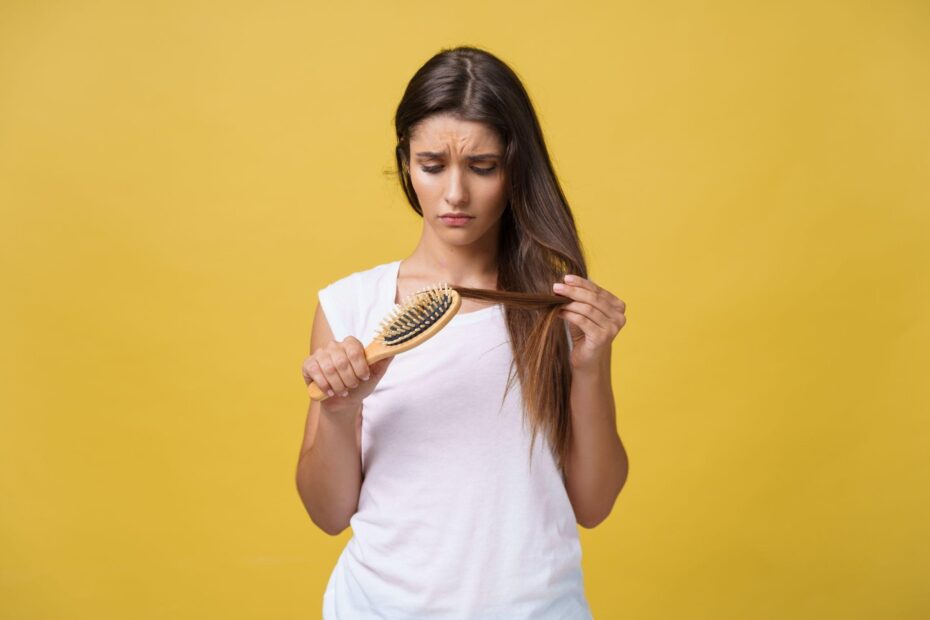
Most people notice hair fall and immediately reach for a shampoo, a serum, or whatever their friend recommended last week. That response is completely understandable — hair fall is alarming, and doing something feels better than doing nothing. But here’s the thing: treating hair fall without knowing its cause is like taking painkillers every day without figuring out why your head hurts. You might get temporary relief, but the problem keeps coming back.
Identifying the root cause of hair fall is the first and most important step in actually treating it. Everything else — the products, the routines, the supplements — is downstream of that one decision. Get it right, and the rest becomes straightforward. Get it wrong, and you can spend a year and a significant amount of money going in circles.
Hair Fall Is a Symptom, Not a Condition
This is probably the most important shift in thinking you can make. Hair fall, on its own, is rarely the actual problem. It’s the body’s way of signalling that something else is going on — internally or externally.
The average person loses 50 to 100 strands a day. That’s completely normal. Hair grows in cycles, and at any given moment a portion of your follicles are in a resting or shedding phase. Finding hair on your pillow or in the shower drain is not automatically a red flag.
What matters is change. When you start losing significantly more than usual, or when you notice thinning in specific areas, receding at the hairline, a widening parting, or visible patches, that’s when something deeper needs attention. A useful marker: if your ponytail has visibly thinned, if your scalp is showing through where it didn’t before, or if hair fall has been elevated for more than three months, it has crossed from normal shedding into something worth investigating.
The root cause could be nutritional, hormonal, stress-related, scalp-related, or genetic. And these require very different approaches. What works for hormonal hair loss will not work for hair fall caused by iron deficiency. Treating the wrong cause doesn’t just fail — it can sometimes make things worse, either by delaying the right intervention or by adding an irritant your scalp didn’t need.
The Most Common Causes That People Miss
A lot of people assume hair fall is caused by “too much heat styling” or “hard water.” While those can contribute to damage and breakage, they’re rarely the primary cause of significant hair fall. Breakage happens along the shaft; true hair fall happens at the root. If the strands you’re losing have a small white bulb at the end, they’re coming out from the follicle — and that points inward, not to your straightener.
The causes that most often go undiagnosed include:
Thyroid imbalances. Both hypothyroidism and hyperthyroidism disrupt the hair growth cycle, pushing more follicles into the resting phase at once. Thyroid-related hair fall is usually diffuse rather than patterned, and it often comes with fatigue, weight changes, or temperature sensitivity that people write off as unrelated.
Low ferritin levels. This is iron storage, and it is different from general anaemia. You can have a perfectly normal haemoglobin reading and still have ferritin low enough to affect hair growth. This is one of the single most commonly missed drivers of hair fall, particularly in women with heavy periods or restrictive diets.
Vitamin D deficiency. Vitamin D receptors play a role in triggering new hair growth cycles. Deficiency is extremely widespread — including in sunny countries, because most people spend their days indoors — and it rarely produces obvious symptoms until it has been present for a long time.
Hormonal shifts. Post-pregnancy changes, coming off or starting hormonal contraception, perimenopause, and PCOS all alter the hormonal environment your follicles operate in. PCOS in particular can cause a pattern of thinning that looks similar to male-pattern loss.
High DHT sensitivity in men. Dihydrotestosterone gradually miniaturises genetically susceptible follicles, so each growth cycle produces a finer, shorter, weaker strand until the follicle stops producing altogether. This is slow, progressive, and usually painless — which is why it is often noticed late.
Chronic stress. Sustained stress pushes a large number of follicles into the shedding phase prematurely. This is one of the few causes that is entirely reversible, but only if the underlying stress is genuinely addressed rather than managed around.
Scalp conditions. Dandruff, seborrheic dermatitis, and folliculitis create an inflammatory environment that weakens the follicle’s ability to hold onto hair. These are treatable, but they need to be treated as skin conditions, not as hair problems.
Most of these won’t announce themselves on your scalp. You won’t see a rash or feel irritation. They work silently, over months, which is exactly why so many people don’t connect them to their hair loss until it’s become quite noticeable.
Why Timing and Pattern Matter
When you started losing hair and where you’re losing it can tell you a great deal about the cause.
Sudden, diffuse shedding all over the scalp — where you’re finding hair everywhere, on clothes, in the sink, on the desk — is often linked to a recent illness, surgery, crash dieting, childbirth, or intense emotional stress. This is called telogen effluvium, and it has a delayed onset: it usually begins two to three months after the triggering event, not immediately. That gap is the reason people so often fail to connect the two. If you’re shedding heavily now, think back to what was happening in your life three months ago, not last week.
A receding hairline or thinning specifically at the crown is more commonly associated with androgenetic alopecia — the hereditary form — driven by DHT sensitivity in the follicles. This tends to progress gradually over years rather than appearing suddenly, and it follows a recognisable pattern rather than affecting the whole scalp evenly.
Patchy, circular areas of hair loss with clearly defined edges could indicate alopecia areata, which has autoimmune origins and needs medical assessment rather than cosmetic treatment.
Thinning concentrated along the parting, with the overall hairline intact, is a common presentation in women and often points to a combination of hormonal and nutritional factors rather than a single cause.
Understanding the pattern helps you understand the mechanism.