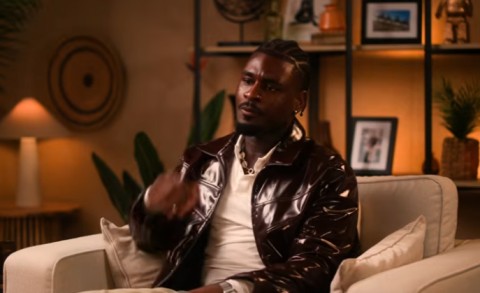
Editor’s Notes: In this powerful and exclusive episode of We Need To Talk, Love Island star Dami Hope sits down for a deeply personal conversation about the end of his three-year relationship with Indiyah Polack. Dami opens up about the moment his world shifted after Indiyah was spotted with another star, sharing his perspective on why “her story didn’t add up.” Beyond the headlines, the interview delves into Dami’s life before fame, the profound impact of his father’s passing, and the unwavering importance he places on loyalty. It is a raw look at heartbreak, growth, and the man behind the public persona. (April 21, 2026)
TRANSCRIPT:
Introduction
PAUL C. BRUNSON: Dami Hope, we need to talk.
DAMI HOPE: Sweet.
PAUL C. BRUNSON: I haven’t seen you to sit down to do a long-form interview like this.
DAMI HOPE: This is my first ever one. I feel like there’s certain reasons why I actually stepped away from doing things like this.
PAUL C. BRUNSON: Okay.
DAMI HOPE: Yeah, so. Okay.
PAUL C. BRUNSON: So why talk now?
DAMI HOPE: Why talk now? It’s ’cause I feel like I have a lot to just get out. So it’s not even to try and convince anybody, “Oh, I’m this or I’m this person.” It’s just to actually speak my truth. And you can take away whatever it is that you want from it, but hopefully you actually take an actual understanding of me. Okay, that makes sense.
PAUL C. BRUNSON: I love it. I love it. So I think in order to get to know who you are, let’s go to the roots.
DAMI HOPE: To the roots.
Nigerian Roots and Moving to Ireland
PAUL C. BRUNSON: The roots. And I feel like the roots are Nigeria.
DAMI HOPE: The roots are Nigeria. And it’s something I’m proud of. I’m proud of being Nigerian. I’m proud of my family. I’m proud of what my family did to try to give us a better life. Because my dad was a dreamer. He’s the reason why we probably migrated to Ireland.
PAUL C. BRUNSON: Yes.
DAMI HOPE: And just as a kid, I can remember flashes of me getting to this point where we’re in Ireland, obviously probably not legally or whatever way, because we’re very clever people.
PAUL C. BRUNSON: Very clever.
DAMI HOPE: Very clever people. So obviously there’s a plan in place to how to make sure we’re able to stay here. And I feel like back in them days was a bit easier.
PAUL C. BRUNSON: Yes.
DAMI HOPE: As opposed to now.
PAUL C. BRUNSON: Because this is the ’90s?
DAMI HOPE: Yeah, yeah. I say ’90s, I was born ’96.
PAUL C. BRUNSON: Okay.
DAMI HOPE: I think I was in Nigeria till maybe I was about 3 years old. And from there I remember me and my little sister, she was 2 years after me, so it was just me and her. And then it was me and my mom and then my dad. And then he’d bring us over to Ireland.
And I remember, I think at first we used to live in a hostel with like a bunch of loads of different people. Because obviously when you come to this place, it’s like you’re trying to find a place for your family and for yourself. And I remember little flashes of just, as a kid, you can remember just little dots of moments of like, “Oh, I’m in this hostel.” I can see my mom playing chess with people that she’s just making friends with in this situation.
And I know everybody was against him doing this because I remember my grandmother told me, because my mom is from my grandmother’s side, and she told— she was like, “You don’t have to go and do all these things.” But obviously he wanted to make something out of himself, for the family.
I remember this memory with my dad. I was sitting on my dad’s lap, and he has a car, and I’m sitting on the lap, and my hands are holding it, but he’s there, and I’m only like— I think at this point I’m only even just 5 years old. But it’s a very vivid and clear imagery I have of him.
And then I remember alongside that, we finally got an estate house.
PAUL C. BRUNSON: Okay.
DAMI HOPE: So now we actually got a place and it was like maybe 3 bedrooms. It was like our first home there. And we’re shifting from one house to another house. It’s just me and my sister until obviously they start adding the new members. Now, that’s the clever part for why we’re going to be able to stay here or whatever.
PAUL C. BRUNSON: Yes.
DAMI HOPE: So they start adding them and then, you know.
PAUL C. BRUNSON: Can we expand on that? Because I get what you’re saying. But if you could paint the picture, because I don’t think your family is going to get in trouble because almost everybody was doing that. Yeah. So it was you and your sister.
DAMI HOPE: It was me and my sister first. We were Nigerian, we came from Nigeria. And then I think we had my younger brother and he was now Irish. Now he was born in Ireland. And then every other sibling we had after that, me and my sister don’t have any Irish or English names. But those lot, they got the names too. Like he got David, they got Cynthia, they got Amanda. Me, it’s just Femi and Dami, you know what I mean? It’s just straight, straight Nigerians. But the ones that came with the Irish passport, they got the Irish names. They got the names too. You get me?
The Celtic Tiger and Family Life in Ireland
PAUL C. BRUNSON: Yeah, definitely. So with you coming in, I wanted to— I looked at that period of the late 1990s, early 2000s in Ireland.
DAMI HOPE: So my mother has always been in care, so she’s always studied care, she’s always done care. My dad, I say he’s a man of all trades.
PAUL C. BRUNSON: It’s a strong family unit.
DAMI HOPE: Yeah, very, very strong family unit. Because there’ll be times where my dad would probably have to relocate from— we live in Wexford— he’d have to relocate to Dublin for the job he has to do. And you have to get a place over there, so we probably wouldn’t even see him.
I feel like it was a lot of hard work, whatever they were doing at that age. But when you’re young, I’m just seeing that I want to play outside, I just want to make friends and stuff. But then when you look back at it, it’s like they’ve done a lot for us. They’ve done a lot for me, my siblings, and there’s a lot of happy memories in it because some people, the situation could be horrible, but I don’t remember it as being horrible.
I remember still being a happy, youthful kid that got to play outside, that still got bicycles, you know what I mean? They still got all these little things that you’ll see other kids get in your neighborhood. And I’m enrolled in school now. And school is amazing. You’re making more friends and you’re now part of a system.
PAUL C. BRUNSON: Yes.
DAMI HOPE: You know what I mean? Like you’re actually inside the system. I’m enrolled in school. I’m doing all these things. So it’s like now I’m part of Ireland.
PAUL C. BRUNSON: Interesting.
DAMI HOPE: You get what I mean?
Being Black in Ireland
PAUL C. BRUNSON: I get what you mean. But it’s interesting to me because you are Nigerian. But at a very young age, you’re in Ireland. You said there’s a cultural difference.
DAMI HOPE: Yeah.
PAUL C. BRUNSON: There’s also a racial difference.
DAMI HOPE: Difference, yeah.
PAUL C. BRUNSON: Because I was looking at the stats too, in that time, and even now, less than 1% of Ireland is Black. So you are distinctly different, but how you describe it, you felt like you were fully accepted and brought into the community.
DAMI HOPE: Yeah. And at that time I could say there wasn’t actually many Black people that lived in our town. So it was very kind of unique and happy that people are actually accepting of that.
At that point, it wasn’t racism because I was the kid that could jump higher than everybody else. I could run faster than everybody else. So it’s like I was using all these talents that comes with me probably being from my ethnicity to kind of show off. So then people look at that and they kind of pull you closer when you can do all these things. It’s not like I’m a monkey dancing for people. It’s just like I’m using these things that I know will kind of give me more appease to people, even at an early age.
But then the only thing I’ll say is, I feel like even at an early age, it’s just when it comes to a teacher saying your name or mispronouncing it, and then that’s when it starts becoming, “Oh yeah, I remember now, I’m still kind of different.” Because you do the roll call.
PAUL C. BRUNSON: Yes.
DAMI HOPE: And it’s like, I’m doing all these things, I’m accepted. But then the roll call and you’re trying to say my name, but she’s butchering it. She’s not saying it the way she’s saying James and Henry and Samantha. She’s saying it’s like, “I did da da da,” and it’s very— and then you just remember, “Oh, okay.”
The Story Behind the Name “Dami”
PAUL C. BRUNSON: Is that when you change? Because you go by Dammy.
DAMI HOPE: Yeah, I go by Dammy. And I feel like a big part of the reason for it is, even though I was young, it was still something that kind of stuck with me all the way from primary school to secondary school. ‘Cause my full name is Ade Damola Omobolaji. And when teachers would get to the Omobolaji part, it would be like they would kind of say “apology.” And then it would be like this little smirk, like, as kids we make jokes, we tease each other and stuff like this.
It’s funny, yeah, but then at the same time, it’s like, it’s not that hard to say. And it can’t really keep being like this every day. And then now the kids have a new joke, like, “Oh, apology.” You know what I mean? But I’m not an apology. I’m not sorry. There’s nothing.
So it’s a thing that kind of sticks. And then as I got older, even in secondary school, at this point now I’m more of a teenager. I’m closer to an adult. So when it’s still happening, it’s like, yeah, it’s not like I’m changing for anyone else, but it’s more like, you know, “You can just call me Dami. Just call me Dami,” you know what I mean?
Like, there’s some people that actually did try and they’ll pronounce it well, or they’re fascinated by the name, or they’d be like, “Oh my God, how do you say it?” You teach them and they get it. But there’s some people that never really cared to ask how to say it, and they’ll just keep switching it different day, remixing it a different day.
And then, yes, we had Big Zoo on. Yeah, Big Zoo, okay, yes.
PAUL C. BRUNSON: Who I love, right? But his name is Zaher.
DAMI HOPE: Zaher, yes, yes.
PAUL C. BRUNSON: Right, and I was asking him about this.
DAMI HOPE: He said his mom, only his mom calls him that, right? Yes, yes.
Finding Identity and the Road to Love Island
PAUL C. BRUNSON: Exactly, only his mom calls it. And I was asking him, how does he feel knowing that his name, he’s had to anglicize his name in order for other people to be more comfortable? And he felt uncomfortable initially, right? So he has to put himself in a place of discomfort to make others feel comfortable. I feel like this is what often happens when we’re anglicizing names or— but now I get it because we’re trying to fit into a culture. That part of anyone’s life, right, is so important because you’re what? Early teens.
DAMI HOPE: Early teens, probably like 12, 13.
PAUL C. BRUNSON: 12, 13. You’re beginning to figure out what your identity is.
DAMI HOPE: Yeah.
PAUL C. BRUNSON: And I always say that our identity is the story that we tell about ourselves, right? So at that age, what was the story you were telling about yourself? The story to yourself?
DAMI HOPE: To myself, I feel like the story I was telling to myself is, I’m supposed to be somebody. The type of music that I liked at that point, I loved Eminem so much. I’d run away to the computer mixing little CDs of Eminem, because obviously at that point you had to rip files and download it so you didn’t have to pay for it and stuff like this. I’d be finding new ways to do it.
So I was kind of very nerdy in the sense that I would make things happen for me. At the end of the day, say I’m alone, I gotta cry about it, but I will eventually be where I need to be, make the friends that I need to make. It’s the same way, I’ve done it before, it’s just I will do that again. And am I answering your question?
PAUL C. BRUNSON: No, you’re answering perfectly.
The Birth of “Dami Hope”
DAMI HOPE: And there’s one of the boys that I really loved, like he loved rapping, I loved rapping, and we’d always be doing it on break, and it was like our escapism. It was Facebook era, and I feel like it got to a point, back in Facebook days, all the kids used to change their names on Facebook. So you try and have a stage name. And obviously, I used to write. I used to write bars. I used to write poems. I used to just write stories and stuff like this.
And I remember I was just thinking. I was feeling down on myself. And I was like, yo, I was trying to figure out which names I could do. There was one, I was like, “Damn, Zola.” I was like, “Damn, Nader.” I was just freeballing stuff. And I was like, but no, that doesn’t hit. Like, what do I need? What do I need in myself? What do I always need? And then I was like, “Hope.” And I was like, “Yo, Dami Hope.” And then literally I just put my name that same day on Facebook, put my name Dami Hope. It was a thing where it was like, there’s no mistake now. I’ve reintroduced myself. This is who I am.
PAUL C. BRUNSON: That’s wild. I shouldn’t say that. That’s fascinating. You came up with that name?
DAMI HOPE: Came up with that name. I literally sat down, changed my name on Facebook, came in the next day. It was a thing where it’s like, if you know me, it’s Dami Hope. And then from then, everybody just started obviously knowing me as that name.
From English Lover to Microbiologist
PAUL C. BRUNSON: Also, did you have a love for science?
DAMI HOPE: I feel like I always just thought biology was the easiest, because it’s just human anatomy, photosynthesis. It’s just how things are made, or how living things— it’s just, I feel like it was one of the ones that was just easy to remember. Especially biology, it’s just organs, just bones, as long as you just keep reading about it. And then when it came to the chemistry aspect though, I was like, “Please, not for me.”
But I used to do biology and stuff like that. I think I was a big fan of it. But I feel like I was more of an English— I always just loved English. When I wanted to go to university, when we’re filling out all the things that we want to do, I was like, “Oh, I want to do just anything with literature, journalism, anything to do with English.” And my dad was like, “There’s no money inside that one, no. So you have to go and look for the ones that have money.”
And then obviously science, I like science too. And then there was biopharmaceutical courses with bioscience. And then it was a thing where I was like, I got to do what old man says. Did the science right. But to be honest, he wasn’t lying, because obviously when I actually started working after university, I got my first job. And it was like I started off as— not intern, but there’s a different word for it, but I guess it’s kind of the same, whatever. So I started off as that, and then so quickly I built my way up to being a manager within like 2 years.
PAUL C. BRUNSON: Okay.
DAMI HOPE: And there’s people older than me that were there.
PAUL C. BRUNSON: And you were doing what there?
DAMI HOPE: I was doing microbiology. So I had my own team. Like, we had rotas. There’s two teams, A and B. I managed maybe like 15 people. So we worked 4 days on, 4 days off. And we were doing tests for microorganisms in food, water. Even when COVID was happening, we were like a big part in just checking all this stuff.
PAUL C. BRUNSON: Microbiologist.
DAMI HOPE: Microbiologist. Yeah, yeah, yeah. He wasn’t lying though, because they were paying pretty well. And at that point you start to forget— it’s not like I forgot the things that I like, but you get so honed in because this is my job. And there’s times where I actually had more time to do things. But now at this point, it’s like I have to do all this managing stuff. I have to train people. I have to do this. So it’s like all this literature stuff and all these poetries and all these things that I used to always do. Where’s the time, right?
The Decision to Apply for Love Island
PAUL C. BRUNSON: Because you’re focused on work. So would you say before you went into Love Island that you were really happy with who you were, the man that you had become?
DAMI HOPE: Yeah, I feel like before I went in, I definitely felt proud of where I was. I felt proud of where I’ve reached, but something inside me just always felt like maybe there’s more. And I remember COVID was settling down and I think Love Island must have come around this period. I was on my 4 days off at this time and I went to one of my best friend’s house and we were just chilling. We were just drinking, joshing like we do. Because he’s the guy that I make all my silly decisions with, because if I go down, you go down. And we’re good with that.
PAUL C. BRUNSON: Everybody has a friend like that.
DAMI HOPE: Yeah, we’re good with that life.
PAUL C. BRUNSON: And who’s the friend?
DAMI HOPE: My friend’s name is Wally. Wally, shout out Wally if you ever see this. But yeah, I was in Wally’s house and he must have told me that one of our boys had applied to the thing. And I was like, “Oh, applied to Love Island.” I was like, “Oh, should I just do it for the craic and just see, just do it for the craic.” It was like a trigger that went in my head where I was just like, you hesitate and you procrastinate. But I was like, “Just do it, bro.” And I went downstairs, did that whole recording of like, oh, this is—
PAUL C. BRUNSON: On the spot?
DAMI HOPE: On the spot. I went downstairs. He was still working because he was working. I was just chilling with him. I went downstairs, did the recording thing like, “Oh, yo, this is why I feel like I should be here,” blah, blah, blah. And then I posted it. And I remember I sent it to them. And then maybe 2 weeks later I was just working, doing my thing. And I get a call. It’s like, “Oh, hello, is this Dami?” And I was like, “Yeah, yeah, who’s this?” Obviously, I’m still in my latex gloves, trying to do all this. I was like, “Yeah, yeah, who’s this?” She’s like, “Oh, I’m just calling from Love Island. You sent us this thing.” I said, “Oh, hold up.”
PAUL C. BRUNSON: Hold up.
DAMI HOPE: Hold up. Hold up. Let me just go outside for a second. Take the back room. And then she’s just talking to me, saying that they really enjoyed my thing. And then, just tell me more about yourself. I’m telling them more about myself. And then before I know it, it’s like, I’m on to the next one. And then dressing up for the interview. Then they wanted to fly me to the UK. And then I’m on to the next one. But they always say, “Oh, you’re not in till you get in.”
Love, Brand Building, and Doubt
PAUL C. BRUNSON: And so we’ve had a few Love Islanders, actually several. Like Maura Higgins. We had Lucinda Strafford. We had— oh my God— Megan Barton Hanson. We’ve had Shakira Khan. We’ve had several. All of them have said that a key reason for going on Love Island was to build brand. Matter of fact, some of them said love was never a part of the equation. What’s your take?
DAMI HOPE: I’m not going to lie to you, and people might say I’m lying, but I’m not. I just wanted to do it for the craic. I just wanted to do it just to have fun and talk to girls. So when the day actually happened and I walked in and they were all just there, I just said, “Wait, what? I’m actually here now, and I know everybody’s watching me.” I’m thinking in my head, “Oh, now I actually have to have rizz.” Because I’m just playing around, just thinking, “Oh yeah, this is my personality. I’m just being personal. I’m just showing them who I really am.” And the producers and all them are enjoying me. So this is why they keep bringing me forward. But at this stage in time, I’ve seen people get careers off the back of it.
PAUL C. BRUNSON: So you’re thinking it’s just for the craic, it’s just jokes, it’s not anything brand building wise. But was any part of that you wanted to enter a relationship, you wanted to find love?
DAMI HOPE: I guess I didn’t really think I’d even find— I just thought I’d just go on and just speak to people and talk to people. And at that point, sometimes when I watch the show as well, it never really seemed like, when there’s white girls, it never really seemed like maybe Black guys were their type or they would be the main focus.
So in my head, I’m thinking if there’s no Black girls who are my first type or whatever, if they’re not there, how is this going to work? Obviously I’ve dated Black and white girls because I’ve grown up in Ireland as well, so it’s not like I’m not open to it or whatever it is. But you just have that little doubt of when you’ve seen other people go on the show and it doesn’t really seem like they work out because there’s no one that wants them, because maybe that’s just not their type.
PAUL C. BRUNSON: And I think prior to your series— so yours is Series 8.
DAMI HOPE: Yeah, Series 8. Yeah.
PAUL C. BRUNSON: So prior to Series 8, the coupling was always decided by the contestants.
DAMI HOPE: Yeah, the contestants. Yeah.
Entering the Villa: First Impressions and Coupling Up
PAUL C. BRUNSON: Right. And historically, what the commentary always was, was there was a pattern that if you were Black, you were left to the end. So was that a thought when you went in, and then were you shocked at how the coupling was set up?
DAMI HOPE: Yeah, I remember going into the show thinking that, oh, when I get in, everyone’s going to have to step forward for, you know, because that’s the way they did it. It was like, oh, step forward if you want so-and-so. And I remember I was the first person to come in. I’m seeing all these beautiful girls, and then I’m just like, oh, okay, there’s two Black girls here. Okay. I can work with this. This is great. I know I’m going to step forward anyways. This is fantastic. There was some micros I was attracted to as well. And I was like, so it doesn’t matter, but I will step forward.
And then I remember, so the public are actually going to choose. And I said, oh, God. Really? Always got to put a challenge in front of bro.
PAUL C. BRUNSON: But you didn’t like that.
DAMI HOPE: No, I didn’t mind. At first, it was just like, because I prepared my mind so much that— I would step forward, you know what I mean?
PAUL C. BRUNSON: Gotcha.
DAMI HOPE: Because I built all the confidence now to step forward, even if no one steps forward for you, do you know what I mean? And this is on national TV.
PAUL C. BRUNSON: Yes.
DAMI HOPE: So then I’m like, okay, yeah, this is the public choose for me, which is an easier route. So then no one gets, you know, embarrassed or anything like that. And then, yeah, the public chose, and I guess they chose who they chose for me first, and it was fine for the most part.
PAUL C. BRUNSON: Okay.
DAMI HOPE: Until, until, until, you know, until you did the switcheroo.
PAUL C. BRUNSON: Yes. Yes. All right. So let’s break this down, right? So you go in, truly, who caught your eye initially?
DAMI HOPE: I feel like when I went in, it was definitely my ex India. Initially, because she had like, she had like, she had the— what’s it called— the piercing here.
PAUL C. BRUNSON: Yes.
DAMI HOPE: And she looked like her hair was funky, and she just looked like she was— there’s personality here already. Because I came with double nose rings, so I was like, this is a bit of me. Bit of me, yeah, okay, okay. And then obviously I think the other girls probably Amber and then Paige and, but like, yeah, just like, yeah.
PAUL C. BRUNSON: It was India who caught your eye.
DAMI HOPE: It was India who caught my eye first, yeah.
PAUL C. BRUNSON: But the public had chosen Amber.
DAMI HOPE: Yeah, they did, yeah.
Navigating Production and the TV Format
PAUL C. BRUNSON: Right, for you to couple up with. All right, so once something like that happens but someone else has caught your eye, how do you navigate that? And then also, I mean, I’ve been doing reality TV forever. I know production is in there. They’re trying to work their situation.
DAMI HOPE: With their little webs and suggestions. “Are you sure this is what you want to do, bro?” Like, that’s when I knew, okay, this is production driven. Okay, we going to make some TV then.
PAUL C. BRUNSON: Yes. And how did you find the TV aspect? Because a lot of people find that difficult.
DAMI HOPE: The TV aspect?
PAUL C. BRUNSON: The fact that if there was no TV, if you were literally a bunch of people in a villa, you could just walk up, talk to anybody you want to. But because it’s a TV show, that you have to have it structured in a way that drives entertainment.
DAMI HOPE: I feel like for me, subconsciously, you kind of notice these things that they put in place because, like, say for instance, I want to go talk to someone, I want to go speak to her. I’ll be on my way to speak to her. And suddenly I’m getting, “Oh no, Dami, come over here.” And I was like, “Wait, what?” Because then it’s like, then they put someone else with this person that I wanted to speak to. Or, you know what I mean? Or I’m having a conversation that I feel like is going really well with someone, but then obviously this person has now been sent over here to talk to this person. I’m just like, “Okay guys, you know, we’re not.”
But I feel like that was the frustrating part about it because it’s like, I want to be able to speak to people. I thought when I’m coming here, I’m going to have, like, free will to actually just speak to the people that I want to speak to and build on it. And I get, like, yeah, give everyone a chance.
But going back and looking back at the show, because I did watch it— I did watch it, to be honest. And I remember looking back and I remember some of the, like, first conversations, like, India and I had, they weren’t even there.
PAUL C. BRUNSON: Oh, really?
DAMI HOPE: You know what I mean? So it’s like, these are moments where, like, I feel like these were building blocks for us as well that would have been like, quiet, but you would have noticed that, oh, these guys actually get along. And I’m seeing that you’re putting the clip of her and Davide, who inherently is not even attracted to her anyway. And it’s like, what’s the point of, you know, this? Do you get what I mean? It’s almost like it becomes a little game.
PAUL C. BRUNSON: Yes.
DAMI HOPE: At a certain point.
Authenticity in the Villa: Real Connections vs. Representations
PAUL C. BRUNSON: But so on this, I think what’s so hard, and this is a challenge that I think every reality dating show has, is to your point, a lot of people are themselves, but a puffed-up version, an exaggerated version of themselves. And then some people are just outright faking and fraudulent with who they’re representing to be. So how do you form a relationship romantically or even platonically with people when you’re each other’s representatives and not each other? You know what I mean? Like, so even in that first conversation with India, how do you know, like, you’re getting to know her versus a representation of her?
DAMI HOPE: That’s the thing. I feel like you don’t. Because, like, when you come out the villa, like, that feel like that’s when— like, the person that you did speak to, those parts of them are still there. But it’s not really the full representative of that person. You know what I mean? And I feel like you figure it out. You actually find out about it when you come out because, like, in the villa she is, like, soft-spoken, quiet, you know, gentle. But then on the outside, she’s feisty. She’s loud. She can speak up. She does this. And it’s like, obviously, on the show, I get it. As a Black woman as well, you might have to keep yourself at a certain, you know, wavelength to appease to, you know— so which I fully understand and I get it.
That’s why— but most of the time as well, like, she just didn’t actually care too much. She was just living in a bubble, like a peaceful bubble, as she would always say. So, you know, you notice they doing things or they’d be whispering or they’d be like saying this and that, and it’s like they’re finding out intel or they’re this, and it’s like, now you’re being performative and we can tell. But I’ll call out no names because, you know, it’s a long time ago, right? But, and I get it, everyone came in for, you know, different reasons. So, and I guess like if you’re there to build your own, like whatever it is, you’re going to do the things that you feel like you need to do to get that.
PAUL C. BRUNSON: Yeah, for sure, for sure. Can we talk about Casa Amor? Because I think that’s when your star power, if you will, and India’s star power and your relationship went to another level.
DAMI HOPE: Yeah.
Casa Amor: The Turning Point
PAUL C. BRUNSON: So do you remember that? And did you— and also, as you’re going into that, because you don’t know what the audience is thinking. So what were you thinking the audience was thinking?
DAMI HOPE: I feel like going into— before going into that and like looking back at it now, because obviously I was in the villa, India and I weren’t that intense yet. And we’d only like kissed, like, you know, a couple of times. I don’t even think we shared a bed yet, or I’m not even— I can’t even remember. I don’t think we had shared a bed or anything yet.
And it was a thing where it’s like, I feel like on the outside, I feel like parasocially, people are looking at something else, and it’s more intense for them than it is for us. And we’d have these conversations. I remember me, Jax, Paige, and India, we’d have this conversation about, like, we feel like Casa Amor is coming up because we’ve reached this— because we all know, like, oh, 4 weeks, Casa Amor has to be coming up. So we’re all having conversations, and we’re talking about, like, oh yeah, we’re all going to be open-minded, like, we’re all still going to explore and, you know, talk to people or whatever. But obviously, the audience don’t see these conversations, right?
So for us, we already like have spoken and we know like that, like, what we’re going to like, you know, be open-minded to do or whatever. So then Casa Amor happens and I feel like outside world looking in, it’s like I’m the only one that’s now stepped out of this relationship. That’s not even a relationship because we’ve probably only kissed 3 times, right? You know what I mean? But outside world looking in, they’re thinking, oh, now this guy is— he’s a villain. He’s, he doesn’t— he’s just like going crazy and he’s just trying to get with all the girls.
But it’s like I’m just doing things that are familiar to me when I’m actually dating someone and I’m trying to get to know someone. And in that short space of time, it was like, you know what, this is a connection that I feel like I could build on. And I feel like India’s just like me. So I feel like she’s going to obviously talk to people as well. There could be Black boys there. I was thinking in my head, there could be a boy from South London that, you know what I mean, that she represents, she relates to. So in my head, I’m thinking, I don’t know what’s going on. Such a short space of time to, like, you know, say, OK, this is— like, I’m locked. I’m locked off. Because I didn’t come on this show to pretend to be someone I’m not or to, like, sacrifice my whole experience because of what, like, the audience might, you know, think or want when you’re not even in the show. Do you know what I mean?
So when this whole situation happened, and I don’t know, I got, like, an inkling— not an inkling. That Sis was coming back with something anyway. So I was like, you know what? Let’s burn the whole place down. Let’s have some fun. And I remember I was in my— I went to have a meeting with, I think, probably one of the producers or whatever. And then I was just like, oh. I remember I went back down because I had to do my speech of who I want to pick back. And I was thinking, bro, we got to go crazy over here. We’re going to, at the end of it, you got to say, “summer’s not over.” You got to like— we got to turn it up.
PAUL C. BRUNSON: So this really was your line?
DAMI HOPE: Yeah, this was really my line, bro. I was like— No, we got to pop it off. Because if the world is obviously like— because I got told, like, obviously when I was in Casa, I remember, I think, obviously, there was the two girls, China and Summer. And I think, obviously, I was getting to know the both of them more so. And I remember, obviously, I think I kissed Summer. But then I wanted to kiss China as well because I just wanted to— I’m a yearner. I’m a lipster. I just wanted to see, like, if the sparks would fly.
And I remember I think I was about to do China, and then they came over to me like, “Oh, Dami, chill out, man. You’re doing too much.” And I said, “Oh, okay. Fair enough. Cool, cool, cool. Since you obviously all feel that way, you know, you gotta just go hard or go home, boys.”
PAUL C. BRUNSON: Oh, really? Because a lot of people would pull back.
DAMI HOPE: No.
PAUL C. BRUNSON: If they just heard, if someone just said, “You’re doing too much,” I think most people would pull back.
The Villa Experience: Villains, Edits, and Finding Love
DAMI HOPE: Nah, I just felt like, I was thinking in my head, bro, everybody’s probably against me right now. So, you know what I mean? Let’s just make good TV. Like, just let’s make good TV. And in my line, the line might sound cringy now, like, you know, people watching it. But in that space, being in that, it’s like, you know what? Let’s go, guys. You know what I mean?
And then obviously, I think Sis came in. And she obviously had someone by her arm. I remember she was just talking about like, oh, I see his true colors now. And mind you, I don’t know what she’s done. But I just know she’s come back with someone. I’m restraining myself and being like, “Are you colorblind? Because you’re here too with someone else.” Because we had this thing where it’s like we’re both heartbreakers and we had that thing and it was like, it was almost like an alley-oop to a dunk type of situation. And it was like, wow, well done, girl.
PAUL C. BRUNSON: Yes. Well, so you had respect. You had more respect for her after that.
DAMI HOPE: Yeah. Like, I never really— I never stopped liking her when she left. And even when she came back, it’s a situation where it’s like, obviously it’s awkward to see, but I wasn’t upset. I wasn’t hurt about it, even though people said, oh, I was so angry, whatever. I wasn’t upset because at the end of the day, I’m a fair person and I’m like a person that’s like, you know, maybe they actually get on. And at the end of the day, it doesn’t mean our story is over. It just means like we’ve got to expand and build on to if we’re supposed to, you know, be together.
PAUL C. BRUNSON: Right. That’s a great window to emotionally how you were feeling, because at night I’m sure there’s lots of ideas coming in your mind because you said the producers were saying you were doing too much. You see India with someone else, right? You now want to be with her. You’re coupled off with someone else. So walk us through what you were feeling at night.
DAMI HOPE: I was feeling anxious. I was feeling like, did I just lose something that I actually really wanted? I was feeling like, how do I even approach the situation? You know what I mean? I’m just thinking about what steps do I take to kind of show her and reintroduce that, like, you know, this is actually what I want, and it’s you.
And then I remember there would be sometimes like, I’ll try to go talk to her, and producers do what the producers do again, be like, no, not today, give it. I’m like, why?
PAUL C. BRUNSON: What was something that you did that was a loophole or like a sneaky way to try to get to her?
DAMI HOPE: You’d be doing like, you know, when they’re like, you’re not supposed to talk after like, you know, when you’re going to bed. And obviously we didn’t share a bed and stuff, but I remember I’d speak to her sometimes through the day, or we’d be passing and try and do little touches and just try to be like, “Oh.” Do you know what I mean? Just, “Remember I’m still here. Do you know I’m still here?” kind of thing.
And we have little conversations that would kind of just amplify what I’m feeling and whatever she’s feeling. And then I think there was a point where it’s like, this one was so viral where I think I went to go sleep outside with Andrew, and then she must have followed me. And it was a whole romantic thing of us just running to each other. And that’s when I knew, yeah, no, it’s game over. Gotcha.
PAUL C. BRUNSON: You knew it. You knew it was something real.
DAMI HOPE: Yeah, this is mine now.
Being Painted as the Villain
PAUL C. BRUNSON: When you think back at that experience, what were you most surprised did not make the edit?
DAMI HOPE: I feel like you come on, then you hear all this whirlwind of news of like, oh, I’m this person and I’ve been— I’m villainized now. And it’s like, okay, you know, where do I even start from? Because how do I even explain myself? Because what you have is these edits that you’ve seen, but yet that’s not even me for real, right? You know?
PAUL C. BRUNSON: Right. So you feel as if you were painted as a villain?
DAMI HOPE: Yeah, after like the whole situation, I was painted as a villain that, you know, did something, and I’m angry that she did it back, you know what I mean? But I wasn’t— it wasn’t something that upset me in the beginning because obviously that was the lore of Love Island. This happens. Like, I’ve watched it from previous seasons. I make up my own mind about people, but I don’t hold them to that because at the end of the day, I know it’s a TV show, right? You know what I mean?
PAUL C. BRUNSON: Right.
DAMI HOPE: But then parasocially, people are so invested. And they spin on stories themselves and they make stuff up. And that still happens to this day.
PAUL C. BRUNSON: Yes. Yes. You know, even to get into parasocial relationships is because— I love how you use that term because I feel like that’s exactly what makes these shows so popular. It’s not just a passive viewing. It’s that the people who watch— a lot of the people who watch these shows form relationships. And typically what I see is that they see themselves in one or two of the contributors. So if they feel as if you have done a contributor wrong and they have aligned themselves or formed a bond with that contributor, they feel like you’ve now done them wrong.
DAMI HOPE: Yeah.
PAUL C. BRUNSON: And you definitely become the villain.
DAMI HOPE: Yeah. Now you’re right. You know, you’re right. You said it all.
Falling in Love — Inside and Outside the Villa
PAUL C. BRUNSON: Yeah. Do you believe you fell in love with India there?
DAMI HOPE: I feel like at first, like, I said I did, and I think I did, but then I feel like when I got outside is when I really, really fell in love with her, you know? Because Dad loved her, Mom loved her, and it’s like we’re from two different cultures, but, you know, we made it work. And it’s like a lot of things, like, you know, you just gravitate towards each other and you think the same way, or we’re building this thing together and it’s just like, it was fun, you know? Yeah.
PAUL C. BRUNSON: And I think also the fact that you met on a show that, you know, historically not a lot of couples come out of. But you then had to experience a lot of the same things. But even if we can talk about you all coming third, ’cause that in itself was history. Like that was major. So going into that final, when you knew that you all were a final couple, right? How did that feel? Because what I’m picking up from you is you really didn’t care much about what was happening outside of the show because you had found someone who you were genuinely interested in.
DAMI HOPE: Yeah. I feel like coming into the finals and knowing I was there from the beginning and I was the first guy there to reaching that, it’s like, even though we were third, it just further amplified the fact that I’m a born winner. Because even through all the transgressions and all the nerdy dumpings and everything else, I still fought my way to get to where we are here.
And us coming third was historical. I remember the whole uproar, like no Black couple has ever gotten that far. And it was like, Ekin-Su and Davide, we always knew they were going to win. They had my vote too, to be honest, bro. They were making some good TV for me while I was in there, bro. I was like, oh my God. There ain’t no way we’re beating them. Like, they were funny. So it was like, it didn’t even bother me that like, oh yeah, it was forced or whatever. It was just like the fact that we were actually there with all our friends and like we’ve all done this journey together. And it was just like a moment of like, wow.
‘Cause you came out with like, aside from like a girlfriend, came out with like real lifelong friends. You know, so it was like, it was an experience. It was like, you know me, I love friendship. So it’s a thing for me. It’s like I’ve done a new experience now and now I even have more friends. I have new friends. So it’s like—
PAUL C. BRUNSON: Just a win.
DAMI HOPE: Just a win, bro. It was good.
PAUL C. BRUNSON: Just a win. But it was close between second and third. Very close.
DAMI HOPE: Yeah. Close enough. Close enough. If only Ireland could vote. If only Ireland could vote, man. I didn’t realize Ireland didn’t vote. Ireland can’t vote. And they all watch it as well. So it’s like a whole big thing where it’s like, just let the Irish vote too. You know what I mean? Because I think the app doesn’t work because it’s on the UK Apple software, whatever. Yeah. So it doesn’t work in Ireland, so they can’t even vote. Yeah, that’s the thing. Definitely. That’s what I’m saying. You could have won. Bro, you could have won. Bro, they were behind me, man.
PAUL C. BRUNSON: Oh my, I didn’t realize that. That’s wild. Okay. Okay, we need to change that.
DAMI HOPE: Bro. Yeah, you need to do something about that, man. All right, done, done. Let’s use our platforms and change that, bro.
PAUL C. BRUNSON: Let’s change that right now. Right now. So, but still, third is not bad.
DAMI HOPE: It’s not bad, no.
Life After the Villa: Moving In Together
PAUL C. BRUNSON: When you get out of the villa, when do you and India first feel like you two become an official couple?
DAMI HOPE: I feel like probably when we moved into our house because we used to stay at my grandma’s and then sometimes we stayed at our mom’s. And then when we first got our first apartment, that’s when it felt like, oh, because I’ve never actually— no, I’ve never really lived with like a girlfriend, like, and actually were paying rent together for a spot, you know what I mean? And we’re like building on this spot and decorating and buying TVs, you know what I mean, moving in. So I feel like that’s when it’s like, you know, it really grounded that, oh yeah, we’re really, really official.
PAUL C. BRUNSON: Yes, yes. I would imagine that there was a lot of pressure immediately to then sustain that. Because so many couples break up so quickly. Did you feel any of that?
The Pressure of Public Perception
DAMI HOPE: You know what, there was a lot of pressure in the sense of like, I would be making TikToks and, you know, you’re trying to build your platform. You’re trying to— I’m just having fun with it because this is my first time coming into this like trajectory of, you know, fame and everyone knows who you are. And it’s like I’d want to collab with people or friends, but, you know, parasocially they’d be looking like, why is he with everybody else but Indiyah? Do you know what I mean?
Mind you, we speak all the time, we’re together all the time, and she’s doing meetings. She’s, you know, she’s about to start building this career of hers and she’s doing all these things. But I’m outgoing, I’m meeting up with, you know, friends that we have in there. I’m making, you know, content and TikToks. But everybody has something to say and it’s like to continue this whole villain narrative. “Oh, he doesn’t even care about her,” or “he’s embarrassing her,” or “she’s a stronger woman than, you know, than me.”
And it’s like, when do I get to actually live, guys? Because it’s like, relationship-wise, we’re good. But then I feel like all these— seeing all these things, I feel like there was a point maybe you start getting to her and, you know, start affecting all what she’s thinking. And in her head, she’s actually starting to think, “Oh, is there something that she’s missing here as well?” With, you know, all these little collabs that you’re doing, these— like, Paige is one of our friends that I would do, and she was starting, “Okay, maybe there’s something she’s missing.” Or I go to Ireland and there will be like an Irish influencer as well. We’re all at the same network.
And you know, it’s just like people seeing worlds collide, but it didn’t break us. It’s just things obviously we’d speak about and then, you know, there’ll be boundaries put in place or you’d be like, you know, take a step back from doing this or, you know, stop doing stuff for, you know, just girls, just so the noise would just stop.
PAUL C. BRUNSON: I see it.
DAMI HOPE: You know what I mean?
Career Trajectories After Love Island
PAUL C. BRUNSON: I see it. Can I even ask too, is when you came out, right? Because you said something really interesting to me at the beginning of going into Love Island is that you were just doing it as a joke.
DAMI HOPE: Yeah.
PAUL C. BRUNSON: Right. So it wasn’t a brand build for you. Right. Do you think Indiyah, was she doing it as a brand build? And I’m not trying to disparage her in that, but I guess where I’m going is— because a lot of, I’ve talked to a lot of influencers and those who use television platforms, what they’ll do is, is that they’ll set up their everything, their socials, they’ll get agents, they’ll set it up so that when they come out of the television project, they can immediately start using that, leveraging that. And I’m wondering, was that her desire? Because then if so, because I feel like when she got out, she really catapulted, her popularity shot up quickly.
DAMI HOPE: Yeah, she— I feel like hers was kind of like she came in, I don’t know the reasons. I can’t speak for her, but I do feel like when she came out though, it was a fresh start for her too. There was nothing put in place and everything, like, she was hotcake. Everybody wanted, you know, the girl that made the best heartbreaker win, you know? So it was like hotcake. She’s pretty and like people just wanted her in it. It’s like she was like the star, it girl. So I feel like everything just like happened for her, like, you know, just like naturally, you know?
PAUL C. BRUNSON: Okay. So her career is taking off. Do you feel that her career is moving faster than yours?
DAMI HOPE: Mm, not necessarily, actually. I feel like in that space I actually wasn’t even thinking about what was happening because I was having meetings with management and, you know, talking about different things and I was getting deals. I was seeing like money that I didn’t see, you know, I could never see in one incident. At first I’m like, I’m doing good. So I wasn’t really like focused on her.
Obviously, I’m seeing the big PLT or whatever looking for her, and that’s a big— what’s it called? Collaboratory. Yes. But on my side, it’s like, Boohoo are looking for me too, and they’re trying to pay, but I’m saying no because obviously I have— I didn’t want to do fast fashion. I wanted to— because I don’t wear that stuff anyway. And it’s like, if I am going to brand build and stuff, that’s not the way I can go. And it’s easier— it’s not as easy for guys to navigate outside of that when they do it. So like girls can do PLT and do whatever and still manage to do this. But if I did that, it’s like I become boxed in. Now I’m just another one of the guys.
And they were paying big, like they were paying more money than I probably like I’ve seen that once for like, what, a year contract. And I’ll keep saying no. And then they’ll keep like asking me, “No, come on, are you sure? We’ll up it, we’ll up it.” But I was still standing my ground that nah, this is not for me.
Turning Down £200K
PAUL C. BRUNSON: Can you share how much were they offering?
DAMI HOPE: I think they were offering like at first it was like maybe near like £200K. And it was just like, for one year? Yeah, for one year. And it was like, then they come back and they say, “Oh, we can even get you to do your own collab, and just, it would just be you, and we’ll add, we’ll even add more.” And I was still just saying no, it’s just not for me. And I don’t want to be boxed in, and I don’t want to have like a hard time trying to— I do this because of the money, and then suddenly now when I’m trying to navigate, these brands that I actually do want to work with don’t want to work with me.
I feel like all the things I did early on really worked out for me because I would get bigger jobs later down the line, do you know what I mean? And they will all add up to even way more than that, right? So, you know what I’m saying? So it’s like, yeah, you offered me £200K, but by the end of the year, I made way more than that. And I feel like the first year I probably made like maybe like £550, £600K. So it’s like, wait, hold on. Yeah, so it’s like— that’s a lot of money though, and you know it, bro. And the thing— hold on, wait, wait, wait, wait, wait.
PAUL C. BRUNSON: Cheers on that, man. Cheers on that, man. Congratulations for that.
DAMI HOPE: Thank you.
PAUL C. BRUNSON: Yeah, I like that. I really do, because I’m assuming that was a lot more than you were being paid as a microbiologist.
DAMI HOPE: Oh yeah, bro, bro. My dad was so happy now, bro. It was shopping time, you know. It was shopping time. Nah, it was shopping time. I remember the first time I got like my paycheck, I think my best friend wanted to buy a car. I sent him at least half of the money for the car that he wanted. All right, bro, just send the money left, right. Who wants? Who wants? Because like these are the people that I’ve come up with and now I’m here in this space.
PAUL C. BRUNSON: Is this your best friend?
DAMI HOPE: Yeah, best friend Wally.
PAUL C. BRUNSON: Wally, who you were at the house with beside it?
DAMI HOPE: I was like, it was like one of my girl’s birthdays. I was like, “Let’s go Dior, man, what do you want?” Because it’s like, now you guys, when I was like, when we were like, you guys grew with me. So it’s like, I have like anything you ever need from me, I got you. So, and then obviously my family as well, just have to take care of them first. So it’s always just been that way. And then blowing a lot of cash on presents and birthday gifts and stuff like this.
What He Loved About Indiyah
PAUL C. BRUNSON: And which I love. Can we get into you and Indiyah? As much as you want to go. I would love to know, what did you first— or what did you love about her?
DAMI HOPE: I feel like I loved her, like, feistiness. Like, she was her own character and she was, you know, able to speak. Like, she just spoke up for whatever it is that she wanted to speak up for. And she wasn’t shy about— if she didn’t want to do something kind of thing, do you know what I mean? And I like that, like she just stood on her own ground.
PAUL C. BRUNSON: Yes, yes, yes. Now with Indiyah as well, I’ve noticed, and if I could just pick up on this, is that in our conversation so far, you’ve been very calm and cool. Yeah, but every time we touch on Indiyah is where I see nervous—
DAMI HOPE: It’s not even nervous, it’s just like, it’s a situation. Obviously, you know, we’re not together anymore, and it’s like, yeah, it’s just we’re not together anymore. It’s like, just, it’s an uncomfortable situation because obviously I’ve never been in this like type of situation before, and now I have been, and it’s just the whole like if you want to get into it, just to get into it, it’s like, you know, we were in a good place, like we were good, we were still together, and you know, there’s a lot of boundaries in place that mostly were set by her. And obviously—
PAUL C. BRUNSON: Which were what? What were some of these?
DAMI HOPE: Just like in terms of like me, female friendships, you know, like anything around girls, or just like, you know, coming back home late and just making sure you call in, or you know, just all these like things that like just set by her, like things we would say we do together first. And if you’re going to do with someone else, you’d say it or you’d ask or whatever, but they’d all be by her. But then majority of them would be broken by her, you know? And then I feel like in this situation as well that has happened, it was kind of shocking, obviously.
Almost Four Years Together
PAUL C. BRUNSON: So you were together for 4 years? Almost 4 years.
DAMI HOPE: Almost 4 years. Almost 4 years. Yeah.
PAUL C. BRUNSON: Okay. So over the 4 years or over the 3 years and change that you and Indiyah were together, you had moved in together.
DAMI HOPE: All right.
PAUL C. BRUNSON: So you’re living together. Were you already talking? You were committed to each other?
DAMI HOPE: Yeah. Committed to each other for so long. We did so many anniversaries, so many holidays, each other’s. We did everything together, you know?
PAUL C. BRUNSON: Were you talking about marriage?
DAMI HOPE: Yeah, we talked about marriage. It’s a thing like in our household, like we all— we both know our cultural differences and the cultural, like, humor that we can kind of share beside each other. Obviously, she’s Jamaican. I’m Nigerian. And you know what they say about Nigerians? “419. They all cheat.” We made these type of jokes. And I remember one time I went on this radio show and I made the joke about, “Oh, we can skip the ring, you know what I mean? Because we can have babies,” because obviously, blah, blah, blah. Which I get, it’s a sensitive joke outside of our household and things that we’re comfortable with. I apologize for that. But it’s just dark humor. And a lot of the things that I do end up saying online that get me in trouble is from a place of just humor and jokes. And, you know, but I see though that what his—
PAUL C. BRUNSON: What could have happened, yeah, is that you take all of those, it then underscores that villain.
DAMI HOPE: Yeah. And it all just—
PAUL C. BRUNSON: Narrative.
DAMI HOPE: Yeah, it all just keeps on, like, you know, bringing this whole villain narrative. And I feel like that’s what’s been pitted against me for, you know, this situation that’s happened. Because there’s a difference between, like, you know, the reality of how people are and then the image, right?
And I feel like the reality of me is I’m carefree. I share everything. I want to be open with the world. If you’re a fan of me or you like me, I want to give you me. Do you know what I mean? There’s no reason for me to like hide. But then I guess on the other side, on her side, because she would go out and she’d have as much fun as I’m having, but she just won’t post it. And maybe the ones that she’s posting is like she’s just watching TV in the living room. So it’s always like she’s always at home. But I’m always outside.
PAUL C. BRUNSON: Right. So you feel as if people were already accusing you— not feel, you saw it.
Cultural Differences and the Fallout
DAMI HOPE: People— They’ve been accusing me. Cheating. Cheating. I’m gay. They attack my masculinity just from how I dress, from me being expressive with my fashion. I can get my nails done. I can put on makeup. Just like all these little things they’ll use to paint this picture of me as a person that isn’t even me.
But at the end of the day, it’s like, I don’t care about being expressive. I want to be this way. I want to live my truth. I want to be myself. Do you know what I mean? And I feel like all these things have been used now against me, especially in this situation. And it’s a thing where it’s like, it’s unfair, but at the same time, it’s like, this is the aim of the game that I got into. Do you know what I mean? So I get it, but it’s unfair.
PAUL C. BRUNSON: No, it’s entirely unfair. And I want to unpack all of those because I think it’s important for us to get your opinion on each of those. But something that you also mentioned that we have to talk about is you talked about there’s a cultural difference between you and Indiyah, right? So you are Nigerian heritage, Indiyah Jamaican heritage. How did that cultural difference show up, for good or bad, in your relationship?
DAMI HOPE: I feel like more or less, I feel like we come from different types of households where mine is so traditional — it’s full of, you know, you have to greet, it’s very respectful. And I guess in her household, lovely people, but then I would sense the difference in — I don’t know how to say it without — I’m not trying to sound rude or anything like that. But there is a definite difference in how she speaks to her mom versus how I speak to my mom. Do you know what I mean? I have to put “Auntie” in front of her mom’s name. Do you know what I mean? Stuff like this, different things. But she’d obviously do it as well because I’ll teach her the difference in the culture. Whereas I feel like mine’s very traditional, but then hers is a bit more free.
PAUL C. BRUNSON: Right.
DAMI HOPE: Do you get what I mean?
PAUL C. BRUNSON: So I tell you what — being Jamaican myself —
DAMI HOPE: Yeah.
PAUL C. BRUNSON: What I’ve noticed as a big difference. It was interesting — most of my best friends growing up were either Jamaican or Nigerian, right? And at the end of the day, all Jamaicans are basically from Nigeria anyway.
DAMI HOPE: Yeah, yeah, yeah. I tried to say that one time, bro. I tried to say that one time. They were like, “No, I’m not. No, I’m not.” If you trace it back, yeah, that’s what I was trying to say. Ghana or Nigeria, man. I’ve been trying to say that.
PAUL C. BRUNSON: It’s pretty much.
DAMI HOPE: Yeah.
PAUL C. BRUNSON: We are all family. Yeah, all family. And that’s something that I think we also need to remember — that we are all family. And what society tries to do is divide not only us, but divide everybody. Because that’s how you disempower people.
But one thing I noticed distinctly is that I feel like most Nigerian households that I know of are very patrifocal, right? Most of the family revolves around the male patriarch — the father figure making the primary decisions, etc. In every Jamaican household that I’ve been close to, including mine, it’s matrifocal.
DAMI HOPE: Yeah, that’s what—
PAUL C. BRUNSON: And revolves around the mother.
DAMI HOPE: The mother, yes, yes, yes.
PAUL C. BRUNSON: My grandma was — like, she was it.
DAMI HOPE: I actually get that. I actually agree with you.
PAUL C. BRUNSON: Yeah, she was it. And so when I’ve seen Nigerian and Jamaican marriages, I’ve seen that that sometimes is a friction point, right? Did that show up at all? Is that what you’re getting to as well, or not necessarily?
DAMI HOPE: I don’t feel like it showed up, but I do feel like there are some cases where it felt like I was an outsider.
PAUL C. BRUNSON: With her family?
DAMI HOPE: Yeah, with her family. It’s like, yeah, I fit in, I accept, but then I feel like there is a certain level of things they probably think of me because of the prior socials I put online as well. And it just became like, maybe I’m not the same as you guys or something. And I felt like that sometimes. And I feel like it kind of starts showing up towards the end, you know what I mean? I feel like it starts showing up there because I just didn’t feel comfortable anymore.
PAUL C. BRUNSON: So you think it was more so what was being said about you?
DAMI HOPE: What was being said about me and just how it felt like I was now being treated. And it’s just different. And I guess maybe it’s the jokes, it’s the stuff that the internet are putting against me. I think I remember I wore an outfit to the MOBOs or something and I did my hair back and I had earrings. And then the internet want to diss me about whatever fashion choice that I made. I thought I ate. I still think I ate. It doesn’t even affect me. But things like that — if the internet’s saying something bad, then I feel like they’d start believing what the internet’s saying.
PAUL C. BRUNSON: And then her and her family—
DAMI HOPE: Not her. I feel like she’d understand me, obviously. But maybe her family just like — “Oh, maybe he’s zesty, or maybe he’s actually—” all these little things. And it’s like I could gauge this and I could see.
PAUL C. BRUNSON: Right. So you feel like — and not to put words in your mouth — but did you feel like maybe her family didn’t feel as if you were masculine?
DAMI HOPE: Yeah, I think so. Simple as that. Probably. I think, yeah, maybe eventually. I think it probably came to a point where it was like that.
The Incident: What Really Happened
PAUL C. BRUNSON: So then, Dami, help me understand what happened — and just so everyone knows, if you’re comfortable with me saying what happened.
DAMI HOPE: Yeah, yeah, yeah. I mean, the whole world knows.
PAUL C. BRUNSON: Yeah, this is true. So for the 5 people who don’t know, I want to give just a little bit of the detail. So in July 2025, you and Indiyah had celebrated your 3-year anniversary.
DAMI HOPE: Yeah, yeah.
PAUL C. BRUNSON: Okay, so you’re 3 years into your relationship. Then December 3rd, 2025, Indiyah was spotted kissing Inside UK star Marlon Garcia. And this was at the Series 3 wrap party for Inside, which is a Netflix reality competition show by the Sidemen. So this happens on December 3rd.
DAMI HOPE: Mm-hmm.
PAUL C. BRUNSON: When did you find out?
DAMI HOPE: I probably found out properly on December 5th, and it was just because of a chain of events — things just didn’t make sense. And I’m too clued in not to figure stuff out, especially because I’ve been with you for so long.
And I think eventually she obviously came forward and said, “This is what happened.” And for me, I had to process it. I’m processing it privately — no one knows this is happening. So it was just a situation where stories just weren’t adding up. And then eventually she came forward to tell me, and then we just had to — obviously I said I can’t be in this relationship.
But at the same time, I know we have this public relationship. I think it came to a point where there were times where she’d be on Snap or something and she’d mention that her mental health right now is in a bad place. And I would be trying to process this, but in my own way I needed to get out of the space that we lived in, because we still had to live together.
PAUL C. BRUNSON: Oh, that’s right. You still lived together.
DAMI HOPE: Yeah, we still lived together.
PAUL C. BRUNSON: So, all right. Damn. All right.
DAMI HOPE: All right.
PAUL C. BRUNSON: This is complicated.
DAMI HOPE: Yeah, it’s very complicated.
PAUL C. BRUNSON: But you said already before that you were clued in — that things didn’t feel right. In December?
DAMI HOPE: No, it didn’t. Things didn’t feel right in the sense that the night she went out and when she came back — it’s like you have this thing where, if you go out, you just text and say, “Oh, what are you doing?” But you’re gone now for the whole night, not said anything. And it’s like, that doesn’t make sense, because I was with you in the morning. We literally came back together in the morning. We helped you put your outfit on, we helped done all this stuff. So then you’ve gone out and come back, and your story doesn’t make sense when I’m asking, “Where have you been?”
PAUL C. BRUNSON: So you were at home? And then what time did she come back?
DAMI HOPE: Probably — I don’t even know, because I had to work that day, so I had to leave the house.
PAUL C. BRUNSON: So you’re not actually sure what time she came back, but sometime in the morning?
DAMI HOPE: No, probably like afternoon-ish or something.
PAUL C. BRUNSON: Yeah, afternoon.
DAMI HOPE: Yeah, I think she probably woke up at like 1 PM or something, and that was when I got the text — like, “Oh, she just crashed out” and blah blah blah.
PAUL C. BRUNSON: So she was gone. You wake up, you leave to go to work, she’s still not back home. So at this point you feel, all right, something’s up.
DAMI HOPE: It’s not even a straightaway thing — “Oh, something has happened.” It’s more like, yeah, things happen. I mean, you can go out, get drunk, and you just crash out. Do you know what I mean? I understand that. I understand how to have fun, so it’s okay. I get that.
PAUL C. BRUNSON: All right, so can I play devil’s advocate?
DAMI HOPE: Yeah, play devil’s advocate.
PAUL C. BRUNSON: Because I think you might be giving yourself a little bit too much grace on this one. All right, so I’ve been married for 20-something years, right? But if I’m 3 to 4 years into a committed relationship where I live with someone, we have established boundaries.
DAMI HOPE: Yes, yes.
PAUL C. BRUNSON: And my partner goes out and she doesn’t come home. And the next morning — I mean, I’m not even waiting till the next—
Processing the Breakup Publicly
DAMI HOPE: I didn’t wait till the next morning. Don’t get me misconstrued. I was even up like saying, “Everything good?” Because I’m checking for your well-being and seeing how you are, you know what I mean? So I’ve texted. It’s not like I’ve just gone to sleep and forgot like, “Oh, my whole girlfriend exists.” I’m still looking out for her well-being, just trying to check where she’s at, if she’s good. You know what I mean? But getting no response, getting none of this. So it’s like, then the first response is at 1 PM the next day.
I’m like, you know, whatever. But just to like, you know, okay, to move on from that, it’s just like when everything happened, it’s like, I remember it was her birthday, her birthday as well. And when she put up the whole mental health thing on Snap, I remember people on Snap, because I’m trying to process this, people are hitting me up saying, “How are you out when your girlfriend is at home?” And I’m like, “Bro, you don’t even know what I’m going through here, right?”
I’m just keeping everything cool. There’s no sense of hate for me for her. Like, at the end of the day, you’re someone I’ve been with for so long that I’m still able to be in this capacity with you. But I do need to have some level of self-respect for myself as well, to be like, “You know what, this isn’t what I want anymore.” I can’t be here or do this because at the end of the day, I’m an honest person, right? And I always want just people to always be honest, you know what I mean?
And I feel like when trust has been broken like that and in such a silly kind of way, you know what I mean? You feel all these type of emotions, but at the same time it’s like, you just got to exhale for a second because it’s like, you’re asking yourself, “How could you, how can you do all these things?”
PAUL C. BRUNSON: And what are the emotions that you feel?
DAMI HOPE: The emotions I felt — I felt angry. I felt like, “Why would you do that? Like, why would you disrespect me and us like that? Do you know what I mean? Like, for what? For a short time that you had on a show?” Because the show wasn’t about love. It wasn’t even any of that. So it’s like — and you know what I mean? It’s like, it’s okay for you to go out and make friends, be friends with the opposite sex and stuff like that. But it’s like, there’s boundaries in place. This isn’t even a boundary crossed. This is just like straight — you don’t do this if you’re in a relationship. Do you know what I mean?
And it’s like, I know now there’s people as well that’s around on the table when this is happening. So it’s like there’s people that know you and I are together and you’ve done this as well. Do you know what I mean? So it’s like I’m processing a lot of stuff, but it’s like I’m trying to keep us away from the embarrassment of it online and everything as well.
PAUL C. BRUNSON: Right. Because that’s a whole other —
DAMI HOPE: It’s a whole other thing that you got to deal with. And for the most part, I continue to play my part. Like, on her birthday, it’s like I start to show up because the internet doesn’t know.
PAUL C. BRUNSON: But you two had broken up already.
DAMI HOPE: Yeah. And people might say, “Oh, it’s just a kiss,” and all that, but then — I don’t actually know what the full story is, because there’s certain elements that are part of the story that confuse me as to how this can happen. Do you know what I mean? I don’t want to go into it, because I don’t want to actually spread too much info about it or whatever. But I feel like when I posted my New Year’s dump, I feel like that was a thing for me where it was like, “I’m starting this year fresh now. I need to choose myself.”
PAUL C. BRUNSON: And just to clarify for the 5 people who don’t know — you did your New Year’s dump, basically a reflection of your year, and you posted a full carousel. And in it you don’t include any photos, any imagery of Indiyah. And so people see that and then it goes to another level.
The Video Surfaces
DAMI HOPE: And then it goes into another level and they make up their — you know, there are new stories and whatever it is. And that’s how I feel like everything happened. And I remember, at this point, things are moving fast now. And then now this sudden story — apparently now we’re finding out there’s someone that was there and there’s a recording of it.
I have to listen to everybody’s phone ping at the same time. All of my friends are on their phones, and we’re all getting this video. It comes up on TikTok at the same time, and I have to look at everyone and myself watch this video and then look at all my friends watch the same video, and everyone’s in shock. Because there’s one thing of like, okay, yeah, you’ve heard it, but then seeing it is a bit like — and it doesn’t — then it feels even way more than how it was expressed to me. And it’s like, then I’m dealing with all this stuff, and, you know.
PAUL C. BRUNSON: And just for the — just to — yeah, so this is January 10th, the video surfaces online, where you see Indiyah kissing someone else.
DAMI HOPE: Yeah.
PAUL C. BRUNSON: Okay.
DAMI HOPE: I guess from that point it was just like, yeah, nah, this is so — it’s embarrassing. And then it’s just disrespectful because we’ve been — I don’t know, I just feel like it just wasn’t worth whatever we had to do that. But at the same time, it’s like I just had to remove myself from that situation.
But at the same time, it still wasn’t enough for the internet because the internet still want to believe I had to have done something first. It’s still on me. And then, you know, it’s AI and it’s not real. And it’s like, “What did Dami do? Dami’s been cheating for a time, so she’s just getting her lick back.” Or, “Dami — what Dami did in Casa Amor, this is why he’s doing that.” Or, “Dami’s joke the other day, why wouldn’t she do it?” Or, “How Dami dresses, oh, that’s why she’s done it.” And people are like, “Oh my God, she should cheat on him again,” you know what I mean?
All these things I’m seeing online — it’s like, you can hate him, you can say all these things, but I stand for women protecting women. But it comes to a point where it’s like, what have I actually done to you guys? I ain’t done anything. And now it’s like, I’ve been dealing with it privately. I’ve not spoken about it. I never wanted to speak about it. It’s calm. But now publicly, I have to deal with it. And the whole embarrassment of it publicly, and people making mockery of it, and joking about the both of us. And we’re having to go through this whole turmoil of what was such a beautiful relationship — to now this is how it ends. It’s a bit sad.
PAUL C. BRUNSON: Why didn’t you say anything?
Choosing Silence Out of Care
DAMI HOPE: Because at the same time, I genuinely still have a care for her. I’ve loved her, I’ve been with her for so long. There’s a level of care that I’ll always have. And at the end of the day, it’s like, I’m not trying to bash on her or try to — I don’t want anything to happen to who she is or whatever it is. Like, I want her to still be good. Do you know what I mean?
So for me, it’s like I don’t really need to say nothing. I don’t have to explain myself to the internet. But it’s like, when I’m seeing people just always trying to twist things and you’re now further trying to make me this villain, or I must have done something — it’s just like, you know what, it’s kind of grinding on the teeth. Like, if you don’t know something and if I don’t speak about it, they have time to then form their own ideas as to why everything has happened. And it’s just a lot of noise.
PAUL C. BRUNSON: So for everyone making the noise —
DAMI HOPE: Yeah.
PAUL C. BRUNSON: They will be listening to you right now.
DAMI HOPE: It’s fine.
PAUL C. BRUNSON: What do you want to tell them?
DAMI HOPE: You know what? Good question. Shut the f* up. In the most polite way. You know what I mean? Let people live. Like, at the end of the day, situations happen. I don’t want any trouble for my ex and everything as well. There’s none of that. It’s like we’re both people — yeah, it’s happened, but we moved on, we’re processing it, we’re civil at this point now. So it’s like, I just want to be able to — if you don’t know something, don’t make up something.
PAUL C. BRUNSON: So, right, fair, that’s fair enough. Now you just said that you and Indiyah are civil now.
DAMI HOPE: Yeah, like — so do you talk? I don’t say we talk all the time. Obviously she’ll still have, “Happy birthday,” you know, all this stuff. It’s like, but we’re giving ourselves that window of space to just heal and process this and deal with it and just go our ways.
PAUL C. BRUNSON: Okay. And what it sounds like is, and you actually said it, is that you wish her the best. Yeah, you want the best for her. Yeah, yeah, yeah. Now a lot of — I think what’s happening now is probably because Love Island UK is on air right now. Do you watch it?
DAMI HOPE: No, no, I didn’t watch it. It’s just whatever comes up on TikTok. Because the whole time, bro, you can’t even scroll it out — all these little edits and people tagging me and stuff. So those are the only things I would see, but don’t really have any reason to watch this one, you know what I mean? Yeah, I feel like there’s no reason to really watch it, so it’s cool.
Moving Forward and Dating Again
PAUL C. BRUNSON: Yeah, I appreciate you just sharing that because it was interesting. I was talking to a friend of mine who said, “Oh my God, I can’t believe Dami’s coming in. He’s never said anything about the relationship. I can’t wait to hear his opinion.” And I think from his perspective, he said that the community really lifted the two of you up.
DAMI HOPE: Yeah.
PAUL C. BRUNSON: And I think that you both gave a lot of inspiration and hope to a lot of people. And so when you two broke up — talk about parasocial relationships — a lot of people felt that pain. And just hearing your perspective will be helpful for many.
DAMI HOPE: I hope so.
PAUL C. BRUNSON: Yeah, no, I think it will. I think it will. So now here’s a question that will test how healed you are.
DAMI HOPE: Okay, hit me. I feel like I know what you’re going to say. You know what I’m going to say. You know what I’m going to say.
PAUL C. BRUNSON: All right, let me say it. Have you thought about dating again?
DAMI HOPE: Uh. Yeah, yeah, I’m not opposed to dating. I mean, I have to get back on the horse, you know, okay, and saddle away and settle, you know. I don’t spend too much time dwelling in pain and stuff like this. I just have to put my best foot forward and keep going, man. Yes, life’s not done yet, so you got to go forward. Yeah, whoever’s out there for me will be out there for me, okay, you know.
PAUL C. BRUNSON: So now talking about who’s out there for you, can I show you something?
DAMI HOPE: Oh, you got someone for me?
PAUL C. BRUNSON: Can I show you something?
DAMI HOPE: Wait, what?
PAUL C. BRUNSON: Can I show you this? All right, I want you to tell me — okay, you ready?
DAMI HOPE: Yeah.
PAUL C. BRUNSON: Okay, you ready for this? All right, I want you to tell me, who is this?
DAMI HOPE: Oh, what are you doing, bro? That’s just — no, that’s just my bestie, bro. She’s like my bestie. That’s your bestie? That’s my bestie, Uchma, like my older sister.
PAUL C. BRUNSON: All right.
DAMI HOPE: Yeah, I put her on a date, yeah. I was just joshing.
PAUL C. BRUNSON: See, this is — see what you do?
Friendships, Racism, and School Fights
DAMI HOPE: You do this because people been putting us together and banding us together for so long and saying that we’ve been having a secret relationship and an affair. But really and truly, that’s just being my bestie. Like, you know what I mean? I have a whole lot of friends in the industry, and it’s like anytime I’m with women that are very beautiful and pretty, they want to pin it that, oh no, they’re definitely doing something, they have to be doing something.
But nah, she’s just like my older sister. Like, she’s actually my bestie. Like, I think we went to the Brits and they were like, they made a whole thing with me and Dami with this, you know, influencer girl. Mind you, that’s Big Uche, Notori, bro. She ain’t no small somebody. Right. So it’s like, yeah, but yeah, that’s just one. You tried it though. You tried it. So you funny like that, huh?
PAUL C. BRUNSON: But you know what I do like is I had a proper stalk of your IG in particular. And what I can see is that you have a lot of relationships with men and women, platonic. And I think that you’re showcasing that, you know, you could be a man, have a relationship with a woman, and it be platonic.
DAMI HOPE: Friends. Just friends. Yeah.
PAUL C. BRUNSON: Yeah. That in itself, I think, is a myth that we can’t be friends with girls.
DAMI HOPE: Yeah. I feel like people actually just think that. And I feel like even if I ever get in a relationship, I’m not a person that I wouldn’t want my person to not have male friends and female friends, you know what I mean? I love when you can be friends with the opposite sex and then not have to be sexual or weird, you get what I’m saying?
And I feel like I have a lot of that and I’ve been having a lot of that, but obviously parasocially they would love to assume that, you know, when you’re in a relationship you can’t have those things, you know what I mean? And if I’m out by myself with my friend, it’s like, “That’s weird. Why are you on a date with your friend by yourself when you have a girlfriend at home?” But it’s like, bro, it’s okay to just chill with your friends by themselves alone, do you know what I mean?
But then sometimes I have to think in my head, when I was in a relationship, if I’d go out with my friend and I’ll snap it though, I’ll put it on so it’s like I’m not hiding anything, do you know what I mean? Because there could be someone behind me or someone over there sneakily recording me, right, and trying to make a whole situation. But I live my life so loud that I want you to actually know who I am, how I am, and just understand that, like, you know what I mean? Free will.
PAUL C. BRUNSON: Free will. Free will.
The Lowest Moment: Racism and Bullying in School
PAUL C. BRUNSON: If you think about that time, that period of the late 1990s, early 2000s in Ireland, what do you believe was the lowest moment for you?
DAMI HOPE: I don’t know how this period started, but men, boys, they always take the piss. And there was one day in class, I think one of the guys, it was like I was getting ganged up on. Like, everybody was like dropping jokes on me and they were making like small, passable racist remarks that even the teacher was still writing on the board. And you can hear all this stuff that’s going on, but you’re not turning around, you’re not doing anything.
And everyone’s making all these Black jokes, you know what I mean? All these, like, “Your dad’s disappeared,” even though my dad’s still in my life. All these, like, comparing me to chocolate bars and all these just quick, quick snickering insults. And every time I make a joke, ’cause I’m the only Black person here now, and it’s a class full of maybe 14, 15 white boys, so it’s silence. And we’re in a SPHE class, which is all about social and all this stuff. And it’s like, this is the type of class where you should actually be saying these things aren’t actually allowed, but nothing’s actually happening.
And I must have hit this guy with a joke that everybody just turned around and they were like, “What? How could you say that? This, that, and the other.” I was like, “I have not said anything as bad as whatever you guys have said,” right? But I was apologetic for my joke. So I come out now and I think this is where everything changed. This is the moment where everything changed. Because it was like, I come out now, everybody’s angry with me and my joke, even though everybody’s been laughing. Even the teacher now finally turned around, do you know what I mean?
PAUL C. BRUNSON: Oh, to say that what you said was unacceptable.
DAMI HOPE: Yeah. “Damn it, get out.” And I said, “What?” So I’m outside now, taking a little breather. I maybe said to myself that, oh, maybe what I actually said was too far. Cool. I’m hearing now, like, everybody’s angry and they come out there saying they want to fight me. I didn’t want to fight anyone. I said, it doesn’t actually have to go to this. And I remember we’re inside this, like, secondary PE room.
PAUL C. BRUNSON: Yes.
DAMI HOPE: And no one’s there. It’s all closed off, boxed off. It’s like a shower room or whatever. And I remember I was like, everyone just formed around and I was like, oh, still trying to plead my way out of this because it’s like, I actually don’t want to fight, you know what I mean? But I said, I don’t want to hit you either though, because if it’s a thing where it’s like, okay, I deserve these hits because of what I said, fair, I’ll take it.
And then the guy kept hitting me, kept punching me, but I was still standing and he was getting more upset because I wasn’t punching back. And he was saying I need to fight back. But I just kept letting it hit me. And I feel like it wasn’t enough, though, because I’ve taken the hits now and everyone’s gone home. But then the next day, because I didn’t fight back, it now needs to turn into a whole fiasco of, like, we need to go again.
And I’m like, brother, like, we’ve already squashed this. Like, you know what I mean? This should be enough now for us to carry on, like, whatever way it is that we’re going to carry on, just carry on. But at this point now, I’ve already said no. But if you’re going to do it again, I’m going to punch you back. Because I’ve taken my hits, and at this point I’m ready, I’m readying myself now because it’s like, I can’t let people think that I’m someone that you’re going to keep doing this to. I’ve given you the first one, so the next one—
Obviously I’ve beaten him up, it’s very quick, very fast, but then now they’re angry with it because now I’ve beaten him up. So then it becomes a whole thing of like, different people from different points of the school, people that are even expelled, they’re not even in the school. Like, everybody now wants a piece of me, do you know what I mean? Everybody now wants a piece of this Black guy that doesn’t seem to fall down when you hit him.
And I remember some guy went on Facebook at the time, and obviously on Facebook everybody can see what everyone’s saying, and he was like, “Oh, this Chocolate Bar is going to get it tomorrow,” or this Kickout, whatever, blah, blah, blah. And I’m seeing over like, what, 200 likes. And these are all from the school. And at this point, I’m not telling my parents about this. Like, there’s no one I can really go to. My siblings are young. It’s just me.
PAUL C. BRUNSON: And you didn’t go to the teachers?
The Final Fight
DAMI HOPE: The thing is, no one can snitch. It’s like, you just can’t tell. You can’t snitch at this, you know what I mean? It just became a whole uproar. Like, all the other schools now are hearing about this. Even my old school, all my other friends that I’m not with anymore. They’re all hearing about this, the girls’ school. It’s like, I didn’t come to this school to fight, do you know what I mean? But it gets to a point.
And I remember the last fight that I ever actually had to have was with this kid that was expelled. And I remember the vice principal at the school, he brought me into his office because I feel like the older years, they met me outside and they’ve obviously been hearing about all these fights and they felt sorry for me. He was like, “Dami, like, I’m hearing all this stuff that’s happening, and honestly…” This is what he said. He said, “Honestly, if you’re going to fight, just don’t do it in your uniform.”
And I said, “But the only thing is, I knew he hated the guy that was expelled.” You basically got the approval of the only kind of body of authority to say you could do it. Yes. And it’s like, when obviously they told him, they probably thought he was going to say, okay, you know, speak to me and maybe try and find a way for me to leave school quietly where I don’t actually have to be outside, blah, blah, blah.
I must have been walking out, and the school bell rang, and we’re all walking down, and it’s like it was a whole swarm of people, like even parents. Like, school buses were not going to move. Like, everybody stood still just to come and see what was happening. It was, like, over, I’d say, like, 400, 500 people just coming to—
PAUL C. BRUNSON: To watch you fight?
DAMI HOPE: To watch, yeah, because the thing is, I was making so much news about everybody that I was beating up. And obviously now everybody wanted to see this person that everyone keeps talking about, right? And it’s become this whole spectacle of like, oh, why doesn’t he— why is no one able to beat him up? Why is he just this, that, the other? And obviously the guy that was expelled, he’s really popular. He’s a bad boy. Like, he’s really popular, whatever, this, that, and the other. And I’m popular too at this point. So it’s like, now everybody’s here to come and see this. And they’ve obviously seen the racist stuff that he’s put online to come and do all these things.
And I remember walking past the school buses, like, through the lanes. And before I know it, I’m in the middle of this big circle that I didn’t even— like, I was just walking. And then suddenly I’m wrapped around everybody. And someone’s taking my bag now. I’ve given my bag. I think I’ve seen my bag just being flicked somewhere, you know what I mean? Just put somewhere, wherever it is.
And before I know it, not even time for conversation, it’s like bro’s just stepped towards me. And he’s like, “Oh, so you ready, yeah? You ready?” I don’t know if he called me Chaka Barra again or whatever. He’s like, “But you know, are you ready, yeah?” And again, I plead like, “Look, bro, we don’t actually have to do this.” Do you know what I mean? ‘Cause that’s the one thing I always say to people. We actually don’t have to fight. There has to be something else before we actually have to fight. Get physical, that maybe we can just leave it as. But if you hit me, we gotta— I’ve made a vow to myself from now on, if you hit me, then we actually gotta go.
And I remember he’s come up now and he’s punching me, he’s punching me, he’s punching me. And the punches are severe. Like in every other fight that I felt, I could feel these ones so intensely, so painfully. I was thinking in my head, “Today’s going to be the day that maybe I actually fall.” And I’m trying to find all the pieces of clues of, like, what am I supposed to do, as I’m trying to weave and trying to punch back and try to whatever, but I’m still getting hit. And it’s like nothing I’m doing in this instance is actually working, you know?
And I remember, like, just had a flashback earlier in the day of my MMA friend talking about, “Bro, you have such long reach, just step back and then, you know…” And I just remember him saying it to me and somehow, I don’t know, I don’t know if God entered my body or something happened. It was a way where it’s like I stepped back, weaved, mwah, and then fell down, lights out. And in that moment, it was like a sense of like, this was the last battle that I’ll ever have to do. Like nobody would touch me now. Do you know what I mean?
PAUL C. BRUNSON: Yes.
A Hero in His Own Town
DAMI HOPE: And from then it’s like, I created this safe, harmonic space in this town for my siblings and everybody else because now nobody would be racist to them. Nobody would touch them. And it’s a thing where it’s like, I’m almost like a hero now.
PAUL C. BRUNSON: Hero. But this is an amazing story.
DAMI HOPE: Sorry, I’ve been going off on a tangent. I’m so sorry.
PAUL C. BRUNSON: No, no, that’s not a tangent because that was this seminal event in your childhood that not only reshaped how people viewed you, but how you viewed yourself, and then also how people related to your siblings.
DAMI HOPE: Yeah.
PAUL C. BRUNSON: Right? So you could see how that moment changed you. My question though is, how do you believe it changed you? So who were you before those series of fights, and then who did you become?
DAMI HOPE: I was someone that was scared of being alone, wanted to fit in and try to appease people, just to do that. But then through the series of fights, I stopped being scared of being alone. It’s like me being myself was enough, and if nobody else vouched for me, if nobody else fought for me, I’d fight for myself. And that’s just it. But again, it’s okay.
PAUL C. BRUNSON: Yeah, but is it okay, right? Because I see you saying this is what people keep saying and it’s okay, but after you hear something enough, it has to impact you, it has to affect you.
The Turning Point: Losing His Father
DAMI HOPE: I feel like I’ve been hearing it for so long, it doesn’t really affect me anymore though. I feel like there would have been a certain point where it’s like you start looking inwards and start questioning yourself. You’re like, oh, is what I’m doing not cool enough? Do I have to be cooler? Do I have to appear a bit more masculine now? Do I have to do certain things?
But I feel like what really changed me and made me not care anymore — I don’t even want to go into the sensitivity of it — is when my dad died. That’s when I feel like everything anyone could say about me, everything anyone could do to me, it just didn’t matter anymore. It’s like the pinnacle of my life and all the stuff that I’ve done, and my guidance counselor is now gone. So it’s like the words of everybody else and stuff, it just doesn’t really hurt anymore.
PAUL C. BRUNSON: Can we talk about your father?
DAMI HOPE: Yeah, we can talk about him.
PAUL C. BRUNSON: It gives me chills when you said that because I could see how he was everything to you. Everything. And he recently passed away. It’s 2024.
DAMI HOPE: Mm-hmm.
PAUL C. BRUNSON: Yeah. And can you recall the last conversation you had with him?
The Last FaceTime
DAMI HOPE: Yeah, I feel like it’s kind of strange because, dads and sons — the last conversation I had with him was like the longest FaceTime we’ve ever had. I was modeling for something, and I was taking my friend with me. You know when you call your friend on FaceTime, you’re driving your car, and you’re just talking about your day, and he’s expressing himself as well, and he’s giving out about my sisters and stuff like this, and I’m just speaking to him. He doesn’t even want to get off the phone. We’re actually joshing it.
And it’s like, I feel like in a period where I grew up with my dad, it wasn’t always so smooth. There was a thing about when I was younger, when I’d be disciplined or whatever, or he’d be angry — he’d always do this thing before, and I used to not like him. He’d always do this thing where he’d hit me or whatever, because I’ve done something, or maybe he’s just angry about something that’s not working out for him. He would come back home and then he’d be like, “Hey, son,” not speaking about the situation that was happening.
And I remember, for a long time in my life, I learned to forgive people even when they don’t say sorry. And I feel like I hold on to that. I’m just a forgiving person. I don’t care enough to have hate or make people a villain in my head. I feel like there’s more to life than that. My heart is very bright. There’s no way you can go in there and it’s dark. So I feel like that carried on into certain aspects of my relationship and whatever it is.
But yeah, the last conversation with my dad was just that. And I remember I was at the Mobos — I was presenting at the Mobos at that time, 2024. And literally the next day, I presume my dad had a stroke and he was in the hospital. He checked himself into the hospital, and suddenly we’re with him in the hospital, and this thing that just seems like, oh, it’s not serious, just keeps getting more and more serious.
The Night He Passed
DAMI HOPE: And it hurts me the most because the night when he passed — it was my little sister’s birthday, because her birthday was on the 24th of February. It felt like we had her birthday in the hospital, had a cake or whatever. And literally before my parents went back home, they were thinking, oh, we’re going to see him tomorrow. But I stayed back, I think with my sister and one other sibling, I can’t remember which one was with me.
I remember I stayed back, and then when the clock struck maybe 11:45, all those rooms start beeping and everything started beeping. But I remember I went to him before that and I was just speaking to him, and obviously he’s not able to respond to me now. He’s in a bad place that I’ve never seen my dad in before. And it’s kind of horrifying because this person was literally speaking to me the other day and we were joshing, and I didn’t know that was going to be the last conversation we’d be able to have where he’d speak to me.
And then here I am trying to speak to him, trying to pray. I’m trying to pray life back into him. I’m trying to plead with God and just say, please. And I tell you what, I’ve never had my heart broken before. I never had my heart broken before, but when the life went out of him, my heart shattered and everything. This is—
PAUL C. BRUNSON: That’s my greatest fear. That’s my greatest fear. And you’ve gone through it, and that’s why I have so much respect for everybody who’s been able to walk that path, and especially you as the older brother. Because I would imagine — did you feel like you now have a sense of responsibility?
The Man of the House
DAMI HOPE: I mean, I’m the man of the house now. Just like that. It’s like whatever past he had just went into me now. It’s like I have to do all these things, and it’s like, but I didn’t want you to finish doing all these things. I still wanted to have someone to look up to. I still want to have someone I can take care of and give back to. I didn’t feel like I was complete with all that. I still had more to give you. And now you’re gone.
And I just remember my mom, everybody, they came rushing back. And it was like, I was still the last person to have the last moment with him as well. And everything is just like — from then, I feel like the sense of responsibility to share — like, the way I used to be, where I used to shop so much, I used to buy gifts — everything just started clicking in my mind that I have to lock in now. I’ve got to make sure my mom and my siblings are good. All of them, they’re in uni, they’re working. Everyone has that, but dad’s gone now.
And it was so rapid that there was no real time, because at least some people get time. You get told, oh, you’ve got 6 months, you’ve got 1 year, so you can plan stuff. There was no planning. It’s just abrupt. And it’s just gone. And then it’s like, I had to take the reins. And literally, for so long, I didn’t want to go to red carpets. I didn’t want to do anything. That’s why I feel like when I said it doesn’t affect me anymore, it’s like—
PAUL C. BRUNSON: I see. I see.
DAMI HOPE: It’s like, yeah, okay. What now? The hardest thing that could have happened to me in life has happened. You think you have so much time with your parents, and then suddenly one of them goes. Because I’ve met friends and I’ve had people lose someone that’s important to them, and it’s like, damn, I would never want that to be me. And then it’s you, and you have no control over it.
It’s a whole bubble of — I’m still grieving. I don’t even know when I’ll stop grieving. I’m talking about my dad today and I don’t want to cry about that. You feel like the pain that you’ve already processed is still there. I feel like, oh, maybe I’m done, but suddenly now I’m here with you and I’m crying about it. It’s a hard one.
But at the end of the day, everything I try to do now is just to keep doing things to make him proud, or keep doing things to amplify his life through me and all the things that he’s done for us to be here. I’m just going to have to keep doing it. So that it reaches the heavens that, yo, your son’s doing pretty good now.
PAUL C. BRUNSON: Yeah, look at that.
DAMI HOPE: Look at that.
A Surprise Better Than $100K
PAUL C. BRUNSON: Well, from everything that I know — and I did a whole lot of research before you got here — I believe he was, and continues to be, incredibly proud of you. Incredibly proud of the man that you’ve become and how you show up for others. I think that’s so important. And I love this through line of loyalty and confidence. You have this very quiet confidence about you that I think you want to continue to exhibit. Can I give you another surprise?
DAMI HOPE: Go on, hit me.
PAUL C. BRUNSON: You ready for this?
DAMI HOPE: I’m scared now after this last one, so I don’t even know if I want to see this one again.
PAUL C. BRUNSON: Are you willing to close your eyes on this one?
DAMI HOPE: All right, I’ll close my eyes. Just don’t kiss me though.
PAUL C. BRUNSON: All right, all right. Thank you for the trust. All right, now open it up.
DAMI HOPE: Bro, I hope this is like a $100K check.
PAUL C. BRUNSON: It’s better.
DAMI HOPE: It’s better.
PAUL C. BRUNSON: It’s better than $100K.
DAMI HOPE: Better than $100K. Y’all hearing this?
PAUL C. BRUNSON: It’s better than a $100K check. I want you, if you are willing, to read that letter out loud, please. Whew.
Masculinity, Fashion, and Identity
DAMI HOPE: Okay. “To my brother, from the day I met you, I knew you were different. You had this strength about you. But what stayed with me was your heart. The way you care for people, the way you show up even when you’ve got your own battles. When your dad passed, I watched everything change. The whole family was shattered. There was pain everywhere and much heartbreak. And in the middle of that, you didn’t fall apart. You carried everyone.
“I’ll never forget watching you stand there and read the eulogy. I don’t know how you did it. You spoke with strength, with love, like you were holding the whole family together with your words. And in that moment, I remember thinking, he’s not just grieving. He’s stepping up. You became the one everyone leaned on, but what really stayed with me is what people didn’t see. You never let yourself break in front of everyone else. You held it in. You stayed strong for them, and I know you were going somewhere quiet to deal with that pain on your own.
“That’s the part that gets me, because that’s not just strength, that’s sacrifice. You didn’t just lose your dad, you gave up your space to grieve properly. So your family wouldn’t fall apart. And somehow you still kept your promises. You still became the man he raised you to be. I’ve always respected you, but after that, I look at you differently. You’re not just strong. You’re the reason people around you don’t break. I love you, bro. And I’m proud of you in a way I’ll probably never be able to fully explain. Your brother, your friend. Ah, real.”
PAUL C. BRUNSON: You know who wrote that?
DAMI HOPE: Is it my bird? My little bird? Who? My best— who? What?
PAUL C. BRUNSON: My best friend? This is interesting. You know what I love is that there’s so many people in your life who could have written that line.
DAMI HOPE: Yeah, that’s what I’m saying. My best friend, Wally.
PAUL C. BRUNSON: There you go. Who’s that right there?
DAMI HOPE: That’s Wally, man. That’s my life partner, bro. But we just ain’t gay. You know what I’m saying? But that’s my life partner right there, for real.
PAUL C. BRUNSON: You know how I know it is, is that you’ve mentioned him many times in our conversation already. He’s been with you at these inflection points in your life. And what’s interesting to me, and I think this is a showcase of great friends, is that every time there was an inflection point, your relationship became even stronger.
DAMI HOPE: Not real, very real. Shout out Wally though, shout out my boy.
PAUL C. BRUNSON: Yeah, I tell you what, I will hold on to that, but I’ll give that to you.
DAMI HOPE: Damn, Brunson, you got me crying again on the throw. What you doing?
PAUL C. BRUNSON: You know what I love is that I love to have a conversation where we touch on every emotion. We’ve laughed, where you almost had me in tears in here. And I think that’s a reflection of healthy masculinity.
DAMI HOPE: True.
Redefining Masculinity
PAUL C. BRUNSON: I’d love to get your perception on how has that term masculinity changed for you over the years?
DAMI HOPE: I feel like the term masculine for me is the freedom in owning your masculinity, even if it might be flamboyant sometimes, or it might be a little sassy. It’s like men have attitude too, and it’s like being able to express that in a way that you’re confident with and comfortable. And I feel like over the years it’s touched me in ways in how I dress, how I speak. I’m part of the girls, all these little things that people might deem as zesty, sassy, all these stuff. It’s like, I’m still a very masculine man. I get shit done. I pay the bills. I do the stuff that I need to do.
But at the same time, my personality is going to shine through, and even if my masculinity might seem shaky to you, it’s not, because it’s still masculine. Every fiber, every part of me, however way you may deem it, is still very masculine. It doesn’t take away from my masculinity.
PAUL C. BRUNSON: A lot of people ask me how do I define masculinity, because I think for a lot of people it’s hard. Especially nowadays. And to me, what masculinity is, is it is strength that’s not rigid.
DAMI HOPE: Yeah, yeah.
PAUL C. BRUNSON: Responsibility that’s still emotionally aware and emotionally connected. To me, that’s you. And I think when people say, yeah, this guy Dami Hope, he’s not a masculine guy, I think that they are throwing back to a very toxic version of what masculinity used to be thought of. You are the way forward. And I think that’s why I was so excited to talk to you, because I wanted to see it for real.
DAMI HOPE: I feel like you got a little bit of me in you too, man. I feel like we’re kind of one in the same. I think we’re very, very similar.
PAUL C. BRUNSON: I’m a little upset because you outdressed me today.
DAMI HOPE: Nah, you looking fly too, bro. You got the little Rick Dogg bars, bro. You see it.
Fashion as Identity
PAUL C. BRUNSON: I mean, but I see the whole situation, which means that we have to talk about fashion a little bit.
DAMI HOPE: Yeah, yeah. Just a little bit.
PAUL C. BRUNSON: We can touch on it. When did fashion become important to you?
DAMI HOPE: I feel like when I touched university, and it wasn’t just like fashion is just clothes. It was more so like how I would change my hair color, how I would try and relax it, how I would try and get Jheri curls.
PAUL C. BRUNSON: Oh, you had a Jheri curl?
DAMI HOPE: Yeah, bro, I was running that stuff back in uni, taking it out. Did you really?
PAUL C. BRUNSON: With the activator?
DAMI HOPE: Bro, activator, that shit was bouncing. It was bouncing, bro. And I remember, bro, like back when I was at uni, I feel like there was just a level of expression that was free. I’d get an eyebrow piercing. I’d do things that just felt expressive. And I feel like then it just tapped into clothes. I’d look at myself in the mirror and you’d put like sportcore and smart together and seeing how they sit together and you’d look and you’re like, it’s kinda it.
And then it became a whole thing of experimenting. And I feel like with science as well, there’s a science to fashion too. So it’s like you got to experiment with different things and you got to try things. And at first they might be the worst experiments, but to you, you feel confident and you feel good. And I feel like over the years, when I look back at some of the stuff I was wearing, I’m just like, bro, that ain’t really it. But now it’s like, I just kept going out and I kept wearing my own clothes and I started looking at everyone else and no one else was dressing like me. And then it started making me feel like, I’m special, I’m unique.
Because fashion is subjective, right? But when you wear something, you’re bringing your own identity into your clothes. So when people see you, the first thing is like, you could have no money in your account and you dress good, you look like the richest person in the room. So there is an identity to who you’re trying to become and who you want to be, that when you’re wearing your clothes, I was always trying to be a part of, stepping into this character and this person that I actually am.
PAUL C. BRUNSON: Can we touch on something? You just said something that I tell my boys all the time. I have a full bedroom that I’ve converted into my wardrobe.
DAMI HOPE: Damn, how big your house? Whoa, okay, sir.
PAUL C. BRUNSON: Okay, sir. Come on now, come on now, come on. You know, I’ve been on TV for a while, but a full room, right? And then I’ve taken over the landing as well, right? And I go into my situation, I’ve got everything color coordinated, everything right set up, everything nicely. And my boys are like, “Dad, what are you doing?” And I say, “I never want to go anywhere where someone looks like I look.”
DAMI HOPE: Real.
PAUL C. BRUNSON: Right? And you just said the same thing. Why do we feel this way?
DAMI HOPE: Because, bro, we’re special. We’re unique. You want to feel like, it’s like everyone can dress the way they dress, but I just don’t ever want to go somewhere and someone has the same identity as me, bro. It’s like we’re standing in our own power by the way we dress.
PAUL C. BRUNSON: Yes, yes, yes. So it’s an expression. It’s me boldly saying this is who I am.
DAMI HOPE: Yes.
PAUL C. BRUNSON: And I don’t know if you feel this way too, but I feel as if I’m also saying, take me for what you see. And if you don’t like it—
DAMI HOPE: That’s literally it. Yeah. But people always like it though. That’s the thing. They always like it though. They always do, though. There’s always more to like it than not.
PAUL C. BRUNSON: Than not. It’s true.
DAMI HOPE: It’s so true. So when I’m wearing clothes, I don’t go out thinking, oh, someone’s going to notice me and stuff and all these things. But the people that do come up, they be like, “Oh my God, bro, you dress so sick.” And it’s been happening from even before I went on the show. And then now it’s just amplified.
PAUL C. BRUNSON: Right. I mean, so this is you. This is truly, authentically you. So is this how you started to get into fashion? Because you have your own fashion line.
DAMI HOPE: Yeah, I have my own fashion line.
PAUL C. BRUNSON: Okay, let’s speak on it.
Snow Bunny: Dami’s Fashion Line
DAMI HOPE: Yeah, Snow Bunny. And I feel like for me, even the name, since we just touched on it, since we’re here and we’re speaking about everything, I feel like for me, I liked the name because I thought it was sexy.
PAUL C. BRUNSON: Okay.
DAMI HOPE: Yeah. And I know the name obviously has one meaning of, you know, that, but that’s the derogative term that people just made up.
PAUL C. BRUNSON: I think there’s a couple of meanings though.
DAMI HOPE: Yeah, there’s a lot of meaning.
PAUL C. BRUNSON: Snow Bunny.
DAMI HOPE: And there’s the actual meaning of like a novice skier.
PAUL C. BRUNSON: Yes.
DAMI HOPE: That’s the actual real meaning in the dictionary. It just means a novice skier. And I remember when I was making it, I had this idea to put like a rabbit in a balaclava. And I was like, this is my first drawing or whatever. And I know there’s controversy to it. I get it. But I’m not someone that wants to be boxed in by things other people made up. Because at one point, someone has made it into this derogative term, right? But that’s not what it means. And there’s so many other meanings for it. So why can’t I have it mean something that it means to me and not allow myself to be boxed out because of what everybody else thinks?
PAUL C. BRUNSON: Okay.
DAMI HOPE: You know?
PAUL C. BRUNSON: Okay.
Free Will and Fashion: Dami’s Vision for the Future
DAMI HOPE: And I feel like when I was making it, it was another form of expression of just doing whatever I want. And the clothes that I’m making, it’s like you have to introduce, obviously, because we live in the UK and you have to do an introduction thing to it. So I start with tracksuits, we call them snowsuits, you know what I mean? So we play on all that stuff and then I feel like this year is when I actually go into the real advancement of what I’ve actually been trying to create.
Because, you know, you create from time. So it’s like there’s always building blocks to show people what you’re doing and stuff. And I feel like it was a no-brainer for me not to have my own fashion brand. It was a no-brainer. It was always going to happen. Like—
PAUL C. BRUNSON: Do you believe that is— I mean, you know, I know you’re multi-hyphenate, so there’s a lot that you do.
DAMI HOPE: Yeah.
PAUL C. BRUNSON: But do you think that fashion is going to become more and more part of your day-to-day?
DAMI HOPE: Yeah, I feel so. Yeah.
PAUL C. BRUNSON: Okay.
DAMI HOPE: Alongside everything else that I do want to do still. Yeah.
PAUL C. BRUNSON: Okay.
DAMI HOPE: I like being busy, I guess. Yes. You know, there’s a beauty and there’s a fun to it. I like hustling. I like making my way. I like making things. I like reaching milestones that I’ve set for myself. And this year, it’s like I keep saying free will because I actually want to do all the things that I want to do, and I don’t want to hesitate on it. Do you know what I mean? If I want to make music tomorrow, I’m going to do it.
PAUL C. BRUNSON: Okay.
DAMI HOPE: If I want to write a book, I’m going to do it. I’ve written a book already. So it’s like all these things that I want to do, I’m just going to do all the things that I was passionate about that we were talking about from earlier. It’s now time to hone in on that as well and use my free will to experience all these things, whether it’s traveling, trying all these new things. It’s like I want to allow myself to do those things, you know?
PAUL C. BRUNSON: Yes.
DAMI HOPE: So I can look back one day and I’m like, “You really did use your free will, bro.”
PAUL C. BRUNSON: Yes. Your free will. I like it. You’ve used your free will.
DAMI HOPE: Yeah.
Code Switching and Accents
PAUL C. BRUNSON: All right. So now, Dami, is there anything that we have not yet talked about that you want to talk about?
DAMI HOPE: I feel like one thing I haven’t touched on is probably my accents. I feel like people get misconstrued and they feel like I’m putting on an American accent. Okay. And obviously I’m Irish. When I see other fellow Irish people, my accent just code switches into that, you know. But I feel like for me, when I speak clearly, when I see Black people, Nigerian people, I go into the whole Naija accent and, you know, they talk like this and they move. It’s a whole lot of code switching.
And when we were growing up, obviously my mom was— she was hard of hearing. So sometimes it would be a situation where, because obviously she’s Yoruba fluent, obviously she speaks English, but at the same time it’s like when you’re speaking so fast and you have an Irish accent, it’s like she’s trying to catch— she’s trying to read your lips and catch them. So I would have to slow down my words, and then it would sound like I’m American, but I’m not. I’m just trying to pronounce my words clearly, you know what I mean?
I can do the American accent and do all those things. But when I speak clearly and people misconstrue that, “Oh, nah, he’s putting on the accent, where’s his Irish accent?” I feel like people that don’t know I’m from Ireland or whatever, they just firstly assume that, “Oh, he’s trying to be American.” But then there’s TikTokers where you could be like, “You’re right there, fella. You want to go down to the pub, do you?” You know what I mean? But I’m not going to come around. Like, bro, it’s like I’m going to come to the UK now and I’m like, “You’re right there, fella. Yo, let’s go to the pub, man.” You know what I mean?
But when you’re growing up with the guys and you’re joshing and they speak like that, it’s natural, innit? But after a while, it’s just like, when I break it down, I actually think this isn’t my actual voice, even though people want to tell me it is my voice. I do feel like it is.
PAUL C. BRUNSON: Right, so you almost don’t know what your voice is.
DAMI HOPE: I know I have many accents under my belt, but you know, whoop-de-doo.
PAUL C. BRUNSON: Oh my gosh. You know what’s so wild to me about that is I feel like when people hear that term code switch, it seems like it’s this negative thing. Right, but from everything— I mean, one is, if you are Black, a matter of fact, I saw a study that showed that Black professionals code switch 70 to 80% of the time.
DAMI HOPE: Yeah.
PAUL C. BRUNSON: Right. But we’re doing it as an adaptive strategy.
DAMI HOPE: Strategy, yeah.
PAUL C. BRUNSON: You know what I mean? And so white professionals code switch at a much lower percentage.
DAMI HOPE: Yeah.
PAUL C. BRUNSON: And now that I’ve been in the UK for about 8 years, I now can see how many people code switch into posh sounding.
DAMI HOPE: Yes, yes.
PAUL C. BRUNSON: Especially in the professional environment.
DAMI HOPE: Especially in the professional, yes. I see it, I can see right through you guys, you know what I mean?
PAUL C. BRUNSON: Yeah, I was like, I see what you’re doing.
DAMI HOPE: I see what you’re doing. And they sound all sweet and nice. And then I try to do the posh because I’ve not been here for so long. It doesn’t sound the same, you know? But I understand. I feel like there’s an art form to code switching because sometimes it’s actually helpful to be adaptive. Because if I go to Nigeria now and I’m in the market and then I’m trying to do my accent and it sounds like I’m from abroad, but I’m trying to haggle, you know what I mean? They’re going to be trying to rip you. So I have to be like, “Eh, eh, how far now this one? How much is this one? Auntie, now please give me for—” You know what I mean? You got to get in with the program to get what you want. It is.
PAUL C. BRUNSON: It’s adaptive.
DAMI HOPE: It’s adaptive, yeah. Fair enough. Fair enough.
PAUL C. BRUNSON: There you go. I’m glad we talked about that.
DAMI HOPE: I’m good. Anything else? I actually don’t know. I feel like I touched on a lot of things, to be honest. And your questions were amazing. Thank you for allowing me to actually be here and I guess open up, you know.
Closing Remarks
PAUL C. BRUNSON: You’re welcome. Well, Dami Hope, can I say, you are incredible, my man.
DAMI HOPE: Thank you.
PAUL C. BRUNSON: You too, bro. I am so happy to have met you. I’m excited about what you’re going to do in the future. And what I love most is that you have remained consistently someone of high character throughout the entirety of your life. And you are someone who not only your father is incredibly proud of, but I can see that you are your grandmother’s greatest dream.
DAMI HOPE: Not real, she tell me I’m the favorite. I’m the favorite.
PAUL C. BRUNSON: But see, I know. So continue on, continue on, and thank you so much for joining me.
DAMI HOPE: Thank you for having me. So we say follow back?
PAUL C. BRUNSON: You got it. Oh yeah. Oh definitely, definitely, definitely.
I mean, Dami is a force. Loyalty, hands down, I would say is a top trait that he embodies and that he holds to a high level of value. And so you can see why when someone breaks that loyalty with him, why he’s ready to walk away. Because you think they’ve been in a relationship for almost 4 years. Many couples with therapy could work through that challenge. But he had no willingness to do it because of, I think, how much emphasis he places on loyalty. And that’s his prerogative.
It’s hard to relinquish the memory of Dami crying over his father and how heartbreaking that moment was. And for me, that was the hardest part of this conversation because I’ve trained myself to try to hold space, but I was fighting against it. I was literally going over to him. And that was a challenge that I had as an interviewer.
It’s funny, he said, “I see a little of me in you,” and I thought, “I see a little of me in you.”
Related Posts
- Call Her Daddy: w/ Cara Delevingne – Sobriety & Self-Love (Transcript)
- Paris Jackson On Grief, Music & Growing Up In The Spotlight (Transcript)
- LIVING Room Podcast: w/ Robert Downey Jr. – Discipline & Happiness (Transcript)
- Akon: The Truth About My Multiple Wives & The Real Cost of Fame (Transcript)
- Michelle Heaton’s Interview on We Need To Talk Podcast (Transcript)