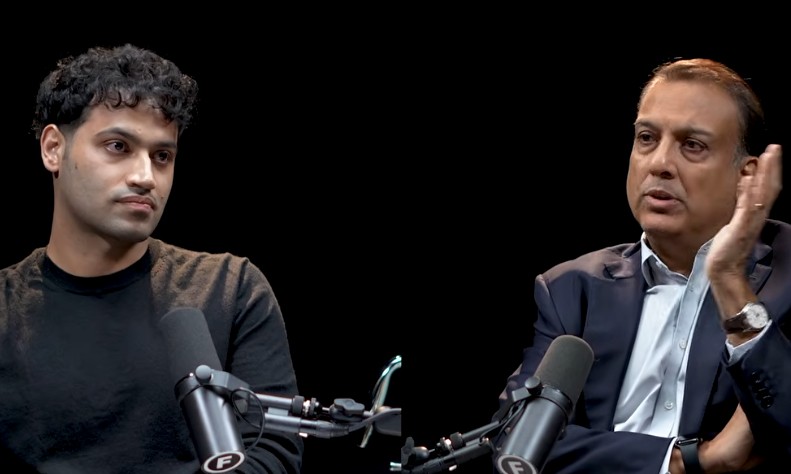
Editor’s Note: In this episode of Figuring Out (FO568), Raj Shamani sits down with Sumant Sinha, founder of ReNew, to unpack what he calls the next $1 trillion energy boom. They discuss India’s renewable energy growth, why electricity could become the biggest constraint for AI, how China came to dominate the clean tech supply chain, India’s path to energy self-reliance, and the business opportunities waiting for young entrepreneurs in the energy transition. This interview was premiered on September 29, 2026.
TRANSCRIPT:
Cheap, Abundant Energy and the Countries of the Future
RAJ SHAMANI: (00:02:25 – 00:03:34): Would you say this is something which is on my mind since a long time because I’ve been hearing a lot of conversations around it. Would you say that the most powerful country of the future will not be someone with most amount of oil, will be someone with the cheapest and the most abundant energy?
SUMANT SINHA: (00:03:36 – 00:03:45): Yeah, I would certainly say that. But in a lot of countries, oil is energy. And so therefore, the two are synonymous.
RAJ SHAMANI: (00:03:45 – 00:03:46): Let’s say electricity.
SUMANT SINHA: (00:03:46 – 00:03:54): Yeah. So let me give you a little bit of background. Okay. We tend to use electricity and energy synonymously or sort of interchangeably.
RAJ SHAMANI: (00:03:54 – 00:03:54): Yeah.
SUMANT SINHA: (00:03:55 – 00:04:52): But the reality is that energy is broader than electricity. Okay. Energy is used for heating. It’s used for cooling. It’s used for making different chemicals and so on. It’s used for making cement. It’s used for making steel. There are lots of industrial processes that it is used for. It is used for home heating and cooling. Right? So, it’s used for transportation, whether it’s cars or airplanes or ships, et cetera.
Electricity, which we use to power our lights and our homes and so on, is just a small component of energy. So, electricity actually accounts for only 20% of all energy consumption. Okay. Energy consumption itself generates carbon emissions, which account for almost 75 to 80% of all carbon emissions globally. And I’ll talk about why carbon emissions is important because it obviously leads to climate change.
How Fossil Fuels Became a Problem
RAJ SHAMANI: (00:04:52 – 00:04:52): Yeah.
SUMANT SINHA: (00:04:53 – 00:06:16): Right. So now what is happening is that when you look at how did oil become, or fossil fuels become a bad thing? They became a bad thing because while our entire economic system and our livelihoods are based on fossil fuels, because about in the early 20th century, cars were electric in nature. Then they got replaced by internal combustion engine cars. And our entire system then moved towards a fossil fuel-based economy, which was fine because nobody cared about carbon emissions.
But starting in the late 1990s, early 2000s, that realization dawned that the more carbon that we are emitting into the atmosphere, the more we are converting the atmosphere into a giant greenhouse. And what happens inside a greenhouse? The sun’s rays come in and the inside of the greenhouse gets warmed up. That’s what’s happening to the world right now, because the carbon in the atmosphere converts the atmosphere into a greenhouse kind of a system more than it should. And so therefore, it’s leading to higher temperatures. Now, when you have higher temperatures in the world as a whole, then we have these polar ice caps in the Arctic and the Antarctic.
RAJ SHAMANI: (00:06:16 – 00:06:16): Yeah, right.
SUMANT SINHA: (00:06:17 – 00:06:24): There’s a lot of water that is made into ice that is sitting there. The moment temperatures start going up, that ice starts melting.
RAJ SHAMANI: (00:06:24 – 00:06:24): Yeah.
SUMANT SINHA: (00:06:25 – 00:07:07): And it leads to the rise in ocean levels. Now, can you imagine if in Mumbai, which is where we are sitting right now, if sea levels suddenly went up by 1 meter or thereabouts? It would actually be very disastrous for a lot of the colonies or people living on the coastal areas and so on.
Secondly, it begins to change weather patterns. What happens if there was a disruption because of this higher temperature on the monsoons? It would impact India’s entire agricultural production. If there’s also higher temperature, it would start melting the glaciers faster than expected, which might lead to sudden flash floods at higher frequency than expected.
RAJ SHAMANI: (00:07:07 – 00:07:08): It’s already happening.
SUMANT SINHA: (00:07:08 – 00:09:18): It’s already happening. And then eventually, when all the glaciers run dry, then what happens to our perennial rivers, the mighty Ganga and Yamuna and all those rivers that are part of India’s history and tradition and religion and that feed into the Indo-Gangetic Plain? So the costs of this change are not very well understood and can be absolutely disastrous, especially for a country like India, which has such a vast number of people.
Now, the world as a whole recognized this and said, “You know what, we got to do something about this problem, because if this continues unchecked, then it can be really, really bad for the world as a whole.” Plus, it’ll lead to migration of people. Wars could get fought. So all sorts of consequential changes that we can’t even imagine right now.
And there’s this UN, United Nations group that essentially said that if temperatures change by more than 1.5 degrees centigrade, it’s going to lead to irreversible changes in the world. And therefore, we must all battle together and keep temperature change below 1.5 degrees centigrade. And so various agreements were arrived at between all the world’s countries to mitigate carbon emissions.
Now, so question was how to do it. How do you mitigate carbon emissions? Because if the whole world’s economies are based on carbon emissions because of fossil fuel usage, then how do you suddenly say, “You know what, no more carbon emissions”?
So the question was, how do we now do this migration from fossil fuel-based energy systems to what? So that is really where the whole issue of renewable energy started becoming an answer to this problem. And so back in 2007 and ’08, when I took the decision to join Suzlon, some of this was beginning to start percolating into people’s minds.
Why Sumant Sinha Entered Renewable Energy at 45
RAJ SHAMANI: (00:09:18 – 00:09:18): Yeah.
SUMANT SINHA: (00:09:18 – 00:09:42): And that’s the reason I took the decision to get into this sector, because I realized that this is going to become a massive problem in the future. And so therefore, devoting one’s career and life to solving this problem or helping solve the problem, because no individual can solve it by themselves, I thought was a very worthwhile endeavor for me for the rest of my life. I was 45 at the time. And secondly, I also felt that in doing this, there would also be business opportunities.
RAJ SHAMANI: (00:09:43 – 00:09:43): Fair.
SUMANT SINHA: (00:09:43 – 00:10:11): Because you can’t solve anything without it being good from a business standpoint, because the amount of capital you need to change an economic system that has developed over centuries requires enormous amounts of capital. So anyway, so that is what my thinking was, and that is what we now need to do. So the question is, how does renewable energy come in. Renewable energy comes in through wind and solar, but it’s electricity.
RAJ SHAMANI: (00:10:11 – 00:10:11): Okay.
SUMANT SINHA: (00:10:12 – 00:10:30): So it begins to address the 20% of energy that is electricity. And today, after 15 years of my having been in this sector, we are now at a point where renewable energy accounts for approximately about 15 to 16% of electricity. Only.
RAJ SHAMANI: (00:10:31 – 00:10:32): Not the energy.
SUMANT SINHA: (00:10:32 – 00:10:33): Not energy as a whole.
RAJ SHAMANI: (00:10:34 – 00:10:34): Okay.
SUMANT SINHA: (00:10:35 – 00:10:43): So on one level, you can see the scale of the challenge. At another level, you can see the scale of the opportunity because eventually everything has to change.
RAJ SHAMANI: (00:10:44 – 00:10:44): Yeah.
How PM Modi Pushed Wind and Solar in India
SUMANT SINHA: (00:10:45 – 00:11:40): Now, one interesting thing happened along this last 15-year journey of mine. In the beginning, wind and solar were more expensive than coal-based power generation. And so the question was, who’s going to pay for the extra cost? India said, “Why on earth should we pay for it? We didn’t cause the carbon emissions to happen into the atmosphere. If the Western world did it, let them pay for it.” Which made eminent sense. And as an Indian, I thoroughly agree with that logic.
But somewhere when Prime Minister Modi came in, he took a different view, which is very interesting, actually. And where he derived this view from, I guess it goes back to a gut understanding or a gut intuition or call it what you will. But he said, “You know what,” or he may have understood this at that time, that, “Look, this is actually something that has to happen. And if it is something that has to happen, why should India not take a lead in this area?”
RAJ SHAMANI: (00:11:41 – 00:11:41): Fair.
SUMANT SINHA: (00:11:41 – 00:12:02): And so he pushed wind and solar very hard. He set very big targets for wind and solar in India. And that got the whole government to start really pushing hard on doing more and more wind and solar. And that’s how we’ve got to this point that we’ve got to, which is actually compared to all the other countries in the world, not a bad position for us to have got to.
RAJ SHAMANI: (00:12:02 – 00:12:03): 15% is not bad.
SUMANT SINHA: (00:12:03 – 00:12:19): It’s not bad. But also in doing that, because the scale increased and because of a variety of other factors, wind and solar suddenly became cheaper than coal-based power. And so affordability suddenly became a big driver of this energy transition as well.
RAJ SHAMANI: (00:12:19 – 00:12:19): True.
SUMANT SINHA: (00:12:20 – 00:12:39): And so now suddenly it makes more sense to add wind and solar than it makes sense to add coal-based power because it’s cheaper. So it’s no longer even about carbon emissions. It’s become much broader than that, and it’s become much more about what is cheaper and what is better for us as a country and what is better for us as an economy. So that’s where we are right now.
Will Electricity Be the Biggest Bottleneck for AI?
RAJ SHAMANI: (00:12:39 – 00:13:09): But right now, the amount of energy that we use or the amount of electricity we use, let’s just pick up 15%, 20% of the energy and then the 15% of it, right? So the amount of electricity that we use, it’s going to go up significantly with the rise of AI technology, all of this, right? Do you think the biggest problem in the technology world, in the future, in the AI world, it’s not going to be chips, it’s not going to be all of that, it’s going to be electricity?
SUMANT SINHA: (00:13:10 – 00:13:16): It is. It is because ultimately electricity and more broadly energy drive everything around us.
RAJ SHAMANI: (00:13:17 – 00:13:20): So we don’t have enough electricity to make all of us intelligent.
SUMANT SINHA: (00:13:20 – 00:13:39): No, that is true. But I think that electricity in India is growing at about 6 to 7% a year. Energy is growing a little bit less than that at about 4%. But we are adding a lot of new capacity fairly rapidly as a country. And the good thing is most of that is clean energy, which is wind and solar.
India’s Electricity Numbers vs. the US and China
RAJ SHAMANI: (00:13:39 – 00:13:49): How much electricity do we need in India? Or compare it with India, America, China. What are the electricity needs? You must be having some ballpark number in watts or—
SUMANT SINHA: (00:13:49 – 00:14:05): No, no, I can give you the exact numbers. Today India has a total power generating capacity of about 550 gigawatts or 550,000 megawatts. This is the 3rd largest in the world.
RAJ SHAMANI: (00:14:06 – 00:14:07): In a year?
SUMANT SINHA: (00:14:07 – 00:14:09): That is a total power generating capacity.
RAJ SHAMANI: (00:14:09 – 00:14:10): Capacity in a year?
SUMANT SINHA: (00:14:11 – 00:14:50): So this generates approximately 1.8 trillion kilowatt hours of electricity every year. That is how much India consumes. Okay. So there’s capacity, then that capacity is used to generate this much electricity, which is consumed by Indians. That 1.8 trillion units is growing at about 6% every year, which means we need about 120 billion units more of new energy every year, which in renewable energy terms is equal to between 60 and 70 gigawatts of new renewable energy capacity. Okay. Last year, India added about 50 gigawatts of new renewable energy capacity. So we’re almost there.
RAJ SHAMANI: (00:14:50 – 00:14:50): Okay.
SUMANT SINHA: (00:14:51 – 00:15:12): Okay. It’s at a point where all electricity consumption increase can come from renewable energy in the next few years’ time. And this, of this 550 gigawatts today, wind and solar account for about 220 gigawatts. And if I add hydro and nuclear, it amounts to 300 gigawatts. 250 of the balance is coal-based power.
RAJ SHAMANI: (00:15:13 – 00:15:13): Okay.
SUMANT SINHA: (00:15:14 – 00:16:25): Now, coal-based power is not really growing now. Nobody wants to add more coal-based capacity because everybody knows that over time coal will get phased out. And as people say, “The Stone Age did not come to an end because of lack of stones.” It came because new technology showed up. Similarly, the coal age in India is not going to end because we don’t have any coal any longer, but because something else has overtaken that, which is cleaner, cheaper, easier to install, etc. So that’s the direction that we are going to go in.
Now, as we do all of this, and as we add this 1.8 trillion at 120 billion units and this 60-70 gigawatts, this 550 gigawatts by 2035 is going to double, okay, to about 1,100 gigawatts in India. And of that 1,100, the capacity or the consumption? The capacity, okay. The consumption at 6% will double in about 12 years. So by 2035, you should assume that the 1.8 will become 3.6. Now that includes electric vehicles, it includes AI data centers, and it includes more industrial activity.
RAJ SHAMANI: (00:16:25 – 00:16:27): It includes everything.
SUMANT SINHA: (00:16:27 – 00:17:29): Because also keep in mind that energy, that appliances that use electricity are also becoming more efficient. Yeah. Cars are becoming more efficient, right? Light bulbs have become more efficient. So there is efficiency improvement happening at the rate of about 1.5 to 2% every year as well. Okay, so this electricity growth, if there was not efficiency improvement, would’ve actually been 8% a year, which really is quite a large amount, right? It’s by far the largest of any large economy in the world.
So by 2035, electricity demand will grow to double, the power generating capacity will double, and of this 1,100, renewables will account for almost 750 gigawatts, up from the 300 right now. So there’ll be another 450 gigawatts of capacity added in the next 8-9 years. So it’s growing at about 50 to 60 gigawatts a year is what we will need to keep growing, which is by the way the second fastest in the world after China. It’s actually last year we also crossed the US. So India is actually growing pretty fast in this whole area.
RAJ SHAMANI: (00:17:29 – 00:17:30): Okay.
SUMANT SINHA: (00:17:30 – 00:17:50): Okay. Now, just to give you comparative numbers, the US’s power generating capacity today is 1,100 gigawatts. So almost double that of India’s. But China is almost— I don’t even know what the latest number is, but it’s probably 2,500 gigawatts. So it’s almost 5 times India’s capacity.
RAJ SHAMANI: (00:17:50 – 00:17:51): It’s bigger than US as well?
SUMANT SINHA: (00:17:52 – 00:17:53): Much bigger. Much bigger.
RAJ SHAMANI: (00:17:53 – 00:17:55): Why? Because the country needs more?
SUMANT SINHA: (00:17:55 – 00:18:30): Because they’re a much bigger manufacturing powerhouse now. So all of that requires a lot of energy. So the rest of the world has outsourced a lot of their production to China. And therefore also a lot of their carbon emissions to China. So the funny thing is China added almost 60% of the entire world’s capacity addition of renewables last year. 60%. Wow. So they did more than the rest of the world put together. So what is happening there is insane, right? So be that as it may, India is doing a pretty good job as well. We are all said and done, we are number 2. We’re distant number 2.
RAJ SHAMANI: (00:18:31 – 00:18:31): Yeah.
SUMANT SINHA: (00:18:31 – 00:18:34): But we are number 2. Okay. So we should be happy with that.
Could We Ever Run Out of Power?
RAJ SHAMANI: (00:18:35 – 00:18:38): Do you think we could run out of power or electricity?
SUMANT SINHA: (00:18:39 – 00:19:22): No, not at all. An interesting stat I heard the other day was that the world gets every minute from the sun 8,000 times the amount of power that it consumes in that minute. 8,000 times. So even if solar increases by 100 times, right, and meets all of the energy needs, not electricity only, but all of the energy needs of the world, if solar increases by 100 times, we’ll still be getting more solar power by almost a factor of 80 times. Okay. Every single minute. So there’s enough energy that is coming into the world as a whole from the sun. So the sun is just an infinite amount of a source.
RAJ SHAMANI: (00:19:23 – 00:19:35): But we don’t have enough ways to actually store it, use it, distribute it. Today, right? Sun is there as a source, but do we have enough infrastructure?
SUMANT SINHA: (00:19:35 – 00:20:43): Good point. It’s a very good point. See, we are trying to create a system now which was built for a certain different historical power generating mindset or sort of system. What is going to happen is that over time, technology is going to come to our rescue. And it is. Solar, when it was started about 18, 19 years ago, was almost 10 times as expensive as it is right now. It’s come down by a factor of 10 times in terms of the cost.
There’s a lot of work happening on technology. Solar costs are going to keep coming down. At the same time, there’s a lot of work going on in batteries as well. Battery costs are also going to come down. And as that happens, the cost of solar plus storing that solar and using it in the evenings when the sun is not there or at night when the sun is not there, that cost is coming down. And it’s almost at a point now where using solar plus storage is going to be cheaper than any other solution.
RAJ SHAMANI: (00:20:43 – 00:20:43): Fair.
The Grid Challenge
SUMANT SINHA: (00:20:44 – 00:21:08): And grids now have to get built out very rapidly because as electricity grows, we need that grid to really be able to take power from wherever it’s getting generated to wherever it’s going to get used. So we need this whole lattice type of interconnecting grid system all across the country. And we don’t have that really fully at this point. So grid buildout is going to be very critical.
RAJ SHAMANI: (00:21:08 – 00:21:10): But that’s the tricky part, right? That’s where—
SUMANT SINHA: (00:21:10 – 00:21:12): That is a trick. You’re absolutely right.
RAJ SHAMANI: (00:21:12 – 00:21:13): That’s where the challenge is.
SUMANT SINHA: (00:21:14 – 00:22:46): It is a challenge, but I think it’s a challenge that is addressable with proper planning and proper execution. The government, and I think everybody realizes that this is a problem that we need to solve. So there’s a lot of work going on in this area. And I think because renewables suddenly grew quite rapidly over the last year or 2, and that leads to grid management issues because there’s a lot of surplus energy in the middle of the day and not enough in the evening. And that problem has hit us, but now we’re trying to find solutions and we will find solutions over the next couple of years’ time.
And a lot of that side of the solutioning is going to get ramped up. And I’m pretty confident that we’ll be able to, 2, 3 years later, be able to go both at pace, the generation side as well as the transmission and distribution side.
And then another very interesting thing is going to be happening, Raj, that is that people are going to start putting solar more and more on their rooftops and using it directly into their homes. And as solar technology evolves, I will not be surprised if we get to a point where you’ll start having see-through windows with solar on them. Car roofs will start having solar on them. It’ll become ubiquitous. It’ll be everywhere. And so everybody is going to be using power or generating electricity and using it in a very different way than we are doing right now. So there is going to be a big, I think, massive shift in our relationship with electricity that is going to happen as a result of technology evolution.
Will Governments Have to Choose Between Citizens and AI Data Centers?
RAJ SHAMANI: (00:22:46 – 00:23:14): But do you think that if technology, the way it is growing right now, and the AI consumption and data centers and all of the things that are coming in our life, right? If it happens faster than our capacity to build an infrastructure, then do you think the governments will start choosing where to provide electricity? Should they give it to citizens? Should they give it to industries? Should they give it to AI data centers? What should they do?
SUMANT SINHA: (00:23:14 – 00:23:58): Because they don’t think so, right? I don’t think, Raj, you need to worry about that. There are people like us and our company which are going to make sure that we add capacity at the rate that is required to meet the country’s requirement. And I’m almost 100% confident that we will not get to this scenario that you’re describing. If anything, we will have too much power over a period of time. We’ll have too much power? We’ll have too much power to a point where we may have to start, because you see, the industry is now ramping up. Everybody is getting into the generating space. All the large conglomerates of India are now in the space.
RAJ SHAMANI: (00:23:58 – 00:24:00): Top 1 to 10, everyone.
SUMANT SINHA: (00:24:00 – 00:24:50): Everybody, right? Then there are people like us. Fortunately, we are still the second largest in the country right now. Then there are lots of small guys as well. There are lots of private equity funded folks as well. So now I would say compared to when I started and even from 5 years ago, I would say the number of players has really increased dramatically. So the amount of capital going into it, the amount of people, the amount of hands, the amount of management bandwidth that is going into the sector is now at a much higher level than it was just a few years ago.
And all of these people are out there looking for land, trying to get connectivity to the grid, to build projects at sites, to get PPAs, to find buyers of their power. So all of that is happening at a much, much higher pace than it was happening earlier. So I don’t think that shortage of power is going to be a problem at all.
Why the US Faces a Power Crunch but India Doesn’t
RAJ SHAMANI: (00:24:51 – 00:24:57): So why is there an outcry between all AI founders and they talk about it in US specifically?
SUMANT SINHA: (00:24:58 – 00:25:26): In the US? Yeah, because the US— India is not the US and the US is not India. The US has certain deficiencies, structural problems that India has addressed. What are those? Very quickly is that the US has a grid constraint. The US has 7 different grids in the US. India has a single national grid. That’s a big difference. We can move power from any part of India to any other part of India without any hichkichahat or problems or obstructions.
RAJ SHAMANI: (00:25:27 – 00:25:28): Interesting. US can’t?
SUMANT SINHA: (00:25:28 – 00:26:00): The US, you can’t. You can’t generate power, let’s say, in the wind-rich state of Texas or the Midwest anywhere and transfer it to California or to New York because they don’t have a grid that interconnects all the way through. They have 7, as I said, 7 different grids. And planning the interconnections between those is very difficult to do. And it’s even harder to build the lines because some states are Democratic states, some are Republican states. So it’s a bit messed up.
RAJ SHAMANI: (00:26:00 – 00:26:01): It’s messy.
SUMANT SINHA: (00:26:01 – 00:27:25): Yeah, to do that. And that’s why what’s happening in the US is, and see, the US electricity demand was not growing for many, many years. So any new renewable capacity that was coming up was replacing existing other capacity that was getting decommissioned. Now suddenly they’re having to, because this AI demand has suddenly come in, it’s actually leading to electricity demand growth of about 2 or 3%, which they were not expecting. And therefore there’s a sudden ramp-up happening in generating sources, which was not the case earlier.
And the second thing is the grid is just not geared to transmitting more power. And so a lot of these data centers that are coming up are trying to find solutions that are called behind-the-meter solutions where you don’t go into the grid at all. You have your generating station right next to you, right? Which is why there’s a lot of focus on things like nuclear or geothermal or gas, which is something that you can put next to your data center or somewhere close by. And there’s less of a reliance on the grid because you just can’t wheel the power or move the power from one part of the country to another.
We don’t have that problem in India. Number 2, in our case, our electricity demand is already growing at 5 or 6% a year. AI may add another 1% growth to it, which is not at all difficult for us to meet.
RAJ SHAMANI: (00:27:25 – 00:27:25): Yeah.
India’s Inflection Points in the Energy Transition
SUMANT SINHA: (00:27:26 – 00:29:39): With, as I said, so many people now entering the sector. So I think structurally it’s very different. What we now have to do as a country, and this is sort of the next challenge for us, and I must say that we are standing at multiple inflection points in our energy transition journey as a country. Those really are, number one, renewable energy needs much faster grid buildout, which you and I talked about earlier. So that’s the first thing that needs to happen.
The second thing is that this whole conversation of energy security has now entered our mindset in a much bigger way. Yeah, that wasn’t there earlier. Yeah, as a result of the Middle Eastern wars and so on that are happening now, India realizes that, “Look, we can’t just be dependent on importing our energy requirements,” whether it is importing oil from the Middle East or elsewhere, or importing clean tech equipment from China, for example, because China actually has a lock on the clean tech supply chain.
And to come back to the question that you asked earlier, will energy systems in countries be dependent on oil or will they be dependent on what, really was your question. I would say that 25 years ago, China saw this issue and they realized that they didn’t want to be dependent on the countries that export oil. And so they started working on electrifying their economy as fast as possible. And within that also developing the supply chain.
And over time, they moved the majority of the world’s cleantech supply chain into their own country, either in terms of critical minerals or refining of the critical minerals or manufacturing of the solar, let’s say polysilicon or wafers or cells that are required to make solar panels or batteries. Or now electric vehicles. So they’ve now got a lock on this whole thing. Now, for a country like India, that’s not a great situation. Yeah, right. Because at least in oil, you can import oil from 10 different countries. You can’t import all your solar equipment from just one country. That too. Yeah, we all know the geopolitical issues.
RAJ SHAMANI: (00:29:39 – 00:29:40): Yeah, not so friendly.
SUMANT SINHA: (00:29:41 – 00:31:06): Yeah. So therefore, that’s a real problem for India. So we have to develop a supply chain in the country. That’s the second inflection point. And the third inflection point is that we talked about the fact that electricity is a small part of energy, right? Only 20%. What do you do about the balance 80%? You have to address those areas as well. And we now have solutions becoming available that you can start addressing those areas, but you also need to address the user industries like electric cars, for example. How do you address those? So you need massive changes on the downstream side of industries that actually use energy. So a lot of changes have to happen there.
So there are these 3, 4 inflection points that we are now sort of at, we’ve got to as a country. So I would say phase 1 of our growth of renewable energy is done. We are now entering phase 2, which requires a much broader growth in our entire energy system across multiple areas. And it also requires a very different governance mindset on the part of our policymakers. So that’s really where we are. So it’s very interesting where we are at this point. And frankly, I haven’t in my 15 years of— actually now if I add Suzlon, 17, 18 years of journey or time in this sector, I have not seen us stand on the brink of so much change as I’m seeing that we are at right now.
Energy Dependence: India’s Achilles Heel
RAJ SHAMANI: (00:31:08 – 00:31:16): And it’s an interesting— imagine an emerging market, and a country is not able to produce cheap electricity, what happens to them in the next 20 years?
SUMANT SINHA: (00:31:17 – 00:32:30): Very tough. I think we’re going to see a shakeout happening in the world. Countries that continue to be energy dependent and countries that somehow find a way of becoming energy independent. And those that are energy dependent are always going to be at a slightly inferior position. So it’s incredibly important for India as a country to get to that point of having full control over our energy supply chain. I think it’s going to be one of the most important things that we as a country have to achieve over the next several years because everything else depends on that.
Your AI data centers, your ability to export energy in the form of green hydrogen or green ammonia, ability to also expand compute, I mean, export compute capacity, your ability to export any product is based on cheap electricity. True. Right? So many products are. So we have to get to that point. We can’t always be dependent on the rest of the world. And for the longest time, it has been the Achilles heel of India’s economy that we’ve had to import $150 to $200 billion worth of fossil fuels every year. And every time oil prices go up, the rupee goes down, inflation goes up. I mean, it’s just not a very good situation.
RAJ SHAMANI: (00:32:30 – 00:32:31): Highly energy dependent.
SUMANT SINHA: (00:32:31 – 00:32:45): Yeah, yeah. It’s not a good situation. So we have to find a way of escaping from that situation, which I think this government is doing their best on finding solutions, and that’s why we’ve made the progress that we already have.
How China Built the Clean Tech Supply Chain
RAJ SHAMANI: (00:32:45 – 00:33:03): But are we close? Will we be able? Forget actually, will we be able to do it or not? We will be, right. What’s the biggest challenge that you see today? What is stopping us to reach a point where we are fully independent or probably slightly more independent the way China is today?
SUMANT SINHA: (00:33:05 – 00:35:31): Let’s talk about China for a second. And I can’t claim that I know their story that well, but I’ve seen them as an outside observer in this space. I think about 25 years ago, maybe perhaps even longer, they realized that they have this dependence and they wanted to get away from that. So what did they do? On the oil side, for example, they built a massive strategic buffer, which they’re drawing down right now, which is helping them, which is actually helping stabilize global oil prices also, which is very good.
But I think beyond that, what they’ve also done is they’ve really, as I said, built this clean tech industry and really been able to indigenize it. And over time, what happened is technology in the beginning was developed in the Western world. They decided to use China as a manufacturing location for the end product. China said, “Fine, please welcome, come in, we’ll give you some subsidy, we’ll give you a place to set up your business, whatever, whatever,” right? So all these Western countries, in their naivety a little bit, I would say, thought, “Oh wow, this is great.” So they all went and made big investments there.
I think what happened is that there was a technology transfer that happened willingly or unwillingly, and then over time I think what China was able to do was not just set up the downstream side of the business, but they also started looking at manufacturing the capital equipment, which is used to make that downstream equipment. So for example, take the case of a solar panel or a solar cell. Now, to make the solar cell, so you can either buy the solar cell from China, right? But you have to get equipment that is used to make the solar cell. Now, who makes that equipment? China. Now China, but in the beginning it was the developed countries. So over time, China took that industry also and indigenized that.
Then the question was, who upgrades this equipment, this capital equipment, and who figures out what is the next generation of it? That was happening. All that research was being done in the Western world. That also has now moved to China. So you see, there are 3, 4 different layers of it. First thing is you start manufacturing the end product. Then you start making the equipment to make the end product. Then you start doing the research to make the equipment to make the end product. Okay. There’s a lot of work that you have to do.
RAJ SHAMANI: (00:35:31 – 00:35:36): And then you economically colonize countries which actually give you raw materials.
SUMANT SINHA: (00:35:36 – 00:38:44): Exactly. That’s the next thing. And exactly. And then you realize that if I’m making batteries, for example, and I need lithium to make the batteries, where is the lithium found? Or where’s the cobalt found? If it’s found in the Congo, then let me go and start investing in Congo, right? Make them part of my BRICS, of my Belt and Road Initiative, right? Give them money to start extracting. And then don’t build the refining plant there, build the refining plant at home so that all that comes here.
And then slowly, slowly, because of all the subsidies that I gave and because of manufacturing capability that I have, I’ll start making sure that all of my industries are so low cost that whatever little capacity that existed in the rest of the world goes out of business. Okay. So anything that existed in the Western world in terms of refining capacities or elsewhere is gone. So even now, if I, as a country, let’s say as India decides to go into some of these places to get that mineral capacity, we don’t have the refining capacity. So we have to get the minerals, build the refining capacity, and then build the research R&D base, then build the capital equipment manufacturing setup, and then start building the downstream equipment. We are starting right now only from the downstream side.
How a Solar Panel Is Made: The 4-Part Value Chain
And to again, give you an example, today in solar, to make a solar panel, there’s a 4-part value chain. You start from polysilicon, where you take quartz, which is fortunately found abundantly in India, convert that into polysilicon, which is like a material. From that polysilicon, which is like a hard material, from that you then make wafers, which is just the blank slate kind of a small thing that you see inside a panel.
Then from that wafer, you make the cell, which has a lot of these striations to capture the sunlight better, a lot of ridges and so on, a lot of chemical layering on that surface, and then you put in place the wiring that sort of takes the energy out. And that is still a small, small sort of square. And then you go into the last part, which is making the module, where you essentially take a number of these cells, arrange them on a panel, and then put a glass cover on it, put an aluminum frame around it, put some wires, and that becomes a solar panel. Okay, that’s how the whole thing is made.
In India today, we started with making panels in India. We opened up the whole sector. I mean, not opened up, anybody could make it, but we stopped imports of the equipment from China. So that allowed domestic manufacturing to get into modules. And then we’re doing the same thing for cells. So we’re working backwards from the absolute end of the supply chain, right, of the end product, and we’re working backwards, right? But it’s not just a question of then making wafers and ingots and then making polysilicon, but also the equipment to make all of these things. Then the R&D to support all of that, and then the raw material that perhaps goes into all of this. So there’s an enormous amount of work that we have to do to get all of this.
RAJ SHAMANI: (00:38:44 – 00:38:45): A whole ecosystem.
SUMANT SINHA: (00:38:45 – 00:39:07): Yeah. And this is just one product in the clean tech supply chain, admittedly perhaps the most important one, but only one product. We need to replicate this across industries, batteries, automobiles, so many other areas. So it’s an enormous, enormous task that we face as a country. And we need to get cracking on it, frankly.
What China Saw That the Rest of the World Missed
RAJ SHAMANI: (00:39:07 – 00:39:23): But tell me, what did China figure out 20-25 years ago to make this kind of infrastructure, this kind of ecosystem? And countries like India, America, or countries in Europe, we all failed to understand this.
SUMANT SINHA: (00:39:25 – 00:39:36): I don’t want to be too critical of anybody here. I would say that the Chinese were just very prescient. Very foresighted about the whole thing, and full marks to them for that.
RAJ SHAMANI: (00:39:36 – 00:39:40): But there has to be something they must have figured out which we failed to understand.
SUMANT SINHA: (00:39:41 – 00:43:17): I think, look, 20-25 years ago, we weren’t even thinking about clean energy. It wasn’t anywhere in our mindset. We weren’t even thinking of these materials and minerals and solar and wind. It was nowhere. I mean, as I told you, in 2008, when I got into Suzlon, at that time, Suzlon was so far ahead of its time in making wind turbines. Solar modules or solar was just starting at that time. But these guys figured it out 10 years ahead of all of that and came up with this whole game plan and then they implemented it.
Why did other countries not do it? I think it’s a good question. I mean, I don’t have a clear answer to it. I think that as Indians, we tend to be very inward looking. We’re such a giant country. We are so argumentative. We are so focused on what’s happening within our borders that I think perhaps we often don’t see what’s happening in the world outside of us and how to best deal with the world outside of us and how to take some of these kinds of decisions in a manner which is foresighted beyond what other countries are thinking. I think we are doing some of that now under the current government, and I give them full credit for that, to try to address some of these areas now. But yeah, we should have done it 15 years earlier than that. But time gone is time gone.
Other countries, I think, look, taking a step back today, there are 2 kinds of countries in this world. There’s one set of countries that have fossil fuels, one set of countries that don’t have. If you divide those 2 types of countries by population, there’s only 11% of the world’s population sitting in countries that have more fossil fuels than others. And there’s 89% of the world’s population sitting in the bucket that don’t have access to fossil fuels, that they have to import it. It includes China and India, it includes Europe, it includes the Far East, it includes a lot of Africa, right? So many countries around the world don’t have fossil fuels.
Now, the countries that do have fossil fuels are happy to export it and continue to persist with an economic system that is based on fossil fuels because it’s in their interest to have a market for their product. But now I think these other countries are realizing that this dependence is now very dangerous because of all the uncertainties in the world as a whole, where energy supply chains are getting weaponized. And so therefore, these other countries are realizing that they’ve got to do something about it.
India, fortunately, has made progress. And we have the tools at our disposal in the context of a large-sized economy, an energy market that is already pretty large and growing substantially. We have therefore the economies of scale. We have, I would say, relatively enlightened leadership, which understands some of these issues. We’ve already made a lot of good progress over the last 12 years in some of these areas. And so we have a lot of elements within the country right now, which gives us a good platform to be at least the second country that starts making the transition from being an energy fossil fuel importer to becoming an electrostate.
Okay, that’s the journey that we have to do very, very fast now because when China did it, there wasn’t really a gun to their head. Yeah, now there is a gun to every country’s head, so we just have to move very fast. But as I said, we have some of the ingredients that allow us to make that transition quickly.
The US Doubling Down on Fossil Fuels
RAJ SHAMANI: (00:43:17 – 00:43:47): So I have 2 questions on this. Okay, probably India was always focusing on our problem. We were inward-looking country. We are still inward-looking. We are focusing on our problem there. What was the problem of, let’s say, Europe and America? Why were they unable to see this? Because they are developed, they’re rich, they understood this game much better. They’ve been economic superpowers of the world. So they also understand that creating an ecosystem gives you some kind of edge. Why didn’t they do it?
SUMANT SINHA: (00:43:47 – 00:44:11): I think there is a difference in the approach of both Europe and the US. The US really has a lot of fossil fuels, and today it’s the largest fossil fuel exporting country in the world, which is an eye-opener for most people who think that maybe it’s Saudi Arabia or Iran or Russia or something like that. But the US has really invested in developing its oil and gas.
RAJ SHAMANI: (00:44:12 – 00:44:14): And today, US exports more than Saudi Arabia.
SUMANT SINHA: (00:44:14 – 00:48:28): Yes. And that is why, and under the current administration, the US has taken a very strong turn or a very definite turn towards doubling down on fossil fuels, where they’re saying that, “All this renewable energy is hogwash. I don’t really care for it. I don’t even care about climate change,” which is why they’ve pulled out of the COP agreements. And they’re saying, “You know what, fossil fuel is the story of the future.” And that is why we want to invest in developing more and more fossil fuels, and we want to export more and more of it.
And so a lot of this disruption that is happening globally, and oil prices are going up and down, is actually creating export markets for them. So they’re actually able to export their gas production to Europe and other parts of the world in a very big way. So I would say the US is actually quite comfortable with fossil fuels. It’ll benefit from fossil fuel prices going up. Consumers within the US may not because the price that they pay at the pump is linked to global prices. So consumers individually may be impacted, but companies within the US will benefit substantially. And as a country, on a net basis, the US will end up gaining. So they’re very happy and they’ve really doubled down on becoming a fossil fuel country right now.
But also that changes from administration to administration. Under the Biden administration, it is all about renewable energy and they came up with this massive incentive plan for renewables. It’s a little confused. They sort of go from one extreme to the other, depending on whether there’s a Democratic administration or a Republican administration. So it’s hard to say what is the US’s consistent view. Okay, today it’s fossil fuels. That’s the path that they’ve gone down.
Europe’s Energy Predicament
Europe, on the other hand, I think was a little bit naive in the way they approached the whole situation. First of all, as I said, they exported a lot of their manufacturing base to China. And now China is really eating their lunch as far as manufacturing is concerned. So that’s really not good for Europe. Number 2, they let themselves be dependent on cheap Russian gas for the longest time. And then when the Russia-Ukraine war happened and Russia showed up on Europe’s doorstep from a security standpoint, suddenly Europe woke up to that danger and said, “Oh, this is really not good for us.” And they tried to cut off Russian gas.
But then the question was, where else would they get their gas supplies from? So then they turned to the US, which was obviously their NATO ally, but under the current administration, their relationship is going up and down. So suddenly Europe is very exposed right now on energy supplies. They really don’t know what to do. Meanwhile, their energy prices are very high and therefore their manufacturing industries are becoming uncompetitive.
But one credit to Europe is that they’re sticking to their views on the whole issue of climate change. And that’s why they’re saying that, “You know what, anything that now enters Europe, we want to assess how much carbon there is in that product, and we want to price that.” And if you have too much carbon in it, you’ll have to pay what is called this Carbon Border Adjustment Mechanism tax. So their whole economy is going to be a little bit isolated from the rest of the world. And it’s going to be a higher-cost economy.
And what that is leading to in the long run is a widening or a diverging economic gap between them and the US. So, if you look at per capita incomes in Europe and the US, which 20 years ago was more or less the same, the US is now 30%, 40% higher on a per capita income basis than Europe is. So, I don’t know how Europe is going to find their solutions, but they have to think through this very, very carefully.
RAJ SHAMANI: (00:48:29 – 00:48:32): Is it going to be worse for Europe as an economy if they stick to this?
SUMANT SINHA: (00:48:33 – 00:48:40): I think so. I think so. And I don’t think that they’ve found a good solution to this whole problem.
RAJ SHAMANI: (00:48:40 – 00:48:47): And especially in an era of leaders like Trump and Xi Jinping who are very economically driven.
SUMANT SINHA: (00:48:48 – 00:49:36): Yeah. Look, I won’t say that European leaders are not economically driven, but the problem is that Europe is very fragmented as a bloc, right? Every country has their own leader. It’s 28 countries or however many countries they have in the European Union. Decision-making within the European Union is very difficult as a bloc. So they have some of these issues and problems that they have to sort through. But again, I’m not an expert on Europe. I just see what I see from the outside. But I can see that energy is going to be tough going for them. And unlike India, where we can aspire to become a manufacturing power in cleantech, they can’t because the costs of manufacturing are a lot higher. So labor costs are higher, energy costs are higher. So it’s going to be tough for them.
Do Wars Create Energy Dependence?
RAJ SHAMANI: (00:49:37 – 00:50:01): US, it’s surprising, not many people know this, that the world is— US is the largest exporter of fossil fuel. In fact, recently I was reading that post the Iran conflict, the most amount of LPG that we get is from US. Earlier we used to get it from Qatar and West Asia, but now we get it from US. And post-Iran war, we have been dependent on US for our gas needs.
SUMANT SINHA: (00:50:02 – 00:50:19): Yeah. So I’m not surprised because a lot of the gas that we used to get from there is not coming out any longer. So where’s the choice? There are some industries that are entirely based on gas, whether it’s LPG or whether it’s some of the fertilizer industries. So you need gas to operate those areas.
RAJ SHAMANI: (00:50:20 – 00:50:39): Do you believe in this, that some countries are incentivized to do wars because then they make other countries dependent on them? Like post-Russia, Europe got dependent on US. Post-Iran, a lot of Asian countries got dependent on US, including India, for energy needs.
SUMANT SINHA: (00:50:40 – 00:51:35): Yeah, look, I think maybe that is true in the short run, because then, well, if a lot of the world supply, which is coming from the Middle East, gets curtailed because of the crisis that is happening in the Strait of Hormuz, and then the US emerges as the alternative supplier, of course, that’s where people are going to go to get their supplies from.
But long-term, people are also thinking that, “This disruption is not good for me. I’m paying a higher cost. It’s showing to me that supply chains are inherently fragile. And therefore, the longer my supply chain and the more dependent I am on it, the more I’m exposed. And the best supply chain I can get is one that is within my borders, which I can control.” And so that’s what everybody then starts working on. And in the long run, this dependence, people are going to work towards ending it.
RAJ SHAMANI: (00:51:35 – 00:51:37): Yeah. But how will they work towards ending it?
From Climate Change to Affordability to Energy Security
SUMANT SINHA: (00:51:38 – 00:52:05): By electrifying their economies and then trying to have a domestic electric supply chain by moving the user industries as much as possible towards electrification. So a lot of that is going to happen. So, as when I started in this industry, it was all about climate change. That is what drove the industry to get started. Somewhere in the middle, it became affordability. Because it became cheaper.
RAJ SHAMANI: (00:52:05 – 00:52:05): Yeah.
SUMANT SINHA: (00:52:05 – 00:53:02): So that is what drove renewable energy. Today, it’s energy security. And while climate change was a little bit ephemeral, high level, big picture, something futuristic, hard to understand. This 1.5 degrees, what impact will it cause me? Is it really caused by temperature change or is it caused by some other factors? Who knows, right? But चलो scientifically I understand it.
But energy security is something people understand from the gut because it hits their wallet immediately. It hits their dependence on other countries immediately. Yeah, it weakens your geopolitical position immediately. So this is now becoming the biggest driver of a country trying to— and especially India saying, “You know what, why the hell should I be dependent on other countries? I’m going to be masters of my own fate and my own destiny, and therefore let me make sure that I address this problem on a war footing.” So that’s what’s going to happen, and that is what is going to drive our sector forward now.
How Far Is India from Energy Independence?
RAJ SHAMANI: (00:53:02 – 00:53:07): But how far are we from becoming truly independent, or let’s say largely independent?
SUMANT SINHA: (00:53:08 – 00:53:13): I would say 10 years. Because I think in just, just in 10 years, you think we can be—
RAJ SHAMANI: (00:53:14 – 00:53:18): Majority of energy will come from in-house, like from just within the country?
SUMANT SINHA: (00:53:18 – 00:53:43): See, energy will start coming from in-house even faster than that because all of our generation is now— electricity, first of all, is within, it’s already now everything is coming from in-house, right? Electricity is now fully domesticated. The supply chain for electricity is going to be fully domesticated in the next 5 to 7 years, let’s say, including batteries and all the other stuff.
RAJ SHAMANI: (00:53:43 – 00:53:44): Electricity.
SUMANT SINHA: (00:53:44 – 00:54:14): Electricity. Energy, we will, I think, get rid of most of our gas imports through things like green ammonia and green hydrogen and by electrifying sectors, most likely in 10 years. And what else is there other than that? It’s just a question of then taking the supply chain further back into minerals and so on. That may take a little longer, but I would say in 10 years, a bulk of that will get done.
China, the US or India: Who Will Lead in 20 Years?
RAJ SHAMANI: (00:54:16 – 00:54:49): So let me ask you a wider question in comparison between countries. So in the next 20 years, who will be the leader? Will it be China because they control the supply chain of the entire ecosystem? Will it be America because they are highly focused on fossil fuel and then actually capturing sort of the countries nearby who generate fossil fuels? Or will it be India, where there’s growing demand, growing appetite, and fast innovation?
SUMANT SINHA: (00:54:50 – 00:55:29): So I think that, and by the way, this is an excellent question, and this goes to the heart of what’s happening in our sector right now. My feeling is China— see, China is sitting with an enormous lead right now in the whole electricity area, including the entire supply chain, including going all the way back to minerals, right? And they’ve got a lock on certain things like rare earths, which are used to make permanent magnets, which go into a lot of other things— motors, whether they’re based on fossil fuels or not. So really expanded their footprint. That lead is going to be impossible to remove. So they’ll definitely be sitting right at the top, okay, of the whole energy value chain.
RAJ SHAMANI: (00:55:29 – 00:55:30): Okay.
SUMANT SINHA: (00:55:30 – 00:55:38): And their size and scale is so much larger than anybody else’s that whatever they do is going to drive the rest of the world to a large extent.
RAJ SHAMANI: (00:55:39 – 00:55:40): So it looks like China has won the race.
SUMANT SINHA: (00:55:40 – 00:55:56): China certainly is at a point where they are far away ahead. So I would say that— so let’s put them here right now. What’s happening is that, as I talked about earlier, there are going to be 2 broad buckets of countries, right? There’s this fossil fuel countries and there are electric countries.
RAJ SHAMANI: (00:55:56 – 00:55:56): Okay.
SUMANT SINHA: (00:55:57 – 00:56:50): In the electric countries, China is far away ahead and is going to definitely be sitting at the top. On the fossil fuel side, you have the US, which is definitely far away ahead of other people, but it’s not like countries like Saudi Arabia and the other oil-rich countries are not also close behind. They also are close behind, but I think the US is certainly sitting on top and going and moving rapidly in that direction.
The question is, what is going to be the interplay between these 2 buckets? I think over the next 5 to 10 years, a lot of countries are going to try to remove their dependence on the fossil fuel side and are going to try to migrate towards the electricity side. So I think in that sense, China, which is sitting on top of the mountain on this side, is going to have an advantage as more and more countries try to get into that space.
RAJ SHAMANI: (00:56:50 – 00:56:52): Electrification of the nation.
SUMANT SINHA: (00:56:52 – 00:58:00): So I think longer term, therefore, I think the focus is going to be a little bit more on growing the electricity side. And in that sense, China is going to eventually end up winning out. The big thing that they have going for them is technology. Because on the one hand, you’re digging things out of the ground in fossil fuels. On the other hand, you have a lot of technology moving in your direction. And long term, I trust in the ingenuity of the human mind, and humanity is going to find cheaper ways of doing things. It’s going to be smarter in the ways of doing things, and that is going to drive this whole technology bandwagon towards the electricity side.
So I think between the two, पलड़ा किसका भारी होने वाला है? It’s going to be that of the electricity side. Okay, it may take ten years to play out, fifteen years to play out, but I think therefore, eventually China is going to end up being in better shape. So all these wars, these geopolitical things that are happening, where in some ways the fossil fuel world is trying to control fossil fuel supplies, I think is going to at some level boomerang on them. Because other countries are going to say, “You know what, if there’s so much volatility in this area, then do I really want to be dependent on this?”
RAJ SHAMANI: (00:58:00 – 00:58:02): Yeah, “Screw you, I’m going to fix myself in a different way.”
Where Does India Stand? Atmanirbharta and Viksit Bharat
SUMANT SINHA: (00:58:03 – 00:59:32): Exactly right. That’s what’s going to— Now, where does India stand in all of this? I think India is going to go down the China path, or we’re going to go rapidly in that direction. A lot depends on how rapidly we indigenise the supply chain. At this point, all the actions of the government seem to indicate that that is an important priority for the government, and I’m glad that it is. So I feel that we’re going to develop a domestic supply chain on the manufacturing side relatively soon. And that’s why I said within 10 years, we will have a lot of that set up in India. I think this government is moving very, very fast in that direction.
And I talk to everybody in the government, from chief ministers to people in the central government, across ministries, bureaucrats, ministers, and I hear a very consistent messaging from all of them. And that messaging is very clear that we want to be self-reliant, that Atmanirbharta is not just a buzzword; it is something that has to be delivered, especially in our sector. And that Viksit Bharat comes along with energy Atmanirbharta as well. And that means a full supply chain.
And if you look at the Prime Minister’s latest 15th August speech where he talked about the Sapta Dhara, one of those was developing the green economy and making sure that we are energy self-reliant. So that’s the direction clearly of travel. And that’s, I must say, I’m glad that that is the case.
The Double-Edged Sword of Dependence on China
RAJ SHAMANI: (00:59:32 – 01:00:03): But isn’t it for us, wouldn’t be a double-edged sword. Today we are dependent on the fossil fuel, which is the America side. We are focused on making ourselves more electricity dependent, and then electricity, we are focused more on renewable energy. Okay. But that gets us closer and more dependent on China because the supply chain they own as of now. So as more and more we get more electrified, we’ll be more dependent on China.
SUMANT SINHA: (01:00:03 – 01:00:32): No, but this is where we have to play a very delicate balancing act. Today we’re already dependent on the fossil fuel countries. Yeah, right. But as I said, at least there are many of them, and many of them are our close allies. Here there’s a dependence on one country. So while we move in that direction, at the same time we have to develop the supply chain. The two have to go hand in hand. Okay, you cannot just do one or the other. They have to go together. Otherwise, it’s not going to be good.
RAJ SHAMANI: (01:00:32 – 01:00:41): We have to build our own capacity and capabilities of the entire supply chain that we spoke about. Absolutely. From research, from rare earths.
SUMANT SINHA: (01:00:41 – 01:00:43): 100%. Yes, we have to. There is no other choice.
RAJ SHAMANI: (01:00:44 – 01:00:45): Is it happening?
SUMANT SINHA: (01:00:45 – 01:00:47): As I said, it’s—
RAJ SHAMANI: (01:00:47 – 01:00:50): Is it happening in the equipment and research as well? That’s the question.
SUMANT SINHA: (01:00:51 – 01:02:02): Not to the extent that it needs to happen. But I’m 100% convinced that it will happen. I think the government deeply understands that as well. And look, this is not a government effort. This is not a company by itself going and doing something. This is a collaborative national effort that government and the corporate sector, and in fact, even ordinary consumers, all of us have to work on it together because the consumer has to buy the electric vehicle. And they have to say, “I’m going to put up my own solar rooftop and I’m going to have my own batteries and I’m going to go in that direction.”
Because apart from energy self-sufficiency and everything else, there’s also pollution in Northern India, which as we know is an endemic problem. So consumers have to make intelligent choices that take us in that direction. Corporates have to do the hard work of creating supply chains, going out there, investing a part of their profits on R&D, which Indian corporates notoriously are not good at doing. Okay. Because of the reason why we are very here and now people.
Why Indian Corporates Don’t Invest Enough in R&D
RAJ SHAMANI: (01:02:02 – 01:02:04): Okay. Do you invest in R&D?
SUMANT SINHA: (01:02:05 – 01:02:16): We try to, and I’ve just told my people, we gotta do much more of it. Okay. But I don’t know that capital markets reward R&D investing, because necessarily it’s not—
RAJ SHAMANI: (01:02:16 – 01:02:17): That’s the problem, right?
SUMANT SINHA: (01:02:17 – 01:02:18): That’s the problem.
RAJ SHAMANI: (01:02:18 – 01:02:24): That’s the whole problem of every— we don’t have a culture— Indian corporate and conglomerate, including you now.
SUMANT SINHA: (01:02:24 – 01:02:42): We don’t have culture, and we need to have a much better culture of R&D investments, of getting into capital equipment manufacturing. We need young entrepreneurs to get into ancillary industries, service industries around the whole cleantech value chain.
RAJ SHAMANI: (01:02:42 – 01:02:45): Why don’t you do it? You understand the need for it.
SUMANT SINHA: (01:02:45 – 01:02:55): We are doing as much as we can. We are investing almost— ReNew is investing almost $2 to $3 billion of capital every single year in research.
RAJ SHAMANI: (01:02:55 – 01:03:00): Not in research, not infrastructure investment. I’m talking about research.
SUMANT SINHA: (01:03:00 – 01:04:26): No, no. So as I said, now look, 15 years, we first went through as ReNew as a phase of— in the first 3-4 years of survival to prove that we could do what we could do. Then we had to go through a competitive phase where we had to demonstrate that we could execute better than others, and we became number one in 2017. I mean, till about 2023, ’24, we were number 1. Now we are number 2. It’s a very competitive market out there, boss. We got to fight every second and every step of the way. It doesn’t leave a lot of time for thinking really about 10, 15 years later.
It’s only now that I’m beginning to realize that, standing where we are as a country and based on all the conversation that we just had right now, I can tell you honestly, not a lot of people are thinking about these issues in the country. Okay. And not a lot of people are thinking about what should be our industrial policy, our green industrial policy, 15, 20 years out. Some folks in government are, and that’s great. And I can see now a lot of steps coming into place, but not that many people are thinking about these issues. So we need more people to be doing that.
And in that sense, it’s great that we are doing this podcast. Hopefully it reaches more people and more people start thinking about some of these things. But so therefore we haven’t been good at thinking about the future as a country, as a corporate sector. And if you don’t think about the future, you’re not going to invest in R&D because you’re focused on the here and now. So we have to start doing that and start investing in R&D at the same time.
RAJ SHAMANI: (01:04:26 – 01:05:14): Now, here’s a question which I’m thinking about, right? At one side, I understand your dilemma as an entrepreneur, as someone who’s leading the company, that you got to do what you got to do where you get maximum reward from the capital markets. Right? And that’s why you would do things which will get you better valuation, better share, which will create more shareholder value. And that’s why you don’t invest enough in R&D. But as an entrepreneur, you understand that 10 years, 20 years from now, you will not be as rewarded as you are today if you won’t invest in R&D. So what stops you from investing in R&D? Because fundamentally, you spoke about it and you want to invest. But you don’t.
SUMANT SINHA: (01:05:14 – 01:05:22): I’ll tell you, see there is a mindset issue here, which is that “दस साल बाद किसने देखा है,” right? “अभी तो I have to survive today.”
RAJ SHAMANI: (01:05:23 – 01:05:27): Is that your mindset or the shareholders’ mindset or a board’s mindset?
SUMANT SINHA: (01:05:27 – 01:05:30): No, I would say it’s a general cultural mindset.
RAJ SHAMANI: (01:05:30 – 01:05:31): India का ही.
SUMANT SINHA: (01:05:32 – 01:08:29): थोड़ा सा India का है, पर ज्यादातर Indian capital markets का है. Where capital markets not just in India but globally recognize this. Have this 3-month quarter-on-quarter kind of a situation. And maybe our capital markets are less matured about R&D investments than maybe capital markets in other parts of the world are, or maybe corporates are different. I don’t know. I haven’t done too deep an analysis on the mindset issue here, but there’s a structural problem also.
The structural problem is that if you look at our research institutions, we don’t actually have very deep research that is going on. Our academicians are not very well connected into the corporate sector. So they’re researching their own things, things that are of interest to them, which could be very academic in nature. There’s not good cross-collaboration between corporates and the academic institutions in India. And again, I’m not finding fault here. I’m just saying that’s a structural lacuna that we have, which we all have to try to come together and address.
Some years ago, I had gone to visit a state university in New York because there was a battery manufacturing R&D setup there. And this is in the state of New York, and there were probably maybe 10, 15 state universities of New York. This is one of them. And that university, because of one professor who was there, who was an expert in battery technology research, had been granted by the US government something like $400 million to do research on batteries. I think that if I add up all of corporate India’s R&D, it probably does not add up to $400 million. So as a country, we’ve just not invested in R&D, and that is a mindset that we need to change.
And I, for my part, have realized that, and I am now thinking— see, earlier we were appliers of technology where we were just project execution people. Equipment kharido, lagao. Land kharido, lagao. Grid connect karo, power becho. Now we’ve gone into manufacturing where we are also making solar modules and solar cells, and we’re thinking about what are the other manufacturing areas that we should get into. As we are doing that, I’m realizing that we need to start investing more and more in the R&D side as well.
So we started some research on perovskites with one of the IITs. We’re trying to get more closely linked to IIT research areas. We have set up a Center of Renewable Energy Excellence at IIT Delhi about 5, 6 years ago. And we’re trying to do our bit at trying to cut the gap between academic research and what we require. It’s hard going, but we’re trying to sort of move in that direction. And hopefully over time, as more and more companies start doing that, this will change. But it’s still very early.
The Top Players in India’s Renewable Energy Space
RAJ SHAMANI: (01:08:29 – 01:08:34): Who are the top 5 players or top 6, 7 players in the renewable energy space in India?
SUMANT SINHA: (01:08:35 – 01:08:53): I would say there’s certainly us, ReNew. We are the second largest in terms of— we’re the largest wind IPP in the country. We’re the third largest solar IPP in the country. And second largest IPP in general. We are the top 4 or 5 solar manufacturing companies in the country.
RAJ SHAMANI: (01:08:54 – 01:08:54): Okay.
SUMANT SINHA: (01:08:54 – 01:08:56): So we are definitely among the top.
RAJ SHAMANI: (01:08:57 – 01:08:58): Yeah. So you are one of them?
SUMANT SINHA: (01:08:58 – 01:09:34): We are one of them. I would say Adani is number one as an IPP right now. NTPC is making a lot of investments on the IPP side. They are pretty far advanced. So I would say we are the top 3. At some point I would presume Reliance will enter, and I’m sure they’ll do it in a big way because that’s what they’ve said that they would do. And then there are several other companies in the space, the Tatas. There’s another company called Greenko, and various other companies that are now trying to become bigger. So it’s a pretty fragmented market in our sector.
RAJ SHAMANI: (01:09:34 – 01:09:45): But I believe no large conglomerates. Let’s say in the energy, if you look at, let’s say RPSG is one, Inox. So are these guys in renewable as well?
SUMANT SINHA: (01:09:45 – 01:09:51): They are, they are, but they’re much smaller right now in renewables. Renewables, yes, yes.
RAJ SHAMANI: (01:09:51 – 01:09:56): And all of the country and all the conglomerates are now entering the renewable space.
SUMANT SINHA: (01:09:56 – 01:10:11): Yes. So whether it’s Reliance, which I said is going to enter, Adani’s already been there for many years. Tatas, Birlas, the RPSG Group, Jindals, Vedanta, Mahindras.
RAJ SHAMANI: (01:10:12 – 01:10:15): सभी यार. These are the only names that we know of India.
SUMANT SINHA: (01:10:15 – 01:10:16): Yeah, yeah.
RAJ SHAMANI: (01:10:16 – 01:10:19): Large families. Torrent’s also entering.
SUMANT SINHA: (01:10:19 – 01:10:28): Yeah, yeah. No, no. They’ve already been in our sector for many years. These are the names that come to mind offhand. But there are many, many, many players.
Will We Still Need Coal, Oil, Gas and Nuclear?
RAJ SHAMANI: (01:10:28 – 01:10:44): And do you think that after all these players come in and the way the movement is happening in renewable energy space, will we completely move to renewable energy or will we still need oil, gas, and nuclear and all that?
SUMANT SINHA: (01:10:44 – 01:11:33): No, no. Chahiye toh hoga because as I said, there are many applications that are based on burning fossil fuels. Toh coal, gas, nuclear chahiye hi hoga. Coal toh dekho, coal accounts for almost 65% of all electricity. To get that to zero is going to take 50 years. Okay? Because look, if I have set up a coal thermal plant right now, that’s going to […] of power with a certain kind of characteristics. So unless you’re able to replace that, coal will continue. Then transportation, as I said earlier, it’s going to take an enormous amount of time to replace all the petrol cars or diesel cars.
RAJ SHAMANI: (01:11:34 – 01:11:35): All the commercial vehicles.
SUMANT SINHA: (01:11:36 – 01:13:03): All the commercial transportation, then planes, making sustainable aviation fuel, all the shipping industry, all of that is going to take a lot of time. See, a ship has to change its engine in terms of which fuel it can use. That’s going to mean that you have to now start ordering ships that can run on green methanol or green ammonia instead of running only on diesel or bunker fuel, whatever ships run on right now. Now, those ships will take 4 to 5 years to get delivered. And then maybe in 1 year, you’ll change 1% of the ships that you have. What about the other 99%? A ship is going to carry on running because if somebody has already paid for it, they’re not going to stop running it until you actually have to scrap it. And so a ship could run for 30, 40 years. So for the next 30, 40 years, therefore, you’ll need that fossil fuel for running that ship.
So some of these things are, there are certain things that we are locking ourselves into. So for example, steel, we are going to double our steel capacity in the next maybe 5 to 10 years. We can go either electric arc furnace or we can go blast furnace. Blast furnace runs on coal. If we set up a steel plant today with blast furnaces, then those are going to run for the next 30, 40 years. So those important decisions, the faster we can start changing those, the better. But who’s going to change those? No company’s going to do it unless there’s some pressure on them.
RAJ SHAMANI: (01:13:04 – 01:13:05): Or there’s some reward.
SUMANT SINHA: (01:13:05 – 01:13:13): Or there’s some reward. So the government has to make those policies. So a lot of it depends on policymaking as well.
Sumant Sinha’s 3 Bets to Make India a Global Energy Leader
RAJ SHAMANI: (01:13:14 – 01:13:15): So let’s say if you were—
SUMANT SINHA: (01:13:15 – 01:13:20): Or it becomes cheaper for them, then therefore the reward is better for them.
RAJ SHAMANI: (01:13:20 – 01:13:34): Yeah. So let’s say if you were to advise the Prime Minister of India to make India the global leader in energy in next 25 years, what would be 3 things that you would ask him to do purely on your experience?
SUMANT SINHA: (01:13:35 – 01:13:42): And I’ll tell you why it’s a difficult— because see, it’s easy to say I want to do this.
RAJ SHAMANI: (01:13:42 – 01:13:43): Of course.
SUMANT SINHA: (01:13:43 – 01:14:50): But to get it done through all the arms of the government and listen to all the corporate sector, twenty different voices and twenty different opinions that you get—it’s not that easy. Okay. See, क्या होता है ना कि if I’m a bureaucrat and I’m sitting, I’m not a technically well-versed guy in that sector. And I want to make a policy on something, let’s say energy related, then there’ll be 30 guys, all these large conglomerates and all these old companies that have been operating in the sector, all the smart guys like me will be going and talking to them and saying different things.
Now, 15 of them will be doing it basis what is good for them. Maybe 5 guys will be saying it based on what is good for the country. But how do they make out? Now this is where their experience comes in, obviously, right? But it’s not that easy to sometimes sift through all of this. So that’s why policymaking is never a straight line in the right direction. It’s always two steps forward, sometimes one step back, two steps sideways. So it’s easy to say कि “ये कर दो।” I agree.
RAJ SHAMANI: (01:14:50 – 01:14:59): लेकिन वो करना आसान नहीं होता है। So if I were coming back to your question, if I had to three— What are the bets in electricity to make India globally a leader in electricity?
SUMANT SINHA: (01:14:59 – 01:15:47): So I would say number one, focus on developing the supply chain as rapidly as possible, including all the manufacturing of solar batteries, etc., including all the component industries. The entire global supply chain. Protect it from Chinese imports through whichever mechanism, whether it’s PLI or ALMM, etc., but give that protection and then allow domestic industry to flourish.
And between the production-linked incentives and through other mechanisms of import protection, I would favour the import protection because that allows everybody to have a level playing field in India. In a PLI scheme, some people win, some people lose, and the guys who win then have an advantage compared to the guys who don’t win, right? And therefore it ends up being a much more smaller set of people who end up in that position.
RAJ SHAMANI: (01:15:47 – 01:15:50): And then only oligo— it becomes an oligopoly and only few people win.
SUMANT SINHA: (01:15:50 – 01:18:11): In some ways, yes, it does, right? So it disincentivises other people from getting in. And sometimes the protection you get from the PLI is not sufficient to account for the cost of imports versus the cost of domestic manufacturing. Yeah. And if it’s not enough, then nobody makes an investment. And because हमारे corporate भाई साहब ऐसा करते हैं कि when the bidding happens, then you end up winning, bidding too aggressively because you feel कि “भाई it’s better for me to get it.” Yeah. “At least I’ll be better off than everybody else. So let me win it.” Okay.
And sometimes that therefore the PLI scheme that you end up getting, the benefit is too small. And then our friends from the government end up tightening the conditions so much that it becomes very impossible to meet them. So anyway, there are various issues. And then people back off. And then people back off and then nothing happens. So I think the PLI scheme needs a fundamental overhaul. And I would go for other import protection mechanisms. That is one thing I would do, which is get the right sets of policies in place, protect domestic industry, and let the supply chain develop. Okay. This is number one.
Number 2, I’d really focus on the user industry side and really try to move the user industry as rapidly to either green fuels or towards electric solutions as rapidly as possible. I’d really incentivize that. I’d give more subsidies for people to shift to electric cars. I’d focus on public transportation to see how we could electrify that as rapidly as possible. So for example, the government has electrified a lot of the Indian Railways, metro rails, and all of that. So that is all good stuff that is happening, but do it at a much faster pace, incentivize people faster, because the money that the government puts into that will get paid off in terms of less import dependence in the future and whole bunch of other benefits. So that’s the second thing I would do.
The third thing I would do is I’d really, really put a lot of effort behind building the grid much, much, much faster. Okay. And grid management with much faster deployment of batteries and just building the lines much more crisscrossing all across the country. I would really focus on that because that is the bedrock of faster electrification. And if you don’t have that, you can’t electrify fast enough. Interesting.
Why Should a Common Citizen Care About the Energy Transition?
RAJ SHAMANI: (01:18:12 – 01:18:42): See, the whole conversation from start to end, there’s an underlying theme, which is transition. That we need to transition fast. In the 3 bets also, which you said, it’s largely dependent on it, right? And I understand also you would be incentivized to do it, right? But why do we need transition of electricity? In a very simple way, as if I’m a 5-year-old, tell me, as a common citizen, why do I care? Why do I want to shift from any sort of energy to any sort of energy?
SUMANT SINHA: (01:18:43 – 01:21:38): I’d give you 2, 3 reasons. One definitely is pollution. Clean solutions are usually less polluting. If I don’t have a coal plant in my vicinity emitting carbon emissions and other pollutants, that’s going to be much better for me and my neighboring area, right? So that’s one reason. If I, in places like Delhi, for example, a lot of the pollution in the winter months is because of vehicle in nature. So if I can cut vehicles and convert them into electric, much better for me, right? So that would be one, I think, strong reason that people would have.
The second is affordability. There is the, right, which is that the government is giving subsidies. I can bring my costs down. So there’s affordability security by putting up my own rooftop solutions. So why should I not do it? Same thing with electric cars as well. Longer term, it’s economically better for me to buy an electric vehicle. Maybe there’s some short-term cost of finding charging stations and connecting to the grid and all of that, so it’s more convenient to buy an electric car because the pumps everywhere. Okay, right. But longer term, economically, it’s better for me to do that as well. So that’s sort of the second reason why people should move towards electric solutions. So affordability, pollution, affordability.
The third thing is, look, we all as Indian citizens have to worry about the life of our children and our grandchildren. And I know it’s a little bit further out. I know it’s not immediate, but we talked about climate change. That’s something that every single individual citizen of India, actually of the world, should be worrying about. And if that informs some of the choices that we make towards more clean energy solutions, I think it’s something that we should all be more alive to and more educated about. So I would say that’s the third reason that we should think about it.
And again, the question is, as a consumer or as a citizen of India, again, if my country is going to be impacted by the choices that I make, right, in terms of the country’s dependence on X or Y or Z, and that’s not healthy, then also I should be making decisions. And sometimes, look, sometimes, Raj, what happens is, there are national missions behind which everybody has to align behind. Agreed. I think this is one of those things that we all have to align behind. True. Because otherwise we are putting ourselves as a country in a much— on a much weaker footing than we need to have as a country of our stature and our future and the population demands and expects and requires. True.
RAJ SHAMANI: (01:21:38 – 01:22:42): And I agree with the point of national mission that we should really be thinking about how do we help as an individual citizen to make our country more independent. Because for us, it’s a double-edged sword. We are right now dependent on so many other countries. So every war or every little instability in the world makes me poorer. Yeah, makes each and every one of us poorer just by rising oil prices or rising fossil fuel prices, right? Yep.
And if we change that and get to electrification on another country, then we’re dependent on China, which is not so friendly country to us. So we are going to be highly dependent as a nation and at the mercy of another nation where both the nations don’t want us to grow as fast as we want to grow and as our ambitions are. So we should be very focused on making choices in daily life. How do we choose better in order to help our country be more independent and electrified in that manner?
SUMANT SINHA: (01:22:43 – 01:22:48): No, you are 100% right that there’s— I’m totally in agreement with you.
Will the Next Trillionaire Come from the Energy Transition?
RAJ SHAMANI: (01:22:49 – 01:23:22): And there was another— let’s say, let’s talk about for the entrepreneurs who are watching, right? I was listening to Chamath, you know Chamath? Yeah, yeah, right. He was saying something about an energy transition, and he said loosely that the next trillionaire would probably come from, will be someone from the energy transition space, whoever figures out will probably be the next trillionaire, right? Do you agree the transition of the electricity in the world is so big?
SUMANT SINHA: (01:23:23 – 01:24:06): It’s a massive opportunity for sure. There’s no question about it. If somebody develops a brand new energy source, which is cheap, which can be deployed at scale, and where the technology is patentable, that person will certainly become a trillionaire. The single biggest sector in the world in terms of total investments right now is energy. And within energy, it’s now clean energy, which is taking more investments in than the fossil fuel industries. So clearly this is the direction of the future. And so, as I said, if somebody figures it out, for sure they’ll become a trillionaire like this.
Energy Business Opportunities for Young Indian Entrepreneurs
RAJ SHAMANI: (01:24:08 – 01:24:33): Let’s make it more ground level. Okay, so this is a large philosophical view, a point of view for everyone in the energy space or in the capital markets, right? Someone watching this is an entrepreneur in 20s or early 30s, whatever, right? Wants to start a business in India in the energy space. What is an exact problem or an exact business which you think can help them make large amounts money?
SUMANT SINHA: (01:24:33 – 01:25:01): Listen, if I knew the answer to that question, I would be doing it myself. You’re doing it already. No, no, I’m doing some parts of it. I think for a young entrepreneur, see, a lot depends upon whether you have capital or you don’t have capital. Okay. When I started off, I didn’t have any capital of my own. And that makes a big difference because then you’re dependent on getting capital from other people. It influences what kinds of things you can envisage doing.
RAJ SHAMANI: (01:25:02 – 01:25:04): So tell me an opportunity with capital and without capital.
SUMANT SINHA: (01:25:05 – 01:25:18): So if you had capital, I would think that something on the manufacturing ecosystem— what specifically? So I can’t say. You’ll have to really— it depends, as I said, on government policy to a large extent.
RAJ SHAMANI: (01:25:19 – 01:25:42): But let’s say I’ll give you an example. Yeah, I was speaking to someone in the energy sector and they said, for making some parts of solar energy, you need junction box. Right? That box, India में there’s no one who’s manufacturing at scale at a cheaper price as compared to China. So we’re highly dependent on China. So if a small entrepreneur can get small amounts of money and start making junction box, that’s a big opportunity.
SUMANT SINHA: (01:25:43 – 01:26:29): Provided imports from China are stopped. Yeah. Because if you allow imports from China, the Indian entrepreneur is never going to be competitive because China is much more, which depends therefore on government policy. So that is why I say depends on government policy. Okay, so areas where the government decides that this is an area where we want to have a domestic supply chain, those are areas which might be interesting. Now, whether it’s inverters or junction boxes or some other little component that goes into some solar panel or some battery cell, whatever it might be, there could be many such opportunities. But it all depends because right now, as we discussed at length earlier, today everything is cheaper if you buy it from China because they have scale. Scale, and they have manufacturing efficiencies.
RAJ SHAMANI: (01:26:30 – 01:26:39): So you’re telling me there’s no opportunity for an Indian entrepreneur where they can compete with China if the government doesn’t do anything?
SUMANT SINHA: (01:26:41 – 01:28:32): I won’t say that. Something— I won’t say that, but I would say that I am not deep enough on the manufacturing side where I can give you an answer to that question, honestly speaking. Okay. There may be some small area where somebody can go in and set up something and be competitive? Possible, right? I operate at a certain level of scale and size where the Chinese also operate. And in those sectors, in those areas, it’s very hard to compete with them otherwise. And not just for Indian companies, but globally, anybody in the world.
Then that’s also because they get so much subsidy from their government and government central and state and so on that it’s very hard. Plus our cost of capital is higher, plus our infrastructure costs are higher, our efficiencies in general are a little bit lower. So there are lots of issues that you have to deal with. But I’m not going to say that there aren’t any sectors where you can’t be competitive with the Chinese. I’m sure there are. I just don’t know what they might be, given my level of knowledge at this point on the manufacturing side.
I would say for entrepreneurs, really something on the services side where you’re actually providing something here and now, whether it’s on the asset maintenance side, whether it’s on the energy efficiency side, whether it’s funding some installations in some of these areas where it’s putting up charging stations or providing software to charging stations. It could be those kinds of things which are more installation-oriented, more rooted in the here and now of having to implement something at a ground level. I would say those are things that are a little bit more amenable to people who don’t have capital and who can raise capital from some private equity or venture capital type firm, something in the recycling space, for example. So those are the kinds of areas I would say.
The EPC Opportunity
RAJ SHAMANI: (01:28:33 – 01:28:44): Any one specific opportunity which you feel may be a problem in your industry, which you feel if somebody solves it in India, it’ll be great to make some money? You must be buying from so many people.
SUMANT SINHA: (01:28:44 – 01:29:04): There’ll be suppliers. Yeah, I think if somebody can help us source land better. Yeah. Or help us sort out right-of-way problems. Those are the things that are endemic to us. So, or somebody who just does EPC, does project construction. Lots of people who can get into those sectors.
RAJ SHAMANI: (01:29:04 – 01:29:07): And project construction is a big opportunity.
SUMANT SINHA: (01:29:07 – 01:29:53): I would say so, because all this 50 to 70 or 80 gigawatts that has to be executed, somebody has to do the execution, somebody has to do its maintenance. And all the different things that go into executing these projects. How big the opportunity would be? How big? I would say it would be at least, if I were to assume that solar, it would be maybe 1.5 to 2 crores per megawatt and wind, it would be about the same. So I would say maybe 100,000 crore EPC total business size. Now, a number of large conglomerates and people like us, we just do it in-house. But if there was a good credible person who could do it professionally run, professionally managed, that we could depend on, we could also use some of their services.
RAJ SHAMANI: (01:29:53 – 01:29:56): So right now there aren’t enough companies, or there isn’t—
SUMANT SINHA: (01:29:56 – 01:30:07): There are, there are companies out there, but I’m saying that there is a lot of demand for those kinds of things, and there’s no one or two top professionally run credible players.
RAJ SHAMANI: (01:30:08 – 01:30:10): Not yet. Oh, very interesting. Not yet. So that’s an opportunity.
SUMANT SINHA: (01:30:11 – 01:30:28): I think that’s an opportunity. Again, a lot of the sector has evolved in a fairly disorganized or unorganized kind of way. So there’s an opportunity for somebody to come in and be professional in this area. But these are all hard execution-oriented areas, which is not that easy for—
RAJ SHAMANI: (01:30:28 – 01:30:37): Somebody wants to make money, somebody wants to make money, there has to be something hard or else everybody would be doing it. No, the easy money comes easy and goes easy. True, true.
SUMANT SINHA: (01:30:37 – 01:30:44): No, no, I certainly, based on my own experience, I can say that’s right. Nothing comes easy. Yeah, you have to work for it.
RAJ SHAMANI: (01:30:45 – 01:30:52): Yeah, there are different levels of work and different things which people find complicated, but yeah, you have to do the hard thing. True, true. So that’s one.
Battery Management, Forecasting and Demand-Side Management
SUMANT SINHA: (01:30:52 – 01:30:58): So EPC, we were talking about EPC, software for, let’s say, battery management services.
RAJ SHAMANI: (01:30:58 – 01:31:00): What do you mean by software for battery management?
SUMANT SINHA: (01:31:00 – 01:34:43): So batteries interface with the grid, batteries discharge and recharge themselves, they can— so when should they charge themselves, when should they discharge themselves? You have software that runs them. So that could be something that somebody could come up with. There are again companies that are doing that right now, but again, nobody very large in that space. Similarly, for running assets, wind assets or solar assets, how do you run them in the most efficient way possible and take out every last drop of kilowatt hours that you can get from them? Somebody can come up with a great software package to do that.
Another thing is how well does a solar plant run in the future, in the next 15 minutes? Or how much is a turbine going to generate depends on wind blowing or solar based on cloud conditions and other things. So forecasting the performance of these assets over the next 1 hour, 2 hours, 3 hours is very difficult, but it’s very, very critical information for the grid because the grid has to, if a solar plant is going to go off generation, then the grid needs— no, because then they have to get something else to get ramped up, right? Or they have to do some demand-side management. So that’s another big area.
Then demand-side management is another massive area. Today, for example, most homes don’t have any demand-side management systems at all. So for example, in your home, your fridge, your microwave, your television, your dishwasher if you have one, or your clothes washer if you have one, are totally all separate from each other, and there is no energy management system within your home that says, “This is the time at which to run these, and this is the way to run them in the most efficient way.” There’s nothing that combines all of these and gets them to talk to each other.
So getting them to talk to each other, today also what we don’t have is we don’t have in the grid time-of-day pricing. In the Western world, pricing falls when there’s overgeneration happening. Let’s say in the middle of the day when all the solar plants are running at full tilt, that’s the time when pricing for energy is cheapest. That’s the time when your demand should be highest as well. So you want to incentivize people to run all their televisions and clothes washers and fridges and everything else at that time by making it cheap for them to do that. Interesting.
Okay, so we don’t have time-of-day pricing in India. So first of all, the grid has to move to time-of-day pricing so somebody can work with the distribution utilities, the DISCOMs, to help them move in that direction, figure out how to price electricity, and how should that be done. And then for homes that are users of that electricity, to figure out how to tier their own demand to match whenever the prices are cheapest. Nice. Interesting. Yeah. So for example, when you charge an electric vehicle is when prices are cheapest. And by the way, your battery in your car can also serve as a provider of power into the grid when battery prices are the highest.
So it’s those kinds of things on the demand side. There’s a lot of opportunity there. Today that is totally underexploited. And that’s an area where— so making appliances that can talk to each other, that are intelligent appliances, that can be managed centrally, that allow a homeowner to do all of this efficiency maximizing. Then allowing DISCOMs to run the grid in a very different way in terms of pricing. The whole grid can work in a very, very different way. So there’s lots, lots of things to be done at that end, actually.
The Next Emerging Sectors
RAJ SHAMANI: (01:34:43 – 01:35:06): I asked you just what’s the next big billion-dollar opportunity. Yeah. And you answered 3, 4. I love it. Good. If you were to start again, and this is 2007-08 era for you, right? What is the next emerging sector which is small right now but can be potentially really big, which you see at this moment?
SUMANT SINHA: (01:35:09 – 01:35:58): I would say one of the areas definitely is supplying power to data centers. Data centers is going to grow very rapidly, as we all know. At some point, they’re all going to want to buy clean energy, not grid-based power, which is 65% coal-based and therefore not clean. Supplying power to them is going to be, I think, a big opportunity in the future. So that’s clearly one thing I would say. A second area would be around storage and anything to do with managing the grid, because as I said, one of the 3 key things is how do you manage the grid better? So I think anything that can help them to manage the grid better, your storage or any grid management kind of software or services, I think will be very—
RAJ SHAMANI: (01:35:58 – 01:36:05): But anything beyond energy and electricity, do you feel, is there some other emerging sector that you see up and coming?
SUMANT SINHA: (01:36:06 – 01:36:27): I think again, if you can somehow find a way to make home appliances cheaper, not cheaper, are smarter and more energy efficient. I think that is something that could also play quite well. Let’s take the case of Atomberg, for example, which is making these fans, but they’re supposed to be quite a lot more energy efficient.
Problems Sumant Sinha Would Pay Someone to Solve
RAJ SHAMANI: (01:36:28 – 01:36:34): What is a personal problem in your life which you will pay somebody to solve for?
SUMANT SINHA: (01:36:35 – 01:37:48): Let me give you an example on the personal side and one on the professional side. Okay, just to give you a diversity of answers here. I think on the personal side, I would say that something related to energy is I have 2 electric cars right now, and I see the models that are coming out, while the numbers of models has increased, still not really that good. And I just want an existing regular car with an electric sort of engine. True. Rather than some different kind of car with an electric engine. I don’t know why people have to jazz up cars just because they’re electric. Just give me the regular car and just put an electric engine into it.
That is— and along with that, give me a lot of charging stations so that I don’t have to charge the car overnight and then have to think about how long can I go. All of that just adds a layer of complexity to an already complicated life. So somebody could really simplify that, I would say not just me but a lot of people would shift to electric vehicles much, much faster. I absolutely agree.
RAJ SHAMANI: (01:37:48 – 01:37:59): I have an electric car. Yeah. And since the time I’ve given up on my petrol car, yeah, I can’t even go to Lonavala because I’m scared.
Hiring Executives and Building People In-House
SUMANT SINHA: (01:38:00 – 01:39:21): On the professional side, I would say that the point that you talked about, which is people, very, very, very critical. And there are no easy answers. You have to touchy-feely your way, as it were, through these issues. Do I need a CXO? When do I need a CXO? What kind of CXO do I need? How do I get the right guy? Or right— when I say guy, I mean male or female. Yeah.
Just meeting somebody and talking to them for an hour, who knows whether they are somebody who gets emotional, whether they have the right attitude, whether they work hard, whether they’re available at all hours of day or night, if that’s the way you work. Are they committed to what they do? Are they a good team builder? Impossible to find these things out without working with them for maybe at least 6 months to a year. So hiring people is usually a crapshoot. Yeah, it’s in my experience.
So you know what you do, you need to develop people in-house. That’s the best way of doing it. That gives people opportunity. It allows you to get people whom you know well, but it requires a long-term mindset. You know what it’s like? It’s like R&D. That’s what you need to do. You need to invest in your people. Yeah, that’s something that we’ve started working on.
RAJ SHAMANI: (01:39:21 – 01:39:22): What’s your process of hiring an executive?
SUMANT SINHA: (01:39:24 – 01:39:53): More and more I’m trying to move people internally because as we’ve been around for a longer time, more people have been with us for longer. And I think it’s only fair that if there’s a vacancy in the company, that they’re the guys who should get first shot at it, especially if they’re people we know. It’s only in rare instances where there’s a certain expertise, there’s a certain capability that we may not have, then only we start looking to the outside for hiring people. But as far as possible, my view is we should hire people internally.
RAJ SHAMANI: (01:39:53 – 01:40:00): But that’s for your company because you’ve been around for a while. Yes. Young companies like me who are fast growing, it’s tougher.
SUMANT SINHA: (01:40:00 – 01:41:28): It’s a lot tougher. And that is why in the first, I would say, 10, 12 years of our company’s evolution, it was all about hiring people from outside. But now over the last 2, 3 years, I’ve really started thinking quite differently because a lot of people have been with us for longer than 5 years or 7 years, and they’ve grown with us. They’ve shown commitment toward the organization. And I think that is something that should be encouraged and rewarded. So fair. So that’s— so that, I think, developing the organization.
And I tell every young entrepreneur that you’re not just building your business, you’re actually building 2 things. A, you’re building your business, which obviously all of us know. But the second thing you’re building is you’re building your organization as well. Most entrepreneurs don’t recognize that, and you have to invest as much time in building your organization as you do in building your business. That really means thinking about life very differently, thinking about the people differently, thinking about internal processes and systems differently, about building a culture, about building a value system. Those are very incredibly important things.
One of the things that I take the most amount of pride in is that I have built a company with the highest degree of ethics and integrity as possible. And I did it because that’s the value system that I personally have. And I could not have thought about doing it any other way. That’s the thing I take the most pride in, actually.
Seeing Around Corners: What Makes Someone Smart Today
RAJ SHAMANI: (01:41:28 – 01:42:16): Nice. That’s something you should be really proud of anyway. I was watching this video this morning of Travis, the Uber founder, where somebody asked him, “How do you hire executives?” And he said, “Executive hiring, nobody in the world has figured out,” right? He’s like, because you need 2 muscles. You need somebody who can manage and scale at the same time, and you need someone who’s a very core builder and who’s great with people. So you need skills which are managing skills and scaling skills, and you need someone who’s also the core of a bottom-up builder hustler skill. Yeah. And this is like left brain and right brain, and getting all of them together in a single person and finding that in a conversation is impossible.
SUMANT SINHA: (01:42:17 – 01:45:12): Yeah. So let me take a minute to just talk about a couple of things. One is that somebody asked Jensen Huang a question, “Who’s the smartest person that you’ve met?” And he thought about that and he said, “I used to think about smartness in terms of analytical skill sets or somebody who could write code very well.” But he said that skill set is gone now because AI is going to replace all of that. So he said the traditional definition that I had of smartness is no longer valid in today’s world. He says the people that I think are smart now are people who can see around corners, people who can anticipate the future, people who have good judgment. Okay.
And that I totally agree with because as an entrepreneur, you need to be able to see what’s coming next. What, how do I position myself for the future before other people do? So I think it’s very important to have that ability to see the future and to anticipate it as best as possible.
And I’ll sort of link that to the fact that when you build an organization, you need to have in some ways the integrity and ethics of, let’s say, the Tata Group, okay? Because we all know they stand for a high degree of ethics and integrity, right? You need to have the execution skill sets of some of the large Indian conglomerates, okay, who are well known for their execution. I don’t have to name them, right? We know who they are. And you have to couple that with an entrepreneurial of maybe one of the young sort of startup companies, maybe in the Western world, that moves fast, that hustles fast, and that is able to be very nimble and agile. I think you have to combine all of those factors. Yeah.
And at different points in your company’s evolution, you need different parts of those to be stronger. True. In the beginning, you need a more entrepreneurial mindset where you can move fast, see what’s coming. At some point, you need to have the ability of being able to execute those ideas. And then you need to eventually make sure that your organization stands for something that allows people to come and join you happily, right? That attracts the best people. And therefore, you need to stand for something that is really above and beyond. So you need to be able to do all of these things.
And in your own journey, as an entrepreneur in the business that you are creating, you’ll have to think through that. And in these things, there are no right or wrong answers. It’s something that you have to understand implicitly and intrinsically from your gut. Okay? And you have to take those decisions based on whatever you think is right or wrong. And nobody can come and tell you, “Raj, do it this way or do it that way.” You have to figure it out. And that’s the beauty of being an entrepreneur. I agree.
Becoming an Entrepreneur at 45: Joy, Not Cost
RAJ SHAMANI: (01:45:12 – 01:45:28): That’s why I’ve created a whole show called Figuring Out. I’m figuring out at this point, right? See, you became an entrepreneur at 45, right? Yeah. What’s the personal cost that you’ve paid to become an entrepreneur in your 40s?
SUMANT SINHA: (01:45:30 – 01:46:49): I wouldn’t say there’s been any cost. I would say that if anything, there’s been joy. I have really enjoyed every minute of it. I have been in love with what I do all the way through. I’ve had the benefit of having a very supportive wife, Vaishali, who stood with me through this whole thing and who’s been very supportive right from the beginning. I’ve been fortunate that I’ve had good partners as shareholders and stakeholders. I’ve had a lovely board over the last 5 years. The opportunity has continued to evolve and grow much more than I could have anticipated. And I think I’ve just been very blessed in that sense that I’ve been able to go through this journey, and I would not have traded this for anything else in the world.
There’s no cost to your faith. I mean, I can’t think of anything. I mean, maybe, maybe I spent less time with my children. Maybe my mind was more occupied with business issues than perhaps it should have been. But my family has not complained about it. So, I’m hoping that there wasn’t a cost that I’ve ended up paying for it. So, yeah, I really can’t think of anything that I would have done differently.
RAJ SHAMANI: (01:46:49 – 01:46:59): But it’s a beautiful thing that you don’t think that you have paid any cost. That’s a great thing. Most of the people think that they’ve sacrificed some part of their life and they’ve paid a cost for it. Ambition?
Resilience: The Most Underrated Trait
SUMANT SINHA: (01:46:59 – 01:48:30): No, I think that in my case, my ambition has grown over time as the opportunity has unfolded. And as I said, I think if you enjoy what you do, then it’s not work any longer. No, then it’s just you’re having fun. You do what you really like doing. And therefore, yes, there are, of course, points of time where you feel overwhelmed, where there are problems that come one upon the other that you feel you have a difficult time dealing with. They can impact you. They test your resilience. You’ll get knocked down many times. You’ll rage at the unfairness of the world around you, right? And you’ll say, “Why me?” And all of that will happen, boss. And I’m sure it’s happening to you and it happens to every single entrepreneur.
But that’s where you find out more about yourself. You find out what you’re made of. Resilience ends up being one of the most underrated but most important characteristics of any human being. True. How many times you get knocked down and that you can get up. And if you feel that you’re able to do that, then that’s great. Yeah. Now, some people have a thick skin. Things don’t bother them. I am not like that. I don’t have a thick skin. I do get bothered. But if you are able to then pick yourself up and carry on, I think that’s good.
More Ambitious at 61 Than at 21
RAJ SHAMANI: (01:48:32 – 01:48:40): Were you more ambitious at the age of 21 or 61? You’re 61 now. Yeah. Are you more ambitious now or when you were 21?
SUMANT SINHA: (01:48:41 – 01:49:28): I think I’m more ambitious now. I love it. Yeah. At the age of 21, look, you don’t know about the world. You don’t know about your place in the world. You don’t know what you’re made of, right? You have less control over your life. The whole world is unknown. So it’s harder to really create big ambitions because you don’t know how you’re going to achieve them. I think at this point I’m a little bit more mature. I’ve gone through a lot of hard knocks. I can see the future, which we’ve talked about so extensively over the last couple of hours. And I think that allows me to see a little bit better as to what is doable and what is not doable. And I really would like to maximize on what is doable. Nice.
RAJ SHAMANI: (01:49:29 – 01:49:34): Thank you so much. It was a pleasure having you. Thank you so much for having this conversation with me.
SUMANT SINHA: (01:49:34 – 01:49:51): Thank you for giving so much time. No, no, listen, this was really enjoyable. Thank you so much. It’s been one of the much more enjoyable conversations. And you gave me a chance to reflect on so many things. And while I was talking, a lot of things were coming together in my own head as well. Thank you. So thank you for that.
RAJ SHAMANI: (01:49:51 – 01:50:12): I’m glad I could do that. Thank you so much for doing this. Thank you for watching this episode till the end. We would love to know what you liked or disliked about this episode and which guests you would like to see on the show. Let us know in the comments. Your feedback helps us improve and make every episode a little better. I’ll see you next time. Until then, keep figuring out.
Related Posts
- Transcript: AMD Acquires Fei-Fei Li’s World Labs for $8.2 Billion
- Transcript of Moonshots #297: ft. Ben Lamm on Wet Lab, Artificial Wombs and Gene Editing
- Transcript of Bill Ackman Interview: All-In Liquidity 2026
- Transcript of Bill Ackman Interview: Holy Grail of Investing Podcast
- Transcript of Vivian Tu Interview on The Money Reset – The Mel Robbins Podcast