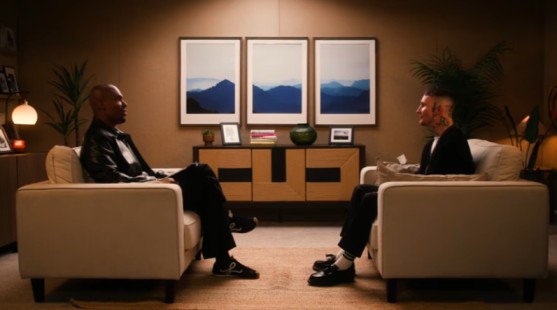
Editor’s Notes: Fifteen years after the passing of Amy Winehouse, her ex-husband Blake Fielder-Civil sits down for a deeply candid conversation to reclaim his narrative and share his perspective on their widely publicized relationship. In this vulnerable interview, Blake opens up about his own harrowing battles with addiction and mental health, addressing the long-standing public blame while offering a rare look at his life beyond the headlines. The discussion explores themes of love, responsibility, and his arduous path toward sobriety and self-forgiveness, ultimately inviting viewers to see the human complexity behind one of music’s most tragic stories. (Mar 17, 2026)
TRANSCRIPT:
Introduction
PAUL C. BRUNSON: Blake Fielder, we need to talk. This is it. We need to talk.
BLAKE FIELDER-CIVIL: Let’s do it. Let’s talk.
PAUL C. BRUNSON: Let’s talk. So here’s where I love to begin. I have not known you to ever, ever do a long form interview.
BLAKE FIELDER-CIVIL: I have not.
PAUL C. BRUNSON: So why are you ready to finally talk?
BLAKE FIELDER-CIVIL: I feel like there comes a point where I need to take control of my own narrative slightly. Not in a sense of grandiose about myself, just taking ownership of it to a point where I would like, as I said, she proves, I’d like people to see who I am. Nothing more than that. Just be genuine, have a chat with you, tell you some stories, talk about some things, talk about some feelings. Yes. It fills me with dread, a little bit. But I’m okay. I’m with you. Okay. Okay.
PAUL C. BRUNSON: So on that note, how do you truly feel in this moment before us?
BLAKE FIELDER-CIVIL: Going into this conversation, I’m talking about something that, as you said, the past 10, 15, 20 years, however long I’ve been a known person in the media, in a sense, it has been a raw deal, and I’ve not necessarily been accurately represented. So I think those feelings of nerves are probably related to that. Probably a little bit of a trauma response to talking to anyone about a part of my life that I associate with caution.
Growing Up
PAUL C. BRUNSON: Yes. Well, we’re going to take it slow, as slow as you want to take it. And I think a great place to begin with is you growing up.
BLAKE FIELDER-CIVIL: Okay.
PAUL C. BRUNSON: Because, you know, your story is typically linked to Amy Winehouse.
BLAKE FIELDER-CIVIL: It is, yes.
PAUL C. BRUNSON: But many people don’t know you, where you grew up, what those circumstances were. So where were you born?
BLAKE FIELDER-CIVIL: I was born in Kettering.
PAUL C. BRUNSON: Where is…
BLAKE FIELDER-CIVIL: I couldn’t even really tell you. I’ve never been back.
PAUL C. BRUNSON: Oh, really?
BLAKE FIELDER-CIVIL: Yeah. My dad was a Londoner, a cockney, born in Bow.
PAUL C. BRUNSON: Okay.
BLAKE FIELDER-CIVIL: He’s originally from South London, though. My family’s where they were shipwrights on the docks in Deptford. Yes. Yeah. But he got moved out during the Blitz to Leicester. Okay. And then he stayed in Leicester. He was a real grafter. He got a bar in Spain. Him and my mum met, went out there to work on it in his bar in Spain. And then my mum fell pregnant and they were going to have me in Spain. I was going to be called Ramon. Really? I know that. Sometimes I was thinking about, what would it be? Ramon. Ramon. That would be better, wasn’t it? Yeah. Ramon.
PAUL C. BRUNSON: I mean, Blake is… I…
BLAKE FIELDER-CIVIL: So he, but my mum didn’t want me to do the national service that was in Spain at the time. You know, we have to do a year in the army. So they came back to England, and it was Kettering.
PAUL C. BRUNSON: Wow, look at that.
BLAKE FIELDER-CIVIL: From there, I came back to London probably when I was about 16, 17.
PAUL C. BRUNSON: Oh, wow.
BLAKE FIELDER-CIVIL: I was young. Yes.
PAUL C. BRUNSON: Right. And so when you came back to London, what were you doing?
BLAKE FIELDER-CIVIL: Oh, my days. I was doing anything I could. My first job was a hairdresser. Really? Yeah. Then from that, the creative was where I wanted to be. I knew I wanted to do things that were a little bit creative, per se. So I was a florist after that. So I had the most masculine two jobs going. I was a hairdresser and then a florist.
PAUL C. BRUNSON: You were a hairdresser and a florist.
BLAKE FIELDER-CIVIL: And then I ended up in music videos. Okay, okay.
Working in Music Videos
PAUL C. BRUNSON: So in music videos, what in particular were you doing?
BLAKE FIELDER-CIVIL: Well, I would do pretty much anything. When I started it was as a runner, obviously unpaid, and then bit by bit worked up to production assistant. And then some of my bigger jobs were things like behind the scenes featurettes.
PAUL C. BRUNSON: Making of. This was a time period where a lot of money was being pumped into music videos. I mean, music videos were the way
BLAKE FIELDER-CIVIL: to launch an artist nowadays. You’re right. And they were an event, if you remember. Yes. Music videos came out. Yeah, yeah. I did work on, and that means in some capacity, some great videos. One of my favorite ones was for Kasabian called “Shoot the Runner.” It’s a really nice video. I ended up being in one of Lily Allen’s videos.
PAUL C. BRUNSON: Did you?
BLAKE FIELDER-CIVIL: Yeah, I was working on that and then an extra didn’t turn up. I did it. I stepped up, unpaid.
PAUL C. BRUNSON: Unpaid, of course.
BLAKE FIELDER-CIVIL: Of course, of course.
PAUL C. BRUNSON: But that must have been a great time for you.
BLAKE FIELDER-CIVIL: It was actually, when I look back.
Early Relationship with Drugs and Alcohol
PAUL C. BRUNSON: A quick content warning that my conversation includes mentions of addiction and suicide. So please watch with care. So I’m curious at this point, what is your relationship with drugs and alcohol at this point?
BLAKE FIELDER-CIVIL: Oh, I think with regards to drugs, I had always had one of those gnawing curiosities regarding. So if I think back when I was 13, 14, one of my favorite films was called Dazed and Confused, which is about 70s high school on their last day when they break up, and the seniors get the freshmen and they hit them with sticks. Yes, yes. And the women, the girls, the seniors are making the, they do all these crazy stuff like hazing.
PAUL C. BRUNSON: Hazing.
BLAKE FIELDER-CIVIL: Yep. And it was all like different culture. They smoked cannabis in this film and I just thought it was a cool character. I know that sounds so lame looking back as a 40 year old man to think how susceptible I was as a youngster. And then, believe it or not, my next favorite film was Trainspotting.
PAUL C. BRUNSON: Oh, wow.
BLAKE FIELDER-CIVIL: I know. Well, I know. And I’ve only just started admitting this to myself because my partner and my oldest, my stepson, they watched this film recently and I remember thinking that film, unfortunately for me, it had a different effect. So that was in no way trying to be comical about it. It’s a sense of, I saw that and thought that looked interesting.
PAUL C. BRUNSON: Okay, what in particular looked interesting in that film to you?
BLAKE FIELDER-CIVIL: Drug use, I think. But I don’t want to be doing the film a disservice because it’s a fantastic film and a great book. It wasn’t responsible for me doing drugs at all. That was me. I’m just trying to get across that I didn’t have that fear of it. I never saw that.
PAUL C. BRUNSON: Oh, so how old were you when you first, was it cannabis? Was that the first?
BLAKE FIELDER-CIVIL: Yeah. Like a lot of people, cannabis is the first thing you try when you’re younger. And some people, it’s the plan, isn’t it? You know, I’ve got a slightly different view on it now as a grown up. But as a youngster in my teens, it was probably that natural curiosity. And obviously, you know, that’s something that, as a parent, you’ll be worried about with your children. Do they have that curiosity?
PAUL C. BRUNSON: Absolutely.
BLAKE FIELDER-CIVIL: You know, if they watch a film, are they thinking, oh…
PAUL C. BRUNSON: Absolutely.
PAUL C. BRUNSON: No, you’re right, you’re right. And so with that curiosity, you’re 13, you start to dabble in cannabis.
BLAKE FIELDER-CIVIL: In cannabis, yeah.
PAUL C. BRUNSON: Alcohol as well?
BLAKE FIELDER-CIVIL: Yeah, yeah. If it was available, it wasn’t a case of have to go to the shops and get cider. It was maybe we’d share a bottle between three or four of us.
PAUL C. BRUNSON: Okay. But also, this is what I’m learning now that I’m a resident, official resident of the UK.
BLAKE FIELDER-CIVIL: Congrats.
PAUL C. BRUNSON: Thank you. Thank you. Is that I think the relationship with alcohol is slightly different here than in the United States.
BLAKE FIELDER-CIVIL: I think the culture in England, and it’s been well stated, is the binge drinking. That’s an issue. If you go to Europe and you go to maybe France or Spain or even Holland, you can see people drinking, but they’re not drinking from 5 until 11 solidly, just drinking pints. They’ll maybe have a drink and then go and have some food and then do something else and then have a drink. Where in England it’s sit in the pub and stay in the pub.
PAUL C. BRUNSON: Okay. And the culture was different in the early 2000s.
BLAKE FIELDER-CIVIL: In the 90s, it was celebrated. There were pieces in the newspaper that were “top caner,” you know, and that was the terminology used, as in who’s the guy that’s getting the most drunk? Which celebrity is partying the most?
PAUL C. BRUNSON: Oh, interesting.
BLAKE FIELDER-CIVIL: It was. It seems a good thing, or, I mean, I guess it still would be now, but pictures of people, the lad culture.
PAUL C. BRUNSON: Yes.
BLAKE FIELDER-CIVIL: You know, yes, it seems like a long time ago, but in reality, yeah, it wasn’t that long ago. But yeah, it was far more football, pints.
PAUL C. BRUNSON: Did you…
BLAKE FIELDER-CIVIL: Magazine.
PAUL C. BRUNSON: Yes, magazine. Yep. Did you, so at what age did you move from cannabis to harder drugs?
BLAKE FIELDER-CIVIL: Not young. I wasn’t, you know, it wasn’t super young. I was maybe 16 and a half, 17. And it was a line of coke.
PAUL C. BRUNSON: Okay. Okay.
BLAKE FIELDER-CIVIL: It was with some pals of mine that had done it a few times and yeah, I don’t really remember much about it, but yeah, there was something there. I think I was more, again, it’s embarrassing to look back about these things, to think how I feel. I’m just trying to be genuine with you.
PAUL C. BRUNSON: Please. Thank you.
BLAKE FIELDER-CIVIL: This isn’t how I feel now, you stress that. But at the time I think it was something I was very excited about. Yes. It made me feel grown up and a bit interesting.
PAUL C. BRUNSON: Okay.
BLAKE FIELDER-CIVIL: And confident as well. Obviously that’s a well known thing. Yeah, I think I remember I bumped into one of my old teachers and I noticed after maybe 30 seconds that he was looking at me very strangely. This was the first night I tried cocaine and I realized I was maybe slightly talkative.
PAUL C. BRUNSON: Talkative, yes. But now can we expand on the confidence piece?
BLAKE FIELDER-CIVIL: Yes, sure.
PAUL C. BRUNSON: Is that in your teens, 13, 14, 15…
BLAKE FIELDER-CIVIL: I was very uncomfortable in my own skin at that age.
PAUL C. BRUNSON: Were you?
BLAKE FIELDER-CIVIL: Yeah, yeah. I thought that drugs was my personality. And that is why when I was first exposed to the media and very quickly that became my narrative, it felt comfortable to me, unfortunately. And that was the view by which I looked at myself as an addict.
PAUL C. BRUNSON: Okay.
BLAKE FIELDER-CIVIL: But also, before I was an addict, years before I was an addict, I knew in my, I looked at myself as somebody that, I don’t know how I’d say it now. I went out and had a good time, or I was sociable, any type of euphemism. But up until then, I wouldn’t say I was an addict. I would be using cocaine two, three times a week.
PAUL C. BRUNSON: Okay.
The Making of an Addict
BLAKE FIELDER-CIVIL: And I wouldn’t. And I wasn’t what I would consider myself as an addict at that point. I was more — I don’t know if it was functioning. I just thought all my friends were doing it, and they were. My friends weren’t the people that you’d necessarily imagine as addicts. You might have an image of it, but there were people with good jobs, with families, some of them — just normal people. So I was of this mindset that you can do drugs and still be okay. And maybe that’s just me. I thought maybe I was one of those — I could be this special person that was able to do that, but wouldn’t be addicted.
PAUL C. BRUNSON: Which is fair.
BLAKE FIELDER-CIVIL: And I don’t know the figures, but I’d estimate there’s hundreds of millions of people around the world in some form of addiction — opiates, alcohol, gambling, eating disorders. There’s so many that people aren’t always conscious of that count as an addiction. Shopping, compulsive spending. So I wasn’t the only person doing it. I wasn’t an outlier. There were lots of us — my friends, we were all doing it. We were all just experimenting.
PAUL C. BRUNSON: But, Blake, what qualifies as an addiction? And at what point do you move from a recreational user to an addict?
When Addiction Takes Hold
BLAKE FIELDER-CIVIL: It’s an interesting question, because I would say — before I was a heroin addict, when I look back now with clear eyes and sobriety, I can see that I was probably always an addict of some sort. I think it was just in me. Whatever I did, it wasn’t enough. It felt like until drugs were also there — if I was on a night out, or going to the pictures with my friends, or just doing normal things — it would be better with drugs.
PAUL C. BRUNSON: Okay.
BLAKE FIELDER-CIVIL: So I’d say the addiction for me was probably always there, mentally and physically.
Amy and I — I can’t remember where we’d been. I’d been to Spain, she’d been somewhere. We met up in London, had a few days together, and we were partying, doing drugs and drinking. Just us two. And then we had a day where we were like, “Let’s chill out now.” And then there was a point the next afternoon where we both said we were feeling off. She said, “I feel funny.” I said, “Me too.”
At this point, I’d maybe smoked heroin ten times — maybe half a dozen, no more than a dozen times. Smoked it. Injecting wasn’t even a possibility at that stage. Wouldn’t have wanted to. Didn’t need to. Amy, maybe three or four times.
We’d done it too much in too many days in a row. We’d gone from doing it once a week, then again maybe the next week, then not done it for a week, then met up again the next week and done it a few times. And then when we’d done it two or three days in a row over this weekend we spent together — that was the first time I can remember, hand on heart, thinking: “I can actually feel it now. I know what everyone was talking about. This is interesting.”
PAUL C. BRUNSON: So you feel as if you and Amy became addicts together?
BLAKE FIELDER-CIVIL: No, I know for a fact we did. Yeah. That is completely — that is exactly how it happened. I tried it, I’d done it, and as I’m freely admitting, I always had that addict inside me. But yeah, my first actual dependency —
PAUL C. BRUNSON: Yes.
BLAKE FIELDER-CIVIL: — where I’m waking up and going, “I need to use something to feel normal” — was around that time. Yeah. This would have been 2004, 2005.
The Media’s Portrayal vs. The Truth
PAUL C. BRUNSON: Okay. What’s so interesting about this is that when I did as much research as possible before you coming in here, a lot of the articles depict you as an addict prior —
BLAKE FIELDER-CIVIL: Yeah, of course.
PAUL C. BRUNSON: — to meeting Amy. And you’re refuting that?
BLAKE FIELDER-CIVIL: No, I am, in a sense — when people think of addiction, I was not what you would call in daily addiction. Drugs were not — I didn’t wake up and need drugs.
The funny thing is, Paul, we were so naive as drug addicts. No disrespect — I’m not trying to dismiss that in any way. We were fully addicts by this stage, but we were very naive. I can think of an example. We were once in Switzerland, feeling poorly, withdrawing. The tour manager, or somebody associated with Amy’s team, managed to get us medication. There are two types of medication for opiate addiction — one of them is Subutex. What that does is it’s a sublingual, so it goes under your tongue and dissolves. We swallowed them straight away because we had no idea what they were. We weren’t — well, we were addicts. Sorry. But we weren’t in that world yet.
PAUL C. BRUNSON: Yes, yes, I see the distinction.
BLAKE FIELDER-CIVIL: Try and see what I’m saying.
PAUL C. BRUNSON: I see the distinction. Because what I’m learning from you is that you’re saying addiction is here —
BLAKE FIELDER-CIVIL: Yeah, definitely.
PAUL C. BRUNSON: — and it was here with you. But it physically — since you were little —
BLAKE FIELDER-CIVIL: I’ve always thought this. I think people are born like that. There are some people in the world that if you’re at a party and somebody says, “Do you want to try this, mate?” — some people will say yes, some people will say no. Why do some people say, “Yeah, I’ll try that”?
PAUL C. BRUNSON: Right, right.
BLAKE FIELDER-CIVIL: Why is that?
Trauma, Childhood, and the Roots of Pain
PAUL C. BRUNSON: How do you think behavior shapes our addiction patterns, and how do you think trauma does? Because — and only if you’re open to talking about this — I understand that when you were a young boy, at 9, there was an incident that happened. You did try to take your life.
BLAKE FIELDER-CIVIL: I’m — yeah. I had done that when I was younger. I didn’t expect you to ask that.
PAUL C. BRUNSON: Okay. Should we pass by?
BLAKE FIELDER-CIVIL: It’s an important part of my life growing up. As I said, I wasn’t happy in myself, even as a youngster. It was a route away from what I felt I was — or just a way to not be me.
PAUL C. BRUNSON: I think this is important in your story — and at any point we can pass by it, we can stop — but I’m beginning to get a picture of your life, your thoughts, your feelings. And at 9, for a young boy that age to begin to think about not wanting to be here — that is heavy.
BLAKE FIELDER-CIVIL: I think I’d started a new school, a private school. I got, like, reverse posh-boy bullied. If you’ve ever seen The Inbetweeners — when Will goes from a sixth form that was a private school to a comprehensive one, he gets bullied for carrying a briefcase. It was the opposite way around. At this school, all the kids had briefcases like businessmen. They were like 9 and 10 years old. And I had a bag.
PAUL C. BRUNSON: Yes.
BLAKE FIELDER-CIVIL: Normal. And yeah, it was just a different thing for me — to feel, as I already did anyway, that I was different, or less than, or something that didn’t belong. And I definitely didn’t belong in a boarding school in Surrey.
PAUL C. BRUNSON: In Surrey.
BLAKE FIELDER-CIVIL: I think if I could go back — not to be too new age about it — but I would give myself a hug. I was a really sensitive little boy at the time. And I don’t think any child at that age, or any person, should ever feel like that’s what they’ve got to do.
PAUL C. BRUNSON: And so this was your life at 9 and 10. And you can begin to see how those moments shape how you see yourself, how you begin to interact with the world.
BLAKE FIELDER-CIVIL: That’s right, yeah. And that nine-year-old me — that sensitive side — became more pronounced. I guess it’s still who I am now. I’m still quite introverted.
Funnily enough, going forward to my 30s, to my very, very lowest stages of addiction — that was my routine. I would do drugs and then I would read horrible comments about myself, to buy into that idea of being worthless. That I didn’t deserve to be here, I didn’t deserve to be clean, I didn’t deserve to be happy. And I got that confirmation through people saying, “Yeah, he should die,” or “I’m going to kill him.” Death threats — I still get death threats.
PAUL C. BRUNSON: Right.
BLAKE FIELDER-CIVIL: So that’s why I come on social media, by the way. But yeah, that really, really fed into the addiction.
All along, my personality — I’d like to think I kept true to who I was, but that would be an absolute lie. The addiction completely manipulated my personality. I was still me, but when I was at my lowest in addiction, I would do the things you’d expect someone to do. I would manipulate, I would lie, I would shoplift. These are not proud moments for me. But I was living as an addict.
So yeah, it’s funny you mentioned that. When I was nine — you put my heart in my mouth for a minute, because I don’t want to think about that or talk about that. But yeah, I guess drugs always were just a way for me to not be me.
Meeting Amy
PAUL C. BRUNSON: I can see it. So now, in your 20s — can we talk about a rendezvous at a pub?
BLAKE FIELDER-CIVIL: Oh, yeah, okay.
PAUL C. BRUNSON: At a pub. Which, I think — I might have actually been to this pub. I don’t know if it’s close to the Good Mixer?
BLAKE FIELDER-CIVIL: It should still be there.
PAUL C. BRUNSON: Yeah, okay. Can you take me to that day, that evening when you met Amy?
BLAKE FIELDER-CIVIL: So it really was a case of — I’d been to watch a horse race, I’d won some money, so I had that cockiness. I was a bit flash. So I walked into the pub, giving it large.
PAUL C. BRUNSON: Yeah.
BLAKE FIELDER-CIVIL: I mean, I was a 20-odd-year-old man with a pocket full of money. So all of that felt really good. And I think, looking back, I was starting to get to a stage of enjoyment in my life for the first time. A bit of security — not in the sense of a mortgage and a job, just in a “that’s who I want to be, that’s the type of person I am, that’s what I’m going to do” kind of way.
She was playing pool, if I remember, and I was quite good at pool, so I obviously asked for a game.
PAUL C. BRUNSON: You did, yeah.
BLAKE FIELDER-CIVIL: I said, “I’ll play next.” And then from there, you know how it goes, don’t you?
PAUL C. BRUNSON: So you see her playing pool. Believe it or not, there are a few little things I have for you.
BLAKE FIELDER-CIVIL: Okay.
PAUL C. BRUNSON: I want to show you. This is —
BLAKE FIELDER-CIVIL: Yeah, yeah, exactly.
PAUL C. BRUNSON: It looks something like this.
BLAKE FIELDER-CIVIL: Exactly like that.
PAUL C. BRUNSON: Yeah, yeah.
BLAKE FIELDER-CIVIL: With that hair, that type of top. Yeah, yeah. She loved pool.
PAUL C. BRUNSON: I didn’t realize that. So she was good at pool?
BLAKE FIELDER-CIVIL: As good as me, but she was good. She could beat me quite often. Yeah, she was that good. And she played a lot.
PAUL C. BRUNSON: All right, all right. So she’s playing, you see her, and you decide to play.
BLAKE FIELDER-CIVIL: Yeah.
PAUL C. BRUNSON: Do you remember the first words that you uttered to each other?
How Blake and Amy Met
BLAKE FIELDER-CIVIL: As much as it would be nice to say it was something great? No, it would have just been, “Do you want a drink? Okay.”
PAUL C. BRUNSON: Okay. “Do you want a drink?”
BLAKE FIELDER-CIVIL: If it’s not broken, you don’t have to fix it. But you have to remember dating in 2002 or 2001, whatever it was when we first met, 2001, it was a slightly different climate to today. It wasn’t quite the same. It was perhaps more expected and common to chat to someone in a pub. To chat someone up. Yes. To talk to somebody that you meet rather than to arrange a date or just a different climate.
PAUL C. BRUNSON: It was, you’re right.
BLAKE FIELDER-CIVIL: So I was able to say, “Oh, you fancy a drink or do you want a game?” Just something like that. And then from there we were just doing nothing.
PAUL C. BRUNSON: You’re just doing your thing, talking back and forth. What was it about her that really caught your eye in those first few moments?
Amy’s Self-Image and the Media
BLAKE FIELDER-CIVIL: I’ve always maintained that she was a beautiful, beautiful woman. And I know that Amy had self-image issues. The media weren’t always kind about Amy’s appearance, even before the addiction. I remember an article describing her as “a plump jazz star.” This was years and years before Back to Black was written.
PAUL C. BRUNSON: Okay.
BLAKE FIELDER-CIVIL: So there was always that kind of narrative. The press — I’d like to think they’re kinder nowadays, I know they’re not — but it was fully accepted to say, “Oh, this person’s fat.” There were those things called a “ring of truth” on the cover of a celebrity magazine. They would highlight a picture of a celebrity, and it would be something about them, like if they had hair under their arm or hair on the face or dry skin on their feet, and they would zoom it up to make it massive. And they did one of Amy having some kind of baby hair on the side of her face.
PAUL C. BRUNSON: Okay.
BLAKE FIELDER-CIVIL: And just made a real thing of it. And her acne. So I think that was a part of our thing at first — she thought I was good looking, I knew she was. So she got a validation, in a sense, from me saying, “You’re hot.”
PAUL C. BRUNSON: Because she didn’t really believe that she was attractive.
BLAKE FIELDER-CIVIL: Exactly that.
PAUL C. BRUNSON: Okay.
BLAKE FIELDER-CIVIL: And I think I would challenge the people that you’ll have had on air as well. You’ll have had that where you can have a hundred people saying nice things, then one or two people that, for some reason, they’re the ones that you’re remembering, that can keep you up at night sometimes. Especially then take into account being in your 20s.
PAUL C. BRUNSON: Yes.
BLAKE FIELDER-CIVIL: Young.
Recognizing Amy’s Talent
PAUL C. BRUNSON: So 2004. Okay, so you meet in 2004. At this point, Frank, her album Frank, is already out, right?
BLAKE FIELDER-CIVIL: Yes. Yeah. Yeah.
PAUL C. BRUNSON: Okay. So did you recognize her as a musician?
BLAKE FIELDER-CIVIL: When she told me that she was a musician, I was like, “Oh,” because it was in Camden and everyone’s a musician. But then she said, “No, not like — I’m actually good.”
PAUL C. BRUNSON: She was like, “No, I’m a real musician.”
BLAKE FIELDER-CIVIL: Yeah. “I’m not just saying it.” And then when we first sort of chilled indoors and she got the guitar and was singing to me, I was like, “Oh, amazing.”
PAUL C. BRUNSON: I bet she was. Okay.
BLAKE FIELDER-CIVIL: I didn’t know the music. It wasn’t my music per se. I’ve been into hardcore punk for 30 years. That’s all I really tend to listen to. But Amy’s music was something that anyone could appreciate. Anyone could hear and go, “Oh, that’s really, really different and unusual and beautiful.” And her voice was obviously special. So I had an appreciation for it as soon as I knew it.
One of our first dates, we went into McDonald’s and she went, “Oh, this is one of my songs.” And I was like, “Huh, look at that.”
PAUL C. BRUNSON: Look at that.
BLAKE FIELDER-CIVIL: Yeah.
PAUL C. BRUNSON: Because I think it’s also important for everyone to understand that when Frank came out, this is her first album.
BLAKE FIELDER-CIVIL: Yeah.
PAUL C. BRUNSON: And it charted, but it was nowhere near the mass success that Back to Black was.
BLAKE FIELDER-CIVIL: Yeah, yeah, yeah. Back to Black obviously did huge numbers. By the time I met Amy, Frank had come out, and we weren’t followed everywhere by the press. There was an element of it, but it was nowhere near how it got later on.
The Beginning of Their Relationship
PAUL C. BRUNSON: So now, with meeting Amy as well — what I saw in all the films and reading is that she had a boyfriend and you had a girlfriend. Is that accurate or no?
BLAKE FIELDER-CIVIL: Semi. Yes, it is accurate. We were seeing other people. But in a sense, I always thought I was — at least in my head — quite upfront about that. I didn’t try and deceive Amy. I didn’t say, “This isn’t my situation.” But at the same time, yeah, I was seeing somebody else. She was seeing somebody else. It was not ideal. There’s no funness in it, like, “Oh, it’s scummy.” But the illicitness of being like, “Oh, it’s an affair” — it’s not fun. It’s not sexy. You just want to be with that person. You don’t want to do that, and you don’t want to carry that in your soul because it poisons that relationship.
PAUL C. BRUNSON: Yes. But now, in the first — well, you tell us. Is that the first month or so you two were together all the time? Because didn’t she — this is where she got the tattoo of your name?
BLAKE FIELDER-CIVIL: Oh, yeah. Straight away. Within a couple of weeks. She used to come to see me at work, maybe three or four times a week, to come sit with me and have a drink. She came in one day, it was like afternoon. We went upstairs — it was a really nice cafe in Camden. We went upstairs to the balcony. She goes, “I’ve got something to show you.” And then she showed me. Yeah. Two weeks, ten days. It was cool. Obviously you’re like, “Wow.”
PAUL C. BRUNSON: Two weeks in, she has your name. She then can’t be in the other relationship, you think?
BLAKE FIELDER-CIVIL: Yeah.
PAUL C. BRUNSON: I was thinking she can’t, unless she is a —
BLAKE FIELDER-CIVIL: It’s just a friend. Yeah. No, obviously there was no hiding it on her side from that point. But Amy could be ruthless. She would just tell you. She was a lot braver than me. She would just say, “No, I’m done. I’m with him.”
Life Together in Camden
PAUL C. BRUNSON: In that first nine to ten months, what are some of the things that you two would enjoy doing? What was life like between the two of you?
BLAKE FIELDER-CIVIL: Well, we were young, so we were in our 20s in Camden, so it was a good social scene. Amy didn’t do drugs at this stage. She liked smoking cannabis. So our lives at that stage were going to the pub, playing pool, watching a lot of films, sitting on the balcony of the front porch, just sitting there, drinking bottles of Dooleys or Baileys.
PAUL C. BRUNSON: Yes.
BLAKE FIELDER-CIVIL: Horribly sweet liquors and liqueurs. Occasionally getting stoned together. Yeah.
PAUL C. BRUNSON: What would you all talk about? Because one of the things that I’ve just been so impressed by is Amy’s writing ability.
BLAKE FIELDER-CIVIL: Yeah.
PAUL C. BRUNSON: And how incredible of a songwriter she is, which tells me that her thoughts —
BLAKE FIELDER-CIVIL: When her heart was in it, yes, she could write amazingly. And when I say that, there were times when Amy could have had the opportunity to write the music for the Bond film.
PAUL C. BRUNSON: Yeah.
BLAKE FIELDER-CIVIL: They asked her to do the second Daniel Craig one — is it Quantum of Solace? I believe they asked her to do that, and she couldn’t do it at that stage. Her heart wasn’t in it. That’s what I mean when I say she was brave. If she wanted to do something, it would be done. I see.
PAUL C. BRUNSON: I see it.
BLAKE FIELDER-CIVIL: I know she loved singing. I know she loved performing. But I also know there was a side of Amy that would have loved to have been able to just be somebody completely anonymous.
PAUL C. BRUNSON: Okay.
BLAKE FIELDER-CIVIL: I don’t mean that as in she didn’t want to have her talent. She did. She loved it. It was what she was born to do. But there were times in the first nine, ten months where, even though the press wasn’t as bad, there were still occasions when she would be out shopping and she wasn’t able to shop because people would come up to her and it would get quite intense. There were no bodyguards around. She was just out shopping in Sainsbury’s.
I remember that quite vividly. She came back one time really, really upset, just before Back to Black, after Frank, and just said, “I don’t know if I want this. I want to be able to go and do normal things.” But I feel like, obviously, if she would have still been around, she would definitely have worked out how to do both by now.
PAUL C. BRUNSON: I didn’t realize that at that period she was already beginning to have an adverse reaction to people recognizing her.
BLAKE FIELDER-CIVIL: Not just people recognizing her — unkind comments in newspaper articles would sometimes affect people’s perceptions. Amy was quite aware. Especially from Back to Black, after the Rehab song, it was almost accepted that it was a part of the tabloids’ week — they’d get a picture of Amy drinking or partying. So there was always an awareness. I think Amy used to work for a newspaper as well, so she knew full well what she was dealing with.
Falling in Love
PAUL C. BRUNSON: So she wrote, “I fell in love with somebody who I would have died for. We were in love and we were together and that’s like a real drug.” Would you say that you two fell for each other too fast?
BLAKE FIELDER-CIVIL: With Amy and I, we were in love, no doubt about it. And most definitely would have died for each other and would have done anything for each other. It wasn’t a case of it being too intense, too fast.
PAUL C. BRUNSON: Can I show you a photo?
BLAKE FIELDER-CIVIL: Most certainly.
PAUL C. BRUNSON: I believe this is one of the coolest photos I think I’ve ever seen of a couple. And to me this represents the epitome of London during this time.
BLAKE FIELDER-CIVIL: That’s a happy picture, that, isn’t it? Yes.
PAUL C. BRUNSON: Can you describe what’s happening there?
BLAKE FIELDER-CIVIL: Yeah. Sorry. It’s funny seeing these pictures. These aren’t things I look at. These are memories which are hard for me to revisit. You understand that? It’s hard for me because she’s not here still.
PAUL C. BRUNSON: I hear you.
BLAKE FIELDER-CIVIL: And that was my best mate.
PAUL C. BRUNSON: Yeah.
BLAKE FIELDER-CIVIL: We were happy, and the drugs were a side of it eventually. But there was also just the day-to-day couple life — just feeling safe together, watching a film, having a laugh together, maybe having a meal. Normal stuff that love was built on. Our love had nothing to do with addiction, and addiction had nothing to do with our love. That’s where it went. It wasn’t who we were in that.
The Making of Back to Black
PAUL C. BRUNSON: I’m with you and that’s why this for me. And I won’t even. I know it’s interesting. I didn’t realize how heavy looking at some of these images would be for you. But now hearing what you’re saying, especially because you haven’t looked at these.
BLAKE FIELDER-CIVIL: No, I don’t.
PAUL C. BRUNSON: In quite some time. For me, this embodied, I think, the love that you two had.
BLAKE FIELDER-CIVIL: You know, a bit cheeky, bit silly.
PAUL C. BRUNSON: Bit silly. Cheeky, yeah. So when you think about how fast that love was. So you said that you really — it was fast, it was intense. Is that what led to the first breakup?
BLAKE FIELDER-CIVIL: Yeah, but obviously the drinking was creeping up. And then I said, “This is getting a bit much and we’re saying horrible things to each other when we don’t mean it. Let’s give it a little rest.” It was after that, she had her first attempt at rehab. Yeah.
PAUL C. BRUNSON: Okay.
BLAKE FIELDER-CIVIL: So for alcohol, not for drugs. Exactly.
PAUL C. BRUNSON: For alcohol. And this is also during this period she’s writing Back to Black.
BLAKE FIELDER-CIVIL: That’s right, yeah. So this gave her the experiences. So, yes, in me, essentially. Obviously there’s been so many people that have said it. I remember — this is me being a name dropper. You ready? I was at Coachella festival and Drew Barrymore came into the dressing room. And I love Drew Barrymore, great actress. Amy too. She came into the dressing room and said, “Back to Black‘s the best breakup album ever.” She goes, “I broke up with my boyfriend recently and I’ve just been driving around listening to it in my car and it’s helped me so much.”
PAUL C. BRUNSON: Yes, yes.
BLAKE FIELDER-CIVIL: But that came from a real place, because it was our breakup.
The Reach of Back to Black
PAUL C. BRUNSON: So when I think about this — Back to Black. Let’s just look at the sheer reach of it. So over eight times platinum in the UK.
BLAKE FIELDER-CIVIL: Well, I know she did very well. I’ve been with her when she was presented lots of discs.
PAUL C. BRUNSON: Lots of discs.
BLAKE FIELDER-CIVIL: Yeah.
PAUL C. BRUNSON: So Back to Black was certified eight times platinum in the UK, three times platinum in the US. It sold over 20 million copies worldwide, making it one of the bestselling albums of the 2000s. It spent over 170 weeks on the UK Albums Chart.
BLAKE FIELDER-CIVIL: Yeah.
PAUL C. BRUNSON: Went on to win five Grammys.
BLAKE FIELDER-CIVIL: Yeah. All right.
PAUL C. BRUNSON: Now, I happen to have right here next to me — if this is okay. I’m not sure if it’s too much.
BLAKE FIELDER-CIVIL: Oh. Oh, you did? Yeah, I think so. I think my name’s on there at the back somewhere. Oh, no, it’s definitely in the thanks. Let’s see if it’s inside. I’ll show you. Because I remember she brought it to the pub to show me and I was laughing. I said, “I just get one little —” Oh, here it is.
PAUL C. BRUNSON: Yeah. Oh, I see.
BLAKE FIELDER-CIVIL: Hello. Oh, wow. I know. I was just — can you see now why I was a little bit — I was like, I see it.
PAUL C. BRUNSON: Thank you. Yeah, you’re just kind of mixed in there.
BLAKE FIELDER-CIVIL: But I think she was, at the time when this was asked — when she was writing her thanks — she was still seeing the person that she’d been seeing over our break. So she was trapped in a bit of a position of, “I can’t really release this album and then thank the person it’s about.” Because, you know, it’s —
PAUL C. BRUNSON: Yes, yes.
BLAKE FIELDER-CIVIL: It is. It’s a genuinely authentic, upset breakup album. Sorry.
PAUL C. BRUNSON: It is genuinely.
BLAKE FIELDER-CIVIL: Yeah. It’s such a strange feeling to have somebody write — not just songs, but beautiful, amazing songs about you. Even if some of it’s like, “You are a bit of a bastard, bit of a player,” that kind of thing. Amy liked that sound. That kind of 60s girl group sound. She liked that kind of feeling, which was obviously more acceptable maybe 20, 30 years ago. She liked the idea of being hopelessly in love, of being almost old fashioned in a sense. She said to me many times, “I want to just be a wife, just make you dinner, and just — you know — that to be us. Just your wife.”
PAUL C. BRUNSON: Yes.
BLAKE FIELDER-CIVIL: Get your beer after work, type thing.
PAUL C. BRUNSON: Yeah. Quite honestly, it’s an album that you can just play. There’s no skips.
BLAKE FIELDER-CIVIL: Do you know, funnily enough, when me and Amy used to be — the last time it happened, I think I can remember it was in Cannes or Nice or whatever, and we’d gone to a bar and they were playing it. And she always said, “Can you turn that off?” She would never want to hear it out and about.
PAUL C. BRUNSON: Why do you think that is?
BLAKE FIELDER-CIVIL: I don’t know. I think maybe it contained a lot of memories for her that went deeper than just somebody singing along to it.
PAUL C. BRUNSON: Okay. Okay.
BLAKE FIELDER-CIVIL: I think that’s part of why Amy — aside from the music, aside from the actual genius of the songs — is that people can relate to it because she’s writing about things that most people have felt. Like just being in love with somebody and it not working out for whatever reasons, and how that feels and how it hurts. Love’s a real dark emotion at times. It can make you do some really crazy things.
The Rawness Behind the Music
PAUL C. BRUNSON: And the rawness of it. I heard — or actually I read — there was an account where she was pitching the album, or one of the executives at the label wanted her to come demo some of the songs for Back to Black. And Amy demoed two of the songs, and the response was, “Can you do something lighter? Can you sing about love as we know it?” And I think a lot of people would have gone and switched.
BLAKE FIELDER-CIVIL: Yeah.
PAUL C. BRUNSON: And rewrote.
BLAKE FIELDER-CIVIL: There was no doing that with Amy. Do you know what? That’s one of the things that I’ve always — when I’m — my stance now is that I know a lot of people, especially people reading media 20 years ago, would have an idea that Amy’s passing is my responsibility. As I’ve always said, I never shirk from any responsibility. If I’ve done something, I’ll put my hand up to it. But I’m okay — I’m not okay, but I’ve made my peace with — yeah, I had a part to play.
But there’s one thing, aside from everyone else, that also had a role to play. Amy herself had agency, and that is in no way at all disrespecting her by saying that. But Amy did what she wanted to do. And even though the drinking had started to hurt her, she carried on. And I just feel that sometimes that can get lost. There’s that element, like I just said, of her being helplessly in love, but she was actually a very strong woman.
PAUL C. BRUNSON: Yes. Right, right. You know, can we talk about anything you want?
BLAKE FIELDER-CIVIL: Yeah.
PAUL C. BRUNSON: So you realize this album is about you.
BLAKE FIELDER-CIVIL: Yeah.
PAUL C. BRUNSON: What do you begin to feel as a result of hearing these lyrics?
BLAKE FIELDER-CIVIL: Yeah. When I first heard the album, obviously, same as everyone else in a sense of — “That’s a really good song. That’s really —” just listening to it and thinking, “This is really good.” Obviously the lyrics were something that — I’m never good with hearing lyrics. I had to read them. When I read them, it was like reading old love letters in a way, because they’re referencing certain things between us — things that we’ve spoken about, things that we’ve said to each other.
So it’s surreal to see that and to hear people singing it. To be in a taxi and hear that song and think, “That’s about me,” or “That’s about us,” or “That’s about when that happened.” It’s quite strange.
PAUL C. BRUNSON: Were there any lyrics that surprised you?
BLAKE FIELDER-CIVIL: There’s a few, perhaps, that were a little bit close to the bone. Okay. Yeah.
PAUL C. BRUNSON: Which ones? You want me to say?
BLAKE FIELDER-CIVIL: Yeah, if —
PAUL C. BRUNSON: I mean, if you could. Yeah, because I’m curious to find that, because the whole album is basically about you.
BLAKE FIELDER-CIVIL: So when I had to have a conversation with a girl I was seeing about, “He left no time to regret, kept his d wet with his same old safe bet”* — that was something that was obviously an uncomfortable conversation to have with a girl I was seeing at the time. She said, “Am I the safe bet?” Obviously I felt responsibility in that sense. So there were times, of course, where I was like, “Oh.” That’s what I mean when I say about a love letter or a page of a diary. Do you know?
PAUL C. BRUNSON: Right.
BLAKE FIELDER-CIVIL: I had no ownership of it. It wasn’t that. It was just a sense of — yeah, it’s kind of exposing in a way.
PAUL C. BRUNSON: Yes. But it seems like all the lyrics were true.
BLAKE FIELDER-CIVIL: Yeah, they were. But really, a lot of people would look at Back to Black and say, “This is about a bad relationship.” And it’s so tortured and so — but it wasn’t. We actually had a lot of fun, or else there wouldn’t have been that sadness after.
PAUL C. BRUNSON: That’s right. But the fact that every lyric was true — I think that’s also the brilliance of Amy Winehouse, because so many songwriters will almost embellish moments.
BLAKE FIELDER-CIVIL: Yeah.
PAUL C. BRUNSON: You know.
BLAKE FIELDER-CIVIL: No, it’s lived experience.
PAUL C. BRUNSON: You could be the most famous source material for an album — for like a best selling album ever, you know?
BLAKE FIELDER-CIVIL: Yeah. It’s not something you hear about very often, is it? Muses.
PAUL C. BRUNSON: No. You are. You are the muse. Can I ask you about rehab?
The Documentary and the Narrative
BLAKE FIELDER-CIVIL: Yeah.
PAUL C. BRUNSON: Because I remember I was watching the documentary Amy, a 2015 film. Absolutely. Which, by the way, what did you think about that film?
BLAKE FIELDER-CIVIL: I thought it was really fair. I thought that for me, going at that time in my life, it felt so — I felt so supported by an aspect of that process. The filmmakers themselves, especially the producer, James — I wasn’t portrayed as the bad guy. I felt at that time, before the documentary, that was the only narrative put forward by the papers.
There was a journalist at Amy’s funeral for some reason, and he made a point of squarely attributing Amy’s not being there to me. “We all know why Amy’s not here today. We’re not even going to say his name.” Meanwhile, I hadn’t been in a relationship with Amy for a couple of years at that point. She was seeing somebody else. I was in a new relationship. I was just trying to live my life.
So the documentary — that kind of didn’t hammer that home. It didn’t seem to want to villainize me. It’s okay to have the facts — yes, I was a drug addict at the time, and I was not in a good position. I’m talking about when the addiction came in and when we divorced, etc., and then eventually what happened. The documentary felt like the first ever time that somebody hadn’t just tried to say the same story: “This guy — villainize him. There’s no other blame here. Nobody else is responsible, only this one single addict.” And that felt like the documentary was like, “No, no, you know, this isn’t —”
PAUL C. BRUNSON: Yes.
BLAKE FIELDER-CIVIL: It’s not life. It’s not how it happened. And that’s just not how life works.
PAUL C. BRUNSON: So this was my interpretation of that particular film — that there was this equation around the passing of Amy.
BLAKE FIELDER-CIVIL: Yeah.
The Perfect Storm: Back to Black, Marriage, and Addiction
PAUL C. BRUNSON: And there were lots of components to that equation. You were one, but there were others that were in that equation. But a question I do have just in this moment, thinking back to the album, is that with rehab, the attempt was to place her into rehab, but it was for alcohol addiction.
BLAKE FIELDER-CIVIL: That’s right. Yeah.
PAUL C. BRUNSON: Okay.
BLAKE FIELDER-CIVIL: Yeah. Dad had taken her to a rehab, but obviously, famously didn’t go in. Or did go into the reception and looked around at the people there and said, “This. I’m not. This. I’m not drinking mouthwash,” and waking up in the middle of the night to have tips of drink. “I just binge drink occasionally when I’m upset,” was her reasoning at the time.
PAUL C. BRUNSON: Okay, okay.
BLAKE FIELDER-CIVIL: It’s quite hard to label yourself as something if, you know, when you think, “Is that what I am?”
PAUL C. BRUNSON: Yes. Which is why previously we were talking about the line between dependency and addiction.
BLAKE FIELDER-CIVIL: Dependency and addiction. Yeah. They are two separate things. You can be what’s called a dry drunk, for example, where you don’t drink, but you still make sure you do the same routines every day. You might go in a pub and order a Coke, but you still have to be in the pub.
There’s an element of that in a sense of — for me, dependency, as in I woke up and I needed opiates before I could even walk, is where it went. Didn’t start like that, but that’s where it went. So we both had that component — addiction as a disease. And yeah, that’s what took Amy in the end. How good she wasn’t using drugs when she died. She was not using drugs. No drugs in her system when she died.
PAUL C. BRUNSON: But what’s also hitting me now is that it was the perfect storm brewing. When this album, Back to Black, comes out —
BLAKE FIELDER-CIVIL: Yeah.
PAUL C. BRUNSON: — you two are rekindling your love affair. You two are not addicts.
BLAKE FIELDER-CIVIL: No, that’s right. Yeah.
PAUL C. BRUNSON: Then you add on the press, you add on the money.
BLAKE FIELDER-CIVIL: Yeah. Definitely that. Also, sometimes it’s an unreal situation being in an environment like on tour. It’s not a generic thing, is it, to be traveling to different countries every day for 12 hours and playing a show? Part of that culture would be drinking or would be drugs. Drugs and alcohol will always be involved in the music industry, unfortunately.
Getting Back Together and Getting Married
PAUL C. BRUNSON: So how quickly do you two come back together?
BLAKE FIELDER-CIVIL: I remember clearly the confirmation of, “Let’s just do this again. Let’s just get back together.” I’d gone to see her in a pub called the Holy Arms in Camden. The guy that she was previously seeing showed up and she said, “I’m with Blake. Obviously, I’m going to be with Blake. I’ve always loved Blake. You knew that when I met you. So you can’t really be too upset about it.” She was just that matter of fact. And the guy got photographed. It was a story. There were journalists everywhere. They said, “Oh, Amy gets rid of her ex. Rid of Alex.” And yeah.
PAUL C. BRUNSON: Was that really the moment that you two were back together?
BLAKE FIELDER-CIVIL: Yeah, yeah, yeah. And I’d say we were married about maybe seven, eight months later. Look at that.
PAUL C. BRUNSON: So you’re married seven, eight months later. Can I — this is the last photo that I have, by the way.
BLAKE FIELDER-CIVIL: Is it a wedding pic?
PAUL C. BRUNSON: Okay. This is —
BLAKE FIELDER-CIVIL: You look good.
PAUL C. BRUNSON: This is good. You two looked phenomenal.
BLAKE FIELDER-CIVIL: Thank you.
PAUL C. BRUNSON: This is you and Amy.
BLAKE FIELDER-CIVIL: It’s a beautiful dress, isn’t it?
PAUL C. BRUNSON: Very good. I think she looks elegant. But you look classy. Very classy.
BLAKE FIELDER-CIVIL: I’ve got a nice suit. Doing a lot of heavy lifting there. She rang her friend — she rang Kelly Osbourne when she came. She’s like, “Ah, we got married.”
PAUL C. BRUNSON: Is Kelly Osbourne the first person she called?
BLAKE FIELDER-CIVIL: She was. Yeah, yeah. She was a dear friend of ours. Lovely, lovely person. But, believe it or not, neither of us were in addiction at that point. Amy had a little bit of a drink on our wedding day. No drugs. The narrative was so different at times to what actually — oh, we did become that. But when we got married, we were in America, so we got married in Miami. When you’re on tour in a country like America, I wasn’t out trying to find drugs there. I didn’t feel safe doing that. I didn’t know people to buy drugs off, so I just didn’t do drugs. I’m not saying they weren’t there. I just didn’t know the people to ask.
So our wedding day, no matter what anyone could ever say, could never take that away. Both of us were fully of sound mind. So.
PAUL C. BRUNSON: So this is also shocking because —
BLAKE FIELDER-CIVIL: No drugs that day at all.
PAUL C. BRUNSON: — to read the headlines —
BLAKE FIELDER-CIVIL: Yeah, it was already —
PAUL C. BRUNSON: — you were addict, junkie.
Setting the Record Straight: Who Introduced Amy to Drugs?
BLAKE FIELDER-CIVIL: I wasn’t. Like I said, we’d smoked heroin, we’d had that weekend where we first realized, “Oh, we got a bit poorly from this.” From then, we’d had our kind of three or four months where it became more like a daily thing, but yet we still went to America with no substitute methadone or Subutex, which are the medications they’d normally give you to help if you’re an opiate addict. We had none of that. We just went out there and withdrew. So I would spend maybe 14 hours in a hotel shivering. Amy would be in a bath or trying to get warm. Horrible, horrible. But we’d just do that and then we’d be fine.
PAUL C. BRUNSON: Okay. And this is not fine, fine. But yeah. And this is before the wedding. So then, going back a couple of months before — there’s a moment that’s often talked about, and I think this is great for you to create clarity around. The moment is — Blake introduced Amy to heroin, cocaine, and crack.
BLAKE FIELDER-CIVIL: Yeah. What’s the truth behind that? To be fair, if I was back in the day, I would say, “Yes, that’s me, all my fault.” But like I said, when we first met, I need to defend myself slightly on things. It’s not fair. Amy had started trying cocaine with her ex-partner. There are pictures of Amy at the Brits, powdering up her nose. And yeah, it was known that Amy had experimented with drugs and it was nothing to do with me.
The heroin was something, as I said, I tried — let’s say ten times, smoked it over a period of six months with some friends. That’s where I was at with that. But yeah, the first time she did it was with me, and it was probably my sixth time.
PAUL C. BRUNSON: Okay. Okay, fair enough. And the way that the story is told, at least I think —
BLAKE FIELDER-CIVIL: — I was a hardened drug addict and then I somehow manipulated that situation. It’s just not true. It’s just not the case. No.
PAUL C. BRUNSON: And then also — did you encourage her to take the heroin?
BLAKE FIELDER-CIVIL: No. No. There was no encouraging or not. It was — I know this is going to sound strange to a lot of people — if I said to my friend, “Would you want a beer in the pub?” I’m not hoping that they fall into alcoholism. At that stage of my life, if I said, “Oh, do you fancy a line, mate?” to my mates, I wasn’t thinking, “With any luck, they’ll become a drug addict.” There was no destructive element to it. It was, “I’m trying to try this.”
PAUL C. BRUNSON: Right, right. Because heroin, for you — what did it do for you?
BLAKE FIELDER-CIVIL: It just gave me a cushion and a protection and allowed me to feel okay in myself in a way. Heroin gave me an insulation, like a bubble. It kind of made you like — okay. Yeah, I’m all right. I’m okay in here. Yeah.
Fame, the Press, and the Downward Spiral
PAUL C. BRUNSON: And also, Blake, I would imagine at this time, in those first few months before you got married — not that Amy becomes an overnight success, because clearly she’s successful — but I would imagine the level of fame just —
BLAKE FIELDER-CIVIL: Yeah. Completely different. The fame that Amy experienced from Frank was completely different to Back to Black. Obviously, the press is still the press. They still do their stories, but the amount of it — I think the second film, Back to Black, with Jack O’Connell —
PAUL C. BRUNSON: And Jack O’Connell plays you.
BLAKE FIELDER-CIVIL: Yeah. Again, I don’t think I came across as the villain in that film. I’m trying to reiterate — I don’t see myself as that. It was so strange waking up and knowing that there are a hundred people outside waiting to take a photo of you sneezing or looking a bit bedraggled, or they could say horrible things about you so everyone will join in and say horrible things about you more.
PAUL C. BRUNSON: And how bad did that press get? Because this was the 2000s, where —
BLAKE FIELDER-CIVIL: — the press were still upskirting people in them days,
PAUL C. BRUNSON: — weren’t they? Taking photos underneath —
BLAKE FIELDER-CIVIL: That was really —
PAUL C. BRUNSON: — underneath Amy’s skirt.
BLAKE FIELDER-CIVIL: No, I’m saying that was the press’s vibe at the time. We got our phones hacked. Yeah. I got interviewed by the police years ago about having our phones tapped, which is crazy to me. How much sway did the press have over us?
PAUL C. BRUNSON: I didn’t fully begin to understand this until we had Jameela as a guest and her phone was hacked, and she talked about how insular it made her because she began to think that her friends and family were selling stories.
BLAKE FIELDER-CIVIL: I completely and utterly empathize with that. I’ve heard the same thing. You see something and you think, “Who could have said that?” And it completely makes you more insular. Amy and I — it was, like you said, a perfect storm. The fact that outside our window there were people trying to tear us down, as we saw it, made our bond stronger. And add drugs into that — it did become that daily addiction stage. I see it quite easily and quite quickly. And it was like, “This is our safety net.” Yeah.
PAUL C. BRUNSON: Would you say that — were you naive to the dangers of heroin?
BLAKE FIELDER-CIVIL: Yeah. Even though I absolutely adored the film Trainspotting, you don’t think that’s going to be you. Like I said earlier, when you’re buying your mate a drink, you don’t think alcoholism is going to — hundreds of millions of people around the world are in addiction, but yet you somehow think, “No, I can have fun with it. I’ll be okay. I’m not like them guys.” Whatever kind of ways you try and justify it to yourself.
Unfortunately, Amy never ever got to a stage of IV drug use, of intravenous injecting. I did. And yeah, I would say my time after Amy — after Amy’s passing especially — was about as miserable and as full-on of any drug addict as you could get.
PAUL C. BRUNSON: We’re going to go there. We’re going to go there.
BLAKE FIELDER-CIVIL: Can’t wait.
PAUL C. BRUNSON: I’m sure you’re excited about that. Yeah. Maybe one other thing on the press, because when I look at the images of you and Amy walking out of anywhere — the flat, walking out of — all I see is flash, flash, flash, flash, flash.
BLAKE FIELDER-CIVIL: Yeah, just walking backwards. You’re just trying to walk somewhere.
PAUL C. BRUNSON: Yes.
The Media, the Paparazzi, and the Blame Game
BLAKE FIELDER-CIVIL: To go to the shop to get some milk.
PAUL C. BRUNSON: I’ve seen her accidentally hit a camera. I’ve heard stories of paparazzi throwing drug paraphernalia in the car.
BLAKE FIELDER-CIVIL: Even eight months ago, I got photographed. I’ve been to the shop. I was making a breakfast. I’ve been to the shop to buy some tin foil to grill some bacon for a vegetarian. And the photograph was “Blake’s buying tinfoil. Aha. Heroin.” That’s another reason why I’ve come on here. I cannot escape it. And I think I’ve got people that love me and I’m not on drugs. Why should I just allow them to say it? Am I not allowed to buy tinfoil from now on?
PAUL C. BRUNSON: Right, right. But this speaks to even that time period because you were being characterized as a junkie.
BLAKE FIELDER-CIVIL: Yeah, I was.
PAUL C. BRUNSON: So what was the conversation like between you and—
BLAKE FIELDER-CIVIL: It’s a horrible word, isn’t it? It is. It’s a horrible word. I think about people in addiction. I think the kindness nowadays is far more than it was 20 years ago. Like I say, it was something to be laughed at or ridiculed or demonized. “It’s disgusting. Or it’s this or it’s that.”
There was a picture of me and Amy. We’d had a really bad — I’m sure you probably might talk about, you might not. There’s a picture of Amy and I. We’d had an argument and we’d — she’d run off somewhere, I’d gone off somewhere, all drama, and I’d self-harmed quite badly. Amy had also self-harmed. Blood dripped onto a ballet pump. And for the press, that was all they needed — Amy was injecting between her toes — and that was for years. And I imagine some people still think that’s what that picture was, rather than, you know, we’ve both got clearly cuts and it’s just two sad people that have had an argument and it’s public.
It’s nothing good about it. It’s incredibly toxic. Not normal. But we weren’t treated with any kindness or any normalcy. It was, “Look at these two, he’s doing this to her. She’s an addict, a bad one, and it’s his fault.” I didn’t have to deal with why is everyone hating me. It feels horrible psychically to even think there are millions of people reading that I’m trying to hurt this person that I love.
It’s a hard memory to think about, but when I think about that, it’s like, oh, so a low point of my life shouldn’t be a low because of shame — it should be a low because that was me and my best friend who I loved, crying out for help. And just getting pointed at and laughed at and blamed, while also Amy keeps getting on stage. “Amy, we need to get paid.”
Blake’s Relationship with Mitch Winehouse
PAUL C. BRUNSON: Yes.
BLAKE FIELDER-CIVIL: When I consider the media putting me out as a shield, or Amy’s management — I don’t include her family, and I think that’s a natural reaction. If I was Mitch, I would also have thought, “Is this the guy that’s making her do drugs?” Because I don’t want to imagine that she does them on her own, because then it might be on me. I might have done something wrong. But it’s not the case. It’s just addiction. It’s how it is.
But if you’ve got somebody that’s the focal point, I think that’s what happened with Mitch. It became far less painful for him to look at anything deeper. So we were, for a while, close in a sense. We chatted. I’ll be honest, before Back to Black, I saw Mitch maybe twice. After Back to Black released, I saw him five, six times a week. He was a lot more involved. It was just how it was. And we had a relationship. We were friends to some extent. Obviously he was my father-in-law, but I liked the guy.
He visited me in jail. And we had a dialogue. He knew I wanted Amy to be clean at that stage. This is a stage where I was in jail, Amy was struggling, and he was desperate. I think he was like, “Can you help or do anything? Because she’s really suffering.”
And then from that point on, there was something that happened — a massive switch. I don’t know what happened, but something happened where there was no more dialogue. He was very, very entrenched. I rang him up one day — we used to call each other quite a bit — and he was completely different, just a different person with me. Not kind, not nice. And I was like, “What’s the problem? What’s going on?” I still don’t know. We’ve never spoken since — well, we spoke once since.
I said to him — he said this was going on and on, me and Amy — “What’s happening?” I said, “I will divorce Amy if you think that’s—” He said, “If you love her, you’d leave her, because together you guys are not going to work. You need to trust me and divorce her, and if it’s meant to be, you’ll be, you know—” So I said I would.
I said something about me being a shield for the past five, six years. Obviously I don’t want to keep doing that now. So please try and do that for me. This is obviously while Amy was still alive, so it’s a completely different mindset. I think I said something like, “Would you help me with the deposit on a house?” Because obviously after being subject to the media coverage I’ve had, I said, “I’m going to really struggle. I haven’t got much. If you could help me, that’d be great.” He said, “Of course we’ll look after you.” I said, “I’m not asking Amy for a penny. You know that.” He said, “No, I know.” And we never spoke again from—
PAUL C. BRUNSON: From that moment.
BLAKE FIELDER-CIVIL: Yeah. I also thought for a while that, bearing in mind that I managed to get sober, to get abstinent from drugs, that he would have somehow taken a comfort from that. I know Amy also would have. I think about that sometimes — how Amy would be now — and I know she’d be in the same position I am. It wouldn’t be entrenched, but comfortable, comfortable with herself. Not needing to drink or to do a substance to be happy. Just being her. I know she would have got that.
PAUL C. BRUNSON: Yeah. Yeah, I know. You—
BLAKE FIELDER-CIVIL: You—
PAUL C. BRUNSON: You want from Mitch—
BLAKE FIELDER-CIVIL: Yes.
PAUL C. BRUNSON: Amy’s father—
BLAKE FIELDER-CIVIL: You—
PAUL C. BRUNSON: You want — is it that you want to have a relationship with him?
BLAKE FIELDER-CIVIL: Not a relationship, no. But I would like it if he would acknowledge that I loved Amy, that she loved me. I know he knows it, but I think it’s painful still for him to say it, because I think it opens up a possibility — if you can’t blame that person for your daughter not being there, what does that leave you with?
I would say it’s maybe akin to having to forgive somebody. I’m asking him to forgive me in a sense — that I wasn’t responsible, and I didn’t have the foresight as a young addict to think about what the future may hold. Amy died of drink. Nothing to do with drugs. But still, I know that the idea that it’s my doing, my fault, is common.
I never blamed the person that gave me drugs for the first time. I’ve never tried to put that on anyone. Why would I? That was me. So I never understood — did these people think that I forced Amy to do drugs? That’s just not what happened.
Setting the Record Straight on Drug Use
PAUL C. BRUNSON: Right, right. The way that I read the stories is that you were the introducer and then the continual facilitator of those drugs.
BLAKE FIELDER-CIVIL: Not true at all. And again, Amy’s worst stage of her addiction was when I was remanded to jail for a pub fight — just trying to stick up for my pals. Amy’s addiction at that point — when her and I were together — I was more in control of how much we were getting. I’d say, “We don’t need more than that. That’s enough.” I was holding back.
When I was in jail, Amy’s dealer was still very much a daily presence in Amy’s life. And I knew that. She was in photographs with Amy at times. And Amy’s family knew this. Amy’s management knew it. So, like I say, my main thing is — I’m not shirking responsibility — but this daily facilitating? No. I wasn’t the dealer.
PAUL C. BRUNSON: So this is the part that I think we all need the clarification on — or not need, but it would be good to get the clarification. So you just said that Amy’s dealer—
BLAKE FIELDER-CIVIL: Yeah.
PAUL C. BRUNSON: Is known to her family.
BLAKE FIELDER-CIVIL: They were, at the time. Yeah.
PAUL C. BRUNSON: Is known to her management.
BLAKE FIELDER-CIVIL: Yeah.
PAUL C. BRUNSON: Definitely known to the record company.
BLAKE FIELDER-CIVIL: Yeah, of course. Yeah.
PAUL C. BRUNSON: So everyone is aware that Amy has an addiction, that you have an addiction as well. At any point, does anyone intervene on your behalf or Amy’s behalf?
BLAKE FIELDER-CIVIL: Yes. Yeah, definitely, that did happen. There was an occasion where, as I said, we were naive to all the possibilities and the depths of drug addiction at that stage. We were still in the first six months of it, so we hadn’t seen the misery. All we’d been told is, “This is really bad. Don’t do it, guys.”
PAUL C. BRUNSON: Okay.
BLAKE FIELDER-CIVIL: So we hadn’t been at those crushing lows that you get from addiction — the stomach cramps and the self — that wasn’t there yet. It was, dare I say, still the naivety side of it. But be that as it may, as soon as it became public knowledge that there were drugs in the relationship, there was one occasion they tried to — we were both in a rehab for a few weeks. It didn’t last. It didn’t stick. But that’s not uncommon.
Obviously, a lot of her family, possibly the management, quite quickly came around to the idea that getting rid of me meant getting rid of the problem. And that obviously didn’t happen.
I would also add to that — if Amy and I had been in a relationship at the time of her passing, I would have been with her. Even when I was in jail in Pentonville in solitary confinement for failing drug tests — when I was in that stage — Amy and I had spoken on the phone and she said she was out drinking, she’d fallen asleep on her front doorstep. So I rang her manager from jail and got him to go and pick her up. So even in jail, I’m not saying I was great — not at all — I’m just saying I still had that level of care where I would be like, “You need to get over there. Amy’s—” I would have done anything. I would never in a million years have let her just sit and get drunk all day.
The Machine Around Amy
PAUL C. BRUNSON: And this speaks to the circle and the machine, right? And I always think — how much of the team, if you will, that was around her was focused on function over her health?
The Final Years: Responsibility, Regret, and the High Life
BLAKE FIELDER-CIVIL: I would say that the majority of — even in a documentary, I think her manager says, “From my point of view, I did the job I was expected to do, which is put Amy on as many stages as possible.” He says it wasn’t his job to look after her health, which I don’t think is perhaps — it seems strange as a sentiment, but I don’t think there was a responsibility felt.
As I said, there was a convenient scapegoat all along. So there was never any sense of what can we do to help this. Amy was still performing a few weeks before she passed away and was clearly in trouble on some — you could see it in stages. I kept reading at the time about the recovery of Amy. “Look how great she’s doing.” But I could see that the weight she put on seemingly was from alcohol. I could see that and I recognized that. So I thought, “This isn’t true, it’s a lie. She’s not doing well.” And I knew she wasn’t because we were still speaking and writing.
A young woman in her 20s drank herself to death in a million pound mansion with security and family. That’s depressing, sad, and tragic, isn’t it? It’s tragic. But it’s also, I think, a bit unforgivable from a sense of people. Like you said, you asked the question of responsibility — whether it was “get her on stage, let’s do our job,” or “hang on a minute, this person doesn’t look right.”
I once said I got on stage and took Amy off stage because she was struggling. I would think nothing of doing that. I wasn’t bothered about people that paid £40 to say I didn’t care. That was my wife and she was struggling on stage. I went and got her off stage. “Come on, this isn’t working. Just chill.” So when I saw footage of her in — I think it might have been Belgrade — oh, yeah, that was heartbreaking.
PAUL C. BRUNSON: That’s heartbreaking.
BLAKE FIELDER-CIVIL: But who’s letting her do this? I know that seems ironic. You couldn’t make Amy do what she didn’t want to. Amy told me a story that she said she’d gone to sleep in a taxi and woken up in the place where she was at. She hadn’t remembered anything of the plane, the taxi to the airport, the plane ride, departure — she hadn’t remembered any of it. She just woke up there. This is scary.
Conversations About Getting Clean
PAUL C. BRUNSON: Did you and Amy ever talk about getting clean?
BLAKE FIELDER-CIVIL: All the time when we were in addiction, yeah. And after. When we split, I filed for divorce. She used to come and see me. I’d moved up to the north, to Yorkshire. She’d come and see me and I’d had a real successful stint in rehab and I was clean. And then I had somebody come and visit me that I’d met in the rehab that was still in addiction, unfortunately. And I thought I could help them. People helped me, I’m going to help this person. And obviously before I knew it, I was back in addiction.
Amy would make a point of telling me if I needed help, she was there for me. She said, “I’ll pay for a rehab in Mexico.” Well, it wasn’t obvious I won’t take her up on that. But yeah, we did have lots of conversations — before, when we were married, as in together, sat there saying, “Let’s not do this.” There were lots of times, and there were times when it was just day to day, it was just our normal. We didn’t see ourselves as raging addicts. We were just, “Oh, Amy’s got to do this today. All right, we need to take half an hour before she can do that so we can just get normal.”
PAUL C. BRUNSON: Yeah, to get normal. That’s interesting.
BLAKE FIELDER-CIVIL: Yeah. Because obviously in the withdrawal you’re feeling a million miles away from normal.
The High Life: Travels, Celebrities, and Surreal Moments
PAUL C. BRUNSON: So let’s put the drug addiction to the side. I would love to be able to take a window seat to the high life of Blake and Amy. The great times — not the good times, the great times. The travels, the people that you met. What to you are some of the most memorable stories?
BLAKE FIELDER-CIVIL: It’s hard to do these memories without sounding desperately like a name dropper, as I said to you earlier. You’ve got to remember, I was like a normal working class lad. It wasn’t my world. I didn’t know famous people. I was very much wide-eyed, meeting people like Jay Z, Snoop. But yeah, I had a good — we were in LA. We were doing the music video for “Tears Dry on Their Own.”
PAUL C. BRUNSON: Okay.
BLAKE FIELDER-CIVIL: And then about 4 o’clock, the director said, “Oh, Pammy is doing a magic show in Vegas with this magician and she wants you guys to come.” So we were like, “Oh, okay.” And he goes, “Yes, she’s sending a private jet.” This is not my world. I’ve never even seen one of these things.
PAUL C. BRUNSON: A private jet?
BLAKE FIELDER-CIVIL: Yeah.
PAUL C. BRUNSON: That was your first time on a private jet?
BLAKE FIELDER-CIVIL: Of course. Yeah. And had a great flight. Flew over the strip at night.
PAUL C. BRUNSON: Yes, the Vegas strip. Yeah.
BLAKE FIELDER-CIVIL: And then we went to a casino and watched Pamela Anderson’s magic show and then we flew back the next day with some pals. So that type of thing for me, coming from where I come from, was so surreal, so strange and amazing.
PAUL C. BRUNSON: I didn’t even know Pamela Anderson had a magic show.
BLAKE FIELDER-CIVIL: Oh, yeah, she was the assistant and she was fabulous, really. Disappearing, getting chopped in half, all of that, if I remember right. Yeah.
PAUL C. BRUNSON: Wow, that’s something.
BLAKE FIELDER-CIVIL: Yeah. Yeah.
PAUL C. BRUNSON: All right, now that’s a story.
BLAKE FIELDER-CIVIL: It’s just one of them.
PAUL C. BRUNSON: Were there any people that —
BLAKE FIELDER-CIVIL: Do you want to know who I was good friends with? That was unexpected. I’m sure he wiped my end. If he sees this, he might reach out. We might be pals again. David Schwimmer. Really? He’s such a nice guy. Such a nice guy and a genuine Amy fan. He came to see Amy in a small pub when Amy was doing — this is before Amy was doing big stages. So he was right on it from the start. He must have been a fan from Frank.
PAUL C. BRUNSON: Okay.
BLAKE FIELDER-CIVIL: He was in Camden. He was with his girlfriend at the time. And he was so clearly just a fan of the music and was so happy. And all the time I’m like, “This is Ross from Friends.” And he was so chill, so cool. We used to text each other and he had little nicknames. We were mates.
PAUL C. BRUNSON: Wow.
BLAKE FIELDER-CIVIL: Yeah, we were mates.
PAUL C. BRUNSON: It’s a whole other life.
BLAKE FIELDER-CIVIL: It really was. Yeah.
PAUL C. BRUNSON: Were there any celebrities, or politicians, or — I’ll just say public figures — that Amy just couldn’t believe that she met?
BLAKE FIELDER-CIVIL: Yeah, yeah, yeah. Quite a few. I guess an obvious one would be she met Prince and she was very happy about that. But to be fair to Ames, she could get blown away by a little kid coming up to her and saying, “I love your tunes.” She’d be like, “Oh, love you, darling. Oh, you’re so pretty.” She’d be more engaged. I think in terms of art she respected, there was lots. But I’d say Prince was probably her big one. Yeah.
PAUL C. BRUNSON: Yeah, that’s almost as big as you get.
The End of the Marriage
PAUL C. BRUNSON: How did you and Amy finally separate? What were the circumstances?
BLAKE FIELDER-CIVIL: Why did it happen when we divorced?
PAUL C. BRUNSON: When you divorced?
BLAKE FIELDER-CIVIL: The week Amy passed, we were still — I was in jail unfortunately — we were still very much talking about the possibility of reconciling again. So I would say the definitive moment I realized that wasn’t going to happen was when I got told that she passed away. That’s when I knew. That’s not me saying, “Oh, if Amy was alive now, we’d be together.” I’m right saying that I have a life now. I’m in love, happy. However, I have no qualms about saying that we would still be in each other’s lives now. I would have met her today for a drink or a coffee, whatever.
But yeah, the final moment — it was never final for me. The divorce wasn’t the end. The arguments weren’t the end. Her dad — none of that was strong enough to pull us apart. It was only her and I saying, “Nobody understands this but us. Let’s see if we can get clean. You do that, I’ll do that, and then we’ll see where we’re at.” But it didn’t happen. It didn’t happen.
PAUL C. BRUNSON: Now in the — maybe this is the 2015 film — I feel like the depiction was that because you were incarcerated right at this time, there was a photo that you saw.
BLAKE FIELDER-CIVIL: Oh, yes. With the infidelity, in terms of the relationship side of it rather than the deep emotive side. On the surface level, you’ve got to remember that when we met, she had to think of somebody else. Jealousy wasn’t where I was at in that relationship. However, the marriage thing for me meant it went into a different realm. So infidelity in a marriage was ultimately something that I did struggle with, and I would have struggled with if we would have reconciled. In fact, I did when we tried to.
PAUL C. BRUNSON: And I’m sorry, Blake — you’re saying that infidelity is something that you would have struggled with?
BLAKE FIELDER-CIVIL: In that stage after marriage, yeah. I thought, “We’re married. We’re not doing that anymore.”
PAUL C. BRUNSON: There’s no more infidelity. Okay.
BLAKE FIELDER-CIVIL: And I think perhaps Amy — I was in jail. I’m not — I understand fully and completely. Amy was a vulnerable addict. There were people out there selling stories left, right and center at the time. I think she was desperately lonely, desperately sad. I’m not kind of putting her on a pedestal. I’m saying I know addiction, and I know that Amy’s heart was always with me at that stage.
PAUL C. BRUNSON: Okay.
BLAKE FIELDER-CIVIL: I know that, and I knew that, and she’d tell me that. I just knew it was the situation, but I still couldn’t — it wasn’t something I could abide, in a sense.
PAUL C. BRUNSON: And so you first — did you first see the images of her on a beach with someone?
BLAKE FIELDER-CIVIL: And then you two must have corresponded with each other, and then she told you what happened?
PAUL C. BRUNSON: Told you what happened.
BLAKE FIELDER-CIVIL: Yeah, obviously very upset, et cetera. Then we worked on things, kept chatting, kept writing, but ultimately it was just too much. And I felt a clean start as well would have been a really good thing to do. We actually spoke when I first moved up to Yorkshire after I got out of a rehab up there. We spoke about getting married again. Yeah, which probably gave her dad nightmares. But yeah, that was where we were at. We were still very much, “Yeah, we’re going to do this.” She came to see me at Christmas, spent Christmas together. I mean, there were a lot of times Amy and I were always — there was never any time where it was like we didn’t like each other, or we hated each other, or we weren’t speaking, even right up until her passing.
The Quote That Wasn’t What It Seemed
PAUL C. BRUNSON: Yes. Yes. At what point did you — because I know there’s been a lot made of this. So this gives you an opportunity to clarify this. You come out of prison and this is the quote — you probably know what quote I’m going to give. “I’m a big man. I’m handsome.”
BLAKE FIELDER-CIVIL: What did I say?
PAUL C. BRUNSON: “I go to the gym. I dress well. What am I doing wasting my time—”
BLAKE FIELDER-CIVIL: — in a sense of being publicly cheated on? It’s probably — that’s my ego speaking, isn’t it?
PAUL C. BRUNSON: Okay, so that’s exactly—
BLAKE FIELDER-CIVIL: Seems quite obvious to me. I don’t remember that quote. It seems like something silly I would have said to try and make myself feel — I have to just — yeah, yeah. Because I already thought, oh, that’s humiliating. How can I somehow act like I’m okay with it?
PAUL C. BRUNSON: Right. Right.
BLAKE FIELDER-CIVIL: So that’s what that was.
PAUL C. BRUNSON: Yeah. No, and which is exactly what I thought that was. Because that is a statement — that is someone trying to puff up.
BLAKE FIELDER-CIVIL: Exactly.
PAUL C. BRUNSON: Artificially inflate.
BLAKE FIELDER-CIVIL: Oh, completely artificially. I’ve never once thought any of those things about me were true.
PAUL C. BRUNSON: So—
BLAKE FIELDER-CIVIL: But yeah, if you say something, it’s halfway to sort of believing, I guess, in that sense. Like, “I’m okay. Look, I’m fine. I’m not humiliated. It’s her loss.”
PAUL C. BRUNSON: Right. Type sh. “I’m going to be fine.” Yeah. And so this was totally fine.
BLAKE FIELDER-CIVIL: Tears rolling.
PAUL C. BRUNSON: Yes. Yes.
Slipping Back Into Addiction
PAUL C. BRUNSON: So it was after that point where I think you probably went to Yorkshire, and then she comes and she visits you.
BLAKE FIELDER-CIVIL: That’s right.
PAUL C. BRUNSON: You’re both talking about reconciling.
BLAKE FIELDER-CIVIL: Reconciling. And then bit by bit, I slipped back into addiction, unfortunately. And from that point on, it was more a case of get better now rather than me and you. I was going from the stage where we’d been at before, which was nothing innocent about drug use, but was more a naive — smoking of drugs became injecting of drugs.
PAUL C. BRUNSON: Okay.
BLAKE FIELDER-CIVIL: So that was something that couldn’t be around her and wasn’t for her. She had just never — was never going to let that be something she’d see me doing, and she wouldn’t and didn’t. So I’d gone to that level of it.
PAUL C. BRUNSON: What do you think drove you to that point? Because I recall earlier in the conversation you mentioned you never thought you would inject.
BLAKE FIELDER-CIVIL: Yeah, that’s right. By the time I was in Yorkshire, I had been in a rehab with people that were more — it was a community rehab, so it wasn’t a private one. It wasn’t a facility that was for well-off people. It was genuine addicts, and all that brought with it.
I felt like a fake. I felt like these guys had had these really, really hard stories to drugs, and I was somebody that had just experimented and ended up falling into a bit of a daily addiction for a few months. And then I’d been incarcerated after those few months. I’d been put in a rehab after. So I felt like I hadn’t even been at that stage — a hardcore heroin user — which is what I then became through the associations I made at that rehab. But that’s on me. Fully on me.
The Last Time He Saw Amy
PAUL C. BRUNSON: Was that the last time that you saw Amy?
BLAKE FIELDER-CIVIL: No, no, no.
PAUL C. BRUNSON: When was the last time you two saw each other?
BLAKE FIELDER-CIVIL: She had a lovely flat or house in Marylebone. I went to see her maybe — I want to say about five months, six months before she passed away. Maybe five months. That was the last time I saw her.
PAUL C. BRUNSON: Okay. Okay. Are you open to sharing?
BLAKE FIELDER-CIVIL: We were with each other exactly as we always were. We were as intimate as we had been. We were still — it was just — we just met each other. We hadn’t seen each other at this stage for a while. I was in addiction, struggling, and I met her for a couple of hours and we had a really nice time, a really nice chat.
And it was a case of, you know, “I have to go now.” It wasn’t, “Let’s stay together. Let’s get you right.” It didn’t need to be. It was a case of, “We’ll see soon, and I’ll be better next time.”
PAUL C. BRUNSON: Okay. And so shortly thereafter, you were incarcerated again.
Rock Bottom: The Depths of Addiction
BLAKE FIELDER-CIVIL: Yeah. It was housebreaking and just — really, really scummy, disgusting, shameful things. I don’t ever try and hide that side of me. My family, people that love me, know that. I couldn’t hide it anyway because it’s all out there.
But I struggle to reconcile how low I really got through addiction. I don’t try to pass it off. I don’t say, “Hey, that was an addict, it wasn’t me.” It was me. But I know the person I am, the person I was raised to be — I would never have been in that situation. I might have done lots of silly things, but that level of stealing, breaking into a house — I would have been distraught if someone did that to me. It was just a real low.
By that time I was a complete — I was about 55 kilos. I’m six foot and a half and I was 55 kilos, with about a 26-inch waist. Really, really poorly. I was in a coma through my addiction — a couple of comas. I’ve lost organs. Real, real misery of addiction.
The Last Letter
BLAKE FIELDER-CIVIL: And then, just before I got told that Amy had passed away, the last letter I received was from Amy — the same as we’d always written, nicknames, silliness, jokes — in which she said, “Me and you, let’s really, really give it a go as friends.” And I said, “Let’s do it. We’ll always be friends.”
Because for a few weeks earlier, we’d been saying, “Shall we get back together?” She’d said, “I want to come and see you. Shall we?” So we tentatively talked about it, and then she decided — yeah, she decided, “You know what, let’s call it.” So I was like, “Okay, that’s cool.” And then she obviously never got that letter.
PAUL C. BRUNSON: This is so interesting. So the last letter you received from Amy—
BLAKE FIELDER-CIVIL: Got stolen from me in jail. Yeah, it’s disgusting. Even in jail there are hierarchies — people that steal from people’s cells, their possessions. That’s low. I mean, it’s not the lowest of the low in jail, but it’s down there. I got my letter stolen. I should have anticipated it, but yeah — devastated. I don’t have that still.
PAUL C. BRUNSON: That letter you received — you wrote her back, but you’re saying she didn’t receive it?
BLAKE FIELDER-CIVIL: I can’t imagine so, no. Because I remember that week — I remember we’d spoken on a Monday or a Wednesday, and then I was saving my pin phone credits for the weekend because it was weekend rates, so the call lasts a bit longer. Instead of a minute, you might get two minutes. So I was like, “I’ll save it till Saturday.”
And then Saturday morning I went to ring — I’d say, “Hi, what are you up to? I got your letter. Did you get mine? I’ve written you one back.” No answer. No answer when I tried again in the afternoon. And then after — I can’t remember what time, maybe 4, 5, 6 o’clock in the evening — some prison officers came to my door and told me what had happened.
The Moment He Found Out
PAUL C. BRUNSON: Do you remember that moment exactly? Are you open to sharing what happened?
BLAKE FIELDER-CIVIL: Yeah, I can. They took me down to an office and told me, showed me a news headline. Because I said, “It’ll be a hoax.” Straight away I said, “It’s not true, don’t worry.”
When I was in jail for the first time, I’m not a religious person, but I used to pray every night. I’d say, “Please let Amy stay alive until I get out.” Because I had this massive fear — an absolute, primal fear — that something’s going to happen. That if I’m not involved, something’s going to happen to her when I’m in here and I’m not able to do anything, or help, or even be there. I just always thought, “Please keep Amy alive until I get out.”
So when they told me, my first thought was, “This is my worst nightmare — it’s not true.” My brain was grasping at it. “It’ll be a hoax. These things happen.”
PAUL C. BRUNSON: Right.
BLAKE FIELDER-CIVIL: And then they showed me a BBC link, and obviously I was more conscious at that point that this had happened. But my head was swimming straight away.
I held it together. You can’t be crying walking down the wings in a jail. I had to wait until I got into my cell. My cellmate at the time was a really solid guy. He’d seen it on the news and he gave me a hug straight away — I burst into tears, and he started crying too.
It’s strange — I was held up, supported, by somebody I’d known for a matter of weeks. That was the only comfort I had at that moment. For losing a massive, huge part of my life — a big part of my heart. Somebody I was not going to see again, or hear again, or anything again. It was too much.
PAUL C. BRUNSON: Had you had anyone in your life up until that point who had cared and loved for you — no more than—
Grief, Guilt, and the Question of Responsibility
BLAKE FIELDER-CIVIL: Anyway, that was if you’d say to me, why. What was it about Amy that I liked, aside from the obvious things? It was that she used to pick me up in a way that we used to like. She’d be my biggest cheerleader. She’d be like, “Oh, that’s a great idea, darling. Do that. Yeah, let’s try this.” She just thought I was. Just thought I was someone. She made me feel like someone.
My life up to that point — I spent years, a couple of years of being homeless in London when I was younger, a teenager, all the misery that entails. So by the time Amy and I met, I had, you know. Yeah, that wasn’t my life. I didn’t have people that said to me, “You’re cool. You’re a nice person.” And she believed it, and she made me feel like it. And with her, I felt like it.
I know that the person I am now, because I look back and I’m a different person. To my 20s, I would say I wasn’t even fully grown and fully mature until my late 30s. Add into that an arrested development of drug use, which kind of keeps you in that moment — you’re not having, as I said, heroin being a shield for me, protection. That also stopped things hurting me. Like, in a sense of something bad happens or somebody says something bad about you, with heroin you’re like, “Oh, that’s okay.” But I wasn’t growing from these experiences. I was just hiding from them. So there was no emotional growth. There was no evaluation. There was no rehabilitation.
But Amy was that person. You’re right. That did make me feel I was worth something. Yeah.
And for my part, for her, if I could add to that — she knew that I was genuine. She knew that I loved her, and she knew that the bad parts about me, the thing like, “He might chop another bird,” you know, when we first met, or, “I gamble a bit,” or “I might like a bit of coke.” She was like, that’s done defining. She’s like, “I know him.” And she knew that that person would look after her as much as I could, which might not have been enough and wasn’t enough, but she knew I wasn’t there for any other reason. I wasn’t trying to manipulate. I wasn’t trying to lie or cheat or take from her. I just wanted to be with her and enjoy it with her.
I didn’t want to try and take away from her. Like, I’m here too, by any of that. We’d walk on the red carpet and they’d say, “Just Amy.” I’d be like, “Yeah, all right,” just be funny. I’d be like, “Well, obviously.”
PAUL C. BRUNSON: Right, right. But you’re trying to push your way through.
BLAKE FIELDER-CIVIL: Yeah, yeah, no. Or like, I didn’t — like I said, money’s not ever been my God. So I wasn’t ever like, “Oh, she earns so much more than me.” Just wasn’t one of those, like, “Oh, you getting dinner? Try.” Yeah, just like you would if it was your mate. “You’re nice at the minute, aren’t you? So you can get dinner,” type thing.
PAUL C. BRUNSON: Yes, yes, yes.
Mourning Alone: Amy’s Funeral and the Weight of Blame
BLAKE FIELDER-CIVIL: When Amy’s funeral took place, the chaplaincy team at Armley arranged for a Jewish person of faith, a rabbi, to come in and tell me what the funeral would be like. And he did. He read out the passages that would be said and told me the lines that were being said, and the stage that it would be at and how they would conduct those rites. So there was comfort there.
But it’s quite something to not only lose a part of yourself — your best mate, let’s say, someone you loved and were still intensely close to — lose that person, be blamed for it, mourning alone in jail, ostracized in the press, like it’s his fault. The whole thing just fed into my whole thing of addiction again and using. And I’m worthless. Everything’s on me.
PAUL C. BRUNSON: Right.
BLAKE FIELDER-CIVIL: It took me a long time to get out of that and to give my head a real good shake, to look at myself. And I’m never, ever here to say, “Hey, Amy was bad,” not at all. But I know Amy wouldn’t want me to still be sat here 20 years later saying it was all my fault. She’d be saying, “Get it right, babe. Come on. Tell the truth.” We were just young addicts at the time. We weren’t to start with, then we were, and it could happen to anyone.
Who Is Responsible?
PAUL C. BRUNSON: I mean, this has happened and it has. I mean, this brings up what I feel is a constant question of who’s responsible.
BLAKE FIELDER-CIVIL: Yeah, right.
PAUL C. BRUNSON: And I mean, I have lots of ideas and even I question — is that even the question? But how do you respond to that? Because this is the constant question. The fingers continually, to this point, 15 years after her passing, the finger is still pointed at me.
BLAKE FIELDER-CIVIL: I still have, yeah. I still have all the trappings of that blame put on me in the sense of the media. I’ll still be treated as that person. They still try and insinuate I’m in addiction. I wouldn’t be here if I was, by the way. I couldn’t hide it.
Responsibility has to lie in some cases with the people around her. At the time when Amy did pass away, the people that were in and out of her daily life that saw her — bearing in mind I’d not spoken to Amy, I’d not seen her for some time, and it had only been brief, for a couple of hours. She was in a new relationship. I didn’t know what I was expected to do.
But that’s not me saying it’s — I’m just saying everyone needs to say, “Yeah, I could have maybe looked out for that,” or “I wish with all my heart I would have realized that was a problem.” But also, Amy has agency as well, and that’s important. And that’s a really hard thing to say when somebody’s not here. But again, I truly believe in my heart of hearts that Amy would have the same attitude as I do.
I’ve got broad enough shoulders now. I can take it. I was an addict as well. I don’t think Amy ever did a story like that, or even a piece admitting it. It was always just said, and it was always just my fault. That was it. There was no other deeper kind of investigation.
And Amy chose to drink that day. Unfortunately, the disease of addiction was there. But as far as I’m aware, nobody would have made her do that. The idea along for the past 15 years has been that somebody is responsible, almost in a sense of causing death. That would be the furthest thing from anyone’s intentions. It didn’t even make sense on a logical level. Like, if I was trying to do something manipulative and trying to get this person to pay for my drugs forever, the very last thing I’d want is for them to not be around.
I mean, the fact is, I was in jail for housebreaking, so I wasn’t phoning up Amy asking for anything. I’m not saying, “Hey, look, I’m a nice guy.” I’m just saying people have always got this very, very skewed idea of how things actually went down. I am such a good and easy bad guy in it. And like I said, I won’t deny my mistakes, and there were lots. But now, sitting here with you, I truly know I’m not responsible for her passing. I’m not. And it’s the very last thing I would have ever wanted. And I know that, no matter what, Amy’s family would also agree — I’d imagine they know that’s not what I’d want. This would be the very last thing I’d ever, ever want — for anything to happen to Amy.
Amy’s Bulimia: A Hidden Battle
PAUL C. BRUNSON: Just a heads up — this next part of the conversation includes eating disorders. Please watch with care. One thing we haven’t talked about, that I believe in the reports after Amy’s passing was a factor, was her current level of health.
BLAKE FIELDER-CIVIL: Yeah.
PAUL C. BRUNSON: And bulimia played a role most definitely in that. When was the first time that you realized that she suffered from bulimia?
BLAKE FIELDER-CIVIL: I saw it for the first time when we were out for a meal, and it was terrifying for me because it was something I had no understanding of. I didn’t know how to deal with it. I used to get upset or frustrated. I’d be like, “You don’t have to go and make yourself sick. We’re just eating a nice meal.” Then she’d say, “Well, you know,” and be back in a minute — go into the toilet and make herself sick. As far as I’m aware, she didn’t ever receive any treatment for any disorder.
PAUL C. BRUNSON: And everyone in the circle was aware of the bulimia?
BLAKE FIELDER-CIVIL: Yeah, yeah, yeah. That’s about as close as I can get to understanding. When you love somebody and they’re suffering from something that you have no understanding of, you really can’t fathom it — what they get out of it. And that must have been how not only Amy’s parents, but my parents, people that loved me, would have felt with me. My mom used to say, “Why don’t you stop? Just stop doing it.” I said, “Well, it’s really not—”
PAUL C. BRUNSON: It’s not that simple. You cannot. This is what Amy’s brother Alex said with regards to her bulimia.
BLAKE FIELDER-CIVIL: Okay.
PAUL C. BRUNSON: He said, “Amy suffered from bulimia very badly. That’s not like a revelation. You knew just by looking at her she would have died eventually, the way she was going. But what really killed her was the bulimia. I think that it left her weaker and more susceptible.”
So that’s what her brother Alex mentioned.
BLAKE FIELDER-CIVIL: I mean, obviously, massive amounts of alcohol is what caused her passing. It was alcohol toxicity, I believe.
PAUL C. BRUNSON: Yes.
BLAKE FIELDER-CIVIL: She was small, tiny, and would drink — and we drank too much vodka. But I definitely understand what Alex is saying. I imagine, well, I know that she was getting medication — diazepam, stuff like that. But I imagine that mixed with the alcohol she would have drunk, mixed with seven, eight years of constant bulimia — yeah, she was poorly. She wasn’t in recovery. She wasn’t fixed. She wasn’t happy. She was poorly. Still.
The Devastating Link Between Eating Disorders and Addiction
PAUL C. BRUNSON: She was. To me, when I read more and speak with you and do the research, it blows me away how prolific bulimia is with illicit drug use.
BLAKE FIELDER-CIVIL: Yeah.
PAUL C. BRUNSON: So here’s some stats. Up to 35% of alcohol or illicit drug abusers have an eating disorder — up to 35%, compared to only 3%—
BLAKE FIELDER-CIVIL: —of the general population.
PAUL C. BRUNSON: Ten times more. And bulimia has one of the highest mortality rates of any mental health condition.
BLAKE FIELDER-CIVIL: Yeah, I can believe that. I think with Amy’s case, as far as I’m aware — she never said it to me — it wasn’t a lifelong condition. It was something that, for my money, she didn’t do when we first met. It was something that came about. Not to put everything on the press, but these reports that you’re seeing — that you’re fat, or that you’re overweight, or wanting to be like everyone else. She wasn’t either of those things. But this was a definite kind of narrative that I remember reading.
There was one time as well, I remember — it was quite a good magazine, I can’t remember which one it was. They had “The Most Unsexy Celebrities.” Which is just already, like — you wouldn’t see that now, would you? So much, maybe on some clickbaity page. But it was an article, and I remember that Amy was number two on this list. And I thought, if she saw that — even though she’s brave and bolshy — that’s going to hurt anyone’s feelings. And who the f* are these people that don’t know her, don’t know us, saying that she’s unsexy? How is that even — yeah.
And I know it sounds like you think, “It can’t have been like that. Blake’s talking bollocks.” No, this happened.
PAUL C. BRUNSON: The level of negative press — or should I say the—
BLAKE FIELDER-CIVIL: Amy was referred to as “Amy Decline House.” That was a common nickname. “Amy Decline House.” And “Blake, Not So Civil.” But this is some really amusing journalists, and that’s his legacy.
The Media’s Role and Amy’s Legacy
PAUL C. BRUNSON: Right, right. Yeah. The level of nastiness in the press, it was another level, should I say, to another degree, especially at that time. And what I didn’t realize, though, was that connection between the press calling her overweight, essentially, or acne.
BLAKE FIELDER-CIVIL: Amy was on the cover of a magazine with, just, bad skin. All of that stuff is going to — no, it’s not. It’s not even hard to see how you’re reading that and you think you’re going to feel bad about yourself. I’m sure it still happens now to some degree to celebrities or to musicians. Of course it does. But you have to have your weight, your face, your — who you are, your hair, everything pulled apart in a way that was fairly acceptable back then.
PAUL C. BRUNSON: And you know what blew me away is how even in a lot of these talk shows, the nightly shows, how in an opening monologue, there would just be an open Amy Winehouse joke about her.
BLAKE FIELDER-CIVIL: I know. What was it like when you say a joke — a joke laughing at Amy being in addiction or being a mess? Yes, that’s what it was. This was a source of entertainment for people. But then, obviously, when somebody dies, they want to be respectful. “We were very respectful about this.” But you think, well, no, you were the guys that were saying, this, that, and the other for years. With glee.
PAUL C. BRUNSON: Yes.
BLAKE FIELDER-CIVIL: And making these narratives and pushing it. You weren’t saying, “Hey, these two kids might need a bit of help.” It was, “Here we go, we’ve got a story.” Amy would have only had that same reaction, and we all would. We’d be fine, not bothered. But you take that inside, don’t you?
PAUL C. BRUNSON: And you’re bothered and she’s bothered.
BLAKE FIELDER-CIVIL: Who wouldn’t be, right? A comedian making a horrible joke about you — you think, are you right? But you can’t. You’re going to be a good one, right.
Why Blake Has Stayed Out of the Spotlight
PAUL C. BRUNSON: And I would imagine that’s one of the reasons why you haven’t done any interviews. That’s the reason why over the last few years you’ve been to two or three.
BLAKE FIELDER-CIVIL: Yeah, yeah, that’s it. And again, it’s not me seeking these things out. With all due respect, people ask me and nine times out of ten I’ll say no. But my guy said I’d have to come chat. And it seemed like this would be so different to how it was when I was famous, or infamous, 20 years ago. So different, this.
PAUL C. BRUNSON: Yes, yes, I can imagine.
BLAKE FIELDER-CIVIL: If this would have been around 10 years ago, me and Amy would have been on every week. We’d be sorted.
PAUL C. BRUNSON: Yeah, yeah. I mean, you know, I think there’s also — because you’re thinking about responsibility. When I asked about the responsibility, the one category that we didn’t talk about is us, the public. Those paparazzi’s are able to be there and sell those photos to news agencies because we’re buying it, we’re reading it and we’re devouring that information. And I think that equally, if we’re all taking responsibility for the passing of one of the greatest artists, arguably —
BLAKE FIELDER-CIVIL: To tell you what people’s perspectives are, Amy could have done loads more things. There’s no telling.
The 27 Club
PAUL C. BRUNSON: Oh, there’s — you know, this is why it gets to this, the 27 Club. Did she ever, or did you ever have any conversation?
BLAKE FIELDER-CIVIL: We had one brief conversation about it once. Yeah. I can’t recall the actual specifics of it, but we had one conversation. I think it was me saying — as in when I was in jail doing my praying — “Please stay alive.” We had quite a lot of in-depth conversations around that time because obviously I wasn’t in daily addiction. I was still using drugs in jail, but it wasn’t every time I wanted. It might be once a week or twice a week. I hate talking about stuff like that. But yeah, that’s where I was. So I was on that very first tentative step towards being sober. It would have been in a sense of saying, “Don’t be silly. That’s not going to be me.”
PAUL C. BRUNSON: And Amy said that.
BLAKE FIELDER-CIVIL: Yeah. So I know she said that. I don’t know how we got to that, but she was laughing, dismissing it. “Don’t be stupid.” And I’d be like, “Well, make sure — please. Because 27 is a big number.” My brother passed away at 27 as well. So yeah.
PAUL C. BRUNSON: At 27.
BLAKE FIELDER-CIVIL: Yes. Yeah. So that 27 — I don’t even like using the term “club.” It just seems disrespectful to me, obviously, because I’ve got a personal investment in that person. So I don’t agree with this branding of the 27 Club, like it’s something to aspire to, like a rock and roll kind of thing.
PAUL C. BRUNSON: Yeah, I’m with you. You’re right. It wasn’t until that moment that it resonated with me. But for everyone who’s unaware of what this idea means, it’s musicians who have passed away at 27, including Brian Jones, Jimi Hendrix, Janis Joplin, Kurt Cobain, obviously Amy. And in the past 100 years, there have been over 50 famous musicians who’ve all passed away at this age. And so it’s profound. I didn’t realize that it’s a discussion that you and Amy had.
BLAKE FIELDER-CIVIL: Yeah, yeah. No, it just means that there’s a pattern. And the pattern is that younger people — because 27 is no age, is it, really, not where I’m sat now. You’ve certainly not lived your life. People with fame and money, and perhaps people that have carried the elements of their genius — like Cobain, or all of them, like Jaz and Jimmy — they were so tortured, so intelligent, so genius, that they were too much. And it’s kind of — it puts that rock and roll spin on it, where in reality it would have been just the same as Amy’s and my life. There would have been misery. It would have been enslavement to a substance. It would have been a daily grind.
I wish with all my heart that Amy was still here, and that she wouldn’t be associated with the 27 Club in that way.
PAUL C. BRUNSON: Yeah.
BLAKE FIELDER-CIVIL: It just feels like it kind of demeans it slightly. Like, “Oh, it’s just this rock and roll club. It’s what these young musicians do.” But they shouldn’t, should they? People shouldn’t be drinking and drugging themselves to death in their 20s.
PAUL C. BRUNSON: No, no, it’s nothing to aspire to.
BLAKE FIELDER-CIVIL: No, exactly that. Yeah.
Amy Winehouse’s Legacy
PAUL C. BRUNSON: Talking about legacy.
BLAKE FIELDER-CIVIL: Yeah.
PAUL C. BRUNSON: What do you believe Amy Winehouse’s legacy is and will be?
BLAKE FIELDER-CIVIL: Her legacy is obviously amazing songs. That’s not the full stop as far as I’m concerned. But for people — Gen Z’s now that listen to Amy — I think it will resonate for generations. I don’t see why it wouldn’t. I think people will still be listening to her in 20, 30, 40, 50 years. I think she’ll be somebody that will be remembered through history as an amazing, talented singer, but one that wrote honest, genuine lyrics at a time when perhaps it was more expected for artists to be pop artists, to let people write their songs, and to conform.
I think in many ways she wouldn’t want to think she was the first person to do that, but she definitely helped other artists to write their own songs rather than, “This person is going to write that track for you, you just perform it.” She definitely made it where labels were more willing to listen to real songs. Like Adele, and like Lily does now — just who you are, rather than some poppy part that you just listen to on the radio. Amy’s songs were real deal, weren’t they? They were poems with good music.
PAUL C. BRUNSON: Yes. You know what I love so much about Amy’s music is it’s timeless. You know how you listen to some music and you can place it in a certain time period.
BLAKE FIELDER-CIVIL: Of course. Yeah.
PAUL C. BRUNSON: You could put on any one of these songs from Back to Black — even Frank, even that album — and you cannot assign a period of time to it.
BLAKE FIELDER-CIVIL: Yeah, no, you’re right. And I think there might have been some different directions from her with music. She might have gone down some different routes. It might not have been the girl group thing. She went from jazz to the Motown thing. She might have gone somewhere else. Who knows?
PAUL C. BRUNSON: You think she would have done a hip hop album?
BLAKE FIELDER-CIVIL: I think she would have loved that very much. Yeah. Really? She was very good friends with Nas, obviously. She loved Nas. And they did work together, didn’t they? They worked together on some cool tunes, actually. But yeah, I think that would have been very cool. Not rapping.
A Message to Amy
PAUL C. BRUNSON: Yeah, yeah. But she would have been — yeah. If Amy could hear you now, what would you want her to hear from you?
BLAKE FIELDER-CIVIL: That I’m doing well, that I’m happy. That would mean everything to her. That I’m clean. I’m a happy person. I know that sounds — perhaps I don’t mean that to sound dismissive of things. I mean, I have worked hard to get to this. I’ve worked hard to it, and I cannot live in the past. I cannot live in the comments. That’s a different side. I have to be me. I have to be sober, clean, happy. And that would make Amy beyond — she’d be over the moon.
PAUL C. BRUNSON: Yes, I believe that.
BLAKE FIELDER-CIVIL: She’ll still be around me every now and then. I’ll have a day or two where I’m thinking, “Oh, I really miss Amy.” And then she’ll come on the radio in the car. I know it sounds perhaps a bit hallmarky, but sometimes you could think she’s still there.
Blake’s Next Chapter
PAUL C. BRUNSON: Yes. Yes. What’s the next chapter? For Mr. Blake, what is the next chapter for you?
BLAKE FIELDER-CIVIL: I’ve got too many things in my life now which mean too much to me to ever relapse, to ever go back. I couldn’t fathom what that would do to my family, my people I loved, people I live with, what that would do to them. So addiction — it took years, but I still get the odd thought of drugs, believe it or not, as depressing as that is. And I’m sure a lot of addicts would concur. Every now and then I’ll watch a film and I’ll get an intrusive thought. But by and large, my life now is wanting to be the person I always wanted to be, which is in a happy relationship, being clean and feeling valued for who I am — which I’ve never had until Amy showed me what it was like. Yes. And I also want to try and reach out and help some people through addiction.
PAUL C. BRUNSON: Okay. Okay. What’s been illuminated for me in this conversation is that you’ve always wanted to be seen. You’ve wanted to be loved, you’ve wanted to be cared for, as does everyone.
BLAKE FIELDER-CIVIL: Yeah, right.
PAUL C. BRUNSON: We all want to be affirmed. And you lived for almost the entirety of your adolescence, through to your young adult life, not having felt that. And so at that point, you become a self-soother. You try to be a self-regulator, and if you’re not equipped with those skills, you go out and you get the things to help you soothe and you get the things to help you regulate, and that’s what you did.
Also, what I know, which is clear, is Amy loved you.
BLAKE FIELDER-CIVIL: Yes, she did.
PAUL C. BRUNSON: She held space for you all the way through to the end. And we have to realize that, as you said and many people have said, she didn’t do what she didn’t want to do.
BLAKE FIELDER-CIVIL: No, she did. No, no.
Finding Grace: Final Reflections
PAUL C. BRUNSON: You know, she did only what she wanted to do, and she wanted you in her life. And that means, you know, I think that means a lot to me that that was a considered decision, you know, that she made. I’ve been so intrigued to want to sit with you, and I’m Team Blake, man.
But now is the moment for you to give yourself grace. Now is the moment to do what Amy’s always wanted you to do, and that is to live your life to the fullest. To love, to allow yourself to be loved. And to your point, to help as many people as possible.
BLAKE FIELDER-CIVIL: Yeah.
PAUL C. BRUNSON: This is it. You know, this is it. There is a final question that everyone gets —
BLAKE FIELDER-CIVIL: You ready for it? Yeah. Is it the same question for everyone?
PAUL C. BRUNSON: Same question for everyone.
BLAKE FIELDER-CIVIL: All right. Okay.
The Most Memorable Conversation
PAUL C. BRUNSON: This question is — if you think through all of the conversations you’ve had throughout your life, which one stands out to you as the most memorable? So who was it with and what did you learn?
BLAKE FIELDER-CIVIL: Let me think about this. You see, I’ve had some real, as I said, humbling moments in my life. And I think when I first met people in recovery who basically told me a similar version of what you said — to allow yourself a bit of grace.
The minute I started to be able to allow responsibility to be there, but to also live with myself so that I wasn’t feeding back into — that would probably be the most important conversation in my life. So with some of my very best friends that I’ve met in rehabs.
Some of the people that I’ve been with, some people that had nothing and were the most desperately sad people you could ever imagine in terms of their life and what they’d been through. I was sat talking to them in groups and I was trying to say about my problems. And you realize sometimes — so those types of things were always good for me to understand.
PAUL C. BRUNSON: Yes.
BLAKE FIELDER-CIVIL: My putting my hands up and taking responsibility brought me to where I can now put my hands up and say, “I’m okay with myself. I know what I’m about.” And I know that, like you said, I’m worth being clean. I’m worth being sober. And I’m happy being clean and sober.
PAUL C. BRUNSON: Yes. It looks good on you.
BLAKE FIELDER-CIVIL: Thank you so much. Yeah. Looks good on you. Thank you.
PAUL C. BRUNSON: Yeah.
BLAKE FIELDER-CIVIL: Blake. Yeah.
Closing Thoughts
PAUL C. BRUNSON: That was heavy. Since day one, I’ve been a fan of Amy Winehouse when I heard about her, but I wasn’t necessarily in tune with her personal life. Before the research, if you were just to survey me and ask me what’s my opinion on Blake, I would have probably said negative. But after sitting with him, my heart goes out to him.
You know, Blake is someone who has gone through hell, and I think that when people hear that, the immediate response may be, “But what about Amy?” But I think that we have to look at each person individually, and if I just look at his life — because this is his life — he’s gone through hell. And at what point do we give him grace?
I think what this conversation allowed Blake to do was to specifically clarify how he felt towards Amy and his love for Amy. Just wanted to say if you enjoyed this conversation, I know you’re going to love this one.
Related Posts
- Transcript of Alanis Morissette Interview: Anger, Attachment, & Postpartum – Call Her Daddy
- Transcript: Dolly Parton Interview on Dumb Blonde Podcast
- Transcript of Dolly Parton Interview: Khloé In Wonder Land Ep. 23
- Short Videos on Hanimax: A New Way to Enjoy Animated Stories
- Transcript of Jimmy Carr Interview on Modern Wisdom Podcast