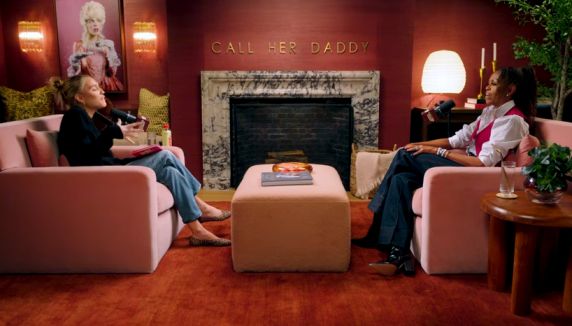
Here is the full transcript of Michelle Obama’s interview on Call Her Daddy Podcast, January 21, 2026.
Brief Notes: Former First Lady Michelle Obama joins Alex Cooper for an honest, wide-ranging conversation about what it means to be a woman under constant scrutiny in today’s world. Drawing from her new book, The Look, Michelle talks about turning society’s obsession with women’s appearance into a tool for confidence, connection, and power. She opens up about life in the White House, how she handled misogyny and double standards, and why young women must learn to “work the fascination” instead of shrinking themselves. Together, Alex and Michelle dive into how this generation can move beyond objectification, reclaim their voice, and shape a more equitable future for women everywhere.
Welcome to Call Her Daddy
ALEX COOPER: Michelle Obama, welcome to Call Her Daddy.
MICHELLE OBAMA: Hey, Alex, look at here. Call Her Daddy. I’m here.
ALEX COOPER: You don’t even know.
MICHELLE OBAMA: Cool set, too.
ALEX COOPER: Thank you. It is beyond an honor to be sitting with you today. How are you doing?
MICHELLE OBAMA: I’m doing good. I mean, I’m personally good, individually good, feeling whole. But the world feels a little nutty, and so there’s that piece of it that seeps in in ways. But I’m happy to be here.
ALEX COOPER: I’m happy you’re here. Talk to me about your outfit. How did you pick it?
MICHELLE OBAMA: My outfit? This is a Meredith Talusan original. And as we were thinking about promotions for the tour, there is a picture that a lot of people have been showing of me at Princeton. And Meredith had the idea of updating. This is the updated version.
ALEX COOPER: It’s on one of the first pages. I remember when I—
MICHELLE OBAMA: One of the first ones. And when she brought it to me, I was like, you are so—look at this. I mean, isn’t it? It’s a redo. It’s the next version.
ALEX COOPER: Oh, that’s so good.
MICHELLE OBAMA: My campus looks 2.0.
ALEX COOPER: Meredith.
MICHELLE OBAMA: 5.0. Yeah. So we were like, this is the perfect place to do it with Alex.
ALEX COOPER: I love it.
MICHELLE OBAMA: So, okay.
—
Skiing and Hobbies
ALEX COOPER: I am going skiing soon. And I heard that you are also a skier.
MICHELLE OBAMA: I love skiing, but I’m kind of putting up my ski boots.
ALEX COOPER: You’re done?
MICHELLE OBAMA: I just feel like I am just one fall away, because I am like a crazy skier. I can’t ski a little bit. I’m skiing all day.
ALEX COOPER: Oh, you’re going black diamond.
MICHELLE OBAMA: I go black. I don’t go double black. I like blacks and blues.
ALEX COOPER: Are we doing moguls?
MICHELLE OBAMA: No, no, not yet. But when I ski, I’m still the former first lady with security, so I have sort of a ski motorcade.
ALEX COOPER: Wait. I’m trying to picture myself skiing down. You can’t tell, right?
MICHELLE OBAMA: No, because the agents are blending in. Some are snowboarders and some are—but they’re usually in the front and the back. So that no errant person just clobbers me. I don’t really know what goes on behind me when I’m skiing. I just know we make it down.
And I usually ski with an instructor. I ski in Aspen. Vance is my ski husband, and I miss him dearly.
ALEX COOPER: Vance.
MICHELLE OBAMA: I’ve skied with Vance for 10 years, and I hope he hears this. I love him. I miss him. I haven’t skied in two years, but we ski. We made it a mother-daughter trip. Every President’s Day weekend for the last 10 years. There are a bunch of mothers and daughters. We’ve all raised our kids together, and we take the long weekend, go to Aspen and ski.
But I’m done. I’m just worried that I usually have one fall.
ALEX COOPER: You don’t need an injury. You don’t need to be in a boot.
MICHELLE OBAMA: And then I can’t do anything else, and we need you to do other things.
ALEX COOPER: Yeah. Anyway, we need you. Yeah.
ALEX COOPER: Okay. Well, good to know. I was just wondering, like, hobby. I’m a skier. I’m the similar way, though. As I continue to get older, I’m like, I don’t want to be hurt from this. I want to enjoy myself. But I’m so competitive.
MICHELLE OBAMA: This is the thing. I bet. What do you—are you black diamond?
ALEX COOPER: I’m trying to go black diamonds. I’ll start on a blue just to feel something. And then I’m like—
MICHELLE OBAMA: You start feeling it, and then you’re just like, yeah, no, let’s do that black run. Or you do it once and then you’re like, let’s do it again.
ALEX COOPER: And it’s like, no, it’s after lunch. You just ate a lot.
MICHELLE OBAMA: I always have one run too many. It is the one run where I say, I am done after this run. And then right in the middle of the end of the run, I’m not stopping. Like, that foot’s not—
ALEX COOPER: You’re getting lazy.
MICHELLE OBAMA: Getting lazy.
ALEX COOPER: And then form goes.
MICHELLE OBAMA: Form goes. And then when I fall, the looks on everyone’s faces. It’s like everybody has a heart attack.
ALEX COOPER: Yeah, I didn’t even think about that. You kind of also have to worry about all these other people. Like you said, everyone’s behind you, in front of you, watching out for you. So if you’re falling—
MICHELLE OBAMA: Do they feel responsible?
ALEX COOPER: And sometimes you want to fall and have no one see.
MICHELLE OBAMA: You don’t have no—
ALEX COOPER: Everybody’s there.
MICHELLE OBAMA: Ski patrol, doctors, men with guns. It’s like, I’m good, guys. My God. Get up from there.
ALEX COOPER: Okay, well, good to know.
MICHELLE OBAMA: I knit. I haven’t been knitting lately because I’ve been reading a lot and reading in prep for our podcast. I’m reading people’s books, though, and I still like books, so I don’t do audio. And if you’re holding a book, you can’t knit. So I’m really reading a lot right now, so I haven’t knitted as much, but it’s still there. It’s in me.
ALEX COOPER: I have been trying to read more as well. I think just especially with the uptick in social media and the usage and everything, I just feel so uninspired. And so reading has allowed me to tap back into parts of myself that I do miss. When I was in education, right, and when you’re in school, you’re taking it for granted, but then when you leave, you’re like, wow, what a privilege it was.
—
Setting the Stage for the Conversation
ALEX COOPER: Okay, so when I was preparing for this interview, I realized that there were kind of two ways I could go about it.
Option one would be more OG Call Her Daddy days. Talk some relationships, try to ask you a couple questions about Barack Obama.
MICHELLE OBAMA: Wants to get reports on. It’s like you said what? You’re like, it’s her show. I don’t know.
ALEX COOPER: Right. Relationships and sex, which, again, you’re right, it would go viral and poor Barack would be like, why? Literally everything I’ve done. Why?
But then there’s the other side of this show, which is option two, which is hard but important conversations that are relevant to young women and girls all around the world. And so as juicy as option one would be—
MICHELLE OBAMA: Or not.
ALEX COOPER: Or not, actually fair.
MICHELLE OBAMA: It could have been like, nah, that’s that.
ALEX COOPER: I’m like, oh, right. Fair. I just thought about it. I’m like, you sitting here today as one of the most influential and powerful women in the world, it would be too great of an opportunity not to have you impart your wisdom on the next generation who is watching and listening today.
MICHELLE OBAMA: So we’re going with option two.
ALEX COOPER: So I think, unless you want to go option one just like—
MICHELLE OBAMA: No, I think with that setup, you’re right. Let’s go with option two.
ALEX COOPER: And to anyone watching, you can all take a deep breath. This is not going to be about politics today. This is going to be about women, which I love talking about here on Call Her Daddy. So, Michelle, are you ready?
MICHELLE OBAMA: I am ready, Alex.
—
Discussing The Look
ALEX COOPER: So you recently released your book, The Look. Congratulations.
MICHELLE OBAMA: Thank you. Thanks so much.
ALEX COOPER: Beautiful. And on the surface, it presents like a fashion book, right? But it’s so much more than that. It is about your values, uplifting women, building confidence. And we’re going to get into all of it today.
But first, I kind of want to set the scene of how we even got here. You have talked a lot about how we live in a world where a woman’s appearance and our bodies are overly scrutinized and objectified.
I’m going to quote you. You said, “It is the habit of the culture of the world to put women in their place by attacking their physical.”
Even after you went to Princeton and Harvard Law School, you were in the White House doing things like combating child obesity and advocating for girls’ education. The haters still chose to focus on your arms and your hair.
What was that experience like for you? And how did you navigate it day to day and not let it distract you?
Learning to Navigate the Political Spotlight
MICHELLE OBAMA: Yeah, yeah. I think it became sort of the shock of the reality of that I felt in the first year of campaigning when Barack announced. I was hesitant, but once I was on board, I was on board and I knew that I needed to be out there campaigning and introducing the world, not just to him, but to us as the first potential black president and black family.
We understood that there might be hesitations, misunderstood misconceptions, people who weren’t exposed to a broad diversity of people. And so we knew that it was important for both of us to be out there telling our story, helping people understand our values, what we cared about, how we were raised, who our parents were. To me, all of those stories are what connect us.
So that’s what I’m out there doing. I’m in Iowa. It starts out that I’m in people’s backyards and in church basements. I mean, it starts out small because who are the Obamas? I mean, who are these two? Right? So it wasn’t like people were climbing the walls. I mean, Hillary Clinton was the favorite in Iowa. Barack was a distant fourth.
But we worked hard at the grassroots and understood that we’d have to meet people in their homes and in their communities. And so I was kind of like, not even a blip on the screen. So I was out there freely talking. And I never had a written speech. I just would usually talk from my heart and talk about us.
And so slowly things grew and grew. And I wasn’t in a backyard anymore, but I was in a school auditorium. And it wasn’t 10 people, it was 5,000 people. And I think everyone was kind of shocked by how I was connecting in that way.
But I always felt like this is who we are as Americans. One of the best experiences I had in my life was leaving the south side of Chicago and going into rural America and understanding that we’re the same people. The food we eat, the things we care about, the way my dad loved his family, the pride he had in his family, the working class nature, his work ethic. People would just shake their heads and nod and what might have been, “I’m not sure about you” became “I know you,” right?
And that was the experience I was having. But as my popularity rose, I was being covered more, right? And so the press enters the scene, and there are now reports, right? And the first thing, after all this great conversation and connection, the top of the article would be, “she was wearing…” Not my education, not my professional career. But it started with appearance, and it got worse as we got better.
So I understood it as campaign tactics, right? I could separate it out and go, well, this is politics, right? What better way to beat a moving engine is to try and slow it down. And so with women, what do we do with women? We start sort of talking about their strength and their… So then I became… I was angry, not passionate. I was a misogynist. I wasn’t joking about my husband and humanizing him. Right. I wasn’t athletic. I was “scarier, scarily muscular.” Right.
So it was a rolling thing. And I attributed it totally to politics. And I didn’t write it off to what people really thought because I had months and months of understanding that the people in those auditoriums and in those school buildings and at those speeches, they understood who I was, if that makes sense.
ALEX COOPER: It does make sense. And I think that’s a great way to look at it, right, because you’re able to compartmentalize essentially that this is the name of the game, this is how it goes, but it still doesn’t mean that it’s not sexist. Right? They’re attacking you for your looks and they’re not doing that to a man.
MICHELLE OBAMA: They weren’t doing that to my husband. Right. They weren’t describing him physically and he was out there more than I was. So I was like, okay, well, this is where it comes from. It’s like, wow, whoever is doing this, when it comes to how we put women in their place, it’s like, okay, there wasn’t comment about the substance that I was saying. It was like, “why did she wear this and was that appropriate and what does this mean?”
And it’s all about how we look. And the more you pay attention to that, you see it not just happen to me, but even happen to other people, female candidates, other wives, other celebrities, other people in the public eye.
So I tried not to take it personally and understand that this was a game. And I definitely didn’t want to assume that this is what America thought, like being able to separate out what is politics and media and where people’s hearts are. And I think sometimes we still struggle because the game is still happening. We’re still dividing each other up when my truth was that no one ever in my face, in any community was unwelcoming or rigid or close minded. Right. Not in person. Right. It was all about what was being fed.
So I didn’t want that to color my heart towards this country.
Working the Fascination
ALEX COOPER: Even you speaking, right? We’re talking about objectification because we as women experience that every day. And then you’re dealing with it on the world stage. I also love it because you have a pattern of challenging norms and you refuse to shrink or to conform to the patriarchy, which I love.
And in your book, you talk about learning that, quote, “if you can’t beat them, work their fascination to your advantage.” It’s one of my favorite quotes, truly, because it’s so relatable. Like, from a very young age, as women, we learn how to shapeshift, essentially, and we constantly… We have to. It’s unavoidable, right?
MICHELLE OBAMA: Biologically, to survive, just to survive.
ALEX COOPER: But when you’re talking about leaning into the fascination, can you talk to me about how you personally learned to navigate it? And how did you know, Michelle, when to lean in and when to pull back?
MICHELLE OBAMA: That’s a good question. I think again, on the campaign trail and in those first months of being in office, you just see what’s written and you see the… You look up and there was a whole website, Mrs. O, that focused on… And this is all… It’s… This was complimentary. It was exciting. I could see the fun of it. Right. I get it. Right.
But I kind of thought that I understood that fashion and appearance for women is so powerful, that if I spent too much time talking about it, maybe nobody would hear anything else I’d have to say. And I came in wanting to say so much and do so much substantively. I knew what I wanted to do going in, and it was interesting.
I’d always get the question leading up to the campaign, “well, what do you want to accomplish as First Lady?” And my first answer was, first of all, I want to make sure my kids are whole. So me being a good mother in this, me and Barack being good parents in this… It didn’t mean that we weren’t going to work hard. But if you want to know what my priority was, like a lot of parents, it’s making sure that my kids weren’t destroyed by this thing we’re doing, that they ended up whole.
And I thought by saying that, that that wasn’t controversial. It was just like, we have kids and they’ve got to go to school. They have security. And so I’m going to have to focus on that. Just like all of us, as women mothers do, we’re multitasking, and we’re doing it all the time. And I was doing it before I landed there, but it was always interesting. People would be like, “well, how do you know what to do in this role?”
And to me, it was clear that, oh, my God, you don’t know anything about what I did before I came here. Like, you don’t. Like, and you don’t want to. I was like, well, I went to Princeton and Harvard. I mean, I practiced law. I was an assistant to the mayor in Chicago. I ran a nonprofit of 501. I was a vice president for community relations at the University of Chicago Hospitals. I was the dean of students. I was like, oh, you guys, all of that just disappeared in the course of this whole election.
And you now see me as just Barack Obama’s wife. So that made me say what? That quickly my shoes become the most important thing about me. Right? And again, not unique to me. It can happen to the best of us.
So I shied away from fashion leading the conversation, but I knew I couldn’t… I didn’t completely control it. So let’s lean in. Let’s lean in with what we do. Let’s make sure that we have a plan and a strategy in place for how fashion, just like everything we did in the White House, would have meaning and impact.
The Strategy Behind Fashion Choices
ALEX COOPER: That makes so much sense because again, in the book, you’re talking about the now, the behind the scenes of the designers you were choosing and people that you were choosing to work with was so meticulous on your end. But speaking about it, you can now speak about it. But at the time, I understand it’s like, I cannot be reduced to the dress and to the shoe and to the hair and the whole thing. I want people to hear what I’m actually saying.
I have a question, because I think this is pretty applicable to my audience, because it’s tough for women, obviously, when we’re even talking about fashion. A perfect example, a young woman is going for a job interview, and she gets the lowdown, “oh, this boss is a full misogynistic pig.” So she wears the dress instead of the pants because she is so acutely aware, and maybe it’s subconscious that if she leans into her conventionally feminine aura, then she probably will have a better chance of getting the job.
But is that okay? Or are we abandoning ourselves and are we compromising ourselves? Like, what do we do?
MICHELLE OBAMA: Look, life is full of compromises, just period. Right? I mean, some of what I always say is that you’ve got to pick and choose your battles. We all do. And the personal question becomes, where are you in life? Right.
If you’re a young woman that needs a job to pay off her loans and it’s your first job, and you have less leverage than I do as the former first lady to wear what you want and have this empowerment and say what you want to do… Like, my advice to young girls is, first of all, make sure you can pay your rent, and don’t make decisions so rashly when you don’t have the leverage to keep yourself safe. Right?
But in the midst of that, you don’t want to compromise yourself so much that you lose yourself and you are not safe. Right? So you may wear the dress because it’s professional and gives you an edge, but then you want to be very careful of who this person is that you’re now working for, and whether… So now you have to be smart. It has less to do with what you’re wearing. But who is that person? And do you trust him? And can you trust him?
Women don’t have to dress a certain way to lead on somebody who has misogynistic… A lot of times we blame ourselves and say, “well, if I…” But it is a tricky balance because if you’re in a professional setting and wearing a dress or certain… If that is the standard, then you do have to be thoughtful.
So we have to think a lot more. I mean, it’s just… This is also what I’m saying in the book, right? I mean, to strike that balance and to be thoughtful about what messages we’re sending, giving, receiving. Men don’t do that. My husband wasn’t doing that. Same suit, put on blue suit, black, white shirt, different tie.
We’re on a trip where there’s 8,000 things happening in one day. We’re on a safari, and then we’re at a meeting. And then… Even the way they structured the day, it’s like, this is a man’s schedule, and all he has to do is take off his tie, unbutton the top, take his jacket off. Now he’s casual. Now he can talk to kids. Now he’s at a meeting at the UN. Throws that jacket back on.
And I’m following around, and it’s like, I got heels and flats and cobblestones and sweaters and blazers and tops and skirts that are too short, and now you can’t stoop. That’s me. But that’s all of us, right? We…
ALEX COOPER: We…
Owning the Work of Being a Woman
MICHELLE OBAMA: So there’s so many. There’s so much work that I think we do it so easily as women. It is just a part of waking up and it is a lot of work. And I want us all to start owning that it is a lot of work and that it does take strategy because, you know, and for men to pretend like it doesn’t, that this isn’t part of the game, you know, like.
And if we don’t name it, you know, if we keep trying to pretend like, no, I just woke up like this, you know, I want you to know how much work I want my. I want it, my. I want my husband. I made sure he understood me. Traveling with you and you traveling. Different. Different burden, dude. Different burden.
ALEX COOPER: It’s so refreshing because again, I’ve seen obviously critics online being like, oh, my gosh, this is just. This isn’t for the time. We don’t need to hear about the nice dresses you’re wearing. And I’m like, that. That’s the complete. That you’re actually feeding into why she had to write the book. Because that’s the exact point that you’re still just seeing it at certain levels.
MICHELLE OBAMA: What it takes people to read the book, right? And this is what politics are, right? I mean, you know, I’ve been in the political world. I am affiliated. I understand it. You know, it’s like you don’t know me, right? So you see the book. Anybody who’s known me, my career, my life, the other books ever, which is why this book is the third book, not the first book. Because I was like, yeah, talking about fashion, you know, you know, you got to lay a foundation for it.
ALEX COOPER: You got to ease them in.
MICHELLE OBAMA: Got to ease them in. But it’s also like, if you know me, you know, I’m just not that person. I’m not the person that’s just going to talk about some dresses, right?
ALEX COOPER: No, you are not, Michelle.
MICHELLE OBAMA: It’s got to have a meaning behind it. So what I would just say to people is pick it up and read it first. That’s all. As opposed to reading a review about it or reading a review of somebody who would never like me, who has already as a predisposed opinion, which exists in this country.
This is. This is really a book about self determination, who we are as women, how it’s about the team of people that help us. And. And it’s an industry and a business, and it’s a billion dollar business. And what stylists and makeup artists do is not just this fun little thing, you know, that many of us don’t have the time, the luxury to do it, but this expectation is still there.
So we, if we don’t talk about, if we don’t have to talk about fashion. Then let’s make it irrelevant then. Why are there dress codes and why are people commenting about people’s hair? Why, why, why are we doing any of it? You know, it, it puts us in a trap in a way, but it.
The Double Standard of Appearance
ALEX COOPER: Can also be fun with. I know, it’s like such a good point. It’s like it can have such a fun freedom to it. But we would be remiss to not acknowledge everything that you’ve said in this book so brilliantly of just like, yes, but guys, we have to acknowledge that women just have such a different standard that we’re held to.
And I appreciate you acknowledging that. Yes, there is a different level of privilege as the two of us sitting here right now and the outfit choices that we’re making. Yes, we can decide to send a message that we’re wearing, but it a lot of times right now in our position, we are not being held to. Well, you wore that, so you’re not going to get the job now.
But if you rewound to our lives, like when I was a younger girl, I did dress a specific way because I knew I was in a male dominated industry and I knew I would have a better time if I wore a tighter shirt because the guy would maybe give me more attention. What I did with that, though, is so important and I appreciate you acknowledging that.
It’s like, don’t lose yourself to the game of the misogyny that we all get wrapped into. And I want to talk about social media with you because this plays into it where that’s the newest arena where women are being objectified. And I emphasize newest. We’ve been objectified forever, since day one.
MICHELLE OBAMA: But this is new.
Women Tearing Down Women Online
ALEX COOPER: You’ve talked about how women and girls are demeaned, devalued and disrespected, especially online now. And we have studies to back it up. Right? Mental health issues, body image issues, self esteem issues.
One really sad reality of this is that it’s not just men tearing women down. Women, it’s more often women tearing each other down. And that’s even more painful because it’s, sadly, I hate to say it, we expect it from men. And so it hurts that much more when it is another woman doing it to another woman.
How did you deal when women came at you? And do you have advice for women who are victims of, you know, being unfairly targeted?
MICHELLE OBAMA: I mean, it’s, you know, surprisingly, yeah, it would hurt more coming from a woman because it’s like, wow, you know, you know, you know, what we’re going through. But here’s what helps me. And it doesn’t, you know, takes time, maturity to kind of come to peace with this.
But in order to keep myself sane in the midst of this on all levels, I just try to wonder what’s going on in the mind of the person who can go there. Right. And when I think about women attacking women, it is always rooted in the insecurity and lack of self esteem that is rampant in our culture.
Like we’re set up to feel badly about ourselves. Right. And then to turn against ourselves and then to turn on each other. It’s a dog eat dog world out there. So I try to humanize my victimizer and say, something happened to you. Something is, you know, some, something is tearing away and it doesn’t have. And it doesn’t have to do with me. Right.
I am, I might have been the closest, easiest target for you at the time, but let me, so that I can stay sane and wake up and show up well with people. Because as first lady, that’s ultimately my job. I mean, I couldn’t let something break me to the point where I got so cynical and despondent about the whole of this country.
Like, to me, it’s like it was. It’s my job to believe in America, to believe in our utter deep goodness. Because that is true. That is the, you know, and when people go astray, it’s because of something that happened to them, a brokenness. And that helps me. Right. Size my feelings.
Beyond “Mean Girl” Culture
ALEX COOPER: I agree with you because I think especially with therapy and you know, we have psychology, right. We know through psychology that women that are attacking other women, it’s like there is an insecurity, there is a pain.
And a lot of times, I think online especially, the conversation does stop there though, of, oh, she’s just jealous or she’s insecure, she’s going through something. I mean, I think the term mean girl for the millennial and Gen Z generation, it has been so present in their vernacular. It is at the forefront of the way that they speak and they look at each other. She’s a mean girl. She’s a mean girl. She’s not a mean girl.
I guess my question though, to you would be, if we know this, if these people are in pain, then how do we solve this issue? Like, how can the women who are bullying and abusing redirect that anger and that insecurity not onto other women, but to where.
MICHELLE OBAMA: Yeah, yeah. One of the reasons why I focus so much of my energy in The White House in, in my post White House years on just working on issues of women and girls and their empowerment and self esteem. You know, the, we’re, we’re not focused on that strategically or politically.
When we, you know, we haven’t had conversations in a long time just about education and the education system or what kind of after school opportunities are there for kids. I mean, you know, we as a society aren’t talking about a lot these days about how we are nurturing and protecting our kids.
So now everybody is taking it on individually. Right. So what do I do with my girls? I’m trying to make sure that they feel seen in their household because they, you know, and I’m trying to sign them up for activities that make them feel strong and to build confidence and you know, I’m, I’m doing that for myself and I’m staying healthy and you know.
But how do you deal with the problem systemically? Yeah, that’s where government and taxpayers and people caring about one another and caring about our kids, it happens because we give wonderful places for kids, girls to land. You know, I think, you know, kids need to, young girls need to be in groups, you know, Girl Scout groups and opportunities. They need to be able to play sports and they need to be able to, they need to have access to things that get them out of their loneliness and off of their phone and get their brains and bodies working. Right.
So I think it’s just such a big, you know, I know we could.
ALEX COOPER: Be here for weeks and days talking about this because you’re right, it is such a systemic issue.
Navigating Female Friendships in a Patriarchal World
I couldn’t help but think too, when you’re talking about, you know, bring women together and I know how you talk a lot about your kitchen table girlfriends and how integral they have been to your life. And I think every woman can feel that when you have your girlfriends like you say, you know, love Barack, but they’re your sanity, those girls. We get each other.
The flip side though is still living in this patriarchal society, it breeds competition between women because there is not enough room for all of us. So if there’s 90 people in the room and the three women are coming in, how can you not feel competitive?
And, and then I think about you in this situation, it’s like by society’s standard now you are the friend to be jealous of. Right. How have you worked through the competitive dynamics with girlfriends and tried to keep it not competitive?
MICHELLE OBAMA: Well, some of it is like how you pick and choose. Right. So in the light, when I talked about the kitchen Table. It’s like, you’ve got to be really smart and selective about who you let in, who you let stay in and who you let out. You know, who is ready to follow the path that you want to go on, right? And that’s practice, right?
One of the things that I say to my girls and young girls is like, don’t be afraid to make friends. You know, be open, stay open. And I always wanted my girls, no matter what they were going through. It’s like, try on new people and, and let them in because you’re strong enough to deal with somebody who might disappoint you.
Because sometimes people disappoint you. And if they disappoint you in a way that’s dangerous, let them out quickly, you know, slow ghost, get them, get a move on. Trust. And the more you practice it, the more you, you, you recognize it quicker, you know, and it’s so for me, I think I choose well, first of all. And so it starts there. And again, that takes practice. You learn that over time. You learn yourself.
And once my friends are in, in my journey, we’re all going together, you know, I mean, it’s just, it’s never just my journey. It’s like, you’re coming, you know, let’s do this. You know, I had to do that really proactively as first lady because we lived in this bubble. And if I wasn’t proactive about maintaining my relationships with my friends, everybody could have easily slipped away.
You didn’t have my phone number. You can’t walk up to my door and just, girl, what you up to? It’s like, nope, you got to go through eight rounds of security. You know, hand in your Social Security card. You got to, you know, you get, you get a hold to do, you.
ALEX COOPER: Know, it’s like, hey, you’re a high maintenance friend.
MICHELLE OBAMA: You know, I would understand. It’s like, you know what, I give up.
ALEX COOPER: So, you know, it’s a good point.
MICHELLE OBAMA: So that’s why I said, even making friends as first lady, I didn’t like, write that off. I was like, I’m going to have to really extend myself for a new mother to be like, okay, Sasha’s coming over for a sleepover. We’re going to need to know your Social Security number. We’re going to, there’s going to be a sweep of your home. They’re going to find out. They want to, want to in the house or drugs. They won’t take them from you, but they need to know there will be men standing out. So what time do you want her to Come by.
ALEX COOPER: They’re like, I don’t know anymore.
MICHELLE OBAMA: You, you, you know that, that kind of helps you. It’s like, okay, you ready?
ALEX COOPER: You, you, you ready?
MICHELLE OBAMA: You ready?
ALEX COOPER: Let’s go.
Maintaining Friendships Through Life’s Changes
MICHELLE OBAMA: So I just, for me, I take my friends with me as much as possible. So you’re coming with me. We’re doing boot camps once a quarter, we’re going on trips, we’re planning the mother-daughter ski trip. And a lot of times I would take the lead because you can’t schedule me. So realizing those limitations, and I think when you’re all kind of, even if people aren’t rising or doing the same thing, I found that if my friends feel like I see them and I’m like, I want you on my journey and we’re all going to enjoy this together. It’s not me and you. I found that that’s the way I’ve kept this sort of, am I the friend to be jealous of? It’s like we’re all going up this mountain together.
ALEX COOPER: I mean, I think that my audience needs to hear that because I think it’s very present right now in a lot of people’s lives. We’ve got a lot of 18 to 30, 40 year olds listening, and it’s like, you’re leaving maybe college. Did you get the job? Who’s moving? Who’s got the boyfriend, who’s got the thing? And there’s so much—
MICHELLE OBAMA: Clouded.
ALEX COOPER: Competition because you think, well, oh God, she got married first and I haven’t yet. Or she had the kid and I didn’t yet.
MICHELLE OBAMA: Well, because this is what we’re doing is we’re checking boxes, right? And social media kind of exacerbates that because now you know what everybody is doing, and everybody’s only posting the good things that they’re doing.
The thing that I want the listeners to know, young women, is that the value of cultivating friendships is important. It’s as important as the degree that you got in college. It’s as important as the job title and the salary or the dude you’re trying to catch, or the length of your veil on your wedding dress. Like that, all that stuff comes and goes. I don’t even remember, I remember my wedding. I have the pictures. It was a wonderful day.
But my friendships, those relationships are important. And I just want, in the advent of technology and social media, it’s almost like we’re telling people, you’re okay by yourself. All you need is your phone, some apps, and success. And what I’m saying is, no, you need friends, and you have to work on that. That means you have to be a good friend. That means you have to put down your stuff and prioritize your friendships if you want to have them.
The Pressure of Perfection
ALEX COOPER: Let’s talk about that. Because there’s so much pressure on women to present as perfect, right? And then get validated for it. And especially you just said on social media. But you think back in the day, two magazines come out a month. And it doesn’t mean that there’s not scrutinizing and comparing and everyone looking at it, but it’s endless. Now it is 24/7 all day, the photoshops and airbrush and we’re curating and we’re carefully designing how we want people to think about us. Can you talk a little bit to perfection and how so many women and girls feel like they need to reach this unattainable goal?
MICHELLE OBAMA: Yeah, I mean, I’m generationally kind of, that’s, it’s the experience that young women, girls are having now. It is foreign to me. I didn’t, my generation, I’m going to be 62. I’m an old lady. I’m like my grandmother, right? That’s why I’m counting the days and going, you know what? When I thought my grandmother was old, she was my age, right?
ALEX COOPER: Stop, Michelle.
MICHELLE OBAMA: No, but as fast as things have changed, we are in the midst of one of the, a major industrial revolution. It was, it’s like the creation of electricity, right? The TV. Like, this is new, right? And I’m of the old guard, right? So I don’t have the habit. I’m not hooked on it. Like, I’m still picking up a book, I’m still calling a friend, right? I don’t even know why you would want to be lonely. Like, why are you alone? It’s like, don’t do that.
ALEX COOPER: Sounds so good when you say it.
MICHELLE OBAMA: Go to the coffee shop, don’t order the thing in. Just get out, right? Go to the gym. Just because you can be by yourself, don’t do it. So that it is foreign to me, the pressure that you guys feel. But I get it. I get it. What I want to tell people, young women, is get off the phone. I really do. It’s like it’s a habit, it’s not a need. And I’m not saying get rid of it. I’m just saying you got to get off of the phone and start investing in your real life stuff and experiences.
Social Media as Addiction
ALEX COOPER: But can we go as far to say like it’s an addiction?
MICHELLE OBAMA: Yeah.
ALEX COOPER: Think about it.
MICHELLE OBAMA: It’s intended to be, right, like an addiction.
ALEX COOPER: No generation prior to this had 4 year olds being addicted to something, 5 year old, 6 year olds, 10 year olds. We have addiction right now that we cannot stop.
MICHELLE OBAMA: I am hoping, Alex, that the learning curve is going to be quick, right? Because we didn’t know, right? This is so new. And now we’re starting to get the statistics in on depression. This is real. The rise in depression is directly connected and linked to the creation and rise of social media. And I’m hoping that the society, parents will start understanding that this isn’t just a free for all thing. There are great things about it, but there are a lot of problems with it. So we have to stop, we have to start regulating.
ALEX COOPER: Well, we have to start regulating also because I’ve interfaced with some young kids and I’ll be like, why do you want to have this phone over this phone? Or why do you not want to take your phone and put it away for a while? And they’re like, because if I don’t see it, then I go to school tomorrow and I am the only person in the class that is not aware of what the entire rest of the class was talking about. So then there’s like a bullying element and there’s an alienization that’s happening where you’re like, I don’t want to be the only kid that’s not clued in and tapped in. So then it cannot be one kid.
MICHELLE OBAMA: Trying to lead the parent and it can’t be right. And that’s, some of the experts have said it. Jonathan Haidt, Scott Galloway. A lot of people who’ve written books about it have said that it would be a lot better if parents in communities made these decisions together, right? So that you, but we’re still a long way from that. We’re still figuring that out.
In the meantime, I don’t know that I have a, my message is the old school message of no one is perfect. That stuff isn’t real, not real at all. It is just not real at all. And so why I write this book and try to talk openly is that if people are listening to me and I’m saying that, look, this face, it takes work to do. And I’m not trying to have a full face every day. I wear makeup when I’m going to be on TV, right? That no one is living these great lives.
It’s a message that I don’t know lands because it’s rooted in what I know is the truth. And all I can say is, how do I know? Because I know. And so don’t—
ALEX COOPER: Don’t feed into it.
MICHELLE OBAMA: Don’t feed into it because, and I can also say I know a lot of these people that you’re looking at. I know a lot of these celebrities.
ALEX COOPER: Girl, same. And I’m like, trust us, right? It’s like, it’s not exactly what it seems.
MICHELLE OBAMA: And this is work. They’re getting paid for it, right?
The Demonization of Aging Women
ALEX COOPER: And I think something that you, talking about, even just like, there needs to be actual change and we need to organizationally come together. It is similar to what we’re talking about with women and change, right? And I think especially with social media, the amplification of aging and the conversation about aging around women, there are billion dollar brands that are pushing anti-aging. A.K.A. saying as a woman gets older, it is a bad thing to age.
Meanwhile, it is a privilege to age. But we have been warped to believe, put this cream on or inject this thing into your face, and then you will be deemed more worthy to society. In your book, you talk about aging, right? And embracing new seasons of life rather than freaking out over a gray hair or a wrinkle. But how do we as a society fight this demonization of aging women?
MICHELLE OBAMA: Well, I always say that we just, men get older and wiser and esteemed, right? Women, we just get old, right? But the truth is that, like, my 60s are the best time of my life. That’s all. It’s the canary in the coal mine. I’m just telling you, ladies, girls, like, it gets better and better and better.
Yeah, the youth and your skinny waist when you’re 20. Yeah. But you have no money. You don’t know what to do with it. I mean, it’s like, man, and it’s hard. You’re confused all your 20s and 30s. And I’m just telling people, you’re right. Yes, it’s confusing and it feels painful, but it gets better.
And so for me, I’m also, what we don’t do is celebrate the wisdom of older women, right? I mean, there’s so much that older women know for sure. Like, it’s like, we were there.
ALEX COOPER: I got the answer.
MICHELLE OBAMA: I can really, like, I know I did it right. I’m not saying I know because I’m smarter. I just tried all that. I failed. That doesn’t, I can literally go, that’s not going to work for you. Doesn’t mean you’re not going to try it. But when it doesn’t, like, I can tell you don’t feel badly that you failed because it wasn’t ever going to work. And there was only one way to learn that, that you did it. And it’s okay that you did.
Like, there’s so much we have to offer, but what do we do? Instead of podcasts and blogs and social media being run by really wise women who actually have facts, right? It’s a bunch of kids who are like, you don’t know. I know you don’t know. I mean, like, I love a parenting blog for sure when it comes to the best bottle and the new contraptions. Because that stuff is better.
ALEX COOPER: Yes.
MICHELLE OBAMA: Like, I’m like, wow, I wish I had that stroller that you can just pop and close. But, like, who do I want to listen to on childhood behavioral stuff? I want to talk to a woman, a parent, not just woman. I want to see what your adult children look like. I just want to meet before I figure out whether I’m going to follow your theory. Because when you’re young, you don’t know.
ALEX COOPER: You’re just living it. You’re thinking, you’re testing it.
The Wisdom of Older Women
MICHELLE OBAMA: And so I think the social connection of young mothers or young parents struggling, that’s a cool thing. But guess who has some real wisdom around? Like, I tried this, and it failed like this, really. But where are those bloggers? Where are those conversations happening? And where are young women just coming to ask, to say, well, let me sit down with my moms and my aunts?
ALEX COOPER: It’s such a good point, Michelle. But then again, I think because of the competition and the misogyny and how warped our brains are, I see women in the comments section saying, aren’t you too old to be doing that? Aren’t you too old to be doing this? And so, but again, it’s all projection. It’s the fear of getting older.
It’s like, how can the absence or the presence of wrinkles on my forehead dictate the words that are coming out of my mouth and how much you actually respect them or don’t respect them? And so aging for women, it’s this fear when really, again, like you said, for men, it’s like, we’re washed up. They’re wise. It gives them integrity. We’re irrelevant.
And so there’s this push and pull that, I think at some point you’re right. Women have to look inward and start to say, why am I not tapping into this older generation who is looking down, being like, the hand’s out. We got you.
MICHELLE OBAMA: And I think those are great conversations for young women to have with one another, right? Because I think I haven’t met an older woman that isn’t like, you want to know? You’re asking?
ALEX COOPER: Yes.
Choosing Your Own Path
MICHELLE OBAMA: Sit down, let’s talk. I don’t want you to fail. I want you to be better than me. Because now I really am not competing. Like, all that stuff that was going on. We learned. It didn’t help. It didn’t. It just messed up a lot of stuff. So now, you know, we can really look at that generation. At least I know I’m in that place.
ALEX COOPER: No, it’s a great—
MICHELLE OBAMA: Like, it’s the favorite thing I have to do, which is impart something that I learned to somebody younger.
ALEX COOPER: That’s why, speaking of, you know, you have this wisdom. You have talked about the gender gap when it comes to confidence. As women, we are often doubted and underestimated by others and ourselves. We struggle with imposter syndrome while men walk around with what you call “unearned confidence.”
As someone who has been such a symbol of strength for women around the world, when did you doubt yourself the most and how did you get through those periods?
MICHELLE OBAMA: Wow. You know, your twenties and thirties are tough times, right? Because I always—I’ve learned or I felt that women were less, or at least I was less likely to claim what I knew because I was always there. There was always “maybe I don’t know.” And, well, and I don’t want to sound too pompous or—let me not cut you off.
You know, we’re more socialized to don’t step on toes because then you’re bossy. You know, there’s also a little smackdown of it. It’s like, well, if you’re a little too aggressive now, you’re aggressive. You’re not—so sometimes those labels happen and we get them.
I mean, my own mother, she was like, “you’re bossy.” I’m the bossy one. You know, it’s like I felt like the bossy one my whole life. And I know a lot of outspoken young girls who were labeled as the bossy ones in their family when they were probably the ones that had good instincts and were organized and had opinions. So that stuff is actually happening to us. It’s not in our minds, right?
The Tension Between Substance and Style
ALEX COOPER: It’s like self-doubt because you are young and you are figuring it out. And so the imposter syndrome—in your book, I love how you talk about this because you talk about the tension that we often face as women between wanting to be viewed as both a woman of substance and a woman of style.
In other words, it’s like you want to be respected for your brain and you also want to be cool. You want to have a career and you want to have a romantic relationship. You somehow managed multiple identities at the same time. You were an attorney and you were on the cover of Vogue. You were known as “mom in chief” and you were meeting with the leaders of foreign countries.
How did you nurture all of those identities and stay whole? Because this is so relevant to my audience right now. They’re struggling to be multiple things at once and feel confident about it.
MICHELLE OBAMA: Yeah. What I’ve come to learn is that can you have it all? Yes. Not at the same time.
And I think that we beat ourselves up because here’s what I—there are a lot of women who are listening, a lot of women, period, who I will call “120 percenters.” That means that just showing up means we’re not just showing up, we’re excelling because we’ve always had to do that to get a seat at the table. We have to be smarter and brighter and we kind of do. Because if you slip up, you know, you don’t necessarily get a second chance or the benefit of the doubt. So we’ve been trained to do that.
So now we’re operating like that and trying to do it with everything that we’re doing. And 120% plus 120% plus 120% adds—
ALEX COOPER: Up to crazy and a mental breakdown.
Learning to Give Yourself Grace
MICHELLE OBAMA: Exactly. So one of the things I had to learn is that a lot of times my 50% is good enough, but I have to first be okay with it, right?
So when it came to raising my kids and keeping my job, when I felt the push of, I don’t know if I’m—am I there for my kids? I want to—I had to stop breastfeeding and I had to do this and I had to go back, but I like having the salary and being able to pay down our student debt. And why walk away from that?
What I realized was like, okay, I can’t be driving hard at my job at this time. My husband is in politics. He has three jobs. Somebody’s got to take it down a notch. So I’ve learned to stay in the car, keep your foot on the gas, but just don’t floor it all the time on all things. That doesn’t mean you have to brake. That didn’t mean you have to pull the car over and get out. It just means that there will be aspects of parts of yourself that you can’t go 120%.
And then that means that we as women have to accept a little bit less from ourselves than we’re used to. And that takes—you have to just get used to that. And it’s all in here, right? It’s all the internal message.
Like, if you have a job, maybe you aren’t going to be able to make homemade baby food, you know? And guess what? I loved the jar phase. There was nothing better than that dinner. I was like, “whoa.” When they started needing real, real food, I was like, “curses, I got to cook.” But that stage, you know, sweet potatoes, I loved it. And I’d just go to the grocery store. I’d be like, “look at mom. You’re going to have a little beef here, a little carrot in a jar.” I mean, I love it.
ALEX COOPER: I love it. It’s so real, though.
MICHELLE OBAMA: You have to be kind of okay with—that’s not going to kill them. Or maybe you can’t breastfeed for a year because you can’t. You don’t like it. Your body isn’t able to. You had to go back to work. Baby’s going to be fine.
You know, I mean, our parents didn’t even breastfeed. I mean, there was a generation of women that were told—so here you go. I am a formula baby. Five-foot-eleven, brains working just fine, right?
ALEX COOPER: Just a little, just a little bit.
MICHELLE OBAMA: Just a little bit, you know. So we have to take some pressure off of ourselves. It’s like, why are we trying to bounce back? What’s the bounce back? You’re going to have a baby, your whole body is twisted up and then you want to be back at the gym doing solid core? Why? Why are we doing this to ourselves?
ALEX COOPER: And I think the comparison for women, especially mothers, I’ve seen again, because social media, it just is non-stop. We don’t know what everyone’s going through.
MICHELLE OBAMA: So we’re lying. Yes, they’re lying.
ALEX COOPER: And so when you’re saying you’re popping the jar open and you put it on the plate, you’re taking a picture—
MICHELLE OBAMA: Of the plate, you’re like, “look what I did.” And you know, it’s just like, let’s not do that to each other. Let’s be more honest about the struggle.
I’m trying, I try to do that, you know, and I am constantly telling young mothers like, it’s coming, right? You don’t have to get off your career track. And I don’t even recommend it because kids grow up fast and then they’re gone. Like, you sacrifice everything and you know, when they leave, they leave, they close the door and act like you never sacrificed. They’re like, “I remember you, I don’t need you anymore,” right?
So what I’m like, you better have saved something for yourself so that when that period comes and they’re ready to move on and you’re also not holding on longer because now what am I going to do? I devoted everything to you and I need to—now I’ve got to fill my time.
So I always encourage people to hang in there and keep something for yourself throughout this process. But that means maybe you’re not going to be VP in five years. Like, if you have in your mind that there’s a track and there’s only one way to do it, that’s what trips us up a lot of times. Like, “I’m going to be partner by the time I’m twenty-eight.”
Hey, look, if you live until you’re eighty, ninety, there’s so much time. There’s so much. And I tell people, look, I had to get off a track and take pay cuts and come back, sacrifice because my husband was president, you know, that was kind of a—so. But in the midst of that, I still managed to be a lawyer, run a nonprofit. I can run down the list, be an author. You know, I raised really sane kids who, you know, aren’t perfect, but they’re really, really good.
So there is time, but we have to give ourselves a lot more grace in the process. That’s what I’ve learned. Giving myself grace. It’s like, yeah, I’m not getting it all right. And then we as women have to support each other. We just really have to stop being a part of the fantasy, you know. It’s not serving us. It’s not true.
You know, and it’s okay to not be happy sometimes. Like, that’s also a thing. Not being perfectly satisfied and in the exact place that you want every part of your life. That’s like, that’s what life is.
Prioritizing Yourself Before Partnership
ALEX COOPER: Yeah, that’s what life is. And I love how you said—but I understand that society makes women feel like they have to be perfect when it’s very uncomfortable at first when you’re like, “I’m not succeeding and I’m not doing the best.”
It reminds me in your memoir how you would tell your girls to always start dinner even if your husband hadn’t come home yet. Because I didn’t want them to ever believe that life began when the man of the house arrived home. We didn’t wait for dad. It was his job to now catch up with us.
I think society puts such a pressure on women to prioritize finding a man over finding a career and a life that they love. As women, I would love your wisdom and advice of how do we prioritize finding fulfillment within ourselves first before finding fulfillment in a marriage or a partnership?
MICHELLE OBAMA: I think it starts with the subliminal messages that we send our girls. And I’m really—I have two beautiful daughters. And, you know, you find yourself slipping up and going, “are you dating anyone?” You know, it’s like, let me not make that the first question or the second question or a question at all. Like, let me—you know, because I hear it being asked. You run out of stuff to say—
ALEX COOPER: To a young girl.
MICHELLE OBAMA: It’s like, “you dating anyone?” You know, it’s like, I just—in our girl group, when it comes up and we do that, I try to talk to our mom friends about it and what that’s doing. What are our own insecurities as mothers? Like that we’re like, “well, you seem happy and you’re on a track, but do you have a boyfriend?” Like that, you know, so bad. It’s just an—when you break it down like that, it’s like those are the little things that no matter what—and then despite what your parents say, it’s just the social pressure. You see everybody getting married.
So I think we have to be mindful of the way we craft questions to our—not just our daughters, but our sons, how we talk about what happiness is. And we have to work hard to separate our fears and insecurities as parents. We have to separate that from our kids, right?
Because we’re still carrying these old images. We are still programmed. We are still of a generation where that’s what women did. We did go to college. We were different. There was the expectation that you went to college, we all got our degrees, but everybody started getting their “Mrs.” as they called it, out of college. And that was also a part of it. And you’d have a career, but you’d do it until you got pregnant, you know.
So we have to admit that women of my generation, there was a path, and we carry that with us. And we imprint that onto our kids as like, “this is the way that I know that you’ll be happy, so I can stop worrying about you and I can know that you’ll have a good life.”
ALEX COOPER: It’s such a good point of putting the former beliefs and system onto the new generations. Because you even think about it, like, why do women have Ms., Mrs., and then Ms., and men never change from Mr.? They are—
MICHELLE OBAMA: You’re just—you’re always you. Once again, you don’t have to evolve. See, we’re even evolving. What do I call myself?
ALEX COOPER: We’re changing up here, right?
MICHELLE OBAMA: You know, it’s like, I went through that stuff too when I got married. I was like, “okay, I’m going to be Michelle Robinson Obama.” All right. I did that. I was in a real career, and I felt like this is a lot of name.
ALEX COOPER: It feels like a little silly.
MICHELLE OBAMA: Like, Michelle Robinson Obama. Hello. I did that for like a month. And I was like, okay, that’s… I’m tired. You know, I got to write that down. That’s long. Three syllables for three names.
ALEX COOPER: Too much.
MICHELLE OBAMA: It’s too much. So I was like, okay, let me pick one. And I stuck with Obama because I had a brother. I didn’t come from a family that my father was like, carry the name. You know, it was like, it’s a name. And I was like, Obama’s really strange name. So let’s all just be this strange name together. You know, let’s just all take it on, you know, it’s a good name. I’ll take it.
ALEX COOPER: I’ll take it.
MICHELLE OBAMA: But that was the thought. It’s like, let me just pick. But he didn’t. He wasn’t going through this. He wasn’t changing his license and his Social Security number. And, you know, he… You know, so, yeah, another way that we evolve, and it’s another way to send a subliminal message that it is up to us to do the evolving.
Staying True to Yourself in Relationships
ALEX COOPER: It is. And I love how you’ve spoken about society’s expectations. We’re discussing, obviously, of women to stay nice and to stay passive and small and how hard it is if you are a driven, ambitious woman trying to make a big impact when we talk about dating.
For my audience, so many women, I think then if they are going against the societal norms and they’re like, okay, I’m going to focus on myself. I’m going to pour into myself. I’m going to focus on being an individual. I don’t need a man. I want a man, but I don’t need a man.
Then it brings the whole caliber of, oh, God. Then you have to potentially shrink yourself when you do find a man because you’re so sure of yourself. And that is terrifying for most men. And so they’re threatened and you’re kind of trying to play the game and you can’t be your full self.
Did you ever feel like you had to do that when you first met Barack Obama and you were an experienced lawyer and he was, you know, a summer associate?
MICHELLE OBAMA: Yeah. Fortunately, it was one of the things that drew me to him, you know, like, I didn’t have to. I didn’t have to change my fundamental self. I think it helped that we started out that summer with me not seeing him as a potential because I was his advisor, and I was like, yeah, no, we’re not going to do that. Right. And why. You know, he’s cute, but I have a lot of friends.
And so I think that helped. Right. Because I wasn’t. We didn’t start up our relationship as, oh, I’m going to try to… Yeah. You know, and maybe it would have. But I think we kind of entered it, you know, as peers, you know, and we developed our relationship because we had the same kind of humor and we’d make the same kind of jokes, and we’d find the same things kind of corny, you know, and I was being fully myself, cynical in ways, and, you know, I’d pick at them and be like, that’s weird. Why do you do that.
I mean, so the fact that… That made him think we should date, right? It’s like, that meant that, like, that didn’t repel him. That was like. He was like. And I was like, no, we shouldn’t date, because that looks tacky. And it was like, I don’t care what people say.
So it’s like, you know, so what do I tell a lot of young girls? Like, dating different people helped me to see the difference in who Barack was when he showed up. I don’t… You know, if he had been the first person I dated, because I just didn’t date, I might have taken that for granted. I might have thought, yeah, well, these are buddy vibes, right?
I had learned enough to know this is different in an important way. And I just think that’s the experience of dating different people. And noticing in… In the end, it’s… I want young listeners to focus more on their internal feelings. It’s like, really, instead of what is… What the world is telling you to feel, really start trusting your gut and building that internal gut of how you feel about other people, how you feel about yourself.
In… Because I think in the end, the work is still within. Like, the only thing you really can control is you in this world. And even in my marriage now, you know, you go through the period of, I want him to be different. I want him to do this differently. I’ve grown to know I don’t have control over him, just like he doesn’t have control over me.
So let me do my work and let him do our work. And together we come together as whole people. And so I want our listeners, because they’re mine now too, right?
ALEX COOPER: Bring them in, Michelle.
The Constant Work of Self-Improvement
MICHELLE OBAMA: Like, let’s do the work on self. Like, start feeling good about yourself. Start working on your health. Start feeling strong within yourself. Start practicing self esteem. Start working on building your relationships and your friendships. You know, work on being as whole as you can be, because you can’t control who’s going to love you, who’s going to like you, who’s going to give you a job, who’s going to see you the way you want to be seen. Because everybody has their own stuff.
And so you can’t define yourself by other people’s stuff. So, like, how do we become more confident individuals? We have to practice that, work on ourselves. We have to know, pick apart those aspects of our childhood that we carry around.
I am a believer in therapy. I am. I am in. I go to therapy. We’ve been in couples therapy. I believe in the practice of having those conversations with objective people who help you piece through that stuff. And it’s a constant. It’s… It’s constant work. You don’t get to a point where, like, I’m there. I’m done. Good. It’s over. Right?
It… And then… So I don’t want people to be intimidated by, like, this is what life is. We were ever growing, evolving, improving. There isn’t, like, a finish line where you get an A and you’re now a whole person. Perfectly. It… It… I’m 62. It doesn’t happen.
My mother was 86 when she died, and there were parts of her that she was still building upon. And so not in your 80s. You know, I had a great conversation with Jane Fonda and Bethann Hardison on my podcast about aging in the public eye. They’re still having those conversations with themselves about evolving.
And I think that that is the power that we have as women, is that we know we have to keep evolving. And so we do. A lot of men don’t. They don’t.
ALEX COOPER: It’s so true. I…
MICHELLE OBAMA: They’re just, like, here and proud of it, right? Because I’ve worn these same pants for 20… It’s like, don’t say that. Like, that’s not cool.
ALEX COOPER: It’s not impressive.
MICHELLE OBAMA: It’s not impressive.
ALEX COOPER: Not impressive.
MICHELLE OBAMA: No.
ALEX COOPER: It’s so inspiring the way that you are speaking about this, because I remember I was so fortunate. I got to interview Jane Goodall, and she talked a lot about how she was still pushing and she was still going because she still wanted to learn.
And I think having an appetite to learn means you want to change and you want to evolve and you want to grow. And I agree with you. The power of the system, basically f*ing us, being like, you’re not enough and you need to be this. It does force us to constantly have our head on a swivel.
So in a beautiful way, you have to find the positives. We’re forced to be so multifaceted, and we’re forced to know who we are in so many different lanes. And we’re also forced at every age. 18, 21, 30, 40, 50, 60, 80. We have to constantly be thinking how we’re evolving, because society is forcing us to do that. But if we can use it to our advantage, that’s when you become unstoppable.
MICHELLE OBAMA: We can give ourselves grace in the process, because in the end, I think we’re all just too hard on ourselves, that it starts there. Right? And so you’re your… You’re your first fan. And if your first fan is, like, you’re just kicking your ass, like, of course you’re mad and bitchy and want to beat the other woman, of course that you’re competitive within yourself. Right.
And so that’s where it splatters out onto everything else. And I think that women, we need to be kinder to ourselves, really gentler. You know.
Navigating Double Standards and Being Labeled “Angry”
ALEX COOPER: The anger that can come up with the double standards. I just want to make sure we hit on this, because I feel a lot of… In a beautiful way, yes, there is a lot going on with these generations, but we are vocal, and people are saying how they feel.
But it is crazy how the world still punishes outspoken women and judges us more harshly than men who literally say the exact same thing as us. Right at the beginning of your husband’s first campaign, you were labeled an angry black woman because you were speaking assertively and honestly and passionately. Yeah, you referenced that earlier of how they turned passion into anger.
What advice would you give to strong women in this upcoming generation right now who are listening, who have been labeled a bitch or too much or too passionate, and they’re doing the same exact thing as their male counterparts?
MICHELLE OBAMA: Yeah, yeah. Well, there’s, you know, there’s still strategy in all of it. Right. You know what I found that I had to do? I had to be more thoughtful about my tone. I didn’t agree with it, right. But I was like, until people get to know me, okay, let me smile a little bit more. Let me make sure I smile, right?
Because sometimes I’m talking and it’s like… And that’s the photo they get. Ah, right. So that’s on the front page. I was like, I didn’t feel that way, but that was in the middle. And I don’t… I don’t… I didn’t like this, but I’m like, okay, we’re… We’re… We still live in a society that has a different standard for women.
So it’s just like with fashion. Let me… Let me understand the game and let me… Let me… Let me play the game. All right? So instead of being angry about being called angry, I was like, okay, let me be careful about doing extemporaneous speaking. Right? Because I can do it. But then I launch, right?
That’s why I do more speeches publicly, because I can take time and think about what I want to say and how I want to say it and sort of think about, you know, how I come off. I think now the more people have gotten to know me right, at this stage in my life. I feel like this is why I say, okay, if you know me, you know, you’ve heard me enough. You know my heart, you know?
Yeah, I… I can be funny, but angry? Nah, not really. I’m not that angry about that. But I am angry about stuff. I’m angry about injustice, unfairness. I hate bullies. There’s a lot I’m angry about, and I am. I feel justified in being angry about it. So, all right, you got me. I am angry about some things, but generally. Right.
But it takes some time to earn that right. So as I’m talking to younger women, it’s like, understand how people are going to come at you, you know, and then think about how you want to deal with that, because it’s… It’s not going to go away.
So what’s your strategy of… Understanding that this is part of the game, that it… That it doesn’t define you? But if you’re like, I think it is more important for me to get the point across than to be right about how I do it, especially in the world that we’re in, which was… It’s the country. Right.
So I… My… It wasn’t about me. It’s not how I feel. Like, to me, that’s what you… The responsibility of being a leader. That’s not your feelings anymore. Like, I can have my feelings now because everything I’m doing is about me. But when I was first lady and when I’m doing public things, it’s like, okay, my ego. So how do I… How do I get this to work? You know, that’s what I think about.
And if… If… If I’m… If I’m delivering something in a way that makes the message fall short on some ears, then I’m going to change it because I want people to get the message. It doesn’t matter how I feel. I’m okay with making some changes to get this thing done.
The Power of Strategic Action
ALEX COOPER: It’s such good advice, Michelle. Even for myself personally, I feel like a sponge right now. I’m like, keep talking. Just keep going. How much more time do we have? Because it’s so relevant to the way that women live right now.
It’s like there are more ambitious women than ever, which is amazing. There are women working. We finally are allowed to vote. We all have credit cards. Great. Now we actually have ambition, and we’re trying, and it is an uphill battle, but we are being met with… I said the same thing to Sam. Why didn’t that work?
It is. We have to acknowledge the game. And I think for a while, potentially especially with feminists and everything, we felt weird being like, no, play the game. Because it feels like we are twisting something and we’re being sneaky, and it’s like, no, no, no, no. We are the other. We are the other.
So when we are coming in, we’re always playing someone else’s game. As women, we are the other sex. So it’s okay if you are trying to move a certain way, because we live in a man’s world. And so you have to sometimes placate and smile and do these things. But if you get your message across, that’s kind of all that matters. If you get what you wanted to get done.
MICHELLE OBAMA: And the other piece of that is that when we do have power, let’s just not become female versions of the thing that was broken. Because a lot of this has to do with leverage, right?
So if you don’t have the power to change it, then you’ve got to work to get the power. And sometimes there are compromises that have to be made to get the power. And then when you get the power, when you’re the boss, when you’re running your own thing, then how do you behave as the leader?
Because this is your culture you’re setting. When you’re in charge of the culture, and if you’re still perpetuating the game, then you lost the plot on the way in. So as we’re being ambitious women, when we do get that thing, then who are you in it? How are you changing culture? How are you shifting?
Are you just repeating the mistakes that made you play the game in the first place? The game is to get the power to have impact, to broaden the aperture of what is possible. But when we do have the power, if we’re oppressing, if we’re shouting down, if we’re not including… if you’re in charge of the dress code, change it.
If you are the head of HR and there are ways that you can make life easier for working mothers and families, then be the advocate at the table and don’t say, “Well, I had to when I… I didn’t have this when I was there. So you have to pay the same dues.”
ALEX COOPER: Be the change.
MICHELLE OBAMA: Yeah, be the change. And don’t want everybody to have to pay your dues. If you know the dues were there, then open it up for the next generation. Make your seat the seat that makes it easier for others like you to be there.
Bringing Men Into the Conversation
ALEX COOPER: Something as you’re saying that, to bring men into this conversation, which I was watching your speech in 2016 today, when the whole speech was really about women, and you were there for Hillary. And it was such a beautiful moment because you’re like, “And men, men listening.”
And I think sometimes I don’t want ever to have men leave the conversation and be like, “Oh, I guess not about me. It’s not about me, and it’s us against you, and it’s a whole thing.”
So I think to bring men into this conversation, you’ve talked about some really important male figures in your life. You’ve talked about your father, your brother, your husband. How do we bring men in and make them allies and partners to help solve these issues? Because women cannot do this alone. We need them.
MICHELLE OBAMA: No, no. I mean, look, as the older I get, I realized how blessed and rare my existence was as a woman in the world, to be surrounded by so many amazing men where I was always safe. And realizing that that’s more unique. Abuse, neglect, none of it. I had uncles and brothers and both of my grandfathers.
I now understand how rare that is. It’s sad, and it makes me sad to know that so many of us women and girls can’t say that, that they had someone in their life that harmed them in some way. They were harmed at the hands of a man that they couldn’t trust. I didn’t have that. And I feel blessed. And I understand that’s unique.
So in that sense, we can’t lump men into a category. Because there are a lot of allies. They’re different from us. We can joke. It’s like, yeah, you’re not that good at that. But I’ve grown up with wonderful men. The men in my life helped me with this confidence.
I was always a part of the crew. I was never the little girl out. My father always thought, “He’s going to learn to box. You’re going to learn to box.” My brother protected me. So we can’t forget that there are so many good men. It isn’t an us against them, and we’re the ones raising them still.
We have so much to impact into how our young men are shaped as mothers and as women in the world. And so we have to see them as essential allies from the moment they show up in the world. But we can’t love them into complacency or incapability. We’re always building the men that we want.
And so my message to those men, when I’m in a room full of CEOs and men, the thing I say to them, assuming that I’m talking to all the good ones, it’s like, I know you love your daughters because we’re of a generation now where the way my father fathered me is not unique anymore.
Now we have fathers who want their little girls to be CEOs. You raise them and you want them to believe that they can be anything. And so now you’re in power. So the question is, are you building the world that you told your little girl existed?
Can you look around the C-suite that you run and say that the little girl that I put all these thoughts and ideas in, that she’ll be safe at this table that I’ve created and that I control? And I’m hoping that if men think about the tables they’re creating and they’re not just looking at the women they don’t know, women that are not their children… men don’t raise us right, so maybe they don’t see us as part of them.
But maybe if you see your daughter at the table, that you’ll do the work to make the table a place that will respect and honor the world that you told her she could have. Because I always say then if you don’t, you were lying to her. Because she’s going to enter this world with the beliefs that you built her up. You built her up, you set her up. And that can be crushing.
And it’s interesting when I put it that way. Those rooms can go a little quiet in a way that I think… I don’t know that there are men thinking about that allyship in that way, putting themselves in the role of their daughters that they’re raising.
ALEX COOPER: But that’s why even just this conversation, Michelle, it’s like I can already see it just clipping that, having that out there for people to consume. What you’re just saying, I do think I can recognize as a woman as much as you can, like, oh, my God, I hate these freaking men.
MICHELLE OBAMA: Yeah.
ALEX COOPER: That is going to help all of us get closer to this goal of we do deserve to be equal to men. We really do, and we still aren’t. And so it’s like, you have to allow the people who are in the position of power to let us in. And so to completely alienate them… I think a lot of men in this generation are like, “I don’t even know what I’m supposed to do. I guess women just f*ing hate me. I’m just going to sit over here.”
And it’s like, no, no, no, no. Do not. We cannot lose their attention. And I think this message is important.
MICHELLE OBAMA: Yeah.
Going High: Strategy Over Emotion
ALEX COOPER: You said that not going to Trump’s inauguration was an act of getting even more comfortable saying no, regardless of what people think, which was so powerful, because as women, that’s how we’re trained. People please, say yes at all costs.
Has getting comfortable with saying no changed your perspective about your very famous line, “When they go low, we go high”? And do you think that the message still applies, given the enormity of what women are up against today?
MICHELLE OBAMA: Yeah. In the book, I tried to tackle that question: do we still go high? And I start by saying the point, what going high means to me, is getting to the solution. It’s outcome determinative. What is our strategic goal?
And going high means that we are working strategically towards that goal with a plan and some objectives. And it’s not purely emotional. That doesn’t mean that emotions don’t exist, because they do. I do feel anger. I do feel pain and hurt.
But if my anger is leading and it doesn’t work, then what are we doing now? I’m just indulging myself now. I’m just having a tantrum. And some people want that. They’re like, “I want to see you have the tantrum that I want to have.”
I was like, but if the tantrum is not going to work, then what is the point? And when you’re a leader, in my mind, you should have a point other than self-indulgence, indulging your anger. Because we can get lost in that.
So going high to me is feel the feelings. But where are you trying to go with them and let that lead? That’s what going high is. Thinking before you talk. I mean, we teach our kids that. It’s like, count to 10. Because how I feel at the kitchen table… that’s what the kitchen table is for.
Get all that out, say all the things you want to say, and then look at it and say, “Is that how you really feel?” Because usually after you step back a little bit, it’s like, “Yeah, well, I would take that out and I said all of them.” And I used a lot of absolutes. That’s not true. Now that I’m on 10, let me refine that a little bit.
And then you’ll find out that half the stuff you threw out there in anger isn’t even true. And it’s not how you really feel. So now you should go out and communicate what you really feel really clearly that you think will… that’s what going high is.
So, yeah, I think we should always be trying to go high. And I think as anybody with a platform, a powerful platform, it’s a responsibility. Because that platform is powerful. The words you say move people, and you can move them to productivity, or you can move them to division, you can move them to hate.
Anybody with a platform can do that. So now we have a responsibility. If you want the platform, then be… it’s like a gun. Learn how to use it. Put the safety lock on, because you can cause a lot of damage, but you can also do a lot of good. And that’s what going high means.
And yes, I still think that, but have the feelings. I’m not telling people that you’re feeling… just like us as women. Yes. It’s not fair. It sucks. The standards are double. We’re killing ourselves. We’re inundated with messages that are wrong. Feel that. Don’t feel that you’re crazy for feeling it.
Wrong is wrong. Bad is bad. And going high doesn’t mean to ignore that. And we need to feel those feelings to act. But how we act on those feelings is the going high part is my point.
ALEX COOPER: Michelle, I need to hang out with you more.
MICHELLE OBAMA: Okay.
ALEX COOPER: Wow. I’m just… I mean, watch that back every day, what you just said.
MICHELLE OBAMA: What you just said.
ALEX COOPER: Holy s*. I want to ask you about a recent comment you made about a female presidency. You said, “Don’t even look at me about running, because you all are lying. You’re not ready for a woman. You’re not.” As a country, what do we need to do to be ready? What is it going to take?
The Long Arc of Progress
MICHELLE OBAMA: Look, we’ve come a long way, you know, and what my husband has said, and I agree with, change takes time and context matters. Right. 50 years ago, we were fighting for the Equal Rights Bill, you know, I mean, just in there are people alive today, you know, that, you know, couldn’t marry the opposite race, you know, couldn’t love who you loved. I mean, this is recent history of a country that’s been around for hundreds and hundreds of years.
It’s been going along this way, and then there’s a level change. It just happened. But that means that the remnants of what has been there and what we’ve been socialized is really deeply embedded in who we are and whether people really feel yet that they can follow a woman as president. Like, we would just be silly to think that there aren’t just some gut kind of, I don’t know, like, we’re not even analyzing what those feelings are about because we’re trying to pretend like it’s all better.
And I just think, well, how could it be all better? You know, I mean, we’ve been feeding off of this bone for so long. It doesn’t just go away. It takes time, right? So, but we’re moving. We are moving in that direction. So that statement was, you know, there was the humor of it, like, stop looking at me. Right. You know, so that it’s also my wry humor. It’s like, come on, people, you know, there were people who, there are men out there that were not going to vote for a woman. You know, that people have had those conversations. Right.
Let’s just be real about it and let’s put that on the table and talk about, well, what’s that about? Let’s not be mad because I made the statement. Let’s look at the fact that we’ve had two really qualified female candidates. One who was first lady, secretary of state, well educated, you know, my husband beat her. Right. People were more comfortable with him as a newcomer. Right.
And now we just had the former vice president, you know, we’ve had qualified women and they just, you know, again, if they’re not perfect and they don’t cross every T and dot every I, there’s a falling shortness that is happening that I, you know, I’d say, look, well, why can’t we talk about that? Why are we pretending that that didn’t just happen?
ALEX COOPER: I wanted also just let you know. I agree with you, Michelle. I agree with you. My question back to everyone who’s like, oh, no, we’re ready. It’s like, how could a woman hold the highest seat in the government when she has less rights than half the population?
MICHELLE OBAMA: Yeah, yeah. How would that even be?
ALEX COOPER: How would that work? We don’t have legally equal rights to men. How would a woman sit above men? Like, it’s, we’re not there. And so there were some people even within the Democratic Party that disagreed with your statement publicly. People came out and just said, you know, just because we didn’t like the candidates, that doesn’t mean we aren’t ready for a woman.
MICHELLE OBAMA: Well, I hope so. Like, yeah, great. You know, and look, that doesn’t mean that women should roll up their sleeves and call it a day. You know, like, we’re still growing, you know, so, yeah, I think it’s going to happen. Are we ready now? I don’t know. Prove us wrong. I would love that.
ALEX COOPER: Right, Michelle? If this incentivize everyone to prove us wrong, I’d be like, really?
MICHELLE OBAMA: It’s like, all right. And I’ll be the first to be like, you’re right, you’re right. Statement. My bad, my bad.
ALEX COOPER: We’re like, we piss them off so much, they’re like, no, we’ll show you.
Keep Climbing
MICHELLE OBAMA: Yeah, let’s do that, please. And look for all our young women that we’re talking to, keep climbing. If you want to be president of the United States, doggone it, then yes, yes, you can, right? So, yeah, this isn’t about slowing down. You know, we keep fighting and growing and developing and evolving and learning. What happened there? Why didn’t that work? But let’s really talk about it, because it hasn’t worked.
We’ve had women governors. We just haven’t been able to crack that ceiling with really great candidates. So let’s figure out what’s going on. And in the meantime, what I’m telling all young girls is keep going, y’all, go to college, get your education, continue to build those skills, continue to be good, be kind to yourself, go into politics.
I am not a politician. That was also the other point. You know, it’s just a reminder, like, I am not a politician. Not interested in it. You know, just, it’s not who I want to be. But I do want a lot of young people, a lot of young girls. I want those who want to do it. We need you. We need you to want to be. So don’t take that message as you can’t. You should keep trying. Keep, prove, keep throwing the opportunity in this country’s face, you know, and, but just be strong in it and know that you may come up short, because maybe we are, maybe we aren’t, but keep going.
ALEX COOPER: Well, it’s like our whole conversation today, I think there again, there’s so much to do for women to get to that place where we are ready. Okay. This is, I mean, let me know if you’ll answer this one. I’m just going to try. Okay. Let’s have a little fun.
MICHELLE OBAMA: Okay.
ALEX COOPER: I’m talking about the future here. So the future is whatever we want it to be.
MICHELLE OBAMA: Okay.
ALEX COOPER: So if this is all hypothetical, if Trump does change the law and runs for a third term, hypothetically, do you think your husband would consider running?
MICHELLE OBAMA: I hope not, Michelle. I would actively work against that.
ALEX COOPER: You know, the whole world starts crying.
The Need for New Vision
MICHELLE OBAMA: I would be at home working against that, you know, and maybe a lot of people be like, good, we don’t want them anyway. And I’m like, yeah, that’s when I…
ALEX COOPER: Right, okay, so you’re, like, not interested.
MICHELLE OBAMA: You know, I do believe in the need for new vision. Right. I mean, the two terms is not just about we like him and we want it. It’s just like, we’re changing and growing so fast. This is a hard job, and it requires new energy, new vision all the time, new ways of looking at the world. Right. So I do believe that eight years is enough. Like, you know, so, and there’s so many talented people out there. Like, why would we keep going with the same people?
You know, I would be a proponent for how, and how are we going to build young leaders if the same people keep doing it again and again and again? You know, now it’s your turn. Now it’s my turn now. You did it again. I’ll do it again. It’s like, and there’s all these young, smart people who are just looking outside with their ideas as leaders get older and older.
You know, the older you get, the just, you just live a different life as an older, established person. And I think there’s room for that wisdom, but there’s room for new ideas to come in, you know. So I am, I think two terms is enough for everybody, you know, and it’s not a question of what order, it’s just like, we’ve heard and experienced your ideas. This country is constantly evolving. What are the next thoughts?
People with a new set of experiences, a new set of a new take on the world. This new generation is coming up. They travel more, they know more about the world, they’re exposed in a different way. Like, I am really, really curious about their perspectives on how to fix some of this stuff. Like, we don’t have all the answers and that’s okay. That’s why we move on.
ALEX COOPER: Yeah, it’s a great point. It’s a really great point to close us out.
MICHELLE OBAMA: Yeah.
ALEX COOPER: Two more questions.
MICHELLE OBAMA: Yeah.
ALEX COOPER: I want to end on a message of hope because this is, it’s heavy stuff, but it’s like in order to change, in order to grow, we have to have hope. We have to believe that there is room to move forward. So first, what advice do you have to women listening who feel scared and angry about the current state of things and where we are headed as a country?
A Message of Hope
MICHELLE OBAMA: Oh, it goes back to something that I have said throughout this conversation, that we have to be mindful of the context of where we are. And even this time feels difficult, I would argue, because we’ve had a lot of unfettered growth. Right. This has been a unique time of just no war. There’s been no Great Depression. I mean, if you look at the history of the country, this little period, it’s been, you know, not free of a lot of problems. Right. But it’s been a real, it’s been a continued shot upward, and now we’re kind of leveling off a little bit, maybe a dip here or there.
And that feels scary. But as Barack said, the arc of the universe is long, but it bends toward justice. It means that you don’t get to the place in a straight, direct route, that there are bends and curves along the way. And we may be in a time where we’re experiencing a bit of a bend, a bit of a dip, but we’re still moving forward. And that is true. That’s not like that’s factual. Right.
As Barack says all the time, if you could pick any time in human history to be alive, when you think of disease and poverty and science and equality and openness and access, would you pick any other time to be alive than right now? I know I wouldn’t. Knowing what we can fantasize about Hogwarts and, you know, I don’t even know what time that took place because that’s not a real…
ALEX COOPER: I do fantasize.
MICHELLE OBAMA: Right. But there was a lot of stuff that was broken that we didn’t have, that we didn’t learn, and we’ve learned it now, and we’re struggling to get to that next phase. But that struggle doesn’t mean that we’re not making progress.
The other thing that I will say is, like, my experiences throughout my life, particularly as first lady, I have seen this country up close. I really have been to many towns and communities, mourned losses, been on military bases, you know, been in homeless shelters, have seen great joys and great pains. But rarely am I disappointed as a whole with who we are as a people. Like that is my experience.
Because I’ve gotten to be out there in a way that most people, let alone most Americans don’t. We live in our little corners of the world. We live on our blocks, in our neighborhoods. That’s how we are. We’re humans. We are packed. You know, we live in our small tribes. That’s how we are. And we don’t know about other tribes, right? We know what we know.
I’ve had the chance to experience other tribes and I don’t care what your political affiliation, what religion. We’re all really, we really are wanting and moving towards the same thing. You know, we want to live in communities where we get along. You know, we want our kids to be safe and have a good education. We want them to maybe be a little bit better off than we were. But people aren’t fundamentally greedy.
You know, my father was a working class guy. He never wanted to be a millionaire. He never wanted to be a tech giant or an influencer. You know what my dad was, which is like most men, black, white, blue, green. He wanted to be able to pay his bills and feed his kids and take care of his family and maybe have health care. You know, he’s like, he wasn’t competing to be the richest of the rich. In fact, he was like, you can have that. That seems complicated, right? I’m good.
To me, that’s most Americans. And we can get there because people, most people don’t want that much. But we do have to support each other. You know, we do have to protect one another. And we have to, you know, have policies and principles that protect the greater good. And I think with the right leadership, we’re right, we’re right there.
You know, when it doesn’t feel fair, people aren’t happy. You know, they don’t, they’re not, they don’t feel comfortable watching other people’s pain. I know that about this country. It’s just a question of how do we get out of this? And it’s complicated and we like answers that are quick and easy, but most of the stuff is really, really hard and it takes some time. I don’t know if that’s hopeful, but to me it is. It is all possibility.
ALEX COOPER: It is hopeful. I think it’s what we needed to hear because I agree with the immediacy. Everyone now is looking for such the answer immediately or else they’re just like, so we’re doomed, it’s over and it didn’t work.
MICHELLE OBAMA: Yeah.
ALEX COOPER: And I think my last question when I was thinking about that is yes, at first I was kind of talking about women, but like…
MICHELLE OBAMA: It…
ALEX COOPER: Our world does feel, or our country does feel very divided today. That’s a fact, right? Some people, we can’t even look at each other anymore.
MICHELLE OBAMA: Yeah.
ALEX COOPER: And the hate and disgust and vitriol, it’s so bitter. The divide is so big, it almost feels unfixable. And sometimes I think it feels like we’ve turned away from seeing people’s humanity that it almost feels like to the point that we’ve almost lost our own humanity because we can’t relate. We can’t see even if we are divided on what side we’re on.
And so to leave us with this, I guess, and I know you’d be like, well, do you have ten hours? But in the opposite of what you said, where I’m like, can you give us a quick answer, Michelle? Can you though, somehow explain, in your opinion, how you think we begin to repair not only what we have lost, but create a new future that is actually inclusive, equal and respectful of each other? Because right now it does not feel like we are close to that.
MICHELLE OBAMA: And don’t you get a sense that people are not content in that? Right. So let’s, yeah.
ALEX COOPER: Yeah, yeah.
MICHELLE OBAMA: You know, I think more people are starting to be outspoken about it and realizing, is this what we, you know, and a lot of people are like, I didn’t sign up for this. That is us speaking. That is us. You know, that’s our real hearts kind of coming to the fold. I’d like to think, you know, it didn’t happen right away, but it’s not like it’s been a long, long time. We’re not like, I just, if everybody looks inside, this isn’t what we wanted. We want parts of it. There’s some things we want that mix didn’t work.
But this, I don’t think we’re happy in this state. And I think that’s a good sign. You know, I mean, if everybody were like, yeah, I’m good. Yeah, I feel great. Merry Christmas.
ALEX COOPER: Right.
MICHELLE OBAMA: I mean, maybe I’d be like, okay, right. But, you know, I’m assuming in your conversations, people are starting to really, we’re figuring out what is it that we do want. You know, we were defining a lot. I don’t want that, and I don’t want that, but the work is, well, what do we want?
And I do think, I don’t think that this young generation wants to go back, have less freedoms, less possibilities of who they can be in the world, who they can marry, who they can love, who’s in and who’s out. You know, I just think we’ve come too far to go that far back. That’s what, that’s what I have faith, and I’m choosing to have faith, you know, and so that those are choices.
And now for all our listeners, it’s like, now we’ve got to do the work to look inside and figure out the parts of this that are working and what is it. We have to really start having conversations about that. That’s hard to do at a time when, you know, our algorithms are feeding us what we want to hear. But now we know that, now we’re aware. It’s like, okay, you can’t just get your information from your phone or your TikTok because it’s feeding you yourself.
And so if you want to learn something else, you may have to talk to people. We may have to start coming out of our phones and back into communities, and we have to give each other the benefit of the doubt. Takes a little time because we’ve been so mad, but it hasn’t been that long. It hasn’t been that long so we can remember what it felt like when we felt more connected.
Finding Our Way Forward
ALEX COOPER: Such a great point. And I think that’s why I just was so excited to talk to you today, because I feel like, especially understandably, young people, I think, have just an aversion to politics right now. It’s just like, oh, my God. It’s all this marketing and propaganda and then again with social media, we’ve lost the way. We don’t really know who to follow right now. We don’t know who to listen to right now.
And so that goes back to the beginning of this interview to close it out. It’s like, I knew that we could have fun. I know you’re funny. I know we would have a good time. Michelle, okay, trust me. It’s like round two. You’ll come back again one day. But it’s like, we could have fun, but we needed you. I needed to hear from you, and we needed to absorb this right now because I just felt it.
And I try to have such a pulse with my audience on what they’re needing. And I felt this. It’s like, going into this new year, we need this fresh perspective. And so I genuinely cannot thank you enough for gracing me with my time. I know you are beyond busy, but…
MICHELLE OBAMA: No, but let me say, Alex, that part of the solution are folks like you. Young, you’re still, to me, you’re young, you’re a baby, and it’s like, proud baby, way to go. But you’ve evolved.
ALEX COOPER: Yeah.
MICHELLE OBAMA: And you’re building. You understand the power that you have to have different conversations. And, you know, you’ve got this amazing audience. They love you. They’re intrigued by you, and there’s a reason for that. So that’s power. And now you’re in the power seat. So what do you do with that? You know, how do you take what you’ve learned or you’re learning and you know, about the folks who follow you and help them see more and see things differently.
And you’re doing just that. People are listening, right. You know, they may come in for the burger, but they leave with a carrot. Carrot of wisdom. And that’s because you’re choosing, you know, to really think about your platform and modeling something new. And that’s what it’s all about.
Look, I love talking to people, but I also don’t want to be talking to people forever. It’s like your generation. It’s time for you all to sit in these seats and get right what we didn’t get right. And it’s okay for us to admit that our generation, we figured a lot of stuff out, but we didn’t fix it. And that’s not what the, it’s a marathon. It’s a relay race. I’m passing the baton to you, my friend, and you can do it.
ALEX COOPER: Maybe a couple more side conversations just to give me a little bit more. We’ll keep talking, but we’ll stay in touch. We’ll stay in touch.
MICHELLE OBAMA: But I am proud of what you’re building and how you’re using your space. And that’s going to make a difference. So keep doing what you’re doing. This has been so much fun. And I’ll talk to Barack and make sure that, you know, next time I come in, you know, you tell him, does he want to talk about option one? Any Barack.
ALEX COOPER: Option one. The headlines from this cannot be as crazy as what option one would be. So anything you’re stressed about PR wise, babe, don’t worry.
MICHELLE OBAMA: Fine. Me and Agnes are right there.
ALEX COOPER: Michelle Obama. Thank you. Thank you. Thank you. It was an honor having you on Call Her Daddy.
MICHELLE OBAMA: It’s great spending time with you. Thank you for having me. And more to come.
ALEX COOPER: More to come.
MICHELLE OBAMA: More to come.
Related Posts
- Transcript of Elizabeth Lane Interview on Propaganda Network: Tucker Carlson Show
- Transcript of Justice Ketanji Brown Jackson Interview: IMO Podcast
- Transcript: Mary Talley Bowden Interview on Tony Fauci’s Diary @ Tucker Carlson Show
- Transcript of CIA Whistleblower Jim Erdman Interview: Tucker Carlson Show
- Transcript of Shawn Ryan Interview: Trump’s Betrayal – Tucker Carlson Show