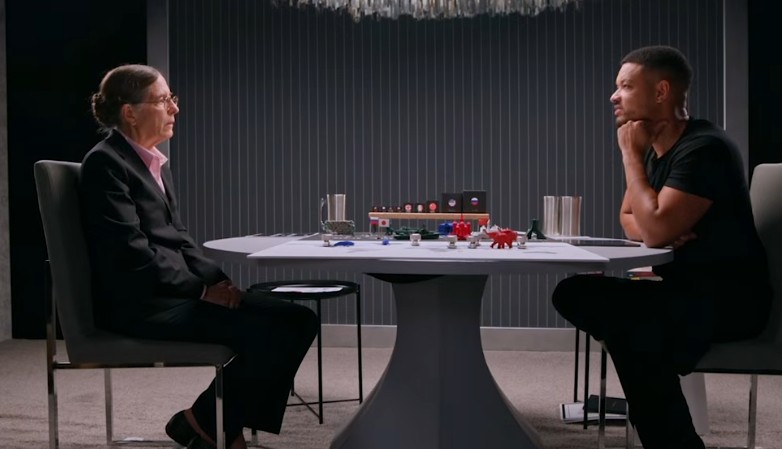
In this Diary of A CEO interview, geopolitical strategist and historian Dr. Sarah Paine joins Steven Bartlett to explain the clash between continental and maritime world orders, the Iran War, Russia’s invasion of Ukraine, and why she believes the world may be barreling toward World War III. Drawing on decades of studying Russia and China, she breaks down concepts like pivotal errors, negative objectives, and “death ground,” the collapse of the post-World War II rules-based order, and what the next generation can do about it. Read the full transcript of this interview which was premiered on October 29, 2026 below:
Where Does It All Start?
STEVEN BARTLETT: (00:01:37 – 00:02:39): Dr. Sarah Paine, you might be one of the most knowledgeable people that I think I’ve ever spoken to on the subjects we’re going to speak about today. And they are subjects that I think are incredibly timely based on everything that’s going on in the world.
What I see is war over here, war over here, conflict over here, Putin invading this place, Trump’s gone into Iran. What I see on the streets of Paris where we were yesterday is rioting and I see disorder, but I don’t know where what the first domino that fell that caused everything that we’re seeing now occurred or what the sort of background context is. So I’m going to ask you, where does this all start?
DR. SARAH PAINE: (00:02:39 – 00:04:33): Well, history doesn’t start. It’s a long continuum, but I’ll try on some concepts that might be helpful. The way countries used to organize themselves, and often they were empires, was by land was the currency of power. So the continentalist world is all about taking territory for others, right? And when you’re doing that, you’re burning wealth because you’ve watched it in all these places.
Then later, an alternate possibility came. It originated from maritime powers, but ultimately it becomes a maritime world order to something different. Britain is a maritime power, but then you get to the Industrial Revolution where suddenly you can compound wealth. And that’s a game changer because it changes the currency of power, which formerly in that continental world I’ve just described, it’s all about land. It’s changing the currency of power to industry, commerce, and trade. That if you do those things, you get compounded wealth. And with that, you can buy your armies or do whatever you want.
And then the maritime order is about compounding wealth from just having universal rules. You’ve been traveling all over, your little piece of plastic works everywhere, right? That’s based on rules-based order. And then you’ve got a small company and you operate in various countries. No one’s taking you down for money that you’re making, right? All your transactions are working across the world. This is the rules-based order.
If it goes away, the billionaires who’ve been funneling their money into the continentalists, their world will disappear too. They will become casualties of it. And then when I think about what’s important on this planet, it would be you, the young. Please tell me what is more important than the generations that follow. Just tell me, what is it? Nothing.
“We’re Potentially Barreling Our Way Into a World War”
STEVEN BARTLETT: (00:04:34 – 00:04:35): Are you concerned about the next generation?
DR. SARAH PAINE: (00:04:35 – 00:04:36): Yeah.
STEVEN BARTLETT: (00:04:36 – 00:04:36): Why?
DR. SARAH PAINE: (00:04:37 – 00:04:58): We’re potentially barreling our way into a world war. We have reckless people running some very large and important countries around the world. And as you’ve noticed, once wars start, easy to do that part, really hard to end them. Why? Because whoever’s losing doesn’t want to lose. So they keep doubling down long after they’ve lost.
STEVEN BARTLETT: (00:04:59 – 00:05:08): You made a comment there. You said you think we’re sort of barreling towards a world war. People have probably said that every year since World War II.
Negative and Positive Objectives
DR. SARAH PAINE: (00:05:08 – 00:06:45): Ah, do you have negative and positive objectives here? Oh yeah, here we go. Negative and positive objectives. So a positive objective, you make something happen like, I don’t know, I want to snatch Maduro and put him in a New York prison. We can verify that the guy’s in a New York prison. You snatched him. That’s a positive objective.
A negative objective would be preventing something from happening. And how can you prove how many times a world war was avoided in the last whatever years? You can’t. And it’s also controversial on deterrence because you can say, “Ah, I’ve invested in whatever it is and this has deterred everybody.” Then it’s, “Prove it.” Well, you can’t prove it.
And yet, the example I use as a parent, if you have a little kid, a lot of it’s negative objectives, preventing the little kid from getting run over. You hold their hand on the street. If you’re living in New York, how many times in a day just walking up the street did you save that child’s life because you were hanging onto their hand before they took off into traffic? So negative objectives are incredibly important.
And since I’m on this topic, governments, I believe, are primarily about negative objectives, preventing disasters. So disaster number one would be foreign invasion, but other things, preventing bridges from collapsing, we inspect them, preventing all kinds of malpractice across professions, we license people, having everyone be illiterate, you have education. And so governments don’t actually get credit for what they do because on a normal day it’s normal. So you think, “Well, my government hasn’t done anything for me lately.” Untrue.
STEVEN BARTLETT: (00:06:45 – 00:06:57): And that applies here to the idea that people have probably through history said that there was going to be a war a lot. And so is there particular writing on the wall at this moment in the time?
DR.
STEVEN BARTLETT: (00:06:58 – 00:06:59): What is the writing on the wall?
“One of the Most Incompetent Wars in Human History”
DR. SARAH PAINE: (00:07:00 – 00:07:05): Well, the Iran War is probably one of the most incompetent wars in human history.
STEVEN BARTLETT: (00:07:06 – 00:07:06): Was that a mistake?
DR. SARAH PAINE: (00:07:07 – 00:07:11): Well, yeah. Let’s do some concepts of how to analyze that.
STEVEN BARTLETT: (00:07:11 – 00:07:11): Okay.
DR. SARAH PAINE: (00:07:12 – 00:07:46): One is in a war, if you’re doing it right, if you really must have a war, you put all the costs on the person you’re fighting and then you minimize costs yourself. Well, this war has trashed the US economy. It has blown the US alliance system. Yes, Iran is hurting without a doubt, but it also has the collateral damage of taking down the world’s economy. So this now transforms the United States to an annoyance to just about everyone’s primary adversary for threatening their economies. That’s breathtakingly incompetent.
STEVEN BARTLETT: (00:07:46 – 00:07:47): What was the misunderstanding?
DR. SARAH PAINE: (00:07:48 – 00:09:07): I’m not privy to the decision-making. So let’s do another thing about assessment. This is when you do an assessment before you even do a war, you need to look at not just my strengths, and if you’re Iran, your weaknesses, which clearly that was part of the assessment. We’re strong. We figured all that out. But also your strengths and my weaknesses. Oh, and plus, all the other people who might be interested. And clearly that was absent. Or the people who should have been saying, “Hey, the first thing they’re going to do is shut down Hormuz,” weren’t there.
It’s like a hot water bottle. If you cork that thing, it means anybody who lives there who doesn’t have an alternate coastline cannot get things out by sea. Does that make sense? Narrow seas in wartime, easy to shut down. Ukraine shut down the Black Sea. These places close down in wartime because between shore artillery and mines and other stuff, things don’t move.
So when the United States had its big base in Bahrain, that’s where the big naval base is. Okay, how are we going to get to the naval base? I don’t think so. So then where are we going to go? Oh, we’re going to have to go to Diego Garcia. That base would be 2,500 miles away, and that little base is in the middle of nowhere. That would be a mess.
STEVEN BARTLETT: (00:09:08 – 00:09:12): And this is why I asked the question about the misunderstanding, because you’d think lots of smart people at the White House would’ve figured out—
“Major Pete” and Historically Unqualified Leadership
DR. SARAH PAINE: (00:09:12 – 00:09:58): You’re talking first Trump administration when there was a guy named General Mattis around. We now have Major Pete. And Major Pete is really good at identifying Blacks and women and firing them. I mean, great Pete. And now they’re doing testing on testosterone. I kid you not. And I don’t know if you remember when you were an adolescent when testosterone’s peaking, if we think there’s a correlation with that and your greatest reasoning powers. I don’t know. All right, good luck with it, Major Pete.
So these people are not— they’re historically unqualified for a job. That makes them profoundly dangerous. They’ve undermined the futures of their own children and they’re undermining the prospects for the Republican Party, which they care about.
STEVEN BARTLETT: (00:09:59 – 00:10:00): What do you think they thought was going to happen?
Type A and Type B American Hubris
DR. SARAH PAINE: (00:10:00 – 00:10:53): How do I know? I’ll give you another thought about just generics, what I call Type A and Type B American hubris. Type A American hubris is, all decisions in the world that matter, they happen in the United States. Okay, good luck with that one. And the second one, Type B American hubris, which applies to some of the tech bros, is just because you’re really good at something doesn’t make you really good at everything. And you need to have the humility to understand the limits of your expertise and when you need to listen to others.
And another piece of it is, listening to divergent opinions. So I can’t find my blind spots, but maybe you can. And it’s really important to talk across political divides. But this, what’s going on now is just straight up yes-men and they’ve committed pivotal errors. They have permanently damaged US national security.
Trump the Continentalist
STEVEN BARTLETT: (00:10:54 – 00:11:03): It’s the first time in my life that I’ve heard of a US president start talking about taking other people’s countries. It’s almost like Trump was talking about taking Venezuela.
DR. SARAH PAINE: (00:11:03 – 00:11:05): Yeah. He’s a continentalist.
STEVEN BARTLETT: (00:11:05 – 00:11:06): And taking Cuba.
DR. SARAH PAINE: (00:11:06 – 00:11:09): He’s a real estate guy. Yeah, he sees real estate.
STEVEN BARTLETT: (00:11:09 – 00:11:20): He was saying he was going to take Canada, make it the 51st state, I think. And then he thought that Iran would be a walk in the park, that he would behead the leader, the people would rise up. I mean, this is what they said.
Half-Court Tennis and Iran’s Lego Videos
DR. SARAH PAINE: (00:11:20 – 00:12:08): Yeah. What’s fascinating if you study, so there’s another one, what I call half-court tennis. Half-court tennis, you’re only looking if you’re America and Team America and you cross at the then you aren’t even looking at things.
And let’s talk about football, and I don’t care whether it’s American or European football, it works either way, that those who are real football enthusiasts, they know not only about the home team, but they know about all the teams, all the major ones. And you all know about the players too. This is a recreational sport. And then in foreign policy, you’re not studying the other side? And I don’t know if you’ve seen Iran’s Lego videos. Oh, you need to, on the plane trip back, you need to look at Iran’s Lego videos.
STEVEN BARTLETT: (00:12:08 – 00:12:10): Oh, where they’re taking the piss out of America.
DR. SARAH PAINE: (00:12:10 – 00:15:40): Yeah, they’re taking these little Lego characters. What they demonstrate is the Iranians have a deep understanding of Americans, whereas Americans don’t know up from down on what’s going on.
Here’s another, maybe a concept that’ll help. Situation or problem. In life, there are certain things that as desirable as they are, are just not attainable. It’d be great if everyone on the planet was a multimillionaire. It’s not feasible. And if you’re going after an unfeasible objective, you’re going to overextend yourself. It’s going to have a very bad ending to it. A problem is something that maybe you can solve.
And the United States, the greatest generation understood that the Soviet Union, lethal threat, but you couldn’t solve it. You try to solve that and it’ll be the nuclear end to all of us. And so then what you’re into is managing it. And then you use various elements of national power. One of them was sanctions so that you’re going to depress Soviet growth.
And then unlike now where we’re tariffing everybody, crazy land, what you’re trying to do is maximize the growth within your alliance system. So for those who behave, you want to maximize their growth. Those who can’t behave, you want to minimize theirs so that over time the relative threat diminishes over time. Does not solve it.
And then you’re also trying to get accurate information out, not propaganda, but accurate information, hoping that in generational change that maybe the other side reassesses. And if they don’t, you’re perfectly safe behind the castle walls and you’re handling this thing at affordable costs because the sanctions are really costing them much more than they’re costing you. A problem, if you can figure it out, by all means solve it.
But we’re trying to solve Iran? There are 90 million of them. All right, now to give you some data on how to understand this, because I was trying to figure it out. Nazi Germany, and it had extended borders. It’s not just what Germany is today. It probably includes Austria and other things. It had a population, I think, of about 80 million. Isn’t Iran like 90 million?
I think the occupation force, as best I can tell, and I’ll defer to some World War II historian tells me I’m wrong, is about 1.5 million was the occupation force after World War II just to occupy Germany. But that’s not taking into account all the millions of people coming from Russia, everywhere else.
So when you’re talking Iran equivalent size, it’s not feasible. And why would you want to do it? They’re a bunch of Iranians that you want to contain the nuclear thing at affordable cost. And that was the Obama deal. All the permanent members of the UN Security Council signed onto that and the EU. They thought it was the best they could do. Had this really intrusive inspection system to get Iran to dial back its nuclear capabilities. Was it perfect? No, but it was feasible and it mitigated the threat to make it bearable.
Now what’s the lesson for Iran? What do you suppose the lesson is for everybody now? Called get a nuke, right? With these wars, it’s like if you don’t have one, you’re toast. We have incentivized proliferation. Putin with his war initially, and then us with this Iran thing. It’s profoundly self-defeating.
Pivotal Errors: Putin’s Ukraine Invasion and the Iran War
STEVEN BARTLETT: (00:15:41 – 00:15:44): You referred to it as a pivotal error, which is another one of your— Yeah.
DR. SARAH PAINE: (00:15:44 – 00:15:45): Okay.
STEVEN BARTLETT: (00:15:45 – 00:15:46): Your concepts?
DR. SARAH PAINE: (00:15:46 – 00:17:14): Well, I think that these concepts, the reason for doing it is you can use them for other things. All right. Pivotal error is once you’ve made it, the choices that you had before, they’re a lot better than the ones you have now and you never get the old ones back.
So you think about Vladimir Putin, his invasion of Ukraine, pivotal error. Russia is just has burned through its Cold War arsenal. Putin would’ve been much better when he did the easy walk-in with his little green men into Crimea and Donbas of just sitting with that and slowly destabilizing Ukraine over a number of years. Instead, he has massively contributed to Ukrainian national identity.
National identities often come out of wars. In fact, Britain massively contributed to the development of the US national identity during the American Revolution because it was all these separate colonies that by the time that revolution was over had a much more cohesive sense of nation and all these national institutions that grow up as a result of it. And you see Ukraine’s doing that as well.
So pivotal error. And then for us on the Iran War, we’ve lost our alliance system. Sure, someone else can reassess and we’ll try to restore stuff, but we will never be the trusted partner. Ever again. It’s done.
Is the Post-World War II Order Collapsing?
STEVEN BARTLETT: (00:17:16 – 00:17:28): You said the post-World War II world is collapsing and we are now going into a second Cold War that could end in nuclear war. What is it that’s collapsing, Sarah?
DR. SARAH PAINE: (00:17:28 – 00:18:07): Well, isn’t it the way systems work is by norms, that we follow norms? And the way I think about it is traffic. So most of us, whatever side of the road you’re supposed to drive on in whatever country you’re in, you do that. And then there’s stoplights and you do that. And I get it that people and other stuff, but mostly people are following the rules of the road and there aren’t nearly enough. If everyone decided to just do whatever on a given day, there aren’t enough policemen ever to enforce that. It would just be mayhem.
So the rules-based order was always based on norms of following them. And the US legal order was based on norms of everyone more or less following them.
STEVEN BARTLETT: (00:18:07 – 00:18:09): Give me an example of some of those norms.
DR. SARAH PAINE: (00:18:09 – 00:18:31): When you lose an election to go, “I congratulate the other side and I’ll do better next time,” instead of, “Oh no, they cheated.” Now the United States is pulling out of this order. The existential threat that this is posing has led to the most rapid institution building in Europe. It’s incredibly fast.
Europe’s Rapid Institution Building
STEVEN BARTLETT: (00:18:31 – 00:18:32): Institution building?
DR. SARAH PAINE: (00:18:33 – 00:18:33): Yeah. What does
STEVEN BARTLETT: (00:18:33 – 00:18:33): that mean?
DR. SARAH PAINE: (00:18:33 – 00:18:36): You’ve got the Baltic 8.
STEVEN BARTLETT: (00:18:37 – 00:18:37): Interesting.
DR. SARAH PAINE: (00:18:37 – 00:20:07): So you got Nordic countries, right? You got Finland, Sweden, Norway, and then Denmark. That makes 4, the Scandinavian countries. And then you get the Baltic, Estonia, Latvia, and Lithuania. And then Iceland’s part of this as well. And so they’ve been organizing all sorts of security things together. There’s remilitarization going on.
There’s also work on spaceports all over the place. Britain since the ’60s has had spaceports. So has Norway, Sweden, Britain’s going to build a new one up in the Shetland Islands, and it’s because you all are going to be launching your own satellite system. And I think also you all are sick of our credit card payment systems. You’re going to do that locally.
There’s an app that’s been put out. Apparently, if you’re in Europe and you want to buy stuff, your app will tell you immediately whether a product is American or not, so you don’t have to buy that product. It’s called the B-word, boycott, which is happening to America. Right now as a result of doing all of this.
And you’ve seen Prime Minister Carney of Canada traveling everywhere organizing the middle powers. That’ll be the new world order. It’s unfolding. And the United States is— it’s gone rogue. As America, we are on the right side of 2 world wars, made an incredibly positive contribution in many, many ways. And what we’re doing now is so negative. And it’s profoundly negative for the futures of our children.
Should America Stay Out of These Wars?
STEVEN BARTLETT: (00:20:07 – 00:20:13): What would you say to the people that say, “Sarah, we should stay out of these wars. We should stay out of the Ukraine situation”?
DR. SARAH PAINE: (00:20:14 – 00:21:11): By all means, do not send combat troops all over the place, which is what we were doing in the Middle East. You position people like Ukraine to succeed. You don’t have to send any troops there, but give them what they need. To solve this. That is the cheap thing to do. The uncheap thing to do is blow our alliance system.
So now people are boycotting us. There are all kinds of industries in the United States that are being hurt by this. From, what is it? Kentucky bourbon makers have to shut down. Kid you not. Because the Canadians won’t buy our booze. And you think about if you have a business, let’s say Canada’s only 5 or 10% of your business. Well, if they boycott you, that might be your profit margin. Right? Canada’s arranging to sell its energy to Europe and other places and trying to de-risk from us. And it’s entirely our fault. We threaten them.
STEVEN BARTLETT: (00:21:12 – 00:21:20): People say that, “We don’t want to have to pay for someone else’s war, Sarah. We don’t know how long it’s going to last. It’s going to cost so much money.” What do you say to those people?
Limited and Unlimited Objectives
DR. SARAH PAINE: (00:21:20 – 00:22:51): It goes back to limited and unlimited objectives. An unlimited objective is regime change, and the most unlimited variant is genocide as well. So Hitler had both, right? And Putin has a very unlimited variant because he wants to not only take over Ukraine, but he also wants to shoot up a good part of the government down to small children. He was trying to execute the Zelensky family. What person does that sort of stuff? In addition, he wants to eliminate the purveyors of Ukrainian culture. Kill them. And that’s called genocide.
So you can have a whole continuum, right? You can have the most unlimited thing of genocide plus regime change, and you come a little bit over and it’s just regime change. And then the limited stuff means, “I only want half your country,” to— all the way down to, I don’t know, “I want you to be polite to me at football games,” whatever it is.
So this is where Russia comes in. I believe, and I could be wrong. And the key on being right or wrong is you should constantly reassess. Don’t worry about being wrong. What you do when you realize you got it wrong is say, “I got new information and here’s why I think differently.”
But I believe that Russia has unlimited objectives, that Putin wants to restore the old Soviet Empire. There are many problems with that. One of them is you think about Russia, Russia’s been the backwater of Europe forever under the czars. Can you think of one Russian product that you have ever wanted to buy?
STEVEN BARTLETT: (00:22:52 – 00:22:52): No comment.
DR. SARAH PAINE: (00:22:53 – 00:22:58): Okay. And let me give you a little hint. Smirnoff is a British company.
STEVEN BARTLETT: (00:22:58 – 00:22:59): They
DR. SARAH PAINE: (00:22:59 – 00:23:55): don’t even produce the vodka. So it’s these manufactured goods? No, it’s just basic primary goods. So it has a failing economic model. Then during the Cold War, it’s exporting communism everywhere, setting back living standards everywhere. When you do that, it involves a lot of deaths because there are children who aren’t getting vaccines and all kinds of things that are not happening when you’re doing that.
So that’s what Russia’s done. And now Putin thinks based on his sheer legacy of incompetence that now he has the right to rule everyone else. What’s really going on, he’s a continentalist. And so he wants to steal everyone else’s stuff. Right in the beginning of the Ukraine war, people were stealing washing machines. That would be a rather heavy item to steal. I mean, who would do that? Someone without washing machines. Right? And the Ukrainians don’t want to live that way.
Underestimating Ukraine and “Death Ground”
STEVEN BARTLETT: (00:23:56 – 00:23:57): Did he underestimate them?
DR. SARAH PAINE: (00:23:58 – 00:24:10): Yeah, of course. That’s typical. There’s probably Russian Type A hubris. The Russian soul superior to all others because they can’t figure out what they’re superior on, so they’re going to come up with something that’s abstract, like they’re so— well, prove it.
STEVEN BARTLETT: (00:24:10 – 00:24:30): Zelensky told me that when the Russian soldiers rolled in, he found that they had brought food for 3 to 10 days. So they thought the war would be over in 3 or 10 days. And also that they brought uniforms to celebrate, to do a victory parade because they thought the war was going to be that easy. And what they were met with is Ukrainian civilians throwing Molotov cocktails at their tanks.
DR. SARAH PAINE: (00:24:31 – 00:24:34): Yeah. You look as if you have another question.
STEVEN BARTLETT: (00:24:34 – 00:24:47): No, it’s interesting because, yeah, again, we were just talking about underestimating Iran, but there is a hubris as well that’s taken place with the Russians. They’ve underestimated the culture of the people. Death ground.
DR. SARAH PAINE: (00:24:47 – 00:26:29): Yeah. If you have an unlimited objective, what you’re doing is, if I have an unlimited objective against you, I’m putting you on death ground. What does that mean? It means if you don’t fight, I’m going to just come kill you. And so your only alternative is to fight because they’re going to just kill you. So if you have these unlimited objectives, expect one hell of a fight.
And it can transform the most dysfunctional country into a lethal adversary, as Hitler discovered with the Soviet Union back in the day. Stalin had shot a lot of his officer corps. He’d created a famine in Ukraine, which is a breadbasket, which is exactly what Putin has done to Ukraine now and what the United States is undoubtedly doing to Iran.
My understanding is the Ayatollah who’s gone was against having nukes. No one says who comes after him is against having nukes. If they’re on death ground, as long as Donald Trump and Bibi Netanyahu are in power, what do you think they’re going to do? They’re going to cause trouble until those 2 people are out of power. And so people who want to keep Netanyahu and Trump in power longer, just understand it’s going to make Iran go on longer.
And then I’m terrified that Trump will do something like drop a tactical nuke somewhere, and then things are really over. The United States will be forever this despicable country, the only country in the world that’s ever dropped nukes on anyone, twice on Japan, and then we’re going to do a third on Iran.
STEVEN BARTLETT: (00:26:30 – 00:26:31): Do you think that’s plausible?
DR. SARAH PAINE: (00:26:31 – 00:26:56): I have no idea. If you had told me 10 years ago that where we’re at was even remotely possible, I would say, “You’re insane. What have you been smoking lately?” The United States was going to toss our alliances, tell Canada, “You’re our 51st state,” and then tell Greenland, “P.S., we’re going to take Greenland from you and therefore behave yourselves”? I would’ve thought that just ludicrous. Who would do that?
Rising Gas Prices and the Power of the Vote
STEVEN BARTLETT: (00:26:57 – 00:27:09): What would you say to people who are experiencing their gas prices go up at the pump? They’re seeing costs rise because of this war and because of the energy shock that’s taken place because of it. And they want it to end. So they’re saying, listen—
DR. SARAH PAINE: (00:27:09 – 00:27:09): Vote.
STEVEN BARTLETT: (00:27:10 – 00:27:11): Vote.
DR. SARAH PAINE: (00:27:11 – 00:27:55): One-third of Americans voted for where we’re at now. One-third voted for anything but this. And then one-third couldn’t get off their couch. Get off your couch and vote because it matters for your children. That in the United States, Americans need to start talking to each other. This only my party can win, crazy. A two-party state is absolutely necessary because how do you see blind spots?
Also, you go watch Trump. You want your gas prices to go down? He’s not going to reassess on this war. He’s just going to keep on going. The way you reassess in democracies, since people are reluctant to say, “Gee, I got it wrong,” and we all get it wrong, is you elect in the other party.
“The Enemy Gets a Vote”: Why Russia Won’t Stop at Ukraine
STEVEN BARTLETT: (00:27:55 – 00:28:17): But if I just think about what’s going on here in Europe, because I’m thinking about a particular friend who’s been doing some tweets recently, and she’s been tweeting that because the costs in the UK seem to be rising. Petrol and other things. This is what she said. She said, “We should just let Russia take Ukraine and then that’ll mean that energy will be stabilized.”
DR. SARAH PAINE: (00:28:17 – 00:28:32): No. I get it where she’s coming from. But one of the staples in war colleges is “the enemy gets a vote,” meaning that the Russians are going to come for you whether you like or not.
STEVEN BARTLETT: (00:28:33 – 00:28:34): How do we know that?
DR. SARAH PAINE: (00:28:34 – 00:28:47): You don’t know, right? You don’t know. But I can look at Russian history. They’re continentalists. They go forward, forward, forward. And then I think you’ve got some kind of map that shows what Transnistria and all those places—
STEVEN BARTLETT: (00:28:47 – 00:28:48): Oh, this one.
DR. SARAH PAINE: (00:28:48 – 00:29:00): Yeah. All right. So if I can do that this way. So these are the places that Putin has taken. Well, this one’s earlier and this one comes to the end of the Cold War. This is his buddy.
STEVEN BARTLETT: (00:29:01 – 00:29:04): So he’s basically taken Belarus politically.
DR. SARAH PAINE: (00:29:05 – 00:30:47): Yeah, that’s right. And he’s taken all this stuff from Ukraine. But these places he took— Putin comes to power in the Second Chechen War, and Russians like that. That’s how he rises. And then in 2008, he goes after Georgia and helps these 2 places separate.
But if you look at it, if you could draw a circle here, it’s a continental— I don’t know if you ever watched The Jetsons, the cartoon where you got a spaceship, it’s round. Continentalist is looking at their dashboard, but it’s 360 degrees around their little spaceship on all those borders, and you want to extend outwards. So this is the Plan A, and then after you get Plan A, they keep on going. It’s been this way for a long time.
And for your friend, it’d be, “What evidence do you have? Show it to me that they’re going to stop. Show me that. What in their history gives you that?” I understand that you wish it to end. This is another tragedy.
So we had the Cold War that ended on Western terms with Bush Senior and Helmut Kohl did a masterful job at war termination, truly masterful on Western terms. And then we had the magical, this is when you were growing up, the magical inter-Cold War period, where China and Russia turn inward and the United States is more or less following the rules so that you don’t have opposing sides funding opposing sides of insurgencies all over the world and wars just torch wealth, right? Think about if Putin keeps any part of Ukraine, it’s a glowing mess, right? It’s been leveled. You’re just destroying things.
STEVEN BARTLETT: (00:30:48 – 00:30:51): But they’re going to continue to fight as well, aren’t they? This is what Zelensky told me. He said—
DR. SARAH PAINE: (00:30:51 – 00:30:54): They’re going to go forever. Yeah. What did he say? He’s the real person.
Zelensky, Revenge, and Russia’s “Crown of Infamy”
STEVEN BARTLETT: (00:30:55 – 00:31:09): He said something to me which I found to be quite illuminating, and I don’t think people consider. He said to me he had gone and found, just one example, a trench, what the Russian soldiers had left, where there was 500 tortured bodies in it. These bodies were tied up.
DR. SARAH PAINE: (00:31:10 – 00:31:10): Oh God.
STEVEN BARTLETT: (00:31:10 – 00:31:36): And they were of all ages. And he said, he kind of implied that it’s very naive to think that the families of those people in those ditches are just going to allow there to be a sudden stop to this and that they’re not going to continue to want revenge. And Zelensky said to me, he said, after seeing that, and he said it, he said, “I probably shouldn’t say this,” but he said that he wants revenge. He says, “If you see what I saw, you would want revenge too.”
DR. SARAH PAINE: (00:31:36 – 00:33:22): The Russians are, it’s unspeakable what they’ve done. In most of my life, Germans wore the crown of infamy for what had happened. In World War. Less so World War I, but it’s World War II where they just, it’s really, it takes heinous to a new level. Well, Vlad the Bad, he now owns that crown for Russians going in because Germans have reformed their educational system and there’s no German now who has any responsibility for what happened back then. But there are lots of Russians who have responsibility for going on right now.
And oh, another piece of Russians, they go, “Oh, Soviet Union has nothing to do with us. That’s, we’re Russians. That was the Soviet Union.” Excuse me, Russia is what ran the Soviet Union. It’s yours, you own it. And you think about the way French use the word France, it includes all 5 republics, it includes all the monarchies, it includes Napoleon and stuff. We all know it’s France. It’s just the Russians who were trying to say, “Oh, it’s the Soviet Union. We had nothing to do with that.” No, you had everything to do with that. You’re unrepentant.
So for your friend, if you look at the long arc of Russian history, it’s terrible. It used to be under the Romanov dynasty, at least they aspired to have connections with Western Europe, although I think Nicholas II said, “Well, we’re 200 years behind, so we’re going to do it our way.” Well, once you get the communists, they want to overthrow the entire capitalist world order, and Putin hasn’t changed.
The continentalists are profoundly dangerous. What they want to do is divide the world into spheres of influence like the old empires of Eurasia. And so they’re going to be fighting on the edges of these spheres of influence about who gets—
Who Are the Continentalists?
STEVEN BARTLETT: (00:33:22 – 00:33:24): Who are the continentalists? Russia, China?
DR. SARAH PAINE: (00:33:24 – 00:33:46): Yep. Russia, China, Donald Trump. He’s claiming Canadian territory. He’s claiming Greenland. He’s kidnapped a head of state. I get it. The guy’s reprehensible. I’m no fan of Maduro. I mean, look at the war. We’ve discussed all the problems from the war in Iran. You’re talking about your friend in Britain who’s being wrecked by the petrol prices. Okay, whose fault is that?
STEVEN BARTLETT: (00:33:48 – 00:33:48): Trump’s.
DR. SARAH PAINE: (00:33:48 – 00:33:49): Yeah, it is.
STEVEN BARTLETT: (00:33:50 – 00:33:51): Trump would say it was Biden’s fault.
DR. SARAH PAINE: (00:33:52 – 00:33:54): Oh, everything’s Biden’s
STEVEN BARTLETT: (00:33:54 – 00:34:00): fault. His favorite line is to say, “This war never would’ve happened if I was in power.” That’s what he says all the time.
DR. SARAH PAINE: (00:34:00 – 00:34:28): Yeah, except he started this one. So what’s fascinating in having studied foreign policy forever, it doesn’t make me right about anything, but it’s really rare, or domestic policy as well, that you do a policy, whatever it is, put a new law in effect, and then there are consequences of it, but the consequences usually roll out over years. So it’s hard to say, did this law exactly cause this outcome? It’s hard to say. Not in this war.
STEVEN BARTLETT: (00:34:29 – 00:34:29): Which one?
DR. SARAH PAINE: (00:34:29 – 00:34:30): The Iran War.
STEVEN BARTLETT: (00:34:30 – 00:34:30): Okay.
DR. SARAH PAINE: (00:34:31 – 00:34:40): It’s just obvious. Every time you load up at the pump, you have a weekly reminder that Donald Trump’s war has done a number on you. It’s not Biden.
STEVEN BARTLETT: (00:34:41 – 00:34:43): He would say we couldn’t let Iran get nuclear weapons.
The Problem With Normalizing Lies
DR. SARAH PAINE: (00:34:43 – 00:37:25): It’s much more likely now that they will get nuclear weapons doing what he’s incentivized them to get nuclear weapons. Here’s my thing about Donald Trump. Is he known for providing accurate information? You know the answer to that question, as do all of your viewers.
And here’s the problem with normalizing lies, which is what’s going on in the United States. A, no one likes being lied to. If you’re an insider trader, maybe you like it if you get your little truth and then everyone else is being lied to. All right. The Soviet Union was a society that collapsed in large part because it was built on lies.
Here’s how it worked. Since it’s all run by a plan, this communist plan, so you’re running your little, let’s say they even had podcasts and you decide however many cameras you need at New Year and how many you got on stock or whatever you think your staff is, you’re going to exaggerate what you think you need because you aren’t sure the plan’s going to give it to you. You, and you’re going to understate what you have, again, because you’re not sure you’re going to get things.
So everyone’s doing that across an economy. They’re aggregating all that data. It’s garbage. The further up the food chain you go, the more ludicrous the data is. But there in central Moscow, they’re coming up with a plan that’s going to allocate things. They’re grossly misallocating capital, labor, and they don’t notice that it’s a disaster until it’s metastasized. And it shatters the place.
Another thing to give you, an economy doubles at different growth rates according to the following equation, the natural log of 2 over whatever that growth rate is. If your economy grows at 1% per annum, it’ll double in 69, 70 years, something like that. If you grow at 3%, so it’s a 2% differential, you’ll double in 23 years.
So if you do dumbassery like tariff yourself or you get into a war that’s going to send prices up and just mess things up, or if you’re a little smarter and you sanction the other guy so only the other guy is experiencing this and you knock off 2% growth, instead of waiting 23 years to double, you’re going to wait 71. That’s a long wait.
So these are the things that people aren’t considering of the cumulative effects of making the kind of errors that we’re making. Also the advantages of sanctions over wars. Sanctions don’t solve problems, but you’re shrinking the opposing piggy bank. And if you cooperate with allies, you’re growing yourself. So it’s a form of chemotherapy. You don’t eliminate the tumor, but you try to shrink it back.
What Russian History Says Comes Next
STEVEN BARTLETT: (00:37:27 – 00:37:29): You have a PhD in Russian, is it history?
DR. SARAH PAINE: (00:37:29 – 00:37:30): Yeah.
STEVEN BARTLETT: (00:37:30 – 00:37:47): So what does Russian history tell us is, and I guess geopolitical history generally, is likely to happen next as it relates to the Russian-Ukraine situation? And is it dependent on what other allies do? Or do you think there’s already a pivotal error that’s been made by Putin?
DR. SARAH PAINE: (00:37:47 – 00:37:49): Oh, it’s already done. He’s just going to go forward.
STEVEN BARTLETT: (00:37:50 – 00:37:51): He’s just going to go forward.
DR. SARAH PAINE: (00:37:51 – 00:37:53): He’s just going to escalate and keep going forward.
STEVEN BARTLETT: (00:37:53 – 00:37:56): Because he can’t, can he? He can’t go back. He doesn’t strike. I
DR. SARAH PAINE: (00:37:56 – 00:38:51): mean, this is the problem with dictatorships. What’s wonderful about elections, so they throw you out of office, but no one kills you. No one takes your bank accounts away. It really takes a lot of the white-knuckle event out of it.
And in Russia, under Stalin, when he was busy shooting everybody, he dies and eventually you get Khrushchev as his successor. That successor generation decided they wanted to make it so you didn’t get killed when you left office, that they send you to your little dacha, or that’s your summer house in Russia.
Putin’s problem is, this is the problem with dictators. For many of them, there’s no off-ramp where they’re alive. What happens to Putin when he gets swapped out of power? If he just dies naturally, okay, then that happens to all of us. But he’s arranged it so there is no retirement plan except something really ugly.
STEVEN BARTLETT: (00:38:52 – 00:38:52): Why? How?
DR. SARAH PAINE: (00:38:53 – 00:38:56): A dictator? Well, how would you ever replace Putin in Russia?
STEVEN BARTLETT: (00:38:57 – 00:38:59): Couldn’t he just step down and go off to his mansion and chill out?
DR. SARAH PAINE: (00:39:00 – 00:39:09): Probably not, because there will be people who will come kill him on his immediate entourage. He’s the whole protection racket that’s running stuff.
STEVEN BARTLETT: (00:39:10 – 00:39:12): Is it possible for him to be overthrown by the Russian people?
DR. SARAH PAINE: (00:39:13 – 00:39:13): Yeah.
STEVEN BARTLETT: (00:39:13 – 00:39:16): It is possible? Because it just seems like he’s got such a tight grip on—
DR. SARAH PAINE: (00:39:16 – 00:39:24): Oh, well, that’s the thing about dictatorships is they seem eternal until the day they shatter. And it’s impossible to predict.
How Dictatorships Shatter: Nicholas II and Opportunity Costs
STEVEN BARTLETT: (00:39:24 – 00:39:25): How did they shatter?
DR. SARAH PAINE: (00:39:25 – 00:41:10): Oh, the Romanov dynasty. Nicholas II, like Vlad the Bad, decided to get into a recreational war they didn’t have to, which is the Russo-Japanese War of 1904, 1905. And why Russia? This is the whole thing about Russia. Why does Russia need more territory? It is the largest country on the planet. They have tons of resources.
Their problem is they have no economic model to develop it because they refused to go by the norms of having rules so people can start businesses like a young person like you who can start a business. And then when you start doing well, you can actually keep your money. That’s not what happens in Russia. You’ll get shaken down.
So Nicholas II does that war, he loses it. But then there’s another concept, opportunity costs. So if you spend all of your money fighting that war, what are you not doing? You’re not building a railway system here. In the western part of Russia. So come World War I, Nicholas can’t deploy his troops very well. He’s got no way in for his allies to supply him because this is Russia’s stuff. Main ports for getting things by sea are here, the Baltic, or here, the Black Sea. Well, those things shut down in wartime. Nothing goes through them.
So if Nicholas hadn’t done his dumbassery here and built railways, he might’ve had a different outcome. And why does he get overthrown? Because there are food riots in St. Petersburg. That was the capital in those days. Okay, better railways, you would’ve delivered the bread better. Also, you might’ve gotten food aid from other places. These opportunity costs are huge. Now, Vlad the Bad has done his magic here. Who’s supporting him? Well, China is providing what’s vital for him right now.
Why China Is Supporting Putin
STEVEN BARTLETT: (00:41:10 – 00:41:12): Why are they supporting Vladimir Putin?
DR. SARAH PAINE: (00:41:12 – 00:41:14): Why not? Oh God.
STEVEN BARTLETT: (00:41:14 – 00:41:15): Why don’t they just stay out of it?
DR. SARAH PAINE: (00:41:16 – 00:41:54): From their point of view, they want the United States just out of everyone’s business. And they also don’t particularly like Russia either. So if Russia’s going to go weaken itself here, China will benefit from this. China needs their resources.
My graduate dissertation was a history of the Russo-Chinese border, and Russia took territory from the Chinese sphere of influence greater than all of US east of Mississippi. It’s all of this stuff that was part of the Chinese sphere of influence. Do you want to tell me the Chinese don’t remember that?
STEVEN BARTLETT: (00:41:54 – 00:41:58): So China are supplying Russia with resources they need.
DR. SARAH PAINE: (00:41:58 – 00:41:59): Yeah, to make missiles and things.
STEVEN BARTLETT: (00:42:00 – 00:42:01): They’re charging them for that.
DR. SARAH PAINE: (00:42:01 – 00:42:01): Of course
STEVEN BARTLETT: (00:42:01 – 00:42:03): they’re making money from it, but they’re also weakening Russia.
DR. SARAH PAINE: (00:42:03 – 00:42:39): Yeah, because they’re— Russia has been sanctioned on its energy and other things. So China’s getting all these things at much reduced prices and they’re driving a hard bargain. And the Russians in the past had all these nuclear weapons and other things to dissuade the Chinese from playing Mr. Tough Guy, except Vladimir Putin has squandered all of that. He can’t even deal with Ukraine, let alone this. So they’ve done a massive pivotal error. They’re in real trouble. And then they’re not having kids. And so the long-term effects are getting worse and worse from them.
STEVEN BARTLETT: (00:42:39 – 00:42:42): Russia have the missiles just to flatten Ukraine, don’t they?
DR. SARAH PAINE: (00:42:43 – 00:42:44): I don’t know the details.
STEVEN BARTLETT: (00:42:44 – 00:42:46): They have nuclear weapons.
DR. SARAH PAINE: (00:42:46 – 00:43:14): Yeah, they do. They do. This is beyond my expertise. And in order to have them, you have to maintain them. And the Russians are consummate liars. Who knows? Who knows? My understanding is that India and China have told Russia that would be a massive no-no if they do. But when people get cornered, then others have no influence over them when they’re totally cornered. So I don’t know the answer.
Unlimited Wars and Why Ukraine Won’t Give Up
STEVEN BARTLETT: (00:43:15 – 00:43:38): So it sounds like from speaking to Zelensky, he will not yield an inch of Ukraine to Putin. And it sounds like Putin has to walk away looking like he got a victory of sorts for his people and for his power and really for the message to some of these other people that he sits on a border with and to NATO, I guess. The 2 things can’t be true in my view.
DR. SARAH PAINE: (00:43:39 – 00:45:25): No, that’s the problem with unleashing unlimited wars. World War II, yes, the Allies won, but at obscene cost. Tens of millions of Russians died. Millions of others died. What is it supposed to be? 55 million people died in that thing? You want to do that over again? Really, these unlimited wars are ugly. It is not the way to handle things.
It is far better to deploy your diplomats and lawyers to international institutions. Sure, the deal isn’t perfect from what you wish you had gotten, but the wealth will compound if you have people your age to go start their businesses, have laws that allow them to do it instead of trying to poach everyone’s stuff. That is the way to do things.
So yeah, of course Ukraine won’t give up. And we should support Ukraine because they’re doing the heavy lifting for all of us. That’s the answer to your friend. You want to be fighting on the front lines? No. So help them.
Now morals matter in this world. They matter. Honesty matters. Civility matters. All these things matter. Oh, and there’s another piece I think matters. What do governments do? Primary things. Protect your national security. That’s number one. And protect your prosperity. Try to increase your prosperity. Those are two. So for your friend, what is going to protect British national security? And that will involve Europe. Because if Britain’s alone, it’s not going to do well without Western Europe being healthy as well.
Is Europe Too Weak to Help Ukraine?
STEVEN BARTLETT: (00:45:26 – 00:46:25): Has this somewhat fallen at an unfortunate time because Europe is not doing the best economically at the moment and there are lots of internal conflicts taking place? I mean, I was in France yesterday and I left my hotel, the streets are on fire. At nighttime, there’s balaclavaged people running into all the shops and smashing them to pieces.
And then I think about the UK, maybe not in a worse position, but I actually read. So just before I came out here to speak to you, I read a headline from the Sunday Times that reads, this is in today’s newspaper, “Britain is going broke. It’s just a matter of when. With £3 trillion debt and interest of £110 billion a year, the new chancellor has little room to maneuver,” from Jessica Cook. This is the sentiment that is quite prevalent at the moment in Europe. So when you think about spending money on another nation. This is probably why there’s a lot of people that are against it. Europe feels weak.
DR. SARAH PAINE: (00:46:26 – 00:47:22): Yeah. And here’s the story for your generation, because I’m going to age out of this mess, but you’re going to have to live with it. Think about the generation that’s the end of World War II. Europe’s leveled. Everyone’s indebted right after that war. And that generation within 10 years had set up the institutional architecture that held the peace in Europe for the next 3 generations. That is quite an achievement.
And what’s going on now is history’s moving really fast. I mean, it’s like the logjam’s busted and we don’t know which way it’s going to go and it’s tremendously frightening. But on the other hand, it is a tremendous opportunity. To, before the concrete sets again, for people to get moving. What is it? “When the going gets tough, the tough get going.” Get going.
STEVEN BARTLETT: (00:47:22 – 00:47:22): And do what?
Inequality, Monopsony, and the US Tax Code
DR. SARAH PAINE: (00:47:23 – 00:49:30): And work on the next set of institutions that will help growth rates in Europe that have not been great, that need to be better. Probably part of that has to do with streamlining regulations, and then that’s beyond my capabilities of understanding.
Americans think all their problems are about immigrants coming across the border. And I’m all for having legal immigration. Why would you have— people should have to follow rules, et cetera. You don’t have to be cruel on how you expel them. You can do that humanely. Being gratuitously mean, I don’t see it.
But so people, well, as in Europe, identified that there’s this problem that for the young, it’s just hard to make it. What’s going on here? And this feeling there are no opportunities and it’s just hopeless. Okay, that’s probably a correct identification of problem. But in the United States, I suspect the answer is not immigrants. It’s probably our tax code.
So tax code is what sends money one way or the other. It’s what’s going to make money available for spending things one way or the other. So in the United States, you’ve got a handful of people who’ve become billionaires literally over the last 15 years. Can’t do that without the tax code.
And then there’s, I know another piece in the United States, you know about monopolies, right? You own all of a particular industry and then you can set prices of what you sell stuff at. But then there’s monopsony, which means you hire such a large percentage of the workforce or in whatever particular area you’re at, you dictate wages. Well, we got problems with wages in the United States that they’ve been driven downwards.
And people are working 40-hour weeks and more than that, and they can’t make ends meet. What’s going on here? They’re being underpaid. And then the money is just being funneled into a handful of families’ coffers. I think in the United States, there are apparently 1,000 families that are worth a billion or better. It’s not actually very many people.
STEVEN BARTLETT: (00:49:30 – 00:49:42): Because the world is different now and there’s digital assets, well, at least assets that you can move digitally, is it harder to use the tax code as a tool for fixing inequality?
DR. SARAH PAINE: (00:49:42 – 00:49:46): I mean, you’d have to talk to a tax specialist, but the US tax code—
STEVEN BARTLETT: (00:49:47 – 00:49:51): That allows people to become hugely wealthy is an error, you’re saying?
DR. SARAH PAINE: (00:49:51 – 00:50:13): Well, this is where there’s a missing podcast in the United States, which it would be someone actually reading the tax code and breaking it, literally breaking it down into pieces and then talking the human connection of it all. And there’s a lot of there there, but it hasn’t been. I guess it would be too boring to read it. I think actually there’s a lot in there.
What the US Midterms Mean
STEVEN BARTLETT: (00:50:14 – 00:52:24): The midterms are coming up.
DR. SARAH PAINE: (00:52:24 – 00:52:25): They are.
STEVEN BARTLETT: (00:52:26 – 00:52:33): For people that don’t know what the midterms are, which is probably most of the world, what is the significance of the midterms and what is it?
DR. SARAH PAINE: (00:52:33 – 00:52:53): Well, you’re electing a percentage of the US Senate and all of the House of Representatives. House of Representatives, each term is 2 years. Senators are 6 years, and the Senate seats are staggered, right? So you’re doing a selection of them, and then you’re doing governors as well.
STEVEN BARTLETT: (00:52:54 – 00:53:03): So let me repeat this back to you and tell me if I’ve got it right. So essentially in the midterms, right now Trump has power because he controls the House and the Senate.
DR. SARAH PAINE: (00:53:03 – 00:53:03): Yep.
STEVEN BARTLETT: (00:53:03 – 00:53:05): In terms of there’s more Republicans than Democrats.
DR. SARAH PAINE: (00:53:05 – 00:53:06): And the Supreme Court.
STEVEN BARTLETT: (00:53:06 – 00:53:11): And the Supreme Court. But in the midterms, it’s very likely that he will lose the Senate?
DR. SARAH PAINE: (00:53:13 – 00:53:15): That I don’t know. There’s much speculation.
STEVEN BARTLETT: (00:53:15 – 00:53:16): The polls suggest.
DR. SARAH PAINE: (00:53:16 – 00:53:30): The polls were originally he might well lose the House, maybe the Senate. Now it looks like both. But then if he’s going to be sending ICE agents to all the polling stations and then people are going to walk away with the voting machines.
STEVEN BARTLETT: (00:53:30 – 00:53:33): And he’s offering people $5,000 if they vote for Republicans.
DR. SARAH PAINE: (00:53:33 – 00:54:40): Well, this is called the end of the norms. And if Americans— it’s going to be a national IQ test for the United States. On how they vote because every time they go to the pump, they know why the prices have gone up.
What’s sad is people often identify with party. Parties come and go. The Republican Party today isn’t remotely what it was with Eisenhower or Ronald Reagan. It’s a different party. It’s all about one guy. And you should identify around what your goals are. And I recommend protect national security, promote prosperity. You can look at this war and go, it’s wrecked both. And whether you like the guy or don’t, it’s his fault. And it’s the fault of the party that has enabled him at every point.
And Pete Hegseth, who’s a major, it’s an okay rank, but not to run the Pentagon. The Republican Party confirmed him. It was an act of supreme dereliction of duty. Of doing that. They could have demanded another General Mattis and we might not be in Iran today.
STEVEN BARTLETT: (00:54:40 – 00:54:50): And if Trump loses or the Republicans lose the midterms, essentially what it means is they’re going to have to cooperate a lot with the Democrats because they—
DR. SARAH PAINE: (00:54:50 – 00:54:54): No, they’re not going to cooperate. They’ve made clear they’re not cooperating with Democrats.
STEVEN BARTLETT: (00:54:55 – 00:54:56): But to get things passed—
DR. SARAH PAINE: (00:54:56 – 00:55:02): That would be bipartisan. They’ve rejected being bipartisan. The old Republican Party, yeah.
STEVEN BARTLETT: (00:55:02 – 00:55:03): But how do they get things passed then?
DR. SARAH PAINE: (00:55:03 – 00:55:04): They won’t.
STEVEN BARTLETT: (00:55:04 – 00:55:08): But Trump has executive power, so he can still sign executive orders.
DR. SARAH PAINE: (00:55:08 – 00:55:42): Yeah. And this is another thing about norms. He just does things and changes facts on the ground. If it later turns out to be illegal, he’s already done the thing. There’s this golf course in and that he cares about in Washington, he’s cut down all the legacy trees. I mean, imagine, what is it, Richmond Park in London? Imagine someone goes in there and just levels all the 800-year-old trees. There’s no walking that back. That’s what he does.
Who Is the West’s Enemy? The Democratic Core
STEVEN BARTLETT: (00:55:44 – 00:55:49): Does the West have an enemy? And if so, who is the enemy? Because we often think, “Oh, it’s China. Oh, it’s Russia.”
DR. SARAH PAINE: (00:55:49 – 00:55:53): Oh, it’s— Yeah, it is. Well, let’s forget about the West. Let’s talk about Democratic core.
STEVEN BARTLETT: (00:55:54 – 00:55:55): Okay, what’s democratic core?
DR. SARAH PAINE: (00:55:55 – 00:56:27): The democratic core in my books are the democracies. And so it’s Western, it’s through Central Europe, it would be Japan, South Korea, Taiwan, New Zealand, Australia, definitely Canada, the United States. No, I mean, we’re threatening to invade Greenland. That does not make you the democratic core when you do. You don’t. I mean, we’re threatening to make Canada our 51st state. Who the hell does that?
STEVEN BARTLETT: (00:56:29 – 00:56:30): Why do you think Trump is saying that?
DR. SARAH PAINE: (00:56:31 – 00:56:36): I have no idea. I’m not his psychiatrist. Well, you follow his recent speeches. Can you follow them?
STEVEN BARTLETT: (00:56:36 – 00:56:38): Well, I’m asking you because you’ve studied dictators.
Why Taiwan Matters to China
DR. SARAH PAINE: (00:56:38 – 00:58:15): I’ve studied senile narcissists. The problem with, say, little Taiwan and China, it’s, why would— Look at Taiwan. It’s 1/250th the size of China. I mean, give me a break. It’s a little teeny tiny place. Why does China give a damn? They’re a bunch of Taiwanese sitting there. Why would you care?
It’s because it’s showing that you can have a vibrant democracy in a Han. The preponderant ethnic group of China is the Han, and their rather racist ideas were that, well, democracy and the Han are mutually exclusive. Well, the Taiwanese have proven that that’s nonsense.
And for these dictators, it’s, “Why not hold a fair election, boys?” Because they wouldn’t be elected. That’s why. If there were fair elections, Xi Jinping would no more be the head of China, nor would Vladimir Putin be the head of Russia. And they regard that as the existential threat.
On the other hand, what is it the sorts of societies that produce massive wealth? The democracies. Why? We tolerate each other, we give each other legal protections, we allow people to start their businesses and keep the fruits of what they make from these businesses. Whereas these other folks, if you think about when China became wealthy, it’s when it joined the maritime rules-based order and when it was following the rules. Now it hasn’t done it that. It can compete compounding wealth, but not if it’s going to be launching some wars. That’ll be it.
STEVEN BARTLETT: (00:58:15 – 00:58:17): China seems to stay out of wars.
China’s Century of Wars
DR. SARAH PAINE: (00:58:17 – 01:01:05): What do you mean? With Vietnam? It’s been a while, but China is created over a succession of wars. Basically, the Qing Dynasty falls in 1911, 1912, and then you have what’s called the warlord period where all the different provincial leaders are all duking it out with each other. And eventually that coalesces into a bilateral communist nationalist fight circa 1927. So all that’s going on in the background.
And then you have the United States in its infinite wisdom, the first America firsters in 1930, in response to the Great Depression, decide they’re going to put huge tariffs up. And the economists come to President Hoover and say, “Buddy, don’t do it because everyone else is going to respond in kind.” And he does it anyway. And then we’re into a massive trade war, right? America puts up tariffs. What do you suppose everyone’s going to do? Put up their tariffs. And then you’re tanking economies globally and it deepens the Great Depression.
So here’s trade-dependent Japan going, “Now what? We always cooperated with these people and now they’ve shut us off.” So they decide in those days, the only solution is we need an empire large enough so that we can become self-sufficient. So they move into Manchuria in 1931.
So the reason why the Japanese attacked Pearl Harbor later on is because the United States is sending aid to China and the Japanese want us to stop. So they attack Pearl Harbor, which in those days, Hawaii’s not a state, doesn’t become a state until ’59. Looks like it’s a US colony. And they thought we’d wise up and quit, but no, we doubled down, we come after Japan.
So think about massive warfare that’s tearing China apart starting right after 1911, 1912, continuing all the way through 1945. Then you have the Chinese Civil War that does not end until 1949. And then you have all of Mao’s political campaigns, anti-rightist. Oh, you have the Korean War. That’s the other one from ’50 to ’53. So that’s another war.
And Deng Xiaoping does his number on Vietnam and it’s costly and it’s short and quick. And before then, there’s the ’62 border war with India where Chinese trounce India and turn India into a permanent enemy. That was a mistake. Then you have anti-rightist campaigns, Cultural Revolution where Mao is churning things so that he remains in power. Oh, and while all that’s going on, you have the Great Famine, which is created by his Great Leap Forward. Keeps exporting food because that’s where he gets his pocket change and people are starving.
So after that, you think the Chinese want any more wars? Right? They want to chill out of this thing for a while. But basically all those people who did all that fighting and might have a sense that maybe you don’t want to do any more of that, they’re all dead.
Are We Headed for World War III?
STEVEN BARTLETT: (01:01:06 – 01:01:11): If we continue on the direction of travel we’re on now, what does the future look like?
DR. SARAH PAINE: (01:01:11 – 01:01:26): It looks like World War III. I mean, back to the negative objectives, you’ve got to prevent these things from breaking out because once they break out, look at Iran. Is Donald Trump going to want to back down? No, he’s going to want to show that somehow he’s won.
STEVEN BARTLETT: (01:01:27 – 01:01:47): This is a chart showing how many nuclear warheads each country has. When you say that World War III could be next if we continue on this trajectory, my rebuttal is, but we now live in a nuclear-powered world where if any one of these players gets into a serious situation, they could basically wipe out life for everybody on planet Earth.
DR. SARAH PAINE: (01:01:47 – 01:01:48): Yeah, but—
STEVEN BARTLETT: (01:01:48 – 01:01:49): So does this keep us safe to some degree?
DR. SARAH PAINE: (01:01:50 – 01:01:50): No.
STEVEN BARTLETT: (01:01:50 – 01:01:51): Mutually assured destruction.
DR. SARAH PAINE: (01:01:51 – 01:02:18): Putin has already taken that little thing and flipped it over. When he is threatening NATO countries, he has been violating the airspace just in the last few days, sending drones into the territorial waters. I thought of Bulgaria and Romania. You can correct me if I got that wrong. And they were shot down there. At some point you’re into Article 5 territory. The Europeans don’t want to do it because it’ll be an ever-loving mess.
STEVEN BARTLETT: (01:02:19 – 01:02:21): Article 5 being NATO’s—
DR. SARAH PAINE: (01:02:21 – 01:02:25): Then you all go to war together.
STEVEN BARTLETT: (01:02:25 – 01:02:27): That’s part of NATO’s treaty to defend its borders.
DR. SARAH PAINE: (01:02:27 – 01:02:40): Yeah. Well, that was the strength of it is while the generation who remembered World War II, while they lived, they were really careful not to trigger that. And that’s not true of who we’ve got now.
STEVEN BARTLETT: (01:02:41 – 01:02:53): If Putin invaded Poland, do you think World War III would begin? Yeah. You think so? And what would World War III look like? Because my memories are all strange, transitioned.
DR. SARAH PAINE: (01:02:53 – 01:03:46): Look, I have no idea, but you can get on a nice computer program and you can pick your megatonnage of your nuclear weapon, and then you can put it over a city of your choice and you can look at how many people die. It’s obscene. And this is the problem with having these dark personalities running countries. Putin, he doesn’t care how many people he kills. There’s a problem when people like that reach those positions, right?
We human beings have real trouble identifying dark personalities until they become Adolf Hitler and you go, “Oh, whoops, there are concentration camps going on here.” And I think it’s because most of us can’t imagine wanting to inflict that kind of obscene pain on other people. But you can see the consequences of putting them in power. It’s really ugly.
Impeachment and Who Gets Blamed for Ending Wars
STEVEN BARTLETT: (01:03:47 – 01:03:53): Trump’s not going to back out of Iran. It doesn’t sound like Putin’s going to back out of the Ukraine.
DR. SARAH PAINE: (01:03:53 – 01:04:00): There is a solution for the United States, is with the next Congress impeach and convict him and then just say, “Sweetheart, you’re retired.”
STEVEN BARTLETT: (01:04:01 – 01:04:03): Someone else is going to have to then step into his shoes.
DR. SARAH PAINE: (01:04:04 – 01:04:24): Oh well, yeah, but this is the problem with the pivotal error. War, whoever will do it will back out on really bad terms. And I think the Republicans want the Democrats to do that because then you can go blame the Democrats and said, “No, it’s your war.” In fact, on wars, look for those who start them. Those are the ones you want to blame, not for those who end them.
How History Will Remember Zelensky
STEVEN BARTLETT: (01:04:25 – 01:04:26): How do you think history’s going to remember Zelensky?
DR. SARAH PAINE: (01:04:28 – 01:04:41): He’s a hero for all time. Oh, he’s— You met a great statesman. There are very few of them. He’s one of them. Yeah, think of him. He could have left Ukraine.
STEVEN BARTLETT: (01:04:42 – 01:04:44): He told me Biden called him and offered him a ride.
DR. SARAH PAINE: (01:04:45 – 01:04:48): Yeah. What was the famous, “I don’t want a ride, I want—” what is it?
STEVEN BARTLETT: (01:04:48 – 01:04:49): Ammunition.
DR. SARAH PAINE: (01:04:49 – 01:05:26): Yeah. He’s also a man who can really communicate. And I cannot believe that we’re not supporting them. It is one of the most clear-cut wars of aggression you can possibly imagine. And then the brutality with which the Russians are treating people. And you’ve got to ask yourself, who are these people doing these sorts of things? There’s something wrong with them and you don’t want them anywhere near the rest of Europe. And I get it, it’s really scary, but it’s scary because of these people.
STEVEN BARTLETT: (01:05:27 – 01:05:27): The Russians.
DR. SARAH PAINE: (01:05:27 – 01:05:51): Yeah. You need to get Ukraine totally on its feet and Russia to cease dropping ordnance on everybody and give them a massive timeout from the middle powers that Carney and friends are busy organizing even as we speak. They’ve done a lot of work in the last few years and they’ll do more.
Is the World Pulling Away From the United States?
STEVEN BARTLETT: (01:05:52 – 01:05:57): Do you think the world is pulling away from the United States? I mean, yeah, Europe, they’re fleeing.
DR. SARAH PAINE: (01:05:57 – 01:06:20): So the United States takes good old Maduro. So what’s everyone else doing? Well, when you have a heart attack, like the United States can just take your leader away, what would you do? You’re going to counterbalance with China as the less lunatic option. So here’s the United States wanting to proclaim this a US preserve. Well, what we’ve done is guaranteed that these folks are going to be incredibly welcome. Isn’t
STEVEN BARTLETT: (01:06:21 – 01:06:26): that a real paradox of strength that the minute you use it, you kind of lose it in a weird way almost?
DR. SARAH PAINE: (01:06:26 – 01:06:27): Well—
STEVEN BARTLETT: (01:06:28 – 01:06:38): Because them, United States really flexing their power and threatening people and going into Iran and going into Venezuela has actually made everyone else feel less safe and—
DR. SARAH PAINE: (01:06:38 – 01:06:39): Oh, we’ve killed our power.
STEVEN BARTLETT: (01:06:40 – 01:06:41): So they’ve gone and partnered with each other.
DR. SARAH PAINE: (01:06:42 – 01:06:42): Yeah.
STEVEN BARTLETT: (01:06:43 – 01:06:47): And actually, what do they call it? Peace through strength? Or strength through peace where you just—
DR. SARAH PAINE: (01:06:47 – 01:06:48): Probably strength through peace, but I don’t know.
STEVEN BARTLETT: (01:06:48 – 01:06:49): Something like that, yeah, where you just—
DR. SARAH PAINE: (01:06:49 – 01:06:50): I don’t know.
STEVEN BARTLETT: (01:06:50 – 01:06:54): Everyone knows you’re strong, so you don’t ever have to really prove it. And that’s kind of what keeps up the illusion.
Democracies, Tech Billionaires, and Buying Elections
DR. SARAH PAINE: (01:06:55 – 01:08:46): If you look at global wars and what they are is over the nature of the world order of whether it’s going to be these continentalists ruled by dictators who, if you lived in Russia, if someone wants your business and if they’re connected, that’s it. They take your business. It’s just, oh, and by the way, you’re going to be put on the front lines. You have no choice. It’s just the way it goes. Or are we going to keep going with democracies?
And democracies are the only ones with really high per capita standards of living. Democracies are the ones that are really capable of generating wealth. It’s been wonderful. And then there are many things that I find appalling, but as the United States is picking on immigrants. So they’re worried about the one-off illegal who murders someone, and that’s terrible. I get it.
But I’m thinking about the tech billionaire immigrants who are now buying our elections. Elon Musk has put $160 million into the state of Texas. He’s a dysfunctional South African. What right does he have to buy our elections? I used to live in Texas and they have a saying, “Don’t mess with Texas.” Really? So you want Elon to be messing with you in this way?
And then the other ones as well. There are many of the tech billionaires, not all of them, but many of them are foreign-born. No problem with that. No problem coming to the United States. Every problem when you’re trying to take down our democracy. And just so you pay, you’re afraid of paying higher taxes. You’re afraid of people regulating your media platforms so that there’s some way to slow down on the lies that are going through. Americans have missed it, who the dangerous immigrants are. There are a handful of them and they’re trying to buy our elections right now. How dare they?
STEVEN BARTLETT: (01:08:48 – 01:08:53): I mean, in recent weeks as well, America seemed to have turned against Zelensky and the Ukraine.
DR. SARAH PAINE: (01:08:53 – 01:08:55): America didn’t. Donald Trump did.
STEVEN BARTLETT: (01:08:55 – 01:08:56): Donald Trump has certainly.
DR. SARAH PAINE: (01:08:57 – 01:09:13): He’s not America. He’s himself. Yeah, it’s incredible. Yeah, he’s killed the US legacy. Well, isn’t he a guy who goes through serial bankruptcies and because he’s rich and has lawyers, he just leaves the trash behind him and he moves forward?
STEVEN BARTLETT: (01:09:14 – 01:09:15): America did vote for him.
DR. SARAH PAINE: (01:09:16 – 01:10:18): Yeah, a third of America voted for him, a third of America didn’t, and the other third wouldn’t get off the couch. They need to get off the couch. And reassessment, it’s not a bad thing. Sure, Americans were correct that it’s not working for Americans. Therefore, they voted for the guy who was going to throw over the chessboard. Well, it turns out that was worse than the alternatives. And the thing is not to double down on that.
For instance, if I buy a lousy pizza, I thought it looked really good. I’m not going to go tell you it’s a good pizza. I’ll tell you it’s really lousy. I bought it here. Don’t ever touch it. Okay. You do something really consequential, you vote for someone who gets into a war that’s tanked the economy, and then you’re not going to reassess? I mean, isn’t life that as you live, you learn things? At your age, do you think you’ve learned everything you’ve got to learn for the rest of your life? That everything that there is to know in your life, you already know it right this moment?
STEVEN BARTLETT: (01:10:18 – 01:10:19): Of course not.
DR. SARAH PAINE: (01:10:19 – 01:10:29): Right. And it’d be like death in a way if this is it. And so presumably as you keep going, you’ll go, “Oh, I used to think this, but now I think that.”
A Message for a Generation That Has Never Seen War
STEVEN BARTLETT: (01:10:30 – 01:10:49): Do you know what? I’m 34 years old now. I’ve just turned 34. And I say that in part because when I sit here and I hear people like yourself who understand history better than I do tell me that there’s a danger or a threat of a World War III, there is part of me that has grown up with such privileged order, that just can’t imagine it.
DR. SARAH PAINE: (01:10:50 – 01:10:50): Amen.
STEVEN BARTLETT: (01:10:50 – 01:10:56): I can’t imagine bombs flying over my head, and I’ve just never seen it before.
DR. SARAH PAINE: (01:10:56 – 01:11:01): Would you like President Zelensky’s memories of the things he’s had to look at?
STEVEN BARTLETT: (01:11:02 – 01:11:02): Yeah, he told me.
DR. SARAH PAINE: (01:11:02 – 01:11:11): Yeah, he started out like you. He hadn’t seen any of this either. And then he doesn’t have the pleasure of averting his eyes.
STEVEN BARTLETT: (01:11:11 – 01:11:33): What is your message for people like me that have grown up in very sort of privileged Western lives, democratic societies, who are seeing all these stuff happen around the world now. And to some degree, I guess we’re at risk of turning a blind eye because we don’t know history that well. And our history is a short one and it’s an orderly one and things happen, but they happen far away.
DR. SARAH PAINE: (01:11:35 – 01:12:33): Well, I feel like starting on an apology that what my generation is leaving you is such a mess. And you’re supposed to make it better for the people who come after. And not all, there are many who’ve made it better, but currently the United States is making it a lot worse. And I cannot tell you the sorrow I feel for the negative things that the United States is doing right now.
For young people is I urge you to read and to keep learning throughout your life. To talk to other people, talk across these silos that divide us and be polite to each other and vote. Get out there and vote. And it’s your civic duty. It isn’t that hard. You can arrange your day so you can show up and vote.
STEVEN BARTLETT: (01:12:34 – 01:12:58): Do you not think there’s just so much going— I don’t know whether this was always the case through history, but for young people these in part because we’re so connected to the internet. We’re seeing war over here in the Middle East. We’re seeing war in Ukraine. We’re seeing Iran. We’re seeing this horrific situation of Gaza. We’re seeing this thing called AI coming in and they’re telling us we’re going to have no bloody jobs. You’ve got global warming over here and they’re saying everything’s going to flood or burn and forest fires everywhere. It’s a lot.
DR. SARAH PAINE: (01:12:58 – 01:13:39): Yeah, it is a lot. But here’s the flip is when I meet people, and you’ve met many more people than I have with your job, but there are many more wonderful people all over the world. The dark personality types are actually very few in number. And all the rest of us, if we all do what we can in our various spheres, because we all do different things, we will get through this.
So I’m a retired professor. What little can I do? I can give you concepts. Ah, good one. Disinformation. That’s what Putin does. Then when you believe it, but don’t know it’s lies, you’re spreading misinformation. So that’s a problem.
Tactical, Operational, and Strategic Levels
STEVEN BARTLETT: (01:13:40 – 01:13:42): What other concepts haven’t we covered that are pertinent?
DR. SARAH PAINE: (01:13:43 – 01:14:04): Oh, I know what we haven’t covered. All right. So let’s talk about tactical level. Anyway, the tactical level of war would be, I got a tank, it has certain capabilities, certain range, it’s got certain armor, certain things can take it— Oh, I love it.
STEVEN BARTLETT: (01:14:04 – 01:14:05): Got a little tank down here.
DR. SARAH PAINE: (01:14:05 – 01:16:48): Guys in there. Thanks. Okay. But then at the operational level, you’re either going to fight a battle or a succession of battles, which is called a campaign. And then you’re going to put together tank units and other different units and you’re going to use, I don’t know, have an information campaign, whatever. And it’s probably to take that hill or do whatever.
But then there’s a level that really counts, which is this one, the strategic level. Why are you fighting in the first place? It’s, “Hey Donald, what are you doing in Iran?” So at the strategic level for politicians, it should be protecting our national security and promoting national prosperity. That’s what it should be. And in the war in Iran, you’re worried about nonproliferation, except that war is incentivizing proliferation in the worst possible way, and it’s doing it in an incredibly costly way.
So here’s the problem with the Republican Party. This war and the guy who’s running it and his truly incompetent administration, they have enabled him to do all these things that have, by blowing our alliance system, that’s the alliance system that would protect their children and their grandchildren. It’s bad for them.
So they’re at the operation. So now if we’re going to apply this to politics, because they’re not doing war, you can have tactics. Which might be, oh, since you were talking to President Zelensky, so one tactic which I’ve described before is when Trump had him in that Oval Office evil interview where the 2 native English speakers, Trump and Vance, are going after Zelensky who must have thought it was a routine photo op and they’re trying to humiliate him in public. You remember this. So that would be a tactic. Other tactics would be denying who won the election. Joe Biden won the election. The evidence is in on that. All the rest of it’s lies.
At politics operational level, he’s got to win the election. So that’s where the Republicans are all focused, right here. They’re going, “If we dump the orange guy, we won’t get reelected.” Maybe. In fact, if you dump the orange guy in first term, it would’ve been so much better for you. Or better yet, don’t support him in the second term. Be so much better for you. You’d actually have a functioning Republican Party on your hands. Instead, you killed the party and you’ve destroyed your children’s futures. Who the hell does that?
It’s focusing on this operational level. So officers, they love focusing on the operational level. They want to use this to kill a lot of people and go, “Ah, when I kill more of your guys than you kill my guys, must mean I won.” Oh, really? Vietnam War? They took a multiple of our casualties. They won that thing. There’s no South Vietnamese government left.
NATO Expansion and Putin’s Propaganda
STEVEN BARTLETT: (01:16:49 – 01:16:59): You know the people with this Ukraine-Russia situation that say, “Well, NATO promised it wouldn’t encroach on Russia’s borders and it came closer and closer and closer.” So those people might say, well—
DR. SARAH PAINE: (01:17:00 – 01:17:04): They do say you’re repeating Putin’s propaganda points.
STEVEN BARTLETT: (01:17:04 – 01:17:04): Yes.
DR. SARAH PAINE: (01:17:04 – 01:17:23): Yes, I know. All right, let’s do the history of all of this. First of all, the United States didn’t go around and try and strong-arm everyone and say, “You must join NATO. You must join NATO.” It was absolutely the opposite. These folks were stampeding to NATO’s doors.
STEVEN BARTLETT: (01:17:23 – 01:17:24): Which folks?
DR. SARAH PAINE: (01:17:24 – 01:21:18): Everybody who was in the Soviet bloc. So Germany used to be divided, but Poland and Czechoslovakia used to be one thing, but Austria was neutral, but Hungary, and then Yugoslavia was bigger anyway. It would owe all its pieces. Romania, Bulgaria. At the end of the Cold War, all those people wanted NATO in the worst possible way. Why? Because they know Russia wants empire.
And already what Russia’s doing is they’re bringing in all their cadres whom they trained during the war, and they’re Bulgarian communist expats, Romanians, Hungarians putting them in place. And then they’re taking over the power ministries, which are the military, the Department of War, whatever it’s called, because that determines whom you can shoot. In those places, it’s the Interior Ministry. In our country, it would be the Justice Department because that’s who gets arrested and you control the courts. And then if there’s an information ministry in those days, you want to control who has access to information. And then also they wanted agriculture because when you’re going to collectivize and de-collectivize, that’s going to determine patronage possibilities.
So our generals are writing back and going, “They’re doing all this stuff and we can’t stop them.” And so they do it throughout Eastern Europe. They wind up doing massive purges of people who had run for other parties, murdering loads of them, murdering many leaders. I’m not kidding. They’re murdering people. They’re putting people in jail forever. And then they say, “You have to do this communist thing.” And so they’re stuck with it.
And then there are Germans who aren’t too happy with it and the Russians are beating them up in ’53. And then you have Hungarians saying, “Look, we need to do some adjustments here because the communist thing isn’t working.” They’re correct. Russians send tanks and they shoot their head of state even though they promised they wouldn’t. And the Russians have never atoned for what they did and never acknowledged all of this.
And so now they’ve made up this story that you’re purveying, that you get from others, that, “Oh, it’s NATO expansion that did all of this.” And I think I’ve given you serious facts to tell you why people living in these countries were terrified of Russians. They’re brutal when they come in, they’re incompetent.
So I was living in the Soviet Union when it still was, ’88, ’89. So this is early Gorbachev, but the supply system’s falling cart and went into one of their grocery stores and it had about a total of 77 items. And I think that compares to, I don’t know, a candy rack as you’re exiting some convenience store. If you went by the meat counters, the smell from the rotting meat just about knocked you down and you just avoided all of that.
And then occasionally they would have items called importnaya, imported, i.e., anything from anywhere else is better than what we’ve got because you can sell it on the basis of calling it imported. I was eating rotting Hungarian apples because at least they could produce apples. I made applesauce. Oh, it was the Romanians who made some pretty good canned tomatoes. It was just incredible what the Russians couldn’t do.
So I mean, I think I got the evidence of why the reason these people want to be part of NATO is because of what Russia does. So Russia looks at the entire world. So I’ve talked about half-court tennis. Boy, they’re half-court whatever it is up there. They look at it as that everyone else is picking on us instead of, excuse me, have you ever threatened other people? Have you ever done anything vaguely naughty to anybody else? It’s huge what they’ve done to other people. And then they have the nerve to say that these people are threatening them. Excuse me, look how large it is.
STEVEN BARTLETT: (01:21:19 – 01:21:19): Russia, yeah.
DR. SARAH PAINE: (01:21:19 – 01:23:03): Why do you need more territory? Why can’t you develop what you have? I mean, a great example is talk about a lousy piece of real estate. Let’s look at the Scandinavian countries. They aren’t whining. And look what they’ve done with their resources. They’re these fabulous, functioning states. Russia could have done that. Instead, it’s trying to steal things from others.
So for your friend, the further back you stop these people, the safer you are. Also, why should Ukrainians become the slaves of their murderers? Why? Why? What’s so privileged about you in Britain that you could just sort of go, “Oh, well, that’s— Who cares?” Morals matter. And this is where the norms matter. Honesty matters.
I can be wrong. By all means, let me know that I’m wrong and I’ll try to square it away. But hear other people out. Keep doing what you’re doing. You need to have accurate information from many points of view so that people can come to their own conclusions.
What Americans have done is forgotten their core values, which are in a nasty document from your point of view, it’s the Declaration of Independence. But in there, it talks about the rights of life, and it’s not the right to take someone else’s life, but preserve your own liberty. Not the liberty for me to tell you what to but it’s the liberty for me to make my own choices. And pursuit of happiness, not as you define it, but as I define it.
The Diesel Price Disinformation
STEVEN BARTLETT: (01:23:03 – 01:23:21): It appears in the last week or two, because I think it was diesel prices in particular have gone up at the pump to something like $6, Trump has made a deal with Putin for diesel exports in part because of his war in Iran has caused this sort of global energy shock.
DR. SARAH PAINE: (01:23:22 – 01:23:22): Disinformation.
STEVEN BARTLETT: (01:23:23 – 01:23:23): Really?
DR. SARAH PAINE: (01:23:23 – 01:25:16): The disinformation. Russia has no capacity to export diesel in sufficient quantities to make any difference whatsoever. The correlation for when diesel prices go up is with the Iran War. Once the Iran War hits, and it has to do with who produces what grades of oil there and what kind of refineries they have in order to refine diesel, because refineries apparently are set to produce certain grades of output. And yes, you can change a refinery to do a different grade output, but I believe you’re talking millions of dollars and a certain amount of time to redo your refinery.
So the diesel stuff is absolutely Trump’s war’s fault, and he’s trying to blame Ukraine. It’s despicable. As usual, he’s lying. And so Americans, really, you want the liar-in-chief. How well has it worked for you? Really? I mean, are your grocery prices, are they better or are they worse? Are they better in the last 2 years or have they gotten dramatically worse in the last 2 years? I think it’s pretty obvious.
I was at the supermarket recently and oatmeal was $10 for a little dumb package of it. Mind-blowing. Just mind-boggling. Thank you, Donald Trump. And then tariffing all this food imports from Mexico and Canada. I’m not making it up. I never used to be partisan, but I’m looking at the Republican Party and thinking, how can you do this? It’s your children too. You’re wrecking the United States. And you’re doing it not temporarily, but you’re doing it for as long as anyone who’s alive at this moment and will remember it.
Can Ukraine Win Against Russia?
STEVEN BARTLETT: (01:25:18 – 01:25:21): Can the Ukraine win against Russia?
DR. SARAH PAINE: (01:25:21 – 01:25:24): Sure. It is winning right now.
STEVEN BARTLETT: (01:25:25 – 01:25:26): Because it’s able to defend itself?
DR. SARAH PAINE: (01:25:27 – 01:26:26): Ukrainians have developed all these different kinds of drones, and I get it, Starlink’s messing up with some of their interceptors, but they’ve been developing ballistic missiles that are going to happen rapidly. And oh, the United States by Musk doing the kill switch on Starlink has made it so no one serious is going to be buying Starlink. India was thinking of it. It’s, no, not if in the middle of the war you’re going to turn it off.
And what is it? The shares for whatever the French alternate company is, it’s gone way up in the last few days. You can check whether I got this right, but people are looking at it going, “Okay, so Elon, maybe short-term gain, but long-time loss on all of this.”
And then for US Patriot missile systems, if Franklin Delano Roosevelt had been president during the Biden administration when the second phase of the Ukraine war kicked off, he would’ve gotten that company to mass produce it and saying, “Look, you’re not going to be making your money on unit costs. You’re going to be making it on the quantity.”
STEVEN BARTLETT: (01:26:26 – 01:26:36): But people are saying, with Trump turning his back on Zelensky and Putin being in bed with China and President Xi there, Zelensky has no chance.
DR. SARAH PAINE: (01:26:36 – 01:26:48): No, that’s bull. No, he’s developing his own missile systems. Russia can’t afford to replace all these refineries. It’s based on Western tech.
STEVEN BARTLETT: (01:26:49 – 01:26:50): The oil refineries?
DR. SARAH PAINE: (01:26:51 – 01:27:10): Yeah. I can’t remember what percentage of the refining capacity that Russia’s down to. I don’t know whether it’s less than half now, slightly more than half, you can Google and get the data. And then the Ukrainians have gone after Yandex and whatever their equivalent of Google and blowing away these things.
STEVEN BARTLETT: (01:27:10 – 01:27:14): Russia has lost up to 50% of its operating oil refineries.
DR. SARAH PAINE: (01:27:14 – 01:27:59): That’s what I was telling you I didn’t know because it varies. They start fixing it, then another one gets hit. And Ukraine’s doing that on its lonesome, no Starlink involved in that because it’s over Russian territory and they’re developing stuff more rapidly. And who’s going to be buying all these? Because they’re producing more than enough of some of these things. They’re going to be the go-to defense supplier because our stuff in the United States is way too expensive.
And this Patriot stuff, this is why it’s just breathtakingly incompetent. The fact that we have a shortage of these interceptors and this fighting’s been going on for N number of years. Franklin Delano Roosevelt started telling people how many tens of thousands of airplanes he wanted and people thought he was nuts. And he got the businessmen around the table. “What do you need? You’re going to make it happen?” It happened.
STEVEN BARTLETT: (01:27:59 – 01:28:06): Do you think if funding does dry up for Zelensky, external funding from Europe and from the United States—
DR. SARAH PAINE: (01:28:07 – 01:29:05): I don’t think it will from Europe. Why? Because Europe, Russia will be coming for the rest of Europe. It’ll be coming. They are on death ground too with Putin’s little model. Think about how European attitudes on security changed on a time because of the 2022 war. That hasn’t changed.
And I don’t know what— there’s tremendous disinformation that good old Vlad the Bad is putting out to get people thinking that he’s winning. He’s not. He’s wrecking his country. So I have no idea whether his little friends will put something special in his breakfast some mornings. Probably not. He’s under enormous stress. At 74? I don’t know. I wouldn’t want to be living with his stress levels. Wrong age for it. And alternatively, at what point do the young men at the front lines riot? At what point do they take their guns and just go after their commanders?
STEVEN BARTLETT: (01:29:07 – 01:29:09): I mean, we saw that almost happen, didn’t we, with—
DR. SARAH PAINE: (01:29:09 – 01:29:10): Prigozhin.
STEVEN BARTLETT: (01:29:10 – 01:29:11): Prigozhin, yeah.
DR. SARAH PAINE: (01:29:11 – 01:29:35): Yeah. At what point does that happen? And also when you think about these kids that are being sent to the front, they’re only children. This is not Russia in Stalin’s day, the pre-birth control Russia. These are very special young men that are going to the front. They’re the only ones. And there’s also at what point that their mothers put their foot down.
The Economic Cost of the War for Russia
STEVEN BARTLETT: (01:29:37 – 01:30:28): The economic cost of the war in Ukraine on Russia has been profound, shifting the nation’s economy towards a high-risk war footing where record defense spending consuming roughly 40% of the national budget boosts artificial GDP numbers while draining funds from health, education, and civil infrastructure.
The heavy state spending, coupled with acute labor shortages caused by military mobilization and the emigration of hundreds of thousands of skilled professionals, triggered persistent inflation and forced the Central Bank of Russia to hike interest rates above 20%. Simultaneously, Russia lost its lucrative European energy export market, saw $300 billion in central bank reserves frozen by Western sanctions, and faced severe domestic fuel shortages following repeated long-range drone strikes to its oil refineries, which have caused oil refinery capacity to drop by up to 50%.
DR. SARAH PAINE: (01:30:28 – 01:30:30): So that’s called winning a war? I don’t think so.
STEVEN BARTLETT: (01:30:32 – 01:30:33): They can’t go on like that forever.
DR. SARAH PAINE: (01:30:34 – 01:30:59): No, they can’t. But as long as Vladimir Putin lives, he will keep doing it. And apparently his cronies there are going to go down with the ship. The off-ramp would be, for the West under the table to offer them something like a safe passage out with however many billions they need in return for giving Vladimir Putin a retirement plan.
Who Is Our Enemy? The Continentalists
STEVEN BARTLETT: (01:31:01 – 01:31:01): Who is our enemy?
DR. SARAH PAINE: (01:31:02 – 01:31:03): The continentalists.
STEVEN BARTLETT: (01:31:03 – 01:31:04): So China and Russia?
DR. SARAH PAINE: (01:31:05 – 01:32:15): The United States. Donald Trump is what the future is. Yeah. I mean, telling Canada we’re going to trade them over it’s either a really bad joke, which I don’t think it is, or it’s actually where Donald Trump lives. And we have a Republican Party that hasn’t thrown him out of office for doing that.
So democracy, what is it? I think it’s apocryphal, but it’s a pretty good one of Churchill that “democracy is the worst system of government except for all the alternatives.” Because it’s messy. And you’re arguing all the time. And the people like Xi Jinping will think, “Oh no, we’re superior because we’ve got this orderly thing.” Except you guys double down on poor decisions and you keep doing the same thing. And the longer you do it, the worse it gets. And the young in China are not happy with the way things are.
The much better thing is really multi-party system, accept the outcome of elections, try harder the next time. And try to keep developing fairer and fairer laws and rules.
What Happens in Russia After Putin?
STEVEN BARTLETT: (01:32:16 – 01:32:21): Is it possible for Russia to have a democratic leader, do you think, after Putin?
DR. SARAH PAINE: (01:32:22 – 01:32:49): Not anytime soon. I think the story is that Russians today are actually for the war. I’ve never heard that there are a bunch of Russians who think that they shouldn’t own Ukraine. I’ve never heard that there is a— There’s Russians who think that the costs of the war they don’t like and they don’t want to lose children in Ukraine, but I’ve never heard any of that Russians think it’s a bad idea to take Ukraine or that—
STEVEN BARTLETT: (01:32:50 – 01:32:56): So what happens when Putin dies? What is the system in Russia? Is there an election, a democratic election?
DR. SARAH PAINE: (01:32:56 – 01:33:52): Give me a break. No, it’s a free-for-all. Think about it. How do you have a democratic election? And you have all these institutions for how the votes are counted. And look at the United States, we’re having trouble. We have these deeply embedded democratic institutions and now we’re wondering about who’s going to be fiddling around with the counting. So Russia’s got none of that. Putin’s really good at doctoring his elections.
So no, you’re going to have— so he dies. All right, how to think about this? Think of him like a family tree. There’s Vlad the Bad up top, or he’s sort of like a mafia don. And then he has his consiglieri underneath him. And then they’ve got their consiglieri underneath them. And so there’s this whole network. So when he dies, he’s gone, and then it’s which one of these guys, or is it some from over here who’s going to take over? And you know what? They don’t know either.
STEVEN BARTLETT: (01:33:52 – 01:33:52): And
DR. SARAH PAINE: (01:33:53 – 01:34:03): it’s a massive free-for-all. And now we got a lot of Russians with military training, which wasn’t the case before. And whom are they going to line up with?
STEVEN BARTLETT: (01:34:03 – 01:34:06): So there might be a bit of a civil war internally?
DR. SARAH PAINE: (01:34:06 – 01:34:44): Possible. Unknown. But what it means is profound instability for— and then it’s a Humpty Dumpty situation. It takes a while to put Humpty Dumpty back together again. That’s where I think in terms of these dictatorships, depending how bad the shatter is, it’ll take longer to put it together. But I’m going to make up a number and say 10 years.
So the democratic core should have a plan for when various dictators die. It’s why you have a war plan. You just have them on the shelf so that when the unexpected event finally happens on the day you never knew, you’ve got at least some previous thinking and then you have got something to start like a first draft where you adjust it. But we ought to be thinking in these terms.
STEVEN BARTLETT: (01:34:44 – 01:34:48): It could be worse. As in someone else could go in there that’s even more important to you.
DR. SARAH PAINE: (01:34:49 – 01:35:54): Oh, you could have loose nukes. That was the fear at the breakup of the Soviet Union is all these loose nukes. And that was one of the reasons they were taken away from Ukraine and Ukraine was willing to have it taken away because we promised to protect them and we broke that promise. That’s a problem because if you want to be a big boy on the block, if your promises mean nothing.
I mean, this is where Trump’s having trouble with leverage over Ukraine. Since they know that he’s sold them out and he’s always going to sell them out, it means he has no leverage over them. It was back to your comment about power that the best strategies, the ones that really work are win-win so that you get something out of it, I get something out of it. So of course we’ll do it. And that’s why the maritime order is strong. If it’s a win-win, everyone plays well together. And you look at Europe, each country’s been ponying up to help Ukraine. Pain, and one at a time, and then sometimes together.
The Maritime Order and China’s Genocide of the Uyghurs
STEVEN BARTLETT: (01:35:55 – 01:36:00): What is the most important thing that’s happening in the world at the moment that we haven’t talked about, Dr. Sarah Paine?
DR. SARAH PAINE: (01:36:00 – 01:38:28): Wars are negative sum. They destroy wealth incredibly rapidly. The only infinite game positive sum world order is maritime. It’s maritime because, what is it, 90% of the world’s trade goes by these oceans. This is how you— the world’s original network that reaches everything are these seas. A container ship will take 21,000 containers, whereas a choo-choo train, I don’t know, 600 containers if you’re lucky. Yeah, this is the efficient way to get things around.
As flawed as international institutions are, they are the feasible thing that avoid this. If you get into this, it’s all over. So better to build institutions. And if you can’t reform the UN to make it better, then you create a parallel institution and then your government gradually says, “Hey, we’re no longer doing the office in New York City. We’re moving to whatever this new one is.”
All right, you care about Uyghurs? This is the Chinese practicing genocide. When Xi Jinping came to power in 2012, by the next year, he was summoning his experts on the Soviet Union to say, “Well, what happened?” Because the last thing the Communist Party of China wanted is to go the way of the Communist Party of the Soviet Union.
And what they told him is that the Soviet Union had been organized on the basis of ethnicity. And what the Russians had always had a Russian who ran each of these places and the ministries and things within them. But then the number 2 would be the token number 2. And then they would sponsor all kinds of dictionaries in the Uzbek language and you could do your folk dances and your embroidery and all that stuff. And while the Soviet Union was holding it together, it looked great. But when it shattered, it meant it was really easy for it to shatter on these ethnic lines.
And Xi Jinping, I suspect that explains his genocide of all the Muslims. And then the Uyghurs, what he’s done is he’s put the men into concentration camps, the children into what this country used to do to Native American children. It’s terrible putting them into these schools where you’re creating— it’s cultural genocide. You’re bringing them up to be honorary white people. And so they’re bringing up these kids to be honorary Han. And then the women, I don’t know, white slavery, whatever it is, because China’s got a shortage of women of childbearing age.
Why Dr. Sarah Paine Studied Russia and China
STEVEN BARTLETT: (01:38:30 – 01:38:44): You’ve written so many fantastic books. I’ve got several of them here. I’m going to link everybody to your lectures online, the full-length lectures online. So if you are listening right now, you can see a link below to Sarah’s lectures, all 14 of them?
DR. SARAH PAINE: (01:38:45 – 01:39:02): No, there’s 7. Well, there are other things that people have posted. It would be the Sarah Paine Lecture Series, and you can see the logos on top. They have this kind of look to them, and they start with 0, and then they go 1, 2, 3, 4, 5, 6, 7, and then there’s finale. So there are 9 total.
STEVEN BARTLETT: (01:39:02 – 01:39:12): What an interesting time to be someone who has your experience in education. How does that feel? I mean, you studied this your whole life, and now it’s the topic of conversation.
DR. SARAH PAINE: (01:39:12 – 01:39:19): Well, when I was a little younger than you, I thought, “I want to learn about Russia and China. It’ll take me a long time.”
STEVEN BARTLETT: (01:39:20 – 01:39:20): Why did you come?
DR. SARAH PAINE: (01:39:21 – 01:39:25): Oh, because I’m born in ’57. That’s the year Sputnik went up.
STEVEN BARTLETT: (01:39:27 – 01:39:28): Sputnik being what?
DR. SARAH PAINE: (01:39:28 – 01:40:12): This satellite where the Russians put a little dog who was on a one-way trip. They sent Laika up there. And the United States was terrified because this meant that the Russians could eventually have ballistic missiles coming after us, and we were behind on all of that. And that’s when the Cold War— you can pick your year when you think the height of the Cold War would be, but that might be one of them.
So that’s the year I’m born, and I grew up where everyone’s talking about Russia being the evil empire and curious about that and growing up as a little kid during the Vietnam War and then watching that unfold poorly. And I thought, well, I want to learn more about this.
What Makes Dr. Sarah Paine Emotional?
STEVEN BARTLETT: (01:40:12 – 01:40:17): Dr. Sarah Paine, we have a closing tradition on this podcast where the last guest leaves a question for the next, not knowing who they’re leaving it for.
DR. SARAH PAINE: (01:40:17 – 01:40:17): Oh no.
STEVEN BARTLETT: (01:40:18 – 01:40:21): And the question left for you is, “What makes you emotional?”
DR. SARAH PAINE: (01:40:22 – 01:41:18): What makes me emotional? Sorrow. Watching sorrow, watching other people suffering. Watching children suffering? Why should they? We have adults that are willing to allow tremendous numbers of children to suffer. Go back to the Republicans. You need to make it better for children, for the generations that follow. So you lose the next election. Do the right thing. It’s— Just do. Don’t support continentalists.
And I’ll say it over and over again, what is more important than the generations that follow? Nothing. So do something for them instead of grifting.
STEVEN BARTLETT: (01:41:20 – 01:41:22): Dr. Sarah Paine, thank you so much.
DR. SARAH PAINE: (01:41:22 – 01:41:23): Thank you for having me.
Related Posts
- Prof John Mearsheimer: America’s Addiction to War (Transcript)
- 4 Point Peace Plan That Could End the Ukraine Conflict w/ Jeffrey Sachs (Transcript)
- Yanis Varoufakis: US-Russia Reconciliation & European Vassalage (Transcript)
- Bharatvaarta Politics Interview: w/ Former RAW Chief Vikram Sood Ji (Transcript)
- Suhasini Haidar on Modi’s Challenges – Mishal Husain Show (Transcript)