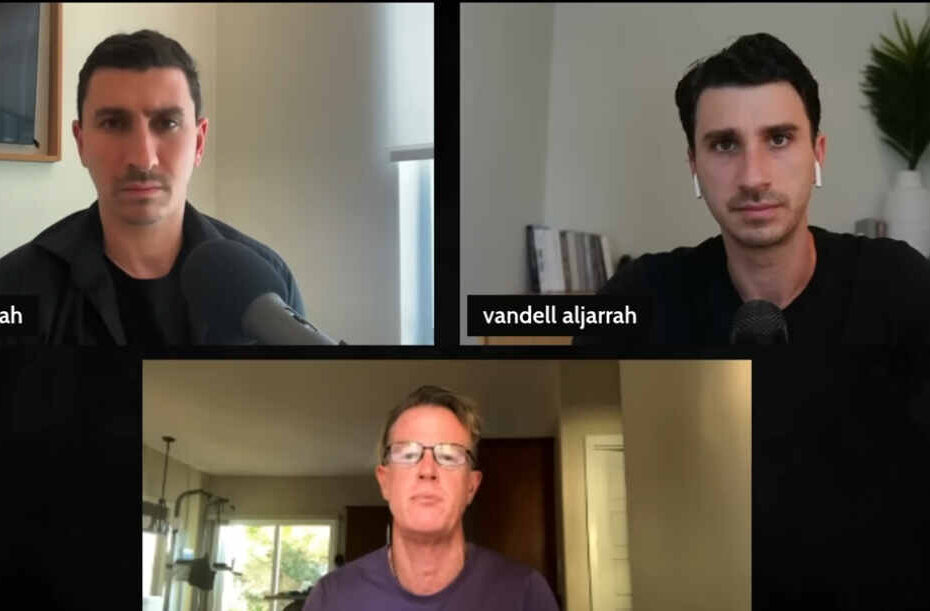
Read the full transcript of former BlackRock portfolio manager Edward Dowd in conversation with Vandell Aljarrah and Versan Aljarrah on “The Next 2008 Financial Crisis”, July 23, 2025.
Introduction and Guest Background
VANDELL ALJARRAH: Welcome back to the channel. Happy to have all of you here today. We’re honored to welcome Mr. Edward Dowd, former BlackRock portfolio manager where he oversaw a $14 billion growth equity fund for over a decade, very long time. And he’s also the author of “Cause Unknown.” Fantastic book. I suggest you all pick that up if you get a chance. And he’s the founding partner at Phinance Technologies. Edward, it’s a very real pleasure to have you here. Thank you for joining us today.
EDWARD DOWD: Great to be here. One correction. It was a $14 billion portfolio, not $114 billion. I wish. That would have been great.
VANDELL ALJARRAH: Excuse me. Yes. $14 billion, that’s incredible.
The Dollar’s Reserve Status and Global Debt
VERSAN ALJARRAH: Well, yes, Good morning, Edward. It is a pleasure to connect with you. We’ve been following your work for years and we truly respect all your insights even through the pandemic eras, especially being able to cut through the narrative and at the same time you’ve been exposing all the structural fractures in our financial system.
So let’s go ahead and get started. It’s obvious at this point that the United States is so reliant on unchecked debt expansion and monetary interventions like QE and so forth. We just saw the big beautiful spending bill just get passed and that essentially greenlighted the United States for unlimited borrowing at this point.
And at the same time, I would say the dollar’s reserve status is still being in question globally, but even here at home. So do you think this is intentional strategy here to just inflate the dollar to the point where it collapses as a means of resetting the system overall?
EDWARD DOWD: Well, the dollar is an interesting reserve currency and the dollar is subject to long cycles. I refer to my friend Tim Wood, the cyclesman who has identified a four year cycle in the dollar. And interestingly enough, the dollar had its worst start ever and it’s coming into a timing band of a low.
And as long as that low in the next several months holds above 89.10, which was the last four year cycle low, we still have a bullish long term trend in the dollar. If you pull up the long term chart, it’s been in a bullish trend since 2009. Higher highs, higher lows. So as long as we stay above 89.10, which we’re, I think we’re around 97. The bullish dollar is intact long term and it’s the cleanest shirt in a dirty laundry.
And you have to understand there’s about $17 to $18 trillion in dollar denominated debt in other countries, both sovereign and via corporates issuing dollar denominated bonds. So it’s really hard for these BRICs. There’s a lot of chatter to get off the dollar. If a country was to get off the dollar, they’d have a deflationary depression immediately.
So reserve currencies die slowly. I think we’re in the death of the dollar, but it’s not imminent. And we definitely see that the Trump administration likes a weak dollar, but I think the cyclical forces are going to go the other way on them pretty soon. So they can jawbone things, they can temporarily affect things, but long term cycles always bite and then the monetary authorities lose control.
And generally speaking, when the dollar rises fast, it’s an indication that the global credit system is contracting because dollar rising is a dollar shortage and credit destruction. The dollar going down is credit expansion.
VERSAN ALJARRAH: Interesting.
Bitcoin and the Four Year Debt Cycle
VANDELL ALJARRAH: I’d like to add something to what you just said, Edward. Interestingly, since 2009 the dollar has been in this four year cycle you pointed out. What’s fascinating about that is there’s a direct inverse correlation between a dollar bottoming and bitcoin peaking.
Historically when I overlay the charts, the correlation is very interesting because since 2009 they’ve been on this four year debt cycle where they refinance the debt every three to five years or four years on average. But every single fourth year for the past, since 2009 we’ve seen this bottoming in the dollar where it weakens on the Dixie and that historically has been the same time bitcoin has peaked. It’s almost 100%. Such a tight correlation, inverse correlation, which is pretty fascinating.
But anyway, do you have any thoughts on that on the debt refinance cycle that’s been going on since 2009?
The 2019 Repo Crisis and COVID Response
EDWARD DOWD: Yeah. So you know, going into 2019 we had a synchronized global slowdown occurring. There was a repo crisis and that’s the plumbing. Repos are overnight lending between banks and the Federal Reserve and that’s the plumbing of the system. And that started to unravel in the fall of 2019.
And then lo and behold, COVID magically came along and this crisis allowed and gave central banks and governments license to spend like drunken sailors. So Federal Reserve printed money and the US government spent that money again. Printing money doesn’t really matter until it gets into the system. And that was via the fiscal deficits that exploded and the free money that people got during COVID that created for the first time actual inflation.
The inflation since 2009, prior to that was asset inflation. This created actual goods inflation. And then the Federal Reserve went on its unprecedented monetary hike cycle, the fastest rate hike cycle we’ve ever seen.
And so here we are, and we need another acceleration of government spending. We got that in the Biden administration. The last two years of their administration, as they ramped the illegal immigration activity. We were running crisis deficit spending, 8%. The last time we saw that was in the great financial crisis. You have to ask yourself what was going on.
I believe, and it’s starting to come out, that a lot of that spend was on the purposeful logistical operation of bringing in 20 million people into the US, which did affect the economy.
So we had to ask ourselves, are the laws of fundamental economics changed forever or is there something else at work? And what we found was the pig in the python, and that was illegal immigration. That trend is reversing and it’s going to have an impact on the US economy, which is a little unknown thing.
Illegal immigration was holding up housing. Housing started to roll in 2022, but prices didn’t come down because rents were elevated. That’s all going away. All our indicators are everything’s rolling. We put out several real estate reports that show all leading indicators rolling. And it’s going to be a slow rolling crisis. Eventually the stock markets will care. It’ll roll into construction activity, layoffs and whatnot. So that’s, it’s coming in the next six to 12 months.
The Coming Housing Crisis
VANDELL ALJARRAH: And that’s a housing crisis. Correct. And this is the deep recession that you published a report on?
EDWARD DOWD: Yeah, yeah, it’s a housing crisis. And interestingly enough, in our report, we put out in January the big report that’s the most expensive. We looked at the global real estate market and it’s starting to roll as well. Interestingly enough, in the last month, we’re really seeing a synchronization.
Japan had bad numbers in housing this month, UK and the US. So it seems like it’s global and synchronized at the moment. It’s really not in the headlines of the mainstream media, nor will it be until it starts to affect the hard data and the stock market suddenly give up the ghosts.
VANDELL ALJARRAH: And even the stocks and companies for home builders aren’t performing that well as of the end of last year, as I recall.
EDWARD DOWD: Correct. They hit a low in April. They’ve had a counter trend rally. They’re nowhere near all time highs. And today the XHB which is a homebuilder ETF, is down almost 3%. I think we’re going to see new lows in the home builders over the next couple months which will be a leading indicator for housing. The stocks are going to figure this out pretty soon. They’ve already figured it out, but they’re going to go to new lows, we think soon.
Market Crash Predictions
VANDELL ALJARRAH: So how low do you see the market taking a hit in terms of percentage? Because of course these things don’t happen overnight, they’re kind of gradual. You start to see signals beforehand if you’re paying attention, and then it starts to tip over and you see the effects roll over into the market.
So are you thinking housing crisis as in a 40, 30, 50% crash in markets accelerated by a few different variants such as unemployment, initial claims. But how do you see that unfolding in real time? How could that manifest?
EDWARD DOWD: Let’s look at stock valuations. They’re at valuations like the 2000 bubble. And if you look at the dividend yield on the S&P versus bonds at these current levels, the 10 year projected return on equities is not good. If you put all your money into stocks right here, right now, your 10 year forward returns are abysmal.
So we’re at record valuations. If you look at the actual components of the stock market, it’s a very narrow market driven by very big cap tech stocks. Nvidia is a $4 trillion company, it’s a semiconductor company which are cyclical companies and it’s priced as if it’s never going to have a cycle again.
So we have unfortunately, and we really don’t talk about this much, but it’s going to be part of the problem. We have a housing crisis coming and again, we don’t know how deep it’s going to be. It could be moderate, could be shallow, could be severe, but it’s going to happen. And then you have a tech bubble, stock bubble.
So you could have a stock bubble bursting and a housing crisis. So think of 2000 and 2008 combined. The good news is in housing, the consumer isn’t as leveraged as they were in the 2008 housing crisis. But still it’s going to be a problem. We don’t know what the daisy chain effects are going to be to the banking system, so that remains to be seen.
So what would stocks do? Anywhere between 30 and 50%. The last two recessions, the big recessions we had was the dot com bubble recession. Stocks went down 50% over a two year time frame according to the indices. And in the great financial crisis we went down 50%. So I’d say anywhere between 30 and 50% you’ll get a Federal Reserve response and a fiscal response and then we have to see from there what’s going to happen.
But people are always predicting doom and gloom. We don’t think it’s doom and gloom, it’s just, it’s actually corrections are not necessarily bad. They give younger people who aren’t in the markets an opportunity to buy a home or invest in stocks. Right now if you invest in stocks, you’re not going to make a lot of money. You have to probably lose money for the next 10 years.
VANDELL ALJARRAH: Yeah, I agree with you on that.
Central Banks and Gold Accumulation
VERSAN ALJARRAH: It’s very interesting, I think how they’re just continuously kicking the can down the road, but at the same time central banks are hoarding metals, quietly stockpiling them and they’re also promoting a digital future.
So it seems like while the world is just overall accelerating towards digital finance, tokenized assets, blockchain based settlement systems and so forth, while they’re also accumulating physical gold and that gold is certainly being suppressed by the COMEX and LME, it’s very contradictory what they’re doing here. They seem to just be putting band aids and band aids. So people are also distracted from the bigger things happening underneath. How long can this illusion go on?
EDWARD DOWD: Yeah, that’s a good question. You know, gold is very interesting. Gold does have cycles, so it could get a pullback in a global margin call. But I look at that as a buying opportunity. So don’t sell your gold if it starts to go down and don’t be leveraged, don’t be in gold futures up to your eyeballs and leverage gold. But long term gold is going higher.
And why do I say that? Because as you said, there’s this focus on digital currencies. But they made gold, excuse me, Tier one capital again. And that came into effect in the US this July. So they’ve been quietly accumulating gold ahead of this going into effect because physical gold is now tier one capital at a bank, which means they can lend against it.
In the 70s when we went off the gold standard, they made it a commodity. So they’re kind of remonetizing gold. You have to ask the question why? And you know, central banks have been quietly accumulating gold. You know, there was this talk to audit Fort Knox and that’s been quietly not done. I had a thesis that, and I think if we ever audit, it’ll be proven right that there’s more gold in Fort Knox than we know. Not the most, you know, conspiracy theory is that there’s less gold. I think there’s more gold.
VANDELL ALJARRAH: Yeah.
Banking Crisis and Tokenization
VERSAN ALJARRAH: I mean they can just print the money out of nowhere so they can just go buy it back at a higher price. They don’t really care. It shows that they’re terrible investors when it comes to gold. But I mean they have to hedge themselves.
If I may say this, it would seem that if you look around, even Texas now legalized gold and silver for legal tender, which is pretty cool I would say. I have a follow up question to what I asked over there with distributed ledger technologies. There’s one specific one called XRP. I think it’s a very interesting one.
It seems to be gaining a lot of quiet traction. It’s not as talked about on the mainstream news or by most economists these days. Even though I think it’s playing such a critical role in where this is going for cross border settlement rails. Do you think there’s some sort of strategic plan to bridge hard assets like gold for instance with these digital networks?
EDWARD DOWD: Yeah, there’s a lot of talk of tokenization and there are people trying to tokenize gold and other assets and it’s going to be interesting to see how that works. The term smart contract, what have you. XRP has the rap of being the bank crypto. You know, you get to look at that with a little skepticism.
But there’s definitely this notion that we’re going to tokenize everything. You can debate whether that’s good or bad. I will say this, tokenization and smart contracts, they’re trying to do it in the gold market. I’ve had some discussions with people trying to do it and what they’re saying is no one wants to do it because they like doing business the way that they’re doing business.
Because tokenization will take out a lot of middlemen and the middlemen are not happy about being taken out. So it’s a slow process. I don’t think it’s going to happen overnight, but it’s beginning.
VERSAN ALJARRAH: Yeah. Similar to the dot com bubble where it played out and then regulations came in after they positioned themselves and then there was that moment where they kind of used the technologies to fix some of the problems that we have today. Something like that.
The AI Bubble and Investment Cycles
EDWARD DOWD: Yeah. I look at the dot com bubble, as you know, it was a lot of investment, a lot of hype, a lot of excitement and then that investment went to zero. But it created a boom for the Internet 2.0 companies like Facebook, Google, Apple, because all that bandwidth that we invested in at high prices was bought for pennies on the dollar.
And that’s why we have the Internet and the streaming capabilities we have today is because of that over investment. I see the same thing with AI. Huge AI bubble, no revenue streams yet to justify that. And eventually the markets will care because people are not going to keep throwing good money after bad.
And then there’ll be a repricing of AI infrastructure. And then I think the AI boom comes after the bubble bursts. The real companies that we want to care about, but you know, I don’t know what they are yet. Maybe there’s one that currently exists. It’s not going to be Nvidia. Nvidia is, you know, semiconductors are a commodity and it will get commoditized at some point. $40,000 GPUs don’t last forever.
VANDELL ALJARRAH: Good point, good point. Yes, that’s true. We have a similar theory on the crypto market as well. Based on our research over the years. We really feel, Edward, that the crypto market is really, it’s like the wild west, okay?
But we’re seeing similar patterns if we compare it to the dot com era. And we believe that 99% of these cryptocurrencies and companies are going to go to zero. And we feel like there’s going to be a handful or maybe a little more that are going to emerge because of their real world use case utility and the trillion dollar issues they’re actually tackling in the real world.
And we think that would be the case for crypto as well. And we even believe that the whole market is designed to give people this illusion of complete decentralized finance outside of the cabal banking system. And we think that’s designed as this libertarian movement to lure people into this centralized system being built out, tied to the blockchain.
Do you have any opinion on that? Because we don’t look at what they’re saying on the news and the narratives. We look at the Bank of International Settlement, the documents, the World Bank Group, their publications and they talked about XRP and XLM as stablecoins in 2022. So we’re looking at those things. Trying to connect the dots here. What do you see going on with this market?
Crypto Market Correlations and Risk
EDWARD DOWD: Well, you know, crypto. I’m not a crypto expert, but it’s an asset class that I follow. And, you know, if you look at the correlations and you pointed out one of them, when the dollar goes up, crypto tends not to do as well, I believe. Is what you said.
VERSAN ALJARRAH: Correct.
VANDELL ALJARRAH: That’s true.
EDWARD DOWD: And the NASDAQ also likes a weak dollar, and the NASDAQ and Bitcoin have a high correlation. So if there is a risk off trade, which I believe is coming, crypto has an opportunity to deflate quite a bit. And that will be another buying opportunity for the right cryptos.
But you’re right, 99% of these coins are going to go to zero. These meme coins crack me up. I don’t even understand. You know, it seems like it’s a rigged system to me.
VANDELL ALJARRAH: Venture capitalists.
EDWARD DOWD: Yeah. And if I was buying a meme coin, once it’s offered to me, I’m pretty sure I’ll lose money if I hold it for any length of time. So I haven’t bought any meme coins. The Trump coins were a disaster. You know, first day, I mean, what the heck?
VERSAN ALJARRAH: The first day he got in office, he rug pulled his own voters.
EDWARD DOWD: I know. I saw that. And I said that was the, I think it was like the day before the inauguration. And I said, this is the biggest unforced error I’ve ever seen. So, you know, I think like anything in a pullback, in the rubble, there’ll be a gem.
So you guys are probably onto something that in the pullback that I think is coming on a lot of risk assets, there’ll be some gems, and you guys are the experts and hopefully you find some, invest and then become, you know, multi millionaires.
VANDELL ALJARRAH: Yeah, hopefully we’ll see what happens.
EDWARD DOWD: Do you hold it?
VANDELL ALJARRAH: Do you hold any crypto, or are you looking at the market from a risk on perspective?
Cash Position and Timing the Market
EDWARD DOWD: I’m bearish on everything. So I’m not holding a lot. I mean, I’m mostly, look, I’m not here to give investment advice, but of course, you know, I think Warren Buffett is not a dummy. He was two years early like we were, because I don’t think he saw the immigration and deficit spending floating the economy for another. Again, it’s a new economic variable that’s going the other way.
I’m a believer that cash mostly is an asset you don’t want to hold, but there are times when you want to hold it because it’s going to be dry powder. And that’s where I, you know, if you’re someone out there listening to this, I’m not suggesting you do anything with your portfolio other than accumulate some dry powder and the percentage you want, that’s up to you so that you have an opportunity to buy low.
That’s how people make generational wealth is buying when everyone’s selling and they’ll be, you know, I suspect there’ll be a giant risk off trade. The headlines will be really, really bad. And that’s when you want to buy. When quote, unquote, the world is supposedly ending.
VANDELL ALJARRAH: Exactly. I agree with you Edward. Very well said words of wisdom. I do have a follow up question. So since there is a lot of signals pointing towards the economy heading that direction, it’s very clear. We do 100% agree with you. We believe that is coming.
We wanted to get your take and your opinion on this. Do you think that interest rate cuts will happen before that or do you see the Fed waiting for panic to ensue and reacting late as they usually do at the last minute kind of like a few years ago. Do you think they’re going to wait for panic?
The Fed’s Dilemma and Bad Data
EDWARD DOWD: I think the Fed is doing something somewhat of a disservice to the economy. Every other central bank is lowering interest rates because their economic numbers are rolling over. We are keeping ours steady. So real interest rates are 2% and the longer they remain at 2% the worse the problem is going to become.
And what I mean by that is the surest way to get rid of 2% rates or 2% real rates is themselves because they create economic slowdown, monetary contraction which we’re seeing signs of. Velocity of money started rolling over in the first quarter after rising when Biden got in there. And we think a lot of that velocity of money was due to the illegal immigrants coming in and spending. That’s all rolling over.
So the Fed I think is going to, and again this could be political. Trump and Powell don’t get along. And the Fed also has been looking at data we think has been flawed. The labor market data is garbage. The non farm payroll number is now garbage. I talked to other economists that are more, you know, academically inclined than I am and have been doing this a long time.
One of my friends, Dr. Lacey Hunt has shown that the labor market is, you know, wrong to the tune of a million plus jobs over the last 12 months. Daniel DeMartino said the same thing. So we’re looking, the Fed has been looking at bad data and I think magically at some point they’ll come this payroll number that just blows everyone’s mind away and they’re going to ask themselves what happened.
And I think that’s coming. And so the Fed, the Fed isn’t completely to blame because they’ve been looking at bad non farm payroll data and that’s going to, it’s going to be interesting to watch. And you know, that’s what scares me right now with the recent rally in the stock markets and yields trying to bottom that when this does occur it’s going to happen fast and everyone’s on the wrong side of the boat and they’re going to have to adjust their portfolios quickly and that’s going to cause everyone to kind of have this aha moment and start selling at the same time.
So this could be phenomenally fast and dangerous.
VANDELL ALJARRAH: I was going to say no, I agree with you Edward and you make a very good point. Do you think this could kind of ripple over and create this ripple effect for banking consolidations?
Banking Crisis 2.0 and Private Credit
EDWARD DOWD: Yeah. So people forget this but we were close to a banking crisis in 2023. Again the unprecedented deficit spending prevented that. Plus the Federal Reserve doing bank term funding loans against the held to maturity accounts of the banks, which is these banks over the previous 14 years before the rate hikes were buying very low yielding Treasuries and corporate credit.
With the interest rate hikes they lost money on paper that started a bank run in March of 2023. Silicon Valley bank went away, a couple others just disappeared overnight. So the Federal Reserve put the finger in the dike and stopped that. And actually I applauded that. You don’t want a bank run, you don’t need a bank run.
So that stopped it. But we’re at the part of the cycle where credit is going the wrong way and the Federal Reserve is not going to lend money against bad credit. So we’ve got commercial real estate, we’ve got housing loans that are going to start to sour and then we have this other private credit debacle because banks, even though they haven’t been, you know, they’re not, that’s why private credit is.
Private credit is not done by banks but they’re the ones backing a lot of the private credit loans. They give these firms loans to then go make loans. Now they have less risk than a lot of others because they’re the tier one lender, meaning they get the claim against the assets. But there’s been a lot of Ponzi Finance in the private credit markets, another shadow banking phenomenon that we’ll be talking about a lot.
Private credit will be in the headlines at the bottom of the cycle, but, you know, that’s what I see. And then we’ll see regional bank consolidation as they get into trouble and the big banks will get bigger because the Federal Reserve will force some marriages like they did during the financial crisis.
And if you want to introduce the central bank digital currency, it’s much easier to do when there’s fewer banks.
VANDELL ALJARRAH: Exactly, exactly.
VERSAN ALJARRAH: You’re right.
VANDELL ALJARRAH: So you see a banking crisis unfolding and wiping out more regional banks.
The Future of Financial Crises and Central Bank Tools
EDWARD DOWD: That’s hard to call, but it’ll look, I don’t know if we’re going to have a systemic crisis like we did in 2008, but there could be widths of that. There’s a lot more tools in the Federal Reserve’s tool belt. So we’re not calling for a systemic crisis, but bank stocks won’t do well. There’ll be a scare.
And if there is a systemic crisis, well, Katie barred the door because last time the central banks were the backstop. Who’s going to backstop central banks if there’s a systemic crisis? That’ll be interesting to watch.
VANDELL ALJARRAH: Yeah. Well, they just also put out that rule enhanced supplemental leverage ratio with big banks. It’s basically like saying, all right, big players take on more risk, lend more, be more aggressive and hold less reserves. Safe reserves, basically. Right.
EDWARD DOWD: I think what’s going on there is that that is designed to allow them to buy more US Government treasuries.
VANDELL ALJARRAH: I agree.
VERSAN ALJARRAH: Right. They need to create demand for it.
VANDELL ALJARRAH: Yeah.
EDWARD DOWD: So what they’re going to do is they loosen the leverage ratios in anticipation of a crisis, knowing that they’re, and also trade wars going on so people don’t realize. Japan and China have been selling US Treasuries, net sellers, for a couple years.
So what we’re going to see is we’re going to see who’s going to buy the U.S. debt. We are, our banks and ourselves. And they’re going to make it so that we have to buy it. That’s how this works.
VANDELL ALJARRAH: Yeah.
EDWARD DOWD: We’re going to fund our own deficits. The days of the foreigner funding our deficits is coming to an end.
Stablecoins and the Dollar Demand Strategy
VERSAN ALJARRAH: Well, if I may add something to that, I’ve done some very deep analysis and research and I’ve written articles about this on X, about how they’re doing this to create demand for dollars. Still, if you look at, you’re familiar with the stablecoin tether, I’m sure.
EDWARD DOWD: Oh, yeah. That seems to be what they hope will continue the bid for Treasuries.
VERSAN ALJARRAH: Right. And that’s why I find it very interesting. And I write so much about it. And I’m not telling people not to go long on bitcoin. I say go long on bitcoin because it has become such a politicized asset.
And if you look under the hood of it, it’s almost like a new form of oil, you could say. And with all the institutional support, you see political lobbying behind this stuff, you see a lot of regulatory capture.
Even behind the scenes, though, there is a revolving door of capital, that is capital inflows that are tied directly to tether. And I think that’s, it’s operating like a shadow bank to create demand for dollars, but at the same time. And also they’re buying up all the Treasuries, but it’s inflating Bitcoin’s market cap with questionable reserves, you could say almost like monopoly money.
EDWARD DOWD: Yeah, that’s an interesting analysis. And so the people who own the libertarian mindset of bitcoin may not own what they think they own.
VANDELL ALJARRAH: Yeah, true. We agree with you.
The Dollar’s Geopolitical Defense
VERSAN ALJARRAH: Well, there’s something else to this as well. And that’s why when I look at the geopolitical landscape, I know there are a lot of people out there who don’t necessarily believe that the BRICS strong enough to accomplish whatever they’re saying they’re going to. And they may be right, they may be wrong. We don’t really know.
But when I look at the information, I get most of my news from outside of the United States. And if you do look outside of the United States, and not just the propaganda, but what the journalists are putting out, you see a lot of nations already starting to settle trade outside of the dollar, and they’re gradually doing this.
And we’re talking about Russia, China, some of the BRICS nations, even other players that are not part of the BRICS nations. Saudi Arabia, for instance. And this is where it gets interesting, because why is the US So involved in all these global conflicts that demand massive financial and military commitments?
So my question to you is, like, what extent do you think the US involvement in all these proxy wars, Ukraine, Israel even, is about defending the geopolitical utility of the dollar as a world reserve currency? Or do you think there’s some deeper agenda behind all of it?
EDWARD DOWD: You know, this is the realm of conspiracy theory, but I think there’s a lot of merit to it. The dollar reserve status is key to the military industrial complex, and they will defend the dollar’s hegemony as long as possible. And a lot of these wars have nothing to do with promoting democracy.
The dollar will ultimately collapse, just like Rome collapsed when we call the legions back. Rome collapsed when they could no longer control their outer empire. That’s something we need to watch if we start closing bases and pulling the troops back, because a lot of people use the dollar because we de facto defend all the trade routes.
And if we stop doing that, there’s no need to use the dollar. But that doesn’t seem to be happening anytime soon. Trump is increasing the DoD budget, and it seems to me that it’s the same old military industrial complex actually pulling strengths.
Central Bank Digital Currencies: Timing and Implementation
VANDELL ALJARRAH: Yeah, make a good point. So, on central bank digital currencies, we want to ask you about this. So there’s over 80% of the Central banks that are already developing or already have a central bank digital currency, at least working on them globally.
A lot of people have said, oh, it’s not going to happen. But look, if you look at what’s actually happening, it’s happening. So they’re moving in that direction, setting up rails, blockchain technology, adoption of it behind the scenes. But it’s all unfolding gradually.
And we agree with what you said earlier, how it would be much easier to roll it out if you have less banks, some big players. So do you see us still going in that direction?
EDWARD DOWD: Yeah. So a couple years ago, I was saying, in an economic crisis or global economic crisis, and a lot of fear and loathing and unemployment, that would be the ideal time to introduce central bank digital currency.
What we got wrong, again, was the illegal immigration and kicking the can down the road. So my call then is still the same. In an economic crisis, which we believe will be global, there’ll be a lot of fear, a lot of panic, and that’s the idea. And then, bank consolidation. That would be the time to roll it out. That would be the time.
VANDELL ALJARRAH: Yeah, that’s what we were thinking. We just wanted your take on that because, yeah, a lot of people say, oh, it’s not going to happen. You have people in place preventing it. But the truth is, when you really look at what’s going on, look at their actions, not just what they’re saying.
They’re setting up that system. They’re preparing it now already, and they have been for a long time. The BIS is very outspoken about this. The IMF as well, International Monetary Fund and all these superpowers, players that oversee the entire monetary system. They’ve been very clear on what their vision is and just wanted to get your take on that.
The Ultimate Control: CBDCs and Economic Manipulation
EDWARD DOWD: Yeah, no, absolutely. I think people need to understand something. The bankers have always understood that control of monetary policy is a blunt force instrument. You lower interest rates, you raise interest rates. It takes 18 months to get into the economy. And they don’t control the velocity of money. The animal spirits, that’s something that they want control over.
If you have a central digital currency, you could dial velocity money to anything you wanted. You could say, hey, you know what? Your wages that got in into your bank account, you have to spend them within a month or they’re going to disappear. I mean, that’s the ultimate control they want.
Bankers want to control every aspect of the economy. And central bank digital currency gives them vast ability to do so. And that’s the scary part of this whole thing. And then, of course, controlling behaviors, quotas on meat consumption because of some green politician wanting to keep the methane farts down or something stupid like that.
VERSAN ALJARRAH: But that’s serious.
EDWARD DOWD: No, this is where it all goes. And we’ve all seen that video of the very, I forget his name, BIS gentleman several years ago, Augusta.
VERSAN ALJARRAH: Yeah.
EDWARD DOWD: Talking about how you could basically control the world with this and he wasn’t exactly a slim man and just, you could make a meme out of that.
VANDELL ALJARRAH: Yeah, yeah.
VERSAN ALJARRAH: Telling us what to eat and what not to eat and we should just reciprocate the favor.
VANDELL ALJARRAH: To be honest, it’s comical. I know.
Autonomous Economies and Protocol Ownership
VERSAN ALJARRAH: Edward, there’s something I’ve been writing about, and I follow Palantir very closely, and a lot of these AI companies and the disruptive nature of what they’re doing here. There’s something that I wrote about recently called autonomous economies. Have you heard anything similar to that before? An autonomous economy for AI models.
EDWARD DOWD: I have not heard that term. I think I know what it means, but why don’t you tell me what it means?
VERSAN ALJARRAH: Absolutely. So I came to the conclusion after a lot of research with some of the blockchain protocol technologies we teach here at Black Swan Capitalist. And it turns out what they’re building for this complete controlled digital grid system is something at the heart of it all that stands to be called protocol ownership.
And when we try to filter out the noise in the crypto space for our clients and whatnot, it’s not like owning speculative nature tokens. Right. You’re controlling access points, gateways to the new digital economy.
So protocol owners, that would be some of us as investors, would be the true gatekeepers in this emerging autonomous economy who would determine basically who participates when value flows through machine to machine interoperability.
So what my point to all of this, and I know it sounds a little complex here, is that it’s fundamentally changing the way we earn income because the old model is what we’ve been doing now and it’s not really working anymore. Most people trade time for money and that is, it seems to becoming obsolete with AI and in the new economy.
What I believe is that income is going to be generated from those who participate in these digital ecosystems simply by owning the protocols. For instance, for this machine to machine value transfer, you essentially become like a toll booth when regulations are in place, very similar to the Visa and MasterCard.
When you swipe your card, somebody’s earning on that. It would be the same thing for some of these digital assets in a digital economy that is AI driven, of course. So I think that’s where the trajectory is going to take us maybe in the next 10, 15 years, I don’t know. But it would seem that’s what they’re doing, actually, they seem to be building something along those lines.
EDWARD DOWD: Yeah, there’s a lot of speculation and it sounds like what you’re talking about is getting somewhere in a toll booth rent seeking situation, which, obviously I’m not a big fan of rent seeking, but if you can do it, more power to you.
VERSAN ALJARRAH: Yeah, honestly, just the whole AI space really scares me. I think it can empower to a degree, but if you look around, it doesn’t seem to be really empowering too many people. It’s already doing a lot of the thinking for people. So overall, what are your thoughts on AI? Do you think it’s more disruptive or.
The Reality of AI Technology
EDWARD DOWD: So my partner Carlos is a genius, a PhD in physics and finance. He’s done some, we put out some free resource pieces on AI. AI isn’t ready for prime time yet. It’s really a large language model. It’s got 25% hallucination rates. Any company that’s employing it as a customer service representative is going to regret that.
General intelligence, artificial general intelligence is not here. It’s probably coming. But I think again, this reminds me of the dot com boom when we were promised all this stuff. And I remember, I was an analyst at Independence Investments, a tech analyst, and I saw everything as being overbuilt, financed by junk bonds. And the technology wasn’t ready for prime time.
We had cell phones, but we didn’t have smartphones yet. We had a wide area of protocol. And we used to joke WAP is crap. And I think so I’m here to say AI is coming, but it’s not ready yet. So the fear is misplaced at the moment and there’ll be opportunities in the rubble, but general AI, not here. This is a large language model.
I use Grok. I can prompt Grok to give me the answer I want if it’s controversial by just prompting it. So it’s not definitive. It’s basically regurgitating stuff. I don’t care what Elon just said about the new GROK being so great. It’s just more of the same. And it doesn’t solve problems like finding the truth or finding inflection points or thinking.
And the new trend on X is annoying. I put out a three sentence tweet that should be a reading comprehension that anybody can understand. And then people go, grok, what does this mean? They can’t even think for themselves. They have to ask Grok. So we are literally in potentially the beginnings of idiocracy.
VANDELL ALJARRAH: I agree, I agree it’s dumb and please keep it down.
VERSAN ALJARRAH: Yeah, because that did happen to me recently. Somebody in the comments of one of my videos. And I can tell you, Vandell and I, we do very good research before we put out a statement. We think these things thoroughly because we don’t want to look straight stupid either.
VANDELL ALJARRAH: Right?
VERSAN ALJARRAH: And I put out a statement and somebody said, well, Grok said this. And I said, well, why are you using Grok to critically think for yourself? Why don’t you use your own brain? So I see it being more disruptive as far as the general sense of the youth and where this is all going. So to your point, idiocracy, but 2.0.
AI and Consensus Thinking
EDWARD DOWD: Maybe AI right now is nothing more than consensus thought. In markets, great fortunes are made by being out of consensus at the right time. Obviously, you got to get the timing right. But just look at stock markets. There are consensus beliefs that are wrong. And when they’re wrong and everyone realizes that a lot of money is made by those poor souls that were flailing against the consensus.
Like Michael Burry for two years before the great financial crisis, he saw it coming and he was told by every idiot on the street, home prices never go down. Well, all you had to do was look. All you had to do was look at a long term chart to see that home prices did go down. The last time they went down was 50 years ago. But they do go down.
So this is the kind of thing that AI is going to create, a bunch of morons that regurgitate what AI is telling them. And currently AI still thinks the magic juice is fine.
VANDELL ALJARRAH: Exactly, exactly. It’s programmed. Yeah, it is, yeah. It’s all nonsense. I mean, you could use it as a tool to enhance your work or it’s going to use you and dumb you down. And it seems to be, it’s dumbing people down and that’s exactly what they want. There’s a book by Henry Kissinger on it.
VERSAN ALJARRAH: It’s true.
EDWARD DOWD: Yeah, I use it as a tool and I think it’s better than search because in search you put in a term that you want to get some information, then you have to sift through all the nonsense that Google spits out, a lot of which is paid advertising and sponsorship. They’ve ruined their own search engine.
But the way I use Grok is this. I ask Grok a question, it’ll give me a summary. But then I want to go to some of the links they provide to make sure it’s right. I don’t believe it at face value. I want to check some actual sources that they provide. So you have to be very careful spitting back what Grok tells you because it’s often wrong.
VANDELL ALJARRAH: Yeah, you got to exercise good judgment.
VERSAN ALJARRAH: I try not to use it. And if I do use AI, I specifically use it for headlines, for my videos, and sometimes to concise information that I put together like a description. But I always make sure to keep it authentic because I like my own words to be out there, not something else.
EDWARD DOWD: Yeah, we don’t use AI when we write our reports. We use the old human noodle.
VERSAN ALJARRAH: Yeah, yeah, we love that. Takes more time, but it’s a lot better done and you can actually enjoy it.
VANDELL ALJARRAH: Sorry, go ahead.
VERSAN ALJARRAH: Well, I did want to ask you one more thing, and I’ll let my brother finish.
VANDELL ALJARRAH: Wrap it up.
The Third Party Question and Institutional Trust
VERSAN ALJARRAH: You’re familiar with this whole Elon Musk talking about a third political party and not trying to go too far off the deep end here, but if you read the UN playbook, they did talk about creating enough distrust in the public with any form of government. I talked a lot about this with Gregory Mannarino.
And it seems that nobody trusts the left. And with all this new material resurfacing right now, a lot of people from the MAGA group are losing trust for the other side too now. So it seems like this whole divide and conquer strategy, even between the two party system, is getting stronger, I would say.
And it seems like they’re paving the way for a new kind of party. Whether it succeeds or not is irrelevant. But as far as the narrative putting it out there, you plant the seed and it can grow. It really could.
EDWARD DOWD: What do you think? I don’t think it’s going to be successful, but the point is taken. It’s a seed. And I said three years ago that what happened during the Magic Juice era, the COVID pandemic, was designed to destroy all faith in all institutions. And that’s what it did, and that’s where we are.
And now we’re seeing the new administration getting in there. And look, I’m going to give them a little out, not much of an out, but when you drop into an institution as the head of a department, it takes you time to understand the institutional knowledge, how things actually work and how to effect change.
The ticks, the apparatchik tics, the deep state administrative state are still there. They haven’t gone anywhere. And they’re thwarting a lot of these efforts. And it presents to the American public as, oh, you’re betraying us. And there will be some actual betrayals, but a lot of it is just inertia.
And I look at an institution like the FDA, it needs to be, everybody needs to be fired and needs to be built from the ground up again. We just approved a new Magic Juice candidate a couple weeks ago. So this is a problem.
And I think to your point, whether Elon realizes it or not, he’s touched on a lack of trust that the general public has. And look, Elon reads the room well. He was a liberal subsidy taker under Obama and Biden, and so he read the room and he bought X. And also, I think he was legitimately scared about the future of the country. But he reads the room well and now he’s reading the room the other way.
VANDELL ALJARRAH: Yeah, yeah.
VERSAN ALJARRAH: Thank you for clarifying that. I really appreciate your take, Edward. I’ve been following you as far as what you’ve been talking about, the Magic Juice for many years now. So thank you for everything.
Protecting Yourself in a Changing Financial System
VANDELL ALJARRAH: Yeah. Last question, and we’re going to wrap it up. Edward. So knowing what you know in the direction the world is moving to, this digital economy, central bank, digital currencies, the debasing of fiat currency and everything shifting, it’s essentially it. It’s a transition of the financial system. How are you approaching this? How are you going to protect yourself? And what are you doing basically?
EDWARD DOWD: Well, look, that’s a difficult question, but you need to have the mindset that you can’t attach yourself to things anymore. You have to build up your own peace with the world and understand that so much is out of our control, that when something does come that’s out of your control, try not to react to it emotionally with fear. Try to understand that you’re going to be all right.
And in this chaos, there will be opportunity. I don’t know what it is yet, but there will be opportunity. So you got to keep your own self in check emotionally. You got to keep yourself healthy, and you got to basically keep those around you healthy as well, and have a team of friends, family that you can rely on, and they rely on you when the times get tough.
So I’m more into relationships than I am into accumulating digital assets at the moment. I mean, I want to do that, but I’m not relying on that. Building yourself a fort in the wilderness may not be the best solution.
VANDELL ALJARRAH: Yeah. Yeah. Thank you for sharing that. Well, yeah, it’s been an absolute pleasure. Edward, do you have any last words before we part ways? I’m so thankful to have you on.
Final Thoughts and Closing
EDWARD DOWD: No, my last words are this. In times of stress and chaos, like I just said, there’s opportunity. So try not to get in fear. Keep fear and anxiety off the table. Understand that if you live in the present moment, nothing’s as bad as it seems. If you go too far into the future, you can scare yourself to death. So don’t do that.
I’d also like to promote my website, financetechnologies.com with a pH. We have multiple reports for sale that indicate what’s coming. And I’m also found on X at Edward and Getter Edward Dowd. We’re just trying to be a financial guidepost in a sea of chaos, and we try to tell the truth, and we call balls and strikes. And I’m not a cult follower. I’m not a MAGA head and I’m not a woke liberal. I’m just a guy that’s in the common sense and trying to figure it out.
VERSAN ALJARRAH: Absolutely.
VANDELL ALJARRAH: And that’s what we love about you, Edward. You’re so rational, grounded, and you look at everything from an unbiased perspective. Very logical and rational.
VERSAN ALJARRAH: Yeah, I would say you have a lot of courage too, in exposing a lot of the deeper mechanics behind everything. I’ve been following you again for years. So thank you for everything you do.
EDWARD DOWD: Yeah, thank you. Look, I’m just one of these. When I was at BlackRock, I used to be the guy telling the truth. When I knew the housing crisis was coming, people thought I was crazy. And that’s just my nature. I call BS when I see it.
VERSAN ALJARRAH: I agree. And that’s what we do here too.
VANDELL ALJARRAH: And that’s why we have so much respect for you. We really do. Yeah. Thank you.
VERSAN ALJARRAH: Yeah, Edward, it’s been great. And yeah, one message to our audience. I hope this conversation gave everyone a clear understanding of the forces. Please be sure to follow the links in the description below and follow Edward’s work very closely. He knows what he’s talking about. Thank you, everyone.
VANDELL ALJARRAH: Thank you. Have a wonderful day, everybody. Thank you. Thank you, Edward.
EDWARD DOWD: Thank you, guys.
Related Posts
- Michael Saylor Responds to Bitcoin Critics @ Coin Stories (Transcript)
- Why Multilingual Human Support Still Matters in Digital Banking
- To Buy Or Not To Buy Cryptocurrency? That’s The Question On Everyone’s Mind
- Ajay Banga on India, Migration and a Youth Jobs Time Bomb (Transcript)
- A Global Monetary Crisis Is Coming & AI Could Make It Worse – James Rickards (Transcript)