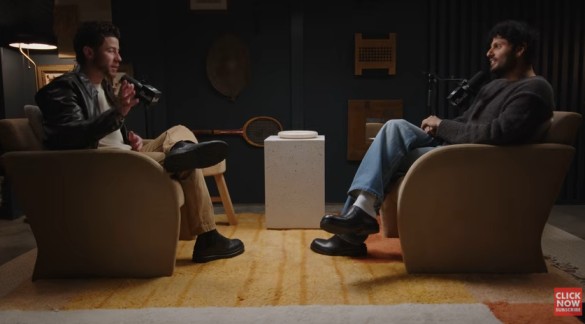
Editor’s Notes: In this On Purpose Podcast episode, Nick Jonas opens up like never before in this raw, emotional conversation about identity, fatherhood, and the terrifyingly early arrival of his daughter, Malti Marie. From growing up under the Disney spotlight to quietly battling type 1 diabetes, he shares how fame, faith, and failure have reshaped who he is today. You’ll hear the untold story of his daughter’s traumatic birth and 3.5 months in the NICU, the honest fears that came with becoming a dad, and how marriage to Priyanka Chopra has transformed his idea of being a good husband and partner. If you’ve ever struggled with anxiety, inner criticism, or the pressure to “have it all together,” this episode will make you feel seen and less alone. (Feb 4, 2026)
TRANSCRIPT:
Who Is Nick Jonas Today?
JAY SHETTY: Nick, I feel like I’ve been watching your interviews with the brothers. I’ve seen so much of what you’ve done, but this is like the first time you’ve sat down separate of the brothers since you guys got back together and the band got back together. Who’s Nick Jonas today? Separate of the Jonas brothers.
NICK JONAS: It’s a great question. Changes every day. I feel like, you know, for those that don’t know that are watching or listening to this, in the last couple years, my life’s changed quite a bit. My wife and I, my wife Priyanka, we have a beautiful daughter named Malti Marie Chopra Jonas.
Parenthood has really changed my life in so many ways, but also my perspective and the way I view myself and as it relates to my work as well. Obviously, there’s a huge influence there as well. And so I think I had a better sense of who I was prior to that, and then everything shifted once she arrived.
What’s great is that I have this wonderful outlet in my songwriting and my music career where I can speak about some of these things that are happening in my life. And luckily, our audience, both with the brothers and solo, have really grown with us, and they’re kind of going through some of the same life experiences. So it really is like speaking to peers and people that can understand kind of the language and understand just what you’re going through.
So I felt some freedom to express myself even more in my work these days, which I think is reflected in my latest album, which I know we sent over before for you to listen to a track or two, just to get some context. But I’m really looking forward to people hearing this work and kind of listening to these lyrics and getting a window into my life.
JAY SHETTY: Yeah, I’m excited to dive into Sunday Best. I picked out some of my favorite lyrics from some of the songs, so we’ll get to that. But I wanted to ask you, go back a little bit. What you’re saying is almost like you started performing at an age when kids don’t even know who they are.
NICK JONAS: Yeah.
JAY SHETTY: And your life was so public. What was that like now, looking back? What was that experience like?
From Broadway to the Jonas Brothers
NICK JONAS: Yeah, I started performing professionally when I was 8. I was doing Broadway shows as a kid. Our parents, very musical people. Our dad was a minister in New Jersey at the time, and we were close enough to New York City, where this dream of mine to go and perform on the Broadway stage was actually somewhat of a possibility.
And I happened to be in a hair salon with my mom when I was like 6 or 7 years old, just singing as I always did, some show tune. And the woman next to her leaned over and said, “Hey, my son is actually on Broadway right now in Les Mis. Your son could do it. You should go see this manager.”
So a couple weeks later, they drove me and the brothers to go see this manager named Shirley Grant. She was this lovely older woman with all these photos of kid actors on her wall that she had made famous. And she was kind of a staple in New Jersey for kids that wanted to be in the business.
And I went in and I auditioned for her, sang all the songs I knew, which was mostly just pop music. And then she said, “Well, there’s some signs here that we could have a path ahead of us, but you need to go learn show tunes.”
So I spent six months devastated that it didn’t just happen. My very short sighted, seven year old mind, thinking my career was over and started learning show tunes with my dad and came back and auditioned for her again. And she started sending me on auditions and eventually I was on the Broadway stage and I’ve really not looked back since.
Went from doing that for three or four years to recording music and then the stars kind of aligning and obviously me and the brothers had a song that we wrote. We were kids that someone heard that label and wanted to sign all three of us. And it just kind of went from there.
JAY SHETTY: Growing up on Disney in front of millions, how did that shape your sense of self now when you reflect back on it?
Life Under the Spotlight: Church, Disney, and Expectations
NICK JONAS: Being the first family of the church, right. My dad was a pastor. We were expected to behave a certain way. Expected to be sat in the front pew of the church every Sunday morning with our tie and our suit on. And there was a lot of eyeballs on us, which I think was actually great training ground for what we would then experience on Disney so many years later.
We didn’t expect that to happen.
And thankfully we got a call from Hollywood Records, which is under the Disney umbrella, and they said, “We know what to do with the guys.” And a couple weeks later they had us on The Disney Channel and things just started going.
But the real head scratcher was, okay, what does it look like when it goes from just a couple hundred people in a church with all their eyeballs on you to millions upon millions of people where you’re expected to sort of behave a certain way?
I think our parents did a great job. We all turned out somewhat okay, I think. But you know, you’ve seen the stories. We’ve all seen the stories of people that have really struggled coming out of that or while they’re in it. And I think it’s a credit to their parenting.
JAY SHETTY: Yeah, I’ve met your parents. They’re wonderful. Yeah, they’re great energy and you can see where you three get it from. But yeah, it’s even that early failure. I mean, to be failing at that age, to be dropped from a record label, tons of debt. When I hear that, I go, okay. When you look at it from today’s perspective, you’re like, oh, yeah, of course they made it anyway, it didn’t matter. But it’s like at that time, I can imagine that being really heavy on your family. Was it quick enough a pivot where Hollywood records came, or did you have to sit in that pain for a little bit?
The Darkest Chapter: Loss, Debt, and Diagnosis
NICK JONAS: You know, there was a couple things happening in our life at that time that made the career aspect of it almost feel less of a burden than some of the personal things that were going on.
Our dad was at that church for 10 years. It was a real safety net for us and a place where we felt a part of a community. And some of the families that were there prior to our arrival did not like my dad and made it their mission to get him pushed out of the church. So effectively, he lost his job while also funding this band, this dream of ours.
We had to move out of our home because we were living in the church parsonage, which is owned by the church. And so we moved into basically a little house in a place called Little Falls, New Jersey. The owners of the home were kind enough to let us rent it from them for basically nothing.
While we were in this transitional period and around the same time, while we’re on tour doing a school tour, basically we would show up at 8am, load in our own gear and play a 30 minute assembly, basically. And then there was an anti drug school, anti drug message at the end of it that our Uncle Josh, who was our tour manager, would give.
Around this time, I’m starting to lose weight. I’m thirsty all the time. I’m using the bathroom all the time. And kind of just thought it was a growth spurt or that I was just going through puberty. Obviously, it wasn’t that. It was a diabetes diagnosis.
So it all kind of collided at the same time and looked up and life just looked very different. And so it took a lot of faith and even questioning faith at that time, going from the safety net of the church to all of a sudden being sort of betrayed by them and having to redefine relationship with God while going through some of your toughest moments. It’s a weird time. But we came out of it okay. And that phone call from Disney kind of changed our life.
JAY SHETTY: Yeah. I mean, it’s interesting that you put it into perspective that losing a record deal compared to your dad losing his job, the faith challenge that’s happening, you going through diabetes, it’s like, it’s interesting when you look at your life like that and everything’s put into perspective.
I just had a friend who’s an author, she just had a book come out, and she was talking to me about how before the book came out, all she was thinking about was book sales and data and if she’d get on the New York Times and all this kind of stuff that you think about.
NICK JONAS: Yeah.
JAY SHETTY: And then she had a family go through a health scare, and her partner went through a health scare, and it was really serious. And she was just saying that she was, in one sense, grateful that that happened before because it just completely made her zoom out and the perspective completely changed, and she wasn’t worried about all those things that we would naturally be worried about.
What did you do as a family and what did you do individually at that time to kind of keep that faith, as you said? What were those challenging questions you were asking? What were the things coming at you that you were then able to find your central grounding? What helped you do that at that time?
Finding Grounding Through Music
NICK JONAS: Writing music. Our parents got us a V drum kit, which is an electronic drum kit where you could hook up your iPod and play along to the track. So it was kind of the way that I learned how to play drums.
And in that basement that that drum set was kept in, we also had a little guitar rig and a keyboard. And I was growing up, going through life stuff, right. First love, first date, all these kind of things that are really good foundation to write music.
We had a good sense of what we wanted the next record to sound like. We didn’t know if we’d be able to make one because things were not going so well. But we just kept writing. We went down there every day and tried to write the best song we could.
And we came out with a demo from that chapter of our sort of toughest window as a family, 9 to 10 months. Came out with a demo CD with 11 songs that would then become the self titled album that we released that connected and went on to sell millions of units and really redefined our career and our life.
But it was born out of this incredible struggle that we were going through and kind of desperation almost, which I don’t think is a great place to write from, but sometimes it is the fire you need to sort of get over that hurdle.
And when I listen back to those songs now, I still really resonate with some of the messages in there and even the age appropriate writing. I think our dad was really great at encouraging us to listen to the greats, the Eagles, the Beatles, Bee Gees, Stevie Wonder, but also to like what we liked.
And at that time, 2004, 2005, the sort of emo pop punk scene was massive. And we really responded to, I think, some of the angst in the music because we were teens who were going through this stuff and also navigating dating and all those other things.
And so we started kind of infusing that into our sound and it really became a crucial part of the early records for us. And obviously as we’ve evolved, so has the sound. But I think back on those times, even amidst the struggle, with a lot of appreciation.
JAY SHETTY: Yeah, I love learning that because it just constantly points to how when you’re going through tough times, creating and building and doing something, taking action is always half the solution in terms of getting momentum, moving forward, trying to create, build, grow, do something just allows humans to break through these really difficult times that go on in life.
Looking back, was there a challenge growing up as a Jonas brother and not just as Nick?
Finding Identity Beyond Labels
NICK JONAS: Finding your own identity amidst a group is always tough. That’s not unique to us. Any siblings go through something like that where they’ve got to find their own identity and even their place in the family. For each of us being sort of labeled a thing, because it’s the easiest way for people to sort of digest a new band is to say, “Oh, he’s the this one, he’s the this one.” And it got tiring, you know, because I’m sort of inherently like a pretty reserved person.
I think the people that know me best would say that I’m actually quite outgoing once you get to know me. But I think that I sort of created a label for myself because I was being told that I was the shy one or, you know, whatever it was at that time, or the sort of creative, moody one. And these labels, like, they do stick with you as you get older.
And so I think when I got into my sort of late teens and early twenties, especially as I started to explore sort of my identity as a solo artist and as an adult, I tried to shed that. And when I look back on it now as a person in my 30s, I can kind of laugh at the stages of life and how those early labels and trying to find my identity amidst this group really shaped who I became.
JAY SHETTY: Yeah, yeah. And you see that across musicians, actors, athletes as well, where they get a label and now you’re almost playing the caricature of that label.
NICK JONAS: Yeah.
JAY SHETTY: And having to, because there’s some success attached to it. But like you said, you’re just a young person still figuring out who you are. It’s easy to be the thing that everyone thinks you are. How do you think that was limiting and in what ways was it actually helpful?
The Limits and Lessons of Early Labels
NICK JONAS: The ways in which it was limiting were that you start to sort of subscribe to it as well and then it becomes a part of your self talk. You know, I was not regularly in therapy in my teens. I think because our dad was from a ministry background, there was sort of a taboo around it. We would often refer to sort of therapy as more like a counseling session with a person in the church.
Throughout those years following our exit from the church, I really questioned faith and what relationship I would have to sort of organized religion at all, which is something that I can say now knowing that my relationship with my God is totally intact and that my belief is totally intact. And I think it’s important for everyone to go on sort of that journey of self discovery.
But during that time, I think we could have all benefited from sort of a more traditional mental health sort of approach. So that’s how it’s limiting, to answer that question.
And then how it helped: it made me really tough. I have nothing to complain about in my life because I am eternally grateful for every thing that has been given to me, every experience I’ve been afforded, and I understand that I walk in privilege, and so I’m grateful for that. That being said, life does still throw you curveballs, and there are things that are challenging.
I’m grateful for the grit that I had to take on because living a public life comes with these things, comes with the very good, the things that we all think are glamorous and amazing, and also with some sh that you got to navigate. And whether it’s family or friends or just sheer determination and grit, that’s, I think, the positive I pulled from it.
JAY SHETTY: Yeah, thanks for saying that, because I think what I’m encouraging all our listeners to do as well is think about how all life experiences are both limiting and helpful. And I think as humans, we have this ability to paint an experience all bad or all good. And the reality is, no, there’s nuance there and there’s gray.
And it’s good to be able to reflect on something that was tough and go, “Actually, I got a lot of great stuff from that too.” Like, in so many ways, that’s what’s made me strong and resilient and ready for the future. At the same time, I’m aware that, hey, it would have been great to have some traditional therapy or, you know, some things at that time. And I think having that approach is so helpful.
What was romanticized about the Disney era that now you look back on and go, that was probably not that healthy?
The Disney Years: Glamour and Grit
NICK JONAS: Well, I mean, it’s global exposure, and when they turn—I call it the faucet—when Disney turns the faucet on, it just goes, right? And when they know they have something that has potential to be successful, they are the best team and company to market that to the audience that they’ve spoken to with such excellence for as long as they have.
At that time, you had a pretty incredible graduating class. I mean, if you look at the success that everyone from that kind of era has had post Disney, I think it says more about their ability to find talent that has legs, that has the potential for real adult success in addition to the success on the channel.
What I romanticize about it and what I think back on is those elements, the idea that there’s this big company that can just make things happen, and it’s exciting when it does. But also now being a part of a thing like a Camp Rock, for instance, is really incredible.
I think for a while, as I was trying to solidify myself as an adult performer and creative person, some of those things from our Disney past were embarrassing. Like looking back at a yearbook would be for somebody. Now I’m just so proud to have been a part of something that had the global reach that had or other projects we did with them.
And it isn’t until you’re grown and you’ve sort of, you’re on the other side of that that you can see that perspective. And, yeah, I just look at it and go, “Wow, those kids were fearless,” all of us. And really had no formal training or—I mean, it shows in some cases, but it’s the best training ground there is.
JAY SHETTY: Yeah, absolutely. If someone said today, “Nick, you’re shy, you’re moody, you’re the creative one,” how would you react to that?
NICK JONAS: I would say you’re right to some degree, but, I don’t know. You sit and break bread with me or have a drink, you’ll see pretty quickly that I like to have a laugh. I am thoughtful in the way that I respond to questions. And the things that come out of my mouth, I know, bear consequences or bear fruit. Right?
There’s good to be had. There’s also times that you say a thing you didn’t mean to say, or you make a joke that doesn’t quite land right, and, you know, you fall flat on your face. And we’ve all had those moments. Two things can be true. I can be the person I was as a teen, where I was given that label, but I can also evolve and become this other sort of more dynamic person that I strive to be.
Being More Than the Label
JAY SHETTY: Yeah, absolutely. I’m glad you said that. And I feel like when we were at dinner, you was the one sparking off really thoughtful conversations and, like, you know, getting us all kind of discussing something interesting. And I’m like—and hearing you say that, I mean, I think about my experience in a much more smaller way than you, but I’ve always felt that, like, because of what I do for work and because of who I am online, which is who I am, it’s just a part of me.
I often feel everyone’s like, “Oh, well, Jay takes life really seriously and he can’t joke around.” And I’m like, my friends who know me the best know that all I want to do is banter and rip into someone, because that’s who I am behind the scenes, and that’s who I truly am. And obviously, that isn’t—it’s not that it’s misaligned with my work. It’s just we’re all these 360 degree people, but because we watch everyone for 30 seconds on a TikTok or a reel, you kind of become this very simplified version of yourself.
NICK JONAS: Yeah. It’s so true. And there are times now I feel like I watch back certain interviews that I’ve done in the past. And I try not to be ultra critical of myself. I am. We all are, I feel like. But I sort of have this yearbook that lives out in the world. You know, I can’t kind of control that. That’s just part of the thing.
But I often will watch back interviews and go, “Hmm, I can see where I was projecting what I wanted people to think of me or, you know, I’m withholding a hot take or an opinion that I think might get me in trouble.”
I’ve been fortunate enough to have not misstepped in my life in a way that would limit my ability to continue to do what I’m doing. We are all capable of making mistakes. And I feel like, you know, having the world get to sort of see into my life has been both wonderful and also really frightening at times.
JAY SHETTY: Yeah.
NICK JONAS: So I try to live honestly and just lay it out for people now because I think it’s just way easier to connect. And so to your point about the dinner conversations, I love the freedom of having great, in depth, intense conversations with friends and having a laugh as well. I’m getting more and more comfortable kind of fully being myself for the world to see as well.
JAY SHETTY: Yeah. I like the way you put it though. It’s like the world has access to a yearbook.
NICK JONAS: Yeah.
The Inner Critic and Self-Talk
JAY SHETTY: And that’s a really interesting way to think about it based on what you just said. Actually, I wanted to pull out a lyric here that I had from—yeah, so you were just saying there that often when you look back at your interviews, you can look back and we can be critical and negative. And you write in your new single, “Gut Punch,” I’m going to read your lyrics back to you, if that’s okay.
NICK JONAS: Sure.
JAY SHETTY: You said, “Hit me like a gut punch. I hurt my own feelings. How did I get so good at being mean to myself? I should turn the heat down, tell myself to chill out. Damn, I really hate the way I talk to myself now. What would it be like if I just tried to be nice to the person that I’m seeing in the mirror? If you find that inner child, haven’t seen him for a while, let him know he’s doing fine.”
And I feel like when I hear that, I’m like, yeah, I can relate to it. You’ve got a lot more material to kind of be critical of yourself for that’s visible to other people as well. When did you first become aware of the inner critic that was so strong? Like, when did you start to recognize, “Wait a minute, I can be quite hard on myself”?
Growing Up with Type 1 Diabetes and the Weight of Self-Criticism
NICK JONAS: I think after I was diagnosed with type 1 diabetes, a major shift happened in my life where I never believed that I did anything to get diabetes. For those that don’t know, type 1 is an autoimmune disease. It’s not the same as type 2, which can be caused from a number of things. But poor habits, lack of exercise would be sort of the main cause of type 2. Whereas type 1, your body just decides it’s going to stop making insulin naturally, and so then your glucose levels are—it’s not possible for them to be in range, which has a number of major side effects.
And I think the biggest misconception, which I’ve tried to be a part of educating people on, because I know it’s really just an education issue, and there’s no bias per se, just people don’t know that it can be deadly if it’s not treated.
So when I reflected—this is when I first started doing therapy in my early 20s—on kind of the way in which I handled living with this disease, I became very critical of how serious I was taking it, or even the opposite end of that spectrum, which is, am I taking it too seriously? At that time, there was a lot of noise made about it because I was sort of the only public person talking about type 1 in this way as an advocate.
And I became really discouraged by some of the feedback. This was the first time I recall feeling, and I’m going to use a big word here, and I don’t mean for it to sound so intense, but feeling betrayed by people in the sense that I wanted to just be a normal kid like everybody else and not be dealing with this thing. I wasn’t trying to make a meal out of it. I’m just sharing my truth about this. And it was made to feel like, “Oh, he’s making too big a deal and it’s not that serious.”
And so I became very critical of everything I was doing in that sense, whether I was doing enough to manage it or not enough.
The Performance That Changed Everything
And then later on in my life, I was met with a situation where I really kind of fell flat on my face. Not literally, but that would have been better, actually, than what happened. But I had a TV performance where this guitar solo moment that I was supposed to play as a feature on a Kelsey Ballerini track just didn’t happen. I went blank. I hit a bad note. Then I couldn’t kind of recover.
And I had built up this skyscraper of this idea that music and being a musician was my whole identity. And it was unimaginable how important that was to me for that skyscraper to stay standing and not have any cracks in it or anything. And I had to sort of relearn who I was. If you took this thing away, it’d be like taking my singing voice away. Who am I? What do I do?
And it was just a really tough season in my life. And everything I did after that, I was just incredibly critical of myself. And then I started to do that thing where you make the joke before others can. You sort of—you think it’s already in the room before you arrive, so you have to. And no one was thinking about it.
And that’s been true a number of times in my life where I feel like something’s happened that didn’t go the way I wanted it to and that everyone’s talking about it. And so there’s that wrestle of, am I just a narcissist thinking that this is as important to everybody else?
JAY SHETTY: There’s even more maybe.
NICK JONAS: And then it’s even—it’s just a cyclical thing.
Finding Honesty Through Music
And so the “Gut Punch” lyrics were really important to me because it’s the first time I’ve been able to say this thing that I’ve felt for a long time. And it wasn’t until we got to the bridge where I wrote that line. My co-writers in the song are amazing and really allowed for me to be this honest. I felt kind of similar the way I do with you, which is that I can speak more freely because you’ve created the environment for me to do that. Feels welcoming and warm to that. And they did the same thing.
And I just started talking about—I said, “I think my hair stopped growing. Is that even a thing? I haven’t lost any of it. But something ain’t the same. Maybe it’s a metaphor. Is even that deep? I think my hair stopped growing. Or is it me?” And it was sort of like a poem that I had wrote in the mirror that morning. And it was funny at first, made me chuckle. And then I realized when we got to the “or is it me” part, oh, that’s what it’s about. I actually was surprised that I was willing to be that honest about a thing maybe I didn’t want to say out loud.
Anyway, got to the bridge and that lyric is my favorite on the album, which is about the inner child. Because I feel like, as I mentioned before, that kid was fearless and he was just doing it. And I’d love to spend some time with him again because I admire his grit, his fearlessness. I feel like I’ve reverted to like factory settings or something and maybe I need to, I don’t know, but he’s cool.
JAY SHETTY: It’s so fascinating to me that we first judge ourselves for mistakes or things that we call mistakes. Then we judge ourselves for judging ourselves because then we’re like, wait a minute, why am I judging myself for judging myself? That makes me even worse.
NICK JONAS: Yeah.
JAY SHETTY: And now you’re like three judgments deep on judging yourself for feeling shame and guilt and then judging yourself for the fact that you’re judging yourself for having shame and guilt. And it feels like a very—everything you just said feels like a very real emotion that each and every one of us can resonate with. I’m sure everyone who’s listening right now can go, yeah, I’ve had moments like that when I didn’t feel like I did the right thing. And then all of a sudden everyone had a viewpoint on it. And whether you have the world watching you or you have your 10 friends or 20 friends in school watching you, proportionately it feels the same.
NICK JONAS: Yeah.
JAY SHETTY: And it can be so challenging. And when you’re saying that out loud to me, I’m like, what would you say to that younger self now if you could spend some time with him? And what would you not say to that younger self if you could spend some time with him?
Gratitude for Family
NICK JONAS: Yeah, I would—well, just to circle back to one thing you said.
JAY SHETTY: Please.
NICK JONAS: Yeah. This music and these stories, and they’re all human experiences. It has nothing to do with it being specific to my life other than it’s my wife and daughter that I’m talking about or other situations. But I really wanted to make something that everyone could relate to in their own way. That’s one thing.
And the thing I would say to my younger self is, you know, congratulations. You get to marry Priyanka Chopra Jonas. That’s pretty cool. And also, your daughter is incredible. She’s just—she’s magic in every sense of the word. She just turned four a couple weeks ago. Blows my mind. I look at her and I can see her future. I just know she’s going to do amazing things and I’m awestruck that I get to experience her magic.
JAY SHETTY: That’s beautiful, man. I love hearing that. That’s so special. And happy belated birthday.
NICK JONAS: Thank you.
JAY SHETTY: That’s so beautiful. I can see that got you a little—
NICK JONAS: Yeah, for sure.
JAY SHETTY: What’s going through your mind?
Malti Marie’s Arrival and 3.5 Months in the NICU
NICK JONAS: No, she’s just perfect in every way. And every parent says that, but this morning I was actually at her new preschool. To sort of be back there in the context of being a dad, it’s just a wild thing.
She came to the world under sort of very intense circumstances, which I’ve not really talked about ever. We were expecting her to arrive in April, the year she was born, and we get a call that it’s going to be sooner. So we basically went into action. And she was born via surrogate. And so we got to the hospital and she came out, she was 1 pound, 11 ounces, and purple.
Basically, these angels at the NICU kind of resuscitated her in that moment and got her taken care of really quickly and intubated and everything else. And so because it was Covid times, my wife and I, we would basically do 12-hour shifts at the hospital for three and a half months. I could still sort of smell it. There’s always visceral things. It was both comforting and frightening to be there every day and to see sort of other families going through similar situations.
But she fought every day for three and a half months. And slowly started to gain some weight. And after six blood transfusions, she was doing great. And we got to take her home after three and a half months.
And I feel like she knows how she entered the world and what that first chapter of her life was like. And so every day is a gift, and you can actually feel it on her in the way that she behaves and how exciting everything is. I don’t know how much she remembers. Probably nothing. But spiritually, I believe that there’s gratitude in her. And she’s incredible.
Supporting Each Other Through Crisis
JAY SHETTY: I mean, thank you for sharing that with us. That’s—I feel like that’s the behind the scenes that no one has a clue about and we’re not aware of. And talk to me about the conversations that you and Priyanka are having, because I think the part that people forget when you have a child that’s going through any sort of difficulty is that you’re obviously worried about the child, but then it also affects the relationship with your partner because you’re both worried about the child. What were the kind of conversations you were having that was helping you both and supporting you both?
NICK JONAS: We had a lot of tough conversations day in, day out about caring for her, trying to care for each other and for her, and focusing on not getting overwhelmed. It can all just feel so big. And parenthood in general, it’s a lot for everybody, especially in those early stages of your kid’s life. And this just became about staying emotionally tough and being there for each other.
If we need to cry, that shoulder is there and ready to cry on. If you need to just have a laugh for a minute just to take your mind off, try to provide that for the other person. A lot of give and take from both of us. And my wife is just—she’s a brilliant, brilliant woman with a ton of heart and perspective. And the way in which she handled it was so inspiring to me. And allowing for those days to be tough, but to be tougher for our little girl was the focus.
JAY SHETTY: Was there something you’d share with other couples who go through their own version of that that you think would be really helpful to them?
NICK JONAS: The thing that helped us the most was being patient with each other. It is hard sometimes when you’re feeling emotional to sort of access that logical brain to say, we need to be patient. We need to just meet your person where they are in that moment. And that goes both ways. And so being patient with your partner is crucial.
JAY SHETTY: Yeah, I can imagine those 12-hour shifts back to back for three months felt like they lasted forever.
NICK JONAS: Yeah.
JAY SHETTY: I can feel like it didn’t feel like three months. It must have felt like it was never ending.
NICK JONAS: Well, it’s not the kind of thing that you ever want to find a routine doing. It’s bizarre when you’re used to going to the hospital every day. It’s like a tough reality check when that—
JAY SHETTY: Because she had to be kept in hospital, right?
The NICU Experience and Angels in Scrubs
NICK JONAS: Yeah. She was in the NICU for three and a half months. Yeah. So, you know, just driving there and back each day and seeing each other sort of as passing ships was a crazy thing.
And I’ll just say this about the NICU nurses. They are truly angels. And we’ve seen a few at some of our shows. Priyanka spoke about this experience once before in an interview. And so some people knew. And so there was some NICU nurses at a couple of the shows and they just hold up the sign and it makes me cry every time I see it because they’re angels.
And we actually got to have some of the nurses that were taking care of Malti Marie come out to a show and I met them after, or, sorry, just before and it was, yeah, incredible to see. And I got to show them a photo of her. Now. She’s no longer 1 pound, 11 ounces.
JAY SHETTY: Yeah.
NICK JONAS: Beautiful, healthy little 4 year old girl.
JAY SHETTY: I love that. Has she been out to see some of you?
NICK JONAS: She has, yeah. Yeah. She loves our song “Love Me to Heaven.” She sings at the top of her lungs and basically she’s got the bug already. She wants to be on stage and so Priyanka has to stand side stage with her holding her dress back so she doesn’t run on the stage with us. She doesn’t quite understand that, you know, she can’t join just yet, but I’m sure she will someday.
When You Know, You Know
JAY SHETTY: Yeah. I love that you spoke about how, you know, you congratulate your younger self for marrying Priyanka Chopra Jonas, which I love. And I think you guys have been married for what, seven years now?
NICK JONAS: Seven years.
JAY SHETTY: Yeah, seven years. And I wanted to ask you because your relationship is so special even from the outside in, and for those who don’t know you, I think everyone, you know, loves that. What did you know from the moment you met? Like, was it that early and that clear? Is it one of those if, you know, you know when you know?
NICK JONAS: In some ways, you know, I was first kind of introduced to Priyanka by way of seeing her billboard on Sunset Boulevard for her show “Quantico.” And I was like, wow, she’s stunning is what I thought. And I was doing this movie with this guy who had just worked with her, and he said, hey, you know, you guys would really hit it off. But he never connected us.
So after a few months of waiting to be connected, I got impatient and went on Twitter and saw what she followed me, which she claims we followed each other. I didn’t, but I saw she followed me. So I DM’d her and we messaged for about a year before we kind of ever met in person.
And then we finally met up for a drink in New York. I almost left because she was about 45 minutes late, which I now know is a thing, right? So I expect that. But I, thankfully, I stayed and she sat down and we had a great conversation and went back to her place after to have another drink. And as we walked in, her mom was there watching “Law and Order.” So I met her mother on the first night that we met, which is perfect.
It wasn’t until about a year after that, after talking, you know, back and forth, that I was like, we need to really give this a proper, proper go. Let’s, when you’re back in LA next, let’s go on a date. And that night, when I saw her walk in, she was wearing blue jeans, a white top, and, like, a black leather jacket. And I just was like, I’m going to marry this woman. And I knew it right away.
I told her that I loved her after the second or third date. And I called my mom the next day and said, I’m going to marry this woman. I’d love for you to meet her soon. It was literally two and a half months after that that we were engaged, and three months after that or four months after that, that we were married.
JAY SHETTY: Yeah.
NICK JONAS: Seven years later. It’s crazy.
Protecting Privacy and Embracing Cultural Differences
JAY SHETTY: That’s awesome. I love that. Yeah, I love that it is. Is when. In that sense, when, you know, you know, there’s, I’m thinking about it as you’re explaining it, like, you’ve, you know, as I was saying, people are obsessed about your guys’s relationship, you know, analyzing it constantly. How have you protected that even when you’re going through things like in the NICU, like, yeah, you know, everyone’s excited for you guys to have kids. There’s, you know, you’re in the public eye. Both of you massive superstars. And how have you protected that relationship through all of that?
NICK JONAS: For some people, on paper, maybe at first it wasn’t like, the right fit. Maybe it’s the fact that we do have an age difference, we’re from different parts of the world. All those things are exactly why it’s right and why it works and is so beautiful.
There’s so much about the Indian culture which I’ve gotten to know and love, family and the importance of family and big families being, you know, at the center of that. And I really took to all the cultural differences and loves not just, you know, the family aspect, but the food and friends and just all of it. And so that was like, perfect. Check that box.
And then like, our age difference was something that I think really bonds us. And I’ve lived a lot of life and, you know, 33 years. And so I think having someone who has real perspective and depth and wanted to build a life together was something that I was really drawn to.
And the way we protect it, I think, is by finding ways to laugh through tough moments, you know, not going to bed angry and knowing that our ability to build life together and to have our privacy is on us. It’s no one else’s responsibility. And so, you know, we have to find those times to just be a family, to just have the three of us be together and have those quiet moments and really prioritize it, because that is our only job as parents is to just create an environment where she feels safe, to grow and be herself. And it really starts with my wife. It’s for no one else but us.
JAY SHETTY: Yeah. I was saying I love the way you’ve celebrated the culture together. I was saying that the Diwali party at yours a few years back, you were throwing so fun, incredible Diwali pies. Like, the best Diwali pies I’ve ever been to. And it would be like you. I mean, first of all, you look great in a kurta too. So it’s like, it helps.
But then, like, I remember Joe being in a full Sherwani too. And like, you guys, it felt like a wedding. But you had, like, the best Diwali food, best decorations, the candle lights. I mean, it was spectacular. And to celebrate that with you and for you to invite so many of your friends who may not be aware of Diwali and the culture and the way you both brought that in LA was so spectacular. Like, I loved it. It was one of my, it was without a doubt, one of my favorite Diwali parties ever.
NICK JONAS: So we had the best time. It was an amazing thing to bring a desi culture into LA like that and to feel so many of our friends who hadn’t experienced it, just having the time of their life. You know, I think Indians know how to do holidays way better than we do here in the US.
What Did Your Wife Say?
JAY SHETTY: Well, based on that, I don’t know if you know this, but Priyanka has sent some answers to some questions.
NICK JONAS: Oh, really?
JAY SHETTY: We asked her. Okay. Beforehand. So I’m going to ask you the same questions. And from what I know, I was, I was telling the team when we were preparing for this, I was like, you know, Nick’s really good at details. Like, I was like, I’ve seen Nick talk about Priyanka. Like, he doesn’t miss a beat. And we share that. I’m like that when me and my wife talk, I’m like, I know all the details.
NICK JONAS: Yeah.
JAY SHETTY: I know she was wearing. I know what day it was. She has no clue.
NICK JONAS: Yeah.
JAY SHETTY: And so I was like, I can relate to Nick on that. But anyway, let’s see. Let’s see who’s right. So this game is called “What Did Your Wife Say?” And Priyanka sent her answers. So they’re all real answers. They’ve been verified. So what was Priyanka’s first impression of Nick? What would she say?
NICK JONAS: Handsome? No. I think she probably thought that I was, you know, sort of quiet as we discussed, you know, reserved, choosing my words carefully or whatever. I was surprised at how candid she was. And funny. You know, she’s, to me at that point, I had seen her interviews and things, and she’s quite regal. Right. She has this real, like, presence about her.
And I, and so, I don’t know, I expected something, but I was, I think she would say that I was, like, trying to seem more adult or something because she talks about how she thought I was, like, putting on a bit of an act. Like, this is just who I am.
JAY SHETTY: Sorry, Is that so? She says it shows how well you know each other. She goes, “He was acting older than he is. He took me to a bougie bar with an average age of 65.”
NICK JONAS: Yeah, it’s true. That’s true. That’s true.
JAY SHETTY: 65.
NICK JONAS: I mean, around that. It’s a great bar. It’s got a nice little jazz quartet. I thought it was good.
JAY SHETTY: Okay, second question. Where was your first kiss?
NICK JONAS: First kiss was on the balcony at her hotel right here in Los Angeles.
JAY SHETTY: Yeah. She was very specific. She said the Peninsula in LA. Peninsula is number two.
NICK JONAS: Yes.
JAY SHETTY: So if anyone wants to go and visit that site, it can be specific.
NICK JONAS: The site of the first kiss.
JAY SHETTY: Yeah. Who said I love you first?
NICK JONAS: I did. Yeah.
JAY SHETTY: Yeah. She said Nick three to four days in.
NICK JONAS: Yeah.
JAY SHETTY: What was the moment you realized that Nick was the one?
NICK JONAS: Oh, maybe when I went to India with her for the first time.
JAY SHETTY: She said, “When he asked me to marry him and I said yes.”
NICK JONAS: Oh, well, that’s good timing.
JAY SHETTY: It’s like. Yeah.
NICK JONAS: Just.
JAY SHETTY: Just in time. That’s right.
NICK JONAS: Just in time.
JAY SHETTY: What would Priyanka say, Nick was the most nervous on your wedding day?
NICK JONAS: To be honest, I wasn’t that nervous about anything on the wedding day. It was just, it was hot. I was nervous I was going to be sweating and that I would look crazy. But, no, I think when she, when she walked out, came down the stairs, I felt this overwhelming sense of peace, like I was exactly where I was supposed to be.
JAY SHETTY: Yeah. She agrees. She says, “He was so sure, in control. I never saw him nervous.” So you, you hid the sweats well. That’s, it’s impressive. That’s, I know. Those Indian outfits get so hot. Oh, my. That is one thing they need to figure out.
NICK JONAS: Yeah.
JAY SHETTY: Every time I’m wearing a kurta, I’m like, this is so hot. I don’t understand. Anyone does in India. What is Priyanka’s favorite song of Nick’s?
NICK JONAS: I think I believe she says “Close.” “Close.” Oh, that’s right. I didn’t know that. “Close.” She loves “Close.” Yeah.
JAY SHETTY: So that’s the only wrong one so far. That’s, this is really, this is going great. We’ve got a few more. What is Priyanka’s favorite dish Nick cooks for her?
NICK JONAS: I can’t really cook that well. I make sandwiches sometimes.
JAY SHETTY: She says, tuna sandwich. Oh, yeah.
NICK JONAS: That’s about all I can do.
JAY SHETTY: Yeah. Yeah, me too. I can’t cook to save my life. So what is Nick’s most annoying habit?
NICK JONAS: I cannot think of what she’s going to say for this. Overthinking. Is that a fair answer?
JAY SHETTY: She goes, “When he’s talking to me on the phone and typing a text, lol.”
NICK JONAS: She does hate that. She’ll ask me, hey, can you make sure to send this message to it? I’m like, yeah, yeah. So I’m doing it in real time so I don’t forget.
JAY SHETTY: Yeah. Totally.
NICK JONAS: She’s like, I’m on the phone with you. I’m like, but you just.
JAY SHETTY: You just told me. Yeah.
NICK JONAS: I don’t want to forget something to write it down.
JAY SHETTY: I’m with you. I’m with you on that one. I’m on your side.
NICK JONAS: It’s a separate device.
JAY SHETTY: Yeah, absolutely. You’re just being productive. Being productive. Yeah. What does Priyanka do that really annoys Nick?
NICK JONAS: She will answer the phone and then be talking to someone else in the room for like 30 seconds before she. Then my thing’s always just like, just call me back if you’re in the middle of a conversation. But it’s like, literally, we’ll be talking.
JAY SHETTY: Yeah.
NICK JONAS: And as if I’m on the phone with. She’s. It’s connected, but we’re still talking. And she goes, “Hey, what’s up?” I’m like, “Hi.” It’s not like a real thing. Annoying thing. It’s just funny.
JAY SHETTY: Yeah. She goes, interrupt him when he’s talking. But it’s actually the other way around. It’s calling you and then talking to someone.
NICK JONAS: Exactly.
JAY SHETTY: I love that. What would Priyanka say is the thing Nick does that makes her laugh every time?
NICK JONAS: Not a good answer, but I don’t know.
JAY SHETTY: What is it when he’s being desi. It’s an endearing laugh.
NICK JONAS: That’s nice.
JAY SHETTY: And then final one. What is Nick way too competitive about?
NICK JONAS: Most things I would say.
JAY SHETTY: She said everything.
NICK JONAS: Everything. Well, that’s pretty good.
JAY SHETTY: You did good, Nick. I mean, you did him. I literally think you got like two wrong out of like 20 questions.
NICK JONAS: Nice.
JAY SHETTY: That’s pretty impressive. So you are competitive at everything. Because I am. You did pretty good. I love that. But, Nick, one thing that I think you know genuinely and you know, even from the way you’ve talked today, you’re such a. It feels like you’re trying to be such a present good husband. I wanted to ask you what. What is a good husband? What makes a good husband? What are you aspiring to be when you’re trying to be a good husband?
What Makes a Good Husband
NICK JONAS: I think that being a good husband for me means being reliable, trustworthy, knowing that our daughter is watching and will one day hopefully find somebody that makes her incredibly happy. And the way in which I treat her mother is incredibly important to who she becomes.
So it is my responsibility to do all I can to make Priyanka happy, to feel safe, and to make her laugh. To know that life is a mixed bag of emotions and experiences, and it can feel really disorienting and overwhelming sometimes, but it’s a lot easier to traverse all that with a partner who you can rely on.
JAY SHETTY: Well said. Really, really well said. Where. With your inner critic? Where in your married life have you had to give yourself more grace?
NICK JONAS: I can be reactive. It’s part of being a sibling, I feel. You know, we all do that, right? We. And you kind of do it when you’re growing up because you’re fighting for your place in the dynamic of the family, and you share that space with these people’s, you know, kids and teens. You kind of have to fight for yourself a little bit and defend.
And being defensive, I feel like, is an area in my life as a whole, but also my marriage that I’m always trying to improve on, thinking that, you know, that a comment of any kind is somehow a criticism of me. I’m like, I’m supposed to just trust this person to care for me, and yet I’m being defensive about a thing that’s so insignificant.
And what am I trying to protect is the thing I always think about. And it’s this guy, this other version of me that I somehow believe is like perfect. I’m like, how stupid can I be? That’s not only impossible, it’s just dumb. And I’ve seen that the times in my relationship with my wife where I’m quicker to, you know, a hug as opposed to something defensive or trying to defend myself. It’s like, just better. Life is better.
JAY SHETTY: Aren’t we all. We could all relate to that. Yeah. Always trying to protect my ego, protect my, you know, sense of self when in reality, it’s. Yeah, it’s this. Trying to protect this perfect version of me that definitely doesn’t exist. And. Yeah, you’re just. Yeah, it’s crazy what you could risk losing by trying to protect something that.
NICK JONAS: Yeah.
JAY SHETTY: That isn’t. Isn’t even real, you know?
NICK JONAS: So true.
The Magic of Fatherhood
JAY SHETTY: Yeah. I want to pick out another lyric that I loved you write in your song “Princesses.” “I use my imagination for a living. I tell stories and build worlds. But I never wanted one more than this one with my little girl. I’m fascinated by your questions. I’m terrified to let you down. There’s no one and nowhere that I’d rather be than with you here right now.”
And even when you started this interview, you talked about how your sense of self has changed so much since being a father. Yeah. What has been the thing that surprised you most about yourself since having your daughter?
NICK JONAS: If I’m being totally honest, which I want to be, thing surprised me most is how easy it was to play make believe and to be silly and do a kid voice. I was never one of those people that did that kind of voice, and all of a sudden I’m just doing it. I always was embarrassed to be silly, and I’m not with her.
And I love the world that she builds with her mind and getting to spend time with her there is really incredible, and I think it’s made me a better friend and husband and better creator. You know, as I approach my songwriting now and, you know, the work I do as an actor, I feel like I’m way more prepared for that because I’ve gotten to spend time in her world. And it’s this magical place where like anything’s possible, you know, and such a wonderful, wonderful thing.
JAY SHETTY: What was your. What was both of your reasons for wanting to keep her out of the spotlight and keep her personal life pretty private?
NICK JONAS: It should be her choice. I’m grateful that my parents supported our dream and that they never looked back or questioned it. They ran with us, which was wonderful, and we all knew this is what we wanted to do. She has not expressed that yet. If she does, we’ll support her and give her all the context that we have from the 20 plus years that we’ve both been doing what we’ve been doing. That might be helpful, but it should be her choice.
And, you know, the world is crazy too. It’s a weird, weird world. And so I think it’s better for her to take her time and, you know, have the privacy that she needs to become who she wants to become.
JAY SHETTY: It’s a tough decision when she’s like trying to run onto the stage. She’s like, I want it. But no, it makes so much sense. And it’s such a. I feel like parents over the last few years have had to add that to all the list of things that parents have to worry about. Right. If you think about it, it’s like our parents never really had to think about that.
And then probably parents in the last 10 to 15 years had to really, maybe even 10 to 15 years ago. You didn’t think about it, you just did it. And then in the last five years, 10 years, people are being so much more specific. What we were talking earlier about, as we get older, we almost get more scared. And you’re talking about your younger self being so fearless. What are the fears that came up after having a daughter and what were the fears that went away after becoming a dad?
Navigating Anxiety and Parenthood
NICK JONAS: I have not been formally diagnosed with anxiety. I mentioned I speak to a therapist. She’s wonderful and has given me a lot of tools that are helpful when I feel kind of overwhelmed or anxious. And naturally, during the time that we discussed where our daughter was in the NICU, it was a stressful and overwhelming time. And I think having that as the sort of foundation for her entry into the world made me anxious about everything. Not just parenting and all that, but life in general.
And so I’ve had a few moments where I’ve had flare ups, I guess, where I was stressed to a degree that didn’t feel comfortable. And I think a lot of parents can probably relate to that. You know, it’s a, you, you’re basically when you leave the hospital, they ask you, “Are you ready to take your daughter home?” It’s like, well, yeah, of course I, I, you know, but it’s a crazy question to be asked. You’re like, I get, yeah, I am, I’m ready to take my daughter home. And that like meant more than just that moment. It was like her whole life. Suddenly I’m like, I’m responsible for, you know, this person.
So yeah, that’s the positive that I’ve taken is as I mentioned, that the ability to just be silly and carefree and see the world the way she does and all these experiences are so amazing. Again, things that can seem mundane as you get older and you just kind of glass is clear. “Why is glass clear?” It’s one of the questions she asked me and it’s like, it’s a fascinating question.
JAY SHETTY: Why?
NICK JONAS: How? Find myself on Google researching all this stuff that I just sort of accepted and now this person, this little four year old person’s like, “Why?” And you get to ask the questions yourself and, and “Why are people mean?” It’s like, it’s a great question. Probably because they’re hurting and it’s just everything gets sort of, it goes through this new filter that is really exciting.
JAY SHETTY: It’s amazing how both the things you said are literally counter opposites in that one part of you of course, has anxiety and care and fear for this, you know, child that you love and has gone through this, you know, very difficult beginning to her life, but has blossomed and, you know, grown so beautifully.
And then at the other end it’s like, oh, but I’m also more carefree and now I get to explore and now I get to be curious. And now. And it’s so fascinating how like life does that to you. Like, I’m just sitting here literally reflecting on and listening to you going, how strange. Like the same thing that naturally you have a sense of fear and anxiety around is the same thing that’s teaching you to be carefree and be. And it’s like, how do, how does, how does a human even, you know, make sense of that? Like, how do you make sense of that in the human experience?
It’s with your anxiety. Has that been something that you’ve. Because that feels like more new despite you having, you know, such a life in the public eye. We talked about all the events building up to even this point, but I think, yeah, having a kid and getting older feels like there’s an anxiety that parents get around that that’s, you know, incomparable to anything they’ve experienced before. What’s really helped you, what’s worked for you as a way to say this really helps me when I’m experiencing those moments or phases?
Finding Balance Through Movement and Therapy
NICK JONAS: I think moving my body in some way always helps getting physical, whether that’s working out or taking a long walk, playing golf. I really enjoy playing golf. But when I was in New York this last year doing this Broadway show, I had about a 45 minute walk from our apartment to the theater each day. And it was so important to my routine.
The show itself is incredibly intense and the subject material is just like heavy. So I needed a way to process some of those feelings each day. And on top of that, it’s just, it’s a lot of work. Eight shows a week, six days a week. And so there, it’s, you know, it was a lot. And so those walks were important.
And then I, you know, speaking to my therapist, it’s not even like there’s practices per se, but there’s just, I think real health in a routine. And just talking, I used to judge myself and kind of during that process, like talking with therapists and like, am I being as truthful as I need to be to get the results I’m hoping to get? And I don’t think that I always was as transparent as I probably needed to be with this person that I speak to.
It’s great because I do feel that freedom, that safety to speak and like there’s real balance and for all the men out there, it’s important. There is a stigma still for a lot of people and there shouldn’t be. And you’re going to see like incredible results in your life if you do it.
Managing Anxiety and Type 1 Diabetes at the Golden Globes
JAY SHETTY: Yeah, absolutely. And it takes a second to get honest with someone. I mean, it’s not, you know, it’s hard to even sit with someone who’s a stranger and doesn’t know anything about your life and really be honest. Especially someone like yourself who has such a public life and you can garner so much.
I mean, I was thinking about, like, I saw your response to everyone wondering what was happening at the Golden Globes, and you responded saying it hit you like a gut punch. And I was like, yeah, what was that for you? What was happening at the Golden Globes that you were going through?
NICK JONAS: So I, as like the second time I’m mentioning this on this conversation, but he really gets me. And because I have a, you know, sort of physical aspect of that as well with my type 1 diabetes, it can just have an effect, right?
So I was just really hot on the carpet. And then I started stressing that I looked like I was sweating, my hands were getting clammy and holding breaks. Like everything kind of hit me at once. Then my sugar started to feel, or my glucose started to feel a little low. And so I just took a sip, went outside, got some fresh air.
And you know, it’s funny, like we’re all the same, right? Like, we get overwhelmed, we get hot. It’s like, it’s a lot happening. And so I just was like, you know what? There’s no harm in just taking a beat for myself. That’s what I did. Had a sip of water and was back in action.
JAY SHETTY: I’m glad you gave everyone else permission to do the same.
NICK JONAS: Yeah, everyone. If you need a second, take a second.
The Reality of Red Carpet Chaos
JAY SHETTY: I’m so far away from this world. Obviously I didn’t grow up in this world. And then when you get onto a red carpet and you just realize, especially for someone like yourself, Priyanka, etc., of just like the amount of people shouting your name, the amount of stops that you have to do, how quickly everything moves. Like, you know, TV interview, video interview, this, that. It’s so chaotic, those red carpets, especially at those big events that I think there’s, it’s hard to understand why it would feel stressful because it almost looks really glamorous in the pictures and to—
NICK JONAS: Some degree it is, but—
JAY SHETTY: Yeah, but it isn’t as well, like—
NICK JONAS: It, you know, it can be a lot.
JAY SHETTY: I think more often than not, people feel quite anxious on red carpets, from what I’ve heard, at least from talking to people.
NICK JONAS: Yeah. Especially when it’s like 95 degrees. I think it was a cold week in LA and they had it tented thinking it was going to be cold, and it ended up being a really hot day. So it was just kind of cooking. And it was, you know, the only positive from that was that it was a really good conversation starter inside. Yeah, yeah. Immediately it could be like, how hot was the carpet? Just sort of broke the ice.
JAY SHETTY: That’s so good. Yeah, yeah, that definitely does help. Yeah, that or if it’s raining in LA becomes a great—
NICK JONAS: Exactly.
JAY SHETTY: Very rare to happen, too.
Reflections on Fatherhood and Being Real
Nick, it’s been amazing talking to you and I really appreciate how honest you’ve been, how thoughtful you’ve been. Just, I felt like I’ve laughed with you. You know, you’ve brought us all to really emotional moments of just like sitting with you through the journey you’ve been on.
And I feel like as a man, listening to someone who is speaking so openly about therapy, about self work, about being a loving father, husband, I think you’re just setting a wonderful example. And also a human example, I think one that is real and isn’t perfect and isn’t coming across as “this is how to do it.” But it’s like this is the reality of everything I’m trying to juggle.
And I think as someone who I hope I get to be a dad one day, it’s nice to see the thoughts that will probably go through my head too, and the realities of what it feels like when you’re finally holding this human that you love so deeply and get to experience the carefree, curious, but also the stress and the anxiety that comes with it. So thank you for giving us all the layers.
NICK JONAS: Of course. Thank you for asking such thoughtful questions. And you’ll be an amazing father someday. So I hope that for you.
And, you know, I certainly, I’ll be the first to admit I don’t know what the hell I’m doing. I’m just trying to do my best, I guess. And, you know, my dad set a pretty incredible example and all the sort of, you know, memories. There are things I’m trying to take into and apply into my life now. So thanks for the conversation. This was great.
Gut Reaction Game
JAY SHETTY: I love it. Thank you so much. We created a special ending for you. Seeing as your new single is called “Gut Punch,” we’re going to play a game called Gut Reaction.
NICK JONAS: Okay.
JAY SHETTY: So you have to finish the sentence with the first word or phrase that pops into your head.
NICK JONAS: Perfect.
JAY SHETTY: What is the best advice you’ve ever received?
NICK JONAS: Live like you’re at the bottom even if you’re at the top.
JAY SHETTY: That is a great answer. We’ve never had that before. I love that. All right, second question. What is the worst advice you’ve ever heard or received?
NICK JONAS: Take this tequila shot. Yeah.
JAY SHETTY: It’s a good answer.
NICK JONAS: Never. Never a good idea.
JAY SHETTY: You’re good at gut reactions. This is good. The brother I call when I need to be brutally honest is Joe.
NICK JONAS: But all three of my brothers. But, you know, yeah, Joe.
JAY SHETTY: Yeah. My guilty pleasure, artist or song is—
NICK JONAS: This is not a one word answer. I’m sorry, but I don’t believe in guilty pleasures. I think you should be able to love whatever you love. There’s good in everything. I feel the same way about TV, but there are shows that are just trash, which I love.
JAY SHETTY: So what is the artist or song that isn’t a guilty pleasure but you’re allowed to love?
NICK JONAS: Nickelback. It’s great. I love the songs. They’re fantastic.
JAY SHETTY: I love it. The thing I hate admitting Priyanka is always right about is people. Oh, wow.
NICK JONAS: Yeah. She’s always right about people. Before I can see it, I’m like, damn, she’s right again.
JAY SHETTY: Wow. That’s a good skill to have.
NICK JONAS: Not always negative either. It’s not like she’s skeptical of people, but she’s really perceptive and listens, so it’s—
JAY SHETTY: Yeah, I love that. All right, fifth and final question. We ask this to every guest who’s ever been on the show. If you could create one law that everyone in the world had to follow, what would it be?
NICK JONAS: I think teachers should get paid more. So, yeah, let’s make that a law.
JAY SHETTY: Yeah. Yeah. But we’ll probably add the NICU nurses to that as well.
NICK JONAS: Yes, exactly.
JAY SHETTY: They’re amazing people who are working super hard every day, making the country actually function.
NICK JONAS: So true.
JAY SHETTY: Yeah. Nick Jonas. So excited for “Sunday Best” and for everyone to listen to it. Thank you for being such a joy to spend time with. I’m so grateful that we got to do this, and I hope we get to do it again. We’ve got to get you and Priyanka back together at some point. That’s my big goal.
NICK JONAS: I would love that.
JAY SHETTY: Yeah, that’d be a lot of fun. Thank you, man. Thank you. If you love this episode, you’ll really enjoy my episode with Selena Gomez on befriending your inner critic and how to speak to yourself with more compassion.
NICK JONAS: My fears are only going to continue to show me what I’m capable of. The more that I face my fears, the more that I feel I’m gaining strength, I’m gaining wisdom, and I just want to keep doing that.
Related Posts
- Transcript: Druski Interview on Diary Of A CEO Podcast
- Transcript of Alanis Morissette Interview: Anger, Attachment, & Postpartum – Call Her Daddy
- Transcript: Dolly Parton Interview on Dumb Blonde Podcast
- Transcript of Dolly Parton Interview: Khloé In Wonder Land Ep. 23
- Short Videos on Hanimax: A New Way to Enjoy Animated Stories