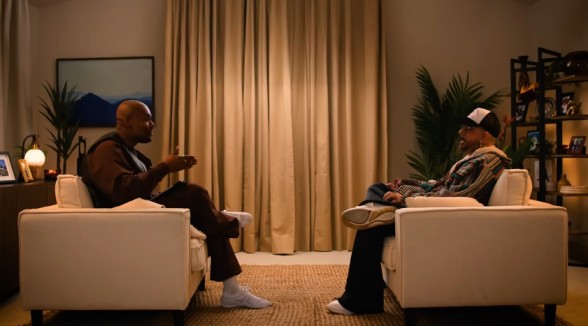
Editor’s Notes: In this We Need To Talk Podcast, Backstreet Boys legend AJ McLean joins Paul C Brunson to share the raw, unfiltered truth about the dark side of global fame, addiction, and rebuilding your life while the world is still watching. He opens up about living a double life at the height of his success, hitting rock bottom, and the powerful moment his daughter told him, “You don’t smell like my dad,” that changed everything. In this conversation, Alex reflects on sobriety, fatherhood, and the hard work of becoming a better man, partner, and friend—without the mask of AJ. If you’ve ever struggled with low self-worth, boundaries, or breaking unhealthy patterns, this episode will speak directly to you. (Jan 20, 2026)
TRANSCRIPT:
PAUL C. BRUNSON: Alexander James McLean.
AJ MCLEAN: Yes.
PAUL C. BRUNSON: We need to talk.
AJ MCLEAN: Let’s talk.
PAUL C. BRUNSON: All right. Thank you so much for being here.
AJ MCLEAN: Thank you for having me, man.
The Album That Changed Everything
PAUL C. BRUNSON: You just dropped a new album. “Better Man” was the track that stood out to me.
AJ MCLEAN: Awesome.
PAUL C. BRUNSON: And what was wild to me was listening to the album, listening to “Better Man,” wondering exactly the moments you were talking about, but then hitting the epilogue and you saying specifically, “I’m a better man,” it really resonated. And so your family, they know you as Alex.
AJ MCLEAN: Yeah.
PAUL C. BRUNSON: Feel like the world knows you as AJ.
AJ MCLEAN: True.
PAUL C. BRUNSON: How do you define the difference between the two?
AJ MCLEAN: You know, it’s still a work in progress, but when we finished up the last tour, the DNA tour, we finished it in May of 2023. My wife and I were already separated, so we’re living separately, so I kind of had a little bit more freedom to kind of go where I want and do what I need for myself, and I decided to take a little trip to Scottsdale, Arizona.
PAUL C. BRUNSON: Okay.
Finding the Root of Addiction
AJ MCLEAN: And I did an IOP. And for those that don’t know what that is at home, it’s an intensive outpatient program for mental health. You know, I was already going into two years sober at the time, so my sobriety was good. But I wanted to dig a little deeper and figure out what was at the root of my addiction.
Because a lot of people don’t realize that as an addict, the drugs and the drinking, that’s all symptomatic. It’s not at the core of the issue. It’s different for everybody. Whether it’s PTSD, trauma, abuse. For me, I suffer from a condition I call “piece of shitism.”
So, yeah, I’m going to TM “piece of shitism” where literally, you know, my entire life, I never felt good enough. I never felt worthy of success or love or respect or compassion or flattery or compliments, any of it.
PAUL C. BRUNSON: So would you say then that you had low self-esteem?
AJ MCLEAN: Very low self-esteem. And it shocked most people because they’re like, how can you have low self-esteem and do what you do? And I said, no, it’s when I’m on stage, that’s my safety bubble.
PAUL C. BRUNSON: Okay.
AJ MCLEAN: At least it was. That’s my safety bubble. I’m untouchable. I can do what I want, say what I want, be who I am, and nobody can judge me. Or they might be judging me quietly, but I’m not hearing it.
So when I went to Scottsdale, I did this program three hours a day, five days a week in a group setting under the premise of love and relationship addiction.
PAUL C. BRUNSON: Okay.
AJ MCLEAN: And really dove as deep as I possibly could, more than I’ve ever in my life, to really try to hone in on my relationship with myself. They call it the trauma track. So you’re doing a week of trauma stuff. And I didn’t think I really had any trauma, but it was suggested by my therapist. So I was like, all right, screw it. I’ll go give it a whirl. Whatever. I’m out here for me. I want to do whatever I can to better myself.
PAUL C. BRUNSON: Yes.
AJ MCLEAN: And that was a big turning point. It was very intense.
PAUL C. BRUNSON: And you were chronicling what happened.
Unpacking Childhood Trauma
AJ MCLEAN: Yeah. Going from birth to 17, which really for me was at the core of the developing of low self-esteem. And then if you want to come back again for trauma track two, it’s 17 to now. And I didn’t really feel that I needed to.
At the end of all of it, I learned a plethora of things. Number one, authenticity. Number two, that AJ is a character in a band. Alex is who I’ve always been. Government name. I was born in that name. That’s who I’ve been my whole life. But Alex kind of got stifled throughout my 40-year career, and AJ just dominated and took over.
And AJ was the one who got all the attention, you know, good, bad, and the ugly, and thrived off of that external validation, that constant need for attention, going above and beyond, telling tall tales, fabricating stories, lying, manipulating all the shit that addicts do.
And I was a late bloomer too. I didn’t pick up a drink till I was almost 26, and it just latched onto me. And again, it was a band-aid for what was really going on inside.
PAUL C. BRUNSON: Can I ask in that 0 to 17, which I agree, that’s when you are developing as a boy, becoming a man, adolescence. What did you learn about the source of the trauma?
AJ MCLEAN: So one of the things is my parents divorced when I was about 3.
And my mom worked, my grandfather worked. My grandmother was my rock. She was my biggest fan. She would pick me up from school, take me to my auditions, dance class, all those things. She was my world.
Not to say my dad was bad. He wasn’t abusive. He wasn’t any of those things. I don’t remember much because I was so young, but they kind of built this horde around me and started feeding my ego with just a bunch of BS, like saying that my dad left because he was jealous of me. My parents got married too young. They had me too young. All these things that, of course, why wouldn’t I believe my family? I’m going to believe this, right?
Cut to years later, there were birthday cards, Christmas cards that my mom was withholding.
PAUL C. BRUNSON: Wow.
AJ MCLEAN: From my dad, again, to protect me.
PAUL C. BRUNSON: Okay.
AJ MCLEAN: But again, it kind of had the adverse effect. You’re not really protecting me, you’re just protecting yourself.
Reconnecting with His Father
And since then, my father and I are in, we’ve been in communication. You know, I’m not ready to go play catch in the front yard, but we’re able to have an adult conversation. And I saw him maybe about two years ago. He came to one of our shows on the tour, and we sat and we talked.
And I basically was like, look, let’s just clear the air, okay? I said, I don’t care what happened between you and my mom. I just want to understand, is this true? Is this true? Is this true? And he’s going to tell me his perspective and obviously at the end of the day, I’m the one that’s going to make the final decision up here and in here.
PAUL C. BRUNSON: Yes.
AJ MCLEAN: But what I learned was my dad was in a band. Never knew that. He played bass, tried to sing, but was more of a musician. That’s how my parents met. My mom was a fan of the band.
PAUL C. BRUNSON: Wow.
AJ MCLEAN: So that’s where the music comes from for me as well as my grandmother. She was a jazz piano player and a jazz singer, but stage fright, she could never get up in front of a crowd, so she never pursued her dreams. But she would play at our house every day. I mean, incredible piano player.
PAUL C. BRUNSON: Wow.
AJ MCLEAN: So her and my dad were the two music people. But again, didn’t know my dad was anywhere near music. I knew him as a tech nerd. You know, I knew he worked with computers and he worked in the tech industry.
PAUL C. BRUNSON: Yes.
AJ MCLEAN: No idea he was involved with anything music-based. So that was an interesting thing to learn.
PAUL C. BRUNSON: Absolutely, absolutely. How do you, Alex, how do you connect though the story that you were told about your father and the absence with addiction? Because I would imagine that’s what—
Understanding Abandonment and Trust
AJ MCLEAN: So you’ve got the abandonment thing. You know, there’s different phases of trauma and different phases of this kind of unpacking of low self-esteem and abandonment is one of those things. Trust, you know, believing that you’re the problem when really it had nothing to do with me.
PAUL C. BRUNSON: Right.
AJ MCLEAN: But being told these things for so many years from people that I look up to, I respect, I trust, why wouldn’t it be true?
PAUL C. BRUNSON: Exactly.
AJ MCLEAN: So I made my own perception in my mind of what my dad was.
PAUL C. BRUNSON: How does it feel to now finally have a relationship with your father?
AJ MCLEAN: It’s good and bad. Not bad. It’s good and it’s whatever, I guess. Again, I don’t go out of my way to call him or, you know, if he texts me, I’ll maybe respond. I don’t like getting baited. And both my parents do it.
You know, a text message of like, “I’m back in the doctor’s office again. I have this going on. I really would love to talk. I don’t know how this is going to end.” And it’s like really, you’re really throwing it on thick. And my mom has done it too. My mom is guilty of it as well. And I’ve confronted her about it and I’ve sat her down and said, if that’s where your head is, don’t text me that.
You know, another one of the many things I learned in Scottsdale. Boundaries.
PAUL C. BRUNSON: Yes.
Learning About Boundaries
AJ MCLEAN: Didn’t have them. Didn’t even know what that word really meant as far as internally or as far as my little bubble. I didn’t know what boundaries were. So authenticity. Boundaries.
PAUL C. BRUNSON: I see. That was really, that became the birth of you.
AJ MCLEAN: I mean, 100%. You know, setting up boundaries, even with my bandmates. Something as simple as, hey, when we’re not on the road, it’s going to be challenging for you guys at first, but if we’re on the phone, if I’m catching up with y’all, if we hang out, I would prefer it if you call me Alex. I set that boundary. I set that bar.
PAUL C. BRUNSON: Interesting. So they’ve always called you AJ.
AJ MCLEAN: AJ or my nickname is Bone. That’s a whole other story. Yeah. Which actually came out of the UK. It was birthed in Camden Market. Are you serious? The flea market out in Camden? Yeah.
PAUL C. BRUNSON: Can you tell us the story?
The Origin of “Bone”
AJ MCLEAN: I bought—so we were in Camden, God, 30 years ago.
PAUL C. BRUNSON: Incredible place.
AJ MCLEAN: Oh.
PAUL C. BRUNSON: Amy Winehouse came out of Camden. Yeah.
AJ MCLEAN: So we were in Camden, and we’re at this little flea market thing, whatever. And I bought this bone necklace. Like some straight voodoo. And we only had one security guard back then. Big Dog. Randy. Randy Jones is his name, but we called him Big Dog.
And I was also paper thin. So between the bone necklace and me being skinny, he started calling me Bones with an S. And then that night, I was in love with this necklace. It was like a choker. I didn’t want to take it off. And I wore it in the shower that night. And it was cheaply made. Whatever. I bought it for like two pounds.
PAUL C. BRUNSON: Okay.
AJ MCLEAN: Shit broke in the shower. Pieces went down the drain. Necklace gone. But the name stuck. Bone and Bones. And then the boys started calling me Boner. And I’m like, okay, we’re not—
PAUL C. BRUNSON: No, we’re not going to go there.
AJ MCLEAN: I’m going to cut the S and the R off and just do Bone.
PAUL C. BRUNSON: Stick it with Bone.
AJ MCLEAN: And then Bone stuck. For years. Bone. Bonedaddy. Fans would call me Bone. And so that stuck.
Brené Brown and Living by “BRAVING”
But another thing that happened out of Scottsdale is, and I’m sure you know who Brené Brown is.
PAUL C. BRUNSON: Absolutely.
AJ MCLEAN: She—I’ve never met her, and I cannot wait to hopefully meet her.
PAUL C. BRUNSON: Okay.
AJ MCLEAN: I feel like she’s my second mom. I did a big deep dive with her. We watched some videos in our group sessions with her talking about different things. And one of her mantras is “BRAVING.”
PAUL C. BRUNSON: Yes.
AJ MCLEAN: And I have that tattooed on my arm now, which, for anyone that doesn’t know, it’s boundaries, reliability, accountability, vault, integrity, non-judgment, and gratitude.
PAUL C. BRUNSON: Yes.
AJ MCLEAN: That’s how I live my life today.
PAUL C. BRUNSON: Look at that.
AJ MCLEAN: Braving and being able to kind of brave the world daily, living life on life’s terms and accepting sometimes the unacceptable.
PAUL C. BRUNSON: Wow. Wow.
AJ MCLEAN: Yeah, she’s a badass.
PAUL C. BRUNSON: She is. She is. I tell you what, she was really the first person to teach me, should I say, about the power of vulnerability and how important that is and that connects with authenticity and that connects with living a fulfilled life. You know, and when I think about your father or the absence, should I say early, of your father, I’ve seen that there is a lot of people who suffer from addiction where there’s been a parent who was an absentee parent.
Growing Up Without Rebellion
AJ MCLEAN: I was never like a troubled kid. I was never a rebellious kid. I mean, I never got yelled at, never got scolded really.
PAUL C. BRUNSON: So your mother, at an early age, she knew that you were going, you were a performer?
AJ MCLEAN: She said when I was baptized is when she knew because there was like me and two other kids that were all being baptized and I was baptized Lutheran. And the two other kids, I think one of them pissed himself and they were screaming bloody murder. The other one just deadpan.
When I got baptized and the priest kind of held me up, didn’t really have a lot of teeth yet, but I smiled really big. And she could just tell in that moment, oh, he’s going to be good with people.
PAUL C. BRUNSON: Look at that.
AJ MCLEAN: Like, I just love the crowd.
Born to Perform
PAUL C. BRUNSON: So when did you first know that you were a performer?
AJ MCLEAN: Probably around four. I did some modeling when I was younger, some print work and whatever, but just anything to be on stage in front of people, I just loved it. And I started dancing when I was five. Everything from ballet, hip hop, jazz, tap, all of it. These little legs were in tights. Unbearable to watch, rest assured.
But no, I just loved being on stage. Like, it immediately felt normal and natural and safe.
PAUL C. BRUNSON: Can we talk about how you got into the Backstreet Boys?
AJ MCLEAN: Slow and steady, man. Slow and steady.
The Top-Selling Boy Band of All Time
PAUL C. BRUNSON: We have to go back. And also, do you ever think, because I didn’t realize, I thought, okay, maybe Backstreet Boys competed for top selling boy band, et cetera. But no, you are hands down, top selling boy band of all time. Of all time. And quite possibly will never be touched.
AJ MCLEAN: It’s looking that way.
PAUL C. BRUNSON: And you were the founding member?
AJ MCLEAN: Yes.
PAUL C. BRUNSON: Of that.
AJ MCLEAN: I was 14.
PAUL C. BRUNSON: Can you just sit in that for a second?
AJ MCLEAN: Yeah. I mean, yeah. I was 14 when this thing started. And there was a different iteration of the band before Kevin and Brian came in. Myself, Howie and Nick are the original three.
PAUL C. BRUNSON: Okay.
AJ MCLEAN: We had two previous members that didn’t work out. And we got Kevin, who was working at Disney at the time. He was Aladdin, Prince Eric. He was a Ninja Turtle, all the things. He was 21, working at Disney.
And then we needed a fifth. And he’s like, well, I got this cousin in Lexington. I know he can sing. I think he can dance. Literally, I think Brian was at the beginning of his senior year of high school.
PAUL C. BRUNSON: Okay.
AJ MCLEAN: And Kevin called him, pulled him out of class. He thought he was in trouble when he went to the principal’s office because he had never gone to the principal’s office. Like, straight A student athlete, honor roll, the whole thing.
And then it’s his cousin on the phone, and he’s like, oh, my God, did somebody die? What’s going on? He’s like, no. What’s up, cuz? I’m in this band now. I want to see if you’re interested in coming down and meeting the fellas and maybe see if you feel something.
PAUL C. BRUNSON: Yeah.
AJ MCLEAN: And we got together and three weeks later did our first show, Grad Night ’93 at SeaWorld.
PAUL C. BRUNSON: At SeaWorld.
AJ MCLEAN: At SeaWorld.
PAUL C. BRUNSON: SeaWorld was your first, Florida.
AJ MCLEAN: Florida.
The Lou Perlman Era
PAUL C. BRUNSON: Okay. So three weeks, you do your first show. So the group, though, was found. Was it Lou Perlman?
AJ MCLEAN: Lou was the entrepreneur that put this whole thing together. There was a thing that went around Orlando back in the day called the Blue Sheet, which was essentially the classifieds for entertainment.
PAUL C. BRUNSON: Okay.
AJ MCLEAN: And I was perusing through the Blue Sheet one day, and I saw this banner that said, “Local entrepreneur looking to put together a vocal harmony group. Allah. Boys to Men meets New Kids on the Block.”
And I asked my mom, and she’s like, if you want to audition, sure. A couple days later, I met Lou, auditioned at his house with my mom, signed on the spot.
PAUL C. BRUNSON: On the spot.
AJ MCLEAN: On the spot. And then that was the beginning of now, 33 years for me.
PAUL C. BRUNSON: So just on the business side, though, I mean, you are. So you’re 15.
AJ MCLEAN: I was 14.
PAUL C. BRUNSON: You’re 14.
AJ MCLEAN: 14.
PAUL C. BRUNSON: So you’re 14. Your mother hasn’t been in the business, it’s just you and your mom. Do you read what you’re signing? Is there any…
AJ MCLEAN: So then there was no. It was just more like a handshake then.
PAUL C. BRUNSON: Okay.
AJ MCLEAN: It wasn’t until the group, the final group was formed that then it was, you know, signing a contract, making it official. Then we signed a record deal and all these things, but it took us three years to get a record deal.
But we didn’t. Our parents and us as all young kids. Kevin was the oldest at the time. He was 21. Nick was 12. So we were just excited to be doing something like this. No, we didn’t read the fine print.
We didn’t realize that Lou was 1/6 of the band, plus 25% commission as manager, plus getting a kickback under the table from promoters. So he was triple dipping.
PAUL C. BRUNSON: Wow.
AJ MCLEAN: As well as hiding the biggest Ponzi pyramid scheme in record history that we didn’t find out about till after we parted ways. But yeah, it was insane. And, you know, we were the guinea pigs, really, because then he started NSync and then O Town and this and that.
So they all kind of saw our track record and saw kind of what not to do by doing that. We were the guinea pigs. We were the ones that had to go through hell and back.
The NSync Rivalry
PAUL C. BRUNSON: So I don’t know if this was rumor, but I’ve always wanted to know the answer to this is that when Lou leaves. Well, yeah, he leaves, you guys kind of kick…
AJ MCLEAN: We part ways.
PAUL C. BRUNSON: He then becomes the founding or founder of NSync. Does he found NSync specifically to compete with you all, with Backstreet Boys?
AJ MCLEAN: I don’t know if that’s really at the epicenter of why NSync and him became something. But we were told from, because we had the same management, we had the same label, same producer. It was Max Martin, Jive Records.
We were told that they wanted to manage NSync so that they could basically manipulate the situation where, okay, if we have control of NSync, we can keep them out of your way. But in turn, anything we turn down, they got.
PAUL C. BRUNSON: They got it.
AJ MCLEAN: And essentially, because we turned down a performance on Disney, NSync took it. And that was the kickoff of their career. JC and Justin had already come from the Mickey Mouse Club, so they already had a relationship with Disney.
PAUL C. BRUNSON: Right.
AJ MCLEAN: And they were on the Mouse Club with Christina Aguilera and Britney Spears. So they all came out of that world. But had we done that show, I don’t know if things would have happened for NSync the way they did. Maybe, eventually, but that was the catalyst for them.
And then it just was like this constant icky feeling for us. Like, you’re really where you eat kind of thing. Like, this is our own backyard now. Like, we’re all from Orlando. Same this, same that. And it became really frustrating. And that’s when we parted ways.
PAUL C. BRUNSON: Okay. With everybody, with everyone. Now, Lou Perlman was later sentenced to 27 years in prison for money laundering and fraud. And then he dies in 2016. What do you think his legacy is?
Making Peace with the Past
AJ MCLEAN: I mean, look, at the end of the day, we will always be grateful because without Lou, we would never be anything. Nobody would have known who we were. We wouldn’t have even met. Like, he is truly at the epicenter of our creation.
But everything we’ve done since we parted ways from him has been all us continuing to grind. Changing management companies multiple times, literally going through it.
PAUL C. BRUNSON: Yes.
AJ MCLEAN: Both in the industry and in our personal lives. Deaths in the family, rehabs, you name it. Open heart surgery Brian had when he’s 23. Like, we’ve been through…
PAUL C. BRUNSON: Yes.
AJ MCLEAN: And have overcome every single adversity every time. Different lengths of time to get through it, but we’ve gotten through it.
But we did a documentary back in, God, I feel like it’s five, six years ago now. “Show Them What You’re Made Of.” I don’t know when that came out now. I can’t remember. But one of the things in that doc that we were so close to coming into fruition was the production company reached out to the prison that Lou was at. And at first, they got the green light for the five of us to visit him.
PAUL C. BRUNSON: Oh, my goodness.
AJ MCLEAN: But we wanted to go simply to ask one word, one question. Why? Some of us had already made peace with the whole thing and kind of, you know, wrote it off. Closure. I was one of them.
PAUL C. BRUNSON: Okay.
AJ MCLEAN: You know, again, beyond grateful for the opportunity that was given. Made my peace. As soon as we parted ways, I was like, okay, you’re a piece of s*, and I want nothing to do with you.
PAUL C. BRUNSON: And that’s in the past.
AJ MCLEAN: That’s fine. Yeah. But some of the guys, even to, I would say some of them to this day, still, somewhere in here, have still a little bit of a chip. And that’s okay. That’s their choice, you know, to have that.
PAUL C. BRUNSON: It was nasty, man. And I think fully understanding what happened gives us even more appreciation for where you are right today.
Fighting for Their Name
AJ MCLEAN: Yeah. Once everything transpired, we were an open book about it. Like, we were, you know, we were in, I think we were in Sweden about to go back in the studio, and Brian was the one that basically really started doing some digging and finding out, like, this isn’t adding up.
We’re out here busting our a, leaving our families, you know, touring, traveling, and he’s making the same s* we’re making, and he’s not lifting a finger. Plus this, this, this and this. So he was the one that was like, okay, I’m putting together a lawsuit. You guys can hop on board with me or not.
PAUL C. BRUNSON: Wow. So Brian.
AJ MCLEAN: Brian was the catalyst for that. And the minute we did it, Lou’s instant reaction was to shut down shop. All of our gear, he locked it up in storage. Like, everything was shut down for a minute. He still owned the name, so he was threatening to keep the name.
So we would put basically money aside in escrow, which was his 1/6. And essentially we just said, you know what? Let’s just cut him the check. And for all intents and purposes, I won’t disclose the amount, but we cut him the check. Done.
PAUL C. BRUNSON: That was it.
AJ MCLEAN: And that was it. We basically paid for our name and got our gear and got our stuff, and we were done. And, you know, thank God, because I don’t know what would have happened with the name. We would have had to come up with some other something boys. I don’t know.
PAUL C. BRUNSON: The Bone Boys.
AJ MCLEAN: Yeah. Yeah.
The Spice Girls Connection
PAUL C. BRUNSON: You know, so also the Spice Girls. I didn’t realize how instrumental the Spice Girls were to the Backstreet Boys.
AJ MCLEAN: Them and Hanson both.
PAUL C. BRUNSON: Okay. How so?
The Birth of a Global Phenomenon
AJ MCLEAN: So we released our first single, “We Got It Going On.” I want to say it was ’97 or—no, no, God knows, ’95.
PAUL C. BRUNSON: ’95.
AJ MCLEAN: Yeah. I just turned 48 on Friday, so I’m like, what’s happening? Yeah. So we put out “We Got It Going On.” It peaked here on the dance charts at, like, 69, but it took off in Europe.
PAUL C. BRUNSON: Okay.
AJ MCLEAN: And none of us, except Kevin, had ever traveled abroad. So our first time, all of us together, was making the first album, which we’ve nicknamed the Red Album. It’s our first time meeting Dennis Pop, Max Martin going to Sweden. And so we put out “We Got It Going On.” Peaks here, takes off over there.
We used to call the U.S. “no fanland,” because we would travel over there, and it was insanity. And we come back here, and you can hear a pin drop at the Orlando Airport. And we were like, okay, so we’re going to go where we’re wanted.
So we dedicated, like, a good two years touring, just Europe—Germany, Austria, Switzerland, UK. That’s where everything was. And then in Europe, Paris was part of that.
PAUL C. BRUNSON: Okay?
AJ MCLEAN: Paris bled over to Montreal. Montreal trickled down into upstate New York in Buffalo. And one of the local radio stations there started playing our music. But it wasn’t until Spice Girls and Hanson really broke in the US that opened the door for us to now come back and be accepted.
PAUL C. BRUNSON: Okay?
Redefining the Boy Band Label
AJ MCLEAN: Because, you know, MTV wouldn’t play our video. You know, nobody knew what a boy band was. We were a vocal harmony group. That’s what we’ll go down in history is saying. That’s what we are.
The boy band title came when we went over in Europe because there was other groups like us that were deemed boy bands. So we didn’t know what that was. And they threw the label on us. And we’re like, no. Because a boy band, essentially the definition of boy band is whether it’s a three piece, four piece, or five piece, pretty faces sing and dance. Most likely only two of the members can really sing. The rest are just pretty faces.
PAUL C. BRUNSON: Okay?
AJ MCLEAN: That’s a boy band. All five of us sing. We all can harmonize. We can do acapella. Drop of a hat. None of these other groups could do that. None of them. And it kind of drove a big wrench in the world of boy bands overseas. And then you got Spice Girls coming out with “Wannabe” and Hanson with “MMMBop.”
PAUL C. BRUNSON: I see. I see.
AJ MCLEAN: Change the game, change the face of radio. MTV. Once things took off for us here, MTV was getting inundated with calls daily. “Play the Backstreet Boys. Play the Backstreet Boys. Play Backstreet Boys.”
So basically, along with us, MTV had to create a show that you could vote for your favorite videos and then eventually you could retire your favorite. Oh, my God.
PAUL C. BRUNSON: So what is it? TRL. So TRL was really created because of you.
AJ MCLEAN: Really, because of us.
PAUL C. BRUNSON: Oh, my God.
AJ MCLEAN: Yeah.
PAUL C. BRUNSON: Look at that. Look at that. Because otherwise you would just stay at the top.
AJ MCLEAN: Or, you know, like they—like I said, they were getting inundated with calls daily because there was the top 20 countdown back then and all those things, but they just couldn’t keep up with the calls. “Play the Backstreet Boys. Play the Backstreet Boys. Play Spice Girls. Play Hanson. Play ‘N Sync,” whatever it was. So they had to create this show specifically for the fans. Wow.
The Most Surreal Moments
PAUL C. BRUNSON: Incredible. Incredible. You know, I remember because I was in New York at the time, but I felt like there was a moment where Backstreet Boys, you were it worldwide. When you think about the most surreal, incredible top of the top moment. What was that for you?
AJ MCLEAN: There’s two moments that stick out in particular. One, doing TRL, and they never closed or covered the windows of the studio, ever. And that specific day, Millennium had just come out. They covered all the windows, and they had a surprise for us, and we didn’t know what that was.
And at the end of the interview with Carson Daly, they opened the blinds and they had shut down Times Square. They had to for about six blocks. A sea of people. And we were just blown away.
And I’ll never forget, the same day, we walked—we went to a movie premiere for Episode One, Star Wars: Episode One.
PAUL C. BRUNSON: Okay?
AJ MCLEAN: We leave TRL. We walk directly next door to this movie theater for the premiere, and we get in our seats, and the lights are starting to dim, and there’s five seats open next to me. And this gentleman comes in with his family and sits down right next to me. And he put his arm on the thing, and I had my arm on it, and it kind of nudged. And I’m like—he’s like, “Pardon me.” I’m like, “No problem.” It was George Lucas.
PAUL C. BRUNSON: Wow.
AJ MCLEAN: And I’m a huge Star Wars nerd. Indiana Jones, you name it. I love George Lucas. So that was the best day ever. Shut down Times Square sitting next to George Lucas watching Star Wars. That was one.
And then when we did this around the world in 100 hours on the Black and Blue tour, okay, we rented a plane and we traveled around the world in 100 hours. We started in Stockholm, Sweden. We had just won an MTV award, hopped on the plane, flew from Stockholm to Japan. Okay, Japan to Sydney, Sydney to Perth to refuel. Perth to Cape Town. Goodness, Cape Town to Rio. Rio back to New York.
When we got to Rio, we were only supposed to be on the ground for about six hours. Do a bunch of interviews, in and out. And the last thing we had was a photo shoot on the rooftop of this hotel. So we get to the rooftop, do the photos. We could hear something off the roof, but we couldn’t tell what it was.
PAUL C. BRUNSON: Okay?
AJ MCLEAN: And we got to the edge and we look, over 48,000 people showed up. They’re on top of people’s cars, they’re hanging out of trees. And we’re just like, “Holy shit, we got to do something.” We can’t just wave, like, 48,000 people. Deuces.
So we—luckily we had our sound guy with us, and there was a sound system hooked up to the top of the venue. Initially, just for us to say hi, and we did an impromptu show. We had to do something. But those two moments, being able to show that to my daughters.
PAUL C. BRUNSON: Yes.
AJ MCLEAN: Trips them out.
PAUL C. BRUNSON: Yeah.
AJ MCLEAN: They’re just like, “That’s my dad.” Like, what the hell?
PAUL C. BRUNSON: Yes.
The Relaunch and Staying Power
AJ MCLEAN: You know? And we went through highs and lows throughout our career, but we could still sell out arenas, we could still sell out tours. We’ve done multiple tours, traveled the world, around and around, back again now. Pretty much finally been everywhere.
Right after—I want to say it was after Kevin left, right when he came back.
PAUL C. BRUNSON: Okay.
AJ MCLEAN: He left in ’06, came back in 2013. We were, you know, kind of reconnecting and whatever, and we got this opportunity to be in a film called “This Is the End.”
PAUL C. BRUNSON: Yes.
AJ MCLEAN: And to me, that was the relaunch because we were instant cool factor. Being in this movie that was just absolutely insane. And Seth, good friend, big fan. Jay Baruchel, also a big fan, you know, Canadian.
PAUL C. BRUNSON: Yes.
AJ MCLEAN: Guys, Canada was huge for us. Again, before the US to the point where Jay knew the choreography before we even taught him on set. I was like, “That’s cool. That’s cool.”
But that kind of kickstarted things again. Then we have the documentary. Then we get our first residency in Vegas.
PAUL C. BRUNSON: Right. But, you know, it’s interesting to hear your perspective, to say it kickstarted it again, because from my perspective, so being a fan, right at a distance, it’s like there was no real ebb and flow. There was no down.
AJ MCLEAN: Well, we never stopped. People thought—the press and the media and even some fans—when we came back with “Never Gone,” which after “Black and Blue,” we took about two years off in that two years. Also got in the studio, made “Never Gone.” They thought we broke up and then decided to get back together and make this album.
So a lot of press were like, “So this is the reunion?” And it’s like, no, dude, we never stopped. And even after Kevin left, we did three albums, three tours without Kevin. Then Kevin comes back. We do “In a World Like This.” And then “DNA” and that same thing kept coming back around. “Oh, this is the reunion tour.” It’s like, no, we’ve never stopped. Right from day one.
But the perception of press and some fans, because we would take these long breaks, they just assumed, “Oh, they broke up. Now they got back together.” It’s like, no, we’ve never broken up ever.
The Power of “No”
PAUL C. BRUNSON: How do you—and I think you’re at a great place to answer this one now is—when you reflect back there were, I would imagine for the vast majority of your adult life, people have only said yes to you.
AJ MCLEAN: Yeah, that’s safe to say.
PAUL C. BRUNSON: Yeah. Psychologically, truly, how does that impact you?
AJ MCLEAN: I mean, I didn’t realize how it impacted me until I got into drugs and alcohol and, you know, took that path where there was nothing I couldn’t do. Or any of us for that matter. Everybody, we were surrounded by a lot of yes men.
And it wasn’t, I think, until we really decided to kind of take hold of our business and realized we are in control of our own destiny. To finally know that “no” is a complete sentence. Not a lot of people understand that power. “No” is a complete sentence.
So we didn’t realize that at first. You know, we would just nod along. Whatever you tell us to do, we’ll go, we’ll do it. And to the point where “Black and Blue” was literally called “Black and Blue” because we felt beat down to shit. We came up with that album title during the photo shoot for that album. We felt beat up by the label, we felt beat up by the press. We felt beat up by just everything. So we called the album “Black and Blue.”
And that was probably the darkest time of our career as far as just everything. Even the aesthetics of wardrobe and the live performance. It was just dark. And that was where I was probably at my worst was that phase before I went to rehab the first time. It was just a dark time.
But now today we are hands on with our business. Incredible management company, great team surrounding us. We’ve had to be forced to become businessmen. Some of us excel in that world better than others. Okay, I’m not one of them. I’m more of a creative person. I want to know what my business is now. But when it’s a financial conversation or it’s this, that and the other, that’s not a creative conversation, I might opt out.
I know Howie and Kevin and Brian, they got that on lock. They’ll look out for everybody. Nick and I sometimes will just kind of back off. But it’s nice to know that now each of us really, truly has a voice to speak up and say, “I don’t want to do that,” or “That’s a bad idea” and we can communicate it and we can figure it out together as a group. Yes, but I would prefer to stick to the creative stuff.
PAUL C. BRUNSON: I mean, I could see it. I mean, that’s—I think that’s in your bones.
Creative Vision at the Sphere
AJ MCLEAN: What’s funny is—cut to now. Our show at Sphere in Las Vegas, we knew the set list was going to be what it was, and we knew we were going to start with “Larger Than Life.” And I was driving around LA one day and I put on just funk R&B Essentials playlist.
PAUL C. BRUNSON: Right.
AJ MCLEAN: And “Can You Feel It” came on. And I was like, some of the chord progressions sound like “Larger Than Life.” So I texted Rich and Tone. I was like, “What do you think about merging these two together?”
PAUL C. BRUNSON: Oh, wow. Wow.
AJ MCLEAN: For the intro to the show.
PAUL C. BRUNSON: Yes.
AJ MCLEAN: And it worked out perfectly. Missed the third time that I’ve had an idea like this for our show that has worked. I did it on the “Never Gone” tour with a song from “Kill Bill.”
PAUL C. BRUNSON: Okay.
AJ MCLEAN: Called Battle for Honor. And then I did it again at the Sphere when we do our song “Get Down.” I wanted “Get Down on It.” Yeah, down on it. For years I’ve wanted to put that in that song somehow. And it just happened to work perfectly on this particular show.
PAUL C. BRUNSON: That’s beautiful. I’ve seen photos because I haven’t seen the show in Vegas.
AJ MCLEAN: You got to come, dude.
PAUL C. BRUNSON: But, man, us just talking about “Can You Feel” is reminiscent of the video.
AJ MCLEAN: Yeah. I mean, this was the most incredible, like, or is—I mean, we’re still going—the most incredible experience of when we did the Millennium Tour in ’99. This was, we thought it was innovative. It was before Y2K and we’re going into 2000. It’s like the future. And we came out on the surfboards and Star Wars theme and all this stuff.
PAUL C. BRUNSON: Yeah, this will help you.
AJ MCLEAN: Oh, God. Oh, dear God. Okay, that’s—I was like, oh. I’m like, oh, God. What are you going to pull out? I was like, this is so tiny.
PAUL C. BRUNSON: Yeah, isn’t it? Isn’t it? It’s so small.
AJ MCLEAN: Tiny vinyl.
PAUL C. BRUNSON: Have you ever seen this before?
AJ MCLEAN: A tiny vinyl?
PAUL C. BRUNSON: You’ve never seen this before?
AJ MCLEAN: Oh, look at that. That’s—it’s so little.
PAUL C. BRUNSON: Yeah.
AJ MCLEAN: Tiny vinyl.
PAUL C. BRUNSON: You could have this, too.
AJ MCLEAN: That’s f*ing cool. Yeah, we—so, long story short, my wife, seven years ago, we were having dinner, and she goes, “You know, no artist of your caliber has ever done like a remake, identical remake of their biggest tour. No one ever.” And she started throwing out examples. She’s like, “The Velvet Rope Tour. I missed that when I was a kid. I would love it if Janet did that tour again. I would go.” One of Madonna’s first tours that she did, because my wife’s a big Madonna fan, but her parents were, like, a little too sexy, so she missed that. And she’s like, “Millennium was y’all’s biggest, biggest tour, biggest show.” And I was like, “Damn, that’s a really good idea.”
PAUL C. BRUNSON: Yeah.
AJ MCLEAN: And I brought it up to the boys for seven years.
PAUL C. BRUNSON: Wow.
AJ MCLEAN: And it got shut down every time. And then finally broke through, and we had this huge meeting with all the powers that be—Live Nation, William Morris publicist, the boys management. And they go, “Okay, AJ, pitch it.” And I pitched it. Everybody loved it. The wheels were moving. And then three months of dead silence. And I was like, “Well, what the hell’s going on? Are we doing this? Are we not doing this?” And I reached out to our manager. I’m like, “Ron, are we doing this?” He’s like, “Hold on. We got something in the works. I just don’t want to say what it is yet until it’s 100%.”
PAUL C. BRUNSON: Okay.
AJ MCLEAN: And then they presented us with the option to do it at Sphere, and we were just kind of like, none of us had ever been there, so we didn’t know what that venue was. We went and saw the Eagles. I walked out with a kink in my neck because I’m like, “What is all of this?” And of course, then the wheels start turning, and we got with the most incredible creative team, Baz Halpin and Richmond. And Tone. Baz did the Eagle show. He did U2. And there’s no better venue for a—like, this is the most futuristic venue in the world.
PAUL C. BRUNSON: Yeah. It looks incredible.
AJ MCLEAN: So for this show and this thing, and it’s a little easier on our bodies now to not have to tour and just everybody can come to us, it’s ruining concerts for everybody.
PAUL C. BRUNSON: What? The—
AJ MCLEAN: The—this particular venue.
PAUL C. BRUNSON: The venue. Like, why so?
AJ MCLEAN: Because you’ll never get this experience anywhere else. And it’s so innovative and so immersive, there’s no way to duplicate it.
PAUL C. BRUNSON: Yeah.
AJ MCLEAN: I don’t care if it’s Taylor Swift, the Eras Tour or it’s the Rolling Stones stadium shows, whatever. And these are all incredible shows. You’ll never see anything like this anywhere in the world.
Rock Bottom and Redemption
PAUL C. BRUNSON: Yeah, it’s a new year, and for many of us, it’s a moment to recommit to taking care of ourselves. For me, staying healthy and consistent is less about perfection and more about showing up, even on the busy days. You guys know I always have a Huel on me, but I’ve just started using their Light and Lean Starter Kit. See, it’s a bundle from our sponsors that includes five Huel Light Ready to Drinks and the Black Edition vanilla powder and a shaker. So whatever my day looks like, I’ve got an option that works.
I grab my Huel Light Ready to Drink. It’s light but complete meal, 25 grams of protein, 26 essential vitamins and minerals, no artificial sweeteners, and it actually tastes good. Then when I need a full meal, the Black Edition powder in my kitchen keeps me from falling off track and easily get my protein and nutrients in at home. Huel’s Light and Lean Starter Kit is available online now and you can use our code WNTT30 for 30% off at my huel.com WNTT30.
AJ MCLEAN: Hello?
PAUL C. BRUNSON: Hello? Hey, Taz, how are you? I’m headed to Jamaica. Oxtails are calling. I’m headed to vacate. What’s up? No, no, no, no.
AJ MCLEAN: Paul, you can’t get on that plane.
PAUL C. BRUNSON: What?
AJ MCLEAN: The people of LA need to talk. I’ll be right there.
PAUL C. BRUNSON: I made it.
AJ MCLEAN: Paul, come on. I know we’re in LA, but the sun, sunglasses, they’ve got to go. Come on. We have work today.
PAUL C. BRUNSON: Gosh, look, We Need to Talk is taking a trip to LA. Same set, new voices and conversations you’ve never heard before. So subscribe if you haven’t already and drop a comment below. Who do we need to talk to? We just might make it happen.
Gosh, I can see it already. When you mentioned Black and Blue, right? This is darkest period. Do you recall rock bottom moment?
AJ MCLEAN: I do, but it wasn’t my true rock bottom, but it was a rock bottom moment then. Okay, my rock bottom was years later, but rock bottom moment for me then. I swore to myself that I would never do drugs before a show or drink during or before a show. And I held true for a while. And it wasn’t until the end before we had to kind of take the tour down for a minute and I went to rehab and all those things that I was drinking on stage.
We had a little skit before “The Call” where the phone would ring, like the intro to the song. And I had a prop phone and I would be like, looking at the fans. “Is it, is that you calling me? Is that you calling me?” And then I would turn around and look at my band and I’d be like, “Is it you? Is it you?” And I would specifically walk over to our percussion player and he had a red solo cup. And everybody out in the audience is going to assume it’s water, right? Just big old quad shot of Jack Daniels. And I would just shoot it.
And we had two songs left in the show. So towards the end of the encore, the alcohol started kicking in between the heat, the dancing and everything. And I started the buzz. So I was ready to go. The minute I walked off stage, like, straight to the bar, I was good to go. But that was—that was a low for me to, like, know that I’m now drinking on stage.
PAUL C. BRUNSON: Right. You know, and you’ve crossed a boundary that you set for yourself. Yeah, you know, and that. But then you said, then years later, it was rock rock.
AJ MCLEAN: No rock. Rock bottom for me was, which was initially the turning point to really get my s together. I had a show in South Beach, and at that time, I had taken pretty much all my dealers out of my phone. And I did the show in Miami, went out, party on a boat, was drinking, met some random people. They had drugs, did a s ton of blow. Didn’t realize around that time was when fentanyl was slowly creeping in. So I dodged a big bullet.
But, you know, in my mind, as an addict thinks, you know, if I drink some coffee, I’ll mask the smell. If I do this or do that, nobody will be aware. And at the time, my wife knew she had discovered that I had an allergy to vodka. And that was at the time that was the drink that I was drinking. I didn’t realize I was allergic to vodka, but my face would get splotchy and break out. So if I didn’t FaceTime her, she knew something was up. Or if I FaceTimed her and she saw my face, she would wait for me to be honest. And of course, I wasn’t until two weeks later. And then, “Oh, yeah, by the way, I was drunk that night.” You know, she’s like, “Of course I knew.”
But I flew home. Smelled like a bar, hadn’t slept in, like, two days. Went to give my youngest a hug, and she wouldn’t hug me. And I was like, “What’s going on, babe?” And she’s like, “You don’t smell like my dad.” And I’ve never had a bigger slap, gut check, God shot in my life. And I just felt like the most worthless piece of s* I’ve ever felt. And the very next day, I went to a meeting, and here I am, four and a half years.
PAUL C. BRUNSON: So that single moment changed your life.
AJ MCLEAN: I will go down in history saying my daughter saved my life. And I don’t 100% think she understands it. I mean, she’s extremely intelligent. She’s eight, but she’s my little genius.
PAUL C. BRUNSON: Yes.
AJ MCLEAN: Like eight going on 35 and like talking about non-Newtonian fluids and stuff with me. I’m like, “What? What? What?”
PAUL C. BRUNSON: Yeah.
AJ MCLEAN: But I share stories from my past with my daughters every year that they’re getting older and I make them more and more graphic intentionally. Not to scare the crap out of them, but I want them to know this was daddy. This is where I hope you both never ever go down this path.
PAUL C. BRUNSON: Yes.
AJ MCLEAN: They’ve never seen me drunk and they never have to. And that’s a great thing.
PAUL C. BRUNSON: Look at that.
AJ MCLEAN: You know, and love. They both talk about how much, “Oh, we’re never going to drink that. We hate alcohol.” I’m like, “Well, you don’t know unless you try it. So you can’t say you hate it.”
PAUL C. BRUNSON: Yes.
AJ MCLEAN: I said, “As your father, I pray that you both have an allergy to it or you may just never even want to try it.”
Fatherhood and Legacy
PAUL C. BRUNSON: What’s also beautiful here is that your daughters really love you.
AJ MCLEAN: Oh, yeah. You know, they’re my little ride or dies, man. They’re my little homies.
PAUL C. BRUNSON: Yeah. You know what’s interesting is I sometimes get chills when guests say certain things. That moment where you said your daughter saved your life, I got chills. And then I automatically thought of the prologue on your new album and one of your daughters basically saying, you know, “I want to be my father. Like, I want to be able to dance like him. I want to be able to sing like him.”
AJ MCLEAN: Well, they can dance circles around me.
PAUL C. BRUNSON: Okay.
AJ MCLEAN: Jesus.
PAUL C. BRUNSON: They’re out here in bed.
AJ MCLEAN: They are. Oh, my God. I mean, they do competitive dance.
PAUL C. BRUNSON: Okay.
AJ MCLEAN: And like the season just started this past weekend. And, you know, it’s the level of intensity that these dance studios do with these kids now compared to when I was in dance.
PAUL C. BRUNSON: Yeah.
AJ MCLEAN: It’s night and—not even night and day. It’s like otherworldly. There’s an hour class of just core. Like they might as well just make you stand and just punch the crap out of your stomach. My eight-year-old’s got an eight-pack. Like, it’s not okay. I got to really work hard to keep this thing, you know, down here.
PAUL C. BRUNSON: Good.
AJ MCLEAN: But like, the level of dedication and like responsibility and commitment that they have put towards their passion.
PAUL C. BRUNSON: Yes.
The Power of Letting Kids Have Fun
AJ MCLEAN: I admire so much in both my girls because they really do take it seriously. They have fun. You know, you see a lot of these dance moms that if their kid doesn’t place, like, I want to haul off and smack somebody sometimes, like they’re grilling their child. Like, “Well, you did this wrong and you didn’t punch your leg.” And it’s like, bro, it ain’t that f*ing important.
PAUL C. BRUNSON: Exactly. Like, it’s not.
AJ MCLEAN: Let them have fun. Nine times out of ten, none of these kids, when they graduate, are going to be a professional dancer. Every season at the end of the season, the seniors at my daughter’s dance studio graduate, and they do this incredible dance. It’s always beautiful, super emotional. And then they say where they’re going next in life. Not a single one has ever said dance. Doctor, teacher, lawyer, philanthropist, whatever, nothing. Dance.
PAUL C. BRUNSON: Yes.
AJ MCLEAN: So it’s like, unless you’re going to be a dancer on tour with somebody, or you’re going to come back and be a teacher, I’ll never tell my kids you sucked.
Alexander, Not Just AJ
PAUL C. BRUNSON: You do that. So I want to get into family. I have one more Backstreet Boys question, but I also want to give you an observation that I just noticed is that I think when people hear your name, Alexander James McLean or A.J. McLean, but you’re Alexander. You’re Alex to me.
AJ MCLEAN: Thank you.
PAUL C. BRUNSON: Okay. I think they’ll immediately think of Backstreet Boys. Immediately. Okay. We spent a lot of time talking about the Backstreet Boys, and I watched your body language, but you became most lit, most animated, talking about your girls.
AJ MCLEAN: Oh, yeah.
PAUL C. BRUNSON: In their competitive dance class. And I think what’s so interesting is how the love of a child can literally change you.
How Fatherhood Changes Everything
AJ MCLEAN: I’ve heard that. You know, before my wife and I had our daughters, I heard from other dads. “There’s nothing like it. There’s nothing. Whether you have boys or girls, doesn’t matter. Just happy, healthy child.” It changes everything. Right. I heard this, heard this, heard this. And it really wasn’t until I became a father that I really, truly understood. Like, oh, my God. Like, you’re right. This changes everything.
Yes, it changes everything. What I do now, yes, I do for me, but I also do for them. I do to set a good example. I do to show them hard work. And also, one of my biggest fears growing up was failure. I never wanted to fail at anything, and now I understand failure is part of it. You’re not going to do anything perfect all the time. Perfectly imperfect. That’s what I am.
PAUL C. BRUNSON: Right.
AJ MCLEAN: Failure is part of life. We learn and grow from falling down. We learn to pick ourselves back up. We learn to gravitate towards people that we trust. That will help lift us back up.
PAUL C. BRUNSON: Right.
The Moment His Daughters Said They Were Proud
AJ MCLEAN: And, you know, being able to have these conversations with my daughters, if they’re having issues at school, they’ve both gotten bullied. I’ve had to have those conversations with them, a lot of it because of me, you know, “Oh, well, your dad’s a celebrity, so you probably get this and that and da, da, da.” And it’s like, from time to time, they’ll both be like, “Why do you have this job? Like, can you not?” And I’m like, “No, this is what daddy does.”
But then all of a sudden, it’ll flip. Where they’re excited that daddy has this job. And it wasn’t until recently when we did the first leg of the Spear show in Las Vegas, the last show was August 28th, I think it was. My daughters came with some of their friends, and right there and then is already like, oh, that’s cool. You’re bringing your friends to come see your dad at his job. That already doesn’t happen a lot with parents, for their kids to want to bring their friends to their dad or mom’s job. So that was cool.
But after the show and I had to leave my dressing room after, they both said this to me because I didn’t want them to see me ball like a little baby. But they both said involuntarily, not from mommy, how proud they were of me. And they’ve never said that to me since they were born. Whether they thought it, they’ve never verbally said it. And they both said it. And in that moment, I was like, I could take that with me for the rest of my days. And now when I’m up there and they happen to come see the show again.
PAUL C. BRUNSON: Yes.
AJ MCLEAN: I just feel, I’m like, yes, I feel good. I feel proud.
PAUL C. BRUNSON: And how would you describe how them saying that they’re proud of you? How would you describe that makes you feel?
AJ MCLEAN: It makes me feel joy. It makes me feel acceptance. It makes me feel inspired. It makes me feel like my daughters actually look up to me. And it’s a big responsibility, but it’s one that I embrace, you know, as a new parent. We’re terrified. Like, I don’t want to f* this up.
PAUL C. BRUNSON: Yeah.
AJ MCLEAN: But that’s part of it. You’re going to mess up. There’s no, you’re moms and dads to me are one of the hardest jobs in the world.
PAUL C. BRUNSON: Absolutely.
AJ MCLEAN: But the most rewarding.
Breaking the Cycle
PAUL C. BRUNSON: It’s interesting, first couple of years of trying to figure this thing out. But then there’s a moment where you hit your stride and you realize that, you know, you are responsible for what is happening. And, you know, I always applaud parents who are conscious about their parenting, but I also give extra grace to parents who didn’t have that as an example. And it seems like you’re breaking a circle.
AJ MCLEAN: Oh, for sure. I’ve definitely broken the cycle. Even my wife, you know, her parents split up and it was a lot of drama and she’s one of four siblings and she’s, even when we kind of, when we separated and we kind of were going through a bit of a rough patch, she’s like, “Even though I don’t like you right now, I can’t take away from the fact that you’re an incredible father.”
When my wife and I met, we both had a lot of baggage. And my best friend could not have put it any better way. He’s like, “Listen, you guys were kind of destined to kind of crash and burn at some point.” He’s like, “Both of you were hand tied, ankle tied, ball gagged, thrown into the ocean, and said, be in a relationship. It’s impossible.”
But even my wife and I talking last night, we still live separately, but we’re working towards a goal to be together. Because if I were her, I would have left my ass a long time ago. And she is stuck with me through hell and back. But because of those insecurities I talked about earlier, because that low self esteem, I’m sitting there living in this piece of, as I’m going, “Why are you with me? Really?”
PAUL C. BRUNSON: Exactly.
AJ MCLEAN: Like, you must want something from me. Is it money? Is it what? What is it you want something? And I would continue to beat myself up and pull myself away. She’s never, that’s not who she is. You know, she’s an extremely strong woman, has literally done incredible work on herself and I’ve done incredible work on myself. And we’re still doing it.
What Makes a Relationship Work
PAUL C. BRUNSON: Right. But what are you learning in that work? Because there are a lot of people watching, listening, who are in relationships where they’re trying to reconcile the relationship where you’re doing right.
AJ MCLEAN: Well, I mean, one of the things a lot of us have, this misconception of a good relationship is 50/50. No good relationship is 100 and 100. You have to through your faults, but it’s 100 and 100 on both sides. The only way around is through. Yes, you got to go through some shit to continue to strengthen the foundation of a good relationship.
There are no perfect relationships. If someone tells you that they have it, they’re lying through their teeth. A relationship is work, but it shouldn’t have to be work. For us, it was an intimacy thing that was kind of at the epicenter. And a lot of that stems from, again, the insecurities. If I can’t be intimate with myself and love myself. It’s that age old saying, if you can’t love yourself, you can’t love someone else. I didn’t buy into that because I wanted to make sure everybody else was good. King codependency over here.
PAUL C. BRUNSON: Right.
AJ MCLEAN: I can love you, but I can’t love myself. And that was all, that was all a facade, you know, I was living a counterfeit lifestyle and a counterfeit life. I felt like a fraud, you know, but for whatever reason, when it came to my children, I didn’t feel like a fraud.
PAUL C. BRUNSON: Right. And I would suspect because you knew they wanted nothing from you other than your love.
Living a Double Life
AJ MCLEAN: Although I still did feel, looking back on it now after doing my 12 step program and doing these things to better myself, learning that, yes, I was still being deceitful even to my children, about, I was still drinking and I was still doing these things. And they had no idea. And I would be talking to them on FaceTime, and maybe I’m a little buzzed, but they had no idea. But I was living this double life.
PAUL C. BRUNSON: Yeah.
AJ MCLEAN: You know, but I mean, just, it makes me so happy and it makes my kids so happy where Rochelle and I are today. And I mean, they want us to move back in tomorrow.
PAUL C. BRUNSON: Do they?
AJ MCLEAN: And I’m like, we’re working up to that, guys. Like, it’s not that easy. There’s a lot, there’s still a lot of variables, but we are working towards a common end.
PAUL C. BRUNSON: And your hope is to move in.
AJ MCLEAN: My hope is for us to get back to all be under one roof and to be a family like that again.
PAUL C. BRUNSON: My hope is that that’s exactly what you get, you know, because I can see how much you want it.
Setting Boundaries and Meeting in the Middle
AJ MCLEAN: Patience, you know, patience. And we’ve been able to even set up boundaries together now, which, and we can talk through things and go, “Okay, this is what I need from you.”
PAUL C. BRUNSON: Yes.
AJ MCLEAN: Or, “This is what I’m willing to give you.” And to meet in the middle. That conversation wasn’t even a conversation before.
PAUL C. BRUNSON: Right.
AJ MCLEAN: It was me saying, “I’m going to do this today. I’m doing this I, I, I, I, I.”
PAUL C. BRUNSON: Yes.
AJ MCLEAN: But now it’s we.
PAUL C. BRUNSON: Exactly. Because you’re a better man. Yeah, you’re a better man. Can we talk about the epilogue on your album? So who were you talking to in.
The Epilogue: A Message to Himself and Others
AJ MCLEAN: I was talking to, I believe those that need to hear it, those that need to hear that it’s okay to not be perfect, to have your flaws, but to know that with hard work, you can be the best version of yourself. I wanted to inspire people, but I also wanted to hear myself say it out loud.
I literally recorded it on a balcony in Austria right before the album had to be turned in and finalized. It was 22 degrees out. I was sitting on the balcony, I was having a cigarette, and I was getting blown up from my team. Like, “We need these things now. Final edits.” I’m like, “Okay, okay, okay, okay.” And I just sat there and I just opened up my notes and I just hit record and I closed my eyes and it just.
PAUL C. BRUNSON: Just came out.
AJ MCLEAN: Came out. I hate the way I sound. No one likes the way they sound by the way I tell you.
PAUL C. BRUNSON: It sound to me, it sounded real. It was raw. And there was one particular piece that I love, love, love that we all need to do. Is you thanked yourself.
Thanking Himself: A Breakthrough Moment
AJ MCLEAN: Yeah. Because I could never do that before. I could never look in the mirror and say thank you for believing in you. Because I didn’t believe in me.
PAUL C. BRUNSON: Yes.
AJ MCLEAN: You know, others could give me flowers and give me compliments, and I would just nod along. “Thank you.” Never feeling like I deserved it 100%. I know I deserve everything that’s happening in my life today. I deserve it. I worked for it. I own it, even with my flaws. But I deserve it.
PAUL C. BRUNSON: Yes. And you are. Now you want the world to recognize you as Alex, not as A.J.
AJ MCLEAN: No.
PAUL C. BRUNSON: Ever again.
Managing Identity: Alex vs. AJ
Unless I’m with the boys. If I’m with the boys, like I said, that’s a character in a band. But there is now a balance where when I’m on tour with the boys or I’m doing a show with the boys, it’s a little bit of both.
Like, as a fan, I think they can see when it goes in and out of Alex and AJ. And for whatever reason, I don’t know why, for the past probably four to five years, fans just on their own started calling me Alex.
PAUL C. BRUNSON: Okay.
AJ MCLEAN: Or Alexander, mainly in the Latin community, but for whatever reason, because I am Latin. But, like, to the point where they would yell it and I wouldn’t respond. And I felt like an ass. And I’m like, oh, wait, that’s me. I’m sorry.
PAUL C. BRUNSON: Hi.
AJ MCLEAN: Yes. Not used to hearing that, but it’s nice to hear it.
PAUL C. BRUNSON: Yes.
AJ MCLEAN: Because I hadn’t heard it in decades.
Navigating Egos and Group Dynamics
PAUL C. BRUNSON: Yeah, yeah. You know, so on the Alex Alexander note, and going back to my last Backstreet Boys question is, I’ve always wondered how you all manage this as a group. How do you manage the egos, especially how they’re pumped up by the public?
So, for example, my impression of you all was always, oh, you know what? He’s the edgy one. He’s the one that, you know, you never know what you’re going to get.
AJ MCLEAN: He’s the spicy one. Still true to this day. It’s still true.
PAUL C. BRUNSON: It’s still true. So, you know, there’s personas. But then I would imagine your ego feeds into the persona.
AJ MCLEAN: Of course it does. And everyone has one.
PAUL C. BRUNSON: Yes, everyone has an ego, but how do you manage that? And then also the popularity. It felt like, okay, this one is more popular today. Oh, this one’s more popular today. How do you do that?
AJ MCLEAN: I mean, as far as the ego goes, I think we’ve been very fortunate as a group to have incredible communication skills. Yeah, we’ve had our moments where, you know, it gets physical or it’s a full screaming match.
PAUL C. BRUNSON: You have fought with each other.
AJ MCLEAN: Nick and I have fought the most physically over. Yeah, over the dumbest s*. Once was over a comic book because I went through a bad acne phase and Nick was teasing me, and I was not okay with it.
And he had just started collecting comic books and he got Alien versus Predator number one. And I had already started smoking, so I had a lighter in my pocket, and I’m like, call me pizza face one more time. One more time. You watch what happens.
And I had a big lighter and I didn’t realize it was on torch. So I was just going to fake like, I’m going to light it and not really light it. And that went up like freaking. And I’m like, panicked. So my knee jerk reaction was to throw it in the sink, and now it’s wet, soggy, and torched. So he got me in a headlock and just started pounding on the back of my head.
PAUL C. BRUNSON: Rightfully so.
AJ MCLEAN: I’m like, yeah, I mean, I know, yeah.
PAUL C. BRUNSON: Yeah, right?
AJ MCLEAN: And I was just like, but no, we’ve always been really good about communicating. And I think more so in the last probably eight years, ten years.
PAUL C. BRUNSON: Okay.
AJ MCLEAN: We’ve really honed it in. We’ve really, because we’re all fathers, we’re all married, we all have a different perspective, and we now know each of our thresholds.
PAUL C. BRUNSON: Yes.
AJ MCLEAN: So we know, okay, AJ is willing to work the extra two days. Brian may not be. So let’s figure out how we can make this work for everybody. Let’s set up some boundaries, let’s set up some ground rules. How do we make this work?
Because it is always going to be a democracy, because we’re an uneven amount. Right. So if three of us say that that wall is blue, the other two are going to have to say it’s blue. But we’ve also created little side deals amongst each other, morality clauses and things like that, where if someone asks us to do something, if one of us morally just doesn’t feel right about it, we’re going to respect that.
PAUL C. BRUNSON: Okay.
AJ MCLEAN: You know, stay out of politics. You know, that’s one of the things that we have always said. And some of us will speak our mind, but we also understand, like, we’re musicians. And we can say something subtle and get our point across. We don’t have to go on a huge debate and get into an online argument with people.
But our egos, we also keep each other in check. We know if somebody’s acting up, it’s like, pop the balloon. But we also all come from really good, pretty good. Nick had a rough one, but the rest of us come from a pretty good upbringing. Like, good old Southern house, you know, households, hospitality.
PAUL C. BRUNSON: Yes.
AJ MCLEAN: Be respectful. You know, treat everyone the way you want to be treated. Kind of a, you know, mindset.
PAUL C. BRUNSON: So, yes.
AJ MCLEAN: And you ask anyone that’s ever worked for us, and we’ve had multiple bands, multiple crews, multiple management. I would venture to say not a single person is going to say, oh, those guys are f*ing assholes.
PAUL C. BRUNSON: Yeah. I’m saying the word on the street. I mean, I know folks in the industry, word on the street is that, yeah, solid.
AJ MCLEAN: But we pride ourselves on that.
Remembering Liam Payne
PAUL C. BRUNSON: One more space that I want to go to is building the band. One is that project. I remember when it was being discussed, there was a lot of excitement around all of the participants in that particular project.
It happens that Liam Payne was a part of that. That was his last time that we saw him. And he died after the filming. What did he mean? What did Liam mean to you? And I wonder if you all had ever, because you shared not only the history of being in very popular bands, but also addiction. Did you ever talk to him about that?
AJ MCLEAN: We did talk about it. You know, the entire time that we were filming, he was sober. We did casually talk about it, and then we would talk about just everything. About life, about music. He had just finished a new project, and this was the most length of time that him and I had ever spent together.
We had seen each other when One Direction was One Direction, and we would see each other at events, award shows, whatever, but this was the longest stint that we were in the same room pretty much every day. And we immediately connected.
And we could, candidly, even though there was a pretty decent age difference, it doesn’t matter. We both pretty much went down the same path.
PAUL C. BRUNSON: Yes.
AJ MCLEAN: So that right there was like, I see you. I get you. Without having to say it, but he played me his album, asked for my notes and opinions, and I was like, I still have it. I still have it. I haven’t played it for anyone. I still had the last conversation we had on my WhatsApp.
Like, it’s, I won’t get rid of it for a lot of reasons, but it’s a reminder as well. And again, it reminds me of him before everything happened the way it did. And it keeps this beautiful perception of how much of a beautiful person he really was, because he was. He was an incredible human being, probably more talented than most even knew.
PAUL C. BRUNSON: Really.
AJ MCLEAN: Incredible father and just a good human being.
PAUL C. BRUNSON: Yes.
AJ MCLEAN: But a tortured soul, you know? And I knew something was up when we were in communication pretty much every day after we finish shooting, talking about other ideas, other music things, TV things. We’re just constantly, both of us, our brains don’t stop a lot. And that’s not even just addicts. That’s just creative people. Your brain’s constantly coming up with ideas and different things, and then all of a sudden, the conversations stopped.
PAUL C. BRUNSON: Yes.
AJ MCLEAN: And I know now, looking back on it after everything transpired, I know because I was there. When I was in my addiction, the last people I want to talk to are sober people. Because I don’t want you to try to teach me anything. I don’t want you to come at me.
PAUL C. BRUNSON: Interesting.
AJ MCLEAN: I don’t want to talk to people that are sober. I don’t want to be lectured. I don’t want to be told what to do, even though I would never have done that. I would have just been an ear to listen like my sponsor has been for me, like others that are sober that are friends of mine that have been for me, they’ve just been a shoulder and an ear.
PAUL C. BRUNSON: Right.
AJ MCLEAN: But, you know, literally, I got the text. We were in, literally, it was one of our first Zoom calls about the residency. And my manager, our group manager, texted me while we were on Zoom. Oh, my God, have you seen this? And I literally had to get off the call, and I just frozen.
And the first person I called was Nicole. She was hysterical. And then I called Kelly, and then I called one of our producers who was on another show who hadn’t heard it yet. The news hadn’t broke where she was. So I broke the news to her, and it was just absolutely devastating.
I mean, but his legacy will continue. He is remembered for the amazing person that he is. It was so beautiful that his family was so gracious to allow us to finish the show and to get the show out.
PAUL C. BRUNSON: Yes.
AJ MCLEAN: And it was just so beautifully done. The final episode, dedicating the show to Liam and to his family. It was just so beautifully done. It really was.
Child Stars and Addiction
PAUL C. BRUNSON: And so I’m curious what you think of this. So this is a statistic along the lines of addiction. So child stars are four times more likely to develop alcohol dependence and are more prone to drug abuse compared to the general population. Four times. Right. You were a child star. Liam Payne was a child star. Why do you suppose that is?
AJ MCLEAN: I mean, it’s kind of a little bit of a bunch of things. It’s product of your environment, who you surround yourself with. You surround yourself with a bunch of yes people, then you’re destined for failure. It’s the quickest band aid for stress, for being able to deal with maybe this emotional disconnect.
You know, I know Liam, one of the things that he had shared in other interviews and his father, you know, had mentioned after his passing was he hated hotel rooms. He hated being in, like, a dressing room or, like, a hotel room by himself. He hated them.
PAUL C. BRUNSON: Okay.
AJ MCLEAN: I used to be the opposite. I used to love it because that’s where I did most of my partying. I didn’t want the world to see me doing the stuff I was doing. But then I started really feeling just lonely. Like, this is pretty pathetic. Like, I’m doing this by myself in my room. Everyone else is out at dinner or doing things, and I’m just like the recluse hermit, you know, living in my shame.
I think also the pressure. There is a lot of pressure, and some people can handle it. Some people can take it. Others, they don’t know how to take it. You know, fortunately for myself and Liam and for quite a few others, we didn’t join the 27 Club. Could have happened.
PAUL C. BRUNSON: Yep.
AJ MCLEAN: You know, it’s, everybody’s got a different way of coping. And whether it’s drinking, drugs, eating disorder, depression, anxiety, I’m just happy that no longer today is mental health or the topic of mental health being swept under the rug.
PAUL C. BRUNSON: Yes.
AJ MCLEAN: It is literally on the tabletop to be discussed, to be rendered somehow, how do we fix this? A lot of people think that now four and a half years sober, career is on fire. Just launched my solo and it’s going fantastic. And I am beyond grateful.
PAUL C. BRUNSON: Yes.
AJ MCLEAN: And I’m going to continue to work very hard to keep it going, where it’s going. I think people, now, some people may think that I have it all figured out. No, I don’t. I’m still figuring things out. I’m still learning, and I think I’m going to continue to learn until the day I’m in the dirt.
PAUL C. BRUNSON: Okay.
And I want to keep learning. I want to keep absorbing information. I want to keep the conversation of mental health open. I want to keep the conversation and vulnerability open of my story where if sharing what I share helps one person, then I did my job.
I want to help people, but I know I can’t give 110% if I can’t help me first. I’m finally putting myself first, above my kids, above my bandmates, above my wife, above my family, and that’s okay. There is a healthy, selfish. People don’t realize that there is a healthy, selfish. Ms. Brené Brown said there is, and I believe her. There is a healthy, selfish.
PAUL C. BRUNSON: Yes.
AJ MCLEAN: And I encourage people to find that in themselves because to be able to really, truly put yourself first and to know that that is okay and that is not being arrogant, that is not being egocentric, that is just taking care of you.
PAUL C. BRUNSON: Yes.
AJ MCLEAN: That’s okay. And I just, you know, like I said before, I’m perfectly imperfect and I’m okay with that.
PAUL C. BRUNSON: Yes.
AJ MCLEAN: You know, I got my flaws, but I put my pants on like everybody else and I’m not going to do everything perfect every day, whether it’s being a father or a bandmate or a solo artist or just a natural human being. I’m not going to do it perfect every day. And that’s okay.
PAUL C. BRUNSON: Yes.
AJ MCLEAN: But I’m going to do the best I can to continue to be the best version of myself, a better man.
The Importance of Self-Love
PAUL C. BRUNSON: Well said. You said something that is controversial to many, but not to Brené Brown, not to me. And that is that you put yourself above everyone else because you have to. You do, you have to. And I think there’s this notion that, no, you know what, my kids actually come before me, or no, actually my partner comes before me. But when you do that, what you realize is that you actually don’t fully love yourself. And so, and I’m so glad that you’re, you are saying this.
AJ MCLEAN: Yeah. I mean, regardless of putting myself first, I will die for my children.
PAUL C. BRUNSON: Oh, yeah.
AJ MCLEAN: I will take a bullet for my kids or my wife, my bandmates, the people that matter most to me 100%. But I can’t give them all of me if I can’t give all of me to myself. Can’t. I can’t. And I don’t want to give you pieces of me. I want to be able to give you all of me.
PAUL C. BRUNSON: Right.
AJ MCLEAN: With boundaries, with that understanding that, hey, I’m going to give you as much of me as I feel is needed.
PAUL C. BRUNSON: Yes.
AJ MCLEAN: But that whatever that amount is, I’m giving you 100% of that.
PAUL C. BRUNSON: Yes. Yes. You know, it’s interesting, I think, when you put, when you’re able to put yourself first, what you’re saying is, is I don’t plan on dying for anyone. I’m going to live for you.
AJ MCLEAN: Yeah.
PAUL C. BRUNSON: And that, that’s what you’re doing and you’re living for everyone. In particular, I have to show this. This is, this is one of my favorite photos.
AJ MCLEAN: Yes. That was.
PAUL C. BRUNSON: If you could describe what’s in this.
Living for His Daughters
AJ MCLEAN: So this is the father daughter dance at the school that my youngest still goes to because she’s still in elementary school. My oldest is now in middle school, but they were both still at the same school at this time. And it was a do up 1950s theme.
PAUL C. BRUNSON: Ah, okay.
AJ MCLEAN: And so, like they had classic cars out front and so we literally got all dolled up and we were doing the twist and shaking our butts and having a good time and it was just, it was just the best time. And like, like I said before, like, way back at the beginning, you know, I used to tease my bandmates that had kids before me, like, you know, there’s no urgency to get home. There’s no urgency to, you know, whatever, whatever.
And now it’s like, I can comfortably tell my boys, hey, on this date, it’s the daddy daughter dance. I’m not missing that. These are my daughter’s birthdays. I’m not missing that. Like, my oldest just turned 13. That’s a big one.
PAUL C. BRUNSON: Yes.
AJ MCLEAN: Over my dead body was I missing my daughter turning 13. That wasn’t going to be a FaceTime birthday for me, so. And it happened at land on Thanksgiving this year, and we went to Disney so we didn’t have to cook. It was great. And so, yeah, like, I, I’ve already missed enough with my kids because of my job, so as any and every chance I get to not miss out on anything else, I’m going to do.
PAUL C. BRUNSON: There you go. You’re living for them 100.
AJ MCLEAN: I mean, obviously in their minds, they would love to go on the road with me and get homeschooled, but maybe daddy or not, we’re not going to be. No, we, we. Mommy. I should say, not me. Mommy tried that during COVID and that was a freaking nightmare.
PAUL C. BRUNSON: Yeah. Yeah, I, I mean, I think we all did. I want to say this. You said the album is flying. The album is “Hi, My Name Is Alexander James.” Okay. I’ve listened to it. I would say that your voice has actually gotten stronger.
AJ MCLEAN: Oh, thank you.
The Holy Trinity: Arizona, Relapse, and Better Man
PAUL C. BRUNSON: Yeah. I love it. I love it. I would encourage everyone to listen to “Better Man” in particular. That was my favorite off of, off of that.
AJ MCLEAN: It’s funny because “Better Man” was, and hopefully this doesn’t piss off the religious community, but “Better Man” was the Holy Trinity for me because “Arizona” was inspired by that experience of going to Scottsdale and learning to find out who I am. And that journey, “Relapse” was this kind of opus to, I was sober, but I was still doing addict things. If people, places and things. I was still doing shitty things even though I was sober, because I still hadn’t done the work that I needed to do with my steps and with my sponsor and with myself. I still hadn’t done those.
So how I stayed sober through that time, it’s a freaking miracle, right? And then finally getting over that hump and being where I am today, the final piece of that puzzle was “Better Man.” And I thought there was no better way to end the album than with “Better Man.” And there’s an even keel between where they’re sectioned on the album.
PAUL C. BRUNSON: Okay.
AJ MCLEAN: Those three kind of, if you, if you listen to those three back to back, it’s kind of insane. I just did it yesterday.
PAUL C. BRUNSON: Wow. Okay.
AJ MCLEAN: And it’s trippy.
PAUL C. BRUNSON: Will do. Will do.
AJ MCLEAN: Because you can hear even the tone of my voice, the lyrics, how I’m singing, you can hear this from, like, almost desperation to happiness. You can, you can hear it. It’s crazy.
PAUL C. BRUNSON: Yeah. I feel like, you are in a more evolved place now. Are you familiar with Maslow’s hierarchy of needs? Yes. Where, you know, you basic. It’s like, okay, I need safety, I need shelter, and then moves up to, to connection and, and love. But the highest level is self actualization. Right. Where you really become your best self. And I feel like this is the zone that you’re in.
AJ MCLEAN: I would disagree with that. This is, yeah. Like something happened during the process of making this album, which took forever. Four years. And I’m glad that it did.
The Most Memorable Conversation
PAUL C. BRUNSON: So final question for you, Alex, and this is the question that everyone gets. Okay. You’ve had some incredible conversations in your life. When you think about the most memorable, who was it with and what did you learn?
AJ MCLEAN: Wow. The most memorable conversation.
PAUL C. BRUNSON: Yes.
AJ MCLEAN: Probably for me, most memorable conversation would be with, with my sponsor, who also doubles as my best friend of 25 years. If anyone doesn’t understand the 12 step program, the fourth step is the hardest step for most. It’s the one that takes people out. Whether you relapse over it or it actually takes you out out. It’s a fearless and moral inventory of yourself. Having to break down columns of what was your part, what was this person’s part, and what were the effects of it? What did it affect you? Was it financially, spiritually, emotionally, all these different things? It’s, it’s very, it’s very complex, but it’s the, I, it, I put it off for 20 years writing all of this out and sharing this with my best friend, or you could share it with a priest, minister, rabbi, another alcoholic, whatever the case is.
My best friend is also sober for quite some time, sharing that with him. And even, like we’ve told, we tell each other everything. He learned things that day that he didn’t know about me because the only way to do it right is to be rigorously honest. And I was, like, really honest. And it was this, like, blanket of just, like, just shoving the blanket off. And then when we were done taking all this stuff that I wrote, crinkle it up into a ball, chuck it in the fireplace.
But most importantly, hold on to that. Never lose what you just did and what you just worked to get to remember all of that. Remind yourself and hold on to that. Like, it’s the, like, it’s like your life depends on it. And, and I have done just that. Like, I have held on to that so close to the chest, and it’s a constant daily reminder of where I don’t want to go back to. I don’t have to go back to. If I feel squirrely for any reason at all, I play out the tape in my head. I know how it ends.
PAUL C. BRUNSON: Yes.
AJ MCLEAN: It doesn’t end well. It either ends in losing my family or losing my life, and losing my family is losing my life for me. So, you know. But, yeah, that was, that was the most pivotal moment, I think, in my life.
PAUL C. BRUNSON: Yes. Yes. I, I truly appreciate you coming here. You know, I’ve learned so much more about you, and it’s interesting because I think that throughout all of these years, you know, enjoying the music, I only knew AJ but today I met Alex, and I like him.
AJ MCLEAN: He’s not too bad.
PAUL C. BRUNSON: He’s all right.
AJ MCLEAN: He’s all right.
PAUL C. BRUNSON: He’s all right. I heard his daughters dance better than him, but.
AJ MCLEAN: Yes, they do. It’s embarrassing. Yeah, but it was long enough, but good God, I.
PAUL C. BRUNSON: But I, I, I, I, I like him, and I hope more than anything for you to be able to wake up with your family. That’s what I want for you.
AJ MCLEAN: So do I.
PAUL C. BRUNSON: Thank you.
AJ MCLEAN: Thank you, man.
PAUL C. BRUNSON: Yeah, man. Excellent, Excellent.
AJ MCLEAN: Appreciate it.
Final Reflections
PAUL C. BRUNSON: Appreciate it. Alex or Alexander James McLean, one of the coolest guests we’ve ever had. So reflective, so appreciative. What I also love, too, is that, I mean, let’s face it, he’s a superstar, and many superstars are guarded on certain aspects of their life. He sat on this chair and said, ask me anything.
Everyone in the world, for the most part, has heard of the Backstreet Boys. He could have had anything he wanted. He said he was surrounded by yes men for his entire adult life. You think he has everything, but hearing the story, you realize at moments, he really had nothing.
What I love, too, is this could be the first guest we’ve ever had who is in the process of reconciling their relationship. And he’s not living with his wife, wants to move back with his wife, but still, admittedly, is working, is doing the work. I think that’s so there’s something just beautiful about that, that he’s doing the work. He’s in the process of it, and he feels like he will get there. Hope he’s. Alex is hope person.
Related Posts
- Transcript: Druski Interview on Diary Of A CEO Podcast
- Transcript of Alanis Morissette Interview: Anger, Attachment, & Postpartum – Call Her Daddy
- Transcript: Dolly Parton Interview on Dumb Blonde Podcast
- Transcript of Dolly Parton Interview: Khloé In Wonder Land Ep. 23
- Short Videos on Hanimax: A New Way to Enjoy Animated Stories