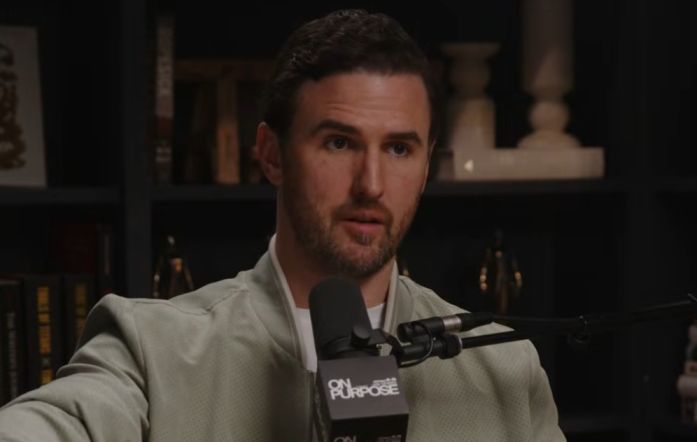
Here is the full transcript of Rob Dial’s interview on On Purpose Podcast, December 29, 2025.
Brief Notes: In this high-energy blueprint for 2026, Jay Shetty welcomes back the creator of The Mindset Mentor, Rob Dial, to reveal how to master self-discipline and achieve your most ambitious goals. Rob reframes discipline not as a punishment, but as the ultimate form of self-love, explaining how “shrinking the start” of any new habit can bypass the brain’s natural resistance to change.
The duo explores the neuroscience of the “dopamine reward system,” illustrating how celebrating small, action-based victories can rewire your brain for long-term consistency. From the “one thing for 100 days” strategy to shifting your identity from who you were to who you want to become, this conversation provides a practical roadmap for anyone ready to stop making excuses and start building an undeniable life.
The Power of Reframing Discipline
JAY SHETTY: What can someone today listening do to be ahead of 99% of people?
ROB DIAL: I think the main thing that people can do if they want to be ahead, depending on what ahead means to them, is I think that they can develop their discipline within themselves.
I think that one thing that I’ve become really obsessed with over the past couple years is thinking about the idea of discipline. Because I think discipline has a very bad connotation. Like if somebody does something wrong, then they’re disciplined or a dog is supposed to be doing something wrong. You discipline a child discipline.
But I think that the connotation that we have with discipline is actually incorrect. I think discipline, if used correctly, is possibly the greatest form of self-love because you don’t have to have any discipline to do something that’s not good for you.
So if you want to sleep in every single day of your life, you don’t have to have discipline for that. If you don’t want to go to the gym, you don’t have to have discipline for that. If you want to just eat the crappiest food that’s out there, you don’t need discipline for it.
But if you want to wake up earlier, you want to make sales calls, grow a business, if you want to get your body in the healthiest shape you possibly can, you need discipline for it. And discipline is always needed for something that is good for you.
And so the thing that I think people need to do is they need to develop a different relationship with discipline so that they don’t think “I’m doing this because I hate myself” or “because something’s wrong” or because whatever it might be. It’s “I’m going to become a more disciplined person because I love myself so much.”
The Neuroscience of Discipline
And for me, like I wasn’t a disciplined person at all before I developed, you know, got into self-development. I was, you know, number one, I was a surfer, I was a stoner, I did a bunch of drugs, did a bunch of partying. I slept in, made excuses, never made any money, never really had a whole lot of happiness.
And then when I was 19 years old, I got into a sales company and I learned, okay, if I’m going to sit down and make phone calls, hundreds of phone calls to people who have no clue that I’m about to call them every single day, I need to be disciplined.
And it was this thing of, okay, I know what my life could be if I take this action. And my life will be better if I take this action. I don’t want to take this action. But I know that my life will be better if I take this action. So I’m going to take this action because I know future me will thank me for it.
And what’s really cool about discipline, there’s a whole lot of science, neuroscience has been found. There’s a part of your brain called the anterior mid-cingulate cortex, which is basically where they’re thinking that discipline and willpower come from.
And so, like, for people who are athletes, like professional athletes, they have a larger than average anterior mid-cingulate cortex than the average person. Not because they were born that way, but because of the fact that they grew it. It’s like a muscle inside of, you know, you want to work your biceps. If you just do a whole bunch of curls, your biceps are going to get bigger. It works the exact same thing with the way, with this part of your brain.
So they have found that people who have very little discipline, very little willpower, people who are extremely obese, they found to have a small anterior mid-cingulate cortex. But if they start working out and doing things that they don’t want to do, but things that are good for them, that part of their brain actually grows.
And so I think if people need to figure out, how do I get ahead of other people? The thing that I think is, well, what is everybody else doing? And do the exact opposite. Most people are hanging out on their phone, they’re not doing a whole lot. And so I’m looking at that and going, well, I’m going to do the exact opposite.
I’m going to do the things I don’t want to do that I know that are good for me. I’m going to develop a different relationship with discipline. I’m going to be more consistent in everything that I do. And I think if people just do that for a long enough period of time, then their entire life is going to change.
Choosing Discomfort Over Comfort
JAY SHETTY: Yeah, I couldn’t agree more. And I think what you’re getting at is that discipline is the ability to choose discomfort.
ROB DIAL: Yes.
JAY SHETTY: When your mind and brain want to do the easy thing.
ROB DIAL: We always want comfort.
JAY SHETTY: We always want comfort.
And I try and maybe I do it for three days and then I fall off again. And I get this a lot. I travel a ton. I work crazy. Even last night I was messaging a friend and I’m literally flying to next week. I’m flying to Australia for one day. I’ll be there for 12 hours, and I’m coming back because I have something that I’m excited for, work.
And my friend was, and then I’ll go back to work the next day after I land here, and I’ll work out and do everything all over again. And my friend was like, to me, “How do you do it? Like, how do you not get burnt?”
And there were two answers. One was, everything is dedicated to the craft. So my whole life is structured in a way that I can do that.
ROB DIAL: Yeah.
JAY SHETTY: That means I sleep on time when I’m fully in control, work out five days a week, I eat right. There’s discipline that then allows me to do things that sound crazy but then still recover because the supplements and everything are in place. And yes, everything is dedicated to the craft, which I love.
The second part of it is that I’m good at also saying no to things that maybe I even want to do that might be fun and laid back, but because the craft is the priority right now, I’m willing to forego.
ROB DIAL: Yeah.
JAY SHETTY: So when you hear that, someone would say, “Well, Jay, that sounds boring because you’re just living your life in that way.” And I’m like, “Well, no, this is meaningful to me.” But I guess the biggest challenge people have is, “Jay, I know that I want to do that, but I don’t know how to change my habits. I don’t know how to build that.” What would you say to that person?
Shrink the Start Strategy
ROB DIAL: Yeah, there’s one of the things that I say is I have this phrase where I say “shrink the start” of something. So there’s a couple aspects of it.
The first thing is if you want to do something, it’s easier to make the start of it as short as you possibly can. So, like, let’s say that I don’t want to go running in the morning, but I know that I do want to go running in the morning for the betterment of me.
Well, then how can I make it, knowing that humans resist change as much as possible, and if it takes more than 15 seconds to do it, a lot of times we won’t do it. So if it’s like, I’m going to shrink the start of making myself go for a run in the morning.
So I know every morning I wake up and I brush my teeth, you know, go to the bathroom, I get water, brush my teeth. That’s what I do. Then I’m going to take my running clothes and I’m going to put them right next to the sink. And if you really want to shrink the start, go to bed with them on.
You know, if you’re waking up early and you want a cup of coffee, the thing that you want to do is make sure that you get a coffee maker that has an automatic timer on it. So that by the time I’m done walking out of my room and into the kitchen, my coffee’s already made. There’s already water next to it. I just got to throw my shoes on.
So it’s like, how do I shrink the start? Because we’re going to resist doing something. How do I shrink the start is the first part of it to make it easier for me to do.
Alignment with Purpose
The other side of it as well, and I’ve known you now for, you know, nine years. You work like this. You work, dude. But you are so passionate about what you do. And that’s the other thing I think people need to realize is it’s really hard to force yourself to do something that you don’t want to do.
And if you think about this, I know that when I worked jobs that I hated, that didn’t feel like it was my life purpose, it used way more energy, physical, but especially mental energy, to get myself up in the morning, to have to take a shower, to wear a suit, to drive 30 minutes stuck in traffic with a bunch of other people who are p* off, honking at each other, to go to a job for eight or nine hours that I didn’t enjoy at all, to go back home and sit in that traffic again and then go and eat some food and watch some TV and know that I’m going to have to do that every day, work day, for the next 40 years of my life.
Do you know how much physical but mental energy that takes from a human? Like, it’s so much.
And so if you think about it, does it require energy for you to hop on the plane and go there for 12 hours and then come back here and work and then do your workout? Does it require energy?
JAY SHETTY: Yes.
ROB DIAL: But I would venture to say because it’s something that you love, it actually gives you energy more than it strips energy from you. When you’re doing something that you don’t enjoy, it steals energy from you.
I saw a quote one time, and it was some, I’m changing it around a little bit, but I can’t remember exactly what it was, but it was something like, “If you do something that is out of alignment with what your purpose is in this world, you will have to come up with the energy for that. If you do something that is in alignment with what you’re supposed to be doing in this world, the universe will provide the energy for you.”
And, like, for me, I know 100%, when we get done with this podcast episode, I will have more energy than I did when I first walked in this room. Why? Because this is the thing that I think that I was made to do, and I am so passionate about that, and it gives me energy, and I will have more energy throughout the entire day because I’m doing something that I actually love.
And so I think that for people, if you’re trying to be disciplined, number one, you can shrink the start. But number two, it’s like if you’re trying to force yourself to do something that you don’t love and something that doesn’t, or just something that doesn’t feel in alignment with who you are, it’s going to require way more force than anything else.
Building Sustainable High Performance
JAY SHETTY: I think it’s also important with what you’re saying as well, is that I was working this hard on what I love around the time we met. So Rob and I have known each other now for nine years.
ROB DIAL: Eight, nine years, something like that.
JAY SHETTY: And when I met Rob, I would say I was starting to work hard. I wasn’t as busy as I am now and productive as I am now. I was starting to work what I thought was hard then, but I wasn’t disciplined in my personal habits beyond meditation. I wasn’t disciplined in my physical wellness. So my diet, my workout, like that wasn’t locked in. Sleep and meditation have always been two things that I’ve prioritized.
And I realized at one point in my life that I either had to slow down or I had to invest in my health. So I had two choices. I either had to slow down because when you’re not eating right and you’re not sleeping right, and you’re not working out and you’re not meditating, you’re not doing all the things, then I can’t keep up at this pace, right? It’s actually impossible. I’ll kill myself.
Because you’re pushing yourself so hard. But when you’re doing all those things, you realize you can do more. So I had that choice. And I don’t think there’s a right answer to that choice. I think investing in your health is always a good idea. And you can still slow down.
For me, it was, okay, well, let’s see how high I can perform. And putting all that time and energy to do that has helped me. Now it does get to a certain point in the year where I’m like, all right, yeah, I think I pushed it this year. Like, I’m good.
ROB DIAL: Yeah.
Finding Your Purpose Beyond Your Paycheck
JAY SHETTY: And when I take a month off for Christmas now, I look forward to that. But the reason I got into that was to ask you this question: when people don’t have what they love, and we’ve been there before, you just talked about yours, I’ve been there before. When you’re actually doing a job that you don’t love, you don’t enjoy what you do, is there any way to bring energy and get energy from it?
ROB DIAL: It can be. I mean, if somebody’s like, “Oh, I absolutely hate my job. I hate my boss. I hate everything about my life,” I think that’s where you just need to go, “All right, if you’re 35 years old,” just say you’re 40 years old. You’re 40 years old, and you’re like, “I’ve built this life that I’m just not necessarily in love with.”
Well, if you are lucky enough to live to 80 years old, then life one was the first 40 years of your life. Life two starts this moment. You have another 40 years. Is it going to be easy to make massive changes in your life? No. Are you going to have to say no to things that you’ve been saying yes to for a really long time? Yeah, you’re going to have to say no to things.
And when you’re saying no to something, you’re saying yes to other things. And so if you’re in that situation, it’s kind of like just a whole uprooting of things. And for me, I’d rather invest a year, two years, three years uprooting things for another 37 years of happiness and joy and fulfillment.
But on the other side of that, I think that people have a kind of misconception of what a purpose or passion is. Sometimes I think it’s really important for people to take a step back and be like, “Well, if there was a reason why I was alive and I was supposed to discover what that reason is, what is it?”
And I always tell people it’s okay if you are listening to this podcast right now and you don’t know what your purpose is. But it’s not okay if you’re in that situation to wake up every single day and not try to find what your purpose is.
And your purpose does not have to be your paycheck. I’m lucky enough where it is. You’re lucky enough whereas there’s some people that are lucky enough where it is. But a purpose could be something that you do outside of your paycheck, and you use your paycheck to invest into that purpose, whether it’s a hobby or whatever it might be. And so I think people get that wrong.
The Hummingbird Approach to Purpose
And then another aspect of purpose that people get wrong is that I think most people are trying to find something that they’re going to do until the day they die. And that’s a lot of pressure. Hopefully I live to like 100 years old. I mean, I got another 61 years. I have to find something I’m going to do for 61 years and love every single day. That’s a lot of pressure.
So what I think people need to actually start looking at themselves as, I always use the example of like a hummingbird, right? If you have ever watched a hummingbird, they go from one flower, they’re there for a few seconds, they go to the next flower, they’re at the next flower.
I think people should kind of act like a hummingbird where they say, “Okay, what am I really interested in in the next two or three years? And I’m just going to, that’s what my focus is going to be. What do I love to do that I haven’t done in a while? What interests me that I haven’t spent a lot of time, or what’s something I really want to learn about more?” And then I’ll just follow that thing.
And what’s really interesting is when people kind of follow the hummingbird thing for 10 years and they go from one thing to another thing, and they have, let’s say it’s 10 or 15 years, they have three or five things they’ve tried. The universe has this beautiful way of working where those things eventually usually line up to find what their purpose is. And they needed every single step to get there.
So for me, when I was 19 years old and I got into sales, I got into sales because I wanted to be a psychologist. And I got into sales and went, “Oh, my God, this is psychology in front of me, and I’m learning it.” And then I started managing people. I was like, “This is even more psychology. I need to fix myself so I can help these people out.”
So it was all of this psychology, and sales was just kind of the vehicle to make me learn psychology. Then I started managing people and realizing how much people hold themselves back. They’re like, “I want to make phone calls, but I’m not doing it.” And I was like, “Oh, this is really interesting to be at this moment and to see this. Why are you not making, why are you not doing something you want to do?”
So I started becoming obsessed with that. You have so much potential in you. Why are you not doing it? Then I got out of that, and I went into corporate sales for a little while. I stopped to manage people. I got into corporate sales, and then in 2017, I was like, “I’m going to quit my job because I don’t love what I do. I’m going to travel Europe for six months.”
And I traveled Europe. Actually, it was three months. I went for three months in 2012 is when I went and backpacked Europe by myself. 2017, I backpacked with my wife for six months. And then I realized, “Oh, my God, I really love traveling, and I have to figure out some sort of way to make money online so I’m not stuck to a place so I can do this and I can go and I can do whatever I want.”
Then I was like, “I’m going to move to a place because I thought I wanted to be a musician.” I had all the recording equipment. I had the microphone, all of this stuff. I was like, “I’m going to move to a city where there’s, it’s a music city. I could try to become a musician.”
So I moved to Austin and I had all the record equipment. I was there for a couple of years, tried out music, realized I’m not that good. I’m just very passionate. I love it. I’m okay, but I’m not like, “Oh, my God, this guy’s going to be a star.”
And then I was like, one day, I was sitting in a place called Jason’s Deli, this chain, and I was with my girlfriend at the time, my now wife, and I was like, I had this feeling of, “I feel like I have so much knowledge from books that I’ve read and from working on myself for so long.” And this is 2015, so we’re talking nine years I’ve been working on myself, right?
I was like, “I must start a podcast.” And I had this idea, and I was like, “That feels right. That feels like the right thing to do.” Now, mind you, I had all the recording equipment to be able to do it. So I had been doing songwriting for a really long time. So I had become obsessed with taking words and making them as, taking a line and making it as valuable as I possibly could in that one sentence that I could come up with.
So I had music, I had all the stuff to be able to set up and record a podcast. I had the songwriting to be able to write scripts, I had the sales and the psychology to be able to understand the psychology, the managing of people of why they don’t do what they want to do. And I was like, “Everything lined up,” but it only lined up because I started feeling, doing and actually following what felt right.
And so I think if people are trying to find their purpose, don’t put so much pressure that, number one, you have to make a paycheck out of it. And number two, that’s the thing that you have to do until the day you die. Just do it for a little while. And if you fast forward 10, 15, 20 years, I promise you there’s a pretty good chance all of those things are going to line up and you’re going to go, “This is the reason why I’m alive.”
Collecting and Connecting: The Path to Purpose
JAY SHETTY: Yeah, that’s exactly why Steve Jobs says, “You can’t connect the dots looking forward, you only can looking backwards.” And I love that example because I often talk about it as collecting and connecting. That purpose is a lot more about collecting and connecting than it is finding and discovering.
And so what you did is you collected a lot of skills by things you were just interested in, and one day, all connected. And by the way, my life is exactly the same, even though totally different to yours. I lived as a monk, so I understood Eastern wisdom, which at that time was just my fascination.
I then worked as a management consultant where I understood sales, branding, communication, all of these other skills that came, business skills, basically. And then I started working in media where I understood communication. Now I had what I wanted to share, I’d understand communication through media and I knew how to build a business.
ROB DIAL: Yeah.
JAY SHETTY: And then it just connected. But it wasn’t strategic. It wasn’t like I went, “I’m going to learn this, this and this and this and this.”
ROB DIAL: Right?
JAY SHETTY: It was, “Oh, no, I can now just connect all these ideas.” And as I was listening to you speak, I was thinking about how there’s literally only four key drivers or motivators that humans have.
The Four Key Human Motivators
Setting goals and beating goals. There are some people who just love targets and goals. When you talk to them, everything is a target and goal. These people are great at sales. They’re great CEOs. They’re great at building businesses and sticking to numbers. Some people just naturally have that skill set.
Then there are people who are great at influencing people. Negotiation, persuasion, bringing energy into a room, motivation. People who know how to influence people.
Then you’ve got people who are great at precision. They know how to make sure that the camera captures the perfect angle. They know how to make sure that the iPhone actually works. They know how to make sure that the bridge or the elevator, the engineering, is actually going to work and get to that floor.
And then finally, you’ve got people who are just good at caring for people.
ROB DIAL: Yeah.
JAY SHETTY: That is good at emotional intelligence. They’re good at understanding. You can bring that into your workplace. We think that, exactly what you said, we think that your passion or your paycheck or your profession has to be a job you love.
Now, you’ve done a podcast for 10 years now. I’ve done a podcast for nearly seven years now. But if someone told me that that was my purpose and that was your purpose, I think we’d say, “No, it’s just the current iteration of it.” Your purpose is far greater than that, and so is mine.
And so I think when we limit our profession and go, “Oh, I don’t like my job,” what you’re missing out on is, but where could you influence people? Meet goals, be precise or care for people in wherever you are, and practice that skill set so that one day you are undeniable?
Why We Talk Ourselves Out of Our Passions
And so my question to you is, why do we talk ourselves out of the things that we’re passionate about? When you had that idea of “I want to be a writer and a musician,” you didn’t talk yourself out of it. You followed it and then took it as far as it could. And it left.
Same with me. I didn’t talk myself out being a monk. I took the risk. And then when I came back, I was figuring it out. Why do most of us have that idea? We hear the voice in our head of, “You should try sales. You should become a musician. You should launch a YouTube channel.” And then we go, “Oh, no, no, no, no, I’m not. I can’t do it.” Why do we do that?
The Protection Mechanism Behind Procrastination
ROB DIAL: Well, I think as humans, we’re naturally lazy. We want to stay in our comfort zone. It’s a protection mechanism. If you’re not doing something that you want to do, there’s a pretty good chance the reason why, at its simplest form, is there’s a part of you inside of you that’s trying to protect you from something.
And so you might have a fear of, you know, I want to start a podcast too. Like these guys have their podcasts and I’m going to put myself out there and I record the podcast and then I’m like, yeah, I don’t know. And I hold myself back from doing that thing.
Anytime you’re really not doing something that you want to do, there’s usually some sort of fear that’s behind it. And usually the fears that we have in our future comes from pain that we have in our past.
And if you can understand that, what my brain is doing is it is projecting itself into the future and thinking of all of the things that could go wrong as a protection mechanism from something that I’m triggered that I haven’t healed from my past.
And so, like, for instance, let’s go with the podcast example, right? I’m sitting there, I’ve recorded three podcast episodes. I want to hit publish, and I’m not doing it. If I’m sitting there and I notice myself, we all get there. Like, there’s no part of me that has mastered at all. I deal with the exact same things. It’s just I’ve kind of over 20 years of working myself, become more self aware of when I’m in those moments and I’m like, okay, I’m holding myself back from hitting publish. What’s going on here? Like, what’s behind this?
And if I’m like, do I want to do it? Yes. Why am I not doing it? Am I afraid of something? You know what? I am afraid of something. What exactly am I afraid of? I’m afraid that if I put this out there, then people are going to judge me.
Okay? That’s the fear that lives in my future. What pain does this remind me of in my past? And usually be able to go, it reminds me of that one time when I was bullied in seventh grade. And it reminds me of the time that I was bullied in ninth grade. It reminds me of the time that my, you know, I got a bad grade and my teacher called me stupid.
Life as a Perfectly Crafted Curriculum
And it’s like, I believe that first off, I believe that all of this is just a game, right? So it’s like there’s so much purpose and importance in what we do. And we talked about this last time I was here. It’s so important what we do, but it is so unimportant what we do in the grand scheme of the universe. And you billions of years that this has all been around, it’s so important, but it’s so unimportant.
So you can get caught up in the drama, but you can also remove yourself from the drama and you can look at it and say, okay, I’m in this situation. I want to push publish. I’m really afraid.
What I believe is that when those moments pop up, all of those moments that pop up, our life is a perfectly crafted curriculum for our soul to learn what it’s supposed to learn in the moment that it’s here.
And so if I’m going, okay, this is the thing that I want to do, I’m not doing it. It’s the universe coming to me in this moment through this predicament to show me Rob, this is the thing that you need to work on. You need to work on this pain that you have in the past.
You can either heal that side of you, which I think is something that people should do, should work on healing themselves. But at the same time, if we do take that action that we are afraid of, it starts to heal that past as well. Because we realize we’re telling our brain, this is not dangerous and you won’t change yourself overnight.
But when you’ve posted 10,000 times on Instagram, like I have, I’m like, I don’t care if people judge me anymore because I’ve just seen so much of it. You get, it’s kind of like exposure therapy. You’re just like, yeah, I’m publishing again. Yeah, I’m cold calling people and they’re hanging up on me again. It’s exposure therapy.
And so I think if people can become more aware in those moments and be like, okay, I want to do something, I’m not doing it. There’s something in my past that’s not healed. I need to work on healing this. But another thing that I could also do is just push publish and just be okay with it.
And so it’s those little moments, I think, where the universe is showing us, this is what you need to work on. Please move forward, just even a tiny step in the right direction to prove to your brain the defense mechanism is trying to protect you. You’re safe, you’re not going to die. Everything’s going to be okay.
The Liberation of Letting Go of Legacy
JAY SHETTY: That worry that we have of what people think of us, or like you said, is a fear from deeper within that we had in our past where someone said something or someone felt something about us and it triggers that again. It’s incredible how much power we give it.
And what you just said about this evaluation of what we do is so important, but so insignificant. I love that because yesterday I was at an event and someone asked me this question and they said, Jay, what do you want your legacy to be? What would you like your legacy to be?
And I said to them that there was a time in my life where I thought that was an important thing to reflect on. And over time I’ve realized it is the thing I think about the least.
ROB DIAL: You don’t care about that.
JAY SHETTY: I don’t care about it at all. And I said to them, I said it’s because even the biggest musicians in the world, if they’re lucky, they’ll be relevant for 50 to 100 years after they pass away. There are only a few things that have been around for a thousand years. Jesus, Buddha, Krishna, dinosaurs. They somehow made it in there and it’s like that’s it. Like that’s it.
And so each one of us is going to be completely forgotten. And I said, that is the most liberating thing in the world to me. And my answer to them was, I just feel really lucky that I got to be the modern messenger for a 5,000 year old tradition that has been there before me, that will outlast me by thousands and thousands of years.
And I was just so lucky that I got to be today as mailman for this subject matter and how fortunate I am that I got to do that. But I have no interest because that is the legacy that Eastern wisdom that I get to share is going to last for thousands and thousands more years, as will Jesus and Buddha and dinosaurs and everything else.
And it’s so freeing to know that, to kind of go, yeah. Like, I don’t have to take it that seriously. Like me uploading a video.
ROB DIAL: Right.
JAY SHETTY: It’s like, one day, YouTube will not exist.
ROB DIAL: It’ll be gone one day, and no one will care. Yeah.
JAY SHETTY: And giving yourself that freedom. And then when you’re making the thing, it’s like, this is the most important thing.
ROB DIAL: Yeah.
JAY SHETTY: When you’re sharing the thing, you’re like, all right, let’s just let it out into the world.
ROB DIAL: Yeah.
Overcoming the Trap of External Validation
JAY SHETTY: How do you then deal with that criticism that comes in your own mind of, I put it out there. It’s not getting views, it’s not getting comments. People don’t like my art. People don’t think. And you just get lost now in this. Like, okay, well, I’m not going to do it again.
Because I had a friend who, he said to me, I’m going to post 30 videos in 30 days. I’m going to commit, Jay. I’m going to do it. Then he starts posting, and he’s not happy with the amount of likes, he’s not happy with the amount of comments. He starts doubting it, and then eventually he stops and then doesn’t do any more.
So there’s no more discipline left, no more consistency. And I said to him, I said, realistically, you need to post every day for two years to even get close to seeing what could happen. But 30 days isn’t really going to cut it. And so if you’ve done 30 days and then you’re not for six months, and then you are, it’s not going to make sense. But he talked himself out of it, even after getting started.
ROB DIAL: Right.
JAY SHETTY: And I’m sure you see this all the time.
ROB DIAL: Of course. Yeah. I mean, I think the real question behind those types of things is, why are you doing it?
Like, so, you know, the thing that I love about what you said is, is like, you’re just excited to be the person that’s giving this message right now, which means that you’re removing yourself from all of it. It’s unimportant.
Like, on my drive up here, the only thing I kept saying to myself, I just did a prayer, and I was like, God, please remove me from all of it. I don’t want it. I don’t want the fame of it. I don’t care about any of it. I just want that whoever hears this message to be a message that they needed to hear, whether it’s one person, whether it’s millions of people.
But I don’t want to be, you know, on some sort of pedestal for being the person that gives it. And there’s no real, I mean, there’s no real with Buddha, with Krishna, with Jesus. There’s no real original thought anyways. I’m probably saying something that someone else has said at some point in time in the world, right?
And so when I can remove myself from needing to see or be important, then it makes it a lot easier for me. So if somebody’s point of, if we’re using posting as the example, is to become famous or to make money or to get likes, then I think you’re going at it from the wrong reasons anyways.
Finding Your True Why
The real thing is, like, why am I doing this in the first place? When I first talked with you in 2017, when we were talking about, hey, you should start a podcast, I could tell from that moment that you wanted to basically take all of this Eastern wisdom that had changed your entire life and just teach it to other people because you felt obligated to do so.
When I was sitting in Jason’s deli, and I was sitting there and watching people yell at their kids and all of this stuff, and it was just like, this moment of just, like, you know, have you watched, like, someone in a movie when, like, the world starts to get all weird? It got to, like, a fever pitch, and I was like, I can’t do this anymore.
Like, I feel like there’s something inside of me that’s helped me overcome my trauma from my past of my father being an alcoholic and passing away when I was 15. And I feel like I’m in a really good place from all of that. I feel obligated to teach it.
It was never from the standpoint of, I’m doing this because I want to make money, or I’m doing this because I want to be famous, because nobody made money or was famous for podcasts in 2015 anyways.
And so I think what people should really ask themselves is, like, what is the real reason why I’m doing this in the first place? And if someone has a really strong why, how to do it will eventually reveal itself.
And so if someone’s like, I want to make a bunch of money, cool, that’s great. You can definitely make a bunch of money. But I also think that money is a byproduct of the value that you give the world. And so in my mind, I’m like, if I want to make more, can I figure out a way to give more value to people anyways?
And so I think it’s more of, like, can you go and build a business and make a bunch of money and be famous and all that stuff. Sure. Why do you want to do it, though?
Like, there’s some actors that are really good actors because of the fact that they want to be rich and famous, and they usually burn out. And then there’s some people that want to be actors because they love the craft of being an actor and becoming somebody else and having to change themselves. Those people never burn out because they have some sort of really strong why that’s behind what it is that they’re doing.
The Power of Starting and Staying Consistent
JAY SHETTY: So I think we both believe that. We’ve been talking a lot about consciousness, intention, knowing why you’re doing something, like caring about it, doing something you love. And we both know that’s important, but I think we both agree that competence is equally important.
The reason you didn’t pursue a music career is because you didn’t feel you had the competence to make it a career beyond it being meaningful and thoughtful. And same with me. I love soccer. It’s my first love, but I’m just not competent enough to be a professional soccer player. I would not have made it into any of the leagues, for that matter.
And so how does someone build a new skill or competence? If someone goes, okay, I want to be a podcaster, and I need to learn podcasting. I want to become a musician, I need to learn songwriting, I want to be a filmmaker, I need to learn editing. How do you start building a new skill? What are the steps to building any skill?
ROB DIAL: Well, I think it’s just consistency is the biggest part of it. Like, first off, you have to start. Most people, I remember watching a video years ago of Jared Leto being interviewed. And Jared Leto is one of the most famous actors and also a really famous musician. He’s won the biggest, the highest awards that you can win of both of those.
And he said something that was really kind of eye opening for me. He said, when I was a child, he was homeschooled and he saw what people were doing. He said, “When I was a child, I just realized that most people don’t start. And as long as I start, I’ll eventually be so much further ahead of anybody else.”
So I thought that was a really big piece of it. The piece that I’ll add on is that if you just don’t stop, there’s a pretty good chance that you’re going to win, whatever it might be.
Now, can I go and just get a soccer ball and then become Ronaldo? No, that’s definitely not going to happen. I can understand. I think most people are wise enough to know, hey, this probably isn’t the route of me trying to become a professional at 39 years old.
But the thing about it is, I’m of the belief that when I do something, I’m not going to stop doing it until I get to wherever I feel like I want to go. I started a business years ago with my best friend, and another one of our friends was there, and he’s like, why are you starting a business with Rob? And he was asking us, what is it that you guys like about each other?
And he’s my friend in a nice way. Said, “Rob’s like a cockroach. He just doesn’t die.” And that’s kind of the way I’ve built myself to be is like, I don’t think I’m the most talented person. I don’t think I have the highest skill set. But I do know that when I find something that I want to do, I will at least try to play it out as long as I possibly can.
For me, when I first started my podcast episodes, were they that great? No. If I listen to my stuff now, it’s so cringe to me. Ten years down the road, I have developed confidence and competence.
The Confidence-Competence Loop
There’s the confidence competence loop, which is you, do I get confidence first or do I get competence first? You don’t get either one of them, but you get both of them once you start doing something and you push your skills a little bit more.
The thing that I love about being a human so much, though, that I literally got it tattooed on my hand is, and I told my wife on our first date, she was like, do you have any tattoos? I was like, no, but I’m going to get this one one day. Is the roman numeral for 10,000, which is I love the idea of the 10,000 hour rule, which is if you take 10,000 hours of dedicated practice towards something, you can eventually master it.
And so for me, I was like, I just need to try to get to 10,000 hours of dedicated work on something, and I will probably master that thing. And so if people are trying to become better at it, you have to be okay with not being good when you first do something.
There’s a quote that says, “You cannot be a graceful master if you will not allow yourself to be a foolish beginner.”
JAY SHETTY: That’s good.
ROB DIAL: And you’ve got to allow yourself to be a foolish beginner and screw up and be okay with screwing up, but knowing that everything that you’re doing is getting you closer to being better.
And so for me, even with the podcast, when I first started it, I was like, I’m just going to do it, and if I like it, I’m going to keep going. And I liked it. And then there was going back to the question you asked a minute ago of, you’re not getting the response that you want in all of your likes and all this stuff.
I got one email when I was getting a hundred downloads back in 2015. I got an email two months in from a lady that said, “I love your podcast. It’s the only thing that’s gotten me out of depression after my father killed himself three years ago.”
And I was like, that’s the reason why I’m doing it for that person that I had this feeling that I would be helping. And she’s the only one that’s emailed me. There’s probably people who have never sent me an email that I’m helping them in some sort of way. And knowing that I’m doing that is what’s driving me.
The Tipping Point of Consistency
And so with the podcast, for instance, we keep going back to it, but in 2015, I started The Mindset Mentor, and it stayed at the exact same. After a year, it kind of leveled off at a certain amount of downloads and it was doing well, but it wasn’t like one of the biggest ones in the world.
And then a perfect storm happened. So I started in 2015, 2020 happened. Three things happened. Number one, Covid happened. People were at home and they started listening to podcasts. Number two, Apple podcasts came out with the app, and so it was a lot easier to listen to podcasts. And number three, Spotify came out with podcasts as well.
Those three things, I went from the same number of downloads every single month for about five years to 70x-ing it in literally three months. And it was like the tipping point. It was just consistency, consistency, consistency. Boom. It exploded.
And that’s just what people need to focus on, is showing up every single day and putting in the work. And it’s just compound interest. And over time, you eventually get to the point where the universe just clicks in place and it’s like, here it is.
And I see it as a test that God or the universe or life puts us through to say, let’s see how long you’ll do this, and I’m going to challenge you every single step of the way. And then eventually there is a moment in time where I’m going to say, this is for you. You did it. You got to the point that you want to. Here’s the stuff that you wanted.
And I see it as a challenge. I’m like, let’s play the game. I’m down for the challenge. Let’s go for it.
Redefining Consistency
JAY SHETTY: Yeah. And consistency is so interesting because I think we think about consistency as I worked out five days a week every week of the year, and reality, consistency is one week I worked out three days, the next week I worked out six, this week I worked out four, then I worked out five, then I did two, and then I did seven.
Consistency doesn’t mean the same thing every week. It can show up differently. And I think what we get caught in is when we fall off. Anyone ever here who’s tried a diet and they failed at a diet? We’re going to go into the new year soon, and people are going to be making New Year’s resolutions.
And here’s the thing, most people will probably keep it going for two weeks, maybe even three weeks, and then they’ll have a bad day or a bad week, and then we’ll throw it out.
ROB DIAL: Yeah.
JAY SHETTY: So it’s like, oh, I had a great, I didn’t eat sugar for two weeks. I was losing two pounds a week for two weeks. I was posting content for two weeks, and now the third week I dropped off. Now I’m going to throw it all away because I messed up and I lost it because I wasn’t consistent.
ROB DIAL: Yeah.
JAY SHETTY: How do we get back on or two questions. Is everyone going to fall off? And if that’s the case, if we’re all guaranteed to fall off, how do you get back on without beating yourself up and making it feel like you’re never going to get back on?
The Power of Self-Compassion and Long-Term Thinking
ROB DIAL: There’s a couple different aspects of it that I’ll go into. The first thing is that I see this all the time with people is that they will work out for 21 days and they’ll stay on their diet and they’ll do really well. And then this 22nd day, they don’t plan correctly. They get on a flight, they end up missing it, and then they do. What do they do?
They guilt themselves, they shame themselves, they talk trash to themselves. “I knew you couldn’t do it. You always do this. You always give up on something,” and they take that one moment in time and they beat themselves up for it versus going, “Hey, you had a mistake. You didn’t get this thing done that you wanted to. But I’m so proud of you for the 21 days. You have never worked out and kept to a diet for 21 days, I’m so proud of you for sticking to it.”
And instead of beating yourself up for day 22, what I’m going to do is I’m going to look at it as a data point and see what did I do wrong that ended up making me not be able to stay consistent so that on day 23, I can continue with the consistency.
And I love, I think the perfect quote for it is James Clear says, “Every action that you take is a vote for the person you wish to become.” So if you’re the person’s like, “Oh, I’m going to throw in the towel,” you’ve decided I’m the type of person that throws in the towel.
But if you say, “Hey, I’m going to pick myself up,” as if my friend calls me and says, “I worked out really hard for 21 days, I did really good, and today’s my 22nd day and I screwed up, what should I do?” Are you going to be like, “You suck. You’re stupid. I knew you wouldn’t follow through”? Whatever you say to yourself, no, you’re going to say something different to your friend than you would to yourself. And so that’s the first aspect of it.
Understanding the Timeline of Change
The second aspect of it is that I think people think in too short of terms. So I saw a statistic one time that said, in order to create a habit, it takes between 60 to 100 days. Most people are focused on that timeframe. Then if you go further past that, in order to change your lifestyle, it takes about 12 to 18 months. In order to change your identity, it takes about three to four years.
And so for me, I realize that if I’m trying to do something, it’s the same way that I was talking to you earlier. Three to four years. And I’m going to do this thing and am I going to have success every single step of the way? No. But I’m dedicating my life to this thing because of what it’s going to give me or my family or the world if I do this thing.
And so I think if people look a little bit more in timeframes of three to four years, they might be able to give themselves more grace. They could also scare the crap out of themselves and be like, “Oh, my God, I can’t do this. It’s going to take so long.” Or they could say, “Hey, it’s a marathon. Life is a marathon. If you trip in the first mile of the marathon, you don’t need to throw in the next 25 miles. After that, you just continue to keep going.”
And it’s one of the reasons why people who end up winning the lottery end up, I think it’s 75, 80% of them end up going back to where they were financially within five years. In an average person, I think it’s 90 or 95% of people who lose 20 pounds will gain it back within that next two years is because of the fact that either their habits changed, maybe their lifestyle changed, but their identity didn’t change.
I have a friend whose weight goes up and down and up and down and up and down, and we’ve had a really deep conversation with it. He’s like, “I want to be in the best physical shape that I possibly can.” And he’ll be really fit, and then he’ll be 40 pounds overweight, back and forth and back and forth.
And we came to terms of realizing the reason why is because he still identifies as the fat kid that he was made fun of in middle school. And I’m like, that’s the identity shift that we’re trying to go for. And identity shifts come from a couple different things, which is what we believe about ourselves, but also at the same time, what actions we take.
So if you would have asked me in 2014, “Are you a podcaster?” I’d say no. But now I’ve been doing it for 10 years. I’m like, yes, it’s literally part of who I am. Same thing for you. And it’s only because you’ve taken consistent enough action that now you identify with that thing. And that’s what I think all of us should be working towards with consistency.
Designing Your Environment for Success
And probably last thing I’ll say on this is that I think people are like, “Well, I just don’t have any willpower.” The people that I found who are the most consistent, it’s not that they have more willpower than the average person. They might, but it is they have designed an environment in their life that does not test their willpower.
If you put a bag of Skittles in front of me in my house, it’s gone today.
JAY SHETTY: Yeah, it’s gone.
ROB DIAL: But if I don’t have Skittles in my house, I don’t eat them. So I intentionally tried to design my environment to not fall into pitfalls that I don’t want to fall into, to be as productive as I possibly can. If I’m trying to get productive work done for two hours, my phone’s going to be in the kitchen. And so it’s like, can I design an environment where discipline and consistency and willpower are easier versus making it so hard on myself?
JAY SHETTY: Yeah. That, to me, is the biggest one, because you can’t have your refrigerator full of all the stuff you don’t want to eat.
ROB DIAL: No, I’m eating all of it.
JAY SHETTY: Yeah. Yeah. I don’t have enough willpower for that either. If something’s right here, I’m going to have it. That’s absolutely. And I think people think that people have this amazing willpower and it’s right next to you, but you’re not tempted by. I’m like, no way. I’m completely seduced by a sugary soda or a slab of chocolate, whatever it may be.
The One Mindset for 2026: Do Less
And what’s interesting about that is we’re coming up to the new year, and I want to give you my answer, what I’m thinking, and I want to hear yours. If we could give people one mindset to approach 2026 with to make it the best year they could possibly have, my take, and I want to hear yours, would be to do less, in the sense that the one mindset that will save you is instead of thinking you want to be the best partner and the best workout person and the best professional and the best parent and everything is choose the one thing to be really good at for season one.
And I think about this like nature. Nature’s good at doing one thing. It’s why we have four seasons. In this season, it’s good at growing. In this season, it’s good at shedding. In this season, it’s good at shining. And in this season, it’s good at recovering.
And it’s not trying to, imagine you had a day where it was snowing, stormy, sunny, and raining in the same day. You’d be like, this is just schizophrenic. It’s crazy. And there are a few places in the world where that happens, but it’s rare, and it wouldn’t make sense.
We think of balance or we think of success, as I’m good at everything. And so we go into the new year and go, “I’m going to, this the year I lose weight. This is the year I build my company. This is the year.” And we, as Bill Gates said, we overestimate what we can do in one year, and we underestimate what we can do in 10 years.
In January, it will be 10 years since I started being a creator. My first video launched third, 2016. And if someone told me what we were going to do in the last 10 years, I would never have believed them for sure. But if I tried to do all of this in the first 12 months, I would have failed miserably.
And so my advice, my biggest mindset for 2026 for anyone listening, is do less. Prioritize, focus. Don’t try and tick every box. It’s okay to fail at a bunch of stuff for four months and then build up something else. What would be your big mindset for 2026?
The 100-Day Focus Strategy
ROB DIAL: The exact same thing. Every year, I tell people to focus on one thing for 100 days, because if statistically it takes 66 to 100 days on average for someone to create a new habit, then I want to just do one thing for 100 days to try to create that habit.
Now, the problem is, is that most people, if they’re listening to this podcast, they want to be a high performer. They want to change their life. They want to make the best life they possibly can. So they go, “You know what? I’m going to do three things at one time. I’m going to do four things at one time.”
And I actually think that that’s a trap of the ego. The ego is the identity that’s trying to keep you in the exact same place. And a trap of the ego is to go, “Well, I could do one thing, or if I do three, then I’ll be three times further later on down the road.” I think that’s a trap of the ego going, “I’m going to throw too much on their plate. So it’s going to be too much, and eventually they’re going to fail.”
But if I wake up every day and I just go, “I just have to check off one box. And if I check off one box, it’s a success,” then I can look at, okay, what are my goals for this year? And looking at my goals, what’s the most important priority for the next 100 days? And I just have to do that one thing now.
Will you fall off in 100 days? If I were a betting man, yes, you will. But how you respond to, we were just talking about is the most important aspect of it. If you say, “I want to post a piece of content every single day for the next 100 days” and you get 95 days, that’s pretty dang good. I would say that’s a success.
JAY SHETTY: Even 50 would be good, right?
ROB DIAL: But it’s like, don’t beat yourself up for it if you don’t get there. So I’d say focus on one thing. And I think in the day that we live in, I was talking with somebody yesterday whose daughter wants to go to Florence to learn how this very specific part of design of art. And I was like, man, that’s the thing that people really miss nowadays is wanting to master something and really just get good at that thing.
Say to yourself, “I’m just going to do this one thing every single day for the next 100 days. If I fall off, I fall off. No big deal.” And then at the end of the 100 days, I’ll put a reminder in my phone that I can look and see. Do I feel like I want to continue with this thing? Does it feel like it’s locked into me and it’s a habit, or do I want to change it to something else?
And if they do that, I think it’s important because most people are trying to do a million things. They want to get better at this. They want to learn this and this and this and this and this. And I heard Ed Sheeran say one time, “You could do anything that you want to, but you can’t do it all at once. Can only do one thing at a time that you’re trying to really get better at.”
And so it’s like, for the next 100 days, this season of my life, I’m going to focus on this thing and this thing only. And I think if people can kind of narrow their knowledge and their skill set to just a couple things they want to get better at each year, I think it’ll help them out.
An Inch Wide, A Mile Deep
Because most people, I always give you an example. It’s like most people’s knowledge and skill set is like a mile wide but an inch deep. You’re never going to get really anything that you want with being able to talk to people about many different subjects. It’s like a mile wide, but an inch deep.
I want my knowledge and skillset to be an inch wide but a mile deep. And when you do that, you actually can start to master something. And when you become better at it, you’ll find people will ask you to consult them or they’ll pay you for it.
The most successful people that I know are not the smartest people in the world, but they’re very consistent, they’re very passionate, they’re very disciplined, and they usually just are really good at one thing. That’s it.
JAY SHETTY: Yeah. And I think it’s also just, you hear people who go, “I’m going to read a book every week.” And I’m like, you’d be better off reading one book a year and applying one lesson from it to your point of one. As opposed to, I would rather, I’d prefer you read a page every day for 100 days, going off your method of one book and put it into practice.
ROB DIAL: Yeah.
The Power of Deep Reading Over Volume
JAY SHETTY: Then I read 24 books this year. I read 52 books this year. There’s no achievement in that number whatsoever. It’s just some arbitrary. It’s your point earlier of it’s inch deep and a mile wide. Like, that’s what it is. It’s like, I read 52 books. What do you remember? Oh, this random fact from this one. Like, it doesn’t prove anything.
ROB DIAL: Books I’ve read in the past three years.
JAY SHETTY: Tell me one.
ROB DIAL: Do you? Many times I’ve read it probably a hundred.
JAY SHETTY: Which one?
ROB DIAL: Krishnamurti. Total Freedom.
JAY SHETTY: Oh, wow.
ROB DIAL: It’s like this thick and it’s underlined. It’s highlighted every time. Because I’m exactly what you’re saying. There are the smartest people in the world, have read books. And there’s so many great books and all this stuff. I used to read 50 books a year and be so hard on it.
JAY SHETTY: Me too. Me too.
ROB DIAL: But it’s like, if you can find one book that you feel is going to change your life, that you’re like, I need this thing to be part of me. That’s what you should become obsessed with. Exactly. Like you’re saying. And so it’s like, find that book and try to go, I’m going to make this book part of me.
JAY SHETTY: Yeah. And that’s exactly what I used to do. I used to, at one point, I was trying to read a book a day, and I had the time for it and it was great. I learned a lot. It was amazing. But I realized living the book was far more important than reading the book. And I couldn’t experiment or practice with 365 ideas or 52 ideas. I could practice with a couple, and that made all the difference.
How to Set Goals for 2026
JAY SHETTY: How should someone think about setting goals for 2026?
ROB DIAL: Yeah, good question. I love this one because I did it wrong for a long time, like 15 years. So I’m the type of person that gets excited by goals. I’m like, yeah, let’s make it. And I get, my wife does not want to sit down and make any goals with me. I’m like, let’s plan our year. And she’s like, no, I don’t really care to make. That’s why Roddy and Laurie get along so well.
And so it’s like I was thinking about it, I was like, okay, I’m going to set my goals for the entire year. And so what I came to realize, the more that I’ve learned about neuroscience and the way humans work and the shrinking of everything that we do, is that most people say, okay, well, I’m going to try to lose 40 pounds this year. That’s my number one goal. You know, I’m going to listen to what Rob and Jay say. I’m going to focus on one thing. I’m going to lose 40 pounds this year. And this is what I need to do to get there.
The problem with that is this is most of the time, you’ll go to the gym, you’ll work out, then you’ll come back, you work out for two weeks, you take a shower, you see yourself naked in the mirror, and you’re like, ugh, still not there yet. Right? And people will actually make themselves start to feel bad about not being at the destination that they want to get to.
The Dopamine Reward System
The problem with that is that our brains are addicted to dopamine. The most addictive drugs in the entire world are high dopaminergic drugs. And we are basically like all dope fiends in different ways. Like, some people get it from working a whole lot, some people get it from scrolling on Instagram, and some people get it from watching Netflix, and some people get it from being around their kids and all of this.
And so dopamine is the chemical of motivation. Whenever we get it, we want more of it, and we will work hard to go get more of it. And so there’s a thing that’s called a dopamine reward system. And this is super important for people to start to understand if you want to change your life and become addicted, you know, not in a bad way, but addicted to the things that you need to do to make your life better. You need to develop some sort of dopamine reward system.
And the way you do that is, so there’s results based goals, which is, when I lose 40 pounds, then I will have hit my goal. That is a result. It is a result based goal. I did that for 15 years. You still set the result based goal, but then what you do is you create something that’s called daily action based goals, which are, as long as I get these things done every single day, it is a success. Not when I lose the 40 pounds. It’s a success.
When I do this thing, whatever the thing is, and it can change each day depending on your diet. And whatever it is you need to do that is a success. And when you have that success, if you can get good at celebrating yourself, which sounds weird, but neurologically is super important, your brain will release dopamine, which then says, the action that I just made, that I just did, made me feel good. It gave me dopamine, I want to do it again.
Celebrating Small Wins
And so a better way of doing it is if I’ve never been to the gym and I only lose 40 pounds and on January 1st, I say, okay, I’m going to go to the gym. Walking in the door is a success. Not looking at myself with 40 pounds off. And then you got to change the way that you speak to yourself. You got to change the way you speak to yourself.
And so you sit there and you go, okay, you walked in the door. I’m so proud of you. You’re going to do this. I believe in you. You go on and you say, okay, I’m going to go on a treadmill for 10 minutes. Okay, one minute down. You’re doing such a good job. Two minutes down. When you do these little celebrations, you get this little tiny bit of dopamine. Your brain is saying, the action that was just taken is something that we got dopamine for. We want to do it again.
When you do your first set, you celebrate yourself, your second set. I like to, when I work out, look myself in the eye after it and in my head be like, I’m so proud of you doing such a good job. I’m so proud of you doing such a good job. Then when you get done, you’re like, man, I feel really good. You’re more likely to do it again tomorrow.
And so what you do, you create these long term results based goals. You shorten them to action based goals, need to be done today. And then you develop a system to give yourself dopamine to make it feel good. Because when it feels good and it feels rewarding, you want to show up and do it again tomorrow. And if you do that every single day, eventually you get semi addicted to the process.
Falling in Love with the Process
Like we all know, people who have been 50 or 100 pounds overweight, and then you see them and they never worked out a day in their life and now they work out five days every single week. Some of them work out seven days a week because they love it so much. It’s because they have learned to fall in love with the process. And the people who are the most successful in the world are people who have fallen in love with the process, not the end result.
And so if you look at, like, for instance, Kobe Bryant, right, he used to wake up at 4 o’clock in the morning every single morning to work out. And I don’t know if he knew he was creating a dopamine reward system, but he talks about, when he talks about Mamba mentality, it’s his greatest thing that he loved about himself. And what made him feel the best was the feeling of, I’m working out when everyone else is sleeping. I will get into my second workout. When they’re starting to get into their first workout, I’m twice as far as they are.
He created a dopamine reward system that got him addicted to the process. And when you’re addicted to the process, the end result is going to be way better. And I think if people can do that, I think that the entire year will change for him.
JAY SHETTY: I’ve never heard someone explain it like that. I love the idea of creating a dopamine reward system. That the story he was telling himself was giving him the dopamine. Like, that’s brilliant. That’s so good.
Working Hard as Gratitude
And it’s funny because I was talking to Homer about this. Who’s, you know, my videographer. Just now when you were coming in, we were talking about this idea of, I work harder today than 10 years ago when I started. Not because I have to, not because I think I need to. I do it because I love it. I’m engaged, I’m learning, I feel I’m becoming better.
And I was saying that a big part of it, which gives me a lot of dopamine, to your point, is I love the universe and God, knowing that I don’t take the life they gave me for granted. And so it’s a form of gratitude. My work ethic is my gratitude to God and the universe to repay this incredible gift of life and opportunity that I’ve been given to live the life that I get to live. So now I’m feeling gratitude. That’s just a story in my head. That’s how I feel about it. And it gives me so much dopamine.
And the second part to that is, therefore, I never want to be complacent. That something I would have been willing to do 10 years ago. I’m still willing to do it today because I’m not bigger or better. I’m still back at the beginning of my journey. Yeah, I still treat it that way. Now, there are certain things you have to change and say no to and, of course. But overall, my mindset is, this is day one. We’re just at the beginning. We’re starting out again.
And that is unbeatable in my mind as a, as the dopamine reactor, but it’s also unbeatable as a mindset because I’m like, I’m working as hard as I did on day one. Now the day one’s got no chance. You know, it’s like, because, so to me, it’s just, but I love the way you put it, that that’s just my way of convincing myself.
ROB DIAL: Yeah.
JAY SHETTY: To work hard is gratitude and payback and service and purpose.
The Stories We Tell Ourselves
ROB DIAL: Yeah. It’s all we are doing is just having stories in our head. And the story that you have in your head, when you’re becoming aware of yourself and starting to, you know, 20, 25 years old, you’re like, oh, my God, I want to work myself. There’s things that I don’t necessarily like about the life that I built. You’re becoming aware of the stories that you have in your head, and we can, you know, it’s like the example that you see many times where someone’s like, all right, you know, the room that you’re in, look around and see how many red things you can find.
You look around for all the red things, and you look around for the red things. They say, close your eyes. How many blue things did you see? And everyone’s always like, zero, because you weren’t looking for that thing. It’s not that it wasn’t there. It’s just that you weren’t looking for it.
And so, you know, a lot of us were looking for what’s going wrong, what’s not the way that we want it to be. And that’s just the perception of the way that we look through the world. I mean, humans have something that’s called the negativity bias. We are going to look for what’s negative, and it’s a protection mechanism. We’re going to look for what’s bad.
And so we have to change ourselves to say, I’m going to see a different perspective. I’m going to find what’s positive. Another way of doing that is going, okay, I’ve looked at the world this way my entire life, and with the amount of hours that you work, you could be like, oh, my God, I’m working so freaking hard. I don’t know if I can do this. And that can be the story going on in your head, it’s going to be a lot harder to work hard.
Or you could say, I’m so blessed I’ve been given this body and this brain and all of the challenges in life that I’ve had to get me to this moment. It would be a shame if I didn’t use it for myself, for the greater good of people. It’s the exact same circumstance, but it’s a completely different perception.
And I always say we’re all looking at the same thing. We’re all seeing something different, and that’s literally how life is. And so if we can go, all right, I don’t like the way that I feel when I look at something through this lens. Okay. Is it possible for me to see another perspective? And if we can find another perspective, you can always find another perspective for anything, any circumstances happening in your life.
And almost always you can find the positive or what you can learn from a challenge. And it’s not saying that it’s easy to go through those things and that life isn’t hard, but it’s saying, I’m going to try to look at a different perspective of my life and this circumstance so that I can make something from my life.
Changing Your Perspective Changes Everything
JAY SHETTY: Yeah. Wayne Dyer said, “When we change the way we look at things, the things we look at change.” And I think it’s so fascinating how we’re always trying to change the situation.
ROB DIAL: Yeah.
The Power of Changing Your Lens
JAY SHETTY: And I can’t remember who said this, but it’s a famous quote that says, we’re always trying to change the situation, not realizing we were put in that situation so that we can change.
And I think another layer to that is what you’re saying is not only are we always trying to change the situation and don’t want to change ourself, sometimes you don’t have to change yourself fully. You just have to change your lens.
ROB DIAL: 100%.
JAY SHETTY: And so there’s three things to change: your lens, yourself, or the thing. And all of our focus goes on the thing. And life doesn’t work well when we only focus on the thing.
ROB DIAL: Right.
JAY SHETTY: And so when we focus on changing ourself and our lens, all of a sudden you’ve expanded your opportunity of what to change. Because sometimes the situation just won’t change.
ROB DIAL: Most of the time, it won’t change. And that’s what stresses people out, is because we want to control most things, and we can control almost nothing.
Like, it’s so out of everything that happens in your life, you could control, like, 0.1%. I always say, like, you think that you could control everything happening around you? You can barely control your bowels after Taco Tuesday. Like, you can barely control that. And you’re like, I’m going to change the universe. I’m going to change everything around me.
It’s like, maybe instead of changing the universe and changing all the circumstances, maybe I should change my relationship to those circumstances and see if that helps me.
Making Every Year Your Best Year
JAY SHETTY: Yeah. Rob, it’s always great having you on the show. I always get so much. I feel like we just go back and forth.
ROB DIAL: Yeah, I enjoy these. This is, like, so much fun. When we had a quick little break because something happened, I was like, man, this is so much fun. I love doing this.
JAY SHETTY: I know. Me too. And I hope you keep coming back on every year, because this is I look forward to it. I always feel like we’re giving people a real game plan.
Everyone who’s listened today, you know how to set goals. You know how to build discipline. You know how to not be let down by willpower. You’ve got the habits setting you up for the next year. You’ve got the tactics to go forward and have 2026 be the best year of your life.
And I think that’s also a story. Like, I’ve convinced myself that every year is the best year of my life. And I don’t want to look back and think, oh, 18 was amazing, and 25 was amazing, and 30 was amazing. And I think people are scared of aging because we think it’s a story. We think we’re moving away from the best year of our life.
But I promise you, every year will be the best year of your life if you convince yourself it is. You will find ways to make it that.
ROB DIAL: 100%. Yeah. And it’s like, I’m actually, you know, I think aging is an interesting thing where it’s like, you know, you could sit there and be like, oh, my God, I don’t look the same. I’ve got wrinkles. But you can also be like, man, do you know much wiser I am than I used to be? Like, the stuff I did when I was 17 years old. Oh, my God.
JAY SHETTY: I don’t.
ROB DIAL: I would never do any of those things now at 39. But I feel like I’m wiser. I feel like I’m happier. I feel like I’m at more peace, and those are the things that I’m working on the most.
And if I’m getting wiser and happier and more joyful and more peaceful, where am I going to be in 10 years? Like, it’s only going to continue to get better every single year. Which is a perception, right? You could say, this is going to be the worst year. Oh, my God, last year sucked. Blah, blah, blah. Or you could say, no, this is going to be the best year of my life, and I’m going to figure out a way to make it the best year of my life.
Taking Control Instead of Hoping
JAY SHETTY: I think you just added the most important part. I think what’s really crazy is when we say things like, “I hope this is the best year.” And what we’re saying is it’s like saying, “I hope it’s sunny today,” which you have no control over.
Whereas when you go, “I’m going to make this the best year,” it’s almost like we always get it. What do you want out of this year? And it’s like, well, no, the year’s not going to give you anything. You’re going to give you what you put in and what you build and what you bring in.
And I think that switch of leading with intention and what you make of something, it’s almost like when people say, “I hope today’s a great day.” It’s like, no, “I’ll make today a great day.” It’s a different mindset.
Because “I hope today is a good day” means I hope the train is empty, so there’s a seat for me. I hope the person at work is nice to me. I mean, that you just can’t do anything about that. But you can walk on the train and find a comfortable spot. If you’re early, you can go to work and bring your best energy to the people who give you energy.
And I hope this episode helps people claim back their control.
ROB DIAL: 100%. Yeah, there’s a good piece of it. The last thing I’ll say, because we talked about Buddha and Krishna, you know, when you think about creating the best day and manifesting the best day, I think the best thing that’s ever been said on manifesting was said by Jesus.
And he said, “Whatever you pray for and believe that you have received it, it will be yours.” And if we can just go, okay, if you want to pray, you can. If you want to, whatever it is, journal, give gratitude, whatever it is, but believe that you have received it. Not believe that it’s coming to you, but believe that you have received it, it will be yours.
And so if I wake up and I’m like, I’m going to make today one of the best days of my life, I’m going to make this year one of the best days of my life. In fact, I’m saying it incorrectly. This is the best year of my life. This I have received it. This is the best year of my life. It will be yours.
And I think if people can look through that perception and go, well, really, wise guy 2,000 years said it. I’m not as wise as him. Maybe I should just take his advice and do what he says.
Closing Thoughts
JAY SHETTY: Everyone who’s listening and watching, make sure you tag us both, me and Rob, on TikTok, on Instagram. I love seeing all the clips you make. I want to see what resonates with you, what you’re experimenting with.
We’re both wishing you an amazing 2026. I hope you go into the year and absolutely crush it. And remember, don’t try and do everything. Do less. Focus on one. You can subscribe to the Mindset Mentor podcast, follow Rob across social media, and he’ll be back next time.
ROB DIAL: Yeah.
JAY SHETTY: Nice. I love it, bro. Thank you, man.
Related Posts
- Transcript of David Senra Interview: 14 Patterns Behind the World’s Greatest Minds
- Transcript: Dr. Marc Brackett Interview on Emotional Mastery – Mel Robbins Podcast
- Transcript of Seth Godin Interview: Mel Robbins Podcast
- Transcript: David Epstein Interview: Modern Wisdom Podcast
- Transcript: Scale AI Co-founder Lucy Guo Interview – On Purpose Podcast