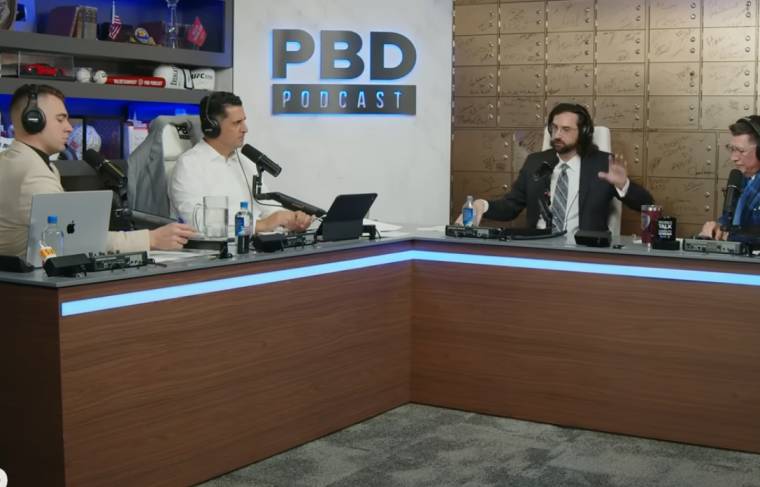
#Trump Buying Greenland? – Geopolitical Shifts and Economic Fallout
Brief Notes: In this high-stakes episode of the PBD Podcast, Patrick Bet-David and the panel dissect a series of seismic geopolitical shifts as 2026 begins, from President Trump’s announcement that the U.S. will receive 50 million barrels of Venezuelan oil to the strategic renewed interest in purchasing Greenland for national security.
The discussion dives deep into the economic fallout of these moves, including the U.S. dollar’s biggest drop in a decade and the administration’s aggressive move to freeze $10 billion in aid over massive fraud probes in states like California and Minnesota. The panel also analyzes the escalating revolution in Iran, where protesters are reclaiming cities and calling for U.S. support, leading to a raw and direct challenge from Patrick to Reza Pahlavi to “close the deal” for the Iranian people. Ultimately, the group explores whether these 3D chess moves against China and Russia signal one of the most transformative and disruptive presidencies in American history.
Opening Remarks
PATRICK BET-DAVID: Alright, folks. It’s as if every day you’re looking at the news, it’s just getting thicker and thicker and thicker. There’s so many things to talk about right now. Yesterday, we had the best strategy kickoff meeting ever in the history of Aided Consulting.
It was all day. It was a phenomenal, phenomenal meeting. We ended up very, very late at night. Those who were there, you know exactly what I’m talking about. A lot coming out soon here. But we got a lot of stories.
We got three of the smartest brains out there in Florida. We were able to figure out a way to do it, then Rob and I decided to join them. We got Brandon, Snyder, and Ellsworth here with us. Brandon, you’re like Madonna. You just have a first name.
BRANDON: Thank you.
PATRICK BET-DAVID: You’re so big. We don’t even have to say Madonna’s last name. What is Madonna’s last name? Nobody knows. You’re like Prince. You’re like Madonna. So just Brandon. That’s good territory.
BRANDON: Thank you. Yes. It’s a great place to be. It’s a great place to be with Madonna. But maybe thirty years ago. But okay.
—
Venezuela Oil Deal and China’s Response
PATRICK BET-DAVID: So this story here, a few things on what’s going on, folks. Trump just came out and said, look, Venezuela is going to give up fifty million barrels of oil to the U.S. And China comes out and says, “Wait a minute. What are you talking about? That’s ours.” So there’s this fight going on.
Remember the keyword that Rubio used: Western Hemisphere. Very soon, Rubio could be the head of state of four different places. He could be running Gaza, Venezuela, and Iran if it goes the way it is going right now with the decisions he has to make. But that guy’s got a very busy schedule. Trump says fifty million barrels is going to the U.S.
And Polymarket decides to refuse paying out bets that the U.S. would invade Venezuela, because of the word “invade.” So that’s a very interesting situation now. It’s getting a little bit technical on how they have to pay out. The keyword: invade. It wasn’t an invasion. They came and took them out.
ADAM SOSNICK: Right? So that’s a question. Did they—well, let’s talk about it.
PATRICK BET-DAVID: Yeah. We’ll definitely talk about it.
—
Greenland Purchase and Other Headlines
PATRICK BET-DAVID: Rubio tells lawmakers Trump wants to buy Greenland. We don’t know if it’s on sale or not. I went on eBay the other day. I didn’t see Greenland for sale. I went on realtor.com, Zillow, couldn’t find it, but maybe they’re on a different website we don’t have access to.
John Harbaugh, for some of you guys that follow sports, did you ever think he was going to get fired from the Ravens? I never thought it was going to happen, but this field goal kicker fired John Harbaugh. If that field goal goes in, I don’t know if the guy’s getting fired. So should they fire the kicker? Should they fire him? Who knows? He says he’s got eight job offers already, and we’ll get into that if we have a chance to get to it.
TOM ELLSWORTH: Kicker. To be fair—
PATRICK BET-DAVID: So what did I say? Did I say it’s a kicker?
TOM ELLSWORTH: Right? No. I know. But I’m saying to be fair, it was a rookie kicker.
PATRICK BET-DAVID: It doesn’t matter what it’s first three, Tom. It’s forty-three yards. I could have gone. Dylan would have kicked the forty-three yard. Now listen, sometime we talk like that, but that’s part of fanning, screaming, and arguing, and it’s a different time.
—
Trump Administration Freezes Aid Over Fraud Concerns
PATRICK BET-DAVID: Prediction markets show rising odds Trump seizes Panama Canal and moves on Greenland, which, by the way, that was the deal with the Hutchinson that China came in and said, “No, no, no. You can’t get those forty-seven—was it forty-seven ports?” And two of them were the main ones that they were going to get. A couple of ports were in Mexico, but the deal was stopped.
Trump administration, ready for this one? A lot of people in Minnesota are not happy about this. Devastated because small business owners are going to be impacted by this. Trump administration is freezing ten billion dollars in child and family aid to five states over fraud concerns. And by the way, you know what they said? Fraud investigation of California has begun. California? What do you mean fraud investigation? It just began.
And NVIDIA CEO says he doesn’t care about California’s proposal for a billionaire tax. “I’m okay with it,” although Bill Ackman has some comments on it and some thoughts on it.
—
Iran Protests and Reza Pahlavi’s Message
PATRICK BET-DAVID: Iran on the brink as protesters moved to take two cities, appeal to Trump.
Reza Pahlavi came out and gave a message to the Iranian people. I’ve made so many new Iranian friends. It’s been incredible. The amount of love I’ve gotten after I called out Reza Pahlavi. The DMs are beautiful. You guys are so beautiful, so respectful. This entire community, it’s been a great experience talking to them.
All I care about is for Iran to be free again. So the people who live there, the people who live in Iran, my goal is to see them be free so one day we can go to Iran and visit the city, the beautiful history that it has. Rob’s been asking about going to Iran for a while.
VINCENT OSHANA: Mhmm.
PATRICK BET-DAVID: And listen, I like to have people’s dreams become a reality. He’s been begging for this for three years. I’m like, “Rob, I don’t know if it’s going to be tomorrow or the next day, but just wait patiently. Maybe it’ll happen.” God willing, it’ll happen here soon.
—
Economic and Market Updates
PATRICK BET-DAVID: Oil and Russia. Something’s going on over there. Did you see the ships are coming in and kind of like, “Hey, if you’re going to come this far, we’re going to come and protect”? They’re worried about maybe the next Nord Stream pipeline. They’re being a little bit paranoid right now, which kind of makes sense because there’s a lot on the line.
White House laser focused on affordability, which is probably the issue we’ll start off with today as Trump softens tariff strategy. The dollar, Snyder, I’m going to come to you on this one. The U.S. dollar set for the biggest drop in a decade after trade war. I know you’ve talked a lot about the euro dollar. I kind of want to hear your thoughts on this as well.
Michael Burry from “The Big Short” says markets are missing a trick as the Venezuela rate just changed the game. What the hell is he talking about? We’ll address that.
Trump warns Iran that U.S. will rescue protesters. What does that mean? In an interview with Wall Street Journal, Reza Pahlavi was asked, “Are you for U.S. intervention to come and help out?” And he flat out says, “We don’t need a single boot of your military on the ground in Iran.”
Now I don’t know if Iranians agree with that. I mean, that’s what he’s saying. I don’t know if Iranians are sitting there saying, “Wait a minute. For forty-seven years, we haven’t gotten a single boot, and it’s not been free. Do we want it? Do we not want it? Do Americans want it?” So there’s a lot of topics there that we can address, and hopefully, we’ll get into it.
—
Additional Headlines
PATRICK BET-DAVID: And then India issues. Trump warns of higher tariffs on India over Russian oil purchases. U.S. dollar set for the biggest drop in a decade. Ackman, we’ll talk about that. U.S. economy expected to grow faster in 2025 despite stagnant job market.
Goldman Sachs says nearly half of Americans feel financially behind as 2025 comes to a close. Chili’s trolls fast food giants with ten ninety-nine burger. Brandon is upset, so we’ll talk about that. And then we got a couple other things going on with Canada, OpenAI, and reports. Netflix. Tom wants to talk about this issue of forty-one percent of Netflix’s shows for kids have LGBTQ community within them.
—
Future Looks Bright Shoe Collection
PATRICK BET-DAVID: Having said that, folks, since September ninth or tenth, even when we went to Aspen, I keep telling you this, I have been wearing the same exact shoes. I’m not kidding with you. This sounds crazy, doesn’t it? It has to be—it’s the only thing that I wear every single day, and I show you every single time. This is on. Future Looks Bright shoes.
We are now seeing this in—I think we just hit twenty-five or twenty-six countries that it’s been ordered in. If you’re somewhere in the world watching this, you haven’t placed an order yet, go ahead. But here’s the Future Looks Bright shoes. Rob, go ahead and play the clip.
[VIDEO CLIP]: When we set out to create a shoe that blends comfort, function and luxury, we had the choice to make it fast, we had the choice to make it cheap. We chose neither. Instead, we chose Tuscany. We chose true Italian craftsmanship, each pair touched by fifty steel pans. We chose patience, spending two years perfecting every detail, and we chose the finest quality at every step. Introducing the Future Looks Bright collection: not rushed, not disposable, not ordinary, rather intentional, luxurious, timeless.
PATRICK BET-DAVID: Alright. So guys, it’s officially on the fourth order. This is how quickly this thing is going right now with people. We were not expecting for a shoe, but it has become such a big hit and the biggest thing is people come to this page and they compare it to the Berluti, Ferragamo, the Zegna, Gucci and you look at the FLB and what it offers with the SuperFoam technology at the bottom of it and the craftsmanship made in Tuscany, Italy at five factories.
If you haven’t placed an order for yourself or your husband or your son or somebody, go place an order. They will fall in love with the shoes. Go read the reviews on the website for yourself, only from people who purchase the shoes and enjoy it. They’ll come back to you saying this is the most comfortable thing I’ve ever worn. Go to VTmerch.com, place your order.
—
White House Focus on Affordability and Tariff Strategy
PATRICK BET-DAVID: And having said that, let’s get right into it. First issue I want to get into: White House laser focused on affordability as Trump softens tariff strategy.
So there’s two stories. Like, “Well, you know, the affordability is just a Democratic hoax. It’s not a real thing. No one’s really dealing with that. It’s just a bunch of BS.” But behind closed doors, apparently, guys, we got to get this affordability thing squared away as we’re going through this next phase.
So the Trump administration is ramping down tariffs for even more goods as the White House zeroes in on its messaging around affordability. The White House announces Wednesday that tariffs slated to kick in Thursday on furniture, kitchen cabinets, and vanities would be postponed for another year.
This indicates that on some level, the White House understands that President Trump’s tariffs are driving up consumer prices and that Trump and the Republican Party are incurring substantial political damage from higher prices, Michael Strange said.
The White House slapped a twenty-five percent tariff on furniture, kitchen cabinets, and vanities in October. Tariffs on furniture were slated to increase to thirty percent in January, and tariffs on the cabinets and vanities were set to increase to fifty percent, but they’re trying to figure out something going on here with affordability. Tom, your thoughts on the story.
TOM ELLSWORTH: Well, first of all, we were correct. We talked about this, and we said that the tariffs, and we said at the beginning of the year, they would be tactics, not taxes. And guess what? All the economists come out so surprised. “Oh, wow. Well, you know, it really hasn’t gone up and hasn’t been as inflationary as we thought.” Even the Fed, Jerome Powell, you know, the short timer who’s about to lose his job, has said that.
And what’s happening this week is the president is talking more about affordability to kind of take the messaging back from the Democrats who keep saying, “Oh, it’s inflationary, inflationary.” If you look at one of the things that was happening this week, it was a bunch of premade construction stuff. These are things that average Americans buy every week? Not. Vanities, kitchen cabinets, higher end furniture. Come on. Those aren’t the things that people are buying every week, and that’s not what tariffs are going to cause inflation.
As a matter of fact, he moved on some agricultural tariffs that were in Italy, and it took the tariffs down to one point two percent on certain Italian pastas. So the pastas that are coming in, it was less than one-seventh of our sales tax.
So what’s happening right now, point one, the president hears these messages Democrats are trying to push on affordability. So now he’s fighting back saying, “Hey, it wasn’t inflationary in the first place. And I’ll tell you what, let me suspend this tariff over here, this tariff here that was on kitchen vanities, cabinets and things that you would use for remodels.” And Americans aren’t really doing that right now. There’s not a lot of remodeling going on. You see the quarterly reports from Home Depot and Lowe’s.
But energy is down. Heating oil is down for the winter. And also, he just did like what he did on the imported Italian pasta, making like a one percent tariff coming over there. So he’s getting the joke that he can’t just say to the microphone, “Oh, affordability is a headline issue that’s being spun by the Democrats.” No. There’s some reality to it because the prices haven’t come back down from Biden inflation.
And so now the White House and the president are out there speaking to it to counter the message of the Democrats. And yes, certain things like Italian pastas came down a little bit.
PATRICK BET-DAVID: Jeff, your thoughts on this?
JEFF SNIDER: Yeah. This is not a messaging thing. And the fact that they tried to treat it as a messaging problem shows that they’re still kind of out to lunch on—
PATRICK BET-DAVID: You’re saying it’s a real thing.
JEFF SNIDER: It is absolutely a real thing. And the original problem here that Republicans had specifically is they came in last year—or the year before, sorry, it’s 2025 or 2026 now.
# Economic Reality Check: Prices and the Path Forward
They came in the year before and said, “We’re going to bring prices down.” Well, in economics, prices don’t go down. That was a mistake to begin with. When prices went up back in 2021 and 2022, that was a permanent change. You can’t go backwards.
Every supply shock in history, prices go up in a step fashion, and then they level off where they are at a new step fashion or the new equilibrium, and they stay there. So what Republicans should have said is, you want to blame Biden for that? Fine. Biden made you poorer. Now we’re going to try to fix it, not by getting prices to go down because they will not go down.
They should have been clear on that. Prices will never go down again. We are never going to see 2019 prices again. So what we’re going to try to do is our absolute best to make sure the jobs market is as strong and as resilient as matching the rhetoric coming from all these different economists in the Federal Reserve.
So that what happens is, what should have happened if we had a strong economy, so you have prices that went up in 2021 and 2022 or back then five years ago, and then incomes rise to, first of all, meet prices and then exceed them.
PATRICK BET-DAVID: What happens first? What happens first? Income cost of goods goes up first, then income rises? What is the typical—
Well, in this case, because prices were forced higher by government action, it was a non-economic—income has to be forced to increase. Income should naturally go if there was an actual recovery from the pandemic and the lockdowns, then incomes would naturally rise over enough time that it would equalize with the prices from 2021 and 2022.
And then exceed them so that even though the cost of a car is now fifty thousand dollars instead of thirty thousand, you have more than enough income to pay for it. And so we all get used to the new higher prices, and it doesn’t become a major problem. But is that happening? No, that’s the problem.
What really happened was prices went up massively in 2021 and 2022, and incomes never caught up. This is what people are talking about when they talk about inflation and affordability. It’s not about the price of a dryer or something that’s gone up in the last year. It’s the price of everything that went up five years ago, and incomes never went up enough for people to claw back on further.
Who’s Responsible and How to Fix It
PATRICK BET-DAVID: So who’s fault is that, too? How do you address it? First, whose fault is that?
It’s the government’s fault. They created the pandemic and the lockdowns. And then because of the pandemic Biden when they did the pandemic and the lockdowns—forget it was also Trump. It was the spending was on both sides. Spending was both sides. The lockdowns both sides.
PATRICK BET-DAVID: Yeah. It was both sides. I mean, you got to blame both sides for this part. On lockdowns?
Sure. And spending and then the printing.
PATRICK BET-DAVID: Who locked down on Trump’s watch? Two weeks to flatten the curve? That was that was in Trump’s watch. Right. The lockdown. But but it wasn’t a—you’re not talking about the lockdown that happened under Biden?
No. The repeated emergency pandemic measures, that was absolutely devastating. That’s where really the price changes came from. Because what happened is you had the economy starting to come back from the lockdowns, so there’s more demand that was rising. But at the same time, supply, the supply side of the economy was hindered by all those emergency measures.
PATRICK BET-DAVID: So got to print more money.
Not money printing. Not money printing. What happened was it’s called a supply shock, which is an imbalance between demand and supply. So you have demand and supply that completely plummeted during—when they came back, demand started to come back, but supply couldn’t. It was restrained. People were home. They couldn’t work. We couldn’t get stuff shipped from overseas.
So demand came back faster than supply. This is basic economics. What happens when demand is growing faster than supply is? The only way to reconcile those is prices have to rise. Think about it as an auction process. If you have an auction where a ton of people show up and there’s only a couple of sellers, the sellers are going get huge prices for it.
So because supply was restricted, that’s why it’s called supply shock, prices had to rise to meet for the rising demand. Now what should have happened, what the government said was going to happen was that we are going to do all these stimulus plans. We’re going to give money to people. And what that’s going to do is that’s going to temporarily stimulate the economy so that the process I talked about, where incomes would start to rise and then slowly over time, they would offset and exceed price changes.
But that never happened because stimulus never really actually stimulates.
PATRICK BET-DAVID: How do you address it now?
How do you address it now is we got to get the labor market back working again, which means the economy needs to hit some kind of equilibrium coming off of that three years ago, four years ago, where it was artificially stimulated in all the worst ways. Now it has to clear out all the bad stuff, including the stuff we’re going to talk about here with fraud.
I mean fraud and government waste was a huge part of stimulating the economy, which is the worst way to try to create a sustainable economic growth pattern. You don’t create growth from waste and fraud and inefficiency and unproductivity. So we got to clean all that stuff out and let the economy start growing. It’s like the same reason why you cut back all your weeds in your garden, all the bad growth, you’ve got get rid of that. That’s what the recession is.
The Role of Energy and Messaging
TOM ELLSWORTH: So there’s a couple of things here. First of all, I agree that there is this cataclysmic jump in prices that happened under Biden. And you can argue whether it started at Trump, but you can certainly look at the charts, and it went nuts under Biden. And there’s a lot of core products that probably aren’t going to be able to come down.
Energy is one where the president can help it get down. I mean look what Biden did. Biden depleted the SPR, Strategic Petroleum Reserve, to artificially drop gasoline prices in the face—
Which never happened. They used the SPR, and it didn’t actually get oil prices to go down.
TOM ELLSWORTH: Correct. But that’s what he said he was doing. Instead, it just depleted it. So—
But again, that’s all just it’s the messaging. It’s we need to do something to appear to be doing something.
TOM ELLSWORTH: That’s not what—correct. Didn’t do anything. What Trump is doing something, and you can look at the price of gas outside of the blue states where they have the artificial cap taxes. Like California has got one point nine zero dollars cap tax on the true price of gas. So you take a look at what you’d pay, say, in Texas, Alabama, even New Jersey, and then put one point nine zero on it, the California cap tax. And that’s why it’s five dollars in California and two point nine nine dollars in other states.
So the President can push down on energy. But this President needs to talk about affordability to blunt what’s happening with the Democrats. That’s the messaging thing. What you’re saying solution, I agree the solution isn’t messaging. But one year, you’re not going to have a thirty percent increase in American income. That is by the way, we keep in the right world as hyperinflation, right? If everybody’s income goes up, then all the companies that pay those—
That’s why it’s a difference over time. What I’m arguing for is that from the President and political perspective is that what they should do is be honest. They should just be honest and say, look, we’re not going to get prices to go back. That’s not how economics works. So that’s we’re not even going to try. That’s not our goal here.
PATRICK BET-DAVID: If you heard the demand, though—do you think any president would say, you know, the other guy did it, and I can’t fix it. I’m not even going to try.
No. That’s what I’m—no, I’m saying is—he’s not saying that. What he’s saying is we need to go in another direction.
PATRICK BET-DAVID: Not your solution? Your saying is we’re officially in a new reality. The new reality is reality is that that fifty thousand dollars a year cars instead of thirty thousand—
So then, but what do you do with that? How do you address the—
You’re not going get the cars to go—
PATRICK BET-DAVID: I understand that. That’s what I’m saying to you. So when you’re saying so is the solution to—the messaging, if you want to go to the messaging, the messaging needs to—
Not messaging. No. And I’m not talking messaging. I could care less about messaging. What I care about is results. I want to find out what do you do.
Strongest job market that we can possibly have. That’s the only way to get out of this is to make sure that incomes grow in a fashion that pays for all of those price changes from five years ago.
PATRICK BET-DAVID: How do we get jobs growing again?
We need a lot of things to take place, but among them is we need the banking sector to be more efficient and actually start making loans again instead of just lending to BlackRock and the most liquid borrowers out there. We need a more efficient banking sector. We need a more efficient monetary system. We also need like I said, we’ve got to get the government out of the economy. The government is the biggest impediment because the government is all fraud, waste and inefficiency.
PATRICK BET-DAVID: I agree with that. But you’ve just—can you hear me?
Yes. Yes.
PATRICK BET-DAVID: I agree with that. But you can’t fix every layer of the lasagna all at once.
So I’m not arguing that we should. What I’m saying is the government should come clean and say, look, we’re not going to focus on prices because that’s a lost cause. They should be honest about that. That’s a lost—prices are never going to go back.
PATRICK BET-DAVID: Prices of what?
Prices of everything. Just general prices.
PATRICK BET-DAVID: Houses?
You saw the article that came out saying with gas prices being where it’s at, Brenna, it’s saving Americans zero five billion dollars—I don’t know if you saw that number or not.
Yes. I mean the wholesale price of gasoline at the CME is one point seven zero dollars a gallon. That’s where it is right now, which is the lowest it’s been in five years. It’s actually not a good thing.
Deflationary Innovation and Core Costs
ADAM SOSNICK: What about the deflationary innovation, though, like the way that like a flat screen TV started off at ten thousand dollars and now say it’s two hundred dollars? So like there’s examples of things going down in price.
Yes. There’s always individual items that go down in price. And tradable commodities can go up and down in price, sure. But we’re talking about goods that usually the economists use the term sticky. This is what sticky really applies to, which means that when prices go up, they tend to stay there.
VINCENT OSHANA: But the things that are killer, though, is like electricity, food, housing. Like, I think those are the core things that people really get upset about if those are unaffordable. And I mean, I think the problem too is like, I think deficit spending in general is a bigger example of what happened during COVID.
Like, M2 money supply chart I sent you, Rob, like this is the amount of money in the economy, and like obviously went up a ton in 2020. But just the fact that we’re spending like an extra trillion dollars per year than what we actually have, like that’s the creation of new money. I know it’s not money printing, it’s like the treasury issuing new debt, but that’s adding new money to the economy. That’s artificially increasing demand. So, of course, things are going be more expensive, and we’re putting more money in the economy every year.
And that’s such a waste of capital too, by the way. Like, the Fed created like an extra nine trillion dollars of money on its balance sheet. So that went to banks. So why aren’t banks using those loans efficiently? Like where are they—are they just sitting on that money?
Yeah. What they’ve been doing is buying U.S. Treasuries because they’re risk averse. So we need risk taking in the economy, which can’t happen because of all this other stuff.
The Banking Consolidation Crisis
PATRICK BET-DAVID: I think the one part that you talked about, which I agree with. Rob, can you pull up the number of banks in the history of America over the years, how many we had and how many we are now? Small banks.
That’s exactly a small bank.
PATRICK BET-DAVID: Just banks, total banks in America. If you go to yeah. While you’re doing that, I’ll look up the reports. But the question becomes of prices. Like you said, you know, flat screen TVs went from ten thousand dollars. You can buy TV right now four, five hundred bucks. I can’t believe how cheap it is right now—
Mhmm.
PATRICK BET-DAVID: —to buy a yeah. So what does it say?
It says four thousand commercial banks in the US, 2020—okay. So let’s just say around thirty nine seventeen according to FDIC. The number of banks peaked in the twentieth century with estimates typically around twenty nine thousand four hundred, thirty thousand four hundred. That’s before the Great Depression. But even at 1980s, we had fourteen thousand banks.
PATRICK BET-DAVID: To go from fourteen thousand banks to thirty nine seventeen, no longer lending money to small business owners to start because the underwriting becomes tighter. They want the bigger deals. They want the bigger business. I can see this happening. I can see this happening.
But, you know, the other part is as well where the incentive comes about, let’s develop cheaper cars. Okay? More cost effective cars. Let’s develop housing that’s going to be more cost effective. How do you do that? Innovation. This is a time where innovation can really lead. But that—go to that chart right there, Rob. Go to that chart right there. Look at that. I mean that tells the whole story right there. The consolidation. Look at that. That’s not good.
The Dollar Index and Economic Reality
PATRICK BET-DAVID: Yes. It wasn’t a contraction. It was a roll up.
TOM ELLSWORTH: Yes. It was a roll up. That’s exactly what it is. It’s all mergers. It’s all mergers. And the consumer wins there. Look how sudden it is from 1980.
PATRICK BET-DAVID: So why, by the way, Jim, it’s the Eurodollar system. Why is that sudden from 1980, though? If you look at the number, it’s the 50s, 60s, 70s, 80s, and then it drops.
TOM ELLSWORTH: Yes. The reason why is because of international consolidation. You have international competition. So we internationalized the monetary system starting in the 50s, 60s and 70s. And by the 1980s, it became hyper international, which meant that you don’t have a small regional bank in local U.S. location competing with other small regional banks in that same location. Now you have large scale banks in Switzerland and Japan and Asia competing with the large banks on Wall Street.
And those are the only banks that they suck up all the money in oxygen. There’s a big bank. What do you do? You buy all the smaller ones. It’s the cheapest way to continue to grow in scale.
PATRICK BET-DAVID: The average person watching this, what can they do? What can they do? What can the average person do?
TOM ELLSWORTH: As far as you’re talking about prices, to fight against this, to make sense for the last time we was here, we talked about invest in yourself. Make sure that you are individually doing everything you can to maximize your own talent.
So whatever prices are doing, whatever the—you’re not affected by it. You are affected by it, but you can better, you’re better able to handle it. If you’re investing in yourself and raising your own income potential, then you can handle higher prices. I agree. Agree.
I mean this is terrible. This is horrible stuff. But I mean it’s the reality. The reality is we can’t change it. We can’t go backwards. So let’s be honest about it and deal with it moving forward.
Your point about wages, you’ve got a couple of things that are going to happen this year, in that you’re going to hear headlines that are more and more talking about job retraining and displacement. And you’re going to hear going to the election, no, the labor market is actually better than people think. But we have some people in the wrong places, and robots are taking over the warehouse jobs. So those people need different training and need to be other places.
You’re going to hear about displacement, geographic labor shortage and job retraining, which is all messages that’s true, but they’re going to be trying to say, hey, better paying jobs are available here, here, and here. Because remember, it’s election year.
U.S. Dollar’s Biggest Drop in a Decade
PATRICK BET-DAVID: Yeah. So let’s go to this. And, Jeff, I’m going to come to you with this one here. U.S. Dollar set forth the biggest drop in a decade after Trump’s trade war. Again, we’re on the same topic, but it’s now the dollar. People are concerned, is there a real issue here or there are not?
Here’s what it means for your wallet, folks that are listening. Okay? So let’s go through it. Here’s what it means for your wallet. Jake, if you need to do your thing, do it now because I’m going to go to Jeff first. Okay?
Yeah. So here’s since January, the dollar index, which measures the strength of the US dollar against six major currencies, including the euro, yen, the pound is down about ten percent. That’s the biggest tumble for the dollar since 2017.
Some everyday products are set to get more expensive. At the same time, the dollar slump could help American companies sell more abroad and even support job growth. Below are cover them in full, economists point to two main drivers behind the slide. Donald Trump, global trade war, and Federal Reserve three interest rate cuts.
The tariffs, the highest since 1930s and averaging around fourteen percent to eighteen percent combined with lower interest rates have made the dollar less attractive to global investors, pushing its value down.
For U.S. shoppers, the most immediate downside shows up at the checkout counter when the dollar weakens, it takes more cash to buy goods made overseas and reiterates usually pass those costs on to the consumers, retailers. That means imported products like iPhones, laptop, TV, assembled abroad are more likely to see a price hike if the dollar decline continues. Clothes, shoes, furniture and even new cars and replacement auto parts can also become more expensive, particularly when their stores from Asia or Europe. Jeff?
JEFF: There’s a lot there. And you’re right in my wheelhouse, too. There’s a lot of misconceptions there. First of all, DXY Dixie is not the dollar index. It’s the one that everybody knows, and it’s one everybody follows. But as you said, it’s basically the euro. It’s fifty seven percent the euro. And the euro has had a good year against the dollar.
But even the overall narrative misses a lot of context. And a lot of context is the dollar had a major spike at the end of last year and the early part of this year. So the base comparison is off to begin with. The dollar isn’t crashing. It isn’t even actually going lower. The dollar is down from extreme levels earlier this year.
What is the dollar actually? You mentioned a couple of factors. Everybody mentions interest rate differentials, Fed policies. Those don’t actually matter. They matter in certain situations like the U.S. Dollar versus the Canadian dollar. But you look at, say, for example, the Japanese yen versus the U.S. Dollar. The Japanese, the Bank of Japan is raising rates. JGB yields are going up. At the same time, U.S. rates are going down, and the yen is weakening. The yen is weakening by a lot.
And there are actually a lot of currencies around the world that are actually weakening by a lot against the U.S. Dollar. What does that actually mean? What does the U.S. Dollar actually tell us? It’s not about interest rate differentials. It’s about monetary flows.
The U.S. Dollar is a global financial bellwether. It tells us when conditions in the monetary system globally are either good and improving or going in the wrong direction. When the dollar goes up, not a good sign. That means that money is becoming tighter and flows are being constrained and restricted.
The dollar surged earlier in 2025. If you remember the chaotic marketplace, they blamed it on tariffs for really a lot of different reasons. But you had the stock market was down in March and April. You had commodities being liquidated. What was the dollar doing during that liquidation, that deflationary period? The dollar was spiking.
So the dollar was going up as we got extreme monetary conditions. Now after things calmed down after April into the summertime, the dollar backed off. It wasn’t crashing. It wasn’t signaling a new paradigm shift that everybody is moving away from the dollar. This narrative of Sell America came up. That wasn’t happening. The dollar was coming back down off of a deflationary extreme. And then it settled down.
And against most currencies, not the euro, it has actually been moving higher again. A couple of notable exceptions, the euro as well as the China yuan. But for most major currencies, the dollar is actually going higher, and they’re going lower, which, again, is not a good sign. It means financing conditions are tightening all over again.
So there is a lot of misconceptions about what the dollar is actually signaling. As far as its impact on the U.S. Economy, there’s this old economics textbook narrative about beggar thy neighbor. You cheapen your currency, it makes your exports cheaper to sell overseas, right? That doesn’t actually happen.
When we see the dollar go up, that usually means that demand is weak overseas to begin with. So even if it’s cheaper to sell stuff overseas when the dollar goes down, it’s not actually a good thing anyway. It means that global economic circumstances in very broad terms are less than ideal and getting worse. So there’s a lot of misconceptions when it comes to the dollar.
PATRICK BET-DAVID: Yes. Brandon, where are at with this?
The Socialist Structure of Money
BRANDON: Yes. No, I agree with a lot of that. And I think a lot of it is like the fact that we’re in like an international contraction, and that’s a lot of it. Like Europe has been raising their rates, and we’ve been cutting our rates. I don’t think we should be cutting our rates.
And I think a lot of it goes back to the fact that, like, don’t think that we’re in a real market based system. We’re in like a, I would almost call it a socialist based system where we have this Board of Governors who is controlling the price of money and the amount of money that’s in the economy. And I think that’s the fundamental problem with all of it.
Like, we don’t have market conditions impacting what the price of money is. We have a group of people deciding what the price of money is. And until that changes, I don’t think that we’re going to get a real healthy functioning economy. Think that’s the, I mean, that’s the root of all that’s not going to change anything. I think it’s the root of all of our problems, though.
Right. You really trace all problems back to the fact that the price of money is the most important thing in the economy. And right now, it’s a socialist structure, how the price of money is determined.
PATRICK BET-DAVID: But do you think that’s going to change?
BRANDON: No. But I think that’s the root problem of—
PATRICK BET-DAVID: Well, don’t get the root problem, but is it going to change is the question.
TOM ELLSWORTH: Tom, your thoughts. So there’s a couple angles here. To kind of just sort it all out for the average consumer, it is good when the dollar is stable because the dollar is what everybody looks to as a, when you hear the words reserve currency or you hear, as Jeff said, global bellwether, a stable dollar stabilizes markets, and that’s good for consumers on both sides, meaning German consumers who are importing our stuff and Americans that are importing German stuff. So a stable dollar is good.
There’s a lot of factors that go into it right now. But there is a simple truth that when we lower interest rates, it does make the dollar relatively less attractive as an investable because the U.S. Government is going to pay you that interest rate if you buy those T bills.
But by the way, you have to remember, we talk all about that the number one owner of T bills is Japan and things like this. But you know what the number one buyer is? I think sixty percent of it is bought by our states, if I’m correct. Bought by individual municipalities and states that have, it’s like Florida has excess money. They buy T bills at that rate.
And so I think the headline, oh, the dollar is going to drop. What Jeff said is very important. It’s like, was it bad when the headline said inflation is dropping from eight percent down to four percent? No, that was actually good news, and it meant that inflation was getting back to historically uncontrollable levels. That’s what happened with the dollars.
So in many ways, Pat, this is a big headline. Oh, the dollar is dropping. Dollar is tanking. And who is talking about this? Daily Mail. Oh, right? The economic experts and the Chicken Littles of the Daily Mail who apparently didn’t have any new pictures of Prince or what his name is now, Montbotten, Citizen Montbotten. And instead, they talk about dollars except for a big drop.
Well, it’s returning to where it was before we had what was that called, April two, Liberation Day?
PATRICK BET-DAVID: Liberation Day.
TOM ELLSWORTH: Liberation when the markets went bonkers. And now everything is kind of coming back to normal. That’s a big issue, too, is that they want to make a politics out of this, right? Time the dollar, if the dollar goes down by a little bit, then it’s, oh, the President is ruining the dollar. We need to get rid of Trump because he’s done the treasury market is blowing up because Trump is doing this and doing it.
You got to separate the politics from it. And they like sensationalist headlines, like one day after a hurricane in Jamaica, tides to drop fifteen feet today. Well, of course, we had a storm surge from a hurricane. It’s literally the same. We had an economic surge in the spring.
PATRICK BET-DAVID: Well, that’s good because you’re reassuring that, that is not a concern on top of everything else that Americans are dealing with affordability. It’s not going to add to the damage and pain that they’re having right now.
The Future of Reserve Currency
JEFF: Can I add one more thing?
PATRICK BET-DAVID: Sure.
JEFF: The reason why this is a big issue and the reason why it comes up is there’s hysterics about the politics of it. And people were naturally asking the question because you hear all the time, is the world going to ditch the dollar? And if they do, what is that going to mean for me? Because if the dollar is ditched, which, by the way, it needs to be, it’s not just a thing about flipping one currency to—
PATRICK BET-DAVID: You think the dollar needs to be ditched?
JEFF: Yes. The dollar system, your dollar system needs to be replaced. It needs to be replaced with—
PATRICK BET-DAVID: And absolutely needs to be replaced. With what?
JEFF: Of something else, hopefully a private currency, but that’s way down the road. The point I’m making is that most people don’t understand what a reserve currency is and what it needs to do. And understanding what a reserve currency needs to do and what it is, you understand why the dollar sticks around as long as it has. It’s not going to be replaced tomorrow. And it can’t be replaced tomorrow.
No matter how much many other people might want to try, it is not happening. It’s not going to happen anytime soon because a reserve currency has to do tremendous amounts of things. And the way that it actually takes place is it would be like the analogy I always use is, say you want to build a new Internet that’s better and faster, but you have to do it from scratch. You have to put in new wires, new hardware, new software. You have to do everything from scratch. That is replacing reserve currency.
Venezuela Oil Deal and Geopolitical Strategy
You have to rebuild the Internet. It is literally impossible. And one thing on that, too, the unfortunate thing about reserve currency is like it’s literally designed for you to abuse the hell out of it. Like the thing called Turbin’s Dilemma, it’s like you basically are supplying the rest of the world with adequate money so that they could interact in the global economy. So like it’s set up to fail within one hundred years pretty much.
Well, that’s where the euro dollar came from. It’s Paul Griffin’s dilemma. Interesting. Yeah. I mean, this just went to a whole different direction, but I want stay on topic with a few you know, hitting eight more stories here. God willing. Okay. Let’s get to the next one.
Trump Announces Venezuelan Oil Transfer
PATRICK BET-DAVID: Venezuela. President Trump comes out and says that the US Rob, do you have the story? I think you had a video on this one as well, if I’m not mistaken. President Trump comes out and says Venezuela to give up fifty million barrels of oil to the US.
“I am pleased to announce that the interim authorities of Venezuela will be turning over around thirty to fifty million barrels of quality sanctioned oil to the US of to the US. This oil will be sold at its market price, and the money will be controlled by me as the president of the United States of America to ensure it is used to benefit the people of Venezuela and the US. I asked energy secretary Chris Wright to execute this plan immediately. It will be taken by storage ships and brought directly to unloading dock in the US. Thank you for your attention to this matter.”
He such an interesting guy. Thank you for your attention to this matter. We just got fifty million barrels, folks. And Trump and his social media posts, it will take so we can the US crude oil crude features fell one point three percent to fifty six point three nine per barrel on the heels of Trump’s announcement.
The announcement came three days after US captured Maduro. Wall Street Journal reported Tuesday that Trump plans to meet with representatives from the major oil companies, Chevron, ConocoPhillips, ExxonMobil, along with other domestic producers at the White House on Friday to discuss making significant investments in Venezuela oil sector.
China’s Response
Now watch this. Here’s what’s interesting. While this is going on, China’s like, wait a minute. That’s ours. That’s not yours. Here’s the ministry of ministry of foreign affairs from China giving their message. Go ahead, Rob.
“The United States has brazenly resorted to the use of force against Venezuela and demanded that America First be applied when Venezuela disposes of its own oil resources. This is a typical act of bullying, a serious violation of international law, and a graving for sovereignty that also severely undermines the rights of Venezuelan people.”
We just wish they would they would thought of it first. Right? “I would like to stress that the legitimate rights and interests of China and other countries in Venezuela must be protected. The United States has long imposed illegal unilateral sanctions on Venezuela’s oil sector and has recently brazenly used force against Venezuela, dealing a severe blow to the country’s economic and social order and also threatening the stability of global production and supply chains. China has already issued strong condemnation in this regard. I would like to reiterate that cooperation between China and Venezuela is a cooperation between sovereign states and is protected by international law and laws of both countries.”
For sure.
Tom’s Analysis of Venezuelan Oil Production
PATRICK BET-DAVID: Tom, how do you feel about this?
TOM ELLSWORTH: Oh, first of all, who is she from? She was from the Ministry of Foreign Affairs, and I thought the Ministry of Foreign Affairs was something that involved Eric Swalwell. It’s well passed on that. Second, here’s something fun facts. Fun facts. Ready for numbers screen?
The total output right now during the naval semi blockade from Venezuela is six hundred thousand barrels a day. That is the output right now. The nominal output when they were under this over the last couple of years, when they’ve got electricity shortages and all the things that the problems they had in their economy, was eight hundred to nine hundred thousand barrels a day.
The logical limit based on every pipeline and the port there’s a Port Jose, and there’s a second port. There’s two main ports is only one point seven million barrels per day. That means if everything was working perfectly right in Venezuela and the ports were operating at maximum efficiency and all the pipelines that go into this huge center geography that’s in Venezuela and this big valley where all the oil is, we’re all working maximum at one point seven.
So what Trump is basically saying right now, somewhere between six hundred and nine hundred barrels a day, for the next ninety days, if he wanted to, he could step on the air hose to China and Iran and only send the oil here.
Now there’s also something very interesting. Venezuelan oil because you’ve heard people talk about light sweet crude and West WTI, West Texas Intermediate, which is the Permian Basin. There’s all different types of oil. And just like there’s different types of gasoline and aviation gas. Well, guess what? Venezuelan crude is known as heavy crude.
And heavy crude needs special refineries who can handle the heavy crude. And would you like to know where the most heavy crude refineries are? And the answer is the United States Gulf Coast, particularly…
PATRICK BET-DAVID: The Gulf of America.
TOM ELLSWORTH: The Gulf of America. Houston Galveston has the most facility in the world to refine Venezuelan oil, almost like the US oil makers knew or were buying from Venezuela all along and had the facilities so when they got that type of crude, they could turn it into the big four, automobile gas, heating oil, aviation fuel, and then all the derivative products that come out of a barrel of oil, the plastics and plastic like items. Right?
So what’s going on right now, there’s only one U.S. Oil company operating at speed, not Chevron, and they’re getting about two fifty million barrels a day. So guess what? So if he’s going to have a meeting in the White House, really, he’s really asking Chevron, are you going to put up more money for infrastructure, number one, because they want to move that well beyond one point seven million barrels a day. They want to get up to two point five million, three million barrels a day. That’s going take pipelines.
And that’s also I won’t get into the technology of it. But Venezuela pumps most of their oil cold, meaning they don’t put steam or other things into the ground to pull it out, like what they do like through the oil sands in Alberta and the shale that’s in North Dakota. They use a lot of heat to go down there, loosen up the oil so it can pull it up.
So what the President is basically saying here is like, you know what? China, you were skimming out the back door a couple hundred thousand barrels a day, and they needed it. So Trump’s going to put a stop to that. So China is going to have not have access to that. That’s the power move. What a move.
And then never mind, Iran, what’s going on over there. And now he wants to take it, but he wants to pay the he wants Chevron to pay the people of Venezuela. He wants to get up to two point five three million barrels a day, but he wants the people of Venezuela to be paid for it.
You know why that’s good? Every time we try to rebuild a country, who pays for it? We do. We gave all those contracts to Halliburton when we were rebuilding the Middle East after wars, right? Well, guess what? They came out American taxpayers.
Well, now this is, hey, we have regime change. We have some government we like. There’s going to be some bumps in the road. This is all going to go there, and we want their country to get the money for their oil so they could rebuild themselves. Now sure, there’ll probably be a lot of American contractors down there wanting to get paid to do it, but it’ll be money that comes that way. And that is the story of Venezuelan oil.
Strategic Connections: Venezuela, Panama Canal, and Iran
PATRICK BET-DAVID: I how much of this do you think like, I almost want to think about how much of Venezuela of what happened with Maduro was singular and how much of it was a process of sequencing because of the ties Venezuela could have for America to get access back to the Panama Canal because the Panama Canal, if I was to write a priority, Tom, and this goes to all of you guys, question for you.
You’re the President, Trump administration, you’re sitting there. Ten issues, Rank importance of some of these issues. Which one’s more important than other? Ready? Maduro being captured. You got Iran regime changing, because of how chaotic it is and you know how they call them the Middle East. What do they call it? There’s a word for that. They are the agency of terrorism in in the Middle East. You hear a a comment like that.
TOM ELLSWORTH: Yeah. Sponsors.
PATRICK BET-DAVID: Sponsors of terrorism in Iran. Okay. Alright. Money and influence. How about Panama Canal? If let’s just take those three. Of those three, which one do you think is number one most important to U.S? Panama Canal, Iran, Thai Panama Venezuela.
TOM ELLSWORTH: I would say the canal because once you get the canal off of Chinese influence, so they needed the canal, and they also needed the metal in Venezuela because that’s how they get the oil.
PATRICK BET-DAVID: Perfect. So then China is the one that stopped the Panama Canal deal with Hutchinson. Right? Right. They get him, but they told the guy he couldn’t sell his shares. So do you think this is their way of saying, no problem. You want to do that. We’ve been allowing you to come and get all this oil from the Western Hemisphere, Venezuela. Here’s what we’re going to do to you. Go ahead. Now what do you want to do?
VINCENT OSHANA: So is he going to use this as as a leverage on the tariffs with China? Because I know they’ve set it up. You know, they’re like, now we’ll renegotiate the China stuff in ninety days or a year or whatever. They they kind of put it off. But do you think this is one way of getting the Panama collect? If all of a sudden because look what happened right there. Look at the date. And look at what happened with the percentage increases chances going up. It went from thirty to forty percent. What caused that? Venezuela. Why does the Venezuela event increase the chance? So there’s some ties there between the two. What do you think, Jeff?
Strategic Chess: Multiple Goals with Single Actions
ADAM SOSNICK: I think these are all related. I think these Trump has this image among certainly his detractors. He’s some kind of buffoon, right? They are playing strategic chess here. Everything they’re doing is not it’s not like we’re going to get Maduro because we want a regime change in Venezuela. They’re getting Maduro because it’s the most efficient use of resources because it accomplishes four goals at once.
PATRICK BET-DAVID: That’s the first domino.
ADAM SOSNICK: Well, yes. I mean if you look at what they’re trying to do Iran plays in this, too. How do you mess with the Chinese? Well, you get them distracted over in the Middle East and having worried about all the stuff that’s taking place over there. Is Iran, which is an ally of China, are they solid enough? Are they going to be a solid Chinese ally in a couple of months maybe?
And this goes back to why did the U.S. Strike the Iranian nuclear facilities? Well, yes, again, more than one goal was accomplished in that strike. First of all, it set back the Iranian nuclear capacity, but also showed to the Iranian people that the Iranian military is toothless. They had Israeli planes and U.S. Planes loitering over the country for, was it, weeks on end?
PATRICK BET-DAVID: Yes.
ADAM SOSNICK: And they could do exact they were taking out Iranian leaders. It was sending a message. And it wasn’t sending a message to just the Iranian people. It says, look, these leaders aren’t as powerful as you think it is. It was a message to China. Look at what we can do. Look what we can do in Venezuela.
And by the way, Venezuela is hyper strategic. And it’s not just about Venezuela. Venezuela, as you said, the next step toward reasserting dominance on Panama Canal and a whole bunch of other stuff that we probably don’t even know about.
What I’m saying is I think the Trump administration doesn’t act on simplistic impulses and irrational emotion as people have to The miraculous things that out to be Yes, it’s not. There’s there you can see there is definite strategic planning going on.
PATRICK BET-DAVID: So let me ask you, if they’re saying Western Hemisphere, right? Look, this is the Western Hemisphere, the Monroe Doctrine. Right? Eighteen hundred Monroe. So so so Western Hemisphere. Western Hemisphere. Western Hemisphere. Well, then somebody could say from China, well, then why do you care about Iran? Or do they? Are they leaving it out there? It’s interesting, right, when you think about it. But what are your thoughts on the story here with Venezuela?
Venezuela as Economic Opportunity
VINCENT OSHANA: No. I I think it’s it’s a huge opportunity just for the world in general because, I mean, there’s a time where I believe Venezuela was number four in terms of overall GDP, and it makes me think of when the Soviet Union collapsed that if you handle this thing correctly, then you could open up that whole country back to the world as a new market.
And you have to be careful with managing it too because I think, like, when the Soviet Union collapsed, we kind of mishandled it. We let the CIA let the oligarchs take over, and then the resentment from the country to that led to Putin being in control.
So I think if this is done correctly, it could be a beautiful thing. It could it could kind of get that communist virus out of South America because the cold communist spread across South America started with Cuba, then it went over to Venezuela.
The Venezuelan Oil Seizure and Global Implications
Now it’s gone over to Colombia. So they could start extracting that and kind of a spirit from South America. That’s a big thing too.
Now while we’re on this, it’s interesting because have you guys been following the whole Russian tanker that’s been followed by US? Oh, yeah. The last week?
US sees Venezuela linked Russian flagged oil tanker after weeks long pursuit. Rob, go a little bit lower to look at this because the timing let’s just look how beautiful the ship is first. Take a look at that ship. Okay. Brand spanking new gold, a little bit lower.
Great condition. Great condition. Just had it detailed. Much oil was it leaking along the way? U.S., well, climate change, we got to take care of that.
So U.S. seized a Russian flagged oil tanker that was being shadowed by Russian submarine on Wednesday after more than a two week long pursuit crossed the Atlantic as part of the U.S. blockade of Venezuelan oil exports. This appeared to be the first time in recent memory that U.S. Military has seized a Russian flagged vessel.
The operation took place after the tanker originally named Bela-one, great name, slipped through the U.S. Maritime blockade of sanctioned tankers in the Caribbean and rebuffed US Coast Guard efforts to board it. The seizure effort was first reported by Reuters. It was on ex military European command says that Trump administration has seized the vessel for violating US sanctions.
The blockade of sanction and illicit Venezuelan oil remains in full effect anywhere in the world. The US official who were speaking on the condition of anonymity said Wednesday, operational near Iceland was being carried out by US Coast Guard, and US military coast guard did not immediately respond to request of a comment. Go a little bit lower to see if the Russians have said anything about it. There’s no immediate comment from Russia as well. Interesting.
TOM ELLSWORTH: Well, first of all, what I my favorite line of the whole article there was, was being shadowed by a Russian submarine. In other words, we knew that or we figured that out. And I think it goes to the technology advantage that we had when we went in and got Maduro. Remember, nobody we didn’t lose any equipment. We didn’t lose any guys. We didn’t have like a massive firefight on the ground that somehow involved also civilians accidentally. We went in. We closed our eyes in and out.
And now they’re saying, well, it was being shadowed by a submarine. And can you see the Russians? Wait. They know we’re here. Can you see if there’s an image of it, Rob? Can you see if there’s an image of the submarine Russia Venezuela? I thought I saw one. I thought I saw one on X as well. Yeah. If you type in submarine oil Venezuela shadow submarine. Yeah. I mean, it might have been a stock photo, but it could have been.
I mean, nowadays, anything is AI. See if there’s anything there with the submarine. No. Is there no? No. Because if it was never really seen, but we knew it was there, then we leak to the media to tell Putin, dude, we know you’re we know you’re following us. Mhmm. Mhmm. Again, that’s the point. Right?
I mean, the reason why they took this tanker is is actually about India. Is really about India. What’s that right there? Let me read the top what it says. Russia dispatched a nuclear submarine to escort a tanker attempted to reach Venezuela. The tanker was already harassed by US Coast Guard. Moscow is moving to guarantee its safe passage through the Atlantic in recent US piracy. And who’s saying that? Is that the submarine? All the stuff I’ve seen is not said that it is the sub. Yeah. I I’ve not seen if it’s out there, I’d love to see it, but I didn’t see anything that talks about, oh, here’s the picture of them both pulling over for lunch. Yeah. Didn’t yeah. I thought I saw something, but it could have been AI that he said.
PATRICK BET-DAVID: Jeff, where are you at with this?
VINCENT OSHANA: I think this is about India. Again, multiple goals here. They seized the tanker, say you are violating sanctions. We’re going to enforce sanctions. Who is the biggest buyer of Russian oil right now? India. India. So they’re saying, look, you guys are continuing to buy sanctioned Russian oil, and there is a ton of it floating around the world right now. There is a massive amount of seaborne oil at sea inventories.
And so what they’re saying to India is, look, we’ve tolerated it. We’ve we’ve let it happen. We’ve, you know, we’ve we’ve talked about it. Yeah. We’ve given you warnings. Now we’re actually going to act on it.
Rob, what’s this? This is president Trump aboard Air Force One where he talked about sanctions against India for purchasing Russian oil. Go forward.
PRESIDENT TRUMP: They wanted to make me happy, basically. He wanted Bodhi’s a very good guy. He’s a good guy. He want he knew I was not happy. And it was important to make me happy. They do trades. He’s raising the capital. We can raise tariffs on them very quickly and and be people are afraid of—
PATRICK BET-DAVID: Is that Lindsey? Who is that to the left?
It is. Man, he looks like he he looks different from a profile. Like, he doesn’t look like himself. But there’s a story here, Rob, if you want to go to from CNBC. India state owned refiners keep buying Russian oil even as New Delhi seeks U.S. Tariff relief.
So let me get this straight. You’re coming to ask for relief, yet you’re still buying. If you want to go to that story, Rob, state owned refiners in India are still buying Russian oil. The U.S. imposed a secondary twenty five percent tariff on Indian goods in August, citing New Delhi’s continued imports of Russian crude.
Washington also sanctioned Russian oil companies, Luke Oil and Rosneft in late November. On Sunday, Lindsey Graham claimed that India’s US ambassador Vinay Mohan Khattara had asked him to urge president Trump to lift these tariffs, arguing the new Delhi has reduced its purchase of Russian oil, while India’s overall demand for Russian crude oil fell in December.
Analysts say the decline was largely driven by reduced buying from Mukesh Ambani owned Reliance Industries, which had been a major importer before the U.S. Sanctions on Luke Oil and Rosneft took effect in late November. So there’s there’s do you have a video on this, Rob? I it it I do. It’s just the president again talking about Modi here. Is it the same thing? Or it’s a different speech, but he just talks about Modi and the Apache helicopters that India purchased from him. But he’s not talking about oil? No. Okay.
Brandon, your thoughts on this.
ADAM SOSNICK: Yes. Think about what could be done here. So Russia and, you know, when we talk about going after the the core the the nucleus of somebody’s power. Yep. Like, thirty percent to forty percent of Russia’s GDP comes from selling oil. So it’s already hurting them that oil is down from seventy dollars or eighty dollars a barrel to like fifty six dollars now, which I almost think the market was anticipating this takeover of Venezuela with what oil prices have been doing.
So what could be done now where India buys like thirty percent of they represent like thirty percent of Russia’s oil buyer. So now could we start selling Venezuela’s oil to India to offset that if we want them to stop buying Russia’s oil? Because if we chop away at Russia’s oil demand, then that decimates them. Their GDP is already going down because of the lower price in oil and the lack of buying pressure from countries. Because it’s really just China and India that buys Russian oil and Iran a little bit.
But if Iran falls, if we have Venezuela’s oil, then really we have the biggest oil producing countries in the world, like, at our mercy. You know what I mean?
PATRICK BET-DAVID: Yeah. But you know what this is doing? Let me tell you what it’s doing. And and this is the feeling I’m getting, and I I’m really curious in how he’s going to react. I think he is fully suffocating Putin. Yeah. I think he is fully suffocating Putin to the point where you ever gone into a fight and a guy is choking you and you’re willing to do anything and everything to get out of it or else you’re going to pass out. Yeah. And you do something really dumb and reckless. Mhmm.
What’s Putin’s next move? Actually, think about it. Another submarine? No. But, really, what do you do next? And so let me get this straight. So it’s like, okay. Okay. Alright. So you’re putting sanctions on, you know, EU and whatever. I’ll do business with India. No. You can’t. Alright. Iran keeps sending me drones so I can attack Ukraine. Nope. Decimate Iran so they can’t so now I can’t buy drones from Iran to attack Ukraine? No. Okay. So let me go to China. China can’t get the oil from Venezuela now.
What so now the he is he is so cornered right now, Putin. Yeah. In such a way that Putin is probably sitting there saying, man, I miss president Biden.
TOM ELLSWORTH: But you notice how he’s doing it? Very slowly, incrementally. It’s almost like, you know, just tightening the noose a little bit at a time. Yeah. So you don’t really realize it. The right sequence thing. But I but I I don’t know about whether he’s not realizing it. Here’s here’s the question. Well, I think that’s just the whole submarine story.
PATRICK BET-DAVID: But, Jeff, here’s the question, Tom. I’ll come to you here. Do you think he’s do do you think he stops this aggressive? Like, what’s more important to him? Do you think he would allow all of this stuff to happen and get behind Putin and support him to open up business again if Putin flat out just comes out and gets it over with with Zelensky? Yeah. Do you think that would put a stop to all of this, to a lot of this?
VINCENT OSHANA: I think that’s the two the carrot and the stick, right? The carrot has always been stop the war in Ukraine and join us and let’s do a lot of business. We’ll buy all your oil again. The stick is we’re going to slowly strangle you, and there’s nothing you can do about it. How much worse does it get than this? I mean, of course, there’s different levels of worse, but Putin can’t breathe right now.
I think the goal here for Putin, what he really cares about is remaining as president of Russia. So if Trump can undermine his power base, he ends up like Maduro. I mean what else is he doing right now?
Brandon, go ahead.
ADAM SOSNICK: Yes. No, I just think it still goes down to who’s going to break first and kind of comply with us more first between Russia and China because we need one of them to be more friendly with us than they are. We need one of them to turn against the other. And ideally, it’d be probably better and easier to get Russia to turn against China with us.
PATRICK BET-DAVID: I don’t I don’t I wouldn’t be surprised if they do something very reckless right now. Like, I wouldn’t be surprised if if China all of a sudden does something to Taiwan. I I wouldn’t be surprised if—
Said. Who said that? Michael Burry. He said he he said, watch the we just had Preston for a playbook for what China can do to Taiwan. Like—
Oh, I I think if he said that, I think I wouldn’t be surprised if that picture on the can can I read that? Is he said that? Says Marques from his centric as Venezuela. Is that part of the article? Yeah. It’s the one that we were going to do. Okay. So let’s go to it. Let’s go to that story. What page is that on? Paragraph. That’s a summary statement at the end. What page is that on? I want to go to that story. Michael Burry is page seven. Page seven. Okay. Let me go. Boom. Boom. Boom. Okay.
Michael Burry’s Warning on Venezuela and Taiwan
So Big Short, Michael Burry says markets are missing a trick as the Venezuelan raid just changed the game. K? And to me, it’s not even the Venezuelan game. Well, it’s kind of geopolitics. Yes. That makes sense.
So Michael Burr says, S. And Raido Venezuela is much bigger than the markets here. The big short investor said, who recently pivoted from running a hedge fund to writing on Substack, publishing a post nearly early Monday, saying the game just changed in the mid to long term, and markets are not pricing in all that they may of this weekend’s events. This is a paradigm shift despite the markets yawning. He later wrote on X, Benchmark oil prices climbed less than one percent on Monday, and U.S. Took futures opened higher.
After the US captured the president Nicolas Maduro over the weekend and president Trump, America run the oil rich country. The seizure was a shot across China’s bow, Burry wrote, pointing to billions of dollars on loans that China has made to Venezuela under its belt and road initiative, which were collateralized using future oil output that is now in the US sense.
The investor who shot the fame after the president bet in two thousand housing bubble was featured in a book, The Big Short, wrote that China may now have a blueprint for how to take control of Taiwan, but must be in awe of Trumpian America’s infuriating gull and decisive power.
Burry said that China stock strike him as somewhat riskier now in terms of running afoul of sanctions. He wrote that Alibaba, Baidu and other potential sanction targets could be in for some volatility of China escalates.
PATRICK BET-DAVID: Yes. I think something is going to happen. I think one of these big things could potentially happen because you are literally suffocating these people right now. Go ahead, Brandon.
ADAM SOSNICK: Yes. I mean when it comes to what’s more strategically important between Venezuela for us or Taiwan for China, I mean it’s probably Taiwan that’s more strategically important. Like it’d be a bigger blow to the U.S. If China successfully took Taiwan than the fact that we took Venezuela, right? Was it seventy five percent of our semiconductors come from there?
Trump’s Strategic Moves: Venezuela, China, and the New Cold War
SPEAKER: Yeah. So I think that’s a bigger asset if they were able to take it. I don’t think they would be able to take it even if they used the full force of their military. Like they’re not capable of doing what we did just because of the way Taiwan is set up.
We’ve done videos before in the past of like how harsh the conditions actually are for the Navy to go across and take it over. It’s like a mountain in the middle of the ocean. So I don’t think they’d be capable of that. And if they did try to do it, I think we would try to get close with Russia really quick and stop selling China oil. Like China is extremely dependent on oil from other countries.
So for that reason, I don’t think they’re just, I think they want to. I don’t think they’re capable of doing it, though.
SPEAKER: I think what Burry said, it’s not about oil here, at least in this one respect. What he said was that through the Belt and Road Initiative, China has lent billions of dollars all over the world. And with Venezuela, it was collateralized by Venezuelan oil.
Trump just took their collateral, which means those loans are worthless because, let’s face it, Venezuela is not going to pay them back. And China knew that when they extended the loans. That’s what China does. It extends loans to these countries that they know that they can’t pay back, intending to either take the oil as the collateral or some other form of collateral, usually it’s facilities like a railroad or a dam or some kind of mine.
So what Trump said is, okay, I see your Belt and Road initiative, and I’m going to take the initiative and stake the collateral right off the board, which makes that loan and your entire effort in Venezuela worthless. Again, it’s a piece on the chessboard that it’s a pretty damn big one.
ADAM SOSNICK: Yeah. Yeah. The economic hypnian principle, they took that away from like, they took away the resources want, though? He has to want something.
VINCENT OSHANA: Trump or Xi?
ADAM SOSNICK: Trump. What does Trump want?
PATRICK BET-DAVID: What does Trump want? I think he realizes that this is Cold War two. Let’s be honest about this. China is not a what is it called, strategic partner? Rival or whatever they call it. No. This is Cold War II, and it has been.
Why did they leak that story from, what was it, New York a couple of months back where they had all of those SIM cards in a room that could just basically fry the communication grid in New York? Why did they leak that? To say that, look, we are kind of at war with China.
Why have the Chinese been buying farmland next to air bases to do what the Ukrainians did in a first strike to launch a drone attack to take out the U.S. Air power? Is this one you’re talking about?
So what I’m saying is that the Trump administration at least realizes, even though they don’t want to say it explicitly, this is Cold War II. So we need to think Cold War II. Where’s the Monroe doctrines coming from? It’s the execution of that strategic realization. We are in a cold war with the Chinese. And the worse it gets for the Chinese system, the more likely it turns into something that gets really bad.
The Three-Dimensional Chess Game
TOM ELLSWORTH: What I think what people need to look at is what you’re talking about, is this is really three-dimensional chess. Venezuela is not about Venezuela. Right. It’s not about Marxism in the Western Hemisphere, although they want that. That’s sort of like a benefit. Right? Right. They love, you know, I think that there’s a part of Marco Rubio. And Marco Rubio is the guy whose desk this whole thing really sits on. This isn’t the Department of Energy.
This is sitting on Marco Rubio’s desk on three-dimensional chess because it is the blow against Russia. It is the blow against China and their collateral. It is taking back the hemisphere. It is a blow for against Marxism. And the U.S. mainstream media wants to talk about, oh, it was illegal to go in there, and now the greedy all the greedy energy companies are going get the oil.
Wait a minute. Only Chevron’s in there materially benefiting right now. And Trump’s inviting everybody else. Would you like to invest in Venezuela? Would you like to? Yes. Would you like to spend billions of dollars for people who are to with your money and then pull the oil out and then pay the Venezuelans for the oil out of their country.
So when he stabilizes Venezuela, the phrase that we all want to look at here is very simple, on our terms. And this is all related to the Cold War. He wants China to be a trading partner on our terms and not manipulating Venezuela. He wants Iran to be not in this hemisphere on our terms. Is there something for them to trade on oil? There’s a deal to be made if they’ll do it on our terms and only go over here and not over here.
And now he also has an impact on Russia, who is basically like the credit card in the middle of this. They’re the transaction guy in the middle of it. And now he’s like saying, no, no, no. Transactions don’t go through you. And he said, wait. How am I going to make any money? What’s kind of the point? You got to ask me for permission.
And by the way, how important was it? They sent one of their own subs to shadow one tanker. We’re not talking about a pipeline. We’re not talking about that. That was a tanker loosely in loose, yes, an old jalopy tanker.
So this is all about the three-dimensional chess game on our terms. And I think history is going to look back on this and see just how big of a deal it was. And I, you know, and I’m out and saying that this is Trump and Rubio, and we’re going to look back on this on one of the most amazing times, not just getting Maduro, but all the six months that are going to go around this, that it is going to be tremendous.
PATRICK BET-DAVID: Yeah. For the folks that are watching out there, this place is twenty-two degrees in the podcast room, and I think they do this on purpose for us to be do oil in a heater right over. It’s it’s it’s you have to be here to see what it feels like.
But it’s it’s it’s I agree with what you’re saying on how unique of a time we’re living in for this many things to be moving. We’re going to look back on it. Yes. You think about if the big if is if they can pull it off. Think they could pull it off because they have so much leverage right now, Jeff.
The amount of, but we have we have not yet seen the Chinese and Russian retaliation. Not retaliation, but them realizing it’s sort of like, do they know what Trump knows that they know that the Trump knows? Do you think they’re not paranoid? Do you think do you think?
TOM ELLSWORTH: Well, I think that’s why Trump has had to establish these precedent by question of saying. By nature, by DNA in nature, who do you think is naturally more paranoid? American leaders politically, Russian or Chinese?
VINCENT OSHANA: Chinese.
TOM ELLSWORTH: And then second is who?
VINCENT OSHANA: My brother is the probably Chinese.
TOM ELLSWORTH: That’s right. So so you don’t think they’re sitting there wondering, knowing what he’s doing? I think I don’t think they’re delusional.
ADAM SOSNICK: I do. I think they are. I think that the Chinese have been following the caricature that has been printed about Trump. And I think that’s a lot of intelligence is really just regurgitating all these mainstream ideas. And I think what’s happened is they have vastly underestimated, first of all, his resolve but also his strategic planning as well as the ability to execute on the strategic planning.
So I think the Chinese have yet to fully comprehend what’s taking place. There’s no way to respond to are sitting there mapping out and saying, these are the twenty-two things he could do. You got to remember, this is a communist regime. They’re not exact. I mean, the image of the Chinese as these long planners who are thinking one thousand years ahead, no. These are communist bureaucrats. They are thinking about tomorrow. They’re not thinking about one thousand years ahead.
PATRICK BET-DAVID: I don’t know about that. I don’t if I agree with that. They’re a little bit more longer.
ADAM SOSNICK: They don’t have a thousand minutes to ten.
PATRICK BET-DAVID: By way, think ten minutes. Yes. I know if they when they said the whole made in China 2025, remember how by 2025, they wanted to be able to take over the world, and they’re going to be the biggest thing. And when they announced it, you know, and then COVID happened. So to me.
ADAM SOSNICK: Yeah. But those are the five year plan.
The Risk of Desperate Moves
PATRICK BET-DAVID: If Xi is sitting there behind closed doors seeing what’s going on, my concern is with the amount of suffocation where you cause people to see how much control they’ve lost, they make desperate moves. Like COVID. Like COVID. And desperate moves could be massively retaliatory and all of a sudden you’re like, wait a minute, what just happened?
Or if you want to be positive, that’s exactly what the Trump administration is counting on. Why? Because then they could use a desperate move on the part of China or Russia or whoever it is they think as their next step. Now we’re justified in taking it up a notch because the Chinese did this, and they expect.
VINCENT OSHANA: Perfect. A question for you. What’s up a notch? I don’t know. I mean that’s Rubio in terms of pressure? All what’s up a notch? Yes, yes. What’s next?
ADAM SOSNICK: Sorry. So putting enough pressure on Russia. They’re distracted with Venezuela. Let’s get Taiwan now. Let’s make a desperate move. Let’s do a naval blockade. Let’s do an economic supersanction. I mean you see what I mean?
Would China now do I think they put boots on the ground and go on Taiwan? No. But would they maybe move three chess moves ahead, thinking that the rest of the world is distracted by Iran fall or not fall and Venezuela and what we’re doing and Putin, what he’s doing? Would China take advantage of that and make like three big chess moves on Taiwan? I think so.
VINCENT OSHANA: What is it the leverage the Chinese have? What is it they have that they could use as leverage? There’s really I mean manpower? Manpower. I think more of an economic thing like manufacturers.
ADAM SOSNICK: Yeah, where they need rare earths for basically anything that has to do with modern electronics, but maybe they start restricting rare earths.
TOM ELLSWORTH: Well, it’s just the refinements of rare earths. Like we just don’t have the refining capacity. We have rare earths. It’s not refinement. It’s not easily easy to get right. So I mean so Trump is already sort of like ahead on that part, saying, okay, we’re going to start building our capacity, so we’re going to take away the Chinese leverage before they can even use it.
ADAM SOSNICK: And their biggest asset is getting the discounted oil from Russia and Iran. So if Iran suddenly falls and Russia has enough pressure on them to stop being so friendly with the oil they give to China, then China is really in a stranglehold where they stop getting the cheap Russian and Iranian oil. Because that’s like China’s nucleus is the ability to get cheap oil from Iran and Russia.
Rubio’s Rising Influence
PATRICK BET-DAVID: Yeah. I mean, you know, the the the this is the other question as well that we talked about on the podcast on Monday. It’s very obvious that Trump is relying on Marco a lot more than he’s relying on JD to get things done. It it it seems as if the second most powerful person on his team is not Vance. It’s Rubio.
And by the way, if Rubio’s in more of these meetings doing the deals, world leaders are now accustomed to who? Rubio. Rubio to be doing that, which means they’re kind of sitting there saying, we either want this guy in 2028 or we don’t. But if Vance is not in those rooms building those relationships and Rubio is, it may be Rubio’s turn in 2028 and then Vance’s turn maybe in 2036.
TOM ELLSWORTH: You know, you bring something interesting up. I was watching the the weekend news shows, and Rubio wasn’t out there like a proxy just giving the administration’s talking. He was processing points and responding to report points. Do know what I mean? Yeah. For it was very different from the senator from Michigan. I support what the administration has said about this, this and this. And I think he’s doing a fine job, and I think you’re full of crap. That’s a proxy out doing the talking point.
Rubio was going, no, no, no. You don’t understand. A, B, C, this is how we’re going to be. And he was really there putting the processing down that impressed me.
PATRICK BET-DAVID: Okay. Let’s go to the next story. Bill Ackman slams California tax wealth tax as expropriation of private property. Okay. Is there a clip on this, or is it a tweet?
VINCENT OSHANA: It’s a tweet.
PATRICK BET-DAVID: Okay. Let’s go through. Oh, we already talked about this from December twenty-ninth. Why is the story on January fifth, though? Why is it showing the some the story is here? Let me see this. Boom. Boom. Boom. Boom. One billion dollars, five percent tax. California, we talked about that already. Right? I thought it was a newer story that he brought up. I’ll I’ll skip that story. I’ll skip that story because I thought it was a newer one. And we covered that one right there. We covered that one right there.
New York’s Homeownership Crisis
Usually, a senior and a half Americans. Which one’s going to be BYD? Tesla China, boom. Okay. Here we go. Homeownership rate in New York is the absolute lowest in the US. Think about it. Lowest in the US.
Trump’s Push to Acquire Greenland
PATRICK BET-DAVID: New York? Yes. New York is the lowest in the US. When you look at this article, Rob, I don’t know if there’s a chart for the other ones because I’d want to know who is the highest, if New York is the lowest, if we can pull that up.
Homeownership, long viewed as a cornerstone American economic security, remains stubbornly out of reach in New York state. By the end of 2024, the Empire State posted the lowest homeownership rate in the country with just 51.3 percent of residents owning their homes.
The report places New York at the bottom of a national ranking and highlights how sharply the state diverges from much of the rest of the country where owning a home remains the norm rather than the exception. The study conducted by Stage Properties Brokers, LLC tracked quarterly ownership trends across fifty states throughout 2024 using a single most recent full year available data. The rankings were determined by the state share of each state’s population that owned a home in the fourth quarter year, capturing not only where the state ended the year, but also how ownership levels shifted over time.
In New York’s case, the trajectory was flat to down, reinforcing the state’s long standing reputation as a renter heavy market dominated by high prices, limited inventory and dense urban housing stock, particularly in New York City. Who was at the top, Rob? Does it show you who was at the top or no?
ROB: No. Can only find a chart that was from 2022, but nothing for 2024.
PATRICK BET-DAVID: Tom, where are at with this? Why does the story matter?
TOM ELLSWORTH: So what I think it points out is that New York was already difficult for people to actually own a house. And what’s interesting, in blue states, for the property taxes higher, people forget that there’s hidden costs of homeownership that people don’t see first time homeowners don’t see right off the bat. And that is the property tax that you have to pay. Usually, December 20, everybody gets a property tax bill. It’s usually due by January 20 or something like that. And that is based on the price of the house.
So if the house is more expensive, not only do you need a bigger down payment, not only do you need a bigger mortgage, now you need you’re paying more property tax. And because the value of the house is up, now the insurance is more to insure that house if you have to rebuild it because of fire or loss or storm, whatever it is. And so blue states grab all those headwinds. It all adds up to being much more difficult to actually own the home. And that’s what we’re seeing in the bluest of blue states, which is California, but it used to be New York, but they’re right there at the top two. Now it’s difficult.
So what do I make of it? It’s failed economic policies. You could also take a look at all the blue states and the cost of electricity per kilowatt. I found a chart yesterday that was talking about that, and it was blue states were doing that too. So now it’s also the bigger your house is, the more expensive the electricity is, so more expensive to run the heaters and air conditioners.
And so I think this shows that when you’ve got more reasonable governors that are out there trying to set the stage to help people own homes, it starts with moderated enough supply so that the price is in line and then property taxes that are reasonable. And then both of those things kind of contribute to insurance being more reasonable. This basically takes it away from being just a verbal headline to being a fact based, you know, allegation here where the evidence backs it up. It is more expensive in a blue state to own a home and fewer people. Shows it. All the blue to the left, all the red to the right.
PATRICK BET-DAVID: And by the way, as I’m going as I’m going closer to this list, here’s what I noticed. The lowest lowest is New York, then it’s Massachusetts, then it’s Rhode Island, then Hawaii, California, Nevada, Connecticut, Alaska, Jersey, Oregon, Massachusetts. Now if you go to highest, which is around 80, 80, and 81 percent, West Virginia is the highest, then Mississippi, Delaware, Vermont is blue-ish, Maine, New Hampshire, Idaho, Michigan, Pennsylvania, Minnesota.
By the way, Florida ranks as fifteenth state for highest homeownership, 69.45 percent. West Virginia is 80 percent. New York is 50 percent, 51 percent when you look at that list. So Florida is still on that list for lifestyle over some of the other states. Jeff, your thoughts on this?
JEFF: Yes. I mean the reason why West Virginia is at the top is because of the value of houses are much lower there, which is good and bad. But New York, again, it reinforces the reason why we have Mundamy now as Mayor of New York City because for most people, they believe that homeownership and just the basics of America in life are just out of reach. And they have gotten further and further out of reach. Now you can have an argument about why that is and how to fix it. But as far as most people’s perceptions, it reinforces those perceptions that something isn’t right here.
And I would actually argue that New York is two stories rolled into one because I grew up in upstate New York in the Rust Belt. So in New York City, as Tom said, highly dense, very expensive to live. So people who do have a job and are gainfully employed are still priced out of the marketplace versus upstate, which is an economic wasteland, people don’t have a job and are priced out of the market because they have no income. They have basically state aid. So you have a it doesn’t matter where you are in New York or what it is, the end result is the same.
PATRICK BET-DAVID: The question is, how much do people love the NFL team, the NHL team, MLB team of West Virginia? I mean, when you watch their NBA team in West Virginia, they crush it. The beach in West Virginia is amazing. So is it lifestyle? Because what does New York have? Everything. What does California have? Everything. They got so many sports teams you can pick and choose from. If you don’t like the Lakers, go to the Clippers. You don’t like the Dodgers, go to the Angels. You don’t like the Rams, go to 49ers. You you can pick and choose. Right? At least they don’t discriminate. Right? They get—
JEFF: Those are symbols of past prosperity. Right? That’s that’s why they discriminate past prosperity.
PATRICK BET-DAVID: So but then the question becomes for an individual that’s watching this right now saying, well, if I’m if I’m thirty years old guy asked me a Manect a question on Manect the other day. He says, “Pat, here’s where I’m at. I’m out of Toronto. I want to take my family out of Toronto.” He’s thirty five years old. He says it’s hard. “My family ties, my in laws, my parents. How do you overcome this challenge? My wife doesn’t want to move, but I know the right thing to do is to leave because that’s better for me long term. What do I do?”
So it’s going to be hard. But I think people are starting to ask the question of where should I spend my lifetime raising my family, raising my kids in a safe place? I can keep the taxes. I can save more money. Cost of living is going to be better. People are asking those types of questions. Brandon, what are your thoughts on this?
BRANDON: Yeah. I mean, since the time I turned twenty five or twenty six, around when COVID happened, I was, like, dead set in getting either to Texas or Florida. And I I started in Texas, ended up here.
PATRICK BET-DAVID: Where did you go to in Texas? What part?
BRANDON: Fort Worth. Lived there for a year.
PATRICK BET-DAVID: Really? How was that?
BRANDON: I loved it. Really? Yeah. Beautiful place. I like Florida more. But yeah, no, Texas and Florida are both awesome.
PATRICK BET-DAVID: Did you go to that Federal Reserve building in Fort Worth that the currencies? Did you see that tower or no?
BRANDON: I didn’t go to the I’m I’ll circle I’ll circle back. But it’s a machine. I’m yes, no, I mean New York’s a disaster because I think that a lot of these places like that have wealth concentrate where there’s a big tax base, you get these nasty swamp creatures who end up running for politics there. And there’s decades and years of them potentially maybe embezzling money or misallocating money like where billions of dollars go disappearing.
Like you just get the wrong type of people in the positions of power, and then it’s just layers and layers and layers of bad policies. Like it takes too much takes too long to get building permits in New York. They do the rent control stuff. So all that stuff compounds. Think like seven percent of the expensive apartments in New York are owned by foreign investors. So like there’s just empty million dollar buildings in New York that are or million dollar apartments in New York that are owned by Chinese internationals. So it’s all kinds of toxic sludge that’s piled up over the years with New York.
PATRICK BET-DAVID: So are you saying you’re not moving to New York? Is that kind of what you’re saying?
BRANDON: No. Wish I could, but no. Not the way it’s growing. Back in the Robert Moses days, maybe, that’s when it was really humming, but not anymore. Not anymore.
JEFF: There’s a life cycle of states in the same way there’s a life cycle of companies, right? Yes. It starts out that you do all the things that you need to do to become successful, then you get lazy, then you get corrupt, and it all falls apart. We’ve seen that with New York. We’ve seen that with California.
PATRICK BET-DAVID: Yep. True.
Marco Rubio Announces Trump’s Interest in Greenland
PATRICK BET-DAVID: The way, Marco Rubio tells lawmakers Trump wants to buy Greenland. Okay? Now the question is, you can’t find it on sale on Realtor, Zillow, all these other sets we’re talking about it earlier, but apparently, want to make an offer. What does that mean? Rubio, out of nowhere, makes that announcement and people are reacting to it, buying up Greenland.
Secretary of state Marco Rubio told lawmakers Trump wants to buy Greenland rather than invade it. While Mr. Trump has asked aides to give him an update on the plan for acquiring the territory, US officials said on Tuesday. Rob, is this a clip of Ruby? Or—
ROB: No. This is president Trump talking about the necessity of acquiring Greenland. Go for it.
PRESIDENT TRUMP (CLIP): I will say this about Greenland. We need Greenland from a national security situation. It’s so strategic. Right now, Greenland is covered with Russian and Chinese ships all over the place. We need Greenland from the standpoint of national security. Cold war too. And Denmark is not going to be able to do it, can tell you. You know what Denmark did recently to boost up security in Greenland? They added one more dog sled. About. That’s amazing.
TOM ELLSWORTH: Listen to that last line. The EU knows that it is strategic. They know that there’s a gateway up there where Russian naval forces come through. They also know that it is that nuke could be a base of operations for a fast response to the northern Atlantic. And what you just heard there, that is the story behind the story. They’ll have you believe that it’s all rare earth minerals. Well, there’s a lot of rare earth stuff that’s very valuable in Greenland that would help the West all of the West, by the way, not just the USA.
But he’s saying there needs to be more security. Greenland is a strategic location, and the Dutch aren’t going to get it done. And the EU knows it. So the EU may be posturing publicly, but privately, they know that if Russia gets more out of hand following the resolution of Ukraine, which we hope is in a short time, is that this is important. And you just heard it there at the very, very end of it.
PATRICK BET-DAVID: By the way, fifty four thousand population? Fifty four thousand? How’s the nightlife? Is it like it’s got a good party guy for it?
TOM ELLSWORTH: No. I I think that’s it. I think it’s fifty four thousand. I think it’s the same population as Boca Raton, Florida. It’s fifty four thousand.
PATRICK BET-DAVID: By the way, while this is going on, on Tuesday, leaders of six NATO nations joined Mette Fredriksen, the prime minister of Denmark, to issue a remarkable joint statement pushing back against Trump’s assertion that the US should be taking over Greenland. The nations that aligned with Denmark were Britain, France, Germany, Italy, Spain, Poland, all of which are close allies of the U.S. So it’s interesting. Jeff?
JEFF: So they’re just negotiating for a price? That’s what they’re doing. That’s what they’re doing. Rob, can you pull up an overhead map of the Pole, the North Pole? So you can really see you really have to appreciate where Greenland is in its actual context to understand what Trump is talking about.
Again, you have to think about this from the perspective of Cold War II. And if you see Greenland in there, look at where Russia is, it’s right in the middle of everything there. It’s basically just from a military perspective, where the Russians have most of their military assets on the what is it, the Kolar Peninsula or whatever it’s called, it’s basically straight line across from Greenland.
So what Trump says about a strategic location of Greenland is absolutely correct. And if you are thinking and acting as if we are in Cold War II, that is an essential that is essential to the United States as Taiwan is to China. If you look at the strategic area of China, China is basically bottled in, in the Pacific by Taiwan. So you have all of these strategic bottlenecks. So that’s where this is coming from. You’re right, it’s not rare earths. I mean rare earths would be a bonus and a benefit, sure. And who was it that came out?
Trump Administration Freezes $10 Billion in Aid Over Fraud Concerns
There’s somebody on social media came out with an idea. As you said, there’s only fifty some thousand people in Greenland. Why not give them all one million dollars? We’re going to give every one of you one million dollars. It’s going to cost fifty billion dollars, nothing for the U.S. I mean they borrowed money anyway.
We’re going to give Greenland fifty billion dollars. You guys vote to have the U.S. annex. But the point I’m making, though, is that from the Trump administration’s perspective, understanding Cold War II, Greenland is absolutely essential. And by the way, Rob, can you put that map back up there?
There’s an area called Murmansk, and take a look at where Murmansk is. It’s very close to Finland. It always makes Finland very nervous. You see it right there? We’re on the northern edge by the red. That is where the Russian Navy and the nuclear sub headquarters is.
And that is the, if you want to look at the Fort Knox of Russian Navy interests, that’s it. And so Greenland gives you an opportunity to monitor in the Northern Atlantic. And Russia knows it, and they don’t want it. By the way, Boca Raton, Florida has one hundred and four thousand people. Greenland has fifty-six thousand.
So I said it was about the same. But if Boca Raton had a war with Greenland, Boca would probably have to give up seven point five points. So Greenland is going to be like the Ukraine pretty much at the very least at first. What is more likely to happen? Us getting Panama Canal, us getting Greenland. I mean, what else would be on that list?
VINCENT OSHANA: I think the canal is not a done deal, but I think there is an absolute path to do this.
PATRICK BET-DAVID: This year? Is this impossible, or is this possible?
VINCENT OSHANA: I think step one, like we’re going to put assets in Greenland that make it like a satellite at the very least. Like that’s not a hard sell. And I think the harder thing to do is the Panama Canal because we probably have to use force to do that if we don’t do it the civil way through BlackRock.
ADAM SOSNICK: Yes. I think they’re just like negotiating on price agreements. This is what it is. I mean, it’s what Trump does. He’s negotiating through the public and through private means, and they’re just trying to come up with fair price that actually works for everybody.
PATRICK BET-DAVID: This is the Prime Minister of Denmark?
ADAM SOSNICK: Yes.
PATRICK BET-DAVID: What’d she say?
PRIME MINISTER OF DENMARK: Oh, boy. Threats, pressure, and condescending remarks, even from our closest allies for a generation about wanting to take over another country and another people as if it was something you could buy and own, that has no place anywhere. We shoulder our responsibility in the world, and it is not us who will seek out conflict. But let there be no doubt. No matter what happens, we will stand firm on what is right and what is wrong.
PATRICK BET-DAVID: Right. Okay. All right. So deals coming our way here soon. Good luck with the dog sled.
TOM ELLSWORTH: You can see almost Trump in his the godfather sense. I’m going to make them an offer they can’t refuse. That’s where that’s what he’s working towards.
Federal Aid Freeze Targets Five Democratic States
PATRICK BET-DAVID: Well, there’s this other offer he’s about to make is one they don’t have a choice but to refuse. It’s a demand. Trump administration freezes ten billion dollars in child family aid to five states over fraud concerns. CNBC story, Rob. I think you got a clip on this one here if you want to go to it. Let me read the story while you’re looking forward.
So the Trump administration said Tuesday, freezing ten billion dollars federal grant funds to certain child care and family assistance programs in five states because of serious concerns of fraud. All five states targeted in the freeze are California, Colorado, Illinois, Minnesota, New York that are led by Democrats.
The action applies to three programs overseen by U.S. Health and Human Services. The move comes after a day of Minnesota governor Tim Walz dropped his bid for third term amid political fallout from widespread fraud in social services programs in the states, including the child care services with a federal prosecutor has estimated more than nine billion dollars.
“Families who rely on child care and family assistance programs deserve confidence that these resources are used lawfully and for their intended purposes,” says deputy HHS secretary Jim O’Neill.
More than seven point three billion dollars in TNF funds have been frozen. Nearly two point four billion dollars in CCDF funds have been frozen. Nearly eight hundred and forty million dollars in social services block grant funding has been frozen. Is this president Trump speaking on it? Go forward.
PRESIDENT TRUMP: From Minnesota and from the United States. It’s actually more from the United States because Minnesota puts it, and we’re not going to pay it anymore. We’re going to have Walz go pay. We’re not going to pay them, and we’re not going to pay California, and we’re not going to pay Illinois with a big slob of a governor that they have that doesn’t run, you know, we brought down crime by twenty-five percent. He didn’t do anything. He’s not doing anything.
But they want us to leave. He had a day where they had seventeen murders not too long ago. Seventeen murders and seventy-seven people shot, but seventeen died. And then he talks about, oh, we can’t handle it. But we pulled back, and we’ll go in at the appropriate time.
But we’re the ones that brought the crime down. We brought it down twenty percent. They didn’t bring it down. Pritzker didn’t bring it down. Same thing with Gavin Newsom.
PATRICK BET-DAVID: By the way, while this is going on, I’ll come to you guys. It’s unclear which agency is investigating California issue and what the probe entails, but Trump’s announcement comes after California’s Republican gubernatorial and comptroller candidates claimed they uncovered two hundred and fifty billion in potential welfare fraud through a tip line investigation, the New York Post reported on Monday.
Not nine billion, two hundred and fifty billion. “California or Gavin Newsom is more corrupt than Minnesota, if that’s possible. The fraud investigation in California has begun. Thank you for your attention to this matter, President Donald J. Trump.”
Tom, your thoughts on this?
Tom Ellsworth’s Analysis on Government Fraud
TOM ELLSWORTH: It’s huge. We said we were doing research here, and we were adding things up. And we were seeing Governor Newsom getting a non-passing grade from his own nonpartisan state auditor and how he shut down an audit because he didn’t want the spotlight to be on the results of it. So he actually shut it down when Democrats were saying, hey, we’re taking heat now. Why are you shutting this down?
But what’s going on here is I love one of the phrases I love that was in the story was this action by the U.S. Government will deprive families of resources they need. Yes. You know what families? The Schumer family who’s trying to keep their dad’s job, and they needed money from Minnesota on their thing. So maybe the Chuck Schumer family will suffer if this spigot gets turned off to Minnesota. Maybe the Ilhan Omar family will suffer as the backdoor skimming that they’re allegedly doing gets stopped.
So I always love it when they all talk about that there’s these all these poor families are suddenly to get something. No, that’s not true. They’re not getting it now. It’s not supporting their diet now. It’s not supporting their lifestyle now. This money is slushing.
The FBI watched a large restaurant that claimed it was feeding a bunch of schoolchildren. They watched the thing for weeks for how many people came out. And they put cameras up all around the place to basically say, here’s a perfectly good example. It was getting millions of dollars and not there.
So what the federal government is doing here is exactly what the taxpayer wants, Pat. The taxpayer wants, stop using my money for this crap. Stop it. This really pisses me off. There’s two levels of justice, one for them and one for me. I mess up on my taxes by fifty dollars and I get a three hundred dollar fine from the IRS. These guys steal it blind, and nothing ever happens to them. There’s two levels of justice here.
And I want it stopped. If you’re going to tax me more, do things to me. First, stop this crap. And guess what? American people are going to be very, very pleased by this, number one.
And number two, we said that when you would see what’s happening in California, it would be eye watering numbers compared to Minnesota, that it would be nothing compared to what’s there because of what they did and what they did on the Medicaid shortfall and how they took money from the feds on Medicaid, took money from the feds on placement services and destination support for the people that came across. They were getting all kinds of checks from the federal government and from the Biden administration. And now it’s all coming home to roost, and people in California that were working with Gavin are even standing to the side, not throwing them under the bus, but they certainly are saying, well, you know, we did have this audit that we kind of wanted because there were Democrat candidates there, Pat, that wanted to prove they weren’t part of this or that. And so when the audit stops and they say, you’re all dirty, you know, that’s what’s going on.
And by the way, this is just the beginning. I believe this is going to be zero point five trillion dollars in California. I believe it’s going to be five hundred billion dollars.
PATRICK BET-DAVID: You think so?
TOM ELLSWORTH: Yes. Over the course of, because all you have to do, no. And by the way, I’ll give it a five year look back. On a five year look back, I believe it’s going to be zero point five trillion dollars. That would be one hundred billion dollars a year over five years. And all you’d have to do is add up the things that are there, but that’s the back of the cocktail napkin that I’m looking at. And I’ll put my name and my reputation out. This is going to be zero point five trillion dollars over five past years, which is why Gavin Newsom stopped the audit and why these things were happening the way they are.
California is the mother lode compared to Minnesota. And the bag man, Tim Walz, that helped allegedly bring all those dollars to the Kamala Harris campaign at a time where she didn’t have full support from the DNC and its treasure chest.
Vincent Oshana on Accountability and COVID’s Role
PATRICK BET-DAVID: Vinny, what do you have with this?
VINCENT OSHANA: I have three things here. One, along with what Tom is saying, I think you’re right, Tom, but would anybody be surprised? I think nobody would be if they found zero point five trillion dollars in fraud, nobody would be shocked by that. That’s the first thing.
Second thing is, I think you speak for most people, arrests or it didn’t happen. People are tired of just talking about it and saying, we’re going to investigate. Start putting people in jail. Let’s have some accountability. Let’s stop talking about and investigating. Let’s bring some cases forward, some big ones. We don’t want to just know about the individual daycare center operator. Who was actually behind them? Who are the politicians who are getting the backdoor benefits? Because we know this is a machine. I help you get government money. You kick back some of that money to me when it’s time for a campaign. We know how this works.
This has, we’ve gone through this throughout history. The democratic machine in New York, Tammany Hall, it’s exactly how it worked. So most people want to see, yes, this is great. You’re starting to uncover this. We all knew it was kind of taking place to begin with. But start freaking arresting people. Start putting them in jail. Start having some convictions here. We’re tired of talking about it. Let’s see some real action.
And the third thing is, getting back to a major point, which is why did all this fraud really explode in the 2020s? This is an aftershock or an after effect of COVID. Government size ballooned. And government employees, government people, government politicians, their eyes got huge. They had money flowing in every single way that they possibly could.
So of course, the first thing they thought about is how can we steal our part of it? So the bigger the government gets, the more you should expect this kind of thing to take place. When the government completely exploded after in 2020 and 2021, this is the necessary byproduct from it. Nobody is surprised by it.
So the only way to correct it is to hold people accountable for having done it. And that was the other kind of wink and nod behind all of that was that we’re never going to, you guys can steal all you want, we’ll never hold you accountable. We’re never going to tell anybody this is a gravy train forever. So in order for this to stop, we need to actually have some kind of accountability.
PATRICK BET-DAVID: Well, I mean, Newsom is number one right now on Polymarket, if you look at it right there. And there’s no bumps. It’s just going up and up and up three days.
ADAM SOSNICK: Pat, that’s the other side of this, right, is thirty-five percent. If you’re a Democrat, you’ve been told your entire modern life that Trump is Hitler. So if Trump is Hitler and Gavin Newsom’s the guy who’s saying, I’m going to take on Hitler, you won’t care what Gavin Newsom does. You’ll let him get away with stealing and fraud and everything else because he’s the guy who’s taking on Hitler.
That’s what it is. That was Democrats invented that cover so that they would be able to do that. If I demonize Trump as Hitler, then Democrats will vote for me no matter what I actually do. And Republicans do it too to a lesser extent. But it’s if I’m the guy who’s going after Trump, the people you hear criticizing Trump the most calling him Hitler are probably the dirtiest ones out there. Because they know they have the votes back. All they have to do.
PATRICK BET-DAVID: Makes sense. Rob, is midterm still the same? Has anything, is it still seventy-three, seventy-four percent on Polymarket for midterms?
Iran on the Brink: Protesters Appeal to Trump
I’m actually curious to know what Calci has for midterms, 2026 midterms. Has anything changed at all? No. Except it just went higher. Jeez.
Okay. It went higher. So seventy-seven percent is Democrats. Republicans keep going lower and lower and lower chance of winning. That’s the economy.
That’s the economy. Brandon, thoughts?
BRANDON: Yeah. I mean, I think the only place that’s more of a black hole for money that disappears, we have no idea where it goes, is Ukraine above California. But it’s pretty close.
PATRICK BET-DAVID: That’s a good analogy, really. That’s how I’ve always thought California. I hate waste of potential so much. It’s one of the saddest things out there, and I’ve always been baffled why our own federal government seems to be at a deficit for money every year where they have to borrow more money, why the biggest states in the country are always out of money before the end of year and have to ask the federal government for more money. And then there’s such a lack of results for it.
Like there’s incomplete highway projects in California and New York. There’s homeless people. There’s inadequate shelters for the homeless people. There’s inadequate health care, etcetera, etcetera. So I mean, I think it’s the most interesting thing ever to see the full picture of the fraud and if it’s all connected.
I wonder if it’s possible to create some sort of AI that creates a web of how these things all attach together. Because it was this point how Doge kind of got quiet after they started getting too close to the dangerous things, like with Social Security and everything. Like, because it’s the biggest money pot in the entirety of human history, if you think about it, like the US federal budget, you know, like where all that money goes, like how much of it actually goes where it’s supposed to go. Think we have no comprehension of how much money actually gets wasted and gets shimmied off into the pockets of people who are in on it.
PATRICK BET-DAVID: Yeah. I mean, Tom, your breakdown of saying California could end up being a half a trillion dollars by the end of the day, and are you saying I want to see some accountability as your second point? People gotta get arrested?
Trump’s doing a couple things here. You know who he is helping out? He’s kinda helping out JD and Rubio. I mean, he’s managing twenty-five projects. And one by one by one, here, we’re going to take care of Newsom this way. We’re going to take care of China this way. We’re going to do this this way. We’re going to do Greenland. We’re going to do resources this way. We’re going to do Panama Canal this way.
And meanwhile, celebrating New Year’s at Mar-a-Lago. And meanwhile, you know, having parties, events, you know, doing what he’s doing. Gotta respect the fact on how he’s working. He’s at this point managing more projects in one year as a president than two, three, four presidents have done combined, if you actually think about the amount of stuff that he’s doing.
Trump’s Presidential Legacy in the Making
PATRICK BET-DAVID: Yeah. You take one president, and in two terms, if they would have gone Greenland, that’s a massive accomplishment. Right? You understand what I’m saying? You take one. Like, if I was to ask you right now, what’s Bill Clinton’s biggest accomplishment aside from having a lot of interns that work on the way? What’s one of his biggest accomplishments?
TOM ELLSWORTH: I don’t think we can go there. He came closer than any president since to actually balancing the federal budget.
PATRICK BET-DAVID: I agree. Yes. And I knew Gingrich. That’s one thing. So you agree. And I think there was a part of Clinton that really believed that you needed that stability because Clinton was not a Bernie. Clinton was a Democrat.
What did you say about Bush? Not the father, the son. The son?
TOM ELLSWORTH: Not his accomplishment. He responded to nine-eleven, but he spent a lot of money in a war that turns out did not turn up weapons of mass destruction, number one. And number two, he actually presided over an expansion of government that was kind of reckless. I think my history on George W. Bush is that he was not as tight as he needed to be and government size.
PATRICK BET-DAVID: His victory, Tom? Victory. It’s all I want to know. What’s his victory?
TOM ELLSWORTH: I don’t have a pure victory point.
PATRICK BET-DAVID: My point. Yeah. So now watch this, Tom. Stay with me. Signature legislation. Go to a senior. Oh, the fall of Soviet Union. He oversaw it. Oversaw it. But it’s not the Gulf War. Right?
Go to Reagan. Oh, Reagan. Tear down that wall. He triggered through his tax and economic policies and David Stockman one of the biggest economic expansions, including job growth, job creation and wealth creation for the American middle class. Reagan, the Reagan revolution was true. The Reagan economy was wrong. So that’s one end. “Hey, Mister Gorbachev. Tear down this wall.” Exactly. So that’s probably going to be the bigger one that the people going to know. Economy people, you’re probably going to think about what you said.
Okay. Go to Kennedy. Go to Carter. The Kennedy’s the moonshot. Go to Obama. Obamacare. Right? We’re going to get coverage for thirty million people. Now at the fourth year, I’m going to let these folks raise that twenty-seven percent, an extra thirty-five percent. Ignore that part.
Now go to Trump if he’s able to pull this off. Do you understand what I’m asking? Like Reagan. Trump has an international and an economic balance like Reagan did. Reagan had those two signature things. Reagan changed the world dynamic with freedom and democracy and tear down this wall and presided over economic expansion.
You know what? Trump could be known for both. He’s being as disruptive as JFK was. Like, JFK was trying to mess with the Federal Reserve and mess with the CIA and everything. Like, he’s poking around. And the reason I like what he’s doing is he’ll mention it, then forget about for a while, and then just do a shock and awe strike.
And JFK created the Peace Corps? So, again, what I’m saying is he’s got a lot of stuff that’s going on. If he’s able to succeed on all of these, this is a monumental presidency. Yeah. Monumental presidency. A case study that you’ll look back and say, yeah. Everyone’s going to be compared to this.
Yeah. Can you imagine the next guy being a president? If he does one press conference every six months, like, dude, what happened? Like, every day we’re talking to this guy. Why Jaylen Vance has kind gotten quiet. He doesn’t want to follow that action.
TOM ELLSWORTH: Good point. But I think he will.
PATRICK BET-DAVID: Go ahead, Tom.
TOM ELLSWORTH: If I can add one thing. Sure. Remember, we’re also going to need to give Trump credit for what he prevented. It’s not just what he did for policy and economy, but it’s what he prevented from happening because had Kamala Harris been elected.
PATRICK BET-DAVID: If Kamala Harris got elected, Tom, it is a very different world we’re living in today.
Iranian Protesters Appeal to Trump for Help
PATRICK BET-DAVID: Anyways, let’s go to the last story here. Iran. Iran on the brink as protesters moved to take two cities appeal to Trump. Rob, if you want to go to that story first, Iranians are now changing street signs and putting Trump on their folks. Iranians are asking for help from America, and you’ll see where I’m going with this. Iranians are asking for help from America and Trump.
Iranians who live in Iran, who have Iranian license plates, like that one right there. Do you see the license plate on the back? That’s an Iranian license plate. Play this clip here, Rob, if you could. Watch what they’re doing. Alright? Trump, T-R-A-N-T. That’s how you spell Trump in Farsi.
Zoom in a little bit to see. Is it way or avenue? What that says in Street. Okay. Street. There you go. In Germany, they say Strasse. Right? Strasse. Yes. Trump Strasse. So they’re doing that.
And then in the interim, Rob, if you got it, there’s a bunch of different videos to go to. I don’t know which one we want to go with. Watch this here. Watch this here. This is Tehran, and then I also have another one. This is Tehran?
I like the way you say it, Rob. Like, you’ve been there twenty times. I can’t wait for you to say when we’re doing a podcast on Tehran. Rob’s going to call his wife, “Babe, we just finished the podcast in Tehran.”
Look at that. They’re not letting up. Khamenei is not in a good place right now whatsoever. Khamenei is not on a place where, you know, his people are not letting up. This is just Tehran Iran. Is that a fire there, like, a shop or something? All the way in the back if you look closely.
But, Rob, the two cities. So then we’re page eight or page eight. I keep looking at page six. I’m like, where is this thing? So let me go to page eight. Trump Iran on the brink. Okay. Here we go.
Iranian protesters issued a direct appeal to help from Donald Trump on Tuesday. Again, Iranian people appealed for help from Trump. The appeal shared on X showed a woman holding up a sign with words, “Trump, a symbol of peace, don’t let them kill us” on it. The woman’s cry for help amid reports of at least twenty-nine deaths. Apparently, the number right now is thirty-six. Just about two hours ago was thirty-six. Could be even higher right now.
More than twelve hundred arrests according to human rights activist news agency, HRANA. They also report an escalation enforced by security units, including the use of pellet guns, tear gas, and direct assaults on demonstrators.
The National Council Resistance of Iran also claimed the cities of Abaddan, not Abadan, Abaddan is a big city, Abaddan and Melekh Shahi were effectively taken over by protesters. Today, there were a major development in two cities in Western Iran that have effectively taken over, and people are actually celebrating in the streets. They are chanting “death to Khamenei” despite everything the regime has done.
The fear factor seems to have shifted because people have made the suppressive forces flee. Rob, which clip is this one here? That’s the city that you mentioned. Abderon. Yep. Okay. Why don’t you try to pronounce it? This is Abderon. Okay? Celebrating. Okay?
I was born in this era. The biggest revolution in the history of mankind in Iran, nine million people, they say, revolted. Four to nine million people revolted. The numbers vary.
Trump’s Warning to Iran
PATRICK BET-DAVID: Here’s what Trump had to say. Trump said he came out and said, if you do anything to Iran, I want to see what that page is on, Rob. Trump specifically told Iran, where is that story, Rob? I know it’s somewhere here. It could be in the addendum. Let me see in the addendum side. I’m trying to run this fellow Trumpy.
Anyways, he told Iran that if you do anything, I’m going to come out and take care of the people. Do you see that story? I thought I just saw the story there of Trump. Anyways, while there it is. So if Iran’s shots and violent accuse peaceful people, which is their cousin, okay. This is an older one, but there was another one that he said, page eight. Three? Do you see it?
Trump warns Iran he will rescue protesters. That’s the one. What page is that? Page three. Trump threatens that he will rescue protesters, Financial Times, if anything happens to them, which is the same one that Rob has up here.
Reza Pahlavi’s Controversial Stance
PATRICK BET-DAVID: But then here’s what happened. Reza Pahlavi posted a video yesterday. He did two things. He did three things, actually. He did an interview with Wall Street Journal, okay, where in the interview, he’s being asked, do you want intervention? Meaning, do you want America to intervene and to help you in this interview?
This is one of the comments he made that’s confused a lot of Iranians. Now obviously, the people that are that he can’t do anything wrong in their eyes, they’re not protest to this. But the logical reasonable players who are looking at the saying, wait a minute. You’re saying you don’t need a single boot of your military on the ground in Iran? Yes. I don’t need it.
Iranians are saying, “Trump, come help us.” But you’re not saying you don’t need anything. No. We don’t need any intervention. They’re going to be able to do it all by themselves. Okay? No problem. So that’s the role he’s playing. That’s what he thinks the strategy.
And then he got back from vacation, I believe, from Bahamas, and he posted a video. Rob, which clip is that? Yeah. Here’s what he said. He says foreign intervention such as operations in Venezuela was asked. President Pahlavi emphasized that the regime must be carried out by Iranian people themselves with no need for foreign military intervention for special operations. The regime is in the weakest state, and the people are protesting to bring it to an end. So it doesn’t need help.
For forty-seven years, Iran, do you think the 1979 revolution happened without intervention? By the way, do you think your father became the king without any intervention? Do you think your father, let me say that again. Your father, a man I support, do you think he became the leader of Iran without intervention? You don’t think anybody got involved for Mosaddegh to fall? You think Mosaddegh was all of a sudden decided to step away and go live in a small little village?
And I’m not a socialist. Mosaddegh was a modern day Bernie Sanders, he would have been horrible for Iran. Your father was good for Iran. Okay? My opinion. There’s a lot of people that are saying certain things nowadays about your father. I thought it was great for Iran.
But here’s the message, which by the way, I like that he’s playing offense. Watch the message you just said to you. I just don’t understand some of the sequencing. Here’s the message that he just gave. Go ahead, Rob, if you want to play this clip. Go ahead.
REZA PAHLAVI: Over the last week, I watched you, particularly those that are taking place today in Azeris despite the regime’s ongoing violence.
Trump’s Call to Action and the Future of Iran
PATRICK BET-DAVID: You are resisting an inspiring. This my first call with you this Thursday and Friday, January 8th and 9th, wherever you are, whether in the streets or even in your own home. I’ll call you to begin chanting exactly what’s on your heart. Return to your response. I will announce the next call to action.
Okay. So he’s asking people to chant what they want. Do they want his return? Do they want him to be there? And then I think he was on Hannity yesterday, Rob. I don’t know if you have that clip or not. Right here. Is that the clip? Yeah. That’s the clip. If you want to play that clip, go for it.
REZA PAHLAVI: Look. In all these years, I’ve never seen an opportunity as we see today in Iran. He’s right about this. More than just ever committed to bring an end to this regime as the world has witnessed in the last few days, the level of demonstrations unprecedented in Iran, over a hundred cities and millions of people on the street, chanting death to the dictator and then to this regime. And by God, it is about time that Iran gets its opportunity to free itself from a tyrannical regime.
A Direct Challenge to Reza Pahlavi
PATRICK BET-DAVID: Look. So here’s what I would say. He’s right. This is the closest ever been. But I’m going to tell you this, and I’m going to tell you this very clearly. All the comments and stuff that comes at me does nothing to me. I have one priority. I want to see Iran be free.
These Iranian people, these young men, young boys, young women that are in the streets protesting, making all the noise with the burden of families that their kids are out there doing what they’re doing. No one’s going through tougher times than them.
But Reza Pahlavi, you better close the deal this time because if you don’t, you’re done. You are done. I will, for the rest of my life, call you the Jeb Bush of your family, which there’s nothing wrong with that. He’s a very nice man, but he’s not George Bush, and he’s definitely not George Bush senior. And it’s okay if you’re Jeb Bush. You’ve done what you’ve done. You do very good interviews. You’ve done very good things over the years, but I hope you close the deal.
I hope all this pressure, I hope the amount of frustration you and your people are getting from me drives the hell out of you to prove a point to say we’re going to go get this done. I hope you do. I hope you drive like hell. I hope you do. I think you’re going to back down at the last minute, and I hope I’m wrong.
By the way, if I’m wrong, I’ll be the first person to come out and say it. I’ll be the first person to come out and say it if I’m wrong. I’m not trying to be right or wrong here. I’m trying to see Iran to be free. I don’t have anything in this. I don’t want nothing from you. I don’t need any, you typically need money from other people. I don’t need nothing from you. Nothing.
I got so many messages from people that message me, very, very well known celebrities, very, very well known names, saying, keep pushing because it’s driving him. Don’t worry about all the backlash you’re getting and all the things that people are saying you indirectly could become the enemy to drive him to get to work because you’re the only one that’s saying what millions of Iranians are thinking that have been waiting for forty-seven years, and he could play a very big role.
The Leadership Challenge
PATRICK BET-DAVID: I don’t care what you do. I’m going to be on you like white on rice, because to me, you’re not my king. My president is Donald J. Trump, and your father was a king I respected that I was painting in my house. You’re not crown prince Reza Pahlavi. You’re Reza Pahlavi. You’re not a crown prince.
And this constitutional monarchy that you’re trying to push, and now you’re changing, flip-flopping. We need intervention. We don’t need intervention. Just last year, you said Israel should attack Iran. Now you’re saying no. So how do you change your intervention philosophy? Stick to your freaking philosophy. What do you believe in?
You know what it’s almost like, Tom? Here’s what it’s almost like. Let me tell you what the frustrating part is. It’s almost like one day, no, no, let’s do this. And then he talks to seven people. Oh, okay. You’re right. No. Let’s do this. And he talks to five. No. No. Let’s do this. No. What do you think as the leader is the right? Should they intervene or no?
Have you called yet? Have you called the White House? I hope you have. I hope your team has. I hope they want to talk to you. I hope you want to talk to them. By the way, if Trump gives you a call, you are the luckiest man alive because your reputation is on the line. And this is going to be the closest chance you’re ever going to get, ever, ever going to get. It’s not going to get closer than this.
So if you want to help the Iranian people, so all the reputation and rumors that people would say, all you cared about is going to families and raising money, raising money, raising money, and the fact that you’ve never had a job in your life. You’ve never ran a job in your life, your entire life. Every day, three o’clock games, you know, chess, and all this other stuff that you have based on the things I’m hearing from everybody, this is your chance.
I will be the biggest supporter and fan if you pull this off. I’ll go on Twitter, on X, on YouTube telling you respect, the man pulled it off. I’ll be the one that’ll say it everywhere. I’ll be the one that says it. But I’m very comfortable calling you the Jeb Bush of your family. You, very comfortable if you don’t pull this off.
The Moment of Truth
PATRICK BET-DAVID: I love seeing all this virality stuff that’s happening with Iran. I love it. I love all this stuff that’s happening right now. I hope you are working your ass off morning till night. I hope you’re a diplomat calling people. Learn from Trump that he has relationship with his friends, his allies, his enemies. He talks to everybody. He talks to everybody, and he moves on very quickly, cause that’s what the Iranian people need.
But something tells me you’re kind of like, well, let me tell you who I am. Do you know who I am? You are. And all the people around you, they can’t talk to you like that. You are the crown prince. You’re not. You are currently Reza Pahlavi. If you close the deal, I will call you whatever it is, if you do. Till then, let’s see your fight. I am so curious to see your fight.
All the criticism and the shots that you’re, I had no idea how disrespectful some of the people on your side are. Wow. The threats on your side are. I had no idea some of the people that were reaching out to me were some very interesting organizations that were reaching out to me. I didn’t know that.
But we’re going to keep making our noisier, our voice here, because my number one priority is the Iranian people. Not a son of a father who was a king, whose grandfather was a king, who shows up every time these types of things happen and gets eyeballs and disappears again, comes back up again. My number one priority isn’t that person, it’s Iran.
But if you do pull it off, I will give you all the respect, the glory, whatever small respect and glory you can get from our audience and the people that we have, I have no problem being right or wrong here. Priority is Iran. Hopefully, you’ll pull it off. We’ll be watching you very, very closely, and we’re rooting for you because Iranian people deserve it.
Forty-Seven Years of Waiting
PATRICK BET-DAVID: They’ve been waiting for forty-seven years, and the name that’s always been said is forty-seven years. Do you know in America, when you run for president, how many years it is? Four years. Two terms, eight years. You campaign for eighteen months. You’ve been campaigning for forty-seven years.
There may have never been any candidate in the history of mankind that’s been running to be the leader of their country for forty-seven years and has disappointed its people every year. You. But if you go and win, salute. I’d be the first person to say it. You get all my respect if you pull it off, and I hope I’m wrong, but we will see.
We are rooting for the Iranian people and anything the Iranian people need, I am more than happy to help, but at the same time, it has to come with a leader that’s willing to do the right thing. I hope he does. And if trust president Trump calls you, pick up the call. If he doesn’t, you call them. You go to them. Go knock on their doors. Hey. I’d like to be able to help, but let’s see what happens next. God willing, he has a sequencing in place, and he’s able to pull it off and help these guys out.
Okay. Rob, what story do we have left? Is there any other story that’s left outside of this for us to go to? I think we did a lot of these on the addendum. Is there anything else I got here? No. It was manufacturing boom. No. No. Tom, is there anything that we have to hit?
TOM ELLSWORTH: I don’t think so. I think everything else has been hit. I think that’s a great wrap. The people to finish up starting this year, looking at people who just want freedom. They just want their country back. And they’re crying out for synergists to come to the fore and to make that happen for them. And along the way, people are kind of screwing around.
And I’m glad to see and proud of my president saying, these people are speaking, they want their country back, and I’m going to back them up. Don’t slaughter these people. I loved that by Trump.
Trump’s Intervention and the Path Forward
PATRICK BET-DAVID: Yeah. And that’s called intervention. That’s called intervention. That’s called if you mess with the Iranian people, America’s not going to be happy about it. That’s called intervention. So either you want that or you don’t want that because, obviously, Khamenei is not afraid of threats. You better not mess with my people, Khamenei. He’s like, what the hell are you going to do? Always picking carpet color for what the hell are you going to do? New his, his French chateau where he can go hide or his, you know, Russia is going to give him some things he can hide. He’s gone.
I mean, he’s, it’s about to fall. I mean, I’m not, I’m not saying absolute, but it sure looks like it’s about to fall. And it looks like Russia is going to give him a place to stay, and that opens the door for the people to get leadership and a government to have their country.
TOM ELLSWORTH: Yeah.
PATRICK BET-DAVID: Okay. Gang, another great podcast, Wednesday. Really enjoyed it. And Rob, what’s the next one?
ROB: Home team Friday is what we got. We’ll be together on Friday.
PATRICK BET-DAVID: And guys, again, Jeff Snyder, Euro Dollar University. If you like to listen to him as much as we do, his insight, go to Euro Dollar University and subscribe to his channel and support his work. Jeff, great to have you on. Again, Tom Brandon. God bless everybody. We’ll do again on Friday. Take care. Bye bye.
ALL: Bye bye. Bye.
Related Posts
- Transcript: World’s First AI Actress Interview on Piers Morgan Show: ft. Tom Conti, Tom Bilyeu & Prof Jiang
- In Vivo Podcast: w/ Cathy Tie and Prof. Jiang on Editing Embryos (Transcript)
- Transcript of Evy Poumpouras Interview: Read People, Spot Lies & More – FO563 Raj Shamani
- DOAC AI Emergency Debate: ft. Ed Zitron, Andrew McAfee, Nate Soares & Roman Yampolskiy (Transcript)
- Transcript of Norman Finkelstein Interview: Tucker Carlson Show