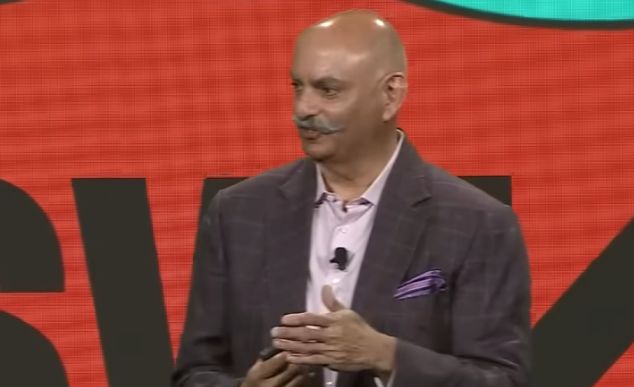
Editor’s Note: In this insightful SXSW talk, renowned investor Mohnish Pabrai shares a curated sampler of mental models geared toward successfully starting and running a business. Drawing inspiration from legendary thinkers like Charlie Munger and David Hawkins, he explains how compounding simple truths can lead to an exponential advantage in both career and everyday life. Ultimately, Pabrai shifts the traditional entrepreneurial focus away from making money, urging the audience instead to focus on the relentless pursuit of high-quality service to humanity. (Mar 17, 2026)
TRANSCRIPT:
Introduction and Overview
MOHNISH PABRAI: Thank you. Thank you, Michelle. Great to be here, and thank you for taking the time to come to this session.
Charlie Munger and the Psychology of Human Misjudgment
Charlie Munger had given a talk a few decades back at Harvard, The Psychology of Human Misjudgment, and then later he revised that talk for Poor Charlie’s Almanac, which is wonderful. I try to reread it every year, but it took me many, many years to understand what Charlie was talking about. Even though he tried to dumb it down for all of us, it still took me a while, and so I wanted to kind of present some of these things related to mental models in a little bit different context and different format than he does.
What Are Mental Models?
Mental models are realities that when we encounter them for the first time, surprise us. We already understand a lot of things about how the world works, but we’ll encounter things periodically which are like, huh, I didn’t think that was true, but when we encounter these truths and we incorporate them into how we make decisions, we’ll start getting advantages versus other humans who may actually work harder and maybe even be smarter and so on.
It’s really when you start cascading the models together in the same direction for the same effort, that’s when you get what Munger would call Lollapalooza effects, you know, one plus one becomes eleven and one plus one plus one plus one becomes over a thousand and so on.
The Bedrock Model: Take a Simple Idea and Take It Seriously
So the bedrock model, and without this model, the other models don’t work. So this is like, if you didn’t buy into this model, then there’s no point looking at anything else, and that is that you take a simple idea and you take it seriously.
So when you encounter these things that kind of sound strange or sound weird, but you are convinced eventually that it is reality with the way the world works, you have to go all in. And if you don’t go all in, then it just kind of just doesn’t work. So no matter what we are doing, anytime we’re using this latticework of mental models together, we always have to have model one, which is the take it very seriously.
Power Versus Force: Truth on a Log Scale
There’s a kind of a new age guru in Sedona, Arizona, who’s passed away now, David Hawkins, and he wrote this book called Power Versus Force. And when I recommend this book to people I know, I get kind of one of two reactions. They’re either ready to throw the book at me, hoping it hurts me, or they love it. I never get a reaction saying, ah, it was okay. I’ll never get kind of a middle reaction. I’ll get just extreme reactions, one end or the other end.
And so David Hawkins has this perspective on, so we think of the truth as being binary, you know, kind of one or zero. You’re either lying or saying the truth, but that’s not really how the truth and lies work. It’s actually on a log scale.
So if we look at this graph and you go in the top right-hand end of the graph, that’s where you might have Jesus and Buddha hanging out, you know, extreme truth leading to extreme trust, right? So we just kind of, and you know, us humans aren’t going to get there, but that’s at the extreme end. That’s kind of aspirational. Then you go a little bit below that and you get to people like Warren Buffett, and again, or Charlie Munger, you know, which is as high as you can get as a capitalist. And then if you go significantly below that, you get to many of us.
And it’s very important in life to try to move as far to the right of that curve as you can, because as you move further right on that curve, the payoffs are exponential. So I’ll give you an example of kind of why this is not binary, because all of us think, well, you know, I always say the truth, you know, I’m not a deceitful person and all of that.
Truth, Trust, and the Cost of Small Lies
But let’s say my partner and I are going to go out on date night and she’s ready and she asks me, how do I look? Right? And now let’s say I think the dress isn’t that great, you know, and I know that if I say that the dress isn’t great, you should change your dress, right? That might be the end of the date night.
So the pre-David Hawkins Mohnish would have said, oh, you look great, let’s go. Right? And the post-David Hawkins Mohnish will not want to deal with the white lies. And I’ll just say that I don’t think the dress is great. I think you should change the dress. Right. And it may lead to no date that night, which is fine. But what’s going to happen over time is the trust is going to go up big time.
So what you have to do as you go through life is get rid of the small lies. And the small lies are happening all the time, because life is more convenient with the small white lies here and there.
The Costco Model: Trust at Scale
So if we look at a place like Costco, for example, they have a rule that nothing gets marked up more than 15%. No matter what kind of deal they get. So sometimes, like I think one time this actually happened, where they got a very large batch of Levi’s jeans, clothes out, and they got them really cheap, like, you know, 14 bucks a piece or something. And the team was wanting to price it significantly below retail, which was maybe, you know, 50, $60. So they could have priced it at 30, for example, and they would have flown off the shelves.
And Jim Sinegal, the founder, CEO, did not allow them to do that. He said, we can’t do that. Because once we start doing that, first of all, we violated trust. And his buyers and team was telling him, you know, Jim, a lot of money being left on the table. And he said, we just can’t do that. And so Costco is not going to mark up anything more than 15%.
And the end result of that is many of us are fanatical about Costco, right? And we are fanatical, because that trust is in there. And that trust doesn’t get built in one day or two days. It’s just cascading sets of actions, which lead to that trust.
And Costco, you know, they pay their people more than all the other retailers, a lot more than Walmart pays. They have very low turnover, people stay for a long time. The current CEO started as a forklift operator. So people build whole careers there. So it’s not just the customers, they take care of the vendors, they take care of the employees. And so it’s just a great ecosystem with all the trust that’s been built in.
Desire, Will, and the Malleability of the World
So it’s, to me, the second model and the models I’m going to talk about, because we don’t have enough time today to go through all the models I’d like to talk about. So it’s just kind of a sampler, if you will. But the models I’m focused on today are more focused on building a startup or running a business. But some of them, you know, bleed into regular life as well. Like the power versus force, the trust versus truth, that that’s going to help you in everything.
Then, you know, we have this Marc Andreessen quote, that the world is a very malleable place. And if you really want something, and you go at it with maximum energy and drive and passion, the world will reconfigure itself around you much more quickly and easily than you would think.
And going back about 2700 years, I don’t think Marc plagiarized on the Upanishads in India. But they wrote 2700 years ago, “As is your desire, so is your will.”
Your Deepest Desire Is Your Destiny
“As is your will, so is your deed. As is your deed, so is your destiny.” And then the punchline, which is model two, is your deepest desire is your destiny.
Now, when I talked about model one, which is take a simple idea seriously, you have to go all in on this. So if you want to get the benefit of this, you have to believe in it completely. And so if you really want something, it doesn’t matter what you know, and it doesn’t matter what your expertise is, it’s going to happen.
And David Senra, whose podcast I really like, the Founders Podcast, he says belief comes before capability. And if you study a lot of the greats in business and arts and music and film and everything, it’s all about belief. It always starts with belief. And the capability comes later. So if we truly have a passion about something, if we truly think that the world should be different in some way, and we go all in on it, it’s going to happen. It’s a very important model to keep in mind when we’re embarking on something new.
Heads I Win, Tails I Don’t Lose Much
Bezos talks about these asymmetric bets, high upside, low downside. And he says that in baseball, if you hit a home run, you get four runs, that’s the maximum in baseball. But in business, there are possibilities of 1,000 runs, or 10,000 runs.
So whenever we’re embarking on business ventures, model four, for me, has always been the bedrock, which is heads I win, tails I don’t lose much. So I configure it in a manner where if things don’t work, it’s irrelevant. Almost no downside. And if things do work, then it’s 1,000 runs. And we always have choices about how we go about doing things.
So for example, one of the other models that’s going to come up in maybe a few more slides, is that we do not need capital to start a business. In fact, 99 plus percent of businesses that get started in the US and around the world get started for less than $10,000. And the largest businesses on the planet, the Walmarts of the world, were started with nothing.
So that dovetails into this model, which is that if you’re looking to start a business, don’t waste time raising money. Because we don’t need money to start a business. And if you don’t put in capital, you don’t have a downside. So model four is a really important model. And if you study the Walmarts, and many, many founders, Ikea, and so on, you’ll just see that all of them basically, the common thread is they just took no risk, put in any capital and they scaled it.
168 Hours in a Week
And another model, which is part of the heads I win, tails I don’t lose much, is there’s 168 hours in a week, and your employer only needs 40 hours. And you can walk and chew gum at the same time. So the single easiest way to eliminate risk when you start a business, is don’t quit your job. But take the effort down. So you’re just above firing level.
Once you want to change the world and pursue your deepest desires, at that point, you’re not focused on being employee of the month or employee of the year. You’re focused on just someone’s paying the rent and someone’s paying the groceries. And if you study the whole week with 168 hours, there’s at least another 40 or 50 hours to put into your venture. And when you put that time into your venture, the cost is zero.
And when that venture starts to get some traction, you switch over. That’s what I did. And if the venture fails, it’s not a problem. We go back to square one, we come up with some new idea that we’re really passionate about, and we go for it. And in my case, it was the third venture.
And I never quit my job on the third one, it worked and I quit and I moved on and it was just fine, no problem.
Be a Shameless Cloner
And then, you know, be a shameless cloner. So Sam Walton said that there has never been a human that came before him and there’s never going to be a human that comes after him who’s visited more non-Walmart stores than he has. He spent an inordinate amount of time in his whole life going through competitor stores. Anytime he was visiting any Walmarts anywhere, he would go into whatever other retail establishments there were and he would study the hell out of them.
And Walmart is a company that was built with no original ideas. Everything about Walmart was copied from someone else. Sam Walton did not come up with anything new. And one time he went into a store with some of his managers. And when they came out of the store, one of his managers told him, “Sam, that was such a poorly run operation. Just the whole store, the mess was just so terrible.” And then Sam says to him, “Yes, but did you see the candle display? The candle display was amazing.” So he could learn from the worst operators and he extracted whatever he could.
Everything that worked at Microsoft was stolen from somewhere else. You know, so Word from WordPerfect and Excel from Lotus and, you know, Windows from the Mac and even MS-DOS, it wasn’t stolen, it was bought. And Microsoft spent a lot of money on research and nothing’s come out of that. You know, everything has come out of cloning. And even now with all the AI and everything else that they’re doing, it’s not coming from inside. It’s coming from outside.
And so cloning is a very powerful model. There are many smart people around who already figured things out. And the world can accommodate multiples of the same thing. So just because there’s a Starbucks doesn’t mean that no one can do another coffee shop. So cloning is a really powerful mental model to think about.
Surround Yourself With People Better Than You
And then, you know, Buffett says that if you hang out with people who are better than you, you get better. You hang out with people worse than you, you get worse. Now, when you look at Model 6, so the important thing about these models is that they only work if you take them very seriously.
So what that means is, if you buy into this model, you would make a list of all your friends. And you would categorize them. Which ones of them do you think are better than you? Which ones are worse? And the worst would be wiped out. Gone. So we don’t care about loyalties. So if you buy into the models, it’s the models we care about. And so if you like Joe, but Joe is a yo-yo, Joe is going to pull you down. So you have to decide, do you want to be pulled down or do you want to go up?
And so this is, you know, Model 6 is difficult because you have to be a harsh grader. Even Model 2 is hard because you’ve got to get rid of the white lies. But when you start making these changes, it opens up the space. When Joe is gone, Steve can come in. And that’s what is important. Bring Steve in, let Joe go.
Hiring Hacks: Capability Over Skill
And then, you know, there’s some hiring hacks, which are like, you know, hire slow, fire fast. Hire for capability, not skill. I don’t have many people in, you know, in Austin, we’ve only got three full-time employees. All three of them were hired as fresh grads. I don’t have anyone working for me full-time who had any experience anywhere before they were hired. And I can’t do without them now because they know too much and they’re really good.
So when we go after fresh grads, we go after capability, we are going after an amazing pool. And when we are trying to hire someone, the important variables are they have to have very high integrity.
They have to have high intelligence, and they have to be very energetic. We have to have all three skills. And so these are just simple hiring hacks that work really well.
The Power of Incentives
Incentives are a lot more powerful than you think. Munger used to say that every year in his life he would encounter some nuances about incentives which told him that whatever he thought about the power of incentives in the past was not enough, that it was even more powerful than he thought.
These two books actually are very good. One is Copy This, which is by the founder of Kinko’s, and Les Schwab ran a very successful set of tire repair and service shops in the Pacific Northwest. They both were really smart about how they used incentives to scale their operations. When you build your organization, you have to be very smart about the incentives. Humans are very heavily driven by incentives.
Again, I talked about that. You don’t need money to start a business. You can start it with no business, no capital.
The Pursuit of Quality
This book, Zen and the Art of Motorcycle Maintenance, is a very difficult book to read. If you guys pick it up to read it, I suspect most of you will give up on reading it before you get to the end, but please try to read it. In the first reading, you may not understand the book. That’s okay. You can read it again.
What Robert Persick talks about is the intense and extreme pursuit of quality. He gets that message across in a very roundabout manner, but in a very beautiful way. It takes a while to understand where he’s coming from. He’s talking about ghosts in the middle of the book, so that’s where I’ll lose many of you. Just push through. Push through and read it. It’ll show you the power of bringing extreme quality into everything you’re doing, which again gives you a big leg up in life.
It’s easier to build a business which is a great business than a shoddy business. If you focus on building a great business with a great foundation, it’s easier to attract the people, it’s easier to get the customers, it’s easier to get the whole ecosystem to work with you. Even though it’s more harder treading up front, playing the long game, never thinking of an exit, making it your life’s work, just wonderful things to do.
The True Purpose of Business
The purpose of business is not to make money. The purpose of business is to deliver a great product of service to humanity. If you do that, the money will follow. If you start with the notion that I’m going to be an entrepreneur so I can get rich, you’re not going to get rich. It’s not going to be such a fun journey, but if you start with the idea that I’m going to serve humanity in some great way, there’s a basis to actually get there, which will be great.
Valuing Your Time
When I started my first company, I put a value on my own time. At that time, I would have valued my time at, I don’t know, $50 or $75 an hour, maybe $100 an hour or something. I thought about anything that could be done for less than that, I was happy to pass on. Almost everything you want done can be done for less than $100 an hour by somebody else, maybe much less. Certainly, for a few hundred dollars an hour, almost everything can be done.
If I were to look at it today, I would put my value at probably a few thousand dollars an hour or something, and I should only and I try to only work on things that I’m intensely excited about. I try to have a team that can work on the rest. It’s really important to think about this thing from an efficiency point of view and bring in a team which can help with you on it.
The Power of Cascading Mental Models in Business
So, I talked about these 13 models, and when you’re building a business and you apply all 13 models at the same time, there’s an exponential effect because each one by themselves is pretty powerful, but when you start cascading them together, you get a huge edge.
I was thinking when I was reviewing these slides, and I realized there’s a bunch of other models that I use when I’m running a business. So, for example, one of the things I realized is that whatever idea you come up with when you have some startup or some business you want to start, whatever idea you come up with, that idea is not going to work because you came up with it in some ivory tower between your years, which is not a good place to find great ideas.
But what will happen is that when you present that idea to your potential customers, they are going to tweak your idea. And so the important thing for an entrepreneur is to be in listen mode and to be listening really carefully.
The Slide 10 Story: Listening to Your Customers
So, for example, when I was working on my third startup just before I quit my job, and I had a slide deck, and I used to go make presentations to potential customers, and I was going to take like half a day vacation when I was doing that. And so I was at this large bank in Chicago, and I was going through my deck, and the CIO who was sitting in the room, I went to slide 11. He said, go back to slide 10. So I took it back to slide 10, gave my spiel again, took it to slide 11. He said, go back to slide 10. Again, I gave my spiel, went to slide 11. He said, do not move the slide from slide 10. I have no fucking interest in any other slide. We’re only going to sit on slide 10 for the rest of this time.
Okay, so I said, amen. We’re going to be on slide 10. And I realized when I went back that slide 10 was addressing a very severe pain point he had, and that was the only slide that really mattered, because I was saying we can do X, we can do Y, we can do Z. He wasn’t interested. He was only interested in one thing.
And I realized that not just him, but everybody else is only going to be interested in slide 10, and they’re not going to be interested in anything else. I had to listen. So if you listen, your customers are going to tell you what to do.
So what I did is I redid the deck, and slide 10 became 20 slides, and all the other slides went away. And then after that, when I went for the next presentation, 15 minutes after I finished, there was a purchase order. And it just kept going, because now it was pinpointed, laser-guided missile going to exactly what was the pain point, because this guy’s pain point was everyone else’s pain point as well. And there’s no way I could come up with it. It’s beyond my pay grade to ever come up with that.
So your customers will direct you to what you need to be doing. And whatever you tell them that you want to do for them is not going to be correct. But you have to listen. And sometimes it’s slightly off. Sometimes it’s significantly off. But if you listen, they will educate you.
So that’s an important model. I didn’t include it, but it’s a very important model to keep in mind, is that your customers are going to tell you what’s going on.
Market Segmentation: The 80/90% Rule
And another model, which is very important, is any market that you’re going after, two or three players will have 80% to 90% of the market. It doesn’t matter whether it’s paper clips or airplanes. So if you say that this is a $10 billion market and I only need 2% of it, it’s not going to work. What that means is that you have not done the segmentation.
Dominating Markets and the Power of Mental Models
So what needs to happen is you need to say, okay, this is a market of this size and my offering is so good that I can take 70% market share. So if you start out saying I’m going to take 2% of a large market, you’re going to fail. But if you say, I’m going to take 70% of the market, you’ve got a chance.
So when you start putting all these models together, so these were models that were focused on running a business or, you know, starting a business and that sort of thing. And Charlie’s models are much broader than that. You know, they go through life and other things. So I want to kind of give you a little bit of a different, you know, you kind of want to switch gears a little bit now.
The Founders Podcast: A Better Way to Read
So I listen to the Founders Podcast every day. Just raise your hands. How many of you listen to the Founders Podcast? We’ve got a few hands, but it needs to be a lot more hands.
So what I found with the Founders Podcast is he has about 412 or some number of episodes like that. And he reads a book, and it’s not a summary of a book, but he really analyzes it and he kind of correlates it with other books and so on. So what I found is that there were books that I had read, you know, these are mostly business biographies and so on, but he’s also talking about artists and, you know, Picasso or Michelangelo or, you know, Winston Churchill, you know, Alexander the Great, Ernest Shackleton, just all over the place. You know, it’s all these leaders in different fields.
What I found is that when I had read a particular book and then I listened to the podcast, I’m getting insights about that book from the podcast that I never got when I read the book. And this I noticed over and over again with multiple episodes. So what I realized is he’s a far better reader than I am. He’s much better at reading a book than I am, and he’s much better at extracting, because what he was extracting from these books that I had read, I wish I had extracted that because those were real nuggets.
And so I realized that if I read a book, you know, I can maximum read maybe two books a week if I’m going full out, more like one a week or something. But the podcast is one hour. And usually I’m listening to at least an hour a day of Founders Podcast. So I said, wow, this is like the Miller commercial, it tastes great and it’s less filling. Only people of my age would understand that. The younger crowd has no idea what I said.
So what I realized is that it’s better for me to listen to a podcast about a book that Senra has done than to actually go read the book, because the book’s going to take me 10, 15, 20 hours. This is one hour. After 20 hours, I’m not getting the extraction that he is giving me. So it was just amazing. So it was like taking the first model, which is take a simple idea and take it seriously.
Introducing Randomness Into Your Life
The second thing is that when we read books, we censor them. So we choose what books we want to read. And that distorts kind of, you know, it kind of narrows what data we’re taking in. I have no control over which books David Senra puts in the Founders Podcast. And so I decided that I’m going to listen to every podcast he did, no matter what the author or subject or whatever it is, because I’m going to take all those inputs, because that will introduce randomness. That’s another model. Introduce randomness into your life.
Charlie Munger was a big proponent of that, because that introduces randomness. Randomness is really important. And so the Founders Podcast, I think, made me so much more efficient. So I’ve now listened to about 270 of his episodes. I started with the most recent one.
I worked backwards. Now I’m listening to the episodes that were recorded September 2020. But I’m going to go all the way back to probably in the next maybe six or eight months or 10 months. I’ll finish all of them. Business Breakdowns is another one, which is great. Acquired is another one. So I’m going to overdose, go all in, take it seriously, extract everything from these podcasts. So I think that the podcasts are great and we should go all in.
So that’s an example of another mental model, where you combine Model 1 and Model 14. And it gets you somewhere, which is a great place to be. And I think if you read these three books — Poor Charlie’s Almanac, Influence by Robert Cialdini, who’s a good friend, and the one I came across most recently because of the Founders Podcast is one by Kevin Kelly — I think these three books are better than any college degree. They’re going to teach you a lot more than any college can teach you. And they’re so accessible and they’re so cheap. So it’s just really excellent. Best things in life are free.
And there’s a zillion more models that we’re not going to be able to talk about today. So sad. But maybe they’ll have me back next year. We can start diving into this.
Fast Is Slow
But I want to go over the first model — fastest flow. So there’s a good friend of mine, Yongpin Doan. Let’s call him Ping. I call him Ping. So Ping is the founder of Oppo and Vivo, which are huge mobile phone brands in China. They’re like right after Apple and Samsung. They might even be ahead of Samsung. And so Ping lives in the Bay Area. His company is in China. He’s a billionaire, many times over, private company. And he goes to meet his management team once a year for about 15 minutes.
So he goes to China. There’s this big, huge boardroom table set up, and they put Ping at the head of the table. And Ping says that every year he has a different message, but he said, one year he went in and said three words to them, and walked out. So I said, “Ping, what are the three words you said to them?” He said, “I said, fast is slow.” Okay. And he said, then the entire team spent about three months trying to figure out what those three words mean. And he said, after three months, they figured it out. And then they killed all the competition.
And I know he’s going to hate me for saying this. His email address is fastisslow@yahoo.com, okay. And so Ping is all in on this. And it might take you a few months to figure out what the hell “fast is slow” means. But I think it’s worth figuring it out.
So yeah, if you look at those models, there are a lot of different things over there in that list, and we’ll talk about them some other time, hopefully.
Q&A
Let me take a look at some of your questions, and then we’ll go into your questions.
AUDIENCE QUESTION: So Model 6 — at the beginning, everyone is better than you. Over time, what happens when you become better than them? Do you boot them?
MOHNISH PABRAI: Of course. We’re not loyal. So you either decide you want to be loyal, or you want to grow. And so you figure it out.
AUDIENCE QUESTION: Can you think of a decision in your life that demonstrates the power of a mental model working in practice?
MOHNISH PABRAI: Well, it’s not one thing, though. My whole life is that. So I can rattle off a zillion things. So Michelle had introduced me — I forgot to tell her that whenever I get introduced, I don’t want them to talk about anything except that I have a lifetime ban in Vegas from playing blackjack, okay? To me, that is the highest accomplishment.
Belief Before Capability: A Real-World Test
MOHNISH PABRAI: Not all the other whatever else she said. So I came up with a system for playing blackjack, which did not involve counting cards, and going to the model of belief comes before capability. It took me a while — I believed it could be done, then I actually did it. Then I actually started going to the casinos, and I executed on it, made a lot of money.
And then I was at this seedy casino in Vegas, which had a single deck blackjack game, which had very thin odds where my system would work. And the manager came and sat next to me when I was playing, I knew him well. And he tells the dealer, “Stop dealing.” And she was dealing a set of cards, and she was continuing to just finish that hand. He said, he screamed at her, saying, “Stop right now.” And so she was kind of taken aback, so she just stopped.
And then he said, “Mr. Pabrai, you can come to this casino anytime you want, but you cannot sit down at the blackjack table.” And I said, “Why?” He said, “Your system — we cannot beat your system.” So I told him, I’m not counting cards. He said it took us six months, and he said, “I know you’re not counting cards, and that’s why it took us six months of watching all the tapes to figure out that whatever you’re doing, we’re on the losing end.”
Why Belief Before Capability Is So Powerful
So that was an example, but the thing is that repeatedly I’ve found the belief comes before capability is so powerful because whenever people start businesses — and you can look at any business from Ford or Microsoft or whatever else — the founders don’t know what they’re doing. They’re kind of figuring it out on the fly.
And so that’s a very important model. The power versus force model, the trust versus truth — I mean, that’s to me like it’s like breathing, you know. It makes life really easy because you don’t have to do any lies. You just kind of lay it out the way it is, so that just makes life simple. And so, yeah, there are many, many models and I’m using them all the time.
The Single Biggest Impact: The Munger Talk
So let me look at some of your other questions. Which model has had the single biggest impact on your life? So I would just say it was actually the Munger talk. The Munger talk, even though Charlie made it really simple, actually took me many decades to actually figure out what he was really talking about. But the notion of understanding that one plus one is 11 when you’re cascading these models — and Charlie had mentioned it, but it took me a while to figure it out.
So I actually want you to start putting these models together. That’s when you really start seeing these exponential effects. And so I’d say that’s one thing that you can keep in mind.
On Reading Versus Podcasts
And then you mentioned podcasts or books — are books better than reading? So are you not for reading? You don’t believe in them. It’s a muscle everyone… Well, I’m reading all the time. I’m just saying that I definitely want to give podcasts like David Senra’s Founders Podcast enough bandwidth. But I love reading and my whole job description is reading, so it’s not going to be gone or anything like that.
But I realize, many times I’m looking at books that he hasn’t dealt with or anything, so then I’m on my own over there. So the reading is going to continue. I don’t think you can get away from the reading.
Are the Models About Success or Happiness?
And what is the main outcome of the models? Do you think it is just success or happiness also? Yeah, so the models are not just about success. They’re definitely about happiness. I’m actually not focused on success. I’m focused on happiness. And so the models actually crystallize things.
And you know, like I talked about, the harsh graders and getting rid of the yo-yos and all that. It sounds harsh, but life becomes happier just because when you have certain people in your life, you cannot have certain other people in your life. And so life is about choices, and many times they’re hard choices. So you have to take that.
Belief before capability, can you train for belief? Above my pay grade. I don’t even know what that means, so I’ll leave that to you guys.
Do These Models Apply to Non-Tech Businesses?
Do these models mainly apply to tech startups, or can they also work for something like opening a coffee shop or yoga studio? In fact, it applies more to the coffee shop or yoga studios than to a tech startup. I’m not a tech guy, so I’m a non-tech guy. And one of the things that happens in the media is the venture-backed startups get a lot of press. There are more than a million businesses started in the United States every year. Less than one-tenth or one percent of them are venture-backed. So 99.9% of them are the coffee shop and the yoga studio and the Chinese restaurant and all of that. And these models, front and center, absolutely apply to those. So that’s where, in fact, that’s where they should be applied.
The Blackjack System That Got Mohnish Banned
Don’t leave us hanging. What was the black tech system that got you banned? So, you know, when I used to get this question before, so there’s a casino in Vegas called the El Cortez. How many of you have heard of the El Cortez? Oh, we’ve got a person who’s been there. That’s great.
So the El Cortez was built in 1942, actually built by Bugsy Siegel, who you guys might know, who was later gunned down for overruns on the Flamingo. So he had done the Cortez before Bugsy, before he did the Flamingo. And the Cortez is in downtown Vegas, but it’s slightly away from the main downtown drag. And so to induce people to come in, they came up with a single-deck blackjack game with the best odds for the player of any blackjack game on the planet.
And so there’s a website called bj21.com. If you go to bj21.com, and I want to clarify, I have nothing to do with this website. And I don’t gain anything from whether you go there and spend money on it or not spend on it. So just a disclaimer on that. One guy who I don’t know runs that website, but what he does is every month he creates a new PDF which gives the odds of every blackjack table in North America.
So for example, if I look at the Wynn Las Vegas, they have three or four different kinds of blackjack games. It tells you how many tables of each one, exactly what the rules of each one are, and exactly what the odds of each one are. And so when I looked at bj21 many years ago, I just scanned the whole maybe 30, 40-page PDF for the odds of every one, and I found that the El Cortez had the thinnest house edge of any casino. I think the house edge was 0.13%.
And so I said, okay, this is the place to test my system. Because they only have a 0.13% edge. And I don’t have the time here to go through the whole system. And I don’t want to take away the fun that you guys will have with figuring it out. But I’m going to give you some hints. So you can take those hints and then figure it out.
So the hint is really simple, that blackjack is a game which has streaks. So it’s not like you have one hand you win and one hand you lose, and one hand you win and one hand you lose, even though approximately the odds are 50-50. What can happen is you can win five hands in a row, and you can lose five or six in a row, or win three and lose three, and so on.
The Blackjack Betting Progression System
So you have this kind of dispersion of what is happening with the wins and losses. And if you had a system, so let’s say, for example, I’m playing, so there’s a couple of things, I just want to give you some rules. So let’s say I’m playing a $10 minimum bet table, right? So some table which is $10 minimum, which may not even exist in Vegas anymore, but let’s just humor me for a second.
So let’s say there’s a $10 minimum bet table, the first rule is we need 200 times the minimum bet in our pocket. So if I’m going to play a $10 minimum, I need $2,000 in my pocket, just to take care of the rollercoaster ride that is Blackjack.
So we’re going to have $2,000, we’re going to play a $10 minimum. We are going to play a very simple progression, and I’m going to go fast here, but there’ll be a video, you can see this again. So the progression is 10-10, 15-15, 20-20, 30-30, 50-50, 70-70, 100-100. When you hit 100, you stay there.
What that means is, if I kept winning every hand one after the other, and I just won like 15 hands in a row, my first bet is $10, the second bet is $10, the third bet is $15, the fourth bet is $15, the fifth is $20, $20, so 10-10, 15-15, 20-20, 30-30, 50-50, 70-70, 100-100. When I hit 100, it stays at 100. So if I won like 40 hands in a row, I would just be doing 100 after that.
Now, the moment I lose a hand, I go back to $10. So usually what’s going to happen… 10, 10, 15, 10. 10, 10, 15, 15, 10. 10, 10, 15, 15, 20, 10. That’s what’s going to be happening. And it’ll be 10, 10, 10, 10 if I lose like four hands in a row.
Now, if I get a blackjack, I skip one level. If I get a double or a split and I win both, I skip two levels. And if you think about it mathematically, what would happen is, on average, your winning hand is going to have slightly more money bet than the losing hand because of the way you’re doing the progression. So I’m not counting cards. No need to count cards.
In fact, what confused the hell out of the El Cortez people was they were playing single deck and they only played half a deck. So they’re only playing 26 cards. But if I’m in the middle of the progression and a new deck comes in, it’s irrelevant. I’m continuing the progression. So they said he’s placing a big bet on a brand new deck. And a brand new deck has no favorable odds for the player, which took them six months to figure out. And I don’t think they still figure it out. But maybe once they watch this video, they’ll figure it out.
So basically what ends up happening is your average losing bet might be $10.50 and your average winning bet might be $10.75. And if that delta is more than the 0.13% that the El Cortez were offering, they’re in big trouble. And they got into big trouble.
And so now I need to go to the double deck games in Vegas, which the odds are, and I’m not so close, because I used to be in California with a 40-minute flight. Now it’s more frictional costs and I’ve lost interest. But now the best double deck games are 0.19% odds for the house, which is still very good. And there’s a few of them. There’s Treasure Island, there’s MGM, Aria, Bellagio, but the minimums are higher.
So for example, if I play the Aria, the 0.19% house odds, it’s a $500 minimum to play. If I play 200 times, 200 times 500, 5,000, 50,000, I’ve got to sit down with 100,000 if I go to the Aria. If I go to the MGM, $100, 20,000. I need to sit down with 20,000.
So usually what people run into a problem is they have $1,000 in their pocket, they put $1,000 bet down, $100 bet down, and then that’s the end of that. More blackjack than I want to talk about today, but that’s fine.
Is There Room for Educating or Developing Others?
Is there room for educating or developing the folks that may be bringing you down? Man, people are so upset about the chopped liver approach to life. Well, we have limited bullets in the gun, so you can dedicate your life to uplifting these folks and ignore everything else, and that would be a well-lived life, not the life I want to live. So that’s not for me, but it may be for you.
But I would just say that one of the important mental models is focus. You’ve got to go all in on what you’re passionate about. So if you want to uplift the people who are below you, please make that your life mission. Don’t try to do that as an extracurricular project. It’s not going to work.
How These Models Apply to Creative Industries
How do these models apply to professionals in creative industries, musicians, writers, artists? They absolutely apply. So Seinfeld wrote a book called Is That Something? Anyone read the book? Anyone a Seinfeld fan? Read the fucking book!
So here’s what Seinfeld said, okay? He sits down every day with a yellow pad for an hour and a half to two hours, and he thinks about whatever has happened in the last one or two days, and he sits and writes it down, right? And he also goes back to the thoughts he wrote about in the last few days. So stand-up comedy is very hard, and what Seinfeld is doing and what Larry David is doing is not random. There is a lot of work, and there’s a structured approach to work.
The guy who did Charlie Brown, he passed away, I think, and I think he was worth billions by the time he died, but the thing is, every day he sat down, went to work for eight hours on coming up, and he said the cartoons were simple, but the storylines and all were complicated, right?
So the thing is that in, and then, you know, I think David Senra has a bunch of these podcasts on these musicians, and I don’t remember some of the names, but there were some of them which he was talking about extremely structured, and if you look at people like Jay-Z and all that, you know, the amount of, or even if you look at, yeah, so the amount of background research they did on all the previous artists who came before them.
And so the intensity of pursuit applies in every field. It applies in the most creative fields, and it applies in the most technical fields, and everything in the middle. So absolutely, if you’re an artist or if you’re a musician, I would say that you could, if you’re an artist or musician, just, you know, even if you don’t listen to everything Senra has in the Founders Podcast, just listen to the ones which he has on the musicians and the artists and all that. I think you’ll get a lot out of it.
Are There Ever Times You Choose Not to Follow Mental Models?
Are there ever times you choose not to follow mental models? I have a lot of vices. I’m human, you know? So yeah, sometimes I do things that are self-sabotage. What can I say? Just the way it is.
What Hacks Do You Use to Improve Yourself?
Use hacks to improve yourself. What hacks do you use to improve yourself? Well, the mental models. I’m continuously kind of a collector of mental models, and when I encounter something which is going to, which I think is going to help me, then I want to go all in and bring those in and definitely want to use that.
Advice to Your 18-Year-Old Self
If you could say something or give some advice to your 18-year-old self? Well, I’m going to be 62 in a few months, and it would have been a huge advantage for me to have heard this talk when I was 18.
That would have been, I don’t know if I would have comprehended it or I wouldn’t have gone all in, but I’m hoping I would like to listen to my future self. You know, knowing that it’s a future Mohnish talking, maybe I would pay attention, and yeah, then that could be very helpful. So anyway, I hope you enjoyed it, and I certainly did, and I wish you all the best. Hope you have the, enjoy the rest of the week. Thank you.
Related Posts
- Transcript: Why Adaptability Beats Planning in an Unpredictable World? – Mr. Sanjeev Sanyal
- Transcript of Dr. Prathosh AP Lecture: AI Is Making Intelligence Cheap
- Transcript: Stanford’s Chad Jones on The Future of Jobs in an AI World
- Jared Isaacman: A New Era for NASA and American Space Exploration (Transcript)
- Transcript of Bill Gurley: Searching for Feynman at All-In Summit 2026