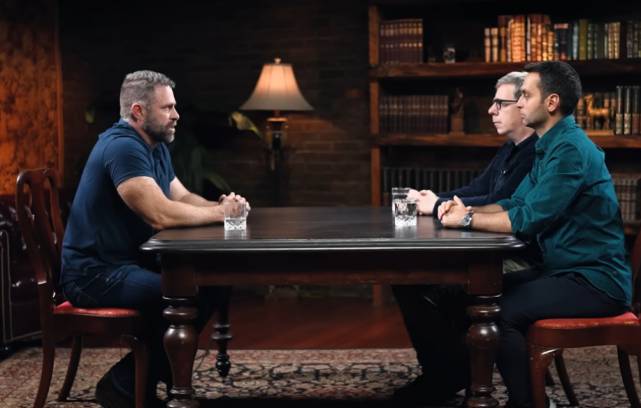
Here is the full transcript of American Republican politician Nick Freitas’ interview on TRIGGERnometry Podcast with hosts Konstantin Kisin and Francis Foster, December 4, 2025.
TRIGGERnometry hosts Konstantin Kisin and Francis Foster sit down with Green Beret veteran and politician Nick Freitas to dig into what he calls a growing crisis of masculinity in the modern West. Freitas explains why demonizing men, sidelining fathers, and feminizing key institutions have left young men alienated, angry, and vulnerable to destructive role models. Drawing on his experience as a soldier, father, and podcast host, he argues that male aggression and strength must be trained, disciplined, and put in service of family, faith, and community. The conversation explores practical ways young men can build character, find purpose, and become dangerous in defense of what they love rather than a threat to it.
Welcome Back
KONSTANTIN KISIN: Nick Freitas, welcome back to the show.
NICK FREITAS: Great to be back.
KONSTANTIN KISIN: It’s awesome to have you on. We were sitting here about a year ago, I think, or something like that, in this exact same room and as it turns out, actually in the exact same clothes. We had an amazing conversation about your life, military service, combat, the war in Gaza, obviously. And then we did our usual question: What’s the one thing you’re not talking about?
And paraphrasing, you basically said, “If you keep demonizing young men and behaving towards them in ways that are unconstructive, good men—I hope that includes the three of us—are not actually going to be able to control what comes after that.”
I think you were kind of right.
The Revolt of Young Men
NICK FREITAS: Yeah. No, I think if I remember right, it was like, young men are going to revolt and that doesn’t mean they’re going to revolt in the way you want them to. It’s not going to be woke because I think some elements of the left have finally figured out that you probably are not going to win the revolution or seize the means of production with a bunch of mentally ill people who prioritize their mental health issues as their primary identity.
You’re certainly not going to do that if you have to fight a whole generation of young men that you have systematically alienated for two decades. But again, the hope is that good men or that young men revolt in a direction that says, “I’m going to reject this aspect of toxic masculinity. I’m going to reject the feminization of men. I’m going to reject all these other things, and then I’m going to choose to be a good, strong, competent, masculine man who is also noble and honorable and fighting for things that are not just within my own interest, but that are true.”
But that’s not the only option. There’s other options out there. The other options are “I’m just going to punish everyone that decided to treat me this way. And so I’m going to be strong, capable, and competent so I can get what I want and screw those people.”
And those are the two paths before young men right now. And again, we’re still not sure which one is going to actually get a critical mass. But I’m a lot more encouraged now that I see a lot more people fighting for what I think is the right path.
Charlie Kirk’s Legacy
KONSTANTIN KISIN: And of course, I think one of the reasons that the reaction to the horrific assassination of Charlie Kirk was so strong was that he was doing that for young people. He was leading them towards God, towards family, towards children, towards service. He’s going to be a huge loss going forward.
NICK FREITAS: He is. The thing that I’m very grateful for with Charlie is Charlie wasn’t the sort of guy to just advocate for these things. Charlie was the sort of guy to create other people that would come in his footsteps or behind him. And so he did develop a network in order to do that.
And it’s amazing the amount of young men, and not just young men too, like families that were saying, “Hey, I’m going to church for the first time. I bought a Bible for the first time.” So Charlie really did do a good job of not just pointing to the political philosophy, but actually pointing to the transcendent, which I think is essential.
I have a hard time believing that any sort of political philosophy is going to be ultimately successful, completely removed from any sort of transcendent principles of objective truth and morality.
Unfortunately, we’re already seeing, though, without Charlie’s presence, we’re already starting to see fractures within the right on that. And that’s unfortunate because I felt like we had this moment in time and we haven’t lost it yet. I want to be clear on that. It’s not like it’s a lost opportunity.
But I don’t think we should be shocked by the fact that whenever you see unity around something, there’s always going to be a lot of money to be made and a lot of strategy to be had in dividing it up.
The Absence of Fathers
FRANCIS FOSTER: And one of the things when we talk about this conversation I don’t think we focus enough on is positive male role models, but also fathers. I think one of the major reasons why we see these young lads and young boys in crisis, because that’s what it is, is a complete absence of father figures or positive male role models.
NICK FREITAS: I mean, look, this was being talked about in the 1960s in the United States. And every single demographic within the United States has had an increase in fatherlessness. It’s been the least prominent within Asian communities, but every single one of them has seen a significant increase.
And the bottom line is that men, boys are looking for structure.
And if they’re not going to get it from a father figure who presumably loves them and has some sort of interest in them growing up to be good men, well, then they’ll find it in the streets or they’ll find it in social media or wherever else they might.
There’s also been, again, over the last couple of decades, this big push to where the idea was is that masculinity is bad. That’s the source of all of our ills. And so all of the instincts that you have as a young man to want to be strong, to want to compete, to want to fight, aggression—all of those things, those are the problems. And so we have to train and educate those out of you.
And so, look, not to be flippant, but I think it’s interesting that the more that the feminization of our educational systems, our churches, everything else, the more that has taken place, the less happy everyone is. Not to mention liberal women who are constantly going on TikTok complaining about how they can’t find masculine men. Oh, no kidding. Okay.
And it just goes to the old saying that it’s like, okay, well, we have more boys being raised in single parent homes predominantly by mothers, and then they go into a school system which is predominantly female, 77%. So maybe masculinity is not the problem, maybe a lack of it or an absence of it is the problem.
Now I instantly know what people watching this are going to say: “Well, these women didn’t ask to be single.” I get it. I was predominantly raised by a single mother. Now thank God, my father, good man, still involved in my life, but I got to see him three to four months out of the year, right? So predominantly raised by a single mother. I understand that the vast majority of them didn’t sign up for that.
But I also think we need to recognize that there is something going on in this country when the vast majority of young women don’t list family or having kids or getting married as anywhere near their top priorities. That’s socially engineered. That’s not natural.
Economic Pressures on Families
FRANCIS FOSTER: And it’s interesting you say socially engineered and maybe there is partly that. But isn’t it also, Nick, the fact that, look, it is impossible to have a man who goes to work—practically impossible, I should say—a woman that stays at home, raises her kids. The reality is, because of the way economics works now, how expensive everything is, housing, all the rest of it, there needs to be two people in the workplace. And that puts a strain on marriages and relationships.
NICK FREITAS: It absolutely does. And there’s no question. And again, I’ll be happy to sit here for an hour and talk about the evils of inflationary monetary policy and how it seems to be at the root of most of our problems and why those problems really exist.
The other thing that I will say though is part of it too is this idea of what do we teach people to prioritize. And my wife and I got married at 19 and 20. Both of us came from broken homes. I was in the military. I don’t know if you know this, but being a private in the United States Army is not exactly a pathway to riches, right? So when we had kids at that point, I had just become a staff sergeant. Again, I’m a non-commissioned officer. I’m not raking in the dough, right?
My wife and I had laid out a plan when we were 19, when we were 18 and talking about getting married. And we set out what are our expectations. And I remember telling her, I’m like, “I see myself as, I’m supposed to be the primary breadwinner. I feel like my goal is to make enough money to where, when we start having kids, if you don’t want to work, you don’t have to.”
And she goes, “Good, that is what I would like as well.” I said, “Okay, but I need it to be understood if we have two incomes and we switch to one so you can stay home with the kids, the lifestyle changes are going to take place as a result.” And her attitude was like, “Well, yeah, of course.”
A lot of people don’t have those conversations. There’s these expectations that, well, we’re never going to make sacrifices in an economic environment in order to prioritize other things. And so a lot of this, it is amazing how much you can actually accomplish when both of you are on the same sheet of music, both of you have the same priorities and expectations.
So, yeah. Did we make as much money, have as nice a house, have as nice clothes, furniture? Nope. But I have an outstanding relationship with all three of my kids and they’re now 22, 20 and 17. And I like being around all of them. As I like to say, they love Jesus and they can’t stand Karl Marx.
Men Teaching Boys to Be Men
KONSTANTIN KISIN: I want us to have a conversation about something that I don’t think gets talked about. And for the reasons that you somewhat alluded to, which is that men, women will not be able to teach men to be men as well as men. I know the Internet is going to explode now, this crazy idea, but I sort of think that’s probably true.
NICK FREITAS: No, it’s absolutely 100% true. Can we just say something in the reverse?
KONSTANTIN KISIN: Sure.
NICK FREITAS: We need women to actually help raise daughters. Right. Like, I can’t—I hope I was a very good father to my daughters. Based off my relationship, they seem—the feedback they have given me seems to suggest that I was a good dad. But none of them will tell you, “Oh, yeah, dad was all I needed.” Right. They needed mom too.
FRANCIS FOSTER: Yeah.
NICK FREITAS: They needed mom too.
KONSTANTIN KISIN: Right. And boys are the same. Boys need both. But what I’m saying is like, I see it, we have a three year old. So you’ve been through this. You probably got way more on this than I do. My wife is amazing with him. Right. But there’s just one or two things that as a woman, not everybody—there are women who are brilliant at doing this—but as a woman, generally speaking, it’s harder for them to deal with the fact that a boy is aggressive, he might start hitting and that has to be channeled.
There’s just a few things that as a guy you just understand because it sort of exists in the realm of guys and women are not necessarily even privy to. Like, I know for a fact that there are certain ways that I can behave that will cause you to punch me in the face.
NICK FREITAS: Yeah.
KONSTANTIN KISIN: And so I know that I have to modulate my behavior to make sure that doesn’t happen because that wouldn’t end well for me. Right. So the presence of the potential of violence is always at some level in our minds and therefore we have to act accordingly. And that is something I think is very, very difficult for a woman to understand and to teach her sons.
The Crisis of Masculinity and the Role of Fathers
NICK FREITAS: Oh, no, it absolutely is. I remember having this conversation with my wife the first time my son got into an altercation and her inclination, because he was still pretty young, but he was old enough. And that’s important right there. I allow my children to take age-appropriate risks. Right, of course. And age-appropriate challenges.
And she’s like, “Oh, well, I’m going to call him.” Like, no, you’re not. So what do you mean? I’m like, he’s got to handle that. Why? I said, “Baby, your son doesn’t want the bully to be afraid of you. He wants the bully to be afraid of him.”
And I don’t know how this is going to go. He’s not going to get so hurt. The other thing I always try to say is I try to protect my kids from scars, but bruises are just a part of life. So I’m trying to protect them from things that are going to have life-altering impacts on them that could seriously hurt them spiritually, physically, emotionally.
But when it comes to getting knocked on your a, welcome to life, son. And if I don’t teach you how to properly deal with that in a relatively safe environment, then you’re not going to be ready for it when it happens out in the real world. And the consequences there could be significant.
It’s not as if women don’t understand the nature of those threats outside of the home. They just have different mechanisms of dealing with it. And I need to teach my son to be the sort of man that his wife, that his children, that his friends can reasonably count on him in a dangerous situation to be able to handle it.
And the bottom line is my wife respects those qualities in me. To be honest, they don’t just respect him. Women find it highly attractive in a man. It’s like, okay, do you want me to convey those capabilities to your son?
FRANCIS FOSTER: Yes.
NICK FREITAS: Then you need to trust me. Just like there’s times where I’ve looked, there’s times where I’ve wanted to engage with something with one of my daughters and my wife has been like, “Baby, come here for a second. Let me fill you in on what’s going.” Oh, thank you.
KONSTANTIN KISIN: Right.
NICK FREITAS: That’s the other thing, when you have mutual respect for the idea that my wife and I are not competing on raising our children. We are cooperating in raising our children and she has special insights and experiences and I have special insights and experiences.
And we’re going to utilize these because we both know that we love each other and we love our children. And so when you support one another in that process, it’s amazing what you produce. But again, I was very blessed to have a wife that understood that I needed to train a son that was one day going to be responsible for providing and protecting his family.
Understanding Male Aggression
KONSTANTIN KISIN: And the other thing as well, I think. And by the way, your point about how men and women can teach, like, I mean, when my son was a baby, I was just standing there observing and making notes like, oh, she did that. Okay. And by her example, she showed me all the stuff that you’re supposed to do in that time. So we learn from each other when we’re talking about young boys and you know, you talked about fatherlessness, lack of male role models. I think this is where some of these things are coming from.
Because the other thing is men are just fundamentally, I think, much more comfortable with aggression. We just know it’s part of life. Whereas for a woman, it’s a very unpleasant thing to even deal with, particularly male aggression.
I saw this great clip of a friend of mine called Paula T. Peter’s brother, and he talked about the fact that his boys were in some kind of fight. It got very intense. And he basically helped them see that aggression is great when you’re defending a brother.
NICK FREITAS: Yeah.
KONSTANTIN KISIN: From a wild animal or whatever. And that’s, I think, another thing that has perhaps been suppressed where you now see it come out in unpleasant ways where it’s like you haven’t been told that aggression is useful and good. Just it’s got to be channeled. Right. Because sometimes I feel the female reaction is to just go, let’s shut this down, you know?
NICK FREITAS: Yeah. And the problem is, is that you can’t totally shut it down. You can’t extinguish it.
KONSTANTIN KISIN: No.
NICK FREITAS: And you don’t want to, because no civilization in history has ever been protected by docile, weak men that were afraid of conflict. That’s just not how that happens. So I think it’s important to understand that while aggression, all of us are prone to want to avoid discomfort on some level, we typically don’t prefer it. Right. And that’s understandable, but it is a reality.
And the real question is the discernment that’s supposed to get in determining is what sort of what level of aggression is appropriate for this situation? Why am I utilizing this level of aggression? To what extent do I plan to use that aggression? Right. Is it until he stops moving? Or what is it? Or is it just to where he’s restrained? Whatever it is?
That all takes a great deal of training and discipline. And in order to train and discipline others, you have to put yourself into those environments, not unregulated environments, but training for those purposes and developing the appropriate intellectual, physical and emotional practices and disciplines is very important.
And again, it’s one of those things where a woman is naturally going to be inclined to let’s maintain the peace. She is able to do that. And to be in an environment where she feels so much more secure when she knows her husband has it. When she knows that her husband has control of the situation, she feels safe and secure.
Again, I have to convey that to my son, which means you’re going to have to watch your son go through difficult things that you never had to watch me go through. But this is part of the process. And again, a lot of that is just a lot of that comes from talking between husband and wife beforehand.
The Young Men’s Luncheon
But I’ll use this as an example. I was speaking at a, it was a young men’s lunch and it was run by Young America’s Foundation, so conservative group. And they hadn’t done a men’s. They had done a young woman’s luncheon for the last 10 years. They hadn’t done a young men’s one for 10 years. And so they decided they were going to bring it up, and they asked me if I would speak at it.
And so typically when someone reads off my bio at one of these things, there’s three things mentioned. Nick was a former Green Beret combat veteran. Nick has served 10 years in the Virginia General Assembly. And Nick has a sizable social media following.
Now, in this group of young men, the vast majority of them either are involved in politics or want to be involved in politics professionally on some level. They want to be on staff, they want to run for office, whatever it is, work for a think tank. And then some of them also are interested in joining the military.
But out of a room of 300 young men, I would say maybe 10% were interested in the military. All of them were interested in politics on one way level. And so I said, “All right, gentlemen, when those three things get read off in my bio, which are you most impressed with?” And all of them almost in unison, Green Beret, combat veteran.
Isn’t that fascinating? The vast majority of you in here are not going to join the military. You respect the military, but you’re not interested in serving in that capacity. And even if you are, you’re not necessarily interested in doing what I did within the military. And yet every young man in this room thinks that’s the most impressive thing. Why?
Because that’s the credential that is listed off about me that suggests to you that if someone violent were to come through that door right now, I would know what to do about it and probably come out on top, right? If that is the instinct that I believe God has written into all of us, well, then maybe we should take some cues from that.
Not because we’ve all got to be soldiers or, you know, UFC fighters or whatnot, because we’re not, we’re not all supposed to do that. We’re not all called to do that. But maybe we should all recognize that there’s something in you that wants to be able to have some capability and capacity for this. And so you should start asking yourself, what do I need to do in order to properly develop and train that?
Developing Complete Masculinity
Because it isn’t all just physical. If you are physically strong, you’re able to shoot, you’re able to fight, but you’re a freaking idiot, you’re going to lose more than you win. If you don’t have any control of your emotions, you’re a monster. You’re now a terror for your family, for your community, for your country.
But if you line up all these things, like if you have a strong spiritual bearing which says, I know why I have these. I know why God gave me these desires. I have the intellectual capacity to be able to read a situation and know when to use them. I have the emotional maturity to understand when to restrain myself and when to utilize what I need to. And I have the physical capability and capacity to actually execute it.
You are now the sort of person that can be dangerous on behalf of the things you love, but never to the things you love. But it takes all of that. And regardless of what you do, I always think there’s something beneficial about young men embracing that part of their personality, embracing that part of their masculinity and developing it to an appropriate level for what they want to do in their lives.
The Reality of Fatherlessness
FRANCIS FOSTER: And it’s so interesting you talked about the physical aspects of men, because one of the things that I noticed. So everybody knows this, but I’ll repeat it. So I used to teach and particularly…
NICK FREITAS: Whoa.
KONSTANTIN KISIN: What? Yeah, yeah, I know, I know.
NICK FREITAS: Look, this is a good thing, right?
FRANCIS FOSTER: But in one part of East London, in a place called Newham, where majority of my kids didn’t have a dad, and I used to see my kids come in. I used to teach year 6, year 6 with 10 and 11 year olds. I used to see them come in at 10 and mum used to be able to control them.
But 11 and 12 is when the gang started to circulate because the boys went, started to go through puberty. Mom couldn’t control them anymore physically. Dad wasn’t there. They are craving male camaraderie, approval. And if mum can’t control them, then the boys are going to leave.
So this, this male dominance and people may be uncomfortable or squeamish about it. It’s really important, particularly from an older male.
# The Nature of Masculinity and Society’s Role
NICK FREITAS: You know, this part is, I think, growing up in an environment where I’m 46, so I grew up in an environment where we still revered traditional masculinity on some level. But you definitely had the feminist waves coming in and whatnot. And there was kind of these notions about humanity and human nature and what we could train and what we could engineer through the right programs and education.
And I think we’re getting back to a point where people are starting to recognize that, yes, nurture matters, but so does nature. So does nature. And instead of us arrogantly presuming that we’ve just reached this level of either enlightenment or scientific knowledge, that we can just negate all of that and run people through the appropriate programs and get the results we want. Okay, we’re several decades into this experiment. How’s it working out for us?
Maybe, maybe the thousands of years of human history that came before us have something to teach us about human nature. Not that we have to adopt everything that came before us, but as CS Lewis likes to point out, the chronological snobbery of the moderns who think that, well, we would never behave that way because we’re just so much more enlightened. Like, okay, yeah, go ahead. And what is it? Nine meals, you’re nine meals away from chaos.
So I think it’s, I think we need to appreciate the fact that this seems to be a common phenomenon among the males of our population, across space and time and culture. And the real question we have to ask ourselves is, okay, again, maybe God put it there for a reason. Maybe there’s some positive manifestations of this, and maybe our job as parents, as fathers, as mothers, as a society is to help direct things in those positive manifestations.
Understanding Toxic Masculinity
You know, one of the most bizarre things about this whole concept of toxic masculinity. Right. Let’s see if I can get canceled here real quick. There’s a point to it. The point to it is I’m going to look at these masculine traits, and I’m going to ask myself, are there negative manifestations of those masculine traits? Yes, of course. Of course there is. Okay, good. Do I want to avoid the negative manifestations of masculine? Yes, of course.
But don’t make the trait itself the problem. The trait itself is not toxic. It’s the way it’s manifesting. Right. Because I could just as easily say the same thing about femininity. Yes. There are things that we generally associate with feminine traits. Are there negative and positive manifestations of those?
KONSTANTIN KISIN: No.
NICK FREITAS: How dare you? Yeah, of course there are. Of course there are. All of us know and are sometimes represented by insufferable women. Right. But the point is, is that just like masculinity is not toxic for the traits that it contains, neither is femininity toxic for the trait it contains.
But like anything else, aggression is a good thing when I’m using it to protect innocent people from those that would cause harm in them. It is a bad thing when I’m using it to exploit and hurt people, hurt innocent people in order to get what I want. And that used to be something that we just kind of understood.
The Danger of Demonizing Male Traits
FRANCIS FOSTER: Such a profound point, because these traits are inherent within men. They float. They flow through all of us. You can use them for positive, or you can use them for negative. But if, as a society, you demonize those traits and you effectively drive them underground, you’re not going to get rid of them.
And what these traits are actually going to do is they’re going to end up mutated. They’re going to be like a bone that doesn’t grow properly. And as a result of that, what is going to come out is not pretty. So if you think about aggression, male dominance, pride, desire for success, I mean, all of those traits can be used to describe Andrew Tate, and maybe Andrew is a result of a society that has demonized men and the instincts that we have to such a point where they naturally gravitate towards a character like that.
NICK FREITAS: Well, I think so. First of all, I think it’s absolutely true that when you, it is one thing to not teach, to not teach a young man the way to develop those traits, it is another thing to demonize those traits, right? When you fail to teach them, they might go to a gang or they might do something else. You know, who knows?
When you demonize them as a society, you actually pervert this entire process in a way that is far more dangerous. It’s almost like this. You read the stories of some of the most ruthless, brutal serial killers, and what do you find? You typically find people, no, not always typically, people that really, really weird, strange, bad, domineering relationships with their mother, either absent followers or kind of like really, really weak, docile fathers.
And so that manifests that. So now that you’ve put them in a completely feminized environment that created a positive result. No, they have this incredibly perverse way that they look at women. It’s not at all healthy. It ends up being brutal and even murderous at times.
And so, again, I think it’s important to understand that it is one thing to ignore those traits, it is another thing to demonize them. And both of them are bad. But the demonization of those traits is even worse because, like you said, you don’t get rid of them. They’re just left to fester and manifest in other ways.
The Andrew Tate Phenomenon
When it comes to things like Andrew Tate, one of the things, one of the things I always warn pastors about is I’ll say, look, anybody that looks at what I say and what I believe and what I advocate for on what I call biblical masculinity, but just traditional masculinity, nobody could look at what I’m saying and come to any be confused that I disagree with a lot of things that Andrew Tate says.
But if you want to know why so many young men flock to Andrew Tate, it’s not simply because the man can fight. The man’s financially successful, the man is surrounded by beautiful women. Right? These are all, these are all superficial things that have meaning, but superficial things that all men are kind of drawn to.
It’s also because Andrew Tate was one of the few people sticking up for those young men when nobody else would. And so as much as I disagree with a lot of the things that Andrew pushes for, not everything, because he does push for some things that you should be strong, you should be competent. The question is why and for what purpose.
And obviously as a father, especially as a father of daughters, I abhor some of the things that he did in the realm of pornography and everything else.
But I think it’s really important for what we might call more conservative men to understand that you dropped the ball. You dropped the ball, and you didn’t present strong role models for people to follow. In fact, you go into your churches and you treated Jesus like he was the fourth member of a boy band. Right?
You didn’t talk about what it meant to be strong and noble and competent and capable. You didn’t lift up masculine virtues as something to be applauded by society. No. Instead, everything was, oh, women are so perfect and wonderful, and men, you really need to step up.
Do men need to? Yes, of course we do. Stepping up is something that we have to. In fact, when you hear the phrase “be a man,” every single one of us automatically got a picture in our head of what that means is that I will get the job done, I will keep my word, I will do what needs to be done, regardless of pain, of discomfort, of danger. That’s what being a man is, right?
Well, last time I checked, real hard to maintain civilization if you’re not actually living in a civilization which elevates those characteristics is something to be truly admired within society. And yet we did the opposite. We treated as if it was just, well, yeah, of course you’re supposed to do that stuff. And then we didn’t reward it, and now we’re shocked by the results.
And now you’re shocked by young men that are finding other men that are a little bit farther down the path than they are, who have, who have experienced some level of success, who have experienced some level of discipline and aspects of our lives that they find meaningful. And they were sticking up for them and you weren’t. So don’t be shocked.
And before you go, and before you go heavy on trashing that, you better be able to provide an alternative. What are they fighting for? Have you provided an alternative worth following or are you just trashing that guy? Because I can tell you real quick what young men who have been starved for mentorship are going to choose.
Positive Role Models for Men
And so I’m very encouraged, though, because I do see a world where you got guys like John Lovell, you know, former Ranger Regiment, warrior, poet society. There’s no question that that man knows how to handle himself in a gunfight. He also knows how to handle himself in a marriage and with raising kids, you know, Chad Robichau.
Nobody’s going to say, nobody’s going to talk smack about Chad Robichau. That guy was not only Marine special operations and doing, you know, operations, facilitating things for Seal Team 6 in Afghanistan and like two man teams, but then got back and went 18 and one fighting as a professional MMA fighter, right? Nobody’s going to say that guy is, you know, well, you just don’t get it. You’re weak, you’re soft. No, no, no.
Victor Marx, right? Like, all of these guys have established themselves. And this is important for me too, because one of the things I tell people, again, I tell pastors a lot when I’m asked to speak to them, is I was always raised in the faith, but it wasn’t very active in my life when I was a young man because I associated with a lot of other men that I thought were weak.
And when I went into the military, I wanted to be an operator. I wanted to be a warrior. I wanted to be a Green Beret, right? I wanted to, I wanted to do these things. And it wasn’t until I found other men that really impressed me as capable operators, could handle themselves in a fight, do all these other things that it became very, very clear to me that, oh, you know, these things are not mutually exclusive. In fact, one makes you better at the other.
KONSTANTIN KISIN: I’m glad we’ve talked about that because I think it’s also time to flip the conversation. And of course, not only are you seeing the kind of angry response of Andrew Tate, but there’s also a more kind of vengeful and trolley response to all of this, which is to, like, check out of life and just become cynical and bitter and resentful.
And, you know, Jordan, of course was, was first to really talk about what happens when you do that. But actually, I think it’s time for us to have a conversation about what it is that now that we’ve stopped the demonizing, or some of us are at least saying we’re going to stop other people from doing the demonizing, we just should, I think, talk more about what it is that a man is supposed to do.
And you talk about being a man, or, you know the phrase “man up.” And that’s one of the things where I think there’s been a lot of confusion. Maybe you can help us out with that, which is there’s a kind of idea that you’re never, ever, ever supposed to just, like, bottle up your feelings for a bit and just get on with it. Because that’s bad, right? What do you think about that?
NICK FREITAS: It’s crap.
The Crisis Response: When Men Should and Shouldn’t Cry
NICK FREITAS: I was actually talking about a high school group a while back. It was a big conference they were having and they wanted me to talk about masculinity. And I asked the question, is it okay for men to cry? And everybody. Oh, yes, yes, of course. Absolutely. I’m like, is it though, like, all the time, right?
I said, now listen, because I can already see the comments on this, right? Like, of course men can cry. How dare you. That’s toxic masculinity. Yes, it is appropriate for men to cry at times. It is not appropriate for you to cry in the midst of crisis. That’s when you’re supposed to compartmentalize.
We keep hearing about how, well, how good men are at compartmentalizing. That’s part of it. Part of our emotional maturity is when there’s a dangerous situation, when there’s a crisis, when you have to be there for other people, you keep your emotions under control. You can call that bottling up. And yeah, if you keep them bottling up forever, that’s bad. That’s not emotionally mature.
But in the midst of a dangerous situation and a crisis or whatnot, where everyone else is looking and depending on you for leadership and security, yet you don’t need to be over there having a good cry.
And then I’ll ask the ladies in the room. I’ll be like, ladies, okay, we all know that the proper answer is, I want a man that’s in touch with his feminine side. Do you? Do you? Do you want a guy that’s all weepy all the time? No, you don’t. Maybe there’s something to that.
Maybe, like just how we’ve identified certain traits within men that need to be developed positively, there are certain indicators in the way that women respond to masculinity. And if a guy’s walking around like a weepy little punk all the time, you’re not interested. Why? Well, because he’s probably not the sort of person that could defend you or your children one day, right?
So let’s just admit something. Yes, it’s okay for men to cry in certain elements, certain times and whatnot. It’s also incredibly essential that men develop this sort of emotional maturity that allows them to keep themselves under control under dangerous and trying circumstances so that they can take care and protect the people that they love.
And instead of demonizing that as just bottling it all up, maybe we should once again recognize that, no, when that’s done properly, that requires a great deal of discipline and sacrifice on behalf of man. And guess what? We love to be that guy. We love to be that. You show me the one male role model in any sort of movie where the guy’s weeping and crying all the time in danger? No, it’s the guy that’s got his crap together in the midst of chaos.
Now, do we have to have a conversation on what happens when, okay, now I’m out of the crisis, and there has to be—
KONSTANTIN KISIN: Yes, this is exactly. That’s such a good point. Oh, by the way, I love the way you broke that down because that’s exactly right. But I think the piece that historically has been missing, and I think there is a conversation to be had is, I’m going to, you know, people get offended by this. But, like, when I was at school, if you showed your feelings, you were gay, like, that was what you’ve got. Feelings, gay. Right. That’s how it was. Right.
FRANCIS FOSTER: Good times.
KONSTANTIN KISIN: And there’s nothing wrong with being gay, obviously, but you know what I mean.
NICK FREITAS: Right.
KONSTANTIN KISIN: And that’s maybe a bit, well, I do actually feel we have made progress, which is it. Men have been encouraged to have a conversation, maybe with other men, and go, you know, I was really struggling there for a while. Or I’ve been through this terrible thing. And to share that. What’s a healthy way to process that stuff once the crisis is over?
The Five Categories of Life and Transcendent Identity
NICK FREITAS: I think there’s two elements to this. One is, like, I always talk about, like, men or women, but I specifically address this to men a lot. There’s five categories of your life, right? There’s the spiritual, the physical, the emotional, the intellectual, and the professional. Right. No matter who you are, what you do, and you’re always going to be developing these aspects of your life, they’re always going to have an impact.
The reason why I think the spiritual is important is because I get my identity in Christ. Okay, what does that mean? Because we’ve all heard the Sunday school version of this, but what does that actually mean? Well, it actually means I have a transcendent source for my identity. My meaning, my purpose that never goes away.
So was I proud of being a Green Beret?
FRANCIS FOSTER: Yes.
NICK FREITAS: I’m not a Green Beret anymore. What happens to my identity if everything is just encapsulated by that? You say, okay, I served 10 years in the Virginia General Assembly. I’m proud of that. Look, I’ve met people that their entire identity is wrapped up in being a politician, and they’re typically the people you don’t want to be in power.
So the reason why, having something rooted in something that provides objective truth, objective morality, transcendent meaning and purpose, the reason why that’s so important is because it actually gives me an intellectually consistent way to explain suffering. I’m not confused by it. I’m not surprised by it. I wasn’t promised no suffering in life. I was promised quite the opposite. And so when it happens, it’s like, okay, how do I deal with it?
KONSTANTIN KISIN: Right.
NICK FREITAS: I don’t automatically look at it as, oh, this is some source of great cosmic injustice and something must be done. No, it’s part of life. I got to deal with it, how do I deal with it effectively and how do I deal with it in such a way where I can also protect the people that I love?
So right off the bat, when you have that sense of identity, meaning and purpose, then no matter what you go through, your core is there. And that’s critical. It’s absolutely critical. I watched so many guys that were just incredibly good operators, incredible soldiers. They get home, their marriage breaks apart, their relationship with their kids breaks apart, you know, their career suffers as a result. And now everything that they got any sort of identity or meaning from is gone.
And it’s a really easy step from there to a whole lot of self medication and self destructive behavior. So that’s the first one. It’s important.
And the reason I say that is because I have so many people like, I love everything you say, just leave God out of it. No, right. The second part is fostering strong, good relationships with, with other friendships with other men.
Mentors, Peers, and Mentees
NICK FREITAS: I think a lot of times that helps too. When you have other men that again, they don’t have to have all the same experiences that you do. And I think this needs to go. I think there’s three components to this. You need mentors, you need peers, and you need mentees.
So obviously when you’re younger in life, you have more of those mentors and peers. And as you get older, you start to get more of the mentees where you’re now sharing your experience and want and helping them navigate these problems. And the reason why that third component is involved, important is because one, that’s what provides the next generation with the capabilities to be able to do what they need to do. And we keep this whole civilization thing going in the right direction.
But it’s also one of those things when you’re thinking about, when you’re getting mentorship from someone that you know, that you trust. When you have other peers that rely on you and you can rely on them, and so you have that shared experience. And then when you have other people that you know you’re going to be responsible for bringing up again, as a father, this was critical.
I recognize that my son is replacing me in this world and I better conduct myself in such a way as to be worthy of his admiration, as to be worthy of him following the path that I’ve laid out and then making one his own. And so I think when we develop those kind of relationships where we can sit down and we can talk with somebody, that again, I think the shared faith really, really does matter. I really do think, I think it provides a commonplace, a common reference point that goes beyond either of you and your experience, I think that’s really important.
But being able to sit down with someone like that and be like, dude, I just need to talk. You’re not going to have a ton of friends that you do that with. I’m a little bit skeptical, and by a little bit, I mean incredibly skeptical of modern therapy. And it’s not because I don’t think there can be benefits to therapy. I absolutely do. But I think you got to be real careful with who you trust.
Going into that environment, we had a lot of operators that went into traditional therapy and it was like they were getting therapy for women and they were treating guys that had served overseas in difficult situations as if they were broken toys or oh, you’re broken, we’re going to fix you. Screw you.
Training Warriors to Be Complete Men
NICK FREITAS: One of the most effective ways that I saw with a lot of men was this program. This program they had done where they were trying to, they were trying to teach, you know, highly trained operators how to deal with all the stress and whatnot that was coming in and impacting their marriage and impacting them as a father and everything else. And they found that when they front loaded it into this is going to make you a better father, it was emotional, it was gay, it was gay. 90s kid, right?
KONSTANTIN KISIN: Yeah.
NICK FREITAS: But when they said, hey, look, we’re going to run you through, we’re going to run you through these stress exercises and the reason why we’re going to run you through and we give you these techniques in order to deal with the stress is because look what just happened to your shot group.
So they’re going through the shoot house, their shot group goes to crap and they’re like, how do I fix this? Oh, you fix it by doing this, this. And this is what happens. What happened to your heart rate, this is what your mind’s doing, this is what the various chemicals in your body are doing, et cetera. And so all of a sudden they got them in a position where they could focus them in on what their body, how their body was responding to stressful situations, prolonged stressful situations, how they can deal with it to be a better operator.
Oh, by the way, these are the same things that are going to impact you. And you don’t just have an obligation to be a good operator. You have an obligation to be a good man, a good husband, a good father. And the same thing that’s going to help you in this environment is going to help you in that environment.
So I think a part of it is properly explaining this is part of the responsibility of men. This is where John Lovell, I think, does a really good job of saying, we’re not just supposed to be warriors, we’re supposed to be romantic. We’re supposed to be tender with our families. And I think when we look at it as, this is a part of your training of being a good and complete man is very. And then finding other men that are on that same journey that have had, again, mentors, peers, and mentees.
Skill Sets for Difficult Situations
FRANCIS FOSTER: I think the whole idea of having a skill set in order to deal with difficult problems, difficult situations, is so important for men. Because one of the things that I didn’t have when I was young is I’d be put in a situation. I didn’t know how to deal with it. I didn’t have the skill set to deal with it. I’d feel overwhelmed. And then before you know it, you start becoming emotional. And that’s when everything goes wrong. Because you start making decisions based on emotion instead of rationale or logic.
NICK FREITAS: Yeah. When emotions should inform our decisions, they shouldn’t direct them. Because when you have a visceral reaction to something, there’s a reason for that. Your body or mind is telling you something about this particular situation. It’s an invitation to thought.
By the same token, I think when a lot of times men will get accused of bottling up their emotions, when in reality, what they’re doing is they’re transferring the emotions they feel over into the two emotions that they don’t mind showing you, which is usually sarcasm or rage.
The Role of Women in Male Development
NICK FREITAS: So this is why my father was a homicide detective. My mom was a nurse too. So I grew up around a lot of gallows humor. But it was one of these things where the reason why, if I’m feeling insecure or afraid or unsure of myself or what not, I go straight to sarcasm or humor or anger. Because sarcasm and anger seldom get confused for weakness. And these ones constantly get confused for weakness.
And so I think it’s important to understand. And again, this is something too, where a woman who’s interested can actually play a really, really important role in the development of a man. Because, let’s face it, a lot of the crap that we do, we do for them.
You find a woman that you’re absolutely in love with, you will slay dragons and be thankful for it, just to get to come home to her. And so one of the things that, again, I try to explain is, okay, guys, we convert in this because we don’t want to appear weak. That’s not a negative impulse, by the way. We shouldn’t appear weak. But we have to understand when we’re dealing with certain things and it manifests in this way. We haven’t bottled up our emotions, we’ve just transferred them.
I think it’s also important for again, wives that are interested in what’s going on in their husband’s mind to appreciate that and appreciate he doesn’t want to appear weak. He really doesn’t want to appear weak in front of you. So if you want to be able to talk to things or if you want him to be able to open up to you, I would recommend that you do two things. One, you make sure that man knows you respect him and you’re on his side.
I explain this to wives all the time. Men associate love with loyalty. Every guy I know, myself included, has that one friend that is not good for you. It’s that one buddy where all the women in your life are like, “Why do you even spend time with him?” Guaranteed? Because at some moment, at some time, that guy was there for you. And because you know that if you called him up at 2 o’clock in the morning and said he needs to show up with a shovel, some lime and no questions asked, he’d be there. We associate loyalty with love.
When a wife makes her husband feel respected and he knows he has her loyalty, he is more willing to open up on what’s going on. The other thing she needs to understand is that there are some burdens that men are just supposed to bear and we don’t share it with our wives. We just don’t. It’s not that there’s something wrong within the marriage or the relationship. It’s just that some of the burdens are ours and you can’t carry them for us.
What you can do is create the sort of environment where we don’t mind carrying them. And I think when that’s recognized in the way that men deal with these issues and the way we express emotion, the way we deal through problems, it allows us to develop the sort of emotional maturity we have that is not only beneficial for us, but then is also very beneficial for the people around us, whether it be our colleagues and especially our wives and our children.
The Danger of Identity Politics
FRANCIS FOSTER: I think that’s so important. And one of the things that I get really worried about, Nick, is when we associate our emotions with who we are and also we turn them into identity. And you see this with social media and you know, someone’s got bipolar. And bipolar, by the way, is a very serious illness. I don’t mean to trivialize it. If you’ve got bipolar one or two, it is awful and it’s a real cross to bear. But that’s not your identity. Your identity isn’t bipolar. Your identity isn’t the fact that maybe you’ve got some type of anger disorder.
NICK FREITAS: Yeah, well, this is another problem I have within the larger philosophical realm of what they call intersectional politics. So the generous definition of intersectional politics is the understanding that there have been historical injustices, oppressions, and depending on what sort of groups that you fit into, then theoretically you could have been subject to more of those oppressions or more of those, you know, systematic racism or sexism or whatever else.
And the idea is that, okay, if you’re a woman, okay, well then there were certain injustices and again, we can debate on what they are, to what extent, but just for argument’s sake, if you’re a woman, okay, there were certain injustices that you were subject to. But if you’re a black woman, you actually had more injustices that you were. And so goes the intersectional pyramid.
It is one thing to use that as an analytical tool throughout history to say, okay, how have things impacted and how do we process this? It is another thing to make those things your entire identity. The injustices, real or perceived, the entire identity, and to create a whole reward structure based off of it. To where now? Well, if I want to go to the top of the intersectional period, well, that’s fine. I just identify as a queer, non-binary, trans cat. Poof. I’m there. I’m at the top of the intersectional pyramid. Nobody’s more oppressed than that.
And so we have done this thing where we’ve taken, Ali Beth Stuckey refers to it as toxic empathy. It’s this idea where we have taken things that we struggle with. Oftentimes we add, I think, diagnoses that I’m not quite sure. There’s a lot of self-diagnosis, a lot of TikTok diagnosis going on out there. But we have things that in some cases are unique and we’ve made them our identity.
So if someone has been, if someone, look, if you were a black person growing up in the era of Jim Crow, there is no question that the government was being utilized against you. Now the question that we should ask is, okay, having acknowledged this, what do we do about it now? Well, step one, don’t do those things to the government anymore, like get rid of Jim Crow. Step two is, okay, well then to the degree that recompense is necessary, how do we do that?
But the thing that never, never should have entered into this conversation is, and now you’re a victim. That’s a core component of your identity. You can’t get ahead without some sort of outside structure doing it. You have no control over your future. That has been determined for you based off of the circumstances that you found yourself in. It’s just some of the most destructive.
It’s destructive for the individual. It’s incredibly beneficial for the political structures that benefit from it. There are people that have made their entire careers, both professionally and politically, off of convincing people that there’s no possible way they could do anything.
One of the people that did that just got elected to mayor of New York City. But yeah, it’s an incredibly destructive mindset and seeks to rob people of their own agency so that they’ll transfer all responsibility over to somebody else.
FRANCIS FOSTER: And yeah, it’s corrosive and it’s designed to make men miserable.
NICK FREITAS: Yes.
FRANCIS FOSTER: Because if you feel that you have, look, I can’t speak for woman. I’m not a woman. But as a man, if you feel that you have no agency, if you feel that you have no control over your life, that’s a moment you enter very, very dangerous places as a man, particularly as a young man.
The True Believer and Mass Movements
NICK FREITAS: Yeah. Eric Hoffer talks about this in his book “The True Believer,” where he talks about the nature of mass movements. And one of the things he talks about there is when you can convince a group of people that essentially they don’t have any agency in and of themselves, there’s no way that they can actually fix their problems. They have to operate as part of the group.
Well, once they’ve, well, I have no agency. Well, if I have no agency, I have no responsibility. But I’m a victim, which means I’m a victim of injustice. And now I get to go mete out whatever violence or actions need to against my oppressors. And how do I justify now doing horrible and egregious things to other people? It’s not me. I’m doing it on behalf of the group.
The group ends up getting their own morality and then their own realm of justification for various actions. And now I can go do these things as part of this group because the group now provides my identity. The group’s my source of strength, the group’s. And it’s not hard to see how we go from otherwise reasonable or rational people to justifying the most evil of things as the worst manifestation of that.
The other manifestation of it is just the absolute sense of helplessness. And in an age where there’s endless dopamine hits from everything from games to porn to everything else, you’re never going to really get a sense of meaning or fulfillment or purpose. But you can kind of push yourself along day to day with again, these little stimulus.
The end result, though, is that eventually that just leads to, again, a really dark place of depression. And then at that point, you see a lot of people either choosing to rebel in very, very dangerous and destructive ways or they choose other ways to end their suffering.
Advice for Young Men Today
KONSTANTIN KISIN: So if you’re a young man listening to this, you’re going to these three old blokes because, you know, when you’re 20, you think anyone who’s 40 is a granddad basically. But you are facing real challenges in the world, you know, and this is one of the difficulties with men because, you know, we talked before we started about the politics of all of this, the kind of work left, what I call the different forms of basically the same thing, in my opinion, particularly when it comes to men.
But you are facing, in the same way you talk about black people under Jim Crow definitely did face oppression in that same way. If you’re a young man today, you have not been dealt the hand that the three of us were dealt with the world that we grew up in. So you’re going to have to overcome things that maybe the three of us didn’t have to do.
What is your advice to young men now? You know, they’ve got all the porn in the world on their phone. They’ve got a society that’s been telling them they’re a piece of shit for the last, for their entire lives. Because this is something that Francis and I talked about when all of this like “the future’s female,” “men are trash” crap came along.
NICK FREITAS: Yeah.
KONSTANTIN KISIN: I talked to my wife about it and she was like, “This is ridiculous. Of course no sane woman believes any of this crap.” But if you’re a 15-year-old boy, you haven’t got anyone to tell you that. You think that’s what society thinks. So how do young men now deal with the world that they’re dealing with today? Be powerful, be productive, be constructive and make a positive impact on themselves, their families and the world.
NICK FREITAS: There’s two messages here and one is for those young men and one is for men more our age because I got in a fight with my co-host, who’s one of my best friends, he’s 31 and I was talking about masculinity and I was very much going for the, you know, “Hey, you got to pull yourself up by your bootstraps. You got to push ahead, you got to do forward, be a man.”
And clicked off the camera. He goes, “I’m so sick of hearing that crap.” I said, “What?” He goes, “I’m so sick of hearing it from you.”
The Crisis Young Men Face Today
NICK FREITAS: And now I’m going to like, oh, I’m sorry, his life’s just so damn hard for you. Oh, I’m sorry, where were you at 25? Because I was sitting behind a 50 cal machine gun. I rack, you want to bitch to me about how tough life is, let’s talk about it.
And he goes, “You know what, Nick, you’re right, you’re right. You were over there fighting a war. And you know what? They loved you for it. They loved you. You were a man. You were a warrior. You had a beautiful wife waiting at home. You had kids that couldn’t wait to see you again.”
He goes, “I don’t pretend for one second I know what it’s like to fight a war the way you did. But you don’t get to pretend that you know what it’s like to be told your entire life that every single instinct you applied on that battlefield, every sort of instinct that was rewarded by a wife and a child and a grateful nation. I don’t know what any of that is. That’s what I’m going through.”
And I had to apologize because I’m going to tell you right now, war sucks. But that sucks worse. That sucks worse.
And so we started really talking about that. Like, okay, what was this like, what was this like going through elementary school, middle school, high school, college? What was it like just being inundated with this? And what’s interesting is we came to the conclusion at the end of it that it has to be acknowledged that young men, and specifically, let’s really piss everybody off, specifically young white men and a Christian man. And young Christian men, you were responsible for all the world’s ills, right?
Everything about you is wrong. And the only thing that you have to look forward in your life is to sit down, shut up, and now do as you’re told as penance for things that happened before you were ever born.
That is unjust as hell. That is not just. That is not just wrong on practical levels. That is one of the most destructive things you could do to the human spirit.
What Men Need to Understand
So what do we do about it? So I would say for men my age, we need to understand that the unique trials that we went through are our unique trials. And our fathers went through different ones, and our grandfathers went through different ones.
But the one that they’re going through is actually really, really unique. I would argue that never before in human history have we had an entire culturally shaped, like almost every single major culturally shaping institution telling young men they were crap. That’s unique.
And so respect what they’re going through is very, very difficult in that sense. And, yeah, they might have more creature comforts. They might have more technology. They might have things that appear to make life easier that we never dreamt of when we were their age. But would you trade any of that for a real sense of meaning and purpose? I sure as hell wouldn’t.
And so that’s what they’re looking for. That’s what they’re looking for. And they want the challenges. There’s a reason why young men are going back into the church and numbers that we haven’t seen. The church attendance has been on the decline, especially among men, since the 70s. It has now started to reverse for the first time in close to six decades.
Why? They’re looking for meaning. They’re looking for purpose. They want the truth. They want something worth fighting for. But they got to come alongside people that actually understand what they’ve just gone through and what they’re rebelling against so that it can be moved in the right direction.
The other thing I would tell young men, and this, again, this sucks, because young men are polling more conservative than they’ve ever been. Young women are polling more liberal than they’ve ever been.
The Priority Gap Between Men and Women
They did an NBC poll. They asked four different groups. They were all young men and women. But it was young men and women that voted for Harris, young men and women that voted for Trump. And it was 13 priorities.
The number 12th priority for women that voted for Harris was having kids. It was the ninth priority for men that voted for Harris. It was the sixth priority for women that voted for Trump. It was the number one priority for men that voted for Trump. Having kids, having a legacy, having a family, having something to fight for.
Now, the good news about this is that these men are insisting upon this regardless of what culture tells them. And thank God, because that is what has been needed this entire time.
We need young men to see themselves as the leaders that we need them to be.
We’re all familiar with that circle of strong men create good times. Good times create weak men. Weak men create hard times. Hard times create good men. Hard times do not create good men. Good men are appreciated for what they do in hard times in ways that they are not during the good times.
And the sucky part is, for young men is the only way through this is if you choose to be the good man that the times require. That’s it.
If you’re going to wait for anybody to reward you for it, if you’re going to wait for feminism to end, I understand every single instinct that’s got to be jumping out of you going, “Fine, you don’t want the sort of men that actually make all this work. You don’t get it, then, and we’ll see how long you last.” I understand that inclination.
Leading the Way Forward
But I will tell you this. If we go back to that NBC poll and we check it again in about five years, I promise you, the conservative women will be placing family and getting married higher up in their list of priorities.
Why? Because when good men lead the way, I believe that we were designed and created to do it. When we actually display the sort of attributes, the sort of honor, the sort of strength, the sort of integrity, women are attracted to it and there’s nothing that the university can ultimately do about that.
There’s nothing that politics can eventually do. They can fight it tooth and nail. They’ve created those conditions, let’s be very honest about it, they’ve created these conditions, but the way to fight it is to essentially ignore it and do what you know to be correct.
FRANCIS FOSTER: The fact you’re tuned into this show means you value things that actually work. And that includes what you wear every day. So for Black Friday and Cyber Monday, we wanted to tell you about sheath.com because if your underwear annoys you, distracts you, or welds itself to your leg every time you move, it’s time to upgrade.
It’s such a profound point because you look at both sexes and you look at the men who are angry, disaffected, vengeful in many cases, and you understand that you have an empathy for them. And you look at women who are distrustful of men, angry, resentful and vengeful as well, and you go, if we both continue down these paths, what that will ultimately lead to is a destruction of civilization.
We cannot go on like this. So we really need to find a way to bridge the gap between men and women and not just conservative men, but also liberal women. Because I’m sure if you sat down with the majority of them and you go, “Look, you want the career in all of this, but what do you really want?” And they’re like, “No, no, no. What do you really want? Deep down,” I’m sure that for the vast majority, they’d go, “I want to get married and I want to have kids.”
The Truth About Traditional Roles
NICK FREITAS: Yeah. And what they need to understand, and this has been the other part is I feel like on the more conservative side, on the Christian side, it’s almost like we’ve felt apologetic in the way that we explained what we believed and why we thought it was necessary and why we thought it was important.
I don’t do that anymore. I don’t anymore. No more caveats. I believe this is correct. I believe it is true. I believe it produces positive results when it is faithfully applied.
And I believe that maybe because one of the most depressing statistics shifting to women here for a second. We live in the most feminist, futurist, female empowering point in world history for women. And the women who are most miserable, as judged by those that have been diagnosed with significant mental health issues, are liberal women between the ages of 18 and 29. It’s over 50%.
Over half of the women that you think would be celebrating all of the victories that have been achieved. Nope. It’s the women that have embraced this philosophy the most completely that are the most miserable with the results of it.
So maybe at some point it’s time to just say, “You know what? I don’t care how many studies you throw at me. I don’t care how many experts right within the gender studies department tells me I’m supposed to feel this way. I’m so, I don’t. It’s not working.”
And yet when I look at that couple over there that seem to be strong in their faith, strong in their relationship, they’re not competing with one another as husband and wife or man and woman. They’re cooperating with one another. They’re respectful of each other’s roles. Not to say that all the roles have to be the exact same way, but no.
My wife likes to joke that if you go read the Proverbs 31 Woman, that’s the most intimidating woman she’s ever heard of in her life. So, no, it’s not this idea. It’s not an aesthetic or a fetish when we talked, like the trad wife or the traditional. It’s not that.
It’s the idea of, if you’re willing to entertain the possibility that maybe, just maybe, we were created for very specific and important roles that are not supposed to be competitive. They’re supposed to be cooperative. And when we embrace them, instead of doing everything within our power to rage against them because our professor told us to, when we actually embrace them, we’re all happier.
We all feel a greater sense of meaning and purpose. It doesn’t mean that everything ends up perfect. I love my wife. I love my marriage. I love my kids. It doesn’t mean we faithfully executed everything that I just talked about here without any flaws. No, we have screwed it up. But I think one of God’s greatest gifts is an imperfect but faithful attempt to apply these principles is blessed way beyond the value of your individual effort.
And I think if we can convince people of that, not just in the arguments that we make, but in the way that we actually live our life, we’re going to be able to show a lot of young people a way out of a darkness that they’ve been feeling for a long time right now.
The Reality of Modern Choices
KONSTANTIN KISIN: And I think there’s reason to be hopeful, not least because, as you said, the experiment’s been run for long enough now, and no one wants to talk about this because you’re going to get hate and whatever. But I can tell you just from speaking to people that if you talk to women our age and a little bit younger who didn’t have a family, who didn’t have kids, who were at the very forefront of the, you know, strong, confident, whatever the language is, right.
It’s a tragedy. But a lot of them, actually, if you speak to them in a trusting environment and they are honest, they’re not happy with the choices they’ve made. And that’s the thing that people don’t like to talk about, because particularly for women, it’s obviously a very sensitive subject.
And once you’ve made a certain choice, it’s very unpleasant to have to acknowledge that reality. But I believe, you know, I believe we’re going to see people like that on our show over time who say, “Actually, I made the wrong choice and I was brainwashed into doing it.”
And I’m not for any moment saying that every woman has to make the choice the three of us approve of. But I’m just saying I’m hearing a lot more of that than I’ve ever heard before.
NICK FREITAS: The way I’ve tried to explain it. Because you’re right. When you’ve made your political philosophy, your identity, asking someone to give it up feels like a part of you is dying.
FRANCIS FOSTER: Right?
NICK FREITAS: And.
The Value of Building a Legacy
NICK FREITAS: The way I try to explain this for anybody that at least is willing to give me a good faith audience: I am not trying to beat them in an argument.
No part of me wants to gloat over this and say, “See, I told you so.” That could not be farther from my intention or desire. I honestly believe that there’s something to all of this. And just as if I would try to warn someone from running into a burning building, that’s what this is. I want you to avoid the burning building. Not so I can say, “See, I told you so,” but because it sucks.
And this is perhaps even more important. It’s not just about avoiding things that are going to cause you pain. It’s about truly getting to appreciate the beauty and wonder of what it is to build a life with another person, to have kids, to watch them grow.
Like I’m at a phase of my life now where all my kids are graduated from high school. I’ve walked a daughter down the aisle. My son is now in the military. I’m watching them go through these milestones in life and I’m watching them be confident in their faith, what they believe, what they want, their values. And it is so incredibly rewarding. It’s just that.
I’m now looking forward to being a grandfather here probably in the next couple of years. And it’s one of those things where I am getting to watch. I am getting to watch a legacy being built in real time. And man, man, if you want something that just worth fighting for.
That’s what I’m trying to convince people of. Not that I’m right, but that this is worth it.
KONSTANTIN KISIN: Well, Nick, we appreciate you, man. You’re a great voice in the space. Responsible, principle, dignified. You’ve thought a lot of these things through and you speak from the heart. So we appreciate you, man. It’s my pleasure. Thanks for coming on. We’re going to ask you some questions from our supporters. But before we do, you have another opportunity to absolutely nail the next year and predict what the next biggest problem is going to be. What’s the one thing we’re not talking about that we should be?
KONSTANTIN KISIN: What is the most important thing I should teach my son from the perspective of someone with experience in the military? What is your opinion of the ongoing tensions with China? What’s the one thing we’re not talking about that we should be. We are.
The Coming Crisis in the West
NICK FREITAS: Reaching a point in the west, and I do not relish saying this at all. I’m not advocating for this. I’m just observing it.
We’re reaching the point in the west where it is going to become very, very difficult to peacefully reconcile our differences.
The worldviews that are battling it out right now. And again, I’m always very, very—I’m always trying to be very specific in saying this. I don’t see other people as my enemy, but I do see other ideologies that I despise and hate and think are evil and that we can’t peacefully coexist with.
So my job is not to defeat people that believe those things. My job is to hopefully convince people to stop believing in those things. But we are coming to a point where there is either going—either one side’s going to win or there’s going to be some sort of forced separation, because.
I will not live under the things that they are trying to impose. I won’t.
I will use every single peaceful measure I possibly can through voting and through elections and through argumentation. But I’ve seen what they want and I’ve seen what they’re willing to do to get it, and there is a point where I’m not going to comply.
KONSTANTIN KISIN: Can you be more specific?
NICK FREITAS: If you’re going to create legal conditions where I no longer feel I have the ability to provide for my family, protect my family, or raise my children in the way that I want them to go, if you are going to insist on constantly intervening in that process to disarm me, to make it impossible for me to be able to provide unless I comply with whatever new restrictions or regulations that you’ve put on to specifically target me because you don’t like me, if you take away my ability to be the primary educator within my child’s life, I’m not living under that yoke.
And so there’s a point where, again, I don’t think we’re at it yet. I don’t think we’re at it yet. And in the United States, we used to take great pride in federalism as a way that we allowed California to be California while other places could be other places. And what we found is that’s not good enough for them. And so if they’re not willing to afford us an opportunity, a space where we can live and let live.
Then they’re the ones forcing us into a situation where one side has to win or leave. And I think we’re getting close to that point. And again, I don’t—there are a lot of people that say that because they just feel like they can’t wait to get into a shooting war.
I’ve been in a shooting war. I don’t want my kids around a shooting war. I don’t want the destruction of my country. I don’t want the destruction of Western civilization.
But I see it happening in real time and I see political forces which are not only welcoming it, but celebrating it.
Well, I’m sorry, I’m not going to tolerate that.
KONSTANTIN KISIN: So, Nick Freitas, thanks for coming on. Head on over to triggerpod.co.uk where we’re going to ask Nick your questions.
Related Posts
- Transcript: World’s First AI Actress Interview on Piers Morgan Show: ft. Tom Conti, Tom Bilyeu & Prof Jiang
- In Vivo Podcast: w/ Cathy Tie and Prof. Jiang on Editing Embryos (Transcript)
- Transcript of Evy Poumpouras Interview: Read People, Spot Lies & More – FO563 Raj Shamani
- DOAC AI Emergency Debate: ft. Ed Zitron, Andrew McAfee, Nate Soares & Roman Yampolskiy (Transcript)
- Transcript of Norman Finkelstein Interview: Tucker Carlson Show