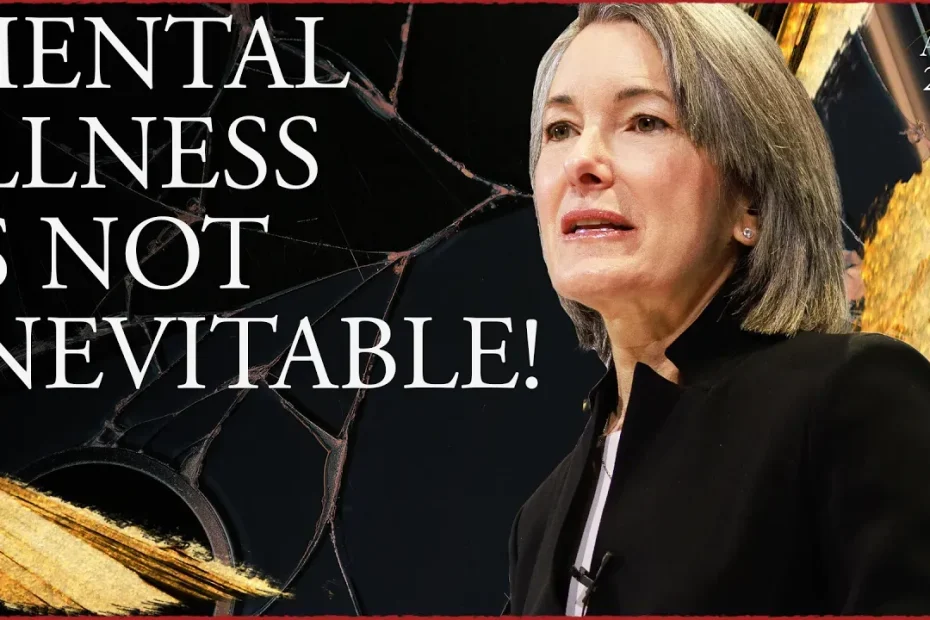
Read the full transcript of author Erica Komisar ‘s talk titled “How A Narcissistic Society Created The Mental Health Crisis (And Vice Versa)” at the Alliance for Responsible Citizenship (ARC) Conference on Feb 21, 2025.
Listen to the audio version here:
TRANSCRIPT:
Introduction
ERICA KOMISAR: Thank you to Philippa Stroud and to everyone at AHRQ and all the delegates here today. I’m here to speak to you about the importance of family and relationships as the bedrock of a healthy society. The rise in individualism and self-orientation has undermined the importance of family and has negatively impacted the mental health of children. Over the last 70 years, there’s been a shift in values away from a more relational, empathic and family-oriented approach to a more self-focused one.
Historical Shifts in Society
Modern and political movements in the 1960s brought positive changes, but every social and political movement also has downsides. The women’s rights movement gave women increased opportunities in the workplace and greater freedom of choice in many areas, but it also meant a rise in two-parent working families, where parents gave the responsibility of raising children to others, often placing them in institutional care.
Mothers doubted their value as nurturers and the myth was born that children were self-sufficient from birth and could raise themselves and be just fine. The me movement gave individuals the opportunity to seek self-determination and self-fulfillment, but at the cost of nurturing relationships and family ties. Freedom replaced responsibility and the pursuit of one’s singular pleasures outweighed caregiving.
In addition, the 1950s brought the age of television, advertising and consumerism, a narrative that the path to happiness was through lifestyle and materialism. An opportunity economy came with the promise of financial independence and promoted career achievement over relationships. These changes to the family ecosystem started to tear apart the social fabric. Fast forward to today and the legacy of these historical movements has produced generations who value work and materialism over caring for vulnerable children and elderly.
The Rise of Self-Orientation and Its Impact
The rise of social media which promises happiness through lifestyle and the move away from a more relational world of deep emotional connections toward a superficial self-focused world. One in five children are breaking down from mental illness.
Although the causes of this crisis are multivariable, the rise in self-orientation, otherwise known as narcissistic behavior, is a major contributor to the mental health crisis. Our children have been affected in so many ways. Some are just less happy, more dissatisfied and more bored with their lives. Others are more obviously symptomatic, suffering from attachment disorders, addictions, depression, anxiety, ADHD, suicidal thoughts, personality disorders and loneliness, all of which are on the rise.
Today’s young adults can no longer see value of committing to deep and loving relationships through marriage and children. They feel that having a family is a burden which would require them to sacrifice time, money and personal freedom.
When they do have children, many of them don’t want to raise their own children. They want to delegate the care of their children for others to raise because it’s too frustrating, uncomfortable and too much responsibility. Endless opining about the unbearable hardship of parenting is a sign of a youth’s fragility and lack of resilience. There’s no way to sugarcoat this.
The Consequences of Self-Centeredness
The repercussions of three generations of self-centeredness means parents are modeling selfishness and emotional fragility to their children. The shift in values to a more self-focused parenting style is contributing to a rise in disorders of the self, otherwise known as narcissistic disorders. These disorders contribute to the relational disconnection and mental health crisis we see in society today.
Self-centeredness is a term that became and has become part of the popular culture but few really understand what it means. Although the term has been hijacked by negative phrases like self-centered, selfish and self-absorbed, the self is actually a necessary and important part of a personality. Positive traits like self-esteem, self-worth and self-care are essential for a healthy self. Children are not born with a healthy or defined sense of self.
They begin to develop it as a result of the emotionally and physically present relationship with their mother or primary attachment figure, and yes, I did say mother, in the first three years who makes them feel safe and loved.
The Importance of Secure Attachment
When everything goes well, a child feels securely attached, loved, valued, admired and understood. This secure attachment allows children to tolerate even wide swings of emotion in response to success or failure in the future, otherwise known as resilience. Alarmingly, we’ve disrupted the connection between mothers and babies in a society that devalues and deprioritizes mothering and caring for our own children.
By promoting a false narrative that any caregiver will do and parents first, we are creating generations of fragile offspring who don’t value and cannot manage the sacrifice involved in having a family. Children have irreducible needs or requirements from their parents if they hope to develop a healthy self. They need attachment security to feel safe and secure being cared for by a physically and emotionally present primary attachment figure, usually their mother from zero to three, who buffers them from stress and regulates their emotions from moment to moment.
They also need sensitivity and empathy to have their feelings acknowledged, understood and reflected by parents who treasure them above work or any other endeavors. They need admiration and unconditional love to be admired for their authentic strengths and accepted with their imperfections, limitations and mistakes. They need healthy separation to be accepted as a separate person with their own personalities, interests and desires, to be encouraged to arrive at a place of independence without being discouraged, rushed, pressured or shamed.
They need healthy parents. They need parents who are emotionally secure themselves, can regulate their own emotions, can bear the frustration and discomfort of responsibility, can communicate openly without judgment and can connect on a deeply emotional level. Unhealthy narcissism is what most people think of when the word narcissism is used.
It’s the result of emotional or physical neglect or trauma in early childhood.
Understanding Narcissism and Trauma
Cole Hood, a famous psychoanalyst, used to say, “narcissism is a disease of deficiency.” Children need love, attention, parental presence and parental sacrifice in the early years as the building blocks of feeling lovable and valuable, or they forever spend their adult lives trying to compensate, to fill the void and to reclaim the admiration and love they never received. Trauma is a term that most associate with extreme physical or sexual abuse.
However, the most common type of trauma is that of feeling neglected, ignored, disconnected and misunderstood by those we love. What we invest in our children when they’re young is what will eventually manifest in their later lives. If we model loving, attentive and selfless behavior, we can see the results in their later character and resilience.
When parents give their time and attention joyfully, without resentment or anger, they model that giving and self-sacrifice are pleasurable, meaningful and valuable experiences. Only then can children internalize parenting in a positive manner. If, however, parents are unwilling or incapable of sacrificing their own desires, ambition and comfort to meet their children’s needs, if they resent their children, either explicitly or implicitly, for taking them away from more important activities, if children become more of a burden than a pleasure, or if they project upon their children their own needs and ambitions, then children retreat into self-orientation as a defensive maneuver.
When a child’s needs are unmet because of a parent’s self-focus or self-interest, they feel hurt, misunderstood, abandoned and rejected. These feelings of loss require coping mechanisms that are not usually healthy, such as defensive independence, dissociation and shame due to their belief that their parent’s lack of interest in them and lack of acceptance of them is the result of their own lack of value.
They may feel guilty that their needs for connection, which are unmet, are too intense and burdensome, which can lead them to have very low self-esteem. Long term, they may experience lack of empathy, loneliness, anxiety, depression, rage, grandiosity, shame, exhibitionism and emotional immaturity. These pathological defenses are passed down generationally, not genetically. Unless the cycle is broken, children will likely parent as they were parented.
Hope for Change
The good news is, not all is lost. We can restore the value of the family, turn around this mental health crisis and raise children who have the capacity to love, to give, to sacrifice and to prioritize relationships once again. Our children are not destined to suffer from narcissistic disorders if we make different choices in how we raise them. There are actionable things parents can do to raise children who embrace sacrifice, responsibility and family as a meaningful part of life.
Do not let your children overwork or any other pursuits. Spend as much undistracted time with your children as possible to model for them the value of relationships and family over work. Quality time alone is a myth. For children to become mentally and relationally healthy, they need both quantity and quality time.
Model your own compassion for others. In Judaism, the term tekun olam means to heal the world through acts of loving kindness. If we prioritize caretaking and generosity toward not only our family, but our wider community, then our children will inherit a family culture of giving. Redefine success.
Teach your children that fulfillment comes not only from relentless ambition, but from deep, meaningful relationships. Teach your children about the importance and the joy of responsibility that’s age-appropriate, from setting the table to visiting grandma, household chores and family commitments, as well as school jobs, after-school jobs, help children to feel valuable and confident. Raise children in caring, faith-based communities which promote sacrifice, empathy and volunteerism.
Reject superficial values by limiting social media exposure and promote more profound, authentic human relationships. In our schools, teach a curriculum of ethical behavior, beginning in primary school. Make volunteering and service hours a requirement. Prepare children for a well-rounded life with relationships and community at the center. In our healthcare system, break the cycle of generational expression of narcissistic disorders through parent education and early evaluation and treatment of trauma, abuse and neglect in both parents and children.
By focusing not only on symptom relief, but treating the underlying causes of the pain, we can heal future generations. In our governments, implement economic policies which support families to care for their own children from zero to three. Paid leave and childcare stipends, rather than institutional daycare, allow children to develop attachment security and allow parents the ability to connect deeply with their children and to teach them the value of selflessness.
Provide financial support for families to care for their own elderly and sick at home, not in institutional facilities, to return to a society where we can bear the responsibility for our own loved ones, rather than delegate the care to others. Research tells us that connecting with and giving to others, whether to your family or to strangers, is critical to mental health and happiness. The ability to love and give stems from having been given to emotionally by your parents, which creates a state of well-being.
This state of well-being gives children the ability and the desire to give to others, which in turn increases their happiness, so it’s a virtuous cycle. Different types of giving produce changes in the brain, which impact mental health, whether volunteering, acts of service or financial donations, according to a Harvard study. Certain acts of kindness include giving as little as $5 to a stranger in need can increase your happiness.
I’m proud to say we have a culture of volunteerism in my family. Our daughter, who’s here today, volunteered for years in animal shelters and our two sons in our temple’s homeless shelter. When my son Jonas was 8 years of age, he spotted a homeless man, let’s call him Lars. Lars was a regular on Central Park West and always had his beloved dog with him. My son, who always had a deep sense of empathy towards those less fortunate, would stop and talk to Lars and pet his dog.
One day, Jonas said to me, “Can I give my allowance to Lars?” I said, “Of course, Jonas.” Jonas would regularly give Lars his $5 allowance on the way to school, and the two developed a lovely relationship. One day, Lars moved to California, but before he did, he gave Jonas a card and it said, “You are an extraordinary young man and I’m fortunate to know you.”
Jonas’ compassion only grew over time. The satisfaction Jonas felt from sharing his allowance and listening to and acknowledging Lars’ pain helped Jonas to understand his own value and place in this world. The fact that generosity both stems from and produces happiness may sound intuitive, but our young people today are searching for this holy grail. In order to help them grow into fulfilled, empathic, generous individuals who are capable of self-sacrifice, we must reprioritize the formation of a healthy self from birth.
My husband, Dr. Jordan Kaslow, is a social entrepreneur who has given the poorest in the world access to eyeglasses, changing their lives. Jordan and Rabbi Jen Kraus wrote a beautiful book called “Dare to Matter,” where they explain that rooted in Judaism, we need to serve others to feel that we matter. The only difference between being and mattering is believing and then acting is that the world depends upon you.
The world may be the world of your family where you give your time and attention or changing the lives of strangers.
A Call for Change
So what is our hope for a better story? I cannot overstate my concern about the increase in individualism, self-focus, and narcissistic disorders I am seeing in our youth. If the status quo persists, we will continue to see a rapid decline in mental health in children and adults. Family is the bedrock of a healthy society, which requires selflessness and sacrifice.
We are producing less functional young adults who are breaking down mentally. Many are incapable of nurturing, empathy, commitment, or putting aside their own selfish desires to have and to raise emotionally healthy children. The crisis we face is dramatic and demands our immediate attention. The future offers a hopeful new paradigm, that’s why we’re here at AHRQ.
If only we embrace it, looking forward to a society which recognizes that caring must come first. We must model that ambitions, both personal and career-related or economic, are all attainable over the course of a lifetime, but not at the expense of our relationships. We can have everything in life, but not at the same time. The path forward is a loving, compassionate, and interdependent path to feel cared for and to want to care for others.
Reclaiming our human instincts of nurturing and sacrifice is within our reach, and the mental health of our children and society depends upon us to lead the way.