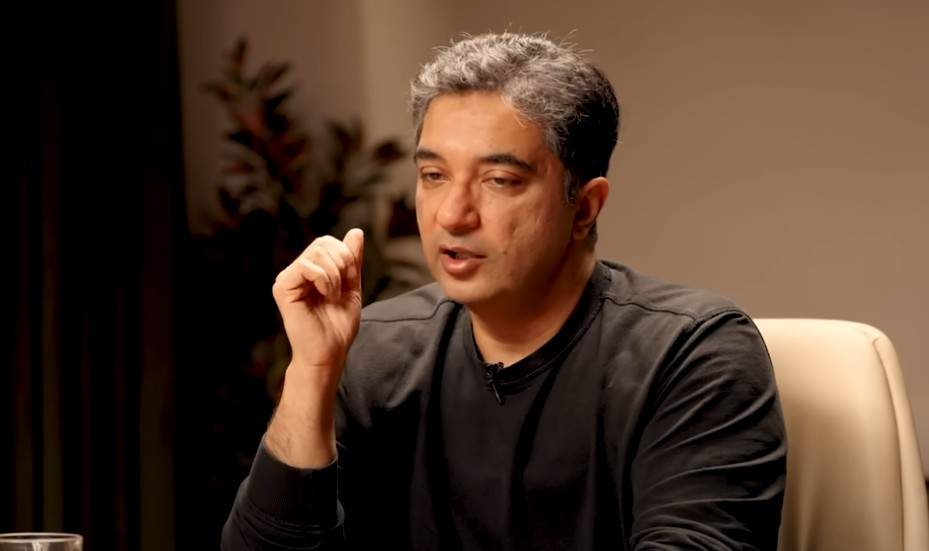
Read the full transcript of Superhealth founder Varun Dubey’s interview on The Think School’s Indian business podcast with host Ganeshprasad Sridharan on “India’s Health Crisis – How to Fix India’s BROKEN Healthcare System?”, Sep 18, 2025.
Setting the Stage: Understanding India’s Healthcare Crisis
GANESHPRASAD SRIDHARAN: Varun, today’s episode is going to be a shocking eye opener because we are going to make our private conversation public. You know when I was doing research on Narayana Health, I spoke to you. It ended up being a two hour call where you revealed some shocking facts about the Indian healthcare industry.
And in today’s episode I want you to put it out. I want you to tell me what exactly is the fundamental flaw in the business model of the healthcare system of India because of which in the race of optimizing for profits, the patient’s health is being compromised and ethics are being compromised.
Now I consider this to be both a threat and an opportunity. By the way, my mom always told me that hospitals always loot you, okay? But she did not have data to back it up. But you have a lot of data to back that theory.
Now I consider it to be both a threat and an opportunity. Threat because we are being looted. Opportunity because healthcare in India is a low trust, high demand, high ticket business. So if you can solve for trust and if you can solve for efficiency, I believe, and you also believe that we can build an ethical business model to scale eventually catering to both patients and profits.
So in today’s episode I just want to know four things. Number one, what are these dark secrets of Indian hospitals? Number two, how do these hospitals make money in both good ways and bad ways? Number three, how are Superhealth hospitals different? And most importantly, as students of business, where is our opportunity to build a business in the healthcare system of India. Does that make sense?
VARUN DUBEY: Makes sense, absolutely.
GANESHPRASAD SRIDHARAN: Let’s go, let’s get started. Wanting to set context, help me understand the fundamental business model of a hospital and how does a hospital make money.
The Economics of Hospital Infrastructure
VARUN DUBEY: So first of all, thanks for having me on the podcast. You know, I’ve been watching the show for a while, so it’s a little surreal that I’m on it today.
In India, it takes about 2 crores per bed for you to make a hospital. Now the cost in that is land, construction, equipment, medicines and people. Approximately 20% each item.
GANESHPRASAD SRIDHARAN: 2 crores per bed.
VARUN DUBEY: 2 crores per bed. So if you are building a 500 bed hospital at ribbon cutting inauguration, you are out 1,000 crores.
GANESHPRASAD SRIDHARAN: Okay.
VARUN DUBEY: Now what happens is that these are typically debt funded businesses, so they need money from day one. So how do you get revenue from day one?
The related issue they have is that there is no real differentiation. They all have similar buildings, similar doctors. Everywhere you go as a patient, you wait three hours, you have no idea what the bill is, why it will be. Only guarantee is whatever they say the bill is, it’s not going to be that. It will be much more than that.
So for a patient, they have no real way to decide where to go, so they default to whichever doctor they have heard of. Which then propagates this whole thing saying that patients come for doctors because there’s nothing else to decide upon.
GANESHPRASAD SRIDHARAN: Correct.
The Doctor Commission Model
VARUN DUBEY: So now because of that, the fastest way for a hospital to make money is to hire doctors who already have an existing patient base. Kind of like demand acquisition.
Now why should this doctor come to you? He’s already happy at a hospital he’s at because he has some hospital. So you will go to them and lure him with money and say, “I’ll give you 20% commission on whatever revenue you make,” which is roughly 20, 22, 23% is the industry average.
Let’s say there is a doctor who’s in his department, the total patient bill generation is 20 crores. So 20% means he is making 4 crores. Because the doctor has been forced into this commission structure.
GANESHPRASAD SRIDHARAN: Correct.
VARUN DUBEY: Now I will tell him, “Hey you, please join my hospital.” So with some negotiation, he will come to my hospital. But like any normal human being who changes a job, he is not going to come at a pay cut, right?
GANESHPRASAD SRIDHARAN: Correct.
VARUN DUBEY: So I have to give him what he was making at least. But it’s not like on day one, the same revenue will transition. It will take some time. Some patients will stay back. Not everybody will move. This hospital will be further away. Variety of reasons. So there is typically a 6 to 9 month grace period given to this doctor.
GANESHPRASAD SRIDHARAN: Okay.
The Minimum Guarantee System
VARUN DUBEY: And this 20% that is given, so let’s say whatever 20 crores means 4 crores, say 30 lakh rupees a month is called a minimum guarantee. Which means that whether any patient comes or not, I guarantee that I will pay you this much every month.
GANESHPRASAD SRIDHARAN: 4 crores.
VARUN DUBEY: 4 crores a year. Now obviously the implied thing there is that you have to make at least 5x the revenue from the minimum guarantee. So there is a metric that hospitals track very closely called minimum guarantee recovery.
GANESHPRASAD SRIDHARAN: Minimum guarantee recovery.
VARUN DUBEY: Minimum guarantee is MG. So they have a metric called MG recovery. There is a guy in the unit operations whose only job every day is to look at doctor names and see what are we paying him and how much is he recovering for us.
GANESHPRASAD SRIDHARAN: Was it your job as the chief revenue officer?
VARUN DUBEY: I mean kind of, yes.
So now what happens is let’s say you start a new hospital. So six months before commissioning, so let’s say you spend this 1,000 crores, six months before commissioning—commissioning is when you see the first patient—there will be a unit CEO. Unit CEO will have a unit marketing head in his team. Whoever is in charge. These people are in charge of that hospital.
They will go out in the market and find all the doctors in the neighborhood or in adjacent areas who are making XYZ revenue. They will make a short list of that. Note that nobody here is discussing clinical skills.
GANESHPRASAD SRIDHARAN: Okay.
VARUN DUBEY: They’re saying, “Okay, are you a doctor? How much money are you making for the hospital you’re in?” And then they will be put on a short list. Then this team will try to convince them to join this hospital with some stuff.
Like we said, he has now joined the hospital. Now this MG recovery, all this is in place. There is a guy who’s tracking this. Six to nine months later someone like me will show up in that hospital and say, “Boss, you are not on a revenue plan. What’s going on?” Because I’m the business guy. So I’ll talk to the CEO and review and talk to him. So it’s got diagnosis, right?
First question: what is the OP footfall? Which means outpatient, which means how many people are coming for consultation, diagnostics, tests, all that.
GANESHPRASAD SRIDHARAN: So this is asked by the business guy.
The Conversion Funnel Approach
VARUN DUBEY: So business guy to the unit CEO. Doctors are not in the picture, right? We’re diagnosing. So we’re saying okay, do you have enough OP footfall, outpatient, which means not admitted but people coming for consultations.
India is so supply constrained that if you make a half decent hospital, the footfall is never a problem. You have to do something really wrong to not have hospital OPD full. So this is never a problem.
The second question they ask is what is your outpatient to inpatient conversion? It’s literally tracked like a funnel, dude. Typical industry is 8 to 12%. So let’s say 10% is your OP to IP conversion.
GANESHPRASAD SRIDHARAN: But how is there an industry standard for this?
VARUN DUBEY: I mean everybody knows what is the conversion happening in the industry, right? So you need some benchmark. So you say okay, it’s 10%. Let’s say now you’ll say okay, if the industry is at 10%, let’s say I’m a group with 10, 20 hospitals. I have a group average of generally what is the conversion in my group.
So I will tell that unit, “If my group and the industry is 10%, why are you at 6%?” Fair question. Think of it like a sales conversion funnel. Think of it. It’s exactly like that.
So then how will we diagnose? Why are we at this? They will say, “Okay, now show me this number by doctors.” So they’ll put every doctor’s name and in front of that they will put what is the OP to IP conversion?
GANESHPRASAD SRIDHARAN: Okay.
VARUN DUBEY: And everybody who’s less than 10%, the CEO will call that doctor and talk to him and say you need to fix this. So what “you need to fix this” means what? If he’s an orthopedist, you’re going to get a knee replacement.
GANESHPRASAD SRIDHARAN: So we have doctor one, doctor two, doctor three. What is the outpatient to inpatient ratio?
The Pressure on Doctors
VARUN DUBEY: So this ratio is now been looked at and the doctors who are below a certain threshold are having a conversation with the unit CEO saying that you need to fix this. So “fix this” means you have to prescribe more surgeries, all that.
Remember he is under pressure already because he has come on this MG model because they are not willing to give him a salary model. So now the doctor has a dilemma. What should he do?
Now let’s understand this from a doctor standpoint. See, it’s a big myth that doctors are in on this. Doctors become doctors because they want to do the right thing for the patient. And then the system of bad incentive takes over. They are even in a worse situation than the patient. Because the patient has to deal with the system once in five years. Doctor has to go and deal with this every day. He also has no choice.
So let’s take an example where you know, let’s say someone like me shows up in the hospital and says you need to do this. The doctor says, “No, Varun, this is not right. I will not do it.” And many doctors will fight for it.
So what will we do? We have already spent 1,000 crores. We need the revenue. Otherwise how will we pay the bank loans? So you have deployed capital. You need return on that capital for investors. So what are you going to do?
So you have to let go of this doctor. But firing a doctor in a hospital is a master class in subtlety. So how do they do it? The hospital doesn’t want to take a fight with the doctors also. They want to be respectful. Which is the right thing. He’s the doctor.
So what they will do is that they will hire one more doctor in the same department. And transfer patients from reception to this new doctor who’s under significant pressure again to do surgeries that the first doctor was refusing to do.
Now this first doctor has got the message saying that, “Boss, you can’t continue here.” So what is he going to do? He is going to apply to other hospitals. Unfortunately for him, every hospital has this model only.
So when he goes there, what many people don’t realize is that the gatekeeper of a doctor in a hospital is the sales team. It’s not the medical team.
GANESHPRASAD SRIDHARAN: Okay.
The Sales-Driven Healthcare Model
VARUN DUBEY: The medical team does a basic check saying doctor skills, documents, all that is in place. But the sales team will decide which doctor will get hired. Right now when the doctor applies to say hospital B they will call the team at hospital A and say, “Well, why did you fire Dr. Sharma? Why is he applying here? What happened?”
So the hospital A sales team will say that, “You know, Dr. Sharma is a great guy. Patients love him. But you know, his conversion is only 6%. Which means that he’s taking patients outside the hospital. So this is a medical risk for us. So we don’t allow it.”
GANESHPRASAD SRIDHARAN: Which means he’s taking patients outside hospital.
VARUN DUBEY: Which means that patient requires surgery. It’s below numbers. How can it be below the industry average? So he must be taking the surgeries to some other hospital. Of course, no one. Why would the doctor do all this? He’s already in the hospital, correct? Right. Patients already agree to the surgery. Why would he do all this?
So, but they can’t technically say that commission. So they will say this. But the message received on the other end is this, that if you hire this guy, your conversion OP IP won’t happen. So then what will happen? They’ll not hire this guy.
So what is this guy’s, this doctor’s option? His only option is to take a huge pay cut and join a small hospital or start his own hospital. Neither which a doctor wants to do. Which is a ridiculous choice, right? Imagine if every CA had to open his firm, or every lawyer had to open his firm, or every creative person’s only option was to start his own agency. Of course not. This makes no sense.
So now this doctor also has EMIs. He has a life to live. He has kids, tuition. All this he has to pay. Not like it’s cheaper for him just because he’s a doctor, right? He pays retail price and everything. So how will he do all this? He also took 15, 20 years to become a good doctor, right? So there’s a lot of that investment. His peers are making more money. He could have been a software engineer, made more money.
So all this is happening in his life. And then there is a person saying, your entire life will end if you don’t do this. What are you going to do? Right? So doctors and patients are equally stuck in the system. Equally badly. In fact, I would argue doctors are stuck worse. Right?
So this, now this entire thing adds up across doctors into the revenue for the hospital. Now see, I appreciate why this model has become so prevalent. Okay? Even though everyone started with the right thing saying, let’s build high quality, think of it like a consumer Internet company. If someone told you that at 20% CAC, I will give you infinite scale, you will take it any day, right?
If everybody does this, the patient has no option, correct? People are not even debating wait times anymore. They’re saying wait normal hai. But Blinkit or Zepto may change. What’s your option? You are like, okay, you know, I reject this hospital. It made me wait. Okay, where will you go next hospital for two hours, three hours, whatever. So let’s understand now why. So this is the broad business model now within this, because there is so much opaqueness.
The EdTech Comparison
GANESHPRASAD SRIDHARAN: If I’m getting this right, this OP IP conversion works somewhat like an edtech company giving out a webinar at 500 rupees, which is the doctor consultation.
VARUN DUBEY: Correct.
GANESHPRASAD SRIDHARAN: In that doctor consultation in a webinar, you upsell another product for 5,000 rupees. Why? Because you spent a lot of money into marketing.
VARUN DUBEY: Yes.
GANESHPRASAD SRIDHARAN: And you want to recover that cost.
VARUN DUBEY: Absolutely.
GANESHPRASAD SRIDHARAN: So you ask your customers to buy a product that is costlier.
VARUN DUBEY: Correct.
GANESHPRASAD SRIDHARAN: Now, in case of edtech, you can do this because you’re offering a product which is far better, offering insights far deeper. But you’re telling me that the same thing happens in hospitals also, where if I go to a doctor and tell him that I have knee pain, if the doctor says apply Volini and you’ll be okay, that’s actually bad for the hospitals. So the doctor has to suggest something as bizarre as a knee replacement so that the hospital can generate more revenue.
VARUN DUBEY: Correct.
GANESHPRASAD SRIDHARAN: And the reason why this is important for the hospital is because the hospital has already put in 1,000 crores in capital. If they want to recover that they need to generate revenue. If they have to generate revenue, they need doctors. So just like there is customer acquisition, hospitals acquire doctors because doctors help them acquire customers.
VARUN DUBEY: Yes.
GANESHPRASAD SRIDHARAN: And if there are three doctors with an OP IP conversion, consultation, say conversion for doctor one is, let’s say 8%, doctor two is 10%, doctor three is 20%. Then regardless of whether doctor one is giving out the right consultation or not, regardless of how much Dr. 1 cares about the patients, Dr. 1 will be let go simply because he is not generating profits.
VARUN DUBEY: Correct. 100%. That’s exactly how it is. That’s absolutely right.
GANESHPRASAD SRIDHARAN: And you’re telling me that because every other hospital follows the same model, every other doctor is forced to be in the system itself. So this is basically capitalism gone wrong.
VARUN DUBEY: They have no choice.
GANESHPRASAD SRIDHARAN: And the beauty is, like you just mentioned, for large hospitals, hi-fi hospitals, because the insurance company is going to pay for the patient, the doctor after a certain extent will feel like, “Oh, you know, I’m not taking this money from the patient, I’m actually taking this money from the insurance company.” Regardless of what happens to the health of the patient, it’s okay. So I will make money, the hospital will make money and the insurance company is paying for it. And the patient, well, economically the patient is untouched. But health wise, the patient is messed up and doctors eventually do not care about it because they can’t care about it.
The Doctor’s Dilemma
VARUN DUBEY: Yeah, I mean, you know, I would not say that they don’t care about it. I think, at least in my experience in the last 10, 15 years that I have been, you know, in some ways in healthcare, doctors care deeply about all this. Okay? It’s every single doctor that I know and I know thousands of them and I spend a lot of time with them. They are deeply frustrated with this.
The problem is there is no alternative for them. What are they going to do? See, think of it. Let’s go back to your example of this whole OP IP and all of this. Right? So imagine that this doctor has now been forced to come in with this MG. Now what could else they could have done?
So let’s look at the doctor models. There are three possible models. Okay. First is this prevalent model which is called MG recovery. Okay. MG recovery model is available to doctors where the hospital has high confidence that this doctor will generate revenue for them. So they’re willing to lock in upfront with money.
Then there is a model which is called fee for service or FFS. Fee for service, which means that there is no upfront guaranteed payment. You will get, for every patient you bring, I will pay you XYZ commission.
GANESHPRASAD SRIDHARAN: Can you give me an example?
VARUN DUBEY: As an example, let’s say I am, let’s say a cardiac surgeon. Suppose and the hospital is unsure how much volume and demand I can generate because maybe I’m a new surgeon or they couldn’t get validation or whatever XYZ reason. So what they will tell me is that, “Okay, cool, I will give you rights to come and do this surgery in my hospital. But I am not committing any upfront payment to you. If you bring 10 patients and generate this much money, I will give you this much commission.”
GANESHPRASAD SRIDHARAN: But how will he bring in 10 patients?
VARUN DUBEY: Because the patient is already coming to him for consultation. Okay? Right. So now let’s say, let’s say the doctor has a clinic somewhere and he has some X patient. Let’s say a patient comes and says, he says, “Okay, you need this stent.” Right?
Now the stent has to be put in an OT, some operating theater. Stent is this thing you put for a cardiac blockage. When you don’t have heart pumping, there’s a blockage in the artery. So they will put a stent which will essentially expand the artery so that the blood flow can continue. Now when you put that stent, it has to be put in a proper operating theatre. So now the doctor is in a clinic, he doesn’t have an operating theatre. He’ll go to a hospital for the operating theatre.
GANESHPRASAD SRIDHARAN: Got it?
VARUN DUBEY: Hospital say, “Cool, you book the surgery. If you generate say 1 lakh, I will give you 20,000. If you generate 2 lakhs, I’ll give you 40,000.” Got it? But since I am not sure how many patients you will bring, I cannot commit to you saying that whether you bring or not, I will give you X money upfront.
GANESHPRASAD SRIDHARAN: Got it? So there is no minimum guarantee.
VARUN DUBEY: There is no minimum guarantee. You fee for service. For every service, I will give you a fee.
GANESHPRASAD SRIDHARAN: Almost like a commission model.
VARUN DUBEY: It is 100% a commission model. MG is also a commission model. It is just that I have high confidence. I am willing to pay this upfront. The third model which they should actually be doing is a full time salaried doctor. Why would the doctor say no to that model? That is the model doctor would prefer.
GANESHPRASAD SRIDHARAN: Correct?
The Salaried Doctor Model
VARUN DUBEY: Where like all of us normal people, we get a, you know, we get a fixed salary at the end of the month. That’s what should happen to doctors. I mean, think of it as a comparison to a tech company. Imagine if Ola or Zomato told their engineers, “I will pay you for every line of code.” First of all, they have been able to hire zero engineers, number one. Number two, what do you think will happen to the code base? It will have as many lines of code as they can write. Because that’s what their pay is dependent on. Right?
Imagine further that these tech companies told their engineering teams that, “Hey, you know what? Your money depends on how many apps get downloaded.” Then what is the marketing team doing?
GANESHPRASAD SRIDHARAN: Correct.
VARUN DUBEY: Right. So some doctor in a healthcare system is the same as engineer in a tech company. But somehow the doctor has become the product, the engineer and the marketing guy. Why? This is, in my opinion, full abdication of all responsibility by the hospital teams. Right? It’s the marketing team’s job to sell a value prop. It’s the hospital’s job to actually build a value prop that brings patients. Right?
GANESHPRASAD SRIDHARAN: It’s the doctor’s job to just treat patients.
VARUN DUBEY: Yes. I mean, sounds pretty basic, right? I’m like, why is this not working like this? I am not understanding.
GANESHPRASAD SRIDHARAN: I mean, I thought that’s how the world works.
VARUN DUBEY: Unfortunately for patients and doctors, that’s not true. Right. And doctors are generally at the end of it. So anyway, coming back to that discussion we’re having, right? So now this doctor is in the system. MG recovery is a revenue goal, right? So what will the doctor do now?
The doctor is in the system now. He is being tracked on this on a daily basis. The operations team is coming and hounding him, saying, “What is happening, what is happening, what is happening?” So now doctor also knows these days, these data points. No. So he knows that if I see 100 patients in my OPD, 10% will require IP. Suppose, but this is maths. Someday it could be 8, someday it could be 12. I need 10 total admissions a day.
Patient could say, “I am not sure, I can’t afford it. I’ll be a second opinion.” All this can happen. Right. But I have an absolute target of 10. So what will I do? I will do the only thing I can do. I can either see more patients in the OPD so that definitely there are 10 admissions possible and or try to, you know, build more.
GANESHPRASAD SRIDHARAN: Which model?
VARUN DUBEY: Any model. Right. Especially in the MG model. Right. So in a salary model, you’re getting a fixed salary. So you’re going to do the right thing.
GANESHPRASAD SRIDHARAN: So you don’t really care.
VARUN DUBEY: You don’t really care. Right. You tell the right thing. Whether the hospital makes money, doesn’t make money, the hospital’s problem.
GANESHPRASAD SRIDHARAN: Correct. You know, an example of the same is an edtech company sales team. So if you have incentives for sales, what the sales team will do is they will try to sell the course to even those people who do not require the course in the first place. And that’s what happened to a unicorn company that went bust.
VARUN DUBEY: Right.
The Billing Desk Assessment
GANESHPRASAD SRIDHARAN: But if the sales team is incentivized only to educate the customers and give them five star customer experience, regardless of the sales, if they are paid a salary, they will not be incentivized to do the wrong thing. So you’re telling that doctors are acting as salesmen, not as doctors.
VARUN DUBEY: Yeah, doctors are really being forced into that here. You know, it’s quite bad. So the system will somehow balance it out by saying see more patients or bill them more, which will happen at the billing desk. Which is why your bill is never the same as what they tell you.
GANESHPRASAD SRIDHARAN: Correct.
VARUN DUBEY: Right. Because the billing guy is going to do an assessment of saying, how do you look? What’s the watch? Where do you stay? They’ll ask your address and I mean, you know, many patients would have experienced this. Right. And it has gotten so normalized, it just angers me.
Okay, so you go to a hospital, let’s say for all good reason you need a surgery. So you go to the hospital, you go to the billing desk, there is an estimate desk whose only job in their life is to give you an estimate for the surgery.
GANESHPRASAD SRIDHARAN: Okay.
VARUN DUBEY: They do this day in and day out. It’s your first surgery as a patient, but they do this day in and day out.
GANESHPRASAD SRIDHARAN: Correct.
VARUN DUBEY: Okay. For someone who does this thing day in and day out, how can they get their estimate wrong every time? I don’t know. They’ll say, okay, your surgery knee replacement is going to cost two and a half lakhs.
GANESHPRASAD SRIDHARAN: Okay?
VARUN DUBEY: So you’re like, okay, cool, you agree to the surgery. Bill will be 4 lakhs. How? Because that’s what the bill is. Because they will explain to you saying, oh, you know, in the surgery this happened. In the surgery that happened, we had to add this extra. We had to add that. How will you know whether that happened or not? Whether that was required or not? You don’t know, right?
But between then they have all assessed that because your insurance package is bigger or whatever the reason may be, right? And because of that, your bill will go up. Right? Now, as a patient, like you said, if you’re an insured patient, you don’t really care. You’re like insurance is going to pay the money.
I would actually, you know, a side note, I would argue that even the insurance companies are victims of the same system because they also have no choice. They have to pay because you have the premium payment.
GANESHPRASAD SRIDHARAN: Which is why mis-selling happens over there also.
The Insurance Crisis
VARUN DUBEY: No, I mean, insurance companies are in really deep trouble, dude. In my opinion, okay, you know, they are paying out 90 to 100% of the premium as claims. There is a very real chance that if this continues in five years from now, we don’t have an insurance system. Because why would you build a company where 100% of your revenue is going out as claims? This makes no sense.
So anyway, so you know, a patient walks in, he’s told, this is the bill by an estimate desk whose only job is to give estimates. And the only thing that happens is the estimate is never what they say it is. But you are the expert at this, right? As a hospital, you should know exactly.
Like, can you imagine you went to a restaurant and spoke to the chef and chef said your meal is going to cost between 1 to 5,000 rupees. Like, dude, like I’m ordering a pizza, right? You should know they cannot come and say no, today we grated little extra cheese, so you have to now pay 50 rupees more. Makes no sense.
Or take, let me give you another example. Let’s say you take a flight and you go from Bangalore to Delhi, okay? You paid Indigo 10,000 rupees. When they reached Delhi, there was fog. So they had to circle for 45 minutes. Okay? And when you landed, they told you that, oh no, you can’t leave the plane because we didn’t think about fog. So you can’t leave the plane till you pay 5,000 rupees more. Will you accept it?
No, but we accept this every day in the hospital because we are like, oh, maybe it was more, but it’s his job to tell you how much it will cost. Right? But the reason is not because they’re bad at their job. It’s actually because they’re very good at their job on the billing desk. Right? So they’ll figure out how much they can charge you and then they’ll charge you that. And in fact it has even gotten systematized. Okay.
GANESHPRASAD SRIDHARAN: Okay.
Package Rates vs. Open Billing
VARUN DUBEY: So for every hospital in a relationship with an insurance company, they have tie ups for rates and everything. For the same procedure they will have two kinds of rates. One is called a package rate which says that if I’m doing this XYZ procedure, let’s say an appendix procedure, then that appendix procedure will cost say one and a half lakhs.
And so you go, doctor says you need an appendix procedure. You get in there and it’s 1.5 lakhs. Insurance pays 1.5 lakhs. No matter what the hospital bills you. Okay? And between the hospital and the insurance company and the insurance desk at the hospital, they’ll figure this out.
Then they have, for the same surgery, for the same hospital and the same insurance, they have something called open billing.
GANESHPRASAD SRIDHARAN: Open billing.
VARUN DUBEY: Okay. What open billing means is that when we went through the actual procedure, we found anomalies that we did not realize before. And therefore this is a non-standard procedure. So obviously we took more consumables, we took more time in the OT, we took more this, more that. So obviously I can’t do this within the package rate we had agreed.
GANESHPRASAD SRIDHARAN: Okay?
VARUN DUBEY: So now the minute it becomes open billing, it is now at rack rates. You’re getting billed for everything. Okay? Now the incentive structure is such that if your bill was 2 lakhs, right, that commission is 40,000. If your bill is 5 lakhs, the commission is 1 lakh.
And remember, the person is forced into an MG situation where they have to do MG recovery. Guess what your bill is going to be right now. It’s quite unfortunate that we have reduced the healthcare providers to this. But the problem is the hospital already spent all this money, but they’re not able to estimate this for this reason. And that’s one way for you to make money in the hospital.
The X-Ray Pricing Mystery
Another way, there are so many things, we don’t even question it anymore. Why is the X-ray of your leg costing different from X-ray of your chest? How does the machine know which organ is in front of it? What is the cost of the X-ray? Right. There is the machine, there is a room. So it doesn’t say. It varies wildly. Okay.
So if you go to a diagnostic lab, it could be few hundred bucks difference. If you go to a hospital, it gets more complicated. Because in a hospital they have the same, they forget different body parts. The same X-ray will have different prices.
So as an example, if you went to a hospital and got a test done, X-ray, MRI, whatever, there’s a certain price. Let’s say MRI is 5, 7, 10,000 rupees.
GANESHPRASAD SRIDHARAN: Okay?
VARUN DUBEY: Okay. The same patient in the same hospital for the same body part does an MRI as an admitted patient.
GANESHPRASAD SRIDHARAN: Okay.
VARUN DUBEY: As an inpatient is twenty thousand rupees. Okay. The same patient as an inpatient does an MRI in the same hospital for the same body part, was in a twin sharing room versus a private room. The price difference is 3x between that.
Why? It’s like saying that I took a presidential suite in the hotel, so my naan is now four times more expensive. This makes no sense. But this happens. This is the model. Right? And you will see this. And that’s the reason why insurance companies cap room rates. Right. Because you show up in a presidential suite, now everything is 3x.
Why? But the surgery took the exact same time. It’s the exact same consumable. It’s the exact same doctor. So why is it costing me three times more? Just because the room got changed. So what happens because of that? You will end up taking a twin sharing room.
GANESHPRASAD SRIDHARAN: Correct.
The Twin Sharing Room Problem
VARUN DUBEY: Twin sharing room is materially worse for you as a patient. Right? Because imagine you just had surgery and you had someone else coughing next to you. Why do you want that? How is that better for you? It’s not. It’s a cost problem. Because it has been created that a single room is somehow more expensive.
Would you share a room when you went to a hotel with some random stranger? Of course not. You’re not even sick then. And you’re not willing to share. Why are you sharing this in a hospital? Why is the rate so wildly different between you in a twin sharing room versus you in a private room for everything that has nothing to do with the room?
GANESHPRASAD SRIDHARAN: Yeah.
VARUN DUBEY: And this is, this is the norm. This is not an exception. This is the norm. This is the model.
GANESHPRASAD SRIDHARAN: But this is so scary.
VARUN DUBEY: It’s insane. It’s absolutely insane.
GANESHPRASAD SRIDHARAN: And you also told me something about people looking at your watch, your shoes and your clothes.
VARUN DUBEY: Yeah.
GANESHPRASAD SRIDHARAN: What was that about?
The Patient Assessment Game
VARUN DUBEY: I mean, they will try and assess, right, how much money this guy has? Because remember, they have to, they have a revenue target. Everybody has a revenue target, right? So the billing guy has a revenue target. The estimate guys.
Think of it like this. Why is the estimate desk required? Don’t you know what a surgery should cost? What is the component of a surgery? There is an OT time, there’s anesthesia, there is consumable, there is electricity, and there is surgeon. And there is a team of surgeons.
GANESHPRASAD SRIDHARAN: Correct.
VARUN DUBEY: Why does this change from one knee surgery to the next? It doesn’t. It’s the same.
GANESHPRASAD SRIDHARAN: So what do they exactly do? Do they have a look at your watch and give you a different rate?
VARUN DUBEY: See, I mean, it’s a combination of things. Like they’ll try and do an assessment.
GANESHPRASAD SRIDHARAN: Like walk me through an example.
VARUN DUBEY: As an example, let’s say you start, you go to the estimate desk, right? They’ll say, okay, what insurance provider do you have? So if you have an insurance provider, then it’s a little bit easier because the insurance provider sets the rates, right? But then you could get into an open billing, non-open billing thing. But anyway, your insurance provider will manage that.
Let’s say you’re a cash patient. Cash means you’re paying on your own, correct. Right. Now, huge negotiation will happen on that bill. First of all, typically your cash rates, cash doesn’t literally mean cash. It just means you’re paying on your own. There’s no insurance involved. Although in some cases, people do bring cash.
The cash rate generally is a lot higher than the insurance rate. At least 10, 15% is higher because insurances try to do a negotiated discount within that. Now the cash rates have no ceiling, right? Like, the rate can be whatever they tell you. How do you know what the rate is?
If you go to any hospital’s website today and you search, right? They will tell you these estimates that are public, the estimates for a procedure are something like one and a half to three lakhs. Dude, that’s not an estimate, that’s a guess. Right? Like, I mean, I could have guessed one and a half.
So now they’re trying to gauge in the conversation saying, okay, what else could happen? What else could happen? What else could happen? Sometimes genuinely extra things happen. I’m not saying it’s all bad, but through this conversation, there will be an assessment, right?
Otherwise, why do you need an estimate desk? Why is someone sitting and doing, there is a room called financial counseling. Financial counseling for a guy who’s paying cash. I’m like, why? They will explain to you why, what cost and everything, okay?
Then you will get an estimate. Then you can negotiate that estimate. Then it’ll come to a lower price. Right? And so how did, if you had an estimate, why is there a negotiation in the estimate? Right? So what is all this? Right? This is like you’re trying to buy a car, correct? Right. And you’re trying to have a negotiation.
Like, you go to a hotel, there’s a fixed rate, right? Like, this is the rate, this is what it costs. You go to a restaurant, it’s a fixed rate. Right? That is not the case in hospitals because they’re trying to constantly assess by various signals now how well, how unwell, I don’t know. But the outcome is that for the exact same treatment, you will see wildly different bills from the same hospital, which makes no sense.
GANESHPRASAD SRIDHARAN: So basically you’re saying that if you’re paying by cash when you go to the hospital, look poor.
The Hidden Cost of Hospital Infrastructure
VARUN DUBEY: I mean, that might help. That might help for sure. Imagine someone is coming in with so much trust in the hospital saying, “I think you will save my life.” And the hospital like, “Okay, how much money can I make here?”
Okay, go talk to the people at the hospital, the ground unit teams, and ask them how many of them would bring their own family to the hospital they work in. The answer will surprise you.
GANESHPRASAD SRIDHARAN: Really?
VARUN DUBEY: Yeah.
GANESHPRASAD SRIDHARAN: Have you done that?
VARUN DUBEY: I have been told this. So, you know, when I used to work at that hospital, my wife had to go through a procedure. So, look, I am a brand loyalist, right? So I was like, why should I go to somewhere else? I will go to my hospitals.
Then I was told by someone fairly senior saying, “No, no, we don’t do this well here. You should take her somewhere else. I don’t bring my family here for this.” I’m like, “If you don’t trust them with your family, why are you saying it’s okay for someone else’s family to do this?” Like, this makes no sense.
They’re like, “No, no, I go to this other hospital, they are better. They don’t do all these things that we do.” I was like, “Okay, that’s kind of… that kind of sucks.”
GANESHPRASAD SRIDHARAN: Have you personally seen hospitals prioritize profits over patients every day?
When Good People Are Trapped in Bad Systems
VARUN DUBEY: Every day. It happens quite naturally. And see, this is what I mean. It is not that hospital systems are made up of bad people. That’s not the issue. Right. In fact, on average, on balance, I would say majority of people in hospitals, like in any company are really good people who are trying their hardest to do a good job.
The problem is they are stuck in a system which is forcing bad behavior. So this entire model and system of delivery is the problem which is now creating such high pressure situations and bad incentives that it is forcing people to act in a way that is causing bad outcomes. Right. And I think that is at the heart of it.
I think also that is the reason why this problem has remained unsolved. Because all of us have tried to solve this as a tech company. Okay? Right. So if you see over the last whatever years, five years, seven years, billions and billions of dollars has been invested into health tech. The promise of health tech. Right.
I would argue on balance, the on ground experience of the patients and doctors has not materially changed. Yeah, right. Like you’re still waiting three hours. You still have no idea whether you need this procedure or not. You don’t know why your bill is this. It takes six hours for you to get discharged on a good day, right? It’ll take hours for you to even get a room, although you already paid for that room.
It’s quite crazy, right? Nothing has… none of this has changed. I think the reason is because we’re trying to solve a tech problem while the actual problem is a model problem.
GANESHPRASAD SRIDHARAN: What do you mean?
The Real Cost of Building Hospitals
VARUN DUBEY: So see, the problem is why is all this bad stuff happening? The reason this bad stuff is happening is because I already spent thousand crores. But why am I spending, why must I spend thousand crores to make a high quality hospital? Right.
If you think of it, let’s take a recent example. So there is a, you know, large hospital chain. They bought a hospital in Gurgaon. Typically hospitals take 2 to 3 acres of land for them to build all this. They bought it on Golf Course road opposite Magnolias. So you could not find a more prime location than this.
If you’re trying to buy a couple of acres of land opposite Magnolias today, first of all, it cost them 800 crores. Obviously it is disputed. That’s why it’s empty. Obviously it is disputed because all land in prime areas that is not utilized generally is under some dispute. Otherwise someone would have built something there by now. Right?
So you buy this land, 800 crores, you pay up front. Now three years of litigation is going on to undispute this land. Right? To get clearance of the title deeds and all that. As a big company you can do all this, but over three years at 10%, you have spent 250 crores in capital cost because you haven’t done anything.
Let us say this year they resolve it and start work. It’ll take them another three years to construct the hospital. So that’s another 250 crores of capital cost. Right? At 10%. So 800 has now become 1,300 crores. Right.
Then it will take them 4, 500 crores to actually make the hospital. Like the building, the machine, the marble flooring, all that nice stuff, that’s 1,800 crores. Right. For a 500-600 bed hospital, you are now looking at 3 crores a bed. So the price already gone up.
Who’s going to pay for this? Customer is going to pay for this. Who’s going to be under pressure to deliver that? The medical team is going to be under pressure to deliver this.
But if you think about it, of this 1,800 crores, the first 1,300 crores has nothing to do with the medical quality. Right? That is just model cost that you have to buy land. You have to build this building to do all this. The building and the machine is still the 500 crores only.
So why are we building it like this? The reason we are building it like this is because this is what the US does. They first send you to a clinic. Then they send you to a slightly bigger hospital. Then finally insurance lets you go to a big hospital saying okay fine, you’re not getting well. You go to the doctor and see the doctor in the hospital.
We don’t have to do that in many cases in India we have leapfrogged a lot of technology and models in many industries. I think we should do the same thing in healthcare.
Anyway, patients are not happy about going long distances. Traffic is too bad. I am from Bangalore. I can tell you anytime I have to go more than 3, 4 km, I am like zoom. So… and other cities are not much better off. So if the patient is not willing to travel long distances, why are we making these destination centers of 500, 600, 1000 beds saying oh, from all over the country people should come here. Why just make it nearer their house?
Capacity vs. Concentration
GANESHPRASAD SRIDHARAN: But you also mentioned that India has 3 million beds short.
VARUN DUBEY: Right?
GANESHPRASAD SRIDHARAN: Which means that there is shortage of beds.
VARUN DUBEY: Yes.
GANESHPRASAD SRIDHARAN: And you also mentioned that if you have a hospital you will have no problem of footfall.
VARUN DUBEY: Correct.
GANESHPRASAD SRIDHARAN: And considering the large population that we have, we obviously need to have hospitals with very high capacity, isn’t it?
VARUN DUBEY: We need to have a lot of bed capacity. Does it all need to be built in one location is the question.
GANESHPRASAD SRIDHARAN: Got it. So what you’re saying is concentration is not necessary.
VARUN DUBEY: Not necessary.
GANESHPRASAD SRIDHARAN: But capacity is necessary.
VARUN DUBEY: Yes.
GANESHPRASAD SRIDHARAN: Okay.
VARUN DUBEY: Yes. So we have to build many more beds. It’s… I mean I can say it’s a great business. Everyone should try to build it. The problem is that it takes a lot of capex to build it the way we build it today. Right.
But I think that model is quite outdated. I think it was 50 years ago when we started with this model. There was a lot of good in this model. It brought a lot of high quality healthcare to India. It’s the reason why we in some ways reverse the brain drain of doctors because they’re going and leaving to international countries now they’re coming here, we do in these pockets very, very high quality care. There’s no question about it.
The Paradox of High Quality Care
GANESHPRASAD SRIDHARAN: But what do you mean by high quality care? Because if that high quality care is unnecessary.
VARUN DUBEY: That’s true. I agree with you. Right, I agree with you.
GANESHPRASAD SRIDHARAN: So knee replacement is fine. But if you are going to sell knee replacement to me and you do it in the best possible way, it’s still high quality care which is unnecessary, which is costing me a lot. And obviously once I get my knee operated, I’m not going to be the same.
VARUN DUBEY: Yes, right.
GANESHPRASAD SRIDHARAN: So my argument over here is on one side you’re calling it high quality, on the other side you’re saying that there is miss selling that’s happening. I mean both these things are quite contradictory.
VARUN DUBEY: No, that’s true. So you’re right. I think what I’m trying to say is that medically when we do a procedure in these pockets, we do a really good job with these procedures. Right.
Now whether you needed the procedure or not is a model problem. Right. But the skill, the technical skill of the doctors, the devices we have, the infrastructure we have, the pharmacies we have, the consumables we use, all of this is top tier.
But yes, if you didn’t need it, it is materially worse for you which is a model problem. So the good news is that we have technical skills available. Got it. The bad news is that it’s being deployed in a manner that is not consistent with patient, great patient health. And I think that is the part of the model that we have to change.
The Patient Experience Problem
GANESHPRASAD SRIDHARAN: Got it. So the first problem that you mentioned is high capex which is leading to a sales incentivized structure and not a patient’s health incentivized structure. Correct. Okay.
And Varun, when we were having this conversation you also told me something about the design of the hospitals. And I gave you this example. When I went to this highly prestigious hospital in Mumbai which was so shitty that all I had to do was just keep roaming around and the hospitals, first of all, they’re too big. I mean that’s not a problem.
But the design is so terrible that for somebody who’s broken a leg, this person has to go to the third floor and then go to the end of the floor and then come back, do the billing, go somewhere else, come back because X-ray has been recommended. Do the billing, go back to the X-ray.
I mean it is so terrible that when I took my friend, I mean he was not exhausted. I was exhausted because he was on the wheelchair. Okay? I got exhausted because… and I was just thinking to myself, if this guy came to the hospital alone.
VARUN DUBEY: Yeah.
GANESHPRASAD SRIDHARAN: Like what is he going to do?
Lost in the Hospital
VARUN DUBEY: Yeah, I mean I have, I have heard, I have seen places in which people have gotten lost in a hospital, right? Like we had an incident where, I mean not super health obviously, but like, you know where I was before where we had the security alert because someone lost their father in the hospital because they went to park a car and in between the elderly gentleman went inside and then the hospital was so complicatedly designed that they lost, they couldn’t find him for two hours in a hospital and they found him later.
So, you know, it’s a really important thing because it is shocking how hospitals get designed. They are designed by saying, “I have this much land, I paid so much for this land,” okay? It’s going to cost this much too.
So imagine 1,800 crore conversation that we had about the other hospital, okay? Now when the architect comes on board, they will tell him, “Okay, we already spent 1,300 crores on this. You have to recover this in so many years. So I need, this is what I think this area can pay,” okay? “So I need these many beds in this hospital.” End of brief.
GANESHPRASAD SRIDHARAN: That’s it.
Space Fitting Over Patient Experience
VARUN DUBEY: That’s it. Now what, so what is, why is all this stuff so scattered, right? Is because the architect is fundamentally now doing space fitting, right?
So they will say, “Okay, how many beds do we need? So we need so many general ward, we need so many twin sharing, we need so many single sharing, we need so many presidential suites, all this. So we need 600 beds. Average size of the room, bed, etc. is this much. So now in this floor we have filled the floor with beds. Now I have 100 square foot left. What can I put in 100 square foot?”
So they will find what else has to go into a hospital. Whether it is logical to be there or not is not relevant. But if it can fit 100 square feet, they will put it over there and now you have to go there to get the test done.
So as an example, they could put a treadmill test over there. Because you can fit a treadmill test in the treadmill as you run the treadmill. You have leads here.
GANESHPRASAD SRIDHARAN: Correct.
VARUN DUBEY: So now the test is over there. But how will you do the test? You have to do billing for the test. Billing is on the ground floor if you’re lucky.
GANESHPRASAD SRIDHARAN: But why is billing not decentralized? So if the treadmill test is happening.
VARUN DUBEY: Yeah.
GANESHPRASAD SRIDHARAN: Now if you go to a mall, it’s almost like saying no matter which shop you want to go to, you’ll have to go to the billing counter, get the billing done and then go and shop. I mean, that’s so terrible.
VARUN DUBEY: It’s worse. First you have to go to the billing counter knowing you want to buy a pair of jeans, you have to pay for their jeans. Then only you can go there and see the jeans.
GANESHPRASAD SRIDHARAN: Correct.
VARUN DUBEY: Which is like nonsensical.
GANESHPRASAD SRIDHARAN: And then, I mean, the easiest way to solve this would be to give a POS machine to all of these places. So that if I go to get a test done, because the doctors already recommended if I go to get a test done, all I have to do is just swipe my card, pay the bill and that’s it. So why doesn’t this happen?
VARUN DUBEY: There is no technical reason for it. It is just, who cares, right? Like, what difference does it make if you have to go and climb three floors? So what? We are anyway full. Why should I incur more cost with all this extra stuff? Put one desk here, let them stand in line. That is the mindset, right?
The mindset is not how do I make it easy for the patient. The mindset is efficiency maximization and revenue maximization.
GANESHPRASAD SRIDHARAN: But this is efficiency maximization.
VARUN DUBEY: No, no efficiency for them. If they have to make five billing counters, they have to make the thing. They have to put electricity, they have to put someone has to sit there. Manpower is required. Then three shifts are required because 24 hour coverage is required. So it cost them. Why should you do all this? You stand in line for one hour, why should I spend money to hire two more people?
But you’re correct, like, technically, there is no technical reason why it can’t be decentralized. But you go to an Apple store, you go to an Apple store, there is no billing counter at an Apple store. Right. Anybody can bill you. Why can’t that happen in a hospital? It can. Of course it can. But for that the hospital has to work on, not the billing department. On the pricing. If you make the pricing fixed, then it is payment collection. Anybody can collect the payment with the pass machine.
GANESHPRASAD SRIDHARAN: Oh, so what you’re telling me is that because the payments are not fixed.
VARUN DUBEY: Yeah.
GANESHPRASAD SRIDHARAN: There is an estimate counter.
VARUN DUBEY: Correct.
GANESHPRASAD SRIDHARAN: An estimate counter requires some calculation to be done. And that calculation cannot be decentralized because it needs some strategic thought.
VARUN DUBEY: No, no. Because who will pay for all this extra space? I could have put five more beds there.
GANESHPRASAD SRIDHARAN: Okay. Okay.
VARUN DUBEY: You have an estimate desk, right? Now that desk is you make in one floor. Everybody has some 10 chairs in front. Everybody waits, waits for the estimate to come. Then they go correct. Let’s say I want to make this on every floor. Instead of now I have to reduce three beds.
GANESHPRASAD SRIDHARAN: Correct.
VARUN DUBEY: Oh, got it. That has to come somewhere total. I am maximizing bed. Okay. That is my only metric given to the architect. Now think of it like this, right? Why is the elevator bank in a hotel? In a hospital? In the center of the hospital, shouldn’t your emergency department have direct elevators to the OT?
GANESHPRASAD SRIDHARAN: Correct.
VARUN DUBEY: Because they are the most critical patients. But that will lead to complexity of how I design. It is easier for the architect to just put it in the center. What is a lift shaft? It is the absence of cement. It doesn’t even cost you more. Yeah, right. It’s like an empty shaft around. It’s a volumetric thing, right. So whether you make four lifts here or you make two here, two here, total cost is the same only. Right. So why don’t they do it?
Hospital Design Flaws and Patient Experience
GANESHPRASAD SRIDHARAN: Got it. Varun. But as far as the medicine prices in India is concerned, from what my friends have told me and from what I’ve read, it seems like India has done a great job in regulating the medicine prices as compared to the West. What do you think about that drugs?
VARUN DUBEY: If you see drug cascade, right? It’s essentially fully patented drugs, which is generally 1% of the market. Okay. Primarily made by people like AstraZeneca. Only they can make their drug. It’s patented, generally super high value, very, very targeted for like small cell lung cancer specific drug.
Then you have branded generics, which is medicines that are like Dolo is a branded medicine.
GANESHPRASAD SRIDHARAN: Okay?
VARUN DUBEY: Right. Then you have trade generics. Now trade generics is a business model innovation by pharma companies. What they will do is that they will take, let’s say, let’s say Cipla Ka Kutch medicine. So they will say Cipla T instead of Cipla A and they will change the trade margin.
GANESHPRASAD SRIDHARAN: What do you mean by trade margin?
VARUN DUBEY: So let’s say branded medicine. So, let’s say Dolo 650. The Dolo 650 retailer dominant share locality. Then there is a locality in which you don’t have market share. You want to enter but you don’t want to up your overall margin structure. So instead of Dolo, you will call it Colo.
GANESHPRASAD SRIDHARAN: Okay.
VARUN DUBEY: Made by same company, product of Cipla or whoever makes Dolo, it will be called Colo 650. Right. And in that you will give the retailer 70% margin or 40% margin, something like that. Right. So now he is incentivized to push this. But this is not a quality issue. Right.
And then there is a final one which is the full generic, which is the white powder thing. But the medicine prices are varying because of this. So actually there are two reasons. One is the Indian government has done an outstanding job, outstanding job not bowing to global pressure of medicines.
You know there is a very landmark case that happened I think 10, 15 years ago. Government of India versus Novartis. Where Novartis had some life saving drug which was costing one and a half lakh rupees or something. I forget the exact specific, but it was a very high value. And the Indian law says that you have to do enough efforts to make sure it is easily accessible and widely available. Otherwise repayment protection will not apply in India. Because obviously our lives are more important than your profits. Correct? Right answer, Novartis.
I’m little oversimplifying but Novartis basically argued that since that medicine was available at every pharmacy at 1.5 lakh rupees, it was easily accessible. So the court told him your patent does not apply. India can completely violate your patent and make this. Because others are making this for 5,000. Like people will die if they don’t get this. We can’t support this. Right. So India has had a very strong policy for years.
GANESHPRASAD SRIDHARAN: So they were making for 5000 rupees.
VARUN DUBEY: India is making 5000. Correct.
GANESHPRASAD SRIDHARAN: And they were selling it for 1.5 lakh.
VARUN DUBEY: Because patented drug, patent. Typically when they invent a new medicine, right. And they’ll justify saying R&D cost and all. Some of that is true, but not at the cost of people’s lives.
India’s Medicine Pricing Success
GANESHPRASAD SRIDHARAN: So government compliance.
VARUN DUBEY: If you do not do this for India and dude, like we make 50, 60% of the world’s medicines if not more, right. So then we should get that benefit here. So India has a very strong local manufacturing on medicine. Lot of talent, lot of deep supply chain. We have availability. Yes, things can improve and all that. But in general I think Indian government has been right on this saying that we will not allow you to exploit people because of your expensive medicines. We will make sure they’re available to our people at prices.
Now of course in that industry has to come in and do many things. But that is the reason why India made drug prices are so low. Because it is significant level of effort that the government makes to ensure that people have access to this. Which is why pharmacies are so widely available. It’s like FMCG now. Right. If you can get Sunsilk somewhere, you can get Crocin somewhere. Right. So access and affordability is not an issue on medicines for the most part. Right.
The thing is there’s a larger industry thing saying that India should do its own active ingredient because we still import that from China and all that. But my personal opinion, that is the way our government is going, that is only a matter of time. It is structurally critical for India though to make these things ourselves. Right.
So if you think about the original problem of the cost structure of healthcare that we were talking about, lot of the equipment today is made by international companies. What other electronic equipment in this world that was made 10 years ago today sells for more than it sold 10 years ago? No.
GANESHPRASAD SRIDHARAN: So Varun, if I have to summarize the last one hour of our conversation, you’ve essentially said that Capex is the root cause of all healthcare problems in India. Especially when it comes to hospitals where high cost results into a sales incentivized structure.
Secondly, we spoke about bad design because they’re optimizing for the number of beds so they don’t really care about the customer experience, the patient experience. Wherever they get a space, they would want to squeeze in something that is efficient for them, not something that is…
VARUN DUBEY: Convenient for the customer or even for the doctor for that matter.
GANESHPRASAD SRIDHARAN: Or even for the doctor. That’s an irony. And thirdly, we spoke about medicines where India has done a great job.
VARUN DUBEY: Great.
GANESHPRASAD SRIDHARAN: Now Varun, I am very excited to talk to you about Super Health because now that you’ve given us such complex statements, I am wondering how is a six month old company disrupting this space which is half a century old and has a thousand crore problem? How are you disrupting the healthcare space? And how is a super health hospital different from a conventional hospital? Walk me through. How did you manage to solve this problem?
Introducing Super Health’s Approach
VARUN DUBEY: So you know, super health or you know, what has now become super health, honestly started as an exploration of my own curiosity, okay. When I was sort of inside the healthcare system before I was at Practo with, you know, trying to solve it from technology. So it’s a problem I’ve been trying to understand for almost 10 years now.
Super health hospitals are hospitals which are hyper local. We care about only a three to five kilometer radius from the hospital. So let’s say we are starting the first one in Koramangala. So the Koramangala hospital only cares about 3-5 km from Koramangala. Right. We don’t want Sarjapur patients to come there or Hebbal patients to come there. For that, we’ll open a hospital there.
GANESHPRASAD SRIDHARAN: Okay?
VARUN DUBEY: Right. And we create this network of hospitals which is decentralized.
GANESHPRASAD SRIDHARAN: Okay. What’s the difference between the bed capacity of a conventional hospital and super health hospitals?
VARUN DUBEY: So in terms of number and quantity, it’s like let’s say a typical large corporate hospital will be about three to 500 beds.
GANESHPRASAD SRIDHARAN: Okay.
VARUN DUBEY: We have a fixed bed count of 50 beds. 50 beds, right. And because the length of stay is two days or less. Right. So we don’t, our turnover for the patient is higher. So a typical hospital have a length of stay of say three to four days. We would be at about when we are operationally super efficient, we would be at about one, one and a half day. What that means is my throughput is the same as a hospital with four and a half days of length of stay.
GANESHPRASAD SRIDHARAN: Okay, can you explain that as an example?
VARUN DUBEY: So length of stay basically means how long you spend in the hospital, how much time do you spend here, how much time do you, you know, how quickly did we get you out? A typical large corporate hospital will have a length of stay between say three to five days, sometimes a little bit more. So let’s say four days. We are at about, we will be at about 1.2 to 1.3 days because of the procedures that we are doing.
GANESHPRASAD SRIDHARAN: Can you walk me through that? Because I’m not able to imagine why would an Apollo keep a patient for three to five days. And what makes you so super efficient that you’re able to discharge the patient within 1.5.
VARUN DUBEY: So, so it’s not that they are, we are keeping for less than they’re keeping for more days. They do procedures where stay is very long in general. Right. Which are those 1% procedures or 2% procedures which we don’t do. Right. So if you want a transplant, Super Health doesn’t do a transplant. Right. If you need a transplant, we refer you to one of these centers and you can go there and they will do a really good job with the transplant. Right. But those things skew your length of stay to be much longer.
GANESHPRASAD SRIDHARAN: Okay.
VARUN DUBEY: Which means the throughput of your patient is less. So if you’re discharging a patient on average in four days, then your bed is occupied for four days in that much time. If my length of stay is one and a half days, I have turned over three patients there.
GANESHPRASAD SRIDHARAN: Yeah.
VARUN DUBEY: So the patient throughput essentially is 3x between a one and a half ALOS Hospital and a four and a half ALOS Hospital. So what that means is my 50 bed hospital effectively acts like a 150 bed hospital in terms of throughput.
And the other thing that is very different about us versus them from a room standpoint is that we only do private rooms. There’s no sharing in our hospital.
GANESHPRASAD SRIDHARAN: Okay. Why?
VARUN DUBEY: Because we believe that sharing is materially worse medically for the customer. Because you’re at severe infection risk after your surgery. It’s become this whole premium VIP situation, which I don’t think in healthcare we should have. We should be solving for quality first.
So we do only private rooms. And these are nice 200 square foot plus private rooms, nice glazing windows, so there is natural light which anyway feels more healing. It’s quiet. Everything that allows us to serve that community of, let’s say, approximately a million people who live there.
Now, the benefit is that this allows us to rapidly expand. What that means is that today we are taking about approximately 120 to 130 days from signing up the lease of a building and then converting it into a hospital and seeing the first patient.
GANESHPRASAD SRIDHARAN: So Varun, you’re telling me that for half a century, Indian healthcare industry has always been incentivized for profits and not for patients. So my question is, when a billion dollar company like Apollo could not balance profit and consumer good, what gives you the right to win? And how on earth is a six month old company going to solve for this problem when this couldn’t be solved by legends like Apollo?
Standing on the Shoulders of Giants
VARUN DUBEY: That’s an interesting question you’re asking. See, like you said 50 years ago, I would say that in many ways, Super Health is standing on the shoulder of these giants. Because 50 years ago, India didn’t have very good quality care. That is our reality today. So they did what they had to do to build an infrastructure, quality talent pool, all of that as an industry to really build high quality care in India.
GANESHPRASAD SRIDHARAN: Okay?
VARUN DUBEY: But somewhere along the way, the care and commerce balance got messed up. I think also India today is a very different country economically from a socioeconomic standpoint, from a GDP standpoint, from our own understanding of our country. As we were 50 years ago, clearly we need a new model to access it for all the reasons we have discussed.
And the only way to do that is to fix the model issue. This is what we believe at the heart of Super Health is the problem. All the challenges that all of us face in healthcare from an industry standpoint, from a doctor standpoint, from a customer standpoint are not necessarily technology or operations problem. It’s not that a big hospital can’t hire a great operations person from Amazon and fix their OPD flow problem. The problem is not that.
The problem is a model problem of CAPEX that has been going on for many years now. Why are they not solving it? Believe me, I’ve tried. But the reason they’re not able to solve it is because they already built the 1000 crore centers. What are they going to do with that? So they have no incentive to change. They’re making a lot of money.
You look at all the earning reports of the public listed hospitals. I saw the latest one this FY25 when they entered FY25 numbers, profits are up 40%. PAT is up 30%, 40%.
GANESHPRASAD SRIDHARAN: How much was the PAT?
VARUN DUBEY: I think Apollo did about 1500 crores or 1400 crores, something like that.
GANESHPRASAD SRIDHARAN: 1500 crores PAT?
VARUN DUBEY: Yeah, I think 1460, something like that.
GANESHPRASAD SRIDHARAN: It’s insane.
VARUN DUBEY: Max did similar numbers. I think they did about 2000 crores. I don’t remember the exact number but something like that. So they’re making billions of dollars from doing this because obviously they provide a very high quality, necessary service. But the model is messed up. We all feel it, we’ve all seen it.
You talk to any industry person on or off camera, they will off the camera definitely tell you all this. So what we are saying is that we have to fix this model. And to fix this model you have to start by understanding what is the actual cost of healthcare.
Breaking Down Healthcare Costs
The healthcare cost delivery in India today is five things: Land, construction, medicine, devices and people. Approximately you take 20% per item is the cost. So if something costs 100 rupees to deliver, this is the breakup of the cost heads model.
What we are saying is that all of this has to come down significantly for India to have a meaningful cost reduction of high quality care without compromising care. The care has to be the same quality.
GANESHPRASAD SRIDHARAN: So when Apollo couldn’t do it, how are you doing it?
VARUN DUBEY: Land, construction, medicine, devices and people, 20% each approximately. So over time for India to deliver very high quality care at a price that everybody in India can afford, all of these costs have to come down.
So we are starting in our phase one journey by reducing the land and construction costs. So what we do as an innovation is because we are now not building these 500 bed, 3 acre destination centers, we are able to build an incredibly beautiful and efficient and high quality hospital in 40,000 square feet of space.
GANESHPRASAD SRIDHARAN: Okay, 40,000 square feet.
VARUN DUBEY: 40,000 square foot of space. We are able to put that in the hyperlocal area. We don’t buy the land of the building. We do a long term lease and then we renovate it to our spec of the hospital.
GANESHPRASAD SRIDHARAN: So what is the cost difference?
VARUN DUBEY: So it takes us approximately… First of all, there is a huge time improvement. So if you remember earlier we talked about how they had 500 crores of just capital cost because it took them six years.
GANESHPRASAD SRIDHARAN: Let’s break this down again in short and then talk about your model.
The Super Health Model: Dramatic Cost Reduction
VARUN DUBEY: If you go back to the original discussion we were having about a hospital that was recently bought in Gurgaon, 800 crores for the site and then 6 years of litigation plus construction itself is at 520 crores or 500 crores of capital cost, plus the actual cost of building the hospital on top.
So with our model, the 800 and the 500, 1300 crore cost goes away entirely. Because I’m not acquiring anything, I’m not litigating anything. So the day I sign the lease I can start work. From the time we sign the lease, it takes us from then only four months to renovate and construct the hospital. So about 120, 125 days. Much less than the three to five years today people take to construct hospitals post litigation.
All of this reduces cost in a model standpoint which has nothing to do with your care outcome.
GANESHPRASAD SRIDHARAN: Hang on, how does your time of construction go down so dramatically from 5 years to 120 days?
VARUN DUBEY: Well first we have better design, so it’s much more standardized, it’s much more seamless. Secondly, most of ours is renovation. So we basically take an existing building that is tailor made to us, that fits our spec in terms of height and clearances and then we strip it all the way down to the core pillars of the structure. And we rebuild everything around that. So that saves us some construction time.
GANESHPRASAD SRIDHARAN: So these are not hospitals.
VARUN DUBEY: These are not hospitals. They need not be existing hospitals. They could be like the one we are doing right now. There used to be a Big Bazaar there earlier. But it’s a big building. It has the high ceilings and all that. So we are able to do it.
Similarly, the other important part is that we use a lot of new age technology in the construction. So because we use BIM models instead of typical AutoCAD that many old school construction people use, you’re effectively leasing and redesigning that significantly shortens timeline, which is direct cost in the model because there is capital cost, construction cost, all that.
Beyond that, we also use fundamentally very different kind of technology for this. So a lot of old school construction is done via AutoCAD. We actually use BIM, which is building information management systems that gives us a hyper precise model of the walls of the electrical services, plumbing and everything. So it is very, very precisely done. The overlaps are covered.
So what that allows us to do is that lot of the stuff we prefab off site, we cut the services into that off site and then on site we put the stuff for the site and then it just comes and gets joined like Lego, which allows us to build it rapidly. All of which maintains or improves the quality in general, but also reduces time to market and reduces cost for customers.
And none of this has anything to do with… So we have the same machines. In fact, I would argue that since we bought everything in 2025, we have all the new, latest, greatest stuff. So it’s probably better than what you would get in a corporate hospital world.
We have super experienced doctors. Typical doctor in Super Health would be minimum cut off is 15 years of experience post MD. Median for us right now for the center one is 20 years. Some are even 30 years. So these are very senior doctors. Again, these are many of them ex typical corporate hospitals like Apollo, Manipal, AIIMS, equally frustrated with the system, like us, like patients. And they’re like “No, screw this, I am going to go do something different where I can actually focus on patient care.”
So which is great. These are all things that allow us to fundamentally reduce the cost. Now this means that we are able to actually build an entire hospital. So it takes them 2 crores a bed for actually better quality. Because remember, all our rooms are private, we have all the latest equipment. We are able to do this for about 70 lakh rupees a bed.
GANESHPRASAD SRIDHARAN: What?
VARUN DUBEY: Yeah, it’s crazy.
GANESHPRASAD SRIDHARAN: From 2 crores to 70 lakhs a bed?
VARUN DUBEY: Yeah.
GANESHPRASAD SRIDHARAN: Wow. That’s crazy. How much does it typically cost you to build one hospital?
VARUN DUBEY: It takes about 15, 16 crores to build it.
GANESHPRASAD SRIDHARAN: For a 50 bed hospital. So even if you 10x that, that’s still 160 crores.
VARUN DUBEY: Yes.
GANESHPRASAD SRIDHARAN: As compared to a 500 crore hospital. So you have dramatically decreased the cost of construction to just 15 to 16 crores. Which solves for land and construction.
VARUN DUBEY: Yes.
GANESHPRASAD SRIDHARAN: Now which is the next cost factor that you’re optimizing for?
Solving the People Cost Problem
VARUN DUBEY: So the third thing we are solving for in our phase one of the company is actually the people cost.
GANESHPRASAD SRIDHARAN: Okay.
VARUN DUBEY: And the people cost is less about cost saving. It’s more about foundational model improvement.
GANESHPRASAD SRIDHARAN: So Varun, construction and land is fine. But how are you solving for the incentive model of the doctors? Because like you said before, today doctors are getting paid 4 crore rupees if they generate a revenue of 20 crore rupees. So I’m assuming in Bangalore there are a lot of doctors who are making more than 4 crore rupees.
Now, even though you don’t want to follow that model, you will somewhere or the other have to optimize for revenue. And that revenue optimization will fundamentally happen if you have good doctors and good doctors, like you said, 15 years plus experienced doctors are making more than 4 crores a year. So how are you paying your doctors? Well, at the same time, making sure that those doctors are not incentivized for profits but for consumer good.
VARUN DUBEY: See, I think first of all it’s important to understand that the doctors, all doctors inherently want to do what is right for the patient. Then the model interferes with what they want to do. And forces them to do things that they don’t want to do.
So our conversation with the doctors is very simple. Saying that Super Health has a full time salary model only.
GANESHPRASAD SRIDHARAN: Okay.
VARUN DUBEY: There is no commission.
GANESHPRASAD SRIDHARAN: Okay.
# Fixed Salary Model for Doctors
VARUN DUBEY: There is no referral fee. There is no minimum guarantee to recover. There’s none of this. We pay fixed salary like we would have paid to any engineer in a technology company. On top of that, like any engineering technology company, we pay them ESOPs in the company.
So salary plus ESOP is super lucrative for them. Because the salary protects what they make today. So it’s not like they have to join Super Health at a pay cut. But we say, hey, we will maintain what you earn today. There is no sales target. You have only one goal, which is, is the patient treatment great? That’s the only metric.
GANESHPRASAD SRIDHARAN: Okay?
VARUN DUBEY: Right. In addition to that, because our model is predicated on doing right for the patient. Right. Because we don’t have referral channels where you kind of give money to people in clinics to bring patients, which a lot of hospital sales team do this day in and day out.
Since my value proposition is better experience, fixed pricing, and my conversion requirement for my business to work is 4%. Right. I don’t have to pressurize anyone to unnecessarily convert patients.
The Problem with Traditional Hospitals
So see, to understand this, let’s first understand a comparison between traditional hospital and what Super Health hospitals is doing. Right? So as a patient, when you go to a traditional hospital, even if you book an appointment, you will end up waiting for a couple of hours to see the doctor. Right? Why is that?
The reason is because the OPD is over full. Why is that? The reason that is over full is because there is a minimum admission target that everybody’s carrying the operations team, and everybody’s just carrying that target right now.
The reason you have that target number is because you have so many beds to fill. So if you have 500 beds to fill, every person, every OPD, everybody has a higher target and therefore higher pressure to convert. Therefore, they overfill the OPD. And therefore you have a two, three hour wait time.
Because total hours for a doctor to see the patient is the same. Only now, eight hours of OPD only.
GANESHPRASAD SRIDHARAN: Correct.
VARUN DUBEY: So if he sees 100 patients in eight hours, each patient gets more time. If he sees 300 patients in eight hours, each patient has less time. It’s like no amount of technology is going to solve this. That’s physics, right? Like we can’t beat physics.
So what we said was that what is the right number? That is, that makes the hospital viable from a business standpoint, but at the same time is the right threshold so that this incentive is not misaligned. So when we did the math, we came up with this 50 bed number. Okay?
The Super Health Model: 50 Beds
So in Super Health, what happens is I have to effectively fill only 50 beds. Now, because I have to fill only 50 beds, there is a limit to how much OPD I can do. Right? Which means that the amount of patients my doctors have to see in an hour is much less than a traditional hospital. Automatically means that you get zero wait time.
GANESHPRASAD SRIDHARAN: Okay?
VARUN DUBEY: Right? Because there aren’t three times the number of patients waiting in my OPD because I don’t need so many patients because I have only fewer beds. Correct. It also means the doctor actually spend time with you.
So in Super Health, when you come, right, first you book an appointment. The doctor will see you at that slot. There is no delay because we have a full time doctor who’s there on time. He has no misincentives to do extra things, so he’s not trying to fill his OPD.
The OPD is capped at the total number of OPDs we can see in a day for each center. And therefore you have assurance, we have high assurance that we can give zero waiting. So you’re not waiting.
Then the doctor actually spends 10, 15 minutes talking to you, understanding your full history, profile, everything. Then and only then, if required, is he going to prescribe you something. Why? Because the doctor doesn’t want to unnecessarily prescribe. Right?
Because whether he prescribes or he doesn’t prescribe, there is no incentive linked to that. So he will do what is right for you. He’s free. He has the freedom to do. He always wants to do what is right for you. But in Super Health, he gets the freedom to do it.
GANESHPRASAD SRIDHARAN: Okay.
Post Counselling Center
VARUN DUBEY: Right. After that we’ve done this really cool thing which we call the post counselling center.
GANESHPRASAD SRIDHARAN: Okay?
VARUN DUBEY: Right. And what happens is that you go from the OPD room of the doctor through a connected door to the next room where his assistant sits. Now, whatever else has to happen as part of that healthcare transaction happens there, right?
So if you get prescribed medicine, they will give it to you there should you want to buy. At Super Health, if they prescribe a blood test and you want to do that test at Super Health, they will take your blood in that room and all the billing will happen in that room.
So the patient doesn’t have to go anywhere roaming around. There is no billing desk, there is no billing department, there is no reception, there is no registration counter. You have none of this at Super Health.
You walk into Super Health and the first thing we tell you is not lined up. The first thing we ask is, how can we help you? And the next thing that will happen is they’ll take you to the doctor whether you’re a walk in patient or you’re a booked appointment. And then we’ll take care of you.
And after you are feeling better, in the end, we’ll talk about the money, right? Which is kind of not logical how healthcare should work, right? Like the guy is sick first, can we please take care of the guy? So that’s what we do.
Fixed Pricing Model
Now, in addition to this, we do some I think really next level things on admission. So let’s say you are prescribed a procedure, right? And you decide to do that at Super Health. You can go to a second opinion, obviously. But let’s say you decide to do it at Super Health. We have fixed prices.
GANESHPRASAD SRIDHARAN: Okay?
VARUN DUBEY: It is not fixed for you and your case. No. An appendicitis appendix operation in Super Health costs say 85,000 rupees, right? It will always cost 85,000 rupees.
Now you could be on insurance. You could pay on your own. You could do it in my center one. You could do it in my center two. You know, you could have a complex case. You could have a less complex. It doesn’t matter. This is the price. That’s it.
GANESHPRASAD SRIDHARAN: But what if there are some add ons to that operation like you mentioned this tent, right?
VARUN DUBEY: So it’s a great question. So let’s understand a fundamental model difference between Super Health and others, right? So how others do billing is that everything is an index session. So what that means is that the compensation to the medical team is the commission, total commission of the model price.
Then what they will do is, if you see the bills carefully, they will say OT charges is 100% of doctor fee. What is the logic of that?
GANESHPRASAD SRIDHARAN: OT charges are.
VARUN DUBEY: There is no fixed OT charge. Okay? The OT charge is indexed to whatever the doctor charges for his surgeon fee. Okay? Now what does that mean?
What that means is that let us say that you are doing an appendix operation with a doctor whose fee is say 50,000 rupees. Automatically, the OT charge is 50,000 rupees.
GANESHPRASAD SRIDHARAN: Okay?
VARUN DUBEY: Okay.
GANESHPRASAD SRIDHARAN: Now, but doesn’t change.
VARUN DUBEY: Only it doesn’t change. But this is how it is priced.
GANESHPRASAD SRIDHARAN: Okay?
VARUN DUBEY: Okay. Let us say that a doctor comes in now. Because maybe they have another doctor for this. For the general surgery or gastro surgery. He charges 75,000 rupees for his skill, right? Because he’s a fee for service doctor or whatever. For him, the OT charge is only 75,000 rupees for the patient.
GANESHPRASAD SRIDHARAN: But why?
VARUN DUBEY: Because that’s how pricing is done. There is no logic. What is the logic? There is no logic. In fact, the logic is reverse, right? The more senior the surgeon, the less time he will do the surgery. Less time the OT will take. But the charge will be more. Because the senior surgeon will charge more, obviously. Right. This makes no sense.
How Super Health Achieves Fixed Pricing
Now let’s look at, break it down and say how we came up with fixed pricing, right? How do we achieve it? We looked at all the costs of an OT, right? So when you do a surgery, what are the costs? This is obviously a doctor, let’s use.
GANESHPRASAD SRIDHARAN: The term operation theatre.
VARUN DUBEY: So when you do an operate in an operation theatre, when you’re doing the procedure, what are the costs? The cost is obviously the doctor. Then there is a team of people like the nursing staff and the assistant doctors and all that.
GANESHPRASAD SRIDHARAN: Okay?
VARUN DUBEY: Right. Then there is the room cost, there is the equipment cost, there is the services cost. Right now the room is the same whether I do an appendix operation or a hernia operation.
GANESHPRASAD SRIDHARAN: Correct?
VARUN DUBEY: Right. The equipment in that room is roughly the same, AC is the same. If it’s a 30 minute procedure or a 40 minute procedure, the procedure duration is the same, the anesthesia time is the same. So the amount of anesthesia is the same.
Our doctor will fix salary. So because our doctors are on fixed salary, we are able to therefore amortize all of this over multiple surgeries, and therefore we are able to deliver a fixed price. Got it? Right.
GANESHPRASAD SRIDHARAN: So even if there is a little bit of variance here and there, we can actually offset it.
VARUN DUBEY: We just absorb. We just absorb. Because our fundamental principle is that between us and the patient, we are supposed to be the experts of healthcare. Right? We should know what it costs. How can we not know? And if we are wrong, it should pain us, not the patient.
Today it pains the patient, which doesn’t sit well with us. Doesn’t seem like the right thing. So we have designed it saying that if we get something wrong, it’s our problem. It’s not your problem. Right.
So we will give you a price. So there is no estimate desk at Super Health. Okay. There is a price list. Over time, as we sort of go live and everything, we will publish it. You don’t even have to come to us to know the procedure. You can go to any hospital and they can give you their estimate. You can come to our site for the same process. You can see what it cost us and that is exactly what will cost you to the rupee. We guarantee it.
Handling Complex Procedures
This is the complex procedure. What happens is that in some cases when you go and do a surgery, you will find often times an associated issue that you were not looking for before. For example, so let’s say you’re kind of doing a hernia surgery and you will find that there is a stiffness in the abdomen and maybe you have to do a little bit of an appendectomy also. Right. As an example, when you do that, that is one more procedure. Right.
Now, typically they have a model for this where they will say that, you know, we are doing it at half the cost or you know we’ll only take 50% of the cost for the new surgery. This is typically how they build it. We have a slightly different view of this. You know what our view on this is that first you must come back and ask the patient attendant for consent. Right? Point number one.
Point number two. Anywhere costs are fixed now. So if the patient didn’t agree, just do the surgery. What is the big deal? It’ll happen in 1% of the cases. Design the model to absorb that. It’s a financial model question, right?
GANESHPRASAD SRIDHARAN: Correct.
VARUN DUBEY: Now the reason we can do it and it’s harder for those to do it is because by changing the land and construction model we already saved 50% of the cost. See, the customer is not debating 1 lakh versus 2 lakhs or 50,000 versus 60,000 or 50 versus 55,000.
The customer’s problem is you said 1 lakh. I agreed to 1 lakh. Now it is 2 and a half lakhs. She told me 2 and a half lakhs before.
GANESHPRASAD SRIDHARAN: Correct.
VARUN DUBEY: Honesty. Right?
GANESHPRASAD SRIDHARAN: So it’s the surprise that is the problem.
VARUN DUBEY: Surprise is the problem. One larger problem is cost is high. But the point is I agreed to a certain price. And you are nowhere near that price generally. Correct? Right.
By the way, which is also why it takes you three hours after discharge for during discharge for insurance. Because the insurance approved 1 lakh. But now the bill is 3 lakhs. So insurance like, bhai, you said 1 lakh. Why is it 3 lakh? Show the bill. But if you build only 1 lakh, they’ve already approved it. Then what are you waiting with insurance for?
GANESHPRASAD SRIDHARAN: Yeah. One question that I had over here, Varun is that what if you discover something which is extremely costly to operate?
VARUN DUBEY: No. So we, for example 99% of the times that’s not the case.
GANESHPRASAD SRIDHARAN: Okay?
Transparent Pricing and Patient Rights
VARUN DUBEY: Right. In 1% of the times, if that is the case, you should discuss this with the patient openly. Right? And see, patients are smart people. Okay. It’s not like they are being unreasonable about this. Actually I would say they are being far more patient and reasonable than the system deserves, in my opinion.
So this is, if it’s a much more complex procedure, generally it’s a much more serious issue. So that will probably anyway require a much deeper conversation. You will require further investigation. You will require probably say biopsy has to go. It’ll happen two days later. So patient can’t stay open on the table.
GANESHPRASAD SRIDHARAN: Got it?
VARUN DUBEY: Right. So if you break it down a little bit more granularly you realize that for majority of the cases, you can actually simplify this dramatically. But because of that 1% of the cases, you should not ideally mess up the 99%. Right? So we’ll figure out the 1% separately.
GANESHPRASAD SRIDHARAN: So you either absorb the cost or you complete the existing operation, tell the patient about the other complexity and see how that can be fixed as a separate case altogether.
VARUN DUBEY: And whether they want to. They may not want to do it with us. Yeah, right. Why do we assume, I mean, right now we assume that the hospitals assume because it’s already on the OT table, I can bill more, but the patient may well decide that, hey, you know, while I’m okay to do the appendix operation with you, I am not okay to do this other more serious cancer thing with you. I want this other guy in other hospital.
GANESHPRASAD SRIDHARAN: Yeah.
VARUN DUBEY: Just taking that right away from the patient in some ways. Right. Which doesn’t seem right to us.
GANESHPRASAD SRIDHARAN: Got it.
Committed Discharge Times and Instant Discharge
VARUN DUBEY: Right. So now, another really cool thing we do is that at the time of admission, we commit the discharge time at the time of admission.
GANESHPRASAD SRIDHARAN: Okay?
VARUN DUBEY: So when you come to Super Health, we will tell you what time a surgery will happen. We’ll also tell you what time you will be discharged ahead of time. Okay? Why? Why can we do this right? Not only do we commit a time, it is an instant discharge.
GANESHPRASAD SRIDHARAN: Okay?
VARUN DUBEY: What that means is that as soon as the doctor says you’re free to go, within 15 minutes you can leave. Because 15 minutes it takes for you to, for us to explain to you post operative care, give you the medicine you need for the next few days, etc. But then you can just get up and leave. There is no complicated discharge process and all this stuff that we…
GANESHPRASAD SRIDHARAN: That is such a relief, man. Because I remember the last time when I went to the hospital, it took me one and a half hours just to come out. And it was so frustrating. In fact, you know, I’ve seen this with a lot of my friends where their grandfather has passed away and they just want to go home, but it takes them two hours just to get out of that hospital.
And in a lot of cases, I’ve actually seen my friends sit outside of the hospital for such a long time that it is pathetic. So that’s when I was thinking, why is this procedure so complicated? Why can’t you just let the patient go? So when you said 15 minutes, I was delighted because I could sense the pain of those patients who had been waiting for so long.
VARUN DUBEY: It’s crazy. It’s absolutely nuts. I mean, first of all, let me tell you that you took only one and a half hours. You are one of the lucky people.
GANESHPRASAD SRIDHARAN: Okay?
VARUN DUBEY: Typically three to six hours it takes to discharge a patient.
GANESHPRASAD SRIDHARAN: Three to six hours.
VARUN DUBEY: Three to six hours easily.
GANESHPRASAD SRIDHARAN: Is this because of the insurance?
The Broken Discharge Process
VARUN DUBEY: I mean I have seen cases and I have had escalations in my previous roles where I have heard that it took 18 hours, 15 hours. Let me tell you why this happens, right? What is the actual problem?
So the way the discharge process works is that the doctor comes for the round in the morning and then the doctor says that hey, you’re fit to go, you can be discharged. Now at that point you have started your mental clock saying I can discharge, I can go now. But nothing has happened in your discharge yet, okay?
Because for this discharge to happen, a discharge summary has to be prepared which this doctor has to sign. It has to say your case history, all this. So that is not ready, correct? Who will write that? His junior will write that, right? Where is the junior? He is with him on the rounds. So next one hour he is doing rounds. Then he will finish his rounds. The doctor will go to the OPD. Now he is in the OPD, so how will he sign his discharge summary?
God forbid he has to go in surgery. So he obviously can’t stop the surgery. So now this whole process has been made very onerous because someone has to write it. Then obviously the doctor has to read it as his name and then has to sign it. And once he signs it, then and only then will your discharge process begin. Oh forget end, begin.
Once this happens then you will say okay these are some advice has come. This is summary, blah blah, blah. Now the operational process will begin where they will try to accumulate all the bills across the system, discrete system. Then some person will show up to count all the medicines to take it back, whatever you have not used, correct?
After you do all this there is one bill which they will then tell you or your, or your, whoever the attendant family person is, which will never be what they said at the start. So obviously there will be arguments. So first 45 minutes of argument will happen at which point the staff will say please go to the bill desk.
So in some remote corner there will be one desk where you have to go argue in which already 10 patients are in line. Okay? Because everybody is going through this experience right? After you do all this and have alignment between you and the hospital, will they send it to the insurance.
Now insurance also in shock now because they said 1 lakh, 2 lakhs. Now it is 3 lakhs, 4 lakhs. So insurance asking for everything. Insurance is 50 questions. On a good day, it’ll take 3 hours. If it’s the evening and insurance person has left, then tomorrow morning only. Correct?
All this takes six to nine hours. Three hours, six hours. Three hours if you’re lucky, six hours generally, sometimes even longer. But this is the problem, right?
Super Health’s Solution: Magic Discharge
So what we have done is, first of all, we have a unified tech system that we have built. Obviously, we come from that world. We know how to kind of build better tech systems. Secondly, our prices are fixed. So the only discharge discussion in Super Health is a medical discharge. There is no financial issue because we said 85,000. It is 85,000. It’s exactly 85,000.
So neither is the patient surprised nor is the insurer surprised. Insurance also is, insurance companies are now telling us that if you charge us exactly what you commit to us, you don’t have to check with us again. You have approved it. You can please send the patient home.
So all this allows us to do what we call magic discharge, which is that it’s pre-committed, it’s on time, it’s instant, right? And then of course, we have a thing called safe drop. Many times patients don’t have a way to go home, so we actually drop them home in cars that are equipped for anything medical. Because you just had a surgery.
GANESHPRASAD SRIDHARAN: Oh, wow.
VARUN DUBEY: So we do this. It’s already part of, you don’t have to pay anything extra for this, right? Really, you don’t have to pay anything. We will, we even pick you up because many times we got requests. So we’ve been talking to the community, you know, on a daily basis, thousands and thousands of people.
And this is a very common and interesting thing that has come back to us saying that when we come to the hospital for surgery, right, I have to come, someone else has to come. I can’t, sometimes I can’t bring the car because I don’t know what will happen to the car. Who will drive me if I’m coming alone? The car is needed at home, but I don’t have a driver. So now they’re coming in a cab, which is not good, right?
So what we have done is we have created this service where when you do surgery at Super Health, whether you want it or not, a car will come to pick you up. The car is equipped with medical stuff. If you’re on a wheelchair, it’s equipped to handle a wheelchair. It’s not an ambulance, okay? It’s not an ambulance. Okay, just to clarify, no one wants to come to hospital in an ambulance, right? No one should have to.
GANESHPRASAD SRIDHARAN: No one wants to come home also.
VARUN DUBEY: Yeah, exactly. Right. So there is a nice car which is equipped with all this, which will pick you up, bring you to the hospital, and then make sure that our discharge would take you back. So it feels a lot more like you’re going back to life than “Bhai peeche ka dai hai,” bro.
GANESHPRASAD SRIDHARAN: This sounds like Uber version of hospitals.
VARUN DUBEY: I mean, I hope we are able to match that level of hospitality. Certainly we will try. So that’s one thing we have done and which feels dramatically different from a typical hospital experience. What this does, right, is that it solves all the key customer pain points.
GANESHPRASAD SRIDHARAN: Correct.
Zero Wait Time Philosophy
VARUN DUBEY: So when we say zero wait time in Super Health, the zero wait time is a very deep concept for us. It’s not just OPD waiting. What it means for us is any time that a patient is spending in a hospital where it is not part of his treatment, it’s for us a waiting.
Okay, so as an example, if you are waiting to do your MRI, that is wait time. If you are waiting for discharge, that is wait time. If you’re waiting for an Uber to show up, that’s waiting. Why should you have wait time? Unfortunately, you know, our colleagues in the industry have solved this by making prettier sofas. But our point of view is that it doesn’t matter how good my sofa is. Yeah, right. You would rather sit in your own sofa in the house.
So how can we get you to your life, back to your life as fast as possible? Because let’s accept it that with all due respect, hospitals are an interruption in your life. No one is looking for, no matter how nice we also make it. You know, not like you’re looking forward to coming to a hospital, right? It’s an interruption to leave your house and do all this.
So our focus is how can we get you back to life as quickly as possible. And that is what the entire company optimizes around. Every single decision we make is around this. That’s why everything is so standardized. It’s so consistent.
So as an example, in many cases, you know, patients are, patients have to go home and they have to take continuous medication. We pre-pack it and give it to you. So when you’re leaving, you don’t even have to wait for any pharmacy outside of hospital.
GANESHPRASAD SRIDHARAN: Wow.
VARUN DUBEY: And just go home, dude. Like, chill, you’re fine. Now here is the medicine. You eat it, come back three days later, show the doctor, and that has no wait time.
In addition to this, we also think the time it takes for you to talk to someone at the hospital is also wait time. So we have created a service called Concierge Care. Okay, so these are like really smart people. One number you call. Whatever you need, they will do for you.
So we don’t want you to fiddle around with search and apps and all that, right? We’re like, boss, you are in pain. Call a guy. Call your healthcare guy. So he’s your healthcare guy. So you can call and say, we’ll send a refill. You can say, we’ll get you a doctor. You can say blood test karnai. We’ll send a sample pickup. You can say ultrasound. We’ll get the appointment and everything. Then tell your guy, okay?
Super Health gives you a healthcare guy. You have a guy for everything else in your life, not for healthcare. We will give you the guy. Call the guy. Guy will do it. You don’t have to worry about anything. Because that 30 seconds also is waiting, right? Why are you waiting?
GANESHPRASAD SRIDHARAN: Waiting in anxiety.
VARUN DUBEY: Anxiety. I don’t know what’s wrong. My kid is crying. It’s 2 in the morning. Whatever, just call the guy. Guy will help you out.
GANESHPRASAD SRIDHARAN: Do you charge a subscription for this?
The SuperHealth VIP Pass: Making Everyone a VIP
VARUN DUBEY: No, actually all patients get this. We do have a subscription service though, which is an interesting thing that we’ve taken, which is, you know, so while we’re saying all this, the question also we had internally was saying that, you know, why will people believe us? That we have the right intention, right?
So we have this really cool thing. It’s kind of like a joke on the traditional industry. So it’s called the SuperHealth VIP Pass which allows everyone to be a VIP. Many traditional hospitals and you know, our colleagues in the industry operate with a model where the treatment you give to a VIP is materially different from a treatment a normal common person.
GANESHPRASAD SRIDHARAN: Correct.
VARUN DUBEY: VIPs get treatment like one hour discharge time.
GANESHPRASAD SRIDHARAN: Correct.
VARUN DUBEY: Normal people take three hours, four hours. Okay, so we said everybody should be a VIP, right? Every single patient who comes to us is a VIP. So we have a subscription called VIP Pass. Kind of like a nod in that direction.
What it does is that it covers a family of four. It gives unlimited consults with our doctors, specialists or GPs. Any test that is prescribed by our doctor, any test is covered for free. Free. Free. Right. So if my doctor prescribes you an MRI, you don’t have to pay for it. If my doctor prescribes you a blood test, you don’t have to. It’s covered already.
GANESHPRASAD SRIDHARAN: Okay.
VARUN DUBEY: It’s 999 a year.
GANESHPRASAD SRIDHARAN: That’s it.
VARUN DUBEY: That’s it.
GANESHPRASAD SRIDHARAN: 999 a year. Are you sure you’ll hit viability with this?
VARUN DUBEY: I mean, it depends on how you define viability. Let me explain.
GANESHPRASAD SRIDHARAN: Viability as in…
The Economics Behind the VIP Pass
VARUN DUBEY: Let me explain. So first of all, no hospital makes profit, is profitable at an OPD level. It’s why every startup who’s tried OPD has failed. Right. Whether I do this VIP pass or I don’t do the VIP pass, I am going to invest in the infrastructure anyway. So my actual incremental cost is what? Consumables. Let me talk about that.
You know, I’ll give an example. Like vitamin D. People do a vitamin D test. It costs about 1,500 to 2,000 bucks, depending on where you do it. If you were to go to the same lab and ask them for a B2B deal saying that, hey, I will collect the sample and give it to you. You do the test and give it to me. Put my logo on the report. Okay? The same vitamin D test will be available to you for 300 bucks.
GANESHPRASAD SRIDHARAN: 300 bucks.
VARUN DUBEY: 300 bucks.
GANESHPRASAD SRIDHARAN: Okay.
VARUN DUBEY: In that 300 also he has margin. He’s not giving at cost.
GANESHPRASAD SRIDHARAN: Correct.
VARUN DUBEY: So 30% margin. Actual cost is 200 bucks. We have our own lab. Our cost is 200 bucks. Why should I charge you 200 rupees? Right.
Let me give you another example. A typical CBC. Okay. Like a complete blood count, like a basic blood test.
GANESHPRASAD SRIDHARAN: Okay.
VARUN DUBEY: Will cost you anywhere between 300 to 1,000 rupees depending on whether you’re doing it at a lab or you’re doing it at a corporate hospital.
GANESHPRASAD SRIDHARAN: Okay?
VARUN DUBEY: Okay. The actual cost of doing the test is 26 rupees. As B2B pricing. 26. I have the rates. 26 rupees is what it costs to do. 26 rupees.
So I mean, you know, you add all this stuff up and you’re like, you know, actually you could make good money with this. And you know what it does, right? It tells everybody every customer now has a way to access SuperHealth in a super easy, zero friction way. Because when you have a VIP pass, even that amazing new billing experience we have with the consent, that also doesn’t happen.
GANESHPRASAD SRIDHARAN: Correct.
VARUN DUBEY: Right. You can just come here, do your test and leave. Right. It is literally zero friction for you. Right? No one will ask you for billing. You don’t have anxiety of what it’s going to cost because it’s already covered.
Whatever test it is, it has to be prescribed by our doctor. Because obviously we don’t trust other systems where they prescribe for other reasons that may not be related to healthcare. But as long as our doctors say they need a test, you don’t have to pay for it.
Radical, Unbelievable, and Magical
At SuperHealth, you know, the three words that we use to describe VIP pass, two of them we’ve got from the community. Okay? So when I tell anyone in the healthcare ecosystem, right, other hospital CEOs and all, they tell us, “This is radical. This is insane.”
When we tell customers about it, right, they say, “This is unbelievable.” Exactly what you were saying, this sounds unbelievable. That’s literally the word.
GANESHPRASAD SRIDHARAN: Correct.
VARUN DUBEY: We designed it to feel magical, right? Because this is how healthcare should be. You should be thinking only about how to get better. You shouldn’t be thinking about any of the operational stuff. That’s my problem. Why are you thinking about it?
In fact, you know, if you think of it a little meta, right? What is the job of a hospital? What should a hospital do?
GANESHPRASAD SRIDHARAN: To save your life, right?
VARUN DUBEY: Building, treatment, doctor, machine.
GANESHPRASAD SRIDHARAN: Infrastructure.
VARUN DUBEY: They have to orchestrate your care, which as we all know from our experience, they don’t do a very good job of it.
GANESHPRASAD SRIDHARAN: Correct.
Absorbing Complexity: The Real Job of Healthcare
VARUN DUBEY: So we are like, this is our job, right? To orchestrate your care. That’s what you pay us for. The customer pays us to absorb the complexity. Healthcare works a little in reverse. So you take the complexity but you give me the money. We are like, hey, we’ll take the pain so you don’t have to. You’re already sick, why are you taking the pain?
So this is the philosophy around which we have designed SuperHealth. We want it to be an incredibly high quality healthcare, as close to you as possible, with an extremely modern and new age consumer experience. For us, you know, it is an attempt at how do we build healthcare that is thoughtful and caring and just honest. That’s really what our attempt is.
You know, some people call us crazy, some say you guys are nuts. Why are you doing this? There’s so much money to be made. We fundamentally believe at SuperHealth that, you know, doing good for the world and doing good as a company are not mutually exclusive. This is a false choice.
Because it’s not like the customer is saying anything unreasonable, right? The customer is saying three basic things. Don’t make me wait, which means give me care as soon as possible. Tell me what is really wrong with me. Take the time to explain it to me. Tell me what it’s going to cost and charge me what you said it was going to cost. And once I’m done, let me go as fast as possible. Seems pretty basic.
GANESHPRASAD SRIDHARAN: And don’t give me more pain.
VARUN DUBEY: Yeah, don’t give me more pain. Why am I suddenly responsible for triaging doctors and hospitals? Right? I don’t do this with my car, right? When my car goes to the service, a guy comes, takes the key, fixes it, sends me saying, yeah, problem. I get a diagnostic report on my car and then I say yes. And they do it and they get me the car and it works fine.
I’m not trying to triage this with three different places, right? But why am I doing this? The reason I’m forced to do this is because the way the model works is that it’s super low trust. I am not sure of anything as a patient.
GANESHPRASAD SRIDHARAN: Correct.
VARUN DUBEY: But I am sick. Also, it’s not optional. Also, low trust.
GANESHPRASAD SRIDHARAN: Low trust during vulnerability.
VARUN DUBEY: Yes, absolutely. At your most vulnerable moment. And that’s why it feels so wrong, right? When people go through these experiences and I mean every single person who is at SuperHealth has personal experiences behind it.
Personal Stories That Drive Change
You know, in fact, you know, for me personally and for my co-founders Manoj and Dr. Alex, we all have insane experiences that we have seen ourselves in our lives. And so, you know, like five years ago, you know, my dad who was in Gurgaon, you know, was walking and he fell down and he broke his hand. And you know, he had to go to a hospital in Sarita Vihar to get the surgery. They told him that, you know, there has to be a rod put in or whatever.
And I was really caught up with something at work so I couldn’t make it. My sister went and the stories that I heard about this hospital, it’s a massive corporate chain, etc. Seven times they walked in to ask what medication my father is on. Seven different people came seven times to ask. Okay.
After the thing was done, there was no follow up care. He didn’t have movement in his fingers. Then he went back and they told him, “Oh, you will need surgery in the finger also.” He was like, this is crazy, why would we do this? So he went to some other doctor near his house and you know what the doctor told him? “Don’t need anything. All you have to do is take one pen and write a letter every day. Write whatever you feel like. Three months, all sensation, movement will come back.” That’s exactly what happened. Right?
And you know, that really stayed with me. I mean once, of course I had heard about it, I’d heard from other people, but I had never had a personal experience like this. But when my father went through this especially, I think because I was not really there.
GANESHPRASAD SRIDHARAN: I felt like, how can…
VARUN DUBEY: The system be so… how can it? And this is for people with privilege, right? Money is not a problem. Access is not a problem. Even they are going through all this. So I was like, yeah, that’s kind of how I ended up at that chain sometime later, tried to fix it, you know, didn’t really figure out how to fix it.
Realized that if you make a few billion dollars a year, that’s a pretty powerful incentive to not change. Right. And so you have to reset it. You have to bite the bullet and build it from the ground up. It’s much harder, it’s a lot more painful. But ultimately, I think that’s the only way you can fix healthcare. That’s the only way you can deliver healthcare that, you know, the customers deserve, that India needs.
By the way, if India wants to be a developed country by 2047, we are not doing it with this cost of healthcare.
GANESHPRASAD SRIDHARAN: Correct.
VARUN DUBEY: We are not doing it with a population that is sick. Right. We have to build this infrastructure very, very rapidly and very, very high quality and in a manner that most people can afford it.
GANESHPRASAD SRIDHARAN: Yeah.
Building Healthcare That Cares
VARUN DUBEY: And so that’s really honestly why SuperHealth has started. It started as an exploration into our curiosity, saying, how can it be so messed up? How can it be, right? And then hopefully along the way, we found some insights and some solutions. And that’s what we’re building now.
And I hope, you know, see, I can promise one thing to customers. I really hope. I’m probably the only founder who says this, but I really hope they never need my product. I hope nobody needs us. But I will promise you guys this, that if you ever walk through our doors, ever walk through our doors, you will feel like the people who built this place thought about you every step of the way. And I think that’s what care really means.
Care is not four letters on a poster, which, by the way, every hospital has, “Oh, we care for you. We’ll take care of you.” Who feels cared for when they go to the hospital? Zero people. Because care is taking the extra effort to absorb the pain. You take the pain on behalf of the other person so they don’t have to. Which hospital is doing that? Zero. That’s their only job. Yeah. What the hell are we paying them for?
So, I mean, that’s kind of what, you know, we are trying to build at SuperHealth. We’re doing center one now. We are in talks to build out the next five, seven centers in Bangalore over the next five years. We want to do 100 centers across India.
GANESHPRASAD SRIDHARAN: Over the next five years you’re going to build 100 hospitals.
The Scalability and Mission of Super Health
VARUN DUBEY: I mean it takes me only four months to build one. Right, so. And these are infinitely parallelizable. I mean look, we are really not constrained by demand or anything. Right. And we are definitely not concerned by doctors because the more doctors hear about us, the more they are coming to Super Health because they feel like this is a real alternative system which is not going to do all these sales pressures for them, you know, commission models for them.
They have safety of a salary of upside on the equity and they can get all that while doing the right thing for the patient, which is why they became doctors in the first place. See, these are people like, see when I was growing up, the smartest, most hard working people could only clear the medical entrance and they would do it with lot of purpose. It was inspiring to see them, you know, study 20 hours a day to say, “hey, I get to take care of somebody.”
GANESHPRASAD SRIDHARAN: Correct.
VARUN DUBEY: There’s a lot of idealism, nobility in this, right?
GANESHPRASAD SRIDHARAN: Yeah.
VARUN DUBEY: Then this nobility idealism meets capitalism. Capitalism. Right. And the kind of like the warped capitalist system that healthcare has today. And you know, it’s easy for all these guys to today blame the government and all that. It’s not the government’s fault, okay? The government is doing everything humanly possible to fix this. Yeah, right. The private industry has to step up and do their bit. We have to build the service.
The demand is there. It’s, it’s first of all not met. Secondly, whatever is met is met badly. I mean anybody watching this guys figure out how to build a hospital, okay. There is a lot of need for this and I think that’s honestly for us, our mission. We want to fix healthcare. We want this to become a place that we are proud and feel safe in recommending to our friends and family. Right.
Like, you know, like I want a hospital if all I get out of Super Health is one center right where I am not afraid. If my mom went there alone, I will call it success. I don’t care if it’s a billion dollar company or not or multi billion dollar, whatever the investors want. As long as, as long as there is a center where I am not afraid. If my mom went alone, I think I would have achieved success.
Because if it’s good enough for my mom, I promise it’ll be good enough for other moms. Like, like, you know, like a hospital that is mom approved. You know, like that’s kind of like how, how we see sounds a little idealistic maybe, but you know, I believe the world is not what it is. The world is what you make it. So I think the India needs a healthcare system that is uniquely tailored for India, that does right by the patients and by doctors. That allows doctors to be doctors and you know, take care of people, which is why they became doctors. That’s what, what our real goal is.
Summary of India’s Healthcare Crisis
GANESHPRASAD SRIDHARAN: I’m so fascinated by this answer. This is so beautiful. So Varun, if I have to summarize our conversation, we started with a problem statement as to why healthcare industry of India is so messed up. And you spoke about supply constraints, that healthcare as a service is necessary and it is not optional so you have to get it done. And because there’s a supply constraint and we do not have enough beds in India, the problem is that the patient is at the mercy of the hospital.
And then we spoke about the problem with hospitals and you said that if you have to construct a hospital with 500 beds, it’s going to cost you 1000 crores. Why? Because they have to buy the land, they have to construct the building which essentially comes down to 2 crore rupees per bed. And because this is debt funded and the EMI is on, the hospital has to find the quickest way to pay back the debt. If they don’t do that, they’ll go bankrupt. And because it’s thousand crores we’re talking about, it’s enough debt to bring a billion dollar company down.
Which is why here’s what the hospitals do. They go and acquire doctors who then help them acquire customers. And then we spoke about the 20, 22% commission model where the doctor is paid 20 to 22% of the revenue that the doctor generates. For example, if the doctor generates 20 crores in revenue, he will get paid 4 crore rupees.
This is where we spoke about the three models. The MG Recovery Minimum Guarantee recovery model, fee for service model and we have the full time salary model. In the minimum guarantee recovery model, the doctor acquisition happens and the doctor is expected to generate 20 crores in revenue regardless of whether the patients need operations or not. Which is why if a person comes with a knee problem, instead of saying “use wall knee,” they might just advise knee replacement because it generates revenue.
And the reason why this is very important for doctors to even survive is because like you mentioned, there’s something called the OPIP ratio which essentially means that if 100 patients are coming to you, how many of these patients are eventually converting for high value services like a knee replacement, like a surgery. And there is a percentage to it. If this percentage goes below 10%. For example, if Dr. 1 has this percentage to. For example, if the Dr. 1 has a conversion rate of 10%, Dr. 2 has a conversion rate of 12% and Dr. 3 has a conversion rate of 15%.
This has got nothing to do with how many patients actually needed the service. It has to do with how well did the doctor do in terms of convince the customers to take up that surgery. So essentially the doctor is not caring for the patient, the doctor is caring for revenue. So the doctor is essentially acting as a salesman and not as a caregiver, which is where the fundamental problem exists.
Then we spoke about the fee for service model where if there’s a cardiac surgeon every time he brings in a patient he will get 20%. And then we spoke about the full time salary model where the doctor is paid a fixed salary. But the reason why this is not an alignment with the interest of the hospital is because thousand crores of debt has been taken. If thousand crores of debt has been taken, you don’t need doctors, you need salesmen who can optimize for profits.
But if there’s a full time salary model, the moment you take out the incentive, suddenly the doctor is no longer doctor plus salesman. The doctor is only a doctor, he’s a caregiver. Which is what super health is doing. Where you don’t incentivize the doctors for profits, you incentivize doctors for only one thing which is care giving. If you do that well, you are good to go.
The Design Problem in Traditional Hospitals
Then we spoke about the second problem which is the design problem like you mentioned. Because the capex is thousand crores, they have to optimize only for one metric which is capacity of beds. So if a place can fit in 500 beds, even if that means there will be patient inconvenience, the architects don’t care because they have to squeeze in 500 beds by hook or crook.
And here’s where there’s another problem that pops up. If there’s a hundred square feet place, if there’s a hundred square feet space somewhere in the corner of the floor, they will just squeeze in something like a treadmill because that’s what they can do over there. And here’s where the problem starts, where if a patient comes in, let’s say this patient has, let’s say this patient is sick, even then this patient will have to go all the way up and down the floor which is extremely inconvenient, extremely painful, extremely inefficient and more importantly, takes the patient all day.
And more importantly, the patient is no longer independent. He is supposed to be dependent on somebody so that that person can do it for them. And then we spoke about, in between, we spoke about the estimation, in between we spoke about the estimation desk. Is that correct? The estimation desk. And here you said that there are two kinds of packages. One is the open package.
VARUN DUBEY: One is called package rate. One is called open billing.
The Package Rate vs. Open Billing Model
GANESHPRASAD SRIDHARAN: Okay? One is the package rate. The other is the open billing. In the package rate, if it’s 1.5 lakhs, it’s 1.5 lakhs. Everything is covered in open billing. The cost might start at 1.5 lakhs, but it might keep going up on the basis of how the surgery goes, on the basis of what the doctors actually discover.
And because the doctors are incentivized for revenue, they will try to discover something so that they can increase the customer lifetime value. In this case, the bill for the patient. And like you mentioned, this happened with your father where for a small finger problem, instead of recommending writing every day, they recommended some finger surgery which would have complicated the case altogether.
And then we spoke about cash patients. If you have insurance, if the insurance is extremely premium, be ready for a hefty surgical process. And if you’re a cash patient, look poor because if you look rich, they will take all the money from you.
The Medicine Affordability Advantage
Then we spoke about the third problem which essentially became medicines. And like you mentioned, India has, the Indian government has done a great service to the people of India by making sure that medicines are available at a dirt cheap price. And the reason why that happens is because the Indian government says that we don’t care about your profits. We care about only one thing which is affordability.
Because of which drugs in India are available at a dirt cheap price. And patent regulations ensure that even if some high-fi company comes up with a fancy patent, they cannot charge 1.5 lakh rupees for a 5,000 rupee pill. Here we spoke about patented drugs, branded drugs, branded generic drugs, trade generic drugs and generic drugs.
Eliminating the Capex Burden
And then we spoke about how Super Health is different from other hospitals. And you mentioned, because the root cause of this problem is Capex, you decided to eliminate Capex altogether. And here’s where you spoke about your cost. Where a typical hospital might cost 1,000 crores with a 500 bed capacity, your hospitals have only 50 beds.
And this building is actually leased and redesigned to turn it into a hospital so it doesn’t take you three to four years. And your hospitals can be built in just 120 days, because of which it allows you two things. Cost of time goes down and it allows you to rapidly scale, which is why you’re aiming to build 100 hospitals in the next five years.
Secondly, you spoke about design, and because you don’t have the capex burden, you don’t have to squeeze in beds at the cost of the convenience of the patients, which is why you have designed a hospital which is extremely convenient. And here’s where we spoke about the Oberoi experience that you’re intending to give to your patients.
Transforming the Customer Experience
Then we spoke about the customer experience. In a typical hospital, first the customer has to wait. Whereas in comparison to that at Super Health, your vision and your objective is to have zero wait times. Then there is a sales target because of which complications arrive in the procedure and the pressure of the revenue.
The doctors are just incentivized to fill the OPD. And when the OPDs are overfilled, wait times increase. So it’s almost like a vicious cycle. In your case, because you have only 50 beds and your doctors are put on full time salary with no incentives to generate revenue, there is limited occupancy of the OPD.
And this less pressure and limited occupancy eventually make sure that the patient never really experiences complexity just for the sake of it. If there is a complexity, you will inform it upfront, and if there is no complexity, there is no complexity at all. Your job is to make sure that the patient goes home as quickly as possible.
And here’s where we spoke about the discharge process, where there’s a lot of argument, there’s a lot of insurance hassle, there’s a lot of tech inefficiency, because of which even after the patient is done with his entire process, he would still take two to three hours on a good day to get out of the hospital.
But in your case, because there are no arguments and there are fixed costs, because there is no insurance hassle, because the estimate doesn’t change, because there is extraordinary tech efficiency, the experience of the customer goes up dramatically because of which you are able to give an Oberoi experience to your customers.
The Fixed Cost Model
Then we spoke about fixed costs, which actually seems pretty interesting to me. You mentioned that if the cost of an appendix operation is 85,000, even if there is a complexity here and there, you would absorb that cost. Because since you’ve studied the stats, you know for a fact that in 99% of the cases this cost will not change by much.
So like you said, if you go to a restaurant, the chef cannot tell you on the basis of the ingredients and on the basis of what you like, the cost is going to change. And the cost range cannot be 1,000 to 5,000 rupees. It could be 4,500 to 5,000 rupees. But you do not even want that kind of inconsistency. You want it to be extremely consistent.
Because of which, if you walk into a Super Health hospital and the Super Health team says that it’s going to cost you X amount for the operation, it will cost X amount only. Even if there is complexity, you will absorb the cost. If there is another complexity, which is high cost, which requires a separate procedure altogether, you do not take the right from the customer to go to another hospital.
You will complete procedure A, inform them about procedure B, and it’s completely up to the customer whether they want to get it done at Super Health or somewhere else. This gives them liberty, transparency, and most importantly, it creates speed of trust because of which the patient can stay stress free.
The VIP Subscription Model
Then we spoke about the VIP subscription. This is actually my favorite. For 999 rupees a year, what you’re saying is that any test that a Super Health doctor recommends is absolutely free. You have unlimited doctor consultation. Is that correct? You have unlimited doctor consultation.
And when we spoke about the economics behind it, because like I said, it just seems too unbelievable, you explained something really dark and extraordinary. You said that a conventional blood test which would otherwise cost you 1,000 rupees or 2,000 rupees, will actually cost you 26 rupees if it’s done as a B2B deal.
So there’s a huge cost difference in terms of the cost price and the selling price, because of which that price arbitrage gives you the margin to make sure that the customer who’s buying the 999 rupees per year VIP subscription gets it for free.
The Vision for 100 Hospitals
And then we spoke about your vision where you said that you want to open up 100 hospitals in the next five years with an amazing team consisting of an ex-Narayana, Dr. Alex, an ex-Practo Manoj and ex-Apollo being yourself. I think that pretty much sums up our conversation.
VARUN DUBEY: Yeah, that’s pretty good.
Final Thoughts and Well Wishes
GANESHPRASAD SRIDHARAN: And lastly, what you said is that you want your services to be so good that when people come to your hospital, they should have an incredible customer experience. And your final message was, you just hope that people never require you and if at all they need you, they will have the best experience in a hospital ever.
And I’m so excited to see how this is going to progress. Varun, thank you so much for spending so much time with us. This has been incredible. I just wish you all the success in the world. Come to Mumbai very soon because I’m very excited and anxious because you’re not here. And this hospital that you’re building, I can’t wait to see this.
And I can’t wait to see the faces of those customers, those patients who will be delighted to go to Super Health when they fall sick. Because if that happens, I think that’ll be great. All the numbers that you’ve given me, to be very honest, even now, it sounds unbelievable, okay?
But the reason why I became an investor in the company is because the world needs this. India needs this. And I just hope you go on to prove the entire healthcare industry wrong and you tell them that conscious capitalism in healthcare can exist. It is possible to balance profits and goodwill for the world. And I just hope you go on to achieve great success.
VARUN DUBEY: Thank you so much, Ganesh. It’s great to be here and thank you for your support.
GANESHPRASAD SRIDHARAN: And guys, for the people in Bangalore, I will leave the link to the 999 VIP subscription in the description. You should definitely go and check it out.
VARUN DUBEY: Thank you so much, Varun, thank you for having us.
Related Posts
- Transcript: World’s First AI Actress Interview on Piers Morgan Show: ft. Tom Conti, Tom Bilyeu & Prof Jiang
- In Vivo Podcast: w/ Cathy Tie and Prof. Jiang on Editing Embryos (Transcript)
- Transcript of Evy Poumpouras Interview: Read People, Spot Lies & More – FO563 Raj Shamani
- DOAC AI Emergency Debate: ft. Ed Zitron, Andrew McAfee, Nate Soares & Roman Yampolskiy (Transcript)
- Transcript of Norman Finkelstein Interview: Tucker Carlson Show