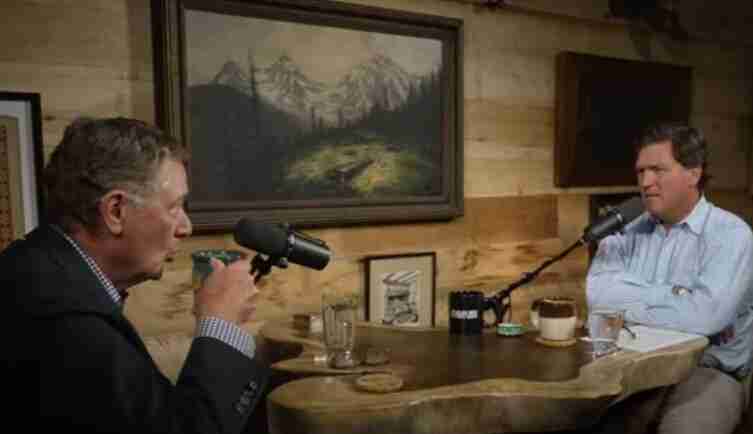
Read the full transcript of former US trade representative Robert Lighthizer’s interview on The Tucker Carlson Show titled “Why Trump’s Tariffs are the Only Way to Save the Middle Class”, Premiered Mar 20, 2025.
TRANSCRIPT:
The Failure of Our Current Trade System
TUCKER CARLSON: Thank you for coming on to explain this. I mean, my one frustration is I believe in what the White House is doing. I don’t think enough Americans understand it, so I don’t think there’s anyone better at explaining it than you. I mean, you are the trade representative. What about our current system needs to be changed? Why is it important to do this, to institute tariffs, to rethink trade?
BOB LIGHTHIZER: So that’s the fundamental question, Tucker, and thank you for having me on. It’s a pleasure to be here. Been a fan for a long time.
I think you have to start with a proposition: has the system failed? And to me, it’s an emphatic yes. I think of it in sort of two ways.
One, if you think of the way trade is supposed to work, you’re supposed to export in order to import, and then you get the benefit of trade. You get actually you do what you do best, I do what I do best, or I do what you do less best. You export, we import and we get the benefit. We both have higher standards of living.
That’s not really what it’s evolved to. It’s evolved to now where you have a few countries, the United States being the biggest, that have an open capital system and an open trading system. And other countries have an industrial policy that is designed not to increase the standard of living of their citizens, but to gain wealth. So what they’re trying to do is get wealth in order to get assets in the United States, in order to get technology, in order to get all these kind of things that make you wealthy.
The Massive Transfer of American Wealth
So I think of the failure points as being one, because this system doesn’t work, we have this giant transfer of wealth from the United States overseas, and that is in the form of trade deficits. And the way the system is supposed to work, no one should have large trade deficits for long periods of time. Things can happen. You can have trade deficits with one country, surplus with another. But the notion of a country having hundreds of billions of dollars of trade deficits every year is not how it’s supposed to work.
We now are to the point where our trade deficits, they calculate them at about seven or eight hundred billion dollars. If you did it the way you or I would do in a sensible way, you’d probably be at a trillion or a trillion and a quarter dollars.
That’s a transfer of wealth from Americans overseas in return for current consumption. And it has nothing to do with economics. It’s entirely the result of industrial policy of other people and our being defenseless.
So you ask yourself, what does that mean over a period of time? Why should I worry about that? There’s the data point called the international investment position of a country, and that is how much for us all Americans own throughout the entire world versus how much everyone else owns here. That number is a negative twenty-three and a half trillion dollars. And if you said, what was it twenty years ago? It was probably a negative three trillion dollars. So we have transferred about twenty trillion dollars worth of our national wealth, and I would say the future income of that wealth overseas in return for current consumption.
TUCKER CARLSON: Can you explain that measurement one more time? It’s what we own here versus what others own here?
BOB LIGHTHIZER: It’s how much Americans own overseas, all over the world, versus how much everybody else in the world owns here. And it’s a real calculation. It’s not something I did. It’s a real statistic. It’s been around forever.
TUCKER CARLSON: And what would that include that they own here?
BOB LIGHTHIZER: So they own twenty-three and a half trillion dollars worth of stuff. But if you said what is it mostly, it’s probably mostly debt. A lot of it’s debt. A lot of it is equity in our companies, real estate, those are the principal things that they own. Those are the big assets.
Debt is a big one, but also ownership and equity, a lot of it portfolio. Now some of it is foreign direct investment where a company actually comes in and buys a piece of land and creates jobs, but most of it isn’t that. Most of it is just they own US equities.
If you think about the United States for most of our history, particularly since the Second World War, we Americans were thought rich because we owned more overseas than people owned in America. That’s what makes you rich. Now we are poor to the extent of twenty-three point five trillion dollars.
Now this point is an interesting one. In 2003, Warren Buffett did an article on this point and he was worried about the trade deficit because it was leading to a negative net international investor position of Americans. And it was basically transferring wealth. It’s the same thing I am. When he was worried about in 2003, the number was a negative two point three trillion dollars.
So since he sort of raised the red flag on this and said, we’ve got to get back to balanced trade, the situation has gotten geometrically worse.
Slowing Economic Growth
That’s the first condemnation of the current system. And we can talk at great length about that if you like. The second is this system has really slowed economic growth in the United States.
Let me give you a point here.
Since 2000 to now, we have had three years of plus 3% GDP growth and one of those was COVID, which doesn’t really count. So the last time we had plus three percent GDP growth was eighteen or nineteen years ago.
And that coincides with this period of uber, some would say hyper globalization, hyper free trade that came on largely in the 1990s. So we’ve seen the transfer of wealth overseas, we’re getting poor. We have seen Americans have slower economic growth.
We’ve also seen a deterioration of our technology, of our technological lead. And there’s a number of ways to think about this.
TUCKER CARLSON: I just ask you a question? We’ve also seen, like, a lot of the world’s population move here. Like, the country’s completely changed from 2000.
Immigration and Innovation
BOB LIGHTHIZER: Well, the demographics is an interesting point, and I agree with what Vice President Vance talked about the other day about how one of the things about immigration is it does get you dependent on low wages. And when you depend on low wages, it tends to stifle innovation. But I’m making a little different point.
When you lose manufacturing and you lose manufacturing jobs, it also slows down your innovation. There was this notion that, well, we’ll innovate and others will manufacture, but it doesn’t work that way. Most of the innovation is near the point of manufacturing.
So what are my data points to suggest that we are falling behind? First is we invented the personal computer. Now we make almost none and none without foreign parts. We invented the semiconductor. Semiconductors we make now eight percent of the global amount. We used to dominate it. We can say the same thing about rare earths. We didn’t invent them, but we used to dominate that. Solar panels. We could go through all of these various things, nuclear energy, all of these things where we have not only lost our lead, but have basically fallen out of the competition.
But very importantly, the Australian Strategic Policy Institute, which is this wonderful institute that’s supported by the government of Australia, but also private sector people. They track sixty-four what they call critical technologies. The United States is behind China in fifty-seven of the sixty-four. And these are things like AI and robotics and the kind of things you need. If you said, well, where were we fifteen years ago? We were behind in three.
So you’ve seen this deterioration during this period of hyper globalization or hyper free trade or huge trade deficits. You’ve seen us actually fall behind technologically.
The Devastation of the Working Class
But the fourth and by far most important ramification of this process is we’ve seen a real deterioration in the quality of life of our working class people.
TUCKER CARLSON: Right? Yes.
BOB LIGHTHIZER: So the United States, two-thirds of American workers have a high school education only. Two-thirds. So it’s not like we’re talking about some fringe group on the side. This is the heart of who we are. We have seen these people lose their jobs.
We’ve seen their wages stagnant for twenty-five years. There was a bump in trade in Trump one, but we’re basically back where we were. You’ve seen them actually have shorter lives. Angus Deaton and Anne Case did a book called “Deaths of Despair” that demonstrated that these people now live on average about eight years shorter lives because of alcohol and drugs and suicide. When I was young, that differential was probably about a year, and now it’s eight years.
We’ve seen they are poor. We’ve seen despair increase. We’ve seen devastation. You don’t have to drive very far in America to see devastated communities.
All of this is the result of this failed attempt at globalization, this failed attempt at free trade. And another aspect of it is we have seen not only our workers been treated very badly, but the distribution of wealth in America has gone just like this. It’s one of the great things about America, for me particularly growing up, but even for you, you’re younger, was this notion that we’re all middle class. Now we weren’t always really, but we thought of ourselves that way.
TUCKER CARLSON: We definitely pretended it.
BOB LIGHTHIZER: The very, very rich, they were them, and nobody cared about them. And then there were very, very poor people. Sorry for it. But most, you know, eighty percent of us thought we’re middle class. And I went to Catholic schools, and we had people who were relatively well off, people who weren’t, and there wasn’t any big difference.
TUCKER CARLSON: But they all ate at Denny’s.
BOB LIGHTHIZER: They all ate at Denny’s. They all went to the same clubs. They all played little league together. They all thought of themselves as having about the same chance of success, which is an important point.
Now what we have for the first time in American history, the top one percent has more wealth than the middle sixty percent. It’s never happened before.
We find for the first time starting in 2000 when this explosion took place in hyper globalization, we find that American children can no longer expect to live longer than and be richer than their parents. That was what we all thought. We’re going to be better off than our parents and we’re going to live longer. That is no longer true.
And I could go through one data point after another. When I was in high school, the top one percent had about thirty times as much wealth as the person in the middle. Now it’s seventy-two times as much wealth.
The Risk of Social Instability
TUCKER CARLSON: So this seems like a recipe for social instability and ultimately for revolution. That absolutely happens in other countries.
BOB LIGHTHIZER: Absolutely no questions. We have this sense that we’re immune. I don’t agree with that. And these crises that I’ve talked about, this transfer of wealth, the technology, the slow economic growth, but mostly the effect on our working people, that is why Reagan was elected.
Very beginning of this, we can dive into the history of that, and it absolutely is why Donald Trump was elected president. Reagan had these so-called Reagan Democrats that we all remember. That was the beginning of those people because that was when we sort of reached the peak. By the time we got to the 2000s, these people were a movement, this populist movement, and they are the reason that Donald Trump is where he is.
And to his credit, Donald Trump talked about this and worried about this issue since he was thirty-five years old. This is not, in my opinion, the essence of Donald Trump. Donald Trump’s essence is we’re getting ripped off. Our workers are getting screwed. It’s not because they’re lazy or stupid. It’s because we have a bad system that is hurting them, and it’s destabilizing the country.
And all of these are data points that kind of make that point. Once you realize that, you realize you have to do something. The purpose of the economy, first of all, obviously, is national security. But after that, it’s to distribute resources and wealth so the most Americans live the best lives they can live. And we have lost that. We have just plain lost it.
TUCKER CARLSON:
The Ideology Behind Free Trade
It hasn’t been an accident. It doesn’t feel necessarily like we’ve evolved into this. It feels like we’ve been guided into this, that this is the result of calculations and an ideology that still exists most prominently in the pages of The Wall Street Journal, let me just say is a disgusting, dishonest newspaper. But even if you like The Wall Street Journal, they have a very clear ideology, which they’ve promoted along with almost everybody in Washington, that free trade is the path to prosperity. And then in fact, it’s like a moral imperative, like, there’s something dirty about abandoning free trade.
TUCKER CARLSON: How what what is that? Obviously, you know a lot about this since you’ve lived in Washington a long time.
BOB LIGHTHIZER: So I would say, first of all, that I say the Wall Street Journal, they have editorialized against me by name more than thirty times.
TUCKER CARLSON: Oh, me too.
BOB LIGHTHIZER: Yeah. So well, we have that in common too. I say they have the diversity the editorial page has the diversity of opinion protocol of somewhere between Krabbe and the People’s Daily. It is their view and they keep it.
So, you know, why did we get to this stage? To some extent, it was kind of misguided. To some extent, it was wealthy people pushing it because it was good for them. I’m not one who subscribes to the view that it was people trying to hurt America. I think it was they just didn’t care one way or another whether it hurt.
They didn’t care, for example, who owned America.
TUCKER CARLSON: Right.
BOB LIGHTHIZER: They didn’t care what percentage of our global wealth ended up in the hands of our working people. Those were not metrics. What they cared about was price optimization and how much we could consume. And that’s the opposite of what people like you and I believe in conservatives and a lot of labor democrats believe we have to worry about values and preserving what’s great in America. We’re not interested in sort of the materialism of maximizing optimizing prices and maximizing consumption, and that’s more or less where that’s.
The Evolution of American Trade Policy
There’s a combination of that. There’s a combination of this financialization of America taking profit out right away so that a few people get very rich regardless of the effect on others. If you think of the evolution, Tucker, it’s and we could talk, you know, from the beginning of time about trade and how it evolved. But for our purposes, you would think of it basically as America really from the early eighteen hundreds basically became wealthier and wealthier, largely behind the American system and Alexander Hamilton kind of an idea of tariffs and subsidies, subsidies in the nature of canals and roads and the like, but tariffs were a key part. By 1870, we had started to turn surpluses.
By 1890, we’re the richest country in the world, and it kind of progresses like that. Now we’ve and we can talk about that back and forth and those were almost all Republican presidents during that entire period, only two Democrats during that entire period between Lincoln and Franklin Roosevelt. And basically tariffs were a key tool and there were ups and downs in that and we can talk about that if people are interested, but we got to the Second World War and then we had a different challenge. We had to rebuild Europe. We wanted to rebuild Japan for stability.
We wanted to fight communism in the Soviet Union. These were our motivations. And so at that point, we needed a new system and they developed this new trading system. And the trading system was sort of based on the notion of we’ll all reduce barriers, we’ll all do better over a period of time. I would say that was at times it was a successful idea, at times it wasn’t a successful idea.
But by the time we got a few several decades into it, we started seeing people being more and more industrial policy. And by the 1970s into the late 1970s, we started to see our situation get worse. We started having trade deficits. You’ll recall that Nixon in 1971 put tariffs on the whole world in order to decouple from gold, and we can talk about that if people are interested. But there were a lot of things that were sort of signals, and that was kind of the peak.
By the time we got to Ronald Reagan, as I say, there was already a loss of a lot of jobs. There was an unsettling among our working class people, which is, I say, unlike a lot of places, it is us. It’s seventy, sixty-five, seventy percent of it. It is us. And then and then you found yourself the Berlin Wall fell.
There was this notion of the end of history that from now on, everything is going to be better. We’re all going to be democracies, and we’re all going to have open markets, and there’s all this greatness. You can remember.
TUCKER CARLSON: Frank Fukuyama and Yeah. Yeah. Other morons. Yeah.
The Trifecta of Stupid
BOB LIGHTHIZER: Yeah. They’re right. So then you found yourself with Clinton in the end of Bush, it’s not because I don’t want to be totally partisan. The end of Bush forty-one, Herbert Walker Bush, and then into Clinton. And we have what I call the, like, the trifecta of stupid.
Alright? We do NAFTA. We do the WTO, the Uruguay Round that. And then the dumbest of them all, we give most favored nation treatment to China. And those things are done more or less in the times of
TUCKER CARLSON: Last ten years. Clinton for the last for the most favored nation status, that was something that Clinton work Clinton set it up, but Bush signed it. Is that correct?
BOB LIGHTHIZER: No. No. No. It passed under Clinton. So this is an interesting fact.
In like, 1997, I did an article for the New York Times, And you’ll recall during the second Clinton election, there was this talk about Indonesian money came into the Clinton.
TUCKER CARLSON: I remember very well. Yeah.
BOB LIGHTHIZER: Or other. Yeah. Exactly. Was it the Commerce Department?
TUCKER CARLSON: Yeah. Yeah.
BOB LIGHTHIZER: I did an article, which the New York Times published. It sort of said, well, what’s this about? This is not Indonesian money. It’s Chinese money. What does China want?
They want most favored nation treatment, and they want to get into the WTO. And if they do, there won’t be an American job that’s safe. So this is 1997. Fast forward, you have this vote. Clinton is pushing it.
By the way, it passes with more Republicans than the Democrats. Republicans are worse on this in at that time.
TUCKER CARLSON: A lot of them kind
BOB LIGHTHIZER: of learned. Yeah. And then we have these things pass. So we have this trifecta of stupid, as I call it.
And then we have five million manufacturing jobs lost. You just see jobs lost. Wages are basically not going up in real term since then. You know, rich richer and the poor get poorer, and a lot of these very bad outcomes for working people, would say for the country generally, can say came at that time. Now if you say, was this some deteriorating before then?
For sure it was. But this was like somebody just putting you on steroids and acted like I mean, the only thing that they missed about the evolution of economics was human nature. Right? Other than else, they got right. They just missed human nature.
TUCKER CARLSON: As always. Yeah.
Trump’s Approach to Trade
BOB LIGHTHIZER: So then you saw very bad things happen over a long period of time. You got to the point where you had at 2016, you had president Trump, as I say, that point, had been complaining about this general notion since he was thirty-five, since he was a kid. And he kind of gets a populist move, and he’s elected.
And then we have, you know, whatever happened in 2020, COVID thing that ends up affecting our election, and now we we are just getting because we changed in Trump one point o or whatever that computer people say. We changed the way people think about these things. And they didn’t really change back much in Biden. Biden’s credit is people I think so. Obviously, people were very good, overall, they they didn’t make a lot of decisions to make better what we did, but they didn’t make it worse.
And now we’re in we’re in a position to actually make substantial changes. But the most fundamental thing is the system has failed America generally, and it’s failed our working people dramatically. And that’s been going on for yeah. In an acute state for at least twenty-five years.
TUCKER CARLSON: We’re always looking for cool companies that make products that make you feel better, and that’s how we ran into Bond Charge. Bond Charge offers a wide range of products that improve your physical condition, help you sleep better, perform better and center your mind, recover faster, maintain energy, etcetera, etcetera. They make blue light glasses, red light therapy, a lot of different products like this, and they help you address the trials of modern life effortlessly and naturally. Now one of the things they make is a sauna. We could go on and be boring about sauna, take one every single day.
Boncharge makes a sleek infrared sauna blanket. It’s got a similar effect to a finished sauna, but without the intense heat. It’s an easy and comfortable thirty minute session you can enjoy while relaxing with your family, talking to people, reading, and it leaves you feeling refreshed and slightly euphoric, but in a good healthy way. It’s a great addition to your wellness routine. You may even drop a few pounds doing it.
Boncharge ships worldwide. Boncharge is boncharge, offers free shipping and allows for easy returns and exchanges. So go to Bond Charge dot com slash Tucker. Use the coupon code Tucker to save fifteen percent. When life expectancy in an advanced country goes backward, I don’t think there’s any clearer sign of an emergency.
I mean, that’s the one thing you can’t pick when people die.
America’s Crisis
BOB LIGHTHIZER: We are the only G7 country that has a life expectancy of under eighty years. And, supposedly, we’re the richest country in the world, supposedly. It’s a now there’s a lot of things contributing to that.
Everyone sees it all their own way, and there’s a lot of things contributing to it. But it’s an emergency. It’s an absolute crisis. And I’m telling you this divergence between this income inequality is an is an it’s another real, real emergency.
TUCKER CARLSON: I couldn’t agree more.
BOB LIGHTHIZER: It changes the kind of country we live in. It’s not the kind of country I don’t care whether you’re well off or not. It’s not the kind of country you want your children living in. It’s not America. And we have to do something about it.
And these are this is I believe this is the motivation for Donald Trump. This is the motivation for the people in his administration who are informed on these issues. Some of them obviously deal with other kinds of issues.
TUCKER CARLSON: It’s bad for everybody. It’s actually bad for the rich as well as the poor when you have a stratified class system like we’re getting, which didn’t exist. And by the way, spend three weeks in Australia, which is a country with a lot of problems, but it’s still a middle class country, and you can feel it in the way people talk to each other and their attitudes. We’re all sort of in this together. You know, you do not get that sense in a pyramid shaped social structure at all, and that’s the biggest change of my lifetime is the end of the middle class as a majority and the end of the egalitarian spirit that defined America, that Anglo egalitarianism, which is not a feature of other countries.
So no. I couldn’t agree more. It makes me hate the people in charge for ignoring this stuff. So what do you do about it?
The Solution: Beyond Just Tariffs
BOB LIGHTHIZER: So the first thing you do is you acknowledge you have a problem. Second thing you do is you put your finger. What is the nature of the problem? The problem is industrial policies of other people. Now this is a really important point, Tucker.
The President and some others will say the tariffs are different. They’re ripping us off on tariffs. And for sure, that’s true. But in terms of what is causing the harm to the global economy, I would say, but particularly to America. The most important thing is not tariffs.
Tariffs are the most visual thing, easiest to see, but the real problem goes far deeper than that. So that if you end up with equal tariffs, you will still have a catastrophe for America. It will not resolve the issue at all.
So what are the things in industrial policy that tilt the scale against, we would say, open markets and free trade and fair competition. Alright?
They are everything from the banking system. So in China, they have a banking system. They tell you to put your money in the bank. They make you have low interest rates. They take the money.
They can loan it to manufacturing what we would consider to be a below market rate and that encourages manufacturing. And they’ve done that. They’ve increased that those loans from sixty billion dollars a few years ago. This is according to the New York Times to almost seven hundred billion dollars in the last year or so, but per year. So it’s the it’s the labor system.
Why Trump’s Tariffs are the Only Way to Save the Middle Class
If you have a system that keeps labor from getting its fair share of the pie, you’re keeping wages down because of the statutory system. An example of that is this hook system in China where you can’t really move around and be part of the system and get wages, just kind of stay where you were born. There are lots of other ones, not allowing unions, not allowing organization. In the labor law, there are subsidies, denying market access, fake nonscientific standards to get products in, value added tax, and the tax system.
TUCKER CARLSON:
And explain that a little more. Fake standards?
BOB LIGHTHIZER:
So it’s one of the big things we have. Fake is—see, that just shows you that I’m the Trump person. Right? A more sensible person than me would say nonscientific sort of standard.
I mean, you could take a simple case of how long should a tractor have to break before it stops. And you could say, okay, safety is—and I’m making these numbers up—safety is forty feet, and maybe the Europeans would say, well, it’s got to be ten feet. We have to be very safe. The net of that would be to eliminate products coming in, that kind of a standard.
Or health and safety. For example, the Europeans saying chicken shouldn’t come in if you chlorinated it. That is to say when you’re done, you put chlorine on it to make sure there’s no microorganisms. They would say, well, that’s unsafe. So it’s sort of nonscientific standards like that, and there’s a lot of them.
TUCKER CARLSON:
Which are in effect trade barriers?
BOB LIGHTHIZER:
They’re absolutely trade barriers. Everything I’m talking about basically shifts national wealth from consumers to manufacturers to give them an edge. The tax system, currency manipulation, there’s all these things. These things are, the point I’m trying to make, are multiples in terms of importance versus tariffs.
If we have equal tariffs with everyone in the world at zero, for example, we won’t have a middle class. We won’t have manufacturing because all these other factors will give them this unfair, uneconomic advantage.
The president, to his credit, in his truth where he laid this out, he said it’s not just tariffs. It’s all these other things. And James Dinger of the USTR is looking at all these other things. But when we think of the kind of migration for me, it was like, okay, we need free trade. And then you said, okay, we need fair trade. The reality is you can’t get fair trade because there’s too many ways to twist it.
What we really need, I’ve evolved to, is balanced trade. We need a system that enforces kind of trade balance, not with countries, but globally. Countries shouldn’t be able to be huge surplus countries year after year, like China, of course, being the worst example, but also Germany. Ireland is evolving to that. There’s a bunch of other countries we can talk about. Countries shouldn’t be able to do that.
Achieving Trade Balance
And so you say, well, how do you achieve that? You really need to put in place some kind of tariff to offset this fundamental unfairness. You’re not just offsetting their tariffs. Europe ten percent on autos, we’re two point five percent. If Europe went to zero, we still wouldn’t sell very many cars in Europe. We just wouldn’t. Our companies basically make small trucks. They don’t need them there. There’s a lot of reasons why that wouldn’t happen.
But what you need—you can’t have countries have huge trade surpluses over long periods of time. You have to enforce and you have to penalize countries that have surpluses all the time and let countries that have deficits all the time get back to balance. If you do that, you then get the benefits of trade.
So how do you get the balance straight? There’s basically three ways you can get the balance straight:
One is the way that Warren Buffett talked about in this article, and it’s a wonderful article. I recommend anyone to read it. I would just Google “Warren Buffett SquanderVille” because he talked about SquanderVille and Thriftville. It’s a short article. It’s very nice. Two thousand three. And he says what we should do is have export-import certificates. So in order to import, you need an export certificate. So you want to bring in T-shirts, you go to a steel mill and say, okay, I’m going to buy that. And that would get you to balance, and I would certainly support that.
Another way you could do it is you could put—and this is a little more complicated—you could put a tax on the money that comes back, this twenty-three and a half trillion dollars, this trillion dollars that comes back every year where they buy US assets. You could tax that. So that it really wasn’t worth a dollar, it was only worth eighty cents. In that case, there would be less incentive for people to run up these surpluses. That’s called a capital access fee, and there are people that have proposed that, and that also would work.
And then there’s tariffs. I prefer tariffs, one, because people understand them. Two, every country in the world has a system set up to deal with tariffs right now. They all have the legality. They all have the process of how to do it. Three, they’re flexible. You can move them around based on need to get to your objective of balance. But any three of those things would work.
And obviously, the president thinks that tariffs are the simplest, easiest, most understood way to do it. And the objective has to be to offset all unfairness and to move towards balance over a period of time, and ultimately have balanced trade.
If you had balanced trade, you’d have another trillion dollars worth of domestic GDP. It would be a huge boom and most of it would be in manufacturing and things spun off by manufacturing. And that’s what the President is trying to do. He’s trying to get us to use tariffs to move towards balance, to get a better distribution of wealth within our country so that working people end up with a higher percentage of the wealth. We have this economic boom that’s going to come from reducing that huge perennial trade deficit.
TUCKER CARLSON:
I think a lot of people—some people anyway, in Washington for sure—have given up on the idea that America can be a manufacturing power once again.
BOB LIGHTHIZER:
I think that’s fundamentally wrong. The first thing they would say is manufacturing doesn’t matter.
TUCKER CARLSON:
Do people still say that?
BOB LIGHTHIZER:
Oh, there are people.
TUCKER CARLSON:
We’re outside of AEI or no?
BOB LIGHTHIZER:
Well, you’d have to—you’re in a pretty small group of people that have everything in common except sense.
The Importance of Manufacturing
This is the view—people who think like I do, and I believe the president is in this category, really think manufacturing is essential. One, the wages are better, the benefits are better, people stay on the jobs better for that group of people that are not going to be brain surgeons and astronauts.
Secondly, if you look at manufacturing, it employs about eighty percent of American engineers. It accounts for about ninety percent of private sector R&D. It disproportionately accounts for productivity gains. It throws off about eight or nine jobs for every job in manufacturing and these are good jobs.
Finally, you need manufacturing to have innovation. You need manufacturing to defend your country. Without manufacturing—and that doesn’t just mean on this national security issue, doesn’t just mean being able to make bombs and submarines. It means being able to make steel and automobiles and batteries and solar panels. You have to make all those things to wage war or to deter a war from happening, which is probably really our objective.
So these people who think we’re post-industrial are just fundamentally wrong. And once again, it doesn’t bother them who owns America. It doesn’t bother them about the distributions in the country, and it doesn’t bother them that we’re falling behind technologically. What they’re thinking about is, “Yes, but we’re optimizing consumption.”
TUCKER CARLSON:
If it doesn’t bother you who owns the country, if it doesn’t bother what’s happening to the people who live in the country, then, you know, I think it’s fair to assume you have no love for the country. How did people who have no love for the country end up running the country?
BOB LIGHTHIZER:
Well, that’s a good question, one on which I think you and I have a lot of agreement, but on which I profess less expertise than I do on other things. I think a lot of these people—well, some of them just don’t like the country because of our history. They’ll take up a data point in our history and say that means we’re bad. A lot of them take it for granted.
But I’m not an expert on that. I certainly agree with your conclusion. It’s troubling to me—people who are globalist, not only economic globalist, but sort of geopolitical globalist. They don’t realize that there’s a force that wants to take over the world. Indeed, there are lots of them. And those forces, if they succeeded, would be very bad for America.
A lot of us who were sort of united in this Cold War, particularly in the early years, it kind of brought the country together. We realized we were in a Cold War. Indeed, I think we’re in a Cold War, a second Cold War now, but I think there’s just more fifth columnists than there used to be.
TUCKER CARLSON:
A lot more. A lot more. How tiny a minority of economists believe what you believe? Like, how out of step are you in Washington right now?
BOB LIGHTHIZER:
Well, people say, why do I think the way I think? And some people say it’s because you’re from Ashtabula, Ohio, which was one of the places that was decimated—one of a million.
TUCKER CARLSON:
What did they build there in your hometown?
BOB LIGHTHIZER:
Ashtabula was a great town. It was a little town between Cleveland and Erie, Pennsylvania. It was a port town. They had steel. They didn’t have steel mills, but they had steel fabrication. They made a lot of auto parts. Indeed, at one point, the fiberglass body of the Corvette was made there—one of the famous things about us.
They brought in ore from the Great Lakes and then trained it down to Pittsburgh where they made steel. Obviously, there was agriculture, a lot of agriculture in the area, a lot of machine tools. Those kinds of things. It was the sort of stuff that was really hit first with the Japanese wave that came on, which was one of the other motivating things in president Trump’s mind because that was the first thing that we all complained about—Japan and Japanese cars and then all Japanese manufacturing.
And once again, I just want to say—I love Japan. I’m not anti-Japanese at all, but that had nothing to do with economics either. They kept the currency low. They had an industrial policy to subsidize all this, and then we sat here and they took our jobs. And now we’re seeing that on a far greater scale.
TUCKER CARLSON:
What’s your hometown like now?
BOB LIGHTHIZER:
I cover this in the book. I have to be careful because I love my hometown. But the poverty rate’s probably thirty-five or forty percent.
TUCKER CARLSON:
Gosh.
BOB LIGHTHIZER:
The college graduation rate’s probably fifteen or twenty percent. And by the way, this is not like we’re some bottom of the pit. This is across the country.
TUCKER CARLSON:
The whole United States.
BOB LIGHTHIZER:
It’s everywhere you go. You see these kind of communities where wealthy people—I mean, they weren’t wealthy people. They were people who were well off. A person could have a job, own a car, pay off their house, and support their family. And now they can’t do that anymore.
And there’s this kind of notion that, well, other jobs have come back. And, indeed, in many cases, there have. There was just a study by Gordon Hansen out of Harvard and some other people. Other jobs did come back, but they were jobs at the lowest level of health care and the like. In other words, did employment come back? Yeah. But the people went from having the kind of job that I described, one that you could support your family and be proud of, to one where you really couldn’t.
The Value of Privacy in the Digital Age
TUCKER CARLSON: And everything you do is being monitored and sold by data brokers, recorded. That’s like a random search behind bars. All of this is done in an attempt to profit from you, but it also has the effect of controlling you, what you believe, who you vote for.
So there’s a way out of all of this, and that way is called ExpressVPN. ExpressVPN sends a hundred percent of your online traffic through encrypted servers. That prevents data brokers and big tech companies from monitoring everything you do. Just last year, ExpressVPN received over four hundred thousand data requests from tech companies and intel agencies, and they did not share a single one of their customers’ information. No is the answer they give.
ExpressVPN works in up to eight devices at one time. It’s fast. It’s super easy to use, and it’s rated number one by top tech reviewers like CNET and The Verge. Right now, you get an extra four months of ExpressVPN for free to scan the QR code on the screen, or you go to ExpressVPN.com/Tucker, and you get four extra months for free. ExpressVPN.com/Tucker.
And being proud of your job is a huge part of the formula for a healthy, strong, stable nation. There’s a huge difference between making something and being a mortgage broker, I’m sorry.
The Dignity of Work
BOB LIGHTHIZER: Just look at the dignity of work is what is the key. Useful work. Be useful, productive work.
What I always say, Tucker, is we need a country where parents are hopeful for their children, but where children are proud of their parents, and we’re losing that. We need families where people work and do productive work, and they’re proud of the work, and they feel better about themselves and they project that to their children and to the community, to the little league, to all these kinds of things.
These people who worked in these factories and actually, when I was growing up and some farmers, they were proud, hardworking people who, at the end of the day, you know, said, “My dad is this.” It was a proud, healthy thing.
TUCKER CARLSON: What did your dad do?
Lighthizer’s Family History
BOB LIGHTHIZER: My father was a doctor. My father’s an interesting story. The Lighthizers came over to the United States in 1748. There was a guy named George Lighthizer who came out. He was an illiterate from what is now Germany. He fought in the revolution. He was two years older than George Washington.
He was an old guy. He fought at Trenton. He was at Valley Forge. At Princeton, he was on the line with two of his kids who were quite young. All three of them on the line together. He got out after three years. Of course, by this point, I don’t know what he would have been, maybe forty-eight, which was an old, old person. The kids stayed on and fought all the way through Yorktown.
So fast forward multiple generations, and it’s a whole industry fewer generations than you think. But I’ll tell you I’ll mention that because it’s sort of a quirky thing unrelated to what we’re talking about, but sort of interesting.
You find my father and his brother after that hundred and some years were the first ones to go to college, and both of them went to college and ultimately medical school. Father graduated from college at twenty-nine having worked in the steel mills before he went to college and then finally ended up graduating from University of West Virginia and then NYU Medical School. So it was like the American dream.
TUCKER CARLSON: How did he wind up in the town?
BOB LIGHTHIZER: In Ashtabula? You know, he was from Ohio. They were from the other side of Ohio. I think he knew some people in Ashtabula. This would have been in the mid-thirties, 1930s.
But in terms of this quirky thing – my grandfather’s grandfather fought in the Battle of Baltimore.
TUCKER CARLSON: That’s incredible.
BOB LIGHTHIZER: In 1814. So when you think of it, it’s just like a bunch of older guys having kids, one after the other. But it’s like one of these kind of weird things I tell people, they’ll think, “Well, that can’t possibly be true,” but it’s in fact true. My grandfather’s grandfather had half brothers who fought at the American Revolution. Amazing. It’s just a crazy thought.
TUCKER CARLSON: Are there any Lighthizers left?
BOB LIGHTHIZER: Yeah, there are.
TUCKER CARLSON: In the town?
BOB LIGHTHIZER: No. There are none in the town.
TUCKER CARLSON: Did you go to high school there?
BOB LIGHTHIZER: No. I didn’t. I went away to school outside of Cleveland. I went to a Catholic boys’ school outside of Cleveland called Gilmour Catholic School.
TUCKER CARLSON: Are any of the people you grew up with still there in the town?
BOB LIGHTHIZER: There are some. Not a lot, but there are some. It’s a different world, you know?
The Decline of American Towns
BOB LIGHTHIZER: And as I say, if it was just Ashtabula, who would care? But it’s not just Ashtabula. I care about every American. It’s across the country. It’s like this.
You go to Cleveland. You can’t go to these major cities. It’s Chicago, it’s Omaha. As you go to these cities and you say, it shouldn’t be like this.
And the kind of notion, Tucker, was that we were sort of taught at a period, “Well, the people were lazy or they were in unions, and that was bad or that the managers were bad.” And none of those were true. It was the result of an economic policy largely in other countries and a defenseless kind of foolish notion of benign neglect in America. And all of these bad outcomes are the result of this.
I don’t want to simplify too much, but it’s a sad thing. And we now have a chance to turn it around. And is that going to create disruption? Of course, it’s going to create disruption. There’s never been great change that didn’t create disruption, but the price, which I don’t think will be great, will be dwarfed by the benefit if we have working class people in the middle class again, and hopeful and dignified and staying married and innovating and doing the kinds of things that America needs. There’s nothing I want more than that for the country.
The Role of Think Tanks in America’s Decline
TUCKER CARLSON: And you can hear the bitterness in my voice as someone who spent his life in DC, but I just want to say once again that all of these changes were defended and explained by a whole field of academic study and the propaganda that it supported coming from Washington, the free market think tanks, Cato, AEI especially, basically tried to tell you for forty years as you watched your country die that this was all good. And I do think they should be publicly shamed for that if not held accountable in some ways.
BOB LIGHTHIZER: It’s a combination. And then I want to get back to this question about economists at some point. It’s a combination of that and corporations funding it. Of course. Who literally benefit from it. And you’re like, holy cow. And then you have to try to chase that through the political system.
And so you end up with the Chamber of Commerce of the United States in favor of these things that are quite harmful to the people that I care about and that the president cares about. And they’re not against these things because they help those people. That’s just not a function. They’re against them because the elites, the powers that be, that are benefiting from the system, object to them.
Changing Economic Perspectives
Now on your question about economists, there are a growing number of economists who see this problem. They don’t necessarily agree with me on the solution. But if you see, Angus Deaton is one who would say we have to reevaluate whether the cost of this thing called free trade were worth the benefits. That’s an important first step. Paul Romer, another Nobel laureate, has the same thing.
So you can go through and you can find various ones. There’s a guy named Michael Pettis who’s a Carnegie guy who’s thought these things through and he wrote a book ten years ago called “Trade Wars or Class Wars” with a guy named Matthew Klein. And so there is some movement, but I don’t want to suggest that it’s a light at the end of the tunnel. It’s maybe a prick a thousand miles away.
But I’m hopeful that economists – I’ve had several of them tell me, “Well, you’re wrong, but you at least realize that things aren’t good.” So there’s the beginning of people starting to see it.
TUCKER CARLSON: The city had a collective heart attack when you became United States Trade Representative.
BOB LIGHTHIZER: I think that’s a fair statement. The city and the business community.
Implementing Change and Managing Disruption
TUCKER CARLSON: The business community. So you said if you take a system that’s been in place for generations, which the current one has been, even if it doesn’t work well, even if it hurts your country, changing it is still a major lift, and it has turmoil that accompanies it. So can you just be more specific about what sort of turmoil you anticipate as this administration puts into place this new system?
BOB LIGHTHIZER: First of all, I have complete confidence that the President will do what he said he’s going to do. And unlike a lot of politicians, he ran on real substance and big ideas and this is probably the biggest of the ideas that he ran on. And I think he’s going to follow through on his promises because that’s the most important thing. The worst case would be that he doesn’t.
So what you have to do is put in place tariffs, as I say, to offset not just tariffs. That’s a tiny thing. I just keep going back to this point because it’s so fundamental. The problem is not just foreign tariffs. That’s a tiny part of the problem. But to offset this unfairness, he has to put those tariffs in place.
When you do that, I do not believe you’ll have inflation, and we should talk about that in a systemic fundamental way. But you will have people who have supply chains that are going to have to make adjustments. You’ve got some things that may go up in price for some period of time. And these all kinds of things will have an impact on people in daily life. But I think it’ll be short term, I call them disruptions, I think it’ll be short term, I don’t think it’ll lead to systemic inflation.
I think that people say, “Well, what should a businessman do?” And I say the smarter businessmen and businesswomen are going to figure it out. And they get paid a lot of money to do that, and they’re going to say, here are the rules.
On that point, I’ve had business people, really smart business people, when I would explain this problem, they would say, “Bob, it’s the government’s responsibility to set up the rules. I’ll figure out a way to make money in the rules. That’s my responsibility, but I shouldn’t be doing this social stuff. That’s not my job. My job is to make whatever widgets and to make them profitable and employ my people.”
And I think that’s kind of an important point. It’s President Trump’s responsibility now. He’s the president to set in place a system where these good results for our people will come out. And I think he will.
The Goal: Higher Wages for Americans
So if you’re going to have to have tariffs to offset this basic unfairness that will lead to some disruption. Over a reasonably short period of time, I think you’re going to see this manufacturing renaissance, these new jobs, wages go up. I mean, this notion that we’re not productive because our wages are going up – I had this conversation with someone in the White House early on in the first term and he was concerned about wage inflation.
TUCKER CARLSON: Americans making too much. Yeah.
BOB LIGHTHIZER: Exactly. This is like a person that had his plane. I said, “We haven’t had a raise in the middle class in fifteen years, and you’re worried about wage inflation. I’m praying for wage inflation. This is what I want. I want these people to make more money and do better and inspire their children and do all the things you do in a community to make the country great.”
Why Trump’s Tariffs are the Only Way to Save the Middle Class
BOB LIGHTHIZER: So anyway, there will be changes. The whole notion on a micro scale, in my opinion, is to take more resources from the very wealthy and spread them out among the people. A liberal will say, I diagnose the problem the way Lighthizer does. Let’s tax the rich people and give it to the other people.
My idea is that’s insanity. What you need to do is devise a structure where these people have good jobs and make lots of money, and that’s the way you transfer resources and make the country better – but you don’t do it by tax policy or things like that.
TUCKER CARLSON: So what’s the president done so far, and what do you anticipate he will do going forward?
National Security Tariffs vs. Economic Tariffs
BOB LIGHTHIZER: When you think about tariffs, you have to think of two categories. There are two buckets. There are national security issues which you have to deal with. If the issue is of sufficient importance to really merit national attention, you should do everything you can to solve that problem. If we were in a war, people would say, of course, do whatever you have to.
In this case, there’s the fentanyl issue with Canada and Mexico, mostly a Mexican issue. That’s a national security issue. In my opinion, it’s not an economic issue, and it should be separated. Do you think fentanyl is a sufficiently important crisis to merit doing everything you can to solve it? I believe it is. So for me, doing something in that space makes sense and the president threatened that and I think we got good results. That’s national security.
You can use that tool in other times, but the debate is not whether the tool’s appropriate. The debate is whether the national security issue is of sufficient importance to pay that price.
Then the other issue is tariffs generally to get us to balance. Some people would say fairness. Some people would say reciprocity. But basically, get us to balance, to offset unfair practices.
I think what you’re going to see on April second is an attempt. You’re seeing the USTR and secretary treasury, USTR doing the day-to-day work as secretary treasury and secretary commerce recommending to the president a series of tariff increases. The form that takes, I don’t think it’s really been determined yet. I think the direction is clear, but I think you’re going to have to have a system that says here are the issues that are part of this industrial policy that are creating this unfairness. One of them is taxes and value added taxes.
The notion that the president has is, we’ll tariff people in order to get them back to whatever we think is enough to offset their unfairness. At some point, and he’s right of course, you’re going to have to simplify that because you can’t have four thousand tariff codes and a hundred and eighty countries. You would need a supercomputer to decide. So at some point, there’s going to be some synthesizing of it to sort of say, okay. If you’re in these categories, if you have these things, you get this rate.
The important thing for people to understand is that it isn’t like he’s going to say, okay, here’s April second, now going forward, everything is perfect. You’re going to have to have adjustments. There’ll be mistakes in the way it’s made, and you’re going to have to take care of exclusions and individual people and work it out. We did that.
When the president imposed tariffs in such a grand way the last time, the reason that it didn’t blow up really was that we let the steam out of the balloon when we had to. We did enough so that we took care of urgent problems that might have collateral effects, which were not good. So you’re going to see modification. You’re going to see change.
TUCKER CARLSON: There are a lot of fine motor skills involved. It’s not just…
BOB LIGHTHIZER: You have to recognize that, and mistakes are going to be made. But the problem is here, we have to do this remedy, and we’ve got to get there as quickly as we can.
Another thing to remember is, in the first administration, there weren’t that many people who agreed with us. Right? As you say, there was the president who everybody thought was crazy in this area and me who they thought was maybe crazier. But the Overton window of acceptability has moved.
TUCKER CARLSON: Yes.
BOB LIGHTHIZER: And so a lot more people understand the crisis. And in fairness, the data has helped us make our case that you have to do this. So I think people are going to be more accepting of it, but you’re going to have disruption. You’re going to have the people who are benefiting now benefiting less and they’re not going to like it.
TUCKER CARLSON: I think that’s the best part.
Concentrated Benefits vs. Diffuse Payments
BOB LIGHTHIZER: You know? Yeah. It is. There was this thing called concentrated benefits and diffuse payments. This guy Buchanan, who was the economist, he basically talked about the political system. He said that things happen when the person who gets the concentrated benefit is more motivated to get his way and to push his way through all people with diffuse payments.
We’ve kind of had that system. My hope is that we can reverse that and push back on those people who have had the concentrated benefits and give more of the benefits to the people who until now have been relatively quiet and just accepting of a pretty bad hand dealt to them.
Will Tariffs Cause Inflation?
TUCKER CARLSON: So of all the potential effects of changing our system to the one that you described, it seems to me that inflation is certainly as a political matter and an immediate matter the scariest. First of all, it’s really easy to measure. Second, it’s obvious. I don’t know if it’s easy to measure. It’s very obvious to people when the things they buy regularly become more expensive. So, I just want to linger on this for a second. To what extent are we going to see increased inflation because of this?
BOB LIGHTHIZER: Tucker, I think there’s going to be disruption and disruption is going to have some prices go up and some won’t. Let’s think about inflation the way we should think about it. One, inflation is a systemic thing. It’s not like your shirt costs more. If your pants cost less, that’s not inflation. That’s just a more expensive shirt.
So the question is whether it’s going to systemically raise prices. A lot of people would say, including Milton Friedman, that that’s really a monetary phenomenon. It’s basically monetary policy that’s going to dictate whether everything goes up. And this is not going to change monetary policy necessarily.
Now someone might say, oh, it’s going to slow down the economy, thus, we should lower interest rates. Someone else will say it’s going to have inflation, thus, we should raise interest rates. So it’s kind of a conundrum for the Fed.
But set that aside, the notion is that you will increase production in the United States, you will maintain consumption at about the same and that will not be inflationary. If anything, it’ll be deflationary. So that’s our idea.
There’s a model that some economists use called the GTAP model, which, by the way, generally assumes you cannot get economic growth, that you’re at full capacity, industrial capacity, full employment. So if you have a model like that, then that’s going to show inflation. But I would suggest that the model is not predictive and indeed the St. Louis Fed made the statement a few years ago that the predictive quality of this model is zero point zero percent. So a lot of the economists are using a model that’s unhelpful.
The notion is you’re going to increase production and that will happen and that is not going to be inflationary. The idea is that inflation is systemic, not individual prices, so you can’t just stack stuff up.
The other thing is we did it last time in a big way. All the same people said it would be inflationary, and we had no inflation. We had one point three percent. So they were proven wrong.
And the final thing I would say, if the notion that economists use, which is that trade barriers create inflation and that’s the basic notion that you’re talking about on their side, why is it that China has deflation and not inflation? Why is it that the country with the most trade barriers actually has no inflation at all? And if you look at Germany, they have some inflation, but it’s less than a lot of the rest of Europe. So it would suggest that there is not necessarily a relationship between tariffs and inflation.
I would add one other thing. If you look at the president’s program generally, the program is going to be tax cuts, spending cuts, deregulation, more energy and tariffs. Now even all but a hardcore partisan would say the combination of that can’t be inflationary. The combination of cutting spending, getting rid of regulation, increasing energy, those things can’t be inflationary. They’re anti-inflationary.
TUCKER CARLSON: We’ve been inflationary because we’ve done the opposite. We’ve made energy more expensive.
BOB LIGHTHIZER: That’s precisely right. We spend too much.
The China Question
TUCKER CARLSON: Okay. China. So you mentioned Germany. Obviously, the beating heart of Europe, it’s decided to commit suicide. So who knows where Germany will be? It’s hard to see Germany as a real threat to our economy. I mean, I can’t predict it, but it seems like it’s really a conversation about China.
BOB LIGHTHIZER: So there are kind of two things. One, we have a trade problem, and that problem is trade deficits, and it’s having all the bad effects that I said on our people and on the wealth of our country generally. That is a problem that has to be resolved. Connected, but independent of that is the question of the geopolitical competition with China.
I always start with you’re either on one side or the other. And I put people in three categories, Tucker. There are people that study the issue, and I’m going to go through the kind of litany in a minute. But to set it up, there are people that study this issue and say China is an existential threat to America. They are an adversary and we have to make change. And I’m in that group.
There’s another group that studies it and says China is an existential threat, they’re an adversary, but we don’t need to do anything because it’ll all kind of be resolved through this or that. That’s a group that was very popular in the nineties. It doesn’t really exist anymore. I call it the unicorn group. They’re people who have kind of been proven wrong, that it’s just you have to do something.
The third group are people that study it and conclude that there isn’t a problem. China is not an adversary, and there’s no… that group is all invested in China. So you can kind of divide the world when you’re talking to someone, which of these three groups are you in? If you’re in the last group, then you’re basically a compromised person because no rational person can look at the data, look at the facts, and conclude that China is not a threat and an adversary.
TUCKER CARLSON: Can I suggest a fourth group? Might be people who look at the current situation and say, yes, China’s an adversary. Yes, China’s economy is larger than ours. Yes, the future belongs to China. We’re not equipped for a confrontation with China, either economically or militarily, and so we have to kind of figure out how to deal with the inevitable.
BOB LIGHTHIZER:
The Defeatist Caucus
BOB LIGHTHIZER: So yeah, this is kind of the defeatist caucus. Right? The one that thinks it’s all over for the world. I generally find that group has a very large overlap with group three that I articulated. The people invested in China.
There are people invested in China that are already going to make money. But I always say to them, you can’t say do nothing in the face of a crisis. If you say do nothing in the face of a crisis, then I have not convinced you that we have a crisis because it’s irrational if you accept the fact that it’s a crisis to say do nothing. That’s not irrational.
TUCKER CARLSON: It’s kind of a “lie back and think of England” kind of thing. Like, it’s going to happen. So…
BOB LIGHTHIZER: “While England slept.” Yeah. Although there were a lot of differences and a lot of other things going on there.
When you mention that, I always think of Neville Chamberlain who before he was prime minister was Chancellor of the Exchequer, and he approved the sale in the thirties of a hundred and eighty or whatever it was, Rolls Royce airplane engines to rearming Nazi Germany, which, on its face, was ludicrous. And his explanation was that trade like religion should know no boundaries. So while rearming Nazi Germany was a threat, it was more important that we sell them things even if they’re going to use them to bomb us. When you mentioned England during that period, that’s the first thing that comes to mind.
TUCKER CARLSON: Selling capitals to sell you the rope.
BOB LIGHTHIZER: Exactly.
China’s Threat to America
BOB LIGHTHIZER: Let’s think of why I have this conclusion, and none of this is going to be news, I don’t think, to anyone who’s listening. But one, China has the biggest army in the world, and they’re growing it. They have the biggest navy in the world. They are militarizing the South China Sea in a way we haven’t seen since the Second World War. They’re claiming shoals, building acres of cement and having places that you can militarize and land boats on.
They are asserting territorial claims all around them. It’s not just Vietnam and Philippines, but it’s also Japan, and you could just go all around them. They are engaging in espionage on a scale we haven’t seen that the FBI says. They start a new Chinese espionage case every few hours, and they have thousands of them. They have suborned two sailors last year and a month ago, two army officers to sell secrets to them.
They are building nuclear silos all over the place. They have their diplomatic wolf warriors go around and do whatever they think is going to be disruptive of the United States. They’re building military bases around the world. They have shipping facilities at either end of the Panama Canal, so they’re gathering data. They’re engaging in economic warfare with the United States in terms of stealing technology and technology transfer and all the kinds of other things of which we are aware.
They are funding the war in the Middle East. They’re funding the war in Europe. Just without question, it’s their money. And they’re selling all the fentanyl precursors that come into the United States. And it’s not like the people that are selling the precursor for the fentanyl are an odd group.
There are big companies in China that are doing it, I would suggest, with the approval of the Communist Party because they don’t have a problem at home. So if you sort of set aside the diplomatic, the military, the economic, you put all these things back to back, and then you look at their own words where they talk about “change not seen in a hundred years” and “prepare for war” and all these kinds of things, it’s pretty clear that their view is they should be number one in the world. Their view is the world is better off with totalitarianism politically, Marxism, and economically communism. This is their scheme and we’re in their way.
This is their objective. The centrality of China runs through their history for two thousand years and we are a problem. So for all of those reasons, you have to realize we have a real existential threat and we have to do something about it. And the first thing you do is you stop transferring hundreds of billions of dollars of wealth to people that they’re using to build technology and military systems to defeat you.
That’s the first thing you do, and we are doing that. We are transferring hundreds of billions of dollars in trade deficit. We are transferring hundreds of billions of dollars in stolen technology. We are transferring money through this fentanyl crisis that we have.
If you look at all of these things, you have to stop that. It’s like, the first thing you do is you stop digging when you’re in a hole. So what we need, I would propose is not no economic relationship. I’m not for decoupling, but I think we need strategic decoupling.
I think we need balanced trade in areas that benefit America. I think we need independent technology going forward made with America and with American allies. And then I think we have to regulate incoming and outgoing investments so that it’s in the interest of the country. So I think we need a heads-up kind of policy. We can’t keep going in the direction we’re going.
Regulating Investment in China
TUCKER CARLSON: I agree. They also bribed the last president, if I could just say, very obviously, which is kind of a big deal. It’s been ignored. How do we regulate investment in China?
BOB LIGHTHIZER: Well, the first question I would ask is, how does China regulate investment in the United States? They have a state body that says this is in the interest of China. Therefore, you can invest in the United States because you’re going to get data or technology. And inbound investment if you try to invest over there, they’ve got people who sit there and just say if it’s in the interest of China or not, and they just do it in the same way.
So we really need in terms of inbound investment, we need to take CFIUS, this group at the treasury department, and expand their mandate and fill it with people who are hawks.
TUCKER CARLSON: So you can’t invest in Iran. You can’t invest in Russia. You can’t invest in Venezuela right now.
BOB LIGHTHIZER: Well, I mean, you can only invest in China if they determine it’s in China’s interest.
TUCKER CARLSON: No, I’m just saying, we do have all kinds of restrictions about where Americans can invest their money, but they don’t apply to China. And you’re saying they should?
BOB LIGHTHIZER: For sure, there are restrictions. Right? The inbound has to be strengthened so that they’re not buying into things where they can get data, which they can use to feed their AI or technology, not just military technology, I would say any high technology. And then outgoing, it should only be investments that are in the interest of the United States.
For sure, we ought to do that. What’s going on now is you have a group of people on Wall Street who make money by funneling money to China. And those people don’t know which of the three groups they’re in, but you can guess. But for sure, those people have to be stopped. I’m not saying no investment in China, but it has to be something that’s in our interest, not in China’s interest.
TUCKER CARLSON: The howling that will occur if you try to restrict the ability of American citizens to get rich in China will be really loud.
BOB LIGHTHIZER: I don’t really think the people who get rich in China are people who take your money and bring it to China. In other words, the bankers and the like. And then there are people who manufacture to sell in the United States or in other places in China. That group, interestingly, all has a half-life because as soon as China gets their technology, they don’t need them anymore and then they squeeze them out of the business.
I could give you any number of cases in nuclear and there’s a company called Ball Corporation, which makes containers and they were the biggest in the U.S. and the biggest in China. Now they’re the biggest in U.S., they’re not in China at all and the Chinese have competitors. And I could give one hundred examples of that. So people can temporarily make money there while it’s in their interest for you to do it. But once you get to the point that the Chinese say, “now why exactly am I giving you a piece of this action?” When you get to that point, you’re on the way out.
So I guess I have two things. One, the people who actually are making money are sort of financializers, if you will. Manufacturers will do it for a brief period of time until it falls off. And then the other thing I would say, for sure, there’s going to be howling, but I always say it’s a little bit like undertakers being against cancer research. My view is so what if you’re against cancer research. Right? It’s bad for business.
Bringing Manufacturing Back
TUCKER CARLSON: You’re absolutely right. How do the financializers get rich in China?
BOB LIGHTHIZER: Well, they get a fee for bringing money to China. So it’s like they do anywhere else. They sell bonds. They facilitate investment, and they get a piece of the action. They’re politically powerful. There’s no question about it.
TUCKER CARLSON: If you were to—this is obviously just broad strokes here, but if you were to radically reduce the amount of manufacturing that American companies outsource to China, could you take up that slack? How long would it take to replace that manufacturing?
BOB LIGHTHIZER: That is going to happen with tariffs. They are in fact coming back. That manufacturing is going to come back, so it’s going to have that effect. And I think it’ll take relatively little time. Now it’s not all coming back to the U.S. Right? Some will go to other places. And my own view is that going, for example, from China to Mexico could very well be in the interest of the United States, if it’s not a Chinese company doing it. When a U.S. company brings a facility from China and puts it in Mexico and employs Mexicans, that’s more in my economic interest as an American.
TUCKER CARLSON: I think that’s right. A stable Mexico is in our interest.
BOB LIGHTHIZER: Exactly. In our interest. And I think that sort of thing will happen and is happening. That’s not to say that we don’t have a crisis down there of Chinese investment, and we can talk about that if we want, in Mexico. It’s a huge, huge problem.
The Chinese Infiltration of Mexico
TUCKER CARLSON: Will you explain that?
BOB LIGHTHIZER: So what has happened is we renegotiated USMCA and tightened it in a bunch of ways and really created the most pro-manufacturing, pro-America trade deal in history. This was one of President Trump’s great accomplishments. First time anybody ever renegotiated a big agreement. They were sort of thought of as eternal, like marriage or religion or constitution or something. We renegotiated it. At the same time, we put tariffs on China, unrelated, but we put tariffs on China.
So what China was trying to do is figure out a way to get into the U.S. market without paying the tariffs. Now a logical way to do that would be to move stuff to Mexico. And as part of that process, they have infiltrated the Mexican infrastructure. The numbers are quite large. It’s billions and billions of dollars of investment by China, and this Rhodium Group and others who have studied it say the numbers are probably six or seven times what the public numbers are. So it’s hundreds of billions of dollars of investment.
The purpose of this really is to ultimately get to the US market, but also to sort of infiltrate the system in Mexico. And I would suggest it’s very bad for the United States, and it’s very bad for Mexico. And, ultimately, the president’s going to have to deal with it. I think he’s aware of that. This is a freight train coming down the road.
So if you take Chinese content and just substantially transform it, just paint it or something and then bring it to the United States, that’s very bad. So you’ve seen increases in Chinese exports to Mexico of fifty percent a year for a number of years. And a lot of that, I think, is finding its way to the United States and is dislodging other sensible investments.
TUCKER CARLSON: But it’s giving China some control over Mexico.
BOB LIGHTHIZER: Oh, that’s no question. And the president of Mexico seems to understand that at least to the extent you can in their system. So it’s a big problem. And a lot of it has not come on stream yet. So huge auto investments, it’s a lot of things that they’re doing that haven’t even come on stream yet that are going to come down like a locomotive down the highway.
The Need for Tariffs and Trade Reform
BOB LIGHTHIZER: And it’s all bad and we have to do something about it. The reality is that’s probably going to be tariffs, and it’s going to have to be some way that you separate US companies and neutral countries like the Japanese who are operating down there and abiding by the USMCA from this whole Chinese infiltration that’s coming in.
TUCKER CARLSON: I’ve learned from traveling that a lot of other countries like dealing with China because they’re easier to deal with. There’s no lecturing about democracy or transgenderism rights for various groups. They don’t feel as manhandled as they do by their experience with American government officials. Would it be helpful for the US government to take a less hectoring tone around the world?
BOB LIGHTHIZER: Well, first of all, they also like doing business in China in many cases because they don’t have a Foreign Corrupt Practices Act.
TUCKER CARLSON: Well, exactly.
BOB LIGHTHIZER: And to some extent, it’s because they can influence you in ways personally. There’s a lot of what’s going on in this Belt and Road initiative – they’re influencing local officials who then take on great amounts of debt, put in Chinese infrastructure, and it goes to hell. So some of the advantage that China has is just pure old corruption that we wouldn’t want to be a part of.
TUCKER CARLSON: It is. But we also, it seems to me, hamstring ourselves by our posture toward other countries. Like, it is very off-putting to have American officials come into your country and start telling you that your ancient way of life is immoral.
BOB LIGHTHIZER: No. People don’t like that. And it’s counterproductive and wrong.
TUCKER CARLSON: Boorish, right? I wouldn’t invite someone like that to dinner at my house.
Potential for Russia Relations
TUCKER CARLSON: So to one of President Trump’s ideas, I don’t know if it’s been fully articulated, but it’s very obvious from watching, is that we can reestablish some sort of economic relationship with Russia once this war is resolved, God willing. Could that happen? To what extent could that benefit the United States if it did?
BOB LIGHTHIZER: First of all, the amount of time that I spent worrying about Russia in the trade and economic sphere was minimum.
TUCKER CARLSON: I’m sure. Yeah.
BOB LIGHTHIZER: They’re small. They have a GDP smaller than Canada, and they’re basically an energy producer and not much else. There was a time when they were also very much at the cutting edge of technology, but I think that’s kind of waned.
Depending on how the war is resolved—and it will be resolved, wars are not eternal any more than trade agreements should be—I think you will see economic relations reestablish. I’d be flabbergasted if you didn’t. The reality is that there will be demand, there will be people that can sell, but a lot of it depends on how it is resolved.
If it’s resolved in a way that Europe and others view themselves as still more or less being at war, then they’re going to have a very slow recovery economically. If they view it as “we’ve turned a page and we’re in a new era,” then my guess is you’ll see people move more quickly.
TUCKER CARLSON: The Europeans are grudge holders, I’ve noticed.
Bipartisan Potential for Trade Reform
TUCKER CARLSON: You said you’re trying not to be partisan. I think you’ve done a great job because not all of these are partisan questions. But in practical terms, what do you assess the chances of the Democrats, any Democrats, supporting Trump on this program?
BOB LIGHTHIZER: It should be really good. Let me just say—
TUCKER CARLSON: It should be. I mean, traditional Democrats would have—
BOB LIGHTHIZER: Labor Democrats should do that. Remember, the Democratic Party is a bunch of different things like we are, I guess, and Labor Democrats should do that.
When I renegotiated USMCA, the president and I did, and then I worked its way through Congress during this toxic time of impeachment, we worked it through for months in Congress. And in the final analysis, we got ninety percent of the Democrats and ninety percent of Republicans to vote for it in the House and in the Senate. It’s one of these things that people don’t remember, but we had about 385 votes in the House for it.
TUCKER CARLSON: That’s incredible.
BOB LIGHTHIZER: Yes. People don’t give us credit for that, but it was historic. They’re impeaching the president and voting for maybe one of the biggest parts of his legacy. And there were a lot of Democrats, particularly in the House, who were key to that happening.
TUCKER CARLSON: I don’t know how I missed all of that.
BOB LIGHTHIZER: I’ll tell you a story. John Lewis, who was obviously not my president at all, but who I admire as the last living civil rights leader, someone who I greatly admire. I actually brought my senior political staff to meet him, and he talked for forty-five minutes about the civil rights movement.
He made the statement, “I fought NAFTA with every part of my body. I fought it as hard as I could possibly fight, and I never thought we’d have an opportunity to correct it, but now we are and I’m supporting this.”
So there were many supporters – he was there, Richard Neal, who was then the chairman of the Ways and Means Committee, and Nancy Pelosi was a supporter. There were a lot of very hard-left people who realized what we were doing was for working people, and that was our constituency.
So I think there is hope. Debbie Dingell has spoken about this recently. I think there is hope, but Tucker, it requires sales. You have to go up and actually do the retail work. I spent a huge amount of time on the Hill when we were doing this. I addressed the caucus of Democrats in the House twice – once with Richard Trumka, the head of the AFL-CIO, just he and I, and took questions from the Democrats. I’m sure very few people from administrations of a different party have ever done that.
It requires doing the spade work, but I really think it’s worth it because this economic change is so important. It has to be bipartisan. It has to be acceptable. I’m not saying don’t do it unilaterally, Mr. President, using existing law. I’m not saying that because I’m not Pollyanna. I think it’d be very hard to pass something. But you do want labor Democratic buy-in because that’s how you make something permanent.
You need the smart people, the caring people, the ones who care about working people, and there are lots of Democrats who do, lots of them. Getting those people to buy in, I think, is really, really important.
TUCKER CARLSON: And sounds achievable.
Markets vs. Real Economic Health
TUCKER CARLSON: Last question is about markets, equity markets, the S&P, the Nasdaq. That seems to be the main measure that the media use to gauge the health and trajectory of the economy, as you know. There are shows on TV just about markets. Do you think that’s an accurate measure?
BOB LIGHTHIZER: The answer is no, and it’s particularly true in the short term. The markets are affected more by the Fed than they are by other things. The market’s basically affected as much by interest rates going down as it is anything else.
TUCKER CARLSON: That’s a little weird, actually. Equity markets are supposed to reflect the value of the companies in which we buy equity. So the measure should be, how’s the company doing?
BOB LIGHTHIZER: Right, and very often it’s kind of weird. It’s macroeconomics. The notion is that if interest rates go down, you’re going to have economic activity increase. So it’s not crazy, but it’s sort of off-centered.
To me, long term, it’s fair to ask what will the markets do. Will American companies become richer under this system? But the metric for me is: did workers get richer? That’s the metric for me. If that happens, it should be reflected in the market.
So I think looking at the short term is very disruptive, very distracting, not right. Looking at the long term makes some sense, but it’s not my metric. My metric, after national defense, is do most Americans do relatively better in real terms. If they did, the country is better off and the economy has done what it is supposed to do.
I actually wrote a speech in 1996 when Bob Dole, who I worked for as chief of staff when he was chairman of the Finance Committee, that made this point – that the purpose of economic policy is to generate wealth for the midsection. The rich will take care of themselves. The poor, you have programs for, but you want to help the middle. And that’s the purpose of it.
I got all the smart people with all this resentment wanting to have him make this speech, which he agreed with. He was a populist Midwestern guy. And finally, when it was all over, we didn’t really have a shot at the end. He just said, “I just gotta keep Lighthizer from grunting, so I’ll give the speech,” and he ended up giving it.
TUCKER CARLSON: Was he a good guy?
BOB LIGHTHIZER: He was a good guy. Bob Dole was a good guy. It’s funny, there are different Bob Doles when you live to be ninety-seven. You have the young Bob Dole – I didn’t know him when he got blown up and kind of gritted his teeth and fought back, and he lived in the basement of his house so they could rent the upstairs so they could live.
And then you have this guy in the middle who was maybe the legislator of that time – you could make the case for him being the number one legislator in that midpoint in American history. And then you have this older guy who got the Eisenhower memorial done and got the World War II memorial and did all these wonderful things in this slightly different way.
So I had this guy in the middle, and he was a tough, hard, good, conservative guy, and I obviously had an enormous amount of affection for him and stayed close to him his whole life.
TUCKER CARLSON: Bob Lighthizer, that was an amazing tour through the past, and I hope the future, and thank you for doing that.
BOB LIGHTHIZER: Well, thank you very much for having me, Tucker. I’ll put this in my obit: “I was on Tucker’s podcast.” That’ll be in the obit.
TUCKER CARLSON: I just agree with you, and I’m just so grateful to hear someone explain it clearly for non-economists. I think it’s very important. I think it’s been neglected, and I hope this helps.
BOB LIGHTHIZER: Great. Thanks.
TUCKER CARLSON: Thank you.
Related Posts
- Alex Bruesewitz Interview: Tucker Carlson Show (Transcript)
- Transcript: Trump Remarks at the Faith & Freedom Coalition’s 2026 Policy Conference
- Yalda Hakim Interviews Tucker Carlson (Transcript)
- Modern Wisdom: Ezra Klein Interview – Collapse of American Politics (Transcript)
- Transcript: President Trump Signs Executive Orders – Jun. 22, 2026