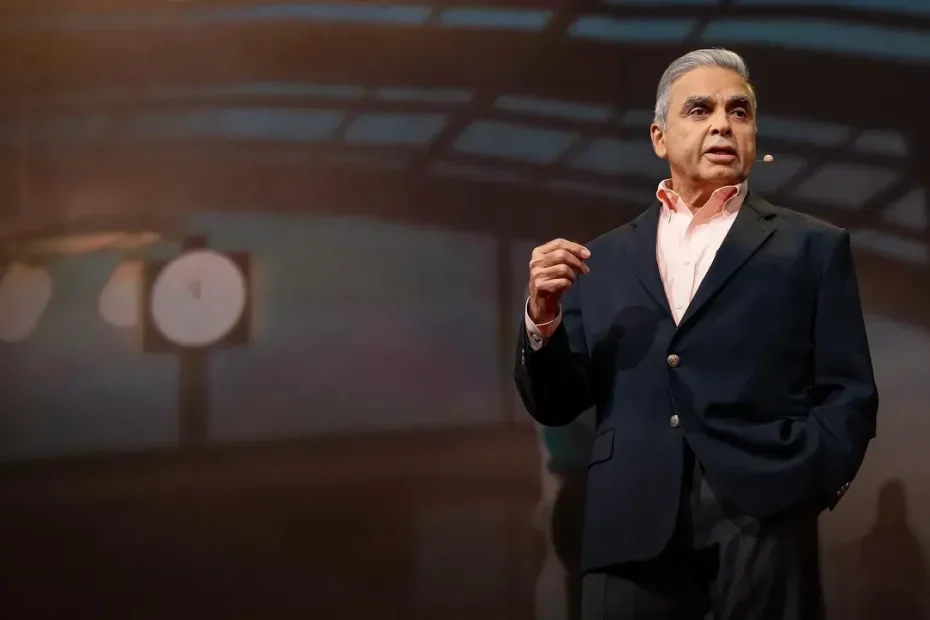
Read the full transcript of Kishore Mahbubani’s talk titled “How The West Can Adapt To A Rising Asia” at TED Talks conference on Sep 22, 2019.
Listen to the audio version here:
TRANSCRIPT:
KISHORE MAHBUBANI: About 200 years ago, Napoleon famously said, “Let China sleep, because when she wakes, she will shake the world.” Despite this early warning, the West chose to sleep at the precise moment when China, India, and all of Asia awoke. Why did this happen? I’m here to answer this great mystery.
What do I mean when I say the West chose to sleep? I’m referring to the West’s failure to act intelligently and adapt to the new world order created by Asia’s resurgence. As a friend of the West, I find this frustrating. So my purpose today is to try to help the West. But I need to start this story by talking about how the West actually awakened the entire world.
The Historical Context
Look at chart one. From year one until 1820, the two largest economies in the world were always China and India. Only in the last 200 years did Europe take over, followed by the Western Americas. So, the last 200 years of world history have been a major historical aberration. All aberrations naturally end, and this is what we’re seeing now. If we look at chart two, you’ll see how quickly and powerfully China and India are returning.
The big question is: who awakened China and India? The honest answer is that it was the West that did it. We all know that the West was the first to successfully modernize and transform itself, initially using its power to colonize and dominate the world. But with time, it shared the gifts of Western wisdom with the entire world.
Let me add that I personally benefited from this sharing of Western wisdom. When I was born in Singapore, then a British colony in 1948, I experienced extreme poverty. In fact, on my first day of school at age six, I was put in a feeding program because I was technically undernourished. Now, as you can see, I’m over-nourished. But the greatest gift I received was a Western education.
Having personally journeyed from third-world poverty to comfortable middle-class existence, I can speak with great confidence about the impact of Western wisdom and the sharing of that wisdom with the world.
The Gift of Critical Thinking
One of the greatest gifts shared by the West is the art of critical thinking. Critical thinking wasn’t invented by the West—it originated from all cultures and civilizations. Ahmad Chiasan has explained how deeply it existed in Indian civilization. However, there’s no denying that it was the West that brought the art of critical thinking to a much higher level.
Through the scientific revolution, the Enlightenment, and the industrial revolution, the West truly developed it powerfully and, just as importantly, applied it to solve many practical problems. The West then shared this art of critical thinking with the entire world, causing what I call three silent revolutions.
As an Asian, I can describe how these silent revolutions transformed Asia:
The first revolution was in economics. The main reason why many Asian economies, including communist societies like China and Vietnam, have succeeded so remarkably in economic development is because they finally understood, accepted, and implemented free market economics. A gift from the West. Adam Smith was right—if you let markets decide, productivity rises.
The second gift was psychological. Again, I can speak from personal experience. When I was young, my mother and her generation believed that life was determined by fate. You couldn’t do anything about it. My generation and subsequent Asian generations believe that we can take responsibility and we can improve our lives. This explains, for example, the entrepreneurial dynamism you see throughout Asia today.
If you walk through Asia today, you’ll also see the results of the third revolution, the good governance revolution. As a result of better governance, walking through Asia, you’ll see better healthcare, better education, better infrastructure, better social policies. It’s a different world.
The West’s Missed Opportunity
Having transformed the world by sharing Western wisdom globally, the logical and rational response from the West should have been to say, “We need to adapt and adjust to this new world.” Instead, the West chose to sleepwalk. Why did this happen?
I believe it happened because the West became distracted by two major events:
The first event was the end of the Cold War. Yes, the end of the Cold War was a great victory. The West defeated the mighty Soviet Union without firing a shot. Amazing. But when you have such a great victory, it also causes hubris and complacency. This complacency was captured in Francis Fukuyama’s famous essay called “The End of History.” Fukuyama included a very nuanced message, but all that was heard from his essay was: “We, liberal democracies, have succeeded. We don’t need to change. We don’t need to adapt. Only others in the world need to change and adapt.”
Unfortunately, like a dangerous opiate, this narrative caused a lot of brain damage to the West because it made them sleepwalk at the precise moment when China and India were waking up, and the West failed to adapt and adjust.
The second significant event was 9/11, which happened in 2001. As we know, 9/11 caused tremendous shock and grief. I personally experienced this shock and grief because I was in Manhattan when 9/11 happened. In this shock, the US decided to invade Afghanistan and then Iraq.
Unfortunately, partly as a result of this trauma, the West didn’t notice another significant event that happened in 2001: China joined the World Trade Organization. When you suddenly introduce 900 million new workers into the global capitalist system, it will cause what economist Joseph Schumpeter called “creative destruction.” Western workers lost their jobs, they saw their wages fall. Clearly, people needed to think about new competitive policies, workers needed retraining, workers needed new skills. Nothing was done.
As a result, the US became the only developed society where median incomes—yes, median incomes—fell for 30 years from 1980 to 2010.