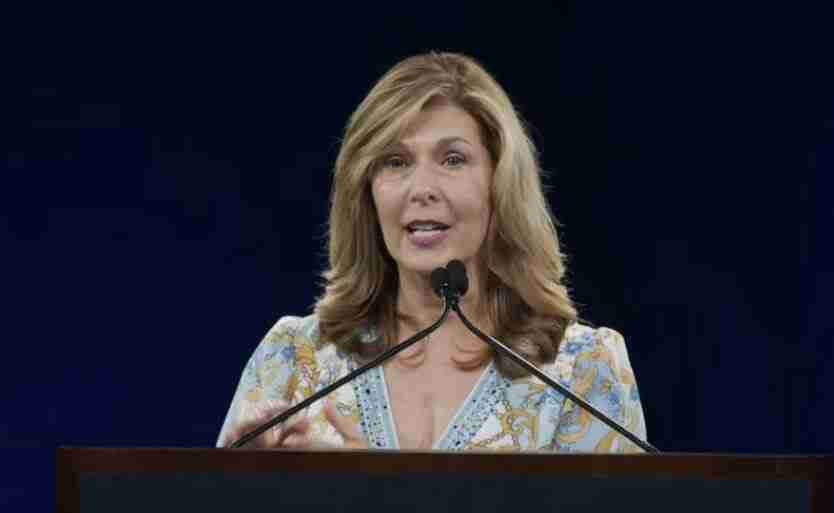
Read the full transcript of journalist and author Sharyl Attkisson’s lecture titled “The Problem of Big Pharma” which was given on February 19, 2025, during a Hillsdale College National Leadership Seminar in Phoenix, Arizona.
Introduction
SHARYL ATTKISSON: The topic I was given to talk about today is the problem of big pharma. I would sum it up this way: trust me when I tell you that nearly every form of information about our health has been co-opted by the pharmaceutical industry. Okay, you don’t have to trust me. You’re not the trusting kind of crowd, and that’s what I like about you.
In my speech today, I’m going to choose some excerpts and examples that will show how medical interests have infiltrated and corrupted media, medical journals, medical school, medical associations, medical researchers, continuing medical education classes, and more.
My Journey Down the Rabbit Hole
I’m an investigative reporter, not a health reporter, and I used to have no interest in medical stories. I didn’t see those as really part of my responsibility. But it began for me—I call it my trip down the rabbit hole—in the 2001 time period after the 9/11 attacks by Islamic extremist terrorists on America.
I was working at CBS News, and they assigned me to cover the restart of the smallpox vaccine program. The idea was that terrorists could now weaponize or use smallpox as a biological weapon. And because of this new threat, a vaccine that hadn’t been given in a very long time, maybe we should start giving that routinely again.
The reason it’s controversial is that smallpox vaccine has a greater incidence of adverse events than other vaccines. So it’s not something you want to just do without a lot of thought. They decided to start with first responders and the military. They would carefully monitor for any serious adverse events among this population, and then ultimately vaccinate everybody if all went well.
My Initial Perspective
I knew nothing of vaccines. In fact, I was probably like a lot of Americans where I completely trusted the medical establishment. Dad’s a doctor, brother’s a doctor, I know a lot of great doctors. I couldn’t imagine that anybody in that system would intentionally mislead. I couldn’t imagine that researchers would do things that were unethical. I couldn’t imagine that anybody in the government would try to cover up safety issues. So that was my starting point.
The David Bloom Case
I covered the restart of this program, first given to military and first responders. I was embedded with the Air Force. The war with Iraq was going on, so I’m traveling with the Air Force. A colleague of mine named David Bloom of NBC was embedded with the Army in Iraq. He was a White House reporter.
Pretty early on, we got the sad news that David had died. Not in a battlefield injury, but he had died of a blood clot. It was said that he had genetic predispositions and he had been cramped up in a tank the whole day and he’d had some pain in his leg. But I knew from the research that I’d been conducting that the smallpox vaccine, according to some research, had blood clots as a potential side effect—deep vein thrombosis that could be fatal.
In a program where they’re supposed to be measuring all adverse events that occur after the vaccine, whether or not they think it was related, nobody was reporting David Bloom’s death as a potential vaccine side effect. So I went to my government source and asked, “Shouldn’t his death be reported?” I was able to confirm through sources on the ground that he’d had the smallpox vaccine. He’d had the anthrax vaccine too, by the way, in order to embed on the ground.
My source said he wasn’t reported by the military, which is who you would think would report to the system that was tracking all of this. At the same time, there were reports of four civilian deaths already attributed to the smallpox vaccine potentially.
Government Secrecy
I went to another source and asked for the names of the four deaths. I wanted to know if David Bloom was among them. Were they counting him as they were supposed to? The government said, “We can’t give you the names of the people who died.”
I came to learn this is a very convenient catch-22 whenever you try to find out something from the government that may implicate a product from the pharmaceutical industry—suddenly everything’s a big secret. But if it’s something that they want to have released for reasons that benefit somebody, they will tell you everything.
So I decided to ask the question differently. I didn’t say “What are the names of the four deaths?” I said, “Is David Bloom’s name among them?” And I was able to confirm that no, he had not been reported.
It kind of blew my mind. As a reporter, I’m thinking his name has to be reported. There shouldn’t be a cover-up. Would anyone be trying to cover this up? There were already questions surfacing about the safety of this program because of adverse events that were popping up.
Long story short, because I broke the news, David Bloom’s death was ultimately reported to the system that was monitoring for adverse events. Within a pretty short period of time, for that and other reasons, the government halted the restart of the smallpox vaccine program, which is why we don’t get smallpox vaccine shots today.
One aside: smallpox vaccine is unique. It’s one of the few diseases for which they can vaccinate after exposure and it can help. So another reason not to give everybody a questionable vaccine in advance is if smallpox ever showed up in a city, they would vaccinate in a ring around that positive case and could theoretically catch an outbreak before it occurred.
The Problem with Nonprofits
The next category I want to mention is nonprofits. Virtually all nonprofits, I would now say, have their origins in some kind of special interest that tend to be the opposite of what the nonprofit says it does. This was told to me originally by a producer who worked for me at CBS News years ago.
It turns out it’s true when you start digging deeper. As journalists, we’re not taught to do that. Many journalists, including me in my earlier time, don’t ask the basic questions. We’re too trusting when a nonprofit tells us something. Well, nonprofits are all good, right? They’re all just charities and altruistic.
The American Cancer Society Example
Some years ago, I got a tip that antiperspirants had been linked to breast cancer. This tip actually came from the head of over-the-counter prescriptions from the FDA in a conversation I was having about something unrelated. I was stunned because I’d never heard of such a thing. I had a child who was getting to be about the age where she would start to use antiperspirants, and I have breast cancer in my family.
He told me that the FDA had been fighting for years to try to put a warning about the antiperspirant and cancer link on the label for antiperspirants, but had been beaten down year after year by the power of the antiperspirant industry.
As I interviewed one of the scientists who conducted a study linking the two, I asked for an interview with the antiperspirant industry—basically the cosmetics industry’s trade group in Washington. They didn’t want to do an interview, but they kept saying, “Interview the American Cancer Society.”
I thought, why do they think the American Cancer Society is going to defend them? Why are they so sure of that? I suspected there might be a money tie.
I called the American Cancer Society and their head of science began by saying this is all a myth. The CDC website or the FDA website may still say that today. They claimed that this potential link was a myth. It’s not. You could say there’s science on both sides, but you cannot say it’s a myth.
When he told me it’s a myth, I asked him about the recent studies I had. He didn’t know about any of them. So here, the American Cancer Society is defending antiperspirants as not a cause of cancer and saying it’s a myth, but is not familiar with the latest science.
I faxed him the studies, and in the subsequent questions, all his answers were the same. Instead of addressing the findings, he would say, “Women would do a lot better to get their annual mammograms and stop worrying about these other things that could be causing slight risk of cancer. They need to get their mammograms.”
I finally asked, “Do you guys get money from the antiperspirant industry?” And he said, “Yes, why?” When I asked how much, they would not tell me—no dollar figure, not even a percentage. He just said, “It’s a small amount.”
That’s a huge organization. If they get a “small amount” of funding from every industry that’s implicated in cancer, you can see how the conflict of interest could stack up.
Conflicted Studies: The Baby Oxygen Study
Then there are studies that are very conflicted. I’ll give you one example of a study that probably should never have been done according to ethics bodies and watchdogs. This was a study of extremely premature, very sick infants—I call it the baby oxygen study.
Years later, the mothers of these frail sick babies found out their babies were in a study, and most of them never knew it. They had not given, in their view, informed consent. They had not been told their babies were being put in a study. They were told, “Sign this paper on your way in to get a C-section. This will help your baby.” And the women would sign the paper.
The babies ended up in a study where their oxygen levels were manipulated for the purposes of the study. They were randomly put into either a low oxygen group or a high oxygen group. As you may know, most premature babies get oxygen therapy. If you get too much oxygen, it can cause blindness. If you get too little oxygen, it can cause brain damage. It’s a very touchy thing as to where that range should be.
The Problem of Big Pharma (continued)
Well, the problem is this is one example of the unethical things that were done as part of this study and this was not disclosed even if the women had read the consent form, had understood the babies were in a study this was not put in there. The oxygen monitors were rigged by the study scientists to give false readings in order so that the hospital personnel would not see the real readings and be tempted to adjust the oxygen for the good of the baby. The babies were to be kept in that study range they were assigned to at all costs. Years later this comes out and the ethics body that works for the government under HHS finds a violation. You know, this shouldn’t happen.
There was lack of informed consent. This is part two of the incredible story about research and ethics. Instead of these people being held accountable, they argued, we didn’t do anything wrong. And they spent a lot of time trying to beat down the ethics office under HHS so that he wouldn’t do any enforcement actions. And they won.
These researchers banded together and got articles published in medical journals that said this guy was being overreaching in his office on the ethics question, that they didn’t do anything wrong. And they argued in a big conference held about all of this later, sort of what to do about this ethics issue that had arisen. Over half the researchers argued, well, we shouldn’t have to tell people about all the risks of a study. These rules are too firm. These rules are too tough.
Because when we tell people all the risks of being in a study, they don’t want to take part in the study. I’m telling you, this is true. I’m sitting there thinking I’m like in an Alice in Wonderland. And then they said, how can we help the greater good if we can’t convince people to be in our studies because they’re worried about the risks?
The Erosion of Informed Consent
So all these years later, those researchers that were arguing for loosened informed consent, they got their way about a year and a half ago. Quietly, Congress and the federal agencies, I’m sure being lobbied by the industries that make money off of their studies and what they discover, they quietly passed a new law and a rule that was finalized by the FDA not long ago that said researchers don’t have to give all the risks of a study to people if the researchers decide the risks are minimal. They don’t have to tell you about them. I think this is shocking.
This is the first upheaval in the rules for human experimentation in this country since they were set after the Tuskegee syphilis experiments. I mean this is a huge sea change. I have a couple of questions. If the risks are minimal, then why won’t you tell people about them? If they really are minimal, that’s not going to scare them from taking part in the study.
Or if it does, that’s their choice. But number two, you’re relying on the honesty and judgment of the very researchers who have proven to be wrong or corrupt in the past to make a judgment that says the risks are minimal. And by the way, they don’t know off the front end. That’s why they’re doing the study. So, I think this has to be changed in my view.
I think this is something that’s very problematic and a new thing that’s come out of something I’ve heard being discussed for, like I say, over a decade.
The Corruption of Medical Journals
On to studies that are published. I’ve talked in the past before, maybe some of you have heard some of the esteemed editors of medical journals that your doctor and my doctor rely upon. These medical editors themselves say much, if not most of the science now in these peer reviewed published journals like the New England Journal of Medicine is not to be believed because it’s been taken over so much by the pharmaceutical industry.
Dr. Marcia Angell of Harvard, who was editor at the New England Journal of Medicine, told me in an interview that she fought this and fought this as best she could to try to get these tainted studies from being published in the New England Journal of Medicine and she lost the battle. After that, Dr. Richard Horton of the British Journal Lancet, he published a very famous editorial that I think should have made more news in the general press that said something like science has taken a turn toward the dark side. And he said he’s still the editor at Lancet that much of the science is not to be believed for the very same reason.
These studies that are published in the journals are so taken over by the pharmaceutical industry that you’re not getting the whole truth or sometimes any truth at all. The studies are controlled in the terms of the studies in a way they didn’t used to be by the pharmaceutical industry. So if there are bad studies about a medicine, you may never know because maybe twenty years ago, all the science was published, good or bad. Today, that’s not the case.
Industry Control of Research Publication
And this changeover was happening about two decades ago when there were researchers in California who were working on a new vaccine for AIDS. And they ended up stopping the trials because they knew fairly early on it was a futility finding that it was not going to do any good.
And they can’t ethically keep going forward with a study when the findings are so obviously bad because you’re potentially putting study subjects at risk and you’re wasting money and so on. So the scientists stop the study and they get ready to publish what they’ve learned because collective science relies upon information being published, whether it’s good, positive, or negative about a medicine so that science can be advanced, people won’t repeat the same mistakes, and so on.
But what happened when these publishers decided to publish was the vaccine maker told them they couldn’t, that they weren’t allowed to publish the data, that the data was proprietary, they didn’t want anybody else to know about it. Well, this happens all the time now. It’s part of the contract, but it was pretty new back then.
The study scientists were incensed and they wanted to publish, but they couldn’t get complete data from the company. That’s another thing these companies do. They stovepipe the data and the data centers, whereby if a researcher decides to kind of go rogue and publish something the company doesn’t want, well, they won’t have all the data to do so.
Well, something kind of unprecedented happened. Medical journals went ahead and published what these researchers had to say without all the data because they knew that the vaccine company was not giving them all the data and they thought this was such an important stand to take, that drug companies shouldn’t be able to stop science from being published.
After it was published, the vaccine makers sued the main scientists out in California for seven million dollars for publishing the truth about the study. If you can imagine the chilling effect this has and had on scientists working for the industry, they work at universities, get all this money from the industry. And now your institution is looking at you, they’re mad at you, you have to hire lawyers that defend you even if you were to win your case. It’s a huge problem and it’s basically a career ender.
Ultimately, the scientists won the lawsuit. It was basically dropped and went away. I don’t think that would happen today. But the momentum of the scientific community was so against the vaccine maker for trying to take this strong-arm approach that there was no sense in the vaccine maker fighting it.
Today, all of this is written into the contracts on the front end. So when you think there are independent research institutions, you know, like universities we all know, they come out with a study. Well, it was funded usually by a drugmaker who dictated the terms under which the study could be published or may not ever be published if the findings don’t come out right. A lot of stuff is being dictated that it’s considered according to scientists on the inside unethical and wrong and not leading to the truth.
Medical Education and Industry Influence
Then I want to go to medical school, how our doctors are being skewed in medical school. I’ll bet all of us here, almost all of us, have the perspective of time. And we’ve known for twenty years that we’re suffering an epidemic of chronic diseases. And we know that we’re spending more money on healthcare and insurance and medicine, hospitals and doctors than we ever have. And we want to know why that’s the case.
But if you’ve gone to your doctor the last twenty years, odds are, for the most part, they act like it’s invisible. They don’t even act like they notice the chronic health epidemic, but for the opportunity to treat it with an expensive medicine. Why are so few doctors asking the critical questions about prevention? Yes, let’s try to treat something if there’s something wrong, but wouldn’t it be better to also figure out the exposures and the causes of these chronic disorders so that people don’t have them in the first place?
Well, there’s not a lot of money to be made out of preventing illness so that treatments can’t be had. In the Merck Manual that medical school students read, in fact, many of them call it the most important reference a med school student can ever have. You heard me right, it’s the Merck Manual taught in medical school and written by the vaccine pharmaceutical company Merck.
This is where some doctors start to get their ideas for how to practice medicine. And when I heard that Merck wrote the manual, I’m thinking how do the med schools allow this conflict of interest? And what exactly does the manual say on crucial topics? By the way, Merck’s own literature says, hey, our Merck Manual is completely separate from our pharmaceutical part of the company. There’s a firewall.
One has nothing to do with the other. I will point out that Merck and most of the other major pharmaceutical companies have had to pay tens of billions and collectively hundreds of billions of dollars in settlements to the government in recent years for lying, bribery, lying about the safety of their drugs, giving doctors kickbacks. But we are to trust that Merck would never cross over between editorial for the book it teaches medical students with and its pharmaceutical arm.
So I looked at a couple of examples. What does the Merck Manual teach young doctors about the controversial HPV vaccine that Merck makes? And I opened it up. Actually, I searched online. It’s very short little substance there. But it says something that really caught my eye. It says there were no serious adverse events reported with the HPV vaccine.
And I about fell over because I had covered it enough and read enough to know that that’s completely false. In fact, if you just look at the label, the approved label for HPV vaccine, it lists dozens and dozens of serious adverse events, everything from paralysis to death. But doctors are being taught in the Merck Manual, there are no serious adverse events reported.
Since I’ve been talking about this and published this fact in my book, by the way, the Merck Manual Online removed that sentence. It did not, however, replace it with the truth. They should have put in there, here are the adverse events, because doctors need to start to understand to watch for these things, but it simply removed that paragraph entirely. There’s no mention of it at all.
So when your doctor goes into practice, he’s been prepped and primed by med school experience that doesn’t teach them to watch out for adverse events from medicine, vaccines and other medicine, that in some instances may be giving them false information about the status of what can happen from that medicine. And I would argue that this is a lot of the reason why we’re treated the way we’re treated at the doctor’s office with them too often not trying to figure out what the cause of our disorders are, but just happily treating it with medicine.
Continuing Medical Education and Conflicts of Interest
So they catch the doctors when they’re young in med school, but they also got them when it comes to continuing medical education classes. Are there any doctors in here, medical doctors? You guys. Okay. You should know, and some of you do know, but some of you don’t know this, including my brother. Okay?
So I know from experience, when you go to a continuing medical education class, if you’re taught something about a medicine and they try to tell you that this medicine is just the best and that there’s like no real side effects or the side effects that you heard about, just don’t worry about those, I’m telling you, those people, they work for the drug company. One hundred percent of the time when I’ve looked into it, that’s been true. But it’s not disclosed for whatever reason in an obvious way that the doctors taking the courses would see it.
Now, there may be a place they can click into to find this information, but these people are billed typically as some kind of academic affiliation, not with the association they have with whoever’s been paying them as advisor, consultant, or researcher. One example from that, and I will use again the HPV vaccine.
Because I got a call from somebody who was at one of these seminars and says, “Oh, just listen to a great speech about Gardasil HPV vaccine. There’s no side effects. It works super well.” And again, this is, by any neutral exam, a potentially problematic vaccine compared to even other vaccines. So I’m thinking, why are the doctors being taught this?
I said to this person, “The person giving you that speech works for Merck, I’m telling you, works for the drug company.” And he said, “No, no, he doesn’t. I looked at his affiliation.” I said, “Ask somebody because I would bet you a lot of money.” He called back within an hour and he’s like, “You’re right.”
Industry Influence on Medical Education
He does. Works for Merck. But it was not disclosed on the sheet where you look at what these affiliations are. So again, doctors are taught in medical school, maybe not in a way that’s even obvious the industry is shaping how they’re going to practice, but it’s influencing. And then they’re taught on the other end in the continuing medical education classes when they try to get at the truth.
Another quick example of that, I saw a continuing medical education class offered on the safety of COVID vaccine in children. And I had just covered the case of poor little child named Maddy who was twelve years old when she entered into a study on the COVID vaccine. She’s still not right to this day. She almost died. She’s in a wheelchair.
She was paralyzed. Many horrible things happened to her very quickly after her second test shot when she was in the Pfizer trials. And I’m kind of waiting to see – I look through the slides on this continuing medical education class. Well, how are they going to handle the case of Maddy DeGary and the other adverse events I know of in the children? Not mentioned.
As far as the doctors are being taught, Maddy DeGary doesn’t exist. Now, when there’s a child in a study or anybody in a relatively small study that gets that sick, that’s a huge potential red flag for the medicine. And the fact that that was completely being ignored was pretty shocking to me.
FDA Conflicts and Alzheimer’s Drug Approval
The last example I’ll talk about with conflicts that occur among our trusted agencies or our once trusted health agencies has to do with the FDA and a medicine called aducanumab. Has anybody heard in the last maybe three years that there’s a new medicine for Alzheimer’s that may be the first cure for Alzheimer’s? This is so awesome.
Well, that would be awesome, and I hope it turns out to be true. But the story behind aducanumab is pretty shocking. There were two studies going on that were halted midstream, just like that AIDS vaccine trial, for futility reasons because the researchers could tell midstream there was going to be no benefit to the aducanumab in the trials and ethically, they couldn’t go on with the studies with their conclusion because of that. So they stopped the studies and they kind of do a “never mind.”
They come back some months later – maybe it was about a year later – and they tell the FDA, “You know what? We were wrong about that. We looked at the partial data in the studies we never completed and looked at endpoints that we had never described in the original plan. And we do see perhaps some kind of benefit to this drug.”
Well, normally FDA, under normal circumstances and its advisors, would just say, “Well, that doesn’t count. You have to finish a study, number one. You can’t redefine a study midway. That’s not scientific. Just to find the things that you want.” But they didn’t do that. The FDA called a meeting of their outside advisors, the advisory committee.
By the way, the advisory committees are usually pretty pharmaceutical friendly because a lot of them are on those committees because they consult for companies and that’s been a little bit of a conflict. But if anything, they’re very friendly usually to drugs being approved. And these advisors, and I interviewed one of them on camera, were shocked to find at the meeting, not only did the drug company present its own glowing results supposedly of its unfinished studies, but the FDA presented a joint presentation with the drug company, an FDA official, which had never been done before that these advisors had seen where the FDA, instead of being sort of a neutral observer, asking logical questions, was now promoting the medicine in front of the Advisory Committee and talking about how great it is.
Well, there were, I believe, twelve members of the Advisory Committee. None of them said the drug should be approved, not one of them. They thought that there were safety issues. They didn’t think there was proof of benefit for various reasons, which are detailed in “Follow the Science” if you’re interested.
What happens? The FDA approves the drug. So this is over the advice of all of its advisers, with two studies having been stopped before they were completed.
And by the way, the initial cost, if you want to look aside from safety and effectiveness, was $57,000 a year for this medicine, which would be theoretically paid by Medicare and Medicaid – all of us. And one watchdog at Public Citizen did the calculation that said, if just the people on Medicare who would want that medicine and qualify for it got it, it would bankrupt Medicare in a couple of months because it’s so expensive.
Long story short, it was such a scandal. This drug – even the people in the industry that might normally be looking for a new drug and the neurological societies and so on – would not prescribe it or recommend it, and it was pulled from the market. It was replaced by a similar drug called lecanumab by the same company under similar circumstances with advisers not thinking there was safety and effectiveness proven, but FDA approved it anyway, and that medicine is now covered by Medicare.
A Bright Spot: Growing Awareness
So this is just a way of telling you that things are going on inside the public health agencies that I used to accept or believe were only watching out for our best interests, but have conflicts and all kinds of things going on internally that most Americans are unaware of.
Last thing I’ll say, which I hope before I take some questions, is a little bit of a bright spot, is the fact that more people are becoming aware of this sort of thing. I think that if you’re like me, this just never occurred to me decades ago. My child’s fully vaccinated. I didn’t think medicine should be questioned. I still think medicine and some vaccines for some people can be incredibly lifesaving.
So this is not trying to get people to say don’t take medicine, don’t take vaccines, nothing like that. But the rational, logical questions that needed to be asked and the safety questions that needed to be explored for too long have not been because of the co-opting of media, politicians, the medical establishment and so on.
But the COVID experience, as bad as it was, and the information management got so ridiculous and audacious, I think something good came of that. It made people who never saw themselves as activists become activists for their own health because they started asking the logical questions: if the government’s not telling me the truth about this, what else haven’t they told me the truth about?
I urge everybody – and I believe this room is full of people already doing this – to get your own information, develop your own sources. I have ideas in the last chapter of the book for how you can start on that. But there are some wonderful independent doctors that broke away from the mainstream that were world-renowned published doctors that when they couldn’t treat their own patients the way they thought was best for them during COVID, they’ve broken away and started new organizations and protocols that are even doing independent studies no one else will do that attack the root cause of a lot of problems that we’re having that nobody’s bothered to find out about.
So I think these are good things for us to look forward to on the horizon, something positive to end with. And if you have any questions, I’m happy to take them. Thank you.
Q&A Session
AUDIENCE QUESTION: Thank you, Ms. Attkisson. We now have time for Q&A. If you have a question, please raise your hand and wait for the microphone to be brought to you. I have a quick question for you. Do you have any allies? What about the customers of pharma like Johns Hopkins and Mayo Clinic and MD Anderson and the big hospitals in our country? And also any other report, investigative reporters like you, five, ten, twenty, one hundred publishing on the same problem.
SHARYL ATTKISSON: I’m sure there are some other reporters, not a lot because they’re not because they can’t do it, but their institutions, the networks will not publish this sort of thing. My TV program is independent, so I publish it on Full Measure. There’s some good Substack writers. This is in my book too. But Paul Thacker, the Disinformation Chronicle on Substack is fantastic, writes about some of these things.
About the hospitals – when I talk about all the information being perverted and corrupted, that includes what Mayo Clinic publishes will be in line with a lot of false information I’ve seen on FDA and CDC websites. What WebMD publishes – I’m not saying all of it’s bad. There’s some helpful, decent, general information. But when it comes to medical controversies, a lot of completely false and disproven information is being put out there on these sites.
Children’s Hospital of Philadelphia is a huge offender when it comes to vaccine misinformation. They do not say on their page that a lot of people refer to that they’re heavily funded by Merck and probably a lot of other pharmaceutical industries as well. But one of their key doctors, Dr. Paul Offit, was held out for decades as the expert on vaccine safety. And I believe until I came along in the early 2000s and asked the questions, nobody reported that he sits in a chair called the Hilleman Chair funded by Merck and that he co-invented a vaccine for Merck. And yet the press is putting him on television defending the very same vaccine without disclosing he’s the co-inventor.
So these are the kinds of things that in the media on a daily basis that happened that nobody was calling out or getting to the bottom of. I think that stuff is still happening today.
AUDIENCE QUESTION: I just want to say I have your book and I’m enjoying it and recommend it to everyone. And also with Robert F. Kennedy Jr. being our new Secretary of Health and Human Services, what are your thoughts and what do you have hopes that he might do as far as future changes?
SHARYL ATTKISSON: I first interviewed Robert F. Kennedy Jr. maybe twenty years ago when I was starting to cover all of these issues. And he, I think it’s safe to say, is the political figure who is the most well informed on these issues we’re discussing also are adulterated food.
I don’t know if people know he’s a lawyer who has litigated in court, and won cases against the vaccine industry and others. He totally understands the corruption of information and the corruption sometimes of officials. And he told me in an interview or a podcast I did, I reposted the podcast recently on I believe it was the Sharyl Attkisson podcast. I have two. But he said things like “this is going to just make their heads spin off.”
He said things like, “if I’m elected” – he was running for president at the time – “I know exactly who to fire when I walk down the halls of the CDC.” He said, “I know the names of the people,” and he does. So this is a huge change, I hope, coming when it comes to the corrupt officials that have been there for decades and the misinformation that’s put out on a daily basis by the federal government.
He knows better than anyone, but that’s, of course, why you will see, I think, the worst kind of pushback. It’s been really entertaining to see him interviewed by reporters who clearly don’t know the issue, but they’re too ignorant to understand they don’t know it. And they’re debating with someone, meaning him, who knows this probably better than almost anybody, and telling him he’s wrong about things they’re wrong about. I even know that from my research, and it’s this whole must be a strange world for him to be interviewed in and part of. But I do hope he does know more than other people who’ve held that position about how to get to the bottom of some of the things we’ve talked about. So hopefully there will be some changes.
AUDIENCE QUESTION: Thank you for your presentation. I’m Dr. DeLomo, a retired surgeon and investigator. And while there may be conflicts of interest and unethical behavior, I think it’s important for the audience to know the safeguards that are built in the clinical trials. And there are three that are critically important.
The first is the Institutional Review Board at a hospital that’s going to conduct a trial. That board is composed of regular people and one physician, and that does a thorough searching of all potential complications of the involved trial before the hospital says, okay, we can do it.
The second is the Clinical Events Committee that reviews every event, poor event that occurs in the trial. Those complications are then delivered to the third board which is the Data Safety and Monitoring Board. That board has the ability to say, we have too many complications in this trial, we have to stop it. Or that Board can also say, “Hey, you know what? This trial is going better than ever. Let’s not run the rest of it. Let’s just go ahead with the product.”
So I want everyone in this room to understand that there is a great level of safety building of these trials, but you can’t legislate unethical behavior. That’s all I have to say.
SHARYL ATTKISSON: Good point. Thank you. Also, to his point, I think it used to be – I’ll just say some of the violations recorded in my book, the Institutional Review Board should have caught and didn’t or should have flagged and didn’t or got thumped for. But yes, in theory, there have been a great deal of practices set up to try to make sure there’s proper oversight so that when you’re talking about human experimentation in particular, that’s followed.
The Problem of Big Pharma (continued)
AUDIENCE QUESTION: Unfortunately, I think they’re just more and more falling down a little bit or figuring ways around that. My grandson was born three and a half years ago and he got the COVID-19 vaccinations. My daughter got the COVID vaccinations and he has been diagnosed as autistic. So I can’t, I’m not a no-vaxxer or anything, but I can’t help but think there’s some connection there. I wonder if there’s going to be a thorough investigation into the side effects of COVID-19 vaccines.
SHARYL ATTKISSON: Well, I’m sorry to hear about that sad news. I won’t go into too much stuff, although there is more in the book about this. Autism is the name we give a broad number of symptoms that have to do with neurological and brain damage. And as the scientists have explained to me over the years, it’s sort of an arbitrary thing.
We’ve grouped together a bunch of things we don’t understand and we call it autism. Studies point to multifaceted causes. It’s true when you hear people say, oh, it’s genetic. There is a genetic component according to scientists. But what’s left out of that is frequently people with genetic vulnerabilities are more likely to react to side effects from vaccines and other medicines.
So, if you have a predisposition for blood clots and then you take a medicine that can cause blood clots, that might be harder for you. Same with children who might get brain damage after their vaccinations for many different reasons, whether it’s an immune response, whether it’s some kind of genetic predisposition.
It’s been documented in court cases that kids with something called tuberous sclerosis, which has been described to me as sort of folds in the brain, they get autism after vaccination at times. They’ve been compensated in vaccine court for that association. Kids with mitochondrial disorder, these are things you might not even know your kid has, although we could develop tests for this so that before they’re vaccinated, we can understand if they have special vulnerabilities.
Are there safer vaccines? Is there a safer way to give them the vaccines? But kids with mitochondrial disorder have been awarded money in vaccine court after they’ve gotten autism from their vaccines. And it’s certainly possible. We won’t know the extent of the side effects caused by COVID vaccines, just by definition, for many years.
Some adverse events aren’t known until the general population has been taking them for years and years. So I do think now we have more hope that someone’s going to study those. We did not put a robust system in place, despite what you may have heard, to gather adverse events after these vaccines when they were experimental to begin with.
If you go to the doctor now or the hospital and you’re sick, in my opinion, the first thing they should ask you if they were really serious about collecting data on all of this is, have you had COVID? Have you had the COVID vaccines? Which ones and when? Only if they start reporting every illness that has happened after these things, and that’s a big job, but entirely possible with today’s data management. Only if all these things get reported are we going to start to really understand the extent to which the vaccines may be causing things separate from what COVID causes.
And I’ve reported on this some on my show Full Measure. These are two separate tracks: long COVID, illnesses that can happen long after you have COVID supposedly cleared from your system and also long vax or whatever they’re calling it, illnesses that come maybe years after you were vaccinated that could still be affiliated with a vaccine.
So these are really important questions I don’t think the government has really wanted to have answered before now.
Vaccine Adverse Event Reporting
AUDIENCE QUESTION: Thank you, Sharyl, for your courage. I’m a retired nurse practitioner and during the COVID pandemic was asked several times to fill out paperwork for the VAERS system, the Vaccine Adverse Events Reporting System. Can you speak to that system for us?
SHARYL ATTKISSON: The last part of my book encourages everybody to get familiar with the Vaccine Adverse Event Reporting System and the Drug Adverse Event Reporting System.
One’s called VAERS, V-A-E-R-S. One’s called FAERS, F-A-E-R-S. And there’s a great misunderstanding in the medical field. Doctors will tell you and have told me, “Oh, I didn’t report this side effect this patient had after COVID vaccine because I don’t think it was connected.” That’s not their job.
They’re not supposed to draw a conclusion. All the adverse events are supposed to go into the database so that experts can look for previously unknown patterns. How are you going to find a new side effect? If a doctor only reports the stuff he thinks might be caused by the medicine, you’re not going to unearth new side effects. The system has not been well used to this date.
Doctors have been discouraged from using it. Nurses have been discouraged from filling out forms. Hospitals have told them to stop during the COVID vaccine era when so many were trying to fill out so many forms from adverse events, they were told by their hospitals, in some cases, cut it out. And I think it’s a very important database if only enough data goes in there.
There’s a misunderstanding, I think, on purpose of who’s supposed to report. You can report yourself. And that’s how to do that in the book. And don’t worry if it’s a double report, because if your doctor does happen to report it and you report it too, there’s a way they will get out those double cases. If they look at the case and think it’s something significant, they cross reference that. They’re not going to count it twice. But this is a very important way.
This is how I broke the international news that Viagra can cause blindness. I looked at the Adverse Event Database reports in conjunction with some studies. Maybe people know that now, but at the time, blindness was not on the label. This was a new thing. And I think it was obvious when I looked at the adverse event report database.
Not every adverse event will be connected to a drug. But when you can see this huge spike, like so many people reporting something previously unknown, and there’s studies to support it, well, I broke that news because the FDA was on the verge of adding mandatory warnings (they have since then) to the Viagra label about blindness as a result of that. So the database can be very important, but it’s not well used and certainly not been well used for the COVID vaccine.
Pharmaceutical Advertising and Media Influence
AUDIENCE QUESTION: Thank you for your courageous reporting in this book. My question is on the campaign trail, I believe President Trump indicated that he planned to put a limit or ban prescription advertisements in the media. Is there anything to that?
SHARYL ATTKISSON: I never heard Trump say that, but Robert F. Kennedy Jr. said that. Maybe Trump did. I didn’t hear him. That was a position when Kennedy was running for president that he said should happen. He said quite explicitly on my podcast. I don’t know how that will work or it can work because the industry is so powerful. But Kennedy is right.
This is the way, in my view, the pharmaceutical industry has captured the media. The news media in the early 2000s was reporting in a fair and pretty unbiased way on all these topics we’ve discussed today. They stopped around the 2005 time period when the partnerships between the media and the pharmaceutical industry for the direct-to-consumer ads that you see on TV got to be worth so much money.
I started feeling the chilling effect at CBS News. Now I would argue reporters simply self-censor because they understand those stories will never make it on television.
And that, I think, has been really harmful because, yes, the companies are supposed to advance their bottom line. I don’t blame the pharmaceutical companies for trying to—they have a fiduciary duty to talk good about their medicine and maybe downplay things that are bad. And political figures can be theoretically bought out by contributions from the pharmaceutical industry. But the media used to be sort of the great equalizer where we would report on these things.
So it wasn’t something that went completely unchecked. Once the pharmaceutical industry, in my view, became so pervasively influential in the media, suddenly there was no watchdog that was doing that look at the politicians and look at the industries and looking at our federal agencies when it comes to these conflicts of interest. So removing the advertising, I think, would result in more honest reporting, for sure. I don’t know if that will happen.
Government Surveillance
AUDIENCE QUESTION: Thank you so much. First, I have to compliment the clarity and the persuasiveness and the simplicity and the force with which you share your information.
SHARYL ATTKISSON: Well, I’m glad I called on you.
AUDIENCE QUESTION: Stunning. Thank you. This relates to your keywords information management. And forgive me if I’m cross-wiring my memory, but would it be worth bringing up the government’s surreptitious seizure of your computers when you annoyed them too much? And do you perhaps have hope with the regime change in Washington that more information about who made that happen might actually come out in public?
SHARYL ATTKISSON: Well, my first book “Stonewalled” really went into this if anyone should be so interested. So I won’t spend a lot of time. But yes, before we knew the government was spying on a lot of journalists, members of Congress, American citizens, I got tipped off as a correspondent at CBS News that I was likely being monitored by the government under the Obama administration. I’d never heard of such a thing.
Long story short, I had sources in the intelligence agencies who were able to get my CBS computers looked at, confirmed it. CBS announced that the computers had been infiltrated. I’ve had probably seven or eight independent forensics exams since then that have gotten more and more information, including government IP addresses that were used to get inside my computers, monitor my keystrokes, look into my files on controversies that I was covering about the government, monitoring my family’s computers and so on.
No one wanted to do anything about it. I’ve been suing for ten years. The suit’s hanging on by a thread. It’s probably going to go away because we did get a clerk’s default against one agent who acknowledged being part of the spying. It’s hard to find. The courts really want you to already prove everything before you even get a case to a jury or get it into court, which is next to impossible, but we had a guy who admitted it. And as soon as I got a clerk’s default against him about two years ago, he supposedly died. So he’s nowhere to be found, and he can’t testify against anybody else.
And then a second defendant, a former Secret Service agent who was said to be part of one of the operations, who served time in prison for other unrelated corruption. Literally after we deposed him, the judge in the case dismissed the suit against him because this was said in her order, he said he didn’t do it. So that part of the case is dismissed.
I actually wrote up sort of a summary of the facts and plan to send that to this Department of Justice to see if anything happens. I would just like them to officially acknowledge I have investigative tips where they can use to find out who was involved that they certainly could if they wanted to.
I don’t think I’m the most important person in the world. I just argue if this had been addressed more than ten years ago when it first came up, we might not have had all the spying since then on the Trump administration and on other people because this stuff’s going to keep happening until there’s some accountability and admission of what they did.
COVID Vaccine Terminology
AUDIENCE QUESTION: I’m not medically trained, but I am constantly suspicious of our government. It still blows me away that—and can you explain how they got an experimental mRNA gene therapy to be called a vaccine? Because a vaccine makes you think that it’s normal. But if you had marketed it to the American public as experimental mRNA gene therapy, a lot of light bulbs would have gone off.
SHARYL ATTKISSON: Well, that’s beyond something I’ve investigated. But I think you’re right about the notion of this vaccine, first of all, being mis-marketed to do something they knew off the front that it wouldn’t do. I reported very early in my program from top experts with the government who had worked on the vaccine.
They understood this would not—the words used to me—”work very well or last very long” because mRNA vaccines don’t. We’ve never been able to make one that did. That’s why we don’t have a vaccine for AIDS. And it would be an mRNA vaccine and we’ve never found one that would handle that.
So they knew at the outset this vaccine, when it finally came out a year later, wouldn’t last very long or work very well and that boosters would be needed. And yet, if you look at—which I’ve made a list in the book—the promises from our public health officials and media were “one hundred percent effective.” You know, all these crazy things that were being said.
We now know it doesn’t prevent infection, transmission, sickness. They still claim there’s a hospitalization benefit. You have to measure that against the idea that you would get very sick in the first place.
The Vaccine Definition Controversy
Are you giving yourself something that’s going to make you potentially sick to possibly but maybe not prevent something that wasn’t going to make you very sick? So I think you guys know that. But I don’t know the ins and outs of who pulled what strings to get it approved the way it was.
I do know I believe it was September twenty-first, the year after it came out, once we understood that it didn’t prevent infection transmission or illness, someone went on the CDC website overnight and changed the definition of vaccine so that this vaccine would meet the definition even though it didn’t do what vaccines have been known or thought to do for two hundred years.
I think the government should find out who changed that, because I don’t think any single person at CDC or anywhere else has the right to change a medical definition of something understood without a public hearing or a vote or any consultation with anybody.
Q&A Session
AUDIENCE QUESTION: Hi, Sharyl. Rod Barba from Connecticut. I first want to acknowledge that despite your tenure at CBS, I have no idea what your politics are. And I really appreciate the fact that you’ve not bent the news as you’ve reported it and perhaps that doesn’t go noticed as much, but thank you for that.
You. Sort of my thunder was a little bit stolen with the government stuff, but I wondered if you were concerned about the impact of the billion dollar industry, the multibillion dollar industry coming after people that do expose this sort of corruption. They’ve made RFK Jr. look like a lunatic. They’ve gone after a lot of people personally to discredit them rather addressing the complaints that are being made. I don’t know if you can comment about that.
SHARYL ATTKISSON: Well, I would just say a lot of people are learning that’s the tell. Whenever the media is on message with some campaign that everybody’s using similar language and everybody’s promulgating the same view and telling you the other view is totally debunked and don’t listen to it, you can almost count on that should cue you to say the opposite may be true.
Like, they’ve really overplayed their hand. And now the tell is, when they do that or try to stop somebody from speaking, that leads me to think, I need to find out what that person wants to say because that could be something worthy.
It tells me there are powerful interests that don’t want that person to get out the information of the facts they’re trying to say. So I just say use that information to your advantage and let them understand you just queued me to something that I’m now going to find out about by trying to get me not to listen to it.
Thank you, everybody.
Related Posts
- Michael Saylor Responds to Bitcoin Critics @ Coin Stories (Transcript)
- Why Multilingual Human Support Still Matters in Digital Banking
- To Buy Or Not To Buy Cryptocurrency? That’s The Question On Everyone’s Mind
- Ajay Banga on India, Migration and a Youth Jobs Time Bomb (Transcript)
- A Global Monetary Crisis Is Coming & AI Could Make It Worse – James Rickards (Transcript)